The Silent City Within
An Elementary Introduction to Physiological Science
Discovering the Incredible Machinery of Life
Have you ever stopped to wonder how your heart knows to beat, how you can take a breath without thinking, or how a simple thought can translate into the movement of your hand? These miracles don't happen by magic; they are the domain of physiological science. Physiology is the fascinating study of how living organisms function—from the tiniest cell to the most complex organ systems. It's the story of the silent, bustling city that is your body, where trillions of cells work in perfect harmony to keep you alive, conscious, and interacting with the world. This article is your guided tour to understanding the principles that govern this incredible inner universe.
The Core Principles: Keeping the Balance
At its heart, physiology is about understanding a few key concepts that apply to all life.
The Body's Thermostat
Your body is constantly working to maintain a stable internal environment, a process called homeostasis. Think of it like the thermostat in your house. If the temperature drops, the heater turns on; if it gets too hot, the A/C kicks in. Your body does the same with temperature, blood sugar, oxygen levels, and water balance. This delicate equilibrium is essential for survival.
Form Follows Purpose
In physiology, the structure of a body part is always linked to its function. The branching structure of your lungs maximizes surface area for gas exchange. The long, thin neurons in your nervous system are perfectly shaped for transmitting electrical signals over long distances. Understanding "what it looks like" is the first step to understanding "what it does."
The Communication Network
Homeostasis is maintained through feedback loops, which are the body's communication channels.
Negative Feedback
This is the most common type and works to reduce a change. For example, after a meal, your blood sugar rises. Your pancreas detects this and releases insulin, which tells your cells to absorb the sugar, bringing the level back down to normal.
Positive Feedback
This amplifies a change and is often used for processes that need to complete quickly. A classic example is childbirth, where the release of the hormone oxytocin intensifies contractions until the baby is delivered.
A Landmark Experiment: How Do Nerves Talk?
To truly appreciate physiology, let's look at one of the most pivotal experiments of the 20th century, which earned scientists Alan Hodgkin and Andrew Huxley the Nobel Prize in 1963 . They sought to answer a fundamental question: How do nerve cells (neurons) generate and transmit electrical signals?
The Methodology: A Giant Nerve and a Fine Wire
Hodgkin and Huxley used the giant axon of the Atlantic squid for their experiments. This nerve fiber is so large (up to 1 mm in diameter) that it can be seen with the naked eye, making it possible to manipulate.
Their experimental setup was elegant in its simplicity:
1. Insertion
They carefully inserted a very fine wire electrode directly into the giant axon.
2. Stimulation
They applied a small electrical stimulus to one end of the axon to trigger a nerve impulse, known as an action potential.
3. Measurement
The electrode measured the precise voltage changes inside the axon relative to the outside fluid before, during, and after the action potential.
4. Ion Manipulation
In a brilliant follow-up, they altered the ionic composition of the fluid surrounding the axon (e.g., removing sodium or potassium ions) to see how it affected the electrical signal.

Experimental setup similar to what Hodgkin and Huxley might have used to study nerve impulses.
Results and Analysis: The Ionic Dance
What they discovered revolutionized neuroscience. The nerve impulse was not a simple electrical current flowing down a wire. Instead, it was a wave of electrochemical activity driven by the rapid movement of ions.
- At Rest: The inside of the neuron is negatively charged compared to the outside.
- Stimulation: When stimulated, "gates" in the nerve cell's membrane open, allowing positively charged sodium ions (Na+) to rush into the cell. This depolarizes the membrane, making the inside less negative.
- Peak: Once a threshold is reached, the process becomes explosive, and the inside of the cell becomes positively charged for a brief moment.
- Recovery: Immediately after, the sodium gates close, and gates for positively charged potassium ions (K+) open. Potassium rushes out of the cell, restoring the negative charge inside (repolarization).
- Propagation: This local change in voltage causes the next section of the axon to open its ion gates, making the action potential travel like a wave down the length of the nerve.
This "ionic hypothesis" showed that our thoughts, movements, and senses are all made possible by a beautifully choreographed dance of sodium and potassium ions.
"The work of Hodgkin and Huxley provided the first complete mathematical description of how nerve impulses are generated and propagated."
The Data Behind the Discovery
This gradient is the battery that powers the nerve impulse.
| Ion | Intracellular Concentration (mmol/L) | Extracellular Concentration (mmol/L) |
|---|---|---|
| K+ | 400 | 20 |
| Na+ | 50 | 440 |
| Cl- | 40 | 560 |
The high concentration of K+ inside and Na+ outside creates a powerful electrochemical gradient, which the cell uses to generate electrical signals.
A step-by-step breakdown of the voltage changes Hodgkin and Huxley recorded.
| Phase | Membrane Potential Change | Key Ionic Event |
|---|---|---|
| Resting | -70 mV (inside negative) | K+ leak channels open; Na+/K+ pump active. |
| Depolarization | Rises from -70 mV to ~+40 mV | Voltage-gated Na+ channels open, Na+ rushes IN. |
| Repolarization | Falls from +40 mV back to -70 mV | Na+ channels close; K+ channels open, K+ rushes OUT. |
| Refractory Period | Briefly hyperpolarized below -70 mV | K+ channels slowly close; Na+/K+ pump restores balance. |
This precise sequence ensures the action potential travels in one direction and can fire repeatedly.
This graph illustrates the voltage changes during an action potential, showing depolarization, repolarization, and the refractory period.
The Scientist's Toolkit: Key Research Reagents
To conduct experiments like Hodgkin and Huxley's, physiologists rely on a suite of essential tools and reagents.
Microelectrode
A fine glass pipette filled with an electrically conductive solution. It is used to measure voltage changes (or inject current) across a cell membrane.
Voltage Clamp
A revolutionary technique developed for these experiments that allows a scientist to "clamp" the membrane voltage at a set value and measure the ionic currents flowing through the membrane channels.
Tetrodotoxin (TTX)
A powerful neurotoxin that specifically blocks voltage-gated sodium channels. Used to prove that sodium influx is essential for the rising phase of the action potential.
Tetraethylammonium (TEA)
A chemical that blocks voltage-gated potassium channels. Used to prove that potassium efflux is responsible for repolarization.
Artificial Sea Water / Saline
A controlled solution with specific concentrations of ions (Na+, K+, Ca2+, Cl-). Allows researchers to alter the external environment and observe the effects on nerve signaling.
Squid Giant Axon
The unusually large axon of the Atlantic squid that made these experiments possible due to its size, allowing for direct manipulation and measurement.
Conclusion: The Symphony of You
The work of Hodgkin and Huxley gave us the fundamental language of the nervous system. But this is just one movement in a much larger symphony. Physiologists are now decoding how the heart generates its own rhythmic beat, how the kidneys act as master chemists, and how our immune system wages a silent war against invaders.
Every sensation you feel, every breath you take, and every beat of your heart is a testament to the intricate and robust systems explored in physiological science. It is the study of life itself, in all its dynamic, balanced, and awe-inspiring complexity. The silent city within is always working, and thanks to physiology, we can finally listen in.
The Symphony Continues
Our understanding of physiology continues to evolve, revealing ever more intricate details of the amazing machinery that keeps us alive.
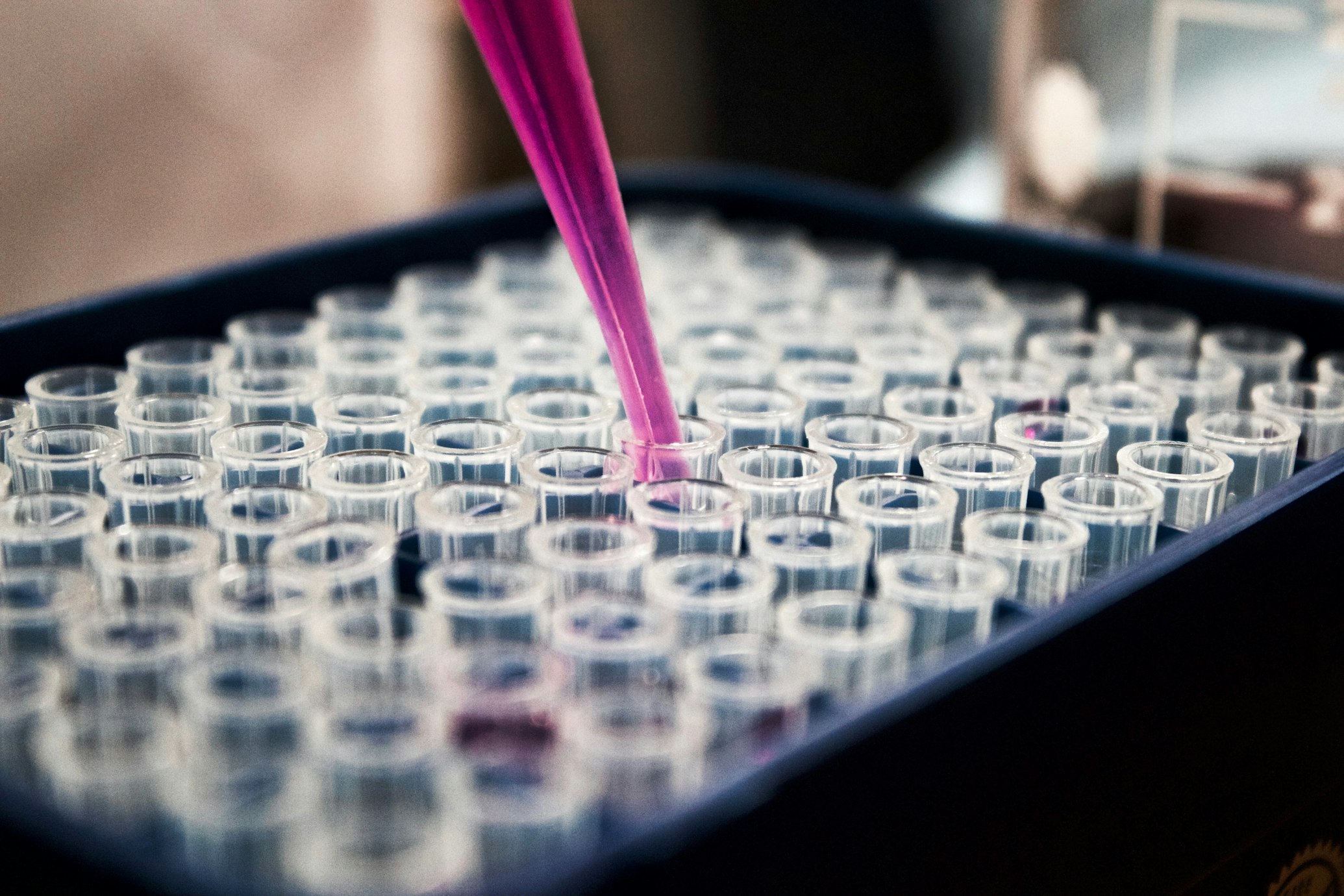
The intricate networks within our bodies work in harmony to maintain life - a true symphony of biological processes.