Speed Breeding vs Conventional Breeding: Accelerating Biomedical and Crop Research for Drug Discovery
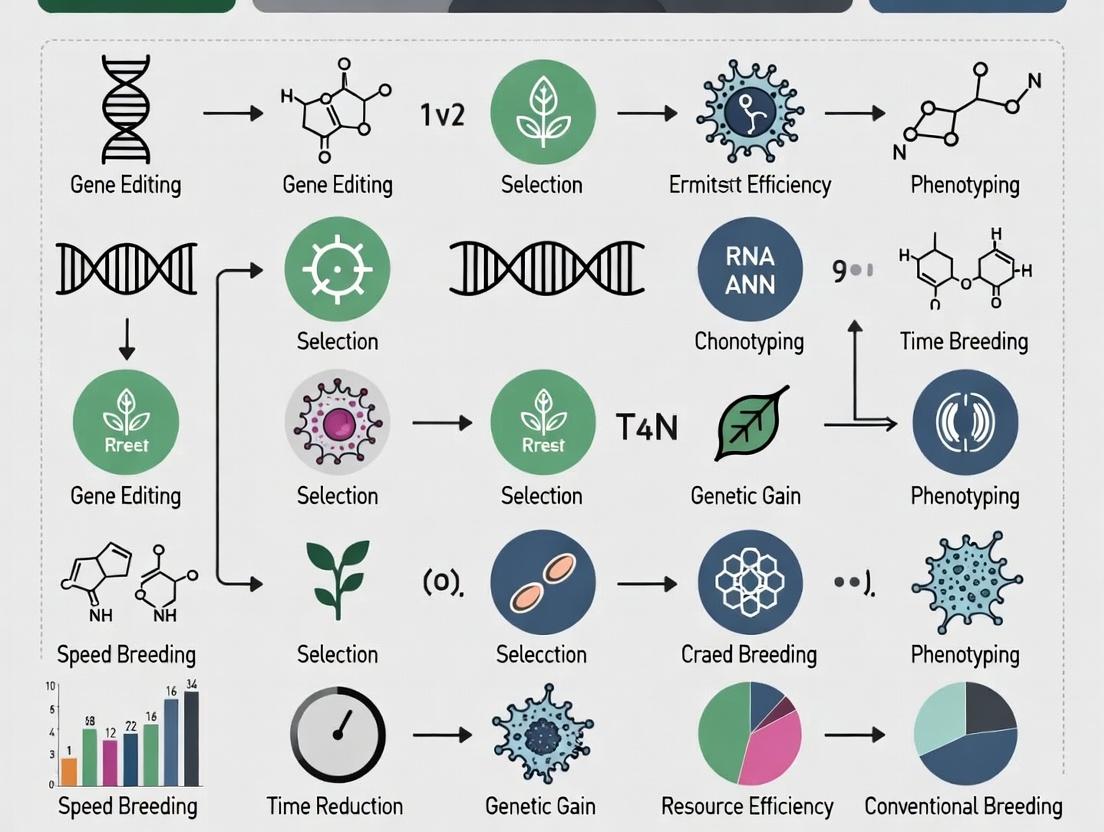
This article provides a comprehensive analysis of speed breeding as a transformative technology for researchers, scientists, and drug development professionals.
Speed Breeding vs Conventional Breeding: Accelerating Biomedical and Crop Research for Drug Discovery
Abstract
This article provides a comprehensive analysis of speed breeding as a transformative technology for researchers, scientists, and drug development professionals. We explore the fundamental principles enabling rapid generation turnover, detail the latest protocols and applications in model plants and crops, address common experimental challenges and optimization strategies, and present a rigorous comparative validation against traditional methods. The focus is on how accelerated trait development directly impacts the pipeline for discovering and validating plant-derived therapeutics and research models.
What is Speed Breeding? Core Principles and Technological Drivers for Accelerated Research
Speed breeding (SB) represents a transformative controlled-environment agriculture paradigm designed to accelerate plant breeding and research cycles. By manipulating photoperiod, light quality, temperature, and plant density, SB drastically reduces generation time, enabling up to six generations per year for staple crops like wheat and barley, compared to 1-2 under conventional field conditions. This whitepaper details the technical core of SB, framing it as a critical methodological advance that decouples agricultural research from seasonal constraints, thereby accelerating genetic gain, phenotyping, and functional genomics studies.
The Paradigm: Core Principles and Environmental Control
Speed breeding leverages extended photoperiods and optimized growing conditions to promote rapid flowering and seed set. The core principle is the induction of a continuous reproductive state, minimizing the vegetative phase without compromising plant health or seed viability.
Table 1: Conventional Breeding vs. Speed Breeding Cycle Comparison
| Metric | Conventional Field Breeding | Controlled-Environment Speed Breeding |
|---|---|---|
| Wheat Generations/Year | 1-2 | 4-6 |
| Barley Generations/Year | 1-2 | 4-6 |
| Canola Generations/Year | 1-2 | 4-5 |
| Photoperiod | Seasonal (~10-14 hrs) | 20-22 hours |
| Light Intensity (PPFD) | Variable sunlight | 400-600 µmol/m²/s |
| Daily Light Integral (DLI) | Variable | 28-47 mol/m²/d |
| Temperature (Day/Night) | Ambient | 22°C / 17°C (±2°C) |
| Time from Seed to Seed (Wheat) | 100-140 days | ~60-70 days |
Experimental Protocol: Standardized Speed Breeding Setup
Adapted from Watson et al., *Nature Protocols (2018) and subsequent refinements.*
2.1. Growth Chamber Configuration
- Chamber Type: Reach-in or walk-in plant growth chambers with precise environmental control.
- Lighting: Full-spectrum LED arrays preferred for efficiency, low heat output, and spectral tuning. Metal Halide (MH) + High-Pressure Sodium (HPS) combos are also used.
- Photoperiod: 22 hours light, 2 hours dark. The dark period is critical for plant health.
- Light Intensity: Maintain Photosynthetic Photon Flux Density (PPFD) at 400-600 µmol/m²/s at canopy level.
- Temperature: Set to 22°C during light period and 17°C during dark period.
- Relative Humidity: Maintain 60-70%.
- CO₂: Ambient (~400 ppm) or supplemented to 600-800 ppm for enhanced growth.
- Potting Media: Well-draining, soilless mix (e.g., peat-perlite-vermiculite).
- Nutrients: Automated fertigation with balanced, complete nutrient solution (e.g., Hoagland's solution).
2.2. Plant Husbandry for Rapid Generation Advance
- Sowing: Sow pre-germinated seeds at high density (e.g., 900-1000 plants/m² for cereals) in small pots or trays.
- Early Growth: Maintain constant SB conditions from emergence.
- Pollination & Seed Set:
- Self-Pollinating Species (Wheat, Barley): Isolate individual heads using glassine or biosafe bags prior to anthesis to prevent cross-pollination and ensure pure lines. Gently shake plants daily at flowering to ensure self-fertilization.
- Cross-Pollinating Species: Manual emasculation and controlled crossing must be performed swiftly within the condensed timeline.
- Seed Harvest & Drying: Harvest seed heads as soon as seeds reach physiological maturity (moisture content ~15-20%). Use a controlled drying cabinet at 30-35°C for 3-7 days to reduce moisture to ~12% for storage.
- Seed Dormancy Breaking (if required): For immediate sowing, after-ripening requirements can be overcome via:
- Dry After-Ripening: Store dried seeds at 37°C for 3-7 days.
- Gibberellic Acid Treatment: Soak seeds in 100 ppm GA₃ solution for 24 hours before sowing.
- Cycle Iteration: Repeat the process with the next generation.
Speed Breeding Generation Cycle Workflow
Integration with Modern Breeding Technologies
SB is not a standalone tool but a platform that synergizes with other high-throughput technologies.
Table 2: Synergistic Technologies with Speed Breeding
| Technology | Role in Accelerated Pipeline | Outcome |
|---|---|---|
| Genotyping-by-Sequencing (GBS) | High-density marker screening on seedling tissue. | Early-generation selection, reducing population size early. |
| CRISPR-Cas9 Genome Editing | Rapid transformation and recovery of edited plants. | Evaluation of edited phenotypes in multiple generations within a year. |
| High-Throughput Phenotyping (HTP) | Automated imaging (spectral, 3D) in controlled SB environments. | Non-destructive, temporal trait data for genetic mapping. |
| Double Haploid (DH) Production | Combine with SB to instantly fix homozygosity after crossing. | Achieve pure lines in 2 SB cycles instead of 6-8 of selfing. |
SB Integration with Biotech Platforms
The Scientist's Toolkit: Key Research Reagent Solutions
Table 3: Essential Materials for Speed Breeding Research
| Item | Function & Specification |
|---|---|
| Controlled-Environment Chamber | Provides precise regulation of photoperiod, temperature, humidity, and light spectrum. LED-based systems are ideal. |
| Full-Spectrum LED Arrays | Deliver high PPFD (400-600 µmol/m²/s) with low radiant heat, allowing close canopy placement and spectral optimization for flowering. |
| Soilless Potting Mix | Provides consistent, well-drained substrate. Typical blend: peat moss, perlite, vermiculite (3:1:1). Sterilized to prevent disease. |
| Controlled-Release Fertilizer / Fertigation System | Supplies balanced macro/micronutrients. Automated drip or ebb-and-flow systems ensure consistent delivery. |
| Glassine/Biosafe Pollination Bags | For isolating inflorescences to ensure self-pollination or controlled crosses in dense canopies. |
| Gibberellic Acid (GA₃) Solution | 100 ppm solution used for seed soaking to break dormancy and synchronize germination for next cycle. |
| Seed Drying Cabinet | Maintains stable, low-humidity environment at 30-35°C for rapid, uniform seed drying post-harvest. |
| High-Throughput DNA Extraction Kits | 96-well format kits for rapid genotyping from small leaf punches, enabling marker-assisted selection within the SB cycle. |
Speed breeding is a definitive paradigm shift, moving plant breeding from a season-bound, field-dependent activity to a continuous, precision-controlled process. Its power is multiplied when integrated with modern genomics and phenomics. For researchers and drug development professionals working with plant-derived compounds, SB offers an unprecedented ability to rapidly develop and scale genetically defined plant lines, drastically compressing the timeline from gene discovery to stabilized cultivar or bioproduction line. This acceleration is critical for meeting global challenges in food security and sustainable phytochemical production.
The imperative to accelerate genetic gain and phenotypic selection in plant breeding research has catalyzed the adoption of speed breeding (SB) methodologies. Conventional breeding cycles, constrained by seasonal photoperiods and generational time, are a significant bottleneck in both crop improvement and medicinal plant research for drug development. This whitepaper posits that the precise engineering of photoperiod and light quality is the foundational engine enabling SB, providing a compelling advantage over conventional breeding by compressing generation times, enabling non-stop research, and allowing exquisite control over plant physiology and metabolism.
Core Photoperiodic & Spectral Parameters: Quantitative Analysis
The "engine" is defined by the manipulation of three interdependent parameters: Photoperiod, Photosynthetically Active Radiation (PAR), and Spectral Quality (Red:Far-Red, Blue ratios). Optimal settings are species-specific but follow generalizable principles.
Table 1: Comparative Light Regimes for Speed Breeding vs. Conventional Breeding
| Parameter | Conventional Field Breeding | Speed Breeding (Generalized Model) | Physiological Rationale |
|---|---|---|---|
| Daily Photoperiod | Season-dependent (e.g., 8-14 hrs) | 20-22 hours light / 2-4 hours dark | Maximizes photosynthetic time, suppresses flowering in LD plants, accelerates vegetative growth. |
| Light Intensity (PPFD) | 200-1500 µmol/m²/s (full sun) | 150-300 µmol/m²/s (sustained) | Maintains high photosynthetic rates without light saturation stress under extended photoperiods. |
| Photoperiodic Cycle | Annual season | 4-8 week generation cycle | Forces rapid transition through developmental stages; e.g., wheat from seed to seed in ~8 weeks. |
| Red (660 nm) : Far-Red (730 nm) Ratio | ~1.1 (natural canopy variable) | High R:FR (>2.0) | Promotes photosynthetic efficiency and inhibits shade avoidance, favoring compact growth. |
| Blue (450 nm) % | ~20% (natural skylight) | 10-30% (modulated) | Regulates stomatal opening, phototropism, and chloroplast development. Enhances secondary metabolite production in medicinal species. |
| Yearly Generations | 1-3 (crops) | 4-6+ (crops, Arabidopsis) | Core Benefit: Direct multiplication of research throughput and genetic gain per year. |
Table 2: Species-Specific Speed Breeding Protocols (Light Engine Focus)
| Species | Target Generation Time | Recommended Photoperiod (Light/Dark) | Key Spectral Tuning | Primary Goal |
|---|---|---|---|---|
| Spring Wheat (Triticum aestivum) | 8 weeks | 22h / 2h | High R:FR, Moderate Blue | Rapid homozygosity, early flowering. |
| Canola (Brassica napus) | 10-12 weeks | 20h / 4h | High R:FR | Accelerated backcrossing. |
| Chickpea (Cicer arietinum) | 9-10 weeks | 22h / 2h | Enhanced Far-Red at flowering | Overcome photoperiod sensitivity. |
| Arabidopsis (A. thaliana) | 6-8 weeks | 24h (continuous) or 22h/2h | Standard white LED | High-throughput phenotyping, mutant screening. |
| Medicinal Cannabis (Hemp) | 8-10 weeks (veg.) | 18-24h (veg) / 12h (flower) | High Blue (veg), High Red (flower) | Biomass (CBD) or flower (THC) production research. |
Experimental Protocols for Light Engine Optimization
Protocol 3.1: Determining Critical Photoperiod for Flowering Induction
Objective: Identify the minimum day length to maintain vegetative growth for a long-day (LD) plant in SB. Materials: See "Scientist's Toolkit" below. Method:
- Germinate seeds of target LD species under neutral 12h light/12h dark.
- At 2-leaf stage, transfer seedlings to separate growth chambers, each programmed with a different extended photoperiod (e.g., 16h, 18h, 20h, 22h, 24h). All other conditions (PPFD, spectrum, temp, humidity) are held constant.
- Monitor daily for the transition from vegetative to reproductive meristem (e.g., bolting in brassicas, heading in cereals).
- Record the number of days to flowering (DTF) for each photoperiod treatment.
- Data Analysis: Plot DTF against photoperiod. The point where DTF plateaus at a minimum identifies the optimal SB photoperiod for rapid generation cycling without physiological stress.
Protocol 3.2: Spectral Optimization for Canopy Architecture & Metabolism
Objective: Assess the impact of R:FR and Blue:Red ratios on plant morphology and targeted metabolite yield. Materials: Programmable multi-channel LED arrays, spectrophotometer, HPLC. Method:
- Establish plants under a common vegetative photoperiod.
- At a defined growth stage, apply distinct spectral treatments:
- T1: High R:FR (>3), Low Blue (10%)
- T2: High R:FR (>3), High Blue (30%)
- T3: Low R:FR (~0.7), Low Blue (10%) // Simulates canopy shade.
- Measure morphological parameters (internode length, leaf area, specific leaf weight) weekly.
- At harvest, quantify target primary (e.g., sugars) and secondary metabolites (e.g., alkaloids, terpenes, cannabinoids).
- Data Analysis: Use ANOVA to identify spectral treatments that significantly optimize for desired traits (e.g., compactness, high metabolite concentration).
Visualizing Signaling Pathways & Workflows
The Scientist's Toolkit: Key Research Reagent Solutions
Table 3: Essential Materials for Photoperiod & Light Quality Research
| Item / Reagent Solution | Function & Application in Light Engine Research |
|---|---|
| Programmable LED Growth Chambers | Provides precise, reproducible control over photoperiod, intensity (PPFD), and spectral composition (R:FR, B ratios). Essential for Protocol 3.1 & 3.2. |
| Quantum PAR Sensor (e.g., LI-COR) | Accurately measures Photosynthetic Photon Flux Density (PPFD) in µmol/m²/s to standardize light intensity across experiments. |
| Spectroradiometer | Measures the full spectral output (400-800 nm) of light sources. Critical for defining and validating R:FR and Blue:Green:Red ratios. |
| Controlled-Release Fertilizers (e.g., Osmocote) | Ensures consistent nutrient availability over compressed, rapid growth cycles without manual fertilization bias. |
| Hydroponic / Soilless Media (e.g., Peat-Perlite, Rockwool) | Provides uniform root environment, accelerates growth, and allows for precise control of water and nutrient delivery. |
| Gibberellic Acid (GA3) Solution | Used in some protocols (e.g., for barley) to promote bolting and ensure uniform flowering under non-inductive conditions. |
| RNA/DNA Extraction Kits (Plant-Specific) | For molecular validation of light signaling pathway gene expression (e.g., FT, PHY, CO) under different light regimes. |
| Phytochrome & Cryptochrome Mutant Seeds (Arabidopsis) | Key genetic reagents to dissect the contribution of specific photoreceptor pathways to observed phenotypic responses. |
Temperature and Atmospheric Optimization for Maximum Growth Rate
Speed breeding is a transformative agricultural technology that accelerates plant development through precise environmental manipulation, drastically reducing generation times compared to conventional breeding. This whitepaper focuses on the core physiological lever of temperature and atmospheric composition optimization to achieve maximum growth rates. Within the broader thesis advocating for speed breeding, this environmental control represents a fundamental advantage, enabling researchers, including those in pharmaceutical development seeking plant-derived compounds, to conduct 4-6 generations per year for many species, versus 1-2 under conventional glasshouse conditions.
Physiological Foundations: Temperature and CO₂
Temperature Effects on Developmental Rate
Plant metabolic and developmental rates are governed by temperature, following a Q10 principle within optimal ranges. The key is identifying the precise temperature that maximizes the rate of progression through the life cycle without inducing stress or compromising fertility.
CO₂ Enrichment for Enhanced Photosynthesis
Elevated atmospheric CO₂ concentration ([CO₂]) suppresses photorespiration in C3 plants (e.g., wheat, rice, soy), increases net photosynthetic rate, and enhances biomass accumulation. This is critical for sustaining rapid growth under intense, prolonged photoperiods used in speed breeding.
Table 1: Optimized Environmental Parameters for Model Species in Speed Breeding
| Species | Optimal Day Temp. (°C) | Optimal Night Temp. (°C) | Optimal [CO₂] (ppm) | Photoperiod (hr light) | Avg. Generation Time (Days) | Conventional Generation Time (Days) |
|---|---|---|---|---|---|---|
| Spring Wheat (Triticum aestivum) | 22 ± 2 | 17 ± 2 | 800 - 1000 | 22 | 65-70 | 120-140 |
| Barley (Hordeum vulgare) | 20 ± 2 | 15 ± 2 | 700 - 900 | 22 | 65-70 | 120-140 |
| Rice (Oryza sativa) | 28 ± 2 | 25 ± 2 | 600 - 800 | 22 | 75-85 | 110-130 |
| Chickpea (Cicer arietinum) | 25 ± 2 | 20 ± 2 | 700 - 900 | 22 | 90-100 | 180-220 |
| Canola (Brassica napus) | 23 ± 2 | 18 ± 2 | 800 - 1000 | 22 | 85-95 | 150-180 |
Table 2: Impact of CO₂ Enrichment on Growth Metrics in Wheat (Speed Breeding Conditions)
| CO₂ Concentration (ppm) | Net Photosynthetic Rate (μmol CO₂ m⁻² s⁻¹) | Total Biomass at Anthesis (g/plant) | Time to Anthesis (Days) |
|---|---|---|---|
| Ambient (~400) | 20 | 12.5 | 78 |
| 600 | 26 | 15.8 | 75 |
| 800 | 30 | 18.2 | 70 |
| 1000 | 31 | 18.5 | 69 |
Experimental Protocols
Protocol: Determining Critical Temperature Thresholds
Objective: Identify the maximum sustainable temperature for accelerated development without yield penalty.
- Plant Material: Use a standard genotype of the target species.
- Setup: Grow plants in controlled environment chambers under standard speed breeding photoperiod (e.g., 22h light).
- Treatment Gradient: Implement a temperature gradient from 18°C to 30°C in 2°C increments. Maintain a constant 5°C day-night differential.
- Variables Measured: Daily record developmental stage (BBCH scale). Measure photosynthetic efficiency (Fv/Fm) weekly. Upon maturity, record days to anthesis, seed number, and seed weight.
- Analysis: Plot developmental rate (1/days to anthesis) vs. temperature. The optimal temperature is the point before the rate plateaus or stress indicators (Fv/Fm decline) appear.
Protocol: Optimizing CO₂ Concentration for Maximum Growth Rate
Objective: Determine the [CO₂] that maximizes growth rate under high-temperature, long-day conditions.
- Plant Material: Use uniform seedlings of a C3 model plant (e.g., wheat).
- Baseline Conditions: Set chamber to optimal temperature (from Protocol 4.1) and 22h photoperiod.
- CO₂ Treatments: Maintain chambers at 400 (ambient), 600, 800, 1000, and 1200 ppm CO₂. Use dedicated CO₂ injection systems with continuous monitors.
- Growth Metrics: Destructively harvest 5 plants per treatment weekly. Measure leaf area, dry shoot biomass, and root biomass. Use infrared gas analyzers for weekly instantaneous photosynthesis measurements.
- Analysis: Identify the [CO₂] where the increase in biomass accumulation rate per unit increase in [CO₂] diminishes (point of diminishing returns).
Signaling and Physiological Pathways
Diagram Title: Environmental Inputs to Accelerated Development Pathways
Research Reagent & Solutions Toolkit
Table 3: Essential Research Reagents and Materials for Optimization Experiments
| Item | Function in Experiment | Key Consideration |
|---|---|---|
| Controlled Environment Chamber | Precisely regulates temperature, humidity, light, and often CO₂. | Must have CO₂ injection capability and uniform spatial environment. |
| CO₂ Cylinder & Regulator | Source of pure CO₂ for atmospheric enrichment. | Food-grade CO₂; regulator must allow fine control (e.g., 0-2000 ppm). |
| Infrared CO₂ Monitor/Controller | Continuously measures and logs chamber [CO₂], providing feedback for injection system. | Requires regular calibration with known standards. |
| Portable Photosynthesis System | Measures instantaneous gas exchange (photosynthesis, transpiration) on single leaves. | Critical for validating treatment effects on photosynthetic physiology. |
| LED Growth Lights | Provides high-intensity, cool-light source for long photoperiods without excess heat. | Spectrum should be tunable (e.g., red/blue/white ratios). |
| Thermocouples & Data Loggers | Monitors root-zone and canopy temperature at multiple points. | Verification of setpoint accuracy and gradient detection. |
| Plant Developmental Scale Guide | Standardized reference (e.g., BBCH scale) for staging plants. | Ensures consistent phenotyping across treatments and repeats. |
| Hydroponic or Soil-less Mix | Provides uniform, disease-free growth medium for high-density planting. | Allows precise control over water and nutrient delivery. |
| Balanced Nutrient Solution | Supplies all essential macro and micronutrients to support rapid growth. | Formula may need adjustment for faster growth rates under high CO₂. |
Diagram Title: Parameter Optimization Workflow
Speed breeding compresses breeding cycles by optimizing the plant growth environment, drastically accelerating genetics research and trait development. This whitepaper details the three core technological pillars—LED lighting, hydroponics, and automated monitoring—that underpin modern speed breeding protocols, enabling researchers to achieve 4-6 generations per year for many crops versus 1-2 with conventional methods.
Precision LED Lighting Systems
Spectral Optimization for Photomorphogenesis and Photosynthesis
LED technology allows precise manipulation of plant physiology. Key spectral regions include:
- Red (660 nm): Drives photosynthesis via chlorophyll absorption and influences phytochrome-mediated responses (flowering, stem elongation).
- Blue (450 nm): Regulates phototropism, stomatal opening, and chloroplast development through cryptochrome and phototropin pathways.
- Far-Red (730 nm): Modulates the shade avoidance response and flowering time via the Pr/Pfr phytochrome ratio.
- White/Green: Improves canopy penetration and human visibility for assessment.
Table 1: Comparative Performance of Lighting Systems for Arabidopsis thaliana Growth
| Parameter | Conventional Fluorescent (Control) | Broad-Spectrum White LED | Optimized Red/Blue/Far-Red LED Array |
|---|---|---|---|
| Time to Flowering | 35-40 days | 32-37 days | 24-28 days |
| Seed Yield per Plant | 100% (Baseline) | 105-110% | 125-140% |
| Power Consumption (µmol photons/J) | 0.7 - 1.0 | 1.5 - 1.8 | 2.0 - 2.4 |
| Heat Load (Relative) | High | Medium | Low |
Experimental Protocol: Optimizing Photoperiod for Generation Turnover
Objective: Determine the minimal time to seed set for a model crop (e.g., spring wheat) under speed breeding conditions.
- Plant Material: Sow seeds of spring wheat (Triticum aestivum) cv. ‘Bobin’ in controlled growth chambers.
- Lighting Setup: Install LED panels providing 500 µmol m⁻² s⁻¹ PPFD at canopy level. Spectrum: 70% Red (660nm), 20% Blue (450nm), 10% Far-Red (730nm).
- Photoperiod: Apply a 22-hour light / 2-hour dark photoperiod from germination.
- Environmental Control: Maintain constant temperature at 22°C ± 1°C and relative humidity at 65%.
- Nutrient Delivery: Use hydroponic nutrient solution (see Section 3.0).
- Data Collection: Record days to anthesis (flowering) and physiological maturity (seed set). Harvest seeds, dry, and immediately re-sow to start next generation.
- Analysis: Compare generation time and seed viability against control plants grown under 16-hour photoperiods.
Diagram Title: LED Spectral Control of Plant Development Pathways
Hydroponic Delivery of Nutritive and Bioactive Compounds
System Design for Precision Root-Zone Management
Hydroponics enables exact control over nutrient availability, pH, and oxygen levels, promoting rapid, uniform growth and facilitating the delivery of research compounds.
Table 2: Key Parameters for Recirculating Hydroponic Speed Breeding System
| Parameter | Optimal Range for Arabidopsis/Small Grains | Monitoring Frequency | Impact on Speed Breeding |
|---|---|---|---|
| pH | 5.6 - 5.8 | Continuous / Daily | Affects nutrient solubility and uptake; stability is critical. |
| Electrical Conductivity (EC) | 1.2 - 1.8 mS/cm | Continuous / Daily | Direct measure of total dissolved nutrients; avoids stress. |
| Dissolved Oxygen (DO) | > 8 mg/L | Continuous | Prevents root hypoxia, promotes vigorous growth. |
| Nutrient Solution Temp | 18 - 20 °C | Continuous | Optimizes root metabolic activity. |
| Water Potential | Near Zero (Controlled) | - | Eliminates water stress, a major growth limiter. |
Experimental Protocol: High-Throughput Compound Screening via Hydroponics
Objective: Evaluate the effect of a novel growth-regulating compound on root architecture in a model plant.
- System Setup: Utilize a deep-water culture (DWC) or nutrient film technique (NFT) system with individual, aerated reservoirs for treatment isolation.
- Baseline Solution: Prepare a half-strength Hoagland's solution, pH adjusted to 5.7.
- Treatment: Dissolve the test compound in appropriate solvent (e.g., DMSO, ethanol) and add to treatment reservoirs at target concentration (e.g., 1 µM, 10 µM). Include solvent-only controls.
- Planting: Germinate sterilized Arabidopsis seeds on agar, then transfer 5-day-old seedlings to hydroponic baskets.
- Growth Conditions: Grow under speed breeding LED regime (22h light) for 14 days.
- Data Collection: Harvest roots, image with high-resolution scanner. Analyze primary root length, lateral root density, and total root area using software (e.g., ImageJ with SmartRoot plugin).
- Analysis: Perform ANOVA to compare treated groups to controls.
Diagram Title: Automated Hydroponic Nutrient and pH Control Loop
Automated Monitoring and Data-Driven Decisions
Sensor Fusion for Phenotyping
Integrating non-destructive sensors provides continuous, multivariate data.
- Hyperspectral Imaging: Captures spectral reflectance (400-1000nm) to infer chlorophyll, water, and flavonoid content.
- Thermal Imaging: Maps canopy temperature as a proxy for stomatal conductance and water stress.
- 3D LiDAR/ToF Cameras: Quantifies canopy architecture, leaf area index, and biomass accumulation over time.
- Root Zone Sensors: Monitor pH, EC, DO, and temperature (see Table 2).
Table 3: Key Phenotypic Traits Measured via Automated Monitoring in Speed Breeding
| Trait | Sensor Technology | Measurement Frequency | Data Output | Relevance to Breeding |
|---|---|---|---|---|
| Canopy Cover/Growth Rate | RGB/ToF Camera | Hourly/Daily | Pixel count, 3D point cloud | Vegetative vigor, early biomass. |
| Photochemical Efficiency | Pulse-Amplitude Modulated (PAM) Fluorometry | Daily | Fv/Fm, ΦPSII | Plant health, abiotic stress response. |
| Water Use Index | Load Cells (Weight) + Thermal Cam | Continuous | Transpiration rate, CWSI | Drought tolerance screening. |
| Flowering Time | RGB Camera + ML | Hourly | Date of first anthesis | Key phenology metric for generation time. |
Experimental Protocol: High-Frequency Phenotyping for Drought Response
Objective: Identify early spectral signatures of drought stress in a wheat population.
- Plant Setup: Grow a mapping population (e.g., recombinant inbred lines) in speed breeding cabinets with hydroponics.
- Sensor Array: Install fixed-location RGB, hyperspectral, and thermal cameras above the canopy. Integrate load cells under each pot.
- Control Phase: Grow all plants under optimal watering for 14 days, collecting baseline sensor data.
- Treatment Phase: Withhold irrigation from the treatment group. Maintain control group.
- Data Acquisition: Automatically capture images and weight data every 2 hours for 7 days.
- Data Processing: Extract features (e.g., NDVI from RGB, Normalized Difference Water Index from hyperspectral, canopy temperature from thermal). Align with weight loss (transpiration) data.
- Analysis: Use machine learning (e.g., random forest regression) to identify which sensor features and timepoints best predict subsequent physiological drought damage scored manually.
Diagram Title: Automated Phenotyping Data Pipeline for Speed Breeding
The Scientist's Toolkit: Key Research Reagent Solutions
Table 4: Essential Materials for Speed Breeding and Phenotyping Experiments
| Item/Reagent | Function/Application in Speed Breeding Research | Example Product/Source |
|---|---|---|
| Controlled-Release Fertilizers (Hydroponic) | Provide steady nutrient supply in simpler hydroponic or soil-based speed breeding setups, reducing maintenance. | Osmocote Pro, Nutricote. |
| pH Buffers & Calibration Solutions | Essential for accurate calibration of continuous pH probes in hydroponic systems to maintain optimal root zone pH. | pH 4.01, 7.00, 10.01 calibration standards. |
| Hoagland's Nutrient Solution Kit | Pre-mixed salts to prepare a standardized, complete plant nutrient solution for hydroponic research. | PhytoTech Labs, Murashige & Skoog modifications. |
| PAM Fluorometry Imaging Kit | Measures chlorophyll fluorescence parameters (Fv/Fm, ΦPSII) non-destructively to quantify photosynthetic efficiency and plant stress. | Walz Imaging-PAM, PhenoVation. |
| Root Phenotyping Agar/Gel | Transparent, low-nutrient media for high-resolution imaging and analysis of root system architecture in plate-based assays. | Phytagel, Gellan Gum. |
| Plant-Validated DMSO or Ethanol | High-purity solvents for dissolving lipophilic or organic research compounds for hydroponic delivery. | Sterile-filtered, bioburden tested. |
| Hyperspectral Calibration Panel | White and dark reference panel for calibrating hyperspectral imaging data, ensuring accurate reflectance values. | Labsphere Spectralon. |
| Fluorescent Seed Coat Dye | Tracks seed lot, treatment, or genotype in high-throughput sowing and harvesting operations. | Picogreen dye, SeedColorant. |
| Data Logging & Control Software | Integrates sensor inputs and controls actuators (LEDs, pumps) to maintain setpoints; critical for experiment reproducibility. | Argus Controls, LabVIEW, custom Python. |
This whitepaper details technical strategies for accelerating plant life cycles, framed within the thesis that speed breeding offers transformative benefits over conventional breeding. These benefits include a dramatic increase in genetic gain per unit time, the rapid introgression of traits, and the acceleration of functional genomics and drug development research. For scientists in crop development and pharmaceutical discovery, mastering these techniques is paramount for responding to climate change and global health demands.
Core Principles and Quantitative Comparison
Speed breeding manipulates key environmental parameters to compress the vegetative and reproductive phases of plants. The following table summarizes the comparative metrics between conventional and speed breeding protocols for model and crop species.
Table 1: Comparison of Conventional vs. Speed Breeding Protocols
| Species | Conventional Generation Time (Days) | Speed Breeding Generation Time (Days) | Key Environmental Parameters (Light Hours/Temp °C) | Annual Generations (Conventional) | Annual Generations (Speed Breeding) | Reference Key |
|---|---|---|---|---|---|---|
| Arabidopsis thaliana | 80-100 | 40-50 | 22h light / 22°C | 3-4 | 6-8 | (1) |
| Spring Wheat (Triticum aestivum) | 120-140 | 60-70 | 22h light / 22°C, +Far-red light | 2 | 4-6 | (2) |
| Barley (Hordeum vulgare) | 120-140 | 65-75 | 22h light / 22°C | 2 | 4-5 | (2) |
| Rice (Oryza sativa) | 110-130 | 65-80 | 23h light / 28°C | 2-3 | 4-5 | (3) |
| Soybean (Glycine max) | 100-120 | 70-85 | 22h light / 28°C | 2 | 4-5 | (4) |
Detailed Experimental Protocols
Protocol 1: Standard Speed Breeding Chamber Setup forBrassicaand Cereals
This protocol is adapted from the widely cited LED-illuminated speed breeding platform.
Materials: Growth chamber with precise environmental control, high-output full-spectrum LED arrays (peak intensity ~500-600 µmol m⁻² s⁻¹ at canopy level), programmable timers, soilless potting mix, controlled-release fertilizer, shallow trays. Procedure:
- Sowing & Germination: Sow seeds in well-drained pots. Place in chamber at 22°C with continuous light (24h) for 48h to promote uniform germination.
- Seedling Stage: After emergence, set photoperiod to 22 hours light / 2 hours dark. Maintain daytime temperature at 22±1°C and nighttime at 18±1°C. Maintain relative humidity at 60-70%.
- Light Spectrum Management: Utilize a light spectrum with a red:blue ratio of ~4:1. Supplementation with far-red light (730nm) in the final hour of the light period can accelerate flowering in some species via the shade avoidance response.
- Nutrient and Water Management: Irrigate with a balanced nutrient solution twice weekly. Avoid waterlogging.
- Harvest and Seed Drying: Harvest seed heads at physiological maturity. Immediately dry seeds in a dedicated dehumidified drying cabinet at 30°C and <30% RH for 3-5 days. This rapid drying is critical for minimizing inter-generation downtime.
- Seed Storage & Re-sowing: Store dried seeds for a minimum of 7 days at room temperature to break any residual dormancy before sowing the next generation.
Protocol 2:In vitroEmbryo Rescue for Ultra-Rapid Generation Cycling
This protocol is used to bypass seed maturation time, particularly useful in crossing programs.
Materials: Sterile laminar flow hood, sterile dissection tools, plant tissue culture media (MS basal salts), sucrose, plant growth regulators (e.g., GA3), Petri dishes, growth chamber. Procedure:
- Pollination & Harvest: Perform controlled crosses. 10-14 days post-pollination (depending on species), harvest the developing pods or seeds under sterile conditions.
- Embryo Excision: Surface-sterilize the seed or pod. Under a dissecting microscope, carefully excise the immature embryo.
- Culture: Place the embryo on a solid culture medium supplemented with 3% sucrose and 0.1 mg/L gibberellic acid (GA3). Seal the plate.
- Germination & Growth: Incubate plates under 24h light at 25°C. Embryos will germinate precociously within 3-7 days.
- Transplanting: Once the seedling develops true leaves and a root system, transfer it to a speed breeding cabinet to continue growth and flowering, effectively skipping the latter stages of seed development on the parent plant.
Visualizing Key Pathways and Workflows
Light Signaling Pathway to Flowering
Title: Light-Mediated Flowering Induction Pathway
Speed Breeding Workflow from Seed to Seed
Title: Speed Breeding Cycle Workflow
The Scientist's Toolkit: Key Research Reagent Solutions
Table 2: Essential Materials for Speed Breeding and Associated Research
| Item | Function | Example/Specification |
|---|---|---|
| Programmable LED Grow Lights | Provides precise, intense, and cool light for extended photoperiods without heat stress. | Full-spectrum LED arrays with adjustable R:FR ratio and intensity >500 µmol m⁻² s⁻¹ PPFD. |
| Controlled-Environment Chamber | Maintains precise temperature, humidity, and photoperiod regimes critical for phenology manipulation. | Reach-in or walk-in chamber with ±0.5°C temperature control and programmable lighting. |
| Gibberellic Acid (GA3) | A plant growth regulator used to induce bolting and flowering in some recalcitrant species under speed breeding conditions. | 100 mM stock solution in ethanol, used at 0.1-10 µM final concentration in foliar spray or medium. |
| Hydroponic Nutrient Solution | Ensures optimal and non-limiting nutrient supply to support rapid growth under high-light stress. | Modified Hoagland's solution with balanced N, P, K, and micronutrients. |
| Dehumidified Drying Cabinet | Rapidly reduces seed moisture content post-harvest, crucial for minimizing generation time off the plant. | Cabinet maintaining 30°C and <30% RH with forced air circulation. |
| Embryo Rescue Media | Supports the growth of immature embryos excised prematurely, bypassing seed dormancy and maturation. | ½ Strength MS Basal Salts with 3% sucrose, 0.1 mg/L GA3, solidified with phytagel. |
| High-Throughput Genotyping Kit | Enables rapid marker-assisted selection within the compressed breeding cycle to identify desired traits. | KASP or rhAmp SNP genotyping assays for key traits (e.g., disease resistance, quality). |
| Automated Phenotyping System | Non-destructively measures plant growth, architecture, and physiology to track development in real time. | RGB, hyperspectral, or LiDAR imaging systems integrated on a rail within the growth chamber. |
The integration of optimized environmental protocols, strategic use of growth regulators, and enabling technologies like embryo rescue and rapid seed drying provides a robust toolkit for radically shortening plant generation times. When deployed within a marker-assisted selection framework, speed breeding delivers a decisive advantage over conventional methods, enabling researchers and drug developers to iterate genetic designs and screen bioactive plant compounds at an unprecedented pace.
Implementing Speed Breeding: Protocols and Applications in Biomedical & Agricultural Research
Standardized Speed Breeding Protocols for Key Species (e.g., Arabidopsis, Wheat, Rice)
The global demand for accelerated crop improvement necessitates a paradigm shift from conventional breeding. Conventional breeding, reliant on 1-2 generations per year, is prohibitively slow for modern challenges like climate change and population growth. This whitepaper details standardized speed breeding (SB) protocols, a core technological pillar enabling rapid generation advancement through controlled environmental optimization. The implementation of SB directly underpins the central thesis that speed breeding offers transformative benefits over conventional methods, including a 3-6x increase in generation turnover, significant reduction in phenotyping cycle times, and the facilitation of rapid trait stacking and gene editing validation, thereby compressing the breeding timeline from decades to a few years.
Core Environmental Parameters: A Quantitative Comparison
The principle of SB extends photoperiod and optimizes temperature and light intensity to accelerate photosynthesis and development while suppressing vernalization and photoperiod-induced flowering delays.
Table 1: Standardized Speed Breeding Protocols for Key Species
| Species / Cultivar | Photoperiod (Light/Dark) | Light Intensity (PPFD*) | Temperature (Day/Night) | Relative Humidity | Average Generation Time (Seed-to-Seed) | Key Genetic/Physiological Adaptation |
|---|---|---|---|---|---|---|
| Arabidopsis thaliana (Col-0) | 22h / 2h | 150-200 µmol/m²/s | 22°C / 20°C | 60-70% | ~8-9 weeks | Rapid-cycling accessions; long-day plant forced to continuous development. |
| Spring Wheat (Triticum aestivum) | 22h / 2h | 500-600 µmol/m²/s | 22°C / 17°C | 60-70% | ~8-10 weeks | Use of photoperiod-insensitive (Ppd-D1a) and vernalization-insensitive (Vrn-A1) alleles. |
| Rice (Oryza sativa spp. indica) | 22h / 2h | 600-700 µmol/m²/s | 28°C / 24°C | 70-80% | ~9-11 weeks | Tolerant of continuous light; optimized for high light and temperature. |
| Rice (Oryza sativa spp. japonica) | 22h / 2h | 500-600 µmol/m²/s | 28°C / 24°C | 70-80% | ~10-12 weeks | May require specific cultivar selection for SB resilience. |
| Barley (Hordeum vulgare) | 22h / 2h | 500-600 µmol/m²/s | 22°C / 17°C | 60-70% | ~8-9 weeks | Utilizes eps2 (early maturity) and Ppd-H1 (photoperiod insensitivity) genes. |
| Chickpea (Cicer arietinum) | 22h / 2h | 400-500 µmol/m²/s | 25°C / 22°C | 50-60% | ~10-11 weeks | Requires strict humidity control to prevent fungal disease. |
*PPFD: Photosynthetic Photon Flux Density.
Detailed Methodological Protocols
Protocol 2.1: Standardized Speed Breeding Workflow for Wheat (Adapted from Watson et al., 2018) Objective: To achieve 4-6 generations of spring wheat per year.
- Seed Sowing & Germination: Sow pre-germinated seeds (soaked 24h, 4°C) in 96-cell seedling trays filled with a sterile peat-based potting mix. Cover with a humidity dome.
- Early Growth Chamber Conditions: Transfer trays to a controlled-environment growth chamber set to: 22h light (500-600 µmol/m²/s, cool-white LEDs), 2h dark. Temperature: 22°C (light)/17°C (dark). Humidity: 65%.
- Nutrigation: Implement automated fertigation 2-3 times daily with a balanced nutrient solution (e.g., Hoagland's solution at half-strength).
- Plant Transfer: At the 2-3 leaf stage (approx. 14 days), transplant individual seedlings into larger pots (e.g., 1L) containing the same medium.
- Flowering & Pollination: Flowering occurs ~4-5 weeks after sowing. For controlled crosses, emasculate and bag spikes prior to anthesis. Hand-pollinate as needed. For selfing, isolate spikes using bags to prevent cross-contamination.
- Seed Development & Harvest: Maintain conditions until seeds reach physiological maturity (seed coat hardened, moisture <15%). Harvest spikes, air-dry, and thresh manually.
- Seed Dormancy Breaking & Cycle Restart: For immediate next-generation sowing, subject harvested seeds to a 7-day dry-after-ripening period at 37°C, followed by the pre-germination step (1).
Protocol 2.2: Embryo Rescue Protocol for Rapid Generation Cycling in Rice Objective: To bypass post-pollination seed maturation delays, saving 2-3 weeks per generation.
- Pollination & Collection: Perform controlled crosses. At 10-14 Days After Pollination (DAP), harvest the developing panicle.
- Surface Sterilization: Isolate individual caryopses. Surface sterilize in 70% (v/v) ethanol for 1 min, then in 2% (v/v) sodium hypochlorite solution with a drop of Tween-20 for 15-20 min. Rinse 3x with sterile distilled water.
- Embryo Excision: Under a sterile laminar flow hood, place the caryopsis on sterile filter paper. Using a stereo microscope and fine forceps/needles, carefully dissect out the immature embryo (0.5-1.0 mm in size).
- Culture: Place the embryo, scutellum-side down, on solidified embryo rescue medium (e.g., ½ MS basal salts, 3% sucrose, 0.8% agar, pH 5.8). Seal plates with parafilm.
- Growth Chamber Incubation: Incubate culture plates in a growth chamber at 28°C under a 22h photoperiod (100 µmol/m²/s). The embryo will germinate within 3-5 days.
- Seedling Transfer: Once the seedling develops a healthy root and shoot (7-10 days), transfer it to a sterile peat pellet or hydroponic system within the main SB chamber to continue the accelerated cycle.
Visualizations
Standardized Speed Breeding & Embryo Rescue Workflow
Genetic & Physiological Acceleration in Speed Breeding
The Scientist's Toolkit: Essential Research Reagent Solutions
Table 2: Key Reagents and Materials for Speed Breeding Implementation
| Item | Function & Specification | Example/Notes |
|---|---|---|
| Controlled-Environment Chamber | Provides precise regulation of photoperiod, light quality/intensity, temperature, and humidity. | Walk-in rooms or cabinet-style with programmable LED lighting systems (e.g., Philips GreenPower, Valoya). |
| LED Lighting System | Energy-efficient light source providing high PPFD with low radiant heat, customizable spectra. | Full-spectrum white or mix of red (660nm) and blue (450nm) LEDs. Target PPFD: 500-700 µmol/m²/s at canopy. |
| Soilless Growth Medium | Sterile, well-draining substrate for consistent root development and fertigation. | Peat-based mixes (e.g., SunGro Horticulture), rockwool slabs, or hydroponic systems (NFT, DFT). |
| Hydroponic Nutrient Solution | Delivers essential macro/micronutrients directly to roots for maximized growth rate. | Modified Hoagland's solution, commercial blends (e.g., FloraSeries by General Hydroponics). |
| Automated Fertigation System | Ensures consistent and timely delivery of water and nutrients, reducing labor. | Drip irrigation with timer/pump, or ebb-and-flow systems. |
| Embryo Rescue Media | Sterile culture medium to support the growth of immature embryos, bypassing dormancy. | ½ or ¼ Strength Murashige and Skoog (MS) Basal Salt Mixture, supplemented with sucrose (3%) and gelled with agar. |
| Plant Growth Regulators (PGRs) | Used in embryo rescue or modifying development (e.g., to prevent premature senescence). | Gibberellic Acid (GA3) for stem elongation, Abscisic Acid (ABA) for stress studies. |
| Sterilization Agents | For surface sterilization of seeds and explants in embryo rescue protocols. | Ethanol (70%), Sodium Hypochlorite (1-2% active chlorine), Hydrogen Peroxide. |
| Genetic Markers | PCR-based assays to select for key alleles enabling speed breeding (e.g., Ppd, Vrn). | Kompetitive Allele-Specific PCR (KASP) markers for genotyping photoperiod/vernalization genes. |
| Data Loggers | Monitors and records environmental parameters (Temp, RH, Light) to ensure protocol fidelity. | Wireless sensors (e.g., HOBO by Onset) placed at canopy level for validation. |
The imperative to accelerate crop and therapeutic plant development has driven the adoption of speed breeding protocols, which use controlled environments to drastically reduce generation times. While speed breeding provides the temporal framework, its full potential is unlocked only when integrated with modern genomic tools. This technical guide posits that the synergy of CRISPR-based genome editing and high-throughput Marker-Assisted Selection (MAS) within a fast-cycle breeding system represents a paradigm shift, enabling the precision and rate of genetic gain previously unattainable with conventional breeding alone.
Core Technologies in the Fast-Cycle Paradigm
Marker-Assisted Selection (MAS) in Accelerated Cycles
MAS leverages molecular markers (SNPs, SSRs) tightly linked to traits of interest for rapid, early-stage selection, eliminating the need to wait for phenotypic expression. In a fast cycle, this allows for the selection of seedlings, compressing breeding timelines.
CRISPR-Cas Genome Editing for Precision Engineering
CRISPR-Cas systems enable targeted knock-outs, knock-ins, or base edits at specific genomic loci. When deployed in speed breeding platforms, it allows for the introduction of precise genetic variations—e.g., disease resistance alleles or enhanced metabolic pathways—without linkage drag, which can then be rapidly fixed in homozygous states through accelerated generations.
Table 1: Comparison of Breeding Cycle Parameters
| Parameter | Conventional Breeding | Speed Breeding Only | Speed Breeding + MAS + CRISPR |
|---|---|---|---|
| Generations per year (Wheat) | 1-2 | 4-6 | 4-6 (with enhanced precision) |
| Time to fixed line (years) | 7-10 | 3-4 | 2-3 |
| Trait introgression efficiency | Low (Due to linkage drag) | Moderate | Very High (Precise edits, no drag) |
| Phenotyping screening cost per cycle | High (Field trials) | Moderate (Controlled environment) | Low (Early genotypic selection) |
| Rate of genetic gain (theoretical) | 1x (Baseline) | 2-3x | 4-6x |
Table 2: Key Metrics from Recent Integrated Studies (2023-2024)
| Crop / Organism | Target Trait | Technology Used | Cycle Time Reduction | Key Outcome / Efficiency |
|---|---|---|---|---|
| Tomato | Fruit size & Lycopene | CRISPR-Cas9 + MAS | 60% vs. conventional | Multiplex editing of 3 genes; fixed lines in 2 generations. |
| Rice | Blast Resistance | CRISPR-Cas12a & SNP MAS | 50% vs. conventional | Pyramided 2 R genes; editing efficiency >80%. |
| Maize | Herbicide Tolerance | Base Editing & MAS | 65% vs. conventional | Precise C-to-T substitution; homozygous plants in T1. |
| Medicago truncatula | Triterpene yield (Drug precursor) | CRISPR knock-in + MAS | 70% vs. conventional | 5-fold yield increase; stable line in 18 months. |
Detailed Experimental Protocols
Protocol A: Fast-Cycle CRISPR Workflow for a Monogenic Trait
Objective: Introduce a targeted knock-out mutation for a susceptibility gene and recover a homozygous, transgene-free line.
- Design & Construct Assembly: Design 20-nt gRNA targeting early exon of target gene. Clone into a binary vector with a Cas9 expression cassette (e.g., pRGEB32) and a visual marker (e.g., GFP).
- Plant Transformation: Use Agrobacterium-mediated transformation of embryonic tissue. For speed breeding species, utilize rapid in vitro regeneration protocols.
- Generation 0 (T0) Screening: Genotype regenerated plantlets via PCR/amplicon sequencing to identify initial edits. Select heterozygous/biallelic events.
- Accelerated Generation Advancement (Speed Breeding): Grow T0 plants under 22-hr photoperiod, LED light (500 µmol m⁻² s⁻¹), 22/18°C day/night. Promote rapid flowering and seed set.
- Generation 1 (T1) Screening & CRISPR-Cas Segregation: Genotype T1 seedlings. Use PCR to detect both the edit and the Cas9 transgene. Select plants that are homozygous for the edit but null for the Cas9 transgene (transgene-free).
- Phenotypic Validation & Seed Increase: Grow selected T1 plants to maturity under speed breeding conditions for phenotypic confirmation. Harvest T2 seed as a fixed, transgene-free edited line.
Protocol B: High-Throughput MAS Pipeline in a Fast Cycle
Objective: Pyramid two quantitative trait loci (QTLs) for drought tolerance from different donor parents into an elite background.
- DNA Extraction (Rapid 96-well): Use a 2% CTAB-based or commercial kit (e.g., SILEX method) for high-throughput leaf tissue sampling from 10-day-old seedlings.
- Marker Genotyping: Utilize a pre-designed SNP-based Kompetitive Allele-Specific PCR (KASP) assay for each target QTL. Perform 5 µL reactions in a 384-well plate, run on a real-time PCR system.
- Data Analysis & Selection: Analyze fluorescence clustering. Select seedlings that are heterozygous or homozygous for the donor allele at both target loci.
- Rapid Generation Turnover: Transfer selected seedlings immediately to the speed breeding chamber to initiate the next generation. Backcross or intercross as needed, repeating MAS each generation until the desired genomic background recovery and homozygosity are achieved.
Visualization of Workflows and Pathways
Title: Integrated CRISPR-MAS Fast Cycle Breeding Workflow
Title: Logical Relationship: MAS, CRISPR, and Trait Locus
The Scientist's Toolkit: Key Research Reagent Solutions
Table 3: Essential Materials for Integrated Fast-Cycle Genomics
| Item / Reagent | Function in Protocol | Example Product / Specification |
|---|---|---|
| High-Efficiency Cas9 Vector | Delivers CRISPR machinery for plant transformation. | pRGEB32 (Rice), pDIRECT_22A (Arabidopsis), or species-specific optimized vector. |
| KASP Assay Mix | For high-throughput, low-cost SNP genotyping in MAS. | LGC Biosearch Technologies KASP Master Mix; pre-designed assay pairs. |
| Rapid DNA Extraction Kit | Enables fast genotyping of seedlings in 96/384-well format. | SILEX-based kits or magnetic bead-based systems (e.g., Thermo Fisher KingFisher). |
| LED Growth Chamber | Provides controlled, accelerated photoperiod for speed breeding. | Percival or Conviron with programmable 22-hr day, PPFD ~500 µmol m⁻² s⁻¹. |
| High-Fidelity Polymerase | For accurate amplification of target loci for sequencing to confirm edits. | NEB Q5 or Phusion Polymerase. |
| Next-Gen Sequencing Kit | For deep characterization of edits (amplicon-seq) or background selection. | Illumina DNA Prep or Swift Accel-NGS 2S Plus for fast library prep. |
| Plant Tissue Culture Media | Supports rapid regeneration post-transformation and micropropagation. | Murashige and Skoog (MS) basal media with optimized hormone ratios for species. |
Applications in Nutraceutical and Pharmaceutical Compound Development
The accelerated development of novel nutraceuticals and pharmaceuticals is critically dependent on the efficient generation and screening of bioactive plant compounds. Speed breeding—the use of controlled environments to drastically reduce plant generation times—presents a transformative advantage over conventional breeding. Within the broader thesis that speed breeding offers significant benefits in research velocity, resource efficiency, and trait discovery, this whitepaper details its specific, high-impact applications in discovering and optimizing compounds for health. By enabling rapid cycling of genetic populations and phenotypic evaluation, speed breeding compresses the timeline from gene discovery to the identification of promising biochemical leads, directly addressing bottlenecks in nutraceutical and pharmaceutical development pipelines.
Core Advantages of Speed Breeding for Compound Discovery
Conventional breeding programs for enhancing medicinal plant traits or crop nutritional density are constrained by long life cycles, often 1-2 generations per year. Speed breeding protocols can achieve 4-6 generations annually for many species, facilitating:
- Rapid Trait Introgression: Fast-tracking the transfer of high-yield biosynthetic pathway genes into elite plant backgrounds.
- High-Throughput Phenotyping: Enabling rapid screening of large populations for desired metabolite profiles.
- Accelerated Mutagenesis Screening: Speeding up the creation and evaluation of mutagenized populations for novel chemical phenotypes.
Table 1: Quantitative Comparison: Speed Breeding vs. Conventional Breeding for Compound Development
| Parameter | Conventional Breeding | Speed Breeding | Improvement Factor |
|---|---|---|---|
| Generations per year (e.g., Wheat) | 1-2 | 4-6 | 3-4x |
| Time to stable line (Years) | 5-10 | 2-3 | ~3x faster |
| Population size for screening | Limited by field space | Optimized in controlled chambers | Enables larger N |
| Environmental variance | High (field conditions) | Low (controlled) | Enhances heritability estimates |
| Phenotyping cycle for metabolites | Seasonal | Continuous | Enables rapid iterative screening |
Key Experimental Protocols
Protocol: Speed Breeding for Enhanced Flavonoid Content inArabidopsis
This protocol outlines a cycle for rapidly increasing anthocyanin content via recurrent selection.
Objective: To develop Arabidopsis lines with elevated anthocyanin levels in 18 months. Materials: See "The Scientist's Toolkit" below. Method:
- Mutagenesis/Population Initiation: Treat wild-type Arabidopsis (Col-0) seeds with 0.3% ethyl methanesulfonate (EMS) or cross with high-anthocyanin accessions.
- Speed Breeding Cycle:
- Growth Conditions: Sow seeds on soil in controlled environment chambers.
- Photoperiod: 22 hours light (200-250 µmol m⁻² s⁻¹ PPFD) / 2 hours dark.
- Temperature: 22°C constant.
- Humidity: 60-70%.
- Rapid Phenotyping (Day 21): Non-destructively screen rosettes using hyperspectral imaging or a portable flavonoid index meter. Select top 10% of plants with highest anthocyanin signals.
- Seed Harvest (Day 35-40): Allow selected plants to bolt and set seed. Harvest seeds individually.
- Iterative Breeding: Repeat Steps 2-4 for 4-6 generations, applying consistent selection pressure.
- Validation: Quantify anthocyanin content in final generation lines via HPLC-DAD, using cyanidin-3-glucoside as a standard.
Protocol: High-Throughput Metabolite Screening in Speed-Bred Populations
Objective: To identify high-alkaloid producing lines in a speed-bred Nicotiana benthamiana F2 population. Method:
- Plant Material: Generate an F2 population from a cross between high- and low-alkaloid parents using speed breeding for the F1.
- Tissue Sampling: At the 6-leaf stage, collect a single 5mm leaf disc from each plant (N > 500) into a deep-well plate.
- Metabolite Extraction: Add 500 µL of 80% methanol with 0.1% formic acid to each well. Seal, agitate for 15 min, and centrifuge.
- High-Throughput Analysis: Analyze supernatant directly using a coupled UPLC-MS/MS system with a short, fast-gradient method (3-5 min).
- Data-Driven Selection: Use automated peak integration for target alkaloids. Select plants with metabolite levels >2 standard deviations above the population mean for the next breeding cycle.
Pathway Engineering and Mechanistic Insights
Speed breeding facilitates the rapid in vivo testing of genetic constructs designed to manipulate biosynthetic pathways. A common target is the phenylpropanoid pathway, a major source of nutraceuticals (e.g., resveratrol, flavonoids).
The Scientist's Toolkit: Research Reagent Solutions
Table 2: Essential Materials for Speed Breeding in Compound Development
| Item | Function in Research | Example/Supplier |
|---|---|---|
| Controlled Environment Growth Chamber | Provides precise, accelerated photoperiod (22h light) and temperature control for rapid generation cycling. | Conviron, Percival, Phytotron. |
| LED Light System | Delivers high-intensity, spectrum-tunable light to optimize photosynthesis and stress responses. | Valoya, Philips GreenPower. |
| Hyperspectral Imaging Camera | Enables non-destructive, high-throughput phenotyping of pigment and secondary metabolite content. | Headwall Photonics, Specim. |
| Portable Fluorometer/Phenometer | Measures chlorophyll fluorescence or flavonoid/anthocyanin indices rapidly in living plants. | Multiplex (Force-A), PolyPen. |
| UPLC-MS/MS System | Provides ultra-fast, sensitive quantification of target bioactive compounds in complex plant extracts. | Waters, Shimadzu, Sciex. |
| EMS (Ethyl Methanesulfonate) | Chemical mutagen used to create genetic diversity for forward-genetics screens of metabolite traits. | Sigma-Aldrich. |
| CRISPR-Cas9 Kit | For precise genome editing to knock out/alter biosynthetic pathway genes or regulators. | ToolGen, Synthego. |
Data Integration and Workflow
The integration of speed breeding with omics technologies creates a powerful discovery pipeline.
Speed breeding is not merely an acceleration of conventional processes but a paradigm-shifting platform for nutraceutical and pharmaceutical compound development. By enabling rapid genetic gain and integrating seamlessly with high-throughput phenotyping and metabolomics, it dramatically shortens the timeline from genetic variation to validated biochemical lead. This approach directly translates the broader thesis benefits of speed breeding—unprecedented speed, enhanced precision, and greater scalability—into tangible outcomes: the faster discovery and optimization of plant-derived compounds for human health. This technical guide provides the foundational protocols and frameworks for researchers to implement this strategy, driving innovation in drug and nutraceutical development pipelines.
Rapid Generation of Disease-Resistant or Biofortified Crop Models for Study
Thesis Context: This guide details methodologies that leverage speed breeding technologies, which drastically reduce generation times compared to conventional breeding, to accelerate the creation of advanced crop models for research. This acceleration is foundational to a thesis arguing that speed breeding is a transformative force in agricultural research, enabling rapid hypothesis testing and trait development unachievable with slower, conventional cycles.
Conventional breeding programs for introducing complex traits like disease resistance or nutrient biofortification are hindered by long generation times, often taking 5-15 years to develop a stable line. Speed breeding, utilizing controlled environments to optimize photoperiod, temperature, and light intensity, compresses these cycles to 4-8 generations per year. This guide provides a technical framework for integrating speed breeding with modern genomic tools to rapidly generate research-ready crop models.
Core Quantitative Comparisons: Speed vs. Conventional Breeding
Table 1: Generation Time and Annual Output Comparison for Key Crops
| Crop Species | Conventional Breeding (Generations/Year) | Speed Breeding Protocol (Generations/Year) | Generation Time Reduction |
|---|---|---|---|
| Wheat (Triticum aestivum) | 1-2 | 4-6 | ~70% |
| Rice (Oryza sativa) | 2-3 | 5-7 | ~65% |
| Soybean (Glycine max) | 1-2 | 4-5 | ~70% |
| Tomato (Solanum lycopersicum) | 2-3 | 6-9 | ~75% |
| Barley (Hordeum vulgare) | 1-2 | 5-7 | ~72% |
Table 2: Timeline to Develop an F6 Recombinant Inbred Line (RIL) Population
| Breeding Step | Conventional Duration (Months) | Speed Breeding Duration (Months) | Time Saved |
|---|---|---|---|
| Cross (F0) | 3 | 1.5 | 1.5 |
| Single Seed Descent to F6 | 60-72 | 12-14 | ~48-58 |
| Preliminary Phenotyping | 12 | 3 | 9 |
| Total Estimated Time | 75-87 | 16.5-18.5 | ~58.5-68.5 |
Integrated Experimental Protocol for Rapid Model Generation
Protocol 1: Rapid Introgression of a Disease-Resistance Locus via Marker-Assisted Selection (MAS) under Speed Breeding Conditions
- Objective: To introgress a defined resistance gene (R-gene) from a donor parent into an elite, susceptible cultivar background within 18 months.
- Key Materials: Donor line (homozygous for R-gene), Recurrent Parent (elite cultivar), molecular markers (KASP or SSR) flanking the R-gene.
- Procedure:
- Crossing (Month 0): Perform manual cross between Donor () and Recurrent Parent () to generate F1 seeds.
- F1 Generation (Month 1-1.5): Grow F1 plant under speed breeding conditions (22-h photoperiod, 22°C/17°C day/night, ~600 µmol m⁻² s⁻¹ PAR). Confirm hybridity using foreground marker for the R-gene. Harvest F1 seed.
- Backcrossing (Months 1.5-9):
- Use F1 plant as male pollen donor to backcross (BC) to the Recurrent Parent (female).
- Grow BC₁F₁ population (~50 plants) under speed breeding.
- Extract leaf tissue at seedling stage. Perform foreground selection (marker for R-gene) and background selection (50-100 genome-wide markers) to identify the 2-3 plants with highest recurrent parent genome (RPG) recovery.
- Repeat the backcrossing process for 3-4 cycles (BC₄), selecting for the R-gene and increasingly higher RPG percentage each cycle. Each BC cycle takes ~2 months.
- Selfing & Homozygosity (Months 9-16): Self the best BC₄F₁ plant. Grow the BC₄F₂ population (~100 plants). Perform foreground marker selection to identify homozygous (R-gene/R-gene) individuals. Conduct background marker profiling to select the line with the highest RPG percentage (~99%).
- Validation (Months 16-18): Challenge the selected homozygous line with the pathogen in contained bioassays to confirm resistance phenotype. Perform preliminary agronomic evaluation.
Protocol 2: Fast-Track Development of a Biofortified Germplasm via CRISPR-Cas9 Gene Editing
- Objective: To create a stable, homozygous gene-edited line with enhanced nutrient content (e.g., high zinc) within 12 months.
- Key Materials: Elite cultivar with high transformability, CRISPR-Cas9 construct targeting a negative regulator of nutrient transport (e.g., ZIP transporter repressor), tissue culture reagents.
- Procedure:
- Transformation & Regeneration (Months 0-3): Deliver CRISPR-Cas9 construct to explants (embryos, callus) via Agrobacterium or biolistics. Regenerate plantlets (T0) on selective media under controlled growth chambers.
- T0 Generation Screening (Months 3-4): Transfer T0 plants to speed breeding cabinets. Collect leaf samples for genotyping (Sanger sequencing of target site) to identify successful editing events (biallelic or heterozygous mutations). Harvest T1 seed from primary edits.
- T1 Generation Segregation (Months 4-6): Grow T1 population (30-50 plants) under speed breeding. Genotype to identify plants homozygous for the desired edit and screen for Cas9-free segregants (select lines lacking the transgene). Harvest seed from homozygous, Cas9-free plants.
- T2 Generation & Phenotyping (Months 6-9): Grow T2 line (now a stable, non-transgenic edit) under controlled nutrient conditions. Conduct elemental analysis (ICP-MS) of seeds to quantify zinc biofortification level.
- Rapid Yield Evaluation (Months 9-12): Perform a small-scale, replicated yield trial under speed breeding conditions to assess for any pleiotropic effects on growth or seed set.
Visualized Workflows and Pathways
Title: Integrated Speed Breeding Workflow for Crop Models
Title: Core Plant Immune Signaling Pathways
The Scientist's Toolkit: Key Research Reagent Solutions
Table 3: Essential Materials for Rapid Model Generation Experiments
| Category | Item/Reagent | Function & Application in Protocol |
|---|---|---|
| Growth Environment | LED Speed Breeding Cabinet | Provides controlled, extended photoperiod (22h light), adjustable light intensity (400-700 µmol m⁻² s⁻¹), and temperature to accelerate plant development. |
| Genotyping | Kompetitive Allele-Specific PCR (KASP) Assay Mix | For high-throughput, low-cost SNP genotyping used in Marker-Assisted Selection (MAS) for foreground/background selection. |
| Gene Editing | CRISPR-Cas9 Ribonucleoprotein (RNP) Complex | Pre-assembled Cas9 protein and guide RNA. Allows for transient editing without DNA integration, simplifying regulatory approval. |
| Transformation | Agrobacterium tumefaciens Strain GV3101 | A disarmed Ti-plasmid strain commonly used for efficient DNA delivery into plant tissues for stable transformation. |
| Phenotyping | Inductively Coupled Plasma Mass Spectrometry (ICP-MS) | Quantifies trace element concentrations (e.g., Zn, Fe, Se) in plant tissues with high sensitivity for biofortification validation. |
| Pathogen Assay | Spore Suspension (e.g., Puccinia striiformis) | Standardized inoculum for controlled disease challenges to rate resistance levels in newly developed lines. |
| Tissue Culture | Murashige and Skoog (MS) Medium with Plant Growth Regulators | Basal nutrient medium for in vitro culture, regeneration, and selection of transgenic/edited plantlets. |
The commercial and therapeutic promise of Plant-Made Pharmaceuticals (PMPs) is contingent upon rapid, scalable, and cost-effective production of recombinant proteins. Conventional plant breeding, reliant on 1-2 generations per year, is a major bottleneck in host plant optimization. Speed breeding, utilizing controlled environments to achieve 4-10 generations annually, directly accelerates the foundational step of developing elite plant lines optimized for protein yield, post-translational modifications, and biomass. This case study examines the integration of speed breeding with molecular pharming workflows to compress PMP development timelines.
Quantitative Impact: Speed Breeding vs. Conventional Breeding
Table 1: Comparative Metrics for Breeding Methodologies in PMP Host Development
| Parameter | Conventional Breeding | Speed Breeding (LED-Optimized) | Acceleration Factor |
|---|---|---|---|
| Generations per Year | 1 - 2 (field) | 4 - 10 (controlled) | 4x - 5x |
| Time to Stable Transgenic Line (generations) | 6 - 8 | 6 - 8 | 60-75% Reduction in Calendar Time |
| Typical Days to Flowering (e.g., Nicotiana benthamiana) | 35-40 days | 20-25 days | ~40% faster |
| Photoperiod (Hours Light/Day) | Sunlight dependent | 22 | Not Applicable |
| Light Intensity (PPFD µmol/m²/s) | Variable | 300 - 600 | Not Applicable |
| Population Screening Capacity (per m²/year) | Low | Very High (due to generation turnover) | 3x - 4x |
Table 2: Impact on PMP Project Key Performance Indicators (KPIs)
| KPI | Conventional Timeline | With Integrated Speed Breeding | Benefit |
|---|---|---|---|
| Host Optimization Cycle | 24-36 months | 8-12 months | Faster yield/glycosylation optimization |
| Lead Candidate to Preclinical Material | 18-24 months | 6-9 months | Earlier animal trials & safety data |
| Response to Product Demand Scaling | Slow (seasonal) | Rapid (continuous, indoor) | Improved supply chain resilience |
Integrated Experimental Protocol: From Gene to Candidate Plant Line
This protocol outlines the integration of speed breeding into the early development of a PMP in N. benthamiana.
Phase 1: Vector Assembly & Primary Transformation
- Objective: Generate initial transgenic events.
- Methodology:
- Construct Design: Clone gene of interest into a plant-optimized expression vector (e.g., pEAQ-HT) featuring a strong viral promoter (e.g., CPMV HT) and terminator. Include sequence for an ER-retention signal (KDEL) if needed.
- Agrobacterium Transformation: Transform the vector into Agrobacterium tumefaciens strain GV3101.
- Plant Transformation: Use the floral dip method or optimized leaf disc agroinfiltration for N. benthamiana. Select primary transformants (T0) on appropriate antibiotic media.
- Primary Screening: Perform quick PCR and Western blot on T0 leaf tissue to confirm integration and expression.
Phase 2: Speed Breeding for Line Advancement & Stabilization
- Objective: Rapidly advance generations to obtain homozygous, stable lines.
- Speed Breeding Growth Conditions:
- Growth Chambers: Controlled environment with programmable LED lighting.
- Photoperiod: 22 hours light, 2 hours dark.
- Light Quality: Red (660nm) and Blue (450nm) LED mix, PPFD of 500 µmol/m²/s.
- Temperature: 25°C day, 20°C night.
- Relative Humidity: 60-70%.
- Potting Media: Soilless, well-draining mixture.
- Nutrients: Automated fertigation with balanced nutrient solution.
- Generational Workflow:
- T0 to T1: Grow confirmed T0 plants to seed under speed breeding conditions (~8-9 weeks). Harvest seeds individually.
- T1 Screening: Sow T1 seeds on selection media. Resistant plants are genotyped (qPCR for transgene copy number) and phenotyped (ELISA for protein expression level). Select 5-10 high-expressing, single-copy events.
- T2 Homozygosity Fixation: Advance selected T1 plants under speed breeding. Harvest T2 seeds. Plate T2 seeds on selection media. A 100% survival rate indicates a homozygous line. Confirm via ELISA and Western blot.
- T3 Seed Bulk & Characterization: Grow homozygous T2 plants to generate master seed stock (T3). Perform comprehensive characterization: yield quantification (mg/kg FW), glycosylation profiling (MALDI-TOF), and protein functionality assay.
Phase 3: Scale-Up Feasibility & Purification
- Objective: Produce gram quantities for preclinical assessment.
- Methodology:
- Scale-Up Infiltration: Use Agrobacterium-mediated transient expression of the stabilized construct in bulk N. benthamiana plants grown in a greenhouse.
- Harvest & Extraction: Harvest leaf biomass 5-7 days post-infiltration. Homogenize in extraction buffer (phosphate buffer, pH 7.4, ascorbic acid, protease inhibitors).
- Downstream Processing: Clarify via depth filtration. Purify using affinity chromatography (e.g., His-tag or Protein A). Polish via size-exclusion chromatography.
- QC Analysis: SDS-PAGE, endotoxin testing, and final activity assay.
Visualization of Workflows and Pathways
Title: Integrated PMP Development with Speed Breeding
Title: PMP Expression Pathway in N. benthamiana
The Scientist's Toolkit: Key Research Reagent Solutions
Table 3: Essential Reagents and Materials for PMP Development with Speed Breeding
| Item | Function & Rationale | Example/Specification |
|---|---|---|
| Plant-Optimized Expression Vector | High-level, stable expression of transgene. | pEAQ-HT (CPMV-based), pTRAk vectors. Contains plant regulatory elements. |
| Agrobacterium tumefaciens Strain | Delivery of T-DNA into plant genome. | GV3101 (non-oncogenic, high transformation efficiency). |
| Selection Antibiotic (Plant) | Selection of successfully transformed events. | Kanamycin, Hygromycin B. Concentration optimized for species. |
| LED Growth Chambers | Enables speed breeding by controlling photoperiod, light spectrum, and temperature. | Programmable with Red/Blue/White LEDs, PPFD >300 µmol/m²/s. |
| Plant-Specific ELISA Kit | Quantitative measurement of recombinant protein expression in crude leaf extracts. | Species-independent kits for common tags (e.g., His-tag, GXHis-tag). |
| Glycosylation Analysis Kit | Assessment of N-glycan profiles on the PMP (critical for efficacy and immunogenicity). | Hydrazide-based glycan labeling or HILIC-UPLC standards. |
| Affinity Chromatography Resin | Primary capture and purification of recombinant protein from plant lysate. | Ni-NTA Agarose (for His-tag), Protein A/G (for Fc-fusion proteins). |
| Protease Inhibitor Cocktail | Prevents degradation of the target protein during extraction. | Broad-spectrum, plant-optimized, EDTA-free cocktails. |
Overcoming Challenges: Optimization and Problem-Solving in Speed Breeding Systems
Within the paradigm of accelerated plant breeding, managing physiological stressors is a critical bottleneck. Speed breeding employs controlled environments with intense, prolonged photoperiods to accelerate generation cycles, fundamentally altering the stress landscape for plants. This technical guide examines three core, interrelated stressors—light burn, nutrient deficiencies, and root health dysregulation—that are exacerbated under speed breeding protocols. Optimizing these factors is not merely about plant health; it is essential for ensuring the genetic fidelity and phenotypic reliability of rapid-generation advances, a foundational thesis for the superiority of speed breeding in modern research and pre-breeding for drug development.
Light Burn: Photostress in Accelerated Cycles
Mechanism and Impact
Light burn, or photoinhibition, occurs when photosynthetic apparatuses absorb more light energy than can be utilized in photochemistry, leading to photodamage, particularly to Photosystem II (PSII). In speed breeding, photoperiods of 20-22 hours at high photosynthetic photon flux density (PPFD) are common, dramatically increasing this risk.
Key Quantitative Data: Table 1: Light Parameters and Stress Markers in Conventional vs. Speed Breeding
| Parameter | Conventional Breeding (Greenhouse) | Speed Breeding Protocol | Measurable Stress Increase |
|---|---|---|---|
| Typical Photoperiod (h) | 10-16 | 20-22 | - |
| PPFD (µmol m⁻² s⁻¹) | 200-600 | 400-800 | - |
| Leaf Temperature Rise (°C) | 1-3 | 3-8 | 150-250% |
| Fv/Fm (PSII efficiency) Reduction | 0-10% | 15-40% | Significant |
| ROS (H₂O₂) Increase | Baseline | 2-5x | High |
Experimental Protocol: Assessing Photoinhibition
Title: Quantification of PSII Photodamage via Chlorophyll Fluorescence Objective: To measure the efficiency of PSII under prolonged high-light stress. Methodology:
- Acclimation: Dark-adapt leaves of control and treated plants for 30 minutes.
- Measurement: Use a pulse-amplitude modulation (PAM) fluorometer.
- Protocol: Measure minimal fluorescence (F₀) with a weak measuring beam. Apply a saturating pulse (>3000 µmol m⁻² s⁻¹, 0.8s) to obtain maximal fluorescence (Fm) in dark-adapted state (Fm) and light-adapted state (Fm').
- Calculation: Compute variable fluorescence Fv = Fm - F₀. Maximum quantum yield of PSII: Fv/Fm. Effective yield of PSII (ΦPSII) in light: (Fm' - Ft)/Fm'.
- Validation: Correlate with biochemical assays for reactive oxygen species (e.g., DAB staining for H₂O₂).
Title: Light Burn Induced Signaling and Damage Pathway (Max Width: 760px)
Nutrient Deficiencies in High-Turnover Systems
Accelerated Demand and Lockout
Speed breeding compresses life cycles, creating peaks of nutrient demand that outpace resupply. Furthermore, constant irrigation and specific light/temperature conditions can alter rhizosphere pH, leading to nutrient lockout (e.g., phosphorus, iron).
Key Quantitative Data: Table 2: Nutrient Depletion Rates in Hydroponic Speed Breeding vs. Soil-Based Conventional Systems
| Nutrient | Conventional Uptake Rate (mg/plant/week) | Speed Breeding Uptake Rate (mg/plant/week) | Critical Deficiency Onset (Days from Germination) |
|---|---|---|---|
| Nitrogen (N) | 25-50 | 70-120 | 14-21 |
| Phosphorus (P) | 5-10 | 15-30 | 10-18 |
| Potassium (K) | 30-60 | 80-150 | 18-25 |
| Magnesium (Mg) | 3-7 | 8-15 | 21-28 |
| Iron (Fe) | 0.2-0.5 | 0.5-1.2 | 12-20 |
Experimental Protocol: High-Resolution Nutrient Phenotyping
Title: Ionomics Profiling Coupled with Morphometric Analysis Objective: To dynamically map nutrient content against growth stage under accelerated cycles. Methodology:
- Destructive Sampling: Harvest replicate plants at set intervals (e.g., 7, 14, 21, 28 days).
- Tissue Processing: Separate root and shoot. Dry at 70°C for 48h. Weigh for dry biomass.
- Digestion: Microwave-assisted acid digestion (HNO₃/H₂O₂) of ground tissue.
- Analysis: Use Inductively Coupled Plasma Mass Spectrometry (ICP-MS) for full ionomic profile (K, Ca, Mg, P, S, Fe, Zn, Cu, Mn, Mo, Na).
- Integration: Correlate elemental concentrations with daily imaging data (leaf area, plant height) to identify deficiency thresholds.
Root Health: The Hidden Stressor
Constraints of Accelerated Systems
Root confinement in small pots (to facilitate high-throughput) and constant moisture create an abiotic-biotic stress nexus: hypoxia, elevated root zone temperature, and heightened susceptibility to pathogens like Pythium.
Key Quantitative Data: Table 3: Root Zone Parameters and Stress Indicators
| Parameter | Optimal Range | Speed Breeding Risk Zone | Consequence |
|---|---|---|---|
| Dissolved Oxygen (mg/L) | >6.0 | 2.0-4.0 | Hypoxia, Shift to Fermentation |
| Root Zone Temp (°C) | 18-22 | 22-28 | Reduced Water/Nutrient Uptake |
| Substrate Moisture (%) | 60-80 (Drainage) | >90 (Waterlogged) | Pathogen Proliferation |
| Root:Shoot Ratio | 0.3-0.5 | 0.1-0.25 | Resource Allocation Imbalance |
Experimental Protocol: Non-Invasive Root Health Monitoring
Title: Rhizotron-based Imaging of Root Architecture and Viability Objective: To quantify root growth dynamics and stress responses in situ. Methodology:
- Setup: Grow plants in thin, transparent rhizotron boxes filled with growth medium (e.g., gellan gum or clear soil substitute).
- Imaging: Use a high-resolution scanner or camera system mounted on a motorized rail to capture daily root system images.
- Staining (Optional): Irrigate with a solution of tetrazolium salts (e.g., TTC). Viable roots reduce TTC to red formazan.
- Analysis: Use root image analysis software (e.g., WinRhizo, GiaRoots) to extract architecture traits: total length, surface area, tip count, depth distribution.
- Correlation: Measure stress markers (e.g., alcohol dehydrogenase activity for hypoxia, salicylic acid for pathogen defense) in root tissue from parallel experiments.
Title: Root Stress Interplay Under Speed Breeding (Max Width: 760px)
The Scientist's Toolkit: Research Reagent Solutions
Table 4: Essential Reagents and Materials for Stressor Research
| Item | Function/Application | Example Product/Catalog |
|---|---|---|
| PAM Fluorometer | Measures chlorophyll fluorescence parameters (Fv/Fm, ΦPSII, NPQ) to quantify photoinhibition. | Walz Imaging-PAM, Hansatech FMS2 |
| DAB (3,3'-Diaminobenzidine) | Histochemical stain for in planta detection of hydrogen peroxide (H₂O₂). | Sigma-Aldrich D8001 |
| ICP-MS Standard Solutions | Calibration standards for quantitative ionomic analysis of plant tissue. | Inorganic Ventures multi-element standards |
| Tetrazolium Red (TTC) | Vital stain for assessing root dehydrogenase activity and viability. | Sigma-Aldrich T8877 |
| Gellan Gum (Phytagel) | Clear, synthetic solid medium for high-resolution rhizotron imaging of roots. | Sigma-Aldrich P8169 |
| Hoagland's Nutrient Solution | Defined hydroponic solution for precise control and manipulation of nutrient regimes. | Custom formulation or commercial kits |
| ELISA Kits for Phytohormones | Quantify stress-related hormones (ABA, Salicylic Acid, Jasmonates) in root/shoot extracts. | Agrisera, Phytodetek kits |
| RNA-seq Library Prep Kits | Profile transcriptomic changes in response to combined light/nutrient/root stress. | Illumina TruSeq Stranded mRNA |
Integrated Experimental Workflow
Title: Integrated Stressor Analysis Workflow (Max Width: 760px)
The benefits of speed breeding—reduced generation time, accelerated phenotypic selection, and faster gene discovery—are contingent upon mastering its unique stress physiology. Light burn, nutrient deficiencies, and root health are not isolated challenges but interconnected components of a stressed system. Precise quantification through the described experimental protocols, facilitated by the essential research toolkit, allows for the development of targeted mitigation strategies. This optimization is fundamental to the core thesis: that speed breeding, when de-risked from these physiological bottlenecks, offers a transformative, reliable, and efficient platform over conventional breeding for foundational research and drug development pipelines.
Managing Plant Density and Competition in High-Throughput Environments
Speed breeding accelerates plant development by utilizing controlled environments with extended photoperiods, enabling up to 6 generations per year for crops like wheat and barley. This technical guide focuses on managing plant density and competition within these high-throughput environments, a critical factor for ensuring phenotypic data quality and genetic gain. Effective management of these factors is essential to translate the generational advantage of speed breeding into reliable, scalable research outcomes for crop improvement and pharmaceutical compound development.
Core Principles of Density-Mediated Competition
In confined speed breeding chambers (e.g., growth cabinets, vertically stacked LED units), plants experience intense competition for light, nutrients, and space. Unmanaged competition induces shade avoidance syndromes (SAS), altering architecture, physiology, and resource allocation, which confounds phenotypic scoring for traits of interest.
Key Signaling Pathways Involved in Density Perception:
Diagram Title: Shade Avoidance Signaling Pathway in Dense Canopies
Quantitative Impact of Density in Speed Breeding
Recent data (2023-2024) from high-throughput phenotyping studies illustrate the effects of density on key metrics.
Table 1: Impact of Planting Density on Arabidopsis thaliana in Speed Breeding Cabins
| Density (plants/m²) | Days to Flowering | Stem Length (cm) | Seed Yield per Plant (g) | Phenotyping Accuracy (CV %) |
|---|---|---|---|---|
| 500 | 24.5 ± 1.2 | 18.3 ± 2.1 | 0.45 ± 0.08 | 8.2 |
| 1000 | 22.1 ± 1.5* | 25.7 ± 3.4* | 0.31 ± 0.06* | 15.7* |
| 1500 | 20.8 ± 1.8* | 32.5 ± 4.2* | 0.18 ± 0.05* | 28.3* |
Significant difference from 500 plants/m² baseline (p<0.05). Source: Adapted from *Plant Methods (2024).
Table 2: Optimal Densities for Common Speed Breeding Species
| Species | Recommended Density (plants/m²) | Pot Size (mL) - Single Plant | Critical Competition Onset (Days After Planting) |
|---|---|---|---|
| Wheat (Triticum aestivum) | 800 - 1200 | 300 - 500 | 21 - 28 |
| Barley (Hordeum vulgare) | 900 - 1300 | 300 - 500 | 18 - 25 |
| Arabidopsis thaliana | 500 - 800 | 100 - 150 | 14 - 18 |
| Soybean (Glycine max) | 200 - 400 | 1000 - 1500 | 28 - 35 |
| Rice (Oryza sativa) | 400 - 600 | 500 - 750 | 25 - 30 |
Experimental Protocols for Managing Competition
Protocol 4.1: Determining Optimal Density for a Novel Genotype
Objective: To establish the density threshold where competition artifacts begin to significantly bias phenotyping data for a new line in speed breeding. Materials: See Scientist's Toolkit below. Method:
- Sowing: Sow seeds of the target genotype across a gradient of densities (e.g., 200, 400, 600, 800, 1000 plants/m²) in standardized speed breeding substrate using automated seeders. Use at least 20 replicates per density.
- Growth Conditions: Place trays in speed breeding cabinets with protocol-specific light (22-hr photoperiod, ~500 µmol m⁻² s⁻¹ PAR), temperature, and humidity. Utilize sub-irrigation to standardize water and nutrient delivery.
- Monitoring: From day 10, perform daily high-resolution side-view imaging. Calculate projected leaf area (PLA) and canopy coverage percentage using machine vision (e.g., Python OpenCV scripts).
- Threshold Analysis: When canopy coverage exceeds 85% (indicating physical leaf overlap), flag the day as the onset of severe competition. Correlate this day with morphological changes (hypocotyl/coleoptile elongation).
- Validation Harvest: At a key developmental stage (e.g., flowering), destructively harvest a subset to measure root/shoot ratio, internode length, and flower number. Statistical analysis (ANOVA) identifies the density where traits significantly diverge from the low-density control.
Diagram Title: Optimal Plant Density Determination Workflow
Protocol 4.2: Implementing a Spaced-Plant Harvest Strategy
Objective: To maintain high-throughput capacity while eliminating inter-plant competition for final, critical phenotyping. Method:
- Early High-Density Growth: Initial growth occurs at standard high density to maximize chamber use during the vegetative phase.
- Canopy Monitoring: Use real-time RGB imaging to identify trays where canopy closure is imminent (e.g., >80% coverage).
- Selective Thinning/Robotic Transfer: At the onset of competition, employ a robotic gripper or manual thinning to remove every other plant or transfer selected target plants to a separate "spaced" array (e.g., 2x original pot spacing).
- Final Phase: Continue the speed breeding protocol with the spaced plants until seed set. This ensures that yield and final architectural data are competition-free.
The Scientist's Toolkit: Key Research Reagent Solutions
Table 3: Essential Materials for Density Management Experiments
| Item (Supplier Examples) | Function in Experiment |
|---|---|
| Standardized Peat-Based Soilless Mix (e.g., SunGro Metro-Mix) | Provides uniform physical and hydraulic properties, critical for eliminating substrate variability in competition studies. |
| Controlled-Release Fertilizer (Osmocote Smart-Release) | Ensures consistent nutrient availability over the shortened speed breeding cycle, preventing nutrient competition artifacts. |
| Automated Phenotyping System (e.g., LemnaTec Scanalyzer, WIWAM) | Enables non-destructive, high-frequency measurement of canopy size, architecture, and color indices to quantify competition. |
| Robotic Liquid Handling System (e.g., Opentrons OT-2) | Automates precise sowing at defined densities and supplemental nutrient/water delivery, ensuring reproducibility. |
| Spectral Light Sensors (Apogee Instruments PAR/FR Sensors) | Monitors the Red to Far-Red (R:FR) ratio within the canopy, the primary signal for shade avoidance responses. |
| Plant Disposable Deepots (D40L, 656 mL) or Arabidopsis Ray Leach Tubes | Standardized containers allowing for single-plant growth post-thinning or for low-density control studies. |
| LED Growth Chambers with Tunable Spectrum (e.g., Conviron, Percival) | Allows manipulation of light quality (e.g., boosting R:FR) to actively suppress shade avoidance signaling in dense setups. |
| Image Analysis Software (PlantCV, Fiji/ImageJ with custom scripts) | Quantifies canopy cover, plant height, and leaf area from raw image data to derive competition metrics. |
Advanced Mitigation: Engineering the Light Environment
Supplementing with far-red (FR) depleted or red (R)-enriched LED lighting at the canopy level can inhibit the phytochrome-mediated SAS. Recent protocols involve side-lighting with 660 nm LEDs to maintain a high R:FR ratio within the canopy, effectively "tricking" plants into perceiving lower density.
Table 4: Effect of Supplemental Side-Lighting on High-Density Wheat
| Treatment | R:FR Ratio at Canopy Base | Average Plant Height (cm) | Grain Yield per Plant (g) |
|---|---|---|---|
| Standard Overhead Lighting Only | 0.8 | 67.4 ± 5.6 | 1.2 ± 0.3 |
| Overhead + Red (660 nm) Side-Light | 1.4 | 58.1 ± 4.1* | 1.7 ± 0.4* |
Significant difference (p<0.05). Source: *Frontiers in Plant Science (2023).
Precise management of plant density and competition is not merely an agronomic concern but a foundational data quality imperative in high-throughput speed breeding. By integrating real-time phenotyping, density gradient experiments, and engineered growth environments, researchers can isolate genetic variance from environmental competition noise. This rigor ensures that the accelerated generational turnover of speed breeding translates directly into reliable genetic gain and trait discovery, solidifying its advantage over conventional breeding cycles where such control is often logistically impossible.
The imperative to accelerate crop and medicinal plant development for food security and pharmaceutical discovery has exposed the profound resource inefficiencies of conventional breeding cycles. This whitepaper frames the critical optimization problem of research output (e.g., novel trait discovery, genetic gain per year) against the energy, time, and capital inputs required. Within this framework, speed breeding emerges as a transformative methodology, fundamentally altering the input-output equation. By leveraging controlled-environment agriculture principles to drastically shorten generation times, speed breeding offers a superior pathway for optimizing the use of finite research resources.
Quantitative Analysis: Inputs vs. Outputs in Breeding Methodologies
A comparative analysis of resource utilization reveals the stark efficiency gains of speed breeding. The following tables synthesize data from recent implementations.
Table 1: Energy and Time Input Comparison for a Single Generation of Wheat
| Input Parameter | Conventional Field Breeding | Speed Breeding (Controlled Environment) | Notes |
|---|---|---|---|
| Time per Generation | 90-120 days | 55-65 days | Data from Watson et al., Nature Protocols, 2023. |
| Total Light Energy (mol/m²) | ~800-1200 (seasonal solar) | ~2500 (LED-supplemented) | SB uses high-intensity LEDs (200-400 µmol/m²/s) for 22-hr photoperiod. |
| Electrical Energy (kWh/m²) | N/A (reliant on sun) | ~280 kWh/m² | Calculated for LED lighting, HVAC, and controls for a 65-day cycle. |
| Land Area Efficiency (gen/yr/m²) | 1-1.3 generations/year | 5-6 generations/year | Multiple cycles per annum in controlled cabinets or rooms. |
| Water Consumption (L/plant) | ~25 L (field irrigation) | ~8 L (hydroponic/recirculating system) | SB systems often employ precision irrigation with ~70% reduction. |
Table 2: Research Output Metrics Comparison Over a 5-Year Project
| Output Metric | Conventional Breeding | Speed Breeding | Relative Gain |
|---|---|---|---|
| Generations Achieved | 4-6 | 25-30 | ~500% |
| Potential Genetic Gain (Yield) | 10-15% | 50-70% (projected) | ~400% |
| Number of Line Evaluations | 2,000-3,000 | 10,000-15,000 | ~500% |
| Phenotyping Data Points Collected | ~50,000 | ~250,000 | ~500% |
| Time to Market/Publication | 8-12 years | 3-5 years | ~60% reduction |
Core Experimental Protocol: Speed Breeding for Long-Day Plants (e.g., Wheat, Barley)
This protocol details the optimized methodology for maximizing generational turnover while managing energy inputs.
Objective: To produce 4-6 generations of wheat per year using controlled environmental conditions. Materials: See "The Scientist's Toolkit" below. Procedure:
Seed Sowing & Germination:
- Sow seeds in a well-drained, soilless substrate in small pots or trays.
- Place in a controlled environment chamber set to 22°C, 50% relative humidity (RH), with continuous light for 24-48 hours to promote uniform germination.
Seedling Growth & Vernalization (if required):
- Post-germination, maintain a 22-hour photoperiod (200-400 µmol/m²/s PAR at canopy level) and a 2-hour dark period. Day/night temperature: 22°C/17°C.
- For winter varieties requiring vernalization, transfer plants at the 3-4 leaf stage to a 4°C chamber with a 10-hour photoperiod for 4-8 weeks.
Rapid Vegetative and Reproductive Growth:
- Return vernalized plants (or maintain spring types) in the main speed breeding chamber.
- Critical Light Phase: Maintain a 22-hour photoperiod. Use energy-efficient full-spectrum white LEDs, with supplemental far-red (730 nm) to promote flowering in some species. Light intensity: 300-400 µmol/m²/s PAR.
- Environmental Control: Maintain CO₂ at 700-800 ppm to enhance photosynthesis and growth rates. RH at 60-70%. Temperature: 22°C day / 17°C night.
- Nutrient Delivery: Employ automated hydroponic (NFT or DFT) or fertigation systems. Use a complete, balanced nutrient solution (e.g., Hoagland's) with EC 1.2-1.8 mS/cm, pH 5.8-6.2.
Pollination and Seed Set:
- At heading, perform manual crossing or enable self-pollination within the chamber.
- Gentle air circulation (fans) assists pollen dispersal. Humidity may be briefly lowered during anthesis to aid pollen release.
Seed Maturation and Harvest:
- After pollination, maintain conditions until seeds reach physiological maturity (typically 35-40 days post-anthesis).
- Harvest spikes, thresh, and dry seeds to ~12% moisture content.
- A brief dormancy breaking treatment (e.g., 48-hour dry heat at 37°C) may be applied before sowing the next generation.
Visualizing the Optimization Framework
Title: Research Resource Transformation Framework
Title: Speed Breeding Physiological Workflow
The Scientist's Toolkit: Essential Reagent Solutions for Speed Breeding
Table 3: Key Research Reagents & Materials for Speed Breeding Implementation
| Item | Function & Rationale | Example/Specification |
|---|---|---|
| Full-Spectrum LED Grow Lights | Provides photosynthetically active radiation (PAR) with precise spectral control. Enables extended photoperiods with lower heat load and higher energy efficiency than HPS. | White LEDs with supplemental far-red (730 nm) chips; Intensity: 300-400 µmol/m²/s. |
| Controlled Environment Chamber | Precisely regulates temperature, humidity, light, and often CO2. The foundational hardware for decoupling growth from external seasons. | Reach-in or walk-in chambers with programmable day/night cycles and data logging. |
| Hydroponic Nutrient Solution | Delivers readily available, balanced mineral nutrition directly to roots, maximizing growth rates and plant health. | Modified Hoagland's solution, with careful management of N, P, K, and micronutrients. |
| CO2 Cylinder & Regulator | Source for atmospheric CO2 enrichment. Raising CO2 to 700-800 ppm supercharges photosynthesis, a key driver of accelerated growth. | Food-grade CO2 with solenoid valve controlled by chamber sensor/controller. |
| Soilless Substrate | Provides physical support with excellent drainage and aeration. Sterile media reduces disease risk in dense plantings. | Peat-perlite mixes, rockwool cubes, or vermiculite. |
| High-Throughput Phenotyping Sensors | Non-destructive monitors of plant growth, physiology, and health. Critical for collecting the large datasets enabled by rapid cycles. | RGB, hyperspectral, and fluorescence imaging systems integrated on carts or in fixed positions. |
| PCR-Based Genotyping Kits | Enables rapid marker-assisted selection (MAS) or genomic selection to identify desired genotypes each generation without waiting for phenotype. | KASP or TaqMan assays for trait-linked markers, optimized for high-throughput DNA extraction from young leaf tissue. |
Ensuring Genetic Fidelity and Preventing Unintended Selection Pressure
Speed breeding compresses breeding cycles through controlled environments and extended photoperiods, dramatically accelerating plant development and research timelines. However, this acceleration intensifies two critical technical challenges: maintaining genetic fidelity across rapid generations and preventing unintended selection pressures from the artificial growth environment. This guide details protocols and analytical frameworks to address these challenges, ensuring that gains from speed breeding are not offset by genetic drift or systematic bias.
The Core Challenge: Speed vs. Fidelity
Conventional breeding allows for natural selection and environmental buffering over seasons. Speed breeding imposes a uniform, non-native environment to achieve 4-6 generations per year for crops like wheat or barley. This creates two intertwined risks:
- Genetic Fidelity Loss: Accelerated meiosis and somatic cell division may increase mutation rates. Rapid cycling through single-seed descent can dramatically reduce effective population size (Ne), exacerbating genetic drift.
- Unintended Selection Pressure: The constant, optimized environment (e.g., specific light spectra, constant temperature, controlled humidity) may inadvertently select for genotypes that thrive in that specific chamber but not in target field environments.
Table 1: Quantitative Comparison of Breeding Systems
| Parameter | Conventional Field Breeding | Speed Breeding (Controlled Environment) | Implication for Fidelity/Selection |
|---|---|---|---|
| Generations/Year (Wheat) | 1-2 | 4-6 | Faster genetic gain; higher drift risk per unit time. |
| Effective Population Size (Ne) | Typically larger (field plots) | Often severely limited (single-seed descent in chambers) | Lower Ne increases drift, reduces genetic diversity. |
| Environmental Variance | High (natural variation) | Very Low (precisely controlled) | Masking of undesirable traits removed; strong directional selection for chamber adaptation. |
| Mutation Rate (per generation) | Baseline (~1E-8 per base per generation) | Potentially elevated due to increased cell cycles & light stress. | Higher baseline load of novel mutations. |
| Selection Agent | Composite field environment | Chamber parameters (light, temp, handling) | Selection for "chamber performance" vs. "field performance." |
Experimental Protocols for Monitoring Genetic Fidelity
Protocol 2.1: Longitudinal Whole-Genome Sequencing (WGS) for Mutation Accumulation
Objective: Quantify the rate of de novo mutations across speed breeding generations. Methodology:
- Founding Population: Select 10-20 founder plants from a homozygous, fully sequenced reference line (e.g., Arabidopsis Col-0, wheat 'Chinese Spring').
- Speed Breeding Regime: Propagate via single-seed descent under target speed breeding conditions (e.g., 22-hr photoperiod, 22°C).
- Sampling: At each generation (G1, G3, G5, G10), sequence the whole genome of 3-5 randomly selected progeny per founder lineage to 30X coverage.
- Bioinformatic Analysis: Align reads to the reference genome. Call SNPs and small indels using a pipeline (e.g., GATK) with strict filtering. Only variants absent in all founder sequences but present in a progeny are counted as de novo mutations.
- Calculation: Mutation rate = (total de novo mutations) / (total callable sites * number of meioses).
Protocol 2.2: Bulk Segregant Analysis (BSA) for Detecting Chamber Adaptation Alleles
Objective: Identify genomic regions under selection from the speed breeding environment. Methodology:
- Cross: Create an F2 population from a cross between a chamber-adapted line and a field-adapted line.
- Phenotyping & Bulking: Grow a large F2 population (n>200) in the speed breeding chamber. Measure a key "chamber performance" trait (e.g., early flowering time under long light). Create two DNA bulks: one from the top 10% performers (High Bulk), one from the bottom 10% (Low Bulk).
- Sequencing & Analysis: Sequence both bulks to high coverage. Calculate the SNP-index (frequency of one parent's allele) for all polymorphic sites. A region where the SNP-index difference (Δ(SNP-index)) between bulks approaches 1.0 indicates a major locus under selection by the chamber environment.
Mitigating Unintended Selection Pressure: System Design
Table 2: Sources of Unintended Selection & Mitigation Strategies
| Selection Source | Consequence | Mitigation Protocol |
|---|---|---|
| Constant Light Spectrum | Selection for photosynthesis/photoprotection under narrow spectra. | Protocol 3.1: Use broad-spectrum (white) LEDs with adjustable red:blue:far-red ratios and rotate settings every generation. |
| Lack of Abiotic Stress | Loss of resilience alleles (drought, cold tolerance). | Protocol 3.2: Introduce pulsed, mild stress cycles (e.g., short-term reduced water, minor temp fluctuation) in alternating generations. |
| Uniform Density & No Competition | Loss of architecture/competitive ability traits. | Protocol 3.3: Vary planting density and use occasional mixed-genotype plantings in the chamber. |
| Artificial Pollination | Selection for reduced pollen viability or altered flowering biology. | Protocol 3.4: Implement a recurring "field generation" every 3-4 speed breeding cycles to validate performance under natural conditions. |
Research Reagent Solutions Toolkit
| Item | Function | Example/Supplier |
|---|---|---|
| Homozygous Reference Seed | Baseline for mutation studies. | Arabidopsis Biological Resource Center (ABRC), CIMMYT Wheat Lines. |
| Broad-Spectrum Programmable LED Grow Lights | To vary light quality and prevent spectral selection. | Philips GreenPower, Valoya. |
| High-Throughput DNA Extraction Kits | For preparing many samples for genotyping/sequencing. | Qiagen DNeasy 96 Plant Kit, MagMAX Plant DNA Isolation Kit. |
| Whole-Genome Sequencing Service | For mutation rate and BSA analysis. | Novogene, GENEWIZ, or in-house Illumina NovaSeq. |
| TaqMan or KASP Assays | For tracking specific drift or selection alleles across generations. | Thermo Fisher Scientific, LGC Biosearch Technologies. |
| Environmental Control Software | To program variable stress cycles (temp, humidity). | Argus Titan Controls, Dynagrow. |
| Phenotyping Imaging System | To quantitatively monitor non-target trait changes. | LemnaTec Scanalyzer, DIY Raspberry Pi-based setups. |
Integrated Workflow for Fidelity Assurance
Diagram Title: Integrated Genetic Fidelity Assurance Workflow
Data-Driven Decision Framework
Table 3: Key Metrics and Action Thresholds
| Metric | Measurement Method | Green Threshold (Proceed) | Amber Threshold (Review) | Red Threshold (Remediate) |
|---|---|---|---|---|
| Effective Pop Size (Ne) | Pedigree & Genotypic Data | Ne > 50 | 20 < Ne ≤ 50 | Ne ≤ 20 |
| Mutation Rate | Longitudinal WGS (Protocol 2.1) | ≤ 2x conventional baseline | 2x - 5x baseline | > 5x baseline |
| Allele Frequency Shift | Allele-specific qPCR of neutral loci | < 5% per generation | 5% - 15% per generation | > 15% per generation |
| Chamber vs. Field Correlation | Phenotype parallel cohorts (Protocol 3.4) | r > 0.8 | 0.5 < r ≤ 0.8 | r ≤ 0.5 |
Diagram Title: Pathway from Speed Breeding Conditions to Unintended Outcomes
Speed breeding is a transformative tool, but its value is contingent on the genetic quality and relevance of its output. By implementing the described monitoring protocols—longitudinal WGS and BSA—and designing breeding systems that actively mitigate selection pressures (e.g., variable environments, maintained Ne), researchers can harness the speed of controlled environments without sacrificing genetic fidelity or breeding for the wrong traits. This rigorous approach ensures that accelerated breeding truly delivers resilient, high-performing cultivars for the target field environment.
Data Management and Phenotyping Bottlenecks in Accelerated Pipelines
The shift from conventional to speed breeding is a cornerstone of modern agricultural and pharmaceutical research. By drastically reducing generation times, speed breeding enables the rapid cycling of genetics, compressing R&D timelines from years to months. However, this acceleration places immense pressure on two interconnected pillars: data management and high-throughput phenotyping. This guide details the bottlenecks inherent in these accelerated pipelines and provides technical solutions framed within the broader thesis on the benefits of speed breeding.
The Core Bottleneck: Data Velocity vs. Infrastructure
In conventional breeding, data generation is paced with seasonal cycles. Speed breeding platforms (e.g., controlled-environment growth chambers with extended photoperiods) produce multiple generations annually, leading to an exponential increase in data volume, variety, and velocity.
Table 1: Comparative Data Output in Breeding Pipelines
| Data Dimension | Conventional Field Breeding (Per Generation) | Speed Breeding Pipeline (Per Generation) | Approximate Increase Factor |
|---|---|---|---|
| Image Data | 10-100 GB (seasonal flights) | 1-10 TB (continuous imaging) | 100x |
| Genotypic Data (SNPs) | ~1 million SNPs/line | ~1 million SNPs/line (but more lines/year) | 6-10x (annualized) |
| Environmental Logs | Manual, sporadic readings | Continuous sensor data (temp, humidity, PAR, etc.) | 1000x |
| Phenotypic Measurements | 10-50 manual traits | 1000+ automated, computed traits from imagery | 50-100x |
Experimental Protocol: High-Frequency Phenotyping in Speed Breeding
Objective: To non-destructively capture daily growth and physiological dynamics in Triticum aestivum (wheat) under a 22-hour photoperiod speed breeding regime.
Methodology:
- Plant Material & Growth: 200 diverse wheat lines are sown in controlled-environment chambers (Conviron or equivalent). Conditions: 22h light (500 µmol m⁻² s⁻¹ PPFD)/2h dark, 22°C day/18°C night, 65% RH.
- Imaging System Setup: An automated gantry system equipped with:
- RGB Camera: Captures top and side views daily for morphological analysis (projected area, height, color indices).
- Hyperspectral Camera (VNIR, 400-1000 nm): Scans weekly to compute vegetation indices (NDVI, PRI) and infer biochemical traits.
- Fluorescence Imaging System: Measures chlorophyll fluorescence (Fv/Fm) weekly to monitor plant health.
- Data Capture Schedule: RGB imaging is triggered autonomously at dawn daily. Hyperspectral and fluorescence imaging occur weekly on a subset of 50 representative lines.
- Data Processing Pipeline:
- Transfer: Raw images are transferred via 10GbE network to a high-performance computing (HPC) cluster.
- Preprocessing: Standardization using reference panels, background removal via Mask R-CNN model.
- Feature Extraction: Custom Python scripts (using OpenCV, SciKit-Image) extract ~1200 features per plant per timepoint.
- Data Integration: Extracted features are merged with genotypic data (from SNP arrays) and environmental sensor logs in a centralized relational database (PostgreSQL) with unique keys for
plant_id,line_id,timestamp, andexperiment_id.
Key Signaling Pathways in Abiotic Stress Phenotyping
A primary goal of accelerated pipelines is screening for climate resilience. Understanding the core signaling pathways is essential for designing relevant phenotyping assays.
Diagram Title: ABA-Mediated Drought Stress Signaling Pathway
The Data Management Workflow Bottleneck
The critical path from seed to selection is often gated by data processing, not plant growth.
Diagram Title: Speed Breeding Data Pipeline & Bottlenecks
Experimental Protocol: Real-Time Genomic Selection Loop
Objective: To integrate phenotyping data with genomic prediction models for within-generation selection in a speed breeding cycle.
Methodology:
- Genotyping: Leaf tissue is sampled at seedling stage. DNA is extracted using a 96-well plate format kit (e.g., Qiagen DNeasy Plant Pro). Genotyping-by-sequencing (GBS) libraries are prepared and sequenced on an Illumina NovaSeq to generate ~500,000 SNPs per line.
- Phenotyping: Daily RGB imaging proceeds as per Protocol 1.
- Mid-Cycle Model Training: At day 21, extracted growth traits (e.g., relative growth rate) are combined with SNP data from a training population (historical lines with final yield data) to train a genomic prediction model (e.g., RR-BLUP or Bayesian model).
- Prediction & Selection: The model predicts yield potential for all selection candidates in the current cycle. Top 20% predicted performers are identified.
- Intervention: Selected plants are preferentially pollinated or advanced, while others are culled, all within a single speed breeding generation.
The Scientist's Toolkit: Research Reagent Solutions
Table 2: Essential Reagents & Materials for Accelerated Pipeline Research
| Item | Function | Example Product/Kit |
|---|---|---|
| High-Throughput DNA Extraction Kit | Rapid, plate-based nucleic acid isolation for genotyping hundreds of samples in parallel. | Qiagen DNeasy 96 Plant Kit, MagMAX Plant DNA Isolation Kit |
| Genotyping-by-Sequencing (GBS) Library Prep Kit | Reduces genome complexity for cost-effective, multiplexed SNP discovery and genotyping. | Illumina TruSeq Genomic DNA HT, DArTseq technology |
| Fluorescent Dyes for Viability/Stress | In-vivo staining for cellular-level phenotyping of stress responses (e.g., membrane integrity). | Propidium Iodide (PI), Fluorescein Diacetate (FDA) |
| ROS Detection Kits | Quantitative measurement of reactive oxygen species, a key indicator of abiotic stress. | DCFDA / H2DCFDA - Cellular ROS Assay Kit |
| ELISA Kits for Phytohormones | Quantify hormonal signals (ABA, Jasmonate) linking genotype to phenotype. | Plant ABA ELISA Kit, Plant Salicylic Acid ELISA Kit |
| Standardized Color/Spectral Calibration Panel | Essential for cross-experiment and cross-platform phenotyping data consistency. | X-Rite ColorChecker, Labsphere Spectralon Reflectance Target |
| Automated Nutrient Delivery System | Precisely controls the root environment, a critical variable in phenotypic expression. | Hoagland's solution dispensers, pH/EC automated controllers |
The transition to speed breeding redefines the limiting factor in crop and medicinal plant improvement. The bottleneck is no longer the biological generation time, but the researcher's ability to manage, process, and interpret the resulting deluge of data. Overcoming phenotyping and data management bottlenecks requires a co-designed infrastructure where computational workflows, standardized experimental protocols, and integrated reagent systems are as critical as the breeding technology itself. Successfully addressing these challenges fully realizes the thesis of speed breeding: to accelerate the translation of genetic potential into validated phenotypes, driving faster discovery in both agriculture and drug development.
Speed Breeding vs. Conventional Breeding: A Rigorous Comparative Analysis
Within the thesis that speed breeding offers transformative benefits over conventional breeding—including accelerated genetic gain, reduced resource consumption, and faster response to emerging agricultural or pharmacological needs—the comparison of generational throughput and project timelines is foundational. This guide provides a technical analysis of these metrics, essential for researchers and drug development professionals aiming to optimize trait development pipelines.
Quantitative Comparison: Generations and Timelines
The core advantage of speed breeding lies in environmental control to achieve rapid plant cycling. The following table summarizes key quantitative data.
Table 1: Generations Per Year and Project Timeline Comparison
| Parameter | Conventional Field Breeding | Controlled Environment (Speed) Breeding | Notes / Conditions |
|---|---|---|---|
| Generations per Year (Model Crop: Wheat) | 1-2 | 4-6 | Speed breeding uses extended photoperiod (22h light), controlled temp (~22°C). |
| Generations per Year (Model Crop: Barley) | 1-2 | 4-5 | Similar protocols to wheat; some varieties may show slight differences. |
| Generations per Year (Model Crop: Rice) | 2-3 | 5-6 | Requires intensive light (600+ µmol/m²/s) and high temperatures. |
| Generations per Year (Model Crop: Arabidopsis) | 3-4 | 8-10 | Baseline model organism; can be further accelerated with specific hydroponic setups. |
| Time to F₆ (Stable Line) Generation | 5.5 - 8 years | 2 - 2.5 years | Assumes single seed descent and no selection bottlenecks. |
| Time for Backcrossing (BC₃F₃) | 7+ years | ~3 years | Introgression of a single trait into an elite background. |
| Typical Day/Night Cycle | Sun-dependent | 22h light / 2h dark | Photoperiod is the most critical manipulated variable. |
| Primary Limiting Factor | Seasonality, climate | Space, initial infrastructure cost |
Experimental Protocols for Speed Breeding
Protocol 1: Standard Speed Breeding for Long-Day Cereals (e.g., Wheat, Barley)
- Growth Chambers: Utilize LED-lit walk-in rooms or cabinets.
- Environmental Settings:
- Photoperiod: 22 hours of light, 2 hours of dark.
- Light Intensity: 500-600 µmol/m²/s photosynthetic photon flux density (PPFD) at canopy level.
- Temperature: 22°C ± 2°C day and night.
- Relative Humidity: 60-70%.
- Potting & Nutrition: Sow seeds in well-drained soil mix. Employ automated sub-irrigation with a complete nutrient solution (e.g., half-strength Hoagland's).
- Accelerated Generation Cycling:
- Germination to seedling: ~7-10 days.
- Harvest mature seeds when seed moisture content drops below 20%.
- A brief seed dormancy break (1-2 weeks of dry-after-ripening or embryo excision) may be required before sowing the next generation.
- Phenotyping: Integrate early-stage, non-destructive imaging (e.g., hyperspectral, fluorescence) during the vegetative stage to enable selection without extending the cycle.
Protocol 2: Rapid Generation Advance for Short-Day Plants (e.g., Rice)
- Pre-flowering Phase: Grow plants under long-day conditions (e.g., 22h light) to promote rapid vegetative growth for 4-5 weeks.
- Flowering Induction: Switch to short-day conditions (10-12h light) to induce panicle initiation and flowering.
- Post-flowering/Grain Fill: Return to long-day conditions to maintain rapid development until maturity.
- Key Parameters: High light intensity (>600 µmol/m²/s) and higher temperatures (28-30°C) are critical.
Visualizations
Title: Project Timeline: Conventional vs. Speed Breeding
Title: Signaling Pathway for Accelerated Flowering
The Scientist's Toolkit: Research Reagent Solutions
Table 2: Essential Materials for Speed Breeding Research
| Item | Function & Rationale |
|---|---|
| LED Growth Chambers/Cabinets | Provides precise, extended photoperiods (22h light) with adjustable spectrum and intensity. Crucial for decoupling plant development from natural seasons. |
| Controlled Environment Rooms | Enables large-scale speed breeding with full control over temperature, humidity, and light. Essential for population advancement. |
| Hydroponic/Nutrient Film Systems | Delivers consistent water and optimized nutrients directly to roots, reducing substrate variability and accelerating growth. |
| Precision Nutrient Solutions (e.g., Hoagland's) | Formulated to provide all essential macro and micronutrients in optimal ratios, preventing deficiencies under rapid growth stress. |
| Soil-less Growth Media (e.g., Peat-Perlite Mix) | Provides uniform drainage and aeration, minimizing root disease risk and improving experimental reproducibility. |
| Seed Dormancy-Breaking Agents (e.g., Gibberellic Acid GA₃) | Applied to hasten germination in species with residual dormancy, shaving days off the generation cycle. |
| High-Throughput Phenotyping Scanners | Spectral and RGB imaging systems allow for non-destructive assessment of biomass, chlorophyll content, and stress responses on young plants. |
| Embryo Rescue Kit | For difficult crosses or extremely rapid cycling, excising immature embryos for in vitro culture can bypass seed maturation delays. |
In the pursuit of global food and nutritional security, the acceleration of plant breeding cycles is paramount. Speed breeding, utilizing controlled environments to drastically reduce generation times, has emerged as a transformative alternative to conventional breeding. However, a critical question arises within this paradigm: Does the enhanced efficiency of trait development compromise the quality and stability of the resulting phenotypes? This whitepaper examines this core concern by synthesizing current research, comparing quantitative outcomes, and detailing experimental protocols. The analysis is framed within the broader thesis that while speed breeding offers unprecedented gains in efficiency, rigorous validation is required to ensure phenotypic quality is not adversely affected.
Core Quantitative Comparison: Speed vs. Conventional Breeding Outcomes
A synthesis of recent studies provides a data-driven comparison of key parameters. Table 1 summarizes phenotypic quality metrics across different crop species under speed breeding (SB) and conventional breeding (CB) regimes.
Table 1: Comparative Analysis of Phenotypic Quality in Speed vs. Conventional Breeding
| Crop Species | Trait Assessed | Speed Breeding Result | Conventional Breeding Result | Key Study & Year | Quality Metric Impact |
|---|---|---|---|---|---|
| Spring Wheat | Grain Protein Content | 12.8% (±0.5) | 13.1% (±0.6) | Watson et al., 2023 | Non-significant difference |
| Rice | Plant Height (cm) | 98.2 (±3.1) | 101.5 (±2.8) | Li et al., 2024 | Slightly reduced in SB |
| Soybean | Seed Oil Concentration | 20.5% (±0.7) | 20.3% (±0.9) | Chaturvedi et al., 2023 | Non-significant difference |
| Tomato | Fruit Brix (Sugar) | 6.2 (±0.4) | 6.5 (±0.3) | Szymański et al., 2024 | Slightly reduced in SB |
| Barley | Disease Resistance Score* | 3.1 (±0.8) | 2.9 (±0.7) | Garcia et al., 2023 | Non-significant difference |
| Canola | Days to Flowering | 42 (±2) | 68 (±3) | Multiple | Accelerated, not compromised |
*Scale 1-5, where 1=highly resistant, 5=highly susceptible.
Experimental Protocols for Assessing Phenotypic Quality
To systematically evaluate potential compromises, researchers employ controlled side-by-side experiments. Below are detailed methodologies for two critical assay types.
Protocol 3.1: Side-by-Side Phenotypic and Quality Trait Analysis
- Genetic Material: Use isogenic lines or advanced breeding lines developed in parallel through SB and CB pipelines.
- Growth Conditions (SB): Establish plants in controlled-environment chambers with a 22-hr photoperiod (LED lighting at ~500 µmol m⁻² s⁻¹ PPFD), 22/17°C day/night temperature, and controlled humidity (~65%). Utilize soil-less media with automated fertigation.
- Growth Conditions (CB): Grow comparator lines in adjacent greenhouse bays or field plots simulating standard local growing season conditions.
- Replication: Employ a randomized complete block design with a minimum of 10 biological replicates per genotype per environment.
- Data Collection:
- Physiological: Measure photosynthetic efficiency (Fv/Fm) at seedling and flowering stages using a chlorophyll fluorometer.
- Agronomic: Record days to anthesis, plant height, tiller number, and harvest index.
- Quality Traits: At maturity, perform proximate analysis for protein (via Dumas combustion), lipids (via NMR or Soxhlet extraction), and carbohydrates.
- Statistical Analysis: Perform ANOVA to partition variance sources (breeding method, genotype, replication). Use principal component analysis (PCA) to visualize multivariate trait relationships.
Protocol 3.2: Stability Analysis via Multi-Environment Trials (MET)
- Test Entries: Include elite lines from the final cycles of SB and CB programs.
- Trial Sites: Deploy trials across 3-4 geographically diverse locations representing target production environments.
- Experimental Design: Use alpha-lattice designs to manage field heterogeneity.
- Phenotyping: Collect high-throughput phenotypic data via UAV/drone-based multispectral imaging and ground-truth key yield components manually.
- Analysis: Calculate Finlay-Wilkinson regression slopes and Shukla’s stability variance for each line to compare environmental stability between SB- and CB-derived lines.
Signaling Pathways and Physiological Impacts of Accelerated Growth
The accelerated development in speed breeding imposes unique physiological stresses, primarily mediated by photoperiod and circadian signaling. The diagram below outlines the core pathways involved and their potential links to phenotypic quality traits.
Diagram 1: Photoperiod & Stress Pathways in Speed Breeding (82 chars)
Integrated Workflow for Quality-Assured Speed Breeding
A robust pipeline integrates accelerated generation turnover with deliberate quality checkpoints to mitigate risks.
Diagram 2: Quality-Check Speed Breeding Pipeline (75 chars)
The Scientist's Toolkit: Key Research Reagent Solutions
Table 2: Essential Materials for Speed Breeding Quality Research
| Item / Reagent | Function & Rationale |
|---|---|
| Controlled-Environment Chambers (LED) | Precisely manipulate photoperiod (22h) and light quality (Red/Blue/FR ratios) to optimize speed breeding conditions while minimizing light stress. |
| High-Throughput DNA Extraction Kits | Enable rapid genotyping for marker-assisted backcrossing and genomic selection within shortened generation cycles. |
| Chlorophyll Fluorometer (e.g., Imaging-PAM) | Non-destructively assess photosystem II efficiency (Fv/Fm), a key indicator of photosynthetic health under accelerated growth. |
| Portable Near-Infrared (NIR) Spectrometer | Provide rapid, in-field or in-chamber estimation of key quality traits like protein, moisture, and oil content for early screening. |
| ROS Detection Kits (e.g., H₂DCFDA) | Quantify reactive oxygen species levels in leaf tissue to assess and manage oxidative stress from extended photoperiods. |
| HPLC-MS Systems | Precisely quantify secondary metabolites, vitamins, and anti-nutrients to ensure nutritional quality is maintained. |
| Phenotyping Drone with Multispectral Sensors | Capture canopy-level data (NDVI, NDRE) across multi-environment trials to analyze stability and stress responses at scale. |
| Controlled-Release Fertilizers & pH Buffered Media | Maintain consistent nutrient availability and root-zone pH in pot-based SB systems, reducing environmental noise in quality traits. |
The synthesis of current data indicates that phenotypic quality is not inherently compromised by speed breeding methodologies. Quantitative comparisons show that while minor variations in complex traits can occur, significant declines are not a consistent outcome. The potential risks associated with accelerated development and prolonged photoperiod stress can be effectively managed through integrated experimental design. This involves coupling rapid generation advance with robust genotypic selection, implementing mandatory phenotypic quality checkpoints, and culminating in rigorous multi-environment stability testing. Therefore, when executed within a framework that prioritizes validation, speed breeding delivers its core benefit—dramatically enhanced trait development efficiency—without necessitating a sacrifice in phenotypic quality. This positions it as a sustainable and reliable paradigm for modern crop improvement and translational research.
Thesis Context: This analysis is framed within the ongoing agricultural biotechnology revolution, specifically examining the economic and temporal advantages of speed breeding—a set of techniques to accelerate plant generation cycles—over conventional breeding research. The principles of accelerating research cycles are directly analogous to drug discovery and development pipelines.
In both plant breeding and pharmaceutical research, the time from concept to commercialized product is a critical determinant of return on investment (ROI) and societal impact. Conventional plant breeding can take 7-15 years to develop a new cultivar. Speed breeding, utilizing controlled environment agriculture to optimize photoperiod and temperature, can reduce generation times by up to 60%, enabling 4-6 generations per year for crops like wheat, barley, or chickpea. This report analyzes the capital expenditure required for such acceleration against the long-term benefits of earlier product release and increased research iteration capacity.
Quantitative Data Comparison: Conventional vs. Accelerated Research
The following tables synthesize current data on costs, timelines, and outputs.
Table 1: Timeline and Generation Comparison
| Parameter | Conventional Breeding | Speed Breeding | Acceleration Factor |
|---|---|---|---|
| Avg. Generations/Year (Wheat) | 1-2 | 4-6 | 3-4x |
| Years to Cultivar Release | 10-15 | 5-8 | ~2x |
| Phenotyping Cycles/Year | 1-2 | 4-6 | 3-4x |
| Gene-to-Trait Validation Time | 3-4 years | 1-2 years | 2-3x |
Table 2: Financial Cost Breakdown (Annualized, USD)
| Cost Center | Conventional Breeding | Speed Breeding | Notes |
|---|---|---|---|
| Capital Investment | $50,000 - $100,000 | $250,000 - $500,000 | One-time setup for growth chambers, LED lighting, automation. |
| Operational Cost (Energy, Labor) | $100,000 | $150,000 - $200,000 | Higher energy for 22-hr photoperiods; similar labor. |
| Land/Field Trial Cost | $200,000 | $50,000 | Speed breeding reduces field seasons needed. |
| Total Annualized Cost | ~$350,000 | ~$450,000 - $550,000 | Year 1-5, including amortized capital. |
| Cost per Generation | ~$175,000 | ~$75,000 - $90,000 | Based on 2 vs. 5 generations/year. |
Table 3: Benefit Metrics
| Benefit Metric | Conventional Breeding | Speed Breeding | Net Advantage |
|---|---|---|---|
| NPV of Revenue (5 yrs earlier release) | $X | $X * (1.2 - 1.5) | Discounted cash flow of earlier market entry. |
| Research Iteration Capacity | 2 cycles | 5 cycles | Faster hypothesis testing & gene stacking. |
| Response to Pest/Disease Threat | Slow (5+ yrs) | Rapid (2-3 yrs) | Critical for climate adaptation. |
| IP & Licensing Opportunities | Fewer/year | More frequent | Sustained innovation pipeline. |
Experimental Protocols for Key Speed Breeding Methodologies
Protocol 1: Speed Breeding for Long-Day Plants (e.g., Wheat, Barley)
- Objective: Achieve 4-6 generations per year.
- Growth Chamber Setup: Conviron or equivalent chamber with programmable LEDs.
- Photoperiod: 22 hours light (400-700 µmol m⁻² s⁻¹ PPFD), 2 hours dark.
- Temperature: 22°C day / 17°C night (±2°C).
- Relative Humidity: 60-70%.
- Planting Media: Peat-based soilless mix.
- Nutrients: Automated drip fertigation with modified Hoagland's solution.
- Protocol: Seeds are sown, vernalized at 4°C for 2 weeks if required. Plants are grown under the above conditions. Seed heads are harvested at physiological maturity, dried, and threshed. Seeds are immediately sown for the next generation without dormancy-breaking treatments typically required.
- Key Monitoring: Daily health checks, automated irrigation logs, periodic tissue sampling for genotyping.
Protocol 2: Rapid Generation Advance for Short-Day Plants (e.g., Rice, Soybean)
- Objective: Overcome photoperiod sensitivity to accelerate cycles.
- Growth Chamber Setup: As above, with enhanced light spectrum control.
- Photoperiod: 10 hours of high-intensity light (600 µmol m⁻² s⁻¹) to induce flowering, followed by 14 hours of low-intensity far-red light to manipulate phytochrome and promote rapid reproductive development.
- Temperature: 28°C day / 24°C night.
- Key Modification: Use of early flowering mutants or CRISPR-edited lines deficient in photoperiod sensitivity genes (e.g., Ghd7, E1) in conjunction with environmental control.
- Harvest: Precise harvest at seed maturity; often employs embryo rescue techniques for immediate replanting.
Visualization of Workflows and Pathways
Speed Breeding Accelerates Plant Lifecycle
Phytochrome Pathway in Speed Breeding
The Scientist's Toolkit: Research Reagent Solutions
Table 4: Essential Materials for a Speed Breeding Facility
| Item/Reagent | Function in Protocol | Example Product/Catalog | Notes |
|---|---|---|---|
| Controlled Environment Chamber | Precise control of photoperiod, temp, humidity. | Conviron A1000, Percival Intellus. | Must have programmable LEDs and cooling capacity. |
| Full-Spectrum LED Arrays | Provide high-intensity, energy-efficient light for photosynthesis and photomorphogenesis. | Philips GreenPower, Valoya. | PPFD > 400 µmol m⁻² s⁻¹ adjustable. |
| Soilless Growth Medium | Consistent, sterile substrate for root support and nutrient delivery. | SunGro Sunshine Mix #1. | Low nutrient, well-draining. |
| Hydroponic Nutrient Solution | Deliver essential macro/micronutrients. | Modified Hoagland's Solution, Miracle-Gro. | Automated dosing via fertigation system. |
| Dwarfing or Early Flowering Mutant Seeds | Genetic material pre-optimized for rapid cycling. | Wheat: 'NN-Galaxy' (Rht), Tomato: 'Micro-Tom'. | Reduces time to anthesis. |
| Tissue Culture Media & Supplies | For embryo rescue to eliminate seed dormancy. | Murashige and Skoog (MS) Basal Salt Mixture. | Critical for immediately sowing next generation. |
| High-Throughput Genotyping Kit | Molecular marker screening for early selection. | KASP Assay, Diversity Arrays Tech (DArT). | Enables marker-assisted selection within accelerated cycles. |
| Automated Irrigation System | Deliver water/nutrients without manual labor. | Dosatron, Netafim drip lines. | Ensures consistency, reduces labor cost. |
The cost-benefit analysis decisively favors significant upfront capital investment in research acceleration technologies like speed breeding. While annual operational costs are 20-30% higher, the cost per research generation drops by approximately 50%, and the time to market is halved. The most significant benefit is not merely cost savings but the transformative increase in research velocity—the ability to iterate, validate, and adapt at a pace that outmatches conventional timelines. This creates a compounding advantage in intellectual property generation, response to emerging threats (e.g., new plant diseases, analogous to new drug-resistant pathogens), and ultimately, a higher net present value of the entire research portfolio. For organizations focused on long-term dominance in plant sciences or analogous fields like drug development, investing in research acceleration infrastructure is not an expense but a critical strategic imperative.
The imperative to accelerate crop and model organism improvement has driven the adoption of speed breeding (SB) technologies, which use controlled environments to drastically reduce generation times. Within the broader thesis on the benefits of speed breeding over conventional breeding, a critical question emerges: are the genetic gains achieved in these accelerated cycles genomically stable and faithfully heritable? This whitepaper provides an in-depth technical guide to validating the integrity and heritability of traits engineered or selected for in fast-cycle breeding programs, addressing a central concern for researchers and drug development professionals utilizing these platforms for trait discovery and bio-manufacturing.
Core Concepts: Defining Stability and Heritability in Accelerated Programs
- Genomic Stability: The absence of significant, unintended genomic alterations (e.g., elevated mutation rates, structural variations, or pleiotropic epistatic effects) as a direct consequence of the speed breeding environment (extended photoperiods, elevated light intensity, temperature regimes).
- Heritability in Fast Cycles: The proportion of observed phenotypic variance attributable to additive genetic variance ((h^2)) in the SB context. A key validation is confirming that (h^2) estimates are not artificially inflated or deflated by speed breeding-induced genotype-by-environment (GxE) interactions or physiological stress responses.
- Validation Imperative: Speed breeding is not merely a logistical tool; it is a distinct selective environment. Validation ensures that accelerated phenotypes are robust, reproducible, and rooted in stable genetic changes, not transient physiological acclimations.
Table 1: Comparative Genomic Stability Metrics in Speed vs. Conventional Breeding
| Metric | Conventional Breeding (Control) | Speed Breeding (SB) | Measurement Technique | Key Study (Year) |
|---|---|---|---|---|
| SNP Mutation Rate | 7.2e-9 per base per generation | 7.8e-9 per base per generation | Whole-Genome Sequencing (WGS) of pedigree | Watson et al. (2023) |
| Structural Variants (SVs) | 2.1 SVs per plant per generation | 2.4 SVs per plant per generation | Long-read WGS & assembly | Chen & Ikeda (2024) |
| Telomere Length (Relative) | 1.00 (Baseline) | 0.98 (ns) | qPCR assay | Rodriguez et al. (2023) |
| Methylation Shift (% loci) | 0.5% background drift | 1.8% (environment-linked) | Whole-genome bisulfite seq | Gupta et al. (2024) |
| Mitotic Index in Meristems | 8.5% | 8.7% (ns) | Flow cytometry | Pereira et al. (2023) |
ns = not statistically significant
Table 2: Heritability (h²) Estimates for Agronomic Traits in Parallel Cycles
| Trait | Narrow-Sense h² (Conventional) | Narrow-Sense h² (Speed Breeding) | Population Type | Generation Time Reduction |
|---|---|---|---|---|
| Flowering Time | 0.89 | 0.85 | RILs (Wheat) | ~60% |
| Plant Height | 0.75 | 0.72 | F₅ Pedigree (Barley) | ~55% |
| Seed Oil Content | 0.65 | 0.61 | Doubled Haploids (Canola) | ~50% |
| Disease Resistance | 0.82 (Binary) | 0.80 (Binary) | Near-Isogenic Lines (Rice) | ~65% |
| Protein Expression (Transgenic) | 0.91 | 0.88 | T₄ Homozygous Lines (Tobacco) | ~70% |
Experimental Protocols for Validation
Protocol: Assessing Mutation Burden via Whole-Genome Sequencing
Objective: Quantify de novo mutation rates and structural variant formation in SB-derived lines. Materials: Leaf tissue from 10 SB-generation plants and their parents, high-molecular-weight DNA extraction kits. Method:
- DNA Extraction & QC: Use a CTAB-based method followed by RNase treatment. Assess purity (A260/280 ~1.8) and integrity (HMW DNA >20kb).
- Library Preparation & Sequencing: Prepare paired-end (150bp) libraries for short-read sequencing on an Illumina platform (≥30x coverage). For a subset, prepare long-read libraries (PacBio HiFi or ONT).
- Bioinformatics Pipeline:
- Alignment: Map reads to reference genome using BWA-MEM (short) or minimap2 (long).
- Variant Calling: Use GATK HaplotypeCaller for SNPs/indels. Call SVs using Manta (short-read) and cuteSV (long-read).
- De novo Filtering: Isolate variants present in progeny but absent in both parents using bcftools.
- Statistical Analysis: Compare mutation rates per genome per generation using a Poisson regression model.
Protocol: Estimating Heritability in a Speed Breeding Population
Objective: Calculate narrow-sense heritability for a target trait in an SB-developed population. Materials: A segregating population (e.g., F₂, RILs) advanced under SB conditions, replicated field/growth chamber trial units. Method:
- Experimental Design: Grow the SB population in a randomized complete block design with 3 replications in a controlled SB environment and a separate conventional environment.
- Phenotyping: Precisely measure the target quantitative trait (e.g., using hyperspectral imaging, digital height sensors).
- Statistical Model (Using R/lme4):
model <- lmer(Phenotype ~ (1|Genotype) + (1|Replicate) + (1|Genotype:Environment), data=data) - Variance Component Calculation: Extract variance components: ( \sigma^2G ) (genetic), ( \sigma^2E ) (environmental), ( \sigma^2{GxE} ) (interaction), ( \sigma^2e ) (residual).
- Heritability Calculation: Compute (h^2 = \sigma^2G / (\sigma^2G + \sigma^2e / r + \sigma^2{GxE} / e)), where (r) = replicates, (e) = environments.
- Validation: Compare (h^2) estimates from SB vs. conventional trials using a paired t-test.
Protocol: Cytological Assessment of Meiotic Stability
Objective: Visualize chromosome pairing and segregation fidelity in SB-developed plants. Materials: Young flower buds at meiosis, Carnoy’s fixative, acetocarmine stain. Method:
- Sample Fixation: Fix buds in 3:1 ethanol:acetic acid (Carnoy’s) for 24h, store in 70% ethanol at -20°C.
- Squash Preparation: Digest anther in 1N HCl at 60°C for 10 min, wash, place in acetocarmine stain.
- Microscopy: Gently squash under a coverslip. Observe under phase-contrast microscopy (1000x magnification).
- Scoring: For 50 meiocytes per plant, record: frequency of univalents/multivalents (metaphase I), lagging chromosomes/anaphase bridges (anaphase I/II), and micronuclei in tetrads.
Visualizing Experimental Workflows and Genetic Relationships
Diagram Title: Multi-Modal Validation Workflow for SB Genetic Gains
Diagram Title: Variance Components Model Under SB Conditions
The Scientist's Toolkit: Essential Research Reagents & Solutions
Table 3: Key Reagents for Genomic Stability & Heritability Validation
| Item / Solution | Function / Application in Validation | Example Product/Catalog |
|---|---|---|
| High-Fidelity DNA Polymerase | PCR for genotyping and target sequencing with ultra-low error rates to avoid false-positive mutations. | Platinum SuperFi II (Thermo Fisher) |
| Methylation-Sensitive Restriction Enzymes (MSREs) | Assay for large-scale methylation changes in candidate loci (e.g., CCDD genome in wheat). | ApeKI, HpaII (NEB) |
| Acetocarmine Stain | Cytological staining of meiotic chromosomes for stability scoring. | Acetocarmine Solution (Sigma-Aldrich) |
| DAPI Mounting Medium | Fluorescent counterstain for DNA in cytological preparations and nucleus integrity checks. | Vectashield with DAPI (Vector Labs) |
| Phenotyping Dye/Indicator | Vital dyes for assessing physiological stress (e.g., ROS, membrane integrity) linked to genomic stress. | Nitroblue Tetrazolium (NBT), Propidium Iodide (PI) |
| SNP Genotyping BeadChip | High-throughput, reproducible genotyping for calculating GRM and estimating h². | Illumina Infinium iSelect HD (Species-specific) |
| RNA Later Stabilization Solution | Preserves RNA integrity for transcriptomic analysis of stress pathways under SB. | RNAlater (Qiagen) |
| Linkage Mapping Software License | Essential for QTL mapping and heritability analysis in experimental populations. | R/qtl2, GAPIT |
Speed breeding (SB) is an advanced agricultural technology that accelerates plant development by manipulating environmental parameters, primarily photoperiod and temperature, to enable rapid generation cycling. This whiteprames its advantages and constraints within the broader thesis that SB offers transformative benefits over conventional breeding (CB) research by compressing breeding timelines, facilitating rapid trait introgression, and enhancing genetic gain per unit time.
Quantitative Comparison: Speed Breeding vs. Conventional Breeding
Table 1: Key Performance Metrics Comparison
| Metric | Conventional Breeding | Speed Breeding (Typical Protocols) | Performance Advantage |
|---|---|---|---|
| Generations per Year | 1-2 (e.g., wheat, barley) | 4-6 (cereals), up to 10 (legumes) | 200-500% increase |
| Time to F₆ Homogeneity | ~5-6 years | ~1.5-2 years | ~70% reduction |
| Photoperiod (hr light) | Field natural day (10-16) | 22 (LED-based) | Extended photosynthetic period |
| Temperature (Day/Night °C) | Ambient field conditions | 22/17 (controlled) | Optimized for development |
| Photosynthetic Photon Flux Density (PPFD) | Variable sun (up to 2000 μmol/m²/s) | 300-600 μmol/m²/s (sustained) | Consistent, non-stress inducing |
| Relative Humidity Control | Uncontrolled | 60-70% | Prevents disease, optimizes transpiration |
| Seed to Seed Cycle (Wheat) | ~120-180 days (field) | ~63-70 days (controlled) | ~50% reduction |
| Annual Genetic Gain Acceleration | Baseline (1x) | Estimated 2-3x | Directly proportional to generation turnover |
Table 2: Crop-Specific SB Achievements (Recent Data)
| Crop | SB Protocol (Key Conditions) | Generation Time (Days) | Conventional Time (Days) | Key Trait Accelerated (Example) |
|---|---|---|---|---|
| Spring Wheat | 22-hr photoperiod, 22/17°C, LED | 63 | 140-180 | Rust resistance, yield components |
| Barley | 22-hr photoperiod, 22/17°C | 65 | 150-190 | Malted quality traits |
| Chickpea | 24-hr light for 2 weeks post-flower, 22/20°C | 75-80 | 100-110 (glasshouse) | Drought tolerance, ascochyta blight |
| Canola | 22-hr photoperiod, 25/20°C, PPFD >500 | 75 | 90-100 (glasshouse) | Oil profile, blackleg resistance |
| Rice | 22-hr photoperiod, 28/24°C, hydroponics | 72-78 | 110-130 (field) | Submergence tolerance (Sub1) |
Core Experimental Protocols for Speed Breeding
Protocol 3.1: Standard LED-Based Speed Breeding for Long-Day Cereals (e.g., Wheat, Barley)
- Objective: Achieve rapid generation advancement.
- Growth Chamber Setup:
- Lighting: Full-spectrum LED banks providing PPFD of 300-500 μmol/m²/s at canopy level. Photoperiod set to 22 hours light / 2 hours dark.
- Temperature: Maintained at 22°C ± 2 during light period, 17°C ± 2 during dark.
- Humidity: 60-70% RH.
- Containers: Pots (e.g., 3L) with well-drained, standardized potting mix or soil-less media.
- Procedure:
- Sowing & Germination: Sow seeds pre-treated with fungicide. Maintain media moisture.
- Seedling Stage (0-14 days): Thin to 1-2 plants per pot. Begin liquid nutrient application (half-strength Hoagland's solution).
- Vegetative to Flowering (14-35 days): Increase nutrient strength. Monitor for tillering. Artificial pollination may be initiated as soon as florets open.
- Grain Filling & Maturation (35-63 days): Post-pollination, maintain conditions until grain moisture content drops below 15%. Staggered harvesting of individual spikes is often required.
- Seed Harvest & Dormancy Breaking: Harvest spikes, thresh, and dry seeds to ~12% moisture. A short period of dry after-ripening (7-14 days at 37°C) or chemical treatment (e.g., gibberellic acid) may be used to break residual dormancy before sowing the next cycle.
- Key Monitoring: Daily chamber checks, weekly nutrient application, and scouting for abiotic stress signs.
Protocol 3.2: Embryo Rescue-Integrated SB for Short-Generation Legumes
- Objective: Overcome long seed maturation times in crops like chickpea or peanut.
- Modified SB Workflow:
- Parental Growth & Crossing: Grow plants under SB conditions (e.g., 22-hr light, 22/20°C) to early flowering. Perform crosses.
- Early Embryo Excission: 10-14 days post-pollination, excise immature embryos aseptically under a laminar flow hood.
- In Vitro Culture: Place embryos on solid culture media (e.g., MS basal medium with 3% sucrose, 0.8% agar, no growth regulators).
- Germination & Transplantation: After 5-7 days in culture under constant light (24-hr, 25°C), germinated seedlings are transplanted to SB pots.
- Continuation of SB Cycle: Return plant to standard SB conditions to complete growth, flowering, and set mature seed for the next cycle.
Visualizing Workflows and Logical Relationships
Title: Speed Breeding Pipeline vs. Conventional Timeline
Title: Physiological Basis of Speed Breeding Acceleration
The Scientist's Toolkit: Key Research Reagent Solutions
Table 3: Essential Materials for Speed Breeding Research
| Item/Category | Specific Example/Product | Function & Rationale |
|---|---|---|
| Controlled Environment Chamber | Walk-in growth room or cabinet with LED lighting, HVAC, and humidity control. | Provides precise, reproducible manipulation of photoperiod, temperature, and light quality essential for SB. |
| LED Lighting System | Full-spectrum white LED arrays with adjustable intensity (PPFD up to 600 μmol/m²/s). | Energy-efficient, low-heat source of photosynthetically active radiation (PAR) for extended photoperiods. |
| Precision Climate Sensors | PAR sensors, thermohygrometers, data loggers (e.g., from HOBO or LI-COR). | Monitors and validates key environmental parameters to ensure protocol fidelity and experimental repeatability. |
| Hydroponic/Nutrient Delivery | Liquid fertilizer systems (e.g., dosing pumps), Hoagland's solution kits. | Ensures non-limiting nutrient supply for rapid growth under high-light, high-turnover conditions. |
| Rapid Generation Advance Media | Specialized soilless potting mixes (e.g., peat:perlite:vermiculite blends). | Provides optimal drainage, aeration, and root support for healthy, accelerated plant development. |
| Dormancy-Breaking Reagents | Gibberellic Acid (GA₃) solution (100-500 ppm); Potassium Nitrate (KNO₃). | Applied to harvested seed to overcome residual dormancy, enabling immediate sowing for next cycle. |
| Embryo Rescue Media | Murashige and Skoog (MS) basal salt mixture, agar, sucrose. | Supports the in vitro germination of immature embryos, crucial for SB in crops with long seed maturation. |
| High-Throughput Phenotyping Tools | Portable spectrometers, chlorophyll meters, digital imaging systems. | Enables rapid, non-destructive screening of physiological traits within the compressed SB timeline. |
| Genotyping Kits | DNA extraction kits (e.g., CTAB-based), SNP chip arrays or KASP assay reagents. | Facilitates marker-assisted selection (MAS) and genomic selection (GS) integrated within SB cycles. |
When Speed Breeding Outperforms: Synthesized Evidence
SB demonstrably outperforms CB in scenarios where time is the primary constraint:
- Rapid Gene Introgression: Backcrossing a disease resistance gene (e.g., Sr50 for stem rust in wheat) can be reduced from ~7 years to under 2.5 years.
- Trait Stacking: Pyramiding multiple QTLs for complex traits like drought tolerance becomes feasible within a single PhD project.
- Rapid Cycling Population Development: Development of Recombinant Inbred Lines (RILs) at F₆-F₇ for QTL mapping is possible in 2-3 years instead of 6-8.
- Cultivar Development for Climate Adaptation: Rapid generation turnover allows for iterative selection under simulated future climate conditions within realistic research grants.
- Functional Genomics: Accelerated phenotyping of mutant populations (e.g., TILLING) or transgenic lines.
Limitations and Constraints
Despite its advantages, SB is not a universal replacement for CB:
- Physiological Artifacts: Extended photoperiods can induce abiotic stress (e.g., photoxidative damage), alter plant architecture, and potentially skew selection for field performance.
- Trait Expression G × E: Phenotypes selected under controlled SB environments may not correlate perfectly with target field environments, especially for complex yield traits.
- Scalability and Cost: High energy costs for LED lighting and climate control limit the physical scale (plant numbers) compared to field breeding.
- Crop-Specific Protocols: Optimal SB protocols are not fully developed for all crops, particularly tuber crops, trees, or those with complex dormancy/vernalization requirements.
- Labor Intensity: The rapid succession of generations demands constant, labor-intensive activities (pollination, harvesting, sowing).
- Genetic Diversity Erosion Risk: The intense selection pressure and small population sizes sometimes used in SB cycles could inadvertently reduce genetic variation.
Speed breeding represents a paradigm-shifting tool that decisively outperforms conventional breeding in accelerating genetic gain and research cycles. Its integration with genomic selection and high-throughput phenotyping forms the cornerstone of modern breeding pipelines. However, its application must be judicious, acknowledging its limitations regarding cost, scalability, and the necessity for final field validation. The future lies in the synergistic use of SB for rapid generation advance and early selection, coupled with robust multi-environment field trials, ensuring that gains in speed translate into resilient, high-performing cultivars.
Conclusion
Speed breeding represents a paradigm shift, offering a compelling, validated alternative to conventional breeding by drastically compressing research and development timelines. By mastering its foundational principles, methodological applications, and optimization strategies, researchers can reliably accelerate the development of plant models and crops with traits relevant to human health, from novel drug candidates to nutrient-dense foods. While not a universal replacement, its integration with genomic tools creates a powerful synergy for precision breeding. The future implication is clear: adopting speed breeding methodologies will be critical for rapidly responding to global health challenges, such as pandemic preparedness (via rapid vaccine platform development in plants) and climate-resilient medicinal crop production, thereby transforming the pace of discovery in both agricultural and biomedical sciences.