RISC and VIGS: Decoding the RNA Silencing Engine for Plant Biology and Antiviral Therapeutics
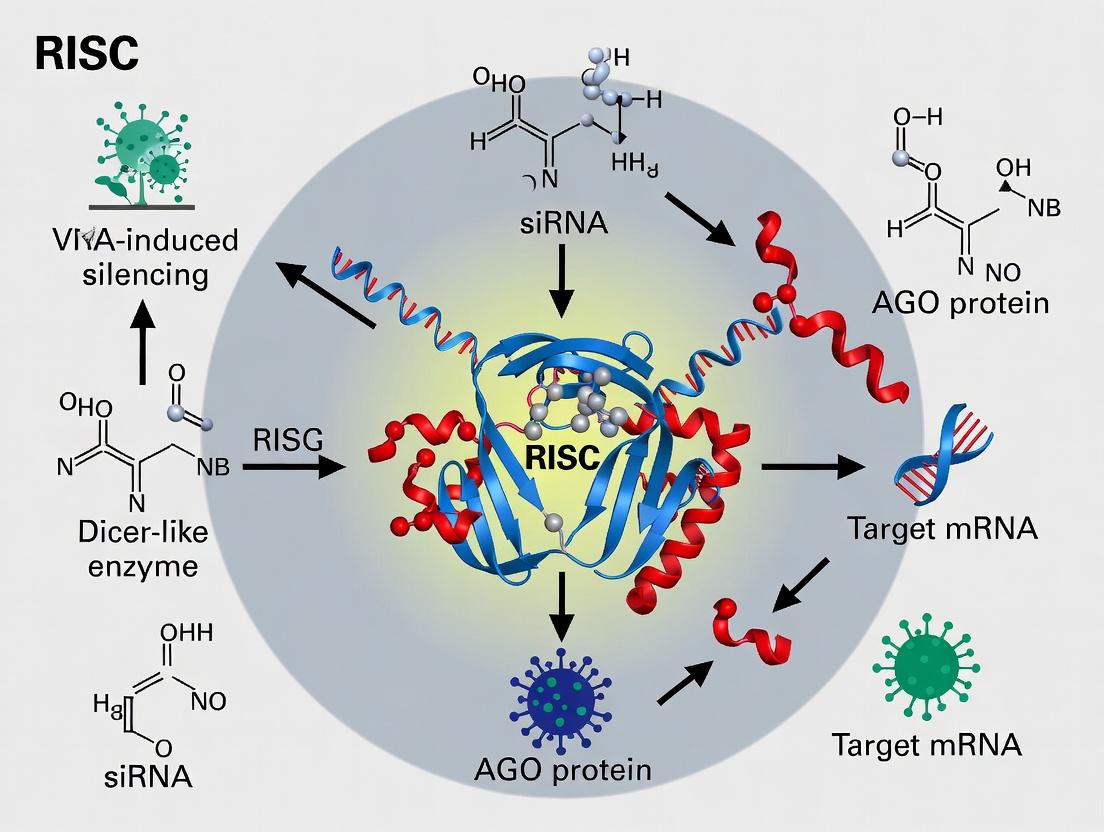
This article provides a comprehensive analysis of the RNA-induced silencing complex (RISC) within the context of Virus-Induced Gene Silencing (VIGS).
RISC and VIGS: Decoding the RNA Silencing Engine for Plant Biology and Antiviral Therapeutics
Abstract
This article provides a comprehensive analysis of the RNA-induced silencing complex (RISC) within the context of Virus-Induced Gene Silencing (VIGS). Targeting researchers and drug development professionals, we explore RISC's fundamental composition and mechanism in VIGS, detailing methodological applications for gene function studies and high-throughput screening. The guide addresses common challenges and optimization strategies for efficient silencing. Finally, we evaluate and compare VIGS against other gene silencing technologies, validating its utility and discussing its translational potential in antiviral and crop improvement research. This synthesis offers both a foundational understanding and practical insights for leveraging RISC-mediated VIGS in modern biotechnology.
The RISC-VIGS Nexus: Core Components, Mechanism, and Biological Significance
Virus-Induced Gene Silencing (VIGS) has emerged as a pivotal reverse-genetics tool in plant biology, leveraging the plant's endogenous RNA-induced silencing complex (RISC) machinery. This guide details the core protein and RNA architecture of the plant RISC, the central effector in post-transcriptional gene silencing (PTGS) pathways that VIGS exploits. Understanding RISC's composition and assembly is fundamental for optimizing VIGS efficiency, designing effective silencing vectors, and developing novel crop protection or therapeutic strategies.
Core Protein Components of Plant RISC
The plant RISC is a dynamic ribonucleoprotein complex. Its minimal core consists of an Argonaute (AGO) protein loaded with a small guide RNA (sRNA). Auxiliary proteins facilitate assembly, stability, and targeting.
Table 1: Core Protein Components of Plant RISC
| Protein Family/Name | Key Isoforms in Arabidopsis | Primary Function in RISC Assembly/Activity | Quantitative Abundance (Approx. Molecules/Cell)* |
|---|---|---|---|
| Argonaute (AGO) | AGO1 (major slicer) | Slicer activity, sRNA binding, target mRNA cleavage. Loaded with miRNAs/siRNAs. | 1,000 - 10,000 |
| AGO2 | Antiviral defense, secondary siRNA amplification. Loaded with viral/hp-siRNAs. | 100 - 1,000 | |
| AGO4 | RNA-directed DNA Methylation (RdDM). Loaded with heterochromatic siRNAs. | 500 - 5,000 | |
| AGO7 | Specific for trans-acting siRNAs (tasiRNAs). Loads miR390. | 100 - 500 | |
| Dicer-like (DCL) | DCL1 | miRNA biogenesis from primary transcripts. | 500 - 2,000 |
| DCL2, DCL3, DCL4 | siRNA biogenesis from long dsRNA; involved in antiviral & RdDM pathways. | 100 - 1,500 each | |
| dsRNA-Binding Proteins | HYL1 (DRB1) | Partners with DCL1 for precise miRNA processing. | 500 - 2,000 |
| DRB2, DRB4 | Assist other DCLs in siRNA processing. | 100 - 1,000 | |
| Loading Complex | HSP90 | Chaperone; facilitates AGO conformation for sRNA loading. | High (Ubiquitous) |
| SQN (Cyclophilin 40) | Co-chaperone with HSP90 in RISC loading complex. | Moderate |
Note: Quantitative estimates are generalized from mass spectrometry and quantitative immunoblotting studies in *Arabidopsis protoplasts or specific tissues. Actual numbers vary by cell type and condition.*
Guide RNA Classification and Characteristics
Plant sRNAs that guide RISC are categorized by biogenesis and function.
Table 2: Guide Small RNAs Loading Plant RISC
| sRNA Type | Length (nt) | Biogenesis Initiator | Primary AGO Loader | Primary Function | Key Features for VIGS |
|---|---|---|---|---|---|
| microRNA (miRNA) | 20-22 | DCL1 from MIR gene transcripts | AGO1 | Endogenous gene regulation, development. | Not typically used directly in VIGS, but endogenous pathway can compete for RISC. |
| siRNA (exogenous) | 21-22 | DCL4/DCL2 from viral or introduced dsRNA | AGO1, AGO2 | Antiviral defense, transitive silencing. | Primary trigger for VIGS. Synthetic or viral-derived dsRNA is processed into 21-22nt siRNAs. |
| heterochromatic siRNA (hc-siRNA) | 24 | DCL3 from RdDM transcripts | AGO4, AGO6, AGO9 | Transcriptional silencing via DNA methylation. | Can contribute to long-term, heritable silencing effects. |
| phased siRNA (phasiRNA) | 21 | DCL4 from miRNA-cleaved transcripts | AGO1 | Amplified silencing of target transcripts. | Can enhance and amplify VIGS signals in some systems. |
Experimental Protocols for Core Analysis
Protocol 4.1: Co-Immunoprecipitation (Co-IP) of Plant RISC Components
Objective: To identify protein-protein and protein-RNA interactions within the native RISC complex. Materials: Plant tissue expressing epitope-tagged AGO (e.g., pAGO1::AGO1-GFP transgenic line), liquid N₂, crosslinker (optional). Procedure:
- Tissue Harvest & Lysis: Grind 2g of fresh tissue in liquid N₂. Homogenize in 10ml of ice-cold Extraction Buffer (50mM Tris-HCl pH7.5, 150mM NaCl, 10% glycerol, 0.5% NP-40, 2mM DTT, 1x protease inhibitor, 100U/ml RNaseOUT).
- Clarification: Centrifuge at 15,000g for 20min at 4°C. Filter supernatant through 0.45μm membrane.
- Immunoprecipitation: Incubate supernatant with 30μl of anti-GFP magnetic beads for 2h at 4°C with gentle rotation.
- Washing: Wash beads 4x with 1ml Wash Buffer (identical to Extraction Buffer but with 0.1% NP-40).
- Elution:
- For Proteins: Elute with 50μl 2x Laemmli buffer at 95°C for 5min. Analyze by SDS-PAGE and immunoblotting for partners (e.g., HSP90, SQN).
- For Co-precipitated RNA: Resuspend beads in TRIzol reagent. Isolate RNA. Analyze sRNAs by northern blot or small RNA-seq.
Protocol 4.2: RISC Loading & Slicer Activity Assay (In Vitro)
Objective: To reconstitute RISC loading and confirm its catalytic "slicer" activity. Materials: Recombinant plant AGO protein (e.g., E. coli-expressed AtAGO1), synthetic 21-nt siRNA duplex, radiolabeled (γ-³²P) target mRNA, purified HSP90/SQN complex, ATP. Procedure:
- RISC Loading Reaction: Assemble in 50μl: 1μM AGO1, 2μM siRNA duplex, 2μM HSP90/SQN complex, 2mM ATP, Loading Buffer (30mM HEPES-KOH pH7.4, 100mM KOAc, 2mM Mg(OAc)₂, 0.5mM DTT). Incubate at 25°C for 1h.
- Gel Filtration: Pass reaction through a size-exclusion column (e.g., Superdex 200 Increase) to isolate assembled RISC from free components.
- Slicer Assay: Incubate purified RISC with 50nM ³²P-labeled target mRNA (complementary to guide siRNA) in slicer buffer (20mM Tris-HCl pH8.0, 100mM KCl, 2mM MgCl₂) at 25°C for 15-60min.
- Analysis: Stop reaction with Proteinase K/ SDS. Extract RNA, run on denaturing urea-PAGE (15%). Visualize cleavage fragments (specific 12-nt product from 21-nt guide) via phosphorimaging.
Visualizing Pathways and Workflows
Diagram 1: Plant RISC Assembly and Silencing Pathways
Diagram 2: RISC Co-IP and Analysis Workflow
The Scientist's Toolkit: Key Research Reagent Solutions
Table 3: Essential Reagents for Plant RISC Research
| Reagent / Material | Function & Application | Example / Supplier Note |
|---|---|---|
| Anti-AGO Antibodies | Immunoprecipitation, western blot, localization. Critical for isolating native complexes. | Polyclonal/Monoclonal against AGO1, AGO2 (Agrisera, ABclonal). Validate for specific IP in plant species. |
| Epitope-Tagged AGO Lines | Enables affinity purification of functional RISC without native antibodies. | Arabidopsis lines with genomic AGO1::3xFLAG or AGO1::GFP. |
| Recombinant Plant AGO Protein | For in vitro reconstitution of RISC loading and slicer assays. | E. coli or insect cell expressed, purified (e.g., N-terminal His-tag). |
| HSP90/SQN Complex | Essential co-factor for in vitro RISC loading studies. | Co-expressed and purified from insect cell systems. |
| Synthetic siRNA/miRNA Duplexes | Defined guides for loading assays; positive controls for silencing. | Chemically synthesized, 2-nt 3' overhangs, HPLC-purified. |
| RNaseOUT / SUPERase•In | Protects labile sRNAs and RISC complexes during extraction/IP. | Essential in all lysis and wash buffers. |
| Magnetic Protein A/G Beads | Solid support for efficient Co-IP with minimal background. | Coupled to specific antibodies (GFP, FLAG). |
| Radioisotope (γ-³²P-ATP) | For high-sensitivity labeling of target RNAs in slicer assays. | Requires radiation safety protocols. |
| Small RNA-Seq Library Prep Kits | High-throughput analysis of sRNAs co-purified with RISC. | Kits tailored for <200nt RNA (Illumina, NEB). |
| VIGS Vectors (e.g., TRV, BSMV) | In planta delivery of dsRNA to trigger RISC-mediated silencing. | pTRV1/pTRV2 for Solanaceae; BSMV for monocots. |
Virus-Induced Gene Silencing (VIGS) is a pivotal reverse-genetics and functional genomics tool that exploits the plant's innate RNA interference (RNAi) machinery to target endogenous mRNAs for degradation. The process culminates in the sequence-specific knockdown of target gene expression. The core effector complex of RNAi, the RNA-induced silencing complex (RISC), is responsible for this final, decisive step. This whitepaper provides an in-depth technical analysis of the stepwise biochemical pathway, from the introduction of viral RNA to the cleavage of the target transcript, with a focus on RISC assembly and function within the VIGS context. Understanding this mechanism is critical for optimizing VIGS efficiency, designing effective viral vectors, and translating VIGS principles into therapeutic applications.
The Initiating Event: Viral RNA Replication and dsRNA Formation
The VIGS pathway is initiated by the introduction of a modified viral vector carrying a fragment of the host target gene. Upon infection and viral replication, the primary trigger—double-stranded RNA (dsRNA)—is generated. This occurs through several mechanisms:
- Replication of RNA viruses: Viral RNA-dependent RNA polymerases (RdRps) synthesize complementary strands, creating dsRNA replication intermediates.
- Transcription from DNA viruses: Bidirectional transcription or the formation of hairpin structures from single-stranded transcripts can produce dsRNA.
- Host RdRp activity: In plants and some other organisms, host-encoded RdRps can amplify the silencing signal by using aberrant RNAs as templates to generate secondary dsRNA (systemic silencing).
This viral-derived dsRNA is recognized as a pathogen-associated molecular pattern (PAMP) by the host.
Dicing and sRNA Generation: The Role of Dicer-like (DCL) Proteins
The long dsRNA trigger is processed into short interfering RNAs (siRNAs) by the RNase III-family enzyme Dicer or, in plants, Dicer-like (DCL) proteins. This step defines the sequence specificity of the entire silencing cascade.
- Key Experiment: siRNA Isolation and Sequencing
- Protocol: Total RNA is extracted from VIGS-treated plant tissue at various time points post-infection. Low molecular weight RNA (18-30 nt) is size-fractionated by polyacrylamide gel electrophoresis (PAGE). The siRNA band is excised, eluted, and cloned. Following reverse transcription, libraries are sequenced to determine the abundance and precise 5'- and 3'-end sequences of viral and target-derived siRNAs.
- Outcome: Identifies the dominant siRNA sizes (e.g., 21-nt and 24-nt classes, produced primarily by DCL4 and DCL3, respectively), reveals phased siRNA patterns, and maps siRNA hotspots on the viral/target sequence.
Table 1: Primary DCL Proteins in Plant VIGS and Their siRNA Products
| DCL Protein | siRNA Length (nt) | Primary Role in VIGS | Key Characteristics |
|---|---|---|---|
| DCL4 | 21 | Primary effector for most VIGS. Loads into AGO1 for post-transcriptional silencing. | Requires dsRNA-binding protein DRB4. Major source of RISC-loaded siRNAs. |
| DCL2 | 22 | Backup/alternative pathway, especially during viral suppression or high viral load. | Important for systemic spread of silencing. Can initiate transitive silencing. |
| DCL3 | 24 | Associated with RNA-directed DNA Methylation (RdDM). | Binds AGO4. Contributes to transcriptional silencing, which can be part of long-term VIGS. |
The Core Process: Stepwise RISC Loading and Activation
The duplex siRNAs are handed off from Dicer to the core silencing machinery. RISC loading is a highly orchestrated, ATP-dependent process.
Step 1: RISC Loading Complex (RLC) Assembly. The siRNA duplex, often bound by Dicer and its partner protein (TRBP in animals, DRB in plants), is transferred to an Argonaute (AGO) protein. This forms the pre-RISC. In plants, AGO1 is the primary slicer for cytoplasmic post-transcriptional gene silencing.
Step 2: Passenger Strand Removal (Unwinding). The AGO protein measures thermodynamic asymmetry of the siRNA duplex. The strand with less stable 5' pairing (lower ( \Delta G )) is typically selected as the guide strand. The other (passenger) strand is cleaved by AGO's intrinsic endonuclease ("slicer") activity (in slicer-competent AGOs) and then ejected. This results in an activated, guide-strand-loaded RISC.
Step 3: Target Recognition and Cleavage. The activated RISC patrols the cellular environment. The guide strand's sequence (positions 2-8, the "seed" region) mediates complementary base-pairing with target mRNAs. Perfect or near-perfect complementarity leads to endonucleolytic cleavage of the target between nucleotides paired to guide strand positions 10 and 11. Cleaved mRNA fragments are rapidly degraded by cellular exonucleases.
- Key Experiment: In Vitro RISC Reconstitution and Cleavage Assay
- Protocol:
- Protein Purification: Recombinant AGO protein (e.g., Arabidopsis AGO1) is expressed and purified from insect or mammalian cell systems.
- siRNA Duplex Preparation: Chemically synthesized, 5'-phosphorylated guide and passenger strand RNAs are annealed.
- RISC Loading: Purified AGO is incubated with the siRNA duplex and ATP in a suitable buffer (e.g., containing Mg2+).
- Target Cleavage Reaction: A radiolabeled or fluorescently capped in vitro transcribed target RNA (containing the complementary site) is added to the loaded RISC.
- Analysis: Reaction products are resolved by denaturing PAGE. Cleavage is evidenced by the appearance of two shorter radioactive/fluorescent fragments of predictable sizes.
- Protocol:
Table 2: Key RISC Components and Their Functions in Plant VIGS
| Component | Protein Family | Function in RISC Loading & Activity | Quantitative Metric (Typical Range) |
|---|---|---|---|
| AGO1 | Argonaute | Core scaffold; slicer enzyme; binds guide siRNA. | ~100 kDa; Kd for siRNA ~1-10 nM. |
| Dicer (DCL4) | RNase III | Processes dsRNA; hands off siRNA to AGO. | Processivity: ~1 siRNA/10-20 sec. |
| dsRBP (DRB4) | dsRNA-binding | Facilitates precise dicing by DCL4; aids handoff. | Essential for 21-nt siRNA biogenesis. |
| HSP90 | Chaperone | Facilitates conformational opening of AGO for loading. | ATP-dependent; inhibition blocks RISC assembly. |
Visualization of the VIGS Pathway and RISC Mechanism
Diagram 1: The Complete VIGS Pathway from Infection to Silencing
Diagram 2: Stepwise Biochemical Mechanism of RISC Loading and Activation
The Scientist's Toolkit: Essential Research Reagents for VIGS/RISC Studies
Table 3: Key Research Reagent Solutions for Investigating RISC in VIGS
| Reagent / Material | Function in Experiment | Example Application / Note |
|---|---|---|
| pTRV1 & pTRV2 Vectors (Tobacco Rattle Virus) | Standard binary plasmid system for VIGS in solanaceous plants. | pTRV2 carries the target gene insert. Critical for initiation. |
| AGO1 Antibodies (Monoclonal/Polyclonal) | Immunoprecipitation (IP) of endogenous RISC complexes; Western blot analysis. | Used in RIP-seq (RNA IP) to identify in vivo RISC-associated sRNAs. |
| 2´-O-Methylated RNA Oligonucleotides | Inhibitors of specific siRNA strands; block RISC loading or target cleavage. | Used to functionally validate guide strand identity in vivo. |
| HSP90 Inhibitors (e.g., Geldanamycin) | Pharmacological blockade of chaperone-assisted RISC loading. | Experimental tool to dissect loading dynamics in planta. |
| Recombinant DCL4/DRB4 Complex | In vitro enzymatic generation of precise 21-nt siRNAs from dsRNA. | Source of defined siRNAs for in vitro RISC reconstitution assays. |
| 5´-Phosphorylated, 3´-2´-O-Methylated siRNA Duplexes | Synthetic siRNAs resistant to degradation; mimic natural Dicer products. | Essential for efficient in vitro and in vivo RISC loading studies. |
| Next-Generation Sequencing Kits (sRNA-seq) | High-throughput profiling of siRNA populations from VIGS tissues. | Quantifies siRNA abundance, phasing, and strand bias. |
| Cell-Free Plant Extracts (e.g., Wheat Germ, Arabidopsis lysate) | In vitro system to study RISC loading and activity in a plant-like environment. | Allows controlled manipulation of co-factors and energy sources. |
The precise mechanistic understanding of RISC loading and target cleavage is the foundation for advancing VIGS from a powerful research tool to a potential platform for crop protection and therapeutic development. Key challenges include enhancing siRNA delivery (via viral vectors), ensuring specific RISC loading with minimal off-target effects, and overcoming viral suppressor proteins that inhibit DCL or AGO function. Future research directions focus on engineering synthetic AGO proteins with novel specificities, modulating RISC components to increase silencing potency, and leveraging the stepwise knowledge of RISC assembly to design next-generation, RNA-based antiviral strategies in plants and beyond.
RNA interference (RNAi) is a conserved eukaryotic gene regulatory mechanism, with the RNA-induced silencing complex (RISC) as its central effector. In Virus-Induced Gene Silencing (VIGS) research, RISC is hijacked to target host mRNAs for degradation, enabling functional genomics studies. The assembly and function of RISC in this pathway are orchestrated by three core protein families: Dicer-like (DCL), RNA-dependent RNA Polymerase (RDR), and Argonaute (AGO). This whitepaper provides a technical dissection of their roles, integrating current experimental data and methodologies pertinent to VIGS and therapeutic development.
Core Protein Components: Functions and Quantitative Data
Table 1: Core Protein Families in Plant RNAi and VIGS
| Protein Family | Primary Role in RNAi/RISC | Key Domains | Typical Isoforms (Arabidopsis) | Notable Quantitative Metrics |
|---|---|---|---|---|
| Dicer-like (DCL) | Initiator; processes long dsRNA or hairpin RNA into siRNAs. | PAZ, RNase III, Helicase, dsRBD | DCL1 (21-22nt miRNAs), DCL2 (22nt siRNAs), DCL3 (24nt hc-siRNAs), DCL4 (21nt ta-siRNAs) | Processes dsRNA at ~1-2 bp/sec; generates precise 21-24nt products. DCL4 requires 5' monophosphate for processivity. |
| Argonaute (AGO) | Effector; siRNA-loaded AGO forms catalytic core of RISC, slices complementary mRNA. | PAZ, MID, PIWI (slicer) | AGO1 (miRNAs, viral siRNAs), AGO2 (antiviral defense), AGO4 (hc-siRNAs) | Binds siRNA with Kd ~1-10 nM. Slicer activity requires Mg²⁺ (1-5 mM optimal). AGO1 is the dominant loader of miRNAs. |
| RNA-dependent RNA Polymerase (RDR) | Amplifier; converts single-stranded RNA into dsRNA to amplify silencing. | Catalytic core (RdRP), dsRBD | RDR1, RDR2 (hc-siRNA genesis), RDR6 (ta-siRNA, viral amplification) | Processivity: adds ~50-100 nt/sec. Prefers 5' monophosphate templates. Essential for transitive RNAi and systemic spread. |
Table 2: Protein Synergy in VIGS Pathways
| Pathway | Primary DCL | Primary RDR | Primary AGO | Key siRNA Product | Role in VIGS |
|---|---|---|---|---|---|
| Viral siRNA (Exogenous) | DCL4 (primary), DCL2 (backup) | RDR1, RDR6 (amplification) | AGO1, AGO2 | 21-22 nt | Direct cleavage of viral RNA; primary antiviral mechanism exploited by VIGS vectors. |
| Transitive & Systemic Silencing | DCL4 | RDR6 | AGO1 | 21 nt | Converts initial trigger into secondary siRNAs, spreading silencing beyond infection site. |
| Transcriptional Gene Silencing | DCL3 | RDR2 | AGO4, AGO6 | 24 nt | Directs DNA methylation; can contribute to persistent VIGS effects. |
Detailed Experimental Protocols
Protocol 1: Co-Immunoprecipitation (Co-IP) for RISC Component Analysis Objective: To identify protein-protein interactions between AGO, DCL, and RDR complexes in planta.
- Material: Transgenic line expressing tagged AGO1 (e.g., pAGO1::AGO1-GFP). Wild-type control.
- Extraction: Grind 2g of leaf tissue (VIGS-infected and control) in liquid N₂. Homogenize in 5ml IP buffer (25mM Tris-HCl pH7.5, 150mM NaCl, 5mM MgCl₂, 5mM DTT, 0.5% NP-40, 1x protease inhibitor, 100U RNaseOUT).
- Clearance: Centrifuge at 15,000g for 20min at 4°C. Filter supernatant through 0.45µm membrane.
- Immunoprecipitation: Incubate supernatant with 25µl GFP-Trap agarose beads for 2h at 4°C with gentle rotation.
- Wash: Pellet beads, wash 5x with 1ml high-salt wash buffer (IP buffer with 300mM NaCl).
- Elution & Analysis: Elute proteins in 2x Laemmli buffer at 95°C for 5min. Analyze via SDS-PAGE and western blot using α-DCL1, α-RDR6 antibodies. For RNA analysis, elute with Proteinase K, extract RNA for small RNA-seq.
Protocol 2: In Vitro Dicing Assay with Recombinant DCL Objective: To characterize siRNA biogenesis kinetics and product size from a VIGS vector-derived dsRNA.
- Material: Purified recombinant DCL4 protein, synthetic 500bp dsRNA matching a VIGS vector region (e.g., TRV::PDS), 5' radiolabeled with ³²P.
- Reaction Setup: In a 20µl volume: 50nM dsRNA substrate, 100nM DCL4, 20mM Tris-HCl (pH8.0), 150mM NaCl, 2.5mM MgCl₂, 2mM DTT, 1mM ATP.
- Incubation: Run reactions at 28°C (plant physiological temp). Remove 4µl aliquots at 0, 5, 15, 30, 60min.
- Termination & Analysis: Stop with 2x formamide loading buffer + 10mM EDTA. Denature at 95°C, separate products on 15% denaturing urea-PAGE. Visualize via phosphorimaging. Use a 20-25nt ssRNA ladder. Quantify band intensity to calculate processing rate.
Visualizing Pathways and Workflows
Title: VIGS RNAi Pathway and Amplification Loop
Title: Co-IP Workflow for RISC Analysis
The Scientist's Toolkit: Key Research Reagent Solutions
Table 3: Essential Reagents for Core Protein and VIGS Research
| Reagent/Material | Primary Function & Specification | Example Supplier/Catalog |
|---|---|---|
| GFP-Trap or RFP-Trap Agarose | Affinity beads for IP of GFP/RFP-tagged proteins (e.g., AGO-GFP). Minimizes background. | ChromoTek, gtma-20 |
| Anti-AGO1 (Mid-domain) Antibody | Immunoprecipitation or western blot detection of native AGO1 protein. | Agrisera, AS09 527 |
| Recombinant DCL4 Protein (Active) | In vitro dicing assays to define substrate specificity and kinetics. | Custom expression required (e.g., insect cell system). |
| T7 RiboMAX Express Large Scale RNA Production System | High-yield synthesis of dsRNA triggers for VIGS or in vitro assays. | Promega, P1320 |
| mirVana miRNA Isolation Kit | Purification of total small RNAs (<200 nt) for sequencing from IP samples. | Invitrogen, AM1560 |
| RNase III (E. coli) | Control enzyme for non-specific dsRNA processing; contrasts DCL specificity. | NEB, M0245S |
| Tobacco Rattle Virus (TRV) VIGS Vectors (pTRV1, pTRV2) | Standard binary vectors for efficient gene silencing in Nicotiana benthamiana. | Addgene, vectors 57906 & 57907 |
| 5'-[³²P]-pCp Cytidine 3',5'-Bisphosphate | Radiolabels 3' end of RNA for sensitive detection in processing assays. | PerkinElmer, BLU002Z250UC |
Virus-induced gene silencing (VIGS) represents a sophisticated biological imperative: a plant’s adaptive immune response co-opted as a revolutionary functional genomics tool. At the core of this process lies the RNA-induced silencing complex (RISC), a multiprotein assembly that executes sequence-specific RNA degradation. This whitepaper frames VIGS within the essential context of RISC biology, detailing its mechanisms, applications, and protocols for research and drug development professionals.
The Molecular Mechanism: From Viral RNA to RISC-Mediated Silencing
VIGS is initiated by double-stranded RNA (dsRNA) replicative intermediates of invading viruses or experimentally introduced constructs. This dsRNA is recognized and processed by Dicer-like (DCL) enzymes into 21-24 nucleotide small interfering RNAs (siRNAs). These siRNAs are loaded onto Argonaute (AGO) proteins, the catalytic heart of RISC. The complex unwinds the siRNA duplex, retaining the guide strand to scan and cleave complementary viral RNA or endogenous mRNA transcripts, thereby silencing gene expression.
Table 1: Core Protein Components of Plant RISC in Antiviral Defense
| Protein Component | Family/Type | Key Function in VIGS | Associated siRNA Size (nt) |
|---|---|---|---|
| AGO1 | Argonaute | Primary slicer for viral and endogenous mRNA cleavage; binds 21-22 nt siRNAs. | 21-22 |
| AGO2 | Argonaute | Often induced by viral infection; plays a secondary, enhanced antiviral role. | 21-22 |
| DCL2 | Dicer-like | Processes viral dsRNA into 22 nt siRNAs; primary antiviral Dicer. | 22 |
| DCL4 | Dicer-like | Processes viral dsRNA into 21 nt siRNAs; key for systemic silencing. | 21 |
| RDR6 | RNA-dependent RNA Polymerase | Amplifies silencing by generating secondary dsRNA from target RNA. | N/A |
Experimental Protocols for VIGS Research
Protocol 3.1: TRV-Based VIGS inNicotiana benthamiana
This standard protocol uses Tobacco Rattle Virus (TRV) to silence genes of interest.
- Vector Preparation: Clone a 300-500 bp fragment of the target gene into the TRV RNA2 vector (e.g., pTRV2) using appropriate restriction sites.
- Agro-infiltration:
- Transform recombinant pTRV2 and helper pTRV1 plasmids into Agrobacterium tumefaciens strain GV3101.
- Grow cultures to OD₆₀₀ = 0.5-1.0 in LB with appropriate antibiotics.
- Resuspend pelleted bacteria in infiltration buffer (10 mM MES, 10 mM MgCl₂, 200 µM acetosyringone, pH 5.6).
- Mix pTRV1 and pTRV2-target cultures 1:1.
- Pressure-infiltrate the mixture into the abaxial side of 2-3 week-old N. benthamiana leaves using a needleless syringe.
- Analysis: Assess phenotypic changes and validate silencing via qRT-PCR or Western blot 2-4 weeks post-infiltration.
Protocol 3.2: Quantifying RISC ActivityIn Vitro
An assay to measure RISC-mediated cleavage efficiency.
- RISC Immunoprecipitation: Homogenize plant tissue. Immunoprecipitate AGO complexes using anti-AGO1 antibody conjugated to magnetic beads.
- Cleavage Reaction:
- Resuspend bead-AGO complexes in 50 µL reaction buffer (30 mM HEPES-KOH pH 7.4, 100 mM KOAc, 2 mM Mg(OAc)₂, 5 mM DTT, 0.5 mM ATP).
- Add 1 nM 5´-³²P-radiolabeled target RNA substrate complementary to the siRNA of interest.
- Incubate at 25°C for 90 minutes.
- Detection: Stop reaction with proteinase K. Analyze products by denaturing PAGE (15% urea gel). Autoradiography will show intact substrate and shorter cleavage products.
Visualization of Pathways and Workflows
Title: VIGS Pathway from Viral dsRNA to RISC-Mediated Silencing
Title: Standard TRV-VIGS Experimental Workflow
The Scientist's Toolkit: Essential Research Reagents
Table 2: Key Research Reagent Solutions for VIGS & RISC Studies
| Reagent / Material | Function in VIGS/RISC Research | Example Product/Catalog |
|---|---|---|
| TRV VIGS Vectors (pTRV1, pTRV2) | Binary plasmid system for virus delivery and target gene insertion. | pTRV1/pTRV2 (Addgene #50260/50261) |
| Agrobacterium tumefaciens GV3101 | Disarmed strain for efficient delivery of VIGS constructs into plant cells. | GV3101 with pSoup helper plasmid. |
| Anti-AGO1 Antibody (monoclonal) | For immunoprecipitation of endogenous RISC complexes to study loading or activity. | Arabidopsis AGO1 mAb (Agrisera AS09 527). |
| DIG-labeled RNA Molecular Weight Marker | Accurate sizing of siRNAs on northern blots to confirm DCL processing. | DIG-labeled RNA Marker II, Roche. |
| Synthetic 21-nt siRNA Duplexes | Positive controls for RISC loading assays or to bypass viral delivery. | Custom-designed, 2´-OMe modified, HPLC-purified. |
| RNase III (E. coli) | Positive control enzyme for dsRNA digestion, compared to plant DCL activity. | New England Biolabs (M0245S). |
| Magnetic Protein A/G Beads | Solid support for AGO immunoprecipitation and subsequent in vitro cleavage assays. | Pierce Magnetic A/G Beads, Thermo. |
| Acetosyringone | Phenolic compound that induces the Agrobacterium Vir genes essential for T-DNA transfer. | 3´,5´-Dimethoxy-4´-hydroxyacetophenone, Sigma D134406. |
Quantitative Insights: Efficacy and Dynamics
Table 3: Quantitative Data on VIGS Efficiency and RISC Kinetics
| Parameter | Typical Measured Value | Experimental Context / Notes |
|---|---|---|
| Optimal insert size for VIGS | 200-500 bp | Fragments <150 bp often reduce efficiency; >800 bp can compromise viral mobility. |
| Time to observable silencing | 10-21 days post-infiltration (dpi) | Depends on plant species, target gene turnover, and viral vector. |
| Maximum silencing efficiency | 70-95% mRNA reduction | Measured by qRT-PCR in pooled tissue; efficiency varies by tissue and gene. |
| RISC in vitro cleavage rate (k_cat) | ~0.5 - 2 min⁻¹ | For purified Arabidopsis AGO1 with perfectly complementary target. |
| siRNA abundance required for silencing | As low as ~50 molecules per cell | Estimated from deep sequencing and single-cell studies. |
| Systemic spread velocity | 0.5 - 2.0 cm/day | Measured using reporter systems like GFP-silencing. |
Understanding VIGS through the lens of RISC assembly and function provides a blueprint for harnessing RNA silencing. For drug development, plant VIGS systems offer a rapid, high-throughput platform for validating the function of pathogenicity factors and potential drug targets. Furthermore, the principles of RISC loading and specificity directly inform the design of RNAi-based therapeutics, emphasizing the need for precise guide strand selection and off-target prediction. Continued research into the structural biology of plant AGO proteins and the systemic signaling of silencing will unlock new avenues for both crop protection and human medicine.
Harnessing RISC for Discovery: A Practical Guide to VIGS Vector Design and Functional Genomics
Virus-Induced Gene Silencing (VIGS) is a pivotal reverse genetics tool that hijacks the plant's innate RNA interference (RNAi) machinery. The core effector of RNAi, the RNA-induced silencing complex (RISC), is loaded with virus-derived small interfering RNAs (vsiRNAs) generated during viral replication. The selection of an appropriate viral vector is therefore critical, as it determines the efficiency of vsiRNA production, RISC loading, and subsequent target mRNA cleavage or translational repression. This guide provides a technical comparison of three major VIGS vectors—Tobacco Rattle Virus (TRV), Barley Stripe Mosaic Virus (BSMV), and Cabbage Leaf Curl Virus (CLCrV)—framed by their compatibility with the host plant's RISC machinery.
Comparative Vector Characteristics
Table 1: Core Characteristics of TRV, BSMV, and CLCrV Vectors
| Feature | TRV (RNA Virus) | BSMV (RNA Virus) | CLCrV (DNA Virus) |
|---|---|---|---|
| Genome Type | (+)ssRNA, bipartite | (+)ssRNA, tripartite | ssDNA, bipartite (Geminivirus) |
| Primary Host Range | Solanaceae (e.g., N. benthamiana, tomato, potato) | Monocots (e.g., barley, wheat, maize) | Brassicaceae (e.g., Arabidopsis, cabbage, N. benthamiana) |
| Inoculation Method | Agrobacterium infiltration (common), in vitro RNA transcription | In vitro RNA transcription, particle bombardment | Agrobacterium infiltration |
| Silencing Onset | 1-2 weeks post-inoculation | 1-2 weeks post-inoculation | 2-3 weeks post-inoculation |
| Silencing Duration | 3-8 weeks, can be strong and sustained | 3-6 weeks, can be transient | 4-12 weeks, often very persistent |
| Key Advantage | Broadest experimental host range among dicots, robust silencing. | Essential for monocot functional genomics. | Stable, long-term silencing in compatible dicots. |
| Key Limitation | Limited efficacy in some Arabidopsis ecotypes. | Requires handling of infectious RNA transcripts. | Narrow host range restricted primarily to Brassicaceae. |
| RISC-Loading Context | High-titer replication generates abundant vsiRNAs for RISC loading. | Efficient systemic movement in monocots enables vsiRNA spread. | Nuclear replication & transcription may involve host RNA Pol II, affecting vsiRNA profiles. |
Table 2: Quantitative Performance Metrics in Model Hosts
| Vector | Model Host | Reported Max. Silencing Efficiency* | Typical Insert Size Limit (bp) | Key Experimental Readouts |
|---|---|---|---|---|
| TRV | Nicotiana benthamiana | 90-100% (e.g., PDS) | 1,500 | Photobleaching, qRT-PCR, Western blot. |
| TRV | Tomato (S. lycopersicum) | 70-95% | 1,300 | Phenotypic assays, enzymatic activity. |
| BSMV | Barley (H. vulgare) | 80-95% (e.g., PDS) | 500 | Photobleaching, pathogen resistance assays. |
| BSMV | Wheat (T. aestivum) | 70-90% | 300 | Biomass measurement, stress response. |
| CLCrV | Arabidopsis (Col-0) | 70-85% | 600-800 | Fluorescent reporter quenching, developmental phenotypes. |
Efficiency for a robust visual marker like *Phytoene Desaturase (PDS).
Detailed Experimental Protocols
Protocol 1: TRV-Mediated VIGS in Nicotiana benthamiana via Agrobacterium Infiltration
- Key Reagents: pTRV1 & pTRV2 (or derivatives) plasmids, Agrobacterium tumefaciens strain GV3101, Antibiotics (kanamycin, rifampicin, gentamicin), Acetosyringone, Induction Medium (10 mM MES, 10 mM MgCl₂, 150 µM acetosyringone, pH 5.6).
- Procedure:
- Clone target gene fragment (~300-500 bp) into the multiple cloning site of the pTRV2 vector.
- Transform constructs into A. tumefaciens GV3101.
- Grow single colonies in LB with appropriate antibiotics at 28°C. Resuspend pelleted cultures in Induction Medium to an OD₆₀₀ of 1.0-2.0.
- Incubate suspensions at room temperature for 3-6 hours.
- Mix pTRV1 and recombinant pTRV2 cultures in a 1:1 ratio.
- Infiltrate the mixture into the abaxial side of 2-4 fully expanded leaves using a needleless syringe.
- Monitor plants for silencing phenotypes 10-21 days post-infiltration. Validate via qRT-PCR.
Protocol 2: BSMV-Mediated VIGS in Barley via In Vitro Transcription
- Key Reagents: BSMV tripartite plasmids (α, β, γ-MCS), Linearization enzymes (MluI, SpeI), In vitro transcription kit (e.g., mMessage mMachine T7), Inoculation Buffer (0.1M Glycine, 0.06M K₂HPO₄, 1% Celite, 1% bentonite), Carborundum.
- Procedure:
- Linearize BSMV α, β, and γ-MCS (containing target insert) plasmid templates.
- Perform in vitro transcription to generate capped viral RNAs.
- Combine equal molar amounts (or 5-10 µL each) of the three RNA transcripts.
- Dust the second leaf of 2-leaf-stage barley seedlings with Carborundum. Gently rub the leaf with a gloved finger dipped in the RNA transcript mixture mixed with inoculation buffer.
- Rinse seedlings with water and maintain under controlled conditions.
- Observe for systemic silencing symptoms on newly emerged leaves from ~7 days onwards.
Protocol 3: CLCrV-Mediated VIGS in Arabidopsis via Agrobacterium Infiltration
- Key Reagents: pCLCrVA & pCLCrVB (or derivatives) plasmids, A. tumefaciens strain GV3101, Acetosyringone, Sucrose (5% final), Silwet L-77 (0.02-0.05% final).
- Procedure:
- Clone target fragment into the pCLCrVA derivative.
- Transform into A. tumefaciens. Grow cultures as in Protocol 1.
- Resuspend bacteria in a solution containing 10 mM MgCl₂, 10 mM MES, 150 µM acetosyringone, and 5% sucrose.
- Add Silwet L-77 to the final concentration (0.02%).
- Dip flowering Arabidopsis plants (stage ~4-5 weeks old) into the suspension for 15-20 seconds, ensuring full immersion of aerial parts.
- Cover plants temporarily to maintain humidity. Seeds set after infiltration (T1) will harbor the VIGS construct. Screen T1 plants for silencing phenotypes.
Pathway and Workflow Visualizations
VIGS Pathway to RISC Loading
Vector Selection Decision Tree
The Scientist's Toolkit: Essential Research Reagents
Table 3: Key Reagent Solutions for VIGS Implementation
| Reagent / Material | Function in VIGS | Key Consideration |
|---|---|---|
| pTRV1/pTRV2 Vectors | TRV genome components; pTRV2 carries the target insert. | Ensure correct Agrobacterium strain compatibility. |
| BSMV α, β, γ Plasmids | BSMV genome components; γ vector modified for inserts. | Requires in vitro transcription; maintain RNase-free conditions. |
| pCLCrVA/pCLCrVB Vectors | CLCrV genome components; A vector carries the insert. | Optimized for agroinfiltration of flowering plants. |
| A. tumefaciens GV3101 | Standard disarmed strain for plant transformation. | Use with appropriate antibiotic selection and virulence induction. |
| Acetosyringone | Phenolic inducer of Agrobacterium vir genes. | Critical for efficient T-DNA transfer; prepare fresh stock. |
| In Vitro Transcription Kit (T7/SP6) | Generates infectious RNA transcripts for BSMV. | Capping analog enhances transcript stability and infectivity. |
| Silwet L-77 | Surfactant that reduces surface tension for agro-dipping. | Concentration is critical; too high causes phytotoxicity. |
| Phytoene Desaturase (PDS) Clone | Positive control marker gene causing photobleaching. | Essential for optimizing and validating any new VIGS system. |
| RNase Inhibitor | Protects in vitro transcripts and vsiRNAs during extraction. | Mandatory for BSMV RNA work and downstream sRNA sequencing. |
| sRNA Sequencing Kit | Profiles vsiRNAs to confirm RISC loading candidates. | Reveals abundance, size classes, and strand bias of vsiRNAs. |
1. Introduction & Thesis Context
Within Virus-Induced Gene Silencing (VIGS) research, the efficacy of gene knockdown is fundamentally governed by the recruitment and activity of the RNA-induced silencing complex (RISC). The broader thesis posits that the precise design of the VIGS vector insert is the critical determinant for efficient RISC loading and subsequent target mRNA cleavage or translational repression. This guide details the core strategies for designing optimal inserts to maximize RISC recruitment, thereby enhancing the potency and specificity of VIGS.
2. Core Principles of RISC Recruitment in VIGS
VIGS utilizes viral vectors to deliver double-stranded RNA (dsRNA) or hairpin RNA precursors into host cells. These are processed by Dicer into small interfering RNAs (siRNAs) of 21-24 nucleotides. The thermodynamic properties and sequence of these siRNAs dictate which strand is selected as the guide strand and loaded into RISC (strand bias). The central goal of optimal insert design is to produce siRNA duplexes that favor the incorporation of the antisense strand into RISC and facilitate perfect complementarity with the target mRNA.
3. Strategies for Selecting Target Sequences
3.1. In Silico Selection Criteria Target selection begins with bioinformatic analysis. Key quantitative parameters for candidate sequences are summarized below.
Table 1: Quantitative Parameters for Target Sequence Selection
| Parameter | Optimal Value/Range | Rationale |
|---|---|---|
| GC Content | 30%-55% | Ensances strand separation; extremes hinder RISC loading. |
| Internal Stability (ΔG) | Lower at 5' end of antisense strand | Thermodynamic asymmetry promotes loading of antisense strand. |
| Sequence Specificity (BLASTn) | No significant off-target hits (<16-17 nt contiguous match) | Minimizes unintended silencing of non-target genes. |
| Target Site Accessibility | Low local mRNA structure (low ΔG) | Enhances RISC binding to the target region. |
| siRNA Length | 21-22 nt | Standard for Dicer processing and RISC incorporation. |
3.2. Experimental Protocol: In Silico Target Selection and siRNA Prediction
- Step 1: Retrieve the full mRNA sequence (NCBI, Ensembl) of the target gene.
- Step 2: Use algorithm-based tools (e.g., DSIR, siDirect 2.0, or proprietary VIGS design software) to scan the sequence for all possible 21-mer siRNAs.
- Step 3: Filter candidates based on Table 1 criteria. Prioritize sequences where the antisense strand has a lower thermodynamic stability at its 5' end compared to its 3' end (often measured as a difference in melting energy, ΔΔG).
- Step 4: Perform a genome-wide BLAST search to exclude sequences with high homology to other genes.
- Step 5: Select 3-5 top candidate sequences for empirical validation.
4. Maximizing RISC Recruitment: Insert Design Parameters
The VIGS insert must be designed to generate optimal siRNA populations after Dicer processing.
4.1. Insert Architecture
- Length: 200-500 bp is common for many VIGS vectors (e.g., TRV, BMV). Longer inserts may produce more siRNAs but can increase recombination risk.
- Orientation: Cloning as an inverted repeat to form a hairpin RNA (hpRNA) dramatically increases silencing efficiency by producing abundant, defined dsRNA.
- Sequence Features: Avoid intragenic repeats and regions of high self-complementarity within the insert that could interfere with cloning or dsRNA formation.
4.2. Experimental Protocol: Cloning a Hairpin Insert for VIGS
- Step 1 (PCR Amplify): Amplify the selected target sequence fragment from cDNA using gene-specific primers with added restriction enzyme sites.
- Step 2 (First Clone): Ligate the fragment into the VIGS vector in sense orientation. Verify by sequencing (Clone A).
- Step 3 (Prepare Inverted Fragment): Re-amplify the same fragment using primers designed to add a different set of restriction sites, or use a linker-based approach, to allow cloning in antisense orientation.
- Step 4 (Assemble Hairpin): Ligate the antisense fragment into Clone A downstream of the sense fragment, typically separated by an intron or short spacer (e.g., GUS linker) to stabilize the plasmid in E. coli.
- Step 5 (Transform & Validate): Transform the final hairpin construct into Agrobacterium tumefaciens for plant VIGS applications.
5. Signaling Pathway & Workflow Diagram
Title: VIGS Insert Processing Pathway to Active RISC
6. The Scientist's Toolkit: Key Research Reagent Solutions
Table 2: Essential Materials for VIGS Insert Design & Validation
| Reagent / Material | Function & Application |
|---|---|
| High-Fidelity DNA Polymerase (e.g., Phusion, Q5) | Error-free PCR amplification of target sequence fragments for cloning. |
| Gateway Cloning System (if applicable) | Enables rapid, site-specific recombination for high-throughput VIGS vector construction. |
| pTRV1 & pTRV2 Vectors (for plants) | Standard binary vectors for Tobacco Rattle Virus-based VIGS in solanaceous species. |
| Agrobacterium tumefaciens Strain GV3101 | Delivery of recombinant VIGS vectors into plant tissues via agroinfiltration. |
| T7 Endonuclease I or SURVEYOR Assay Kit | Detection of in vivo target site mutations as evidence of successful editing/silencing. |
| Small RNA Northern Blot Kit | Direct detection and validation of siRNA production from the VIGS construct. |
| Dual-Luciferase Reporter Assay System | Quantitative measurement of RISC-mediated translational repression in cell culture models. |
| Next-Generation Sequencing (NGS) Library Prep Kit for sRNAs | Profiling the exact siRNA species produced from the VIGS insert and identifying the loaded guide strand. |
7. Validation & Optimization Protocols
7.1. Experimental Protocol: Validating RISC Loading Efficiency via siRNA Sequencing
- Step 1 (Sample Collection): Harvest tissue 7-14 days post-VIGS infiltration.
- Step 2 (sRNA Isolation): Extract total RNA, then enrich for small RNAs (<200 nt) using a commercial kit or PEG precipitation.
- Step 3 (Library Prep & Sequencing): Prepare an NGS library specifically for small RNAs (adapters ligated to 3' and 5' ends). Sequence on a platform like Illumina.
- Step 4 (Bioinformatic Analysis): Map sequenced reads to the VIGS insert sequence. Quantify the abundance of each putative siRNA. The ratio of antisense to sense reads for each duplex indicates RISC loading bias.
- Step 5 (Correlation with Phenotype): Correlate the abundance of dominant guide siRNAs with the observed silencing phenotype (e.g., by qRT-PCR of target mRNA).
7.2. Quantitative Data from Validation Table 3: Example siRNA Sequencing Data from a Validated VIGS Construct
| siRNA Sequence (21-nt) | Total Reads | % Antisense Reads | Inferred RISC Loading Bias |
|---|---|---|---|
| 5'-UACGA...AUUCG-3' | 125,430 | 95% | Strong for Antisense |
| 5'-AAUGC...CGAAG-3' | 89,550 | 82% | Strong for Antisense |
| 5'-CGUAA...GUCAA-3' | 15,670 | 55% | Weak / Neutral |
| Complementary Sense Strands | <5,000 | <10% | Low |
8. Conclusion
Optimal VIGS insert design is a deliberate process integrating in silico thermodynamic prediction with empirical validation of RISC output. By prioritizing sequences that promote antisense strand loading and using hairpin constructs to generate abundant dsRNA precursors, researchers can maximize RISC recruitment. This directly enhances the potency and reliability of VIGS as a functional genomics tool and underpins its potential in therapeutic development, where efficient RISC engagement is paramount.
Virus-induced gene silencing (VIGS) is a rapid, reverse-genetics tool for functional genomics that exploits the plant's endogenous RNA-induced silencing complex (RISC) machinery. The core principle involves a recombinant viral vector carrying a fragment of the target host gene. Upon infection and replication, double-stranded viral RNAs are processed by Dicer-like enzymes into 21-24 nucleotide small interfering RNAs (siRNAs). These siRNAs are loaded into the Argonaute (AGO) protein, the catalytic component of RISC, guiding sequence-specific cleavage or translational inhibition of complementary endogenous mRNA. This protocol details the steps from delivery of the VIGS vector via Agrobacterium tumefaciens to the analysis of silencing phenotypes, providing a technical framework for researchers probing gene function and exploring RISC dynamics in planta.
Agrobacterium-Mediated Vector Delivery and Infiltration
Essential Research Reagent Solutions
| Item | Function in VIGS Protocol |
|---|---|
| pTRV1 & pTRV2 VIGS Vectors | Tobacco Rattle Virus (TRV)-based binary plasmids; pTRV1 encodes replication proteins, pTRV2 carries the target gene insert for siRNA generation. |
| Agrobacterium tumefaciens Strain GV3101 | Disarmed helper strain optimized for plant transformation; delivers T-DNA containing VIGS vector into plant cells. |
| LB Medium with Appropriate Antibiotics | Selective growth medium for maintaining plasmid-bearing Agrobacterium (e.g., Kanamycin, Rifampicin). |
| Acetosyringone | Phenolic compound that induces Agrobacterium Vir genes, enabling T-DNA transfer. |
| Infiltration Buffer (10 mM MES, 10 mM MgCl₂, 150 µM Acetosyringone) | Buffer maintaining Agrobacterium viability and virulence during infiltration, at optimal pH (5.6). |
| Silwet L-77 | Surfactant used for vacuum infiltration to lower surface tension and ensure thorough tissue penetration. |
Detailed Experimental Protocol
Step 1: Vector Construction & Transformation. Clone a 300-500 bp fragment of the target gene into the multiple cloning site of the pTRV2 vector. Verify by sequencing. Transform constructs into electrocompetent A. tumefaciens strain GV3101 via electroporation.
Step 2: Agrobacterium Culture Preparation.
- Streak transformed Agrobacterium from glycerol stock onto LB agar plates with relevant antibiotics (e.g., Kanamycin 50 µg/mL, Rifampicin 50 µg/mL). Incubate at 28°C for 2 days.
- Pick a single colony to inoculate 5 mL of LB broth with antibiotics. Grow overnight at 28°C, 200 rpm.
- Sub-culture 1 mL of the overnight culture into 50 mL of fresh LB with antibiotics and 50 µM acetosyringone. Grow to an OD₆₀₀ of 0.8-1.0 (approx. 6-8 hours).
- Pellet cells at 5000 x g for 10 min at room temperature. Resuspend pellet in infiltration buffer to a final OD₆₀₀ of 0.5-1.0 for syringe infiltration, or 0.2-0.3 for vacuum infiltration.
- For mixed cultures, combine pTRV1 and pTRV2 (with insert) suspensions in a 1:1 ratio. Incubate the suspension at room temperature in the dark for 3-6 hours.
Step 3: Plant Infiltration. For syringe infiltration (e.g., *Nicotiana benthamiana leaves):* Use a needle-less syringe to press the bacterial suspension into the abaxial side of young, fully expanded leaves. For vacuum infiltration (e.g., seedlings): Submerge the above-ground portion of the plant (e.g., 2-week-old Arabidopsis) in the bacterial suspension. Apply vacuum (25-30 inHg) for 2 minutes in a desiccator, then slowly release. Rinse with water. Maintain infiltrated plants under standard growth conditions.
Viral Spread & siRNA Biogenesis
Following infiltration, the T-DNA is transferred to the plant nucleus and the viral genome is reconstituted. Viral replication generates dsRNA intermediates, which are the substrates for Dicer processing. The resulting siRNAs are key triggers of RISC-mediated silencing.
Key Quantitative Data on Viral Spread and siRNA Accumulation
| Parameter | Typical Measurement (Time Post-Infiltration) | Notes / Method |
|---|---|---|
| Viral RNA Accumulation | Peak at 7-14 days | Quantified by qRT-PCR of viral coat protein (CP) RNA. |
| Primary siRNA Detection | Detectable from 3-5 days | Northern blot or high-throughput sequencing; 21-24 nt species. |
| Maximal Target mRNA Knockdown | 10-21 days | Varies by plant species, tissue, and target gene stability. |
| Visual Silencing Phenotype | Onset 10-21 days | e.g., Photobleaching in PDS silencing. |
| Systemic Spread | Visible in new leaves 7-10 dpi | Tracked using reporter constructs or phenotypic markers. |
Protocol: Small RNA Northern Blot to Detect VIGS-Derived siRNAs
- RNA Extraction: At 7, 14, and 21 dpi, harvest infiltrated leaf tissue (100 mg). Homogenize in TRIzol reagent. Isolve total RNA including small RNAs using isopropanol precipitation with glycogen carrier.
- Gel Electrophoresis: Load 20 µg of total RNA on a 15% urea-PAGE gel. Run at 200V until bromophenol blue dye nears bottom. Transfer to a nylon membrane via semi-dry electroblotting.
- Hybridization: Cross-link RNA to membrane. Pre-hybridize for 1 hour at 38°C. Hybridize overnight at 38°C with a γ-³²P-ATP labeled DNA oligonucleotide probe complementary to the inserted target sequence.
- Detection: Wash membrane stringently. Expose to a phosphorimager screen for 24-72 hours. Analyze signal intensity.
Silencing Phenotype Analysis & RISC Verification
Phenotypic analysis must be correlated with molecular verification of RISC activity—specifically, target mRNA cleavage.
Protocol: 5' RACE (Rapid Amplification of cDNA Ends) for Detecting RISC-Mediated Cleavage
This method confirms siRNA-guided, AGO-catalyzed cleavage at the predicted site within the target mRNA.
- RNA Isolation: Extract total RNA from silenced and control tissue using a column-based kit with DNase I treatment.
- Adapter Ligation: Decorate the 5' phosphate of cleaved mRNA using T4 RNA ligase to ligate a known RNA adapter sequence.
- Reverse Transcription: Perform RT using a gene-specific reverse primer (GSP1) located downstream of the predicted cleavage site.
- Nested PCR: Amplify using an adapter-specific primer and a nested gene-specific primer (GSP2). Clone and sequence the PCR products. Cleavage sites map to the nucleotide between the adapter sequence and the target gene sequence, typically opposite nucleotide 10-11 of the guiding siRNA.
Phenotypic Scoring and Data Collection
Quantify visible phenotypes (e.g., leaf area, chlorophyll content, lesion size) using image analysis software like ImageJ. Correlate with molecular data.
Example Quantification of PDS Silencing Phenotype
| Plant Sample (n=10) | Avg. Chlorophyll Content (SPAD units) | % Leaf Area with Photobleaching | Target (PDS) mRNA Remaining (% of Control) |
|---|---|---|---|
| TRV2-Control | 42.5 ± 2.1 | 0% | 100% |
| TRV2-PDS | 18.7 ± 5.3 | 78% ± 12% | 15% ± 7% |
| TRV2-PDS + Suppressor Transgene | 38.9 ± 3.0 | 5% ± 3% | 85% ± 10% |
Visualizations
Title: VIGS Experimental Workflow from Infiltration to Silencing
Title: RISC Assembly and Activity in VIGS
Virus-Induced Gene Silencing (VIGS) leverages the endogenous RNA-induced silencing complex (RISC) to achieve targeted post-transcriptional gene knockdown in plants and some animal models. The core mechanism involves the introduction of viral vectors carrying host-derived sequences, which are processed into small interfering RNAs (siRNAs). These siRNAs are loaded into the RISC, guiding it to complementary mRNA targets for cleavage or translational repression. This foundational biology provides a powerful platform for advanced functional genomics. By integrating high-throughput VIGS screening with pathway analysis and synthetic biology, researchers can systematically interrogate gene function on a genome-wide scale, map genetic interactions, and engineer novel regulatory circuits for both basic discovery and therapeutic development.
High-Throughput Functional Genomics Screens Using VIGS
Core Methodology: Pooled and Arrayed VIGS Libraries
High-throughput functional genomics with VIGS involves the systematic knockdown of thousands of genes to identify those involved in a specific phenotype (e.g., disease resistance, cell death, metabolic output).
Experimental Protocol: A Typical Pooled VIGS Forward Genetics Screen
- Library Construction: A complex pooled library of Agrobacterium tumefaciens strains is generated, each harboring a TRV-based VIGS vector containing a unique genomic cDNA fragment (typically 200-500 bp). Genome-wide libraries aim for 5-10 constructs per gene to ensure robust silencing.
- Plant Inoculation (Pooled Infection): Agrobacterium strains are mixed in equal proportions (e.g., OD~600 of 0.01 each) and infiltrated into a large population of young plants (e.g., Nicotiana benthamiana). This results in each plant receiving a random subset of silencing constructs.
- Phenotypic Challenge: After gene silencing is established (usually 2-3 weeks post-infiltration), plants are subjected to a selective pressure (e.g., pathogen infection, herbicide, drought).
- Phenotype-Driven Selection: Plants exhibiting a phenotype of interest (e.g., survival vs. death, altered fluorescence) are segregated.
- High-Throughput Sequencing & Hit Identification: Genomic DNA is extracted from pooled leaf tissue of selected plants. The integrated VIGS insert sequences are PCR-amplified and identified via next-generation sequencing (NGS). Statistical enrichment analysis compares the frequency of each construct in the selected pool versus the initial input pool to identify genes whose silencing confers the phenotype.
Quantitative Data from Representative Studies:
Table 1: Key Metrics from Recent High-Throughput VIGS Screens
| Study Focus | Host Organism | Library Size | Primary Readout | Key Hits Identified | Validation Rate |
|---|---|---|---|---|---|
| Innate Immunity | N. benthamiana | ~20,000 cDNAs | Hypersensitive response (HR) to effector | 58 immune-related genes | ~85% (by individual VIGS) |
| Drought Tolerance | Tomato | ~5,000 ESTs | Leaf wilting & ion leakage | 12 novel regulators | ~75% |
| Metabolism | Arabidopsis (BPMV-VIGS) | ~10,000 genes | Metabolite profiling (LC-MS) | 47 genes altering glucosinolate levels | ~70% |
Pathway Analysis Following Genome-Wide Screening
Pathway analysis transforms gene-level hits from high-throughput screens into biological understanding. It involves mapping enriched genes onto known pathways (e.g., KEGG, Reactome) or gene ontology (GO) terms using statistical tools like GSEA or hypergeometric testing.
Experimental Protocol: Integrated Pathway Analysis Workflow
- Hit List Curation: Compile a list of significantly enriched genes from the NGS screen (e.g., p-value < 0.01, log2 fold-change > 2).
- Functional Enrichment Analysis: Use bioinformatics platforms (ClusterProfiler, PantherDB) to test for over-representation of hit genes in predefined pathways and GO categories.
- Network Construction: Perform protein-protein interaction (PPI) analysis using databases (STRING, BioGRID) to visualize hit genes within physical interaction networks.
- Validation via Sub-Pathway VIGS: Design new VIGS constructs targeting multiple components of an enriched pathway. Co-silence genes to observe synergistic or antagonistic phenotypes, confirming pathway relevance.
The Scientist's Toolkit: Research Reagent Solutions
Table 2: Essential Reagents for High-Throughput VIGS & Analysis
| Item | Function/Explanation |
|---|---|
| TRV-Based VIGS Vector Suite (e.g., pTRV1/pTRV2) | Standard bipartite viral vector system for robust, heritable silencing in solanaceous plants. |
| Gateway-Compatible Entry Clone Library | Enables high-throughput, recombination-based cloning of cDNA fragments into VIGS vectors. |
| Agrobacterium Glycerol Stock Library | Arrayed or pooled stocks of recombinant Agrobacterium, the delivery vehicle for VIGS constructs. |
| Next-Generation Sequencing Kit (Illumina Compatible) | For amplicon sequencing of integrated VIGS inserts from phenotyped plant pools. |
| Pathway Analysis Software (e.g., Cytoscape with EnrichmentMap) | Visualizes enriched pathways and interaction networks from gene hit lists. |
| qRT-PCR Reagents with Reverse Transcriptase | Essential for validating gene silencing efficiency of individual hits post-screen. |
Synthetic Biology Screens for RISC Engineering and Regulation
Synthetic biology approaches use VIGS and RISC components as programmable parts to build new genetic circuits. Screens can be designed to optimize RISC loading, enhance silencing efficiency, or create orthogonal RISC systems.
Experimental Protocol: Screening for Synthetic miRNA (syn-miR) Efficiency
- Circuit Design: Engineer a VIGS vector where the insert expresses a designed syn-miR precursor targeting a reporter gene (e.g., GFP).
- Variant Library Generation: Create a library of syn-miR variants with randomized sequences in key regions (seed sequence, loop, flanking nucleotides) affecting RISC processing and activity.
- Delivery & Reporter Assay: Infiltrate the library into plants expressing the GFP reporter. Use high-throughput fluorescence imaging or FACS to quantify GFP knockdown.
- Sorting & Sequencing: Isolate plant cells or nuclei with the lowest GFP signal (highest silencing). Recover and sequence the syn-miR constructs to identify optimal sequence features for plant RISC.
Diagram 1: Screening syn-miR Libraries for RISC Efficiency
Integrated Workflow: From High-Throughput Screen to Pathway Validation
Diagram 2: Integrated HTS VIGS to Pathway Analysis Workflow
The convergence of high-throughput VIGS, sophisticated pathway analysis, and synthetic biology design principles creates a powerful pipeline for functional discovery. Framed within the mechanistic context of RISC activity, these advanced applications move beyond single-gene studies to enable systems-level interrogation of gene function and regulatory network architecture. This integrated approach accelerates the identification of novel drug targets, the engineering of resilient crops, and the fundamental understanding of genetic regulation in eukaryotes.
Overcoming Hurdles in VIGS: Solutions for Inefficient Silencing and Off-Target Effects
Within Virus-Induced Gene Silencing (VIGS) research, achieving robust and sustained silencing is paramount. A core challenge lies in differentiating between two primary failure points: inadequate viral titer, which limits siRNA/dsRNA delivery, and inefficient loading of the RNA-induced silencing complex (RISC), which cripples the effector mechanism. This whitepaper provides a diagnostic framework, presenting comparative quantitative data, experimental protocols, and reagent toolkits to delineate these issues within the broader thesis of RISC dynamics in VIGS.
VIGS efficacy is a two-phase process: (1) viral replication and spread, generating dsRNA/siRNA, and (2) RISC assembly and target mRNA cleavage. Weak or transient silencing indicates a breakdown in this pipeline. This guide focuses on diagnosing whether the bottleneck is upstream (viral titer) or downstream (RISC loading and activity).
Quantitative Data Comparison
Table 1: Key Metrics for Differentiating Failure Modes
| Diagnostic Metric | Indicative of Viral Titer Issue | Indicative of RISC Loading Issue | Measurement Method |
|---|---|---|---|
| Viral RNA Accumulation | Low (< 10% of positive control) | Normal/High (≥ 80% of control) | qRT-PCR of viral coat protein gene |
| Target siRNA Abundance | Low (< 5% of control) | Normal/High (≥ 50% of control) | Northern blot or small RNA-seq |
| RISC Incorporation (5' siRNA) | Low | Very Low | Immunoprecipitation of AGO followed by siRNA detection |
| Off-Target Silencing | Low | Often High | qRT-PCR of known off-targets |
| Silencing Onset | Delayed (> 14 dpi) | Normal (7-10 dpi) but transient | Phenotypic monitoring |
| Silencing Duration | Transient or weak | Acutely Transient (rapid recovery) | Phenotypic monitoring over 21-28 dpi |
Table 2: Typical Threshold Values in Model Systems (e.g., Nicotiana benthamiana, TRV-based VIGS)
| Parameter | Optimal Range | Suboptimal Range | Critical Failure Range |
|---|---|---|---|
| Viral Titer (genome copies/µg RNA) | 10⁵ - 10⁷ | 10³ - 10⁵ | < 10³ |
| Target siRNA (ppm of total small RNA) | 50 - 500 | 5 - 50 | < 5 |
| AGO1-siRNA Association (RPKM from CLIP-seq) | 100 - 1000 | 10 - 100 | < 10 |
Diagnostic Experimental Protocols
Protocol 1: Quantifying Viral Titer and Target siRNA
Objective: Determine if viral replication and siRNA generation are sufficient.
- Sample Collection: Harvest tissue from systemic leaves (e.g., 10, 14, 21 dpi). Include empty vector and positive control.
- Total RNA Extraction: Use TRIzol-based method with small RNA retention.
- Viral Titer by qRT-PCR:
- cDNA Synthesis: Use oligo(dT) or gene-specific primers for viral mRNA.
- qPCR: Assay viral coat protein or RNA-dependent RNA polymerase (RdRp) gene. Normalize to host reference genes (e.g., EF1α, Actin).
- Calculate copy number using a standard curve from in vitro transcribed viral RNA.
- Target siRNA Detection by Northern Blot:
- Separate 10-20 µg total RNA on a 15% urea-PAGE gel.
- Electro-blot to nylon membrane.
- Crosslink (EDC or UV).
- Hybridize with γ-³²P-ATP labeled DNA oligonucleotide complementary to the target siRNA sequence.
- Visualize via phosphorimager. Quantify signal intensity relative to a tRNA or 5S rRNA loading control.
Protocol 2: Assessing RISC Loading Efficiency (AGO Immunoprecipitation)
Objective: Directly measure the incorporation of target-derived siRNAs into functional RISC.
- Tissue Lysate Preparation: Grind 1g leaf tissue in IP buffer (50 mM Tris-HCl pH 7.5, 150 mM NaCl, 5 mM MgCl₂, 0.5% NP-40, 1x protease inhibitor, 2 mM DTT, 100 U RNaseOUT).
- Clearing: Centrifuge at 15,000g for 15 min at 4°C.
- Immunoprecipitation: Incubate 500 µL supernatant with 2 µg of anti-AGO1 antibody (or species-specific equivalent) conjugated to Protein A/G magnetic beads for 2h at 4°C.
- Washing: Wash beads 3x with IP buffer.
- RNA Elution: Isolate RNA from bead fraction using phenol:chloroform. Isolate small RNAs (<200 nt) using a commercial kit.
- Analysis: Detect RISC-associated siRNAs via stem-loop RT-qPCR (for specific siRNAs) or small RNA library prep for sequencing.
Protocol 3:In PlantaRISC Activity Assay (Co-infiltration Test)
Objective: Functionally test RISC capacity by introducing a synthetic, perfectly complementary siRNA.
- Construct Preparation: Clone a 21-nt perfect match sequence to a reporter (e.g., GFP) into a miRNA backbone (e.g., miR390) under a strong promoter.
- Infiltration: Co-infiltrate Agrobacterium carrying this synthetic siRNA construct with a GFP reporter construct into VIGS-treated and control plants.
- Measurement: Assess GFP fluorescence (e.g., by Western blot or fluorometry) at 3-5 days post-infiltration.
- Interpretation: If GFP silencing is impaired in VIGS-treated plants despite high viral titer, it suggests a global RISC loading/activity defect. If GFP silencing is normal, the issue is likely specific to the VIGS-generated siRNA (e.g., poor sequence or structure).
Visualization of Diagnostic Pathways and Workflows
Title: Diagnostic Decision Tree for Silencing Failures
Title: VIGS-RISC Pathway with Critical Failure Points
The Scientist's Toolkit: Research Reagent Solutions
Table 3: Essential Reagents for Diagnostic Experiments
| Reagent / Material | Function / Purpose | Key Considerations |
|---|---|---|
| High-Fidelity RNA Extraction Kit (w/ small RNA retention) | Isolate total RNA inclusive of viral RNA and small RNAs. | Ensure low RNase activity and high yield from fibrous plant tissue. |
| Reverse Transcriptase for dsRNA & structured templates | cDNA synthesis from viral RNA and structured siRNA precursors. | Use enzymes with high strand displacement activity (e.g., SuperScript IV). |
| Species-specific Anti-AGO Antibody (e.g., anti-AGO1) | Immunoprecipitation of endogenous RISC complexes. | Validate specificity via knockout/knockdown controls. |
| Protein A/G Magnetic Beads | Efficient capture of antibody-bound RISC complexes. | Reduce non-specific RNA binding by pre-blocking with yeast tRNA/BSA. |
| γ-³²P-ATP or Digoxigenin Labeling Kit | High-sensitivity detection of siRNAs in Northern blots. | ³²P offers highest sensitivity; DIG is safer and stable. |
| Stem-loop RT-qPCR Assay Kits | Quantitative detection of specific, known siRNA sequences. | Superior specificity and sensitivity for low-abundance siRNAs vs. Northern. |
| RNase Inhibitor (e.g., RNaseOUT) | Protect labile siRNA and mRNA during lysate preparation and IP. | Critical for accurate assessment of RISC-associated RNAs. |
| HSP90 Inhibitor (e.g., Geldanamycin) | Chemical probe to test HSP90-dependent RISC loading in vivo. | Use as a control to disrupt loading in functional assays. |
| Agrobacterium tumefaciens GV3101 | Standard strain for VIGS vector delivery and co-infiltration assays. | Optimize with appropriate virulence (vir) gene helpers. |
| Silencing Reporter Constructs (e.g., GFP/p19) | Positive control for systemic silencing and RISC functionality. | p19 from TBSV suppresses siRNA binding, enhancing GFP signal. |
Virus-Induced Gene Silencing (VIGS) serves as a powerful reverse genetics tool in plants, relying on the host's endogenous RNA interference (RNAi) machinery. The core effector of RNAi, the RNA-induced silencing complex (RISC), is loaded with a small interfering RNA (siRNA) guide strand to direct sequence-specific cleavage of complementary mRNA. In VIGS research, off-target effects present a significant confounder, where siRNAs derived from the viral vector silence non-target genes with partial sequence complementarity, leading to misinterpretation of phenotypic data. This whitepaper details contemporary bioinformatics strategies to design highly specific siRNAs that promote RISC fidelity, thereby enhancing the reliability of VIGS and therapeutic RNAi applications.
Key Bioinformatics Algorithms for siRNA Design
The design of specific siRNAs involves multiple computational filters to maximize on-target potency and minimize off-target interactions.
2.1. Sequence-Specificity Analysis (Seed Region Scrutiny) The 2-8 nucleotides at the 5' end of the siRNA guide strand (the "seed region") are critical for off-target binding. Modern tools perform genome-wide alignments to identify transcripts with seed region complementarity.
- Algorithm: Modified Smith-Waterman or Burrows-Wheeler Aligner (BWA) for short reads.
- Filter: Reject siRNA candidates with perfect seed complementarity to non-target transcripts within the relevant genome.
2.2. Thermodynamic Profile & RISC Fidelity RISC loading asymmetry is governed by the relative thermodynamic stability of the siRNA duplex ends. The strand with the less stable 5' end is preferentially loaded as the guide.
- Calculation: Use the nearest-neighbor method to compute (\Delta G) (Gibbs free energy) for the terminal base pairs.
- Optimal Criteria: A (\Delta G) difference ((\Delta \Delta G)) of ≥ -1 kcal/mol at the 5' ends favors correct guide strand (antisense) loading.
2.3. Comprehensive Off-Target Prediction Tools aggregate data from multiple parameters to score and rank potential off-targets.
Table 1: Quantitative Parameters for siRNA Off-Target Prediction
| Parameter | Optimal Value/Range | Biological Rationale | Scoring Weight |
|---|---|---|---|
| Seed Match (pos 2-8) | No perfect match in non-targets | Primary driver of miRNA-like off-targets | High |
| Guide Strand (\Delta G) 5' end | > -7 kcal/mol | Favors correct strand loading into RISC | High |
| Target Duplex (\Delta G) | -35 to -45 kcal/mol | Influences cleavage efficiency & specificity | Medium |
| GC Content | 30-55% | Affects duplex stability & kinetics | Medium |
| Position 19 (A/U) | Preferred | Enhances specificity of cleavage | Low |
| Position 1 (A) | Preferred | Favors AGO2 loading in mammalian systems | Low |
Experimental Protocol: Validating siRNA Specificity & RISC Loading
Protocol Title: In vitro RISC Loading Assay Coupled with Next-Generation Sequencing (NGS) for Off-Target Profiling
Objective: To experimentally verify guide strand selection and genome-wide off-target transcript cleavage for a candidate siRNA.
Materials & Reagents:
- Purified human AGO2 protein: Core catalytic component of RISC.
- Candidate siRNA duplex: HPLC-purified, 21-nt with 2-nt 3' overhangs.
- Capped, polyadenylated mRNA target: In vitro transcribed, fluorescently labeled (Cy5) at 3' end.
- HeLa Cell S100 Extract: Provides endogenous RISC assembly factors (alternative to purified AGO2).
- ATP Regeneration System: (Creatine phosphate, creatine kinase) for RISC activation.
- RNA Clean-Up Beads (SPRI): For post-reaction nucleic acid purification.
- Small RNA Sequencing Library Prep Kit: For NGS library construction from recovered small RNAs.
- Poly(A)+ mRNA Sequencing Kit: For NGS profiling of total cellular mRNA after transfection.
Procedure:
- RISC Assembly: Incubate 200 nM siRNA duplex with 100 nM purified AGO2 (or 10% v/v S100 extract) in reaction buffer (30 mM HEPES-KOH pH 7.4, 100 mM KOAc, 2 mM MgOAc, 0.5 mM DTT, 1 mM ATP) with ATP regeneration system for 60 min at 30°C.
- Target Cleavage Assay: Add 50 nM fluorescent target mRNA. Aliquot reactions at t=0, 15, 30, 60 min. Stop with 2X Proteinase K buffer.
- Analysis: Resolve cleavage products on denaturing PAGE. Visualize Cy5 signal. Cleavage yields a characteristic shorter product.
- Guide Strand Isolation (for NGS): From parallel, scaled-up assembly reactions (without target), immunoprecipitate AGO2 complex using anti-AGO2 antibody. Extract RNA from beads. Prepare sequencing library to confirm the identity and abundance of the loaded guide strand.
- Cellular Off-Target Validation: Transfect candidate siRNA (10 nM) into HeLa cells (biological triplicates). After 48h, extract total RNA. Perform poly(A)+ mRNA sequencing. Analyze differential gene expression (DESeq2) and intersect downregulated genes with in silico predicted off-targets.
Visualization of Key Concepts & Workflows
Title: siRNA Design & Specificity Filtering Workflow
Title: RISC Assembly & On/Off-Target Interactions
The Scientist's Toolkit: Key Research Reagent Solutions
Table 2: Essential Materials for siRNA Specificity Research
| Reagent/Material | Supplier Examples | Function in Specificity Research |
|---|---|---|
| Genome-Wide siRNA Design Tool | Dharmacon siDESIGN Center, IDT RNAi Designer, Broad Institute GPP Portal | In silico prediction of potency and specificity using updated algorithms. |
| Chemically Modified Nucleotides (2'-O-Methyl, LNA) | Dharmacon, Sigma-Aldrich, Qiagen | Incorporation into siRNA seed region to reduce miRNA-like off-target effects without affecting on-target activity. |
| Recombinant Human AGO2 Protein | Thermo Fisher, Abcam, Sino Biological | Enables in vitro reconstitution of RISC for biochemical studies of loading and cleavage fidelity. |
| AGO2 Immunoprecipitation Kit | Cell Signaling Technology, Merck Millipore | Isolates endogenous RISC complexes from cells for guide strand sequencing (CLIP-seq variants). |
| High-Fidelity Reverse Transcriptase | Thermo Fisher (SuperScript IV), Takara Bio (PrimeScript) | Critical for accurate cDNA synthesis from off-target mRNA fragments or recovered small RNAs prior to NGS. |
| Dual-Luciferase Reporter Assay System | Promega | Validates predicted off-targets by cloning 3'UTRs with complementarity into a reporter vector. |
| Genome Editing Tools (CRISPR-Cas9) | Synthego, Integrated DNA Technologies | Creates isogenic cell lines with silent mutations in the siRNA seed match region of a putative off-target to confirm phenotypic causality. |
Virus-induced gene silencing (VIGS) is a pivotal reverse genetics tool that leverages the plant's endogenous RNA interference (RNAi) machinery. The efficacy of VIGS is fundamentally governed by the formation and activity of the RNA-induced silencing complex (RISC). Upon delivery of viral vectors carrying host-complementary sequences, double-stranded RNA replication intermediates are processed by Dicer-like enzymes into small interfering RNAs (siRNAs). These siRNAs are loaded into the RISC, where the Argonaute (AGO) protein acts as the catalytic engine, guiding sequence-specific cleavage and silencing of target mRNAs. Therefore, optimizing the initial delivery of the viral construct via Agrobacterium-mediated infiltration (agroinfiltration) and enhancing its subsequent systemic movement are critical upstream determinants of siRNA abundance and, consequently, RISC saturation and silencing potency. This guide details advanced techniques to maximize these initial steps within the VIGS pipeline.
Core Quantitative Data on Agroinfiltration Parameters
The efficiency of agroinfiltration is influenced by multiple quantitative parameters. The following tables summarize key findings from recent research.
Table 1: Effects of Agrobacterium Culture and Induction Parameters on T-DNA Delivery
| Parameter | Optimal Range / Value | Effect on Efficiency | Key Reference (Recent) |
|---|---|---|---|
| Optical Density (OD₆₀₀) | 0.4 - 1.0 (Common: 0.5) | Higher OD (>1.5) causes clogging; lower OD (<0.3) reduces T-DNA copy number. | Kumar et al. (2022) |
| Induction Acetosyringone Concentration | 100 - 200 µM | Essential for vir gene induction; higher concentrations can be cytotoxic. | Lee et al. (2023) |
| Induction Temperature | 19-22°C | Lower temps stabilize vir gene induction; 28°C growth reduces efficiency. | Nakajima et al. (2021) |
| Induction Time | 4 - 16 hours | Minimum 4h for gene induction; prolonged incubation (>24h) reduces viability. | Sharma et al. (2023) |
| Co-cultivation Period (Post-infiltration) | 48 - 72 hours | Critical for T-DNA transfer and integration; longer periods risk overgrowth. | Standard Protocol |
Table 2: Physical and Chemical Enhancement Techniques for Infiltration and Movement
| Technique | Mechanism | Reported Efficiency Increase (vs. Control) | Key Considerations |
|---|---|---|---|
| Silwet L-77 Surfactant | Reduces surface tension, improves wetting and tissue penetration. | 2.5 to 5-fold in signal intensity | Concentration critical (0.015-0.05%); can cause phytotoxicity. |
| Vacuum Infiltration | Forces suspension into intercellular spaces via pressure differential. | Up to 10-fold in transformed cells | Requires specialized equipment; can stress plants. |
| Needleless Syringe (Hand) | Mechanical pressure for local infiltration. | Standard, baseline method | Labor-intensive; inconsistent across users. |
| Sonication-Assisted Infiltration | Ultrasound creates micro-channels in cell walls. | 3 to 8-fold in transient expression | Optimize time/power to avoid tissue damage. |
| Tandem Viral Movement Proteins (e.g., TMV MP + CP) | Enhances cell-to-cell and long-distance movement. | Up to 95% systemic leaf coverage | Risk of increased symptom severity. |
Experimental Protocols for Key Techniques
Protocol 3.1: High-Efficiency Vacuum Agroinfiltration for Mature Plants
Objective: To achieve deep, uniform infiltration of Agrobacterium suspension into whole aerial tissues of plants like Nicotiana benthamiana.
- Culture Preparation: Grow Agrobacterium (strain GV3101 or LBA4404) carrying the VIGS vector to OD₆₀₀ = 0.6-0.8. Pellet and resuspend in MMA induction medium (10 mM MES, 10 mM MgCl₂, 100 µM acetosyringone, pH 5.6) to a final OD₆₀₀ of 0.5.
- Induction: Shake the suspension gently (100 rpm) at 22°C for 4-6 hours.
- Plant Preparation: Use 3-4 week-old plants. Water thoroughly 1-2 hours before infiltration.
- Vacuum Setup: Pour the induced suspension into a beaker. Invert the plant's aerial portion and submerge it in the suspension.
- Infiltration: Place the beaker in a vacuum desiccator. Apply a vacuum of 25-30 in Hg for 60-90 seconds. Rapidly release the vacuum. The suspension will infiltrate the tissue, turning it dark green.
- Recovery: Rinse plant leaves gently with water and return plants to normal growth conditions.
Protocol 3.2: Co-infiltration with Viral Movement Protein Enhancers
Objective: To boost systemic spread of the VIGS construct by co-delivering proteins that facilitate viral movement.
- Constructs: Prepare two Agrobacterium cultures: (A) carrying the primary VIGS vector (e.g., TRV-RNA2 with insert), (B) carrying a binary plasmid expressing a strong viral movement protein (e.g., Tobacco mosaic virus 30K MP or Bean dwarf mosaic virus BV1).
- Culture Mixing: Induce both cultures separately as in Protocol 3.1. Mix them in a 1:1 ratio based on OD prior to final resuspension in MMA.
- Infiltration: Infiltrate the mixed culture using a standard needleless syringe into 2-3 lower leaves.
- Monitoring: Observe plants for accelerated and more uniform appearance of silencing phenotypes or reporter signals (e.g., GFP fluorescence) in new, non-infiltrated leaves compared to plants infiltrated with the VIGS construct alone.
Diagrams and Visualizations
Diagram 1: High-Efficiency Agroinfiltration Workflow (86 chars)
Diagram 2: Systemic VIGS Pathway from RISC to Silencing (87 chars)
The Scientist's Toolkit: Key Research Reagent Solutions
Table 3: Essential Materials for Optimized VIGS Delivery
| Reagent / Material | Function / Role in Optimization | Recommended Source / Note |
|---|---|---|
| Agrobacterium tumefaciens Strain GV3101 (pMP90) | Superior for transient transformation; disarmed, rifampicin and gentamicin resistant. | Common lab strain, available from major culture collections. |
| pTRV1 and pTRV2 VIGS Vectors | Standard bipartite Tobacco Rattle Virus vectors for robust silencing in Solanaceae. | Addgene (vectors 65059, 65060). |
| Acetosyringone | Phenolic compound that activates Agrobacterium vir genes, essential for T-DNA transfer. | Prepare fresh 100 mM stock in DMSO; use at 100-200 µM final. |
| Silwet L-77 | Non-ionic surfactant that dramatically increases infiltration efficiency by reducing surface tension. | Use at very low concentration (0.015-0.05%); higher doses damage tissue. |
| MMA Infiltration Medium | Optimized buffer (MgCl₂, MES, Acetosyringone) for Agrobacterium during plant infiltration. | Maintains pH and provides ions for bacterial attachment. |
| Movement Protein Expressor Plasmid (e.g., pBin-30K MP) | Co-infiltration agent to enhance cell-to-cell spread of the viral vector. | Clone from TMV or other viruses; use constitutive promoter (e.g., 35S). |
| Needleless Syringe (1 mL) | Standard tool for manual, localized leaf infiltration. | Use a blunted, large-bore tip for pressing against abaxial leaf surface. |
| Vacuum Desiccator/Pump | Enables whole-plant or whole-leaf vacuum infiltration for high-uniformity delivery. | Critical for hard-to-infiltrate species or large-scale experiments. |
This technical guide examines the critical environmental and host factors that must be rigorously controlled in Virus-Induced Gene Silencing (VIGS) experiments to ensure reliable and reproducible results, with a specific focus on the assembly and efficacy of the RNA-induced silencing complex (RISC). As a cornerstone technique in functional genomics, VIGS relies on the plant's endogenous RNA interference (RNAi) machinery. Variability in plant age, growth conditions, and genotype introduces significant noise, directly impacting RISC loading, siRNA fidelity, and silencing potency. This document provides a standardized framework for experimental design, protocol optimization, and data interpretation to advance research in plant biology and therapeutic development.
VIGS functions by introducing a recombinant viral vector carrying a fragment of the target host gene. Upon infection, double-stranded RNA (dsRNA) replicative intermediates are generated, which are cleaved by Dicer-like (DCL) proteins into small interfering RNAs (siRNAs). These siRNAs are subsequently loaded into the Argonaute (AGO) protein, the catalytic core of RISC. The guide strand directs RISC to complementary mRNA transcripts, leading to their cleavage or translational inhibition.
The efficiency of this entire pathway is exquisitely sensitive to the physiological state of the host plant, which is dictated by genotype, developmental stage, and environmental conditions. Inconsistent silencing phenotypes often stem from poor control of these variables, leading to misinterpretation of gene function. This guide details the methodologies for standardizing these factors to achieve precise RISC-mediated silencing.
Quantitative Impact of Host and Environmental Variables
The following tables synthesize quantitative data on the effects of key variables on VIGS efficiency, measured via metrics such as silencing uniformity, duration, and target transcript reduction.
Table 1: Impact of Plant Age on VIGS Efficiency in Nicotiana benthamiana
| Growth Stage (Post-Germination) | Silencing Onset (Days Post-Inoculation) | Peak Silencing Efficiency (% mRNA Reduction) | Silencing Duration (Days) | Reported Phenotype Uniformity |
|---|---|---|---|---|
| Seedling (10-14 days) | 5-7 | 85-95% | 14-21 | High (>90% of plants) |
| Vegetative (4-6 weeks) | 7-10 | 70-90% | 21-28 | Moderate (70-85%) |
| Pre-flowering (8+ weeks) | 10-14 | 50-75% | 14-21 | Low (<60%) |
| Recommended Stage | 10-14 days |
Table 2: Effect of Growth Conditions on RISC Activity and Silencing
| Environmental Factor | Optimal Range for VIGS | Sub-Optimal Condition | Observed Effect on RISC/silencing |
|---|---|---|---|
| Light Intensity | 120-200 µmol m⁻² s⁻¹ (16/8h cycle) | Low (<80 µmol m⁻² s⁻¹) | Reduced siRNA accumulation; delayed and weaker silencing. |
| Temperature | 22-25°C (Day) / 18-20°C (Night) | High (>28°C) | Increased viral replication can enhance silencing but may cause non-specific symptoms. |
| Humidity | 60-70% Relative Humidity | Low (<50%) | Poor plant vigor; inconsistent agroinfiltration and viral spread. |
| Nutrient Availability | Half-strength Murashige & Skoog (MS) | Nitrogen Deficiency | Alters endogenous hormone levels (e.g., JA, SA), impacting antiviral RNAi pathways and RISC stability. |
Table 3: Genotypic Variation in Core RNAi Machinery Components
| Plant Species/Genotype | Key AGO Isoform for VIGS | DCL Dependency | Notable Sensitivity |
|---|---|---|---|
| Nicotiana benthamiana (wild-type) | AGO1, AGO2 | DCL2, DCL4 | Standard model; highly susceptible to many VIGS vectors. |
| Arabidopsis thaliana (Col-0) | AGO1 | DCL2, DCL3, DCL4 | Less efficient with TRV; requires optimized protocols. |
| Solanum lycopersicum (Tomato M82) | AGO1, AGO2A | DCL2, DCL4 | Cultivar-dependent efficiency; some show AGO1 polymorphism. |
Detailed Experimental Protocols
Protocol for Standardizing Plant Age and Growth
Objective: Generate cohorts of physiologically uniform plants for VIGS inoculation. Materials: Sterilized seeds, growth media, controlled environment growth chambers. Procedure:
- Synchronized Germination: Surface-sterilize seeds and sow on pre-moistened, standardized growth medium. Place in darkness at 4°C for 48 hours for stratification.
- Transfer to Growth Chamber: Move plates to a controlled environment chamber. Maintain at 22°C, 65% RH, 150 µmol m⁻² s⁻¹ light intensity with a 16/8 hour photoperiod.
- Seedling Selection: At 7 days post-germination, transplant seedlings of uniform size and developmental stage (e.g., fully expanded cotyledons) into individual pots with identical soil mixture.
- Acclimatization and Inoculation: Grow plants for an additional 7 days until the 2-4 true leaf stage (approximately 14 days post-germination). This is the optimal window for agroinfiltration or mechanical inoculation.
Protocol for Assessing Genotype-Specific RISC Activity
Objective: Quantify the abundance and loading efficiency of key RISC components across different genotypes. Materials: Tissue from standardized plants, RIPA buffer, AGO-specific antibodies, anti-FLAG M2 magnetic beads (for transgenic AGO-tagged lines). Procedure:
- Sample Preparation: Harvest 100 mg of leaf tissue from the systemic zone (non-inoculated leaves) at 14 days post-VIGS inoculation. Flash-freeze in liquid N₂.
- RISC Immunoprecipitation (IP): Grind tissue. For wild-type plants, homogenize in RIPA buffer and perform IP using antibodies against AGO1 or AGO2. For transgenic lines expressing FLAG-AGO, use anti-FLAG beads.
- RNA Extraction from RISC: Isolve RNA from the immunoprecipitated complex using TRIzol. This RNA represents the small RNA population loaded into RISC.
- Analysis: Perform northern blotting or small RNA-seq on the RISC-associated RNA to quantify the abundance of target-specific vs. off-target siRNAs. Compare profiles across genotypes.
Visualization of Key Pathways and Workflows
Title: VIGS Workflow from Controlled Inputs to Analysis
Title: Factors Modulating RISC Efficacy in VIGS
The Scientist's Toolkit: Essential Research Reagents
Table 4: Key Research Reagent Solutions for Controlled VIGS Studies
| Reagent/Material | Function & Rationale | Example/Product Note |
|---|---|---|
| pTRV1 & pTRV2 VIGS Vectors | Standard Tobacco Rattle Virus (TRV)-based binary plasmids for agroinoculation. pTRV2 carries the target gene insert. | Widely used for Solanaceae; ensures consistent viral backbone for comparisons. |
| Agrobacterium tumefaciens Strain GV3101 | Disarmed vector for plant transformation. Optimal for leaf infiltration with minimal phytotoxicity. | Preferred over LBA4404 for higher T-DNA transfer efficiency in many species. |
| Silencing Lamin (PDS) Control Vector | Vector targeting Phytoene Desaturase (PDS), causing a visual bleaching phenotype to confirm systemic VIGS is active. | Critical positive control for every experiment batch. |
| Anti-AGO1 / Anti-AGO2 Antibodies | For immunoprecipitation and western blot analysis to monitor RISC core protein levels and complex integrity. | Ensure species reactivity (e.g., Arabidopsis vs. Tomato AGO1 may differ). |
| miRCUT or Equivalent sRNA Kit | Specialized column-based kits for high-yield, high-quality small RNA isolation from plant tissue and RISC-IP samples. | Crucial for analyzing the guide siRNA population. |
| Stem-Loop RT-qPCR Primers | For highly sensitive and specific quantification of specific siRNA isoforms from total or RISC-associated sRNA. | More specific than standard small RNA northern blots. |
| Controlled Environment Growth Chamber | Provides precise, reproducible regulation of light, temperature, and humidity. | Percival or Conviron models are standard; require regular calibration. |
| Standardized Growth Medium (e.g., Sunshine Mix #1) | Consistent, soil-less medium to minimize nutritional variability between plants and batches. | Pre-wetting and pH adjustment to 5.8 is mandatory for uniformity. |
Benchmarking VIGS: Validating Results and Comparing Efficacy Against CRISPR and RNAi
Within the context of Virus-Induced Gene Silencing (VIGS) research, validating the activity of the RNA-induced silencing complex (RISC) is a cornerstone of experimental rigor. VIGS leverages the plant's endogenous RNA interference (RNAi) machinery, where RISC is the ultimate effector, mediating sequence-specific mRNA cleavage or translational repression. Confirming that observed phenotypic changes are directly linked to RISC-mediated target knockdown, rather than off-target or viral pathology effects, is paramount. This guide details three essential, orthogonal validation methods: quantitative reverse transcription PCR (RT-qPCR) for mRNA quantification, Western blot for protein-level confirmation, and reporter lines for in vivo functional assessment of RISC activity.
RT-qPCR for Quantifying Target mRNA Knockdown
RT-qPCR provides a sensitive and quantitative measure of the abundance of the target mRNA following VIGS induction. A significant reduction in mRNA levels is the primary indicator of effective RISC-mediated cleavage.
Detailed Protocol:
- Total RNA Extraction: Homogenize 100 mg of plant tissue (e.g., from silenced and control leaves) in liquid nitrogen. Use a commercial RNA extraction kit (e.g., TRIzol-based) with an on-column DNase I digestion step to remove genomic DNA contamination. Assess RNA integrity via agarose gel electrophoresis (sharp 28S and 18S rRNA bands) and purity by spectrophotometry (A260/A280 ~2.0).
- cDNA Synthesis: Using 1 µg of total RNA, perform reverse transcription with an oligo(dT) primer or target-specific primers and a reverse transcriptase enzyme (e.g., M-MLV or Superscript IV). Include a no-reverse transcriptase (-RT) control for each sample to detect genomic DNA carryover.
- qPCR Amplification: Prepare reactions in triplicate using a SYBR Green or TaqMan master mix.
- Primer Design: Design amplicons 80-150 bp in length, preferably spanning an exon-exon junction to preclude amplification from genomic DNA. Validate primer efficiency (90-110%) using a standard curve.
- Target Genes: Amplify the VIGS-targeted gene and at least two stable reference genes (e.g., EF1α, UBQ, Actin). The reference genes must be validated for stable expression under your experimental conditions.
- Cycling Conditions: Standard two-step cycling: initial denaturation (95°C, 2 min); 40 cycles of 95°C (15 sec) and 60°C (1 min), followed by a melt curve analysis for SYBR Green assays.
- Data Analysis: Calculate ∆Ct [Ct(target) - Ct(reference gene)] for each sample. Use the comparative ∆∆Ct method to determine the relative fold-change in gene expression in VIGS samples compared to the control (e.g., empty vector or non-silenced tissue).
Data Presentation
Table 1: Representative RT-qPCR Data for VIGS-Mediated PDS Gene Silencing
| Sample Condition | Target Gene (PDS) Ct (Mean ± SD) | Reference Gene (EF1α) Ct (Mean ± SD) | ∆Ct | ∆∆Ct | Fold Change (2^-∆∆Ct) | % mRNA Remaining |
|---|---|---|---|---|---|---|
| TRV::Empty Vector (Control) | 22.1 ± 0.3 | 19.8 ± 0.2 | 2.3 | 0.0 | 1.00 | 100% |
| TRV::PDS (Silenced) | 27.4 ± 0.4 | 20.0 ± 0.1 | 7.4 | 5.1 | 0.03 | 3% |
Western Blot for Confirming Protein-Level Knockdown
Western blotting confirms the functional consequence of mRNA knockdown by directly measuring the reduction in target protein abundance. This is critical, as mRNA levels do not always correlate perfectly with protein levels.
Detailed Protocol:
- Protein Extraction: Grind 100 mg of frozen tissue in a non-denaturing or RIPA lysis buffer supplemented with protease inhibitors. Centrifuge at 12,000 x g for 15 min at 4°C to clear debris. Determine protein concentration using a Bradford or BCA assay.
- SDS-PAGE: Load 20-30 µg of total protein per lane onto a 10-12% polyacrylamide gel. Include a pre-stained protein ladder. Run at constant voltage until the dye front reaches the bottom.
- Protein Transfer: Transfer proteins from the gel to a PVDF or nitrocellulose membrane using a wet or semi-dry transfer system.
- Immunoblotting:
- Blocking: Incubate membrane in 5% non-fat milk or BSA in TBST for 1 hour.
- Primary Antibody: Incubate with a validated, specific primary antibody against the target protein (e.g., anti-PDS) and a loading control antibody (e.g., anti-Actin or anti-Tubulin) diluted in blocking buffer, overnight at 4°C.
- Washing: Wash membrane 3 x 5 min with TBST.
- Secondary Antibody: Incubate with an appropriate HRP-conjugated secondary antibody (anti-rabbit, anti-mouse) for 1 hour at room temperature.
- Washing: Repeat washing steps.
- Detection: Develop the blot using enhanced chemiluminescence (ECL) substrate and image with a chemiluminescence imager. Quantify band intensity using image analysis software (e.g., ImageJ).
Data Presentation
Table 2: Western Blot Quantification of Target Protein Reduction
| Sample Condition | Target Protein Band Intensity (A.U.) | Loading Control Band Intensity (A.U.) | Normalized Intensity (Target/Loading) | % Protein Remaining (vs. Control) |
|---|---|---|---|---|
| TRV::Empty Vector (Control) | 150,250 | 98,500 | 1.53 | 100% |
| TRV::PDS (Silenced) | 8,920 | 101,200 | 0.09 | 5.6% |
Reporter Lines forIn VivoRISC Activity Assay
Stable transgenic reporter lines provide a robust, systemic, and functional readout of RISC activity independent of endogenous gene expression. A common approach uses a constitutively expressed transgene encoding a fluorescent protein (e.g., GFP) fused to a segment of the target gene, which is susceptible to VIGS.
Detailed Protocol:
- Reporter Line Construction: Generate a transgenic plant expressing a construct with a 35S promoter driving GFP fused in-frame to a 150-300 bp fragment of the target gene (Target). This creates a 35S:GFP-Target reporter.
- VIGS Induction: Infect the reporter line with the VIGS vector (e.g., TRV) carrying the same target gene fragment used in the reporter construct.
- Phenotypic Analysis:
- Visual Inspection: Under UV or blue light, observe a systemic loss of GFP fluorescence in newly emerged tissues of successfully silenced plants, while control plants (TRV::Empty) remain fluorescent.
- Quantitative Measurement: Use a fluorimeter, fluorescence microscope with quantitation software, or flow cytometry (for protoplasts) to measure GFP intensity in leaf discs from silenced vs. control plants.
- Validation: Correlate loss of fluorescence with molecular validation (RT-qPCR for the GFP-Target transcript, Western blot for GFP protein) to confirm the effect is RISC-specific.
The Scientist's Toolkit: Research Reagent Solutions
Table 3: Essential Reagents for Validating RISC Activity in VIGS
| Reagent / Material | Function in Validation | Key Considerations |
|---|---|---|
| DNase I (RNase-free) | Removes genomic DNA during RNA isolation to prevent false positives in RT-qPCR. | Essential for accurate Ct values. Use on-column or in-solution treatment. |
| High-Efficiency Reverse Transcriptase (e.g., Superscript IV) | Synthesizes stable, full-length cDNA from RNA templates for sensitive qPCR detection. | Critical for detecting low-abundance transcripts and ensuring linearity. |
| Validated Reference Gene Primers (e.g., EF1α, UBQ10) | Normalizes qPCR data for variations in RNA input, cDNA synthesis, and cellular material. | Must be empirically validated for stability under specific VIGS/treatment conditions. |
| SYBR Green or TaqMan Master Mix | Enables real-time detection of amplified PCR products. SYBR is cost-effective; TaqMan offers higher specificity. | Ensure master mix is compatible with your thermocycler and chemistry. |
| Target-Specific & Validated Antibody | Binds specifically to the protein of interest for detection by Western blot. | Validation via knockout/knockdown control tissue is mandatory. Check species reactivity. |
| HRP-conjugated Secondary Antibody | Binds to the primary antibody and catalyzes the chemiluminescent reaction for detection. | Must be raised against the host species of the primary antibody (e.g., anti-rabbit). |
| Enhanced Chemiluminescence (ECL) Substrate | Provides the luminol and peroxide for the HRP enzyme to produce light, visualizing protein bands. | Choice of "standard" vs. "ultra-sensitive" substrate depends on target abundance. |
| Stable Transgenic Reporter Line (35S:GFP-Target) | Provides a visual, heritable, and quantifiable readout for in vivo RISC activity screening. | Generation is time-consuming but offers a powerful and persistent validation tool. |
| Fluorimeter / Fluorescence Microscope | Quantifies the fluorescence output from reporter lines for objective measurement of silencing efficiency. | Necessary for moving beyond qualitative visual assessment to quantitative data. |
Visualizing the Workflow and Pathways
RISC Validation Workflow in VIGS
RISC Mechanism in VIGS Pathway
Integrated Validation Strategy
For conclusive confirmation of RISC activity in VIGS experiments, an integrated approach is recommended. Initiate validation with RT-qPCR to confirm mRNA-level knockdown. Corroborate this finding at the protein level using Western blotting, which demonstrates the functional outcome. Where possible, employ a reporter line system to provide a direct, visual, and heritable in vivo assay for RISC function that controls for transcriptional variability. Together, these methods form a robust framework that moves beyond correlation to establish causation in linking RISC activation to observed gene silencing phenotypes, thereby strengthening the foundational conclusions of any thesis on RISC in VIGS research.
Within plant biology and broader functional genomics, the RNA-induced silencing complex (RISC) is the fundamental effector machinery for post-transcriptional gene silencing. Virus-Induced Gene Silencing (VIGS), stable RNA interference (RNAi), and CRISPR-Cas9, while distinct in initiation and ultimate mechanism, all converge on or interface with RISC activity for target recognition and silencing. This guide provides a technical comparison of these three pivotal technologies, framed through the lens of RISC biology, to inform experimental design for researchers and drug development professionals.
VIGS: A transient, plant-based technique utilizing modified viral vectors to deliver host-derived gene fragments. The viral replication produces double-stranded RNA (dsRNA), which is cleaved by Dicer-like (DCL) proteins into siRNAs. These siRNAs are loaded into RISC, guiding it to cleave complementary host mRNA. The silencing is systemic but often non-heritable and can vary in penetrance.
Stable RNAi: Involves the genomic integration of constructs that express hairpin RNAs (hpRNAs) or similar dsRNA structures. These are processed into siRNAs (or miRNAs) by host machinery, leading to RISC-mediated mRNA degradation or translational inhibition. It results in stable, heritable knockdown but not complete knockout.
CRISPR-Cas9: A DNA-editing technology. The guide RNA (gRNA) directs the Cas9 endonuclease to a specific genomic locus, creating double-strand breaks (DSBs). Repair via non-homologous end joining (NHEJ) often introduces insertion/deletion mutations, leading to frameshifts and gene knockout. It operates independently of RISC at the DNA level, though RISC can be involved in delivering CRISPR components or regulating related genes.
Mechanistic Pathway Diagram
Quantitative Comparison Table
Table 1: Core Technical Parameters
| Parameter | VIGS | Stable RNAi | CRISPR-Cas9 |
|---|---|---|---|
| Target Level | mRNA (Post-transcriptional) | mRNA (Post-transcriptional) | DNA (Genomic) |
| Primary Effector | RISC (via viral siRNA) | RISC (via transgenic siRNA/miRNA) | Cas9 Endonuclease |
| Persistence | Transient (Weeks to months) | Stable & Heritable | Stable & Heritable |
| Development Time | Fast (2-4 weeks post-infiltration) | Slow (Months for stable line generation) | Medium/Slow (Weeks for edits, months for stable lines) |
| Typical Efficiency | Variable (40-95% knockdown) | High, consistent (>70% knockdown) | High (Often >70% knockout) |
| Off-Target Effects | Moderate (Viral pathogenicity, non-target silencing) | Moderate (Seed-dependent miRNA off-targets) | Low/Moderate (gRNA-dependent DNA off-targets) |
| Multiplexing Capacity | Moderate (Limited by viral capacity) | Moderate (Multiple hairpins) | High (Multiple gRNAs) |
| Applicability | Primarily plants (Nicotiana, tomato, etc.), some non-plant systems | Universal (Plants, animals, cell culture) | Universal (Plants, animals, cell culture) |
| RISC Dependency | Absolute (Core mechanism) | Absolute (Core mechanism) | None (For editing). RISC may process expressed gRNAs. |
Table 2: Experimental Considerations
| Consideration | VIGS | Stable RNAi | CRISPR-Cas9 |
|---|---|---|---|
| Cost (Relative) | Low | Medium | Medium/High |
| Technical Skill | Moderate (Virology, agroinfiltration) | High (Molecular cloning, transformation) | High (gRNA design, delivery, genotyping) |
| Throughput | High (Rapid screening) | Low | Medium |
| Phenotype Analysis | In wild-type background | In transgenic background | In edited/transgenic background |
| Key Advantage | Rapid, bypasses transformation, in planta studies | Stable knockdown, tissue-specific promoters possible | Precise knockout, allele-specific edits |
Experimental Protocols
Protocol: TRV-Based VIGS inNicotiana benthamiana
This protocol highlights the RISC-dependent silencing phase.
Objective: To transiently silence a gene of interest (GOI) in N. benthamiana leaves. Principle: The Tobacco Rattle Virus (TRV) vector system is used. The GOI fragment is cloned into TRV-RNA2. Agrobacterium tumefaciens carrying TRV-RNA1 and TRV-RNA2 (with insert) are co-infiltrated. Viral spread and dsRNA formation trigger DCL processing and RISC loading, leading to targeted mRNA degradation.
Materials: See "Scientist's Toolkit" below. Procedure:
- Insert Cloning: Amplify a 300-500 bp fragment of the GOI via PCR. Clone into the TRV2 vector using appropriate restriction sites or Gateway recombination.
- Agrobacterium Preparation: Transform constructs (TRV1, TRV2, TRV2-GOI) into A. tumefaciens strain GV3101. Select positive colonies. Inoculate 5 mL cultures with antibiotics, grow overnight at 28°C.
- Induction: Pellet bacteria and resuspend in MMAi buffer (10 mM MES, 10 mM MgCl₂, 200 µM Acetosyringone, pH 5.6) to an OD₆₀₀ of 1.0-2.0. Incubate at room temperature for 3-4 hours.
- Infiltration: Mix TRV1 and TRV2 (or TRV2-GOI) suspensions 1:1. Using a needleless syringe, infiltrate the mixture into the abaxial side of 2-3 week old N. benthamiana leaves.
- Plant Growth: Maintain plants at 19-22°C (optimal for viral spread and silencing).
- Phenotyping & Validation: Observe phenotypes in new growth 2-4 weeks post-infiltration. Validate silencing via qRT-PCR (mRNA level) and/or immunoblotting (protein level).
Protocol: Stable RNAi via Hairpin Constructs in Plants
Objective: Generate transgenic plants with stable knockdown of the GOI. Principle: An inverted repeat of the GOI fragment, separated by an intron, is cloned under a strong promoter. Transcription forms a hairpin dsRNA, which is processed by DICER into siRNAs for RISC loading.
Procedure:
- Hairpin Construct Design: Select a unique 300-500 bp fragment of the GOI. Clone it in sense and antisense orientations, separated by a plant intron (e.g., pdk intron), into a binary vector (e.g., pHELLSGATE).
- Plant Transformation: Introduce the construct into the plant genome via Agrobacterium-mediated transformation (for dicots) or biolistics (for monocots).
- Selection & Regeneration: Select transformants on appropriate antibiotics (e.g., hygromycin) and regenerate whole plants.
- Screening: Screen T1 plants by PCR for transgene presence. Evaluate knockdown efficiency in positive lines via qRT-PCR.
- Homozygous Line Generation: Self-pollinate T1 plants and advance to identify homozygous T3 lines with consistent silencing.
Protocol: CRISPR-Cas9 for Gene Knockout in Plants
Objective: Create heritable loss-of-function mutations in the GOI. Principle: A species-specific codon-optimized Cas9 and a single guide RNA (sgRNA) targeting an early exon of the GOI are expressed. The Cas9-sgRNA complex induces a DSB, repaired by error-prone NHEJ, generating knockout alleles.
Procedure:
- gRNA Design: Use software (e.g., CRISPR-P, CHOPCHOP) to design a 20-nt gRNA sequence with high on-target score and low off-target potential, adjacent to a 5'-NGG-3' PAM.
- Vector Assembly: Clone the gRNA expression cassette (driven by a U6 or U3 promoter) and the Cas9 expression cassette (driven by a 35S or ubiquitin promoter) into a binary vector.
- Plant Transformation & Selection: As per 4.2 Steps 2-3.
- Genotyping: Extract genomic DNA from T0/T1 plants. PCR-amplify the target region and analyze by:
- Restriction Enzyme (RE) assay: If the edit disrupts an RE site.
- T7 Endonuclease I (T7EI) assay: Detects heteroduplex mismatches.
- Sanger Sequencing: Of PCR products, followed by decomposition analysis (e.g., with TIDE or ICE tools).
- Homozygous Mutant Isolation: Self T0 plants. Sequence T1 progeny to identify transgene-free, homozygous mutant lines.
Workflow Comparison Diagram
The Scientist's Toolkit: Key Research Reagent Solutions
Table 3: Essential Reagents for VIGS, RNAi, and CRISPR Studies
| Reagent/Category | Example/Product | Primary Function in Context of RISC/Gene Editing |
|---|---|---|
| Viral Vectors (VIGS) | TRV (pTRV1, pTRV2), BSMV, CLCrV | Deliver target sequence, generate dsRNA trigger for host Dicer/RISC. |
| RNAi Binary Vectors | pHELLSGATE, pKANNIBAL, pANDA | Express hairpin dsRNA in planta for sustained siRNA production and RISC loading. |
| CRISPR-Cas9 Vectors | pHEE401E, pYLCRISPR/Cas9, pDe-Cas9 | Express Cas9 nuclease and sgRNA(s) for targeted DNA cleavage. |
| Agrobacterium Strains | GV3101, AGL1, EHA105 | Deliver binary vectors (RNAi, CRISPR, TRV) into plant cells via T-DNA. |
| Dicer/RISC Component Antibodies | Anti-DCL1, Anti-AGO1 (Plant); Anti-Ago2 (Human) | Immunoprecipitation or blotting to study RISC assembly and activity. |
| Small RNA Isolation Kits | miRVana miRNA Isolation Kit | Purify total small RNA (<200 nt) including siRNAs guiding RISC. |
| dsRNA Synthesis Kits | MEGAscript RNAi Kit | Generate in vitro dsRNA for exogenous application or RISC studies. |
| gRNA Synthesis Kits | EnGen sgRNA Synthesis Kit | Produce in vitro transcribed gRNAs for in vitro or RNP delivery CRISPR assays. |
| Nucleases for Genotyping | T7 Endonuclease I (T7EI), Cel-I | Detect CRISPR-induced indel mutations via heteroduplex cleavage. |
| High-Fidelity Polymerases | Q5, Phusion | Accurate amplification of target loci for cloning and genotyping. |
| RISC IP/Co-IP Kits | Magna RIP Kit, AGO-CLIP Kits | Isolate RISC complexes or identify RISC-bound RNAs (e.g., viral siRNAs). |
| Next-Gen Sequencing Services | Small RNA-seq, Amplicon-seq (for CRISPR edits) | Profile siRNA populations or characterize editing spectrum and efficiency. |
The RNA-induced silencing complex (RISC) is the central effector machinery of RNA interference (RNAi) and related pathways. In Virus-Induced Gene Silencing (VIGS), a plant biology workhorse, engineered viruses deliver silencing triggers that are processed and loaded into RISC, leading to sequence-specific degradation or translational repression of target mRNAs. The performance of any silencing platform—from synthetic siRNAs to VIGS vectors and CRISPR-based transcriptional repression—is fundamentally governed by the kinetics and fidelity of RISC loading and function. This whitepaper provides a technical assessment of four critical metrics—Efficiency, Specificity, Durability, and Throughput—across major silencing platforms, framed through the lens of RISC biology. Optimal platform selection for research or therapeutic development requires balancing these often competing metrics, dictated by the composition and dynamics of RISC.
Core Metrics: Definitions and RISC-Level Determinants
- Efficiency: The maximal level of target gene knockdown or repression achieved. Governed by RISC loading efficiency, catalytic activity, and target accessibility.
- Specificity: The degree to which silencing is confined to the intended target. Off-target effects arise from guide strand misincorporation into RISC and seed region-mediated partial complementarity.
- Durability: The longevity of the silencing effect. Determined by the stability of the guide RNA within RISC and the turnover rate of the RISC complex itself.
- Throughput: The capacity for parallel interrogation of multiple gene targets. Influenced by the ease of design, synthesis, and delivery of silencing constructs.
The following table summarizes the performance characteristics of primary silencing platforms based on current literature and standard experimental benchmarks.
Table 1: Key Metrics Across Major Silencing Platforms
| Platform | Typical Efficiency (Knockdown) | Primary Specificity Risk | Typical Durability in Dividing Cells | Experimental Throughput | Primary RISC Engagement |
|---|---|---|---|---|---|
| Synthetic siRNA | 70-95% | Seed-based off-targets (moderate) | 5-7 days (transient) | High (arrayed screens) | Pre-formed exogenous siRNA loaded into RISC. |
| shRNA (viral) | >90% (with optimization) | Seed-based off-targets; saturation of exportin-5/RISC | Weeks to stable line | Medium | Endogenously processed into siRNA, then RISC loaded. |
| miRNA Mimics | Varies (context-dependent) | High (mimics natural miRNA profile) | 3-5 days (transient) | Medium | Uses endogenous miRNA loading pathway into RISC. |
| VIGS (Plant) | 50-90% (varies by virus/tissue) | Rare, but possible viral spread effects | Weeks to entire plant life cycle | Low-Medium | Viral amplicon generates dsRNA, processed and RISC loaded. |
| CRISPRi (dCas9) | 80-99% (transcriptional) | Very high (DNA targeting) | Stable with persistent dCas9 expression | High (with pooled libraries) | No RISC involvement. Transcriptional repression via effector fusion. |
Experimental Protocols for Metric Assessment
Protocol: Measuring Silencing Efficiency via qRT-PCR
Objective: Quantify mRNA knockdown efficiency post-treatment. Reagents: TRIzol, reverse transcription kit, SYBR Green qPCR master mix, target-specific and housekeeping gene primers. Procedure:
- Treatment: Deliver silencing agent (e.g., siRNA, VIGS vector) to cells or model organism.
- Harvest: Lyse samples at optimal timepoint (e.g., 48-72h for siRNA) in TRIzol. Isolate total RNA.
- DNase Treatment: Treat RNA with DNase I to remove genomic DNA contamination.
- Reverse Transcription: Convert equal amounts (e.g., 1 µg) of RNA to cDNA using a high-capacity RT kit.
- Quantitative PCR: Perform qPCR in triplicate using primers for the target gene and a stable reference gene (e.g., GAPDH, ACTIN).
- Analysis: Calculate ΔΔCt values. Efficiency (%) = (1 - 2^(-ΔΔCt)) * 100.
Protocol: Assessing Off-Target Specificity via RNA-Seq
Objective: Genome-wide identification of transcriptomic changes beyond the intended target. Reagents: RNA library prep kit, sequencing platform. Procedure:
- Sample Preparation: Treat with silencing construct and a negative control (scrambled sequence). Isolate high-quality total RNA (RIN > 8.5).
- Library Preparation & Sequencing: Prepare stranded mRNA-seq libraries. Sequence on an Illumina platform to a depth of ~30-40 million reads per sample.
- Bioinformatic Analysis:
- Align reads to reference genome (e.g., STAR aligner).
- Quantify gene expression (e.g., featureCounts, Salmon).
- Perform differential expression analysis (e.g., DESeq2, edgeR).
- Specificity Scoring: The number of significantly deregulated genes (p-adj < 0.05, |log2FC| > 0.5) beyond the intended target indicates off-target activity.
Protocol: Evaluating Durability via Longitudinal Luciferase Reporter Assay
Objective: Monitor silencing activity over an extended time course. Reagents: Stable cell line with target sequence fused to luciferase, silencing agent, luciferase assay reagent. Procedure:
- Establish Reporter Line: Generate a stable cell line expressing firefly luciferase under a constitutive promoter, with the target sequence in its 3'UTR. A constitutive Renilla luciferase serves as transfection/normalization control.
- Treatment: Transfect with silencing agent or appropriate control.
- Longitudinal Measurement: At defined intervals (e.g., days 1, 3, 5, 7, 10, 14), lyse a subset of cells and measure Firefly and Renilla luminescence.
- Analysis: Plot normalized Firefly/Renilla luminescence ratio over time. The time to 50% recovery of signal indicates functional durability.
Visualizing RISC-Centric Pathways and Workflows
The Scientist's Toolkit: Key Research Reagent Solutions
Table 2: Essential Reagents for Silencing Platform Development and Assessment
| Reagent / Material | Function in Silencing Research | Example Application |
|---|---|---|
| Lipid-Based Transfection Reagents | Form complexes with nucleic acids to facilitate cellular uptake of siRNAs, plasmids, or CRISPRi components. | High-throughput siRNA screening in mammalian cells. |
| Viral Packaging Systems (Lentiviral, VIGS Vectors) | Enable stable, efficient delivery of shRNA or CRISPRi constructs to hard-to-transfect cells or whole plants (VIGS). | Creating stable shRNA knockdown cell lines or systemic gene silencing in Nicotiana benthamiana. |
| Chemically Modified siRNA (e.g., 2'-OMe, PS backbone) | Increases nuclease resistance, improves pharmacokinetics, and can reduce immunostimulation and off-target effects. | In vivo therapeutic silencing applications. |
| Dual-Luciferase Reporter Assay System | Quantifies changes in target gene expression (Firefly) normalized to a transfection control (Renilla). | Validating siRNA efficiency and screening for off-target seed effects. |
| Anti-AGO2 Antibody (for RIP-Chip/RIP-Seq) | Immunoprecipitates RISC complexes to identify associated miRNAs/siRNAs and their target mRNAs. | Profiling RISC loading and identifying direct in vivo targets. |
| Next-Generation Sequencing Kits | Enables transcriptome-wide (RNA-seq) profiling to assess knockdown efficiency and genome-wide specificity. | Comprehensive off-target analysis for novel silencing platforms. |
| In Vitro RISC Reconstitution Kits | Purified components (Dicer, AGO2, TRBP) allow study of RISC loading and slicing kinetics in a controlled system. | Mechanistic studies of guide strand selection and cleavage efficiency. |
Virus-Induced Gene Silencing (VIGS) is a robust plant biology technique that exploits the endogenous RNA-induced silencing complex (RISC) pathway for post-transcriptional gene silencing. The core mechanism involves the delivery of a recombinant viral vector carrying a fragment of a host target gene. Upon infection, the virus replicates, producing double-stranded RNA (dsRNA) intermediates, which are recognized and diced by Dicer-like (DCL) enzymes into small interfering RNAs (siRNAs). These siRNAs are loaded into the Argonaute (AGO) protein, the catalytic engine of RISC, guiding sequence-specific cleavage and degradation of complementary host mRNA. This review evaluates the translational potential of this mechanistic framework, positioning VIGS not merely as a functional genomics tool but as a foundational model for developing novel antiviral therapeutics in humans and durable protection strategies in crops.
The RISC Machinery: Central Player in VIGS Efficacy
The efficiency and specificity of VIGS are wholly dependent on the host's RNA silencing machinery. Key quantitative parameters of core RISC components that influence VIGS outcomes are summarized below.
Table 1: Core RISC Components Critical for VIGS Efficiency
| Component | Primary Function in VIGS | Key Quantitative Parameter (Model: Nicotiana benthamiana) | Impact on Translational Model |
|---|---|---|---|
| Dicer-like (DCL) | Processes viral dsRNA into 21-24 nt siRNAs | DCL2 & DCL4 activity yields ~85% of viral siRNAs | Determines siRNA profile & abundance; target for enhancers. |
| Argonaute (AGO) | siRNA-guided mRNA cleavage (Slicer activity) | AGO1/2/5 bind ~70% of viral siRNAs; AGO1 is dominant. | Specificity & catalytic rate define drug off-target risk. |
| RNA-Dependent RNA Polymerase (RDR) | Amplifies silencing signal via secondary siRNA | RDR6 mutation reduces systemic silencing spread by >90%. | Critical for systemic, durable protection in crops. |
| siRNA Load & Stability | Determines silencing potency & duration | Effective local silencing requires >100 copies/ cell of specific siRNA. | Informs dosing & formulation requirements for RNAi-based drugs. |
Experimental Protocols: From VIGS Validation to Translational Assays
Protocol: Standard VIGS inNicotiana benthamianafor Gene Validation
- Objective: To silence a phytoene desaturase (PDS) gene, causing a photobleaching phenotype as a visual marker.
- Materials: Agrobacterium tumefaciens strain GV3101, binary VIGS vector (e.g., TRV2-PDS), infiltration buffer (10 mM MES, 10 mM MgCl₂, 150 µM acetosyringone, pH 5.6).
- Method:
- Transform A. tumefaciens with TRV1 and TRV2-PDS vectors.
- Grow bacterial cultures to OD₆₀₀ = 0.8-1.0. Pellet and resuspend in infiltration buffer.
- Mix TRV1 and TRV2-PDS cultures 1:1.
- Pressure-infiltrate the mixture into the abaxial side of 2-3 leaf-stage N. benthamiana seedlings using a needleless syringe.
- Maintain plants under standard conditions (22-25°C, 16h light/8h dark).
- Monitor for photobleaching in newly emerged leaves 2-3 weeks post-infiltration.
- Quantify silencing efficiency via qRT-PCR for PDS mRNA (typically >70% knockdown).
Protocol: High-Throughput Screening for VIGS Enhancers/Suppressors
- Objective: Identify chemical modulators of the RISC pathway using a VIGS reporter system.
- Materials: Stable transgenic N. benthamiana line expressing GFP, TRV2-GFP vector, 96-well microplate format for seedlings, chemical library, fluorescence microplate reader.
- Method:
- Establish VIGS-GFP in seedlings via Agrobacterium infiltration or novel nanomaterial delivery.
- At 7 days post-VIGS induction, apply chemical library compounds to plant media.
- Incubate for 7 additional days.
- Quantify GFP fluorescence intensity per well (Ex/Em: 488/509 nm). Normalize to plant health controls (chlorophyll fluorescence).
- Identify "hits": Compounds that significantly enhance (reduced fluorescence) or suppress (increased fluorescence) silencing efficiency relative to DMSO controls.
- Validate hits in secondary assays measuring endogenous siRNA accumulation (small RNA-seq) and AGO loading efficiency (RIP-seq).
Translational Applications and Pathways
Antiviral Drug Development Pathway
VIGS models the use of exogenous dsRNA to trigger RISC-mediated clearance of viral RNA. This informs the development of RNA interference (RNAi) therapeutics against human viruses (e.g., SARS-CoV-2, influenza, HCV). The key challenge is delivery and stability in human systems.
Figure 1: From VIGS Model to RNAi Antiviral Therapeutic Development
Crop Protection Strategy Development Pathway
VIGS is a prototype for Host-Induced Gene Silencing (HIGS) and Spray-Induced Gene Silencing (SIGS), where plants are engineered or treated to produce siRNAs targeting essential pathogen genes.
Figure 2: Translating VIGS into HIGS and SIGS Crop Protection
The Scientist's Toolkit: Key Research Reagent Solutions
Table 2: Essential Reagents for Advanced VIGS & Translational Research
| Reagent Category | Specific Example/Product | Function in Research | Relevance to Translation |
|---|---|---|---|
| VIGS Vectors | Tobacco Rattle Virus (TRV) pYL156/ pYL279 backbone; Bean Pod Mottle Virus (BPMV) for legumes. | Standardized, high-efficiency delivery of target inserts in plants. | Platform for screening effective siRNA target sequences. |
| RISC Component Antibodies | Anti-AGO1 (Agrisera AS09 527), Anti-DCL2/3/4 (Agrisera), Anti-HA/FLAG for tagged protein IP. | Immunoprecipitation (RIP) to analyze siRNA loading; Western blot for protein quantification. | Essential for mechanistic studies of RISC modulation. |
| siRNA Detection & Seq Kits | Illumina TruSeq Small RNA Library Prep Kit; SYBR Green-based stem-loop RT-qPCR for specific siRNAs. | Profiling and quantification of siRNA populations (size, abundance, 5' nucleotide). | Critical PK/PD data for RNAi therapeutics (siRNA stability, abundance). |
| Chemical Modulators | 5-Azacytidine (DNA methyltransferase inhibitor); Ribavirin (antiviral); Novel hits from HTS screens. | Probe the interaction between silencing, epigenetics, and viral replication. | Starting points for developing RISC-enhancing adjuvant drugs. |
| Delivery Formulations (Translational) | Lipid Nanoparticles (LNPs); GalNAc conjugates; Carbon Quantum Dots (CQDs) for plants. | Enhance stability and cellular uptake of dsRNA/siRNA in mammalian or plant systems. | Directly addresses the major translational bottleneck of delivery. |
| Target Validation Tools | CRISP/Cas9 knockout lines (for AGO, DCL, RDR); Viral suppressors of RNAi (e.g., HC-Pro, p19). | Genetically dissect the contribution of specific RISC components to VIGS efficacy. | Identifies host factors that could be targeted to enhance RNAi therapies. |
Conclusion
The interplay between RISC and VIGS represents a sophisticated and adaptable system with profound implications for both basic plant biology and applied research. Understanding the foundational mechanism provides the rationale for methodological design, while systematic troubleshooting ensures robust and specific gene silencing. Comparative analysis validates VIGS as a uniquely rapid, transient, and flexible tool, complementing more permanent genetic modifications. Looking forward, the principles of RISC-mediated viral silencing offer a direct blueprint for developing RNA interference (RNAi)-based antiviral therapeutics and crop protection products. Future research should focus on engineering hyper-efficient RISC-loading VIGS vectors, minimizing host-specific limitations, and translating this knowledge into spray-induced gene silencing (SIGS) technologies for sustainable agriculture and novel antiviral interventions. Mastering the RISC-VIGS axis is thus key to unlocking the next generation of genetic research tools and RNA-targeted therapies.