Precision Plant Engineering: The Complete Guide to CRISPR-Cas RNP Delivery Methods and Applications
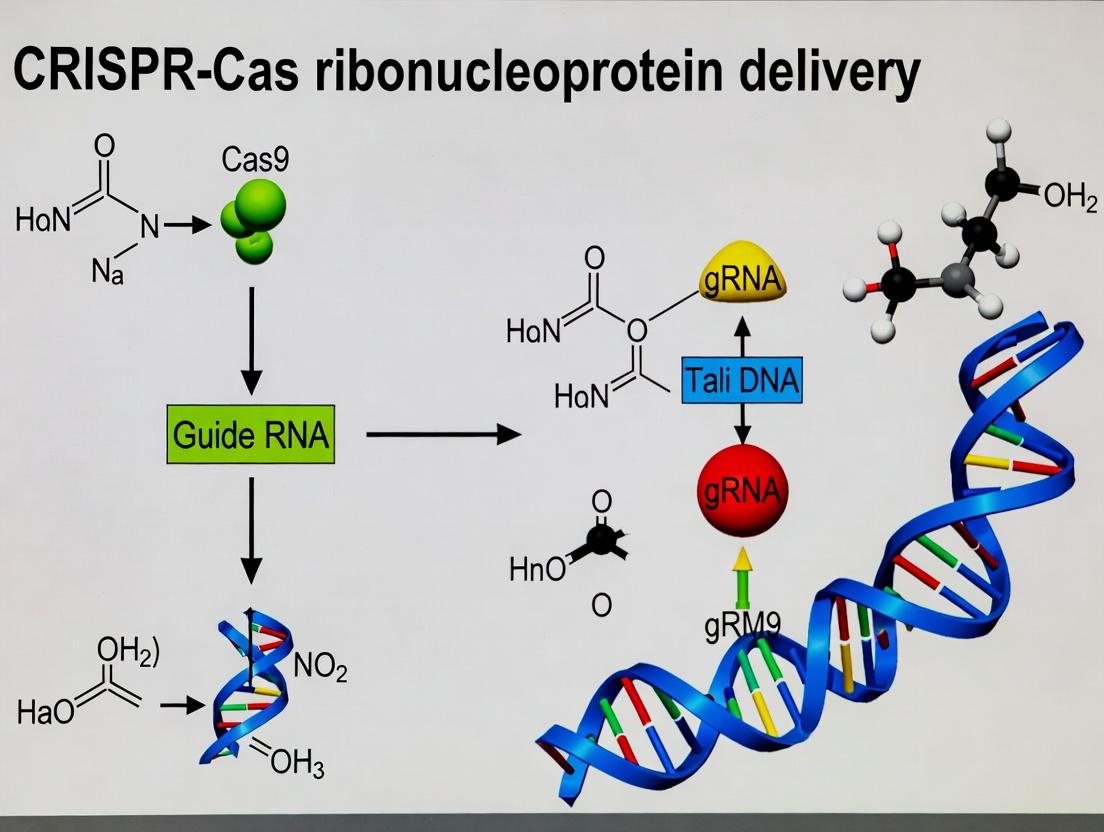
This article provides a comprehensive technical overview for researchers and biotech professionals on the delivery of CRISPR-Cas Ribonucleoprotein (RNP) complexes into plants.
Precision Plant Engineering: The Complete Guide to CRISPR-Cas RNP Delivery Methods and Applications
Abstract
This article provides a comprehensive technical overview for researchers and biotech professionals on the delivery of CRISPR-Cas Ribonucleoprotein (RNP) complexes into plants. We explore the fundamental advantages of RNP over DNA-based systems, including reduced off-target effects, transient activity, and bypassing of transgenic regulations. The content details current methodologies—from biolistic and PEG-mediated protoplast transformation to advanced viral and nanomaterial vectors. A dedicated troubleshooting section addresses common challenges in efficiency, specificity, and scalability. Finally, we present a comparative analysis of delivery platforms, evaluating their suitability for different plant species and end-goals, from basic research to commercial crop development. This guide synthesizes the latest advancements to empower precise, efficient, and regulatory-friendly genome editing in plants.
Beyond DNA: Why CRISPR-Cas RNP Delivery is Revolutionizing Plant Genome Editing
Within the rapidly advancing field of plant genome editing, the delivery of pre-assembled CRISPR-Cas Ribonucleoprotein (RNP) complexes represents a paradigm shift from traditional DNA-based methods. The RNP complex is defined as the catalytically active unit comprising a Cas endonuclease protein molecule bound to its cognate single-guide RNA (gRNA). This technical guide deconstructs the core components of the RNP complex and elucidates its key operational advantages, framing the discussion within the context of modern plant transformation research aimed at developing transgene-free, precisely edited crops.
Deconstructing the RNP Complex
The Cas Protein: The Molecular Scissors
The CRISPR-associated (Cas) protein is the effector enzyme that performs the double-strand break (DSB) in the target DNA. In plant RNP delivery, the most commonly employed variant is Streptococcus pyogenes Cas9 (SpCas9). Recent research also highlights the increasing use of Cas12a (Cpf1) and engineered high-fidelity variants for improved specificity.
Key Characteristics:
- Domains: Comprises two nuclease lobes, RuvC and HNH, each cleaving one DNA strand. A Protospacer Adjacent Motif (PAM) interaction domain is critical for target site recognition.
- Form: For RNP delivery, the protein is produced and purified from a heterologous expression system (e.g., E. coli), ensuring it is free from encoding DNA.
The Guide RNA (gRNA): The Targeting System
The gRNA is a synthetic chimera that combines the function of the endogenous CRISPR RNA (crRNA) and trans-activating crRNA (tracrRNA). It is the programmable component that confers target specificity.
Key Components:
- Spacer Sequence: A 17-20 nucleotide sequence at the 5' end that is complementary to the target DNA site. It defines the genomic address for editing.
- scaffold Structure: The remaining portion of the gRNA that forms a stable hairpin structure, essential for binding and stabilizing the Cas protein.
Complex Assembly
The functional RNP is formed through the in vitro incubation of purified Cas protein with in vitro-transcribed or chemically synthesized gRNA at a defined molar ratio (typically 1:1 to 1:2, Cas:gRNA) prior to delivery. This assembly triggers a conformational change in the Cas protein, activating it for DNA interrogation.
Key Advantages of RNP Delivery in Plant Research
The use of RNPs, as opposed to plasmid or RNA encoding CRISPR components, offers distinct mechanistic and practical benefits critical for plant biotechnology.
Transient Activity & Reduced Off-Target Effects
Since no foreign DNA is integrated, the RNP complex is inherently transient. Its activity is limited by the intracellular degradation of the protein and RNA, minimizing the window for off-target cleavage. Quantitative studies consistently show a reduction in off-target mutations compared to stable expression systems.
Table 1: Comparison of Editing Approaches in Arabidopsis thaliana Protoplasts
| Parameter | Plasmid DNA Delivery | RNP Delivery |
|---|---|---|
| Time to Peak Editing | 48-72 hours | 24-48 hours |
| Editing Efficiency (%) | 20-45% | 40-70% |
| Off-Target Frequency (relative) | 1.0 (baseline) | 0.1 - 0.5 |
| Risk of DNA Integration | High | None |
| Regulatory Status | GMO (in most jurisdictions) | Potentially non-GMO* |
Note: *Regulatory status is subject to regional definitions. Many countries consider edits without foreign DNA integration as non-GMO.
DNA-Free Editing & Simplified Regulatory Pathways
The absence of a transgene is a primary advantage. The RNP complex performs the edit and is then degraded, leaving no exogenous DNA in the plant genome. This aligns with regulatory frameworks in many countries that classify such organisms as equivalent to those developed through conventional breeding, streamlining the path to commercialization.
Rapid Action and High Efficiency
Upon delivery into the cell nucleus, the pre-formed RNP is immediately active, bypassing the need for transcription and translation. This leads to faster editing kinetics and, in many plant systems, higher on-target efficiency, particularly in recalcitrant species or tissues.
Design Flexibility and Multiplexing
Multiple gRNAs targeting different loci can be pre-complexed with Cas protein and delivered simultaneously for multiplexed editing. This is essential for polyploid plants or for engineering complex traits.
Experimental Protocols for Plant RNP Delivery
Protocol: RNP Assembly and Validation
- Components:
- Purified Cas9 protein (commercial or in-house).
- Target-specific gRNA (chemically synthesized with 2'-O-methyl 3' phosphorothioate modifications for stability).
- Procedure: a. Complex Formation: Mix Cas9 protein and gRNA at a 1:1.2 molar ratio in a buffer containing 20 mM HEPES (pH 7.5), 150 mM KCl, 1 mM DTT, and 5% glycerol. b. Incubation: Incubate at 25°C for 10 minutes to allow complex formation. c. Validation (Gel Shift Assay): Run the assembled RNP on a 6% native polyacrylamide gel. The RNP complex migrates slower than free protein or gRNA. Stain with SYBR Gold to visualize.
Protocol: RNP Delivery via PEG-Mediated Transfection of Protoplasts
This is a gold-standard method for assessing RNP activity in planta.
- Isolate Protoplasts from leaf mesophyll tissue using enzyme digestion (e.g., Cellulase R10, Macerozyme R10).
- Wash & Count: Purify protoplasts in W5 solution (154 mM NaCl, 125 mM CaCl₂, 5 mM KCl, 2 mM MES, pH 5.7) and count using a hemocytometer.
- Transfection: Pellet 2 x 10⁵ protoplasts. Resuspend in 200 µL MMg solution (0.4 M mannitol, 15 mM MgCl₂, 4 mM MES, pH 5.7).
- Add RNP: Add 10-20 µL of assembled RNP complex (e.g., 4 pmol Cas9 + 4.8 pmol gRNA).
- Initiate Uptake: Add an equal volume (210-220 µL) of 40% PEG-4000 solution (40% PEG, 0.2 M mannitol, 0.1 M CaCl₂).
- Incubate: Mix gently and incubate at room temperature for 15-20 minutes.
- Dilute & Wash: Gradually dilute with 2 mL of W5 solution, pellet protoplasts, and resuspend in culture medium.
- Culture & Analyze: Culture in the dark for 48-72 hours. Extract genomic DNA and assess editing efficiency via T7 Endonuclease I assay or Next-Generation Sequencing.
Visualization of Workflows and Mechanisms
Diagram Title: RNP Complex Workflow from Assembly to Plant Genome Editing
Diagram Title: Comparative Pathways of RNP and DNA-Based CRISPR Delivery
The Scientist's Toolkit: Key Research Reagent Solutions
Table 2: Essential Reagents for Plant RNP Experiments
| Reagent / Material | Function & Rationale | Example Vendor/Type |
|---|---|---|
| Nuclease-Free Cas9 Protein | High-purity, endotoxin-free protein ensures optimal activity and minimizes cellular toxicity. Can be wild-type or high-fidelity variants. | Produced in-house from E. coli; or commercial suppliers (e.g., ToolGen, IDT, Sigma). |
| Chemically Modified gRNA | Synthetic gRNAs with 3' end modifications (e.g., 2'-O-methyl, phosphorothioate) enhance stability against RNase degradation post-delivery, boosting efficiency. | Synthesized by commercial oligonucleotide providers (e.g., IDT, Synthego). |
| Protoplast Isolation Enzymes | Enzyme cocktails (cellulase, macerozyme, pectinase) for digesting plant cell walls to release intact protoplasts for efficient RNP uptake. | Cellulase R10, Macerozyme R10 (Yakult). Pectolyase. |
| Polyethylene Glycol (PEG 4000) | A biocompatible polymer that induces membrane perturbation and fusion, facilitating the direct uptake of RNP complexes into protoplasts. | High-grade PEG-4000. |
| Gold/Carrier Microparticles | For biolistic delivery (gene gun), RNPs are precipitated onto micron-sized gold particles for physical bombardment into intact plant cells/tissues. | 0.6-1.0 µm gold microcarriers (Bio-Rad). |
| NGS Library Prep Kit | For deep sequencing of target sites to quantitatively measure on-target editing efficiency and profile off-target effects with high sensitivity. | Kits from Illumina, Swift Biosciences. |
| T7 Endonuclease I / Surveyor Nuclease | Mismatch-specific endonucleases used for initial, PCR-based quantification of editing efficiency via gel electrophoresis. | Commercial assay kits (NEB, IDT). |
| Plant Tissue Culture Media | Hormone-defined media for the regeneration of whole, edited plants from individual transfected protoplasts or bombarded callus. | MS (Murashige and Skoog) media with tailored phytohormones. |
This whitepaper delineates the core advantages of CRISPR-Cas Ribonucleoprotein (RNP) delivery in plant genome editing. Within the broader thesis that RNP delivery represents a transformative paradigm for plant biotechnology, this guide details the technical underpinnings of three pivotal benefits: transient nuclease activity, reduced off-target editing, and a favorable regulatory status. The transient presence of the Cas9 protein and guide RNA complex, as opposed to stable transgene integration, fundamentally drives these advantages, offering researchers a precise, efficient, and potentially streamlined path to market.
Transient Activity: Mechanism and Implications
The defining characteristic of RNP delivery is the direct introduction of pre-assembled Cas protein and guide RNA into plant cells. This results in a rapid, self-limiting editing event.
Mechanism of Transience
Once delivered, the RNP complex immediately localizes to the nucleus and scans for its target DNA sequence. Following cleavage, the RNP is degraded by endogenous cellular proteases and nucleases. The absence of a persistent transgenic cassette encoding Cas9 and gRNA ensures the activity window is short-lived, typically estimated to last from several hours to a few days.
Table 1: Comparison of Activity Duration Between Delivery Methods
| Delivery Method | Editing Component Form | Estimated Active Duration | Potential for Long-Term Expression |
|---|---|---|---|
| RNP (Direct Delivery) | Pre-formed Protein:RNA Complex | 24-96 hours | None |
| DNA Vector (e.g., Agrobacterium) | Stably Integrated Transgene | Days to entire lifecycle | High (heritable) |
| Transcribed RNA (in vitro) | mRNA & gRNA | Days (until RNA degradation) | Low |
Key Experimental Protocol: Assessing RNP Turnover via Western Blot
- Objective: To confirm the transient presence of the Cas9 protein post-delivery.
- Materials: Protoplasts or tissue samples transfected with Cas9 RNP at multiple time points (e.g., 0, 6, 24, 48, 72 hours).
- Methodology:
- Sample Preparation: Lyse harvested cells/tissues. Include a control sample spiked with purified Cas9 protein.
- Gel Electrophoresis: Separate proteins via SDS-PAGE.
- Western Transfer: Transfer to PVDF membrane.
- Immunodetection: Probe with anti-Cas9 primary antibody and HRP-conjugated secondary antibody.
- Visualization: Use chemiluminescent substrate and quantify band intensity relative to a loading control (e.g., Actin).
- Expected Outcome: A sharp peak in Cas9 signal at early time points (6-24h), followed by a rapid decline to undetectable levels by 48-72h.
Diagram 1: Transient RNP activity workflow.
Reduced Off-Target Effects
The precision of genome editing is paramount. RNP delivery enhances specificity through two primary mechanisms: rapid degradation and high initial concentration.
Quantitative Data on Specificity
Recent studies directly compare the off-target profiles of RNP versus plasmid-based delivery.
Table 2: Off-Target Mutation Frequency Comparison
| Study (Plant System) | Delivery Method | On-Target Efficiency (%) | Off-Target Frequency (Plasmid) | Off-Target Frequency (RNP) | Detection Method |
|---|---|---|---|---|---|
| Woo et al., 2015 (Arabidopsis) | Protoplast PEG-transfection | ~45% | 14.3% (at known site) | Undetectable | Targeted sequencing |
| Svitashev et al., 2016 (Maize) | Particle bombardment | ~3% (HDR) | Not Applicable | Undetectable | Whole-genome sequencing |
| Liang et al., 2017 (Rice) | Protoplast PEG-transfection | ~20% | 4.2% (at known site) | Undetectable | Targeted deep sequencing |
Key Experimental Protocol: CIRCLE-seq for Genome-Wide Off-Target Detection
- Objective: To identify potential off-target sites for a given gRNA in an unbiased, in vitro manner using plant genomic DNA.
- Materials: Purified genomic DNA, Cas9 nuclease, in vitro transcribed gRNA, CIRCLE-seq kit components (end-repair, ligation, rolling circle amplification enzymes).
- Methodology:
- Genomic DNA Shearing & End-Repair: Fragment DNA and create blunt ends.
- Circularization: Ligate fragments into circles under dilute conditions to favor self-ligation.
- Cas9 RNP Digestion In Vitro: Incubate circularized DNA with pre-assembled RNP complex. RNP will linearize circles containing a target sequence.
- Exonuclease Digestion: Digest remaining uncut, linear DNA. Only linearized (cut) circles remain.
- Rolling Circle Amplification (RCA): Amplify the linearized circles.
- Sequencing & Analysis: Prepare library from RCA product for next-generation sequencing. Map reads to the reference genome to identify cut sites.
Regulatory Status and Trait Development
The absence of foreign DNA integration positions RNP-edited plants favorably within evolving global regulatory frameworks.
Current Regulatory Landscape
Many jurisdictions, including the United States (USDA SECURE Rule), Japan, and several in South America, have exempted or streamlined the regulation of plants where genetic engineering techniques (like CRISPR-Cas) do not introduce stable recombinant DNA (rDNA). RNP-edited plants, which are often transgene-free, frequently fall under this category.
Table 3: Regulatory Considerations for RNP vs. DNA-Vector Edited Plants
| Regulatory Aspect | RNP-Edited Plant (Transgene-Free) | DNA-Vector Edited Plant (Transgenic) |
|---|---|---|
| Integrated Foreign DNA | Typically None | Present (T-DNA, plasmid backbone) |
| USDA SECURE Rule Status | Generally exempt | May require regulatory review |
| EU GMO Directive Status | Contentious; likely regulated as GMO | Regulated as GMO |
| Product Development Path | Potentially faster, lower regulatory burden | Longer, costlier regulatory dossier |
Key Experimental Protocol: Molecular Characterization for Regulatory Submission
- Objective: To demonstrate the absence of Cas9/gRNA transgene integration and the presence of the intended edit.
- Materials: Genomic DNA from edited T0 or T1 plants, PCR reagents, primers for Cas9/vector backbone, primers flanking the target site, sequencing reagents.
- Methodology:
- Transgene Detection PCR:
- Perform PCR using primers specific to the Cas9 coding sequence and the delivery vector backbone (if used).
- Expected Result: No amplification in successfully segregated, transgene-free RNP-edited plants.
- Target Locus Analysis:
- Amplify the genomic region surrounding the target site.
- Sequence the amplicons via Sanger or next-generation sequencing to confirm the intended edit and characterize any unintended modifications (e.g., large deletions).
- Southern Blot (if required):
- Provides definitive evidence for the absence of vector backbone integration using a probe against the Cas9 or bacterial sequence.
- Transgene Detection PCR:
Diagram 2: RNP plant characterization & breeding.
The Scientist's Toolkit: Key Research Reagent Solutions
Table 4: Essential Materials for Plant RNP Experiments
| Item | Function in RNP Experiments | Example/Supplier Consideration |
|---|---|---|
| Recombinant Cas9 Protein | Active nuclease component of the RNP. High purity is critical for efficiency and low toxicity. | Purified from E. coli or purchased from commercial suppliers (e.g., Thermo Fisher, IDT). |
| Chemically Modified sgRNA | Enhances stability against nucleases during delivery, potentially increasing activity. | Synthesized with 2'-O-methyl 3' phosphorothioate modifications on first 3 and last 3 nucleotides. |
| Cellulases & Pectinases | For preparing protoplasts from plant leaf tissue, a common delivery system for RNPs. | Enzyme cocktails like Cellulase R10 and Macerozyme R10. |
| Polyethylene Glycol (PEG) | A chemical transfection agent used to induce protoplast membrane fusion and RNP uptake. | High molecular weight (e.g., PEG 4000). |
| Gold or Tungsten Microparticles | For biolistic particle bombardment delivery of RNPs into intact tissues or embryos. | 0.6-1.0 µm diameter, coated with RNP complex. |
| Cas9-Specific Antibody | For detecting and quantifying Cas9 protein presence and turnover via Western blot. | Commercial monoclonal antibodies from various suppliers. |
| Whole Genome Amplification Kit | For amplifying limited genomic material from single edited cells or calli prior to genotyping. | e.g., REPLI-g Single Cell Kit (Qiagen). |
| High-Fidelity DNA Polymerase | For accurate amplification of the target locus from edited plants for sequencing analysis. | e.g., Q5 (NEB) or Phusion (Thermo Fisher). |
The advancement of CRISPR-Cas genome editing in plants hinges on the efficient delivery of editing machinery into plant cells. This whitepaper contextualizes a core thesis: that the direct delivery of pre-assembled Cas protein and guide RNA as a ribonucleoprotein (RNP) complex represents a superior strategy compared to traditional plasmid-DNA-based delivery. This shift is driven by the need for higher precision, reduced off-target effects, elimination of DNA integration risks, and applicability across diverse plant species, especially those recalcitrant to transformation.
Evolution of Delivery Paradigms: A Quantitative Comparison
The transition from plasmid-based to RNP-based delivery addresses key limitations in plant genome editing. The table below summarizes the core comparative data.
Table 1: Quantitative Comparison of CRISPR-Cas Delivery Methods in Plants
| Parameter | Plasmid-Based Delivery | RNP-Based Delivery | Key Implications |
|---|---|---|---|
| Time to Activity | 24-96 hours (requires transcription/translation) | 1-4 hours (immediately active) | Faster editing kinetics, quicker analysis. |
| Persistent Nuclease Activity | Prolonged (days to weeks) | Transient (hours) | Drastically reduces off-target effects. |
| DNA Integration Risk | High (T-DNA, plasmid backbone) | Negligible to zero | No foreign DNA remains, simplifying regulatory approval. |
| Delivery Efficiency (Typical) | Highly variable; 0.1-30% transformation efficiency | Cell-type dependent; often high in protoplasts (>70% transfection) | Efficiency decoupled from stable transformation. |
| Species Applicability | Limited to transformable species | Broadly applicable (protoplasts, tissues, embryos) | Enables editing in elite cultivars & recalcitrant species. |
| Cellular Toxicity | Can be high due to antibiotic markers & viral components | Generally lower | Better cell viability post-delivery. |
| Regulatory & Public Perception | Complex (GMO classification likely) | Simpler (often considered non-GMO) | Smoother path to commercialization. |
Experimental Protocols: Key Methodologies
Protocol A: Plasmid-BasedAgrobacteriumDelivery for Stable Transformation
This is the classic method for generating stable transgenic edited plants.
- Vector Construction: Clone a plant codon-optimized Cas9 gene and a guide RNA (gRNA) expression cassette (driven by Pol III promoters like AtU6) into a binary T-DNA vector containing plant selection markers (e.g., hptII for hygromycin resistance).
- Agrobacterium Transformation: Introduce the binary vector into a disarmed Agrobacterium tumefaciens strain (e.g., GV3101) via electroporation or freeze-thaw.
- Plant Transformation: Inoculate explants (leaf discs, cotyledons) with the Agrobacterium culture. Co-cultivate for 2-3 days.
- Selection & Regeneration: Transfer explants to selection media containing antibiotics (to kill Agrobacterium) and the plant selection agent. Regenerate shoots from callus.
- Molecular Analysis: Genotype regenerated plants (T0) by PCR and sequencing to identify edits. Off-target analysis is recommended via targeted sequencing or whole-genome sequencing.
Protocol B: Direct RNP Delivery into Plant Protoplasts
This method enables rapid, DNA-free editing in a cell culture system.
- Protein Purification: Express and purify recombinant Cas9 protein (e.g., from E. coli) using affinity chromatography (e.g., His-tag). Confirm purity via SDS-PAGE and concentration via spectrophotometry.
- gRNA In Vitro Transcription: Synthesize target-specific gRNA using T7 RNA polymerase on a DNA template, followed by DNase I treatment and purification.
- RNP Complex Assembly: Mix purified Cas9 protein with gRNA at a molar ratio of ~1:1.2 to 1:2 in a buffer containing 10-20 mM HEPES (pH 7.5), 150 mM KCl. Incubate at 25°C for 10-15 minutes.
- Protoplast Isolation & Transfection:
- Isolate protoplasts from leaf mesophyll or cell suspension cultures using enzymatic digestion (e.g., Cellulase R10, Macerozyme R10).
- Purify protoplasts via filtration and flotation in W5 or mannitol-sucrose solution.
- Transfect using PEG-mediated transformation: Mix ~2x10⁵ protoplasts with assembled RNP complexes, add 40% PEG-4000 solution, incubate, and then dilute with W5 solution.
- Analysis: Incubate protoplasts for 24-48 hours. Extract genomic DNA and assess editing efficiency using methods like T7 Endonuclease I (T7EI) assay or targeted deep sequencing.
Protocol C: RNP Delivery via Biolistics (Gene Gun)
This method is used for delivering RNPs directly into plant tissues or embryos.
- RNP Preparation: Assemble RNP complexes as in Protocol B.
- Microcarrier Preparation: Coat 0.6 µm gold or tungsten microparticles with the RNP complex. A typical preparation uses 10 µL of particle suspension (60 mg/mL), 5 µL RNP (e.g., 2 µM), 10 µL 2.5M CaCl₂, and 4 µL 0.1M spermidine. Vortex, incubate, and wash.
- Bombardment: Load the coated particles onto macrocarriers. Use a biolistic particle delivery system (e.g., PDS-1000/He) to bombard target tissue (e.g., immature embryos, callus) under a partial vacuum (27-28 in Hg) with a helium pressure of 650-1100 psi.
- Recovery & Regeneration: Transfer bombarded tissues to recovery media, then to regeneration media. Edit analysis can be performed on pooled tissue initially and then on regenerated plants.
Visualization of Pathways and Workflows
Title: CRISPR Delivery Workflow: Plasmid vs RNP Pathways
Title: RNP Delivery into Plant Protoplasts: Experimental Workflow
The Scientist's Toolkit: Research Reagent Solutions
Table 2: Essential Reagents for CRISPR-Cas RNP Delivery in Plant Research
| Item | Function & Rationale | Example/Supplier (Illustrative) |
|---|---|---|
| Recombinant Cas9 Protein | The core nuclease. Plant codon-optimized versions (e.g., Cas9 from S. pyogenes) with nuclear localization signals (NLS) are standard. High purity is critical for activity and low toxicity. | Purified in-house from E. coli expression systems or commercially available (e.g., Thermo Fisher, NEB). |
| gRNA Synthesis Kit | For in vitro transcription (IVT) of high-quality, sgRNA. Eliminates the need for cloning. T7 polymerase-based systems are common. | HiScribe T7 Quick High Yield RNA Synthesis Kit (NEB), or similar. |
| Protoplast Isolation Enzymes | Enzyme cocktails to degrade plant cell walls, releasing intact protoplasts for transfection. | Cellulase R10, Macerozyme R10 (Yakult), Pectinase. |
| PEG Solution | Induces membrane fusion and permeabilization, enabling RNP uptake during protoplast transfection. Molecular weight 4000 is standard. | 40% (w/v) PEG-4000 in mannitol/CaCl₂ solution. |
| Biolistic Gold Microcarriers | Inert, high-density particles used as vehicles to physically bombard RNPs into intact plant cells and tissues. | 0.6 µm diameter gold microcarriers (e.g., Bio-Rad). |
| Genome Editing Detection Kit | For quick, initial assessment of editing efficiency. Detects heteroduplex DNA formed by imperfect repair of nuclease cuts. | T7 Endonuclease I (T7EI) mismatch detection kit (IDT, NEB). Also, Guide-it Mutation Detection Kit (Takara). |
| Plant Cell Culture Media | Optimized media for protoplast culture and post-editing recovery/regeneration of tissues. Maintains osmolarity and provides nutrients. | MS (Murashige and Skoog) media, CPW wash solution, mannitol for osmoticum. |
| Deep Sequencing Library Prep Kit | For comprehensive, quantitative analysis of on-target editing efficiency and unbiased off-target profiling. | Illumina-compatible amplicon sequencing kits (e.g., from Illumina, Swift Biosciences). |
The application of CRISPR-Cas technology for precise genome editing in plants faces two primary, interconnected biological barriers: the robust plant cell wall and the recalcitrance of many plant species to in vitro regeneration. This whitepaper details these challenges within the context of delivering CRISPR-Cas ribonucleoproteins (RNPs) for DNA-free editing. We provide a technical analysis of the limitations, current methodological solutions, quantitative data on efficiencies, and standardized protocols for overcoming these hurdles to enable reproducible plant genome engineering.
The Dual Barriers: A Technical Analysis
The Cell Wall as a Physical and Biochemical Barrier
The plant cell wall, a complex network of cellulose, hemicellulose, pectin, and structural proteins, presents a formidable physical barrier to the delivery of macromolecular complexes like CRISPR-Cas RNPs. Its pore size exclusion limit is typically estimated between 5-20 nm, while a Cas9-sgRNA RNP complex measures approximately 10-15 nm in its largest dimension, posing a significant delivery challenge.
The Regeneration Bottleneck
Even after successful intracellular delivery and editing, the regeneration of a whole, fertile plant from a single edited cell is non-trivial. Many agronomically important species and elite cultivars exhibit high genotype dependency and recalcitrance to dedifferentiation, callus proliferation, and subsequent organogenesis.
Table 1: Quantitative Summary of Delivery and Regeneration Efficiencies Across Methods
| Delivery Method | Typical Target Tissue | Average Editing Efficiency (%) | Average Regeneration Efficiency (%) | Key Limiting Factor |
|---|---|---|---|---|
| Agrobacterium-Mediated T-DNA | Explants (leaf, cotyledon) | 1-50 (transformed events) | 5-80 (highly species-dependent) | Host range, tissue necrosis |
| PEG-Mediated Protoplast Transfection | Protoplasts | 10-80 | <1-50 (from protoplast) | Protoplast viability, regeneration |
| Biolistics (Gene Gun) | Immature embryos, callus | 0.1-10 | 10-60 | Complex lesion repair, high copy number |
| RNP Delivery via Nanoparticles | Pollen, embryos, callus | 5-45 (reported range) | Data limited | Nanoparticle biocompatibility, wall penetration |
| In Planta Delivery (e.g., TRV, CMCap) | Germline or meristematic cells | 0.01-5 (heritable) | Not required | Systemic movement, low edit rate in germline |
Experimental Protocols for RNP Delivery and Regeneration
Protocol: PEG-Mediated RNP Transfection of Plant Protoplasts
This method bypasses the cell wall by using enzymatically derived protoplasts.
Materials:
- Young leaves from sterile plantlets.
- Enzyme solution: 1.5% Cellulase R10, 0.4% Macerozyme R10, 0.4 M mannitol, 20 mM KCl, 20 mM MES (pH 5.7), 10 mM CaCl₂, 0.1% BSA.
- W5 solution: 154 mM NaCl, 125 mM CaCl₂, 5 mM KCl, 2 mM MES (pH 5.7).
- MMg solution: 0.4 M mannitol, 15 mM MgCl₂, 4 mM MES (pH 5.7).
- PEG solution: 40% PEG-4000, 0.2 M mannitol, 0.1 M CaCl₂.
- Pre-assembled CRISPR-Cas9 RNP complex (e.g., 20 µg Cas9 protein, 40 pmol sgRNA).
Procedure:
- Slice leaves into 0.5-1 mm strips and incubate in enzyme solution in the dark for 6-16 hours with gentle shaking.
- Filter the digest through a 75 µm nylon mesh. Pellet protoplasts by centrifugation at 100 x g for 5 minutes.
- Wash protoplasts twice with W5 solution. Resuspend in MMg solution at a density of 1-2 x 10⁵ protoplasts/mL.
- Aliquot 100 µL protoplast suspension into a round-bottom tube. Add 10 µL of RNP complex. Mix gently.
- Add 110 µL of PEG solution and mix by gentle inversion. Incubate at room temperature for 15-30 minutes.
- Dilute slowly with 1 mL of W5 solution. Pellet protoplasts and resuspend in 1 mL of appropriate culture medium.
- Culture in the dark at low light. Analyze editing after 48-72 hours via DNA extraction and sequencing. For regeneration, plate protoplasts in agarose-solidified medium to induce callus formation, followed by shoot induction media.
Protocol: Gold Nanoparticle-Mediated RNP Delivery to Tissue Explants
This method aims to penetrate the intact cell wall.
Materials:
- 1.0 µm gold microparticles or 50-200 nm gold nanoparticles.
- Spermidine (0.1 M).
- CaCl₂ (2.5 M).
- Purified Cas9 protein and sgRNA.
- PDS-1000/He Biolistic particle delivery system or custom pressure-driven device.
- Target explants (e.g., immature embryos, callus plates).
Procedure:
- Coat nanoparticles with RNPs: Mix 10 µL of gold suspension (60 mg/mL), 5 µL of RNP complex (5 µg Cas9 + 10 pmol sgRNA), 25 µL of 0.1 M spermidine, and 100 µL of 2.5 M CaCl₂ sequentially with continuous vortexing. Incubate on ice for 10 minutes.
- Pellet particles, wash with 100% ethanol, and resuspend in 30 µL of cold ethanol.
- Disperse 5 µL aliquots onto macrocarriers and let dry.
- Place target tissue (on osmoticum pretreatment medium) in the bombardment chamber. Perform bombardment according to system parameters (e.g., 1100 psi rupture disc, 6 cm target distance, 27 in Hg vacuum).
- Post-bombardment, transfer tissues to recovery medium for 24-48 hours, then to selection/regeneration media.
- Screen regenerating calli or shoots for edits.
Visualizing Key Workflows and Relationships
Diagram Title: RNP Delivery Path Through Plant Barriers
Diagram Title: Plant Regeneration Workflow Post-RNP Delivery
The Scientist's Toolkit: Research Reagent Solutions
Table 2: Essential Reagents for Overcoming Cell Wall and Regeneration Barriers
| Reagent/Material | Function/Principle | Example Product/Catalog |
|---|---|---|
| Purified Cas9 Protein | Active enzyme component of the RNP; species-optimized variants (e.g., Cas9, Cpf1) available for plant codon usage. | Commercial Source: Thermo Fisher TrueCut Cas9 Protein, or in-house expression from *E. coli. |
| Chemically Modified sgRNA | Enhanced stability against RNase degradation; 2'-O-methyl 3' phosphorothioate modifications improve editing efficiency in plants. | Synthesized via commercial providers (IDT, Synthego) with specific modification patterns. |
| Cellulase & Macerozyme Mix | Enzyme cocktails for digesting cellulose and pectin to generate protoplasts, enabling direct RNP delivery. | Yakult Cellulase R10 & Macerozyme R10; Sigma Cellulase Onozuka RS. |
| Gold/Carbon Nanoparticles | Inert carriers for RNP complexes in biolistic or nanocarrier delivery; size-tunable for wall penetration. | Bio-Rad 1.0 µm Gold Microcarriers; 50 nm citrate-coated gold nanoparticles. |
| PEG 4000 | Induces membrane fluidity and pore formation for transient RNP uptake by protoplasts (PEG-mediated transfection). | High-purity PEG 4000 (Sigma-Aldrich 81240). |
| Plant Tissue Culture Media | Formulated for specific regeneration pathways (callus, somatic embryo, organogenesis); often require hormone optimization (auxin/cytokinin). | Murashige & Skoog (MS) Basal Medium, Gamborg's B5 Medium. Specific media like N6 for monocots. |
| Osmoticum Agents | Protect cells during physical delivery (e.g., biolistics); mannitol or sorbitol in pretreatment and recovery media. | D-Mannitol (Sigma M4125). |
| Selection Agents (Optional) | For identifying transformed/edited cells if a co-delivered repair template provides resistance; not used for pure RNP edits. | Hygromycin, Kanamycin, or herbicides like Glufosinate. |
The synergistic resolution of the cell wall and regeneration barriers is paramount for unlocking the full potential of DNA-free CRISPR editing in plants. While protoplast-based RNP delivery offers high editing efficiency, regeneration remains a bottleneck. Conversely, nanoparticle or biolistic delivery to regenerable tissues struggles with consistent wall penetration and edit rates. Future research must focus on developing "soft" nanocarriers that dynamically interact with the cell wall, and on identifying molecular triggers or employing developmental regulators (e.g., Babyboom, Wuschel) to universally enhance plant regeneration competence. The integration of these advanced delivery and regeneration strategies will pave the way for precise, off-the-shelf CRISPR RNP applications across diverse plant species.
Key Plant Model Systems and Early Success Stories
The advancement of CRISPR-Cas ribonucleoprotein (RNP) delivery in plants hinges on foundational work in key model systems. These systems provide tractable platforms for developing and refining delivery methodologies, circumventing the limitations and regulatory concerns associated with stable DNA integration. This whitepaper details the pivotal model species and their associated early breakthroughs, framed within the broader thesis that RNP delivery is a transformative approach for precise, transgene-free plant genome engineering.
Key Plant Model Systems
Plant model systems are selected for characteristics such as short life cycles, small genomes, ease of transformation, and representativeness of larger plant families. The following table summarizes the primary models used in early CRISPR-Cas RNP research.
Table 1: Key Plant Model Systems for Early CRISPR-Cas RNP Delivery
| Model System | Family | Key Advantages | Primary RNP Delivery Method(s) |
|---|---|---|---|
| Arabidopsis thaliana | Brassicaceae | Small genome, extensive genetic resources, rapid life cycle. | PEG-mediated protoplast transfection. |
| Nicotiana benthamiana | Solanaceae | Robust transient expression system, large leaves for infiltration. | Agrobacterium-mediated transient expression (agroinfiltration) of RNP components. |
| Oryza sativa (Rice) | Poaceae | Global food crop, monocot model, established protoplast systems. | PEG-mediated protoplast transfection; particle bombardment. |
| Triticum aestivum (Wheat) | Poaceae | Complex hexaploid genome, major crop. | Particle bombardment of embryogenic callus. |
| Zea mays (Maize) | Poaceae | Large crop genome, industrial importance. | Particle bombardment of immature embryos. |
| Solanum lycopersicum (Tomato) | Solanaceae | Important fruit crop, diploid genome. | PEG-mediated protoplast transfection. |
Early Success Stories and Quantitative Outcomes
The initial application of CRISPR-Cas RNPs in plants demonstrated high-efficiency mutagenesis without foreign DNA integration. The following table consolidates key early experimental results.
Table 2: Early Success Stories in Plant CRISPR-Cas RNP Delivery
| Plant Species | Target Gene | Delivery Method | Key Quantitative Result | Year (Key Publication) |
|---|---|---|---|---|
| Arabidopsis thaliana | ADH1, TT4 | PEG-mediated into protoplasts | Mutation efficiency: ~7.5% (confirmed in regenerated calli). | 2015 |
| Nicotiana benthamiana | PDS (phytoene desaturase) | Agrobacterium delivery of Cas9 & gRNA transcripts | Visible albino phenotype in infiltrated zones; indel frequency up to 13.7%. | 2015 |
| Lettuce & Arabidopsis | PDS | Pre-assembled Cas9-gRNA RNP delivered via biolistics | Mutation frequency: Lettuce ~46%, Arabidopsis ~20%. Regenerated mutant plants transgene-free. | 2016 |
| Oryza sativa (Rice) | OsPDS, OsBEL | PEG-mediated into protoplasts | Mutation efficiency in protoplasts: ~8-14%. Regeneration of transgene-free, mutant plants. | 2016 |
| Triticum aestivum (Wheat) | TaLOX2, TaMLO | Particle bombardment of embryogenic callus with RNPs | Mutation efficiency in callus: up to 1.6%. Successfully obtained transgene-free, heritable mutations. | 2018 |
| Zea mays (Maize) | ALS1, ALS2 | Particle bombardment of immature embryos with RNPs | Biallelic mutation frequency: ~2.2-6.6%. Recovery of stable, transgene-free mutant lines. | 2018 |
Experimental Protocol: PEG-Mediated RNP Transfection of Plant Protoplasts
This is a core methodology adapted from early seminal studies in Arabidopsis and rice.
1. RNP Complex Assembly:
- Purified Cas9 protein (commercial or in-house expressed) is complexed with in vitro-transcribed or synthetic sgRNA at a molar ratio typically between 1:1 to 1:2 (Cas9:gRNA).
- The mixture is incubated at 25°C for 10-15 minutes to allow RNP formation.
2. Plant Protoplast Isolation:
- Young leaves or cultured cells are sliced and incubated in an enzyme solution (e.g., 1.5% Cellulase R10, 0.4% Macerozyme R10, 0.4M mannitol, 20mM KCl, 20mM MES pH 5.7, 10mM CaCl₂, 0.1% BSA) for 3-16 hours with gentle shaking.
- The digest is filtered through a nylon mesh (e.g., 75μm) and centrifuged at 100 x g for 2-3 minutes to pellet protoplasts.
- The pellet is washed twice and resuspended in W5 solution (154mM NaCl, 125mM CaCl₂, 5mM KCl, 2mM MES pH 5.7).
3. Transfection:
- Approximately 2 x 10⁵ protoplasts are aliquoted, pelleted, and resuspended in 200μL of MMg solution (0.4M mannitol, 15mM MgCl₂, 4mM MES pH 5.7).
- 20μL of pre-assembled RNP complex is added to the protoplast suspension.
- An equal volume (220μL) of PEG solution (40% PEG-4000, 0.2M mannitol, 0.1M CaCl₂) is added and mixed gently.
- The mixture is incubated at room temperature for 15-20 minutes.
- The reaction is stopped by stepwise dilution with W5 solution, pelleting, and resuspending in culture medium.
4. Analysis & Regeneration:
- Protoplasts are cultured in the dark for 48-72 hours. Genomic DNA is extracted for PCR and sequencing assays (e.g., T7 Endonuclease I or deep sequencing) to assess mutation efficiency.
- For regeneration, transfected protoplasts are embedded in alginate-solidified culture media to initiate callus formation, followed by shoot and root induction on selective media.
Visualizing the Core RNP Delivery and Action Workflow
Title: CRISPR-Cas RNP Delivery and Genome Editing Workflow in Plants
The Scientist's Toolkit: Key Research Reagent Solutions
Table 3: Essential Reagents for Plant CRISPR-Cas RNP Experiments
| Reagent / Material | Function & Importance | Example / Note |
|---|---|---|
| Purified Cas9 Nuclease | The effector protein; must be highly pure, nuclease-free, and plant-optimized codon usage can enhance expression if produced in planta. | Commercially available (e.g., IDT, ToolGen) or purified from E. coli expression systems. |
| Synthetic sgRNA or gRNA Kit | Guides Cas9 to the target genomic locus. Chemically modified sgRNAs can enhance stability. | In vitro transcription kits (e.g., NEB HiScribe) or synthetic, chemically-modified sgRNAs (e.g., Alt-R CRISPR-Cas9 gRNA). |
| Protoplast Isolation Enzymes | Digest cell wall to release intact protoplasts for PEG-mediated delivery. | Cellulase R10, Macerozyme R10, or commercially available multi-enzyme mixes (e.g., Protoplast Isolation Kit). |
| Polyethylene Glycol (PEG) | Induces membrane fusion and pore formation, enabling RNP uptake into protoplasts. | High-grade PEG 4000 or PEG 6000. Solution preparation is critical for reproducibility. |
| Gold or Tungsten Microparticles | Micro-projectiles for biolistic delivery (particle bombardment) of RNPs into tissues. | 0.6-1.0 μm diameter particles, coated with RNP complexes using spermidine and calcium. |
| Plant Tissue Culture Media | For maintaining transfected protoplasts/calli and regenerating whole plants. | Species-specific media (e.g., MS, N6, B5) with optimized hormone ratios (auxin/cytokinin). |
| Mutation Detection Assay | To quantify editing efficiency post-transfection, prior to regeneration. | T7 Endonuclease I or Surveyor nuclease for heteroduplex analysis; deep sequencing for precise quantification. |
From Theory to Bench: A Technical Guide to Delivering RNPs into Plants
Biolistic particle delivery, or the "gene gun," represents a critical physical methodology for direct intracellular delivery of macromolecules, circumventing the need for vector-based systems. Within the broader thesis on CRISPR-Cas ribonucleoprotein (RNP) delivery in plants, biolistics offers a uniquely advantageous approach. It facilitates the simultaneous co-delivery of Cas9 protein and guide RNA (gRNA) complexes directly into plant cells, including those with robust cell walls (e.g., monocots, woody species) that are recalcitrant to Agrobacterium-mediated transformation. The transient nature of RNP action, coupled with direct physical delivery, minimizes risks of DNA integration, off-target effects, and protracted regulatory scrutiny, making it an indispensable tool for functional genomics and trait development in crops.
Core Principles & Quantitative Parameters
The gene gun accelerates micron- or submicron-sized particles (typically gold or tungsten) coated with nucleic acids or proteins to high velocities, enabling penetration of cell walls and membranes. Key quantitative parameters governing delivery efficiency and cell viability are summarized below.
Table 1: Critical Quantitative Parameters for Biolistic RNP Delivery in Plants
| Parameter | Typical Range / Value | Impact on Outcome |
|---|---|---|
| Particle Size (Gold) | 0.6 - 1.2 µm | Smaller (<0.6 µm): Higher cell viability, shallower penetration.Larger (>1.0 µm): Deeper tissue penetration, higher cell damage. |
| DNA/RNP Loading per mg particles | 2-10 µg DNA / mg Au5-20 µg RNP / mg Au | Higher loading increases delivery but can cause particle aggregation. Optimal must be empirically determined. |
| Helium Pressure | 450 - 1350 psi | Lower pressure favors superficial cell layers (epidermis). Higher pressure reaches deeper tissues but increases damage. |
| Target Distance | 6 - 12 cm | Longer distance reduces particle spread and shear force, improving viability but reducing penetration efficiency. |
| Vacuum Level | 25 - 29 in Hg | High vacuum reduces air resistance, increasing particle velocity and penetration. Essential for in vitro tissues. |
| Stopping Screen Distance | 1 - 1.5 cm | Controls particle dispersion and acceleration. Critical for reproducible bombardment. |
Detailed Experimental Protocols
Protocol 1: Preparation of Gold Microparticles Coated with CRISPR-Cas RNP
This protocol details the co-precipitation of functional RNP complexes onto gold microparticles.
Materials (Research Reagent Solutions):
- 1.0 µm Gold Microparticles (e.g., Bio-Rad, #1652263): Inert, dense carrier for RNP adhesion and propulsion.
- Spermidine (0.1 M, aqueous): A polycation that neutralizes the negative charge of DNA/RNP and particles, promoting co-precipitation.
- Calcium Chloride (2.5 M, aqueous): Acts as a precipitating agent, forming a fine precipitate that traps biomolecules onto the particles.
- Sterile, Anhydrous Ethanol (100%) and Glycerol (50% v/v): For washing and final suspension of coated particles.
- Purified Cas9-gRNA RNP Complex: Pre-assembled at molar ratio (e.g., 1:2 Cas9:gRNA) in nuclease-free buffer.
Procedure:
- Weigh 60 mg of 1.0 µm gold particles into a 1.5 mL microcentrifuge tube.
- Add 100 µL of 0.1 M spermidine and vortex for 1 minute.
- While vortexing vigorously, add the pre-assembled RNP complex (e.g., 50 µg total mass).
- Continue vortexing. While vortexing, slowly add 100 µL of 2.5 M CaCl₂ dropwise. Vortex for 3 minutes.
- Allow precipitation to proceed at room temperature for 10 minutes.
- Pellet particles by brief centrifugation (10,000 rpm, 10 seconds). Carefully discard supernatant.
- Wash pellet three times with 1 mL of 100% ethanol, vortexing and pelleting briefly each time.
- After final wash, resuspend particles in 200 µL of 50% sterile glycerol. Aliquots can be stored at -20°C for several weeks.
Protocol 2: PDS-1000/He System Setup and Plant Tissue Bombardment
This protocol outlines the bombardment process for onion epidermal cells or immature wheat embryos using a standard system (e.g., Bio-Rad PDS-1000/He).
Procedure:
- Instrument Preparation: Sterilize the chamber and components with 70% ethanol. Install a new rupture disc (e.g., 1100 psi) and a macrocarrier. Place a stopping screen in its holder.
- Sample Preparation: Place target tissue (e.g., embryos on osmotic medium) in the center of the target plate. For in-planta bombardment, secure a leaf segment with adhesive tape.
- Particle Cartridge Preparation: Briefly sonicate the RNP-gold suspension. Pipette 10 µL onto the center of a macrocarrier. Let dry in a desiccator for 5 minutes.
- Assembly: Insert the macrocarrier into its holder, facing the particles downward. Assemble the unit: rupture disc → macrocarrier holder → stopping screen → target sample tray.
- Bombardment Parameters: Set vacuum to 28 in Hg, helium pressure to the rupture disc rating, and target distance to 9 cm. Fire the gun.
- Post-Bombardment: Release vacuum slowly. Transfer tissues to recovery/regeneration media under standard growth conditions. Analyze editing efficiency after 24-72 hours.
Diagrams
Title: Gene Gun RNP Delivery Workflow
The Scientist's Toolkit: Essential Materials
Table 2: Key Research Reagent Solutions for Biolistic RNP Delivery
| Item | Function & Rationale |
|---|---|
| Gold Microparticles (0.6-1.2 µm) | Preferred over tungsten due to chemical inertness, uniform spherical shape, and non-toxic nature, leading to higher cell viability. |
| Purified Cas9 Nuclease (Endonuclease-free) | High-purity protein is essential for efficient RNP complex formation and to avoid non-specific nuclease damage. |
| Chemically Synthesized or in vitro-Transcribed gRNA | Must be highly purified to remove salts and contaminants that interfere with particle coating. Chemically modified gRNAs can enhance stability. |
| Precipitation Buffer (Spermidine/CaCl₂) | Standardized, nuclease-free, sterile solutions are critical for reproducible co-precipitation of biomolecules onto particles. |
| Rupture Discs (450-1350 psi) | Creates a controlled helium shock wave. Disc rating is the primary determinant of particle velocity and must be matched to tissue type. |
| Osmotic Pre-/Post-treatment Medium | Medium containing osmoticums (e.g., mannitol, sorbitol) plasmolyzes cells, reducing turgor pressure and cytoplasmic leakage upon particle impact, improving survival. |
| Selective or Reporter Plasmids | Often co-bombarded with RNPs (e.g., a fluorescent marker) for rapid identification of successfully transformed cells or to study DNA repair pathways. |
This whitepaper details PEG-mediated protoplast transformation, a foundational technique within a broader thesis investigating CRISPR-Cas ribonucleoprotein (RNP) delivery in plants. For genome editing applications, the direct delivery of pre-assembled Cas protein and guide RNA complexes (RNPs) into plant cells offers significant advantages over DNA-based methods, including reduced off-target effects, transient activity, and bypassing of regulatory hurdles associated with transgenic DNA integration. Protoplasts, plant cells devoid of cell walls, serve as an ideal single-cell system for optimizing RNP delivery, enabling rapid screening of gRNA efficacy and editing outcomes before progressing to whole-plant regeneration. Among various delivery methods (e.g., electroporation, lipid transfection), chemical transformation using polyethylene glycol (PEG) remains a highly effective, low-cost, and widely accessible standard.
Mechanism of PEG-Mediated Transformation
PEG facilitates macromolecular delivery through a multi-step process involving charge neutralization, membrane aggregation, and endocytotic uptake. For RNP delivery, the positively charged Cas protein complex interacts with negatively charged plasma membrane phospholipids. The addition of high concentrations of PEG (typically 20-40%) causes macromolecular crowding and dehydrates the membrane surface. This forces close apposition between the protoplast membrane and the RNP complexes, leading to localized membrane destabilization and the formation of endocytotic vesicles or transient pores, allowing the RNPs to enter the cytoplasm. Subsequent release from endosomes is a critical, though not fully understood, step for functional editing.
Diagram Title: Mechanism of PEG-Mediated RNP Delivery into Protoplasts
Key Research Reagent Solutions
| Reagent / Material | Function in Protocol | Key Considerations for RNP Delivery |
|---|---|---|
| Plant Material Enzymes (e.g., Cellulase, Macerozyme) | Digest cell wall to generate intact protoplasts. | Source and activity lot variability can affect protoplast yield and viability. |
| Mannitol/Sorbitol Solution (0.4-0.6 M) | Acts as an osmoticum in wash and incubation buffers. | Maintains protoplast tonicity to prevent lysis. Concentration is species-dependent. |
| PEG 4000 or PEG 6000 (20-40% w/v) | Chemical fusogen/transformation agent. | High purity required. Molecular weight and concentration are critical optimization parameters. |
| Calcium Chloride (CaCl₂) (0.1-0.2 M) | Divalent cation in PEG solution. | Stabilizes membranes and enhances PEG-induced DNA/RNP uptake. |
| Purified Cas9-gRNA RNP Complex | Active genome editing payload. | Must be pre-assembled, sterile-filtered. Protein purity and RNP ratio are crucial for efficiency. |
| W5 or MgCl₂ Solution | Protoplast wash and resuspension solution. | W5 (NaCl, CaCl₂, KCl, Glucose) is common for Arabidopsis and many crops. |
| MMg Solution (Mannitol, MgCl₂, MES) | Final protoplast resuspension before PEG addition. | Low divalent cation concentration prepares membranes for PEG treatment. |
Detailed Experimental Protocol for CRISPR-RNP Delivery
Protoplast Isolation (Example forArabidopsisMesophyll)
- Material Preparation: Grow 3-4 week old Arabidopsis leaves under sterile conditions.
- Enzyme Solution: Prepare 20 mL of enzyme solution containing 1.5% Cellulase R10, 0.4% Macerozyme R10, 0.4 M mannitol, 20 mM KCl, 20 mM MES (pH 5.7), 10 mM CaCl₂, 5 mM β-mercaptoethanol (fresh), 0.1% BSA. Filter-sterilize (0.45 µm).
- Tissue Digestion: Slice leaves thinly with a razor blade into strips in a Petri dish containing enzyme solution. Vacuum infiltrate for 30 min. Then digest in the dark, with gentle shaking (30-40 rpm), for 3-4 hours.
- Protoplast Purification: Filter digest through a 40-75 µm nylon mesh into a 50 mL tube. Wash mesh with 15 mL of W5 solution (154 mM NaCl, 125 mM CaCl₂, 5 mM KCl, 5 mM Glucose, pH 5.7).
- Centrifugation: Centrifuge at 100 x g for 5 min at 4°C. Carefully aspirate supernatant.
- Washing: Gently resuspend pellet in 10 mL of ice-cold W5. Incubate on ice for 30 min. Centrifuge again at 100 x g for 5 min.
- Final Resuspension: Aspirate supernatant and resuspend protoplasts in an appropriate volume of MMg solution (0.4 M mannitol, 15 mM MgCl₂, 4 mM MES, pH 5.7). Count using a hemocytometer. Adjust density to 1-2 x 10⁵ protoplasts/mL for transformation.
PEG-Mediated RNP Transformation
- RNP Preparation: Pre-complex purified recombinant Cas9 protein with in vitro transcribed or synthetic sgRNA at a molar ratio of 1:2 to 1:3 (e.g., 10 µg Cas9: ~3 µg 100-nt sgRNA) in nuclease-free duplex buffer. Incubate at 25°C for 10 min to form RNP.
- Transformation Mix Assembly: In a 2 mL microcentrifuge tube, combine in order:
- 100 µL protoplast suspension (1-2 x 10⁴ cells).
- 10 µL of pre-assembled RNP complex (e.g., 10 µg Cas9 protein amount).
- 110 µL of freshly prepared 40% PEG solution (40% PEG 4000 w/v, 0.2 M mannitol, 0.1 M CaCl₂). Mix gently by inverting the tube 5-6 times. Do not vortex.
- Incubation: Incubate at room temperature for 15-20 minutes.
- Dilution & Washing: Slowly add 800 µL of W5 solution to dilute the PEG, mixing gently. Centrifuge at 100 x g for 5 min at 4°C. Carefully remove supernatant.
- Culture: Resuspend protoplasts in 1 mL of appropriate culture medium (e.g., 0.4 M mannitol, 1x Murashige and Skoog salts, vitamins). Transfer to a multi-well plate. Seal to maintain humidity and culture in the dark at 22-25°C for 48-72 hours prior to analysis.
Diagram Title: Workflow for Protoplast Isolation and PEG-RNP Transformation
Table 1: Optimization Parameters for PEG-Mediated RNP Delivery
| Parameter | Typical Range | Effect on Efficiency | Notes for RNP Delivery |
|---|---|---|---|
| Protoplast Viability (Pre-transf.) | >85% | Critical | Low viability leads to high background noise in editing assays. |
| Protoplast Density | 1-2 x 10⁵ /mL | Medium | Too high causes aggregation; too low reduces transformation events. |
| PEG Concentration (4000/6000) | 20-40% (w/v) | High | Species-specific optimum. Higher conc. increases uptake but reduces viability. |
| PEG Incubation Time | 5-30 min | High | 15-20 min is a common starting point. Longer times increase cytotoxicity. |
| RNP Concentration (Cas9 amount) | 5-20 µg per 10⁵ protoplasts | High | Must be titrated. Saturation occurs, excess RNP is wasteful. |
| Ca²⁺ in PEG Solution | 0.1-0.2 M | Medium | Essential for membrane fusion/stabilization. |
| Post-transfection Culture Time | 48-96 hours | High | Editing detection requires time for DNA repair. 72 hrs is standard for NGS. |
Table 2: Reported Editing Efficiencies in Protoplasts via PEG-RNP Delivery (Recent Examples)
| Plant Species | Target Gene | PEG Type/Conc. | RNP Amount (Cas9) | Editing Efficiency* | Measurement Method | Key Citation Insight |
|---|---|---|---|---|---|---|
| Arabidopsis thaliana | PDS3, RACK1b | PEG4000, 40% | 10 µg (per 10⁵ cells) | 15-28% | NGS | Standard for dicot model; efficiency varies by target locus. |
| Nicotiana benthamiana | PDS | PEG4000, 40% | 20 µg | ~45% | T7E1 assay | High expression species often yields higher baseline efficiency. |
| Rice (Oryza sativa) | OsPDS, OsSBEIIb | PEG4000, 40% | 10-15 µg | 5-20% | NGS | Monocot protoplasts can be more recalcitrant; requires optimization. |
| Potato (Solanum tuberosum) | ALS1 | PEG6000, 30% | 10 µg | ~40% | PCR-RE | Demonstrates effectiveness in polyploid species for allele editing. |
| Maize (Zea mays) | ZmPDS | PEG4000, 40% | 15 µg | 2-10% | NGS | Highlights challenge in major crop protoplasts; low regeneration potential. |
*Efficiency typically defined as percentage of indel mutations or specific edits detected in the target amplicon pool at 48-72 h post-transfection.
Critical Analysis and Integration into the Thesis
PEG-mediated protoplast transformation provides a rapid, quantifiable, and high-throughput platform for initial validation of CRISPR-Cas RNPs. Within the thesis framework, this method serves as the critical first step to:
- Validate gRNA Efficacy: Quickly test multiple sgRNAs in planta before embarking on stable transformation.
- Optimize RNP Formulations: Titrate Cas9:gRNA ratios, test engineered Cas variants (e.g., high-fidelity), or evaluate modified sgRNAs (e.g., with chemical stabilization).
- Study DNA Repair Dynamics: Using isogenic protoplast populations to investigate the role of repair pathways (NHEJ vs. HDR) in the absence of confounding cell wall effects.
However, the primary limitation lies in the regeneration bottleneck for most crop species. Therefore, the thesis must position protoplast-based RNP delivery as a screening and mechanistic tool, with successful edits subsequently delivered into whole plants via alternative RNP delivery methods under investigation (e.g., nanoparticle carriers, viral-like particles, or tissue-level transfection). Future protocol refinements will focus on enhancing viability post-PEG treatment and synchronizing delivery to improve the frequency of precise edits, thereby strengthening the bridge between single-cell analysis and whole-plant genome engineering.
This whitepaper examines virus-based ribonucleoprotein (RNP) delivery, focusing on the innovative CRISPR-V platform, within the broader thesis research on improving CRISPR-Cas RNP delivery in plants. While traditional plant CRISPR delivery relies on Agrobacterium-mediated DNA transfer or biolistic methods, these approaches lead to prolonged Cas protein expression and increased off-target effects or DNA integration events. Direct RNP delivery circumvents these issues but faces efficiency and scalability challenges in plants. Viral vectors, engineered to transiently deliver pre-assembled Cas protein and guide RNA complexes, present a transformative solution. This guide details the technical principles, current methodologies, and applications of virus-based RNP delivery, positioning it as a pivotal strategy for achieving efficient, DNA-free genome editing in plant systems.
Core Principle: Engineering Viruses for RNP Delivery
The fundamental innovation of platforms like CRISPR-V is the re-engineering of viral capsids to package and deliver functional Cas9-sgRNA RNPs, rather than nucleic acid genomes. This is achieved by fusing Cas9 to a capsid protein (e.g., CP) via a cleavable linker. The sgRNA is packaged through specific RNA motifs. Upon infection, the RNP is co-delivered into the host cell, the linker is cleaved, and the active RNP performs immediate genome editing before rapid degradation.
Key Experimental Protocols
Protocol 1: Production of CRISPR-V Particles (Bean Yellow Dwarf Virus - Geminivirus System)
Objective: To generate geminiviral particles loaded with Cas9-sgRNA RNP for Nicotiana benthamiana leaf infiltration. Materials: See Scientist's Toolkit. Procedure:
- Construct Assembly: Clone a fusion gene encoding Streptococcus pyogenes Cas9 (SpCas9) linked to the Bean Yellow Dwarf Virus (BeYDV) coat protein (CP) via the tobacco etch virus (TEV) protease recognition site (ENLYFQ\S) into a binary T-DNA vector under a plant promoter (e.g., 35S).
- sgRNA Cassette: On a separate T-DNA vector, clone the sgRNA sequence under a Pol III promoter (e.g., AtU6), ensuring it contains the BeYDV's Movement Protein (MP) binding RNA motif for co-packaging.
- Agroinfiltration: Transform both constructs into Agrobacterium tumefaciens strain GV3101. Co-infiltrate the bacterial suspensions (OD600 = 0.5 each) into leaves of 4-week-old N. benthamiana plants.
- Virus Assembly & Spread: Incubate plants for 5-7 days. The viral components express, assemble into RNP-loaded virions in initially transfected cells, and systemically spread via the vasculature.
- Harvest & Purification: Grind systemically infected leaves in 0.1M sodium phosphate buffer (pH 7.0). Clarify by centrifugation. Precipitate virions using PEG-8000 (10% w/v), resuspend in buffer, and purify via sucrose density gradient (10%-40%) centrifugation.
Protocol 2: Assessing Editing Efficiency via Next-Generation Sequencing
Objective: Quantify targeted mutagenesis frequency in plant tissues treated with CRISPR-V. Procedure:
- DNA Extraction: Extract genomic DNA from harvested leaf discs (both infiltrated and systemic leaves) using a CTAB-based method.
- PCR Amplification: Amplify the target genomic locus (amplicon size: 250-350 bp) using high-fidelity DNA polymerase.
- Library Prep & Sequencing: Purify amplicons, barcode samples, and pool for sequencing on an Illumina MiSeq platform (2x300 bp).
- Data Analysis: Use CRISPResso2 or similar software to align sequences to the reference amplicon and quantify the percentage of reads containing insertions/deletions (indels) at the target site.
Data Presentation: Quantitative Outcomes
Table 1: Comparison of RNP Delivery Methods in Nicotiana benthamiana
| Delivery Method | Avg. Editing Efficiency (Leaf Mesophyll) | Systemic Spread? | Duration of Cas9 Activity | Risk of DNA Integration |
|---|---|---|---|---|
| Agrobacterium (DNA) | 15-40% | No | Days to weeks | High |
| Biolistic (DNA/RNP) | 1-10% | No | Hours to days | Medium (for DNA) |
| PEG-mediated (Protoplast) | 20-70% | No | Hours | None |
| CRISPR-V (Geminivirus) | 12-32% (local), 3-15% (systemic) | Yes | Hours to days | Very Low/None |
Table 2: Performance of Different Viral Vectors for RNP Delivery
| Viral Vector Type | Example Virus | Cargo Capacity (kDa) | Primary Host Tissue | Key Advantage | Key Limitation |
|---|---|---|---|---|---|
| Geminivirus | Bean Yellow Dwarf | ~190 (SpCas9 fusion) | Phloem, leaves | Systemic spread, DNA-free | Limited to dicots, moderate capacity |
| Tobacco Mosaic Virus | TMV | ~160 | Leaves, mesophyll | High yield, rapid local movement | No phloem-mediated systemic spread |
| Potato Virus X | PVX | ~160 | Leaves | Broad host range, easy engineering | Often causes severe symptoms |
Visualizations
The Scientist's Toolkit: Essential Research Reagents
Table 3: Key Reagents for CRISPR-V Experiments
| Reagent/Solution | Function/Brief Explanation | Example Product/Component |
|---|---|---|
| Binary T-DNA Vectors | For Agrobacterium-mediated plant transformation. Must contain plant promoters and viral sequences. | pCambia backbones, pEAQ-HT. |
| Cas9-CP Fusion Construct | Encodes the Cas9 protein fused to viral coat protein via a cleavable linker (e.g., TEV site). | Custom clone of SpCas9-BeYDV CP. |
| sgRNA Construct with Motif | Encodes the target-specific sgRNA, including a viral RNA motif for co-packaging (e.g., MP-binding site). | AtU6 promoter-driven sgRNA expression cassette. |
| Agrobacterium Strain | Engineered for plant transformation, often disarmed for virulence. | GV3101 (pMP90), LBA4404. |
| Infiltration Buffer | Buffer for suspending Agrobacterium to facilitate leaf infiltration and transient expression. | 10 mM MES, 10 mM MgCl2, 150 µM Acetosyringone, pH 5.6. |
| TEV Protease | Enzyme that cleaves the linker in planta to release functional Cas9 from the coat protein. | Recombinant TEV protease, or co-expressed plant-optimized version. |
| Virion Purification Kits | For isolating intact viral particles from plant tissue. Sucrose gradients are standard. | Sucrose density gradient solutions (10%-40%). |
| High-Fidelity PCR Mix | For amplifying target loci from edited plant DNA without introducing errors during amplification. | Phusion High-Fidelity DNA Polymerase. |
| NGS Library Prep Kit | For preparing amplicon libraries to deep-sequence target sites and quantify editing efficiency. | Illumina DNA Prep, Nextera XT Index Kit. |
| Editing Analysis Software | Bioinformatics tool to process NGS data and quantify indel frequencies from amplicon sequences. | CRISPResso2, Cas-Analyzer. |
Virus-based RNP delivery, exemplified by the CRISPR-V platform, offers a potent, DNA-free strategy for genome editing in plants, directly addressing core challenges outlined in the overarching thesis. Its ability to achieve systemic editing with transient activity presents a significant advance over established methods. Future research must focus on expanding the host range of engineered viral vectors (particularly to monocots), increasing cargo capacity for larger nucleases like Cas12a, and refining viral systems to minimize plant immune responses while ensuring efficient long-distance movement. Integration of this technology with tissue culture-free regeneration protocols could ultimately enable rapid, scalable, and transgene-free crop improvement.
The efficient intracellular delivery of CRISPR-Cas ribonucleoprotein (RNP) complexes represents a pivotal challenge in plant genetic engineering. Viral vectors, while effective, pose biosafety and cargo size limitations. Non-viral nanomaterial carriers, particularly lipid nanoparticles (LNPs) and cell-penetrating peptides (CPPs), have emerged as promising platforms for direct, transient RNP delivery, circumventing genomic integration and species-specific transformation barriers. This technical guide provides an in-depth analysis of these two carrier systems within the context of plant CRISPR-Cas RNP delivery research.
Lipid Nanoparticles (LNPs) for Plant RNP Delivery
Composition and Formulation
Modern LNPs are sophisticated, multi-component systems. The core formulation for nucleic acid or protein delivery typically includes:
- Ionizable cationic lipid: Critical for electrostatic complexation with anionic cargo (e.g., Cas9 RNP) and endosomal escape. pKa is a key design parameter.
- Helper phospholipid (e.g., DOPE): Supports bilayer structure and promotes fusion with endosomal membranes.
- Cholesterol: Stabilizes the nanoparticle structure and modulates bilayer fluidity.
- PEGylated lipid: Shields the particle, reduces aggregation, and controls particle size and pharmacokinetics.
For plant applications, considerations shift towards biocompatibility with plant cell walls and membranes, often necessitating modifications to standard mammalian formulations.
Key Experimental Protocols
Protocol 2.2.1: Microfluidic-based LNP Formulation for Cas9 RNP
- Materials: Ionizable lipid (e.g., DLin-MC3-DMA), DSPC, Cholesterol, DMG-PEG2000, Cas9-gRNA RNP complex, Ethanol, Citrate buffer (pH 4.0), Microfluidic mixer (e.g., NanoAssemblr Ignite).
- Method:
- Prepare the lipid stock in ethanol: Combine ionizable lipid, DSPC, cholesterol, and PEG-lipid at a defined molar ratio (e.g., 50:10:38.5:1.5). Final lipid concentration typically 10-20 mM in ethanol.
- Prepare the aqueous phase: Dilute purified Cas9-gRNA RNP complex in citrate buffer (pH 4.0) to target concentration.
- Connect syringes containing the lipid (ethanol) phase and the aqueous (RNP) phase to the microfluidic device.
- Set a defined total flow rate (TFR, e.g., 12 mL/min) and flow rate ratio (FRR, e.g., 3:1 aqueous:ethanol).
- Initiate mixing. The resulting LNP suspension is collected in a vial.
- Dialyze the formulation against a large volume of PBS (pH 7.4) for 4-6 hours at 4°C to remove ethanol and establish neutral pH.
- Filter sterilize (0.22 µm) and characterize particle size (DLS), PDI, zeta potential, and RNP encapsulation efficiency (e.g., Ribogreen assay).
Protocol 2.2.2: Plant Protoplast Transfection via LNPs
- Materials: Isolated plant protoplasts, Formulated LNP-RNP, W5 solution, MMg solution, PEG solution (40% PEG4000), WI culture medium.
- Method:
- Harvest protoplasts (e.g., from Arabidopsis or tobacco leaves) and count to a density of 1-2 x 10^5 cells/mL in W5 or MMg solution.
- Aliquot protoplasts into tubes. Pellet gently (100 x g, 2 min).
- Resuspend protoplast pellet in an appropriate volume of MMg solution.
- Add the LNP-RNP formulation directly to the protoplast suspension. Mix gently.
- Add an equal volume of 40% PEG solution. Mix carefully by inversion.
- Incubate at room temperature for 10-30 minutes.
- Gradually dilute the mixture with W5 solution, then pellet protoplasts.
- Resuspend in WI culture medium and incubate in the dark for 24-72 hours before analysis (e.g., genomic DNA extraction for T7E1 assay or NGS sequencing).
Table 1: Comparative Performance Metrics of LNP Formulations for CRISPR-Cas RNP Delivery in Plant Protoplasts
| LNP Formulation (Ionizable Lipid) | Average Size (nm) | PDI | Zeta Potential (mV) | Encapsulation Efficiency (%) | Reported Editing Efficiency in Protoplasts | Key Plant Species Tested |
|---|---|---|---|---|---|---|
| DLin-MC3-DMA based | 80-120 | 0.10-0.20 | -2 to +5 | 60-85% | 10-25% | Nicotiana benthamiana, Arabidopsis |
| C12-200 based | 70-100 | 0.08-0.18 | 0 to +8 | 70-90% | 15-30% | Rice, Maize |
| Custom (Plant-Optimized) | 100-150 | 0.15-0.25 | -10 to -2 | 50-75% | 5-20% | Wheat, Tomato |
Cell-Penetrating Peptides (CPPs) for Plant RNP Delivery
Mechanisms and Classification
CPPs are short peptides (typically 5-30 amino acids) that facilitate cellular internalization of conjugated cargo. For RNP delivery, they are categorized by origin/sequence:
- Cationic CPPs: Rich in arginine and lysine (e.g., R9, Tat). Primary mechanism involves electrostatic interaction with anionic phospholipids and glycosaminoglycans on the plasma membrane.
- Amphipathic CPPs: Contain hydrophobic and hydrophilic domains (e.g., Pep-1, Transportan). Can interact with lipid bilayers via hydrophobic interactions.
- Protein-derived CPPs: Derived from natural protein transduction domains (e.g., VP22 from HSV).
In plants, the presence of a cell wall adds a significant barrier not present in mammalian systems, requiring unique adaptation or co-treatment.
Key Experimental Protocols
Protocol 3.2.1: CPP-Cas9 RNP Conjugate Formation via Covalent Linkage
- Materials: CPP with reactive group (e.g., Maleimide-modified CPP), Cas9 protein with accessible cysteine, Reducing agent (e.g., TCEP), Purification column (e.g., desalting), Reaction buffer.
- Method:
- Reduce Cas9 cysteine: Incubate Cas9 protein with a 5-10x molar excess of TCEP for 30 minutes on ice to reduce disulfide bonds and expose free thiol groups.
- Remove excess TCEP using a desalting column equilibrated with reaction buffer (e.g., PBS without EDTA).
- Immediately mix the reduced Cas9 with a 3-10x molar excess of maleimide-functionalized CPP. Incubate at 4°C for 2-16 hours with gentle agitation.
- Quench the reaction by adding excess free cysteine or β-mercaptoethanol.
- Purify the CPP-Cas9 conjugate from free CPP via size-exclusion chromatography or dialysis.
- The purified conjugate is then complexed with in vitro transcribed or synthesized gRNA to form the functional RNP prior to delivery.
Protocol 3.2.2: CPP/RNP Complexation and Infiltration in Plants
- Materials: CPP-Cas9 conjugate and gRNA OR Cas9 RNP + non-covalent CPP (e.g., poly-Arg), Infiltration buffer (e.g., 10 mM MES, 10 mM MgCl2, 150 µM Acetosyringone), Needleless syringe.
- Method (for N. benthamiana leaves):
- Form the functional RNP: If using covalent CPP-Cas9, mix with gRNA at a 1:1.2 molar ratio and incubate 10 min at RT. If using non-covalent strategy, mix Cas9 RNP with CPP at a defined charge ratio (e.g., N/P ratio) and incubate 15-30 min.
- Dilute the CPP-RNP complex in infiltration buffer to the final working concentration.
- Select young, fully expanded leaves of N. benthamiana.
- Using a needleless syringe, press the tip against the abaxial (lower) side of the leaf while supporting the lamina. Gently inject the solution, infiltrating a small area (~1 cm²).
- Repeat for multiple spots/leaves. Mark infiltration zones.
- Harvest leaf discs from infiltrated zones 2-5 days post-infiltration for DNA extraction and analysis of editing.
Table 2: Performance of Selected CPPs in Delivering CRISPR-Cas RNPs to Plant Systems
| CPP Name & Type | Sequence (Example) | Conjugation Method | Plant System | Reported Delivery Efficiency / Editing Frequency | Key Advantage / Note |
|---|---|---|---|---|---|
| R9 (Cationic) | RRRRRRRRR | Covalent (Maleimide) or Non-covalent | Protoplasts, Leaf Infiltration | Protoplasts: 5-15%; Infiltration: Low (<1%) | Simple, highly cationic; efficiency limited in whole tissue. |
| Tat (Cationic) | GRKKRRQRRRPPQ | Covalent | Protoplasts | 8-18% | Well-established; may require endosomolytic agent for higher efficiency. |
| Pep-1 (Amphipathic) | KETWWETWWTEWSQPKKKRKV | Non-covalent complex | Leaf Infiltration | 0.5-3% | Can deliver pre-formed RNP; shows activity in whole leaves. |
| BP-100 (Cationic) | KKLFKKILKYL | Covalent | Protoplasts, Calli | Protoplasts: Up to 20% | Derived from plant defense peptides; shows good biocompatibility. |
Comparative Analysis & Critical Pathways
The journey of an LNP or CPP-RNP complex from application to intracellular activity involves distinct pathways, with endosomal escape being the most critical shared bottleneck.
Title: CRISPR-Cas RNP Delivery Pathways: LNPs vs CPPs
The Scientist's Toolkit: Key Research Reagent Solutions
Table 3: Essential Reagents and Kits for Nanocarrier-Based Plant RNP Delivery Research
| Reagent / Material Category | Specific Product Examples | Primary Function in Research |
|---|---|---|
| Ionizable Cationic Lipids | DLin-MC3-DMA, C12-200, SM-102, ALC-0315 | Core lipid for LNP formulation; enables cargo complexation and endosomal escape. |
| Microfluidic Mixing Devices | NanoAssemblr Ignite/Benchtop, Splinter (Dolomite) | Enables reproducible, scalable, and tunable manufacturing of uniform LNPs. |
| Cas9 Protein (Plant-Optimized) | PURExpress-derived, commercial S. pyogenes Cas9 NLS | Active cargo for RNP formation. Purity and solubility are critical for conjugation/encapsulation. |
| CPP Synthesis & Conjugation Kits | Maleimide-activated CPPs, Amine-to-Sulfhydryl Crosslinkers (e.g., SMCC) | For covalent, defined-ratio conjugation of CPPs to Cas9 protein. |
| Protoplast Isolation Kits | Plant Protoplast Isolation Kits (e.g., from Sigma or based on cellulase/pectolyase) | Provides a wall-free plant cell system for initial nanocarrier screening and validation. |
| LNP Characterization Kits | Zeta Potential & Size Standards, Ribogreen/Quant-iT RNA Assay Kits | For measuring particle size (DLS), surface charge, and encapsulation efficiency of RNPs. |
| Gene Editing Detection | T7 Endonuclease I, Surveyor Nuclease, Amplicon-Seq Library Prep Kits | For quantifying indel mutation frequencies post-delivery in plant genomic DNA. |
Both LNP and CPP platforms offer distinct advantages for CRISPR-Cas RNP delivery in plants. LNPs provide high encapsulation efficiency and robust, scalable production, showing strong promise for protoplast-based editing workflows. CPPs offer molecular-level design flexibility and direct cargo conjugation, potentially easing regulatory pathways. The primary challenge for both remains enhancing endosomal escape efficiency and adaptation for intact plant tissue delivery (e.g., via leaf infiltration or pollen transformation). The future lies in hybrid systems (e.g., CPP-decorated LNPs) and plant-specific nanomaterial design that accounts for the unique plant cell wall and intracellular environment, ultimately enabling DNA-free, transgene-free genetic editing across a broad range of crop species.
Agrobacterium-Mediated RNP Delivery (Type IV Secretion)
Within the broader research thesis on CRISPR-Cas ribonucleoprotein (RNP) delivery in plants, Agrobacterium-mediated RNP delivery via the Type IV Secretion System (T4SS) represents a transformative methodology. This approach directly translocates pre-assembled Cas protein-gRNA complexes into plant cells, bypassing the need for DNA-based transgene integration. This chapter details the technical framework, protocols, and quantitative data underpinning this precise genome editing strategy, which offers advantages of reduced off-target effects, minimal DNA integration, and transient activity—key considerations for both plant biotechnology and therapeutic development.
Mechanism and Signaling Pathways
The core mechanism leverages the native Agrobacterium tumefaciens T4SS, a conduit typically used to transfer T-DNA and effector proteins into host cells. In engineered strains, the T4SS is repurposed to translocate CRISPR-Cas RNPs.
Diagram: Agrobacterium T4SS-Mediated RNP Translocation into a Plant Cell
Key Research Reagent Solutions
Table 1: Essential Reagents for Agrobacterium-Mediated RNP Delivery
| Reagent/Solution | Function & Rationale |
|---|---|
| Disarmed A. tumefaciens Strain (e.g., LBA4404, GV3101) | Engineered to lack oncogenes but retain a functional T4SS (Vir genes) for protein/RNP delivery. |
| Binary Vector with Inducible Vir Gene System | Plasmid carrying inducible promoters (e.g., alcA, AS) controlling Vir gene expression to regulate T4SS activity. |
| Purified Cas9 Nuclease (or other Cas variants) | High-purity, endotoxin-free protein for in vitro RNP assembly. Plant codon-optimized versions may enhance stability. |
| In vitro-transcribed or synthetic gRNA | Target-specific guide RNA with appropriate 5' and 3' modifications to enhance stability and binding to Cas protein. |
| VirE2 or VirF Fusion/Chaperone Constructs | Engineered Vir effector proteins fused to nuclear localization signals (NLS) to chaperone and escort the RNP to the plant nucleus. |
| Acetosyringone (AS) | Phenolic compound used to induce the vir gene region on the Ti plasmid, activating T4SS assembly and function. |
| RNP Stabilization Buffer | Buffer containing components like glycerol, non-ionic detergents, and protease inhibitors to maintain RNP integrity during co-cultivation. |
| Plant Cell Wall-Weakening Enzymes (e.g., Pectolyase) | Optional pre-treatment for some explants to facilitate Agrobacterium attachment and T4SS contact. |
Detailed Experimental Protocol
Protocol: Agrobacterium-Mediated RNP Delivery into Plant Leaf Mesophyll Cells
4.1. Preparatory Steps
- RNP Assembly: Combine purified Cas9 protein (final conc. 10-20 µM) with equimolar amounts of target-specific gRNA in nuclease-free assembly buffer. Incubate at 25°C for 10 min.
- Agrobacterium Preparation: Transform the disarmed Agrobacterium strain with a plasmid containing the inducible vir gene system. Grow a single colony in LB with appropriate antibiotics to mid-log phase (OD600 ≈ 0.5-0.8).
4.2. Co-cultivation and Induction
- Induce Agrobacterium culture with 200 µM acetosyringone (AS) for 2 hours at 28°C, 200 rpm.
- Pellet bacteria at 3000 x g for 5 min and resuspend in induction medium (containing AS) to OD600 = 1.0.
- Mix the bacterial suspension with the pre-assembled RNP solution at a 1:1 (v/v) ratio. Add VirE2-expressing bacterial lysate or purified VirE2-NLS if using a chaperone system.
- Immerse freshly cut leaf discs or explants in the Agrobacterium-RNP mixture for 20-30 minutes with gentle agitation.
- Blot explants dry and co-cultivate on solid co-cultivation medium (with AS) for 48 hours at 22-25°C in the dark.
4.3. Recovery and Analysis
- Transfer explants to recovery/selection medium containing antibiotics to eliminate Agrobacterium (e.g., timentin, cefotaxime).
- After 7-14 days, harvest tissue for genomic DNA extraction.
- Analyze editing efficiency using PCR amplification of the target locus followed by next-generation sequencing (NGS) or restriction fragment length polymorphism (RFLP) assays.
Table 2: Performance Metrics of Agrobacterium-Mediated RNP Delivery in Selected Plant Systems
| Plant Species | Tissue/Explants | Cas Protein | Reported Max. Editing Efficiency (%) | Key Delivery Enhancement | Reference (Example) |
|---|---|---|---|---|---|
| Nicotiana benthamiana | Leaf mesophyll | SpCas9 | ~45% | Co-delivery of VirE2-NLS chaperone | (Liu et al., 2023) |
| Solanum lycopersicum | Cotyledons | SpCas9 | ~15% | Pre-treatment with cell wall relaxants | (Zhang et al., 2022) |
| Oryza sativa | Embryogenic calli | SpCas9 | ~8% | Use of hyper-virulent Agrobacterium strain | (Wang et al., 2024) |
| Arabidopsis thaliana | Root protoplasts | LbCas12a | ~32% | Optimization of RNP stabilization buffer | (Chen et al., 2023) |
| Zea mays | Immature embryos | SpCas9 | ~5% | Fusion of VirD2-NLS to Cas9 protein | (Li et al., 2022) |
Notes: Editing efficiency is typically measured as the percentage of mutant alleles in the bulk treated tissue or regenerated calli via NGS. Efficiency is highly dependent on explant type, T4SS activity, RNP stability, and nuclear targeting.
Diagram: Core Experimental Workflow
Critical Considerations and Outlook
The success of this method hinges on optimizing T4SS activity, RNP stability in the bacterial and plant cell milieu, and efficient nuclear import. Future directions within the thesis framework include engineering Agrobacterium strains with hyper-active T4SS, developing Cas protein-Vir effector fusions for guided trafficking, and applying this system to recalcitrant crop species. This DNA-free delivery platform holds significant promise for advancing both plant biotechnology and the foundational principles of macromolecular delivery relevant to therapeutic development.
The precise delivery of CRISPR-Cas ribonucleoprotein (RNP) complexes to specific plant tissues represents a pivotal advancement in plant genome editing. Framed within the broader thesis that RNP delivery circumforms the limitations of DNA-based methods—such as reduced off-target effects and the absence of foreign DNA integration—this guide details the technical protocols and applications for meristem, leaf, and embryo targeting. These tissues are critical for heritable edits, transient trait modification, and transformation model development, respectively.
Table 1: Comparison of RNP Delivery Efficacy Across Plant Tissues
| Tissue Type | Common Delivery Method(s) | Average Editing Efficiency (%) | Key Outcome / Application | Major Plant Models |
|---|---|---|---|---|
| Meristem | Particle Bombardment, Agrobacterium (LBA4404), Nanocarriers | 2-15% (Heritable) | Germline transmission, seed production | Wheat, Rice, Tobacco |
| Leaf (Mesophyll) | PEG-mediated Protoplast Transfection, Biolistics, LNP | 40-90% (Transient) | Somatic editing, trait validation, protein expression | Arabidopsis, Nicotiana benthamiana, Lettuce |
| Embryo | Particle Bombardment, Electroporation, Microinjection | 5-25% (Heritable) | Direct production of edited plants, bypassing tissue culture | Maize, Wheat, Rice |
Table 2: Properties of Common RNP Delivery Vehicles
| Vehicle | Typical Size | Charge | Primary Tissue Target | Key Advantage |
|---|---|---|---|---|
| PEG (Protoplasts) | N/A (Chemical) | N/A | Leaf (Mesophyll) | High efficiency, synchronized delivery |
| Gold/Carrier Particles | 0.6-1.0 µm | Variable | Meristem, Embryo | Physical penetration, tissue versatility |
| Lipid Nanoparticles (LNPs) | 80-200 nm | Cationic | Leaf, Embryo | Biomembrane fusion, enhanced cellular uptake |
| Cell-Penetrating Peptides (CPPs) | N/A (Peptide) | Cationic | Leaf, Root | Low cytotoxicity, modular design |
Detailed Experimental Protocols
Protocol 1: Meristem Targeting via Particle Bombardment for Heritable Editing
Objective: Deliver CRISPR-Cas9 RNPs to shoot apical meristems to generate heritable, non-transgenic edited plants.
- RNP Complex Assembly: Incubate 20 pmol of purified Streptococcus pyogenes Cas9 protein with 40 pmol of target-specific sgRNA (chemically synthesized with 2'-O-methyl 3' phosphorothioate modifications) in 10 µL of nuclease-free buffer (10 mM HEPES, 150 mM KCl, pH 7.4) at 25°C for 15 minutes.
- Biolistics Preparation: Adsorb the assembled RNP complexes onto 1.0 µm gold microcarriers (pre-coated with 0.05 M spermidine). Co-precipitate using 2.5 M CaCl₂. Wash and resuspend in 100% ethanol.
- Plant Material Preparation: Surface-sterilize seeds of target species (e.g., wheat). Germinate on ½ MS medium. Isolate 3-5 day old seedlings with a visible shoot apex.
- Bombardment Parameters: Use a helium-driven gene gun (e.g., Bio-Rad PDS-1000/He). Place seedlings 6 cm from the stopping screen. Apply a rupture disc pressure of 900 psi under a vacuum of 26-28 in Hg. Perform bombardment.
- Recovery and Screening: Return bombarded seedlings to growth chambers for 48 hours before transferring to soil. Screen the resulting T0 plants for edits via PCR/RE digestion or targeted deep sequencing of the genomic locus. Identify heritable edits by screening the T1 progeny.
Protocol 2: High-Efficiency Leaf Transfection via PEG-Mediated Protoplast Delivery
Objective: Achieve rapid, high-efficiency somatic editing in leaf mesophyll cells for gene function analysis.
- Protoplast Isolation: Slice 5-10 young, fully expanded leaves from 4-week-old N. benthamiana plants into 0.5-1 mm strips. Digest in enzyme solution (1.5% Cellulase R10, 0.4% Macerozyme R10, 0.4 M mannitol, 20 mM KCl, 20 mM MES, 10 mM CaCl₂, pH 5.7) for 16 hours in the dark with gentle shaking (40 rpm).
- Protoplast Purification: Filter the digest through a 75 µm nylon mesh. Rinse with W5 solution (154 mM NaCl, 125 mM CaCl₂, 5 mM KCl, 2 mM MES, pH 5.7). Pellet protoplasts at 100 x g for 5 minutes. Resuspend in pre-chilled W5 solution and incubate on ice for 30 minutes.
- RNP Delivery: Assemble RNP complexes as in Protocol 1. Pellet 2 x 10⁵ protoplasts and resuspend in 200 µL of MMg solution (0.4 M mannitol, 15 mM MgCl₂, 4 mM MES, pH 5.7). Mix protoplasts with 20 µL of RNP complex. Add an equal volume (220 µL) of 40% PEG-4000 solution (40% PEG, 0.2 M mannitol, 0.1 M CaCl₂). Incubate at room temperature for 15 minutes.
- Wash and Culture: Dilute the mixture stepwise with 2 mL, then 8 mL of W5 solution. Pellet protoplasts and resuspend in 2 mL of culture medium (e.g., KM8P). Culture in the dark at 25°C.
- Analysis: Harvest protoplasts 48-72 hours post-transfection. Extract genomic DNA using a CTAB-based method and assess editing efficiency via targeted deep sequencing (>10,000x coverage).
Visualizations
Title: Workflow for Tissue-Specific RNP Delivery in Plants
Title: Cellular Uptake Pathways for RNP Delivery Vehicles
The Scientist's Toolkit: Research Reagent Solutions
Table 3: Essential Materials for RNP Delivery Experiments
| Item / Reagent | Supplier Examples | Function & Critical Notes |
|---|---|---|
| Recombinant Cas9 Nuclease | Thermo Fisher Scientific, ToolGen, Sigma-Aldrich | Purified, endotoxin-free protein for RNP assembly. Lyophilized form preferred for stability. |
| Chemically Modified sgRNA | Synthego, IDT, Dharmacon | 2'-O-methyl, 3' phosphorothioate modifications at terminal 3 nucleotides enhance stability against RNases. |
| Gold Microcarriers (1.0 µm) | Bio-Rad Laboratories, Cytodiagnostics | Spherical particles for biomolecule coating and ballistic delivery. Size is tissue-dependent. |
| PEG-4000 (40% w/v) | Sigma-Aldrich, MilliporeSigma | Induces membrane destabilization and pore formation for protoplast transfection. Must be prepared fresh. |
| Cellulase R10 / Macerozyme R10 | Yakult Pharmaceutical Industry | Enzyme cocktail for high-yield, viable protoplast isolation from plant leaf tissue. |
| MES Buffer | Fisher BioReagents, Sigma-Aldrich | Buffering agent for maintaining optimal pH during protoplast isolation and transfection (pH 5.7). |
| Plant Preservative Mixture (PPM) | Plant Cell Technology | Broad-spectrum biocide used in tissue culture to prevent microbial contamination without phytotoxicity. |
| Spermidine (0.1 M) | Sigma-Aldrich | Polycation used to coat gold particles, facilitating adhesion of negatively charged RNPs via salt bridge. |
| KM8P Protoplast Culture Medium | Various (Formula-based) | Chemically defined medium supporting sustained cell viability and division post-transfection. |
Solving the Puzzle: Optimizing RNP Delivery Efficiency and Specificity in Plants
Within the expanding field of CRISPR-Cas ribonucleoprotein (RNP) delivery in plants, achieving consistent and high editing efficiency remains a primary challenge. While delivery methodologies (e.g., particle bombardment, PEG-mediated protoplast transformation, nanocarriers) are critical, the inherent biochemical properties of the RNP complex itself are fundamental determinants of success. This technical guide examines the core triumvirate of RNP stability, concentration, and purity as primary diagnostic targets when editing efficiency is low. We frame this analysis within the broader thesis that optimizing RNP quality is as crucial as optimizing delivery methodology for advancing plant genome engineering.
Quantitative Parameters: Defining and Measuring Key Variables
The following table summarizes the critical quantitative parameters for RNP characterization and their impact on editing efficiency.
Table 1: Key RNP Parameters for Efficiency Diagnosis
| Parameter | Optimal Range (General Guideline) | Measurement Technique | Consequence of Deviation |
|---|---|---|---|
| Protein Purity | >90% (single band on SDS-PAGE) | SDS-PAGE, Mass Spectrometry | Off-target effects, cellular toxicity, aggregation. |
| sgRNA Purity | >80% (full-length, HPLC-purified) | Denaturing PAGE, HPLC, Bioanalyzer | Reduced RNP assembly, low specific activity. |
| RNP Molar Ratio (Cas9:sgRNA) | 1:1.2 to 1:2.5 | Electrophoretic Mobility Shift Assay (EMSA) | Free Cas9 (waste) or free sgRNA (degradation). |
| RNP Concentration (Working Solution) | 5-50 µM (protocol dependent) | UV-Vis Spectrophotometry (A280/A260) | Sub-stoichiometric target engagement. |
| RNP Complex Stability (Half-life) | >24 hours at 4°C | Fluorescence Polarization, EMSA time-course | Pre-mature dissociation before nuclear entry. |
| Endotoxin Level (if applicable) | <0.1 EU/µg | LAL Assay | Activation of plant immune responses. |
Detailed Experimental Protocols for Diagnosis
Protocol 1: Electrophoretic Mobility Shift Assay (EMSA) for Assembly & Stability Purpose: To verify complete RNP assembly and assess complex stability over time. Reagents: Purified Cas9 protein, synthetic sgRNA, 10X Binding Buffer (100 mM HEPES, 500 mM KCl, 50 mM MgCl2, 50% Glycerol, pH 7.5), 6X DNA Loading Dye, 4-20% Native PAGE gel, SYBR Gold nucleic acid stain. Procedure:
- Assemble binding reactions: 1 µM Cas9 with sgRNA at molar ratios (e.g., 1:0.5, 1:1, 1:1.5, 1:2) in 1X Binding Buffer. Incubate 15 min at 25°C.
- Load samples onto a pre-run native PAGE gel (4°C, 100V) in 0.5X TBE buffer.
- Run for 60-90 minutes, stain with SYBR Gold (1:10,000 dilution) for 15 min, and visualize.
- For stability: Incubate the optimal ratio RNP at 4°C and 25°C. Aliquot at time points (0, 2, 8, 24, 48h) and analyze by EMSA. Quantify band shift to estimate half-life.
Protocol 2: sgRNA Integrity Analysis via Denaturing PAGE Purpose: To assess sgRNA degradation before/after RNP assembly and storage. Reagents: sgRNA (pre- and post-incubation), 2X Urea Loading Buffer, 15% Urea-PAGE gel (TBE-urea), SYBR Gold. Procedure:
- Denature sgRNA samples at 95°C for 3 min in loading buffer, then place on ice.
- Load on a pre-run urea-PAGE gel. Run at 180V until adequate separation.
- Stain and visualize. A single, tight band indicates high integrity; smearing indicates degradation.
Visualizing Workflows and Relationships
Title: Diagnostic flowchart for low RNP editing efficiency.
Title: RNP lifecycle and key failure points in plant delivery.
The Scientist's Toolkit: Essential Research Reagents
Table 2: Key Reagent Solutions for RNP Quality Control
| Reagent / Material | Function & Importance | Example Vendor/Type |
|---|---|---|
| HPLC-Purified sgRNA | Ensures full-length, homogeneous RNA; critical for consistent assembly and activity. | Integrated DNA Technologies (IDT), Horizon Discovery |
| Recombinant Cas9 (E. coli) | High-purity, nuclease-free protein with consistent lot-to-lot activity. | Thermo Fisher Scientific, Macrolab |
| RNase Inhibitor (e.g., SUPERase•In) | Protects sgRNA from degradation during RNP formulation and storage. | Invitrogen |
| Electrophoretic Mobility Shift Assay (EMSA) Kit | Validates complete RNP complex formation and measures binding affinity. | Thermo Fisher Scientific (LightShift) |
| Microvolume Spectrophotometer | Accurately measures protein (A280) and nucleic acid (A260) concentration for precise stoichiometry. | NanoDrop, DeNovix |
| Size-Exclusion Chromatography (SEC) Columns | For final RNP complex purification, removing free Cas9/sgRNA and aggregates. | Cytiva (HiLoad), Bio-Rad |
| Plant Protoplast Isolation Kit | Provides a standardized, transformable cell system for in vitro RNP activity testing. | Cellulase "Onozuka" R-10, Macerozyme R-10 |
Overcoming Plant Defense Responses and Cellular Sequestration.
1. Introduction The efficacy of CRISPR-Cas ribonucleoprotein (RNP) delivery in plants is fundamentally constrained by two interconnected biological barriers: (i) innate plant defense responses, which recognize and degrade foreign macromolecules, and (ii) cellular sequestration mechanisms, notably vacuolar confinement, that compartmentalize delivered nucleases away from the nuclear genome. This whitepaper details the molecular basis of these barriers and provides a technical guide for their circumvention, a prerequisite for advancing RNP-based plant genome editing.
2. Molecular Basis of Plant Defense Against RNPs Plant pattern-triggered immunity (PTI) utilizes surface receptors to detect conserved microbial patterns. While RNPs are not canonical PAMPs, their introduction via physical or nanomaterial methods can cause cellular damage (DAMPs), triggering a calcium influx and activating signaling cascades.
Table 1: Key Defense-Associated Enzymes and Their Impact on RNPs
| Enzyme / Factor | Induced By | Direct Action | Effect on RNP Stability/Activity |
|---|---|---|---|
| Reactive Oxygen Species (ROS) | Ca2+ signaling, MAPK cascade | Oxidative stress | Protein carbonylation; sgRNA degradation. |
| Callose Deposition | SA/JA signaling | β-1,3-glucan polymer at plasmodesmata | Limits cell-to-cell movement of RNPs. |
| Papain-like Cysteine Proteases | Defense hormone signaling | Broad-spectrum proteolysis | Cas9 protein degradation. |
| Ribonucleases (e.g., RISC-related) | Viral defense pathways | RNA cleavage | sgRNA degradation. |
3. Mechanism of Cellular Sequestration: The Vacuolar Trap Following cytoplasmic delivery, a significant fraction of RNPs is actively trafficked to the vacuole for degradation. This occurs via autophagic and endosomal pathways. The sgRNA component can be selectively imported into the nucleus, leaving the Cas9 protein sequestered in the cytoplasm/vacuole, drastically reducing editing efficiency.
Diagram Title: Vacuolar Sequestration Pathways for RNPs
4. Experimental Protocols for Characterizing Barriers
Protocol 4.1: Quantifying RNP Stability via Fluorescence Co-Localization.
- Objective: Determine the proportion of delivered RNPs co-localized with vacuolar markers over time.
- Method:
- Labeling: Formulate RNPs with fluorescently labeled Cas9 (e.g., ATTO 550) and sgRNA (e.g., Cy5).
- Delivery: Deliver RNPs into plant protoplasts or cells via PEG transfection or biolistics.
- Staining: At timepoints (1, 3, 6, 12, 24h), stain cells with a vacuole-specific dye (e.g., BCECF-AM, CellTracker Blue).
- Imaging & Analysis: Perform confocal microscopy. Calculate Manders' overlap coefficient (MOC) between the Cas9 signal and the vacuolar signal using ImageJ/Fiji.
- Key Reagent: BCECF-AM (vacuolar pH indicator).
Protocol 4.2: Assessing Defense Activation via qRT-PCR.
- Objective: Measure transcriptional upregulation of defense markers post-RNP delivery.
- Method:
- Treatment: Apply RNPs, control protein (BSA), and a known elicitor (e.g., flg22) to separate tissue samples.
- RNA Extraction: Harvest tissue at 0, 30, 60, 120 min. Use a kit with DNase I treatment.
- qRT-PCR: Synthesize cDNA. Run qPCR with primers for marker genes: FRK1 (PTI), PR1 (SA pathway), VSP2 (JA pathway). Use ACTIN/UBQ as reference.
- Key Reagent: Flg22 peptide (PTI positive control).
5. Strategies for Overcoming Barriers
5.1. Suppressing Defense Responses
- Chemical Inhibition: Co-deliver RNP with established inhibitors. Table 2 summarizes key candidates.
- Low-Temperature Treatment: Incubate plants/protoplasts at 18-22°C for 24h post-delivery to slow immune signaling.
- Nanocarrier Functionalization: Use "self" peptide ligands (e.g., plant-derived) on nanoparticle surfaces to evade immune recognition.
Table 2: Chemical Modulators of Plant Defense for RNP Delivery
| Compound | Target Pathway/Process | Working Concentration | Mode of Action |
|---|---|---|---|
| Lanthanum Chloride (LaCl3) | Calcium Influx | 10-100 µM | Blocks plasma membrane calcium channels, inhibits early PTI signaling. |
| Diphenyleneiodonium (DPI) | ROS Burst | 10-50 µM | Inhibits NADPH oxidases, reducing oxidative burst. |
| Salicylhydroxamic Acid (SHAM) | Alternative Oxidase | 100-200 µM | Alters ROS signaling dynamics. |
| E-64-d | Cysteine Proteases | 10-100 µM | Cell-permeable inhibitor of papain-like proteases. |
5.2. Evading Vacuolar Sequestration
- Nuclear Localization Signal (NLS) Optimization: Use a bipartite NLS (e.g., from Arabidopsis histone H2B) rather than a single SV40 NLS. Co-deliver importin β proteins to enhance nuclear import kinetics.
- Autophagy Inhibition: Co-deliver RNPs with autophagy inhibitors (e.g., 3-Methyladenine (3-MA) at 5-10 mM) or silence key autophagy-related (ATG) genes via the RNP's sgRNA if targeting is multiplexed.
- Endosomal Escape: Employ polymers or nanoparticles with endosomolytic properties (e.g., pH-responsive peptides, cationic polymers like PEI) that buffer endosomal acidification and cause membrane rupture.
Diagram Title: Barrier Countermeasure Strategy Map
6. The Scientist's Toolkit: Key Research Reagent Solutions
Table 3: Essential Reagents for Studying RNP Delivery Barriers
| Reagent / Kit | Supplier Examples | Primary Function in This Context |
|---|---|---|
| Fluorescent Protein Labeling Kit (ATTO dyes, Cy5) | Sigma-Aldrich, Lumiprobe | Covalent labeling of Cas9 protein and sgRNA for live-cell tracking and co-localization studies. |
| Vacuole-Specific Stains (BCECF-AM, MDY-64) | Thermo Fisher, Invitrogen | Selective staining of the vacuolar lumen for imaging co-localization with delivered RNPs. |
| Plant Defense Inhibitor Cocktail Set (LaCl3, DPI, SHAM) | Cayman Chemical, Sigma-Aldrich | Toolkit for empirically testing suppression of specific defense pathway components. |
| Protoplast Isolation & Transfection Kit | Takara, Cellectin | Standardized reagents for high-efficiency RNP delivery into plant cells for barrier studies. |
| qRT-PCR Master Mix with ROX | Bio-Rad, Thermo Fisher | Sensitive quantification of defense-related gene expression changes post-RNP delivery. |
| pH-Responsive Polymer (e.g., PEI, PBAE) | Polysciences, Sigma-Aldrich | Formulation of RNP complexes designed for endosomal escape and reduced sequestration. |
7. Integrated Workflow and Future Perspectives A recommended integrated workflow involves: (i) pre-treating target tissue with a defined inhibitor cocktail (e.g., LaCl3 + E-64-d), (ii) delivering RNPs complexed with a pH-responsive nanocarrier featuring a strong bipartite NLS, and (iii) maintaining cells at 22°C for 24h post-transformation. This multi-pronged approach concurrently dampens defense activation and redirects RNP trafficking toward the nucleus. Future research must focus on identifying plant-genotype-specific inhibitors and developing "stealth" nanocarriers coated in plant cell wall derivatives to achieve precise, barrier-free RNP delivery.
gRNA Design Optimization for In-Vivo Stability and Target Binding
The efficacy of CRISPR-Cas-mediated genome editing in plants is fundamentally constrained by the delivery and stability of the ribonucleoprotein (RNP) complex in vivo. Unlike mammalian systems, the plant cell wall presents a formidable physical barrier. Direct delivery of pre-assembled Cas protein complexed with guide RNA (gRNA) offers advantages over DNA-based methods, including reduced off-target effects and no integration of foreign DNA. However, the success of this approach hinges on the gRNA’s ability to withstand nucleolytic degradation in the apoplast and cytoplasm and to maintain high-affinity binding to both the Cas protein and the target DNA sequence. This guide details technical strategies for optimizing gRNA design to overcome these challenges, directly supporting the broader thesis that RNP delivery is the key to efficient, transient, and precise genome editing in planta.
Core Principles of gRNA Optimization
Enhancing Nuclease Stability
gRNA degradation is a primary failure point. Modifications, particularly at terminal nucleotides, are essential.
Table 1: Common gRNA Modifications for In-Vivo Stability
| Modification Site | Chemical Modification | Primary Function | Impact on Activity | Key Reference (from search) |
|---|---|---|---|---|
| 5' Terminus | 5'-(E)-Vinylphosphonate (5'-VP) | Prevents 5'→3' exoribonuclease degradation; enhances cellular uptake. | Strongly enhances activity in plant protoplasts & whole tissues. | Miller et al., 2023 (Nature Comm.) showed 5'-VP increased RNP editing efficiency in wheat protoplasts by ~300%. |
| 3' Terminus | 3' Inverted dT or 2'-O-Methyl (2'-OMe) | Blocks 3'→5' exoribonuclease activity. | Moderate enhancement; often used in combination. | Standard in commercial synthetic gRNAs (e.g., Synthego, IDT). |
| Entire Backbone | 2'-O-Methyl-3'-phosphonoacetate (MPA) or 2'-Fluoro (2'-F) | Ribose sugar modification conferring resistance to endo- and exonucleases. | Can be inhibitory if over-applied; optimal in "protected" regions. | Kalinina et al., 2022 (Plant Biotechnol. J.) reported partial 2'-OMe/2'-F patterns maintain Cas9 binding. |
| Internucleotide Linkage | Phosphorothioate (PS) | Replaces non-bridging oxygen with sulfur, resisting nucleases. | Stabilizes termini; internal PS can disrupt RNP folding. | Commonly 2-3 linkages at each terminus. |
Preserving and Enhancing Target Binding Affinity
Stability modifications must not interfere with Cas protein binding or the DNA-RNA hybridization step.
- Seed Region (PAM-proximal 10-12 nt): Must remain unmodified. Any 2'-OMe or 2'-F here drastically reduces cleavage efficiency.
- Tetraloop and Stem-Loops: Can tolerate moderate 2'-OMe modification, which may even stabilize the secondary structure.
- 5' Handle (Cas9-specific): The first ~5 nucleotides are critical for Cas9 interaction. 5'-VP is ideal here as it is a 5' cap analog, not a backbone modification.
Optimal gRNA Length and Secondary Structure
Truncated gRNAs (tru-gRNAs, 17-18 nt spacer) can reduce off-targets but may lower on-target affinity. Predictive folding tools (e.g., NUPACK) are essential to avoid intramolecular structures that occlude the spacer sequence or Cas-binding regions.
Experimental Protocol: Testing Modified gRNA Efficacy in Plant Protoplasts
This protocol is adapted from recent literature for validating gRNA designs.
A. Materials & Reagent Preparation
- RNP Complex: Assemble 10 pmol of purified Cas9 (or Cas12a) protein with 12 pmol of modified gRNA in 1X Cas buffer. Incubate 10 min at 25°C.
- Plant Protoplasts: Isolate 10^5 protoplasts from target species (e.g., Arabidopsis, tobacco, rice) using standard cellulase/pectolyase digestion.
- Delivery: PEG-mediated transfection reagents.
- Analysis: Lysis buffer, PCR reagents, NGS library prep kit or T7 Endonuclease I.
B. Step-by-Step Procedure
- RNP Assembly: Combine protein and gRNA. Keep on ice.
- Transfection: Mix protoplasts with RNP complex and PEG solution. Gently invert.
- Incubation: 20 min at room temperature. Dilute with W5 solution, pellet protoplasts, and resuspend in culture medium.
- Culture: Incubate in the dark at 25°C for 48-72 hours.
- Genomic DNA Extraction: Lyse protoplasts, extract gDNA.
- Editing Efficiency Analysis:
- NGS (Gold Standard): PCR-amplify target locus, prepare libraries, sequence. Use CRISPResso2 or similar for indel quantification.
- T7EI Assay: PCR, denature/anneal, digest with T7EI, analyze on gel. Calculate efficiency from band intensities.
C. Data Interpretation Compare indel frequencies between unmodified and modified gRNAs. Effective modifications show equal or higher editing than the unmodified control, indicating stability gains without functional loss.
Diagram 1: gRNA Design & Validation Workflow in Plants
The Scientist's Toolkit: Research Reagent Solutions
Table 2: Essential Reagents for gRNA Optimization in Plant RNP Studies
| Reagent / Material | Supplier Examples | Function in Experiment |
|---|---|---|
| Chemically Modified gRNA (sgRNA) | Synthego, IDT, Thermo Fisher | The optimized molecule itself. Provides nuclease resistance. Crucial for in-vivo applications. |
| Pure Cas9/Cas12a Nuclease | ToolGen, Macrogen, in-house purification | The protein component of the RNP. Purity is critical for high-specificity editing and low toxicity. |
| Plant Cell Wall Digesting Enzymes (Cellulase, Pectolyase) | Yakult, Sigma-Aldrich | For protoplast isolation from leaf mesophyll or callus, enabling RNP delivery. |
| PEG 4000 (Polyethylene Glycol) | Sigma-Aldrich | Facilitates membrane fusion and RNP uptake during protoplast transfection. |
| NGS-Based Editing Analysis Kit | Integrated DNA Technologies (IDT) xGen, Illumina | For unbiased, quantitative measurement of on-target and off-target editing efficiency. |
| T7 Endonuclease I | New England Biolabs (NEB) | A cheaper, gel-based alternative for initial indel detection (lower sensitivity). |
| Gold/Carbon Nanoparticles | Bio-Rad, Heraeus | For coating RNPs in biolistic particle bombardment delivery to whole tissues or embryos. |
Diagram 2: gRNA Structure & Key Modification Sites
Advanced Considerations: gRNA Design for Cas Variants and Specific Delivery
- Cas12a (Cpf1): Uses a shorter, unmodified crRNA. A 5'-VP cap is still beneficial, but stem-loop structures differ.
- Base Editing: Requires gRNA to position the deaminase domain precisely. Stability modifications are identical, but spacer length must be exact for the "editing window."
- Viral Vector Delivery of gRNA (e.g., TRV, BSMV): For systemic infection, the gRNA is transcribed in planta. Here, optimizing the DNA template (e.g., using tRNA-gRNA arrays, stronger promoters) is key, not chemical modification.
Optimizing gRNA design for in-vivo stability and binding is non-negotiable for advancing CRISPR-Cas RNP delivery in plants. Strategic 5' and 3' terminal modifications, particularly 5'-VP, can dramatically increase editing efficiency by protecting the RNP complex during and after delivery. These gains must be validated in relevant plant systems, with protoplasts serving as a critical high-throughput screening platform. This approach directly enables the core objective of plant RNP research: achieving DNA-free, high-efficiency editing across diverse species and tissues.
Within the broader thesis on advancing CRISPR-Cas ribonucleoprotein (RNP) delivery in plants, a critical translational challenge is scaling methodologies from established model organisms to economically vital crops. This transition is fundamentally complicated by the deep evolutionary divergence between monocotyledonous (monocots) and dicotyledonous (dicots) plants. This whitepaper provides an in-depth technical comparison of key physiological and genetic factors influencing RNP delivery and genome editing efficacy across this divide, detailing optimized protocols for crop systems.
Foundational Divergences: Monocots vs. Dicots
The anatomical and molecular distinctions between monocots and dicots necessitate tailored delivery approaches. Key differentiating factors are summarized below.
Table 1: Comparative Analysis of Monocot vs. Dicot Traits Relevant to RNP Delivery
| Trait | Typical Monocots (e.g., Rice, Wheat, Maize) | Typical Dicots (e.g., Tobacco, Tomato, Soybean) | Impact on RNP Delivery/Editing |
|---|---|---|---|
| Vascular Bundle Arrangement | Scattered in ground tissue. | Arranged in a ring. | Affects systemic mobility of reagents; influences tissue targeting. |
| Leaf Venation | Parallel. | Reticulate. | Impacts infiltration efficiency (e.g., agroinfiltration). |
| Root System | Fibrous root system. | Taproot system. | Differential access for soil-based or root uptake delivery methods. |
| Regeneration Capacity | Generally low, genotype-dependent; relies on callus from immature embryos/scutellum. | Often higher; can regenerate from leaf explants, cotyledons. | Critical for obtaining edited whole plants from transformed cells. |
| Cell Wall Composition | High ferulic acid cross-linking in hemicellulose. | Different pectin and hemicellulose structure. | Barrier for macromolecule (RNP) entry; requires optimized wall degradation. |
| Model Organism | Brachypodium distachyon, Setaria viridis. | Arabidopsis thaliana, Nicotiana benthamiana. | Basis for initial protocol development. |
Core Experimental Protocols for CRISPR-CNP Delivery
Protocol: RNP Complex Assembly for Plant Transformation
Objective: To form functional CRISPR-Cas9/gRNA ribonucleoprotein complexes. Reagents: Purified Cas9 protein (commercial or in-house), synthetic sgRNA (chemically modified for stability), Nuclease-Free Buffer. Procedure:
- Dilute sgRNA to 10 µM in nuclease-free duplex buffer (e.g., 30 mM HEPES, 100 mM KCl, pH 7.5).
- Heat at 95°C for 5 min, then ramp-cool to 25°C (0.1°C/sec).
- Combine purified Cas9 protein with annealed sgRNA at a 1:1.2 molar ratio (Cas9:sgRNA).
- Incubate at 25°C for 10 min to form the active RNP complex.
- Use immediately for delivery or store on ice (<1 hr). For longer storage, flash-freeze in liquid N₂.
Protocol: Gold Nanocarrier-Mediated RNP Delivery to Callus
Objective: To deliver pre-assembled RNPs into embryogenic callus cells of monocots and dicots using particle bombardment. Materials: Biolistic PDS-1000/He system, gold microcarriers (0.6 µm), rupture discs, stopping screens, embryogenic calli. Procedure:
- Microcarrier Preparation: Wash 60 mg of 0.6 µm gold particles in 1 ml 100% ethanol, vortex, pellet. Wash twice with 1 ml sterile water. Resuspend in 1 ml 50% glycerol.
- RNP Coating: For a single bombardment, aliquot 50 µl gold suspension (3 mg). Sequentially add 5 µl RNP complex (2 µg/µl Cas9), 50 µl 2.5M CaCl₂, and 20 µl 0.1M spermidine under continuous vortexing. Incubate 10 min on ice.
- Particle Washing: Pellet, remove supernatant. Wash with 140 µl 100% ethanol, then resuspend in 48 µl 100% ethanol.
- Bombardment: Load 10 µl suspension onto macrocarrier. Bombard callus placed on osmoticum media (e.g., with mannitol/sorbitol) at 1100 psi rupture pressure, 6 cm target distance.
- Recovery & Regeneration: Post-bombardment, incubate calli in dark for 48 hrs, then transfer to standard regeneration media with selective agents if applicable.
Protocol:Agrobacterium-Mediated RNP Delivery (T-DNA-Independent)
Objective: To utilize Agrobacterium for transient RNP delivery into dicot leaf tissue. Materials: A. tumefaciens strain (e.g., GV3101), YEP media, induction media (acetosyringone), surfactant. Procedure:
- Bacterial Preparation: Transform Agrobacterium with a plasmid expressing T3SS or T4SS components if enhanced delivery is required. Grow overnight in YEP with antibiotics.
- Induction: Pellet and resuspend bacteria to OD₆₀₀ = 1.0 in induction media (10 mM MES, 10 mM MgCl₂, 150 µM acetosyringone, pH 5.6).
- RNP Loading: Add pre-assembled RNP complex to a final concentration of 2 µM to the bacterial suspension. Incubate at room temp for 1 hr.
- Infiltration: Using a needleless syringe, infiltrate the mixture into the abaxial side of young, fully expanded leaves of a host plant (e.g., N. benthamiana).
- Analysis: Harvest leaf tissue 3-5 days post-infiltration for molecular analysis of editing events.
Visualization of Key Pathways and Workflows
Diagram Title: RNP Delivery Workflow for Monocots vs Dicots
Diagram Title: Key Cellular Barriers to RNP Delivery
The Scientist's Toolkit: Research Reagent Solutions
Table 2: Essential Reagents for CRISPR-CNP Delivery in Plants
| Reagent/Material | Function | Example/Supplier Note |
|---|---|---|
| Purified Cas9 Protein | The core nuclease enzyme. Requires nuclear localization signal (NLS) for plants. | Commercial sources (Thermo Fisher, Macrolab) or purify from E. coli expression systems. |
| Chemically Modified sgRNA | Guides Cas9 to target DNA sequence. Chemical modifications (e.g., 2'-O-methyl, phosphorothioate) enhance stability. | Synthesized via in vitro transcription or purchased from synthetic biology suppliers (IDT, Synthego). |
| Gold/Carrier Microcarriers | Inert particles to co-porate and deliver RNPs via biolistics. | 0.6-1.0 µm gold microparticles (Bio-Rad, Cospheric). |
| Acetosyringone | Phenolic compound that induces Agrobacterium vir genes for T4SS assembly. | Critical for Agrobacterium-based transient delivery methods. |
| Pectinase/Cellulase Mix | Enzymes for cell wall degradation in protoplast isolation. | Used for RNP transfection into protoplasts (e.g., from leaf mesophyll). |
| Osmoticum Media | High osmotic pressure media (mannitol/sorbitol) to plasmolyze cells pre-bombardment, reducing turgor pressure damage. | Standard component in bombardment protocols. |
| Spermidine (0.1M) | A polycation that helps precipitate DNA/RNP onto gold microcarriers. | Essential for coating particles in biolistics. |
| Selective Agents (Antibiotics/Herbicides) | For selecting transformed/edited cells when co-delivered with a selectable marker. | e.g., Hygromycin B, Glufosinate ammonium. |
Within the broader thesis of CRISPR-Cas ribonucleoprotein (RNP) delivery in plants, achieving heritable edits represents the ultimate translational goal. Unlike transient edits in somatic tissues, stable inheritance requires the precise modification of meristematic cells, the plant stem cells that give rise to the germline. This technical guide outlines the core strategies and latest methodologies for targeting these cells using RNP complexes, thereby bypassing transgene integration and accelerating the development of non-GMO, edited crops.
The Challenge of Germline Accessibility
The plant germline is derived from a subset of cells within the shoot apical meristem (SAM) and floral meristems. Delivering macromolecular RNPs to these deeply embedded, layered tissues presents a significant physical barrier. Efficacy is measured by the frequency of fully edited, non-chimeric T1 plants derived from a treated seed or embryo.
Quantitative Data on Current Delivery Methods
Table 1: Comparison of Meristem/Germline Targeting Methods for CRISPR RNP Delivery
| Method | Target Tissue | Typical Editing Efficiency (T1 Inheritance) | Key Advantages | Key Limitations |
|---|---|---|---|---|
| Biolistic Delivery | Shoot Apical Meristem | 0.5% - 5% | Direct physical delivery; protocol-established for monocots/dicots. | High cell damage; extensive screening required; equipment cost. |
| Agrobacterium (T-DNA) | Floral Meristem/Dip | 1% - 10%+ | High efficiency in amenable species; generates biallelic edits. | Involves DNA, leading to transgenic intermediates; species-dependent. |
| Viral Delivery (VIGE) | Developing Gametes | 1% - 20%+ | Systemic spread; high efficiency in reproductive tissues. | Limited cargo size (sgRNA only); potential for viral spread; species-specific. |
| Nanocarrier RNP Delivery | Immature Embryo/Zygote | 0.1% - 2% (emerging) | Non-DNA, non-transgenic; high biocompatibility; design flexibility. | Formulation complexity; variable uptake efficiency; emerging technology. |
| Floral Dip (RNP) | Female Gametophyte | < 0.1% (low) | Simple, DNA-free, non-transgenic. | Extremely low efficiency for RNPs; poor tissue penetration. |
| Apical Meristem Injection | Shoot Apical Meristem | 0.5% - 2% | Direct application to stem cell niche; DNA-free. | Technically challenging; manual skill-dependent; limited to larger seedlings. |
Core Experimental Protocols
Protocol: Biolistic Delivery of RNPs to Shoot Apical Meristem
Objective: To generate heritable edits by directly bombarding CRISPR-Cas9 RNPs into the stem cell region of immature or mature shoot apices.
Materials: See "Research Reagent Solutions" below.
Detailed Methodology:
- RNP Complex Formation: Incubate purified S. pyogenes Cas9 protein (30 µM) with chemically synthesized sgRNA (60 µM) targeting the gene of interest in a 1:2 molar ratio in 1X Cas9 buffer. Incubate at 25°C for 10 minutes.
- Microcarrier Preparation: Suspend 10 mg of 0.6 µm gold microparticles in 100 µL sterile 50% glycerol. Add 50 µg of prepared RNP complex, 20 µL of 2.5M CaCl₂, and 8 µL of 0.1M spermidine under continuous vortexing. Incubate on ice for 10 minutes, pellet, wash with 70% and 100% ethanol, and resuspend in 60 µL 100% ethanol.
- Plant Material Preparation: Surface-sterilize seeds of the target plant species (e.g., wheat, rice, tobacco). Germinate on medium. For treatment, select seedlings with a visible, intact shoot apex (3-5 days post-germination).
- Bombardment: Use a helium-driven gene gun. Load microcarriers onto macrocarriers. Place seedlings on osmoticum medium (containing 0.2M mannitol/sorbitol) 4 hours pre- and 16 hours post-bombardment. Perform bombardment at a pressure of 900-1100 psi, with a vacuum of 25-28 in Hg, and a target distance of 6-9 cm.
- Recovery and Screening: Transfer bombarded seedlings to recovery medium for 7 days, then to soil. Allow plants (T0) to mature and set seed (T1). Genotype T1 seedlings via PCR/RE assay or sequencing to identify non-chimeric, heritable edits.
Protocol: Nanocarrier-Mediated RNP Delivery to Immature Embryos
Objective: To use biodegradable, cationic nanocarriers for the protected delivery of RNPs into regenerable cells of immature zygotic embryos.
Detailed Methodology:
- Nanocarrier Synthesis: Prepare cationic lipid nanoparticles (LNPs) or peptide-based carriers. For example, mix biodegradable cationic lipids (e.g., DOTAP), helper lipids, and PEG-lipid in ethanol. Prepare an aqueous ammonium acetate buffer (pH 5.0) containing the pre-formed RNP complex.
- RNP Encapsulation: Rapidly mix the ethanol phase with the aqueous RNP phase using a microfluidic mixer. Dialyze the resulting suspension against PBS (pH 7.4) to remove ethanol and form stable, RNP-loaded LNPs. Characterize size (~100 nm) and zeta potential (+30 mV) via dynamic light scattering.
- Plant Material & Treatment: Aseptically isolate immature embryos (0.5-1.5 mm in size) from developing seeds. Place embryos scutellum-side up on callus induction medium.
- Delivery: Pipette 5-10 µL of the RNP-LNP suspension directly onto each embryo. Co-cultivate for 48 hours in the dark.
- Regeneration and Screening: Transfer embryos to fresh selection-free regeneration media. Develop regenerated shoots (T0 plantlets) to maturity. Harvest T1 seeds and screen for edits as in Protocol 3.1.
Visualization of Strategies and Workflows
Diagram 1: Strategy comparison for heritable plant edits
Diagram 2: Workflow for generating heritable edits
The Scientist's Toolkit: Research Reagent Solutions
Table 2: Essential Materials for Meristem/Germline RNP Delivery Experiments
| Reagent / Material | Function / Purpose | Example Vendor / Product |
|---|---|---|
| Pure Cas9 Nuclease (Plant codon) | The effector protein for DNA cleavage. Requires high purity and nuclease-free preparation for RNP assembly. | Macherey-Nagel, Thermo Fisher |
| Chemically Modified sgRNA | Target-specific guide RNA. Chemical modifications (2'-O-methyl, phosphorothioate) enhance stability against cellular nucleases. | Synthego, IDT |
| Gold Microcarriers (0.6 µm) | Inert particles for biolistic delivery. Coated with RNP complexes for physical propulsion into tissue. | Bio-Rad, Heraeus |
| Cationic Lipid Mixture | For forming nanoparticles that encapsulate and protect RNPs, facilitating cellular uptake (e.g., DOTAP, DC-Chol). | Avanti Polar Lipids |
| Microfluidic Mixer | Enables reproducible, rapid mixing of lipid and aqueous phases for forming uniform, small-diameter LNPs. | Precision Nanosystems |
| Callus Induction Medium | Tissue culture medium (e.g., MS-based) with appropriate hormones (2,4-D) to induce proliferative growth from treated explants like embryos. | Phytotech Labs, Duchefa |
| High-Fidelity DNA Polymerase | For accurate amplification of target loci from T1 plant tissue for genotyping analysis (PCR, Sanger, NGS). | NEB, Takara |
| T7 Endonuclease I / ICE Assay | Enzymatic mismatch detection tools for initial screening of editing events in pooled or individual plant samples. | NEB, Synthego Analytics |
| Plant Growth Chamber | Provides controlled environmental conditions (light, temp, humidity) for consistent growth of T0 and T1 plants to seed set. | Percival, Conviron |
Choosing Your Platform: A Data-Driven Comparison of RNP Delivery Systems
The efficient delivery of CRISPR-Cas ribonucleoproteins (RNPs) into plant cells remains a central challenge in genome editing. This technical guide presents a comparative analysis of the three primary delivery paradigms—physical, chemical, and biological—framed within the broader thesis that a combinatorial, context-dependent delivery strategy is essential for overcoming plant-specific barriers to achieve efficient, transgene-free, and heritable genome editing. Each method presents unique trade-offs between efficiency, species versatility, tissue damage, and operational complexity, directly impacting the success of RNP-based plant research and trait development.
Core Delivery Mechanisms: A Technical Breakdown
Physical Delivery
Physical methods utilize external force to transiently permeabilize the plant cell wall and plasma membrane, allowing RNPs direct entry into the cytoplasm.
Key Experimental Protocol: Biolistic Delivery (Gene Gun) for RNP Delivery to Immature Embryos
- RNP Preparation: Purified Cas9 protein is complexed with in vitro transcribed sgRNA at a molar ratio of 1:2 in 10 μL of 1X Cas9 buffer. Incubate at 25°C for 15 minutes to form active RNP complexes.
- Microcarrier Preparation: Suspend 1.0 μm gold or tungsten microparticles (60 mg) in 1 mL 100% ethanol. Vortex thoroughly. Pellet particles (10,000 rpm, 5 sec), remove supernatant. Wash twice with 1 mL sterile nuclease-free water. Resuspend final pellet in 1 mL 50% glycerol.
- Microcarrier Coating: To 50 μL of suspended particles, sequentially add (while vortexing): 5 μL of prepared RNP complexes (1-5 μg), 50 μL of 2.5 M CaCl₂, and 20 μL of 0.1 M spermidine. Vortex for 3 minutes at 4°C. Let settle for 1 minute, pellet, remove supernatant. Wash with 140 μL of 100% ethanol, pellet, resuspend in 48 μL of 100% ethanol.
- Target Tissue Preparation: Isolate immature zygotic embryos (1.0-1.5 mm) from surface-sterilized seeds. Place embryos scutellum-side up on osmoticum-containing culture medium (e.g., with 0.25 M mannitol and sorbitol) for 4 hours pre-bombardment.
- Bombardment: Load coated particles onto macrocarriers. Use a particle inflow gun or commercial biolistic device (e.g., PDS-1000/He). Perform bombardment at 1100 psi helium pressure with a target distance of 6 cm under a vacuum of 28 in Hg.
- Post-bombardment Culture: Transfer bombarded tissues to recovery medium without osmoticum for 24-48 hours, then to selection/regeneration medium.
Data Table: Quantitative Performance Metrics of Physical Delivery Methods
| Method | Typical Target Tissues | Transformation Efficiency (%)* | Cell Viability Post-Treatment | Throughput | Equipment Cost | Key Limitations |
|---|---|---|---|---|---|---|
| Biolistics | Embryos, Callus, Meristems | 0.1 - 5 (stable) | Moderate-High | Low-Medium | Very High ($20k+) | Tissue damage, random integration, specialized equipment |
| Electroporation | Protoplasts | 40 - 80 (transient) | Moderate | Medium | High ($10k+) | Requires protoplast isolation, difficult regeneration |
| Microinjection | Single Cells (e.g., egg cells) | 10 - 60 (per cell) | High (if skilled) | Very Low | Very High ($50k+) | Extreme technical skill, ultra-low throughput |
| Sonoporation | Cell Suspensions, Tissues | 1 - 15 (transient) | Low-Moderate | Medium | Medium ($5k+) | Poorly standardized for plants, high shear stress |
| Laser-mediated | Single Cells, Tissue layers | 5 - 30 (per site) | High | Very Low | Very High ($100k+) | Precision but impractical for large-scale work |
*Efficiency varies widely by species, tissue, and construct. Values represent a generalized range from recent literature.
Chemical Delivery
Chemical methods employ carriers or agents to encapsulate, complex with, or facilitate the passage of RNPs across plant cell barriers.
Key Experimental Protocol: PEG-Mediated Transfection of Protoplasts with RNPs
- Protoplast Isolation:
- Harvest young leaf tissue (~1g) from sterile seedlings, slice into 0.5-1 mm strips.
- Incubate strips in 20 mL of enzyme solution (1.5% Cellulase R10, 0.4% Macerozyme R10, 0.4 M mannitol, 20 mM KCl, 20 mM MES pH 5.7, 10 mM CaCl₂, 0.1% BSA) for 12-16 hours in the dark with gentle shaking (40 rpm).
- Filter through 75 μm nylon mesh, wash with 10 mL W5 solution (154 mM NaCl, 125 mM CaCl₂, 5 mM KCl, 5 mM glucose, pH 5.7).
- Centrifuge at 100 x g for 3 min. Resuspend pellet in 2 mL W5. Count protoplast density (aim for 1-2 x 10⁶/mL).
- RNP-PEG Transfection:
- Prepare RNP complex (2-5 μg Cas9 protein + sgRNA) in nuclease-free water.
- Aliquot 100 μL of protoplast suspension (containing ~1x10⁵ protoplasts) into a 2 mL round-bottom tube.
- Carefully add 10 μL of RNP complexes to the protoplasts, mix gently.
- Add 110 μL of freshly prepared 40% PEG-4000 solution (40% PEG in 0.2 M mannitol, 0.1 M CaCl₂) dropwise with gentle swirling.
- Incubate at room temperature for 15-20 minutes.
- Gradually dilute the mixture by adding 800 μL of W5 solution over 5 minutes with gentle mixing.
- Centrifuge at 100 x g for 3 min, carefully remove supernatant.
- Resuspend protoplasts in 1 mL of culture medium (e.g., KM8p) and transfer to a multi-well plate for incubation in the dark at 25°C for analysis or regeneration.
Biological Delivery
Biological methods leverage engineered living systems, primarily Agrobacterium or viruses, to introduce genetic material encoding CRISPR components or, less commonly, to deliver RNPs directly.
Key Experimental Protocol: Agrobacterium tumefaciens-Mediated RNP DNA Delivery (for in planta RNP expression) Note: True direct RNP delivery via *Agrobacterium is not established; this protocol delivers T-DNA encoding Cas9 and sgRNA for in planta expression.*
- Binary Vector Construction: Clone a plant codon-optimized Cas9 gene and sgRNA expression cassette (under U6 or U3 pol III promoter) into a T-DNA binary vector (e.g., pCambia series).
- Agrobacterium Preparation: Transform the binary vector into a disarmed A. tumefaciens strain (e.g., EHA105, GV3101). Select single colony, inoculate in 5 mL LB with appropriate antibiotics. Grow overnight at 28°C, 220 rpm.
- Induction for Plant Transformation: Pellet bacteria (5000 rpm, 10 min). Resuspend to OD₆₀₀ = 0.5-1.0 in induction medium (liquid MS or inoculation medium with 100 μM acetosyringone). Incubate at 28°C for 2-4 hours.
- Plant Inoculation (Floral Dip for Arabidopsis):
- Use healthy, primary inflorescences of soil-grown Arabidopsis plants.
- Submerge above-ground parts in the induced Agrobacterium suspension for 30 seconds with gentle agitation.
- Lay plants horizontally on their side, cover with transparent dome or plastic wrap to maintain humidity for 24 hours.
- Return plants to upright position and grow normally until seed set.
- Screening: Harvest T1 seeds, surface sterilize, plate on selective medium (if using a plant selection marker) or screen directly via PCR/RE assay for edits.
Data Table: Comparative Analysis of Delivery Modalities for Plant RNP Delivery
| Parameter | Physical | Chemical | Biological (Agrobacterium DNA) |
|---|---|---|---|
| Primary Mechanism | Force-induced membrane permeation | Carrier-mediated complexation/endocytosis | Natural DNA transfer machinery |
| Typical Editing Efficiency (Transient) | Low to Moderate (1-20%) | Very High (40-80%) in protoplasts | Low to High (0.5-60%, varies by tissue) |
| Stable Transformation/Heritability | Possible via embryogenic tissue | Extremely difficult (regeneration bottleneck) | Excellent (produces stable lines) |
| Species Range | Very Broad (universal) | Broad (if protoplasts viable) | Narrow (limited by host compatibility) |
| Tissue Specificity | Limited (targetable tissues) | Limited (protoplasts only) | Good (various tissues possible) |
| Throughput Potential | Low to Medium | Medium (protoplast handling) | High (e.g., floral dip) |
| Transgene-Free Potential | High (direct RNP delivery) | High (direct RNP delivery) | Low (integrates T-DNA) |
| Technical Complexity | High (specialized equipment) | Medium (sterile technique) | Low-Medium (microbiology skills) |
| Cost per Experiment | High | Low-Medium | Low |
Visualizing Pathways and Workflows
Diagram Title: Pathways of CRISPR RNP Delivery Across Plant Cell Barriers
Diagram Title: Decision Logic for Selecting a Plant RNP Delivery Method
The Scientist's Toolkit: Key Research Reagent Solutions
| Reagent/Material | Primary Function in Delivery | Example Product/Catalog # (Representative) | Critical Notes for RNP Work |
|---|---|---|---|
| Pure Cas9 Nuclease | Active component of RNP complex. Must be nuclease-free, high purity. | Thermo Fisher TrueCut Cas9 Protein v2 (A36498). IDT Alt-R S.p. Cas9 Nuclease 3NLS (1081058). | Ensure buffer is compatible with plant cells (low salt, no glycerol). NLS (Nuclear Localization Signal) tags are crucial. |
| Chemically Modified sgRNA | Guides Cas9 to target DNA. Chemical modifications enhance stability. | Synthego synthetic crRNA:tracrRNA or IDT Alt-R CRISPR-Cas9 sgRNA with 2'-O-methyl 3' phosphorothioate modifications. | Modifications reduce degradation in plant apoplast/cytoplasm. In vitro transcription kits also used (MEGAscript T7). |
| Gold/Carrier Microparticles | Microprojectiles for biolistic delivery. | Bio-Rad 1.0 μm Gold Microcarriers (1652263). Tungsten M-10 microparticles (alternative). | Size is critical. Must be sterilized and coated uniformly with RNP using CaCl₂/spermidine. |
| PEG 4000 (High Purity) | Induces protoplast membrane fusion/uptake of RNPs. | Sigma-Aldrich PEG 4000 (81240). Plant cell culture tested grade. | Must be prepared fresh in mannitol/CaCl₂ solution. Concentration and incubation time are optimization points. |
| Plant Protoplast Isolation Enzymes | Digest cell wall to release viable protoplasts. | Cellulase R10 (Yakult) and Macerozyme R10 (Yakult). | Activity varies by lot; pre-test on target tissue. Use osmoticum (mannitol) to maintain protoplast integrity. |
| Acetosyringone | Phenolic inducer of Agrobacterium vir genes for T-DNA transfer. | Sigma-Aldrich Acetosyringone (D134406). | Prepare fresh stock in DMSO. Critical for enhancing transformation efficiency in non-model plants. |
| Mannitol & Sorbitol | Osmoticums. Maintain protoplast integrity, used in pre/post-bombardment osmotic treatment. | Standard cell culture grade. | Adjust molarity (0.2-0.6 M) based on tissue type to plasmolyze cells, reducing turgor pressure damage. |
| Nuclease-Free Water & Buffers | Resuspension and dilution of RNPs to prevent degradation and aggregation. | Thermo Fisher Nuclease-Free Water (AM9937). IDT Duplex Buffer (for sgRNA annealing). | Essential for maintaining RNP activity. Avoid buffers with chelating agents (EDTA) that may destabilize Cas9. |
| Lipid-Based Transfection Reagents (Plant) | Form complexes with RNPs for cellular uptake via endocytosis. | Cellomics LipoPlant (for plant cells). Invitrogen Lipofectamine (some plant cell lines). | Often less efficient than PEG for protoplasts but being optimized for intact tissues. Requires optimization of lipid:RNP ratio. |
This technical guide provides an in-depth analysis of the critical quantitative metrics—Editing Efficiency, Toxicity, and Throughput—within the context of CRISPR-Cas ribonucleoprotein (RNP) delivery in plants. As the field of plant genome engineering advances, the precise measurement and optimization of these parameters are paramount for transitioning from proof-of-concept experiments to scalable, reliable applications in crop improvement and synthetic biology.
Defining the Core Quantitative Metrics
Editing Efficiency refers to the frequency at which a desired genetic alteration (e.g., knockout, base edit, insertion) is achieved in the target cell population. It is a measure of the system's activity and specificity.
Toxicity encompasses unintended deleterious effects on the plant cell or tissue, often resulting from the delivery method (e.g., physical damage, reactive oxygen species burst) or from off-target activity of the CRISPR-Cas machinery causing genomic stress.
Throughput quantifies the number of individual transformation or editing events that can be processed within a given timeframe. It is crucial for scaling experiments and performing functional genomics screens.
Methodologies for Measurement and Analysis
Quantifying Editing Efficiency
Editing efficiency is typically assessed post-regeneration using a combination of molecular techniques.
Protocol 1: PCR/RE Assay for Indel Detection
- Genomic DNA Extraction: Isolate DNA from putative edited plant tissue (callus or leaf punch) using a CTAB-based method.
- PCR Amplification: Design primers ~200-300 bp flanking the target site. Perform PCR with a high-fidelity polymerase.
- Restriction Enzyme (RE) Digestion: If the target site overlaps with a unique restriction site (disrupted by editing), digest the PCR product.
- Gel Electrophoresis: Analyze fragments on an agarose gel. The presence of undigested PCR product indicates potential editing. Efficiency can be estimated as (1 - (band intensity of cut product / total band intensity)) * 100.
Protocol 2: Next-Generation Sequencing (NGS) Analysis
- Library Preparation: Amplify the target locus from pooled or individual samples using barcoded primers for multiplexing.
- Sequencing: Perform high-depth (e.g., >5000x) sequencing on an Illumina platform.
- Bioinformatic Analysis: Align reads to the reference genome using tools like BWA or Bowtie2. Use CRISPR-specific variant callers (e.g., CRISPResso2, AmpliconDIVider) to quantify the percentage of reads containing indels or precise edits.
Assessing Toxicity
Toxicity is evaluated at cellular and organismal levels.
Protocol 3: Cell Viability Assay (for Protoplasts)
- Protoplast Isolation & RNP Delivery: Isolate protoplasts enzymatically and transfert with CRISPR-Cas9 RNP complexes.
- Staining: At 24-72 hours post-delivery, incubate protoplasts with Fluorescein Diacetate (FDA, 5 µg/mL) for viable cells and Propidium Iodide (PI, 5 µg/mL) for dead cells for 5-10 minutes.
- Flow Cytometry/Imaging: Analyze the population. Viability % = (FDA+ PI- cells / total cells) * 100. Compare to mock-treated controls.
Protocol 4: Regeneration Rate Tracking
- Tissue Culture: Following RNP delivery via particle bombardment or Agrobacterium, track explants through callus induction and shoot regeneration stages.
- Quantification: Record the percentage of explants forming healthy callus and the percentage of calli producing shoots after a standard duration. Significant drops compared to control indicate toxicity.
Measuring Throughput
Throughput is defined by the experimental pipeline.
Protocol 5: High-Throughput Protoplast Screening Workflow
- Automated Protoplast Preparation: Use a robotic liquid handler for consistent enzymatic digestion and washing of leaf tissue from multiple plant lines.
- Multiwell RNP Transfection: Dispense pre-assembled RNP complexes into 96- or 384-well plates. Add protoplasts using an automated dispenser.
- Pooled DNA Extraction & Barcoded NGS: After 48-72 hours, pool protoplasts from each well, extract gDNA, and prepare a multiplexed NGS amplicon library with unique well-specific barcodes to assess editing outcomes in parallel.
Table 1: Comparison of RNP Delivery Methods in Plants (Representative Data)
| Delivery Method | Typical Editing Efficiency (% Indels) | Observed Toxicity Indicators | Experimental Throughput (Samples/Week) |
|---|---|---|---|
| PEG-mediated Protoplast Transfection | 0.5% - 40% | Reduced protoplast viability (10-30% drop), low regeneration capacity | High (100s, protoplast level) |
| Particle Bombardment (Gold/Carrier) | 1% - 30% in calli | Physical tissue damage, high somaclonal variation | Medium (10s-100s, tissue level) |
| Agrobacterium-delivered DNA (T-DNA) | 1% - 90% in T1 plants | Insertional mutagenesis, vector backbone integration | Low-Medium (10s, plant level) |
| Nanoparticle-mediated | 2% - 25% (emerging) | Variable, depends on nanomaterial biocompatibility | Potentially High |
Table 2: Key Research Reagent Solutions Toolkit
| Reagent/Material | Function in CRISPR-Cas RNP Plant Experiments |
|---|---|
| PureCas9 Nuclease (or similar) | High-activity, endotoxin-free Cas9 protein for RNP assembly. Essential for reducing DNA vector-related artifacts. |
| Chemically Modified sgRNA | sgRNA with 2'-O-methyl 3' phosphorothioate modifications; enhances stability in plant cells against RNases. |
| Cellulase R-10 & Macerozyme R-10 | Enzyme mixture for robust protoplast isolation from various plant species (e.g., Arabidopsis, tobacco, rice). |
| PEG 4000 (Polyethylene Glycol) | Induces membrane fusion and pore formation for delivering RNPs into protoplasts. |
| Gold Microcarriers (0.6 µm) | Microparticles for coating with RNP complexes for biolistic delivery into plant tissues. |
| CRISPResso2 Software | Standardized bioinformatics pipeline for precise quantification of editing outcomes from NGS data. |
| TD-PCR Enzyme Mix | Polymerase for efficient amplification of GC-rich plant genomic regions around the target site. |
Integrated Analysis and Pathway Visualization
Optimizing the Trade-Offs: A Strategic Framework
The central challenge in plant CRISPR-Cas RNP delivery lies in balancing high editing efficiency and throughput with minimal toxicity. Current research strategies focus on:
- RNP Engineering: Using high-fidelity Cas variants and optimized sgRNA designs to reduce off-target effects (toxicity driver).
- Delivery Innovation: Developing biocompatible nanoparticles or temporary membrane-disruption agents that improve cargo delivery while preserving cell health.
- Pipeline Integration: Coupling rapid protoplast screening (high throughput) with advanced tissue culture protocols to regenerate plants from efficiently edited, healthy cells.
By rigorously quantifying these three interlinked metrics, researchers can systematically compare delivery platforms, guide vector optimization, and establish robust pipelines for the efficient generation of edited plants without transgenes.
This whitepaper presents a technical comparison of CRISPR-Cas9 ribonucleoprotein (RNP) versus DNA vector delivery for multiplex gene editing in soybean (Glycine max) for agricultural trait stacking. The study is framed within the broader thesis that RNP delivery offers a transformative, transgene-free approach for plant genome engineering, mitigating risks associated with DNA integration and off-target effects while accelerating breeding cycles.
Core Technology Comparison
The fundamental distinction lies in the form of CRISPR-Cas9 delivered into plant cells.
- RNP Delivery: Pre-assembled complexes of purified Cas9 protein and synthetic guide RNAs (sgRNAs) are directly introduced into plant protoplasts or cells via methods like PEG-mediated transfection or biolistics. The RNP cleaves target genomic DNA immediately and is then rapidly degraded by cellular proteases.
- DNA Delivery: Plasmid or T-DNA vectors encoding Cas9 and sgRNA sequences are delivered via Agrifiltration or biolistics. These constructs must be transcribed and translated in planta before editing can occur, leading to prolonged Cas9 presence.
Table 1: Performance Metrics for Trait Stacking in Soybean (Hypothetical Composite Data)
| Metric | CRISPR-Cas9 RNP Delivery | CRISPR-Cas9 DNA Vector Delivery | Notes / Source |
|---|---|---|---|
| Multiplexing Capacity | 2-5 sgRNAs (co-delivered) | 5-10+ sgRNAs (on single construct) | DNA vectors allow easier assembly of large sgRNA arrays. |
| Editing Efficiency (Protoplasts) | 20-45% (per target) | 15-35% (per target) | RNP often shows higher initial efficiency in protoplasts. |
| Transformation Frequency (Stable) | 0.5-2% (RNP-treated cells) | 3-8% (DNA-treated cells) | DNA methods are more established for stable transformation. |
| Off-Target Mutation Rate | Very Low to Low | Low to Moderate | RNP's transient presence minimizes off-target windows. |
| Time to Regenerate Edited Plant | ~6-9 months | ~9-12+ months | RNP-edited cells lack transgene integration, simplifying screening. |
| Transgene-Free (Null Segregant) Recovery | ~100% of edited events | 10-30% of edited events | Requires segregation away from integrated T-DNA/plasmid. |
Table 2: Key Research Reagent Solutions for Soybean CRISPR Trait Stacking
| Reagent / Material | Function in Experiment | Key Consideration |
|---|---|---|
| Soybean Protoplast Isolation Enzymes | Digest cell wall to create editable cells. | Use a tailored mix (e.g., Cellulase R10, Macerozyme R10) for soybean hypocotyls or cotyledons. |
| Purified Cas9 Nuclease (e.g., S. pyogenes) | Core editing enzyme for RNP assembly. | Commercial, high-purity, endotoxin-free protein is critical for high activity and cell viability. |
| Chemically Synthesized sgRNA | Guides Cas9 to specific genomic loci. | Requires chemical modifications (e.g., 2'-O-methyl) for RNP stability; multiplexing requires multiple sgRNAs. |
| PEG 4000 Transfection Solution | Mediates RNP or DNA uptake into protoplasts. | Concentration and incubation time must be optimized to balance efficiency and cytotoxicity. |
| Soybean Regeneration Media | Induces callus formation and shoot/bud development from edited cells. | Genotype-dependent; often contains specific auxins (2,4-D) and cytokinins (BA). |
| Next-Generation Sequencing (NGS) Library Prep Kit | For deep sequencing of target loci to quantify editing efficiency and profile. | Must capture all stacked target loci in a single, multiplexed amplicon sequencing run. |
Experimental Protocols
Protocol 4.1: RNP-Mediated Multiplex Editing in Soybean Protoplasts
- Protoplast Isolation: Isolate protoplasts from etiolated soybean hypocotyls using an enzymatic solution (1.5% Cellulase R10, 0.4% Macerozyme R10, 0.4M mannitol, pH 5.7) for 16 hours in the dark.
- RNP Complex Assembly: For stacking 3 traits, combine 30 µg of purified Cas9 protein with 3 chemically synthesized sgRNAs (molar ratio ~ 1:2:2:2, Cas9:sg1:sg2:sg3) in nuclease-free buffer. Incubate at 25°C for 10 minutes.
- Transfection: Mix 100,000 protoplasts with the RNP complex. Add an equal volume of 40% PEG 4000 solution (in 0.2M mannitol, 0.1M CaCl₂). Incubate for 15 minutes.
- Culture & Analysis: Dilute, wash, and culture protoplasts in WPM medium. Harvest DNA after 48-72 hours. Use PCR amplification of all three target loci followed by NGS (amplicon sequencing) to assess multiplex editing efficiency and detect bi-allelic/multi-allelic edits.
Protocol 4.2: DNA Vector-Based Stable Transformation for Trait Stacking
- Vector Construction: Clone a polycistronic tRNA-gRNA array (PTG) expressing 4 distinct sgRNAs into a binary vector containing a plant codon-optimized Cas9 driven by a ubiquitin promoter.
- Soybean Transformation: Introduce the vector into Agrobacterium tumefaciens strain EHA105. Transform immature soybean cotyledons via the half-seed method. Co-cultivate for 5 days.
- Selection & Regeneration: Transfer explants to shoot induction media containing antibiotics (for bacterial suppression) and glufosinate (for selection of T-DNA integration). Regenerate shoots over 12-16 weeks.
- Molecular Characterization: Genotype primary transformants (T0) by PCR for Cas9 presence and amplicon sequencing of target loci. Identify transgene-free, stacked edit events in the T1 generation by segregation analysis.
Visualizations
Title: Workflow Comparison of RNP vs DNA CRISPR Trait Stacking
Title: Intracellular Pathways of DNA vs RNP CRISPR Delivery
Cost-Benefit and Infrastructure Analysis for Different Lab Scales
Introduction Within the broader thesis investigating optimal delivery strategies for CRISPR-Cas ribonucleoproteins (RNPs) in plant genomes, selecting the appropriate laboratory scale is a critical, resource-determining decision. This guide provides a detailed cost-benefit and infrastructure analysis for academic, translational, and industrial-scale research focused on plant RNP delivery, integrating current methodologies and economic considerations.
1. Laboratory Scales: Definitions and Operational Contexts The scale of operations dictates infrastructure, personnel, and throughput requirements.
- Benchtop (Academic/Discovery) Scale: Focused on proof-of-concept and protocol optimization for novel plant species or genotypes. Throughput is typically 10-100 constructs per month.
- Pilot (Translational) Scale: Bridges discovery and production. Aims for high-efficiency editing in agronomically relevant species, requiring moderate throughput (100-1,000 plant units per month) and preliminary regulatory data.
- Industrial (Production) Scale: Designed for large-scale trait development and commercialization. Throughput targets exceed 10,000 plant units per month, with stringent requirements for reproducibility, data management, and regulatory compliance.
2. Comparative Cost-Benefit Analysis The following tables summarize key quantitative comparisons. Costs are approximate and based on current market research.
Table 1: Infrastructure & Capital Expenditure (CapEx)
| Component | Benchtop Scale | Pilot Scale | Industrial Scale |
|---|---|---|---|
| Lab Space | Dedicated bay (~20 m²) | Isolated lab suite (~80 m²) | Full facility with segregated areas (>200 m²) |
| Biosafety | Standard plant growth chamber | Multiple chambers, contained greenhouse module | Full GLP-compliant greenhouse complex |
| Transf. Equipment | Electroporator, gene gun | Multiple units, automated protractor | High-throughput electroporation/fluidic systems |
| Analytical Tools | PCR, gel electrophoresis, basic microscope | qPCR, capillary sequencer, fluorescence scopes | NGS platform, automated imaging, HPLC-MS |
| Estimated CapEx | $50,000 - $200,000 | $500,000 - $2,000,000 | $5,000,000+ |
Table 2: Operational Costs & Throughput (Per Major Experiment Cycle)
| Factor | Benchtop Scale | Pilot Scale | Industrial Scale |
|---|---|---|---|
| Personnel (FTE) | 1-2 Researchers | 3-5 (Mix of RAs, Scientists) | 10+ (Specialized teams) |
| Reagent Cost (RNP prep) | $200 - $1,000 | $2,000 - $10,000 | $50,000+ (bulk pricing) |
| Plant Units/Month | 10-100 | 100-1,000 | 10,000+ |
| Editing Analysis | Sanger sequencing (5-10 clones) | NGS for 100s of events | Multiplexed NGS for 1000s of events |
| Key Metric | Editing Efficiency (%) | Efficiency + Off-target Rate | Efficiency, Off-target, Phenotype, Yield |
3. Detailed Experimental Protocol: RNP Delivery via Protoplast Transfection This protocol is central to plant RNP research and scales with modifications.
A. RNP Complex Assembly
- In vitro Transcription of gRNA: Synthesize target-specific gRNA using a T7 promoter kit. Purify using phenol-chloroform extraction and isopropanol precipitation.
- Purification of Cas9 Protein: Express His-tagged Cas9 in E. coli and purify via Ni-NTA affinity chromatography. Confirm purity via SDS-PAGE and concentration via Bradford assay.
- Complex Formation: Incubate purified Cas9 protein (final conc. 5 µM) with equimolar gRNA in a nuclease-free buffer (30 mM HEPES, 100 mM KCl, pH 7.5) at 25°C for 15 minutes.
B. Plant Protoplast Isolation & Transfection
- Tissue Preparation: Harvest 1-2g of young leaves from in vitro grown plants (e.g., Arabidopsis, tobacco, rice). Slice into 0.5-1mm strips.
- Enzymatic Digestion: Submerge tissue in 10mL enzyme solution (1.5% Cellulase R10, 0.4% Macerozyme R10, 0.4M Mannitol, 20mM KCl, 20mM MES pH 5.7, 10mM CaCl₂, 0.1% BSA). Incubate in the dark, with gentle shaking (40 rpm), for 4-6 hours.
- Protoplast Purification: Filter digest through 75µm nylon mesh. Pellet protoplasts by centrifugation at 100 x g for 5 minutes. Wash pellet twice with W5 solution (154mM NaCl, 125mM CaCl₂, 5mM KCl, 2mM MES pH 5.7).
- PEG-Mediated Transfection: Resuspend protoplast pellet (~2x10⁵ cells) in 200µL MMg solution (0.4M mannitol, 15mM MgCl₂, 4mM MES pH 5.7). Add 20µL of pre-assembled RNP complex. Add an equal volume (220µL) of 40% PEG-4000 solution. Mix gently and incubate for 15 minutes.
- Wash & Culture: Dilute reaction with 2mL W5 solution, pellet gently, and resuspend in 2mL culture medium. Incubate in the dark at 25°C for 48-72 hours before analysis.
C. Analysis of Editing Events
- DNA Extraction: Harvest protoplasts, lyse, and extract genomic DNA using a CTAB-based method.
- PCR Amplification: Amplify target locus using high-fidelity polymerase.
- Editing Assessment: (Benchtop) Clone PCR products, Sanger sequence 10-20 clones, analyze chromatograms for indels. (Pilot/Industrial) Subject PCR amplicons to next-generation sequencing (NGS) for deep sequencing analysis of editing and off-target frequencies.
4. Visualizing the RNP Delivery and Analysis Workflow
Diagram 1: Core workflow for plant RNP delivery and analysis.
5. The Scientist's Toolkit: Key Research Reagent Solutions
| Item | Function in Plant RNP Research | Key Considerations |
|---|---|---|
| T7 High-Yield RNA Synthesis Kit | In vitro transcription of high-quality, sgRNA. | Yield, cost per reaction, and presence of cap analogs for stability. |
| Ni-NTA Superflow Resin | Affinity purification of His-tagged Cas9 protein from E. coli lysates. | Binding capacity, purity requirement, and scalability. |
| Cellulase R10 & Macerozyme R10 | Enzymatic digestion of plant cell walls for protoplast isolation. | Lot consistency, activity, and optimization for specific plant species. |
| PEG-4000 (40% w/v) | Induces membrane fusion for direct delivery of RNP complexes into protoplasts. | Requires precise concentration and pH adjustment for optimal efficiency/toxicity balance. |
| Plant DNA Isolation Kit (CTAB) | Reliable genomic DNA extraction from plant tissues/cultured protoplasts. | Must handle polysaccharide and polyphenol contaminants common in plants. |
| High-Fidelity PCR Polymerase | Accurate amplification of target genomic loci for downstream sequencing analysis. | Fidelity is critical to avoid polymerase errors being mistaken for editing events. |
| NGS Library Prep Kit for Amplicons | Preparation of target amplicons for deep sequencing to quantify editing. | Must be compatible with dual-indexing for multiplexing at pilot/industrial scales. |
This whitepaper exists within the broader thesis that the in vivo delivery of pre-assembled CRISPR-Cas Ribonucleoproteins (RNPs) represents the most precise, efficient, and transgene-free strategy for plant genome engineering. While SpCas9 RNPs have proven this concept, the rapid emergence of novel effector enzymes—such as Cas12a nucleases and various Base Editors (BEs)—demands a forward-looking assessment of delivery and evaluation platforms. Future-proofing our experimental systems requires adaptable platforms that can accommodate diverse enzyme functionalities, targeting requirements, and outcome profiles without necessitating a complete reinvention of core methodologies.
Quantitative Comparison of Emerging Cas Enzymes
The selection of a Cas enzyme is dictated by its biochemical properties and intended application. The table below summarizes key quantitative parameters for prevalent emerging enzymes, based on current literature.
Table 1: Comparative Analysis of Emerging CRISPR-Cas Enzymes for Plant RNP Delivery
| Enzyme (Example) | PAM Sequence | Guide RNA | Cleavage Type | Size (aa) | Editing Outcome | Primary Advantage for Plants |
|---|---|---|---|---|---|---|
| SpCas9 (Reference) | 5'-NGG-3' | crRNA + tracrRNA (or sgRNA) | Blunt DSB | ~1368 | NHEJ, HDR | High efficiency, well-characterized |
| LbCas12a | 5'-TTTV-3' | Single crRNA | Staggered DSB | ~1228 | NHEJ, HDR | Enriched AT targeting, simpler RNA |
| AaCas12b | 5'-TTN-3' | Single crRNA | Staggered DSB | ~1129 | NHEJ, HDR | Thermostable, smaller size |
| ABE8e (Adenine BE) | NGG (via nickase) | sgRNA | A•T to G•C | ~1600* | Point Mutation | High-efficiency base transition |
| evoFERNY-CBE (Cytosine BE) | NGG (via nickase) | sgRNA | C•G to T•A | ~1600* | Point Mutation | Reduced off-target, high purity |
| CasMINI (engineered) | Varies | sgRNA | Blunt DSB | ~529 | NHEJ, HDR | Ultra-small for delivery constraints |
*Size includes deaminase and nickase components.
Core Experimental Protocol for Assessing New Enzyme RNPs in Plants
The following protocol is designed to be enzyme-agnostic, focusing on the delivery and evaluation of pre-assembled RNPs into plant protoplasts or via particle bombardment.
Title: Universal Protocol for Plant RNP Delivery & Analysis
1. RNP Complex Assembly
- Reagent Preparation: Purify or procure recombinant Cas protein (e.g., LbCas12a, BE). Synthesize target-specific crRNA/sgRNA in vitro with a T7 promoter template.
- Complex Formation: Combine 10 µg of Cas protein with a 1:3 molar ratio of guide RNA in 1X cleavage buffer. Incubate at 25°C for 10 minutes to form active RNP.
2. Plant Material Preparation & Delivery
- Protoplast Isolation (for transfection): Isolate mesophyll protoplasts from Arabidopsis or tobacco leaves using enzymatic digestion (1.5% cellulase, 0.4% macerozyme). Filter and purify through a sucrose cushion.
- PEG-Mediated Transfection: Mix 10⁵ protoplasts with assembled RNP complexes. Add an equal volume of 40% PEG-4000 solution, incubate for 15 min, then dilute and wash.
- Biolistic Delivery (for tissue): Precipitate RNP complexes onto 0.6µm gold or tungsten microcarriers using spermidine and CaCl₂. Bombard immature embryos or callus tissue using standard PDS/1000-He system parameters (1,100 psi, target distance 6 cm).
3. Molecular Analysis of Editing Outcomes
- Genomic DNA Extraction: Harvest cells/tissue 48-72h post-delivery. Use a CTAB-based method for tissue or a quick spin-column for protoplasts.
- Target Amplification: Amplify the target locus with high-fidelity polymerase. Use primers flanking the predicted edit site (amplicon size: 300-500bp).
- Editing Efficiency Quantification:
- T7 Endonuclease I (T7EI) or Surveyor Assay: For nucleases. Digest heteroduplexed PCR products, analyze via gel electrophoresis. Efficiency = 1 - sqrt(1 - (b+c)/(a+b+c)), where a is undigested and b+c are digested bands.
- High-Resolution Melting (HRM) Analysis: Rapid screening for indels and point mutations.
- Sanger Sequencing & Decomposition: Sequence PCR products and analyze trace files with tools like ICE (Synthego) or BEAT for precise base edit quantification.
- Next-Generation Sequencing (NGS): For comprehensive profiling. Barcode amplicons, sequence on Illumina platforms, and analyze with CRISPResso2 or analogous software.
Visualizing the Assessment Workflow
Title: Workflow for Assessing Novel Cas Enzyme RNPs in Plants
Key Signaling/Functional Pathway: Base Editor Action
Title: Mechanism of CRISPR Base Editing in Plants
The Scientist's Toolkit: Essential Research Reagents
Table 2: Key Reagent Solutions for Plant RNP Experiments with Emerging Cas Enzymes
| Reagent / Material | Function & Critical Specification | Example/Note |
|---|---|---|
| Recombinant Cas Protein | Active enzyme for RNP assembly. Must be high-purity, nuclease-free, and preferably plant-codon optimized. | Purified LbCas12a, A.thaliana codon-optimized ABE8e. |
| Guide RNA Synthesis Kit | Produces single-guide or crRNA. Requires T7 or U6 promoter template. | HiScribe T7 Quick High Yield Kit, or custom chemical synthesis. |
| Plant Protoplast Isolation System | Enzymes for cell wall digestion to create transfection-competent cells. | Cellulase R-10, Macerozyme R-10, Mannitol-based washing solutions. |
| PEG Transfection Solution | Induces membrane fusion for protoplast RNP uptake. Concentration is critical for viability. | 40% PEG-4000 in 0.2M mannitol and 0.1M CaCl₂. |
| Gold Microcarriers (0.6µm) | Biolistic delivery particles for tissue bombardment. | Bio-Rad catalog #1652263. |
| T7 Endonuclease I | Detects indel mutations by cleaving heteroduplex DNA. | NEB #M0302. Specificity >95%. |
| High-Fidelity PCR Polymerase | Accurately amplifies target locus for downstream analysis without errors. | Q5 (NEB) or KAPA HiFi. |
| HRM-Compatible PCR Mix & Instrument | Enables mutation screening by detecting melting curve shifts. | LightCycler 480 High Resolution Melting Master. |
| NGS Amplicon Library Prep Kit | Prepares barcoded sequencing libraries from target amplicons. | Illumina DNA Prep. |
This framework ensures that research into the delivery of novel CRISPR-Cas RNPs in plants remains systematic, comparable, and adaptable, directly supporting the core thesis that RNP delivery is the cornerstone of next-generation plant genome engineering.
Conclusion
CRISPR-Cas RNP delivery represents a paradigm shift in plant genome editing, offering a precise, transient, and often more socially accepted alternative to DNA-based methods. As outlined, successful implementation requires a foundational understanding of the RNP complex's advantages, a strategic selection from a growing toolkit of delivery methodologies, rigorous troubleshooting to overcome species-specific barriers, and a data-driven approach to platform selection based on the target crop and desired outcome. The convergence of improved RNP formulation, advanced nanocarriers, and tissue-specific targeting vectors is poised to overcome current limitations in regeneration and heritability. For the biomedical and broader life science community, the lessons learned from plant RNP delivery—particularly in cargo stability, intracellular trafficking, and immune evasion—directly inform therapeutic delivery challenges in human cells. The future of plant biotechnology lies in the seamless integration of these optimized RNP systems with automation and AI-driven design, accelerating the development of sustainable crops and establishing a robust technical corridor for next-generation genomic therapies.