Plant Secondary Metabolites in Defense: Molecular Mechanisms, Biotechnological Applications, and Drug Discovery
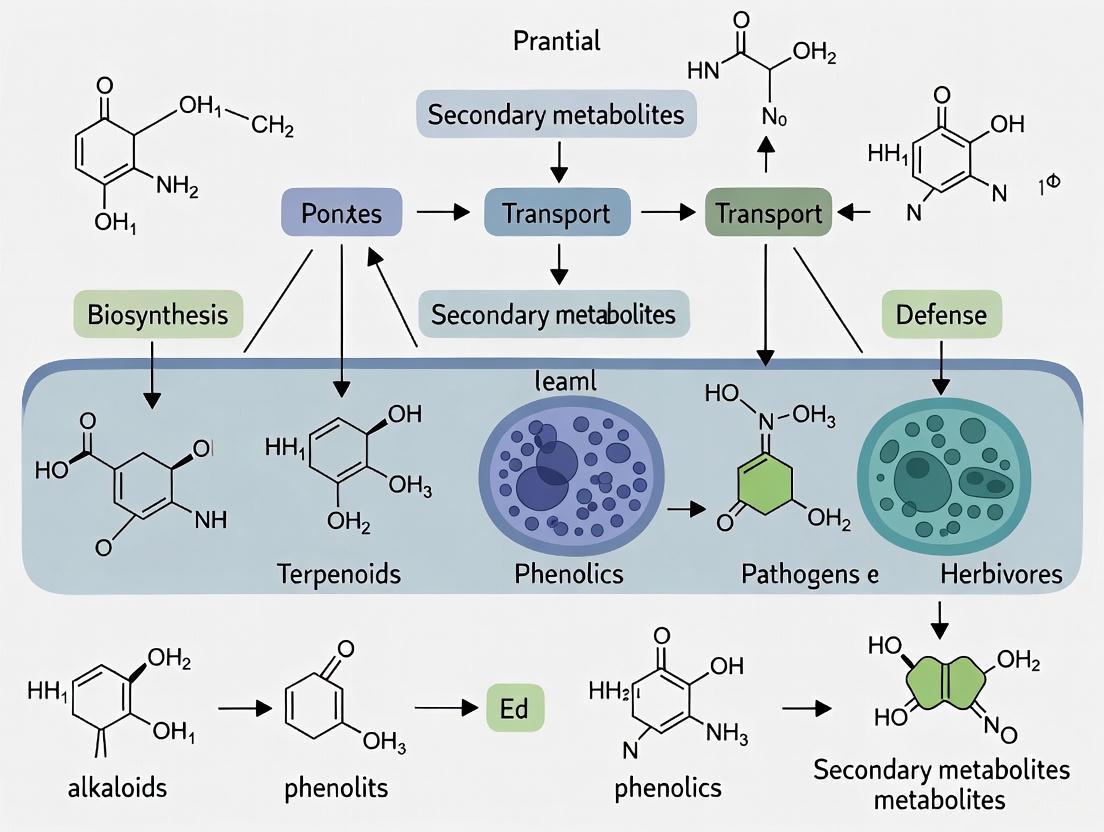
This comprehensive review synthesizes current knowledge on the role of plant secondary metabolites (SMs) in defense mechanisms, addressing the critical needs of researchers, scientists, and drug development professionals.
Plant Secondary Metabolites in Defense: Molecular Mechanisms, Biotechnological Applications, and Drug Discovery
Abstract
This comprehensive review synthesizes current knowledge on the role of plant secondary metabolites (SMs) in defense mechanisms, addressing the critical needs of researchers, scientists, and drug development professionals. It explores the foundational biology of major SM classes—including alkaloids, terpenoids, phenolics, and saponins—and their specific molecular actions against pathogens and herbivores. The article details advanced methodological approaches for SM characterization and biotechnological application, examines current challenges in metabolic engineering and sustainable production, and provides comparative analyses of SM efficacy against drug-resistant pathogens. By integrating recent advances in omics technologies, genetic engineering, and synthetic biology, this work establishes a robust framework for harnessing plant SMs in developing novel therapeutics and sustainable agricultural solutions to address pressing global challenges in medicine and food security.
The Chemical Arsenal: Foundational Classes and Defense Mechanisms of Plant Secondary Metabolites
Plant metabolism is a complex network of biochemical pathways broadly divided into the production of primary and secondary metabolites, each fulfilling distinct physiological roles. Primary metabolites are universal compounds essential for fundamental life processes such as growth, development, and reproduction; they are present across all plant species and include molecules like carbohydrates, lipids, proteins, and nucleic acids [1] [2]. In contrast, secondary metabolites (SMs) are organic compounds that are not essential for basic cellular processes but are indispensable for a plant's ecological interactions and survivability [1] [3] [2]. Their production is often restricted to specific plant lineages or even species, and they are synthesized from the intermediates or end products of primary metabolism [3] [4]. The term "secondary metabolite" was first coined by Albrecht Kossel, the 1910 Nobel Prize laureate, and was later described by Friedrich Czapek as end products of nitrogen metabolism [3]. While the absence of SMs does not result in immediate cell death, it can severely compromise the plant's long-term fitness and adaptive capabilities in its environment [2].
Table 1: Core Distinctions Between Primary and Secondary Metabolites
| Feature | Primary Metabolites | Secondary Metabolites |
|---|---|---|
| Physiological Role | Essential for growth, development, and reproduction [1] [2] | Essential for defense and ecological interactions [1] [3] |
| Distribution | Universal in all plant species [1] | Restricted to specific lineages or species [1] [3] |
| Chemical Diversity | Limited (e.g., sugars, amino acids, common organic acids) [2] | Vast (Over 200,000 identified compounds) [4] |
| Production Phase | Produced during the active growth phase (trophophase) [2] | Often produced during stationary or stress-induced phases [5] |
| Function in Plants | Directly involved in metabolism, structure, and energy storage [1] | Defense against herbivores, pathogens, and abiotic stress; attractants for pollinators [1] [4] |
| Examples | Sucrose, cellulose, chlorophyll, DNA [1] | Morphine, caffeine, lignin, taxol [1] [3] |
Biosynthetic Origins and Major Chemical Classes
The biosynthesis of secondary metabolites is intricately linked to primary metabolic pathways, which provide the necessary building blocks and energy. Three core primary pathways serve as the foundation for SM diversity: the shikimic acid pathway, responsible for generating aromatic amino acids and phenolic compounds; the mevalonic acid (MVA) and methylerythritol phosphate (MEP) pathways, which produce terpenoid precursors; and the tricarboxylic acid (TCA) cycle, which contributes to the synthesis of various organic acids [4] [2]. These pathways are highly responsive to environmental stress, leading to the production of protective SMs [4]. The resulting SMs are classified into three major groups based on their biosynthetic origin and chemical structure: terpenoids, phenolics, and nitrogen-containing compounds (e.g., alkaloids) [3] [4] [2].
Table 2: Major Classes of Plant Secondary Metabolites and Their Origins
| Class | Biosynthetic Precursor/Pathway | Key Sub-Classes & Examples | Primary Ecological Function |
|---|---|---|---|
| Terpenoids | Acetyl CoA, Intermediates of Glycolysis; MVA & MEP pathways [1] [4] | Monoterpenes (Menthol, Pyrethroids), Diterpenes (Paclitaxel), Triterpenoids (Phytoecdysones), Tetraterpenoids (Beta-carotene) [1] [3] | Insect repellent, insecticide, inhibition of cell division in herbivores, disrupt insect molting, attract pollinators [1] |
| Phenolic Compounds | Amino Acid Phenylalanine; Shikimic Acid Pathway [1] [4] | Simple Phenolics (Salicylic acid), Flavonoids (Anthocyanins, Resveratrol), Lignin [1] [3] [4] | Antioxidant, structural support (wood), defense against fungi, pigmentation to attract pollinators [1] [3] |
| Alkaloids | Amino Acids (e.g., Tryptophan, Tyrosine); Shikimic Acid & TCA pathways [1] [2] | Morphine, Codeine, Cocaine, Quinine, Caffeine, Nicotine, Atropine [1] [3] | Potent toxin and feeding deterrent against herbivores; bitter taste [1] |
| Nitrogen- & Sulfur-Containing Compounds | Various Amino Acids [4] | Glucosinolates (Glucoraphanin), Cyanogenic Glycosides, Thionine, Phytoalexins [4] [2] | Deterrent against herbivores and pathogens; counteract oxidative stress [4] |
Diagram 1: SM biosynthetic pathways and primary metabolism integration.
Central Regulatory Role in Plant Defense
Defense Against Biotic Stressors
Plants employ secondary metabolites as central regulators in a continuous evolutionary "arms race" with herbivores and pathogens [4]. This co-evolutionary dynamic drives the development of sophisticated defense mechanisms. SMs function as direct defenses by acting as toxins, antifeedants, or antibiotics, and as indirect defenses by facilitating the recruitment of natural enemies of herbivores [4].
- Alkaloids: These nitrogen-containing compounds are potent toxins and feeding deterrents [1]. For example, the alkaloid senecionine in groundsel plants causes liver failure and fatalities in livestock [1]. Their mode of action often involves interfering with animal nervous systems, acting as nerve poisons, enzyme inhibitors, or membrane transport inhibitors [1]. Furthermore, many alkaloids have a bitter taste, which animals learn to associate with negative effects, thus developing avoidance behaviors [1].
- Terpenoids: This highly diverse class plays multiple defensive roles. Monoterpenes, such as the aromatic oils in mint, function as insect repellents [1]. Pyrethroids, derived from chrysanthemums, are commercially used as insecticides due to their neurotoxic effects on insects and low mammalian toxicity [1]. Another strategy involves triterpenoids like phytoecdysones, which mimic insect molting hormones; when ingested in excess, they disrupt the normal molting cycle, leading to lethal consequences for the insect [1].
- Phenolic Compounds: Phenolics offer both structural and chemical defense. Lignin, a complex phenolic polymer, is a main component of wood. It strengthens cell walls, making plant tissues less palatable and more difficult to digest for insects and fungal pathogens [1]. Simpler phenolics, such as salicylic acid, are crucial in activating a plant's complex defense response against fungal pathogens [1]. Isoflavones in legumes are rapidly synthesized upon pathogen attack and exhibit strong antimicrobial activity [1].
Mitigation of Abiotic Stresses
Beyond biotic interactions, SMs are crucial for plant adaptation and resilience to abiotic stresses such as drought, salinity, heavy metals, and UV radiation [4]. These stresses disrupt physiological processes, but SMs help mitigate the damage.
- Antioxidant Activity: Many abiotic stresses induce the formation of reactive oxygen species (ROS) that can damage cellular components. Phenolic compounds like flavonoids, stilbenes (e.g., resveratrol), and curcuminoids are powerful antioxidants that neutralize ROS, protecting nucleic acids and proteins from oxidative damage [4].
- Structural Protection: Lignin and suberin (a complex polymer derived from phenolics) are deposited in cell walls, forming barriers that reduce water loss and prevent the entry of toxic ions under drought and salinity stress [4].
- UV Protection: Phenylpropanoids and other phenolic compounds absorb harmful UV radiation, thereby protecting plant tissues from UV damage [3].
Experimental Protocols for SM Analysis
The qualitative and quantitative analysis of SMs requires a systematic approach, from sample preparation to data interpretation. The following protocol, adapted from research on Paulownia species, outlines a standard workflow for isolating and characterizing SMs from plant tissue [6].
Sample Preparation and Extraction
- Plant Material Collection: Collect the desired plant organs (e.g., leaves, twigs, flowers, fruits). The study on Paulownia Clon in Vitro 112 showed that the type and quantity of SMs can vary significantly between different morphological parts of the plant [6].
- Lyophilization: Freeze-dry the plant material to preserve labile compounds and facilitate grinding.
- Homogenization: Grind the dried material into a fine powder using a mortar and pestle or a mechanical grinder.
- Solvent Extraction: Extract metabolites from the powdered tissue using a series of solvents of increasing polarity (e.g., hexane, chloroform, ethyl acetate, methanol, water) in a Soxhlet apparatus or via maceration. This step separates compounds based on their solubility.
Compound Isolation and Purification
- Liquid-Liquid Partitioning: Separate the crude extract into fractions containing compounds of different polarities.
- Chromatographic Techniques:
- Column Chromatography (CC): Use silica gel or other stationary phases for initial fractionation of the extract.
- Thin-Layer Chromatography (TLC): Monitor the separation process and identify fractions of interest.
- High-Performance Liquid Chromatography (HPLC): Further purify individual compounds from the complex fractions. This is a high-resolution method essential for obtaining pure SMs.
Structural Elucidation and Quantification
- Spectroscopic Analysis:
- Mass Spectrometry (MS): Determine the molecular weight and fragmentation pattern of the purified compound. Techniques like GC-MS or LC-MS are commonly used [6] [5].
- Nuclear Magnetic Resonance (NMR) Spectroscopy: Analyze the structure of the compound. The chemical structure of isolated compounds is confirmed using spectral methods like 1H-NMR and 13C-NMR [6].
- Quantitative Analysis: Develop and validate an analytical method (e.g., using HPLC with a UV or MS detector) to determine the precise concentration of individual SMs in different plant parts [6].
Diagram 2: Experimental workflow for plant secondary metabolite analysis.
The Scientist's Toolkit: Research Reagent Solutions
Table 3: Essential Reagents and Materials for SM Research
| Item/Category | Function in Research | Specific Examples & Notes |
|---|---|---|
| Solvents for Extraction | To dissolve and extract metabolites from plant matrix based on polarity. | n-Hexane (non-polar lipids), Chloroform (medium polarity compounds), Ethyl Acetate, Methanol (polar compounds like flavonoids), Water (highly polar glycosides) [6] |
| Chromatography Media | To separate complex mixtures into individual compounds. | Silica Gel (for open column and TLC), C18-bonded silica (for reverse-phase HPLC), Sephadex LH-20 (for size exclusion of natural products) [6] |
| Spectroscopy Standards | To calibrate instruments and provide reference data for compound identification. | Deuterated Solvents (for NMR, e.g., CDCl3, DMSO-d6), Internal Standards (for quantitative MS, e.g., stable isotope-labeled compounds) [6] |
| Elicitors | To induce or enhance the production of SMs in plant cell or tissue cultures for study. | Jasmonic Acid, Salicylic Acid, Chitin Oligosaccharides (mimic pathogen attack); Metal Ions, UV Light (simulate abiotic stress) [4] [2] |
| Enzymes & Molecular Biology Kits | To study biosynthetic pathways and genetic regulation of SM production. | RNA/DNA Extraction Kits, Polymerase Chain Reaction (PCR) Reagents, Reverse Transcriptase for gene expression analysis of biosynthetic genes [4] |
The profound biological activities of plant secondary metabolites have made them an invaluable resource in drug discovery and pharmaceutical development [1] [3] [2]. Many SMs are used directly as medicines or serve as lead compounds for the semi-synthesis of more potent drugs.
- Alkaloids: Morphine and codeine from the opium poppy are cornerstone analgesics [1] [3]. Vincristine and vinblastine from the rosy periwinkle are critical chemotherapeutic agents used to treat blood and lymphatic cancers [1] [3]. Quinine from cinchona bark was the primary antimalarial drug for centuries [1].
- Terpenoids: Paclitaxel (Taxol), a diterpene from the Pacific yew tree, is a potent inhibitor of cell division and is used to treat ovarian, breast, and lung cancers [1] [3]. Artemisinin, a sesquiterpene from Artemisia annua, is a powerful antimalarial for which its discoverer, Tu Youyou, was awarded a Nobel Prize [3].
- Phenolic Compounds: Digoxin, a cardiac glycoside from foxglove, is used to treat heart conditions like atrial fibrillation and heart failure [3]. The simple phenolic salicylic acid, derived from willow bark, is the precursor to aspirin [1].
In conclusion, plant secondary metabolites, while distinct from primary metabolites in their role in the producing plant, are central to plant survival through their multifaceted defense functions. Their intricate biosynthetic pathways and potent biological activities not only shape ecological interactions but also provide a rich and ongoing source of inspiration for pharmaceutical innovation. The continued study of these compounds, leveraging advanced analytical and molecular techniques, is essential for unlocking new therapeutic agents and enhancing crop resilience in a changing global climate.
Secondary metabolites are organic compounds that are not directly involved in the normal growth, development, or reproduction of plants but are essential for their survival and ecological interactions. These compounds serve as central regulators of plant defense against a wide range of biotic and abiotic stresses [7]. In the continuous co-evolutionary arms race between plants and their stressors, secondary metabolites have emerged as sophisticated chemical weapons and signaling molecules that deter herbivores, prevent pathogen infections, alleviate oxidative damage, and facilitate communication with beneficial organisms [7]. The four major classes—alkaloids, terpenoids, phenolics, and glycosides—represent distinct biochemical strategies that plants have developed to adapt to their environments and ensure their survival. Understanding the structural diversity, biosynthetic pathways, and ecological functions of these compounds provides valuable insights for developing sustainable agricultural practices and discovering novel pharmaceutical agents.
Alkaloids
Structural Diversity and Biosynthesis
Alkaloids represent one of the largest classes of plant specialized metabolites, characterized by the presence of at least one nitrogen atom, typically within a heterocyclic structure. To date, over 20,000 different alkaloids have been identified across various plant species [8]. This extensive class is broadly categorized into "true alkaloids" and "pseudoalkaloids" based on the origin of their nitrogen. True alkaloids, such as nicotine, camalexin, and benzoxazinoids (BXs), contain nitrogen within a heterocyclic structure derived from amino acids. In contrast, pseudoalkaloids are synthesized from non-amino acid precursors and include terpene-like, steroid-like, and purine-like alkaloids, such as aconitine, tomatine, and caffeine, respectively [8].
Alkaloids are the primary bioactive compounds in many valuable medicinal plants with notable pharmacological activities. Examples include leonurin from Leonurus species, dendrobine from Dendrobium nobile, ephedrine from Ephedra sinica, triptolide from Tripterygium wilfordii, and scopolamine from Datura metel L. These alkaloids exhibit diverse pharmacological properties, including neuroprotection, antitumor activity, anti-inflammatory effects, antibacterial action, and antiviral capabilities [9].
Defense Mechanisms and Ecological Roles
Alkaloids serve as essential defensive compounds for plants, playing a critical role in their survival and reproduction by resisting insect infestations and attracting pollinators [9]. Known for their potent bioactivities, these metabolites have primarily been described in the context of aboveground defense against pathogens, insects, and herbivores [8]. For example, nicotine is among the most well-characterized toxic alkaloids produced by plants in the genus Nicotiana, which deters a wide range of insect herbivores by targeting acetylcholine receptors in the animal nervous systems [8].
Beyond these defensive functions, recent studies have revealed that alkaloids also mediate interactions between plants and their associated root microbiota. These interkingdom metabolic interactions improve plant fitness, particularly under changing environmental conditions [8]. Plants secrete measurable amounts of alkaloids as root exudates into the rhizosphere, with secretion levels varying across different growth stages and influenced by soil nutritional conditions [8].
Table 1: Representative Defensive Alkaloids and Their Functions
| Alkaloid Name | Plant Source | Primary Defense Function | Additional Notes |
|---|---|---|---|
| Nicotine | Nicotiana species | Insecticidal, targets nervous system | Basis for synthetic neonicotinoids |
| Tomatine | Tomato (Solanum lycopersicum) | Antimicrobial, defense against pathogens | Secreted in root exudates |
| Camalexin | Arabidopsis thaliana | Phytoalexin, defense against pathogens | Induced by pattern-triggered immunity |
| Monocrotaline | Crotalaria species (Fabaceae) | Defense against herbivores | Nodule-specific biosynthesis induced by rhizobia |
| Benzoxazinoids | Maize, wheat | Defense against aboveground herbivores | Metabolized by root microbiota |
Experimental Analysis Protocols
Protocol 1: Quantification of Alkaloid Secretion in Root Exudates
- Plant Growth and Collection: Grow plants under controlled conditions using a hydroponic culture system. Collect root exudates at different growth stages by immersing roots in sterile distilled water for a defined period (e.g., 2-4 hours).
- Sample Preparation: Concentrate the exudate solution using solid-phase extraction (SPE) or lyophilization. Resuspend in appropriate solvent for analysis.
- Analysis: Perform targeted analysis using Liquid Chromatography-Mass Spectrometry (LC-MS) with multiple reaction monitoring (MRM) for specific alkaloids. Use authentic standards for quantification [8].
Protocol 2: Induction of Alkaloid Biosynthesis by Beneficial Microbes
- Microbial Inoculation: Inoculate plants with beneficial bacteria (e.g., Pseudomonas sp. CH267 or Streptomyces strain AgN23) by adding bacterial suspension to growth medium.
- Time-Course Sampling: Harvest root tissues at various time points post-inoculation (e.g., 0, 6, 12, 24, 48 hours) for gene expression and metabolite analysis.
- Gene Expression Analysis: Extract RNA and perform RT-qPCR to analyze expression of alkaloid biosynthetic genes (e.g., CYP79D15 for cyanogenic glycosides) [9].
- Metabolite Profiling: Analyze alkaloid accumulation using LC-MS/MS with appropriate internal standards [8].
Terpenoids
Structural Diversity and Biosynthesis
Terpenoids, also referred to as isoprenoids, constitute one of the largest and most diverse classes of naturally occurring organic compounds, with over 40,000 unique structures identified [10]. These metabolites are derived from basic five-carbon isoprene units (C5H8) that can be linked in various configurations to form a wide array of structures, from simple linear chains to complex polycyclic molecules [10]. The major subclasses of terpenoids include monoterpenes (C10), sesquiterpenes (C15), diterpenes (C20), triterpenes (C30), and tetraterpenes (C40) [11].
The biosynthesis of terpenoids occurs through two distinct pathways: the mevalonate (MVA) pathway in the cytosol and endoplasmic reticulum, and the methylerythritol phosphate (MEP) pathway in the plastids [10] [11]. The MVA pathway utilizes acetyl-CoA as a starting material and primarily produces sesquiterpenes (C15) and triterpenes (C30), while the MEP pathway starts with pyruvate and glyceraldehyde-3-phosphate and is responsible for monoterpenes (C10), diterpenes (C20), and tetraterpenes (C40) [10]. The initial precursors, isopentenyl diphosphate (IPP) and dimethylallyl diphosphate (DMAPP), are condensed by isoprenyl diphosphate synthases (IDSs) to form geranyl diphosphate (GPP), farnesyl diphosphate (FPP), and geranylgeranyl diphosphate (GGPP), which serve as direct precursors for various terpenoid classes [11].
Diagram 1: Terpenoid Biosynthesis Pathways Showing MVA and MEP Routes
Defense Mechanisms and Ecological Roles
Terpenoids play critical roles in plant defense mechanisms, functioning as toxins, repellents, and antimicrobial agents [10]. Their chemical diversity enables a wide range of defensive strategies:
- Insecticidal Action: Terpenoids act as natural insecticides. Limonene, a monoterpene present in citrus peels, effectively repels a variety of insects. Diterpenoids like resin acids found in pine needles are lethal to many herbivorous insects, hindering their digestion and development [10].
- Antifungal Action: Sesquiterpenes are particularly effective against pathogenic fungi. Farnesene, produced by species in the Asteraceae family, inhibits spore germination and impedes fungal growth. The low molecular weight and lipophilic character of terpenoids make them excellent molecules that hinder the sporulation and germination of various fungi, causing cell death [10].
- Plant Communication: Terpenoids are important in plant-communication and plant-insect interactions, such as attracting pollinators or natural predators of herbivores [10]. They also facilitate plant-to-plant communication and improve seed dispersal [11].
Table 2: Major Terpenoid Classes and Their Defensive Functions
| Terpenoid Class | Carbon Atoms | Example Compounds | Natural Sources | Defensive Role |
|---|---|---|---|---|
| Monoterpenes | C10 | Limonene, Menthol | Citrus, Mint | Pollinator attraction, Insect repellent |
| Sesquiterpenes | C15 | Artemisinin, Farnesol | Wormwood, Various plants | Antimicrobial, Antimalarial |
| Diterpenes | C20 | Taxol, Ginkgolide | Yew, Ginkgo | Anticancer, Defensive toxins |
| Triterpenes | C30 | Saponins, Steroids | Various plants | Membrane stabilization, Defense |
| Tetraterpenes | C40 | Lycopene, Beta-carotene | Tomatoes, Carrots | Antioxidants, Pigmentation |
Experimental Analysis Protocols
Protocol 1: Analysis of Terpenoid Volatiles
- Headspace Sampling: Place plant material in a sealed container and allow volatiles to accumulate. Use solid-phase microextraction (SPME) fibers to capture volatile terpenoids.
- Gas Chromatography-Mass Spectrometry (GC-MS) Analysis: Desorb SPME fibers in GC inlet and separate compounds using a non-polar or slightly polar capillary column.
- Identification and Quantification: Identify compounds by comparison with mass spectral libraries and authentic standards. Use internal standards for quantification [10] [11].
Protocol 2: Induction of Terpenoid Biosynthesis by Herbivory
- Herbivore Treatment: Apply mechanical wounding or allow controlled herbivore feeding on plant leaves.
- Time-Course Sampling: Collect tissue samples at various time points post-induction (0, 1, 3, 6, 12, 24 hours).
- Gene Expression Analysis: Extract RNA and perform RT-qPCR to analyze expression of key terpenoid biosynthesis genes (e.g., DXS, HMGR, terpene synthases).
- Metabolite Analysis: Extract terpenoids with organic solvents (e.g., hexane or dichloromethane) and analyze by GC-MS or LC-MS depending on compound volatility [11].
Phenolics
Structural Diversity and Biosynthesis
Phenolic compounds represent a large family of secondary metabolites characterized by the presence of at least one aromatic ring with one or more hydroxyl groups. Major subclasses include phenolic acids, flavonoids, tannins, lignans, coumarins, and stilbenes [7]. Phenolic acids are further divided into hydroxybenzoic acids (e.g., gallic acid, vanillic acid) and hydroxycinnamic acids (e.g., caffeic acid, ferulic acid, p-coumaric acid) [12].
Phenolic compounds are synthesized primarily through the shikimic acid pathway in plants [7]. This pathway begins with the conversion of shikimic acid into l-phenylalanine (l-Phe) via the action of 5-enolpyruvyl shikimate-3-phosphate synthase, shikimate kinase, and chorismate synthase. Phenylalanine is then converted to p-coumaric acid, salicylic acid (SA), and p-hydroxybenzoic acid (p-HbA), which function as essential precursors for other derivatives of phenolic acids [12]. A key regulatory step is the deamination of phenylalanine to cinnamic acid, catalyzed by the enzyme phenylalanine ammonia-lyase (PAL), which is often induced in response to stress and microbial infection [12] [13].
Defense Mechanisms and Ecological Roles
Phenolic compounds play multifaceted roles in mediating the dynamic relationships between the host plant and its microbial partners [12]. Their defensive functions include:
- Antimicrobial Activity: Phenolic acids function as signaling molecules, antimicrobial agents, and modulators of plant defense responses [12]. They can interfere with bacterial quorum sensing and restructure microbial communities [12].
- Allelopathy: Phenolic compounds can inhibit the growth of competing plant species through allelopathic effects [12].
- Structural Defense: Compounds like lignin and suberin reinforce cell walls, creating physical barriers against pathogen invasion [7].
- Oxidative Defense: Many phenolics act as potent antioxidants, scavenging reactive oxygen species (ROS) generated under stress conditions [7].
Phenolic compounds balance plant resistance and growth by regulating symbiotic relationships with specific microorganisms [12]. They can serve as substrates for specialized microbial growth, creating feedback loops between their metabolisms and soil rhizosphere microorganisms [12].
Experimental Analysis Protocols
Protocol 1: High-Pressure Induction of Phenolic Biosynthesis
- Treatment Application: Subject harvested plant material (e.g., strawberries) to high-pressure (HP) treatment at pressures ranging from 10 to 40 MPa in two or three cycles.
- Extraction: Homogenize tissue in methanol or acetone-water mixture containing 1% HCl. Sonicate and centrifuge to collect supernatant.
- Total Phenolic Content: Determine total phenolic content using the Folin-Ciocalteu method with gallic acid as standard.
- Gene Expression Analysis: Extract RNA and perform RT-qPCR to analyze expression of key biosynthetic genes (PAL, CHS, UFGT) [13].
Protocol 2: Analysis of Root Exudate Phenolics
- Root Exudate Collection: Grow plants in sterile hydroponic system. Collect root exudates by placing roots in sterile distilled water for 2-4 hours.
- Sample Preparation: Concentrate exudates using solid-phase extraction (C18 cartridges). Elute phenolics with methanol.
- Analysis: Separate and quantify individual phenolic acids using High-Performance Liquid Chromatography (HPLC) with diode-array detection. Use authentic standards for identification and quantification [12].
Glycosides
Structural Diversity and Biosynthesis
Glycosides are compounds consisting of a sugar moiety (most commonly glucose) linked to a non-sugar aglycone through a glycosidic bond. In plant defense, the most significant glycosides include cyanogenic glycosides (CGs) and glucosinolates. This review will focus on cyanogenic glycosides as representative defensive glycosides.
Cyanogenic glycosides are characterized by their ability to release hydrogen cyanide upon enzymatic hydrolysis. Currently, 112 distinct CGs are known from the plant kingdom [14]. Chemically, CGs are α-hydroxynitrile glucosides consisting of two main components: a sugar moiety and an aglycone containing the cyanogenic group (CN) [14]. The aglycone can vary in its chemical structure, appearing as aliphatic, cyclic, aromatic, or heterocyclic compounds, which largely determines the toxicity of CGs [14].
Cyanogenic glycosides are primarily derived from aliphatic amino acids (L-valine, L-isoleucine, L-leucine) and aromatic amino acids (L-phenylalanine, L-tyrosine) [14]. The biosynthesis involves three conserved enzymatic steps:
- Amino acid hydroxylation: Conversion of α-amino acids to aldoximes via N-hydroxylated derivatives, mediated by cytochrome P450 enzymes (CYP79).
- Cyanohydrin formation: Transformation of aldoximes into unstable cyanohydrins via further P450 cytochrome enzymes (CYP71, CYP706, CYP736).
- Glycosylation: Attachment of a glucose unit, which stabilizes the cyanohydrins into cyanogenic glucosides, catalyzed by UDP-glucosyltransferase (UGT85, UGT94) [14].
Diagram 2: Cyanogenic Glycoside Biosynthesis and Activation Pathway
Defense Mechanisms and Ecological Roles
Cyanogenic glycosides play a crucial role in plant defense against herbivores and pathogens [14]. The defensive function is not provided by the CG itself, but rather by the toxic hydrogen cyanide (HCN) released from stored CGs when plant tissues are disrupted [14]. Cyanogenesis occurs in two phases: Phase 1 involves cleavage of the carbohydrate component by β-glucosidases, and Phase 2 involves cleavage of the aglycone to aldehyde or ketone and HCN by hydroxynitrile lyases [14].
Plants have evolved compartmentalization strategies to prevent self-toxicity. While CGs are stored in vacuoles, β-glucosidases are localized in the apoplastic space, bound to cell walls in dicotyledonous plants, and in the cytoplasm and chloroplasts in monocotyledonous plants. Hydroxynitrile enzymes accumulate mainly in the cytoplasm and plasma membranes. When plant tissue is disrupted, CGs and enzymes come into contact, leading to HCN release [14].
Beyond defense, CGs also serve as a re-mobilizable reservoir of reduced nitrogen, increase plant tolerance by reducing oxidative stress, and may support seedling development [14]. Additionally, free cyanide, including that released from CGs, may act as a signaling molecule in plants [14].
Experimental Analysis Protocols
Protocol 1: Quantification of Cyanogenic Potential
- Tissue Preparation: Grind plant tissue in liquid nitrogen to fine powder.
- Enzymatic Hydrolysis: Incubate tissue with distilled water in sealed containers. Add enzyme preparation (e.g., β-glucosidase) if needed for complete hydrolysis.
- HCN Detection: Use picrate paper (Feigl-Anger paper) placed in the container headspace to detect released HCN through color change from yellow to reddish brown.
- Quantification: For precise quantification, trap released HCN in NaOH solution and determine cyanide concentration spectrophotometrically or using ion-specific electrode [14].
Protocol 2: Analysis of Cyanogenic Glycoside Polymorphism
- Population Sampling: Collect leaf tissue from multiple individuals in a natural population.
- Screening for Cyanogenesis: Perform quick test using picrate paper on crushed leaves.
- Genotyping: Extract DNA and use PCR-based markers to identify presence/absence of genes responsible for both the synthesis of CGs (Ac) and the synthesis of β-glucosidases (Li).
- Correlation Analysis: Correlate phenotypic cyanogenesis with genotypic data to determine polymorphism patterns [14].
The Scientist's Toolkit: Essential Research Reagents and Methods
Table 3: Key Research Reagent Solutions for Studying Plant Defensive Metabolites
| Reagent/Technique | Application | Function/Principle | Representative Use |
|---|---|---|---|
| LC-MS/MS (Liquid Chromatography-Tandem Mass Spectrometry) | Alkaloid, phenolic, and glycoside analysis | Separation and sensitive detection of non-volatile metabolites | Quantification of root exudate alkaloids [8] |
| GC-MS (Gas Chromatography-Mass Spectrometry) | Terpenoid and volatile analysis | Separation and identification of volatile compounds | Analysis of herbivore-induced terpenes [10] [11] |
| Folin-Ciocalteu Reagent | Total phenolic content | Colorimetric quantification of phenolics | Measuring induced phenolic biosynthesis [13] |
| Picrate Paper | Cyanogenic glycoside detection | Color change indicates HCN release | Screening for cyanogenesis polymorphism [14] |
| Hydroponic Culture Systems | Root exudate collection | Sterile collection of root-secreted metabolites | Studying alkaloid secretion dynamics [8] |
| RT-qPCR (Reverse Transcription Quantitative PCR) | Gene expression analysis | Quantification of biosynthetic gene expression | Monitoring pathway induction under stress [9] [13] |
| SPME (Solid-Phase Microextraction) | Volatile collection | Headspace sampling of volatile compounds | Capturing terpenoid emissions [10] [11] |
The major classes of defensive secondary metabolites—alkaloids, terpenoids, phenolics, and glycosides—represent sophisticated chemical solutions that plants have evolved to navigate complex ecological challenges. Each class employs distinct biosynthetic pathways and mechanisms of action, yet collectively they form an integrated defensive network that enhances plant resilience and fitness. Understanding these compounds extends beyond fundamental plant biology, offering applications in sustainable agriculture through the development of naturally protected crops, and in pharmaceutical science through the discovery of novel bioactive compounds. As research continues to unravel the complexity of these metabolic networks, particularly through advanced omics technologies and synthetic biology approaches, we move closer to harnessing the full potential of plant defensive metabolites for agricultural, medicinal, and ecological benefits.
Secondary metabolites are fundamental to plant survival, enabling adaptation to environmental stresses and defense against pathogens and herbivores. Their biosynthesis is a primary focus of plant defense research, with industrial applications in pharmaceuticals, agriculture, and nutraceuticals [4] [15]. These compounds are not merely "secondary" but are essential for plant resilience and ecological interaction [16]. The biosynthetic pathways responsible for this chemical diversity are highly inducible, often activated by specific environmental stimuli and stresses [17] [18].
This technical guide details the three core biosynthetic pathways for plant secondary metabolites: the shikimic acid, mevalonate (MVA), and methylerythritol phosphate (MEP) pathways. It provides an in-depth examination of their biochemistry, regulation, and role in plant defense, supported by current research data, experimental protocols, and analytical tools for researchers and drug development professionals.
The Shikimic Acid Pathway
The shikimate pathway is a seven-step metabolic process converting phosphoenolpyruvate (PEP) and erythrose 4-phosphate (E4P) into chorismate, the primary precursor for the aromatic amino acids phenylalanine (Phe), tyrosine (Tyr), and tryptophan (Trp) [19]. This pathway is present in bacteria, fungi, algae, and plants, but is absent in animals, making it an attractive target for herbicides and antimicrobials [19]. The pathway's intermediates are highly functionalized, making them ideal branch points for specialized metabolism, leading to a vast array of secondary metabolites [19].
Key Enzymes and Metabolic Branch Points
The architecture of shikimate pathway enzymes varies significantly across kingdoms. Bacteria typically use discrete monofunctional enzymes (aro homologs), plants use six enzymes (including a bifunctional DHQ dehydratase/shikimate dehydrogenase), and fungi employ a pentafunctional AROM complex [19]. Chorismate, the pathway endpoint, serves as the crucial branch point, directing carbon flux into multiple specialized metabolic streams via enzymes like chorismate mutase (for Phe and Tyr biosynthesis) and anthranilate synthase (for Trp biosynthesis) [19] [18].
Defense-Related Metabolites and Stress Regulation
The shikimate pathway provides the aromatic precursors for numerous defense compounds. Phenylalanine is a common precursor for phenolics, flavonoids, lignins, lignans, and condensed tannins [18] [15]. Tyrosine leads to isoquinoline alkaloids and quinones, while tryptophan is the precursor for indole alkaloids, phytoalexins, and auxin [18]. The pathway is transcriptionally upregulated under stress conditions, with key genes regulated by transcription factors such as WRKY, MYB, and AP2/ERF [18].
Table 1: Key Secondary Metabolite Classes Derived from the Shikimate Pathway and Their Defense Roles
| Precursor | Secondary Metabolite Class | Example Compounds | Documented Role in Plant Defense |
|---|---|---|---|
| Phenylalanine | Phenolics | Ferulic acid, Caffeic acid | Antioxidants, structural barriers [4] [15] |
| Flavonoids | Quercetin, Anthocyanins | UV protection, herbivore deterrents [4] [20] | |
| Lignins & Lignans | Lignin polymer | Structural reinforcement of cell walls [4] [18] | |
| Tyrosine | Alkaloids | Isoquinoline alkaloids | Toxicity to herbivores and microbes [18] |
| Quinones | Plastoquinone | Redox reactions, oxidative stress mitigation [18] | |
| Tryptophan | Alkaloids & Phytoalexins | Indole alkaloids | Antimicrobial, insecticidal activities [18] |
The diagram below illustrates the core shikimic acid pathway and its major branches leading to defense metabolites.
The Mevalonate (MVA) and Methylerythritol Phosphate (MEP) Pathways
Parallel Routes to Isoprenoid Building Blocks
The mevalonate (MVA) and methylerythritol phosphate (MEP) pathways are two independent metabolic routes that produce the universal five-carbon isoprenoid precursors, isopentenyl diphosphate (IPP) and its isomer dimethylallyl diphosphate (DMAPP) [21] [22]. Despite producing identical end products, they employ distinct starting substrates, enzymes, and are compartmentalized within different subcellular locations [22] [15].
The MVA pathway is primarily cytosolic and peroxisomal, initiating from three molecules of acetyl-CoA. A key regulatory, rate-limiting step is the conversion of HMG-CoA to mevalonate, catalyzed by HMG-CoA reductase (HMGR) [22] [15]. This pathway primarily supplies precursors for sesquiterpenes (C15), triterpenes (C30), and sterols [15].
The MEP pathway is plastidial and starts with the condensation of pyruvate and D-glyceraldehyde-3-phosphate (GAP). The first committed step, catalyzed by DXP synthase (DXS), is a major regulatory point [22]. This pathway provides IPP and DMAPP for monoterpenes (C10), diterpenes (C20), carotenoids (C40), and the side chains of chlorophylls and plastoquinones [22].
Pathway Coordination and Defense Roles of Terpenoids
In plants, the simultaneous operation of both pathways is a key evolutionary adaptation [22]. This compartmentalization allows for the efficient and specific production of distinct terpenoid classes while minimizing substrate competition [22]. Evidence from mutant studies, chemical inhibition, and isotopic labeling confirms a limited but regulated cross-talk between the cytosolic and plastidial pools of precursors [22]. The terpenoids produced play critical and diverse roles in direct and indirect plant defense, functioning as toxins, repellents, antioxidants, and antimicrobials [4] [22] [20].
Table 2: Comparative Analysis of the MVA and MEP Pathways
| Feature | Mevalonate (MVA) Pathway | Methylerythritol Phosphate (MEP) Pathway |
|---|---|---|
| Subcellular Location | Cytosol, Endoplasmic Reticulum, Peroxisomes [22] | Plastids [22] |
| Primary Substrates | 3 x Acetyl-CoA [22] [15] | Pyruvate + Glyceraldehyde-3-Phosphate (GAP) [22] |
| Key Regulatory Enzyme | HMG-CoA Reductase (HMGR) [22] | DXP Synthase (DXS) [22] |
| Energy/Redox Cost | 3 ATP, 2 NADPH per IPP [22] | 3 ATP, 3 NADPH per IPP [22] |
| Major Defense Terpenoids | Sesquiterpenes (C15), Triterpenes (C30) [22] [15] | Monoterpenes (C10), Diterpenes (C20), Tetraterpenes (Carotenoids-C40) [22] [15] |
| Sensitivity to Oxidative Stress | Lower (No Fe-S cluster enzymes in eukaryotic version) [23] | Higher (Due to oxygen-sensitive Fe-S cluster enzymes IspG & IspH) [23] |
The MEP Pathway as an Oxidative Stress Sensor
Recent research highlights a sophisticated role for the MEP pathway beyond precursor supply. Its terminal enzymes, IspG and IspH, contain oxygen-sensitive [4Fe-4S] clusters, making the pathway a sensor for oxidative stress [23]. Under such stress, the intermediate methylerythritol cyclodiphosphate (MEcPP) accumulates and acts as a stress signaling molecule—a function conserved from bacteria to plants [21] [23]. MEcPP may also directly act as an antioxidant, positioning the MEP pathway as a central regulatory node in integrating stress perception with defense metabolism [23].
The following diagram illustrates the two pathways, their compartmentalization, and the major classes of defensive terpenoids they produce.
Experimental Methodologies for Pathway Analysis
Elicitor Treatment for Inducing Secondary Metabolism
Elicitation is a foundational technique for studying inducible defense pathways. It involves exposing plants or in vitro cultures to biotic or abiotic elicitors to trigger secondary metabolite production [17] [20].
Detailed Protocol: Elicitor Treatment in Hairy Root Cultures
- Culture Establishment: Generate and maintain transgenic hairy roots of the target plant species (e.g., Cephalotaxus for alkaloids) by infection with Agrobacterium rhizogenes. Culture in suitable liquid medium (e.g., B5 or MS) under controlled conditions (darkness, 25°C, 100 rpm) [20].
- Elicitor Preparation:
- Biotic Elicitors: Prepare fungal (e.g., Fusarium oxysporum) or yeast extracts by autoclaving biomass, followed by centrifugation and filter-sterilization of the supernatant [17] [20].
- Abiotic Elicitors: Prepare stock solutions of methyl jasmonate (MeJA), salicylic acid (SA), or sodium fluoride (NaF) in ethanol or water, and filter-sterilize [20].
- Treatment: Add the elicitor to the culture medium during the mid-exponential growth phase (e.g., day 14). Optimize concentration and exposure time (e.g., 100 µM MeJA for 48 hours) [20].
- Harvest: Collect biomass by vacuum filtration. Separately, extract metabolites from the biomass and analyze the culture medium for secreted compounds [20].
Molecular Cloning for Pathway Manipulation
Genetic manipulation is key to validating gene function and enhancing metabolite yield.
Detailed Protocol: CRISPR-Based Gene Editing in Mycobacteria/Marinum * Application: This protocol, adapted from [21], is used to investigate gene essentiality in organisms with dual MEP/MEV pathways. 1. Strain and Culture: Grow Mycobacterium marinum M (ATCC BAA-535) at 30°C in Middlebrook 7H9 liquid medium supplemented with 10% OADC and 0.2% Tween80 [21]. 2. Electrocompetent Cell Preparation: Harvest cells at OD600 0.5–0.8. Wash pelleted cells four times with decreasing volumes of sterile 10% glycerol, resuspending the final pellet in a 20-25x concentrated volume [21]. 3. Electroporation: Mix 200 µL of electrocompetent cells with 5 µL of plasmid DNA (e.g., a CRISPR/dCas9 construct). Electroporate in a 0.2-cm cuvette at 2.5 kV, 25 µF, and 1000 Ω resistance [21]. 4. Recovery and Selection: Recover cells overnight at 30°C in 7H9 medium, then plate on selective 7H10 agar containing appropriate antibiotics (e.g., kanamycin 25 µg/ml). Verify gene replacement or knockdown in 3-6 randomly selected clones via PCR [21].
Analytical Techniques for Metabolic Profiling
- Isotopic Labeling and NMR/Mass Spectrometry: To trace pathway flux and confirm precursor origins. For example, feeding (^{13}\text{C})-labeled glucose and analyzing incorporation patterns via NMR can reveal cross-talk between the MVA and MEP pathways [22].
- Liquid Chromatography-Mass Spectrometry (LC-MS/MS): The workhorse for quantitative metabolite profiling. Used to measure changes in the levels of pathway intermediates (e.g., DOXP, CDP-ME, MEcPP) and final terpenoid/alkaloid products in response to genetic or elicitor treatments [21] [17].
The Scientist's Toolkit: Key Research Reagents
Table 3: Essential Reagents for Studying Plant Secondary Metabolic Pathways
| Reagent / Material | Function / Application | Example Use-Case |
|---|---|---|
| Methyl Jasmonate (MeJA) | Potent abiotic elicitor; activates defense signaling via the JA pathway. | Dramatically enhances alkaloid (e.g., harringtonine) yield in Cephalotaxus cell cultures [20]. |
| Salicylic Acid (SA) | Phenolic phytohormone and elicitor; regulates systemic acquired resistance. | Upregulates the MEP/MVA pathways to boost precursor supply for terpenoid biosynthesis [20]. |
| Fosmidomycin | Specific inhibitor of DXP reductoisomerase (IspC) in the MEP pathway. | Experimentally blocks the plastidial pathway to study its contribution and pathway cross-talk [22]. |
| Lovastatin | Competitive inhibitor of HMG-CoA reductase in the MVA pathway. | Inhibits the cytosolic pathway to dissect its role in sesquiterpene and sterol biosynthesis [22]. |
| Deuterated ((^{2}\text{H})) or (^{13}\text{C}) Glucose | Stable isotope-labeled precursor for metabolic flux analysis. | Traces carbon allocation through the MVA vs. MEP pathways using GC- or LC-MS [22]. |
| Glyphosate | Herbicide; inhibits EPSP synthase in the shikimate pathway. | Used to study the shikimate pathway's role in defense and to select for transgenic glyphosate-resistant plants [19]. |
| Agrobacterium rhizogenes | Natural genetic engineer; used to create "hairy root" cultures. | Generates transformed root cultures that often exhibit high and stable production of secondary metabolites [20]. |
The shikimic acid, mevalonate, and methylerythritol phosphate pathways form the metabolic core of plant chemical defense. Their intricate regulation, compartmentalization, and responsiveness to environmental stresses underscore the sophistication of plant adaptive strategies. Future research, leveraging multi-omics approaches, CRISPR-based gene editing, and metabolic engineering, will continue to unravel the complex regulatory networks governing these pathways. This knowledge is pivotal for developing novel strategies for crop improvement, sustainable production of high-value plant-derived pharmaceuticals, and the discovery of new bioactive compounds for drug development.
Plants, as sessile organisms, cannot escape biotic and abiotic stressors and have consequently evolved a sophisticated array of chemical defense strategies. Central to these strategies are plant secondary metabolites (PSMs), which include a vast range of compounds such as alkaloids, terpenoids, phenolics, and flavonoids [24]. These metabolites are not directly involved in primary growth processes but are indispensable for plant survival and ecological interactions [24]. Defense mechanisms can be broadly categorized as either constitutive (always present) or induced (activated upon threat perception), representing a critical trade-off in a plant's resource allocation budget [24] [25].
The Optimal Defense Theory (ODT) posits that plants evolutionarily tailor their defense investment to protect their most valuable and vulnerable tissues while minimizing metabolic and ecological costs [26]. This framework is essential for understanding the dynamic allocation of defenses, wherein phytoalexins—a class of inducible, antimicrobial secondary metabolites—serve as a classic example of a rapidly deployed, cost-effective defense [24]. The production of these specialized metabolites is tightly regulated by complex signaling networks involving hormones like jasmonic acid (JA), salicylic acid (SA), and ethylene (ETH), which integrate environmental cues to orchestrate an appropriate defense response [27] [28].
This whitepaper delves into the mechanisms governing constitutive and induced plant defenses, with a specific focus on phytoalexins. It examines the molecular basis of metabolic allocation, the signaling pathways involved, and the experimental methodologies driving discovery in this field, providing a resource for researchers and drug development professionals exploring plant-derived bioactive compounds.
Core Concepts: Constitutive and Induced Defenses
Defining the Defense Paradigms
Plant chemical defenses are strategically partitioned into two primary modes:
Constitutive Defenses: These are pre-formed physical and chemical barriers present in plant tissues regardless of threat level. They include structures like trichomes and thick cuticles, as well as metabolites such as tannins and alkaloids, which act as immediate deterrents or toxins to herbivores and pathogens [24] [26]. Their allocation is spatially optimized; for instance, according to ODT, valuable organs like taproots contain higher concentrations of defensive glucosinolates than less critical fine roots [26].
Induced Defenses: These are activated only upon recognition of a specific stress, such as herbivore feeding or pathogen attack [24]. This on-demand system includes the synthesis of phytoalexins and defensive proteins, allowing the plant to conserve resources in the absence of threat [24] [25]. Induced responses are a form of phenotypic plasticity, shaped by the balance between the benefits of reduced herbivory and the metabolic costs of production [25].
The Phytoalexin Response
Phytoalexins are low-molecular-weight, antimicrobial secondary metabolites that are rapidly synthesized de novo and accumulate at sites of pathogen infection [24] [29]. They are a cornerstone of the induced defense system. Their biosynthesis is a complex chemical defense mechanism triggered by elicitors derived from pathogens or abiotic stressors [29]. The production of phytoalexins is often localized and transient, representing a targeted and metabolically efficient defense strategy.
The Dynamics and Economics of Metabolic Allocation
The Optimal Defense Theory (ODT) and Allocation Patterns
The Optimal Defense Theory (ODT) provides a framework for understanding patterns of defense investment in plants. It suggests that defenses are allocated to maximize fitness benefits relative to their costs, prioritizing the most valuable and vulnerable organs [26]. For example, in root systems, taproots often show higher concentrations of defensive compounds like glucosinolates than lateral or fine roots, reflecting their greater importance for plant survival and resource storage [26].
Quantifying the Costs of Defense
Producing secondary metabolites incurs significant costs, which can be metabolic (diversion of resources from growth and reproduction) and ecological (deterrence of beneficial organisms) [26] [25]. A tiered defense strategy minimizes these costs: plants first deploy cheaper defenses and only activate more costly ones after a specific damage threshold is reached [25].
Table 1: Cost-Benefit Analysis of Selected Plant Defense Traits
| Defense Trait | Class / Type | Production Cost | Induction Threshold | Primary Function |
|---|---|---|---|---|
| Chlorogenic Acid | Phenolic (Small Molecule) | Low | Continuous, Low Damage | Direct toxin, metabolic inhibitor [25] |
| Trichomes | Structural Defense | High | High (~40% Damage) | Physical barrier against herbivores [25] |
| Condensed Tannins | Phenolic (Polymer) | High | High (~40% Damage) | Reduces plant digestibility [25] |
| Phytoalexins | Induced Chemical | Variable | Pathogen Recognition | Direct antimicrobial activity [24] [29] |
Research on common ragweed demonstrates that cheaper traits (e.g., chlorogenic acid, kaempferol, rutin) exhibit a linear induction response to damage, while costlier traits (e.g., trichomes, condensed tannins, lignin) are induced only after a high damage threshold (approximately 40%) is crossed [25]. This sequential activation forms a tiered defense system that balances cost-efficiency with robust protection.
Molecular Mechanisms and Signaling Pathways
Biosynthetic Pathways of Key Secondary Metabolites
The biosynthesis of PSMs, including phytoalexins, proceeds through several major pathways, often stemming from primary metabolism [4] [15].
- The Shikimate Pathway: This pathway produces aromatic amino acids (phenylalanine, tyrosine, tryptophan) which are precursors for a vast array of phenolics, including flavonoids, lignins, and tannins [4] [15].
- The Phenylpropanoid Pathway: Converting phenylalanine from the shikimate pathway, this route generates phenolic compounds like flavonoids, lignins, and stilbenes (e.g., resveratrol, a phytoalexin in grapes) [15].
- The Mevalonate (MVA) and Methylerythritol Phosphate (MEP) Pathways: These pathways produce the basic five-carbon building blocks (IPP and DMAPP) for terpenoids, which include monoterpenes, diterpenes, and sesquiterpenes with defensive roles [4] [27] [15].
- Alkaloid Biosynthesis: Derived from various amino acids, alkaloids represent a major class of nitrogen-containing defensive compounds [24] [15].
Signaling Networks in Induced Defense
The induction of phytoalexins and other defenses is governed by a complex signaling network. Key players include:
- Jasmonates (JA/MeJA): Central regulators of defense against necrotrophic pathogens and herbivores. JA signaling often promotes the production of alkaloids, terpenoids, and phenolic phytoalexins [27] [29].
- Salicylic Acid (SA): Primarily involved in defense against biotrophic pathogens and systemic acquired resistance (SAR). There can be crosstalk and antagonism between SA and JA pathways [30] [28].
- Reactive Oxygen Species (ROS) and Gasotransmitters: Molecules like hydrogen peroxide (H₂O₂), nitric oxide (NO), and hydrogen sulfide (H₂S) act as secondary messengers in stress signaling, modulating the biosynthesis of SMs [27].
- Transcription Factors (TFs): Families such as MYB, WRKY, bHLH, and AP2/ERF are crucial integrators of these signals, binding to promoters of biosynthetic genes to activate the production of phytoalexins and other defensive metabolites [28].
The following diagram summarizes the key signaling pathways and their crosstalk in the induction of phytoalexin biosynthesis:
Experimental Protocols and Methodologies
Studying constitutive and induced defenses requires integrated multi-omics approaches to link physiological responses to underlying molecular changes. The following workflow, derived from a study on Coptis chinensis defense against root rot, provides a robust template for such investigations [30].
Detailed Experimental Workflow
1. Experimental Design and Plant Material [30]
- Establish distinct experimental groups (e.g., resistant controls, early-infected, late-infected plants).
- Use genetically uniform plant material to reduce biological noise.
- Apply controlled stress (e.g., mechanical wounding, application of herbivore oral secretions, pathogen spores, or chemical elicitors like methyl jasmonate).
2. Tissue Sampling and Preparation [30]
- Collect plant tissues (e.g., leaves, roots) at multiple time points post-stress to capture dynamics.
- Flash-freeze samples immediately in liquid nitrogen to preserve RNA and metabolite integrity.
- Store samples at -80°C until analysis.
3. Multi-Omics Data Acquisition
- Transcriptomics (RNA-Seq) [30]
- Extract total RNA using a validated kit (e.g., CTAB-PBIOZOL method).
- Prepare sequencing libraries (e.g., Illumina TruSeq Stranded mRNA Kit) and sequence on a platform like Illumina NovaSeq (paired-end 150 bp).
- Process raw reads: trim adapters/low-quality sequences (Trimmomatic), align to a reference genome (HISAT2), and quantify gene expression (e.g., FPKM using StringTie).
- Identify Differentially Expressed Genes (DEGs) using tools like DESeq2 (|log2(fold change)| > 1.5, adjusted p-value < 0.05).
- Metabolomics (LC-MS/MS) [30]
- Extract metabolites from homogenized tissue using a methanol-acetonitrile-water system.
- Analyze extracts via UHPLC-MS/MS (e.g., Thermo Fisher Vanquish UHPLC coupled to Q Exactive HF-X mass spectrometer).
- Use reverse-phase chromatography (e.g., HSS T3 column) with a water-acetonitrile gradient.
- Acquire data in both positive and negative ionization modes.
- Process raw data (peak alignment, normalization, metabolite annotation) using software like Progenesis QI and databases (HMDB, KEGG).
4. Integrative Bioinformatic Analysis [30]
- Perform Pearson correlation analysis between DEGs and Differentially Accumulated Metabolites (DAMs) (|r| > 0.8, p < 0.01) to construct gene-metabolite networks.
- Conduct joint pathway enrichment analysis (KEGG) to identify activated biosynthetic and signaling pathways.
5. Experimental Validation [30]
- Select key DEGs (e.g., from phenylpropanoid/flavonoid pathways: PAL, CHS, FLS) for validation by quantitative RT-PCR (qRT-PCR).
- Use a reference gene (e.g., Rubisco) for normalization and the 2^(-ΔΔCt) method for relative quantification.
The Scientist's Toolkit: Key Research Reagents and Solutions
Table 2: Essential Reagents and Kits for Plant Defense Metabolomics Research
| Reagent / Kit Name | Function / Application | Key Features / Target Genes |
|---|---|---|
| CTAB-PBIOZOL RNA Extraction Method | High-quality total RNA extraction from challenging plant tissues [30] | Effective for polysaccharide and polyphenol-rich tissues; yields RNA for NGS. |
| Illumina TruSeq Stranded mRNA Library Prep Kit | Preparation of sequencing libraries for transcriptomics [30] | Maintains strand specificity, enabling accurate transcriptome mapping. |
| HISAT2, StringTie, DESeq2 Software Suite | Bioinformatic analysis of RNA-Seq data (alignment, assembly, differential expression) [30] | Standard, reproducible pipeline for identifying stress-responsive DEGs. |
| HSS T3 UHPLC Column (Waters) | Chromatographic separation of complex metabolite extracts [30] | High-resolution separation of diverse secondary metabolites. |
| Progenesis QI Software (Waters) | LC-MS metabolomics data processing (peak picking, alignment, statistical analysis) [30] | Non-targeted analysis platform for identifying DAMs. |
| Methyl Jasmonate (MeJA) | Chemical elicitor to simulate herbivore attack and induce JA pathway [27] | Induces biosynthesis of terpenoids, alkaloids, and phenolics; used in time-course experiments. |
| Gene-Specific qPCR Primers (e.g., for PAL, CHS, FLS) | Validation of transcriptomic data [30] | Confirms upregulation of key genes in phenylpropanoid/flavonoid pathways. |
The strategic allocation of resources between constitutive and induced defenses, exemplified by the rapid synthesis of phytoalexins, is a cornerstone of plant resilience. The integration of advanced omics technologies is systematically unraveling the complex signaling networks and biosynthetic pathways that govern this dynamic process. The principles of ODT and the tiered, cost-sensitive deployment of defenses provide a powerful conceptual framework for interpreting these molecular findings.
This knowledge is invaluable for translational applications. In agriculture, it informs the development of novel crop protection strategies, such as breeding or engineering plants with optimized defense portfolios for enhanced resistance [24] [4]. For drug discovery, understanding the induction and biosynthesis of phytoalexins and other PSMs opens avenues for producing high-value plant-derived pharmaceuticals, both in planta and through metabolic engineering in microbial or plant cell culture systems [24] [29]. Continued research into the dynamics of metabolic allocation will undoubtedly yield deeper insights and innovative tools for sustainable agriculture and medicine.
Secondary metabolites (SMs) are organic compounds not directly involved in the normal growth, development, or reproduction of plants, but which play indispensable roles in survival and fitness by mediating interactions with the environment [31]. These specialized compounds serve as powerful regulators of plant defense and communication, forming a sophisticated chemical arsenal against biotic and abiotic challenges [32] [27]. Within the broader thesis on the role of secondary metabolites in plant defense research, this whitepaper examines four core ecological functions: deterrence against herbivores, direct toxicity to pests and pathogens, antimicrobial activity against microorganisms, and allelopathy against competing plants. Understanding these mechanisms provides not only fundamental ecological insights but also opens avenues for therapeutic discovery and sustainable agricultural development [33]. This technical guide synthesizes current research on SM functions, experimental methodologies, underlying molecular mechanisms, and practical applications for researchers and drug development professionals.
Core Ecological Functions of Secondary Metabolites
Deterrence and Toxicity
Plants produce a diverse array of secondary metabolites that serve as powerful deterrents and toxins against herbivores, insects, and other predators. These compounds function through various mechanisms including anti-feedant activity, interference with digestion, neurotoxicity, and disruption of essential physiological processes [34].
Table 1: Major Classes of Defensive Secondary Metabolites and Their Toxic Mechanisms
| Metabolite Class | Representative Compounds | Target Organisms | Mechanism of Action |
|---|---|---|---|
| Alkaloids | Nicotine, Caffeine, Quinine | Herbivorous insects, mammals | Binds to neuroreceptors, disrupts nerve signaling [34] |
| Cyanogenic Glucosides | Dhurrin, Amygdalin | Generalist herbivores | Releases toxic hydrogen cyanide upon tissue damage [34] [35] |
| Glucosinolates | Sinigrin, Glucobrassicin | Insects, generalist herbivores | Forms toxic isothiocyanates (e.g., mustard oils) upon hydrolysis by myrosinase enzyme [34] |
| Ribosome-Inactivating Proteins (RIPs) | Ricin, Abrin | Insects, mammals | Catalytically inactivates ribosomes, halting protein synthesis [36] |
| Protease Inhibitors | Trypsin inhibitor | Insects | Inhibits digestive proteases, impairing nutrient absorption [36] |
| Lectin | Phytohemagglutinin | Insects, mammals | Binds to carbohydrates, disrupting cell adhesion and causing agglutination [36] |
The ecological significance of these compounds is profound. For example, the well-studied glucosinolate-myrosinase system in Brassicales represents a "mustard oil bomb" – when plant tissue is damaged, the substrate and enzyme mix, producing pungent and toxic hydrolysis products that deter feeding [34]. Similarly, cyanogenic glycosides like amygdalin in apple seeds sequester cyanide in a non-toxic form, releasing it only upon predator attack, thus providing an effective chemical defense while avoiding self-intoxication [35].
Antimicrobial Properties
Secondary metabolites constitute a primary defense line against bacterial, fungal, and viral pathogens. Their antimicrobial activities arise from diverse biochemical mechanisms that target essential microbial structures and functions.
Table 2: Antimicrobial Secondary Metabolites and Their Mechanisms of Action
| Metabolite Class | Example Compounds | Target Microorganisms | Antimicrobial Mechanism |
|---|---|---|---|
| Phenolics & Polyphenols | Caffeic acid, Gallic acid, Quercetin, Catechin | Gram-positive bacteria (e.g., S. aureus), Fungi | Membrane disruption, enzyme inhibition, protein binding [37] [33] |
| Flavonoids | Apigenin, Genkwanin, Kaempferol | Vibrio cholerae, E. faecalis, M. tuberculosis | Membrane permeabilization, nucleic acid intercalation, β-glucan synthase inhibition [37] |
| Terpenoids | Monoterpenes (Menthol, Pinene) | Bacteria, Fungi | Membrane disintegration, mitochondrial dysfunction [27] |
| Alkaloids | Berberine, Sanguinarine | Bacteria, Fungi | DNA intercalation, enzyme inhibition [32] |
| Naphthoquinones | Lapachol, Diospyrin | Candida albicans, H. pylori | Redox cycling, generating reactive oxygen species [37] |
| Sulfur-containing (Glucosinolates) | Sinigrin | Fungi, Bacteria | Isothiocyanate products inactivate microbial enzymes [34] [27] |
The structural diversity of SMs enables multi-target antimicrobial actions, reducing the likelihood of resistance development. Phenolics like those found in sage (Salvia officinalis) and pomegranate (Punica granatum) exhibit both bactericidal and bacteriostatic effects by disrupting cell membranes and inactivating enzymes [37]. Flavonoids such as quercetin and kaempferol demonstrate broad-spectrum activity against foodborne pathogens and mycobacteria [37] [33]. This multi-target mechanism is particularly valuable in an era of rising antibiotic resistance, making plant SMs promising candidates for novel antimicrobial development [33].
Allelopathy
Allelopathy refers to the phenomenon where plants release biochemicals into the environment that influence the germination, growth, survival, and reproduction of other organisms, typically competing plants [38]. These allelochemicals provide a competitive advantage by directly inhibiting neighboring species and altering soil microbial communities.
Key Allelopathic Plants and Their Compounds:
- Black Walnut (Juglans nigra): Releases juglone, a naphthoquinone that inhibits respiration and energy metabolism in sensitive plants [38].
- Tree of Heaven (Ailanthus altissima): Produces ailanthone in its roots, which disrupts root development of competitors [38].
- Spotted Knapweed (Centaurea stoebe): Historically associated with catechin, though its role remains controversial [38].
- Garlic Mustard (Alliaria petiolata): Excretes glucosinolates like sinigrin that disrupt mutualisms between native tree roots and mycorrhizal fungi [38].
- Rice (Oryza sativa): Certain cultivars release phenolic acids, flavonoids, and terpenoids that suppress weeds [38].
The distinction between allelopathy and resource competition is critical. While resource competition involves depletion of abiotic factors (light, water, nutrients), allelopathy operates through the direct addition of inhibitory chemicals to the environment [38]. However, these processes often operate concurrently in natural systems. The application of allelopathy in agriculture, through breeding allelopathic crop cultivars or using plant residues as natural herbicides, offers promising sustainable weed management strategies [38].
Experimental Protocols for Studying Secondary Metabolites
Screening for Antimicrobial Activity
Protocol 1: Primary Screening Using Agar Plug Diffusion Method [39]
- Culture Preparation: Grow the bacterial isolate of interest on solid nutrient medium for 2-3 days until good growth appears.
- Test Pathogen Lawn: Prepare a suspension of the target pathogen (e.g., E. coli, S. aureus) equivalent to the 0.5 McFarland standard. Spread 100 µL evenly on Mueller-Hinton Agar (MHA) plates.
- Agar Plug Collection: Using a sterile cork borer (6 mm diameter), cut plugs of the bacterial isolate from the culture plate.
- Inoculation and Incubation: Aseptically place the agar plugs on the surface of the seeded MHA plates. Incubate at 37°C for 24 hours.
- Analysis: Measure the zones of inhibition (clear areas) surrounding the plugs. Isolates showing significant inhibition are selected for secondary screening.
Protocol 2: Secondary Screening and Metabolite Extraction via Agar Well Diffusion [39]
- Fermentation: Inoculate the selected isolate into Mueller-Hinton Broth and incubate at 28±2°C with shaking for 7-9 days.
- Culture Harvesting: Centrifuge the culture at 10,000 × g for 5 minutes to obtain a cell-free supernatant (crude extract).
- Well Preparation: Create wells (6 mm diameter) in MHA plates seeded with the test pathogen.
- Extract Application: Load wells with 50 µL and 100 µL of the crude extract. Include appropriate controls (e.g., Ciprofloxacin as a positive control, DMSO as a negative control).
- Incubation and Assessment: Incubate plates at 37°C for 24-48 hours. Measure and record the zones of inhibition to determine antimicrobial efficacy.
Protocol 3: Solvent Extraction of Bioactive Metabolites [39]
- Large-Scale Fermentation: Transfer 0.5 mL of a fresh culture into 500 mL conical flasks containing 200 mL of LB broth. Incubate in a shaking incubator at 30±2°C until the stationary phase is reached (OD₆₀₀ ≈ 3.6).
- Liquid-Liquid Extraction: Mix the culture broth with an equal volume of ethyl acetate (EtAc) in a separatory funnel. Shake vigorously and allow phases to separate.
- Concentration: Collect the organic (EtAc) layer and evaporate it to dryness under reduced pressure in a rotary evaporator.
- Resuspension: Redissolve the dried extract in a minimal volume of dimethyl sulfoxide (DMSO) for bioassay and further chemical analysis (e.g., GC-MS).
Investigating Allelopathy
Protocol: Separating Allelopathic Effects from Resource Competition [38]
Experimental Design: Establish a factorial experiment with the following treatments:
- Treatment A (Control): Donor and receiver plants grown together.
- Treatment B (Reduced Resource Competition): Donor and receiver plants grown with physical barriers (e.g., PVC tubes) inserted into the soil to separate their root systems.
- Treatment C (Reduced Allelopathy): Activated charcoal added to the soil surface to adsorb organic allelochemicals.
- Treatment D (Combined Reduction): Both PVC tubes and activated charcoal applied.
Measurement: Monitor growth parameters (e.g., biomass, root length, germination rate) of the receiver plants over a defined period.
Data Interpretation: Significant growth improvement in Treatment C compared to Control suggests a substantial allelopathic effect. Growth improvement in Treatment B indicates resource competition. The combined treatment helps elucidate potential interactions between these two mechanisms.
Signaling Pathways and Biosynthetic Regulation
The production of secondary metabolites is not constitutive but is highly regulated by complex signaling networks activated in response to biotic and abiotic stresses. Key signaling molecules include nitric oxide (NO), hydrogen sulfide (H₂S), methyl jasmonate (MeJA), hydrogen peroxide (H₂O₂), ethylene (ETH), melatonin (MT), and calcium (Ca²⁺) ions [27]. These molecules act as messengers, triggering transcriptional reprogramming that leads to the activation of SM biosynthetic pathways.
The following diagram illustrates the core signaling pathway that connects an environmental stress signal to the production of defensive secondary metabolites:
Figure 1: Signaling Pathway for Secondary Metabolite Production
For instance, the transcription factor WRKY is a key regulator that influences the production of alkaloids such as taxol in Taxus chinensis and artemisinin in Artemisia annua [27]. The specific classes of SMs produced—terpenes, phenolics, alkaloids, and glucosinolates—depend on the plant species, the type of stress encountered, and the combination of signaling molecules activated [27].
The Scientist's Toolkit: Key Research Reagents and Materials
Table 3: Essential Reagents and Materials for Secondary Metabolite Research
| Reagent/Material | Function/Application | Example Use Case |
|---|---|---|
| Activated Charcoal | Adsorbs organic allelochemicals in soil, helping to isolate chemical interference from resource competition [38]. | Experimental separation of allelopathy from competition in plant-soil systems [38]. |
| Ethyl Acetate | Organic solvent for extracting medium-polarity secondary metabolites from culture broth or plant tissue [39]. | Liquid-liquid extraction of antimicrobial compounds from bacterial fermentation broth [39]. |
| Mueller-Hinton Agar/Broth | Standardized culture medium for antimicrobial susceptibility testing, ensuring reproducible results [39]. | Agar well diffusion and broth dilution assays for evaluating antimicrobial activity of plant extracts [39]. |
| Jasmonic Acid / Methyl Jasmonate | Plant signaling hormone that elicits defense responses, including the production of specific secondary metabolites [27]. | Treatment of plant cell cultures to enhance the synthesis of terpenoids, alkaloids, and phenolics for study or production [27]. |
| DMSO (Dimethyl Sulfoxide) | Polar aprotic solvent for dissolving and stabilizing a wide range of organic compounds, including plant extracts. | Solubilizing dried plant extracts for bioassay applications and stock solution preparation [39]. |
| Silica Gel | Stationary phase for chromatographic separation and purification of individual secondary metabolites from complex crude extracts. | Column chromatography to isolate pure flavonoids, alkaloids, or terpenoids for structural identification and bioactivity testing. |
| Reverse-Phase C18 Columns | Used in Solid-Phase Extraction (SPE) and HPLC for analytical and preparative separation of secondary metabolites based on hydrophobicity. | Purifying and quantifying specific phenolic acids or flavonoids from plant tissue extracts. |
Secondary metabolites represent a cornerstone of plant defense, embodying an intricate evolutionary adaptation to ecological challenges. Their functions in deterrence, toxicity, antimicrobial activity, and allelopathy are mediated by sophisticated biochemical mechanisms and regulated by complex signaling networks. The experimental frameworks and tools outlined in this whitepaper provide a foundation for advancing research in this field. For drug development professionals, plant SMs offer an invaluable reservoir of chemical scaffolds with proven bioactivities, holding significant promise for addressing the critical challenge of antimicrobial resistance. Future research leveraging omics technologies, genetic engineering, and advanced synthetic biology will further unravel the multifaceted roles of these remarkable compounds, driving innovations in both medicine and sustainable agriculture.
Plant secondary metabolites (SMs) constitute a sophisticated biochemical arsenal underpinning plant defense. These compounds, which include terpenes, phenolics, alkaloids, and sulfur-containing compounds, interact with molecular targets in antagonistic organisms through three primary mechanisms: disruption of cellular membranes, inhibition of key enzymes, and interference with signal transduction pathways. This whitepaper delineates the molecular basis of these defense strategies, supported by quantitative data and experimental evidence. Furthermore, it provides detailed methodologies for investigating these interactions and visualizes complex signaling networks, offering a resource for researchers in plant science and drug discovery. The strategic manipulation of these pathways through metabolic engineering presents a promising frontier for developing sustainable crop protection strategies and novel therapeutic agents.
Plants, as sessile organisms, have evolved a complex array of chemical defenses to counteract pathogens, herbivores, and competing plants [29]. Central to these defenses are secondary metabolites (SMs)—over 200,000 of which have been identified—that serve as crucial tools for survival and ecological adaptation [4] [40]. These compounds are not directly involved in primary growth and development but are indispensable for plant resilience and interactions with the environment [41] [40]. The molecular defense strategies employed by SMs can be categorized into three core mechanisms: membrane disruption, which compromises the structural integrity of cellular barriers; enzyme inhibition, which disrupts essential metabolic and catalytic processes in antagonistic organisms; and signal interference, which modulates the complex signaling networks that govern defense responses [42] [43]. Understanding these mechanisms at a molecular level is critical for advancing plant defense research and harnessing these compounds for agricultural and pharmaceutical applications. This review synthesizes current knowledge on these mechanisms, providing a technical guide for researchers and scientists.
Membrane Disruption by Secondary Metabolites
Membrane disruption represents a direct and potent defense mechanism whereby SMs compromise the structural integrity of cellular membranes in pathogens and herbivores. This primarily involves interaction with the lipid bilayer, leading to increased permeability, loss of cellular contents, and ultimately, cell death.
Terpenes and terpenoids, a vast class of SMs with over 25,000 identified structures, are particularly effective at this mode of action [43]. Monoterpenes, such as menthol, linalool, and camphor, exhibit antimicrobial and antioxidant activities. Their lipophilic nature allows them to integrate into and disrupt microbial cell membranes [27]. The process involves the hydrophobic compounds partitioning into the lipid bilayer, disturbing the packing of fatty acyl chains. This increases membrane fluidity and creates pores, leading to the leakage of ions (e.g., K+) and other vital cellular constituents.
Diterpenes serve as potent toxins against microbial pathogens. For instance, in rice plants, specific labdane-related diterpenoids provide defense against the fungus Magnaporthe oryzae by targeting the pathogen's cellular membranes [27]. Similarly, glucosinolates, sulfur-containing SMs characteristic of the Brassicaceae family, are stored in cell vacuoles. Upon tissue damage by herbivores, they are hydrolyzed by myrosinases into toxic breakdown products like isothiocyanates and nitriles [43]. These products can react with cellular membranes, causing destabilization and exhibiting toxicity comparable to synthetic insecticides [43].
Experimental Protocol: Assessing Membrane Integrity
Title: Evaluation of Terpene-Induced Membrane Permeability in Fungal Spores
Objective: To quantify the disruption of plasma membrane integrity in target fungal spores following treatment with terpene-based SMs.
Methodology:
- Spore Preparation: Harvest spores from a 7-day-old culture of the target fungus (e.g., Magnaporthe oryzae) using a sterile solution of 0.05% (v/v) Tween 20. Adjust the spore concentration to 1 x 10⁵ spores/mL using a hemocytometer.
- Treatment: Divide the spore suspension into two aliquots. The test aliquot is treated with the terpene compound (e.g., a monoterpene) dissolved in DMSO at a final concentration of 100 µM. The control aliquot receives an equal volume of DMSO only.
- Staining: After 60 minutes of incubation at 25°C with gentle shaking, add the fluorescent dye propidium iodide (PI) to both aliquots at a final concentration of 10 µg/mL. PI is a membrane-impermeant dye that enters cells with compromised membranes and fluoresces upon binding to nucleic acids.
- Measurement: Incubate the stained suspensions in the dark for 15 minutes. Analyze the samples using a flow cytometer, exciting at 488 nm and detecting fluorescence at an emission wavelength of 617 nm. A minimum of 10,000 events should be recorded per sample.
- Data Analysis: The percentage of PI-positive spores in the treated sample, compared to the control, provides a quantitative measure of membrane disruption.
Key Reagents:
- Target fungal strain
- Purified terpene standard (e.g., menthol, linalool)
- Propidium iodide (PI) staining solution
- Dimethyl sulfoxide (DMSO)
- 0.05% Tween 20 solution
Table 1: Efficacy of Selected Secondary Metabolites in Membrane Disruption
| Secondary Metabolite | Class | Target Organism | Observed Effect | Effective Concentration |
|---|---|---|---|---|
| Menthol | Monoterpene | Various Bacteria & Fungi | Increased membrane permeability; antimicrobial activity [27] | Varies by organism |
| Labdane-related Diterpenoids | Diterpene | Magnaporthe oryzae (Rice blast fungus) | Direct defense; membrane disruption [27] | In planta production |
| Isothiocyanates | Sulfur-containing (Glucosinolate breakdown product) | Generalist Herbivores | Direct toxicity; membrane destabilization [43] | Highly toxic (comparable to synthetics) |
| Rhamnolipids (RLs) | Lipids (from Bacillus subtilis) | Botrytis cinerea | Induces mycelial de-structuring and hyphal fusions [44] | Not Specified |
Enzyme Inhibition by Secondary Metabolites
Enzyme inhibition is a widespread molecular defense mechanism where SMs act as potent, often specific, inhibitors of essential enzymes in herbivores and pathogens. This disruption of catalytic activity can impair critical physiological processes, including neurotransmission, energy metabolism, and detoxification.
Alkaloids, a major class of nitrogen-containing SMs with approximately 10,000 known structures, are particularly renowned for this activity [43]. They frequently exert their effects by interfering with protein function. For example, many alkaloids are known to disrupt nervous system activity in herbivores by binding to neurotransmitter receptors or inhibiting acetylcholinesterase [40] [43].
Glucosinolate breakdown products, such as isothiocyanates, exhibit broad biological activity that includes enzyme inhibition. Their mechanism often involves the formation of covalent bonds with thiol groups in the active sites of enzymes, leading to their irreversible inactivation [42]. This can cripple metabolic pathways in attacking organisms.
Furthermore, certain plant phenolics can inhibit digestive enzymes in herbivores. Enzymes like proteases and amylases are crucial for nutrient acquisition. By inhibiting these enzymes, plants reduce the nutritional value of their tissues, thereby deterring herbivory [43]. This sublethal effect can significantly impact herbivore growth and development.
Experimental Protocol: Kinetic Analysis of Enzyme Inhibition
Title: Determining the Inhibitory Constant (Kᵢ) of an Alkaloid on Insect Acetylcholinesterase
Objective: To characterize the potency and mode of inhibition of a purified alkaloid on acetylcholinesterase (AChE) using spectrophotometric analysis.
Methodology:
- Enzyme Preparation: Obtain commercial AChE from Drosophila melanogaster or isolate it from a model insect. Prepare the enzyme in 0.1 M phosphate buffer (pH 7.4).
- Inhibitor Preparation: Prepare a stock solution of the test alkaloid (e.g., a purified compound) in DMSO and serially dilute it to achieve at least five different concentrations covering a expected range around the Kᵢ.
- Reaction Setup: Use a continuous spectrophotometric assay. The reaction mixture in a cuvette will contain 0.1 M phosphate buffer (pH 7.4), 0.3 mM 5,5'-dithio-bis-(2-nitrobenzoic acid) (DTNB), and the insect AChE. Pre-incubate this mixture with or without the inhibitor for 5 minutes at 25°C.
- Kinetic Measurement: Initiate the reaction by adding the substrate, acetylthiocholine iodide (ATC), to a final concentration of 0.5 mM. The hydrolysis of ATC produces thiocholine, which reacts with DTNB to produce 2-nitro-5-thiobenzoate (TNB⁻), a yellow-colored anion.
- Data Acquisition: Monitor the increase in absorbance at 412 nm for 3 minutes using a spectrophotometer. Perform all reactions in triplicate.
- Data Analysis: Calculate reaction velocities. Plot the data as Lineweaver-Burk (double-reciprocal) plots or fit it directly to the Michaelis-Menten equation using non-linear regression software to determine the mode of inhibition (competitive, non-competitive) and calculate the inhibition constant (Kᵢ).
Key Reagents:
- Acetylcholinesterase (AChE) from a target insect
- Purified alkaloid standard
- Acetylthiocholine iodide (ATC), substrate
- 5,5'-dithio-bis-(2-nitrobenzoic acid) (DTNB), chromogenic agent
- Dimethyl sulfoxide (DMSO)
Table 2: Secondary Metabolites and Their Enzyme Targets
| Secondary Metabolite | Class | Target Enzyme / System | Molecular Consequence |
|---|---|---|---|
| Various Alkaloids | Alkaloids | Nervous system proteins / Acetylcholinesterase [40] [43] | Disrupted neurotransmission; deterrence and toxicity |
| Isothiocyanates | Sulfur-containing (Glucosinolate breakdown product) | Thiol-containing enzymes [42] | Irreversible enzyme inactivation; broad toxicity |
| Specific Phenolics | Phenolics | Herbivore digestive proteases/amylases [43] | Reduced nutrient digestion; impaired herbivore growth |
Signal Interference in Defense Pathways
Signal interference is a sophisticated defense mechanism wherein SMs modulate the complex signaling networks within the plant itself or intercept the communication systems of attacking organisms. This mechanism regulates the production of defense compounds and can directly manipulate the physiology of herbivores and pathogens.
Within the plant, certain SMs function as hormone-like regulators. For instance, some flavonoids are known to modulate polar auxin transport, thereby influencing growth-defense trade-offs [41]. A key example of precise regulatory function is demonstrated by specific indole glucosinolates in Arabidopsis and benzoxazinoids in cereals. These compounds, upon breakdown, are essential for the induction of callose deposition, a physical defense barrier, following pathogen or elicitor perception [41]. This process is highly structurally specific, as minor modifications to the molecular ring can abolish activity.
The biosynthesis of SMs is orchestrated by a network of phytohormones and signaling molecules, including jasmonic acid (JA), salicylic acid (SA), ethylene (ETH), nitric oxide (NO), and hydrogen sulfide (H₂S) [27] [29] [45]. These signals are activated by herbivore-associated molecular patterns (HAMPs) and damage-associated molecular patterns (DAMPs), initiating a cascade that leads to the expression of defense genes and the accumulation of SMs [45]. Calcium ions (Ca²⁺) serve as critical secondary messengers in this process, with distinct flux patterns triggering different downstream defense responses [45].
Transcription factors (TFs) are the final executors of these signaling pathways. Key TF families such as WRKY, MYB, bHLH, and NAC integrate the signals from JA, SA, and other pathways to directly activate the biosynthetic genes for SMs like terpenes, alkaloids, and phenolics [27] [40]. This regulatory network allows for a tailored and effective defense response.
Diagram 1: Plant Defense Signaling Pathway
Experimental Protocol: Profiling Phytohormone Signaling
Title: Time-Course Analysis of Jasmonic Acid and Salicylic Acid in Herbivore-Induced Leaves
Objective: To quantify the dynamic changes in key phytohormones following herbivore attack to elucidate signaling crosstalk.
Methodology:
- Plant Treatment: Use a controlled herbivory assay. Enclose a known number of insect herbivores (e.g., Spodoptera exigua larvae) on a single leaf of the study plant. Include undamaged control plants.
- Sample Collection: Harvest the treated leaf at multiple time points post-infestation (e.g., 0, 15, 30, 60, 120, 240 minutes). Immediately flash-freeze the tissue in liquid nitrogen and store at -80°C.
- Hormone Extraction: Grind frozen tissue to a fine powder. Precisely weigh 100 mg and homogenize it in cold extraction solvent (e.g., methanol:water:formic acid, 80:19:1, v/v/v) containing internal standards (e.g., D₆-JA, D₄-SA) for quantification.
- Analysis: Liquid Chromatography-Tandem Mass Spectrometry (LC-MS/MS) is the method of choice for its sensitivity and specificity.
- Chromatography: Separate extracts using a reverse-phase C18 column with a water-acetonitrile gradient.
- Mass Spectrometry: Operate the mass spectrometer in multiple reaction monitoring (MRM) mode. Monitor specific transitions for JA, SA, and their deuterated internal standards for absolute quantification.
- Data Analysis: Quantify hormone levels by comparing the peak areas of analytes to their respective internal standards. Plot the concentrations over time to visualize the JA and SA signaling kinetics.
Key Reagents:
- Plant growth facilities and target insect herbivores
- Jasmonic acid and Salicylic acid analytical standards
- Deuterated internal standards (D₆-JA, D₄-SA)
- LC-MS grade solvents (methanol, acetonitrile, water)
- Liquid Chromatography-Tandem Mass Spectrometry (LC-MS/MS) system
The Scientist's Toolkit: Research Reagent Solutions
Table 3: Essential Reagents for Investigating Molecular Defense Mechanisms
| Reagent / Material | Primary Function in Research | Experimental Context |
|---|---|---|
| Propidium Iodide (PI) | Fluorescent membrane-impermeant dye for viability staining. | Quantifying loss of membrane integrity in microbial or insect cells treated with SMs [27] [43]. |
| Acetylthiocholine Iodide (ATC) | Substrate for the enzymatic assay of acetylcholinesterase (AChE) activity. | Kinetic studies to determine inhibitory effects of alkaloids on neural targets [40] [43]. |
| 5,5'-Dithio-bis-(2-nitrobenzoic acid) (DTNB) | Chromogenic agent (Ellman's reagent) that reacts with thiols. | Measuring thiocholine production in AChE activity assays, generating a colorimetric signal [40]. |
| Jasmonic Acid (JA) & Salicylic Acid (SA) | Key phytohormone signaling molecules that regulate defense responses. | Used as elicitors or analytical standards to study hormone crosstalk and SM production [27] [29] [45]. |
| Deuterated Internal Standards (e.g., D₆-JA, D₄-SA) | Internal standards for mass spectrometry-based quantification. | Ensuring accurate and precise measurement of endogenous phytohormone levels in plant tissues [45]. |
| Elicitors (e.g., Flg22, Chitosan) | Molecules used to mimic pathogen or herbivore attack. | Stimulating plant defense signaling pathways in a controlled manner to study downstream SM accumulation [41] [29]. |
The molecular defense mechanisms of plants—membrane disruption, enzyme inhibition, and signal interference—are mediated by a diverse and sophisticated arsenal of secondary metabolites. These compounds target fundamental biological structures and processes in antagonistic organisms, while also regulating intricate internal signaling networks to mount an effective defense. The integration of advanced experimental methodologies, omics technologies, and genetic engineering is rapidly deepening our understanding of these processes. This knowledge is pivotal for harnessing the potential of SMs, paving the way for the development of novel, sustainable crop protection strategies and the discovery of new therapeutic agents in drug development. Future research focusing on the precise mode of action of individual SMs and the engineering of biosynthetic pathways will undoubtedly unlock further applications of these remarkable compounds.
From Gene to Biocide: Methodological Approaches and Applications in Agriculture and Medicine
Plants, as sessile organisms, have evolved a sophisticated chemical arsenal to defend themselves against herbivores and pathogens. These chemical defenses are primarily mediated by plant secondary metabolites (PSMs), which are not essential for basic growth and development but are crucial for plant survival and ecological interactions [46]. Nearly 200,000 PSMs have been isolated and characterized, representing a vast repository of chemical diversity with significant implications for plant defense, human health, and sustainable agriculture [46]. When plants face herbivore injury, they initiate complex reactions that ultimately lead to the synthesis and accumulation of PSMs as a defensive shield [46]. These metabolites cause direct toxicity to insect pests, stimulate antixenosis mechanisms, and indirectly protect plants by recruiting natural enemies of herbivores [46].
The biosynthesis of these defensive compounds is regulated by an intricate interplay of signaling molecules comprising phytohormones such as jasmonic acid (JA) and salicylic acid (SA) [46]. Plant volatile metabolites released upon herbivore attack can directly induce or prime these hormonal defense signaling pathways [46]. Understanding the biosynthetic pathways of these specialized metabolites is therefore crucial not only for fundamental plant science but also for harnessing their potential in crop protection and drug development. This technical guide explores how modern omics technologies—genomics, transcriptomics, and metabolomics—are revolutionizing the elucidation of these pathways within the broader context of plant defense research.
Core Omics Technologies: Principles and Applications
Genomics: Blueprint of Biosynthetic Potential
Genomics provides the foundational blueprint for identifying the genetic basis of secondary metabolite biosynthesis. A significant advancement in plant specialized metabolism research came with the discovery of biosynthetic gene clusters (BGCs) in plants, which are genomic loci co-localizing genes encoding enzymes for multiple biosynthetic steps [47]. The first discovery of such gene clusters in plants dates back to 1997, with the identification of genes involved in 2,4-dihydroxy-7-methoxy-1,4-benzoxazin-3-one (DIMBOA) biosynthesis in maize [47]. Unlike the situation in bacteria and fungi, however, gene clustering is not ubiquitous in plant specialized metabolism [47].
Key genomic approaches and tools include:
- plantiSMASH: A computational tool that identifies biosynthetic genes using a comprehensive library of plant-specific profile Hidden Markov Models (pHMMs) for key specialized metabolic enzyme families, combined with CD-HIT clustering of predicted protein sequences [47].
- PhytoClust: An alternative algorithm that explores plant genomes for BGCs using a system similar to plantiSMASH [47].
- High-quality genome assemblies: Chromosome-scale genome assemblies are crucial for accurate gene prediction and pathway characterization, as demonstrated by the completion of the avenacin pathway in oats [47].
Despite these advancements, genomics alone is insufficient to confidently identify plant specialized metabolic pathways because co-localization of genes neither guarantees coexpression nor co-involvement in the same pathway [47].
Transcriptomics: Unveiling Gene Expression Dynamics
Transcriptomics enables the quantitative analysis of genome-wide mRNA expression dynamics under various conditions, including defense responses to herbivory. By capturing temporal and spatial gene expression patterns, transcriptomics provides critical insights into the regulatory networks governing PSM biosynthesis [48].
Table 1: Comparative Analysis of Transcriptomic Technologies
| Technology | Theory | Key Advantages | Key Limitations | Applications in Plant Defense |
|---|---|---|---|---|
| Microarray | Hybridization | Fast speed, low cost, simple sample preparation | Limited sensitivity for low-expression genes, difficult to detect abnormal transcripts | Screening salt-tolerant genes in Arabidopsis [48] |
| RNA-seq | High-throughput sequencing | High throughput, high accuracy, wide detection range, can detect novel transcripts | Cannot reveal single-cell heterogeneity, limited bioinformatics tools | Revealing altered gene expression patterns under drought stress [48] |
| scRNA-seq | High-throughput sequencing | High accuracy and specificity, clarifies cell function and localization | High cost, difficult data analysis/interpretation | Revealing specific transcriptional responses in root cell types under salt stress [48] |
Coexpression analysis has been particularly successful in plant specialized metabolism research, as both clustered and distal genes involved in biosynthetic pathways often share similar expression patterns across conditions and time points [47]. This approach has facilitated the discovery of numerous pathways, including noscapine biosynthesis in opium poppy and podophyllotoxin biosynthesis in mayapple [47].
Metabolomics: Profiling Chemical Diversity
Metabolomics focuses on the comprehensive profiling of low-molecular-weight metabolites (<1 kDa) in biological systems, serving as a bridge between genotype and phenotype [48]. This approach provides a direct readout of cellular activity and has become indispensable for charting the structural diversity of natural products in plants [47].
Advanced mass spectrometry platforms now enable unbiased detection of diverse metabolite classes, providing critical insights into metabolic reprogramming during plant defense responses [48]. For example, integrated metabolomic analyses of maize defense against Spodoptera exigua revealed significant accumulations of amino acids, organic acids, phenylpropanoids, and benzoxazinoids in response to herbivore infestation [49]. These metabolic changes provide crucial clues about the chemical players involved in plant-insect interactions.
Integrative Omics Approaches for Pathway Elucidation
While single-omics approaches have yielded valuable insights, integrative multi-omics analyses provide unprecedented opportunities for untargeted plant biosynthetic pathway discovery [47]. The complementary nature of these datasets allows researchers to establish robust connections between genes and metabolites.
Table 2: Integrative Omics Strategies for Pathway Elucidation
| Integration Strategy | Methodological Approach | Key Outcome | Application Example |
|---|---|---|---|
| Spatial Co-regulation | Associating metabolite abundance with gene expression across different tissues or conditions | Identification of candidate genes involved in specific metabolic pathways | Linking phenylpropanoid and benzoxazinoid biosynthesis genes with metabolite accumulation in maize [49] |
| Temporal Coordination | Matching time-series gene expression data with metabolite profiling | Reconstruction of successive steps in biosynthetic pathways | Elucidating wound-induced activation of primary and secondary metabolism in carrots [50] |
| Mass Spectrometry Correlation | Matching mass-spectral features to enzyme families based on substrate-product relationships | Functional annotation of biosynthetic enzymes | Discovery of novel cytochrome P450 enzymes involved in specialized metabolism [47] |
| Gene Regulatory Networks | Using time-series data to infer regulatory interactions between transcription factors and biosynthetic genes | Identification of key regulatory nodes in defense responses | Uncovering cross-talk between JA, ROS, and ET signaling pathways [50] |
The power of integrative omics is exemplified by a study on maize defense against Spodoptera exigua, where combined transcriptomic and metabolomic analyses revealed that both transcripts and metabolites involved in phenylpropanoid and benzoxazinoid biosynthesis were differentially modulated in herbivore-infested leaves [49]. This systems-level approach provided valuable insights into the complex mechanism of plant-insect interaction.
Experimental Protocols and Methodologies
Integrated Transcriptomics and Metabolomics Workflow
The following diagram illustrates a generalized workflow for integrated transcriptomic and metabolomic analysis in plant defense studies:
Detailed Methodological Protocols
Protocol 1: Transcriptomic Analysis of Plant Defense Responses
Sample Preparation and RNA Extraction:
- Collect plant tissue samples at multiple time points following herbivore infestation or defense elicitor treatment (e.g., 0, 6, 12, 24, 48 hours post-infestation) [49].
- Immediately freeze samples in liquid nitrogen and store at -80°C until RNA extraction.
- Extract total RNA using commercial kits with DNase I treatment to remove genomic DNA contamination.
- Assess RNA quality using capillary electrophoresis (RIN > 8.0 recommended).
Library Preparation and Sequencing:
- Use Illumina TruSeq stranded mRNA library preparation kit or equivalent.
- Fragment purified mRNA and synthesize cDNA.
- Add adapters with unique dual indices for sample multiplexing.
- Perform quality control using fluorometric methods and fragment analyzers.
- Sequence on Illumina platform (minimum 30 million paired-end 150 bp reads per sample recommended).
Bioinformatic Analysis:
- Perform quality control of raw reads using FastQC.
- Align reads to reference genome using STAR aligner or HISAT2.
- Quantify gene expression using featureCounts or HTSeq.
- Identify differentially expressed genes using DESeq2 or edgeR (adjusted p-value < 0.05 and |log2FoldChange| > 1) [49].
- Perform functional enrichment analysis (GO, KEGG) using clusterProfiler.
Protocol 2: Metabolomic Profiling of Defense-Related Specialized Metabolites
Sample Preparation and Metabolite Extraction:
- Grind frozen plant tissue to fine powder under liquid nitrogen.
- Weigh 100 mg of tissue and extract with 1 mL of methanol:water (80:20, v/v) containing internal standards.
- Sonicate for 15 minutes at 4°C, then centrifuge at 14,000 × g for 15 minutes.
- Transfer supernatant to new tubes and evaporate under nitrogen gas.
- Reconstitute in 100 μL of methanol:water (80:20, v/v) for LC-MS analysis.
LC-MS Analysis:
- Use reversed-phase UHPLC system (e.g., Acquity UPLC BEH C18 column) coupled to high-resolution mass spectrometer.
- Employ binary solvent system: (A) water with 0.1% formic acid and (B) acetonitrile with 0.1% formic acid.
- Use gradient elution: 5-95% B over 20 minutes, flow rate 0.4 mL/min.
- Operate mass spectrometer in both positive and negative ionization modes with data-dependent acquisition.
- Include quality control samples (pooled quality controls) throughout the sequence.
Data Processing and Analysis:
- Convert raw files to mzML format using MSConvert.
- Perform peak picking, alignment, and feature detection using XCMS or MS-DIAL.
- Annotate metabolites using accurate mass, MS/MS spectra, and retention time matching against databases (GNPS, MassBank, in-house libraries).
- Perform statistical analysis using MetaboAnalystR (PCA, PLS-DA, ANOVA).
- Identify significantly changed metabolites (p-value < 0.05 and fold-change > 2) [49].
Signaling Pathways in Plant Defense and Secondary Metabolism
Plant defense responses are mediated by complex signaling networks involving multiple phytohormones. The following diagram illustrates the cross-talk between key signaling pathways in wound-induced secondary metabolite production:
Research on carrot defense responses has demonstrated that reactive oxygen species (ROS), ethylene (ET), and jasmonic acid (JA) engage in a complex cross-talk to modulate wound-induced production of secondary metabolites [50]. ROS play a key role as signaling molecules for the wound-induced activation of primary and secondary metabolism, while ET and JA are essential to modulate ROS levels [50]. Experimental evidence using signaling pathway inhibitors shows that ET negatively regulates the expression of manganese superoxide dismutase (MnSOD) and glycolate oxidase (GOX) genes, indicating its role in modulating ROS homeostasis [50].
The Scientist's Toolkit: Essential Research Reagents and Materials
Table 3: Essential Research Reagents for Omics Studies in Plant Defense
| Reagent/Category | Specific Examples | Function/Application | Key Considerations |
|---|---|---|---|
| Signaling Pathway Inhibitors | Diphenyleneiodonium chloride (DPI), Phenidone, 1-Methylcyclopropene (1-MCP) | Elucidating roles of ROS, JA, and ET signaling pathways in defense responses [50] | Use appropriate controls for solvent effects; validate inhibitor specificity |
| RNA Extraction Kits | Commercial kits with DNase I treatment | High-quality RNA isolation for transcriptome sequencing | Ensure RNA Integrity Number (RIN) > 8.0 for reliable sequencing results |
| cDNA Synthesis & Library Prep Kits | Illumina TruSeq stranded mRNA kit, SMARTer PCR cDNA synthesis kit | Library preparation for RNA-seq | Incorporate unique dual indices for sample multiplexing |
| LC-MS Grade Solvents | Methanol, acetonitrile, water with 0.1% formic acid | Metabolite extraction and LC-MS analysis | Use high-purity solvents to minimize background noise in MS |
| Internal Standards | Stable isotope-labeled compounds | Quality control and quantification in metabolomics | Choose compounds not endogenous to the study system |
| Reference Databases | KEGG, PlantCyc, GNPS, PhytoMine | Functional annotation of genes and metabolites | Use plant-specific databases for accurate annotation |
| Bioinformatics Tools | plantiSMASH, XCMS, DESeq2, MetaboAnalyst | Data processing, analysis, and integration | Consider computational resources required for large datasets |
Integrative omics technologies have fundamentally transformed our approach to elucidating plant secondary metabolite biosynthesis and its regulation in defense responses. The combination of genomics, transcriptomics, and metabolomics provides complementary information that enables researchers to bridge the gap between genes and metabolites, offering unprecedented insights into the molecular mechanisms of plant-environment interactions [47]. These approaches have been successfully applied to characterize defense-related pathways across various plant species, from benzoxazinoids in maize to noscapine in opium poppy [47] [49].
Emerging technologies such as single-cell RNA sequencing and spatially resolved metabolomics promise to further revolutionize this field by enabling the resolution of cellular heterogeneity and tissue-level compartmentalization of specialized metabolism [48]. Additionally, machine learning approaches integrated with multi-omics data are accelerating the discovery of novel biosynthetic genes and regulatory networks [48]. As these technologies continue to mature and become more accessible, we can anticipate a more comprehensive understanding of the intricate relationships between plant secondary metabolism and defense strategies, ultimately facilitating the development of improved crop protection methods and the discovery of novel plant-derived compounds with applications in medicine and agriculture.
Genetic Engineering and Molecular Breeding for Enhanced Metabolite Production
Plant secondary metabolites (SMs) are organic compounds that are not directly involved in primary growth and development but are essential for plant survival and ecological interactions [24]. These specialized metabolites play pivotal roles in plant defense mechanisms against herbivores, pathogens, and environmental stresses, while also forming the basis for numerous pharmaceutical, cosmetic, and agricultural products [24] [51]. The biosynthetic pathways of these compounds are complex and regulated by both genetic and environmental factors [24]. Recent advances in genetic engineering and molecular breeding have opened new avenues for enhancing the production of these valuable compounds, offering sustainable alternatives to chemical pesticides and addressing global challenges such as food security and climate change [24]. This technical guide explores the current state of genetic and molecular approaches for optimizing secondary metabolite production within the context of plant defense mechanisms.
Plant Secondary Metabolites in Defense
Classification and Defense Functions
Plant secondary metabolites are categorized into several major classes based on their chemical structures and biosynthetic pathways. The table below summarizes the primary classes, their characteristics, and defense roles.
Table 1: Major Classes of Plant Secondary Metabolites and Their Defense Roles
| Metabolite Class | Chemical Characteristics | Primary Defense Functions | Representative Compounds |
|---|---|---|---|
| Phenolics | Contain benzene rings; range from simple to complex polymers [51] | Antioxidant properties; structural barriers (lignin); antimicrobial activity [24] [51] | Tannins, flavonoids, lignin [24] |
| Terpenoids | Derived from isoprene units (C5H8); largest class of SMs [27] | Antimicrobial properties; insect deterrence; membrane stabilization [24] [27] | Artemisinin, menthol, taxol [51] [52] |
| Alkaloids | Nitrogen-containing compounds; alkaline nature [51] | Toxicity to herbivores and pathogens; insect antifeedant activity [24] [51] | Morphine, caffeine, nicotine, vinblastine [24] [51] |
| Glucosinolates | Sulfur- and nitrogen-containing glycosides [27] | Deterrence against generalist herbivores; formation of toxic hydrolysis products [27] | Sinigrin, glucobrassicin [27] |
Defensive Deployment Strategies
Plants employ sophisticated strategies for deploying secondary metabolites in defense, categorized as either constitutive or induced defenses [24]:
Constitutive Defenses: Pre-formed physical barriers (e.g., cuticle, trichomes, cell walls) and chemical compounds (e.g., tannins, alkaloids) that provide constant protection against invaders [24]. These defenses represent a constant metabolic investment by the plant.
Induced Defenses: Defense mechanisms activated only in response to specific threats, such as herbivore feeding or pathogen infection [24]. This includes the production of phytoalexins and defensive proteins, allowing plants to allocate resources dynamically in response to actual damage.
Research on Inga species demonstrates that quantitative investment in chemical defenses is significantly higher in expanding leaves (46% of dry weight) compared to mature leaves (24% of dry weight), reflecting the greater vulnerability of young tissues to herbivory [53]. This differential investment highlights the sophisticated allocation of defensive resources during plant development.
Molecular Breeding for Enhanced Metabolite Production
Transcriptional Regulation of Metabolic Pathways
Transcription factors (TFs) are key regulators of secondary metabolite biosynthesis, acting as mediators of stress signals and regulators of stress-responsive gene expression [54] [32]. The manipulation of TFs represents a powerful strategy for enhancing secondary metabolite production:
MYB Transcription Factors: Regulate phenylpropanoid pathway genes; overexpression can lead to increased flavonoid and anthocyanin production [55].
WRKY Transcription Factors: Involved in regulating terpenoid indole alkaloid biosynthesis; influence production of artemisinin and taxol [27].
bHLH Transcription Factors: Interact with MYB proteins to form regulatory complexes that control flavonoid biosynthesis genes [55].
Transcriptional reprogramming through TF engineering enables coordinated activation of multiple genes in a biosynthetic pathway, overcoming limitations of single-gene approaches [32].
Tissue Culture and Bioprocessing Approaches
Plant tissue culture provides a controlled system for secondary metabolite production independent of environmental variations [51]. Key methodologies include:
Cell Suspension Cultures: Culturing plant cells in liquid medium with optimized growth regulators and nutrients to stimulate metabolite production [51] [56].
Hairy Root Cultures: Induced by Agrobacterium rhizogenes infection, these cultures produce root-specific metabolites with high genetic stability and growth rates [51].
Elicitation Strategies: Application of biotic or abiotic elicitors (e.g., methyl jasmonate, salicylic acid, UV light, microbial components) to trigger defense responses and enhance metabolite production [51] [56].
Bioreactor Systems: Scale-up of metabolite production using controlled environments that optimize temperature, pH, oxygen transfer, and nutrient supply [51] [56].
Table 2: Biotechnological Approaches for Secondary Metabolite Enhancement
| Approach | Methodology | Applications | Limitations |
|---|---|---|---|
| Cell Suspension Cultures | Growth of plant cells in liquid nutrient medium with aeration [51] | Production of shikonin, berberine, ginsenosides [51] | Somaclonal variation; genetic instability; scale-up challenges [51] |
| Hairy Root Cultures | Transformation with A. rhizogenes to produce genetically stable root cultures [51] | Production of tropane alkaloids, artemisinin, rosmarinic acid [51] [56] | Limited to root-derived compounds; containment requirements for GMOs [51] |
| Elicitation | Application of chemical or physical stress to induce defense responses [51] [56] | Enhanced production of phytoalexins, alkaloids, terpenoids [51] | Optimization required for each species; potential cytotoxicity at high concentrations [51] |
| Bioreactor Systems | Controlled environment for large-scale culture of plant cells or organs [51] [56] | Industrial production of high-value metabolites; shikonin production at commercial scale [51] | High capital investment; shear stress sensitivity; foaming issues [51] |
Genetic Engineering Strategies
CRISPR/Cas-Mediated Genome Editing
The CRISPR/Cas system has emerged as a powerful tool for precise genome editing in medicinal plants, enabling targeted enhancements of secondary metabolite production [57] [52]. The system operates through:
Guide RNA Design: Synthetic single-guide RNA (sgRNA) directs the Cas nuclease to specific genomic loci complementary to the 20-nucleotide spacer sequence [57] [52].
DNA Cleavage: Cas9 nuclease introduces double-strand breaks at the target site upstream of a Protospacer Adjacent Motif (PAM) sequence [52].
DNA Repair: Cellular repair mechanisms result in gene knockouts (via non-homologous end joining) or precise edits (via homology-directed repair) [52].
Table 3: Applications of CRISPR/Cas in Secondary Metabolite Engineering
| Plant Species | Target Gene | Metabolite Pathway | Editing Outcome |
|---|---|---|---|
| Atropa belladonna | AbH6H | Tropane alkaloids | Increased scopolamine production [57] |
| Camellia sinensis | CsHB1, NMT1 | Caffeine | Reduced caffeine content [57] |
| Dioscorea zingiberensis | Dzfps | Diosgenin | Increased diosgenin production [57] |
| Cannabis sativa | PDS | Cannabinoids | Successful gene editing demonstrated [57] |
| Artemisia annua | WRKY transcription factors | Artemisinin | Enhanced artemisinin production [52] |
Metabolic Pathway Engineering
Engineering complete biosynthetic pathways involves multiple strategic approaches:
Overexpression of Rate-Limiting Enzymes: Identification and overexpression of bottleneck enzymes in biosynthetic pathways to increase carbon flux toward target metabolites [55]. For example, overexpression of strictosidine synthase and tryptophan decarboxylase in Catharanthus roseus cell cultures enhanced alkaloid production [55].
Silencing Competitive Pathways: Downregulation of competing metabolic branches to redirect precursor flux toward desired compounds [55]. RNA interference (RNAi) technology has been successfully employed to suppress competitive pathway genes.
Transporter Engineering: Modification of transporter proteins involved in subcellular compartmentalization and vacuolar sequestration of secondary metabolites [57].
Heterologous Expression: Reconstruction of complete metabolic pathways in heterologous hosts such as microbes or model plants [55]. Successful expression of the entire dhurrin biosynthesis pathway from Sorghum bicolor in Arabidopsis thaliana demonstrated the feasibility of this approach [55].
Experimental Protocols and Methodologies
CRISPR/Cas Vector Construction for Medicinal Plants
The following protocol details the steps for developing CRISPR/Cas vectors specifically for metabolic engineering in medicinal plants:
Target Selection and gRNA Design:
Vector Assembly:
- Clone sgRNA expression cassette into plant CRISPR/Cas binary vector under U3 or U6 RNA polymerase III promoters [57] [52].
- Incorporate Cas9 expression cassette under plant-specific promoters (e.g., CaMV 35S, UBQ10) [52].
- Include selectable marker genes (e.g., hygromycin resistance) for plant transformation selection [52].
Plant Transformation:
Regeneration and Selection:
Molecular Characterization:
Hairy Root Culture Establishment
Hairy root cultures provide a stable system for production of root-derived secondary metabolites:
Explant Preparation:
Agrobacterium rhizogenes Co-cultivation:
Root Induction and Selection:
Liquid Culture Establishment:
Elicitation for Enhanced Production:
The Scientist's Toolkit: Research Reagent Solutions
Table 4: Essential Research Reagents for Metabolic Engineering Studies
| Reagent/Category | Specific Examples | Function/Application | Considerations |
|---|---|---|---|
| Genome Editing Tools | CRISPR/Cas9 vectors (pCAMBIA, pGreen backbones); Cas12a variants; Base editors [57] [52] | Targeted gene knockout, knock-in, or base substitution in metabolic pathway genes | Off-target effects; delivery efficiency; plant species compatibility [57] [52] |
| Transformation Vectors | Binary vectors with plant selection markers (hygromycin, kanamycin resistance); Gateway-compatible vectors [57] [52] | Stable integration of transgenes; modular cloning of multiple genetic parts | Selection efficiency; vector size constraints; copy number effects [52] |
| Agrobacterium Strains | A. tumefaciens (EHA105, GV3101, LBA4404); A. rhizogenes (A4, R1000, R1601) [57] [51] | Plant transformation; hairy root induction for root-derived metabolites | Virulence efficiency; host range specificity; biocontainment requirements [51] [56] |
| Culture Media | Murashige and Skoog (MS) medium; Gamborg's B5 medium; Woody Plant Medium (WPM) [51] [56] | Plant tissue culture; cell suspension cultures; hairy root maintenance | Species-specific optimization; carbon source selection; gelling agent choice [51] |
| Elicitors | Methyl jasmonate; salicylic acid; chitosan; yeast extract; UV-B radiation [51] [56] [27] | Induction of defense responses and enhanced secondary metabolite production | Concentration optimization; timing of application; combination strategies [51] [27] |
| Analytical Standards | Authentic metabolite standards (e.g., artemisinin, vinblastine, berberine, paclitaxel) [53] [51] | Quantification of target metabolites via HPLC, LC-MS | Stability; purity; availability of isotope-labeled internal standards [53] |
Signaling Pathways in Secondary Metabolite Production
Plant secondary metabolite biosynthesis is regulated by complex signaling networks that integrate environmental and developmental cues. The following diagram illustrates key signaling pathways and their crosstalk in regulating specialized metabolism:
The signaling molecules activate specific transcription factors that regulate biosynthetic gene clusters:
Jasmonate Signaling: Triggers the biosynthesis of terpenoid indole alkaloids, nicotine, and benzylisoquinoline alkaloids through activation of ORCA, MYC, and JAZ transcription factors [27].
Nitric Oxide and Hydrogen Sulfide: Function as redox signaling molecules that modulate enzyme activities and gene expression in phenylpropanoid and alkaloid pathways [27].
Calcium Signaling: Ca2+ signatures activate calcium-dependent protein kinases (CDPKs) that phosphorylate transcription factors regulating SM biosynthesis [27].
Reactive Oxygen Species: Serve as secondary messengers that influence the expression of genes involved in phenolic and flavonoid biosynthesis [27].
Future Perspectives and Challenges
The field of genetic engineering for enhanced metabolite production faces several challenges and opportunities:
Multiplex Genome Editing: Simultaneous editing of multiple gene targets using CRISPR/Cas systems will enable comprehensive reprogramming of complex metabolic networks [57] [52].
Spatiotemporal Control: Development of inducible and tissue-specific expression systems will allow precise control over metabolite production without compromising plant growth [55].
Synthetic Biology Approaches: Construction of artificial metabolic channels and enzyme complexes may enhance pathway efficiency and reduce metabolic cross-talk [57].
Biosensor-Integrated Systems: Development of metabolite-responsive biosensors coupled with gene circuits will enable dynamic regulation of pathway fluxes [57].
Regulatory Hurdles: Addressing regulatory concerns regarding genetically modified plants, especially for medicinal species, remains a significant challenge [56].
Public Acceptance: Improving communication about the safety and benefits of engineered plants for metabolite production is essential for technology adoption [56].
In conclusion, genetic engineering and molecular breeding offer powerful strategies for enhancing the production of valuable secondary metabolites in plants. These approaches not only facilitate the sustainable production of plant-based pharmaceuticals but also contribute to developing more resilient crops with enhanced defense capabilities. As our understanding of plant metabolic networks and regulatory mechanisms deepens, the precision and efficacy of these technologies will continue to improve, opening new frontiers in plant metabolic engineering.
CRISPR/Cas Technology for Targeted Manipulation of Biosynthetic Pathways
Specialized metabolites, also known as secondary metabolites, are organic compounds that are not essential for the primary processes of plant growth and development but are indispensable for plant defense, environmental adaptation, and reproductive success [58]. These metabolites constitute a rich reservoir of bioactive compounds with significant applications in human healthcare, including as antimicrobial, antitumor, and anticancer agents such as taxol, artemisinin, and bleomycin [58] [59]. Plants synthesize an estimated 100,000 specialized metabolites, which are broadly categorized into terpenes, nitrogen-containing compounds (including alkaloids), and phenolics based on their biosynthetic pathways [58] [59].
The biosynthesis of these valuable compounds in plants occurs through complex, multi-step enzymatic pathways that are often regulated by intricate genetic networks. Understanding and manipulating these biosynthetic pathways has been a longstanding challenge in plant biotechnology. The emergence of CRISPR/Cas (Clustered Regularly Interspaced Short Palindromic Repeats/CRISPR-associated protein) technology has revolutionized this field by enabling precise, targeted modifications of plant genomes to enhance the production of specific metabolites [58] [59]. This powerful gene-editing tool provides researchers with unprecedented capability to elucidate and optimize the genetic basis of specialized metabolite biosynthesis, offering new avenues for drug development and the modernization of plant-based medicines.
The CRISPR/Cas System: Mechanism and Key Components
The CRISPR/Cas system functions as an adaptive immune mechanism in bacteria and archaea, providing defense against invading viruses and plasmids. This natural system has been repurposed as a highly versatile and programmable genome-editing tool across diverse biological systems, including plants [58] [60]. The fundamental mechanism of CRISPR/Cas involves creating a double-strand break (DSB) at a specific genomic location, which then activates the cell's endogenous DNA repair machinery [58] [59].
Core Components and Mechanism
The CRISPR/Cas system comprises two essential components: the Cas nuclease and a guide RNA (gRNA). The gRNA is a synthetic chimera of CRISPR RNA (crRNA) and trans-activating crRNA (tracrRNA), which directs the Cas nuclease to a specific DNA sequence complementary to the gRNA [61] [60]. For the most widely used Cas9 nuclease from Streptococcus pyogenes (SpCas9), recognition of the target sequence requires the presence of a Protospacer Adjacent Motif (PAM) - typically 5'-NGG-3' - immediately adjacent to the target site [61] [60]. Upon binding to the target DNA, the Cas9 enzyme undergoes a conformational change that activates its nuclease domains, with the HNH domain cleaving the DNA strand complementary to the gRNA and the RuvC domain cleaving the opposite strand [61].
Following the induction of a DSB, the cell employs one of two primary DNA repair pathways: the error-prone non-homologous end joining (NHEJ) pathway or the precise homology-directed repair (HDR) pathway [58] [61]. NHEJ frequently results in small insertions or deletions (indels) at the break site, often leading to gene knockouts through frameshift mutations. In contrast, HDR utilizes a homologous DNA template to guide accurate repair, enabling precise gene corrections, insertions, or replacements [58] [61].
Advanced CRISPR Systems
Beyond the standard CRISPR/Cas9 system, several advanced editing platforms have been developed to expand the capabilities and precision of genome editing:
- Cas12a Systems: As a Class 2 type V CRISPR system, Cas12a recognizes T-rich PAM sites, requires a smaller gRNA molecule, possesses RNase activity for processing crRNA, and generates staggered DNA ends [58].
- Base Editors: These systems consist of a catalytically impaired Cas9 (dCas9 or nCas9) fused to a deaminase enzyme, enabling direct conversion of one DNA base to another without creating double-strand breaks. Cytosine base editors (CBEs) convert C•G to T•A, while adenine base editors (ABEs) convert A•T to G•C [58] [59].
- Prime Editors: These combine a Cas9 nickase with a reverse transcriptase, allowing for precise nucleotide changes, small insertions, or deletions without requiring donor DNA templates or causing double-strand breaks [58].
Recent advances in artificial intelligence have further expanded the CRISPR toolbox. AI-generated editors like OpenCRISPR-1, designed through large language models trained on diverse CRISPR sequences, demonstrate comparable or improved activity and specificity relative to SpCas9 while being highly divergent in sequence [62].
CRISPR Applications in Secondary Metabolite Engineering
CRISPR/Cas technology has been successfully deployed to enhance the production of valuable specialized metabolites in medicinal plants by targeting key genes in their biosynthetic pathways. The technology enables both the knockout of negative regulators and the fine-tuning of expression in pathway genes.
Terpenoid Pathway Engineering
Terpenoids represent one of the largest classes of plant secondary metabolites with significant pharmaceutical applications. CRISPR-mediated editing has been applied to enhance the production of several valuable terpenoids:
- Artemisinin: An antimalarial sesquiterpene lactone from Artemisia annua, artemisinin biosynthesis has been enhanced through CRISPR/Cas9-mediated editing of genes in the artemisinin precursor pathway and regulatory genes controlling the entire terpenoid backbone pathway [58] [59].
- Tanshinones: These bioactive diterpenes from Salvia miltiorrhiza (Danshen) have been increased through targeted editing of key genes in the tanshinone biosynthetic pathway, including those encoding cytochrome P450 enzymes and terpene synthases [59].
- Ginsenosides: Triterpene saponins from Panax ginseng with various pharmacological activities have been enhanced through CRISPR-mediated manipulation of oxidosqualene cyclase genes and cytochrome P450 genes involved in ginsenoside diversification [59].
Alkaloid Pathway Modulation
Alkaloids are nitrogen-containing compounds with potent biological activities that have been successfully targeted using CRISPR technology:
- Morphine and Codeine: The benzylisoquinoline alkaloid pathway in opium poppy (Papaver somniferum) has been manipulated using CRISPR/Cas9 to alter the metabolite profile, potentially enhancing the production of specific alkaloids or reducing the accumulation of undesirable compounds [58] [59].
- Pyridine and Piperidine Alkaloids: Genes involved in the biosynthesis of nicotine (a pyridine alkaloid) in tobacco and piperine (a piperidine alkaloid) in pepper have been targeted to modulate alkaloid content and profile [59].
Phenolic Compound Enhancement
Phenolic compounds, including flavonoids and phenolic acids, have been targeted using CRISPR to enhance their production in various medicinal plants:
- Anthocyanins: The phenylpropanoid pathway genes regulating anthocyanin biosynthesis have been edited to alter pigment production in flowers and enhance the antioxidant properties of medicinal plants [59].
- Flavonols and Isoflavonoids: Specific transcription factors regulating the branch points of flavonoid biosynthesis have been targeted to enhance the production of specific flavonoid subclasses with improved bioactive properties [59].
Table 1: CRISPR/Cas Applications in Secondary Metabolite Pathway Engineering
| Metabolite Class | Example Compounds | Medicinal Plants | Target Genes | Editing Outcomes |
|---|---|---|---|---|
| Terpenoids | Artemisinin | Artemisia annua | ADS, CYP71AV1, DBR2 | Increased artemisinin precursor production [58] [59] |
| Terpenoids | Tanshinones | Salvia miltiorrhiza | CYP450s, Terpene synthases | Enhanced tanshinone accumulation [59] |
| Terpenoids | Ginsenosides | Panax ginseng | OSC, CYP450s | Modified ginsenoside profiles [59] |
| Alkaloids | Benzylisoquinoline alkaloids | Papaver somniferum | 4'OMT, BBE1, SalAT | Altered alkaloid profiles [58] [59] |
| Phenolics | Anthocyanins, Flavonoids | Various species | MYB, bHLH transcription factors | Enhanced pigment and antioxidant production [59] |
| Sulfur Compounds | Glucosinolates | Cruciferous plants | MYB28, CYP83A1 | Increased anti-cancer glucosinolates [59] |
Experimental Framework for CRISPR-Based Metabolic Engineering
Implementing CRISPR/Cas technology for manipulating biosynthetic pathways requires a systematic experimental approach, from target identification to validation of edited lines.
Target Identification and gRNA Design
The initial step involves comprehensive analysis of the target biosynthetic pathway to identify key regulatory nodes and rate-limiting enzymes. Effective strategies include:
- Multi-omics Integration: Combine genomic, transcriptomic, proteomic, and metabolomic data to identify critical pathway genes whose manipulation will maximally impact metabolite flux [63] [59].
- Phylogenetic Analysis: Identify conserved functional domains and catalytic sites within candidate enzymes to guide targeting strategy [62].
- gRNA Design Principles: Design 20-nucleotide guide sequences with high on-target efficiency and minimal off-target potential. Select targets adjacent to appropriate PAM sequences (5'-NGG-3' for SpCas9) and avoid sequences with high similarity to other genomic regions [61] [64].
Vector Construction and Delivery
The designed gRNAs must be cloned into appropriate expression vectors and delivered to plant cells:
- Vector Systems: For multiplexed editing, construct vectors expressing multiple gRNAs targeting different pathway genes, often using tRNA or Csy4-based processing systems [59].
- Delivery Methods: Utilize Agrobacterium-mediated transformation, particle bombardment, or protoplast transfection depending on the plant species and experimental requirements [64] [59].
- Selection Markers: Incorporate appropriate selectable markers (e.g., antibiotic resistance, visual markers) for efficient recovery of transformed tissues [64].
Plant Regeneration and Screening
Following delivery of CRISPR components, transformed plant material must be regenerated and thoroughly characterized:
- Tissue Culture: Regenerate whole plants from transformed cells or tissues using species-appropriate hormone regimens and culture conditions [59].
- Genotypic Screening: PCR-amplify and sequence target loci to identify induced mutations. Use restriction enzyme digestion (T7E1 assay) or high-resolution melting analysis for initial screening [64] [59].
- Off-Target Assessment: Evaluate potential off-target sites predicted by bioinformatics tools through targeted sequencing or whole-genome sequencing [59].
Metabolite Profiling and Phenotypic Validation
Comprehensive analysis of edited lines is essential to confirm the desired metabolic changes:
- Metabolite Quantification: Use HPLC, LC-MS, or GC-MS to quantify target metabolites and analyze pathway profiles in edited plants compared to controls [59].
- Growth and Development Assessment: Evaluate potential pleiotropic effects on plant growth, development, and stress responses [58] [59].
- Multi-Generation Analysis: Assess inheritance and stability of edits through subsequent generations to identify transgene-free edited lines [59].
Essential Research Reagents and Tools
Successful implementation of CRISPR/Cas technology for metabolic pathway engineering requires a comprehensive toolkit of specialized reagents and materials.
Table 2: Essential Research Reagents for CRISPR-Mediated Metabolic Engineering
| Reagent Category | Specific Examples | Function/Application | Considerations |
|---|---|---|---|
| Cas Effectors | SpCas9, LbCas12a, AI-designed OpenCRISPR-1 | Catalyzes DNA cleavage at target sites | Varying PAM requirements, sizes, and specificities [58] [62] |
| gRNA Cloning Systems | Golden Gate assembly, U6 polymerase III promoters | Expresses target-specific guide RNAs | Efficiency varies by promoter and assembly method [64] |
| Delivery Vectors | Binary vectors for Agrobacterium, plant codon-optimized Cas | Delivers CRISPR components to plant cells | Species-specific optimization often required [64] [59] |
| Transformation Reagents | Agacterium tumefaciens strains, PEG for protoplasts | Facilitates DNA entry into plant cells | Method efficiency is species-dependent [59] |
| Selection Markers | Antibiotic resistance (hygromycin, kanamycin), visual markers (GFP, YFP) | Identifies successfully transformed tissue | Marker-free systems preferred for commercial applications [64] |
| Screening Tools | T7E1 enzyme, PCR reagents, sequencing primers | Identifies and characterizes edited lines | High-throughput methods available for large-scale screens [64] [59] |
| Analytical Standards | Authentic metabolite standards (artemisinin, tanshinones) | Quantifies metabolic changes in edited plants | Commercial availability varies by compound [59] |
Challenges and Future Perspectives
While CRISPR/Cas technology offers tremendous potential for manipulating biosynthetic pathways in medicinal plants, several challenges remain to be addressed for its widespread application.
Current Limitations
- Off-Target Effects: Despite high specificity, CRISPR systems can occasionally cleave off-target sites with sequence similarity to the intended target, potentially causing unintended phenotypic consequences [59].
- Delivery Efficiency: Many medicinal plants have low transformation and regeneration efficiencies, creating bottlenecks for CRISPR application [59].
- Pathway Complexity: Many valuable secondary metabolites are synthesized through complex, branched pathways with multiple regulatory nodes, making simple gene knockouts insufficient for optimizing production [58] [59].
- Cellular Compartmentalization: Secondary metabolite biosynthesis often involves multiple cellular compartments, requiring coordinated manipulation of spatially separated enzymes [59].
Emerging Solutions and Future Directions
- Advanced Editing Systems: Base editing, prime editing, and CRISPR activation/inhibition systems enable more precise genetic modifications without double-strand breaks, expanding the toolbox for fine-tuning metabolic pathways [58] [62].
- AI-Designed Editors: Machine learning approaches are generating novel CRISPR effectors with improved properties, as demonstrated by the development of OpenCRISPR-1, which shows high functionality despite being 400 mutations away from natural Cas9 [62].
- Multiplexed Editing: Simultaneous targeting of multiple pathway genes enables comprehensive reprogramming of metabolic networks [59].
- Synergy with Synthetic Biology: Combining CRISPR with synthetic biology approaches such as metabolic channeling and engineered enzyme complexes can optimize flux through target pathways [63].
The integration of CRISPR/Cas technology with multi-omics approaches, synthetic biology, and computational modeling represents the future of metabolic pathway engineering in medicinal plants. As these tools continue to evolve, they will dramatically accelerate both fundamental research into plant specialized metabolism and the development of improved plant varieties with enhanced medicinal properties, ultimately contributing to drug discovery and sustainable production of high-value plant-based compounds.
Plants, as sessile organisms, have evolved sophisticated chemical defenses to overcome environmental stresses, including herbivory, pathogen invasion, and abiotic challenges. A key element of these defense strategies is secondary metabolism, which produces specialized organic molecules critically important for plant resistance and ecosystem engagement [24]. Unlike primary metabolites, secondary metabolites (SMs) do not participate directly in growth or reproduction but are essential for plant survival through their multiple defensive functions [24]. These compounds can be constitutively produced or induced by environmental cues, representing either pre-formed or inducible defenses that provide plants with remarkable metabolic plasticity [24] [27].
The study of SMs has gained significant momentum due to their profound implications for sustainable agriculture, particularly through their application in biopesticide development and Integrated Pest Management (IPM) frameworks. Within the context of plant defense research, understanding the biosynthesis, regulation, and ecological functions of SMs provides the scientific foundation for developing nature-based crop protection strategies that reduce reliance on synthetic pesticides [24] [65]. This technical guide explores the current state of knowledge regarding the harnessing of plant SMs for sustainable agricultural practices, with particular emphasis on their integration into biopesticides and IPM systems.
Key Classes of Secondary Metabolites and Their Defense Mechanisms
Major Chemical Classes and Ecological Functions
Secondary metabolites constitute a vast group of organic compounds that plants produce as part of their defense system. These compounds are typically categorized based on their chemical structures and biosynthetic pathways, with several major classes playing distinct defensive roles [24] [27].
Table 1: Major Classes of Plant Secondary Metabolites and Their Defense Functions
| Metabolite Class | Chemical Characteristics | Defense Functions | Representative Compounds |
|---|---|---|---|
| Alkaloids | Nitrogen-containing compounds, often basic in nature | Anti-herbivory through toxicity or unpalatability; antimicrobial properties | Quinine, nicotine, morphine, caffeine [24] |
| Terpenoids | Derived from isoprene units (C5H8); largest class of SMs | Antimicrobial and antioxidant activities; herbivore deterrent; volatile signaling | Monoterpenes (menthol, pinene), diterpenes, carotenoids [24] [27] |
| Phenolics | Contain phenol groups; range from simple to complex polymers | Antioxidant properties; structural barriers; allelopathic effects | Flavonoids, tannins, lignin, phenolic acids [24] |
| Glucosinolates | Sulfur- and nitrogen-containing glycosides | Toxic breakdown products against generalist herbivores and pathogens | Glucobrassicin, sinigrin [27] |
Defense Mechanisms and Ecological Interactions
These specialized metabolites facilitate plant survival through multiple mechanisms. They function in direct defense against herbivores by decreasing palatability or toxicity of plant tissues, and against pathogens through antimicrobial properties [24]. Additionally, they provide protection against abiotic stress through antioxidant properties and osmoregulation [24]. Beyond direct protection, SMs mediate complex ecological interactions with microbes, herbivores, and neighboring plants, shaping ecosystem dynamics and agricultural sustainability [24] [31].
The production of SMs can be either constitutive (continuously present) or induced in response to specific threats, allowing plants to allocate resources efficiently [24]. Induced defenses, such as phytoalexins and defensive proteins, represent clear examples of metabolic allocation in action, with plants synthesizing these compounds only when needed [24]. This dynamic regulation demonstrates the sophisticated nature of plant survival strategies.
Secondary Metabolites as Biopesticides: Modes of Action and Formulations
Biopesticides are defined as naturally derived substances or organisms used to manage agricultural pests. They align with green chemistry principles and sustainable agriculture goals by offering targeted activity, biodegradability, and low environmental persistence [66] [67]. The U.S. Environmental Protection Agency (EPA) classifies biopesticides into three main categories, with an additional category recognizing macrobial agents [66] [67]:
- Microbial Pesticides: Utilize microorganisms as active ingredients (e.g., bacteria, fungi, viruses)
- Biochemical Pesticides: Include naturally occurring substances that control pests through non-toxic mechanisms (e.g., plant extracts, pheromones)
- Plant-Incorporated Protectants (PIPs): Genetically modified crops that produce pest-control compounds
- Macrobial Biopesticides: Comprise beneficial insects and live pesticidal plants
Plant-derived biopesticides predominantly fall under the biochemical category, harnessing the defensive SMs that plants have evolved over millennia. The global market for these products is expanding rapidly, with the Latin American market alone projected to grow from approximately USD 2.17 billion in 2024 to USD 4.81 billion by 2029 [66].
Modes of Action Against Pests and Pathogens
Biopesticides derived from SMs employ diverse modes of action against target organisms, which often differ significantly from conventional synthetic pesticides:
- Antifeedant and Repellent Effects: Compounds such as certain alkaloids and terpenoids deter herbivory by making plants unpalatable or repelling pests through olfactory cues [24] [68]
- Toxicity and Growth Inhibition: Many SMs, including specific phenolics and glucosinolates, directly inhibit metabolic processes in pests or disrupt cellular structures [24] [27]
- Antimicrobial Activity: Compounds such as phenolics and essential oil components exhibit broad-spectrum activity against bacterial and fungal pathogens through membrane disruption and enzyme inhibition [68]
- Allelopathy: Some SMs released into the environment inhibit germination and growth of competing plant species, a phenomenon particularly observed in invasive plants [68]
- Induction of Plant Defense Responses: Certain SMs act as elicitors, priming defense pathways in treated plants for enhanced resistance against future pest attacks [27]
Advantages and Limitations in Agricultural Applications
The integration of SM-based biopesticides into crop protection programs offers several advantages but also presents distinct challenges that require management.
Table 2: Comparative Analysis of SM-Based Biopesticides versus Synthetic Pesticides
| Characteristic | SM-Based Biopesticides | Conventional Synthetic Pesticides |
|---|---|---|
| Target Specificity | High specificity to target pests [66] [67] | Broad-spectrum activity |
| Environmental Persistence | Low persistence, rapid degradation [66] [67] | Often persistent, potential for bioaccumulation |
| Toxicity to Non-Targets | Generally low to moderate [66] [67] | Often high, especially to beneficial insects |
| Speed of Action | Slower, may require days for full effect [66] | Fast knockdown, often within hours |
| Resistance Development | Lower risk due to multiple modes of action [66] | Higher risk with continuous use |
| Application Requirements | Often require precise timing and conditions [66] | Generally more forgiving of application conditions |
| Cost Considerations | Higher initial cost but potential long-term benefits [67] | Lower initial cost but potential hidden environmental costs |
The limitations of SM-based biopesticides include their typically slower action compared to synthetic alternatives, sensitivity to environmental conditions (e.g., UV degradation, rain fastness), and often more complex application requirements [66]. However, their integration into IPM programs can mitigate these challenges while maximizing their ecological benefits.
Integration with IPM: Synergistic Approaches
IPM Principles and SM-Based Interventions
Integrated Pest Management (IPM) is a sustainable approach to pest control that combines cultural, physical, biological, and chemical methods in a coordinated strategy [69]. IPM emphasizes prevention through techniques such as crop rotation, habitat manipulation, and use of resistant varieties as its foundational components [69]. Within this framework, SM-based biopesticides serve as crucial tools that complement other control tactics.
The incorporation of SM-based approaches into IPM follows a hierarchical decision-making process:
- Prevention: Using cultural practices to reduce pest establishment
- Monitoring: Regular assessment of pest populations through scouting and trapping
- Intervention Thresholds: Implementing control actions only when pest levels exceed economic thresholds
- Integrated Control: Combining multiple tactics for sustainable suppression [69]
SM-based biopesticides fit primarily into the intervention phase but can also contribute to prevention when used as part of a systemic approach. For example, planting pesticidal plants as companion crops or border rows represents a preventive application of SMs within an IPM context [67].
Synergistic Effects with Other Pest Management Tactics
The greatest benefit of SM-based biopesticides emerges when they are integrated with other control measures, including reduced-risk synthetic pesticides. This integration creates synergistic effects that enhance overall program efficacy while reducing negative impacts [66]. Documented case studies demonstrate these benefits:
- In Brazil, integration of Bacillus thuringiensis (Bt)-based biopesticides with chemical insecticides during Helicoverpa armigera outbreaks provided superior control while reducing chemical insecticide use by 30-40% [66]
- "Push-pull" systems in African maize agriculture use repellent SMs from desmodium plants to push pests away while attractive SMs from napier grass pull them into trap areas, significantly reducing pesticide needs while increasing yields [69]
- Rotation of SM-based biopesticides with synthetic chemicals delays resistance development in pest populations by presenting multiple modes of action and reducing selection pressure [66]
These integrated approaches demonstrate how SM-based interventions can transform pest management from a reactive to a proactive, ecological process that enhances agricultural sustainability.
Experimental Protocols: From Discovery to Application
Extraction and Characterization of Bioactive SMs
The discovery and development of SM-based biopesticides require standardized methodologies for extracting, characterizing, and evaluating bioactive compounds. Modern approaches emphasize green extraction techniques that improve efficiency while minimizing environmental impact [65].
Table 3: Extraction Methods for Plant Secondary Metabolites
| Extraction Method | Principles | Applications | Advantages | Limitations |
|---|---|---|---|---|
| Supercritical Fluid Extraction (SFE) | Uses supercritical CO₂ as solvent; tunable density controls solubility [65] | Extraction of medium-polarity compounds (terpenoids, phenolics); fractionation of complex mixtures | Non-toxic, low thermal degradation, selective | High equipment cost, limited for highly polar compounds |
| Pressurized Liquid Extraction (PLE) | Uses liquid solvents at elevated temperatures and pressures | Extraction of a wide range of SMs from plant tissues | Fast, reduced solvent consumption, automated | Potential thermal degradation, limited sample size |
| Ultrasound-Assisted Extraction (UAE) | Uses ultrasonic waves to disrupt cell walls and enhance mass transfer | Extraction of thermolabile compounds; rapid extraction of phenolics | Reduced extraction time, moderate equipment cost | Potential free radical formation, scaling challenges |
| Natural Deep Eutectic Solvents (NADES) | Uses mixtures of natural compounds that form eutectic solvents with low melting points | Extraction of polar compounds (alkaloids, flavonoids); green alternative to organic solvents | Biodegradable, low toxicity, tunable properties | Potential interference with analysis, limited volatility |
Following extraction, comprehensive chemical characterization employs advanced analytical techniques. Liquid Chromatography-High Resolution Mass Spectrometry (LC-HRMS) coupled with bioinformatics tools enables precise metabolite annotation and dereplication [65]. Molecular networking approaches, such as Global Natural Products Social Molecular Networking (GNPS), facilitate the visualization of structural relationships among metabolites within complex extracts, accelerating the discovery of novel bioactive compounds [65].
Bioactivity Assessment and Formulation Development
Rigorous bioassay systems are essential for evaluating the efficacy of SM-based biopesticides against target organisms. Standardized protocols include:
- Antimicrobial Activity Assays: Disk diffusion, broth microdilution, and spore germination assays against fungal pathogens such as Fusarium species [65]
- Insect Bioassays: Leaf disk assays, whole plant tests, and olfactometer studies for antifeedant and repellent effects [24]
- Phytotoxicity Evaluation: Seed germination and root elongation assays to assess potential effects on non-target plants [68]
- Field Efficacy Trials: Controlled field studies following Good Experimental Practices (GEP) to validate laboratory findings under real-world conditions [70]
Following identification of promising leads, formulation development focuses on enhancing stability, bioavailability, and application characteristics. Advanced formulation strategies include:
- Microencapsulation: Protecting labile compounds from environmental degradation
- Nanocarrier Systems: Improving penetration and distribution of active ingredients
- Adjuvant Incorporation: Enhancing spreading, adhesion, and rainfastness on plant surfaces
Signaling Pathways and Regulatory Networks
Molecular Regulation of SM Biosynthesis
The production of SMs in plants is regulated by complex signaling networks that integrate developmental cues and environmental signals. Key signaling molecules that orchestrate SM biosynthesis include:
- Jasmonates (JA/MeJA): Phytohormones that activate defense responses against herbivores and necrotrophic pathogens; strongly induce alkaloid and terpenoid biosynthesis [27]
- Nitric Oxide (NO): A gaseous signaling molecule that modulates multiple defense pathways through protein S-nitrosylation; interacts with JA signaling [27]
- Hydrogen Sulfide (H₂S): Another gaseous transmitter that enhances antioxidant systems and promotes phenolic compound accumulation under stress [27]
- Reactive Oxygen Species (ROS): Function as secondary messengers in defense signaling cascades, particularly following pathogen recognition [27]
- Calcium (Ca²⁺): Intracellular calcium fluxes transduce external signals into biochemical responses, modulating transcription factors that regulate SM biosynthetic genes [27]
These signaling molecules engage in extensive crosstalk, creating a sophisticated regulatory network that fine-tunes SM production in response to specific stress combinations and developmental stages.
Visualization of Signaling Pathways Regulating SM Production
The following diagram illustrates the key signaling pathways and their crosstalk in regulating secondary metabolite production in plants:
Diagram 1: Signaling networks regulating SM production in plants
The Scientist's Toolkit: Research Reagent Solutions
Advanced research tools and reagents are essential for investigating SM biosynthesis, function, and applications in sustainable agriculture. The following table details key research solutions used in this field.
Table 4: Essential Research Reagents and Materials for SM Studies
| Research Tool/Reagent | Function/Application | Specific Examples |
|---|---|---|
| LC-HRMS/MS Systems | High-resolution metabolite profiling and annotation; dereplication of known compounds | Q-Exactive Orbitrap (Thermo), TripleTOF (Sciex) with reversed-phase columns [65] |
| Molecular Networking Platforms | Visualization of chemical relationships among metabolites in complex extracts; annotation of novel compounds | Global Natural Products Social Molecular Networking (GNPS) with feature-based molecular networking [65] |
| Green Extraction Solvents | Environmentally friendly extraction of SMs with reduced toxicity and waste | Natural Deep Eutectic Solvents (NADES), supercritical CO₂, pressurized hot water [65] |
| Signaling Molecule Donors/Scavengers | Experimental manipulation of defense signaling pathways to elucidate regulatory mechanisms | NO donors (SNP), H₂S donors (NaHS), ROS scavengers (DMTU), calcium chelators (EGTA) [27] |
| Bioassay Systems | Assessment of biological activity against target pests and pathogens | Microplate antifungal assays, insect feeding bioassays, phytotoxicity tests [65] [68] |
| Transcriptomic Tools | Analysis of gene expression patterns in SM biosynthetic pathways | RNA-Seq for novel species, microarrays for model plants, qPCR for targeted gene expression [24] |
| CRISPR/Cas9 Systems | Genetic manipulation of SM biosynthetic pathways for functional validation | Gene knockouts in pathway enzymes, transcription factor engineering [24] |
Future Perspectives and Research Directions
The field of SM research for sustainable agriculture continues to evolve rapidly, with several emerging trends and future directions shaping its trajectory:
- Omics Integration: Combining genomics, transcriptomics, proteomics, and metabolomics datasets to construct comprehensive models of SM biosynthetic networks and their regulation [24]
- Synthetic Biology Approaches: Using engineered microbial systems for heterologous production of complex plant SMs, overcoming limitations of plant extraction [24]
- Nanotechnology Applications: Developing nanoformulations to enhance stability, delivery, and efficacy of SM-based biopesticides [70]
- Climate Resilience Research: Investigating how changing climate conditions affect SM production and function, and developing climate-smart biopesticide solutions [70]
- Microbiome Engineering: Harnessing plant-microbe interactions to enhance in planta production of defensive SMs through microbiome manipulation [31]
These advancing research frontiers promise to unlock the full potential of plant SMs for sustainable agriculture, contributing to reduced synthetic pesticide use, enhanced ecosystem health, and improved agricultural productivity in the face of global environmental challenges.
Secondary metabolites represent nature's sophisticated solution to pest and pathogen challenges, offering a rich repository of bioactive compounds for sustainable crop protection. Through continued research into their biosynthesis, regulation, and modes of action, and through innovative approaches to their formulation and integration into IPM systems, SM-based strategies stand to play an increasingly vital role in the future of agriculture. The ongoing translation of plant defense research into practical agricultural tools exemplifies how understanding fundamental biological processes can address pressing global challenges in food production and environmental sustainability.
Plant-Derived Natural Products as Therapeutics Against Multidrug-Resistant Pathogens
The rapid and global emergence of antimicrobial resistance (AMR) represents one of the most critical public health threats of the 21st century. Infections caused by multidrug-resistant (MDR) pathogens are associated with significantly higher mortality rates compared to those caused by drug-susceptible bacteria, resulting in an estimated 1.27 million deaths annually directly attributable to AMR, with nearly 5 million additional deaths associated with drug-resistant infections [71] [72]. Projections indicate that by 2050, the annual death toll from such infections could rise to 10 million, surpassing cancer fatalities, with an estimated $100 trillion loss to the global economy [71] [72]. The World Health Organization (WHO) has identified AMR as one of the top three critical threats to global public health, highlighting the urgent need for novel therapeutic approaches [71].
The discovery and development pipeline for conventional antibiotics has significantly dwindled, with pharmaceutical companies shifting focus toward more profitable drug categories [71]. Alarmingly, new antibiotics often face obsolescence within five years of market introduction due to rapidly evolving resistance mechanisms [72]. This therapeutic void has catalyzed renewed scientific interest in plant-derived natural products as promising sources of novel antimicrobial agents. Historically, plants have served as foundational elements of traditional medicine systems worldwide, with their precise medicinal applications transmitted across generations [73]. Contemporary drug discovery efforts have successfully transformed several plant-derived compounds into clinically essential medicines, including paclitaxel (from Taxus brevifolia) for cancer, artemisinin (from Artemisia annua) for malaria, and morphine (from Papaver somniferum) for pain [73]. These successful precedents, combined with the fact that less than 1% of tropical plant species have been screened for pharmaceutical potential, position plant secondary metabolites as a vastly underexplored resource for addressing the MDR crisis [72].
Bacterial Resistance Mechanisms: The Evolving Challenge
To develop effective plant-based antimicrobials, a thorough understanding of bacterial resistance mechanisms is essential. Pathogenic bacteria employ four primary strategies to circumvent conventional antibiotics, each presenting unique challenges for therapeutic development.
Enzymatic Inactivation and Modification of Antibiotics
Bacteria produce a diverse array of enzymes that directly inactivate antimicrobial compounds. Among the most clinically significant are β-lactamases, which hydrolyze the β-lactam ring found in penicillins, carbapenems, monobactams, and cephalosporins, rendering them ineffective [71] [74]. These enzymes are categorized into four classes (A, B, C, D) based on sequence homology. Classes A, C, and D are serine-based, forming a covalent acyl-enzyme intermediate with the antibiotic that is subsequently hydrolyzed. Class B enzymes are metallo-β-lactamases that utilize Zn²⁺ ions to activate water molecules for hydrolysis without forming an intermediate [71]. Current strategies to combat this mechanism include combining β-lactam antibiotics with β-lactamase inhibitors like clavulanic acid and tazobactam, which possess higher affinity for the enzyme, or structurally modifying the antibiotic to resist hydrolysis [71].
Target Site Modification
Microorganisms can undergo genetic mutations that alter an antibiotic's binding site, reducing drug affinity while maintaining the target's cellular function. For example, β-lactam antibiotics target and inactivate penicillin-binding proteins (PBPs), transpeptidases essential for cross-linking the peptidoglycan cell wall. Mutations in PBP genes can produce altered but functional proteins that prevent effective antibiotic binding, a mechanism observed in drug-resistant strains of Clostridium difficile, Enterococcus faecium, and Streptococcus pneumoniae [71]. Bacteria also employ post-transcriptional and post-translational modifications to confer resistance, such as methylation of specific 16S ribosomal RNA to prevent binding of antibiotics like spectinomycin and streptomycin, allowing normal protein translation to proceed [71].
Efflux Pumps and Reduced Permeability
Bacteria limit intracellular antibiotic accumulation through overexpression of active transport proteins known as efflux pumps, which expel toxic compounds from the bacterial cytoplasm using energy derived from adenosine triphosphate (ATP) or electrochemical gradients [71] [74]. Pathogens such as Escherichia coli and Pseudomonas aeruginosa demonstrate significant resistance to ciprofloxacin and fluoroquinolones through hydrogen ion gradient-powered efflux pump proteins [71]. Additionally, bacteria like MRSA and P. aeruginosa produce non-specific multidrug resistance pumps that expel broad spectra of antibiotics [71]. Reduced membrane permeability provides a complementary resistance strategy, where bacteria decrease the number or size of porin channels in their outer membranes, thereby limiting antibiotic entry into the cell [71] [74].
Biofilm Formation and Persistence
Beyond genetic resistance, bacteria employ phenotypic survival strategies such as biofilm formation and persistence. Biofilms are structured communities of bacterial cells enclosed in an extracellular polymeric matrix that provides physical protection against antimicrobial agents and host immune responses [75]. Persister cells represent a small subpopulation (approximately 1% in stationary phase cultures) that are metabolically dormant and thus insensitive to antibiotics that target actively growing cells, despite lacking genetic resistance determinants [74]. These phenotypic adaptations further complicate treatment of persistent infections and contribute to the recalcitrance of many device-related infections.
Plant Secondary Metabolites: Defense Chemistry as Therapeutics
Plants produce an estimated 200,000-1,000,000 secondary metabolites, which do not directly participate in primary growth or reproduction but are essential for environmental interactions and defense against pathogens and herbivores [24] [73]. These compounds represent a sophisticated chemical arsenal that can be harnessed against human pathogens. The biosynthesis of these metabolites is dynamically regulated, with many produced constitutively (phytoanticipins) while others are induced in response to pathogen recognition or damage (phytoalexins) [24]. This sophisticated defense chemistry provides a rich source of novel antimicrobial scaffolds with mechanisms distinct from conventional antibiotics.
Table 1: Major Classes of Antimicrobial Plant Secondary Metabolites
| Metabolite Class | Chemical Properties | Primary Mechanisms of Action | Example Compounds | Target Pathogens |
|---|---|---|---|---|
| Phenolics & Polyphenols | Hydroxyl groups on aromatic rings, often glycosylated | Membrane disruption, enzyme inhibition, efflux pump inhibition | Flavonoids, tannins, quinones | Staphylococcus aureus, Escherichia coli, Pseudomonas aeruginosa [72] [76] |
| Alkaloids | Nitrogen-containing heterocyclic compounds | Intercalation into DNA, enzyme inhibition, ion channel modulation | Berberine, piperine, caffeine | Mycobacterium tuberculosis, Candida albicans, ESKAPE pathogens [24] [73] |
| Terpenoids | Composed of isoprene units (C5H8) | Membrane disruption, mitochondrial dysfunction | Artemisinin, thymol, carvacrol | Plasmodium falciparum, Klebsiella pneumoniae, Acinetobacter baumannii [24] [76] |
| Glycosides | Sugar moiety attached to aglycone | Membrane disruption, bioactivity upon sugar cleavage | Glucosinolates, saponins, cyanogenic glycosides | Salmonella Typhi, Enterococcus faecium [24] |
Phenolics and Polyphenols
Plant phenolics encompass approximately 8,000 recognized compounds characterized by hydroxyl groups attached to aromatic rings, ranging from simple phenolic acids to complex tannins and flavonoids [24]. These compounds exhibit multiple antimicrobial mechanisms, including membrane disruption through interaction with phospholipids, enzyme inhibition via protein binding, and suppression of virulence factors like biofilm formation and toxin production [72] [24]. Flavonoids, representing 24.8% of antioxidant plant derivatives, demonstrate particular efficacy against MDR pathogens through membrane permeabilization and NADH-cytochrome c reductase inhibition [76]. Their antioxidant properties may also contribute to therapeutic efficacy by mitigating inflammation at infection sites and potentially enhancing conventional antibiotic performance [76].
Alkaloids
Alkaloids constitute a large family of over 12,000 nitrogen-containing compounds, typically biosynthesized from amino acid precursors [24]. These molecules frequently exhibit pronounced antimicrobial activity through diverse mechanisms, including DNA intercalation, enzyme inhibition, and interference with neuronal signaling [24] [73]. Notable examples include berberine from Berberis species, which intercalates into DNA and inhibits RNA synthesis, and piperine from black pepper, which enhances the bioavailability of other antimicrobial compounds [73]. The historical use of cinchona bark alkaloids (quinine) for malaria and opium poppy alkaloids (morphine, codeine) for pain management exemplifies the therapeutic potential of this class [73].
Terpenoids
Terpenoids represent the largest and most structurally diverse class of plant secondary metabolites, with over 25,000 identified compounds built from isoprene (C5H8) units [24]. These compounds typically exhibit strong membrane-disrupting activity due to their lipophilic nature, integrating into bacterial membranes and increasing permeability. Monoterpenoids (C10) and sesquiterpenoids (C15) demonstrate particularly potent antimicrobial properties, with artemisinin from Artemisia annua representing a landmark terpenoid antimalarial that also shows promise against other pathogens [73]. The essential oils of aromatic plants like thyme, oregano, and tea tree are rich sources of antimicrobial terpenoids, with thymol and carvacrol exhibiting broad-spectrum activity against MDR bacteria and fungi [24] [76].
Experimental Methodologies for Evaluating Plant-Derived Antimicrobials
Robust and standardized experimental approaches are essential for accurately assessing the antimicrobial potential of plant-derived natural products and facilitating reproducible research.
Plant Material Selection and Extraction Protocols
The initial stage involves careful selection and authentication of plant material, prioritizing species with documented ethnobotanical uses or phylogenetic relationships to known medicinal plants [72] [73]. Specimens should be collected, identified by a qualified botanist, and voucher specimens deposited in herbariums. Plant parts (leaves, roots, bark, flowers) are typically dried and ground to a fine powder to maximize surface area. Sequential solvent extraction progresses from non-polar to polar solvents (hexane → chloroform → ethyl acetate → ethanol → methanol → water) to fractionate compounds based on polarity [76]. Maceration, percolation, and Soxhlet extraction represent standard techniques, with ultrasound-assisted and microwave-assisted extraction increasingly employed to improve efficiency and yield [73]. Extracts are concentrated using rotary evaporation, lyophilized, and stored at -20°C until bioassay.
Antimicrobial Susceptibility Testing
Disk Diffusion Method: Standardized suspension of test organism (adjusted to 0.5 McFarland standard, ~1.5 × 10⁸ CFU/mL) is lawn-cultured on Mueller-Hinton agar. Filter paper disks (6 mm diameter) impregnated with test compounds (typically 10-100 μg/disk) are placed on inoculated agar. Plates are incubated at 35°C for 16-18 hours, and zones of inhibition are measured to the nearest millimeter [71] [76].
Broth Microdilution Method: Two-fold serial dilutions of test compounds are prepared in 96-well microtiter plates containing cation-adjusted Mueller-Hinton broth. Each well is inoculated with standardized bacterial suspension (final concentration ~5 × 10⁵ CFU/mL). Plates are incubated at 35°C for 16-20 hours. The Minimum Inhibitory Concentration (MIC) is defined as the lowest concentration completely inhibiting visible growth. The Minimum Bactericidal Concentration (MBC) is determined by subculturing from clear wells onto agar plates; MBC is the lowest concentration yielding ≤0.1% of original inoculum [71] [76].
Time-Kill Kinetics Assay: Test compounds are added to bacterial cultures at multiples of MIC (e.g., 0.5×, 1×, 2×, 4× MIC). Aliquots are removed at predetermined time intervals (0, 2, 4, 6, 8, 12, 24 hours), serially diluted, and plated for viable counts. A ≥3-log₁₀ decrease in CFU/mL compared to initial inoculum indicates bactericidal activity [71].
Biofilm Disruption Assays
Biofilm Inhibition: Various sub-MIC concentrations of test compounds are added to bacterial cultures in 96-well plates and incubated for 24-48 hours. Plates are washed, fixed with methanol, and stained with crystal violet (0.1%). Bound dye is solubilized with acetic acid (33%) and quantified spectrophotometrically at 570-595 nm [75].
Biofilm Eradication: Pre-established 24-hour biofilms are treated with test compounds for 24 hours. Metabolic activity is assessed using resazurin reduction or XTT assays, while viability is determined by viable counts after biofilm disruption [75].
Synergy Testing with Conventional Antibiotics
Checkerboard Microdilution Method: Two-dimensional serial dilutions of plant compound and antibiotic are prepared in microtiter plates. Fractional Inhibitory Concentration (FIC) indices are calculated: FIC index = (MIC of drug A in combination/MIC of drug A alone) + (MIC of drug B in combination/MIC of drug B alone). Synergy is defined as FIC index ≤0.5, indifference as >0.5-4, and antagonism as >4 [77].
Time-Kill Synergy Assays: Cultures are treated with plant compound and antibiotic alone and in combination at sub-MIC concentrations. Viable counts are performed over 24 hours. Synergy is defined as ≥2-log₁₀ decrease in CFU/mL by the combination compared to the most active single agent [77].
Activity Against Priority Pathogens: Quantitative Evidence
Systematic investigation of plant extracts and purified compounds against WHO-priority pathogens has generated substantial evidence supporting their therapeutic potential. Recent analyses of 4371 publications (2014-2024) identified 290 high-quality studies demonstrating significant antimicrobial effects against drug-resistant pathogens [76].
Table 2: Efficacy of Plant-Derived Compounds Against WHO Priority Pathogens
| WHO Priority Pathogen Category | Specific Pathogens | Effective Plant Compounds/Extracts | Reported MIC Ranges | Mechanisms Elucidated |
|---|---|---|---|---|
| CRITICAL | Acinetobacter baumannii (carbapenem-resistant) | Piper longum root, Kalanchoe fedtschenkoi stem, Martynia annua fruit extracts [72] | 64-512 μg/mL for purified compounds [76] | Membrane disruption, efflux pump inhibition [71] [76] |
| Enterobacterales (carbapenem-resistant, 3rd-gen cephalosporin-resistant) | Aloe ferox, Acacia nilotica, Syzygium aromaticum (clove) extracts [72] | 128-1024 μg/mL for crude extracts [76] | β-lactamase inhibition, porin modulation [71] [77] | |
| HIGH | Pseudomonas aeruginosa (carbapenem-resistant) | Mentha sp., Aloe vera, Zingiber officinale extracts [72] | 256-1024 μg/mL for crude extracts [76] | Quorum sensing inhibition, biofilm disruption [71] [75] |
| Staphylococcus aureus (methicillin-resistant) | Adiantum capillus-veneris, Artemisia absinthium extracts [72] | 32-256 μg/mL for purified flavonoids [76] | Membrane targeting, virulence factor suppression [71] [76] | |
| Enterococcus faecium (vancomycin-resistant) | Adiantum capillus-veneris, Artemisia absinthium extracts [72] | 64-512 μg/mL for phenolic compounds [76] | Cell wall synthesis interference [71] | |
| MEDIUM | Salmonella Typhi (fluoroquinolone-resistant) | Allium sativum (garlic) bulb extracts [72] [76] | 128-1024 μg/mL for organosulfur compounds [76] | Membrane integrity disruption, metabolic pathway inhibition [76] |
Geographical distribution studies indicate that research on antimicrobial plants is globally distributed, with significant contributions from India (20% of studies), Cameroon, Brazil, Nigeria, and China [76]. The most frequently studied pathogens include Pseudomonas aeruginosa, Escherichia coli, Klebsiella pneumoniae, Salmonella typhi, and Staphylococcus aureus, reflecting their clinical prevalence and resistance challenges [76]. Solvent selection critically influences extraction efficiency and bioactivity, with ethanol, methanol, aqueous solutions, ethyl acetate, and n-butanol demonstrating varied efficacy for different metabolite classes [76].
The Scientist's Toolkit: Essential Research Reagents and Materials
Table 3: Essential Research Reagents for Investigating Plant-Derived Antimicrobials
| Reagent/Material | Specification/Standardization | Research Function | Notes for Experimental Reproducibility |
|---|---|---|---|
| Plant Authentication | Herbarium voucher specimens, taxonomic verification | Ensures species identity and future reproducibility | Deposit in recognized herbarium with accession numbers [73] |
| Extraction Solvents | HPLC grade, sequential polarity series | Comprehensive metabolite extraction with fractionation | Document supplier, purity, and preparation methods [76] |
| Culture Media | Mueller-Hinton agar/broth, cation-adjusted | Standardized antimicrobial susceptibility testing | Quality control using reference strains [71] [76] |
| Reference Strains | ATCC controls (e.g., S. aureus ATCC 29213, P. aeruginosa ATCC 27853) | Quality control and inter-laboratory comparison | Maintain cryopreserved stocks with documented passage history [76] |
| Clinical MDR Isolates | WHO priority pathogens with characterized resistance profiles | Evaluation of clinical relevance | Document source, patient demographics, and resistance genotypes [76] |
| 96-well Microtiter Plates | Tissue culture-treated, flat-bottom with lids | Broth microdilution, biofilm assays | Use consistent plate types as surface properties affect biofilm formation [75] |
| Viability Stains | Resazurin, MTT, XTT, propidium iodide | Assessment of metabolic activity and membrane integrity | Standardize incubation times and concentrations for reproducibility [75] |
Biosynthetic Pathways and Engineering Approaches
Understanding the biosynthetic origins of antimicrobial plant metabolites enables both optimization of production and strategic discovery of novel compounds.
Diagram 1: Plant Secondary Metabolite Biosynthesis and Engineering Strategies
The shikimate pathway converts primary metabolites (phosphoenolpyruvate and erythrose-4-phosphate) into aromatic amino acids that serve as precursors for phenolic compounds, including flavonoids, tannins, and lignans [24]. The mevalonate (MVA) and methylerythritol phosphate (MEP/DOXP) pathways generate isopentenyl pyrophosphate (IPP) and dimethylallyl pyrophosphate (DMAPP), the universal five-carbon building blocks for terpenoid biosynthesis [24]. Alkaloids derive primarily from amino acid precursors through multiple biosynthetic routes that create diverse nitrogen-containing heterocycles [24] [73].
Advanced engineering approaches include transcription factor overexpression to activate entire biosynthetic gene clusters, CRISPR/Cas-based gene editing to eliminate competing pathways or enhance flux, metabolic channeling to minimize cytotoxic intermediate accumulation, and heterologous expression in microbial systems for scalable production [24]. These strategies are particularly valuable for compounds like paclitaxel and artemisinin, where plant extraction yields are low and insufficient for clinical demand [73].
Challenges and Future Perspectives in Translational Development
Despite promising results, several significant challenges impede the translation of plant-derived antimicrobials from research laboratories to clinical applications.
Standardization and Quality Control: Variations in plant cultivation conditions, harvesting times, post-harvest processing, and extraction methodologies significantly impact phytochemical composition and bioactivity [73]. Developing standardized protocols with clearly defined chemical markers is essential for reproducibility and quality assurance. Advanced analytical techniques including HPLC-MS, GC-MS, and NMR fingerprinting can establish reference standards for bioactive extracts [73].
Bioavailability and Pharmacokinetics: Many plant secondary metabolites exhibit poor oral bioavailability due to limited aqueous solubility, rapid metabolism, or efflux by transporter systems [73]. Formulation strategies such as nanoencapsulation, complexation with cyclodextrins, or development of semi-synthetic analogs with improved pharmacokinetic properties represent promising approaches to overcome these limitations [77] [73].
Ecological Impact and Sustainable Sourcing: The overharvesting of medicinal plants threatens biodiversity and ecosystem stability. In vitro cultivation, plant cell and tissue culture, and heterologous microbial production offer sustainable alternatives to field collection [73]. Endophytic microorganisms residing within medicinal plants represent another promising source of analogous bioactive compounds with potentially reduced ecological impact [78].
Synergistic Combination Therapies: Rather than single-compponent drugs, rationally designed combinations of plant extracts with conventional antibiotics offer promising therapeutic strategies [77]. These combinations can reduce required antibiotic doses, mitigate side effects, and potentially restore susceptibility to resistant pathogens through multi-target mechanisms that impede resistance development [77]. Future research should prioritize systematic investigation of synergistic interactions using validated methodologies like the checkerboard microdilution and time-kill assays.
The integration of artificial intelligence and machine learning approaches for predicting bioactive compounds, molecular targets, and synergistic partnerships represents a transformative frontier in plant-based antimicrobial discovery [71]. As technological advancements continue to accelerate, plant-derived natural products remain an indispensable resource in the urgent global effort to overcome multidrug-resistant infections.
Plants, as sessile organisms, survive environmental challenges through sophisticated chemical defenses, producing a diverse arsenal of secondary metabolites (SMs). These compounds do not participate directly in primary growth but are essential for survival, providing defense against herbivores, pathogens, and abiotic stress [24] [27]. The three compounds reviewed herein—artemisinin, paclitaxel, and silymarin—are exemplary SMs whose defensive roles in plants have been successfully repurposed into powerful modern therapeutics. Artemisinin, a sesquiterpene lactone from Artemisia annua L., provides the plant with antimicrobial and insecticidal properties [79]. Paclitaxel, a diterpenoid from yew trees (Taxus spp.), acts as an antifungal agent [24]. Silymarin, a complex of flavonolignans from milk thistle (Silybum marianum), serves protective antioxidant functions [80]. This transition from traditional remedies to modern drugs underscores the vital concept of pharmacophylogeny, where evolutionary kinship predicts chemical kinship and bioactivity, guiding effective plant-based drug discovery [81]. The following sections provide a technical examination of the clinical applications, molecular mechanisms, and experimental protocols for these quintessential plant-derived compounds.
Artemisinin: From Antimalarial to Pan-Therapeutic Agent
Clinical Applications and Mechanisms of Action
Artemisinin and its derivatives (ARTs), originally celebrated for their antimalarial efficacy, now demonstrate expansive therapeutic potential in oncology and inflammation, operating through diverse mechanisms [82] [83] [79].
Table 1: Clinical Applications and Mechanisms of Artemisinin and its Derivatives
| Therapeutic Area | Key Derivatives | Mechanism of Action | Key Signaling Pathways |
|---|---|---|---|
| Lung Disease Trilogy (Injury → Fibrosis → Cancer) [82] | Artesunate, Dihydroartemisinin, Artemether | Anti-inflammatory, anti-fibrotic, immunoregulatory; promotes apoptosis, ferroptosis, and autophagy; inhibits angiogenesis and cell proliferation. | NF-κB, Keap1/Nrf2, PI3K/Akt |
| Broad Anti-Cancer Effects [83] [79] | Artemisinin, Artesunate, Dihydroartemisinin | Modulates glycolysis, promotes apoptosis & ferroptosis, inhibits invasion & metastasis, reverses drug resistance. | GSK-3β/TCF7/MMP9 (Colorectal Cancer) [79], ROR1-induced STAT3 (NSCLC) [79] |
| Other Cancers (e.g., Ovarian, Hepatocellular) [79] | Artesunate | Induces ferroptosis; suppresses oncogenic signaling. | HOXC11/PROM2/PI3K/Akt (Ovarian) [79], IL-6-JAK-STAT (Hepatocellular) [79] |
The graphical abstract below illustrates the multi-step action of artemisinin in preventing the progression from lung injury to lung cancer.
Key Experimental Protocol: Evaluating Anti-Tumor Efficacy of Artemisinin In Vitro
Objective: To assess the effect of artemisinin on cancer cell proliferation, apoptosis, and related signaling pathways [82] [79].
Materials:
- Cell Lines: Human cancer cell lines (e.g., A549 for lung cancer, Huh7 for hepatocellular carcinoma).
- Test Compound: Artemisinin (or derivative like artesunate) dissolved in DMSO to create a stock solution.
- Controls: Vehicle control (DMSO at same dilution as treated groups), positive control (e.g., cisplatin).
- Reagents: MTT/XTT cell viability assay kit, Annexin V-FITC/PI apoptosis detection kit, RIPA lysis buffer, antibodies for Western blot (e.g., against cleaved caspase-3, p65 NF-κB, p-Akt).
Methodology:
- Cell Seeding and Treatment: Seed cells in 96-well or 6-well plates. After 24 hours, treat with a concentration gradient of artemisinin (e.g., 0, 10, 25, 50, 100 µM) for 24-72 hours.
- Cell Viability Assay (MTT): Add MTT reagent to each well and incubate. Dissolve the resulting formazan crystals in DMSO and measure absorbance at 570 nm.
- Apoptosis Assay (Flow Cytometry): Harvest cells, wash with PBS, and resuspend in binding buffer. Stain with Annexin V-FITC and Propidium Iodide (PI). Analyze using a flow cytometer to distinguish live (Annexin V-/PI-), early apoptotic (Annexin V+/PI-), late apoptotic (Annexin V+/PI+), and necrotic (Annexin V-/PI+) cells.
- Protein Expression Analysis (Western Blot): Lyse cells to extract total protein. Separate proteins by SDS-PAGE, transfer to a PVDF membrane, block, and incubate with primary antibodies overnight. After incubation with HRP-conjugated secondary antibodies, detect bands using chemiluminescence.
Paclitaxel: A Cornerstone in Cancer Chemotherapy
Clinical Applications and Resistance Mechanisms
Paclitaxel, a first-line treatment for recurrent or metastatic breast cancer for over three decades, operates primarily by stabilizing microtubules, thereby inhibiting mitosis and inducing apoptosis [84]. Its application is tailored to disease stage and molecular subtype.
Table 2: Paclitaxel Application in Breast Cancer Subtypes
| Breast Cancer Subtype | Therapeutic Regimen | Clinical Context |
|---|---|---|
| Triple-Negative Breast Cancer (TNBC) [84] | Paclitaxel monotherapy or combination therapy. | Cornerstone in adjuvant, neoadjuvant, and metastatic settings due to limited targeted therapy options. |
| HER2-Positive Breast Cancer [84] | Paclitaxel + anti-HER2 agents (e.g., Trastuzumab, Pertuzumab). | Significantly enhances efficacy in both early adjuvant and late salvage settings. |
| Hormone Receptor-Positive (HR+)/HER2-Negative [84] | Paclitaxel incorporated into chemotherapy regimen. | Used when endocrine resistance or rapid tumor progression is observed. |
A significant challenge in paclitaxel therapy is the development of resistance. Key molecular mechanisms include:
- Overexpression of TUBB3 (Class III β-tubulin): Alters tubulin composition, interfering with paclitaxel binding [84] [24].
- Upregulation of P-glycoprotein (P-gp): An efflux pump that actively exports paclitaxel from cancer cells, reducing intracellular concentration [84] [85].
- Activation of PI3K/Akt Signaling Pathway: Promotes cell survival and suppresses apoptosis, countering paclitaxel's cytotoxic effects [84] [83].
- Epithelial-Mesenchymal Transition (EMT): Confers a more invasive and resistant phenotype [84].
The diagram below summarizes the core mechanism of action and common resistance pathways.
Key Experimental Protocol: Assessing Paclitaxel Resistance Mechanisms
Objective: To investigate the expression of resistance markers (e.g., P-gp, TUBB3) in paclitaxel-resistant breast cancer cell lines [84].
Materials:
- Cell Lines: Parental (e.g., MCF-7, MDA-MB-231) and corresponding paclitaxel-resistant sub-lines (developed by chronic, stepwise exposure to paclitaxel).
- Reagents: Paclitaxel, TRIzol reagent for RNA extraction, cDNA synthesis kit, qPCR master mix, primers for ABCB1 (P-gp) and TUBB3, RIPA buffer, antibodies against P-gp and TUBB3.
Methodology:
- Development of Resistant Cells: Culture parental cells with increasing concentrations of paclitaxel over several months. Maintain resistant cells in a medium containing a low dose of paclitaxel.
- Gene Expression Analysis (qRT-PCR): Extract total RNA from parental and resistant cells using TRIzol. Synthesize cDNA. Perform qPCR with gene-specific primers. Calculate fold-change in gene expression using the 2^–ΔΔCt method, normalizing to a housekeeping gene (e.g., GAPDH).
- Protein Expression Analysis (Western Blot): As described in Section 2.2, perform Western blotting to confirm elevated protein levels of P-gp and TUBB3 in resistant lines compared to parental lines.
Silymarin: Hepatoprotection and Beyond
Clinical Applications and Molecular Mechanisms
Silymarin, a standardized extract from Silybum marianum, is renowned for its hepatoprotective effects, exhibiting antioxidant, anti-inflammatory, and anti-fibrotic properties. Recent research delves into its impact on cellular processes like mitophagy in metabolic liver disease [80].
Table 3: Therapeutic Applications and Mechanisms of Silymarin
| Therapeutic Area | Key Components | Mechanism of Action | Experimental Findings |
|---|---|---|---|
| Non-Alcoholic Fatty Liver Disease (NAFLD) [80] | Flavonolignans (e.g., Silybin) | Attenuates excessive mitophagy; antioxidant; anti-inflammatory. | In rat models, silymarin (300 mg/kg) ↓ Parkin, Bcl-2, LC3, PINK1 expression. |
| Metabolic Dysfunction-Associated Steatotic Liver Disease (MASLD) [86] | Silybum marianum extract | Improves insulin sensitivity; reduces hepatic fat content. | Clinical trials show modest improvements in ALT levels and liver fat content. |
| General Hepatoprotection [80] | Silymarin complex | Scavenges free radicals; stabilizes hepatocyte membranes; stimulates liver regeneration. | Used as a phytotherapeutic for various liver disorders. |
Key Experimental Protocol: Evaluating Silymarin's Effect on Mitophagy in NAFLD
Objective: To investigate the effects of silymarin supplementation on mitophagy signaling in a rodent model of dexamethasone-induced NAFLD [80].
Materials:
- Animals: Male Wistar rats (e.g., 6 weeks old).
- Test Compound: Silymarin powder dissolved in distilled water.
- NAFLD Inducing Agent: Dexamethasone.
- Reagents: RNA extraction kit, cDNA synthesis kit, real-time PCR primers (mTORC1, AMPKα2, Bcl-2, Parkin, LC3), antibodies for Western blot (PINK1, Beclin-1, P62).
Methodology:
- Animal Grouping and NAFLD Induction: Randomly divide rats into groups (e.g., Control, Dexamethasone-only, Dexamethasone+Silymarin). Induce NAFLD by subcutaneous administration of dexamethasone in increasing doses (e.g., 2.5 mg/kg to 10 mg/kg) over 7 days.
- Silymarin Treatment: Administer silymarin via oral gavage at a dose of 300 mg/kg body weight/day for 8 weeks. Control groups receive the vehicle.
- Sample Collection and Analysis: Euthanize animals and collect liver tissues.
- Gene Expression: Homogenize liver tissue, extract RNA, and perform qRT-PCR for mitophagy-related genes.
- Protein Expression: Analyze protein levels of key mitophagy markers (e.g., PINK1, Beclin-1, P62) via Western blot.
The Scientist's Toolkit: Essential Research Reagents
Table 4: Key Research Reagents for Investigating Plant-Derived Therapeutics
| Reagent / Assay Kit | Function / Application | Example Use Case |
|---|---|---|
| MTT/XTT Assay Kit | Measures cell viability and proliferation based on metabolic activity. | Determining IC50 of artemisinin against cancer cell lines [79]. |
| Annexin V-FITC/PI Apoptosis Kit | Distinguishes between live, early/late apoptotic, and necrotic cells via flow cytometry. | Quantifying artemisinin-induced apoptosis in A549 lung cancer cells [82] [79]. |
| qRT-PCR Reagents (Primers, Master Mix) | Quantifies messenger RNA (mRNA) expression levels of target genes. | Assessing TUBB3 and ABCB1 (P-gp) upregulation in paclitaxel-resistant cells [84]. |
| Western Blotting Reagents (Antibodies, Lysis Buffer) | Detects and quantifies specific proteins in a sample. | Confirming protein level changes in PINK1, Parkin, and P62 after silymarin treatment [80]. |
| Transient Elastography (FibroScan) | Non-invasive method to assess liver stiffness (fibrosis) and steatosis (CAP). | Measuring liver fat content in MASLD/NAFLD clinical trials [86]. |
Artemisinin, paclitaxel, and silymarin epitomize the successful translation of plant defense mechanisms into modern clinical therapeutics. Their journeys highlight the importance of pharmacophylogeny and pharmacophylomics—integrating phylogenomics, transcriptomics, and metabolomics—to guide the discovery of next-generation natural products [81]. Future research will be driven by several key frontiers:
- Overcoming Drug Resistance: Particularly for paclitaxel and artemisinin in oncology, through combination therapies and nano-enabled delivery systems to improve bioavailability and target specificity [83] [84].
- Synergistic Combinations: Exploring the combined effects of these agents with other treatments, such as exercise with silymarin for NAFLD or artemisinin with standard chemotherapy [82] [80].
- Sustainable Sourcing and Synthesis: Leveraging synthetic biology and metabolic engineering to produce complex metabolites like paclitaxel and artemisinin sustainably, reducing reliance on natural harvests [81].
The continued exploration of plant secondary metabolites, guided by evolutionary principles and modern technologies, promises to yield further breakthroughs in drug discovery, firmly rooting the pharmacy of the future in the ancient defensive strategies of plants.
Overcoming Production and Efficacy Challenges: Optimization Strategies in Metabolic Engineering
Secondary metabolites (SMs) are specialized organic compounds that are not essential for the primary processes of plant growth and development but are indispensable for their survival and ecological interactions [24] [87]. In the context of plant defense, SMs function as a sophisticated chemical arsenal against herbivores, pathogens, and abiotic stresses [24] [27]. The study of these compounds is crucial not only for understanding plant biology but also for drug development, as many SMs possess strong biological activities with therapeutic applications [88] [87]. However, research and application in this field are consistently hampered by three interconnected core challenges: the inherently low yield of SMs in native plant systems, the extreme complexity of their biosynthetic pathways, and the cellular toxicity that some compounds exert on the producer organism [24] [87] [27]. This whitepaper provides an in-depth technical analysis of these challenges, framed within plant defense research, and details advanced experimental strategies to address them, serving as a guide for researchers and drug development professionals.
The Challenge of Low Yield
Underlying Causes in Plant Systems
The low accumulation of desired SMs in plants stems from several intrinsic factors. These metabolites are often synthesized in minute quantities and only in response to specific environmental cues or during particular developmental stages [87] [27]. Furthermore, their biosynthesis is energetically expensive, creating a metabolic trade-off between growth and defense [24]. In native plants, the production of SMs is not optimized for human utilization, leading to yields that are often insufficient for commercial-scale extraction.
Quantitative Data on Yield Limitations
The following table summarizes key factors contributing to low yield and representative examples from current research.
Table 1: Key Factors Contributing to Low Yield of Secondary Metabolites
| Factor | Impact on Yield | Example from Research |
|---|---|---|
| Constitutive vs. Induced Production | SMs may only be produced upon induction, leading to variable and unpredictable yields [24]. | Defense compounds like phytoalexins are synthesized only after herbivore feeding or pathogen infection [24]. |
| Environmental Influence | Yield is highly dependent on specific environmental conditions, making standardized production difficult [27]. | Abiotic stresses (drought, salinity) can enhance phenolic and flavonoid biosynthesis, but the levels are stress-specific and not optimized [27]. |
| Energetic Cost | The metabolic resources allocated to SM production can limit plant growth, creating a yield penalty for high-producing plants [24]. | The synthesis of complex alkaloids and terpenoids diverts carbon and energy from primary metabolic pathways supporting growth [24]. |
Experimental Protocols for Yield Enhancement
Protocol 1: Elicitation to Enhance SM Production Objective: To use signaling molecules to trigger and increase the biosynthesis of target SMs in plant cell or hairy root cultures. Methodology:
- Culture Establishment: Maintain plant cell suspensions or hairy root cultures in a standard growth medium under controlled conditions [87] [27].
- Elicitor Preparation: Prepare stock solutions of signaling molecules. Common elicitors include:
- Treatment: Add the elicitor to the culture medium during the mid-exponential growth phase. Include a control treatment without the elicitor.
- Monitoring and Harvest: Monitor culture growth and harvest cells/tissue at regular intervals post-elicitation (e.g., 24, 48, 72 hours).
- Analysis: Extract and quantify the target SMs using techniques like High-Performance Liquid Chromatography (HPLC) or Liquid Chromatography-Mass Spectrometry (LC-MS). Compare yields between treated and control samples [27].
Protocol 2: Metabolic Engineering of Key Pathway Enzymes Objective: To overexpress rate-limiting enzymes in the SM biosynthetic pathway to remove bottlenecks and increase flux. Methodology:
- Target Identification: Identify rate-limiting steps in the pathway through transcriptomic and metabolomic analyses. Key enzymes often include DXS (terpenoids), PAL (phenolics), and others [87] [27].
- Gene Cloning: Clone the gene encoding the target enzyme into a suitable plant expression vector (e.g., under a constitutive promoter like CaMV 35S).
- Plant Transformation: Introduce the construct into the plant host via Agrobacterium-mediated transformation of explants or by generating transgenic hairy roots [87].
- Screening and Validation: Select transgenic lines and validate gene expression via RT-qPCR. Analyze SM accumulation in the transgenic lines compared to wild-type controls using HPLC/MS [87].
The Challenge of Pathway Complexity
Structural and Regulatory Intricacies
The biosynthetic pathways of SMs are often long, branched, and involve multiple subcellular compartments. A single metabolite can require dozens of enzymatic steps, from primary metabolic precursors to the final modified product [24] [87]. Furthermore, the regulation of these pathways is complex, involving networks of transcription factors that respond to developmental and environmental signals, making their reconstitution and control exceptionally difficult [27].
Visualization of Pathway Regulation
The diagram below illustrates the complex network of signaling molecules that regulate the biosynthesis of major secondary metabolite classes in plants under stress conditions.
Figure 1: Signaling Network Regulating SM Biosynthesis. This diagram shows how environmental stresses activate a network of signaling molecules, which in turn regulate transcription factors and biosynthetic enzymes to enhance the production of different classes of defense-related secondary metabolites [27].
Experimental Protocol for Pathway Elucidation
Protocol: Multi-Omics Integration for Pathway Decoding Objective: To reconstruct an unknown or partially known SM biosynthetic pathway by integrating transcriptomic and metabolomic data. Methodology:
- Sample Preparation: Grow plants or cell cultures under conditions that induce the production of the target SM (e.g., with elicitors or stress treatments). Collect tissue samples at multiple time points.
- Metabolite Profiling: Use LC-MS or GC-MS to comprehensively profile the metabolome. Identify and quantify intermediates and end products of the pathway.
- Transcriptome Sequencing: Isolate RNA from the same samples and perform RNA-Seq to obtain global gene expression data.
- Data Integration and Correlation:
- Map the expression of all known and putative biosynthetic genes (e.g., cytochrome P450s, transferases, oxidoreductases).
- Perform co-expression analysis to identify genes whose expression patterns correlate strongly with the accumulation of the target SM and its known intermediates.
- Functional Validation: Clone the candidate genes and express them in a heterologous system (e.g., E. coli, yeast). Test the recombinant enzymes for predicted activity against suspected substrates in vitro [87].
The Challenge of Cellular Toxicity
Mechanisms of Self-Toxicity
Many SMs, particularly alkaloids and some terpenes, are inherently toxic as their ecological role is to deter herbivores or inhibit pathogens. These compounds can disrupt cellular membranes, interfere with enzyme function, or inhibit DNA/RNA synthesis [24]. For the producing plant, this creates a "self-toxicity" problem that must be managed through sophisticated sequestration and transport mechanisms, which are often missing in heterologous production systems like microbial hosts, leading to poor host viability and low yields [89].
Strategies for Toxicity Mitigation
The following table outlines the primary mechanisms plants use to avoid autotoxicity and how these can be applied in bioproduction.
Table 2: Mechanisms for Managing Cellular Toxicity of Secondary Metabolites
| Mechanism | Description | Application in Research/Bioproduction |
|---|---|---|
| Spatial Sequestration | Toxic compounds are stored in specialized structures (e.g., vacuoles, trichomes, laticifers) or apoplastic spaces, isolating them from sensitive cellular machinery [24]. | In synthetic biology, efforts are made to engineer subcellular compartmentalization in yeast or to promote export of the product out of the cell to reduce feedback inhibition and toxicity [89]. |
| Conversion to Inactive Forms | Toxic aglycones are conjugated with sugars (glycosylation) or other moieties to form stable, non-toxic storage forms [24]. | Engineering glycosyltransferases into heterologous production hosts can convert toxic intermediates into less harmful glycosides, stabilizing the product and enhancing overall yield [87]. |
| Timing of Biosynthesis | The synthesis of highly toxic compounds is often induced only upon attack, rather than being constitutively produced, minimizing the duration of internal risk [24]. | In bioreactors, inducible promoter systems can be used to separate the growth phase of the production host (e.g., yeast, bacteria) from the production phase, preventing toxicity from hampering biomass accumulation [89]. |
Experimental Protocol for Toxicity Assessment
Protocol: Assessing Cytotoxicity and Identifying Sequestration Strategies Objective: To evaluate the inhibitory effects of a target SM on cell viability and to test potential detoxification mechanisms. Methodology:
- Toxicity Assay:
- Prepare a range of concentrations of the purified target SM.
- Apply these to suspension cell cultures of the native plant or a model heterologous host (e.g., yeast). Incubate for a set period (e.g., 24-48 hours).
- Measure cell viability using assays like fluorescein diacetate (FDA) staining, Evan's Blue dye exclusion, or by measuring growth inhibition.
- Identifying Detoxification Mechanisms:
- Expose plant cell cultures to sub-lethal doses of the SM and perform transcriptomic analysis to identify upregulated genes, particularly those encoding transporters (e.g., ABC transporters, MATE transporters) and conjugating enzymes (e.g., glycosyltransferases, glutathione S-transferases).
- Functional Validation of Transporters:
- Clone the candidate transporter gene and express it in a heterologous system like yeast.
- Expose the transgenic and control yeast to the toxic SM and compare their growth and ability to export the compound into the medium, which can be measured via HPLC.
Integrated Solutions and The Scientist's Toolkit
Advanced Biotechnological Approaches
Addressing the trifecta of challenges in SM research requires an integrated suite of modern biotechnological tools. Metabolic engineering allows for the direct manipulation of pathways in plant or microbial hosts to overcome yield limitations and pathway bottlenecks [87]. Biocatalysis, which uses isolated enzymes to perform specific chemical transformations, offers a solution to pathway complexity by enabling the in vitro reconstruction of specific steps with high regio- and stereoselectivity [89]. Furthermore, synthetic biology aims to reconstruct entire minimized biosynthetic pathways in controllable heterologous hosts like yeast, thereby overcoming the challenges of low yield, complexity, and toxicity in a single platform [87].
The Scientist's Toolkit: Key Research Reagents
The following table details essential reagents and tools for advanced SM research.
Table 3: Research Reagent Solutions for Secondary Metabolite Challenges
| Tool/Reagent | Function | Specific Application Example |
|---|---|---|
| Elicitors (MeJA, SA, Yeast Extract) | Signaling molecules that induce the biosynthesis of defense-related SMs [27]. | Used in cell cultures to trigger and enhance the production of specific compounds like terpenoids and alkaloids for increased yield [27]. |
| Engineered Biocatalysts | Tailored enzymes (e.g., engineered P450s, glycosyltransferases) created via directed evolution for non-natural substrates or improved stability [89]. | Perform specific, difficult chemical steps in vitro or in engineered hosts, simplifying pathway complexity and enabling the production of novel analogs. |
| Hairy Root Cultures | Agrobacterium rhizogenes-induced roots that are genetically stable and often show high SM production [87]. | Used as a model system to study pathway complexity and for the scalable production of root-derived SMs like centellosides and tropane alkaloids [87]. |
| Heterologous Hosts (Yeast, E. coli) | Engineered microbial chassis for expressing plant SM pathways in a controllable environment [87]. | Used in synthetic biology to reconstruct pathways (e.g., paclitaxel minimal gene set) to overcome low yield and manage toxicity through compartmentalization [87]. |
| CRISPR/Cas9 Systems | Gene editing tool for precise knockout or knock-in of genes in a plant or microbial genome [24]. | Used to knock out competing pathways to increase metabolic flux toward a target SM, or to introduce new traits to mitigate cellular toxicity. |
Visualization of an Integrated Workflow
The diagram below outlines a synthetic biology workflow that integrates various tools to address the core challenges of yield, complexity, and toxicity.
Figure 2: Integrated Synthetic Biology Workflow. This workflow depicts a strategy to overcome SM production challenges by reconstructing and optimizing the entire pathway in a controllable heterologous host, enabling high-yield, scalable production while managing complexity and toxicity [87].
The challenges of low yield, pathway complexity, and cellular toxicity represent significant but not insurmountable barriers in secondary metabolite research. As detailed in this whitepaper, the convergence of elicitation strategies, multi-omics pathway elucidation, metabolic engineering, and synthetic biology provides a powerful, integrated toolkit. By leveraging these advanced approaches, researchers can systematically deconstruct complex biosynthetic networks, engineer robust production systems, and develop innovative solutions to manage toxicity. This progress is pivotal for fully harnessing the chemical potential of plant defense metabolites, ultimately accelerating the discovery and sustainable production of novel compounds for pharmaceutical and agricultural applications. The future of SM research lies in the continued refinement of these interdisciplinary strategies, pushing the boundaries of what is possible in natural product discovery and development.
Transcription factors (TFs) from the WRKY, MYB, and bHLH families represent master regulators of plant secondary metabolism, serving as pivotal control points for engineering enhanced defense responses. This technical guide examines the structural characteristics, regulatory mechanisms, and experimental frameworks for manipulating these TFs to redirect metabolic flux toward valuable defense compounds. By integrating cutting-edge research on TF-mediated pathway regulation, we provide a comprehensive roadmap for leveraging transcriptional engineering to enhance the production of pharmaceutically relevant secondary metabolites in plant systems. The methodologies and principles outlined herein offer researchers robust tools for systematic manipulation of plant defense pathways, with significant implications for drug development and sustainable production of high-value phytochemicals.
Plant secondary metabolites constitute a diverse reservoir of defensive compounds and pharmaceutical agents, with over 200,000 identified structures playing crucial roles in plant-environment interactions [90]. The biosynthesis of these specialized metabolites—including alkaloids, terpenoids, phenolics, and flavonoids—is transcriptionally coordinated in response to biotic and abiotic stresses [91]. Transcription factors operate as central hubs within these regulatory networks, integrating environmental signals and orchestrating the expression of biosynthetic gene clusters.
Among the numerous TF families in plants, WRKY, MYB, and bHLH proteins have emerged as particularly promising targets for metabolic engineering due to their extensive involvement in stress-responsive pathways and secondary metabolism [90]. These TFs function as molecular switches that activate defensive programming, often through sophisticated combinatorial control mechanisms. The engineering of these regulatory proteins enables precise manipulation of plant chemical defenses, creating opportunities for enhanced production of valuable phytochemicals with applications in pharmaceutical development and crop protection.
Structural and Functional Characteristics of Target TF Families
WRKY Transcription Factors
WRKY TFs are characterized by a highly conserved ~60 amino acid DNA-binding domain featuring the signature WRKYGQK motif at its N-terminus and a zinc finger motif at the C-terminus [92] [93]. These proteins are classified into three major groups based on their domain architecture:
- Group I: Contains two WRKY domains with C₂H₂-type zinc finger motifs
- Group II: Possesses a single WRKY domain with C₂H₂-type zinc finger motifs
- Group III: Features a single WRKY domain with C₂HC-type zinc finger motifs [92] [93]
WRKY factors recognize and bind to W-box cis-elements (TTGACC/T) in the promoters of target genes, enabling transcriptional reprogramming in response to pathogen attack and other stresses [92]. They function as regulatory hubs that integrate signals from MAPK cascades, phytohormones (JA, SA, ABA), ROS, and Ca²⁺ signaling pathways [93]. Recent research highlights their pivotal role in mediating the biosynthesis of key secondary metabolites such as flavonoids, carotenoids, and glucosinolates by directly regulating genes in these pathways [94].
MYB Transcription Factors
The MYB TF family represents one of the largest and most functionally diverse groups of regulatory proteins in plants, characterized by a conserved N-terminal DNA-binding domain [95] [96]. MYB proteins are classified into four subfamilies based on the number of adjacent repeats in their DNA-binding domain:
- R1-MYB (MYB-related)
- R2R3-MYB (containing two repeats)
- R3-MYB
- R4-MYB [95]
Each repeat forms a helix-turn-helix structure with three regularly spaced tryptophan residues that create a hydrophobic core essential for DNA recognition [95] [96]. The R2R3-MYB subfamily is particularly prominent in plants and participates in diverse processes including phenylpropanoid biosynthesis, specialized metabolism, and stress responses [95]. MYB TFs frequently function within combinatorial complexes, most notably the MYB-bHLH-WD40 (MBW) complex that regulates flavonoid and anthocyanin biosynthesis [96].
bHLH Transcription Factors
Basic helix-loop-helix transcription factors are characterized by two conserved domains: a basic region that mediates DNA binding and an HLH region that facilitates dimerization [97]. The bHLH domain consists of approximately 60 amino acids that form two amphipathic α-helices separated by a variable loop region [97]. MYC-type bHLH proteins, a prominent subclass, contain additional characteristic domains including:
- JAZ Interaction Domain (JID): Facilitates interaction with JAZ repressors
- Transcription Activation Domain (TAD): Mediates interaction with the MED25 component of the mediator complex
- ACT Domain: Present in approximately 30% of flowering plant bHLH proteins [97]
These TFs often function as dimers that recognize E-box (CANNTG) and G-box (CACGTG) motifs in target gene promoters. They play crucial roles in JA signaling, specialized metabolism, and stress responses, with ICE1 representing a well-characterized MYC-type bHLH involved in cold stress adaptation [97].
Table 1: Comparative Structural Features of WRKY, MYB, and bHLH Transcription Factor Families
| Feature | WRKY | MYB | bHLH |
|---|---|---|---|
| DNA-Binding Domain | WRKY domain (60 aa) | MYB repeats (50-52 aa each) | bHLH domain (60 aa) |
| Conserved Motif | WRKYGQK | Tryptophan residues | Basic region + HLH |
| DNA Recognition Site | W-box (TTGACT/C) | MYB-binding elements (MREs) | E-box/G-box (CANNTG/CACGTG) |
| Zinc Finger | C₂H₂ or C₂HC | Not present | Not present |
| Classification Basis | Domain number & zinc finger type | Number of MYB repeats | Sequence features & domains |
| Characteristic Domains | WRKY domain, zinc finger | MYB repeats, transcriptional regulatory domain | bHLH, JID, TAD, ACT |
Regulatory Mechanisms and Pathway Control
Transcriptional Regulation of Secondary Metabolic Pathways
WRKY, MYB, and bHLH transcription factors orchestrate secondary metabolite biosynthesis through multilayered regulatory mechanisms. Upon activation by developmental or environmental cues, these TFs bind to cognate cis-elements in the promoters of structural genes encoding pathway enzymes, directly activating or repressing their transcription [94] [91]. A prominent example is the coordinated regulation of the phenylpropanoid pathway, where these TFs control the expression of genes such as phenylalanine ammonia-lyase (PAL), chalcone synthase (CHS), and dihydroflavonol 4-reductase (DFR) to modulate flavonoid and anthocyanin production [94].
Beyond direct promoter binding, these TFs frequently operate within sophisticated combinatorial complexes. The MYB-bHLH-WD40 (MBW) complex represents a paradigm of such cooperative regulation, where each component contributes distinct functions: MYB proteins provide DNA-binding specificity, bHLH factors facilitate dimerization and enhance transcriptional activity, and WD40 proteins stabilize the complex [96]. This complex architecture enables fine-tuned control of metabolic flux and tissue-specific patterning of secondary metabolites.
Signaling Pathway Integration
These transcription factors function as central processors that integrate signals from multiple signaling cascades to modulate secondary metabolism:
- Hormonal Signaling: WRKY, MYB, and bHLH TFs are key components of jasmonate (JA), salicylate (SA), abscisic acid (ABA), and ethylene signaling pathways. For instance, MYC-type bHLH TFs interact with JAZ repressors to mediate JA-responsive activation of defense metabolites [97] [93].
- MAPK Cascades: WRKY TFs are phosphorylation targets of MAPKs, which modulate their DNA-binding activity, subcellular localization, and protein stability. MPK3 and MPK6 phosphorylate WRKY33 to enhance its activation of camalexin biosynthetic genes [93].
- Reactive Oxygen Species (ROS): WRKY factors participate in ROS signaling by regulating the expression of ROS-scavenging enzymes and RBOH genes, creating feedback loops that fine-tune defense responses [93].
- Epigenetic Regulation: DNA methylation, histone modifications, and non-coding RNAs modulate the expression and activity of these TFs. In rice, differential methylation of W-box elements affects WRKY binding, while histone acetylation regulates MYB expression in anthocyanin biosynthesis [93] [90].
Cross-Family Regulatory Networks
The most sophisticated regulatory mechanisms involve cross-talk between different TF families. WRKY TFs often interface with MYB-bHLH complexes to create interconnected networks that coordinate defense responses with secondary metabolism [94]. For example, in Rheum palmatum, WRKY and MYB factors synergistically activate flavonoid biosynthesis genes, enhancing both chemical defense and medicinal compound accumulation [92]. Similarly, in the regulation of lignin biosynthesis, WRKY and MYB proteins co-regulate the expression of phenylpropanoid pathway genes to reinforce structural defenses against pathogens [92].
Figure 1: Integrated Regulatory Network of WRKY, MYB, and bHLH Transcription Factors in Plant Defense and Secondary Metabolism
Experimental Protocols for TF Manipulation
Identification and Characterization of Target TFs
Protocol 1: Genome-Wide Identification of TF Family Members
- Sequence Retrieval: Obtain reference protein sequences for WRKY, MYB, and bHLH domains from databases such as Pfam (WRKY: PF03106, MYB: PF00249, bHLH: PF00010, PF14215).
- HMMER Search: Perform domain architecture analysis using HMMER with an E-value threshold of 10⁻⁵ to identify candidate sequences containing complete conserved domains [97].
- Phylogenetic Analysis: Construct multiple sequence alignments using ClustalW or MAFFT and generate phylogenetic trees with maximum likelihood or neighbor-joining methods to classify TF subfamilies [97].
- Conserved Motif Analysis: Identify additional conserved motifs using MEME Suite with parameters optimized for plant transcription factors (width: 6-50 amino acids, maximum motifs: 20) [97].
- Chromosomal Localization: Map gene locations and identify tandem duplication events using MCScanX to understand gene family expansion patterns.
Protocol 2: Expression Profiling Under Stress Conditions
- Plant Material Preparation: Grow plants under controlled conditions and apply targeted stresses (pathogen infection, hormone treatment, abiotic stress).
- RNA Extraction and qRT-PCR: Isolate RNA using TRIzol reagent, synthesize cDNA, and perform quantitative PCR with TF-specific primers.
- Data Analysis: Calculate relative expression using the 2^(-ΔΔCt) method with reference genes (e.g., Actin, Ubiquitin). Consider expression induced >2-fold as biologically significant [97] [98].
Functional Validation of TF Activity
Protocol 3: DNA-Binding Specificity Assays
Electrophoretic Mobility Shift Assay (EMSA):
- Clone the DNA-binding domain of the target TF into an expression vector and express as a recombinant protein.
- Design biotin-labeled oligonucleotides containing putative cis-elements (W-box for WRKY, MRE for MYB, G-box for bHLH).
- Incubate 10-100 fmol of labeled probe with 0.1-1 μg of recombinant protein in binding buffer for 20-30 minutes at room temperature.
- Resolve protein-DNA complexes on a 6% non-denaturing polyacrylamide gel and transfer to a nylon membrane.
- Detect using chemiluminescence with streptavidin-HRP conjugate.
- Include competition experiments with 50-200× excess unlabeled probe to confirm binding specificity [92].
Chromatin Immunoprecipitation (ChIP):
- Generate transgenic lines expressing TF-GFP fusion proteins under native promoters.
- Cross-link plant tissues with 1% formaldehyde, isolate nuclei, and sonicate chromatin to 200-500 bp fragments.
- Immunoprecipitate with GFP-specific antibodies and capture with protein A/G beads.
- Reverse cross-links, purify DNA, and analyze target promoter enrichment by qPCR with specific primers.
- Calculate fold enrichment relative to control regions without predicted binding sites [97].
Protocol 4: Transcriptional Activation Assays
Yeast One-Hybrid System:
- Clone the full-length TF coding sequence into the pGADT7-Rec prey vector.
- Insert tandem repeats (3-6×) of the putative cis-element upstream of a minimal promoter driving reporter genes (HIS3, LacZ) in the pHIS2 or pLacZi vectors.
- Co-transform into yeast strain Y187 and select on SD/-Leu/-Trp medium.
- Assess transcriptional activation by growth on SD/-Leu/-Trp/-His plates with 3-AT (0-50 mM) and β-galactosidase assays [92].
Dual-Luciferase Transient Expression in Plants:
- Clone the TF coding sequence into an effector vector (e.g., pGreenII 62-SK with 35S promoter).
- Clone the target promoter (1.0-2.0 kb upstream of ATG) driving the firefly luciferase reporter gene.
- Use a constitutive promoter (e.g., 35S) driving Renilla luciferase as an internal control.
- Co-infiltrate effectors and reporters into Nicotiana benthamiana leaves using Agrobacterium tumefaciens (OD₆₀₀ = 0.5-1.0).
- Measure luciferase activity 2-3 days post-infiltration using a dual-luciferase assay system.
- Calculate the ratio of firefly to Renilla luciferase activity to determine promoter activation [94].
Metabolic Engineering Applications
Protocol 5: Heterologous Expression and Metabolic Engineering
Vector Construction for Overexpression:
- Clone the full-length TF coding sequence into a binary vector under the control of a constitutive (CaMV 35S) or inducible promoter.
- Include appropriate selectable markers (kanamycin, hygromycin) and reporter genes (GFP, GUS) for transformation tracking.
Plant Transformation:
- For Arabidopsis: Use the floral dip method with Agrobacterium strain GV3101.
- For crops: Employ Agrobacterium-mediated transformation of explants or biolistics.
- Select transformed lines on appropriate antibiotics and verify by PCR, RT-qPCR, and reporter gene expression.
Metabolite Profiling:
- Extract secondary metabolites from transgenic and control tissues using methanol:water:formic acid (80:19:1, v/v/v).
- Analyze using UPLC-QTOF-MS with reverse-phase chromatography (C18 column).
- Identify compounds by comparing retention times and mass spectra with authentic standards.
- Quantify using external calibration curves for target metabolites [94] [91].
Table 2: Research Reagent Solutions for Transcription Factor Engineering
| Reagent/Category | Specific Examples | Function/Application |
|---|---|---|
| Cloning Systems | pGADT7, pGBKT7, pGreenII 62-SK, pCAMBIA | Yeast one-hybrid, dual-luciferase, plant transformation |
| Expression Tags | GFP, YFP, GUS, 6×His, FLAG | Protein localization, purification, detection |
| Plant Transformation | Agrobacterium GV3101, LBA4404 | Stable and transient gene expression |
| DNA-Protein Interaction | Biotin-labeled probes, anti-GFP beads | EMSA, ChIP-qPCR assays |
| Antibiotic Selection | Kanamycin, Hygromycin, Basta | Selection of transgenic plant lines |
| Expression Analysis | SYBR Green, TaqMan probes, Reference genes (Actin, Ubiquitin) | qRT-PCR for gene expression profiling |
| Chromatography | UPLC-QTOF-MS, HPLC-DAD | Metabolite identification and quantification |
Pathway Engineering Strategies and Case Studies
Engineering Enhanced Defense Metabolites
Successful engineering of transcription factors has demonstrated significant potential for enhancing the production of valuable defense-related secondary metabolites:
Flavonoid Pathway Enhancement: Co-expression of MYB and bHLH factors from Arabidopsis (AtPAP1 and AtEGL3) in tobacco resulted in a 17-fold increase in anthocyanin accumulation, demonstrating the synergistic effect of MBW complex components [94]. Similarly, expression of WRKY factors from medicinal plants like Erigeron breviscapus (EbWRKY30, EbWRKY31, EbWRKY44) activated flavonoid biosynthesis genes, enhancing both antioxidant capacity and medicinal compound production [92].
Terpenoid Induction: Overexpression of MYB TFs in Artemisia annua increased artemisinin production by upregulating key genes in the terpenoid backbone biosynthesis pathway, including DXS and HMGR [91] [90]. This strategy offers promise for enhancing the yield of this critical antimalarial compound.
Lignin and Structural Defense Modulation: Manipulation of WRKY and MYB TFs in Rosa and Medicago sativa enhanced lignin biosynthesis through activation of genes such as CAD1 and PAL, providing improved resistance to fungal pathogens like Botrytis cinerea [92] [93].
Synthetic Biology Approaches
Advanced synthetic biology strategies are emerging for precise control of secondary metabolite pathways:
Promoter Engineering: Modification of native promoters to incorporate multiple TF-binding sites enables enhanced responsiveness to specific TFs. For example, introduction of tandem W-box elements into the promoters of phenylpropanoid genes created synthetic modules with heightened sensitivity to WRKY factors [94].
Chimeric Activators: Construction of synthetic TFs by fusing effective activation domains to DNA-binding domains with modified specificity allows redirection of metabolic flux. The EDLL motif from ERF factors has been successfully fused to MYB DNA-binding domains to create potent synthetic activators of flavonoid pathways [90].
Combinatorial Transformation: Simultaneous introduction of multiple TFs from different families (WRKY, MYB, bHLH) often produces synergistic effects exceeding those achieved with single TFs. For instance, co-expression of SmWRKY8, SmMYB1, and SmbHLH3 in Salvia miltiorrhiza significantly enhanced phenolic acid production compared to single transformations [92].
Figure 2: Experimental Workflow for Transcription Factor Engineering and Metabolic Pathway Manipulation
The Scientist's Toolkit: Research Reagent Solutions
Table 3: Essential Research Reagents for Transcription Factor Engineering Studies
| Category | Specific Reagents/Tools | Applications | Key Features |
|---|---|---|---|
| Vector Systems | pGREEN, pCAMBIA, pEAQ, Gateway-compatible vectors | Plant transformation, protein expression | Modular design, selection markers, reporter genes |
| DNA-Protein Interaction | Biotin-labeled probes, streptavidin-HRP, protein A/G beads, anti-GFP antibodies | EMSA, ChIP-qPCR, co-IP | High sensitivity, specificity, compatibility with various detection methods |
| Expression Analysis | SYBR Green, TaqMan probes, reference genes (Actin, Ubiquitin, EF1α) | qRT-PCR, expression profiling | Accurate quantification, normalization, multiplex capability |
| Protein Tags | GFP, YFP, RFP, 6×His, FLAG, HA | Localization, purification, interaction studies | Versatile detection, minimal functional interference |
| Plant Transformation | Agrobacterium strains (GV3101, LBA4404), selection antibiotics | Stable and transient transformation | High efficiency, broad host range, effective selection |
| Chromatography | UPLC-QTOF-MS, HPLC-DAD, GC-MS | Metabolite identification and quantification | High resolution, sensitivity, broad metabolite coverage |
| Bioinformatics | MEME Suite, HMMER, ClustalW, MEGA | Phylogenetic analysis, motif discovery | Comprehensive algorithms, user-friendly interfaces |
The strategic manipulation of WRKY, MYB, and bHLH transcription factors represents a powerful approach for redirecting plant secondary metabolism toward enhanced production of defense compounds and pharmaceutically valuable metabolites. The experimental frameworks outlined in this technical guide provide researchers with robust methodologies for TF identification, functional characterization, and metabolic engineering implementation.
Future advances in this field will likely focus on several key areas:
- Precision Engineering: Utilizing CRISPR/Cas systems for targeted modification of TF genes and their regulatory elements to fine-tune expression patterns without complete pathway reconstruction.
- Multi-TF Stacking: Developing sophisticated transformation systems for the simultaneous introduction of multiple TFs from different families to create synergistic effects on metabolic pathways.
- Synthetic Promoter Design: Engineering synthetic promoters with optimized cis-element configurations that respond predictably to specific environmental cues or endogenous TFs.
- Computational Modeling: Implementing machine learning approaches to predict TF-DNA binding specificities and metabolic outcomes of TF manipulations, enabling more precise engineering strategies.
As these technologies mature, transcription factor engineering will play an increasingly central role in efforts to harness plant metabolic diversity for pharmaceutical development, crop improvement, and sustainable production of high-value natural products.
Plant secondary metabolites constitute a vital reservoir of therapeutic compounds for drug development, yet their low natural abundance often hampers large-scale production. Elicitors—molecules that trigger plant defense responses—offer a powerful strategy to enhance the synthesis of these valuable metabolites by activating specific signaling pathways [20]. Within the broader context of secondary metabolite roles in plant defense, understanding and applying elicitors is fundamental for advancing agricultural and pharmaceutical sciences. This whitepaper provides an in-depth technical examination of three paramount elicitors: methyl jasmonate (MeJA), salicylic acid (SA), and nitric oxide (NO). It delineates their biosynthesis, signaling mechanisms, and the intricate crosstalk that orchestrates plant defense, equipping researchers and drug development professionals with the knowledge to harness these systems for enhanced metabolite production.
Methyl Jasmonate (MeJA) Signaling
Biosynthesis and Core Signaling Pathway
Methyl jasmonate is a volatile organic compound and a derivative of jasmonic acid, functioning as a key phytohormone in plant responses to biotic and abiotic stresses [99] [100]. Its biosynthesis originates from chloroplast membranes, where α-linolenic acid is converted to jasmonic acid, which is subsequently methylated to form MeJA [100]. Upon perception, MeJA is hydrolyzed back to JA, which is then conjugated with isoleucine to form the active ligand, JA-Ile [99]. JA-Ile is recognized by the F-box protein COI1, part of the SCF^COI1 E3 ubiquitin ligase complex. This binding promotes the ubiquitination and subsequent degradation of JAZ (Jasmonate ZIM-domain) repressor proteins via the 26S proteasome. The degradation of JAZ proteins releases transcription factors such as MYC2, which then activate the expression of defense-related genes, leading to the biosynthesis of specific secondary metabolites like terpenoids and alkaloids [99] [20].
Seed Priming with MeJA:
- Reagent Preparation: Dissolve MeJA in a minimal volume of ethanol (e.g., 0.1% final concentration) before diluting to the working concentration with sterile distilled water. A concentration of 0.1 mM MeJA has been shown to effectively boost plant defense without a significant fitness penalty [101].
- Priming Procedure:
- Surface-sterilize seeds (e.g., Arabidopsis thaliana) using standard protocols.
- Immerse the seeds in the 0.1 mM MeJA solution (or a control solution of 0.1% ethanol in water) for a defined period, typically 4-12 hours, with gentle agitation.
- Remove the solution and air-dry the seeds under sterile conditions.
- Sow the primed seeds and cultivate under standard growth conditions.
- Validation: Primed plants exhibit a basal state of readiness characterized by reduced stomatal aperture, high transcriptomic variation, and increased sugar content. Upon pest infestation, they show herbivore-specific molecular responses, particularly in the phenylpropanoid pathway [101].
Table 1: Key Research Reagents for MeJA Elicitation
| Reagent / Solution | Function / Role in Experiment |
|---|---|
| Methyl Jasmonate (MeJA) | The primary elicitor; activates the JA-signaling pathway to induce defense responses and secondary metabolite production. |
| Ethanol (Absolute) | Solvent for preparing MeJA stock solutions due to MeJA's limited water solubility. |
| Sterile Distilled Water | Diluent for preparing working solutions from MeJA stock. |
| Arabidopsis thaliana Seeds (e.g., Col-0 ecotype) | A standard model plant organism for studying molecular mechanisms of defense priming. |
MeJA Signaling Pathway Diagram
Salicylic Acid (SA) Signaling
Biosynthesis and Core Signaling Pathway
Salicylic acid is a phenolic phytohormone indispensable for plant immunity, particularly against biotrophic pathogens [102] [103]. SA biosynthesis occurs primarily via the isochorismate synthase (ICS) pathway in chloroplasts. Chorismate is converted to isochorismate by ICS1, which is then transported to the cytosol by the EDS5 transporter and converted to SA by PBS3 [103]. SA is perceived by two sets of receptors: NPR1 (a transcriptional co-activator) and NPR3/NPR4 (transcriptional repressors). In the absence of SA, NPR3/NPR4 repress defense genes. High SA levels during infection promote binding to NPR3/NPR4, relieving repression, while simultaneously binding to NPR1, facilitating its oligomer-to-monomer transition and nuclear translocation. Nuclear NPR1 interacts with TGA transcription factors to activate the expression of Pathogenesis-Related (PR) genes and other defense components [103]. Recent evidence also points to NPR-independent SA signaling, which impacts intracellular organization, such as inhibiting endocytosis and modulating vacuolar morphology and pH [102].
SA Signaling and the Circadian Clock
A fascinating layer of SA regulation involves its crosstalk with the circadian clock. The core clock components, such as CCA1, are essential for an effective SA-induced immune response [104]. Treatment with SA shortens the period of circadian rhythms for genes like CCA1 and TOC1 in an NPR1-dependent manner. Reciprocally, the circadian clock gates SA-induced immune responses; for instance, transcript levels of the defense marker PR1 show higher induction during the subjective night than the subjective day [104]. This interaction allows plants to prime their immune system anticipatorily, optimizing resource use for defense.
Treatment for Enhanced Secondary Metabolites:
- Reagent Preparation: Prepare a stock solution of SA in a small volume of ethanol or DMSO, then dilute to the desired concentration using the culture medium. Common working concentrations range from 10 µM to 500 µM [20].
- Elicitation Procedure:
- Establish stable cell suspension or hairy root cultures of the target medicinal plant (e.g., Salvia miltiorrhiza for phenolic acids).
- In the late exponential or early stationary growth phase, add the sterile-filtered SA working solution to the culture medium.
- Maintain the cultures for a predetermined period (hours to days) while monitoring cell viability.
- Harvest cells and medium for metabolite extraction and analysis (e.g., HPLC for specific alkaloids or phenolics).
- Mechanistic Insight: SA upregulates defense pathways, such as the MEP/MVA route, which provides precursors for metabolites like harringtonine [20]. It can also interact with NO signaling to enhance compound production, as seen in Salvia miltiorrhiza cell cultures [105].
Table 2: Key Research Reagents for SA Elicitation
| Reagent / Solution | Function / Role in Experiment |
|---|---|
| Salicylic Acid (SA) | The primary elicitor; activates SA-signaling pathway to induce immune gene expression and secondary metabolite biosynthesis. |
| Dimethyl Sulfoxide (DMSO) / Ethanol | Solvent for preparing concentrated stock solutions of SA. |
| Cell Suspension Culture Medium | The growth medium for in vitro cultivation of plant cells, used to prepare SA working solutions. |
| Pseudomonas syringae pv. tomato DC3000 | A common bacterial pathogen used to biologically induce SA pathways and study plant immunity. |
SA Signaling Pathway Diagram
Nitric Oxide (NO) Signaling
Generation and Core Signaling Pathway
Nitric oxide is a ubiquitous gaseous signaling molecule involved in regulating numerous physiological processes and stress responses in plants [106]. NO can be generated through enzymatic pathways, notably by nitrate reductase (NR) in the cytosol and NO synthase-like activity in mitochondria, or via non-enzymatic reduction of nitrite [106] [107]. A primary mechanism for NO signaling is protein S-nitrosylation, the covalent attachment of an NO moiety to a reactive cysteine thiol, which can modulate the activity of target proteins [105] [106]. Key targets include the zinc finger protein SRG1 and metacaspases, linking NO directly to immune regulation [105]. NO signaling is deeply intertwined with reactive oxygen species (ROS) and calcium signaling, forming a complex network that regulates downstream stress responses, including the activation of antioxidant enzymes and the induction of stress-responsive genes via the CBF regulatory network under low-temperature stress [106] [107].
Functional Interaction with Stress Metabolites
NO functionally interacts with key nitrogen-containing stress metabolites in a reciprocal manner:
- Polyamines (PAs): PA oxidation can be a direct source of NO, and in turn, NO influences PA biosynthesis [106].
- γ-Aminobutyric Acid (GABA): NO mediates GABA-enhanced tolerance to salinity-alkalinity stress, and exogenous GABA can influence NO synthesis [106].
- Proline: NO application can enhance proline accumulation, which functions as an osmoprotectant and antioxidant under abiotic stress [106].
Using NO Donors in Cell Cultures:
- Reagent Preparation: Common NO donors include Sodium Nitroprusside (SNP), S-nitroso-N-acetylpenicillamine (SNAP), and Diethylamine NONOate. Prepare stock solutions in buffer or culture medium immediately before use, as they decompose to release NO. Working concentrations for SNP typically range from 50 µM to 200 µM [105].
- Elicitation Procedure:
- To cell or organ cultures, add the sterile NO donor solution at the desired concentration.
- Incubate for a specific duration. The release of NO is often time- and concentration-dependent.
- Harvest the biomass and/or culture medium for analysis of secondary metabolites (e.g., saponins in Panax ginseng or terpenoid indole alkaloids in Catharanthus roseus) [105].
- To confirm NO-specific effects, include control treatments with scavengers like cPTIO (2-(4-carboxyphenyl)-4,4,5,5-tetramethylimidazoline-1-oxyl-3-oxide).
Table 3: Key Research Reagents for NO Elicitation
| Reagent / Solution | Function / Role in Experiment |
|---|---|
| Sodium Nitroprusside (SNP) | A common nitric oxide (NO) donor used to elevate endogenous NO levels in experimental systems. |
| S-nitroso-N-acetylpenicillamine (SNAP) | An alternative NO donor that provides a more controlled release of NO. |
| cPTIO | A specific NO scavenger used as a control to confirm that observed effects are due to NO signaling. |
| Nitrate Reductase (NR) Enzyme Assay Kit | For measuring the activity of a key enzymatic source of NO in plants. |
NO Signaling Pathway Diagram
Comparative Analysis and Crosstalk
Table 4: Comparative Analysis of Key Elicitors
| Feature | Methyl Jasmonate (MeJA) | Salicylic Acid (SA) | Nitric Oxide (NO) |
|---|---|---|---|
| Chemical Nature | Volatile organic compound, lipid-derived | Phenolic compound | Gaseous free radical |
| Primary Defense Role | Resistance against necrotrophs and herbivores [99] | Resistance against biotrophic pathogens [103] | Abiotic stress tolerance, redox signaling [106] [107] |
| Core Signaling Components | COI1, JAZ proteins, MYC2 | NPR1, NPR3/NPR4, TGA factors | S-nitrosylation, MAPKs, CBF TFs |
| Key Outputs | Induces alkaloids, terpenoids [20] | Induces PR genes, SAR, phenolic acids [103] [20] | Enhances antioxidants, GABA, proline [105] [106] |
| Common Experimental Donors | MeJA (direct application) | SA (direct application) | Sodium Nitroprusside (SNP), SNAP |
Signaling Pathway Crosstalk
The signaling pathways of MeJA, SA, and NO do not operate in isolation but engage in extensive crosstalk, which can be antagonistic or synergistic, to fine-tune the plant's defense response.
- SA and JA Antagonism: The SA and JA signaling pathways are generally mutually antagonistic. This trade-off allows the plant to prioritize the most appropriate defense strategy based on the type of attacker (biotroph vs. necrotroph) and is a key factor behind the defense-growth trade-off [103] [101].
- NO and SA Synergy: NO can functionally interact with SA signaling. For example, in Salvia miltiorrhiza cell cultures, hydrogen peroxide and NO are involved in SA-induced production of salvianolic acid B [105]. This synergy can lead to a more robust activation of defense metabolites.
- NO and Hormonal Networks: NO cross-talks with a broad range of phytohormones, including ABA, ethylene, and melatonin, to mitigate chilling injuries and alleviate physiological damage during low-temperature stress [107].
The Scientist's Toolkit: Research Reagent Solutions
Table 5: Essential Reagents for Elicitor Research
| Category | Specific Reagent | Function & Application Note |
|---|---|---|
| Elicitors | Methyl Jasmonate (MeJA) | Function: Elicits JA-pathway responses. Note: Use ethanol for stock solutions; 0.1 mM for seed priming [101]. |
| Salicylic Acid (SA) | Function: Elicits SA-pathway responses. Note: Soluble in DMSO/ethanol; used in µM-mM range for cell cultures [20]. | |
| Sodium Nitroprusside (SNP) | Function: Common NO donor. Note: Light-sensitive; prepare fresh; use scavenger cPTIO for controls [105]. | |
| Solvents & Controls | Dimethyl Sulfoxide (DMSO) | Function: Universal solvent for hydrophobic elicitors. Note: Keep final concentration low (<0.1%) to avoid cytotoxicity. |
| cPTIO | Function: Specific NO scavenger. Note: Essential control to confirm NO-specific effects in experiments [106]. | |
| Analysis Kits | S-Nitrosylation Detection Kit | Function: Detects S-nitrosylated proteins to study NO signaling mechanisms. |
| RNA-Seq Library Prep Kit | Function: For transcriptomic analysis of elicitor-induced changes in gene expression [101]. | |
| Model Systems | Arabidopsis thaliana | Function: Genetic model for dissecting signaling pathways and defense-growth trade-offs [102] [101]. |
| Plant Cell Suspension Cultures | Function: Scalable system for producing and studying secondary metabolites (e.g., Catharanthus roseus) [105] [20]. |
Methyl jasmonate, salicylic acid, and nitric oxide represent powerful elicitors that can significantly enhance the production of valuable secondary metabolites by tapping into the plant's innate defense signaling networks. Understanding their distinct and interconnected pathways provides a strategic framework for manipulating plant metabolism. The experimental protocols and reagent tools outlined herein offer a foundation for researchers to design and implement effective elicitation strategies. Future research, particularly leveraging omics technologies and nanotechnology-based delivery systems [20], will further elucidate the complex crosstalk between these pathways and enable the development of precision elicitation protocols. This promises to bridge the gap between traditional knowledge of medicinal plants and the modern pharmaceutical industry's demand for a sustainable and scalable supply of bioactive compounds.
Synchronizing Biosynthesis with Pathogen Perception for Timely Defense Activation
Plant immunity relies on a sophisticated surveillance system capable of detecting pathogen invasion and activating spatially and temporally controlled defense responses. Central to this system is the precise synchronization between pathogen perception mechanisms and the biosynthesis of defensive secondary metabolites. This technical review examines the molecular underpinnings of this synchronization, exploring how plants integrate immune signaling networks—including pattern-triggered immunity (PTI) and effector-triggered immunity (ETI)—with the regulated production of terpenoids, phenolics, and alkaloids. We present quantitative data on defense metabolite investment across developmental stages, detail experimental protocols for investigating these processes, and provide visualizations of critical signaling pathways. The insights gained from studying these synchronized defense mechanisms offer novel opportunities for engineering disease-resistant crops and discovering new bioactive compounds for pharmaceutical applications.
Plants employ a multi-layered innate immune system that detects pathogens through surface-localized pattern recognition receptors (PRRs) and intracellular nucleotide-binding leucine-rich repeat (NLR) receptors [108]. Upon pathogen recognition, plants activate signaling cascades that lead to the production of defensive secondary metabolites—specialized compounds not essential for primary growth but crucial for survival under stress [87] [24]. These metabolites, including phenolics, terpenoids, and alkaloids, serve as antimicrobial agents, physical barriers, and signaling molecules that restrict pathogen growth and establishment [24] [32].
The biosynthesis of these defensive compounds must be precisely synchronized with pathogen perception to optimize resource allocation and minimize fitness costs. This synchronization occurs across multiple temporal dimensions, from rapid post-perception responses to circadian-regulated anticipatory defense priming [109]. Understanding the mechanisms governing this synchronization provides valuable insights for developing sustainable crop protection strategies and discovering novel bioactive molecules with pharmaceutical applications [24] [32].
Plant Immune Perception Systems
The Zigzag Model of Plant Immunity
The current paradigm of plant immunity is conceptualized through the "zigzag" model, which illustrates the dynamic co-evolutionary arms race between plants and their pathogens [110] [108]. This model encompasses two primary branches of the plant immune system:
Pattern-Triggered Immunity (PTI): The first layer of defense, activated when PRRs recognize conserved pathogen-associated molecular patterns (PAMPs) or damage-associated molecular patterns (DAMPs) [109] [108]. PTI provides broad-spectrum resistance against non-adapted pathogens through responses including reactive oxygen species (ROS) bursts, mitogen-activated protein kinase (MAPK) activation, callose deposition, and transcriptional reprogramming [111] [108].
Effector-Triggered Immunity (ETI): The second layer of defense, activated when intracellular NLR receptors recognize specific pathogen effector proteins [108]. ETI typically results in stronger, more rapid defense responses often associated with hypersensitive response (HR)—a localized programmed cell death at infection sites that restricts pathogen spread [109] [108].
Recent research indicates that PTI and ETI are not isolated pathways but rather function as an integrated defense network, with each system potentiating the other to generate robust immunity [110] [111]. This synergy extends to the regulation of secondary metabolite biosynthesis, creating a coordinated defense output tailored to the specific pathogen challenge.
Immune Receptor Signaling and Signal Integration
Immune signaling originates from receptor complexes at the plasma membrane and within the cell. PRRs, such as FLS2 that recognizes bacterial flagellin, form complexes with co-receptors including BAK1/SERK family members to initiate PTI signaling [108]. These complexes activate downstream signaling cascades through receptor-like cytoplasmic kinases (RLCKs), leading to calcium influx, ROS production, and MAPK activation [108].
Intracellular NLR receptors monitor for pathogen effectors either through direct recognition ("direct ligand model") or by sensing effector-induced modifications to host proteins ("guard model") [108] [112]. Upon activation, NLRs form oligomeric complexes (resistosomes) that initiate defense signaling, with some functioning as calcium-permeable channels to amplify defense signals [108].
These signaling pathways converge on transcriptional networks that reprogram cellular metabolism, including the activation of secondary metabolite biosynthetic pathways [32]. The integration of PTI and ETI signaling creates a robust system for synchronizing pathogen perception with defense activation.
Figure 1: Plant Immune Signaling Pathways Integrating PTI and ETI. This diagram illustrates the convergence of pattern-triggered immunity (PTI) and effector-triggered immunity (ETI) signaling networks that coordinate to activate defense responses, including secondary metabolite biosynthesis and hypersensitive response.
Circadian Regulation of Defense Responses
The Plant Circadian Clock as a Defense Coordinator
The circadian clock serves as an endogenous timing mechanism that synchronizes plant physiology with daily environmental cycles, providing a competitive advantage by anticipating regular changes including pathogen pressure [109]. This internal oscillator regulates approximately 25-40% of the Arabidopsis transcriptome, including numerous defense-related genes [109].
Core circadian clock components include morning-phased transcription factors CCA1 (CIRCADIAN CLOCK ASSOCIATED1) and LHY (LATE ELONGATED HYPOCOTYL) that suppress evening-phased elements such as PRRs (PSEUDO-RESPONSE REGULATORs), ELF3 (EARLY FLOWERING3), and GI (GIGANTEA) [109]. These components form interconnected transcription-translation feedback loops that generate 24-hour rhythms in gene expression and physiology.
The circadian system modulates defense responses through multiple mechanisms:
- Gating of Immune Responses: Plants exhibit time-of-day differences in susceptibility to pathogens, with immune responses being more robust during times when infection is most likely [109].
- Hormonal Cross-talk: The clock regulates signaling pathways of defense hormones including salicylic acid (SA) and jasmonic acid (JA), creating temporal windows of enhanced defense capability [109].
- Direct Regulation of Defense Genes: Core clock components directly bind to promoters of defense-related genes, including those involved in secondary metabolite biosynthesis [109].
Synchronizing Defense with External Cues
The circadian clock entrains to external cues, primarily light and temperature, through photoreceptors including phytochromes (red/far-red light), cryptochromes (blue light), ZTL family proteins (blue light), and UVR8 (UV-B light) [109]. This entrainment ensures that internal rhythms remain synchronized with the external environment, allowing plants to anticipate dawn and dusk—key transition periods when environmental conditions favor pathogen attack.
This anticipatory regulation extends to secondary metabolite production. For instance, terpenoid biosynthetic flux is influenced by daytime duration through hormonal regulation by abscisic acid (ABA) and salicylic acid (SA) [87]. Similarly, phenylpropanoid pathway genes exhibit circadian regulation, leading to diurnal fluctuations in phenolic compound accumulation [109].
The integration of circadian timing with immune signaling creates a sophisticated system that optimizes defense resource allocation, enhancing resistance while minimizing fitness costs. This temporal dimension of plant defense represents a crucial layer in the synchronization of biosynthesis with pathogen perception.
Quantitative Shifts in Defense Metabolites
Developmental Regulation of Defense Investment
Plants dynamically regulate their investment in chemical defenses based on developmental stage and perceived risk. Expanding leaves, which are particularly vulnerable to herbivores and pathogens, invest significantly more resources into defensive secondary metabolites than mature leaves [53]. Quantitative analyses of six Inga species revealed that expanding leaves allocate approximately 46% of their dry weight to phenolics and saponins, compared to only 24% in mature leaves [53].
This differential investment reflects the varying selective pressures experienced at different developmental stages. During expansion, leaves lack the physical toughness of mature tissues and contain higher nutritional value, making them preferred targets for herbivores [53]. In tropical rainforests, over 70% of total herbivory occurs during the brief period of leaf expansion, necessitating heightened chemical defense during this vulnerable window [53].
Table 1: Quantitative Investment in Chemical Defenses Across Leaf Developmental Stages in Six Inga Species
| Species | Leaf Developmental Stage | Phenolics + Saponins (% Dry Weight) | Total Metabolites Detected | Unique Metabolites |
|---|---|---|---|---|
| Inga sp. 1 | Expanding | 44.7% | 187 | 23 |
| Inga sp. 1 | Mature | 25.2% | 203 | 39 |
| Inga sp. 2 | Expanding | 48.3% | 176 | 19 |
| Inga sp. 2 | Mature | 22.8% | 194 | 41 |
| Inga sp. 3 | Expanding | 45.1% | 192 | 25 |
| Inga sp. 3 | Mature | 24.6% | 211 | 43 |
| Inga sp. 4 | Expanding | 47.5% | 183 | 21 |
| Inga sp. 4 | Mature | 23.3% | 205 | 38 |
| Inga sp. 5 | Expanding | 43.9% | 179 | 22 |
| Inga sp. 5 | Mature | 25.7% | 198 | 36 |
| Inga sp. 6 | Expanding | 46.2% | 185 | 24 |
| Inga sp. 6 | Mature | 23.9% | 207 | 40 |
| Average | Expanding | 46.0% | 184 | 22 |
| Average | Mature | 24.2% | 203 | 39 |
Qualitative Shifts in Defensive Metabolomes
Beyond quantitative differences, expanding and mature leaves exhibit distinct qualitative metabolic profiles. Mature leaves contain more total metabolites and a greater number of unique specialized compounds compared to expanding leaves [53]. This suggests a developmental transition from generalized high-concentration chemical defense to more specialized, targeted defensive strategies.
Liquid chromatography-mass spectrometry (LC-MS) metabolomic analyses reveal that intraspecific variation is significantly greater in mature leaves than in expanding leaves, indicating that leaf development is canalized with tighter regulation of defense metabolite production during critical developmental windows [53].
The combination of quantitative and qualitative shifts in defensive metabolites across development demonstrates the sophisticated temporal regulation of plant chemical defenses, ensuring appropriate protection during vulnerable stages while optimizing resource allocation throughout the plant's life cycle.
Signaling Networks Regulating Secondary Metabolite Biosynthesis
Key Signaling Molecules in Defense Activation
Plants employ a complex network of signaling molecules that translate pathogen perception into targeted activation of secondary metabolite biosynthesis. Key signaling molecules include:
- Nitric Oxide (NO): A gaseous signaling molecule that influences enzyme activities and transcription factors involved in secondary metabolite biosynthesis, providing adaptation under adverse conditions [27].
- Hydrogen Sulfide (H₂S): Mitigates abiotic stress effects by counteracting ROS accumulation and enhancing bioactive compound production [27].
- Methyl Jasmonate (MeJA): Regulates broad categories of secondary metabolites including terpenoids, alkaloids, and phenolics through activation of transcription factors such as WRKY [27].
- Reactive Oxygen Species (ROS): Function as signaling molecules that activate defense-related genes and secondary metabolite pathways, despite causing oxidative damage at high concentrations [27].
- Calcium (Ca²⁺): Serves as a ubiquitous second messenger in defense signaling networks, with specific patterns of calcium flux triggering distinct defense responses [27].
These signaling molecules function both individually and in coordinated networks to regulate the production of defensive compounds, often through cross-talk that enables signal integration and amplification.
Transcription Factor Networks in Defense Regulation
Transcriptional reprogramming represents a key mechanism for synchronizing secondary metabolite biosynthesis with pathogen perception. Several transcription factor families play crucial roles in this process:
- WRKY Transcription Factors: Regulate the production of specific alkaloids such as taxol and artemisinin in Taxus chinensis and Artemisia annua, respectively [27]. WRKY factors integrate multiple defense signals to coordinate expression of biosynthetic gene clusters.
- MYB Transcription Factors: Control phenylpropanoid pathway genes involved in flavonoid and phenolic compound biosynthesis, often in response to JA signaling [32].
- bHLH Transcription Factors: Frequently interact with MYB proteins to form regulatory complexes that activate specific branches of secondary metabolism [32].
- AP2/ERF Transcription Factors: Particularly involved in regulating terpenoid indole alkaloid biosynthesis and responding to ethylene signaling [32].
These transcription factors often function in combinatorial arrangements that allow for precise control of specific metabolic pathways in response to distinct immune signals.
Figure 2: Signaling Networks Regulating Secondary Metabolite Biosynthesis. This diagram illustrates how defense signals are transduced through transcription factor networks to activate specific secondary metabolic pathways, resulting in the production of defensive compounds.
Experimental Approaches and Methodologies
Metabolomic Profiling of Defense Responses
Comprehensive understanding of defense metabolite dynamics requires sophisticated analytical approaches. Untargeted metabolomics using liquid chromatography coupled with high-resolution mass spectrometry (LC-MS) enables simultaneous detection and relative quantification of hundreds to thousands of metabolites [53]. Key methodological considerations include:
- Sample Collection and Preparation: For developmental studies, expanding leaves should be collected at approximately 50% of full size, while mature leaves should be fully expanded, toughened, and free of epiphylls [53]. Rapid freezing in liquid nitrogen and storage at -80°C preserves metabolic profiles.
- Metabolite Extraction: Extraction with intermediate-polarity solvents (e.g., methanol:water mixtures) effectively captures major defensive compound classes including phenolics, saponins, and non-protein amino acids [53].
- LC-MS Analysis: Reverse-phase chromatography coupled to high-resolution mass spectrometers provides optimal separation and detection of secondary metabolites. Data-independent acquisition (DIA) methods enhance compound detection [53].
- Data Processing and Analysis: Computational pipelines including XCMS, MS-DIAL, or Progenesis QI enable feature detection, alignment, and relative quantification. Multivariate statistical analyses (PCA, PLS-DA) identify metabolites differentially regulated across conditions [53].
This untargeted approach provides a comprehensive chemical fingerprint of foliar defense profiles, enabling discovery of novel defense metabolites and patterns of co-regulation [53].
Spatial and Single-Cell Analysis of Defense Responses
Traditional bulk tissue analyses mask important spatial heterogeneity in plant-pathogen interactions. Recent technological advancements enable investigation of defense responses at cellular resolution:
- Single-Cell RNA Sequencing (scRNA-seq): Enables transcriptome profiling of individual cells, revealing cell-type-specific defense responses [111]. Protoplasting procedures must be carefully optimized to minimize stress responses, with inclusion of bulk RNA-seq controls to identify protoplasting-induced artifacts [111].
- Spatial Transcriptomics: Preserves spatial information while profiling gene expression. Spot-based technologies (Visium, Stereo-seq) utilize arrayed barcodes to capture location-specific transcriptomes [111]. PHYTOMap enables spatial resolution of dozens of genes in whole-mount tissues [111].
- Spatial Metabolomics: Mass spectrometry imaging enables spatial distribution analysis of metabolites at near single-cell resolution [111]. Matrix-assisted laser desorption/ionization (MALDI) and desorption electrospray ionization (DESI) are commonly employed techniques.
These spatial approaches are particularly valuable for understanding localized defense responses, such as hypersensitive response sites, and the spatial organization of secondary metabolite biosynthesis.
Table 2: Experimental Approaches for Studying Plant Defense Metabolites
| Methodology | Key Applications | Resolution | Limitations | Key References |
|---|---|---|---|---|
| Untargeted LC-MS Metabolomics | Comprehensive profiling of defense metabolites; discovery of novel compounds | Tissue extract | Limited structural identification; requires validation | [53] |
| Single-Cell RNA-seq | Cell-type-specific defense responses; identification of rare cell states | Single cell | Protoplasting artifacts; limited transcript capture | [111] |
| Spatial Transcriptomics | Location-specific gene expression; tissue organization of defense responses | 100μm (Visium) to single cell (PHYTOMap) | Lower sensitivity than scRNA-seq; specialized equipment | [111] |
| Mass Spectrometry Imaging | Spatial distribution of defense metabolites; localization of specialized compounds | 10-50μm (near single-cell) | Limited metabolite identification; matrix effects | [111] |
| Circadian Immunity Assays | Time-of-day differences in susceptibility; clock control of defense | Whole plant | Requires controlled environment conditions; labor-intensive | [109] |
The Scientist's Toolkit: Essential Research Reagents
Table 3: Essential Research Reagents for Studying Defense Metabolite Synchronization
| Reagent/Category | Specific Examples | Application/Function | Experimental Considerations | |
|---|---|---|---|---|
| Immune Elicitors | flg22, elf18, chitin, nlp20 | Activation of PTI responses; defined MAMPs for standardized assays | Concentration-dependent effects; timecourse optimization required | [108] |
| Pathogen Strains | Pseudomonas syringae pv. tomato DC3000, Hyaloperonospora arabidopsidis | Model pathosystems for plant immunity studies; well-characterized effector repertoires | Containment requirements; virulence maintenance | [108] [112] |
| Signaling Modulators | Sodium nitroprusside (NO donor), GYY4137 (H₂S donor), MeJA, SA | Manipulation of defense signaling pathways; testing specific pathway contributions | Dose optimization required; potential pleiotropic effects | [27] |
| Circadian Tools | cca1 lhy double mutants, elf3 mutants, prr7 prr9 mutants | Disruption of circadian clock function; testing clock-defense connections | Growth condition standardization critical for circadian studies | [109] |
| Transcriptional Reporters | pWRKY::GUS, pMYB::LUC, pPAL::GFP | Visualization of defense pathway activation; spatiotemporal dynamics | Reporter stability and turnover affects signal interpretation | [32] |
| Metabolomics Standards | Deuterated phenolics, (^{13}C)-labeled alkaloids, internal standard mixtures | Quantification of secondary metabolites; instrument calibration | Stable isotope-labeled analogs ideal for absolute quantification | [53] |
| LC-MS Systems | UHPLC-QTOF, UHPLC-Orbitrap systems | High-resolution metabolomic profiling; compound identification and quantification | Method validation required for different compound classes | [53] |
The synchronization of secondary metabolite biosynthesis with pathogen perception represents a sophisticated plant strategy for optimizing defense resource allocation. The integration of immune signaling networks with metabolic pathways enables plants to mount targeted, effective defenses while minimizing fitness costs. Understanding these synchronization mechanisms provides fundamental insights into plant-environment interactions and offers practical applications for crop improvement and drug discovery.
Future research directions should focus on:
- Spatiotemporal Dynamics: Applying single-cell and spatial technologies to resolve the cellular and subcellular organization of defense metabolite production [111].
- Cross-Kingdom Signaling: Investigating how plant-derived metabolites influence pathogen behavior and evolution, including the induction of effector expression [32].
- Network Integration: Developing computational models that integrate immune signaling, transcriptional regulation, and metabolic networks to predict defense outcomes [110].
- Engineering Applications: Utilizing synthetic biology approaches to reconstruct specialized metabolite pathways in heterologous systems for both study and production [87] [24].
The continued elucidation of how plants synchronize biosynthesis with pathogen perception will undoubtedly reveal new principles of biological organization and provide innovative solutions for addressing challenges in agriculture and medicine.
The study of plant secondary metabolites is pivotal for understanding plant defense mechanisms against herbivores, pests, and pathogens. These specialized compounds, which include terpenoids, alkaloids, and phenolics, act as deterrents, toxins, or precursors to physical defense systems [34]. However, extracting these metabolites directly from plants often yields minimal quantities, is environmentally unsustainable, and cannot meet industrial demand. Heterologous production systems overcome these limitations by using microbial or plant-based platforms to biosynthesize valuable plant-derived compounds at scale.
These systems are particularly transformative for plant defense research, enabling scientists to:
- Decode the biosynthetic pathways of defense compounds
- Produce sufficient quantities for functional and structural analysis
- Engineer platforms for sustainable production of high-value metabolites
- Explore the pharmaceutical and agricultural applications of plant defense molecules
This technical guide examines the current state of microbial and plant-based heterologous production platforms, with emphasis on their application for synthesizing plant defense-related metabolites and proteins.
Microbial Expression Systems
Microbial systems provide versatile platforms for recombinant protein production and natural product synthesis due to their rapid growth, genetic tractability, and well-characterized physiology.
Filamentous Fungi (Aspergillus Species)
Aspergillus species represent industrially significant eukaryotic platforms with superior protein secretion capacity and robust precursor supply for natural product synthesis [113]. The table below summarizes key Aspergillus platforms and their applications:
Table 1: Aspergillus-Based Expression Platforms for Heterologous Production
| Aspergillus Species | Key Features | Successful Applications | Genetic Tools |
|---|---|---|---|
| A. niger | High protein secretion efficiency, GRAS status, low-medium costs | Lysozyme, human lactoferrin, chymosin, lipase, nuclease P1 [113] | CRISPR/Cas9, tunable Tet-on system, strong promoters (gpdA, glaA) [113] |
| A. oryzae | Strong protein secretion, GRAS status, food-safe | Human lactoferrin, human lysozyme, calf chymosin, adalimumab (antibody) [113] | CRISPR/Cas9, strong constitutive and inducible promoters [113] |
| A. nidulans | Model organism, well-characterized genetics | Endoglucanase, xylanase, cellulases, β-glucosidases, laccases [113] | Extensive molecular biology toolbox, promoter systems [113] |
Aspergillus species excel particularly in terpenoid biosynthesis, a major class of plant defense compounds. A. oryzae has been successfully engineered for production of pleuromutilin (a diterpenoid antibiotic) and cephalosporin P1 (a triterpenoid antibiotic) [113]. These platforms provide abundant precursors and coenzymes required for bioactive natural products, complemented by compatible eukaryotic post-translational modifications.
Bacterial Systems
Escherichia coli remains a cornerstone of microbial expression due to its simplicity, rapid growth, and extensive genetic toolbox. This system is ideal for high-throughput protein production and pathway prototyping.
Table 2: Bacterial Expression Systems for Heterologous Production
| Bacterial System | Advantages | Limitations | Ideal Applications |
|---|---|---|---|
| Escherichia coli | Rapid growth (doubling time ~20 min), low cost, easy genetic manipulation, high yields [114] | Limited post-translational modifications, inclusion body formation [114] | Enzymes, small therapeutic proteins, simple recombinant proteins [114] |
| Lactococcus lactis | Food-grade, NICE expression system, GRAS status | Limited to laboratory scale for most applications | Food-grade proteins, metabolic engineering [115] |
| Bacillus subtilis | Natural protein secretion, GRAS status, soluble protein production | Limited post-translational modifications | Industrial enzymes, bulk production of soluble proteins [114] |
The NICE (Nisin-Controlled gene Expression) system in L. lactis represents a finely-regulated expression platform that has been successfully scaled to 3000-L fermentations for production of lysostaphin, an antibacterial protein effective against Staphylococcus aureus [115]. This system demonstrates the potential for industrial-scale regulated gene expression in Gram-positive bacteria.
Yeast Systems
Pichia pastoris stands out as a microbial eukaryotic system capable of performing complex post-translational modifications, including glycosylation. This yeast combines the advantages of microbial fermentation with eukaryotic processing capabilities [114]. P. pastoris achieves high cell densities in fermentation and can be grown using both methanol-inducible promoters (e.g., AOX1) and constitutive systems (e.g., GAP), offering flexibility in process design [114].
Plant-Based Expression Platforms
Plant-based systems provide unique advantages for producing complex eukaryotic proteins and metabolites that require sophisticated post-translational machinery.
Stable and Transgenic Expression
Stable integration of transgenes into plant genomes enables continuous production of recombinant proteins in whole plants or specific tissues. Nicotiana benthamiana and Nicotiana tabacum are widely adopted platforms due to their high biomass yield and susceptibility to genetic transformation [116]. Seeds often serve as ideal storage organs for long-term protein stability, with accumulation possible up to 3.6% of total soluble protein [117].
Transient Expression Systems
Transient expression via Agrobacterium infiltration or viral vectors enables rapid protein production within days post-infiltration. This approach is ideal for high-throughput screening and rapid response scenarios, such as pandemic vaccine production [117]. Plant virus vectors, including Tobacco mosaic virus (TMV) and Bean yellow dwarf virus (BeYDV), have been engineered to express therapeutic proteins like the SARS-CoV-2 spike protein receptor binding domain [117].
Approaches to Enhance Recombinant Protein Expression in Plants
- Promoter Engineering: Combinatorial stacking of constitutive, tissue-specific, and inducible promoters significantly enhances expression. For example, bovine lysozyme expression reached 11.5% of total soluble protein in sugarcane culms using stacked promoters [117].
- Codon Optimization: Synonymous codon replacement increases translational efficiency, boosting stem cell factor expression 25- to 30-fold in tobacco BY-2 cells [117].
- Suppression of RNA Silencing: Co-expression of viral suppressors (e.g., P19) increases recombinant protein yield by up to 40% [117].
- Subcellular Targeting: Redirecting proteins to apoplast, chloroplast, or endoplasmic reticulum compartments enhances stability and accumulation [117].
Production of Plant Defense Compounds
Terpenoids: A Case Study in Defense Molecules
Terpenoids, oxygenated derivatives of terpenes, represent the most diverse class of plant secondary metabolites with significant roles in plant defense. In plants, they protect against herbivores, pathogens, and abiotic stresses while attracting pollinators [118]. Their biochemical complexity makes heterologous production essential for application studies.
Table 3: Classification of Terpenes and Their Defense Roles
| Terpene Class | Carbon Atoms | Plant Defense Function | Industrial Applications |
|---|---|---|---|
| Monoterpenes | C10 | Herbivore deterrence, antimicrobial activity | Fragrances, flavors, biofuels [118] |
| Sesquiterpenes | C15 | Phytoalexins, herbivore repellents | Pharmaceuticals, agrochemicals [118] |
| Diterpenes | C20 | Antimicrobial compounds, structural components | Resins, pharmaceuticals (e.g., pleuromutilin) [113] [118] |
| Triterpenes | C30 | Antifungal activity, membrane components | Pharmaceuticals, cosmetics [118] |
| Tetraterpenes | C40 | Photooxidation protection, coloration | Food colors, nutraceuticals [118] |
Terpenes function in plant defense through multiple mechanisms: direct toxicity to herbivores and pathogens, deterrence through anti-feedant activity, and as precursors to physical defense systems [34]. Many are induced by infection, wounding, or herbivory, with genetic variation in induction speed potentially accounting for differences between resistant and susceptible plant varieties [34].
Engineering Terpenoid Biosynthesis
The mevalonate (MVA) and methylerythritol phosphate (MEP) pathways supply universal terpenoid precursors isopentenyl diphosphate (IPP) and dimethylallyl diphosphate (DMAPP) [118]. Successful heterologous production requires balancing precursor flux, expressing terpene synthases, and often cytochrome P450 enzymes for terpenoid diversification. Aspergillus oryzae has emerged as a particularly efficient platform for terpenoid biosynthesis due to its native high flux through terpenoid precursors [113].
Experimental Protocols
Heterologous Protein Production in E. coli
Protocol: Laboratory-scale recombinant protein expression in E. coli BL21(DE3)
- Vector Construction: Clone target gene into pDEST17 or similar expression vector using recombination cloning [116]
- Transformation: Introduce construct into E. coli BL21(DE3) electrocompetent cells
- Screening: Select colonies on ampicillin-containing LB medium, verify by colony PCR
- Culture Conditions: Inoculate single colony in 3 ml LB medium with antibiotic, incubate overnight at 37°C with shaking
- Scale-up: Dilute culture 1:100 in fresh medium, incubate until OD600 reaches 0.8
- Induction: Add IPTG to 1 mM final concentration, incubate 3 hours at 37°C with shaking
- Harvest: Collect cells by centrifugation at 4,000 × g for 20 minutes [116]
Troubleshooting: For inclusion body formation, reduce induction temperature (25-30°C), decrease IPTG concentration (0.1-0.5 mM), or add solubility enhancers.
Transient Expression in Nicotiana benthamiana
Protocol: Agrobacterium-mediated transient expression
- Vector Construction: Clone gene of interest into plant expression vector (e.g., pK7WG2)
- Agrobacterium Transformation: Introduce vector into Agrobacterium tumefaciens strain GV3101
- Culture Conditions: Grow Agrobacterium in YEP medium with antibiotics to OD600 = 1.0-2.0
- Preparation: Pellet bacteria, resuspend in infiltration buffer (10 mM MES, 10 mM MgCl2, 200 μM acetosyringone)
- Infiltration: Adjust concentration to OD600 = 0.5, infiltrate into abaxial side of N. benthamiana leaves using needleless syringe
- Incubation: Maintain plants at 22°C with 13h light/11h dark photoperiod
- Harvest: Collect leaf tissue 3-7 days post-infiltration for protein extraction [116]
Enhancement Strategies: Co-express gene silencing suppressors (e.g., P19) to increase protein yield by up to 40% [117].
Visualization of Metabolic Engineering Workflow
Diagram 1: Metabolic Engineering Workflow for Heterologous Production
The Scientist's Toolkit: Essential Research Reagents
Table 4: Key Reagents for Heterologous Production Experiments
| Reagent/Component | Function | Example Applications |
|---|---|---|
| pDEST17 Vector | Protein expression in E. coli | Laboratory-scale recombinant protein production [116] |
| pK7WG2 Vector | Plant transformation | Stable and transient expression in Nicotiana species [116] |
| CRISPR/Cas9 System | Targeted genome editing | Gene knockouts in A. niger and A. oryzae [113] |
| Ni-NTA Chromatography | His-tagged protein purification | Downstream processing of recombinant proteins [117] |
| Acetosyringone | Vir gene inducer in Agrobacterium | Enhances transformation efficiency in plant systems [116] |
| Suppressor Proteins (P19) | RNA silencing suppression | Increases recombinant protein yield in plants [117] |
| SP-Sepharose FF | Cation-exchange chromatography | Lysostaphin purification from L. lactis [115] |
Heterologous production systems provide powerful platforms for elucidating the role of secondary metabolites in plant defense and scaling their production for pharmaceutical and agricultural applications. Microbial systems offer speed and scalability, while plant-based platforms excel in producing complex eukaryotic proteins and metabolites. The integration of advanced genetic tools like CRISPR/Cas9 with sophisticated metabolic engineering strategies continues to expand the capabilities of these systems. As our understanding of plant defense compounds deepens, heterologous production will play an increasingly vital role in translating this knowledge into practical solutions for human health and sustainable agriculture.
Specialist herbivores have evolved sophisticated biochemical strategies to overcome the chemical defense systems of their host plants. This review delves into the molecular mechanisms underpinning these adaptations, focusing on two primary strategies: the detoxification of plant secondary metabolites and the co-option of these compounds for the herbivore's own benefit. We synthesize recent research that utilizes advanced genomic, transcriptomic, and enzymatic profiling techniques to unravel these complex interactions. The findings underscore a dynamic co-evolutionary arms race, driven by the manipulation of the herbivore's own metabolic enzymes, such as cytochrome P450s and β-glucosidases. This analysis not only clarifies fundamental ecological and evolutionary processes but also provides a framework for developing novel pest management strategies that target these specific adaptive pathways.
In the evolutionary arms race between plants and herbivores, plants have developed a complex arsenal of secondary metabolites that serve as chemical defenses against herbivory. These compounds, which include alkaloids, terpenoids, phenolics, and glucosinolates, function as toxins, digestibility reducers, and feeding deterrents [34] [24]. In response, herbivorous insects have evolved sophisticated counter-defenses, with specialist herbivores—those that feed on one or a few related plant species—displaying particularly remarkable adaptations.
The core hypothesis driving recent research is that the adaptation of herbivorous insects to their host plants is intrinsically linked to their ability to develop resistance to synthetic pesticides, as many pesticides are derived from or resemble plant allelochemicals [119]. Specialist herbivores, contrary to earlier assumptions, are often adept at overcoming the potent chemical defenses of their host plants. This review examines the two primary mechanistic strategies employed: detoxification, where harmful plant compounds are neutralized, and metabolic co-option, where these compounds are sequestered or utilized for the herbivore's benefit, such as for defense against their own predators. Understanding these mechanisms, framed within the broader context of plant defense research, is critical for developing next-generation, sustainable pest control solutions.
Core Detoxification Mechanisms in Specialist Herbivores
Enzymatic Detoxification Systems
The most common strategy specialist herbivores use is the upregulation and deployment of a suite of detoxification enzymes. Among these, cytochrome P450 monooxygenases (P450s) are paramount. A landmark study on the Colorado potato beetle (Leptinotarsa decemlineata), a specialist pest, demonstrated that resistance to the insecticide imidacloprid is achieved through the constitutive upregulation of multiple P450 genes. Notably, more than half (51.2%) of the P450s upregulated in the resistant beetle strain were also induced by exposure to potato leaf allelochemicals, indicating a shared detoxification pathway for both plant toxins and synthetic pesticides [119].
Table 1: Key Detoxification Enzyme Families in Specialist Herbivores
| Enzyme Family | Primary Function | Example in Specialist Herbivores |
|---|---|---|
| Cytochrome P450s (CYPs) | Oxidative detoxification of a broad range of lipophilic compounds [119] [120]. | Upregulated in imidacloprid-resistant Colorado potato beetle adapted to potato glycoalkaloids [119]. |
| β-Glucosidases | Hydrolyze glycosidic bonds in plant glycosides [121]. | Manduca sexta uses a specific β-glucosidase (BG1) to deglycosylate and detoxify lyciumoside IV in tobacco [121]. |
| Glutathione S-transferases (GSTs) | Conjugate toxins with glutathione for excretion; also play an antioxidative role [120]. | Involved in mitigating oxidative stress from plant metabolites in the insect midgut [120]. |
| Carboxylesterases (COEs) | Hydrolyze ester bonds in certain toxins [119]. | Recognized as a dominant cross-resistance mechanism linking host plant adaptation with pesticide resistance [119]. |
Other crucial enzyme systems include glutathione S-transferases (GSTs) and carboxylesterases (COEs), which work in concert with P450s to metabolize and eliminate toxins [119] [120]. It is important to distinguish these detoxifying enzymes from antioxidative enzymes like superoxide dismutase (SOD) and catalase (CAT). While the latter protect against reactive oxygen species (ROS) generated during metabolic stress, the former are primarily involved in the direct neutralization of xenobiotics [120].
Non-Enzymatic Detoxification
In addition to enzymatic pathways, some specialists employ non-enzymatic chemical processes. The tobacco hornworm (Manduca sexta) presents a fascinating case where the alkaline pH of its larval regurgitant (approximately pH 8.5) non-enzymatically demalonylates malonylated forms of HGL-DTGs (17-hydroxygeranyllinalool diterpene glycosides), key defense compounds in its host plant, Nicotiana attenuata. This initial chemical step converts the compounds into a form (lyciumoside IV) that is then susceptible to enzymatic detoxification in the midgut [121]. This highlights a multi-faceted adaptation strategy that begins even before the plant toxins enter the digestive system.
Metabolic Co-option: Turning Plant Weapons into Herbivore Tools
Beyond mere detoxification, some specialist herbivores have evolved the ability to co-opt plant secondary metabolites for their own defense, a strategy known as sequestration. However, the line between detoxification and co-option is not always distinct.
Research on Manduca sexta and its host plant Nicotiana attenuata revealed a critical evolutionary choice. The plant's major phytotoxin, lyciumoside IV, was found to be unpalatable to the herbivore's natural predators, suggesting a potential benefit if sequestered. However, the tobacco hornworm instead chooses to detoxify it via β-glucosidase 1-catalyzed deglycosylation. When this detoxification pathway was silenced using RNAi, the larvae became more unpalatable to predatory spiders, but suffered severe moulting impairments and mortality. This indicates that M. sexta prioritizes avoiding the compound's direct deleterious effects over the potential ecological advantage of co-opting it for predator defense [121].
This finding challenges the simple assumption that specialists will always sequester plant toxins and suggests that the relative costs and benefits of detoxification versus co-option are a key driver in the evolution of these interactions.
Experimental Approaches and Methodologies
Studying these complex adaptations requires a multidisciplinary toolkit that spans genomics, biochemistry, and functional genetics.
Transcriptomic Profiling and CYPome Analysis
Objective: To identify genes involved in detoxification and host plant adaptation. Protocol:
- Sample Collection: Collect tissues (e.g., whole body, midgut, fat body) from both susceptible and resistant insect strains, as well as from insects fed on different host plants or exposed to specific plant allelochemicals [119].
- RNA Sequencing: Perform next-generation sequencing (e.g., 454 pyrosequencing, Illumina RNA-Seq) to generate a comprehensive transcriptome [119].
- Bioinformatic Analysis: Assemble sequences and annotate genes, with a focus on identifying and naming the entire cytochrome P450 complement (CYPome) [119].
- Differential Expression Analysis: Use quantitative real-time PCR (qRT-PCR) to validate the expression patterns of key detoxification genes (e.g., P450s, GSTs, COEs) across different conditions and strains [119].
Functional Validation via RNA Interference (RNAi)
Objective: To confirm the specific role of a candidate gene in detoxification and adaptation. Protocol:
- dsRNA Synthesis: Design and synthesize double-stranded RNA (dsRNA) targeting the gene of interest (e.g., β-glucosidase 1) [121].
- Delivery: Deliver dsRNA to the insect. A powerful method is plant-mediated RNAi (PMRi), where host plants are engineered to express the insect-targeting dsRNA. Larvae then ingest the dsRNA while feeding [121].
- Phenotypic Assessment: Monitor silenced insects for:
Enzyme Activity Assays
Objective: To measure the functional activity of detoxification and antioxidative enzymes. Protocol:
- Enzyme Preparation: Prepare microsomal or cytosolic fractions from insect tissues, such as the midgut [119] [122].
- In Vitro Incubation: Incubate the enzyme extract with the plant secondary metabolite of interest or a standard substrate.
- Product Measurement: Use techniques like U(H)PLC/ESI-QTOF-MS to identify and quantify detoxification products [121]. For antioxidative enzymes, spectrophotometric assays can measure the disappearance of substrates like H₂O₂ (for CAT) or the generation of specific reaction products [123].
Diagram 1: Experimental workflow for studying herbivore adaptations.
Quantitative Data and Comparative Analysis
The biochemical interplay between plants and herbivores results in measurable changes. The following table compiles key quantitative findings from recent studies on different plant-herbivore systems.
Table 2: Quantitative Changes in Host Plants and Specialist Herbivores During Interaction
| Study System | Key Induced Plant Metabolites/Enzymes | Quantitative Change in Plant | Herbivore Adaptive Response | Quantitative Change in Herbivore |
|---|---|---|---|---|
| Maize vs.\nSpodoptera frugiperda [123] | Carbohydrates, Peroxidase (PO) | Significant increase post-infestation. | Utilization of altered nutritional landscape; coping with oxidative defense. | Not specified in study. |
| Ginger vs.\nSpodoptera frugiperda [123] | Carbohydrates, Superoxide Dismutase (SOD), Peroxidase (PO) | Significant increase post-infestation. | Not specified in study. | Not specified in study. |
| Cabbage vs.\nSpodoptera frugiperda [123] | Phenols, Carbohydrates, Peroxidase (PO) | Significant increase post-infestation. | Not specified in study. | Not specified in study. |
| Nicotiana attenuata vs.\nManduca sexta [121] | Lyciumoside IV (HGL-DTG) | Induced upon herbivory. | β-glucosidase 1-mediated detoxification. | Silencing of β-glucosidase 1 led to ~80% mortality and moulting defects. |
| Potato vs.\nColorado Potato Beetle [119] | Glycoalkaloids (GAs) | Not quantified in study. | Upregulation of multiple P450s. | 41 P450s showed >2-fold upregulation in resistant beetles; 10.96-fold higher total P450 activity in gut. |
The Scientist's Toolkit: Key Research Reagents and Materials
Advancing research in this field relies on a specific set of reagents and methodological tools.
Table 3: Essential Research Reagents and Their Applications
| Research Reagent / Material | Function and Application in Research |
|---|---|
| Artificial Diet (AD) | Used in controlled feeding trials to supplement specific plant secondary metabolites (PSMs) and assess their direct effect on herbivore growth and survival without the confounding variables of whole plant tissue [121]. |
| dsRNA for RNAi | Double-stranded RNA is designed to target and silence specific insect genes (e.g., β-glucosidase 1, cytochrome P450s). This is essential for functional validation of candidate adaptation genes [121]. |
| Synthonic Leaf Substrates | Artificial diets or treated leaf disks containing precisely defined mixtures of individual PSMs, used to dissect herbivore preferences and tolerance mechanisms for single compounds versus complex chemical mixtures [122]. |
| Enzyme Substrates (e.g., p-nitrophenyl β-D-glucopyranoside) | Standardized chromogenic or fluorogenic substrates used in in vitro enzymatic assays to measure the activity and kinetics of detoxification enzymes like β-glucosidases [121]. |
| U(H)PLC/ESI-QTOF-MS | Ultra-high performance liquid chromatography coupled with electrospray ionization quadrupole time-of-flight mass spectrometry. This analytical platform is critical for identifying and quantifying plant secondary metabolites and their insect-derived detoxification products in complex biological samples [121]. |
Diagram 2: Specialist herbivore detoxification decision pathway.
Efficacy Validation and Comparative Analysis: From Laboratory to Clinical Implementation
{# The In-depth Technical Guide}
A comprehensive whitepaper on the experimental frameworks bridging plant defense research and therapeutic discovery.
Within the context of a broader thesis on the role of secondary metabolites in plant defense research, the transition from identifying a bioactive compound to validating its therapeutic potential is a complex, multi-stage process. Plants produce a myriad of secondary metabolites—including alkaloids, phenolics, and terpenoids—as part of their natural defense mechanisms against pathogens and herbivores [37] [124]. These compounds constitute a rich source of affordable natural agents with significant bioactivities, including antimicrobial and anticancer effects [124]. However, to translate this potential into clinical applications, a rigorous, sequential validation pathway employing in vitro and in vivo models is indispensable. This guide provides an in-depth technical overview of these models, detailing their applications, methodologies, and integration, specifically framed for researchers and drug development professionals working to bring plant-derived compounds from the field to the clinic.
Conceptual Framework: The Validation Pathway
The journey of a plant-derived secondary metabolite from discovery to preclinical candidate follows a structured validation hierarchy. This pathway is designed to maximize human relevance while adhering to ethical principles, such as the 3Rs (Replacement, Reduction, and Refinement) in animal research [125]. The initial stages rely heavily on in vitro (Latin for "in glass") models, which are experiments conducted outside of living organisms, using isolated cells, tissues, or organs in a controlled laboratory environment [126]. These models are cost-effective, provide rapid results, and allow for high-throughput screening of compounds and detailed mechanistic studies in a tightly controlled setting [126].
Following promising in vitro results, candidates progress to in vivo (Latin for "within the living") models, which involve testing within a whole, living organism [126]. These models provide critical data on whole-system responses, including pharmacokinetics (how the body processes the drug), pharmacodynamics (the drug's effects on the body), toxicity, and complex immune interactions that cannot be replicated in a dish [126]. The progression from simple to complex models ensures that only the most promising candidates advance to costly and ethically demanding in vivo studies. Furthermore, emerging technologies like 3D bioprinted tissues and AI-driven predictive models are now complementing and enhancing this traditional pathway [125] [127].
The following diagram illustrates this sequential, integrated research and development workflow.
In Vitro Validation Models
In vitro models serve as the foundational filter for evaluating the biological activity of plant secondary metabolites. They are crucial for initial efficacy and mechanism-of-action studies.
Assessing Antimicrobial Potential
Antimicrobial activity is typically evaluated by testing a compound's ability to inhibit the growth of or kill pathogenic microorganisms. The initial step often involves bioautography or broth microdilution assays to determine the Minimum Inhibitory Concentration (MIC), which is the lowest concentration of a compound that prevents visible microbial growth [37] [128].
- Agar Well Diffusion Assay: This common method involves spreading a standardized suspension of a test microorganism on an agar plate. Wells are then punched into the agar and filled with the plant extract or purified metabolite. After incubation, the zone of inhibition around the well is measured; a larger clear zone indicates stronger antimicrobial activity [128]. For instance, solvent-based extracts from microalgae like Cylindrotheca sp. have shown zones of inhibition of up to 25 mm against pathogens like Staphylococcus aureus and Bacillus subtilis* [128].
- Broth Microdilution for MIC/MBC: This quantitative method uses serial dilutions of the test compound in a liquid growth medium inoculated with the microbe. The MIC is determined visually or spectrophotometrically. Subculturing from wells with no growth onto fresh agar can determine the Minimum Bactericidal Concentration (MBC), the lowest concentration that kills 99.9% of the inoculum [37].
Table 1: Key In Vitro Antimicrobial Assays for Plant Metabolites
| Assay Type | Key Measurable Output | Technical Interpretation | Example from Literature |
|---|---|---|---|
| Agar Well Diffusion | Zone of Inhibition (mm) | Larger diameter indicates greater diffusion and/or efficacy of the compound. | Microalgal extract from Cylindrotheca sp. showed a 24 ± 0.4 mm zone against Aeromonas sp. [128]. |
| Broth Microdilution | Minimum Inhibitory Concentration (MIC, µg/mL) | Lower MIC value indicates higher potency of the antimicrobial agent. | Flavonoids like myricetin and luteolin show significant MIC values against various bacteria [37]. |
| Time-Kill Kinetics | Log10 reduction in CFU/mL over time | Determines the rate and extent of microbial killing, indicating if the effect is bactericidal (killing) or bacteriostatic (growth inhibition). | Used to characterize the dynamic action of cationic antimicrobial peptides (CAMPs) [129]. |
Assessing Anticancer Potential
The in vitro anticancer assessment evaluates the cytotoxic effects of plant metabolites on cancer cell lines. The gold standard is the MTT assay, which measures cell metabolic activity as a proxy for cell viability [128].
- 2D Cell Culture Models: Traditional monolayers of cancer cells (e.g., HeLa, A549, SK-OV-3) are used for high-throughput, initial compound screening. While cost-effective, they often fail to replicate the tumor microenvironment (TME), leading to poor translation of results [125].
- 3D Cell Culture Models (Spheroids & Organoids): These advanced models are becoming the new standard for in vitro cancer research. They are aggregates of cancer cells that more accurately mimic the 3D architecture, cell-cell interactions, and pathophysiological gradients (e.g., hypoxia, nutrient deprivation) of in vivo tumors [125]. Spheroids are simple 3D aggregates useful for studying penetration and efficacy, while organoids are more complex structures that can recapitulate the architecture of the original tumor [125]. For example, a 3D bioprinted tumor model can provide a more reliable prediction of a compound's efficacy and penetration than a 2D monolayer.
Table 2: Key In Vitro Anticancer Assays for Plant Metabolites
| Assay Type | Key Measurable Output | Technical Interpretation | Example from Literature |
|---|---|---|---|
| MTT/Viability Assay | IC50 (µg/mL or µM) | The concentration that reduces cell viability by 50%. A lower IC50 indicates higher cytotoxicity. | Diatom-derived metabolites showed an IC50 of 4511.65 µg/mL against Ehrlich ascites carcinoma cells [130]. Microalgal extracts inhibited 63.3% of SK-OV3 ovarian carcinoma cells at 250 µg/mL [128]. |
| Apoptosis Assay (e.g., Annexin V) | Percentage of apoptotic/necrotic cells | Distinguishes the mechanism of cell death (programmed apoptosis vs. necrosis). | Cationic Antimicrobial Peptides (CAMPs) can trigger apoptosis or necrosis via mitochondrial disruption [129]. |
| 3D Spheroid Invasion Assay | Spheroid volume/growth over time | Measures the compound's ability to inhibit tumor growth and invasion in a more physiologically relevant model. | Used in high-throughput screening with advanced 3D models to study drug penetration and effects in a TME-like setting [125]. |
In Vivo Validation Models
Successful in vitro results must be validated in a whole living organism to assess complex pharmacology and systemic safety.
Antimicrobial In Vivo Models
These models typically involve infecting an animal with a pathogen and treating it with the test compound to evaluate efficacy in vivo.
- Murine Thigh Infection Model: Mice are immunosuppressed and infected with bacteria in the thigh muscle. The test compound is administered, and the reduction in bacterial load in the thigh tissue is quantified compared to untreated controls.
- Systemic Infection (Sepsis) Model: Mice are infected intravenously, leading to a systemic, often lethal, infection. The primary endpoint is survival rate over time, demonstrating the compound's ability to treat a severe, disseminated infection.
Anticancer In Vivo Models
These models are used to study tumor growth inhibition and systemic toxicity.
- Xenograft Models: Immunodeficient mice are implanted with human cancer cells. The plant metabolite is administered, and its effect on tumor volume is monitored over time. Patient-derived xenografts (PDXs) are particularly valuable as they better retain the original tumor's heterogeneity [125].
- Syngeneic Models: Mice are implanted with cancer cells derived from the same rodent strain. These models have an intact immune system, allowing researchers to study immunomodulatory effects of the compound, a key aspect of many plant-derived immunotherapies.
- Genetically Engineered Mouse Models (GEMMs): These mice genetically develop spontaneous tumors, providing a highly relevant platform for studying cancer prevention and treatment in a native TME.
Table 3: Key In Vivo Models for Therapeutic Validation
| Model Type | Key Measurable Outputs | Technical Interpretation |
|---|---|---|
| Murine Thigh Infection | Log10 CFU reduction in tissue | A >1-2 log reduction compared to control indicates significant bactericidal activity in vivo. |
| Systemic Infection Model | Percent Survival | A statistically significant increase in survival rate in the treatment group vs. control group demonstrates life-saving efficacy. |
| Xenograft Model | Tumor Volume (mm³), TGI (%) | Tumor Growth Inhibition (TGI) is calculated. >50% TGI is typically considered significant efficacy. |
| Syngeneic Model | Tumor Volume, Immune Cell Profiling | Evaluates both direct cytotoxic effects and indirect immunomodulatory effects on the host's immune system. |
The Scientist's Toolkit: Essential Research Reagents
The following table details key reagents and materials essential for conducting the experiments described in this guide.
Table 4: Essential Reagents and Materials for In Vitro and In Vivo Validation
| Reagent/Material | Function/Application | Example Use-Case |
|---|---|---|
| Cationic Antimicrobial Peptides (CAMPs) | Serve as templates for anticancer agents; selectively target negatively charged cancer cell membranes [129]. | Studying membrane disruption mechanisms (e.g., LTX-315, bovine lactoferricin derivatives) [129]. |
| Patient-Derived Organoids | Complex 3D cultures that mimic the architecture and heterogeneity of a patient's tumor for personalized drug screening [125]. | High-throughput screening of plant metabolite libraries to identify patient-specific treatments [125]. |
| Tumor-on-a-Chip Systems | Microfluidic devices that simulate the tumor microenvironment, including fluid flow and multiple cell types [125]. | Studying metastasis and the dynamic effects of plant metabolites under physiologically relevant conditions [125]. |
| MTT Reagent | A tetrazolium salt reduced by metabolically active cells to a purple formazan product, used to quantify cell viability [128]. | Determining the IC50 of a plant-derived compound in a 2D or 3D cancer cell culture model [128]. |
| Agar & Mueller-Hinton Broth | Standardized growth media for antimicrobial susceptibility testing according to CLSI guidelines. | Performing agar well diffusion and broth microdilution assays to determine MIC and zones of inhibition [128]. |
Advanced and Integrated Methodologies
The field is rapidly evolving with the integration of advanced technologies that bridge in vitro and in vivo findings.
Experimental Protocols
Protocol 1: MTT Assay for Anticancer Activity (2D & 3D Cultures)
- Cell Seeding: Seed cancer cells (e.g., A549 lung carcinoma) in a 96-well plate (2D) or form spheroids in ultra-low attachment plates (3D).
- Treatment: After 24 hours, treat with a concentration gradient of the plant metabolite. Include a negative control (vehicle) and a positive control (e.g., cisplatin).
- Incubation: Incubate for 24-72 hours.
- MTT Addition: Add MTT reagent to each well and incubate for 2-4 hours to allow formazan crystal formation.
- Solubilization: Carefully remove the medium and add a solvent (e.g., DMSO) to dissolve the crystals.
- Absorbance Measurement: Measure the absorbance at 570 nm using a microplate reader. Calculate the percentage of cell viability and determine the IC50 using non-linear regression analysis.
Protocol 2: Agar Well Diffusion Assay for Antimicrobial Activity
- Agar Preparation: Pour sterile Mueller-Hinton Agar into petri dishes and allow it to solidify.
- Bacterial Lawn: Swab a standardized inoculum (e.g., 0.5 McFarland standard) of the test bacterium evenly across the agar surface.
- Well Creation: Aseptically punch 6-mm diameter wells into the agar.
- Compound Loading: Add a known volume (e.g., 50-100 µL) of the plant extract or pure compound at a specific concentration into the wells.
- Diffusion & Incubation: Allow the compound to diffuse at room temperature for 1-2 hours, then incubate the plates at 37°C for 16-24 hours.
- Analysis: Measure the diameter of the zone of inhibition (including the well diameter) in millimeters. Compare to standards and controls.
The Role of Artificial Intelligence and Machine Learning
AI and ML are revolutionizing the validation pipeline. They are used to analyze complex datasets from high-throughput screening of 3D models, predict therapeutic outcomes with higher accuracy, and optimize experimental conditions [125]. For instance, AI models are being developed to design new antibiotics for multi-drug-resistant Gram-negative infections by predicting how molecules will interact with complex bacterial cell envelopes, significantly accelerating the drug design process [127].
The following diagram illustrates the mechanism by which cationic antimicrobial peptides (CAMPs), a class of compounds derived from plant and animal defense systems, selectively target and disrupt cancer cells.
The strategic integration of in vitro and in vivo validation models forms the bedrock of translational research aimed at harnessing plant secondary metabolites for antimicrobial and anticancer therapy. The pathway begins with high-throughput in vitro screening, progresses through physiologically relevant 3D models, and is rigorously confirmed in whole-animal in vivo systems. The incorporation of AI and machine learning, along with sophisticated models like organoids and tumor-on-a-chip systems, is poised to enhance the predictive accuracy of these preclinical stages, reducing the reliance on animal testing and accelerating the development of novel therapeutics [125] [127]. For researchers focused on the role of secondary metabolites in plant defense, a deep understanding of this validation cascade is paramount for successfully bridging the gap between ecological function and clinical application, ultimately bringing nature's defensive arsenal to the forefront of the fight against human disease.
Comparative Efficacy of Different SM Classes Against ESKAPE Pathogens
The ESKAPE pathogens (Enterococcus faecium, Staphylococcus aureus, Klebsiella pneumoniae, Acinetobacter baumannii, Pseudomonas aeruginosa, and Enterobacter spp.) represent a critical threat to global health due to their multidrug resistance (MDR) and capacity to "escape" conventional antibiotics [131] [132]. Within the broader context of plant defense research, secondary metabolites (SMs)—including polyphenols, alkaloids, and terpenoids—serve as foundational chemical barriers against microbial invaders [31]. These compounds exhibit diverse mechanisms, such as biofilm disruption, β-lactamase inhibition, and cell membrane permeabilization, offering promising templates for novel anti-infectives [133] [134] [135]. This review synthesizes current data on SM efficacy against ESKAPE pathogens, detailing experimental protocols and mechanistic insights to guide drug development.
The ESKAPE Crisis: Resistance Patterns and Therapeutic Gaps
ESKAPE pathogens are responsible for life-threatening healthcare-associated infections (HAIs), with mortality rates amplified by MDR and biofilm formation [131] [132]. Surveillance data from clinical studies highlight escalating resistance:
- Gram-positive pathogens: E. faecium shows 90% MDR prevalence, including vancomycin resistance (mediated by vanB genes), while methicillin-resistant S. aureus (MRSA) accounts for 52.2% of skin and soft tissue infections [131] [136].
- Gram-negative pathogens: A. baumannii exhibits near-universal MDR (100% in Ethiopian SSIs), and K. pneumoniae demonstrates 45.71% carbapenem resistance, with emerging NDM + OXA-48 co-producers [131] [137] [132]. Biofilms exacerbate resistance, enhancing tolerance to antibiotics by 10–1000-fold [135]. Table 1 summarizes global resistance profiles, underscoring the urgency for SM-based alternatives.
Table 1: Antimicrobial Resistance in ESKAPE Pathogens (2020–2025 Surveillance Data)
| Pathogen | Key Resistance Phenotypes | MDR Prevalence | Notable Resistance Mechanisms |
|---|---|---|---|
| E. faecium | Vancomycin, fluoroquinolones, ampicillin | 90% (Bangladesh) [131] | vanB genes [131] |
| S. aureus | Methicillin (MRSA), ciprofloxacin | 10–52.2% [131] [136] | mecA gene, biofilm formation [131] [135] |
| K. pneumoniae | Carbapenems, colistin, ESBLs | 45.71–88.23% [131] [132] | NDM + OXA-48 co-production, ESBLs [138] [137] |
| A. baumannii | Carbapenems, cephalosporins, β-lactams | 74.29–100% [131] [132] | Carbapenemase production, efflux pumps [131] [132] |
| P. aeruginosa | Carbapenems, piperacillin/tazobactam | Variable (lower than others) [131] | Metallo-β-lactamases, biofilm matrix [131] [135] |
| Enterobacter spp. | ESBLs, cephalosporins | 65.3% (SSIs) [132] | AmpC β-lactamases [139] |
Secondary Metabolite Classes and Their Efficacy
SMs from medicinal plants and natural products demonstrate broad-spectrum activity against ESKAPE pathogens by targeting resistance mechanisms. Quantitative data from recent studies are consolidated in Table 2.
Table 2: Efficacy of Secondary Metabolite Classes Against ESKAPE Pathogens
| SM Class | Example Source | Target Pathogens | MIC Range | Key Activities |
|---|---|---|---|---|
| Polyphenols | Aloe honey [133] | S. aureus, P. aeruginosa, E. coli | 31.5–1000 µg/mL [134] | β-lactamase inhibition, biofilm disruption [133] |
| Alkaloids | Xylopia acutiflora [134] | K. pneumoniae, A. baumannii, P. aeruginosa | 31.5–500 µg/mL [134] | Membrane rupture, efflux pump inhibition [134] |
| Terpenoids | Calotropis procera [134] | S. aureus, E. coli, S. pneumoniae | 62.5–1000 µg/mL [134] | Synergy with ciprofloxacin, antioxidant activity [134] |
| Flavonoids | Moringa honey [133] | Enterobacter spp., K. pneumoniae | 125–1000 µg/mL [133] | ROS generation, cell wall degradation [133] |
| Quinones | Allanblackia floribunda [134] | MRSA, ESBL-K. pneumoniae | 250–1000 µg/mL [134] | Catalase inhibition, DNA intercalation [134] |
Mechanistic Insights
- Biofilm Disruption: SMs like gallic acid hexoside and rosmarinic acid from aloe honey inhibit β-lactamases and quorum sensing, reducing biofilm biomass by >50% in P. aeruginosa [133] [135].
- Membrane Integrity Loss: Alkaloids from X. acutiflora cause cytoplasmic leakage in E. coli and P. aeruginosa, visualized via scanning electron microscopy (SEM) [134].
- Oxidative Stress: Flavonoids induce reactive oxygen species (ROS), potentiating colistin against MDR K. pneumoniae [133].
Experimental Protocols for Evaluating SM Efficacy
Standardized methodologies ensure reproducibility in SM research. The following protocols are derived from cited studies.
SM Extraction and Preparation
- Maceration Protocol [134]:
- Air-dry plant material (e.g., stem bark) and pulverize into powder.
- Mix 50 g powder with 500 mL solvent (e.g., ethanol, hydro-ethanol 70:30).
- Agitate at 25°C for 48 h, filter (Whatman Grade 1 paper), and concentrate using a rotary evaporator (40°C).
- Store extracts at 4°C until use.
- Honey Metabolite Profiling [133]:
- Analyze SMs via ( ^1 \text{H} )-NMR (400 MHz, DMSO-d6 solvent) and LC-MS (Orbitrap spectrometer, gradient elution with 0.1% formic acid in water/acetonitrile).
Antibacterial and Anti-Biofilm Assays
- Minimum Inhibitory Concentration (MIC) [134]:
- Prepare SM extracts in serial dilutions (15.62–1000 µg/mL) in 96-well microplates.
- Inoculate with bacterial suspension (10^6 CFU/mL) and incubate at 37°C for 24 h.
- Add resazurin (0.02%) to indicate viability; MIC = lowest concentration without color change.
- Biofilm Inhibition Assay [133] [134]:
- Grow biofilms in Mueller-Hinton broth with 1% glucose for 24–48 h.
- Treat with sub-MIC SMs, stain with crystal violet, and measure OD~570~nm.
- Calculate percentage inhibition relative to untreated controls.
- Time-Kill Kinetics [134]:
- Expose bacteria to SMs at 1×/2× MIC over 24 h.
- Withdraw aliquots at intervals, plate on agar, and enumerate CFUs.
Cytotoxicity and Antioxidant Profiling
- Cytotoxicity Testing [134]:
- Incubate Raw 264.7 or Vero cell lines with SMs (0–1000 µg/mL) for 24 h.
- Assess viability via MTT assay; selectivity index (SI) = IC~50~ (cells)/MIC (pathogens).
- Antioxidant Activity [134]:
- Evaluate DPPH/ABTS radical scavenging and FRAP assays; report IC~50~ values.
Signaling Pathways and Workflow Visualization
SMs target microbial signaling networks, including quorum sensing (QS) and iron homeostasis. The diagram below illustrates SM-mediated disruption of biofilm formation and resistance mechanisms.
Research Reagent Solutions
Critical reagents and tools for SM anti-ESKAPE research are listed below.
Table 3: Essential Research Reagents and Their Applications
| Reagent/Tool | Function | Example Use Case |
|---|---|---|
| BacT/ALERT Virtuo System | Automated blood culture detection | Pathogen isolation from BSIs [138] [137] |
| VITEK 2 / MALDI-TOF MS | Microbial identification and AST | Speciation of ESKAPE isolates [138] [137] |
| Resazurin Dye | Metabolic indicator for MIC assays | Viability staining in microdilution assays [134] |
| GeneXpert System | Molecular detection of carbapenemase genes (e.g., NDM, OXA-48) | Resistance genotyping [138] [137] |
| Crystal Violet | Biofilm biomass staining | Quantification of biofilm inhibition [133] [134] |
| LC-HRMS & NMR Platforms | Metabolite profiling and compound annotation | SM characterization [133] [134] |
| Raw 264.7 / Vero Cell Lines | Cytotoxicity assessment | Biocompatibility testing of SMs [134] |
Secondary metabolites represent a promising arsenal against ESKAPE pathogens, leveraging structural diversity and multi-target mechanisms to overcome resistance. Integrating SM-based strategies with robust stewardship and "One Health" surveillance is critical for curbing the AMR crisis [139] [132]. Future work should prioritize clinical translation of lead SMs, such as X. acutiflora alkaloids and honey-derived polyphenols, to replenish the antimicrobial pipeline.
Plant secondary metabolites constitute a primary chemical defense arsenal against biotic stressors. Among these, flavonoids and alkaloids represent two major classes with significant, yet distinct, antibacterial activities. This technical review provides a mechanistic comparison of how flavonoids and alkaloids disrupt bacterial membrane permeability and inhibit efflux pumps, two critical frontline resistance mechanisms. We synthesize current research findings, present quantitative data on efficacy, and detail standardized experimental protocols for evaluating these interactions. The information is framed within the context of plant defense evolution and aims to support drug development professionals in leveraging these natural compounds to combat multidrug-resistant bacteria.
Plants, being sessile organisms, have evolved a sophisticated chemical defense system based on secondary metabolites to protect themselves from herbivores and microbial pathogens [24] [46]. These compounds are not essential for primary growth processes but are indispensable for survival in a competitive environment. The interplay between plants and pathogens is a classic example of a co-evolutionary "arms race," driving the diversification of these defensive compounds [46]. Over 200,000 secondary metabolites have been described, with flavonoids and alkaloids representing two of the most prominent and biologically active classes [46] [140].
Within the plant's defensive strategy, these metabolites function through a variety of mechanisms. They can act as direct toxins, deter feeding, inhibit microbial growth, and even indirectly protect the plant by attracting natural enemies of the herbivores [24] [46]. The antibacterial properties of these compounds, particularly their ability to compromise bacterial membrane integrity and counteract resistance mechanisms like efflux pumps, are of immense interest for overcoming multidrug-resistant (MDR) bacterial infections [141] [142] [143]. This review dissects and compares the specific molecular mechanisms by which flavonoids and alkaloids exert these two key antibacterial actions.
Flavonoids: Mechanisms and Experimental Evidence
Flavonoids are polyphenolic compounds characterized by a core C6-C3-C6 skeleton, consisting of two aromatic rings (A and B) linked by a three-carbon bridge that forms an oxygenated heterocycle (C ring) [144] [143]. This basic structure can be modified through hydroxylation, methoxylation, and glycosylation, leading to major subclasses such as flavones, flavonols, flavanones, and isoflavones [144]. Their widespread presence in fruits, vegetables, and grains makes them a key component of the human diet and a readily accessible source for drug discovery [145].
Mechanism 1: Disruption of Membrane Permeability
Flavonoids can directly disrupt the integrity of the bacterial cell membrane. Their amphipathic nature allows them to interact with lipid bilayers, leading to:
- Increased Membrane Fluidity and Leakage: Certain flavonoids integrate into the membrane, disrupting lipid packing and causing increased permeability. This results in the leakage of vital intracellular components, such as ions, proteins, and nucleic acids, and can ultimately lead to cell lysis [141] [143].
- Inhibition of Membrane-Bound Enzymes: By embedding in the membrane, flavonoids can interfere with the function of key enzymes like ATPase, disrupting cellular energy metabolism [143].
- Damage to Membrane Integrity: Studies have demonstrated that flavonoids like quercetin and myricetin can cause visible damage to the cell membrane, as observed through electron microscopy, corroborating findings from biochemical leakage assays [143].
Experimental Protocol: Assessing Membrane Integrity
Objective: To evaluate the effect of a test flavonoid on bacterial membrane permeability. Method: Propodium Iodide (PI) Uptake Assay using Fluorometry.
- Principle: PI is a fluorescent dye that is excluded by intact cell membranes but readily enters cells with compromised membranes, binding to DNA and emitting a strong red fluorescence.
- Procedure:
- Grow the bacterial culture (e.g., S. aureus or E. coli) to mid-log phase.
- Harvest cells by centrifugation, wash, and resuspend in an appropriate buffer (e.g., PBS).
- Divide the cell suspension into aliquots. Treat one with the test flavonoid, another with a known membrane disruptor (e.g., polymyxin B) as a positive control, and a third with buffer alone as a negative control.
- Incubate with shaking for a predetermined time (e.g., 30-60 minutes).
- Add PI to each sample to a final concentration of 10 µg/mL and incubate in the dark for 15 minutes.
- Measure fluorescence intensity using a fluorometer with excitation/emission wavelengths of 535/617 nm.
- Data Analysis: A statistically significant increase in fluorescence in the test sample compared to the negative control indicates membrane permeabilization. Results can be expressed as relative fluorescence units (RFU) or as a percentage of the positive control.
Mechanism 2: Inhibition of Efflux Pumps
Bacterial efflux pumps are membrane transporters that actively expel antibiotics, contributing to MDR. Flavonoids serve as effective efflux pump inhibitors (EPIs) through:
- Competitive and Allosteric Inhibition: Flavonoids can bind to the substrate-binding sites of efflux pumps, competitively blocking the extrusion of antibiotics. They may also bind to allosteric sites, inducing conformational changes that deactivate the pump [141] [143].
- Energy Depletion: Some flavonoids are hypothesized to interfere with the energy-coupling mechanism of proton-driven efflux pumps, depriving them of the motive force needed for operation [143].
- Synergy with Antibiotics: By inhibiting efflux, flavonoids can lower the minimum inhibitory concentration (MIC) of conventional antibiotics, effectively reversing resistance and creating synergistic effects [141] [143].
Experimental Protocol: Evaluating Efflux Pump Inhibition
Objective: To determine if a test flavonoid inhibits bacterial efflux pump activity. Method: Ethidium Bromide (EtBr) Accumulation Assay using Fluorometry.
- Principle: EtBr is a substrate for many efflux pumps and fluoresces weakly in solution but strongly when intercalated into DNA. Inhibition of the pump leads to increased intracellular accumulation of EtBr and higher fluorescence.
- Procedure:
- Prepare a bacterial cell suspension as described in the membrane integrity assay.
- Pre-incubate the cells with or without the test flavonoid (at a sub-inhibitory concentration) and a known EPI (e.g., Carbonyl Cyanide m-Chlorophenylhydrazone, CCCP) as a positive control for 20 minutes.
- Add EtBr to a final concentration of 1-2 µg/mL.
- Immediately transfer the mixture to a quartz cuvette and monitor fluorescence (excitation: 530 nm, emission: 600 nm) kinetically every 30-60 seconds for 20-30 minutes using a fluorometer.
- Data Analysis: The initial rate of EtBr accumulation and the plateau fluorescence level are calculated. A significant increase in the initial rate and/or the final fluorescence level in the flavonoid-treated cells compared to the untreated control indicates efflux pump inhibition.
Diagram 1: Workflow for the Ethidium Bromide Efflux Pump Inhibition Assay.
Alkaloids: Mechanisms and Experimental Evidence
Alkaloids are a large group of nitrogen-containing compounds, typically biosynthesized from amino acids. They are classified into three main types: true alkaloids (containing a nitrogen atom in a heterocyclic ring, e.g., berberine, nicotine), proto-alkaloids (nitrogen not in a heterocyclic ring, e.g., hordenine), and pseudo-alkaloids (not derived from amino acids, e.g., caffeine) [46]. Their pronounced biological activity often makes them potent defense toxins in plants.
Mechanism 1: Disruption of Membrane Permeability
Many alkaloids exert their antibacterial effect by targeting the cell membrane:
- Intercalation and Disruption: Planar, polycyclic alkaloids like berberine can intercalate into the lipid bilayer, disrupting its architecture and increasing permeability [146] [142].
- Interaction with Membrane Proteins: Alkaloids can bind to and inhibit the function of critical membrane proteins and receptors, leading to a loss of membrane function and integrity [46].
- Detergent-Like Effects: Some alkaloids can act in a manner similar to detergents, solubilizing membrane lipids and causing complete disintegration of the membrane at high concentrations, as evidenced by studies on berberine and palmatine [146].
Experimental Protocol: Assessing Cytoplasmic Membrane Disruption
Objective: To quantify the loss of cytoplasmic membrane integrity using a release of cytoplasmic material. Method: 260-nm Absorbing Material Leakage Assay.
- Principle: Cells with intact membranes retain nucleotides (ATP, DNA, RNA). Membrane damage leads to the leakage of these materials, which have a strong absorbance at 260 nm.
- Procedure:
- Grow bacteria to mid-log phase, harvest, wash, and resuspend in a saline solution.
- Treat the cell suspension with the test alkaloid. Include a negative control (buffer) and a positive control (e.g., 70% isopropanol).
- Incubate the mixture for a set period (e.g., 2 hours) at 37°C with shaking.
- Centrifuge the samples at high speed (e.g., 10,000 x g for 10 minutes) to pellet intact cells and cellular debris.
- Carefully collect the supernatant and measure its absorbance at 260 nm using a UV-Vis spectrophotometer.
- Data Analysis: The amount of leaked material is proportional to the absorbance at 260 nm. A significant increase in A260 in the alkaloid-treated sample compared to the negative control indicates severe membrane damage.
Mechanism 2: Inhibition of Efflux Pumps
Alkaloids are prominent natural efflux pump inhibitors. Their mechanisms include:
- Direct Interaction with Pump Components: Alkaloids like berberine and palmatine have been shown to bind directly to efflux pump proteins, such as those in the NorA pump in S. aureus, inhibiting their function and leading to increased intracellular concentration of antibiotics [146].
- Interference with Energy Metabolism: By disrupting the proton motive force across the membrane, some alkaloids can indirectly cripple the energy source for many efflux pumps [142].
- Synergistic Potentiation: The combination of alkaloids like berberine with conventional antibiotics has demonstrated a significant reduction in the MIC of the antibiotics against MDR strains, confirming their role as potent EPIs [146].
Experimental Protocol:Checkerboard Synergy Assay
Objective: To detect synergistic interactions between an alkaloid and a conventional antibiotic, suggesting efflux pump inhibition or other complementary mechanisms. Method: Checkerboard Microdilution Assay.
- Principle: This assay systematically tests a range of concentrations of two compounds to calculate a Fractional Inhibitory Concentration (FIC) index.
- Procedure:
- Prepare a solution of the test bacterium in Mueller-Hinton broth.
- In a 96-well microtiter plate, create a two-dimensional dilution series of the antibiotic (varying along the rows) and the alkaloid (varying along the columns).
- Add the bacterial inoculum to each well.
- Include growth control (bacteria only) and sterility control (medium only) wells.
- Incubate the plate at 37°C for 18-24 hours.
- Determine the MIC of each drug alone and in combination visually or with a plate reader.
- Data Analysis: Calculate the FIC index. FIC index = (MIC of drug A in combination / MIC of drug A alone) + (MIC of drug B in combination / MIC of drug B alone) Synergy is typically defined as an FIC index ≤ 0.5.
Comparative Analysis: Flavonoids vs. Alkaloids
Table 1: Quantitative Comparison of Membrane Permeability Effects
| Metric | Exemplar Flavonoid (Quercetin) | Exemplar Alkaloid (Berberine) | Measurement Method |
|---|---|---|---|
| PI Uptake Increase | ~2.5-fold | ~3.8-fold | Fluorometry (RFU) [143] |
| K+ Ion Leakage | Significant release observed | Rapid and extensive release | Ion-selective electrode / Atomic Absorption [46] |
| ATP Depletion | >50% reduction | >70% reduction | Bioluminescence ATP assay [143] |
| Membrane Damage Visualization | Visible membrane wrinkling and invagination | Clear membrane rupture and pore formation | Transmission Electron Microscopy (TEM) [146] |
Table 2: Quantitative Comparison of Efflux Pump Inhibition Effects
| Metric | Exemplar Flavonoid (Baicalein) | Exemplar Alkaloid (Palmatine) | Measurement Method |
|---|---|---|---|
| EtBr Accumulation Rate Increase | ~3.0-fold | ~4.5-fold | Kinetic Fluorometry [146] |
| FIC Index with Ciprofloxacin | 0.25 (Synergy) | 0.19 (Synergy) | Checkerboard Assay [141] [146] |
| MIC Reduction of Norfloxacin | 4-8 fold | 8-16 fold | Broth Microdilution [146] |
| Impact on Efflux Pump Gene Expression | Downregulation of norA | Significant downregulation of norA & tetK | Quantitative RT-PCR [143] |
The data reveals that both classes are effective, but alkaloids like berberine and palmatine often demonstrate more potent effects on membrane integrity and efflux pump inhibition under the experimental conditions reported. However, flavonoids may offer a broader spectrum of secondary beneficial activities, such as antioxidant and anti-inflammatory effects [145].
The Scientist's Toolkit: Essential Research Reagents
Table 3: Key Reagents for Investigating Membrane and Efflux Pump Effects
| Reagent / Material | Function in Research | Specific Application Example |
|---|---|---|
| Ethidium Bromide (EtBr) | Fluorescent efflux pump substrate. | EtBr accumulation assay to quantify pump inhibition [143]. |
| Propidium Iodide (PI) | Membrane-impermeant nucleic acid stain. | Flow cytometry or fluorometry to assess membrane integrity [143]. |
| Carbonyl Cyanide m-Chlorophenylhydrazone (CCCP) | Protonophore that uncouples oxidative phosphorylation. | Positive control for efflux pump inhibition by depleting proton motive force [143]. |
| Resazurin | Redox indicator used for cell viability. | Modified resazurin assay for determining Minimum Inhibitory Concentration (MIC) [146]. |
| Cation-Adjusted Mueller-Hinton Broth (CAMHB) | Standardized growth medium for antimicrobial susceptibility testing. | Broth microdilution assays for MIC and checkerboard synergy tests [146]. |
| 96-Well Microtiter Plates | Platform for high-throughput screening. | Checkerboard synergy assays and MIC determinations [146]. |
This review elucidates the sophisticated mechanisms by which plants employ flavonoids and alkaloids as defensive weapons, specifically focusing on their ability to compromise bacterial membrane permeability and inhibit efflux pumps. While both classes demonstrate significant efficacy, alkaloids often exhibit greater potency in direct membrane disruption, whereas flavonoids present a compelling profile as multi-target agents with synergistic potential. The detailed experimental protocols and quantitative comparisons provided herein offer a roadmap for researchers to validate and build upon these findings. Overcoming the inherent challenges of bioavailability, a known issue for many flavonoids [147], through advanced formulation strategies will be crucial for translating these potent natural compounds into novel clinical therapeutics to address the escalating crisis of antimicrobial resistance.
The persistent rise of antimicrobial resistance (AMR) represents one of the most significant threats to global public health in the 21st century, with conservative estimates suggesting that antibiotic resistance could cause approximately 300 million premature deaths by 2050 without effective intervention [148]. This crisis is exacerbated by a paucity of new antibiotics in the development pipeline, necessitating innovative approaches to preserve the efficacy of existing therapeutics [148] [149]. Within this context, plant secondary metabolites (SMoPs)—non-essential compounds produced by plants for defense and interaction with their environment—have emerged as promising agents to combat multidrug-resistant pathogens [150] [149]. These metabolites, including phenolics, terpenoids, alkaloids, and flavonoids, possess diverse bioactivities and complex chemical structures that can interfere with bacterial viability through multiple mechanisms, many of which differ from those of conventional antibiotics [150] [151].
The integration of SMoPs with conventional antibiotics represents a paradigm shift in antimicrobial therapy, moving from single-target inhibition to multi-target synergistic interactions. This approach leverages the innate defense mechanisms that plants have evolved over millions of years against microbial pathogens [150]. When strategically combined with antibiotics, these phytochemicals can potentiate antibiotic activity, reverse established resistance mechanisms, and reduce the likelihood of de novo resistance development [152] [151]. This technical guide examines the current state of research on SMoPs-antibiotic synergism, detailing the underlying mechanisms, methodological approaches for synergy detection, and practical applications for overcoming bacterial resistance in clinical and research settings.
Mechanisms of Action: How SMoPs Potentiate Antibiotic Activity
Plant secondary metabolites enhance antibiotic efficacy and counteract bacterial resistance through several well-characterized biochemical mechanisms. Understanding these pathways is crucial for rational design of synergistic combinations.
Efflux Pump Inhibition
Bacterial efflux pumps are membrane transporters that actively extrude antibiotics from the cell, significantly reducing intracellular drug accumulation [151]. Many SMoPs function as effective efflux pump inhibitors, restoring antibiotic susceptibility. For instance, the alkaloid conessine from Holarrhena species has demonstrated potent efflux pump inhibition against Pseudomonas aeruginosa [150]. Similarly, berberine, a protoberberine alkaloid found in Berberis vulgaris and other plants, has shown extensive pharmacological activity against multidrug-resistant pathogens [151]. These compounds typically interact with efflux pump components, impairing their ability to bind or transport antibiotic substrates.
Membrane Permeabilization
Many SMoPs, particularly saponins and terpenoids, disrupt the structural integrity of bacterial membranes, thereby enhancing antibiotic penetration [153]. Saponins, characterized by their amphipathic nature, integrate into lipid bilayers and create pores that facilitate the passive diffusion of antibiotics into the cell [153]. This membrane-disrupting activity is particularly effective against Gram-negative bacteria, whose outer membrane normally restricts antibiotic entry [153]. Thymol and carvacrol, monoterpenoids from Thymus vulgaris, exert antibacterial effects through membrane disturbance and disintegration of the outer membrane, respectively [150]. By compromising membrane integrity, these metabolites increase antibiotic influx and reduce the concentration required for bacterial inhibition.
Enzymatic Inhibition
SMoPs can directly inhibit bacterial enzymes responsible for antibiotic inactivation. β-lactamase enzymes, which hydrolyze the β-lactam ring of penicillins, cephalosporins, and carbapenems, are particularly important targets [151]. Numerous phytochemicals, especially flavonoids and phenolic compounds, exhibit β-lactamase inhibitory activity [151]. These compounds may interact with the active site of β-lactamases, preventing antibiotic degradation, or they may chelate metal ions essential for the activity of metallo-β-lactamases [151]. This protective effect allows β-lactam antibiotics to reach their targets intact.
Target Protection and Alteration
Some SMoPs protect antibiotic binding sites or modify bacterial targets to increase antibiotic accessibility. For example, certain plant metabolites can bind to the penicillin-binding protein 2a (PBP2a) in methicillin-resistant Staphylococcus aureus (MRSA), altering its conformation and restoring susceptibility to β-lactam antibiotics [152]. Other compounds may interfere with the assembly or function of ribosomal subunits, potentiating the activity of aminoglycosides and tetracyclines [149].
The following diagram illustrates the primary mechanisms through which SMoPs enhance antibiotic activity:
Methodological Approaches: Assessing Synergistic Interactions
Synergy Screening Assays
Several standardized laboratory methods exist for detecting and quantifying synergistic interactions between SMoPs and antibiotics:
Checkerboard Assay: This microdilution method systematically tests varying concentrations of both compounds in a two-dimensional array. The Fractional Inhibitory Concentration Index (FICI) is calculated to interpret results: FICI ≤ 0.5 indicates synergy; 0.5 < FICI ≤ 4 indicates additive or indifferent effects; FICI > 4 indicates antagonism [154] [152]. Recent research demonstrated FICI values of 0.25-0.5 for combinations of Sanguisorba officinalis and Uncaria gambir extracts against MRSA, confirming synergistic interaction [152].
Time-Kill Kinetics Assays: These experiments evaluate the bactericidal activity of combinations over time, typically 24 hours. Synergy is demonstrated when the combination reduces bacterial counts by ≥2 log10 CFU/mL compared to the most active single agent [154] [152]. A study on essential oils from Hyptis suaveolens and Laggera aurita combined with antibiotics demonstrated complete bacterial eradication after 12 hours of exposure [154].
The following workflow outlines a standard protocol for synergy screening:
Mechanism-Specific Assays
Efflux Pump Inhibition Assays: These employ fluorescent substrates (e.g., ethidium bromide) to measure intracellular accumulation with and without SMoPs. Increased fluorescence in the presence of a metabolite indicates efflux pump inhibition [151].
Membrane Integrity Assays: Methods measuring the release of intracellular components (e.g., nucleic acids absorbing at 260nm) quantify membrane disruption. Research on essential oil-antibiotic combinations demonstrated significantly greater protein and nucleic acid leakage compared to controls [154].
β-Lactamase Inhibition Assays: Spectrophotometric methods monitor hydrolysis of β-lactam antibiotics by detecting decreased absorbance at specific wavelengths. Inhibition is confirmed when SMoPs preserve antibiotic integrity [151].
Quantitative Evidence: Documented Synergistic Effects
Research has documented numerous instances of SMoPs significantly enhancing antibiotic activity against resistant pathogens. The following table summarizes key findings from recent studies:
Table 1: Documented Synergistic Effects Between Plant Secondary Metabolites and Antibiotics
| Plant Source | Bioactive Compound | Antibiotic | Pathogen | Effect | Reference |
|---|---|---|---|---|---|
| Laggera aurita & Hyptis suaveolens | Essential oils | Amoxicillin + Clavulanic acid | Multiple food-borne pathogens | 93.69% reduction in antibiotic MIC | [154] |
| Laggera aurita & Hyptis suaveolens | Essential oils | Colistin | Multiple food-borne pathogens | 87.73% reduction in antibiotic MIC | [154] |
| Sanguisorba officinalis & Uncaria gambir | Mixture of polyphenols | Vancomycin | MRSA | 4-fold reduction in MIC (250 to 62.5 μg/mL) | [152] |
| Caesalpinia sappan | Brazilin | Multiple classes | MRSA, VRE, MDR Burkholderia cepacia | MIC values of 4-32 μg/mL | [152] |
| Multiple medicinal plants | Flavonoids, alkaloids | Metronidazole, Vancomycin | Clostridioides difficile | Enhanced inhibition zones in disk diffusion | [155] |
| Allium sativum | Allicin | Multiple classes | Acinetobacter baumannii, Pseudomonas aeruginosa | MIC values of 16-64 μg/mL | [150] |
The resistance reversal potential of SMoPs is further demonstrated by studies showing their ability to prevent resistance development:
Table 2: Resistance-Modifying Effects of Plant Secondary Metabolites
| Resistance Mechanism | Plant Metabolite | Effect | Proposed Molecular Action |
|---|---|---|---|
| Efflux pumps | Conessine (alkaloid) | Restores antibiotic susceptibility | Inhibits efflux pump function in P. aeruginosa [150] |
| β-lactamase production | Various flavonoids | Protects β-lactam antibiotics | Inhibits β-lactamase enzymatic activity [151] |
| Altered target sites | Saponins | Enhances membrane-targeting antibiotics | Disrupts membrane integrity and organization [153] |
| Biofilm formation | Catechin (flavonoid) | Reduces biofilm protection | Interferes with cell adhesion and matrix formation [152] |
| Multi-drug resistance | Berberine (alkaloid) | Broad-spectrum resistance reversal | Multiple mechanisms including efflux inhibition [151] |
The Researcher's Toolkit: Essential Reagents and Methods
Successful investigation of SMoP-antibiotic synergism requires specific reagents, assays, and analytical approaches. The following toolkit outlines essential components for designing such studies:
Table 3: Research Reagent Solutions for Synergy Studies
| Category | Specific Reagents/Assays | Function/Application | Technical Notes |
|---|---|---|---|
| Standard Antibiotics | Amoxicillin+clavulanic acid, ciprofloxacin, colistin, vancomycin, metronidazole | Reference compounds for combination studies | Use clinical-grade standards with known potency [154] [155] |
| Plant Metabolite Standards | Brazilin, catechin, allicin, thymol, carvacrol, berberine, saponins | Pure phytochemicals for mechanism studies | Source from reputable suppliers; verify purity via HPLC [150] [152] |
| Synergy Screening Assays | Checkerboard microdilution, time-kill kinetics, disk diffusion | Detection and quantification of synergistic interactions | Follow CLSI guidelines for reproducibility [154] [152] |
| Mechanism-Specific Assays | Ethidium bromide accumulation, β-lactamase inhibition, membrane integrity assays | Elucidation of molecular mechanisms behind synergy | Include appropriate controls for assay validity [154] [151] |
| Analytical Instruments | HPLC/UPLC, mass spectrometry, spectrophotometer | Compound identification, quantification, and activity measurement | Essential for standardizing extracts and validating results [150] [152] |
| Reference Bacterial Strains | ATCC strains with well-characterized resistance mechanisms | Controls for experimental consistency | Include both quality control strains and clinical isolates [154] [152] |
The strategic combination of plant secondary metabolites with conventional antibiotics represents a promising approach to address the escalating crisis of antimicrobial resistance. The multifaceted mechanisms of SMoPs—including efflux pump inhibition, membrane permeabilization, and enzymatic interference—complement the activity of existing antibiotics, potentially restoring their efficacy against resistant pathogens [154] [151]. The documented 4-fold to 64-fold reductions in antibiotic MIC values when combined with SMoPs highlight the therapeutic potential of this approach [154] [152].
Future research should focus on standardizing extraction protocols, validating synergy in animal models, and addressing formulation challenges to translate these findings into clinical applications [150] [151]. Additionally, metabolic engineering approaches offer exciting possibilities for enhancing the production of valuable bioactive phytochemicals [150] [149]. As the field advances, the rational design of SMoP-antibiotic combinations based on mechanistic understanding and robust synergy screening will be crucial for developing effective therapeutic strategies against multidrug-resistant infections.
The integration of plant secondary metabolites into antimicrobial stewardship programs could potentially extend the lifespan of existing antibiotics, reduce treatment failures, and ultimately mitigate the global impact of antimicrobial resistance. This approach harnesses the rich chemical diversity that plants have evolved through millennia of co-evolution with microbial pathogens, offering sustainable solutions to one of modern medicine's most pressing challenges.
Within the vast arsenal of plant secondary metabolites, saponins represent a prominent yet underexplored class of defensive compounds. These molecules play a crucial role in plant defense mechanisms, providing protection against a diverse spectrum of biotic stressors including fungi, bacteria, nematodes, insects, and viruses [156]. Despite their significant potential, saponins have received comparatively less research attention than other secondary metabolite classes such as alkaloids and flavonoids, creating a critical knowledge gap in plant defense research [156]. This review provides a comprehensive analysis of saponin structures, biosynthetic pathways, quantitative bioactivities, and research methodologies to facilitate their further investigation and application in agricultural and pharmaceutical sciences.
Saponins are amphipathic glycosides characterized by a hydrophobic aglycone backbone (sapogenin) linked to one or more hydrophilic sugar moieties [157]. This unique chemical structure confers surface-active properties and diverse biological activities. Based on their aglycone structure, saponins are broadly classified as triterpenoids (common in dicotyledons) or steroids (predominant in monocotyledons), with steroidal glycoalkaloids representing a nitrogen-containing subgroup [157] [158]. The structural diversity of saponins arises from variations in the sapogenin skeleton and extensive glycosylation patterns, which significantly influence their biological activity and specificity [157].
Structural Diversity and Biosynthesis
The structural complexity of saponins originates from their intricate biosynthetic pathways. Both triterpenoid and steroidal saponins derive from the mevalonate pathway, with 2,3-oxidosqualene serving as a common cyclization precursor [157]. Oxidosqualene cyclases (OSCs) catalyze the first committed step in saponin diversification, generating various triterpenoid scaffolds or cycloartenol for steroidal saponin synthesis [157] [159]. Subsequent modifications involve cytochrome P450-dependent monooxygenases that introduce hydroxyl groups and other functional groups, followed by glycosyltransferases that attach sugar moieties to specific positions on the aglycone backbone [159].
Recent research has elucidated complete biosynthetic pathways for specific saponins, such as saponarioside B in soapwort (Saponaria officinalis), requiring 14 enzymes including a noncanonical transglycosidase for d-quinovose addition [159]. Similarly, the pathway for QS-21 saponins in Quillaja saponaria has been decoded, revealing striking structural similarities despite distinct enzymatic machinery [159]. These advances enable metabolic engineering approaches for producing high-value saponins for pharmaceutical and agricultural applications.
Figure 1: Saponin Biosynthesis Pathway. The diagram outlines the core biosynthetic pathway for triterpenoid and steroidal saponins, highlighting key enzymatic steps from primary metabolism to final decorated saponin structures. Abbreviations: IDI, isopentenyl diphosphate isomerase; FPS, farnesyl pyrophosphate synthase; SQS, squalene synthase; SQE, squalene epoxidase.
Quantitative Analysis of Saponin Bioactivity
Saponins exhibit remarkable broad-spectrum activity against diverse plant pathogens and pests. The following tables summarize quantitative data on their efficacy against major pathogen classes, highlighting their potential as multi-target defense compounds.
Table 1: Antifungal Activity of Selected Saponins
| Saponin | Source Plant | Target Fungus | Key Mechanism | Efficacy |
|---|---|---|---|---|
| Aescin | Aesculus hippocastanum | Leptosphaeria maculans | Disruption of fungal membrane sterols | Strong activity [156] |
| α-Tomatine | Lycopersicon esculentum | Fungal pathogens | Membrane permeabilization | Established defense role [156] |
| Tea Saponins | Camellia sinensis | Multiple pathogens | Antifeedant and stomach toxicity | Significant suppression [156] |
| Avenacin | Avena sativa | Fungal pathogens | Membrane disruption | Established defense role [156] |
Table 2: Antibacterial and Nematicidal Activity of Selected Saponins
| Saponin | Source Plant | Target Bacterium/Nematode | Key Mechanism | Efficacy |
|---|---|---|---|---|
| Bacoside A | Bacopa monnieri | Pseudomonas aeruginosa | Biofilm elimination | Significant activity [156] |
| Medicagenic Acid | Medicago sativa | Globodera rostochiensis | Cuticle disruption | Considerable activity [156] |
| Saponin Mixtures | Various | Root-knot, root-lesion, cyst nematodes | Multiple mechanisms | Strong inhibition [156] |
Table 3: Cytotoxic Activity of Asteroid-Derived Saponins
| Saponin | Source Organism | Target Cell Line | IC₅₀/ED₅₀ | Potency |
|---|---|---|---|---|
| Pacificusosides D-K | Solaster pacificus | Human erythrocytes | 0.72-2.03 µM | High cytotoxicity [160] |
| Cucumarioside D | Solaster pacificus | Human erythrocytes | 2.48 µM | High cytotoxicity [160] |
| Laeviuscoloside D | Choriaster granulantus | Mouse splenocytes | 2.20 µM | Most potent [160] |
| Anthenosides T/U | Anthenea aspera | Mouse erythrocytes | 8 µM | Significant haemolysis [160] |
The membrane-permeabilizing activity of saponins represents a fundamental mechanism underlying their toxicity against pathogens. Saponin treatment causes irreversible damage to cell membranes, with saponin-lysed erythrocytes failing to reseal, indicating permanent membrane disruption [160]. This membranolytic property contributes significantly to their broad-spectrum activity against diverse pathogens.
Regulation of Saponin Biosynthesis in Plant Defense
Saponin production in plants is precisely regulated by developmental programs and environmental cues. Their biosynthesis and accumulation exhibit spatial and temporal dynamics, varying among plant species, individual plants, organs, tissues, and developmental stages [157]. Maximum saponin accumulation often occurs during critical developmental phases such as fruit and tuber development, suggesting a protective role for reproductive organs [157].
Saponin biosynthesis is significantly induced in response to biotic stress, including herbivory and pathogen attack [157]. This induced defense is mediated by complex signaling cascades involving jasmonate and salicylate hormones, which transcriptionally activate biosynthetic genes [157] [161]. Additionally, abiotic stress factors such as humidity, nutrient starvation, light, and temperature can influence both the quality and quantity of saponin content [157]. This inducibility has been exploited in various plant species to improve saponin yields using elicitors [161].
Figure 2: Regulatory Network for Saponin Production. This diagram illustrates the signaling pathway induced by stress that leads to saponin biosynthesis and defense activation. JA: Jasmonate; SA: Salicylate.
Experimental Methodologies for Saponin Research
Extraction Techniques
Saponin extraction methodologies have evolved significantly, transitioning from traditional approaches to modern environmentally friendly techniques:
- Traditional Methods: Maceration and reflux extraction with solvents like methanol, ethanol, or hydroalcoholic mixtures [162].
- Modern Green Techniques: Ultrasound-assisted extraction (UAE), microwave-assisted extraction (MAE), supercritical fluid extraction (SFE), and deep eutectic solvent (DES) extraction [162].
- Emerging Approaches: Fermentation-based techniques are emerging as sustainable alternatives [162].
The choice of extraction method significantly impacts yield, purity, and bioactivity of recovered saponins. Modern techniques generally offer advantages including reduced solvent consumption, shorter extraction times, and higher efficiency while preserving structural integrity.
Isolation and Characterization Protocols
Advanced analytical techniques enable comprehensive saponin characterization:
- Chromatographic Separation: High-performance liquid chromatography (HPLC) coupled with evaporative light scattering detection (ELSD) or mass spectrometry (MS) for separation and quantification [159].
- Structural Elucidation: Nuclear magnetic resonance (NMR) spectroscopy, including 1D and 2D experiments (COSY, HSQC, HMBC), provides detailed structural information [159].
- Mass Spectrometry: High-resolution LC-MS and MS/MS fragmentation patterns enable identification and quantification, especially when authentic standards are unavailable [159].
Bioactivity Assessment
Standardized assays evaluate saponin bioactivities:
- Antimicrobial Activity: Broth microdilution methods for determining minimum inhibitory concentrations (MICs) against bacterial and fungal pathogens [156].
- Cytotoxicity Assays: MTT, XTT, or WST assays against mammalian cell lines; haemolytic activity using mammalian erythrocytes [160].
- Insecticidal/Nematicidal Activity: Mortality assays, antifeedant tests, growth inhibition studies, and reproduction impact assessments [156] [161].
Table 4: Essential Research Reagents and Solutions for Saponin Studies
| Reagent/Solution | Function/Application | Key Considerations |
|---|---|---|
| Extraction Solvents (Methanol, Ethanol, DES) | Saponin extraction from plant material | Select based on target saponin polarity; DES offer green alternative [162] |
| Chromatography Columns (C18, Silica) | Purification and analysis | HPLC/LC-MS for analysis; prep-HPLC for purification [159] |
| Bioassay Systems (Microbial strains, Cell lines) | Activity assessment | Use standardized cell lines (e.g., MCF-7, A549) and microbial strains [156] [160] |
| Analytical Standards (Ginsenosides, etc.) | Quantification and identification | Commercial availability varies; purification may be required [159] |
| Enzymatic Assay Kits | Biosynthetic enzyme activity | Monitor OSC, P450, UGT activities in pathway studies [159] |
| Molecular Biology Reagents | Gene cloning and expression | For heterologous pathway reconstruction in systems like N. benthamiana [159] |
Saponins represent a chemically diverse class of plant secondary metabolites with demonstrated broad-spectrum activity against numerous plant pathogens and pests. Their significance in plant defense mechanisms is underscored by their regulated biosynthesis, structural complexity, and multi-target bioactivities. Despite being relatively underexplored compared to other secondary metabolite classes, recent advances in biosynthetic pathway elucidation and analytical methodologies are accelerating saponin research.
Future research directions should focus on several key areas: First, comprehensive structure-activity relationship studies are needed to elucidate how specific structural features confer activity against particular pathogens. Second, the development of efficient heterologous production systems will enable sustainable supply of rare saponins for bioactivity testing and product development. Third, field studies evaluating the efficacy of saponin-based formulations for crop protection will facilitate their translation from laboratory discoveries to practical applications.
As climate change and pesticide resistance continue to challenge agricultural productivity, harnessing the natural defensive properties of saponins offers promising strategies for sustainable crop protection. Their multi-target activity and biodegradability make them attractive alternatives to conventional synthetic pesticides. Furthermore, the immunomodulatory properties of certain saponins highlight their potential for pharmaceutical applications beyond plant defense [158]. Integrating omics technologies with synthetic biology approaches will unlock the full potential of these versatile metabolites for agricultural, pharmaceutical, and industrial applications.
The escalating challenge of biotic stressors, driven by rising global temperatures and the consequent proliferation of pests and pathogens, critically threatens global food security [163]. In response, the reliance on synthetic pesticides has defined modern agriculture, yet this reliance is increasingly questioned due to significant environmental, health, and resistance concerns [164] [165]. This review frames the debate within the broader context of plant defense research, focusing on the role of secondary metabolites—the specialized compounds plants produce as natural weapons for survival [163]. These metabolites form the biochemical foundation of plant-derived biocides, positioning them as a sustainable alternative to synthetic counterparts. The thesis of this whitepaper is that a detailed comparison of economic and efficacy parameters reveals plant-derived biocides as technologically viable and strategically crucial for developing sustainable crop protection systems in alignment with Integrated Pest Management (IPM) principles [165].
Defining the Contenders: Synthetic Pesticides vs. Plant-Derived Biocides
Synthetic Pesticides
Synthetic pesticides are man-made compounds designed to prevent, destroy, repel, or mitigate any pest [166] [167]. They are the cornerstone of conventional agriculture, with global consumption reaching 2.66 million metric tons in 2020 [165]. The active ingredients in these formulations are typically developed through industrial chemical processes and are classified by their target organism (e.g., herbicides, insecticides, fungicides) [168] [167]. A critical drawback of many conventional pesticides is their broad-spectrum activity, which can harm non-target organisms, including beneficial insects, and lead to ecological imbalance [164] [168]. Furthermore, some synthetic chemicals are characterized by their persistence, remaining in the environment for long periods and potentially accumulating in the food chain [164] [167].
Plant-Derived Biocides (Biopesticides)
Plant-derived biocides, a major category of biopesticides, are natural substances obtained from plants and used for pest management [165] [168]. Their activity is primarily mediated by plant secondary metabolites, which are not essential for primary plant growth and development but are crucial for defense against biotic stressors [163]. These compounds, which include phenolic compounds, alkaloids, glycosides, and terpenoids, are stored in specialized structures such as latex, trichomes, and resin ducts [163]. Unlike most synthetic pesticides, biopesticides typically target specific pests and degrade quickly in the environment, which reduces pollution and exposure risks [168]. They are a key component of certified organic production systems and are considered compatible with a whole-systems approach to agriculture [168].
Table 1: Fundamental Characteristics and Classifications
| Feature | Synthetic Pesticides | Plant-Derived Biocides |
|---|---|---|
| Definition & Origin | Man-made compounds produced via industrial processes [168] [167] | Natural substances derived from plant material [165] [168] |
| Primary Active Ingredients | Conventional synthetic chemicals (e.g., organophosphates, pyrethroids) [168] | Plant secondary metabolites (e.g., terpenes, phenolics, alkaloids) [163] [169] |
| Regulatory Examples | EPA categories: Conventional, Antimicrobial [166] | EPA categories: Biochemical Pesticides; USDA National Organic Program listed [166] [168] |
| Historical Context | Dominated pest control since the 1940s (DDT, 2,4-D) [167] | Use of plant extracts dates back over 1000 years; modern formulation is recent [164] [167] |
Quantitative Efficacy and Economic Comparison
Global Usage and Market Trends
Synthetic pesticides dominate the global market, with the United States and Brazil being the largest consumers [165]. However, the trend in the introduction of new active ingredients has shifted; while over 100 new synthetic active ingredients were introduced in the 2000s, this number fell to fewer than 40 in the 2010s [167]. Concurrently, scientific and commercial interest in biopesticides has grown substantially. An analysis of scientific publications shows a significant increase in research output on botanical insecticides and biopesticides, with the proportion of articles on "botanical insecticides/pesticides" rising to 59.81% of the total publications found in the Scopus database between 2010 and 2018 [165]. This indicates a strong and growing research focus on these alternatives.
Efficacy and Performance Metrics
The efficacy of plant-derived biocides is well-documented against a range of pests and pathogens. For instance, recent research has identified 91 plant species from 28 families with strong potential as biocontrol agents, with the most promising being Platycladus orientalis (L.) Franco, Mentha piperita L., and Foeniculum vulgare L. [169]. In specific laboratory and in-situ trials, plant essential oils such as those from Syzygium aromaticum (clove) and Cinnamomum cassia (cinnamon) demonstrated strong antibiotic activity against algae and mosses colonizing heritage buildings, comparable to the traditional biocide benzalkonium chloride [170]. The higher activity of these extracts was linked to their high content of specific secondary metabolites, namely eugenol and cinnamaldehyde [170].
A key advantage of plant-derived compounds is their complex, multi-target mode of action. Phenolic compounds, for example, can inhibit bacterial growth by reducing pH, increasing membrane permeability, or altering efflux pumps [72]. This multi-faceted action makes it more difficult for pests to develop resistance compared to many synthetic pesticides, which often have a single, specific target site [163] [142]. However, a noted characteristic of many plant-derived biocides is their relatively rapid degradation, which is beneficial for reducing environmental residues but may necessitate more frequent reapplication compared to persistent synthetic formulas to maintain effective pest control [168].
Economic and Development Considerations
The economic landscape of pesticide development strongly favors biopesticides in the early stages. The cost of developing a new synthetic pesticide is extraordinarily high, estimated at $301 million US dollars as of 2024, and the process has become more difficult and time-consuming [167]. In contrast, developing biopesticides is generally cheaper, as regulatory authorities require less extensive toxicological and environmental studies [167]. Since 2000, the rate of introduction of new biological products has frequently exceeded that of conventional synthetic products [167].
From a user perspective, the higher specificity of biopesticides can lead to lower application rates, reducing the amount of active ingredient required per hectare [167]. Furthermore, their natural origin and rapid degradation profile can reduce the costs associated with environmental remediation, personal protective equipment, and managing pesticide resistance [164] [165].
Table 2: Efficacy and Economic Comparison
| Parameter | Synthetic Pesticides | Plant-Derived Biocides |
|---|---|---|
| Global Consumption | 2.66 million metric tons (2020) [165] | Specific volume data less prevalent, but market share growing [167] |
| Development Cost | ~ $301 million per active ingredient [167] | Significantly lower than synthetic counterparts [167] |
| Application Rate Trend | Falling (e.g., from 1000-2500 g/ha in 1950s to 40-100 g/ha in 2000s) [167] | Often low use rates due to high potency of specific metabolites [170] [167] |
| Key Efficacy strengths | Broad-spectrum activity; high persistence [164] [168] | Specific, multi-target modes of action; low persistence [163] [168] |
| Key Efficacy weaknesses | Resistance development is a major issue [164] [165] | Rapid degradation may require more frequent application [168] |
The Role of Secondary Metabolites in Plant Defense Mechanisms
Plants, being sessile, have evolved a sophisticated innate immune system that relies on antibiotic secondary metabolites (SMs) to protect against microorganisms, insects, and other herbivores [163]. It is estimated that the plant kingdom produces over 2,140,000 secondary metabolites, which represent a vast and largely untapped reservoir of chemical diversity for pest management [163]. These metabolites are classified based on their biosynthetic origin, with the major classes being terpenes, phenolic compounds, and nitrogen-containing compounds [163].
Major Classes of Defensive Secondary Metabolites
- Terpenes/Terpenoids: This is the largest and most diversified class of secondary metabolites, containing over 22,000 compounds [163]. They are synthesized from isoprene units and have diverse ecological functions. Examples include pyrethrins from Chrysanthemum species, which are neurotoxic to insects, and gossypol from cotton, which exhibits antifungal and antibacterial properties [163].
- Phenolic Compounds: This class includes flavonoids, tannins, and lignin. They often help suppress the growth and development of herbivores, with volatile phenolic compounds acting to repel herbivores and protect the plant [163].
- Sulfur-Containing Compounds: Metabolites such as glucosinolates (found in cruciferous vegetables) and thiosulfinates (e.g., allicin from garlic) protect plants from pathogenic microbes by acting as phytoalexins or phytoanticipants [163].
- Alkaloids and Other Nitrogen-Containing Compounds: These are another major group of defense compounds, often with potent toxic or deterrent effects on herbivores and pathogens [169].
These SMs can be deployed in two primary defensive strategies [163]:
- Direct Defense: The metabolites exert toxic, antifeedant, or deterrent effects directly on the herbivore or pathogen.
- Indirect Defense: The plants release volatile organic compounds that attract natural enemies (e.g., predators or parasitoids) of the plant-feeding herbivores.
The following diagram illustrates the biosynthetic pathways and defensive roles of key secondary metabolites.
Diagram 1: Biosynthesis and Defense Roles of Plant Secondary Metabolites. The diagram illustrates how biotic stress triggers plant defense responses, activating major biosynthetic pathways to produce defensive secondary metabolite classes with specific pest control functions.
Experimental Protocols for Evaluating Biocides
Robust experimental protocols are essential for the direct comparison of synthetic and plant-derived biocides. The following methodology outlines a standardized approach for evaluating efficacy against photosynthetic biofilms, adaptable for other pests.
Laboratory-Scale Bioassay for Algal and Moss Inhibition
This protocol is adapted from studies assessing biocide performance on stone heritage buildings, providing a controlled model for phytopathogen evaluation [170].
1. Sample Collection and Organism Culture:
- Collect algal and moss samples from infested surfaces using a sterile blade to scrape biofilms from a defined area (e.g., 10 x 10 cm) [170].
- For algae, inoculate a portion of the sample into a sterile liquid growth medium (e.g., BG11 medium for cyanobacteria and algae). Incubate for 21 days at 23°C with a 14/10 hour light/dark cycle [170].
- Inoculate the cultured algae uniformly onto sterile, inert substrates (e.g., round limestone pieces, ceramic tiles) and incubate for 3 months under the same conditions to establish a uniform biofilm [170].
2. Preparation of Plant Extracts:
- Obtain dried plant material of interest (e.g., Syzygium aromaticum, Cinnamomum cassia) and grind it into a fine powder [170].
- Weigh 50 g of dried plant powder and add it to a round-bottom flask with 500 mL of 95% ethanol (a 1:10 ratio). Heat under reflux for 8 hours [170].
- Filter the extract and concentrate it to near dryness using a rotary evaporator. Redissolve the concentrate in a suitable solvent (e.g., 25% ethanol) to a standardized concentration (e.g., 0.5 g/mL dry weight equivalent). Store at 4°C [170].
3. Application and Efficacy Measurement:
- Apply the plant extracts, synthetic biocides (e.g., 10% Benzalkonium Chloride as a positive control), and solvent (e.g., 25% Ethanol as a negative control) to the pre-inoculated substrates using a soft brush [170].
- For Algae: Measure the color parameters (e.g., Lab* values) of the substrate surface using a precision colorimeter at three time points: before inoculation (baseline), 24 hours after biocide application, and 1 month after application. The color change (ΔE) is a key indicator of biofilm removal and inhibition [170].
- For Mosses: After 24 hours of treatment, extract the photosynthetic pigments (chlorophyll a and b) from the moss tissue and measure their content spectrophotometrically. A significant reduction in pigment content compared to the control indicates effective biocide activity [170].
4. Chemical Composition Analysis:
- To correlate efficacy with specific metabolites, analyze the most effective plant extracts using Gas Chromatography-Mass Spectrometry (GC-MS). This identifies the primary active components, such as eugenol in clove oil or cinnamaldehyde in cinnamon oil [170].
The workflow for this experimental process is summarized in the following diagram.
Diagram 2: Experimental Workflow for Biocide Evaluation. The diagram outlines the key stages of a standardized laboratory bioassay, from sample preparation and treatment to efficacy measurement and chemical analysis.
The Scientist's Toolkit: Essential Research Reagents and Materials
The following table details key reagents, materials, and instruments essential for conducting research on plant-derived biocides, as derived from the experimental protocols and literature.
Table 3: Key Research Reagents and Materials
| Item Name | Function/Application | Experimental Context |
|---|---|---|
| BG11 Medium | A standardized liquid nutrient medium used for the cultivation and maintenance of cyanobacteria and green algae [170]. | Used for culturing collected algal samples before inoculation onto test substrates in biofilm inhibition assays [170]. |
| Benzalkonium Chloride (BAC) | A quaternary ammonium compound and a traditional synthetic biocide used as a positive control in efficacy experiments [170]. | Serves as a benchmark for comparing the antibiotic activity of novel plant extracts against algae, mosses, and microbes [170]. |
| Rotary Evaporator | Laboratory equipment used for the efficient and gentle removal of solvents from samples by evaporation under reduced pressure [170]. | Essential for concentrating crude plant extracts after reflux extraction to a precise, workable concentration for testing [170]. |
| Precision Colorimeter | An instrument that quantifies the color of a surface by measuring L, a, b* color space values [170]. | Objectively measures color changes on inoculated substrates before and after biocide treatment, quantifying algal biofilm removal [170]. |
| Gas Chromatography-Mass Spectrometry (GC-MS) | An analytical method that combines gas chromatography and mass spectrometry to identify different substances within a test sample [170]. | Used for compositional analysis of effective plant essential oils to identify active volatile components (e.g., eugenol, cinnamaldehyde) [170]. |
| Plant Secondary Metabolite Standards | Pure chemical compounds (e.g., eugenol, cinnamaldehyde, gossypol) used for calibration and identification [163] [170]. | Acts as a reference in analytical chemistry to confirm the presence and quantity of specific bioactive metabolites in plant extracts. |
The comparative analysis presented in this whitepaper underscores that plant-derived biocides, founded on the natural role of plant secondary metabolites, represent a scientifically sound and economically feasible alternative to synthetic pesticides. While synthetic chemicals have historically ensured agricultural productivity, their associated environmental persistence, human health risks, and the rapid evolution of pest resistance necessitate a paradigm shift [164] [165]. Plant-derived solutions offer key advantages, including biodegradability, target specificity, and complex, multi-modal mechanisms of action that can delay resistance [163] [168].
The economic argument for plant-derived biocides is strengthening, with lower development costs and growing market acceptance [167]. Their integration into Integrated Pest Management (IPM) strategies provides a sustainable path forward, reducing reliance on synthetic chemicals while maintaining crop yields [165] [168]. Future progress in this field hinges on continued research into the identification and modes of action of novel secondary metabolites, the optimization of extraction and formulation technologies to enhance stability and efficacy, and the validation of these green alternatives in large-scale agricultural applications. By leveraging the sophisticated chemical arsenal plants have evolved over millennia, researchers and agricultural professionals can collectively address the pressing challenge of biotic stress in a sustainable manner.
Conclusion
Plant secondary metabolites represent a sophisticated and largely untapped reservoir of defensive compounds with immense potential for addressing critical challenges in both agriculture and medicine. The integration of foundational knowledge about SM classes and their mechanisms with advanced biotechnological approaches enables the optimized production and application of these compounds. As resistance to conventional antibiotics and pesticides continues to escalate, plant SMs offer novel modes of action and eco-friendly alternatives. Future research must focus on elucidating the complex regulatory networks controlling SM biosynthesis, exploring synergistic combinations of metabolites, and advancing synthetic biology platforms for scalable production. The continued investigation of plant secondary metabolism will undoubtedly yield new therapeutic leads and sustainable crop protection strategies, ultimately contributing to global health security and agricultural sustainability. The promising, yet underexplored, potential of specific metabolite classes like saponins further highlights the need for comprehensive research to fully harness nature's chemical arsenal.
References
- 1. Plant Metabolites: primary vs. secondary | Research Starters [https://www.ebsco.com/research-starters/anatomy-and-physiology/plant-metabolites-primary-vs-secondary]
- 2. A Comprehensive Review on the Biological, Agricultural and ... [https://pmc.ncbi.nlm.nih.gov/articles/PMC9959544/]
- 3. Secondary metabolite [https://en.wikipedia.org/wiki/Secondary_metabolite]
- 4. Plant Secondary Metabolites—Central Regulators Against ... [https://pmc.ncbi.nlm.nih.gov/articles/PMC12029941/]
- 5. Secondary Metabolite - an overview [https://www.sciencedirect.com/topics/immunology-and-microbiology/secondary-metabolite]
- 6. Qualitative and Quantitative Analysis of Secondary ... [https://pmc.ncbi.nlm.nih.gov/articles/PMC8840654/]
- 7. Plant Secondary Metabolites—Central Regulators Against Abiotic and Biotic Stresses [https://www.mdpi.com/2218-1989/15/4/276]
- 8. Alkaloids as mediators in plant-microbe interactions [https://pmc.ncbi.nlm.nih.gov/articles/PMC12573560/]
- 9. Optimizing Plant Alkaloid Biosynthesis under Drought Stress [https://www.sciencedirect.com/science/article/abs/pii/S0176161725001270]
- 10. Terpenoids: Diverse Structures and Functions in Plant ... [https://www.intechopen.com/chapters/1209094]
- 11. Advances in the Biosynthesis of Plant Terpenoids [https://pmc.ncbi.nlm.nih.gov/articles/PMC12114759/]
- 12. Phenolic Acids: An Emerging Player in Plant–Microbe ... [https://www.sciencedirect.com/science/article/abs/pii/S0176161725002226]
- 13. Impact of High-Pressure Processing on Phenolic ... [https://pubmed.ncbi.nlm.nih.gov/40025900/]
- 14. Plant cyanogenic glycosides: from structure to properties ... [https://www.frontiersin.org/journals/plant-science/articles/10.3389/fpls.2025.1612132/full]
- 15. Exploring Plant Secondary Metabolites [https://www.intechopen.com/online-first/1208952]
- 16. Secondary metabolism is not secondary—why we need ... [https://link.springer.com/article/10.1007/s00709-025-02104-7]
- 17. Synthesis of plant secondary metabolites under the ... [https://www.sciencedirect.com/science/article/abs/pii/S0885576525003443]
- 18. Plant Secondary Metabolite Biosynthesis and ... [https://www.mdpi.com/2073-4395/11/5/968]
- 19. The shikimate pathway: gateway to metabolic diversity - PMC [https://pmc.ncbi.nlm.nih.gov/articles/PMC11043010/]
- 20. Elicitor-mediated enhancement of secondary metabolites ... [https://www.frontiersin.org/journals/plant-science/articles/10.3389/fpls.2025.1706600/full]
- 21. The mevalonate pathway of isoprenoid biosynthesis supports ... [https://pmc.ncbi.nlm.nih.gov/articles/PMC12265665/]
- 22. Advances in the Biosynthesis of Plant Terpenoids [https://www.mdpi.com/2223-7747/14/10/1428]
- 23. The methylerythritol phosphate pathway as an oxidative ... [https://www.nature.com/articles/s41467-024-49483-8]
- 24. Plant secondary metabolites in defense against ... [https://www.sciencedirect.com/science/article/abs/pii/S0885576525000785]
- 25. How allocation costs shape induced resistance in plants [https://journals.plos.org/plosbiology/article?id=10.1371/journal.pbio.3003317]
- 26. Optimal chemical defence allocation in roots: where, why ... [https://link.springer.com/article/10.1007/s11101-023-09872-1]
- 27. Production of secondary metabolites under challenging ... [https://www.frontiersin.org/journals/plant-science/articles/10.3389/fpls.2025.1569014/full]
- 28. The Role of Secondary Metabolites in Plant Defense ... [https://link.springer.com/content/pdf/10.1007/s10343-025-01183-z.pdf]
- 29. Stress and defense responses in plant secondary metabolites ... [https://biolres.biomedcentral.com/articles/10.1186/s40659-019-0246-3]
- 30. Integrated multi-omics reveals flavonoid-dominated defense ... [https://pmc.ncbi.nlm.nih.gov/articles/PMC12218818/]
- 31. Secondary metabolites in plant-microbe interactions [https://pubmed.ncbi.nlm.nih.gov/40408276/]
- 32. Role of plant secondary metabolites in defence and ... [https://www.sciencedirect.com/science/article/pii/S2667064X23000234]
- 33. Secondary plant metabolites as potent drug candidates ... [https://link.springer.com/article/10.1007/s42452-022-05084-y]
- 34. Secondary metabolites in plant defence mechanisms [https://pubmed.ncbi.nlm.nih.gov/33874382/]
- 35. Mechanisms of resistance to self-produced toxic secondary ... [https://link.springer.com/article/10.1007/s11101-007-9080-2]
- 36. Plant Toxic Proteins: Their Biological Activities, Mechanism of ... [https://pmc.ncbi.nlm.nih.gov/articles/PMC10303728/]
- 37. Antimicrobial Potential of Naturally Occurring Bioactive ... [https://pmc.ncbi.nlm.nih.gov/articles/PMC8291113/]
- 38. Allelopathy [https://en.wikipedia.org/wiki/Allelopathy]
- 39. Bioprospecting secondary metabolites with antimicrobial ... [https://microbialcellfactories.biomedcentral.com/articles/10.1186/s12934-024-02589-6]
- 40. Plant secondary metabolites against biotic stresses for ... [https://www.sciencedirect.com/science/article/abs/pii/S0734975025000060]
- 41. Plant Secondary Metabolites as Defenses, Regulators, and ... [https://pmc.ncbi.nlm.nih.gov/articles/PMC7479915/]
- 42. Plant Secondary Metabolites: Structure–Activity ... [https://www.sciencedirect.com/science/article/abs/pii/B9780444632814000094]
- 43. Plant Secondary Metabolites as Defense Tools against ... [https://www.mdpi.com/1422-0067/23/5/2690]
- 44. Microbial Metabolites: A Sustainable Approach to Combat ... [https://pmc.ncbi.nlm.nih.gov/articles/PMC12195454/]
- 45. Plant Defense Responses to Insect Herbivores Through ... [https://pmc.ncbi.nlm.nih.gov/articles/PMC11830398/]
- 46. Plant Secondary Metabolites as Defense Tools against ... [https://pmc.ncbi.nlm.nih.gov/articles/PMC8910576/]
- 47. Integrative omics approaches for biosynthetic pathway ... [https://pmc.ncbi.nlm.nih.gov/articles/PMC9491492/]
- 48. Progress in Transcriptomics and Metabolomics in Plant ... [https://pmc.ncbi.nlm.nih.gov/articles/PMC12191765/]
- 49. Transcriptomics integrated with metabolomics reveals the ... [https://www.sciencedirect.com/science/article/pii/S2405844025009454]
- 50. Cross-talk between signaling pathways: The link ... [https://www.nature.com/articles/srep08608]
- 51. Production of secondary metabolites using tissue culture ... [https://pmc.ncbi.nlm.nih.gov/articles/PMC10339834/]
- 52. Enhancement of specialized metabolites using CRISPR ... [https://www.frontiersin.org/journals/plant-science/articles/10.3389/fpls.2024.1279738/full]
- 53. Quantitative and qualitative shifts in defensive metabolites ... [https://pmc.ncbi.nlm.nih.gov/articles/PMC4729263/]
- 54. Insights into recent advances in secondary metabolites (SMs) [https://pubmed.ncbi.nlm.nih.gov/40268520/]
- 55. Engineering secondary metabolite production in plants [https://www.sciencedirect.com/science/article/abs/pii/S0958166902003087]
- 56. Biotechnological Approaches to Secondary Metabolite ... [https://www.longdom.org/open-access/biotechnological-approaches-to-secondary-metabolite-production-in-medicinal-plants-109191.html]
- 57. Metabolic engineering of plant secondary metabolites [https://pmc.ncbi.nlm.nih.gov/articles/PMC10214965/]
- 58. Enhancement of specialized metabolites using CRISPR ... [https://pmc.ncbi.nlm.nih.gov/articles/PMC10915232/]
- 59. Application and development of CRISPR technology in the ... [https://www.frontiersin.org/journals/plant-science/articles/10.3389/fpls.2024.1477894/full]
- 60. The CRISPR/Cas System: A Customizable Toolbox for ... [https://pmc.ncbi.nlm.nih.gov/articles/PMC10137550/]
- 61. Unlocking crop resilience through CRISPR Cas9 mediated ... [https://link.springer.com/article/10.1007/s44372-025-00408-9]
- 62. Design of highly functional genome editors by modelling ... [https://www.nature.com/articles/s41586-025-09298-z]
- 63. Unlocking the genetic potential: Strategies for enhancing ... [https://www.sciencedirect.com/science/article/pii/S1658077X24000651]
- 64. High-content CRISPR screening - PMC [https://pmc.ncbi.nlm.nih.gov/articles/PMC10200264/]
- 65. Secondary Metabolites from Natural Products: Extraction ... [https://pmc.ncbi.nlm.nih.gov/articles/PMC12608736/]
- 66. Accelerating the Adoption of Biopesticides in Latin America [https://croplifela.org/en/sustainability-and-development/accelerating-the-adoption-of-biopesticides-in-latin-america-a-path-toward-sustainable-agricultural-productivity]
- 67. Biopesticides for sustainable agriculture: feasible options ... [https://www.frontiersin.org/journals/sustainable-food-systems/articles/10.3389/fsufs.2025.1657000/full]
- 68. Understanding the Influence of Secondary Metabolites in ... [https://pmc.ncbi.nlm.nih.gov/articles/PMC11597624/]
- 69. Integrated Pest Management: The Future of Farming [https://invadeagro.com/2025/07/07/integrated-pest-management/]
- 70. Biopesticides Europe 2025 - ACI [https://www.wplgroup.com/aci/event/biopesticides-europe/]
- 71. Plant-Derived Antimicrobials and Their Crucial Role in ... [https://pmc.ncbi.nlm.nih.gov/articles/PMC11350763/]
- 72. Secondary plant metabolites as potent drug candidates ... [https://pmc.ncbi.nlm.nih.gov/articles/PMC9264742/]
- 73. Plant-Derived Natural Products: A Source for Drug ... [https://www.mdpi.com/2813-2998/3/1/11]
- 74. An overview of the antimicrobial resistance mechanisms ... [https://pmc.ncbi.nlm.nih.gov/articles/PMC6604941/]
- 75. Antibiotic resistance in microbes: History, mechanisms, ... [https://www.sciencedirect.com/science/article/pii/S1876034121003403]
- 76. A systematic review on natural products with antimicrobial ... [https://eurjmedres.biomedcentral.com/articles/10.1186/s40001-025-02717-x]
- 77. Reviewing the Therapeutic Potential of Plant-based ... [https://www.sciencedirect.com/science/article/pii/S2589977525000102]
- 78. “Endophytes: an unexplored treasure to combat Multidrug ... [https://www.sciencedirect.com/science/article/pii/S2667031322000355]
- 79. The role and mechanism of Artemisia annua L. in cancer ... [https://www.sciencedirect.com/science/article/abs/pii/S0378874125011390]
- 80. Exercise training and Silymarin consumption can ... [https://www.nature.com/articles/s41598-025-20512-w]
- 81. Editorial: Plant metabolites in drug discovery: the prism ... [https://www.frontiersin.org/journals/pharmacology/articles/10.3389/fphar.2025.1666900/full]
- 82. Artemisinin and its derivatives: all-rounders that may ... [https://www.frontiersin.org/journals/pharmacology/articles/10.3389/fphar.2025.1602581/abstract]
- 83. Repurposing Artemisinin-Based Drugs from Antimalarial to ... [https://pubmed.ncbi.nlm.nih.gov/41104396/]
- 84. Emerging trends and global collaboration in Paclitaxel ... [https://pmc.ncbi.nlm.nih.gov/articles/PMC12375520/]
- 85. Potential use of plant secondary metabolites in the ... [https://pubmed.ncbi.nlm.nih.gov/40569507/]
- 86. Silymarin-alpha lipoic acid and metabolic dysfunction ... [https://pmc.ncbi.nlm.nih.gov/articles/PMC12476725/]
- 87. Secondary Metabolites in Plants - PMC [https://pmc.ncbi.nlm.nih.gov/articles/PMC12300753/]
- 88. The next frontier in antibody-drug conjugates - PubMed Central [https://pmc.ncbi.nlm.nih.gov/articles/PMC12366496/]
- 89. Advancing complex SM process development using ... [https://www.iptonline.com/articles/advancing-complex-sm-process-development-using-biocatalysis]
- 90. Multidimensional regulation of transcription factors [https://pmc.ncbi.nlm.nih.gov/articles/PMC11979206/]
- 91. Environmental stress induced biosynthesis of plant ... [https://www.sciencedirect.com/science/article/pii/S2772899425000060]
- 92. Advances in WRKY regulation of immune responses in ... [https://www.frontiersin.org/journals/plant-science/articles/10.3389/fpls.2025.1659732/full]
- 93. Review WRKY transcription factors in plant defense [https://www.sciencedirect.com/science/article/abs/pii/S0168952523001592]
- 94. WRKYs as regulatory hubs of secondary metabolic networks [https://pmc.ncbi.nlm.nih.gov/articles/PMC12447434/]
- 95. Structure, evolution, and roles of MYB transcription factors ... [https://www.frontiersin.org/journals/plant-science/articles/10.3389/fpls.2025.1626844/full]
- 96. Multifaceted roles and regulatory mechanisms of MYB ... [https://pmc.ncbi.nlm.nih.gov/articles/PMC12445447/]
- 97. Evolution of MYC-type bHLH transcription factors in green ... [https://www.sciencedirect.com/science/article/abs/pii/S0141813025065432]
- 98. Transcription Factors in Plant Gene Expression Regulation [https://www.mdpi.com/1422-0067/26/20/9955]
- 99. bridging plant defense mechanisms and human therapeutics" [https://pubmed.ncbi.nlm.nih.gov/39847055/]
- 100. Global bibliometry on three decades of methyl jasmonate ... [https://jabonline.in/abstract.php?article_id=1338&sts=2]
- 101. Methyl Jasmonate Seed Priming Mitigates the Defence ... [https://pubmed.ncbi.nlm.nih.gov/40765141/]
- 102. Salicylic acid: new pathways arising? [https://www.frontiersin.org/journals/plant-science/articles/10.3389/fpls.2025.1681791/full]
- 103. Salicylic acid: The roles in plant immunity and crosstalk with ... [https://pmc.ncbi.nlm.nih.gov/articles/PMC11951402/]
- 104. Crosstalk between salicylic acid signalling and the ... [https://www.nature.com/articles/s44323-024-00006-0]
- 105. Nitric oxide: a strong inducer of increased production ... [https://link.springer.com/article/10.1007/s12298-025-01679-y]
- 106. NITRIC OXIDE FUNCTIONAL RELATIONSHIPS WITH ... [https://www.sciencedirect.com/science/article/abs/pii/S1089860325000849]
- 107. Nitric Oxide Cross-Talks during Low-Temperature Stress in ... [https://pubmed.ncbi.nlm.nih.gov/40784596/]
- 108. Pathogen perception and signaling in plant immunity - PMC [https://pmc.ncbi.nlm.nih.gov/articles/PMC11062475/]
- 109. Plant Defence Mechanisms Are Modulated by the Circadian ... [https://pmc.ncbi.nlm.nih.gov/articles/PMC7763185/]
- 110. The zigzag model of plant–microbe interactions: is it time to ... [https://pmc.ncbi.nlm.nih.gov/articles/PMC6638871/]
- 111. Understanding plant pathogen interactions using spatial ... [https://www.nature.com/articles/s42003-023-05156-8]
- 112. Plant-Pathogen Interactions [https://www.ibiology.org/plant-biology/plant-pathogen-interactions/]
- 113. Recent Advances in Heterologous Protein Expression and ... [https://pmc.ncbi.nlm.nih.gov/articles/PMC12299000/]
- 114. Compare microbial systems for protein expression [https://cultiply.net/en/comparing-microbial-expression-systems/]
- 115. The case of lysostaphin - PMC - PubMed Central [https://pmc.ncbi.nlm.nih.gov/articles/PMC1173137/]
- 116. Bacteria, Insect Cells and Plant Systems [https://pmc.ncbi.nlm.nih.gov/articles/PMC4401374/]
- 117. Plant-based expression platforms to produce high-value ... [https://www.frontiersin.org/journals/plant-science/articles/10.3389/fpls.2022.1043478/full]
- 118. Plant-based secondary metabolites as natural remedies [https://pmc.ncbi.nlm.nih.gov/articles/PMC12127327/]
- 119. A specialist herbivore pest adaptation to xenobiotics ... [https://www.nature.com/articles/srep20421]
- 120. Exploring Plant Metabolite Impacts on Insect Enzyme Systems ... [https://pmc.ncbi.nlm.nih.gov/articles/PMC12027622/]
- 121. Detoxification of hostplant's chemical defence rather than ... [https://www.nature.com/articles/ncomms9525]
- 122. Preferences of Specialist and Generalist Mammalian ... [https://pmc.ncbi.nlm.nih.gov/articles/PMC6724197/]
- 123. Biochemical profiling of plant defense mechanisms against ... [https://www.nature.com/articles/s41598-025-15512-9]
- 124. Plant Secondary Metabolites as Anticancer Agents [https://pmc.ncbi.nlm.nih.gov/articles/PMC5796209/]
- 125. The Evolution of Anticancer 3D In Vitro Models: The Potential ... [https://pmc.ncbi.nlm.nih.gov/articles/PMC11853635/]
- 126. In Vivo vs. In Vitro Models: Key Differences and ... [https://liveonbiolabs.com/in-vivo-vs-in-vitro-models/]
- 127. AI project to tackle drug resistance launched as cases rise ... [https://pharmaceutical-journal.com/article/news/ai-project-to-tackle-drug-resistance-launched-as-cases-rise-across-europe]
- 128. In-vitro assessment and characterization of anticancer ... [https://www.nature.com/articles/s41598-025-87472-z]
- 129. Cationic antimicrobial peptides: potential templates for ... [https://pmc.ncbi.nlm.nih.gov/articles/PMC12058764/]
- 130. In vitro antimicrobial, anticancer evaluation, and in silico ... [https://www.sciencedirect.com/science/article/pii/S1319016424001439]
- 131. Comparative Analysis of Biofilm Formation and Antibiotic ... [https://pmc.ncbi.nlm.nih.gov/articles/PMC12382965/]
- 132. Antimicrobial resistance patterns of WHO priority pathogens at ... [https://bmcmicrobiol.biomedcentral.com/articles/10.1186/s12866-025-03783-1]
- 133. Antimicrobial and Anti-Biofilm Activities of Medicinal Plant ... [https://www.mdpi.com/2227-9717/13/5/1294]
- 134. Targeting multi-drug-resistant ESKAPE pathogens [https://fjps.springeropen.com/articles/10.1186/s43094-025-00799-2]
- 135. Insights into biofilm-mediated mechanisms driving last ... [https://pubmed.ncbi.nlm.nih.gov/40098357/]
- 136. Prevalence and antibiotic susceptibility of ESKAPE ... [https://pubmed.ncbi.nlm.nih.gov/41100370/]
- 137. ESKAPE Pathogens in Bloodstream Infections [https://www.mdpi.com/2077-0383/14/19/6932]
- 138. ESKAPE Pathogens in Bloodstream Infections - PubMed Central [https://pmc.ncbi.nlm.nih.gov/articles/PMC12524968/]
- 139. The Prevalence of ESKAPE Pathogens and Their Drug ... [https://www.mdpi.com/2036-7481/16/9/201]
- 140. Plant Secondary Metabolites: The Weapons for Biotic ... [https://www.mdpi.com/2218-1989/13/6/716]
- 141. Flavonoids as Promising Natural Compounds for ... [https://pubmed.ncbi.nlm.nih.gov/40141099/]
- 142. Plant-Derived Antimicrobials and Their Crucial Role in ... [https://www.mdpi.com/2079-6382/13/8/746]
- 143. Flavonoids as Promising Natural Compounds for ... [https://www.mdpi.com/1422-0067/26/6/2455]
- 144. Recent advances in flavonoids benefiting intestinal ... [https://www.sciencedirect.com/science/article/abs/pii/S0924224425004479]
- 145. Dietary Phytochemicals in Health and Disease: Mechanisms ... [https://pmc.ncbi.nlm.nih.gov/articles/PMC11922683/]
- 146. Efflux pump inhibitors from plant compounds: A new ... [https://www.sciencedirect.com/science/article/pii/S0926669025009240]
- 147. Modification of biopharmaceutical parameters of flavonoids [https://www.frontiersin.org/journals/chemistry/articles/10.3389/fchem.2025.1602967/full]
- 148. Mechanisms of Antibiotic Resistance - PMC - PubMed Central [https://pmc.ncbi.nlm.nih.gov/articles/PMC4888801/]
- 149. The multi-faceted potential of plant-derived metabolites as ... [https://www.sciencedirect.com/science/article/abs/pii/S0882401017317849]
- 150. Plant Secondary Metabolites in the Battle of Drugs and ... [https://pmc.ncbi.nlm.nih.gov/articles/PMC7235868/]
- 151. Plant Metabolites as Potential Agents That ... [https://www.mdpi.com/1422-0067/26/12/5550]
- 152. In Vitro Synergistic Inhibitory Effects of Plant Extract ... [https://pmc.ncbi.nlm.nih.gov/articles/PMC10610001/]
- 153. The Perspectives of Combining Antibiotics with Saponins— ... [https://www.mdpi.com/1420-3049/30/20/4102]
- 154. Synergy and Mechanism of the Action of the Combination ... [https://pubmed.ncbi.nlm.nih.gov/40463480/]
- 155. Metronidazole and Vancomycin Have a Synergic Effect ... [https://www.mdpi.com/2079-6382/14/1/54]
- 156. Saponins, the Unexplored Secondary Metabolites in Plant ... [https://pmc.ncbi.nlm.nih.gov/articles/PMC11944338/]
- 157. Metabolic and functional diversity of saponins, biosynthetic ... [https://pmc.ncbi.nlm.nih.gov/articles/PMC4266039/]
- 158. Potential Immunoregulatory Mechanism of Plant Saponins [https://www.mdpi.com/1420-3049/29/1/113]
- 159. Unlocking saponin biosynthesis in soapwort [https://www.nature.com/articles/s41589-024-01681-7]
- 160. Asteroid Saponins: A Review of Their Bioactivity and ... [https://pmc.ncbi.nlm.nih.gov/articles/PMC11679803/]
- 161. Saponin toxicity as key player in plant defense against ... [https://www.sciencedirect.com/science/article/abs/pii/S0041010121000337]
- 162. Saponins: Advances in extraction techniques, functional ... [https://www.sciencedirect.com/science/article/pii/S2772502225004512]
- 163. Plant Secondary Metabolites: The Weapons for Biotic Stress ... [https://pmc.ncbi.nlm.nih.gov/articles/PMC10302943/]
- 164. Synthetic Pesticide - an overview [https://www.sciencedirect.com/topics/engineering/synthetic-pesticide]
- 165. Pesticides vs. Biopesticides: From Pest Management to ... [https://pmc.ncbi.nlm.nih.gov/articles/PMC10748064/]
- 166. Basic Information about Pesticide Ingredients [https://www.epa.gov/ingredients-used-pesticide-products/basic-information-about-pesticide-ingredients]
- 167. Pesticide [https://en.wikipedia.org/wiki/Pesticide]
- 168. Understanding Pesticides in Organic and Conventional Crop ... [https://ohioline.osu.edu/factsheet/anr-69]
- 169. Plants as an alternative to the use of chemicals for crop ... [https://link.springer.com/article/10.1007/s10658-024-02924-y]
- 170. Evaluation of ten plant-derived biocides for the inhibition of ... [https://www.nature.com/articles/s40494-024-01410-2]