Plant Nucleotide-Binding Site (NBS) Domain Genes: From Immune Function to Biomedical Innovation
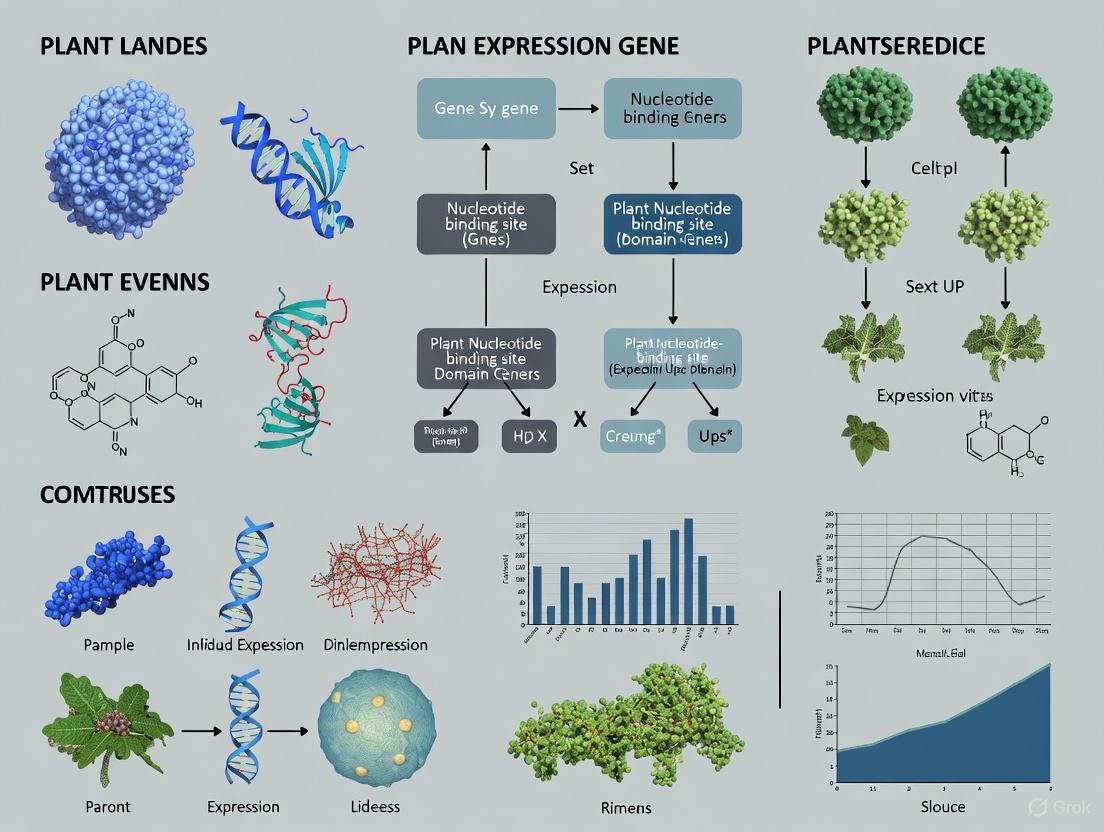
This comprehensive review synthesizes current knowledge on plant Nucleotide-Binding Site (NBS) domain genes, the largest family of plant disease resistance (R) genes central to effector-triggered immunity.
Plant Nucleotide-Binding Site (NBS) Domain Genes: From Immune Function to Biomedical Innovation
Abstract
This comprehensive review synthesizes current knowledge on plant Nucleotide-Binding Site (NBS) domain genes, the largest family of plant disease resistance (R) genes central to effector-triggered immunity. We explore the remarkable structural diversity and evolution of these genes across land plants, from ancestral bryophytes to modern crops, highlighting sophisticated classification systems that identify both classical and species-specific architectural patterns. The article details cutting-edge methodologies for NBS gene identification, expression profiling, and functional validation, including transcriptomic analyses, orthogroup clustering, and virus-induced gene silencing. We address critical challenges in studying isolated nucleotide-binding domains and present comparative genomic analyses revealing lineage-specific expansions and contractions. Finally, we examine the significant translational potential of NBS gene research for biomedical and clinical applications, particularly in informing human nucleotide-binding protein research and therapeutic development.
The Architectural Blueprint: Understanding NBS Domain Structure and Evolutionary History
Plant nucleotide-binding site (NBS) domain genes, often referred to as NBS-LRR or NLR genes, encode the largest and most crucial class of intracellular immune receptors responsible for pathogen recognition and defense activation [1] [2]. These proteins function as essential components of effector-triggered immunity (ETI), initiating robust defense responses that frequently include a form of programmed cell death known as the hypersensitive response (HR) to restrict pathogen spread [3] [4]. The functional versatility of these immune receptors stems from their modular domain architecture, which combines conserved signaling domains with variable recognition domains. This technical guide examines the core domains—NBS, TIR, CC, LRR, and RPW8—that define the structure, classification, and mechanism of action of plant NLR proteins, providing researchers with a comprehensive framework for understanding their role in plant immunity.
Core Domain Functions and Characteristics
Nucleotide-Binding Site (NBS) Domain
The NBS domain, also known as the NB-ARC domain (Nucleotide-Binding Adaptor shared with APAF-1, R proteins, and CED-4), serves as the central molecular switch for NLR protein activation [1] [2]. This domain is characterized by several conserved motifs essential for nucleotide-dependent regulation:
- P-loop (Phosphate-binding loop): Facilitates ATP/GTP binding and hydrolysis [4]
- RNBS-A, RNBS-B, RNBS-C, RNBS-D: Additional conserved motifs within the NBS domain [4]
- Kinase 2: Participates in nucleotide binding and hydrolysis [5]
- GLPL (Gly-Leu-Pro-Leu): Also known as kinase 3, contributes to structural stability [4] [5]
- MHDV (Met-His-Asp-Val): A highly conserved motif critical for regulatory function [4]
The NBS domain mediates signal transduction through conformational changes between ADP-bound (inactive) and ATP-bound (active) states, enabling the protein to function as a molecular switch for immune signaling [6] [5]. Structural studies reveal that the NBS domain is further divided into NB and ARC subdomains, with the NB subdomain containing the P-loop, kinase 2, and kinase 3a motifs, while the ARC subdomain is conserved across plant NBS-LRR proteins and related proteins involved in animal innate immunity and apoptosis [3].
Leucine-Rich Repeat (LRR) Domain
The LRR domain forms the C-terminal region of canonical NLR proteins and exhibits high sequence variability, which enables specific recognition of diverse pathogen effectors [3] [5]. Key characteristics include:
- Recognition Specificity: The LRR domain determines pathogen recognition specificity through direct or indirect interaction with pathogen effector proteins [6]
- Structural Role: Composed of multiple tandem leucine-rich repeats that form a curved solenoid structure, providing an extensive surface for protein-protein interactions [2]
- Dual Function: Beyond pathogen recognition, the LRR domain may also contribute to signaling and maintaining the receptor in an auto-inhibited state in the absence of pathogens [3]
Genetic studies demonstrate that the LRR region is the most variable in closely related NBS-LRR proteins and is under selective pressure to diverge, supporting its primary role in determining recognition specificity [3].
N-Terminal Signaling Domains: TIR, CC, and RPW8
The N-terminal domain defines major NLR subclasses and determines specific signaling pathways:
- TIR (Toll/Interleukin-1 Receptor) Domain: Found in TNL proteins, this domain is involved in signal transduction and is primarily distributed in dicot plants [1] [4]. TIR domains typically contain different but highly conserved TIR-1, TIR-2, and TIR-3 motifs [4].
- CC (Coiled-Coil) Domain: Characteristic of CNL proteins, this domain facilitates protein-protein interactions and oligomerization [1] [5]. The CC domain is structurally less conserved than the TIR domain.
- RPW8 (Resistance to Powdery Mildew 8) Domain: Defines the RNL subclass and functions as a component for signal transfer within the immune system [1]. RNL proteins often serve as helpers in NLR signaling networks.
Table 1: Core Domain Functions and Distribution
| Domain | Primary Function | Conserved Motifs | Structural Features |
|---|---|---|---|
| NBS | Molecular switch for activation; nucleotide binding/hydrolysis | P-loop, RNBS-A to D, Kinase 2, GLPL, MHDV | NB and ARC subdomains; conformational change between ADP/ATP states |
| LRR | Pathogen recognition; protein-protein interactions | Variable leucine-rich repeats | Solenoid structure; high sequence variability |
| TIR | Signal transduction in TNL subclass | TIR-1, TIR-2, TIR-3 | Mainly in dicots; mediates downstream signaling |
| CC | Protein oligomerization in CNL subclass | Coiled-coil heptad repeats | α-helical structure; facilitates self-association |
| RPW8 | Signal transfer in RNL subclass | Conserved RPW8 motif | Helper function in immune signaling |
Integrated Domain Architectures and Classification
NLR proteins are classified based on their domain composition, with significant diversity observed across plant species:
- TNL (TIR-NBS-LRR): Contains TIR, NBS, and LRR domains [6] [4]
- CNL (CC-NBS-LRR): Contains CC, NBS, and LRR domains [6] [5]
- NL (NBS-LRR): Contains NBS and LRR domains but lacks a recognized N-terminal domain [6]
- TN (TIR-NBS): Contains TIR and NBS domains but lacks LRR [6] [7]
- CN (CC-NBS): Contains CC and NBS domains but lacks LRR [6] [7]
- N (NBS): Contains only the NBS domain [6] [7]
- RNL (RPW8-NBS-LRR): Contains RPW8, NBS, and LRR domains [1] [8]
Proteins containing all three major domains (N-terminal, NBS, and LRR) are classified as "typical" NBS-LRRs, while those missing one or more domains are termed "irregular" [6]. The irregular types often function as adaptors or regulators for typical NBS-LRR proteins [6].
Table 2: NBS-LRR Protein Classification Based on Domain Architecture
| Class | Domain Architecture | Representative Count in N. benthamiana | Functional Role |
|---|---|---|---|
| TNL | TIR-NBS-LRR | 5 | Pathogen recognition and signaling; direct effector binding |
| CNL | CC-NBS-LRR | 25 | Pathogen recognition and signaling; oligomerization capability |
| NL | NBS-LRR | 23 | Pathogen recognition with undefined N-terminal function |
| TN | TIR-NBS | 2 | Potential signaling adaptors or regulators |
| CN | CC-NBS | 41 | Potential signaling adaptors or regulators |
| N | NBS | 60 | Potential signaling components or decoys |
| RNL | RPW8-NBS-LRR | 4 (in N. benthamiana) | Helper NLRs for signal amplification |
Experimental Methodologies for NBS Domain Gene Analysis
Genome-Wide Identification and Classification
The identification of NBS domain genes across plant genomes relies on integrated bioinformatics approaches:
Diagram 1: NBS Gene Identification Workflow
Step 1: HMMER-based identification
- Use HMMER v3.1b2 with PF00931 (NB-ARC) hidden Markov model from PFAM database [6] [7]
- Apply expectation value (E-value) cutoffs (typically < 1e-20) to identify candidate NBS-domain-containing genes [1] [6]
- Extract protein sequences using tools like TBtools [6]
Step 2: Domain verification and classification
- Verify domain composition using multiple databases:
- Classify genes based on domain architecture into specific classes (TNL, CNL, NL, etc.) [6] [7]
Step 3: Phylogenetic and genomic distribution analysis
- Perform multiple sequence alignment using MUSCLE or Clustal W [6] [7]
- Construct phylogenetic trees with maximum likelihood method (MEGA software) with 1000 bootstrap replicates [6] [5]
- Analyze genomic distribution and identify gene clusters using MCScanX [7]
Functional Validation through Virus-Induced Gene Silencing (VIGS)
VIGS provides an efficient approach for functional characterization of NBS genes:
Experimental Protocol:
- Gene Fragment Selection: Select 300-500 bp gene-specific fragment from target NBS gene [1]
- Vector Construction: Clone fragment into VIGS vector (e.g., TRV-based vectors)
- Plant Infiltration: Agroinfiltrate suspension into leaves of target plants (e.g., N. benthamiana)
- Phenotypic Analysis: Challenge with pathogen and assess disease symptoms
- Molecular Verification: Confirm gene silencing using qRT-PCR and measure pathogen titers [1]
Application Example: Silencing of GaNBS (OG2) in resistant cotton demonstrated its role in reducing virus titers against cotton leaf curl disease [1].
Expression Profiling and Differential Expression Analysis
Transcriptomic analyses reveal NBS gene expression patterns under various conditions:
RNA-seq Data Processing Pipeline:
- Data Retrieval: Obtain RNA-seq data from databases (IPF, CottonFGD, NCBI SRA) [1]
- Quality Control: Process raw reads using Trimmomatic with minimum read length of 90 bp [7]
- Read Mapping: Align cleaned data to reference genome using Hisat2 [7]
- Quantification: Calculate FPKM values using Cufflinks [7]
- Differential Expression: Identify DEGs through Cuffdiff with statistical thresholds [7]
Experimental Applications:
- Tissue-specific expression patterns (e.g., predominant leaf expression) [4]
- Response to biotic stresses (pathogen infections) [4] [2]
- Response to abiotic stresses (drought, salt, temperature) [1]
- Hormone response analyses (jasmonic acid, salicylic acid, gibberellin) [4]
Interaction Studies: Protein-Ligand and Protein-Protein
Molecular interaction studies elucidate mechanistic aspects of NBS domain proteins:
Protein-Ligand Interaction:
- Molecular docking simulations with ADP/ATP molecules [1]
- Assessment of binding affinities to nucleotide analogs
- Analysis of P-loop mutations on nucleotide binding [4]
Protein-Protein Interaction:
- Yeast two-hybrid screening for interacting partners [1]
- Co-immunoprecipitation (Co-IP) assays in planta [3]
- Bimolecular fluorescence complementation (BiFC) for intracellular interactions
Key Finding Example: Co-immunoprecipitation experiments with the Rx protein demonstrated physical interactions between CC-NBS and LRR domains, which were disrupted in the presence of the coat protein elicitor [3].
Table 3: Key Research Reagents and Computational Tools for NBS Gene Analysis
| Category | Tool/Reagent | Specific Application | Function/Purpose |
|---|---|---|---|
| Bioinformatics Tools | HMMER v3.1b2 | Domain identification | HMM-based search for NB-ARC domain (PF00931) |
| Pfam Database | Domain verification | Curated database of protein domains and families | |
| MCScanX | Genomic distribution | Identification of gene clusters and syntenic blocks | |
| PRGminer | R-gene prediction | Deep learning-based prediction of resistance genes | |
| Experimental Resources | TRV VIGS Vectors | Functional validation | Virus-induced gene silencing for functional studies |
| N. benthamiana System | Transient expression | Model plant for protein expression and interaction | |
| Phytohormones (SA, JA, GA) | Expression profiling | Elicitors for studying defense response pathways | |
| Databases | IPF Database | Expression data | Repository for plant RNA-seq data across species |
| CottonFGD | Species-specific data | Functional genomics database for cotton species | |
| ANNA (Angiosperm NLR Atlas) | Comparative analysis | Database containing >90,000 NLR genes from 304 angiosperms |
Evolutionary and Comparative Perspectives
Evolutionary Patterns Across Plant Lineages
NBS domain genes exhibit remarkable evolutionary dynamics across the plant kingdom:
- Lineage-Specific Distribution: TNL genes are present in dicots but generally absent in monocots, while CNL genes are found in both lineages [4] [2]. For example, pepper (Capsicum annuum) shows a predominance of nTNL genes (248) over TNL genes (4) [5].
- Gene Family Expansion: Substantial expansion has occurred primarily in flowering plants, with bryophytes like Physcomitrella patens possessing relatively small NLR repertoires (approximately 25 NLRs) compared to angiosperms [1].
- Diversification Mechanisms: Tandem duplications and whole-genome duplications drive the expansion and diversification of NBS gene families [1] [7]. In Nicotiana tabacum, whole-genome duplication significantly contributed to NBS gene family expansion, with 76.62% of members traceable to parental genomes [7].
Genomic Distribution and Cluster Analysis
NBS genes are distributed unevenly across plant genomes and frequently form gene clusters:
- Cluster Definition: Genes are considered clustered when multiple NBS genes are located within a 200 kb genomic region [5].
- Prevalence: Approximately 54% of NBS-LRR resistance genes in pepper form 47 distinct gene clusters [5]. Similar clustering patterns are observed in chickpea, with nearly 50% of genes present in clusters [2].
- Functional Implications: Gene clusters often include members from the same gene subfamily, though some clusters contain genes from different subfamilies, reflecting complex genomic organization and potential functional interactions [5].
The comprehensive analysis of core domain architecture in plant NBS genes reveals a sophisticated immune receptor system characterized by modular domain organization, functional diversification, and dynamic evolution. The structural basis of pathogen recognition and signaling—governed by the integrated functions of NBS, TIR, CC, LRR, and RPW8 domains—provides essential insights for engineering disease-resistant crops. Emerging methodologies, including deep learning-based prediction tools like PRGminer [8] and advanced structural prediction methods like AlphaFold [9], are accelerating the discovery and functional characterization of novel resistance genes. Future research focusing on the structural basis of domain interactions, signaling mechanisms, and transferability of NLR pairs across taxonomic boundaries [10] will further advance our understanding of plant immunity and contribute to the development of sustainable crop protection strategies.
Plant immunity against pathogens relies on a sophisticated, receptor-based innate immune system. A cornerstone of this system is the extensive repertoire of intracellular immune receptors known as Nucleotide-Binding Site Leucine-Rich Repeat receptors (NLRs). These proteins detect pathogen-derived effector molecules and initiate robust defense responses, including programmed cell death, to confine pathogens at the infection site [11] [12]. NLRs are modular proteins characterized by a conserved tripartite architecture: a central nucleotide-binding adaptor shared by APAF-1, R proteins, and CED-4 (NB-ARC) domain, a C-terminal leucine-rich repeat (LRR) domain responsible for effector recognition, and a variable N-terminal domain that defines the major NLR subclasses [13] [14]. Based on this N-terminal domain, NLRs are classified into three principal groups: Toll/Interleukin-1 Receptor (TIR) domain-containing NLRs (TNLs), Coiled-Coil (CC) domain-containing NLRs (CNLs), and RPW8-like CC domain-containing NLRs (RNLs) [15] [16]. This classification is not merely structural but reflects profound functional specializations, distinct activation mechanisms, and specific roles within the plant's immune network. Understanding the unique properties and synergistic relationships between TNLs, CNLs, and RNLs is fundamental to deciphering plant immunity and engineering disease-resistant crops.
Genomic Organization and Evolution of NLRs
Comparative Genomics Across Plant Species
NLR genes represent one of the largest and most variable gene families in plants, a testament to their crucial role in an ongoing evolutionary arms race with fast-evolving pathogens. Comparative genomic analyses reveal striking diversity in the number, distribution, and composition of NLR subclasses across the plant kingdom [1] [13].
Table 1: Genomic Distribution of NLR Genes in Various Plant Species
| Plant Species | Total NLR Genes | TNLs | CNLs | RNLs | Notable Characteristics | Reference |
|---|---|---|---|---|---|---|
| Arabidopsis thaliana | 149-159 | 94-98 | 50-55 | 5 (ADR1+NRG1) | TNL-rich repertoire | [13] |
| Oryza sativa (rice) | 553-653 | ~0 | ~553-653 | Limited | Near absence of TNLs; CNL-dominated | [13] |
| Glycine max (soybean) | 319 | - | - | - | Large repertoire due to duplication | [13] |
| Asparagus setaceus | 63 | Not specified | Not specified | Not specified | Wild relative with expanded repertoire | [16] |
| Asparagus officinalis | 27 | Not specified | Not specified | Not specified | Domesticated, contracted repertoire | [16] |
| Solanum tuberosum (potato) | 435-438 | 65-77 | 361-370 | - | CNL-dominated repertoire | [13] |
| Nicotiana benthamiana | Not specified | Present | Present | Present (NbNRG1, NbADR1) | Model for functional studies | [15] |
The data reveals several key evolutionary patterns. Firstly, NLRs are often distributed unevenly across chromosomes, frequently organized in clusters of varying sizes that facilitate rapid evolution through tandem duplications and ectopic rearrangements [13]. Secondly, a major divergence exists between monocots and dicots regarding TNL prevalence. Monocots, like rice and Brachypodium distachyon, possess very few or no TNL genes, whereas dicots like Arabidopsis thaliana can have TNL-rich repertoires [13]. Finally, the RNL subfamily forms a small, evolutionarily conserved clade, with most angiosperms possessing only a handful of genes, typically from the two subfamilies ADR1 and NRG1 [15] [1]. Domestication and selection pressure can also shape NLR repertoires, as evidenced by the significant contraction of NLR genes in cultivated garden asparagus (Asparagus officinalis) compared to its wild relatives, correlating with increased disease susceptibility [16].
Structural and Functional Mechanisms of NLR Subclasses
TNLs: TIR Domain-Containing NLRs
Structure and Activation: TNLs are defined by an N-terminal TIR domain. Upon direct or indirect effector recognition, TNLs undergo oligomerization to form a tetrameric "resistosome" [12]. This assembly brings the TIR domains into close proximity, activating their enzymatic function. The TIR domain acts as an NADase (nicotinamide adenine dinucleotide hydrolase), cleaving NAD+ to produce a variety of signaling molecules, including cyclic ADP-ribose (cADPR) isomers [17] [11].
Signaling Pathway: The small molecules generated by activated TNLs are perceived by heterodimeric complexes of EDS1 (Enhanced Disease Susceptibility 1) with either PAD4 (Phytoalexin Deficient 4) or SAG101 (Senescence-Associated Gene 101) [15] [11]. The EDS1-SAG101 heterodimer specifically associates with and activates helper RNLs from the NRG1 subfamily, while the EDS1-PAD4 heterodimer acts through ADR1 subfamily RNLs [15]. This signaling cascade ultimately leads to calcium influx, transcriptional reprogramming, and the hypersensitive response.
Figure 1: TNL Activation and Signaling Pathway. Effector recognition triggers TNL oligomerization and resistosome formation, activating TIR domain NADase activity. The resulting signaling molecules are perceived by EDS1 heterodimers, which in turn activate specific helper RNLs (NRG1 or ADR1) to execute immune responses.
CNLs: Coiled-Coil Domain-Containing NLRs
Structure and Activation: CNLs feature an N-terminal Coiled-Coil (CC) domain. The CC domain is largely helical, but its structure and function are more diverse than initially thought, leading to proposed subclasses like CCEDVID, CCR, and SD-CC [14]. Upon effector perception, certain CNLs, such as Arabidopsis ZAR1 and wheat Sr35, oligomerize to form a pentameric resistosome [15] [11].
Signaling Pathway: In the resistosome, the N-terminal α-helices of the CC domain assemble into a funnel-like structure that inserts into the plasma membrane, forming a calcium-permeable cation channel [11] [14]. This channel activity disrupts ion homeostasis, triggering downstream immune outputs and cell death. Some CNLs also require helper RNLs, particularly from the ADR1 family, for full immunity, indicating a connection to the broader RNL network [15].
RNLs: Helper NLRs
Structure and Function: RNLs constitute a small, conserved clade divided into the ADR1 and NRG1 subfamilies [15]. They are characterized by an N-terminal RPW8-like CC (CCR) domain. RNLs typically do not directly recognize pathogen effectors but instead function as essential signaling hubs downstream of multiple sensor NLRs (both TNLs and some CNLs) and even surface-localized Pattern Recognition Receptors (PRRs) [15].
Signaling Hubs and Mechanism: RNLs form two distinct signaling modules with EDS1 heterodimers:
- The EDS1-PAD4-ADR1 module is required for basal resistance, some CNL signaling, and PRR-triggered immunity.
- The EDS1-SAG101-NRG1 module is specifically required for TNL-induced immunity [15].
Upon activation by their respective EDS1 complexes, RNLs self-associate and form high-molecular-weight complexes at the plasma membrane. Similar to activated CNLs, these RNL complexes function as non-selective cation channels, promoting calcium influx and cell death [15].
Table 2: Functional Comparison of NLR Subclasses
| Feature | TNLs | CNLs | RNLs (Helpers) |
|---|---|---|---|
| N-terminal Domain | TIR (Toll/Interleukin-1 Receptor) | CC (Coiled-Coil) | CCR (RPW8-like CC) |
| Primary Role | Sensor NLRs | Sensor NLRs | Helper NLRs / Signaling Hubs |
| Activation Complex | Tetrameric Resistosome | Pentameric Resistosome | Oligomeric Complex |
| Key Signaling Action | NADase activity producing signaling molecules (e.g., cADPR) | Forms plasma membrane cation channels | Forms plasma membrane cation channels |
| Key Signaling Partners | EDS1-PAD4, EDS1-SAG101 | Often independent; some require ADR1 | EDS1-PAD4 (for ADR1), EDS1-SAG101 (for NRG1) |
| Downstream Output | Activates RNLs (NRG1/ADR1) | Calcium influx, ion homeostasis disruption, cell death | Calcium influx, transcriptional reprogramming, cell death |
| Prevalence in Monocots | Very low or absent | Dominant NLR type | Present (conserved clade) |
Experimental Approaches for NLR Research
Standard Methodologies for Identification and Validation
Research into NLR function employs a multi-faceted approach, combining bioinformatics, molecular biology, and functional genomics.
Genome-Wide Identification and Classification:
- Sequence Search: Perform HMM (Hidden Markov Model) searches against the target proteome using the conserved NB-ARC domain (Pfam: PF00931) as a query. Complementary BLASTp searches with known NLR protein sequences can enhance identification [1] [16].
- Domain Architecture Analysis: Validate candidate sequences using tools like InterProScan and NCBI's CD-Search to confirm the presence of the NB-ARC domain and identify associated domains (TIR, CC, LRR, etc.) [16].
- Classification and Phylogenetics: Classify genes into TNL, CNL, and RNL subclasses based on their N-terminal domain. Construct phylogenetic trees using maximum likelihood methods to understand evolutionary relationships [1] [16].
Functional Characterization:
- Transcriptional Profiling: Analyze RNA-seq data from databases or conduct experiments to assess NLR gene expression under various conditions (biotic/abiotic stresses, across different tissues) [1].
- Virus-Induced Gene Silencing (VIGS): Knock down the expression of a candidate NLR gene in a resistant plant to validate its role in immunity. Loss of resistance upon pathogen challenge confirms the gene's function [1].
- Heterologous Expression & Cell Death Assays: Transiently express NLR genes (especially the N-terminal CC or TIR domains) in a model system like Nicotiana benthamiana. Induction of a hypersensitive cell death response is a hallmark of activated NLR signaling capacity [15] [14].
Figure 2: Experimental Workflow for NLR Gene Research. A typical pipeline begins with bioinformatic identification and classification of NLRs from genomic data, followed by functional validation using transcriptomics, silencing, and heterologous expression assays.
The Scientist's Toolkit: Key Research Reagents
Table 3: Essential Reagents and Resources for NLR Research
| Reagent / Resource | Function / Application | Key Characteristics |
|---|---|---|
| HMM Profiles (Pfam) | Identification of conserved NB-ARC domain in genomes. | Pfam PF00931; provides a standardized, sensitive search model. |
| OrthoFinder | Clustering of NLR genes into orthogroups across species. | Infers evolutionary relationships and identifies conserved gene families. |
| Nicotiana benthamiana | Model plant for transient expression assays (e.g., cell death). | Susceptible to Agrobacterium-mediated transformation (agroinfiltration). |
| VIGS Vectors | Functional analysis through targeted gene silencing. | Virus-based system (e.g., Tobacco Rattle Virus) to knock down endogenous gene expression. |
| EDS1/PAD4/SAG101 Mutants | Genetic validation of TNL and RNL signaling pathways. | Arabidopsis mutants are essential to dissect the requirement of these components. |
| Structural Biology Techniques (Cryo-EM) | Elucidating the atomic structure of NLR resistosomes. | Reveals mechanisms of oligomerization and activation (e.g., ZAR1, ROQ1). |
Advanced Research and Practical Applications
Regulatory Mechanisms and Emerging Insights
The expression and activity of NLRs are under tight regulatory control to balance effective defense with growth. Key regulatory layers include:
- Post-transcriptional Regulation by small RNAs: MicroRNAs (miRNAs) and secondary small interfering RNAs (phasiRNAs) fine-tune NLR transcript levels. For example, miR825-5p downregulates specific TNLs (MRT1, MRT2) to modulate Arabidopsis resistance against herbivores [17].
- Post-translational Regulation: The ubiquitin/proteasome system is involved in controlling the turnover of NLR proteins, maintaining them in an inactive state prior to pathogen perception [13].
Engineering Disease-Resistant Crops
Understanding NLR function and overcoming evolutionary constraints like Restricted Taxonomic Functionality (RTF)—where an NLR from one species fails to function in another—is a key goal in crop biotechnology. A groundbreaking strategy involves the co-transfer of sensor NLRs with their cognate helper NLRs. For instance, transferring the pepper immune receptor Bs2 along with its required helper NLRs (NRC3 or NRC4) into rice conferred robust resistance to bacterial leaf streak, a disease for which no natural resistance sources exist in rice [11]. This "sensor-helper stacking" approach unlocks the vast NLR repertoire of non-host plants as a resource for engineering broad-spectrum and durable disease resistance in crops.
The major NBS subclasses—TNLs, CNLs, and RNLs—form an intricate and robust network that defines the plant intracellular immune system. While TNLs and CNLs primarily act as sensor receptors that trigger distinct signaling pathways (enzymatic production of small molecules vs. direct channel formation), the helper RNLs serve as convergent, conserved signaling nodes that amplify and execute the immune response. The modular architecture of NLRs, coupled with their ability to form specific oligomeric complexes upon activation, provides a powerful mechanistic framework for immunity. Ongoing research continues to decipher the nuanced regulation of these genes and their complex genetic networks. The recent success in engineering resistance by rationally transferring sensor-helper NLR pairs between distantly related plants marks a transformative step in synthetic immunology, offering a powerful strategy to safeguard global crop production against evolving pathogens.
The evolutionary transition from aquatic charophyte algae to terrestrial land plants represents a foundational event in plant evolution, necessitating the development of novel molecular mechanisms to combat pathogens in new environments. Charophytes, the extant group of green algae most closely related to modern land plants, provide critical insight into the ancestral tool kit that facilitated land colonization approximately 450-500 million years ago [18] [19]. This evolutionary journey required the emergence of sophisticated immune perception systems, culminating in the nucleotide-binding site (NBS) domain genes that form a central component of the plant innate immune system today.
Research has demonstrated that the molecular evolution of NBS-LRR genes (Nucleotide-Binding Site Leucine-Rich Repeat) parallels the ecological transition from water to land, with charophytes representing a key stage in the development of plant immune receptors [20] [21]. The evolutionary trajectory of these genes reveals a story of domain rearrangement, gene expansion, and functional diversification that enabled plants to detect and respond to an ever-changing pathogen spectrum. This whitepaper examines the molecular evolution of NBS domain genes from charophyte ancestors to modern angiosperms, providing technical insights for researchers investigating plant immunity and its applications in drug development and crop engineering.
Evolutionary Transition: Key Adaptations
Charophyte Ancestors and Land Plant Evolution
Extant charophytes are divided into two primary grades: the KCM grade (Klebsormidiophyceae, Chlorokybophyceae, and Mesostigmatophyceae) representing early-diverging lineages, and the ZCC grade (Zygnematophyceae, Coleochaetophyceae, and Charophyceae) representing later-diverging lineages [19]. Phylogenomic analyses have conclusively identified Zygnematophyceae as the sister lineage to embryophytes (land plants), making them particularly significant for understanding the genetic innovations that preceded land colonization [19].
These ancestral algae possessed several preadaptations that facilitated the water-to-land transition, including:
- Cell wall innovations with decay-resistant polymers similar to lignins [22]
- Hormone signaling systems that would later be co-opted for plant development [18]
- Stress response pathways that enabled survival in fluctuating environments [18] [19]
The simple body plans of charophytes, including unicellular and filamentous forms, coupled with their phylogenetic position, make them exceptionally valuable model organisms for elucidating basic plant biology and the evolutionary history of immune systems [18] [19].
Emergence and Diversification of NBS Domain Genes
The NBS domain genes that form the core of plant intracellular immunity have deep evolutionary origins. Research indicates that the typical domains of NLR (NBS-LRR) proteins were already present in proteins of bacteria, protists, glaucophytes, and red algae [21]. In these ancestral organisms, the NBS domain was preferentially associated with different protein domains, such as WD40 or TPR repeats, performing recognition and transduction activities distinct from modern plant immunity [21].
Critical evolutionary innovations occurred in early plants through domain recombination events. Independent associations between NBS and LRR domains appear to have originated in Chlorophyta and Charophyta algae through convergent evolution [21]. A key finding reveals that in Charophyta unicellular green algae, the LRR regions of these early immune genes showed high homology to Receptor-Like Proteins (RLPs), suggesting a putative cell-surface localization and highlighting the interconnected evolutionary history between cell-surface and intracellular immune receptors [21].
Table 1: Evolutionary Distribution of NBS Domain Genes Across Plant Lineages
| Plant Lineage | Approximate Number of NBS Genes | Key Evolutionary Developments |
|---|---|---|
| Charophyte Algae | Few | Initial NBS and LRR domain associations; homology to RLPs |
| Bryophytes | ~25 in Physcomitrella patens | Domain shuffling at N and C-terminal regions; first true NLRs |
| Lycophytes | ~2 in Selaginella moellendorffii | Limited expansion despite vascular tissue development |
| Angiosperms | Dozens to hundreds | Massive expansion; functional specialization into TNL, CNL, RNL classes |
The evolutionary trajectory shows a remarkable pattern of gene expansion, with charophytes and early land plants containing relatively few NBS genes compared to the dramatic expansion observed in flowering plants [1] [20]. This expansion was mediated by both whole-genome duplication (WGD) and small-scale duplication (SSD) events, including tandem, segmental, and transposon-mediated duplications [1].
Genomic Architecture and Functional Diversification
Structural Classification and Domain Architecture
Plant NBS domain genes encode one of the largest and most variable protein families in the plant kingdom, classified based on their N-terminal domains into major subclasses:
- TNLs: Contain Toll/Interleukin-1 Receptor (TIR) domains
- CNLs: Contain Coiled-Coil (CC) domains
- RNLs: Contain Resistance to Powdery Mildew 8 (RPW8) domains [1] [20]
Recent research has identified 12,820 NBS-domain-containing genes across 34 plant species, classified into 168 distinct classes with both classical and species-specific structural patterns [1]. These include not only traditional architectures (NBS, NBS-LRR, TIR-NBS, TIR-NBS-LRR) but also novel combinations such as TIR-NBS-TIR-Cupin1-Cupin1 and TIR-NBS-Prenyltransf [1].
Functional specialization has occurred within these classes, with most TNLs and CNLs serving as "sensor" NLRs that directly or indirectly detect pathogen effectors, while RNLs primarily function as "helper" NLRs that mediate signal transduction for sensor NLRs [20].
Genomic Organization and Evolutionary Dynamics
NBS-encoding genes are not randomly distributed within plant genomes but are predominantly organized in multi-gene clusters located in hot-spot regions [21]. These clusters can be homogeneous (containing the same NLR type) or heterogeneous (containing diverse NLR classes), with some clusters even containing mixtures of NLR, RLP, and RLK genes [21].
This genomic architecture facilitates rapid evolution through mechanisms such as:
- Tandem duplication events that generate genetic novelty [1]
- Birth-and-death evolution where new genes are created through duplication and some copies are maintained while others degenerate [21]
- Non-homologous recombination that generates new domain combinations [21]
The evolution of NBS domain genes is characterized by a continuous arms race with rapidly evolving pathogens, driving exceptional diversity in these genes across and within plant species [21]. This diversification enables plants to recognize the constantly changing repertoire of pathogen effectors.
Table 2: Genomic Features of NBS Domain Genes in Selected Species
| Species | Genome Size (Approx.) | Number of NBS Genes | Clustering Pattern | Notable Features |
|---|---|---|---|---|
| Chara braunii (Charophyte) | Not fully characterized | Few | Not characterized | Basal NBS-LRR associations |
| Physcomitrella patens (Bryophyte) | ~500 Mb | ~25 | Emerging clusters | Initial expansion of NLR repertoire |
| Arabidopsis thaliana (Eudicot) | ~135 Mb | ~200 | Complex clusters | Well-characterized TNLs and CNLs |
| Zea mays (Monocot) | ~2.4 Gb | Hundreds | Large clusters | Absence of TNLs; CNL predominance |
Experimental Approaches and Research Methodologies
Genomic Identification and Classification Protocols
The identification and classification of NBS domain genes employs sophisticated bioinformatic pipelines. A standard methodology involves:
Sequence Identification: Screen for NBS (NB-ARC) domains using PfamScan.pl HMM search script with default e-value (1.1e-50) against the Pfam-A_hmm model [1]. All genes containing the NB-ARC domain are considered NBS genes for further analysis.
Domain Architecture Analysis: Identify additional associated domains through comprehensive domain architecture characterization, classifying genes with similar domain patterns into the same classes [1].
Orthogroup Determination: Use OrthoFinder v2.5.1 package tools with DIAMOND for sequence similarity searches and MCL clustering algorithm for gene clustering [1]. Orthologs and orthogroups are determined using DendroBLAST [1].
Phylogenetic Reconstruction: Perform multiple sequence alignment using MAFFT 7.0 and construct gene-based phylogenetic trees using maximum likelihood algorithms in FastTreeMP with 1000 bootstrap replicates [1].
Functional Validation Techniques
Functional characterization of NBS domain genes employs both expression analysis and genetic manipulation:
Expression Profiling:
- Retrieve RNA-seq data from specialized databases (IPF database, Cotton Functional Genomics Database, Cottongen)
- Extract FPKM (Fragments Per Kilobase of transcript per Million mapped reads) values and categorize into tissue-specific, abiotic stress-specific, and biotic stress-specific expression profiles [1]
- Process RNA-seq data through standardized transcriptomic pipelines
Genetic Validation:
- Virus-Induced Gene Silencing (VIGS): Silence candidate NBS genes in resistant plants to confirm function, as demonstrated with GaNBS (OG2) in cotton, which showed a putative role in virus titrating [1]
- Protein Interaction Studies: Conduct protein-ligand and protein-protein interaction assays to validate interactions with pathogen effectors, such as the strong interaction observed between putative NBS proteins and core proteins of the cotton leaf curl disease virus [1]
- Genetic Variation Analysis: Identify unique variants in NBS genes between susceptible and tolerant plant accessions using whole-genome sequencing approaches [1]
Technical Diagrams and Visualizations
Evolutionary Pathway of NBS Domain Genes
Evolution of NBS Domain Genes Across Plant Lineages
NBS Gene Identification Workflow
NBS Gene Identification and Validation Workflow
Research Applications and Future Directions
Biotechnological and Therapeutic Applications
The evolutionary history of NBS domain genes informs numerous applications in biotechnology and drug development:
Plant Synthetic Biology: Recent advances in synthetic biology enable the engineering of plant immune responses through targeted manipulation of NBS domain genes [23]. This includes constructing synthetic gene circuits that enhance disease resistance or create novel plant-microbe interactions for improved stress resilience [23].
Drug Discovery: The resurrection of extinct plant genes through molecular gene resurrection techniques has opened new avenues for drug development [24]. For example, researchers have successfully resurrected a defunct cyclic peptide gene in coyote tobacco, leading to the discovery of nanamin - a novel cyclic peptide with significant potential for cancer treatment, antibiotics, and crop protection [24].
Agricultural Innovation: Engineering NBS domain genes provides novel approaches for crop improvement. Collaboration between academic institutions and agricultural companies (e.g., Bayer Crop Science) has begun utilizing cyclic peptides derived from plant immune systems to develop anti-insect traits in major crops like corn and beans [24].
Emerging Research Technologies
Cutting-edge technologies are revolutionizing the study of plant immunity:
Single-Cell and Spatial Transcriptomics: Recent advances in single-cell RNA sequencing and spatial transcriptomics have enabled the creation of comprehensive atlases of plant development and immune responses [25]. These technologies allow researchers to map gene expression patterns with cellular resolution across entire plant life cycles, revealing novel insights into the spatiotemporal regulation of NBS domain genes [25].
Plant-Derived Exosome-like Nanovesicles (ELNs): Plant ELNs show promise as therapeutic delivery vehicles due to their ability to cross biological barriers, including the blood-brain barrier [26]. Their stability, biocompatibility, and natural cargo of bioactive molecules make them ideal for targeted delivery of therapeutics, with potential applications in neurological disorders and cancer treatment [26].
Research Reagent Solutions
Table 3: Essential Research Reagents for NBS Gene Studies
| Reagent/Category | Specific Examples | Function/Application |
|---|---|---|
| Bioinformatic Tools | PfamScan.pl, OrthoFinder v2.5.1, DIAMOND, MCL, MAFFT 7.0, FastTreeMP | Identification, classification, and phylogenetic analysis of NBS genes |
| Genomic Resources | Charophyte genomes (Penium margaritaceum, Chara braunii, Klebsormidium flaccidum), 1000 Plant Transcriptomes | Evolutionary comparisons and ancestral gene reconstruction |
| Expression Databases | IPF Database, CottonFGD, Cottongen, NCBI BioProjects | Expression profiling across tissues and stress conditions |
| Functional Validation Tools | Virus-Induced Gene Silencing (VIGS) vectors, Protoplast Isolation systems, Yeast Two-Hybrid systems | Functional characterization of candidate NBS genes |
| Imaging & Analysis | Spatial Transcriptomics platforms, Single-Cell RNA sequencing, Confocal Microscopy | Spatiotemporal localization of NBS gene expression |
The evolutionary trajectory from charophyte algae to modern angiosperms reveals a remarkable story of molecular innovation in plant immunity. NBS domain genes have evolved from simple domain associations in ancestral algae to complex, diversified gene families in flowering plants, driven by continuous arms races with pathogens. The Genomic architecture of these genes, organized in dynamic clusters and evolving through duplication and recombination events, provides the raw material for this diversification.
Current research leverages this evolutionary knowledge to develop novel biotechnological applications, from engineered crop resistance to therapeutic discovery. Emerging technologies in synthetic biology, gene resurrection, and single-cell genomics promise to further unravel the complexity of plant immune systems and harness their capabilities for human health and agricultural sustainability. As we continue to decode the molecular legacy of plant evolution, the potential for innovative solutions to challenges in medicine and food security grows exponentially.
Plant nucleotide-binding site (NBS) and leucine-rich repeat (LRR) domain genes, commonly referred to as NLRs (NOD-like receptors), encode intracellular immune receptors that constitute a critical component of the plant innate immune system. These receptors recognize pathogen effector proteins and initiate robust defense responses through effector-triggered immunity (ETI), often accompanied by programmed cell death known as the hypersensitive response [27] [28]. The NLR family has undergone remarkable expansion throughout plant evolutionary history, resulting in extraordinary sequence, structural, and regulatory variability across plant lineages [29] [30]. This genomic expansion represents an evolutionary arms race between plants and their rapidly evolving pathogens, where NLR diversity enables recognition of diverse pathogen effectors [27] [31]. Understanding the patterns and mechanisms of NLR repertoire expansion across plant lineages provides crucial insights into plant-pathogen coevolution and informs strategies for engineering disease-resistant crops.
NLR Domain Architecture and Classification
Core NLR Structure and Function
NLR proteins follow a conserved tripartite modular domain architecture that functions as a molecular switch [27]. The core structure consists of:
- N-terminal domain: Serves as the signaling component and typically belongs to one of several classes, including coiled-coil (CC), Toll/interleukin-1 receptor (TIR), or RPW8-type (CCR) domains [27] [30].
- Central nucleotide-binding domain: Known as NB-ARC in plants (nucleotide-binding adaptor shared by APAF-1, R proteins, and CED-4), this domain functions as a molecular switch through ADP/ATP exchange and mediates oligomerization [27] [32].
- C-terminal leucine-rich repeat (LRR) domain: Composed of repeated units that primarily function in pathogen recognition and often display autoinhibitory functions [27] [30].
In their inactive state, NLRs exist in an ADP-bound conformation maintained by intramolecular interactions. Upon pathogen perception, conformational changes enable ATP binding, leading to oligomerization and formation of active resistosome complexes that initiate immune signaling [27] [32].
NLR Classification and Diversity
Plant NLRs are broadly classified based on their N-terminal domains into major categories:
Beyond these canonical classes, numerous NLRs have diversified into specialized proteins with noncanonical domains or degenerated features, including integrated domains that may function as decoys for pathogen effectors [27]. Additionally, NLRs can function as singletons or in higher-order configurations such as sensor-helper pairs or complex networks, where sensor NLRs mediate pathogen perception and helper NLRs facilitate immune signaling [27].
Table 1: Major NLR Classes in Flowering Plants
| NLR Class | N-terminal Domain | Signaling Mechanism | Phylogenetic Distribution |
|---|---|---|---|
| CNL | Coiled-coil | Forms resistosome complexes | All flowering plants |
| TNL | TIR | NADase activity; oligomerization | largely absent in monocots |
| RNL | RPW8 | Helper function; oligomerization | All flowering plants |
| Non-canonical | Various integrated domains | Diverse mechanisms | Lineage-specific |
Genomic Distribution and Organization of NLRs
Clustered Genomic Arrangement of NLR Genes
NLR genes are frequently organized in clusters within plant genomes, a pattern observed across diverse plant lineages [31] [32]. In pepper (Capsicum annuum), chromosomal distribution analysis revealed significant clustering of NLR genes, particularly near telomeric regions, with chromosome 09 harboring the highest density (63 NLRs) [31]. Similarly, studies in Arabidopsis accessions have identified 121 pangenomic NLR neighborhoods that vary substantially in size, content, and complexity [29]. This clustered organization contributes to NLR diversity through mechanisms such as unequal crossing over and gene conversion, enabling rapid generation of new resistance specificities [31] [30].
The formation of NLR clusters is driven primarily by tandem duplication events. In pepper, tandem duplication accounts for 18.4% of NLR genes (53/288), with particularly high density on chromosomes 08 and 09 [31]. This genomic organization facilitates the emergence of new resistance specificities through local amplification and recombination events [31]. Similar patterns of NLR clustering have been observed in rice, where NLRs frequently cluster near chromosomal telomeres, enabling rapid generation of new resistance alleles [31].
Intraspecific NLR Diversity
Pangenome studies have revealed extensive intraspecific diversity in NLR repertoires among plant accessions. An analysis of 17 diverse Arabidopsis thaliana accessions identified 3,789 NLRs, demonstrating that NLR diversity arises from multiple uncorrelated mutational and genomic processes [29]. This diversity manifests through presence/absence variation, heterogeneous allelic variation, and differences in cluster composition and complexity [29] [30].
The "diversity in diversity generation" appears to be a fundamental principle maintaining a functionally adaptive immune system in plants, with multiple mechanisms contributing to NLR variation, including point mutations, intra-allelic recombination, domain fusions or swaps, and gene conversion events [29]. This extensive variation enables plant populations to maintain diverse resistance specificities against rapidly evolving pathogens.
Evolutionary History of NLR Expansion in Plants
Deep Evolutionary Origins of NLR Components
Comparative genomic analyses across kingdoms reveal that the core building blocks of NLRs have deep evolutionary origins predating the divergence of eukaryotes and prokaryotes [28]. The constitutive domains (NB-ARC, NACHT, TIR, and LRR) are found in eubacteria and archaebacteria, suggesting these components existed before the eukaryote-prokaryote divergence [28].
The fusion events creating multi-domain NLR receptors occurred independently in different lineages. The fusion between an ancestral NACHT domain and LRR domain in metazoans, and between NB-ARC and LRR domains in plants, represents a striking example of convergent evolution [28]. These fusion events coincided with the appearance of multicellularity, suggesting NLRs emerged as specialized immune receptors in multicellular organisms [28].
Lineage-Specific NLR Expansion in Land Plants
The NLR family has undergone massive expansion throughout plant evolutionary history. While green algae contain fewer than a dozen NLRs, land plants exhibit substantial expansions, with flowering plants harboring the largest repertoires [30] [28]. This expansion likely represents adaptation to new pathogen pressures encountered during terrestrial colonization [30].
Table 2: NLR Repertoire Size Across Plant Lineages
| Plant Species/Lineage | NLR Count | Genome Size | Special Features |
|---|---|---|---|
| Green algae | <12 | Small | Ancestral repertoires |
| Physcomitrella patens (moss) | ~25 | ~500 Mb | Early land plant |
| Arabidopsis thaliana | 151 | ~135 Mb | Model dicot |
| Capsicum annuum (pepper) | 288 | ~3.5 Gb | Dense NLR clusters |
| Oryza sativa (rice) | ~500 | ~430 Mb | Model monocot |
| Triticum aestivum (wheat) | >1,000 | ~17 Gb | Hexaploid genome |
| Malus domestica (apple) | >1,000 | ~742 Mb | High NLR percentage |
The number of NLR genes varies enormously among flowering plants, ranging from 0.003% of all coding genes in bladderwort (Utricularia gibba) to 2% in apple (Malus domestica) [30]. This variability reflects species-specific patterns of expansion and contraction, driven primarily by tandem duplication events and influenced by ecological context and adaptation to local pathogen pressures [27] [30].
Analysis of NLR repertoires in basal land plants reveals relatively small numbers, with the bryophyte Physcomitrella patens containing approximately 25 NLRs and the lycophyte Selaginella moellendorffii possessing only about 2 NLRs [28]. This suggests the major NLR expansion occurred primarily in flowering plants, though some non-flowering plants contain NLRs with additional N-terminal domains such as α/β hydrolases and kinase domains [27].
Concerted Expansion with Other Immune Receptors
Recent research has revealed that NLR repertoires do not expand in isolation but show correlated expansion with specific cell-surface immune receptors. A comprehensive analysis of 350 plant genomes demonstrated a strong positive correlation between the sizes of NLR and certain pattern recognition receptor (PRR) gene families [33].
Specifically, the percentage of NLRs in genomes (%NB-ARC) shows strong positive linear correlation with the percentage of LRR-receptor-like proteins (%LRR-RLPs; Pearson's r = 0.759) and LRR-receptor-like kinases from subgroup XII (%LRR-RLK-XII; Pearson's r = 0.813), which are predominantly involved in pathogen recognition [33]. This coordinated expansion suggests mutual potentiation of immunity initiated by cell-surface and intracellular receptors is reflected in the concerted co-evolution of their repertoire sizes across plant species [33].
This correlation appears specific to immune receptors rather than all receptor-like kinases, as LRR-RLK subgroups involved in development do not show significant correlation with NLR numbers [33]. The finding that different types of immune receptors co-expand supports the emerging model that PTI and ETI function synergistically rather than as independent immune systems [33].
Immune Receptor Synergy
Functional Implications of NLR Expansion
Expression Patterns and Functional Validation
Contrary to the historical view that NLRs are transcriptionally repressed to avoid autoimmunity, recent evidence demonstrates that functional NLRs often show high expression in uninfected plants [34]. Analysis of six plant species across monocots and dicots revealed that known functional NLRs are enriched among highly expressed NLR transcripts [34]. In Arabidopsis thaliana, known NLRs are significantly enriched in the top 15% of expressed NLR transcripts compared with the lower 85% [34].
This expression signature has been exploited to develop pipelines for rapid identification of functional NLRs. A proof-of-concept study generated a wheat transgenic array of 995 NLRs from diverse grass species and identified 31 new resistance genes: 19 against stem rust and 12 against leaf rust pathogens [34]. This approach demonstrates how NLR expression patterns can facilitate high-throughput identification of functional resistance genes.
Regulatory Mechanisms and Fitness Costs
The maintenance of expanded NLR repertoires presents regulatory challenges and potential fitness costs. Plants have evolved multiple mechanisms to regulate NLR activity, including:
- Transcriptional control: Cis-regulatory elements in NLR promoters show enrichment in defense-related motifs, with 82.6% of pepper NLR promoters containing binding sites for salicylic acid and/or jasmonic acid signaling [31].
- Post-transcriptional regulation: MicroRNAs target conserved NLR motifs in many flowering plants, potentially allowing maintenance of large NLR repertoires without deleterious effects [28].
- Functional specialization: NLR networks enable specialization into sensor and helper functions, increasing robustness and evolvability of the immune system [27].
Some NLRs require specific expression thresholds for function, as demonstrated by the barley NLR Mla7, which requires multiple copies for full resistance function [34]. This challenges the pervasive view that NLR expression must be maintained at low levels and suggests expression thresholds vary among NLRs.
Research Methods and Experimental Approaches
Genomic Identification of NLR Genes
Standardized pipelines for genome-wide NLR identification typically include:
- Homology searches: BLASTp against reference proteomes using known NLR sequences [31]
- Domain-based identification: HMMER searches with core NLR domain profiles (e.g., PF00931 for NB-ARC) using E-value cutoffs of 1×10^5 [31]
- Domain validation: NCBI CDD and Pfam batch searches to verify NB-ARC (cd00204), TIR, CC, and LRR domains [31]
- Redundancy removal: Manual curation to eliminate fragmented or duplicate sequences [31]
Recent approaches integrate genome-specific full-length transcript, homology, and transposable element information to improve NLR annotation in pangenomic contexts [29].
Functional Characterization of NLRs
Large-scale functional validation of NLRs employs:
- High-throughput transformation: Efficient transformation systems enabling testing of hundreds to thousands of NLR candidates [34]
- Phenotypic screening: Large-scale phenotyping for disease resistance against relevant pathogens [34]
- Expression analysis: RNA-seq profiling of pathogen-infected and uninfected tissues to identify differentially expressed NLRs [31]
- Protein interaction studies: Yeast-two-hybrid and co-immunoprecipitation to define NLR networks and interactions [27] [31]
NLR Functional Analysis Workflow
The Scientist's Toolkit: Key Research Reagents
Table 3: Essential Research Reagents for NLR Studies
| Reagent/Resource | Function/Application | Example Use |
|---|---|---|
| Reference genomes | NLR identification and synteny analysis | Arabidopsis TAIR, pepper 'Zhangshugang' genome |
| Domain databases | NLR domain annotation and validation | Pfam, NCBI CDD, INTERPRO |
| NLR-specific HMM profiles | Sensitive identification of NLR domains | PF00931 (NB-ARC), custom HMMs |
| Expression datasets | NLR expression profiling under infection | RNA-seq from pathogen-challenged tissues |
- High-efficiency transformation systems: Enable large-scale NLR testing, such as wheat transformation for 995 NLR arrays [34]
- Pathogen isolates: Characterized strains for phenotypic screening, e.g., Phytophthora capsici for pepper NLR validation [31]
- Computational tools: Phylogenetic analysis (IQ-TREE), synteny analysis (MCScanX), and PPI prediction (STRING) [31]
The genomic expansion of NLR repertoires across plant lineages represents a remarkable example of adaptive evolution in response to pathogen pressure. From modest beginnings in ancestral plants, NLRs have diversified into complex, lineage-specific repertoires organized in dynamic clusters and networks. The coordinated expansion of NLRs with specific cell-surface receptors reveals the integrated nature of plant immune systems, while variation in NLR repertoires within species provides the raw material for ongoing host-pathogen coevolution.
Future research directions include leveraging pan-NLRome studies to comprehensively capture NLR diversity, elucidating the mechanisms of NLR network function and regulation, and developing bioengineering approaches to transfer NLR functions across plant species [27] [30]. The continued discovery and characterization of NLRs from diverse plant lineages will enhance our fundamental understanding of plant immunity and provide valuable resources for developing disease-resistant crops through molecular breeding and biotechnology.
Nucleotide-Binding Site (NBS) domain genes represent one of the largest and most critical gene families in plant innate immunity, encoding proteins that function as intracellular immune receptors [35] [36]. These genes, predominantly encoding NBS-Leucine-Rich Repeat (NBS-LRR) proteins, are responsible for detecting pathogen effector molecules and initiating robust defense responses, often culminating in programmed cell death known as the hypersensitive response [37] [1]. The NBS domain, also referred to as the NB-ARC domain (nucleotide-binding adaptor shared by APAF-1, R proteins, and CED-4), forms the central ATP/GTP hydrolysis module that powers the molecular switch mechanism of these immune receptors [36] [38]. Within this domain, several conserved motifs have been identified through comparative sequence analysis across plant species, with the Walker A, Walker B, and Signature sequences representing the most functionally critical elements [39] [38].
The evolutionary conservation of these motifs spans from bryophytes to angiosperms, underscoring their fundamental role in nucleotide binding and hydrolysis [1]. Recent genomic analyses across diverse plant species have revealed that these motifs maintain characteristic sequences while exhibiting subfamily-specific variations that correlate with functional specialization [5] [38]. This technical guide provides a comprehensive overview of the structural characteristics, functional significance, and experimental approaches for studying these conserved motifs within the context of plant NBS domain genes, with particular emphasis on their implications for plant immunity and disease resistance breeding.
Characteristics of Core Conserved Motifs
Walker A Motif (P-loop)
The Walker A motif, also known as the phosphate-binding loop or P-loop, is located at the N-terminal region of the NBS domain and serves as the primary nucleotide phosphate group binding site [39] [38]. The consensus sequence for this motif is typically G-x(4)-GK-[T/S], where G, K, T, and S represent glycine, lysine, threonine, and serine residues, respectively, and x denotes any amino acid [39]. The lysine residue within this motif is absolutely conserved and plays a critical role in nucleotide binding through direct interaction with the β- and γ-phosphates of ATP [39]. Structural analyses indicate that the main chain NH atoms of the P-loop form a compound LRLR nest that creates a phosphate-sized concavity with inward-pointing NH groups, facilitating strong phosphate binding [39]. This structural arrangement has been demonstrated experimentally, where even synthetic hexapeptides containing the SGAGKT sequence exhibit strong inorganic phosphate binding capacity [39].
In plant NBS-LRR proteins, the Walker A motif functions as part of the molecular switch mechanism that alternates between ATP-bound active and ADP-bound inactive states [37]. Mutational studies of the conserved lysine residue have confirmed its essential role in nucleotide binding and subsequent immune signaling functionality [40] [37]. The P-loop is characteristically situated between a beta strand and an alpha helix, forming part of an α/β domain that constitutes the structural core of the NBS domain [39].
Walker B Motif
The Walker B motif is positioned downstream of the Walker A motif and contains characteristic hydrophobic residues followed by an aspartic acid residue [39] [38]. The original consensus sequence was described as [RK]-x(3)-G-x(3)-LhhhD (where h represents hydrophobic residues), but this has been refined to hhhhDE in most current classifications [39]. The aspartate residue coordinates magnesium ions essential for catalytic activity, while the glutamate residue is critical for ATP hydrolysis [39].
Functional studies across multiple species have demonstrated the essential role of the Walker B glutamate in ATP hydrolysis. In CFTR (Cystic Fibrosis Transmembrane Conductance Regulator), mutation of the Walker B glutamate (Glu1371) to glutamine completely abolished ATPase activity while retaining nucleotide binding capacity [40]. Similarly, in plant NBS-LRR proteins, the Walker B motif participates in the coordination of hydrolytic water molecules and facilitates the conformational changes associated with nucleotide hydrolysis [36] [37]. The hydrophobic residues preceding the catalytic aspartate and glutamate are thought to form a β-strand that contributes to the structural stability of the active site [39].
Signature Sequence (C-Motif)
The Signature sequence, also known as the C-motif or ABC signature sequence, has a consensus of LSGGQ and represents the most characteristic sequence motif of ABC transporter superfamily members, including plant NBS domain proteins [41] [38]. This motif is located in the helical domain of the NBS and plays a critical role in nucleotide binding domain dimerization and communication [41]. Structural studies of multidrug resistance protein 1 (MRP1) have revealed that the signature motif from one NBD completes the nucleotide-binding site of the adjacent NBD in the dimeric configuration [41].
In plant NBS-LRR proteins, the Signature sequence facilitates interdomain communication and contributes to the nucleotide-dependent regulation of protein activity [36] [38]. The motif is characterized by high sequence conservation but exhibits subfamily-specific variations, particularly between TIR-NBS-LRR (TNL) and CC-NBS-LRR (CNL) subfamilies [38]. The Signature sequence, along with the Walker A and Walker B motifs, forms the composite catalytic site that enables ATP binding and hydrolysis when NBDs dimerize in a head-to-tail orientation [40] [41].
Table 1: Characteristics of Core Conserved Motifs in Plant NBS Domains
| Motif Name | Consensus Sequence | Structural Location | Key Functional Residues | Primary Function |
|---|---|---|---|---|
| Walker A | G-x(4)-GK-[T/S] | Between β-strand and α-helix | Lysine (K) | Phosphate binding, nucleotide coordination |
| Walker B | hhhhDE | β-strand downstream of Walker A | Aspartate (D), Glutamate (E) | Magnesium coordination, ATP hydrolysis |
| Signature Sequence | LSGGQ | Helical domain | Serine (S), Glycine (G), Glutamine (Q) | Domain dimerization, interdomain communication |
Additional Conserved Motifs
Beyond the three primary motifs, several additional conserved sequences contribute to NBS domain functionality:
- RNBS-A: This motif exhibits subfamily-specific conservation patterns, with distinct sequences in TNL versus CNL proteins, and may contribute to subfamily-specific functionality [38].
- Kinase-2: A conserved catalytic motif that often contains a threonine or aspartate residue potentially involved in phosphoryl transfer [5].
- RNBS-B: A poorly conserved motif that may function as a flexible linker between structural elements [5].
- RNBS-C: Contains conserved aromatic residues that may participate in nucleotide base stacking interactions [38].
- GLPL: A conserved motif typically located after the RNBS-C motif, with potential structural significance [5] [38].
- RNBS-D: Shows subfamily-specific conservation like RNBS-A, helping distinguish TNL from CNL proteins [38].
- MHDV: The final conserved motif in the NBS domain, containing a conserved histidine that may participate in signaling [38].
Table 2: Additional Conserved Motifs in Plant NBS Domains
| Motif | Conservation Level | Subfamily Specificity | Potential Function |
|---|---|---|---|
| RNBS-A | High | Yes (TNL vs. CNL) | Subfamily-specific signaling |
| Kinase-2 | High | No | Catalytic activity |
| RNBS-B | Low | No | Structural flexibility |
| RNBS-C | Moderate | No | Nucleotide base stacking |
| GLPL | High | No | Structural stability |
| RNBS-D | High | Yes (TNL vs. CNL) | Subfamily differentiation |
| MHDV | High | No | Signal transduction |
Experimental Approaches for Motif Analysis
Identification and Validation of NBS Domain Genes
The initial identification of NBS domain genes in plant genomes typically employs Hidden Markov Model (HMM) searches using profile models such as the Pfam NB-ARC domain (PF00931) [42] [1] [38]. A standard workflow involves:
- HMMER Search: Using
hmmsearchfrom the HMMER package (v3.0 or later) with an E-value cutoff of 10⁻⁵ to 10⁻⁶⁰ to identify candidate sequences containing the NBS domain [42] [38]. - Domain Validation: Confirming the presence of a complete NBS domain using the NCBI Conserved Domain Database (CDD) and SMART tools to ensure both N- and C-terminal boundaries are properly defined [38].
- Motif Characterization: Identifying conserved motifs within validated NBS domains using multiple sequence alignment tools such as MAFFT (v7.0) followed by motif discovery with MEME Suite (v5.3.0) with parameters set to identify 15-30 motifs of width 6-50 amino acids [5] [42] [38].
- Classification: Categorizing NBS genes into subfamilies (TNL, CNL, RNL) based on N-terminal domains identified using COILS/PCOILS (v2.2) for coiled-coil domains and Pfam for TIR domains [5] [42].
This approach has been successfully applied across numerous plant species, from model organisms like Arabidopsis thaliana to crop species including pepper (Capsicum annuum), Medicago truncatula, and Perilla citriodora [35] [5] [42].
Functional Characterization of Motif Contributions
Site-directed mutagenesis of conserved residues provides direct evidence for motif functionality. The following experimental approaches are commonly employed:
QuikChange Site-Directed Mutagenesis: This method enables specific amino acid substitutions in conserved motifs, such as replacing the Walker B glutamate with glutamine (E1371Q in CFTR) to assess impacts on ATP hydrolysis while preserving nucleotide binding [40]. Typical protocol parameters include:
- Primer design with the desired mutation in the center (approximately 25-45 bases)
- PCR amplification using Pfu DNA polymerase for high-fidelity replication
- DpnI digestion to eliminate methylated parental DNA template
- Transformation into competent E. coli cells for clone selection [40]
ATPase Activity Assays: Following mutagenesis, biochemical assessment of ATP hydrolysis rates provides quantitative data on motif functionality. Reconstituted NBD heterodimers can be assayed for ATPase activity using colorimetric phosphate detection or radioisotope-based methods [40]. For example, mutant NBD2 (E1371Q) displayed abolished ATPase activity while maintaining wild-type nucleotide binding affinity [40].
Co-immunoprecipitation: This technique validates physical interactions between NBD domains in wild-type and mutant proteins, confirming that observed functional changes result from specific motif alterations rather than disrupted domain interactions [40]. Typical protocols involve:
- Co-expression of differentially tagged NBD domains (e.g., HA-tagged NBD1 with His-tagged NBD2)
- Cell lysis and antibody-mediated precipitation
- Western blot analysis of co-precipitated partners [40]
Structural Modeling: Homology modeling of mutant proteins based on known structures (e.g., Rad50, BtuCD) predicts structural consequences of motif mutations [37] [41]. For the Rx NB-LRR protein, homology modeling placed sensitizing mutations near the ATP/ADP binding pocket, explaining their effect on activation thresholds [37].
Figure 1: Experimental workflow for identifying and characterizing conserved motifs in plant NBS domain genes
Structural and Functional Relationships
The conserved motifs of the NBS domain collectively form the nucleotide binding and hydrolysis machinery that powers the molecular switch mechanism of plant immune receptors [37] [39]. Structural studies of NBD domains from various ABC transporters, including MRP1 and CFTR, reveal a common fold consisting of two lobes: a catalytic α/β lobe containing the Walker A and Walker B motifs, and an all-helical lobe containing the Signature sequence [41]. In the nucleotide-bound state, these domains typically dimerize in a head-to-tail orientation where the Walker A and B motifs of one monomer interact with the Signature sequence of the partnering monomer to form two composite catalytic sites [40] [41].
This architectural arrangement creates a sophisticated regulatory mechanism where ATP binding promotes NBD dimerization, leading to conformational changes that activate downstream signaling [37]. Subsequent ATP hydrolysis at the canonical site (containing conserved Walker A, B, and Signature elements) then initiates dissociation and signal termination [40] [37]. The functional asymmetry observed in many NBD dimers, where only one site possesses full catalytic competence, underscores the importance of motif conservation and variation in regulating the activation cycle [40] [41].
Figure 2: Functional cycle of NBS domains showing the roles of conserved motifs in nucleotide-dependent activation
The Scientist's Toolkit: Research Reagent Solutions
Table 3: Essential Research Reagents for Studying NBS Domain Motifs
| Reagent/Tool | Specifications | Application | Key Features |
|---|---|---|---|
| HMMER Suite | Version 3.0 or later | Identification of NBS domains in genome sequences | Hidden Markov Model searches using Pfam NB-ARC domain (PF00931) |
| MEME Suite | Version 5.3.0+ | Discovery of conserved motifs in NBS domains | Identifies ungapped sequence motifs with statistical significance |
| QuikChange Mutagenesis Kit | Stratagene | Site-directed mutagenesis of conserved motifs | Enables specific amino acid substitutions in motif sequences |
| Pfu DNA Polymerase | High-fidelity | PCR amplification for mutagenesis | Reduces errors during amplification of mutant constructs |
| Anti-HA Antibody | Covance | Immunoprecipitation and Western blotting | Detection of HA-tagged NBD domains in interaction studies |
| Monoclonal Antibody L12B4 | Chemicon | Specific detection of NBD1 domains | Useful for co-immunoprecipitation experiments |
| TNP-ATP | Fluorescent ATP analog | Nucleotide binding assays | Allows quantification of binding affinity without hydrolysis |
| Pentadecafluorooctanoic Acid (PFO) | 8% w/v solution | Membrane protein solubilization | Effective for purification of hydrophobic NBD domains |
The conserved motifs of plant NBS domains, particularly Walker A, Walker B, and the Signature sequence, represent fundamental functional modules that have been maintained throughout plant evolution while allowing for functional diversification through sequence variation [1] [38]. Their critical role in nucleotide binding, hydrolysis, and molecular switch mechanism makes them essential for the proper functioning of plant immune receptors [40] [37]. Ongoing research continues to elucidate how these motifs coordinate to translate nucleotide-dependent conformational changes into effective immune signaling, providing insights that may enable engineering of disease resistance in crop species [37] [1].
The experimental frameworks and technical approaches outlined in this guide provide researchers with comprehensive methodologies for investigating these crucial motifs, from initial bioinformatic identification to detailed functional characterization [40] [42] [38]. As genomic resources continue to expand across plant species, comparative analyses of these motifs will further illuminate the evolutionary dynamics that shape plant immune system diversity and specificity [35] [1]. The conservation and variation patterns observed in these motifs offer valuable insights for both basic research on plant immunity and applied efforts to develop durable disease resistance in agricultural systems.
Plant nucleotide-binding site (NBS) domain genes constitute one of the largest and most critical gene families mediating disease resistance in plants. This whitepaper examines the diversification mechanisms of these genes, focusing on the pivotal roles of tandem duplications and domain rearrangements. We synthesize recent genomic studies demonstrating how these processes drive the evolution of pathogen recognition capabilities, facilitate structural innovation, and maintain genomic diversity essential for plant adaptive immunity. The analysis encompasses identification methodologies, quantitative genomic distributions, evolutionary dynamics, and experimental validation techniques, providing researchers with a comprehensive framework for investigating plant resistance gene evolution.
Plant nucleotide-binding site (NBS) domain genes encode key immune receptors that confer resistance to diverse pathogens, including bacteria, fungi, viruses, and nematodes [1] [43]. These genes typically belong to the larger NBS-LRR (nucleotide-binding site leucine-rich repeat) family, which represents the most abundant class of resistance (R) genes in plants [44] [13]. NBS-LRR proteins function as specialized sensors that detect pathogen effectors directly or indirectly through their ligand-binding domains, initiating robust defense signaling cascades that often culminate in programmed cell death and hypersensitive responses [43] [6].
Based on variations in their N-terminal domains, NBS-LRR genes are primarily classified into two major subfamilies: TIR-NBS-LRR (TNL) proteins containing Toll/Interleukin-1 receptor domains and CC-NBS-LRR (CNL) proteins featuring coiled-coil domains [44] [13]. A third subclass with RPW8 domains has also been identified in some species [1]. This structural diversification enables plants to recognize a vast repertoire of rapidly evolving pathogens, making the NBS gene family a fundamental component of the plant immune system and a prime target for crop improvement strategies.
Quantitative Landscape of NBS Gene Family Diversity
Genomic Distribution Across Plant Species
Comparative genomic analyses reveal substantial variation in NBS-LRR gene numbers across plant species, reflecting lineage-specific adaptations and evolutionary histories [13]. The following table summarizes the quantitative distribution of NBS-LRR genes in sequenced plant genomes:
Table 1: NBS-LRR Gene Distribution Across Plant Species
| Plant Species | Total NBS-LRR Genes | TNL Genes | CNL Genes | Notable Features | References |
|---|---|---|---|---|---|
| Arabidopsis thaliana | 149-159 | 94-98 | 50-55 | TNL dominance | [13] |
| Oryza sativa (rice) | 553-653 | ~0 | 553-653 | TNL absence in monocots | [13] |
| Nicotiana benthamiana (tobacco) | 156 | 5 | 25 | Model for virology studies | [6] |
| Capsicum annuum (pepper) | 252 | 4 | 248 | Extreme nTNL dominance | [44] |
| Vernicia montana (tung tree) | 149 | 3 | 146 | Fusarium wilt resistance | [43] |
| Vernicia fordii (tung tree) | 90 | 0 | 90 | Susceptible to Fusarium wilt | [43] |
| Medicago truncatula | 333 | 156 | 177 | Balanced distribution | [13] |
| Populus trichocarpa (poplar) | 402 | 91 | 119 | High pseudogene count | [13] |
Structural Classification and Motif Conservation
NBS domain genes exhibit remarkable structural diversity beyond the canonical TNL and CNL architectures. Comprehensive analyses across multiple species have identified numerous structural classes based on domain combinations:
Table 2: Structural Classification of NBS Domain Genes with Conserved Motifs
| Structural Class | Domain Architecture | Prevalence | Key Conserved Motifs | Functional Implications |
|---|---|---|---|---|
| N | NB-ARC only | Common in all species | P-loop, RNBS, Kinase-2, GLPL | Potential signaling intermediates |
| NL | NB-ARC + LRR | Variable across species | All standard NBS motifs | Truncated recognition receptors |
| CN | CC + NB-ARC | Abundant in grasses | P-loop variant (GxGKTT) | Signaling-competent intermediates |
| CNL | CC + NB-ARC + LRR | Universal | GVGKTT, RNBS-A-TIR | Full-length CC-type receptors |
| TNL | TIR + NB-ARC + LRR | Dicot-specific | GIGKTE, RNBS-A-nonTIR | Full-length TIR-type receptors |
| NLNLN | Complex multi-domain | Rare (e.g., 1 in pepper) | Composite motif patterns | Potential novel functionalities |
The NBS domain itself contains several highly conserved motifs critical for nucleotide binding and hydrolysis, including the phosphate-binding loop (P-loop), RNBS-A, RNBS-B, RNBS-C, kinase-2, and GLPL motifs [44] [6]. These motifs maintain structural integrity while allowing sequence divergence that enables functional specialization across gene family members.
Molecular Mechanisms of NBS Gene Diversification
Tandem Duplications as the Primary Driver of Expansion
Tandem duplication represents the predominant mechanism for NBS gene family expansion and cluster formation in plant genomes [44] [45]. This process involves the duplication of genetic material within a localized chromosomal region, leading to head-to-tail arrays of related genes that evolve new functions through subsequent diversification.
Recent pan-genomic analysis in maize revealed that ZmNBS genes follow a "core-adaptive" model, where conserved "core" subgroups (e.g., ZmNBS31, ZmNBS17-19) are maintained across lineages, while highly variable subgroups (e.g., ZmNBS1-10, ZmNBS43-60) exhibit significant presence-absence variation driven by tandem duplications [46]. Evolutionary rate analysis demonstrates that tandemly duplicated genes experience relaxed selective constraints and occasionally positive selection (higher Ka/Ks ratios), enabling rapid functional diversification compared to whole-genome duplication derived genes under strong purifying selection [46].
In pepper genomes, 54% of NBS-LRR genes (136 of 252) form 47 genomic clusters distributed unevenly across chromosomes, with clustering hotspots correlating with regions of known disease resistance [44]. Similarly, studies in Arabidopsis established that tandem duplication plays a more significant role than segmental duplication for certain large gene families, with distributions of gene family sizes following power-law distributions characteristic of birth-death processes [45].
Figure 1: Molecular mechanisms of tandem duplication and their functional outcomes in NBS gene evolution. Tandem duplications arise through several molecular processes and generate gene clusters that diversify through evolutionary mechanisms, producing genes with distinct evolutionary patterns and functional innovations.
Domain Rearrangements and Structural Innovation
Beyond whole-gene duplication, domain rearrangements and shuffling represent crucial mechanisms generating functional diversity in NBS gene families. These rearrangements include:
- Domain loss/gain: Truncated forms (e.g., N-type, CN-type) lacking LRR domains potentially function as signaling adapters or negative regulators [6].
- Domain fusion: Integration of novel domains creates proteins with expanded functional capabilities, as observed in species-specific architectures like TIR-NBS-TIR-Cupin_1 in pepper [1].
- Motif diversification: Sequence variations in conserved motifs (P-loop, kinase-2) alter nucleotide binding properties and signaling kinetics [44].
Comparative analysis of resistant (Vernicia montana) and susceptible (Vernicia fordii) tung trees revealed that LRR domain loss events significantly impact disease resistance capabilities. V. fordii lacks LRR1 and LRR4 domains present in resistant V. montana, potentially explaining their differential responses to Fusarium wilt [43]. This domain loss correlates with susceptibility, highlighting the functional importance of structural maintenance in NBS gene evolution.
Experimental Methodologies for Investigating Diversification Patterns
Genome-Wide Identification and Classification
Protocol 1: Identification of NBS Domain Genes
- Data Collection: Obtain latest genome assemblies from public databases (NCBI, Phytozome, Plaza) [1].
- HMMER Search: Perform domain searches using HMMER software (v3.3.2) with NB-ARC domain (PF00931) hidden Markov model from Pfam database.
- Domain Architecture Analysis: Validate candidate genes using:
- Classification: Categorize genes based on presence/absence of TIR, CC, LRR, and other domains using custom scripts based on domain boundaries.
Protocol 2: Evolutionary and Phylogenetic Analysis
- Orthogroup Delineation: Use OrthoFinder (v2.5.1) with DIAMOND for all-against-all sequence comparisons and MCL clustering [1].
- Multiple Sequence Alignment: Employ MAFFT (v7.0) with default parameters for accurate alignment of NBS domains [1].
- Phylogenetic Reconstruction: Construct maximum likelihood trees using FastTreeMP with 1000 bootstrap replicates [1].
- Selection Pressure Analysis: Calculate non-synonymous (Ka) and synonymous (Ks) substitution rates using codeml in PAML package [46].
Functional Validation of Duplication Events
Protocol 3: Experimental Validation of NBS Gene Function
Expression Profiling:
- Retrieve RNA-seq data from specialized databases (IPF, CottonFGD, Cottongen) [1]
- Analyze differential expression under biotic/abiotic stresses
- Calculate FPKM values and generate heatmaps for visualization
Genetic Variation Analysis:
- Identify SNPs and INDELs between resistant/susceptible varieties
- Map variants to functional domains (e.g., LRR, NBS)
- Correlate specific variants with phenotypic differences
Virus-Induced Gene Silencing (VIGS):
Protein Interaction Studies:
- Yeast two-hybrid screening for interaction partners
- Co-immunoprecipitation to validate complexes
- Molecular docking for ligand binding predictions [1]
Figure 2: Integrated experimental workflow for investigating NBS gene diversification. The pipeline combines bioinformatic discovery with experimental validation to establish connections between genetic diversification and functional outcomes.
Table 3: Key Research Reagents and Computational Tools for NBS Gene Studies
| Category | Specific Tool/Reagent | Application | Key Features | References |
|---|---|---|---|---|
| Bioinformatic Tools | HMMER (PF00931) | NBS domain identification | Hidden Markov Model for NB-ARC domain | [1] [6] |
| OrthoFinder v2.5.1 | Orthogroup delineation | DIAMOND + MCL clustering | [1] | |
| MEME Suite | Motif discovery | Identifies conserved sequence motifs | [6] | |
| MEGA7/MMEGA11 | Phylogenetic analysis | Maximum likelihood, neighbor-joining | [6] | |
| Databases | Pfam Database | Domain annotation | Curated protein family HMMs | [1] [6] |
| PlantCARE | cis-element analysis | Promoter regulatory elements | [6] | |
| IPF Database | Expression data | Tissue/stress-specific expression | [1] | |
| Experimental Resources | TRV VIGS Vectors | Functional validation | Tobacco rattle virus-based silencing | [1] [43] |
| Gateway Cloning System | Protein expression | High-throughput cloning | [43] | |
| Yeast Two-Hybrid System | Protein interactions | Bait-prey screening | [1] | |
| Genomic Resources | Phytozome | Genome comparisons | Multi-species plant genomics | [1] |
| NCBI Genome | Reference sequences | Annotated genome assemblies | [1] | |
| CottonFGD | Species-specific data | Cotton functional genomics | [1] |
Tandem duplications and domain rearrangements represent fundamental evolutionary mechanisms driving the diversification of plant NBS domain genes. These processes generate the genetic raw material for plants to develop new recognition specificities and adapt to evolving pathogen populations. The quantitative genomic data and experimental methodologies outlined in this whitepaper provide researchers with a framework for investigating these diversification patterns across species and biological contexts.
Future research directions should focus on:
- Pan-genomic analyses to capture full repertoire of NBS gene diversity within species [46]
- Structural biology approaches to understand functional consequences of domain rearrangements
- Synthetic biology applications engineering novel disease resistance by harnessing duplication mechanisms
- Single-cell expression atlas to resolve cell-type specific functions of duplicated NBS genes
Understanding these diversification patterns will accelerate the development of durable disease resistance in crops through marker-assisted breeding and genetic engineering, ultimately contributing to global food security.
Research Methodologies: From Gene Identification to Functional Analysis
Nucleotide-binding site (NBS) domain genes constitute one of the most critical gene families in plant innate immune systems, encoding proteins that function as intracellular immune receptors. These genes, typically characterized by a conserved NBS domain alongside C-terminal leucine-rich repeat (LRR) regions, are collectively known as NBS-LRR genes or NLRs (Nucleotide-binding and Leucine-rich Repeat receptors) [47]. They perceive pathogen effector proteins and initiate robust defense signaling cascades, often culminating in a hypersensitive response (HR) that restricts pathogen spread [6] [47]. The NBS domain itself forms part of the larger NB-ARC (nucleotide-binding adaptor shared by APAF-1, R proteins, and CED-4) domain, which functions as a molecular switch regulated by ATP/ADP binding and hydrolysis [47] [48].
The identification and characterization of NBS domain genes have been revolutionized by bioinformatic approaches, which enable researchers to navigate the complexity and diversity of this gene family across plant genomes. These genes exhibit remarkable structural variation and evolutionary dynamics, including a rapid birth-and-death process, tandem and segmental duplications, and significant presence-absence variation across genotypes [49] [50]. A comprehensive understanding of NBS gene identification pipelines is therefore fundamental to research in plant-pathogen interactions, resistance gene evolution, and molecular breeding for disease resistance.
The HMMER Pipeline for Initial Identification
Core Principles and Biological Basis
The HMMER pipeline leverages profile hidden Markov models (HMMs) to identify distantly related members of the NBS gene family based on their conserved nucleotide-binding domain. This approach is particularly valuable because although NBS-LRR genes exhibit significant sequence diversity, the NBS (NB-ARC) domain contains conserved motifs that have been maintained across evolutionary time [6] [51]. These include the P-loop (kinase-1a motif), kinase-2, kinase-3a, and hydrophobic GLPL motifs, which are essential for nucleotide binding and molecular switch function [52] [48]. The HMMER software suite utilizes probabilistic models that capture these conserved patterns, enabling sensitive detection of even highly divergent family members.
Detailed Experimental Protocol
Step 1: Domain Model Acquisition
- Obtain the conserved NBS (NB-ARC) domain model (PF00931) from the Pfam database (http://pfam.sanger.ac.uk/) [6].
- Alternatively, create a custom HMM profile if studying atypical NBS domains.
Step 2: Genome-Wide Search
- Conduct a genome-wide search using
hmmsearchfrom the HMMER package (http://www.hmmer.org/) against the target plant proteome. - Use stringent E-value thresholds (typically < 1×10⁻²⁰) to ensure specificity [6].
- Command example:
hmmsearch --cpu 4 -E 1e-20 PF00931.hmm proteome.fa > hmmsearch_results.txt
Step 3: Sequence Extraction and Preliminary Filtering
- Extract candidate sequences from the HMMER results using bioinformatics utilities such as TBtools [6].
- Retain only sequences containing complete NBS domains for subsequent analysis.
Step 4: Domain Verification
- Verify the presence of complete NBS domains by submitting candidate sequences to the Pfam database or using standalone PfamScan.
- Confirm E-values below 0.01 for domain assignments [6].
- Remove duplicate entries and fragments lacking critical domain features.
Table 1: HMMER Pipeline Parameters for NBS Gene Identification
| Parameter | Typical Setting | Biological Rationale |
|---|---|---|
| E-value threshold | < 1×10⁻²⁰ | Balances sensitivity and specificity for distant homologs |
| Domain model | PF00931 (NB-ARC) | Targets the conserved nucleotide-binding domain |
| Sequence coverage | Full or partial NBS | Ensures identification of both typical and irregular NBS genes |
| Database | Plant proteome | Focuses on translated protein sequences where domains are detectable |
Applications in Plant Research
The HMMER pipeline has been successfully applied to identify NBS genes across diverse plant species. For example, in Nicotiana benthamiana, this approach identified 156 NBS-LRR homologs, representing approximately 0.25% of all annotated genes in the genome [6]. Similarly, in tung trees (Vernicia species), HMMER analysis revealed 90 NBS-containing genes in the susceptible V. fordii and 149 in the resistant V. montana, highlighting gene family expansion in the resistant species [51]. These comparative analyses provide insights into the relationship between NBS gene repertoire and disease resistance phenotypes.
PfamScan for Domain Architecture Analysis
Technical Implementation
PfamScan provides critical domain architecture information that enables classification of NBS genes into specific subtypes. This classification is biologically significant because different N-terminal domains are associated with distinct signaling pathways [47]. TIR-NBS-LRR (TNL) proteins typically activate immunity through EDS1-PAD4/RBG1-dependent pathways, while CC-NBS-LRR (CNL) proteins often signal through NRG1-dependent routes [47]. PfamScan systematically identifies these domains, enabling researchers to categorize NBS genes and make inferences about their potential signaling mechanisms.
The standard PfamScan analysis involves:
- Submitting candidate protein sequences to the Pfam database (http://pfam.sanger.ac.uk/) or using standalone PfamScan
- Identifying all conserved domains with E-values < 0.01
- Classifying sequences based on domain composition:
Table 2: NBS Gene Classification Based on Domain Architecture
| Gene Type | N-terminal Domain | Central Domain | C-terminal Domain | Functional Implications |
|---|---|---|---|---|
| TNL | TIR | NBS | LRR | Often signals via EDS1-PAD4 complexes |
| CNL | Coiled-coil (CC) | NBS | LRR | May form calcium-permeable cation channels |
| NL | None or unknown | NBS | LRR | Possible adaptors or regulators |
| TN | TIR | NBS | None | Potential signaling modifiers |
| CN | Coiled-coil (CC) | NBS | None | Possible helper NLRs or signaling components |
| N | None or unknown | NBS | None | Potential regulators or decoy proteins |
Advanced Domain Analysis
Beyond basic classification, PfamScan enables detection of additional domains that provide functional insights. For example, some NBS genes contain RPW8 domains, which are associated with broad-spectrum resistance [6]. The identification of specific LRR subtypes (LRR1, LRR3, LRR4, LRR8) through tools like SMART and CDD can reveal evolutionary relationships and potential functional specializations [51]. In Vernicia montana, for instance, the presence of LRR1 and LRR4 domains not found in the susceptible V. fordii suggested domain loss events during evolution [51].
OrthoFinder for Evolutionary Analysis
OrthoFinder implements a comprehensive phylogenetic approach to orthology inference that addresses limitations of similarity score-based methods. The algorithm consists of several sophisticated stages [53]:
- Orthogroup Inference: Groups genes into orthogroups based on sequence similarity using DIAMOND or BLAST for all-vs-all comparisons
- Gene Tree Construction: Infers gene trees for each orthogroup using fast, accurate methods like DendroBLAST
- Species Tree Inference: Reconstructs a rooted species tree from the complete set of gene trees
- Gene Tree Rooting: Roots all gene trees using the species tree as a reference
- Orthology Identification: Maps gene duplication events and identifies orthologs using duplication-loss-coalescence (DLC) analysis
This phylogenetic approach significantly outperforms heuristic methods, with OrthoFinder achieving 3-24% higher accuracy than other methods on standard benchmarks [53].
Implementation for NBS Gene Families
When applied to NBS gene families, OrthoFinder requires:
- Protein sequences from multiple plant species
- Adequate taxonomic sampling to resolve evolutionary relationships
- Computational resources suitable for large gene families
The resulting orthogroups reveal evolutionary patterns including:
- Species-specific expansions of certain NBS classes
- Conservation of ancient NBS lineages across taxa
- Frequent gene birth-and-death dynamics [50]
- Differential retention of NBS types after whole-genome duplications [50]
Table 3: OrthoFinder Applications in Plant NBS Gene Research
| Application | Analytical Approach | Biological Insight Gained |
|---|---|---|
| Orthogroup clustering | MCL clustering of sequence similarity graphs | Identifies evolutionarily related NBS genes across species |
| Gene tree-species tree reconciliation | DLC analysis comparing gene and species trees | Reveals duplication events and evolutionary rates |
| Ortholog identification | Phylogenetic analysis of gene trees with species tree | Distinguishes true orthologs from paralogs |
| Comparative genomics | Pan-genome analysis of NBS orthogroups | Discovers presence-absence variation and core NBS genes |
Integrated Bioinformatics Workflow
Comprehensive Pipeline Design
A robust bioinformatic pipeline for NBS gene identification integrates HMMER, PfamScan, and OrthoFinder into a cohesive workflow:
Bioinformatic Pipeline for NBS Gene Identification
Workflow Execution and Interpretation
The execution of this integrated pipeline requires careful parameterization at each stage. For HMMER, the E-value threshold must balance sensitivity and specificity. For PfamScan, domain inclusion criteria should be established a priori. For OrthoFinder, appropriate outgroup species should be selected to root the phylogenetic trees. Interpretation of results should consider the biological context, including the plant's phylogenetic position, life history, and known resistance phenotypes.
Validation of bioinformatic predictions is essential. This may include:
- Comparison with previously characterized NBS genes
- Assessment of conserved motif integrity (P-loop, kinase-2, GLPL)
- Experimental validation through expression analysis or functional studies [51] [52]
Essential Research Reagents and Tools
Table 4: Research Reagent Solutions for NBS Gene Identification
| Reagent/Tool | Specific Function | Application Context |
|---|---|---|
| HMMER Software Suite | Profile HMM-based sequence search | Initial identification of NBS domain-containing genes |
| Pfam Database | Curated collection of protein domain models | Domain architecture analysis and NBS gene classification |
| OrthoFinder | Phylogenetic orthology inference | Evolutionary analysis and orthogroup assignment of NBS genes |
| TBtools | Bioinformatics toolkit for data analysis | Visualization and integration of results across pipeline stages |
| MEME Suite | Motif discovery and analysis | Identification of conserved motifs within NBS domains |
| PlantCARE Database | cis-acting regulatory element prediction | Analysis of promoter regions of NBS genes for regulatory motifs |
| CELLO v.2.5 | Subcellular localization prediction | Inference of cellular localization of NBS proteins |
| EXPASY ProtParam | Physicochemical parameter calculation | Analysis of molecular weight, pI, and stability of NBS proteins |
The integration of HMMER, PfamScan, and OrthoFinder provides a powerful framework for comprehensive identification and characterization of NBS domain genes in plants. Future methodological developments will likely enhance this pipeline through incorporation of machine learning approaches for gene prediction [54], improved structural prediction algorithms for understanding NBS protein function [47], and pan-genome analyses for capturing the full diversity of NBS genes across plant populations [49].
The biological insights gained from these bioinformatic approaches are transforming our understanding of plant immune systems. By elucidating the complete repertoire of NBS genes in a plant genome, researchers can identify candidate resistance genes for molecular breeding [6] [51], understand the evolutionary dynamics of plant-pathogen interactions [50] [48], and develop sustainable crop protection strategies. As genomic resources continue to expand for non-model plants, these bioinformatic pipelines will remain essential tools for unlocking the genetic basis of disease resistance across the plant kingdom.
Plant nucleotide-binding site (NBS) domain genes encode a major class of intracellular immune receptors that play a critical role in plant defense mechanisms. These genes, particularly those belonging to the NBS-leucine-rich repeat (LRR) family, are central to the plant immune system, enabling recognition of pathogen effector proteins and activation of defense responses [1] [51]. Transcriptomic profiling has emerged as a powerful approach for investigating the expression dynamics of these genes under various biotic and abiotic stress conditions, providing insights into their functional roles and regulatory mechanisms.
The study of NBS gene expression patterns is essential for understanding plant adaptation and resistance mechanisms. Recent research has identified 12,820 NBS-domain-containing genes across 34 plant species, revealing significant diversity and several novel domain architecture patterns [1]. This comprehensive analysis has uncovered both classical structural patterns (NBS, NBS-LRR, TIR-NBS, TIR-NBS-LRR) and species-specific patterns, highlighting the evolutionary adaptation of these genes in plant defense systems.
Expression Patterns of NBS Genes Under Stress Conditions
Differential Expression Under Biotic Stress
NBS-LRR genes demonstrate distinct expression profiles when plants encounter pathogen attacks. Comparative studies between resistant and susceptible plant varieties have revealed that specific NBS gene orthogroups show significant upregulation in tolerant genotypes under pathogen challenge [1]. For instance, in Gossypium hirsutum accessions with varying susceptibility to cotton leaf curl disease (CLCuD), expression profiling demonstrated putative upregulation of orthogroups OG2, OG6, and OG15 in different tissues under biotic stress conditions [1].
Functional validation through virus-induced gene silencing (VIGS) of GaNBS (OG2) in resistant cotton confirmed its putative role in virus tittering, establishing a direct link between expression and resistance mechanisms [1]. Similar patterns were observed in quinoa under Cercospora infection, where multiple NBS genes displayed differential expression with varying magnitudes, with most showing elevated expression levels during plant defense response [55].
Expression Signatures Under Abiotic Stress
While traditionally associated with biotic stress response, NBS genes also exhibit modulated expression under abiotic stresses. Meta-transcriptomic analysis in wheat under heat, drought, cold, and salt stress identified 3,237 differentially expressed genes (DEGs) enriched in key stress-response pathways [56]. This comprehensive analysis revealed core transcription factors (MYB, bHLH, HSF) and functional modules governing abiotic tolerance.
Promoter analysis of NBS-LRR genes in Salvia miltiorrhiza demonstrated an abundance of cis-acting elements related to plant hormones and abiotic stress, suggesting a regulatory mechanism for stress-responsive expression [57]. Similarly, in Lactuca indica under seawater irrigation stress, transcriptomic profiling revealed tissue-specific enrichment patterns, with stems exhibiting upregulation in cutin, suberin, and wax biosynthesis pathways, implicating these processes in salt tolerance mechanisms [58].
Table 1: NBS Gene Expression Under Different Stress Conditions
| Stress Type | Expression Pattern | Key Orthogroups/Genes | Plant Species |
|---|---|---|---|
| Biotic Stress | Upregulation in tolerant genotypes | OG2, OG6, OG15 | Gossypium hirsutum [1] |
| Viral Infection | Silencing reduces resistance | GaNBS (OG2) | Gossypium hirsutum [1] |
| Fungal Pathogen | Differential expression | Multiple NBS-LRR genes | Chenopodium quinoa [55] |
| Abiotic Stress | Modulation in expression | 3,237 DEGs | Triticum aestivum [56] |
| Salt Stress | Tissue-specific expression | CER1, CYP86A4 | Lactuca indica [58] |
Methodologies for Transcriptomic Profiling
RNA-seq Experimental Workflow
Standardized transcriptome analysis pipelines are essential for reliable NBS gene expression profiling. The typical workflow begins with RNA extraction from stress-treated and control tissues, followed by quality assessment using tools such as NanoDrop spectrophotometer and Bioanalyzer [59]. Library preparation involves mRNA enrichment using poly-T oligo-attached magnetic beads, fragmentation, cDNA synthesis, adapter ligation, and size selection [59].
Sequencing and quality control are performed on platforms such as Illumina NovaSeq 4000, generating 150 bp paired-end reads [59]. Raw data undergoes quality control using Fastp (version 0.24.0) or similar tools, removing low-quality bases (Q < 20) and short reads [56] [59]. The resulting high-quality clean reads are then aligned to reference genomes using HISAT2 (version 2.2.1) or comparable aligners [56].
Expression quantification is performed using featureCounts (version 2.1.0) or similar tools to generate raw count matrices [56]. Gene expression levels are typically calculated as Fragments Per Kilobase of transcript per Million mapped reads (FPKM), with genes retained for analysis if they demonstrate FPKM > 0.5 in at least two replicates of a sample [59].
Cross-Study Normalization and Differential Expression Analysis
Meta-analysis approaches integrate multiple transcriptomic datasets to identify consistent expression trends across independent studies. For cross-study normalization, a Random Forest-based approach can be implemented using the randomForest R package (v4.7-1.1) to address technical variability [56]. Variance-stabilized transformed count matrices are used to train a classifier with 500 trees to predict study origin, with out-of-of-bag residuals serving as batch-corrected expression values [56].
Differential expression analysis is performed using DESeq2 v1.34.0 or similar tools, with biological replicates explicitly modeled in the design matrix [56]. Genes exhibiting absolute log₂ fold change ≥ 1 and Benjamini-Hochberg adjusted p-value < 0.05 are typically classified as differentially expressed genes (DEGs) [56]. For identification of shared DEGs across multiple stress conditions, Jvenn or similar tools can be used for rigorous comparison of DEG sets, with stringent intersection criteria requiring detection in ≥80% of studies per stress category [56].
Co-expression Network Analysis
Weighted Gene Co-expression Network Analysis (WGCNA) provides a systems-level understanding of NBS gene regulation. This approach identifies modules of highly co-expressed genes and correlates them with specific stress conditions or phenotypic traits [56]. The resulting networks can reveal hub genes with potential central regulatory functions in stress response pathways, providing candidates for functional validation.
Signaling Pathways and Regulatory Networks
Effector-Triggered Immunity Signaling
NBS-LRR proteins function as central components in effector-triggered immunity (ETI), recognizing pathogen-secreted effectors to trigger immune responses [57]. Upon activation, these proteins initiate downstream signaling cascades that culminate in programmed cell death, hypersensitive responses, and defense activation [51]. The recognition process occurs through direct interaction with pathogen molecules or via detection of pathogen-induced modifications to plant host proteins [60].
Network analysis has revealed that NBS-LRR proteins often function in complex interactive networks rather than in isolation. Some function as "sensor" NLRs that recognize pathogen effectors, while others serve as "helper" NLRs that facilitate immune signaling [60]. These helper NLRs (designated with the prefix NRC in Solanaceae) often display tissue-specific expression patterns, indicating specialized functions in different plant organs [60].
Transcriptional Regulation of NBS Genes
Expression quantitative trait loci (eQTL) mapping has revealed natural variation in NBS gene expression across accessions, with some functional NLRs exhibiting high constitutive expression [60]. Research has demonstrated that known functional NLRs are significantly enriched in the top 15% of expressed NLR transcripts compared to the lower 85%, challenging the previous assumption that NLRs are generally transcriptionally repressed [60].
Cis-regulatory elements in NBS gene promoters play crucial roles in their stress-responsive expression. Studies have identified abundant cis-acting elements related to plant hormones and abiotic stress in promoters of NBS-LRR genes [57]. In Vernicia species, distinct expression patterns of orthologous gene pairs between resistant and susceptible varieties have been attributed to variations in promoter elements, such as a deletion in the W-box element that affects WRKY transcription factor binding [51].
Table 2: Key Regulatory Elements in NBS Gene Expression
| Regulatory Element | Function | Experimental Evidence |
|---|---|---|
| W-box elements | Binding site for WRKY transcription factors | Deletion in promoter reduces expression in Vernicia fordii [51] |
| Hormone-responsive elements | Response to jasmonate, abscisic acid, salicylic acid | Promoter analysis in Salvia miltiorrhiza [57] |
| Abiotic stress-responsive elements | Response to drought, salt, cold stress | Cis-element analysis in NBS promoters [57] [58] |
| Tissue-specific regulators | Expression in specific organs | Root vs leaf expression of helper NLRs [60] |
Experimental Validation and Functional Characterization
Functional Validation Techniques
Virus-induced gene silencing (VIGS) has emerged as a powerful tool for validating NBS gene function. This approach was successfully used to demonstrate the role of Vm019719 in conferring resistance to Fusarium wilt in Vernicia montana [51]. Silencing of this NBS-LRR gene led to compromised resistance, confirming its essential role in defense response.
Heterologous expression systems provide alternative platforms for functional analysis. Studies have expressed plant NBS-LRR genes in E. coli BL21(DE3), observing lethality upon induction of L3 gene expression, suggesting conserved cell death mechanisms across kingdoms [61]. This system enables preliminary screening of NBS gene function before more complex plant transformation.
High-throughput transformation approaches have accelerated functional characterization of NBS genes. Recent research generated a transgenic array of 995 NLRs from diverse grass species in wheat, identifying 31 new resistance genes against stem rust and leaf rust pathogens [60]. This large-scale validation demonstrates the efficiency of high-throughput approaches for NLR functional screening.
Expression-Function Relationships
Studies have revealed that functional NLRs often exhibit high steady-state expression levels in uninfected plants [60]. Analysis across multiple plant species showed that known resistance genes are significantly enriched among highly expressed NLR transcripts, with the most highly expressed NLR in Arabidopsis thaliana ecotype Col-0 being ZAR1 [60].
Copy number-dependent expression has been observed for some NLRs, with higher copy numbers resulting in increased resistance. In barley, multicopy insertions of Mla7 were required for full resistance to powdery mildew, with only transgenic lines carrying two or more copies showing effective resistance [60]. This correlation between copy number, expression level, and resistance phenotype highlights the importance of expression threshold effects in NLR function.
The Scientist's Toolkit: Research Reagent Solutions
Table 3: Essential Research Reagents for NBS Gene Transcriptomic Studies
| Reagent/Resource | Function | Example Specifications |
|---|---|---|
| RNA Extraction Kits | High-quality RNA isolation | Tiangen RNA Extraction Kit [58] |
| Library Prep Kits | cDNA library construction | Illumina TruSeq Stranded mRNA [59] |
| Alignment Software | Read mapping to reference genome | HISAT2 v2.2.1 [56] [59] |
| Expression Quantification Tools | Transcript abundance calculation | featureCounts v2.1.0 [56] [59] |
| Differential Expression Analysis | Statistical analysis of expression changes | DESeq2 v1.34.0 [56] |
| Co-expression Network Analysis | Systems-level gene relationship mapping | WGCNA R package [56] |
| Functional Validation Vectors | Gene silencing or overexpression | Virus-induced gene silencing (VIGS) vectors [1] [51] |
| Reference Genome Databases | Genomic context and annotation | Phytozome, EnsemblPlants [62] |
Transcriptomic profiling has revolutionized our understanding of NBS gene expression under biotic and abiotic stresses, revealing complex regulatory networks and expression signatures associated with plant immunity. The integration of large-scale transcriptome analyses with functional validation approaches has accelerated the discovery of resistance genes and provided insights into their mechanisms of action. Future research directions include single-cell transcriptomic approaches to understand cell-type-specific expression of NBS genes, integration of epigenomic data to elucidate transcriptional regulation mechanisms, and development of multi-omics networks that connect expression patterns with protein functions and metabolic outcomes. These advances will further enhance our ability to engineer crops with enhanced and durable resistance to evolving environmental challenges.
In the field of plant genomics, evolutionary relationships between genes are fundamental to understanding the molecular basis of resistance mechanisms. Research on plant nucleotide-binding site (NBS) domain genes, which constitute one of the largest families of disease resistance (R) genes, particularly benefits from orthogroup clustering. This approach allows researchers to systematically classify these genes across multiple species, tracing their evolutionary history through speciation and duplication events [1] [63]. Orthogroup clustering provides a framework for identifying conserved evolutionary units, enabling comparative analyses that bridge genetic information from model organisms to less-studied crops. This technical guide explores the core concepts, methodologies, and applications of orthogroup clustering, with a specific focus on its pivotal role in advancing NBS domain gene research.
Core Concepts and Definitions
Orthology, Paralogy, and Orthogroups
In comparative genomics, homologs are genes related by common descent. This broad category is subdivided based on evolutionary origins:
- Orthologs: Genes originating from a speciation event. They often retain the same function in different species and are the primary targets for comparative studies [64].
- Paralogs: Genes originating from a gene duplication event within a genome. They may evolve new functions (neofunctionalization) or partition ancestral functions (subfunctionalization) [65].
An orthogroup is defined as the set of all genes—including both orthologs and paralogs—descended from a single gene in the last common ancestor of the species under consideration [66] [64]. This concept extends pairwise orthology to multiple species, providing a more comprehensive unit for evolutionary analysis, especially in plant genomes rich in duplications [1].
The Hierarchical Orthologous Groups (HOGs) Framework
The HOG framework refines orthogroup analysis by organizing genes in a taxonomy-aware structure. A HOG represents a set of genes descended from a single ancestral gene at a specific taxonomic level (e.g., family, genus). This creates a nested hierarchy where HOGs at deeper taxonomic levels represent broader gene families, while HOGs at more recent levels represent finer subfamilies [65]. This hierarchy directly mirrors the species phylogeny, enabling precise tracing of gene duplication and loss events to specific evolutionary periods.
Methodological Workflow for Orthogroup Inference
The standard workflow for inferring orthogroups from genomic data involves several automated yet configurable steps, typically implemented in tools like OrthoFinder [53].
Input Data Preparation and Primary Sequence Analysis
The initial phase requires gathering proteome data and performing primary sequence analysis.
- Input Data: The input for orthogroup inference is the complete set of protein sequences (in FASTA format) for each species to be analyzed [67].
- Primary Analysis:
- All-vs-All Sequence Search: An all-versus-all sequence similarity search is conducted for all proteins across all species. Tools like DIAMOND (a BLAST accelerator) are commonly used for this computationally intensive step [1] [53].
- Score Normalization: The raw sequence similarity scores (e.g., BLAST bit scores) are processed to correct for inherent biases. A critical normalization corrects for gene length bias, which can cause short sequences to be excluded from clusters and long sequences to be incorrectly grouped [66]. OrthoFinder applies a novel transform that uses the top hits within sequence length bins to model and normalize scores, making them comparable across genes of different lengths and species of varying evolutionary distances [66].
Core Clustering and Phylogenetic Analysis
The normalized similarity scores are used to construct orthogroups.
- Graph Construction and Clustering: A graph is built where nodes represent genes, and edges represent normalized similarity scores. The Markov Clustering algorithm (MCL) is then used to partition this graph into densely connected clusters, which represent the initial orthogroups [66] [64].
- Orthogroup Resolution: Some methods, like OrthoFinder, perform an additional step to infer gene trees for each orthogroup using tools like DendroBLAST or more rigorous phylogenetic methods [1] [53]. These gene trees are then reconciled with a species tree (inferred from the gene trees themselves or provided by the user) to root the gene trees and accurately identify gene duplication events [53]. This phylogenetic analysis significantly improves the accuracy of ortholog inference compared to score-based heuristic methods alone [53].
The following diagram illustrates this integrated workflow:
Application in Plant NBS Domain Gene Research
Orthogroup clustering has been instrumental in elucidating the evolution and diversity of the NBS domain gene family, the primary mediators of plant effector-triggered immunity [1] [68].
Revealing Evolutionary Patterns and Gene Family Expansion
A comprehensive study analyzing 34 plant species, from mosses to monocots and dicots, identified 12,820 NBS-domain-containing genes. Orthogroup clustering of these genes using OrthoFinder revealed 603 orthogroups (OGs), which included both core orthogroups (e.g., OG0, OG1, OG2) common across many species and unique orthogroups specific to certain lineages [1]. This analysis provided a systematic overview of the dramatic expansion of the NLR family in flowering plants compared to the relatively small repertoires in ancestral lineages like bryophytes [1]. The hierarchical nature of orthogroups allows researchers to pinpoint the taxonomic level at which specific NBS subfamilies expanded or contracted.
Linking Evolutionary Groups to Biological Function
Orthogroup clustering facilitates the functional characterization of NBS genes. In the aforementioned study, expression profiling demonstrated that specific orthogroups (OG2, OG6, OG15) were upregulated under various biotic and abiotic stresses in cotton. Furthermore, virus-induced gene silencing (VIGS) of a specific gene from OG2 in resistant cotton confirmed its role in defense against cotton leaf curl disease, validating the functional relevance of the evolutionarily defined group [1]. This demonstrates how orthogroups can serve as a high-quality, pre-computed set of candidates for downstream functional experiments.
Table 1: Key Findings from a Cross-Species Analysis of NBS Domain Genes Using Orthogroup Clustering
| Analysis Aspect | Finding | Methodological Insight |
|---|---|---|
| Gene Census | 12,820 NBS genes identified across 34 species [1] | Use of PfamScan with a strict e-value (1.1e-50) to identify NB-ARC domains [1] |
| Architectural Diversity | Genes classified into 168 distinct domain architecture classes [1] | Classification based on the combination of conserved domains (e.g., TIR, NBS, LRR) following established methods [1] |
| Evolutionary Grouping | 603 orthogroups identified, containing core and lineage-specific groups [1] | Clustering performed with OrthoFinder v2.5.1 using DIAMOND for sequence search and MCL for clustering [1] |
| Functional Validation | OG2, OG6, OG15 showed differential expression under stress; VIGS of an OG2 gene confirmed function [1] | Orthogroups provide a functionally coherent unit for guiding experimental validation. |
Comparative Analysis of Orthology Inference Algorithms
Selecting an appropriate inference algorithm is critical, as different tools exhibit varying performance characteristics. A benchmark study on eight Brassicaceae species—a family known for complex genomic histories including polyploidization—compared four algorithms [64].
Table 2: Comparison of Orthology Inference Algorithms for Plant Genomes
| Algorithm | Core Methodology | Key Features | Performance in Plant Genomics |
|---|---|---|---|
| OrthoFinder | Phylogenetic tree-based inference [53] [64] | Infers gene trees, species trees, and gene duplication events; high accuracy on benchmark tests [53] [64] | Considered a top-performing tool; handles complex plant gene families effectively [1] [64] |
| SonicParanoid | Graph-based inference (modified InParanoid) [64] | Fast; does not incorporate phylogenetic information in initial orthogroup inference [64] | Helpful for initial predictions; slightly faster but may lack phylogenetic depth [64] |
| Broccoli | Tree-based inference with network analysis [64] | Uses network analysis to determine orthology networks [64] | Helpful for initial predictions; performance similar to SonicParanoid in some comparisons [64] |
| OrthNet | Synteny-aware inference [64] | Incorporates gene colinearity information to determine orthogroups [64] | Can provide detailed colinearity data; results may be an outlier compared to other methods [64] |
The study concluded that while OrthoFinder, SonicParanoid, and Broccoli are all helpful for initial orthology predictions in plants, their results often show slight discrepancies. This necessitates downstream analyses, such as careful tree inference, to fine-tune the orthogroups for critical applications [64]. The following diagram conceptualizes how these algorithms resolve evolutionary relationships from sequence data into orthogroups:
Successful orthogroup analysis relies on a suite of computational tools and databases. Below is a table of key resources.
Table 3: Research Reagent Solutions for Orthogroup and NBS Gene Analysis
| Resource Name | Type | Function in Research |
|---|---|---|
| OrthoFinder | Software Tool | The core algorithm for inferring orthogroups, gene trees, and duplication events from protein sequences [53] [66]. |
| DIAMOND | Software Tool | A high-performance sequence similarity search tool used as a faster alternative to BLAST in pipelines like OrthoFinder [1] [53]. |
| PfamScan / HMMER | Software Tool | Used to identify conserved protein domains, such as the NB-ARC domain, in protein sequences, enabling the initial identification of NBS genes [1] [69]. |
| PRGminer | Software Tool | A deep learning-based tool specifically designed for the prediction and classification of plant resistance genes, including NBS-LRR types [69]. |
| Phytozome / PLAZA | Plant Genomics Database | Provide curated plant genomes and often pre-computed orthogroups, serving as valuable sources for protein sequences and comparative data [1] [64]. |
| ANIMMA / GreenPhylDB | Specialized Database | Databases like ANNA (Angiosperm NLR Atlas) and GreenPhylDB provide plant-specific orthology and phylogenetic resources for gene families, including NLRs [1] [64]. |
Orthogroup clustering represents a paradigm shift in comparative genomics, moving beyond pairwise comparisons to a holistic, phylogenetic framework. Its application in plant NBS domain gene research has been transformative, systematically cataloging the immense diversity of these genes, revealing patterns of gene family expansion, and providing a robust evolutionary context for functional validation. As plant genomics continues to generate data at an unprecedented scale, hierarchical methods like Orthogroup clustering will remain indispensable for unraveling the complex evolutionary histories that shape plant immunity and for translating genomic insights into strategies for crop improvement.
The identification of single nucleotide polymorphisms (SNPs) between resistant and susceptible plant varieties represents a cornerstone of modern molecular breeding. This process enables the development of molecular markers for marker-assisted selection (MAS), significantly accelerating the development of disease-resistant crops [70]. Within the context of plant immunity, a significant focus of this analysis is on a class of genes known as Nucleotide-Binding Site Leucine-Rich Repeat (NLR) genes. NLRs are a major class of intracellular immune receptors that confer resistance to a wide range of pathogens, including viruses, bacteria, and fungi [1]. They are characterized by a conserved nucleotide-binding site (NBS) domain and are one of the most variable gene families in plant genomes, often evolving through duplication events and undergoing positive selection to recognize rapidly evolving pathogen effectors [1] [60]. The genetic variation in these genes, particularly SNPs, can be directly linked to divergent phenotypic outcomes in the face of pathogen challenge, making them prime targets for genetic analysis.
Core Methodologies for SNP Identification
The journey from phenotyping to the validation of candidate SNPs involves a series of integrated experimental and computational steps. The following workflow delineates this core pipeline, with subsequent sections providing detailed methodologies.
Phenotypic Screening and Population Selection
The foundation of a successful SNP identification project is rigorous and reproducible phenotyping.
- Controlled Challenges: Plants are typically inoculated with a specific pathogen under controlled conditions. For example, sugarcane genotypes were evaluated for resistance to leaf scald caused by Xanthomonas albilineans in both field and greenhouse environments over multiple years to ensure robust data [71] [72].
- Trait Quantification: Disease resistance is quantified using metrics such as Disease Incidence (DI) and Disease Index (DX), which are scored on a continuous scale. These continuous distributions indicate a quantitative genetic basis for the trait [71].
- Population Structure: Heritability estimates ((H^2)) for disease resistance should be calculated. For instance, studies reported heritability values ranging from 0.58 to 0.84, confirming that genetic factors play a significant role [71]. Using a diverse panel of genotypes, or a bi-parental population, is critical for capturing existing genetic variation.
Genotyping and Sequencing Platforms
The choice of genotyping platform depends on the organism's genomic resources and the project's scope.
- SNP Arrays: For species with established genomic resources, high-density SNP arrays are a cost-effective option. The Axiom Sugarcane 100K SNP array was used to genotype 170 sugarcane accessions, which was then filtered to 26,787 high-quality SNPs for analysis [71].
- DArTseq Technology: For non-model species or those without a complete reference genome, DArTseq-based SNP genotyping offers a robust alternative. This method was successfully used in macadamia to discover SNPs associated with resistance to Abnormal Vertical Growth (AVG) syndrome [70].
- Whole-Genome/Transcriptome Sequencing: RNA-Seq is particularly powerful as it captures only the expressed and often coding variation. In a study on sea cucumbers, transcriptome analysis of resistant and susceptible groups identified over 5.6 million SNP markers, which were subsequently filtered for significance [73].
Bioinformatic Analysis and Genome-Wide Association Studies (GWAS)
The raw sequencing or genotyping data is processed to pinpoint SNPs statistically associated with the resistance trait.
- Variant Calling: Sequencing reads are aligned to a reference genome, and specialized software (e.g., GATK) is used to identify reliable SNP positions.
- Population Structure Control: To avoid false positives, population stratification is accounted for using Principal Component Analysis (PCA) and kinship matrices. A study clearly defined three subpopulations within its panel using these methods [71].
- Association Modeling: Multiple statistical models in GWAS software (e.g., GAPIT) are employed. Models like Mixed Linear Model (MLM) and Fixed and Random Model Circulating Probability Unification (FarmCPU) help control for population structure and kinship. For leaf scald resistance in sugarcane, 13 significant SNPs were identified using five different models, with eight being stable across multiple environments and models [71].
Table 1: Key Metrics from Exemplary SNP Identification Studies
| Species | Trait | Population Size | SNPs Identified | Key Candidate Genes |
|---|---|---|---|---|
| Sugarcane [71] | Leaf Scald Resistance | 170 | 13 significant SNPs | NB-ARC LRR disease-resistance proteins |
| Macadamia [70] | AVG Resistance | 51 | 10 candidate SNPs | Introgressed regions from M. tetraphylla |
| Soybean [74] | Cyst Nematode Resistance | 27 (Discovery) | 3 functional SNPs | Glyma18g02590 (α-SNAP), Glyma08g11490 (SHMT) |
From Association to Function: SNP Validation and Application
Candidate Gene Identification and Validation
Once significant SNPs are identified, the focus shifts to the genomic regions in which they reside.
- Gene Annotation: SNPs are mapped to genomic regions to identify if they fall within or near candidate genes. For example, two of the candidate genes identified for sugarcane leaf scald resistance encoded NB-ARC leucine-rich repeat (LRR)-containing domain disease-resistance proteins, a classic NLR structure [71].
- Expression Validation: The expression of candidate genes is often validated using techniques like RNA-Seq and qRT-PCR in resistant and susceptible lines following pathogen challenge [71].
- Functional Validation: The causal role of a candidate NLR gene can be confirmed via Virus-Induced Gene Silencing (VIGS). In cotton, silencing of a candidate NBS gene (GaNBS) from a specific orthogroup demonstrated its role in reducing resistance to cotton leaf curl disease [1].
Developing Robust Marker Assays for Breeding
For use in breeding programs, research-grade SNP markers must be converted into efficient, high-throughput assays.
- Kompetitive Allele Specific PCR (KASP): This is a fluorescence-based genotyping assay that is highly suited for MAS. Researchers developed KASP assays for three functional SNPs in soybean—two for the Rhg1 locus (conferring SCN resistance) and one for the Rhg4 locus. These assays showed a strong correlation between genotype and phenotype in a validation panel of 153 lines [74].
- SNP Validation: The final step involves validating the predictive power of the SNP markers in independent populations and across diverse genetic backgrounds to ensure their utility for breeders.
Table 2: Essential Reagents and Solutions for SNP Identification Workflows
| Research Reagent / Solution | Function in the Workflow |
|---|---|
| Axiom Sugarcane 100K SNP Array [71] | High-throughput genotyping platform for polyploid sugarcane. |
| DArTseq Technology [70] | Sequence-based genotyping for species without a reference genome. |
| GAPIT Software [71] | R package for performing GWAS and controlling for population structure. |
| KASP Assay [74] | Fluorescence-based PCR genotyping for high-throughput marker screening. |
| Virus-Induced Gene Silencing (VIGS) Vectors [1] | Functional validation tool to knock down candidate gene expression. |
Integration with NLR Gene Research
The identification of SNPs is profoundly enhanced by a focus on the biology of NLR genes, and vice versa.
- NLRs as Priority Candidates: Given their central role in effector-triggered immunity, NLRs are prime candidate genes when SNPs associated with resistance are located in genomic regions containing NLR clusters [1]. A comprehensive analysis across 34 plant species identified 12,820 NBS-domain-containing genes, which were classified into 168 different domain architecture classes, highlighting their extensive diversity [1].
- Expression Signature for Functional NLRs: Recent research indicates that functional NLRs often display a signature of high steady-state expression in uninfected plants. This expression signature can be exploited as a filter to prioritize candidate NLRs from a long list of genes within an associated genomic region [60].
- Advanced NLR Annotation: NLR genes are frequently misannotated in automated genome annotations. Tools like NLRSeek, a reannotation-based pipeline, can identify a greater number of NLRs, including previously missed functional genes, thereby expanding the pool of candidates for SNP association studies [75].
The integration of high-throughput genotyping, robust statistical genetics, and a focused understanding of NLR gene biology creates a powerful framework for dissecting the genetic basis of disease resistance in plants. The identification and validation of SNPs between resistant and susceptible varieties is not an endpoint, but a critical step that provides breeders with functional markers for accelerated crop improvement. As genomic technologies and bioinformatic tools for NLR discovery continue to advance, the efficiency of mining the vast genetic diversity in plants for disease resistance will be profoundly enhanced, contributing significantly to global food security.
Plant Nucleotide-Binding Site (NBS) domain genes constitute one of the most extensive and critical gene families in plant innate immunity, encoding primary intracellular immune receptors that recognize diverse pathogens including viruses, bacteria, fungi, nematodes, and oomycetes [1] [76]. These proteins, often characterized as NBS-LRR proteins (Nucleotide-Binding Site Leucine-Rich Repeat), function as sophisticated molecular switches that detect pathogen invasion through direct or indirect recognition of pathogen-derived effector molecules [76]. Upon effector recognition, these proteins trigger robust defense responses typically accompanied by a form of programmed cell death known as the hypersensitive response (HR), which confines pathogens to infection sites [3] [76].
The NBS domain serves as a crucial molecular switch in disease signaling pathways, with specific binding and hydrolysis of ATP enabling conformational changes that regulate downstream signaling [76]. Plant NBS proteins exhibit a modular architecture typically consisting of three fundamental components: an N-terminal domain (either Toll/interleukin-1 receptor [TIR] or coiled-coil [CC]), a central NBS domain (also called NB-ARC), and a C-terminal leucine-rich repeat (LRR) region [1] [76]. This structural organization allows these proteins to function as dynamic molecular machines whose activation depends on intricate intramolecular and intermolecular interactions, which form the focus of this technical guide.
Structural Features and Classification of Plant NBS Domain Proteins
Domain Architecture and Key Motifs
Plant NBS domain proteins exhibit characteristic structural features that define their functional mechanisms. These large proteins range from approximately 860 to 1,900 amino acids and contain at least four distinct domains joined by linker regions [76]. The table below summarizes the core structural components and their functional significance:
Table 1: Core Structural Domains of Plant NBS Domain Proteins
| Domain | Location | Key Features | Functional Role |
|---|---|---|---|
| Amino-Terminal Domain | N-terminal | Variable domain containing either TIR or CC motifs | Determines signaling pathway specificity; involved in protein-protein interactions |
| NBS Domain (NB-ARC) | Central | Contains P-loop, kinase 2, and kinase 3a motifs; STAND family ATPase | Functions as molecular switch; ATP binding/hydrolysis regulates activation state |
| LRR Region | C-terminal | Variable number of leucine-rich repeats (average: 14) | Pathogen recognition; determines specificity; under diversifying selection |
| Carboxy-Terminal Domain | C-terminal | Variable domain | Potential regulatory functions; varies between protein types |
The NBS domain can be further subdivided into the NB subdomain (containing consensus kinase 1a [P-loop], kinase 2, and kinase 3a motifs common to nucleotide-binding proteins) and the ARC subdomain (conserved in plant NBS-LRR proteins and proteins involved in animal innate immunity and apoptosis) [3]. The LRR region represents the most variable domain and is implicated in determining recognition specificity through genetic studies [3].
Classification and Phylogenetic Diversity
Plant NBS proteins are classified into two major subfamilies based on their N-terminal domains: TIR-NBS-LRR (TNL) proteins containing Toll/interleukin-1 receptor domains and CC-NBS-LRR (CNL) proteins containing coiled-coil domains [1] [76]. These subfamilies are distinct in both sequence and signaling pathways, with TNLs completely absent from cereal genomes, suggesting lineage-specific evolution [76].
Recent comparative genomic analyses have revealed remarkable diversity in NBS domain genes across plant species. A comprehensive study identified 12,820 NBS-domain-containing genes across 34 species ranging from mosses to monocots and dicots, classifying them into 168 distinct classes with several novel domain architecture patterns beyond the classical NBS, NBS-LRR, TIR-NBS, and TIR-NBS-LRR structures [1]. These include species-specific structural patterns such as TIR-NBS-TIR-Cupin1-Cupin1, TIR-NBS-Prenyltransf, and Sugar_tr-NBS, highlighting the extensive evolutionary diversification of this protein family [1].
Table 2: Classification and Distribution of NBS Domain Genes in Plants
| Category | Features | Representative Examples | Evolutionary Notes |
|---|---|---|---|
| TNL Subfamily | TIR domain at N-terminus | Arabidopsis RPS4, RPP1 | Absent from cereal genomes; abundant in dicots |
| CNL Subfamily | Coiled-coil domain at N-terminus | Potato Rx, Wheat Ym1 | Found in both monocots and dicots |
| Non-Canonical Variants | Incomplete domain combinations | Arabidopsis TIR-NBS (TN) and CC-NBS (CN) proteins | 58 related proteins in Arabidopsis lacking full domains; potential regulatory roles |
| Orthogroups | Evolutionarily related gene groups | 603 orthogroups identified across 34 species | Includes core (OG0, OG1, OG2) and species-specific (OG80, OG82) orthogroups |
Mechanisms of Protein-Ligand and Protein-Protein Interactions
Nucleotide Binding and Molecular Switch Mechanism
The NBS domain functions as a conserved molecular switch mechanism regulated by nucleotide binding and hydrolysis. Experimental studies with tomato CNL proteins I2 and Mi have demonstrated specific binding and hydrolysis of ATP, with ATP hydrolysis resulting in conformational changes that regulate downstream signaling [76]. This switch mechanism is characteristic of the STAND (Signal Transduction ATPases with Numerous Domains) family of ATPases, which includes mammalian NOD proteins [76].
Threading plant NBS domains onto the crystal structure of human APAF-1 provides insights into the spatial arrangement and function of conserved motifs within plant NBS domains [76]. The nucleotide-binding domain consists of three subdomains that undergo conformational changes during the transition from ADP-bound (inactive) to ATP-bound (active) states, ultimately enabling oligomerization and initiation of defense signaling cascades.
Intramolecular Interactions and Autoinhibition
NBS domain proteins maintain an autoinhibited state in the absence of pathogens through intricate intramolecular interactions. Seminal research on the potato Rx protein (a CC-NBS-LRR protein conferring resistance to Potato Virus X) demonstrated that the LRR and CC-NBS regions can physically interact in planta, as can the CC domain with NBS-LRR [3]. These interactions are disrupted in the presence of the pathogen effector (viral coat protein), suggesting that activation entails sequential disruption of intramolecular interactions [3].
The interaction between CC and NBS-LRR domains depends on a wild-type P-loop motif, whereas the interaction between CC-NBS and LRR does not, indicating distinct regulatory mechanisms for different domain interactions [3]. This sophisticated intramolecular interaction network allows NBS proteins to remain inactive until specific pathogen recognition occurs, preventing inappropriate activation of potent defense responses that could compromise plant growth and development.
Intermolecular Interactions and Signaling Complexes
Upon pathogen recognition, NBS proteins engage in specific intermolecular interactions that initiate defense signaling. The first report of NBS-LRR protein oligomerization, a critical event in signaling analogous to mammalian NOD proteins, demonstrated oligomerization of tobacco N protein (a TNL) in response to pathogen elicitors [76]. Recent research on the wheat Ym1 protein, a CC-NBS-LRR type R protein conferring resistance to wheat yellow mosaic virus (WYMV), revealed that Ym1 specifically interacts with WYMV coat protein, and this interaction leads to nucleocytoplasmic redistribution, representing a transition from autoinhibited to activated state [77].
Some NBS proteins function in interconnected networks rather than isolation. In Solanaceae species, sensor NLRs that recognize pathogen effectors often partner with helper NLRs (designated with the prefix NRC) that facilitate immune signaling [60]. These helper NLRs display tissue-specific expression patterns and are often highly expressed, highlighting the importance of appropriate interacting partners in different plant tissues [60].
Diagram 1: NBS protein activation mechanism. The transition from autoinhibited state to activated signaling complex involves sequential domain interactions and nucleotide exchange.
Experimental Methodologies for Studying Protein Interactions
Protein-Ligand Interaction Studies
Protein-Ligand Docking and Interaction Validation Recent studies have employed molecular docking approaches to investigate interactions between NBS proteins and their ligands. Protein-ligand interaction analyses have demonstrated strong binding of putative NBS proteins with ADP/ATP, confirming the nucleotide-binding capability of the NBS domain [1]. These computational approaches are complemented by experimental validation including:
ATP Binding and Hydrolysis Assays: Direct measurement of nucleotide binding and enzymatic activity using techniques such as radiolabeled ATP binding assays and ATP hydrolysis quantification [76].
Surface Plasmon Resonance (SPR): Quantitative analysis of binding constants and kinetics for protein-ligand interactions. For example, SPR studies of the RAV1 B3 domain demonstrated binding constants of approximately 2.0 × 10⁷ M⁻¹ at low ionic strength with significant sensitivity to ionic strength conditions [78].
Isothermal Titration Calorimetry (ITC): Direct measurement of binding thermodynamics between NBS domains and nucleotide ligands.
Protocol for Protein-Ligand Interaction Analysis Using SPR Surface Plasmon Resonance provides quantitative data on binding affinity and kinetics for NBS domain-nucleotide interactions:
- Immobilization: Covalently immobilize purified NBS domain protein on a CM5 sensor chip using amine coupling chemistry.
- Ligand Preparation: Prepare serial dilutions of nucleotide ligands (ATP, ADP, ATPγS) in running buffer (typically HBS-EP: 10mM HEPES, 150mM NaCl, 3mM EDTA, 0.005% surfactant P20, pH 7.4).
- Binding Analysis: Inject nucleotide concentrations over immobilized protein surface at flow rate of 30 μL/min for 120-second association phase followed by 300-second dissociation phase.
- Regeneration: Regenerate surface with brief pulse of 10mM glycine-HCl, pH 2.0.
- Data Processing: Subtract reference cell responses and fit data to 1:1 Langmuir binding model to determine association rate (kₐ), dissociation rate (kḍ), and equilibrium dissociation constant (K_D).
Protein-Protein Interaction Methodologies
Yeast Two-Hybrid (Y2H) Systems Y2H analysis has been instrumental in mapping domain interactions within NBS proteins. The following protocol is adapted from studies of Rx protein interactions [3]:
- Construct Design: Clone coding sequences for individual domains (CC, NBS, LRR) into both bait (DNA-Binding Domain) and prey (Activation Domain) vectors.
- Yeast Transformation: Co-transform bait and prey constructs into appropriate yeast strain (e.g., AH109).
- Selection and Screening: Plate transformations on selective media lacking leucine and tryptophan (-LW) to select for co-transformants, then replica-plate to media additionally lacking histidine (-LWH) with varying 3-AT concentrations to suppress background growth.
- Quantitative Assessment: Perform β-galactosidase liquid assays for quantitative measurement of interaction strength using ONPG as substrate.
- Specificity Controls: Include empty vector controls and known non-interacting protein pairs to eliminate false positives.
Co-immunoprecipitation (Co-IP) Assays Co-IP provides validation of interactions in plant cellular environments:
- Protein Extraction: Harvest plant tissue and homogenize in extraction buffer (50mM Tris-HCl pH 7.5, 150mM NaCl, 10% glycerol, 0.1% NP-40, 1mM PMSF, and protease inhibitor cocktail).
- Immunoprecipitation: Incubate protein extracts with specific antibody against target protein domain for 2 hours at 4°C, then add Protein A/G agarose beads for additional 1-2 hours.
- Washing and Elution: Pellet beads and wash 3-5 times with extraction buffer, then elute bound proteins with 2× SDS loading buffer.
- Detection: Analyze eluates by Western blotting using domain-specific antibodies to detect co-precipitated interaction partners.
Bimolecular Fluorescence Complementation (BiFC) BiFC enables visualization of protein interactions in living plant cells:
- Vector Construction: Fuse protein domains of interest to non-fluorescent N-terminal and C-terminal fragments of fluorescent protein (e.g., YFP).
- Transient Expression: Co-express construct pairs in plant leaves via Agrobacterium infiltration (OD₆₀₀ = 0.5 for each strain).
- Microscopy: Image YFP fluorescence 48-72 hours post-infiltration using confocal microscopy with appropriate filters (excitation 514nm, emission 527nm).
- Quantification: Measure fluorescence intensity and subcellular localization patterns.
Functional Validation Through Genetic Approaches
Virus-Induced Gene Silencing (VIGS) VIGS enables rapid functional characterization of NBS genes in plants:
- Vector Construction: Clone 200-300bp gene-specific fragment into TRV-based VIGS vector.
- Plant Infiltration: Inoculate Agrobacterium strains containing TRV1 and TRV2-derivatives into cotyledons or true leaves of target plants.
- Phenotypic Analysis: Monitor plants for altered disease susceptibility phenotypes following pathogen challenge.
- Molecular Verification: Confirm gene silencing efficiency via RT-qPCR analysis of target transcript levels.
Transgenic Complementation Assays Functional validation through transgenic approaches:
- Vector Construction: Clone full-length NBS coding sequence under native or constitutive promoter into plant binary vector.
- Plant Transformation: Introduce construct into susceptible plant genotype via Agrobacterium-mediated transformation.
- Phenotypic Screening: Challenge T1 and T2 generation plants with target pathogen and assess resistance responses.
- Expression Analysis: Correlate transgene expression levels with resistance phenotypes via RT-qPCR or Western blotting.
Research Reagent Solutions for NBS Protein Interaction Studies
Table 3: Essential Research Reagents for NBS Protein Interaction Studies
| Reagent Category | Specific Examples | Application Notes | Technical Considerations |
|---|---|---|---|
| Expression Vectors | Gateway-compatible destination vectors for Y2H, BiFC, Co-IP | Domain-specific expression; epitope tagging | Include flexible linkers between domains; verify proper folding |
| Antibodies | Anti-HA, Anti-MYC, Anti-GFP; domain-specific antibodies | Detection in Co-IP, Western blotting | Validate specificity for plant proteins; optimize cross-reactivity |
| Nucleotide Analogs | ATPγS, ADP-BeF₃, Mant-ATP | Trapping specific nucleotide states | Consider membrane permeability for in vivo studies |
| Plant Transformation | Agrobacterium strains GV3101, AGL1 | Transient and stable expression | Optimize OD₆₀₀ and infiltration conditions for species |
| Yeast Systems | GAL4-based Y2H strains (AH109, Y187) | Binary interaction mapping | Include 3-AT titration to control for autoactivation |
| VIGS Vectors | TRV-based vectors (pTRV1, pTRV2) | Rapid functional characterization | Include empty vector and non-targeting controls |
| Protein Purification | His-tag, GST-tag, MBP-tag purification systems | Biochemical and structural studies | Test different tags for optimal expression and solubility |
| Pathogen Strains | Isogenic pathogen lines with specific effectors | Functional interaction studies | Maintain virulence through regular passage |
Signaling Pathways and Network Interactions
Diagram 2: NBS-mediated immune signaling network. Sensor and helper NLRs function in interconnected networks regulated at multiple levels.
The signaling pathways activated by NBS domain proteins involve complex networks rather than simple linear pathways. Recent research has revealed that functional NLRs often operate in interconnected networks where sensor NLRs that recognize specific pathogen effectors require helper NLRs to activate defense signaling [60]. These helper NLRs, designated with the prefix NRC in Solanaceae species, are often highly expressed and display tissue specificity, indicating sophisticated regulatory mechanisms [60].
Expression level represents a critical regulatory layer for NBS protein function. Contrary to the historical view that NLRs must be maintained at low expression levels, recent studies demonstrate that known functional NLRs show a signature of high expression in uninfected plants across both monocot and dicot species [60]. Analysis of Arabidopsis thaliana revealed that the most highly expressed NLR is above the median and mean expression levels for all genes, confirming that NLRs are not transcriptionally repressed in uninfected plants [60]. This expression signature has practical applications for identifying functional NLR candidates, as highly expressed NLR transcripts are enriched with known functional genes [60].
Protein interaction studies of plant NBS domain genes have revealed sophisticated molecular mechanisms underlying plant immunity. The integrated approaches combining structural biology, protein biochemistry, and genetic validation have illuminated how nucleotide-dependent conformational changes and domain interactions regulate immune receptor activation. Future research directions will likely focus on several key areas:
First, structural characterization of full-length NBS proteins in different nucleotide states will provide unprecedented insights into activation mechanisms. Second, systems-level analyses of NBS protein interaction networks will reveal how sensor and helper NLRs coordinate immunity across different plant tissues and developmental stages. Third, translational applications will leverage emerging knowledge of NBS protein interactions to engineer synthetic immune receptors with novel recognition specificities.
The experimental methodologies outlined in this guide provide a foundation for continued investigation into the complex protein interactions that enable plants to recognize and respond to diverse pathogens. As these techniques evolve and integrate with emerging technologies such as cryo-electron tomography and single-molecule imaging, our understanding of NBS domain protein functions will continue to deepen, enabling innovative approaches for crop improvement and sustainable agriculture.
1. Introduction
Virus-Induced Gene Silencing (VIGS) is a powerful reverse genetics technique for the rapid functional analysis of plant genes. As a transient, post-transcriptional gene silencing method, it leverages the plant's innate antiviral RNA interference (RNAi) machinery to target and degrade specific endogenous mRNA transcripts, enabling researchers to observe the resulting loss-of-function phenotypes [79]. Within the specialized field of plant nucleotide-binding site (NBS) domain gene research—a superfamily that encompasses the largest class of disease resistance (R) genes—VIGS has become an indispensable tool [1] [69]. It allows for the high-throughput validation of the intricate roles these genes play in effector-triggered immunity (ETI), bypassing the challenges of stable genetic transformation in many plant species [80] [1].
2. Fundamental Principles of VIGS
The core mechanism of VIGS is based on post-transcriptional gene silencing (PTGS). The process is initiated when a recombinant viral vector, carrying a fragment of the plant's target gene, is delivered into the plant cell. As the virus replicates, it produces double-stranded RNA (dsRNA), a key trigger of the plant's antiviral defense system. This dsRNA is recognized and diced by the plant's Dicer-like (DCL) enzymes into 21- to 24-nucleotide small interfering RNAs (siRNAs). These siRNAs are then incorporated into an RNA-induced silencing complex (RISC), which guides the sequence-specific cleavage and degradation of complementary mRNA sequences, including both viral RNA and the endogenous target plant mRNA, leading to gene silencing [79]. A key advantage of VIGS is the systemic spread of the silencing signal, often resulting in observable phenotypes throughout the plant.
The following diagram illustrates this core mechanism and a generalized experimental workflow.
3. Key VIGS Methodologies and Protocols
A successful VIGS experiment depends on several optimized components, from vector selection to delivery.
3.1. Viral Vector Systems
Multiple viral vectors have been engineered for VIGS, each with distinct advantages and host ranges. The selection of an appropriate vector is critical for the target plant species and the tissue of interest. The Tobacco Rattle Virus (TRV)-based system is one of the most widely adopted due to its broad host range and ability to infect meristematic tissues [80] [79].
Table 1: Commonly Used Viral Vectors in VIGS
| Vector Name | Genome Type | Key Features | Example Host Plants | Limitations |
|---|---|---|---|---|
| Tobacco Rattle Virus (TRV) | RNA | Broad host range; efficient systemic movement; mild symptoms [80] [79]. | Soybean, Tomato, Tobacco, Pepper [80] [79]. | Bipartite genome requires two plasmids (TRV1, TRV2) [79]. |
| Bean Pod Mottle Virus (BPMV) | RNA | High efficiency and reliability in soybean [80]. | Soybean [80]. | Often relies on particle bombardment; can induce leaf phenotypes [80]. |
| Apple Latent Spherical Virus (ALSV) | RNA | Mild or symptomless infection; wide experimental host range [80]. | Soybean [80]. | Less commonly used than TRV or BPMV. |
| Cotton Leaf Crumple Virus (CLCrV) | DNA (Geminivirus) | Useful for genes involved in early development; long silencing duration [79]. | Cotton [79]. | DNA virus, replication mechanism differs from RNA vectors. |
3.2. Essential Research Reagent Solutions
The following table details the core reagents required to establish a TRV-based VIGS system.
Table 2: Key Research Reagents for TRV-VIGS Experimentation
| Reagent / Material | Function / Role in VIGS | Key Considerations |
|---|---|---|
| pTRV1 & pTRV2 Vectors | Binary plasmids for Agrobacterium-mediated delivery. TRV1 encodes replication proteins; TRV2 carries the capsid protein and the target gene insert [79]. | The multiple cloning site (MCS) in pTRV2 is used to clone the target gene fragment. |
| Agrobacterium tumefaciens GV3101 | A disarmed strain used to deliver the TRV vectors into plant cells via agroinfiltration [80] [81]. | The strain must carry the appropriate virulence (vir) genes for efficient T-DNA transfer. |
| Antibiotics (Kanamycin, Rifampicin) | Selective agents to maintain the TRV plasmids in Agrobacterium and prevent contamination [81] [82]. | Concentrations must be optimized for the specific Agrobacterium strain. |
| Induction Buffer (Acetosyringone, MES) | Acetosyringone induces the Agrobacterium vir genes; MES buffers the solution to an optimal pH for plant infection [81] [82]. | Critical for enhancing the transformation efficiency during agroinfiltration. |
| Reference Genes (e.g., GhACT7, GhPP2A1) | Stable endogenous genes used for normalization in RT-qPCR to accurately measure target gene knockdown [81]. | Traditional references like ubiquitin (GhUBQ7) can be unstable under VIGS and biotic stress [81]. |
3.3. A Detailed Protocol for Agrobacterium-Mediated VIGS
The following protocol, optimized for soybean and other challenging species, outlines the critical steps for effective gene silencing [80] [82].
Vector Construction:
- Target Gene Fragment Selection: Identify and amplify a 200-500 bp fragment from the target gene's coding sequence (e.g., an NBS-LRR gene). Use tools like the SGN VIGS Tool to ensure specificity and avoid off-target silencing [82].
- Cloning: Ligate the purified PCR product into the MCS of the pTRV2 vector, which has been digested with appropriate restriction enzymes (e.g., EcoRI and XhoI) [80].
- Transformation and Verification: Transform the ligation product into E. coli, select positive clones, and confirm the sequence. The verified recombinant pTRV2 plasmid and the pTRV1 helper plasmid are then transformed into Agrobacterium tumefaciens strain GV3101 [80] [81].
Agrobacterium Culture Preparation:
- Inoculate single colonies of Agrobacterium harboring pTRV1 and the recombinant pTRV2 into liquid YEB or LB media containing appropriate antibiotics (e.g., kanamycin, rifampicin) [81] [82].
- Incubate cultures at 28°C with shaking (200-240 rpm) until the OD₆₀₀ reaches 0.8-1.2.
- Pellet the bacteria by centrifugation and resuspend in an induction buffer (10 mM MgCl₂, 10 mM MES, 200 µM acetosyringone) to a final OD₆₀₀ of 1.0-1.5.
- Incubate the resuspended cultures at room temperature for 3-4 hours to induce virulence genes [81] [82].
- Mix the pTRV1 and pTRV2 Agrobacterium suspensions in a 1:1 ratio immediately before infiltration [81].
Plant Inoculation:
- Plant Material: Use young, healthy plants. The developmental stage significantly impacts silencing efficiency [82].
- Delivery Method: For soybean and species with dense trichomes or thick cuticles, conventional methods like spraying or leaf injection may be inefficient. An optimized method involves using sterilized half-seed explants or wounding cotyledons and immersing them in the Agrobacterium suspension for 20-30 minutes [80]. This method has been shown to achieve infection efficiencies exceeding 80% [80].
Post-Inoculation Management and Analysis:
- Maintain infiltrated plants under controlled environmental conditions (e.g., 23°C, 14/10 hour light/dark cycle) with high initial humidity to facilitate infection [81].
- Systemic silencing phenotypes typically become visible 2-4 weeks post-inoculation.
- Efficiency Validation:
- Phenotypic Assessment: For visual markers, observe expected changes (e.g., photobleaching for PDS silencing) [80].
- Molecular Validation: Use reverse-transcription quantitative PCR (RT-qPCR) to quantify the knockdown of the target NBS gene mRNA. It is crucial to use reference genes that are stable under VIGS conditions and biotic stress, such as GhACT7 and GhPP2A1 in cotton, as traditional genes like GhUBQ7 can lead to inaccurate results [81].
4. Application of VIGS in NBS Gene Research
VIGS has dramatically accelerated the functional characterization of NBS-LRR genes by providing a rapid means to link gene sequence to disease resistance function.
Table 3: Exemplary Applications of VIGS in Validating NBS Gene Function
| Target Gene / Class | Plant Species | VIGS System | Key Finding / Validated Function |
|---|---|---|---|
| GmRpp6907 (Rust Resistance) | Soybean (Glycine max) | TRV-VIGS | Silencing compromised resistance to soybean rust, confirming its role as a disease resistance gene [80]. |
| GaNBS (OG2) | Cotton (Gossypium hirsutum) | VIGS (unspecified vector) | Silencing in resistant cotton demonstrated the gene's putative role in controlling virus titer against cotton leaf curl disease [1]. |
| GmRPT4 (Defense-Related) | Soybean (Glycine max) | TRV-VIGS | Validated as a defense-related gene, with silencing inducing significant phenotypic changes [80]. |
| General NBS-LRR Screening | Various | High-Throughput VIGS | Enables rapid screening of candidate NBS genes identified from genome-wide analyses (e.g., in Salvia miltiorrhiza), prioritizing them for further breeding efforts [68]. |
The typical workflow for validating an NBS gene's role in disease resistance using VIGS can be summarized as follows:
5. Limitations and Future Perspectives
Despite its power, VIGS has limitations. Silencing efficiency can be variable and is influenced by plant genotype, developmental stage, and environmental conditions. The transient nature of silencing may not be suitable for studying long-term developmental processes. Furthermore, viral infection can sometimes cause symptoms that confound phenotypic analysis, though TRV is noted for its mild symptoms [80] [79].
Future advancements will focus on integrating VIGS with multi-omics technologies and CRISPR/Cas9 for comprehensive gene function analysis [79]. The development of novel vectors and delivery methods, particularly for recalcitrant woody plants, is an area of active research [82]. Furthermore, computational tools like PRGminer, which use deep learning to predict new resistance genes, will provide a rich source of candidate genes for subsequent validation using high-throughput VIGS approaches [69]. This synergy between bioinformatics and rapid functional screening will continue to accelerate the discovery and deployment of R genes in crop improvement programs.
Research Challenges and Technical Considerations in NBS Gene Studies
The Nucleotide-Binding Domain (NBD) is a fundamental protein module responsible for ATP binding and hydrolysis, powering essential cellular processes across all kingdoms of life. In plants, NBDs form the catalytic core of Nucleotide-Binding Site Leucine-Rich Repeat (NLR) proteins, which are crucial intracellular immune receptors that initiate defense signaling upon pathogen recognition [1] [83]. They also constitute the engine of ATP-Binding Cassette (ABC) transporters, which facilitate the movement of diverse substrates across cellular membranes [84] [85]. The highly conserved nature of NBDs, characterized by signature Walker A, Walker B, and ABC signature motifs, enables these domains to function as molecular switches, cycling between nucleotide-bound and unbound states to drive conformational changes in larger protein complexes [84] [86].
Studying isolated NBDs offers practical advantages, including simplified purification, detailed structural analysis, and precise characterization of nucleotide-binding kinetics. However, this reductionist approach introduces significant risks that can compromise biological relevance. Removing an NBD from its native context—including its transmembrane domains (TMDs)* in transporters or N-terminal and LRR domains in NLR proteins—disrupts the intricate allosteric networks and domain cooperativity essential for proper function [87] [86]. This technical guide examines the major pitfalls associated with isolated NBD studies, particularly focusing on contamination issues and non-physiological folding, and provides frameworks for mitigating these challenges within plant NBS domain research.
The Core Challenge: Reconciling Isolated Domain Data with Full Protein Function
The ΔF508 CFTR Case Study: A Paradigm of Domain Interdependence
A seminal study on the cystic fibrosis transmembrane conductance regulator (CFTR), an ABC transporter, powerfully illustrates the limitations of isolated NBD studies. The disease-associated ΔF508 mutation resides within NBD1 and was initially thought to cause misfolding primarily through local thermodynamic and kinetic destabilization of this domain alone [87].
However, comprehensive analysis revealed that while ΔF508 does destabilize NBD1, correcting this NBD1 instability alone was insufficient to restore wild-type-like folding and function to the full-length CFTR protein. Successful correction required the simultaneous stabilization of both (1) the NBD1 energetics and (2) the domain interface between NBD1 and the membrane-spanning domain (MSD2) [87]. This demonstrates that the mutation disrupts not only the intrinsic properties of the NBD but also its specific interactions with neighboring domains.
Table 1: Key Findings from the ΔF508 CFTR Domain Interface Study
| Corrective Intervention | Impact on NBD1 Stability | Impact on Full-Length CFTR Function |
|---|---|---|
| Correction of NBD1 energetics only | Restored | Minimal improvement |
| Stabilization of NBD1-MSD2 interface only | Not directly addressed | Minimal improvement |
| Combination of both corrections | Restored | Wild-type-like folding & function achieved |
This finding has profound implications, suggesting that many multidomain proteins rely on a synergistic relationship between domain energetics and domain-domain interfaces for proper assembly and function. Isolated domain studies focusing solely on intrinsic stability can overlook critical defects in interdomain communication, potentially leading to ineffective therapeutic strategies [87].
ATP-Mediated Dimerization in ABC Transporters
In full-length ABC transporters, the transport cycle is driven by ATP binding and hydrolysis at the NBDs, which dimerize in a head-to-tail configuration. This NBD dimerization is the power stroke that is allosterically coupled to conformational changes in the TMDs, facilitating substrate translocation [86].
Molecular dynamics simulations of a full-length ABCB1 transporter provide molecular-level insights into this process. These studies show that ATP binding stabilizes the NBD dimer, reducing fluctuations and maintaining a specific conformation that enables communication with the TMDs. In the absence of ATP, this close-knit interaction deteriorates, and the NBDs dissociate. The binding free energy provided by ATP for this stabilization was quantified to be approximately 25 kJ/mol [86]. Isolated NBD studies might successfully capture the dimerization event and nucleotide-binding affinity, but they cannot replicate the critical mechanical coupling to the TMDs, which is the entire functional output of the system.
Major Pitfalls in Isolated NBD Studies
Pitfall 1: Non-Physiological Folding and Mispacking
When expressed in isolation, an NBD may fold into a stable, soluble conformation that resembles its native state structurally. However, without the structural constraints and binding partners of its cognate domains, its folding pathway and final conformation may feature subtle but critical deviations that disrupt functional interfaces.
- Loss of Allosteric Control: In NLR proteins, the NBD (also known as the NB-ARC domain) acts as a molecular switch, with its nucleotide-binding state regulating the protein's activity between "on" and "off" states. This switch is tightly controlled by intra-molecular interactions with other domains, such as the TIR or CC domain at the N-terminus and the LRRs at the C-terminus [88] [83]. An isolated NBD lacks these regulatory inputs, meaning that its nucleotide hydrolysis rates and conformational transitions may not reflect the tightly controlled signaling logic of the intact immune receptor.
- Aberrant Oligomerization: The dimerization interface of NBDs in ABC transporters is highly specific. In isolation, without the tethering and spatial guidance of the TMDs, NBDs may form non-physiological oligomers or aggregates. These aberrant interactions can lead to misinterpretation of binding affinities and catalytic rates measured in biochemical assays [86].
Pitfall 2: System Contamination and Impurity Interference
The practical challenge of obtaining high-purity, stable isolated domains makes contamination a persistent concern that can severely skew experimental results.
- Protein Contaminants: Affinity purification tags and high-expression systems often co-purify with host proteins or protein fragments that bind to the tag or the NBD itself. These contaminants can act as unintended chaperones, artificially stabilizing the NBD's structure, or as non-physiological binding partners, influencing nucleotide-binding assays and kinetic studies.
- Chemical and Molecular Contaminants: Preparations of isolated NBDs, especially those from bacterial expression systems, can be contaminated with nucleotides (e.g., ADP, ATP) from the host cell. These pre-bound nucleotides can lock the NBD in a specific conformational state, leading to inaccurate assessments of ligand-binding affinity and hysteresis. Furthermore, endotoxins from bacterial expression can trigger immune responses in cell-based assays, confounding functional interpretations.
Table 2: Common Contaminants in Isolated NBD Preparations and Their Impacts
| Contaminant Type | Source | Potential Impact on NBD Studies |
|---|---|---|
| Host Cell Proteins | Incomplete purification | Altered stability, enzymatic kinetics, or complex formation |
| Pre-bound Nucleotides (ADP/ATP) | Bacterial cytoplasm | Skews binding assays; locks protein in incorrect conformational state |
| Proteolytic Fragments | Degradation of unstable domain | Inaccurate concentration/activity measurements; confusing structural data |
| Endotoxins | Bacterial expression systems | Activates immune signaling in cell-based assays, creating false positives |
A Path Forward: Mitigation Strategies and Best Practices
Integrated Experimental Protocols
To overcome the limitations of isolated studies, researchers should adopt a hierarchical validation strategy.
- Biophysical Validation of the Isolated Domain: First, characterize the isolated NBD using techniques like Circular Dichroism (CD) for secondary structure, Differential Scanning Calorimetry (DSC) for thermodynamic stability, and Size Exclusion Chromatography with Multi-Angle Light Scattering (SEC-MALS) for oligomeric state. Compare these properties to the same characteristics measured for the NBD within a minimally structured construct (e.g., NBD-ARC1-ARC2 from an NLR or an NBD-TMD fusion from an ABC transporter) [88].
- Functional Complementation in Full-Length Systems: The gold standard for validating findings from isolated domain studies is to test their physiological relevance in the context of the full-length protein. For example, after identifying a potential stabilizing mutation in an isolated NBD, introduce this mutation into the full-length gene and assay for the restoration of function in planta (e.g., pathogen resistance for an NLR) or in a heterologous system (e.g, substrate transport for an ABC transporter) [87] [1].
- Cross-linking and Structural Mass Spectrometry: Use techniques like hydrogen-deuterium exchange mass spectrometry (HDX-MS) on the full-length protein to map solvent-accessible regions and protein dynamics. This can reveal whether the isolated NBD's structure matches its conformation and dynamics within the multi-domain assembly.
The following diagram illustrates this multi-layered validation workflow.
The Scientist's Toolkit: Research Reagent Solutions
Table 3: Essential Reagents and Their Applications in Mitigating NBD Study Pitfalls
| Research Reagent / Tool | Function and Application | Rationale |
|---|---|---|
| Tandem Affinity Purification Tags | Multi-step purification to achieve ultra-high purity. | Minimizes co-purifying host protein contaminants that can skew biochemical assays. |
| Endotoxin-Removal Resins | Specific removal of endotoxins from protein preps post-purification. | Critical for cell-based assays to prevent innate immune activation that confounds functional data. |
| Nucleotide-Depletion Beads | Removal of pre-bound nucleotides from the NBD active site. | Allows for accurate measurement of binding constants and kinetics from a true apo-state. |
| Baculovirus/Sf9 Expression System | Eukaryotic expression system for complex multidomain proteins. | Often provides better folding and post-translational modifications for eukaryotic NBDs than bacterial systems. |
| Bimolecular Fluorescence Complementation (BiFC) | Visualizing specific protein-protein interactions in live cells. | Validates suspected NBD-domain interactions (e.g., NBD-TMD, NBD-LRR) in a physiological cellular environment. |
The study of isolated NBDs provides invaluable, high-resolution insights into the structure and mechanics of these fundamental biological engines. However, the data they generate must be interpreted with caution. As demonstrated by research on CFTR and ABC transporters, the functional integrity of an NBD is often inextricably linked to its structural and energetic coupling with neighboring domains [87] [86]. Pitfalls such as non-physiological folding and cryptic contamination pose significant threats to the validity of conclusions drawn from reductionist systems. By adopting the integrated methodological framework and mitigation strategies outlined in this guide—which employ a combination of biophysical validation, functional complementation, and careful reagent selection—researchers can more effectively bridge the gap between the simplified world of isolated domains and the complex reality of functional proteins, ultimately accelerating the discovery of robust and physiologically relevant mechanisms in plant NBS domain research.
Plant nucleotide-binding site (NBS) domain genes constitute one of the most important superfamilies of resistance (R) genes involved in plant defense mechanisms against pathogens [1]. These genes typically encode proteins with modular architectures where specific protein domains dictate functional specialization, and the precise definition of boundaries between these domains is critical for proper protein activity [3]. The NBS domain itself serves as a central signaling hub in plant immune receptors, while associated domains facilitate molecular recognition and interaction processes [13]. Understanding how domain boundaries influence protein function provides fundamental insights into plant immunity mechanisms and enables the development of enhanced crop protection strategies.
Domain Architectures in Plant NBS Proteins
Classification of NBS Domain Genes
Plant NBS genes exhibit significant structural diversity, with domain architecture serving as a primary classification criterion. A recent comprehensive study identified 12,820 NBS-domain-containing genes across 34 plant species, classifying them into 168 distinct classes based on their domain architecture patterns [1]. These encompass both classical and species-specific structural arrangements that have evolved through gene duplication and diversification events.
Table 1: Major Classes of NBS Domain Architectures in Plants
| Architecture Class | Domain Composition | Prevalence | Functional Role |
|---|---|---|---|
| CNL | Coiled-coil - NBS - LRR | Common across dicots and monocots | Effector recognition & immune signaling |
| TNL | TIR - NBS - LRR | Predominant in dicots | Immune signaling with ADP/ATP binding |
| RNL | RPW8 - NBS - LRR | Less common | Signal transduction component |
| NBS | NBS domain only | ~45.5% of Nicotiana NBS genes [89] | Putative signaling function |
| CC-NBS | Coiled-coil - NBS | ~23.3% of Nicotiana NBS genes [89] | Signaling with truncated recognition |
| TIR-NBS | TIR - NBS | ~2.5% of Nicotiana NBS genes [89] | Truncated TNL variants |
| Non-classical | Various novel combinations | Species-specific patterns | Specialized functions |
The NBS-LRR gene family can be divided into different subfamilies based on conserved domains. According to the domains contained in the N-terminal and C-terminal, this family can be classified into eight subfamilies: CC-NBS (CN), CC-NBS-LRR (CNL), NBS (N), NBS-LRR (NL), RPW8-NBS (RN), RPW8-NBS-LRR (RNL), TIR-NBS (TN), and TIR-NBS-LRR (TNL) [89]. This classification reflects the modular nature of these proteins and the functional significance of their domain composition.
Functional Specialization of Protein Domains
Each domain within NBS proteins performs distinct biochemical functions that collectively enable pathogen recognition and immune activation:
- N-terminal domains (TIR, CC, or RPW8): Mediate protein-protein interactions and initiate signaling cascades. The TIR domain is associated with specific signaling pathways, while CC domains facilitate oligomerization [13].
- Central NBS (NB-ARC) domain: Serves as a molecular switch governed by nucleotide binding (ADP/ATP) and hydrolysis. This domain contains conserved motifs including the P-loop, kinase-2, and kinase-3a, which are essential for nucleotide binding and signal transduction [3] [13].
- C-terminal LRR domain: Provides recognition specificity through protein-protein interactions, with solvent-exposed residues under diversifying selection to recognize evolving pathogen effectors [13].
Experimental Evidence: Domain Boundaries Regulate Protein Function
Domain Complementation Studies in Rx Protein
Seminal research on the potato Rx protein (a CC-NBS-LRR protein) provides compelling evidence for the functional significance of domain boundaries. Rx confers resistance to Potato Virus X by recognizing the viral coat protein (CP) [3].
Table 2: Key Experiments on Rx Protein Domain Functionality
| Experimental Approach | Key Finding | Functional Implication |
|---|---|---|
| Co-expression of CC-NBS and LRR as separate molecules | Reconstituted CP-dependent hypersensitive response (HR) | Functional protein can be assembled from distinct domain polypeptides |
| Co-expression of CC domain with NBS-LRR fragment | CP-dependent HR observed | CC domain is sufficient to complement NBS-LRR function |
| Physical interaction assays | LRR domain interacts with CC-NBS; CC interacts with NBS-LRR | Multiple intramolecular interactions occur between domains |
| Effect of CP on interactions | Both interactions disrupted in presence of CP | Pathogen recognition induces conformational changes |
These experiments demonstrated that the CC-NBS and LRR regions of Rx could function in trans—when expressed as separate polypeptides—to reconstitute a functional resistance protein that activated a CP-dependent hypersensitive response [3]. This finding established that physical linkage between domains is not always essential for function, provided the appropriate intermolecular interactions can occur.
Further investigation revealed that the LRR domain is required not only for pathogen recognition but also for activation of signaling domains, as evidenced by complementation experiments with a constitutively active CC-NBS(D460V) mutant [3]. The functional integrity of domain boundaries was shown to be essential, as deleted versions of CC-NBS failed to complement when co-expressed with LRR fragments.
Structural Requirements for Domain Interactions
The interaction between specific domains depends on precise structural features:
- The interaction between CC and NBS-LRR requires an intact P-loop motif in the NBS domain, indicating nucleotide-binding dependency [3].
- The complementation between CC-NBS and LRR does not require an intact P-loop, suggesting different interaction mechanisms [3].
- For activation of a CP-independent HR, the LRR must be free of the ARC subdomain, indicating that precise boundary definition between NBS and LRR is critical for regulating activity [3].
These findings support a model where activation of NBS proteins involves sequential disruption of intramolecular interactions between domains, initiated by pathogen recognition events [3].
Methodologies for Studying Domain Function
Identification and Classification of NBS Genes
Comprehensive genome-wide identification of NBS-domain-containing genes employs specialized bioinformatic approaches:
Domain Architecture Analysis Workflow
Step 1: Domain Identification
- Use HMMER v3.1b2 with PFAM model PF00931 (NB-ARC domain) to identify candidate NBS genes [89] [1].
- Confirm associated domains (TIR, CC, LRR) using additional PFAM models (PF01582 for TIR, various LRR models) and NCBI Conserved Domain Database [89].
- Apply PfamScan.pl HMM search script with default e-value (1.1e-50) using background Pfam-A_hmm model [1].
Step 2: Classification System
- Classify genes based on domain architecture following established systems [1].
- Place genes with similar domain architecture under the same classes.
- Conduct comparative analysis of classes across plant species to identify conserved and species-specific patterns.
Step 3: Evolutionary Analysis
- Perform orthogroup analysis using OrthoFinder v2.5.1 with DIAMOND for sequence similarity searches and MCL clustering algorithm [1].
- Construct phylogenetic trees using maximum likelihood algorithm in FastTreeMP with 1000 bootstrap replicates [1].
- Identify tandem and segmental duplications using MCScanX [89].
Functional Characterization of Domain Boundaries
Domain Complementation Assay (as used for Rx protein)
- Clone individual domains (e.g., CC-NBS, LRR) as separate constructs with appropriate tags (e.g., HA epitope tag) [3].
- Transiently co-express domain combinations in appropriate systems (e.g., Nicotiana benthamiana leaves) via Agrobacterium-mediated transformation.
- Co-express with pathogen elicitor (e.g., PVX coat protein for Rx) and monitor for hypersensitive response.
- Include controls expressing individual domains alone and empty vector controls.
Protein Interaction Studies
- Conduct co-immunoprecipitation experiments to detect physical interactions between domains [3].
- Express tagged domain constructs in plant systems.
- Perform immunoprecipitation with tag-specific antibodies.
- Detect co-precipitating proteins via immunoblotting.
- Test the effect of pathogen elicitors on interaction stability.
Functional Validation via Silencing
- Implement Virus-Induced Gene Silencing (VIGS) to knock down candidate NBS genes [1].
- Assess impact on disease resistance and pathogen accumulation.
- Evaluate physiological consequences of gene silencing.
The Scientist's Toolkit: Essential Research Reagents
Table 3: Key Research Reagents for Studying NBS Domain Proteins
| Reagent / Tool | Function / Application | Example Use Case |
|---|---|---|
| PRGminer | Deep learning-based R-gene prediction and classification | Predicts R-genes from protein sequences with 95.72% accuracy on independent testing [8] |
| HMMER v3.1b2 with PF00931 | Identification of NBS domains in genomic sequences | Initial identification of NBS-encoding genes in Nicotiana genomes [89] |
| OrthoFinder v2.5.1 | Evolutionary analysis and orthogroup identification | Identified 603 orthogroups across 34 plant species [1] |
| VIGS (Virus-Induced Gene Silencing) | Functional validation through targeted gene silencing | Demonstrated role of GaNBS (OG2) in virus tittering in resistant cotton [1] |
| NCBI Conserved Domain Database | Domain composition analysis | Verification of CC, TIR, and LRR domains in identified NBS genes [89] |
| MCScanX | Analysis of gene duplication events | Identification of tandem and segmental duplications in Nicotiana genomes [89] |
Emerging Research Applications
NLR Pairs and Synthetic Immunology
Recent research has revealed that some NBS-LRR genes function as paired modules with simplified domain architectures. For instance, studies of the wheat stripe rust resistance locus Yr84 identified a head-to-head NLR gene pair encoding an intact CNL protein and an NL protein that lacks an annotated N-terminal domain [10]. Significantly, this NLR pair conferred resistance even when transferred into a susceptible wheat variety without preserving their native head-to-head orientation, demonstrating flexibility in domain organization requirements [10].
This discovery has profound implications for engineering disease resistance, as demonstrated by Du et al., who successfully cotransferred the pepper NLR pair Rpi-blb2 and Bpi-blb2N into potato, enhancing its resistance to late blight disease [10]. Such approaches highlight how understanding domain boundaries and interactions enables the development of novel resistance strategies through synthetic biology approaches.
Computational Prediction Tools
Advanced computational tools now facilitate the prediction and classification of NBS genes. PRGminer represents a cutting-edge deep learning-based tool that implements a two-phase prediction system: Phase I predicts input protein sequences as R-genes or non-R-genes, while Phase II classifies predicted R-genes into eight different classes [8]. This tool achieves 95.72% accuracy on independent testing, demonstrating the power of machine learning approaches for domain-centric gene annotation [8].
The precise definition of domain boundaries in plant NBS proteins represents a fundamental determinant of protein function and activity. Experimental evidence demonstrates that domain boundaries govern intramolecular interactions, nucleotide-dependent conformational changes, and ultimately, immune signaling activation. The modular nature of these proteins enables functional complementation even when domains are expressed as separate polypeptides, provided appropriate intermolecular interactions can occur. Methodologies for studying these proteins continue to evolve, with advanced computational tools now complementing traditional molecular approaches. Understanding these principles not only elucidates fundamental plant immunity mechanisms but also enables innovative strategies for engineering disease resistance in crop species through domain manipulation and synthetic biology approaches.
The study of plant nucleotide-binding site (NBS) domain genes, particularly NBS-leucine rich repeat (NLR) receptors, represents a critical frontier in understanding plant immunity and engineering disease-resistant crops [1] [11]. These genes encode intracellular immune receptors that recognize pathogen effectors and initiate robust defense responses through effector-triggered immunity (ETI) [69]. NBS-LRR proteins exhibit a conserved tripartite architecture comprising an N-terminal signaling domain (either coiled-coil/CC or Toll/interleukin-1 receptor/TIR), a central nucleotide-binding NB-ARC domain that functions as a molecular switch, and a C-terminal leucine-rich repeat (LRR) domain responsible for effector recognition [11].
Research into these complex plant immune receptors necessitates heterologous expression systems to produce sufficient protein for structural studies, functional characterization, and therapeutic development. Microbial expression systems provide scalable and versatile platforms for producing recombinant proteins, enabling efficient biosynthesis of high-value proteins from renewable substrates [90]. However, selecting an appropriate expression host—bacterial or eukaryotic—involves navigating a landscape of distinct limitations and advantages that significantly impact experimental outcomes in plant NBS gene research.
Core Genetic Elements Governing Protein Expression
The efficient production of functional recombinant proteins in microbial hosts depends on precise regulation of gene expression at multiple levels. Key genetic elements work in concert to control transcription, translation, and post-translational processing, with optimal configurations often differing significantly between bacterial and eukaryotic systems [90].
Transcriptional Regulation Elements
Promoters serve as the primary gatekeepers of transcriptional initiation. In bacterial systems such as E. coli, inducible promoters including T7, lac, trc, and araBAD provide tight control over expression timing, helping to mitigate potential cytotoxicity [90]. Eukaryotic hosts like S. cerevisiae and K. phaffii employ distinct promoter systems, with methanol-inducible AOX1 and constitutive GAP promoters commonly used in yeast systems [90]. The strength and regulation of these promoters directly influence transcriptional efficiency and must be carefully matched to both the host organism and target protein characteristics.
Terminators ensure proper transcription cessation and message stability. Bacterial systems frequently utilize rrnB T1 and T7 terminators, while eukaryotic systems rely on terminators such as CYC1 in yeast [90]. These elements prevent read-through transcription and contribute to mRNA stability, indirectly influencing overall expression yields.
Translational and Post-Translational Components
At the translational level, ribosome binding sites (RBS) and 5' untranslated regions (5' UTR) mediate initiation efficiency. Bacterial systems depend on Shine-Dalgarno sequences, whereas eukaryotic hosts employ Kozak consensus sequences to facilitate ribosomal recognition and binding [90]. The optimization of these elements is particularly crucial for achieving high-level expression of heterologous proteins, including plant NBS domains.
Secretion signals direct recombinant proteins to appropriate cellular compartments or extracellular environments. Bacterial systems commonly utilize PelB, OmpA, and DsbA signal peptides, while eukaryotic systems often employ the α-factor prepro leader from S. cerevisiae [90] [91]. Efficient secretion can enhance proper folding, reduce proteolytic degradation, and simplify downstream purification—critical considerations for complex plant immune receptors.
Table 1: Key Genetic Regulatory Elements Across Microbial Hosts
| Element Type | E. coli (Prokaryotic) | B. subtilis (Prokaryotic) | K. phaffii (Eukaryotic) | S. cerevisiae (Eukaryotic) |
|---|---|---|---|---|
| Promoters | T7, lac, trc, araBAD | P43, aprE, spoVG, xylA | AOX1 (inducible), GAP (constitutive) | GAL1, TEF1, ADH1, CUP1 |
| RBS/5'UTR | Shine-Dalgarno sequence | Native or synthetic RBS | Kozak-like sequences | Kozak consensus sequence |
| Terminators | rrnB T1, T7 terminator | amyE, spoVG terminators | AOX1 terminator, CYC1 | CYC1, ADH1 |
| Inducible Systems | IPTG (lac), arabinose | Xylose, IPTG derivatives | Methanol (AOX1) | Galactose, copper, estradiol |
| Secretion Signals | PelB, OmpA, DsbA | AmyQ, SacB leader | α-factor, PHO1, SUC2 | α-factor, SUC2 |
Bacterial Expression Systems: Advantages and Limitations
Technical Advantages for Recombinant Protein Production
Bacterial systems, particularly E. coli, remain the workhorse for recombinant protein production due to several compelling advantages. Their rapid growth kinetics (doubling times as short as 20 minutes), well-characterized genetics, and scalability make them ideal for high-throughput expression screening [90] [91]. The availability of diverse engineered strains and expression vectors further enhances their utility for producing a wide range of recombinant proteins at relatively low cost.
The simplicity of bacterial systems facilitates genetic manipulation, with well-established methods for plasmid transformation, promoter induction, and protein extraction. This technical accessibility enables researchers to quickly screen multiple constructs and expression conditions, accelerating the optimization process [90]. For plant NBS domain proteins that express well in bacteria, these systems can rapidly generate milligram to gram quantities of protein suitable for initial characterization and functional assays.
Critical Limitations for Plant Protein Expression
Despite their advantages, bacterial systems present significant limitations for expressing complex eukaryotic proteins, particularly plant NBS-LRR receptors. The absence of essential post-translational modifications in bacterial hosts represents a major constraint. Phosphorylation, glycosylation, and proper disulfide bond formation—often critical for the function and stability of plant immune receptors—may not occur or may proceed incorrectly in prokaryotic environments [90] [91].
Protein misfolding and aggregation present another major challenge. The inability of bacterial systems to properly fold complex multi-domain proteins often results in the formation of inclusion bodies—insoluble aggregates of misfolded protein [91]. While these structures can concentrate expressed protein and protect it from proteolysis, the subsequent requirement for denaturation and refolding adds complexity and frequently yields poorly functional protein, particularly for sophisticated receptors like NBS-LRR proteins.
Cytotoxicity represents a particularly relevant limitation for plant NBS protein expression. Many NLR receptors exhibit constitutive activity that can disrupt cellular processes in bacterial hosts, making it difficult to achieve high-level expression without compromising host viability [92]. This challenge is compounded by the inability to perform proper subcellular targeting—a critical aspect of NLR function in native plant contexts where these receptors must interact with specific organellar membranes and signaling components.
Bacterial Secretion Pathway Constraints
The secretion of recombinant proteins to the bacterial periplasm or extracellular environment can mitigate some folding issues by leveraging disulfide bond formation in the oxidizing periplasmic space. However, bacterial secretion pathways (Sec and Tat) present their own limitations [91]. The Tat pathway, while capable of transporting fully folded proteins, has stringent structural requirements and limited capacity. The Sec pathway transports proteins in an unfolded state, potentially leading to misfolding at the destination.
The physical constraints of bacterial membranes also restrict the secretion of large, multi-domain proteins like full-length NBS-LRR receptors, which often exceed the size limitations of efficient bacterial transport systems [91]. Additionally, the lack of sophisticated quality control mechanisms in bacteria compared to eukaryotic systems means improperly folded proteins are less likely to be detected and redirected to appropriate folding pathways.
Eukaryotic Expression Systems: Advantages and Limitations
Technical Advantages for Complex Plant Proteins
Eukaryotic expression systems, particularly yeast platforms such as S. cerevisiae and K. phaffii, offer several compelling advantages for expressing plant NBS domain proteins. Their capacity for complex post-translational modifications closely approximates those occurring in plant cells, significantly enhancing the likelihood of producing functional, properly processed immune receptors [90]. K. phaffii (formerly Pichia pastoris) has demonstrated particular utility for high-level protein production, with strong, regulated promoters like AOX1 enabling impressive biomass and protein yields.
The superior protein folding environment in eukaryotic systems represents another significant advantage. Eukaryotic chaperones and folding enzymes assist in the proper maturation of complex multi-domain proteins, reducing aggregation and enhancing solubility [90]. This capability is particularly valuable for NBS-LRR proteins, which must adopt specific conformational states for nucleotide binding and switching between inactive and active states.
Subcellular targeting capabilities in eukaryotic hosts allow researchers to direct recombinant proteins to specific compartments, potentially mimicking their native localization in plant cells. This feature can be leveraged to study the compartment-specific functions of NBS domain proteins and their interactions with organelle-specific cofactors [90].
Critical Limitations and Technical Challenges
Despite their advantages, eukaryotic systems present distinct limitations. Lower growth rates and higher cultivation costs compared to bacterial systems reduce throughput and increase expenses, particularly during initial expression screening [90]. The more complex genetics of eukaryotic hosts also complicates strain engineering and manipulation, potentially prolonging optimization timelines.
Hyperglycosylation represents a particularly relevant challenge in yeast expression systems. The addition of excessive, non-native carbohydrate structures to recombinant proteins can alter their functional properties and immunogenicity, potentially confounding structural and functional studies of plant NBS proteins [90]. While glycoengineered yeast strains have mitigated this issue to some extent, the problem persists in many conventional eukaryotic hosts.
The limited secretion efficiency for large, complex proteins like full-length NBS-LRR receptors can constrain yields and complicate purification [90]. While eukaryotic secretion pathways are more sophisticated than their bacterial counterparts, they may still struggle with the structural complexity of plant immune receptors, potentially leading to endoplasmic reticulum retention and degradation.
Table 2: Comparative Limitations of Bacterial vs. Eukaryotic Expression Systems
| Limitation Category | Bacterial Systems | Eukaryotic Systems |
|---|---|---|
| Post-Translational Modifications | Absent or incorrect | Available, but may differ from plants (e.g., hyperglycosylation in yeast) |
| Protein Folding | Prone to misfolding and inclusion body formation | Superior folding environment with molecular chaperones |
| Cytotoxicity | High for constitutively active NLRs | Moderate, better compartmentalization |
| Expression Speed | Rapid (hours) | Slower (days) |
| Scalability | Excellent, low-cost | Good, but higher cost |
| Secretion Capacity | Limited to small proteins | Better for complex proteins, but may be inefficient for full-length NLRs |
| Genetic Manipulation | Straightforward | More complex and time-consuming |
Experimental Strategies for NBS Gene Expression
Methodology for Plant NBS Gene Identification and Classification
The functional expression of plant NBS domain proteins begins with comprehensive gene identification and classification. The following protocol outlines a robust pipeline for NBS gene discovery:
Step 1: Genome-Wide Identification Utilize hidden Markov model (HMM) searches with the PF00931 (NB-ARC) model from the PFAM database to identify putative NBS-encoding genes in plant genomes [7] [75]. Confirm domain architecture using NCBI's Conserved Domain Database (CDD) and InterProScan to delineate associated domains (TIR, CC, LRR) [7] [69].
Step 2: Classification and Architecture Analysis Classify identified NBS genes into structural categories based on domain composition:
- CNL: CC-NBS-LRR
- TNL: TIR-NBS-LRR
- RNL: RPW8-NBS-LRR
- NL: NBS-LRR
- CN: CC-NBS
- TN: TIR-NBS
- N: NBS-only [7] [69]
Step 3: Phylogenetic and Evolutionary Analysis Perform multiple sequence alignment using MUSCLE v3.8.31 or MAFFT 7.0, followed by phylogenetic reconstruction with maximum likelihood methods (FastTreeMP or RAxML) with 1000 bootstrap replicates [1] [7]. Analyze gene duplication events (tandem and segmental) using MCScanX to understand NBS gene family expansion mechanisms [7].
Step 4: Expression Validation Validate expression through RNA-seq analysis. Process reads with Trimmomatic for quality control, map to reference genomes using HISAT2, and quantify expression with Cufflinks [7]. Compare expression profiles across tissues and stress conditions to identify functionally relevant NBS genes.
Figure 1: Workflow for Comprehensive NBS Gene Identification and Validation
Heterologous Expression Optimization Protocol
Construct Design Considerations: For bacterial expression, utilize modular vectors (e.g., pET series) with tunable promoters (T7, araBAD) and appropriate secretion signals (PelB, OmpA) [90] [91]. For eukaryotic expression, employ integration vectors (pPICZ for K. phaffii) with strong, regulated promoters (AOX1) and secretion signals (α-factor) [90].
Codom Optimization Strategy: Optimize gene sequences according to host-specific codon usage patterns. For bacterial expression, use E. coli-preferred codons; for eukaryotic systems, account for AT-rich preferences in yeast [90]. Avoid rare codons, particularly those encoding critical residues in the NBS domain (P-loop, RNBS, etc.).
Expression Screening Pipeline:
- Transform constructs into appropriate host strains (E. coli BL21 for prokaryotic; K. phaffii GS115 for eukaryotic)
- Screen multiple clones for protein expression under varying conditions (temperature, inducer concentration, induction time)
- Assess solubility through small-scale fractionation and Western blotting
- Scale promising candidates for production, optimizing aeration and nutrient feeding
Functional Validation: For successfully expressed NBS proteins, validate functionality through:
- ATP/GTP binding assays for nucleotide-binding capability
- Limited proteolysis to assess structural integrity
- Co-immunoprecipitation to test interaction with known partners
- Cell death assays for immune receptor functionality [11]
Advanced Engineering Approaches
Synthetic Biology Solutions for Expression Challenges
Recent advances in synthetic biology have yielded powerful tools for overcoming expression limitations in both bacterial and eukaryotic systems. Synthetic riboswitches represent particularly valuable innovations, offering protein-independent regulatory control through compact RNA elements [93]. These systems function through modular design: an aptamer domain that binds specific ligands and an adjacent regulatory domain that controls gene expression through mechanisms including translational blockade, RNA stability modulation, or splicing control [93].
The advantages of synthetic riboswitches for expressing challenging plant NBS proteins include their low metabolic burden, rapid response kinetics, and high modularity [93]. Unlike protein-based regulatory systems, riboswitches function entirely at the RNA level without requiring heterologous protein expression, reducing cellular stress during pre-induction growth—a particular advantage for cytotoxic NLR receptors.
CRISPR-Cas-based genome editing has revolutionized strain engineering in both prokaryotic and eukaryotic hosts [90]. In eukaryotic systems, CRISPR enables precise integration of expression cassettes into defined genomic loci, enhancing expression stability and reducing position effects. In bacteria, CRISPR interference (CRISPRi) can temporarily repress endogenous genes that interfere with heterologous expression or activate stress responses triggered by NBS protein production.
AI-Assisted Sequence Design and High-Throughput Screening
Artificial intelligence approaches now enable predictive optimization of genetic elements for enhanced expression [90]. Machine learning algorithms trained on multi-parameter expression data can recommend optimal codon usage, RBS strength, and promoter combinations tailored to specific host systems and target protein characteristics.
High-throughput screening methodologies allow parallel testing of thousands of genetic variants, rapidly identifying optimal configurations for expressing challenging plant NBS proteins [90]. Automated strain construction coupled with micro-scale expression screening dramatically accelerates the optimization timeline, enabling researchers to navigate the complex expression landscape of plant immune receptors more efficiently.
Figure 2: AI-Guided Workflow for Expression Optimization
The Scientist's Toolkit: Research Reagent Solutions
Table 3: Essential Research Reagents for NBS Gene Expression Studies
| Reagent/Tool | Function | Application Context |
|---|---|---|
| PRGminer | Deep learning-based prediction of resistance genes | Identifies and classifies NBS genes from genomic sequences with 95-98% accuracy [69] |
| NLRSeek | Genome reannotation pipeline for NLR identification | Discovers misannotated or missing NLR genes in plant genomes [75] |
| HMMER v3.1b2 | Hidden Markov model search tool | Identifies NB-ARC domains (PF00931) in protein sequences [7] |
| OrthoFinder v2.5.1 | Orthogroup inference and phylogenetic analysis | Determines evolutionary relationships among NBS gene families [1] |
| pET Expression Vectors | Modular bacterial expression systems | High-level T7-driven expression in E. coli [90] |
| pPICZ Vectors | Yeast integration plasmids | AOX1-promoter driven expression in K. phaffii [90] |
| CRISPR-Cas Systems | Precision genome editing | Strain engineering for improved protein production [90] |
| Synthetic Riboswitches | Ligand-responsive RNA regulators | Metabolic burden reduction and tight expression control [93] |
The choice between bacterial and eukaryotic expression systems for plant NBS domain protein research requires careful consideration of competing advantages and limitations. Bacterial systems offer unmatched speed, simplicity, and scalability for initial expression trials and truncation mapping but often fail to produce functional full-length NBS-LRR receptors due to inadequate post-translational modification and protein folding capabilities. Eukaryotic systems, while more time-consuming and costly, provide superior protein processing and folding environments that frequently yield functional immune receptors suitable for detailed mechanistic studies.
Emerging technologies—including synthetic riboswitches, CRISPR-based genome editing, and AI-assisted design—are progressively blurring the traditional boundaries between these expression platforms, enabling researchers to create customized solutions that address the unique challenges posed by plant NBS domain proteins [90] [93]. As these tools mature, they promise to accelerate the pace of discovery in plant immunity research, ultimately supporting the development of disease-resistant crops through improved understanding of NLR receptor structure and function.
Functional redundancy, a phenomenon where multiple genes in a family perform overlapping roles, is a significant characteristic and a major research challenge in plant nucleotide-binding site (NBS) domain gene studies. This redundancy arises primarily from gene duplication events, which are prevalent in plant genomes. The NBS domain gene family represents one of the largest and most variable resistance (R) gene families in plants, playing crucial roles in pathogen recognition and defense activation [1]. While this genetic redundancy provides evolutionary advantages by buffering against deleterious mutations, it complicates functional genetic studies because disrupting single genes often fails to produce observable phenotypic effects, masking the true function of individual gene family members [94].
In plant genomes, functional redundancy is particularly prominent in large gene families. Studies show that on average, 64.5% of genes in plant genomes are part of paralogous gene families, leading to widespread phenotypic buffering that poses significant challenges in deciphering precise gene functions [94]. The NBS gene family has greatly expanded in many plants, with surveyed plant genomes containing large NLR (NBS-LRR) repertoires. For example, the ANNA database contains over 90,000 NLR genes from 304 angiosperm genomes, compared to vertebrate NLR repertoires that typically consist of only around 20 members [1]. This expansion highlights the critical need for specialized approaches to overcome redundancy challenges in NBS gene research.
Methodological Approaches for Overcoming Redundancy
Multi-Targeted CRISPR Library Approach
The development of genome-wide, multi-targeted CRISPR libraries represents a transformative approach for addressing functional redundancy in plant gene families. This method involves designing single guide RNAs (sgRNAs) that target conserved sequences across multiple genes within the same family, enabling simultaneous editing of several functionally redundant members [94].
Table 1: Key Design Parameters for Multi-Targeted CRISPR Libraries
| Parameter | Specification | Rationale |
|---|---|---|
| Target Region | First two-thirds of coding sequence | Maximizes likelihood of gene knockouts |
| On-target Score | CFD score > 0.8 | Ensures high cleavage efficacy |
| Off-target Threshold | 20% of on-target score for exons; 50% for other regions | Maintains specificity while allowing for conserved targeting |
| Mismatch Tolerance | Average 1.21 mismatches per gene | Balances specificity with multi-gene targeting capability |
The implementation process involves several critical steps. First, all coding gene sequences are grouped into gene families based on amino acid sequence similarity. Next, phylogenetic trees are reconstructed for each family to identify subgroups of closely related genes. The CRISPys algorithm then designs multiple sgRNAs that optimally target multiple members within each subgroup, represented by internal nodes in these trees [94]. This approach has been successfully applied in tomato, generating a library with 15,804 unique sgRNAs targeting 10,036 of the 34,075 genes, with approximately 95% of sgRNAs targeting groups of two or three genes [94].
Ortholog-Based and Phylogenetic Guided Approaches
Ortholog group analysis provides another powerful strategy for addressing redundancy in NBS gene families. This approach identifies evolutionarily conserved groups of genes across multiple species, helping researchers prioritize core orthogroups that likely maintain fundamental functions across taxa [1].
In a comprehensive study of NBS-domain-containing genes across 34 plant species, researchers identified 12,820 genes classified into 168 classes with several novel domain architecture patterns. Through orthogroup analysis, they identified 603 orthogroups, including core orthogroups (e.g., OG0, OG1, OG2) present across multiple species and unique orthogroups highly specific to particular species [1]. This classification enables researchers to distinguish between conserved essential functions and specialized adaptations, guiding strategic targeting of redundant gene families.
Expression profiling across these orthogroups under various biotic and abiotic stresses further refines functional predictions. For example, in studies of cotton leaf curl disease, expression profiling demonstrated putative upregulation of OG2, OG6, and OG15 in different tissues under various stress conditions in both susceptible and tolerant plants [1]. This integrated approach combines evolutionary conservation with functional data to prioritize targets within redundant gene families.
Experimental Protocols and Workflows
Genome-Wide Identification and Classification of NBS Genes
Table 2: Protocol for Identification and Classification of NBS Domain Genes
| Step | Method/Tool | Parameters | Outcome |
|---|---|---|---|
| Sequence Identification | PfamScan.pl HMM search | e-value (1.1e-50), Pfam-A_hmm model | All genes containing NB-ARC domain |
| Domain Architecture Analysis | Custom classification system | Based on Hussain et al. method | Classification into 168 architectural classes |
| Orthogroup Analysis | OrthoFinder v2.5.1 with DIAMOND and MCL clustering | DendroBLAST for orthologs/orthogroups | 603 orthogroups across species |
| Evolutionary Analysis | MAFFT 7.0 and FastTreeMP | Maximum likelihood, 1000 bootstrap | Phylogenetic relationships |
This protocol enables systematic identification and classification of NBS genes across species. The initial identification step uses the NB-ARC domain (Pfam accession) as the defining feature, ensuring comprehensive inclusion of NBS-containing genes. Subsequent classification reveals both classical structural patterns (NBS, NBS-LRR, TIR-NBS, TIR-NBS-LRR) and species-specific patterns (TIR-NBS-TIR-Cupin1-Cupin1, TIR-NBS-Prenyltransf, Sugar_tr-NBS), highlighting the diversification of this gene family [1].
Functional Validation Through Virus-Induced Gene Silencing
For functional validation of NBS genes, virus-induced gene silencing (VIGS) provides a powerful approach, particularly in species resistant to genetic transformation. The protocol involves:
Target Sequence Selection: Identify unique 200-300 bp fragments from the target NBS gene to minimize off-target silencing.
Vector Construction: Clone the target fragment into appropriate VIGS vectors (e.g., TRV-based vectors for Solanaceae species).
Plant Infiltration: Inoculate young plants with Agrobacterium strains containing the constructed vectors.
Phenotypic Assessment: Monitor for enhanced disease susceptibility or developmental changes.
Molecular Verification: Confirm silencing efficiency through qRT-PCR and assess pathogen titers in silenced plants.
This approach was successfully implemented in functional validation of GaNBS (OG2) in resistant cotton, demonstrating its putative role in virus tolerance through VIGS [1]. The study further strengthened these findings through protein-ligand and protein-protein interaction assays, showing strong interaction of putative NBS proteins with ADP/ATP and different core proteins of the cotton leaf curl disease virus [1].
Diagram: Experimental Workflows for Addressing Gene Redundancy
Table 3: Research Reagent Solutions for NBS Gene Family Studies
| Reagent/Resource | Function/Application | Example/Specification |
|---|---|---|
| Native Barcoding Kit 24 V14 | Multiplexed sequencing of multiple samples | SQK-NBD114.24, 24 unique barcodes, compatible with R10.4.1 flow cells [95] |
| CRISPR Library Components | Multi-gene targeting in plant systems | 15,804 unique sgRNAs targeting 10,036 genes in tomato [94] |
| VIGS Vectors | Transient gene silencing in plants | TRV-based vectors for efficient gene silencing [1] |
| Plant Genomic Databases | Access to genome sequences and annotations | Phytozome, EnsemblPlants, CottonGEN [96] |
| Orthogroup Analysis Tools | Evolutionary classification of gene families | OrthoFinder v2.5.1 with DIAMOND and MCL clustering [1] |
| Protein Interaction Assays | Validation of NBS protein functions | Protein-ligand and protein-protein interaction with viral proteins [1] |
This toolkit provides essential resources for tackling functional redundancy in NBS gene research. The availability of specialized reagents like the Native Barcoding Kit enables efficient multiplexing, while curated databases support comparative genomics approaches. The development of CRISPR libraries specifically designed for multi-gene targeting addresses the core challenge of redundancy by enabling simultaneous perturbation of multiple gene family members [94] [95].
Advanced bioinformatics resources play an equally critical role in redundancy studies. Databases such as Phytozome, EnsemblPlants, and NCBI provide comprehensive genomic data, while specialized tools like OrthoFinder enable evolutionary analyses that identify conserved orthogroups across species [1] [96]. These resources facilitate the identification of core NBS genes maintained across evolutionary timescales, highlighting their likely functional importance despite redundancy mechanisms.
Addressing functional redundancy in plant NBS gene families requires integrated approaches that combine evolutionary insights with advanced genetic technologies. The methods outlined here—multi-targeted CRISPR libraries, ortholog-based classification, and systematic functional validation—provide powerful strategies for elucidating gene functions despite redundant architectures. As these technologies continue to advance, particularly with improvements in CRISPR efficiency and specificity, researchers will gain increasingly precise tools for dissecting complex gene families. The ongoing development of comprehensive databases and analytical tools will further enhance our ability to translate evolutionary patterns into functional predictions, ultimately advancing our understanding of plant immunity and stress response mechanisms governed by NBS domain genes.
Plant nucleotide-binding site (NBS) domain genes constitute one of the most extensive and crucial gene superfamilies involved in plant pathogen resistance. These genes encode proteins characterized by a conserved NBS domain that plays a pivotal role in pathogen recognition and defense activation. Recent research has identified 12,820 NBS-domain-containing genes across 34 plant species, spanning the evolutionary spectrum from mosses to monocots and dicots, highlighting both their ubiquity and functional significance [1]. The NBS domain forms the core of plant immune receptors that detect pathogen-secreted effectors, triggering robust defense mechanisms including the hypersensitive response and programmed cell death to prevent pathogen spread [97].
The structural composition of NBS-containing proteins follows a modular architecture typically consisting of three fundamental components: an N-terminal domain, a central NBS domain (also referred to as NB-ARC), and a C-terminal leucine-rich repeat (LRR) domain [1]. This tripartite structure forms the foundation of what are known as NLR proteins (NBS-LRR proteins), which function as intracellular immune receptors in plant effector-triggered immunity (ETI) [60] [36]. The NBS domain itself contains several conserved motifs, including the kinase 1a (P-loop), kinase 2, kinase 3a, and GLPL motifs, which facilitate nucleotide binding and hydrolysis, thereby acting as molecular switches for immune signaling [36].
Table 1: Major Subfamilies of Plant NBS-LRR Proteins
| Subfamily | N-terminal Domain | Signaling Components | Distribution |
|---|---|---|---|
| TNL | Toll/Interleukin-1 Receptor (TIR) | EDS1, PAD4, ADR1 | Absent in cereals |
| CNL | Coiled-Coil (CC) | NRG1 | Monocots and dicots |
| RNL | Resistance to Powdery Mildew 8 (RPW8) | Helper NLR for signaling | Limited across species |
Structural Diversity and Domain Architecture Classification
The domain architecture of NBS genes exhibits remarkable diversity across plant species, with recent studies classifying these genes into 168 distinct classes based on their domain organization patterns [1]. This extensive classification encompasses both classical architectures that are widely distributed and species-specific structural patterns that may reflect adaptations to particular pathogen pressures.
Classical Domain Architectures
The most prevalent and well-characterized NBS domain architectures follow predictable patterns. The simplest form consists of the standalone NBS domain without additional domains, though this is relatively uncommon. More frequently, the NBS domain associates with LRR domains to form NBS-LRR proteins. The TIR-NBS-LRR (TNL) and CC-NBS-LRR (CNL) configurations represent the two major subfamilies of complete NLR receptors [36]. In the TNL subclass, the TIR domain is believed to function in signal transduction, while in CNL proteins, the coiled-coil domain may facilitate protein-protein interactions. The LRR domain typically mediates pathogen recognition through direct or indirect effector binding [97].
Non-Canonical and Species-Specific Architectures
Beyond the classical architectures, researchers have discovered numerous unconventional domain combinations that reveal the structural innovation within this gene family. Recent investigations have identified several unusual domain architectures, including TIR-NBS-TIR-Cupin1-Cupin1, TIR-NBS-Prenyltransf, and Sugar_tr-NBS configurations [1]. These atypical arrangements suggest neofunctionalization and the potential for novel recognition capabilities beyond canonical pathogen detection. The functional implications of these rare architectures remain largely unexplored but represent a promising frontier for understanding the evolutionary plasticity of plant immune receptors.
Table 2: Diversity of NBS Domain Architectures in Plants
| Architecture Type | Representative Examples | Conservation | Potential Functional Significance |
|---|---|---|---|
| Classical | NBS, NBS-LRR, TIR-NBS, TIR-NBS-LRR | Widely distributed | Core pathogen recognition and signaling |
| CNL variants | CC-NBS, CC-NBS-LRR | Monocots and dicots | Major class of intracellular receptors |
| Atypical | TIR-NBS-TIR-Cupin1-Cupin1 | Species-specific | Potential metabolic integration with immunity |
| Rare combinations | TIR-NBS-Prenyltransf, Sugar_tr-NBS | Limited distribution | Specialized recognition or signaling |
The distribution of these architectural types varies considerably across plant lineages. Comparative analyses reveal that basal land plants like mosses and lycophytes possess relatively small NLR repertoires, while substantial gene expansion has occurred in flowering plants [1]. Furthermore, certain architectural classes show restricted phylogenetic distribution; for instance, TNL proteins are completely absent from cereal genomes, suggesting lineage-specific loss or diversification [36] [97]. This uneven distribution reflects both evolutionary history and potential adaptations to distinct pathogen environments.
Experimental Methodologies for NBS Gene Identification and Characterization
Genome-Wide Identification and Classification
The comprehensive identification of NBS domain genes requires a multi-step bioinformatics approach leveraging conserved domain features. The standard methodology begins with Hidden Markov Model (HMM)-based searches using profile HMMs built from the conserved NB-ARC domain (Pfam accession: PF00931) [1] [98]. Implementation typically involves using the PfamScan.pl HMM search script with a default e-value cutoff of 1.1e-50 against background Pfam-A_hmm models to ensure specificity [1]. Candidate genes identified through this process are subsequently filtered to retain only those containing legitimate NBS domains.
Following initial identification, domain architecture classification employs complementary approaches. The Pfam and NCBI Conserved Domain Databases are used to detect associated domains such as TIR (PF01582), RPW8 (PF05659), and LRR (PF08191) domains [98]. Coiled-coil domains, which are not always reliably identified by Pfam searches, require specialized prediction tools such as Coiledcoil with a threshold value of 0.5 [98]. This multi-database validation strategy ensures accurate classification of genes into appropriate architectural categories (TNL, CNL, RNL, and atypical forms).
For phylogenetic analysis of NBS gene families, identified protein sequences are aligned using MAFFT 7.0 with the L-INS-i algorithm for accuracy [1] [99]. Phylogenetic trees are then constructed using maximum likelihood methods implemented in FastTreeMP with 1000 bootstrap replicates to assess node support [1]. This phylogenetic framework enables evolutionary comparisons and orthogroup assignments through tools like OrthoFinder v2.5.1, which employs the DIAMOND tool for sequence similarity searches and the MCL clustering algorithm for orthogroup identification [1].
Expression Profiling and Functional Validation
Transcriptomic analyses provide critical insights into the functional roles of NBS genes under various conditions. Standardized RNA-seq processing pipelines are used to quantify expression levels across tissues, developmental stages, and stress treatments [1]. Expression values are typically calculated as Fragments Per Kilobase of transcript per Million mapped reads (FPKM) and categorized into biotic stress, abiotic stress, and tissue-specific expression profiles [1]. More recently, studies have leveraged the discovery that functional NLRs often exhibit high steady-state expression levels in uninfected plants, providing a valuable signature for prioritizing candidates for functional characterization [60].
For functional validation, virus-induced gene silencing (VIGS) has proven effective for assessing the roles of candidate NBS genes in disease resistance. This approach was successfully employed to demonstrate the requirement of the GaNBS (OG2) gene for restricting viral titers in cotton resistant to cotton leaf curl disease [1]. Complementary biochemical validation includes protein-ligand and protein-protein interaction assays, which have revealed strong interactions between specific NBS proteins and ADP/ATP as well as viral proteins, providing mechanistic insights into their function [1].
Figure 1: Experimental workflow for comprehensive NBS gene identification and functional characterization
Advancing research on NBS domain genes requires specialized experimental tools and databases. The following table summarizes key resources that enable comprehensive characterization of these complex genes.
Table 3: Essential Research Reagents and Resources for NBS Gene Studies
| Resource Category | Specific Tools/Reagents | Primary Function | Application Example |
|---|---|---|---|
| Bioinformatics Databases | Pfam, NCBI CDD, Plaza Genome Databases | Domain identification and genomic context | Retrieving NB-ARC domain (PF00931) and associated domains |
| Sequence Analysis Tools | HMMER, MEME Suite, OrthoFinder v2.5.1 | Domain detection, motif finding, orthology assignment | Identifying conserved NBS motifs and evolutionary relationships |
| Expression Resources | IPF Database, CottonFGD, NCBI BioProjects | Tissue-specific and stress-induced expression data | Analyzing NBS gene expression in resistant vs. susceptible cultivars |
| Functional Validation Tools | Virus-Induced Gene Silencing (VIGS), Isothermal Titration Calorimetry | Gene function assessment, protein-ligand interaction | Determining role of GaNBS in viral resistance through silencing |
| Genetic Variation Platforms | Whole-genome sequencing of accessions, Variant callers | SNP and indel identification | Discovering unique variants in tolerant (Mac7) vs. susceptible (Coker312) cotton |
The integration of these resources enables a systems biology approach to NBS gene characterization. For instance, the combination of HMM-based domain identification with OrthoFinder analysis has revealed 603 orthogroups across plant species, including both core orthogroups (e.g., OG0, OG1, OG2) present in multiple species and unique orthogroups (e.g., OG80, OG82) specific to particular lineages [1]. This evolutionary framework guides functional studies by highlighting conserved versus specialized NBS genes.
For expression studies, databases such as the IPF database and CottonFGD provide curated expression profiles across diverse conditions and tissues [1]. These resources enable researchers to identify NBS genes with promising expression patterns, such as those showing elevated expression in resistant cultivars following pathogen challenge or constitutive high expression that may indicate importance in basal immunity [60].
Genetic variation analysis represents another critical approach, with studies comparing tolerant and susceptible accessions revealing thousands of unique variants in NBS genes. For example, comparative analysis between cotton accessions Mac7 (tolerant) and Coker312 (susceptible) identified 6,583 unique variants in Mac7 and 5,173 in Coker312 within NBS genes, highlighting the potential genetic basis of resistance differences [1]. Such variant datasets provide valuable starting points for association studies and marker development for breeding programs.
In plant genomics, Nucleotide-Binding Site (NBS) domain genes—primarily encoding NLR (Nucleotide-binding, Leucine-rich Repeat) immune receptors—constitute a critical line of defense against pathogens. Genome-wide computational analyses routinely identify hundreds of NBS-encoding genes across plant species, yet the functional characterization of these candidates lags significantly behind their prediction. This gap between in silico prediction and in planta validation represents a major bottleneck in harnessing these genes for crop improvement. Experimental validation serves as the essential bridge, transforming computational candidates into biologically characterized genes with defined functions in pathogen recognition and resistance signaling. The imperative for rigorous validation protocols is underscored by the complex regulation of NLR genes, where simple presence/absence prediction provides insufficient insight into function. For instance, recent studies demonstrate that functional NLRs frequently exhibit high steady-state expression levels in uninfected plants, challenging previous assumptions about their transcriptional repression and providing a valuable filter for prioritizing candidates from genomic data [60].
Computational Prediction: Laying the Groundwork for Validation
Foundation of NBS Gene Identification
The initial identification of NBS-encoding genes relies on sophisticated computational pipelines that scan plant genomes for characteristic protein domains. These pipelines employ Hidden Markov Models (HMMs) based on conserved NBS domain profiles (e.g., PF00931) to identify candidate genes with high sensitivity. The NLRSeek pipeline exemplifies advances in this area, integrating de novo gene prediction with existing annotation to recover misannotated or missing NLR genes that evade conventional detection methods. In the well-annotated Arabidopsis thaliana genome, this approach successfully identified a previously unannotated NLR gene whose expression was subsequently confirmed experimentally [75]. For non-model species with less complete genomes, such improvement can increase NLR identification by 33.8%–127.5%, dramatically expanding the candidate pool for functional studies [75].
Prioritization Strategies for Candidate Selection
With hundreds of NBS genes typically identified in a single genome, prioritization for resource-intensive experimental validation requires strategic filtering based on multiple criteria:
- Expression Signature: As demonstrated in wheat, barley, and Arabidopsis, known functional NLRs are significantly enriched among the most highly expressed NLR transcripts in uninfected plants. In Arabidopsis, characterized NLRs are enriched in the top 15% of expressed NLR transcripts, providing a valuable prioritization metric [60].
- Sequence Features and Phylogeny: Presence of intact conserved domains, absence of disruptive mutations, and clustering with known resistance genes phylogenetically inform candidate selection.
- Genomic Context: Tandem duplication events, frequently associated with NLR expansion and evolution of new specificities, can identify candidates in dynamically evolving clusters [75].
Table 1: Key Criteria for Prioritizing NBS Candidate Genes for Validation
| Prioritization Criterion | Analysis Method | Functional Implication |
|---|---|---|
| Expression Level | RNA-Seq of uninfected tissues | High expression may be required for function; identifies constitutively active NLRs [60] |
| Domain Integrity | HMM-based domain scanning | Identifies genes with intact NBS, LRR, and CC/TIR domains necessary for function |
| Phylogenetic Clustering | Phylogenetic analysis with known R genes | Candidates clustering with characterized resistance genes may share functionality |
| Genomic Organization | Synteny and tandem duplication analysis | Tandem arrays often indicate recent adaptive evolution [75] |
| Polymorphism Patterns | Population genomics analysis | Signatures of positive selection suggest ongoing co-evolution with pathogens |
Experimental Validation: From Candidate to Characterized Gene
High-Throughput Functional Screening
Large-scale validation of NBS gene function requires methodologies that can efficiently handle dozens to hundreds of candidates. A transformative approach involves creating transgenic arrays in a susceptible model system. This was powerfully demonstrated in wheat, where a pipeline was developed to rapidly test 995 NLR genes from diverse grass species [60]. The methodology involves:
- Candidate Selection: NLRs are selected based on high expression signatures and phylogenetic diversity.
- High-Efficiency Transformation: Candidates are transformed into susceptible wheat cultivars using high-throughput Agrobacterium-mediated transformation systems [60].
- Phenotypic Screening: T1 transgenic lines are challenged with target pathogens (e.g., Puccinia graminis f. sp. tritici causing stem rust) to identify lines conferring resistance.
- Validation: This approach successfully identified 31 new resistance genes (19 against stem rust, 12 against leaf rust) from the 995 candidates tested, providing a robust proof-of-concept for high-throughput NLR validation [60].
Detailed Methodologies for Functional Characterization
Gene Expression Analysis via qRT-PCR
Protocol: Quantitative reverse transcription PCR (qRT-PCR) provides precise measurement of candidate gene expression in response to pathogen challenge or across different tissues.
- RNA Extraction: Extract total RNA from pathogen-inoculated and mock-inoculated plant tissues using TRIzol or commercial kits, with DNase I treatment to remove genomic DNA contamination.
- cDNA Synthesis: Synthesize first-strand cDNA using reverse transcriptase with oligo(dT) or random hexamer primers.
- qPCR Amplification: Perform qPCR reactions with gene-specific primers, including reference genes (e.g., Actin, Ubiquitin) for normalization. Use SYBR Green or TaqMan chemistry with standard cycling conditions.
- Data Analysis: Calculate relative expression using the 2^(-ΔΔCt) method. Significant upregulation following pathogen infection supports involvement in defense responses.
This method has been effectively employed to analyze expression patterns of LBD genes in melon following Fusarium infection, where most LBD genes were significantly upregulated, with the strongest response observed in stems [100].
Heterologous Expression and Phenotypic Complementation
Protocol: Functional analysis through heterologous expression tests whether candidates can confer resistance in a susceptible background.
- Vector Construction: Clone full-length coding sequence of the candidate NBS gene into a plant expression vector under control of a constitutive (e.g., CaMV 35S) or native promoter.
- Plant Transformation: Introduce the construct into a susceptible plant genotype via Agrobacterium-mediated transformation. For monocots like wheat, high-efficiency transformation protocols are essential [60].
- Transgenic Analysis: Select and propagate transgenic lines to the T1 generation. Challenge with target pathogens and assess disease symptoms compared to empty-vector controls.
- Copy Number Assessment: For some NLRs, multiple transgene copies may be required for full resistance, as demonstrated with the barley Mla7 gene, where two or more copies were necessary for resistance to powdery mildew [60].
Gene Editing for Loss-of-Function Analysis
Protocol: CRISPR/Cas9-mediated knockout provides evidence for gene function by demonstrating increased susceptibility in edited lines.
- sgRNA Design: Design single-guide RNAs targeting conserved regions of the NBS domain to maximize disruption probability.
- Vector Construction: Clone sgRNAs into a CRISPR/Cas9 binary vector.
- Plant Transformation: Transform the target plant species and regenerate edited plants.
- Phenotyping: Screen for edited alleles by sequencing and challenge with pathogens. Increased susceptibility in knockout lines confirms gene function, as demonstrated with the SlLBD40 gene in tomato, where knockout enhanced drought tolerance [101].
Protein-Protein Interaction Studies
Protocol: Yeast two-hybrid (Y2H) screening identifies interacting partners that may function in immune signaling complexes.
- Bait Construction: Clone the NBS gene into a Y2H DNA-binding domain vector.
- Library Screening: Transform the bait construct with a prey cDNA library from pathogen-infected plant tissue.
- Interaction Selection: Screen for interactions on selective media lacking histidine, adenine, or containing X-α-Gal.
- Validation: Confirm positive interactions by co-immunoprecipitation in planta.
This approach revealed that the Physalis LBD protein POS3 interacts with TCP15 and TCP18 transcription factors to regulate fruit development, illustrating how interaction studies elucidate function [102].
Table 2: Essential Research Reagents for NBS Gene Validation
| Reagent / Solution | Application | Key Function in Experimental Process |
|---|---|---|
| Plant Transformation Vectors (e.g., pCAMBIA, pGreen) | Stable plant transformation | Delivery and genomic integration of candidate NBS genes for functional tests |
| Gateway Cloning System | High-throughput vector construction | Enables rapid transfer of candidate genes into multiple expression vectors |
| CRISPR/Cas9 Systems | Gene editing | Creates knockout mutants to study loss-of-function phenotypes |
| Yeast Two-Hybrid System | Protein interaction mapping | Identifies signaling partners in immune recognition complexes |
| Pathogen Isolates | Phenotypic screening | Defined pathogen strains for challenging transgenic plants |
| qRT-PCR Reagents | Expression analysis | Quantifies transcriptional regulation of candidate genes |
Case Studies in Experimental Validation
Validation of NLR Expression Signatures in Wheat
A landmark study established that functional NLRs exhibit a signature of high expression in uninfected plants across monocot and dicot species [60]. This discovery emerged from:
- Observation: Characterization of the barley NLR Mla7 revealed that multiple transgene copies were required for resistance to powdery mildew, suggesting an expression threshold effect.
- Bioinformatic Analysis: Examination of known characterized NLRs across six plant species showed they were consistently enriched among the most highly expressed NLR transcripts.
- Experimental Application: This signature was used to prioritize 995 NLR candidates from diverse grasses for high-throughput transformation in wheat, resulting in identification of 31 new resistance genes.
- Impact: This expression signature now provides a powerful pre-validation filter for prioritizing NLR candidates from genomic data, significantly improving validation efficiency.
Validation of NBS Gene Function via Heterologous Expression
The functional transfer of NLR genes between species represents a powerful validation approach and breeding strategy:
- Cross-Species Complemention: The barley Mla7 gene, when expressed in wheat, conferred resistance not only to its cognate pathogen (barley powdery mildew) but also to wheat stripe rust, demonstrating conserved recognition mechanisms across species boundaries [60].
- Expression Optimization: The requirement for multiple Mla7 copies highlighted that NLR expression levels must meet a critical threshold for function, informing transformation strategy design.
- Stability Considerations: Progeny of multicopy lines sometimes showed unstable resistance, likely due to transgene silencing, underscoring the importance of evaluating stability across generations in validation pipelines [60].
Experimental validation represents the critical convergence point where computational predictions confront biological reality in plant NBS gene research. The methodologies outlined here—from high-throughput transgenic arrays to precise gene editing and interaction studies—provide a comprehensive toolkit for transforming genomic predictions into mechanistically understood resistance genes. The emerging paradigm integrates expression signatures, phylogenetic analysis, and genomic context to prioritize candidates before committing to resource-intensive validation. As these approaches mature, the pipeline from in silico prediction to in planta function will accelerate, enabling more rapid deployment of NBS genes in crop improvement programs. The future of plant NBS research lies in increasingly sophisticated integration of computational and experimental approaches, where validation not only confirms predictions but also feeds back to refine prediction algorithms, creating a virtuous cycle of discovery and application.
Functional Validation and Cross-Species Comparative Genomics
Resistosomes are higher-order oligomeric complexes formed by plant nucleotide-binding site-leucine-rich repeat (NBS-LRR or NLR) immune receptors upon pathogen perception. These structures represent the execution phase of effector-triggered immunity (ETI), transitioning pathogen detection into concrete defense signaling. Recent structural biology breakthroughs have illuminated the atomic details of resistosome assembly, revealing striking evolutionary conservation across diverse plant species and NLR families. This whitepaper examines the structural mechanisms of immune activation through resistosome formation, integrating findings from key plant NLRs including ZAR1, Sr35, and TNLs, and details the experimental methodologies enabling these discoveries, providing a comprehensive technical resource for researchers in plant immunity and related biomedical fields.
Plant nucleotide-binding site (NBS) domain genes constitute one of the largest and most variable gene families in the plant kingdom, encoding intracellular immune receptors critical for pathogen recognition. A recent pan-species analysis identified 12,820 NBS-domain-containing genes across 34 species ranging from mosses to monocots and dicots, classified into 168 distinct domain architecture classes encompassing both classical and species-specific structural patterns [1]. These NBS-LRR proteins function as the core recognition machinery in effector-triggered immunity (ETI), the second layer of plant immune response that follows pattern-triggered immunity (PTI) [103] [104].
The NBS domain (also referred to as NB-ARC domain) serves as a molecular switch in NLR proteins, cycling between ADP-bound (inactive) and ATP-bound (active) states to regulate receptor activity [103]. Plant NLRs are categorized based on their N-terminal domains into several major classes: CNLs (coiled-coil NBS-LRR), TNLs (Toll/interleukin-1 receptor NBS-LRR), and RNLs (RPW8 NBS-LRR), which often function as helper NLRs in downstream signaling [7] [68] [105]. While CNLs and TNLs primarily act as sensor NLRs that directly or indirectly recognize pathogen effectors, RNLs such as NRG1 and ADR1 transduce immune signals following sensor activation [105].
Structural Architecture of Plant NLRs
Conserved Domain Organization
Plant NLRs share a modular architecture consisting of three core domains:
- N-terminal domain: Determines signaling specificity and falls into three major classes - CC (coiled-coil), TIR (Toll/interleukin-1 receptor), or RPW8 (resistance to powdery mildew 8) domains [103] [6].
- Central NBS domain: Contains nucleotide-binding motifs (P-loop, RNBS, etc.) that bind ATP/dATP or ADP, functioning as a molecular switch for activation [103].
- C-terminal LRR domain: Composed of leucine-rich repeats that often mediate direct or indirect effector recognition and regulate autoinhibition [103].
Many plant NLRs additionally contain integrated decoy domains that mimic pathogen virulence targets, enabling indirect effector recognition through "integrated decoy" or "bait" strategies [103].
Evolutionary Conservation and Diversity
Genome-wide analyses across multiple plant species reveal striking variation in NLR repertoires. For example:
Table 1: NBS-LRR Gene Family Size Across Plant Species
| Species | Total NBS Genes | CNL | TNL | RNL | Reference |
|---|---|---|---|---|---|
| Arabidopsis thaliana | 207 | 55 | 44 | 3 | [68] |
| Nicotiana benthamiana | 156 | 25 | 5 | 4 | [6] |
| Nicotiana tabacum | 603 | 224 | 73 | - | [7] |
| Salvia miltiorrhiza | 196 | 75 | 2 | 1 | [68] |
| Triticum aestivum | 2151 | - | - | - | [7] |
This table illustrates the remarkable expansion of NLR families in plants compared to vertebrates, which typically possess only around 20 NLR members [1]. The distribution of NLR subtypes varies significantly between plant lineages, with monocots like wheat and rice completely lacking TNL genes, while gymnosperms like Pinus taeda exhibit substantial TNL expansion [68].
Molecular Mechanisms of Resistosome Assembly
CNL Resistosome Formation
The ZAR1 resistosome represents the paradigm for CNL activation. In its resting state, ZAR1 exists as a monomer in complex with ADP and associated receptor-like cytoplasmic kinases (RLCKs) such as RKS1 [106] [103]. Upon pathogen perception, the ZAR1-RKS1 complex undergoes conformational reorganization, exchanging ADP for ATP and triggering oligomerization into a pentameric resistosome [103] [104].
Structural studies reveal that the ZAR1 resistosome forms a funnel-shaped structure with its N-terminal α1 helices creating a narrow pore that associates with the plasma membrane [103]. This assembly is evolutionarily conserved, as demonstrated by the Sr35 resistosome from wheat, which similarly forms a pentameric complex upon direct recognition of the fungal effector AvrSr35 [107].
Table 2: Comparative Features of Characterized Resistosomes
| Feature | ZAR1 Resistosome | Sr35 Resistosome | TNL Resistosomes |
|---|---|---|---|
| Oligomeric State | Pentamer | Pentamer | Tetramer (RPP1, ROQ1) |
| Effector Recognition | Indirect (via RKS1) | Direct | Direct |
| Nucleotide State | ATP-bound | ATP-bound | - |
| Membrane Association | N-terminal α1 helix | N-terminal α1 helix | - |
| Primary Function | Ca²⁺-permeable channel | Ca²⁺-permeable channel | NADase enzyme |
The assembly mechanism involves precise interprotomer interactions that stabilize the oligomeric complex. In the Sr35 resistosome, for instance, the coiled-coil domain contributes significantly to interprotomer interactions, with Tyr141 (CCY141) forming extensive hydrophobic contacts and a hydrogen bonding triad with adjacent residues [107]. Similarly, NBD-NBD contacts between protomers, such as the interaction between Sr35 NBDY244 from one protomer with NBDR259 and NBDY263 from adjacent protomers, further stabilize the complex [107].
TNL Resistosome Mechanisms
TNL-type receptors employ a distinct activation mechanism. Upon effector recognition, TNLs such as RPP1 and ROQ1 oligomerize into tetrameric complexes that function as NADase enzymes [104] [105]. These active complexes catalyze the production of specialized nucleotides including ADPr-ATP/ADPr-ADPR (di-ADPR) and pRib-AMP/pRib-ADP, which serve as second messengers to activate downstream helper NLRs via EDS1-family heterodimers [105].
Downstream Signaling Pathways
CNL-Mediated Calcium Influx
Activated CNL resistosomes function as calcium-permeable cation channels at the plasma membrane. The N-terminal α1 helices of each protomer form a hydrophobic funnel that inserts into the membrane, creating a pathway for calcium influx [104] [107]. This calcium signaling triggers downstream immune responses, including the hypersensitive response - a form of programmed cell death that restricts pathogen spread [103] [104].
Experimental evidence demonstrates that mutations disrupting this pore formation, such as the L15E/L19E substitutions in Sr35, abrogate cell death activity without affecting resistosome assembly, confirming the essential role of channel activity in immune signaling [107].
TNL Signaling Networks
TNL-generated small molecules function as second messengers that bind to EDS1 (Enhanced Disease Susceptibility 1) heterodimers. Specifically, ADPr-ATP/di-ADPR binds to EDS1-SAG101 complexes, while pRib-AMP/pRib-ADP binds to EDS1-PAD4 heterodimers [105]. These activated EDS1 complexes then engage helper RNLs: EDS1-SAG101 activates NRG1, while EDS1-PAD4 activates ADR1, ultimately initiating defense gene expression and cell death programs [104] [105].
Diagram 1: TNL Signaling Pathway to Immune Activation
Experimental Methodologies for Resistosome Studies
Protein Expression and Complex Purification
Insect cell expression systems (particularly Sf21 and Sf9 cells) have proven invaluable for resistosome structural studies. The following protocol outlines the approach used for Sr35-AvrSr35 complex purification [107]:
- Co-expression in insect cells: Express affinity-tagged NLR (e.g., Sr35) with its cognate effector (e.g., AvrSr35) in Sf21 cells using baculovirus vectors.
- Cell death suppression: Introduce mutations (e.g., Sr35 L15E/L19E) that maintain complex formation but abrogate membrane association and cell death.
- Complex purification: Harvest cells 48-72 hours post-infection, lyse in appropriate buffer (e.g., 20 mM Tris-HCl pH 8.0, 150 mM NaCl, 1 mM TCEP), and purify via affinity chromatography.
- Size exclusion chromatography: Further separate complexes using Superose 6 Increase or similar columns to isolate monodisperse, correctly assembled resistosomes.
Cryo-Electron Microscopy (Cryo-EM) Workflow
Single-particle cryo-EM has been instrumental in determining resistosome structures. The standard workflow includes [107]:
- Grid preparation: Apply 3-4 μL of purified protein (0.5-2 mg/mL) to glow-discharged gold grids, blot, and vitrify in liquid ethane.
- Data collection: Acquire micrographs using modern cryo-electron microscopes (e.g., Titan Krios) with high-throughput imaging systems.
- Image processing: Perform motion correction, CTF estimation, particle picking, 2D classification, and multiple rounds of 3D classification to obtain homogeneous particle sets.
- Reconstruction and modeling: Generate high-resolution density maps and build atomic models through iterative refinement.
Diagram 2: Cryo-EM Workflow for Resistosome Structure Determination
Functional Validation Assays
Cell death assays provide critical functional validation of resistosome activity:
- Wheat protoplast transfection assay: Co-transfect Sr35, AvrSr35, and a luciferase reporter into protoplasts; measure luminescence as a cell viability indicator [107].
- Insect cell death assay: Monitor cell death upon co-expression of NLR and effector in Sf21 cells through visual inspection and viability stains [107].
- Electrophysiology: Measure channel activity of purified resistosomes reconstituted in lipid bilayers using patch clamp techniques [107].
The Scientist's Toolkit: Essential Research Reagents
Table 3: Key Research Reagents for Resistosome Studies
| Reagent/Category | Specific Examples | Function/Application | Technical Notes |
|---|---|---|---|
| Expression Systems | Sf21/Sf9 insect cells, baculovirus vectors | High-yield protein production for structural studies | Co-expression of NLR with effectors often requires optimization |
| Affinity Tags | Strep-tag, His-tag, GST-tag | Protein purification | Tandem tags improve purification efficiency |
| Chromatography Media | Ni-NTA, Strep-Tactin, Size exclusion resins | Complex purification and isolation | Superose 6 Increase effective for large complexes |
| Lipid Systems | Synthetic lipids, nanodiscs | Membrane reconstitution for channel studies | Specific lipid compositions affect activity |
| Functional Assays | Wheat protoplast system, N. benthamiana | Cell death validation | Luciferase-based viability assays provide quantification |
| Antibodies | Anti-tag antibodies, domain-specific antibodies | Detection, immunoprecipitation | Critical for complex validation |
Resistosome formation represents a conserved mechanistic paradigm for plant NLR immune activation, bridging pathogen perception to concrete defense execution. The structural conservation between phylogenetically distant NLRs like ZAR1 (dicot) and Sr35 (monocot) suggests this mechanism represents an ancient evolutionary solution to intracellular pathogen sensing in plants [106] [107].
Future research directions include:
- Elucidating the complete signaling networks connecting resistosome activation to downstream transcriptional reprogramming
- Developing structure-guided engineering of NLRs for expanded pathogen recognition in crops
- Investigating regulatory mechanisms that prevent inappropriate resistosome activation
- Exploring potential biotechnological applications of resistosome components in synthetic biology
These advances continue to refine our understanding of plant immunity while providing valuable tools for crop improvement and molecular breeding programs. The experimental methodologies and structural insights summarized here provide a foundation for continued investigation into these remarkable molecular machines that underpin plant disease resistance.
Plant nucleotide-binding site (NBS) domain genes represent a critical frontier in agricultural biotechnology and crop protection research. These genes, predominantly encoding nucleotide-binding leucine-rich repeat (NLR) proteins, constitute the largest and most functionally diverse class of plant resistance (R) genes, forming the cornerstone of the plant immune system against pathogen attacks [1] [108]. As intracellular receptors, NLR proteins recognize pathogen-secreted effector molecules through direct or indirect interactions, initiating robust defense signaling cascades that culminate in effector-triggered immunity (ETI) [68]. This sophisticated recognition system often activates hypersensitive response (HR) and programmed cell death at infection sites, effectively limiting pathogen spread [68].
The NBS gene family exhibits remarkable structural diversity, primarily classified into three major subfamilies based on N-terminal domains: CC-NBS-LRR (CNL), TIR-NBS-LRR (TNL), and RPW8-NBS-LRR (RNL) [108] [43]. CNL and TNL proteins function primarily as pathogen sensors, while RNL proteins often serve as signaling helpers in defense transduction pathways [109]. Comparative genomic analyses reveal striking variation in NBS gene composition across plant species, influenced by whole-genome duplication, tandem duplication, and pathogen-driven selective pressures [1] [16]. This evolutionary dynamism makes NBS genes a rich resource for understanding plant-pathogen co-evolution and developing novel disease control strategies.
This review presents cutting-edge case studies demonstrating the functional characterization of NBS genes in crop disease resistance, highlighting their application in molecular breeding programs. We examine specific examples from wheat and tung trees, detailing experimental methodologies, molecular mechanisms, and translational applications for sustainable agriculture.
Comprehensive Classification of Plant NBS Genes
The NBS gene family displays extensive structural and functional diversity across plant species. Table 1 provides a systematic classification of NBS gene types based on domain architecture and their characteristic features.
Table 1: Classification and Characteristics of Plant NBS-LRR Genes
| Gene Type | Domain Architecture | Key Features | Representative Species Distribution |
|---|---|---|---|
| CNL | CC-NBS-LRR | N-terminal coiled-coil domain; prevalent in monocots and dicots | Wheat, rice, tung tree, strawberry |
| TNL | TIR-NBS-LRR | N-terminal TIR domain; absent in monocots | Arabidopsis, tobacco, grapevine |
| RNL | RPW8-NBS-LRR | N-terminal RPW8 domain; helper function | Arabidopsis, rice, strawberry |
| NBS | NBS only | Truncated form lacking complete domains | Various species |
| CN | CC-NBS | Lacks C-terminal LRR domain | Various species |
| TN | TIR-NBS | Lacks C-terminal LRR domain | Various species |
| NL | NBS-LRR | Lacks distinct N-terminal domain | Various species |
The distribution of NBS gene subfamilies varies significantly across plant lineages. Monocot species like wheat (Triticum aestivum) and rice (Oryza sativa) completely lack TNL genes, while dicots generally possess both TNL and CNL types [68] [109]. Some species exhibit dramatic expansions or contractions of specific subfamilies; for instance, gymnosperms like Pinus taeda show significant TNL expansion (89.3% of typical NBS-LRRs), while Salvia species demonstrate notable degeneration of TNL and RNL subfamilies [68].
The following diagram illustrates the phylogenetic relationships and structural diversity of NBS-LRR genes across major plant lineages:
Diagram: NBS-LRR gene classification and distribution across plant species. Typical NLRs contain complete N-terminal, NBS, and LRR domains, while atypical forms lack specific domains. TNLs are absent in monocots.
Case Study 1: Ym1-Mediated Resistance to Wheat Yellow Mosaic Virus
Gene Characterization and Molecular Function
The Ym1 gene, isolated from wheat (Triticum aestivum), encodes a typical CC-NBS-LRR (CNL) protein that confers resistance to wheat yellow mosaic virus (WYMV), a soil-borne pathogen causing significant yield losses in Chinese wheat production areas [77]. Ym1 represents the most widely utilized genetic resource for WYMV control in global wheat breeding programs. Fine-mapping studies localized Ym1 to a 5.6 Mbp physical interval on chromosome 2DL, subsequently narrowed through homoeologous recombination using ph1b mutants to overcome recombination suppression [77].
Ym1 exhibits root-specific expression and is induced upon WYMV infection. The Ym1 protein specifically interacts with the WYMV coat protein (CP), and this interaction triggers nucleocytoplasmic redistribution, transitioning Ym1 from an auto-inhibited to an activated state [77]. The CC domain of Ym1 is essential for triggering cell death, a critical component of the hypersensitive response. Ym1-mediated resistance operates by blocking viral transmission from the root cortex into steles, thereby preventing systemic movement to aerial tissues and containing the infection [77].
Experimental Protocol and Methodology
Genetic Mapping and Positional Cloning:
- Population Development: Created crossing scheme using Yining Xiaomai (YNXM, Ym1 donor), 2011I-78 (susceptible), and Chinese Spring ph1b mutant (susceptible) [77]
- Marker Development: Designed molecular markers (InDelM41, InDelM412, SSR_X3) for fine-mapping
- Recombinant Screening: Genotyped 326 BC1F2 individuals with flanking markers to identify recombinants
- Phenotypic Validation: Evaluated WYMV resistance in field nurseries and quantified WYMV titer using RT-PCR
Functional Characterization:
- Expression Analysis: Assessed tissue-specific expression via RT-PCR and RNA sequencing
- Protein-Protein Interaction: Employed yeast two-hybrid and co-immunoprecipitation to verify Ym1-CP interaction
- Subcellular Localization: Used fluorescent protein tagging to track nucleocytoplasmic redistribution
- Domain Function Analysis: Conducted domain-swapping and deletion experiments to determine CC domain functionality
Validation Approaches:
- Knockdown/Knockout Studies: Applied RNAi and CRISPR-Cas9 to validate loss-of-function phenotypes
- Overexpression Constructs: Generated transgenic wheat lines to confirm resistance enhancement
- Histopathological Analysis: Visualized viral distribution patterns in resistant versus susceptible lines
Research Reagent Solutions
Table 2: Essential Research Reagents for NBS Gene Functional Analysis
| Reagent/Category | Specific Examples | Experimental Function |
|---|---|---|
| Genetic Markers | InDelM41, InDelM412, SSR_X3, ESTK2 | Fine-mapping, recombinant screening, haplotype analysis |
| Pathogen Isolates | WYMV isolates, Bgt E09, Fusarium wilt strains | Phenotypic assays, resistance specificity tests |
| Cloning Systems | Yeast two-hybrid, Gateway vectors, Binary vectors | Protein interaction studies, transgenic complementation |
| Expression Analysis | RT-PCR, RNA-seq, Promoter-GUS fusions | Expression profiling, tissue-specific localization |
| Protein Tags | GFP, YFP, HA-tag, FLAG-tag | Subcellular localization, protein interaction studies |
| Mutagenesis | EMS chemical mutagenesis, CRISPR-Cas9 | Loss-of-function studies, functional domain mapping |
Case Study 2: Complementary NLR Pairs in Powdery Mildew Resistance
Gene Characterization and Molecular Function
The powdery mildew resistance locus MlIW39, cloned from wild emmer wheat (Triticum turgidum ssp. dicoccoides), demonstrates a novel mechanism requiring two complementary NLR genes for effective resistance [110]. Unlike singleton R genes, MlIW39-mediated resistance depends on the combined activity of MlIW39-R1, encoding a canonical CC-NLR protein, and MlIW39-R2, encoding an atypical NLR protein with an uncharacterized N-terminal domain structurally similar to CC domains [110].
Both genes are tightly linked within a 298 kb genomic region on chromosome 2BS. Protein interaction assays confirmed that MlIW39-R1 and MlIW39-R2 physically interact, and co-expression of both genes in Nicotiana benthamiana induces cell death, whereas neither gene alone triggers this response [110]. This represents a sophisticated defense mechanism where pathogen recognition requires coordinated action of paired sensor and helper NLRs, expanding the recognition specificity beyond single gene capabilities.
Experimental Protocol and Methodology
Genetic and Physical Mapping:
- High-Resolution Mapping: Screened 5,088 F3 individuals from crosses (Apogee × 8D49 and Liaochun10 × 8D49)
- Marker Development: Designed indel markers (7seq610, 7seq705, 7seq622, 7seq727) for fine-mapping
- Interval Definition: Narrowed MlIW39 to a 298 kb region flanked by markers 7seq622 and 7seq705
- Gene Annotation: Analyzed the target interval containing five high-confidence genes in the Zavitan reference genome
Functional Validation:
- EMS Mutagenesis: Treated approximately 10,000 seeds of resistant line 8D49 with 0.5% EMS, screened M2 populations for susceptible mutants
- Allelic Sequencing: Performed full-length Sanger sequencing of candidate genes in mutant lines
- Protein Interaction: Conducted yeast two-hybrid and bimolecular fluorescence complementation (BiFC) assays
- Transient Expression: Used N. benthamiana system for cell death assays with single and paired gene expressions
- Haplotype Analysis: Surveyed natural variation across wheat accessions to identify functional alleles
Phenotypic Evaluation:
- Pathogen Isolates: Tested against 30 genetically distinct Blumeria graminis f. sp. tritici (Bgt) isolates
- Disease Scoring: Evaluated infection types and disease severity on seedling leaves
- Introgression Lines: Developed elite common wheat cultivars with MlIW39 introgressed
The following diagram illustrates the experimental workflow for characterizing NLR gene function:
Diagram: Integrated experimental workflow for NBS gene identification and functional characterization.
Case Study 3: NBS-LRR Mediated Fusarium Wilt Resistance in Tung Trees
Comparative Genomics and Gene Expression
A comparative analysis of NBS-LRR genes between Fusarium wilt-susceptible Vernicia fordii and resistant Vernicia montana identified 239 NBS-containing sequences across both genomes: 90 in V. fordii and 149 in V. montana [43]. The resistant species V. montana exhibited greater diversity in NBS-LRR subtypes, including TIR-NBS-LRR genes completely absent in susceptible V. fordii.
Expression profiling identified the orthologous gene pair Vf11G0978-Vm019719 with distinct expression patterns: Vf11G0978 showed downregulated expression in susceptible V. fordii, while Vm019719 demonstrated upregulated expression in resistant V. montana following pathogen challenge [43]. Virus-induced gene silencing (VIGS) of Vm019719 in resistant V. montana compromised Fusarium wilt resistance, confirming its functional role in defense. Promoter analysis revealed a deletion in the W-box element of susceptible V. fordii allele, disrupting WRKY transcription factor binding and rendering the defense response ineffective.
Experimental Protocol and Methodology
Genome-Wide Identification:
- HMMER Search: Used Hidden Markov Models with NB-ARC domain (PF00931) for initial identification
- Domain Architecture Analysis: Applied InterProScan and NCBI CD-Search for domain validation
- Classification System: Categorized genes based on presence of TIR, CC, RPW8, and LRR domains
- Chromosomal Mapping: Determined physical positions and cluster analysis using BEDTools
Expression and Regulation Studies:
- RNA Sequencing: Conducted transcriptome profiling under infected and control conditions
- Promoter Analysis: Identified cis-regulatory elements (W-boxes) using PlantCARE database
- VIGS Validation: Implemented virus-induced gene silencing to confirm gene function
- Transcription Factor Binding: Verified VmWRKY64 activation of Vm019719 promoter
Comparative Genomics:
- Ortholog Identification: Used OrthoFinder for cross-species gene relationships
- Synteny Analysis: Performed whole-genome alignment to detect conserved regions
- Variant Calling: Identified sequence polymorphisms in coding and regulatory regions
Technical Considerations and Research Applications
Advanced Annotation Tools and Databases
Accurate annotation of NBS genes remains challenging due to their frequent misannotation in automated genome pipelines. The NLRSeek pipeline addresses this limitation by integrating de novo detection of NLR loci with targeted genome reannotation, systematically reconciling results with existing annotations to produce comprehensive NLR predictions [75]. This approach identified previously unannotated NLR genes even in well-characterized genomes like Arabidopsis thaliana, with validation from transcriptome and ribosome-profiling data [75].
For species with complex genomes, such as yam (Dioscorea spp.), NLRSeek identified 33.8%-127.5% more NLR genes than conventional methods, with 45.1% of newly annotated NLRs exhibiting detectable expression [75]. This enhanced annotation capability reveals previously overlooked genetic resources for crop improvement and provides more accurate catalogs of resistance gene candidates.
Molecular Breeding Applications
The functional characterization of NBS genes has direct applications in molecular breeding programs. Table 3 summarizes key NBS genes with validated disease resistance and their breeding applications.
Table 3: Clinically Validated NBS Genes for Crop Disease Resistance Breeding
| Gene Name | Crop Species | Pathogen | Resistance Mechanism | Breeding Application |
|---|---|---|---|---|
| Ym1 | Wheat (Triticum aestivum) | Wheat yellow mosaic virus (WYMV) | Blocks viral movement from roots | WYMV-resistant wheat varieties in China |
| MlIW39-R1/R2 | Wheat (wild emmer) | Powdery mildew (Blumeria graminis) | Complementary NLR pair | Broad-spectrum powdery mildew resistance |
| Vm019719 | Tung tree (Vernicia montana) | Fusarium wilt | WRKY64-regulated NLR | Rootstock breeding for grafted trees |
| Pm3b | Wheat (Triticum aestivum) | Powdery mildew | Singleton CNL recognition | Race-specific resistance deployment |
| RGA2 | Wheat (Triticum aestivum) | Leaf rust (Puccinia triticina) | Paired with Lr10 | Enhanced leaf rust resistance |
The case studies presented demonstrate the crucial role of NBS genes in mediating disease resistance across diverse crop species. From singleton NLRs like Ym1 recognizing viral coat proteins to complementary pairs like MlIW39-R1/R2 conferring powdery mildew resistance, these genes employ sophisticated molecular mechanisms to detect and counter pathogen attacks. The integration of advanced genomic tools with traditional mapping approaches has accelerated the discovery and functional characterization of these valuable genetic resources.
Future research directions should focus on elucidating the precise mechanisms of NLR activation and signaling, engineering NLRs with expanded recognition specificities, and deploying NLR combinations for durable resistance against evolving pathogen populations. As climate change and agricultural intensification exacerbate disease pressures, harnessing the diversity of NBS genes will be essential for developing resilient crop varieties and ensuring global food security.
Plant nucleotide-binding site and leucine-rich repeat receptors (NLRs) constitute the largest and most critical class of intracellular immune receptors, enabling plants to detect pathogen effectors and activate robust defense responses through effector-triggered immunity (ETI) [111] [112]. These genes encode proteins characterized by a conserved modular structure: a variable N-terminal domain (commonly TIR, CC, or RPW8), a central nucleotide-binding site (NBS or NB-ARC) domain, and a C-terminal leucine-rich repeat (LRR) domain [112] [113]. The NBS domain provides energy for signal transduction through NTPase activity, while the hypervariable LRR domain is primarily responsible for pathogen recognition [112]. Based on their N-terminal domains, NLRs are classified into several subclasses, including CNL (CC-NBS-LRR), TNL (TIR-NBS-LRR), and RNL (RPW8-NBS-LRR), with CNL and TNL subtypes often functioning as "sensor" NLRs that detect pathogens, and RNL subtypes acting as "helper" NLRs in immune signal transduction [111] [112].
The plant immune system engages in a continuous evolutionary arms race with pathogens, driving extraordinary diversification in the NLR gene family [10]. This dynamic evolution manifests through several mechanisms: whole genome duplication (WGD) events provide raw genetic material; tandem and segmental duplications expand gene families; and gene loss eliminates superfluous genes [114] [115]. Lineage-specific evolution of NLR genes has become a focal point in plant genomics research, offering insights into phylogenetic relationships, adaptation to environmental stresses, and the development of innovative crop protection strategies [116] [34]. This review synthesizes current knowledge on the lineage-specific evolution of NLR genes, with particular emphasis on legumes (Fabaceae) as a model system for investigating dynamic genome evolution, while incorporating comparative perspectives from other plant families.
Lineage-Specific Evolution of NLR Genes in Legumes (Fabaceae)
Dynamic Evolutionary Patterns in the Vicioid Clade
The Fabaceae family presents a compelling case study of NLR evolution, characterized by remarkable lineage-specific expansions and contractions. Research on 22 species from the Vicioid clade (comprising important legume crops such as chickpea, clover, alfalfa, and pea) has revealed distinct evolutionary trajectories among its three major tribes: Cicereae, Fabeae, and Trifolieae [114]. Members of the Cicereae and Fabeae tribes demonstrate an overall contraction of their NLRomes (the complete set of NLR genes), consistent with the typical pattern of diploidization following ancient whole genome duplication events that occurred approximately 58.5 million years ago in Fabaceae ancestors [114].
In striking contrast, the Trifolieae tribe has experienced large-scale expansion of its NLRome independent of genome size, with analyses suggesting that this expansion occurred relatively recently (within the past 1-6 million years) [114]. This rapid diversification likely resulted from higher substitution rates per site per year following speciation from common ancestors, with subsequent diversification driven by gene conversion and asymmetric recombination [114]. The discovery of accelerated gene duplications specifically in Trifolieae underscores how lineage-specific evolutionary pressures can dramatically reshape NLR repertoires even among closely related taxonomic groups.
Table 1: NLRome Evolution in Vicioid Clade Tribes
| Tribe | Representative Crops | Evolutionary Trend | Timing | Proposed Mechanisms |
|---|---|---|---|---|
| Cicereae | Chickpea | NLRome contraction | Post-WGD diploidization | Gene loss, purifying selection |
| Fabeae | Pea | NLRome contraction | Post-WGD diploidization | Gene loss, diploidization |
| Trifolieae | Clover, Alfalfa | NLRome expansion | Recent (1-6 Mya) | Higher substitution rates, gene conversion, asymmetric recombination |
Lineage-Specific Gene Loss and Its Functional Implications
Gene loss represents a fundamental evolutionary force shaping legume genomes, with significant implications for their distinctive biological characteristics. Comparative genomic analysis of six Papilionoideae legume species (Glycine max, Phaseolus vulgaris, Medicago truncatula, Lotus japonicus, Cajanus cajan, and Cicer arietinum) against 34 non-legume angiosperms has identified 34 Arabidopsis genes whose orthologs are conserved in non-legume plants but absent in legumes, designated as Legume Lost Genes (LLGs) [115]. These LLGs belong to 29 gene families and appear to have been almost completely lost in Papilionoideae ancestors.
Functional analysis reveals that 18 of these LLGs are directly or indirectly associated with plant-pathogen interactions in non-legumes [115]. For instance, HARMLESS TO OZONE LAYER 1 (HOL1) and HOPZ-ACTIVATED RESISTANCE 1 (ZAR1), both involved in plant immunity, are absent in legumes but conserved in other angiosperms [115]. This strategic loss of specific immune-related genes may have facilitated the evolution of symbiotic nitrogen fixation—a defining characteristic of most legumes—by modulating plant-microbe interactions to accommodate beneficial rhizobia while maintaining defense against pathogens [115]. The loss of these genes suggests a genomic streamlining that potentially redirected regulatory networks toward symbiotic relationships without compromising overall immune capacity.
NLR Gene Family Expansion in Medicago Species
The NLR repertoire of Medicago ruthenica, a perennial legume forage species, exemplifies the dramatic expansion of these gene families in certain legume lineages. Genome-wide analysis has identified 338 NLR genes in M. ruthenica, including 160 typical NLRs (80 CNL, 76 TNL, and 4 RNL genes) and 178 atypical NLRs lacking one or more key domains [112]. The distribution of these genes across the genome is highly uneven, with chromosomes 3 and 8 harboring more than 40% of all NLR genes, primarily arranged in multigene clusters [112].
Duplication analysis has revealed four types of gene duplication events contributing to NLR family expansion in M. ruthenica: tandem (189 genes), proximal (49 genes), dispersed (59 genes), and segmental (41 genes) duplication [112]. The prevalence of tandem duplication, particularly in multigene clusters, facilitates rapid generation of novel resistance specificities through localized amplification and diversification. Syntenic analysis between M. ruthenica and the model legume M. truncatula identified 193 orthologous gene pairs located on syntenic chromosomal blocks, indicating conservation of NLR genomic context despite species divergence [112]. Expression profiling demonstrated that 89.6% (303) of M. ruthenica NLR genes are expressed across different varieties, suggesting most members of this expanded family are potentially functional [112].
Comparative Genomic Analysis Beyond Legumes
NLR Evolution in Apiaceae Species
Comparative genomic analysis of four Apiaceae species (Angelica sinensis, Coriandrum sativum, Apium graveolens, and Daucus carota) reveals distinct evolutionary patterns of NLR genes in this economically important family. These species exhibit considerable variation in their NLR repertoires, ranging from 95 NLR genes in A. sinensis to 183 in C. sativum, with A. graveolens (153) and D. carota (149) occupying intermediate positions [111]. Phylogenetic analysis indicates that NLR genes in these four species descended from approximately 183 ancestral NLR lineages, with different lineages experiencing varying degrees of gene loss and gain events during speciation [111].
The evolutionary history of NLR genes in Apiaceae demonstrates lineage-specific trajectories: D. carota shows a contraction pattern of ancestral NLR lineages, while A. sinensis, C. sativum, and A. graveolens exhibit a pattern of contraction following an initial expansion of NLR genes [111]. This dynamic gene content variation highlights how evolutionary processes can differentially shape immune gene repertoires even within the same plant family. The recent whole genome duplication event specific to Apioideae subfamily members has likely contributed to this diversification, providing genetic raw material for subsequent NLR evolution [111].
Table 2: NLR Gene Composition in Apiaceae Species
| Species | Common Name | NLR Count | Relative Proportion | Evolutionary Pattern |
|---|---|---|---|---|
| Angelica sinensis | Chinese Angelica | 95 | 1.00× (reference) | Contraction after expansion |
| Coriandrum sativum | Coriander | 183 | 1.95× | Contraction after expansion |
| Apium graveolens | Celery | 153 | 1.61× | Contraction after expansion |
| Daucus carota | Carrot | 149 | 1.57× | Consistent contraction |
NLR Evolution in Solanaceae Species
The Solanaceae family provides another compelling system for studying lineage-specific NLR evolution. In pepper (Capsicum annuum), genome-wide analysis has identified 288 high-confidence canonical NLR genes, with chromosomal distribution analysis revealing significant clustering, particularly near telomeric regions [113]. Chromosome 09 harbors the highest density (63 NLRs), and evolutionary analysis demonstrates that tandem duplication serves as the primary driver of NLR family expansion in pepper, accounting for 18.4% of NLR genes (53/288), predominantly on chromosomes 08 and 09 [113].
Analysis of promoter cis-regulatory elements in pepper NLR genes reveals enrichment in defense-related motifs, with 82.6% of promoters (238 genes) containing binding sites for salicylic acid (SA) and/or jasmonic acid (JA) signaling pathways [113]. Transcriptome profiling of Phytophthora capsici-infected resistant and susceptible pepper cultivars identified 44 significantly differentially expressed NLR genes, with protein-protein interaction network analysis predicting key interactions among them [113]. Genes Caz01g22900 and Caz09g03820 emerged as potential hubs in the immune network, while Caz03g40070, Caz09g03770, Caz10g20900, and Caz10g21150 were identified as conserved and lineage-specific candidate NLR genes for disease resistance [113].
Methodologies for NLR Gene Identification and Analysis
Genomic Identification of NLR Genes
The identification of NLR genes from plant genomes follows a standardized pipeline that integrates multiple bioinformatic approaches [111] [112] [113]. The typical workflow begins with retrieval of genomic sequences and annotation files from databases such as Phytozome, NCBI, or species-specific resources. The initial identification of NLR candidates employs both hidden Markov model (HMM) searches and BLAST-based methods. For HMM searches, the profile of the NBS domain (Pfam no. PF00931) is used to query all protein sequences in the genome using HMMER software with an E-value cutoff of 10⁻⁴ [111] [113]. Concurrently, known NLR protein sequences from related species (e.g., Arabidopsis NLRs) are used as queries for BLASTp searches against all protein sequences in the target genome [113].
To validate candidate sequences and eliminate false positives, all putative NLRs are subjected to domain architecture analysis using NCBI's Conserved Domain Database (CDD) and Pfam batch search to confirm the presence of characteristic NLR domains (NB-ARC, TIR, CC, RPW8, LRR) [113]. MEME analysis can be conducted to annotate conserved motifs in the NBS domain, with visualizations created using WebLogo [111]. The resulting candidates are then classified into subclasses (CNL, TNL, RNL) based on their N-terminal domains, and atypical NLRs lacking complete domains are noted separately [112].
Evolutionary and Phylogenetic Analysis
Comprehensive evolutionary analysis of NLR genes involves multiple computational approaches to reconstruct phylogenetic relationships and identify evolutionary events [111] [112]. The amino acid sequences of NBS domains are extracted from all identified NLR genes and aligned using tools such as ClustalW or MUSCLE with default parameters [111] [113]. Phylogenetic trees are constructed using maximum likelihood methods implemented in IQ-TREE, with the best-fit model of nucleotide substitution selected by ModelFinder [111]. Branch support values are typically estimated using SH-aLRT and UFBoot2 with 1,000 bootstrap replicates [111], and the resulting trees are visualized and annotated with iTOL [111].
To determine gene loss and duplication events, comparative analysis between the NLR phylogenetic tree and species tree is performed using Notung software [111]. The MCScanX package is employed to analyze types of NLR gene duplication in a given genome based on pair-wise all-against-all BLAST of protein sequences [111] [113]. Syntenic analysis between related species identifies orthologous NLR gene pairs located on syntenic chromosomal blocks, providing insights into conservation and divergence of NLR genomic context [112].
Functional Characterization of NLR Genes
Functional characterization of NLR genes integrates expression analysis, protein interaction studies, and validation experiments. Transcriptome sequencing of pathogen-infected resistant and susceptible cultivars under controlled conditions identifies differentially expressed NLR genes [113]. Reads are mapped to the reference genome using tools such as Hisat2, with FPKM values and differentially expressed genes calculated using DESeq2, applying thresholds of |log2 Fold Change| ≥ 1 and FDR < 0.05 for significance [113].
Protein-protein interaction networks can be predicted using STRING database with confidence scores > 0.4, identifying potential hub genes in immune networks [113]. For experimental validation, high-throughput transformation approaches enable functional screening of NLR candidate libraries [34]. As demonstrated in wheat, transformation of 995 NLR genes from diverse grass species successfully identified 31 new resistance genes (19 against stem rust and 12 against leaf rust) [34]. This large-scale functional screening approach leverages the observation that functional NLRs often exhibit high steady-state expression levels in uninfected plants, providing a valuable signature for candidate prioritization [34].
Table 3: Essential Research Reagents and Resources for NLR Studies
| Category | Specific Tools/Reagents | Function/Application | Examples from Literature |
|---|---|---|---|
| Genomic Databases | Phytozome, NCBI, Species-specific databases | Source of genome sequences and annotations | Phytozome v10 for legume genomes [115] |
| Domain Databases | Pfam, NCBI CDD, InterPro | Domain identification and validation | Pfam PF00931 (NBS domain) [111] [113] |
| Sequence Analysis | HMMER, BLAST, ClustalW, MUSCLE | Sequence search and alignment | HMMER3.3 for domain identification [111] |
| Phylogenetic Tools | IQ-TREE, ModelFinder, iTOL | Tree construction and visualization | IQ-TREE with UFBoot2 for bootstrap [111] |
| Synteny Analysis | MCScanX, TBtools | Gene duplication and synteny analysis | MCScanX for duplication types [112] |
| Expression Analysis | Hisat2, DESeq2 | RNA-seq mapping and differential expression | DESeq2 for NLR expression in pepper [113] |
| Functional Validation | High-throughput transformation, Phenotyping | NLR function validation | Wheat transgenic array of 995 NLRs [34] |
Comparative genomic analyses across multiple plant families have revealed that NLR gene evolution follows lineage-specific trajectories shaped by whole genome duplication events, tandem duplication, gene loss, and recombination. The Fabaceae family exemplifies this dynamic evolution, with contrasting patterns of NLRome expansion and contraction among different tribes, strategic loss of specific immune-related genes potentially linked to symbiotic nitrogen fixation, and dramatic NLR family expansion in certain Medicago species. These lineage-specific evolutionary patterns reflect adaptations to distinct pathogenic pressures and ecological niches.
Recent advances in NLR research have identified promising directions for future investigation. The discovery that functional NLRs often exhibit high steady-state expression levels provides a valuable signature for candidate prioritization in functional screens [34]. The emergence of NLR pairs with simplified domain architectures and flexible genetic organization reveals unexpected complexity in NLR functional mechanisms [10]. Pangenome-scale analyses enable nuanced investigation of NLR evolution in genomic context, revealing that NLR diversity arises from multiple uncorrelated mutational and genomic processes [29].
These insights have significant implications for crop improvement strategies. The successful transfer of functional NLR pairs across taxonomic boundaries [10] and the development of high-throughput transformation pipelines for NLR functional screening [34] open new avenues for engineering broad-spectrum disease resistance. As genomic technologies continue to advance, integrating pangenome references, long-read sequencing, and machine learning approaches will further illuminate the extraordinary diversity of NLR genes and accelerate their utilization in crop protection.
Nucleotide-binding site (NBS) domain genes constitute one of the largest and most critical superfamilies of plant resistance (R) genes, forming the backbone of the plant immune system through effector-triggered immunity. The evolutionary trajectories of NBS lineages follow distinct conservation patterns, with ancient lineages maintained through purifying selection and functional constraint while recent lineages diversify rapidly through species-specific adaptations. This technical analysis synthesizes current genomic, phylogenetic, and molecular evidence to delineate the mechanistic drivers of NBS gene evolution, highlighting how balancing selection, birth-and-death evolution, and regulatory networks shape the conservation disparities between ancient and recently evolved NBS lineages. Understanding these patterns provides fundamental insights for predicting plant-pathogen co-evolution and engineering durable disease resistance in crop species.
Plant nucleotide-binding site (NBS) domain genes encode intracellular immune receptors that recognize pathogen effector proteins and initiate robust defense responses [1]. These genes typically contain a conserved NBS domain alongside variable N-terminal (TIR, CC, or RPW8) and C-terminal (LRR) domains, classifying them into TNL (TIR-NBS-LRR), CNL (CC-NBS-LRR), and RNL (RPW8-NBS-LRR) structural subclasses [117] [42]. The NBS domain itself contains characteristic conserved motifs—P-loop, kinase-2, RNBS-A, RNBS-B, RNBS-C, and GLPL—that facilitate nucleotide binding and molecular switching between active and inactive states [5] [44].
NBS genes represent the most abundant class of resistance genes in plant genomes, with copy numbers varying dramatically from fewer than 100 in basal plants like mosses to over 1,000 in some angiosperms [1] [48]. This extensive diversity arises from dynamic evolutionary processes including tandem duplication, unequal crossing-over, and gene conversion, leading to both ancient conserved lineages maintained across plant families and recently evolved lineages specific to particular species or genera [117] [118]. The conservation patterns between these ancient and recent NBS lineages reflect fundamentally different evolutionary pressures and functional constraints that this review will explore in depth.
Evolutionary Patterns and Conservation Dynamics
Comparative genomic analyses across diverse plant taxa reveal distinct evolutionary patterns between ancient and recently evolved NBS lineages, characterized by divergent selection pressures, evolutionary rates, and genomic stability.
Table 1: Comparative Characteristics of Ancient versus Recently Evolved NBS Lineages
| Characteristic | Ancient NBS Lineages | Recently Evolved NBS Lineages |
|---|---|---|
| Evolutionary Age | Originated early in plant evolution (e.g., mosses to angiosperms) | Species or genus-specific origins |
| Selection Pressure | Purifying selection predominates | Diversifying selection frequently observed |
| Sequence Conservation | High conservation across plant families | Limited to specific taxonomic groups |
| Genomic Distribution | Dispersed, often singleton genes | Clustered in tandem arrays |
| Functional Properties | Core immune signaling components (e.g., RNL) | Pathogen recognition specificity (e.g., CNL, TNL) |
| Copy Number Stability | Stable, low-copy number | Dynamic, frequent gains/losses |
| Regulatory Mechanisms | Conserved miRNA regulation | Variable expression patterns |
Ancient NBS lineages, particularly RNL genes involved in downstream defense signaling, exhibit remarkable evolutionary stability. Phylogenetic studies in Sapindaceae species identify RNL clades with only three ancestral genes, maintained under strong purifying selection due to their conserved functions in signal transduction [117]. These ancient lineages demonstrate low copy number status across species, reflecting functional constraints that limit duplication and diversification [117]. Similarly, some TNL and CNL orthogroups (e.g., OG0, OG1, OG2) identified across 34 plant species represent conserved lineages maintained from bryophytes to higher plants [1].
In contrast, recently evolved NBS lineages display dynamic evolutionary patterns driven by species-specific pathogen pressures. The "birth-and-death" model predominates, characterized by frequent gene duplications followed by differential losses or pseudogenization [119] [48]. For example, in pepper genomes, 54% of NBS-LRR genes form 47 tandem clusters, with the nTNL subfamily exhibiting dramatic expansion (248 genes) compared to minimal TNL representation (4 genes) [5] [44]. These recently expanded lineages experience diversifying selection, particularly in LRR domains responsible for pathogen recognition specificity [118].
Evolutionary trajectories vary significantly between plant families. Brassicaceae species exhibit "first expansion and then contraction" patterns, while Fabaceae and Rosaceae show "consistent expansion" patterns [117]. Solanaceae demonstrate particularly diverse patterns, with pepper exhibiting "contraction," tomato showing "first expansion and then contraction," and potato maintaining "consistent expansion" [117]. These taxonomic differences reflect lineage-specific adaptations to pathogen communities and genomic features.
Methodologies for Studying NBS Lineage Evolution
Genomic Identification and Classification
Identification Pipeline: Standard protocols combine BLAST and Hidden Markov Model (HMM) searches using the NB-ARC domain (Pfam: PF00931) as query [117] [42] [5]. BLASTp searches typically employ an e-value threshold of 1.0 or 10⁻⁵, while HMM searches use default parameters [117] [42]. Candidate sequences undergo verification through Pfam analysis (e-value 10⁻⁴) and NCBI's Conserved Domain Database screening to confirm NBS domain presence and classify associated domains (CC, TIR, RPW8, LRR) [117] [119].
Classification System: NBS genes are categorized based on domain architecture into classes (TNL, CNL, RNL) and subclasses (N, NL, NLL, NN, NLN, NLNLN for nTNL; TN for TNL) [5] [44]. The classification follows established systems that group similar domain-architecture genes together [1].
Phylogenetic and Evolutionary Analysis
Orthogroup Delineation: OrthoFinder v2.5.1 with DIAMOND for sequence similarity and MCL clustering algorithm identifies orthogroups across species [1]. This approach distinguishes core (widely conserved) and unique (species-specific) orthogroups.
Selection Pressure Analysis: Codon-based models (e.g., PAML) detect purifying versus diversifying selection by comparing non-synonymous (dN) to synonymous (dS) substitution rates across NBS lineages [119]. Ancient lineages typically show dN/dS < 1, while recently evolved recognition genes often exhibit dN/dS > 1 in LRR regions.
Duplicate Identification: MCScanX analyzes synteny and classifies duplicates, distinguishing tandem from segmental duplications [42]. Tandem duplicates are defined as neighboring NBS genes within 250 kb on a chromosome [117] [119].
Expression and Functional Validation
Transcriptomic Profiling: RNA-seq data from multiple tissues and stress conditions quantify expression patterns [1]. Differential expression analysis using DESeq2 identifies condition-responsive NBS genes [42].
Functional Validation: Virus-induced gene silencing (VIGS) tests individual NBS gene functions, as demonstrated for GaNBS (OG2) in cotton resistance to cotton leaf curl disease [1]. Protein-ligand and protein-protein interactions validate NBS protein functions, such as interactions with ADP/ATP and pathogen effectors [1].
Diagram 1: Experimental workflow for analyzing NBS lineage conservation patterns
Research Reagent Solutions and Experimental Tools
Table 2: Essential Research Reagents and Tools for NBS Gene Evolutionary Studies
| Research Tool | Specific Examples | Application in NBS Research |
|---|---|---|
| Genome Databases | NCBI, Phytozome, Plaza, GigaScience | Source of genomic sequences and annotations |
| Domain Databases | Pfam (PF00931), CDD | NBS domain identification and verification |
| Analysis Software | OrthoFinder, MCScanX, IQ-TREE, MEME | Orthogroup clustering, synteny, phylogenetics, motif discovery |
| Sequence Tools | DIAMOND, MAFFT, trimal | Sequence alignment and analysis |
| Expression Platforms | IPF Database, CottonFGD, NCBI BioProjects | Transcriptomic data retrieval |
| Functional Validation | VIGS vectors, Yeast two-hybrid | Gene silencing, protein interaction studies |
Genomic Resources: High-quality genome assemblies are prerequisite for comprehensive NBS gene identification. The Angiosperm NLR Atlas (ANNA) contains over 90,000 NLR genes from 304 angiosperm genomes, providing valuable comparative data [1]. Species-specific databases like the Cotton Functional Genomics Database facilitate expression analyses [1].
Analytical Tools: OrthoFinder enables systematic orthogroup identification across multiple species, distinguishing conserved versus lineage-specific NBS genes [1]. MCScanX detects duplication patterns critical for understanding recent NBS expansions [42]. IQ-TREE with ModelFinder implements robust maximum likelihood phylogenetics for classifying ancient versus recent lineages [42].
Functional Validation Systems: Virus-induced gene silencing (VIGS) provides efficient functional validation, as demonstrated for GaNBS in cotton [1]. Protein-ligand interaction assays confirm nucleotide binding specificity, while yeast two-hybrid systems test interactions with pathogen effectors [1].
The conservation patterns distinguishing ancient and recently evolved NBS lineages reflect fundamentally different evolutionary strategies in plant immunity. Ancient lineages maintain core immune signaling functions under strong purifying selection, while recent lineages rapidly diversify to recognize evolving pathogen effectors. These patterns, driven by tandem duplication, birth-and-death evolution, and balancing selection, create a dynamic immune repertoire that balances stability with adaptability.
Future research should leverage pan-genomic approaches to capture NBS diversity within species and expand comparative analyses across broader phylogenetic scales. Integrating evolutionary patterns with functional studies will enable predictive models of disease resistance durability. For crop improvement, targeting ancient conserved NBS genes may provide broad-spectrum resistance, while stacking recently evolved lineage members could deliver pathogen-specific protection. Understanding these distinct conservation patterns ultimately empowers strategic manipulation of plant immune systems for sustainable agriculture.
Plant nucleotide-binding site-leucine-rich repeat (NBS-LRR) genes constitute the largest class of plant resistance (R) proteins and serve as critical intracellular immune receptors in effector-triggered immunity (ETI) [68]. These genes encode proteins capable of recognizing pathogen-secreted effectors, triggering robust immune responses that often involve hypersensitive response and programmed cell death [68]. The functional characterization of these genes increasingly relies on quantitative real-time polymerase chain reaction (qRT-PCR) to analyze expression patterns under diverse physiological conditions.
qRT-PCR has become the method of choice for gene expression analysis due to its high sensitivity, accuracy, and broad dynamic range [120]. However, the technique's precision depends heavily on proper normalization using stably expressed reference genes [121]. In plant NBS-LRR research, accurate expression validation across multiple growth conditions, including various developmental stages, organ types, and stress treatments, presents significant methodological challenges that must be addressed to generate reliable data.
This technical guide provides researchers with a comprehensive framework for validating NBS-LRR gene expression using qRT-PCR under multiple growth conditions, with emphasis on experimental design, reagent selection, and data normalization strategies specific to plant immunity research.
The Critical Role of Reference Genes in NBS-LRR Research
Reference genes, often called housekeeping genes, are essential for normalizing qRT-PCR data to account for variations in RNA integrity, cDNA synthesis efficiency, and sample loading volumes [120] [121]. The stability of expression of these genes across all test conditions is the primary criterion for their selection, as inappropriate reference genes can lead to significant errors in data interpretation [120].
Unlike traditional housekeeping genes involved in basic cellular functions, NBS-LRR genes often exhibit highly specific expression patterns in response to pathogens and environmental stresses [68]. This expression variability necessitates particularly rigorous validation of reference genes to ensure accurate quantification of NBS-LRR transcript levels. Research across plant species has demonstrated that no universal reference genes exist that perform equally well under all experimental conditions [121] [122].
Consequences of Improper Normalization
In NBS-LRR research, improper reference gene selection can significantly impact data interpretation in several ways:
- False expression patterns may be reported for target NBS-LRR genes
- Subtle but biologically significant expression changes may be obscured
- Comparative analyses between treatments or time points may yield misleading results
- Functional characterization of NBS-LRR genes based on flawed expression data may lead to incorrect conclusions about their roles in plant immunity
Experimental Design for Multi-Condition Expression Studies
Defining Growth Conditions and Sampling Strategies
Comprehensive expression validation of NBS-LRR genes requires sampling across multiple biologically relevant conditions. Based on successful experimental frameworks in plant species [120] [121] [122], the following sampling strategy is recommended:
Table 1: Recommended Sampling Framework for NBS-LRR Expression Studies
| Category | Specific Conditions | Biological Replicates | Preservation Method |
|---|---|---|---|
| Organ Types | Root, stem, leaf, flower, rhizome, seed | Minimum of 3 per organ type | Immediate freezing in liquid nitrogen |
| Developmental Stages | Germination, vegetative growth, flowering, maturation | 3-5 per stage | Immediate freezing in liquid nitrogen |
| Stress Treatments | Pathogen infection, hormone application, abiotic stress | 3-4 per treatment and time point | Immediate freezing in liquid nitrogen |
| Time-Course Experiments | Multiple time points post-treatment (e.g., 0, 6, 12, 24, 48, 72 hours) | 3 per time point | Immediate freezing in liquid nitrogen |
Replication and Experimental Controls
Biological replication (independent samples from different plants) is essential for accounting for natural biological variation, while technical replication (multiple measurements of the same sample) ensures precision of qRT-PCR measurements [121]. For NBS-LRR studies involving pathogen treatments, appropriate positive and negative controls should be included, such as mock-inoculated plants and resistant/susceptible cultivars where applicable.
Candidate Reference Gene Selection and Validation
Commonly Used Reference Genes in Plant Research
Research across multiple plant species has identified several candidate reference genes that have proven useful for normalization in gene expression studies. The table below summarizes the most frequently used candidates:
Table 2: Candidate Reference Genes for qRT-PCR Normalization in Plant Studies
| Gene Symbol | Full Name | Function | Expression Stability Concerns |
|---|---|---|---|
| ACT | Actin | Cytoskeletal structural protein | Variable under stress conditions and across developmental stages |
| GAPDH | Glyceraldehyde-3-phosphate dehydrogenase | Glycolytic enzyme | Affected by metabolic changes and environmental stresses |
| EF-1α | Elongation factor 1-alpha | Protein synthesis | Generally stable but can vary in some conditions |
| UBQ | Ubiquitin | Protein degradation | Can show variability in specific tissues |
| TUB | Tubulin | Cytoskeletal structural protein | May vary during cell division and growth phases |
| 18S rRNA | 18S ribosomal RNA | Protein synthesis | High abundance can cause quantification issues |
| CYP | Cyclophilin | Protein folding | Generally stable across many conditions |
| TBP | TATA-binding protein | Transcription initiation | Often shows high stability in comprehensive evaluations |
| PP2A | Protein phosphatase 2A | Signal transduction | Validated as stable in multiple plant species |
Reference Gene Validation in Practice: Species-Specific Examples
Recent studies highlight the importance of empirical validation of reference genes for each experimental system:
In Chinese yam (Dioscorea opposita), researchers evaluated ten candidate reference genes (ACT, APT, EF1-α, GAPDH, TUB, UBQ, TIP41, MDH, PP2A, and GUSB) across 20 samples representing different organs and developmental stages [120]. The study found that different suitable reference genes or combinations should be applied according to different organs and developmental stages.
In lotus (Nelumbo nucifera), researchers systematically evaluated twelve candidate reference genes (18S, ACT, CYP, UBQ, UBC, TUA, GAPDH, EF-1α, MDH, PLA, TBP, and Eif-5a) across various tissues and developmental stages [122]. Their findings indicated that TBP and UBQ were most stable for rhizome expansion studies, while TBP and EF-1α performed best across various floral tissues.
For grape infection studies with gray mold, researchers combined transcriptome data with qRT-PCR analysis to identify stable reference genes, finding that VIT-17s0000g02750 and VIT-06s0004g04280 exhibited the most stable expression under infection conditions [121].
Algorithm-Based Stability Analysis
Reference gene stability should be quantitatively assessed using specialized algorithms. The most widely used tools include:
geNorm: Determines the most stable reference genes and whether additional reference genes are needed for reliable normalization [120] [122]. A V value below 0.15 indicates that no additional reference genes are necessary.
NormFinder: Evaluates intra- and inter-group variation to identify the most stable reference genes [121] [122]. This method is particularly useful when sample sets can be divided into groups.
BestKeeper: Uses raw Ct values to calculate standard deviations and identify the most stable genes [121].
RefFinder: Combines results from geNorm, NormFinder, BestKeeper, and the delta-CT method to provide a comprehensive ranking [121].
The workflow for proper reference gene selection and validation can be summarized as follows:
Comprehensive Methodologies for qRT-PCR in NBS-LRR Research
RNA Extraction and Quality Control
High-quality RNA extraction is particularly challenging in plants due to polysaccharides, polyphenols, and other compounds that can co-purify with RNA. For NBS-LRR studies, the following protocol has proven effective:
Optimized RNA Extraction Protocol:
- Sample Preservation: Flash-freeze tissues in liquid nitrogen and store at -80°C until extraction.
- Homogenization: Grind frozen tissue to a fine powder in liquid nitrogen using a pre-chilled mortar and pestle.
- Extraction Method: Use commercial kits specifically designed for plant tissues, such as the TIANGEN RNAprep Pure Polysaccharide Polyphenol Plant Total RNA Extraction Kit [122] or TaKaRa Mini-BEST Plant RNA Extraction Kit [120].
- DNA Removal: Include an on-column or solution-based DNase I treatment to eliminate genomic DNA contamination.
- Quality Assessment:
- Measure absorbance at 260/280 nm (ideal ratio: 1.8-2.0) and 260/230 nm (ideal ratio: >2.0) using a spectrophotometer [120] [121].
- Verify RNA integrity using 1.2% agarose gel electrophoresis to visualize distinct ribosomal RNA bands [122].
- Use automated electrophoresis systems (e.g., Bioanalyzer) for RNA Integrity Number (RIN) assessment when highest quality is required.
cDNA Synthesis
For consistent reverse transcription:
- Use 100-1000 ng of total RNA as template
- Employ reverse transcription kits with gDNA wipeout buffers (e.g., TIANGEN FastQuant RT Kit) [122]
- Use a mixture of oligo(dT) and random hexamer primers for comprehensive cDNA representation
- Perform reactions according to manufacturer protocols (typically 42°C for 15-60 minutes, followed by enzyme inactivation at 85°C for 5 minutes)
- Dilute cDNA 5-10 fold with nuclease-free water before use in qRT-PCR [120]
qRT-PCR Reaction Setup and Cycling Conditions
Standard 20μL reactions should contain:
- 10μL of 2× SYBR Green PCR Master Mix
- 0.4-0.6μL each of forward and reverse primer (10μM)
- 1-2μL of diluted cDNA template
- Nuclease-free water to 20μL
Cycling conditions typically include:
- Initial denaturation: 95°C for 15-30 minutes
- 40 cycles of:
- Denaturation: 95°C for 10-15 seconds
- Annealing/Extension: 60°C for 30-60 seconds
- Melting curve analysis: 60-95°C with continuous fluorescence measurement
Primer Design and Validation for NBS-LRR Genes
NBS-LRR genes present particular challenges for qRT-PCR due to their sequence similarity within gene families. The following strategy is recommended:
Primer Design Specifications:
- Amplicon length: 80-200 bp
- Primer length: 18-22 nucleotides
- Tm: 60-63°C (with <1°C difference between forward and reverse primers)
- GC content: 50-66%
- Avoid stretches of identical nucleotides (especially >4 G/C)
- Design primers to span exon-exon junctions where possible to prevent genomic DNA amplification
Primer Validation:
- Verify specificity with BLAST analysis against the appropriate genome database
- Check for single, sharp peaks in melting curve analysis
- Determine primer efficiency using standard curves with 5-point serial dilutions (acceptable efficiency: 90-110%; R² > 0.990) [121] [122]
The Scientist's Toolkit: Essential Research Reagents and Materials
Table 3: Essential Research Reagents for qRT-PCR in Plant NBS-LRR Studies
| Reagent Category | Specific Examples | Function | Quality Control Parameters |
|---|---|---|---|
| RNA Extraction Kits | TIANGEN RNAprep Pure Plant Kit; TaKaRa Mini-BEST Plant RNA Extraction Kit | High-quality RNA isolation from challenging plant tissues | Include DNase I treatment; assess RNA integrity and purity |
| Reverse Transcription Kits | TIANGEN FastQuant RT Kit; HiScript Q RT SuperMix | cDNA synthesis from RNA templates | Include gDNA removal; use mixed priming strategies |
| qPCR Master Mixes | SYBR Green-based mixes (TIANGEN Talent, Takara TB Green) | Fluorescence-based detection of amplified DNA | Provide consistent performance; include ROX reference dye |
| Reference Gene Primers | Species-specific validated primers for ACT, EF-1α, TBP, UBQ, etc. | Normalization of qRT-PCR data | Validate efficiency and specificity for each experimental system |
| NBS-LRR Target Primers | Designed against specific NBS-LRR gene sequences | Amplification of target NBS-LRR genes | Ensure specificity within gene families; validate efficiency |
| Quality Assessment Tools | Spectrophotometer, agarose gel electrophoresis, Bioanalyzer | Assessment of nucleic acid quality and quantity | Verify RNA integrity (RIN >7.0) and purity (A260/280: 1.8-2.0) |
Data Analysis and Normalization Strategies
Stability Analysis of Candidate Reference Genes
For reliable normalization in NBS-LRR expression studies, reference gene stability must be quantitatively assessed across all experimental conditions. The following workflow illustrates the comprehensive approach:
Expression Calculation and Statistical Analysis
Once appropriate reference genes have been identified, use the 2^(-ΔΔCt) method for relative quantification of NBS-LRR gene expression:
- Calculate ΔCt values for target genes: ΔCt = Ct(target) - Ct(reference)
- Determine ΔΔCt values: ΔΔCt = ΔCt(test sample) - ΔCt(control sample)
- Calculate relative expression: Fold change = 2^(-ΔΔCt)
For studies investigating multiple NBS-LRR genes across various conditions, the following statistical considerations apply:
- Perform analysis of variance (ANOVA) for multiple group comparisons
- Use appropriate post-hoc tests (e.g., Tukey's HSD) for pairwise comparisons
- Apply false discovery rate (FDR) correction when conducting multiple hypothesis tests
- Ensure biological replication (n ≥ 3) to account for natural variation
Case Study: NBS-LRR Expression Analysis in Tobacco
A recent genome-wide identification of NBS-LRR family genes in three Nicotiana species (N. tabacum, N. sylvestris, and N. tomentosiformis) provides an excellent example of comprehensive expression analysis [89]. The study identified 603 NBS members in N. tabacum, with approximately 76.62% traceable to parental genomes.
For expression validation, researchers analyzed RNA-seq datasets from tobacco plants subjected to different disease pressures (black shank and bacterial wilt). Their methodology included:
- Downloading RNA-seq data from NCBI SRA (accessions SRP310543 and SRP141439)
- Quality control using Trimmomatic
- Mapping to the reference genome using Hisat2
- Transcript quantification and differential expression analysis using Cufflinks with FPKM normalization
- Validation of key expression patterns using qRT-PCR
This integrated approach combining bioinformatics and experimental validation represents a robust framework for NBS-LRR expression studies that can be adapted to other plant systems.
Validating NBS-LRR gene expression using qRT-PCR under multiple growth conditions requires meticulous experimental design, rigorous reference gene validation, and appropriate data normalization strategies. By implementing the methodologies outlined in this technical guide, researchers can generate reliable, reproducible expression data that advances our understanding of plant immunity mechanisms. The constantly evolving toolkit for plant molecular biology, including new deep learning-based prediction tools like PRGminer for resistance gene identification [69], continues to enhance our ability to study these critical components of plant defense systems.
Nucleotide-binding site (NBS) domain genes constitute a major superfamily of plant disease resistance (R) genes that play crucial roles in effector-triggered immunity [1] [13]. These genes encode intracellular immune receptors that recognize pathogen effectors and initiate defense responses, often culminating in programmed cell death to prevent pathogen spread [60]. The NBS domain, frequently found in conjunction with leucine-rich repeat (LRR) domains, forms the core signaling module in hundreds of these resistance proteins across plant species [13]. Comparative genomic analyses have revealed dramatic variation in NBS-encoding gene numbers across plant species, ranging from approximately 50 in papaya and cucumber to over 600 in rice and thousands in polyploid species [1] [13]. This extensive diversity makes them ideal subjects for synteny and ortholog analysis to understand plant immunity evolution.
The identification of orthologous NBS genes across species provides a powerful framework for investigating the evolutionary mechanisms driving plant-pathogen co-evolution [123]. Synteny-based comparative genomics has become indispensable for reconstructing evolutionary histories, identifying conserved functional modules, and transferring knowledge from model to crop species [124]. For NBS domain genes, which are often organized in complex clusters and subject to frequent duplication and diversifying selection, sophisticated synteny and ortholog analysis methods are particularly valuable for distinguishing true orthologs from paralogs [123] [124]. This technical guide outlines current methodologies and applications in synteny and ortholog analysis specifically focused on plant NBS domain genes, providing researchers with practical frameworks for conducting these analyses within the broader context of plant immunity research.
Comparative Genomics Approaches for NBS Gene Analysis
Ortholog Identification Methods
The accurate identification of orthologous relationships constitutes a fundamental step in comparative genomics. Table 1 summarizes the primary computational approaches used for ortholog detection in plant NBS gene studies.
Table 1: Ortholog Identification Methods in Plant NBS Gene Research
| Method | Underlying Principle | Key Tools | Advantages | Limitations |
|---|---|---|---|---|
| Sequence Similarity-Based Clustering | Groups proteins into orthogroups based on sequence similarity measures | OrthoFinder [123], OrthoMCL | Scalable for large datasets; comprehensive grouping | May cluster paralogs with orthologs in complex gene families |
| Synteny-Based Orthology | Uses conserved gene order and genomic context to identify orthologs | WGDI [124], MCScanX | High accuracy; accounts for genomic rearrangements | Requires high-quality genome assemblies with annotations |
| Orthology Index (OI) | Quantifies proportion of syntenic gene pairs pre-inferred as orthologs | SOI toolkit [124] | Robust against polyploidy; effectively removes out-paralogs | Dependent on quality of initial ortholog inference |
| Tree-Based Methods | Reconciles gene and species trees to infer orthology | Not specified in results | High theoretical accuracy | Computationally intensive; requires accurate tree building |
For NBS domain genes, which frequently undergo species-specific expansions through tandem duplications, combining multiple approaches yields the most reliable ortholog sets [1] [125]. The Orthology Index (OI) method has demonstrated particular utility for plant genomes with complex polyploidy histories, as it effectively distinguishes orthologous syntenic blocks from out-paralogous ones [124]. The OI is calculated as OI = n/m, where m is the total number of syntenic gene pairs in a block and n is the number of pairs pre-inferred as orthologs [124]. Orthologous synteny typically yields OI values approaching 1, while out-paralogous synteny produces lower values, enabling robust discrimination even in recently duplicated genomes [124].
Synteny Analysis Frameworks
Synteny analysis provides critical evolutionary context for NBS gene comparisons by revealing patterns of genome conservation and rearrangement. The detection of syntenic blocks relies on identifying collinear genes across genomes, with tools like WGDI providing specialized functions for plant genome comparisons [124]. For NBS domain genes, which often reside in rapidly evolving clusters, synteny analysis helps distinguish recent species-specific duplications from ancient conserved orthologs [1] [125].
Recent advances in synteny analysis incorporate deep learning approaches to improve prediction accuracy. PRGminer represents one such tool that uses deep learning rather than traditional alignment-based methods to identify resistance genes, demonstrating superior performance in identifying NBS-encoding genes that are often misannotated in automated gene predictions [69]. This approach is particularly valuable for non-model species with incomplete annotations, where conventional methods may miss substantial numbers of genuine NBS genes [69].
Table 2: Genomic Distribution of NBS-LRR Genes Across Plant Species
| Plant Species | Total NBS-LRR Genes | TNL Genes | CNL Genes | Chromosomal Distribution | References |
|---|---|---|---|---|---|
| Arabidopsis thaliana | 149-159 | 94-98 | 50-55 | Distributed across all chromosomes | [13] |
| Oryza sativa (rice) | 553-653 | - | - | Irregular distribution | [13] |
| Brassica rapa | 92 | 62 | 30 | Chromosomes 3 & 9 contain >50% | [13] |
| Medicago truncatula | 333 | 156 | 177 | >54% on chromosomes 3, 4, 6 | [13] |
| Solanum tuberosum (potato) | 435-438 | 65-77 | 370-361 | ~15% each on chromosomes 4 & 11 | [13] |
| 34 plant species (mosses to angiosperms) | 12,820 total | Various architectures identified | Various architectures identified | Species-specific patterns | [1] |
The distribution of NBS genes across plant genomes is notably irregular, with certain chromosomes harboring disproportionate numbers of these genes [13]. This uneven distribution reflects the presence of NBS gene clusters, which are thought to facilitate rapid evolution of new pathogen specificities through tandem duplication and ectopic recombination [13]. Comparative analyses have revealed that after whole-genome triplication in the Brassica ancestor, NBS-encoding homologous gene pairs on triplicated regions were rapidly deleted or lost, followed by species-specific amplification through tandem duplication after the divergence of B. rapa and B. oleracea [125].
Experimental Protocols for Synteny and Ortholog Analysis
Ortholog Identification Using OrthoFinder
Diagram 1: OrthoFinder workflow for ortholog identification.
Protocol: Genome-Wide Ortholog Identification with OrthoFinder
Data Preparation
Sequence Similarity Search
Orthogroup Inference
Output Analysis
This protocol successfully identified 603 orthogroups containing NBS domain genes across 34 plant species, with both core orthogroups (OG0, OG1, OG2) present in most species and unique orthogroups specific to particular lineages [1].
Synteny-Based Orthology Detection with SOI Toolkit
Diagram 2: SOI toolkit workflow for synteny-based orthology.
Protocol: Synteny-Based Orthology Detection with SOI Toolkit
Data Collection and Preprocessing
Syntenic Block Identification
- Identify syntenic blocks using WGDI v0.6.2 with default parameters [124].
- Use the
-icloption for inter-species comparisons. - Command example:
wgdi -icl species1_vs_species2.conf
Orthology Index Calculation
Orthologous Synteny Filtering
- Apply OI threshold of ≥0.6 to retrieve reliable orthologous syntenic blocks [124].
- Use stricter thresholds (OI ≥0.8) for higher confidence in critical applications.
- Command example:
soi filter -i synteny_blocks.txt -o orthologous_blocks.txt -t 0.6
Syntenic Orthogroup Construction
This synteny-based approach has demonstrated superior performance in identifying reliable orthologs, particularly for plant genomes with complex polyploidy histories [123] [124].
Table 3: Essential Research Reagents and Computational Tools for NBS Gene Synteny Analysis
| Category | Item/Resource | Specification/Purpose | Application Context |
|---|---|---|---|
| Genomic Data Resources | Phytozome Database | Plant genome sequences and annotations | Source of validated plant genomes for comparative analysis [1] |
| NCBI Genome Database | Comprehensive genome repository | Access to latest genome assemblies [1] | |
| Plaza Genome Database | Comparative genomics platform | Evolutionary analyses of gene families [1] | |
| Domain Annotation Tools | PfamScan | HMM-based domain detection | Identification of NBS domains using Pfam models [1] |
| HMMER3 | Profile hidden Markov models | Domain architecture analysis [69] | |
| InterProScan | Integrated protein signature database | Comprehensive domain annotation [69] | |
| Orthology Detection Software | OrthoFinder | Phylogenetic orthology inference | Genome-wide orthogroup identification [123] |
| DIAMOND | High-speed BLAST-compatible aligner | Rapid sequence comparisons for large datasets [1] | |
| Synteny Analysis Tools | WGDI (Whole Genome Duplication Integrator) | Synteny detection and visualization | Plant-specific synteny analysis [124] |
| MCScanX | Multiple collinearity scan toolkit | Detection of syntenic blocks across genomes [124] | |
| SOI Toolkit | Synteny and Orthology Index analysis | Orthologous synteny identification [124] | |
| Specialized NBS Gene Resources | NLRSeek | Reannotation-based NLR identification pipeline | Improved annotation of NBS-LRR genes [75] |
| PRGminer | Deep learning-based R gene prediction | Identification and classification of resistance genes [69] |
Applications and Case Studies in Plant NBS Gene Research
Evolutionary Analysis of NBS Gene Families
Comparative analyses of NBS domain genes across land plants have revealed significant insights into their evolutionary dynamics. A comprehensive study examining 34 species from mosses to monocots and dicots identified 12,820 NBS-domain-containing genes, classifying them into 168 distinct classes based on domain architecture patterns [1]. This analysis revealed both classical structures (NBS, NBS-LRR, TIR-NBS, TIR-NBS-LRR) and species-specific structural patterns (TIR-NBS-TIR-Cupin1-Cupin1, TIR-NBS-Prenyltransf, Sugar_tr-NBS) [1]. Orthogroup analysis identified 603 orthogroups, with some core orthogroups (OG0, OG1, OG2) present across most species and unique orthogroups (OG80, OG82) specific to particular lineages [1].
Evolutionary studies have demonstrated that NBS gene families expand primarily through tandem duplications and whole genome duplications, with subsequent differential gene loss shaping species-specific repertoires [125]. In Brassica species, after whole-genome triplication, NBS-encoding homologous gene pairs on triplicated regions were rapidly deleted, followed by species-specific amplification through tandem duplication after species divergence [125]. Expression profiling of orthogroups in cotton demonstrated differential expression under various biotic and abiotic stresses, with OG2, OG6, and OG15 showing putative upregulation in different tissues [1].
Functional Validation through Cross-Species Comparison
Synteny and ortholog analysis enables informed selection of candidate NBS genes for functional validation. In a study of cotton leaf curl disease (CLCuD) resistance, researchers identified genetic variation between susceptible (Coker 312) and tolerant (Mac7) Gossypium hirsutum accessions, finding 6,583 unique variants in NBS genes of Mac7 and 5,173 in Coker312 [1]. Protein-ligand and protein-protein interaction analyses showed strong interactions of putative NBS proteins with ADP/ATP and different core proteins of the cotton leaf curl disease virus [1].
Functional validation through virus-induced gene silencing (VIGS) demonstrated the role of GaNBS (OG2) in virus tittering, confirming the utility of ortholog-based candidate gene selection [1]. Similarly, in wheat, a transgenic array of 995 NLRs from diverse grass species identified 31 new resistance genes against stem rust and leaf rust pathogens, demonstrating how cross-species ortholog analysis can rapidly expand the repertoire of functional resistance genes [60].
These case studies highlight the power of synteny and ortholog analysis for connecting evolutionary patterns with functional outcomes in plant immunity research. By integrating computational comparative genomics with experimental validation, researchers can accelerate the discovery and characterization of NBS domain genes with agronomically valuable resistance properties.
Conclusion
Plant NBS domain genes represent a sophisticated, rapidly evolving immune receptor system with extraordinary structural and functional diversity. Their study reveals fundamental principles of intracellular immunity conserved across kingdoms, including nucleotide-dependent activation mechanisms and oligomerization-dependent signaling. The extensive research on plant NBS genes provides valuable paradigms for understanding human nucleotide-binding proteins involved in immunity and disease. Future directions should focus on elucidating the complete signaling networks of different NLR subclasses, exploring the therapeutic potential of plant-inspired immune receptors, and harnessing structural insights for engineering disease resistance. For biomedical researchers, plant NBS studies offer innovative approaches to understanding conserved immune mechanisms, with potential applications in developing novel therapeutic strategies targeting human nucleotide-binding proteins in inflammatory diseases, cancer, and immune disorders. The continuing investigation of plant NBS genes will undoubtedly yield further insights with significant implications for both agricultural sustainability and human medicine.
References
- 1. Comparative analysis, diversification, and functional ... [https://www.nature.com/articles/s41598-024-62876-5]
- 2. Genetic Analysis of NBS-LRR Gene Family in Chickpea ... [https://www.frontiersin.org/journals/plant-science/articles/10.3389/fpls.2017.00838/full]
- 3. Interaction between domains of a plant NBS–LRR protein in ... [https://pmc.ncbi.nlm.nih.gov/articles/PMC126192/]
- 4. Genome-Wide Identification and Expression Analysis ... [https://pmc.ncbi.nlm.nih.gov/articles/PMC10045381/]
- 5. Phylogenetic, Structural, and Evolutionary Insights into ... [https://www.mdpi.com/1422-0067/26/5/1828]
- 6. Genome-wide identification and characterization of NBS ... [https://www.nature.com/articles/s41598-025-03507-5]
- 7. Genome-Wide Identification of NBS-LRR Family in Three ... [https://pmc.ncbi.nlm.nih.gov/articles/PMC12192410/]
- 8. PRGminer: harnessing deep learning for the prediction of ... [https://pmc.ncbi.nlm.nih.gov/articles/PMC12170542/]
- 9. Review of protein structure-based analyses that illuminate ... [https://www.sciencedirect.com/science/article/pii/S2001037025002880]
- 10. The expanding world of plant NLR pairs [https://www.sciencedirect.com/science/article/abs/pii/S136013852500305X]
- 11. from nucleotide-binding leucine-rich repeat receptor functional ... [https://phytopatholres.biomedcentral.com/articles/10.1186/s42483-025-00387-5]
- 12. Plant Innate Immunity - The Nogales Lab [https://cryoem.berkeley.edu/research-items/innate-immunity/]
- 13. Plant Nucleotide Binding Site–Leucine-Rich Repeat (NBS ... [https://pmc.ncbi.nlm.nih.gov/articles/PMC3645687/]
- 14. Structure/Function Approaches to Understanding CC Domain ... [https://pmc.ncbi.nlm.nih.gov/articles/PMC6290485/]
- 15. RNL helper NLRs and their importance in plant innate immunity [https://pmc.ncbi.nlm.nih.gov/articles/PMC10118176/]
- 16. Comparative analysis of the NLR gene family in ... [https://www.frontiersin.org/journals/plant-science/articles/10.3389/fpls.2025.1681919/full]
- 17. miR825‐5p‐regulated TNLs govern Arabidopsis resistance to ... [https://pmc.ncbi.nlm.nih.gov/articles/PMC12371183/]
- 18. Evolutionary ancestors of plants and emerging models for ... [https://www.frontiersin.org/research-topics/4150/charophytes-evolutionary-ancestors-of-plants-and-emerging-models-for-plant-research/magazine]
- 19. The cell biology of charophytes: Exploring the past and ... [https://pmc.ncbi.nlm.nih.gov/articles/PMC9614468/]
- 20. The evolution of plant NLR immune receptors and ... [https://www.sciencedirect.com/science/article/abs/pii/S1369526623000286]
- 21. Multilevel evolution shapes the function of NB-LRR ... [https://www.frontiersin.org/journals/plant-science/articles/10.3389/fpls.2022.1007288/full]
- 22. Green algae to land plants: An evolutionary transition [https://link.springer.com/article/10.1007/BF02344471]
- 23. Yang et al. 2025 BioDesign Research - Plant-Microbe Interfaces [https://pmiweb.ornl.gov/portfolio/yang-et-al-2025-biodesign-research/]
- 24. Researchers Resurrect Extinct Plant Gene for New Drug ... [https://news.northeastern.edu/2025/04/14/cyclic-peptide-research-drug-discovery/]
- 25. Scientists debut a new foundational atlas of the plant life ... [https://www.salk.edu/news-release/scientists-debut-a-new-foundational-atlas-of-the-plant-life-cycle/]
- 26. Plant-derived exosome-like nanovesicles: mechanisms ... [https://link.springer.com/article/10.1007/s13346-025-01955-0]
- 27. NLR receptors in plant immunity: making sense of the ... [https://pmc.ncbi.nlm.nih.gov/articles/PMC10561179/]
- 28. Evolution and Conservation of Plant NLR Functions [https://www.frontiersin.org/journals/immunology/articles/10.3389/fimmu.2013.00297/full]
- 29. Pangenomic context reveals the extent of intraspecific plant ... [https://www.sciencedirect.com/science/article/pii/S1931312825002835]
- 30. Plant NLR diversity: the known unknowns of pan-NLRomes [https://pmc.ncbi.nlm.nih.gov/articles/PMC8226294/]
- 31. Genome-Wide Identification and Functional Evolution of NLR ... [https://pmc.ncbi.nlm.nih.gov/articles/PMC12562843/]
- 32. Genomic organization, domain assortments, and nucleotide ... [https://journals.plos.org/plosgenetics/article?id=10.1371/journal.pgen.1011739]
- 33. Concerted expansion and contraction of immune receptor ... [https://www.nature.com/articles/s41477-022-01260-5]
- 34. Discovery of functional NLRs using expression level, high- ... [https://www.nature.com/articles/s41477-025-02110-w]
- 35. Identification and Characterization of Nucleotide-Binding Site ... [https://pmc.ncbi.nlm.nih.gov/articles/PMC2230567/]
- 36. Plant NBS-LRR proteins: adaptable guards - PubMed Central [https://pmc.ncbi.nlm.nih.gov/articles/PMC1557992/]
- 37. Stepwise artificial evolution of a plant disease resistance ... [https://pmc.ncbi.nlm.nih.gov/articles/PMC3876221/]
- 38. Reconstructing the Evolutionary History of Nucleotide ... [https://juniperpublishers.com/ijesnr/IJESNR.MS.ID.556296.php]
- 39. Walker motifs [https://en.wikipedia.org/wiki/Walker_motifs]
- 40. The Walker B motif of the second nucleotide-binding ... [https://pmc.ncbi.nlm.nih.gov/articles/PMC1820796/]
- 41. Structure of the Human Multidrug Resistance Protein 1 ... [https://www.sciencedirect.com/science/article/abs/pii/S0022283606004542]
- 42. Genome-Wide In Silico Analysis of Leucine-Rich Repeat R ... [https://pmc.ncbi.nlm.nih.gov/articles/PMC11855831/]
- 43. Functional characterization of NBS-LRR genes reveals an ... [https://bmcbiol.biomedcentral.com/articles/10.1186/s12915-024-01836-x]
- 44. Phylogenetic, Structural, and Evolutionary Insights into ... [https://pmc.ncbi.nlm.nih.gov/articles/PMC11899730/]
- 45. The roles of segmental and tandem gene duplication in the evolution... [https://bmcplantbiol.biomedcentral.com/articles/10.1186/1471-2229-4-10]
- 46. Evolutionary Conservation and Pre-Activated Immunity of ... [https://www.frontiersin.org/journals/plant-science/articles/10.3389/fpls.2025.1656786/full]
- 47. NLR immune receptors: structure and function in plant disease ... [https://pmc.ncbi.nlm.nih.gov/articles/PMC10586772/]
- 48. The Diversification of Plant NBS-LRR Defense Genes ... - PMC [https://pmc.ncbi.nlm.nih.gov/articles/PMC5026261/]
- 49. A catalogue of resistance gene homologs and ... [https://pmc.ncbi.nlm.nih.gov/articles/PMC9398310/]
- 50. Molecular phylogeny and dynamic evolution of disease ... [https://bmcgenomics.biomedcentral.com/articles/10.1186/s12864-016-2736-9]
- 51. Functional characterization of NBS-LRR genes reveals an ... [https://pmc.ncbi.nlm.nih.gov/articles/PMC10898138/]
- 52. Identification of resistance gene analogs of the NBS-LRR ... [https://www.frontiersin.org/journals/genetics/articles/10.3389/fgene.2022.1036029/full]
- 53. OrthoFinder: phylogenetic orthology inference for comparative ... [https://genomebiology.biomedcentral.com/articles/10.1186/s13059-019-1832-y]
- 54. Machine learning assists prediction of genes responsible ... [https://pmc.ncbi.nlm.nih.gov/articles/PMC11057162/]
- 55. Genome-wide identification, and gene expression analysis ... [https://link.springer.com/article/10.1007/s12298-024-01475-0]
- 56. Transcriptomic Meta‐Analysis Reveals Hub Genes Integrating ... [https://pmc.ncbi.nlm.nih.gov/articles/PMC12415591/]
- 57. Genome-Wide Characterization and Expression Pattern ... [https://pubmed.ncbi.nlm.nih.gov/41009627/]
- 58. Transcriptomic profiling reveals response mechanisms of ... [https://www.frontiersin.org/journals/plant-science/articles/10.3389/fpls.2025.1599564/full]
- 59. Transcriptome profiling of mRNA and lncRNA involved in ... [https://www.nature.com/articles/s41597-025-05816-w]
- 60. Discovery of functional NLRs using expression level, high ... [https://pmc.ncbi.nlm.nih.gov/articles/PMC12537499/]
- 61. Functional analysis of plant NB-LRR gene L3 by using E. coli [https://www.sciencedirect.com/science/article/abs/pii/S0006291X16314188]
- 62. Genome-wide analysis of NBS-LRR genes revealed ... [https://www.frontiersin.org/journals/plant-science/articles/10.3389/fpls.2023.1091567/full]
- 63. Structure, function and evolution of plant disease ... [https://pubmed.ncbi.nlm.nih.gov/10873844/]
- 64. Different orthology inference algorithms generate similar ... [https://pmc.ncbi.nlm.nih.gov/articles/PMC11788906/]
- 65. Reconstructing Evolutionary Histories with Hierarchical ... [https://link.springer.com/article/10.1007/s00239-025-10277-1]
- 66. OrthoFinder: solving fundamental biases in whole genome ... [https://pmc.ncbi.nlm.nih.gov/articles/PMC4531804/]
- 67. Practice: Genome visualization and comparative genomics [https://plantsandpython.github.io/PlantsAndPython/P_9_COMPARATIVE_GENOMICS/1_Practice.html]
- 68. Genome-Wide Characterization and Expression Pattern ... [https://pmc.ncbi.nlm.nih.gov/articles/PMC12469828/]
- 69. PRGminer: harnessing deep learning for the prediction of ... [https://www.frontiersin.org/journals/plant-science/articles/10.3389/fpls.2025.1411525/full]
- 70. Discovery of Single Nucleotide Polymorphisms for ... [https://pmc.ncbi.nlm.nih.gov/articles/PMC8739493/]
- 71. Identification of candidate single-nucleotide ... [https://pmc.ncbi.nlm.nih.gov/articles/PMC11246479/]
- 72. Identification of candidate single-nucleotide ... [https://www.nature.com/articles/s41598-024-67059-w]
- 73. Identification and characterization of disease resistance ... [https://www.sciencedirect.com/science/article/abs/pii/S1050464825002761]
- 74. SNP identification and marker assay development for high ... [https://bmcgenomics.biomedcentral.com/articles/10.1186/s12864-015-1531-3]
- 75. NLRSeek: A reannotation–based pipeline for mining ... [https://www.sciencedirect.com/science/article/pii/S2662173825002085]
- 76. Plant NBS-LRR proteins: adaptable guards - Genome Biology [https://genomebiology.biomedcentral.com/articles/10.1186/gb-2006-7-4-212]
- 77. A wheat CC-NBS-LRR protein Ym1 confers WYMV resistance ... [https://pmc.ncbi.nlm.nih.gov/articles/PMC12003722/]
- 78. Solution Structure of the B3 DNA Binding Domain of the ... [https://pmc.ncbi.nlm.nih.gov/articles/PMC535885/]
- 79. Virus-Induced Gene Silencing (VIGS) in Functional Genomics [https://www.mdpi.com/2311-7524/11/11/1297]
- 80. Efficient Virus-Induced Gene Silencing (VIGS) Method for ... [https://pmc.ncbi.nlm.nih.gov/articles/PMC12115190/]
- 81. Selection of stable reference genes for accurate reverse- ... [https://www.nature.com/articles/s41598-025-08940-0]
- 82. Development of a robust and efficient virus-induced gene ... [https://plantmethods.biomedcentral.com/articles/10.1186/s13007-024-01320-1]
- 83. Computational Strategies for Elucidating Plant Disease ... [https://www.sciencedirect.com/science/article/abs/pii/S0885576525003790]
- 84. Structure, Function, and Evolution of Bacterial ATP-Binding ... [https://pmc.ncbi.nlm.nih.gov/articles/PMC2415747/]
- 85. Genetic variability and evolutionary diversification of ... [https://bmcplantbiol.biomedcentral.com/articles/10.1186/s12870-014-0323-2]
- 86. Molecular insights into ATP-mediated NBD dimerization in ... [https://www.sciencedirect.com/science/article/abs/pii/S1476927125002610]
- 87. Correction of both NBD 1 energetics and domain interface is required... [https://pubmed.ncbi.nlm.nih.gov/22265408/]
- 88. Structure-function analysis of the NB-ARC domain of plant ... [https://pubmed.ncbi.nlm.nih.gov/18390848/]
- 89. Genome-Wide Identification of NBS-LRR Family in Three ... [https://www.mdpi.com/2073-4425/16/6/680]
- 90. Engineering genetic elements for microbial protein ... [https://pmc.ncbi.nlm.nih.gov/articles/PMC12629926/]
- 91. Advancing recombinant protein production by bacteria [https://www.sciencedirect.com/science/article/pii/S2590262825000735]
- 92. Adaptive genetics reveals constraints on protein structure ... [https://bmcbiol.biomedcentral.com/articles/10.1186/s12915-025-02331-7]
- 93. unlocking the full potential of synthetic riboswitches - PMC [https://pmc.ncbi.nlm.nih.gov/articles/PMC12603101/]
- 94. Construction of multi-targeted CRISPR libraries in tomato ... [https://pmc.ncbi.nlm.nih.gov/articles/PMC12048548/]
- 95. Ligation sequencing gDNA - Native Barcoding Kit 24 V14 ... [https://nanoporetech.com/document/ligation-sequencing-gdna-native-barcoding-v14-sqk-nbd114-24]
- 96. Bioinformatics approaches and applications in plant ... [https://pmc.ncbi.nlm.nih.gov/articles/PMC9287518/]
- 97. Genome-Wide Characterization and Expression Pattern ... [https://www.mdpi.com/1422-0067/26/18/9063]
- 98. Identification and Characterization of NBS Resistance ... [https://www.frontiersin.org/journals/plant-science/articles/10.3389/fpls.2021.758559/full]
- 99. Discriminating the reaction types of plant type III polyketide ... [https://pmc.ncbi.nlm.nih.gov/articles/PMC5870536/]
- 100. Genome-Wide Analysis of the LBD Gene Family in Melon ... [https://www.mdpi.com/2073-4425/15/4/442]
- 101. VvLBD39, a grape LBD transcription factor, regulates plant ... [https://www.sciencedirect.com/science/article/abs/pii/S0098847224002764]
- 102. Heterometric expression of an LBD gene via LBD-TCP ... [https://pmc.ncbi.nlm.nih.gov/articles/PMC12578467/]
- 103. Structural basis of NLR activation and innate immune ... [https://pmc.ncbi.nlm.nih.gov/articles/PMC8813719/]
- 104. NLRs in plant immunity: Structural insights and molecular ... [https://www.sciencedirect.com/science/article/pii/S2772899425000096]
- 105. Activation and suppression mechanisms of the NRG1 ... [https://pmc.ncbi.nlm.nih.gov/articles/PMC12315475/]
- 106. The origin and evolution of a plant resistosome - PMC [https://pmc.ncbi.nlm.nih.gov/articles/PMC9048963/]
- 107. A wheat resistosome defines common principles of ... [https://www.nature.com/articles/s41586-022-05231-w]
- 108. Identification and Characterization of NBS Resistance ... [https://pmc.ncbi.nlm.nih.gov/articles/PMC8585750/]
- 109. Evolutionary analysis of TIR- and non-TIR-NBS-LRR ... [https://www.frontiersin.org/journals/plant-science/articles/10.3389/fpls.2024.1452251/full]
- 110. Two complementary NLRs from wild emmer wheat confer ... [https://www.nature.com/articles/s41467-025-64052-3]
- 111. Comparative-genomic analysis reveals dynamic NLR gene ... [https://pmc.ncbi.nlm.nih.gov/articles/PMC10017999/]
- 112. Genome-wide identification and analysis of the NLR gene ... [https://pmc.ncbi.nlm.nih.gov/articles/PMC9871256/]
- 113. Genome-Wide Identification and Functional Evolution of ... [https://www.mdpi.com/1467-3045/47/10/867]
- 114. Macroevolution of NLR genes in family Fabaceae provides ... [https://www.sciencedirect.com/science/article/pii/S2667064X23001215]
- 115. Genome-Wide Analysis Indicates Lineage-Specific Gene ... [https://pmc.ncbi.nlm.nih.gov/articles/PMC4824202/]
- 116. Comparative genomic analysis of underutilized legumes [https://www.sciencedirect.com/science/article/pii/S2215017X25000451]
- 117. Distinct Evolutionary Patterns of NBS-Encoding Genes in ... [https://pmc.ncbi.nlm.nih.gov/articles/PMC7365912/]
- 118. Comparative analysis of NBS domain sequences ... [https://www.sciencedirect.com/science/article/abs/pii/S1055790303002744]
- 119. Genome-wide identification, characterization, and ... [https://pmc.ncbi.nlm.nih.gov/articles/PMC6195493/]
- 120. Identification and Validation of Reference Genes for qRT ... [https://pmc.ncbi.nlm.nih.gov/articles/PMC4899605/]
- 121. Identification and validation of qRT-PCR reference genes for ... [https://bmcgenomics.biomedcentral.com/articles/10.1186/s12864-024-10889-9]
- 122. Evaluation and validation of suitable reference genes for ... [https://www.nature.com/articles/s41598-024-61806-9]
- 123. Synteny Identifies Reliable Orthologs for Phylogenomics ... [https://pmc.ncbi.nlm.nih.gov/articles/PMC10016055/]
- 124. SOI: robust identification of orthologous synteny with the ... [https://pmc.ncbi.nlm.nih.gov/articles/PMC12006799/]
- 125. Genome-wide Comparative Analysis of NBS-encoding ... [https://pubmed.ncbi.nlm.nih.gov/24383931/]