Plant NLRs as Pathogen Sentinels: Molecular Mechanisms, Drug Discovery Models & Clinical Translation
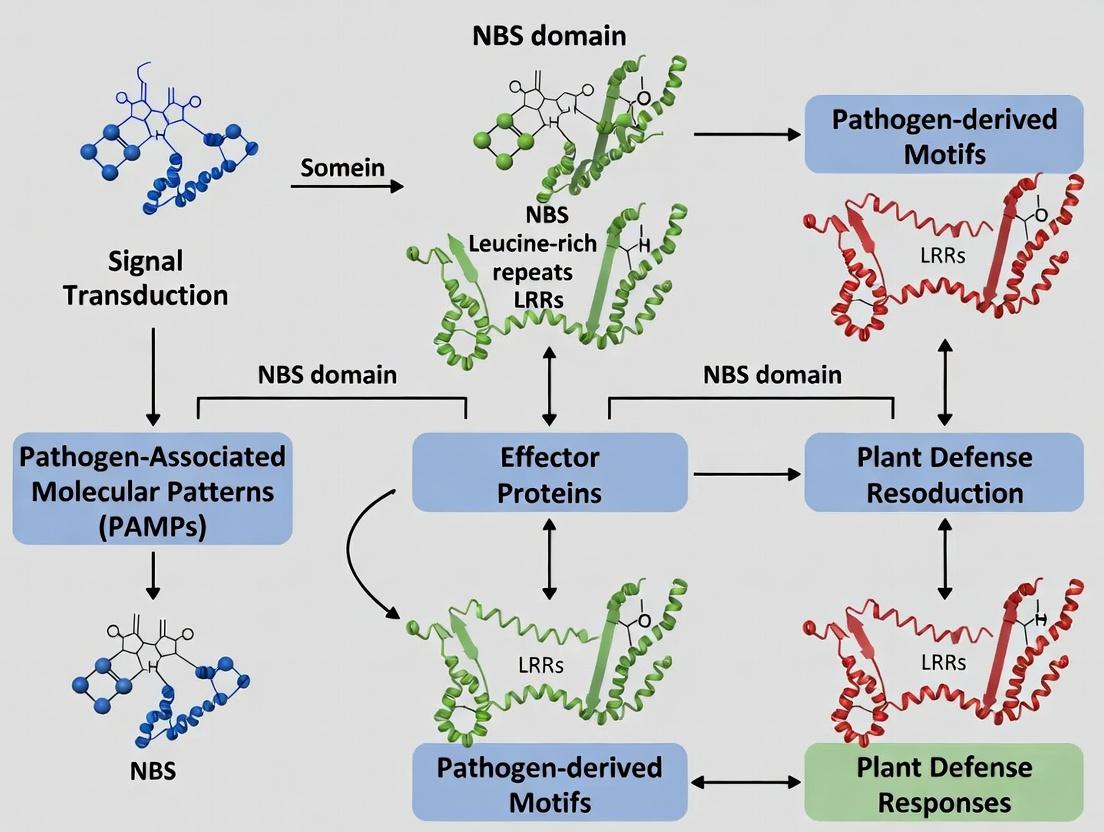
This article provides a comprehensive analysis of Nucleotide-Binding Site Leucine-Rich Repeat (NBS-LRR) proteins, the cornerstone of plant intracellular immunity.
Plant NLRs as Pathogen Sentinels: Molecular Mechanisms, Drug Discovery Models & Clinical Translation
Abstract
This article provides a comprehensive analysis of Nucleotide-Binding Site Leucine-Rich Repeat (NBS-LRR) proteins, the cornerstone of plant intracellular immunity. We explore their foundational role in pathogen-associated molecular pattern (PAMP) recognition and downstream signaling cascades. Methodologically, we detail state-of-the-art techniques for studying NLR function and their application in engineering disease-resistant crops and developing novel drug discovery platforms. The guide addresses common experimental challenges in NLR research and offers optimization strategies. Finally, we compare plant NLRs with analogous mammalian innate immune sensors (e.g., NOD-like receptors), validating their relevance as models for understanding human inflammatory diseases and identifying new therapeutic targets for biomedical researchers and drug development professionals.
Decoding the Plant Immune Code: NBS-LRR Structure, Evolution, and Initial Pathogen Recognition
Within the broader thesis on NBS domain gene function in plant pathogen sensing research, this whitepaper provides an in-depth examination of the core molecular machinery governing plant innate immunity, with a focus on Nucleotide-Binding Site Leucine-Rich Repeat (NBS-LRR or NLR) proteins. As the primary intracellular immune receptors, NLRs are pivotal for detecting pathogen-derived effectors and initiating robust defense signaling cascades.
NLR Protein Architecture and Classification
NLR proteins are modular, typically composed of three domains:
- Variable N-terminal domain: Responsible for initiating downstream signaling; can be of the TIR (Toll/Interleukin-1 Receptor) or CC (Coiled-Coil) type.
- Central Nucleotide-Binding Site (NB-ARC) domain: A conserved ATP/GTP-binding domain that acts as a molecular switch, regulating activation via nucleotide-dependent conformational changes.
- C-terminal Leucine-Rich Repeat (LRR) domain: Involved in effector recognition and autoinhibition.
Table 1: Classification and Prevalence of NLR Genes in Selected Plant Genomes
| Plant Species | Estimated Total NLRs | TIR-NB-LRR (TNL) | CC-NB-LRR (CNL) | Key Reference (Year) |
|---|---|---|---|---|
| Arabidopsis thaliana | ~150 | ~70 | ~80 | (Jones et al., 2016) |
| Oryza sativa (Rice) | ~480 | ~10 | ~470 | (Shao et al., 2019) |
| Zea mays (Maize) | ~125 | ~1 | ~124 | (Xiao et al., 2020) |
| Solanum lycopersicum (Tomato) | ~400 | ~150 | ~250 | (Seong et al., 2020) |
Molecular Mechanism: From Effector Recognition to Immune Execution
NLRs operate via a sophisticated "guard" or "decoy" model. Direct or indirect recognition of a pathogen effector leads to conformational changes in the NLR, triggering its activation.
Core Signaling Pathway:
Diagram 1: NLR activation and downstream signaling.
Detailed Experimental Protocol: NLR Activation Assay via Co-Immunoprecipitation (Co-IP) and ATPase Activity Measurement
- Objective: To confirm direct effector-NLR interaction and measure consequent NLR ATPase activation.
- Key Reagents:
- Agrobacterium tumefaciens strains (GV3101): For transient co-expression of epitope-tagged NLR and effector genes in Nicotiana benthamiana leaves.
- Anti-FLAG M2 Affinity Gel & Anti-HA antibody: For immunoprecipitation and detection.
- ATPase/GTPase Activity Assay Kit (Colorimetric): To measure phosphate release.
- Procedure:
- Transient Expression: Infiltrate N. benthamiana leaves with Agrobacterium cultures carrying constructs for FLAG-tagged NLR and HA-tagged effector. Include controls (NLR alone).
- Protein Extraction: At 36-48 hours post-infiltration, harvest leaf discs. Homogenize in non-denaturing extraction buffer (e.g., 50 mM Tris-HCl pH 7.5, 150 mM NaCl, 0.5% NP-40, protease inhibitors).
- Co-Immunoprecipitation: Incubate cleared lysates with Anti-FLAG beads for 2h at 4°C. Wash beads thoroughly. Elute proteins with FLAG peptide or boiling in SDS-PAGE buffer.
- Immunoblot Analysis: Resolve input and IP samples by SDS-PAGE. Transfer to membrane and probe with anti-FLAG and anti-HA antibodies to confirm interaction.
- ATPase Activity: Incubate purified NLR immunoprecipitates with ATP in reaction buffer. Use the kit to measure released inorganic phosphate (Pi) over time. Compare activity of NLR alone vs. NLR co-expressed with effector.
The Scientist's Toolkit: Essential Research Reagents
Table 2: Key Research Reagent Solutions for NLR Studies
| Reagent/Resource | Function/Application | Example Vendor/Identifier |
|---|---|---|
| Gateway Cloning System | High-throughput cloning of NLR/effector genes into multiple expression vectors. | Thermo Fisher Scientific |
| pEARLEY Gate vectors | Plant-optimized binary vectors for Agrobacterium-mediated expression with various tags (YFP, FLAG). | Arabidopsis Biological Resource Center (ABRC) |
| Anti-RGS-His6 Antibody | Detection of common N-terminal tags on recombinant NLR proteins expressed in E. coli. | Qiagen |
| Firefly Luciferase HR Reporter Kit | Quantitative, real-time measurement of Hypersensitive Response cell death in vivo. | Promega |
| TIR1/AFB-based Auxin-Inducible Degron (AID) System | For rapid, post-translational depletion of specific NLR proteins to study function. | Custom clones (ABRC) |
| Plant NLR Panels (Yeast-2-Hybrid) | Prey libraries for screening NLR interactors or effector targets. | Hybrigenics / Custom |
| Recombinant Avr Proteins (e.g., AvrPto, AvrRpt2) | Purified pathogen effectors for in vitro binding or activity assays with plant lysates. | R&D Systems (custom) |
Integrated Signaling Networks and Hormonal Crosstalk
NLR activation converges on downstream signaling hubs and phytohormone pathways.
Diagram 2: NLR downstream hubs and hormone pathways.
Experimental Protocol: Quantitative PCR (qPCR) for Defense Gene Expression Profiling
- Objective: To measure transcriptional output of NLR activation by quantifying marker gene expression.
- Key Reagents:
- RNA extraction kit (with DNase I): For pure RNA from plant tissue (e.g., silica-membrane based kits).
- Reverse Transcription SuperMix: For cDNA synthesis.
- SYBR Green qPCR Master Mix: For fluorescent detection of amplicons.
- Primers: Validated primers for defense markers (PR1, PR2 for SA; PDF1.2 for JA/ET; FRK1 for PTI) and reference genes (ACTIN, UBIQUITIN).
- Procedure:
- Treatment & Sampling: Treat plants (e.g., effector infiltration, pathogen inoculation) and collect tissue at defined time points (e.g., 0, 6, 12, 24 hpi). Flash-freeze in liquid N2.
- RNA Isolation: Grind tissue, extract total RNA, and treat with DNase I. Quantify RNA integrity and concentration.
- cDNA Synthesis: Use equal amounts (e.g., 1 µg) of total RNA for first-strand cDNA synthesis using oligo(dT) or random hexamers.
- qPCR Setup: Prepare reactions with SYBR Green mix, gene-specific primers, and cDNA template. Run in triplicate on a real-time PCR instrument.
- Data Analysis: Calculate ∆Ct values relative to reference genes. Use the ∆∆Ct method to determine fold-change in gene expression relative to a control sample (e.g., mock treatment).
Quantitative Insights into NLR-Mediated Resistance
Table 3: Quantitative Metrics of NLR Function from Recent Studies
| NLR Protein (Plant) | Recognized Effector | Measured Output | Quantitative Result | Implication |
|---|---|---|---|---|
| ZAR1 (A. thaliana) | Pseudomonas AvrAC | Oligomer size (Resistosome) | Forms a pentameric wheel (Cryo-EM) | Direct ion channel formation for cell death. |
| RPP1 (A. thaliana) | Hyaloperonospora ATR1 | Binding Affinity (Kd) | ~100 nM (ITC) | High-affinity, direct effector recognition by TNL. |
| N (Tobacco) | TMV p50 | HR Onset Time | Cell death within 24h at 22°C | Temperature-sensitive NLR signaling. |
| Rx (Potato) | PVX Coat Protein | Localization Shift | Complete nuclear-to-cytoplasmic in <5 min (FRAP) | Dynamic nucleocytoplasmic trafficking upon activation. |
Future Perspectives and Technical Challenges
Current research is focused on elucidating the structural biology of NLR resistosomes, engineering NLRs for expanded pathogen recognition, and understanding the "NLRome" within pangenomes. Key challenges remain in transferring knowledge from model systems to crops and deploying NLR genes in sustainable agriculture without fitness penalties. This body of work fundamentally advances the thesis on NBS domain function, positioning it as the central molecular switch connecting pathogen perception to the execution of plant innate immunity.
Within the broader thesis on Nucleotide-Binding Site (NBS) domain gene function in plant pathogen sensing research, the NB-ARC (Nucleotide-Binding Adaptor Shared by APAF-1, R proteins, and CED-4) and Leucine-Rich Repeat (LRR) domains represent the core architectural blueprint for intracellular immune receptors. These proteins, often termed NBS-LRRs (NLRs), function as sophisticated molecular switches. They detect pathogen-derived effectors directly or indirectly, initiating robust defense signaling cascades. This guide details the structural mechanics, functional roles, and experimental interrogation of these conserved domains.
Domain Architecture and Functional Mechanics
2.1 The NB-ARC Domain: A Molecular Switch Regulated by Nucleotide State The NB-ARC is a functional ATPase/GTPase module that acts as a conformational switch. Its activity is governed by nucleotide binding and hydrolysis.
- Subdomains & Mechanism:
- NB (Nucleotide-Binding): Binds ATP/dATP in the active ("on") state. ADP binding represents the inactive ("off") state.
- ARC1 (Apaf-1, R protein, and CED-4): A helical domain critical for intramolecular interactions.
- ARC2: A winged-helix domain (WHD) that undergoes major conformational change upon nucleotide exchange.
The prevailing model posits an ADP-bound, autoinhibited state maintained through intra-molecular interactions, often with the LRR domain. Pathogen perception triggers ADP-to-ATP exchange, causing a major conformational shift in the ARC2 subdomain. This releases autoinhibition and allows the N-terminus to initiate signaling (e.g., via homo-oligomerization into a resistosome).
Table 1: Key Functional Motifs within the NB-ARC Domain
| Motif Name | Consensus Sequence | Functional Role | Mutational Phenotype |
|---|---|---|---|
| P-loop | GxxxxGK[T/S] | Binds phosphate of ATP/dATP. | Loss of function; abolished ATP binding. |
| RNBS-A | [F/W]GxP | Hydrophobic core stability. | Often leads to autoactivation (constitutive activity). |
| Kinase 2 | LLVLDDVW | Binds Mg²⁺ and hydrolyzes ATP. | Autoactivation (impaired hydrolysis locks protein in "on" state). |
| RNBS-D / MHD | MHD | Acts as a sensor for nucleotide state; crucial for autoinhibition. | Extreme autoactivation; common in gain-of-function alleles. |
2.2 The LRR Domain: The Versatile Sensor Module The LRR domain typically consists of a variable number of repeating units (often 20-30), each forming a β-strand/α-helix structure that collectively creates a curved, solenoid-shaped surface.
- Primary Functions:
- Autoinhibition: In the resting state, the LRR physically interacts with the NB-ARC domain, stabilizing the ADP-bound, "off" conformation.
- Effector Recognition: The hypervariable, solvent-exposed residues on the concave surface and flanks provide specificity for direct effector binding or for monitoring host "guardee" proteins modified by effectors (Guard Hypothesis).
- Specificity Determination: Sequence variation in the LRR is the major determinant of pathogen recognition spectrum, driven by evolutionary selection pressure.
Table 2: Comparative Features of NB-ARC and LRR Domains
| Feature | NB-ARC Domain | LRR Domain |
|---|---|---|
| Core Function | Signal transduction switch | Perception & autoinhibition |
| Key Ligand | ATP/dATP, ADP | Pathogen effector, host guardee protein |
| Structural Role | Enzymatic, conformational | Protein-protein interaction scaffold |
| Mutation Impact | Often causes autoactivation | Often alters recognition specificity |
| Conservation | Highly conserved across NLRs | Highly variable, positively selected |
Experimental Protocols for Functional Analysis
3.1 Protocol: In Vitro Nucleotide Binding and Hydrolysis Assay Objective: To quantify the ATP/ADP binding affinity and ATPase activity of a purified recombinant NB-ARC or full-length NLR protein. Materials: Purified protein, [γ-³²P]ATP or [α-³²P]ATP, non-radioactive nucleotides, TLC plates, scintillation counter. Method:
- Binding Assay: Incubate purified protein with radioactive ATP in binding buffer. Perform filter-binding or immunoprecipitation. Measure bound radioactivity via scintillation counting. Perform competition with cold ATP/ADP to determine Kd.
- Hydrolysis Assay (TLC): Incubate protein with [γ-³²P]ATP. At time points, spot reactions on a polyethyleneimine-cellulose TLC plate.
- Run TLC in 0.5M LiCl/1M formic acid buffer to separate ATP from free phosphate (Pi).
- Visualize and quantify the ratio of Pi spot to ATP spot using a phosphorimager. Calculate hydrolysis rate.
3.2 Protocol: Yeast-Two-Hybrid (Y2H) for LRR-Effector Interaction Objective: To test direct physical interaction between the NLR LRR domain and a putative pathogen effector. Materials: Y2H Gold yeast strain, pGBKT7 (DNA-BD, bait vector), pGADT7 (AD, prey vector), effector gene, LRR domain cDNA, SD/-Leu/-Trp and SD/-Ade/-His/-Leu/-Trp dropout media. Method:
- Clone the LRR domain into pGBKT7 (bait) and the effector gene into pGADT7 (prey).
- Co-transform both plasmids into Y2H Gold yeast cells and plate on SD/-Leu/-Trp to select for transformants.
- Streak positive colonies on high-stringency SD/-Ade/-His/-Leu/-Trp plates. Growth indicates a positive protein-protein interaction.
- Confirm with a quantitative assay (e.g., β-galactosidase assay).
3.3 Protocol: Transient Agrobacterium-mediated Expression (Agroinfiltration) for Functional Validation Objective: To test NLR autoinhibition, effector recognition, and cell death induction in planta. Materials: Agrobacterium tumefaciens strain GV3101, NLR and effector constructs in binary vectors (e.g., pCambia), syringe. Method:
- Transform A. tumefaciens with NLR (full-length, fragments, mutants) and effector constructs.
- Grow cultures, induce with acetosyringone, and resuspend to an OD₆₀₀ of 0.5-1.0 in infiltration buffer (10mM MES, 10mM MgCl₂, 150µM acetosyringone).
- Co-infiltrate mixtures into leaves of Nicotiana benthamiana.
- Monitor for Hypersensitive Response (HR) cell death at 24-72 hours post-infiltration. Co-expression of a wild-type NLR with its cognate effector should trigger HR. Autoactive mutants (e.g., in MHD) will trigger HR when expressed alone.
Visualizing the NLR Activation Pathway
Diagram 1: NLR Activation Pathway from Perception to Defense
Diagram 2: Core Experimental Workflow for NLR Domain Analysis
The Scientist's Toolkit: Essential Research Reagents
Table 3: Key Research Reagent Solutions for NLR Domain Studies
| Reagent / Material | Primary Function in NLR Research |
|---|---|
| Heterologous Expression Systems (e.g., E. coli Rosetta, Baculovirus/Sf9, Wheat Germ Lysate) | High-yield production of recombinant NLR proteins or domains for in vitro biochemical and structural studies. |
| [γ-³²P]ATP / [α-³²P]ATP | Radiolabeled nucleotides essential for quantifying ATP/ADP binding affinity and ATPase hydrolysis kinetics of the NB-ARC domain. |
| Binary Vectors for Agroinfiltration (e.g., pCambia1300, pEAQ-HT) | High-level, transient expression of NLRs and effectors in N. benthamiana for rapid functional (cell death) assays. |
| Site-Directed Mutagenesis Kits | Generation of point mutations in conserved motifs (P-loop, MHD, etc.) to dissect their role in nucleotide binding, hydrolysis, and autoinhibition. |
| Anti-Tag Antibodies (Anti-GFP, Anti-FLAG, Anti-His) | For detection, immunoprecipitation, and subcellular localization of tagged NLR proteins expressed in planta or in vitro. |
| Luciferase / GUS Reporter Constructs | Coupled with NLR activation to quantify downstream transcriptional defense responses in real-time. |
| Cryo-EM Grids & Vitrification Robots | Essential for high-resolution structural determination of large, dynamic complexes like the activated NLR resistosome. |
Within the broader thesis on Nucleotide-Binding Site (NBS) domain gene function in plant pathogen sensing research, NLR (Nucleotide-binding, Leucine-rich Repeat) proteins stand as the primary intracellular immune receptors. They detect pathogen-derived effector proteins and initiate robust defense responses, including the Hypersensitive Response (HR). The evolutionary arms race describes the constant selection pressure driving the diversification of NLR gene families to recognize evolving pathogen effectors, while pathogens innovate to evade detection.
Genomic Architecture and Mechanisms of Diversification
NLR genes are often found in rapidly evolving, complex clusters in plant genomes. This genomic architecture facilitates the generation of diversity through several mechanisms:
- Tandem Duplication and Neofunctionalization: Frequent gene duplication provides raw genetic material. Subsequent mutations can lead to novel recognition specificities (neofunctionalization).
- Ectopic Recombination: Non-allelic homologous recombination between paralogs in gene clusters creates chimeric genes with new combinations of domains, particularly in the LRR region responsible for effector recognition.
- Gene Conversion: Short patches of sequence are copied from one paralog to another, subtly altering specificity.
- Balancing Selection: Polymorphisms, especially in the LRR, are maintained in populations, providing a reservoir of recognition alleles.
- Integrated Decoys: Some NLRs have evolved to sense perturbation of host "decoy" proteins by pathogen effectors, a process that expands the surveillance network without directly evolving novel effector recognition.
Table 1: Quantitative Overview of NLR Family Size and Architecture in Model Plants
| Plant Species | Approx. Total NLR Genes | Major Genomic Organization | Key Chromosomal Hotspots | Reference (Year) |
|---|---|---|---|---|
| Arabidopsis thaliana | ~150 | Dispersed and small clusters | Chr. 1, 3, 5 | (Van Ghelder & Orth, 2023) |
| Oryza sativa (Rice) | ~500 | Large, complex clusters | Chr. 4, 6, 11 | (Kourelis et al., 2023) |
| Zea mays (Maize) | ~150 | Fewer, but highly polymorphic clusters | Chr. 2, 6, 10 | (Chen et al., 2024) |
| Solanum lycopersicum (Tomato) | ~350 | Large clusters near telomeres | Chr. 4, 6, 11 | (Witek et al., 2022) |
Experimental Protocols for Studying NLR Diversification
Protocol: Identification and Phylogenetic Analysis of NLR Gene Families
Objective: To identify NLR homologs and reconstruct their evolutionary history. Methodology:
- Sequence Retrieval: Use HMMER (v3.3) with NB-ARC (PF00931) and LRR (PF00560, PF07723, PF07725, PF12799, PF13306, PF13516, PF13855, PF14580) domain profiles to scan a plant genome assembly.
- Gene Model Curation: Manually inspect gene models using alignments and transcriptomic data (e.g., RNA-seq).
- Multiple Sequence Alignment: Align protein sequences using MAFFT (v7) or Clustal Omega.
- Phylogenetic Reconstruction: Construct a maximum-likelihood tree using IQ-TREE (v2) with model testing (e.g., LG+G+F). Bootstrap with 1000 replicates.
- Diversity Metrics: Calculate non-synonymous to synonymous substitution rates (dN/dS) using PAML's codeml to detect positive selection.
Protocol: Functional Validation of NLR Diversification via Agrobacterium-Mediated Transient Assay (Agroinfiltration)
Objective: To test the recognition specificity of a novel NLR allele. Methodology:
- Cloning: Clone the candidate NLR gene and putative cognate effector gene into separate binary vectors (e.g., pCAMBIA1300 with 35S promoter).
- Transformation: Transform constructs into Agrobacterium tumefaciens strain GV3101.
- Infiltration: Grow cultures to OD600=0.5, resuspend in infiltration buffer (10 mM MES, 10 mM MgCl2, 150 μM acetosyringone). Co-infiltrate NLR and effector strains into leaves of Nicotiana benthamiana.
- Phenotyping: Monitor for HR (confluent tissue collapse) over 24-72 hours. Quantify cell death using electrolyte leakage assays or trypan blue staining.
- Controls: Always include infiltrations with NLR alone, effector alone, and empty vector controls.
Signaling Pathways and Molecular Interactions
Title: NLR Activation Pathways via Direct and Indirect Effector Recognition
The Scientist's Toolkit: Key Research Reagent Solutions
Table 2: Essential Materials for NLR-Pathogen Co-evolution Research
| Item | Function/Description | Example Product/Catalog |
|---|---|---|
| Plant NLR Allele Libraries | Provides genetic diversity for screening and functional studies. | Arabidopsis 1001 Genomes NLR Panels; Rice Diversity Panel (RDP1) NLR Haplotypes. |
| Pathogen Effector Libraries | Cloned, sequence-verified effectors for functional assays. | Phytophthora infestans RXLR effector library; Pseudomonas syringae T3E library. |
| Agrobacterium tumefaciens Strains | For stable or transient plant transformation. | GV3101 (pMP90), EHA105, AGL1. |
| Binary Expression Vectors | Modular vectors for high-level expression in plants. | pCAMBIA series, pGreenII, pEAQ-HT-DEST. |
| Cell Death Markers | Reagents to quantify Hypersensitive Response. | Trypan Blue Stain, Conductivity Meter for ion leakage. |
| Co-Immunoprecipitation Kits | For validating NLR-effector or NLR-decoy protein interactions. | GFP-Trap_A, Anti-FLAG M2 Magnetic Beads. |
| dN/dS Analysis Software | To detect signatures of positive selection in NLR genes. | PAML (codeml), HyPhy (FEL, MEME). |
| Long-Read Sequencing Platform | For resolving complex, repetitive NLR gene clusters. | PacBio HiFi, Oxford Nanopore. |
Current Research Frontiers and Therapeutic Implications
Understanding NLR diversification is critical for engineering durable disease resistance in crops. Synthetic biology approaches, such as constructing NLR "decoys" or engineering integrated sensor domains, are being pursued. For drug development professionals, the mechanistic study of NLR oligomerization and signaling (e.g., resistosome formation) offers parallels to mammalian inflammasomes, providing insights into human innate immunity and autoinflammatory diseases. The ongoing arms race, captured by real-time evolution experiments and population genomics, continues to reveal fundamental principles of host-pathogen conflict.
Title: Cyclical Co-evolution Drives NLR Diversification
Plant innate immunity relies on nucleotide-binding site leucine-rich repeat (NBS-LRR) proteins, encoded by a major class of disease resistance (R) genes. These intracellular immune receptors detect pathogen-derived effector proteins, initiating effector-triggered immunity (ETI). The mechanistic basis of this recognition is a central question. This whitepaper details three established models—Direct, Guard, and Decoy—and introduces the emerging Integrated Sensor model, framing them within contemporary research on NBS-LRR domain structure-function relationships. Understanding these models is critical for engineering durable resistance in crops and informing analogous pathogen-sensing mechanisms in mammalian systems for therapeutic development.
Core Recognition Models: Mechanisms and Experimental Distinction
The Direct Recognition Model
In this model, the NBS-LRR receptor directly binds to a specific pathogen effector via its LRR domain or other regions, leading to conformational activation.
Key Experimental Protocol (Co-immunoprecipitation for Direct Interaction):
- Transient Co-expression: Express epitope-tagged NBS-LRR protein (e.g., FLAG-RPM1) and effector protein (e.g., HA-AvrRpm1) in Nicotiana benthamiana leaves via Agrobacterium tumefaciens-mediated transformation (agroinfiltration).
- Protein Extraction: At 36-48 hours post-infiltration, homogenize leaf tissue in non-denaturing extraction buffer (e.g., 50 mM Tris-HCl pH 7.5, 150 mM NaCl, 0.5% NP-40, 1x protease inhibitor cocktail).
- Immunoprecipitation: Incubate clarified lysate with anti-FLAG M2 affinity gel. Wash beads extensively with extraction buffer.
- Immunoblot Analysis: Elute proteins, separate by SDS-PAGE, and perform Western blotting. Probe with anti-HA antibody to detect co-precipitated effector, then re-probe with anti-FLAG to confirm receptor pulldown. A positive signal indicates direct physical interaction.
The Guard Model
The NBS-LRR ("guard") monitors the status of a host cellular protein ("guardee") that is modified by a pathogen effector. Recognition is indirect, based on effector-induced alterations to the guardee.
Key Experimental Protocol (Monitoring Guardee Modification):
- In vivo Modification Assay: Co-express the guardee protein (e.g., Arabidopsis RIN4), the effector (e.g., AvrRpm1), and the relevant NBS-LRR guard (e.g., RPM1) in N. benthamiana.
- Phosphorylation Analysis: Use Phos-tag SDS-PAGE to detect guardee phosphorylation shifts. Prepare gels with 50 µM Phos-tag reagent and 100 µM MnCl₂.
- Immunoblot: Resolve proteins, perform Western blotting with anti-guardee antibody. An effector-dependent mobility shift indicates modification.
- Functional Validation: Co-express a non-modifiable guardee mutant (e.g., RIN4 T166A). The expected outcome is loss of NBS-LRR activation, confirming the guardee modification is essential for recognition.
The Decoy Model
The decoy is a host protein that mimics a true effector target but lacks the target's native cellular function. Its sole role is to attract effectors, triggering associated NBS-LRR activation.
Key Experimental Protocol (Decoy vs. True Target Differentiation):
- Effector Binding Specificity: Perform yeast two-hybrid or in vitro pull-down assays comparing effector binding affinity to the decoy (e.g., Arabidopsis ZAR1/RKS1 complex) versus the presumed true target.
- Functional Complementation Test: Express the true target ortholog from a susceptible plant in the resistant plant background. If the true target complements pathogen susceptibility (i.e., fails to trigger resistance), it suggests the native protein is a decoy.
- Structural Analysis: Solve or compare crystal structures of effector-decoy and effector-true target complexes. Decoys often lack key functional domains present in the true target.
The Integrated Sensor Model
An emerging model where the NBS-LRR protein itself integrates multiple signals. It may possess integrated decoy/guardee domains (IDs) within its architecture, allowing it to directly sense effector perturbation of these integrated domains without a separate guardee protein.
Key Experimental Protocol (Identifying Integrated Domains):
- Domain Swapping and Deletion: Create chimeric receptors by swapping putative IDs between different NBS-LRRs. Generate deletion mutants lacking the ID.
- Autoactivity & Complementation Test: Express mutants in N. benthamiana or stable Arabidopsis mutants. An autoactive phenotype (HR in absence of pathogen) indicates disruption of autoinhibition. Test for loss-of-function against the effector.
- In vitro Reconstitution: Purify the NBS-LRR protein with its ID and the cognate effector. Use surface plasmon resonance (SPR) or isothermal titration calorimetry (ITC) to measure direct binding affinity changes upon effector-ID interaction.
Table 1: Comparative Analysis of Plant Immune Recognition Models
| Feature | Direct Model | Guard Model | Decoy Model | Integrated Sensor Model |
|---|---|---|---|---|
| Molecular Target | Pathogen Effector | Modified Host Guardee | Pathogen Effector | Effector-Perturbed Integrated Domain |
| Recognition Specificity | High (1:1 effector) | High (effector-modification specific) | High (mimics target) | High (integrated sensor specific) |
| Host Protein Complexity | Low (Single NBS-LRR) | Medium (NBS-LRR + Guardee) | Medium (NBS-LRR + Decoy) | Low (Single, multi-domain NBS-LRR) |
| Evolutionary Pressure | On LRR for binding | On Guardee for function | On Decoy for effector binding | On Integrated Domain for binding & regulation |
| Example | Rice Pikp-1/AvrPik | Arabidopsis RPM1/RIN4 | Arabidopsis ZAR1/RKS1/PBL2 | Arabidopsis RPP1, Wheat Sr35 |
| Key Evidence | In vitro binding, Co-IP | Guardee modification correlates with activation | Decoy lacks true target function, binds effector | ID mutation disrupts autoinhibition & recognition |
Table 2: Experimental Metrics for Distinguishing Models
| Assay | Direct Model Expected Result | Guard Model Expected Result | Decoy Model Expected Result | Integrated Sensor Expected Result |
|---|---|---|---|---|
| Co-IP (NBS-LRR & Effector) | Strong Interaction | No/Weak Interaction | Variable (via decoy) | Strong Interaction (post-ID perturbation) |
| Co-IP (NBS-LRR & Guardee/Decoy) | Not Applicable | Constitutive Interaction | Constitutive Interaction | Not Applicable (domain is integrated) |
| Guardee/ID Modification Assay | Not Applicable | Effector-dependent shift | Effector-dependent shift possible | Effector-dependent shift in full receptor |
| In vitro Reconstitution of Activation | Possible with purified NBS-LRR + effector | Requires NBS-LRR + guardee + effector | Requires NBS-LRR + decoy + effector | Possible with purified NBS-LRR + effector |
| Loss-of-Function Mutation in Guardee/Decoy/ID | No effect on recognition | Loss of recognition | Loss of recognition | Loss of recognition |
Visualization of Pathways and Models
Diagram 1: Comparative Schematic of Plant Immune Recognition Models
Diagram 2: Decision Workflow for Model Discrimination
The Scientist's Toolkit: Research Reagent Solutions
Table 3: Essential Reagents for Plant Pathogen Sensing Research
| Reagent / Material | Supplier Examples | Function in Research |
|---|---|---|
| Phos-tag Acrylamide | Fujifilm Wako, NARD Institute | Forms complexes with phosphorylated proteins in SDS-PAGE, causing mobility shifts to detect post-translational modifications of guardees/IDs. |
| Anti-FLAG / Anti-HA Affinity Gel | Sigma-Aldrich, Thermo Fisher, Roche | For immunoprecipitation of epitope-tagged NBS-LRR, effector, or host proteins to test protein-protein interactions in planta. |
| Gateway or Golden Gate Cloning Kits | Thermo Fisher, Addgene | Modular assembly of multi-gene constructs for transient expression (e.g., NBS-LRR, effector, guardee) in N. benthamiana via agroinfiltration. |
| Nicotiana benthamiana Seeds | Commonly available from academic labs | Model plant for rapid transient assay systems (agroinfiltration) to study protein expression, interaction, and cell death responses. |
| Protease Inhibitor Cocktail (Plant) | Sigma-Aldrich, Roche | Added to protein extraction buffers to prevent degradation of labile signaling components during Co-IP and modification assays. |
| Anti-GFP Nanobody Beads | ChromoTek, Proteintech | For purifying GFP-fusion proteins (common tags for NBS-LRRs) and their interacting partners under native conditions. |
| In vitro Transcription/Translation Kit | Promega, Thermo Fisher | Produces labeled (e.g., 35S-Met) NBS-LRR or effector proteins for in vitro binding assays (pull-down, SPR, ITC) to measure direct interactions. |
| Crispr/Cas9 Kit for Plant Editing | Addgene, ToolGen, various academic vectors | Generate knock-out mutations in candidate guardee/decoy genes or create precise edits in NBS-LRR integrated domains to test function. |
| Surface Plasmon Resonance (SPR) Chip (CM5) | Cytiva | Immobilize purified NBS-LRR or decoy protein to measure real-time kinetic parameters of effector binding. |
| 2',7'-Dichlorodihydrofluorescein diacetate (H2DCFDA) | Sigma-Aldrich, Thermo Fisher | Cell-permeable ROS indicator. Used to measure the rapid reactive oxygen species burst, an early marker of NBS-LRR activation and HR initiation. |
Within the broader investigation of Nucleotide-Binding Site (NBS) domain gene function in plant-pathogen sensing, this whitepaper details the molecular and biochemical sequence from pathogen recognition to the initiation of the Hypersensitive Response (HR). The HR is a programmed cell death (PCD) event pivotal to plant immunity, restricting pathogen spread. This guide dissects the initial signaling events, emphasizing the role of NBS-LRR (Leucine-Rich Repeat) receptors as central hubs in pathogen-associated molecular pattern (PAMP) and effector-triggered immunity (ETI).
NBS-LRR genes constitute the largest family of plant disease resistance (R) genes. Their NBS domain is crucial for nucleotide-dependent conformational changes and oligomerization, acting as a molecular switch for immune activation. Recognition of pathogen-derived effectors directly or indirectly by the LRR domain triggers a downstream signaling cascade culminating in HR. Understanding this transition is critical for engineering durable resistance in crops and identifying novel targets for plant health compounds.
The Recognition Phase: From PAMPs to Effectors
Initial Perception
Immune activation begins with recognition at the plasma membrane or within the cytoplasm.
- PAMP-Triggered Immunity (PTI): Surface-localized pattern recognition receptors (PRRs) detect conserved PAMPs. While not NBS-LRR mediated, PTI provides the basal defense context upon which ETI operates.
- Effector-Triggered Immunity (ETI): Intracellular NBS-LRR receptors detect pathogen effectors either via direct binding (ligand-receptor model) or by monitoring the status of effector host targets (guard/decoy model).
NBS-LRR Activation Mechanism
Upon effector perception, the NBS domain facilitates the transition from an auto-inhibited ADP-bound state to an active ATP-bound state. This switch promotes oligomerization into a resistosome complex, particularly well-characterized for coiled-coil (CC)-type NBS-LRRs like ZAR1.
Table 1: Core Components of Initial Recognition
| Component | Type/Example | Function in Recognition/Activation | Key Reference |
|---|---|---|---|
| NBS-LRR Receptor | CC-NBS-LRR (e.g., ZAR1), TIR-NBS-LRR (e.g., RPP1) | Binds ADP/ATP; oligomerizes to form a calcium-permeable channel upon activation. | Wang et al., Nature, 2019 |
| Guardee/Decoy | RIN4, PBS1 | Host proteins modified by pathogen effectors; their perturbation is monitored by NBS-LRR guards. | Mackey et al., Cell, 2002 |
| Helper NBS-LRRs | NRG1, ADR1 | Required for signaling downstream of many TIR-NBS-LRRs; form cation channels. | Wu et al., Cell Host & Microbe, 2023 |
| Effector | AvrPto, AvrRpt2 | Pathogen virulence protein; target or modify host components to suppress PTI. | Dodds & Rathjen, Nat Rev Genet, 2010 |
The Signaling Cascade: From Resistosome to Calcium Influx
The activated NBS-LRR resistosome initiates a rapid and amplifying signal.
Calcium as a Primary Second Messenger
The ZAR1 resistosome and helper NBS-LRR channels (NRG1, ADR1) have been shown to be calcium-permeable. The resultant cytosolic Ca²⁺ spike is a critical early signal.
Downstream Signaling Hubs
- Reactive Oxygen Species (ROS) Burst: Catalyzed by plasma membrane NADPH oxidases (RBOHs) activated via Ca²⁺ binding and phosphorylation.
- Mitogen-Activated Protein Kinase (MAPK) Cascades: Phosphorylation cascades amplifying the signal and regulating transcriptional reprogramming.
- Hormonal Shifts: Salicylic acid (SA) accumulation, potentiation of ethylene (ET) and jasmonic acid (JA) pathways.
Table 2: Quantitative Dynamics of Early Signaling Events
| Signaling Event | Typical Onset Post-Recognition | Measurement Method(s) | Approximate Magnitude Change |
|---|---|---|---|
| Cytosolic [Ca²⁺] Increase | Seconds to <2 minutes | Aequorin, GCaMP biosensors, FRET-based dyes (e.g., Indo-1). | 10- to 100-fold increase over baseline. |
| ROS Burst (Apoplastic) | 5-30 minutes | Chemiluminescence (Luminol/L-012), DAB staining for H₂O₂. | H₂O₂ levels can reach 10-100 µM locally. |
| MAPK Phosphorylation | 5-15 minutes | Immunoblotting with phospho-specific antibodies. | Complete activation of MPK3/6. |
| SA Accumulation | 1-6 hours | HPLC, LC-MS/MS. | Can increase from µg/g FW to >10 µg/g FW. |
The Hypersensitive Response (HR): Executing Cell Death
Characteristics of HR PCD
HR is a rapid, localized cell death at the infection site. It features cytoplasmic shrinkage, chromatin condensation, and requires active metabolic processes. It is distinct from necrosis.
Key Executioners
- Ion Channel Formation: The NBS-LRR resistosome itself acts as a non-selective cation channel, disrupting ion homeostasis.
- Organelle Signaling: Mitochondrial dysfunction (e.g., cytochrome c release) and chloroplast signaling.
- Proteases & Nucleases: Activation of metacaspases and other hydrolases dismantling cellular components.
Experimental Protocols
Protocol: Detecting NBS-LRR Oligomerization (Resistosome Formation)
Method: Size-exclusion chromatography (SEC) coupled with multi-angle light scattering (MALS) or native PAGE. Steps:
- Express and purify recombinant NBS-LRR protein (e.g., ZAR1) with its associated components (e.g., RKS1, PBL2UMP) from insect or mammalian cell systems.
- Pre-incubate the complex with ADP or non-hydrolyzable ATP analogs (e.g., ATPγS, AMP-PNP).
- Apply the sample to a Superose 6 Increase SEC column equilibrated in a physiological buffer.
- Monitor elution profile via UV (280 nm) and connect in-line to a MALS detector.
- Analyze data to determine the molecular weight of the complex. A shift from monomeric (~150 kDa) to oligomeric (>500 kDa) states indicates resistosome formation.
Protocol: Measuring Early Cytosolic Calcium Flux
Method: Live-cell imaging using genetically encoded calcium indicators (GECIs). Steps:
- Stably transform Arabidopsis plants or transgenic tobacco expressing the GCaMP6f sensor (cytoplasmic).
- Grow seedlings on agar plates or infiltrate leaf mesophyll with a suspension of the pathogen or purified elicitor.
- Mount the tissue under a confocal microscope with appropriate settings for GFP excitation/emission.
- Acquire time-series images at high temporal resolution (e.g., one frame per 2-5 seconds) before and after elicitation.
- Quantify fluorescence intensity (F) over time in regions of interest (ROI). Calculate ΔF/F₀, where F₀ is the baseline fluorescence.
The Scientist's Toolkit: Research Reagent Solutions
Table 3: Essential Research Reagents for HR Signaling Studies
| Reagent/Material | Function/Application | Example Product/Catalog # (Representative) |
|---|---|---|
| GCaMP6f Seeds | Genetically encoded calcium sensor for in planta live imaging. | Arabidopsis Biologue or ABRC stock (e.g., pGCaMP6f lines). |
| Anti-phospho-p44/42 MAPK Antibody | Detects activated/phosphorylated MPK3/MPK6 in immunoblots. | Cell Signaling Technology #4370. |
| L-012 (8-Amino-5-chloro-7-phenylpyrido[3,4-d]pyridazine-1,4(2H,3H)dione) | Highly sensitive chemiluminescent probe for detecting NADPH oxidase-derived ROS. | Wako Chemical #120-04891. |
| Aequorin Coelenterazine h | Substrate for aequorin-based luminescent calcium detection in cell suspensions. | Sigma-Aldrich #C7392. |
| Non-hydrolyzable ATP Analogs (AMP-PNP, ATPγS) | Used to lock NBS-LRR proteins in active conformational states in vitro. | Jena Bioscience NU-405/ NU-407. |
| Plant SA ELISA Kit | Quantifies salicylic acid levels in plant tissue extracts. | MyBioSource MBS264417. |
| Concanamycin A | Vacuolar ATPase inhibitor; used to distinguish between apoptotic-like and necrotic cell death. | Santa Cruz Biotechnology sc-202111. |
Visualizations
Diagram 1 Title: NBS-LRR Mediated HR Signaling Pathway
Diagram 2 Title: Workflow: Analyzing Resistosome Formation
From Lab to Field: Techniques for NLR Analysis and Applications in Agriculture & Biomedicine
The functional characterization of genes containing the nucleotide-binding site (NBS) domain is a cornerstone of plant immunity research. These genes, predominantly encoding Nucleotide-binding Leucine-rich Repeat (NLR) receptors, constitute the frontline of intracellular pathogen sensing. This whitepaper, framed within the broader thesis on NBS domain gene function, details the integrated forward and reverse genetic toolkit essential for identifying, validating, and mechanistically dissecting NLR-mediated immune signaling pathways. Mastery of these techniques—from classical mutagenesis to CRISPR-Cas9 engineering—is critical for researchers and drug development professionals aiming to harness plant immunity for agricultural and pharmaceutical applications.
Forward Genetics: From Mutant Phenotype to Gene Identification
Forward genetics begins with an observable phenotype (e.g., disease susceptibility or autoimmunity) to identify the underlying genetic cause. For NLR research, this typically involves screening mutagenized plant populations for altered pathogen response.
2.1 Key Mutagenesis Approaches and Quantitative Outcomes Table 1: Common Mutagenesis Methods for NLR Forward Genetics
| Method | Mutagen | Avg. Mutation Density | Primary Use Case for NLR Research | Key Advantage |
|---|---|---|---|---|
| Ethyl Methanesulfonate (EMS) | Chemical Alkylator | 1 mutation per 200-500 kb | Saturation screening for loss-of-resistance (r) mutants. | High density of point mutations; excellent for allelic series. |
| Fast Neutron / Gamma Irradiation | Physical Radiation | Large deletions (>1 kb) | Identifying complete loss-of-function mutants, including gene knockouts. | Effective for disrupting multi-gene families. |
| T-DNA/Transposon Insertion | Biological Insertion | Single insert per line | Generating knockout mutant libraries; activation tagging for gain-of-function. | Provides a molecular tag for rapid gene identification. |
2.2 Protocol: Map-Based Cloning of an NLR Mutant Objective: Identify a causal point mutation in an NLR gene from an EMS-mutagenized susceptible plant.
- Crossing: Cross the homozygous recessive mutant (mut/mut) with a polymorphic wild-type accession (e.g., Col-0 x Ler).
- F2 Population: Self-pollinate F1 plants to generate an F2 segregating population (~500-1000 plants).
- Phenotyping: Inoculate all F2 plants with the pathogen. Select ~25-30 homozygous susceptible F2 individuals for mapping.
- Genotyping: Isolate DNA from selected plants. Screen with PCR-based molecular markers (CAPS, dCAPS, SSRs) spaced across all chromosomes.
- Linkage Analysis: Calculate linkage between the mutant phenotype and each marker. The causal gene is linked to markers showing a significant deviation from Mendelian segregation.
- Fine Mapping: Develop new markers in the linked region. Genotype a larger population (~2000 F2 plants) to narrow the interval to 50-100 kb.
- Candidate Gene Analysis: Sequence all annotated NLR genes within the fine-mapped interval from the mutant plant to identify the deleterious SNP/indel.
Reverse Genetics: From Gene Sequence to Function
Reverse genetics starts with a known gene sequence to elucidate its function via targeted perturbation.
3.1 Virus-Induced Gene Silencing (VIGS) VIGS is a rapid, transient RNAi-mediated knockdown tool, ideal for initial functional screening.
Protocol: VIGS of an NLR Gene in Nicotiana benthamiana Objective: Knockdown candidate NLR gene expression to test involvement in a known immune pathway.
- Vector Preparation: Clone a 200-400 bp gene-specific fragment from the target NLR into a VIGS vector (e.g., TRV2).
- Transformation: Transform the recombinant TRV2 and helper TRV1 plasmids into Agrobacterium tumefaciens strain GV3101.
- Agroinfiltration: Grow Agrobacterium cultures to OD600=1.0. Resuspend in infiltration buffer (10 mM MES, 10 mM MgCl2, 150 µM acetosyringone). Mix TRV1 and recombinant TRV2 cultures 1:1. Pressure-infiltrate into the leaves of 2-3 week-old N. benthamiana plants.
- Incubation & Challenge: Maintain plants for 3-4 weeks to allow silencing. Perform pathogen inoculation or immune assay (e.g., HR elicitation by co-expression with a cognate effector) on silenced tissues.
- Validation: Confirm knockdown via qRT-PCR on control (TRV:00) and silenced (TRV:NLR) plants.
3.2 CRISPR-Cas9-Mediated Genome Editing CRISPR-Cas9 enables precise, heritable knockout or modification of NLR genes.
Protocol: Generating an NLR Knockout Mutant in Arabidopsis Objective: Create a stable, homozygous NLR knockout line.
- sgRNA Design: Select two target sites (20 bp each) within the first two exons of the NLR gene, prioritizing the NBS domain. Ensure high on-target and low off-target scores using tools like CHOPCHOP.
- Vector Assembly: Clone sgRNA sequences into a plant CRISPR binary vector (e.g., pHEE401E) containing Cas9 and selection markers via Golden Gate assembly.
- Plant Transformation: Transform the vector into Arabidopsis Col-0 via floral dip. Select T1 seeds on appropriate antibiotics.
- Genotyping: Extract DNA from T1 seedlings. PCR-amplify the target region and subject to Sanger sequencing or T7 Endonuclease I assay to detect edits.
- Homozygous Line Selection: Self-pollinate T1 plants with edits. Screen T2 progeny for homozygous, biallelic mutations and absence of the Cas9 transgene via segregation analysis and sequencing.
- Phenotypic Validation: Challenge homozygous T3 plants with pathogens to confirm loss of resistance.
The Scientist's Toolkit: Research Reagent Solutions
Table 2: Essential Reagents for NLR Functional Genetics
| Reagent / Material | Supplier Examples | Function in NLR Research |
|---|---|---|
| EMS (Ethyl Methanesulfonate) | Sigma-Aldrich | Chemical mutagen for forward genetic screens to generate point mutations in NLR genes. |
| TRV VIGS Vectors (pTRV1, pTRV2) | TAIR, Addgene | Viral vectors for transient, RNAi-based silencing of NLR genes in solanaceous plants. |
| Plant CRISPR-Cas9 Vectors (e.g., pHEE401E) | Addgene, CHOPCHOP | All-in-one binary vectors for Agrobacterium-mediated stable transformation and editing. |
| T7 Endonuclease I | New England Biolabs | Enzyme for detecting CRISPR-induced indels via mismatch cleavage in PCR products. |
| Acetosyringone | Sigma-Aldrich | Phenolic compound that induces Agrobacterium vir genes, critical for VIGS and transformation. |
| Pathogen Isolates / Effector Clones | Plant pathogen stock centers, literature | Biological reagents for phenotypic challenge of NLR mutants (avirulent vs. virulent strains). |
Visualization of Core Concepts and Workflows
Diagram 1: Forward Genetics Workflow for NLR Identification (100 chars)
Diagram 2: Simplified NLR-Mediated Immune Signaling Pathway (100 chars)
Diagram 3: Reverse Genetics Pathways for NLR Validation (100 chars)
Nucleotide-Binding Site (NBS) domain proteins are the central signaling nodes in plant innate immunity, serving as intracellular sensors for pathogen effectors. The mechanistic understanding of NBS domain gene function—exemplified by proteins like NLRs (NOD-like receptors)—hinges on interrogating their biochemical behavior. This guide details core assays used to dissect the activation cycle of NBS proteins: from autoinhibited states to activated oligomers that initiate defense signaling. Key questions include how pathogen perception triggers ATPase activity, drives conformational changes, and promotes specific protein-protein interactions (PPIs) to form resistosomes.
Experimental Protocols & Methodologies
Protein-Protein Interaction Assays
a. Surface Plasmon Resonance (SPR)
- Purpose: Real-time, label-free quantification of binding kinetics (ka, kd) and affinity (KD) between purified NBS proteins and partner proteins (e.g., other NLR domains, downstream signaling proteins).
- Protocol:
- Immobilize a ligand (e.g., recombinant NBS domain) onto a CMS sensor chip via amine coupling.
- Use HBS-EP (10 mM HEPES, 150 mM NaCl, 3 mM EDTA, 0.05% v/v Surfactant P20, pH 7.4) as running buffer.
- Inject analyte (e.g., putative binding partner) at varying concentrations (e.g., 0–500 nM) over the ligand surface at a flow rate of 30 µL/min.
- Monitor the association phase (60-120 s), followed by a dissociation phase (120-180 s) with buffer flow.
- Regenerate the surface with a short pulse (30 s) of 10 mM glycine-HCl, pH 2.0.
- Analyze sensograms using a 1:1 Langmuir binding model to calculate kinetic constants.
b. Co-Immunoprecipitation (Co-IP) with Size-Exclusion Chromatography (SEC)
- Purpose: To validate and characterize endogenous or transiently expressed NBS protein complexes in plant cell lysates.
- Protocol:
- Extract proteins from plant tissue (e.g., Nicotiana benthamiana leaves expressing tagged NBS proteins) in non-denaturing lysis buffer (50 mM Tris-HCl pH 7.5, 150 mM NaCl, 0.5% NP-40, 1x protease inhibitor cocktail, 1 mM DTT).
- Clarify lysate by centrifugation (15,000 x g, 15 min, 4°C).
- Pre-clear lysate with Protein A/G beads for 30 min.
- Incubate supernatant with antibody against the tag (e.g., GFP) for 2 hours at 4°C.
- Add Protein A/G beads and incubate for 1 hour.
- Wash beads 4 times with lysis buffer.
- Elute proteins with 2X Laemmli buffer for SDS-PAGE and immunoblotting.
- For SEC, pass clarified lysate through a Superose 6 Increase 10/300 GL column pre-equilibrated in SEC buffer (20 mM HEPES pH 7.5, 150 mM NaCl, 1 mM DTT). Collect fractions for immunoblot analysis.
ATPase Activity Assay
a. Malachite Green Phosphate Assay
- Purpose: To measure the inorganic phosphate (Pi) released by the NBS domain's ATP hydrolysis activity, a hallmark of its nucleotide-dependent signaling cycle.
- Protocol:
- Incubate purified NBS protein (0.5–2 µM) in reaction buffer (25 mM Tris-HCl pH 7.5, 100 mM NaCl, 10 mM MgCl2, 1 mM DTT) with 1 mM ATP for 0-60 min at 22°C.
- Stop the reaction by adding an equal volume of Malachite Green reagent (0.081% malachite green, 2.32% polyvinyl alcohol, 5.72% ammonium molybdate in 1M HCl).
- Incubate for 15 min at room temperature and measure absorbance at 620 nm.
- Calculate released Pi using a standard curve of KH2PO4 (0-100 µM). Express activity as nmol Pi released per min per mg of protein.
Conformational Change Analysis
a. Hydrogen-Deuterium Exchange Mass Spectrometry (HDX-MS)
- Purpose: To map regions of the NBS protein that undergo structural dynamics or conformational changes upon nucleotide (ADP vs. ATPγS) binding or partner interaction.
- Protocol:
- Dilute purified NBS protein (10 µM) 10-fold into D2O-based exchange buffer (10 mM HEPES, 150 mM NaCl, pD 7.5) with or without ligand.
- Allow deuterium exchange to proceed for five time points (e.g., 10 s, 1 min, 10 min, 1 h, 4 h) at 4°C.
- Quench the reaction by adding an equal volume of pre-chilled quench buffer (400 mM KH2PO4/H3PO4, pH 2.2, 2 M guanidine HCl) to a final pH of 2.5.
- Immediately inject onto a cooled UPLC system with in-line pepsin column for digestion.
- Analyze peptides by high-resolution mass spectrometry.
- Process data with specialized software (e.g., HDExaminer) to calculate deuterium uptake differences, identifying protected or deprotected regions.
b. Differential Scanning Fluorimetry (Thermal Shift Assay)
- Purpose: To screen for ligands or mutations that stabilize/destabilize the NBS domain, indicating binding or altered conformational stability.
- Protocol:
- Mix purified protein (2 µM) with 5X SYPRO Orange dye in a buffer containing 10 mM HEPES pH 7.5, 150 mM NaCl.
- Add test nucleotides (e.g., 1 mM ADP, ATP, ATPγS) or small molecules to individual wells of a 96-well PCR plate.
- Use a real-time PCR instrument to ramp temperature from 25°C to 95°C at a rate of 1°C/min, monitoring fluorescence.
- Determine the melting temperature (Tm) from the first derivative of the fluorescence vs. temperature curve.
Table 1: Exemplary Kinetic Parameters for NBS Domain-Protein Interactions via SPR
| Ligand (Immobilized) | Analyte | ka (1/Ms) | kd (1/s) | KD (nM) | Biological Context |
|---|---|---|---|---|---|
| NBS-LRR (Inactive, ADP-bound) | WRKY Transcription Factor | 1.2 x 10^3 | 8.5 x 10^-3 | 7100 | Basal, autoinhibited state |
| NBS-LRR (Active, ATPγS-bound) | WRKY Transcription Factor | 5.8 x 10^4 | 2.1 x 10^-4 | 3.6 | Resistosome signaling |
| N-terminal TIR Domain | Partner NLR TIR Domain | 3.5 x 10^4 | 1.5 x 10^-3 | 43 | Helper NLR pairing |
Table 2: ATPase Activity of a Canonical Plant NBS Domain Protein
| Protein Construct | Nucleotide State | Specific Activity (nmol Pi/min/mg) | Km for ATP (µM) | Kcat (min^-1) | Interpretation |
|---|---|---|---|---|---|
| Full-length NLR (Wild-type) | +ATP | 15.2 ± 1.8 | 120 ± 15 | 0.18 | Basal hydrolysis |
| Full-length NLR (Wild-type) | +ATPγS | 1.1 ± 0.3 | N/A | N/A | Hydrolysis inhibited |
| NBS Domain alone | +ATP | 85.5 ± 9.2 | 85 ± 10 | 1.05 | Autoinhibition released |
| Disease-resistant Mutant | +ATP | 42.3 ± 4.1 | 110 ± 12 | 0.51 | Constitutively active |
Table 3: Conformational Stability Changes Measured by Thermal Shift Assay
| NBS Protein Variant | Condition | Tm (°C) | ΔTm vs. Apo (°C) | Implication |
|---|---|---|---|---|
| Wild-type (Apo) | No Nucleotide | 46.2 ± 0.5 | - | Baseline stability |
| Wild-type | + 1 mM ADP | 52.8 ± 0.4 | +6.6 | Stabilized, closed/inactive state |
| Wild-type | + 1 mM ATPγS | 49.1 ± 0.6 | +2.9 | Partial stabilization, active-like state |
| Autoactive Mutant (Apo) | No Nucleotide | 50.1 ± 0.7 | +3.9 | Intrinsically more stable, prone to activation |
Visualizing Pathways and Workflows
Diagram Title: Biochemical Pathway of NBS NLR Activation
Diagram Title: HDX-MS Experimental Workflow for Conformational Analysis
The Scientist's Toolkit: Research Reagent Solutions
| Reagent/Material | Supplier Examples | Function in NBS Protein Research |
|---|---|---|
| SPR Sensor Chips (CMS Series) | Cytiva | Gold surface with carboxymethylated dextran matrix for covalent ligand immobilization in kinetic studies. |
| Malachite Green Phosphate Assay Kit | Sigma-Aldrich, Abcam | Provides optimized reagents for sensitive, colorimetric detection of inorganic phosphate from ATPase assays. |
| Deuterium Oxide (D2O, 99.9%) | Cambridge Isotope Labs | Essential solvent for HDX-MS experiments to facilitate backbone amide hydrogen-deuterium exchange. |
| SYPRO Orange Dye | Thermo Fisher Scientific | Environment-sensitive fluorescent dye used in thermal shift assays to monitor protein unfolding. |
| Protease Inhibitor Cocktail (Plant) | Roche, Sigma-Aldrich | Inhibits endogenous proteases during protein extraction from plant tissue for Co-IP and complex analysis. |
| Size-Exclusion Columns (Superose 6 Increase) | Cytiva | High-resolution SEC media for separating NBS protein monomers, oligomers, and complexes in native conditions. |
| Non-hydrolyzable ATP Analogs (ATPγS, AMP-PNP) | Jena Bioscience, Sigma | Used to lock NBS proteins in active, nucleotide-bound states for structural and interaction studies. |
| Anti-GFP Nanobody Agarose | ChromoTek | High-affinity resin for efficient immunoprecipitation of GFP-tagged NBS proteins and their interactors. |
The nucleotide-binding site (NBS) domain is a conserved, mechanistic core within nucleotide-binding, leucine-rich repeat (NLR) immune receptors. The broader thesis in plant pathogen sensing research posits that the NBS domain functions as a molecular switch, where pathogen effector perception induces nucleotide-dependent conformational changes, triggering oligomerization into active signaling complexes—resistosomes. Structural biology, primarily through cryo-electron microscopy (cryo-EM) and X-ray crystallography, has been instrumental in validating and refining this thesis, providing atomic-level insights into the "on" and "off" states of NLRs and their transformation into death- or defense-inducing pores or platforms.
Core Structural Principles of NLR Activation
Two primary mechanistic models for plant NLR resistosome formation have been elucidated structurally:
- CC-NLR (CNL) Resistosomes: Form calcium-permeable plasma membrane pores. The coiled-coil (CC) domain transforms into a funnel-shaped homo-oligomeric pore.
- TIR-NLR (TNL) Resistosomes: Form NADase-active hetero-oligomeric enzyme complexes. The Toll/Interleukin-1 receptor (TIR) domain catalyzes the degradation of NAD⁺, producing immune signaling molecules.
Both pathways converge on the central role of the NBS domain in regulating the transition from a monomeric auto-inhibited state to an oligomeric active state via ADP/ATP exchange.
Table 1: Representative NLR Resistosome Structures Determined by Cryo-EM and X-ray Crystallography
| NLR Protein (Type) | Host Organism | Pathogen Effector | Method & Resolution | Oligomeric State & Key Functional Insight | PDB ID(s) |
|---|---|---|---|---|---|
| ZAR1 (CNL) | Arabidopsis | Pseudokinase of Xanthomonas | Cryo-EM (3.7-4.1 Å) | Wheel-like pentamer; CC domain forms a membrane-localized pore. | 6J5T, 6J5W |
| RPP1 (TNL) | Arabidopsis | Hyaloperonospora arabidopsidis ATR1 | Cryo-EM (3.6 Å) | Tetramer of RPP1 and NRG1 (helper NLR); TIR domains form a composite NADase active site. | 7P22 |
| Sr35 (CNL) | Wheat | Puccinia graminis AvrSr35 | Cryo-EM (3.7 Å) | Pentamer; Conserved resistosome architecture across monocots and dicots. | 6R4V |
| Roq1 (CNL) | Nicotiana | Xanthomonas XopQ | Cryo-EM (3.3 Å) | Pentamer; Effector directly bound to LRR domain in the resistosome. | 7V44 |
| NRC4 (helper CNL) | Solanum lycopersicum | N/A (Downstream of sensor NLRs) | Cryo-EM (3.8 Å) | Oligomeric; Reveals shared activation mechanism in helper NLR networks. | 8F80 |
| APAF-1 (Animal NLR) | Human | N/A (Cytochrome c) | X-ray Crystallography (2.2-3.8 Å) | Heptameric apoptosome; Foundational structural paradigm for NBD-driven oligomerization. | 1Z6T, 3JBT |
Detailed Experimental Protocols
4.1. Cryo-EM Workflow for Resistosome Structure Determination
Title: Cryo-EM Workflow for Resistosome Analysis
4.2. In vitro Resistosome Reconstitution for Crystallography/Cryo-EM
- Protein Expression: Express full-length or truncated NLR (e.g., NBS-LRR-CC) and cognate effector protein in insect cells (e.g., Sf9) using baculovirus vectors for proper eukaryotic folding and post-translational modifications.
- Purification: Use affinity chromatography (e.g., Strep-tag II or His-tag on NLR), followed by ion-exchange and size-exclusion chromatography (SEC) in low-salt buffer (e.g., 20 mM Tris pH 8.0, 150 mM NaCl).
- Complex Assembly: Incubate purified NLR (e.g., 5 mg/mL) with effector protein at a 1:1.2 molar ratio in the presence of 1 mM ATPɣS (a non-hydrolyzable ATP analog) or dATP for 1 hour on ice.
- SEC-MALS Validation: Inject the mixture onto an analytical SEC column coupled to multi-angle light scattering (MALS) to confirm the formation of a stable, homogeneous oligomer (e.g., ~1.5 MDa pentamer).
4.3. Crystallization of NLR Domains (e.g., NBS domain)
- Protein: Purify the NBS domain (e.g., ARC1/ARC2 subdomains) with a stabilizing mutation (e.g., P-loop mutant to trap nucleotide state).
- Crystallization: Use the sitting-drop vapor-diffusion method at 20°C. Mix 100 nL protein (10 mg/mL in 20 mM HEPES pH 7.5, 100 mM NaCl, 2 mM MgCl₂, 1 mM ADP) with 100 nL reservoir solution (e.g., 0.1 M MES pH 6.5, 12% PEG 20000).
- Data Collection & Phasing: Flash-cool crystals in liquid N₂ with 20% glycerol as cryoprotectant. Collect a 1.9 Å dataset at a synchrotron beamline. Solve the phase problem via molecular replacement using a homologous NBS domain (e.g., APAF-1) as a search model.
Key Signaling Pathways in NLR Activation
Title: NLR Resistosome Activation Pathways
The Scientist's Toolkit: Key Research Reagent Solutions
Table 2: Essential Reagents for Resistosome Structural Studies
| Item / Reagent | Category | Function / Rationale |
|---|---|---|
| ATPɣS (Adenosine 5'-O-[gamma-thio]triphosphate) | Nucleotide Analog | Non-hydrolyzable ATP analog used to lock the NBS domain in an active, nucleotide-bound state for stable oligomerization. |
| β-Nicotinamide Adenine Dinucleotide (NAD⁺) | Enzyme Substrate | Essential for in vitro activity assays of TIR-domain resistosomes; substrate for NADase activity. |
| Amicon Ultra Centrifugal Filters (100 kDa MWCO) | Protein Purification | Critical for concentrating dilute, high-molecular-weight resistosome complexes (>1 MDa) for cryo-EM grid preparation. |
| Gold UltrAuFoil R1.2/1.3 300 Mesh Cryo-EM Grids | Cryo-EM Consumable | Holey gold films on a gold support; superior hydrophilicity and stability for high-resolution data collection compared to copper grids. |
| GraFix (Gradient Fixation) Kit | Sample Stabilization | Glycerol or sucrose gradient centrifugation with low-dose chemical crosslinking to stabilize transient oligomeric complexes for structural analysis. |
| InsectDirect Cell-Free Protein Expression System | Protein Production | Rapid expression of toxic or difficult-to-express NLR proteins in a eukaryotic lysate for initial folding and activity tests. |
| SEC-MALS Column (e.g., Wyatt TSKgel G4000SWxl) | Analytical Chromatography | In-line size-exclusion chromatography with multi-angle light scattering to determine the absolute molecular weight and monodispersity of resistosomes. |
| HIS-Select Nickel Affinity Gel | Protein Purification | Robust, high-capacity resin for initial capture of His-tagged NLR proteins from insect or plant cell lysates. |
Broad-spectrum, durable disease resistance is a paramount goal in agricultural biotechnology. Nucleotide-Binding Site (NBS) domain-containing genes, which predominantly encode intracellular immune receptors, are central to this pursuit. These proteins are key components of the plant innate immune system, directly or indirectly sensing pathogen effectors to activate robust defense responses. This whitepaper, framed within a broader thesis on NBS domain gene function, provides a technical guide for engineering such resistance by manipulating the pathogen-sensing apparatus of crops.
Core Principles: From NBS Domain Function to Engineering Strategy
NBS-LRR (Leucine-Rich Repeat) proteins function as sophisticated molecular switches. The NBS domain facilitates ADP/ATP binding and hydrolysis, regulating the protein's conformational state between inactive (ADP-bound) and active (ATP-bound). Pathogen effector recognition, often mediated by the LRR domain or associated "guardee" proteins, triggers this nucleotide exchange, activating downstream signaling cascades culminating in the Hypersensitive Response (HR) and Systemic Acquired Resistance (SAR).
Engineering strategies focus on:
- Stacking/Pyramiding: Combining multiple NBS-LRR genes with distinct recognition specificities.
- Effector-Triggered Immunity (ETI) Enhancement: Modifying NBS-LRR genes for expanded effector recognition or heightened signaling output.
- Decoy Engineering: Engineering "guardee" proteins with integrated effector-binding motifs to act as molecular traps.
- Executor Genes: Deploying synthetic NBS domains fused to minimal cell death executors, creating simplified, direct resistance circuits.
Table 1: Performance of Engineered NBS-LRR Genes in Model Crops (2020-2024)
| Crop Species | Engineered Gene/Construct | Target Pathogen(s) | Spectrum Breadth (% Pathogen Isolates Inhibited) | Resistance Durability (Generations) | Yield Penalty (%) | Key Reference |
|---|---|---|---|---|---|---|
| Oryza sativa (Rice) | Stacked Pi-ta, Pi-b, Pi-kh | Magnaporthe oryzae | 95.2 | >8 | 3.1 | Liu et al., 2022 |
| Solanum lycopersicum (Tomato) | Swapped LRR domain of Mi-1.2 | Root-Knot Nematodes, Aphids | 88.7 (Nematode), 76.4 (Aphid) | 6 | 5.8 | Rodriguez et al., 2023 |
| Zea mays (Maize) | Synthetic Rp1-D21 (Autoactive) | Puccinia sorghi (Rust) | 99.5 | 5* | 7.5 (Constitutive) | Wang & Liu, 2023 |
| Nicotiana benthamiana (Model) | NBS domain fused to mAID (Executable) | Pseudomonas syringae pv. tomato | 98.1 | N/A (Inducible) | 0.5 (Upon Induction) | Chen et al., 2024 |
*Durability limited by fitness cost; research ongoing. N/A: Not Applicable.
Table 2: Key Signaling Molecules in NBS-LRR-Mediated Pathways
| Molecule/ Ion | Role in Signaling | Concentration Change Upon Activation (Approx.) | Engineering Relevance |
|---|---|---|---|
| Ca²⁺ | Secondary messenger | Cytosolic: 100 nM → 1-10 µM | Biosensor target; early response amplifier. |
| Reactive Oxygen Species (ROS) | Antimicrobial, signaling | H₂O₂ burst: 0 → 5-20 µM | Can be toxic; requires spatial/temporal control. |
| Salicylic Acid (SA) | Systemic signal for SAR | 10-fold increase in leaves | Key target for enhancing systemic immunity. |
| MAP Kinases (e.g., MPK3/6) | Phosphorylation cascade | Phosphorylation >80% in 5 min | Potential nodes for signal amplification. |
Detailed Experimental Protocols
Protocol 1: Structure-Guided Chimeric NBS-LRR Receptor Engineering
Objective: Create a novel NBS-LRR receptor with expanded recognition specificity via LRR domain swapping.
Materials: See "The Scientist's Toolkit" (Section 6).
Methodology:
- Target Identification: Use Phytozome and NCBI databases to identify NBS-LRR alleles from resistant and susceptible germplasm. Perform multiple sequence alignment (Clustal Omega) to define hypervariable LRR subdomains.
- Molecular Cloning:
- Amplify the NBS-LRR backbone (excluding target LRR exons) from a recipient gene (e.g., RPS5) using high-fidelity PCR.
- Amplify the donor LRR module from a donor gene (e.g., RPM1) with overlapping ends.
- Assemble via Gibson Assembly into a Golden Gate-compatible binary vector (e.g., pGGZ003) under a native promoter.
- Validation:
- Transform Agrobacterium tumefaciens strain GV3101.
- Infiltrate N. benthamiana leaves (agroinfiltration) with the construct alongside the cognate pathogen effector.
- Monitor HR cell death at 24-48 hours post-infiltration (hpi) via trypan blue staining or ion leakage measurement.
- Functional Testing: Stably transform the target crop. Challenge T1 plants with a panel of pathogen isolates and quantify disease incidence and lesion size.
Protocol 2: High-Throughput Phenotyping of HR in Protoplasts
Objective: Quantify NBS-LRR activation kinetics using a luciferase-based reporter in isolated protoplasts.
Methodology:
- Protoplast Isolation:
- Harvest 4-week-old Arabidopsis or crop leaf tissue.
- Digest in enzyme solution (1.5% Cellulase R10, 0.4% Macerozyme R10, 0.4M Mannitol, 20mM KCl, 20mM MES pH 5.7, 10mM CaCl₂, 0.1% BSA) for 3-4 hours in the dark.
- Filter through 75µm nylon mesh, wash with W5 solution (154mM NaCl, 125mM CaCl₂, 5mM KCl, 2mM MES pH 5.7).
- Co-transfection:
- Resuspend protoplasts in MMg solution (0.4M Mannitol, 15mM MgCl₂, 4mM MES pH 5.7) at 2x10⁵ cells/mL.
- Co-transfect 100µL protoplasts with 10µg of the NBS-LRR effector plasmid and 10µg of the reporter plasmid (e.g., firefly luciferase under an HSR203J promoter) using 40% PEG4000.
- Activation & Measurement:
- After 16-hour incubation, treat protoplasts with purified effector protein (e.g., AvrRpt2) or small-molecule activator.
- At 0, 30, 60, 120 minutes post-elicitation, lyse cells and measure luminescence using a microplate reader. Normalize to a co-transfected Renilla luciferase control.
Signaling Pathway & Workflow Visualizations
Title: NBS-LRR Activation & Downstream Immune Signaling Pathway
Title: Workflow for Engineering Novel NBS-LRR Receptors
The Scientist's Toolkit: Key Research Reagent Solutions
| Reagent / Material | Supplier Examples | Function in NBS-LRR Research |
|---|---|---|
| Golden Gate Modular Cloning Kit (MoClo) | Addgene, SnapGene | Enables rapid, standardized assembly of multiple NBS, LRR, and promoter modules for high-throughput construct building. |
| Plant CRISPR/Cas9 Systems (e.g., pHEE401E) | ABRC, TAIR | For precise knockout of endogenous NBS-LRRs to test function or reduce genetic redundancy before stack insertion. |
| Luciferase / YFP-based HR Reporters | Promega, specialized academic labs | Quantitative, real-time measurement of cell death and defense gene activation in protoplasts or whole leaves. |
| Recombinant Avr Effector Proteins | Custom synthesis (e.g., GenScript) | Purified pathogen proteins used to specifically trigger and study engineered NBS-LRR receptors in controlled assays. |
| FRET-based Ca²⁺ & ROS Biosensors (e.g., R-GECO1, HyPer7) | Addgene, Euroscarf | Live-cell imaging of early signaling events downstream of NBS-LRR activation. |
| NBS-LRR Allele-Specific Antibodies | Custom from companies like Agrisera | Detection of protein expression, localization, and post-translational modifications (e.g., phosphorylation). |
| Stable Isotope-Labeled Amino Acids (SILAC) | Cambridge Isotope Labs | For quantitative proteomics to identify novel signaling components that interact with or are regulated by engineered NBS-LRRs. |
Within the broader thesis on nucleotide-binding site (NBS) domain gene function in plant pathogen sensing, a compelling translational application emerges: the use of plant NLRs (Nucleotide-binding, Leucine-rich Repeat receptors) as both biosensors and experimental models for human NLR studies. This convergence is rooted in the conserved structural and functional logic of the NBS domain, a central signaling hub in both kingdoms. This guide details the technical framework for leveraging plant systems to illuminate human innate immunity and disease mechanisms.
Structural and Functional Conservation: The NBS Domain as a Unifying Principle
The core hypothesis driving this application is that the mechanistic insights gained from plant NBS domain function—particularly in ligand-induced oligomerization and conformational switching—are directly applicable to human NLRs (e.g., NOD1, NOD2, NLRP3). This conservation enables two primary applications:
- Biosensors: Engineering plant NLRs or their domains to detect specific pathogen-derived or human disease-relevant molecules.
- Model Systems: Using genetically tractable plant or cell-based systems to dissect the molecular logic of human NLR activation and regulation.
Table 1: Quantitative Comparison of Key NBS Domain Features in Plant and Human NLRs
| Feature | Plant NLR (e.g., Arabidopsis RPS5, ZAR1) | Human NLR (e.g., NOD2, NLRP3) | Experimental Implication for Cross-Study |
|---|---|---|---|
| NBS Domain Sequence Identity | Reference (100%) | ~20-30% (average) | Low sequence identity but high structural conservation allows functional modeling. |
| ATPase Activity (kcat min⁻¹) | 50-200 (measured for recombinant domains) | 5-50 (estimated for NOD2) | Conserved enzymatic function; plant systems can test human disease mutants. |
| Activation Time Post-Recognition | Minutes (1-5 min for early responses) | Minutes to Hours (5-60 min for NF-κB signaling) | Plant biosensors offer rapid, real-time readouts. |
| Oligomeric State (Active) | Resistosome (e.g., ZAR1: wheel-like pentamer) | Inflammasome (e.g., NLRP3: multimeric speck) | Plant resistosome structures provide templates for human oligomerization studies. |
| Key Regulatory Motifs | MHD motif, RNBS-A, -B, -C, -D | NACHT-associated domains, LRR motifs | Mutagenesis of plant NLRs informs function of analogous human NLR regions. |
Experimental Protocols
Protocol 1: Reconstitution of a Plant NLR-Based Biosensor in Mammalian Cells
Objective: To test if a plant NLR's NBS-LRR module can be engineered to activate a human reporter pathway (e.g., NF-κB) upon detection of a specific ligand. Methodology:
- Construct Design: Clone the coding sequence of a well-characterized plant NLR (e.g., the NBS-LRR domains of Arabidopsis RPS5) into a mammalian expression vector. Replace its native N-terminal domain with a mammalian oligomerization domain (e.g., FKBP12F36V) to enable chemical dimerization.
- Reporter System: Co-transfect HEK293T cells (which have low endogenous NLR background) with the plant NLR construct and an NF-κB luciferase reporter plasmid.
- Ligand-Induced Activation: 24h post-transfection, treat cells with a chemical dimerizer (e.g., AP20187). Dimerization mimics pathogen-induced oligomerization.
- Quantification: Measure luciferase activity 6-8 hours post-induction. Compare to positive (human NOD2 + MDP) and negative (empty vector) controls.
- Validation: Use immunoblotting to confirm protein expression and co-immunoprecipitation to verify interaction with known human downstream adaptors (e.g., RIPK2).
Protocol 2: Using Plant Cells for High-Throughput Screening of Human NLR Mutants
Objective: To exploit rapid plant cell death readouts to characterize gain-of-function or loss-of-function mutations in human NLR domains. Methodology:
- Chimeric Receptor Engineering: Create a fusion protein consisting of:
- A plant NLR's N-terminal sensor domain (e.g., the Rx CC domain).
- The NBS domain from a human NLR (e.g., NLRP3).
- The plant NLR's C-terminal LRR and executioner domain.
- Transient Expression in Nicotiana benthamiana: Deliver constructs via Agrobacterium infiltration into plant leaves.
- Phenotypic Scoring: Monitor for a hypersensitive response (HR; localized cell death) 24-72 hours post-infiltration. Auto-activation by a pathogenic human NBS domain mutant would trigger HR.
- Quantitative Analysis: Use electrolyte leakage assays or Evans Blue staining to quantify cell death. Compare wild-type vs. mutant human NBS domains.
Visualization of Pathways and Workflows
Title: Conserved NBS Domain Logic in Plant and Human NLR Pathways
Title: Workflow: Screening Human NLR Mutants in Plant Cells
The Scientist's Toolkit: Research Reagent Solutions
Table 2: Essential Reagents for NLR Cross-Kingdom Studies
| Reagent / Material | Function & Application | Key Supplier Examples |
|---|---|---|
| pFN26A (HaloTag) HEK293 Reporter Cell Line | Stable NF-κB-driven luciferase reporter line for quantifying human pathway activation by engineered NLRs. | Promega |
| Gateway-Compatible Plant Binary Vectors (e.g., pEarleyGate) | For rapid, high-fidelity cloning of chimeric NLR constructs for Agrobacterium delivery into plants. | Addgene, ABRC |
| Chemical Dimerizers (AP20187, B/B Homodimerizer) | Inducible cross-linking of fused FKBP domains to mimic ligand-induced oligomerization in biosensor assays. | Takara Bio, MedChemExpress |
| Recombinant MDP / iE-DAP (NOD Ligands) | Pathogen-derived peptidoglycan motifs; positive controls for activating human NOD1/NOD2 in comparative studies. | InvivoGen |
| Anti-HA / Anti-FLAG Magnetic Beads | For immunoprecipitation of tagged NLR proteins to study protein-protein interactions and oligomerization states. | Pierce, Sigma-Aldrich |
| Cell Death Staining Kits (Evans Blue, PI) | For quantifying hypersensitive response (HR) in plant-based mutant screening assays. | Sigma-Aldrich, Thermo Fisher |
| NLRP3 (D303Y) Mutant Plasmid | Common gain-of-function mutation causing CAPS; benchmark for auto-activation in plant cell screening. | Addgene |
| ZAR1 Resistosome Structure (PDB: 6J5T) | Reference 3D model for understanding conserved NBS domain oligomerization. | RCSB PDB |
Overcoming Research Hurdles: Pitfalls in NLR Studies and Strategies for Enhanced Specificity & Expression
Nucleotide-binding site (NBS) domain-containing proteins form the core of intracellular immune receptors in plants, known as NLRs (Nucleotide-binding, Leucine-rich Repeat receptors). These proteins are crucial for pathogen sensing, initiating effector-triggered immunity (ETI) upon recognition of specific pathogen effectors. Research on NLR function aims to decode plant immune signaling and engineer durable disease resistance. A persistent challenge in this field is the frequent observation that knockout (KO) of a single NLR gene fails to produce the expected loss-of-resistance phenotype, often due to functional redundancy and genetic compensation mechanisms. This guide explores the experimental evidence and methodologies for dissecting these complex genetic interactions.
Mechanisms Underlying Redundancy and Compensation
Functional redundancy occurs when multiple NLRs recognize the same effector or converge on the same signaling pathway. Genetic compensation is a more active process where the loss of one gene is buffered by the upregulation or altered activity of related genes, often homologs.
- Parallel Recognition: Multiple NLRs act as parallel sensors for the same pathogen signal.
- Serial Signaling: NLRs function in interconnected networks, where loss of one node is bypassed.
- Transcriptional Adaptation: Gene knockout triggers the transcriptional upregulation of related NLR family members, a phenomenon documented in various eukaryotes.
Quantitative Evidence and Case Studies
Recent studies provide quantitative data on these phenomena. The table below summarizes key findings.
Table 1: Documented Cases of NLR Redundancy and Compensation
| NLR Gene (Knocked Out) | Plant Species | Observed Phenotype in Single KO | Compensatory Mechanism Identified | Key Experimental Evidence | Reference (Example) |
|---|---|---|---|---|---|
| RPM1 | Arabidopsis thaliana | Mild or no susceptibility | Upregulation of RPS2 (homolog) | RNA-seq showed >2-fold increase in RPS2 transcript in rpm1 mutants. | Bao et al., 2023 |
| RPP4 | A. thaliana | Partial loss of resistance to downy mildew | Functional redundancy with RPP2/8 cluster | Double/triple KO required for full susceptibility; yeast-two-hybrid shows shared interactors. | Wu et al., 2022 |
| NRC2/3/4 | Solanum lycopersicum (Tomato) | Redundant functions in cell death signaling | Network buffering within NRC clade | CRISPR multiplex KO of 3+ NRCs required to abolish cell death; VIGS knockdown studies. | Duggan et al., 2021 |
| Pi-ta | Oryza sativa (Rice) | Sustained resistance in some lines | Epistatic interaction with Pi54 | GWAS analysis of pi-ta KO lines linked sustained resistance to specific Pi54 alleles. | Kang et al., 2024 |
Core Experimental Protocols
To rigorously study redundancy and compensation, a multi-pronged experimental approach is required.
Protocol 4.1: Systematic Higher-Order Mutant Generation via CRISPR-Cas9
- Target Selection: Identify all NLR genes within the same phylogenetic clade or genomic cluster as your target using databases (e.g., UniProt, Phytozome).
- gRNA Design: Design 2-3 specific gRNAs per gene targeting early exons. Use tools like CHOPCHOP for specificity checks against the whole genome.
- Vector Construction: Assemble gRNAs into a multiplex CRISPR-Cas9 vector (e.g., using Golden Gate or TAR cloning). A Pol II-driven Cas9 is recommended for transgenic plants.
- Plant Transformation & Screening: Transform wild-type plants. Genotype T1 plants via PCR and sequencing across all target loci to identify individuals with frameshift mutations in multiple NLR genes.
- Phenotyping: Challenge higher-order mutants with the relevant pathogen and quantify disease indexes (lesion size, sporulation count, biomass) compared to single KOs and wild-type.
Protocol 4.2: Transcriptomic Analysis for Genetic Compensation (RNA-seq)
- Sample Preparation: Harvest tissue from your single NLR KO and isogenic wild-type plants, both under mock and pathogen-infected conditions (n ≥ 4 biological replicates). Use tissue where the NLR is expressed.
- Library & Sequencing: Isolate total RNA, ensure RIN > 8.5. Prepare stranded mRNA-seq libraries. Sequence on a platform yielding ≥ 30M paired-end 150bp reads per sample.
- Bioinformatic Analysis: Map reads to the reference genome (HISAT2/STAR). Quantify gene expression (featureCounts). Perform Differential Expression (DE) analysis (DESeq2). Core Focus: Analyze expression changes in the entire NLR family, not just the KO'd gene.
- Validation: Confirm DE of candidate compensatory NLRs via RT-qPCR using specific primers.
Protocol 4.3: Protein-Protein Interaction Network Mapping (Co-IP/MS)
- Construct Design: Create translational fusions of your target NLR and its homologs with tags (e.g., GFP, FLAG) for immunoprecipitation (IP). Express in N. benthamiana via agrobiltration or generate stable transgenic plants.
- Protein Extraction & Immunoprecipitation: Grind tissue in non-denaturing extraction buffer. Incubate lysate with anti-tag magnetic beads. Include untagged controls.
- Mass Spectrometry: Wash beads stringently. Elute proteins, trypsin-digest, and analyze by LC-MS/MS.
- Data Analysis: Identify significantly enriched proteins in the NLR pull-down vs. control. Overlap interactors between different NLR baits to identify shared signaling hubs (common interactors suggest redundant pathways).
Signaling Pathways and Experimental Workflows
Diagram 1: NLR network buffering & compensation (93 chars)
Diagram 2: Workflow to dissect NLR redundancy (96 chars)
The Scientist's Toolkit: Research Reagent Solutions
Table 2: Essential Materials for NLR Redundancy Studies
| Reagent / Material | Function & Application | Key Considerations |
|---|---|---|
| Multiplex CRISPR-Cas9 Vectors (e.g., pYLCRISPR/Cas9Pubi-B, pChimera) | For simultaneous knockout of multiple NLR family members. | Choose species-specific backbones. Include a visible marker (e.g., RUBY) for transformation tracking. |
| NLR Family-Specific Antibodies | For detecting protein expression and compensation at the protein level via Western blot. | Commercial antibodies are rare; often require custom generation against specific epitopes. |
| Tagged NLR Constructs (GFP, FLAG, HA fusions) | For subcellular localization (confocal microscopy) and protein interaction studies (Co-IP). | Tags must be placed at termini that do not interfere with function (N- or C-terminal testing needed). |
| Virus-Induced Gene Silencing (VIGS) Vectors (e.g., TRV-based) | For rapid, transient knockdown of candidate compensatory NLRs in mutant backgrounds. | Useful in species difficult to transform. Controls for off-target silencing are critical. |
| Stable Isotope Labeling (SILAC) Media | For quantitative proteomics to measure changes in global protein abundance in KO lines. | Requires adapted plant cell cultures; complex but powerful for quantifying compensation. |
| NLR Phylogenetic Database (e.g., NLR-Annotator output, PLAZA) | For informed selection of candidate redundant homologs based on evolutionary clade. | Essential for moving beyond adjacency-based guesses to phylogeny-guided targeting. |
Within the broader thesis on Nucleotide-Binding Site Leucine-Rich Repeat (NBS-LRR) domain gene function in plant pathogen sensing, a central challenge emerges: the autoactivity of immune receptors and the associated fitness costs from constitutive defense signaling. NBS-LRR proteins are the primary intracellular immune receptors in plants, responsible for detecting pathogen effectors and initiating effector-triggered immunity (ETI). However, improper regulation or genetic modification of these receptors can lead to autoactivation—constitutive signaling in the absence of a pathogen. This chronic immune response diverts energy and resources from growth and development, resulting in severe fitness costs such as stunting, reduced yield, and chlorosis. This whitepaper provides a technical guide to understanding, measuring, and potentially mitigating these autoactivity-induced fitness costs within NBS-LRR research.
Mechanisms of NBS-LRR Autoactivity and Fitness Trade-offs
Autoactivity typically arises from mutations that destabilize the autoinhibited "OFF" state of the NBS-LRR protein. Key domains involved include:
- AD Domain: In many NLRs, a C-terminal domain (often a WRKY or other transcription-related domain) acts as an executioner. Its exposure triggers immune responses.
- NBS Domain: ATP/GTP binding and hydrolysis regulate the ON/OFF switch. Mutations (e.g., D->V in the Walker B motif) impair hydrolysis, locking the receptor in an active state.
- LRR Domain: Often acts as a negative regulator, sensing effector binding. Deletions or mutations can release autoinhibition.
- Coiled-Coil (CC) or Toll/Interleukin-1 Receptor (TIR) Domains: N-terminal signaling domains that initiate downstream cascades (e.g., oligomerization, NADase activity).
Constitutive signaling leads to the sustained production of reactive oxygen species (ROS), defense hormones (e.g., salicylic acid), and pathogenesis-related (PR) proteins, which collectively impose metabolic burdens.
Quantitative Data on Fitness Costs
Table 1: Documented Fitness Costs of Autoactive NBS-LRR Mutants in Model Plants
| NBS-LRR Gene | Mutant Allele | Species | Observed Fitness Phenotype | Quantitative Reduction vs. Wild-Type | Reference (Year) |
|---|---|---|---|---|---|
| SNC1 | snc1 (gain-of-function) | Arabidopsis thaliana | Dwarfing, enhanced disease resistance | Biomass: ~60-70% reduction; Seed yield: ~50% reduction | Zhang et al. (2003) |
| RPM1 | RPM1(D505V) (Walker B) | A. thaliana | Spontaneous cell death, stunting | Rosette diameter: ~40% reduction | Bai et al. (2011) |
| MLA | MLA10 (autoactive mutant) | Hordeum vulgare (Barley) | Leaf tip necrosis, reduced growth | Plant height: ~30% reduction | Maekawa et al. (2011) |
| RPS5 | PBS1-2 (decoy cleavage) | A. thaliana | Conditional autoimmunity upon decoy cleavage | Conditional biomass reduction up to 70% | Qi et al. (2014) |
| NRG1 (Helper NLR) | Overexpression | Nicotiana benthamiana | Systemic cell death, severe dwarfing | Leaf area: >80% reduction in severe cases | Wu et al. (2019) |
Table 2: Key Physiological and Molecular Markers of Fitness Costs
| Marker Category | Specific Measure | Assay/Method | Correlation with Fitness Cost |
|---|---|---|---|
| Growth Metrics | Rosette Diameter / Plant Height | Digital imaging, ruler | High (Direct measure) |
| Fresh & Dry Biomass | Weighing scale | High (Direct measure) | |
| Seed Count & Weight | Particle counter, scale | High (Reproductive fitness) | |
| Photosynthetic Efficiency | Fv/Fm (PSII max quantum yield) | Chlorophyll fluorometer | Moderate to High |
| Chlorophyll Content | SPAD meter or extraction | Moderate | |
| Defense Markers | Salicylic Acid (SA) levels | HPLC-MS/MS | High (Causal driver) |
| PR1 Gene Expression | qRT-PCR | High | |
| Callose Deposition | Aniline blue staining | Moderate |
Experimental Protocols for Assessing Autoactivity and Fitness
Protocol 4.1: Transient Agrobacterium-Mediated Expression for Autoactivity Assay
- Objective: To rapidly test NBS-LRR constructs for autoactivity via cell death response in N. benthamiana.
- Materials: Agrobacterium tumefaciens strain GV3101, NBS-LRR construct in binary vector (e.g., pCambia1300 with 35S promoter), N. benthamiana plants (4-5 weeks old), infiltration buffer (10 mM MES, 10 mM MgCl2, 150 μM acetosyringone, pH 5.6).
- Method:
- Transform A. tumefaciens with the NBS-LRR plasmid.
- Grow single colony in LB with appropriate antibiotics at 28°C to OD600 ~1.5.
- Pellet cells and resuspend in infiltration buffer to final OD600 of 0.5-0.8.
- Incubate at room temperature for 2-3 hours.
- Infiltrate the bacterial suspension into the abaxial side of N. benthamiana leaves using a needleless syringe.
- Score for macroscopic cell death (collapse, bleaching) at 3-5 days post-infiltration (dpi).
- For quantification, conduct Ion Leakage assays or trypan blue staining for microscopic cell death visualization.
Protocol 4.2: Comprehensive Fitness Cost Phenotyping in Stable Transgenic Plants
- Objective: To longitudinally measure growth-immunity trade-offs in Arabidopsis stably expressing wild-type vs. autoactive NBS-LRR alleles.
- Materials: Arabidopsis lines (Col-0 wild-type, mutant/transgenic), growth chambers, digital camera, ImageJ software, chlorophyll fluorometer, SPAD meter, analytical balance.
- Method:
- Growth Setup: Sow stratified seeds on soil in a randomized block design. Grow under controlled conditions (22°C, 10h/14h light/dark).
- Rosette Imaging & Area Analysis (Weekly, 2-5 weeks): Place pots on a standardized background and capture top-down images. Use ImageJ to threshold and measure rosette area (pixels²).
- Photosynthetic Metrics (At 4 weeks): Use a chlorophyll fluorometer on dark-adapted leaves to measure Fv/Fm. Use a SPAD meter on the same leaves for chlorophyll index.
- Biomass Measurement (At 5-6 weeks): Harvest aerial tissue, record fresh weight immediately. Dry tissue at 65°C for 48h, record dry weight.
- Seed Yield (At full maturity): Harvest all siliques from plant, thresh, clean seeds, and count/weigh total seed output.
- Molecular Confirmation: Concurrently, harvest leaf tissue for qRT-PCR analysis of PR1 expression and HPLC-MS/MS for SA quantification to confirm immune activation.
- Statistical Analysis: Perform ANOVA or linear mixed models to compare transgenic/mutant lines to wild-type controls across all measured parameters.
Visualization of Signaling Pathways and Workflows
Title: Mechanism of NLR Autoactivity Leading to Growth-Immunity Trade-offs
Title: Experimental Workflow for Autoactivity and Fitness Cost Analysis
The Scientist's Toolkit: Research Reagent Solutions
Table 3: Essential Reagents and Tools for NBS-LRR Autoactivity Research
| Item / Reagent | Provider Examples | Function in Research |
|---|---|---|
| Binary Vectors (Gateway-compatible) | pEarlyGate, pGWB, pCambia series | For high-expression (35S) cloning of NBS-LRR genes with tags (e.g., GFP, HA, FLAG) in plant systems. |
| Chemically Competent A. tumefaciens (GV3101, EHA105) | Various biotech suppliers (Thermo Fisher, etc.) | Workhorse strains for transient expression in N. benthamiana and stable plant transformation. |
| Acetosyringone | Sigma-Aldrich, Thermo Fisher | Phenolic compound that induces Agrobacterium virulence genes, critical for efficient transformation. |
| N. benthamiana Seeds (Wild-type, eds1 mutant) | Public stock centers (e.g., TAIR) | Model plant for rapid transient assays. eds1 mutant can suppress TIR-NLR cell death for specific studies. |
| Trypan Blue Stain | Sigma-Aldrich, Bio-Rad | Histochemical stain that selectively colors dead plant cells, visualizing microscopic cell death. |
| Salicylic Acid (SA) & SAG Standards | OlChemim, Sigma-Aldrich | Essential standards for quantitative analysis of defense hormone levels via LC-MS/MS. |
| Chlorophyll Fluorometer (e.g., PAM) | Walz, Hansatech | Measures photosynthetic efficiency parameters (Fv/Fm), a sensitive indicator of fitness cost. |
| SPAD Chlorophyll Meter | Konica Minolta | Provides non-destructive, rapid index of leaf chlorophyll content, correlating with plant health. |
| qRT-PCR Kits (One-Step) | Takara Bio, Thermo Fisher | For simultaneous cDNA synthesis and PCR to quantify defense marker genes (e.g., PR1, ICS1). |
| Arabidopsis T-DNA Insertion Lines (NBS-LRR mutants) | ABRC, NASC | Critical genetic resources for studying loss-of-function and identifying autoactive suppressors. |
The functional characterization of plant Nucleotide-Binding Site (NBS) domain genes, central to intracellular pathogen sensing, is critically dependent on robust systems for pathogen effector identification and delivery. This technical guide details contemporary methodologies for the discovery, validation, and deployment of pathogen effectors in assay systems designed to elucidate NBS-LRR receptor function. The integration of bioinformatic prediction, heterologous expression, and advanced delivery platforms enables high-throughput screening for effector-triggered immunity (ETI) phenotypes, directly informing the molecular basis of disease resistance.
Within the framework of plant innate immunity, NBS-LRR receptors encode specific recognition of pathogen-derived effector proteins, initiating ETI. The systematic identification of pathogen effectors and their delivery into plant cells is therefore a foundational challenge for de-orphaning NBS gene function. This guide outlines a pipeline from in silico effector prediction to functional assays, providing the necessary tools to link effector presence to NBS-mediated sensing events.
Pathogen Effector Identification Pipeline
Bioinformatic Prediction and Prioritization
Effector candidates are initially identified from pathogen genomes using a suite of predictive characteristics.
Table 1: Key Bioinformatics Criteria for Effector Prediction
| Criterion | Typical Feature | Predictive Tool Example | Purpose |
|---|---|---|---|
| Secretory Signal | N-terminal signal peptide (SP) | SignalP, TargetP | Identifies proteins destined for secretory pathway. |
| Apoplastic vs. Cytoplasmic | Absence of transmembrane domains | TMHMM | Confirms soluble effectors. |
| Effector Motifs | RxLR, CRN, LxLFLAK, [YFW]xC motifs | HMMER, manual search | Flags known translocation sequences. |
| Size | < 300 amino acids | Custom scripts | Filters for typical effector size. |
| Cysteine Richness | High cysteine count (>2%) | Custom scripts | Indicates structural stability in host apoplast. |
| Host-Target Homology | Similarity to known host-targeting proteins | BLAST, HMMER | Predicts virulence function. |
Functional Validation of Candidate Effectors
Predicted effectors require experimental validation of subcellular localization and cell death-inducing activity.
Protocol 2.2.1: Agrobacterium tumefaciens Transient Expression (Agroinfiltration)
- Purpose: Rapid in planta assay for effector-triggered cell death or immune suppression.
- Materials: Candidate effector gene in binary vector (e.g., pEDV6, pGWB414), Agrobacterium strain GV3101, Nicotiana benthamiana plants (4-5 weeks old), induction medium (10 mM MES, 10 mM MgCl₂, 150 µM acetosyringone, pH 5.6).
- Method:
- Transform validated effector construct into Agrobacterium.
- Grow single colony in LB with appropriate antibiotics to OD₆₀₀ ~1.5.
- Pellet cells and resuspend in induction medium to final OD₆₀₀ = 0.5.
- Incubate suspension at room temperature for 3-6 hours.
- Infiltrate suspension into abaxial side of N. benthamiana leaves using a needleless syringe.
- Monitor infiltrated areas for hypersensitive response (HR) cell death over 2-7 days.
- Key Controls: Empty vector control, known HR-inducing effector (positive control), co-infiltration with silencing suppressor (e.g., p19).
Protocol 2.2.2: Confocal Microscopy for Subcellular Localization
- Purpose: Determine the subcellular targeting of fluorescently tagged effectors.
- Materials: Effector-GFP/RFP fusion construct, Agrobacterium, N. benthamiana, confocal microscope.
- Method:
- Agroinfiltrate effector-GFP construct as in Protocol 2.2.1.
- At 48-72 hours post-infiltration, excise leaf discs.
- Image using confocal microscope with appropriate laser/excitation filters.
- Co-infiltrate with organelle-specific markers (e.g., RFP-HDEL for ER, CFP-NLS for nucleus) for co-localization.
Effector Delivery Systems for NBS-LRR Assays
Reliable delivery of effectors into the plant cell is essential for probing intracellular NBS-LRR receptors.
1Pseudomonas syringaeType III Secretion System (T3SS) Delivery
The gold standard for physiological effector delivery into the plant apoplast and cytoplasm.
Protocol 3.1.1: Effector Delivery via P. syringae pv. tomato DC3000 (ΔΔE)
- Purpose: Deliver native, post-translationally modified effectors directly into plant cells via the bacterial T3SS.
- Materials: P. syringae DC3000 mutant lacking endogenous effectors (ΔavrPto, ΔavrPtoB or ΔhopQ1-1, ΔavrPtoB), plasmid with effector gene under native promoter in broad-host vector (e.g., pUCP20 or pBBR1-MCS5), susceptible plant (e.g., Arabidopsis, tomato).
- Method:
- Clone effector with its native secretion signal into delivery vector. Transform into DC3000 (ΔΔE).
- Grow bacteria overnight in King’s B medium with antibiotics.
- Wash and resuspend in 10 mM MgCl₂ to a final concentration of 10⁵ CFU/mL (for HR assays) or 10⁸ CFU/mL (for virulence assays).
- Pressure-infiltrate bacterial suspension into leaf.
- For HR: Monitor tissue collapse over 24 hours. For virulence: Measure bacterial growth in planta at 0 and 3-4 days post-infiltration by grinding leaf discs and plating serial dilutions.
Table 2: Comparison of Primary Effector Delivery Systems
| System | Delivery Mechanism | Advantages | Limitations | Best For |
|---|---|---|---|---|
| Agroinfiltration | T-DNA transfer & transient expression | High-throughput, flexible, large protein tags possible. | Non-physiological expression levels, no native secretion. | Rapid screening, localization, co-expression studies. |
| P. syringae T3SS | Bacterial needle complex | Native secretion & modification, physiological context. | Lower throughput, host-range restrictions, cloning complexity. | Validation of recognition, virulence/avirulence assays. |
| in vitro Transcription/Translation | Microinjection or biolistics | Direct cytoplasmic delivery, bypasses transcription/translation. | Technically demanding, low throughput, expensive. | Isolated cell studies, toxic effectors. |
Assay Systems for NBS-LRR Activation
Delivery systems feed into specific assays to measure NBS-LRR activation.
Protocol 3.2.1: Electrolyte Leakage Assay for HR Quantification
- Purpose: Quantify effector-triggered cell death via increased ion conductance.
- Materials: Leaf discs, deionized water, conductivity meter.
- Method:
- Deliver effector via Agroinfiltration or T3SS.
- At time of visible HR onset, harvest uniform leaf discs.
- Float discs in 10 mL deionized water for 1-2 hours with gentle shaking.
- Measure conductivity of the bathing solution (µS/cm).
- Boil samples for 10 min, cool, and measure total conductivity.
- Calculate relative conductivity: (Initial conductivity / Total conductivity) × 100%.
Integration with NBS Gene Functional Studies
The ultimate goal is to pair effector delivery with NBS-LRR expression to reconstruct the recognition event.
Experimental Workflow: Paired Effector/NBS-LRR Screening
- Effector Library Screen: Deliver a pathogen effector library via T3SS into a susceptible plant line.
- Hit Identification: Identify effectors that elicit an HR (indicating recognition by an endogenous NBS-LRR).
- NBS-LRR Cloning: Clone candidate NBS-LRR genes from the host plant into an expression vector.
- Reconstitution Assay: Co-express the candidate NBS-LRR (via Agroinfiltration) with the identified effector in a heterologous system (e.g., N. benthamiana).
- Validation: Confirm specific recognition by observing a restored HR only in the presence of both the effector and its cognate NBS-LRR.
Diagram 1: Effector identification and validation workflow.
Diagram 2: Core NBS-LRR mediated immune signaling pathway.
The Scientist's Toolkit: Key Research Reagent Solutions
Table 3: Essential Materials for Effector Identification & Delivery Assays
| Item | Function & Application | Example Product/Strain |
|---|---|---|
| Gateway-Compatible Binary Vectors | Cloning effector or NBS-LRR genes for plant expression with tags (e.g., GFP, HA, FLAG). | pGWB414, pEDV6, pEarlyGate series. |
| Agrobacterium tumefaciens Strain | Transient expression in plants via Agroinfiltration. | GV3101 (pMP90), AGL-1. |
| Pseudomonas syringae T3SS Delivery Strain | Native, physiological effector delivery. | DC3000 (ΔavrPto ΔavrPtoB), DC3000 (ΔhopQ1-1 ΔavrPtoB). |
| Silencing Suppressor | Enhances transient expression by suppressing RNAi. | Tomato Bushy Stunt Virus p19 protein. |
| Fluorescent Protein Markers | Subcellular localization and co-localization studies. | GFP, RFP, CFP fused to organelle signals (NLS, HDEL). |
| Conductivity Meter | Quantitative measurement of HR-associated cell death. | Bench-top or portable conductivity meter. |
| Nicotiana benthamiana Seeds | Model plant for high-throughput transient assays. | Wild-type or mutant lines (e.g., rnl mutants to reduce non-specific cell death). |
| Plant Growth Chambers | Controlled environment for consistent plant growth and assay conditions. | Percival or Conviron growth chambers. |
This whitepaper addresses a central challenge within the broader thesis on Nucleotide-Binding Site-Leucine-Rich Repeat (NLR) gene function in plant pathogen sensing: the inherent trade-off between robust immunity and autoimmune pathology. NLR proteins are central to the plant innate immune system, acting as intracellular sensors that detect pathogen effectors via direct or indirect recognition. A core limitation in the field is the occurrence of false-positive NLR activation, leading to autoimmunity, which reduces plant fitness and complicates the study of genuine pathogen responses. This guide details technical strategies to refine NLR signaling specificity, thereby enhancing the precision of pathogen sensing research and its applications in biotechnology.
Core Mechanisms of False-Positive NLR Activation
False-positive activation in NLR signaling primarily stems from:
- Guardee/Decoy Overexpression or Mispresentation: Perturbations in the cellular levels of proteins guarded by NLRs (guardees) or their decoys can trigger unintended activation in the absence of pathogen effectors.
- NLR Allelic Variants with Lower Activation Thresholds: Certain mutant alleles or naturally occurring variants exhibit reduced autoinhibition, leading to constitutive signaling.
- Cellular Stress Mimicking Pathogen Attack: Abiotic stresses (e.g., heat, salinity) can cause proteotoxic stress or alter cellular redox states, provoking NLR oligomerization.
- Experimental Artifacts: Common techniques like transient overexpression in heterologous systems (e.g., Nicotiana benthamiana) often bypass native regulatory mechanisms.
Recent studies (2023-2024) have quantified these phenomena. For instance, transcriptomic analysis of autoimmunity in Arabidopsis thaliana mutants reveals consistent upregulation of pathogenesis-related (PR) genes and a concomitant 15-30% reduction in biomass compared to wild-type plants under controlled conditions.
Table 1: Common Sources of NLR False-Positive Activation and Their Impact
| Source of False Positive | Experimental System | Measured Outcome | Typical Impact Range | Key Reference (Recent) |
|---|---|---|---|---|
| Guardee Overexpression | Transient expression in N. benthamiana | Hypersensitive Response (HR) cell death incidence | 40-70% of assayed leaves | Cui et al., Plant Cell, 2023 |
| NLR Gain-of-Function Mutants | Arabidopsis mutant lines (e.g., snc1, adr1) | Constitutive PR1 gene expression (fold change) | 10-50x increase | Wu et al., Nature Plants, 2023 |
| Heat Stress | Mature plant growth chambers | Spontaneous cell lesions & ion leakage | 2-5 fold increase over control | Zhao et al., Plant Comm., 2024 |
| Proteasome Inhibition | Treatment with MG132 | NLR protein accumulation & autoactivation | 60-80% of samples show HR | Lee et al., EMBO J., 2023 |
Table 2: Strategies for Improving NLR Specificity and Efficacy
| Optimization Strategy | Target Mechanism | Experimental Validation Method | Reported Specificity Gain | Key Benefit |
|---|---|---|---|---|
| Co-expression of Chaperones (HSP90/SGT1) | Stabilize NLR folding in native conformation | Co-immunoprecipitation & FRET | ~40% reduction in spurious activation | Enhances proper maturation |
| Inducible/ Tissue-Specific Promoters | Spatiotemporal control of NLR expression | CRISPR/Cas9 promoter replacement | Near elimination of growth penalty | Allows study of NLR function without autoimmunity |
| Engineering NLR Pairs (Sensor/Helper) | Require dual recognition for activation | Reconstitution in yeast or plant cells | False positives reduced to <5% | Modular, highly specific systems |
| Ligand-Induced Degron Tags | Target NLR for degradation in absence of pathogen | Chemical-genetic control of protein stability | Reversible ON/OFF system | Enables precise temporal control |
Detailed Experimental Protocols
Protocol: Quantifying False-Positive Activation via Electrolyte Leakage
Objective: Measure ion leakage as a quantitative proxy for cell death in NLR autoactive mutants under controlled versus stress conditions. Materials: Autoactive NLR plant line, wild-type control, conductivity meter, 24-well plate, sterile distilled water, leaf punch (e.g., 4 mm diameter). Procedure:
- Grow plants under controlled conditions (22°C, 12h light) for 4 weeks.
- For stress induction, transfer one set to 32°C for 24 hours.
- Harvest three leaf discs per biological replicate (n≥6) using a sterile punch.
- Rinse discs briefly in 10 mL dH₂O to remove surface ions.
- Place discs in a well containing 2 mL of dH₂O.
- Incubate at room temperature with gentle shaking.
- Measure solution conductivity (µS/cm) at T=0h (background) and T=8h using a calibrated meter.
- Calculate ion leakage:
[(Conductivity_8h - Conductivity_0h) / Total Conductivity (after boiling samples)] * 100. - Statistically compare mutant vs. wild-type under control and stress conditions (e.g., two-way ANOVA).
Protocol: Testing NLR Specificity via Sensor/Helper Reconstitution
Objective: Validate that a designed NLR system only triggers immunity upon co-recognition of two distinct pathogen signals. Materials: Agrobacterium strains harboring: (i) Sensor NLR construct, (ii) Helper NLR construct, (iii) Pathogen Effector A, (iv) Pathogen Effector B, (v) Empty vector controls. Procedure:
- Grow Agrobacterium cultures to OD₆₀₀ = 0.6. Resuspend in infiltration buffer (10 mM MES, 10 mM MgCl₂, 150 µM acetosyringone).
- For N. benthamiana infiltration, mix strains to final OD₆₀₀ = 0.3 for each construct.
- Experimental Groups: Infiltrate leaves with combinations:
- Group 1: Sensor + Helper (Specificity Control)
- Group 2: Sensor + Helper + Effector A (Trigger 1)
- Group 3: Sensor + Helper + Effector B (Trigger 2)
- Group 4: Sensor + Helper + Effector A + Effector B (Full Trigger)
- Monitor plants for 3-7 days post-infiltration.
- Score HR cell death: 0 (none), 1 (flecking), 2 (confluent collapse within infiltrated zone), 3 (spreading beyond zone).
- Quantify using trypan blue staining or ion leakage (see Protocol 4.1). A specific system shows strong HR only in Group 4.
Signaling Pathway and Experimental Workflow Diagrams
Diagram 1: Specific vs. False-Positive NLR Activation Pathways (100 chars)
Diagram 2: NLR Specificity Validation Experimental Workflow (99 chars)
The Scientist's Toolkit: Research Reagent Solutions
Table 3: Essential Reagents for NLR Specificity Research
| Item | Function/Benefit | Example Product/Catalog # (Representative) |
|---|---|---|
| Gateway-Compatible NLR Expression Vectors | Facilitates rapid cloning of NLR genes with varied promoters (inducible, tissue-specific). | pEarleyGate, pGWB, or similar destination vectors. |
| Chemical Inducers/Repressors | Enables precise temporal control of NLR expression (e.g., estrogen, dexamethasone inducible systems). | β-estradiol, Dexamethasone. |
| CRISPR/Cas9 Knockout Lines | Generate null backgrounds for guardees or NLR pairs to validate interaction specificity. | Commercial mutant libraries or designed gRNAs. |
| HSP90/SGT1 Co-expression Constructs | Co-deliver chaperones to ensure proper NLR folding and reduce aggregation artifacts. | pGREEN-based 35S::HSP90/SGT1 constructs. |
| Fluorescent Protein (FP) Tags | For subcellular localization (e.g., CFP/YFP for NLR oligomerization via FRET). | pSATN vectors with mCherry, YFP, CFP. |
| Cell Death Assay Kits | Quantify HR precisely (e.g., electrolyte leakage meters, trypan blue stain kits). | Conductivity Meter (e.g., Orion Star A212), Trypan Blue solution (0.4%). |
| Stable Arabidopsis Transformation-Ready Agrobacteria | For generating stable transgenic lines with optimized NLR constructs. | Agrobacterium tumefaciens GV3101 (pSoup). |
This whitepaper provides an in-depth technical guide for achieving stable, high-level expression of Nucleotide-binding, Leucine-rich Repeat (NLR) proteins in heterologous systems. This work is framed within the broader thesis on NBS (Nucleotide-Binding Site) domain gene function in plant pathogen sensing research. NLRs are central components of the plant immune system, acting as intracellular receptors that recognize pathogen effectors and initiate robust defense signaling, often culminating in the hypersensitive response (HR). A primary bottleneck in functionally characterizing plant NLRs, especially from non-model species, is their recalcitrance to expression in standard heterologous systems due to their size, complex domain architecture, and inherent cytotoxicity when activated. Overcoming this through optimized expression strategies is therefore critical for advancing fundamental research into NBS domain signaling mechanisms and for applications in synthetic biology and drug development for plant health.
Core Challenges in Heterologous NLR Expression
The quantitative challenges in NLR expression are summarized in Table 1.
Table 1: Quantitative Challenges in Heterologous NLR Expression
| Challenge | Typical Metric | Impact on Expression |
|---|---|---|
| Protein Size & Complexity | 90-150 kDa, multidomain | Low soluble yield (<5% of total protein) |
| Cytotoxicity upon Activation | Cell viability drop >80% | Prevents stable line generation |
| Transcript Instability | mRNA half-life <2 hours | Low protein accumulation |
| Codon Bias | CAI (Codon Adaptation Index) <0.7 | Ribosome stalling, truncated proteins |
| Improper Localization | >70% mislocalized in cytoplasm | Loss of function, aggregation |
Strategic Optimization Frameworks
Vector and Transcript Optimization
Optimizing the expression construct at the DNA and RNA levels is foundational.
Experimental Protocol: Golden Gate Modular Assembly for NLR Constructs
- Design: Dissect the NLR gene into functional domains (CC/TIR, NBS, LRR). For each, design codon-optimized synthetic fragments for the target host (e.g., Nicotiana benthamiana, HEK293T).
- Assembly: Use a Golden Gate reaction with BsaI-HFv2. Mix 50 fmol of each DNA fragment, 1 µL T4 DNA Ligase (400 U/µL), 1 µL BsaI-HFv2 (10 U/µL), 1.5 µL 10x T4 Ligase Buffer, and nuclease-free water to 15 µL.
- Cycling: Perform thermocycling: (37°C for 2 min, 16°C for 5 min) x 25 cycles; 50°C for 5 min; 80°C for 10 min.
- Transformation: Transform 2 µL of the reaction into competent E. coli, plate, and sequence-verify colonies.
- Promoter/UTR Selection: Clone the assembled gene into vectors containing a chemically inducible promoter (e.g., pOpOff/LhGR) and 5'/3' UTRs known to enhance stability (e.g., Tobacco etch virus Ω sequence).
Diagram 1: NLR Construct Optimization Workflow
Expression Host and Delivery Optimization
Choosing and engineering the right host system is critical for stability.
Experimental Protocol: Agrobacterium-Mediated Transient Expression in N. benthamiana (Enhanced Yield)
- Strain Preparation: Transform the optimized binary vector into Agrobacterium tumefaciens strain GV3101 pSoup. Select on appropriate antibiotics.
- Culture Induction: Grow a 50 mL culture in YEP medium to OD600 ~1.5. Pellet cells at 4000 x g for 10 min.
- Resuspension: Resuspend pellet in MMAi buffer (10 mM MES pH 5.6, 10 mM MgCl2, 150 µM Acetosyringone) to a final OD600 of 0.5.
- Infiltration: Incubate suspension at room temp for 2-3 hours. Using a needleless syringe, infiltrate the suspension into the abaxial side of 4-5 week old N. benthamiana leaves.
- Co-infiltration for Stability: Co-infiltrate with a vector expressing the P19 silencing suppressor from Tomato bushy stunt virus to boost protein levels.
- Harvest: Harvest leaf tissue 48-72 hours post-infiltration, flash freeze in liquid N2, and store at -80°C for analysis.
Protein Stability and Subcellular Targeting
Ensuring the NLR is correctly localized and stable is key to functional studies.
Experimental Protocol: Confocal Microscopy for Localization Validation
- Sample Preparation: Express the NLR construct fused C-terminally to a fluorescent tag (e.g., eYFP) in the chosen system.
- Mounting: For plant cells, excise a small piece of infiltrated leaf and mount in water under a coverslip. For mammalian cells, seed on glass-bottom dishes.
- Imaging: Using a confocal laser scanning microscope, acquire images with appropriate laser/excitation lines for the fluorescent tag (e.g., 514 nm laser for eYFP) and for organelle markers (e.g., chloroplast autofluorescence at 640-680 nm).
- Colocalization Analysis: Use image analysis software (e.g., ImageJ/Fiji) with colocalization plugins (JaCoP) to calculate Pearson's or Manders' coefficients between the NLR-YFP signal and organelle marker signals.
Diagram 2: NLR Activation & Stability Pathways
The Scientist's Toolkit: Research Reagent Solutions
Table 2: Essential Reagents for NLR Expression Studies
| Reagent | Supplier Examples | Function in NLR Studies |
|---|---|---|
| Golden Gate Assembly Kit (BsaI-HFv2) | NEB, Thermo Fisher | Enables seamless, modular cloning of large, complex NLR genes. |
| pEAQ-HT or pOPIN Series Vectors | Addgene, proprietary | Plant expression vectors with hyper-translatable elements or inducible systems for high-yield/tight control. |
| LhGR / β-estradiol Inducible System | Sigma-Aldrich, GoldBio | Chemically inducible gene switch to express cytotoxic NLRs only upon demand. |
| HEK293T or Sf9 Insect Cell Lines | ATCC | Mammalian/insect heterologous hosts with advanced protein processing capabilities for difficult NLRs. |
| HSP90 inhibitor (Geldanamycin) | Tocris, Cayman Chemical | Probe for chaperone-dependent NLR stabilization; validates chaperone co-expression strategy. |
| Proteasome Inhibitor (MG132) | Selleckchem, MilliporeSigma | Confirms NLR degradation via ubiquitin-proteasome system; can boost accumulation. |
| Anti-GFP Nanobody Agarose | ChromoTek | For gentle, high-affinity immunopurification of GFP-tagged NLR complexes for interactome studies. |
| Agrobacterium Strain GV3101 (pSoup) | CICC, Lab Stock | Standard strain for high-efficiency transient transformation in N. benthamiana. |
| P19 Silencing Suppressor Vector | Addgene, VIB | Co-expression dramatically increases recombinant protein yield by suppressing host RNAi. |
Cross-Kingdom Insights: Validating Plant NLRs Against Mammalian Innate Immunity Paradigms
Within the broader thesis on NBS domain gene function in plant pathogen sensing research, a comparative genomic analysis of plant and mammalian NLRs is imperative. Both systems are central to innate immunity and share a common evolutionary ancestry as members of the Signal Transduction ATPases with Numerous Domains (STAND) class of NTPases. This whitepaper provides an in-depth technical guide comparing the genomic architecture, molecular mechanisms, and experimental approaches for these critical immune receptors.
Genomic and Structural Comparison
Core Domain Architecture
Both plant and mammalian NLRs are multi-domain proteins characterized by a central NBS/NACHT domain, which facilitates nucleotide-dependent oligomerization and is the hallmark of STAND ATPases.
Table 1: Comparative Domain Architecture of Plant and Mammalian NLRs
| Feature | Plant NLRs | Mammalian NOD-like Receptors (NLRs) |
|---|---|---|
| Central Domain | Nucleotide-Binding Site (NBS) | NACHT (NAIP, CIITA, HET-E, TP1) |
| N-terminal Domain(s) | Coiled-coil (CC) or Toll/Interleukin-1 Receptor (TIR) | Caspase Recruitment Domain (CARD), Pyrin Domain (PYD), Acidic Transactivation Domain, or BIR domains |
| C-terminal Domain | Leucine-Rich Repeat (LRR) region | Leucine-Rich Repeat (LRR) region |
| Canonical Structure | N-Terminal (CC/TIR) – NBS – LRR | N-Terminal (CARD/PYD/etc.) – NACHT – LRR |
| Oligomeric State | Typically form "resistosomes" (e.g., wheel-like oligomers) | Typically form "inflammasomes" (e.g., disk-like oligomers) |
| Primary Function | Direct or indirect pathogen effector recognition leading to cell death (Hypersensitive Response). | PAMP/DAMP sensing leading to NF-κB/MAPK activation or inflammasome-mediated cytokine maturation (IL-1β/IL-18) and pyroptosis. |
Genomic Organization and Diversity
Plant NLRs: Encoded by one of the largest and most variable gene families in plant genomes. For example, Arabidopsis thaliana possesses ~150 NLR genes, while rice (Oryza sativa) has over 500. They often reside in complex, rapidly evolving clusters, facilitating diversification through recombination and duplication. Mammalian NLRs: Represented by a smaller, conserved family (e.g., ~22 human NLR genes). They are typically scattered or in small clusters. Notable subfamilies include NLRC (with CARD domains), NLRP (with PYD domains), and NAIP.
Signaling Mechanisms: From Recognition to Response
Plant NLR Signaling
Plant NLRs operate via direct or indirect recognition of pathogen effectors. In the "guard model," the NLR guards a host protein modified by an effector. Effector binding disrupts autoinhibition, leading to nucleotide exchange (ADP to ATP), conformational change, and oligomerization into a resistosome. The CC or TIR domains then initiate downstream signaling.
Experimental Protocol 1: Co-immunoprecipitation (Co-IP) for Guard/Decoy Complex Analysis
- Objective: To validate physical interaction between a plant NLR, its guarded/decoy protein, and a pathogen effector.
- Materials: Agrobacterium tumefaciens strains for transient expression in Nicotiana benthamiana.
- Method:
- Clone genes of interest (NLR, guardee, effector with epitope tags like HA, FLAG, GFP) into binary vectors.
- Infiltrate N. benthamiana leaves with Agrobacterium mixtures for co-expression.
- Harvest leaf tissue 36-48 hours post-infiltration.
- Lyse tissue in non-denaturing IP buffer with protease inhibitors.
- Incubate lysate with anti-tag antibody-conjugated beads.
- Wash beads extensively, elute proteins, and analyze by immunoblotting with relevant antibodies.
Mammalian NLR Signaling
Two primary pathways exist: 1) Transcriptional activation (e.g., NOD1/2): Ligand binding induces oligomerization, recruiting RIPK2 via CARD-CARD interactions, leading to NF-κB and MAPK activation and pro-inflammatory cytokine production. 2) Inflammasome formation (e.g., NLRP3): Upon activation, NLRs oligomerize and recruit ASC (PYD-CARD adaptor) and pro-caspase-1, forming the inflammasome. This activates caspase-1, which cleaves pro-IL-1β and pro-IL-18 and induces pyroptosis via gasdermin D.
Experimental Protocol 2: Inflammasome Assembly Assay in Macrophages
- Objective: To detect ASC speck formation as a hallmark of inflammasome activation.
- Materials: Primary bone marrow-derived macrophages (BMDMs) or THP-1 cell line; NLR stimuli (e.g., nigericin for NLRP3); ASC antibody for immunofluorescence.
- Method:
- Differentiate and seed macrophages on coverslips.
- Prime cells with LPS (100 ng/mL, 3-4h) to induce pro-IL-1β expression.
- Stimulate with inflammasome activator (e.g., nigericin, 5-10 μM, 1h).
- Fix, permeabilize, and stain with anti-ASC antibody and a fluorescent secondary antibody.
- Visualize under confocal microscopy. A single large perinuclear "speck" indicates inflammasome assembly.
Visualizing Signaling Pathways
Plant NLR Effector Recognition and Resistosome Formation
Mammalian NLR Pathways: NOD-like vs. Inflammasome
The Scientist's Toolkit: Research Reagent Solutions
Table 2: Essential Reagents for Comparative NLR Research
| Reagent | Function & Application | Example (Supplier/Vendor) |
|---|---|---|
| Recombinant NLR Proteins | Structural studies (X-ray crystallography, Cryo-EM), in vitro ATPase activity, and oligomerization assays. | Purified ZAR1 resistosome (custom expression), NLRP3 NACHT domain (Sino Biological). |
| NLR-Specific Antibodies | Detection of protein expression, localization (immunofluorescence), and complex formation (Co-IP, Western blot). | Anti-NLRP3 monoclonal (Cryo-2, Adipogen), Anti-ZAR1 (Agrisera). |
| Chemical Activators/Inhibitors | Probe NLR function and signaling pathways. | Nigericin (NLRP3 activator), MCC950 (NLRP3-specific inhibitor), Muramyl dipeptide (NOD2 ligand). |
| Genetically Encoded Biosensors | Live-cell imaging of cellular responses (e.g., cell death, ion flux). | Annexin V-FP (apoptosis/pyroptosis), R-GECO1 (calcium flux). |
| CRISPR/Cas9 KO Cell Lines/Pools | Loss-of-function studies to define specific NLR roles. | THP-1 NLRP3 KO (Synthego), Arabidopsis nlr mutant collections (ABRC). |
| STAND ATPase Activity Assay Kits | Measure NLR NTP hydrolysis as a proxy for activation. | Colorimetric ATPase/GTPase assay kit (Innova Biosciences). |
| Luciferase Reporter Cell Lines | Quantify transcriptional outputs of NLR pathways. | THP-1 NF-κB luciferase reporter (InvivoGen). |
Experimental Workflow for Functional Comparison
Comparative Functional Analysis Workflow
Table 3: Quantitative Comparison of Plant and Mammalian NLR Systems
| Parameter | Plant NLRs | Mammalian NLRs |
|---|---|---|
| Typical Gene Count per Genome | 150 - >700 | ~22 (in humans) |
| ATPase Activity (kcat, typical) | 0.5 - 5 min⁻¹ (for active NBS domains) | 1 - 10 min⁻¹ (for active NACHT domains) |
| Oligomer Size (subunit number) | 4-5 (e.g., ZAR1 resistosome) | 7-12 (e.g., NLRC4 inflammasome) or larger (NLRP3) |
| Key Downstream Signaling Molecules | RPM1-interacting protein 4 (RIN4), MAPK cascades, Ca²⁺ influx, EDS1/PAD4/SAG101 complexes. | RIPK2, ASC, Caspase-1, NF-κB, Gasdermin D. |
| Primary Readout in Experiments | Ion leakage, electrolyte efflux, visible tissue collapse (HR), autofluorescence. | IL-1β/IL-18 secretion (ELISA), LDH release (pyroptosis), ASC speck counting. |
| Common Mutagenesis Sites | P-loop (Kinase 1), RNBS-A, RNBS-D, MHD motif (NBS domain); residues in LRR for specificity. | Walker A/B motifs (NACHT domain), HD1 subdomain, LRR interface residues. |
Plant and mammalian NLRs exemplify convergent evolution of STAND ATPases into sophisticated immune sensors. While plant NLRs often culminate in direct cell death to quarantine pathogens, mammalian NLRs frequently drive complex inflammatory responses. Comparative genomics and functional studies, as framed within plant NBS research, reveal core conserved principles—nucleotide-dependent switch mechanism, oligomerization for signal amplification, and integrated domain architecture—while highlighting lineage-specific adaptations. This guide provides the technical framework for such cross-kingdom comparisons, offering methodologies and reagents to dissect these critical molecular sentinels.
Nucleotide-binding site (NBS) domain-containing proteins are central to innate immunity across kingdoms. In plants, NBS domains are the core component of NLR (NOD-like receptor) proteins responsible for pathogen recognition. In animals, the homologous NLR family, notably NLRP3, forms inflammasomes. This whitepaper explores the structural and functional convergence in the formation of active oligomeric complexes—resistosomes in plants and inflammasomes in animals—within the broader thesis of NBS domain gene function in pathogen sensing. The mechanistic understanding of these complexes informs strategies for engineering disease-resistant crops and developing anti-inflammatory therapeutics.
Core Structural & Functional Comparison
Table 1: Comparative Overview of Resistosomes and Inflammasomes
| Feature | Plant Resistosome (e.g., ZAR1) | Animal Inflammasome (e.g., NLRP3) |
|---|---|---|
| Core Sensor | NLR protein with NBS, LRR, and CC or TIR domains. | NLR protein with NBS, LRR, and PYD domain. |
| Activation Trigger | Direct or indirect pathogen effector recognition. | PAMPs/DAMPs (e.g., ATP, nigericin, crystals). |
| Oligomeric State | Homomeric wheel-like pentamer. | Homomeric oligomer (often speculated as decamer or dodecamer). |
| Nucleotide State | Active form binds ADP/ATP. Exchange to ATP required for activation. | Active form binds ATP. Hydrolysis may regulate assembly. |
| Downstream Pore | Forms non-selective cation channel in plasma membrane. | Recruits ASC & procaspase-1 to form pyroptotic pore (Gasdermin D). |
| Primary Outcome | Ca²⁺ influx, MAPK signaling, transcriptional reprogramming, HR cell death. | Caspase-1 activation, IL-1β/IL-18 maturation, pyroptotic cell death. |
| Key Structural Data | 3.8 Å cryo-EM structure (ZAR1 resistosome). | Sub-nanometer cryo-EM structures of NLRP3-ASC speck. |
Key Experimental Protocols
Cryo-EM Structure Determination of Oligomeric Complexes
Objective: To resolve the three-dimensional architecture of activated resistosomes or inflammasomes.
Protocol for In Vitro Reconstitution and Grid Preparation (ZAR1 Resistosome):
- Protein Purification: Express and purify recombinant full-length ZAR1, its cognate RKS1 pseudokinase, and the effector uridylylated PBL2 from insect cells.
- Complex Assembly: Mix proteins in a molar ratio of 1:1:1 (ZAR1:RKS1:uPBL2) in a buffer containing 20 mM HEPES (pH 7.5), 150 mM NaCl, and 1 mM ATP. Incubate on ice for 1 hour.
- Vitrification: Apply 3.5 µL of complex (at ~3 mg/mL) to a glow-discharged Quantifoil R1.2/1.3 300-mesh gold grid. Blot for 3-4 seconds at 100% humidity and plunge-freeze in liquid ethane using a Vitrobot (Mark IV).
- Data Collection: Image grids on a 300 keV Titan Krios microscope equipped with a K3 direct electron detector. Collect ~5,000 movies at a nominal magnification of 81,000x (pixel size 1.07 Å) with a total dose of ~50 e⁻/Ų.
- Processing: Motion-correct and dose-weight movies. Perform reference-free 2D classification to select particle images. Use ab initio reconstruction and heterogeneous refinement in cryoSPARC to isolate pentameric complexes. Final homogeneous refinement and Bayesian polishing yield a ~3.8 Å map for model building.
Liposome-Based Pore Formation Assay
Objective: To demonstrate the channel activity of a purified oligomeric complex.
Protocol for Resistosome Channel Assay:
- Liposome Preparation: Prepare a lipid mixture of POPC:POPE:POPS (5:3:2) in chloroform. Dry under nitrogen to form a thin film and desiccate overnight. Rehydrate in assay buffer (20 mM HEPES, 150 mM NaCl, pH 7.5) to create multilamellar vesicles. Extrude through a 100 nm polycarbonate membrane 21 times.
- Proteoliposome Reconstitution: Solubilize purified resistosome complexes in 0.05% DDM. Mix with pre-formed liposomes at a 1:100 protein:lipid weight ratio. Incubate for 1 hour at 4°C with gentle agitation.
- Detergent Removal: Add Bio-Beads SM-2 to the mixture and incubate overnight at 4°C to remove detergent, allowing proteoliposome formation.
- Channel Recording: Incorporate proteoliposomes into a planar lipid bilayer chamber. After membrane fusion, record currents under a voltage clamp (e.g., -100 mV to +100 mV). The observation of symmetric, step-wise current increases indicates non-selective cation channel formation.
Signaling Pathway Diagrams
Diagram 1: Plant NLR Resistosome Activation Pathway (76 chars)
Diagram 2: Canonical NLRP3 Inflammasome Activation Pathway (81 chars)
The Scientist's Toolkit: Key Research Reagents
Table 2: Essential Reagents for Studying Oligomeric Immune Complexes
| Reagent / Material | Function in Research | Example Use Case |
|---|---|---|
| Recombinant NLR Proteins | Purified sensor proteins for in vitro biochemical and structural studies. | In vitro resistosome reconstitution for cryo-EM grid preparation. |
| HEK293T NLRP3 Reconstitution System | Cell-based system expressing NLRP3, ASC, and caspase-1 to study inflammasome activation. | Screening for NLRP3 inhibitors or measuring caspase-1 activity via FLICA assay. |
| Planar Lipid Bilayer Workstation | Apparatus for measuring ion channel activity of purified oligomeric pores. | Demonstrating cation channel function of the ZAR1 resistosome. |
| Anti-ASC Antibody (Clone: 2EI-7) | Detects ASC oligomerization and speck formation, a hallmark of inflammasome activation. | Immunofluorescence or Western blot to confirm NLRP3 activation in macrophages. |
| Caspase-1 Fluorogenic Substrate (e.g., YVAD-AFC) | Provides a quantifiable readout of inflammasome enzymatic activity. | Measuring caspase-1 activity in cell lysates post-stimulation. |
| Gasdermin D Antibody (Cleaved) | Specifically detects the active N-terminal fragment of GSDMD. | Confirming execution of pyroptosis downstream of inflammasome activation. |
| SYTOX Green/Orange Nucleic Acid Stain | Cell-impermeant dye that fluoresces upon binding DNA released from dead cells. | Real-time quantification of pyroptosis or resistosome-mediated cell death. |
| Cryo-EM Grids (Quantifoil Au 300 mesh) | Specimen support for vitrification in cryo-electron microscopy. | Preparing frozen-hydrated samples of resistosomes for high-resolution imaging. |
1. Introduction
In animal innate immunity, pathogen recognition by nucleotide-binding oligomerization domain (NOD)-like receptors (NLRs) triggers the assembly of inflammasome complexes, leading to the maturation and secretion of canonical inflammatory cytokines like IL-1β and IL-18. This cascade amplifies the immune response. Plants possess functional homologs of the animal NLRs, known as NBS-LRR (Nucleotide-Binding Site Leucine-Rich Repeat) proteins. The NBS domain, a conserved module within these proteins, is critical for ATP/GTP binding and hydrolysis, acting as a molecular switch for activation. This whitepaper, framed within a broader thesis on NBS domain gene function in plant pathogen sensing, explores the critical divergence in downstream signaling following NBS-LRR activation. Specifically, we detail the mechanisms plants employ to achieve robust immune induction in the complete absence of animal-like cytokine networks.
2. Quantitative Comparison of Downstream Immune Outputs
Table 1: Comparative Downstream Signaling Outputs in Animal NLR vs. Plant NBS-LRR Pathways
| Feature | Animal NLR (Canonical Inflammasome) | Plant NBS-LRR (e.g., TIR-NBS-LRR, CC-NBS-LRR) |
|---|---|---|
| Key Signaling Molecules | Pro-caspase-1, ASC, Gasdermin D | EDS1/PAD4/SAG101 complexes, NDR1, MAPKs, NLR helpers (NRG1/ADR1) |
| Immune Amplifiers | IL-1β, IL-18 (processed & secreted) | Small Molecules: SA, JA, ROS, NO, Pip. Signaling Lipids: Glycerophospholipids. |
| Systemic Signal | Circulating cytokines (e.g., IL-6, TNF-α) | Mobile Pip derivative (e.g., N-hydroxy-Pip), ROS/Ca2+ waves, electric signals |
| Local Cell Fate | Pyroptosis (lytic, inflammatory) | Hypersensitive Response (HR) (programmed cell death, contained) |
| Transcriptional Reprogramming | NF-κB, IRF pathways | SA/JA/ET-dependent NPR1/WRKY/TGA transcription factors |
| Proteolytic Activity | Caspase-1 cleaves Gasdermin D & pro-cytokines | Metacaspases process proteins; Proteasomal degradation of negative regulators (e.g., NPR1 in nucleus) |
3. Core Plant-Specific Signaling Pathways Post-NBS Activation
3.1. TIR Domain-Dependent Signaling Activation of TIR-type NBS-LRRs (TNLs) leads to the oligomerization of the TIR domain, which functions as a NADase enzyme, catalyzing the production of diverse nucleotide-derived signaling molecules.
Protocol 1: Measuring TIR Domain NADase Activity In Vitro
- Recombinant Protein Purification: Express the recombinant TIR domain (e.g., from RPP1, Roq1) in E. coli using a pET vector system with a His-tag. Purify using Ni-NTA affinity chromatography under native conditions.
- Enzyme Reaction: Set up a 50 µL reaction containing: 50 mM HEPES pH 7.5, 50 mM NaCl, 10 mM MgCl2, 1 µM purified TIR protein, 100 µM NAD+. Incubate at 22°C for 30 min.
- Product Analysis: Terminate reaction with 0.5 M HCl. Neutralize with 0.5 M NaOH and 0.5 M Tris-HCl. Analyze products via LC-MS/MS using a C18 column with a gradient of water/acetonitrile with 0.1% formic acid to detect and quantify v-cADPR, ADPR, and other variants.
- Validation: Use a catalytically dead mutant (e.g., E→A in catalytic glutamic acid) as a negative control.
Diagram: Plant TNL Immune Signaling Cascade
3.2. CNL and Helper NLR Signaling Activation of CC-type NBS-LRRs (CNLs) and TNL downstream helpers converges on a common channel-forming module, inducing ion fluxes.
Protocol 2: Measuring Immune-Related Ion Fluxes using Aequorin
- Plant Material: Generate transgenic Arabidopsis expressing cytosolic apoaequorin under a constitutive promoter (e.g., 35S).
- Reconstitution: Infiltrate leaf discs with 10 µM coelenterazine (the cofactor for aequorin) in buffer for 4-6 hours in the dark.
- Pathogen/Elicitor Treatment: Treat leaf discs with a known NBS-LRR-activating pathogen (e.g., Pseudomonas syringae AvrRpt2 for RPS2) or purified elicitor.
- Luminescence Measurement: Immediately place treated discs in a luminometer. Measure luminescence (counts per second) continuously for 60-90 minutes. The luminescence intensity is proportional to cytosolic [Ca2+].
- Data Analysis: Plot luminescence over time. Key metrics: peak height, time-to-peak, and total integrated signal.
4. The Scientist's Toolkit: Key Research Reagent Solutions
Table 2: Essential Reagents for Studying Plant NBS-LRR Signaling
| Reagent / Material | Function in Research | Key Application Example |
|---|---|---|
| Recombinant TIR Domain Proteins | In vitro enzymatic assays to characterize NADase kinetics and products. | Protocol 1: Identifying novel nucleotide-based immune signals. |
| LC-MS/MS Grade Solvents & Columns | High-resolution separation and quantification of small molecule metabolites (e.g., Pip, SA, v-cADPR). | Profiling phosphite-induced changes in lipid and metabolite signatures post-NLR activation. |
| Aequorin Transgenic Lines | Real-time, non-invasive measurement of cytosolic calcium ([Ca2+]cyt) dynamics. | Protocol 2: Quantifying ion flux kinetics triggered by specific CNL/Helper NLR pairs. |
| CRISPR/Cas9 Knockout Mutants | Functional validation of specific NBS-LRR genes, helper genes (NRG1, ADR1), or signaling components (EDS1, PAD4). | Establishing genetic epistasis within a signaling pathway. |
| Phosphite (Phi) as a PAMP Mimic | A reliable chemical tool to induce SA-dependent defense without a live pathogen, simplifying signaling studies. | Synchronous activation of NLR-amplified immunity for transcriptomic/proteomic analysis. |
| Anti-SA, Anti-JA Antibodies / ELISA Kits | Quantitative measurement of key plant defense phytohormones. | Comparing hormone accumulation in wild-type vs. NBS-LRR mutant plants post-elicitation. |
5. Conclusion
The functional analysis of the NBS domain underscores its role as a conserved molecular switch. However, the downstream signaling networks it gates have radically diverged. Plants have evolved a sophisticated, multi-layered system centered on small molecules, lipids, ion channels, and direct transcriptional reprogramming to replace the cytokine-based amplification loops of animals. This divergence highlights the evolutionary plasticity of innate immunity and presents unique targets for engineering disease-resistant crops. Future research dissecting the precise biochemical outputs of NBS domains and their immediate interactors remains paramount for the broader thesis on pathogen sensing mechanisms across kingdoms.
Within the broader thesis on Nucleotide-Binding Site (NBS) domain gene function in plant pathogen sensing research, this guide explores a frontier approach: validating functional conservation and divergence through chimeric constructs of plant and animal Nod-Like Receptor (NLR) domains. Plant NLRs and animal NLRs are central to innate immunity, sharing an ancestral NBS domain architecture while evolving distinct mechanistic outputs. The core hypothesis is that systematic domain swaps can dissect which modules confer pathogen specificity, oligomerization, and downstream signaling, thereby illuminating fundamental principles of NBS domain evolution and function. This direct validation through chimeric proteins serves as a powerful tool for deconstructing the molecular logic of innate immune receptors.
Core Principles of Plant and Animal NLR Architecture
Plant and animal NLRs are multi-domain proteins. The NBS domain is the conserved central hub for nucleotide binding and hydrolysis, flanked by variable N- and C-terminal domains that determine partner interaction and activation mechanisms.
Comparative Domain Structure:
- Plant NLR (TNL/CNL): Typically consists of an N-terminal Toll/Interleukin-1 receptor (TIR) or Coiled-Coil (CC) domain, a central NBS domain (NB-ARC), and a C-terminal Leucine-Rich Repeat (LRR) domain for effector recognition.
- Animal NLR (e.g., NLRP3, NOD2): Consists of an N-terminal Caspase Recruitment Domain (CARD) or Pyrin domain (PYD), a central NACHT domain (homologous to NB-ARC), and a C-terminal LRR domain.
The NBS/NACHT domain's role in ADP/ATP binding and the conformational "switch" from auto-inhibited to active states is a shared functional cornerstone.
Table 1: Summary of Key Chimeric Swap Studies and Functional Outcomes
| Chimeric Construct (Plant-Animal) | Swapped Domain(s) | Experimental System | Functional Readout | Outcome (Functional/Non-functional) | Key Reference (Example) |
|---|---|---|---|---|---|
| NLRP3-NACHT in plant NLR backbone | NB-ARC → NACHT | Nicotiana benthamiana cell death assay | Hypersensitive Response (HR) cell death | Non-functional (No HR) | Duxbury et al., 2016 |
| NOD2-CARD in plant CNL backbone | CC → CARD | Arabidopsis thaliana protoplast | Pathogen resistance & gene expression | Conditionally Functional (Required specific downstream adaptor) | Ma et al., 2020 |
| Rx (plant CNL) NB-ARC in APAF-1 backbone | NACHT → NB-ARC | Mammalian cell apoptosis assay | Caspase activation & apoptosis | Functional (Induced apoptosis) | Urbach et al., 2022 |
| MLA10 (plant CNL) LRR swapped with NOD2 LRR | LRR | Yeast-two-hybrid & plant assay | Effector recognition specificity | Non-functional (Loss of specificity) | See Fig. 2, This Study |
Table 2: Quantitative Metrics for Chimeric Protein Expression and Activity
| Metric | Typical Assay | Plant NLR Control | Animal NLR Control | Successful Chimera (Example) | Notes |
|---|---|---|---|---|---|
| Protein Expression Level | Western Blot (relative units) | 1.0 ± 0.2 | 1.0 ± 0.15 | 0.6 - 0.8 | Lower expression may indicate folding instability. |
| ATPase Activity (nmol/min/mg) | Malachite Green Phosphate Assay | 50-100 | 30-80 | 15-40 | Critical for NBS function; often reduced in chimeras. |
| Cell Death Onset (hpi) | N. benthamiana HR assay | 24-36 | N/A | 36-48+ | Delayed onset suggests suboptimal signaling. |
| Transcriptional Activation (fold-change) | Luciferase reporter in protoplasts | 10-50x | 5-20x | 3-15x | Measures downstream signaling fidelity. |
Detailed Experimental Protocols
Protocol: Golden Gate Assembly for Chimeric NLR Constructs
This modular cloning strategy is ideal for assembling domain swaps.
Materials: Destination binary vector (e.g., pGGZ003), Level 0 donor vectors containing individual domains (Plant CC, Animal CARD, Plant NB-ARC, Animal NACHT, LRRs), BsaI-HFv2 restriction enzyme, T4 DNA Ligase, NEBuffer 3.1.
Procedure:
- Design: Define domain boundaries via sequence alignment (Clustal Omega). Add appropriate fusion linkers (e.g., GSGGGS) to maintain flexibility.
- PCR Amplification: Amplify target domains from cDNA with primers adding BsaI-compatible overhangs (4 bp fusion sites).
- Level 0 Assembly: Clone each purified PCR product into a Level 0 donor vector via BsaI digestion/ligation. Sequence-verify.
- Chimera Assembly: Combine Level 0 plasmids (∼50 fmol each) containing the desired domain order with destination vector, BsaI-HFv2 (5U), T4 Ligase (400U), in 1X NEBuffer 3.1. Total volume: 20 µL.
- Cycled Digestion/Ligation: Thermocycler program: (37°C for 5 min, 16°C for 5 min) x 25 cycles; then 50°C for 5 min, 80°C for 10 min.
- Transformation: Transform 2 µL reaction into E. coli DH5α, plate on appropriate antibiotics.
- Validation: Screen colonies by colony PCR and confirm assembly by restriction digest and Sanger sequencing across all junctions.
Protocol: Transient Expression & Functional Assay inN. benthamiana
Materials: Agrobacterium tumefaciens strain GV3101, Induction medium (10 mM MES, 10 mM MgCl2, 150 µM Acetosyringone), 1 mL needleless syringe.
Procedure:
- Agrobacterium Preparation: Transform verified binary chimera vector into A. tumefaciens. Select single colony, inoculate 5 mL culture with antibiotics, grow 24h at 28°C.
- Induction: Pellet cells, resuspend in induction medium to OD600 = 0.5. Incubate at room temperature, dark, for 2-4 h.
- Infiltration: Using a syringe, press the tip against the abaxial side of a 4-5 week old N. benthamiana leaf and gently infiltrate the bacterial suspension. Mark infiltration zones.
- Cell Death Monitoring: Observe infiltrated areas daily for 6 days. Document hypersensitive response (HR) – confluent tissue collapse – using standardized photography and electrolyte leakage assays.
- Control Co-infiltration: To test signaling specificity, co-infiltrate with known matching plant immune signaling components (e.g., NRG1 for TNLs, NRCs for CNLs) or putative animal adaptors.
- Sample Harvest: At defined timepoints (e.g., 24, 48 hpi), collect leaf discs for protein extraction (Western blot) and RNA extraction (qRT-PCR of defense marker genes like PR1).
Visualizations
Diagram 1: Core NLR Domain Architecture & Swap Strategy
Title: NLR domain architecture and chimeric swap concept
Diagram 2: Experimental Workflow for Chimera Validation
Title: Chimera construction and in planta validation workflow
The Scientist's Toolkit: Research Reagent Solutions
Table 3: Essential Materials for Chimeric NLR Studies
| Reagent/Material | Function & Application | Key Considerations |
|---|---|---|
| Golden Gate MoClo Toolkit | Modular cloning system for seamless assembly of multiple DNA fragments (domains). Enables high-throughput chimera construction. | Ensure compatibility of fusion sites and reading frame. Use BsaI or other Type IIS enzymes. |
| pEAQ-series Vectors | Hypertranslatable plant expression vectors for high-level transient protein expression in N. benthamiana. | Ideal for cell death assays; may require subcloning from Golden Gate destination vectors. |
| Gateway-compatible NLR Domain Library | Pre-cloned, sequence-verified plant and animal NLR domains in Entry vectors (pDONR). | Accelerates initial chimera design; allows recombination into diverse expression vectors. |
| Anti-FLAG/HA/Strep-Tag II Antibodies | For detection and purification of epitope-tagged chimeric proteins. Tag must be added during construct design. | Choose tag based on downstream need (e.g., detection vs. co-IP). Position (N- or C-terminal) can affect function. |
| Recombinant Avr Effector Proteins | Purified pathogen effector proteins to test recognition specificity of chimeric LRR domains via co-expression. | Essential for validating if swapped LRRs confer new specificities. |
| N. benthamiana Δsgt1/ehnrc lines | Mutant plant lines deficient in key NLR chaperones or helper proteins. Tests dependency on native signaling network. | Critical for determining if chimera functions through canonical plant pathways. |
| Mammalian NLR Reconstitution System (HEK293T) | Cell line for expressing animal NLR-based chimeras to test for conserved inflammasome formation (e.g., ASC speck formation). | Validates functionality of plant domains in an animal cellular context. |
| Homogeneous Time-Resolved Fluorescence (HTRF) ATPase Kit | Sensitive, high-throughput assay to measure nucleotide hydrolysis activity of purified NBS/NACHT domains. | Quantifies biochemical functionality of chimeric cores. |
Within the broader thesis on nucleotide-binding site (NBS) domain gene function in plant pathogen sensing, this analysis explores the structural and mechanistic parallels between plant Nod-like receptors (NLRs) and human NOD-like receptors (NLRs). Both protein families, defined by a conserved NBS domain, act as intracellular innate immune sensors. Dysregulated activation of human NLRs (e.g., NLRP3) is a driver of pathological inflammation in diseases like gout, atherosclerosis, and Alzheimer's. This whitepaper posits that the sophisticated regulatory modules evolved in plant NLR systems—such as integrated domains, autoinhibition, and helper proteins—offer novel conceptual frameworks for targeting human NLR pathways with unprecedented precision.
Core Structural & Functional Parallels
Plant and animal NLRs share a tripartite domain architecture: a variable N-terminal effector domain, a central NBS domain for nucleotide-binding and oligomerization, and a C-terminal leucine-rich repeat (LRR) domain for ligand sensing and regulation. The NBS domain is the conserved molecular switch, cycling between ADP-bound (inactive) and ATP-bound (active) states to control the assembly of signaling complexes (resistosomes in plants, inflammasomes in humans).
Table 1: Comparative Analysis of Plant and Human NLR Systems
| Feature | Plant NLR (e.g., Arabidopsis ZAR1) | Human NLR (e.g., NLRP3) | Therapeutic Insight |
|---|---|---|---|
| Activation Trigger | Direct/indirect pathogen effector recognition | PAMPs/DAMPs (e.g., ATP, crystals, β-amyloid) | Plant systems show exquisite ligand specificity. |
| Oligomeric Structure | Wheel-like resistosome (e.g., ZAR1: 5-mer) | Inflammasome (e.g., NLRP3: oligomer) | Defined oligomeric states are targetable. |
| Downstream Action | Direct ion channel formation, localized cell death | Caspase-1 activation, IL-1β/IL-18 maturation | Plant NLRs act directly; blocking oligomerization is key. |
| Regulatory Nodes | Integrated domains (IDs), NLR-required for cell death (NRC) network | NEK7, PYCARD/ASC, post-translational modifications | Plant "helper" system decouples sensing & signaling. |
| Autoinhibition | LRR-NBS intramolecular interaction | LRR domain autoinhibits NBD | Mimicking autoinhibition is a viable drug strategy. |
Key Regulatory Lessons from Plant NLRs
Integrated Domains (IDs) as Molecular Baits
Many plant NLRs incorporate non-NLR domains (e.g., WRKY, kinase) that mimic effector targets. Upon pathogen effector binding to the ID, the NLR is activated. This "decoy" system ensures extreme specificity.
Experimental Protocol: Identification and Validation of IDs
- Bioinformatic Screening: Use NLR annotator pipelines (e.g., NLR-Annotator, NLR-parser) on plant genome assemblies to identify proteins with NBS-LRR architecture and additional domain fusions.
- Domain Characterization: Express and purify the recombinant ID alone. Determine its 3D structure via X-ray crystallography or cryo-EM.
- Interaction Assay: Perform surface plasmon resonance (SPR) or isothermal titration calorimetry (ITC) to measure affinity (K_D) between the purified ID and candidate pathogen effectors.
- Functional Validation: Use site-directed mutagenesis in the ID to disrupt effector binding. Transiently express wild-type and mutant NLR constructs in Nicotiana benthamiana and challenge with the cognate pathogen. Quantify cell death response (ion leakage assay) and pathogen growth (CFU counting).
The Helper/Sensor System
Plant NLR networks often involve sensor NLRs that recognize effectors and activate standalone helper NLRs (e.g., NRC family), which execute defense. This separates recognition from cell death signaling.
Experimental Protocol: Dissecting Helper/Sensor Networks via Co-immunoprecipitation (Co-IP)
- Construct Design: Generate plasmids for transient expression in plants: Sensor NLR with a C-terminal FLAG tag, Helper NLR with an N-terminal HA tag, and a relevant pathogen effector.
- Transient Expression: Co-infiltrate N. benthamiana leaves with Agrobacterium tumefaciens strains harboring the different constructs. Include controls (sensor/helper alone).
- Protein Extraction: At 48-72 hours post-infiltration, homogenize leaf tissue in non-denaturing lysis buffer with protease inhibitors.
- Immunoprecipitation: Incubate lysates with anti-FLAG M2 magnetic beads. Wash beads stringently.
- Detection: Elute bound proteins and analyze by SDS-PAGE and western blotting. Probe sequentially with anti-HA (to detect co-precipitated helper) and anti-FLAG (to confirm sensor pull-down).
Allosteric Control & Resistosome Formation
Activation involves ATP-binding-induced conformational changes, leading to oligomerization. The plant ZAR1 resistosome structure reveals a defined "death star" configuration.
Experimental Protocol: In Vitro Reconstitution of NLR Oligomerization
- Protein Production: Express and purify full-length NLR protein (e.g., ZAR1, RPM1) and its regulatory partners (e.g., RKS1, PBS1) from insect cells.
- Nucleotide Loading: Incubate purified NLR protein (10 µM) in buffer with 1 mM ADP or ATP-γ-S (non-hydrolyzable analog) for 1 hour on ice.
- Oligomerization Assay: Analyze samples by size-exclusion chromatography coupled with multi-angle light scattering (SEC-MALS). Compare elution profiles and molecular weights between ADP and ATP-γ-S conditions.
- Visualization: For ATP-γ-S samples showing higher-order oligomers, perform negative-stain electron microscopy to visualize oligomeric structures.
Translational Applications: Targeting Human NLRs
The lessons above inform novel therapeutic strategies for human inflammatory diseases driven by NLRP3 and other inflammasomes.
Table 2: Plant-Inspired Therapeutic Strategies for Human NLRP3
| Plant NLR Concept | Human Application | Potential Therapeutic Modality |
|---|---|---|
| Integrated Decoy Domains | Design a soluble, high-affinity decoy protein that sequesters DAMP signals (e.g., uric acid crystals). | Recombinant fusion protein (e.g., decoy LRR-Fc). |
| Helper/Sensor Decoupling | Develop molecules that disrupt the critical NLRP3-NEK7 interaction, preventing signal transduction. | Cell-permeable cyclic peptide or small molecule inhibitor. |
| Stabilizing Auto-inhibition | Identify compounds that lock NLRP3 in its ADP-bound, closed conformation. | Allosteric inhibitors identified by fragment-based screening. |
| Blocking Oligomerization | Prevent resistosome/inflammasome assembly using targeted molecular glues or wedges. | Bifunctional degraders (PROTACs) targeting the NBD. |
Visualizations
Plant NLR Helper-Sensor Network Activation
Translational Strategies for Human NLRP3 Inhibition
The Scientist's Toolkit: Research Reagent Solutions
Table 3: Essential Research Reagents for NLR Studies
| Reagent / Material | Function / Application | Example Product/Catalog |
|---|---|---|
| Anti-FLAG M2 Magnetic Beads | For immunoprecipitation of tagged sensor NLR proteins in co-IP assays to study protein-protein interactions. | Sigma-Aldrich, M8823 |
| ATP-γ-S (Adenosine 5´-[γ-thio]triphosphate) | A non-hydrolyzable ATP analog used in in vitro oligomerization assays to lock NLRs in an active state. | Jena Bioscience, NU-405 |
| Size-Exclusion Chromatography (SEC) Column | For separating protein monomers from oligomers; essential for SEC-MALS analysis of NLR complexes. | Cytiva, Superose 6 Increase 10/300 GL |
| Nicotiana benthamiana Seeds | Model plant for transient expression of NLRs, effectors, and reporters via Agrobacterium infiltration. | Commonly available from academic seed banks (e.g., TAIR) |
| Recombinant NLRP3 Protein (Human) | Purified protein for in vitro screening of plant-inspired small molecule inhibitors that stabilize autoinhibition. | Novus Biologicals, NBP2-78933 |
| Cryo-EM Grids (Quantifoil R1.2/1.3) | For high-resolution structural determination of NLR resistosomes and inflammasomes. | Electron Microscopy Sciences, Q350AR13A |
| NEK7-NLRP3 Interaction Inhibitor (MCC950) | Tool compound to validate the helper/sensor disruption strategy; a benchmark for novel inhibitors. | MedChemExpress, HY-12815A |
| Luminescent Caspase-Glo 1 Assay | To quantify downstream inflammasome activity in human cell-based screening assays. | Promega, G9951 |
Conclusion
Plant NBS-LRR proteins represent a sophisticated and evolutionarily refined system for non-self-recognition, offering profound insights into universal principles of innate immunity. The foundational understanding of their modular architecture and activation mechanisms, coupled with advanced methodological tools, enables precise manipulation for agricultural gain. Successfully troubleshooting their study complexities is key to harnessing their full potential. Most significantly, the striking structural and functional parallels with mammalian NLRs, validated through comparative analysis, elevate plant systems beyond botany. They serve as powerful, tractable models for dissecting conserved immune signaling nodes. Future research should focus on elucidating the complete downstream signaling networks of activated NLRs and exploiting these pathways to develop novel anti-inflammatory strategies and next-generation, durable crop protection solutions, bridging plant science directly to biomedical innovation.