Plant Essential Oil Chemistry: Fundamentals for Biomedical Research and Drug Discovery
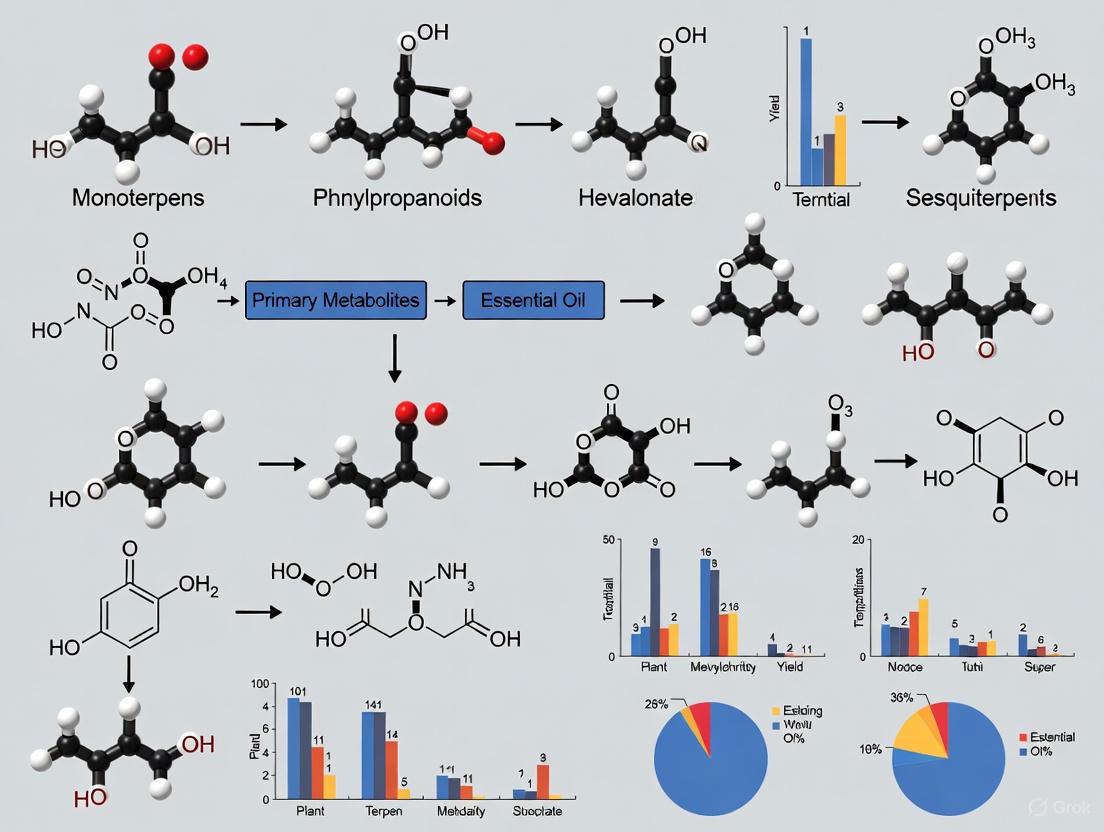
This article provides a comprehensive overview of the chemistry of plant essential oils, tailored for researchers and drug development professionals.
Plant Essential Oil Chemistry: Fundamentals for Biomedical Research and Drug Discovery
Abstract
This article provides a comprehensive overview of the chemistry of plant essential oils, tailored for researchers and drug development professionals. It covers the foundational principles of essential oil composition, including the biosynthesis and classification of terpenes and phenylpropanoids. The scope extends to modern extraction and analysis methodologies, explores the mechanisms behind their diverse pharmacological activities, and addresses critical challenges in their application, such as volatility and low solubility. Furthermore, it evaluates the drug-likeness of essential oil components and discusses advanced formulation strategies to overcome delivery hurdles, synthesizing key insights to highlight their promising potential in clinical and pharmaceutical development.
The Chemical Building Blocks: Biosynthesis and Classification of Essential Oil Components
Essential oils (EOs) are concentrated, hydrophobic liquids containing volatile aromatic compounds from plants. They are defined as secondary metabolites obtained from plant materials through distillation or mechanical methods without heating, representing the quintessential "essence" of a plant's fragrance and biological activity [1]. Chemically, they are complex mixtures of volatile compounds, primarily terpenes, terpenoids, and phenylpropenes, synthesized and stored in various plant organs including leaves, flowers, bark, stems, roots, and seeds [2] [1]. These oils serve critical ecological functions for plants, such as attracting pollinators, repelling herbivores, and providing defense against pathogens [3]. Their immense importance in human applications spans traditional medicine, modern pharmacotherapy, aromatherapy, cosmetics, and food science, driven by their diverse bioactivities including antimicrobial, antioxidant, anti-inflammatory, and anticancer properties [2] [4] [5].
Chemical Composition and Plant Biogenesis
Fundamental Chemical Building Blocks
The chemical architecture of essential oils is predominantly based on isoprene units (C5H8), arranged in a head-to-tail fashion following the isoprene rule [1]. This molecular foundation gives rise to several classes of terpenes, outlined in Table 1, which form the primary constituents of most essential oils.
Table 1: Fundamental Terpene Classes in Essential Oils
| Terpene Class | Number of Isoprene Units | Carbon Atoms | Representative Examples |
|---|---|---|---|
| Monoterpenes | 2 | 10 | α-pinene, limonene, myrcene, thujene |
| Sesquiterpenes | 3 | 15 | bisabolene, zingiberene, caryophyllene |
| Diterpenes | 4 | 20 | phytol, retinol, taxol |
| Triterpenes | 6 | 30 | squalene, hopane |
Beyond simple hydrocarbons, essential oils contain oxygenated derivatives of these terpenes—including alcohols, aldehydes, ketones, esters, ethers, and phenols—which often possess greater biological activity and lower volatility than their hydrocarbon precursors [2] [1]. A third significant group are aromatic compounds derived from the shikimate pathway, such as eugenol, thymol, chavicol, and anethole, which are particularly abundant in certain plant families like Lamiaceae and Myrtaceae [2] [3].
Biogenetic Pathways
Plants synthesize essential oil constituents through two primary, interconnected biochemical pathways, both originating from photosynthesis-derived glucose, as illustrated below.
Figure 1: Biogenetic Pathways of Essential Oil Components. Essential oils are synthesized in plants via two main pathways: the MEP pathway producing aliphatic terpenes (red) and the shikimate pathway producing aromatic compounds (green).
The pyruvate-mevalonate/methylerythritol phosphate (MEP) pathway is responsible for producing the predominant aliphatic terpenes. This pathway generates the universal terpene precursors, isopentenyl diphosphate (IPP) and dimethylallyl diphosphate (DMAPP). Enzymatic coupling of these units yields geranyl diphosphate (GPP), the direct precursor to monoterpenes, and farnesyl diphosphate (FPP), the precursor to sesquiterpenes [2]. The shikimate pathway produces aromatic amino acids that serve as precursors for phenylpropanoids—aromatic volatile compounds like eugenol (clove), thymol (thyme), and anethole (anise) that characterize many essential oils [2] [3]. The specific composition and relative abundance of these compounds are influenced by numerous factors, including plant species, geographical origin, environmental conditions, harvest time, and the specific plant organ from which the oil is extracted [2] [1].
Analytical Characterization and Standardization
Comprehensive Chemical Profiling
Rigorous chemical profiling is fundamental to essential oil research, ensuring authenticity, purity, and reproducible bioactivity. The analytical workflow integrates several advanced techniques, with Gas Chromatography-Mass Spectrometry (GC-MS) serving as the gold standard for volatile compound analysis [6].
Table 2: Standardized GC-MS Operating Conditions for Essential Oil Analysis
| Parameter | Specification | Purpose |
|---|---|---|
| Column Type | Fused silica capillary column (e.g., Rtx-5MS, HP-5MS), 30 m × 0.25 mm i.d., 0.25 µm film thickness | Optimal separation of complex volatile mixtures |
| Temperature Program | Initial 45-60°C (hold 2 min), ramp at 3-5°C/min to 200-300°C (hold 5-7 min) | Resolution of compounds across a wide volatility range |
| Injection | Split or splitless mode, 1:15 to 1:50 split ratio, 230-250°C injector temperature | Controlled sample introduction to prevent column overload |
| Carrier Gas | Helium, constant flow (~1.41 mL/min) | Inert mobile phase for efficient separation |
| Ionization | Electron Impact (EI) at 70 eV | Standardized, reproducible fragmentation for library matching |
| Mass Range | 35-500 m/z | Detection of all relevant volatile compounds |
| Identification | Comparison with NIST, Wiley, Adams databases; Kovats Retention Index calculation | Confident compound identification [7] [4] [8] |
For non-volatile or semi-volatile constituents (e.g., certain phenolics, flavonoids), High-Performance Liquid Chromatography (HPLC) is employed. A typical protocol for analyzing phenolic compounds in plant extracts uses a C8 or C18 reverse-phase column with a water-acetonitrile gradient mobile phase (often with 0.05% trifluoroacetic acid) and detection at 280 nm [8]. Supplementary techniques include Fourier Transform Infrared Spectroscopy (FTIR) for functional group identification, optical rotation for chiral purity assessment, and refractive index measurement for rapid purity checks [9] [6].
Authentication and Quality Control Protocols
Quality control relies on a multi-parameter approach to detect adulteration—a common issue given the high value of essential oils. Adulterants can include synthetic nature-identical compounds, cheaper essential oils, or vegetable oils [9] [6]. Key authentication strategies include:
- Chemical Fingerprinting: Analyzing the complete chromatographic profile, including peak patterns and relative ratios of key markers, rather than just major components [6].
- Enantiomeric Analysis: Using chiral GC columns to distinguish natural chiral ratios from synthetic racemic mixtures [6].
- Stable Isotope Ratio Analysis: Measuring carbon-13/carbon-12 ratios to differentiate natural from synthetic compounds [6].
- Organoleptic Testing: Trained sensory evaluation of aroma, color, and texture against established references [9].
International standards organizations provide detailed monographs for many essential oils, specifying acceptable ranges for major components, physical constants (density, refractive index, optical rotation), and limits for contaminants. Key standards are set by the International Organization for Standardization (ISO), European Pharmacopoeia (Ph. Eur.), and United States Pharmacopeia (USP) [9] [6].
Experimental Bioactivity Assessment
Standardized Bioassay Methodologies
To evaluate the therapeutic potential of essential oils, researchers employ a battery of standardized in vitro bioassays. Key methodologies are detailed below, with quantitative results from recent studies summarized in Table 3.
Antioxidant Activity:
- DPPH Assay: Measures free radical scavenging capacity. A methanolic solution of the stable DPPH radical (0.1-0.3 mM) is mixed with the oil or extract. After 30 minutes in darkness, the decrease in absorbance at 517 nm is measured. Results are expressed as IC50 (concentration providing 50% inhibition), often compared to standards like Trolox or ascorbic acid [7] [8].
- FRAP Assay: Assesses reducing power. The sample is mixed with FRAP reagent (TPTZ in acetate buffer, pH 3.6), and the increase in absorbance at 593 nm, due to the formation of Fe2+-TPTZ complex, is measured after 30 minutes [7].
- ABTS Assay: Evaluates radical cation scavenging. The ABTS•+ radical cation is generated by reacting ABTS solution with potassium persulfate. The reduction in absorbance at 734 nm after adding the sample is measured [8].
Antimicrobial Activity:
- Disk Diffusion Method: Filter paper disks impregnated with the essential oil are placed on agar plates inoculated with test microorganisms. After incubation (e.g., 24h at 37°C), the diameter of the inhibition zone around the disk is measured in millimeters [7].
- Broth Dilution Method: Determines the Minimum Inhibitory Concentration (MIC). Serial dilutions of the oil in a broth medium are inoculated with a standardized microbial suspension. The lowest concentration preventing visible growth after incubation is the MIC [4].
Cytotoxicity and Anticancer Activity:
- MTT Assay: A colorimetric assay for cell viability and proliferation. Vero or cancer cell lines are treated with the oil and incubated with MTT reagent (3-(4,5-dimethylthiazol-2-yl)-2,5-diphenyltetrazolium bromide). Viable cells reduce MTT to purple formazan crystals, which are solubilized with DMSO, and the absorbance is measured at 570 nm. Cell viability is calculated as a percentage of untreated controls, and IC50 values are determined [4].
Anti-inflammatory and Enzyme Inhibition:
- Anti-acetylcholinesterase (AChE) Assay: Uses Ellman's method to measure AChE inhibition, relevant for neurodegenerative diseases like Alzheimer's [8].
- α-Glucosidase Inhibition: Measures the reduction in conversion of p-nitrophenyl-α-D-glucopyranoside to p-nitrophenol, relevant for antidiabetic activity [4] [8].
Table 3: Quantitative Bioactivity Profiles of Selected Essential Oils (Recent Data)
| Essential Oil (Source) | Major Compounds | Antioxidant (DPPH IC50) | Antimicrobial (Inhibition Zone) | Anticancer (Cytotoxicity IC50) | Other Notable Activities |
|---|---|---|---|---|---|
| Wild Rosemary (Rosmarinus officinalis L.) [7] | α-pinene (21.37%), bornanone (12.73%), eucalyptol (8.28%) | IC50 = 27.30 ± 2.4% (Methanolic Extract) | S. aureus: 33 mm; B. subtilis: 32 mm | Not Reported | Anti-inflammatory (IC50 = 55.88 ± 1.02% for Aqueous Extract) |
| Salvia lanigera [8] | 1,8-cineole (27.28%), camphor (25.82%), α-pinene (7.71%) | Oil IC50 = 0.1337 µg/mL; Extract IC50 = 0.6331 µg/mL | Not Reported | Not Reported | Anti-acetylcholinesterase (IC50 = 144 µg/mL); Antidiabetic (α-glucosidase IC50 = 124.6 µg/mL for extract) |
| Plectranthus amboinicus [4] | Thymol, Citronellol | IC50 = 5923 µg/mL | Not Reported | H1299 lung cancer cells: IC50 = 11 µg/mL | Antidiabetic (α-glucosidase IC50 = 248.1 µg/mL) |
| Mentha canadensis [4] | Menthol, Pulegone | Not Reported | Not Reported | Low cytotoxicity (Vero cell viability >97% at ≤312 µg/mL) | Antiviral (35.34% suppression of Adeno 7 virus) |
The Scientist's Toolkit: Essential Research Reagents and Materials
Table 4: Key Reagents and Materials for Essential Oil Research
| Reagent/Material | Specification/Example | Primary Research Function |
|---|---|---|
| Clevenger Apparatus | Standard glassware with condenser and oil receiver | Hydrodistillation of essential oils from plant material [4] [8] |
| GC-MS System | e.g., Shimadzu GCMS-QP2010, Agilent 8890/5977B | Definitive chemical characterization and quantification of volatile components [7] [4] [8] |
| HPLC-DAD System | e.g., Agilent 1260 series with C8/C18 column | Analysis of non-volatile components like phenolic acids and flavonoids [8] |
| DPPH (2,2-diphenyl-1-picrylhydrazyl) | ≥ 90% purity (e.g., Sigma-Aldrich) | Free radical for standard antioxidant activity screening [7] [8] |
| MTT (3-(4,5-dimethylthiazol-2-yl)-2,5-diphenyltetrazolium bromide) | Cell culture tested (e.g., Sigma-Aldrich) | Colorimetric assay for cell viability and cytotoxic potential [4] |
| Cell Lines | Vero (kidney epithelial), H1299 (lung carcinoma) | In vitro models for assessing cytotoxicity and specific anticancer activity [4] |
| Enzymes for Inhibition | Acetylcholinesterase (AChE), α-Glucosidase | Molecular targets for neuroprotective and antidiabetic activity evaluation [8] |
| Reference Databases | NIST, Wiley, Adams mass spectral libraries | Critical for accurate identification of GC-MS components [4] [8] |
Essential oils represent a quintessential intersection of plant biochemistry and human application. Defined by their plant origin and method of extraction, their complex chemical nature is deciphered through sophisticated analytical techniques like GC-MS and HPLC. The subsequent evaluation of their bioactivity through a standardized suite of biochemical and cellular assays provides the scientific foundation for their use in pharmaceuticals, cosmetics, and food science. As research progresses, the integration of advanced drug delivery systems to enhance the stability, bioavailability, and targeted delivery of these volatile compounds promises to further expand their therapeutic applications, solidifying their status as a vital resource in natural product development [5]. Future work will continue to focus on elucidating structure-activity relationships, understanding synergistic effects between components, and validating traditional uses through rigorous clinical investigation.
Essential oils, the complex volatile aromatic compounds produced by plants, are predominantly composed of terpenoids, the largest class of natural products with over 55,000 identified members [10] [11]. The structural diversity of these compounds—from the simple 5-carbon hemiterpenes to the complex 40-carbon tetraterpenes—originates from two universal 5-carbon precursors: isopentenyl diphosphate (IPP) and dimethylallyl diphosphate (DMAPP) [10] [11]. The biosynthesis of these fundamental building blocks in plants occurs via two distinct, compartmentalized pathways: the mevalonate (MVA) pathway located in the cytoplasm and endoplasmic reticulum, and the methylerythritol phosphate (MEP) pathway operating within the plastids [12] [11]. This compartmentalization is not merely structural but functional, allowing plants to efficiently utilize different carbon sources and regulate the production of diverse terpenoid classes in response to environmental stimuli, such as light [11]. The coordinated operation of these pathways equips plants with a sophisticated chemical arsenal for defense, pollination, and communication, while also providing a treasure trove of compounds with significant applications in pharmaceuticals, nutraceuticals, fragrances, and biofuels [10] [11]. A fundamental understanding of the MVA and MEP pathways is therefore essential for research aimed at authentication, quality control, and biotechnological exploitation of plant essential oils.
Comparative Analysis of the MVA and MEP Pathways
The MVA and MEP pathways are evolutionarily distinct routes to the same isoprenoid precursors. They differ in their subcellular localization, initial substrates, enzymatic steps, energy cofactors, and the primary classes of terpenoids they supply.
Table 1: Comparative Analysis of the MVA and MEP Pathways
| Feature | Mevalonate (MVA) Pathway | Methylerythritol Phosphate (MEP) Pathway |
|---|---|---|
| Subcellular Localization | Cytoplasm, Endoplasmic Reticulum [11] | Plastids [11] |
| Initial Substrates | 3× Acetyl-CoA [11] | Pyruvate + Glyceraldehyde-3-phosphate (GAP) [10] [11] |
| Key Intermediate | Mevalonate | Methylerythritol Phosphate (MEP) [10] |
| Energy Cofactors Consumed | 3 ATP, 2 NADPH [11] | 3 ATP, 3 NADPH [11] |
| Rate-Limiting Enzyme | HMG-CoA Reductase (HMGR) [11] | 1-Deoxy-D-xylulose-5-phosphate Synthase (DXS) [11] |
| Primary Terpenoid Products | Sesquiterpenes (C15), Triterpenes (C30), Sterols [12] [11] | Monoterpenes (C10), Diterpenes (C20), Tetraterpenes (C40) [12] [11] |
| Distribution in Life Kingdoms | Eukaryotes, Archaea [10] | Most Bacteria, Algae, Higher Plants [10] [12] |
Table 2: Carbon Utilization and Output of the MVA and MEP Pathways
| Pathway | Carbon Input | Carbon Output | Pathway Committal Step |
|---|---|---|---|
| MVA Pathway | 3× Acetyl-CoA (2C) = 6 Carbon atoms [11] | IPP (C5) + CO₂ (C1) [11] | Conversion of HMG-CoA to Mevalonate by HMGR [11] |
| MEP Pathway | Pyruvate (3C) + GAP (3C) = 6 Carbon atoms [11] | IPP/DMAPP (C5) [11] | Conversion of DXP to MEP by MEP Synthase [10] |
Despite their compartmentalization, evidence from mutant analyses, chemical inhibition, and isotopic labeling studies indicates limited but regulated cross-talk between the MVA and MEP pathways, allowing for the formation of mixed-origin terpenoids [11]. The following diagrams illustrate the enzymatic sequences and regulatory nodes of these two core biosynthetic pathways.
Diagram 1: The Mevalonate (MVA) Pathway in the Cytoplasm
Diagram 2: The Methylerythritol Phosphate (MEP) Pathway in the Plastid
Experimental Approaches for Pathway Analysis
Investigating the activity, regulation, and inhibition of the MVA and MEP pathways requires a combination of biochemical, analytical, and molecular techniques. The following section details key experimental protocols used in foundational studies.
Protocol for Investigating Pathway Inhibition Using Radioactive Tracers
This protocol is adapted from a study investigating the hypolipidemic effects of Lippia alba essential oils on human cell lines, which specifically targeted the mevalonate pathway [13].
- Objective: To assess the inhibitory effect of a test compound (e.g., an essential oil or pure compound) on the synthesis of cholesterol and other lipids derived from the MVA pathway.
- Cell Culture and Treatment:
- Culture appropriate cell lines (e.g., human liver-derived HepG2 or non-liver A549 cells) under standard conditions (e.g., 37°C, 5% CO₂) [13].
- At a suitable confluence, treat cells with varying concentrations of the test compound (e.g., 3.2–32 µg/mL for L. alba essential oils) dissolved in an appropriate vehicle (e.g., DMSO, ethanol). Include vehicle-only controls and positive controls if available [13].
- Incubate for a predetermined time (e.g., 24 hours).
- Radioactive Labeling and Lipid Extraction:
- Pulse-label the cells with [¹⁴C]acetate, which acts as a universal precursor for acetyl-CoA and can be incorporated into lipids via the MVA pathway [13].
- After incubation, wash the cells to remove excess radiolabel.
- Lyse the cells and extract total lipids using a suitable organic solvent system (e.g., chloroform:methanol) [13].
- Lipid Analysis:
- Separation: Separate the different lipid classes (e.g., squalene, lanosterol, cholesterol, cholesteryl esters, triacylglycerols, phospholipids) using thin-layer chromatography (TLC) [13].
- Detection and Quantification: Visualize and quantify the radiolabeled lipids using a radioactivity scanner or by scintillation counting of scraped TLC spots. A reduction in the incorporation of [¹⁴C]acetate into specific intermediates (e.g., squalene, lanosterol, cholesterol) in treated cells compared to controls indicates inhibition of the MVA pathway [13].
- Downstream Analysis:
- Western Blot: Analyze the protein levels of key enzymes like HMG-CoA reductase (HMGCR) using Western blotting to determine if inhibition occurs via down-regulation of enzyme expression [13].
- Microscopy: Use fluorescence microscopy (e.g., with Nile Red stain) to analyze the size and volume of intracellular lipid droplets, which store neutral lipids like triacylglycerols and cholesteryl esters [13].
Protocol for Chemical Synthesis of MEP Pathway Intermediates
Access to pathway intermediates is crucial for enzyme mechanism studies, especially when biosynthesis or isolation is impractical. This is particularly relevant for the MEP pathway, which is a target for antimicrobial development [10].
- Objective: To chemically synthesize isotopically labeled or unlabeled intermediates of the MEP pathway, such as 1-deoxy-D-xylulose (DX), for use as enzyme substrates or analytical standards.
- Strategic Approach:
- The most widely used method involves using a protected D-threose scaffold to establish the correct stereochemistry [10].
- A key step is the introduction of the C-1 methyl group via a Grignard reaction (e.g., with methylmagnesium iodide), which is also the preferred method for incorporating isotopic labels (e.g., ¹³C, ²H) at this position [10].
- Synthetic Route (Representative):
- Starting Material: Begin with a protected form of D-threose, such as 2,4-O-benzylidene-D-threose [10].
- Grignard Addition: React the protected sugar with methylmagnesium iodide to introduce the methyl group and create a new carbon-carbon bond, yielding a mixture that requires separation of the desired threose isomer [10].
- Oxidation and Deprotection: Following separation, the intermediate is oxidized. The final deprotection step to yield the free sugar (1-deoxy-D-xylulose) can be achieved through methods like brominolysis of a distannylidene derivative [10].
- Purification and Validation: Purify the final product using standard chromatographic techniques. Validate the structure and purity using nuclear magnetic resonance (NMR) spectroscopy and mass spectrometry (MS) [10].
The Scientist's Toolkit: Essential Reagents and Materials
Table 3: Key Research Reagents and Materials for Pathway Analysis
| Reagent/Material | Function and Application in Research |
|---|---|
| [¹⁴C]Acetate or [¹³C]Acetate | A radioactive or stable isotopic tracer used to track the incorporation of carbon into terpenoids and lipids via the acetyl-CoA precursors of the MVA pathway [13]. |
| Cell Lines (e.g., HepG2, A549) | In vitro model systems derived from human tissues used to study pathway regulation, enzyme activity, and compound toxicity in a controlled environment [13]. |
| Thin-Layer Chromatography (TLC) | An analytical technique for separating and visualizing different classes of lipids (e.g., sterols, triacylglycerols) from complex biological extracts [13]. |
| Gas Chromatography-Mass Spectrometry (GC-MS) | The primary analytical tool for separating, identifying, and quantifying the individual volatile components of an essential oil, crucial for authentication and metabolic profiling [12]. |
| Protected Sugar Scaffolds (e.g., D-threose) | Starting materials for the chemical synthesis of deoxy-sugar intermediates of the MEP pathway, such as 1-deoxy-D-xylulose, for enzymology studies [10]. |
| Enzyme Inhibitors (e.g., Statins, Fosmidomycin) | Pharmacological tools; Statins inhibit HMGCR in the MVA pathway, while Fosmidomycin inhibits DXR in the MEP pathway. Used to dissect pathway contributions [11]. |
| Specific Antibodies (e.g., anti-HMGCR) | Used in Western blotting and immunoassays to quantify protein expression levels of key regulatory enzymes in response to genetic or chemical perturbations [13]. |
Pathway Integration and Downstream Terpenoid Biosynthesis
The IPP and DMAPP produced by the MVA and MEP pathways serve as the universal five-carbon building blocks for all terpenoids. The assembly of these units into longer-chain prenyl diphosphates is catalyzed by a class of enzymes called isoprenyl diphosphate synthases (IDSs) [11]. These enzymes facilitate a "head-to-tail" condensation, where the "head" (diphosphate end) of one molecule is joined to the "tail" (unsaturated end) of another.
The initial condensation of one DMAPP and one IPP molecule, catalyzed by geranyl diphosphate synthase (GPPS), yields geranyl diphosphate (GPP, C10), the direct precursor of monoterpenes [10] [11]. The addition of another IPP to GPP by farnesyl diphosphate synthase (FPPS) forms farnesyl diphosphate (FPP, C15), the backbone of sesquiterpenes [11]. Further elongation by geranylgeranyl diphosphate synthase (GGPPS) produces geranylgeranyl diphosphate (GGPP, C20), the precursor for diterpenes [10] [11]. These linear prenyl diphosphates are then transformed into the immense structural diversity of the terpenoid family by terpene synthase (TPS) enzymes, which catalyze cyclization and rearrangement reactions, and further modified by enzymes like cytochrome P450 oxygenases (CYP450s) [11]. The following diagram summarizes this integrated network from primary precursors to major terpenoid classes.
Diagram 3: Assembly of Major Terpenoid Classes from IPP and DMAPP
Terpenes and terpenoids constitute one of the largest and most structurally diverse classes of natural products, with over 30,000 identified compounds [14]. These compounds serve as crucial biosynthetic building blocks in many organisms, particularly plants, where they mediate ecological interactions through defense against herbivores, attraction of pollinators, and inter-plant communication [14]. In recent decades, scientific interest in these compounds has expanded significantly due to their diverse pharmacological properties and alignment with global trends toward natural and sustainable products [15]. This technical guide provides a comprehensive examination of monoterpenes, sesquiterpenes, and their oxygenated derivatives, focusing on their chemical classification, biosynthetic pathways, biological activities, and research methodologies relevant to plant essential oil chemistry.
Chemical Classification and Structure
Terpenes are fundamentally defined by their molecular architecture based on isoprene units (C5H8). The basic classification system depends on the number of these five-carbon building blocks incorporated into the carbon skeleton [14] [16].
Table 1: Classification of Terpenes Based on Isoprene Units
| Classification | Isoprene Units | Carbon Atoms | General Formula | Representative Examples |
|---|---|---|---|---|
| Hemiterpenes | 1 | C5 | C5H8 | Isoprene, angelic acid |
| Monoterpenes | 2 | C10 | C10H16 | Myrcene, limonene, pinene |
| Sesquiterpenes | 3 | C15 | C15H24 | Caryophyllene, humulene, farnesol |
| Diterpenes | 4 | C20 | C20H32 | Cafestol, kahweol, phytol |
| Sesterterpenes | 5 | C25 | C25H40 | - |
| Triterpenes | 6 | C30 | C30H48 | Squalene, lanosterol |
The term "terpene" traditionally refers to the hydrocarbon compounds consisting solely of carbon and hydrogen atoms, while "terpenoid" denotes terpenes that have undergone biochemical modifications through oxidation, resulting in the addition of functional groups containing oxygen [17] [14]. This oxidation process typically occurs after the formation of the carbon skeleton, leading to compounds with alcohol, aldehyde, ketone, ester, or other functional groups [18].
Monoterpenes and sesquiterpenes are particularly significant as they constitute the predominant volatile fractions of essential oils, with monoterpenes often comprising up to 90% of essential oil composition [19]. Monoterpenes (C10H16) consist of two isoprene units and are further subdivided into acyclic, monocyclic, and bicyclic structural types [17] [20]. Sesquiterpenes (C15H24) contain three isoprene units and display greater structural complexity, occurring as linear, cyclic, bicyclic, and tricyclic arrangements, including sesquiterpene lactones [21].
Biosynthetic Pathways
The biosynthesis of terpenes proceeds through two primary metabolic pathways that generate the universal five-carbon precursors isopentenyl pyrophosphate (IPP) and its isomer dimethylallyl pyrophosphate (DMAPP) [14] [19].
The Mevalonate and Non-Mevalonate Pathways
The mevalonate (MVA) pathway operates primarily in the cytosol of archaea and eukaryotes, conjugating three molecules of acetyl CoA to produce IPP [14]. Conversely, the non-mevalonate (MEP) pathway, also known as the 2-C-methyl-D-erythritol 4-phosphate pathway, occurs in plastids and utilizes pyruvate and glyceraldehyde 3-phosphate as carbon sources [14]. The distribution of these pathways varies among organisms, with plants uniquely possessing both pathways operating in different cellular compartments [14].
Formation of Terpene Skeletons
Both biosynthetic pathways converge at the production of IPP and DMAPP. The enzyme isopentenyl pyrophosphate isomerase catalyzes the isomerization of IPP to DMAPP [14]. Subsequent chain elongation occurs through sequential head-to-tail condensation reactions:
- IPP + DMAPP → Geranyl pyrophosphate (GPP, C10) [monoterpene precursor]
- GPP + IPP → Farnesyl pyrophosphate (FPP, C15) [sesquiterpene precursor]
- FPP + IPP → Geranylgeranyl pyrophosphate (GGPP, C20) [diterpene precursor]
The enormous structural diversity of terpenes arises primarily from the action of terpene synthase enzymes, which convert these prenyl diphosphate precursors into the parent carbon skeletons of various terpenes, and cytochrome P450 enzymes that subsequently modify these skeletons through oxidation and rearrangement [14].
Diagram Title: Terpene Biosynthesis Pathways in Plants
Functional Groups and Chemical Properties
The biological activity and physicochemical properties of terpenes are profoundly influenced by their functional groups. Oxygen-containing functional groups transform non-polar hydrocarbons into more polar compounds with distinct chemical behaviors and biological activities [18].
Table 2: Functional Groups in Terpenoids and Their Properties
| Functional Group | Structure | Chemical Properties | Representative Terpenoids | Bioactive Significance |
|---|---|---|---|---|
| Alcohols | -OH | Higher polarity, hydrogen bonding, increased water solubility | Linalool, geraniol, menthol | Calming effects, antimicrobial activity |
| Aldehydes | -CHO | Reactive, electrophilic, strong odors | Citral (geranial/neral) | Antimicrobial, antifungal properties |
| Ketones | C=O | Polar, hydrogen bond acceptors, thermally stable | Camphor, menthone, carvone | Cooling effects, digestive properties |
| Esters | -COOR | Pleasant aromas, less volatile, good stability | Linalyl acetate, geranyl acetate | Relaxing effects, flavoring applications |
| Phenols | Aromatic -OH | Acidic, strong antioxidants, antimicrobial | Carvacrol, thymol | Potent antimicrobial, antioxidant properties |
| Hydrocarbons | C-C and C-H only | Non-polar, volatile, low water solubility | Pinene, myrcene, limonene | Anti-inflammatory, solvent properties |
Terpene alcohols like linalool and geraniol demonstrate higher water solubility compared to their hydrocarbon counterparts due to their ability to form hydrogen bonds with water molecules [18]. Aldehydes such as citral exhibit strong electrophilic character, contributing to their antimicrobial efficacy through interaction with biological nucleophiles [18]. Ketones including camphor and menthone display greater thermal stability and serve as hydrogen bond acceptors, influencing their receptor interactions [18].
Biological Activities and Pharmacological Potential
Anti-Inflammatory Mechanisms
Terpenes and terpenoids demonstrate significant anti-inflammatory properties through multiple mechanisms, primarily via modulation of the nuclear factor-κB (NF-κB) signaling pathway [22]. This transcription factor regulates the expression of pro-inflammatory genes including cytokines (TNF-α, IL-1β, IL-6), enzymes (COX-2, iNOS), and adhesion molecules [22].
Specific terpenes including D-limonene, α-phellandrene, and α-pinene reduce the expression of pro-inflammatory cytokines in macrophage cell lines and animal models [22]. The sesquiterpene β-caryophyllene demonstrates particularly potent anti-inflammatory effects through activation of peroxisome proliferator-activated receptors (PPARs) and subsequent inhibition of NF-κB signaling [17] [21]. Multiple terpenes additionally inhibit the mitogen-activated protein kinase (MAPK) pathway, reducing the activation of downstream effectors including extracellular signal-regulated kinase (ERK), c-Jun N-terminal kinase (JNK), and p38 [22].
Diagram Title: Terpene Modulation of Inflammatory Signaling
Antimicrobial Activities
Terpenes and terpenoids exhibit broad-spectrum antimicrobial properties against both antibiotic-susceptible and antibiotic-resistant bacteria [19]. Their mechanisms of action include disruption of microbial cell membranes, inhibition of protein synthesis, and interference with DNA replication [19]. Phenolic terpenoids such as carvacrol and thymol demonstrate particularly potent antibacterial activity against pathogens including Staphylococcus aureus [19]. The hydrophobicity of many terpenes enables them to partition into and disrupt lipid bilayers, increasing membrane permeability and causing leakage of cellular contents [19] [18].
Anticancer Properties
Monoterpenes like limonene and perillyl alcohol have demonstrated chemopreventive and therapeutic effects against various cancers in preclinical models [21]. These compounds act at both initiation and promotion/progression stages of carcinogenesis, with particular efficacy observed in mammary, liver, and lung cancer models [21]. Multiple monoterpenes induce apoptosis, inhibit cell proliferation, and promote differentiation in cancer cell lines [17]. Several terpenoids, including limonene and perillyl alcohol, have advanced to phase I clinical trials in patients with advanced cancers [21].
Experimental Methodologies
Extraction Techniques
The extraction of terpenes and terpenoids from plant material requires specialized techniques to preserve their volatile nature and chemical integrity. Standard methods include:
- Steam Distillation: The most common industrial method, where steam passes through plant material, vaporizing volatile compounds which are then condensed and separated [23].
- Hydrodistillation: Plant material is immersed in water during the distillation process, suitable for tougher plant tissues [23].
- Cold Pressing: Primarily used for citrus peels, employing mechanical pressure to release essential oils without thermal degradation [23].
- Solvent Extraction: Utilizes organic solvents like hexane or ethanol to extract terpenes, particularly effective for less volatile compounds [15].
- Supercritical Fluid Extraction: Employs supercritical CO₂ as a solvent, offering high selectivity and minimal thermal degradation [23].
- Microwave-Assisted Extraction: Uses microwave energy to accelerate distillation, reducing extraction time and improving yield [23].
Analysis and Characterization
Advanced analytical techniques are required to characterize complex terpene mixtures:
- Gas Chromatography-Mass Spectrometry (GC-MS): The gold standard for terpene analysis, providing both separation and identification capabilities [23].
- FTIR Spectroscopy: Useful for functional group identification and quality verification [23].
- Organoleptic Evaluation: Sensory analysis to assess aroma profiles and detect adulteration [23].
Table 3: Research Reagent Solutions for Terpene Analysis
| Reagent/Material | Function/Application | Technical Specifications |
|---|---|---|
| GC-MS System | Separation and identification of terpene compounds | High-resolution capillary columns (e.g., DB-5), electron impact ionization |
| Supercritical CO₂ Extraction System | Green extraction of terpenes | Pressures up to 1000 bar, temperatures 31-100°C, CO₂ purity ≥99% |
| - Steam Distillation Apparatus | Conventional extraction of essential oils | Glassware with volatile oil receiver, steam generator, condenser |
| FTIR Spectrometer | Functional group analysis | ATR attachment for liquid samples, spectral range 4000-400 cm⁻¹ |
| - Monoterpene Standards | Quantification and method validation | ≥95% purity, includes limonene, pinene, linalool, others |
| Sesquiterpene Standards | Quantification and method validation | ≥95% purity, includes caryophyllene, humulene, farnesene |
| - Cell Culture Models | In vitro bioactivity assessment | Macrophage lines (RAW 264.7), human chondrocytes, epithelial cells |
| ELISA Kits | Cytokine quantification | TNF-α, IL-1β, IL-6 measurements in cell supernatants |
| - Western Blot Reagents | Protein expression analysis | Antibodies for NF-κB, MAPK pathway components, iNOS, COX-2 |
Terpenes and terpenoids represent an exceptionally diverse class of natural compounds with significant potential for pharmaceutical and industrial applications. Their structural complexity, arising from varied carbon skeletons and functional group modifications, underpins their broad bioactivities including anti-inflammatory, antimicrobial, and anticancer properties. Continuing research into their mechanisms of action, therapeutic efficacy, and molecular targets will further elucidate their substantial potential in drug development and natural product chemistry. The integration of advanced extraction technologies with rigorous analytical methodologies will accelerate the discovery and application of these remarkable natural products in evidence-based medicine and sustainable technologies.
The phenylpropanoid pathway represents a foundational metabolic process in plants, responsible for generating an enormous array of aromatic secondary metabolites crucial to both plant survival and human applications. For researchers investigating the fundamentals of plant essential oil chemistry, understanding this pathway is paramount, as it contributes significantly to the volatile and bioactive compound profiles of numerous aromatic species [24] [25]. These compounds are synthesized from primary metabolites through the shikimate pathway, which is present in plants, fungi, and microorganisms but notably absent in animals, making phenylpropanoids exclusively plant-derived or microbially synthesized compounds [26] [27]. The biochemical gateway to phenylpropanoids begins with the aromatic amino acids L-phenylalanine and, in some monocots, L-tyrosine, which are themselves products of the shikimate pathway [26] [28]. Following their synthesis, these amino acids are deaminated by key enzymes such as phenylalanine ammonia-lyase (PAL) to initiate the dedicated phenylpropanoid biosynthetic machinery [29] [28].
In the context of essential oil research, phenylpropanoids contribute distinctive aromatic qualities, biological activities, and chemical stability to volatile extracts. While terpenoids constitute the majority of essential oil components, phenylpropanoids, though often less abundant, are critically important for their potent scent characteristics and significant pharmacological properties [24] [30]. These compounds typically contain a six-carbon aromatic phenyl group bonded to a three-carbon propene tail, forming the basic C6-C3 skeleton that characterizes this chemical family [28] [30]. The remarkable structural diversity observed among phenylpropanoids arises from efficient enzymatic modifications—including hydroxylation, methylation, acylation, glycosylation, and prenylation—of a limited set of core structures, leading to thousands of different naturally occurring derivatives [25] [30]. For drug development professionals, this chemical diversity translates to a broad spectrum of potential biological activities, positioning phenylpropanoids as promising candidates for therapeutic development.
Biochemical Origins: The Shikimate Pathway as the Aromatic Foundation
The shikimate pathway serves as the fundamental anabolic route through which plants, fungi, and microorganisms biosynthesize the basic aromatic building blocks for phenylpropanoid compounds. This seven-step metabolic process converts primary metabolites—phosphoenolpyruvate (PEP) from glycolysis and erythrose-4-phosphate from the pentose phosphate pathway—into chorismate, the pivotal branch point intermediate for aromatic amino acid biosynthesis [26] [27]. The pathway's name derives from shikimic acid, a key intermediate first isolated from the Japanese star anise flower (Illicium anisatum) [26]. Notably, this pathway is absent in animals, rendering phenylalanine and tryptophan essential amino acids that must be acquired through diet and making the shikimate pathway an attractive target for herbicides and antimicrobial agents with minimal human toxicity [26] [27].
The enzymatic architecture of the shikimate pathway varies significantly across biological kingdoms. In bacteria, seven discrete monofunctional enzymes (often referred to as aro homologs) typically catalyze the sequential reactions. Plants typically employ six enzymes, including a bifunctional dehydroquinate dehydratase/shikimate dehydrogenase. Fungi and some protists, however, have evolved the AROM complex, a pentafunctional enzyme that catalyzes five consecutive reactions from 3-deoxy-D-arabino-heptulosonate 7-phosphate (DAHP) to 5-enolpyruvylshikimate-3-phosphate (EPSP) [26]. This compartmentalization reflects the evolutionary adaptation of this essential pathway across different taxa. The pathway culminates with chorismate, which serves as the substrate for dedicated pathways producing the three aromatic amino acids: phenylalanine, tyrosine, and tryptophan [26]. For phenylpropanoid biosynthesis, phenylalanine serves as the primary precursor, though some plants utilize tyrosine via bifunctional phenylalanine/tyrosine ammonia-lyase (PTAL) enzymes [28].
Figure 1: The metabolic relationship between the shikimate pathway and phenylpropanoid biosynthesis. The shikimate pathway converts primary metabolites into aromatic amino acids, with phenylalanine serving as the primary precursor for phenylpropanoid compounds through the action of phenylalanine ammonia-lyase (PAL).
Structural Diversity and Classification of Phenylpropanoids
Phenylpropanoids encompass a remarkable array of structurally diverse compounds, all sharing the characteristic C6-C3 skeleton but varying extensively in their functional group decorations and cyclic arrangements. In essential oil chemistry, these compounds are categorized primarily as non-terpenoid volatile constituents, though their chemical complexity extends well beyond simple volatile structures [24] [30]. The wonderful structural diversity of phenylpropanoids arises from efficient enzymatic modification of a limited set of core structures, including hydroxylation, methylation, glycosylation, acylation, and cyclization reactions that occur at various stages along the biosynthetic pathway [25] [30].
The classification of phenylpropanoids in essential oils typically follows their functional groups and skeletal arrangements:
Simple Phenylpropanes and Phenol Derivatives
These compounds retain the basic propane side chain with varying degrees of oxidation and substitution on the aromatic ring. Representative examples include:
- Eugenol (4-allyl-2-methoxyphenol): A major constituent of clove oil, noted for its antiseptic and analgesic properties
- Chavicol (4-allylphenol): Found in betel leaf oil
- Estragole (4-allylanisole): Characteristic component of tarragon and basil oils
- Safrole (4-allyl-1,2-methylenedioxybenzene): Principal component of sassafras oil
- * trans-Anethole* (1-methoxy-4-(1-propenyl)benzene): Major constituent of anise and fennel oils [24] [30]
Phenylpropenes
These compounds feature a propenyl (rather than allyl) side chain and include:
- Isoeugenol (2-methoxy-4-(1-propenyl)phenol): Found in ylang-ylang and nutmeg oils
- * trans-Cinnamaldehyde*: The characteristic compound of cinnamon bark oil [30]
Cinnamic Acid Derivatives and Esters
These include hydroxylated and methoxylated cinnamic acids and their esters:
- Cinnamic acid: The initial product of phenylalanine deamination
- Coumaric acid, Caffeic acid, Ferulic acid, Sinapic acid: Hydroxylated and methoxylated derivatives
- Ethyl cinnamate: A common volatile ester contributing to fruity and balsamic aromas [28]
Table 1: Major Phenylpropanoid Classes in Essential Oils and Their Characteristics
| Class | Representative Compounds | Plant Sources | Volatility | Bioactivities |
|---|---|---|---|---|
| Allyl-/Propenyl-benzenes | Eugenol, Safrole, Estragole, trans-Anethole | Clove, Sassafras, Tarragon, Anise | High | Antimicrobial, Antioxidant, Anesthetic |
| Cinnamaldehydes | Cinnamaldehyde | Cinnamon bark | Moderate to High | Antimicrobial, Anti-inflammatory, Blood Glucose Regulation |
| Cinnamic Acid Esters | Ethyl cinnamate, Methyl cinnamate | Strawberry, Basil | Moderate | Flavoring, Fragrance, Antioxidant |
| Phenylpropanoid-related Benzenoids | Vanillin | Vanilla bean | Low to Moderate | Flavoring, Antioxidant |
The structural complexity of phenylpropanoids directly influences their volatility, aroma profile, and biological activity. For instance, the presence of methoxy groups (as in eugenol and estragole) typically enhances antimicrobial potency, while the aldehyde functionality in cinnamaldehyde contributes to both its characteristic aroma and significant biological activity [24] [30]. Understanding these structure-activity relationships is crucial for drug development professionals seeking to harness phenylpropanoids for therapeutic applications.
Biosynthetic Pathway: From Phenylalanine to Complex Phenylpropanoids
The biosynthesis of phenylpropanoids proceeds through a carefully orchestrated series of enzymatic transformations that convert phenylalanine into diverse aromatic compounds. This pathway branches extensively, generating numerous metabolic routes that often operate in a tissue-specific, developmentally regulated, and environmentally responsive manner [29] [25]. The initial and committed step in phenylpropanoid biosynthesis is the deamination of phenylalanine to form cinnamic acid, catalyzed by the pivotal enzyme phenylalanine ammonia-lyase (PAL) [29] [28]. In some plants, particularly grasses, a bifunctional phenylalanine/tyrosine ammonia-lyase (PTAL) can utilize both aromatic amino acids as substrates [28].
Following the formation of cinnamic acid, a series of cytochrome P450-dependent monooxygenases introduce hydroxyl groups at specific positions on the aromatic ring. Cinnamate 4-hydroxylase (C4H) catalyzes the para-hydroxylation of cinnamic acid to yield p-coumaric acid, which then undergoes activation to its coenzyme A thioester (p-coumaroyl-CoA) via 4-coumarate:CoA ligase (4CL) [29] [28]. This activated intermediate serves as the central branch point from which multiple specialized pathways diverge. Subsequent hydroxylation and methylation reactions, mediated by enzymes such as p-coumarate 3-hydroxylase (C3H), caffeic acid O-methyltransferase (COMT), and caffeoyl CoA O-methyltransferase (CCoAOMT), generate the methoxylated precursors for various phenylpropanoid subclasses [29].
The pathway further diversifies through side-chain modifications, including reductions catalyzed by hydroxycinnamoyl-CoA reductase (CCR) and hydroxycinnamyl alcohol dehydrogenase (CAD), which convert activated CoA esters into the monolignol precursors of lignin and suberin [29]. For the production of volatile phenylpropenes such as eugenol and isoeugenol, specific reductases and methyltransferases act on activated intermediates. Meanwhile, the entry into flavonoid biosynthesis occurs when p-coumaroyl-CoA combines with three molecules of malonyl-CoA in a reaction catalyzed by chalcone synthase (CHS), producing naringenin chalcone, the precursor to all flavonoids [28]. This complex biosynthetic network demonstrates the remarkable plasticity of plant metabolism in generating chemical diversity from a limited set of core reactions.
Figure 2: Key branching pathways in phenylpropanoid biosynthesis. The core pathway diverges to produce multiple compound classes, including monolignols for lignin formation, volatile phenylpropenes, and flavonoids. Enzyme abbreviations: PAL (phenylalanine ammonia-lyase), C4H (cinnamate 4-hydroxylase), 4CL (4-coumarate:CoA ligase), C3H (p-coumarate 3-hydroxylase), HCT (hydroxycinnamoyl transferase), COMT (caffeic acid O-methyltransferase), F5H (ferulate 5-hydroxylase), CCR (cinnamoyl-CoA reductase), CAD (cinnamyl alcohol dehydrogenase), CHS (chalcone synthase), CHI (chalcone isomerase), EGS (eugenol synthase).
Analytical Methodologies for Phenylpropanoid Research
Advanced analytical techniques are essential for elucidating the complex chemical profiles and biosynthetic pathways of phenylpropanoids in plant essential oils. Contemporary research employs a multi-omics approach, integrating metabolomic, transcriptomic, and proteomic analyses to comprehensively characterize these compounds and their regulation [31] [32]. The analytical workflow typically begins with optimized extraction methods suitable for volatile and semi-volatile phenylpropanoids, followed by sophisticated separation and detection techniques, and culminates in data integration and pathway analysis.
Extraction Protocols for Volatile Phenylpropanoids
The extraction of phenylpropanoids from plant material for essential oil analysis primarily employs steam distillation and hydrodistillation techniques, which effectively preserve the volatile nature of these compounds [24]. For more sensitive analyses that aim to capture a broader chemical spectrum, including oxygenated derivatives, solid-phase microextraction (SPME) and supercritical fluid extraction (SFE) offer enhanced sensitivity and reduced artifact formation. The extraction solvent must be carefully selected based on the chemical properties of target phenylpropanoids; for instance, methanol and methanol-water mixtures have demonstrated high efficiency for extracting a wide range of phenolic compounds, including flavonoid derivatives, from plant tissues [32]. Following extraction, purification steps such as liquid-liquid partitioning and solid-phase extraction may be employed to remove interfering compounds and concentrate analytes of interest prior to instrumental analysis.
Separation and Detection Techniques
Gas chromatography coupled to mass spectrometry (GC-MS) represents the gold standard for analyzing volatile phenylpropanoids in essential oils, providing excellent separation efficiency and reliable identification through mass spectral libraries [24]. For less volatile or thermally labile phenylpropanoids (such as glycosylated derivatives or hydroxycinnamic acid esters), ultra-performance liquid chromatography (UPLC) coupled with photodiode array detection and mass spectrometry (UPLC-PDA-MS) offers superior analytical capabilities [32]. The high resolution and sensitivity of modern UPLC systems enable the separation of complex mixtures of phenolic compounds within short analysis times, while tandem mass spectrometry (MS/MS) provides structural elucidation through fragmentation patterns. Quantitative analysis typically employs external calibration curves with authentic standards when available, or semi-quantitative analysis using representative compounds for compound classes.
Metabolite Profiling and Quantitation
For comprehensive phenylpropanoid analysis, targeted and untargeted metabolomic approaches are employed. Targeted methods focus on specific compound classes using multiple reaction monitoring (MRM) for enhanced sensitivity, while untargeted approaches aim to capture the entire chemical landscape through high-resolution mass spectrometry [32]. In recent studies, total phenolic content is frequently determined using the Folin-Ciocalteu method expressed as gallic acid equivalents (GAE), while total flavonoid content is measured using aluminum chloride-based assays expressed as catechin equivalents (CAE) [32]. Antioxidant capacity assessments through ABTS, DPPH, and FRAP assays provide functional correlates to phenylpropanoid composition, with results typically expressed as Trolox equivalents (TE) [32]. These quantitative measures allow researchers to compare phenylpropanoid abundance and bioactivity across different plant genotypes, tissues, and growth conditions.
Table 2: Key Analytical Methods for Phenylpropanoid Characterization in Essential Oil Research
| Method Category | Specific Techniques | Applications in Phenylpropanoid Research | Key Metrics/Outputs |
|---|---|---|---|
| Extraction | Steam Distillation, Hydrodistillation, SPME, Solvent Extraction (Methanol, Ethyl Acetate) | Isolation of volatile and semi-volatile phenylpropanoids from plant material | Extraction Yield, Chemical Profile Preservation |
| Separation | GC, UPLC/HPLC | Separation of complex phenylpropanoid mixtures prior to detection | Resolution, Retention Time, Peak Shape |
| Detection & Identification | GC-MS, LC-PDA-MS, HRMS/MS | Compound identification, structural elucidation, purity assessment | Mass Spectra, UV-Vis Spectra, Fragmentation Patterns, Accurate Mass |
| Quantitation | External Standard Calibration, Standard Addition, Internal Standard Methods | Determination of phenylpropanoid concentrations in samples | Concentration Values, Linearity, Detection Limits |
| Functional Assays | ABTS, DPPH, FRAP, ORAC | Assessment of antioxidant capacity correlated with phenylpropanoid content | IC50 Values, Trolox Equivalents, % Inhibition |
Regulation of Phenylpropanoid Biosynthesis: Transcriptional Control and Multi-Omics Insights
The phenylpropanoid pathway is subject to sophisticated regulatory control at multiple levels, with transcriptional regulation playing a predominant role in determining the timing, tissue specificity, and amplitude of phenylpropanoid production. Recent advances in multi-omics technologies have significantly enhanced our understanding of these regulatory mechanisms, particularly through the integration of transcriptomic and metabolomic data [31] [32]. Transcription factors from the MYB, bZIP, WRKY, and HD-Zip families have been identified as key regulators of phenylpropanoid biosynthetic genes, with many exhibiting binding specificity to the AC-rich promoter elements commonly found in phenylpropanoid pathway genes [29].
Among these transcriptional regulators, R2R3-MYB transcription factors have emerged as particularly important master switches controlling various branches of the phenylpropanoid pathway. In chickpea (Cicer arietinum), for instance, subgroup 7 MYB factors such as CaMYB39 have been shown to activate the transcription of multiple flavonoid biosynthetic genes, including chalcone synthase (CHS), chalcone isomerase (CHI), flavanone 3-hydroxylase (F3H), and flavonol synthase (FLS), leading to increased flavonol production [32]. Similarly, subgroup 5 MYB transcription factors (CaPAR1/CaMYB89 and CaPAR2/CaMYB98) regulate proanthocyanidin biosynthesis in seed coats, while subgroup 6 MYBs (CaLAP1 and CaLAP2) control anthocyanin production [32]. These findings demonstrate how different MYB subgroups coordinate specific branches of the phenylpropanoid pathway, enabling the targeted production of distinct compound classes.
Multi-omics approaches have proven particularly powerful in elucidating these regulatory networks. In poplar species challenged with the canker pathogen Cytospora chrysosperma, comparative transcriptomic and metabolomic analyses revealed precise activation of phenylpropanoid biosynthesis in resistant species, with coordinated upregulation of PAL, C4H, 4CL, and other pathway genes corresponding to increased accumulation of defensive phenylpropanoids [31]. Similarly, in developing chickpea seeds, the expression levels of MYB transcription factors (CaMYB39, MYB111-like, and CaMYB92) and phenylpropanoid biosynthetic genes (PAL, CHI, and CHS) showed strong positive correlation with the accumulation of total phenolics, total flavonoids, and specific flavonols (myricetin, quercetin, kaempferol, and isorhamnetin), as well as with antioxidant capacity [32]. These integrative studies demonstrate how plants fine-tune phenylpropanoid production in response to developmental cues and environmental challenges, providing a molecular basis for the observed metabolic diversity.
Table 3: Key Research Reagent Solutions for Phenylpropanoid Studies
| Reagent/Resource | Specific Examples | Research Application | Technical Notes |
|---|---|---|---|
| Enzyme Inhibitors | Glyphosate (EPSP synthase inhibitor), AIP (PAL inhibitor), Specific cytochrome P450 inhibitors | Pathway perturbation studies, Elucidation of metabolic flux | Glyphosate specifically targets the shikimate pathway, affecting phenylpropanoid precursor supply [26] |
| Analytical Standards | Authentic phenylpropanoid standards (eugenol, cinnamaldehyde, trans-anethole, caffeic acid, ferulic acid, etc.) | Compound identification and quantification, Calibration curves | Commercial availability varies; some compounds require synthesis in-house [32] |
| RNAi/Knockout Lines | PAL-deficient transgenic plants, MYB transcription factor knockouts | Functional gene validation, Study of regulatory mechanisms | May exhibit pleiotropic effects due to pathway centrality [29] |
| Heterologous Expression Systems | E. coli, Yeast, Tobacco expression of phenylpropanoid enzymes | Enzyme characterization, Metabolic engineering | Useful for producing specific phenylpropanoids or pathway intermediates [27] |
| Multi-omics Databases | Transcriptomic datasets, Metabolomic libraries, Gene co-expression networks | Systems biology approaches, Gene discovery | Integration required for comprehensive pathway understanding [31] [32] |
Phenylpropanoids represent a chemically diverse and biologically significant class of plant specialized metabolites with profound implications for essential oil chemistry and drug development research. Their biosynthetic origin from the shikimate pathway places them at the intersection of primary and specialized metabolism, with structural diversity arising from enzymatic modifications of a core phenylpropane skeleton. Current research employing multi-omics approaches continues to unravel the complex regulatory networks that control phenylpropanoid biosynthesis, revealing sophisticated transcriptional programs orchestrated by MYB and other transcription factor families. For drug development professionals, these compounds offer promising therapeutic potential due to their diverse bioactivities, including antimicrobial, anti-inflammatory, antioxidant, and anticancer properties.
Future research directions will likely focus on harnessing this knowledge for metabolic engineering applications, both in plant systems and microbial hosts. The identification of key transcription factors such as CaMYB39 that regulate entire pathway branches presents opportunities for manipulating phenylpropanoid profiles to enhance desired compounds [32]. Similarly, the integration of multi-omics data across different plant species and experimental conditions will facilitate the identification of additional regulatory nodes and rate-limiting steps in phenylpropanoid biosynthesis. For essential oil chemistry specifically, understanding the factors that control the partitioning between volatile and non-volatile phenylpropanoid derivatives will be crucial for optimizing the production of these economically and therapeutically valuable compounds. As analytical technologies continue to advance and our fundamental knowledge of plant metabolism deepens, phenylpropanoids will undoubtedly remain a rich area of investigation at the frontier of plant essential oil research.
Within the framework of plant essential oil chemistry research, understanding that the extracted oil is not always a perfect mirror of the plant's native volatile compounds is a fundamental principle. The extraction method itself is not a passive recovery tool but an active participant that can introduce artifacts and significantly influence the chemical profile of the final product [33]. These method-induced variations can alter biological activities, impact therapeutic efficacy, and challenge the reproducibility of scientific studies [34]. This whitepaper provides a technical examination of how different extraction techniques dictate the chemical composition of essential oils, offering researchers and drug development professionals a guide to critical methodological considerations.
Conventional vs. Modern Extraction Techniques
The choice of extraction technique profoundly affects the yield, composition, and bioactivity of essential oils. These methods can be broadly categorized into conventional and modern approaches, each with distinct mechanisms and impacts on the final product.
Conventional Methods
Hydrodistillation (HD) and Steam Distillation (SD) are the most widely used conventional methods. In HD, plant material is fully immersed in boiling water, while in SD, steam is passed through the plant matrix. Although robust and widely accepted, these methods involve prolonged exposure to heat and water, which can lead to hydrolysis, thermal degradation, or oxidation of sensitive compounds [35] [36]. For instance, monoterpenes are particularly susceptible to chemical changes under these conditions [34]. Solvent extraction is another conventional technique, but it often co-extracts non-volatile components like fats and waxes, requiring additional purification steps and risking solvent residue in the final product [36] [34].
Modern Green Methods
Modern techniques aim to overcome the limitations of conventional methods by improving efficiency, selectivity, and sustainability.
- Supercritical Fluid Extraction (SFE), particularly using CO₂, operates at controllable temperatures and pressures, minimizing thermal degradation [35] [33]. It is highly selective, does not leave solvent residues, and is effective for extracting heat-sensitive components [34].
- Microwave-Assisted Extraction (MAE) and related methods like microwave hydrodiffusion and gravity use microwave energy to heat the internal water within plant cells, causing them to rupture and release essential oils rapidly [34]. This approach significantly reduces extraction time and energy consumption compared to conventional distillation [35] [37].
- Solid-Phase Microextraction (SPME) is a solvent-free, fully automatable technique that is highly sparing to sensitive components. It is particularly useful for analyzing the genuine aroma profile of plants without inducing thermal artifacts [36].
Table 1: Comparative Analysis of Essential Oil Extraction Methods
| Extraction Method | Key Mechanism | Typical Yield | Risk of Artifacts | Major Advantages | Major Limitations |
|---|---|---|---|---|---|
| Hydrodistillation (HD) | Plant material boiled in water | Varies by plant material | High (hydrolysis, thermal degradation) | Simple apparatus, widely used | Prolonged heating, acidic conditions |
| Steam Distillation (SD) | Steam volatilizes essential oils | Varies by plant material | Moderate to High | Cost-effective, industrially established | Loss of water-soluble & highly volatile compounds |
| Solvent Extraction | Uses organic solvents (hexane, ethanol) | High (includes resins) | Moderate (solvent residues) | Effective for heat-sensitive compounds | Co-extraction of non-aroma-active compounds (waxes, pigments) |
| Supercritical Fluid Extraction (SFE) | Uses supercritical CO₂ as solvent | Highly tunable yield | Very Low | Tunable selectivity, no solvent residue, low thermal stress | High initial equipment cost |
| Microwave-Assisted Extraction (MAE) | Microwave energy heats internal water | High (efficient) | Low | Rapid, low energy input, high purity | Requires plant material with sufficient moisture |
| Solid-Phase Microextraction (SPME) | Adsorption onto a coated fiber | N/A (analytical scale) | Very Low | No solvent, preserves genuine profile, automatable | Limited to analytical applications |
Analytical Methodologies for Characterizing Extracts
Rigorous analytical techniques are essential for identifying the chemical alterations induced by different extraction processes. The combination of multiple techniques provides the highest confidence in compound identification.
Gas Chromatography and Mass Spectrometry (GC/MS)
Gas Chromatography (GC) coupled with Mass Spectrometry (MS) is the cornerstone of essential oil analysis [34]. GC separates the complex mixture, while MS provides fragmentation patterns for tentative identification of individual components. Critical parameters that must be reported include the column type and size, carrier gas flow rate, and temperature programming parameters (injector, detector, and column temperatures) [34]. The use of retention indices (RI), calculated against a homologous series of n-alkanes, is crucial for comparing data across different laboratories and instruments [34].
Planar Chromatography and NMR
While GC/MS is dominant, Thin-Layer Chromatography (TLC) remains a rapid and inexpensive reference method in various pharmacopoeias [38]. Modern planar techniques like Automated Multiple Development (AMD) and Optimum Performance Laminar Chromatography (OPLC) offer superior separations; for example, OPLC can cleanly separate the phenol isomers thymol and carvacrol, which is valuable for chemotype identification [38].
Nuclear Magnetic Resonance (NMR) spectroscopy provides complementary information to MS. While MS excels at identification, NMR is powerful for elucidating molecular structures and confirming isomer identities. A Statistical Total Correlation (STOCSY) approach can be used to fuse data from GC-MS and NMR, leading to higher confidence in compound identification by statistically correlating signals from the two analytical platforms [39].
Experimental Protocol: GC-MS Analysis of Thyme Essential Oils
1. Sample Preparation: Essential oils are obtained via HD, SD, or SFE. The oil is dissolved in a suitable volatile solvent (e.g., hexane or dichloromethane) at a known concentration (e.g., 1% w/v) and filtered through a 0.22 µm membrane prior to injection [38].
2. GC-MS Instrumentation and Conditions:
- GC System: Equipped with a split/splitless injector.
- Column: Fused silica capillary column (e.g., 30 m x 0.25 mm i.d., coated with 5% phenyl polysiloxane, film thickness 0.25 µm).
- Carrier Gas: Helium, constant flow rate of 1.0 mL/min.
- Injection: Split mode (split ratio 1:50), injection volume 1.0 µL, injector temperature 250°C.
- Oven Temperature Program: Initial temperature 60°C (hold 1 min), ramp to 220°C at 3°C/min, then to 280°C at 10°C/min (hold 5 min).
- MS Detection: Electron Impact (EI) ionization at 70 eV; ion source temperature 230°C; mass scan range 40-400 m/z.
3. Data Analysis: Constituents are identified by comparing their mass spectra with commercial libraries (e.g., NIST, Wiley) and by calculating their Retention Indices relative to a co-injected n-alkane series (C8-C40) [34] [38]. Confirmation should be done by injection of authentic standards where available.
Documented Chemical Variations and Induced Artifacts
The interaction between the extraction process and the plant matrix leads to measurable changes in the oil's chemical signature, ranging from shifts in dominant compounds to the creation of new artifacts.
Method-Dependent Profile Changes
Different extraction methods can significantly alter the chemical profile of the same plant species. A study on rosemary (Rosmarinus officinalis L.) demonstrated that Microwave-assisted Distillation (MD) yielded oils with the highest enrichment of oxygenated monoterpenes (up to 59.6%) compared to HD and SD, particularly in oils harvested during the spring [37]. This highlights the combined influence of season and technique. Furthermore, SPME has been shown to provide a more accurate representation of the genuine aroma compounds in plants like marjoram and thyme because it minimizes thermal degradation, unlike HD [36].
Formation of Artifacts
Artifact formation is a critical concern. During hydrodistillation, acidic conditions and high temperatures can trigger hydrolysis and oxidation [36]. A classic example is the transformation of monoterpene alcohols or aldehydes under harsh conditions. For instance, the genuine plant constituent linalool can dehydrate to form myrcene, or its oxide can form, altering the oil's fragrance and bioactivity. Similarly, cis-rose oxide can be artifactually formed from citronellol during distillation [34]. Solvent extraction, while avoiding heat, can lead to contamination from solvent residues and co-extraction of unwanted waxes and pigments [34].
Table 2: Documented Chemical Variations and Artifacts in Selected Essential Oils
| Plant Species | Extraction Method | Observed Chemical Shifts & Artifacts | Implications |
|---|---|---|---|
| Rosmarinus officinalis (Rosemary) | Microwave-Assisted Distillation (MD) vs. Hydrodistillation (HD) | Higher proportion of oxygenated monoterpenes (e.g., 1,8-Cineole, Camphor) in MD vs. HD [37]. | Alters antioxidant capacity and potential therapeutic value. |
| Origanum majorana (Marjoram), Thymus vulgaris (Thyme) | Solid-Phase Microextraction (SPME) vs. Hydrodistillation (HD) | SPME captures a more genuine profile; HD causes discrimination and transformation of thermally sensitive compounds [36]. | Challenges the accuracy of the reported natural composition when using HD. |
| General Plant Material | Steam Distillation (SD) / Hydrodistillation (HD) | Loss of water-soluble compounds (e.g., phenols) and highly volatile components [34]. | Incomplete chemical profile and potential underestimation of bioactivity. |
| General Plant Material | Solvent Extraction | Co-extraction of non-aroma-active compounds (fats, waxes, pigments) [36]. | Requires additional purification steps; can taint extracts for food/fragrance. |
The Scientist's Toolkit: Research Reagent Solutions
Successful essential oil research requires specific reagents and materials to ensure analytical accuracy and reproducibility.
Table 3: Essential Research Reagents and Materials
| Item | Function/Application | Technical Notes |
|---|---|---|
| Clevenger or Dean-Stark Apparatus | Standard glassware for laboratory-scale hydrodistillation or steam distillation. | Used for determining essential oil content as per pharmacopoeial methods [34]. |
| n-Alkane Standard Mixture (C8-C40) | Used for calculating Kováts Retention Indices (RI) in GC analysis. | Critical for reliable cross-laboratory compound identification [34]. |
| Authentic Reference Standards (e.g., Thymol, Carvacrol, Linalool) | Used for definitive confirmation of compound identity by matching retention time and mass spectrum. | Commercially available from suppliers like Extrasynthèse [38]. |
| Deuterated Chloroform (CDCl₃) | Standard solvent for NMR analysis of essential oils. | Provides a deuterium lock for stable NMR measurements [39]. |
| HPTLC Plates (e.g., silica gel, CN, NH₂) | Used for modern planar chromatographic analysis (TLC, OPLC, AMD). | Enable high-resolution separation of complex essential oil mixtures [38]. |
| SPME Fibers (various coatings) | For solvent-free sampling of volatile compounds for GC-MS. | Coating selection (e.g., PDMS, CAR/PDMS) is critical for analyte selectivity [36]. |
The path from plant to essential oil is paved with chemical decisions dictated by the extraction methodology. The evidence is clear that techniques like supercritical fluid extraction and microwave-assisted methods often provide superior outcomes in terms of yield and fidelity to the plant's genuine chemical profile, yet the optimal choice is inherently defined by the research or development goals [35] [33]. A deep understanding of these artifacts and variations is not merely an analytical concern but a foundational aspect of producing reliable, efficacious, and reproducible essential oil-based products. Future research must continue to refine green extraction techniques and develop integrated analytical workflows to fully elucidate and control the complex chemistry of these valuable natural products.
From Plant to Molecule: Analysis, Pharmacological Actions, and Therapeutic Mechanisms
Gas Chromatography-Mass Spectrometry (GC-MS) stands as a cornerstone analytical technique in plant essential oil chemistry research, providing researchers and pharmaceutical development professionals with unparalleled capability to characterize complex volatile mixtures. This combined system separates complex samples into individual components and provides definitive identification, making it indispensable for quality control, authentication, and bioactivity assessment of plant-derived substances [24]. The technique's exceptional sensitivity and specificity for volatile and semi-volatile organic compounds perfectly match the chemical nature of essential oils, which are predominantly composed of terpenes and phenylpropanoids [24] [40]. As the field of phytomedicine continues to gain prominence in drug discovery, robust analytical methods like GC-MS provide the critical foundation for standardizing plant-based substances and understanding their pharmacological potential [41].
Core Principles of GC-MS Technology
Instrumentation and Operational Mechanics
The power of GC-MS stems from the synergistic combination of two powerful analytical techniques:
Gas Chromatograph (GC): The sample is vaporized and introduced into a capillary column coated with a stationary phase. An inert carrier gas (e.g., helium, hydrogen) moves the sample through the column. Separation occurs as different compounds interact differently with the stationary phase, causing them to elute at distinct retention times based on their boiling points and polarities [42].
Mass Spectrometer (MS): As components elute from the GC column, they enter the mass spectrometer where they are ionized and fragmented. The resulting ions are separated based on their mass-to-charge ratio (m/z) and detected, producing a mass spectrum for each compound [42].
This dual-separation and identification system makes GC-MS exceptionally powerful; while GC alone cannot definitively identify co-eluting compounds, and MS alone struggles with complex mixtures, their combination provides high-confidence identifications [43].
Ionization Techniques for Essential Oil Analysis
The ionization method chosen significantly impacts the structural information obtained:
Electron Ionization (EI): The most common technique, employing 70 eV electrons to bombard molecules, causing reproducible fragmentation. This "hard ionization" generates extensive fragment patterns ideal for library matching against extensive databases like NIST [43]. Most essential oil studies utilize EI for its reproducible mass spectra [44] [41].
Chemical Ionization (CI): A "softer" technique that uses reagent gases to produce ions with less fragmentation, often preserving the molecular ion. This is particularly valuable for confirming molecular weights when studying new or unknown compounds [43].
Table 1: Comparison of GC-MS Ionization Techniques
| Technique | Mechanism | Fragmentation | Primary Application in Essential Oil Analysis |
|---|---|---|---|
| Electron Ionization (EI) | 70 eV electron bombardment | Extensive fragmentation | Library-based identification of known compounds |
| Chemical Ionization (CI) | Ion-molecule reactions with reagent gas | Minimal fragmentation | Molecular weight determination of unknown compounds |
Experimental Design and Methodologies
Sample Preparation Techniques for Essential Oils
Proper sample preparation is critical for accurate GC-MS analysis of plant essential oils:
Extraction Methods: Hydrodistillation, steam distillation, and mechanical expression (for citrus peels) are standard methods for obtaining essential oils from plant material [24]. The extraction method significantly impacts oil composition and must be consistently reported.
Sample Introduction: For liquid essential oil samples, direct injection (typically 0.1-1 µL) using sophisticated autosamplers provides precision. For analyzing volatile organic compounds (VOCs) from plant material directly, Purge and Trap (P&T) systems can concentrate headspace vapors for enhanced sensitivity [43].
Solvent Selection: Appropriate solvents (often hexane, dichloromethane, or methanol) must be chosen based on solubility, volatility, and chromatographic compatibility. Sample dilution is frequently necessary to avoid column overloading and detector saturation [45].
GC-MS Analysis Workflow for Essential Oils
The following workflow diagram illustrates a standardized approach for essential oil analysis:
Method Validation Parameters
For pharmaceutical applications, GC-MS methods must be rigorously validated. Key parameters include [41]:
- Specificity: Ability to unequivocally identify analytes in complex mixtures
- Linearity: Response proportionality across concentration ranges (R² > 0.999)
- Accuracy: Agreement between measured and true values (typically 98-102%)
- Precision: Repeatability and reproducibility (RSD ≤ 2.5%)
Data Processing and Compound Identification
Spectral Interpretation and Library Matching
Modern GC-MS data processing involves sophisticated software tools for:
Spectral Deconvolution: Automated algorithms separate co-eluting compounds and extract pure mass spectra, essential for complex essential oil profiles [46].
Library Searching: Experimental mass spectra are compared against reference libraries (NIST, Wiley) using matching algorithms. The NIST library contains over 300,000 spectra, making it an invaluable resource for terpene identification [47].
Retention Index Calculation: Using homologous series of n-alkanes as reference points, calculated retention indices provide a second identification parameter orthogonal to mass spectral matching, greatly enhancing confidence in compound identification [41].
Quantitative Analysis Approaches
Both relative and absolute quantification methods are employed:
Relative Percentage Abundance: Peak areas are normalized to total ion chromatogram (TIC), providing compound percentages. This approach is common in phytochemical screening studies [44].
Absolute Quantification: Using internal standards (either deuterated analogs or structurally similar compounds) and calibration curves for precise concentration determination, essential for pharmaceutical quality control [41].
Application in Essential Oil Chemistry Research
Chemical Profiling of Plant Species
GC-MS enables comprehensive chemical characterization of essential oils, as demonstrated in studies like the analysis of Grammosciadium platycarpum populations, which revealed significant chemotypic diversity [44]. The technique identified primary components including:
Table 2: Major Chemical Classes in Grammosciadium platycarpum Essential Oil
| Chemical Group | Content Range (%) | Major Representatives |
|---|---|---|
| Hydrocarbon monoterpenes | 22.79-46.15% | Limonene (5.84-31.14%), β-pinene (5.10-18.48%) |
| Oxygenated monoterpenes | 0.87-31.05% | Linalool (0.44-30.56%) |
| Hydrocarbon sesquiterpenes | 25.50-61.04% | (Z,E)-α-Farnesene (13.29-53.71%), α-Farnesene (0.71-22.39%) |
| Oxygenated sesquiterpenes | 5.75-19.52% | Caryophyllene (2.95-17.87%) |
Quality Control and Standardization
GC-MS provides the analytical foundation for standardizing complex plant-based substances, as demonstrated in the development of a novel multicomponent substance based on Melaleuca alternifolia leaf oil, 1,8-cineole, and (-)-α-bisabolol for treating seborrheic dermatitis [41]. The validated GC-MS method ensured consistent composition with major components quantified at 42.06% 1,8-cineole, 31.70% (-)-α-bisabolol, and 25.00% terpinen-4-ol.
Bioactivity Correlations
By providing precise chemical composition data, GC-MS enables researchers to correlate specific compounds or chemical profiles with biological activities. Studies have linked the antibacterial potency of certain Grammosciadium platycarpum populations against E. coli and S. aureus to their distinct chemical profiles, guiding the selection of superior populations for domestication and breeding programs [44].
Essential Research Reagents and Materials
Table 3: Key Research Reagent Solutions for GC-MS Analysis of Essential Oils
| Reagent/Material | Function | Application Example |
|---|---|---|
| Reference Standards | Compound identification and quantification | Pure terpene standards (limonene, pinene, linalool) for retention time confirmation and calibration curves [41] |
| Internal Standards | Correction for analytical variability | Deuterated compounds or non-natural analogs added prior to extraction [41] |
| N-Alkane Series | Retention index calculation | C8-C40 n-alkanes for Kovats retention index determination [41] |
| GC-MS Grade Solvents | Sample preparation and dilution | High-purity solvents (hexane, methanol) with minimal background contamination [45] |
| Derivatization Reagents | Enhancing volatility of polar compounds | MSTFA, BSTFA for hydroxylated terpenes [45] |
Advanced Techniques and Future Perspectives
High-Resolution and Tandem MS Applications
Advanced GC-MS configurations provide enhanced capabilities for essential oil research:
GC-MS/MS: Triple quadrupole systems provide superior selectivity and sensitivity for targeted compound analysis, particularly valuable for quantifying trace-level bioactive components in complex matrices [42].
High-Resolution Accurate Mass (HRAM) GC-MS: Instruments like GC-Orbitrap systems deliver exceptional mass accuracy (< 1 ppm), enabling confident elemental formula assignment and identification of novel compounds without reference standards [42].
Integrated Approaches in Phytochemistry
The future of essential oil research lies in integrating GC-MS with complementary techniques:
Multivariate Statistical Analysis: Chemometric tools like Principal Component Analysis (PCA) and Hierarchical Cluster Analysis (HCA) extract meaningful patterns from complex GC-MS datasets, facilitating chemotype classification and biomarker discovery [44].
Multiplatform Metabolomics: Combining GC-MS with LC-MS and NMR provides comprehensive coverage of both volatile and non-volatile metabolites, enabling systems-level understanding of plant chemical ecology and pharmacological activity [40].
GC-MS remains an indispensable analytical workhorse in plant essential oil chemistry, providing the rigorous chemical characterization necessary for quality control, standardization, and bioactivity assessment of plant-derived substances. As technological advancements continue to enhance instrument sensitivity, resolution, and data processing capabilities, GC-MS will maintain its pivotal role in bridging the gap between traditional phytomedicine and evidence-based pharmaceutical development. The ongoing development of standardized protocols and validated methods will further strengthen the reliability and reproducibility of essential oil research, supporting the continued integration of plant-based substances into mainstream therapeutics.
Enantioselective analysis represents a critical frontier in modern phytochemistry and drug discovery, particularly in the study of plant essential oils. Chirality, a geometric property describing molecules that are non-superimposable mirror images of each other, lies at the heart of understanding biological activity at the molecular level [48]. In the context of plant essential oil chemistry, this phenomenon is especially relevant as enantiomers, despite sharing identical chemical formulas and connectivity, can exhibit dramatically different biological behaviors due to their distinct three-dimensional configurations [48]. Enzymes, receptors, and other binding molecules in biological systems recognize enantiomers as different molecular entities, leading to potentially divergent pharmacological responses, therapeutic efficacy, and toxicity profiles [48].
The importance of stereochemistry extends throughout all phases of drug discovery and development, from initial screening of natural products to final pharmacokinetic profiling. More than 50% of current pharmaceuticals are chiral, administered either as pure enantiomers or as racemic mixtures [48]. Interestingly, 20 out of 35 pharmaceuticals approved by the FDA in 2020 were chiral, reflecting a growing trend toward enantiomerically pure substances in medicinal chemistry [48]. This review explores the fundamental principles, analytical methodologies, and practical applications of enantioselective analysis within the framework of plant essential oil research, providing technical guidance for researchers navigating this complex landscape.
The Biological Significance of Chirality in Essential Oil Research
Differential Biological Effects of Enantiomers
Enantioselectivity in biological systems arises from the chiral nature of biomolecules, including proteins, enzymes, and nucleic acids. These biological binding sites can distinguish between enantiomers due to different dissociation constants, leading to disparate responses in pharmacological and toxicological profiles [48]. The following examples illustrate this critical principle:
- Odor Perception: R-(-)-carvone smells like spearmint, whereas S-(+)-carvone smells like caraway, demonstrating how chirality directly influences sensory properties relevant to essential oil characterization [49].
- Drug Efficacy and Safety: The antidepressant drug Citalopram is sold as a racemic mixture, yet only the (S)-(+) enantiomer is responsible for the drug's beneficial effects [49]. Similarly, D-penicillamine is used in chelation therapy and for treating rheumatoid arthritis, while L-penicillamine is toxic as it inhibits pyridoxine, an essential B vitamin [49].
- Pharmacokinetic Variability: Enantiomers can display different absorption, distribution, metabolism, and excretion (ADME) profiles. For instance, plasma concentrations of (R)-(+)-fexofenadine in humans are 1.5 times higher than those of (S)-(-)-fexofenadine due to chiral discrimination by multiple transporters [48].
Enantioselectivity in Pharmacokinetic Processes
Stereoselectivity can manifest in all pharmacokinetic processes, with particularly important implications for the metabolism of xenobiotics present in essential oils [48]. Table 1 summarizes key aspects of enantioselectivity in pharmacokinetics.
Table 1: Enantioselectivity in Pharmacokinetic Processes
| Process | Mechanism of Enantioselectivity | Examples |
|---|---|---|
| Absorption | Carrier-mediated transport systems demonstrate chiral discrimination | PEPT1 (peptide transporter), P-glycoprotein (P-gp) efflux pump [48] |
| Distribution | Differential binding to plasma proteins (HSA, AGP, lipoproteins) | Varying plasma protein binding affinities between enantiomers [48] |
| Metabolism | Enantioselective metabolism by enzyme systems; potential for chiral inversion | Cytochrome P450 enzymes; unidirectional or bidirectional inversion [48] [50] |
| Excretion | Transport-mediated elimination processes | Renal and biliary transporters with chiral discrimination [48] |
Enantioselectivity during absorption may occur when transport-mediated processes are involved, rather than passive diffusion [48]. Membrane transporters such as P-glycoprotein (P-gp) can enantioselectively prevent intestinal absorption of certain compounds [48]. Distribution enantioselectivity occurs through differential binding of enantiomers with blood components and plasma proteins, particularly human serum albumin (HSA) and α1-acid glycoprotein (AGP) [48]. These interactions significantly influence the free concentration of drugs available for pharmacological activity.
Perhaps most critically, enantiomers can undergo different metabolic pathways due to distinct interactions with enzyme systems, resulting in variations in metabolic clearance rates and potential toxicities [48]. The configuration of enantiomers can cause unexpected effects related to chiral inversion (racemization or enantiomerization) during pharmacokinetic processes [48] [50]. A documented case study demonstrated significant chiral inversion of a new chemical entity (UCB-1) following oral administration in dogs, confirmed through a validated enantioselective LC-MS/MS method [50].
Analytical Methodologies for Enantioselective Analysis
Chromatographic Separation Techniques
Enantioselective chromatography has evolved into an indispensable technique in drug discovery and natural product research, serving both analytical and preparative purposes [51]. The core principle involves creating a chiral environment that differentially interacts with enantiomers, typically through the use of chiral stationary phases (CSPs) [51] [52].
Table 2: Enantioselective Chromatography Techniques
| Technique | Principle | Applications | Advantages |
|---|---|---|---|
| HPLC with CSPs | Uses chiral selectors in stationary phase | Analytical and preparative separation | Wide applicability; diverse CSP options [51] |
| SFC (Supercritical Fluid Chromatography) | Uses supercritical CO₂ as mobile phase with CSPs | Method development; preparative separation | Faster separations; reduced solvent consumption [51] |
| GC with CSPs | Chiral stationary phases for volatile compounds | Analysis of volatile essential oil components | High resolution for volatile compounds [53] |
Recent advances in chiral stationary phases have dramatically improved efficiency and applicability. Researchers have explored various CSP types, including polysaccharide-based, macrocyclic antibiotics, and brush-type phases [52]. A significant innovation involves synthetic brush-type CSPs with inverted chirality, which have shown promising results in achieving high-resolution chiral separations [52]. Furthermore, breakthroughs in enantioselectivity assessment now allow researchers to determine enantioselectivity using only one enantiomer in certain cases, simplifying the analytical process when both enantiomers are not readily available [52].
Method Development and Screening Strategies
Efficient method development for enantioselective analysis typically employs screening strategies to rapidly identify suitable chiral separation conditions. Modern approaches utilize:
- CSP Screening Kits: Systematic testing of multiple CSPs under various mobile phase conditions
- Computer-Assisted Method Development: Prediction tools based on analyte structure and known chiral recognition mechanisms
- Multi-Modal Screening: Simultaneous evaluation of reversed-phase, normal-phase, and polar organic mode conditions
The kinetic performance of chiral separations is influenced by particle geometry, particle pore size, and the loading of chiral selectors [52]. Optimization of these parameters across different chromatographic modes (RP, NP, HILIC, and SFC) enables researchers to achieve efficient separations tailored to specific essential oil components [52].
Experimental Protocols for Enantioselective Analysis of Essential Oils
Sample Preparation and Extraction
Proper sample preparation is crucial for accurate enantioselective analysis. The following protocol outlines a standardized approach for essential oil extraction and preparation:
Plant Material Preparation: Clean and desiccate plant material in the shade at ambient temperature (25 ± 3°C) and humidity (55 ± 4% RH) [53]. Mechanically grind dried leaves into small pieces to facilitate extraction [53].
Hydrodistillation: Subject 100 g of powdered plant material to hydrodistillation using a Clevenger-type apparatus for 3 hours [53]. This classical extraction method preserves the chiral integrity of essential oil components.
Extraction and Concentration: Extract the resulting oil with diethyl ether (50 mL × 2), combine organic layers, and dry over anhydrous magnesium sulfate (MgSO₄) [53]. Remove solvent under reduced pressure to yield essential oil concentrate [53].
Storage: Store essential oil in dark containers at 4°C until analysis to prevent racemization or degradation [53].
GC-MS Enantioselective Analysis Protocol
Gas chromatography-mass spectrometry with chiral stationary phases provides excellent resolution for volatile enantiomers in essential oils:
Column Selection: Use a chiral capillary GC column such as a modified cyclodextrin-based stationary phase.
Instrument Parameters:
Temperature Program:
Detection: Mass spectrometer operated in electron ionization (EI) mode at 70 eV, scanning mass range 40-500 m/z [53].
Compound Identification: Compare relative retention indices (RRI) and mass spectral data with MS libraries (NIST), literature values, and analysis of fragmentation patterns [53].
Enantioselective LC-MS/MS for Bioactivity Assessment
For non-volatile chiral compounds or metabolic studies, LC-MS/MS provides superior capabilities:
Chromatographic Screening: Screen authentic standards of enantiomers using various chiral columns (e.g., Phenomenex Lux series) under isocratic conditions to achieve optimal resolution [50].
Sample Extraction: Use protein precipitation for analyte extraction from biological matrices (e.g., 40 µL plasma) [50].
Mass Spectrometric Detection:
Application to Pharmacokinetic Studies: Apply validated method to assess chiral inversion and enantioselective disposition in vivo [50].
Figure 1: Experimental Workflow for Enantioselective Analysis of Essential Oils
The Researcher's Toolkit: Essential Reagents and Materials
Successful enantioselective analysis requires specialized materials and reagents designed specifically for chiral separations. The following table outlines critical components for establishing enantioselective analysis capabilities.
Table 3: Research Reagent Solutions for Enantioselective Analysis
| Category | Specific Examples | Function/Application |
|---|---|---|
| Chiral Stationary Phases | Polysaccharide-based (cellulose/amylose derivatives), macrocyclic antibiotics (vancomycin, teicoplanin), brush-type (Pirkle-type), cyclodextrin-based | Create chiral environment for enantiomer separation; selection depends on analyte structure [51] [52] |
| Chiral Derivatizing Agents | Marfey's reagent, GITC, MPA, MTPA | Convert enantiomers to diastereomers for separation on conventional columns; enable enantiomeric excess determination [49] |
| Chiral Solvents & Additives | Chiral alcohols, chiral ion-pairing agents | Modify mobile phase to enhance chiral separations; particularly useful in LC and SFC [51] |
| Reference Standards | Enantiopure compounds (R- and S-enantiomers) | Method development and validation; identification of elution order [50] |
| Sample Preparation Materials | C18 cartridges, protein precipitation reagents (acetonitrile, methanol), solid-phase extraction sorbents | Clean-up biological samples; reduce matrix effects; concentrate analytes [50] |
Quantitative Assessment of Bioactivity in Complex Mixtures
The EDV50 Approach for Bioactivity Quantification
In natural product chemistry, quantifying bioactivity throughout purification processes presents significant challenges. A novel approach addresses this through the "half-maximal effective dilution volume" (EDV50), defined as the reciprocal of the traditional EC50 value (EDV50 = 1/EC50) [54]. This parameter increases with increasing potency, providing a more intuitive measure of bioactivity during purification processes [54].
For example, a compound with an EC50 of 1 µg/mL (10⁻³ g/L) would have an EDV50 of 10³ L/g, indicating that 1g can be dissolved in 1000L and still elicit 50% bioactivity [54]. This approach facilitates tracking bioactivity through sequential extraction and chromatographic separation steps, enabling researchers to identify potential synergy or antagonism between compounds in complex essential oil mixtures [54].
Total Bioactivity Calculation
A mathematical framework for calculating total bioactivity in plant extracts incorporates both yield and potency parameters [54]:
Total Bioactivity = Weight of Extract × EDV50
This formula allows researchers to quantify whether bioactivity is preserved, enhanced, or diminished during purification processes, helping distinguish between additive, synergistic, or antagonistic interactions among chiral components in essential oils [54]. Application of this method to anti-inflammatory compounds in Backhousia myrtifolia (Grey Myrtle) demonstrated near-complete retention of total bioactivity despite significant mass loss during HPLC purification, suggesting primarily additive rather than synergistic interactions [54].
Case Studies in Essential Oil Enantioselectivity
Enantioselective Bioactivity in Common Essential Oil Components
Numerous studies have documented enantioselective bioactivity in essential oil components:
- Carvone: The well-documented differential odor profiles of carvone enantiomers represent a classic example of enantioselectivity in sensory properties [49].
- Mefloquine: The (-)-mefloquine enantiomer enantioselectively inhibits P-glycoprotein, affecting the transport of P-gp substrates such as cyclosporine and vinblastine [48].
- Pentedrone and Methylone: Enantioselectivity in permeability was observed for the psychoactive substances pentedrone and methylone, with (R)-(-)-pentedrone showing greater permeability and (S)-(-)-methylone being the most absorbed enantiomer in Caco-2 cell assays [48].
Artemisia herba-alba Essential Oil Profiling
A recent investigation of Artemisia herba-alba essential oil from Jericho, Palestine, identified 1,8-cineole (28.67%), trans-thujone (24.00%), cis-thujone (17.69%), and camphor (12.76%) as major components [53]. The oil demonstrated significant antioxidant activity (IC50 22.17 ± 1.11 µg/mL against DPPH) and notable anticancer properties against B16F10 and MCF-7 cell lines (IC50 values of 12.39 and 13.60 µg/mL, respectively) [53]. A 1:1 combination with Teucrium polium essential oils enhanced anticancer activity, suggesting potential synergistic interactions worth further investigation from an enantioselective perspective [53].
Enantioselective analysis remains an essential discipline in understanding the biological activities of plant essential oils. The stereochemistry of natural products directly influences their interactions with biological systems, necessitating sophisticated analytical approaches that account for chirality. As research continues to reveal the intricate relationships between stereochemistry and bioactivity, emerging technologies in chiral separation, detection, and quantitative bioactivity assessment will further enhance our capabilities.
Future directions in enantioselective analysis will likely focus on high-throughput screening methods for chiral compounds, advanced computational approaches for predicting chiral recognition, and microfluidic platforms for rapid enantiomer separation. Additionally, the integration of enantioselective analysis with metabolomics and systems biology approaches will provide more comprehensive understanding of how chiral essential oil components interact with complex biological networks. For researchers in plant essential oil chemistry, embracing these enantioselective principles and methodologies is not optional but fundamental to unlocking the full therapeutic potential of these complex natural mixtures while ensuring their safe and effective application.
Essential oils (EOs), the complex volatile concentrates derived from aromatic plants, represent a rich source of bioactive compounds with significant therapeutic potential [55]. These natural products are synthesized as secondary metabolites in various plant organs and possess a complex chemical profile, primarily composed of terpenes (monoterpenes and sesquiterpenes) and phenylpropanoids [55]. Within the fundamental framework of plant essential oil chemistry research, this technical guide explores the multivariate biological mechanisms underpinning their antimicrobial, anti-inflammatory, and antioxidant activities. The intricate chemistry of EOs, where major components may constitute up to 85% of the oil while trace components still play significant biological roles, directly influences their multifunctional nature [55]. Growing scientific evidence, coupled with advancements in analytical techniques and a shift toward natural product-based therapeutics, has positioned EOs as promising candidates for pharmaceutical and clinical development, particularly in addressing multifactorial diseases where these three biological activities intersect [23].
Chemical Foundations of Essential Oil Bioactivity
The bioactivity of any essential oil is intrinsically governed by its chemical composition. Essential oils are complex mixtures containing from a dozen to several hundred components, with the great majority being terpenes (oxygenated or not) and allyl- or propenylphenols (phenylpropanoids) [55]. The proportions of these components vary considerably and are influenced by factors such as the plant part used, geographical origin, harvest time, and extraction method [23] [56].
Biogenetically, terpenoids and phenylpropanoids originate from different biosynthetic pathways. Terpenoids are generated through the mevalonate and mevalonate-independent (deoxyxylulose phosphate) pathways, whereas phenylpropanoids originate via the shikimate pathway [55]. This biochemical diversity results in a wide spectrum of functional groups and molecular structures, which directly correspond to the varied biological activities observed. For instance, D-Limonene, a monoterpene prevalent in citrus oils, constitutes 76.51% of Citri Reticulatae Pericarpium essential oil (CRPEO) and is a key bioactive compound [56]. Other significant components include α-Pinene (2.68%) and Linalool (2.11%) in CRPEO, each contributing to the overall biological effect [56].
Antimicrobial Activities and Mechanisms
Primary Antimicrobial Mechanisms
Essential oils exhibit broad-spectrum antimicrobial activity against a range of foodborne and clinical pathogens, including Salmonella spp., E. coli O157:H7, and Listeria monocytogenes [55]. Their antimicrobial action is multifactorial, often involving the disruption of the microbial cell membrane, which serves as the primary target.
The hydrophobic nature of essential oil components allows them to partition into and disrupt the lipid bilayer of the cell membrane, compromising its integrity and functionality. This disruption leads to increased membrane permeability, leakage of vital cellular contents (such as ions, ATP, and nucleic acids), and eventual cell death. Beyond membrane disruption, essential oils and their components can interfere with cellular energy production by inhibiting ATPase activity and the proton motive force. They also can inhibit key enzymatic systems involved in energy metabolism and cell wall synthesis.
Quantitative Antimicrobial Data
Table 1: Quantitative Antimicrobial Parameters of Selected Essential Oils and Their Components
| Essential Oil / Compound | Target Microorganism | MIC Value | MBC/MFC Value | Inhibition Zone Diameter (IZD) | Source |
|---|---|---|---|---|---|
| Thymol | Various Bacteria | 0.025 - 0.4 mg/mL | 0.05 - 0.8 mg/mL | 15 - 40 mm | [57] |
| Eugenol | Various Fungi | 0.125 - 0.5 mg/mL | 0.25 - 1.0 mg/mL | 12 - 35 mm | [57] |
| Citri Reticulatae Pericarpium EO | Not Specified | Data from search results is insufficient | Data from search results is insufficient | Data from search results is insufficient | [56] |
| Satureja montana EO | Staphylococcus aureus | 0.2 - 0.4 μL/mL | 0.4 - 0.8 μL/mL | Not Specified | [57] |
| Origanum vulgare EO | Escherichia coli | 0.5 - 1.0 μL/mL | 1.0 - 2.0 μL/mL | Not Specified | [57] |
MIC: Minimum Inhibitory Concentration; MBC: Minimum Bactericidal Concentration; MFC: Minimum Fungicidal Concentration.
Standard Experimental Protocol for Antimicrobial Testing
A. Broth Dilution for MIC/MBC Determination
- Preparation: Dispense Mueller-Hinton Broth (for bacteria) or Sabouraud Dextrose Broth (for fungi) into a series of test tubes.
- Dilution Series: Prepare serial two-fold dilutions of the essential oil in the broth, typically ranging from 0.03 to 10 mg/mL. Due to low water solubility, EOs are often dissolved in a small amount of solvent like DMSO (final concentration ≤1%) or emulsified with Tween 80.
- Inoculation: Inoculate each tube with a standardized microbial suspension (e.g., 10^5 to 10^6 CFU/mL for bacteria).
- Incubation: Incubate the tubes at the appropriate temperature (e.g., 37°C for bacteria) for 18-24 hours.
- MIC Reading: The MIC is the lowest concentration of the essential oil that completely inhibits visible growth.
- MBC/MFC Determination: Subculture liquid from tubes showing no growth onto fresh, solid agar medium. The MBC/MFC is the lowest concentration that results in no growth on the subculture, indicating ≥99.9% kill rate.
B. Agar Well Diffusion for IZD
- Seeding: Inoculate a standardized suspension of the test microorganism uniformly over the surface of an agar plate.
- Well Creation: Aseptically create wells (diameter ~6 mm) in the solidified agar.
- Application: Add a specific volume (e.g., 50-100 μL) of the essential oil or its solution to the well.
- Incubation and Measurement: Incubate the plates for 18-24 hours. The IZD is measured as the total diameter of the clear zone of inhibition around the well, including the well's diameter.
Anti-inflammatory Activities and Molecular Mechanisms
Cellular and Molecular Pathways
The anti-inflammatory effects of essential oils are mediated through the modulation of complex signaling pathways and the inhibition of key pro-inflammatory mediators. Essential oils can act as potent inhibitors of the NF-κB signaling pathway, a primary regulator of inflammation. This inhibition prevents the translocation of NF-κB to the nucleus, thereby suppressing the transcription of genes encoding pro-inflammatory cytokines such as TNF-α, IL-6, and IL-1β [56]. Furthermore, network pharmacology and molecular docking studies have identified that specific components, such as α-Bulnesene from CRPEO, can target the NLRP3 inflammasome, a multi-protein complex that drives the activation of caspase-1 and the subsequent maturation of IL-1β and IL-18 [56].
Another critical mechanism involves the downregulation of inducible nitric oxide synthase (iNOS), the enzyme responsible for producing large quantities of nitric oxide (NO) during inflammation. CRPEO has been shown to significantly reduce NO production in LPS-stimulated RAW 264.7 macrophages [56]. The accompanying diagram illustrates the integrated signaling pathways through which essential oils exert these anti-inflammatory effects.
Quantitative Anti-inflammatory Data
Table 2: Experimentally Determined Anti-inflammatory Effects of Citri Reticulatae Pericarpium Essential Oil (CRPEO) in LPS-Stimulated RAW 264.7 Cells [56]
| Inflammatory Marker | Measurement Method | LPS-Induced Control Level | CRPEO Treatment (50 μg/mL) Level | Inhibition/Reduction |
|---|---|---|---|---|
| Nitric Oxide (NO) | Griess Assay / NO Detection Kit | Significantly Elevated | Significantly Reduced | p < 0.05 vs. LPS control |
| TNF-α | ELISA Kit | Significantly Elevated | Significantly Reduced | p < 0.05 vs. LPS control |
| IL-6 | ELISA Kit | Significantly Elevated | Significantly Reduced | p < 0.05 vs. LPS control |
| IL-1β | ELISA Kit | Significantly Elevated | Significantly Reduced | p < 0.05 vs. LPS control |
| iNOS mRNA | RT-qPCR | Significantly Upregulated | Significantly Downregulated | p < 0.05 vs. LPS control |
| Cell Viability | CCK-8 Assay | Not Applicable | >90% at 50 μg/mL | Non-cytotoxic |
Experimental Protocol for In Vitro Anti-inflammatory Assay
Cell-Based Model for Anti-inflammatory Screening
- Cell Culture: Maintain RAW 264.7 murine macrophage cells in Dulbecco's Modified Eagle Medium (DMEM) supplemented with 10% Fetal Bovine Serum (FBS) and 1% penicillin-streptomycin at 37°C in a 5% CO2 atmosphere [56].
- Cell Seeding: Seed cells in 96-well plates at a density of 1 × 10^4 cells/well and allow to adhere overnight.
- Pre-treatment/Co-treatment: Replace the culture medium with serum-free medium containing the essential oil at various doses (e.g., 12.5, 25, and 50 μg/mL). Emulsify oil in DMSO or Tween 80 (final solvent concentration ≤0.1%).
- Inflammation Induction: Add Lipopolysaccharide (LPS) from E. coli to the wells at a final concentration of 1 μg/mL to induce an inflammatory response. Include controls (untreated, LPS-only, vehicle-only).
- Incubation: Incubate the plate for 24 hours under standard conditions (37°C, 5% CO2).
- Viability Check (CCK-8 Assay): To assess cytotoxicity, add 20 μL of CCK-8 solution to relevant wells, incubate for 4 hours, and measure absorbance at 450 nm. Cell viability should be >90% for non-cytotoxic concentrations [56].
- Supernatant Collection: Centrifuge the plate and collect the cell culture supernatants for analysis of secreted mediators.
- Analysis of Inflammatory Mediators:
- NO: Use a commercial NO detection kit (e.g., Griess reaction) to measure nitrite concentration.
- Cytokines (TNF-α, IL-6, IL-1β): Use specific Enzyme-Linked Immunosorbent Assay (ELISA) kits according to the manufacturer's instructions.
- Gene Expression Analysis (RT-qPCR):
- Isolate total RNA from cells using TRIzol reagent.
- Synthesize cDNA using a reverse transcription kit.
- Perform Real-Time Quantitative PCR (RT-qPCR) using SYBR Green Master Mix and primers for TNF-α, IL-6, IL-1β, and iNOS. Normalize data to a housekeeping gene (e.g., GAPDH).
Antioxidant Activities and Mechanisms
Modes of Antioxidant Action
Essential oils can function as antioxidants through multiple mechanisms, which can be broadly classified as primary and secondary. Primary antioxidants, also known as chain-breaking antioxidants, act by donating a hydrogen atom to highly reactive free radicals like peroxyl radicals (ROO•), thereby stabilizing them and interrupting the lipid peroxidation chain reaction [55]. Secondary antioxidants operate through indirect mechanisms, such as chelating transition metal ions (e.g., Fe²⁺, Cu²⁺) that catalyze the Fenton reaction and generate hydroxyl radicals (HO•). They may also deactivate singlet oxygen, absorb UV radiation, or inhibit pro-oxidative enzymes like xanthine oxidase and NADPH oxidase [55].
The antioxidant efficacy is closely linked to the chemical structure of the oil's components. Phenolic compounds (e.g., thymol, eugenol, carvacrol) and certain terpenes with conjugated systems are particularly potent antioxidants due to their ability to stabilize the resulting phenoxyl or other radicals through resonance.
Quantitative Antioxidant Data
Table 3: Common In Vitro Assays for Evaluating the Antioxidant Capacity of Essential Oils
| Antioxidant Assay | Principle of the Method | Key Measurable Outputs | Exemplary Active Compounds |
|---|---|---|---|
| DPPH Radical Scavenging | Reduction of purple DPPH• radical to yellow diphenylpicrylhydrazine | IC50 (Half-maximal inhibitory concentration); % Scavenging at fixed concentration/Time | Thymol, Carvacrol, Eugenol [57] |
| ABTS Radical Cation Scavenging | Reduction of blue-green ABTS•+ radical cation to its colorless form | IC50; Trolox Equivalent Antioxidant Capacity (TEAC) | Monoterpene alcohols (e.g., Linalool) [57] |
| FRAP (Ferric Reducing Antioxidant Power) | Reduction of ferric-tripyridyltriazine (Fe³⁺-TPTZ) to ferrous (Fe²⁺) form | Absorbance at 593nm; expressed as μM FeSO₄ or Trolox Equivalents | Phenolic compounds in EOs [55] |
| β-Carotene Bleaching Test (BCBT) | Inhibition of β-carotene oxidation catalyzed by linoleic acid peroxide radicals | Bleaching Rate; % Antioxidant Activity relative to control | Oils rich in sesquiterpenes [57] |
Experimental Protocol for DPPH Radical Scavenging Assay
Standard Protocol for Determining IC50
- Solution Preparation: Prepare a 0.1 mM solution of DPPH• in a suitable solvent (e.g., methanol, ethanol).
- Sample Dilution: Prepare serial dilutions of the essential oil in the same solvent.
- Reaction Setup: Mix equal volumes (e.g., 1 mL each) of the DPPH solution and the essential oil dilution (or solvent for control) in test tubes.
- Incubation: Incubate the reaction mixture in the dark at room temperature for 30-60 minutes.
- Absorbance Measurement: Measure the absorbance of the solution against a blank at 517 nm.
- Calculation:
- Calculate the percentage of DPPH radical scavenging activity using the formula:
% Scavenging = [(A_control - A_sample) / A_control] × 100where Acontrol is the absorbance of the DPPH solution with solvent, and Asample is the absorbance of the DPPH solution with the essential oil. - Plot % scavenging against the concentration of the essential oil and determine the IC50 value (concentration required to scavenge 50% of DPPH radicals) using linear regression.
- Calculate the percentage of DPPH radical scavenging activity using the formula:
The Scientist's Toolkit: Key Research Reagents and Materials
Table 4: Essential Reagents and Materials for Investigating Essential Oil Bioactivities
| Reagent / Material | Specification / Example | Primary Function in Research |
|---|---|---|
| Gas Chromatography-Mass Spectrometry (GC-MS) | System with capillary columns of different polarities (e.g., DB-5, Wax) | Definitive analysis of volatile chemical composition; identification and quantification of components using libraries and standards [55] [56]. |
| Cell Lines | RAW 264.7 (murine macrophage), HaCaT (human keratinocyte) | In vitro models for studying anti-inflammatory activity (RAW 264.7) and assessing dermal cytotoxicity (HaCaT) [56]. |
| Lipopolysaccharide (LPS) | From E. coli or S. enterica, purified | Standard agent for inducing a robust inflammatory response in immune cells (e.g., macrophages) for anti-inflammatory studies [56]. |
| CCK-8 Assay Kit | Water-soluble tetrazolium salt (WST-8) based | Rapid and sensitive colorimetric assay for determining cell viability and proliferation after treatment with essential oils [56]. |
| ELISA Kits | For TNF-α, IL-6, IL-1β, etc. | Quantitative measurement of specific pro-inflammatory cytokine protein levels in cell culture supernatants [56]. |
| DPPH (2,2-Diphenyl-1-picrylhydrazyl) | Free radical, purified crystalline | Stable free radical used for the rapid screening of the hydrogen-donating ability of essential oils (antioxidant assay) [57]. |
| Culture Media & Supplements | DMEM, RPMI-1640, Fetal Bovine Serum (FBS), Penicillin-Streptomycin | Maintenance and growth of mammalian cell lines under sterile conditions [56]. |
| RT-qPCR Reagents | TRIzol, Reverse Transcriptase, SYBR Green Master Mix, Primers for iNOS, TNF-α, IL-6, IL-1β | Analysis of gene expression changes at the mRNA level for inflammatory mediators [56]. |
The multivariate biological activities of essential oils—antimicrobial, anti-inflammatory, and antioxidant—are a direct manifestation of their complex and synergistic chemical nature. A fundamental understanding of plant essential oil chemistry is paramount for deconvoluting these mechanisms and advancing their application in drug development. As research progresses, integrating modern technologies like encapsulation for improved stability and bioavailability, advanced extraction methods, and AI-driven bioactivity prediction will be crucial [23]. Future work must focus on standardizing bioactivity assessments, conducting detailed in vivo pharmacokinetic and toxicological studies, and fully elucidating the synergistic interactions between essential oil components. This multifaceted approach will unlock the significant potential of essential oils as a source of novel, effective, and safe therapeutic agents.
The therapeutic application of plant essential oils (EOs) represents a sophisticated paradigm in natural product research, grounded in the fundamental principle that complex mixtures often exhibit biological activities greater than the sum of their individual components. Essential oils, defined as concentrated volatile aromatic compounds synthesized as secondary metabolites in plants, typically contain between 20 to several hundred constituent substances [58] [23]. This inherent complexity creates a unique pharmacological profile characterized by multicomponent mixtures capable of multi-target action, a phenomenon that distinguishes them from single-compound therapeutics [58]. Within the broader context of plant essential oil chemistry research, understanding these synergistic interactions is paramount for unlocking their full therapeutic potential and advancing their application in drug development.
The conceptual framework of synergy in essential oils operates through several mechanistic principles. Unlike isolated mono-substances that typically interact with a single biological target, the diverse molecular structures within essential oils enable simultaneous interaction with multiple physiological pathways [58]. This multi-target approach often results in enhanced efficacy while potentially mitigating side effects, as the collective action of multiple compounds may attenuate undesirable effects of individual components [58]. Furthermore, the intricate chemical composition of essential oils presents a significant challenge for pathogens and disease states to develop resistance, as overcoming multiple mechanisms of action simultaneously is evolutionarily more difficult [59] [60]. This review comprehensively examines the theoretical underpinnings, experimental methodologies, and practical applications of synergistic effects in essential oil mixtures, providing researchers and drug development professionals with a foundational framework for advancing this promising field.
Theoretical Foundations of Synergy in Essential Oil Mixtures
Defining Synergy in Complex Mixtures
In the context of essential oil research, synergy refers to a quantifiable phenomenon where the combined biological effect of multiple components exceeds the expected additive effect of the individual constituents [58]. This interaction stands in contrast to merely additive effects (where the combined effect equals the sum of individual effects) or antagonistic effects (where the combined effect is less than additive) [58]. The sophisticated chemical composition of essential oils—comprising terpenes, terpenoids, phenylpropenes, and other volatile organic compounds—creates a natural platform for synergistic interactions [23]. When these compounds are part of a natural mixture, they may exhibit clear biological activity that is not observed when the same compounds are tested in isolation at equivalent concentrations [58].
The multi-target theory provides a compelling framework for understanding essential oil synergy. This concept posits that the diversity of molecular structures with different functional moieties enables essential oils to interact with multiple biological targets simultaneously, unlike single compounds that typically have one primary target [58]. For example, an essential oil with antimicrobial properties might contain one compound that disrupts bacterial cell membranes, another that inhibits efflux pumps, and a third that interferes with enzyme function, collectively creating a powerful antibacterial effect that is difficult for microbes to resist [59]. This broad-spectrum activity is particularly valuable for addressing complex pathophysiological conditions that involve multiple biochemical pathways, such as chronic inflammation, cancer, and multidrug-resistant infections [58] [61].
Key Mechanistic Principles
The biological activity of essential oils emerges from the complex interplay of their constituent compounds, which can enhance each other (synergism), complement each other (additive effect), or attenuate each other (antagonism) [58]. Several key mechanisms underlie these interactions:
Bioavailability Modulation: Components within essential oil mixtures can influence the absorption, distribution, metabolism, and excretion of other compounds in the mixture, potentially enhancing their bioavailability and therapeutic window [58]. For instance, certain terpenes are known to enhance membrane permeability, facilitating the cellular uptake of other bioactive compounds.
Target Site Potentiation: Different compounds within a mixture may bind to adjacent sites on the same biological target, creating a cooperative effect that enhances overall binding affinity and efficacy. This phenomenon is particularly relevant for essential oil components interacting with receptor complexes or multi-subunit enzymes [58].
Resistance Modulation: In antimicrobial applications, essential oils can inhibit bacterial efflux pumps, enzymes that inactivate antibiotics, or biofilm formation, thereby potentiating the activity of conventional antibiotics and reversing resistance mechanisms [59]. Plant-derived chemicals demonstrate indirect antibacterial activity as antibiotic resistance modifying agents, increasing the efficiency of antibiotics when used in combination [59].
Table 1: Classification of Interaction Effects in Essential Oil Mixtures
| Interaction Type | Mathematical Definition | Practical Implication | Research Example |
|---|---|---|---|
| Synergy | Combined effect > Sum of individual effects | Enhanced efficacy at lower concentrations | C. mixtus, H. italicum, and M. communis EO combination shows enhanced antibacterial activity [61] |
| Additivity | Combined effect = Sum of individual effects | Straightforward dose-response relationship | - |
| Antagonism | Combined effect < Sum of individual effects | Reduced overall efficacy | - |
| Potentiation | Inactive component enhances active component | Activation of latent therapeutic pathways | - |
Experimental Methodologies for Synergy Investigation
Advanced Extraction and Characterization Techniques
The investigation of synergistic effects begins with the precise extraction and comprehensive characterization of essential oil components. Traditional extraction methods include hydrodistillation, steam distillation, solid-liquid extraction, solvent extraction, and cold pressing [35]. However, these conventional approaches often produce disputes in the form of inefficiency and thermal degradation [35]. Advanced techniques have emerged that typically show improved yields, selectivities, and sustainability:
- Supercritical Fluid Extraction: Utilizes supercritical CO₂ as a solvent, offering high selectivity and avoiding thermal degradation [35] [23].
- Microwave-Assisted Extraction: Employs microwave energy to accelerate distillation processes, reducing extraction time and improving yield [35] [23].
- Molecular Distillation: A short-path distillation technique suitable for heat-sensitive compounds, preserving delicate aromatic constituents [35].
Characterization of the resulting essential oils requires sophisticated analytical approaches. Gas chromatography-mass spectrometry (GC-MS) remains the gold standard for determining the chemical profile of essential oils [23]. Additional techniques include Fourier-Transform Infrared Spectroscopy (FTIR) and organoleptic evaluation [23]. The chemical composition of essential oils is dominated by terpenes (mono-, sesqui-, and diterpenes) and their oxygenated derivatives (alcohols, ketones, esters), alongside phenylpropanoids and other aromatic compounds [35]. For instance, in a study of Moroccan medicinal plants, C. mixtus essential oil was characterized by high contents of α-pinene (19.7%) and santolina alcohol (11.53%), while M. communis was dominated by 1,8-cineole (40.28%) [61].
Statistical Optimization and Modeling Approaches
The identification and quantification of synergistic interactions require specialized experimental designs and analytical tools that can decipher complex, non-linear relationships between mixture components and biological activity.
Mixture Design Methodology (MDM): This statistical approach enables researchers to systematically formulate and test combinations of multiple essential oils while performing the minimum number of experiments with maximum accuracy [61]. By representing the mixture composition in terms of proportions or percentages rather than independent concentrations, MDM can identify optimal blends and interaction effects between components.
Artificial Neural Networks (ANNs): As a powerful machine learning tool within the discipline of automated learning algorithms, ANNs are capable of modeling complex non-linear relationships between essential oil compositions and their biological activities [61]. Inspired by the biological nervous system, ANNs consist of interconnected nodes that process input data to generate predictions, recognizing trends that might be missed in complex datasets [61]. In comparative studies, ANNs have demonstrated superior predictive performance for modeling the relationship between essential oil combinations and their antibacterial and antioxidant activities compared to traditional statistical approaches [61].
Molecular Docking: This computational approach predicts how small molecules, such as essential oil constituents, interact with protein targets, providing information about binding affinity, position, and molecular action [61]. Docking studies help interpret the biological activity of essential oils and their active components through modeling ligand-protein interactions, assisting in determining binding configurations, crucial residues, and complex stability [61].
Table 2: Experimental Approaches for Studying Synergy in Essential Oil Mixtures
| Methodology | Primary Function | Key Advantages | Application Example |
|---|---|---|---|
| Checkerboard Assay | Quantify synergistic interactions | Determines Fractional Inhibitory Concentration (FIC) Index | Testing antibiotic-essential oil combinations against ESBL-producing bacteria [59] |
| Mixture Design Methodology | Formulate optimal EO combinations | Models component interactions with minimal experiments | Identifying ternary EO blend with enhanced antibacterial activity [61] |
| Artificial Neural Networks | Predict bioactivity of EO blends | Captures complex non-linear relationships | Modeling relationship between EO composition and antioxidant activity [61] |
| Time-Kill Assay | Evaluate bactericidal kinetics | Measures rate and extent of microbial killing | Assessing rapidity of antimicrobial action of EO combinations [59] |
| Molecular Docking | Predict ligand-protein interactions | Provides structural insights into binding mechanisms | Confirming multi-target action of EO components [61] |
Representative Experimental Protocol: Antibacterial and Antioxidant Synergy
The following detailed methodology from recent research illustrates the comprehensive approach to investigating synergistic effects in essential oil mixtures [61]:
Plant Material and Extraction:
- Aerial parts of C. mixtus and H. italicum, along with leaves of M. communis, are harvested during optimal phenological stages (flowering stage for C. mixtus and H. italicum, vegetative growth phase for M. communis).
- Plant material is shade-dried at 25°C in a well-ventilated area to preserve volatile compounds, then subjected to hydrodistillation using a Clevenger-type apparatus for 3 hours.
- Essential oils are dehydrated over anhydrous sodium sulfate and stored in sealed glass vials at 4°C until analysis.
Chemical Characterization:
- Essential oil composition is determined by Gas Chromatography with Flame Ionization Detection (GC-FID) and Gas Chromatography-Mass Spectrometry (GC-MS).
- Compound identification is performed by comparing retention indices relative to C8-C40 n-alkanes and mass spectra with reference libraries.
Experimental Design for Synergy Assessment:
- A mixture design methodology is employed to formulate different combinations of the three essential oils.
- For ternary mixtures, a simplex-centroid design is used with ten formulations including three individual oils, three binary mixtures, three ternary mixtures, and an overall centroid.
- Response surface methodology is applied to model the relationship between mixture composition and biological activities.
Bioactivity Testing:
- Antibacterial Activity: Assessed against foodborne pathogens (e.g., E. coli and S. aureus) using disc diffusion and microdilution methods to determine Minimum Inhibitory Concentrations (MICs).
- Antioxidant Activity: Evaluated using DPPH (2,2-diphenyl-1-picrylhydrazyl) and ABTS (2,2'-azino-bis(3-ethylbenzothiazoline-6-sulfonic acid)) radical scavenging assays.
Data Analysis and Modeling:
- Experimental data from mixture design is used to train artificial neural networks, with mixture compositions as inputs and bioactivity measurements as outputs.
- Network architecture is optimized through iterative training and validation processes.
- Predictive models are used to identify optimal EO combinations with enhanced synergistic effects.
Research Applications and Case Studies
Antimicrobial Applications and Resistance Modulation
The escalating crisis of antimicrobial resistance has intensified research into essential oils as potential resistance-modifying agents. Essential oils demonstrate remarkable efficacy against multidrug-resistant pathogens, particularly extended-spectrum β-lactamase (ESBL)-producing Gram-negative bacteria, which represent a severe threat to current antimicrobial therapies [59]. The complex secondary metabolites in essential oils possess different mechanisms of action that often work synergistically, making them highly effective and impeding the development of resistance in pathogens [60].
A compelling application emerges from the investigation of alkaloids from Callistemon citrinus and Vernonia adoensis leaves, which demonstrated significant effects on bacterial growth and efflux pump activity in Pseudomonas aeruginosa [59]. Efflux pumps represent a fundamental resistance mechanism in bacteria, actively expelling antibiotics from bacterial cells. By inhibiting these efflux pumps, essential oil components can restore the efficacy of conventional antibiotics that would otherwise be ineffective [59]. This approach of combining plant extracts/essential oils with antibiotic compounds presents a redesigned therapeutic model with sustainable effects against resistant pathogens [59].
Table 3: Synergistic Essential Oil Combinations Against Multidrug-Resistant Pathogens
| Essential Oil Combination | Target Pathogen | Resistance Mechanism Addressed | Synergistic Effect |
|---|---|---|---|
| C. mixtus + H. italicum + M. communis | E. coli, S. aureus | Multiple mechanisms | Ternary mixture showed highest antibacterial activity [61] |
| Callistemon citrinus + Vernonia adoensis | Pseudomonas aeruginosa | Efflux pump inhibition | Reduced bacterial growth and efflux pump activity [59] |
| Cinnamomum camphora + Artemisia princeps | Tribolium castaneum | Metabolic resistance | Enhanced fumigant toxicity [60] |
Agricultural and Pest Management Applications
In agricultural contexts, essential oils and their combinations have demonstrated significant potential as alternatives to synthetic insecticides. The red flour beetle (Tribolium castaneum), a devastating stored-product pest, has been the focus of several synergy studies [60]. Research on combinations of Psoralea corylifolia seed oil, Cinnamomum camphora bark oil, and Vitex negundo seed oil revealed notable repellent effects and synergistic interactions against this pest [60]. The multi-component nature of these essential oils simultaneously targets various physiological processes in insects—including neurotoxicity, growth regulation, and metabolic disruption—creating a comprehensive defense strategy that delays resistance development [60].
The advantages of essential oil-based pesticides extend beyond their efficacy to include high biodegradability, minimal residual environmental impact, specificity toward target pests, and reduced risk of resistance compared to conventional synthetic insecticides [60]. Furthermore, the complex composition of essential oils, containing compounds with different mechanisms of action, often results in synergistic effects that enhance their overall potency and spectrum of activity [60].
The Scientist's Toolkit: Essential Research Reagents and Methodologies
Table 4: Key Research Reagent Solutions for Essential Oil Synergy Studies
| Reagent/Material | Function/Application | Technical Considerations |
|---|---|---|
| Clevenger-type apparatus | Hydrodistillation of plant material for EO extraction | Gold standard method; requires optimization of plant material-to-water ratio, extraction time [61] |
| GC-MS system | Chemical characterization of EO composition | Requires appropriate column selection (typically non-polar), method optimization, and mass spectral libraries [23] [61] |
| Microplate readers | High-throughput assessment of antimicrobial and antioxidant activities | Enables automation of MIC determinations and radical scavenging assays [61] |
| Cell culture models | Evaluation of cytotoxicity and therapeutic indices | Essential for establishing selectivity between pathogenic targets and host cells [59] |
| Statistical software packages | Experimental design and data analysis (MDM, ANNs) | Specialized modules for mixture design and response surface methodology [61] |
Future Directions and Conceptual Framework
The investigation of synergistic effects in essential oil mixtures is increasingly intersecting with cutting-edge technological advancements. Artificial intelligence (AI) and machine learning (ML) are emerging as powerful tools for predicting optimal essential oil combinations, identifying potential plant sources, and improving essential oil quality [23]. Recent applications include smartphone-based handheld Raman spectrometers combined with ML tactics for essential oil quality evaluation, and deep learning models for improved classification and bioactivity prediction in essential oil-producing plants [23]. These computational approaches can dramatically accelerate the discovery and optimization of synergistic essential oil formulations by modeling the complex, non-linear relationships between chemical composition and biological activity.
The conceptual framework for understanding essential oil synergy continues to evolve, with the "multi components result in multi targets" theory gaining experimental support [58]. This theory posits that the diversity of molecular structures in essential oils, with their specific functional moieties and chemical properties, enables simultaneous interaction with multiple biological targets [58]. Unlike single-compound drugs that typically have one primary target, essential oils can modulate complex physiological networks, making them particularly suitable for addressing multifactorial conditions such as chronic inflammation, metabolic disorders, and complex infections.
Future research directions should prioritize the integration of green extraction techniques to enhance sustainability, nanoformulation approaches to improve bioavailability and stability, and the implementation of robust regulatory frameworks to ensure product quality and safety [35] [23]. Additionally, the application of systems biology and network pharmacology approaches will further elucidate the complex mechanisms underlying essential oil synergy, potentially revealing novel therapeutic targets and applications. As the field advances, the rational design of essential oil combinations based on comprehensive phytochemical profiling and computational modeling will unlock new frontiers in natural product-based therapeutics, positioning essential oils as valuable tools in both traditional and innovative applications across medicine, agriculture, and industry.
The chemical complexity of plant essential oils (EOs), which can contain hundreds of volatile compounds such as monoterpenes, sesquiterpenes, and phenolic derivatives, presents a significant challenge for traditional pharmacological research [23]. In silico approaches, particularly molecular docking and modeling, have emerged as powerful computational tools to overcome this challenge by enabling the systematic identification of molecular targets and mechanisms of action for essential oil constituents. These methods provide a cost-effective strategy for predicting interactions between bioactive compounds and biological targets, substantially reducing the time and resources required for initial drug discovery stages [62] [63].
The integration of these computational techniques has revolutionized the study of essential oil bioactivity by providing insights that are difficult to obtain through experimental methods alone. Researchers can now virtually screen hundreds of essential oil compounds against protein targets implicated in specific disease pathways, identifying the most promising candidates for further experimental validation [62]. This approach is particularly valuable for understanding the polypharmacological effects of essential oils, where multiple compounds act on multiple targets, creating complex interaction networks that underlie their therapeutic effects [62].
Theoretical Foundations of Molecular Docking
Fundamental Principles
Molecular docking is a computational method that predicts the preferred orientation of a small molecule (ligand) when bound to a target macromolecule (receptor) to form a stable complex [62]. The theoretical foundation rests on the lock-and-key principle, where the ligand (key) fits into the binding site of the receptor (lock). For essential oil research, this approach helps explain how volatile compounds interact with enzymes, receptors, and other protein targets at the atomic level [64]. The docking process involves two main components: conformational sampling of the ligand in the binding site and scoring function that ranks the different poses based on their binding affinity [63].
The binding affinity is typically expressed as a docking score in kcal/mol, with more negative values indicating stronger binding [63]. These scores help prioritize essential oil constituents for further investigation. For instance, in a study of essential oil-derived compounds for fatigue management, molecular docking revealed strong binding affinity between compounds such as Calamenene, T-cadinol, and Bornyl acetate and core targets like ALB, BCL2, EGFR, IL-6, and STAT3 [62].
Key Concepts and Terminology
- Binding Pocket: A region on the receptor where the ligand binds, often characterized by specific structural and chemical properties complementary to the ligand
- Pose: A specific orientation and conformation of a ligand within the binding site
- Scoring Function: A mathematical method used to predict the binding affinity between ligand and receptor
- Root Mean Square Deviation (RMSD): A measure of the distance between atoms of superimposed structures, used to validate docking reliability [62] [63]
Computational Workflow for Target Identification
The following diagram illustrates the comprehensive workflow for identifying potential targets of essential oil compounds using molecular docking and modeling approaches:
Workflow Description
The computational workflow for target identification begins with the creation of a compound library from essential oil sources, followed by target selection based on relevant biological pathways [62]. For instance, in anti-fatigue research, core targets might include ALB, BCL2, EGFR, IL-6, and STAT3, which are involved in metabolic dysregulation and inflammatory responses associated with fatigue [62]. Similarly, in pain management research, targets may include cyclooxygenase enzymes (COX-1 and COX-2), opioid receptors, and cytokine proteins [63].
The next stages involve structure preparation of both ligands and proteins, molecular docking simulations to predict binding modes, and detailed interaction analysis to understand the molecular basis of binding affinity [62] [63]. The most promising candidates then proceed to experimental validation through in vitro and in vivo studies [62]. This systematic approach enables researchers to efficiently prioritize essential oil compounds with the highest potential for therapeutic applications.
Experimental Protocols and Methodologies
Essential Oil Compound Selection and Preparation
The first step in molecular docking studies involves selecting and preparing essential oil compounds for analysis:
Compound Selection: Researchers typically select essential oil-producing plants based on traditional use and known bioactive properties. Common examples include Rosmarinus officinalis, Thymus vulgaris, Mentha × piperita, Salvia officinalis, and Zingiber officinale [62]. From these plants, hundreds of individual compounds can be identified and selected for screening.
Structure Acquisition: The three-dimensional structures of essential oil constituents are obtained from databases such as PubChem or drawn using chemical drawing software like ChemSpace [62]. Structures are then prepared by adding hydrogen atoms, calculating partial charges, and minimizing energy using force fields such as Amber10 [65].
Compound Optimization: Prior to docking, energy minimization is performed to ensure compounds are in their most stable conformation. This step eliminates potential steric clashes and optimizes molecular geometry [65].
Target Protein Selection and Preparation
Selecting and preparing appropriate biological targets is crucial for meaningful docking results:
Target Identification: Potential protein targets are identified based on their relevance to the biological process or disease under investigation. For example, in trichinellosis research, tubulin tyrosine ligase and thymidylate synthase were selected as targets for Rosmarinus officinalis essential oil compounds [65].
Protein Structure Acquisition: Three-dimensional structures of target proteins are obtained from the Protein Data Bank (PDB). The selection criteria include resolution quality (preferably <2.5 Å) and completeness of the structure [63].
Protein Preparation: This involves removing water molecules, adding hydrogen atoms, assigning partial charges, and optimizing side-chain orientations. Tools like MOE QuickPrep can automatically handle many of these preparation steps [65].
Molecular Docking Protocol
A standardized docking protocol ensures reproducible and reliable results:
Grid Box Definition: A grid box is defined around the binding site of the target protein to confine the docking search space. Typical dimensions are 30×30×30 ų centered on the known ligand binding site [63].
Docking Parameters: Selection of appropriate docking algorithms and scoring functions is critical. Common placement methods include the "triangle matcher" technique, with London dG as the scoring function for initial placement, followed by induced fit refinement and affinity dG scoring [65].
Validation: The docking protocol is validated by re-docking known ligands and calculating the RMSD between docked and crystallographic poses. RMSD values below 2.0 Å are generally considered acceptable [63].
Docking Execution: Multiple docking runs are typically performed for each ligand-protein pair to sample various binding modes and conformations. The poses with the most favorable scores that position the ligand in the active site with advantageous interactions are selected for further analysis [65].
Post-Docking Analysis
After docking completion, several analyses are performed to interpret results:
Binding Mode Analysis: The specific interactions between ligands and protein residues are examined, including hydrogen bonds, hydrophobic interactions, π-π stacking, and salt bridges [62].
Binding Affinity Comparison: The calculated binding energies of different essential oil constituents are compared to identify the most promising candidates [63].
Visualization: Tools like PyMOL or Protein-Ligand Interaction Profiler (PLIP) are used to visualize and analyze the binding interactions in detail [62].
Advanced Validation Techniques
Molecular Dynamics Simulations
Molecular dynamics (MD) simulations provide advanced validation of docking results by assessing the stability of ligand-protein complexes under simulated physiological conditions:
Simulation Setup: The docked ligand-protein complex is solvated in a water box with appropriate ions to mimic physiological conditions [62].
Simulation Execution: MD simulations are typically run for 100 ns or longer, during which the movement and interaction of all atoms are calculated using Newton's equations of motion [62] [63].
Trajectory Analysis: Key parameters analyzed include:
- Root Mean Square Deviation (RMSD): Measures structural stability over time
- Root Mean Square Fluctuation (RMSF): Assesses residue flexibility
- Radius of Gyration (Rg): Evaluates compactness of the protein structure
- Hydrogen Bond Analysis: Monitors stability of specific interactions [62]
In a study of essential oil-derived compounds for fatigue management, MD simulations demonstrated that T-cadinol maintained consistent interactions with key residues such as Thr-790 in EGFR, Arg-222 in ALB, and Arg-104 in IL-6 throughout 100 ns simulations, indicating strong binding stability [62].
Binding Free Energy Calculations
The Molecular Mechanics/Generalized Born Surface Area (MM/GBSA) method provides more accurate binding free energy estimates:
Energy Calculations: Binding free energies are calculated using the formula: ΔGbind = Gcomplex - Greceptor - Gligand, where each term represents the free energy of the complex, receptor, and ligand, respectively [63].
Energy Decomposition: The total binding energy can be decomposed into individual contributions from van der Waals forces, electrostatic interactions, polar solvation, and non-polar solvation [63].
Correlation with Experimental Data: The calculated binding free energies are compared with experimental data when available to validate the computational approach [63].
Data Analysis and Interpretation
Quantitative Analysis of Docking Results
Molecular docking studies generate substantial quantitative data that require systematic analysis. The following table summarizes binding affinity data from recent studies on essential oil compounds:
Table 1: Binding Affinities of Essential Oil Compounds to Various Protein Targets
| Compound | Source | Target Protein | Binding Affinity (kcal/mol) | Reference |
|---|---|---|---|---|
| Geraniol | Multiple EOs | ODR1 (Odorant Response Gene 1) | -36.9 | [64] |
| β-Terpineol | Multiple EOs | ODR1 | -34.2 | [64] |
| Citronellal | Multiple EOs | ODR1 | -32.8 | [64] |
| Isocaryophyllene | Anaphalis EOs | COX-2 (4COX) | -7.2 | [66] |
| Apigenin | Multiple Plants | COX-2 | -9.8 | [63] |
| Kaempferol | Multiple Plants | COX-2 | -9.5 | [63] |
| Quercetin | Multiple Plants | COX-2 | -9.3 | [63] |
| T-cadinol | Multiple EOs | EGFR | -8.6 | [62] |
Interaction Analysis
The specific interactions between essential oil compounds and their protein targets provide insights into binding mechanisms:
Table 2: Key Molecular Interactions Between Essential Oil Compounds and Protein Targets
| Compound | Target Protein | Interaction Type | Key Residues | Biological Significance |
|---|---|---|---|---|
| T-cadinol | EGFR | Hydrogen Bond | Thr-790 | Stable binding in fatigue-related pathways [62] |
| T-cadinol | ALB | Hydrogen Bond | Arg-222 | Potential carrier protein interaction [62] |
| T-cadinol | IL-6 | Hydrogen Bond | Arg-104 | Anti-inflammatory activity [62] |
| Geraniol | ODR1 | H-bond, Hydrophobic, π-alkyl | Multiple | Nematicidal activity [64] |
| Apigenin | COX-2 | Hydrogen Bond, Hydrophobic | Active site residues | Analgesic and anti-inflammatory effects [63] |
Essential Oil Case Studies
Anti-Fatigue Applications
A comprehensive study integrated network pharmacology and molecular docking to identify essential oil-derived compounds with potential anti-fatigue properties [62]. The research:
- Analyzed 872 essential oil compounds from five primary plants: Rosmarinus officinalis, Thymus vulgaris, Peppermint, Salvia officinalis, and Zingiber officinale [62]
- Identified core fatigue-related targets including ALB, BCL2, EGFR, IL-6, and STAT3 involved in metabolic dysregulation and inflammatory responses [62]
- Discovered strong binding affinity between key compounds (Calamenene, T-cadinol, and Bornyl acetate) and core targets through molecular docking [62]
- Validated stable interactions through 100 ns MD simulations, with T-cadinol maintaining consistent interactions with key residues [62]
Nematicidal Activity
Research on the nematicidal action of essential oils combined in vitro and in silico approaches:
- Screened nine essential oils against Meloidogyne incognita, identifying orange oil, citronella oil, and tea tree oil as most effective [64]
- Performed in silico screening of major EO constituents against seven selected nematode target proteins [64]
- Identified geraniol as having the highest binding affinity with ODR1 (ΔG = -36.9 kcal/mol) due to extensive H-bonding, hydrophobic and π-alkyl interactions [64]
- Established a binding affinity order: geraniol-ODR1 > β-terpineol-ODR1 > citronellal-ODR1 > l-limonene-ODR1 > γ-terpinene-ODR1 [64]
Analgesic Applications
A virtual screening study identified natural analgesic compounds from medicinal plants:
- Screened 300 phytochemicals from twelve medicinal plants against eight pain- and inflammation-related receptors [63]
- Identified apigenin, kaempferol, and quercetin as having the highest affinity for COX-2 receptor [63]
- Confirmed complex stability through 100 ns MD simulations and MM/GBSA binding free energy calculations [63]
- Noted that these compounds share similar structural scaffolds and exhibit analogous interactions with critical receptor residues [63]
Research Reagent Solutions
Successful implementation of molecular docking studies requires specific computational tools and resources:
Table 3: Essential Research Reagents and Computational Tools for Molecular Docking
| Tool/Resource | Type | Primary Function | Application in EO Research |
|---|---|---|---|
| SwissTargetPrediction | Database | Target Prediction | Predict putative targets for essential oil compounds [62] |
| PubChem | Database | Chemical Structure Repository | Source 3D structures of essential oil constituents [62] |
| Protein Data Bank (PDB) | Database | Protein Structure Repository | Source 3D structures of target proteins [63] |
| MOE (Molecular Operating Environment) | Software | Molecular Modeling & Docking | Docking simulations and binding analysis [65] |
| PyMOL | Software | Molecular Visualization | Visualization of ligand-protein interactions [62] |
| PLIP (Protein-Ligand Interaction Profiler) | Software | Interaction Analysis | Detailed analysis of binding interactions [62] |
| PyRx | Software | Virtual Screening | Screening of multiple compounds against targets [66] |
| AutoDock Vina | Software | Molecular Docking | Docking simulations and binding affinity prediction [63] |
| GROMACS | Software | Molecular Dynamics | Simulation of ligand-protein complex stability [62] |
Integration with Broader Research Context
Relationship to Essential Oil Chemistry Fundamentals
In silico approaches for target identification represent a natural evolution in essential oil chemistry research, building upon traditional analytical methods:
Chemical Characterization: Gas chromatography-mass spectrometry (GC-MS) remains the fundamental technique for identifying essential oil constituents, providing the essential chemical data required for subsequent computational analyses [53] [64].
Bioactivity Prediction: Molecular docking bridges the gap between chemical identification and biological activity prediction, allowing researchers to hypothesize mechanisms of action for traditionally reported uses of essential oils [62] [63].
Synergistic Effects: Computational approaches help unravel the complex synergistic interactions between multiple essential oil constituents, explaining how combinations of compounds can produce enhanced effects compared to individual components [67].
Future Directions
The field of in silico essential oil research continues to evolve with several promising developments:
Artificial Intelligence Integration: AI and machine learning are being increasingly integrated with traditional docking approaches to enhance prediction accuracy and efficiency [23].
Multi-Target Approaches: Network pharmacology methods that consider simultaneous interactions with multiple targets are becoming more prevalent, better reflecting the polypharmacological nature of essential oils [62].
Advanced Validation Techniques: Methods such as molecular dynamics simulations, MM/GBSA calculations, and ADMET predictions are becoming standard practice for validating docking results [62] [63].
The following diagram illustrates the position of molecular docking within the broader context of essential oil research:
In silico approaches for molecular docking and target identification have become indispensable tools in modern essential oil research. These methods provide a systematic framework for understanding the complex relationships between essential oil constituents and their biological targets, facilitating the discovery of novel therapeutic applications while honoring traditional knowledge of plant medicines.
Overcoming Application Hurdles: Adulteration, Stability, and Delivery Systems
Within the framework of plant essential oil chemistry research, ensuring the authenticity of essential oils is a fundamental challenge. The complex chemical nature of essential oils, combined with significant economic incentives and varying regulatory landscapes, has led to sophisticated adulteration practices that threaten scientific integrity, consumer safety, and product efficacy [68] [69]. The global essential oil market, valued at $138.2 million in 2024 and projected to reach $267.2 million by 2034, creates substantial financial motivation for adulteration, with studies revealing that up to 75% of commercial lavender oil samples may be adulterated with cheaper alternatives [70]. This technical guide details the advanced analytical strategies and methodologies required to validate essential oil authenticity, providing researchers and drug development professionals with the protocols necessary to address this multifaceted problem.
Adulteration techniques have evolved beyond simple dilution to include the addition of synthetic compounds, substitution with cheaper essential oils of similar botanical families, and misrepresentation of geographic origin [69] [70]. Such practices are particularly problematic for high-value oils such as rose (€6,000–10,000/kg), iris (€6,200–100,000/kg), and agarwood (€6,000–11,000/kg) [68]. The fundamental challenge in authentication stems from the natural chemical variability of essential oils, which is influenced by genetic factors, environmental conditions, plant developmental stage, and extraction methods [34]. Consequently, robust validation strategies must differentiate between natural variation and intentional adulteration through a combination of chemical fingerprinting, chiral analysis, and quantitative profiling.
Analytical Methodologies for Authentication
Chromatographic Fingerprinting and Chemometric Analysis
Gas Chromatography-Mass Spectrometry (GC-MS) represents the gold standard for essential oil authentication, providing both separation and identification capabilities essential for detecting subtle adulteration patterns [69] [9]. The methodology enables the construction of comprehensive chemical profiles that serve as fingerprints for comparison against authenticated reference samples.
Experimental Protocol: GC-MS Analysis for Essential Oil Authentication
Sample Preparation: Dilute 20 µL of essential oil in 1 mL of chromatographic-grade solvent (e.g., n-hexane or dichloromethane). For solid-phase microextraction (SPME) analysis, expose the fiber to the oil's headspace for 5-15 minutes at 40°C [69].
GC Parameters:
- Column: Select a low-polarity stationary phase (e.g., 5% phenyl polysiloxane) with dimensions of 30-60 m length × 0.25 mm internal diameter × 0.25 µm film thickness.
- Carrier Gas: Utilize helium at a constant flow rate of 1.0 mL/min.
- Temperature Program: Employ a ramp from 60°C (hold 1 min) to 280°C at 3°C/min, with a final hold time of 10-20 minutes.
- Injection: Use a split/splitless injector at 250°C with a split ratio of 1:10 to 1:50 [69] [34].
MS Parameters:
- Ionization: Electron Impact (EI) mode at 70 eV.
- Ion Source Temperature: 230°C.
- Transfer Line Temperature: 280°C.
- Mass Range: Scan from m/z 35-450 [9].
Data Analysis:
- Identify compounds by comparing mass spectra with reference libraries (NIST, Wiley) and calculate retention indices using a homologous series of n-alkanes.
- Apply multivariate statistical analysis (PCA, PLS-DA) to chromatographic data to identify outlier samples indicative of adulteration [68].
The power of GC-MS profiling is demonstrated in cases such as lavender oil adulterated with lavandin or synthetic linalyl acetate, where deviations from the expected chemical profile become apparent through careful examination of compound ratios and the presence of atypical constituents [69] [70].
Enantioselective Gas Chromatography
Enantiomeric distribution provides a powerful authentication tool because biosynthetic pathways in plants produce specific enantiomer ratios that cannot be easily replicated through synthetic processes [69] [71]. Adulteration with synthetic racemic mixtures alters these natural ratios, offering definitive evidence of sophistication.
Experimental Protocol: Chiral GC-MS Analysis
Column Selection: Use a dedicated chiral stationary phase such as modified cyclodextrins (e.g., 2,3-di-O-ethyl-6-O-tert-butyldimethylsilyl-β-cyclodextrin) [69].
GC Parameters:
- Temperature Program: Optimize for enantiomer separation, typically using an isothermal method or shallow temperature gradient (e.g., 70°C to 200°C at 1°C/min).
- Carrier Gas: Hydrogen or helium at optimal linear velocity for maximum resolution [69].
Quantification: Calculate enantiomeric excess or ratio by integrating peak areas of separated enantiomers. Compare with established databases of authentic samples [69].
Table 1: Diagnostic Enantiomeric Ratios for Selected Essential Oil Constituents
| Compound | Typical Natural Ratio | Adulteration Indicator |
|---|---|---|
| Linalool | Often (R)-(-) form predominant in lavender [69] | Approach to 1:1 (racemic) suggests synthetic addition |
| Limonene | (R)-(+)-limonene >95% in citrus oils [69] | Increased (S)-(-)-limonene indicates adulteration |
| α-Pinene | Varies by species (e.g., >95% (+) in coriander) [69] | Deviation from species-specific ratio |
| Citronellal | Typically >80% (R)-(+) in backhousia [68] | Shift toward racemic mixture |
Absolute Quantitation and Detection of Vegetable Oil Dilution
Sophisticated adulteration with vegetable oils presents a particular challenge because it does not alter the relative percentage composition of the remaining volatile compounds, making normalized GC-MS data insufficient for detection [69]. This form of adulteration requires absolute quantitation methods.
Experimental Protocol: Absolute Quantitation via Internal Standardization
Internal Standard Selection: Choose a compound not present in the natural oil (e.g., nonane, cyclohexanone, or tridecane) at known concentration [69].
Calibration Curves: Prepare calibration standards for key marker compounds (e.g., linalool, linalyl acetate, 1,8-cineole) across expected concentration ranges.
Sample Preparation: Precisely add a fixed amount of internal standard (e.g., 50 µL of 0.1% solution) to a measured mass of essential oil (e.g., 100 mg) [69].
Quantitative Analysis: Perform GC-MS analysis and calculate absolute concentrations using the internal standard method. Compare total volatile content with reference values for authentic oils, which typically exceed 98% [69].
This approach was successfully applied to commercial tea tree, bergamot, and lavender oils, revealing dilutions with vegetable oils that were undetectable through normalized percentage abundance alone [69].
Comprehensive Adulteration Detection Framework
A systematic workflow integrating multiple analytical techniques provides the most robust approach to detecting increasingly sophisticated adulteration practices. The following framework outlines a decision-making process for authentication.
Authentication Decision Pathway
This integrated approach allows researchers to select appropriate methodologies based on initial screening results and the specific type of adulteration suspected.
Table 2: Analytical Techniques for Specific Adulteration Types
| Adulteration Type | Primary Detection Methods | Key Diagnostic Parameters |
|---|---|---|
| Addition of Synthetic Compounds | Enantioselective GC-MS, GC-MS [69] | Non-natural enantiomeric ratios; presence of synthetic impurities |
| Dilution with Vegetable Oils | Absolute Quantitation (GC-MS with IS) [69] | Reduced total volatile content; unchanged relative composition |
| Substitution with Cheaper Oils | GC-MS Fingerprinting, FTIR [68] [70] | Presence of unexpected marker compounds; different chemical profile |
| Geographic Mislabeling | Isotope Ratio MS, GC-MS with Chemometrics [68] | Stable isotope ratios (δ¹³C, δ²H); terpene hydrocarbon patterns |
| Addition of Natural Isolates | Chiral Analysis, Comprehensive GC×GC [68] | Enantiomeric distribution; full compositional complexity |
The Researcher's Toolkit: Essential Reagents and Materials
Successful authentication requires not only instrumentation but also appropriate reference materials and consumables. The following table details essential items for a comprehensive essential oil validation laboratory.
Table 3: Essential Research Reagents and Materials for Oil Authentication
| Item/Category | Specification/Example | Research Function |
|---|---|---|
| Reference Standards | Certified authentic essential oils; individual compound standards [68] | Method calibration; compound identification; reference fingerprints |
| Chiral GC Columns | Modified cyclodextrin phases (e.g., 2,3-di-O-ethyl-6-O-tert-butyldimethylsilyl-β-cyclodextrin) [69] | Separation of enantiomers to distinguish natural from synthetic |
| Internal Standards | Alkanes (C7-C30); deuterated compounds (e.g., d-camphor) [69] | Absolute quantitation; retention index calculation; method validation |
| GC-MS Columns | (5%-Phenyl)-methylpolysiloxane, 30-60m length, 0.25mm ID, 0.25µm film [34] | Compound separation and identification; creation of chemical profiles |
| Solvents | GC-MS grade (n-hexane, dichloromethane) [9] | Sample preparation and dilution without introducing contaminants |
| Retention Index Markers | n-Alkane series (C8-C40) [34] | Standardized compound identification across laboratories and methods |
| SPME Fibers | Divinylbenzene/Carboxen/Polydimethylsiloxane (DVB/CAR/PDMS) [69] | Solvent-free extraction for analyzing volatile composition |
Regulatory Considerations and Quality Standards
While no universal "therapeutic grade" certification exists despite marketing claims, several international organizations provide standards for essential oil composition [72]. The International Organization for Standardization (ISO) establishes specifications for various essential oils (e.g., ISO 4719:2012 for lavender oil, ISO 9842:2024 for rose oil), which define acceptable ranges for key constituents [9]. The European Pharmacopoeia provides monographs for essential oils used in medicinal products, outlining quality criteria and testing methods [9]. In the United States, the FDA regulates essential oils based on intended use—as cosmetics, food additives, or dietary supplements—under different regulatory frameworks [9]. Researchers should note that compliance with ISO or pharmacopoeial standards indicates consistency with industry specifications but does not inherently verify therapeutic efficacy [72].
As adulteration methods grow increasingly sophisticated, authentication strategies must similarly evolve. Emerging techniques including 13C-NMR spectroscopy, site-specific natural isotope fractionation NMR (SNIF-NMR), and hyperspectral imaging show promise for detecting novel adulteration approaches [68] [68]. The integration of artificial intelligence and machine learning with chemical fingerprinting offers potential for rapid automated authentication, with recent studies demonstrating successful classification of essential oils by geographic origin using machine learning algorithms applied to GC-MS data [23]. Furthermore, blockchain technology is being explored for enhanced supply chain transparency from grower to consumer. For researchers engaged in plant essential oil chemistry, maintaining vigilance through multifaceted analytical approaches remains paramount for ensuring material authenticity and upholding scientific integrity in this rapidly evolving field.
Essential oils (EOs), complex mixtures of volatile secondary metabolites from aromatic plants, hold significant promise in pharmaceutical, food, and cosmetic industries due to their broad biological activities [24] [73]. However, their translation into stable, effective formulations is inherently challenged by three core physicochemical properties: high volatility, susceptibility to oxidation, and low water solubility [74]. These properties directly impact the chemical integrity, bioavailability, and shelf-life of essential oil-based products. Volatility leads to rapid evaporation and loss of active components; oxidation results in the degradation of terpenes into less active or potentially irritating compounds; and low water solubility severely limits their application in aqueous-based systems and reduces biological availability [74]. This whitepaper details the mechanistic underpinnings of these challenges and outlines advanced methodological approaches to characterize and mitigate them, providing a foundational guide for research and development within the field of plant essential oil chemistry.
Deconstructing the Core Challenges: Mechanisms and Impact
Volatility and Instability
Volatility is an intrinsic property of essential oils, defined by the low molecular weight of their constituent terpenes and phenylpropanoids [24]. These compounds have high vapor pressure at room temperature, leading to rapid evaporation when exposed to air [73]. This volatility is exacerbated by environmental factors, primarily heat and oxygen availability. A comprehensive stability study on essential oils from Mentha × piperita, Mentha spicata, Origanum vulgare, and Thymus vulgaris demonstrated that storage temperature significantly influences chemical stability [75]. While major constituents remained relatively stable, the degradation of minor constituents (<1.0%) was observed across all conditions, highlighting the vulnerability of the complete oil profile [75]. Furthermore, the chemical structure of components influences their degradation; for instance, more hydrogenated compounds like mono- and sesquiterpenes are particularly susceptible to oxidation and other degradation reactions [74].
Oxidation Pathways and Degradation Products
Oxidation is the primary chemical reaction leading to EO deterioration. It is often initiated by exposure to light, heat, or atmospheric oxygen and can proceed via auto-oxidation or photo-oxidation mechanisms [75]. The unsaturated bonds in terpene hydrocarbons (e.g., limonene, α-pinene) are highly vulnerable to free radical attack, leading to the formation of peroxides, alcohols, ketones, and aldehydes [74]. These oxidative products not only diminish the characteristic aroma and therapeutic value of the oil but can also increase its potential for skin sensitization and irritation. For example, the oxidation of limonene can form limonene hydroperoxides, which are known skin allergens [74]. The degradation process can involve other reactions such as hydrolysis, isomerization, cyclization, or dehydration, either enzymatically or chemically [75].
Low Water Solubility and Bioavailability
The predominantly lipophilic nature of essential oil constituents, stemming from their hydrocarbon skeletons, renders them practically insoluble in water [74]. This low aqueous solubility presents a major hurdle for the formulation of EO-based pharmaceuticals, as it drastically reduces bioavailability and hinders the transport of active molecules to their biological targets. When applied topically, EOs primarily penetrate the outermost layers of the skin, with their absorption limited by their physicochemical properties and the barrier function of the stratum corneum [74]. The poor water solubility also complicates their incorporation into aqueous-based delivery systems for oral or parenteral administration, limiting the routes through which their therapeutic potential can be exploited.
Table 1: Key Physicochemical Challenges and Their Consequences
| Challenge | Primary Cause | Main Consequences | Vulnerable Compound Classes |
|---|---|---|---|
| Volatility | Low molecular weight, high vapor pressure | Loss of active components, change in aroma profile, reduced efficacy | Monoterpenes, Sesquiterpenes |
| Oxidation | Exposure to oxygen, light, heat | Formation of degradation products, reduced activity, increased allergenicity | Unsaturated hydrocarbons (e.g., Limonene, α-Pinene) |
| Low Water Solubility | Lipophilic hydrocarbon structures | Poor bioavailability, limited application in aqueous systems, challenges in drug delivery | Most terpenes and phenylpropanoids |
Advanced Analytical Techniques for Stability and Composition Assessment
Rigorous chemical characterization and stability monitoring are non-negotiable for credible essential oil research. Gas Chromatography-Mass Spectrometry (GC-MS) is the gold-standard technique for profiling the complex composition of EOs, providing both qualitative and quantitative data on their constituents [75] [12]. It is essential for tracking changes in composition due to degradation. Furthermore, accelerated stability studies are a critical experimental protocol for predicting shelf-life and understanding degradation kinetics.
Experimental Protocol: Accelerated Stability Testing
- Sample Preparation: Dispense identical volumes of the essential oil under investigation into different standard containers (e.g., clear glass tubes, sealed glass ampoules, metallic containers) [75].
- Storage Conditions: Store samples under controlled conditions for a predetermined period (e.g., up to 6 months). Key parameters to vary are:
- Temperature: Include a range from -20°C (cold storage), 4°C (refrigeration), 23°C (room temperature), to elevated temperatures like 35°C and 45°C to accelerate degradation [75].
- Light: Expose parallel samples to direct sunlight and keep others in darkness to assess photodegradation [75].
- Oxygen Availability: Compare samples in tightly sealed ampoules (low O₂) versus containers with headspace (high O₂) [75].
- Routine Analysis: At regular intervals (e.g., every 10 days for accelerated conditions, every 30 days for cooler storage), analyze samples using GC-MS. Maintain consistent GC-MS parameters (column, temperature program, carrier gas flow rate) throughout the study for valid comparisons [75].
- Data Analysis: Identify compounds by comparing their mass spectra with libraries and calculating retention indices. Use Principal Component Analysis (PCA) to visualize and interpret the variance in the chemical composition data over time and across different storage conditions [75].
Figure 1: Experimental workflow for essential oil stability studies.
Formulation Strategies to Overcome Physicochemical Limitations
To circumvent the inherent challenges of EOs, advanced formulation strategies are employed. These aim to encapsulate the oil, protect it from the environment, and enhance its delivery.
4.1 Advanced Delivery Systems (DSs) The encapsulation of EOs into nano- and micro-carriers is a premier strategy to enhance their stability, water solubility, and controlled release [74].
- Liposomes and Niosomes: These phospholipid-based vesicles can encapsulate both hydrophilic and lipophilic compounds, protecting EOs from oxidation and volatility while improving dispersion in aqueous media [74].
- Cyclodextrin Complexation: Cyclodextrins (CDs) are cyclic oligosaccharides with a hydrophobic internal cavity and a hydrophilic exterior. Volatile oils like linalool and α-pinene can form inclusion complexes with CDs, significantly improving their water solubility and shielding them from oxidation and evaporation [74].
- Nanoemulsions and Self-Emulsifying Systems: These are thermodynamically stable, isotropic mixtures of oil, surfactant, and co-surfactant that form fine oil-in-water droplets upon mild agitation or aqueous dilution. An optimized self-nanoemulsifying DS of α-pinene demonstrated improved in vitro release and enhanced in vivo anti-Parkinson’s activity in rodent models [74].
- Polymeric Nanoparticles: Biodegradable polymers can be used to encapsulate EOs, providing a sustained release profile and robust protection.
4.2 Key Experimental Reagents and Materials The following table details essential materials used in the development of these advanced formulations.
Table 2: Research Reagent Solutions for Essential Oil Formulation
| Reagent/Material | Function/Application | Technical Explanation |
|---|---|---|
| Hydroxypropyl-β-Cyclodextrin (HP-β-CD) | Solubility & Stability Enhancer | Forms inclusion complexes with EO molecules; hydrophilic exterior improves aqueous solubility, while hydrophobic cavity hosts EO components, protecting them from volatilization and oxidation [74]. |
| Phospholipids (e.g., Phosphatidylcholine) | Liposome/Niosome Formation | Amphiphilic lipids that self-assemble into bilayered vesicles in water, encapsulating EO components within their lipid core or membrane, thereby masking their volatility and lipophilicity [74]. |
| Poloxamers (e.g., Pluronic F68) | Surfactant/Stabilizer | Non-ionic triblock copolymers used as surfactants in nanoemulsions; reduce interfacial tension, prevent coalescence, and can inhibit drug efflux pumps, potentially enhancing bioavailability [74]. |
| Glyceryl Monocaprylate (Capmul MCM C8) | Oil Phase / Co-surfactant | Medium-chain glyceride used as an oil phase in self-emulsifying drug delivery systems (SEDDS); aids in solubilizing lipophilic EOs and facilitates the self-emulsification process [74]. |
Figure 2: Logic map of formulation strategies to counter core challenges.
The therapeutic and industrial potential of essential oils is undeniable, yet its realization is contingent upon successfully addressing their fundamental physicochemical liabilities: volatility, oxidation, and low water solubility. A deep understanding of the degradation mechanisms, coupled with robust analytical protocols for stability assessment, forms the foundation of applied essential oil research. The future of EOs in pharmaceuticals and other advanced applications lies in the rational design of advanced delivery systems. The continued development and optimization of encapsulation technologies, nanoformulations, and stability-enhancing complexes are paramount to unlocking the full potential of these versatile natural products, ensuring their efficacy, safety, and shelf-stability from the laboratory to the end-user.
Essential oils (EOs), the volatile aromatic compounds extracted from plants, are complex mixtures of secondary metabolites, primarily terpenes and phenylpropanoids [24]. Their bioactivity is largely dictated by their chemical composition, which features major and minor components that can act synergistically [24]. Despite a broad spectrum of documented pharmacological activities—including antimicrobial, anti-inflammatory, antioxidant, and antitumor effects—the practical application of EOs in pharmaceuticals and cosmetics is significantly limited by inherent physicochemical instabilities [76] [5]. EOs are prone to volatilization, oxidation, and degradation when exposed to light, heat, and oxygen, leading to a rapid loss of bioactivity and shelf-life [77]. Furthermore, their strong odor and potential for skin irritation pose additional challenges for topical application [78] [5].
Advanced delivery platforms, such as liposomes, nanoemulsions, and polymeric nanoparticles, present innovative strategies to overcome these limitations. These systems function by encapsulating the bioactive constituents of EOs, thereby shielding them from environmental degradation, enhancing their aqueous solubility, controlling their release profile, and improving their bioavailability at the target site [77] [76]. By precisely engineering these nanocarriers, researchers can develop more effective, stable, and safe formulations that fully leverage the therapeutic potential of plant essential oils for drug development.
Liposomal Encapsulation Systems
Liposomes are spherical vesicles consisting of one or more phospholipid bilayers surrounding an aqueous core. Their amphiphilic nature makes them particularly suitable for the encapsulation of both hydrophilic compounds (within the aqueous interior) and lipophilic compounds, such as essential oils (within the lipid bilayer) [79] [78]. This structural versatility, combined with their biocompatibility and biodegradability, establishes liposomes as a leading delivery system.
Key Experimental Protocols and Methodologies
Thin-Film Dispersion Method for Co-Loaded Liposomes: A prominent protocol for creating liposomes co-loaded with multiple active ingredients involves the thin-film dispersion technique [78]. The following workflow details the preparation of liposomes co-loaded with hydrophilic proanthocyanidins (PA) and hydrophobic cinnamon essential oil (CEO) [78]:
Workflow Diagram: Liposome Preparation via Thin-Film Dispersion
Physicochemical Characterization: Post-preparation, liposomal dispersions undergo comprehensive characterization. Critical parameters include:
- Particle Size and Polydispersity Index (PDI): Typically analyzed using dynamic light scattering (DLS). A PDI below 0.2 indicates a monodisperse, stable population [79] [78]. Incorporating EOs can alter particle size; for instance, co-loading PA and CEO increased liposome size to 209 nm, compared to 80 nm for unloaded liposomes [78].
- Zeta Potential: This metric reflects the surface charge and predicts colloidal stability. A high absolute zeta potential (typically |±30 mV|) ensures stability by preventing aggregation. Liposomes loaded with Pinus halepensis EO exhibited a zeta potential between -35.6 and -49.4 mV, confirming good physical stability [79].
- Encapsulation Efficiency (EE): Calculated as the percentage of the total active ingredient successfully incorporated into the liposomes. High EE is critical for efficacy. Studies have reported EE for pine cone EO at 97.35% [79] and for CEO in co-loaded systems at over 84% [78].
Bioactivity Assessment: In Vivo Anti-Inflammatory Model
The carrageenan-induced rat paw edema model is a standard preclinical protocol for evaluating the anti-inflammatory efficacy of EO-loaded liposomes [79].
- Procedure: An inflammatory response is induced in rodents by injecting a carrageenan solution (e.g., 1% w/v in saline) into the subplantar tissue of a hind paw. The test formulation (EO solution or liposomal EO) is administered prior to or concurrently with the carrageenan injection. A positive control, such as hydrocortisone, and a negative control (vehicle) are included.
- Measurement: The paw volume (or thickness) is measured plethysmographically at regular intervals post-injection (e.g., 1, 2, 3, 4, 5, and 6 hours). The percentage inhibition of edema is calculated relative to the control group.
- Outcome: Liposomal encapsulation of Pinus halepensis green cone EO significantly enhanced its anti-inflammatory activity, demonstrating an inhibition of approximately 69%, an effect comparable to hydrocortisone [79]. This underscores the ability of liposomes to improve the bioactivity of essential oils.
Polymeric Nanoparticles
Polymeric nanoparticles are solid colloidal particles (typically 10-1000 nm) that encapsulate active ingredients. They are categorized as nanospheres (matrix systems where the active is dispersed throughout) or nanocapsules (reservoir systems where the active is enclosed by a polymeric shell) [77]. These systems provide robust protection and enable controlled, sustained release of EOs.
Synthesis Techniques and Experimental Workflows
Nanoprecipitation (Solvent Displacement) Method: This is a common bottom-up approach for synthesizing polymeric nanoparticles [77].
- Procedure: The polymer (e.g., PLGA, chitosan, PCL) and the lipophilic essential oil are dissolved in a water-miscible organic solvent (the "organic phase," e.g., acetone or ethanol). This solution is then added dropwise under moderate magnetic stirring into an aqueous solution (the "aqueous phase") containing a stabilizer or surfactant (e.g., polysorbate 80, PVA). The rapid diffusion of the organic solvent into the water causes the instantaneous precipitation of the polymer, entrapping the EO within the forming nanoparticles. The organic solvent is subsequently removed under reduced pressure.
- Critical Parameters: The choice of polymer and surfactant, the stirring speed, temperature, and the organic-to-aqueous phase volume ratio are key factors that must be optimized to control particle size, PDI, and encapsulation efficiency [77].
Diagram: EO-Loaded Polymeric Nanoparticle Synthesis
Application in Functional Textile Finishing
Polymeric nanoparticles are extensively used to impart durable biofunctional properties to textiles. Nanoencapsulated EOs are applied to fabrics using techniques like pad-dry-curing or integrated into polymers during fiber spinning [77]. This allows for the slow and sustained release of antimicrobial, insect-repellent, or skincare agents from the textile surface, enhancing washing durability and long-term efficacy [77].
Nanoemulsions
Nanoemulsions are thermodynamically stable, isotropic dispersions of two immiscible liquids (typically oil and water) stabilized by an emulsifier, with droplet sizes generally ranging from 20 to 200 nm [80]. Their small droplet size provides a large surface area, which can enhance the bioavailability and biological activity of encapsulated EOs.
Formulation Strategies and Characterization
Nanoemulsions can be formulated as Oil-in-Water (O/W), Water-in-Oil (W/O), or more complex bicontinuous systems. The selection of food-grade or pharmaceutical-grade surfactants (e.g., Tween series, lecithin) and co-surfactants (e.g., ethanol, glycols) is crucial for forming a stable interfacial film and achieving a small droplet size [80].
High-energy methods, such as high-pressure homogenization or ultrasonication, are commonly employed to generate the intense disruptive forces needed to break the oil phase into nanoscale droplets within the continuous aqueous phase [80]. The resulting nanoemulsions are characterized for particle size, PDI, zeta potential, and long-term physical stability under various storage conditions.
Comparative Analysis of Delivery Platforms
The following table summarizes the key characteristics, advantages, and applications of these three advanced delivery platforms for essential oils.
Table 1: Comparative Analysis of Essential Oil Delivery Platforms
| Feature | Liposomes | Polymeric Nanoparticles | Nanoemulsions |
|---|---|---|---|
| Structure | Phospholipid bilayer with aqueous core | Solid polymeric matrix (nanosphere) or shell (nanocapsule) | Oil droplets dispersed in water (O/W) or vice versa (W/O) |
| Encapsulation | Hydrophilic (core) & lipophilic (bilayer) | Primarily lipophilic (EO in polymer matrix) | Lipophilic (within oil droplets) |
| Key Advantages | High biocompatibility; dual loading capacity; enhances skin penetration | Controlled & sustained release; high physical & chemical stability; tunable degradation | Ease of preparation & scale-up; enhanced bioavailability; optical transparency |
| Key Challenges | Susceptibility to oxidation & fusion; limited long-term physical stability | Use of organic solvents in synthesis; potential polymer toxicity | Requires high surfactant concentrations; thermodynamic stability can be a challenge |
| Primary Applications | Topical & cosmetic formulations; pharmaceutical therapies; co-delivery systems | Functional textile finishing; targeted drug delivery; food active packaging | Food fortification; topical creams & lotions; disinfectant sprays |
| Sample Performance Data | Particle size: ~80-210 nm [78]EE: >97% [79]Zeta Potential: ~ -35 to -49 mV [79] | Provides sustained release over days/weeks; improves washing durability on textiles [77] | Particle size: ~20-200 nm; transparent appearance; rapid onset of action [80] |
The Scientist's Toolkit: Essential Research Reagents and Materials
Table 2: Key Reagents and Materials for Formulation Research
| Reagent/Material | Function/Application | Specific Examples |
|---|---|---|
| Soybean Lecithin | Natural phospholipid used as the primary building block for liposomal bilayers. | Used in liposome preparation [78] |
| Cholesterol | Incorporated into liposomal membranes to improve stability, rigidity, and control fluidity. | Used in liposome preparation [78] |
| Biodegradable Polymers | Form the structural matrix of nanoparticles for controlled release. | Poly(lactic-co-glycolic acid) (PLGA), Chitosan, Poly(ε-caprolactone) (PCL), Alginate [77] |
| Surfactants/Emulsifiers | Stabilize oil-water interfaces in nanoemulsions and prevent nanoparticle aggregation. | Polysorbate (Tween), Sorbitan esters (Span), Gum Arabic [80] [77] |
| Chemical Crosslinkers | Used in coacervation to harden the polymeric shell and improve mechanical strength. | Glutaraldehyde, Tannic acid [77] |
| Analytical Standards | Critical for GC-MS analysis to identify and quantify individual components of essential oils. | Linear n-paraffin mixture (C6–C40) for RI calibration; Wiley/NIST mass spectral libraries [79] [12] |
Liposomes, nanoemulsions, and polymeric nanoparticles each offer a unique set of advantages for addressing the fundamental delivery challenges associated with plant essential oils. The choice of platform depends on the specific application requirements, whether it is the high encapsulation efficiency and dual-loading capacity of liposomes for advanced skincare, the controlled release and durability of polymeric nanoparticles for functional textiles, or the formulation simplicity and bioavailability enhancement of nanoemulsions for food and pharmaceutical applications. As research progresses, the integration of these advanced delivery systems with a deep understanding of essential oil chemistry will continue to unlock new possibilities for developing effective, stable, and targeted natural product-based formulations.
Optimizing Bioavailability and Stability through Encapsulation
The therapeutic potential of plant essential oils (EOs) is vast, encompassing antimicrobial, antioxidant, and anti-inflammatory properties [2]. However, their industrial application in pharmaceuticals, agriculture, and food science is significantly hampered by inherent physicochemical limitations. Essential oils are chemically unstable, susceptible to degradation from oxygen, light, and heat, and exhibit high volatility and poor water solubility [77]. Furthermore, their bioavailability is often low, limiting their therapeutic efficacy [81].
Encapsulation technologies have emerged as a powerful strategy to overcome these challenges. By entrapping essential oils within protective matrices, these techniques enhance stability, enable controlled release, and significantly improve bioavailability [77]. This whitepaper provides an in-depth technical analysis of encapsulation methodologies, their impact on essential oil performance, and detailed experimental protocols, serving as a resource for researchers and drug development professionals working within the fundamental chemistry of plant essential oils.
Core Encapsulation Technologies and Methodologies
The selection of an encapsulation method and wall material is critical and depends on the desired release profile, application field, and the specific properties of the target essential oil. The following sections detail prominent techniques.
Polymeric Nanoencapsulation
Polymeric nanoencapsulation creates core-shell structures where the essential oil is either uniformly dispersed within a polymer matrix (nanospheres) or enclosed by a polymeric membrane (nanocapsules) [77]. Two primary synthesis routes are employed:
In-situ Polymerization: This method involves forming the polymer shell directly in the presence of the essential oil. A typical protocol for synthesizing urea-formaldehyde hollow polymer nanocapsules (UF–HPNs) is as follows [82]:
- Emulsion Preparation: A solution of 130 mL distilled water and 5 mL of 5% (w/w) sodium dodecyl sulfate (SDS) is stirred at 200 rpm. Urea (2.5 g), ammonium chloride (0.25 g), and resorcinol (0.25 g) are added, and the pH is adjusted to 3.5.
- Oil Incorporation: 1.00 mL of essential oil (e.g., Thyme or Sage) and an antifoaming agent (e.g., octanol) are introduced. The emulsion is homogenized by ultrasonication for 10 minutes.
- Polymerization: 6.335 g of 37% (w/w) formaldehyde is added, and the mixture is sonicated for an additional 4 hours.
- Recovery: The resulting nanocapsules are separated by centrifugation at 13,000 rpm, washed with distilled water, and freeze-dried.
Nanoprecipitation (Solvent Evaporation): Developed by Fessi et al., this technique involves two immiscible phases [77]. The polymer and essential oil are dissolved in a water-miscible organic solvent. This solution is then poured under moderate stirring into an aqueous phase containing a surfactant. The rapid diffusion of the organic solvent into the water phase precipitates the polymer, encapsulating the oil. The organic solvent is subsequently removed under reduced pressure.
Inorganic Matrix Encapsulation
The sol-gel method is a prominent technique for creating inorganic silica-based nanocapsules. A protocol for synthesizing silica hollow nanospheres (HNSs) is as follows [82]:
- Solution Preparation: A solution of 100.00 mL double-distilled water and 0.082 g cetyltrimethylammonium bromide (CTAB) is sonicated for 5 minutes.
- Reaction: Under stirring, 0.50 mL of EO and 1.00 mL of 25% ammonia are added to create an alkaline medium, followed by the addition of 1.00 mL of tetraethyl orthosilicate (TEOS).
- Processing: The reaction mixture is sonicated for 2 hours. The resulting HNSs are collected by centrifugation at 13,000 rpm, washed with distilled water, and freeze-dried.
Microencapsulation via Spray-Drying
Spray-drying is a scalable and versatile microencapsulation technique. A representative protocol for encapsulating oils using vegan wall materials is as follows [83]:
- Emulsion Formulation: The core oil (e.g., high-oleic sunflower oil enriched with β-carotene) is mixed with wall materials (e.g., pectin and inulin in a 1:1 ratio) at a wall-to-oil ratio of 3:1. The mixture is homogenized using a high-power disperser (e.g., Ultraturrax).
- Spray-Drying Process: The emulsion is fed into a spray dryer (e.g., Buchi B-191). Typical process parameters are: air inlet temperature of 185°C, compressed air pressure of 5 bar, airflow of 400 L/min, and a peristaltic pump setting of 10%.
- Efficiency Calculation: Encapsulation efficiency is determined gravimetrically by extracting free oil and total oil from the microcapsules using hexane, and is expressed as: Efficiency (%) = (Microencapsulated Oil / Total Oil) × 100.
The workflow for selecting and executing an encapsulation method is summarized in the following diagram:
Quantitative Analysis of Encapsulation Efficacy
The effectiveness of encapsulation is quantified through key performance indicators such as loading capacity, release kinetics, and enhanced bioactivity. The data below illustrate the performance of different encapsulation systems.
Table 1: Performance Metrics of Different Encapsulation Systems for Essential Oils
| Encapsulation System | Core Material (EO) | Oil Loading Capacity | Key Release & Stability Findings | Antimicrobial Efficacy (MIC) | Citation |
|---|---|---|---|---|---|
| Silica Hollow Nanospheres (HNSs) | Thyme | 4.18 mg/g | Controlled release over 102 days; superior adsorption per Freundlich/Temkin models | E. coli: 4 µL/mLS. aureus: 2 µL/mL | [82] |
| Urea-Formaldehyde Hollow Polymer Nanocapsules (UF-HPNs) | Thyme | Not Specified | Lower adsorption capacity compared to HNSs | Less effective than HNS-encapsulated form | [82] |
| Spray-Dried Microcapsules (Pectin:Inulin 1:1) | β-carotene enriched oil | - | Encapsulation Efficiency: 67.3%; Improved oxidative stability | - | [83] |
Table 2: Impact of Encapsulation on Biological Activity
| Biological Activity | Essential Oil / Compound | Encapsulation System | Key Experimental Findings | Citation |
|---|---|---|---|---|
| Antimicrobial | Thyme EO | Silica HNSs | Enhanced performance vs. free oil; sustained release disrupts bacterial membranes. | [82] |
| Skin Whitening | Echinophora chrysantha EO | Not Specified | In vitro inhibition of tyrosinase activity, reducing melanin synthesis. | [5] |
| Antioxidant | β-carotene enriched oil | Spray-Dried (Pectin/Inulin) | IC50 of 0.15 mg/mL in DPPH assay; encapsulation protects antioxidant activity. | [83] |
The Scientist's Toolkit: Key Research Reagents and Materials
Successful encapsulation research requires a carefully selected suite of reagents and materials. The following table details essential components and their functions as derived from the cited protocols.
Table 3: Essential Research Reagents for Encapsulation Studies
| Reagent Category | Specific Examples | Function in Encapsulation | Citation |
|---|---|---|---|
| Polymeric Wall Materials | Urea, Formaldehyde, Chitosan, Alginate, Pectin, Inulin, Pea Protein, Modified Corn Starch | Forms the protective matrix or shell for entrapping the essential oil core. | [82] [77] [83] |
| Inorganic Precursors | Tetraethyl orthosilicate (TEOS) | Precursor for forming silica-based nanocapsules via the sol-gel process. | [82] |
| Surfactants & Emulsifiers | Cetyltrimethylammonium bromide (CTAB), Sodium dodecyl sulfate (SDS), Tween | Stabilizes emulsions, controls nanocapsule size and morphology during synthesis. | [82] [77] |
| Cross-linkers & Stabilizers | Resorcinol, Ammonium chloride | Enhances the mechanical strength and stability of the polymer shell. | [82] |
| Solvents & Processing Aids | Ethanol, Octanol (antifoaming agent), Hexane (for extraction) | Acts as a medium for reactions, aids in emulsion stability, and used for post-synthesis analysis. | [82] [83] |
Encapsulation technology has proven to be a transformative approach for unlocking the full potential of plant essential oils. By mitigating inherent instability and enhancing bioavailability, it enables the application of EOs in advanced pharmaceutical formulations, functional textiles, and active food packaging. Future research will likely focus on the development of stimulus-responsive systems that release their payload under specific triggers (e.g., pH, enzymes), the exploration of novel, sustainable biomaterials as wall components, and the integration of artificial intelligence to optimize synthesis parameters and predict performance [84]. As these advancements mature, the bridge between the fundamental chemistry of essential oils and their applied, real-world efficacy will be firmly established.
Gas Chromatography-Mass Spectrometry (GC-MS) is rightly considered the gold standard for the chemical analysis of plant essential oils, providing a unique fingerprint of their complex composition [85]. For researchers in plant chemistry, this technique is indispensable for authenticating essential oils, identifying their bioactive constituents, and linking chemical profiles to therapeutic properties [85] [86]. The reliability of these analyses, however, depends entirely on the analyst's ability to avoid procedural pitfalls and correctly interpret the rich, three-dimensional data produced. This guide provides a practical framework for navigating this process, focusing on the specific context of essential oil research and the common errors that can compromise data integrity.
Core Principles of GC-MS Analysis
Understanding the fundamental operation of a GC-MS system is a prerequisite for meaningful data interpretation. The technique hyphenates two powerful analytical methods: gas chromatography (GC) for separation, and mass spectrometry (MS) for detection and identification [87].
- Separation by Gas Chromatography: The vaporized sample is transported by an inert carrier gas through a chromatographic column. Compounds within the mixture separate based on their differing interactions with the stationary phase coating the column and their volatility. Each compound exits, or elutes, from the column at a characteristic retention time (RT) [87] [88].
- Detection and Identification by Mass Spectrometry: As each separated compound elutes from the GC column, it enters the mass spectrometer. Here, molecules are ionized, most commonly by electron ionization (EI) at 70 eV. This high-energy process often causes the molecular ion to fragment into a pattern of smaller ions. The mass analyzer then separates these ions by their mass-to-charge ratio (m/z), resulting in a mass spectrum that serves as a unique chemical fingerprint for each compound [87].
The resulting dataset is three-dimensional, comprising retention time, intensity (abundance), and mass-to-charge ratio (m/z) [87]. The most common visual output is the Total Ion Chromatogram (TIC), which plots total ion abundance against retention time and resembles a standard GC chromatogram. Crucially, every data point in the TIC contains a full mass spectrum that can be examined for compound identification [87].
Visualizing the GC-MS Workflow
The following diagram illustrates the integrated process from sample injection to data output, highlighting the key components involved in GC-MS analysis.
A Step-by-Step Guide to Interpreting GC-MS Data
Reading the Total Ion Chromatogram (TIC)
The TIC provides an overview of the entire sample. Each peak represents a compound or a group of co-eluting compounds.
- Retention Time (RT): The primary parameter for initial compound identification. By comparing the RT of a peak in your sample to the RT of a known standard analyzed under the identical method, you can make a preliminary identification [87].
- Peak Area and Height: These are used for quantification. The area under a peak is generally proportional to the amount of the compound present [87]. For accurate quantification, good chromatographic separation (baseline resolution) is ideal.
- Peak Shape: Symmetrical, sharp peaks indicate good chromatography and a well-functioning system. Tailing peaks can suggest active sites in the inlet or column, while fronting peaks may indicate overloading [88] [89].
Interpreting the Mass Spectrum
When a peak is selected in the TIC, the software displays its corresponding mass spectrum. This is the key to confident identification.
- Molecular Ion: The ion with the highest m/z value (typically on the far right of the spectrum) that corresponds to the intact molecule after ionization (M⁺∙). Its m/z gives the molecular weight of the compound. In EI spectra, the molecular ion may be weak or absent for some compounds, like saturated hydrocarbons [87].
- Fragment Ions: These are smaller ions resulting from the breakage of chemical bonds in the molecular ion. The pattern of fragments is characteristic of the compound's structure. For example, saturated hydrocarbons often show a series of fragment ions differing by 14 u (‑CH₂‑ group) [87].
- Spectral Matching: The most common method for identifying unknowns is to compare the acquired mass spectrum against commercial reference libraries (e.g., NIST, Wiley). The software provides a match factor (or similarity index) that quantifies how well the sample spectrum matches a reference spectrum. A high match factor (e.g., >800/1000) increases confidence in the identification [85] [87].
Table 1: Key Ions for Identifying Common Essential Oil Constituents
| Compound Class/Example | Molecular Ion (m/z) | Characteristic Fragment Ions (m/z) | Diagnostic Significance |
|---|---|---|---|
| Monoterpene Hydrocarbons (Limonene) | 136 | 93, 121, 68 | Fragment 93 (C₇H₉⁺) is common for p-menthane skeletons [86]. |
| Oxygenated Monoterpenes (Camphor) | 152 | 95, 108, 81, 110 | Loss of carbonyl group and complex ring fragmentation [86]. |
| Sesquiterpene Hydrocarbons (β-Caryophyllene) | 204 | 93, 133, 161, 105 | Characteristic fragments from the cyclobutane ring cleavage [86]. |
| Oxygenated Sesquiterpenes (Caryophyllene Oxide) | 220 | 95, 109, 81, 41 | Fragmentation pattern indicates the epoxide functional group [86]. |
Generating the Compound Table
The final interpretation step is to generate a summary table, which is the primary report for an essential oil analysis. This table lists all identified compounds in order of their elution (retention time), their concentration (usually as a relative percentage of the total area), and the method of identification [86].
Table 2: Excerpt from a GC-MS Report of a Hypothetical Essential Oil [86]
| Peak No. | Compound Name | Retention Time (min) | Area Percentage (%) | Identification Method |
|---|---|---|---|---|
| 1 | α-Pinene | 9.32 | 1.7 | RI, MS |
| 2 | Camphene | 9.48 | 1.8 | RI, MS |
| ... | ... | ... | ... | ... |
| 15 | Camphor | 11.25 | 20.5 | RI, MS, Std |
| ... | ... | ... | ... | ... |
| Total Identified | 93.9% |
Common Errors in GC-MS Analysis and How to Avoid Them
Even with a robust instrument, errors in sample preparation, operation, and data analysis can lead to misleading results. The following table summarizes frequent pitfalls and their solutions, with a focus on essential oil analysis.
Table 3: Common GC-MS Errors and Practical Solutions for Essential Oil Research
| Stage of Analysis | Common Error | Impact on Data & Results | Preventive Solution |
|---|---|---|---|
| Sample Preparation | Contamination from containers/solvents; incorrect dilution [88] [89]. | Ghost peaks, masked analytes, inaccurate quantification [88]. | Use high-purity solvents and clean glassware. Employ proper dilution techniques and internal standards [89]. |
| Sample Injection | Inconsistent injection technique or volume; incorrect inlet temperature [88]. | Poor precision (high %RSD), peak splitting, or degradation [88]. | Use an autosampler for reproducibility. Optimize and control inlet temperature for complete vaporization without degradation [89]. |
| Column & Separation | Using a new column without conditioning; incorrect carrier gas flow [89] [90]. | High baseline, ghost peaks, poor separation, shifted retention times [88] [89]. | Condition new columns as per manufacturer guidelines. Set and verify optimal carrier gas linear velocity for the column diameter [90]. |
| System Maintenance | Gas leaks; running out of carrier/detector gas; dirty ion source [89] [90]. | Unstable baseline, loss of sensitivity, oxidation of the column, interrupted runs [89]. | Perform regular leak checks. Monitor gas levels and establish a replacement schedule. Follow a preventive maintenance plan [89]. |
| Data Interpretation | Misidentifying peaks based solely on retention time; incorrect integration [88]. | False identification; inaccurate quantification [88]. | Use mass spectral libraries and retention indices for confirmation. Manually review and correct integration baselines [85] [87]. |
Essential Experimental Protocols for Essential Oil Analysis by GC-MS
Sample Preparation Protocol
- Dilution: Dilute the pure essential oil in a suitable volatile solvent (e.g., n-hexane, dichloromethane) to an appropriate concentration (typically 1:100 to 1:1000 v/v) to prevent column and detector overload [89].
- Filtration: Pass the diluted sample through a micro-syringe filter (0.2-0.45 µm, PTFE) to remove any particulate matter that could clog the syringe or column [89].
- Internal Standard Addition: For quantitative analysis, add a known amount of a suitable internal standard (e.g., nonane, tetradecane, or an isotopically labeled analog of a target analyte) to the sample prior to dilution. This corrects for injection volume variability and sample loss [89].
GC-MS Instrumental Method
The following parameters are typical for the analysis of essential oil compositions [86] [87].
- GC Inlet: Split or splitless mode, depending on concentration. Temperature: 220‑250°C.
- Carrier Gas: Helium or Hydrogen. Constant flow mode, e.g., 1.0 mL/min for a 0.25 mm ID column.
- Oven Temperature Program: 60°C (hold 2 min), ramp at 3‑5°C/min to 240°C (hold 5‑10 min).
- Analytical Column: Fused silica capillary column (e.g., 30 m x 0.25 mm ID x 0.25 µm film thickness) with a (5%‑phenyl)‑methylpolysiloxane stationary phase.
- Transfer Line Temperature: 250‑280°C.
- Mass Spectrometer:
- Ionization Mode: Electron Ionization (EI).
- Ionization Energy: 70 eV.
- Ion Source Temperature: 230°C.
- Mass Scan Range: 35‑450 m/z.
- Scan Rate: 2‑10 scans/second.
Data Analysis and Quality Control Protocol
- Peak Identification: Identify compounds by:
- A: Matching the mass spectrum against a commercial library (e.g., NIST). Require a minimum match factor (e.g., >800).
- B: Comparing calculated Kovats Retention Indices (RI) with literature values. RI is calculated by analyzing a homologous series of n-alkanes under the same conditions and provides a more reliable identification parameter than retention time alone [86].
- Quantification: Report compound concentrations as relative area percentages (area of compound / total area of all identified peaks x 100). For more accurate quantification, use the internal standard method with response factors [86].
- Blanks: Run solvent blanks regularly to identify contamination from solvents, glassware, or the instrument system itself [88].
The Scientist's Toolkit: Key Reagents and Materials
Table 4: Essential Research Reagents and Materials for GC-MS Analysis of Essential Oils
| Item | Function/Application | Notes for Essential Oil Research |
|---|---|---|
| High-Purity Solvents (e.g., n-Hexane, Dichloromethane) | Sample dilution solvent. | Must be residue-analysis grade to prevent contaminant peaks in the chromatogram [89]. |
| Internal Standards (e.g., Alkane standards, Deuterated compounds) | Improves quantitative accuracy by correcting for injection variability and sample loss. | Should be a compound not naturally present in the essential oil sample [89]. |
| n-Alkane Standard Solution (C8-C30 or similar) | Used for the calculation of Kovats Retention Indices (RI). | Critical for reliable compound identification by comparing experimental RI with published databases [86]. |
| Reference Standards (Pure chemical compounds) | Used to confirm the identity and for accurate quantification of target analytes. | Essential for validating the identity of key biomarkers in the oil (e.g., Linalool, Camphor) [85]. |
| Inert Gas (Helium, Hydrogen, Nitrogen) | Serves as the carrier gas. | Hydrogen offers faster optimal linear velocity but requires safety precautions. Helium is the traditional choice [90]. |
Evaluating Drug Potential: From Physicochemical Properties to Clinical Evidence
Abstract This whitepaper evaluates the drug-likeness of essential oil components (EOCs) through the lens of modern medicinal chemistry principles. Despite historical under-representation in high-throughput screening campaigns, quantitative analysis reveals that a significant proportion of EOCs comply with stringent drug discovery filters, including Lipinski's Rule of Five. Their unique physicochemical properties, derived from distinct biosynthetic pathways, position them favorably within chemical space for lead compound development. This analysis, framed within fundamental plant essential oil chemistry research, provides researchers and drug development professionals with validated experimental protocols and data interpretation frameworks to rigorously assess the pharmaceutical potential of these volatile natural products.
Essential oils (EOs) are complex mixtures of volatile, lipophilic substances obtained from aromatic plants through distillation or mechanical processing [24] [12]. For centuries, they have been employed in traditional medicine and aromatherapy, but their systematic evaluation as a source for modern drug discovery has been limited. A prevailing perception is that natural products, including EOs, often violate contemporary rules for lead- and drug-likeness, making them unattractive for development [91]. However, a growing body of evidence challenges this notion. EOs are composed of terpenoids (mono- and sesquiterpenes) and phenylpropanoids, biosynthesized via the methylerythritol phosphate (MEP), mevalonate (MVA), and shikimate pathways [24] [12] [2]. These small molecules typically exhibit molecular weights below 300 Da [24]. This technical guide provides a quantitative assessment of how these natural compounds meet the rigorous criteria of medicinal chemistry, offering a foundational resource for scientists exploring this largely untapped chemical niche.
Physicochemical Properties and Drug Discovery Filters
Drug discovery filters (DDFs) are sets of rules based on physicochemical parameters used to evaluate the lead- or drug-likeness of candidate molecules. Compliance with these filters is associated with a higher probability of oral bioavailability and successful development.
2.1 Quantitative Analysis of Drug-Likeness A systematic analysis of a commercially representative set of 175 essential oils, containing 627 unique core molecular constitutions (u-cmcEOCs), was conducted to evaluate their drug discovery parameters (DDPs) [91]. The results, measured against several standard DDFs, are summarized in Table 1.
Table 1: Compliance of Essential Oil Components with Standard Drug Discovery Filters
| Drug Discovery Filter | Core Criteria | Percentage of u-cmcEOCs Complying |
|---|---|---|
| Lipinski's Rule of Five (Ro5) | MW ≤ 500, log P ≤ 5, HBD ≤ 5, HBA ≤ 10 [91] | 76% |
| Ghose Filter | MW: 160-480, log P: -0.4 to 5.6, Atom Count: 20-70 [91] | 82% |
| Veber Filter | Rotatable Bonds ≤ 10, Polar Surface Area (TPSA) ≤ 140 Ų [91] | 89% |
| EGAN Filter | log P ≤ 5, TPSA ≤ 130 Ų [91] | 84% |
| Rule of Three (Ro3) for Fragments | MW ≤ 300, log P ≤ 3, HBD ≤ 3, HBA ≤ 3 [91] | 41% |
The data demonstrates that a majority of EOCs meet the criteria for lead- and drug-likeness. Notably, over three-quarters comply with the seminal Rule of Five, indicating a high potential for oral bioavailability. Furthermore, a substantial proportion (41%) also qualify as candidates for fragment-based drug discovery under the Rule of Three, highlighting their utility in modern screening approaches [91].
2.2 Key Physicochemical Parameters The following table details the calculated values for critical physicochemical parameters of the most prevalent EOCs found in the analysis, providing reference data for researchers.
Table 2: Physicochemical Parameters of Common Essential Oil Components
| Essential Oil Component | Molecular Formula | Molecular Weight (g/mol) | log P | H-Bond Donors | H-Bond Acceptors | Topological Polar Surface Area (Ų) |
|---|---|---|---|---|---|---|
| Limonene | C₁₀H₁₆ | 136.23 | 4.38 | 0 | 0 | 0.00 |
| alpha-Pinene | C₁₀H₁₆ | 136.23 | 4.37 | 0 | 0 | 0.00 |
| beta-Myrcene | C₁₀H₁₆ | 136.23 | 4.27 | 0 | 0 | 0.00 |
| 1,8-Cineole (Eucalyptol) | C₁₀H₁₈O | 154.25 | 2.74 | 0 | 1 | 9.23 |
| Eugenol | C₁₀H₁₂O₂ | 164.20 | 2.27 | 1 | 2 | 29.46 |
| trans-Cinnamaldehyde | C₉H₈O | 132.16 | 2.03 | 0 | 1 | 17.07 |
Data compiled from scientific literature and cheminformatics analyses [24] [91] [53].
The data in Table 2 shows that common EOCs are characterized by low molecular weight and moderate lipophilicity. While hydrocarbons like limonene and pinene have high log P values, oxygenated compounds like eucalyptol, eugenol, and cinnamaldehyde possess more favorable log P and introduce polar surface area, which can improve drug-like properties [24] [91].
Analytical Methodologies for Essential Oil Characterization
Rigorous chemical characterization is a prerequisite for assessing drug-likeness and biological activity. The following experimental protocols are standard in the field.
3.1 Protocol: Hydrodistillation of Essential Oils
- Objective: To extract volatile oils from dried plant material [53].
- Materials: Clevenger-type apparatus, heating mantle, plant material (e.g., 100 g of dried, powdered leaves), diethyl ether, anhydrous magnesium sulfate (MgSO₄).
- Procedure:
- The powdered plant material is placed in a round-bottom flask and mixed with distilled water.
- The flask is connected to the Clevenger apparatus, which includes a condenser. The mixture is heated to a vigorous boil for a set period (e.g., 3 hours) [53].
- The steam and volatile oil vapors condense in the condenser. The immiscible liquids are collected in a receiver arm, where the essential oil separates from the water based on density.
- The essential oil is extracted from the water with diethyl ether (2 x 50 mL). The combined organic layers are dried over anhydrous MgSO₄ to remove trace water.
- The solvent is removed under reduced pressure using a rotary evaporator, yielding the pure, water-free essential oil, which should be stored in a sealed, dark vial at 4°C [53].
3.2 Protocol: Gas Chromatography-Mass Spectrometry (GC-MS) Analysis
- Objective: To separate, identify, and quantify the individual components of an essential oil [53].
- Materials: GC-MS system equipped with a non-polar capillary column (e.g., DB-5MS, 30 m x 0.25 mm, 0.25 µm film thickness), helium carrier gas, essential oil sample, n-alkane standard solution (C7-C30).
- Procedure:
- Sample Preparation: The essential oil is diluted to an appropriate concentration (e.g., 1000 ppm) in a suitable solvent like n-hexane [53].
- Injection: A small volume (e.g., 1 µL) is injected in split mode (e.g., split ratio 1:50) at a high injector temperature (e.g., 250°C) [53].
- Chromatographic Separation: The oven temperature is programmed (e.g., 50°C for 5 min, then ramped at 4°C/min to 280°C, held for 10 min). Helium carrier gas flow is maintained at ~1 mL/min.
- Mass Spectrometric Detection: The effluent from the GC column is introduced into a mass spectrometer operating in electron ionization (EI) mode at 70 eV, scanning a mass range of 40-500 m/z [53].
- Data Analysis:
- Component Identification: Constituents are identified by comparing their mass spectra with those in reference libraries (e.g., NIST) and by calculating their Retention Index (RI) relative to the n-alkane standard series [53].
- Quantification: The relative percentage of each component is calculated from the GC peak area using the normalization method (without correction factors) [53].
3.3 Advanced Quantitative Analysis: GC × GC with Multivariate Curve Resolution For complex mixtures like perfumes or extracts, comprehensive two-dimensional gas chromatography (GC × GC) coupled with Multivariate Curve Resolution-Alternating Least Squares (MCR-ALS) provides superior resolution and quantification. This method unfolds the two-dimensional chromatogram, decomposes the data into concentration and chromatographic profiles for each pure component, and can quantify targets like rosemary oil in a perfume even in the presence of uncalibrated interferences, showcasing its "second-order advantage" [92].
Biosynthetic Pathways of Essential Oil Components
The drug-like properties of EOCs are intrinsically linked to their biosynthetic origins. The following diagram illustrates the primary pathways that generate these volatile compounds.
Mechanisms of Pharmacological Activity
The drug-like properties of EOCs translate into a wide range of documented pharmacological activities, underpinned by specific mechanisms of action.
- Antimicrobial Activity: EOCs can disrupt microbial cell membranes, leading to leakage of cellular contents and cell death. Components like carvacrol and thymol incorporate into the lipid bilayer, increasing membrane permeability [24] [2]. Their lipophilicity facilitates this interaction.
- Anti-inflammatory Activity: Many EOCs, such as eugenol and 1,8-cineole, inhibit key pro-inflammatory signaling pathways, including NF-κB, and reduce the production of cytokines like TNF-α and IL-6 [24] [2].
- Antioxidant Activity: EOCs can directly scavenge free radicals like DPPH or act as metal chelators. Phenolic compounds (e.g., eugenol, thymol) are particularly effective in donating hydrogen atoms to stabilize free radicals [24] [53].
- Anticancer Activity: Mechanisms include induction of apoptosis, cell cycle arrest, and inhibition of metastasis. For example, Artemisia herba-alba EO, rich in 1,8-cineole and thujone, demonstrated significant cytotoxicity against B16F10 (melanoma) and MCF-7 (breast cancer) cell lines, with IC₅₀ values of 12.39 and 13.60 µg/mL, respectively. A synergistic effect was observed when combined with Taxol [53].
The Scientist's Toolkit: Essential Research Reagents and Materials
Table 3: Key Reagents and Materials for Essential Oil Research
| Item | Function/Application |
|---|---|
| Clevenger-Type Apparatus | Standard glassware for the hydrodistillation of essential oils from plant material [53]. |
| GC-MS System with Non-Polar Column | The primary instrument for separating and identifying the chemical constituents of an essential oil (e.g., DB-5MS column) [53]. |
| Helium Carrier Gas | High-purity helium is the standard mobile phase for gas chromatography. |
| n-Alkane Standard Solution (C7-C30) | Used for the calculation of Kovats Retention Indices, which are critical for the accurate identification of essential oil components [53]. |
| Anhydrous Magnesium Sulfate (MgSO₄) | A drying agent used to remove trace water from the essential oil extract after solvent extraction [53]. |
| DPPH (2,2-Diphenyl-1-picrylhydrazyl) | A stable free radical compound used in spectrophotometric assays to evaluate the antioxidant activity of essential oils [53]. |
The quantitative analysis presented in this whitepaper firmly establishes that essential oil components largely conform to the fundamental rules of medicinal chemistry. Their low molecular weight, favorable lipophilicity, and structural diversity make them occupy a privileged and underexplored region of chemical space suitable for drug discovery. When combined with robust analytical techniques like GC-MS and advanced extraction methods, EOs present a compelling case for re-evaluation as a viable source of lead compounds. Future research integrating green chemistry, nano-formulations to enhance bioavailability, and AI-driven discovery platforms will further unlock the potential of these complex natural mixtures, paving the way for their rational and sustainable application in pharmaceutical development.
The rising prevalence of antimicrobial resistance and the challenges associated with conventional cancer treatments have intensified the search for alternative therapeutic agents. Essential oils (EOs)—complex mixtures of volatile secondary metabolites from medicinal and aromatic plants—are increasingly recognized for their potent bioactivities. This whitepaper provides a technical comparison of the efficacy of EOs against synthetic antimicrobials and anticancer agents, consolidating recent experimental data and mechanistic insights. It details standardized protocols for evaluating bioactivity, summarizes quantitative results in structured tables, illustrates key signaling pathways and workflows, and presents a research toolkit for scientists in natural product chemistry and drug development. The analysis confirms that specific EOs and their bioactive compounds exhibit comparable, and in some cases superior, efficacy to synthetic counterparts, often through multi-target mechanisms that reduce the likelihood of resistance, positioning them as promising candidates for adjuvant therapies and novel drug leads.
Essential oils (EOs) are concentrated, hydrophobic liquids containing volatile aromatic compounds extracted from various plant parts. Their biological activities are attributed to their complex chemical compositions, which include terpenoids, phenol-derived aromatic compounds, and aliphatic components [93]. Within the context of plant essential oil chemistry research, this review frames the comparative analysis of EOs against synthetic agents not as a return to folk medicine, but as a pursuit of complex chemical libraries evolved for biological defense. The fundamental premise is that these secondary metabolites, honed through millennia of plant-pathogen and plant-herbivore interactions, often exhibit multi-target mechanisms of action and favorable safety profiles (Generally Recognized As Safe, GRAS) [93].
The global antibiotics market is projected to grow at a compound annual growth rate (CAGR) of 4% from 2020 to 2027, reaching USD 58.8 billion, a growth driven in part by the need to combat drug-resistant infections [93]. Concurrently, cancer remains a leading cause of mortality, with conventional therapies often plagued by issues of high toxicity, drug resistance, and recurrence [94] [95]. These challenges necessitate the exploration of novel therapeutic strategies. EOs and their components are emerging as viable alternatives or adjuncts to synthetic drugs, not only for their direct antimicrobial and anticancer effects but also for their ability to synergize with conventional treatments, mitigate side effects, and overcome drug resistance mechanisms [96]. This review systematically evaluates the evidence for these claims through a technical lens, providing a foundational resource for ongoing research and development.
Experimental Protocols for Evaluating Bioactivity
Standardized, reproducible experimental protocols are fundamental for the direct comparison of efficacy between EOs and synthetic agents. The following section details the core methodologies employed in the field.
Antimicrobial Susceptibility Testing
Disk Diffusion Assay: This is a preliminary qualitative method to assess antimicrobial potential [97] [98] [93]. Sterile filter paper discs (typically 6 mm diameter) are impregnated with a standardized volume (e.g., 10-20 µL) of the EO or a synthetic antimicrobial control (e.g., ampicillin). The discs are placed on the surface of an agar plate (e.g., Mueller-Hinton Agar) that has been uniformly inoculated with a standardized suspension (e.g., 0.5 McFarland standard) of the test microorganism (e.g., Staphylococcus aureus, Escherichia coli). Plates are incubated under optimal conditions for the strain (e.g., 37°C for 24 h). The resulting zone of inhibition (clear area around the disc) is measured in millimeters, indicating the susceptibility of the microbe [93].
Broth Microdilution for MIC/MBC Determination: This quantitative method determines the Minimum Inhibitory Concentration (MIC) and Minimum Bactericidal Concentration (MBC) [97] [98] [93]. EOs are serially diluted (e.g., two-fold dilutions) in a broth medium within a 96-well microtiter plate. Each well is inoculated with a standardized microbial suspension. A growth control (inoculated medium only) and a sterility control (uninoculated medium) are included. The plate is incubated, and the MIC is defined as the lowest concentration that visually prevents visible growth. To determine the MBC, an aliquot from each clear well is sub-cultured onto a fresh agar plate. The MBC is the lowest concentration that results in ≥99.9% kill of the original inoculum [97].
Anticancer Activity Assays
Cytotoxicity Screening (MTT Assay): This colorimetric assay measures cell metabolic activity as a proxy for viability and proliferation [98] [4]. Target cancer cell lines (e.g., H1299 lung cancer, HCT-116 colon cancer) and often non-cancerous control cells (e.g., Vero, HaCaT) are seeded in 96-well plates and allowed to adhere. Cells are treated with a range of concentrations of the EO or a synthetic chemotherapeutic control (e.g., doxorubicin) for a defined period (e.g., 24-72 h). Following treatment, MTT reagent (3-(4,5-dimethylthiazol-2-yl)-2,5-diphenyltetrazolium bromide) is added and incubated. Living cells reduce MTT to purple formazan crystals, which are solubilized with dimethyl sulfoxide (DMSO). The absorbance is measured spectrophotometrically, and the IC₅₀ value (concentration that inhibits cell viability by 50%) is calculated [4].
Mechanistic Workflows: Beyond IC₅₀, further experiments are conducted to elucidate mechanisms of action. These can include:
- Apoptosis Detection: Using flow cytometry with Annexin V/PI staining to quantify early and late apoptotic cells.
- Cell Cycle Analysis: Using flow cytometry with PI staining to determine if the EO induces cell cycle arrest in specific phases (e.g., G1, S, G2/M).
- Reactive Oxygen Species (ROS) Measurement: Using fluorescent probes like DCFH-DA to detect oxidative stress induction [94].
Antioxidant Activity Assays
DPPH Radical Scavenging Assay: This is a standard method for evaluating antioxidant capacity [98]. A dilution series of the EO or a standard antioxidant (e.g., Trolox) is prepared. An equal volume of a 0.1 mM methanolic solution of the stable free radical DPPH (1,1-diphenyl-2-picrylhydrazyl) is added. The mixture is incubated in the dark for 30 minutes, and the absorbance is measured at 517 nm. The IC₅₀ value for radical scavenging is calculated, with lower values indicating higher antioxidant activity [98].
ABTS Radical Scavenging Assay: This assay complements the DPPH method [98]. The ABTS⁺ radical cation (2,2'-azino-bis(3-ethylbenzothiazoline-6-sulfonic acid)) is generated by reacting ABTS stock with potassium persulfate. The radical solution is diluted to a specific absorbance at 734 nm. The EO or standard is mixed with the ABTS⁺ solution, incubated for 15 minutes, and the absorbance is measured at 734 nm. The IC₅₀ is calculated similarly to the DPPH assay [98].
Diagram Title: Experimental Workflow for Bioactivity Evaluation
Quantitative Data and Comparative Efficacy
Antimicrobial Efficacy
Table 1: Minimum Inhibitory Concentration (MIC) of Selected Essential Oils vs. Synthetic Antimicrobials
| Agent | Source/Type | S. aureus (MIC) | E. coli (MIC) | MRSA (MIC) | Reference |
|---|---|---|---|---|---|
| Oregano EO | Natural (Phenolic) | 128 µg/mL | 128 µg/mL | ≤ 0.0625% (v/v) | [97] [93] |
| Clove Bud EO | Natural (Phenolic) | 512 µg/mL | 512 µg/mL | 0.98 µg/mL | [98] [93] |
| Thyme EO | Natural (Phenolic) | 256 µg/mL | 256 µg/mL | ≤ 0.0625% (v/v) | [97] [93] |
| Garlic EO | Natural (Sulfur) | 128 µg/mL | - | - | [93] |
| Ampicillin | Synthetic (Antibiotic) | Variable (Resistance Common) | Variable (Resistance Common) | Resistant | [97] |
Key Findings:
- Phenolic-rich EOs (e.g., Oregano, Thyme, Clove) consistently demonstrate the strongest antimicrobial activity, with MIC values as low as 0.0625% (v/v) or 128 µg/mL against a broad spectrum of bacteria, including multidrug-resistant strains like MRSA and those carrying mcr-1 or blaOXA genes [97] [93].
- The antimicrobial action is primarily attributed to bioactive components like carvacrol (in Oregano), thymol (in Thyme), and eugenol (in Clove), which disrupt bacterial cell membranes, increase permeability, and cause cell death [97] [93].
- Gram-positive bacteria (e.g., S. aureus) are generally more susceptible to EOs than Gram-negative bacteria (e.g., E. coli, P. aeruginosa), due to the protective outer membrane in the latter [99]. However, phenolic EOs remain effective against many Gram-negative strains [97].
- Synergy is a critical advantage. Studies show that combinations of EOs (e.g., Thyme/Oregano) or EOs with synthetic antibiotics can lead to a Fractional Inhibitory Concentration (FIC) index below 0.5, indicating synergy and allowing for lower, less toxic doses of both agents [93].
Anticancer and Cytotoxic Efficacy
Table 2: Cytotoxicity (IC₅₀) of Essential Oils and Select Synthetic Chemotherapeutics
| Agent | Source/Type | Cancer Cell Line (IC₅₀) | Non-Cancerous Cell Line (IC₅₀/Viability) | Reference |
|---|---|---|---|---|
| Plectranthus amboinicus EO | Natural (Thymol-rich) | H1299 Lung: 11 µg/mL | Vero: >97% @ ≤312 µg/mL | [4] |
| Clove Bud EO | Natural (Eugenol-rich) | - | HaCaT: 122.14 µg/mL | [98] |
| Silver Nanoparticles (Green-Synthesized) | Plant Extract Functionalized | MCF-7 Breast: Variable, low µg/mL | High Selectivity Index | [95] [100] |
| Docetaxel | Synthetic (from Taxus spp.) | Prostate Cancer (Clinical Use) | High Systemic Toxicity | [94] |
| Etoposide (VP-16) | Synthetic (from Podophyllum) | Lung, Bladder (Clinical Use) | High Systemic Toxicity | [94] |
Key Findings:
- Several EOs exhibit significant cytotoxicity against a range of cancer cell lines. For instance, Plectranthus amboinicus oil showed potent activity against H1299 lung cancer cells (IC₅₀ = 11 µg/mL) while maintaining over 97% viability in non-cancerous Vero cells at concentrations up to 312 µg/mL, indicating a favorable selective toxicity [4].
- The safety margin is a crucial metric. For topical application, Clove and Vetiver oils demonstrated antimicrobial concentrations well below their cytotoxic IC₅₀ for human keratinocytes (HaCaT), whereas Lemongrass oil required antimicrobial concentrations接近 or exceeding its IC₅₀, suggesting a narrower safety window [98].
- Nanotechnology enhances the potential of plant-derived anticancer agents. Green-synthesized silver nanoparticles (AgNPs) using plant extracts can selectively target and eradicate cancer cells while sparing healthy cells, acting as both therapeutic agents and drug delivery vehicles [95].
Antioxidant Efficacy
Table 3: Antioxidant Activity (IC₅₀) of Essential Oils vs. Standard Antioxidants
| Agent | DPPH IC₅₀ | ABTS IC₅₀ | Reference |
|---|---|---|---|
| Clove Bud EO | 3.8 µg/mL | 11.3 µg/mL | [98] |
| Plectranthus amboinicus EO | - | 5923 µg/mL | [4] |
| Trolox (Standard) | Comparable for calibration | Comparable for calibration | [98] |
Key Findings:
- The antioxidant capacity of EOs varies dramatically based on their chemical composition. Clove bud oil, rich in eugenol, exhibits exceptionally strong radical scavenging activity, with an IC₅₀ in the low µg/mL range, rivaling synthetic antioxidants [98]. In contrast, other EOs may have much weaker antioxidant effects [4].
Mechanisms of Action: Signaling Pathways and Therapeutic Targets
The efficacy of EOs stems from their multi-target mechanisms, which contrast with the often single-target approach of many synthetic drugs. This polypharmacology reduces the likelihood of resistance development.
Diagram Title: Multi-Target Mechanisms of Essential Oils
Key Mechanistic Insights:
- Antimicrobial Action: The primary mechanism is the disintegration of the microbial membrane due to the lipophilic nature of EO components. Carvacrol and thymol accumulate in the lipid bilayer, causing destabilization, increased permeability, and leakage of ions and ATP, leading to cell death [93]. This physical mechanism makes cross-resistance with conventional antibiotics unlikely.
- Anticancer Action: EOs induce cancer cell death through multiple interconnected pathways:
- Apoptosis: Compounds like thymol and eugenol induce oxidative stress (ROS production), which damages mitochondria, leading to the release of cytochrome c and activation of the caspase cascade, resulting in programmed cell death [94] [96].
- Cell Cycle Arrest: EOs can halt cancer cell proliferation by arresting the cell cycle at specific checkpoints (e.g., G1 or G2/M phase), preventing uncontrolled division [94].
- Anti-metastatic: Some EOs inhibit angiogenesis and metastasis by suppressing key markers like VEGF and matrix metalloproteinases (MMPs) [94].
- Overcoming Drug Resistance: EOs can chemo-sensitize resistant cancer cells and bacteria. For example, eugenol inhibits the NorA efflux pump in S. aureus, allowing antibiotics to accumulate intracellularly and regain efficacy [93].
The Scientist's Toolkit: Key Research Reagents and Materials
Table 4: Essential Research Reagents for EO Bioactivity Studies
| Reagent/Material | Function/Application | Specific Examples |
|---|---|---|
| Standard Essential Oils | Test articles for bioactivity screening; quality dependent on plant source and extraction. | Oregano (Origanum vulgare), Thyme (Thymus vulgaris), Clove Bud (Syzygium aromaticum), Cinnamon (Cinnamomum verum) [97] [93]. |
| Reference Strains | Standardized models for antimicrobial and cytotoxicity testing. | S. aureus ATCC 25923, E. coli ATCC 25922, P. aeruginosa ATCC 27853, HaCaT (human keratinocytes), Vero (kidney fibroblasts) [98] [4]. |
| Drug-Resistant Strains | Critical for evaluating efficacy against clinically relevant pathogens. | Methicillin-Resistant S. aureus (MRSA), E. coli carrying mcr-1, blaOXA genes [97]. |
| Cell Culture Media & Supplements | Maintenance and propagation of mammalian cell lines for cytotoxicity assays. | Dulbecco's Modified Eagle Medium (DMEM), Fetal Bovine Serum (FBS), Penicillin-Streptomycin [98]. |
| Microtiter Plates (96-well) | Platform for high-throughput screening in MIC and MTT assays. | Sterile, tissue-culture treated plates [97] [98]. |
| MTT Reagent | Colorimetric indicator of cell viability and proliferation in cytotoxicity assays. | 3-(4,5-dimethylthiazol-2-yl)-2,5-diphenyltetrazolium bromide [98] [4]. |
| DPPH & ABTS | Stable free radicals used to quantify antioxidant capacity of EOs. | 1,1-diphenyl-2-picrylhydrazyl (DPPH), 2,2'-azino-bis(3-ethylbenzothiazoline-6-sulfonic acid) (ABTS) [98]. |
| GC-MS/MS System | Gold-standard for identifying and quantifying the volatile chemical profile of EOs. | Identification of major bioactive compounds (e.g., carvacrol, eugenol, thymol) for correlation with activity [4] [93]. |
Advanced Delivery Systems and Therapeutic Applications
A significant challenge in translating EO bioactivity into clinical practice is their inherent physicochemical properties: high volatility, low water solubility, and chemical instability [96]. Advanced delivery systems are being developed to overcome these limitations.
Micro- and Nanoencapsulation: Encapsulating EOs in biodegradable polymers (e.g., chitosan, alginate, PLGA) creates microspheres, nanospheres, or liposomes. These systems protect the EO from degradation, control its release, and enhance its bioavailability [96]. For colon cancer therapy, pH-dependent or enzyme-triggered polymeric coatings can be designed to ensure the carrier remains intact until it reaches the colon, enabling targeted drug delivery [96].
Green-Synthesized Metallic Nanoparticles: Using plant extracts as reducing and capping agents to synthesize silver nanoparticles (AgNPs) is a particularly promising area. This approach combines the anticancer and antimicrobial properties of silver with the bioactivity of the phytochemicals from the extract, often resulting in a synergistic enhancement of efficacy and improved selectivity for cancer cells [95] [100].
The comparative analysis of efficacy demonstrates that essential oils, particularly those rich in phenolic compounds like carvacrol, thymol, and eugenol, possess potent and broad-spectrum antimicrobial and anticancer activities. Their quantitative performance (MIC, IC₅₀) in standardized assays is often comparable to that of established synthetic agents. The defining advantage of EOs lies in their complex, multi-target mechanisms and their potential to synergize with conventional therapies, thereby overcoming resistance and reducing adverse effects. However, challenges related to bioavailability, standardization, and precise dosing remain. Future research in the fundamentals of plant essential oil chemistry must focus on the rigorous standardization of EOs, detailed elucidation of their synergistic interactions, and the continued development of advanced delivery systems. This will solidify their role not as mere alternatives, but as sophisticated components of integrated, sustainable therapeutic strategies in the global fight against infectious diseases and cancer.
Within the broader thesis on the fundamentals of plant essential oil chemistry research, evaluating their therapeutic potential extends beyond merely documenting biological activity. A critical and systematic assessment of safety is paramount for translating laboratory findings into viable therapeutic agents, especially against priority pathogens [101]. This guide details the core principles and methodologies for establishing the toxicological profiles of essential oils (EOs) and, crucially, for quantifying their selective toxicity through the calculation of a Selectivity Index (SI). The SI provides a quantitative measure of the therapeutic window, distinguishing EOs that are selectively toxic to pathogens from those that may pose a risk to human cells [101]. By framing efficacy and cytotoxicity data within a standardized risk-assessment model, researchers can prioritize lead candidates with the highest potential for clinical development and safe use.
Core Principles: Toxicological Profiles and Selectivity Index
Fundamentals of Toxicological Assessment
Toxicological profiles for essential oils are constructed by systematically identifying the exposure levels at which adverse effects begin to appear and the nature of those effects on various biological systems. This process relies on key concepts from standardized risk assessment frameworks [102] [103]:
- No-Observed-Adverse-Effect Level (NOAEL): The highest exposure level at which there is no biologically significant increase in the frequency or severity of adverse effects [102] [103].
- Lowest-Observed-Adverse-Effect Level (LOAEL): The lowest exposure level at which there is a statistically or biologically significant increase in the frequency or severity of adverse effects [102] [103].
- Minimal Risk Level (MRL): An estimate of the daily human exposure to a substance that is likely to be without an appreciable risk of adverse non-cancer effects over a specified duration of exposure [102]. MRLs are derived by applying uncertainty factors to the NOAEL or LOAEL from animal or human studies.
These concepts are foundational for interpreting data from essential oil studies, whether the exposure is oral, dermal, or inhalation [104]. For EOs, potential adverse effects can include organ system toxicity (e.g., hepatotoxicity, nephrotoxicity) [105], skin sensitization [101], and genotoxicity [105].
The Selectivity Index (SI) as a Measure of Therapeutic Window
The Selectivity Index (SI) is a pivotal quantitative tool for evaluating the selective toxicity of an essential oil. It directly compares the concentration required to cause harm to mammalian cells with the concentration needed to elicit a desired antimicrobial effect [101]. A higher SI indicates a wider therapeutic window and a greater safety margin.
The SI is calculated using the following formula, which can be applied to various cytotoxicity and efficacy endpoints:
Selectivity Index (SI) = Half-maximal cytotoxic concentration (CC₅₀) / Minimum Inhibitory Concentration (MIC)
- CC₅₀ (50% Cytotoxic Concentration): The concentration of an essential oil required to kill 50% of mammalian host cells (e.g., human cell lines like HEK-293 or HepG2) in vitro [101]. This value represents the toxicity endpoint.
- MIC (Minimum Inhibitory Concentration): The lowest concentration of an essential oil that prevents the visible growth of a specific microorganism in vitro [101]. This value represents the efficacy endpoint.
Interpretation of the Selectivity Index:
- SI > 10: Generally suggests a favorable safety profile and selective toxicity towards the pathogen [101].
- SI > 100: Indicates high selectivity and a wide therapeutic window [101].
- SI < 10: Raises concerns about potential toxicity to mammalian cells and a narrow safety margin [101].
- SI < 1: Indicates the compound is more toxic to mammalian cells than to the target pathogen, a clear indicator of unacceptable risk [101].
Quantitative Data: Efficacy and Safety of Selected Essential Oils
Data from recent studies on Gram-positive ESKAPE pathogens illustrates the practical application of the SI in prioritizing essential oils for further development. The table below summarizes the antimicrobial efficacy and cytotoxic safety of selected essential oils, highlighting the critical distinction between selective and non-selective oils.
Table 1: Selectivity Index (SI) of Essential Oils Against Gram-positive ESKAPE Pathogens
| Essential Oil (Source Plant) | Target Pathogen | MIC (µg/mL) | Cytotoxicity (CC₅₀, µg/mL) | Selectivity Index (SI) | Therapeutic Window Assessment |
|---|---|---|---|---|---|
| Heracleum pyrenaicum | S. aureus | 0.02–0.04 | >10 | 251.3–2006.5 | Very High Selectivity |
| Satureja nabateorum | E. faecium | 0.5 | 32.8 | 65.6–87.2 | High Selectivity |
| Ocimum basilicum (Basil) | MRSA | 2.4 | 56.1 | 23.4–34.9 | Good Selectivity |
| Eucalyptus spp. | S. aureus | 512–1024 | >2620 | >2.5 | Moderate/Low Selectivity |
| Cannabis spp. | S. aureus | - | - | <1 | Toxic (Non-Selective) |
| Citrus spp. | S. aureus | - | - | <1 | Toxic (Non-Selective) |
Experimental Protocols for Essential Oil Evaluation
Protocol 1: Determining Antimicrobial Activity (MIC)
The broth microdilution method is the standard technique for determining the Minimum Inhibitory Concentration (MIC) of essential oils [101].
- Essential Oil Preparation: Prepare a stock solution of the essential oil in a suitable solvent like dimethyl sulfoxide (DMSO) or Tween-20, with a final solvent concentration not exceeding 1% (v/v) to avoid antimicrobial effects.
- Bacterial Inoculum Standardization: Grow the target bacterial strain to mid-log phase and adjust the turbidity to a 0.5 McFarland standard, yielding approximately 1–2 x 10⁸ CFU/mL. Further dilute the suspension in a suitable broth (e.g., Mueller-Hinton Broth) to achieve a final inoculum of 5 x 10⁵ CFU/mL in the test well.
- Broth Microdilution Setup:
- Dispense the broth into a 96-well microtiter plate.
- Create a two-fold serial dilution of the essential oil stock solution across the wells, typically covering a range from 0.5 to 512 µg/mL.
- Include growth control (broth + inoculum, no oil) and sterility control (broth only) wells.
- Incubation and Reading:
- Seal the plate to prevent oil volatilization and incubate at 35±2°C for 16–20 hours.
- The MIC is recorded as the lowest concentration of essential oil that completely inhibits visible growth of the organism.
Protocol 2: Assessing Cytotoxicity (CC₅₀) in Mammalian Cells
The CC₅₀ is determined using colorimetric assays that measure cell viability, such as the MTT assay.
- Cell Culture: Seed a mammalian cell line (e.g., human keratinocytes HaCaT or hepatocytes HepG2) in a 96-well plate at a density of 1 x 10⁴ cells/well and culture for 24 hours to allow attachment.
- Treatment with Essential Oil:
- Prepare serial dilutions of the essential oil in the cell culture medium, ensuring the solvent concentration is consistent and non-cytotoxic.
- Replace the culture medium in the wells with the medium containing the essential oil dilutions.
- Include a vehicle control (medium with solvent only) and a blank (medium only).
- MTT Assay Incubation:
- After a 24-hour exposure, carefully remove the treatment medium.
- Add fresh medium containing 0.5 mg/mL MTT (3-(4,5-dimethylthiazol-2-yl)-2,5-diphenyltetrazolium bromide) and incubate for 2–4 hours.
- Formazan Crystal Solubilization and Spectrophotometric Analysis:
- Carefully remove the MTT-containing medium.
- Dissolve the formed formazan crystals in DMSO.
- Measure the absorbance of each well at a wavelength of 570 nm using a microplate reader.
- Calculate the percentage of cell viability relative to the vehicle control. The CC₅₀ is determined from the dose-response curve as the concentration that reduces cell viability by 50%.
Visualization of Experimental Workflow and Toxicity Mechanisms
The following diagrams, generated using Graphviz, outline the core experimental workflow and the potential mechanisms by which essential oils can cause toxicity, providing a visual summary of the concepts and protocols discussed.
Diagram 1: EO Bioactivity Assessment Workflow
Diagram 2: EO Toxicity Mechanisms in Mammalian Cells
The Scientist's Toolkit: Key Research Reagents and Materials
Successful and reproducible research in essential oil toxicology and selectivity requires a standardized set of reagents and materials. The following table details the essential components of the researcher's toolkit.
Table 2: Essential Research Reagents and Materials for EO Toxicology Studies
| Category | Item / Reagent | Specification / Function |
|---|---|---|
| Test Materials | Essential Oils | Authenticated plant source, defined chemotype (if known), stored in dark, airtight containers at 4°C. |
| Reference Antibiotics | (e.g., Vancomycin, Oxacillin) for positive control in antimicrobial assays. | |
| Cell Culture & Bioassays | Mammalian Cell Lines | Non-cancerous human cell lines recommended (e.g., HaCaT keratinocytes, HEK-293, HepG2 hepatocytes). |
| Bacterial Strains | Quality-controlled ATCC/ NCTC strains, including MRSA and VRE. | |
| Cell Culture Media & Reagents | (e.g., DMEM, RPMI-1640) with fetal bovine serum (FBS) and antibiotics. | |
| Viability Assay Kits | MTT, XTT, or Resazurin for quantifying cell viability and determining CC₅₀. | |
| 96-well Microtiter Plates | Sterile, tissue-culture treated plates for MIC and cytotoxicity assays. | |
| Analytical & General Lab | GC-MS System | For chemical characterization and quality control of essential oil composition. |
| Microplate Spectrophotometer | For reading absorbance in viability (MTT) and potentially bacterial growth assays. | |
| Biosafety Cabinet | Class II for all sterile procedures involving cells and bacteria. | |
| CO₂ Incubator | Maintained at 37°C, 5% CO₂, and high humidity for mammalian cell culture. |
Evidence from Clinical Trials and the Path from In Vitro to In Vivo
The investigation of plant essential oils (EOs) represents a dynamic field of research that integrates traditional botanical knowledge with cutting-edge pharmaceutical development. Essential oils, defined as complex mixtures of volatile organic compounds obtained through distillation or mechanical processing of plant materials, contain a diverse array of secondary metabolites with demonstrated biological activities [12] [2] [1]. The fundamental chemistry of these compounds is governed by their biosynthesis through the mevalonate (MVA) and methylerythritol phosphate (MEP) pathways for terpenoids, and the shikimate pathway for aromatic compounds such as eugenol and cinnamaldehyde [12] [2]. In recent years, the scientific community has increasingly focused on establishing robust translational pathways that bridge the gap between initial in vitro findings and validated clinical applications through structured clinical trials and sophisticated in vitro-in vivo correlation (IVIVC) models. This whitepaper examines the evidentiary framework for essential oil bioactivity, detailing the methodological approaches for validating therapeutic effects from laboratory models to human clinical trials, specifically within the context of a broader thesis on the fundamentals of plant essential oil chemistry research.
Clinical Trial Evidence for Essential Oil Bioactivities
The clinical evaluation of essential oils has evolved significantly with the adoption of precision medicine principles and novel trial designs that enhance the efficiency of therapeutic validation. The progression from traditional "one-size-fits-all" trials to patient-centered approaches has been particularly impactful for natural products with complex mechanisms [106].
Advanced Clinical Trial Designs in Precision Medicine
Modern clinical development has embraced master protocol frameworks that allow for the systematic evaluation of multiple hypotheses within a single trial infrastructure. For essential oils, which may demonstrate variable effects across different patient subpopulations, these designs offer significant advantages [106]:
Basket Trials: Investigate a single targeted therapy (e.g., a specific essential oil or constituent) across multiple diseases or patient populations that share a common biomarker or phenotypic characteristic. This design is particularly valuable for studying pan-cancer proliferation-driven molecular phenotypes that may respond to specific essential oil components [106].
Umbrella Trials: Evaluate multiple therapies or interventions for a single disease type that is stratified into subgroups based on different characteristics, such as genetic markers or clinical features. This approach could be applied to assess different essential oil formulations against asthma subtypes defined by inflammatory biomarkers [106].
Platform Trials: Continuously assess multiple interventions against a control group, allowing for the addition or removal of treatment arms during the trial based on accumulated evidence. This adaptive design is ideal for efficiently comparing multiple essential oil formulations or delivery methods [106].
Clinical Evidence for Essential Oil Applications
Recent clinical and pre-clinical studies have demonstrated the potential of essential oils in managing specific pathological conditions. The table below summarizes key quantitative findings from recent investigations:
Table 1: Quantitative Evidence from Essential Oil Clinical and Pre-Clinical Studies
| Condition | Essential Oil/Formulation | Study Model | Key Outcomes | Citation |
|---|---|---|---|---|
| Asthma | FEO-03 (Peppermint, Asarum, Abies) | OVA/PM-induced asthmatic mice | ↓ Inflammatory cells in BALF; ↓ Serum immunoglobulin; ↓ Airway fibrosis; Regulation of Th2 cytokines and periostin/TGF-β pathway | [107] |
| Pseudomonas aeruginosa infections | Thyme Essential Oil (TEO) | 10 genetically diversified P. aeruginosa strains | MICs varied up to 1,000-fold between strains; Biofilm susceptibility ranged from full tolerance to near-complete eradication | [108] |
| Anti-inflammatory applications | LPS model for profiling | In vivo proof-of-concept | Robust measurement of pro-inflammatory cytokines (PD) and drug (PK) in blood and tissues; Validation of anti-inflammatory mechanisms | [109] |
The aforementioned FEO-03 formulation study exemplifies a comprehensive translational approach, beginning with network pharmacology predictions that identified Th2-related cytokine interactions as potential targets, followed by in vivo validation in an ovalbumin and particulate matter-sensitized murine model [107]. The clinical translation of essential oils faces the challenge of their complex, multi-component nature, which necessitates sophisticated trial designs and analytical approaches to establish definitive causal relationships between administration and clinical outcomes [106] [2] [108].
The Translational Pathway: From In Vitro to In Vivo Models
Establishing a robust correlation between in vitro findings and in vivo outcomes is a critical challenge in essential oil research. The successful translation of laboratory results to clinical applications requires carefully designed experimental workflows and validation strategies.
Establishing In Vitro-In Vivo Correlation (IVIVC)
IVIVC represents a scientific framework for developing predictive relationships between a drug's in vitro dissolution or release profile and its in vivo pharmacokinetic behavior [110]. For essential oils, this correlation is complicated by their complex multicomponent nature, volatility, and diverse biological targets. The levels of IVIVC recognized by regulatory authorities include:
Level A: Point-to-point correlation between in vitro dissolution and in vivo absorption, representing the highest level of predictive power and regulatory acceptance [110].
Level B: Statistical correlation using mean in vitro dissolution time and mean in vivo residence or absorption time, less useful for regulatory purposes [110].
Level C: Single-point correlation relating one dissolution timepoint to one pharmacokinetic parameter (e.g., C~max~ or AUC), often useful in early development but insufficient for biowaivers [110].
A recent study demonstrating IVIVC for bicalutamide, a BCS Class II drug, utilized a biphasic dissolution system containing aqueous buffer and organic solvent (octanol) phases to simultaneously simulate dissolution and absorption processes [111]. This approach achieved a Level A correlation (r² = 0.98) between in vitro partitioning and in vivo absorption, suggesting potential applicability for poorly soluble essential oil constituents [111].
Integrated Workflow for Essential Oil Translation
The following diagram illustrates a comprehensive translational pathway for essential oil research from basic chemistry to clinical application:
Diagram 1: Integrated Translational Workflow for Essential Oil Research (Width: 760px)
This workflow emphasizes the critical importance of the "translational bridge" that connects fundamental chemical characterization with clinical application through validated correlation models. The FEO-03 asthma study exemplifies this approach, having employed network pharmacology to identify potential protein targets (272 targets from 6 main compounds), followed by functional enrichment analysis (KEGG pathway analysis with p < 0.01 threshold) to elucidate the Th2-related cytokine interaction pathway before proceeding to in vivo validation [107].
Experimental Protocols and Methodologies
Standardized experimental protocols are essential for generating reproducible, comparable data in essential oil research. The following section details key methodological approaches for assessing essential oil bioactivity across the translational spectrum.
In Vitro Bioactivity Assessment
Table 2: Standardized Methodologies for In Vitro Evaluation of Essential Oils
| Assay Type | Protocol Details | Key Parameters | Relevance to EO Research |
|---|---|---|---|
| GC-MS Analysis | Gas Chromatography-Mass Spectrometry for chemical profiling; DB-5MS column; temperature gradient 60-300°C; electron ionization 70eV | Retention indices; mass spectra matching; relative percentage composition | Essential for quality control, standardization, and correlation of chemical composition with bioactivity [12] [108] |
| Antimicrobial Susceptibility | Broth microdilution (CLSI guidelines) for MIC/MBC; biofilm assays with crystal violet staining or resazurin metabolism assay | MIC (Minimum Inhibitory Concentration); MBC (Minimum Bactericidal Concentration); biofilm eradication concentration | Standardized assessment of antimicrobial potency; critical for strain-specific profiling as demonstrated in thyme oil studies [108] |
| Anti-inflammatory Screening | Cell-based assays (e.g., RAW 264.7 macrophages) with LPS stimulation; ELISA for cytokine measurement; Western blot for pathway analysis | Inhibition of TNF-α, IL-6, IL-1β; suppression of NF-κB or MAPK signaling | Mechanism-based screening for immunomodulatory activity; precursor to in vivo inflammation models [109] [2] |
| Network Pharmacology | Compound-target network construction using PubChem, STRING, GeneCards; KEGG pathway enrichment with p < 0.01 cutoff | Target identification; pathway enrichment; "compound-target-disease" network visualization | Predictive approach for identifying mechanism of action and potential therapeutic applications [107] |
In Vivo Validation Models
For the transition from in vitro to in vivo evaluation, several well-established models provide robust platforms for efficacy assessment:
LPS-Induced Inflammation Model: Lipopolysaccharide challenge to stimulate innate immune response and pro-inflammatory cytokine production (TNF-α, IL-6, IL-1β). This model serves as a robust system for early in vivo proof-of-mechanism studies for anti-inflammatory essential oils, enabling simultaneous measurement of pharmacokinetic and pharmacodynamic parameters [109].
Ovalbumin (OVA) and Particulate Matter-Induced Asthma Model: BALB/c mice sensitized and challenged with OVA and PM10 to induce allergic airway inflammation. This model recapitulates key features of human asthma, including airway hyperresponsiveness, eosinophilic inflammation, Th2 cytokine elevation, and airway remodeling. The FEO-03 study employed this model with aerosolized essential oil delivery via nebulizer for 5 minutes, 3 times per week over 7 weeks [107].
Biphasic Dissolution System for IVIVC: Apparatus with aqueous phase (pH 6.8 phosphate buffer, 300 mL) and organic phase (octanol, 200 mL) saturated through stirring (50 rpm) at 37°C. Samples simultaneously collected from both phases at predetermined timepoints (15, 30, 45, 60, 90, 120, 180, 240 min) to establish partitioning kinetics predictive of in vivo absorption [111].
Signaling Pathways and Mechanism of Action
Essential oils exert their biological effects through modulation of key cellular signaling pathways. The following diagram illustrates the primary mechanisms identified for essential oils with anti-inflammatory and anti-asthma activities:
Diagram 2: Essential Oil Mechanisms in Inflammation and Asthma (Width: 760px)
The FEO-03 study demonstrated that the formulated essential oil specifically regulated Th2-related cytokines and periostin expressions, resulting in inhibition of epithelial-mesenchymal transition (EMT) and subsequent reduction in airway fibrosis [107]. This pathway modulation was confirmed through multiple analytical approaches, including histological analysis of lung tissues (H&E and PAS staining), bronchoalveolar lavage fluid (BALF) cell counts, serum immunoglobulin measurement, and cytokine profiling via ELISA [107].
The Scientist's Toolkit: Essential Research Reagents and Materials
Successful translation of essential oil research requires specific reagents, materials, and analytical tools. The following table catalogues critical components of the essential oil researcher's toolkit:
Table 3: Research Reagent Solutions for Essential Oil Investigations
| Category | Specific Reagents/Materials | Function/Application | Technical Notes |
|---|---|---|---|
| Reference Standards | Pharmacopoeia-grade essential oils (e.g., Thyme oil with 37-55% thymol); Pure compound standards (thymol, menthol, eugenol, 1,8-cineole) | Quality control; method validation; compound identification | European Pharmacopoeia specifications ensure consistency; critical for reproducible research [108] |
| Cell Culture & In Vitro Models | RAW 264.7 macrophages; LPS for inflammation induction; culture media for biofilm studies (e.g., TSB, MHB) | Mechanism screening; dose-response evaluation; preliminary safety assessment | Strain-specific responses necessitate multiple cell lines; nutrient composition affects biofilm formation [109] [108] |
| Animal Models | BALB/c mice (asthma models); C57BL/6 mice (inflammation models); Specific pathogen-free housing conditions | In vivo efficacy and safety assessment; pharmacokinetic studies | Genetic background influences immune response; proper controls essential for interpretation [107] |
| Analytical Tools | GC-MS systems; HPLC with various detectors; NMR spectroscopy; ELISA kits for cytokine quantification | Chemical characterization; compound quantification; biomarker measurement | GC-MS ideal for volatile compounds; multiple columns may be needed for complex mixtures [12] [107] |
| Formulation Aids | Nebulizers for aerosol delivery; Permeation enhancers; Emulsifiers (Tween, cyclodextrins) | Delivery optimization; bioavailability improvement; dosing accuracy | Delivery method significantly affects bioavailability and therapeutic outcomes [107] |
The translational pathway from in vitro findings to clinical applications for essential oils requires meticulous attention to chemical characterization, standardized bioactivity assessment, robust correlation modeling, and validation through appropriate clinical trial designs. The complex, multi-component nature of essential oils presents both challenges and opportunities for therapeutic development. By implementing structured approaches such as IVIVC, network pharmacology, and master protocol clinical trials, researchers can more effectively bridge the gap between traditional knowledge and evidence-based medicine. Future directions in the field should include greater integration of organ-on-a-chip technologies, artificial intelligence-driven predictive modeling, and advanced delivery systems to enhance the precision and efficacy of essential oil-based interventions. As the fundamental chemistry of plant essential oils continues to be elucidated through sophisticated analytical techniques, the potential for developing standardized, evidence-based essential oil therapies becomes increasingly attainable.
Essential oils (EOs), often referred to as "liquid gold," are complex natural mixtures of volatile, lipophilic compounds derived from aromatic plants [112] [24]. These plant secondary metabolites have been used therapeutically for millennia across ancient civilizations including Egypt, China, Greece, and Rome for their preservative, antimicrobial, and healing properties [112] [113] [5]. Despite this historical precedence, essential oils were largely overlooked in modern drug discovery due to challenges associated with their chemical complexity, volatility, and poor water solubility [91] [114]. However, recent technical advances in extraction, analysis, and formulation have sparked renewed interest in their pharmaceutical potential [35] [91].
The fundamental chemistry of essential oils provides the foundation for their pharmacological utility. EOs are typically composed of 20-60 components at different concentrations, with two or three major constituents often present in substantial proportions (20-70%) that frequently dictate the oil's primary biological activities [24]. The chemical diversity arises from two major biosynthetic pathways: the mevalonate (MVA) and methylerythritol phosphate (MEP) pathways that produce terpenoids (the majority of EOs), and the shikimate pathway that yields phenylpropanoids [24]. These pathways generate compounds occupying a unique space in chemical diversity, characterized by low molecular weight (<300 Da), volatility, and hydrophobicity [91] [24].
Contemporary research now supports efficacy claims for specific EOs through randomized controlled trials, with some EO components and derivatives achieving approved drug status [91]. This whitepaper examines the strategic integration of these complex natural mixtures into modern drug development pipelines, addressing both the challenges and opportunities through advanced analytical and formulation technologies.
Chemical Foundations and Pharmacological Potential
Structural Diversity and Drug-Likeness
The structural composition of essential oils presents unique advantages for drug discovery. Monoterpenes (C10H16) and sesquiterpenes (C15H24) constitute the most abundant and volatile fractions, while phenylpropanoids contribute distinctive aromatic compounds with significant bioactivities [24] [3]. Contrary to historical assumptions that natural products like EOs violate conventional drug-likeness rules, systematic analysis reveals that most essential oil components (EOCs) actually comply with contemporary medicinal chemistry requirements for good drug candidates [91].
Analysis of 175 commercially available EOs identified 6,142 EOCs, representing 627 unique core molecular structures [91]. The five most frequently occurring EOCs across different plant species were limonene (present in 153 EOs), alpha-pinene (149 EOs), beta-myrcene (141 EOs), beta-caryophyllene (139 EOs), and beta-pinene (133 EOs) [91]. When evaluated against standard drug discovery filters (DDFs) including Lipinski's Rule of Five, a substantial proportion of these EOCs met criteria for lead- and drug-likeness, suggesting they offer attractive opportunities for lead optimization and even fragment-based drug discovery [91].
Mechanisms of Pharmacological Action
Essential oils exhibit multi-target mechanisms of action that contribute to their diverse therapeutic potential:
Antimicrobial Activity: EOs damage microbial membranes through their lipophilic components, leading to increased permeability and leakage of cellular contents. Their multi-component nature provides multiple targets, potentially slowing resistance development [24] [114]. Gram-positive bacteria generally show greater susceptibility due to the absence of a protective outer membrane [114].
Anti-inflammatory Effects: Many EOs modulate immune responses by reducing pro-inflammatory cytokine production and inhibiting enzymes like cyclooxygenase (COX-2) [115]. For example, chamomile and frankincense oils demonstrate significant anti-inflammatory properties through these mechanisms [115].
Antioxidant Activity: EOs rich in phenolic compounds (e.g., thymol, carvacrol, eugenol) exhibit strong free radical scavenging capabilities, protecting cells from oxidative stress [24] [115]. Thyme and rosemary EOs are particularly noted for their antioxidant potential [115].
Anticancer Properties: Selected EOs induce apoptosis in cancer cells through mitochondrial membrane disruption and activation of caspase pathways [115] [116]. For instance, Salvia species EOs inhibit human melanoma cell lines (A2058, A375, M14) through these mechanisms [115].
Table 1: Major Compound Classes in Essential Oils and Their Bioactivities
| Compound Class | Biosynthetic Pathway | Representative Compounds | Primary Bioactivities |
|---|---|---|---|
| Monoterpenes | MEP pathway | Limonene, α-Pinene, 1,8-Cineole | Antimicrobial, Anti-inflammatory |
| Sesquiterpenes | MVA pathway | β-Caryophyllene, Farnesol | Anti-inflammatory, Cytotoxic |
| Phenylpropanoids | Shikimate pathway | Eugenol, Cinnamaldehyde, trans-Anethole | Antioxidant, Antimicrobial |
| Oxygenated terpenes | MEP/MVA pathways | Linalool, Thymol, Carvacrol | Antimicrobial, Antioxidant |
Current Challenges in Pharmaceutical Development
Physicochemical Limitations
Several intrinsic properties of EOs present significant challenges for pharmaceutical development:
Volatility and Instability: Most EOCs have high vapor pressure values (e.g., α-Pinene: 4.75 mmHg at 25°C; 1,8-Cineole: 1.90 mmHg at 25°C), leading to rapid evaporation and loss of efficacy during storage and application [114]. Their susceptibility to oxidation, photodegradation, and thermal decomposition further complicates formulation development [114].
Hydrophobicity: Nearly all major EOCs show poor water solubility (e.g., carvacrol, eugenol, cinnamaldehyde are insoluble in water), creating formulation challenges and limiting bioavailability [114]. This hydrophobicity restricts administration routes and tissue penetration profiles.
Chemical Complexity: The multi-component nature of EOs creates standardization difficulties, with composition varying based on plant genetics, growth conditions, and extraction methods [91] [114]. This batch-to-batch variability poses regulatory challenges for pharmaceutical approval.
Bioavailability and Toxicity Considerations
While EOs are generally regarded as safe, their concentrated bioactive components require careful toxicological evaluation. In vivo studies reveal dose-dependent effects, with some EOs causing organ-specific toxicity at higher concentrations [115]. For example, repeated administration of Origanum vulgare L. essential oil interfered with serum testosterone levels and increased sperm deformities in a dose-dependent manner in mice [115]. Conversely, Cymbopogon citratus essential oil showed no toxicological symptoms or histological alterations at single doses of 2000 mg/kg body weight in mice [115].
Bioavailability studies indicate that EOCs are rapidly absorbed and metabolized, with variations based on administration route and formulation [115]. The absorption, distribution, metabolism, and excretion (ADME) profiles of most EOCs remain inadequately characterized, creating significant gaps in understanding their therapeutic window and potential drug interactions [115].
Table 2: Key Challenges and Technological Solutions for EO Pharmaceutical Development
| Challenge Category | Specific Limitations | Emerging Solutions |
|---|---|---|
| Physicochemical Properties | High volatility, Low water solubility, Oxidation susceptibility | Micro/nanoencapsulation, Cyclodextrin complexation, Lipid-based nanocarriers |
| Biological Considerations | Variable bioavailability, Potential cytotoxicity, Rapid metabolism | Prodrug approaches, Targeted delivery systems, Permeation enhancers |
| Standardization & Quality Control | Batch-to-batch variability, Complex multi-component mixtures | Advanced analytics (GC-MS, NMR), Chemometric modeling, Quality-by-Design frameworks |
| Regulatory Hurdles | Limited clinical trial data, Safety profile gaps | In vitro-in vivo correlation studies, Phase 0 microdosing trials, Real-world evidence generation |
Advanced Integration Strategies and Methodologies
Modern Extraction and Analysis Techniques
Conventional extraction methods like hydrodistillation and steam distillation often produce thermal degradation artifacts and require long processing times [35] [113]. Advanced techniques offer significant improvements:
Supercritical Fluid Extraction (SFE): Using supercritical CO₂ as solvent, SFE operates at relatively low temperatures, preserving thermolabile compounds and yielding higher quality extracts with better bioactivities [35] [113]. The method offers tunable selectivity through pressure and temperature modulation.
Microwave-Assisted Extraction: Techniques like microwave hydrodiffusion and gravity (MHG) and microwave steam diffusion (MSDf) reduce extraction time significantly while improving extract quality [113]. One study demonstrated MSDf extraction of Lavandula EO with superior efficiency compared to conventional methods [113].
Subcritical Liquid Extraction: Using water or CO₂ at subcritical states, this method reduces extraction time and prevents loss of volatile and thermolabile compounds [113]. While it may yield less monoterpene content compared to hydrodistillation, it better preserves delicate aromatic profiles [113].
Analytical advances including comprehensive two-dimensional gas chromatography (GC×GC) coupled with mass spectrometry and flame ionization detection enable more complete characterization of EO composition, including trace components that may contribute to synergistic effects [91].
Experimental Protocol: Evaluating Drug-Likeness of EOCs
Objective: Systematically assess the drug-likeness of essential oil components using calculated physicochemical parameters.
Methodology:
- Compound Selection: Curate a representative set of EOCs from commercially available essential oils, ensuring chemical diversity across monoterpenes, sesquiterpenes, and phenylpropanoids [91].
- Parameter Calculation: Compute key drug discovery parameters (DDPs) using cheminformatics software (e.g., JChem from ChemAxon):
- Molecular weight (MW)
- Octanol-water partition coefficient (log P)
- Hydrogen bond donors (HBD) and acceptors (HBA)
- Polar surface area (PSA)
- Rotatable bonds (RB) [91]
- DDF Application: Evaluate compounds against standard drug discovery filters:
- Lipinski's Rule of Five (MW ≤500, log P ≤5, HBD ≤5, HBA ≤10)
- Ghose filter (160≤MW≤480, 0.4≤log P≤5.6)
- Veber rules (RB ≤10, PSA ≤140Ų)
- Rule of Three for fragment-based discovery (MW ≤300, log P ≤3, HBD ≤3, HBA ≤3) [91]
- Data Analysis: Compare EOC profiles against approved drug datasets (e.g., DrugBank) to identify lead-like candidates for further development.
Diagram 1: Experimental workflow for evaluating drug-likeness of essential oil components
Drug Delivery Systems to Overcome Limitations
Advanced delivery technologies specifically address the physicochemical challenges of EOs:
Lipid-Based Nanocarriers: Solid lipid nanoparticles (SLN) and nanostructured lipid carriers (NLC) encapsulate hydrophobic EOCs, enhancing water dispersibility, protecting against degradation, and enabling controlled release [112] [113]. These systems improve skin penetration for topical applications and gastrointestinal absorption for oral delivery.
Polymeric Nanoparticles: Biodegradable polymers like poly(lactic-co-glycolic acid) (PLGA) and natural polymers (chitosan, alginate) provide protection against volatility and oxidation while enabling targeted delivery [114]. Zein, a corn protein, shows particular promise for EO encapsulation due to its hydrophobic character and GRAS status [114].
Nanoemulsions and Liposomes: These systems enhance solubility and bioavailability of EOCs while providing thermodynamic stability [113] [114]. Cationic liposomes further improve antimicrobial efficacy through enhanced interaction with negatively charged bacterial membranes [114].
Molecular Encapsulation: Cyclodextrins form inclusion complexes with EOCs, masking volatility and improving stability against oxidation and light degradation [114]. This approach also enhances aqueous solubility and enables powder formulations.
Experimental Protocol: Developing EO-Loaded Nanoemulsions
Objective: Formulate and characterize stable nanoemulsions for enhanced delivery of hydrophobic essential oil components.
Methodology:
- Component Selection:
Preparation Method:
- Use spontaneous emulsification or high-pressure homogenization
- For spontaneous emulsification: dissolve EO in surfactant/co-surfactant mixture, slowly titrate with aqueous phase under magnetic stirring (500-1000 rpm)
- Optimize surfactant-to-oil ratio (SOR) and water content through systematic screening [114]
Characterization:
- Droplet size and polydispersity: dynamic light scattering
- Zeta potential: electrophoretic mobility
- Morphology: transmission electron microscopy (TEM)
- Encapsulation efficiency: HPLC/GC analysis of unentrapped EO
- Stability: monitor over 30 days at 4°C, 25°C, 40°C [114]
In Vitro Release:
- Use Franz diffusion cells with synthetic membranes
- Sample at predetermined intervals, analyze EO content
- Fit release data to kinetic models (zero-order, first-order, Higuchi) [114]
The Scientist's Toolkit: Essential Research Reagents and Materials
Table 3: Key Research Reagents and Materials for EO Drug Development
| Reagent/Material | Function/Application | Examples/Specifications |
|---|---|---|
| Supercritical CO₂ Extraction System | EO extraction preserving thermolabile compounds | Systems with pressure control (100-400 bar), temperature control (31-80°C), CO₂ recycling |
| GC-MS-FID System | Comprehensive chemical characterization | DB-5MS columns, electron impact ionization, NIST mass spectral libraries |
| Liposome Preparation Kit | Formulation of lipid-based delivery systems | Cholesterol, phospholipids (DMPC, DPPC), extrusion apparatus (100-400 nm membranes) |
| Caco-2 Cell Line | Intestinal permeability assessment | ATCC HTB-37, 21-day differentiation protocol, TEER measurement |
| Franz Diffusion Cells | In vitro release and permeation studies | Receptor volume 5-12 mL, effective diffusion area 0.5-1.77 cm², jacketed for temperature control |
| Cheminformatics Software | Drug-likeness prediction and ADME modeling | ChemAxon JChem, OpenBabel, SwissADME web tool |
| PLGA Polymers | Biodegradable polymeric nanoparticle formulation | Lactide:glycolide ratios (50:50, 75:25), MW 10,000-100,000 Da |
| Cell-Based Assay Kits | Cytotoxicity and efficacy screening | MTT/XTT assays, LDH release, reactive oxygen species detection |
Signaling Pathways and Molecular Mechanisms
Essential oils exert their pharmacological effects through modulation of key cellular signaling pathways:
Anti-inflammatory Pathways: EOs like chamomile and frankincense reduce pro-inflammatory cytokine production by inhibiting NF-κB activation and downstream expression of COX-2, iNOS, and TNF-α [115]. Carvacrol and thymol suppress MAPK and JAK-STAT signaling in immune cells [24].
Apoptosis Induction in Cancer Cells: Selected EOs activate both intrinsic and extrinsic apoptosis pathways. Salvia species EOs induce mitochondrial outer membrane permeabilization, cytochrome c release, and caspase-9/-3 activation in melanoma cells [115]. Other EOs upregulate death receptor expression (Fas, DR5) and caspase-8 activation [116].
Skin Whitening Mechanisms: EOs with depigmenting properties (e.g., Boswellia papyrifera, Echinophora chrysantha) inhibit melanogenesis by suppressing microphthalmia-associated transcription factor (MITF) expression and subsequent downregulation of tyrosinase, TRP-1, and TRP-2 [5]. Some EOs also activate MAPK signaling pathways that promote MITF degradation [5].
Diagram 2: Key signaling pathways modulated by essential oil components
Future Perspectives and Research Priorities
The successful integration of essential oils into modern drug development pipelines requires addressing several critical research gaps:
Clinical Translation: Despite promising in vitro data, clinical evidence remains limited. Future research should prioritize well-designed randomized controlled trials for the most promising EO formulations, particularly in areas where conventional therapies face challenges (antimicrobial resistance, chronic inflammation, cancer supportive care) [112] [91]. Establishing pharmacokinetic-pharmacodynamic relationships through Phase 0 microdosing studies could accelerate clinical translation.
Synergistic Formulations: The multi-component nature of EOs presents opportunities for synergistic combinations, both among EOCs and with conventional therapeutics [114]. Research should systematically evaluate these interactions using validated models (e.g., checkerboard assays, isobologram analysis) to identify combinations with enhanced efficacy and potential to combat drug resistance [114].
Standardization and Quality Control: Advanced analytical techniques coupled with chemometric modeling can address batch-to-batch variability challenges [91]. Implementation of Quality-by-Design frameworks and process analytical technology will be essential for regulatory compliance and consistent therapeutic effects.
Targeted Delivery Systems: Next-generation delivery platforms should focus on tissue-specific targeting and stimuli-responsive release to enhance therapeutic efficacy while minimizing systemic exposure and potential toxicity [112] [114]. Ligand-conjugated nanocarriers and environment-responsive materials represent promising approaches.
Regulatory Science: Developing appropriate regulatory frameworks for complex natural mixtures remains challenging. Establishing standardized protocols for characterization, quality control, and safety assessment of EO-based formulations will facilitate regulatory approval [115] [114].
The integration of essential oils into modern drug development represents a promising convergence of traditional knowledge and contemporary science. By addressing the current challenges through advanced technologies and rigorous scientific investigation, EOs can potentially provide valuable additions to the therapeutic arsenal across multiple disease areas.
Conclusion
The chemistry of plant essential oils presents a rich and largely untapped resource for biomedical research and drug discovery. A thorough understanding of their complex biosynthesis, multifaceted pharmacological mechanisms, and inherent physicochemical properties is paramount for their successful application. While challenges such as volatility, stability, and targeted delivery persist, advanced analytical and formulation technologies provide viable solutions. Critically, many essential oil components possess favorable drug-like properties, validating their serious consideration as leads for new therapeutics. Future research must prioritize robust clinical trials, deepen the understanding of synergistic interactions within whole oils, and further innovate delivery systems to fully realize the clinical potential of these complex natural mixtures in treating a wide range of diseases.
References
- 1. and Biological Applications of Extractions Methods Essential Oils [https://www.intechopen.com/chapters/80761]
- 2. Essential oils pharmacological activity: Chemical markers ... [https://www.sciencedirect.com/science/article/abs/pii/S1359511324001612]
- 3. Aromatic Volatile Compounds of Essential Oils: Distribution ... [https://pmc.ncbi.nlm.nih.gov/articles/PMC12378133/]
- 4. Broad-spectrum bioactivities and therapeutic potential of ... [https://www.nature.com/articles/s41598-025-18314-1]
- 5. Advances in plant essential oils and drug delivery systems ... [https://www.frontiersin.org/journals/pharmacology/articles/10.3389/fphar.2025.1578280/full]
- 6. Quality Control & Analytical Standards [https://wikiaromatics.com/science/quality-control/]
- 7. GC/MS and LC Composition Analysis of Essential Oil ... [https://pubmed.ncbi.nlm.nih.gov/40207578/]
- 8. GC-MS and HPLC chemical profile, antioxidant, anti ... [https://www.nature.com/articles/s41598-025-12233-x]
- 9. Essential Oil Testing: A Guide to Quality, Purity, Methods, ... [https://contractlaboratory.com/essential-oil-testing-a-guide-to-quality-purity-methods-and-regulations/]
- 10. Synthetic Routes to Methylerythritol Phosphate Pathway ... [https://pmc.ncbi.nlm.nih.gov/articles/PMC4082188/]
- 11. Advances in the Biosynthesis of Plant Terpenoids [https://pmc.ncbi.nlm.nih.gov/articles/PMC12114759/]
- 12. Fundamental Chemistry of Essential Oils and Volatile Organic ... [https://pmc.ncbi.nlm.nih.gov/articles/PMC8955314/]
- 13. Inhibition of Mevalonate Pathway and Synthesis of the ... [https://pubmed.ncbi.nlm.nih.gov/27905068/]
- 14. Terpene [https://en.wikipedia.org/wiki/Terpene]
- 15. Terpenoids in essential oils: Chemistry, classification, and ... [https://www.sciencedirect.com/science/article/pii/S2667031324000277]
- 16. Terpenes [https://chem.libretexts.org/Bookshelves/Organic_Chemistry/Supplemental_Modules_(Organic_Chemistry)/Lipids/Properties_and_Classification_of_Lipids/Terpenes]
- 17. A Brief Introduction To Terpenes: Monoterpenes, ... [https://www.s10labs.com/blog-posts/a-brief-introduction-to-terpenes-monoterpenes-sesquiterpenes-and-terpenoids]
- 18. Terpene Functional Groups: The Chemistry Behind Their ... [https://goldcoastterpenes.com/terpene-functional-groups-the-chemistry-behind-their-properties/]
- 19. Terpenes and terpenoids as main bioactive compounds of ... [https://pmc.ncbi.nlm.nih.gov/articles/PMC9039924/]
- 20. Plant Monoterpenes and Essential Oils as Potential Anti- ... [https://www.mdpi.com/2227-9059/12/2/365]
- 21. Types of Terpenes [https://abstraxtech.com/blogs/learn/types-of-terpenes?srsltid=AfmBOoqPGWdt8yvvkz8kMVtyLr_AiO15mxLuff9893nBU6mU61SWXLNp]
- 22. Therapeutic Applications of Terpenes on Inflammatory ... [https://www.frontiersin.org/journals/pharmacology/articles/10.3389/fphar.2021.704197/full]
- 23. Unlocking the potential of essential oils in aromatic plants [https://pmc.ncbi.nlm.nih.gov/articles/PMC12104116/]
- 24. Essential Oils: Chemistry and Pharmacological Activities [https://pmc.ncbi.nlm.nih.gov/articles/PMC10377445/]
- 25. Review Article Phenylpropanoid Biosynthesis [https://www.sciencedirect.com/science/article/pii/S1674205214603944]
- 26. The shikimate pathway: gateway to metabolic diversity - PMC [https://pmc.ncbi.nlm.nih.gov/articles/PMC11043010/]
- 27. The Shikimate Pathway [https://www.alderbioinsights.co.uk/news-and-insights/insights/the-shikimate-pathway/]
- 28. Phenylpropanoid [https://en.wikipedia.org/wiki/Phenylpropanoid]
- 29. Phenylpropanoid Pathway Engineering: An Emerging ... [https://pmc.ncbi.nlm.nih.gov/articles/PMC7238016/]
- 30. Phenylpropanoid - an overview | ScienceDirect Topics [https://www.sciencedirect.com/topics/chemistry/phenylpropanoid]
- 31. Comparative multi-omics reveals phenylpropanoid ... [https://www.sciencedirect.com/science/article/pii/S0926669025011665]
- 32. The Expression of Genes Involved in Phenylpropanoid ... [https://pmc.ncbi.nlm.nih.gov/articles/PMC12389531/]
- 33. Selection of essential oil extraction methods using the analytic ... [https://jksus.org/selection-of-essential-oil-extraction-methods-using-the-analytic-hierarchy-process-ahp-and-the-preference-ranking-organization-method-for-enrichment-evaluations-promethee-approaches/]
- 34. Exploring the therapeutic potential of essential oils [https://www.frontiersin.org/journals/natural-products/articles/10.3389/fntpr.2025.1490511/full]
- 35. Essential oils: Advances in extraction techniques, chemical ... [https://www.sciencedirect.com/science/article/pii/S2772753X25001637]
- 36. Comparison of different extraction methods for the ... [https://pubmed.ncbi.nlm.nih.gov/17221240/]
- 37. Seasonal and Extraction-Dependent Variation in the ... [https://pubmed.ncbi.nlm.nih.gov/41226217/]
- 38. Comparison of planar chromatographic methods (TLC ... [https://www.sciencedirect.com/science/article/pii/S0014827X01010850]
- 39. Exploring correlations between MS and NMR for ... [https://pubmed.ncbi.nlm.nih.gov/35098600/]
- 40. Essential Oils: Chemistry and Pharmacological Activities— ... [https://www.mdpi.com/2227-9059/12/6/1185]
- 41. Development and Validation of a Gas Chromatography ... [https://pmc.ncbi.nlm.nih.gov/articles/PMC10603869/]
- 42. Gas Chromatography Mass Spectrometry (GC-MS) ... [https://www.thermofisher.com/us/en/home/industrial/mass-spectrometry/mass-spectrometry-learning-center/gas-chromatography-mass-spectrometry-gc-ms-information.html]
- 43. Gas chromatography–mass spectrometry [https://en.wikipedia.org/wiki/Gas_chromatography%E2%80%93mass_spectrometry]
- 44. Chemometrics based analysis of the essential oil ... [https://pubmed.ncbi.nlm.nih.gov/39934232/]
- 45. Terpenes in food and plant samples: Updates on sampling ... [https://arabjchem.org/terpenes-in-food-and-plant-samples-updates-on-sampling-pretreatment-and-analysis-techniques/]
- 46. Current data processing methods and reporting standards for ... [https://pmc.ncbi.nlm.nih.gov/articles/PMC10942920/]
- 47. Mass Spectrometry Data Center, NIST [https://chemdata.nist.gov/]
- 48. Enantioselectivity in Drug Pharmacokinetics and Toxicity [https://pmc.ncbi.nlm.nih.gov/articles/PMC8197169/]
- 49. Enantioselective synthesis [https://en.wikipedia.org/wiki/Enantioselective_synthesis]
- 50. Development and application of an enantioselective liquid ... [https://www.sciencedirect.com/science/article/pii/S2772391723000014]
- 51. Enantioselective chromatography in drug discovery [https://pubmed.ncbi.nlm.nih.gov/15837600/]
- 52. New Insights into Chiral Chromatography [https://www.chromatographyonline.com/view/new-insights-into-chiral-chromatography-exploring-efficient-separation-methods-and-enantioselectivity-assessment]
- 53. Chemical profiling and biological assessment of essential ... [https://www.nature.com/articles/s41598-025-17221-9]
- 54. A Method and Formula for the Quantitative Analysis ... [https://pmc.ncbi.nlm.nih.gov/articles/PMC10094874/]
- 55. Antioxidant and Anti-Inflammatory Activities of Essential Oils [https://pmc.ncbi.nlm.nih.gov/articles/PMC6259136/]
- 56. The Anti-Inflammatory Effects and Molecular Mechanism of ... [https://www.mdpi.com/2304-8158/14/9/1455]
- 57. Harnessing essential oils for sustainable food preservatives [https://www.sciencedirect.com/science/article/pii/S2590157525007904]
- 58. Essential Oils as Multicomponent Mixtures and Their Potential ... [https://pmc.ncbi.nlm.nih.gov/articles/PMC9449585/]
- 59. Synergistic Role of Plant Extracts and Essential Oils against ... [https://pmc.ncbi.nlm.nih.gov/articles/PMC9312036/]
- 60. Essential oil composition and synergistic bioefficacy of ... [https://www.sciencedirect.com/science/article/abs/pii/S0022474X25003017]
- 61. Investigating the synergistic action of three essential oils for ... [https://www.sciencedirect.com/science/article/abs/pii/S2212429225004262]
- 62. Essential oil-derived compounds target core fatigue-related ... [https://pmc.ncbi.nlm.nih.gov/articles/PMC12118864/]
- 63. Identification of potential natural analgesic compounds ... [https://www.nature.com/articles/s41598-025-23655-y]
- 64. A Comprehensive in vitro and in silico Analysis of ... [https://www.frontiersin.org/journals/plant-science/articles/10.3389/fpls.2020.614143/full]
- 65. Rosmarinus Officinalis L. essential oil: in Silico molecular ... [https://pmc.ncbi.nlm.nih.gov/articles/PMC12243354/]
- 66. Phytochemical profiling, molecular docking, and ADMET ... [https://www.sciencedirect.com/science/article/pii/S2667031324001192]
- 67. Rosemary essential oil: chemical composition, antiviral ... [https://www.nature.com/articles/s41598-025-24071-y]
- 68. Authenticity of essential oils [https://www.sciencedirect.com/science/article/abs/pii/S0165993614002519]
- 69. Adulteration of Essential Oils: A Multitask Issue for Quality ... [https://pmc.ncbi.nlm.nih.gov/articles/PMC8471154/]
- 70. Essential Oil Purity EXPOSED: How to Spot the Real from ... [https://elchemy.com/blogs/chemical-market/essential-oil-purity-exposed-how-to-spot-the-real-from-the-fake]
- 71. Essential Oils: Chemical Composition, Bioactive, and ... [https://www.mdpi.com/journal/molecules/special_issues/EO84J2M167]
- 72. The Quality of Essential Oils [https://aromaticstudies.com/the-quality-of-essential-oils/]
- 73. Essential Oils' Chemical Characterization and Investigation ... [https://pmc.ncbi.nlm.nih.gov/articles/PMC5456241/]
- 74. Terpenes and Essential Oils in Pharmaceutics [https://www.mdpi.com/1999-4923/17/6/793]
- 75. An In-Depth Stability Study of the Essential Oils from ... [https://www.mdpi.com/2297-8739/10/9/488]
- 76. Polymeric nanoparticles for enhanced delivery and ... [https://www.sciencedirect.com/science/article/pii/S2405844023037507]
- 77. Recent advances in polymer nanoencapsulation of essential ... [https://pubs.rsc.org/en/content/articlehtml/2025/ma/d4ma01285b]
- 78. Development of multifunctional liposomes co-loaded with ... [https://www.sciencedirect.com/science/article/abs/pii/S2212429225016694]
- 79. Liposomal Encapsulation of Pine Green Cone Essential Oil [https://pmc.ncbi.nlm.nih.gov/articles/PMC12473864/]
- 80. Essential oil-based nanoemulsions with current knowledge [https://www.sciencedirect.com/science/article/pii/S0926669025009574]
- 81. Essential oils and plant-derived bioactive compounds [https://ui.adsabs.harvard.edu/abs/2025PChRv.tmp...89A/abstract]
- 82. Nanoencapsulation enhances stability, release behavior ... [https://www.nature.com/articles/s41598-025-00022-5]
- 83. Microencapsulation of Carotenoid-Enriched Plant-Based ... [https://www.mdpi.com/2673-9410/5/4/51]
- 84. Unlocking the potential of essential oils in aromatic plants [https://link.springer.com/article/10.1007/s00425-025-04724-y]
- 85. An Easy-To-Understand Guide To GCMS Testing ... [https://www.newdirectionsaromatics.com/blog/an-easy-to-understand-guide-to-gcms-testing/]
- 86. GC and GC/MS Analysis of Essential Oil Composition of the ... [https://pmc.ncbi.nlm.nih.gov/articles/PMC3856109/]
- 87. GC-MS Principle, Instrument and Analyses ... [https://www.technologynetworks.com/analysis/articles/gc-ms-principle-instrument-and-analyses-and-gc-msms-362513]
- 88. Common Sources Of Error in Gas Chromatography - Blogs [https://www.alwsci.com/news/common-sources-of-error-in-gas-chromatography-84526833.html]
- 89. 10 Common Mistakes in Gas Chromatography [https://aelabgroup.com/10-common-mistakes-in-gas-chromatography/]
- 90. 10 Common GC Mistakes [https://www.chromatographyonline.com/view/10-common-gc-mistakes]
- 91. tapping into a largely unexplored source for drug discovery [https://www.nature.com/articles/s41598-020-59332-5]
- 92. Quantitative analysis of essential oils in perfume using ... [https://www.sciencedirect.com/science/article/abs/pii/S0003267011006180]
- 93. Antibacterial Activity and Chemical Composition of Popular ... [https://www.mdpi.com/1420-3049/30/9/1864]
- 94. Natural anticancer agents: prospection of medicinal and ... [https://pmc.ncbi.nlm.nih.gov/articles/PMC12011705/]
- 95. Biosynthesis of silver nanoparticles from plant extracts [https://www.frontiersin.org/journals/pharmacology/articles/10.3389/fphar.2025.1600347/full]
- 96. Therapeutic Potential of Essential Oils and Their Bioactive ... [https://www.mdpi.com/2673-6411/5/3/26]
- 97. Antimicrobial Activity of Greek Native Essential Oils Against ... [https://pmc.ncbi.nlm.nih.gov/articles/PMC12382613/]
- 98. evaluation of the Comparative , antioxidant... | PLOS One antimicrobial [https://journals.plos.org/plosone/article?id=10.1371/journal.pone.0335018]
- 99. Evaluation of Synergistic Antibacterial Effects in Blended... Comparative [https://thescipub.com/abstract/ajbbsp.2025.168.175]
- 100. Biosynthesis of silver nanoparticles from plant extracts [https://pubmed.ncbi.nlm.nih.gov/40438589/]
- 101. Clinical Potential of Essential Oils: Cytotoxicity, Selectivity ... [https://pmc.ncbi.nlm.nih.gov/articles/PMC12525805/]
- 102. USER'S GUIDE - Toxicological Profile for Copper - NCBI - NIH [https://www.ncbi.nlm.nih.gov/books/NBK610355/]
- 103. Guidelines for Peer Review of Toxicological Profiles [https://www.atsdr.cdc.gov/peer-review-agenda/php/guidelines-toxicological-profiles/index.html]
- 104. LSE Table and Figure [https://www.atsdr.cdc.gov/pha-guidance/toolbox/LSE_Tables_Figures.html]
- 105. Health risks and toxicity mechanisms of medicinal ... [https://www.sciencedirect.com/science/article/pii/S0367326X25002552]
- 106. New clinical trial design in precision medicine [https://www.nature.com/articles/s41392-024-01760-0]
- 107. Effectiveness of Inhalation of a New Essential Oil ... [https://pmc.ncbi.nlm.nih.gov/articles/PMC12329566/]
- 108. Toward essential oil stewardship: strain-resolved ... [https://www.frontiersin.org/journals/pharmacology/articles/10.3389/fphar.2025.1659096/full]
- 109. From in vitro to in vivo: Effective translation for anti- ... [https://www.ddw-online.com/from-in-vitro-to-in-vivo-effective-translation-for-anti-inflammatory-treatments-29686-202405/]
- 110. CMC Perspectives of In Vitro / In Vivo Correlation (IVIVC) ... [https://premier-research.com/perspectives/cmc-perspectives-of-in-vitro-in-vivo-correlation-ivivc-in-drug-development/]
- 111. Developing In Vitro–In Vivo Correlation for Bicalutamide ... [https://pmc.ncbi.nlm.nih.gov/articles/PMC12473495/]
- 112. Advances in plant essential oils and drug delivery systems ... [https://pubmed.ncbi.nlm.nih.gov/40313613/]
- 113. Essential Oils: Pharmaceutical Applications and ... [https://pmc.ncbi.nlm.nih.gov/articles/PMC8001530/]
- 114. Drug Delivery Systems Utilizing Essential Oils and Their ... [https://www.mdpi.com/2076-3417/15/3/1287]
- 115. Human cell toxicity and in vivo bioavailability of therapeutic ... [https://www.sciencedirect.com/science/article/abs/pii/S0367326X25004277]
- 116. Essential Oils: Insights into Pharmacology, In Vivo, In Vitro ... [https://www.explorationpub.com/Journals/eds/Special_Issues/390]