Phytochemical Screening of Medicinal Plants: From Traditional Knowledge to Modern Drug Discovery
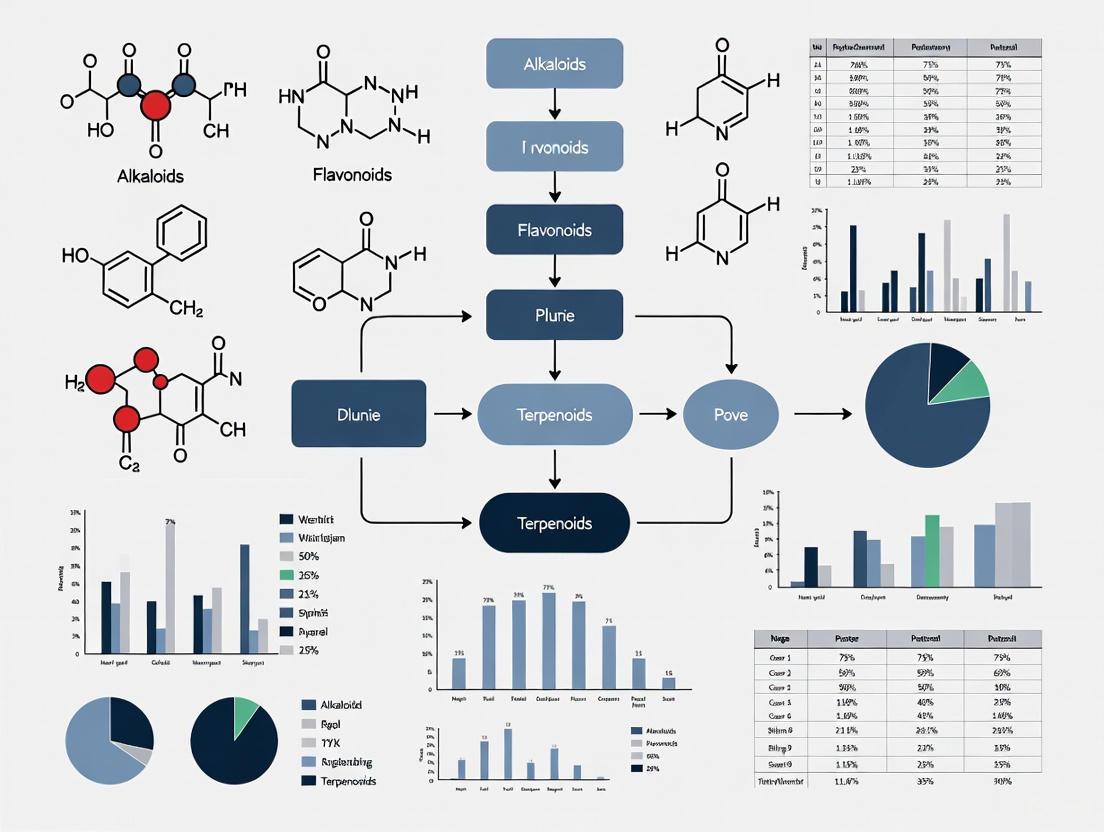
This article provides a comprehensive overview of phytochemical screening, a critical process for identifying bioactive compounds in medicinal plants.
Phytochemical Screening of Medicinal Plants: From Traditional Knowledge to Modern Drug Discovery
Abstract
This article provides a comprehensive overview of phytochemical screening, a critical process for identifying bioactive compounds in medicinal plants. Aimed at researchers, scientists, and drug development professionals, it bridges traditional ethnobotanical knowledge and state-of-the-art analytical methodologies. The content explores the foundational principles of plant secondary metabolites, details established and emerging extraction and analysis techniques, and addresses common troubleshooting and optimization challenges. It further examines advanced validation strategies, including computational approaches and bioactivity assays, that confirm the therapeutic potential of phytochemicals. By integrating foundational concepts with current innovations, this article serves as a practical guide for advancing natural product research and accelerating the development of plant-derived therapeutics.
The Foundation of Phytochemistry: Understanding Plant Bioactive Compounds and Their Sources
Phytochemicals, the specialized chemical compounds produced by plants, are broadly categorized into primary and secondary metabolites, each serving distinct and vital functions. Primary metabolites are essential for fundamental plant growth and development, whereas secondary metabolites play a crucial role in plant defense and ecological interactions. Within the context of medicinal plant research, the precise screening and characterization of these compounds, particularly the bioactive secondary metabolites, is the cornerstone for drug discovery and development. This whitepaper provides an in-depth technical guide on their definitions, roles, and the advanced analytical methodologies employed to study them, framing this knowledge within the critical practice of phytochemical screening for modern pharmaceuticals.
In plant sciences, the comprehensive study of metabolites—the small molecules produced by plant metabolism—is fundamental to understanding plant physiology, ecology, and their immense pharmacological value. These metabolites are systematically classified into two overarching groups: primary metabolites and secondary metabolites. Primary metabolites, including carbohydrates, lipids, proteins, and amino acids, are ubiquitous across the plant kingdom and are directly indispensable for essential life processes such as energy metabolism, growth, and development [1] [2]. In contrast, secondary metabolites, such as alkaloids, flavonoids, terpenoids, and phenolics, are not involved in primary physiological functions but are critical for the plant's interaction with its environment [1]. They are synthesized as part of the plant's defense mechanism against abiotic stresses (e.g., temperature, light, wounding) and biotic stresses (e.g., microbes, insects, and animals) [2].
The rigorous phytochemical screening of medicinal plants is a foundational approach in natural product research, aimed at detecting and identifying these bioactive compounds [3]. This process is vital for the research and development of pharmaceuticals derived from medicinal plants, which continue to be an area of active and rigorous investigation [4]. The identification and classification of these metabolites not only aid in the authentication of medicinal plant species—a critical step for ensuring the efficacy and safety of plant-derived medicines—but also in the discovery of novel bioactive compounds for drug development [1]. This whitepaper delves into the technical distinctions between primary and secondary metabolites, their specific roles, and the advanced experimental protocols that define their study in contemporary research.
Primary Metabolites: Fundamentals and Functions
Primary metabolites are the fundamental molecules that are directly involved in the normal growth, development, and reproduction of plants. Their presence is universal in all plant cells, and their pathways, such as glycolysis, the Krebs cycle, and photosynthesis, are highly conserved across the plant kingdom. These compounds are the basic building blocks of plant life and are essential for sustaining primary physiological functions.
Table 1: Characteristics of Key Primary Metabolites in Plants
| Metabolite Class | Major Occurrence in Plant Parts | Primary Function in Plant | Role in Human Health & Screening Relevance |
|---|---|---|---|
| Carbohydrates | Leaves, grains, tubers | Energy source, structural support (cellulose), essential for respiration [1]. | Dietary energy source, dietary fiber for gut health. Screen for purity and yield of extracts. |
| Amino Acids & Proteins | Leaves, roots, seeds | Building blocks of proteins, crucial for plant growth and enzyme function [1] [2]. | Essential amino acids for human nutrition, source of bioactive peptides [2]. |
| Fatty Acids & Lipids | Seeds, fruits, leaves | Vital for membrane structure, energy storage, and signaling molecules [1]. | Source of essential fatty acids (e.g., ω-3), energy storage [2]. |
| Chlorophyll | Leaves | Key pigment for photosynthesis, converting light into chemical energy [1]. | Not directly utilized, but a marker for plant material in processing. |
The significance of primary metabolites in phytochemical screening extends beyond their nutritional value. They can influence the extraction efficiency and pharmacokinetics of secondary metabolites. Furthermore, during the screening process, the analysis of primary metabolite profiles can serve as a tool for the standardization and quality control of medicinal plant materials, ensuring batch-to-batch consistency in herbal preparations [1].
Secondary Metabolites: Diversity and Bioactivity
Secondary metabolites, also referred to as specialized plant metabolites (SPMs), are a large and diverse group of compounds that are not directly involved in the primary processes of growth and development. Instead, they primarily function as defense compounds against herbivores, pathogens, and environmental stressors, and also play roles in plant pollination and seed dispersal [1] [5]. From a pharmaceutical perspective, these compounds are the primary source of pharmacologically active agents in medicinal plants, exhibiting a wide array of biological activities including anti-inflammatory, antimicrobial, anticancer, antidiabetic, and antioxidant properties [1] [6].
Table 2: Major Classes of Bioactive Secondary Metabolites in Medicinal Plants
| Metabolite Class | Example Compounds | Medicinal Plant Examples | Documented Biological Activities |
|---|---|---|---|
| Alkaloids | Vinblastine, Vincristine [7] | Catharanthus roseus [7] | Anticancer [1], antimycobacterial [8] |
| Flavonoids | Quercetin, Rutin, Catechin [9] [10] | Euphorbia parviflora [9], Punica granatum [10] | Antioxidant, antimicrobial, anti-inflammatory [1] [10] |
| Phenolic Acids & Tannins | Cinnamic acid, Ellagitannins [9] [10] | Salvia officinalis, Punica granatum [10] | Potent antioxidants, astringents, antimicrobial [9] [10] |
| Terpenoids | Dehydrocostus lactone, Volatile oils [8] [9] | Echinops kebericho [8], Euphorbia parviflora [9] | Antimicrobial, anti-inflammatory, antifungal [8] [5] |
The following diagram illustrates the functional relationships and ecological roles of primary and secondary metabolites in plants:
Figure 1: Functional Roles of Plant Metabolites. Primary metabolites directly sustain fundamental life processes, while secondary metabolites mediate interactions with the environment.
The synthesis of secondary metabolites is often induced by various environmental stresses. When a plant experiences a challenge, its internal redox state changes, triggering the production of these compounds to acclimate to the stress conditions [2]. This inherent bioactivity makes them exceptionally valuable for drug development. For instance, the discovery of artemisinin from Artemisia annua for malaria treatment underscores the potential of mining secondary metabolites from traditionally used medicinal plants [6].
Experimental Protocols for Phytochemical Screening
The phytochemical screening of plant material is a multi-stage process that involves sample preparation, extraction, and a series of qualitative and quantitative analyses to identify and characterize the metabolite profile. The following workflow details a standard protocol.
Sample Preparation and Extraction
The initial steps are critical for preserving the integrity of the phytochemicals.
- Plant Material Collection and Authentication: Fresh plant samples (e.g., leaves, roots, bark) are collected and authenticated by a trained botanist. A voucher specimen is deposited in a herbarium for future reference [8] [9].
- Drying and Grinding: The plant material is washed, and dried in the shade at room temperature to prevent thermal degradation of heat-labile compounds. The dried material is then ground into a fine powder using an electric grinder [8] [9].
- Extraction: The powdered plant material is subjected to extraction. A common method is maceration, where the powder is soaked in a solvent (e.g., methanol, ethanol, chloroform, water) for a set period (e.g., 72 hours) with continuous shaking. The choice of solvent is paramount, as polarity influences the recovery of different metabolite classes. For a broad-spectrum extraction, solvents of varying polarity, such as 100% water, 50% ethanol, and 100% ethanol, are often used sequentially or in parallel [4] [8].
- Filtration and Concentration: The extract is filtered to remove solid residues, often using Whatman filter paper No. 1. The filtrate is then concentrated under reduced pressure using a rotary evaporator at controlled temperatures (e.g., 40°C) to obtain the crude extract [8] [9].
Qualitative Phytochemical Analysis
This involves simple chemical tests to detect the presence of major metabolite classes in the crude extract [9].
- Test for Alkaloids: The extract is mixed with 2% H₂SO₄, heated, and filtered. Dragendroff’s reagent is added to the filtrate. The formation of an orange-red precipitate indicates the presence of alkaloids [9].
- Test for Flavonoids: The extract is dissolved in sodium hydroxide (NaOH) solution, and then hydrochloric acid (HCl) is added. The solution turning from yellow to colorless confirms the presence of flavonoids [9].
- Test for Tannins: The extract is boiled with distilled water and filtered. A few drops of ferric chloride (FeCl₃) are added to the filtrate. A blackish-green color indicates the presence of tannins [9].
- Test for Terpenoids: The extract is mixed with chloroform and concentrated sulfuric acid (H₂SO₄) is carefully added to form a layer. A reddish-brown interface indicates the presence of terpenoids [9].
- Test for Saponins: The extract is boiled with distilled water. The formation of a persistent froth that lasts for more than three minutes suggests the presence of saponins [9].
Quantitative and Advanced Analytical Techniques
After qualitative confirmation, quantitative analysis is performed to determine the concentration of specific metabolites.
- Total Phenolic Content (TPC): Determined using the Folin-Ciocalteu assay. The extract is reacted with the Folin-Ciocalteu reagent and a saturated sodium carbonate (Na₂CO₃) solution. The absorbance is measured, and the TPC is expressed as milligrams of Gallic Acid Equivalents (GAE) per gram of dry plant weight [9] [10].
- Total Flavonoid Content (TFC): Determined using a colorimetric assay with aluminum chloride. The results are expressed as milligrams of Catechin or Quercetin Equivalents per gram of dry weight [9] [10].
- Chromatographic Techniques: Advanced techniques like High-Performance Liquid Chromatography (HPLC) and Liquid Chromatography-Mass Spectrometry (LC-MS) are used for separation, identification, and quantification of individual compounds. For example, HPLC can identify and quantify specific compounds like cinnamic acid, quercetin, and catechin in different plant extracts [4] [9]. Untargeted metabolomics using LC-MS or GC-MS is widely recognized as the most appropriate approach for comprehensive analysis of metabolites, enabling the evaluation of qualitative and quantitative alterations in individual metabolites [4].
Figure 2: Phytochemical Screening Workflow. The multi-stage process from plant preparation to advanced analysis and bioactivity testing.
The Scientist's Toolkit: Essential Research Reagents and Materials
The following table outlines key reagents, solvents, and instruments essential for conducting phytochemical screening research, as derived from the cited experimental protocols.
Table 3: Essential Research Reagents and Materials for Phytochemical Screening
| Reagent/Instrument | Technical Function in Phytochemical Screening | Example Use Case |
|---|---|---|
| Methanol, Ethanol, Water | Extraction solvents of varying polarity for recovering a wide range of primary and secondary metabolites [4] [8]. | Ultrasonic extraction of 248 medicinal plants with 100% water, 50% ethanol, and 100% ethanol [4]. |
| Folin-Ciocalteu Reagent | Chemical reagent used in the colorimetric quantification of total phenolic content in plant extracts [9] [10]. | Determining total phenols in Euphorbia parviflora and Punica granatum leaf extracts [9] [10]. |
| Dragendroff's Reagent | Precipitating reagent used in qualitative thin-layer chromatography (TLC) or test-tube assays for the detection of alkaloids [9]. | Confirmation of alkaloids in the methanolic extract of Euphorbia parviflora [9]. |
| UHPLC-MS/MS System | (Ultra-High Performance Liquid Chromatography-Tandem Mass Spectrometry) provides high-resolution separation, identification, and quantification of thousands of metabolites in complex plant extracts [4]. | Feature extraction and metabolite profiling of 744 samples from medicinal plants; enabled detection of 63,944 scans in positive mode [4]. |
| Rotary Evaporator | Instrument for the gentle and efficient removal of solvents from crude plant extracts under reduced pressure and controlled temperature [8]. | Concentration of macerated Echinops kebericho extracts after filtration [8]. |
| DPPH (2,2-Diphenyl-1-picrylhydrazyl) | Stable free radical compound used in spectrophotometric assays to evaluate the free radical scavenging (antioxidant) activity of plant extracts [9]. | Assessment of antioxidant activity in Euphorbia parviflora extracts [9]. |
The distinction between primary and secondary metabolites is fundamental to medicinal plant research. While primary metabolites are the bedrock of plant life, secondary metabolites represent a vast reservoir of chemical diversity with immense therapeutic potential. The systematic process of phytochemical screening—from traditional qualitative tests to advanced LC-MS-based metabolomics—is indispensable for unlocking this potential. It enables the authentication of plant material, the discovery of novel bioactive compounds, and the development of standardized herbal medicines and modern pharmaceuticals. As technological advances in instrumentation and data analysis (including artificial intelligence) continue to evolve, the field of phytochemical research is poised to make even greater contributions to drug development and personalized medicine, firmly rooted in the chemical wisdom of plants.
Phytochemical screening represents a fundamental research activity for identifying plant-derived bioactive compounds with potential therapeutic applications. In the context of drug discovery, understanding the major classes of secondary metabolites—alkaloids, flavonoids, terpenoids, phenolics, and saponins—provides a critical foundation for developing novel treatments for various diseases. These compounds exhibit diverse biochemical properties and biological activities that can be harnessed for pharmaceutical development. This technical guide provides an in-depth examination of these compound classes, their structural characteristics, biosynthesis pathways, biological activities, and established methodologies for their investigation within phytochemical research. The growing resistance to synthetic drugs and the increasing challenges in drug development have renewed scientific interest in these natural products as sources of new chemical entities and lead compounds for therapeutic development.
Comprehensive Classification and Structural Characteristics
Bioactive plant compounds demonstrate remarkable structural diversity, which directly influences their biological activity and potential therapeutic applications. The table below summarizes the core structural features and classification of the major bioactive compound classes.
Table 1: Structural Classification of Major Bioactive Compound Classes
| Compound Class | Basic Structure | Subclasses | Structural Characteristics |
|---|---|---|---|
| Alkaloids | Nitrogen-containing heterocyclic compounds | Pyrrolidines, pyridines, tropanes, pyrrolizidines, isoquinolines, indoles [11] | At least one nitrogen atom in an amine-type structure; often with complex ring systems [11] |
| Flavonoids | C6-C3-C6 skeleton (15-carbon structure) [12] [13] | Flavones, flavonols, flavanones, flavan-3-ols, isoflavones, anthocyanins, chalcones [12] [13] | Two benzene rings (A and B) linked by heterocyclic pyrone ring (C) [13] |
| Terpenoids | Isoprene units (C5H8) [14] | Hemiterpenes (C5), monoterpenes (C10), sesquiterpenes (C15), diterpenes (C20), triterpenes (C30) [14] | Derived from isopentenyl diphosphate (IPP) and dimethylallyl diphosphate (DMAPP) precursors [14] |
| Phenolics | Benzene ring with one or more hydroxyl groups [15] [16] | Phenolic acids, flavonoids, tannins [16] | Hydroxyl substitution patterns critical for activity; range from simple acids to complex polymers [16] |
| Saponins | Triterpenoid or steroid aglycone with sugar moieties [17] | Triterpenoid saponins, steroid saponins | Hydrophobic aglycone (sapogenin) with one or more hydrophilic sugar chains [17] |
Biosynthesis Pathways
The structural diversity of plant bioactive compounds arises from complex biosynthetic pathways that have been elucidated through advanced biochemical and genetic studies. Understanding these pathways is crucial for metabolic engineering and enhancing the production of valuable compounds.
Terpenoid Biosynthesis
Terpenoids originate from two distinct biochemical pathways that operate in different subcellular compartments:
- Mevalonate (MVA) Pathway: Localized predominantly in the cytoplasm and endoplasmic reticulum, this pathway begins with acetyl-CoA and proceeds through mevalonate to produce IPP [14]. The conversion of HMG-CoA to mevalonate, catalyzed by HMG-CoA reductase (HMGR), represents a pivotal rate-limiting step [14].
- Methylerythritol Phosphate (MEP) Pathway: This plastid-localized pathway utilizes pyruvate and glyceraldehyde-3-phosphate (GAP) to produce IPP and DMAPP [14]. The initial condensation reaction catalyzed by DXS (1-deoxy-D-xylulose-5-phosphate synthase) significantly influences the overall metabolic flux [14].
These pathways demonstrate cross-talk, with frequent exchanges of intermediates between plastids and the cytoplasm, leading to compounds with mixed MVA/MEP origins [14]. Isoprenyl diphosphate synthases (IDSs) then catalyze the formation of geranyl diphosphate (GPP, C10), farnesyl diphosphate (FPP, C15), and geranylgeranyl diphosphate (GGPP, C20), which serve as precursors for the diverse array of terpenoids [14].
Flavonoid and Saponin Biosynthesis
Flavonoids share a common biosynthetic origin with phenolic compounds through the shikimate and phenylpropanoid pathways, producing the characteristic C6-C3-C6 skeleton [12]. The structural diversity arises from modifications including hydroxylation, glycosylation, and methylation.
Saponin biosynthesis involves the cyclization of 2,3-oxidosqualene by oxidosqualene cyclases (OSCs) to produce triterpene skeletons [17]. This is followed by oxidative modifications catalyzed by cytochrome P450 monooxygenases (CYP450s) and glycosylation by UDP-dependent glycosyltransferases (UGTs) [17]. The extensive functional diversity of saponins results from the combinatorial actions of these enzyme families.
Biological Activities and Mechanisms of Action
The therapeutic potential of bioactive plant compounds stems from their diverse mechanisms of action and interactions with cellular targets. The quantitative bioactivity data for these compound classes are summarized in the table below.
Table 2: Documented Biological Activities and Potencies of Bioactive Compounds
| Compound Class | Bioactivities | Molecular Targets | Reported Efficacy/IC50 Values |
|---|---|---|---|
| Alkaloids | Analgesic, stimulant, local anesthetic, antimalarial, muscle relaxant [11] | Opioid receptors, ion channels, neurotransmitter systems [11] | Morphine (potent narcotic), quinine (antimalarial), vincristine (chemotherapeutic) [11] |
| Flavonoids | Antioxidant, anti-inflammatory, antidiabetic, anticancer, neuroprotective [12] [13] | COX, LOX, NF-κB, PI3K/Akt, α-amylase, α-glucosidase [12] [13] | Fluorinated chalcone derivatives: α-glucosidase inhibition (IC50 = 63.04 μg/mL) [18] |
| Terpenoids | Anti-inflammatory, anticancer, antiviral, insecticidal [14] | Various enzyme systems, membrane receptors [14] | Glycyrrhizin (anti-inflammatory), artemisinin (antimalarial) [17] |
| Phenolics | Antioxidant, anti-inflammatory, cardioprotective, neuroprotective [15] [16] | Nrf2–ARE, NF-κB pathways, radical scavenging [15] | O. gratissimum DPPH assay (IC50 = 11.744 μg/mL) [19] |
| Saponins | Anti-inflammatory, immunomodulatory, anticancer, antiviral [17] [20] | Immune cell functions, membrane cholesterol [20] | Heinsiagenin A (potent immunosuppressant) [20] |
Molecular Mechanisms of Action
The bioactivities of these compounds are mediated through specific molecular mechanisms:
- Anti-inflammatory Effects: Flavonoids such as fisetin, quercetin, and rutin inhibit pro-inflammatory cytokine production (TNF-α, IL-1β, IL-6, IL-8) and reduce activation of the transcription factor NF-κB [13]. Similarly, triterpenoid saponins like heinsiagenin A exhibit significant immunosuppressive activity by inhibiting T cell proliferation [20].
- Antioxidant Activity: Phenolic compounds exert antioxidant effects through radical scavenging, metal chelation, and singlet oxygen-quenching activities [15]. Their structure-activity relationship demonstrates that hydroxylation and methoxylation patterns critically impact antioxidant strength [15].
- Antidiabetic Mechanisms: Flavonoids and chalcones regulate glucose metabolism through multiple pathways, including inhibition of α-glucosidase and α-amylase, regulation of glucose transporters, and enhancement of insulin signaling [13]. Chalcone derivatives have demonstrated significant α-glucosidase inhibitory activity with IC50 values of 63.04 μg/mL [18].
- Anticancer Potential: Flavonoids modulate angiogenesis, inflammation, oxidative stress, and induce apoptosis through regulation of key cellular signaling pathways including PI3K/Akt, Wnt/β-catenin, and MAPK [13]. Terpenoid compounds similarly exhibit antiproliferative effects against various cancer cell lines.
Phytochemical Screening Methodologies
Phytochemical screening employs standardized experimental protocols for the extraction, identification, and bioactivity assessment of plant compounds. The workflow below illustrates a comprehensive approach to phytochemical investigation.
Standardized Experimental Protocols
Phytochemical Screening Protocol (Qualitative)
Objective: To detect major classes of bioactive compounds in plant extracts [19].
Materials:
- Plant material (dried and powdered)
- Methanol, ethanol, water (extraction solvents)
- Test reagents: Wagner's reagent (alkaloids), 1% FeCl3 solution (phenolics), Shinoda test reagents (flavonoids), Foam test solution (saponins) [19]
Procedure:
- Prepare plant extracts using decoction or percolation methods with appropriate solvents [19].
- For alkaloid detection: Treat extract with Wagner's reagent; formation of reddish-brown precipitate indicates presence [19].
- For flavonoid detection: Perform Shinoda test; addition of magnesium ribbon and concentrated HCl produces pink-red color [19].
- For phenolic detection: Treat with 1% FeCl3; blue-green color indicates phenolics [19].
- For saponin detection: Shake extract vigorously with water; persistent foam indicates saponins [19].
Antioxidant Activity Assessment (DPPH Assay)
Objective: To evaluate free radical scavenging activity of plant extracts [19].
Materials:
- Plant extracts
- DPPH (2,2-diphenyl-1-picrylhydrazyl) solution (0.1 mM in methanol)
- Ascorbic acid (standard antioxidant)
- UV-Vis spectrophotometer
- Microplates or test tubes
Procedure:
- Prepare serial dilutions of plant extracts in methanol.
- Mix 1 mL of each dilution with 1 mL of DPPH solution.
- Incubate in dark for 30 minutes at room temperature.
- Measure absorbance at 517 nm against blank.
- Calculate percentage inhibition using formula: % Inhibition = [(Acontrol - Asample)/A_control] × 100 [19].
- Determine IC50 values (concentration providing 50% inhibition) using linear regression analysis.
Antimicrobial Assessment (Broth Dilution Method)
Objective: To determine minimum inhibitory concentration (MIC) of plant extracts against pathogenic microorganisms [19].
Materials:
- Plant extracts
- Microbial strains (e.g., Staphylococcus aureus, Escherichia coli, Pseudomonas aeruginosa)
- Mueller-Hinton broth
- Sterile 96-well microtiter plates
- Incubator
Procedure:
- Prepare serial two-fold dilutions of plant extracts in broth medium.
- Standardize microbial inoculum to 0.5 McFarland standard (~1.5 × 10^8 CFU/mL).
- Add standardized inoculum to each well containing extract dilutions.
- Include growth control (inoculum without extract) and sterility control (broth only).
- Incubate at appropriate temperature for 18-24 hours.
- Determine MIC as the lowest concentration showing no visible growth [19].
- Calculate fractional inhibitory concentration index (FICI) for combination studies.
The Researcher's Toolkit: Essential Reagents and Materials
Table 3: Essential Research Reagents for Phytochemical Screening
| Reagent/Material | Application | Function | Example Use |
|---|---|---|---|
| UPLC-QTOF-MS [19] | Compound separation and identification | High-resolution separation and accurate mass determination for metabolite profiling | Identification of rosmarinic acid, cirsimaritin, and kaempferol derivatives in plant extracts [19] |
| DPPH (2,2-diphenyl-1-picrylhydrazyl) [19] | Antioxidant activity assessment | Free radical compound that changes color when reduced by antioxidants | Quantitative assessment of free radical scavenging activity in plant extracts [19] |
| Mueller-Hinton Broth [19] | Antimicrobial assays | Standardized medium for determining minimum inhibitory concentrations (MICs) | Evaluation of antibacterial activity against S. aureus, E. coli, and P. aeruginosa [19] |
| Wagner's Reagent [19] | Alkaloid detection | Precipitating agent for alkaloids in qualitative screening | Formation of reddish-brown precipitate indicating alkaloid presence [19] |
| CYP450 Enzymes [17] | Terpenoid modification | Oxidative modification of terpene skeletons in saponin biosynthesis | Hydroxylation of β-amyrin at C-24 position by CYP93E1 in soyasaponin biosynthesis [17] |
| UDP-sugars [17] | Glycosylation reactions | Sugar donors for glycosyltransferases in saponin biosynthesis | Addition of glucose, galactose, or other sugars to triterpene aglycones [17] |
Structure-Activity Relationships
The biological activity of bioactive compounds is intrinsically linked to their structural features. Understanding these relationships enables rational design of optimized derivatives with enhanced therapeutic properties.
- Phenolic Compounds: Structure-activity studies demonstrate that hydroxyl group position significantly influences bioactivity. Ortho-hydroxybenzoic acid increases casein solubility, while meta- and para-hydroxybenzoic acids show no significant effect [16]. Compounds with larger molecular weights and more phenolic hydroxyl groups (tannic acid, ellagic acid, myricetin) exhibit stronger binding to proteins compared to simpler phenolics [16].
- Flavonoids: The catechol (3',4'-dihydroxy) structure in the B-ring enhances antioxidant activity, while the 2,3-double bond in conjugation with a 4-oxo function in the C-ring is crucial for free radical scavenging [13]. Glycosylation patterns significantly influence bioavailability and biological activity [12].
- Terpenoid Saponins: The number, composition, and position of sugar chains attached to the triterpene scaffold significantly impact biological activity, taste, and bioabsorbability [17]. Structural modifications through biocatalysis can enhance therapeutic potential.
Phytochemical screening of medicinal plants continues to provide valuable compounds with significant therapeutic potential. The major classes of bioactive compounds—alkaloids, flavonoids, terpenoids, phenolics, and saponins—demonstrate diverse chemical structures and biological activities that can be exploited for drug development. Advanced analytical techniques such as UPLC-QTOF-MS have significantly enhanced our ability to characterize complex plant metabolites and identify novel bioactive compounds. Standardized methodologies for assessing bioactivities, including antioxidant, antimicrobial, and enzyme inhibition assays, provide critical data for evaluating therapeutic potential. Future research should focus on exploring synergistic interactions between different phytochemical classes, investigating underutilized plant species, and employing bioassay-guided fractionation to isolate novel active constituents. The integration of traditional knowledge with modern phytochemical approaches remains a promising strategy for expanding our pharmacopoeia with effective plant-derived therapeutics.
Ethnobotany, the study of the complex relationships between cultures and their use of plants, provides a valuable knowledge base for accelerating modern drug discovery. For millennia, diverse civilizations have relied on traditional remedies derived from plants to treat a wide range of conditions, building a substantial repository of information on biologically active plant species through empirical observation [21]. The core premise of using ethnobotany as a guide lies in the non-random nature of traditional plant selection—specific plants have been consistently used for particular therapeutic indications across different cultures and geographical regions, suggesting a validated bioactivity that transcends cultural boundaries [21]. Modern systematic analyses confirm that taxonomically related medicinal plants tend to be used for treating similar indications, and this correlation is supported by shared bioactive phytochemicals among congeners [21]. This convergence of traditional use across cultures provides high-confidence hypotheses for prioritizing plants for phytochemical screening, offering a strategic advantage over random collection approaches.
The interdisciplinary field of ethnopharmacology has emerged to bridge traditional knowledge and modern science, exploring the biologically active agents from plants, minerals, animals, fungi, and microbes used in traditional medicine [22]. This approach has gained significant traction in recent years, with the World Health Organization (WHO) launching a new Global Traditional Medicine Strategy (2025–2034) to advance the contribution of evidence-based traditional medicine to global health [23]. Despite this recognition, less than 1% of global health research funding is dedicated to traditional medicine, highlighting both the challenge and opportunity in this field [23]. This technical guide provides a comprehensive framework for leveraging ethnobotanical knowledge to design targeted screening strategies in phytochemical research, offering methodologies, protocols, and visualization tools to maximize the efficiency of natural product discovery.
Methodological Framework: From Ethnobotanical Data to Targeted Screening
Systematic Documentation of Traditional Knowledge
The initial phase in ethnobotanically-guided screening involves the systematic collection and documentation of traditional knowledge. This process must be conducted with ethical consideration, respecting indigenous rights and ensuring equitable benefit-sharing [23]. Proper documentation should capture not only the plant species used but also the specific plant parts, preparation methods, administration routes, and intended therapeutic applications. For example, detailed ethnobotanical studies of Urtica simensis in Ethiopia document that leaves are roasted and consumed with injera for gastritis, fresh leaf juice is applied topically for wounds, and crushed roots are mixed with water for malaria treatment [24]. This granular information provides critical insights for experimental design.
Standardized Data Collection Parameters:
- Plant Identification: Botanical name, family, genus, species, voucher specimen details
- Traditional Use: Specific ailments treated, method of preparation, dosage forms
- Geographical Context: Location of collection, cultural group using the remedy
- Temporal Factors: Season of collection, stage of plant growth
- Cultural Significance: Exclusive vs. shared knowledge, specialized practitioners
Cross-Cultural Validation Analysis
A powerful method for prioritizing plant candidates involves analyzing cross-cultural ethnobotanical patterns. Large-scale systematic analyses reveal that when different cultures use taxonomically related plants for similar therapeutic purposes, despite being geographically separated, this convergence significantly increases confidence in their efficacy [21]. For instance, Tinospora cordifolia (native to India) and Tinospora bakis (from Nigeria) are both used to treat liver diseases and jaundice, while Glycyrrhiza uralensis (Asia) and Glycyrrhiza lepidota (North America) are both used for cough and sore throat [21]. This cross-cultural validation serves as a natural filter for identifying high-priority candidates for targeted screening.
Table 1: Quantitative Analysis of Ethnobotanical Correlations Across Taxonomic Levels
| Taxonomic Relationship | Correlation in Medicinal Use | Statistical Significance | Data Source |
|---|---|---|---|
| Congeneric plant pairs | Higher correlation | p < 0.001 | Literature dataset [21] |
| Same family plant pairs | Moderate correlation | p < 0.01 | Literature dataset [21] |
| Random plant pairs | Lower correlation | Not significant | Literature dataset [21] |
| Geographically close congeners | Slightly higher correlation | p < 0.05 | Ethnobotanical databases [21] |
| Geographically distant congeners | Significant correlation | p < 0.01 | Ethnobotanical databases [21] |
Experimental Protocols for Targeted Phytochemical Screening
Ethnobotany-Guided Plant Selection and Extraction
Protocol Objective: To systematically select plant materials based on ethnobotanical data and prepare extracts for targeted biological screening.
Materials and Reagents:
- Plant materials collected and identified according to ethnobotanical records
- Solvents: methanol, ethanol, ethyl acetate, hexane, water
- Extraction apparatus: Soxhlet extractor, ultrasonic bath, rotary evaporator
- Drying equipment: freeze dryer, vacuum oven
- Storage: amber glass vials, desiccator
Procedure:
- Plant Material Preparation: Select plant parts specifically documented in traditional use (e.g., leaves, roots, bark). Prepare voucher specimens and deposit in herbarium. Dry plant material at 40°C and grind to fine powder (20-80 mesh).
- Sequential Extraction: Perform sequential extraction using solvents of increasing polarity (hexane → ethyl acetate → methanol → water) to fractionate compounds based on polarity. Use 1:10 plant material-to-solvent ratio.
- Extraction Techniques: Employ appropriate extraction methods: Soxhlet extraction for non-polar solvents, maceration or ultrasonic-assisted extraction for polar solvents at room temperature to preserve thermolabile compounds.
- Extract Concentration: Concentrate extracts under reduced pressure at 40°C using rotary evaporator. Aqueous extracts may be freeze-dried.
- Yield Calculation: Determine extraction yield using formula: Yield (%) = (Weight of extract / Weight of plant material) × 100.
- Storage: Store extracts at -20°C in airtight containers protected from light. Record detailed documentation of extraction parameters.
This targeted approach differs from random screening by focusing on specific plant parts and extraction methods aligned with traditional preparation, potentially enriching for bioactive compounds [24] [22].
High-Throughput Phytochemical Screening and Compound Identification
Protocol Objective: To rapidly screen ethnobotanically-selected extracts for bioactive compounds and characterize identified actives.
Materials and Reagents:
- HPLC-MS system (e.g., UHPLC-QTOF-MS)
- GC-MS system with appropriate columns
- NMR spectrometer (400 MHz or higher)
- Cell cultures for bioassays
- Microtiter plates for high-throughput screening
- Standard phytochemical reference compounds
Procedure:
- Initial Phytochemical Profiling:
- Perform preliminary phytochemical screening for major compound classes: alkaloids (Dragendorff's test), flavonoids (Shinoda test), terpenoids (Salkowski test), tannins (ferric chloride test), saponins (foam test).
- Use TLC for rapid fingerprinting of extracts (silica gel plates, appropriate mobile phases, detection under UV 254/365 nm and specific spraying reagents).
Advanced Chemical Characterization:
- HPLC-MS Analysis: Use reverse-phase C18 column, gradient elution with water-acetonitrile or water-methanol with 0.1% formic acid. Monitor at 200-400 nm. MS parameters: ESI positive/negative mode, mass range 50-2000 m/z.
- GC-MS Analysis: For volatile compounds, use DB-5MS column, temperature programming from 60°C to 300°C. Electron impact ionization at 70 eV, mass range 40-600 m/z.
- NMR Spectroscopy: Prepare samples in deuterated solvents (CDCl₃, DMSO-d₆, CD₃OD). Record ¹H, ¹³C, and 2D NMR spectra (COSY, HSQC, HMBC) for structure elucidation.
Bioactivity-Guided Fractionation:
- Subject active extracts to bioassay-guided fractionation using column chromatography (silica gel, Sephadex LH-20, MCI gel) and preparative HPLC.
- Test fractions for targeted biological activity (antimicrobial, anti-inflammatory, anticancer, etc.) using relevant in vitro assays.
- Continue isolation and purification until pure active compounds are obtained.
Structure Elucidation:
- Determine structure of pure compounds using spectral data (MS, NMR, IR, UV).
- Compare with literature data and authentic standards when available.
- Use X-ray crystallography for complete structural confirmation where possible.
Table 2: Key Phytochemical Classes and Their Screening Methodologies
| Phytochemical Class | Primary Screening Methods | Characterization Techniques | Bioactivities |
|---|---|---|---|
| Alkaloids | Dragendorff's test, TLC | HPLC-UV/MS, NMR, X-ray | Antimicrobial, anticancer, neurological effects [25] |
| Flavonoids | Shinoda test, AlCl₃ test | LC-MS, NMR, UV spectroscopy | Antioxidant, anti-inflammatory, anticancer [26] |
| Terpenoids | Salkowski test, TLC | GC-MS, NMR, IR | Antimicrobial, anti-inflammatory, anticancer [25] |
| Phenolic compounds | Ferric chloride test, Folin-Ciocalteu | HPLC-DAD/MS, NMR | Antioxidant, cardioprotective, antidiabetic [24] |
| Saponins | Foam test, hemolysis test | LC-MS, NMR, hydrolysis | Antimicrobial, anti-inflammatory, immunomodulatory [26] |
Computational Integration and Visualization
Workflow for Ethnobotanically-Guided Drug Discovery
The following diagram illustrates the integrated workflow from ethnobotanical data collection to lead compound identification:
Integration of Computational Approaches in Ethnobotany-Guided Screening
Modern phytochemical research increasingly incorporates computational methods to enhance the efficiency of ethnobotanically-guided discovery. In silico docking and molecular dynamics simulations allow researchers to predict interactions between phytochemicals and biological targets, prioritizing compounds for experimental validation [25] [22]. Network pharmacology approaches construct signaling and interaction networks based on observed or deduced interactions of compounds with cellular mechanisms, helping to understand complex synergistic effects often present in traditional herbal preparations [22]. Quantitative Structure-Activity Relationship (QSAR) modeling interrelates phytochemical properties with diverse physiological activities such as antimicrobial or anticancer effects, enabling prediction of bioactivity based on chemical structure [25].
These computational methods have evolved the discovery paradigm—where traditionally the starting point was the plant itself, identified through ethnobotanical research, modern approaches can begin with active substances pinpointed by computational methods, followed by identification of plants containing these ingredients through existing ethnobotanical knowledge [22]. This reverse approach demonstrates how ethnobotanical databases and computational chemistry can be synergistically integrated for more efficient discovery workflows.
The Scientist's Toolkit: Essential Research Reagents and Solutions
Table 3: Essential Research Reagents and Databases for Ethnobotany-Guided Screening
| Tool/Database | Type/Format | Primary Function | Application in Research |
|---|---|---|---|
| Dr. Duke's Phytochemical and Ethnobotanical Databases | Digital database | In-depth plant, chemical, bioactivity, and ethnobotany searches | Facilitates correlation of traditional use with phytochemical composition [27] |
| HPLC-MS with UV/DAD | Instrumentation | Separation, identification, and quantification of phytochemicals | Chemical fingerprinting of active extracts, compound identification [22] |
| NMR Spectrometer (400 MHz+) | Instrumentation | Structural elucidation of pure compounds | Determination of molecular structure and stereochemistry [25] |
| Traditional Medicine Databases (TradiMed, TCMID) | Digital database | Documentation of traditional uses of medicinal plants | Cross-referencing ethnobotanical applications [28] |
| In silico Docking Software (AutoDock, Schrödinger) | Computational tool | Prediction of ligand-target interactions | Virtual screening of phytochemical libraries against disease targets [25] |
| Cell-based Assay Systems | Biological reagents | Evaluation of bioactivity and toxicity | Assessment of therapeutic potential and safety profiling [22] |
Ethnobotany provides a validated, time-tested framework for prioritizing plant species in phytochemical screening programs. The systematic methodologies outlined in this technical guide—from rigorous ethnobotanical data collection and cross-cultural analysis to modern computational integration—enable researchers to efficiently bridge traditional knowledge and contemporary drug discovery. The convergent use of taxonomically related plants across different cultures for similar therapeutic indications offers a powerful filter for identifying biologically active species with higher probability of success [21]. As technological advances in analytical chemistry, computational screening, and bioassay systems continue to evolve, the integration of ethnobotanical wisdom with modern scientific methods will undoubtedly yield novel therapeutic agents while preserving and validating traditional knowledge systems. This approach represents not merely a screening strategy but a paradigm shift in natural product research that respects indigenous knowledge while applying rigorous scientific validation.
Medicinal plants represent a cornerstone in the global healthcare landscape, serving as a vital source of therapeutic agents and leading compounds for drug discovery. The global medicinal herbs market, estimated at USD 227.65 billion in 2025, is projected to reach USD 478.93 billion by 2032, exhibiting a robust compound annual growth rate (CAGR) of 11.21% [29]. This growth is fueled by rising consumer preference for natural and organic healthcare solutions, particularly for chronic and lifestyle-related conditions, alongside increasing validation of traditional medicine through scientific research. Within modern drug development, medicinal plants provide indispensable raw materials for pharmaceutical synthesis and innovative lead compounds, with approximately 25% of modern drugs derived from plant sources [30]. This whitepaper examines the integral role of medicinal plants within contemporary healthcare systems and drug discovery pipelines, with particular emphasis on advanced phytochemical screening methodologies that validate traditional knowledge and unlock novel therapeutic applications.
Historical Context and Traditional Knowledge Systems
The use of medicinal plants extends deep into human history, forming the foundation of traditional medical systems worldwide. Traditional medicine is officially defined as "the sum total of the knowledge, skills and practices based on the theories, beliefs and experiences indigenous to different cultures, whether explicable or not, used in the maintenance of health, as well as in the prevention, diagnosis, improvement or treatment of physical and mental illnesses" [31]. According to the World Health Organization, approximately 65% of the world's population relies on traditional medicine as their primary healthcare modality [30], with this dependence being particularly pronounced in rural communities lacking proper healthcare infrastructure [30].
Ethnobotany and ethnopharmacology serve as crucial disciplines bridging traditional knowledge and modern scientific validation. These fields systematically document how indigenous cultures use plants for medicinal, nutritional, and cultural purposes, combining cultural wisdom with scientific inquiry to identify bioactive compounds with therapeutic potential [32]. Quantitative ethnobotanical studies employ various indices to quantify the importance of specific medicinal plants:
- Informant Consensus Factor (ICF) measures homogeneity of informant knowledge, with highest values (0.87) documented for wound healing applications [30].
- Use Value (UV) indicates relative importance of specific plants, with highest values documented for Conyza canadensis and Cuscuta reflexa (0.58 each) [30].
- Fidelity Level (FL) shows percentage of informants mentioning use for specific purpose, with Azadirachta indica reaching 93.4% for blood purification [30].
Table 1: Quantitative Ethnobotanical Indices for Selected Medicinal Plants
| Plant Species | Informant Consensus Factor (ICF) | Use Value (UV) | Fidelity Level (FL) | Primary Traditional Use |
|---|---|---|---|---|
| Acacia nilotica | 0.85 (skin/nail disorders) | 0.95 | 91.1% | Sexual disorders |
| Azadirachta indica | 0.85 (skin/nail disorders) | 0.91 | 93.4% | Blood purification |
| Triticum aestivum | 0.85 (skin/nail disorders) | 0.95 | N/R | General health |
| Conyza canadensis | 0.87 (wound healing) | 0.58 | N/R | Wound healing |
| Cuscuta reflexa | 0.87 (wound healing) | 0.58 | N/R | Wound healing |
Phytochemical Screening: Methodologies and Protocols
Plant Material Collection and Extraction
Standardized protocols for plant material collection and extraction form the foundation of reproducible phytochemical research. The following workflow outlines the essential steps from plant collection to crude extract preparation:
Detailed Protocols:
- Plant Authentication: Botanical identification by qualified taxonomists with voucher specimen deposition in recognized herbaria [33] [30].
- Processing: Plant materials carefully washed with water, trimmed to appropriate size, and air-dried in shade for approximately two weeks to preserve thermolabile compounds [33].
- Extraction: Cold maceration at room temperature for 72 hours with intermittent shaking using solvents of varying polarity (typically 80% methanol) [33].
- Concentration: Filtration through Whatman No. 1 filter paper followed by evaporation under reduced pressure at 40°C using rotary evaporator [33].
- Preservation: Lyophilization at -40°C and 200 mBar vacuum pressure with storage in airtight containers at 4°C until use [33].
Qualitative Phytochemical Screening
Primary phytochemical screening employs standardized chemical tests to detect major classes of bioactive compounds. The following table outlines common screening protocols:
Table 2: Standard Phytochemical Screening Protocols
| Target Compound | Test Name | Procedure | Positive Result |
|---|---|---|---|
| Alkaloids | Mayer's Test | Add dilute HCl to extract + Mayer's reagent | Yellowish-white precipitate |
| Flavonoids | Sulfuric Acid Test | Add concentrated H₂SO₄ to extract | Orange color formation |
| Phenols | Ferric Chloride Test | Add 10% FeCl₃ to extract + water | Blue or green color |
| Glycosides | Keller-Killiani Test | Add glacial acetic acid + FeCl₃ + H₂SO₄ | Deep blue color at interface |
| Tannins | Alkaline Reagent Test | Add NaOH to extract | Yellow to red color change |
| Free Anthraquinones | Borntrager's Test | Heat with chloroform, filter, add ammonia | Bright pink in aqueous layer |
| Saponins | Foam Test | Shake extract with distilled water | Stable foam formation |
| Terpenoids | Salkowski Test | Add chloroform + concentrated H₂SO₄ | Reddish-brown interface |
Advanced Analytical Techniques
Sophisticated instrumentation enables precise identification, quantification, and characterization of bioactive phytochemicals:
Chromatographic Techniques:
- High-Performance Liquid Chromatography (HPLC): Separation and quantification of complex phytochemical mixtures.
- Thin-Layer Chromatography (TLC): Rapid screening and preliminary separation.
- Gas Chromatography (GC): Volatile compound analysis, typically coupled with mass spectrometry (GC-MS) [34].
Spectroscopic Methods:
- Nuclear Magnetic Resonance (NMR) Spectroscopy: Structural elucidation of purified compounds.
- Mass Spectrometry (MS): Molecular weight determination and structural characterization.
- Infrared (IR) Spectroscopy: Functional group identification [32].
Bioactivity Assessment: Integrated Methodological Approaches
Antimicrobial Evaluation Protocols
Antimicrobial activity assessment employs standardized microbiological techniques with the following experimental workflow:
Detailed Methodologies:
Agar Well Diffusion [33]:
- Plates inoculated with standardized microbial suspensions (1 × 10⁷ CFU/ml for bacteria, 1 × 10⁶ spores/ml for fungi).
- Wells (8-mm diameter) created with sterile cork borer and filled with 100 µL test extract.
- Positive controls: ciprofloxacin (5 µg) for bacteria, amphotericin B (12.5 µg) for fungi.
- Negative control: 1% DMSO.
- Incubation at 37°C for 18-24h (bacteria) or 28°C for 48h (fungi).
- Zone diameters measured in millimeters.
Minimum Inhibitory Concentration (MIC) [33]:
- Broth microdilution in 96-well plates with two-fold serial dilutions.
- Inoculation with standardized suspensions (5 × 10⁵ CFU/ml for bacteria, 5 × 10⁴ spores/ml for fungi).
- Addition of 0.2 mg/ml 2,3,5-triphenyltetrazolium chloride (TTC) as growth indicator.
- Incubation at 37°C for 30 minutes.
- MIC defined as lowest concentration showing no pink color formation.
Minimum Bactericidal/Fungicidal Concentration (MBC/MFC) [33]:
- Subculturing from wells showing no growth in MIC assay onto fresh agar media.
- Incubation for 24h at appropriate temperatures.
- MBC/MFC defined as lowest concentration yielding no visible growth on subculture.
Neuropharmacological Evaluation
Integrated approaches combining in vitro, in silico, and in vivo methods provide comprehensive assessment of neuropharmacological potential:
In Vivo Behavioral Models [34]:
- Open field test (locomotor activity and exploration)
- Light-dark box test (anxiety-like behavior)
- Elevated plus maze test (anxiety)
- Tail suspension test (antidepressant activity)
- Forced swim test (antidepressant activity)
- Y-maze test (spatial memory)
- Hole cross test (exploratory behavior)
- Social interaction test (social behavior)
In Silico Molecular Docking [34]:
- Target receptors: hMAO A and hMAO B for neurological disorders.
- Compounds identified through GC-MS analysis.
- Docking studies to predict binding affinity and interactions.
The Researcher's Toolkit: Essential Reagent Solutions
Table 3: Essential Research Reagents for Phytochemical and Bioactivity Studies
| Reagent/Material | Application | Function | Example Usage |
|---|---|---|---|
| 80% Methanol | Extraction | Medium-polarity solvent for broad-spectrum compound extraction | Cold maceration of plant materials [33] |
| Mayer's Reagent | Phytochemical screening | Alkaloid detection through precipitate formation | Qualitative alkaloid screening [33] |
| Mueller-Hinton Agar | Microbiology | Standardized medium for antimicrobial susceptibility testing | Agar well diffusion assays [33] |
| Sabouraud Dextrose Agar | Mycology | Fungal culture and antifungal susceptibility testing | Antifungal activity assessment [33] |
| 2,3,5-Triphenyltetrazolium Chloride (TTC) | MIC determination | Metabolic activity indicator (colorimetric) | Broth microdilution assays for MIC determination [33] |
| Ciprofloxacin | Antimicrobial controls | Positive control for antibacterial assays | Reference standard in antibacterial testing [33] |
| Amphotericin B | Antifungal controls | Positive control for antifungal assays | Reference standard in antifungal testing [33] |
| Dimethyl Sulfoxide (DMSO) | Solvent control | Vehicle for compound dissolution | Negative control in bioactivity assays [33] |
Current Research Trends and Global Impact
Bibliometric Analysis and Research Evolution
Analysis of over 100,000 publications in the Scopus database reveals dynamic evolution in medicinal plant research [31]. Global publications have increased steadily from 1960 to 2001, accelerated rapidly until 2011 (peaking at ~6,200 publications annually), and subsequently stabilized at approximately 5,000 publications per year [31]. Research distribution across subject categories demonstrates the interdisciplinary nature of this field:
- Pharmacology, Toxicology and Pharmaceutics: 27.1%
- Medicine: 23.8%
- Biochemistry, Genetics and Molecular Biology: 16.7%
- Agricultural and Biological Sciences: 11%
- Chemistry: 8.7% [31]
Global research leadership has shifted over time, with China leading from 1996-2010, India leading from 2010-2016, and China regaining dominance thereafter [31]. Secondary tier research nations include Iran, Brazil, USA, South Korea, and Pakistan, all showing sustained growth between 200-400 publications annually [31].
Market Dynamics and Therapeutic Applications
The global medicinal herbs market demonstrates robust growth dynamics with several key segments:
Table 4: Medicinal Herbs Market Segmentation and Projections (2025)
| Segment Category | Leading Segment | Projected Market Share/Value | Growth Drivers |
|---|---|---|---|
| Herb Type | Ginseng | 16.6% revenue share in 2025 | Adaptogenic properties, cognitive enhancement |
| Product Form | Raw/Whole Herbs | >25% market share in 2025 | Traditional preparation methods, consumer preference |
| Application | Pharmaceuticals | USD 95.8 billion revenue in 2025 | Evidence-based validation, drug development |
| Distribution Channel | Online Retail | Expanding market penetration | E-commerce expansion, product accessibility |
| Geography | Asia-Pacific | >40% revenue share in 2025 | Traditional medicine systems, cultural acceptance |
Key therapeutic applications with substantial clinical validation include:
- Cancer Therapeutics: Plant-derived compounds such as paclitaxel (Pacific yew tree) and etoposide (May apple plant) demonstrate significant antineoplastic activity through mechanisms including cell cycle interference, apoptosis induction, and metastasis inhibition [32].
- Infectious Diseases: With antimicrobial resistance escalating, medicinal plants offer novel antimicrobial compounds. Impatiens rothii root extract demonstrates efficacy against Staphylococcus epidermis (MIC = 4 mg/ml), Salmonella typhimurium (MIC = 3 mg/ml), and Escherichia coli (MIC = 4 mg/ml) [33].
- Neurological Disorders: Mimosa pudica flower extracts show significant anxiolytic and antidepressant activity in neurobehavioral models at doses of 200 mg/kg and 400 mg/kg body weight, comparable to reference drugs Diazepam and Escitalopram [34].
- Metabolic Disorders: Research focus on antidiabetic and anti-inflammatory activities with in vivo validation models [31].
Biotechnology and Sustainable Innovation
Advanced Biotechnological Applications
Biotechnology transforms medicinal plant research through multiple innovative approaches:
- Plant Tissue Culture: Enables large-scale production of bioactive compounds independent of environmental constraints, particularly valuable for endangered species [32].
- Genetic Engineering: Metabolic pathway manipulation to enhance production of target secondary metabolites [32].
- Microbial Symbionts Exploration: Harnessing plant-associated microorganisms (bacteria, fungi, actinomycetes) that influence plant metabolism and enhance synthesis of pharmacologically active compounds [32].
- Marine Biotechnology: Sustainable production of marine-derived compounds through genetic engineering and microbial fermentation, overcoming resource scarcity challenges [32].
Conservation and Sustainability Strategies
With approximately 10% of all vascular plants used medicinally [31], sustainable practices are critical for ecosystem preservation and continued resource availability:
- Cultivation and Domestication: Shifting from wild harvesting to controlled cultivation of high-demand medicinal species.
- Seed Banking: Genetic preservation of medicinally important species.
- Sustainable Farming Practices: Agroforestry and organic cultivation methods.
- Marine Protected Areas: Conservation of marine ecosystems with pharmaceutical potential.
- Responsible Sourcing: Ethical and sustainable supply chain development [32].
Medicinal plants continue to play an indispensable role in modern healthcare and drug discovery, serving as renewable resources for novel therapeutic compounds and validated traditional remedies. The convergence of ethnobotanical knowledge with advanced scientific methodologies—including sophisticated phytochemical screening, integrated bioactivity assessment, and innovative biotechnology applications—positions this field for continued growth and discovery. Future research directions will likely focus on standardization through advanced analytical techniques, clinical validation of traditional applications, sustainable bioproduction, and exploration of underexplored taxa and ecosystems. As the global demand for natural healthcare solutions accelerates, medicinal plants will remain pivotal in addressing emerging health challenges and advancing integrative medical approaches that combine traditional wisdom with contemporary scientific innovation.
Methodologies in Practice: Extraction, Screening, and Isolation Techniques
The preparation of medicinal plants for experimental purposes is an initial and critical step in achieving quality research outcomes within phytochemical screening and drug discovery programs [35]. The core of this process lies in the extraction and subsequent determination of the quality and quantity of bioactive constituents before proceeding with intended biological testing [35]. The concept of preparation involves the proper and timely collection of the plant, authentication, adequate drying, and grinding, followed by extraction, fractionation, and isolation of bioactive compounds where applicable [35]. The primary objective of this guide is to provide researchers and drug development professionals with a comprehensive framework for selecting extraction solvents based on a polarity gradient, from the non-polar n-hexane to the highly polar water. This strategy is fundamental in the systematic exploration of plant-based pharmaceuticals, enabling the targeted isolation of a diverse spectrum of phytochemicals responsible for various biological activities.
The Polarity Spectrum of Common Extraction Solvents
The choice of solvent, or menstruum, is paramount in extraction efficiency and directly influences which classes of bioactive compounds are isolated [35]. Solvents are selected based on the principle of "like dissolves like," where polar solvents extract polar compounds, and non-polar solvents extract non-polar compounds [35]. During liquid-liquid extraction and fractionation, the conventional strategy involves using a series of miscible solvents, often including water, and proceeding from the least polar to the most polar [35] [36]. This sequential approach ensures a comprehensive extraction of a plant's phytochemical profile.
The following table summarizes key solvents used in medicinal plant extraction, ordered by increasing polarity index, and outlines their primary applications and key considerations for use.
Table 1: Properties and Applications of Common Extraction Solvents Ordered by Increasing Polarity
| Solvent | Polarity Index | Class | Typical Phytochemical Targets | Advantages | Disadvantages |
|---|---|---|---|---|---|
| n-Hexane | 0.009 [35] | Non-polar | Waxes, fats, fixed oils, some terpenoids [35] | Effective for non-polar compounds | Highly flammable, volatile [35] |
| Petroleum Ether | 0.117 [35] | Non-polar | Lipids, chlorophyll [35] | Low boiling point | Highly flammable, volatile [35] |
| Diethyl Ether | 0.117 [35] | Non-polar | Alkaloids, terpenoids, coumarins, fatty acids [35] | Miscible with water, low boiling point | Highly volatile, flammable, forms explosive peroxides [35] |
| Ethyl Acetate | 0.228 [35] | Intermediate Polar | Medium-polarity compounds like many flavonoids and phenolics [37] | Polar aprotic, dissolves most polar organics, eco-friendly [37] | - |
| Chloroform | 0.259 [35] | Non-polar | Terpenoids, flavonoids, fats, oils [35] | Colorless, sweet smell, soluble in alcohols | Carcinogenic, sedative properties [35] |
| Dichloromethane | 0.309 [35] | Intermediate Polar | Alkaloids, medium-polarity compounds | - | - |
| Acetone | 0.355 [35] | Intermediate Polar | A wide range of secondary metabolites | - | - |
| n-Butanol | 0.586 [35] | Polar | Glycosides, saponins [35] | - | - |
| Ethanol | 0.654 [35] | Polar | Polar compounds: alkaloids, flavonoids, saponins [35] | Self-preservative (>20%), nontoxic at low concentrations, low heat for concentration [35] | Does not dissolve fats/gums/waxes, flammable [35] |
| Methanol | 0.762 [35] | Polar | Wide range of polar secondary metabolites [35] [33] [34] | Excellent for polar compounds | Flammable, volatile, toxic [35] |
| Water | 1.000 [35] | Polar | Polar compounds: tannins, saponins, polysaccharides, glycosides [35] [38] | Cheap, nontoxic, nonflammable, highly polar [35] | Promotes microbial growth, may cause hydrolysis, high heat required for concentration [35] |
Strategic Application in Extraction and Fractionation
Selection Criteria and Experimental Design
Beyond polarity, several factors must be considered when selecting a solvent for extraction [35]. Selectivity is the ability of the solvent to dissolve the target compound(s) while leaving others behind. Safety is a critical concern, as toxic solvents like chloroform require special handling, whereas ethanol, water, and certain ionic liquids are considered greener alternatives [35] [39]. The boiling point affects the ease of solvent removal post-extraction. The viscosity impacts the rate of penetration into the plant matrix and filtration speed. The cost and availability of the solvent are also practical considerations for research scalability. Finally, the intended use of the final extract dictates solvent choice; for instance, extracts for consumption should ideally be prepared with low-toxicity solvents like water or ethanol [35] [38].
A quintessential application of the polarity-based strategy is in bioassay-guided fractionation [35]. This iterative process begins with creating a crude extract, typically using a solvent of medium polarity like methanol or ethanol, or a binary system like 80% methanol, to capture a broad spectrum of compounds [33]. This extract is then subjected to a biological assay (e.g., antimicrobial, antioxidant). If activity is confirmed, the extract is fractionated using a series of solvents of increasing polarity (e.g., n-hexane → ethyl acetate → n-butanol → water). Each fraction is then tested for biological activity. The most active fraction is selected for further separation and isolation of pure active compounds, which are finally identified using spectroscopic techniques [35].
Advanced Biphasic Solvent Systems
For high-resolution separation techniques like Countercurrent Chromatography (CCC) or Centrifugal Partition Chromatography (CPC), optimized biphasic solvent systems are employed. The HEMWat system, an acronym for n-Hexane/Ethyl Acetate/Methanol/Water, is a widely used and versatile system that leverages the full polarity spectrum [36] [37]. Its components create two immiscible phases: an organic upper phase and an aqueous lower phase. The ratio of these four solvents can be finely adjusted to tune the overall polarity and selectivity of the system, making it suitable for separating a wide range of compounds with varying polarities [37]. The HEAWat (alcohol solvents: methanol, ethanol, isopropanol) and related systems are classified into selectivity groups, which help in selecting the optimal system for separating specific analytes based on their average polarity [36].
Diagram: Workflow for Bioassay-Guided Fractionation Using Polarity-Based Solvent Selection
Detailed Experimental Protocols
Protocol 1: Maceration with Methanol-Water for Antimicrobial Screening
This protocol, adapted from studies on Impatiens rothii and Mimosa pudica, is ideal for the initial broad-spectrum extraction of polar to intermediate polarity bioactive compounds [33] [34].
- Plant Material Preparation: Carefully wash the fresh or dried plant material (e.g., roots, leaves, flowers) with clean water. Chop the material into small pieces and allow it to air-dry in the shade at room temperature for approximately two weeks. Pulverize the dried plant material into a fine powder using a mechanical grinder.
- Maceration: Weigh a known quantity of the dried powder (e.g., 100 g) and place it in an airtight glass container. Add a sufficient volume of 80% methanol (v/v) as the menstruum (e.g., 1 L) to ensure complete immersion of the powder. Seal the container and macerate at room temperature for 72 hours with occasional shaking or stirring.
- Filtration and Concentration: After 72 hours, filter the mixture through Whatman No. 1 filter paper or under vacuum to separate the liquid extract (micelle) from the insoluble marc. Collect the filtrate. The marc can be re-macerated with fresh solvent to exhaustively extract the plant material. Combine all filtrates.
- Solvent Removal: Concentrate the combined filtrates under reduced pressure at a controlled temperature (e.g., 40°C) using a rotary evaporator. This yields a concentrated crude extract.
- Lyophilization: For aqueous or hydro-alcoholic extracts, transfer the concentrated extract to a freeze-dryer and lyophilize at -40°C under a strong vacuum until completely dry. The resulting dry powder is the crude extract, which should be stored in an airtight container at 4°C until use [33].
Protocol 2: Sequential Liquid-Liquid Fractionation
This protocol is used to separate the complex crude extract into fractions of different polarity ranges [35].
- Dissolve Crude Extract: Dissolve the dry crude extract (from Protocol 1) in a small volume of the most polar solvent that can hold it in solution, typically water or a water-methanol mixture. Transfer the solution to a separatory funnel.
- Partition with Immiscible Solvent: Add an equal volume of a less polar, immiscible solvent (e.g., n-hexane) to the separatory funnel. Seal the funnel and shake it vigorously, with frequent venting to release pressure. Allow the mixture to stand until the two liquid phases separate completely.
- Separate Phases: The non-polar compounds will partition into the n-hexane (upper organic phase), while the polar compounds will remain in the water (lower aqueous phase). Carefully drain off the lower aqueous layer into a clean flask. Collect the upper n-hexane layer into a separate flask.
- Repeat and Proceed to Next Solvent: The water fraction can now be partitioned against ethyl acetate. Repeat the shaking and separation process. The medium-polarity compounds will move into the ethyl acetate layer (organic phase). Finally, partition the remaining aqueous fraction with n-butanol, which will extract glycosides and saponins, leaving highly polar compounds like polysaccharides in the final aqueous fraction.
- Concentrate Fractions: Concentrate each organic fraction (n-hexane, ethyl acetate, n-butanol) separately using a rotary evaporator. The final aqueous fraction can be lyophilized. This process yields four distinct fractions for subsequent phytochemical and biological analysis [35].
The Scientist's Toolkit: Essential Research Reagents and Materials
Successful phytochemical screening relies on a set of fundamental reagents and materials. The following table lists key items and their functions in the context of extraction and preliminary analysis.
Table 2: Essential Research Reagents and Materials for Phytochemical Screening
| Reagent / Material | Function / Application |
|---|---|
| n-Hexane | Extraction of non-polar compounds like fats, oils, and waxes [35]. |
| Ethyl Acetate | Extraction of intermediate polarity compounds; component of advanced biphasic systems like HEMWat [37]. |
| Methanol & Ethanol | General-purpose polar solvents for extracting a wide range of secondary metabolites [35] [33]. |
| Water | Extraction of highly polar compounds such as tannins, saponins, and polysaccharides [35] [38]. |
| Muller-Hinton Agar / Sabouraud Dextrose Agar | Culture media for antibacterial and antifungal susceptibility testing, respectively [33]. |
| Whatman No. 1 Filter Paper | Filtration of plant extracts to separate the micelle from the marc [33]. |
| DPPH (2,2-Diphenyl-1-picrylhydrazyl) | A stable free radical used in spectrophotometric assays to evaluate the antioxidant activity of extracts [38] [40]. |
| Triphenyltetrazolium Chloride (TTC) | A redox indicator used in broth microdilution assays to visually determine the Minimum Inhibitory Concentration (MIC) by changing color (pink) in the presence of microbial growth [33]. |
| Mayer's Reagent | A chemical reagent (potassium mercuric iodide) used in qualitative phytochemical screening for the detection of alkaloids [33]. |
A strategic, polarity-driven approach to solvent selection, from n-hexane to water, forms the bedrock of rigorous and reproducible phytochemical research. This methodology enables the systematic exploration of the complex chemical universe within medicinal plants. By understanding the properties of each menstruum and applying them through established protocols like maceration and sequential fractionation, researchers can effectively target, isolate, and identify novel bioactive compounds. This strategy is indispensable for validating traditional medicinal uses and for providing the foundational chemical data required for modern drug development, ultimately bridging the gap between ethnobotanical knowledge and evidence-based pharmaceutical science.
The phytochemical screening of medicinal plants is a fundamental research process for discovering bioactive compounds with therapeutic potential. Extraction, the first critical step, separates these desired plant constituents from the inert cellular matrix. The selection of an appropriate extraction method directly influences the yield, purity, and biological activity of the isolated compounds [35] [41]. Among the various techniques available, three classical methods—maceration, percolation, and Soxhlet extraction—serve as cornerstone processes in natural product research and drug development [42]. These methods, with their distinct mechanisms and applications, provide researchers with versatile tools for initial phytochemical investigation and the procurement of plant extracts for subsequent biological testing [35]. This guide provides an in-depth technical examination of these three classical extraction techniques, framed within the context of modern phytochemical and drug development workflows.
Principles and Mechanisms of Classical Methods
Maceration Extraction
Maceration is a simple, low-energy extraction process that involves steeping plant material in a solvent for a prolonged period. The dried, powdered plant material (the marc) is placed in a closed container with a selected solvent (the menstruum) and left to stand at room temperature, typically for a minimum of three days [42] [35]. During this time, the solvent penetrates the plant matrix, dissolving the active constituents. The mixture is then filtered, and the solid residue may be pressed to recover any residual extract, maximizing yield [42]. This method is classified as a batch process, where the solvent becomes increasingly concentrated with solutes until equilibrium is reached [41]. Its simplicity and applicability to thermolabile components are its chief advantages, though it often suffers from long extraction times and relatively low efficiency [41] [43].
Percolation Extraction
Percolation is a continuous extraction method that offers greater efficiency than maceration. The process utilizes a specialized funnel-shaped vessel called a percolator. The powdered plant material is first moistened with the solvent and allowed to stand for approximately four hours to ensure proper impregnation [42]. It is then packed into the percolator, and additional solvent is added from the top. The solvent slowly percolates downward through the plant material under gravity, and the resulting extract, or micelle, is collected from the bottom outlet [42] [35]. This continuous flow of fresh solvent prevents the establishment of equilibrium, leading to more exhaustive extraction [41]. A key modern application involves its use in extracting salvianolic acid B from Salvia miltiorrhiza, where it is preferred due to the compound's sensitivity to high temperatures [44].
Soxhlet Extraction
Soxhlet extraction is a continuous, automated method renowned for its high efficiency. Finely powdered plant material is placed in a porous cellulose thimble, which is then positioned in the Soxhlet extractor chamber [42] [45]. The assembly consists of the extractor placed between a round-bottom flask containing the solvent and a condenser. The solvent is heated to boiling, and its vapors travel up to the condenser, where they liquefy [46]. The condensed pure solvent drips onto the sample in the thimble, extracting the desired compounds. When the liquid level in the chamber reaches the top of the siphon tube, the solvent, now enriched with solutes, is siphoned back into the round-bottom flask [42] [47]. This cycle repeats automatically for many hours, ensuring the sample is continuously contacted with fresh solvent, which makes the method exhaustive [45]. However, the prolonged heating makes it unsuitable for thermolabile compounds [45].
Comparative Analysis of Extraction Techniques
The choice between maceration, percolation, and Soxhlet extraction depends on the nature of the plant material, the target compounds, and practical considerations such as time and solvent availability. The table below provides a structured comparison of their core characteristics.
Table 1: Technical comparison of classical extraction methods
| Parameter | Maceration | Percolation | Soxhlet Extraction |
|---|---|---|---|
| Process Nature | Batch, static process [41] | Continuous process [41] | Continuous, cyclic process [45] |
| Principle | Steeping and diffusion [35] | Gravity-driven solvent flow [42] | Solvent reflux and siphoning [46] |
| Temperature | Room temperature [42] | Room temperature (typically) [41] | Boiling point of the solvent [45] |
| Time Required | Long (e.g., 3+ days) [42] | Moderate (e.g., 24 hours) [42] | Long (e.g., 6-24 hours) [45] [47] |
| Solvent Consumption | Large [41] | Large [42] | Moderate, due to recycling [42] [47] |
| Efficiency | Low to moderate [41] | More efficient than maceration [41] | High, exhaustive extraction [42] [45] |
| Suitability | Thermola bile components [41] | Thermola bile components [44] | Stable, heat-resistant compounds [45] |
| Key Advantage | Simple, no specialized equipment [42] | More efficient than maceration [41] | High efficiency, no manual intervention [47] |
| Key Limitation | Low extraction efficiency, time-consuming [41] | Requires more equipment than maceration [42] | Unsuitable for thermola bile compounds [45] |
Detailed Experimental Protocols
Standard Maceration Protocol for Phytochemical Screening
The following protocol, adapted from a study on Curio radicans, is typical for the initial screening of medicinal plants [48].
- Plant Preparation: Wash fresh plant material thoroughly and air-dry in the shade at room temperature to preserve heat-sensitive compounds. Grind the dried material into a fine powder using a mechanical grinder to increase the surface area for solvent contact [48].
- Solvent Selection: Select a solvent based on the polarity of the target compounds. Ethanol and methanol are universal solvents for phytochemical investigation [41]. For a broad-screen approach, ethanol is often preferred due to its ability to extract a wide range of medium and high-polarity compounds and its relative safety [35].
- Maceration Process: Soak 50 grams of powdered plant material in 300 mL of solvent in a sealed container. Allow the mixture to stand for a minimum of 48 hours at room temperature, with occasional shaking [48].
- Filtration and Concentration: Filter the mixture first through muslin cloth and then through filter paper (e.g., Whatman No. 1) to separate the liquid extract (the micelle) from the solid marc (the spent plant material). Concentrate the filtrate under reduced pressure using a rotary evaporator (e.g., 40–60°C water bath). The resulting crude extract can be stored at 4°C for further analysis [48].
Optimized Percolation Protocol for Specific Bioactives
This protocol is informed by optimization studies for compounds like salvianolic acid B and other active constituents [44].
- Percolator Setup: Use a standard laboratory percolator, which is a cylindrical or conical vessel with a top opening for solvent addition and a controlled outlet at the bottom.
- Packing the Percolator: Moisten the powdered plant material with a small amount of the extraction solvent (e.g., ethanol-water mixtures of varying concentrations) and allow it to impregnate for a specified time (e.g., 4-24 hours) [42] [44]. Pack the moistened powder uniformly into the percolator to ensure consistent solvent flow without channeling.
- Percolation Process: Add the menstruum (solvent) to the top of the percolator, ensuring the plant material remains fully immersed. Open the bottom outlet to allow the extract to drip out at a controlled flow rate (e.g., 1-2 mL per minute). Continue adding fresh solvent until the collected eluent becomes colorless or the target compounds are fully extracted, typically using 12-20 times the amount of solvent relative to the plant material [44].
- Collection and Concentration: Collect the percolate and concentrate it using a rotary evaporator. The yield and content of the target active ingredient (e.g., salvianolic acid B) can be quantified using analytical techniques like High-Performance Liquid Chromatography (HPLC) [44].
Soxhlet Extraction for Exhaustive Lipid Extraction
Soxhlet extraction is the benchmark method for extracting non-polar compounds like lipids, fats, and oils from solid matrices [45] [47].
- Apparatus Assembly: Assemble the Soxhlet apparatus, consisting of a round-bottom flask, a Soxhlet extractor body, and a water condenser, securely clamped in a vertical position [47].
- Sample Preparation: Grind the plant material (e.g., seeds or leaves) to a fine powder. Accurately weigh a known mass of the powder and place it inside a cellulose or thimble, ensuring it is not packed too tightly to allow for solvent flow. Place the thimble into the extraction chamber of the Soxhlet extractor.
- Solvent and Extraction: Pour a suitable, volatile solvent (e.g., n-hexane, petroleum ether) into the round-bottom flask. The solvent is heated to a gentle boil. The vapor rises through the side arm into the condenser, where it liquefies and drips onto the sample in the thimble [46] [47].
- Cyclic Extraction: The extraction chamber gradually fills with solvent. When the liquid level reaches the top of the siphon arm, the solvent, now containing the dissolved lipids, is automatically siphoned back into the round-bottom flask. This cycle repeats continuously for 6 to 24 hours [45] [47].
- Solvent Recovery and Analysis: Once the extraction is complete, the flask containing the lipid-solvent mixture is disconnected. The solvent is evaporated using a rotary evaporator, leaving behind the crude lipid extract. The extract is then dried to a constant weight and can be analyzed further [47].
The Researcher's Toolkit: Essential Materials and Reagents
Successful implementation of classical extraction methods requires specific laboratory materials and reagents. The following table lists key items and their functions in the extraction workflow.
Table 2: Essential research reagents and materials for classical extraction
| Item | Function/Application |
|---|---|
| Polar Solvents (Water, Ethanol, Methanol) | Extraction of polar compounds like flavonoids, tannins, and phenolic acids [35] [41]. Ethanol-water mixtures are particularly common [48]. |
| Intermediate & Non-Polar Solvents (Acetone, Chloroform, Hexane) | Extraction of medium to non-polar compounds such as terpenoids, alkaloids, fats, and essential oils [35] [45]. |
| Cellulose Thimbles | To hold the solid plant powder within the Soxhlet extractor, allowing solvent flow while containing the solid matrix [45] [47]. |
| Rotary Evaporator (Rotavap) | For the gentle and efficient removal of solvent from the extract under reduced pressure, minimizing thermal degradation [48] [47]. |
| Percolator | A specialized vessel, often funnel-shaped, designed for the continuous downward flow of solvent through a packed bed of plant material [42]. |
| Soxhlet Apparatus | The complete setup, including a round-bottom flask, extractor body with siphon, and condenser, for continuous cyclic extraction [46] [47]. |
| Filter Paper (e.g., Whatman) | For post-extraction filtration to separate the final extract from any particulate matter [48]. |
Workflow and Decision Framework
The following diagram illustrates the logical decision-making process for selecting an appropriate classical extraction method based on research objectives and compound properties.
Diagram 1: Extraction method selection workflow
Maceration, percolation, and Soxhlet extraction remain vital tools in the natural product researcher's arsenal. While modern techniques offer advantages in speed and solvent consumption, these classical methods provide a proven, reliable foundation for phytochemical screening and the production of plant extracts for drug discovery [42] [41]. The choice of method involves a strategic balance between efficiency, compound stability, and available resources. A deep understanding of their principles, advantages, and limitations, as detailed in this guide, enables researchers to effectively leverage these techniques to advance the scientific understanding and application of medicinal plants.
The efficacy of phytochemical screening in medicinal plant research is fundamentally dependent on the initial extraction process, which dictates the yield, purity, and biological relevance of the isolated bioactive compounds. Conventional methods, such as Soxhlet extraction and maceration, are often plagued by extended processing times, high solvent consumption, and the risk of thermal degradation of target analytes. These limitations have prompted the adoption of advanced, non-thermal extraction technologies, primarily Ultrasound-Assisted Extraction (UAE) and Microwave-Assisted Extraction (MAE). These techniques are engineered to enhance the recovery of intracellular compounds by mechanically disrupting plant cell walls more efficiently than conventional methods, thereby offering improved yields, reduced processing times, and lower environmental impact [49] [50].
The integration of these advanced techniques into the phytochemical screening workflow for medicinal plants is crucial for obtaining a comprehensive and accurate profile of the plant's bioactive constituents. Efficient extraction is the first critical step in ensuring that subsequent analyses, such as liquid chromatography-mass spectrometry (LC-MS) and bioactivity assays, reflect the true potential of the plant material. This guide provides a detailed technical examination of UAE and MAE, encompassing their fundamental mechanisms, optimized operational parameters, detailed experimental protocols, and their application within modern research on medicinal plants, providing drug development professionals with the knowledge to implement these techniques effectively.
Fundamental Principles and Mechanisms
Ultrasound-Assisted Extraction (UAE)
The core mechanism of Ultrasound-Assisted Extraction (UAE) is acoustic cavitation. This process involves the generation, growth, and implosive collapse of microscopic bubbles within a liquid solvent when subjected to high-frequency sound waves (typically >20 kHz) [50]. The collapse of these cavitation bubbles is an extreme event, generating localized hotspots with temperatures up to 5000 K and pressures exceeding 1000 atmospheres [50]. This energy release induces several physical effects on the plant matrix, including:
- Fragmentation: The shockwaves from collapsing bubbles cause the mechanical breakdown of cell walls, reducing particle size and increasing surface area for solvent contact [50].
- Erosion and Sonoporation: Implosions at the cell surface cause localized damage and create pores in the cell membranes, facilitating the release of intracellular compounds [50].
- Capillary Effect: Ultrasound enhances the penetration of solvent into the plant matrix through capillaries and pores, improving washing of the internal contents [51].
The combined effect of these mechanisms significantly accelerates the mass transfer of bioactive compounds from the plant cell into the surrounding solvent, enabling extractions to be completed in minutes rather than hours.
Microwave-Assisted Extraction (MAE)
Microwave-Assisted Extraction (MAE) operates on the principle of dielectric heating. Microwaves are electromagnetic waves in the frequency range of 300 MHz to 300 GHz. When these waves interact with a solvent or plant material, they cause two primary phenomena:
- Dipole Rotation: Molecules with a permanent dipole moment (e.g., water, ethanol) continuously realign themselves with the rapidly oscillating electric field of the microwave, generating heat through molecular friction.
- Ionic Conduction: Dissolved ions in the solvent migrate under the influence of the electric field, colliding with other molecules and converting kinetic energy into heat.
This volumetric and rapid heating causes internal moisture within plant cells to vaporize, generating tremendous pressure. The resulting stress causes the cell walls to rupture, efficiently releasing the bioactive compounds into the solvent [52] [53]. MAE is particularly effective because it heats the entire sample simultaneously, rather than relying on conduction from the surface, leading to faster extraction kinetics.
The following workflow illustrates the logical decision-making process for selecting and optimizing an advanced extraction method for phytochemical screening.
Advanced Extraction Technology Selection Workflow
Comparative Analysis and Optimization Strategies
Key Operational Parameters
The efficiency of both UAE and MAE is governed by a set of interdependent parameters that require systematic optimization for each plant matrix and target compound.
Table 1: Key Optimization Parameters for UAE and MAE
| Parameter | Ultrasound-Assisted Extraction (UAE) | Microwave-Assisted Extraction (MAE) |
|---|---|---|
| Power / Energy | Power Density (W/mL): Optimal range varies; excessive power can cause degradation through free radical formation [50]. | Microwave Power (W): Higher power rapidly raises temperature, accelerating extraction. Must be controlled to avoid degradation of thermolabile compounds [53]. |
| Time | Time (min): Typically 5-60 minutes. Prolonged sonification can degrade compounds; optimal time is matrix-dependent [51]. | Time (min): Typically 1-30 minutes. Very rapid; longer exposure can lead to overheating and degradation [52] [53]. |
| Solvent | Ethanol Concentration (% v/v): Crucial parameter. Varies by compound polarity (e.g., 40-75% ethanol). Water-ethanol mixtures are common for phenolic compounds [49] [54] [51]. | Solvent Polarity: Critical for microwave absorption. Ethanol-water mixtures are effective for phenolics [52] [53]. |
| Temperature | Temperature (°C): Can be performed at low temperatures (25-70°C), preserving thermolabile compounds. Cavitation efficiency decreases at very high temperatures [49] [50]. | Temperature (°C): Closely controlled. Higher temperature improves solubility and diffusion but risks degrading target compounds [53]. |
| Solid-to-Liquid Ratio | Ratio (m/v): Affects concentration gradient and mass transfer. Typically optimized between 1:10 to 1:30 g/mL [54] [51]. | Food-to-Solvent Ratio (g/mL): Affects solvent loading and heating efficiency. Common range is 1:20 to 1:40 [53]. |
Performance Comparison and Synergistic Application
Advanced extraction techniques consistently outperform conventional methods. For instance, UAE of Crataegus almaatensis leaves yielded up to 16% higher Total Phenolic Content (TPC) while using significantly less ethanol (40% v/v) compared to conventional solid-liquid extraction (75% v/v) [49]. Similarly, MAE of Matthiola ovatifolia aerial parts produced extracts with the highest recorded levels of phenolics, flavonoids, and associated antioxidant activities compared to other methods [52].
The synergistic combination of UAE and MAE in a single process (UAE-MAE) represents a significant innovation. This hybrid approach leverages ultrasound's cell-disrupting cavitation with microwave's rapid volumetric heating. A study on Mediterranean medicinal plants, including oregano and rosemary, demonstrated that combined UAE-MAE under optimized conditions (e.g., 500 W MW + 700 W US for oregano) resulted in superior extraction yields and phenolic content compared to either technique used individually [55].
Table 2: Quantitative Performance Comparison from Recent Studies
| Plant Material | Extraction Technique | Optimal Conditions | Key Outcomes | Source |
|---|---|---|---|---|
| Crataegus almaatensis Leaves | UAE | 70°C, 40% EtOH, 44 min, 100 W | TPC: ~96.6 mg GAE/g; 16% higher TPC than SLE with less solvent [49] | |
| Licaria armeniaca Leaves | UAE | 64.9% EtOH, 26.1 min, 6.2% m/v ratio | Maximized antioxidant activity and TPC [54] | |
| Commiphora gileadensis Leaves | UAE | 40% EtOH, 15 min, 1:20 g/mL | Yield: 31.8%; TPC: 96.6 mg GAE/g; TFC: 31.7 mg QE/g [51] | |
| Pomegranate Peel | MAE | 300 W, 40 min, 50°C, 0.5 g/10mL | Optimized for total phenolics and tannins using ML [53] | |
| Matthiola ovatifolia | MAE | 550 W, 165 sec, EtOH | Highest TPC (69.6 mg GAE/g), flavonoids, and antioxidant activity [52] | |
| Hypericum perforatum | UAE-MAE | 200 W MW, 450 W US, 12 min | TPC: 53.7 mg GAE/g; Yield: 14.5% [55] |
Experimental Protocols
Detailed Protocol: Ultrasound-Assisted Extraction (UAE)
This protocol is adapted from methods used for Crataegus almaatensis and Commiphora gileadensis leaves [49] [51].
Objective: To extract bioactive phenolic compounds from dried plant material using probe-based UAE.
Materials and Reagents:
- Plant Material: Dried, powdered plant leaves (e.g., Hawthorn, Lemon Balm).
- Solvent: Aqueous ethanol (e.g., 40-75% v/v, analytical grade).
- Equipment: Ultrasonic processor with probe (e.g., Hielscher UP 400S, Qsonica Q700), analytical balance, centrifuge, rotary evaporator, vacuum oven.
- Glassware: Volumetric flasks, centrifuge tubes.
Procedure:
- Sample Preparation: Weigh 10.0 g of dried plant powder accurately into a suitable extraction vessel.
- Solvent Addition: Add a predetermined volume of aqueous ethanol solvent based on the optimized solid-to-liquid ratio (e.g., 200 mL for a 1:20 g/mL ratio).
- Sonication: Immerse the ultrasonic probe into the mixture. Conduct the extraction at the determined optimal parameters (e.g., 40-100 W power, 20-40 kHz frequency, 15-44 minutes duration). Maintain temperature control using a water bath if necessary.
- Separation: After sonication, centrifuge the mixture at 10,000 × g for 10 minutes to separate the solid residue from the liquid extract.
- Concentration: Decant the supernatant and concentrate it under reduced pressure at a controlled temperature (e.g., 40°C) using a rotary evaporator.
- Drying and Storage: Transfer the concentrated extract to a pre-weighed vial and dry to a constant weight in a vacuum oven. Store the final extract at -18°C for subsequent phytochemical analysis [49] [51].
Detailed Protocol: Microwave-Assisted Extraction (MAE)
This protocol is based on procedures for Matthiola ovatifolia and pomegranate peel [52] [53].
Objective: To rapidly extract bioactive compounds using microwave energy.
Materials and Reagents:
- Plant Material: Dried, powdered plant aerial parts or peel.
- Solvent: Aqueous ethanol or other suitable solvent.
- Equipment: Closed-vessel microwave extraction system (e.g., Milestone ETHOS SEL), analytical balance, centrifuge, rotary evaporator.
- Glassware: Microwave-compatible vessels.
Procedure:
- Sample Preparation: Accurately weigh 1.0 g of dried plant powder into a microwave vessel.
- Solvent Addition: Add the appropriate volume of solvent based on the food-to-solvent ratio (e.g., 30 mL for a 1:30 g/mL ratio).
- Microwave Extraction: Seal the vessels and load them into the microwave system. Program the system to run at the optimized conditions (e.g., 550 W microwave power, 165 seconds extraction time, temperature control at 50°C).
- Cooling and Venting: After the cycle is complete, allow the vessels to cool to room temperature before carefully venting and opening.
- Separation and Concentration: Transfer the contents to centrifuge tubes. Centrifuge at 10,000 × g for 10 minutes. Collect the supernatant and concentrate it under reduced pressure at 40°C. Dry and store the extract as described in the UAE protocol [52] [53].
The Scientist's Toolkit: Essential Research Reagents and Materials
Table 3: Essential Research Reagents and Materials for UAE/MAE
| Item | Function/Application in Extraction Research |
|---|---|
| Ethanol (≥ 99.8%) | A versatile, relatively green solvent for extracting a wide range of medium-polarity bioactive compounds like phenolics and flavonoids [49] [54]. |
| Methanol (≥ 99.9%) | High-efficiency solvent for broader phytochemical extraction; often used in analytical methods but less desirable for nutraceutical applications due to toxicity. |
| Folin-Ciocalteu Reagent | Essential for the colorimetric quantification of Total Phenolic Content (TPC) in the extracts [49] [52] [53]. |
| DPPH (1,1-diphenyl-2-picrylhydrazyl) | A stable free radical used to assess the antioxidant activity of plant extracts via scavenging assays [49] [52]. |
| Aluminum Chloride (AlCl₃) | Used in the colorimetric method for determining Total Flavonoid Content (TFC) by forming acid-stable complexes with flavonoids [49] [51]. |
| Gallic Acid, Quercetin, Catechin | Reference standards for calibrating TPC, TFC, and total tannin assays, respectively [49] [53]. |
| Ultrasonic Probe System | Delivers high-intensity ultrasound directly into the sample, providing more efficient cavitation and better reproducibility than ultrasonic baths [49] [50]. |
| Closed-Vessel Microwave System | Allows for rapid, temperature-controlled extractions under elevated pressure, preventing solvent loss and enhancing safety [52] [53]. |
Advanced Optimization and Analytical Integration
Statistical and Machine Learning Optimization
Modern optimization moves beyond one-factor-at-a-time (OFAT) approaches. Response Surface Methodology (RSM), particularly Central Composite Designs (CCD), is widely used to model the interactive effects of multiple parameters (e.g., time, power, solvent concentration) on response variables (e.g., TPC, antioxidant activity) and to identify optimal conditions [49] [54].
A cutting-edge development is the integration of Machine Learning (ML). For instance, the extraction of phenolics and tannins from pomegranate peel was optimized using an LSBoost with Random Forest (LSBoost/RF) model, which achieved a correlation coefficient (R²) of 0.9998 for predicting total phenolic content, with microwave power identified as the most influential parameter [53]. These data-driven models excel at capturing complex non-linear relationships between process parameters and outcomes.
Integration with Phytochemical Analysis
Optimized extracts are routinely analyzed using sophisticated chromatographic and spectrometric techniques to identify the specific bioactive compounds responsible for the observed activity. High-Performance Liquid Chromatography with Diode-Array Detection (HPLC-DAD) and Liquid Chromatography coupled with Quadrupole Time-of-Flight Mass Spectrometry (LC-Q/TOF-MS) are powerful tools for separating, quantifying, and identifying compounds. For example, these techniques confirmed the presence of chlorogenic acid and apigenin-8-C-glucoside-2′-rhamnoside as the most abundant phenolics in optimized hawthorn leaf extracts [49]. Molecular networking via platforms like GNPS (Global Natural Products Social Molecular Networking) further aids in the dereplication and identification of known and novel compounds based on MS/MS fragmentation patterns [54].
The following diagram outlines the complete experimental workflow from sample preparation to final analysis, integrating the optimization and analytical techniques discussed.
Integrated Phytochemical Analysis Workflow
Ultrasound-Assisted Extraction and Microwave-Assisted Extraction represent paradigm shifts in the initial and most critical step of phytochemical screening from medicinal plants. Their demonstrated superiority over conventional methods—in terms of efficiency, yield, solvent consumption, and environmental footprint—makes them indispensable tools for modern drug discovery and development research. The ongoing integration of hybrid techniques (UAE-MAE) and sophisticated optimization strategies like machine learning promises to further enhance the precision and effectiveness of bioactive compound recovery. As these technologies continue to evolve and become more accessible, they will undoubtedly play a central role in unlocking the full therapeutic potential of the world's medicinal flora, enabling the development of standardized, potent, and clinically relevant natural products.
Phytochemical profiling represents a fundamental methodology in pharmacognosy and medicinal plant research, providing critical data on the chemical composition of plant extracts essential for understanding their pharmacological potential. This systematic approach to identifying and quantifying plant-derived compounds has gained renewed importance in modern drug discovery, particularly as researchers seek to validate traditional medicines and discover novel therapeutic agents from natural sources [7]. The process encompasses two complementary analytical frameworks: qualitative screening that identifies the presence of key classes of bioactive metabolites, and quantitative analysis that determines their precise concentrations within plant matrices [48] [56]. Within the broader context of a thesis on phytochemical screening of medicinal plants, this guide provides researchers and drug development professionals with standardized protocols and methodological frameworks essential for generating reproducible, high-quality data on plant metabolite composition, thereby facilitating the discovery of lead compounds with potential pharmaceutical applications [7] [57].
Core Metabolite Classes in Medicinal Plants
Plant metabolites are broadly categorized as primary metabolites, which support basic cellular functions and are ubiquitous across species, and secondary metabolites, which constitute the primary reservoirs of bioactive compounds with medicinal properties [58] [57]. Secondary metabolites demonstrate remarkable structural diversity and are typically species-specific in their distribution [57]. The three most prominent classes of secondary metabolites with established medicinal value include terpenoids, phenolics, and alkaloids [59]. These compounds serve ecological functions for the producing plants, such as defense against herbivores and pathogens, yet they also exhibit extensive pharmacological activities that form the basis for their therapeutic applications in human medicine [57].
Table 1: Major Classes of Bioactive Plant Metabolites
| Metabolite Class | Chemical Characteristics | Medicinal Activities | Example Plants |
|---|---|---|---|
| Alkaloids | Nitrogen-containing heterocyclic compounds | Analgesic, anticancer, antimicrobial [57] | Catharanthus roseus (vinblastine) [7] |
| Phenolics | One or more phenol groups; range from simple to complex polymers | Antioxidant, anti-inflammatory, antimicrobial [7] [57] | Sutherlandia fructecens [7] |
| Flavonoids | Subclass of phenolics with specific three-ring structure | Antioxidant, anti-inflammatory, antiviral [57] | Aspalathus linearis [7] |
| Tannins | Polyphenolic compounds that precipitate proteins | Antidiarrheal, antioxidant, antimicrobial [57] | Ruta chalepensis [60] |
| Terpenoids | Derived from isoprene units | Antimicrobial, anti-inflammatory, anticancer [57] | Hypoxis hemerocallidea [7] |
| Saponins | Glycosides with soap-like properties | Antimicrobial, anti-inflammatory, membrane-permeabilizing [57] | Plumbago auriculata [7] |
Sample Preparation and Extraction Methods
Plant Material Collection and Processing
The initial stage of phytochemical profiling requires meticulous preparation of plant materials to preserve chemical integrity. Fresh plant specimens should be thoroughly washed with water to remove environmental contaminants, then air-dried in shaded conditions at room temperature to prevent degradation of heat-labile compounds [48] [61]. The dried material is subsequently pulverized using mechanical grinders to produce a homogeneous powder, which increases the surface area for efficient extraction [61]. Proper taxonomic identification and voucher specimen deposition in a recognized herbarium are essential documentation steps, ensuring research reproducibility [48] [61].
Extraction Techniques and Solvent Selection
Extraction constitutes a critical determinant in phytochemical profiling outcomes, as solvent polarity directly influences the spectrum of metabolites recovered. Maceration, the most widely employed technique, involves steeping plant powder in solvent for extended periods (typically 48-72 hours) with periodic agitation [48] [61]. Alternative methods include Soxhlet extraction and boiling under reflux. Solvent selection must align with target metabolite polarities: non-polar solvents (hexane, petroleum ether) extract lipids and terpenoids; medium-polarity solvents (ethyl acetate, chloroform) recover medium-weight phenolics; and polar solvents (ethanol, methanol, aqueous mixtures) extract polar compounds including flavonoids, tannins, and saponins [7] [48]. Recent comparative studies demonstrate that ethanol and aqueous methanol extracts typically yield the highest concentrations of broad-spectrum metabolites while maintaining environmental and safety considerations [62] [61]. Following extraction, solvents are removed under reduced pressure using rotary evaporators, and the resulting crude extracts are preserved at 4°C in airtight containers to prevent chemical degradation [48].
Qualitative Phytochemical Screening
Qualitative phytochemical screening provides a preliminary assessment of major metabolite classes present in plant extracts through characteristic color reactions or precipitate formation [48] [56]. These rapid, cost-effective tests guide researchers toward appropriate quantitative analyses for promising extracts.
Table 2: Standard Qualitative Phytochemical Tests
| Metabolite Class | Test Name | Procedure | Positive Indicator |
|---|---|---|---|
| Alkaloids | Mayer's Test | Extract + Mayer's reagent (potassium mercuric iodide) [48] | Creamy white precipitate [48] |
| Flavonoids | NaOH Test | Extract + sodium hydroxide solution [56] | Immediate yellow coloration [48] |
| Phenols | Ferric Chloride Test | Extract + ferric chloride solution [48] [56] | Blue, green, red, or purple coloration [48] |
| Tannins | Lead Acetate Test | Extract + lead acetate solution [56] | White precipitate [48] |
| Saponins | Frothing Test | Aqueous extract + vigorous shaking [48] [56] | Persistent foam formation [48] |
| Terpenoids | Salkowski Test | Extract + chloroform + concentrated sulfuric acid [56] | Reddish-brown interface [48] |
| Steroids | Salkowski Test | Extract + chloroform + concentrated sulfuric acid [48] | Violet to blue or green coloration [48] |
| Carbohydrates | Molisch Test | Extract + α-naphthol + concentrated sulfuric acid [48] | Violet ring at interface [48] |
| Lipids | Filter Paper Test | Powdered sample pressed between filter papers [48] | Translucent oily spot [48] |
Figure 1: Comprehensive Workflow for Phytochemical Profiling of Medicinal Plants
Quantitative Phytochemical Analysis
Spectrophotometric Methods for Total Bioactive Content
Quantitative analysis determines concentration levels of specific metabolite classes, providing essential data for standardizing plant extracts and correlating metabolite levels with biological activities.
Total Phenolic Content (TPC) is quantified using the Folin-Ciocalteu method [48] [60]. Briefly, 0.1 mL of plant extract is mixed with 7.5 mL of distilled water, 0.5 mL of Folin-Ciocalteu reagent, and 1 mL of 35% sodium carbonate solution. The volume is adjusted to 10 mL with distilled water, and the mixture is incubated at room temperature for 30 minutes before measuring absorbance at 765 nm. Results are expressed as mg gallic acid equivalents (GAE) per gram of extract, calculated using a gallic acid standard curve [48] [60].
Total Flavonoid Content (TFC) is determined via the aluminum chloride colorimetric method [56]. Plant extract is mixed with methanol, 10% aluminum chloride, 1M potassium acetate, and distilled water. After 30 minutes incubation at room temperature, absorbance is measured at 415 nm. TFC is calculated as mg quercetin equivalents (QE) per gram of extract using a quercetin standard curve [56].
Gravimetric Quantification Methods
Total Alkaloid Content is determined gravimetrically. A 5g plant extract is mixed with 200 mL of 10% ethanol-ethyl acetate solution and left standing for 4 hours. After filtration, the filtrate is concentrated to 25% original volume, and concentrated NH₄OH is added to induce precipitation. The precipitate is washed with dilute NH₄OH, filtered, dried to constant weight, and quantified [48]. The percentage alkaloid content is calculated as:
Alkaloid (%) = (Weight of precipitate / Weight of original sample) × 100 [48]
Total Saponin Content is determined by heating 5g plant powder with 50 mL of 20% aqueous ethanol at 55°C for 4 hours in a water bath. After filtration, the residue is re-extracted with 200 mL of 20% aqueous ethanol. Combined filtrates are concentrated to 40 mL and partitioned with diethyl ether in a separating funnel. The aqueous layer is collected and partitioned with n-butanol. The n-butanol layer is washed with 5% aqueous sodium chloride and evaporated to dryness. The percentage saponin content is calculated as:
Saponin (%) = (Weight of dried residue / Weight of original sample) × 100 [48]
Table 3: Quantitative Phytochemical Analysis of Selected Medicinal Plants
| Plant Species | Extract Type | Total Phenolics (mg GAE/g) | Total Flavonoids (mg QE/g) | Alkaloids (mg/g) | Tannins (mg/g) | Reference |
|---|---|---|---|---|---|---|
| Curio radicans | Ethanol | - | 7.60 | 7.76 | 10.32 | [48] |
| Curio radicans | Ethyl Acetate | - | 1.33 | 3.51 | 2.56 | [48] |
| Ficus vasta | Ethanol | 89.47 | 129.20 | - | - | [56] |
| Ruta species | Various solvents | 27.05-213.42 | - | - | - | [60] |
| Andrographis paniculata | Ethanol | 19.52 | 8.27* | - | - | [61] |
*Value expressed as mg rutin equivalents per gram
Advanced Instrumental Analysis Techniques
Advanced analytical instrumentation enables precise identification and characterization of individual phytochemical constituents beyond class-level quantification.
High-Performance Liquid Chromatography (HPLC) provides high-resolution separation and quantification of complex metabolite mixtures. Reverse-phase C18 columns with binary mobile phase systems (typically water-acetonitrile or water-methanol with acid modifiers) are standard. HPLC profiling of Curio radicans identified specific phenolic acids (catechin, fumaric acid, hydroxybenzoic acid, caffeic acid, salicylic acid) and flavonoids in different extracts, enabling precise chemical fingerprinting [48].
Gas Chromatography-Mass Spectrometry (GC-MS) combines separation capability with mass-based identification, particularly suitable for volatile compounds, fatty acids, and terpenoids [62] [58]. Sample derivatization enhances volatility for non-volatile metabolites. GC-MS analysis of Ficus vasta ethanolic extract identified 28 phytocompounds, primarily from fatty acid, sterol, vitamin, and ester classes, with stigmasterol derivatives as major constituents [56]. Similarly, Psidium guajava leaf extracts revealed numerous antimicrobial and antioxidant compounds through GC-MS analysis [62].
Fourier Transform Infrared Spectroscopy (FTIR) identifies functional groups and chemical bonds within metabolites through infrared absorption spectra. FTIR analysis of Psidium guajava extracts confirmed presence of alcohol, phenol, alkane, alkene, and carbonyl functional groups associated with bioactive compounds [62].
The Scientist's Toolkit: Essential Research Reagents and Materials
Table 4: Essential Research Reagents for Phytochemical Profiling
| Reagent/Material | Application | Function | Example Use |
|---|---|---|---|
| Folin-Ciocalteu reagent | Total phenolic content assay | Oxidizing agent that reacts with phenolic compounds | Quantification of phenolics in Ruta species [60] |
| Aluminum chloride | Total flavonoid content assay | Forms acid-stable complexes with C-4 keto group and C-3 or C-5 hydroxyl groups of flavonoids | Flavonoid quantification in Ficus vasta [56] |
| Mayer's reagent | Alkaloid detection | Precipitating agent for alkaloids | Qualitative screening in Curio radicans [48] |
| Gallotannins | Tannin quantification | Reference standard for tannin assays | Calibration curve generation [57] |
| Ethanol/Methanol | Extraction solvents | Polar solvents for phenolic and flavonoid extraction | Extraction of Psidium guajava leaves [62] |
| Ethyl acetate | Extraction solvent | Medium-polarity solvent for intermediate polarity compounds | Extraction of Curio radicans [48] |
| Quercetin | Flavonoid standard | Reference compound for flavonoid quantification | Standard curve for TFC assay [56] |
| Gallic acid | Phenolic standard | Reference compound for phenolic quantification | Standard curve for TPC assay [60] |
Comprehensive phytochemical profiling through integrated qualitative and quantitative approaches provides an indispensable foundation for medicinal plant research and natural product drug discovery. The systematic workflow encompassing proper sample preparation, targeted extraction, classical phytochemical screening, and advanced instrumental analysis generates robust data on metabolite composition and concentration. This methodological framework enables researchers to standardize plant extracts, authenticate traditional medicines, identify bioactive lead compounds, and establish quality control parameters for herbal products. As pharmaceutical development increasingly turns to natural sources for novel therapeutic agents, standardized phytochemical profiling protocols remain essential tools for validating the chemical basis of medicinal plant efficacy and ensuring reproducible research outcomes in the field.
The study of medicinal plants hinges on the effective separation, purification, and identification of their bioactive constituents. Phytochemical analysis begins with the basic extraction of plant materials and progresses to sophisticated chromatographic techniques that separate complex mixtures into individual compounds [63] [35]. Chromatography stands as the cornerstone analytical technique for separating a given mixture into its components based on the differential affinities of components for mobile and stationary phases [64]. In the context of phytochemical screening, these techniques enable researchers to isolate and identify secondary metabolites—such as alkaloids, flavonoids, terpenoids, and phenolic compounds—that are responsible for the pharmacological properties of medicinal plants [35]. The journey from simple thin-layer chromatography (TLC) to advanced high-performance liquid chromatography (HPLC) and hyphenated techniques represents a progressive path toward higher resolution, sensitivity, and structural elucidation capabilities essential for modern drug development from natural products [65] [66].
The integration of chromatographic techniques with mass spectrometry (MS) has revolutionized phytochemical research, providing powerful tools for the metabolic profiling of plant samples [65]. This comprehensive guide explores the fundamental principles, methodologies, and applications of chromatographic techniques in medicinal plant research, providing technical protocols and comparative analyses to assist researchers in selecting appropriate separation strategies for their investigative needs.
Fundamental Principles of Chromatography
Chromatography encompasses a group of techniques that separate mixtures based on how their components distribute between two phases: a stationary phase (solid or liquid held on a support medium) and a mobile phase (liquid or gas that moves through the stationary phase) [64]. The separation occurs due to differential partitioning behavior between these two phases as the mobile phase carries the sample components through the stationary phase [64].
The key parameters in chromatographic analysis include:
- Retention factor (Rf value): In planar chromatography, this represents the distance a solute travels relative to the solvent front [64]. Calculated as a number between 0 and 1, the Rf value is characteristic for each compound under standardized conditions [64].
- Retention time: In column chromatography, this is the time taken for a particular compound to travel through the column to the detector [64].
- Resolution: The ability to separate two adjacent peaks in a chromatogram, crucial for analyzing complex plant extracts containing multiple structurally similar compounds [66].
The choice of chromatographic method depends on the nature of the plant material, the target compounds, and the required level of purification or analysis [35]. Table 1 compares the fundamental characteristics of major chromatographic techniques used in phytochemical research.
Table 1: Fundamental Chromatographic Techniques in Phytochemical Analysis
| Technique | Stationary Phase | Mobile Phase | Separation Principle | Common Applications in Phytochemistry |
|---|---|---|---|---|
| Thin-Layer Chromatography (TLC) | Thin layer of adsorbent (e.g., silica, alumina) on flat surface [64] | Liquid solvent system [64] | Adsorption, partition [64] | Initial screening, compound identification, reaction monitoring [67] |
| High-Performance Liquid Chromatography (HPLC) | Small particle sorbent packed in a column [64] | Liquid under high pressure [64] | Reverse-phase, normal-phase, ion-exchange [64] | Quantitative analysis, purity assessment, compound separation [65] [67] |
| Gas Chromatography (GC) | Liquid stationary phase coated on solid support in column [64] | Inert gas (e.g., helium, nitrogen) [64] | Volatility and polarity [64] | Analysis of volatile compounds, fatty acids, essential oils [64] |
| Liquid Chromatography-Mass Spectrometry (LC-MS) | HPLC column [65] | Liquid with volatile buffers [65] | Chromatographic separation plus mass detection [65] | Structural characterization, metabolite identification [65] |
Initial Extraction and Sample Preparation for Medicinal Plants
Plant Material Selection and Preparation
Proper preparation of plant materials is the critical first step in phytochemical analysis. The process involves:
- Proper and timely collection of the plant material [35]
- Authentication by a botanical expert [35]
- Adequate drying (air-drying or oven drying at 40-60°C) [63] [35]
- Grinding to a fine powder (30-40 mesh size is optimal) to maximize surface area for extraction [63]
The concentration of secondary metabolites in plants depends on external factors including soil quality, cultivation methods, climatic conditions, time of harvest, and genetic factors [65]. These variables must be documented and controlled to ensure reproducible research outcomes.
Extraction Methods and Solvent Selection
Extraction separates medicinally active portions of plant tissues using selective solvents through standardized procedures [63]. The products obtained are relatively complex mixtures of metabolites, which may be used in liquid, semisolid, or dry powder forms [63].
Common extraction techniques include [63] [35]:
- Maceration: Whole or powdered crude drug is placed in a solvent and allowed to stand at room temperature for several days with frequent agitation [63] [35].
- Digestion: A form of maceration that employs gentle heat to increase solvent efficiency [63] [35].
- Percolation: Continuous flow of solvent through the plant material, commonly used for tinctures and fluid extracts [63] [35].
- Soxhlet extraction: Continuous hot extraction using a specialized apparatus [63] [35].
- Decoction: Plant material is boiled in water for a defined time, suitable for water-soluble, heat-stable constituents [63] [35].
- Ultrasound-assisted and microwave-assisted extraction: Modern techniques that improve efficiency and reduce extraction time [35].
Solvent selection is crucial for successful extraction and depends on the target compounds' polarity and the intended use of the extract [63] [35]. Table 2 outlines common solvents and their applications in phytochemical extraction.
Table 2: Solvents for Phytochemical Extraction of Medicinal Plants
| Solvent | Polarity Index | Applications in Phytochemical Extraction | Advantages | Disadvantages |
|---|---|---|---|---|
| n-Hexane | 0.009 [35] | Extraction of non-polar compounds (fats, oils, waxes) [35] | Selective for lipophilic compounds | Too non-polar for most bioactive compounds |
| Chloroform | 0.259 [35] | Extraction of medium-polarity compounds (terpenoids, flavonoids) [63] [35] | Good selectivity for certain compound classes | Carcinogenic properties [35] |
| Ethyl Acetate | 0.228 [35] | Extraction of medium-polarity phenolics and flavonoids | Medium polarity suitable for many secondary metabolites | - |
| Acetone | 0.355 [35] | Extraction of phenolic compounds and tannins [63] | Dissolves both hydrophilic and lipophilic components [63] | - |
| Ethanol | 0.654 [35] | Extraction of polar compounds (polyphenols, alkaloids, saponins) [63] [35] | Penetrates cellular membranes well; less toxic than methanol [63] | Does not dissolve gums and waxes [35] |
| Methanol | 0.762 [35] | Extraction of polar compounds (flavonoids, alkaloids) [63] | Excellent solvent for many bioactive compounds [63] | Cytotoxic nature; more toxic than ethanol [63] |
| Water | 1.000 [35] | Extraction of highly polar compounds (phenolics, glycosides, polysaccharides) [63] [35] | Cheap, nontoxic, nonflammable [35] | Promotes bacterial growth; may cause hydrolysis [35] |
Experimental Protocol: Standard Maceration Extraction
Objective: To obtain a comprehensive phytochemical extract from dried medicinal plant material.
Materials and Equipment:
- Dried, powdered plant material (100 g)
- Selected solvent (e.g., 70% ethanol, 1 L) [63]
- Stoppered glass container (2 L capacity)
- Filtration setup (Buchner funnel, filter paper, vacuum flask)
- Rotary evaporator with water bath
Procedure:
- Place 100 g of powdered plant material in a clean, dry glass container.
- Add 1 L of selected solvent, ensuring complete immersion of the plant material.
- Seal the container and store at room temperature for 3-7 days with daily agitation [63] [35].
- After maceration, separate the liquid extract (miscella) from the plant residue (marc) by filtration through a Buchner funnel [63].
- Press the marc to recover residual extract and combine with the initial filtrate.
- Concentrate the combined extract under reduced pressure using a rotary evaporator at temperatures not exceeding 40°C.
- Transfer the concentrated extract to a pre-weighed container and determine the extraction yield by calculating the weight of the extract as a percentage of the initial plant material weight.
Quality Assessment: The initial extract can be evaluated using TLC to profile major chemical constituents before proceeding to more advanced chromatographic techniques.
Thin-Layer Chromatography (TLC): Principles and Protocols
Theoretical Foundations of TLC
Thin-Layer Chromatography is a planar technique where the stationary phase is spread as a thin layer on a flat surface, and the mobile phase moves through capillary action, carrying the sample components [64]. TLC operates primarily on adsorption principles, where compounds interact with the stationary phase through hydrogen bonding, dipole-dipole interactions, and van der Waals forces [68].
The retention factor (Rf value) is the fundamental parameter in TLC, calculated as the distance traveled by the compound divided by the distance traveled by the solvent front [64]. This value, between 0 and 1, is characteristic for each compound under standardized conditions and aids in preliminary compound identification [64].
TLC Methodology for Phytochemical Screening
Materials and Reagents:
- TLC plates: Pre-coated silica gel 60 F254 on glass, aluminum, or plastic backing [68]
- Mobile phase: Selected based on compound polarity (e.g., ethyl acetate:methanol:water, 10:1.35:1) [67]
- Sample applicator: Capillary tubes or automated applicator [68]
- Development chamber: Glass chamber with lid [68]
- Detection reagents: UV lamp (254 nm and 366 nm), chemical derivatization reagents [68]
Experimental Protocol:
Plate Preparation: Commercially pre-coated plates are recommended for reproducibility. If needed, activate plates by heating at 100-110°C for 30 minutes [68].
Sample Application:
- Prepare test samples at concentrations of 1-10 mg/mL in appropriate solvents.
- Apply samples as small spots or bands 1 cm from the bottom edge of the plate using capillary tubes or automated applicators [68].
- Spot volume typically ranges from 1-10 μL depending on concentration and detection method.
Chromatogram Development:
- Pour mobile phase into the development chamber to a depth of 0.5-1 cm and allow saturation for 20-30 minutes [67].
- Place the spotted TLC plate vertically in the chamber, ensuring the mobile phase is below the sample spots.
- Close the chamber and allow the mobile phase to ascend approximately 80-90% of the plate height [67].
- Remove the plate and mark the solvent front immediately.
Detection and Visualization:
- Examine the dried plate under UV light at 254 nm (for UV-absorbing compounds) and 366 nm (for fluorescent compounds) [67].
- Derivatize with appropriate reagents (e.g., ninhydrin for amino compounds, vanillin-sulfuric acid for terpenoids) followed by heating [68].
- Document the chromatogram with notations of colors, Rf values, and detection methods.
Advanced TLC Techniques and Applications
High-Performance TLC (HPTLC) uses plates with smaller, more uniform stationary phase particles (5-7 μm diameter) than conventional TLC (10-12 μm), providing better resolution, sensitivity, and reproducibility [68]. This makes HPTLC particularly valuable for quality control of herbal medicines.
Two-Dimensional TLC significantly enhances separation of complex mixtures by developing the plate in a second direction with a different mobile phase after the first development [68]. This approach is especially powerful for analyzing multicomponent plant extracts.
Bioautography combines TLC separation with biological detection, where developed plates are incubated with microorganisms or enzymes to detect bioactive compounds [68]. This technique directly links chromatographic separation with biological activity, useful for identifying antimicrobial or enzyme-inhibiting compounds in plant extracts.
High-Performance Liquid Chromatography (HPLC): Advanced Separation
HPLC Instrumentation and Separation Mechanisms
High-Performance Liquid Chromatography is a powerful column chromatographic technique that uses a liquid mobile phase pumped at high pressure through a column packed with stationary phase [64]. The high pressure (10-400 Pa) creates high flow rates, enabling rapid separation with high resolution [64].
Key HPLC Components:
- Pump: Delivers constant, pulse-free mobile phase flow
- Injector: Introduces sample into the mobile phase stream
- Column: Contains stationary phase where separation occurs
- Detector: Monitors eluted compounds (UV-Vis, PDA, fluorescence)
- Data system: Records and processes chromatographic data
Separation Modes:
- Reversed-Phase HPLC: Most common mode; uses non-polar stationary phase (C8, C18) and polar mobile phase (water-methanol or water-acetonitrile) [65] [64]
- Normal-Phase HPLC: Uses polar stationary phase (silica) and non-polar mobile phase [64]
- Ion-Exchange Chromatography: Separates ions based on charge using cationic or anionic stationary phases [64]
- Size-Exclusion Chromatography: Separates by molecular size using porous stationary phases [64]
HPLC Method Development for Phytochemical Analysis
Experimental Protocol: HPLC Analysis of Phenolic Compounds
Objective: To separate, identify, and quantify phenolic acids and flavonoids in plant extracts.
Materials and Equipment:
- HPLC system with binary pump, autosampler, column thermostat, and diode array detector
- Reversed-phase C18 column (250 × 4.6 mm, 5 μm particle size)
- Mobile phase A: 0.1% formic acid in water
- Mobile phase B: 0.1% formic acid in acetonitrile
- Standard compounds (e.g., chlorogenic acid, rutin, quercetin)
- Sample filters (0.45 μm)
Chromatographic Conditions:
- Flow rate: 1.0 mL/min
- Injection volume: 10-20 μL
- Column temperature: 30°C
- Detection: 270-360 nm depending on target compounds [67]
- Gradient program:
- 0-5 min: 5% B
- 5-30 min: 5-50% B (linear gradient)
- 30-35 min: 50-100% B (linear gradient)
- 35-40 min: 100% B
- 40-45 min: 100-5% B (re-equilibration)
Procedure:
- Filter all samples and standards through 0.45 μm membrane filters.
- Prepare standard solutions at concentrations of 0.1-100 μg/mL for calibration curves.
- Set up the HPLC system according to the specified conditions and equilibrate the column with initial mobile phase composition.
- Inject standards and samples using the autosampler.
- Identify compounds by comparing retention times and UV spectra with standards.
- Quantify using peak areas from the calibration curves.
HPLC Herbal Fingerprinting and Quality Control
Chromatographic fingerprinting has been approved by WHO, FDA, and EMA as a strategy for quality assessment of herbal medicines [67]. This approach uses the entire chromatographic profile as a unique identifier for authentic plant material, enabling detection of adulteration and batch-to-batch consistency evaluation [67].
Data Analysis Techniques:
- Similarity analysis: Compares sample fingerprints to reference standards using correlation coefficients or cosine algorithms [67]
- Chemometric methods: Multivariate statistical techniques such as Principal Component Analysis (PCA) and Hierarchical Cluster Analysis (HCA) extract meaningful information from complex chromatographic data [67]
Hyphenated Techniques: LC-MS and Advanced Applications
Liquid Chromatography-Mass Spectrometry (LC-MS)
The coupling of liquid chromatography with mass spectrometry represents a powerful hybrid technique that combines superior separation capability with exquisite detection sensitivity and structural elucidation power [65]. LC-MS has become indispensable for the identification and characterization of phytochemicals in complex plant extracts [65] [66].
Mass Spectrometry Interfaces and Ionization Techniques:
- Electrospray Ionization (ESI): Ideal for polar compounds, including most flavonoids and phenolic acids; produces predominantly molecular ions [M+H]+ or [M-H]- with minimal fragmentation [65]
- Atmospheric Pressure Chemical Ionization (APCI): Suitable for less polar compounds; involves gas-phase chemical ionization [66]
- Matrix-Assisted Laser Desorption/Ionization (MALDI): Used for large biomolecules; typically coupled with TOF analyzers [66]
Mass Analyzers Commonly Used in Phytochemical Analysis:
- Quadrupole: Rugged and cost-effective; suitable for targeted compound analysis [66]
- Time-of-Flight (TOF): High mass accuracy and resolution; ideal for untargeted profiling and unknown identification [66]
- Orbitrap: Ultra-high resolution and mass accuracy; excellent for complex mixture analysis [66]
- Tandem MS (MS/MS): Provides structural information through controlled fragmentation [65]
Experimental Protocol: LC-ESI-MS Analysis of Flavonoids
Objective: To identify flavonoid glycosides in plant extracts using LC-ESI-MS.
Materials and Equipment:
- LC system with binary pump and autosampler
- Mass spectrometer with ESI source and tandem MS capability
- C18 column (100 × 2.1 mm, 1.8 μm particle size)
- Mobile phase: 0.1% formic acid in water (A) and 0.1% formic acid in acetonitrile (B)
Chromatographic and MS Conditions:
- Flow rate: 0.3 mL/min
- Injection volume: 5 μL
- Column temperature: 40°C
- Gradient: 5-60% B over 30 minutes
- ESI source parameters:
- Capillary voltage: 3.0 kV (positive) or 2.5 kV (negative)
- Source temperature: 120°C
- Desolvation temperature: 350°C
- Cone gas flow: 50 L/h
- Desolvation gas flow: 800 L/h
- Mass scan range: m/z 100-1500
- Collision energies: 10-40 eV for MS/MS
Data Interpretation:
- Identify molecular ions from full scan spectra.
- Use MS/MS fragmentation to elucidate structural features:
- Flavonoid aglycones: Characteristic retro-Diels-Alder fragmentation
- Glycosides: Sequential loss of sugar moieties
- Compare fragmentation patterns with literature data and databases.
- For unknown compounds, use high-resolution MS to determine elemental composition.
Research Reagent Solutions and Essential Materials
Table 3: Essential Research Reagents and Materials for Phytochemical Chromatography
| Category/Item | Specification/Example | Function/Application |
|---|---|---|
| TLC Supplies | Pre-coated silica gel 60 F254 plates [67] [68] | Stationary phase for planar chromatography |
| Chamber saturation system [67] | Ensuring reproducible mobile phase migration | |
| Derivatization reagents (ninhydrin, vanillin-H2SO4) [68] | Visualizing specific compound classes | |
| HPLC Consumables | Reversed-phase C18 columns [65] [67] | Workhorse stationary phase for most applications |
| Guard columns | Protecting analytical columns from particulates | |
| HPLC-grade solvents (acetonitrile, methanol) [65] | Mobile phase components with minimal UV absorbance | |
| Membrane filters (0.22 μm, 0.45 μm) | Removing particulates from samples and mobile phases | |
| MS-Specific Reagents | Volatile buffers (ammonium formate, ammonium acetate) [65] | LC-MS compatible mobile phase additives |
| Reference standards for calibration | Compound identification and quantification | |
| Sample Preparation | Solid-phase extraction (SPE) cartridges [65] | Sample clean-up and fractionation |
| Ultrasonic bath | Enhancing extraction efficiency |
Integrated Workflow for Phytochemical Analysis
The following diagram illustrates the comprehensive workflow from plant material to compound identification, integrating the chromatographic techniques discussed in this guide:
Workflow for Comprehensive Phytochemical Analysis
This integrated approach demonstrates how chromatographic techniques progress from simple screening to advanced structural elucidation, with each method providing complementary information about the phytochemical composition of medicinal plants.
Chromatographic techniques form an indispensable toolkit for phytochemical research on medicinal plants. The progression from TLC to HPLC and hyphenated LC-MS methods provides researchers with a powerful continuum of separation and analysis capabilities. TLC offers rapid, cost-effective screening, while HPLC delivers precise quantification and purification. The integration of mass spectrometry with liquid chromatography enables detailed structural characterization of complex phytochemical mixtures.
The future of chromatographic techniques in phytochemical research points toward increased automation, miniaturization, and data integration. Ultra-high-performance liquid chromatography (UHPLC) provides faster analysis with higher resolution [66], while comprehensive two-dimensional LC (LC×LC) offers enhanced separation power for complex plant extracts [66]. The combination of chromatographic fingerprinting with multivariate statistical analysis and machine learning algorithms presents promising approaches for quality assessment and authentication of herbal medicines [69] [67].
As chromatographic technologies continue to evolve alongside complementary analytical methods, researchers will be better equipped to unlock the complex phytochemical profiles of medicinal plants, accelerating drug discovery and development from natural products.
Optimizing Screening Protocols: Overcoming Challenges and Enhancing Yield
The phytochemical screening of medicinal plants is a cornerstone of drug discovery, offering a rich source of structurally diverse molecules with therapeutic potential. However, researchers frequently encounter a significant bottleneck: low yield of bioactive compounds during extraction. This challenge undermines the efficiency and scalability of downstream processes, from structural characterization to preclinical testing. Overcoming this hurdle requires a systematic approach to optimizing both extraction solvents and methods, moving beyond traditional techniques like maceration and Soxhlet extraction, which are often characterized by high solvent consumption, long processing times, and limited efficiency [70].
This guide provides an in-depth technical framework for enhancing bioactive compound yield, framed within rigorous phytochemical research. It synthesizes current optimization methodologies, detailed experimental protocols, and data presentation standards tailored for researchers, scientists, and drug development professionals engaged in natural product research. The principles discussed align with the growing emphasis on sustainable and green chemistry practices in modern extraction science [71].
Core Optimization Methodologies
Optimizing extraction efficiency requires a multifaceted strategy that addresses both the chemical composition of solvents and the physical mechanisms of extraction. The following core methodologies have demonstrated significant improvements in yield for key bioactive classes like polyphenols, saponins, and alkaloids.
Solvent System Optimization
The selectivity and solubility power of the solvent system are primary determinants of extraction yield. The optimal solvent varies with the target compound's polarity.
- Solvent Selection and Combination: Sequential or blended solvent systems can enhance recovery. For instance, in the extraction of Musa balbisiana peel, a sequential extraction using distilled water, 80% methanol, and 80% ethanol at a material-to-solvent ratio of 1:20 (w/v) proved effective for initial phytochemical screening [70]. Another study on Curio radicans found that ethanolic extraction yielded significantly higher concentrations of alkaloids (7.76 mg/g), flavonoids (7.60 mg/g), and tannins (10.32 mg/g) compared to ethyl acetate extraction [48].
- Solvent Concentration: The aqueous-organic balance is critical. Research on microwave-assisted extraction (MAE) of M. balbisiana peel identified a solvent concentration of 81.09% as a key parameter for maximizing both total polyphenol content (TPC) and total saponin content (TSC) [70].
- Green Solvent Alternatives: Deep Eutectic Solvents (DES) are emerging as a sustainable, tunable, and efficient alternative to conventional organic solvents, offering enhanced selectivity for various bioactive compounds while aligning with green chemistry principles [71].
Advanced Extraction Techniques
Non-conventional extraction methods leverage physical phenomena to disrupt plant matrices and improve mass transfer, often outperforming traditional methods.
- Microwave-Assisted Extraction (MAE): This technique uses microwave energy to rapidly heat the solvent and plant material internally, leading to accelerated cell rupture and release of compounds. MAE reduces processing time and solvent consumption while maintaining the stability of heat-sensitive bioactives [70]. Key optimized parameters for MAE include microwave irradiation cycle (e.g., 4.39 s/min), microwave time (e.g., 44.54 minutes), and microwave power [70].
- Ultrasound-Assisted Extraction (UAE): Ultrasonic waves generate cavitation bubbles in the solvent, which implode and create micro-jets that disrupt cell walls, facilitating the release of intracellular compounds. This method is known for its efficiency and simplicity [71].
- Supercritical Fluid Extraction (SFE): Typically using supercritical CO₂, SFE is a high-performance technique that offers high selectivity, leaves no solvent residue, and is ideal for thermolabile compounds. Its parameters, such as pressure and temperature, can be finely tuned to target specific compound classes [71].
Table 1: Comparison of Advanced Extraction Techniques
| Technique | Mechanism of Action | Key Advantages | Ideal for Compound Classes |
|---|---|---|---|
| Microwave-Assisted Extraction (MAE) | Internal heating via microwave energy causing cell rupture | Rapid, reduced solvent use, high efficiency | Polyphenols, saponins [70] |
| Ultrasound-Assisted Extraction (UAE) | Cell wall disruption via ultrasonic cavitation | Low temperature, simple operation, fast | Antioxidants, flavonoids [71] |
| Supercritical Fluid Extraction (SFE) | Solvation using supercritical fluids (e.g., CO₂) | Solvent-free, high selectivity, tunable | Lipophilic compounds, essential oils [71] |
Systematic Optimization with Response Surface Methodology (RSM)
Empirical one-variable-at-a-time approaches are inefficient for understanding complex interactions between extraction parameters. Response Surface Methodology (RSM) is a powerful statistical technique for multivariable optimization.
- Experimental Design and Modeling: RSM involves designing a set of experiments to model and analyze the relationship between multiple independent variables and one or more response variables. A common design is the Box-Behnken (BBK). The resulting data is fitted to a quadratic model to predict optimal conditions [70]: [ Y = \beta0 + \sum{i=1}^{k} \betai Xi + \sum{i=1}^{k} \beta{ii} Xi^2 + \sum{i=1}^{k} \sum{j=i+1}^{k-1} \beta{ij} Xi Xj ] where (Y) is the predicted response, (\beta0) is the intercept, (\betai), (\beta{ii}), and (\beta{ij}) are the linear, quadratic, and interaction coefficients, and (Xi) and (Xj) are the independent variables [70].
- Application Example: In the optimization of MAE for M. balbisiana peel, RSM was used to model the effects of solvent concentration (%), microwave irradiation cycle (s/min), and microwave time (min) on TPC and TSC. This approach successfully identified the precise combination of factors that simultaneously maximized both responses [70].
Experimental Protocols for Yield Optimization
This section provides detailed, actionable protocols for key experiments aimed at diagnosing and overcoming low bioactive yield.
Quantitative Phytochemical Analysis
Accurate quantification is essential for evaluating extraction success.
- Protocol for Total Saponin Content (TSC)
- Procedure: Mix 5 g of plant powder with 50 mL of 20% aqueous ethanol. Stir for 30 minutes and heat in a water bath at 55°C for 4 hours. Filter, and re-extract the residue with 200 mL of 20% aqueous ethanol. Combine filtrates and concentrate to 40 mL. Perform liquid-liquid partitioning by shaking with diethyl ether (discard the ether layer) and then with n-butanol (keep the n-butanol layer). Wash the n-butanol layer with 5% aqueous sodium chloride, evaporate to dryness, and weigh [48].
- Calculation: [ \text{TSC} (\%) = \frac{\text{Weight of dried residue (g)}}{\text{Weight of original sample (g)}} \times 100 ]
- Protocol for Total Polyphenol Content (TPC)
- Procedure: Use the Folin-Ciocalteu method. Mix 0.1 mL of extract with 7.5 mL of water, 0.5 mL of Folin's reagent, and 1 mL of 35% sodium carbonate (Na₂CO₃). Adjust volume to 10 mL with distilled water, let stand for 30 minutes, and measure absorbance at 765 nm. Compare against a gallic acid standard curve [70] [48].
- Calculation: [ \text{TPC} (\text{mg GAE/g DM}) = \frac{(C \times V \times F \times 1000)}{m} ] where (C) is concentration from standard curve (mg/mL), (V) is extract volume (mL), (F) is dilution factor, and (m) is the mass of dry matter (g) [70].
- Protocol for Total Alkaloid Content
- Procedure: Mix 5 g of extract with 200 mL of 10% ethanol-ethyl acetate solution, stand for 4 hours, and filter. Concentrate the filtrate to a quarter of its volume, add concentrated NH₄OH to precipitate alkaloids. Wash the precipitate with dilute NH₄OH, filter, dry, and weigh [48].
- Calculation: [ \text{Alkaloid} (\%) = \frac{\text{Weight of precipitate (g)}}{\text{Weight of original sample (g)}} \times 100 ]
Diagnostic and Purification Procedures
- Phytochemical Screening: Conduct qualitative tests on sequential extracts (e.g., water, 80% methanol, 80% ethanol) to profile major bioactive groups like saponins (persistent foam), alkaloids (Mayer's test: creamy white precipitate), tannins (ferric chloride: blue or greenish-black), and flavonoids (red coloration with HCl) [70] [48].
- Extract Purification and Fractionation: For structural characterization, preliminary purification is necessary. This often involves a liquid-liquid extraction process: defatting with petroleum ether, followed by partitioning between n-butanol and water to concentrate medium-polarity bioactives in the n-butanol layer. Further purification can be achieved via silica gel column chromatography with solvent systems like chloroform:methanol or ethyl acetate:n-hexane [70].
The Scientist's Toolkit: Research Reagent Solutions
Table 2: Essential Reagents and Materials for Bioactive Compound Research
| Reagent/Material | Function in Research | Typical Application Example |
|---|---|---|
| Folin-Ciocalteu Reagent | Quantification of total phenolic content via colorimetric assay. | Determining Total Polyphenol Content (TPC) in a plant extract [70] [48]. |
| Mayer's Reagent | Qualitative detection and precipitation of alkaloids. | Phytochemical screening for the presence of alkaloids in an extract [48]. |
| n-Butanol | Solvent for partitioning and concentrating saponins from aqueous solutions. | Liquid-liquid extraction to isolate saponins after initial extraction [48]. |
| Silica Gel | Stationary phase for column chromatography for fractionation and purification. | Separating complex crude extracts into individual compounds or simpler fractions [70]. |
| Deuterated Solvents (e.g., D₂O) | Solvent for nuclear magnetic resonance (NMR) spectroscopy. | Dissolving samples for structural elucidation via ¹H-NMR and ¹³C-NMR [70]. |
Data Presentation and Workflow Visualization
Clear presentation of data and processes is critical for effective communication of research findings and methodologies.
Principles for Effective Data Tabulation
Well-designed tables are crucial for presenting quantitative results. Adherence to the following principles aids comparison, reduces clutter, and increases readability [72]:
- Aid Comparisons: Right-flush align numbers and their headers; use a tabular font (e.g., Lato, Roboto) for numeric columns to ensure vertical alignment of place values.
- Reduce Clutter: Avoid heavy grid lines; remove unit repetition within cells.
- Ensure Readability: Use clear, active titles and captions; make sure headers stand out from the table body.
Table 3: Optimized Extraction Results from Musa balbisiana Peel Using MAE-RSM [70]
| Response Variable | Optimal Value | Key Optimized Parameters |
|---|---|---|
| Total Polyphenol Content (TPC) | 48.82 mg GAE/g DM | Solvent Concentration: 81.09% |
| Total Saponin Content (TSC) | 57.18 mg/g DM | Irradiation Cycle: 4.39 s/min |
| Overall Yield | Maximized | Microwave Time: 44.54 min |
Workflow and Pathway Visualization
The following diagrams, generated with Graphviz using the specified color palette, illustrate core experimental and decision pathways.
Experimental Optimization Workflow
Phytochemical Analysis Workflow
In phytochemical screening and drug development research, the integrity of bioactive compounds is paramount. The therapeutic potential of medicinal plants, driven by constituents like alkaloids, flavonoids, and terpenoids, can be severely compromised when these molecules degrade during processing and storage [73]. Such degradation directly undermines research reproducibility, bioassay accuracy, and the subsequent development of reliable phytopharmaceuticals. Factors including temperature, light exposure, and solution pH are critical determinants of compound stability [74] [75] [76]. This technical guide examines the mechanisms of phytochemical degradation and provides evidence-based protocols for mitigating these losses, thereby supporting the robust and reproducible scientific investigation of medicinal plants.
The Vulnerability of Bioactive Compounds
Bioactive compounds in plants are predominantly secondary metabolites. While not involved in primary growth, they play crucial defensive and protective roles and are the basis for most plant-derived medicines [75] [73]. Their complex structures often render them susceptible to environmental factors. The global reliance on plant-based medicine—affecting nearly 80% of the world's population—coupled with the threat of antimicrobial resistance, underscores the urgency of preserving these compounds from discovery to final product [77] [73]. Degradation not only diminishes therapeutic efficacy but also wastes valuable research resources and threatens the sustainable use of often vulnerable plant species [78].
Key Degradation Factors and Stabilization Targets
Temperature
Thermal energy is a primary driver of chemical degradation. Excessive heat during post-harvest processing, such as convective drying, can break down heat-sensitive molecules.
- Degradation Mechanisms: High temperatures provide the activation energy for decomposition reactions. For instance, vitamin C, phenols, and flavonoids react with oxygen more rapidly at elevated temperatures, leading to oxidative degradation. However, a paradox exists where higher temperatures can shorten process times, potentially minimizing overall exposure to degrading conditions [76].
- Stability Ranges: Research has identified optimal temperature windows for convective drying to preserve various compound classes (Table 1).
Table 1: Optimal Drying Temperature Ranges for Bioactive Compound Retention
| Bioactive Compound Class | Recommended Drying Temperature | Key Degradation Mechanism |
|---|---|---|
| Vitamin C (Ascorbic acid) | 50–60 °C | Oxidation in the presence of oxygen [76] |
| Polyphenols | 55–60 °C | Oxidation reaction rate increases with temperature [76] |
| Flavonoids | 60–70 °C | Oxidative degradation [76] |
| Glycosides | 45–50 °C | Hydrolysis and oxidative degradation [76] |
| Volatile Compounds | 40–50 °C | Evaporation and oxidative degradation [76] |
Light
Light, particularly high-energy wavelengths, acts as a multifaceted regulator of secondary metabolism but can also induce photodegradation.
- Regulatory vs. Degradative Effects: Light is a key environmental signal regulating the synthesis of secondary metabolites via specialized photoreceptors (e.g., UVR8 for UV-B, cryptochromes for blue light) [75]. However, excessive light intensity, especially ultraviolet (UV) radiation, can cause photoinhibition, damaging photosynthetic apparatus and generating reactive oxygen species (ROS) that degrade valuable compounds [75] [79].
- Molecular Pathways: The molecular response to light involves specific signaling cascades (Figure 1). While controlled exposure to certain wavelengths can boost metabolite production, uncontrolled light stress leads to degradation.
Figure 1. Dual role of light in regulating synthesis and triggering degradation of plant secondary metabolites. Pathways are mediated by specific photoreceptors; excessive stress leads to ROS-induced degradation.
pH
The acidity or basicity of a solution critically influences the stability of ionizable functional groups in bioactive molecules.
- Mechanism of Action: pH can catalyze hydrolysis, epimerization, and dehydration reactions. The stability of a compound is often pH-dependent, with an optimum range where degradation is minimized [74].
- Case Study - Andrographolide: A kinetic study on andrographolide, the major bioactive constituent of Andrographis paniculata, provides a clear example. Its degradation follows first-order kinetics and is highly pH-sensitive (Table 2) [74]. The study identified distinct degradation products formed under different pH conditions, each with reduced biological activity compared to the intact andrographolide molecule.
Table 2: Degradation Kinetics of Andrographolide Under Different pH Conditions
| pH Condition | Thermal Degradation Kinetics | Major Identified Degradation Products | Stability Assessment |
|---|---|---|---|
| pH 2.0 | First-order kinetics; more stable than at higher pH | isoandrographolide,8,9-didehydroandrographolide | Optimal stability between pH 2.0-4.0 [74] |
| pH 6.0 | First-order kinetics; less stable than at pH 2.0 | 15-seco-andrographolide,14-deoxy-15-methoxyandrographolide,11,14-dehydro-14-deoxyandrographolide | Significant degradation at higher temperatures [74] |
| pH 8.0 | First-order kinetics; rapid degradation | Not specified in source | Highly unstable [74] |
Experimental Protocols for Stability Assessment
Implementing standardized protocols is essential for systematically evaluating compound stability in a research setting.
Protocol for pH-Based Stability Kinetics
This protocol, adapted from a study on andrographolide, provides a method to determine the shelf-life (t_90%) and degradation rate of a target compound [74].
- Solution Preparation: Prepare stock solutions of the purified phytochemical in buffers of varying pH (e.g., pH 2.0, 4.0, 6.0, 8.0, 10.0).
- Incubation: Incubate the solutions at controlled temperatures (e.g., 50, 65, 80 °C) to accelerate degradation. Sample at predetermined time intervals.
- Analysis: Use High-Performance Liquid Chromatography (HPLC) to quantify the remaining concentration of the parent compound at each interval.
- Data Modeling:
- Plot concentration (C) versus time (t) to determine the reaction order. A linear plot of
ln(C)vs.tindicates first-order kinetics. - Calculate the degradation rate constant (
k) from the slope of the linear regression. - Apply the Arrhenius equation (
ln k = -Ea/R * 1/T + ln A) to calculate the activation energy (E_a) and predict shelf-life at standard storage temperatures.
- Plot concentration (C) versus time (t) to determine the reaction order. A linear plot of
Protocol for Phytochemical Screening of Crude Extracts
Before isolating pure compounds, researchers often screen crude plant extracts for bioactivity. This protocol outlines qualitative and quantitative steps [80] [33].
- Extract Preparation:
- Dry plant material in shade at ambient temperature to minimize thermal degradation.
- Grind into a fine powder.
- Use sequential maceration or Soxhlet extraction with solvents of increasing polarity (e.g., hexane, chloroform, ethyl acetate, methanol) to extract different compound classes.
- Concentrate extracts using a rotary evaporator at controlled temperatures (e.g., ≤40°C).
- Qualitative Phytochemical Screening:
- Perform standard chemical tests on crude extracts to identify major compound classes (Table 3).
- Quantitative Analysis:
- Total Phenolic Content: Use the Folin-Ciocalteu assay, expressing results as mg Gallic Acid Equivalents (GAE) per gram of extract.
- Total Flavonoid Content: Use the aluminum chloride colorimetric method, expressing results as mg Quercetin Equivalents (QE) per gram of extract.
- Bioactivity Assessment:
Figure 2. Experimental workflow for the phytochemical screening of medicinal plants. Proper control of temperature during drying and concentration is critical to preserving compound integrity for accurate screening results.
The Scientist's Toolkit: Essential Research Reagents and Materials
Table 4: Research Reagent Solutions for Phytochemical Stability Studies
| Reagent / Material | Function in Experimental Protocols | Key Consideration |
|---|---|---|
| Buffer Solutions (e.g., Phosphate, Citrate) | Maintain precise pH during stability kinetics studies [74]. | Buffer capacity must be sufficient to maintain pH throughout the experiment. |
| HPLC-Grade Solvents (e.g., Methanol, Acetonitrile) | Mobile phase for quantitative analysis of compound concentration via HPLC [74]. | High purity is essential to avoid interfering peaks and baseline noise. |
| Standard Phytochemical Reagents (Folin-Ciocalteu, Mayer's, Dragendorff's) | Qualitative and quantitative analysis of specific metabolite classes (phenolics, alkaloids) [80] [33]. | Reagents require proper storage and have limited shelf lives after preparation. |
| Chromatography Standards (e.g., Gallic Acid, Quercetin) | Used as calibration standards for quantitative assays (Total Phenolic/Flavonoid Content) [80]. | Purity of the standard is critical for accurate quantification. |
| Culture Media (e.g., Mueller-Hinton Agar, Sabouraud Dextrose Agar) | Support microbial growth for antimicrobial bioassays (Agar Well Diffusion, MIC) [33]. | Must be prepared and sterilized consistently to ensure reproducible microbial growth. |
The fidelity of phytochemical research is inextricably linked to the stability of the compounds under investigation. Uncontrolled temperature, light, and pH are significant sources of degradation that can compromise data, waste resources, and hinder drug development. By understanding the degradation kinetics of target compounds, as exemplified by andrographolide, and by implementing rigorous, controlled experimental protocols from the initial screening of crude extracts to the analysis of pure molecules, researchers can significantly mitigate these losses. Integrating these stability-focused practices ensures that the immense therapeutic potential of medicinal plants is accurately evaluated and effectively translated into reliable and effective phytopharmaceuticals.
Reproducibility forms the cornerstone of the scientific method, yet it remains a significant challenge in phytochemical research on medicinal plants. In the context of a broader thesis on phytochemical screening, the inability to replicate findings across different laboratories often stems from inconsistencies in the initial stages of research: the collection, authentication, and processing of plant materials [81]. Variations in these preliminary steps can dramatically alter the phytochemical profile of plant extracts, thereby compromising the validity of subsequent biological evaluations and drug development efforts.
The therapeutic efficacy of medicinal plants derives from their complex mixture of bioactive compounds, including alkaloids, flavonoids, terpenes, and phenolic compounds [82]. However, the concentration and integrity of these phytochemicals are profoundly influenced by post-harvest processing methods, particularly drying techniques [83] [82]. Without standardized protocols, research findings become difficult to interpret, compare, and build upon, ultimately hindering the translation of traditional plant knowledge into evidence-based medicines.
This technical guide provides a comprehensive framework for standardizing the critical pre-analytical phases of medicinal plant research, with the goal of enhancing the reliability, reproducibility, and translational potential of phytochemical studies for researchers, scientists, and drug development professionals.
Standardized Plant Collection Protocols
Ethnobotanical Documentation and Ethical Harvesting
The foundation of reproducible medicinal plant research begins with accurate documentation and ethical collection practices. Research should be initiated based on ethnomedicinal leads confirmed through interviews with local knowledge holders and supported by existing literature [84]. This approach ensures that the study targets plants with a documented history of traditional use, thereby providing a rational basis for phytochemical investigation.
Essential Documentation Parameters:
- Geographical Coordinates: Record precise GPS coordinates of the collection site, as geographical location significantly influences phytochemical profiles [83].
- Collection Time: Document the date and time of collection, noting both the seasonal timing and phenological stage of the plant.
- Voucher Specimens: Collect duplicate voucher specimens and deposit them in a recognized herbarium with unique identification numbers (e.g., voucher number AD001 as referenced in ethnomedicinal studies) [33].
- Plant Part Specification: Clearly identify and separate the specific plant parts collected (e.g., roots, leaves, stems), as phytochemical composition varies significantly between different plant tissues.
Botanical Authentication
Authentication is a critical quality control step that ensures the plant material under investigation corresponds to the intended species. Misidentification at this stage invalidates all subsequent research efforts and contributes to the irreproducibility of scientific findings.
Authentication Workflow:
- Field Identification: Preliminary identification should be performed by an experienced botanist or taxonomist directly in the field.
- Herbarium Verification: Cross-reference voucher specimens with authenticated specimens in recognized herbaria.
- Genetic Barcoding: For critical drug development applications, employ molecular techniques such as DNA barcoding using standard genetic markers (e.g., rbcL, matK, ITS) to confirm species identity at the genetic level.
Table 1: Essential Documentation for Plant Collection
| Documentation Element | Specification | Purpose/Impact on Research |
|---|---|---|
| Geographical Origin | GPS coordinates, altitude | Accounts for chemotypic variations due to terroir |
| Temporal Data | Date, season, phenological stage | Controls for seasonal variation in metabolite production |
| Taxonomic Verification | Voucher number, herbarium of deposit | Ensures species identity for future replication |
| Plant Part | Specific organ collected (root, leaf, etc.) | Standardizes tissue-specific phytochemical profiles |
| Ethnobotanical Context | Traditional use, local name | Provides cultural context and research rationale |
Plant Authentication and Phytochemical Characterization
Multi-tiered Authentication System
A robust authentication system extends beyond botanical identification to include phytochemical characterization, creating a comprehensive profile of the plant material under investigation.
Three-tiered Authentication Approach:
- Macroscopic and Microscopic Examination: Traditional pharmacognostic evaluation of physical characteristics.
- Phytochemical Screening: Preliminary qualitative analysis of major compound classes using standardized chemical tests [33] [84].
- Chromatographic Profiling: Development of characteristic chemical fingerprints using Thin Layer Chromatography (TLC) or High Performance Liquid Chromatography (HPLC).
Standardized Phytochemical Screening Methods
The following standardized protocols for preliminary phytochemical screening should be performed on representative samples prior to full extraction:
Test for Alkaloids (Mayer's Test):
- Procedure: Add 2 mL of dilute HCl to 10 mg of crude extract, followed by three drops of Mayer's reagent.
- Positive Result: Formation of a yellowish-white precipitate indicates the presence of alkaloids [33].
Test for Flavonoids (Sulfuric Acid Test):
- Procedure: Add 4 drops of concentrated H₂SO₄ to the plant extract.
- Positive Result: Development of an orange color confirms flavonoids [33].
Test for Saponins (Foam Test):
- Procedure: Add 1 mL of plant extract to 20 mL of distilled water and shake vigorously in a graduated cylinder for 15 minutes.
- Positive Result: Formation of a stable foam layer indicates the presence of saponins [33].
Test for Terpenoids (Salkowski Test):
- Procedure: Add 3 mL of H₂SO₄ to a mixture of 5 mL of crude extract and 2 mL of chloroform, leading to the formation of a layer.
- Positive Result: A reddish-brown coloration at the interface indicates terpenoids [33].
Test for Phenolic Compounds (Ferric Chloride Test):
- Procedure: Add five drops of 10% FeCl₃ to a solution of 1 mL crude extract and 2 mL distilled water.
- Positive Result: Blue or green coloration confirms the presence of phenols [33].
Table 2: Phytochemical Screening Tests and Interpretations
| Phytochemical Class | Test Method | Positive Indicator | Potential Bioactivity |
|---|---|---|---|
| Alkaloids | Mayer's reagent | Yellowish-white precipitate | Analgesic, antimicrobial [82] |
| Flavonoids | Concentrated H₂SO₄ | Orange color | Antioxidant, anti-inflammatory [82] |
| Saponins | Foam test | Stable foam formation | Immune-modulating, cholesterol-lowering |
| Terpenoids | Salkowski test | Reddish-brown interface | Aromatic, anti-inflammatory [82] |
| Phenolic Compounds | 10% FeCl₃ | Blue/green color | Antioxidant, anti-inflammatory [82] |
| Tannins | Alkaline reagent | Yellow to red color change | Astringent, antimicrobial |
Drying Methodologies: Optimization for Phytochemical Preservation
The Critical Role of Drying in Phytochemical Research
Drying represents one of the most critical post-harvest processing steps for medicinal plants, serving to reduce moisture content, prevent microbial growth, and halt enzymatic degradation [82]. However, inappropriate drying methods can lead to substantial losses of heat-sensitive bioactive compounds, directly impacting the outcomes of phytochemical screening and biological activity assessments.
The fundamental objective of drying medicinal plants is to reduce water activity without compromising the structural integrity and bioactivity of phytochemical constituents. Different drying methods affect plant material through various mechanisms, including thermal degradation, oxidative changes, and volumetric alterations that influence subsequent extractability.
Comparative Analysis of Drying Technologies
Recent research has systematically evaluated various drying methods for their capacity to preserve bioactive compounds in medicinal plants:
Freeze Drying (Lyophilization):
- Mechanism: Water sublimation under vacuum after freezing.
- Impact on Phytochemicals: Excellent preservation of volatile compounds and thermolabile constituents. Studies show freeze drying is particularly effective for preserving polyphenolic compounds [82].
- Limitations: High equipment costs, lengthy process, and potential structural damage to some plant tissues.
Microwave Drying:
- Mechanism: Internal water molecule excitation through electromagnetic radiation.
- Impact on Phytochemicals: Research on purple basil demonstrates that increasing microwave power (350W to 600W) resulted in higher preservation of anthocyanin content and antioxidant activity by an average of 27.98% for total phenolic content [83].
- Optimization Parameters: Power level, exposure time, and sample thickness must be carefully controlled to prevent localized overheating.
Vacuum Drying:
- Mechanism: Water evaporation at reduced temperatures due to lowered pressure.
- Impact on Phytochemicals: Minimizes oxidative degradation and preserves heat-sensitive compounds. Studies on sage leaves show that combining vacuum conditions (-10 kPa) with moderate temperatures (60°C) achieved optimal drying efficiency while preserving essential oils and flavor compounds [85].
- Applications: Particularly suitable for plants high in volatile oils and oxygen-sensitive constituents.
Convective Hot Air Drying:
- Mechanism: Heated air circulation facilitating moisture evaporation.
- Impact on Phytochemicals: Variable outcomes highly dependent on temperature parameters. Studies indicate that lower temperatures (45°C) better preserve thermolabile compounds, while higher temperatures can degrade anthocyanins and volatile oils [83].
Table 3: Drying Method Comparison for Phytochemical Preservation
| Drying Method | Temperature/Pressure | Impact on Bioactive Compounds | Advantages | Limitations |
|---|---|---|---|---|
| Freeze Drying | -40°C to -80°C, <13.33 Pa | Excellent preservation of polyphenolics [82] | Minimal thermal degradation, porous structure | High cost, long duration, high energy use |
| Microwave Drying | 350-600 W | Improved phenolic (27.98%) and anthocyanin preservation at higher power [83] | Rapid, energy efficient | Potential hot spots, non-uniform drying |
| Vacuum Drying | 40-60°C, -5 to -10 kPa | Preserves essential oils, minimizes oxidation [85] | Lower temperature operation, oxygen-free | Longer duration than microwave, higher cost |
| Convective Drying | 45-55°C | Lower anthocyanin content at higher temperatures [83] | Simple operation, scalable | Extended time, potential thermal degradation |
| Sun Drying | Ambient (29-33°C) | Variable, weather-dependent results [83] | Low cost, simple | Contamination risk, inconsistent results |
Method Selection Framework
The selection of an appropriate drying method should be guided by:
- Target Phytochemical Class: Volatile compounds (e.g., essential oils) require gentle methods like vacuum or freeze drying, while more stable compounds may tolerate conventional methods.
- Plant Material Characteristics: Leafy materials versus roots/barks have different structural considerations affecting drying efficiency.
- Downstream Applications: The intended use (extraction, biological testing, product development) influences the required quality attributes.
- Economic and Practical Constraints: Balance between optimal preservation and available resources.
Integrated Experimental Workflow for Reproducible Research
Comprehensive Quality Control Measures
Implementing a rigorous quality control system throughout the research workflow is essential for ensuring reproducibility:
Reference Standards:
- Chemical Standards: Use authenticated reference compounds for quantitative analysis.
- Positive Controls: Include well-characterized plant samples with known phytochemical profiles as internal benchmarks.
- Method Validation: Establish precision, accuracy, and repeatability for all analytical methods.
Documentation and Metadata:
- Protocol Adherence: Strictly follow standardized protocols with detailed recording of any deviations.
- Environmental Conditions: Document laboratory conditions (temperature, humidity) during processing and analysis.
- Reagent Specifications: Record sources, grades, and batch numbers of all chemicals and solvents used.
The Scientist's Toolkit: Essential Research Reagent Solutions
Table 4: Essential Research Reagents for Phytochemical Screening
| Reagent/Solution | Composition/Preparation | Primary Function | Quality Considerations |
|---|---|---|---|
| Mayer's Reagent | Mercuric chloride (1.36g), potassium iodide (5g) in 100mL water | Alkaloid detection via precipitate formation | Prepare fresh monthly; toxic material handling |
| Folin-Ciocalteu Reagent | Tungstophosphoric and molybdophosphoric acids | Total phenolic content quantification | Standardize against gallic acid; light-sensitive |
| 2,3,5-Triphenyltetrazolium Chloride | 0.2 mg/mL solution in appropriate solvent | Microbial viability indicator in MIC assays | Colorless until reduced to pink formazan |
| Borntrager's Reagent | 10% ammonia solution added to chloroform extract | Detection of free anthraquinones | Use analytical grade ammonia for consistency |
| DPPH Solution | 0.1 mM 2,2-diphenyl-1-picrylhydrazyl in methanol | Free radical scavenging assay for antioxidant activity | Monitor solution color; discard if discolored |
| Sabouraud Dextrose Agar | 38g dissolved in 1000mL distilled water | Fungal culture for antimicrobial testing | Sterilize by autoclaving at 121°C for 15 minutes [33] |
Standardizing plant collection, authentication, and drying protocols is not merely a procedural formality but a fundamental requirement for ensuring reproducibility in phytochemical research. By implementing the comprehensive framework outlined in this guide, researchers can significantly enhance the reliability and translational potential of their findings in medicinal plant studies.
The interdependent nature of these processes necessitates a systematic approach where standardized collection provides the foundation for accurate authentication, which in turn informs the selection of appropriate drying methods optimized for preserving target phytochemical classes. As the field advances, embracing these standardized methodologies will be crucial for building a cumulative body of evidence that effectively bridges traditional plant knowledge with modern drug development paradigms.
Future directions should include the development of species-specific drying protocols, international consensus on authentication standards, and open-access databases for phytochemical reference materials. Through such collaborative efforts, the scientific community can overcome the reproducibility challenges that have long hampered progress in medicinal plant research, ultimately accelerating the discovery of novel therapeutic agents from nature's chemical treasury.
The journey from discovering a bioactive phytochemical in a medicinal plant to producing a standardized, market-ready drug is a complex pathway fraught with technical and environmental challenges. Research on medicinal plants aims to validate traditional remedies and discover novel therapeutic compounds. However, the transition from laboratory-scale extraction and analysis to industrial production introduces significant hurdles in process efficiency, product quality, and environmental impact. The core challenge lies in replicating successful small-scale results—where conditions are highly controlled—in larger bioreactors and production systems where factors like mixing efficiency, heat transfer, and oxygen mass transfer behave differently [86]. Simultaneously, the pharmaceutical industry faces increasing pressure to mitigate its environmental footprint, which includes high energy and water consumption, substantial waste generation, and potential ecotoxicity from API residues [87] [88]. Addressing the twin goals of scalability and sustainability is no longer optional but a critical imperative for the future of phytomedicine development, requiring a fundamental integration of green chemistry principles and advanced digital tools from the earliest research stages [89].
The Scalability Challenge in Phytochemical Production
Scaling up bioprocesses from the lab bench to industrial production is a multifaceted endeavor essential for making biotech products commercially viable. This process relies on replicating and optimizing lab-scale performance to achieve similar success at larger volumes, a transition that demands meticulous planning, comprehensive process optimization, and vigilant monitoring [86].
Fundamental Hurdles in Scale-Up
The primary hurdles in scaling phytochemical processes include maintaining consistent processes, achieving desired product quality, and ensuring economic viability [86]. During scale-up, the environment for biological systems drastically changes, influenced by fluid dynamics that intensify with scale, especially as turbulence becomes more prominent [86]. Key technical challenges include:
- Mixing and Mass Transfer: Achieving uniform mixing becomes more difficult as volume increases. Inefficient mixing can lead to dead zones with inconsistent composition and poor heat transfer, impacting reaction kinetics and yields [90]. This is particularly critical for oxygen-dependent microbial or cell cultures used in biotransformation of phytochemicals.
- Heat Management: The surface-to-volume ratio decreases at larger scales, making heat dissipation less efficient. Exothermic reactions risk thermal runaway if not properly controlled, potentially degrading thermolabile phytochemicals [91].
- Process Parameter Shifts: Factors that are straightforward to control at benchtop scale, such as temperature, pH, and oxygen transfer rates, become significantly more complex in pilot and production-scale equipment [86].
Strategic Framework for Scalable Process Design
A systematic approach to scale-up can mitigate these challenges. The following strategies are critical for success:
- Optimizing Process Design for Scalability: Employing a scale-down approach is highly effective. This involves analyzing large-scale conditions, translating these into laboratory-scale models, testing optimal strain and environmental combinations, and applying successful findings back to the large scale [86]. This method requires careful alignment of operational ranges to reflect full-scale process conditions.
- Leveraging Automation and Digitalization: Tools like robotic process automation (RPA) enable rapid, consistent task execution, reducing manual labor and minimizing human error [86]. Integration of artificial intelligence (AI) provides predictive analytics and adaptive control strategies. Cloud-based Laboratory Information Management Systems (LIMS) and Electronic Lab Notebooks (ELN) facilitate efficient data collection and multi-location collaboration [86].
- Integrating Scalable Equipment and Technologies: Equipment selection should prioritize modular systems that adapt to varying production needs [86]. Assessment should be based on critical performance metrics like oxygen transfer rates (OTR), mixing efficiency, and heat transfer capabilities. Single-use bioreactor systems can reduce cross-contamination risks and streamline operations, while high-throughput screening (HTS) systems enable rapid profiling of drug activities [86].
Pilot Plant Scale-Up Techniques
The pilot plant stage serves as a crucial bridge between laboratory research and full-scale production, allowing for validation of process parameters and identification of issues in larger-scale operations [90]. This phase is critical for identifying unforeseen challenges that can significantly impact the process. Key considerations during this stage include [90]:
- Process Efficiency: Focusing on maximizing yield and minimizing waste to ensure economic viability.
- Quality Control: Implementing rigorous in-process checks (IPC) and monitoring protocols to ensure scale-up does not affect the product's purity or properties.
- Energy Management: Leveraging energy-efficient technologies and process modifications to reduce environmental footprint.
- Raw Material Sourcing: Securing a consistent supply of quality raw materials and mitigating supply chain risks.
Table 1: Key Technical Challenges and Mitigation Strategies in Scale-Up
| Challenge | Impact on Process | Mitigation Strategy |
|---|---|---|
| Mixing Inefficiency | Dead zones, inconsistent product quality, reduced yield | Optimize reactor design and impeller configuration; use computational fluid dynamics (CFD) [86] [90] |
| Heat Transfer | Thermal runaway risk, degradation of thermolabile compounds | Implement advanced cooling/heating systems; optimize scale-up ratio [90] [91] |
| Mass Transfer (Oxygen) | Suboptimal cell growth, reduced metabolite production | Monitor and control OTR; select bioreactors with efficient gas transfer [86] |
| Process Parameter Shift | Irreproducible results, failed batches | Use real-time monitoring systems; establish scalable process parameters [86] [92] |
| Raw Material Variability | Inconsistent product quality and yield | Rigorous supplier qualification; test alternative materials with benchtop reactors [90] [91] |
Integrating Sustainability into the Drug Development Lifecycle
The pharmaceutical industry's reliance on natural ecosystems is paralleled by its significant impact on them. A sustainable drug lifecycle requires redesigning processes from discovery and development to manufacturing and waste management, moving beyond a sole focus on carbon footprint [89].
Green Chemistry and Process Design
Applying green chemistry principles is fundamental to reducing environmental impact from the earliest stages of development. These principles include atom economy to reduce waste, minimizing derivatives, and preferring safer solvents and renewable feedstocks [89]. For example, AstraZeneca's adoption of sustainable drug discovery practices is estimated to save approximately 500,000 kg of carbon dioxide annually compared to traditional processes [89]. Key approaches include:
- Solvent Selection and Waste Management: Replacing volatile organic compounds (VOCs) like toluene and chloroethylene with safer alternatives, preferably water-based systems [89]. Pfizer's overhaul of pregabalin production replaced solvents with water, decreasing solvent use by over one million gallons annually and reducing energy consumption by 83% [89].
- Process Intensification: Redesigning synthetic routes to reduce steps and improve efficiency. BASF optimized ibuprofen production, achieving a product carbon footprint 30% below the industry average [89].
- Water and Energy Conservation: Optimizing water usage through closed-loop systems and investing in energy-efficient technologies and renewable energy sources to reduce greenhouse gas emissions [88].
Environmental Transparency and Ecotoxicity
European healthcare systems are increasingly demanding environmental transparency, with France, England, and Spain developing methodologies to assess and regulate the carbon footprint of medicines [87]. This extends to:
- Ecotoxicity by Design: Proactively assessing the freshwater ecotoxicity impacts of Active Pharmaceutical Ingredients (APIs) and excipients throughout the drug lifecycle. This involves understanding how residues and metabolites released during production or after patient use affect aquatic ecosystems [87].
- Sustainable Sourcing and Biodiversity: The industry is inherently dependent on biodiversity for new drug discovery, with experts estimating the loss of at least one potential medicinal compound every two years due to species extinction [87]. Implementing science-based targets for nature and prioritizing sustainable, local sourcing of raw materials are essential for conservation and supply chain resilience [89] [87].
End-of-Life Considerations
A truly sustainable drug lifecycle also addresses the end-of-life phase. This includes designing drugs that degrade at a reasonable rate after use to prevent environmental accumulation, while maintaining necessary shelf-life and stability [89]. Furthermore, pharmaceutical companies and healthcare providers play a crucial role in educating consumers on responsible medicine use and safe disposal of unused drugs to minimize environmental impact [89].
Table 2: Sustainability Challenges and Opportunities in Pharmaceutical Development
| Sustainability Area | Key Challenges | Innovative Strategies & Examples |
|---|---|---|
| Green Chemistry | Use of hazardous solvents, multi-step synthetic processes, waste generation. | Use of biocatalysis; flow chemistry; solvent substitution (e.g., Pfizer's pregabalin process) [89] [88]. |
| Energy Management | High energy consumption for manufacturing, sterilization, and environmental control. | Investment in renewable energy; upgrading to energy-efficient equipment; process optimization [88]. |
| Water Stewardship | High water usage for cleaning, cooling, and as reaction medium; water stress. | Implementing closed-loop water systems; process redesign; rainwater harvesting [88]. |
| Supply Chain & Biodiversity | Global sourcing increases transport emissions; overexploitation of resources threatens biodiversity. | Prioritizing local/regional API and raw material sourcing; setting science-based targets for nature [89] [87]. |
| End-of-Life & Degradability | Drug accumulation in the environment; improper consumer disposal. | Designing degradable APIs; consumer awareness campaigns for proper medicine disposal [89]. |
Methodologies: From Phytochemical Screening to Scalable Processes
A robust methodological foundation is essential to bridge the gap between initial discovery and industrial application. This involves standardized protocols for phytochemical characterization and a systematic approach to process optimization.
Experimental Protocols for Phytochemical Analysis
The initial screening of medicinal plants lays the groundwork for all subsequent development. Key methodologies include:
- Extraction Optimization: The choice of solvent (e.g., aqueous, methanol, ethanol, chloroform, petroleum ether) significantly influences the yield and profile of extracted phytochemicals due to their varying polarities [93]. For instance, methanolic extracts often yield richer and more diverse phytochemical profiles compared to aqueous extracts for many plant species [93]. High-throughput screening (HTS) incorporating automation and miniaturization (e.g., 1536-well plates) allows for rapid testing of multiple solvent systems and plant materials [86].
- Qualitative and Quantitative Phytochemical Screening: Preliminary qualitative tests confirm the presence or absence of key phytochemical groups like alkaloids, flavonoids, phenols, tannins, saponins, terpenoids, and glycosides [93] [94]. This is followed by quantitative assays to determine the concentration of specific compounds, such as total phenolic or flavonoid content, which often correlate with antioxidant potential [93].
- Bioactivity-Guided Fractionation: Integrating bioassays (e.g., antioxidant DPPH/FRAP, antimicrobial MIC/zone of inhibition, enzyme inhibition) with chromatographic profiling (e.g., Thin-Layer Chromatography (TLC), UPLC-ESI-QToF-MS/MS) helps correlate specific phytoconstituents with observed biological activities [93]. This approach is crucial for identifying lead compounds with therapeutic potential.
Process Optimization and Scalability Workflow
The transition from a successful extract to a scalable manufacturing process requires a structured workflow.
Diagram 1: Scale-up and Sustainability Integration Workflow
This workflow highlights the critical stages of scaling a process from the lab, emphasizing that sustainability considerations must be integrated at multiple points, not just as a final step.
The Scientist's Toolkit: Essential Research Reagent Solutions
The following table details key reagents, materials, and equipment essential for conducting phytochemical research with scalability and sustainability in mind.
Table 3: Essential Research Toolkit for Phytochemical Screening and Process Development
| Tool/Reagent | Function/Application | Scalability & Sustainability Notes |
|---|---|---|
| Solvent Series (Methanol, Ethanol, Water, etc.) | Extraction of diverse phytochemicals based on polarity. | Ethanol and water are preferred for greener profiles. Solvent recovery systems should be planned for scale-up [93] [89]. |
| Analytical Standards (Alkaloids, Flavonoids, etc.) | Qualitative and quantitative analysis via TLC, HPLC, GC-MS. | Essential for establishing Critical Quality Attributes (CQAs) for consistent product quality at large scale [86] [94]. |
| Culture Media & Biocatalysts | For microbial biotransformation or cell culture-based production of phytochemicals. | Medium optimization is critical for cost-effective scale-up. Use of robust microbial strains or enzymes can enhance sustainability [86] [88]. |
| Bench-Scale Bioreactors | Process parameter optimization (e.g., pH, O₂, temperature) under controlled conditions. | Systems like ambr250 allow for high-throughput, statistically significant data collection with minimal resource use, de-risking scale-up [86] [91]. |
| Automation & HTS Equipment | Liquid handling robots, multi-well plates for rapid screening of extracts and conditions. | Reduces human error, increases reproducibility, and accelerates discovery, saving time and materials [86]. |
| GC-MS / LC-MS Systems | Identification and characterization of bioactive compounds in complex plant extracts. | Provides the essential structural data needed for quality control and regulatory compliance throughout development [93] [94]. |
A Unified Framework for Future Development
The future of phytochemical drug development hinges on the seamless integration of scalability and sustainability. This requires a paradigm shift where these objectives are not pursued in isolation but are embedded into the research and development lifecycle from the outset.
Strategic Integration of Digital and Green Technologies
Advanced digital tools are enablers for both efficiency and environmental responsibility. Computational Modeling and Simulation (CM&S) can accelerate project timelines without compromising quality, reduce waste by optimizing processes virtually, and enhance equipment performance [86]. For example, digital transformation with CM&S allows for rapid optimization of mixing tank and bioreactor designs, eliminating the need for some costly and time-intensive physical trials [86]. When combined with green chemistry principles—such as atom economy and the use of renewable feedstocks—these tools empower researchers to design processes that are both economically viable and environmentally benign from the earliest stages.
The Role of Cross-Functional Collaboration
Overcoming the scale-up and sustainability gap cannot be achieved by research scientists alone. It demands cross-functional collaboration among scientists, engineers, operations professionals, and regulatory affairs specialists [86]. Scientists provide expertise in biological processes, engineers translate this knowledge into scalable production equipment, and operations teams ensure smooth large-scale execution. This collaborative model fosters informed decision-making, sparks innovation, and ensures that sustainability and scalability are designed into the process, rather than being retrofitted [86]. Furthermore, collaboration extends beyond individual companies to include suppliers, regulatory bodies, and consumers to create a truly sustainable and resilient healthcare ecosystem [88].
Diagram 2: Cross-Functional Collaboration for Sustainable Scale-Up
Bridging the gap from laboratory discovery to industrial application for phytochemicals from medicinal plants is a complex but achievable goal. Success depends on a holistic strategy that seamlessly integrates advanced scale-up methodologies—including rigorous bench-scale optimization, pilot testing, and the use of digital tools—with a deep commitment to sustainability principles across the entire drug lifecycle. By adopting this unified framework, researchers, scientists, and drug development professionals can ensure that the promising therapeutic potential of medicinal plants is realized in the form of effective, affordable, and environmentally responsible medicines that contribute to a healthier planet and population.
Validation and Efficacy: From Computational Prediction to Biological Activity
Bioassay-guided fractionation is a fundamental technique in natural product drug discovery, serving as a critical bridge between traditional medicinal plant use and modern pharmaceutical development. This process systematically separates complex plant extracts into simpler fractions, using biological activity to track and isolate the specific compounds responsible for therapeutic effects [95] [96]. Within phytochemical screening research, this method provides a targeted approach to validate traditional medicine claims and discover novel bioactive molecules with potential applications in treating various diseases, including cancer, infectious diseases, and inflammatory conditions [97] [98].
The fundamental principle underlying this technique is the correlation of biological activity with specific chemical constituents, enabling researchers to avoid the common pitfalls of analyzing overwhelmingly complex mixtures [96]. By continuously testing fractions for bioactivity throughout the separation process, scientists can focus their efforts exclusively on the fractions containing compounds of biological relevance, thus optimizing resource utilization and increasing the probability of identifying lead compounds with genuine therapeutic potential [95] [98].
Theoretical Foundation and Significance
Conceptual Framework in Phytochemical Research
Bioassay-guided fractionation operates on the foundational principle that only compounds interacting with biological targets are of therapeutic interest [96]. This approach addresses a significant challenge in natural products research: the chemical complexity of plant extracts, which may contain thousands of distinct compounds. Without biological guidance, isolating and characterizing all constituents would be prohibitively time-consuming and resource-intensive [97]. The bioassay serves as a sensitive detection system that identifies fractions containing biologically active compounds, thus directing the isolation process toward clinically relevant molecules [95].
This methodology has profound implications for phytochemical screening within medicinal plant research. It provides a systematic workflow for translating traditional knowledge into scientifically validated information, enabling researchers to identify which specific compounds in a medicinal plant are responsible for its purported therapeutic effects [33] [35]. The process continues until pure, biologically active compounds are obtained, their structures elucidated, and their biological activities confirmed through rigorous testing [98].
Nomenclature and Related Techniques
The terminology in this field reflects its interdisciplinary nature, with several terms describing similar approaches as shown in Table 1. Bioassay-guided fractionation is the most widely recognized term, particularly in drug discovery contexts [96]. The common element across all these techniques is the incorporation of a biological or biochemical entity – which could range from isolated enzymes and cell lines to whole organisms – that identifies or isolates substances of biological relevance [96].
Table 1: Common Terminology in Activity-Guided Isolation
| Term | Primary Application Context |
|---|---|
| Bioassay-guided fractionation | Drug discovery, natural products |
| Effect-directed analysis (EDA) | Environmental analysis |
| Toxicity identification evaluation (TIE) | Ecotoxicology |
| Bioautography | Antimicrobial discovery |
| Biochemical detection | Enzyme-targeted discovery |
Experimental Workflow and Methodologies
The bioassay-guided fractionation process follows a systematic, iterative approach that integrates separation science with biological testing. Figure 1 illustrates the complete workflow from plant material to compound identification.
Figure 1: Comprehensive Workflow of Bioassay-Guided Fractionation
Plant Material Preparation and Extraction
The initial stage involves careful selection and preparation of plant material based on ethnobotanical knowledge, previous screening results, or chemotaxonomic relationships [35]. Proper authentication by a botanist and voucher specimen deposition are essential for reproducibility [33]. The plant material is typically dried under shade to prevent thermal degradation of labile compounds, then ground to a fine powder to increase surface area for extraction [43] [35].
Extraction represents the crucial first step in liberating bioactive compounds from the plant matrix. Table 2 compares common extraction methods used in phytochemical research.
Table 2: Comparison of Extraction Methods for Medicinal Plants [97] [43] [35]
| Method | Principles | Advantages | Disadvantages | Typical Applications |
|---|---|---|---|---|
| Maceration | Room temperature soaking with occasional agitation | Simple, preserves thermolabile compounds | Lengthy process, low efficiency | Standard initial extraction |
| Soxhlet Extraction | Continuous cycling of solvent | High efficiency, no filtration needed | High temperatures, not for thermolabile compounds | Initial extraction of stable compounds |
| Percolation | Continuous solvent flow through material | More efficient than maceration | Channeling may occur, requires more solvent | Large-scale extractions |
| Microwave-Assisted Extraction (MAE) | Microwave energy heats solvents rapidly | Reduced time and solvent, high yield | Equipment cost, limited scale | Targeted compound extraction |
| Ultrasound-Assisted Extraction | Ultrasonic cavitation disrupts cells | Faster than maceration, improved yield | Potential compound degradation | Various plant materials |
Solvent selection is critical and depends on the polarity of target compounds. Methanol and ethanol-water mixtures are widely used as they extract a broad range of medium to high polarity compounds [97] [35]. For example, in a study on Australian flora, methanolic extracts effectively extracted phenolic compounds with significant bioactivity [95]. The solvent-to-solid ratio, extraction temperature, and duration must be optimized to maximize recovery of bioactive constituents [43].
Biological Screening Strategies
The choice of bioassay is dictated by the research objectives and the traditional use of the plant material. Common approaches include:
- Cytotoxicity assays (MTS, MTT) using cancer cell lines such as HeLa (cervical cancer), HT-29 (colon cancer), and HuH7 (liver cancer) with selectivity indices calculated against normal cell lines [95] [98]
- Antimicrobial assays including agar well diffusion and broth microdilution to determine minimum inhibitory concentrations (MIC) against Gram-positive and Gram-negative bacteria [33]
- Antioxidant assays such as FRAP (Ferric Reducing Antioxidant Power) and DPPH to quantify free radical scavenging activity [95]
- Enzyme inhibition assays for targeting specific disease mechanisms
In a recent study on Australian plants, researchers used a panel of cancer cell lines and antimicrobial strains to guide the isolation of cytotoxic compounds from Pittosporum angustifolium (Gumbi gumbi) and Terminalia ferdinandiana (Kakadu plum) [95]. The calculated selectivity index (SI) helped distinguish between general cytotoxicity and selective anticancer activity [95].
Fractionation Techniques
Following the confirmation of biological activity in crude extracts, systematic fractionation begins. Figure 2 illustrates the decision-making process in fractionation and isolation.
Figure 2: Fractionation and Isolation Decision Pathway
Common initial fractionation methods include:
- Vacuum Liquid Chromatography (VLC): For rapid fractionation of crude extracts
- Column Chromatography: Using normal phase (silica gel) or reversed-phase (C18) stationary phases with gradient elution [97]
- Solvent-solvent partitioning: For preliminary separation based on polarity [35]
As fractions become simpler, high-resolution techniques are employed:
- Flash Chromatography: For rapid medium-pressure separation
- Preparative Thin-Layer Chromatography (TLC): For small-scale isolation and method development [97]
- High-Performance Liquid Chromatography (HPLC): The workhorse for final purification steps [97] [98]
In the study on Stahlianthus thorelii, researchers used a combination of column chromatography and preparative HPLC to isolate seven compounds, including a new C-benzylated dihydrochalcone derivative with significant antiproliferative activity against WiDr (human colon adenocarcinoma), A549 (lung carcinoma), and HepG2 (hepatocellular carcinoma) cell lines [98].
Bioautography for Antimicrobial Compound Detection
Bioautography combines TLC separation with antimicrobial activity detection, serving as a powerful tool for targeting antimicrobial compounds [97]. The three main approaches are:
- Direct bioautography: Microorganisms grow directly on the TLC plate
- Contact bioautography: Antimicrobial compounds transfer from TLC plate to inoculated agar through contact
- Agar overlay bioautography: Seeded agar medium is applied directly onto the TLC plate [97]
This technique localizes antimicrobial activity on the chromatogram, guiding the isolation of specific active bands [97].
Structure Elucidation of Active Compounds
Once pure active compounds are obtained, structural characterization employs spectroscopic techniques:
- Nuclear Magnetic Resonance (NMR): 1D (1H, 13C) and 2D (COSY, HSQC, HMBC) experiments provide information about carbon skeleton and connectivity [98]
- Mass Spectrometry (MS): Determines molecular weight and formula [98]
- Ultraviolet-Visible (UV-Vis) Spectroscopy: Identifies chromophores
- Infrared (IR) Spectroscopy: Identifies functional groups
In the Stahlianthus thorelii study, the structure of the new compound thorechalcone A was determined through comprehensive spectral analysis including HR-ESI-MS, NMR (1H, 13C, DEPT, HSQC, HMBC, 1H-1H COSY), UV, IR, and single-crystal X-ray diffraction [98].
Case Studies and Experimental Data
Quantitative Assessment of Bioactive Plant Extracts
Recent studies provide quantitative data on the bioactivity of plant extracts to guide fractionation. Table 3 presents representative data from a study on Australian flora.
Table 3: Bioactivity Parameters of Selected Australian Plant Extracts [95]
| Plant Sample | Total Phenolic Content (mg GAE/100g) | Antioxidant Capacity FRAP (mg TXE/100g) | Cytotoxicity (% Inhibition at Test Concentration) | Antimicrobial Activity (MIC values) |
|---|---|---|---|---|
| Kakadu plum flesh (KPF) | 20,847 ± 2,322 | 100,494 ± 9,487 | 35% (HuH7) | Effective against S. aureus, E. coli, S. typhi |
| Kakadu plum seeds (KPS) | 2,927 ± 208 | 23,511 ± 1,192 | >80% (all cell lines) | Moderate activity |
| Gumbi gumbi leaves (GGL) | 4,169 ± 57 | 6,742 ± 923 | 100% (HeLa, HT29) | Not reported |
| Tuckeroo flesh (TKF) | 9,085 ± 393 | 12,351 ± 1,905 | >70% (HeLa) | Slightly effective against S. aureus |
The high phenolic content and antioxidant capacity of Kakadu plum flesh (KPF) correlated with its antimicrobial activity, while Gumbi gumbi leaves (GGL) demonstrated potent cytotoxicity despite moderate phenolic content, suggesting different active principles [95].
Isolation of Cytotoxic Compounds
In the bioassay-guided fractionation of Stahlianthus thorelii, the ethyl acetate (EtOAc) soluble layer demonstrated the most potent antiproliferative activity and was selected for further fractionation [98]. Subsequent subfractions SF7 and SF9 showed significant activity against WiDr cells with IC50 values of 25.49 ± 0.87 µg/mL and 20.04 ± 2.25 µg/mL, respectively [98]. Further purification led to the isolation of compound 1 (thorechalcone A), which exhibited promising antiproliferative activity with IC50 values <40 µM across multiple cancer cell lines [98].
HPLC Quantification of Active Compounds
After isolating active compounds, developing validated HPLC methods for quantification ensures quality control of herbal preparations [98]. The study on Stahlianthus thorelii established a simple, accurate, and rapid HPLC-UV method for quantifying two major compounds (3 and 4), demonstrating the application of analytical techniques in standardizing bioactive plant extracts [98].
The Scientist's Toolkit: Essential Research Reagents and Materials
Table 4: Essential Research Reagents and Materials for Bioassay-Guided Fractionation
| Reagent/Material | Function/Application | Examples/Specifications |
|---|---|---|
| Extraction Solvents | Extraction of compounds based on polarity | Methanol, ethanol, ethyl acetate, dichloromethane, hexane [97] [35] |
| Chromatography Stationary Phases | Separation of compounds based on physicochemical properties | Silica gel (normal phase), C18 (reversed-phase), Sephadex LH-20 [97] [43] |
| Cell Lines | In vitro assessment of cytotoxic activity | HeLa (cervical cancer), HT-29 (colon cancer), HuH7 (liver cancer), normal cell lines for selectivity index [95] |
| Microbial Strains | Antimicrobial susceptibility testing | Staphylococcus aureus, Escherichia coli, Salmonella typhi, Pseudomonas aeruginosa [95] [33] |
| Bioassay Reagents | Quantifying biological activity | MTS/MTT for cell viability, triphenyltetrazolium chloride for MIC, FRAP reagent for antioxidant capacity [95] [33] |
| Spectroscopic Standards | Structure elucidation and quantification | NMR solvents (CDCl3, DMSO-d6), analytical standards for HPLC calibration [98] |
Bioassay-guided fractionation represents a powerful strategy in phytochemical research, effectively bridging traditional knowledge and modern drug discovery. By systematically coupling separation science with biological assessment, this approach enables efficient identification and characterization of bioactive natural products with potential therapeutic applications. The continued integration of advanced analytical techniques with robust biological screening methods will further enhance the utility of this approach in future medicinal plant research, potentially yielding novel compounds for addressing various human diseases.
Within the broader context of phytochemical screening of medicinal plants, the reliable evaluation of antimicrobial activity is a critical step in identifying promising therapeutic agents for drug development. The global rise of antimicrobial resistance has intensified the search for novel compounds from natural sources, particularly plant extracts rich in secondary metabolites [99] [9]. This technical guide details two fundamental in vitro methodologies essential for characterizing antimicrobial potential: the qualitative agar well diffusion assay and the quantitative broth dilution methods for determining Minimum Inhibitory Concentration (MIC), Minimum Bactericidal Concentration (MBC), and Minimum Fungicidal Concentration (MFC) [99] [100]. These methods provide a systematic approach for researchers to screen and quantify the efficacy of plant-derived compounds, extracts, and essential oils against target pathogens, forming the foundation for subsequent isolation, characterization, and development of antimicrobial agents [9] [38].
Agar Well Diffusion Method
Principle and Applications
The agar well diffusion method is a qualitative assay used for initial screening of antimicrobial activity. It is particularly suitable for evaluating plant extracts, essential oils, and other complex mixtures [100]. The method operates on the principle that the test compound diffuses from a reservoir (a well cut into the agar) into the surrounding agar medium that has been inoculated with a test microorganism. The compound's diffusion creates a concentration gradient, and the resulting zone of inhibition around the well, where microbial growth is prevented, provides a visual and measurable indicator of antimicrobial potency [99] [9]. This method is valued for its simplicity, low cost, and ability to test a large number of microbial strains and antimicrobial agents simultaneously [99].
Detailed Experimental Protocol
1. Preparation of Agar Plates: Mueller Hinton Agar (MHA) is the standard medium recommended for bacterial testing by the Clinical and Laboratory Standards Institute (CLSI). Pour approximately 20-25 mL of sterilized molten MHA into sterile Petri dishes on a level surface and allow it to solidify [99] [101].
2. Standardization of Inoculum:
- Prepare the microbial inoculum by picking 3-5 distinct colonies of the test bacterium from a fresh (18-24 hour) agar plate.
- Suspend the colonies in a suitable sterile broth or saline solution.
- Adjust the turbidity of the suspension to match the 0.5 McFarland standard, which is equivalent to approximately 1-2 x 10^8 Colony Forming Units (CFU)/mL for bacteria [99] [102].
3. Inoculation of Agar Plates: Dip a sterile cotton swab into the standardized inoculum. Remove excess fluid by gently rotating the swab against the inside of the tube above the liquid level. Streak the entire surface of the MHA plate in three different directions (rotating the plate approximately 60° each time) to ensure a uniform and confluent lawn of growth [99].
4. Creation of Wells: Using a sterile cork borer or tip, aseptically cut wells (typically 6-8 mm in diameter) into the seeded agar. Carefully remove the agar plugs. A common configuration involves creating multiple wells on a single plate with adequate distance (e.g., 20-25 mm center-to-center) to prevent overlapping zones of inhibition [9].
5. Loading Test Compounds: Piper a standardized volume (e.g., 50-100 μL) of the test extract or compound solution into each well. For comparative purposes, include appropriate controls such as a known antibiotic (positive control) and the solvent used to dissolve the extract (negative control) [9].
6. Incubation and Measurement:
- Allow the plates to stand at room temperature for a pre-diffusion period (about 1 hour) to permit the compound to diffuse into the agar.
- Incubate the plates in an inverted position under conditions optimal for the test microorganism (typically 35±2 °C for 16-18 hours for common bacteria) [99].
- After incubation, measure the diameter of the inhibition zones (including the well diameter) to the nearest millimeter using a caliper or ruler.
Critical Considerations and Limitations
- Diffusibility: The molecular size and solubility of the antimicrobial agent in the agar medium significantly impact its diffusion and, consequently, the size of the inhibition zone. Compounds with poor diffusibility may yield false-negative or underestimated results [99].
- Qualitative Nature: This method does not distinguish between bacteriostatic (growth-inhibiting) and bactericidal (killing) effects [99].
- Concentration Dependence: The method does not directly provide the minimum effective concentration (MIC) of the test compound, as the zone size is influenced by both the compound's diffusibility and its intrinsic activity [99].
The workflow for this method is systematic, ensuring consistent and reproducible results.
Determination of MIC, MBC, and MFC
Definitions and Principles
Minimum Inhibitory Concentration (MIC) is the lowest concentration of an antimicrobial agent that completely inhibits visible growth of a microorganism under defined in vitro conditions [100] [101]. It is a quantitative measure of the susceptibility of a microbe to a compound.
Minimum Bactericidal Concentration (MBC) and Minimum Fungicidal Concentration (MFC) are the lowest concentrations of an antimicrobial agent required to kill 99.9% of the initial bacterial or fungal inoculum, respectively [100] [102]. These parameters distinguish cidal (killing) activity from static (growth-inhibiting) activity.
The broth microdilution method, performed in 96-well plates, is the most common technique for MIC determination due to its efficiency, reproducibility, and suitability for testing multiple compounds and concentrations simultaneously [99] [100] [102].
Detailed Experimental Protocol for Broth Microdilution
1. Preparation of Serial Dilutions:
- Prepare a stock solution of the test compound at the highest concentration to be tested.
- In a 96-well microtiter plate, perform two-fold serial dilutions in a suitable broth medium, typically Mueller Hinton Broth (MHB) for bacteria or RPMI 1640 for fungi [99] [101]. This creates a concentration gradient across the plate (e.g., from 1000 µg/mL to 0.98 µg/mL). Column 11 typically contains a low concentration of the test compound, and Column 12 serves as the positive growth control (broth and microorganism, no antibiotic) [102].
2. Standardization and Inoculation:
- Prepare the microbial inoculum as described in Section 2.2 and adjust it to a 0.5 McFarland standard.
- Further dilute this standardized suspension in broth to achieve a final concentration of approximately 5 x 10^5 CFU/mL for bacteria in the test wells [99] [102].
- Dispense the diluted inoculum into each well of the microdilution plate containing the serially diluted test compounds. The final volume in each well is typically 100 µL.
3. Incubation and MIC Reading:
- Incubate the microtiter plate under appropriate conditions (e.g., 35±2 °C for 16-20 hours for bacteria) [99].
- After incubation, examine each well for visible growth. The MIC is the lowest concentration of the antimicrobial agent in the dilution series where no visible growth is observed [102].
4. Determination of MBC/MFC:
- To determine the MBC or MFC, subculture a sample (typically 10-50 µL) from each well that showed no visible growth (i.e., from the MIC well and all higher concentrations) onto a fresh, antibiotic-free agar plate [100] [103].
- Incubate these plates as required.
- After incubation, check for bacterial survival. The MBC is the lowest concentration of the antimicrobial agent from which the subculture results in ≤ 0.1% survival (a ≥99.9% kill rate of the original inoculum) [100] [103].
The integrated process from MIC to MBC determination provides a comprehensive assessment of antimicrobial activity.
Data Interpretation and Key Parameters
The following table summarizes the core quantitative parameters and their significance in antimicrobial evaluation.
Table 1: Key Quantitative Parameters in Antimicrobial Susceptibility Testing
| Parameter | Definition | Interpretation | Significance in Phytochemical Screening |
|---|---|---|---|
| MIC | Lowest concentration that inhibits visible growth [101] | Lower MIC indicates higher potency. | Primary metric for comparing efficacy of different plant extracts or fractions [9]. |
| MBC/MFC | Lowest concentration that kills ≥99.9% of inoculum [100] [102] | MBC/MFC ≤ 4x MIC suggests bactericidal/fungicidal activity; >4x MIC suggests bacteriostatic/fungistatic activity [100]. | Determines whether the phytochemicals inhibit growth or kill pathogens, guiding therapeutic application [38]. |
| IC₅₀ | Concentration that causes 50% inhibition (often used in time-kill assays). | Lower IC₅₀ indicates greater speed or potency of killing. | Useful for characterizing the kinetics of antimicrobial action of bioactive compounds. |
Method Selection and Standardization
Comparative Analysis of Methods
Choosing the appropriate susceptibility testing method depends on the research objectives and the nature of the test material. The table below provides a guide for method selection.
Table 2: Guide to Selecting Antimicrobial Susceptibility Testing Methods
| Method | Nature of Result | Key Advantages | Best Suited For | Limitations |
|---|---|---|---|---|
| Agar Well Diffusion [99] [9] | Qualitative / Semi-Quantitative | Simple, low cost, good for screening large numbers of samples or microbes. | Initial screening of plant extracts, essential oils, and complex mixtures; viscous materials [100]. | Does not provide MIC; results depend on compound diffusibility. |
| Broth Microdilution (MIC/MBC) [99] [100] [102] | Quantitative | High-throughput, uses small volumes of test material, provides precise MIC values. | Efficient screening of multiple compounds/concentrations; standardizable. | Not ideal for poorly soluble or viscous materials. |
| Agar Dilution [99] [100] | Quantitative | Allows testing of multiple organisms on a single plate per concentration; suitable for anaerobic microbes. | Strongly colored or precipitating test materials; anaerobic microorganisms [100]. | Labor-intensive for testing a single organism against many compounds. |
| Macrodilution (MIC/MBC) [100] [103] | Quantitative | Suitable for viscous materials or compounds difficult to test in microplates. | Small number of tests where larger volumes are needed. | Requires larger volumes of reagents and test compounds. |
| Antimicrobial Gradient Method (Etest) [99] [101] | Quantitative | Simple to perform, provides an approximate MIC value. | When precise MIC is needed but broth dilution is not feasible; testing synergy. | High cost per test; less suitable for high-throughput screening. |
Essential Research Reagents and Materials
Successful and reproducible antimicrobial testing relies on the use of standardized reagents and materials. The following toolkit is essential.
Table 3: Essential Research Reagent Solutions and Materials
| Item | Function / Purpose | Examples / Specifications |
|---|---|---|
| Culture Media | Supports microbial growth under standardized conditions. | Mueller Hinton Agar/Broth (for non-fastidious bacteria) [99] [101]; RPMI 1640 (for fungi) [99]. |
| Inoculum Standardization | Ensures a consistent and appropriate number of organisms is used in each test. | 0.5 McFarland Standard (≈1.5 x 10^8 CFU/mL) [99] [102] [103]. |
| Quality Control Strains | Verifies the accuracy and performance of the test procedure. | S. aureus ATCC 29213, E. coli ATCC 25922, P. aeruginosa ATCC 27853 [101]. |
| Solvents & Diluents | To dissolve and dilute test compounds (plant extracts, pure compounds). | Water, dimethyl sulfoxide (DMSO), phosphate buffer, alcohol [101]. |
| Reference Antibiotics | Serves as a positive control for antimicrobial activity and for comparison. | Varies by test organism (e.g., Ciprofloxacin for Gram-negative, Vancomycin for Gram-positive). |
| Sterile Consumables | For performing assays aseptically. | Sterile Petri dishes, 96-well microtiter plates, sterile swabs, pipette tips, cork borers. |
The integration of agar well diffusion for initial screening with MIC/MBC/MFC determination for quantitative analysis forms a robust framework for the in vitro antimicrobial evaluation of phytochemicals. Adherence to standardized protocols, such as those from CLSI, and careful interpretation of results are paramount for generating reliable and comparable data [99] [100]. These methods, when applied within a systematic phytochemical screening pipeline, provide researchers with the necessary tools to identify and characterize promising antimicrobial compounds from medicinal plants, thereby contributing to the discovery of new agents to combat drug-resistant pathogens.
The therapeutic potential of phytochemicals has been recognized for millennia, with over 80% of the world's population relying on plant-derived medicines for basic healthcare [104] [19]. However, the translation of this potential into clinically approved drugs has been limited, with only a small fraction of plant bioactive compounds successfully making this transition [104]. The challenge lies in the abundance of phytochemical resources and the laborious, costly nature of traditional drug screening methods [104]. In response to this challenge, computational phytochemistry has emerged as a transformative discipline, leveraging in silico methodologies to accelerate and refine the drug discovery process from medicinal plants. These approaches are particularly valuable in addressing emerging healthcare crises, such as antimicrobial resistance and novel viral outbreaks, where rapid therapeutic identification is paramount [104] [105].
Computational techniques have revolutionized phytochemical research by providing efficient, cost-effective, and accurate approaches for initial compound screening [104]. The establishment of comprehensive computational pipelines integrates various in silico methods—including virtual screening, molecular docking, ADMET profiling, and molecular dynamics simulations—to prioritize the most promising candidates for experimental validation [104]. This review provides an in-depth technical examination of these core computational methodologies, their integration into established workflows, and their application within contemporary phytochemical research aimed at identifying novel therapeutic agents from medicinal plants.
Computational Workflow in Phytochemical Research
The drug discovery process for phytochemicals follows a structured computational pipeline that systematically narrows thousands of potential compounds to a handful of promising candidates. This workflow integrates multiple in silico techniques to evaluate compounds based on their target affinity, stability, and drug-like properties. The following diagram illustrates this multi-stage process:
Figure 1: Computational Workflow for Phytochemical Drug Discovery
This workflow begins with the identification of phytochemicals from comprehensive databases such as Super Natural II, followed by virtual high-throughput screening (vHTS) to reduce the candidate pool [104]. Subsequent stages involve detailed molecular docking against specific therapeutic targets, ADMET profiling to assess drug-like properties, molecular dynamics simulations to evaluate complex stability, and finally MM-PBSA/MM-GBSA calculations to determine binding free energies [104]. This systematic approach enables researchers to efficiently prioritize candidates with the highest probability of therapeutic success before proceeding to costly experimental validation.
Core Methodologies and Protocols
Molecular Docking and Virtual Screening
Molecular docking serves as a cornerstone methodology in computational phytochemistry, predicting the preferred orientation and binding affinity of a phytochemical within a target protein's active site. Virtual high-throughput screening (vHTS) extends this approach to thousands of compounds, leveraging computational power to identify initial hits from extensive phytochemical databases [104].
A representative protocol for molecular docking involves:
Target Preparation: Retrieve the three-dimensional structure of the target protein from the Protein Data Bank (PDB). Remove water molecules and heteroatoms, add hydrogen atoms, and assign partial charges using tools like Discovery Studio Visualizer or PyMOL [106]. For targets with unavailable crystal structures, homology modeling using AlphaFold2 can generate reliable structural models [105].
Ligand Preparation: Obtain 2D or 3D structures of phytochemicals from databases such as PubChem. Prepare ligands by energy minimization, assigning correct bond orders and torsion angles, and converting to appropriate formats (e.g., PDBQT) using software like OpenBabel or PyRx [107] [106].
Grid Box Definition: Define the search space for docking simulations by centering a grid box on the protein's active site. Typical dimensions of 30×30×30 ų ensure comprehensive sampling of the binding pocket [107].
Docking Execution: Perform docking calculations using software such as AutoDock Vina or PyRx, which generate multiple binding poses and predict binding affinities (reported in kcal/mol) [107] [106].
Pose Analysis and Visualization: Analyze the top-ranking poses using visualization tools (e.g., Discovery Studio Visualizer, PyMOL, or UCSF Chimera) to identify specific molecular interactions such as hydrogen bonds, hydrophobic interactions, and π-π stacking [106].
Recent applications demonstrate the efficacy of this approach. For instance, cross-docking studies of 300 phytochemicals from twelve medicinal plants against eight pain- and inflammation-related receptors identified apigenin, kaempferol, and quercetin as having the highest affinity for the cyclooxygenase-2 (COX-2) receptor [107]. Similarly, virtual screening of 569 phytochemicals against monkeypox virus cysteine proteinase identified Unii-CQ2F5O6yiy and lithospermic acid as top candidates with docking scores of -9.5 and -7.4 kcal/mol, respectively [105].
Table 1: Exemplary Docking Results from Recent Phytochemical Studies
| Study Target | Top Phytochemical Candidates | Binding Affinity (kcal/mol) | Reference Compound (Affinity) | Citation |
|---|---|---|---|---|
| COX-2 (Pain/Inflammation) | Apigenin | -9.8 | Diclofenac (-8.7) | [107] |
| Kaempferol | -9.5 | |||
| Quercetin | -9.4 | |||
| COX-2 (Anti-inflammatory) | Cynaroside | -10.7 | Diclofenac (-8.1) | [106] |
| 5-Lipoxygenase | Fisetin, Robinetin | -9.5 | [106] | |
| KRAS (Oncogenic protein) | Hyperin, Astragalin | -8.6 | Sotorasib (N/A) | [108] |
| Monkeypox Virus Protease | Unii-CQ2F5O6yiy | -9.5 | Tecovirimat (Reference) | [105] |
| Lithospermic acid | -7.4 |
ADMET Profiling
ADMET (Absorption, Distribution, Metabolism, Excretion, and Toxicity) profiling is crucial for evaluating the drug-likeness and pharmacokinetic properties of phytochemicals early in the discovery process. This analysis ensures that compounds with promising binding affinity also possess suitable characteristics for in vivo administration [104] [108].
Standard protocols for ADMET analysis utilize online platforms such as SwissADME and PreADMET to predict key parameters [104] [108]. Critical properties to evaluate include:
- Lipinski's Rule of Five: Assesses molecular weight (<500 g/mol), hydrogen bond donors (<5), hydrogen bond acceptors (<10), and Log P (<5) to predict oral bioavailability [108].
- Veber's Rules: Evaluates rotatable bonds (≤10) and polar surface area (TPSA ≤140 Ų) to predict membrane permeability [108].
- Toxicity Predictions: Includes AMES mutagenicity tests, hepatotoxicity screening, and acute toxicity classification [108] [106].
A recent study on Ziziphus lotus phytochemicals for KRAS inhibition demonstrated this approach, where amorfrutin A showed the highest predicted oral absorption (93%) but potential solubility limitations, while hyperin and astragalin breached some Lipinski parameters yet showed favorable non-mutagenic and low acute toxicity profiles [108]. Similarly, ADMET analysis of flavonoids from Simarouba glauca, including fisetin and robinetin, revealed favorable drug-likeness and bioavailability with minimal toxicity risks [106].
Table 2: Key ADMET Parameters and Their Ideal Ranges for Drug-like Phytochemicals
| Parameter Category | Specific Property | Ideal Range/Value | Interpretation | Citation |
|---|---|---|---|---|
| Absorption | Gastrointestinal (GI) Absorption | High | Indicates good oral absorption | [108] [106] |
| Caco-2 Permeability | > -5.15 log cm/s | Predicts intestinal permeability | ||
| P-glycoprotein Substrate | No | Suggests not a substrate for efflux pump | ||
| Distribution | Blood-Brain Barrier (BBB) Penetration | Variable (CNS vs. non-CNS drugs) | Determines CNS activity potential | [108] |
| Plasma Protein Binding (PPB) | <90% (generally) | Ensures sufficient free drug concentration | ||
| Metabolism | Cytochrome P450 Inhibitors (CYP1A2, 2C9, 2C19, 2D6, 3A4) | Non-inhibitor | Reduces risk of drug-drug interactions | [106] |
| Excretion | Total Clearance | Moderate to High | Indicates efficient systemic removal | |
| Renal OCT2 Substrate | No | Suggests no renal transporter issues | ||
| Toxicity | AMES Mutagenicity | Non-mutagenic | Indicates low genotoxic risk | [108] [106] |
| Hepatotoxicity | Non-hepatotoxic | Predicts no liver damage | ||
| Acute Toxicity Class | 5 (low) or 4 | Classifies based on LD50 |
Molecular Dynamics Simulations and Binding Free Energy Calculations
Molecular dynamics (MD) simulations provide a dynamic assessment of protein-ligand complex stability under conditions mimicking the biological environment, going beyond the static picture offered by docking alone. These simulations track the temporal evolution of molecular systems, typically for 100-250 nanoseconds, to evaluate conformational stability, binding modes, and residual fluctuations [107] [108] [105].
A standard MD protocol includes:
- System Preparation: Place the docked protein-ligand complex in a solvation box (e.g., TIP3P water model) and add ions to neutralize the system charge.
- Energy Minimization: Remove steric clashes and bad contacts using steepest descent or conjugate gradient algorithms.
- Equilibration: Gradually heat the system to the target temperature (e.g., 310 K) and stabilize pressure through short simulations with position restraints on the protein-ligand complex.
- Production Run: Perform an unrestrained simulation for the determined duration (e.g., 100-250 ns) using software like GROMACS.
- Trajectory Analysis: Calculate key parameters including Root Mean Square Deviation (RMSD) for protein backbone and ligand stability, Root Mean Square Fluctuation (RMSF) for residual flexibility, and Radius of Gyration (Rg) for compactness [107] [105].
Following MD simulations, the Molecular Mechanics Generalized Born Surface Area (MM-GBSA) or Molecular Mechanics Poisson-Boltzmann Surface Area (MM-PBSA) methods are employed to calculate binding free energies. These methods provide more accurate binding affinity estimates than docking scores alone by considering various energy components:
ΔGbind = Gcomplex - (Gprotein + Gligand)
Where ΔG_bind includes van der Waals, electrostatic, solvation, and entropy contributions [104] [107]. In a recent study on potential natural analgesics, MM-GBSA calculations confirmed that apigenin and the reference drug diclofenac exhibited the most favorable binding free energies with COX-2 [107].
Machine Learning and Artificial Intelligence
Machine learning (ML) and artificial intelligence (AI) are increasingly integrated into computational phytochemistry, enhancing the efficiency and predictive power of virtual screening and property prediction [104]. These approaches can analyze high-dimensional data to identify complex patterns that correlate structural features of phytochemicals with their biological activities or ADMET properties.
Current applications include:
- Predictive Modeling: ML algorithms trained on known active compounds can predict the biological activity of untested phytochemicals, accelerating the initial screening phase.
- ADMET Prediction: AI models can provide accurate predictions of pharmacokinetic and toxicity endpoints, supplementing or replacing traditional in silico methods.
- De Novo Design: Advanced AI systems can generate novel molecular structures with optimized properties based on learned chemical space from known bioactive phytochemicals.
The prospect of generating a high volume of therapeutic research data on phytochemicals is expected to further facilitate ML and AI-based methods for future therapeutic predictions, particularly during healthcare emergencies and disease outbreaks [104].
Successful implementation of computational phytochemistry requires access to specialized databases, software tools, and computing resources. The following table catalogs essential solutions for researchers in this field.
Table 3: Essential Research Reagent Solutions for Computational Phytochemistry
| Resource Category | Specific Tool/Database | Primary Function | Key Features | Citation |
|---|---|---|---|---|
| Phytochemical Databases | Super Natural II | Phytochemical repository | Contains 236+ natural compounds with structural and activity data | [104] |
| PubChem | Chemical database | Provides 2D/3D structures, properties, and bioactivity data | [105] [106] | |
| Traditional Chinese Medicine (TCM) Database | Ethnobotanical compound collection | Includes plant-derived compounds from traditional medicine | [105] | |
| Target Protein Databases | Protein Data Bank (PDB) | Protein structure repository | Provides 3D structures of therapeutic targets (e.g., COX-2, MPXV protease) | [107] [106] |
| Alphafold Colab | Protein structure prediction | Generates reliable 3D models for targets without crystal structures | [105] | |
| Docking & Simulation Software | PyRx (AutoDock Vina) | Molecular docking | Open-source platform for virtual screening and docking simulations | [107] [106] |
| GROMACS | Molecular dynamics | Software suite for high-performance MD simulations | [108] [105] | |
| Discovery Studio Visualizer | Visualization & Analysis | Tools for preparing structures and analyzing interaction patterns | [106] | |
| ADMET Prediction Tools | SwissADME | Pharmacokinetic profiling | Web tool for predicting absorption, distribution, metabolism, excretion | [104] [108] |
| PreADMET | Toxicity and property prediction | Online platform for ADMET property assessment | [104] | |
| Computing Infrastructure | High-Performance Computing (HPC) Clusters | Running simulations | Essential for MD simulations and large-scale virtual screening | [105] |
Integrated Workflow Diagram: From Screening to Validation
The synergy between various computational techniques creates a powerful pipeline for phytochemical drug discovery. The following diagram illustrates the logical relationships and data flow between these methodologies:
Figure 2: Integrated Computational-Experimental Workflow
This integrated approach demonstrates how computational methods sequentially filter phytochemical candidates, with iterative feedback loops (e.g., ADMET failures returning to screening) optimizing the selection process. The final output consists of high-confidence leads with validated binding stability and favorable drug-like properties, ready for experimental validation.
Computational phytochemistry represents a paradigm shift in natural product drug discovery, effectively addressing the traditional bottlenecks of time, cost, and efficiency associated with phytochemical screening. The integrated workflow of molecular docking, ADMET profiling, molecular dynamics simulations, and binding free energy calculations creates a robust framework for prioritizing phytochemicals with promising therapeutic potential [104]. This methodology is further enhanced by emerging machine learning approaches that leverage growing research data to improve predictive accuracy [104].
The case studies examined—from identifying COX-2 inhibitors for pain management [107] [106] to discovering KRAS inhibitors for oncology [108] and antiviral agents against monkeypox [105]—demonstrate the tangible impact of these computational approaches. They enable researchers to translate traditional ethnobotanical knowledge into targeted molecular hypotheses, accelerating the development of plant-based therapeutics.
As these computational methodologies continue to evolve and integrate with experimental validation, they hold significant promise for expanding our therapeutic arsenal against various human diseases, particularly in addressing emerging health challenges where rapid drug discovery is essential.
Within phytochemical screening research, the comparative assessment of plant extract efficacy against standard pharmaceutical controls provides the foundational evidence required for translation from traditional use to modern therapeutic application. This technical guide details the rigorous experimental frameworks and analytical methodologies researchers must employ to generate s scientifically valid and regulatorily relevant data. Aligning with the World Health Organization's 2025 guidelines on herbal product standardization, we present a comprehensive overview of advanced protocols for quantitative analysis, antimicrobial and antioxidant efficacy testing, and the critical integration of these results with established pharmaceutical benchmarks [109].
The systematic evaluation of medicinal plants demands a comparative approach where experimental bioactivities are measured against well-characterized pharmaceutical compounds. This practice contextualizes the potential of a plant extract, distinguishing marginal activity from therapeutic significance. For instance, an herbal extract demonstrating an IC50 of 10 µg/mL in an antioxidant assay is academically interesting, but its commercial and medical viability only becomes clear when compared to the IC50 of a standard like ascorbic acid or BHT under identical conditions. This whitepaper, framed within a broader thesis on phytochemical screening, provides drug development professionals with the advanced protocols and analytical frameworks necessary for such rigorous comparative analysis. The objective is to bridge the gap between traditional ethnobotanical knowledge and evidence-based pharmaceutical development through unassailable experimental design and data integrity.
Analytical Techniques for Phytochemical Standardization
Prior to efficacy testing, the chemical composition of plant extracts must be rigorously characterized to ensure batch-to-batch consistency and identify active constituents. This process, known as standardization, is a prerequisite for meaningful comparative analysis.
Chromatographic and Spectroscopic Profiling
Advanced analytical techniques form the backbone of modern phytochemical standardization, allowing for the precise separation, identification, and quantification of bioactive compounds.
- High-Performance Liquid Chromatography (HPLC/UPLC): These are workhorse techniques for quantifying specific marker compounds and generating characteristic fingerprints. Ultra-Performance Liquid Chromatography (UPLC), as employed in a 2025 study on Congolese medicinal plants, offers superior resolution and speed. When coupled with quadrupole time-of-flight mass spectrometry (UPLC-QTOF-MS/MS), it enables the unambiguous identification of metabolites like rosmarinic acid, cirsimaritin, and various flavonoid derivatives [19].
- Chromatographic Fingerprinting: This technique, advocated by WHO guidelines, involves using HPLC or TLC to generate a unique chemical profile of an extract. This profile serves as a reference for confirming identity and ensuring compositional consistency across different production batches [109].
- Complementary Quantitative Methods: Gas Chromatography (GC) is ideal for volatile compounds, while NMR spectroscopy provides detailed structural information and can be used for quantitative analysis without the need for identical reference standards [110].
Authentication and Purity Control
Ensuring the correct botanical identity and purity of plant material is the first step in quality control.
- DNA Barcoding: Molecular techniques like DNA barcoding using the ITS2 or psbA-trnH loci are powerful tools for authenticating plant species, effectively preventing misidentification and adulteration. This is increasingly used in industrial quality assurance and is aligned with China's comprehensive regulatory ecosystem for herbal materials [109] [111].
- Physicochemical and Contaminant Testing: Raw materials must be tested for parameters such as moisture content, ash values, and the presence of foreign matter. Furthermore, compliance with safety limits for heavy metals (e.g., Pb, As, Hg, Cd), pesticide residues, mycotoxins, and microbial contamination is mandatory under WHO and pharmacopeial standards like the Chinese Pharmacopoeia (ChP) [109] [111].
Experimental Protocols for Efficacy Evaluation
This section details standardized methodologies for evaluating the biological efficacy of plant extracts, with a focus on generating data comparable to pharmaceutical controls.
Assessment of Antimicrobial Activity
The following broth dilution protocol is the gold standard for determining the minimum inhibitory concentration (MIC) of plant extracts, providing a quantitative measure of antimicrobial potency.
Detailed Protocol: Broth Microdilution for MIC Determination [112] [8]
- Test Organisms & Standardization: Use reference strains (e.g., Staphylococcus aureus ATCC 43300, Escherichia coli ATCC 25922). Prepare a microbial suspension in Mueller Hinton Broth, adjusted to a 0.5 McFarland standard (~1.5 x 10^8 CFU/mL), which is then further diluted to achieve a final inoculum of ~5 x 10^5 CFU/mL in the test well.
- Extract & Control Preparation: Prepare a concentrated stock solution of the plant extract (e.g., 10 mg/mL) in a suitable solvent like dimethyl sulfoxide (DMSO), ensuring the final solvent concentration in the assay is ≤1%. A vehicle control must be included. Standard pharmaceutical controls include gentamicin for bacteria and clotrimazole or nystatin for fungi.
- Serial Dilution & Inoculation: In a sterile 96-well microtiter plate, perform two-fold serial dilutions of the plant extract and standard drugs in Mueller Hinton Broth across the rows. Add the standardized inoculum to all test wells. Include growth control (broth + inoculum) and sterility control (broth only) wells.
- Incubation & Determination: Cover the plate and incubate at 35±2°C for 16-20 hours. The MIC is the lowest concentration of the extract or drug that completely inhibits visible growth, as observed by the absence of turbidity.
For a more comprehensive profile, the agar well diffusion method can be used prior to MIC testing to determine the zone of inhibition (ZOI), providing a preliminary assessment of antibacterial activity [8].
Evaluation of Antioxidant Capacity
The DPPH (2,2-diphenyl-1-picrylhydrazyl) free radical scavenging assay is a widely used method for determining the antioxidant potential of plant extracts. The workflow below outlines the standardized steps for obtaining reliable and quantifiable results.
Detailed Protocol: DPPH Radical Scavenging Assay [60] [19]
- Reagent Preparation: Prepare a 0.1 mM DPPH solution in methanol or ethanol, protected from light.
- Sample & Standard Dilution: Prepare a dilution series of the plant extract and standard antioxidants (e.g., Butylated Hydroxytoluene - BHT, Trolox, or ascorbic acid).
- Reaction: Mix a fixed volume of each dilution (e.g., 1 mL) with an equal volume of the DPPH solution. A negative control is prepared by mixing the solvent with the DPPH solution.
- Incubation & Measurement: Allow the reaction mixture to stand in the dark for 30 minutes at room temperature. Measure the absorbance of the solution at 517 nm against a blank (methanol without DPPH).
- Calculation & Analysis: Calculate the percentage of DPPH scavenging activity using the formula:
% Scavenging = [(A_control - A_sample) / A_control] x 100The results are used to generate a dose-response curve, from which the IC50 value (concentration required to scavenge 50% of DPPH radicals) is calculated. A lower IC50 indicates higher antioxidant potency.
Quantitative Data and Comparative Analysis
The ultimate value of efficacy testing lies in the direct comparison of plant extracts against standard pharmaceutical controls. The following tables synthesize quantitative data from recent studies to illustrate this critical comparative analysis.
Table 1: Comparative Analysis of Antibacterial Activity (MIC in µg/mL)
| Plant Extract / Pharmaceutical Control | Staphylococcus aureus | Escherichia coli | Pseudomonas aeruginosa | Reference |
|---|---|---|---|---|
| Thalictrum rhynchocarpum (root crude extract) | 0.48 | 0.48 | 0.98 | [112] |
| Echinops kebericho (methanol extract) | ~16 mm ZOI* | 11.0 mm ZOI* | Not Reported | [8] |
| Ocimum gratissimum & Tetradenia riparia (combined decocted extract) | 500 | Not Active | Not Active | [19] |
| Gentamicin (Standard Control) | >0.98 (Less effective than T. rhynchocarpum) | >0.98 (Less effective than T. rhynchocarpum) | >0.98 (Less effective than T. rhynchocarpum) | [112] |
*ZOI: Zone of Inhibition in mm, a different metric from MIC.
Table 2: Comparative Analysis of Antioxidant Activity
| Plant Extract / Standard | Total Phenolic Content (mg GAE/g) | Total Flavonoid Content (mg QE/g) | DPPH IC50 (µg/mL) | Reference |
|---|---|---|---|---|
| Tetradenia riparia (methanolic extract) | 299.15 | Not Reported | 12.92 | [19] |
| Ocimum gratissimum (methanolic extract) | Not Reported | 138.26 | 11.74 | [19] |
| Ruta chalepensis (crude extract) | 27.05 - 213.42 | Not Reported | ARP*: 0.42 - 1.99 | [60] |
| BHT (Standard Control) | Not Applicable | Not Applicable | ARP*: 0.33 | [60] |
*ARP: Antiradical Power (higher value indicates greater activity).
The Scientist's Toolkit: Essential Research Reagents and Materials
Robust comparative analysis relies on high-quality, well-characterized reagents and materials. The following toolkit details essential items for phytochemical and efficacy screening.
Table 3: Essential Research Reagents and Materials for Phytochemical Screening
| Category | Item | Function & Application |
|---|---|---|
| Reference Standards | Phytochemical Standards (e.g., curcumin, rosmarinic acid) | Purified compounds used to calibrate instruments, validate analytical methods (HPLC/TLC), and quantify markers in test samples for quality assurance [113]. |
| Pharmaceutical Controls (e.g., Gentamicin, BHT) | Well-characterized drugs and antioxidants used as positive controls in bioactivity assays to benchmark the efficacy of plant extracts [19] [112]. | |
| Analytical Consumables | HPLC/UPLC Grade Solvents & Columns | Essential for high-resolution separation and quantification of complex phytochemical mixtures without introducing artifacts [109] [19]. |
| TLC Plates & Staining Reagents | Used for rapid, low-cost fingerprinting and preliminary phytochemical screening (e.g., detecting alkaloids, flavonoids) [112]. | |
| Bioassay Materials | Mueller Hinton Broth & Agar | Standardized culture media for antimicrobial susceptibility testing, ensuring reproducible and comparable MIC results [112] [8]. |
| DPPH (2,2-diphenyl-1-picrylhydrazyl) | A stable free radical used to evaluate the free radical scavenging (antioxidant) capacity of plant extracts [19]. | |
| 96-well Microtiter Plates | Used in high-throughput broth microdilution assays for determining MIC values and in colorimetric antioxidant assays [112] [8]. |
Regulatory Frameworks and Future Perspectives
Adherence to international regulatory guidelines is not optional but a prerequisite for the acceptance of phytomedicines. The WHO's 2025 guidelines on herbal products emphasize Good Manufacturing Practices (GMP), quality control throughout the production lifecycle, and clear labeling requirements that include botanical names, plant parts used, and contraindications [109]. Furthermore, regional pharmacopoeias like the Chinese Pharmacopoeia (ChP 2025) enforce legally binding identity, purity, and safety specifications for hundreds of crude drugs [111].
The future of comparative efficacy analysis lies in embracing technological innovations. The integration of DNA barcoding for flawless authentication, chromatographic fingerprinting for batch-to-batch consistency, and the use of QR codes linked to blockchain for real-time traceability of sourcing and lab data are becoming industry best practices [109] [111]. These advancements, combined with the rigorous experimental protocols outlined in this guide, will enable researchers to generate the high-quality, comparative data needed to legitimize medicinal plants as reliable sources of novel therapeutic agents.
Conclusion
Phytochemical screening remains an indispensable bridge between traditional medicine and modern pharmaceutical science, offering a robust pipeline for discovering novel therapeutic agents. The integration of foundational botanical knowledge with optimized extraction methodologies and rigorous validation through both in vitro assays and in silico computational tools creates a powerful, multi-faceted approach. Future directions point toward the increased use of AI and machine learning for predictive bioactivity modeling, the application of omics technologies to fully map plant biosynthetic pathways, and a strengthened focus on sustainable sourcing to conserve biodiversity. For researchers and drug developers, mastering this comprehensive workflow—from ethical plant collection to clinical potential assessment—is crucial for unlocking the vast, untapped reservoir of medicinal plants and delivering the next generation of evidence-based natural pharmaceuticals.
References
- 1. Chemotaxonomy, an Efficient Tool for Medicinal Plant ... [https://pmc.ncbi.nlm.nih.gov/articles/PMC12299962/]
- 2. Examination of Primary and Secondary Metabolites ... [https://www.mdpi.com/2304-8158/13/7/1020]
- 3. Phytochemical Screening [https://www.protocols.io/view/phytochemical-screening-bp2l6zb85gqe/v1]
- 4. Mass Spectral Data of Primary and Secondary Metabolites ... [https://www.nature.com/articles/s41597-025-05262-8]
- 5. Biochemical insights into specialized plant metabolites [https://www.sciencedirect.com/science/article/pii/S2666154325000225]
- 6. Medicinal plants: bioactive compounds, biological activities ... [https://www.frontiersin.org/journals/immunology/articles/10.3389/fimmu.2025.1491777/full]
- 7. Extraction Methods, Quantitative and Qualitative ... [https://pmc.ncbi.nlm.nih.gov/articles/PMC9370299/]
- 8. Phytochemical screening and in vitro antibacterial activity ... [https://pmc.ncbi.nlm.nih.gov/articles/PMC11623108/]
- 9. Phytochemical screening, HPLC analysis, antimicrobial ... [https://www.nature.com/articles/s41598-024-55905-w]
- 10. Phytochemical and antioxidant analysis of medicinal ... [https://www.nature.com/articles/s41598-021-89437-4]
- 11. Alkaloid | Definition, Structure, & Classification [https://www.britannica.com/science/alkaloid]
- 12. Flavonoids: an overview - PMC - PubMed Central [https://pmc.ncbi.nlm.nih.gov/articles/PMC5465813/]
- 13. Flavonoids, Chalcones, and Their Fluorinated Derivatives ... [https://www.mdpi.com/1420-3049/30/11/2395]
- 14. Advances in the Biosynthesis of Plant Terpenoids [https://pmc.ncbi.nlm.nih.gov/articles/PMC12114759/]
- 15. Phenolic acids in fermented foods: microbial biotransformation ... [https://pmc.ncbi.nlm.nih.gov/articles/PMC12583000/]
- 16. Effects and structure-activity relationship of phenolic ... [https://www.sciencedirect.com/science/article/abs/pii/S0268005X25005661]
- 17. Key Players in the Structural Diversity of Triterpenoid Saponins [https://pmc.ncbi.nlm.nih.gov/articles/PMC7107090/]
- 18. Chalcones: The flavonoid derivatives synthesis ... [https://www.sciencedirect.com/science/article/pii/S2405844023097542]
- 19. Phytochemical screening, UPLC analysis, evaluation of ... [https://www.nature.com/articles/s41598-025-94301-w]
- 20. N-Containing triterpenoid saponins from Mussaenda ... [https://www.sciencedirect.com/science/article/abs/pii/S0045206824002566]
- 21. Modern drug discovery using ethnobotany: A large-scale ... [https://pmc.ncbi.nlm.nih.gov/articles/PMC10494464/]
- 22. From Traditional Ethnopharmacology to Modern Natural ... [https://www.mdpi.com/1420-3049/27/13/4060]
- 23. Traditional medicine and its contributions to science, health ... [https://pmc.ncbi.nlm.nih.gov/articles/PMC12578528/]
- 24. A Systematic Review of Ethnobotanical, Phytochemical, and ... [https://pmc.ncbi.nlm.nih.gov/articles/PMC10075218/]
- 25. Phytochemicals in Drug Discovery—A Confluence of ... [https://www.mdpi.com/1422-0067/25/16/8792]
- 26. Recent progress in research on ethnobotany, phytochemistry ... [https://bjbas.springeropen.com/articles/10.1186/s43088-025-00678-y]
- 27. Dr. Duke's Phytochemical and Ethnobotanical Databases [https://phytochem.nal.usda.gov/search]
- 28. Systematic review on phytochemicals structure and activity ... [https://www.sciencedirect.com/science/article/pii/S2667031324001180]
- 29. Medicinal Herbs Market to Hit US$ 478.93 Billion by 2032, ... [https://www.biospace.com/press-releases/medicinal-herbs-market-to-hit-us-478-93-billion-by-2032-growing-at-11-21-cagr-driven-by-rising-demand-for-natural-remedies-and-product-innovation]
- 30. Quantitative Ethnobotanical Analysis of Medicinal Plants of ... [https://pmc.ncbi.nlm.nih.gov/articles/PMC8538318/]
- 31. Worldwide Research Trends on Medicinal Plants - PMC [https://pmc.ncbi.nlm.nih.gov/articles/PMC7277765/]
- 32. Medicinal Plants and Marine Drugs 2025 - Conferences [https://medicinalplants.insightconferences.com/2025]
- 33. Phytochemical screening and evaluating in vitro ... [https://www.nature.com/articles/s41598-025-20360-8]
- 34. Integrating i n vitro, i n silico and i n vivo approaches [https://pubmed.ncbi.nlm.nih.gov/39975813/]
- 35. Preparation of Medicinal Plants: Basic Extraction and ... [https://pmc.ncbi.nlm.nih.gov/articles/PMC7398001/]
- 36. n-hexane/ethyl acetate/ alcohol solvents/water as an ... [https://pubmed.ncbi.nlm.nih.gov/39332272/]
- 37. The n-Hexane/Ethyl Acetate/Methanol/Water (HEMWat) ... [https://rotachrom.com/the-n-hexane-ethyl-acetate-methanol-water-hemwat-solvent-system-in-centrifugal-partition-chromatography/]
- 38. Phytochemical Screening, Physicochemical Profiling, and ... [https://link.springer.com/article/10.1007/s12161-025-02789-9]
- 39. Major Phytochemicals: Recent Advances in Health Benefits ... [https://www.mdpi.com/1420-3049/28/2/887]
- 40. Phytochemical Screening and Biological Investigation of ... [https://jai.bwo-researches.com/index.php/jwr/article/view/97]
- 41. Techniques for extraction and isolation of natural products [https://pmc.ncbi.nlm.nih.gov/articles/PMC5905184/]
- 42. Differences Between Maceration, Percolation & Soxhlet ... [https://extractionmagazine.com/2022/07/28/the-differences-between-maceration-percolation-and-soxhlet-extraction/]
- 43. Techniques for extraction and isolation of natural products [https://cmjournal.biomedcentral.com/articles/10.1186/s13020-018-0177-x]
- 44. Mechanism modeling and application of Salvia miltiorrhiza ... [https://www.nature.com/articles/s41598-023-35529-2]
- 45. Soxhlet Extraction - an overview [https://www.sciencedirect.com/topics/biochemistry-genetics-and-molecular-biology/soxhlet-extraction]
- 46. The Basic Principle of Soxhlet Extraction - Hawach [https://www.hawachfilterpaper.com/the-basic-principle-of-soxhlet-extraction/]
- 47. ≫ Soxhlet Extraction: The Method, Equipment, and Its ... [https://pobel.com/en/blog/guides/soxhlet-extraction-the-method-equipment-and-its-essential-applications-in-the-laboratory]
- 48. Phytochemical profiling, HPLC analysis, and antimicrobial ... [https://www.nature.com/articles/s41598-025-18323-0]
- 49. Optimization of Conventional and Ultrasound-Assisted Extraction to Maximize Recovery of Total Phenolic Content and In Vitro Antioxidant Activity from Crataegus almaatensis Leaves - PMC [https://pmc.ncbi.nlm.nih.gov/articles/PMC12382680/]
- 50. Ultrasound assisted extraction (UAE) of bioactive compounds from fruit and vegetable processing by-products: A review - PMC [https://pmc.ncbi.nlm.nih.gov/articles/PMC7786612/]
- 51. Ultrasonic-assisted extraction to enhance the recovery of bioactive phenolic compounds from Commiphora gileadensis leaves - PMC [https://pmc.ncbi.nlm.nih.gov/articles/PMC10979263/]
- 52. Comparative analysis of solvent and advanced extraction ... [https://www.nature.com/articles/s41598-025-23565-z]
- 53. Machine learning optimization of microwave-assisted ... [https://www.nature.com/articles/s41598-025-04798-4]
- 54. Optimization of the Extraction of Bioactive Compounds and ... [https://pmc.ncbi.nlm.nih.gov/articles/PMC12566995/]
- 55. Optimization of Combined Ultrasound and Microwave ... [https://www.mdpi.com/1420-3049/29/23/5773]
- 56. Phytochemical Profiling, In Vitro Biological Activities, and In ... [https://pmc.ncbi.nlm.nih.gov/articles/PMC9495161/]
- 57. Plants Secondary Metabolites: The Key Drivers of ... [https://www.intechopen.com/chapters/61866]
- 58. Plant Metabolomics: An Overview of the Role of Primary and ... [https://pmc.ncbi.nlm.nih.gov/articles/PMC10051737/]
- 59. MetaDb: a database for metabolites and their regulation in ... [https://molhort.biomedcentral.com/articles/10.1186/s43897-024-00095-2]
- 60. Phytochemical screening, quantitative analysis and ... [https://www.sciencedirect.com/science/article/pii/S2307410824001123]
- 61. Assessment of the Phytochemical Profile, Antioxidant ... [https://pmc.ncbi.nlm.nih.gov/articles/PMC10385895/]
- 62. Qualitative phytochemical profiling, and in vitro ... [https://pubmed.ncbi.nlm.nih.gov/40193371/]
- 63. PHYTOCHEMICAL EXTRACTION | PPT [https://www.slideshare.net/slideshow/phytochemical-extraction/41757130]
- 64. Chromatography - StatPearls - NCBI Bookshelf [https://www.ncbi.nlm.nih.gov/books/NBK599545/]
- 65. Application of HPLC and ESI-MS techniques in the ... [https://pmc.ncbi.nlm.nih.gov/articles/PMC5790745/]
- 66. Innovative applications and future perspectives of ... [https://pmc.ncbi.nlm.nih.gov/articles/PMC11979114/]
- 67. The Potential Use of Herbal Fingerprints by Means ... [https://www.mdpi.com/1420-3049/27/8/2555]
- 68. Stationary Phases for Modern Thin-Layer Chromatography [https://www.chromatographyonline.com/view/stationary-phases-modern-thin-layer-chromatography]
- 69. Recent trends of machine learning applied to multi-source ... [https://www.sciencedirect.com/science/article/pii/S2095177923001612]
- 70. Optimization of extraction and structural characterization of ... [https://www.nature.com/articles/s41598-025-24874-z]
- 71. Sustainable Optimization of Extraction Techniques for ... [https://chemrxiv.org/engage/chemrxiv/article-details/67ffcad3927d1c2e663e09bd]
- 72. Design of tables for the presentation and ... [https://pmc.ncbi.nlm.nih.gov/articles/PMC10346464/]
- 73. a comprehensive review of bioactive compounds ... [https://link.springer.com/article/10.1007/s11101-025-10194-7]
- 74. Degradation kinetics of Andrographolide in aqueous ... [https://www.nature.com/articles/s41598-025-13652-6]
- 75. Light regulates the synthesis and accumulation of plant ... [https://www.frontiersin.org/journals/plant-science/articles/10.3389/fpls.2025.1644472/full]
- 76. Thermal Degradation of Bioactive Compounds during ... [https://www.mdpi.com/2073-4395/13/6/1580]
- 77. Medicinal plants: bioactive compounds, biological activities ... [https://pmc.ncbi.nlm.nih.gov/articles/PMC12079674/]
- 78. Climate change and the sustainable use of medicinal plants [https://pmc.ncbi.nlm.nih.gov/articles/PMC11830725/]
- 79. Identification and characterization of compounds that ... [https://www.nature.com/articles/s42003-025-07582-2]
- 80. Phytochemical screening, HPLC analysis, antimicrobial ... [https://pmc.ncbi.nlm.nih.gov/articles/PMC10920658/]
- 81. Authentication: A Standard Problem or a Problem of Standards? [https://journals.plos.org/plosbiology/article?id=10.1371/journal.pbio.1002477]
- 82. A Review on Novel Techniques Used for Drying Medicinal ... [https://pmc.ncbi.nlm.nih.gov/articles/PMC12267962/]
- 83. Effects of different drying processes on the quality changes ... [https://pmc.ncbi.nlm.nih.gov/articles/PMC11673407/]
- 84. Ethnomedicinal documentation, phytochemical ... [https://pubmed.ncbi.nlm.nih.gov/40839709/]
- 85. Automated vacuum drying kinetics, thermodynamics, and ... [https://www.nature.com/articles/s41598-025-03367-z]
- 86. 5 Methods for Scaling Up Bioprocessing in Research Labs [https://genemod.net/blog/5-methods-for-scaling-up-bioprocessing-in-research-labs]
- 87. Navigating sustainability challenges in the pharmaceutical ... [https://quantis.com/insights/navigating-sustainability-challenges-in-the-pharmaceutical-industry/]
- 88. Sustainability in Pharmaceutical Manufacturing [https://greenfieldchemical.com/2024/03/14/sustainability-in-pharmaceutical-manufacturing-challenges-and-opportunities/]
- 89. Sustainable Drug Life Cycle: Greening the Pharmaceutical ... [https://www.alcimed.com/en/insights/drug-life-cycle/]
- 90. Guide of Pilot Plant Scale-Up Techniques [https://adesisinc.com/a-comprehensive-guide-to-pilot-plant-scale-up-techniques/]
- 91. 5 Top Bench-Scale Strategies [https://helgroup.com/blog/5-top-bench-scale-strategies/?srsltid=AfmBOopEHOWqCl3uWQZo194Wmy4oMiBMQv8WpKtWDhxicF7XsI7AjYDF]
- 92. How to Scale Up from Lab to Production: A Guide ... [https://www.maxwell-machine.com/how-to-scale-up-from-lab-to-production]
- 93. of Phytochemical Papers Screening Medicinal Plants Research [https://www.academia.edu/Documents/in/Phytochemical_Screening_of_Medicinal_Plants]
- 94. RJPT - Phytochemical and GC-MS Profiling of Methanolic... Screening [https://rjptonline.org/AbstractView.aspx?PID=2025-18-1-24]
- 95. Bioassay Guided Fractionation Protocol for Determining Novel Active Compounds in Selected Australian Flora - PMC [https://pmc.ncbi.nlm.nih.gov/articles/PMC9654191/]
- 96. A Unifying Review of Bioassay-Guided Fractionation, Effect-Directed Analysis and Related Techniques - PMC [https://pmc.ncbi.nlm.nih.gov/articles/PMC3444097/]
- 97. Extraction, Isolation and Characterization of Bioactive ... [https://pmc.ncbi.nlm.nih.gov/articles/PMC3218439/]
- 98. Bioassay-Guided Isolation and HPLC Quantification of ... [https://pmc.ncbi.nlm.nih.gov/articles/PMC7038115/]
- 99. Methods for in vitro evaluating antimicrobial activity: A review - PMC [https://pmc.ncbi.nlm.nih.gov/articles/PMC5762448/]
- 100. Understanding Antimicrobial Testing: A Guide to MIC, ... [https://emerypharma.com/blog/understanding-antimicrobial-testing-a-guide-to-mic-mbc-and-more/]
- 101. The Minimum Inhibitory Concentration of Antibiotics [https://pmc.ncbi.nlm.nih.gov/articles/PMC7913839/]
- 102. Minimum Inhibitory Concentration (MIC) - Emery Pharma [https://emerypharma.com/solutions/cell-microbiology-services/minimum-inhibitory-concentration/]
- 103. The minimum inhibitory concentration (MIC) and minimum bactericidal concentration (MBC) of silver nanoparticles against Staphylococcus aureus - PMC [https://pmc.ncbi.nlm.nih.gov/articles/PMC7470068/]
- 104. Computational advancements to facilitate therapeutic ... [https://link.springer.com/article/10.1007/s42452-025-06772-1]
- 105. Computational investigation of potential natural ... [https://www.frontiersin.org/journals/bioinformatics/articles/10.3389/fbinf.2025.1637207/full]
- 106. Molecular docking and ADMET analysis of bioactive ... [https://link.springer.com/article/10.1007/s42452-025-07429-9]
- 107. Identification of potential natural analgesic compounds ... [https://www.nature.com/articles/s41598-025-23655-y]
- 108. ADMET-Guided Docking and GROMACS Molecular Dynamics ... [https://pmc.ncbi.nlm.nih.gov/articles/PMC12389164/]
- 109. WHO 2025 Guide: Herbal Product Standardization & ... [https://www.foodresearchlab.com/insights/regulation-updates/who-herbal-labeling-2025/]
- 110. PharmacognRes-17-2-411.pdf [https://phcogres.com/article/2025/17/2/105530pres20252077]
- 111. Understanding Medicinal Grade Herb Standards in 2025 [https://www.mycilabs.com/blogs/news/medicinal-grade-herb-standards-2025]
- 112. Phytochemical Screening and Antimicrobial Activity ... [https://pmc.ncbi.nlm.nih.gov/articles/PMC9922502/]
- 113. Phytochemical Standards in Quality Control & Discovery [https://www.iroatech.com/blog/why-phytochemical-standards-are-essential-in-quality-control-and-drug-discovery/]