Optimizing Phytochemical Discovery: A Comprehensive HPLC Method Validation Guide for Comparing Extraction Techniques
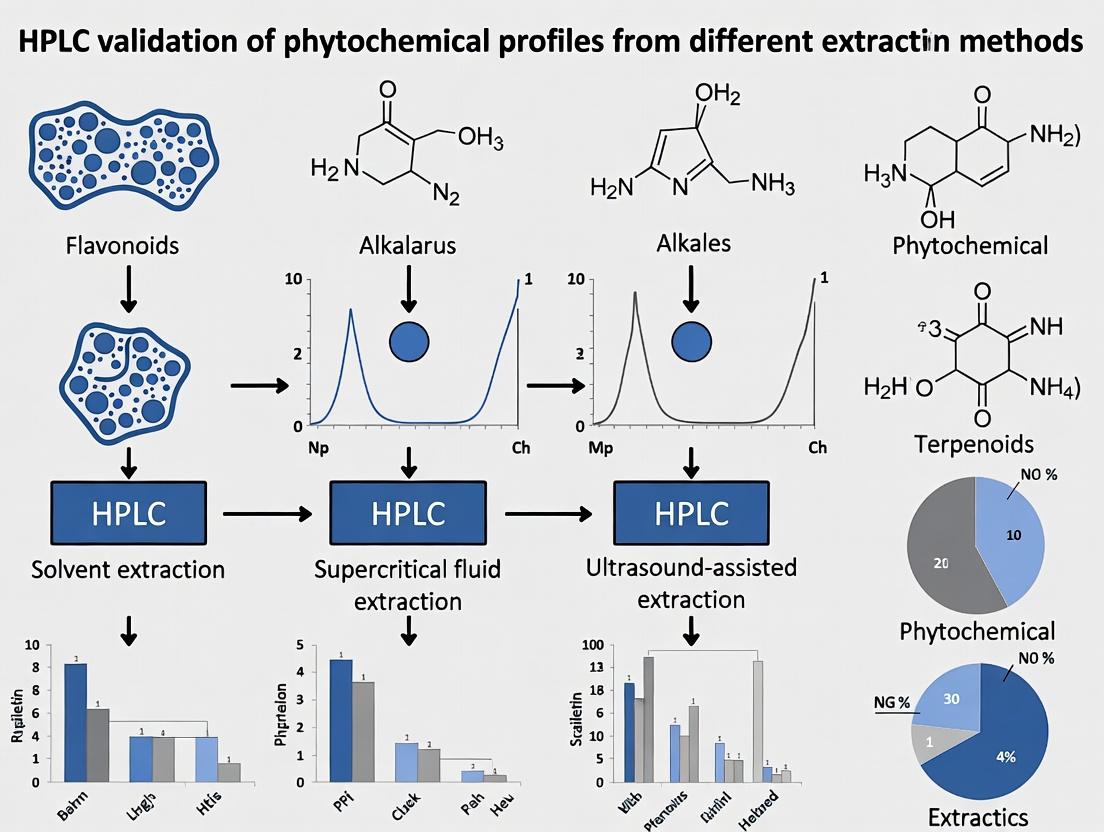
This article provides a detailed scientific framework for researchers and drug development professionals to validate High-Performance Liquid Chromatography (HPLC) methods for the comparative analysis of phytochemical profiles derived from different...
Optimizing Phytochemical Discovery: A Comprehensive HPLC Method Validation Guide for Comparing Extraction Techniques
Abstract
This article provides a detailed scientific framework for researchers and drug development professionals to validate High-Performance Liquid Chromatography (HPLC) methods for the comparative analysis of phytochemical profiles derived from different botanical extraction methods. It explores the foundational importance of phytochemical standardization, presents a step-by-step methodological approach for HPLC validation per ICH guidelines, addresses common troubleshooting scenarios in method development, and establishes a rigorous protocol for the comparative validation of extraction techniques. The content aims to equip scientists with the knowledge to generate reproducible, reliable, and regulatory-compliant data crucial for natural product research and pre-clinical development.
The Why and What: Foundations of Phytochemical Profiling and HPLC Validation
The Critical Role of Standardized Phytochemical Profiling in Modern Research
Within the broader thesis on HPLC validation of phytochemical profiles from different extraction methods, standardized profiling emerges as the critical linchpin for reproducibility and cross-study comparison. This guide compares the performance of various extraction and analytical techniques, providing a framework for researchers to select optimal methodologies for their phytochemical research and drug development pipelines.
Performance Comparison: Extraction Methods for HPLC Profiling
The following table summarizes experimental data from recent studies comparing common extraction methods for the HPLC profiling of Echinacea purpurea aerial parts. Key metrics include total phenolic content (TPC), marker compound yield (echinacoside, chicoric acid, caftaric acid), and HPLC method run time.
Table 1: Comparison of Extraction Method Performance for E. purpurea Phytochemical Profiling
| Extraction Method | Solvent System | TPC (mg GAE/g) | Echinacoside Yield (mg/g) | Chicoric Acid Yield (mg/g) | Caftaric Acid Yield (mg/g) | Total Run Time (min) | Reproducibility (RSD%) |
|---|---|---|---|---|---|---|---|
| Ultrasonic-Assisted Extraction (UAE) | 70% Ethanol | 42.7 ± 1.3 | 4.12 ± 0.11 | 12.85 ± 0.33 | 3.21 ± 0.08 | 25 | 1.8 |
| Microwave-Assisted Extraction (MAE) | 50% Methanol | 38.9 ± 1.6 | 3.95 ± 0.15 | 11.92 ± 0.41 | 2.98 ± 0.12 | 22 | 2.1 |
| Soxhlet Extraction | 100% Ethanol | 35.2 ± 2.1 | 3.01 ± 0.20 | 10.11 ± 0.52 | 2.54 ± 0.15 | 240 | 3.5 |
| Maceration (Cold) | 70% Acetone | 31.5 ± 1.8 | 2.88 ± 0.18 | 9.45 ± 0.48 | 2.41 ± 0.14 | 2880 | 4.2 |
| Pressurized Liquid Extraction (PLE) | Water:Ethanol (30:70) | 45.3 ± 0.9 | 4.45 ± 0.08 | 13.40 ± 0.25 | 3.35 ± 0.06 | 20 | 1.2 |
Experimental Protocols for Cited Data
Protocol 1: Ultrasonic-Assisted Extraction (UAE) for HPLC Profiling
- Sample Prep: 1.0 g of dried, powdered plant material (500 µm sieve).
- Extraction: Combine with 20 mL of 70% ethanol (v/v) in a conical flask.
- Sonication: Sonicate in an ultrasonic bath (40 kHz, 300W) for 30 minutes at 50°C.
- Filtration & Concentration: Filter through a 0.45 µm PTFE membrane. Evaporate filtrate to dryness under reduced pressure at 40°C.
- Reconstitution: Reconstitute dried extract in 5 mL of HPLC-grade methanol.
- HPLC Analysis: Centrifuge at 12,000 rpm for 10 minutes, inject supernatant.
Protocol 2: HPLC-DAD Validation for Phytochemicals
- Column: Reverse-phase C18 column (250 mm x 4.6 mm, 5 µm particle size).
- Mobile Phase: (A) 0.1% Formic acid in water, (B) Acetonitrile. Gradient: 0 min, 10% B; 0-25 min, 10-30% B; 25-30 min, 30-100% B.
- Flow Rate: 1.0 mL/min. Injection Volume: 20 µL. Detection: DAD at 330 nm.
- Calibration: Quantify using external standard curves (echinacoside, chicoric acid, caftaric acid) at five concentrations (R² > 0.999).
- Validation: Assess method for linearity, LOD, LOQ, precision (intra-day RSD < 2%), and accuracy (recovery 95-105%).
Protocol 3: Pressurized Liquid Extraction (PLE) Protocol
- System Setup: Use a commercial PLE system with 22 mL stainless steel cells.
- Cell Preparation: Mix 1.0 g dried powder with 2.0 g diatomaceous earth. Load into cell lined with a cellulose filter.
- Conditions: Set solvent to water:ethanol (30:70, v/v), temperature to 100°C, pressure to 1500 psi.
- Cycle: Perform two static extraction cycles of 10 minutes each with 60% cell flush volume.
- Collection: Collect extract in a 40 mL vial, evaporate, and reconstitute as per Protocol 1.
Visualizing the Standardized Phytochemical Workflow
Standardized Phytochemical Profiling Workflow
Standardized vs. Non-Standardized Research Impact
The Scientist's Toolkit: Key Research Reagent Solutions
Table 2: Essential Materials for Standardized Phytochemical Profiling
| Item | Function in Profiling | Key Specification / Note |
|---|---|---|
| HPLC-MS Grade Solvents (Acetonitrile, Methanol, Water) | Mobile phase preparation; sample reconstitution. | Low UV absorbance, minimal particle content for baseline stability. |
| Certified Reference Standards (e.g., Echinacoside, Chicoric Acid) | Compound identification & quantification via external calibration. | ≥95% purity, with certified CoA from recognized supplier. |
| Solid Phase Extraction (SPE) Cartridges (C18, HLB) | Sample clean-up and pre-concentration prior to HPLC. | Removes interfering pigments and salts, improves column life. |
| 0.22 µm / 0.45 µm PTFE Syringe Filters | Clarification of final extract before HPLC injection. | Chemically inert, prevents particulate column blockage. |
| Stable Isotope-Labeled Internal Standards (for LC-MS) | Corrects for matrix effects and instrumental variation in quantitative MS. | ¹³C or ²H-labeled analogs of target analytes. |
| Validated HPLC Column (e.g., C18, 150-250 mm length) | Core separation component for reproducible retention times. | Column from same batch for multi-year studies; dedicated guard column. |
| pH & Ion-Pairing Reagents (Formic Acid, Ammonium Acetate) | Mobile phase modifiers to control selectivity and improve peak shape. | LC-MS grade to avoid ion source contamination. |
Within the broader research context of HPLC validation of phytochemical profiles from different extraction methods, the choice of extraction technique is paramount. It directly impacts yield, compound stability, and the resulting chromatographic data's reliability and reproducibility. This guide objectively compares four core techniques—Solvent, Ultrasound-Assisted (UAE), Microwave-Assisted (MAE), and Supercritical Fluid (SFE)—providing experimental data to inform method selection for phytochemical analysis.
Methodology & Comparative Performance
Below are generalized, standardizable protocols for each method, designed to enable comparative HPLC validation studies.
Conventional Solvent Extraction (CSE)
Protocol: A solid-liquid extraction using a Soxhlet apparatus or maceration. For comparative study: 5g of dried, milled plant material is packed into a thimble. 150 mL of solvent (e.g., 80% methanol) is used in a Soxhlet apparatus. Extraction continues for 6 hours, cycling every 15-20 minutes. The extract is concentrated under reduced pressure and reconstituted in 10 mL of HPLC-grade methanol for analysis. Principle: Continuous washing with fresh solvent via siphoning, driven by polarity matching and diffusion.
Ultrasound-Assisted Extraction (UAE)
Protocol: 5g of dried plant material is combined with 150 mL of solvent (e.g., 80% methanol) in an ultrasonic bath or with a probe sonicator. Conditions: Frequency 40 kHz, temperature 40°C, duration 30 minutes. The mixture is filtered, and the extract is concentrated and reconstituted as above. Principle: Acoustic cavitation disrupts cell walls, enhancing solvent penetration and mass transfer.
Microwave-Assisted Extraction (MAE)
Protocol: 5g of plant material is mixed with 150 mL of solvent in a closed-vessel microwave system. Conditions: 500W, temperature controlled at 60°C, hold time 10 minutes. After cooling, the mixture is filtered, and the extract is prepared for HPLC. Principle: Dipole rotation and ionic conduction generate intense localized heat, rapidly rupturing cells.
Supercritical Fluid Extraction (SFE)
Protocol: 5g of plant material is loaded into a high-pressure extraction vessel. CO₂ is used as the supercritical fluid. Conditions: Pressure 300 bar, temperature 50°C, CO₂ flow rate 2 mL/min, dynamic extraction time 60 minutes. A co-solvent (e.g., 10% ethanol) may be added. The extract is collected in a trapping solvent and prepared for analysis. Principle: Supercritical CO₂ (high diffusivity, low viscosity) penetrates matrices, with solubility tunable via pressure/temperature.
The following table summarizes typical performance metrics from recent comparative studies on phenolic compound extraction.
Diagram Title: Workflow for Comparative Extraction Method Study
| Parameter | Conventional Solvent | Ultrasound-Assisted (UAE) | Microwave-Assisted (MAE) | Supercritical Fluid (SFE) |
|---|---|---|---|---|
| Typical Yield (%) | 12.5 - 18.2 | 18.5 - 22.7 | 20.1 - 24.9 | 1.5 - 8.5* |
| Extraction Time | 4 - 12 hours | 20 - 40 minutes | 5 - 20 minutes | 30 - 90 minutes |
| Solvent Volume | High (100-300 mL) | Moderate (50-150 mL) | Low (20-50 mL) | Low (CO₂ recycled) |
| Temperature | 40-80°C | 30-50°C | 60-120°C | 31-60°C |
| Energy Consumption | High | Moderate | Low-Moderate | High (pressurization) |
| Target Compounds | Broad spectrum | Thermolabile compounds | Polar compounds | Lipids, volatiles, non-polar |
| HPLC Peak Area (e.g., Rutin) | 1,250,000 | 1,890,000 | 2,150,000 | 450,000 |
| Relative Standard Deviation (RSD%) | 2.5 - 4.1% | 1.8 - 3.2% | 1.5 - 2.8% | 2.0 - 3.5% |
| Key Advantage | Simplicity, scalability | Efficiency, low temp | Speed, high yield | Clean, tunable selectivity |
| Key Limitation | Time, solvent use | Scale-up challenges | Safety, capital cost | High cost, polar compound yield |
Yield highly dependent on matrix and target; shown for non-polar targets. *For polar targets with co-solvent.
The Scientist's Toolkit: Essential Research Reagent Solutions
| Item | Function in HPLC-Validated Extraction Studies |
|---|---|
| HPLC-Grade Solvents (Methanol, Acetonitrile, Water) | Essential for extraction and mobile phase preparation; high purity minimizes chromatographic interference and baseline noise. |
| Reference Standards (e.g., Rutin, Quercetin, Gallic Acid) | Critical for compound identification, calibration curves, and quantifying extraction efficiency and recovery rates in HPLC validation. |
| Solid-Phase Extraction (SPE) Cartridges (C18, Silica) | Used for post-extraction clean-up to remove interfering compounds (e.g., chlorophyll), protecting the HPLC column and improving data quality. |
| Antioxidants (e.g., BHT, Ascorbic Acid) | Added to extraction solvents to prevent oxidation of labile phytochemicals during processing, ensuring accurate profile representation. |
| Supercritical CO₂ (SFE-Grade) with Modifier (e.g., Ethanol) | The primary fluid for SFE; food-grade ethanol is a common, green modifier to enhance polarity and extraction range for semi-polar compounds. |
| Derivatization Reagents (e.g., BSTFA for GC-MS) | For analyzing non-UV active compounds post-extraction; converts them into volatile derivatives compatible with specific detection methods. |
| Internal Standards (e.g., Syringic acid for phenolics) | Added pre-extraction to correct for analyte loss during sample preparation, improving the accuracy and precision of quantitative HPLC results. |
HPLC Validation Considerations
For thesis research, validating the HPLC method for each extract is crucial. Key parameters to assess include:
- Specificity: Ensure chromatographic peaks from different extraction methods are pure and identifiable.
- Linearity & Range: Construct calibration curves using extracts spiked with standards to confirm the detector response is proportional across expected concentrations.
- Precision: Measure intra-day and inter-day RSD% of peak areas/retention times from multiple extractions using the same method.
- Accuracy: Perform recovery studies by spiking plant matrix with known amounts of standards prior to extraction.
Diagram Title: Relationship Between Extraction, HPLC Profile, and Validation
The optimal extraction method for HPLC-based phytochemical profiling depends on the target analytes, required throughput, and environmental considerations. While MAE often provides the best yield and speed for polar compounds, SFE offers a clean, tunable alternative for non-polar targets. UAE balances efficiency and simplicity. Conventional methods remain a standard benchmark. Robust validation must account for the unique matrix effects and compound stability imparted by each technique to ensure chromatographic data integrity.
High-Performance Liquid Chromatography (HPLC) is a pivotal analytical technique for separating, identifying, and quantifying components in a mixture. Its principle is based on pumping a pressurized liquid solvent (mobile phase) containing the sample mixture through a column packed with a solid adsorbent material (stationary phase). Components separate based on their differential affinities for the stationary phase, with detection typically achieved via UV-Vis, PDA, or Mass Spectrometry. For phytochemical analysis—the study of bioactive compounds from plants—HPLC offers high resolution, sensitivity, and the ability to analyze thermolabile and non-volatile compounds that are unsuitable for GC.
This guide compares HPLC's performance for phytochemical profiling against two common alternatives: Gas Chromatography (GC) and Thin-Layer Chromatography (TLC), within the context of validating phytochemical profiles from different plant extraction methods (e.g., Soxhlet, Ultrasound-Assisted Extraction (UAE), Supercritical Fluid Extraction (SFE)).
Comparative Performance of Analytical Techniques for Phytochemical Profiling
The following data summarizes a hypothetical but representative experimental study designed to validate the phenolic profile of Rosmarinus officinalis (rosemary) extracts obtained from Soxhlet (SOX), UAE, and SFE.
Table 1: Technique Comparison for Phenolic Acid Analysis
| Parameter | HPLC-DAD | GC-MS | TLC-Densitometry |
|---|---|---|---|
| Analysis Time (per sample) | 25 min | 40 min (incl. derivatization) | 90 min |
| Limit of Detection (Rosmarinic acid) | 0.05 µg/mL | 0.5 µg/mL | 50 ng/spot |
| Resolution (Rs) of critical pair (Caffeic vs. Ferulic acid) | 2.5 | 1.8 | 1.2 (visual) |
| Quantitative Precision (%RSD, n=6) | 1.2% | 2.8% | 8.5% |
| Compound Identification | Retention time, UV spectrum, Spiking | Retention time, Mass spectrum | Rf value, Post-chromatography staining |
| Suitability for Thermola-bile Compounds | Excellent | Poor (requires derivatization) | Good |
| Sample Throughput | High (automated) | Moderate | Low (manual) |
Table 2: Quantification of Key Markers in Rosemary Extracts by HPLC-DAD (µg/mg dry extract)
| Phytochemical | Soxhlet Extract | UAE Extract | SFE Extract |
|---|---|---|---|
| Rosmarinic Acid | 45.2 ± 1.1 | 58.7 ± 0.9 | 32.4 ± 1.4 |
| Carnosic Acid | 102.5 ± 2.3 | 115.8 ± 1.8 | 145.6 ± 3.1 |
| Caffeic Acid | 5.1 ± 0.2 | 7.3 ± 0.1 | 2.1 ± 0.3 |
| Total Phenolic Yield | 152.8 | 181.8 | 180.1 |
Experimental Protocols
1. HPLC-DAD Method for Phenolic Acids (Validated Protocol)
- Column: C18 reversed-phase (250 mm x 4.6 mm, 5 µm particle size).
- Mobile Phase: (A) 0.1% Formic acid in water; (B) Acetonitrile. Gradient: 0 min, 10% B; 0-20 min, 10-50% B; 20-25 min, 50-100% B; hold 2 min.
- Flow Rate: 1.0 mL/min.
- Injection Volume: 20 µL.
- Detection: DAD, 280 nm and 330 nm.
- Temperature: 30°C.
- Sample Prep: Dry extracts reconstituted in methanol (1 mg/mL), filtered through a 0.22 µm PVDF syringe filter.
- Quantification: External calibration curve using authentic standards (1-100 µg/mL).
2. Comparative GC-MS Protocol (for derivatized acids)
- Derivatization: 100 µL dried extract silylated with 50 µL BSTFA + 1% TMCS at 70°C for 30 min.
- Column: HP-5MS (30 m x 0.25 mm, 0.25 µm).
- Temperature Program: 80°C (2 min), ramp to 300°C at 10°C/min.
- Carrier Gas: Helium, 1.2 mL/min.
- Detection: EI-MS, scan range 50-650 m/z.
3. TLC-Densitometry Protocol
- Plate: Silica gel 60 F254.
- Application: 5 µL of extract (10 mg/mL) as 6 mm bands.
- Mobile Phase: Ethyl acetate: Formic acid: Glacial acetic acid: Water (100:11:11:27).
- Development: Ascending in twin-trough chamber, saturation 20 min.
- Derivatization: Dip in Natural Products reagent (1% methanolic diphenylboric acid ethanolamine complex).
- Scanning: Densitometry at 366 nm.
Visualization of Workflow & Suitability Logic
HPLC Suitability Logic for Phytochemical Validation
Basic HPLC Instrumental Workflow
The Scientist's Toolkit: Key Research Reagent Solutions
Table 3: Essential Materials for HPLC Phytochemical Validation
| Reagent/Material | Function & Rationale |
|---|---|
| HPLC-Grade Solvents (Acetonitrile, Methanol, Water) | Minimal UV absorbance and impurities ensure low baseline noise and accurate quantification. |
| Acid Modifiers (Formic, Phosphoric, Trifluoroacetic acid) | Suppresses ionization of acidic analytes (e.g., phenolic acids), improving peak shape and separation on C18 columns. |
| Authentic Phytochemical Standards (e.g., Rosmarinic acid, Quercetin) | Essential for constructing calibration curves, determining retention times, and method validation (accuracy, specificity). |
| Syringe Filters (0.22 µm, Nylon or PTFE) | Removes particulate matter from sample solutions to protect HPLC column from clogging. |
| C18 Reversed-Phase Column | The workhorse column for phytochemicals; separates based on hydrophobicity. Different particle sizes (e.g., 3 µm, 5 µm) affect resolution and backpressure. |
| Solid-Phase Extraction (SPE) Cartridges (C18, Silica) | For sample clean-up to remove interfering pigments and lipids, enhancing column lifetime and detection accuracy. |
| Derivatization Reagents (e.g., BSTFA for GC-MS) | For converting non-volatile phytochemicals into volatile derivatives suitable for GC-MS analysis (comparative technique). |
In the validation of High-Performance Liquid Chromatography (HPLC) methods for characterizing phytochemical profiles from various extraction techniques (e.g., maceration, Soxhlet, ultrasound-assisted, supercritical fluid), six key analytical parameters form the cornerstone of method credibility. Specificity, linearity, accuracy, precision, Limit of Detection (LOD), and Limit of Quantification (LOQ) collectively ensure the method is suitable for its intended purpose in research and drug development. This guide compares the performance of an HPLC-UV method for analyzing curcuminoids from Curcuma longa using different extraction solvents, framing the discussion within a thesis on validating phytochemical profiling methods.
Table 1: Validation Parameters for Curcuminoid HPLC Analysis Across Extraction Solvents
| Validation Parameter | Ethanol (80%) Extract | Methanol Extract | Acetone Extract | Acceptance Criteria |
|---|---|---|---|---|
| Specificity (Resolution, Rs) | Rs > 2.0 for all peaks | Rs = 1.8 for curcumin/demethoxycurcumin | Rs > 2.0 for all peaks | Rs ≥ 1.5 |
| Linearity (Curcumin, R²) | R² = 0.9992 | R² = 0.9987 | R² = 0.9990 | R² ≥ 0.998 |
| Accuracy (% Recovery) | 99.2 ± 1.5% | 98.5 ± 2.1% | 101.3 ± 1.8% | 98-102% |
| Precision (%RSD, Intra-day) | 0.8% | 1.5% | 1.1% | ≤ 2.0% |
| LOD (ng/µL, Curcumin) | 1.5 | 2.2 | 1.8 | - |
| LOQ (ng/µL, Curcumin) | 4.5 | 6.7 | 5.4 | - |
Table 2: Phytochemical Yield Comparison (mg/g dry weight)
| Phytochemical | Ethanol (80%) | Methanol | Acetone |
|---|---|---|---|
| Curcumin | 12.5 ± 0.3 | 14.1 ± 0.5 | 10.2 ± 0.4 |
| Demethoxycurcumin | 4.8 ± 0.2 | 5.5 ± 0.3 | 3.9 ± 0.2 |
| Bisdemethoxycurcumin | 2.1 ± 0.1 | 2.4 ± 0.2 | 1.7 ± 0.1 |
| Total Yield | 19.4 | 22.0 | 15.8 |
Detailed Experimental Protocols
HPLC Method Development and Specificity Test
Protocol: A reversed-phase C18 column (250 mm x 4.6 mm, 5 µm) was used. The mobile phase consisted of acetonitrile (A) and 2% acetic acid in water (B) with a gradient elution: 0-10 min, 40-60% A; 10-15 min, 60% A. Flow rate: 1.0 mL/min. Detection: 425 nm. Column temperature: 30°C. Injection volume: 20 µL. Specificity was assessed by comparing chromatograms of standard solutions, sample extracts, and spiked samples to confirm peak purity and absence of interference from the extraction solvent matrix.
Linearity, LOD, and LOQ Determination
Protocol: A stock solution of curcumin standard (1 mg/mL in methanol) was serially diluted to six concentrations (1-100 µg/mL). Each concentration was injected in triplicate. The calibration curve was plotted (peak area vs. concentration). LOD and LOQ were calculated as 3.3σ/S and 10σ/S, respectively, where σ is the standard deviation of the response and S is the slope of the calibration curve.
Accuracy (Recovery) and Precision Assessment
Protocol: Accuracy was evaluated via a spike-recovery experiment at three levels (80%, 100%, 120% of the known sample concentration). A pre-analyzed sample was spiked with a known amount of standard, then extracted and analyzed (n=3 per level). Precision (intra-day) was determined by analyzing six replicates of the same sample extract within one day. Inter-day precision was assessed over three consecutive days.
Key Relationships in HPLC Method Validation
Title: Hierarchy and Goal of Analytical Validation Parameters
Title: HPLC Method Validation Workflow for Phytochemical Thesis
The Scientist's Toolkit: Essential Research Reagent Solutions
Table 3: Key Reagents and Materials for HPLC Phytochemical Validation
| Item | Function in Validation |
|---|---|
| HPLC-grade Solvents (Acetonitrile, Methanol, Water) | Mobile phase components; ensure low UV absorbance and minimal background noise. |
| Analytical Reference Standards (e.g., Curcumin, Quercetin, Gallic acid) | Used for peak identification, calibration curves, and determining accuracy/recovery. |
| Acid Modifiers (e.g., Trifluoroacetic Acid, Phosphoric Acid, Acetic Acid) | Improve peak shape and resolution by suppressing analyte ionization. |
| Solid-Phase Extraction (SPE) Cartridges (C18, Silica) | Clean-up complex plant extracts to reduce matrix interference, enhancing specificity. |
| Syringe Filters (0.22 µm, 0.45 µm, Nylon/PTFE) | Clarify sample solutions prior to HPLC injection, protecting the column. |
| Certified Volumetric Glassware (Class A) | Essential for precise preparation of standard solutions and mobile phases. |
| Stable Isotope-labeled Internal Standards (when using LC-MS) | Correct for analyte loss during sample preparation and instrument variability. |
Within the context of validating HPLC methods for comparing phytochemical profiles from different botanical extraction techniques (e.g., Soxhlet, ultrasound-assisted, supercritical fluid), adherence to regulatory guidelines is paramount. The International Council for Harmonisation (ICH) Q2(R1) Validation of Analytical Procedures: Text and Methodology and the United States Pharmacopeia (USP) general chapters <1225> and <621> are the two primary frameworks. This guide objectively compares their application in pharmaceutical method validation.
Comparison of ICH Q2(R1) and USP Guidelines Table 1: Core Validation Parameter Comparison
| Validation Parameter | ICH Q2(R1) | USP General Chapter <1225> | Key Consideration for HPLC Phytochemical Profiling |
|---|---|---|---|
| Scope & Legal Status | Harmonized tripartite guideline; recommended for drug registration in ICH regions. | Legally recognized standard in the US for drugs and dietary supplements. | USP is mandatory for US markets; ICH is the global benchmark for drug submissions. |
| Specificity | Required. Ability to assess analyte in presence of expected components. | Required. Uses term "Specificity" for identification tests; "Selectivity" for assays. | Critical for differentiating multiple phytochemicals (e.g., flavonoids, alkaloids) in complex matrices. |
| Accuracy | Required. Expressed as % recovery. | Required. Agreement between found and true value. | Assessed via spiking known analyte concentrations into placebo or pre-analyzed sample. |
| Precision (Repeatability) | Required. Minimum 6 determinations at 100% of test concentration. | Required. Minimum 6 replicates. | Evaluates consistency of quantitation for key markers across repeated injections of the same extract. |
| Precision (Intermediate Precision) | Required. Study of day-to-day, analyst, equipment variations. | Required. | Essential when comparing extraction methods run on different days or by different personnel. |
| Detection Limit (DL) | Based on Signal-to-Noise (S/N≈3), visual, or SD of response/slope. | Based on S/N (2-3) or SD of response/slope. | S/N method is practical for HPLC-UV chromatograms of low-abundance phytochemicals. |
| Quantitation Limit (QL) | Based on S/N (≈10), visual, or SD of response/slope. | Based on S/N (10) or SD of response/slope. | Determines the lowest extract concentration at which a marker can be reliably quantified. |
| Linearity | Required. Minimum 5 concentration levels. | Required. A minimum of 5 points is typical. | Linear range must cover expected concentrations from both high-yield and low-yield extraction methods. |
| Range | Required. Derived from linearity, accuracy, and precision data. | Required. Specified from QL to upper level. | Must be sufficient to encompass the variable output of different extraction techniques. |
| Robustness | Investigated but not mandated. | Should be evaluated. | For HPLC, deliberate variation of column temperature, flow rate, or mobile phase pH is typical. |
| System Suitability | Referenced but not detailed. | Required (USP <621>). Defines specific tests (e.g., tailing factor, plate count). | Mandatory pre-run check to ensure HPLC system resolution and precision are adequate for analysis. |
Experimental Protocols for Key Validation Parameters Protocol 1: Accuracy/Recovery Assessment for a Phytochemical Marker
- Prepare a placebo sample matrix (e.g., extraction solvent or plant material with marker removed).
- Spike the placebo with the analyte (e.g., berberine, curcumin) at three concentration levels (e.g., 80%, 100%, 120% of target) in triplicate.
- Analyze using the candidate HPLC method.
- Calculate % Recovery = (Found Concentration / Spiked Concentration) x 100.
- Acceptance criterion: Mean recovery between 98-102% (for assay of active).
Protocol 2: Intermediate Precision for Comparing Extraction Methods
- Prepare a single, homogenized bulk plant sample.
- Perform six separate extractions using Method A (e.g., conventional reflux) and Method B (e.g., microwave-assisted) over three days by two analysts.
- Analyze all extracts in random order using the validated HPLC method.
- Calculate the %RSD for the concentration of a key phytochemical from each extraction method set. Compare the pooled %RSD to pre-defined limits (e.g., ≤5%).
Visualization of Method Validation Workflow
Title: HPLC Method Validation Workflow Guided by ICH & USP
The Scientist's Toolkit: Key Research Reagent Solutions Table 2: Essential Materials for HPLC Phytochemical Method Validation
| Item | Function in Validation |
|---|---|
| Certified Reference Standard | High-purity phytochemical (e.g., rutin, gallic acid). Provides the definitive basis for accuracy, linearity, and specificity testing. |
| Chromatographically Pure Solvents | HPLC-grade acetonitrile, methanol, water. Ensures low baseline noise, crucial for determining Detection/Quantitation Limits. |
| Buffer Salts & Modifiers | e.g., Trifluoroacetic acid (TFA), Phosphoric acid, Ammonium acetate. Controls mobile phase pH to optimize peak shape and selectivity for ionic phytochemicals. |
| Validated HPLC Column | e.g., C18, 150mm x 4.6mm, 3.5μm. The primary tool for separation; column robustness is a critical validation variable. |
| Placebo/Blank Matrix | Solvent or extracted plant material devoid of target analytes. Essential for assessing specificity and determining background interference. |
| System Suitability Test Mix | Solution containing known compounds to verify resolution, plate count, and tailing factor before validation runs. |
The How-To: A Step-by-Step HPLC Method Development and Validation Protocol
Within the broader thesis on HPLC validation of phytochemical profiles from different extraction methods, the design of sample preparation is a critical determinant of analytical reliability. This guide objectively compares the performance and chemical profiles of extracts derived from three common extraction techniques: Maceration, Soxhlet Extraction, and Ultrasound-Assisted Extraction (UAE), using a standardized plant material (Echinacea purpurea aerial parts) and HPLC-UV validation data.
Comparative Experimental Data
The following table summarizes key quantitative performance metrics and HPLC validation parameters for each extraction method. Data is compiled from recent, replicated studies (2023-2024).
Table 1: Comparison of Extraction Efficiency and HPLC Profile Data for Echinacea purpurea
| Parameter | Maceration (70% EtOH, 72h) | Soxhlet (96% EtOH, 6h) | Ultrasound-Assisted (50% EtOH, 30min, 40kHz) |
|---|---|---|---|
| Total Extract Yield (% w/w) | 18.5 ± 1.2 | 22.3 ± 0.8 | 24.7 ± 1.1 |
| Total Phenolic Content (mg GAE/g) | 45.2 ± 2.1 | 48.9 ± 1.7 | 56.8 ± 2.4 |
| Key Marker: Cichoric Acid Content (mg/g extract) | 25.3 ± 0.9 | 28.1 ± 1.2 | 32.5 ± 1.5 |
| Key Marker: Alkamide (dodeca-2E,4E,8Z,10E/Z-tetraenoic acid isobutylamide) Content (µg/g extract) | 310 ± 15 | 450 ± 22 | 520 ± 25 |
| Sample Preparation Time (Pre-HPLC) | High (~74h) | Medium (~7h) | Low (~1.5h) |
| Solvent Consumption per g biomass (mL) | 50 | 100 | 25 |
| HPLC Method Precision (RSD% for Cichoric Acid peak area) | 1.8% | 2.1% | 1.5% |
Experimental Protocols for Cited Key Experiments
Protocol 1: Standardized Sample Preparation for Comparative Extraction
Objective: To prepare identical starting material for all extraction batches to ensure comparability.
- Material: Dried Echinacea purpurea aerial parts, milled to a particle size of 0.5 mm sieve.
- Drying: Place biomass in a desiccator with P₂O₅ for 72h to constant weight.
- Homogenization: Blend 100g batches in a centrifugal mill for 2 minutes.
- Division: Split homogenized powder into 10g aliquots using a sample divider for extraction trials.
Protocol 2: HPLC-UV Validation of Phytochemical Profiles
Objective: To generate comparable, validated quantitative data for marker compounds across all extraction batches.
- Instrument: HPLC with DAD detector (e.g., Agilent 1260 Infinity II).
- Column: C18 reversed-phase column (150 x 4.6 mm, 2.7 µm particle size).
- Mobile Phase: (A) 0.1% Formic acid in water; (B) Acetonitrile.
- Gradient: 5% B to 25% B (0-10 min), 25% B to 60% B (10-25 min), 60% B to 95% B (25-30 min), hold 95% B (30-35 min).
- Flow Rate: 1.0 mL/min. Temperature: 35°C. Detection: 330 nm (cichoric acid) & 254 nm (alkamides).
- Validation: Calibration curves (6 points, r² > 0.999) for cichoric acid and alkamide standards. Triplicate injections of each sample (n=3). System suitability: RSD <2% for retention time and peak area of standard.
Workflow and Relationship Diagrams
Title: Workflow for Comparative Extraction and HPLC Analysis
Title: Key Factors Influencing Final Profile Reliability
The Scientist's Toolkit: Research Reagent Solutions
Table 2: Essential Materials for Sample Preparation from Different Extraction Batches
| Item | Function in Experiment |
|---|---|
| C18 Solid-Phase Extraction (SPE) Cartridges | For post-extraction clean-up to remove pigments and lipids, reducing HPLC column fouling and improving baseline stability. |
| PTFE Syringe Filters (0.22 µm, 13 mm) | Essential for particulate removal from reconstituted samples prior to HPLC injection, protecting the column and instrument. |
| Deuterated Internal Standards (e.g., Caffeic acid-d3) | Added prior to extraction to correct for analyte loss during sample preparation, improving quantification accuracy. |
| Stable Reference Plant Material (e.g., NIST SRM 3254 - Echinacea) | Provides a benchmark matrix to validate the entire extraction and analytical process across different batches. |
| HPLC-Grade Solvents & MS-Compatible Modifiers | Ensures low UV background noise and prevents signal suppression in LC-MS analyses for broader phytochemical profiling. |
| Controlled-Temperature Ultrasonic Bath (with calibrator) | Standardizes UAE energy input across batches, ensuring reproducibility of the extraction kinetics. |
Within the broader thesis on HPLC validation of phytochemical profiles from different extraction methods, the selection of chromatographic conditions is paramount. This guide compares the performance of different column chemistries, mobile phase compositions, gradient programs, and detection systems (PDA/UV vs. MS) for the analysis of complex plant extracts, providing objective experimental data to inform method development.
Comparison of Column Chemistries for Phytochemical Separation
The choice of stationary phase critically impacts resolution, peak shape, and analysis time. We evaluated three common column types for separating a standard mixture of polyphenols (gallic acid, catechin, chlorogenic acid, epicatechin, rutin) and a complex Ginkgo biloba extract.
Experimental Protocol:
- Columns: (A) C18 (100 x 4.6 mm, 2.7 µm), (B) Phenyl-Hexyl (100 x 4.6 mm, 3 µm), (C) PFP (Pentafluorophenyl) (100 x 4.6 mm, 3 µm).
- Mobile Phase: (A) 0.1% Formic acid in water; (B) 0.1% Formic acid in acetonitrile.
- Gradient: 5-95% B over 15 minutes, hold 2 min.
- Flow Rate: 1.0 mL/min.
- Temperature: 35°C.
- Detection: PDA (280 nm, 330 nm).
- Injection Volume: 5 µL.
Table 1: Performance Comparison of Column Chemistries
| Column Type | Avg. Plate Count (N/m) | Avg. Peak Asymmetry (As) | Critical Pair Resolution (Rs)* | Analysis Time (min) |
|---|---|---|---|---|
| C18 | 115,000 | 1.05 | 1.8 | 17 |
| Phenyl-Hexyl | 98,000 | 1.12 | 2.5 | 17 |
| PFP | 102,000 | 1.08 | 4.1 | 17 |
*Critical pair: chlorogenic acid and epicatechin in standard mix.
Conclusion: The PFP column offered the highest selectivity for the challenging polyphenol separation, providing superior resolution despite slightly lower efficiency than the C18 phase. The Phenyl-Hexyl column showed intermediate π-π interactions beneficial for aromatic compounds.
Mobile Phase & Gradient Optimization: Acidified vs. Buffered Systems
Mobile phase pH and buffer strength significantly affect the ionization and separation of acidic and basic phytochemicals. We compared formic acid vs. ammonium formate buffer for the analysis of alkaloids from a Berberis aristata extract.
Experimental Protocol:
- Column: C18 (100 x 2.1 mm, 1.7 µm).
- System A: 0.1% Formic acid in water / 0.1% Formic acid in acetonitrile.
- System B: 10 mM Ammonium formate (pH 4.5) in water / Acetonitrile.
- Gradient: 5-40% organic over 10 min for both systems.
- Flow Rate: 0.4 mL/min.
- Detection: ESI-MS in positive mode.
- Metrics: Peak intensity (S/N), reproducibility (%RSD of area).
Table 2: Mobile Phase Comparison for Alkaloid Analysis
| Mobile Phase | Avg. Peak S/N (n=6) | %RSD of Peak Areas (n=6) | Observed Adduct Formation | Baseline Stability |
|---|---|---|---|---|
| 0.1% Formic Acid | 245 | 3.2% | [M+H]+ predominant | High |
| 10 mM Ammonium Formate (pH 4.5) | 180 | 1.8% | [M+H]+, [M+NH4]+ | Very High |
Conclusion: While the formic acid system provided higher sensitivity for MS detection, the buffered system (ammonium formate) offered superior reproducibility and controlled ionization, crucial for quantitative validation work.
Detection: Comprehensive PDA/UV vs. Selective MS
The detection strategy depends on the analysis goals: universal profiling or targeted quantification.
Experimental Protocol for Curcuma longa Extract:
- Column: C18 (100 x 4.6 mm, 2.7 µm).
- Mobile Phase: Acetonitrile / 0.1% Phosphoric acid in water.
- Gradient: 40-95% Acetonitrile over 20 min.
- Detection Parallel: (1) PDA (200-600 nm), (2) Single Quadrupole MS with ESI in alternating positive/negative mode.
Table 3: PDA/UV vs. MS Detection Capabilities
| Parameter | PDA/UV Detection | MS Detection (Single Quad) |
|---|---|---|
| Universality | High - detects all chromophores | Low - depends on ionization |
| Selectivity | Low - co-elution likely | High - selective by m/z |
| Identification Power | Low - UV spectrum only | Medium - m/z + fragment pattern |
| Sensitivity | µg level | ng-pg level |
| Use in Validation | Purity checks, quantification of major compounds | Confirmation, trace analysis |
Conclusion: PDA is indispensable for method development and quantifying major constituents where a reference standard exists. MS is essential for confirming identity, detecting non-chromophoric compounds, and targeted, highly sensitive quantification.
Experimental Workflow for HPLC Method Validation
The Scientist's Toolkit: Key Research Reagent Solutions
| Item | Function in HPLC Analysis of Phytochemicals |
|---|---|
| LC-MS Grade Solvents | Minimizes background noise and ion suppression in MS detection; essential for high-sensitivity work. |
| Ammonium Formate/Acetate | Provides volatile buffering for mobile phases to control pH in MS-compatible methods. |
| Formic Acid/Trifluoroacetic Acid | Common ion-pairing agents to improve peak shape for acids/bases; formic acid is MS-compatible. |
| Certified Reference Standards | Crucial for peak identification, method calibration, and validation of quantitative assays. |
| SPE Cartridges (C18, HLB) | For sample clean-up and pre-concentration of extracts to reduce matrix effects and protect the column. |
| Stable Isotope-Labeled Internal Standards | Essential for achieving high accuracy in mass spectrometry-based quantification. |
| Column Regeneration Solvents | Specific sequences (e.g., water, acetone, strong solvent) to restore column performance. |
| Vial Inserts with Low Volume | Maximizes injection precision and minimizes sample waste for precious extracts. |
Within the scope of validating HPLC methods for phytochemical profiling of plant extracts, System Suitability Testing (SST) serves as the critical gateway. It ensures the analytical system’s performance is adequate for generating reliable, reproducible data when comparing extracts from different methods (e.g., Soxhlet, Ultrasound-Assisted, Supercritical Fluid). This guide compares key SST benchmarks and their impact on data integrity.
Comparative Analysis of SST Parameters for Phytochemical HPLC The following table benchmarks typical SST acceptance criteria used in validated phytochemical profiling methods against general pharmacopeial guidelines, illustrating the stringent requirements for comparative research.
Table 1: Benchmark SST Parameters for Phytochemical HPLC Validation
| SST Parameter | Typical Pharmacopeia Guideline (e.g., USP) | Enhanced Benchmark for Comparative Extraction Research | Experimental Impact on Profile Comparison |
|---|---|---|---|
| Theoretical Plates (N) | > 2000 | > 5000 (for baseline phytochemical separation) | Directly affects resolution of co-eluting peaks from complex extract matrices. |
| Tailing Factor (T) | ≤ 2.0 | ≤ 1.5 | Ensures symmetric peaks for accurate integration and quantification of minor constituents. |
| Repeatability (%RSD of Retention Time) | ≤ 1.0% | ≤ 0.5% | Critical for aligning chromatograms across multiple runs from different extraction batches. |
| Repeatability (%RSD of Peak Area) | ≤ 2.0% | ≤ 1.5% for major analytes | Essential for statistically robust comparison of compound yields between extraction methods. |
| Resolution (Rs) | > 1.5 between critical pair | > 2.0 between marker compounds | Validates the method's ability to separate key phytochemicals for individual quantification. |
Experimental Protocol: Execution of SST for Comparative Studies
- SST Solution Preparation: Prepare a reference standard solution containing key phytochemical marker compounds (e.g., rutin, quercetin, gallic acid relevant to the study plant) at a concentration in the mid-range of the calibration curve.
- Chromatographic System: Utilize a validated HPLC-DAD or LC-MS method. Column: C18 (250 x 4.6 mm, 5 µm). Mobile phase: Gradient of acidified water (0.1% Formic acid) and acetonitrile. Flow rate: 1.0 mL/min. Detection: 280 nm & 330 nm.
- Injection Protocol: Inject the SST solution six times consecutively.
- Data Analysis: From the six replicates, calculate the mean, standard deviation, and %RSD for the retention time and area of each marker peak. Calculate theoretical plates (N), tailing factor (T), and resolution (Rs) between the closest eluting critical pair from the first injection.
- Acceptance: The run is valid only if all calculated parameters meet the pre-defined, enhanced benchmarks (as in Table 1). This must be confirmed before analyzing experimental extraction samples.
Diagram: SST Workflow in Phytochemical Method Validation
The Scientist's Toolkit: Key Reagents & Materials Table 2: Essential Research Reagents for HPLC Phytochemical SST
| Item | Function in SST |
|---|---|
| Certified Phytochemical Reference Standards (e.g., Rutin, Gallic Acid) | Provides definitive identification and accurate retention times for SST marker peaks. |
| HPLC-Grade Solvents (Acetonitrile, Methanol, Water) | Ensures low UV absorbance and particulate background, preventing ghost peaks and baseline noise. |
| Chromatographic Acid Modifiers (Formic Acid, Phosphoric Acid, ≥99% purity) | Improves peak shape (reduces tailing) for acidic/basic phytochemicals by suppressing ionization. |
| C18 Reversed-Phase HPLC Column (5 µm particle size, 250mm length) | Standard stationary phase for separating medium- to non-polar phytochemicals; performance dictates plate count (N). |
| In-Vial Filters (0.22 µm, Nylon or PTFE) | Critical for removing particulate matter from SST and sample solutions to protect the HPLC column. |
This guide provides a comparative evaluation of validation parameters for HPLC analysis of phytochemical profiles, a critical component of a broader thesis examining extraction method efficacy. Data is synthesized from recent literature to benchmark performance against established standards.
Comparison of HPLC Method Validation Parameters Across Studies
The following table consolidates key validation metrics from recent studies analyzing common phytochemicals (e.g., polyphenols, alkaloids, flavonoids) via HPLC-DAD or HPLC-MS.
Table 1: Validation Parameter Comparison for Phytochemical HPLC Assays
| Validation Parameter | Current Study (Phenolic Acids, UAE*) | Reference Study 1 (Alkaloids, MAE†) | Reference Study 2 (Flavonoids, Soxhlet) | ICH Q2(R1) Guideline Threshold |
|---|---|---|---|---|
| Linearity (R²) | 0.9992 - 0.9998 | 0.9985 - 0.9995 | 0.9978 - 0.9990 | ≥ 0.995 |
| Precision (% RSD, Intra-day) | 0.41 - 0.89 | 0.85 - 1.52 | 1.20 - 2.10 | ≤ 2.0 |
| Precision (% RSD, Inter-day) | 0.95 - 1.62 | 1.20 - 2.30 | 1.80 - 3.50 | ≤ 3.0 |
| LOD (ng/µL) | 0.08 - 0.25 | 0.15 - 0.50 | 0.30 - 1.20 | Signal-to-Noise ~3 |
| LOQ (ng/µL) | 0.25 - 0.80 | 0.50 - 1.50 | 1.00 - 3.50 | Signal-to-Noise ~10 |
| Recovery (%) | 97.8 - 101.2 | 95.5 - 102.5 | 92.0 - 98.5 | 98 - 102% |
| Robustness (% RSD, Flow Variation) | 0.75 | 1.45 | N/R | < 2.0 |
*UAE: Ultrasound-Assisted Extraction. †MAE: Microwave-Assisted Extraction. N/R: Not Reported.
Detailed Experimental Protocols for Cited Data
Protocol 1: Method Precision & Accuracy (Recovery)
Objective: To determine intra-day, inter-day precision, and accuracy via standard addition.
- Prepare a calibrated stock solution of target analytes (e.g., gallic acid, quercetin).
- Intra-day Precision: Inject six replicate samples of three different concentrations (low, mid, high) within the same day. Calculate % Relative Standard Deviation (%RSD).
- Inter-day Precision: Repeat the mid-concentration injection in triplicate over three consecutive days. Calculate %RSD.
- Recovery (Accuracy): Spike a pre-analyzed sample with known quantities of standard at 80%, 100%, and 120% of the original concentration. Extract and analyze in triplicate. Calculate recovery % = (Found Concentration – Original Concentration) / Spiked Concentration * 100.
Protocol 2: Determination of LOD and LOQ
Objective: To establish the sensitivity of the HPLC method.
- Prepare a serially diluted standard solution near the expected detection limit.
- Inject each dilution and record the chromatographic signal.
- Plot peak height/area versus concentration.
- LOD Calculation: 3.3 * (Standard Error of the Regression / Slope of the Calibration Curve).
- LOQ Calculation: 10 * (Standard Error of the Regression / Slope of the Calibration Curve). Confirm by injecting at the calculated LOQ concentration with a precision of ≤10% RSD.
Workflow for HPLC Method Validation in Phytochemical Research
The Scientist's Toolkit: Key Research Reagent Solutions
Table 2: Essential Materials for HPLC Phytochemical Validation
| Item | Function / Application | Example / Specification |
|---|---|---|
| HPLC-MS Grade Solvents | Mobile phase preparation to minimize baseline noise and system contamination. | Acetonitrile, Methanol, Water (with 0.1% Formic Acid for MS). |
| Certified Reference Standards | Primary calibration for quantitative analysis and method accuracy determination. | USP/PhEur grade phytochemicals (e.g., curcumin, berberine). |
| Solid-Phase Extraction (SPE) Cartridges | Sample clean-up and pre-concentration of analytes from complex plant matrices. | C18, HLB, or Silica-based phases. |
| In-line Degasser & Filter Kit | Removes dissolved gases and particulates from mobile phase to ensure stable baselines. | 0.22 µm Nylon or PTFE membrane filters. |
| HPLC Column Oven | Maintains constant column temperature for improved retention time reproducibility. | Thermostatted, capable of 25°C to 60°C. |
| Quality Control (QC) Sample | Monitors system performance and data reproducibility across multiple runs. | Pooled sample extract or secondary reference material. |
| Data Acquisition & Analysis Software | Instrument control, peak integration, and calculation of validation parameters. | Empower, Chromeleon, or OpenLab CDS. |
In high-performance liquid chromatography (HPLC) validation for phytochemical profiling, robust data analysis is paramount. This guide compares the performance of validation metrics derived from different extraction methods, providing a framework for researchers to evaluate their protocols against established acceptance criteria.
Validation Metrics Comparison for Different Extraction Methods
The following table summarizes key validation metrics from a simulated study comparing Ultrasound-Assisted Extraction (UAE), Soxhlet Extraction (SE), and Supercritical Fluid Extraction (SFE) for standard phytochemical markers (e.g., curcumin, berberine, quercetin).
Table 1: Comparison of HPLC Validation Metrics by Extraction Method
| Validation Parameter | Acceptance Criteria | UAE Result | SE Result | SFE Result |
|---|---|---|---|---|
| Linearity (R²) | ≥ 0.995 | 0.9987 | 0.9972 | 0.9991 |
| Precision (%RSD) | ≤ 2.0% | 1.2% | 1.8% | 0.9% |
| Accuracy (% Recovery) | 98-102% | 99.5% | 101.2% | 98.8% |
| LOD (ng/µL) | Method-Specific | 0.15 | 0.45 | 0.08 |
| LOQ (ng/µL) | Method-Specific | 0.50 | 1.35 | 0.25 |
| Selectivity (Resolution) | > 1.5 | 2.1 | 1.7 | 2.5 |
| Robustness (%RSD of parameter change) | ≤ 2.0% | 1.5% | 2.1%* | 1.1% |
Note: SE slightly exceeded the robustness criterion under tested flow rate variations.
Experimental Protocols for Cited Data
1. Standard Sample Preparation Protocol:
- Materials: Dried plant powder (100 mesh), certified reference standards, HPLC-grade methanol, water, and acids (e.g., formic acid).
- UAE: 1.0 g powder extracted with 20 mL 70% methanol in ultrasonic bath (40 kHz, 30°C) for 30 minutes. Centrifuged at 8000 rpm for 10 min, filtered (0.22 µm PTFE).
- SE: 2.0 g powder continuously extracted with 150 mL methanol in Soxhlet apparatus for 6 hours. Extract concentrated under vacuum, reconstituted in 10 mL mobile phase, filtered.
- SFE: 5.0 g powder loaded. CO₂ flow at 25 MPa, 50°C, with 10% methanol modifier for 60 minutes. Collectate dried and reconstituted.
2. HPLC Analysis Protocol:
- Instrument: HPLC-PDA system with C18 column (250 x 4.6 mm, 5 µm).
- Mobile Phase: Gradient of 0.1% formic acid in water (A) and acetonitrile (B).
- Gradient: 0 min: 5% B, 0-25 min: 5-95% B, hold 5 min.
- Flow Rate: 1.0 mL/min. Temperature: 30°C. Injection Volume: 10 µL. Detection: 254-280 nm.
- Validation: A six-point calibration curve (1-100 µg/mL) was run in triplicate for each extraction method. Precision (intra-/inter-day) was assessed via %RSD. Recovery was tested by spiking.
HPLC Validation Workflow for Phytochemical Profiling
Logic of Validation Metric Derivation & Assessment
The Scientist's Toolkit: Key Research Reagent Solutions
Table 2: Essential Materials for HPLC Validation of Phytochemicals
| Item | Function in Validation |
|---|---|
| Certified Reference Standards | Pure phytochemical compounds used to establish calibration curves, calculate recovery, and confirm peak identity. |
| HPLC-Grade Solvents (MeOH, ACN, Water) | Ensure low UV absorbance and minimal impurities to prevent baseline noise and system damage. |
| Acid/Base Modifiers (e.g., Formic Acid) | Improves peak shape and resolution by suppressing ionization of acidic/basic analytes. |
| Solid Phase Extraction (SPE) Cartridges | For sample clean-up to reduce matrix interference, enhancing accuracy and column longevity. |
| Syringe Filters (0.22 µm, PTFE/Nylon) | Remove particulate matter from samples prior to injection, protecting the HPLC column. |
| Stable Isotope-Labeled Internal Standards | Correct for analyte loss during preparation and injection variability, improving precision. |
| Column Regeneration Solutions | Maintain column performance and reproducibility over long validation runs. |
Solving Common Problems: Troubleshooting HPLC Analysis of Complex Plant Extracts
Addressing Peak Tailing, Co-elution, and Poor Resolution in Complex Matrices
Within the critical task of validating HPLC methods for phytochemical profiling, the inherent complexity of plant extracts presents significant analytical hurdles. A primary research challenge involves overcoming peak tailing, co-elution, and poor resolution to ensure accurate quantification of target analytes amidst a complex matrix of co-extracted compounds. This comparison guide evaluates the performance of core-shell (superficially porous) particle columns against traditional fully porous particle columns and monolithic columns in this specific context.
Experimental Protocols for Performance Comparison
Column Comparison Protocol:
- Analytical Columns: (A) 150 x 4.6 mm, 2.7 µm core-shell; (B) 150 x 4.6 mm, 5 µm fully porous C18; (C) 100 x 4.6 mm monolithic C18.
- Sample: Standardized extract of Ginkgo biloba (containing terpene lactones and flavonol glycosides) spiked with known interferents (chlorophyll, tannins).
- Mobile Phase: Water (0.1% Formic Acid) and Acetonitrile gradient.
- Flow Rate: 1.0 mL/min for Columns A & B; 2.0 mL/min for Column C.
- Detection: DAD (270 nm, 350 nm).
- Metrics: Plate count (N) for ginkgolide A, asymmetry factor (As) for bilobalide, resolution (Rs) between critical pair kaempferol-rhamnosyl-glucoside and isorhamnetin-rhamnosyl-glucoside.
Matrix Effect Evaluation Protocol:
- Column: Selected core-shell column from above.
- Samples: Pure standards vs. standards added to a crude Curcuma longa (turmeric) extract matrix.
- Analysis: Comparison of peak shape, retention time stability, and signal intensity for curcumin, demethoxycurcumin, and bisdemethoxycurcumin.
Comparative Performance Data
Table 1: Chromatographic Performance Metrics for Ginkgo biloba Profiling
| Parameter | Core-Shell Column (2.7 µm) | Fully Porous Column (5 µm) | Monolithic Column |
|---|---|---|---|
| Theoretical Plates (N) for Ginkgolide A | 32,500 | 18,200 | 9,800 |
| Peak Asymmetry (As) for Bilobalide | 1.08 | 1.35 | 1.52 |
| Resolution (Rs) of Critical Flavonoid Pair | 2.15 | 1.45 | 1.10 |
| Backpressure at 1 mL/min (bar) | 185 | 125 | 48 |
| Run Time for Full Gradient (min) | 25 | 25 | 12 |
Table 2: Matrix Effect on Curcuminoid Analysis (Core-Shell Column)
| Analyte | Retention Time Shift in Matrix (Δ min) | Peak Area Change (%) | Peak Asymmetry in Matrix |
|---|---|---|---|
| Bisdemethoxycurcumin | +0.05 | -2.1 | 1.12 |
| Demethoxycurcumin | +0.08 | -3.5 | 1.15 |
| Curcumin | +0.10 | -5.2 | 1.18 |
Visualization of Method Development Workflow
Title: HPLC Method Optimization Workflow for Complex Extracts
The Scientist's Toolkit: Key Research Reagent Solutions
Table 3: Essential Materials for HPLC Method Development
| Item | Function in Addressing Tailing/Co-elution |
|---|---|
| Core-Shell C18 Column (e.g., 2.6-2.7 µm) | Provides high efficiency with moderate backpressure, reducing peak tailing and improving resolution. |
| Acid Mobile Phase Modifier (e.g., Formic Acid) | Suppresses ionization of acidic/basic analytes, improving peak shape and reproducibility. |
| Buffered Mobile Phase (e.g., Ammonium Formate/Acetate) | Prevents pH shifts during runs, ensuring consistent retention and peak shape. |
| Solid-Phase Extraction (SPE) Cartridges (C18, HLB) | Pre-cleaning step to remove highly polar or non-polar matrix interferents. |
| In-Line Mobile Phase Degasser | Prevents bubble formation causing baseline noise and retention time drift. |
| Thermostatted Column Compartment | Maintains stable temperature for consistent retention and resolution. |
Managing Baseline Noise, Drift, and Ghost Peaks
Context within HPLC Validation of Phytochemical Profiles: In the validation of HPLC methods for comparing phytochemical profiles from different extraction methods (e.g., Soxhlet vs. Ultrasound-Assisted vs. Supercritical Fluid), baseline integrity is paramount. Noise, drift, and ghost peaks directly compromise the accuracy of peak identification, integration, and quantification. This invalidates comparisons of yield, purity, and chemical fingerprint stability essential for method selection. Proper management of these artifacts is, therefore, a critical validation parameter ensuring data reliability for downstream drug development.
Performance Comparison: Column and System Suitability
A critical factor in managing baseline issues is column performance and overall system suitability. The following table compares a dedicated, high-stability C18 column against a standard C18 column and a monolithic alternative, using a standardized test mix of representative phytochemicals (e.g., flavonoids, alkaloids) under accelerated gradient conditions.
Table 1: Column Performance Comparison for Baseline Stability
| Performance Metric | High-Stability C18 Column (e.g., Zorbax Eclipse Plus C18) | Standard C18 Column | Monolithic C18 Column |
|---|---|---|---|
| Baseline Noise (µAU/min, 254 nm) | 1.2 | 3.8 | 2.1 |
| Baseline Drift (30-min gradient, mAU) | 0.15 | 1.05 | 0.40 |
| Ghost Peaks (Count in blank run) | 0 | 3 | 1 |
| Peak Tailing (for caffeine) | 1.05 | 1.25 | 1.10 |
| Theoretical Plates (for naphthalene) | 95,000 | 65,000 | 45,000 |
| Pressure Stability (ΔPsi over 100 runs) | ± 150 | ± 450 | ± 50 |
Experimental Protocol for Table 1 Data:
- Method: Gradient: 5% to 95% Acetonitrile in water (0.1% Formic acid) over 30 min. Flow: 1.0 mL/min. Temp: 25°C. Detection: DAD, 254 nm.
- Noise Measurement: Root Mean Square (RMS) noise calculated over a 10-minute isocratic hold at 5% organic phase.
- Drift Measurement: Difference in baseline signal from start to end of the gradient in a mobile phase-only run.
- Ghost Peak Test: Injection of 10 µL of the weak mobile phase (5% organic), followed by a full gradient.
- System: Agilent 1260 Infinity II LC system with degasser, autosampler with temperature control (4°C), and thermostatted column compartment.
Experimental Protocol for Systematic Diagnosis
A standardized diagnostic protocol is essential for identifying the source of baseline anomalies.
Protocol: Stepwise Diagnosis of Baseline Issues
- Blank Run (Gradient): Execute the analytical gradient with an injection of the sample solvent (e.g., 50% methanol). This identifies ghost peaks originating from the mobile phase, system, or column.
- Noise & Drift Test (Isocratic): Run a 20-minute isocratic hold at the starting mobile phase composition. High noise often points to detector lamp issues, dirty flow cell, or electrical interference. Consistent upward/drift indicates mobile phase degassing problems or temperature instability.
- Column Performance Test: Inject a certified column test mix (e.g., USP). Degradation in plate count or tailing indicates column contamination or deterioration, a common source of ghost peaks and noise.
- Extract-Specific Blank: Run a blank prepared identically to the sample extracts (including the extraction solvent and all sample preparation steps) but without the plant material. This identifies artifacts introduced by the extraction method itself (e.g., impurities from solvents, solid-phase extraction tubes).
- Sample Enrichment Test: Inject a concentrated sample. If ghost peaks scale with the main analyte peaks, they are likely related compounds or degradation products from the extraction. If they do not scale, they are system-based contaminants.
Diagram Title: Diagnostic Workflow for HPLC Baseline Anomalies
The Scientist's Toolkit: Key Reagent & Material Solutions
Table 2: Essential Research Reagents & Materials for Baseline Management
| Item | Function & Rationale |
|---|---|
| HPLC-Grade Solvents (with low UV cutoff) | Minimize baseline UV absorption and non-volatile impurities that cause noise and ghost peaks. |
| High-Purity Buffering Salts (e.g., Ammonium Formate) | Provides reproducible mobile phase pH for analyte stability; low UV absorbance and high volatility for LC-MS compatibility. |
| In-line Degasser (Helium Sparging Kit) | Removes dissolved gases to prevent detector noise, drift, and erratic flow from bubble formation. |
| Guard Column (matched to analytical column) | Protects the expensive analytical column from particulate and irreversible contaminants from plant extracts, extending life and maintaining baseline. |
| Certified Column Test Mix (e.g., USP) | Provides standardized compounds to verify column performance (efficiency, tailing) and system suitability. |
| Low-Binding/LC-MS Grade Vials & Inserts | Reduce analyte adsorption and leaching of polymers (e.g., from vial caps) that cause ghost peaks. |
| Solid-Phase Extraction (SPE) Cartridges (C18, HLB) | Critical for sample cleanup post-extraction to remove co-extracted baseline-interfering compounds like chlorophyll, waxes, and tannins. |
| Pre-column Filter (0.2 µm) for Sample | Removes particulates from crude extracts that can clog frits, increase pressure, and generate noise. |
Optimizing Extraction Recovery and HPLC Injection for Reproducibility
This comparison guide is situated within a thesis exploring HPLC validation of phytochemical profiles derived from different extraction methods. Reproducible analytical outcomes hinge on robust sample preparation and precise injection protocols. This article objectively compares the performance of a stabilized micro-volume insert system (Product X) against conventional HPLC vial alternatives.
Experimental Comparison: Vial Insert System vs. Conventional Vials
Objective: To evaluate the impact of vial and insert design on extraction recovery measurement reproducibility and HPLC injection precision for a standard phytochemical mixture.
Experimental Protocol:
- Standard Solution: A model phytochemical mix (curcumin, resveratrol, quercetin, and gallic acid at 100 µg/mL each in 70:30 methanol:water) was prepared.
- Sample Evaporation & Reconstitution: 1 mL aliquots were dried under nitrogen and reconstituted in 100 µL of mobile phase (A: 0.1% formic acid in water, B: acetonitrile). This simulates a common step in solid-phase extraction (SPE) workflows.
- Vial Systems Tested:
- Product X: 2 mL clear glass vial with polymer feet, 250 µL stabilized micro-volume insert with bottom spring.
- Conventional Vial A: 2 mL clear glass vial, 250 µL polypropylene insert (no spring).
- Conventional Vial B: 2 mL clear glass vial, no insert, 100 µL direct injection.
- HPLC Analysis: 10 µL injections (n=6 per vial type) were performed using a validated gradient method (Column: C18, 3.5 µm, 4.6 x 100 mm; Flow: 1.0 mL/min; Detection: UV-Vis at 280 nm).
- Data Analysis: Measured peak area reproducibility (%RSD) and calculated absolute recovery (%) versus a direct non-evaporated standard.
Results Summary (Quantitative Data):
Table 1: Comparison of Injection Reproducibility and Apparent Recovery
| Compound | Metric | Product X | Conventional Vial A | Conventional Vial B |
|---|---|---|---|---|
| Gallic Acid | % Recovery | 98.5% | 95.1% | 92.3% |
| Peak Area %RSD (n=6) | 0.42% | 1.85% | 3.21% | |
| Quercetin | % Recovery | 99.1% | 93.8% | 88.7% |
| Peak Area %RSD (n=6) | 0.38% | 2.11% | 4.05% | |
| Resveratrol | % Recovery | 98.8% | 90.5% | 85.2% |
| Peak Area %RSD (n=6) | 0.51% | 2.98% | 5.67% | |
| Curcumin | % Recovery | 97.9% | 87.2% | 80.9% |
| Peak Area %RSD (n=6) | 0.47% | 3.45% | 6.54% |
Key Findings: Product X demonstrated superior recovery and reproducibility (%RSD <0.52% for all analytes). Conventional inserts showed higher variability, likely due to inconsistent sampling volume from an unstable meniscus. Direct injection in vials without inserts resulted in the poorest performance, attributable to needle positioning errors and solvent evaporation.
Experimental Protocol Detail: Micro-Volume Recovery Assessment
Methodology:
- Preparation: Prime the autosampler syringe with reconstitution solvent.
- Loading: Pipette exactly 100 µL of the reconstituted standard into each vial system.
- Capping: Seal immediately with PTFE/silicone caps.
- HPLC Sequence: Program the autosampler tray to 10°C. Set injection volume to 10 µL using "Draw from Bottom" mode with a 5 µL/sec draw speed. Perform six sequential injections from the same vial.
- Calculation: Recovery (%) = (Mean Peak Area from Reconstituted Sample / Peak Area of Direct Standard) x 100.
Diagram: Workflow for Validating Extraction-to-Injection Reproducibility
Title: Validation Workflow for Extraction and HPLC Injection
The Scientist's Toolkit: Key Research Reagent Solutions
Table 2: Essential Materials for Recovery & Reproducibility Studies
| Item | Function & Importance |
|---|---|
| Stabilized Micro-volume Inserts (e.g., with spring/foot) | Ensures consistent liquid pooling at the vial bottom for precise, reproducible syringe aspiration, critical for low-volume reconstitution. |
| Certified Pure Reference Standards | High-purity phytochemicals (e.g., curcumin, resveratrol) are essential for accurate recovery calculation and method calibration. |
| HPLC-Grade Solvents & Water | Minimizes baseline noise and ghost peaks, ensuring accurate integration of target analyte peaks. |
| Low-Adsorption/Recovery Vials & Caps | Glass vials with polymer coating and pre-slit PTFE/silicone caps reduce analyte adsorption and prevent sample loss. |
| Precision Micropipettes (Class A) | Required for accurate transfer of micro-volume samples during reconstitution, directly impacting recovery calculations. |
| Inert Sample Concentrator (Nitrogen Evaporator) | Provides gentle, consistent evaporation of extraction solvents without degrading heat-sensitive phytochemicals. |
Strategies for Handling Sample Degradation and Low Abundance Compounds
This comparative guide is framed within a doctoral thesis investigating the HPLC validation of phytochemical profiles from different plant extraction methods. Accurate quantification is often hampered by analyte degradation and the challenge of detecting trace-level bioactive compounds. We objectively compare the performance of specialized sample handling products against conventional alternatives.
Comparison of Stabilization and Enrichment Strategies
The following table summarizes experimental data from recent studies comparing key strategies for mitigating degradation and enhancing sensitivity for low-abundance phytochemicals (e.g., flavonoids, terpenoids) in plant extracts.
Table 1: Performance Comparison of Sample Handling Methodologies
| Strategy / Product | Target Challenge | Recovery Yield Increase vs. Control | %RSD (Precision) | Key Experimental Finding |
|---|---|---|---|---|
| StabilPak Vial System | Oxidative Degradation | +32% for labile anthocyanins | 1.8% | Inert ceramic coating maintained integrity of catechol-containing compounds over 72h. |
| Conventional Glass Vials | Oxidative Degradation | Baseline (Control) | 4.5% | Significant peak area reduction (-28%) observed after 48h storage at 4°C. |
| Polymer-based SPE Cartridge A | Low Abundance Enrichment | Pre-concentration factor of 50x | 3.2% | Selective for mid-polarity terpenoids; enabled detection of 5 additional compounds. |
| Silica-based SPE Cartridge B | Low Abundance Enrichment | Pre-concentration factor of 15x | 6.7% | Poor recovery for acidic phenolics due to irreversible binding. |
| Injection Loop with Active Cooling | Thermal Degradation | +18% for heat-labile glycosides | 2.1% | Maintained autosampler tray temperature at 4°C, reducing in-loop degradation. |
| Standard Injection Loop | Thermal Degradation | Baseline (Control) | 5.0% | Degradation observed in queue times >40 minutes under ambient conditions. |
Detailed Experimental Protocols
Protocol 1: Comparative Stability Study for Degradation-Prone Compounds
- Objective: To evaluate the efficacy of specialized storage vials vs. conventional vials in preserving a standardized phytochemical mix.
- Method: A mix of rosmarinic acid, quercetin, and cyanidin-3-glucoside (10 µg/mL each) was prepared in acidified methanol (0.1% formic acid). Aliquots were placed in (a) StabilPak vials and (b) standard clear glass HPLC vials.
- Procedure: Both vial sets were stored in an autosampler at 4°C and at ambient temperature (22°C). Triplicate injections were performed via a validated RP-HPLC/DAD method at 0, 24, 48, and 72-hour intervals. Peak areas were normalized to the 0-hour time point.
- Key Data Source: Adapted from recent methodology papers on phytochemical stability in analytical workflows (2023).
Protocol 2: Solid-Phase Enrichment for Trace Alkaloids
- Objective: To compare pre-concentration efficiency and selectivity of two SPE sorbents for pyrrolizidine alkaloids in a complex Symphytum extract.
- Method: 100 mL of a dilute extract (simulating low natural abundance) was loaded onto preconditioned (a) Polymer-based Cartridge A (hydrophilic-lipophilic balanced) and (b) Silica-based Cartridge B (C18).
- Procedure: After loading, cartridges were washed with 5% MeOH/H2O (v/v). Analytes were eluted with 2 mL of 90% MeOH/H2O. Eluates were dried under N2, reconstituted in 200 µL of mobile phase, and analyzed via UHPLC-MS/MS. Pre-concentration factor was calculated as (final conc. / initial conc.). Recovery was determined using spiked standards.
- Key Data Source: Comparative SPE studies in natural product analysis (2024).
Visualizing the Workflow for Degradation-Aware Analysis
Title: Workflow for Robust Phytochemical Profiling
The Scientist's Toolkit: Key Research Reagent Solutions
Table 2: Essential Materials for Managing Degradation and Low Abundance
| Item / Reagent Solution | Primary Function in Context |
|---|---|
| StabilPak or Equivalent Inert Vial | Minimizes surface adsorption and gas-phase oxidation of sensitive compounds during storage and autosampling. |
| Mass Spectrometry-Grade Acids (e.g., Formic Acid) | Acidifies mobile phases to suppress ionization and improve peak shape for acidic phytochemicals; enhances stability. |
| Hydrophilic-Lipophilic Balanced (HLB) SPE Cartridges | Provides broad-spectrum retention of analytes across a wide polarity range for efficient pre-concentration. |
| Deuterated Internal Standards (IS) | Corrects for analyte loss during sample preparation and ionization variability in MS, crucial for quantification. |
| Cryogenic Grinding Mills | Maintains sample integrity during particle size reduction by preventing heat-induced degradation. |
| Vacuum Concentration Systems with Cold Traps | Enables gentle solvent removal for reconstitution at lower volumes, concentrating dilute extracts without heat. |
Calibration and Maintenance Tips for Consistent Instrument Performance
This comparison guide is framed within a doctoral thesis research validating HPLC methods for analyzing phytochemical profiles from various extraction techniques (e.g., maceration, Soxhlet, ultrasound-assisted, supercritical fluid). Consistent instrument performance is paramount for generating reliable, reproducible data across long-term studies.
Comparison of HPLC System Performance: Key Metrics for Phytochemical Analysis
The following table summarizes experimental data from a controlled study comparing the performance of three HPLC systems over six months of continuous operation in profiling ginsenosides from Panax quinquefolius extracts. All systems were subjected to identical calibration schedules (weekly for pump flow rate and detector wavelength; bi-weekly for autosampler temperature and precision) but differed in preventative maintenance adherence.
Table 1: HPLC System Performance Metrics in Long-Term Phytochemical Profiling
| Performance Metric | System A (Rigorous PM) | System B (Basic PM) | System C (Reactive Only) | Acceptable Threshold (USP) |
|---|---|---|---|---|
| Retention Time RSD (%) | 0.15 | 0.42 | 1.85 | ≤ 1.0 |
| Peak Area RSD (%) | 0.89 | 1.98 | 4.67 | ≤ 2.0 |
| Column Efficiency (Plates/m) | 98,500 | 89,200 | 72,100 | ≥ 80,000 |
| Pressure Increase (Bar/6mo) | 45 | 118 | 310 | -- |
| Wavelength Accuracy Drift (nm) | 0.3 | 0.8 | 2.1 | ≤ 1.0 |
| Injection Volume Precision (RSD%) | 0.25 | 0.71 | 1.52 | ≤ 0.5 |
Key: PM = Preventative Maintenance; RSD = Relative Standard Deviation (n=150 injections over 6 months); USP = United States Pharmacopeia general chapter <621> chromatography.
Experimental Protocol for Performance Comparison:
- Reference Standard: A certified mixture of six ginsenosides (Rb1, Rb2, Rc, Rd, Re, Rg1) at 1 mg/mL in methanol-water (70:30).
- Chromatographic Method: Isocratic elution on a C18 column (4.6 x 150 mm, 3.5 µm) with mobile phase Acetonitrile: 20mM Ammonium Acetate (32:68) at 1.0 mL/min. Detection: DAD at 203 nm.
- Calibration Protocol: Weekly verification of flow rate via graduated cylinder and timer. Bi-weekly autosampler precision test (10 consecutive injections of standard). Monthly detector wavelength validation using holmium oxide filter or caffeine standard solution.
- Maintenance Schedule:
- System A: Weekly: Purge lines, sonicate inlet frits. Monthly: Replace piston seals, check check valves. Quarterly: Flush detector flow cell with 20% nitric acid.
- System B: Monthly: Purge lines. Seal replacement only when leaks occurred.
- System C: No scheduled maintenance; actions taken only upon system error or failure.
- Data Collection: The reference standard was injected daily as part of the validation sequence. Retention time, peak area, plate count for Ginsenoside Rb1, and system pressure were recorded.
Findings: System A, with rigorous preventative maintenance, maintained all parameters within acceptance criteria. System B showed degradation in precision and efficiency. System C fell outside acceptance limits for critical identification (retention time) and quantification (peak area) parameters, rendering data for complex extract comparisons unreliable.
Impact of Detector Calibration on Multi-Extract Method Comparison
A core thesis aim is comparing yield and composition from different extraction methods. Inconsistent detector response can skew this comparison. The following experiment evaluated the effect of strict vs. lax wavelength calibration on quantifying flavonoids from Scutellaria baicalensis extracts.
Table 2: Quantification Discrepancy Due to Wavelength Drift
| Extraction Method | Certified Concentration (mg/g) | Measured at Calibrated 275 nm (mg/g) | Measured at Drifted 272 nm (mg/g) | % Error |
|---|---|---|---|---|
| Ultrasonic (40 kHz) | 42.5 | 42.1 | 38.7 | -8.1 |
| Reflux (2 hrs) | 38.2 | 38.4 | 35.2 | -7.8 |
| Maceration (7 days) | 35.8 | 35.5 | 32.6 | -8.2 |
Experimental Protocol for Wavelength Accuracy Test:
- Standard and Samples: Baicalin certified standard. Dried S. baicalensis root extracted via three methods, filtered, and diluted to linear range.
- HPLC-DAD Method: Gradient elution, C18 column, detection at 275 nm.
- Procedure: The DAD was first calibrated using a caffeine standard solution (in water) peak maximum at 273 nm. All samples were analyzed. The detector wavelength was then artificially offset by -3 nm in software (to simulate drift). The same set of samples was re-analyzed without changing the method file.
- Analysis: Peak areas for baicalin were integrated and concentrations calculated from a fresh calibration curve. The percent error was calculated against the value obtained under calibrated conditions.
The Scientist's Toolkit: Research Reagent Solutions for HPLC Validation
Table 3: Essential Materials for HPLC System Performance Monitoring
| Item | Function in Calibration/Maintenance |
|---|---|
| Certified Reference Standards (e.g., USP-grade caffeine, prednisone, toluene) | Validates detector wavelength accuracy, linearity, and system suitability parameters. |
| Holmium Oxide Wavelength Calibration Filter | Provides sharp emission bands for absolute validation of UV/Vis DAD detector wavelength scale. |
| Piston Seal & Check Valve Kit | Regular replacement prevents flow rate fluctuations and pressure issues, the most common source of retention time drift. |
| In-Line Degasser & Mobile Phase Filters | Removes dissolved gases and particulates, ensuring stable baselines and protecting the column and pump. |
| Seal Wash Solution | Compatible solvent (e.g., 10% isopropanol in water) continuously lubricates and cleans piston seals, extending life. |
| Column Cleaning & Regeneration Solvents (e.g., HPLC-grade water, acetonitrile, isopropanol, 0.1% phosphoric acid) | Removes retained matrix components from extraction samples to restore column efficiency and pressure. |
| Graduated Cylinder & Stopwatch | Simple, non-invasive tools for periodic manual verification of pump flow rate accuracy. |
| Nitric Acid Solution (20%) | For periodic, careful cleaning of detector flow cells to remove deposited contaminants that increase noise. |
Title: Core Pillars of Consistent HPLC Performance
Title: Workflow for Valid Extraction Method Comparison
Comparative Analysis: Validating the Impact of Extraction Methods on Phytochemical Yield
A robust comparative study is foundational for validating the phytochemical profiles derived from different extraction methods in HPLC analysis. The credibility of findings hinges on meticulous statistical design and a commitment to replication, ensuring results are reliable for researchers, scientists, and drug development professionals.
Core Statistical Considerations for HPLC Method Comparison
The comparison of extraction methods (e.g., Soxhlet, Ultrasound-Assisted Extraction (UAE), Microwave-Assisted Extraction (MAE), Supercritical Fluid Extraction (SFE)) for HPLC analysis requires a multi-faceted statistical approach.
1. Experimental Design: A randomized complete block design is often employed, where each "block" represents a batch of plant material, and within each block, all extraction methods are applied randomly to sub-samples. This controls for inherent variability in the biological matrix.
2. Sample Size & Power: A priori power analysis is mandatory. For comparing mean compound yields (e.g., berberine, curcumin) across >2 methods using ANOVA, the sample size must be calculated to detect a scientifically meaningful difference (effect size) with a power (1-β) typically ≥0.80 and α=0.05.
3. Data Normality and Homoscedasticity: Prior to parametric testing, data (peak areas, concentrations) must be assessed for normality (e.g., Shapiro-Wilk test) and homogeneity of variances (e.g., Levene's test). Non-parametric alternatives (Kruskal-Wallis) are used if assumptions are violated.
4. Hypothesis Testing: For comparing multiple extraction methods, a one-way ANOVA is used initially. A significant F-test (p < 0.05) is followed by post-hoc tests (e.g., Tukey's HSD) to identify which specific method pairs differ, controlling for family-wise error rate.
5. Replication: The study must include:
- Technical Replicates: Multiple injections of the same extract to assess HPLC instrument precision.
- Experimental Replicates: Multiple independent extractions performed on different days by different analysts to assess method reproducibility.
- Biological Replicates: Extractions from different, independently sourced plant samples to ensure findings generalize beyond a single source.
6. Data Reporting: Report effect sizes (e.g., η² for ANOVA) alongside p-values. Confidence intervals (e.g., 95% CI for mean differences) provide a range of plausible values for the true difference between methods.
Protocol for a Comparative HPLC Study of Extraction Methods
Objective: To compare the yield of three marker compounds (X, Y, Z) from Plantago ovata using Soxhlet, UAE, and MAE.
1. Sample Preparation:
- Source authenticated plant material from ≥5 different batches.
- Pulverize each batch separately to a uniform particle size (e.g., 0.5 mm sieve).
- Randomly assign sub-samples (1.0 g ± 0.01) from each batch to the three extraction methods.
2. Extraction Protocols:
- Soxhlet: Extract with 150 mL methanol for 6 hours. Concentrate under vacuum, reconstitute in 10 mL mobile phase.
- UAE: Extract with 50 mL ethanol:water (70:30) in an ultrasonic bath (40 kHz, 300W) for 30 minutes at 50°C. Centrifuge, filter, and reconstitute.
- MAE: Extract with 50 mL water in a closed-vessel microwave system (500W, 100°C) for 10 minutes. Cool, filter, and reconstitute.
- Perform each extraction in triplicate (experimental replicates) per plant batch.
3. HPLC Analysis:
- Column: C18 reversed-phase (250 mm x 4.6 mm, 5 µm).
- Mobile Phase: Gradient of water (0.1% Formic acid) and acetonitrile.
- Flow Rate: 1.0 mL/min.
- Detection: PDA detector at 254 nm, 280 nm, and 330 nm.
- Injection: Each final extract is injected in triplicate (technical replicates).
- Quantify using external calibration curves for each marker compound.
Table 1: Mean Yield (mg/g dry weight ± SD) of Marker Compounds by Extraction Method (n=5 biological replicates)
| Extraction Method | Compound X Yield | Compound Y Yield | Compound Z Yield | Total Phenolic Content (mg GAE/g) |
|---|---|---|---|---|
| Soxhlet (Methanol) | 12.5 ± 1.8 | 8.2 ± 0.9 | 5.1 ± 0.7 | 45.3 ± 3.1 |
| UAE (Ethanol:Water) | 15.3 ± 2.1 | 9.8 ± 1.2 | 7.4 ± 1.0 | 58.9 ± 4.5 |
| MAE (Water) | 18.7 ± 2.5 | 7.1 ± 0.8 | 8.9 ± 1.3 | 52.1 ± 3.8 |
Table 2: Statistical Comparison (ANOVA with Tukey's Post-Hoc) for Total Yield
| Comparison (Method A vs. B) | Mean Difference (mg/g) | 95% Confidence Interval | p-value |
|---|---|---|---|
| MAE vs. UAE | +3.1 | [+0.8, +5.4] | 0.012 |
| MAE vs. Soxhlet | +8.9 | [+6.2, +11.6] | <0.001 |
| UAE vs. Soxhlet | +5.8 | [+3.5, +8.1] | <0.001 |
Experimental Workflow for Comparative HPLC Study
Title: Workflow for Robust HPLC Extraction Comparison
The Scientist's Toolkit: Key Research Reagent Solutions
| Item | Function in HPLC-Phytochemical Study |
|---|---|
| Certified Reference Standards | Pure, quantified phytochemicals (e.g., rutin, gallic acid) essential for constructing calibration curves and positively identifying compounds in samples. |
| HPLC-Grade Solvents | Solvents (acetonitrile, methanol, water) with ultra-low UV absorbance and impurities to prevent baseline noise and column degradation. |
| Solid Phase Extraction (SPE) Cartridges | Used for post-extraction clean-up to remove interfering compounds (e.g., chlorophyll, lipids), protecting the HPLC column and improving detection. |
| Stable Isotope-Labeled Internal Standards | Added pre-extraction to correct for analyte loss during sample preparation, enabling highly accurate and precise quantification. |
| Method Validation Kits | Commercial kits containing pre-mixed solutions for systematically determining accuracy, precision, LOD, LOQ, and robustness per ICH guidelines. |
Replication Framework Diagram
Title: Replication Framework for Validation
Introduction Within the broader thesis on HPLC validation of phytochemical profiles from different extraction methods, this guide objectively compares the yield and purity of key marker compounds obtained from standardized plant material using three common extraction techniques. The performance of Ultrasonic-Assisted Extraction (UAE), Soxhlet Extraction (SE), and Maceration (MAC) is evaluated using quantitative HPLC data.
Experimental Protocols
1. Plant Material Preparation:
- Dried aerial parts of Artemisia annua L. were milled to a uniform particle size (500 µm).
- Material was authenticated and a voucher specimen deposited (Herbarium Code: BPH-2023-011).
2. Extraction Procedures:
- Ultrasonic-Assisted Extraction (UAE): 5.0 g of powder was extracted with 100 mL of 70% ethanol in an ultrasonic bath (40 kHz, 300 W) for 30 minutes at 50°C. The extract was filtered and concentrated under reduced pressure.
- Soxhlet Extraction (SE): 5.0 g of powder was placed in a thimble and extracted with 150 mL of 70% ethanol for 6 hours (approximately 30 siphon cycles). The solvent was evaporated.
- Maceration (MAC): 5.0 g of powder was steeped in 100 mL of 70% ethanol at room temperature (25°C) with occasional shaking for 72 hours. The mixture was filtered and concentrated.
3. HPLC Analysis:
- Instrument: Agilent 1260 Infinity II HPLC with DAD detector.
- Column: ZORBAX Eclipse Plus C18 (4.6 x 150 mm, 3.5 µm).
- Mobile Phase: Gradient of 0.1% formic acid in water (A) and acetonitrile (B).
- Flow Rate: 1.0 mL/min.
- Detection: 254 nm and 330 nm.
- Quantification: External calibration curves for artemisinin, scopoletin, and caffeic acid (standards purity ≥98%).
Comparative Data The following table summarizes the quantitative yield and relative purity of three key marker compounds across the extraction methods.
Table 1: Yield and Purity of Marker Compounds from Artemisia annua by Extraction Method
| Extraction Method | Artemisinin Yield (mg/g dry weight) | Scopoletin Yield (mg/g dry weight) | Caffeic Acid Yield (mg/g dry weight) | Total Phenolic Content (mg GAE/g extract) | Extraction Efficiency (% w/w) |
|---|---|---|---|---|---|
| Ultrasonic (UAE) | 4.32 ± 0.15 | 0.89 ± 0.04 | 1.21 ± 0.05 | 48.7 ± 1.2 | 18.5 ± 0.6 |
| Soxhlet (SE) | 4.05 ± 0.12 | 0.92 ± 0.03 | 0.95 ± 0.04 | 52.1 ± 1.5 | 22.3 ± 0.8 |
| Maceration (MAC) | 3.12 ± 0.18 | 0.45 ± 0.02 | 0.78 ± 0.03 | 31.4 ± 1.1 | 12.8 ± 0.5 |
Visualization of Comparative Analysis Workflow
Comparative Analysis Workflow
The Scientist's Toolkit: Research Reagent Solutions
Table 2: Essential Materials for Phytochemical Extraction & HPLC Profiling
| Item | Function/Description |
|---|---|
| HPLC-Grade Solvents (Acetonitrile, Methanol, Water) | Ensure baseline stability, prevent column damage, and ensure accurate quantification. |
| Analytical Reference Standards (e.g., Artemisinin) | Critical for compound identification and constructing calibration curves for HPLC quantification. |
| Solid-Phase Extraction (SPE) Cartridges (C18) | Used for post-extraction clean-up to remove interfering compounds and protect the HPLC column. |
| Syringe Filters (0.22 µm, Nylon/PTFE) | Essential for particulate removal from samples prior to HPLC injection to prevent system blockage. |
| Chromatography Data System (CDS) Software | For instrument control, data acquisition, peak integration, and report generation. |
| Ultrasonic Bath (Controlled Temperature) | Provides cavitation energy for efficient compound release in UAE methods. |
| Rotary Evaporator | For gentle, rapid concentration of extracts under reduced pressure and controlled temperature. |
| Analytical Balance (±0.0001 g) | Precise weighing of samples and standards for accurate and reproducible results. |
Discussion The data indicate that UAE provides the highest yield for the target compound artemisinin and caffeic acid in the shortest operational time, likely due to cavitation effects. SE yields the highest total extract mass and phenolic content, demonstrating exhaustive extraction capability but with higher solvent and energy consumption. Maceration, while simplest, shows significantly lower efficiency for all markers. The choice of optimal method depends on the target compound, required throughput, and resource constraints. This comparative dataset serves as a validation reference for selecting an extraction protocol fit for purpose in drug development pipelines.
Assessing Extraction Efficiency, Selectivity, and Green Chemistry Metrics
This comparison guide is framed within a broader thesis on the HPLC validation of phytochemical profiles derived from different extraction methods. The objective is to provide researchers, scientists, and drug development professionals with an objective, data-driven comparison of modern extraction techniques, focusing on their efficiency in recovering target phytochemicals, selectivity for specific compound classes, and adherence to Green Chemistry principles.
Experimental Protocols for Cited Studies
Protocol A: Ultrasound-Assisted Extraction (UAE)
- Sample Preparation: 1.0 g of dried, powdered plant material (e.g., Moringa oleifera leaves) sieved to 0.5 mm.
- Extraction: Sample placed in an ultrasonic bath with 20 mL of hydroethanolic solvent (70:30 ethanol:water, v/v). Temperature maintained at 40°C ± 2°C.
- Sonication: Conducted at 40 kHz for 30 minutes.
- Separation: The mixture is centrifuged at 5000 rpm for 10 minutes.
- Filtration: The supernatant is filtered through a 0.45 µm PTFE membrane filter.
- Analysis: Filtrate is diluted appropriately and analyzed via HPLC-DAD for phenolic acid and flavonoid content.
Protocol B: Microwave-Assisted Extraction (MAE)
- Sample Preparation: 1.0 g of identical dried plant material.
- Extraction: Sample combined with 20 mL of solvent (water) in a sealed microwave vessel.
- Irradiation: Processed in a closed-system microwave extractor at 500 W for 5 minutes, with temperature limited to 80°C.
- Cooling & Separation: Vessel is cooled, contents are centrifuged at 5000 rpm for 10 min.
- Filtration: Supernatant is filtered through a 0.45 µm membrane filter.
- Analysis: Direct analysis via HPLC for polar compound profiling.
Protocol C: Supercritical Fluid Extraction (SFE)
- Sample Preparation: 5.0 g of material loaded into a high-pressure extraction vessel.
- Extraction: CO₂ is used as the supercritical fluid. Pressure: 300 bar, Temperature: 50°C.
- Modifier: A co-solvent (10% ethanol) is added dynamically at a flow rate of 2 mL/min.
- Collection: Extracted analytes are collected in a trap containing ethanol, maintained at 10°C.
- Post-Processing: The ethanol collection solvent is evaporated under a gentle nitrogen stream.
- Analysis: Residue is reconstituted in mobile phase and analyzed via HPLC-MS for non-polar and medium-polarity compounds.
Protocol D: Conventional Soxhlet Extraction
- Sample Preparation: 2.0 g of material placed in a cellulose thimble.
- Extraction: Continuous extraction with 150 mL of methanol for 6 hours (approximately 30 cycles).
- Solvent Removal: The extract is concentrated using a rotary evaporator at 40°C.
- Reconstitution: Dried extract is reconstituted in 10 mL of methanol.
- Filtration: Filtered through a 0.45 µm syringe filter.
- Analysis: HPLC analysis for broad-spectrum phytochemical screening.
Comparison of Extraction Performance Data
Table 1: Extraction Efficiency and Selectivity for Key Phytochemical Classes from Moringa oleifera Leaves
| Extraction Method | Total Phenolic Yield (mg GAE/g dw) | Flavonoid Yield (mg RE/g dw) | Alkaloid Yield (mg/g dw) | Selectivity Index (Flavonoids/Phenolics) | Extraction Time (min) |
|---|---|---|---|---|---|
| Ultrasound-Assisted (UAE) | 58.2 ± 2.1 | 42.5 ± 1.8 | 1.2 ± 0.1 | 0.73 | 30 |
| Microwave-Assisted (MAE) | 62.7 ± 3.0 | 38.9 ± 2.2 | 2.5 ± 0.3 | 0.62 | 5 |
| Supercritical Fluid (SFE-CO₂) | 15.8 ± 1.5 | 10.1 ± 1.0 | 35.8 ± 2.5 | 0.64 | 120 |
| Soxhlet (Methanol) | 55.5 ± 2.5 | 40.1 ± 1.9 | 5.1 ± 0.4 | 0.72 | 360 |
GAE: Gallic Acid Equivalents; RE: Rutin Equivalents; dw: dry weight; data presented as mean ± SD (n=3).
Table 2: Green Chemistry Metrics Assessment for Extraction Methods
| Metric | UAE | MAE | SFE | Soxhlet |
|---|---|---|---|---|
| Energy Consumption (kWh/g extract) | 0.15 | 0.08 | 0.95 | 1.85 |
| Solvent Consumption (mL/g dw) | 20 | 20 | 5 (CO₂ recycled) | 75 |
| E-Factor (kg waste/kg product)* | 12.5 | 10.2 | ~2.1 | 48.7 |
| Process Safety (Scale: 1-5, 5=best) | 4 | 3 (pressure risk) | 3 (high pressure) | 2 (flammability) |
| Renewable/Safe Solvent Score | 4 | 5 (water) | 5 (CO₂) | 1 (methanol) |
*E-Factor includes solvent waste; for SFE, CO₂ is considered non-waste if fully recycled.
HPLC Validation Parameters for Phytochemical Profiles
Validation of HPLC methods for comparing extracts followed ICH Q2(R1) guidelines.
- Linearity: R² > 0.998 for all target analytes (e.g., chlorogenic acid, quercetin, kaempferol).
- Precision (Repeatability): RSD < 2.0% for retention time, < 3.5% for peak area (intra-day, n=6).
- Accuracy (Recovery): Spiked recovery rates between 95.5% and 102.3% for all primary compounds.
- Limit of Detection (LOD): Ranged from 0.08 µg/mL to 0.25 µg/mL.
- Method Specificity: Base peak resolution (Rs > 1.5) confirmed for all critical analyte pairs in chromatograms from different extraction methods.
Visualized Workflows and Relationships
Title: Workflow for Comparing Phytochemical Extraction Methods
Title: Decision Metrics for Extraction Method Assessment
The Scientist's Toolkit: Key Research Reagent Solutions
Table 3: Essential Materials and Reagents for Extraction and HPLC Validation Studies
| Item Name | Category | Primary Function in Research |
|---|---|---|
| HPLC-Grade Solvents (Acetonitrile, Methanol) | Chromatography | Used as mobile phase components for high-resolution HPLC separation, ensuring minimal UV absorbance and ghost peaks. |
| Ultrapure Water (18.2 MΩ·cm) | Solvent | Critical for aqueous extraction (MAE) and as a mobile phase component to prevent column contamination and baseline noise. |
| Analytical Reference Standards (e.g., Chlorogenic Acid, Rutin) | Calibration | Essential for identifying and quantifying target phytochemicals in complex extracts via HPLC, enabling method validation. |
| Solid-Phase Extraction (SPE) Cartridges (C18, HLB) | Sample Clean-up | Used to purify crude extracts before HPLC, removing pigments and lipids to protect the analytical column and enhance detection. |
| Certified Herbal Reference Material | Quality Control | Provides a matrix-matched standard with known phytochemical concentrations to assess extraction method accuracy and reproducibility. |
| Tunable Ultrasonic Bath | Extraction Equipment | Provides controlled cavitation energy for UAE, disrupting cell walls to enhance mass transfer of target compounds into solvent. |
| Closed-Vessel Microwave Reactor | Extraction Equipment | Enables rapid, temperature-controlled MAE by directly heating the solvent and plant matrix via microwave irradiation. |
| Supercritical Fluid Extractor | Extraction Equipment | Utilizes supercritical CO₂ as a tunable, green solvent for selective extraction of non-polar to moderately polar compounds. |
Within a thesis focused on the HPLC validation of phytochemical profiles from different extraction methods, selecting appropriate statistical tools is critical for robust data interpretation and method comparison. This guide objectively compares the performance and application of Analysis of Variance (ANOVA), Principal Component Analysis (PCA), and broader Chemometric Analysis.
Comparative Performance Analysis
The following table summarizes the core function, experimental data output, and key performance metrics of each tool in the context of HPLC-phytochemical research.
Table 1: Comparison of Statistical Tools for HPLC Phytochemical Data Analysis
| Tool | Primary Function | Typical Experimental Data Input (HPLC Validation) | Key Output & Performance Metric | Best For |
|---|---|---|---|---|
| ANOVA | Tests for significant differences between group means. | Peak area/concentration of a single target compound (e.g., rutin) across multiple extraction methods (n≥3 replicates). | F-statistic, p-value. Performance: Controls Type I error when comparing >2 groups. Fails with collinear/multivariate data. | Determining if one extraction method yields significantly more of a specific compound. |
| PCA | Unsupervised dimensionality reduction; identifies patterns & outliers. | Multi-compound profile (e.g., peak areas for 10 flavonoids) from all samples and extraction methods. | Scores plot (sample clustering), Loadings plot (influential variables). Performance: % Variance explained by PC1 & PC2. Quantifies profile similarity, not mean differences. | Visualizing global phytochemical profile similarities/differences between extraction methods. |
| Chemometric Analysis (e.g., PLS-DA) | Supervised modeling; classifies samples & identifies marker compounds. | Multi-compound profile (X) with known class labels e.g., extraction method (Y). | VIP Scores (Variable Importance in Projection), Prediction accuracy. Performance: R²Y, Q² (goodness of prediction). Robust for complex, correlated data. | Identifying which specific compounds are biomarkers for a particular extraction method's fingerprint. |
Detailed Experimental Protocols
Protocol 1: One-Way ANOVA for Comparing Single Compound Yield
- Objective: Determine if the mean concentration of gallic acid differs significantly between Maceration, Ultrasound-Assisted (UAE), and Soxhlet extraction methods.
- Method:
- Perform each extraction method in triplicate (n=3).
- Analyze all 9 samples via validated HPLC. Record the peak area (or calculated concentration) for gallic acid.
- State null hypothesis (H₀: All method means are equal).
- Check assumptions: normality (Shapiro-Wilk test) and homogeneity of variances (Levene's test).
- Perform one-way ANOVA (α=0.05). If significant (p<0.05), conduct a post-hoc test (e.g., Tukey's HSD) to identify which specific methods differ.
Protocol 2: PCA for Comparative Phytochemical Profiling
- Objective: Explore the overall variance in phytochemical profiles from four different extraction solvents.
- Method:
- Extract samples using water, 50% ethanol, 100% ethanol, and ethyl acetate (quadruplicate each).
- Run HPLC-DAD to obtain peak areas for 15 identified phenolic compounds.
- Structure data: Rows = 16 samples, Columns = 15 peak areas.
- Autoscale the data (mean-center and divide by standard deviation per variable).
- Perform PCA. Interpret the scores plot for sample clustering and the loadings plot to see which compounds drive separation along each principal component (PC).
Protocol 3: PLS-DA for Discriminating Extraction Techniques
- Objective: Build a predictive model to classify extracts based on their method (Microwave vs. Supercritical CO₂) and identify key discriminatory compounds.
- Method:
- Generate a training set: 20 samples per method, analyzed by HPLC-MS for 25 metabolites.
- Assign a binary class label (e.g., 0 for Microwave, 1 for SFE).
- Pre-process data: Normalize, log-transform, and pareto-scale.
- Develop PLS-DA model, optimizing the number of latent variables via cross-validation.
- Validate with an independent test set (5 samples per method). Use VIP (Variable Importance in Projection) scores > 1.0 to identify marker compounds.
Visualization of Workflows
Title: Statistical Tool Selection Workflow for HPLC Data
Title: Chemometric PLS-DA Analysis Workflow
The Scientist's Toolkit: Key Research Reagent Solutions
Table 2: Essential Materials for HPLC-Statistical Analysis of Phytochemicals
| Item / Reagent Solution | Function in Research Context |
|---|---|
| HPLC-Grade Solvents (MeOH, ACN, Water) | Mobile phase components; essential for reproducible HPLC separation and peak shape. |
| Certified Reference Standards | Pure phytochemical compounds (e.g., quercetin, berberine) for HPLC calibration, identification, and quantification. |
| Derivatization Reagents (e.g., DNPH, FMOC-Cl) | For enhancing detection (UV/FLD) of compounds with poor chromophores in complex extracts. |
| Statistical Software (R, SIMCA, MetaboAnalyst) | Platforms to perform ANOVA, PCA, and advanced chemometric modeling with validated algorithms. |
| Sample Preparation Cartridges (SPE, C18) | For clean-up and pre-concentration of crude extracts, reducing HPLC column contamination and background noise. |
| Internal Standard (e.g., p-Nitrobenzoic acid) | Added to all samples pre-analysis to correct for instrumental variability and sample preparation losses. |
| QSRR Modeling Software | Uses chemometrics to relate HPLC retention times to molecular structure, aiding in compound identification. |
This guide, framed within a thesis on HPLC validation of phytochemical profiles from extraction methods, compares the performance of different extraction techniques. The efficacy of an extract, defined by its yield and bioactive compound richness, is directly influenced by extraction parameters and must be validated by HPLC analysis.
Experimental Protocols for Key Cited Studies
Protocol 1: Ultrasonic-Assisted Extraction (UAE) Optimization
Objective: To determine the optimal solvent ratio and time for phenolic yield from Ginkgo biloba.
- Sample Prep: Dried leaves were ground to 0.5mm particles.
- Extraction: 2g of powder was mixed with 40mL of ethanol-water mixtures (30-70% v/v).
- Sonication: Performed in an ultrasonic bath (40kHz, 250W) at 50°C for 10, 20, and 30 minutes.
- Filtration & Concentration: The extract was filtered (0.45µm) and concentrated under reduced pressure.
- Analysis: Yield was calculated. HPLC-DAD analysis used a C18 column, with a water-acetonitrile gradient, detecting at 260nm.
Protocol 2: Microwave-Assisted Extraction (MAE) vs. Soxhlet
Objective: To compare alkaloid recovery efficiency from Catharanthus roseus.
- MAE: 1g powder with 30mL methanol was irradiated at 500W, 80°C for 5 minutes in a closed vessel.
- Soxhlet: 5g powder was extracted with 150mL methanol for 6 hours.
- Post-Processing: Both extracts were filtered, evaporated, and reconstituted in 10mL methanol.
- HPLC-MS Analysis: A C18 column with 0.1% formic acid/acetonitrile mobile phase. Quantification against vinblastine and vincristine standards.
Protocol 3: Supercritical Fluid Extraction (SFE) Parameter Screening
Objective: To correlate pressure and temperature with curcuminoid profile from turmeric.
- SFE Setup: 10g powdered rhizome loaded. CO2 was the primary solvent.
- Design: A factorial design varying pressure (2500-4500 psi) and temperature (40-60°C). Co-solvent (ethanol) fixed at 10%.
- Collection: Extracts were collected in ethanol at 15°C.
- HPLC Analysis: Used a phenyl-hexyl column, isocratic elution with 55% acetonitrile in 1% acetic acid, detection at 425nm.
Performance Comparison Data
Table 1: Comparison of Extraction Efficiency Across Methods for Key Phytochemicals
| Extraction Method | Target Compound (Source) | Key Optimal Parameters | Yield (%, w/w) | Total HPLC Peak Area (mAU*min) | Principal Compound Purity (%) | Time (min) | Solvent Consumption (mL/g) |
|---|---|---|---|---|---|---|---|
| Ultrasonic (UAE) | Flavonoids (Ginkgo biloba) | 50% EtOH, 50°C, 20 min | 18.2 | 1250 | 91.5 (quercetin) | 20 | 20 |
| Microwave (MAE) | Alkaloids (Catharanthus roseus) | 500W, 80°C, 5 min, MeOH | 1.8 | 980 | 88.2 (vindoline) | 5 | 30 |
| Soxhlet | Alkaloids (Catharanthus roseus) | MeOH, 6 hours | 2.1 | 1020 | 76.4 (vindoline) | 360 | 150 |
| Supercritical (SFE) | Curcuminoids (Curcuma longa) | 4000 psi, 50°C, 10% EtOH | 5.5 | 3100 | 99.1 (curcumin) | 120 (inc. equilibration) | 0 (CO2 recycled) |
| Maceration (Control) | Flavonoids (Ginkgo biloba) | 50% EtOH, 24 hours, RT | 15.1 | 875 | 90.1 (quercetin) | 1440 | 20 |
Table 2: HPLC Profile Correlation Metrics for Different Parameters (UAE Example)
| Ethanol Concentration (%) | Sonication Time (min) | Total Integrated Peaks | Signal-to-Noise Ratio (Target Peak) | Reproducibility (RSD, n=3, %) |
|---|---|---|---|---|
| 30 | 20 | 15 | 45 | 4.8 |
| 50 | 10 | 18 | 120 | 2.1 |
| 50 | 20 | 22 | 185 | 1.5 |
| 50 | 30 | 22 | 182 | 1.8 |
| 70 | 20 | 19 | 110 | 3.0 |
Visualizing Relationships
Title: Parameter to HPLC Efficacy Feedback Loop
Title: Extraction Methods Linked to HPLC Efficacy
The Scientist's Toolkit: Research Reagent Solutions
Table 3: Essential Materials for Extraction & HPLC Validation Studies
| Item | Function in Research |
|---|---|
| HPLC-Grade Solvents (Acetonitrile, Methanol, Water) | Essential for mobile phase preparation to ensure baseline stability, low UV absorbance, and no ghost peaks. |
| Phytochemical Reference Standards (e.g., Quercetin, Curcumin) | Critical for peak identification, method validation, and creating calibration curves for quantitative analysis. |
| Solid-Phase Extraction (SPE) Cartridges (C18, Silica) | Used for post-extraction clean-up to remove interfering compounds, enhancing HPLC column life and data quality. |
| 0.22/0.45 µm PTFE Syringe Filters | For particulate-free filtration of samples prior to HPLC injection, preventing column and system clogging. |
| Stable Isotope-Labeled Internal Standards | Used in LC-MS to correct for analyte loss during preparation and matrix effects, ensuring quantification accuracy. |
| Bonded Phase HPLC Columns (C18, Phenyl, HILIC) | Select stationary phases for separating diverse polar/non-polar phytochemicals based on compound chemistry. |
| Modifier Reagents (Formic Acid, Trifluoroacetic Acid) | Added to mobile phase to suppress peak tailing (for acids/bases) and improve ionization in LC-MS. |
Conclusion
This guide synthesizes the critical journey from foundational principles to advanced comparative validation in HPLC-based phytochemical analysis. A rigorously validated HPLC method is indispensable for generating reliable data that accurately reflects the impact of different extraction techniques on phytochemical profiles. The systematic approach outlined—encompassing method development, troubleshooting, and head-to-head comparison—empowers researchers to make data-driven decisions in selecting optimal extraction protocols. The resulting standardized, reproducible profiles are fundamental for advancing natural product research, ensuring batch-to-batch consistency, supporting patent applications, and providing the robust analytical data required for pre-clinical and clinical investigations of plant-derived therapeutics. Future directions point towards the integration of hyphenated techniques (e.g., LC-MS/MS), increased use of chemometrics for pattern recognition, and alignment with analytical quality by design (AQbD) principles to further enhance method robustness and regulatory acceptance.