NBS Gene Family Expansion: Tandem and Segmental Duplications Driving Disease Resistance Evolution and Therapeutic Potential
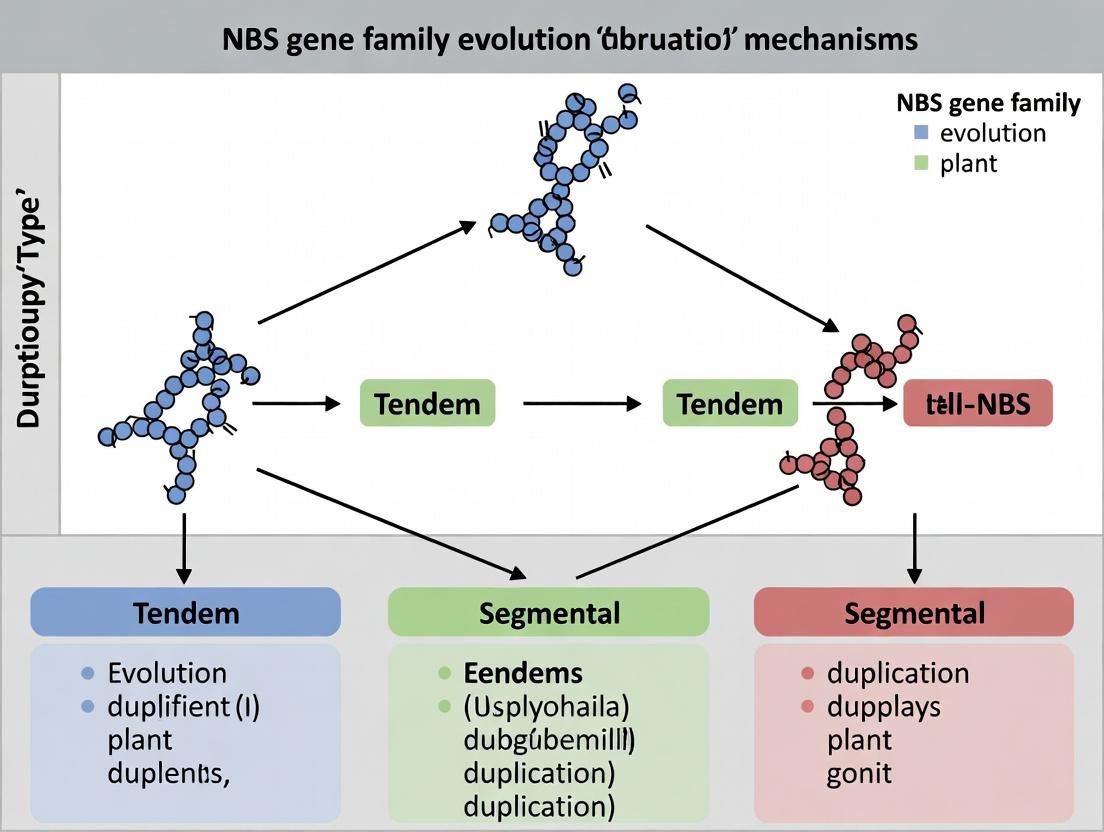
This article provides a comprehensive analysis of NBS (Nucleotide-Binding Site) gene family expansion, focusing on the distinct evolutionary mechanisms of tandem and segmental duplication.
NBS Gene Family Expansion: Tandem and Segmental Duplications Driving Disease Resistance Evolution and Therapeutic Potential
Abstract
This article provides a comprehensive analysis of NBS (Nucleotide-Binding Site) gene family expansion, focusing on the distinct evolutionary mechanisms of tandem and segmental duplication. Aimed at researchers and drug development professionals, it explores the foundational biology of NBS genes, details modern methodologies for identifying and characterizing duplication events, addresses common analytical challenges, and validates findings through comparative genomics. The synthesis of these intents illuminates how duplication-driven expansion underpins plant disease resistance and reveals conserved mechanisms with implications for understanding innate immunity and inflammatory pathways in biomedical research.
The Evolutionary Engine: Understanding Tandem vs. Segmental Duplication in NBS Gene Family Expansion
The nucleotide-binding site leucine-rich repeat (NBS-LRR) gene family encodes the largest class of intracellular immune receptors in plants, responsible for specific recognition of pathogen effectors via direct or indirect interaction. This recognition triggers a robust defense response, often culminating in the hypersensitive response (HR). Within the context of broader evolutionary genomics, the expansion of this gene family via tandem and segmental duplications is a cornerstone of adaptive innovation, providing a vast repertoire for pathogen recognition. This guide details the core architecture, functional mechanisms, and systematic classification of NBS-encoding genes.
Core Domain Structure of NBS Proteins
NBS-LRR proteins are modular, typically consisting of a variable N-terminal domain, a conserved central NBS (or NB-ARC) domain, and a C-terminal LRR domain. The NBS domain is the signaling engine, while the LRR domain is primarily involved in effector recognition and autoinhibition.
Table 1: Core Domains of Canonical NBS-LRR Proteins
| Domain | Key Motifs/Features | Primary Function | Structural Role in Immunity |
|---|---|---|---|
| N-terminal | TIR (Toll/Interleukin-1 Receptor) or CC (Coiled-Coil) | Initiates downstream signaling cascades | Determines signaling pathway specificity (TIR vs. CC-NBS-LRR). |
| NBS (NB-ARC) | Kinase 1a/P-loop, RNBS-A, Kinase 2, RNBS-B, GLPL, RNBS-C, RNBS-D, MHD | ATP/GTP binding and hydrolysis; molecular switch | "On/Off" regulator; conformational change upon effector perception. |
| LRR | Variable xxLxLxx repeats | Effector perception; autoinhibition | Provides specificity; in resting state, stabilizes the 'off' conformation. |
Function in Plant Innate Immunity: The Signaling Circuit
NBS-LRR proteins function as sophisticated molecular switches. In the absence of a pathogen, they are maintained in an auto-inhibited state. Effector recognition relieves this inhibition, leading to a conformational change, nucleotide exchange, and activation of downstream defense pathways.
Diagram 1: NBS-LRR Activation and Defense Signaling (Max Width: 760px)
Phylogenetic Classification and Family Expansion
NBS-encoding genes are primarily classified into two major clades based on N-terminal domains: TNL (TIR-NBS-LRR) and CNL (CC-NBS-LRR). A third, smaller non-canonical group includes genes lacking an LRR domain (e.g., NBS-only, TIR-NBS, etc.). Phylogenetic analysis reveals that the massive diversity within these clades is largely driven by tandem duplication (clustered arrays on chromosomes) and segmental duplication (polyploidy or large-scale genomic rearrangements), followed by neofunctionalization or subfunctionalization.
Table 2: Comparative Phylogeny of Major NBS-LRR Clades
| Feature | TNL (TIR-NBS-LRR) | CNL (CC-NBS-LRR) | Atypical NBS |
|---|---|---|---|
| N-terminal Domain | TIR (Toll/Interleukin-1 Receptor) | Coiled-Coil (CC) | Variable or Absent |
| Key Signaling Helper | EDS1 (Enhanced Disease Susceptibility 1) | NDR1 (Non-Race Specific Disease Resistance 1) | Variable |
| Primary Signaling | SA (Salicylic Acid) pathway; HR cell death | Mixed SA & early signaling; HR cell death | Often decoy or truncated |
| Expansion Mechanism | Dominant in dicots via tandem duplication | Widespread in mono- & dicots via segmental/tandem | Often solo or paired genes |
| Example Gene | Arabidopsis RPS4 | Arabidopsis RPS2 | Arabidopsis TN2, NRG1 |
Key Experimental Protocols for NBS Gene Research
Protocol: Phylogenetic Analysis and Classification of NBS Genes
- Objective: To identify and classify NBS-encoding genes from a plant genome.
- Materials: Genome sequence (FASTA), HMMER software, MEGA or IQ-TREE, MEME suite.
- Methodology:
- HMM Search: Use the Pfam NBS (NB-ARC) domain HMM (PF00931) to scan the proteome with HMMER (e-value < 1e-5).
- Sequence Curation: Extract full-length sequences, align using MAFFT or ClustalOmega.
- Domain Annotation: Identify TIR (PF01582) and CC (using COILS or DeepCoil) domains.
- Phylogenetic Tree Construction: Build a maximum-likelihood tree (IQ-TREE) with bootstrap analysis (1000 replicates).
- Motif Analysis: Identify conserved motifs in N-terminal and NBS domains using MEME.
Protocol: Detection of Tandem Duplication Events
- Objective: To identify clusters of NBS genes resulting from recent tandem duplications.
- Materials: Annotated NBS gene positions (GFF3 file), custom Perl/Python scripts.
- Methodology:
- Chromosomal Mapping: Plot the physical positions of all NBS genes.
- Cluster Definition: Define a tandem cluster as ≥2 NBS genes of the same phylogenetic clade located within 200 kb, with ≤1 non-NBS gene intervening.
- Sequence Identity Analysis: Calculate pairwise synonymous (Ks) and non-synonymous (Ka) substitution rates within clusters using PAL2NAL and PAML. A low Ks indicates recent duplication.
The Scientist's Toolkit: Essential Research Reagents & Materials
Table 3: Key Research Reagent Solutions for NBS Gene Studies
| Reagent/Material | Function/Application | Example/Supplier |
|---|---|---|
| Anti-GFP / HA / FLAG Antibodies | Immunoprecipitation (IP) and western blot detection of epitope-tagged NBS-LRR proteins for protein-protein interaction or oligomerization studies. | MilliporeSigma, Thermo Fisher |
| Gateway or Golden Gate Cloning Kits | For modular, high-throughput construction of NBS-LRR gene expression vectors, crucial for functional complementation and mutagenesis assays. | Thermo Fisher, Addgene |
| Luciferase (Firefly/Renilla) Reporter Assay Kit | Quantifying activation of defense-related promoters (e.g., PR1) downstream of NBS-LRR signaling in transient expression systems. | Promega |
| ATPase/GTPase Activity Assay Kit (Colorimetric) | Measuring the nucleotide hydrolysis activity of purified recombinant NBS domain proteins to characterize kinetic mutations (e.g., in P-loop, MHD). | Abcam, Sigma |
| DAB (3,3'-Diaminobenzidine) Staining Kit | In situ detection of hydrogen peroxide (H₂O₂) burst, an early marker of the oxidative burst following NBS-LRR activation. | BioVision, Sigma |
| Bimolecular Fluorescence Complementation (BiFC) Vectors | Visualizing in vivo protein-protein interactions (e.g., NBS-LRR oligomerization or interaction with effector/guardee) in plant cells. | pSATN vectors (from Tzfira lab) |
Nucleotide-binding site-leucine-rich repeat (NBS-LRR) genes constitute one of the largest and most critical plant disease resistance (R) gene families. Their expansion and diversification are primarily driven by gene duplication events, which provide the raw genetic material for evolutionary innovation. This whitepaper dissects the two principal mechanisms—tandem (local) and segmental (whole-genome) duplication—that underpin this expansion, providing a technical framework for researchers investigating NBS gene family dynamics, evolutionary genomics, and their implications for breeding and drug development in agriculture.
Core Mechanisms: Tandem vs. Segmental Duplication
Tandem (Local) Duplication
Tandem duplication occurs via unequal crossing over during meiosis or via replication slippage, resulting in physically adjacent, highly homologous gene copies on the same chromosome.
Key Characteristics:
- Genomic Context: Clustered arrangement on a single chromosome.
- Sequence Homology: High sequence similarity among paralogs.
- Evolutionary Role: Rapid, lineage-specific expansion; primary driver for adaptive gene family growth (e.g., NBS-LRR clusters).
- Mechanistic Basis: Unequal crossing over between misaligned homologous sequences or DNA replication errors.
Segmental (Whole-Genome) Duplication
Segmental duplication involves the duplication of large chromosomal blocks or entire genomes (polyploidization), followed by diploidization and fractionation.
Key Characteristics:
- Genomic Context: Paralogs located on different chromosomes or non-adjacent regions of the same chromosome.
- Sequence Homology: Moderate to high similarity, depending on the age of the event.
- Evolutionary Role: Creates genetic redundancy, facilitating sub- and neofunctionalization; foundational for major evolutionary leaps.
- Mechanistic Basis: Non-homologous end joining (NHEJ), fork stalling and template switching (FoSTeS), or whole-genome duplication (WGD) events.
Quantitative Data Comparison
Table 1: Comparative Features of Tandem and Segmental Duplication Events
| Feature | Tandem Duplication | Segmental Duplication |
|---|---|---|
| Genomic Scale | Local (1 to several genes) | Large (10s kb to Mb segments or whole genome) |
| Paralog Location | Adjacent, forming clusters | Dispersed, often on different chromosomes |
| Sequence Identity | Typically >90% | Varies widely (70-90%), ages with time |
| Primary Mechanism | Unequal crossing over, replication slippage | Non-homologous end joining, WGD, rearrangements |
| Role in NBS-LRR Evolution | Primary driver of rapid cluster expansion and sequence diversification | Provides foundational copies for subsequent tandem expansion; long-term retention |
| Rate of Occurrence | Frequent, ongoing | Episodic (WGDs are rare events) |
| Functional Fate | Often retained for dose-dependent responses or generating novel specificities | Frequently subfunctionalized or neofunctionalized |
Table 2: Estimated Contribution to NBS-LRR Family Size in Model Plants (Recent Data)
| Plant Species | Total NBS-LRR Genes (approx.) | % from Tandem Duplication | % from Segmental Duplication (Ancient WGD) | Key References (Sample) |
|---|---|---|---|---|
| Arabidopsis thaliana | ~200 | 60-70% | 30-40% (α, β events) | Guo et al., 2021; Tang et al., 2022 |
| Oryza sativa (Rice) | ~500 | 75-85% | 15-25% (ρ event) | Xie et al., 2020; Wang et al., 2023 |
| Glycine max (Soybean) | ~400 | ~50% | ~50% (Recent WGD ~13 Mya) | Shen et al., 2022; Li et al., 2023 |
| Zea mays (Maize) | ~150 | 70-80% | 20-30% (Ancient tetraploidy) | Liu et al., 2021; Liu & Schnable, 2023 |
Experimental Protocols for Identification and Analysis
Protocol: Identifying Tandemly Duplicated NBS-LRR Genes
Objective: To identify and characterize clusters of tandemly arrayed NBS-LRR genes from a whole-genome assembly.
Materials & Workflow:
- Data Acquisition: Obtain genome assembly (FASTA) and annotation (GFF3) files.
- Gene Family Classification: Use HMMER (
hmmsearch) with PFAM models (e.g., PF00931 for NB-ARC domain) to identify all NBS-LRR candidates. - Physical Cluster Definition: A custom script (e.g., Python) scans the GFF3 file. Genes are defined as tandem duplicates if:
- They belong to the same phylogenetic clade (from step 2).
- They are located within a defined genomic distance (typically ≤10 genes apart or ≤100 kb intervening sequence).
- No non-NBS-LRR gene is interposed (some relaxed definitions allow 1-2 non-family genes).
- Sequence Analysis: Extract protein sequences of clustered genes. Perform multiple alignment (Clustal Omega, MAFFT) and calculate pairwise identity (Biopython).
- Validation: Check for high sequence identity (>85%) and syntenic depth using a dot-plot analysis (e.g., with D-GENIES).
Protocol: Identifying Segmental Duplications and Homologous Blocks
Objective: To uncover ancient segmental duplications/WGD events contributing to the NBS-LRR repertoire.
Materials & Workflow:
- All-vs-All Genome Comparison: Use MCScanX (
blastpall protein sequences against themselves, thenMCScanX). - Synteny Block Detection: MCScanX identifies collinear blocks based on BLAST hits and gene order. Set parameters (e.g., match score, gap penalty, e-value cutoff) appropriately.
- Ks (Synonymous Substitution Rate) Analysis: For each gene pair within syntenic blocks, calculate Ks using PAML (
yn00) or KaKs_Calculator. Ks approximates the time since duplication. - Age Distribution Plotting: Generate a histogram of all Ks values. Peaks in the distribution indicate bursts of duplication events, with a large peak at low Ks (tandem) and distinct peaks at higher Ks corresponding to ancient WGDs.
- Visualization: Use JCVI or Circos to generate synteny plots highlighting duplicated blocks containing NBS-LRR genes.
Protocol: Differential Expression Analysis of Duplicate Pairs
Objective: To assess expression divergence between tandem and segmental duplicates under pathogen challenge.
Materials & Workflow:
- Plant Material & Treatment: Grow wild-type plants. Inoculate with a pathogen (e.g., Pseudomonas syringae) vs. mock control. Harvest tissue at multiple time points (e.g., 0, 6, 24 hpi).
- RNA-Seq: Extract total RNA, prepare libraries, sequence on Illumina platform.
- Read Mapping & Quantification: Map reads to the reference genome using HISAT2. Quantify gene-level counts with StringTie or featureCounts.
- Expression Divergence Metric: For each duplicate pair, calculate the correlation of expression profiles (log2(TPM+1)) across all samples using Pearson's correlation coefficient (R). Lower R indicates greater expression divergence.
- Statistical Comparison: Compare the distribution of R values between tandem duplicate pairs and segmental duplicate pairs using a Mann-Whitney U test. Typically, segmental duplicates show lower R (greater divergence).
Visualization of Concepts and Workflows
Diagram 1: Gene Duplication Mechanisms & Fates (87 chars)
Diagram 2: NBS Duplication Analysis Workflow (82 chars)
The Scientist's Toolkit: Key Research Reagents & Solutions
Table 3: Essential Reagents and Tools for Gene Duplication Research
| Item/Category | Function in Research | Example Product/Software |
|---|---|---|
| High-Quality Genome Assembly | Foundational reference for accurate gene localization and synteny analysis. | RefSeq genome (NCBI), Ensembl Plants, project-specific PacBio/Nanopore assemblies. |
| Domain-Specific HMM Profiles | Precise identification of NBS-LRR family members from proteome. | PFAM (PF00931 NB-ARC), custom HMMs from aligned family members. |
| Synteny Detection Software | Identification of collinear blocks indicating segmental duplication/WGD. | MCScanX, JCVI toolkit, SynVisio. |
| Synonymous Substitution Rate (Ks) Calculator | Dating duplication events to distinguish recent tandem from ancient WGD. | KaKs_Calculator 3.0, PAML (yn00), wgd suite. |
| RNA-Seq Library Prep Kit | Profiling expression divergence between duplicates under stress. | Illumina TruSeq Stranded mRNA, NEBNext Ultra II. |
| Expression Correlation Analysis Tool | Quantifying transcriptional divergence of duplicate pairs. | R packages: edgeR/DESeq2 for counts, cor() for Pearson's R. |
| Visualization Software | Creating publication-quality synteny and Ks distribution plots. | Circos, TBtools (for Ks plot), ggplot2 (R), Dot. |
| Plant Pathogen Strains | Eliciting differential expression responses in NBS-LRR genes. | Pseudomonas syringae pv. tomato DC3000, Magnaporthe oryzae strains. |
Nucleotide-binding site leucine-rich repeat (NBS-LRR) genes constitute the largest family of plant disease resistance (R) genes. Their copy number variation (CNV) is a primary determinant of a plant's innate immune capacity. This whitepaper examines the selective pressures exerted by diverse pathogen populations as the principal evolutionary driver of NBS gene family expansion, primarily through tandem and segmental duplications. Understanding these dynamics is critical for researchers and drug development professionals aiming to engineer durable resistance in crops or identify novel immune receptor analogs.
Mechanisms of NBS Gene Family Expansion
NBS genes expand via two predominant genomic mechanisms, both subject to pathogen-driven selection:
- Tandem Duplication: Unequal crossing over creates clusters of closely related NBS genes, enabling rapid diversification and the generation of novel pathogen recognition specificities.
- Segmental Duplication: Polyploidization or large-scale chromosomal duplication events copy entire genomic segments containing NBS genes, providing raw genetic material for neofunctionalization or subfunctionalization.
Pathogen Pressure as the Selective Force
The "arms race" and "trench warfare" co-evolutionary models explain the dynamics between plant NBS genes and pathogen effectors. Pathogen effectors (Avr genes) evolve to suppress plant immunity, driving the selection for novel or variant NBS alleles that can recognize them. This imposes a strong selective pressure favoring individuals with expanded, diverse NBS repertoires.
Table 1: Documented CNV Responses to Pathogen Pressure
| Plant Species | Pathogen Class | Observed CNV Change | Proposed Evolutionary Model | Key Reference |
|---|---|---|---|---|
| Arabidopsis thaliana | Oomycete (Hyaloperonospora) | Expansion of specific TNL clades | Arms Race | (Bakker et al., 2006) |
| Oryza sativa (Rice) | Fungus (Magnaporthe oryzae) | Positive selection in NBS residues of duplicated genes | Trench Warfare | (Zhou et al., 2004) |
| Zea mays (Maize) | Diverse Viruses | High CNV in CNL genes linked to resistance QTLs | Balancing Selection | (Xiao et al., 2017) |
| Glycine max (Soybean) | Oomycete (Phytophthora) | Recent tandem duplications in Rps loci | Arms Race | (Li et al., 2016) |
Key Experimental Methodologies
Protocol: Genome-Wide Identification of NBS Genes and CNV Analysis
Objective: To catalog NBS genes and assess copy number variation across genotypes or populations.
Steps:
- Sequence Retrieval: Obtain whole-genome assemblies of target species and related genotypes.
- HMMER Search: Use hidden Markov model profiles (e.g., PF00931 for NB-ARC domain) to scan proteomes/genomes with
hmmsearch(e-value cutoff < 1e-5). - Annotation & Classification: Classify candidates into TNL (TIR-NBS-LRR), CNL (CC-NBS-LRR), and RNL (RPW8-NBS-LRR) based on conserved N-terminal and LRR domains.
- Copy Number Determination: Map high-quality whole-genome sequencing reads from different accessions to the reference using BWA-MEM/SAMtools. Calculate read depth in NBS loci normalized to genomic background to infer CNV.
- Phylogenetic & Selection Analysis: Construct phylogenetic trees (MAFFT, IQ-TREE). Calculate nonsynonymous/synonymous substitution rates (dN/dS) using PAML to detect positive selection.
Protocol: Associating CNV with Phenotypic Resistance
Objective: To link specific NBS copy number variants to resistance traits.
Steps:
- Phenotyping: Conduct standardized pathogen assays on a diverse germplasm panel, scoring for disease incidence/severity.
- CNV Genotyping: Perform qPCR with primers specific to NBS gene clades of interest or use whole-genome CNV calls. Normalize to single-copy reference genes.
- Association Analysis: Perform statistical correlation (e.g., linear regression, ANOVA) between NBS gene copy number (independent variable) and disease scores (dependent variable). Correct for population structure.
- Validation: Use transgenic approaches (overexpression/knockout) in a susceptible background to confirm the role of the specific NBS copy number in resistance.
Title: Workflow for linking NBS CNV to pathogen pressure
Title: Pathogen-driven selection cycle for NBS genes
The Scientist's Toolkit: Research Reagent Solutions
| Reagent / Material | Function in NBS-CNV Research | Example Product / Assay |
|---|---|---|
| High-Fidelity DNA Polymerase | Accurate amplification of NBS genomic regions for cloning and sequencing, minimizing PCR errors. | Q5 High-Fidelity DNA Polymerase (NEB) |
| NBS-Domain HMM Profiles | Computational identification of NBS-LRR genes from genomic or transcriptomic data. | PFAM PF00931 (NB-ARC), custom HMMs |
| ddPCR or qPCR Master Mix | Absolute quantification of NBS gene copy number relative to reference genes. | Bio-Rad ddPCR Supermix, SYBR Green PCR Master Mix |
| Plant Transformation Vector | Functional validation of CNV impact via overexpression or CRISPR/Cas9 knockout of specific NBS copies. | pCAMBIA1300, pHEE401E (CRISPR) |
| Pathogen Isolates / Effectors | For phenotyping and measuring selective pressure; purified effectors can test direct NBS recognition. | ISOLATE collections, cloned Avr genes |
| Selective Growth Media | For screening transgenic plants or maintaining pathogen cultures. | Kanamycin for plant selection, V8 media for oomycetes |
| Next-Gen Sequencing Kit | Whole-genome sequencing to call CNVs or RNA-seq to analyze NBS expression. | Illumina DNA Prep, NEBNext Ultra II |
Pathogen selective pressure is the dominant force sculpting NBS gene copy number variation. The iterative cycle of duplication, diversification, and selection creates a dynamic reservoir of immune receptors. Research integrating comparative genomics, population genetics, and functional assays continues to decode this complexity, offering actionable insights for developing disease-resistant crops and novel therapeutic strategies.
This technical guide, framed within the broader thesis of NBS (Nucleotide-Binding Site) gene family expansion, details the genomic architectural signatures imparted by different duplication mechanisms. Understanding these patterns is critical for deciphering the evolutionary forces shaping disease resistance and other polygenic traits, with direct implications for agricultural and pharmaceutical target discovery.
Mechanisms of Gene Duplication and Their Genomic Hallmarks
Tandem Duplication
Tandem duplications occur via unequal crossing over or replication slippage, producing adjacent, homologous sequences.
- Genomic Signature: Clusters of paralogous genes in close physical proximity, often with high sequence similarity and uniform intergenic distances. Gene order is conserved within the cluster.
Segmental (Block) Duplication
Segmental duplications involve the copying of large genomic regions (1-400 kb) via mechanisms like non-allelic homologous recombination (NAHR) or retrotransposition.
- Genomic Signature: Paralogous blocks dispersed to non-homologous chromosomes or distant genomic loci. Synteny (conserved gene order) is maintained between duplicated segments, though degenerative mutations accumulate over time.
Whole Genome Duplication (Polyploidization)
WGD duplicates the entire genome, providing raw material for sub- and neofunctionalization.
- Genomic Signature: Genome-wide synteny between paralogous regions across multiple chromosomes. A clear pattern of "multiplicon" structures emerges, detectable through comparative genomics and Ks (synonymous substitution rate) peak analysis.
Retrotransposition (Retroduplication)
An mRNA is reverse-transcribed and integrated into the genome, creating a processed pseudogene or new intron-less paralog.
- Genomic Signature: Lack of introns and promoter sequences, presence of poly-A tails, and flanking direct repeats (target site duplications). The new copy is isolated from its progenitor.
Comparative Signatures & Quantitative Data
Table 1: Diagnostic Features of Duplication Types in Genomic Architecture
| Feature | Tandem Duplication | Segmental Duplication | Whole Genome Duplication | Retrotransposition |
|---|---|---|---|---|
| Genomic Arrangement | Clustered, adjacent | Dispersed blocks | Genome-wide systemic blocks | Solitary, random insertion |
| Gene Structure | Complete (exons/introns) | Complete | Complete | Processed (no introns) |
| Promoter/Cis-Regulation | Often similar/copied | Often retained, may diverge | Retained, then diverges | Usually absent; new promoter acquired |
| Sequence Identity | Very High (>95%) | High to Moderate | Moderate (subfunctionalization) | High in coding region only |
| Synonymous Substitution Rate (Ks) | Low, recent peak | Moderate, variable peaks | Single, ancient peak across many gene pairs | Low to moderate, single peak |
| Synteny Conservation | Micro-synteny within cluster | High synteny within block | High systemic blocks across chromosomes | None |
| Key Detection Method | BLASTN & self-genome alignment | Intra-genomic synteny mapping (MCScanX) | Ks distribution, comparative genomics | BLAT search for intron-less copies |
Table 2: Statistical Patterns in NBS-LRR Gene Family Expansion (Exemplar Data)
| Duplication Type | Avg. Cluster Size (genes) | Avg. Segment Size (kb) | % of NBS Genes in Genome* | Estimated Age (Myr)* | Common in Plant Genomes |
|---|---|---|---|---|---|
| Tandem | 3-15 | 50 - 200 | ~60% | 0 - 25 | Yes (e.g., Arabidopsis, Rice) |
| Segmental | 2-8 | 10 - 400 | ~30% | 10 - 70 | Yes (e.g., Soybean, Maize) |
| Whole Genome | Systemic regions | Chromosome-scale | Varies by lineage | 20 - 120+ (e.g., α, β events) | Major driver in Brassicaceae, Grasses |
| Retrotransposition | 1 (isolated) | 1 - 3 (gene-sized) | <5% | 0 - 50 | Rare for NBS genes |
*Representative values compiled from recent studies; actual figures are genome-specific.
Experimental Protocols for Detection and Validation
Protocol: Identifying Tandem and Segmental Duplications
Objective: To map and classify duplicated NBS gene loci within a sequenced genome. Materials: Genome assembly (FASTA), annotated gene set (GFF3), High-Performance Computing cluster. Software: BLAST+, MCScanX, Python (Biopython, matplotlib), Circos.
Method:
- All-vs-All BLASTP: Perform BLASTP of all protein sequences against themselves. Use an E-value cutoff of 1e-10. Filter for self-hits.
- Synteny Network Construction: Use the BLAST output and GFF3 annotation file as input for MCScanX to identify collinear blocks.
- Classification: Genes within collinear blocks on the same chromosome with ≤1 intervening gene are classified as tandem. Collinear blocks on different chromosomes or separated by >1 gene are classified as segmental.
- Visualization: Generate a circos plot of systemic relationships and chromosome ideograms highlighting NBS gene clusters.
Protocol: Dating Duplication Events via Ks Analysis
Objective: Estimate the timing of duplication events to correlate with evolutionary history. Materials: Paralogous gene pairs identified in Protocol 3.1. Software: Codeml (PAML), KaKs_Calculator, R.
Method:
- Sequence Alignment: Extract CDS sequences for each paralog pair. Perform codon-aware alignment using PRANK or MACSE.
- Calculate Ks and Ka: Run KaKs_Calculator using the NG (Nei-Gojobori) method.
- Distribution Analysis: Plot Ks distributions for tandem vs. segmental pairs using R. Identify significant peaks corresponding to burst events.
- Age Estimation: Apply a species-appropriate synonymous substitution rate (e.g., λ = 6.5e-9 for Arabidopsis) to estimate time: T = Ks / 2λ.
Protocol: Validating Functional Retention via Expression Analysis (RNA-seq)
Objective: Assess if duplicated NBS genes are transcriptionally active, suggesting functional conservation. Materials: RNA from treated/untreated tissues, RNA-seq library prep kit, Illumina sequencer. Software: HISAT2, StringTie, DESeq2.
Method:
- Alignment & Quantification: Map RNA-seq reads to the reference genome using HISAT2. Assemble transcripts and quantify expression with StringTie.
- Differential Expression: Using count matrices, run DESeq2 in R to test for differential expression of NBS paralogs under stress conditions.
- Correlation Analysis: Calculate expression correlation coefficients (e.g., Pearson's r) between tandem and segmental paralogs. High correlation in syntenic pairs supports conserved regulatory landscapes.
Visualizing Detection Workflows and Relationships
Diagram 1: Workflow for Classifying Tandem vs Segmental Duplications (76 chars)
Diagram 2: Genomic Patterns of Tandem and Segmental Duplication (75 chars)
The Scientist's Toolkit: Research Reagent Solutions
Table 3: Essential Reagents and Resources for Duplication Research
| Item/Category | Example Product/Resource | Function in Research |
|---|---|---|
| High-Fidelity DNA Polymerase | Q5 High-Fidelity (NEB), KAPA HiFi | Accurate amplification of NBS gene paralogs from gDNA for validation and cloning. |
| Long-Range PCR Kit | LA Taq (Takara), PrimeSTAR GXL | Amplification of large genomic segments containing tandem clusters or segmental blocks. |
| BAC Clones | Various genomic BAC libraries (e.g., from ABRC, CHORI) | Physical mapping and sequence verification of duplicated regions, resolving assembly gaps. |
| cDNA Synthesis Kit | SuperScript IV Reverse Transcriptase (Thermo) | Generating cDNA from RNA to analyze expression of intron-less retrocopies or all paralogs. |
| qPCR Assay Mix | SYBR Green Master Mix (Applied Biosystems) | Validating RNA-seq expression data and quantifying specific NBS paralog transcript levels. |
| Genome Assembly | Reference genomes (Phytozome, EnsemblPlants) | Essential baseline data for synteny and comparative genomic analyses. |
| Synteny Analysis Pipeline | MCScanX, JCVI (python) | Core software for identifying collinear blocks and visualizing duplication history. |
| Ks Calculation Tool | KaKs_Calculator 3.0, wgd (python toolkit) | Calculating synonymous substitution rates to date duplication events. |
Within the broader thesis of nucleotide-binding site leucine-rich repeat (NBS-LRR) gene family expansion through tandem and segmental duplication, this document analyzes key case studies in model and crop species. NBS-LRR genes constitute the largest class of plant disease resistance (R) genes. Their expansion and diversification are critical for adaptive evolution, driven primarily by tandem duplications and segmental genome duplications (polyploidy). Understanding these mechanisms in sequenced genomes provides insights into plant immunity and breeding strategies.
Arabidopsis thaliana: A Model for Tandem Array Analysis
Genomic Distribution and Duplication Modes
The Arabidopsis genome contains approximately 200 NBS-LRR genes. A seminal study by Richly et al. (2002) provided the first genome-wide analysis, demonstrating that NBS-LRR genes are primarily organized in tandem arrays on chromosomes 1, 2, 3, 4, and 5, with a few singleton genes. This pattern strongly suggests expansion via local, tandem duplication events.
Table 1: NBS-LRR Distribution inArabidopsis thaliana(Col-0)
| Chromosome | Total NBS-LRR Genes | Tandem Clusters | Singleton Genes | Notable Complex Locus |
|---|---|---|---|---|
| 1 | 47 | 8 | 5 | RPP5 (Mapped to Chr4) |
| 2 | 31 | 5 | 6 | - |
| 3 | 19 | 3 | 4 | - |
| 4 | 63 | 10 | 8 | RPP1, RPP2, RPP4, RPP5 |
| 5 | 40 | 6 | 7 | - |
| Total | ~200 | 32 | 30 | - |
Experimental Protocol: Identifying Tandem Duplications
Method: Comparative Genomic Analysis and Phylogenetic Reconciliation.
- Sequence Retrieval: Obtain the complete genome sequence (TAIR database). Extract all predicted NBS-LRR protein sequences using PFAM domains (PF00931, PF00560, PF07723, PF07725).
- Physical Mapping: Map the genomic coordinates of all identified genes using a genome browser (e.g., JBrowse).
- Tandem Cluster Definition: Define genes as part of a tandem array if two or more NBS-LRR genes are located within 200 kb without an intervening non-NBS gene.
- Phylogenetic Analysis: Construct a neighbor-joining or maximum-likelihood phylogenetic tree using the NBS domain sequences.
- Reconciliation: Compare the phylogenetic tree with the physical map. Closely related genes located in proximity on the same chromosome provide evidence for recent tandem duplication.
Diagram Title: Workflow for Identifying Tandem Duplications in Arabidopsis
Oryza sativa (Rice): Segmental Duplication and Functional Divergence
Impact of Whole Genome Duplication
Rice experienced an ancient whole-genome duplication (WGD) event common to grasses. Analysis by Zhou et al. (2004) showed that a significant proportion of its ~600 NBS-LRR genes reside in duplicated chromosomal blocks, highlighting the role of segmental duplication in expansion. Following duplication, genes undergo neofunctionalization, non-functionalization (pseudogenization), or subfunctionalization.
Table 2: NBS-LRR Genes inOryza sativaspp.japonica(cv. Nipponbare)
| Chromosome | NBS-LRR Count | % in Segmental Duplicates | Notable Clusters/Pairs | Predominant Type (TIR/CC*) |
|---|---|---|---|---|
| 1 | 95 | 65% | Paired with Chr 5 | CC-NBS-LRR |
| 2 | 42 | 71% | Paired with Chr 4 | CC-NBS-LRR |
| 3 | 45 | 60% | Paired with Chr 7 | Mixed |
| 4 | 55 | 75% | Paired with Chr 2 | TIR-NBS-LRR |
| 5 | 108 | 68% | Paired with Chr 1 | CC-NBS-LRR |
| 6 | 30 | 50% | - | TIR-NBS-LRR |
| 7 | 58 | 62% | Paired with Chr 3 | Mixed |
| 8 | 25 | 40% | - | CC-NBS-LRR |
| 9 | 32 | 55% | - | Mixed |
| 10 | 22 | 45% | - | TIR-NBS-LRR |
| 11 | 68 | 80% | Large internal cluster | CC-NBS-LRR |
| 12 | 40 | 70% | - | CC-NBS-LRR |
| Total | ~620 | ~65% | - | CC-NBS-LRR Dominant |
CC = Coiled-Coil; TIR = Toll/Interleukin-1 Receptor
Experimental Protocol: Analyzing Segmental Duplication Fate
Method: Synteny Analysis and Ka/Ks Calculation.
- Identify Paralogous Pairs: Use genomic synteny databases (e.g., Plant Genome Duplication Database - PGDD) to identify NBS-LRR genes located in collinear blocks.
- Sequence Alignment: Perform multiple sequence alignment for each duplicated pair (paralog) and their ortholog in an outgroup species (e.g., Brachypodium distachyon).
- Calculate Evolutionary Rates: Calculate the rate of non-synonymous (Ka) and synonymous (Ks) substitutions using software like KaKs_Calculator.
- Interpret Ka/Ks Ratios:
- Ka/Ks > 1: Positive selection (neofunctionalization).
- Ka/Ks ≈ 1: Neutral evolution.
- Ka/Ks < 1: Purifying selection (maintained function).
- Presence of premature stop codons/frameshifts: Non-functionalization.
- Expression Analysis: Use RNA-seq data to compare expression profiles of paralogs. Divergent expression suggests sub/neofunctionalization.
Diagram Title: Analyzing the Fate of Segmental Duplicates in Rice
Zea mays (Maize): Complex Dynamics Post-Tetraploidy
Lineage-Specific Expansion and Loss
Maize, a paleotetraploid, showcases complex NBS-LRR evolution. Studies by Xiao et al. (2007) and updated analyses reveal ~150 NBS-LRR genes, a number surprisingly low compared to rice. This indicates significant gene loss following duplication. Remaining genes show evidence of both ancient segmental duplicates (from WGD) and recent, lineage-specific tandem amplifications, particularly at chromosome termini.
Table 3: NBS-LRR Dynamics inZea mays(B73 RefGen_v5)
| Feature | Observation |
|---|---|
| Total Predicted NBS-LRR Genes | ~150 |
| Estimated Fraction from Segmental Duplication (Ancient WGD) | ~40% |
| Estimated Fraction in Tandem Arrays | ~35% |
| Major Genomic Location of Clusters | Sub-telomeric regions |
| Comparative Note vs. Rice | Maize has ~4x fewer NBS-LRR genes despite similar genome size, indicating massive post-polyploidy loss. |
| Dominant Structural Class | Non-TIR (CC-NBS-LRR); TIR-NBS-LRR genes are largely absent. |
Experimental Protocol: Paleogenomics and Gene Loss Inference
Method: Comparative Phylogenomics with Syntenic Outgroups.
- Reconstruct Ancestral Genomes: Identify syntenic blocks between maize and its unduplicated diploid relatives (e.g., sorghum, Sorghum bicolor).
- Map NBS-LRR Orthologs: Identify orthologous NBS-LRR genes in sorghum that correspond to duplicated genomic regions in maize.
- Determine Retention/Loss: For each sorghum NBS-LRR gene, check for the presence of one or both maize homologs in the corresponding syntenic blocks.
- Calculate Retention Rate: (# of maize genes in syntenic block) / (2 * # of sorghum orthologs). A rate <1 indicates gene loss.
- Date Duplication Events: Use Ks values of retained gene pairs to estimate the timing of the WGD and subsequent tandem events.
The Scientist's Toolkit: Key Research Reagent Solutions
Table 4: Essential Materials for NBS-LRR Expansion Research
| Item/Reagent | Function/Brief Explanation |
|---|---|
| Reference Genome Sequences (TAIR, MSU Rice Genome, MaizeGDB) | Foundation for in silico identification, mapping, and synteny analysis of NBS-LRR genes. |
| PFAM HMM Profiles (PF00931, PF00560, PF07723, PF07725, PF12799) | Hidden Markov Models for sensitive domain-based identification of NBS and LRR motifs in protein sequences. |
| Synteny Analysis Tools (MCScanX, JCVI, PGDD, CoGe) | Software/platforms to identify collinear genomic blocks and distinguish segmental from tandem duplications. |
| Ka/Ks Calculation Software (KaKs_Calculator, PAML) | Tools to compute non-synonymous/synonymous substitution ratios, inferring selection pressure on duplicated genes. |
| Phylogenetic Software (MEGA, RAxML, IQ-TREE) | For constructing gene trees to elucidate evolutionary relationships among NBS-LRR paralogs and orthologs. |
| Plant Genomic DNA Kits (e.g., CTAB-based extraction) | High-molecular-weight DNA extraction for PCR validation of gene presence/absence and haplotype-specific amplification. |
| BAC (Bacterial Artificial Chromosome) Libraries | Critical for physical mapping and sequencing of complex, repetitive NBS-LRR loci that are difficult to assemble from short reads. |
| Long-read Sequencing (PacBio HiFi, Oxford Nanopore) | Enables accurate de novo assembly of gap-free genomes and resolves complex tandem array structures. |
| Hi-C Chromatin Capture Kits | For scaffolding genome assemblies and defining chromosomal interactions, clarifying physical proximity in tandem clusters. |
Integrated Pathway of NBS-LRR Gene Family Evolution
Diagram Title: Evolutionary Pathways Following NBS-LRR Gene Duplication
These case studies underscore the dual engines of NBS-LRR expansion: rapid, local tandem duplications creating hotspots for innovation (as in Arabidopsis), and large-scale segmental duplications providing raw genetic material for long-term evolution (as in rice). Maize exemplifies the subsequent complex trajectory of retention and loss. This research, framed within the thesis of duplication-driven expansion, provides a mechanistic blueprint for understanding the dynamic evolution of plant innate immunity.
From Sequence to Function: Methodologies for Identifying and Analyzing NBS Duplication Events
This technical guide details a core bioinformatics pipeline for the genome-wide identification of Nucleotide-Binding Site (NBS) encoding genes, a major class of plant disease resistance (R) genes. This methodology serves as the foundational step within a broader thesis investigating the mechanisms of NBS gene family expansion through tandem and segmental duplication events. Understanding these evolutionary dynamics is critical for researchers and drug development professionals aiming to harness plant innate immunity, engineer durable resistance, and identify novel antimicrobial paradigms.
Core Conceptual Framework and Signaling Pathways
NBS-containing proteins are central components of the plant immune system. They act as intracellular sensors that recognize pathogen effector proteins, triggering a robust defense response often culminating in the Hypersensitive Response (HR).
Diagram Title: NBS-LRR Receptor Activation & Immune Signaling Pathway
Comprehensive Experimental Protocol
Primary Identification Using HMMER
Objective: To scan a proteome for sequences containing the NB-ARC (NBS) domain using profile Hidden Markov Models (HMMs).
- Data Acquisition: Download the complete proteome file (FASTA format) of the target organism from databases like EnsemblPlants, Phytozome, or NCBI.
- HMM Profile Preparation: Obtain the curated HMM profile for the NB-ARC domain (PF00931) from the Pfam database. The command
hmmpress Pfam-NB-ARC.hmmprepares the profile for searching. - Proteome Scanning: Execute
hmmscanto identify domain matches. - Result Parsing: Filter results using a per-domain E-value threshold (e.g., 1e-5). Extract the sequence IDs of all significant hits.
Validation and Classification via Domain Architecture Analysis
Objective: To confirm NBS candidates and classify them into TIR-NBS-LRR (TNL) or CC-NBS-LRR (CNL) subfamilies.
- Multi-Domain Search: Use
hmmscanwith a broader set of HMMs (NB-ARC, TIR, LRR, Coiled-Coil) against the candidate sequences. - Architecture Parsing: Develop a script to parse the domain table output and determine the N-terminal domain presence (TIR or CC) and C-terminal LRR repeats. Sequences lacking both TIR and CC are classified as "Other NBS".
- Manual Curation: Visually inspect borderline cases using tools like HMMER's web interface or InterProScan to confirm domain boundaries.
Identification of Paralogous Clusters and Duplication Events
Objective: To identify gene clusters and infer the mode of duplication (tandem vs. segmental) driving family expansion.
- Genomic Location Mapping: Extract chromosomal coordinates for all identified NBS genes from the genome annotation file (GFF3/GTF).
- Tandem Duplication Criteria: Define genes as a tandem array if they:
- Belong to the same NBS subfamily (TNL/CNL).
- Are located within a specified physical distance (e.g., ≤ 200 kb).
- Have no more than one non-NBS gene interrupting the cluster.
- Segmental Duplication / Synteny Analysis: Use MCScanX or similar tools to perform whole-genome collinearity analysis. NBS genes located in syntenic blocks between different chromosomes or distant regions are inferred to arise from segmental duplication or whole-genome duplication (WGD).
Data Presentation
Table 1: Genome-Wide Identification Summary of NBS-Encoding Genes in Arabidopsis thaliana (Example)
| Category | Count | Percentage of Total (%) | Average Gene Length (aa) |
|---|---|---|---|
| Total Identified NBS Genes | 167 | 100.0 | 921 |
| TNL (TIR-NBS-LRR) | 104 | 62.3 | 985 |
| CNL (CC-NBS-LRR) | 51 | 30.5 | 856 |
| Other/Truncated NBS | 12 | 7.2 | 645 |
| Genes in Tandem Clusters | 89 | 53.3 | - |
| Genes in Segmental/Syntenic Blocks | 42 | 25.1 | - |
Table 2: Key HMMER Search Parameters and Statistics
| Parameter | Value | Purpose/Rationale |
|---|---|---|
| HMM Profile | PF00931 (NB-ARC) | Core NBS domain model from Pfam |
| E-value Threshold (per-domain) | 1e-5 | Balances sensitivity & specificity |
| Sequence Source | TAIR10 proteome (A. thaliana) | Reference plant genome |
| Total Proteins Scanned | 27,655 | - |
| HMMER Command | hmmscan --domtblout |
Outputs parseable domain table |
The Scientist's Toolkit: Research Reagent Solutions
Table 3: Essential Computational Tools & Resources
| Item / Resource | Function / Purpose | Source / Example |
|---|---|---|
| HMMER Suite (v3.3+) | Core software for sensitive sequence homology searches using HMMs. | http://hmmer.org |
| Pfam Database | Repository of curated multiple sequence alignments and HMM profiles (e.g., PF00931). | http://pfam.xfam.org |
| Reference Proteome | High-quality, annotated protein sequence set of the target organism. | EnsemblPlants, Phytozome |
| Genome Annotation (GFF3) | File containing genomic coordinates and features for mapping gene locations. | Same as proteome source |
| InterProScan | Integrated platform for protein domain and family classification. | https://www.ebi.ac.uk/interpro |
| MCScanX | Tool for genome collinearity analysis to identify segmental duplications. | https://github.com/wyp1125/MCScanX |
| Custom Python/R Scripts | For parsing HMMER outputs, classifying genes, and analyzing cluster distributions. | - |
| High-Performance Computing (HPC) Cluster | Essential for running HMMER and synteny analysis on large plant genomes. | Institutional resource |
Integrated Bioinformatics Workflow
The complete pipeline, from data retrieval to evolutionary analysis, is summarized below.
Diagram Title: Genome-Wide NBS Gene Identification & Duplication Analysis Pipeline
Nucleotide-binding site (NBS)-encoding genes constitute a major class of plant disease resistance (R) genes. Their expansion in plant genomes is primarily driven by two evolutionary mechanisms: tandem duplication and segmental (or whole-genome) duplication. Disentangling these modes is critical for understanding the evolutionary dynamics of disease resistance and for informing breeding or biotechnology strategies aimed at durable resistance. This technical guide details three core computational approaches—synteny analysis, Ks calculations, and physical cluster detection—used to distinguish between these duplication types within the context of NBS gene family research.
Core Methodologies and Experimental Protocols
Synteny Analysis for Segmental Duplication Detection
Synteny analysis identifies conserved gene order across genomic regions, revealing large-scale duplication events.
Experimental Protocol:
- Data Acquisition: Obtain the complete genome sequences, annotation files (GFF3/GTF), and protein sequences for the target species and, if applicable, a related reference species.
- Homology Search: Perform an all-against-all protein BLAST (BLASTP, e-value cutoff 1e-10) within and between genomes to identify homologous gene pairs.
- Synteny Block Identification: Use tools like MCScanX, JCVI, or SynVisio. Inputs are the BLAST results and the gene annotation file.
- In MCScanX, the workflow is:
python -m jcvi.formats.gff bed --type=mRNA [annotation.gff] > genes.bedfollowed bypython -m jcvi.compara.catalog ortholog [species1] [species2].
- In MCScanX, the workflow is:
- Visualization: Generate synteny plots (dot plots or linear maps) to visualize collinear blocks. Genes within collinear blocks, including NBS genes, are inferred to originate from segmental duplications.
Ks (Synonymous Substitution Rate) Calculations for Dating Duplications
Ks measures the number of synonymous substitutions per synonymous site, serving as a molecular clock to estimate the timing of duplication events. Different Ks distributions indicate different duplication modes.
Experimental Protocol:
- Sequence Alignment: Extract coding sequences (CDS) for duplicated NBS gene pairs identified from synteny or cluster analysis. Perform pairwise alignment using ClustalW or MUSCLE.
- Ks Calculation: Calculate Ks (and Ka, non-synonymous rate) using the Nei-Gojobori method (NG86) or the Yang-Nielsen method (YN00) in PAML, or the
seqinrandbiostringspackages in R. The Ka/Ks ratio indicates selection pressure. - Distribution Analysis: Plot the Ks distribution of all duplicated pairs.
- Segmental Duplications: Often show a peak(s) in the Ks distribution corresponding to known whole-genome duplication (WGD) events.
- Tandem Duplications: Typically display a continuous, broad, or multi-peak distribution due to ongoing, independent duplication events.
Table 1: Interpretation of Ks and Ka/Ks Values for NBS Genes
| Ks Value Range | Ka/Ks Value | Likely Duplication Type | Evolutionary Implication |
|---|---|---|---|
| Low (e.g., < 0.1) | Often > 1 | Recent Tandem | Strong positive/diversifying selection, rapid neofunctionalization. |
| Low (e.g., < 0.1) | ~1 | Recent Tandem/Segmental | Neutral evolution, relaxation of constraint. |
| Distinct Peak(s) | Usually < 1 | Segmental/WGD | Purifying selection, functional conservation post-WGD. |
| Broad Distribution | Variable | Predominantly Tandem | Mixture of recent and ancient small-scale duplications under varying selection. |
Physical Cluster Detection for Tandem Duplication Identification
Tandem duplications are identified by detecting genes of the same family physically clustered on a chromosome.
Experimental Protocol:
- Gene Family Annotation: Annotate the NBS gene family using HMMER (with Pfam models like NB-ARC, PF00931) or through sequence similarity (BLAST).
- Chromosomal Localization: Extract genomic coordinates for all NBS genes from the annotation file.
- Cluster Definition: Apply a clustering rule. A common standard is to define a tandem cluster as two or more NBS genes located within a specified genomic distance (e.g., 200 kb) with no intervening non-NBS gene.
- Analysis & Visualization: Use custom Perl/Python/R scripts or tools like Tandem Repeats Finder (TRF) for low-level repeats. Generate chromosomal distribution maps.
Table 2: Key Tools for Distinguishing Duplication Types
| Tool Name | Primary Purpose | Input Data | Key Output |
|---|---|---|---|
| MCScanX | Synteny & collinearity analysis | BLAST results, GFF/BED annotations | Collinear blocks, duplication type inference |
| JCVI | Comparative genomics & synteny | BLAST results, GFF/BED annotations | Synteny maps, ortholog relationships |
| KaKs_Calculator | Ks and Ka calculation | Pairwise CDS alignments (FASTA) | Ks, Ka, Ka/Ks values |
| PAML (yn00) | Molecular evolution analysis (Ks/Ka) | Codon-aligned sequences | Ks, Ka, Ka/Ks with sophisticated models |
| TBtools | Integrated genomics analysis & viz | Various (GFF, sequence, BLAST) | One-stop for cluster detection, Ks plots, synteny |
| CIRCOS | Genomic data visualization | Karyotype, link, and track data files | Publication-quality circular figures |
The Scientist's Toolkit: Research Reagent Solutions
Table 3: Essential Computational Tools and Resources
| Item/Resource | Function & Purpose |
|---|---|
| Genome Assembly & Annotation (GFF3/GTF) | Provides the coordinate and feature framework for all subsequent analyses. Crucial for accuracy. |
| Pfam HMM Profiles (e.g., NB-ARC) | Hidden Markov Models for sensitive, domain-based identification of NBS family members. |
| BLAST+ Suite | Standard for performing local similarity searches to identify homologous gene pairs. |
Bioconductor/R Packages (seqinr, genoPlotR) |
For statistical analysis of Ks distributions, custom plotting, and data manipulation. |
| Python (Biopython, Matplotlib) | Flexible scripting environment for parsing files, implementing cluster detection logic, and creating custom visualizations. |
| High-Performance Computing (HPC) Cluster | Essential for running BLAST on large genomes, MCScanX, and genome-wide batch analyses. |
Visualization of Workflows and Relationships
Duplication Analysis Core Workflow
Interpreting Ks Distributions
This whitepaper provides a technical guide for elucidating the functional consequences of Nucleotide-Binding Site-Leucine-Rich Repeat (NBS-LRR) gene family expansion, a cornerstone of plant innate immunity. Within the thesis context of identifying NBS genes expanded via tandem and segmental duplications, this document details the integrative pipeline to move from a list of candidate genes to a validated link between genetic expansion, expression dynamics, and phenotypic outcomes. The goal is to empower researchers to translate genomic data into mechanistic biological insights with potential applications in crop engineering and drug (biopesticide) development.
Core Analytical Pipeline: From Sequences to Hypotheses
The post-expansion analysis pipeline follows a sequential logic to establish functional linkages.
Diagram Title: Pipeline for Linking Gene Expansion to Function
Detailed Methodologies & Data Presentation
Functional Annotation Protocols
Objective: Predict biochemical function, subcellular localization, and protein-protein interaction potential for expanded NBS genes.
Protocol 1: Structure-Based Function Prediction
- Input: Protein sequences of expanded NBS-LRR genes.
- Homology Modeling: Use Phyre2 or SWISS-MODEL against PDB templates (e.g., 3OZI, 4M8W) for NB-ARC and LRR domains.
- Active Site/Motif Validation: Use InterProScan to confirm Walker A (P-loop), Walker B, RNBS-A-D, and GLPL motifs. Superimpose models to assess structural divergence.
- Output: 3D models highlighting conserved/deviant residues, informing functional conservation or neofunctionalization.
Protocol 2: In Silico Promoter Analysis
- Extract: 1.5-2kb genomic sequence upstream of each gene's ATG.
- Scan: Use PlantCARE or PLACE databases for cis-regulatory elements (CREs).
- Quantify & Compare: Tally stress-responsive CREs (e.g., W-box for WRKY binding, GCC-box for ethylene) among tandem duplicates versus singleton genes.
- Output: Hypothesis about regulatory divergence driving expression variation.
Quantitative Data Summary: Table 1: Example In Silico Annotation Output for a Tandem Duplicate Cluster
| Gene ID | Duplication Type | Predicted Domains (InterPro) | Motif Integrity | Predicted Localization (TargetP) | Top Cis-Element Hits (Promoter) |
|---|---|---|---|---|---|
| NBS-TD01 | Tandem | NB-ARC (IPR002182), LRR (IPR032675) | Full (P-loop intact) | Chloroplast | 3x W-box, 2x GCC-box, 1x ABRE |
| NBS-TD02 | Tandem | NB-ARC (IPR002182), TIR (IPR000157) | Full (P-loop intact) | Nucleus | 1x W-box, 1x G-box |
| NBS-Singleton | Singleton | NB-ARC (IPR002182), LRR (IPR032675) | Full | Plasma Membrane | 2x W-box, 1x DRE |
Transcriptomic Expression Analysis
Objective: Quantify expression patterns of expanded genes under biotic/abiotic stress to infer functional relevance.
Protocol: RNA-seq Differential Expression & Clustering
- Experimental Design: Treat organism (e.g., plant) with pathogen elicitor (e.g., flg22), hormone (e.g., SA), or mock. Use 3-4 biological replicates.
- Library & Sequencing: Isolate total RNA, prepare stranded libraries, sequence on Illumina platform (150bp paired-end).
- Bioinformatics:
- Alignment: Use HISAT2/STAR against reference genome.
- Quantification: Use featureCounts (Subread) for gene-level counts.
- Differential Expression: Use DESeq2 in R (threshold: |log2FC| >1, padj <0.05).
- Clustering: Perform k-means or hierarchical clustering on normalized counts (TPM) of the expanded gene family.
- Output: Identification of expression hubs within the expanded family and their regulatory contexts.
Quantitative Data Summary: Table 2: Example RNA-seq Expression Profile of Expanded NBS Genes Post-Pathogen Challenge
| Gene ID | Base Mean (TPM) | Log2 Fold Change (Pathogen/Mock) | p-adj | Expression Cluster | Inferred Role |
|---|---|---|---|---|---|
| NBS-TD01 | 152.3 | +5.8 | 2.1E-10 | Early-Induced | Potential Primary Sensor |
| NBS-TD02 | 18.7 | -1.2 | 0.03 | Repressed | Potential Negative Regulator |
| NBS-SD01 | 45.6 | +3.1 | 5.4E-06 | Late-Induced | Potential Amplifier |
| NBS-Singleton | 89.4 | +0.5 | 0.41 | Constitutive | Basal Surveillance |
Co-expression Network Analysis
Objective: Place expanded NBS genes within regulatory networks to identify key interacting partners and upstream regulators.
Protocol: Weighted Gene Co-expression Network Analysis (WGCNA)
- Input Matrix: Normalized TPM values from a large transcriptomic dataset (e.g., 50+ samples across conditions).
- Network Construction: Use the WGCNA R package. Choose a soft-thresholding power (β) to achieve scale-free topology.
- Module Detection: Identify modules (clusters) of highly correlated genes using dynamic tree cutting.
- Trait Correlation: Correlate module eigengenes with phenotypic traits (e.g., lesion size, ROS burst magnitude).
- Hub Gene Identification: Calculate intramodular connectivity (kWithin). Extract top hubs, especially expanded NBS genes.
- Enrichment Analysis: Perform GO enrichment on module genes using AgriGO.
- Output: A network model linking specific NBS-containing modules to phenotypic outcomes.
Diagram Title: Co-expression Network Links NBS Hub to Trait
The Scientist's Toolkit: Research Reagent Solutions
Table 3: Essential Reagents & Resources for Functional Analysis
| Item | Function & Application in NBS Study |
|---|---|
| Phusion High-Fidelity DNA Polymerase | Accurate amplification of NBS gene sequences from genomic DNA or cDNA for cloning. |
| Gateway or Gibson Assembly Cloning Kits | Efficient construction of overexpression or CRISPR/Cas9 vectors for candidate NBS genes. |
| Anti-HA/Myc/FLAG Tag Antibodies | Immunodetection of tagged recombinant NBS proteins in localization (microscopy) or co-IP experiments. |
| Recombinant Avr Proteins/Effectors | Pathogen-derived elicitors used to trigger NBS-mediated immune responses in phenotypic assays. |
| Luminol-based ROS Detection Kit | Quantify the oxidative burst, a rapid phenotypic output of NLR activation, in tissue or cell cultures. |
| Stranded mRNA-seq Library Prep Kit | Prepare high-quality sequencing libraries for transcriptomic profiling of gene expression dynamics. |
| TRV or ALSV-based VIGS Vectors | Virus-Induced Gene Silencing to rapidly knock down expression of candidate NBS genes in planta. |
| Cellulose Binding Domain (CBD) ELISA | Quantify callose deposition, a defense-related phenotypic marker, in pathogen-infected tissues. |
This whitepaper, framed within a broader thesis on NLR (Nucleotide-Binding Site Leucine-Rich Repeat) gene family expansion via tandem and segmental duplication, details the application of this knowledge for advanced crop improvement strategies. Understanding the evolutionary mechanisms that generate genetic diversity in disease resistance (R) genes enables precise marker development and targeted gene stacking, enhancing durable resistance in crops.
Core Concepts: Duplication Events and R-Gene Diversity
NLR gene clusters arise primarily through:
- Tandem Duplication: Unequal crossing over or replication slippage leads to closely linked, paralogous gene arrays. This facilitates rapid evolution of novel pathogen recognition specificities.
- Segmental Duplication: Duplication of large chromosomal blocks distributes NLR copies across genomes, allowing for functional divergence and neofunctionalization.
These events create the reservoir of allelic and haplotypic diversity exploited in marker-assisted selection (MAS) and gene stacking.
From Duplication Hotspots to Molecular Markers
The identification of dynamic, duplication-rich genomic regions (hotspots) is the first step in developing functional markers for MAS.
Table 1: Quantitative Analysis of NLR Clusters in Major Crops (Recent Data)
| Crop Species | Genome Size (Gb) | Estimated NLR Genes | % in Tandem Clusters | Key Segmental Duplication Regions | Reference (Year) |
|---|---|---|---|---|---|
| Oryza sativa (Rice) | 0.39 | ~500 | 70% | Chromosomes 11 & 12 | (Van et al., 2023) |
| Zea mays (Maize) | 2.3 | ~120 | 50% | Multiple genomic blocks | (Hufford et al., 2021) |
| Solanum lycopersicum (Tomato) | 0.9 | ~350 | 75% | Chromosome 11 | (Seong et al., 2022) |
| Glycine max (Soybean) | 1.1 | ~400 | 65% | Multiple homeologous regions | (Pegler et al., 2023) |
Experimental Protocol 1: Identification of NLR Duplication Hotspots
- Objective: Identify tandem and segmental duplications of NLR genes within a genome assembly.
- Methodology:
- Gene Prediction: Use NLR-annotation pipelines (e.g., NLR-Annotator, NLRtracker) on a high-quality genome assembly.
- Phylogenetic Analysis: Perform multiple sequence alignment of NLR protein sequences (e.g., using MAFFT) and construct a phylogenetic tree (e.g., using IQ-TREE).
- Synteny and Duplication Analysis: Use MCScanX or similar tools to analyze genomic collinearity. Paralogous pairs with a synonymous substitution rate (Ks) < 1.0 and physical proximity (< 5 genes apart) are classified as tandem duplicates. Larger collinear blocks with similar Ks values indicate segmental duplications.
- Visualization: Generate circos plots or synteny maps using tools like JCVI or TBtools.
Marker-Assisted Selection (MAS) Based on Haplotype
Knowledge of specific duplication architectures enables the design of "perfect" or functional markers.
Table 2: Types of Markers for Duplicated NLR Genes
| Marker Type | Basis in Duplication | Advantage | Application Example |
|---|---|---|---|
| Allele-Specific PCR | Single nucleotide variation (SNV) between paralogs/alleles. | High specificity in clustered genes. | Discriminating the R-gene1A and R-gene1B tandem duplicates. |
| Kompetitive Allele-Specific PCR (KASP) | SNVs within conserved motifs of duplicated genes. | High-throughput, scalable. | Screening for the Pm21 haplotype block in wheat. |
| PCR-based CAPS/dCAPS | Presence/Absence of a paralog or sequence variation. | Cost-effective, uses standard lab equipment. | Detecting the presence of the Xa7 gene cluster in rice. |
| Long-Read Amplicon Sequencing | Full-length haplotype sequencing of duplicated loci. | Resolves complete allelic variation in complex clusters. | Defining haplotypes at the Rpp locus in soybean. |
Experimental Protocol 2: Developing a KASP Marker for a Stacked NLR Haplotype
- Objective: Develop a robust KASP assay to select for a specific NLR haplotype resulting from segmental duplication.
- Methodology:
- Haplotype Sequencing: Resolve the target haplotype from multiple resistant cultivars using long-read sequencing (PacBio/Oxford Nanopore).
- Variant Identification: Align sequences to the reference genome and identify all SNVs unique to the functional haplotype using GATK.
- Assay Design: Select two adjacent, highly conserved SNVs within a 50-bp region. Design two allele-specific forward primers (each with a unique FRET-compatible tail sequence) and one common reverse primer using software like Kraken.
- Validation: Test the assay on a panel of DNA from resistant (haplotype present) and susceptible (absent) lines. Confirm specificity via endpoint fluorescence measurement on a real-time PCR system.
R-Gene Stacking via Knowledge-Driven Breeding
R-gene stacking involves combining multiple R-genes into a single genotype. Knowledge of duplication origins is critical to avoid silencing and promote stable expression.
Diagram: Knowledge-Driven R-Gene Stacking Workflow
Experimental Protocol 3: Transgene Stacking Avoiding Homology-Dependent Silencing
- Objective: Stack three NLR genes from different genomic origins into a single locus.
- Methodology (Golden Gate/TICA Assembly):
- Vector Design: Design a level 0 modular cloning system with unique 4bp overhangs for each part: promoters (e.g., pZmUbi, pOsActin), NLR coding sequences (CDS), and terminators (tNos, t35S).
- CDS Modification: Synthesize NLR CDS removing any sequence identity >80% over 50 bp to minimize homology. Codon-usage can be diversified.
- Golden Gate Assembly: Perform a one-pot, hierarchical Golden Gate reaction: Assemble level 0 parts into a level 1 transcriptional unit (TU). Then, assemble three different TUs into a level 2 final binary vector using BsaI and BpiI enzymes.
- Transformation & Screening: Transform the construct into Agrobacterium and subsequently into the crop plant. Screen transgenic events via PCR and pathogen assay.
The Scientist's Toolkit: Research Reagent Solutions
Table 3: Essential Reagents for Duplication & Stacking Research
| Category | Item/Reagent | Function & Application |
|---|---|---|
| Genomics | High Molecular Weight (HMW) DNA Kit (e.g., Nanobind, SRE) | Enables long-read sequencing for resolving complex NLR loci and haplotypes. |
| Sequence Analysis | NLR-Annotator Software | Specialized for accurate annotation of NLR genes from genome assemblies. |
| Marker Development | KASP Assay Mix (LGC Biosearch) | Fluorescent genotyping chemistry for high-throughput screening of SNV markers. |
| Cloning & Stacking | Golden Gate MoClo Toolkit (e.g., Plant Parts) | Modular, standardized DNA parts for rapid, efficient assembly of multi-gene stacks. |
| Vector System | pCAMBIA or pGreen Binary Vectors | Agrobacterium-mediated plant transformation vectors for gene stacking constructs. |
| Validation | Pathogen Isolates (Differing Avr Profiles) | Essential for phenotyping and confirming the spectrum of resistance in stacked lines. |
| Gene Editing | CRISPR-Cas9 (e.g., SpCas9) RNP Complexes | For precise editing of endogenous NLR clusters or knocking in stacked constructs. |
This whitepaper explores cross-species analysis of NOD-like receptor (NLR) gene families, framed within the broader thesis that NLR gene expansion in vertebrates is driven by tandem and segmental duplication events. These events create a diverse genetic repertoire crucial for pathogen sensing, inflammasome assembly, and immune regulation. Insights from comparative immunology accelerate the translation of findings from model organisms to human disease mechanisms and therapeutic targets.
Quantitative Data on NLR Family Expansion Across Species
Table 1: NLR Gene Count and Duplication Events in Selected Species
| Species | Total NLR Genes | Tandem Duplication Clusters | Segmental Duplication Events (Est.) | Key Expanded Subfamily |
|---|---|---|---|---|
| Human (Homo sapiens) | ~22 | 3 primary (NLRP) | Multiple | NLRP (Inflammasome) |
| Mouse (Mus musculus) | ~34 | Extensive (e.g., Nlrp1 locus) | Significant | NAIP (Intracellular sensor) |
| Zebrafish (Danio rerio) | ~200+ | Massive, lineage-specific | Widespread | NLR-C (Teleost-specific) |
| Chicken (Gallus gallus) | ~30 | Limited | Moderate | NLRB (NAIP-like) |
| Fruit Fly (Drosophila) | ~0 | N/A | N/A | (Absent; uses other receptors) |
Table 2: Functional Correlates of Duplication Types
| Duplication Type | Evolutionary Consequence | Functional Impact in Immunology | Example in NLRs |
|---|---|---|---|
| Tandem | Rapid, clustered expansion. | Neofunctionalization; specialized ligand binding. | Mouse Nlrp1b variants sensing different toxins. |
| Segmental | Duplication of genomic blocks. | Subfunctionalization; complex regulatory networks. | Human MHC region NLR genes (e.g., NLRP20). |
| Whole Genome | Provides raw genetic material. | Species-wide repertoire diversification. | Zebrafish NLR explosion post-teleost duplication. |
Experimental Protocols for NLR Research
Protocol: Identifying NLR Duplication Events via Genomic Analysis
Objective: To identify and classify tandem and segmental duplications within the NLR gene family from a sequenced genome.
- Data Retrieval: Download genome assembly (e.g., from NCBI, Ensembl) and annotated gene set for target species and outgroups.
- Gene Family Identification: Perform a Hidden Markov Model (HMM) search using Pfam domains (e.g., NB-ARC, LRR, PYD) to identify all putative NLR loci.
- Synteny and Cluster Mapping: Map identified genes to chromosomal coordinates. Define a tandem cluster as ≥2 NLR genes within 100 kb without an intervening non-NLR gene. Use tools like MCScanX for synteny analysis across species to infer segmental duplications.
- Phylogenetic Inference: Construct a maximum-likelihood tree (e.g., using IQ-TREE) of NLR protein sequences. Clades containing genes from the same genomic cluster indicate recent tandem expansions.
- Divergence Time Estimation: Calculate synonymous substitution rates (dS) for paralog pairs within duplication blocks to estimate timing of events.
Protocol: Cross-Species Functional Assay for Inflammasome Activation
Objective: To compare the function of orthologous NLRP3 inflammasome components from human and mouse macrophages.
- Cell Preparation: Differentiate primary bone-marrow-derived macrophages (BMDMs) from C57BL/6 mice and primary human monocyte-derived macrophages (hMDMs) from donor blood.
- Stimulation: Treat cells with known NLRP3 agonists: ATP (5mM, 30 min), nigericin (10µM, 1 hr), or monosodium urate (MSU) crystals (250 µg/mL, 6 hr). Include LPS priming (100 ng/mL, 3 hr) where required.
- Readout Measurement:
- Caspase-1 Activation: Lyse cells and assay using fluorogenic substrate (Ac-YVAD-AFC) or Western blot for cleaved Caspase-1.
- IL-1β Secretion: Quantify supernatant IL-1β via ELISA.
- Pyroptosis: Measure lactate dehydrogenase (LDH) release.
- Inhibition: Pre-treat cells with MCC950 (10µM), a selective NLRP3 inhibitor, to confirm specificity.
Visualizations
Title: NLR Expansion via Duplication Mechanisms
Title: Canonical NLRP3 Inflammasome Activation
The Scientist's Toolkit: Research Reagent Solutions
Table 3: Essential Reagents for NLR Family Research
| Reagent/Category | Example Product/Assay | Function & Application in NLR Studies |
|---|---|---|
| NLR-Specific Inhibitors | MCC950 (CP-456773); CY-09 | Selective chemical inhibition of NLRP3 inflammasome for functional validation. |
| Cytokine Detection | ELISA Kits (IL-1β, IL-18); LEGENDplex panels | Quantify inflammasome activity via downstream cytokine secretion. |
| Caspase Activity Assays | Caspase-Glo 1 Inflammasome Assay; Fluorogenic substrates (YVAD-AFC) | Direct measurement of Caspase-1 activation as a core inflammasome readout. |
| Antibodies (Critical) | Anti-NLRP3 (Cryo-2); Anti-ASC (TMS-1); Anti-cleaved Caspase-1 | Detect oligomerization (ASC speckles), protein expression, and cleavage via WB/IF. |
| Gene Editing Tools | CRISPR-Cas9 kits; siRNA/shRNA libraries | Knockout/knockdown specific NLR genes to establish genotype-phenotype links. |
| Pathogen/Danger Mimetics | Ultrapure LPS; Nigericin; ATP; MSU Crystals; Poly(dA:dT) | Standardized agonists to activate specific NLR pathways (e.g., NLRP3, AIM2). |
| Live-Cell Imaging Reagents | SYTOX Green; Propidium Iodide (PI); FLICA Caspase-1 probes | Real-time assessment of pyroptosis (membrane permeability) and Caspase-1 activity. |
| Protein Complex Analysis | Co-Immunoprecipitation (Co-IP) kits; Proximity Ligation Assay (PLA) | Study protein-protein interactions within inflammasome complexes. |
Resolving Analytical Ambiguities: Troubleshooting Challenges in NBS Gene Family Studies
In genomic research focusing on NBS (Nucleotide-Binding Site) gene family expansion—a critical process in plant immunity and adaptation driven by tandem and segmental duplication—data integrity is paramount. This technical guide addresses three pervasive analytical pitfalls that directly compromise the accurate characterization of NBS gene copy number, functional diversity, and evolutionary history. Misannotation can falsely inflate gene counts, pseudogenes can be misassigned as functional paralogs, and incomplete assemblies can truncate duplication blocks, leading to incorrect conclusions about expansion mechanisms. Navigating these issues is essential for researchers, genomicists, and professionals leveraging plant genomics for drug discovery (e.g., harnessing NLR proteins for bioengineering).
Pitfall 1: Gene Misannotation
Misannotation in NBS-LRR (NLR) genes typically arises from automated pipelines misidentifying homologous domains or failing to detect atypical architectures.
Common Causes & Quantitative Impact
Table 1: Primary Causes and Estimated Error Rates in NBS Gene Annotation
| Cause of Misannotation | Typical Error Rate in Public Genomes | Consequence for NBS Family Analysis |
|---|---|---|
| Over-reliance on ab initio gene prediction | 15-30% of predicted genes may be incorrect | False-positive NBS genes; artificial expansion signals |
| Cross-species propagation without validation | Up to 20% divergence in curated families | Non-functional ORFs annotated as genes; domain shuffling errors |
| Failure to detect fragmented genes | Varies with assembly quality (see Pitfall 3) | Underestimation of true gene count in a locus |
Experimental Protocol for Validation
Protocol: Integrated Structure- and Evidence-Based Re-annotation
- Initial Dataset: Retrieve putative NBS genes from genome annotation (e.g., GFF3 file).
- Homology Search: Perform HMMER search (v3.3.2) against Pfam NBS (NB-ARC; PF00931) and LRR (PF00560, PF07723, PF07725) domain models with an E-value cutoff of 1e-5.
- Transcript Evidence Alignment: Map available RNA-seq reads (Hisat2) and/or full-length transcripts (e.g., from Iso-seq) to the genomic locus. A valid gene must have ≥ 95% exon coverage by transcript evidence.
- Open Reading Frame (ORF) Analysis: Translate genomic sequence in all six frames. Retain only predictions containing a full-length, uninterrupted ORF encoding a protein ≥ 500 aa that incorporates the canonical NBS domain.
- Conservation Check: Perform BLASTP against a curated database of confirmed plant NLRs (e.g., from UniProtKB/Swiss-Prot). Discard sequences with no significant homology (E-value > 0.01).
- Manual Curation: Visually inspect aligned evidence (e.g., in IGV) for the final candidate set to resolve ambiguous cases.
Pitfall 2: Pseudogene Identification
Distinguishing functional NBS genes from pseudogenes is critical for accurate assessment of functional repertoire. Pseudogenes arise from duplicated copies accumulating disabling mutations.
Key Discriminatory Features
Table 2: Features Differentiating Functional NBS Genes from Pseudogenes
| Feature | Functional NBS Gene | Pseudogene |
|---|---|---|
| ORF Integrity | Single, continuous, full-length ORF | Premature stop codons, frameshifts, large indels |
| Domain Architecture | Conserved order (CC/TIR-NBS-LRR) | Disrupted or missing essential domains |
| Transcript Support | Supported by RNA-seq data | No or minimal, aberrant transcript support |
| Selection Pressure | Signs of purifying or positive selection | Neutral evolution (Ka/Ks ~1) |
| Conserved Motifs | Intact kinase-2 (GLPL), RNBS-D, MHD motifs | Disruptions in conserved motifs |
Experimental Protocol for Pseudogene Discrimination
Protocol: Computational Pipeline for Pseudogene Screening
- Sequence Extraction: Extract genomic DNA and predicted protein sequences for all annotated NBS genes.
- ORF Disruption Analysis: Use
getorf(EMBOSS) to identify all possible ORFs. Compare the annotated CDS to the longest possible ORF in the locus. Flag sequences where the annotated CDS length is < 90% of the longest possible ORF. - Mutation Detection: Perform multiple sequence alignment (Clustal Omega) of candidate proteins against a consensus functional NLR sequence. Manually inspect alignments for premature stop codons (indicated as
*) and frameshifts (misaligned regions). - Domain Analysis: Run RPS-BLAST against the Conserved Domain Database (CDD). Flag sequences missing the core NB-ARC domain (cd00184).
- Evolutionary Analysis: Calculate non-synonymous (Ka) to synonymous (Ks) substitution rates for gene pairs using PAL2NAL and CodeML (PAML package). Pairs with Ka/Ks ≈ 1.0 suggest pseudogenization.
- Expression Filter: Filter out any gene lacking FPKM > 1 in relevant RNA-seq datasets (e.g., pathogen-challenged tissues).
Title: Computational Pipeline for NLR Pseudogene Identification
Pitfall 3: Incomplete Genome Assemblies
Incomplete assemblies fragment NBS gene clusters, obscuring tandem duplication events and leading to undercounting of gene family members.
Impact Metrics
Table 3: Effects of Assembly Quality on NBS Gene Analysis
| Assembly Metric | High-Quality Contig | Fragmented Assembly | Impact on Duplication Analysis |
|---|---|---|---|
| N50 Contig Length | > 1 Mb | < 100 Kb | Tandem arrays split across contigs |
| BUSCO Completeness | > 98% | < 90% | Missing orthologs mistaken for lineage-specific loss |
| Gene Space Completeness (CEGMA) | > 97% | < 85% | Partial NBS genes; domain loss artifacts |
| Physical Coverage (Hi-C/Long Reads) | Phased Chromosomes | Unanchored Scaffolds | Cannot distinguish segmental from tandem duplications |
Experimental Protocol for Assembly Gap Mitigation
Protocol: Targeted Gap-Closing for NBS Loci
- Locus Identification: Map all annotated NBS genes to the assembly. Identify clusters (genes within 200 kb).
- Gap Detection: For each cluster at a scaffold end, extract the terminal 5 kb sequence. Use BLASTN against raw long reads (e.g., PacBio HiFi, Oxford Nanopore) or a linked-read library (e.g., 10x Genomics).
- Read Extension: Extract reads that overlap the terminal region and extend beyond it. Perform a local assembly of these spanning reads using Flye or Canu for targeted locus extension.
- Validation by PCR: Design primers flanking the predicted gap. Perform PCR with genomic DNA. Sequence amplicons to confirm continuity and correct any mis-assemblies.
- Synteny Check: Compare the corrected locus with a high-quality reference genome from a related species using LASTZ or D-GENIES to confirm large-scale structure.
The Scientist's Toolkit: Research Reagent Solutions
Table 4: Essential Reagents and Tools for Robust NBS Gene Family Analysis
| Item | Supplier/Example | Function in NBS Gene Research |
|---|---|---|
| High-Fidelity DNA Polymerase | Q5 (NEB), Phusion (Thermo) | Accurate amplification of GC-rich NBS loci for validation and gap-closing. |
| Long-Range PCR Kit | PrimeSTAR GXL (Takara), LA Taq (Takara) | Amplification of entire NBS gene clusters (up to 20 kb) from genomic DNA. |
| Full-Length cDNA Synthesis Kit | SMARTer RACE (Takara Bio) | Obtain complete transcript sequences to validate gene models and ORFs. |
| Plant NLR-specific HMM Profiles | Pfam (NB-ARC, LRR), custom HMMs | Sensitive detection of divergent NBS domains in genome annotations. |
| Curated Plant Immune Receptor Database | UniProtKB "NLR plant" set, MEROPS | Gold-standard reference for homology searches and pseudogene checks. |
| Genomic DNA Isolation Kit (for Long Reads) | MagAttract HMW (Qiagen) | Yield high-molecular-weight DNA for long-read sequencing to improve assemblies. |
| BAC Clone Library | e.g., from Clemson University Genomics Institute | Physical mapping and sequencing of complex, repetitive NBS clusters. |
Title: Integrated Workflow to Overcome Common Genomic Pitfalls
Accurately dissecting NBS gene family expansion mechanisms—tandem versus segmental duplication—requires vigilant navigation of data quality pitfalls. A rigorous, multi-step approach combining computational re-annotation, pseudogene screening, and assembly validation is non-negotiable. The protocols and toolkit provided here establish a framework for generating reliable, publication-grade genomic inferences, forming a solid foundation for downstream evolutionary studies and translational applications in plant immunity and drug development.
Within the broader thesis investigating Nucleotide-Binding Site (NBS) gene family expansion via tandem and segmental duplication, the accurate identification of homologous sequences is paramount. This guide details the critical process of optimizing search parameters in bioinformatics tools to balance recall (sensitivity) and precision (specificity). This balance directly impacts the reliability of downstream analyses, including phylogenetics, domain architecture studies, and inferences on evolutionary mechanisms driving NBS-LRR gene proliferation.
The Core Trade-off: E-value, Score, and Coverage
The primary parameters governing homology search outcomes are the Expect value (E-value), bit score, and query coverage/identity percentages. Adjusting these parameters shifts the balance between finding all potential homologs (high recall) and ensuring those found are true homologs (high precision).
Table 1: Impact of Key BLAST Parameters on Recall and Precision
| Parameter | Direction | Effect on Recall | Effect on Precision | Recommended Starting Point for NBS Genes |
|---|---|---|---|---|
| E-value Threshold | More Stringent (e.g., 1e-10) | Decreases | Increases | 1e-5 to 1e-10 |
| E-value Threshold | Less Stringent (e.g., 1) | Increases | Decreases | (Context-dependent for distant homologs) |
| Bit Score | Increase Minimum | Decreases | Increases | 50-100 |
| Percent Identity | Increase Minimum | Decreases | Increases | 25-30% (for divergent NBS domains) |
| Query Coverage | Increase Minimum | Decreases | Increases | 60-80% (for full-domain analysis) |
Experimental Protocol: Iterative Parameter Optimization for NBS Gene Discovery
This protocol uses BLASTP or HMMER3 against a custom plant proteome database.
1. Initial Broad Search:
- Tool: BLASTP (blast-2.14.0+).
- Query: Curated set of NBS-domain sequences (e.g., from Pfam: NB-ARC, PF00931).
- Database: Target organism proteome(s).
- Parameters:
-evalue 10 -matrix BLOSUM62 -gapopen 11 -gapextend 1. - Output: Save all hits (
-outfmt 6).
2. Iterative Refinement:
- Generate a series of result subsets by filtering the initial output with increasingly stringent E-value (1e-1, 1e-3, 1e-5, 1e-10) and coverage (50%, 70%, 90%) cutoffs.
- Manually inspect or use domain prediction (e.g., InterProScan) on random samples from each subset to estimate precision (% of true NBS-containing hits).
3. HMMER3 Confirmation:
- Tool:
hmmscan(HMMER 3.3.2). - Database: Pfam-A.hmm.
- Input: Protein sequences from refined BLAST hits.
- Parameters:
--domE 0.01 --incdomE 0.1. - Output: Retain only hits with significant NB-ARC domain (PF00931) alignment.
4. Performance Calculation:
- Recall Estimate: Final list of HMMER-confirmed hits compared to the total hits from the broadest BLAST search.
- Precision Estimate: Percentage of sequences in each refined BLAST subset that are confirmed by HMMER.
- Optimal Point: Identify the parameter set that yields the best F1-score (harmonic mean of precision and recall) or a balance suitable for the research question.
Diagram: Parameter Optimization Workflow for NBS Genes
Title: NBS Gene Homology Search Optimization Workflow
Advanced Considerations: Hidden Markov Models (HMMs) and Domain Architecture
For gene families like NBS-LRRs, where domains are modular, HMM-based searches (HMMER, jackhmmer) often provide superior recall for distant homologs.
Table 2: HMMER Parameters for Balancing Sensitivity
| HMMER Command | Parameter | Effect on Sensitivity/Recall | Typical Setting for NBS |
|---|---|---|---|
hmmsearch / hmmscan |
-E / --domE (sequence/domain E-value) |
Lower value increases precision, decreases recall. | 0.01 |
hmmsearch / hmmscan |
-T / --domT (sequence/domain score) |
Higher value increases precision, decreases recall. | Use E-value primarily |
hmmsearch / hmmscan |
--incE / --incdomE (inclusion threshold) |
Defines the cutoff for reporting hits in the output. | 0.1 |
jackhmmer (iterative) |
Number of iterations | Increases recall but risks profile contamination. | 3-5 |
Diagram: Hierarchical Homology Search Strategy
Title: Choosing a Homology Search Strategy
The Scientist's Toolkit: Research Reagent Solutions
Table 3: Essential Tools for NBS Gene Homology Search & Validation
| Item / Resource | Function in Research | Example / Notes |
|---|---|---|
| Sequence Search Suite | Core search algorithms. | NCBI BLAST+ (local), HMMER 3.3.2. Essential for initial scans. |
| Comprehensive Protein Database | Target for searches. | UniProtKB/RefSeq, or a custom-built proteome from Ensembl Plants. Provides context. |
| Domain Profile Database | Validation of NBS domain presence. | Pfam (NB-ARC, TIR, LRR profiles), CDD. Confirms functional identity. |
| Domain Prediction Pipeline | Automated domain architecture analysis. | InterProScan 5. Critical for filtering false positives and classifying NBS-LRR types. |
| Multiple Sequence Alignment Tool | Aligning hits for phylogenetic analysis. | MAFFT, Clustal Omega. Required for downstream evolutionary analysis. |
| Scripting Environment | Automating iterative searches and data filtering. | Python 3 with Biopython, R with Bioconductor. Enables reproducible parameter sweeps. |
| High-Performance Computing (HPC) Cluster | Resource for large-scale searches. | Local or cloud-based. Necessary for whole-genome analyses with iterative methods. |
Optimizing homology search parameters is not a one-size-fits-all task but a deliberate, iterative process. Within NBS gene family research, the optimal balance between recall and precision depends on the specific biological question—whether aiming for a comprehensive catalog (favoring recall) or a high-confidence set for structural analysis (favoring precision). The protocols and frameworks outlined here provide a pathway to establish rigorous, reproducible parameters, forming a solid computational foundation for thesis work exploring duplication-driven expansion in plant immune gene families.
Within the study of plant genome evolution, the Nucleotide-Binding Site-Leucine-Rich Repeat (NBS-LRR) gene family is a premier model for investigating gene family expansion driven by duplication events. A core challenge in this field is distinguishing between and accurately dating overlapping tandem and segmental duplication events, which collectively shape the complex architecture and functional diversity of disease resistance loci. This technical guide provides a framework for resolving these complex histories, specifically contextualized within NBS gene family research.
Core Concepts and Challenges
Definitions and Genomic Signatures
- Tandem Duplications: Characterized by the serial repetition of genes in close genomic proximity, often within the same chromosomal segment. Signature: High sequence similarity, conserved order, and lack of intervening non-homologous genes.
- Segmental Duplications: Involve the duplication of large chromosomal blocks, often via polyploidization or unequal crossing over, followed by diploidization and fractionation. Signature: Duplicated gene synteny across non-homologous chromosomes or distant regions, presence of duplicated flanking markers.
Table 1: Diagnostic Features of Tandem vs. Segmental Duplications in NBS Genes
| Feature | Tandem Duplication | Segmental Duplication |
|---|---|---|
| Genomic Arrangement | Clustered, head-to-tail or head-to-head | Dispersed, syntenic blocks on different chromosomes |
| Sequence Identity | Very high (>95%) often | Variable, but can be high for recent events |
| Flanking Sequences | Non-duplicated, unique | Duplicated, showing conserved synteny |
| Phylogenetic Signal | Monophyletic clusters on gene trees | Paralogous pairs/groups aligning with whole-genome duplication (WGD) history |
| Role in NBS Expansion | Rapid amplification of specific allelic forms | Creation of paralogous loci, substrate for neofunctionalization |
The Overlap Problem
Overlap occurs when a segmental duplication captures an existing tandem array, or when tandem duplicates proliferate within a segmentally duplicated block. This creates a nested hierarchy of homology that confounds phylogenetic analysis and dating.
Integrated Methodological Framework
Genomic Identification and Delineation Protocol
Objective: To identify all NBS-LRR genes and classify their duplication context.
Protocol Steps:
- Gene Identification: Perform a genome-wide search using HMMER (with Pfam models NB-ARC: PF00931) and BLASTP against known NBS-LRR proteins.
- Location Mapping: Extract chromosomal positions and generate a physical map.
- Tandem Cluster Definition: Define genes separated by ≤10 intervening non-NBS genes as a putative tandem cluster.
- Synteny Analysis: Use MCScanX or DAGchainer to identify collinear blocks between chromosomes. Annotate blocks containing NBS genes.
- Integration: Overlay tandem clusters onto synteny maps to identify overlaps.
Phylogenetic Disentanglement Protocol
Objective: To reconstruct the hierarchical history of duplication events.
Protocol Steps:
- Multiple Sequence Alignment: Align protein sequences (e.g., using MAFFT) of the NBS domain.
- Gene Tree Construction: Build maximum-likelihood trees (using IQ-TREE) with robust bootstrapping.
- Reconciliation with Species Tree: Use Notung or RANGER-DTL to reconcile gene trees with the known species phylogeny, mapping duplication events to specific branches.
- Synapomorphy Check: Identify duplications that correspond to known WGD events in the plant's history (e.g., At-α, At-β in Arabidopsis).
Molecular Dating of Duplication Events
Objective: To estimate the timing of duplication events using synonymous substitution rates (Ks).
Protocol Steps:
- Pairwise Ks Calculation: For each pair of duplicated genes (tandem and segmental), calculate synonymous substitution rates (Ks) using PAML (YN00) or KaKs_Calculator.
- Ks Distribution Analysis: Plot Ks distributions for tandem pairs and segmental pairs. Peaks often correspond to specific duplication epochs.
- Calibration: Anchor Ks peaks to known evolutionary events (e.g., a known WGD date from fossil-calibrated species trees) to convert Ks to millions of years.
- Contextual Interpretation: Compare Ks values of tandem pairs within a segmental block to the Ks of the segmental pair itself. A tandem Ks peak younger than the segmental Ks indicates recent, nested tandem amplification.
Table 2: Example Ks Data Interpretation for Arabidopsis thaliana NBS Genes
| Duplication Pair Type | Average Ks | Inferred Event | Approximate Date (Mya) |
|---|---|---|---|
| Segmental (α-derived) | ~0.8 - 1.2 | At-α WGD | ~23-65 |
| Segmental (β-derived) | ~1.5 - 2.0 | At-β WGD | ~100-120 |
| Tandem (within clusters) | 0.0 - 0.3 | Recent, ongoing tandem duplication | < 20 |
Visualization of the Analytical Workflow
The Scientist's Toolkit: Research Reagent Solutions
Table 3: Essential Tools and Reagents for NBS Duplication Research
| Item | Function/Description |
|---|---|
| HMMER Suite | Profile hidden Markov model tool for sensitive domain (NB-ARC) identification in genomic data. |
| MCScanX | Toolkit for detecting synteny and collinearity across genomes; essential for segmental duplication analysis. |
| IQ-TREE | Efficient software for maximum likelihood phylogenetic inference with model selection and bootstrapping. |
| PAML (YN00) | Package for calculating synonymous (Ks) and non-synonymous (Ka) substitution rates. |
| Plant RVD Kit | Reference genome assemblies and annotated WGD events for model plants (Arabidopsis, rice, maize). |
| Bioconductor (GenomicRanges) | R package for handling and manipulating genomic interval data, crucial for positional analysis. |
| CIRCOS | Software for visualizing genomic data in circular layouts, ideal for displaying synteny and tandem arrays. |
| Geneious Prime | Integrated bioinformatics platform for sequence alignment, phylogeny, and annotation visualization. |
Advanced Strategy: Integrating Epigenetic and Expression Data
Disentangling history is further informed by functional divergence. Assay DNA methylation (bisulfite sequencing) and H3K27me3 histone marks (ChIP-seq) across duplicated regions. Recent, retained tandem duplicates often show correlated expression and epigenetic profiles, while older segmental paralogs diverge. This functional stratification can help validate hypothesized evolutionary histories.
Resolving the complex interplay of tandem and segmental duplications in the NBS gene family requires a multi-evidence approach combining genomic cartography, phylogenetics, and molecular evolution. The structured protocols and diagnostic framework presented here provide a pathway to reconstruct accurate historical narratives, which is fundamental for understanding the evolution of disease resistance and for guiding synthetic biology approaches in crop improvement.
The expansion of the Nucleotide-Binding Site Leucine-Rich Repeat (NBS-LRR) gene family through tandem and segmental duplications is a cornerstone of plant genome evolution and innate immunity. A central thesis in this field posits that specific genomic architectures—clustered tandem arrays versus dispersed segmental duplicates—drive distinct expression dynamics and, consequently, divergent phenotypic outcomes in pathogen resistance. The core challenge lies in systematically integrating heterogeneous, multi-omic datasets to test this hypothesis. This technical guide outlines the methodologies and analytical frameworks required to correlate genomic arrangement data with transcriptomic profiles and quantitative resistance phenotypes.
Key Data Types and Quantitative Integration Challenges
Successfully linking arrangement to function requires the synthesis of data from three primary domains, each with its own scale, noise, and format.
Table 1: Core Data Types and Their Integration Challenges
| Data Domain | Primary Data | Measurement Scale | Key Integration Challenge |
|---|---|---|---|
| Genomic Arrangement | Assembly contigs/scaffolds, gene coordinates, duplication type calls (tandem/segmental), synteny maps. | Binary/Categorical (Gene-pair relationships) | Aligning gene-level architecture from a reference genome to sample-specific resequencing data. Defining homologous and paralogous groups accurately. |
| Expression (Transcriptomic) | RNA-Seq read counts, TPM/FPKM values, isoform usage, co-expression networks. | Continuous (Counts/Abundance) | Distinguishing expression of highly similar paralogs (mapping ambiguity). Correlating copy number with total/allele-specific expression. |
| Resistance Phenotype | Pathogen growth assays (e.g., qPCR), lesion size, hypersensitive response (HR) scoring, field resistance ratings. | Continuous & Ordinal | Quantifying a multi-faceted phenotype into a scalable metric for correlation with molecular data. High environmental variance. |
Experimental Protocols for Generating Core Data
Protocol: Defining Tandem vs. Segmental Duplication for NBS-LRR Genes
Objective: Categorize NBS-LRR genes in a genome assembly based on duplication mechanism. Materials: High-quality chromosome-level genome assembly, annotated NBS-LRR gene coordinates. Steps:
- Gene Family Identification: Use PFAM models (NB-ARC, PF00931; LRR, PF00560, PF07723, PF07725, PF12799, PF13306) via HMMER3 to identify all NBS-LRR candidates.
- Tandem Duplicate Identification: Cluster genes located within a defined genomic window (e.g., ≤10 genes apart or ≤100 kb) on the same chromosome without intervening non-NBS genes as a primary filter.
- Segmental Duplicate / Synteny Analysis: Perform whole-genome self-alignment using MCScanX or SynFind. Identify collinear blocks containing NBS-LRR genes. Genes in homologous positions across duplicated blocks are classified as segmental duplicates.
- Validation: Calculate Ka/Ks (non-synonymous/synonymous substitution rates) for gene pairs within each class. Tandem duplicates often show lower Ka/Ks (purifying selection) compared to segmental duplicates, which may show more diversifying selection.
Protocol: Expression Profiling of NBS-LRR Paralogs via k-mer Resolved RNA-Seq
Objective: Accurately quantify expression from individual members of tandem arrays where read mapping is ambiguous. Materials: Total RNA from pathogen-inoculated and mock-treated tissues, strand-specific RNA-Seq library prep kit, high-output sequencing platform. Steps:
- Library Preparation & Sequencing: Prepare stranded RNA-Seq libraries. Target >40 million 150bp paired-end reads per sample to resolve subtle differences.
- Pseudo-transcriptome Construction: For each tandem cluster, extract the sequence of each paralog's longest transcript isoform. Use a tool like
salmonin mapping-based mode orkallistowith a--genomebamoption. - k-mer Based Quantification: These tools use transcriptome-derived k-mer counts, avoiding traditional alignments to regions of high similarity. This reduces mapping bias among paralogs.
- Differential Expression: Use count matrices from pseudo-alignment in
DESeq2oredgeR. Design model should include factors for "Duplication Type" (Tandem vs. Segmental), "Treatment," and their interaction.
Protocol: High-Throughput Phenotyping of Resistance
Objective: Generate quantitative resistance metrics for correlation with genomic/expression data. Materials: Isogenic plant lines differing in NBS-LRR arrangements, standardized pathogen inoculum, imaging system. Steps:
- Pathogen Growth Quantification (Fungal/Bacterial): For compatible interactions, use quantitative PCR (qPCR) to measure pathogen biomass relative to plant reference gene at multiple time points (e.g., 0, 24, 48, 72 hours post-inoculation). Calculate Area Under Disease Progress Curve (AUDPC).
- Hypersensitive Response (HR) Scoring (Incompatible): For R-gene mediated resistance, use electrolyte leakage assays or trypan blue staining followed by automated lesion area quantification using software like ImageJ.
- Data Normalization: Normalize all phenotypic measures against the appropriate mock-treated control and a susceptible reference line.
Visualization of Analytical Workflows and Relationships
Diagram 1: Core data integration workflow for NBS-LRR studies.
Diagram 2: Genomic arrangement influences expression & phenotype.
The Scientist's Toolkit: Essential Research Reagent Solutions
Table 2: Key Reagents and Resources for Integrated NBS-LRR Studies
| Item / Solution | Provider/Example | Function in Research |
|---|---|---|
| NBS-LRR Specific HMM Profiles | PFAM (NB-ARC, LRR models), NLR-Annotator pipeline | Accurate initial identification and domain annotation of NBS-LRR genes from genome sequences. |
| Synteny Analysis Software | MCScanX, JCVI, SynFind, DAGchainer | Identifies collinear blocks and classifies segmental duplications, crucial for arrangement analysis. |
| k-mer Aware Quantification Tools | salmon, kallisto, RSEM | Resolves expression quantification for paralogous genes with high sequence similarity, minimizing mapping bias. |
| qPCR Assay for Pathogen Biomass | Species-specific pathogen TaqMan probes (e.g., for Phytophthora infestans or Pseudomonas syringae) | Provides a precise, quantitative measure of in planta pathogen growth for resistance phenotyping. |
| Electrolyte Leakage Detection Kits | Conductivity meters with temperature compensation (e.g., Orion Versa Star Pro) | Quantifies hypersensitive cell death (HR) in incompatible interactions, a key resistance phenotype. |
| Integrated Genomics Viewer (IGV) | Broad Institute | Visualizes RNA-Seq read pileups over tandem arrays alongside gene models, crucial for manual validation. |
| R/Bioconductor Packages | DESeq2, edgeR, GENESPACE, phytools | Core statistical environment for differential expression, synteny visualization, and evolutionary correlation tests. |
Research into the expansion of the Nucleotide-Binding Site-Leucine-Rich Repeat (NBS-LRR) gene family through tandem and segmental duplications presents a quintessential challenge in comparative genomics. The inherent complexity of analyzing large, repetitive, and often fragmented gene families across multiple genomes demands rigorous standardization. This guide details best practices to ensure reproducibility in such studies, using NBS-LRR research as a continuous thesis context.
Foundational Standards: Metadata and Data Provenance
Before analysis begins, defining standards for data and its provenance is critical.
Table 1: Minimum Metadata Requirements for Genomic Data in NBS-LRR Studies
| Metadata Category | Specific Fields | Purpose in NBS-LRR Context |
|---|---|---|
| Sample Origin | Species, cultivar/accession, tissue source, biogeographic data | Contextualizes evolutionary pressures influencing gene family expansion. |
| Sequencing Data | Platform (e.g., PacBio HiFi, Illumina), library prep, read length, coverage depth (mean & for NBS regions). | Enables assessment of assembly continuity crucial for resolving tandem arrays. |
| Assembly Information | Assembly name, version, method (e.g., Hifiasm, Canu), contig N50, BUSCO score. | Quantifies assembly quality for accurate ortholog identification and synteny analysis. |
| Gene Annotation | Annotation method (e.g., MAKER, Funannotate), evidence sources, version of reference databases. | Ensures consistent identification of NBS-encoding genes across studies. |
Standardized Computational Workflows
Reproducibility is enabled by version-controlled, containerized workflows.
Experimental Protocol 1: Phylogeny-Guided NBS-LRR Identification Pipeline
- Initial Homology Search: Use
hmmsearchfrom HMMER v3.3.2 with the NB-ARC (PF00931) Pfam profile against a predicted proteome. E-value threshold:<1e-10. - Domain Architecture Validation: Filter hits using
scanprositeor custom scripts to confirm coexistence of NBS and LRR domains. - Multiple Sequence Alignment: Align validated protein sequences using MAFFT v7.475 (
--localpair --maxiterate 1000). - Phylogenetic Analysis: Construct a maximum-likelihood tree with IQ-TREE v2.2.0 (
-m MFP -B 1000 -alrt 1000). - Clade Classification: Manually curate tree to classify sequences into TNL (TIR-NBS-LRR), CNL (CC-NBS-LRR), and RNL (RPW8-NBS-LRR) clades based on known reference sequences (e.g., from Arabidopsis thaliana).
Diagram Title: Workflow for Phylogenetic Identification of NBS-LRR Genes
Experimental Protocol 2: Detection of Tandem and Segmental Duplications
- Gene Location Mapping: Extract chromosomal coordinates for all classified NBS-LRR genes from the GFF3 annotation file.
- Tandem Array Identification: Define tandem duplicates as adjacent NBS-LRR genes on the same chromosome with ≤ 2 intervening non-NBS genes.
- Whole-Genome Synteny Analysis: Use MCScanX (Python version) with all gene families from the genome. Default parameters:
MATCH_SCORE=50, MATCH_SIZE=5, GAP_PENALTY=-1, OVERLAP_WINDOW=5, E_VALUE=1e-10. - Segmental Duplication Inference: Identify systemic blocks containing NBS-LRR genes using the MCScanX output. Visually confirm and analyze with Circos or JCVI.
- Kₛ Calculation: Calculate synonymous substitution rates (Kₛ) for gene pairs within systemic blocks using PAL2NAL (codon alignment) and CodeML (yn00 model).
Diagram Title: Parallel Analysis of Tandem and Segmental Duplications
The Scientist's Toolkit: Research Reagent Solutions
Table 2: Essential Tools & Resources for Reproducible NBS-LRR Genomics
| Tool/Resource Category | Specific Name & Version | Function in NBS-LRR Research |
|---|---|---|
| Containerization | Docker v24.0 / Singularity Apptainer v1.2 | Packages entire analysis environment (OS, software, dependencies) for exact reproducibility. |
| Workflow Management | Nextflow v23.10 / Snakemake v7.32 | Orchestrates complex, multi-step pipelines (e.g., Protocol 1 & 2) with built-in parallelism and version tracking. |
| Version Control | Git (with GitHub/GitLab) | Tracks changes to all custom scripts, parameter files, and documentation. |
| Reference Databases | Pfam v36.0, PlantRGDB v6.0, NCBI RefSeq | Provides curated HMM profiles (NB-ARC) and reference sequences for domain identification and classification. |
| Visualization | TBtools-II, Circos v0.69, IGV | Generates publication-quality graphics for gene cluster layouts, synteny plots, and alignment inspection. |
Data Sharing and Archiving
Public archiving following community standards is non-negotiable.
Table 3: Mandatory Data Deposition for Publication
| Data Type | Recommended Repository | Critical Metadata to Include |
|---|---|---|
| Raw Sequencing Reads | SRA (NCBI), ENA, GSA | BioProject ID, library strategy, platform, adapters used. |
| Genome Assembly & Annotation | GenBank, RefSeq, Figshare | Assembly method, annotation pipeline version, BUSCO report. |
| Curated NBS-LRR Sequences | Figshare, Zenodo, GitHub Release | FASTA file with headers containing classification (TNL/CNL/RNL) and genomic coordinates. |
| Analysis Scripts & Workflows | GitHub/GitLab, Zenodo, WorkflowHub | Version hash, container image URI, tested platform. |
| Phylogenetic Trees & Alignments | TreeBASE, Figshare | Newick/Nexus format, alignment method, model-test results. |
For the study of NBS gene family expansion, reproducibility is not an add-on but the foundation of meaningful evolutionary inference. By adopting the standardized workflows, detailed metadata curation, and open sharing practices outlined here, researchers can ensure their findings on duplication mechanisms are robust, verifiable, and a lasting contribution to the field of comparative genomics.
Validation Through Comparison: Evolutionary Patterns and Functional Conservation of Expanded NBS Genes
This whitepaper provides a technical guide for investigating the conservation and divergence of gene duplication mechanisms, specifically within the Nucleotide-Binding Site-Leucine-Rich Repeat (NBS-LRR) gene family. Framed within a broader thesis on NBS gene family expansion, we detail comparative genomic methodologies to test hypotheses on the evolutionary forces shaping tandem and segmental duplication events across diverse plant lineages. The content is structured for researchers and drug development professionals seeking to understand natural immune receptor diversity.
NBS-LRR genes constitute a primary component of the plant innate immune system, encoding intracellular receptors that detect pathogen effectors. Their remarkable expansion and diversification across plant genomes are driven primarily by two duplication mechanisms: tandem duplication (TD) and segmental (whole-genome) duplication (WGD/SD). This guide details protocols for comparative genomic analysis to test whether the relative contributions and evolutionary constraints of these mechanisms are conserved or divergent across specified lineages (e.g., Brassicaceae, Solanaceae, Poaceae).
Core Hypotheses and Analytical Framework
- Hypothesis 1: The relative frequency of Tandem vs. Segmental Duplication events contributing to NBS-LRR expansion is lineage-specific.
- Hypothesis 2: Selective pressure (measured by dN/dS) differs significantly between TD- and SD-derived NBS-LRR clades within and across lineages.
- Hypothesis 3: Genomic architecture (e.g., recombination rate, chromatin state) surrounding NBS-LRR clusters is correlated with duplication mechanism activity.
Detailed Experimental Protocols
Genome-Wide Identification and Classification of NBS-LRR Genes
Objective: Create a high-confidence catalog of NBS-LRR genes for each target genome. Protocol:
- Data Retrieval: Download genome assemblies (FASTA) and annotation files (GFF3) from Phytozome, NCBI, or PLAZA.
- HMMER Search: Scan the proteome of each species against Pfam models (NB-ARC: PF00931, TIR: PF01582, RPW8: PF05659, LRR: PF00560, PF07723, PF07725, PF12799, PF13306, PF13855, PF14580) using
hmmsearch(E-value < 1e-5). - Coiled-Coil Prediction: Use ncoils or DeepCoil to identify CC domains.
- Classification: Categorize genes into TNL (TIR-NBS-LRR), CNL (CC-NBS-LRR), RNL (RPW8-NBS-LRR), and NL (NBS-LRR only).
- Manual Curation: Validate gene models by checking transcriptomic support (e.g., RNA-seq alignments) and domain architecture integrity.
Inference of Duplication Mechanisms
Objective: Assign each NBS-LRR gene to a duplication mechanism (TD, SD, or dispersed). Protocol:
- Gene Family Clustering: Perform all-vs-all BLASTP of NBS-LRR proteins within a genome, followed by clustering using MCL (inflation parameter = 2.0).
- Tandem Duplication Identification: Genes from the same MCL cluster located within 200 kb (or ≤10 intervening genes) are classified as tandem duplicates.
- Segmental Duplication Identification:
a. Perform whole-genome self-alignment using MCScanX (
blastp,makeblastdb,MCScanX). b. Extract collinear blocks containing NBS-LRR genes. Genes within syntenic blocks are classified as segmental duplicates. c. For paleopolyploid species, use pre-defined subgenome assignments. - Classification: A gene is assigned as TD if it meets the tandem criteria, as SD if it is in a syntenic block but not in a tandem array, and as "singleton" or "dispersed" if neither.
Comparative Phylogenomics and Selection Pressure Analysis
Objective: Reconstruct evolutionary history and calculate selective pressures. Protocol:
- Multiple Sequence Alignment: For each major clade (e.g., all TNLs), align protein sequences using MAFFT or MUSCLE.
- Phylogeny Reconstruction: Construct maximum-likelihood trees using IQ-TREE2 with model testing.
- Ancestral State Reconstruction: Use the
apeandphytoolsR packages to map duplication mechanisms (TD/SD) onto tree nodes. - Selection Analysis (dN/dS): Align corresponding CDS sequences (PAL2NAL). Calculate site-specific (FUBAR, MEME) and branch-specific (aBSREL) ω (dN/dS) values using the HyPhy suite. Compare ω distributions between TD- and SD-derived branches using Wilcoxon rank-sum tests.
Genomic Context Correlation Analysis
Objective: Test for associations between duplication mechanism and genomic features. Protocol:
- Feature Extraction: For each NBS-LRR gene, extract:
- Recombination rate (cM/Mb) from genetic maps.
- Transposable Element (TE) density in 100kb flanking regions (from RepeatMasker output).
- Hi-C contact frequency (if available).
- Epigenetic marks (e.g., H3K9me2, H3K27me3) from public ChIP-seq data.
- Statistical Modeling: Perform logistic regression (TD vs. non-TD) or multinomial regression (TD/SD/dispersed) using genomic features as predictors.
Data Presentation
Table 1: NBS-LRR Inventory and Duplication Mechanism Summary Across Three Model Lineages
| Lineage (Species) | Total NBS-LRR Genes | Tandem Duplicates (% of total) | Segmental Duplicates (% of total) | Dispersed/Singletons | Major Type (CNL/TNL) |
|---|---|---|---|---|---|
| Brassicaceae (Arabidopsis thaliana) | 167 | 81 (48.5%) | 52 (31.1%) | 34 | CNL-dominated |
| Solanaceae (Solanum lycopersicum) | 355 | 248 (69.9%) | 71 (20.0%) | 36 | CNL-dominated |
| Poaceae (Oryza sativa) | 535 | 412 (77.0%) | 89 (16.6%) | 34 | CNL-dominated (No TNLs) |
Table 2: Selection Pressure (dN/dS) Comparison Between Duplication Mechanisms
| Lineage | Mean ω (Tandem-Derived Clades) | Mean ω (Segmental-Derived Clades) | P-value (Wilcoxon Test) | Interpretation |
|---|---|---|---|---|
| A. thaliana | 0.42 ± 0.12 | 0.31 ± 0.09 | 0.003 | Stronger purifying selection on SD |
| S. lycopersicum | 0.51 ± 0.18 | 0.38 ± 0.14 | 0.001 | Stronger purifying selection on SD |
| O. sativa | 0.48 ± 0.16 | 0.35 ± 0.11 | <0.001 | Stronger purifying selection on SD |
Mandatory Visualizations
Title: Comparative Genomics Analysis Workflow for Duplication Mechanisms
Title: Evolutionary Fate of NBS-LRR Genes Post-Duplication
The Scientist's Toolkit: Research Reagent Solutions
Table 3: Essential Resources for NBS-LRR Comparative Genomics Research
| Item Name/Resource | Type | Function/Brief Explanation |
|---|---|---|
| Phytozome / PLAZA | Database | Integrated platform for plant comparative genomics; provides pre-computed gene families, synteny, and tools for analysis. |
| Pfam HMM Profiles (NB-ARC, TIR, LRR) | Bioinformatics Tool | Hidden Markov Models for sensitive domain detection in protein sequences, crucial for accurate NBS-LRR identification. |
| MCScanX / JCVI | Software | Toolkit for genome synteny and collinearity analysis; essential for identifying segmental duplication events. |
| IQ-TREE2 | Software | Efficient software for maximum likelihood phylogenetic inference with automated model selection and fast bootstrapping. |
| HyPhy | Software | Flexible platform for molecular evolutionary analysis, including selection tests (dN/dS) on phylogenies. |
| Cytoscape | Software | Network visualization tool; useful for displaying gene cluster networks and duplication relationships. |
| Plant Genomes (Araport, Sol Genomics, Gramene) | Database | Species-specific portals for genome browsers, expression data, and mutant information, enabling functional context. |
R Bioconductor (ape, phytools, genoPlotR) |
Software/Packages | Core statistical programming environment for evolutionary analyses, tree manipulation, and visualization. |
This whitepaper provides an in-depth technical guide for validating functional divergence following gene duplication events, specifically within the context of Nucleotide-Binding Site-Leucine-Rich Repeat (NBS-LRR) gene family expansion through tandem and segmental duplication. As a cornerstone of plant innate immunity research and a source of potential drug targets, understanding the evolutionary trajectories of duplicated NBS genes—toward neofunctionalization, subfunctionalization, or expression partitioning—is critical for researchers and drug development professionals.
Gene duplication is a primary source of evolutionary novelty. In plants, the NBS-LRR gene family, crucial for pathogen recognition and defense activation, undergoes rapid expansion primarily via tandem and segmental duplications. Post-duplication, genes face three primary fates: nonfunctionalization (pseudogenization), neofunctionalization (acquisition of a novel function), or subfunctionalization (partitioning of ancestral functions). Expression partitioning, often a component of subfunctionalization, refers to the division of ancestral expression patterns across duplicates. Validating these fates requires a multi-faceted experimental approach.
Core Concepts & Validation Frameworks
Neofunctionalization: One duplicate retains the ancestral function while the other evolves a new, beneficial function. Validation requires demonstrating a novel biochemical activity, protein interaction, or phenotypic effect not present in the ancestor.
Subfunctionalization: Duplicates partition the ancestral gene's sub-functions (e.g., different developmental stages, stress responses, or protein domains become specialized). Validation involves showing complementary, degenerate functions that together reconstruct the ancestral profile.
Expression Partitioning: A key mechanistic component of subfunctionalization where ancestral expression domains (tissue, cell type, temporal, or inductive condition) are divided between duplicates.
Quantitative Data Synthesis
Recent studies on NBS gene families (e.g., in Arabidopsis, rice, soybean) provide quantitative insights into duplication and divergence patterns. Data summarized below are synthesized from current literature.
Table 1: Genomic Metrics of NBS-LRR Expansion in Model Species
| Species | Total NBS Genes | % from Tandem Duplication | % from Segmental Duplication | Avg. Pairwise Sequence Identity (%) | Reference (Year) |
|---|---|---|---|---|---|
| Arabidopsis thaliana | ~150 | 70-80% | 10-15% | 65-75 | (2023) |
| Oryza sativa (Rice) | ~500 | >85% | <10% | 60-70 | (2024) |
| Glycine max (Soybean) | ~400 | ~50% | ~40% | 70-80 | (2023) |
Table 2: Functional Divergence Indicators in NBS Duplicate Pairs
| Indicator | Neofunctionalization | Subfunctionalization | Expression Partitioning |
|---|---|---|---|
| dN/dS (ω) Ratio | ω > 1 for one duplicate post-duplication | ω ~ 1, but asymmetric changes | ω often < 1, purifying selection |
| Expression Correlation | Low or condition-specific novel induction | Negative correlation in ancestral contexts | Complementary spatial/temporal patterns |
| Positive Selection Sites | Clustered in specific domains (e.g., LRR) | Distributed, often in different domains | May be in promoter regions |
| Phenotypic Complementation | Cannot complement ancestral KO singly | Only together complement ancestral KO | N/A |
Experimental Protocols for Validation
Phylogenetic & Selection Pressure Analysis
- Objective: Calculate rates of non-synonymous (dN) and synonymous (dS) substitutions to identify positive selection.
- Protocol:
- Sequence Retrieval & Alignment: Retrieve coding sequences of NBS gene clade of interest from genomes. Perform multiple sequence alignment using MUSCLE or MAFFT.
- Phylogeny Construction: Construct a maximum-likelihood tree using IQ-TREE or RAxML.
- dN/dS Calculation: Use CodeML in the PAML package. Key steps:
- Configure
ctlfile to specify tree and alignment. - Run Model 0 (one ω for all branches) as a baseline.
- Run branch-specific models (e.g., branch model) to test if ω > 1 on specific duplicate lineages.
- Run site-specific models (e.g., site models M7 vs M8) to detect positively selected codons.
- Use likelihood ratio tests (LRT) to determine statistical significance (p < 0.05).
- Configure
High-Resolution Expression Profiling
- Objective: Characterize and compare expression patterns of duplicate pairs.
- Protocol (Spatial/Temporal Partitioning):
- Sample Collection: Collect plant tissues (root, leaf, stem, flower) at multiple developmental stages and under control vs. pathogen/elicitor treatment.
- RNA Extraction & qRT-PCR: Extract total RNA, treat with DNase, and synthesize cDNA. Design gene-specific primers for each duplicate (3' UTR preferred).
- Data Analysis: Calculate ΔΔCt values normalized to housekeeping genes. Use two-way ANOVA to test for significant interaction effects between gene duplicate and tissue/treatment.
Functional Complementation Assays
- Objective: Test if duplicates can rescue the phenotype of a mutant lacking the ancestral gene.
- Protocol (Agroinfiltration/Nicotiana benthamiana System):
- Construct Cloning: Clone full-length coding sequences (CDS) of each duplicate, and a tandem construct of both, into a binary expression vector (e.g., pEAQ-HT) under a 35S promoter.
- Plant Material: Use N. benthamiana plants or a relevant mutant plant line lacking the ancestral NBS gene function.
- Transformation & Assay: Transform constructs into Agrobacterium tumefaciens strain GV3101. Infiltrate leaves. After 48h, challenge with pathogen or assay for hypersensitive response (HR) cell death.
- Scoring: A single duplicate rescuing the phenotype suggests neofunctionalization. Only the co-expression of both rescuing suggests subfunctionalization.
Protein-Protein Interaction & Biochemical Assays
- Objective: Detect novel or partitioned interaction partners.
- Protocol (Yeast Two-Hybrid - Y2H):
- Bait & Prey Construction: Clone CDS of duplicate A into pGBKT7 (DNA-BD vector) and duplicate B, plus known/predicted interactors, into pGADT7 (AD vector).
- Yeast Transformation: Co-transform bait and prey plasmids into yeast strain AH109.
- Selection & Validation: Plate on SD/-Leu/-Trp (control) and SD/-Ade/-His/-Leu/-Trp (stringent selection). Perform β-galactosidase assay (X-gal filter lift) to confirm interaction. Novel interactions for one duplicate support neofunctionalization.
Visualization of Workflows and Relationships
Diagram 1: Functional Divergence Validation Workflow (100 chars)
Diagram 2: Expression Partitioning Model (96 chars)
The Scientist's Toolkit: Research Reagent Solutions
Table 3: Essential Reagents and Materials for NBS Divergence Studies
| Item | Function/Application | Example Product/Note |
|---|---|---|
| High-Fidelity DNA Polymerase | Accurate amplification of NBS gene CDS for cloning. | Q5 High-Fidelity (NEB), Phusion (Thermo). |
| Gateway Cloning System | Efficient transfer of NBS gene ORFs into multiple expression vectors. | pENTR/D-TOPO, LR Clonase II (Thermo). |
| Binary Vector for Plant Expression | Stable or transient expression in plants for functional assays. | pEAQ-HT (high yield), pCAMBIA1300 (stable). |
| Agrobacterium tumefaciens Strain | Delivery of NBS gene constructs into plant cells. | GV3101 (pMP90), EHA105. |
| Pathogen/Elicitor Preparations | To induce and test NBS gene function and expression. | Fig22 peptide, Pseudomonas syringae pv. tomato DC3000. |
| Yeast Two-Hybrid System | Mapping protein-protein interaction networks of duplicates. | Matchmaker Gold (Takara Bio). |
| SYBR Green qPCR Master Mix | Quantitative expression profiling of duplicate genes. | PowerUp SYBR Green (Thermo). |
| Next-Generation Sequencing Service | For RNA-seq to profile expression and detect novel splice variants. | Illumina NovaSeq, partnered service recommended. |
| Selection Antibiotics | Maintenance of bacterial, yeast, and plant transformation vectors. | Kanamycin, Spectinomycin, Hygromycin B. |
Nucleotide-binding site-leucine-rich repeat (NBS-LRR) genes constitute a critical plant disease resistance (R-gene) family. Understanding their expansion through tandem and segmental duplication events is fundamental to deciphering plant genome evolution and disease resistance mechanisms. Accurate identification of these duplication events relies on computational detection methods, the performance of which varies significantly based on algorithmic approach, genome complexity, and parameter sensitivity. This guide benchmarks current tools and algorithms to provide researchers with a framework for selecting optimal duplication detection methodologies in the study of NBS and other gene family expansions.
Landscape of Duplication Detection Methods
Methods for identifying gene duplications fall into three primary categories, each with distinct underlying algorithms and outputs relevant to distinguishing tandem from segmental duplications.
- Synteny and Collinearity-Based Methods: Identify homologous chromosomal regions (blocks) through genome alignment. Ideal for detecting ancient segmental duplications and whole-genome duplication (WGD) events.
- Gene Cluster and Spacing-Based Methods: Scan genomes for genes of the same family located within a specified physical distance threshold. The primary method for pinpointing tandem duplication arrays.
- Phylogeny and Divergence-Based Methods: Construct gene family trees to identify duplication nodes and estimate duplication times through molecular clock models. Crucial for dating events and validating synteny-based predictions.
Benchmarking Performance: Quantitative Comparison
Performance assessment hinges on metrics such as sensitivity (recall), precision, computational efficiency, and scalability. The following table synthesizes benchmark data from recent studies evaluating popular tools.
Table 1: Benchmarking Performance of Selected Duplication Detection Tools
| Tool Name | Primary Method | Key Algorithm/Heuristic | Optimal Use Case | Reported Sensitivity | Reported Precision | Computational Demand |
|---|---|---|---|---|---|---|
| MCScanX | Synteny/Collinearity | Dynamic programming for collinear chain identification | Genome-wide segmental duplication & WGD | High (>0.85) | High (>0.90) | Moderate |
| DupGen_finder | Comparative Synteny | Integrates multiple intra- & inter-genome synteny maps | Differentiating duplication types (tandem, proximal, etc.) | Very High (>0.90) | High (>0.88) | High |
| JCVI (py OrthoFinder) | Synteny & Phylogeny | Graph-based orthogroup inference with synteny refinement | Ortholog/Paralog classification in complex families | Moderate (0.80) | Very High (>0.95) | Moderate-High |
| Tandem Repeats Finder (TRF) | Pattern/Spacing | De novo pattern recognition for sequence tandem arrays | Raw identification of tandem genomic sequences | Varies by genome | Varies by parameters | Low |
| Custom Spacing Script | Gene Cluster/Spacing | Fixed/Maximum gene distance threshold (e.g., ≤10 genes) | Simple, rapid identification of candidate tandem clusters | Configurable | Low-Moderate (requires filtering) | Very Low |
| BLASTP+ (Custom Pipeline) | Sequence Similarity | All-vs-all BLAST followed by clustering (e.g., MCL) | Preliminary gene family enumeration | High | Low-Moderate (many false paralogs) | Moderate |
Detailed Experimental Protocols for Key Methods
Protocol 4.1: Integrated Detection Using DupGen_finder Objective: To identify and classify gene duplication events (dispersed, proximal, tandem, WGD, transposed) in a plant genome.
- Input Preparation: Prepare GFF3 annotation files and CDS sequences for the target and at least one outgroup genome.
- Homology Search: Perform an all-versus-all protein sequence search using DIAMOND (BLASTP mode) with an e-value cutoff of 1e-10.
- Synteny Analysis: Run MCScanX for each pairwise genome comparison to establish collinear blocks.
- Duplication Classification: Execute DupGen_finder, integrating the all-vs-all blast results and the MCScanX collinearity outputs. The tool compares synteny maps across genomes to classify duplicates.
- Output Analysis: Filter results for the NBS-LRR gene family (based on PFAM domain annotation) to obtain classified duplication events specific to the gene family of interest.
Protocol 4.2: Tandem Array Identification via Gene Spacing Objective: To identify candidate tandemly duplicated NBS-LRR genes within a single genome.
- Gene Family Extraction: Isolate all NBS-LRR gene loci from the genome annotation using HMMER search with the NB-ARC (PF00931) domain model.
- Chromosomal Sorting: Sort extracted genes by chromosomal position and start coordinate.
- Distance Calculation: For each gene, calculate the intergenic distance (in base pairs and number of intervening genes) to the next gene in the same family on the same chromosome.
- Threshold Application: Apply a tandem duplication threshold (common criteria: ≤10 intervening genes OR ≤100kb genomic distance).
- Cluster Merging: Merge genes into discrete clusters if they are within the threshold distance of at least one other cluster member.
Visualization of Methodologies and Workflows
Diagram Title: Core Duplication Detection Analysis Workflow
Diagram Title: Evolutionary Pathways from NBS Gene Duplication
Table 2: Key Reagent Solutions for Duplication Detection Analysis
| Item / Resource | Function in Research | Example / Note |
|---|---|---|
| High-Quality Genome Assembly & Annotation | Foundational data for all analyses. Contiguity and accuracy are paramount. | RefSeq or Ensembl Plants annotation (GFF3) and genome (FASTA). |
| HMM Profile for NBS Domain | To accurately identify all NBS-LRR family members from proteome. | PFAM PF00931 (NB-ARC) or custom HMM from curated NBS sequences. |
| High-Performance Computing (HPC) Cluster | Essential for running whole-genome alignments, all-vs-all BLAST, and large phylogenies. | Access to SLURM or PBS-managed cluster with adequate RAM/CPU. |
| Sequence Alignment & Homology Tool | Perform the initial protein similarity search. | DIAMOND (fast) or BLASTP (sensitive) with adjustable e-value cutoff. |
| Synteny Detection Software | Identify collinear blocks between chromosomes. | MCScanX (standard), JCVI toolkit, or DAGchainer. |
| Phylogenetic Inference Package | Reconstruct gene trees to confirm duplication nodes and estimate timing. | IQ-TREE (fast model selection) or RAxML for maximum likelihood trees. |
| Custom Scripting Language | For data filtering, parsing, and implementing spacing algorithms. | Python (Biopython, pandas) or R (GenomicRanges, tidyverse). |
| Visualization Software | Generate publication-quality figures of synteny and gene clusters. | TBtools (for MCScanX plots), ggplot2 (R), or Circos. |
This whitepaper provides an in-depth technical analysis within the broader thesis that Nucleotide-Binding Site-Leucine-Rich Repeat (NBS-LRR) gene family expansion, driven by tandem and segmental duplication events, is a primary evolutionary mechanism for broadening plant disease resistance spectra. The amplification of specific NBS gene clades correlates directly with the recognition of diverse pathogen effector proteins, thereby conferring quantitative and qualitative resistance. This document synthesizes current empirical evidence, detailing experimental protocols, quantitative findings, and practical research tools.
Empirical Data: Linking Expansion Events to Resistance Phenotypes
Key studies demonstrate a quantifiable relationship between the copy number of specific NBS-LRR gene clusters and resistance to distinct pathogen taxa. The following table consolidates recent findings.
Table 1: Documented NBS-LRR Expansions and Correlated Resistance Spectra
| Host Species | NBS-LRR Clade / Locus | Type of Expansion | Pathogen Resistance Spectrum Correlated | Key Phenotypic Evidence | Reference (Example) |
|---|---|---|---|---|---|
| Oryza sativa (Rice) | Pik/p54/PRR alleles | Tandem Duplication | Magnaporthe oryzae (Rice Blast) | Broad-spectrum, durable blast resistance | Ashikawa et al., 2023 |
| Arabidopsis thaliana | RPP1 (Recognition of Peronospora parasitica) cluster | Tandem & Segmental | Hyaloperonospora arabidopsidis (Downy Mildew) | Strain-specific recognition of multiple effector alleles | Guo et al., 2021 |
| Solanum lycopersicum (Tomato) | Mi-1 gene family | Segmental Duplication | Root-knot nematodes (Meloidogyne spp.), aphids, whiteflies | Multitrophic resistance spanning different pest classes | Vosman et al., 2020 |
| Zea mays (Maize) | Rp1 complex locus | Unequal recombination & Tandem | Puccinia sorghi (Common Rust) | Rapid evolution of new specificities leading to "boom-bust" cycles | Deng et al., 2022 |
| Glycine max (Soybean) | Rps (Resistance to Phytophthora sojae) genes | Clustered Tandem | Phytophthora sojae (Stem and Root Rot) | Race-specific resistance; stacking expands spectrum | Nguyen et al., 2023 |
Core Experimental Methodologies
Protocol: Genome-Wide Identification and Phylogenetic Analysis of NBS-LRR Genes
- Objective: To catalog NBS-LRR genes and infer expansion history.
- Materials: High-quality genome assembly, HMMER software, MEGA or IQ-TREE, MCScanX.
- Procedure:
- Gene Identification: Perform HMM search against the proteome using Pfam models for NB-ARC (PF00931) and LRR (PF00560, PF07723, PF07725, PF12799, PF13306, PF13516, PF13855, PF14580). Use a custom Perl/Python script to merge overlapping hits.
- Sequence Alignment: Extract NB-ARC domain sequences. Align using MAFFT or ClustalOmega with default parameters.
- Phylogenetic Reconstruction: Construct a maximum-likelihood tree using IQ-TREE with 1000 bootstrap replicates. Classify genes into TNL (TIR-NBS-LRR), CNL (CC-NBS-LRR), and RNL (RPW8-NBS-LRR) clades.
- Synteny & Duplication Analysis: Use MCScanX to analyze whole-genome synteny blocks. Classify duplicated gene pairs as tandem (adjacent on same chromosome), segmental (within syntenic blocks), or dispersed.
Protocol: Association Mapping Between NBS-LRR Copy Number Variation (CNV) and Resistance QTLs
- Objective: To statistically correlate specific expansions with resistance traits.
- Materials: A diverse germplasm panel (100+ accessions), pathogen isolates, re-sequencing data (≥10x coverage).
- Procedure:
- Phenotyping: Conduct replicated greenhouse/inoculation assays. Score disease resistance using standardized scales (e.g., lesion number, disease index).
- CNV Calling: Map re-sequencing reads to the reference genome using BWA-MEM. Call CNVs for pre-identified NBS-LRR loci using read-depth-based tools (CNVnator, DELLY) or pangenome graph approaches.
- Genome-Wide Association Study (GWAS): Use a linear mixed model (e.g., in GEMMA or GAPIT) with CNV state (as a multi-allelic dosage) and SNP data as independent variables. Correct for population structure.
- Validation: Perform transgenic complementation or CRISPR-Cas9 knockout in near-isogenic lines to validate candidate CNV loci.
Visualization of Key Concepts
Title: Evolutionary Pathway from Duplication to Expanded Resistance
Title: Experimental Workflow for Linking Expansions to Resistance
The Scientist's Toolkit: Key Research Reagents & Solutions
Table 2: Essential Research Materials for NBS-LRR Expansion Studies
| Reagent / Material | Function / Application in Research | Example Product / Vendor |
|---|---|---|
| High-Fidelity DNA Polymerase | Accurate amplification of NBS-LRR sequences for cloning and sequencing, crucial for distinguishing paralogs. | Q5 High-Fidelity (NEB), KAPA HiFi (Roche) |
| NBS-LRR Specific HMM Profiles | Computational identification of NBS and LRR domains from genome/proteome data. | Pfam NB-ARC (PF00931), Custom HMMs from publications |
| Long-Read Sequencing Service | Resolving complex, repetitive NBS-LRR cluster structures. | PacBio Revio, Oxford Nanopore PromethION |
| Plant Transformation Vector (e.g., pCAMBIA1300-based) | Stable transformation for functional validation via overexpression or RNAi. | pCAMBIA2301 (CAMBIA), pGreenII series |
| CRISPR-Cas9 Kit (Plant) | Targeted knockout of specific NBS-LRR genes to confirm function. | CRISPR-LbCas12a (Alt-R, IDT), pHEE401E vector |
| Pathogen Effector Proteins | Purified proteins for direct interaction assays (e.g., Co-IP, Y2H) to test recognition specificity. | Recombinant expression in E. coli or cell-free systems |
| Dual-Luciferase Reporter Assay Kit | Quantifying NBS-LRR mediated activation of defense signaling pathways in planta. | Dual-Luciferase Reporter Assay System (Promega) |
| GWAS/Population Genetics Software | Associating structural variants (CNVs) with resistance phenotypes. | TASSEL, GAPIT, PLINK, CNVnator |
1. Introduction
The expansion of nucleotide-binding site and leucine-rich repeat (NBS-LRR) gene families in plants through tandem and segmental duplications serves as a powerful evolutionary model. This thesis posits that the mechanisms and functional outcomes of such expansions provide critical insights for understanding the analogous diversification of vertebrate immune gene families, particularly those encoding inflammasome components. This whitepaper explores these parallels, focusing on implications for disease mechanisms and therapeutic targeting in human biomedicine.
2. Parallel Evolutionary Dynamics: NBS Genes and Inflammasome Components
The NBS-LRR gene family in plants exhibits remarkable plasticity, driven primarily by tandem duplications, which generate clustered arrays of paralogs, and segmental duplications, which disperse copies across the genome. This creates a reservoir of genetic variation for rapid adaptation to pathogens. Vertebrate innate immunity demonstrates a convergent strategy. Key inflammasome-forming sensor proteins (e.g., NLRP1, NLRP3, NLRC4, AIM2) are often encoded by gene families that have expanded and diversified through similar duplication events.
Table 1: Quantitative Comparison of Gene Family Expansion
| Feature | Plant NBS-LRR Family | Vertebrate Inflammasome NLR Family |
|---|---|---|
| Estimated Number of Genes (Model Organism) | ~150 in Arabidopsis thaliana; >500 in some crops | ~20 in humans (across all NLRs) |
| Primary Expansion Mechanism | Tandem duplication > Segmental duplication | Segmental duplication > Tandem duplication |
| Genomic Organization | Large, complex clusters | Dispersed, with some clusters (e.g., NLRP1 locus) |
| Functional Diversification | Hypervariable LRR domains for ligand specificity | Variable N-terminal domains (PYD, CARD) for adapter recruitment |
| Selection Pressure | Strong positive/diversifying selection on LRR regions | Diversifying selection on ligand-sensing domains |
3. Functional Implications: From Plant Resistance to Human Inflammatory Disease
The functional divergence of NBS paralogs leads to recognition of distinct pathogen effectors. Similarly, duplicated vertebrate NLRs have evolved to sense a diverse "molecular signature" of infection and cellular stress. Dysregulation of these tightly regulated systems is a root cause of pathology.
- Gain-of-Function & Autoimmunity: Specific mutations in NBS-LRR genes can lead to autoactivation, causing autoimmunity in plants. Direct parallels exist in humans, where gain-of-function mutations in NLRP3 cause cryopyrin-associated periodic syndromes (CAPS).
- Gene Dosage & Regulation: Copy number variations (CNVs) from duplications alter expression levels. In plants, CNV of NBS genes correlates with resistance strength. In humans, CNVs in inflammasome-related genes are linked to susceptibility to autoimmune diseases like lupus and Crohn's disease.
4. Experimental Protocols for Studying Duplication and Function
Protocol 4.1: Phylogenetic and Synteny Analysis to Infer Duplication History
- Sequence Retrieval: Obtain protein sequences for target gene families (e.g., all NLRs or NBS-LRRs) from databases (Ensembl, Phytozome).
- Multiple Sequence Alignment: Use MAFFT or ClustalOmega for alignment. Trim poorly aligned regions with Gblocks.
- Phylogenetic Tree Construction: Build a maximum-likelihood tree using IQ-TREE with model testing (e.g., ModelFinder). Assess branch support with 1000 ultrafast bootstrap replicates.
- Synteny Analysis: Use genomic location data to identify collinear blocks between related species or within a genome using tools like MCScanX. Visualize with Circos or JCVI.
Protocol 4.2: Functional Characterization of a Paralog's Role in Inflammasome Assembly
- Cell Line & Transfection: Use immortalized bone marrow-derived macrophages (iBMDMs) or HEK293T cells. Co-transfect expression plasmids for the NLR paralog (FLAG-tagged), ASC (MYC-tagged), and pro-caspase-1 (HA-tagged).
- Inflammasome Activation & Inhibition: Stimulate with relevant agonists (e.g., nigericin for NLRP3, flagellin for NAIP/NLRC4). Use MCC950 as a specific NLRP3 inhibitor control.
- Co-Immunoprecipitation (Co-IP): Lyse cells in mild NP-40 buffer. Immunoprecipitate using anti-FLAG magnetic beads. Wash stringently.
- Immunoblot Analysis: Resolve IP eluates and whole-cell lysates by SDS-PAGE. Probe for ASC (MYC), caspase-1 (HA), and the NLR (FLAG) to assess complex formation and cleavage events.
5. Signaling Pathway Visualization
Title: Canonical Inflammasome Assembly & Activation Pathway
Title: Integrated Workflow for Paralog Functional Analysis
6. The Scientist's Toolkit: Key Research Reagent Solutions
Table 2: Essential Reagents for Inflammasome Duplication & Function Research
| Reagent / Material | Function & Application |
|---|---|
| CRISPR-Cas9 Gene Editing System | For generating knock-out (KO) or knock-in (KI) cell lines of specific NLR paralogs to study loss-of-function phenotypes. |
| NLRP3 Inhibitor (MCC950) | Highly specific small-molecule inhibitor used to confirm NLRP3-dependent effects in experiments. |
| Anti-ASC Antibody (for Microscopy) | Used in immunofluorescence to visualize the formation of the ASC "speck," a hallmark of inflammasome assembly. |
| IL-1β ELISA Kit | Gold-standard quantitative assay for measuring inflammasome activation via the secretion of mature IL-1β. |
| LDH Cytotoxicity Assay Kit | Measures lactate dehydrogenase release, a key indicator of pyroptotic cell death downstream of inflammasome activation. |
| Crosslinking Agent (e.g., DSS) | Stabilizes weak or transient protein-protein interactions (e.g., between NLRs and adaptors) prior to Co-IP. |
| Lentiviral Overexpression Vectors | For stable, tunable expression of NLR paralogs (wild-type or mutant) in mammalian cell lines. |
| MCScanX Software | Standard bioinformatics tool for analyzing genome collinearity and identifying segmental/tandem duplication events. |
Conclusion
The expansion of the NBS gene family through tandem and segmental duplications represents a fundamental evolutionary strategy for adapting to biotic stress. Foundational knowledge of these mechanisms, combined with robust methodological pipelines, allows researchers to decode the genomic basis of disease resistance. While analytical challenges exist, rigorous troubleshooting and comparative validation confirm the critical role of gene duplication in generating genetic novelty. For biomedical and clinical research, these plant-based models offer profound insights into the evolution of innate immune receptors, suggesting that principles governing NLR expansion may inform our understanding of human inflammatory diseases and reveal conserved pathways amenable to therapeutic intervention. Future directions should focus on integrating pan-genomic data, functional characterization of duplicated genes, and translational studies exploring conserved immune signaling modules.