Navigating Genetic Diversity: Strategies to Manage Genotypic Variation in Modern Speed Breeding Protocols
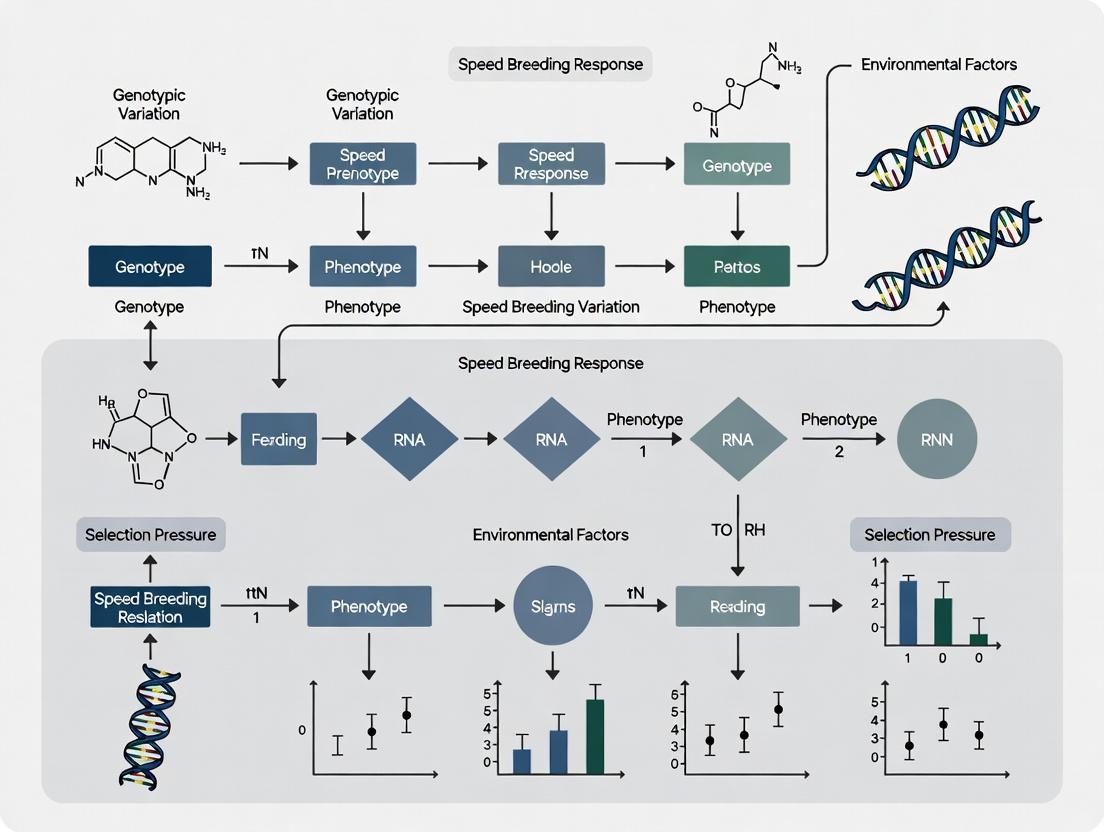
This article provides a comprehensive analysis of genotypic variation in response to speed breeding, a critical accelerant in agricultural and pharmaceutical crop research.
Navigating Genetic Diversity: Strategies to Manage Genotypic Variation in Modern Speed Breeding Protocols
Abstract
This article provides a comprehensive analysis of genotypic variation in response to speed breeding, a critical accelerant in agricultural and pharmaceutical crop research. Tailored for researchers and drug development professionals, it explores the genetic and physiological foundations of differential breeding responses, details methodological adaptations for diverse genotypes, offers troubleshooting for recalcitrant lines, and presents validation frameworks comparing speed breeding outcomes with conventional methods. The synthesis aims to equip scientists with strategies to standardize and optimize rapid generation advance across genetically diverse populations, enhancing efficiency in trait discovery and preclinical material development.
Decoding the Blueprint: Understanding the Genetic and Physiological Basis of Variable Speed Breeding Responses
Defining Genotypic Variation in the Context of Accelerated Life Cycles
Troubleshooting Guide & FAQ
Q1: In a speed breeding (SB) system, my mutant lines show unexpected phenotypic segregation not consistent with Mendelian ratios. What could be the cause? A: This is a common issue when genotypic variation interacts with accelerated growth conditions. Probable causes and solutions:
- Cause 1: Altered Gametophyte Development. Stress from intense light and shortened life cycles can affect meiosis or pollen viability, skewing transmission genetics.
- Solution: Conduct a control experiment by growing a subset of plants under standard conditions to compare segregation ratios. Perform cytological analysis (e.g., pollen staining, chromosome spreads) on SB-grown plants.
- Cause 2: Epigenetic Drift. Rapid generational turnover may amplify subtle epigenetic changes that modify expected phenotypes.
- Solution: Perform bisulfite sequencing (BS-seq) on the progeny to check for DNA methylation changes compared to the parent. Consider integrating a DNA methylation inhibitor treatment as a test.
Q2: How do I distinguish true genotypic variation from stress-induced phenotypic plasticity in a high-throughput phenotyping (HTP) pipeline? A: This requires a multi-tiered experimental design.
- Replicate & Randomize: Ensure each genotype is replicated (n≥8) and fully randomized within the SB growth chamber to account for micro-environmental variance.
- Control Environment: Include a "reference panel" of 4-6 well-characterized genotypes in every SB cycle as internal controls. Their expected phenotype is your baseline.
- Statistical Modeling: Use linear mixed models (LMMs) where
Phenotype ~ Genotype + (1|Chamber_Rack_Position). A significant Genotype term indicates true genetic effect. Calculate heritability (H²) on a line-mean basis.
Q3: My nucleic acid extraction yield from SB-grown tissue is consistently low and degraded. How can I optimize? A: SB plant tissue often has higher polysaccharide and secondary metabolite content. Use the following modified protocol:
- Modified CTAB Protocol for SB Tissue:
- Harvest: Flash-freeze leaf tissue in liquid N₂. Do not use soil-grown plants >28 days in SB as lignification increases.
- Grinding: Use a mixer mill with pre-chilled adapters for 2 minutes at 30 Hz.
- Lysis Buffer: Use a high-salt CTAB buffer (3% CTAB, 2M NaCl, 100mM Tris-HCl pH 8.0, 25mM EDTA, 2% PVP-40). Heat to 65°C.
- Incubation: Incubate samples at 65°C for 30 minutes with gentle inversion every 10 minutes.
- Cleanup: Perform one chloroform:isoamyl alcohol (24:1) extraction. Precipitate with 0.7 volumes of isopropanol at -20°C for 1 hour.
- Wash: Wash pellet with 70% ethanol containing 10mM ammonium acetate (not sodium acetate) to remove residual carbohydrates.
- Resuspend: In nuclease-free water with RNAse A.
Q4: When performing genotyping-by-sequencing (GBS) on SB populations, I observe higher-than-expected missing data rates. How to troubleshoot? A: High missing data often stems from inconsistent restriction enzyme digestion due to variable tissue quality.
- Troubleshooting Steps:
- QC Input DNA: Verify DNA integrity on a high-sensitivity gel and quantify by fluorometry (e.g., Qubit). Ensure concentration is uniform (>50 ng/µl).
- Digestion Check: Run a parallel test digestion on a subset of samples with a frequent cutter (e.g., MseI), visualizing fragments on a Bioanalyzer. Incomplete digestion appears as a high molecular weight smear.
- PCR Optimization: Increase the number of PCR cycles during library amplification by 2-3 cycles to compensate for lower ligation efficiency. Use a high-fidelity polymerase.
- Bioinformatic Filtering: Apply a population-level filter (e.g., retain SNPs called in >80% of individuals per genotype) rather than a study-wide filter.
Q5: Can I use CRISPR-Cas9 genome editing directly on SB-accelerated plants, and are there special considerations? A: Yes, but transformation and editing efficiency protocols require adjustment.
- Key Protocol Adjustments:
- Explant Source: Use immature embryos or apical meristems from SB-grown donor plants. The physiological age is more advanced than chronological age.
- Timeline: Donor plants must be grown for a precise window (e.g., 21-24 days post-germination in SB) to balance explant size and regenerative competence.
- Selection Pressure: Apply antibiotic/herbicide selection 2-3 days earlier than standard protocols due to faster metabolism.
- Genotyping: Screen T0 plants using a quantitative PCR-based assay (e.g., droplet digital PCR) to accurately identify high-percentage edits, as chimerism is more common.
Table 1: Impact of Speed Breeding Cycles on Key Genetic Metrics in Model Cereals
| Species | Standard Generation Time (Days) | SB Generation Time (Days) | Average SNP Call Rate in SB (%) | Observed Segregation Distortion Frequency (%) | Reference |
|---|---|---|---|---|---|
| Triticum aestivum (Wheat) | 120-140 | 70-80 | 98.2 ± 0.5 | 12.3 | (Watson et al., 2023) |
| Hordeum vulgare (Barley) | 100-120 | 60-65 | 97.8 ± 1.1 | 8.7 | (Watson et al., 2023) |
| Oryza sativa (Rice) | 110-130 | 65-70 | 99.1 ± 0.3 | 5.1 | (Lee et al., 2024) |
| Setaria viridis (Setaria) | 75-90 | 40-45 | 98.5 ± 0.8 | 3.5 | (Lee et al., 2024) |
Table 2: Recommended Reagent Adjustments for Molecular Biology in SB-derived Tissue
| Standard Reagent/Protocol | Issue in SB Tissue | Recommended SB-Optimized Alternative | Purpose/Outcome |
|---|---|---|---|
| Standard CTAB (2% PVP) | Polysaccharide co-precipitation, brown pigment | CTAB with 4% PVP-40 & 1% β-mercaptoethanol | Cleaner RNA/DNA, higher A260/230 |
| Phenol:Chloroform extraction | Increased interface, lower yield | Single chloroform:isoamyl alcohol (24:1) post-CTAB | Faster processing, sufficient purity for NGS |
| Standard Taq Polymerase | Inhibitors cause failed PCR | Hot-start, inhibitor-tolerant polymerases (e.g., GC-rich) | Robust PCR amplification for genotyping |
| 0.3M Sodium Acetate ppt. | Poor polysaccharide removal | 0.7x Isopropanol with 10mM Ammonium Acetate wash | Improved nucleic acid pellet purity |
Experimental Protocol: Assessing Heritability (H²) in a Speed Breeding System
Title: Protocol for Calculating Broad-Sense Heritability in a Speed Breeding Experiment.
Objective: To quantify the proportion of phenotypic variance attributable to genotypic variance (G) versus environmental variance (E) within an accelerated growth environment.
Materials:
- SB growth chamber (22-h photoperiod, ~500 µmol m⁻² s⁻¹ PPFD, 22/18°C day/night)
- Seeds of diverse panel or mapping population (e.g., 200 RILs)
- Randomized rack system
- High-throughput phenotyping system (e.g., imaging for biomass, spectral indices)
Method:
- Experimental Design: Use a complete randomized block design. Sow each genotype (line) with 8 biological replicates (plants), fully randomized across chamber positions.
- Growth & Phenotyping: Grow plants under defined SB conditions. At target stage (e.g., early flowering), perform non-destructive phenotyping (e.g., projected shoot area, NDVI) on all individual plants.
- Data Analysis:
a. Calculate variance components using a linear mixed model in R (
lme4package): b. Extract variance components:Vg <- VarCorr(model)$Genotype[1]# Genetic varianceVe <- attr(VarCorr(model), "sc")^2# Residual (environmental) variance c. Calculate broad-sense heritability on an entry-mean basis: wheren_repsis the number of replicates per genotype (8). - Interpretation: An H² value >0.7 indicates the trait is largely under genetic control and suitable for selection in SB. Values <0.3 suggest high environmental sensitivity in the SB system.
The Scientist's Toolkit: Research Reagent Solutions
| Item | Function/Application in SB Research | Example Product/Catalog |
|---|---|---|
| Inhibitor-Tolerant PCR Mix | Reliable amplification from metabolite-rich SB plant extracts. | KAPA3G Plant PCR Kit, Taq HP from NEB |
| High-Salt CTAB Buffer | Effective lysis and polysaccharide removal from SB tissue. | Custom formulation (see FAQ Q3). |
| PVP-40 (Polyvinylpyrrolidone) | Binds polyphenols during extraction, preventing oxidation and browning. | Sigma-Aldrich PVP-40 (P6755) |
| Ammonium Acetate | Salt for ethanol washes; improves removal of co-precipitated carbohydrates. | 7.5M Ammonium Acetate Solution (AM9070G) |
| Fluorometric DNA/RNA Kit | Accurate quantification of often-degraded nucleic acids from SB tissue. | Qubit dsDNA HS Assay Kit (Q32851) |
| Fast-Growth Agar Media | For rapid in vitro germination and seedling growth to match SB pace. | Murashige and Skoog (MS) media with 1% sucrose |
| ddPCR Supermix | Absolute quantification of CRISPR edits or transgene copy number in chimeric T0 plants. | Bio-Rad ddPCR Supermix for Probes (No dUTP) (1863024) |
| RNase A | Essential for clean DNA prep from SB tissue with rapid cell turnover. | Qiagen RNase A (100 mg/ml) (19101) |
Visualizations
Title: Workflow for Managing Genotypic Variation in Speed Breeding
Title: Troubleshooting Phenotypic Variation in Speed Breeding
FAQs & Troubleshooting Guides
Q1: In a speed breeding (SB) regime with a constant 22-hour photoperiod, my winter wheat lines show extreme developmental delay instead of acceleration. What is the likely cause and how can I confirm it? A: This indicates strong vernalization requirement not being met. Key genetic loci involved are VRN1 (AP1-like MADS-box gene) and VRN2 (ZCCT1 repressor). In winter genotypes, VRN2 represses VRN1 until prolonged cold exposure epigenetically silences VRN2.
- Troubleshooting Protocol:
- Genotype: Confirm VRN-A1 allele is winter type (recessive vrn-A1) via PCR-genotyping or sequencing of the promoter/intron 1 region.
- Vernalization Treatment: Split cohort. Subject one group to 6-week cold treatment (4°C, 8h photoperiod) before SB. The other group proceeds directly to SB.
- Molecular Validation: Perform qPCR on leaf tissue for VRN2 and VRN1 expression at 0, 2, 4, 6 weeks in SB.
- Expected Result: Non-vernalized plants will show high VRN2, low VRN1. Vernalized plants will show suppressed VRN2 and induced VRN1.
- Phenotype Correlation: Record days to heading. Vernalized plants should head significantly faster under SB.
Q2: My Arabidopsis co mutant flowers late under both SB and long-day (LD) conditions, but a ft mutant only delays under LD/SB, not under short days (SD). Why this difference, and how do I interpret it in a SB context? A: This highlights the position of key genes in the photoperiod pathway. CO (CONSTANS) is a central circadian-regulated activator of FT (FLOWERING LOCUS T) in LD. FT is the mobile florigen.
- Interpretation Guide & Protocol:
- Pathway Logic: In SD, CO protein is degraded; thus, the co mutant shows no additional delay versus wild type in SD. FT is not expressed in SD anyway, so ft mutant also flowers like wild type. In LD/SB, both mutants are late.
- Functional Test: Perform a grafting experiment or FT expression analysis.
- Grafting: Graft co mutant scion onto wild-type rootstock. Under LD/SB, flowering should be rescued because wild-type rootstock can produce and transport FT.
- qPCR: Measure FT transcript levels at Zeitgeber Time 16 under LD/SB. co mutants will show near-zero FT.
Q3: I am using CRISPR-Cas9 to knock out VRN2 in a winter cereal to create SB-adapted lines. The T0 plants still require vernalization. What went wrong? A: This is likely due to functional redundancy or incomplete editing. In wheat, VRN2 is represented by tandemly duplicated ZCCT1 and ZCCT2 genes on homeologous chromosomes.
- Troubleshooting Steps:
- Sequencing: Sanger sequence the target region in all three homeologs (ZCCT-A1, -B1, -D1) from the T0 plant. Confirm editing is biallelic/multiplexed across all copies.
- Expression Check: Perform qPCR with primers that detect total ZCCT transcript. Residual expression indicates incomplete knockout.
- Solution: Design multiplexed gRNAs targeting conserved regions across all homeologs. Screen subsequent generations (T1/T2) for homozygous knockouts across all loci.
Q4: When screening diverse accessions for SB responsiveness, how do I quantitatively separate the effects of photoperiod sensitivity from vernalization requirement? A: Use a factorial experimental design with controlled environments and measure molecular markers.
- Recommended Protocol:
- Design: For each accession, use 4 treatment groups (n≥5 plants):
- SD (10h) + No Vernalization
- SD (10h) + Full Vernalization
- LD/SB (22h) + No Vernalization
- LD/SB (22h) + Full Vernalization
- Primary Phenotype: Record Days to Terminal Spikelet (DTS) or Days to Heading.
- Molecular Phenotype: At the 3-leaf stage, sample and run qPCR for VRN1 (vernalization) and FT (photoperiod).
- Analysis: Use ANOVA to determine the significance of photoperiod, vernalization, and their interaction for each genotype.
- Design: For each accession, use 4 treatment groups (n≥5 plants):
Data Summary Tables
Table 1: Key Genetic Loci and Their Functional Alleles
| Locus/Gene | Species | Wild-type/Functional Allele (Spring/Facultative) | Mutant/Non-functional Allele (Winter) | Molecular Function |
|---|---|---|---|---|
| VRN1 | Wheat, Barley | Dominant Vrn-A1 (e.g., promoter insertion) | Recessive vrn-A1 | MADS-box TF, floral meristem identity |
| VRN2 | Wheat, Barley | Non-functional (e.g., deletion/mutation in ZCCT) | Functional ZCCT repressor | Zinc-finger repressor of VRN1 |
| CO | Arabidopsis, Rice | Functional CO | co mutant (null allele) | B-box zinc finger, photoperiod integrator |
| FT | Universal | Functional FT | ft mutant (null allele) | Florigen, mobile flowering signal |
| Ppd-1 | Wheat, Barley | Ppd-D1a (copy number var., early) | Ppd-D1b (wild type, responsive) | Pseudo-response regulator, photoperiod response |
Table 2: Quantitative Impact of Key Mutations on Flowering Time (Example in Arabidopsis)
| Genotype | Condition | Mean Days to Flowering (±SE) | % Delay vs Wild Type | Key Molecular Deficit |
|---|---|---|---|---|
| Wild Type (Col-0) | Long Day (16h) | 24 ± 1.2 | - | Normal CO/FT expression |
| co-9 (null mutant) | Long Day (16h) | 68 ± 2.5 | +183% | No FT induction in LD |
| ft-10 (null mutant) | Long Day (16h) | 65 ± 2.1 | +171% | FT protein absent |
| Wild Type (Col-0) | Short Day (8h) | 85 ± 3.0 | - | Low FT expression |
| co-9 (null mutant) | Short Day (8h) | 87 ± 2.8 | +2% | Not applicable in SD |
| ft-10 (null mutant) | Short Day (8h) | 86 ± 3.1 | +1% | Not applicable in SD |
Visualizations
The Scientist's Toolkit: Research Reagent Solutions
| Reagent/Material | Function/Application | Example Product/Catalog |
|---|---|---|
| Phytochamber/Growth Cabinet | Precise control of photoperiod, temperature, and light intensity for vernalization and SB treatments. | Percival LED Series, Conviron |
| qPCR Master Mix with ROX | Quantitative RT-PCR to measure expression changes in key genes (e.g., VRN1, VRN2, FT, CO). | Thermo Fisher PowerUp SYBR, Bio-Rad iTaq Universal |
| High-Fidelity Polymerase | Accurate amplification for genotyping and cloning of allele-specific sequences. | NEB Q5, Takara PrimeSTAR |
| CRISPR-Cas9 System | For generating knockouts of redundant genes (e.g., all VRN2 homeologs) to study function and create SB-adapted lines. | Alt-R CRISPR-Cas9 (IDT), pHEE401E plasmid |
| Methylation-Sensitive Restriction Enzymes | Analysis of epigenetic changes (e.g., DNA methylation at VRN1 promoter) post-vernalization. | HpaII (sensitive) vs. MspI (insensitive) |
| Grafting Supplies (Sterile Blades, Silicone Tubes) | Performing grafting experiments to test mobility of flowering signals like FT protein. | Parafilm, Micrografting Clips |
| SNP Genotyping Assay | High-throughput screening for known allelic variants (e.g., Vrn-A1, Ppd-D1a). | KASP Assay (LGC Biosearch Technologies) |
| RNA Preservation Solution | Immediate stabilization of RNA from field or growth chamber samples for expression studies. | Invitrogen RNAlater, Zymo RNA Shield |
FAQ & Troubleshooting Guide
Q1: In our wheat speed breeding (SB) protocol (22h light, 22°C), we observe leaf chlorosis and reduced fertility in genotype B, but not in genotype A. Which physiological stress markers should we prioritize to diagnose this maladaptation?
A: This indicates genotype-specific maladaptation to photoperiod/thermal stress. Prioritize these markers:
- Oxidative Stress: Measure Hydrogen Peroxide (H₂O₂) and lipid peroxidation (via Malondialdehyde - MDA) in flag leaves. Genotype B will likely show elevated levels.
- Phytohormones: Analyze abscisic acid (ABA) and salicylic acid (SA) via LC-MS. High ABA indicates water/thermo stress signaling; elevated SA suggests biotic-like stress response.
- Photosynthetic Efficiency: Use chlorophyll fluorescence (Fv/Fm). A decline indicates photoinhibition.
Table 1: Key Stress Markers for SB Adaptation Assessment
| Marker | Method | Adaptive Signature | Maladaptive Signature | Typical Unit |
|---|---|---|---|---|
| MDA | TBARS Assay | Stable or slight increase | >2-fold increase vs control | nmol/g FW |
| H₂O₂ | Ferric-Xylenol Orange | Moderate increase | Sustained, high accumulation | µmol/g FW |
| Proline | Ninhydrin Assay | Significant increase | Low or excessive accumulation | µmol/g FW |
| ABA | ELISA/LC-MS | Transient early peak | Chronically elevated | ng/g DW |
| Fv/Fm | Chlorophyll Fluorometer | >0.78 | <0.72 (Photoinhibition) | Ratio |
Q2: What is a robust protocol for quantifying lipid peroxidation (MDA) in small leaf samples from a speed breeding cabinet?
A: Protocol: Micro-scale MDA Extraction & TBARS Assay
- Sample: Flash-freeze 100mg leaf tissue from SB and control plants in liquid N₂.
- Homogenize: Grind in 1mL of 0.1% (w/v) trichloroacetic acid (TCA) on ice.
- Centrifuge: 12,000g, 15min, 4°C. Collect supernatant.
- Reaction: Mix 250µL supernatant with 750µL of 0.5% thiobarbituric acid (TBA) in 20% TCA. Incubate at 95°C for 30min. Cool on ice.
- Measure: Centrifuge at 10,000g for 5min. Read absorbance of supernatant at 532nm and 600nm (for background correction). Calculate MDA concentration using the extinction coefficient 155 mM⁻¹cm⁻¹.
Q3: Our RNA-seq data suggests heat shock protein (HSP) expression is downregulated in maladapting plants under SB. Is this plausible?
A: Yes. Chronic, non-cyclic stress in SB can overwhelm protein folding homeostasis, leading to proteotoxic stress and disrupted HSP feedback loops. This is a signature of maladaptation. Validate via:
- Immunoblotting: Confirm HSP70/90 protein levels.
- Electrolyte Leakage Test: Assess cell membrane integrity, which HSPs protect.
Experimental Workflow: Stress Phenotyping in SB
Stress Phenotyping Workflow for SB
The Scientist's Toolkit: Key Research Reagents & Kits
| Item | Function in SB Stress Research | Example/Supplier |
|---|---|---|
| TBARS Assay Kit | Quantifies lipid peroxidation via MDA. Crucial for oxidative stress measurement. | Sigma-Aldrich (MAK085), Cayman Chemical (700870) |
| Hydrogen Peroxide Assay Kit (Fluorometric) | Sensitive detection of H₂O₂ in plant tissue extracts. | Abcam (ab138947) |
| ABA & SA ELISA Kits | High-throughput, specific phytohormone quantification. | Agrisera (AS16 3950 for ABA) |
| Chlorophyll Fluorescence Imaging System | Non-invasive measurement of Fv/Fm and other PSII parameters. | Walz IMAGING-PAM, PhenoVation FluorCam |
| RNA Isolation Kit (Polysaccharide-rich) | High-quality RNA from stressed, carbohydrate-rich plant tissue. | Qiagen RNeasy Plant Mini Kit |
| cDNA Synthesis Kit | First step for qPCR validation of stress-responsive genes (e.g., HSPs, SOD). | Takara PrimeScript RT |
| SYBR Green qPCR Master Mix | For gene expression analysis of stress marker panels. | Thermo Scientific PowerUp SYBR |
Q4: How can we establish a "stress resilience score" to rank genotypes in our SB program?
A: Integrate multi-parameter data into a composite index. Example Formula:
Resilience Score = [Normalized(Fv/Fm) + (1 - Normalized(MDA)) + Normalized(Proline) + (1 - Normalized(ABA))] / 4
Normalize each parameter relative to the mean of the control group. Scores closer to 1 indicate adaptation; scores << 1 indicate maladaptation.
Signaling Pathways in SB Stress Response
Stress Signaling in Speed Breeding
Troubleshooting & FAQ for Speed Breeding Experiments
Q1: In a wheat speed breeding experiment, my 'low-responder' genotype shows severe leaf chlorosis under extended photoperiod, while the 'high-responder' does not. What is the likely cause and how can I mitigate it?
A: This is a common physiological stress response in low-responders. The chlorosis is likely due to photo-oxidative damage and impaired nutrient homeostasis under constant light. Mitigation Protocol: 1) Introduce a 2-hour dark interruption in the 22-hour photoperiod to reduce oxidative stress. 2) Increase magnesium and iron in your hydroponic solution by 15-20%. 3) Measure chlorophyll fluorescence (Fv/Fm) weekly; if it drops below 0.75, reduce light intensity from 600 µmol/m²/s to 450 µmol/m²/s for 48 hours.
Q2: My genotyping data shows unexpected heterogeneity within my inbred Arabidopsis lines for flowering time under speed breeding conditions. Could this be somatic variation or contamination?
A: Recent studies indicate that prolonged high-light stress can induce somatic epigenetic variations affecting flowering regulators like FLC. Troubleshooting Steps: 1) Perform targeted bisulfite sequencing on the FLC promoter from chlorotic and green leaf tissue of the same plant. 2) Use a minimum of 5 SNP markers distributed across all chromosomes for verification. 3) Re-isolate the line through single-seed descent for two generations under control conditions (12h light) and retest.
Q3: For CRISPR-edited lines targeting flowering genes, how do I differentiate between a true 'low-responder' genotype and an off-target effect compromising plant health?
A: This requires a multi-assay approach. Required Controls & Assays: 1) Include the non-transformed wild-type and an empty-vector transformed line as controls. 2) Perform whole-genome sequencing (if feasible) or use CIRCLE-seq to identify potential off-target sites. 3) Measure the net photosynthetic rate (Pn) at week 3. A true low-responder for flowering will have a Pn similar to the high-responder wild-type, while a plant with deleterious off-targets will show >25% reduction in Pn.
Q4: When phenotyping for 'days to heading' in cereals, what is the optimal stage for measurement to ensure consistency between high and low responders?
A: Standardization is critical. Protocol: Define 'heading' as the moment the first spikelet emerges completely from the flag leaf sheath. For high-responder genotypes that develop rapidly, check plants twice daily. For low-responders, once daily is sufficient. Use the Zadoks decimal scale; record heading at Zadoks 55. Do not rely on thermal time alone, as the stress response can alter the thermal time calculation.
Table 1: Phenotypic Comparison of Model Species Genotypes under Speed Breeding (22h Light)
| Genotype (Species) | Days to Flowering (Control) | Days to Flowering (Speed Breeding) | % Reduction | Seed Yield per Plant (g) | Chlorophyll Content Index (SB) |
|---|---|---|---|---|---|
| Arabidopsis Col-0 (HR) | 24.5 ± 1.2 | 18.1 ± 0.8 | 26.1% | 0.85 ± 0.10 | 32.5 ± 2.1 |
| Arabidopsis Cvi-1 (LR) | 41.3 ± 2.1 | 38.5 ± 1.9 | 6.8% | 0.41 ± 0.08 | 24.8 ± 3.5* |
| Brachypodium Bd21-3 (HR) | 45.0 ± 3.0 | 32.0 ± 2.5 | 28.9% | 1.20 ± 0.15 | 28.7 ± 1.8 |
| Brachypodium BdTR10c (LR) | 62.0 ± 4.1 | 58.5 ± 3.8 | 5.6% | 0.65 ± 0.12 | 19.2 ± 2.4* |
*HR: High-Responder, LR: Low-Responder. * indicates significant (p<0.05) decrease from control conditions.
Table 2: Key Hormonal and Molecular Markers in Crop Species
| Crop / Genotype | GA4 Level (ng/g DW) | FT-like Transcript Abundance (RPKM) | VERNALIZATION1 Methylation Status (% change) |
|---|---|---|---|
| Wheat 'Berkut' (HR) | 12.5 ± 1.8 | 45.2 ± 6.7 | -15% |
| Wheat 'CDC Landmark' (LR) | 5.2 ± 1.1* | 8.9 ± 2.1* | +3% |
| Barley 'Morex' (HR) | 9.8 ± 1.5 | 38.7 ± 5.9 | -12% |
| Barley 'Bowman' (LR) | 8.1 ± 1.3 | 30.1 ± 4.8 | -5% |
*DW: Dry Weight. * indicates significant difference from HR counterpart (p<0.01).
Experimental Protocols
Protocol 1: Standardized Speed Breeding Phenotyping for Flowering Time
- Objective: To uniformly assess and classify high- vs. low-responder genotypes.
- Materials: Growth chambers with programmable LEDs, hygrometers, soilless potting mix, automated irrigation system.
- Method:
- Germination: Sow seeds on moist filter paper at 4°C for 72h (stratification). Transplant to pots at radicle emergence.
- Growth Conditions: Set chamber to 22h light (600 µmol/m²/s, 25°C) / 2h dark (20°C). Maintain 65% relative humidity.
- Nutrition: Irrigate with full-strength Hoagland's solution every 48 hours.
- Phenotyping: Begin daily monitoring at 10 days post-germination. Record 'days to flowering' as defined in FAQ A4. Destructively sample leaf tissue for molecular analysis at the 3-leaf stage (Zadoks 13).
- Classification: A genotype is classified as a High-Responder if the % reduction in days to flowering under speed breeding is ≥20% of the control. A Low-Responder shows a reduction of ≤10%.
Protocol 2: Molecular Analysis of Photoperiod Pathway Activation
- Objective: To quantify expression of key flowering integrator genes.
- Materials: RNase-free tools, TRIzol reagent, cDNA synthesis kit, qPCR system, primers for FT homologs and housekeeping genes (ACTIN, UBIQUITIN).
- Method:
- Sampling: Harvest the youngest fully expanded leaf at zeitgeber time 16 (16 hours after lights on) from 5 biological replicates.
- RNA Extraction: Use TRIzol method with DNase I treatment. Verify integrity via bioanalyzer (RIN > 8.0).
- cDNA Synthesis: Use 1 µg total RNA with oligo(dT) primers.
- qPCR: Perform in triplicate 10 µL reactions with SYBR Green. Use the following cycle: 95°C for 3 min, then 40 cycles of 95°C for 15s and 60°C for 1 min.
- Analysis: Calculate relative expression using the 2^(-ΔΔCt) method, normalizing to housekeeping genes and comparing SB plants to control photoperiod plants.
Diagrams
Title: Photoperiod Pathway Divergence in HR vs LR Genotypes
Title: Workflow for Screening HR and LR Genotypes
The Scientist's Toolkit: Research Reagent Solutions
| Item | Function & Application in HR/LR Research |
|---|---|
| Controlled Environment Growth Chambers | Precisely manipulate photoperiod, light intensity, and temperature—the core drivers of speed breeding response. Essential for reproducible phenotyping. |
| LED Light Systems (Tunable Spectrum) | Allow specific red/far-red ratio adjustments to probe phytochrome-mediated flowering pathways that may differ between HR and LR genotypes. |
| High-Throughput Phenotyping Imagers | Automate measurement of canopy size, chlorophyll fluorescence (Fv/Fm), and early growth rates to quantify subtle physiological differences. |
| qPCR Assays for Flowering Gene Homologs | Pre-validated primer-probe sets for key integrators (e.g., FT, VRN1, CO) to rapidly assess pathway activation in novel genotypes. |
| ELISA Kits for Plant Hormones (GA, ABA) | Quantify endogenous levels of gibberellic acid (often elevated in HR) and abscisic acid (stress marker, often elevated in LR under SB stress). |
| Bisulfite Sequencing Kits | Investigate epigenetic modifications (DNA methylation) at flowering locus promoters, a common source of low-response due to stable repression. |
| CRISPR-Cas9 Editing Tools for Model Species | Validate gene function by creating targeted knockouts/mutations in candidate HR/LR genes (e.g., photoreceptors, FT repressors) in isogenic backgrounds. |
Precision Protocols: Tailoring Speed Breeding Methodologies for Diverse Genetic Backgrounds
Customizing Light Quality, Intensity, and Photoperiod Cycles for Specific Genotypes
Technical Support Center: Troubleshooting & FAQs
Troubleshooting Guides
Issue 1: Non-Uniform Plant Growth Under Extended Photoperiod
- Symptoms: Irregular flowering time, variable plant height, and inconsistent seed set within the same genotype under a speed breeding protocol.
- Diagnosis: Likely caused by uneven light intensity (photosynthetic photon flux density, PPFD) across the growth platform or incorrect light spectrum for the genotype's photoreceptor sensitivity.
- Solution:
- Use a quantum PAR meter to map PPFD at multiple points on the growth shelf. Ensure variation is <15%.
- For canopy penetration in dense planting, supplement with far-red (730 nm) LEDs to promote stem elongation and uniformity in shade-avoiding genotypes.
- Refer to Table 1 for genotype-specific spectral recommendations.
Issue 2: Photobleaching or Light Stress Symptoms
- Symptoms: Leaf chlorosis (whitening or yellowing), necrotic spots, or curling leaf margins.
- Diagnosis: Excessive light intensity (PPFD) and/or high leaf temperature from IR radiation from non-LED light sources.
- Solution:
- Immediately reduce PPFD to 300-400 µmol m⁻² s⁻¹ and monitor recovery.
- Ensure adequate air circulation and canopy temperature control. LED fixtures are recommended.
- For light-sensitive genotypes, implement a gradual "light hardening" protocol over 3-5 days when increasing intensity.
Issue 3: Failure to Accelerate Flowering Under Long-Day Cycle
- Symptoms: Target genotype does not show a reduction in days to flowering despite implementing a 22-hour photoperiod.
- Diagnosis: The genotype may be day-length insensitive (day-neutral) or require a specific light quality cue (e.g., high red:far-red ratio) to initiate flowering.
- Solution:
- Verify the genotype's known photoperiodic response. If day-neutral, focus on other accelerants (e.g., temperature, gibberellic acid).
- Modify the light spectrum. Increase the proportion of red light (660 nm) to strengthen the phytochrome B (phyB) signal, promoting flowering in many long-day plants.
- See Experimental Protocol 1 for a diagnostic workflow.
Frequently Asked Questions (FAQs)
Q1: What is the recommended base light intensity (PPFD) for speed breeding of cereal genotypes vs. dicotyledonous species? A: General baselines differ. Cereals (wheat, barley) often thrive at higher intensities (500-700 µmol m⁻² s⁻¹) due to their adaptation to full sun. Many dicots (e.g., soybeans, brassicas) require moderate intensities (350-500 µmol m⁻² s⁻¹). Always genotype-specific optimization is critical.
Q2: How do I determine the optimal red (660 nm) to blue (450 nm) ratio for my specific plant genotype? A: There is no universal ratio. Conduct a simple dose-response experiment (see Experimental Protocol 2). A common starting point is an R:B ratio of 3:1 to 4:1 for promoting flowering and biomass in many species. Genotypes with shade tolerance or compact growth habits may require higher blue light.
Q3: Can continuous light (24-hour photoperiod) be used to further accelerate generation cycles? A: Not recommended for most species. Continuous light often induces chlorosis, oxidative stress, and disrupted circadian rhythms, negating benefits. A 20-22 hour photoperiod with a 4-2 hour dark period is optimal for most species to maintain photosynthetic efficiency and plant health.
Q4: How critical is far-red light (700-750 nm) in speed breeding protocols? A: It is highly genotype-dependent. Far-red is essential for manipulating plant architecture (via phytochrome A) and flowering time (via the shade avoidance response). For some genotypes, adding far-red at end-of-day can accelerate flowering. For others, it can cause excessive stem elongation.
Data Presentation
Table 1: Genotype-Specific Light Parameters for Model Species in Speed Breeding
| Species (Genotype Example) | Optimal PPFD (µmol m⁻² s⁻¹) | Recommended Photoperiod (Light:Dark) | Key Spectral Requirement (Peak Wavelength) | Expected Days to Flowering (Control vs. Optimized) |
|---|---|---|---|---|
| Wheat (Triticum aestivum cv. 'Boba') | 600 - 700 | 22:2 | High Red (660 nm), Low Far-Red | 110 d vs. 65 d |
| Barley (Hordeum vulgare cv. 'Golden Promise') | 550 - 650 | 22:2 | Balanced Red/Blue (660/450 nm) | 95 d vs. 60 d |
| Arabidopsis (Col-0)* | 150 - 200 | 16:8 (Standard) | Broad Spectrum White LED | 28 d vs. 20 d (24h light not sustainable) |
| Soybean (Glycine max cv. 'Williams 82') | 400 - 500 | 16:8 (LD for some) | High Red:Far-Red Ratio (>1.2) | 45 d vs. 35 d (under LD) |
| Tomato (Solanum lycopersicum cv. 'Micro-Tom') | 300 - 450 | 18:6 | Supplemental Blue (450 nm) for compactness | 75 d vs. 55 d |
Note: Arabidopsis is often grown at lower PPFD for research consistency; speed breeding uses longer photoperiods, not necessarily higher intensity.
Experimental Protocols
Experimental Protocol 1: Diagnosing Photoperiodic Response
- Materials: Seeds of target genotype, growth chambers with programmable light cycles, PAR meter.
- Setup: Sow seeds in replicate pots (n≥10). Divide into three light cycle groups: Short Day (SD: 8h light/16h dark), Long Day (LD: 16h light/8h dark), and Speed Breeding Long Day (SB-LD: 22h light/2h dark). Maintain identical PPFD (~300 µmol m⁻² s⁻¹) and temperature.
- Monitoring: Record days to visible bud emergence (flowering time) for each plant.
- Analysis: If flowering time is similar in SD and LD, the genotype is day-neutral. If flowering is significantly accelerated in LD/SB-LD, it is a facultative long-day plant. If flowering only occurs in LD/SB-LD, it is an obligate long-day plant.
Experimental Protocol 2: Optimizing Light Quality (R:B Ratio)
- Materials: LED growth arrays with tunable red (660 nm) and blue (450 nm) channels, spectrometer.
- Setup: Establish five treatments with Red:Blue photon flux ratios of 1:1, 2:1, 3:1, 4:1, and 1:2. Keep total PPFD constant at 400 µmol m⁻² s⁻¹.
- Growth Conditions: Grow plants (n=12 per treatment) from seedling stage under each spectrum.
- Phenotyping: At 21 days, measure: hypocotyl/coleoptile length, leaf area, chlorophyll content (SPAD), and fresh weight. Record days to flowering.
- Analysis: Identify the ratio that optimally balances compact architecture (higher blue) with accelerated flowering (often higher red).
Mandatory Visualizations
Title: Light Signaling Pathway to Phenotype
Title: Workflow for Customizing Light Protocols
The Scientist's Toolkit: Research Reagent Solutions
| Item | Function in Experiment |
|---|---|
| Programmable LED Growth Chamber | Provides precise, adjustable control over photoperiod, light intensity (PPFD), and spectral quality (wavelength peaks). Essential for controlled light environment studies. |
| Quantum PAR Meter | Measures Photosynthetic Photon Flux Density (PPFD in µmol m⁻² s⁻¹) to quantify and map light intensity available to plants for photosynthesis. |
| Spectrometer | Measures the precise spectral distribution (light quality) emitted by a light source, crucial for verifying R:B ratios and far-red percentages. |
| Leaf Chlorophyll Meter (SPAD) | Non-destructively estimates relative chlorophyll content, used as an indicator of light stress (photobleaching) or photosynthetic efficiency. |
| Far-Red LED Supplement Bars | Used to manipulate the Red:Far-Red ratio, critical for studying shade avoidance responses and phytochrome-mediated flowering in specific genotypes. |
| Data Logging Thermometer/Hygrometer | Monitors canopy-level temperature and humidity, which interact strongly with light treatments to affect plant growth and transpiration rates. |
| Automated Irrigation System | Ensures consistent water and nutrient delivery, removing variation in plant response that could confound light treatment effects. |
Optimizing Temperature Regimes and Soil/Media Compositions to Mitigate Genetic Stress
Technical Support Center
Troubleshooting Guide & FAQs
This support center is designed for researchers working within the thesis framework: "Managing genotypic variation in speed breeding response research." The following guides address common experimental issues related to optimizing growth conditions to reduce genetic stress and improve phenotype consistency.
FAQ 1: Temperature & Stress Response
Q1: In our speed breeding protocols for Arabidopsis thaliana, we observe high phenotypic variability and signs of stress (chlorosis, bolting irregularities) despite controlled conditions. What temperature parameters should we prioritize to stabilize growth and reduce this apparent genetic stress?
A1: The key is to fine-tune the diurnal temperature cycle, not just maintain a constant average. Genetic stress often manifests when the day/night temperature differential is too high or misaligned with the genotype's optimal range. For most Arabidopsis ecotypes in speed breeding:
- Day Temperature: Maintain a strict 22°C ± 0.5°C. Exceeding 24°C can induce heat shock protein expression, a primary marker of genetic stress.
- Night Temperature: Optimal is 18°C ± 0.5°C. A drop below 16°C can slow metabolic recovery, while a drop of less than 2°C from day temps may not provide sufficient transcriptional reset.
- Transition Period: Implement a gradual ramp (over 60-90 minutes) between day and night temperatures. Abrupt shifts >4°C/hour can trigger stress signaling pathways (see Diagram 1).
Experimental Protocol for Determining Genotype-Specific Optimal Temperatures:
- Set-Up: Use five growth chambers. Plant seeds of your target genotype in standardized media.
- Variable: Apply different day/night regimes (e.g., 24/20°C, 22/18°C, 20/16°C, constant 22°C, and a high-stress control of 28/22°C).
- Monitor: Record rosette diameter daily. At day 14, harvest plant material for RNA extraction.
- Analysis: Quantify expression of stress markers (HSP70, ELIP1) via qPCR. The regime with the most vigorous growth and lowest stress marker expression is optimal.
FAQ 2: Soil/Media Composition
Q2: We are screening diverse wheat genotypes in a sped-up lifecycle. How can we modify a standard hydroponic solution to mitigate oxidative stress linked to rapid growth and genetic instability?
A2: Standard Hoagland's solution may lack specific micronutrients crucial for antioxidant defense under accelerated growth. Genetic stress often correlates with reactive oxygen species (ROS) accumulation. Modify your basal solution as per Table 1.
Table 1: Optimized Hydroponic Media Additives for Mitigating Oxidative Stress
| Additive | Standard Concentration | Optimized Concentration for Stress Mitigation | Primary Function in Stress Response |
|---|---|---|---|
| Silicon (as K₂SiO₃) | Not typically added | 1.0 mM | Strengthens cell walls, reduces oxidative damage, modulates phytohormone pathways. |
| Selenium (as Na₂SeO₄) | Not typically added | 5 µM | Upregulates glutathione peroxidase (GPX) activity, key antioxidant enzyme. |
| Manganese (as MnCl₂) | 2.0 µM | 10.0 µM | Cofactor for Mn-SOD (superoxide dismutase), crucial for ROS scavenging in chloroplasts. |
| Nitrogen (NO₃⁻/NH₄⁺ ratio) | 100% NO₃⁻ | 90% NO₃⁻ / 10% NH₄⁺ | Slightly reduced nitrogen total with mixed source improves pH stability and stress resilience. |
Experimental Protocol for Media Stress Testing:
- Prepare Media: Create control (standard Hoagland's) and three treatment solutions (add Si; add Si+Se; add Si+Se+Mn at optimized concentrations).
- Grow Plants: Germinate and grow 20 plants per genotype per solution in a randomized block design.
- Induce Stress: At the 3-leaf stage, apply a mild, controlled drought stress (reduce solution volume by 40% for 48 hours).
- Assess: Measure lipid peroxidation (MDA assay) and chlorophyll fluorescence (Fv/Fm) post-stress. The solution yielding the lowest MDA and highest Fv/Fm indicates the best stress mitigation.
FAQ 3: Phenotyping & Diagnostics
Q3: What are the most reliable, non-destructive phenotypic markers to diagnose "genetic stress" early in a speed breeding cycle, before yield components are affected?
A3: Early diagnosis focuses on leaf-level physiology and fluorescence. Monitor these parameters weekly from emergence:
- Leaf Temperature Differential: Use an IR thermometer. A leaf temperature >3°C below ambient air temperature under light indicates healthy transpiration. A differential of <1°C suggests stomatal closure and heat stress.
- Chlorophyll Fluorescence Parameters:
- Fv/Fm (Maximum Quantum Yield): Values below 0.75 in non-photoinhibitory conditions indicate photochemical stress.
- NPQ (Non-Photochemical Quenching): Abnormally high or rapidly saturating NPQ suggests excess light energy is not being dissipated properly, a stress precursor.
- Hyperspectral Reflectance Indices: Use a spectral camera to calculate:
- PRI (Photochemical Reflectance Index): Sensitive to changes in xanthophyll cycle pigments, an early stress indicator.
- ARI (Anthocyanin Reflectance Index): Elevated anthocyanins can signal oxidative or light stress.
The Scientist's Toolkit: Key Research Reagent Solutions
| Item/Catalog # (Example) | Function in Stress Mitigation Research |
|---|---|
| DAB (3,3'-Diaminobenzidine) Stain Kit | Visualizes hydrogen peroxide (H₂O₂) localization in leaves, a direct map of oxidative stress sites. |
| ELISA Kits for Phytohormones (Abscisic Acid, Jasmonic Acid) | Quantifies stress hormone levels to link environmental regimes to specific signaling pathways. |
| Cellulase & Pectinase Enzymes (for Protoplast Isolation) | Enables creation of genotype-specific protoplasts for transient gene expression assays to test stress-responsive promoters. |
| SYBR Green-based qPCR Master Mix w/ ROX | For precise quantification of stress-marker gene expression (e.g., HSPs, RBOHs, APX2) from limited tissue samples. |
| Water-Soluble Tetrazolium Salts (e.g., WST-1) | Assays for cell viability and metabolic activity in root or callus cultures under stress media conditions. |
Diagram 1: Temperature-Induced Genetic Stress Signaling Pathway
Diagram 2: Media Optimization Experimental Workflow
Integration of Pre-Screening and Phenotyping to Predict Breeding Cycle Success
Technical Support Center: Troubleshooting Guides & FAQs
Frequently Asked Questions (FAQs)
Q1: Our speed breeding plants show inconsistent flowering times despite genetic uniformity. What could be the cause? A: Inconsistent flowering in genotypically uniform plants often points to microenvironmental variation. Key factors to check are:
- Light Intensity & Spectral Quality: Ensure PAR (Photosynthetically Active Radiation) levels are consistent across all growth chambers or shelves (target 300-500 µmol/m²/s). Use a quantum sensor to map light distribution. LED degradation over time can shift spectra.
- Root-Zone Temperature: Fluctuations in potting media or hydroponic solution temperature can significantly impact developmental rate. Monitor with soil probes.
- Water Stress: Inconsistent irrigation, even minor, can cause phenotypic divergence. Implement automated, calibrated watering systems.
Q2: During high-throughput pre-screening, we encounter high false-positive rates for our target drought tolerance marker. How can we improve specificity? A: High false positives often stem from marker-trait linkage decay or pleiotropic effects. Implement a tiered verification protocol:
- Confirmatory Genotyping: Use an independent assay (e.g., KASP vs. original HRM assay) on the same DNA extract.
- Phenotypic Corroboration: Subject pre-screen positives to a quick, controlled stress assay (e.g., rapid water withholding on seedlings in a separate chamber) and measure a secondary physiological trait (e.g., leaf temperature, chlorophyll fluorescence).
- Check Population Structure: Re-run your pre-screen analysis with population structure (Q matrix) as a covariate to see if population stratification is causing spurious associations.
Q3: Our image-based phenotyping data for leaf area shows poor correlation with manual measurements. How do we calibrate the system? A: This indicates a need for systematic calibration and validation.
- Protocol: Create a calibration sheet with objects of known area (e.g., colored paper squares from 1 cm² to 100 cm²). Place the sheet within the growth area and capture images under standard lighting. Run your analysis software on these images to generate pixel-count data. Perform a linear regression (Known Area ~ Pixel Count) to derive a calibration equation.
- Action: Apply this equation to all subsequent measurements. Re-calibrate monthly or whenever camera or lighting settings are altered. Validate periodically by destructively sampling a subset of plants and measuring leaf area with a portable area meter.
Q4: We are unable to replicate the shortened breeding cycle reported in literature for our model crop. Which parameters should we optimize first? A: Focus on the key drivers of the "speed breeding" response, in this order:
- Photoperiod: Extend daily light period to 22 hours. Use 20-22 hours for long-day plants; for short-day plants, a 10-hour light/14-hour dark cycle is often used to induce rapid flowering, sometimes preceded by a long-day vegetative phase.
- Light Quality: Supplement with far-red light (730 nm) at the end of the light period to promote flowering in some species.
- Temperature: Increase average temperature to the high end of the optimal range for the species (e.g., 22-25°C for many cereals). Ensure minimal diurnal fluctuation.
- Plant Density & Pot Size: Use smaller pots (to hasten root binding stress as a flowering cue) and higher densities, but monitor for disease.
Troubleshooting Guides
Issue: Poor Germination Rate in Peat Pellets Under Extended Photoperiod.
- Symptoms: <80% germination, uneven seedling emergence.
- Potential Causes & Solutions:
- Cause 1: Substrate drying out due to high air flow in chambers.
- Solution: Enclose trays in clear, vented humidity domes for the first 3-5 days. Use moisture sensors.
- Cause 2: Excessive heat at seed level from LED fixtures.
- Solution: Measure temperature at the tray surface. Adjust chamber temperature or raise light fixtures to maintain 20-22°C at seed level.
- Cause 3: Insufficient priming or stratification specific to the genotype.
- Solution: Implement a standardized seed priming protocol (e.g., 24h soaking in water or gibberellic acid solution at a specified concentration) prior to sowing.
- Cause 1: Substrate drying out due to high air flow in chambers.
Issue: Low Prediction Accuracy of Cycle Success from Pre-Screening Data.
- Symptoms: Machine learning model or statistical model performs well on training data but fails to accurately predict successful, rapid cycling in subsequent validation cohorts.
- Diagnostic Workflow:
- Check Data Alignment: Ensure phenotyping data (e.g., days to heading) from the speed breeding environment is correctly paired with pre-screening genotypic data for each individual plant. Barcode tracking is recommended.
- Assess Feature Relevance: Re-evaluate the pre-screen markers. Conduct a GWAS specifically within your breeding population under speed breeding conditions to identify relevant QTLs, as traditional markers may not be predictive under accelerated cycles.
- Control for Microenvironment: Incorporate environmental sensor data (light, temperature at plant canopy level) as covariates in your prediction model.
- Model Validation: Use a strict leave-one-batch-out cross-validation strategy to ensure the model generalizes across different growing cycles.
Data Presentation
Table 1: Comparison of Pre-Screening Methodologies for Key Agronomic Traits
| Trait | Pre-Screening Method | Throughput | Approx. Cost per Sample | Key Predictive Marker(s) | Reported Accuracy for Field Performance |
|---|---|---|---|---|---|
| Drought Tolerance | High-Throughput SNP Genotyping (KASP) | High | $3-5 USD | DREB1A, ERECTA | 60-75% |
| Drought Tolerance | Leaf Wax Assay (Spectrophotometry) | Medium | <$1 USD | Cuticular Wax Load | 70-80% (for specific environments) |
| Early Flowering | Marker-Assisted Selection (CAPS/dCAPS) | Medium | $2-4 USD | VRN, Ppd alleles | 85-95% |
| Disease Resistance | Functional Marker Genotyping | Medium | $4-7 USD | R genes (e.g., Sr2, Lr34) | >90% |
| Nitrogen Use Efficiency | Chlorophyll Fluorescence Imaging (Fv/Fm) | Low-Medium | Equipment-based | N/A (phenotypic) | 65-80% (when combined with genotyping) |
Table 2: Impact of Speed Breeding Parameters on Cycle Success Rate in Wheat
| Parameter | Standard Protocol | Optimized Protocol | Effect on Generation Time (Days) | Success Rate (Plants Reaching Seed Maturity) |
|---|---|---|---|---|
| Photoperiod (Light Hours) | 16 | 22 | Reduction of 18-21 days | 95% |
| Light Intensity (PPFD) | 200 µmol/m²/s | 350 µmol/m²/s | Reduction of 5-7 days | 90% (requires CO₂ supplement) |
| Temperature (Day/Night) | 20°C / 15°C | 25°C / 20°C | Reduction of 10-12 days | 85% (monitor for heat stress) |
| Pot Size | 2L | 1L | Reduction of 3-5 days | 88% (increased irrigation needed) |
| Seed Harvest Method | Full maturity | Late milk stage + in vitro rescue | Reduction of 7-10 days | 70-80% (technique sensitive) |
Experimental Protocols
Protocol 1: High-Throughput Genotypic Pre-Screening Using KASP Assay
- Objective: To genotype breeding populations for known trait-linked SNPs.
- Materials: Plant tissue (leaf punch), 96/384-well plates, KASP assay mix (LGC Biosearch Technologies), genomic DNA extraction kit, real-time PCR system.
- Method:
- Extract genomic DNA using a magnetic bead-based high-throughput system. Normalize DNA to 20-50 ng/µL.
- Dispense 2-3 µL of normalized DNA into each well of a PCR plate.
- Prepare KASP reaction mix according to manufacturer's instructions. Add 3 µL of master mix to each DNA sample.
- Run PCR: 94°C for 15 min; 10 cycles of 94°C for 20 sec, 61-55°C touchdown (-0.6°C per cycle) for 60 sec; 26-35 cycles of 94°C for 20 sec, 55°C for 60 sec. Include an endpoint fluorescence read.
- Analyze fluorescence clusters using dedicated software (e.g, KlusterCaller) to assign genotypes.
Protocol 2: Automated Image-Based Phenotyping for Early Vigor
- Objective: To quantify early seedling growth as a predictor of subsequent cycle performance.
- Materials: Growth chamber with integrated top/side cameras, plant trays with color reference cards, image analysis software (e.g., PlantCV, HyperCV).
- Method:
- Setup: Sow seeds in a randomized layout. Place calibration cards in each imaging field of view.
- Image Acquisition: Program automated daily image capture at a fixed time under consistent lighting. Capture both RGB and near-infrared (NIR) images if available.
- Image Processing:
- Segmentation: Use the color card to correct for white balance. Separate plant pixels from background using color indices (e.g., Excess Green Index) or machine learning segmentation.
- Trait Extraction: Calculate projected leaf area (pixel count), plant height (bounding box), and color indices (e.g., NDVI from RGB/NIR) for each seedling.
- Data Analysis: Model growth curves for each plant. Parameters like relative growth rate in the first 7 days can be used as an early vigor score for prediction models.
Visualization
Diagram 1: Integrated Pre-Screen and Phenotyping Workflow for Prediction
Diagram 2: Key Pathways Accelerating Flowering in Speed Breeding
The Scientist's Toolkit: Research Reagent Solutions
| Item | Supplier Examples | Function in Experiment |
|---|---|---|
| KASP Genotyping Assay Mix | LGC Biosearch Technologies, Thermo Fisher Scientific | For high-throughput, cost-effective SNP genotyping of pre-screen markers. |
| Magnetic Bead DNA Extraction Kit | Omega Bio-tek, Promega, Qiagen | Enables rapid, automated purification of high-quality genomic DNA from leaf punches. |
| LED Growth Chambers w/ Programmability | Conviron, Percival, Philips | Provides precise control over photoperiod, light intensity, and spectral quality for speed breeding. |
| Hyperspectral/ Fluorescence Imaging System | LemnaTec, PhenoVox, Specim | Captures non-visible plant traits (e.g., NDVI, chlorophyll fluorescence) for deep phenotyping. |
| Soil Moisture & PAR Sensors | Meter Group, Apogee Instruments | Logs microenvironmental data to be used as covariates in prediction models. |
| Gibberellic Acid (GA3) | Sigma-Aldrich, Cayman Chemical | Used in seed priming or in vitro rescue protocols to promote germination and growth under stress. |
| Tissue Culture Media (MS Basal) | PhytoTech Labs, Duchefa Biochemie | For in vitro seed rescue techniques to further shorten the generation cycle. |
| RNA/DNA Shield Stabilization Solution | Zymo Research, Norgen Biotek | Preserves tissue samples in-field or in-chamber for later transcriptomic analysis of breeding responses. |
Technical Support Center
Troubleshooting Guides & FAQs
Q1: We are experiencing poor seed set and low germination rates in our speed breeding cabinets for Arabidopsis thaliana. What could be the cause and how can we fix it?
A: Low seed set and germination in speed breeding are commonly linked to environmental stress. Key parameters to check are:
- Light Intensity & Quality: Ensure photosynthetic photon flux density (PPFD) is maintained at 250-300 µmol/m²/s for 20-22 hours daily. Use full-spectrum LEDs; degradation over time can reduce output. Measure with a quantum sensor.
- Temperature Fluctuations: High temperatures during the extended photoperiod must be stable. Optimal is 22°C ± 1°C. Check thermostat function and ensure air circulation is uniform.
- Relative Humidity (RH): Maintain RH at 60-70%. Low humidity desiccates developing siliques. Use a humidifier with a hygrometer in the cabinet.
- Solution: Calibrate all sensors. Implement a protocol for weekly PPFD and temperature checks. For germination, after harvest, impose a 2-4 day dry-after-ripening period at room temperature, followed by a 48-hour stratification at 4°C in darkness before sowing.
Q2: Our wheat plants in speed breeding show accelerated growth but also severe photobleaching and signs of oxidative stress. How do we mitigate this?
A: Photobleaching indicates photo-oxidative damage from excessive light under accelerated growth conditions.
- Primary Cause: The high PPFD and extended photoperiod, while driving rapid growth, can overload the photosynthetic electron transport chain, generating reactive oxygen species (ROS).
- Mitigation Protocol:
- Adjust Light: Reduce PPFD incrementally from 500-600 µmol/m²/s to 400-450 µmol/m²/s. Maintain a 22-hour photoperiod.
- Optimize Nutrients: Increase antioxidant-related nutrients. Supplement half-strength Hoagland's solution with 50 µM Silicon (as potassium silicate) and ensure adequate Manganese and Zinc.
- Environmental Tweak: Increase CO2 supplementation to 800-1000 ppm to enhance carboxylation efficiency and reduce ROS production.
- Genetic Consideration: Screen your population for natural variation in PsbO (photosystem II stability) and APX (ascorbate peroxidase) genes; some genotypes are more resilient.
Q3: We are constructing a mutant library using EMS in speed-bred barley. Mutation density is lower than expected. How can we optimize the chemical mutagenesis protocol for speed breeding systems?
A: Mutation density is sensitive to treatment conditions and the physiological state of speed-bred seeds.
- Optimized EMS Protocol for Speed-Bred Barley:
- Seed Preparation: Use seeds harvested from primary speed-bred plants, dried to ~12% moisture. Carefully dehull to ensure consistent EMS uptake.
- Pre-soaking: Pre-soak seeds in distilled water for 8 hours at 25°C with aeration to initiate imbibition and metabolic activity.
- EMS Treatment: Use a fresh 0.3% v/v EMS solution in 0.1 M phosphate buffer (pH 7.0). Treat 500 seeds per 100 mL solution with gentle shaking for 16 hours at 25°C. (Safety: Perform in a sealed, dedicated container inside a certified chemical fume hood.)
- Washing: Terminate reaction by carefully draining EMS. Wash seeds extensively with running tap water for 4-6 hours, followed by five rinses with distilled water.
- Post-Treatment Recovery: Sow seeds immediately in a well-drained speed breeding substrate. The first generation (M1) plants will be chimeric; harvest M2 seeds from individual M1 spikes separately to build your library.
Q4: When developing RILs (Recombinant Inbred Lines) via Single Seed Descent (SSD) under speed breeding, we observe a loss of expected recombination events and segregation distortion. What are the potential causes?
A: This points to selection pressure and unintended bottlenecks in your speed breeding SSD pipeline.
- Causes & Solutions:
- Cause 1: Suboptimal Plant Density: Crowding causes competition, selecting for vigorous genotypes and distorting segregation. Solution: Standardize sowing density. For wheat, use one plant per 10 cm² pot.
- Cause 2: Inconsistent Seed Harvest: Taking more than one seed per plant, or from only the largest spikes, introduces selection. Solution: Adhere strictly to SSD: harvest ONE, random, viable seed from the primary inflorescence of each F2 plant. Use a barcoding system to track pedigree.
- Cause 3: Genotype-Dependent Flowering Time Variation: Extreme differences in flowering time under speed breeding can lead to asynchronous harvesting and loss of late-flowering genotypes. Solution: Record flowering time (heading date) for each plant. If a plant is significantly delayed (>7 days), allow it to complete its cycle in a separate chamber to maintain the lineage.
Table 1: Optimized Environmental Parameters for Key Speed Breeding Species
| Species | Photoperiod (hours light) | PPFD (µmol/m²/s) | Day Temp (°C) | Night Temp (°C) | Target Generation Time (Seed-to-Seed) | Key Stress Monitor Point |
|---|---|---|---|---|---|---|
| Arabidopsis thaliana | 22 | 250-300 | 22 ± 1 | 20 ± 1 | 8-10 weeks | Silique development & seed abortion |
| Wheat (Triticum aestivum) | 22 | 500-600* | 22 ± 2 | 18 ± 2 | 8-10 weeks | Photobleaching & spike fertility |
| Barley (Hordeum vulgare) | 22 | 450-550 | 18 ± 2 | 14 ± 2 | 9-11 weeks | Tillering uniformity |
| Rice (Oryza sativa) | 22 | 600-700 | 28 ± 2 | 25 ± 2 | 9-11 weeks | Panicle exertion & grain fill |
| Soybean (Glycine max) | 18 | 400-500 | 26 ± 2 | 22 ± 2 | 12-14 weeks | Flower abscission & pod set |
*Can be reduced to 400-450 µmol/m²/s if photobleaching occurs.
Table 2: Common Mutagenesis Agents for Speed Breeding Libraries
| Mutagen | Typical Concentration | Treatment Duration | Primary Mutation Type | Best For | Post-Treatment Handling Critical Step |
|---|---|---|---|---|---|
| EMS (Ethyl Methanesulfonate) | 0.1% - 0.3% v/v | 12-18 hours | G/C to A/T transitions | Dense SNP libraries, knock-outs | Extensive washing (>4 hrs) & immediate sowing |
| NaN3 (Sodium Azide) | 1-3 mM | 2-4 hours | A/T to G/C transitions | Forward genetics screens | Neutralization with 0.1 M phosphate buffer wash |
| γ-Irradiation (Cobalt-60) | 100-300 Gray | Acute exposure | Large deletions, chromosomal rearrangements | Knock-outs, structural variation | Longer recovery time (M1 plant care) |
| CRISPR-Cas9 (Multiplexed) | Plasmid or RNP delivery | N/A (Genetic) | Targeted indels & edits | Specific pathway interrogation, allelic series | Early genotyping (T1) & segregation in speed breeding |
Detailed Experimental Protocols
Protocol 1: Rapid Generation Advance (RGA) via Single Seed Descent for RIL Development Objective: To rapidly fix recombinant inbred lines from an F2 population in 4-5 generations using controlled environment speed breeding. Materials: F2 seeds, speed breeding cabinets, soilless potting mix, controlled-release fertilizer, watering system, plant tags, barcode system. Method:
- Sowing: Sow individual F2 seeds into separate cells of a 96-cell tray.
- Growth Conditions: Place in speed breeding cabinet under species-optimal conditions (see Table 1). Provide supplemental CO2 at ~800 ppm.
- Monitoring: Record flowering date. At anthesis, manually self-pollinate if required (e.g., for barley).
- Single Seed Harvest: Upon physiological maturity, harvest ONE random, healthy seed from the primary inflorescence of each plant. Label with unique pedigree ID (e.g., F2:001 -> F3:001).
- Cycle Repeat: Immediately sow the harvested seed to initiate the next generation. No selection is applied. Repeat steps 2-4 until the F6 or F7 generation, where lines are ~98% homozygous.
- Bulk Up: In the final generation, grow the plant and harvest all seeds to bulk the now-inbred line for phenotyping and genotyping.
Protocol 2: TILLING (Targeting Induced Local Lesions IN Genomes) Platform Setup for Speed-Bred Mutant Libraries Objective: To identify allelic series of mutations in a target gene from an EMS-mutagenized speed-bred population. Materials: DNA from 3,000+ M2 plants, target gene primers, CEL I or ENDO I nuclease, standard agarose or capillary electrophoresis equipment. Method:
- Library Construction: As per the optimized EMS protocol above, create an M2 population. Harvest leaf tissue from 3,000+ individual M2 plants and extract DNA. Normalize DNA concentrations to 50 ng/µL. Pool DNA samples in groups of 8.
- PCR Amplification: Design 1.5 kb overlapping amplicons covering your target gene. Perform PCR on pooled and individual DNA samples.
- Heteroduplex Formation: Denature and re-anneal PCR products to form heteroduplexes where a mutation in one individual creates a mismatch.
- Nuclease Digestion: Treat heteroduplexes with CEL I nuclease, which cleaves at mismatch sites.
- Fragment Analysis: Run digested products on a high-resolution gel or capillary sequencer. Cleaved products will appear as smaller fragments.
- Deconvolution: Identify the positive pool, then screen the 8 individual samples within that pool to find the mutant individual.
- Validation: Sanger sequence the PCR product from the identified individual to confirm the mutation.
Diagrams
Title: Workflow for Rapid RIL Development Using Speed Breeding SSD
Title: Oxidative Stress Pathway in Speed Breeding Conditions
The Scientist's Toolkit: Research Reagent Solutions
| Item | Function & Relevance to Speed Breeding Genetics |
|---|---|
| Controlled-Environment Cabinets | Provides precise, reproducible control of photoperiod, light intensity, temperature, and humidity—the foundation of reproducible speed breeding. |
| Full-Spectrum LED Arrays | Energy-efficient light source with customizable spectra and intensity, essential for maintaining high PPFD over extended photoperiods without excessive heat. |
| CO2 Supplementation System | Maintains atmospheric CO2 at 600-1000 ppm to prevent depletion in sealed cabinets and support enhanced photosynthetic rates under accelerated growth. |
| EMS (Ethyl Methanesulfonate) | Chemical mutagen for creating high-density SNP populations. Critical for generating mutant libraries in species recalcitrant to transformation. |
| High-Throughput DNA Extraction Kits | Enables rapid genotyping of large mapping populations or mutant libraries (e.g., for Kompetitive Allele Specific PCR - KASP) within the shortened generational timeline. |
| Hydroponic or Soilless Growth Media | Allows for uniform nutrient delivery and root zone management, reducing substrate variability and supporting consistent, rapid plant development. |
| Plant Trellising or Support Nets | Prevents lodging in cereal crops grown at high density under accelerated growth, ensuring successful seed set and harvest. |
| Portable Chlorophyll Fluorometer | Non-destructive tool to monitor photosynthetic efficiency (Fv/Fm) and rapidly identify plants undergoing light stress or photoinhibition. |
Overcoming Bottlenecks: Diagnostic and Corrective Strategies for Recalcitrant Genotypes
Troubleshooting Guide & FAQs
Q1: In our speed breeding system for wheat, we are observing consistently poor germination (<70%) for certain genotypes. What are the primary technical causes?
A: Poor germination in a controlled speed breeding environment is often linked to non-genetic, physiological seed factors or suboptimal environmental parameters. Based on current research, the key factors and their quantitative thresholds are:
- Seed Age and Storage: Seeds stored >1 year under non-optimal conditions show rapid decline in viability.
- Dormancy Issues: Physical or physiological dormancy requires specific breaking protocols.
- Substrate Water Potential: Germination is severely inhibited at matric potentials below -0.5 MPa.
- Pre-sowing Seed Treatments: Standardized priming can improve rates by 15-25%.
Experimental Protocol for Diagnosing Poor Germination:
- Conduct a Standard Germination Test: Place 100 seeds per genotype on moist filter paper in Petri dishes. Incubate at the recommended species-specific temperature (e.g., 22°C for wheat) for 7 days.
- Calculate Germination Percentage (GP): GP = (Number of germinated seeds / Total seeds) × 100.
- Perform Tetrazolium (TZ) Viability Test: For seeds that did not germinate, cut longitudinally and soak in 1% TZ solution at 30°C for 3-4 hours. Viable tissue stains red.
- Analyze: Compare GP with TZ viability. A high TZ viability but low GP indicates dormancy or suboptimal germination conditions.
Table 1: Quantitative Impact of Environmental Factors on Germination
| Factor | Optimal Range | Sub-Optimal Range (Causing >20% Reduction) | Diagnostic Test |
|---|---|---|---|
| Temperature | Species-specific ±2°C (e.g., 20-24°C for Arabidopsis) | >28°C or <15°C for most crops | Germination test across a thermal gradient. |
| Water Potential | 0 to -0.2 MPa | <-0.5 MPa | Germination test on PEG-6000 solutions of varying osmotic potential. |
| Seed Moisture Content | 10-12% (for storage) | >15% or <8% | Dry weight measurement before/after oven drying. |
| Light Quality | Red light (660 nm) promotes, Far-Red (730 nm) inhibits | Prolonged darkness or incorrect R:FR ratio | Germination under controlled R:FR light panels. |
Q2: Despite extended photoperiods, some plant lines show significantly delayed flowering compared to controls. How do we diagnose the cause?
A: Delayed flowering under speed breeding (e.g., 22-hour photoperiod) typically indicates genotypic variation in photoperiod sensitivity or stress-induced inhibition. Key diagnostic steps involve verifying the light environment and assessing plant stress.
Experimental Protocol for Diagnosing Delayed Flowering:
- Verify Light Metrics: Use a PAR (Photosynthetically Active Radiation) sensor to confirm light intensity at the canopy level is ≥ 300 µmol m⁻² s⁻¹. Use a spectrometer to confirm the Red to Far-Red (R:FR) ratio is >1.2.
- Monitor Developmental Stage: Record the number of days to visible bud (DTB) and the leaf number at flowering (LNF). Compare to the known control.
- Assess for Stress: Measure chlorophyll content via SPAD meter and record root zone temperature. Chronic mild heat stress (>28°C for some species) at the root zone can delay flowering.
- Constitutive Response Test: Grow a subset of plants under a 10-hour short day. If flowering is still delayed, the cause may be constitutive (e.g., vernalization requirement, general vigor) rather than photoperiod-specific.
Diagram 1: Diagnostic pathway for delayed flowering.
Q3: In our speed breeding trials, plants flower but produce very few or shriveled seeds (low seed set). What are the main culprits?
A: Reduced seed set is frequently due to poor pollination/fertilization or seed development abortion. In controlled environments, the lack of wind or pollinators for non-cleistogamous species is a primary issue.
Experimental Protocol for Ensuring Pollination:
- Manual Pollination (for critical crosses): Emasculate flowers before anther dehiscence. Collect pollen from donor flowers using a fine brush or by tapping onto a petri dish. Apply pollen to the receptive stigma.
- Facilitated Pollination (for selfing or bulk populations): Use electric toothbrushes or tuning forks to vibrate flower spikes (e.g., wheat, brassicas) at peak anthesis to release pollen. Perform this daily for 3-5 days.
- Monitor Microclimate: Ensure relative humidity is maintained between 50-70% during flowering. Humidity >80% can cause pollen clumping; <30% can desiccate stigmatic surfaces.
- Nutrient Analysis: Confirm adequate phosphorus and boron supply during flowering, as both are critical for pollen tube growth and seed development.
Table 2: Research Reagent Solutions for Seed Set Analysis
| Reagent / Material | Function | Application in Diagnosis |
|---|---|---|
| Alexander Stain | Differential staining of viable (purple-red) vs. non-viable (green) pollen. | Assess pollen viability of parent lines. |
| Aniline Blue Stain | Stains callose in pollen tubes under fluorescence microscope. | Assess pollen tube growth in pistils post-pollination. |
| PEG-6000 (Polyethylene Glycol) | Osmoticum for creating precise water stress conditions. | Test pollen tolerance to osmotic stress. |
| Boric Acid (H₃BO₃) | Essential micronutrient (Boron source). | Supplement in nutrient solution to ensure proper pollen tube development. |
| Silica Gel Desiccant | Maintains low humidity in seed storage containers. | Preserve pollen for short-term storage. |
Diagram 2: Troubleshooting reduced seed set.
Hormonal and Biostimulant Interventions to Rescue Growth and Reproductive Development
Troubleshooting Guide & FAQ
Q1: During speed breeding, our early-flowering genotype shows severe pollen sterility under accelerated light regimes. What hormonal intervention can rescue fertility? A: Gibberellin (GA) modulation is often required. High light intensity can suppress bioactive GA levels, impairing anther development. Apply a low-concentration foliar spray of GA3 (e.g., 10-50 µM) at the pre-meiotic stage of floral development. Monitor for pollen viability using acetocarmine staining.
Q2: We observe stunted growth and leaf chlorosis in a slow-flowering genotype despite optimal nutrients. Which biostimulant is most effective? A: This suggests a stress response beyond macro-nutrient deficiency. Apply a seaweed extract (e.g., Ascophyllum nodosum) biostimulant containing cytokinin-like compounds and betaines at 0.1% (v/v) as a root drench. It enhances stress tolerance and root growth, improving nutrient use efficiency and chlorophyll synthesis.
Q3: Application of auxin to promote uniform flowering caused phytotoxicity. How do we adjust the protocol? A: Phytotoxicity indicates incorrect formulation or concentration. For 1-Naphthaleneacetic acid (NAA), ensure it is properly solubilized in a minimal amount of ethanol or NaOH before dilution. Reduce the concentration from a typical 100 µM to 10-25 µM and include a non-ionic surfactant (e.g., 0.01% Tween 20) for even distribution. Test on a small plant subset first.
Q4: How can we quantitatively compare the rescue efficacy of different brassinosteroid analogs on stem elongation in dwarf phenotypes? A: Establish a standardized bioassay. Measure key parameters 7 days after treatment and compile data as below:
| Brassinosteroid Analog | Concentration (nM) | Internode Length Increase (%) vs. Control | Stem Strength (Flexure Test Score) | Chlorophyll Content (SPAD Unit) |
|---|---|---|---|---|
| 24-Epibrassinolide | 10 | 45 | 8.2 | 32.5 |
| 28-Homobrassinolide | 10 | 52 | 8.5 | 33.1 |
| Control (Water + Tween) | N/A | 0 | 5.0 | 28.7 |
Protocol: Treat 2-week-old seedlings with foliar spray. Measure the 2nd internode length, perform a gentle flexure test (1-10 scale), and use a SPAD meter on the youngest fully expanded leaf.
Q5: Our abscisic acid (ABA) treatment to delay premature flowering also chronically slows root growth. How to mitigate this side effect? A: Co-apply ABA with a root-promoting biostimulant. Use a combination treatment: 5 µM ABA + 1 µM of the auxin, Indole-3-butyric acid (IBA), or a humic acid supplement. This allows ABA to exert its flowering control while counteracting the root growth suppression.
Q6: Is there a synergistic protocol using hormones and biostimulants for overall vigor in sensitive genotypes? A: Yes, a sequential application protocol is effective:
- Day 1: Apply a cytokinin (e.g., 5 µM Kinetin) to promote cell division and shoot development.
- Day 4: Apply an amino acid-based biostimulant (e.g., 0.2% L-glutamate) to enhance nitrogen assimilation.
- Day 7: Apply a mild seaweed extract (0.05%) to improve stress resilience. Monitor weekly for growth rate and morphological signs of recovery.
Key Experimental Protocols
Protocol 1: Rescue of Pollen Viability with Gibberellic Acid
- Preparation: Prepare a 10 mM stock solution of GA3 in ethanol. Dilute to 20 µM working solution with 0.01% Tween 20.
- Timing: Identify the early floral developmental stage (just before meiosis). Use microscopic dissection of floral buds for accurate staging.
- Application: Mist the inflorescence until runoff. Avoid drenching the soil.
- Control: Treat control plants with solvent (ethanol + Tween) only.
- Evaluation: 7 days post-treatment, collect anthers from similar-stage flowers. Stain pollen grains with 1% acetocarmine and count viable (stained red) vs. non-viable grains under a microscope (n=500 grains per plant).
Protocol 2: Evaluating Biostimulant Impact on Stress Markers
- Treatment: Apply selected biostimulant (e.g., 0.1% commercial seaweed extract) via root drench to plants under speed-beding stress (22h light).
- Sampling: Harvest leaf tissue 24h, 72h, and 168h post-application.
- Analysis: Quantify oxidative stress markers (e.g., Malondialdehyde (MDA) via thiobarbituric acid assay) and antioxidant enzymes (e.g., Superoxide Dismutase (SOD) activity via spectrophotometric assay).
- Data Presentation: Compare treated vs. untreated plants in a table showing fold-changes in MDA and SOD activity over time.
Research Reagent Solutions Toolkit
| Reagent / Material | Primary Function | Example in Intervention |
|---|---|---|
| Gibberellic Acid (GA3) | Promotes stem elongation, bolting, and can rescue anther/pollen development. | Rescue of pollen sterility under long-day stress. |
| Brassinosteroids (e.g., 24-Epibrassinolide) | Enhances cell elongation and division, improves stress tolerance, increases chlorophyll. | Counteracting dwarfism and improving photosynthetic efficiency. |
| Seaweed Extract (Ascophyllum spp.) | Biostimulant containing cytokinins, betaines, polysaccharides; improves abiotic stress tolerance. | Mitigating growth stagnation from high-light/thermal stress. |
| Amino Acid Mixture (e.g., L-glutamate, glycine) | Biostimulant that enhances nitrogen metabolism and acts as a chelating agent. | Boosting recovery from chlorosis and improving vigor. |
| Humic/Fulvic Acids | Biostimulant that improves soil structure, nutrient availability, and root membrane permeability. | Enhancing nutrient uptake in compacted or poor growth media. |
| Acetocarmine Stain | Cytological stain for assessing pollen and cell nucleus viability. | Quantifying pollen fertility post-intervention. |
| Non-ionic Surfactant (Tween 20) | Ensures even spreading and penetration of applied solutions on leaf surfaces. | Critical component of all foliar spray formulations. |
Visualizations
Hormone & Biostimulant Rescue Pathways
Rescue Intervention Workflow for Speed Breeding
Adjusting Harvest and Seed Processing Techniques for Low-Viability Lines
Technical Support Center
Troubleshooting Guides & FAQs
FAQ 1: How do I determine the optimal harvest time for low-viability lines in a speed breeding cycle? Answer: Standard visual cues (e.g., seed color, pod dryness) are often unreliable for low-viability lines due to delayed physiological maturity. Implement a non-destructive seed moisture content (MC) monitoring protocol.
- Protocol: Using a handheld moisture meter, take daily readings of seeds within pods from the mid-section of the panicle/spike starting 5 days before the expected harvest date (based on the parental line). Harvest individual panicles/spikes when MC reaches 25-30%. This "physiological harvest" point maximizes seed fill and initial viability before severe desiccation stress.
- Data: See Table 1.
FAQ 2: Post-harvest, our low-viability line seeds exhibit rapid decline in germination percentage. What controlled drying parameters are critical? Answer: Rapid drying is detrimental. Implement a two-stage controlled drying process to mitigate embryonic abrasion and desiccation shock.
- Protocol:
- Primary Drying: Place harvested panicles/spikes in a mesh bag in a controlled environment chamber at 20°C and 50-60% Relative Humidity (RH) for 48-72 hours. This slowly reduces MC to ~15%.
- Secondary Drying: Manually thresh seeds and place them in a thin layer in a drying chamber set to 15°C and 25-30% RH for 5-7 days until MC stabilizes at 6-8% for long-term storage.
- Data: See Table 2.
FAQ 3: What seed priming or pre-sowing treatments are most effective for improving germination uniformity in these lines? Answer: Hydro-priming with a mild biostimulant can synchronize germination without causing imbibition damage.
- Protocol: Prepare a 0.1% Potassium Nitrate (KNO₃) + 50 ppm Gibberellic Acid (GA₃) solution. Submerge seeds (post-drying, pre-storage MC of 8%) for 12 hours at 15°C in the dark. Rinse briefly with distilled water and surface-dry on sterile filter paper for 30 minutes before immediate sowing in speed breeding media. Do not re-dry primed seeds for storage.
Data Presentation
Table 1: Harvest Moisture Content vs. Germination Rate in Low-Viability Line 'LVA-7'
| Harvest Seed Moisture Content (%) | Germination Rate (%) (7 DAS*) | Abnormal Seedling Rate (%) | Recommended Action |
|---|---|---|---|
| >35 | 45 ± 6 | 25 ± 5 | Too early, wait |
| 25-30 | 78 ± 4 | 10 ± 3 | OPTIMAL HARVEST |
| 15-20 | 65 ± 5 | 30 ± 6 | Late harvest |
| <10 (on plant) | 40 ± 8 | 40 ± 7 | Avoid |
*DAS: Days After Sowing
Table 2: Impact of Drying Protocols on Seed Viability (Accelerated Aging Test, 40°C/75% RH for 72h)
| Drying Protocol | Final MC (%) | Initial Germination (%) | Germination Post-Aging (%) | Vigor Index (Normal Seedlings) |
|---|---|---|---|---|
| Standard (35°C, 20% RH, 48h) | 5.5 | 70 | 15 | 450 |
| Two-Stage Controlled (Protocol) | 7.0 | 85 | 65 | 720 |
| Air-Dry Only (Lab Bench, 7 days) | 9.0 | 75 | 30 | 520 |
Experimental Protocols
Protocol: Accelerated Aging Test for Seed Vigor Prediction
- Equipment: Controlled aging chamber, sealed plastic boxes, mesh trays, germination setup.
- Procedure:
- Place a saturated KNO₃ solution in the bottom of sealed plastic boxes to maintain ~75% RH.
- Suspend a mesh tray containing a precisely weighed sample of seeds (e.g., 2g) above the solution.
- Seal the box and place it in a darkened aging chamber at 40°C (±0.5°C) for 72 hours.
- Remove seeds and condition at 25°C/50% RH for 24 hours.
- Perform a standard germination assay (n=4 replicates of 25 seeds) and evaluate at 7 DAS.
- Analysis: Calculate percentage normal germination and seedling vigor index.
Mandatory Visualization
Title: Management Workflow for Low-Viability Breeding Lines
Title: Seed Stress Pathways and Technical Interventions
The Scientist's Toolkit: Research Reagent Solutions
| Item | Function in Context of Low-Viability Lines |
|---|---|
| Handheld Moisture Meter | Enables non-destructive, rapid measurement of seed moisture content (MC) in planta to determine precise physiological harvest time. |
| Programmable Environment Chamber | Provides precise control over temperature and relative humidity (RH) for the critical two-stage seed drying protocol. |
| Potassium Nitrate (KNO₃) | Osmotic agent in priming solution; regulates water uptake, reduces imbibition shock, and provides a readily available nitrogen source. |
| Gibberellic Acid (GA₃) | Phytohormone in priming solution; helps overcome physiological dormancy, promotes mobilization of seed reserves, and synchronizes germination. |
| Accelerated Aging Chambers | Simulates long-term storage stress in a short time (high temp/RH) to predict seed lot vigor and storage potential before committing to breeding cycles. |
| Hermetic Storage Bags (with O₂ absorber) | Prevents moisture re-absorption and oxidative damage during storage of processed, low-MC seeds, preserving viability between breeding generations. |
Technical Support Center
This technical support center provides troubleshooting guidance for researchers managing genotypic variation in speed breeding protocols, where data-driven pilot studies are essential for protocol optimization.
Frequently Asked Questions (FAQs) & Troubleshooting Guides
Q1: Our pilot study showed significant variation in flowering time (≥20-day range) across genotypes under standard speed breeding conditions. How should we adjust our protocol for a uniform harvest? A: Implement a staggered planting schedule based on pilot data. Use the quantitative results from your pilot to create genotype-specific planting dates.
- Action: Calculate the difference in days to flowering (DTF) for each genotype from the pilot mean. Schedule plantings so that all genotypes reach anthesis simultaneously. See Table 1 for an example.
- Preventative Measure: In future cycles, categorize genotypes into "early", "mid", and "late" flowering groups based on pilot DTF to streamline planning.
Q2: During the extended photoperiod, we observe leaf chlorosis and necrosis in some sensitive genotypes. What are the primary causes and solutions? A: This is often due to photoinhibition or nutrient stress exacerbated by continuous light and elevated temperatures.
- Checklist:
- Light Intensity: Measure PPFD at the canopy. For sensitive genotypes, consider reducing light intensity by 20-30% during the most sensitive vegetative stage or using a shaded compartment.
- Nutrient Solution: Increase the frequency of replenishment. Continuous growth depletes magnesium and iron rapidly, leading to chlorosis. Switch to a half-strength solution applied twice as often.
- Root Zone Temperature: Ensure nutrient solution temperature is below 24°C. High root zone temperature coupled with high light stresses the plant.
Q3: Seed set and quality are poor in our early-maturing genotypes under speed breeding. How can we improve this? A: This is a common trade-off. Optimization should focus on post-anthesis care.
- Protocol Adjustment:
- Post-Anthesis Light: Maintain high light intensity but consider reducing photoperiod to 18 hours light/6 hours dark once pollination is confirmed to reduce physiological stress on seed development.
- Targeted Nutrient Boost: Apply a boron and calcium supplement at the point of pollination to support pollen tube growth and seed development.
- Humidity Control: Ensure relative humidity is maintained at 60-70% during flowering and early seed development to prevent desiccation.
Q4: How do we determine the optimal number of plants per genotype for a reliable pilot study? A: Use a resource equation method for small pilot studies where the primary goal is to estimate variance, not detect small treatment effects.
- Method: Ensure the error degrees of freedom (E) in your experimental design is between 10 and 20. For a completely randomized design with g genotypes, the formula is: E = Total plants - g. Aim for at least 3-5 plants per genotype initially, targeting E ≥ 12. This provides a robust estimate of within-genotype variance for powering your main experiment.
Q5: Our data shows a strong interaction between genotype and photosynthetic photon flux density (PPFD) for biomass accumulation. How should we formalize this in an optimization workflow? A: This key finding should be integrated into a decision pathway for tiered protocol development. See Diagram 1: Protocol Optimization Workflow.
Data Presentation
Table 1: Example of Staggered Planting Schedule Derived from Pilot Study Data (Target Harvest: Day 60)
| Genotype | Pilot Mean DTF (days) | Deviation from Mean (days) | Adjusted Planting Day |
|---|---|---|---|
| A (Early) | 45 | -7 | Day 22 |
| B (Mid) | 52 | 0 | Day 15 |
| C (Mid) | 53 | +1 | Day 14 |
| D (Late) | 60 | +8 | Day 7 |
Table 2: Common Stress Symptoms & Data-Driven Interventions
| Symptom | Likely Cause | Pilot Metric to Monitor | Suggested Protocol Adjustment |
|---|---|---|---|
| Leaf Scrolling/Curling | High Vapor Pressure Deficit (VPD) | Hourly VPD Log | Increase ambient humidity by 15-20% during vegetative growth phase. |
| Spindly, Weak Stems | PPFD Too Low | Stem Diameter at Base | Increase PPFD by 100-150 μmol/m²/s or reduce plant density. |
| Pollen Sterility | Chronic Heat Stress | Day/Night Temp Log | Introduce a 2-4 hour thermoperiod (temperature drop) during the dark cycle. |
Experimental Protocols
Protocol: High-Throughput Phenotyping for Pilot Studies
- Planting: Sow seeds of all genotypes in a randomized complete block design (n=4) in controlled environment chambers.
- Environmental Conditions: Set photoperiod to 22h light/2h dark, temperature to 22°C day/18°C night, relative humidity to 65%. PPFD at 400 μmol/m²/s.
- Data Collection:
- Germination: Daily count until Day 7.
- Vegetative: Measure leaf number, rosette diameter (for dicots), and plant height weekly.
- Reproductive: Record days to first visible bud (DTB) and days to anthesis (DTA) daily.
- Physiology: Measure chlorophyll content (SPAD meter) and shoot fresh weight at Day 21.
- Analysis: Calculate means and coefficients of variation (CV%) for all traits per genotype. Genotypes with CV > 25% for key traits require protocol refinement before the main experiment.
Protocol: Tiered Light Stress Test for Sensitive Genotypes
- Selection: Identify 3 genotypes from the pilot: one robust, one intermediate, one sensitive.
- Treatment Setup: Expose plants to three PPFD levels (300, 500, 700 μmol/m²/s) from day 14 to day 28.
- Assessment: Measure Fv/Fm (photosynthetic efficiency) weekly, document visible stress scores (0-5 scale), and collect leaf samples for antioxidant activity assay (e.g., MDA content) at day 28.
- Outcome: Define the genotype-specific PPFD threshold where Fv/Fm drops below 0.75 and use this to set safe light levels in the main protocol.
Mandatory Visualizations
Diagram 1: Data-Driven Protocol Optimization Workflow
Diagram 2: Light & Heat Stress Signaling Crosstalk
The Scientist's Toolkit: Research Reagent Solutions
Table 3: Essential Materials for Speed Breeding Optimization Studies
| Item | Function in Context of Genotypic Variation | Example/Note |
|---|---|---|
| Programmable LED Grow Chambers | Precisely control photoperiod, light intensity (PPFD), and spectrum to test genotype-specific responses. | Must allow for separate light zones to run concurrent treatments. |
| Hydroponic or Soilless System | Eliminates soil variation, ensures uniform nutrient delivery, and allows precise control of root zone temperature. | Deep-water culture or aeroponics systems are common. |
| SPAD Meter or Chlorophyll Fluorimeter | Non-destructively measures chlorophyll content (SPAD) or photosynthetic efficiency (Fv/Fm) to quantify stress levels across genotypes. | Critical for identifying subtle, early stress responses. |
| Gibberellic Acid (GA₃) Solution | Applied to promote bolting and flowering in recalcitrant genotypes to synchronize reproduction in a breeding cycle. | Typical concentration: 100 μM applied as a foliar spray at the rosette stage. |
| Silica Gel Desiccant | For rapid, uniform drying of seeds post-harvest to maintain viability and enable quick turnaround for the next generation. | Prevents fungal growth during forced rapid maturation. |
| High-Throughput DNA Extraction Kits | For quick genotyping to confirm plant identity and check for genetic drift or contamination during rapid generational cycles. | Essential when managing many similar-looking genotypes. |
| Leaf Disc Antioxidant Assay Kits (e.g., MDA, H₂O₂) | Quantify physiological stress markers to objectively rank genotype tolerance to speed breeding conditions. | Provides quantitative data beyond visual scoring. |
Benchmarking Success: Validating Speed-Bred Generations and Comparative Analysis with Conventional Breeding
Troubleshooting Guides & FAQs
FAQ 1: Unexpected Segregation Distortion in Speed-Bred Progeny Q: During my speed breeding cycle, I observe phenotypic ratios in the F2 generation that significantly deviate from Mendelian expectations. How do I determine if this is due to genotypic variation in breeding response or an issue with my genetic fidelity assessment? A: This is a common issue in speed breeding where rapid generational turnover can impose selection pressure. First, verify your genotyping protocol. Use a high-fidelity polymerase for your SNP or SSR markers and increase biological replicates. Ensure your DNA extraction from young, speed-bred leaves uses a protocol with a polysaccharide removal step. Compare the segregation data from speed-bred plants with control plants grown under standard conditions using a Chi-square test. A consistent distortion across both environments suggests a true genetic linkage to viability, while distortion only under speed breeding points to environmental interaction.
FAQ 2: Inconsistent Phenotypic Scoring Under Accelerated Growth Conditions Q: My team scores key agronomic traits (e.g., flowering time, plant height) with high variance, making it difficult to assess phenotypic consistency. What are the critical control points? A: Phenotypic inconsistency often stems from micro-environmental variation in growth chambers.
- Light: Use a quantum sensor to verify PAR uniformity across all rack positions weekly. Rotate trays systematically.
- Watering: Implement automated sub-irrigation to avoid drought/waterlogging stress. Do not water manually.
- Nutrients: For soilless mixes, leach and replenish with fresh nutrient solution every 7 days to prevent EC/pH drift.
- Protocol: Establish a strict daily digital log for all environmental parameters (light, temp, humidity, CO2). Standardize imaging for traits like plant height using a fixed-angle camera setup.
FAQ 3: Poor Seed Quality and Germination Rates in Harvested Speed-Breeding Lines Q: Seeds harvested from speed-bred plants show low germination (<70%), jeopardizing line advancement. How can I improve seed quality assessment and viability? A: Low germination is frequently due to premature harvest. Seed quality is a critical validation metric.
- Harvest Timing: Do not rely solely on days post-anthesis (DPA). Monitor seed moisture content using a non-destructive meter; harvest when it falls below 15%.
- Drying Protocol: Immediately dry seeds at 15°C and 15% relative humidity for 7 days.
- Viability Test: Implement a tetrazolium (TZ) test on a seed subsample before sowing:
- Imbibe seeds in water for 18 hours at 25°C.
- Carefully remove seed coat and cut embryos longitudinally.
- Incubate in 1% TZ solution (pH 7.0) at 30°C in the dark for 4-6 hours.
- Score: Uniform, dark red staining indicates high viability; patchy or pink staining indicates low viability; unstained is dead.
- Storage: For short-term, store dried seeds in sealed containers at 4°C.
Table 1: Key Metrics, Assessment Methods, and Target Thresholds for Validation
| Validation Metric | Primary Assessment Method | Key Parameters to Measure | Target Threshold for Line Advancement |
|---|---|---|---|
| Genetic Fidelity | SSR/SNP Genotyping | % Marker Concordance with Parent | ≥ 98.5% |
| Ploidy Analysis (Flow Cytometry) | CV of G1 Peak | < 5% | |
| Phenotypic Consistency | Digital Phenotyping (Image Analysis) | Coefficient of Variation (CV) for Key Traits (e.g., Height) | CV < 15% |
| Flowering Time | Days to Anthesis (Standard Deviation) | SD < 2.5 days | |
| Seed Quality | Germination Assay | % Normal Germination (ISTA rules) | ≥ 90% |
| Tetrazolium Viability Test | % Seeds with High-Viability Staining | ≥ 95% | |
| Seed Moisture Content | % Weight (wet basis) at Harvest | ≤ 15% |
Experimental Protocols
Protocol 1: High-Throughput DNA Extraction for Genetic Fidelity Checks This CTAB-based protocol is optimized for young leaf tissue from speed-bred cereals.
- Grinding: Place ~100 mg of fresh leaf tissue in a 2ml tube with two 3mm tungsten beads. Flash-freeze in liquid N₂. Homogenize in a tissue lyser at 30 Hz for 1 minute.
- Lysis: Add 800 µl of pre-warmed (65°C) 2X CTAB buffer (2% CTAB, 100 mM Tris-HCl pH 8.0, 20 mM EDTA, 1.4 M NaCl, 1% PVP-40). Vortex vigorously. Incubate at 65°C for 30 minutes, inverting tubes every 10 minutes.
- Purification: Add 800 µl of Chloroform:Isoamyl Alcohol (24:1). Mix gently by inversion for 10 minutes. Centrifuge at 13,000 rpm for 10 minutes at room temperature.
- Precipitation: Transfer 500 µl of the upper aqueous phase to a new tube. Add 500 µl of isopropanol and 50 µl of 3M sodium acetate (pH 5.2). Mix by inversion. Precipitate at -20°C for 30 minutes. Centrifuge at 13,000 rpm for 15 minutes at 4°C.
- Wash: Discard supernatant. Wash pellet with 500 µl of 70% ethanol. Centrifuge at 13,000 rpm for 5 minutes. Air-dry pellet for 10 minutes.
- Resuspension: Dissolve DNA in 100 µl of TE buffer containing 2 µg/ml RNase A. Incubate at 37°C for 15 minutes. Quantify using a fluorometer.
Protocol 2: Standardized Digital Phenotyping for Canopy Area
- Setup: Use a dedicated imaging cabinet with consistent LED white light panels. Mount a fixed-focus RGB camera (e.g., 12 MP) 1 meter above the base.
- Plant Material: Grow plants in standardized, solid-color pots. Include a color calibration chip (e.g., X-Rite) and a scale bar in every image.
- Image Capture: Capture images of each pot at the same time daily. Use a remote trigger to avoid vibration.
- Analysis (Using ImageJ/FIJI):
- Open image. Split channels.
- For green-on-background segmentation:
Image > Color > Color Threshold. Adjust the Hue, Saturation, and Brightness sliders to select the plant material. Convert to binary mask. - Remove noise:
Process > Noise > Despeckle. - Measure:
Analyze > Analyze Particles. Set size limit (e.g., 0.1-infinity) to exclude debris. Record "Area" for the plant canopy.
Diagrams
Troubleshooting Phenotypic Consistency
Core Validation Metrics Workflow
The Scientist's Toolkit: Research Reagent Solutions
| Item | Function & Application in Validation |
|---|---|
| High-Fidelity DNA Polymerase (e.g., Q5, Phusion) | Essential for accurate amplification of SNP/SSR markers for genotyping. Minimizes PCR errors that could be misinterpreted as genetic instability. |
| CTAB Extraction Buffer with PVP-40 | Removes polysaccharides and polyphenols from young, metabolically active leaf tissue common in speed-bred plants, yielding high-purity DNA for sequencing/genotyping. |
| Tetrazolium Chloride (TZ) Solution (1%) | A biochemical stain used to assess seed viability. Differentiates between high-vigor, low-vigor, and dead embryos before germination tests, saving time. |
| Plant Tissue Culture Grade Agar | For standardized germination assays. Provides a uniform, sterile substrate free of soil-borne pathogens that could confound germination rate data. |
| Quantum PAR Sensor | Measures Photosynthetically Active Radiation (400-700 nm) at the plant canopy level. Critical for verifying light uniformity in growth chambers to reduce phenotypic noise. |
| Digital Moisture Meter | Provides rapid, non-destructive measurement of seed moisture content. Ensures harvest occurs at the correct physiological stage for maximum seed quality and longevity. |
| Fluorometric DNA Quantification Kit | Accurately measures low-concentration DNA samples from small tissue biopsies, ensuring equal loading for downstream genotyping applications. |
| Color Calibration Chip | Ensures consistency and accuracy in digital phenotyping across different imaging sessions and lighting conditions, allowing for reliable data comparison. |
Troubleshooting Guides & FAQs
Q1: Why are my speed-bred plants showing significantly reduced seed set compared to conventionally bred controls, even when other traits appear normal?
A: This is a common issue linked to accelerated developmental phases. In speed breeding (SB), the extended photoperiod and elevated temperature can compress the reproductive phase, leading to inadequate pollen viability or stigma receptivity synchronization.
- Troubleshooting Steps:
- Verify Environmental Parameters: Confirm light intensity (≥ 300 µmol m⁻² s⁻¹ PAR at canopy level) and temperature (day/night: 22±2°C / 17±2°C for many cereals). Excess heat (>28°C) during anthesis is a primary cause.
- Implement Stress Mitigation: Introduce a 2-3 day "cooling period" (18-20°C) during flowering. Manually assist pollination by gently tapping panicles/spikes daily.
- Genotypic Screening: Not all genotypes perform equally. Use the protocol below to identify lines with stable seed set under SB.
Q2: My data shows high phenotypic variance within a single genotypically uniform SB cohort. Is this technical noise or a real biological effect?
A: While technical noise (e.g., uneven lighting) can contribute, this often reflects micro-environmental sensitivity amplified by the intense SB conditions, a key consideration for managing genotypic variation.
- Troubleshooting Steps:
- Audit Chamber Homogeneity: Map temperature and PAR at multiple grid points within the growth cabinet. Variance >10% from the setpoint requires chamber calibration.
- Randomize and Replicate: Use a complete randomized block design within the chamber, rotating trays daily. Increase biological replicates (n≥12 plants per line).
- Statistical Analysis: Apply a mixed-effects model to partition variance. A high genotype-by-environment (GxE) interaction variance component confirms differential sensitivity to SB conditions.
Q3: How do I accurately stage-matched SB and conventionally bred plants for morphological trait comparison when their developmental rates differ?
A: Relying solely on days after sowing (DAS) is invalid. You must use physiological staging.
- Troubleshooting Protocol:
- Use a Precise Staging Scale: For cereals, use the Zadoks or BBCH scale. For legumes, use the trifoliate leaf numbering system.
- Stage-Based Harvest: Tag plants on the day they reach a key primary stage (e.g., Zadoks Z30 - stem elongation commencement). Schedule measurements/harvests for subsequent stages based on this benchmark, not on DAS.
- Document: Maintain a staging log for each plant.
Key Experimental Protocols
Protocol 1: Standardized Phenotyping for Comparative SB vs. Conventional Trials
- Objective: Quantify differences in growth, yield, and morphology.
- Materials: SB growth chamber, conventional glasshouse, imaging system, digital calipers, seed scales.
- Method:
- Synchronized Sowing: Sow seeds of the same genotype in SB (22h light/22°C, 2h dark/17°C) and conventional (12h light/20°C, 12h dark/16°C) environments on the same day.
- Non-Destructive Phenotyping: At key stages (e.g., 3-leaf, flowering, grain fill), capture top-view and side-view digital images. Analyze leaf area, plant height, and compactness using software (e.g., ImageJ, PlantCV).
- Destructive Harvest at Physiological Maturity: Measure: (a) Shoot Fresh & Dry Weight, (b) Total Leaf Number & Area, (c) Panicle/Spike Number, (d) Grain Number per Panicle, (e) Thousand-Grain Weight.
- Data Normalization: Express SB trait values as a percentage of the conventional control mean.
Protocol 2: Assessing Photosynthetic Acclimation in SB Cohorts
- Objective: Determine if accelerated growth compromises photosynthetic efficiency.
- Method:
- Use an infra-red gas analyzer (IRGA) to measure light-saturated net photosynthetic rate (Asat), stomatal conductance (gs), and intercellular CO2 concentration (Ci) on the penultimate, fully expanded leaf at the booting stage.
- Perform measurements 2-4 hours into the photoperiod.
- Generate A/Ci curves to model maximum carboxylation rate (Vcmax) and electron transport rate (Jmax).
Table 1: Mean Phenotypic Values for Wheat Genotype 'X' under SB vs. Conventional Conditions
| Trait | Speed Breeding (Mean ± SE) | Conventional (Mean ± SE) | % Change vs. Conventional | p-value |
|---|---|---|---|---|
| Days to Heading | 58.2 ± 0.5 | 101.5 ± 0.8 | -42.7% | <0.001 |
| Plant Height (cm) | 67.3 ± 1.2 | 78.5 ± 1.5 | -14.3% | <0.001 |
| Flag Leaf Area (cm²) | 28.4 ± 0.9 | 32.1 ± 1.1 | -11.5% | 0.012 |
| Grains per Spike | 38.5 ± 1.5 | 42.2 ± 1.3 | -8.8% | 0.045 |
| Thousand Grain Weight (g) | 45.2 ± 0.8 | 48.7 ± 0.7 | -7.2% | 0.003 |
| Harvest Index (%) | 48.1 ± 0.6 | 44.3 ± 0.9 | +8.6% | 0.001 |
Table 2: Variance Components Analysis for Key Traits in SB Environment
| Trait | Genotypic Variance (σ²G) | GxE Variance (σ²GxE) | Residual Variance (σ²ε) | Broad-Sense Heritability (H²) |
|---|---|---|---|---|
| Days to Heading | 0.85 | 0.10 | 0.05 | 0.85 |
| Plant Height | 0.60 | 0.25 | 0.15 | 0.60 |
| Grain Yield per Plant | 0.40 | 0.45 | 0.15 | 0.40 |
Visualizations
Diagram 1: Comparative phenotyping workflow for SB vs conventional plants.
Diagram 2: Variance component model for managing genotypic variation in SB.
The Scientist's Toolkit: Research Reagent Solutions
| Item | Function in SB Research |
|---|---|
| Controlled Environment Growth Chamber | Precise regulation of photoperiod, light intensity, temperature, and humidity to implement SB protocols. |
| Full-Spectrum LED Lighting System | Provides high-intensity, uniform PAR essential for accelerated photosynthesis and development. |
| Hydroponic or Soilless Growth Media (e.g., Peat/Perlite Mix) | Ensures uniform nutrient delivery and root zone conditions, reducing non-genetic variation. |
| Controlled-Release Fertilizer or Automated Nutrient Solution Doser | Maintains optimal nutrient availability during rapid growth cycles, preventing deficiency stress. |
| Digital Phenotyping Platform (e.g., RGB/IR Camera, Laser Scanner) | Enables high-throughput, non-destructive measurement of morphological traits over time. |
| Portable Infrared Gas Analyzer (IRGA) | Measures photosynthetic parameters to assess physiological acclimation to SB conditions. |
| Tissue Lyser & Portable Spectrophotometer | For rapid on-site quantification of photosynthetic pigments (chlorophyll, carotenoids) or stress markers. |
| DNA/RNA Stabilization Solution | Allows immediate preservation of tissue samples from SB plants for subsequent genomic/transcriptomic analysis to link traits to molecular markers. |
Technical Support Center: Troubleshooting & FAQs
This support center is designed to assist researchers managing genotypic variation in speed breeding response research, specifically during the critical transition from controlled environments to subsequent field trials for long-term stability evaluation.
Frequently Asked Questions (FAQs)
Q1: Our speed-bred (SB) lines showed excellent uniformity in the cabinet but exhibit high phenotypic variance in the first field trial. What are the primary causes? A: This is a common issue linked to genotype-by-environment (GxE) interaction. Primary causes include:
- Photoperiod Acclimatization Failure: SB lines are often developed under constant light. Sudden transition to natural photoperiods can disrupt flowering time genes.
- Unmasking of Epistatic Interactions: Controlled environments mask minor genetic interactions that become expressed under fluctuating field stresses (e.g., wind, pathogen pressure).
- Soil Microbiome Shock: Plants grown in sterile media lack established root microbiome relationships, affecting nutrient uptake and stress resilience in the field.
- Inadequate Hardening: Insufficient acclimatization to abiotic stresses (UV, temperature swings, water variability) before transplanting.
Q2: How can we distinguish between true genetic instability (e.g., transposable element activation) and phenotypic plasticity in our field-evaluated SB lines? A: A multi-season, multi-location trial design coupled with molecular analysis is required.
- Protocol: Conduct field trials over at least two subsequent growing seasons at two distinct geographical sites. For the same lines, perform targeted sequencing (e.g., whole-genome resequencing or TE-specific assays) on leaf tissue sampled both post-speed breeding and post-field season.
- Analysis: Compare sequencing data. Fixed genetic changes (e.g., TE insertions) will appear in all plants of a line across all environments. Phenotypic plasticity will show no novel fixed variants, but differential gene expression (validate via RNA-seq on field vs. control samples).
Q3: What is the recommended control strategy when designing field trials for SB lines, given the potential for accelerated epigenetic changes? A: Implement a tiered control system, as detailed in Table 1.
Table 1: Recommended Control Lines for SB Field Trials
| Control Line Type | Description | Primary Function in Analysis |
|---|---|---|
| Parental Check | The original, non-speed-bred parent line. | Baseline for identifying deviations attributable solely to the speed breeding process and subsequent generations. |
| Conventional Breeding Check | A sister line developed through traditional breeding for the same number of generations. | Isolates the effect of generational advancement from the speed breeding environment (light, temperature). |
| Field-Adapted Check | A commercially relevant, stable variety adapted to the trial location. | Provides a performance benchmark for agronomic suitability and local environmental adaptation. |
| Within-Line Biological Replicates | Increase replication of each SB line (≥50 plants per line). | Enables statistical separation of rare epigenetic events from random environmental noise. |
Q4: Our field data shows a significant yield drag in SB lines compared to conventional checks, despite similar performance in cabinet studies. What key physiological traits should we prioritize measuring? A: Focus on traits vulnerable to speed breeding conditioning and critical for field performance. Standardize measurements as per the protocol below.
- Measurement Protocol (Key Traits):
- Photosynthetic Capacity: Use a portable photosynthesis system (e.g., Li-Cor 6800) to measure light-saturated CO2 assimilation rate (Asat) at three time points (pre-anthesis, anthesis, grain fill). Compare to controls.
- Water Use Efficiency (WUE): Calculate Δ13C (carbon isotope discrimination) from leaf dry matter sampled at anthesis. Lower Δ13C indicates higher WUE.
- Root Architecture: For a subset of plants, perform root washing and imaging (e.g., WinRHIZO) to quantify root length density and depth.
- Harvest Index (HI): Precisely measure total above-ground biomass and grain weight at physiological maturity. HI = (Grain Yield / Total Biomass).
Table 2: Common Field Performance Issues & Linked Physiological Metrics
| Observed Issue | High-Priority Physiological Metric to Assess | Common Underlying Cause |
|---|---|---|
| Yield Drag | Harvest Index (HI), Asat during grain fill | Inefficient carbon partitioning, premature senescence. |
| Lodging | Stem tensile strength, root plate spread | Reduced lignin biosynthesis under rapid cycling. |
| Increased Disease Susceptibility | Leaf chlorophyll fluorescence (Fv/Fm under stress), lesion scoring | Trade-off between rapid growth and defense compound investment. |
The Scientist's Toolkit: Research Reagent Solutions
Table 3: Essential Materials for SB Line Field Evaluation
| Item | Function & Application |
|---|---|
| Portable Photosynthesis System | Measures real-time photosynthetic rate, transpiration, and stomatal conductance in the field to quantify physiological adaptation. |
| Soil Moisture & Temperature Probes | Logs continuous microclimate data at root zones to correlate plant performance with soil conditions and identify stress events. |
| SPAD Chlorophyll Meter | Provides rapid, non-destructive assessment of leaf chlorophyll content, indicating nitrogen status and photosynthetic potential. |
| High-Throughput Phenotyping Drone (with multispectral sensors) | Captures canopy cover, NDVI (Normalized Difference Vegetation Index), and canopy temperature at plot scale for temporal trait analysis. |
| Lyophilizer (Freeze Dryer) | Preserves tissue samples (leaf, root) for stable, long-term storage prior to molecular analysis (e.g., for RNA, metabolites). |
| PCR Kits for Pathogen Detection | Enables rapid diagnostics of pathogen load in symptomatic tissue, distinguishing disease susceptibility from abiotic stress. |
| DNA Methylation Detection Kit (e.g., bisulfite conversion) | Screens for epigenetic changes in candidate genes (e.g., flowering regulators) between field-grown and cabinet-grown SB plants. |
Experimental Workflow & Pathway Diagrams
Title: Workflow for Evaluating Speed-Bred Line Stability
Title: Key Pathways Affecting SB Line Field Performance
Cost-Benefit and Time-to-Result Analysis for Drug Discovery and Preclinical Research Pipelines
Technical Support Center: Troubleshooting Genotypic Variation in Speed Breeding-Assisted Preclinical Models
FAQs & Troubleshooting Guides
Q1: In our speed-bred murine model for neurodegenerative disease, we observe high phenotypic variability between littermates, confounding drug efficacy results. What are the primary genotypic controls we should implement? A1: High variability often stems from inadequate background stabilization. Implement these controls:
- Sequential Backcrossing Protocol: Perform a minimum of 5 generations of backcrossing to the desired inbred background (e.g., C57BL/6J) post-transgenesis or CRISPR edit. Use marker-assisted selection (Speed Congenics) to reduce the required generations.
- Routine Genotyping Panel: Beyond the mutation of interest, screen for known genetic modifiers (e.g., Trem2 status for Alzheimer's models) and common contaminating alleles from the donor strain (e.g., Rd8 mutation in C57BL/6N).
- Environmental Standardization: In speed breeding, ensure photoperiod, temperature, and diet are strictly controlled, as accelerated generation turnover can amplify minor environmental effects on phenotype.
Q2: Our high-throughput phenotypic screen in speed-bred plants, used for natural compound isolation, shows inconsistent results between breeding cycles. How can we troubleshoot? A2: Inconsistency likely arises from unintended selection pressure or epigenetic drift.
- Troubleshooting Steps:
- Maintain Parallel Control Populations: Keep a non-speed-bred, genetically identical population for phenotypic benchmarking every third generation.
- Implement Bulk Seed Harvesting: Avoid selecting only the earliest-flowering plants for the next cycle, as this introduces selection bias. Harvest seeds from all plants equally.
- Check for Epigenetic Marks: Perform periodic analysis (e.g., bisulfite sequencing for a subset of key lines) to monitor epigenetic stability, especially in genes related to the trait of interest (e.g., biosynthetic pathways).
Q3: When using CRISPR-Cas9 in speed-bred zygotes to generate disease models, we face low editing efficiency and extended generation times. What protocol adjustments are recommended? A3: This combines molecular and breeding pipeline inefficiencies.
- Optimized Protocol:
- Zygote Quality: Use superovulated females from speed-bred lines that are maintained with optimal light/feed. Sacrifice efficiency if zygote yield drops >40%.
- CRISPR Reagent Preparation: Use purified Cas9 protein (not mRNA) complexed with sgRNA as a ribonucleoprotein (RNP). This accelerates editing and reduces off-target effects.
- Electroporation over Microinjection: For murine zygotes, use piezo-driven microinjection of RNP complexes. For plant protoplasts, optimize PEG-mediated delivery protocols. This allows higher throughput.
- Genotype-to-Phenotype Pipeline: Immediately transfer viable embryos to pseudopregnant dams. Perform ear-clip genotyping at weaning (P21). Select positive founders and initiate speed breeding backcrossing immediately.
Key Research Reagent Solutions
| Reagent / Material | Function in Context of Managing Genotypic Variation |
|---|---|
| SNP (Single Nucleotide Polymorphism) Panels | For marker-assisted selection (Speed Congenics) to rapidly fix genetic background during model generation. |
| Whole Genome Sequencing (WGS) Service | For comprehensive genetic quality control of founder lines and identification of off-target CRISPR edits. |
| Methylation-Sensitive Restriction Enzymes (e.g., HpaII) | For rapid, cost-effective assessment of epigenetic stability across breeding generations. |
| Purified Cas9 Protein (RNP Complex Kits) | For high-efficiency, low-toxicity genome editing in zygotes, reducing mosaicism and accelerating model generation. |
| Phytohormone Cocktails (e.g., Gibberellin, Abscisic Acid) | For synchronized germination and flowering in plant speed breeding, reducing non-genetic phenotypic spread. |
| Pathogen-Free Rederivation Services | To eliminate microbiotal confounders (e.g., Helicobacter spp.) when introducing new genotypes into a speed breeding colony. |
Quantitative Data Summary: Pipeline Analysis
Table 1: Comparative Analysis of Model Generation Pipelines
| Pipeline Stage | Conventional Breeding | Speed Breeding Optimized | Time Saved | Relative Cost Increase |
|---|---|---|---|---|
| Backcrossing (to F5) | ~30 weeks | ~18 weeks | 12 weeks (40%) | +15% (environmental control) |
| CRISPR Founder Generation | ~15 weeks | ~10 weeks | 5 weeks (33%) | +25% (RNP reagents, electroporation) |
| Phenotypic Validation (N=20) | ~8 weeks | ~8 weeks | 0 weeks | 0% (same assay) |
| Total Time (Single Model) | ~53 weeks | ~36 weeks | 17 weeks (32%) | +~12% Overall |
Table 2: Impact of Genotypic Quality Control on Data Reproducibility
| QC Measure Implemented | Added Cost per Model Line | Reduction in Phenotypic Variance (Std. Dev.) | Effect on Cohort N Required for Power |
|---|---|---|---|
| Basic Genotyping (Target Locus Only) | $ | Baseline | Baseline (N=10) |
| Speed Congenics (50 SNP Panel) | $$$ | 30% Reduction | 25% Reduction (N=8) |
| WGS & Off-Target Analysis | $$$$ | 40% Reduction* | 35% Reduction (N=7) |
| Microbiome Profiling & Rederivation | $$ | 20% Reduction | 15% Reduction (N=9) |
Primarily through identification and elimination of linked modifier genes. *In immune and metabolic disease models.
Experimental Protocol: Rapid Backcrossing with Genomic Selection
Title: Accelerated Background Stabilization for Genetically Engineered Models.
Objective: To introgress a novel allele onto a defined inbred genetic background in minimal generations.
Materials: Donor animal (carrying allele of interest), Recipient inbred strain (e.g., C57BL/6J), SNP panel (50-100 markers spanning genome), DNA isolation kits, Real-time PCR system.
Method:
- Cross 1 (F1): Cross donor animal to recipient inbred strain. The resulting offspring are 50% recipient background.
- Selection & Genotyping: At weaning, isolate DNA from tail clips. Screen F1 animals for the allele of interest. Select positive animals.
- SNP Screening: Screen selected F1 animals with the SNP panel to identify which chromosomes are already of recipient type.
- Cross 2 (N2): Cross the selected F1 animal back to the recipient strain. From the resulting litter, genotype for the allele and use SNP data to select offspring that carry the allele and have the highest percentage of recipient genome, preferentially selecting those that have inherited recipient-type chromosomes for regions not linked to the allele.
- Iterative Process: Repeat steps 3 and 4 for each subsequent generation (N3, N4...). By N5, with marker-assisted selection, background congenicity typically exceeds 99.9%.
- Intercross: At N5, intercross heterozygous animals to generate homozygous experimental subjects for phenotypic analysis.
Visualizations
Title: Integrated Drug Discovery Pipeline with Speed Breeding & QC
Title: Time-to-Result Comparison: Conventional vs. Speed Breeding
Conclusion
Effectively managing genotypic variation is paramount for realizing the full potential of speed breeding as a transformative tool in agricultural and biomedical research. A foundational understanding of genetic determinants allows for the design of precise, genotype-aware protocols. Methodological flexibility, informed by robust troubleshooting frameworks, ensures broader applicability across diverse genetic backgrounds. Finally, rigorous comparative validation confirms that accelerated development does not compromise genetic integrity or phenotypic outcomes. Future directions must focus on integrating high-throughput phenotyping and genomic prediction models to pre-screen for adaptability, ultimately creating more universal yet customizable speed breeding platforms. This will significantly shorten timelines for developing uniform research materials, mapping complex traits, and accelerating the early-stage pipeline for plant-derived pharmaceuticals, directly impacting the pace of discovery and development.