Integrating Genomics, Transcriptomics, Proteomics & Metabolomics: A Comprehensive Guide to Multi-Omics Strategies in Plant Biology Research
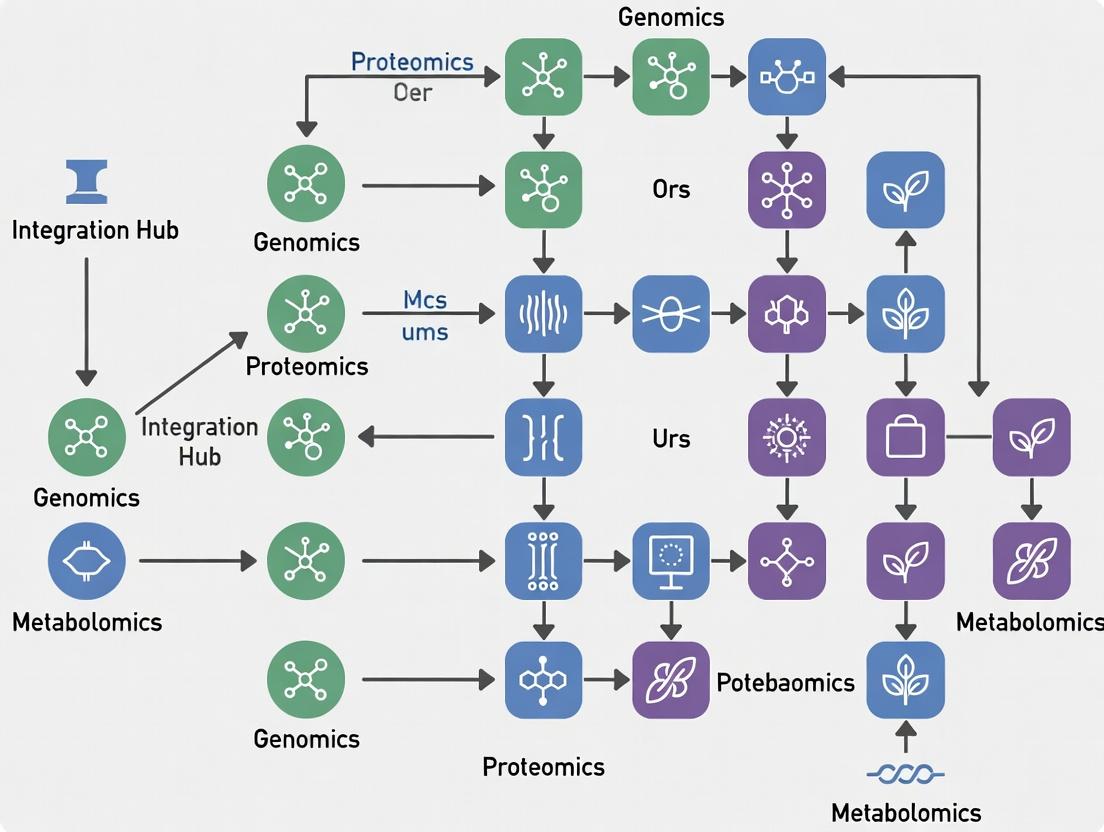
This article provides a comprehensive guide to multi-omics data integration for plant biology researchers.
Integrating Genomics, Transcriptomics, Proteomics & Metabolomics: A Comprehensive Guide to Multi-Omics Strategies in Plant Biology Research
Abstract
This article provides a comprehensive guide to multi-omics data integration for plant biology researchers. We explore the foundational concepts and unique challenges of plant systems, present cutting-edge methodological frameworks and tools for effective data fusion, address common pitfalls and optimization strategies for robust analysis, and validate approaches through comparative case studies. Aimed at scientists and drug development professionals, this review synthesizes current strategies to unlock systemic biological insights, enhance crop resilience, and accelerate the discovery of plant-based bioactive compounds.
From Single Layers to Systems Biology: Demystifying Multi-Omics Foundations in Plant Research
Within the thesis on multi-omics data integration strategies for plant biology research, a foundational understanding of the individual omics layers is paramount. This article defines the core technologies—genomics, transcriptomics, proteomics, and metabolomics—by presenting application notes, quantitative data summaries, and detailed experimental protocols essential for researchers and drug development professionals.
Each omics layer captures a distinct molecular dimension. The following table summarizes their core features and typical output metrics.
Table 1: Core Plant Omics Disciplines: Scope, Technologies, and Outputs
| Omics Layer | Molecule Studied | Key Technologies | Typical Scale/Output Metrics | Temporal Resolution |
|---|---|---|---|---|
| Genomics | DNA (Genome) | Next-Generation Sequencing (NGS), PacBio SMRT, Oxford Nanopore | Genome size (Mb/Gb), # of genes, SNP/InDel variants | Static (can vary with ploidy) |
| Transcriptomics | RNA (Transcriptome) | RNA-Seq, Microarrays, Single-Cell RNA-Seq | # of expressed genes, TPM/FPKM values, differential expression (log2FC) | Minutes to Hours |
| Proteomics | Proteins (Proteome) | LC-MS/MS, 2D-Gel Electrophoresis, TMT/iTRAQ labeling | # of identified proteins, abundance ratios, post-translational modifications | Hours to Days |
| Metabolomics | Metabolites (Metabolome) | GC-MS, LC-MS, NMR | # of annotated metabolites, peak intensities/fold changes | Seconds to Minutes |
Application Notes and Detailed Protocols
Genomics: Whole Genome Sequencing for Variant Discovery
- Application Note: Identifying single nucleotide polymorphisms (SNPs) and structural variants associated with stress resistance traits.
- Protocol: Illumina-based Whole Genome Re-Sequencing
- Sample Preparation: Isolate high-molecular-weight genomic DNA from plant tissue using a CTAB-based method. Assess purity (A260/A280 ~1.8) and integrity via agarose gel electrophoresis.
- Library Construction: Fragment 1µg of DNA via sonication. End-repair, A-tail, and ligate with indexed adapters. Size-select fragments (350-550 bp) using SPRI beads.
- Sequencing: Perform PCR amplification of the library. Load onto an Illumina NovaSeq flow cell for 2x150bp paired-end sequencing, targeting 30x genome coverage.
- Data Analysis: Align reads to a reference genome (e.g., Arabidopsis thaliana TAIR10) using BWA-MEM. Call SNPs and indels using GATK HaplotypeCaller. Filter variants based on quality (Q>30) and depth (DP>10).
Transcriptomics: RNA-Seq for Differential Gene Expression
- Application Note: Profiling gene expression changes in roots under drought stress versus control conditions.
- Protocol: mRNA-Seq Library Preparation and Sequencing
- RNA Extraction: Grind frozen tissue in liquid N₂. Extract total RNA using a commercial kit with DNase I treatment. Assess RNA Integrity Number (RIN > 8.0) via Bioanalyzer.
- Library Prep: Isolate poly-A mRNA using oligo(dT) magnetic beads. Fragment mRNA (~300 nt) using divalent cations at elevated temperature. Synthesize cDNA using reverse transcriptase and random primers. Ligate adapters and amplify with index primers for multiplexing.
- Sequencing & Analysis: Sequence on an Illumina platform (e.g., NextSeq 2000). Align reads to the reference genome/transcriptome using STAR. Quantify gene-level counts with featureCounts. Perform differential expression analysis in R using DESeq2 (adjusted p-value < 0.05, |log2FC| > 1).
Proteomics: Label-Free Quantification (LFQ) via LC-MS/MS
- Application Note: Quantifying protein abundance changes in leaves following pathogen infection.
- Protocol: Liquid Chromatography and Tandem Mass Spectrometry
- Protein Extraction: Homogenize tissue in a urea/thiourea lysis buffer with protease inhibitors. Centrifuge at 16,000 x g to clear debris. Quantify protein via Bradford assay.
- Digestion: Reduce disulfide bonds with DTT (10mM, 30 min) and alkylate with iodoacetamide (30mM, 30 min in dark). Dilute urea concentration and digest with trypsin (1:50 enzyme:protein, 37°C, overnight).
- LC-MS/MS: Desalt peptides using C₁₈ StageTips. Separate peptides on a C₁₈ nano-flow HPLC column with a 60-minute organic solvent gradient. Analyze eluting peptides with a Q-Exactive HF mass spectrometer in data-dependent acquisition (DDA) mode (full MS scan followed by top-20 MS/MS scans).
- Data Processing: Identify and quantify proteins using MaxQuant software. Map MS/MS spectra to a species-specific protein database. Normalize LFQ intensities and perform statistical testing (e.g., t-test, ANOVA).
Metabolomics: Untargeted Profiling via GC-TOF-MS
- Application Note: Discovering novel metabolic biomarkers for nitrogen use efficiency.
- Protocol: Gas Chromatography-Time of Flight Mass Spectrometry
- Metabolite Extraction: Freeze-dry ground plant material. Extract 20 mg with 1ml of 80% methanol/water at -20°C for 2h. Centrifuge and collect supernatant. Dry under vacuum.
- Derivatization: Protect carbonyl groups with methoxyamine hydrochloride in pyridine (90 min, 30°C). Subsequently silylate acidic protons with N-Methyl-N-(trimethylsilyl)trifluoroacetamide (MSTFA) for 30 min at 37°C.
- GC-TOF-MS Analysis: Inject 1µL of sample in splitless mode onto an Rxi-5Sil MS column. Use helium as carrier gas. Employ a temperature gradient from 60°C to 320°C. Acquire data in full scan mode (m/z 50-800) with an electron impact (EI) ion source.
- Data Analysis: Deconvolute peaks using ChromaTOF software. Align peaks across samples. Annotate metabolites by matching mass spectra and retention index to libraries (e.g., NIST, Golm Metabolome Database). Perform multivariate analysis (PCA, PLS-DA).
Visualization of Multi-Omics Integration Workflow
Diagram Title: Multi-Omics Integration Pipeline in Plant Biology
The Scientist's Toolkit: Research Reagent Solutions
Table 2: Essential Reagents and Kits for Plant Omics Studies
| Item Name | Supplier Examples | Function in Protocol |
|---|---|---|
| CTAB DNA Extraction Buffer | Home-made or Sigma-Aldrich | Lysis buffer for high-quality, polysaccharide-free genomic DNA from tough plant tissues. |
| TruSeq DNA/RNA Library Prep Kits | Illumina | Standardized, high-efficiency kits for constructing sequencing-ready NGS libraries. |
| PolyATract mRNA Isolation System | Promega | Magnetic bead-based isolation of intact, polyadenylated mRNA for transcriptomics. |
| RNeasy Plant Mini Kit | QIAGEN | Silica-membrane based spin column for rapid purification of high-integrity total RNA. |
| RIPA Lysis Buffer | Thermo Fisher Scientific | Efficient extraction of total protein from cells and tissues for downstream proteomics. |
| Trypsin, Sequencing Grade | Promega | High-purity protease for specific cleavage of proteins at lysine/arginine for LC-MS/MS. |
| MSTFA (N-Methyl-N-(trimethylsilyl)trifluoroacetamide) | Sigma-Aldrich | Derivatization agent for GC-MS metabolomics; silanizes polar functional groups. |
| C₁₈ Solid Phase Extraction (SPE) Cartridges | Waters Corporation | Desalting and purification of peptides (proteomics) or metabolites (metabolomics). |
| PCR-free Library Prep Reagents | KAPA Biosystems | Minimizes bias in whole genome sequencing by avoiding amplification artifacts. |
Why Integrate? The Synergistic Power of Multi-Omics for Understanding Plant Phenotypes.
Plant phenotypes are the complex product of dynamic interactions between the genome, transcriptome, proteome, metabolome, and epigenome. Single-omics approaches provide a limited, layer-specific snapshot, often insufficient to unravel the mechanistic basis of traits like drought tolerance or yield. This application note, framed within a thesis on multi-omics integration strategies, details how synergistic multi-omics data fusion empowers researchers to construct predictive models of plant phenotype, accelerating both fundamental research and applied drug (agrochemical) development.
Quantitative Impact of Multi-Omics Integration
The value of integration is demonstrated by comparative studies.
Table 1: Predictive Power of Single vs. Multi-Omics Models for Drought Response in Arabidopsis thaliana
| Omics Layer(s) Integrated | Model Type | Phenotype Predicted (R² Score) | Key Discovered Regulator |
|---|---|---|---|
| Transcriptomics Only | Linear Regression | Leaf Water Content (0.41) | RD29A |
| Metabolomics Only | Random Forest | Stomatal Conductance (0.52) | Proline, Raffinose |
| Transcriptomics + Metabolomics | Random Forest | Stomatal Conductance (0.78) | MYB44-Proline axis |
| All Layers (Geno, Trans, Meta) | Bayesian Network | Composite Stress Score (0.89) | ABF3 epigenetic module |
Table 2: Multi-Omics Resources and Databases for Plant Research
| Resource Name | Primary Omics Data | Integration Tools | Link |
|---|---|---|---|
| Plant Omics Data Center (PODC) | Genomics, Transcriptomics | Co-expression network analysis | [Website URL] |
| MetaboLights | Metabolomics | Joint pathway mapping with Proteomics | [Website URL] |
| ProteomeXchange | Proteomics | Correlation with Transcriptomics data | [Website URL] |
| BAR Arabidopsis Interactive Network | All Layers | Network visualization and overlay | [Website URL] |
Detailed Protocol: Integrated Time-Series Analysis of Herbicide Response
This protocol outlines a workflow to understand the systemic response of a crop plant to a novel herbicide.
1. Experimental Design & Sample Collection
- Plant Material: Zea mays B73, grown under controlled conditions to V3 stage.
- Treatment: Apply herbicide at field-recommended dose (e.g., 50 g/ha). Collect leaf and root samples at T0 (pre-treatment), T1 (6 hours), T2 (24 hours), T3 (72 hours). Include biological replicates (n=5).
- Sample Division: Flash-freeze each sample in liquid N₂ and homogenize. Precisely aliquot powder for parallel multi-omics extraction.
2. Parallel Omics Data Generation
- Genomics (DNA Methylation): Use a commercial bisulfite conversion kit (see Toolkit). Perform whole-genome bisulfite sequencing (WGBS) on T0 and T3 samples to identify epigenetic changes.
- Transcriptomics: Extract total RNA using a silica-column kit. Perform mRNA sequencing (Illumina NovaSeq), aiming for 30 million paired-end reads per sample.
- Metabolomics: Extract metabolites using 80% methanol/water. Analyze via untargeted LC-MS (reverse phase and HILIC) and GC-MS for broad coverage.
- Proteomics: Perform protein extraction and tryptic digestion. Analyze using data-independent acquisition (DIA) on a high-resolution Q-TOF mass spectrometer.
3. Data Integration & Analysis Workflow
- Step 1 - Pre-processing & QC: Trim and align RNA-seq reads (HISAT2). Process MS data with XCMS (metabolomics) and DIA-NN (proteomics). Call differentially methylated regions (DMRs) from WGBS data.
- Step 2 - Within-Layer Analysis: Identify differentially expressed genes (DEGs, |log2FC|>1, FDR<0.05), differential metabolites (VIP>1.5, p<0.05), and differential proteins.
- Step 3 - Multi-Omics Integration (Late Integration):
- Pathway Overlay: Map DEGs, proteins, and metabolites to KEGG pathways using tools like PaintOmics or IMPaLA. Identify pathways enriched across multiple layers (e.g., Phe biosynthesis).
- Correlation Network: Calculate pairwise Spearman correlations between significantly altered transcripts, metabolites, and proteins. Construct a network in Cytoscape, filtering for |r| > 0.85. Cluster to find highly connected "hub" molecules.
- Causal Inference: Use time-series data to apply Granger causality or similar models to infer potential regulatory relationships (e.g., methylation change -> gene expression -> metabolite accumulation).
Visualizations
Workflow for Multi-Omics Herbicide Response Study
Integrated View of a Plant Stress Signaling Cascade
The Scientist's Toolkit: Key Research Reagent Solutions
| Item / Kit | Function in Multi-Omics Workflow | Key Consideration |
|---|---|---|
| Plant Multi-Omics Lysis Buffer System | Allows sequential extraction of DNA, RNA, protein, and metabolites from a single, homogenized sample. | Minimizes biological variation between omics layers from the same biological replicate. |
| Bisulfite Conversion Kit (e.g., EZ DNA Methylation) | Converts unmethylated cytosines to uracil for subsequent WGBS library prep, enabling epigenomic analysis. | Conversion efficiency (>99%) is critical for accurate methylation calling. |
| Universal RNA-seq Library Prep Kit | Prepares high-complexity, strand-specific libraries from often degraded plant RNA. | Must be compatible with a wide input range and inhibitor-resistant. |
| SP3 Paramagnetic Bead Proteomics Kit | For detergent-free, high-recovery protein clean-up and digestion prior to LC-MS/MS. | Essential for removing metabolites/pigments that interfere with MS. |
| Phenylalanine-d8 Internal Standard | Stable isotope-labeled standard for absolute quantification of metabolites via LC-MS. | Enables cross-study comparison and data normalization. |
| Multi-Omics Integration Software License (e.g., OmicsNet, MixOmics) | Provides statistical framework for correlation, network, and dimensionality reduction analysis across datasets. | Should support temporal data and have robust visualization outputs. |
Within the broader thesis on multi-omics data integration strategies for plant biology, addressing species-specific complexities is paramount. Plant systems present unique challenges, such as polyploid genomes and intricate specialized metabolism, which complicate genomic assembly, annotation, and functional analysis. Effective integration of genomics, transcriptomics, proteomics, and metabolomics is essential to deconvolute these complexities and link genotype to phenotype.
Application Notes on Navigating Complexity
Deconvolution of Polyploid Genomes
Polyploidy, common in crops like wheat, cotton, and sugarcane, results in multiple homologous subgenomes. This complicates read mapping, variant calling, and the assignment of molecular features to specific genomic origins.
Key Data & Strategies: Table 1: Strategies for Multi-omics in Polyploids
| Challenge | Genomics Approach | Transcriptomics Approach | Metabolomics/Proteomics Link |
|---|---|---|---|
| Homoeolog Discrimination | Hi-C scaffolding, PacBio HiFi, parental k-mer sorting | SNP-aware RNA-seq alignment, allele-specific expression | Correlation networks to trace metabolites to specific subgenome expression |
| Dosage Effect Analysis | Copy Number Variation (CNV) calling | Expression quantitative trait loci (eQTL) mapping | Multivariate stats linking metabolite levels to gene dosage |
| Network Duplication | Synteny analysis across subgenomes | Co-expression network construction (e.g., WGCNA) | Integration of enzyme isoforms with metabolic pathway fluxes |
Elucidation of Specialized Metabolism
Plant specialized metabolites (e.g., alkaloids, terpenoids) are often produced in low quantities, in specific tissues, and by gene clusters that are difficult to annotate.
Key Data & Strategies: Table 2: Multi-omics for Specialized Metabolism
| Omics Layer | Role in Elucidation | Example Technique | Outcome |
|---|---|---|---|
| Genomics | Identify biosynthetic gene clusters (BGCs) | AntiSMASH, plantiSMASH | Prediction of candidate pathways |
| Transcriptomics | Pinpoint expression in tissues/conditions | Laser-capture microdissection RNA-seq | Spatial localization of pathway activity |
| Metabolomics | Detect and quantify metabolites | LC-MS/MS, NMR, IMS | Chemical phenotype & potential novel compounds |
| Proteomics | Confirm enzyme abundance & activity | Activity-based protein profiling (ABPP) | Functional validation of predicted enzymes |
Detailed Experimental Protocols
Protocol 1: Hi-C Assisted Genome Assembly for a Polyploid
Objective: To generate a chromosome-scale, haplotype-phased assembly for an autotetraploid plant. Materials: Young leaf tissue, crosslinking reagents, restriction enzymes, biotinylated nucleotides, DNeasy/Plant kit, Illumina & PacBio sequencers. Procedure:
- Crosslinking & Chromatin Fixation: Harvest 1-2g young leaf tissue. Fix in 2% formaldehyde for 20 min. Quench with glycine.
- Chromatin Digestion: Lyse nuclei. Digest chromatin with a 6-cutter restriction enzyme (e.g., MboI).
- Proximity Ligation & DNA Purification: Fill ends with biotinylated nucleotides. Perform proximity ligation. Reverse crosslinks and purify DNA.
- Library Prep & Sequencing: Shear DNA to ~350 bp. Pull down biotinylated fragments (contacts). Prepare Illumina paired-end library. Sequence on NovaSeq (~50x coverage). Also prepare a PacBio HiFi library from uncrosslinked DNA for long reads.
- Data Integration: Assemble PacBio reads into primary contigs. Use Hi-C read pairs with software (Juicer, 3D-DNA, ALLHIC) to order, orient, and cluster contigs into chromosomes, assigning contigs to subgenomes where possible.
Protocol 2: Multi-omics Integration for Pathway Discovery
Objective: To identify the complete biosynthetic pathway for a target specialized metabolite. Materials: Plant material from inducing/productive tissue, RNA isolation kit, protein extraction buffer, metabolite extraction solvents, LC-MS/MS, RNA-seq & proteomics platforms. Procedure:
- Induced Tissue Sampling: Treat plant with elicitor (e.g., methyl jasmonate). Harvest tissue at multiple time points (0, 6, 12, 24, 48h). Flash-freeze in LN₂.
- Parallel Multi-omics Extraction:
- Metabolomics: Grind tissue. Extract with 80% methanol. Analyze by LC-MS/MS in full-scan and targeted MRM modes.
- Transcriptomics: Extract total RNA. Prepare stranded mRNA-seq library. Sequence (Illumina, 30M reads/sample).
- Proteomics: Extract protein. Digest with trypsin. Analyze by data-independent acquisition (DIA) LC-MS/MS.
- Data Integration & Analysis: a. Identify Correlates: Find metabolite peaks whose abundance increases post-elicitation. b. Co-expression Analysis: From RNA-seq, identify genes whose expression profiles correlate tightly with metabolite accumulation (Pearson R > 0.9). c. Proteomic Validation: Filter candidate genes by checking for corresponding protein induction. d. Functional Prediction & Validation: Annotate candidate genes (e.g., CYPs, MTs). Clone genes for heterologous expression in Nicotiana benthamiana or yeast. Test enzyme activity on predicted substrates.
Visualization of Workflows and Relationships
Diagram Title: Genome Assembly Workflow for Polyploid Plants
Diagram Title: Multi-omics Integration for Metabolic Pathway Discovery
The Scientist's Toolkit: Research Reagent Solutions
Table 3: Essential Reagents & Materials for Featured Protocols
| Item Name / Category | Function / Application | Example Product/Source |
|---|---|---|
| Formaldehyde (2%) | Crosslinks chromatin for Hi-C, preserving 3D genomic interactions. | Molecular biology grade, Thermo Fisher. |
| MboI Restriction Enzyme | 6-cutter used in Hi-C to digest fixed chromatin prior to proximity ligation. | NEB. |
| Biotin-14-dATP | Labels the ends of digested chromatin fragments for pull-down post-ligation. | Jena Bioscience. |
| Methyl Jasmonate | Plant elicitor used to induce expression of specialized metabolic pathways. | Sigma-Aldrich. |
| Stranded mRNA-seq Kit | Prepares RNA-seq libraries preserving strand information for accurate annotation. | Illumina TruSeq, NEB NEXT. |
| Data-Independent Acquisition (DIA) Kit | For proteomic sample prep and mass tag labeling enabling highly multiplexed quantification. | Biognosys' HiRIEF, Bruker's timsTOF. |
| Heterologous Host System | For functional validation of candidate enzymes (e.g., CYPs). | N. benthamiana leaves, yeast (S. cerevisiae). |
| LC-MS/MS Grade Solvents | Essential for high-sensitivity, reproducible metabolomics and proteomics. | Methanol, Acetonitrile (Optima grade). |
Within the framework of a thesis on Multi-omics data integration strategies for plant biology research, the exploratory journey from single-gene discovery to elucidating complex trait networks is fundamental. This progression leverages integrated genomics, transcriptomics, proteomics, and metabolomics to move beyond correlative studies toward causative mechanistic models. This is critical for applications in crop improvement, synthetic biology, and plant-derived drug development.
Current State of Quantitative Data in Plant Multi-omics
Table 1: Representative Quantitative Yields from Modern Plant Multi-omics Studies
| Omics Layer | Typical Platform | Data Output Scale (Per Sample) | Key Metric for Integration |
|---|---|---|---|
| Genomics | Long-read Sequencing (PacBio, Nanopore) | 1-20 Gb, >Q20 quality | Variant Count (SNPs, Indels): 10^4 - 10^6 |
| Transcriptomics | RNA-Seq (Illumina) | 20-50 million reads | Differentially Expressed Genes (DEGs): 10^2 - 10^4 |
| Proteomics | LC-MS/MS (Tandem Mass Spectrometry) | Identification of 5,000 - 12,000 proteins | Protein Abundance Fold-Change: >1.5 |
| Metabolomics | GC-MS / LC-MS | Detection of 500 - 2,000 metabolites | Significantly Altered Metabolites: 50 - 500 |
| Phenomics | High-throughput imaging | Terabytes of image data | Digital Traits (e.g., canopy area, height): 10 - 100 |
Application Notes & Detailed Protocols
Protocol: Integrated Multi-omics for Candidate Gene Prioritization
Objective: To identify and validate master regulators of drought tolerance in Arabidopsis thaliana by integrating GWAS, RNA-Seq, and Metabolomics data.
Materials:
- Plant tissue from drought-stressed and control cohorts (n≥50 genotypes).
- DNA extraction kit (e.g., DNeasy Plant Pro Kit).
- RNA extraction kit (e.g., RNeasy Plant Mini Kit) with DNase I.
- LC-MS grade solvents for metabolomics.
- High-fidelity PCR mix and cloning reagents for validation.
Procedure:
- Population Phenotyping & Genomics:
- Subject a diverse panel to controlled drought stress. Measure physiological traits (relative water content, stomatal conductance).
- Perform whole-genome sequencing (≥10x coverage). Conduct GWAS using a mixed linear model (e.g., GAPIT) to identify SNP associations with drought traits.
Transcriptomics Cohort:
- From a subset of extreme phenotypes (10 tolerant, 10 sensitive), perform root/shoot RNA-Seq.
- Library prep: Use poly-A selection, prepare libraries with unique dual indexes.
- Sequencing: 150bp paired-end on Illumina NovaSeq, aiming for 30M reads/sample.
- Analysis: Align to reference genome (TAIR10) with STAR. Call DEGs using DESeq2 (FDR < 0.05).
Metabolomics Profiling:
- Flash-freeze leaf tissue from the same transcriptomics subset in liquid N2.
- Extract metabolites using 80% methanol/water.
- Analyze on a Q-TOF LC-MS system in both positive and negative ionization modes.
- Process data with XCMS for peak picking and alignment. Annotate using public databases (e.g., KEGG, PlantCyc).
Data Integration & Network Inference:
- Triangulation: Overlap genomic loci (GWAS hits), DEGs within loci, and metabolites whose levels correlate with trait/DEGs.
- Use Weighted Gene Co-expression Network Analysis (WGCNA) on RNA-Seq data to identify modules highly correlated with the trait and key metabolites.
- Causal Inference: Apply Mendelian Randomization or Bayesian network models (e.g., using bnlearn in R) to infer potential causal relationships: SNP → Gene Expression → Metabolite → Phenotype.
Validation:
- Select top 3 candidate genes from integrative analysis.
- Generate CRISPR-Cas9 knockout mutants and/or overexpression lines.
- Subject to the same drought assay and re-profile key metabolites to confirm predicted network perturbations.
Protocol: Phosphoproteomics for Signaling Pathway Elucidation
Objective: To map early signaling networks in plant immune response (e.g., upon flg22 elicitation).
Materials:
- Cell cultures or seedlings of model plant.
- Phosphatase/protease inhibitors.
- TiO2 or IMAC magnetic beads for phosphopeptide enrichment.
- TMTpro 16plex reagents for multiplexing.
- High-pH reverse-phase fractionation kit.
Procedure:
- Stimulation & Harvest: Treat samples with flg22 peptide vs. control. Harvest at short time points (2, 5, 15 min) by rapid freezing.
- Protein Extraction & Digestion: Grind tissue in urea lysis buffer with inhibitors. Reduce, alkylate, and digest with Trypsin/Lys-C.
- TMTpro Multiplexing: Label digested peptides from each time point replicate with unique TMTpro channel tags. Pool samples.
- Phosphopeptide Enrichment: Desalt pooled sample. Enrich phosphopeptides using TiO2 beads under acidic conditions.
- Fractionation & LC-MS/MS: Fractionate enriched phosphopeptides by high-pH reverse-phase chromatography. Analyze each fraction on a Orbitrap Eclipse Tribrid MS with Multi-notch SPS-MS3 method to minimize ratio compression.
- Data Analysis:
- Database search (e.g., via SequestHT in Proteome Discoverer 3.0) against the plant proteome.
- Localization of phosphorylation sites using PTM scoring algorithms (e.g., PTMRS).
- Normalize TMT ratios, and perform time-course clustering (e.g., using Short Time-series Expression Miner).
- Use kinase-substrate prediction tools (NetPhos, PlantPhos) to infer upstream kinases.
Visualizations
Title: Multi-omics Data Integration and Validation Workflow
Title: Simplified Plant Immune Signaling Pathway
The Scientist's Toolkit: Key Research Reagent Solutions
Table 2: Essential Materials for Plant Multi-omics Trait Network Analysis
| Item / Reagent | Provider Examples | Primary Function in Workflow |
|---|---|---|
| Plant DNA/RNA Shield | Zymo Research, Qiagen | Stabilizes nucleic acids in tissue during field collection, preserving integrity for omics. |
| Multiplexed Library Prep Kits | Illumina (Nextera DNA Flex), NEB (NEBNext) | Enables cost-effective, barcoded NGS library construction for population-scale genomics/transcriptomics. |
| TMTpro 16plex Isobaric Labels | Thermo Fisher Scientific | Allows multiplexing of up to 16 proteomics samples in one LC-MS run, enabling robust quantification. |
| Phosphopeptide Enrichment Kits | Thermo Fisher (TiO2), Cytiva (IMAC) | Selective enrichment of phosphorylated peptides from complex digests for signaling studies. |
| HILIC/UHPLC Columns | Waters, Phenomenex | Critical for high-resolution separation of polar metabolites in untargeted metabolomics. |
| CRISPR-Cas9 Plant Editing System | ToolGen, Broad Institute | For rapid functional validation of candidate genes identified from integrated networks. |
| Network Analysis Software | Cytoscape, WGCNA R package | Visualizes and statistically analyzes complex biological networks from multi-omics data. |
Frameworks in Action: Practical Methods for Multi-Omics Data Fusion and Analysis
Within the context of multi-omics data integration strategies for plant biology research, selecting the appropriate method is critical for deriving meaningful biological insights. This application note details key computational integration approaches—concatenation, correlation-based, and multi-stage versus simultaneous methods—for combining diverse datasets such as genomics, transcriptomics, proteomics, and metabolomics. The protocols are designed for researchers and drug development professionals aiming to understand complex plant traits, stress responses, and metabolic pathways.
Concatenation (Early Integration)
This approach involves merging multiple omics datasets into a single, unified data matrix prior to analysis.
Protocol 1.1: Feature-Level Concatenation for Plant Stress Response
Objective: To integrate transcriptomic and metabolomic data from Arabidopsis thaliana under drought stress to identify composite biomarkers.
Materials & Software:
- R (v4.3.0+) or Python (v3.9+)
- DESeq2, limma, or equivalent for normalization.
- MetaboAnalystR or pandas for data wrangling.
Procedure:
- Data Preprocessing: Independently normalize RNA-Seq read counts (e.g., using TMM or DESeq2's median of ratios) and metabolomic peak intensities (e.g., using Pareto scaling).
- Feature Reduction: Apply variance-stabilizing transformation to RNA-Seq data. For metabolomics, retain features with significant fold-change (FC > |2|, p.adj < 0.05).
- Matrix Fusion: Horizontally concatenate the processed matrices by sample IDs. The final matrix, Xconcat, has dimensions n samples x (p transcripts + q metabolites).
- Analysis: Apply multivariate techniques like Principal Component Analysis (PCA) or supervised methods (PLS-DA) to the fused matrix to identify patterns driven by combined features.
Quantitative Data Summary: Table 1: Typical Data Dimensions Post-Concatenation in a Plant Study
| Omic Layer | Initial Features | Features Post-Filtering | Normalization Method | Variance Explained (Top PC) |
|---|---|---|---|---|
| Transcriptomics | ~25,000 genes | ~8,000 (high variance) | DESeq2 VST | 35-45% |
| Metabolomics | ~500 compounds | ~150 (ANOVA p<0.05) | Pareto Scaling | 20-30% |
| Concatenated | 25,500 | ~8,150 | Column-wise Z-score | 55-65% |
Correlation-Based (Pairwise Integration)
This method identifies statistical relationships between features across different omics layers.
Protocol 2.1: Weighted Gene Co-Expression Network Analysis (WGCNA) with Metabolite Data
Objective: To construct correlation networks linking gene modules to metabolite profiles in tomato fruit development.
Procedure:
- Independent Cluster Analysis: Perform WGCNA on RNA-Seq data to identify co-expression gene modules. Each module is summarized by its eigengene (first principal component).
- Metabolite Correlation: Calculate pairwise Pearson or Spearman correlations between each module eigengene and all quantified metabolite abundances.
- Significance Testing: Apply Benjamini-Hochberg correction to correlation p-values. Retain associations with |r| > 0.8 and p.adj < 0.01.
- Validation: Use graphical LASSO or similar to infer partial correlations and reduce false-positive edges.
Key Reagents & Tools: Table 2: Research Reagent Solutions for Correlation-Based Integration
| Item | Function | Example Product/Code |
|---|---|---|
| RNA Extraction Kit | High-yield, integrity-preserving RNA isolation from plant tissue. | TRIzol Reagent, RNeasy Plant Mini Kit |
| LC-MS Grade Solvents | For reproducible, high-sensitivity metabolomic profiling. | Methanol (CAS 67-56-1), Acetonitrile (CAS 75-05-8) |
| WGCNA R Package | Constructs signed/unsigned co-expression networks and modules. | WGCNA from CRAN |
mixOmics R Package |
Provides tools for pairwise correlation and multi-block integration. | mixOmics from Bioconductor |
Multi-Stage vs. Simultaneous Integration
Multi-Stage (Sequential) Methods
Analysis is performed on one dataset, and the results inform or constrain the analysis of the next.
Protocol 3.1: Genome-Guided Proteogenomic Analysis
Objective: To annotate a novel plant genome (e.g., a non-model crop) using transcriptomic and proteomic evidence.
Procedure:
- Stage 1 (Genomics/Transcriptomics): Use de novo RNA-Seq assembly (Trinity) or alignment (HISAT2) to a draft genome to predict gene models.
- Stage 2 (Proteomics): Search tandem MS spectra against the stage 1 custom protein database using tools like MaxQuant or PeptideShaker.
- Stage 3 (Validation): Use identified peptides to validate, correct, or propose new gene models (e.g., with PGx tools).
Simultaneous (Late) Integration Methods
All datasets are analyzed jointly in a single model, preserving their distinct structures.
Protocol 3.2: Multi-Block PLS (MB-PLS) or DIABLO for Phenotype Prediction
Objective: To jointly model transcriptome, metabolome, and microbiome data to predict phytochemical yield in Medicago truncatula.
Procedure:
- Data Preparation: Scale each omics block (X1, X2, X3) separately. Define a common outcome vector/matrix Y (e.g., yield concentration).
- Model Training: Using the
mixOmicsDIABLO framework, specify the design matrix defining expected inter-omic relationships (typically 0.5 for all pairs). - Optimization: Tune the number of components and select features per omic via cross-validation to maximize correlation with Y and between omics components.
- Interpretation: Extract selected variables (loadings) from each block that contribute jointly to the predictive component.
Quantitative Comparison: Table 3: Comparison of Multi-Stage vs. Simultaneous Integration
| Aspect | Multi-Stage (Sequential) | Simultaneous (e.g., MB-PLS, MOFA) |
|---|---|---|
| Complexity | Lower, easier to implement. | Higher, requires specialized packages. |
| Model Flexibility | Can incorporate domain knowledge at each step. | Models all data at once, less bias from prior ordering. |
| Primary Output | A refined, often hierarchical, biological hypothesis. | Latent factors representing global biological variation. |
| Typical Use Case | Proteogenomic annotation; eQTL-led metabolic GWAS. | Predictive modeling of complex phenotypes; unsupervised discovery of cross-omic patterns. |
| Computation Time | Generally lower. | Can be high, especially with many features or iterations. |
Visualization of Workflows and Relationships
Within the context of a thesis on multi-omics data integration strategies for plant biology research, the selection of appropriate software and platforms is critical. This overview details three prominent toolkits—MixOmics, OmicsNet, and Galaxy-P—providing application notes, comparative data, and specific protocols for their use in plant multi-omics studies.
Table 1: Core Feature Comparison of Multi-omics Integration Platforms
| Feature | MixOmics (v6.26.0) | OmicsNet (v3.0) | Galaxy-P (via UseGalaxy.org) |
|---|---|---|---|
| Primary Function | Multivariate statistical analysis & integration | Network-based visualization & analysis | Web-based, accessible workflow system for proteomics & multi-omics |
| Integration Methods | PCA, PLS, DIABLO, sGCCA | Statistical, correlation, & knowledge-based networks | Tool orchestration for pipeline execution (e.g., PepSIRF, MetaPhOrs) |
| Omics Types Supported | Transcriptomics, Metabolomics, Proteomics, Microbiome | Genomics, Transcriptomics, Proteomics, Metabolomics | Proteomics, Metabolomics, Genomics, Transcriptomics |
| User Interface | R/Bioconductor package | Web-based & standalone application | Web-based platform |
| Key Outputs | Variable plots, sample plots, clustering, performance | Interactive networks, pathway overlays, enrichment | Processed data tables, visualizations, formatted reports |
| Best For | Statistical integration & hypothesis testing | Network biology & visual exploration | Reproducible, shareable analysis pipelines |
Table 2: Quantitative Performance Metrics (Representative Plant Dataset: Arabidopsis Stress Response)
| Platform | Avg. Runtime (10 samples, 3 omics) | Max Features/Omics (Recommended) | Memory Usage (Peak) |
|---|---|---|---|
| MixOmics | ~45 seconds | ~10,000 | ~1.2 GB |
| OmicsNet | ~2 minutes (network construction) | ~5,000 for visualization | ~800 MB |
| Galaxy-P | ~30 minutes (full workflow) | Limited by server allocation | Variable (cloud-based) |
Application Notes & Protocols
MixOmics: Protocol for Multi-omics Integrative Analysis
Application Note: MixOmics is ideal for applying multivariate statistical methods like DIABLO (Data Integration Analysis for Biomarker discovery using Latent cOmponents) to identify correlated features across transcriptomic and metabolomic datasets from plant tissues under drought stress.
Protocol: DIABLCentral O Analysis for Plant Drought Response Objective: Identify multi-omics biomarkers predictive of drought tolerance phenotype.
Reagent Solutions & Essential Materials:
- R (v4.3 or higher): Open-source statistical computing environment.
- MixOmics R package (v6.26.0): Core library for integrative analysis.
- Processed Data Matrices: Transcript abundance (RNA-seq TPM) and metabolite intensity (LC-MS) tables as
.csvfiles. Samples must be aligned by common ID. - Phenotype Vector: A
.csvfile containing the drought tolerance score or class for each sample.
Methodology:
- Data Preprocessing: Log-transform and normalize each omics data matrix independently. Load into R as numerical matrices (
X_transcriptomics,X_metabolomics) and the phenotype as a factor vector (Y). - DIABLO Configuration: Use the
block.plsda()function to set up the multi-class (or regression) analysis. Specify the design matrix to encourage correlation between omics datasets. - Model Tuning: Perform
tune.block.plsda()to determine the optimal number of components and the number of features to select per dataset via cross-validation. - Final Model & Evaluation: Run the final DIABLO model with tuned parameters. Assess performance via
perf()with repeated cross-validation and generate theplotDiabloandcircosPlotfor result visualization. - Biomarker Extraction: Extract selected variables (genes and metabolites) with
selectVar()and examine their correlation structures.
OmicsNet: Protocol for Network Visualization & Interpretation
Application Note: OmicsNet is used to create and contextualize multi-omics networks, such as overlaying differential genes and metabolites from a salt-stress experiment onto plant-specific KEGG pathways.
Protocol: Multi-omics Network Construction for Salt Stress Objective: Visualize interactions between salt-responsive genes and metabolites within known pathway contexts.
Reagent Solutions & Essential Materials:
- OmicsNet 3.0: Installed locally or accessed via web server.
- Gene & Compound Lists:
.txtfiles containing significant gene IDs (e.g., TAIR IDs) and compound names/KEGG IDs from salt-stress experiments. - Background Species Database: "Arabidopsis thaliana" selected within OmicsNet.
Methodology:
- Data Input: Launch OmicsNet. Under "Network Analysis," upload the gene list and the metabolite list separately.
- Database Selection: Choose "KEGG" and "GO" as knowledge sources. Set the organism to "Arabidopsis thaliana (thale cress)".
- Network Creation: Click "Create Network" to generate a knowledge-based network linking entities. Use the "Merge Networks" feature to combine gene and metabolite networks.
- Analysis & Annotation: Run "Network Topology Analysis" to compute centrality measures. Perform "Functional Enrichment" on network nodes to identify over-represented pathways (e.g., "Flavonoid biosynthesis").
- Visual Customization: Use the style panel to color nodes by omics type (gene vs. metabolite) and resize by degree centrality. Export publication-quality images.
Galaxy-P: Protocol for Reproducible Proteogenomic Workflow
Application Note: Galaxy-P provides a unified, reproducible environment for proteogenomic analysis, enabling the re-analysis of public RNA-seq data to predict and validate custom protein databases in non-model crops.
Protocol: Custom Protein Database Creation for a Non-Model Plant Objective: Generate a sample-specific protein database from RNA-seq assemblies for subsequent MS/MS search.
Reagent Solutions & Essential Materials:
- Galaxy-P Instance: Use public UseGalaxy.org or a dedicated instance.
- RNA-seq Reads: Paired-end FASTQ files from the plant sample of interest.
- Genome & Annotation (Optional): Reference genome (FASTA) and GFF3 file if available.
- MS/MS Raw Data: Corresponding mass spectrometry data in
.rawor.mzMLformat.
Methodology:
- Transcriptome Assembly: Upload FASTQ files. Use the "Trinity" or "SPAdes" tool under "Assembly" to perform de novo transcriptome assembly.
- ORF Prediction: Process the assembled transcripts (
Trinity.fasta) with the "TransDecoder" tool to predict likely coding regions (Open Reading Frames). - Database Formatting: Translate the predicted ORFs into protein sequences. Use "FASTA Merge and Filter" to combine this with a canonical database (e.g., UniProt Plants). Format the final combined file using "MSGF+ FastaDB" preparation tool.
- MS/MS Search: Input the custom database and MS/MS raw data into a search tool like "MSGF+" or "PeptideShaker" within Galaxy-P to identify peptides.
- Workflow Saving: Use Galaxy's "Workflow" feature to document and save the entire process for reuse or sharing.
Visualizations
Title: MixOmics DIABLO Analysis Workflow
Title: OmicsNet Multi-omics Salt Stress Network
Title: Galaxy-P Proteogenomic Pipeline
Within the broader thesis on "Multi-omics data integration strategies for plant biology research," a robust and reproducible workflow is paramount. This document details the Application Notes and Protocols for transitioning from experimental planning in plant multi-omics studies to the assembly of computational pipelines for integrated analysis. The focus is on a model system investigating abiotic stress (e.g., drought) in a crop species.
Application Notes: Strategic Planning and Quantitative Considerations
Effective workflow design begins with clear experimental goals and an understanding of data scale and requirements. Key quantitative considerations are summarized below.
Table 1: Multi-omics Experimental Scale and Data Output Estimates for a Plant Stress Study
| Omics Layer | Recommended Platform | Sample Size (Minimum) | Approx. Raw Data per Sample | Key Output Metrics |
|---|---|---|---|---|
| Genomics | Whole Genome Sequencing (WGS) | 10-20 genotypes | 30-50 GB (30x coverage) | SNPs, Indels, Structural Variants |
| Transcriptomics | RNA-Seq (Illumina) | 6-12 biological replicates | 20-30 MB (reads) | Differential Gene Expression, DEGs (FDR < 0.05) |
| Proteomics | LC-MS/MS (Label-free) | 6-12 biological replicates | 2-5 GB (.raw files) | Protein Abundance, Differential Proteins (p-value < 0.05) |
| Metabolomics | GC-MS / LC-MS | 6-12 biological replicates | 100-500 MB (.cdf files) | Metabolite Peak Areas, Differential Metabolites (VIP > 1.0) |
Table 2: Computational Resource Requirements for Pipeline Assembly
| Pipeline Stage | Typical Software/Tool | Estimated RAM | Estimated Storage (Intermediate) | Approx. Runtime per Sample |
|---|---|---|---|---|
| Read QC & Preprocessing | FastQC, Trimmomatic, Cutadapt | 8-16 GB | 1.5x raw data | 30-60 mins |
| Transcriptomics (Alignment/Quant.) | STAR, Salmon | 32 GB+ | 10-15 GB | 1-2 hours |
| Proteomics (Search) | MaxQuant, FragPipe | 16-32 GB | 10-20 GB | 2-4 hours |
| Metabolomics (Processing) | XCMS, MS-DIAL | 8-16 GB | 2-5 GB | 30 mins |
| Integrated Analysis | mixOmics, MOFA | 16-64 GB | 1-5 GB | 10-30 mins |
Experimental Protocols
Protocol: Plant Stress Induction and Multi-omics Sampling
- Objective: To generate matched tissue samples for genomic, transcriptomic, proteomic, and metabolomic analysis from control and drought-stressed plants.
- Materials: See The Scientist's Toolkit below.
- Procedure:
- Growth & Stress: Grow 12 uniform plants of a defined genotype under controlled conditions. At the 4-leaf stage, randomly assign 6 plants to the control group (maintain optimal watering) and 6 to the drought-stress group (withhold water for 7-10 days, monitoring soil moisture content to reach ~20% FC).
- Harvesting: On the harvest day, sample leaf tissue from the same developmental position for all plants, 3 hours after lights-on.
- Multi-omics Aliquotting: Immediately flash-freeze tissue in liquid N₂. Under liquid N₂, grind tissue to a fine powder using a pre-chilled mortar and pestle.
- Aliquot for Genomics: Subsample 100 mg powder for DNA extraction (e.g., CTAB method).
- Aliquot for Transcriptomics: Subsample 100 mg powder into TRIzol reagent for RNA extraction. Assess RNA integrity (RIN > 8.0).
- Aliquot for Proteomics: Subsample 50 mg powder into protein extraction buffer (e.g., urea/thiourea-based with protease inhibitors).
- Aliquot for Metabolomics: Subsample 50 mg powder into pre-chilled methanol:water extraction solvent.
- Store all aliquots at -80°C until further processing.
Protocol: Computational Pipeline Assembly for Integrated Analysis
- Objective: To construct a modular, version-controlled computational pipeline for processing raw multi-omics data into an integrated feature table.
- Materials: High-performance computing cluster or server, Conda environment manager, Git, Snakemake/Nextflow.
- Procedure:
- Project Structure: Create a standard directory structure (
/raw_data,/scripts,/results,/docs). - Environment Isolation: Create separate Conda environments for each major tool (e.g.,
rnaseq-env,proteomics-env). - Workflow Manager Script: Write a Snakemake file (
Snakefile) defining rules. Example rule for RNA-Seq: - Data Integration: After individual processing, use R/Python scripts within the workflow to compile outputs. Generate a unified sample × feature matrix where rows are samples and columns are concatenated genomic variants, gene expression counts, protein intensities, and metabolite abundances.
- Version Control: Track all code and configuration files using Git. Tag versions corresponding to publication milestones.
- Project Structure: Create a standard directory structure (
Mandatory Visualizations
Multi-omics Workflow from Planning to Integration
Core Plant Stress Signaling & Multi-omics Cascade
The Scientist's Toolkit: Research Reagent Solutions
Table 3: Essential Materials for Plant Multi-omics Stress Studies
| Item | Function/Application | Example Product/Kit |
|---|---|---|
| Controlled Environment Growth Chamber | Precisely regulates light, temperature, humidity, and photoperiod for reproducible plant phenotyping. | Conviron PGC Series, Percival Scientific |
| Soil Moisture Sensor | Accurately monitors volumetric water content to standardize drought stress severity across experiments. | Meter Group TEROS 10/11 |
| Liquid Nitrogen & Cryogenic Grinder | Instantly halts biological activity, preserves labile molecules (RNA, metabolites), and enables homogeneous powder generation. | Retsch Mixer Mill MM 400 with LN₂ cooling |
| Polymerase Chain Reaction (PCR) System | Essential for genomic library preparation (e.g., for WGS) and quality control assays. | Bio-Rad T100 Thermal Cycler |
| High-Sensitivity RNA Assay Kit | Accurate quantification and integrity assessment of RNA prior to sequencing library prep. | Agilent RNA 6000 Nano Kit (Bioanalyzer) |
| Ultra-High-Performance Liquid Chromatography System | Core platform for separating complex peptide or metabolite mixtures prior to mass spectrometry detection. | Vanquish Horizon UHPLC System (Thermo) |
| Tandem Mass Spectrometer | Identifies and quantifies proteins (via peptides) and small molecule metabolites with high specificity and sensitivity. | Q Exactive HF-X Hybrid Quadrupole-Orbitrap (Thermo) |
| Benchtop Centrifuge with Cooling | For consistent and temperature-controlled sample processing during nucleic acid, protein, and metabolite extractions. | Eppendorf 5425 R |
| Conda & Snakemake | Open-source tools for creating reproducible, isolated software environments and defining executable computational workflows. | Anaconda Distribution, Snakemake v7+ |
Application Notes: Multi-omics Integration in Plant Biology
The integration of multi-omics data (genomics, transcriptomics, proteomics, metabolomics) is transforming plant biology by providing a systems-level understanding of complex traits. The following case studies illustrate this integration in key areas.
Case Study 1: Drought Stress Response in Maize A 2024 study systematically analyzed the molecular networks underlying drought tolerance in maize. Researchers combined RNA-seq, phosphoproteomics, and targeted metabolomics on root tissue from tolerant and sensitive lines under water deficit.
- Key Finding: A coordinated module involving 15 transcription factors, 32 phosphorylated signaling proteins, and a surge in ABA and flavonoid metabolites was identified as critical for resilience.
- Multi-omics Value: Transcriptomics alone missed the crucial post-translational activation of key kinases, while metabolomics pinpointed the functional outcome of the regulated pathway.
Case Study 2: Tomato Fruit Development Research published in Plant Cell (2023) tracked tomato fruit from anthesis to ripening using time-series metabolomic and chromatin accessibility (ATAC-seq) data integrated with public transcriptomic datasets.
- Key Finding: A systems model predicted and validated three novel regulators of the sucrose-to-lycopene transition during breaker stage, highlighting the power of temporal data integration.
- Multi-omics Value: ATAC-seq identified putative enhancer regions whose activity dynamics were more predictive of metabolite shifts than mRNA levels alone.
Case Study 3: Metabolic Engineering of Artemisinin in Artemisia annua A recent synthetic biology effort (2024) successfully boosted artemisinin precursor yield by 350% using a multi-omics-guided approach. Genomic variant data, single-cell transcriptomics of trichomes, and metabolic flux analysis were combined.
- Key Finding: The limiting step was not the expression of known pathway genes, but the availability of reducing power (NADPH) in specialized plastids. Engineering a NADPH-generating shunt solved the bottleneck.
- Multi-omics Value: Single-cell data pinpointed the exact cellular context for engineering, while flux analysis identified the non-obvious metabolic constraint.
Table 1: Quantitative Summary of Multi-omics Case Studies
| Case Study | Omics Layers Integrated | Key Quantitative Outcome | Primary Analysis Platform Used |
|---|---|---|---|
| Maize Drought Response | Transcriptomics, Phosphoproteomics, Metabolomics | ID of 47-node regulatory module; 22-fold increase in root flavonoids in tolerant line | MaxQuant, STREAM, MetaboAnalyst |
| Tomato Development | Chromatin Accessibility (ATAC-seq), Metabolomics, Transcriptomics | Prediction of 3 novel TFs; correlation of 15 metabolite peaks with 12 open chromatin regions | PlantTFDB, MEME, MixOmics |
| Artemisinin Engineering | Genomics (GWAS), Single-cell Transcriptomics, Metabolic Flux Analysis | 350% yield increase; identification of 2 major flux control points in pathway | Seurat, Escher-FBA, PlantCyc |
Detailed Experimental Protocols
Protocol 2.1: Integrated Multi-omics Sampling for Abiotic Stress (Root Tissue) Objective: To collect matched samples for transcriptomic, proteomic, and metabolomic analysis from plant roots under stress.
- Plant Growth & Stress Treatment: Grow plants under controlled conditions. Divide into control and stress treatment groups (e.g., PEG-infused medium for osmotic stress). Apply stress for a predetermined, acute period (e.g., 2h).
- Rapid Harvest & Fractionation: Flash-freeze root tissues in liquid N₂. Pre-chill all tools. For one biological replicate, homogenize frozen tissue and divide powder into three aliquots:
- Aliquot A (RNA): ~50 mg. Add to TRIzol, follow standard RNA extraction. Assess integrity (RIN > 8.0).
- Aliquot B (Protein): ~100 mg. Add to extraction buffer (e.g., urea/thiourea). Perform reduction, alkylation, tryptic digestion, and desalting for LC-MS/MS.
- Aliquot C (Metabolites): ~100 mg. Extract with cold methanol:water:chloroform (4:3:1). Vortex, centrifuge, collect polar phase for LC-MS.
- Key: Process all matched aliquots from the same biological sample in parallel to minimize technical variation.
Protocol 2.2: Single-cell RNA-seq (10x Genomics) from Plant Trichomes Objective: To generate a cell-type-specific transcriptomic atlas for metabolic engineering.
- Protoplast Isolation: Harvest A. annua leaf tissue with high trichome density. Gently digest with an enzyme cocktail (cellulase, macerozyme, pectolyase) for 3 hours at 28°C with gentle shaking.
- Cell Sorting & Viability: Filter through a 40 µm strainer. Use FACS to isolate viable, single cells (PI-negative). Aim for >90% viability.
- Library Preparation & Sequencing: Use the 10x Genomics Chromium Controller and Plant Cell Atlas-recommended chemistry (v3.1). Target 5,000 cells per sample. Sequence on Illumina NovaSeq to a depth of >50,000 reads per cell.
- Data Processing: Use Cell Ranger with a modified, species-specific reference genome. Subsequent analysis in R (Seurat package) for clustering, marker gene identification, and trajectory inference.
Visualizations
Title: Drought Stress Signaling Pathway
Title: Multi-omics Experimental & Analysis Workflow
The Scientist's Toolkit: Research Reagent Solutions
Table 2: Essential Reagents & Kits for Plant Multi-omics Studies
| Reagent/Kits | Supplier Examples | Function in Multi-omics Workflow |
|---|---|---|
| Plant RNA Extraction Kit (with DNase) | Qiagen, Zymo Research, Thermo Fisher | High-integrity RNA for transcriptomics and for constructing sequencing libraries. |
| Protein Extraction Buffer (Urea/Thiourea) | MilliporeSigma, Bio-Rad | Effective denaturation and solubilization of complex plant proteins for proteomics. |
| Methanol:Chloroform:Water Solvents (HPLC-MS grade) | Honeywell, Fisher Chemical | Optimal metabolite extraction for broad-coverage, untargeted metabolomics. |
| 10x Genomics Chromium Kit for Plant Cells | 10x Genomics | Generation of barcoded single-cell RNA-seq libraries from protoplasts. |
| TDN/ATAC-seq Assay Kit | Illumina (Nextera), Diagenode | Mapping open chromatin regions to integrate epigenomic data with other layers. |
| LC-MS/MS Grade Trypsin | Promega, Thermo Fisher | Highly specific protein digestion for generating peptides for proteomic analysis. |
| Stable Isotope Labeled Standards (13C, 15N) | Cambridge Isotope Labs | Internal standards for quantitative proteomics and metabolic flux analysis. |
| Multi-omics Data Integration Software (License) | Rosalind, QIAGEN CLC, MixOmics | Platforms for statistical integration and visualization of diverse omics datasets. |
Leveraging Integrative Analysis for Biomarker and Gene Discovery in Crop Improvement
Within the broader thesis on multi-omics data integration strategies for plant biology research, this protocol details the application of integrative analysis to identify robust biomarkers and candidate genes for complex traits in crops. The approach systematically combines genomics, transcriptomics, proteomics, and metabolomics data to move beyond single-layer correlations and build predictive models for crop improvement.
Core Integrative Workflow Protocol
Protocol 1: Multi-omics Data Preprocessing and Alignment
Objective: To standardize and align heterogeneous omics datasets from the same plant samples for integrated analysis. Duration: 3-5 days.
- Sample Collection: Collect tissue (e.g., leaf, root, grain) from control and treated (e.g., drought, pathogen) plants in biological triplicate. Immediately flash-freeze in liquid nitrogen.
- Data Generation:
- Genomics (DNA-seq): Extract genomic DNA. Prepare libraries (150bp paired-end). Sequence to >30x coverage on an Illumina platform.
- Transcriptomics (RNA-seq): Extract total RNA, assess RIN >7. Prepare stranded mRNA-seq libraries. Sequence to a depth of 20-30 million reads per sample.
- Metabolomics: Ground frozen tissue. Perform metabolite extraction using 80% methanol. Analyze via LC-MS (reverse phase) and GC-MS (for volatile compounds).
- Computational Preprocessing:
- Genomics: Align reads to a reference genome (e.g., Zea mays B73) using BWA-MEM. Call variants (SNPs, Indels) using GATK best practices.
- Transcriptomics: Align RNA-seq reads to the reference genome/transcriptome using HISAT2/STAR. Quantify gene expression with StringTie or featureCounts. Generate normalized counts (e.g., TPM).
- Metabolomics: Process raw MS files (xcms, MS-DIAL). Annotate peaks against databases (PlantCyc, KNApSAcK). Normalize by median intensity and sample weight.
- Data Matrix Alignment: Create a unified sample-key table linking all omics data files for the same biological sample. Ensure consistent labeling.
Protocol 2: Statistical Integration and Network Analysis for Biomarker Discovery
Objective: To identify multi-omics biomarkers associated with a target phenotype (e.g., drought tolerance). Duration: 1-2 weeks computational time.
- Differential Analysis Per Layer: For each omics layer, perform differential analysis between conditions (e.g., DESeq2 for RNA-seq, limma for metabolomics). Extract significant features (adj. p-value < 0.05, |log2FC| > 1).
- Multi-omics Dimensionality Reduction: Use DIABLO mixOmics R package.
- Input the four preprocessed and aligned data matrices (Genomic variants as a binary matrix, Transcriptomics, Proteomics, Metabolomics).
- Set the design matrix to a full weighted design (e.g., value = 0.3).
- Tune the number of components and the number of selected features per component using
tune.block.splsdawith 5-fold cross-validation. - Run the final
block.splsdamodel.
- Network Construction: Extract the selected variables from the first two components of the DIABLO model. Construct a correlation network where nodes are features and edges represent significant cross-omics correlations (e.g., |r| > 0.8, p < 0.01). Visualize using Cytoscape.
- Biomarker Validation: Rank features by their weighted importance in the DIABLO model and connectivity in the network. Select top 20-50 candidate biomarkers for orthogonal validation via qPCR (genes) or targeted MS (metabolites).
Protocol 3: Candidate Gene Prioritization via Causal Inference
Objective: To infer putative causal genes from GWAS loci using integrated expression data (eQTL). Duration: 1 week.
- Input Data: Use genotype data (from Protocol 1 or public GWAS), target trait GWAS summary statistics (e.g., for grain yield), and transcriptome data from a relevant tissue panel.
- Transcriptome-wide Association Study (TWAS): Use the PLINK/GTEX pipeline or FUSION software.
- Train predictive models of gene expression from local genotypes using elastic net regression.
- Impute genetically regulated expression into the GWAS cohort.
- Perform association between imputed expression and the trait. Significant associations (Bonferroni-corrected p < 0.05) indicate candidate causal genes.
- Colocalization Analysis: For specific GWAS loci, perform colocalization (e.g., using
colocR package) between the GWAS signal and cis-eQTL signals to assess probability of a shared causal variant.
Data Presentation
Table 1: Key Performance Metrics of Integrative Analysis Methods
| Method/Tool | Primary Use | Data Types Integrated | Key Output | Typical Computation Time* |
|---|---|---|---|---|
| DIABLO (mixOmics) | Supervised classification, biomarker discovery | Any (N > 2 blocks) | Multi-omics signature, selected features, sample plots | Moderate (hrs-days) |
| WGCNA | Co-expression network analysis | Primarily transcriptomics, extensible | Modules of correlated genes, hub genes | Fast-Moderate |
| MOFA/MOFA+ | Unsupervised factor analysis | Any (N > 1 view) | Latent factors, feature weights | Moderate |
| TWAS/FUSION | Gene prioritization from GWAS | Genomics, Transcriptomics | Imputed gene-trait associations, candidate genes | Fast (per gene) |
*For a dataset with n=100 samples.
Table 2: Example Multi-omics Biomarker Panel for Drought Tolerance in Maize
| Biomarker ID | Omics Layer | Description | Association (Log2FC) | Proposed Function |
|---|---|---|---|---|
| Zm00001eb143220 | Transcriptomics | NAC transcription factor | +4.2 (Upregulated) | Regulates stomatal closure |
| Zm00001eb328790 | Genomics | Non-synonymous SNP in ERF gene | Allele freq. shift | Enhanced ABA sensitivity |
| Meta_2456 | Metabolomics | Raffinose family oligosaccharide | +3.5 (Accumulated) | Osmoprotectant, ROS scavenger |
| Prot_12a4g | Proteomics | Late Embryogenesis Abundant (LEA) protein | +2.8 (Accumulated) | Membrane & protein stabilization |
Visualizations
Multi-omics Integration Workflow for Crop Biomarker Discovery
Example Drought Response Pathway Informed by Multi-omics
The Scientist's Toolkit: Research Reagent Solutions
| Item/Reagent | Function in Integrative Analysis | Example Vendor/Catalog |
|---|---|---|
| RNeasy Plant Mini Kit | High-quality total RNA extraction for RNA-seq and qPCR validation. | Qiagen (74904) |
| NucleoSpin Plant II DNA Kit | Genomic DNA extraction for re-sequencing and genotyping. | Macherey-Nagel (740770) |
| 80% Methanol (w/ internal standards) | Metabolite extraction for broad-coverage untargeted metabolomics. | Prepare in-house (e.g., with D4-succinate) |
| TruSeq Stranded mRNA LT Kit | Library preparation for Illumina RNA sequencing. | Illumina (20020594) |
| iTRAQ/TMT Reagents | Multiplexed labeling for quantitative proteomics via LC-MS/MS. | Thermo Fisher Scientific ( ) |
| SYBR Green Master Mix | Quantitative PCR validation of transcriptomic biomarkers. | Bio-Rad (1725274) |
| Authentic Chemical Standards | Metabolite identification and targeted quantification by LC-MS. | Sigma-Aldrich, CABI |
| DIABLO (mixOmics R Package) | Statistical framework for supervised multi-omics integration. | CRAN/Bioconductor |
Overcoming Hurdles: Best Practices for Robust and Reproducible Multi-Omics Integration
In the pursuit of a robust multi-omics data integration strategy for plant biology, technical and analytical challenges inherent to individual datasets must be addressed first. Batch effects, missing data, and scale disparities are three pervasive pitfalls that, if unmitigated, can introduce severe biases, reduce statistical power, and lead to false biological conclusions. This document provides detailed application notes and protocols for identifying and correcting these issues, forming the essential data pre-processing foundation for downstream integration analyses such as genome-scale metabolic modeling or network inference.
Pitfall 1: Batch Effects
Application Notes: Batch effects are systematic technical variations introduced when samples are processed in different batches (e.g., different days, sequencing lanes, or instrument calibrations). In plant studies, factors like RNA extraction timing, greenhouse chamber conditions, or reagent lots can create strong batch signals that obscure biological signals of interest, such as stress responses or developmental changes.
Quantitative Impact of Batch Effects: Table 1: Common Sources and Impact Magnitude of Batch Effects in Plant Omics
| Source of Batch Effect | Typical Affected Omics Layer | Observed Variation Inflation (CV Increase)* | Common Correction Method |
|---|---|---|---|
| Sample Preparation Date | Metabolomics, Proteomics | 25-40% | Combat, SVA |
| Sequencing Lane/Flow Cell | Transcriptomics (RNA-seq) | 15-30% | RUVseq, Limma removeBatchEffect |
| HPLC Column Batch | Metabolomics (LC-MS) | 20-50% | QC-SVR, BatchNorm |
| Growth Chamber Rotation | Phenomics, Transcriptomics | 10-35% | ANOVA-based adjustment |
*Coefficient of Variation (CV) increase for technical replicates across batches.
Protocol 2.1: Identification and Correction Using ComBat (Empirical Bayes Framework)
Materials: Normalized count or abundance matrix (features x samples), batch identity vector, optional biological covariate vector (e.g., treatment group).
Software: R (sva package), Python (scikit-learn, combat.py).
Steps:
1. Data Input: Load a pre-normalized, filtered data matrix. Ensure batch identities are accurate.
2. Model Selection: For known biological groups, use the model.matrix to specify the design of biological covariates. For unsupervised correction, use a null model.
3. Execution: Run the ComBat function with par.prior=TRUE (assuming parametric priors). Use mean.only=FALSE to adjust for both mean and variance shifts.
4. Validation: Perform PCA on data pre- and post-correction. Batch clustering should be diminished, while biological group separation should be preserved or enhanced.
Note: Over-correction is a risk. Always validate results with known positive and negative controls.
Pitfall 2: Missing Data
Application Notes: Missing values (NAs) are ubiquitous in plant omics, especially in metabolomics and proteomics, due to detection limits, instrument sensitivity, or data processing artifacts. The mechanism of "missingness" (random vs. non-random) dictates the appropriate imputation strategy. Ignoring NAs can bias integration and reduce dataset completeness.
Quantitative Guidelines for Imputation: Table 2: Strategic Selection of Missing Data Imputation Methods for Plant Omics
| Missingness Mechanism | Typical Scenario | Recommended Method | Software/Tool | Impact on Downstream Integration |
|---|---|---|---|---|
| Missing Completely at Random (MCAR) | Random technical dropouts | k-Nearest Neighbors (kNN) | impute (R), fancyimpute (Python) |
Minimal bias if <20% missing |
| Missing at Random (MAR) | Signal below limit in one condition | Random Forest (MissForest) | missForest (R), sklearn.ensemble |
Preserves covariance structure |
| Missing Not at Random (MNAR) | Compound truly absent in a genotype | Minimum value / Zero imputation | Custom script | Can create false low signals; annotate as "MNAR" |
| Low overall missingness (<5%) | Any | Mean/Median imputation | Simple calculation | Fast, low risk of distortion |
Protocol 3.1: k-Nearest Neighbors (kNN) Imputation for Metabolite Abundance Data
Materials: Abundance matrix with NAs, high-performance computing environment for large datasets.
Software: R (impute package from Bioconductor).
Steps:
1. Pre-filter: Remove features (metabolites) with >50% missing values across all samples.
2. Normalization: Perform sample-wise normalization (e.g., total sum scaling) before imputation to ensure comparability.
3. Imputation: Use the impute.knn function. The algorithm identifies the k (default k=10) most similar samples (columns) based on Euclidean distance of non-missing features and imputes missing values using a weighted average.
4. Post-imputation QC: Compare the distribution of imputed values versus measured values for a few features to check for plausibility.
Pitfall 3: Scale Disparities
Application Notes: Different omics layers operate on vastly different numerical scales (e.g., RNA-seq counts in thousands, metabolite intensities in millions, protein abundances as fractions). Direct integration without scaling leads to dominance by high-variance features. Furthermore, data distributions (count, continuous, bounded) differ, requiring appropriate transformation prior to scaling.
Protocol 4.1: Multi-omics Data Pre-processing and Scaling Workflow
Materials: Matrices for each omics layer (e.g., Transcripts, Proteins, Metabolites).
Software: R/Python for statistical computing.
Steps:
1. Layer-Specific Transformation:
- Transcriptomics (RNA-seq): Apply variance stabilizing transformation (VST) via DESeq2 or log2(CPM+1).
- Metabolomics/Proteomics: Apply log2 or log10 transformation to reduce right-skewness.
2. Within-Layer Scaling: Center each feature (mean=0) and scale to unit variance (standard deviation=1). This is Z-score normalization. Use scale() in R or StandardScaler in Python.
3. Cross-Layer Integration Readiness: The transformed and scaled matrices can now be concatenated for methods like Multi-Omics Factor Analysis (MOFA) or used in similarity-based integration networks.
The Scientist's Toolkit: Research Reagent Solutions
Table 3: Essential Reagents and Kits for Minimizing Pitfalls at Source
| Item | Function & Relevance to Pitfall Mitigation |
|---|---|
| Internal Standard Spike-Ins (e.g., S. pombe RNA for RNA-seq) | Added at sample lysis to monitor technical variation and batch effects in transcriptomics. |
| Pooled Quality Control (QC) Sample | A homogeneous sample run repeatedly across batches in metabolomics/proteomics to correct for instrument drift. |
| Deuterated/SIL Isotope-Labeled Metabolite Standards | For absolute quantification and recovery correction in MS-based assays, reducing missing data from ion suppression. |
| Uniform Reference Soil/ Growth Medium | Standardizes plant growth conditions to minimize biological batch effects in phenomics and subsequent omics layers. |
| Commercial Plant Tissue Lysis Kits (e.g., with SPECTRA beads) | Ensures consistent, high-yield nucleic acid/protein extraction, reducing technical variation and missing data. |
Visualizations
Title: Multi-omics Pre-processing for Integration
Title: Batch Effect Correction with ComBat
Title: Strategic Missing Data Imputation
Within the thesis "Multi-omics Data Integration Strategies for Plant Biology Research," the pivotal first step is rigorous quality control (QC) and preprocessing. This stage transforms raw, heterogeneous data from genomics, transcriptomics, proteomics, and metabolomics into a compatible, high-quality format suitable for robust integration and biological interpretation. Without stringent protocols, integrated analyses risk producing artifacts and misleading conclusions.
Application Notes & Quantitative Benchmarks
Effective QC establishes quantitative thresholds to filter noise and retain biological signal. The following tables summarize critical metrics for major omics layers.
Table 1: Genomics & Transcriptomics QC Metrics
| Metric | Technology | Passing Threshold | Purpose |
|---|---|---|---|
| Q-score (Q30) | NGS Sequencing | ≥ 80% of bases | Measures base-call accuracy; filters low-confidence reads. |
| Adapter Content | RNA-seq, WGS | < 5% | Identifies sequence adapter contamination. |
| Alignment Rate | RNA-seq, WGS | ≥ 70-90% (species-dependent) | Assesses read mapping efficiency to the reference genome. |
| Duplication Rate | RNA-seq | Variable; < 50% typical | Flags PCR over-amplification or low library complexity. |
| RIN (RNA Integrity Number) | RNA-seq | ≥ 7.0 for plants | Evaluates RNA degradation; crucial for expression fidelity. |
Table 2: Proteomics & Metabolomics QC Metrics
| Metric | Platform | Passing Threshold | Purpose |
|---|---|---|---|
| Missing Values | LC-MS/MS | < 20% per group | Identifies poor signal or inconsistent compound detection. |
| CV (Coefficient of Variation) | QC Samples (MS) | ≤ 20-30% | Measures technical precision of instrument runs. |
| Mass Error (ppm) | High-res MS | < 5-10 ppm | Confirms accurate mass-to-charge (m/z) assignment. |
| Peak Shape (Asymmetry Factor) | LC-MS, GC-MS | 0.8 - 1.5 | Evaluates chromatographic separation quality. |
| Blank Signal | Metabolomics | < 20% of sample peak | Controls for carryover and background contamination. |
Experimental Protocols
Protocol 1: RNA-seq Data Preprocessing for Plant Tissues
Objective: Process raw FASTQ files to generate a gene expression count matrix suitable for integration.
- Raw Data QC: Use
FastQCto generate quality reports. Visually inspect per-base sequence quality and adapter content. - Adapter & Quality Trimming: Employ
Trimmomaticorfastp. Parameters: ILLUMINACLIP:TruSeq3-PE-2.fa:2:30:10, LEADING:20, TRAILING:20, SLIDINGWINDOW:4:20, MINLEN:36. - Alignment: Map cleaned reads to the reference genome using a splice-aware aligner (e.g.,
HISAT2for plants). Command:hisat2 -x genome_index -1 R1_trimmed.fq -2 R2_trimmed.fq -S aligned.sam. - Quantification: Generate raw gene counts using
featureCountsfrom the Subread package. Command:featureCounts -T 8 -p -t exon -g gene_id -a annotation.gtf -o counts.txt aligned.bam. - Normalization: For integration, apply Counts Per Million (CPM) or Trimmed Mean of M-values (TMM) normalization using
edgeRin R to correct for library size and composition.
Protocol 2: LC-MS Metabolomics Data Preprocessing
Objective: Convert raw spectral data into a peak intensity table with aligned features across samples.
- Raw File Conversion: Convert vendor files (
.raw,.d) to open.mzMLformat usingMSConvert(ProteoWizard). - Peak Picking & Deconvolution: Use
XCMS(R) orMZmine 3. In XCMS:xset <- xcmsSet(method='centWave', peakwidth=c(5,20), snthresh=10). Detects chromatographic peaks. - Retention Time Alignment: Correct for drifts:
xset <- retcor(xset, method='obiwarp', plottype='none'). - Correspondence (Grouping): Group peaks across samples:
xset <- group(xset, bw=5, mzwid=0.015, minfrac=0.5). - Fill-in Missing Peaks: Re-integrate signal in regions where peaks were missed:
xset <- fillPeaks(xset). - Annotation (Putative): Annotate using in-house spectral libraries or public databases (e.g., PlantCyc, GNPS) by matching m/z and RT.
Visualizations
Multi-omics Data Preprocessing Workflow
Plant Stress Signaling Drives Multi-omics Data Generation
The Scientist's Toolkit: Research Reagent Solutions
| Item | Function in QC/Preprocessing |
|---|---|
| Bioanalyzer / TapeStation (Agilent) | Provides quantitative RNA Integrity Number (RIN) and DNA fragment size analysis, critical for library QC prior to sequencing. |
| SPE Cartridges (C18, HILIC) | Solid-phase extraction columns for metabolomics/proteomics sample clean-up, removing salts and contaminants to reduce ion suppression in MS. |
| Internal Standard Mix (Isotope-Labeled) | A cocktail of stable isotope-labeled compounds spiked into samples pre-extraction for metabolomics/proteomics; corrects for technical variability and aids quantification. |
| UMI Adapters (for RNA-seq) | Unique Molecular Identifiers in sequencing adapters to accurately tag individual mRNA molecules, enabling correction for PCR duplication bias. |
| QC Reference Material (e.g., Yeast Proteome, NIST SRM) | A well-characterized control sample run intermittently in MS batches to monitor instrument performance and enable cross-batch normalization. |
| Plant-Specific Database (e.g., PlantCyc, PPDB) | Curated pathway/genome databases for functional annotation of peptides and metabolites, essential for biologically meaningful data interpretation. |
In the framework of a thesis on Multi-omics data integration strategies for plant biology research, robust experimental design is the foundational pillar. The biological insights derived from integrated genomics, transcriptomics, proteomics, and metabolomics datasets are only as reliable as the statistical power of the initial experiments. This document provides application notes and protocols for optimizing sampling, replication, and design in plant studies to ensure that multi-omics integrations are biologically meaningful and statistically sound, thereby accelerating discovery in fundamental research and applied drug development.
Core Principles: Power, Error, and Replication
Statistical power (1-β) is the probability of correctly rejecting a false null hypothesis. In plant multi-omics, low power increases the risk of Type II errors (false negatives), missing genuine biological signals amidst complex data.
Key Factors Influencing Power:
- Effect Size: The biologically meaningful difference (e.g., fold-change in gene expression, metabolite abundance).
- Sample Size (n): The number of independent biological replicates.
- Significance Level (α): The probability of a Type I error (false positive), typically set at 0.05.
- Measurement Variance (σ²): Technical and biological variability.
Replication Types:
- Technical Replicates: Repeated measurements of the same biological sample. Controls for measurement error.
- Biological Replicates: Measurements from different, independently treated organisms or tissues. Essential for inferring population-level effects.
Table 1: Impact of Replication Strategy on Experimental Conclusions
| Replication Type | Controls For | Does NOT Control For | Primary Use in Multi-omics |
|---|---|---|---|
| Technical | Instrument noise, sample preparation variability | Biological variation | Optimizing assay precision, QC of platform performance |
| Biological | Genotypic & phenotypic variation, microenvironmental differences | Technical measurement error | Drawing generalizable biological conclusions; mandatory for downstream analysis |
Protocols for Sampling and Experimental Design
Protocol 3.1: Power Analysis & Sample Size DeterminationPriorto Experimentation
Objective: To calculate the required number of biological replicates to achieve adequate statistical power (typically ≥0.8) for a given expected effect size and variance.
Materials:
- Pilot data or published variance estimates for your key omics readout (e.g., gene expression variance from RNA-seq).
- Statistical software (e.g., R with
pwrpackage, G*Power, dedicated online calculators).
Methodology:
- Define Primary Outcome: Select one or two key quantitative traits central to your hypothesis (e.g., expression of a target gene, abundance of a key metabolite).
- Estimate Parameters:
- Effect Size: Determine the minimum fold-change or difference considered biologically significant. For transcriptomics, a 1.5 to 2-fold change is common.
- Variance: Obtain an estimate of the standard deviation (SD) for this outcome from pilot data or a comparable published study.
- Significance (α): Set to 0.05.
- Desired Power (1-β): Set to 0.80 or 0.90.
- Perform Calculation: Use a two-sample t-test power calculation for comparing two treatment groups.
- Example R Code:
- Output: The analysis returns
n, the required sample size per group. Thisnrefers to independent biological replicates.
Table 2: Example Sample Size Requirements for Plant Transcriptomics (Two-Group Comparison, α=0.05, Power=0.8)
| Expected Fold-Change | Estimated SD (log2 counts) | Cohen's d | Biological Replicates (n per group) |
|---|---|---|---|
| 2.0 | 0.4 | 1.0 | 9 |
| 1.8 | 0.5 | 0.73 | 16 |
| 1.5 | 0.6 | 0.42 | 46 |
| 1.3 | 0.7 | 0.19 | 222 |
Protocol 3.2: Randomized Block Design for Greenhouse/Lab Studies
Objective: To control for spatial environmental gradients (light, temperature, humidity) that introduce systematic noise and confound treatment effects.
Materials: Plant specimens, growth facility, randomization tool.
Methodology:
- Define Blocks: Subdivide your growth area into homogeneous blocks (e.g., individual bench, shelf, or a defined tray position). Variability between blocks is expected; variability within a block is minimized.
- Randomize Within Blocks: Within each block, randomly assign each plant to a treatment group. This ensures every treatment is equally represented in every microenvironment.
- Replication: Each treatment must appear in each block. A biological replicate is defined as a treated plant within a block.
Protocol 3.3: Stratified Random Sampling for Field Studies
Objective: To ensure sample collection accurately represents inherent spatial heterogeneity in a field population (e.g., soil moisture, nutrient gradients).
Materials: Sampling equipment (bags, tags, GPS), field map.
Methodology:
- Stratify the Population: Divide the experimental field plot into homogeneous strata based on a known gradient (e.g., distance from irrigation, slope position).
- Allocate Samples Proportionally: Determine the number of samples to collect from each stratum, proportional to its area or expected variability.
- Random Sample Selection: Within each stratum, use a random number generator or grid to select specific plants or sampling coordinates for tissue harvest.
The Scientist's Toolkit: Research Reagent Solutions
Table 3: Essential Materials for High-Power Plant Multi-omics Studies
| Item | Function & Rationale |
|---|---|
| RNAlater Stabilization Solution | Preserves RNA integrity in harvested plant tissues immediately upon sampling, critical for accurate transcriptomic and gene expression analysis by preventing degradation. |
| Liquid Nitrogen & Cryogenic Vials | Enables immediate flash-freezing of tissue for stabilization of metabolites, proteins, and nucleic acids, capturing the in vivo state for integrated omics. |
| Pre-filled Sample Collection Kits (e.g., PhytoPASS) | Standardizes tissue collection mass and initial processing, reducing technical variation introduced during sampling—a key factor in minimizing overall variance (σ²). |
| Unique Plant/Soil Barcoding Labels | Ensures traceability of each biological replicate from the living plant through all omics platforms, preventing sample mix-ups that invalidate replication. |
| Internal Standard Spikes (e.g., SPLASH LipidoMix, Stable Isotope-Labeled Amino Acids) | Added at the point of extraction to correct for technical variability in mass spectrometry-based proteomics and metabolomics, improving quantitative accuracy. |
| Automated Nucleic Acid/Protein Extractors | Provides high-throughput, consistent purification of analytes from multiple biological replicates with minimal cross-contamination, a prerequisite for scalable, powerful studies. |
Workflow: From Experimental Design to Multi-omics Integration
Integrating genomics, transcriptomics, proteomics, and metabolomics (multi-omics) generates datasets where the number of features (p) — genes, proteins, metabolites — far exceeds the number of biological samples (n). This "curse of dimensionality" leads to overfitting, reduced model generalizability, and computational intractability. Effective dimensionality reduction (DR) and feature selection (FS) are therefore critical pre-processing steps to distill biologically meaningful signals, enhance predictive modeling, and enable actionable insights in plant stress response, trait development, and biofortification research.
Core Strategies: Dimensionality Reduction vs. Feature Selection
- Feature Selection: Identifies and retains a subset of the original, biologically interpretable features. Optimal for biomarker discovery.
- Dimensionality Reduction: Transforms data into a lower-dimensional space, often creating new, composite features (latent variables). Optimal for visualization and noise reduction.
| Method | Category | Key Principle | Best Suited For | Output |
|---|---|---|---|---|
| PCA | DR, Linear | Maximizes variance via orthogonal components | Exploratory analysis, noise filtering, visualization | Latent components (PCs) |
| UMAP | DR, Non-linear | Preserves local & global manifold structure | Visualizing complex clusters, single-cell omics | Low-dimension embedding |
| sPLS-DA | DR, Supervised | Finds components maximizing covariance with class labels | Classification-driven biomarker selection | Latent components & selected features |
| LASSO | FS, Embedded | Adds L1 penalty to regression, shrinking coefficients to zero | Building sparse predictive models | Subset of original features |
| Boruta | FS, Wrapper | Uses shadow features & random forest to confirm importance | Robust all-relevant feature identification | Confirmed important features |
| MRMR | FS, Filter | Maximizes relevance to target, minimizes feature redundancy | Pre-filtering high-dimension datasets for other methods | Ranked list of original features |
Application Protocols for Plant Multi-Omics Data
Protocol 3.1: Integrated Pipeline for Stress Response Biomarker Discovery
Aim: Identify a minimal, robust set of molecular features (e.g., transcripts, metabolites) predictive of drought tolerance in Arabidopsis thaliana from integrated transcriptomic and metabolomic datasets.
Materials & Reagent Solutions:
- R/Bioconductor Environment: With packages
mixOmics,glmnet,Boruta,UMAP. - Normalized Multi-Omics Matrices: Transcripts (FPKM/TMM), Metabolites (peak intensities), with sample phenotype labels (e.g., drought score).
- High-Performance Computing (HPC) Cluster: For computationally intensive wrapper FS methods.
Procedure:
- Preprocessing & Integration: Log-transform and pareto-scale each omics dataset. Use
mixOmicsto construct a vertically integrated matrix (samples x [featuresRNA + featuresMet]). - Initial Dimensionality Reduction: Apply sPLS-DA (from
mixOmics) with the phenotype as the outcome. Tune the number of components and features per component via 10-fold cross-validation. - Feature Selection Refinement: Feed the features selected by sPLS-DA into the Boruta algorithm. Run for 500 iterations using a Random Forest classifier to confirm "Confirmed" important features against shadow features.
- Predictive Model Finalization: Using the Boruta-confirmed features, train a LASSO-regularized logistic regression model (
glmnet). Optimize the lambda parameter via 10-fold CV on the training set (70% of data). - Validation: Assess model performance on the held-out test set (30% of data) using ROC-AUC and confusion matrix statistics.
- Visualization: Project the selected features using UMAP for 2D cluster visualization of treatment groups.
The Scientist's Toolkit: Key Research Reagent Solutions
| Item | Function in Protocol |
|---|---|
| mixOmics R Package | Provides DIABLO framework for integrative sPLS-DA, crucial for multi-omics feature selection. |
| Boruta R Package | Wrapper FS method using Random Forest to determine "all-relevant" features. |
| glmnet R Package | Fits LASSO models with cross-validation for optimal lambda selection. |
| UMAP Python/R Library | Non-linear dimensionality reduction for visualizing high-dimensional selected feature space. |
| Pareto Scaling Script | Preprocessing method that reduces relative importance of high-abundance metabolites. |
Diagram: Biomarker Discovery Workflow
Protocol 3.2: Dimensionality Reduction for Multi-Omics Data Visualization
Aim: Visualize the systemic response of rice seedlings to pathogen infection across transcriptome, proteome, and metabolome to identify outlier samples and global patterns.
Procedure:
- Data Scaling: Autoscale (Z-score) each feature within each omics dataset separately.
- Concatenation: Create a multi-block dataset (samples x total features) using the
rbindmethod inmixOmics(assumes matched samples). - Principal Component Analysis (PCA): Perform PCA on the concatenated matrix. Inspect Scree plot to determine the number of PCs accounting for >70% variance.
- UMAP Embedding: Apply UMAP on the top 50 PCs (to denoise) using a correlation distance metric. Tune
n_neighbors(15-30) andmin_dist(0.1-0.3). - Interpretation: Color UMAP plots by treatment, time-point, and tissue type. Correlate original features (e.g., metabolite abundances) with UMAP axes to interpret drivers of sample separation.
Diagram: Multi-Omics Visualization Pipeline
Strategic Considerations and Best Practices
Table 2: Decision Guide for Method Selection
| Research Objective | Recommended Primary Strategy | Complementary Method | Rationale |
|---|---|---|---|
| Exploratory Data Visualization | UMAP / t-SNE (Non-linear DR) | PCA (initial noise reduction) | Captures complex relationships; superior for revealing clusters. |
| Building Interpretable Predictive Models | LASSO / Elastic Net (Embedded FS) | MRMR (pre-filtering) | Yields a sparse, biologically interpretable feature set for validation. |
| Integrative Biomarker Discovery | sPLS-DA / DIABLO (Supervised DR) | Boruta (confirmation) | Directly models multi-omics covariance with phenotype. |
| Handling Extreme p>>n (e.g., SNPs) | Univariate Filtering (e.g., ANOVA) first | Embedded FS (LASSO) second | Reduces dimension to tractable level for advanced methods. |
Best Practices:
- Never Apply DR/FS to the Entire Dataset Before Splitting: Always split data into training/test sets first, then fit DR/FS only on the training data to prevent data leakage and over-optimistic performance.
- Scale Data Appropriately: Use Pareto or autoscaling for metabolomics; TPM/TMM for transcriptomics. Inconsistent scaling distorts distance metrics.
- Iterate with Biology: Validate computational feature lists against known pathways (e.g., KEGG, GO enrichment). The most statistically significant feature may not be biologically actionable.
- Benchmark: Compare multiple FS/DR strategies using nested cross-validation on the training set to select the best-performing pipeline.
Within a thesis on Multi-omics data integration strategies for plant biology research, ensuring reproducibility is the cornerstone of robust, translatable science. This is particularly critical when integrating complex, high-dimensional datasets from genomics, transcriptomics, proteomics, and metabolomics. This document provides detailed application notes and protocols centered on rigorous workflow documentation, data sharing practices, and adherence to the FAIR (Findable, Accessible, Interoperable, Reusable) principles to underpin reproducible multi-omics research.
The FAIR principles provide a benchmark for data stewardship. The following table summarizes key quantitative metrics for assessing FAIR compliance in multi-omics plant biology.
Table 1: FAIR Principles and Associated Metrics for Multi-omics Data
| FAIR Principle | Key Metric | Target for Compliance | Example Implementation in Plant Multi-omics |
|---|---|---|---|
| Findable | Unique Persistent Identifier (PID) Assignment Rate | 100% of datasets | DOI via Zenodo, Accession in EMBL-EBI/NCBI |
| Richness of Metadata (Fields completed) | >90% of required fields | MIAPPE, MINSEQE standards in ISA-Tab format | |
| Accessible | Data Retrieval Success Rate | >99% via standard protocols | HTTPS, FTP access with defined authentication |
| Long-term Archive Utilization | 100% of published data | Deposition in EBI-ENA, MetaboLights, PRIDE | |
| Interoperable | Use of Controlled Vocabularies & Ontologies | >80% of annotation fields | PO, TO, PECO, CHEBI, GO terms |
| Use of Standard File Formats | 100% of core data | FASTQ, mzML, mzTab, NetCDF, HDF5 | |
| Reusable | Provision of Data Usage License | 100% of datasets | CCO, BY 4.0 explicitly stated |
| Linkage to Provenance & Processing Code | 100% of derived data | GitHub repo DOI linked to data, Snakemake/Nextflow workflows |
Application Note: Implementing a Reproducible Multi-omics Workflow
Context: Integrating RNA-Seq and LC-MS Metabolomics data from Arabidopsis thaliana under drought stress.
Protocol 1: Comprehensive Workflow Documentation
Objective: To create an executable record of the entire analytical pipeline from raw data to integrated results.
Materials & Software:
- Computational Environment: Docker or Singularity container.
- Workflow Manager: Snakemake or Nextflow.
- Version Control: Git repository (e.g., GitHub, GitLab).
- Notebook Platform: JupyterLab or RMarkdown.
Procedure:
- Project Initialization:
- Create a Git repository with the structure:
project/→code/,data/,results/,docs/. - Initialize a Conda
environment.ymlor a Dockerfile listing all software with exact versions (e.g., Fastp v0.23.2, HISAT2 v2.2.1, XCMS v3.18.0).
- Create a Git repository with the structure:
Workflow Scripting:
- Encode the entire analysis in a Snakemake file (
Snakefile). Define rules for:- Raw Data QC: FastQC, MultiQC.
- RNA-Seq: Trimming, alignment, feature counting.
- Metabolomics: Peak picking, alignment, annotation.
- Integration: Multi-omics clustering via MOFA2 or DIABLO.
- Encode the entire analysis in a Snakemake file (
Provenance Capture:
- Use Snakemake's
--summaryand--detailed-summaryflags to generate a run report. - Export the Conda environment:
conda list --explicit > spec-file.txt.
- Use Snakemake's
Documentation:
- In
docs/README.md, detail the study hypothesis, sample list, and how to execute theSnakefile. - Document all parameters in a
config/config.yamlfile.
- In
Protocol 2: Preparing FAIR-Compliant Data for Public Sharing
Objective: To package and deposit experimental data and metadata in public repositories.
Procedure:
- Metadata Curation:
- Comply with MIAPPE (Plant Phenotyping) and MINSEQE (Sequencing) standards.
- For a study with 20 samples, create an ISA-Tab package:
i_Investigation.txt,s_Study.txt,a_Assay.txt(one for transcriptomics, one for metabolomics).
Data Packaging:
- Store raw RNA-Seq data (
.fastq.gz) in a dedicated00-raw-data/directory. - Store raw LC-MS data (
.rawor.d) in a parallel directory. - Generate processed data files (e.g., normalized count matrix, peak intensity table) in open formats (
.tsv,.mzTab).
- Store raw RNA-Seq data (
Repository Deposition:
- Transcriptomics: Submit to EMBL-EBI's ArrayExpress via the
webin-clitoolkit. Expect an accession number (e.g., E-MTAB-XXXXX). - Metabolomics: Submit to MetaboLights. Use the
Metabolights Uploaderfor study MTBLSXXXX. - Integrated Analysis Outputs: Deposit on Zenodo to obtain a DOI for snapshots of code, results, and the workflow.
- Transcriptomics: Submit to EMBL-EBI's ArrayExpress via the
FAIRification:
- In the repository submission, link to ontology terms: Plant Ontology (PO:0009005 for "root"), Chemical Entities of Biological Interest (CHEBI:15377 for "water").
- Apply a CCO 1.0 public domain dedication.
The Scientist's Toolkit: Research Reagent Solutions
Table 2: Essential Tools for Reproducible Plant Multi-omics Research
| Item | Function in Multi-omics Workflow |
|---|---|
| Snakemake/Nextflow | Workflow managers to define, execute, and reproduce complex, multi-step data analyses. |
| Docker/Singularity | Containerization platforms to encapsulate the exact software environment, ensuring consistency across labs. |
| ISA-Tab Framework | A standardized format to structure and document metadata across diverse omics assays and technologies. |
| Jupyter Notebook/RMarkdown | Interactive literate programming environments to combine code, results, and narrative documentation. |
| Git & GitHub/GitLab | Version control systems for tracking changes in analysis code and collaborative development. |
| Zenodo/Figshare | General-purpose data repositories to assign DOIs to datasets, code, and workflows, enhancing findability. |
| EBI-ENA / MetaboLights / PRIDE | Discipline-specific public repositories for raw and processed omics data, ensuring accessibility and preservation. |
| bcl2fastq / Thermo RawFileReader | Vendor-neutral software tools to convert proprietary instrument data (e.g., .bcl, .raw) into open formats. |
Visualizing Workflows and Relationships
Diagram 1: FAIR Multi-omics Workflow Pipeline
Title: FAIR Data Pipeline for Plant Multi-omics
Diagram 2: FAIR Principles Logic Map
Title: Logical Relationships of FAIR Principles
Validating Insights: Comparative Analysis and Translational Impact of Integrated Models
Within the scope of a thesis on Multi-omics data integration strategies for plant biology research, selecting an appropriate integration method is critical. The choice impacts the ability to derive biologically meaningful insights from complex datasets encompassing genomics, transcriptomics, proteomics, and metabolomics. This document provides application notes and protocols for benchmarking these methods, enabling researchers to select optimal strategies for specific use cases in plant science and related drug discovery.
Method Classifications
Integration methods are broadly categorized by their approach to data fusion and the model they employ.
Table 1: Classification of Multi-omics Integration Methods
| Category | Description | Typical Model | Temporal Assumption |
|---|---|---|---|
| Early Integration | Concatenation of raw or pre-processed omics datasets into a single matrix prior to analysis. | PCA, Clustering, PLS | Static |
| Intermediate Integration | Integration of lower-dimensional representations (e.g., kernels, graphs) from each omics layer. | Multiple Kernel Learning, Similarity Network Fusion | Flexible |
| Late Integration | Separate analysis of each omics dataset followed by fusion of results or decisions. | Ensemble Methods, Statistical Meta-analysis | Flexible |
| Hierarchical Integration | Models the biological central dogma (e.g., DNA -> RNA -> Protein -> Metabolite) as a directional network. | Bayesian Networks, Multi-staged Regression | Sequential |
Benchmarking Metrics
Methods are evaluated using quantitative and qualitative metrics.
Table 2: Key Benchmarking Metrics for Integration Methods
| Metric Category | Specific Metric | Ideal Outcome | Measurement |
|---|---|---|---|
| Predictive Performance | Accuracy, AUC-ROC (Classification); RMSE, R² (Regression) | Higher values | Cross-validation |
| Cluster Quality | Silhouette Score, Adjusted Rand Index (vs. known biology) | Higher values | Internal/External validation |
| Feature Selection | Stability of selected features (e.g., Jaccard Index), Biological relevance | High stability, known pathways | Pathway enrichment (e.g., PlantCyc) |
| Computational Efficiency | Runtime (CPU hours), Peak Memory Usage (GB) | Lower values | Profiling on standard hardware |
| Robustness & Scalability | Sensitivity to noise, Handling of missing data, Scalability to #features/#samples | Low sensitivity, Graceful degradation | Introduced noise simulations |
| Interpretability | Ease of extracting mechanistic insights (e.g., gene-metabolite networks) | High | Qualitative assessment |
Experimental Protocol for Benchmarking Integration Methods
Protocol: Cross-Method Performance Evaluation
Objective: To empirically compare the performance of selected integration methods on a standardized plant multi-omics dataset. Materials: Public dataset (e.g., Arabidopsis thaliana stress response with RNA-seq, proteomics, and metabolomics) or in-house generated data.
Procedure:
- Data Curation & Preprocessing:
- Obtain datasets from repositories (e.g., NCBI GEO, PRIDE, MetaboLights).
- Per Omics Layer: Apply normalization (e.g., TPM for RNA-seq, quantile for proteomics, PQN for metabolomics), log-transformation if needed, and handle missing values (e.g., k-nearest neighbors imputation).
- Perform feature filtering (e.g., remove low variance features, keep those present in >80% samples).
- Output: Matrices (samples x features) for each omics type, with aligned sample IDs.
Method Implementation & Training:
- Select 2-3 representative methods from each category (Table 1). Examples:
- Early: DIABLO (
mixOmicsR package) - Intermediate: MOFA+ (Python/R)
- Late: Ensemble of Random Forests
- Hierarchical: Multi-omics Bayesian Network.
- Early: DIABLO (
- For each method:
- Split data into training (70%) and hold-out test (30%) sets, preserving class ratios (e.g., treated vs. control).
- Train the model using the training set. Perform hyperparameter tuning via nested 5-fold cross-validation on the training set only.
- Apply the trained model to the hold-out test set to generate predictions (e.g., class labels, latent factors).
- Select 2-3 representative methods from each category (Table 1). Examples:
Performance Assessment:
- Calculate metrics from Table 2 for each method on the test set.
- For clustering tasks, use known biological conditions (e.g., time points, genotypes) as reference.
- Record computational resources and time for each run.
Biological Validation:
- For the top-performing methods, extract key integrated features (e.g., mRNA-protein-metabolite triplets).
- Perform pathway over-representation analysis using plant-specific databases (e.g., AraCyc, Plant Reactome).
- Validate findings against independent literature or via follow-up experiments (e.g., qPCR for key transcripts).
Visualization of Benchmarking Workflow
Title: Multi-omics Method Benchmarking Workflow
Signaling Pathway Integration Diagram
A core aim in plant multi-omics is to reconstruct integrated signaling pathways. The following diagram illustrates how different omics layers inform different parts of a simplified plant immune signaling pathway.
Title: Multi-omics Layers in Plant Immune Signaling
The Scientist's Toolkit: Key Research Reagent Solutions
Table 3: Essential Reagents & Materials for Multi-omics Integration Studies in Plants
| Item / Solution | Function in Multi-omics Workflow | Example Product / Kit |
|---|---|---|
| Plant Tissue Homogenizer | Efficient, unbiased disruption of tough plant cell walls for simultaneous extraction of nucleic acids, proteins, and metabolites. | Bead Mill Homogenizer (e.g., Qiagen TissueLyser) |
| Multi-omics Extraction Kits | Sequential or simultaneous isolation of high-quality RNA, protein, and metabolites from a single sample to minimize biological variation. | AllPrep DNA/RNA/Protein Kit (Qiagen); Metabolite/Protein co-extraction protocols. |
| Stable Isotope Labelled Standards (SILS) | Internal standards for mass spectrometry-based proteomics and metabolomics enabling absolute quantification and data normalization across runs. | ( ^{13}\mathrm{C}, ^{15}\mathrm{N} )-labelled amino acid mixes; ( ^{13}\mathrm{C} )-labelled metabolite suites. |
| Single-Cell Omics Reagents | For dissecting plant tissue heterogeneity. Enzymes for protoplasting, microfluidic chips/scRNA-seq kits, barcoded beads. | 10x Genomics Chromium Next GEM for plants; Protoplast isolation enzymes (Cellulase, Macerozyme). |
| Cross-linking Reagents | Capture transient protein-protein or protein-DNA interactions for integrated regulome and interactome studies. | Formaldehyde (for ChIP-seq); DSS (for protein cross-linking). |
| Bioinformatics Pipelines & Databases | Software for processing, normalization, and integrated analysis. Plant-specific reference databases for annotation. | Pipelines: nf-core/multiomics, Galaxy. Databases: TAIR (Arabidopsis), PlantCyc, Phytozome. |
| Reference Biological Material | Genotyped, standardized plant tissue (e.g., from NIST or collaborative consortia) for inter-laboratory method benchmarking. | Arabidopsis thaliana Col-0 reference leaf powder. |
Decision Framework & Use-Case Suitability
Table 4: Integration Method Selection Guide for Plant Biology Use Cases
| Primary Research Goal | Recommended Method Category | Exemplary Tools | Key Strengths | Key Weaknesses |
|---|---|---|---|---|
| Predictive Phenotype Modeling (e.g., yield, stress resistance) | Early or Late Integration | DIABLO; Stacked Generalization | High predictive accuracy; Clear feature-phenotype links. | Risk of overfitting with high-dimensional data (Early). |
| Discovering Novel Subgroups / Clusters (e.g., tumor subtypes in plant galls) | Intermediate Integration | Similarity Network Fusion (SNF), MOFA+ | Robust to noise; Identifies complementary patterns across omics. | Latent factors can be biologically abstract. |
| Reconstructing Regulatory Networks (e.g., TF-metabolite networks in drought response) | Hierarchical Integration | Bayesian Networks, Multi-omics Directed Acyclic Graphs | Reflects biological flow of information; Causal inference potential. | Computationally intensive; Requires prior knowledge. |
| Data Exploration & Dimensionality Reduction | Intermediate Integration | MOFA+, Multi-omics PCA (mPCA) | Provides a global, low-dimensional view of all data. | Less predictive by itself; exploratory. |
| Integrating with Imaging or Spatial Data (e.g., spatial transcriptomics + metabolomics) | Late or Intermediate Integration | Image fusion algorithms, Multimodal Autoencoders | Handles fundamentally different data structures. | Methodologically nascent; custom solutions often needed. |
The benchmarking of multi-omics integration methods is not a one-size-fits-all endeavor. For plant biology research, the optimal strategy is dictated by the specific biological question, data characteristics, and desired output. Employing a structured benchmarking protocol, as outlined herein, allows researchers to quantitatively evaluate methods, leading to more robust, interpretable, and biologically impactful integrated models. This systematic approach is fundamental for advancing systems biology in plants and translating discoveries into agricultural or pharmaceutical applications.
Within the framework of multi-omics data integration strategies for plant biology research, biological validation serves as the critical bridge connecting computational predictions with tangible biological reality. The convergence of genomics, transcriptomics, proteomics, and metabolomics generates high-dimensional datasets, from which in silico models predict key regulatory genes, protein functions, or metabolic pathways involved in traits like stress resilience or secondary metabolite biosynthesis. This document details application notes and protocols for transitioning these computational insights into validated biological understanding through lab-based functional assays.
Application Note: Validating a Predicted Drought-Response Regulatory Network inArabidopsis thaliana
Background: Integrated analysis of RNA-seq (transcriptomics) and ATAC-seq (epigenomics) data from drought-stressed Arabidopsis roots predicted a novel regulatory module involving the transcription factor AtNF-YC10 and its putative target genes in the lignin biosynthesis pathway.
Objective: To experimentally validate (1) the DNA-binding of AtNF-YC10 to the promoters of predicted target genes, and (2) its functional role in drought tolerance.
Table 1: Summary of In Silico Predictions for AtNF-YC10 Module
| Predicted Element | Omics Source | Predicted Function/Interaction | Statistical Significance (p-value/adj. p-value) | Predicted Fold-Change (Drought vs. Control) |
|---|---|---|---|---|
| AtNF-YC10 (TF) | RNA-seq | Upregulated transcription factor | adj. p = 3.2e-08 | +4.5 |
| CCOAOMT1 (Target) | Integrated RNA-seq & ATAC-seq | Putative target; promoter accessibility increased | p = 1.5e-05 | +3.1 |
| LAC4 (Target) | Integrated RNA-seq & ATAC-seq | Putative target; promoter accessibility increased | p = 7.8e-04 | +2.2 |
| MYB46 (Co-regulator) | Co-expression Network (WGCNA) | Highly correlated expression with AtNF-YC10 (r = 0.92) | p = 2.1e-10 | +3.8 |
Experimental Protocols for Validation
Protocol 1: Yeast One-Hybrid (Y1H) Assay for DNA-Protein Interaction
Purpose: To confirm AtNF-YC10 binding to the promoter regions of CCOAOMT1 and LAC4.
Materials:
- Yeast strain Y187 (MATα)
- pGADT7-Rec2 vector (AD, Leucine selection)
- pHIS2.1 vector (with cloned target promoter, Histidine selection)
- SD/-Leu/-Trp/-His media + varying 3-Amino-1,2,4-triazole (3-AT) concentrations (0, 10, 25, 50 mM)
- AtNF-YC10 cDNA clone.
Methodology:
- Cloning: Clone the AtNF-YC10 open reading frame (ORF) into the pGADT7-Rec2 vector to create an activation domain (AD) fusion (AD-AtNF-YC10). Clone ~1.5 kb promoter fragments upstream of CCOAOMT1 and LAC4 genes into the pHIS2.1 reporter vector.
- Co-transformation: Co-transform the AD-AtNF-YC10 (or empty AD control) and pHIS2.1-promoter constructs into yeast strain Y187 using the lithium acetate method.
- Selection & Assay: Plate transformations onto SD/-Leu/-Trp (double dropout, DDO) to select for the presence of both plasmids. Incubate at 30°C for 3 days.
- Interaction Testing: Streak grown colonies onto SD/-Leu/-Trp/-His (triple dropout, TDO) plates containing increasing concentrations of the competitive inhibitor 3-AT (0, 10, 25, 50 mM). Growth on TDO+3-AT indicates a specific interaction that activates the HIS3 reporter gene.
- Positive Control: Use a known TF-promoter pair.
- Incubation & Analysis: Incubate plates at 30°C for 5-7 days. Record growth. A stronger interaction permits growth at higher 3-AT concentrations.
Protocol 2: Drought Tolerance Phenotypic Assay inArabidopsisKnockout Mutants
Purpose: To assess the functional role of AtNF-YC10 in drought response.
Materials:
- Arabidopsis thaliana Col-0 (wild-type)
- atnf-yc10 T-DNA insertion mutant (SALK_123456)
- Soil mix, growth chambers (22°C, 16h light/8h dark)
- Precision scales, soil moisture sensors.
Methodology:
- Plant Growth: Sow wild-type and atnf-yc10 mutant seeds on identical trays. Stratify at 4°C for 48 hours. Grow plants under well-watered conditions for 3 weeks.
- Drought Stress Imposition: At 21 days post-germination, stop watering for all plants. Monitor soil moisture content gravimetrically (weight loss) or via sensors.
- Phenotyping: Record visual wilting scores daily. After 10 days of drought, photograph plants. Re-water a subset and record recovery after 3 days.
- Quantitative Measurements:
- Fresh & Dry Weight: Measure shoot fresh weight immediately, then dry weight after 48h at 80°C.
- Relative Water Content (RWC): RWC (%) = [(Fresh Weight - Dry Weight) / (Turgid Weight - Dry Weight)] * 100. Determine turgid weight after rehydrating leaves in water for 4h.
- Ion Leakage (Electrolyte Leakage): As a measure of membrane integrity under stress.
- Statistical Analysis: Perform Student's t-test or ANOVA (n≥12 plants per genotype) to determine significance of differences in RWC, biomass, and survival rate.
Visualization of Workflow and Pathways
Title: Biological Validation Workflow from Omics to Insight
Title: Validated Drought Response Signaling Pathway
The Scientist's Toolkit: Key Research Reagent Solutions
Table 2: Essential Materials for Biological Validation in Plant Multi-Omics
| Reagent/Material | Supplier Examples | Function in Validation Pipeline |
|---|---|---|
| Gateway Cloning System | Thermo Fisher Scientific | Enables rapid, high-efficiency transfer of ORFs/promoters into multiple expression vectors (e.g., for Y1H, transformation). |
| Yeast One-Hybrid System | Takara Bio, Horizon Discovery | Validates physical interactions between predicted transcription factors and target DNA promoter sequences. |
| CRISPR/Cas9 Gene Editing Kit (Plant) | ToolGen, Benchling | Creates knockout mutants for in planta functional validation of candidate genes identified from omics. |
| Plant Stress Combo Assay Kit | BioAssay Systems, Sigma-Aldrich | Quantifies key physiological stress markers (e.g., proline, malondialdehyde (MDA), electrolyte leakage) in mutant vs. wild-type plants. |
| Luciferase Reporter Assay System | Promega | Quantifies transcriptional activation of predicted target promoters by candidate TFs in transient plant assays (e.g., protoplasts). |
| Phusion High-Fidelity DNA Polymerase | New England Biolabs (NEB) | Ensures accurate, error-free PCR amplification of candidate genes and promoter regions for cloning. |
| MS Media & Plant Growth Regulators | Phytotechnology Labs | Provides controlled, hormone-defined conditions for growing and transforming plant material for assays. |
| Next-Gen Sequencing Library Prep Kit | Illumina, PacBio | Confirms mutant genotypes, checks for off-target edits, or performs follow-up RNA-seq on validated lines. |
Application Notes
Core Concept: Multi-omics integration in plant biology bridges model systems (e.g., Arabidopsis thaliana, Oryza sativa) with non-model crops (e.g., quinoa, cassava) to translate fundamental biological insights into agronomic and pharmaceutical applications. Model plants provide deep, well-annotated molecular frameworks, while non-model plants offer diversity, stress resilience, and unique metabolic pathways of economic interest. Cross-species comparative analysis identifies conserved regulatory networks and specialized adaptations.
Key Applications:
- Trait Discovery: Identifying orthologous genes for stress tolerance (e.g., drought, salinity) from extremophile non-model plants to engineer climate-resilient crops.
- Biosynthetic Pathway Elucidation: Mapping complete metabolic pathways for high-value pharmaceuticals (e.g., alkaloids, terpenoids) in medicinal non-model plants using genomics-guided transcriptomics and metabolomics.
- Predictive Model Building: Using integrated omics data from models to train algorithms that can predict gene function and network behavior in less-characterized species.
- Conserved Signaling Identification: Distinguishing core (conserved) from lineage-specific components in pathways like abscisic acid (ABA) signaling or pathogen response.
Current Trends (2024):
- Single-cell and spatial omics technologies are being adapted for non-model plants to resolve tissue-specific expression patterns.
- Long-read sequencing (PacBio, Oxford Nanopore) is revolutionizing genome assembly for complex, polyploid non-model genomes.
- Knowledge graphs are emerging as a powerful tool for integrating heterogeneous omics data across multiple species, facilitating the discovery of hidden relationships.
Table 1: Representative Model vs. Non-Model Plant Omics Resources (2024)
| Feature | Model Plant (Arabidopsis thaliana) | Non-Model Plant (e.g., Chenopodium quinoa) |
|---|---|---|
| Genome Assembly | TAIR11 (complete, gapless, telomere-to-telomere) | Quinoa v2.0 (chromosome-level, but gaps/repeats present) |
| Gene Annotation | ~27,500 protein-coding genes (manually curated) | ~44,776 predicted genes (primarily computational) |
| Omics Databases | Araport, TAIR, 1001 Epigenomes | Species-specific portals (e.g., QuinoaDB), sparse |
| Transcriptomes | >200,000 RNA-Seq samples (SRA) | Fewer public datasets, often condition-specific |
| Proteome Maps | Deep coverage (>12,000 proteins identified) | Limited, often from specific organs/stresses |
| Metabolite Libraries | Extensive, with ~1,000s of annotated compounds | Growing, but many metabolites uncharacterized |
| Genetic Tools | CRISPR, vast mutant libraries, stable transformation | CRISPR possible, but transformation often inefficient |
Table 2: Cross-Species Omics Analysis Output (Hypothetical Drought Study)
| Omics Layer | Conserved Findings (Model → Non-Model) | Species-Specific Divergence |
|---|---|---|
| Genomics | Orthologs of ABA-responsive transcription factors (e.g., AREB/ABF family) show conserved binding motifs. | Expansion of drought-related gene families (e.g., dehydrins) in the non-model species. |
| Transcriptomics | Core ABA signaling pathway genes (PYR/PYL, PP2C, SnRK2) are consistently upregulated. | Unique set of secondary metabolite biosynthesis genes induced only in the non-model root. |
| Proteomics | Key enzymes in proline biosynthesis (P5CS) show increased abundance. | Differential phosphorylation patterns in signal transduction proteins. |
| Metabolomics | Accumulation of core osmolytes (proline, sugars). | Accumulation of unique protective flavonoids or alkaloids not found in the model. |
Detailed Experimental Protocols
Protocol 1: Cross-Species Transcriptomic Integration for Pathway Discovery
Objective: To identify conserved and divergent regions of a stress-response pathway by integrating RNA-Seq data from a model and a non-model plant.
Materials:
- Tissue samples from both species under control and treated (e.g., stress) conditions (biological replicates n≥4).
- RNA extraction kit (e.g., RNeasy Plant Mini Kit, Qiagen).
- Strand-specific mRNA-seq library prep kit (e.g., NEBNext Ultra II).
- Illumina sequencing platform.
- High-performance computing cluster.
- Software: FastQC, Trimmomatic, HISAT2/StringTie (model) or Trinity (non-model), OrthoFinder, edgeR/DESeq2, clusterProfiler.
Procedure:
- RNA Extraction & QC: Extract total RNA, assess integrity (RIN > 7.0 using Bioanalyzer).
- Library Preparation & Sequencing: Construct cDNA libraries and sequence on an Illumina NovaSeq to a depth of ≥25 million paired-end 150bp reads per sample.
- Species-Specific Read Alignment & Assembly:
- Model Plant: Align reads to the reference genome using HISAT2. Assemble transcripts with StringTie.
- Non-Model Plant: De novo assemble transcripts using Trinity if no high-quality genome exists.
- Differential Expression (DE): Calculate gene/transcript abundance (TPM/FPKM). Perform DE analysis using DESeq2 (|log2FC| > 1, FDR < 0.05).
- Ortholog Inference: Use OrthoFinder with proteomes from both species and outgroups to define orthogroups.
- Comparative Analysis: Map DE genes to orthogroups. Identify orthogroups consistently differentially expressed across species (conserved response) and those specific to one lineage.
Protocol 2: Metabolite-Guided Genomics for Biosynthetic Gene Cluster Identification
Objective: To discover genes involved in the synthesis of a valuable metabolite in a non-model plant using multi-omics correlation.
Materials:
- Non-model plant tissues at different developmental stages.
- UHPLC-HRMS system (e.g., Thermo Scientific Q Exactive).
- DNA extraction kit for complex polysaccharides (e.g., CTAB method).
- Long-read sequencer (PacBio Revio or Oxford Nanopore PromethION).
- Software: MZmine2 (metabolomics), antiSMASH, canu/flye (assemblers), HMMER.
Procedure:
- Metabolomic Profiling: Extract metabolites in 80% methanol. Analyze by UHPLC-HRMS. Use MZmine2 for peak picking, alignment, and annotation against public spectra libraries (e.g., GNPS).
- Target Metabolite Identification: Isolate and elucidate structure of compound of interest via NMR.
- Genome Sequencing & Assembly: Extract high molecular weight DNA. Sequence using long-read technology. Perform de novo assembly and polishing.
- Biosynthetic Gene Cluster (BGC) Prediction: Annotate genome with MAKER2 pipeline. Scan for BGCs using plant-focused tools (e.g., plantiSMASH).
- Transcriptomic Correlation: Perform RNA-Seq (see Protocol 1) on tissues with high/low metabolite abundance. Correlate gene expression (TPM) with metabolite abundance across samples.
- Candidate Gene Prioritization: Overlap genes located within predicted BGCs with genes showing high correlation to metabolite abundance. Select candidates for functional validation (heterologous expression).
Visualizations
Title: Cross-Species Multi-Omics Integration Workflow
Title: Conserved ABA Signaling with Divergent Outputs
The Scientist's Toolkit
Table 3: Essential Research Reagent Solutions for Comparative Plant Multi-Omics
| Item / Solution | Function in Comparative Multi-Omics | Key Consideration |
|---|---|---|
| Plant-Specific RNA/DNA Kits (e.g., with CTAB or polysaccharide removal) | High-quality nucleic acid isolation from diverse, often polyphenol-rich plant tissues, enabling sequencing from non-model species. | Kit efficiency must be validated for each new species due to variation in cell wall and metabolite content. |
| Universal Protein Extraction Buffers (e.g., containing Thiourea/Urea, CHAPS) | Effective protein solubilization across species with different secondary metabolite profiles for downstream proteomics. | Must be compatible with mass spectrometry and maintain post-translational modifications. |
| Stable Isotope Labeling Standards (¹³C, ¹⁵N nutrients; DMSO-d₆ for extraction) | Enables quantitative cross-species metabolomics and flux analysis to compare pathway activities. | Cost-prohibitive for large non-model plants; hydroponic systems required for whole-plant labeling. |
| Cross-Reactive Antibodies (e.g., against phosphorylated Ser/Thr/Tyr) | Detection of conserved post-translational modifications (PTMs) in signaling pathways across species for validation. | Epitope conservation is not guaranteed; requires bioinformatic validation of target site presence. |
| Heterologous Expression Systems (Yeast, N. benthamiana) | Functional validation of candidate genes (e.g., for metabolic engineering) from non-model plants in a tractable host. | Codon optimization and proper subcellular targeting are often necessary for success. |
| Multi-Species Gene Co-Expression Database Access (e.g., PlaNet, ATTED-II) | Provides prior knowledge for constructing gene regulatory networks and inferring gene function in non-models. | Quality depends on the depth of existing transcriptomic data for the species of interest. |
Translational research in plant biology aims to convert multi-omics discoveries into practical agricultural and pharmaceutical outcomes. This involves linking complex, integrated molecular signatures—derived from genomics, transcriptomics, proteomics, and metabolomics—directly to measurable agronomic traits (e.g., yield, stress tolerance) and the production of specific bioactive compounds (e.g., alkaloids, terpenoids, phenolics). Successful translation enables the development of improved crop varieties and the optimized bioproduction of high-value phytochemicals for drug development.
Key Challenges Addressed:
- Data Complexity: Managing and integrating high-dimensional, heterogeneous omics datasets.
- Causal Inference: Moving from correlation (signature-trait association) to causation (functional validation).
- Scalability: Transitioning from controlled lab experiments to field or bioreactor applications.
Core Application: These integrated strategies are pivotal for precision breeding, synthetic biology for compound production, and identifying novel bioactive molecules with therapeutic potential.
Table 1: Representative Multi-omics Studies Linking Signatures to Traits and Bioactive Compounds
| Plant Species | Integrated Omics Layers | Key Agronomic Trait Linked | Bioactive Compound Targeted | Correlation Strength (R²/ p-value) | Reference (Year) |
|---|---|---|---|---|---|
| Oryza sativa (Rice) | Genomics, Transcriptomics, Metabolomics | Drought Tolerance | Flavonoids (Antioxidants) | p < 0.001 for 12 key metabolites | Wang et al. (2023) |
| Catharanthus roseus | Transcriptomics, Proteomics, Metabolomics | Biomass Yield | Vinblastine/Vincristine (Alkaloids) | R² = 0.89 for pathway gene expression vs. yield | Singh et al. (2024) |
| Glycine max (Soybean) | Genomics, Metabolomics | Seed Oil Content | Isoflavones (Phytoestrogens) | p = 3.2e-08 for 3 QTLs | Chen & Li (2023) |
| Artemisia annua | Transcriptomics, Metabolomics | Artemisinin Yield | Artemisinin (Sesquiterpene lactone) | R² = 0.76 for integrated model prediction | Gupta et al. (2023) |
| Solanum lycopersicum (Tomato) | Genomics, Metabolomics | Fruit Shelf-Life | Lycopene, Flavonoids | p < 0.01 for 5 metabolite QTLs | Rossi et al. (2024) |
Table 2: Common Statistical & ML Models for Signature Integration and Prediction
| Model Type | Purpose | Typical Input Data | Output/Prediction Target | Reported Accuracy Range |
|---|---|---|---|---|
| Canonical Correlation Analysis (CCA) | Find relationships between two omics datasets | e.g., Transcriptomics & Metabolomics | Latent variables linking datasets | Varies by study |
| Multi-Kernel Learning | Integrate >2 omics layers non-linearly | Genomics, Proteomics, Metabolomics | Trait prediction (continuous/categorical) | 70-92% (Classification) |
| Pathway/Network Integration | Contextualize data in biological pathways | Gene expression, metabolite abundance | Enriched pathways, hub nodes | N/A |
| Random Forest / XGBoost | Feature selection & trait prediction | Selected features from multiple omics | Phenotypic value (e.g., yield, compound level) | R²: 0.65 - 0.95 |
Experimental Protocols
Protocol 3.1: Integrated Multi-omics Sampling for Translational Studies
Aim: To collect coordinated, high-quality samples for genomic, transcriptomic, and metabolomic analysis from a plant population segregating for key traits.
Materials:
- Plant population (e.g., F2 mapping population, diversity panel)
- Liquid N₂ and storage containers
- RNase-free tools and containers
- Metabolite stabilization buffer (e.g., 40:40:20 Methanol:Acetonitrile:Water at -20°C)
- DNA/RNA extraction kits (e.g., Qiagen DNeasy/RNeasy)
- Lyophilizer
Procedure:
- Experimental Design: Grow plants under controlled or field conditions. For temporal studies, define critical timepoints (e.g., pre-flowering, post-stress).
- Harvesting: From the same individual plant, rapidly harvest the target tissue (e.g., leaf, root). Immediately divide tissue into three aliquots on dry ice.
- Aliquot 1 (for Genomics/Transcriptomics): Snap-freeze in liquid N₂. Store at -80°C for simultaneous DNA/RNA extraction.
- Aliquot 2 (for Metabolomics): Snap-freeze in liquid N₂, then lyophilize for 48h. Homogenize to a fine powder. Store dry at -80°C.
- Aliquot 3 (for Validation/Bioassay): Process as needed for trait measurement (e.g., fresh weight, imaging) or bioactive compound extraction for HPLC.
- Phenotyping: Record all relevant agronomic trait data (e.g., height, yield, stress score) for each sampled plant.
- Extraction: Perform parallel extractions.
- DNA/RNA: Use a combined extraction kit or separate kits, following manufacturer protocols. Assess integrity (RIN >7 for RNA).
- Metabolites: Weigh 50 mg of lyophilized powder. Extract with 1 mL of pre-chilled metabolite stabilization buffer. Vortex, sonicate (10 min, 4°C), centrifuge (15,000 g, 15 min, 4°C). Collect supernatant for LC-MS/MS.
Protocol 3.2: Computational Pipeline for Signature Integration and Linkage
Aim: To integrate multi-omics data layers and identify robust signatures correlated with traits/compounds.
Materials:
- High-performance computing cluster or cloud instance.
- Software: R (v4.3+), Python (v3.10+), dedicated tools (e.g., MixOmics, MOFA2, WGCNA).
- Processed data files: Normalized gene counts, metabolite peak areas, genotypic SNPs.
Procedure:
- Data Preprocessing:
- Genomics: Filter SNPs for MAF >0.05. Encode as 0,1,2 for additive model.
- Transcriptomics: TPM or FPKM normalization, log2 transformation, batch correction (e.g., ComBat).
- Metabolomics: Peak area normalization (probabilistic quotient normalization), log-transformation, and Pareto scaling.
- Dimensionality Reduction & Integration:
- Run multi-omics factor analysis (MOFA2) to decompose variation across datasets into latent factors.
- Command (R):
model <- create_mofa(data_list);model <- prepare_mofa(model);model <- run_mofa(model). - Identify factors significantly associated with the target trait (e.g., Factor 1 vs. Artemisinin yield, p < 0.001).
- Network-Based Integration:
- Construct a co-expression network from transcriptomic data using WGCNA.
- Overlay metabolite abundance data as a trait on the module eigengenes.
- Identify modules (signatures) highly correlated (|r| > 0.7, p.adj < 0.01) with both a key bioactive compound and an agronomic trait (e.g., biomass).
- Validation & Causal Inference:
- Perform in silico pathway enrichment (KEGG, PlantCyc) on genes from the key integrated signature.
- Select top candidate genes (hub genes in network) for functional validation (see Protocol 3.3).
Protocol 3.3: Functional Validation of Candidate Genes via Transgenic Manipulation
Aim: To establish causal links between an integrated signature gene and the target trait/compound.
Materials:
- Plant transformation system (e.g., Agrobacterium tumefaciens strain GV3101 for Nicotiana benthamiana or target crop).
- Candidate gene CDS cloned in overexpression (CaMV 35S) and RNAi/CRISPR vectors.
- HPLC-MS system for compound quantification.
- Phenotyping equipment (e.g., imaging system, drought stress setup).
Procedure:
- Vector Construction: Clone the full-length coding sequence of the candidate gene into a binary overexpression vector. Design and assemble a CRISPR-Cas9 construct for gene knockout.
- Plant Transformation: Transform the model or host plant using standard Agrobacterium-mediated transformation. Generate at least 10 independent transgenic lines per construct.
- Molecular Characterization: Confirm transgene integration (PCR) and expression levels (qRT-PCR for overexpression lines). Sequence target sites in CRISPR lines to confirm edits.
- Phenotypic & Metabolomic Assessment:
- Grow T1 or T2 transgenic and wild-type plants under controlled conditions.
- Measure relevant agronomic traits (e.g., root biomass, photosynthetic efficiency).
- Harvest tissue, extract metabolites (as in Protocol 3.1), and quantify the target bioactive compound using a validated HPLC-MS/MS multiple reaction monitoring (MRM) method.
- Statistical Analysis: Perform ANOVA or t-tests to compare traits and compound levels between transgenic and wild-type lines. A significant change (p < 0.05) confirms a functional link.
Visualizations
Multi-omics to Translational Outcomes Workflow
Linking Signaling to Traits & Compounds
The Scientist's Toolkit: Research Reagent Solutions
Table 3: Essential Materials for Integrated Translational Studies
| Item | Function in Research | Example Product/Catalog Number |
|---|---|---|
| All-in-One DNA/RNA/Protein Purification Kit | Enables concurrent extraction of multiple molecular species from a single tissue aliquot, minimizing biological variation. | Norgen Biotek AllPrep 96 Kit (Cat # 48800) |
| Stable Isotope-Labeled Internal Standards (for Metabolomics) | Allows absolute quantification of target bioactive compounds and corrects for ion suppression in LC-MS. | IsoLife, Cambridge Isotopes (e.g., 13C6-Glucose, D2-Artemisinin) |
| Plant Tissue DNA/RNA Stabilization Solution | Preserves nucleic acid integrity immediately upon harvest during field sampling or complex experiments. | RNAlater Stabilization Solution (Thermo Fisher, AM7020) |
| MOFA2 R/Bioconductor Package | Primary computational tool for unsupervised integration of multiple omics datasets into latent factors. | Bioconductor Package (http://www.bioconductor.org/packages/release/bioc/html/MOFA2.html) |
| Gateway-Compatible Plant Transformation Vectors | Modular vector system for rapid cloning of candidate genes into overexpression or CRISPR-Cas9 constructs for validation. | pMDC32 (Overexpression), pRGEB32 (CRISPR) from Addgene. |
| Authenticated Bioactive Compound Standard | Essential for developing and validating quantitative assays (HPLC, MS) to measure compound levels in plant tissues. | Sigma-Aldrich (e.g., Vinblastine sulfate V1377, Artemisinin 361593) |
| High-Throughput Phenotyping System | Automates measurement of agronomic traits (growth, morphology, stress responses) across large plant populations. | LemnaTec Scanalyzer HTS, or PhenoAIxpert systems. |
Within the broader thesis on Multi-omics data integration strategies for plant biology research, the ability to generate novel, testable hypotheses is paramount. This document provides Application Notes and Protocols for rigorously evaluating the predictive power of integrated models, moving beyond standard validation to assess their true utility for driving discovery in plant stress response, metabolic engineering, and trait development. This framework is designed for researchers, scientists, and drug development professionals seeking to leverage computational models for innovative agricultural and pharmaceutical applications.
Effective evaluation requires moving beyond single metrics. The following table summarizes key quantitative measures for assessing model performance in a hypothesis-generation context.
Table 1: Key Metrics for Evaluating Predictive Model Performance
| Metric Category | Specific Metric | Formula / Description | Interpretation in Hypothesis Generation |
|---|---|---|---|
| Overall Accuracy | Area Under the ROC Curve (AUC-ROC) | Integral of the ROC curve (TPR vs. FPR). | Discriminatory power for identifying novel regulatory genes. High AUC (>0.9) suggests robust feature ranking for experimental follow-up. |
| Precision & Recall | F1-Score | 2 * (Precision * Recall) / (Precision + Recall) | Balances the correctness (Precision) and completeness (Recall) of predicted interactions. Critical for prioritizing high-confidence candidates from network models. |
| Calibration & Uncertainty | Expected Calibration Error (ECE) | Weighted average of |accuracy - confidence| across bins. | Measures if predicted probabilities reflect true likelihoods. Well-calibrated models are essential for risk assessment in phenotype prediction. |
| Stability & Robustness | Prediction Variance on Bootstrapped Data | Variance in predictions across resampled training sets. | Low variance indicates stable feature importance rankings, crucial for reproducible hypothesis generation. |
| Novelty Detection | Matthews Correlation Coefficient (MCC) | (TPTN - FPFN) / sqrt((TP+FP)(TP+FN)(TN+FP)(TN+FN)) | Robust measure for imbalanced datasets (e.g., rare metabolic pathways). High MCC indicates reliable identification of rare events. |
Core Protocol: Evaluating a Multi-omics Integration Model for Novel Gene Discovery in Plant Drought Response
Protocol Title: Sequential Validation Framework for Hypothesis-Generating Models in Plant Multi-omics.
Objective: To assess a model's ability to generate novel, valid hypotheses—specifically, to identify previously uncharacterized transcription factors (TFs) involved in drought response from integrated transcriptomic, proteomic, and metabolomic data.
Materials & Reagents:
- Biological: Arabidopsis thaliana (Col-0) wild-type and mutant seeds, drought-stressed plant tissue samples.
- Computational: Normalized multi-omics datasets, high-performance computing cluster, software (Python/R, Cytoscape, Docker).
- Validation: qPCR reagents, chromatin immunoprecipitation (ChIP) kits, protoplast transformation system.
Detailed Methodology:
Step 1: Model Training and Baseline Validation.
- Train a graph neural network (GNN) or kernel-based model on 70% of integrated omics data from known drought experiments.
- Perform 10-fold cross-validation on the training set, reporting AUC-ROC, F1-Score, and ECE (see Table 1).
- Hold-out Test: Evaluate final model on the held-out 30% of known data. Performance drop >10% indicates overfitting.
Step 2: In silico Perturbation and Novel Ranking.
- Use the trained model to predict system-wide outcomes of "knocking out" each gene in the network.
- Generate a ranked list of top 50 candidate genes with high predicted impact but no prior literature link to drought.
- Calculate prediction variance via bootstrap (100 iterations) to assess ranking stability.
Step 3: In planta Tier-1 Validation (Rapid Screening).
- Select top 10 stable-ranked candidates.
- Experimental Workflow: Use available T-DNA insertion mutants. Subject to moderate drought stress.
- Primary Readout: Measure established drought biomarkers (e.g., proline content, stomatal conductance). Candidates showing a significant (p<0.05) deviation from wild-type phenotype are considered Tier-1 validated.
Step 4: Mechanistic Tier-2 Validation (Causal Evidence).
- For Tier-1 validated genes, perform targeted experiments:
- qPCR: Confirm differential expression under stress.
- Transient Expression in Protoplasts: Fuse candidate TF with a reporter (e.g., YFP) and co-express with promoters of known drought-responsive genes. Measure reporter activity.
- ChIP-qPCR: For TFs, validate direct binding to promoter regions of predicted target genes.
Step 4.5: Model Update and Iteration.
- Incorporate Tier-1 and Tier-2 validation results as new labeled data.
- Retrain the model to improve its predictive power for the next discovery cycle.
Visualizing Workflows and Pathways
Diagram 1: Hypothesis Generation & Validation Workflow
Diagram 2: Multi-omics Integration for In-silico Perturbation
The Scientist's Toolkit: Key Research Reagent Solutions
Table 2: Essential Reagents and Materials for Validation Experiments
| Reagent / Material | Supplier Examples | Function in Protocol |
|---|---|---|
| Plant Preservative Mixture (PPM) | Plant Cell Technology | Prevents microbial contamination in tissue culture for mutant propagation. |
| SYBR Green Master Mix | Thermo Fisher, Bio-Rad | Fluorescent dye for qPCR quantification of candidate gene expression changes. |
| Magne ChIP Kit | MilliporeSigma | For Chromatin Immunoprecipitation (ChIP) to validate TF-DNA binding. |
| Polyethylene Glycol (PEG) 4000 | Sigma-Aldrich | Used in protoplast transformation for transient gene expression assays. |
| Proline Assay Kit (Colorimetric) | Abcam, Sigma-Aldrich | Quantifies proline accumulation, a key drought stress biomarker for Tier-1 screening. |
| T-DNA Insertion Mutant Seeds | ABRC, NASC | Provides genetic material for knocking out candidate genes for phenotypic analysis. |
| Docker Containers | Docker Hub | Ensures computational reproducibility of the model and analysis pipeline. |
Conclusion
Effective multi-omics integration is transformative for plant biology, moving beyond descriptive lists to causal, systems-level understanding. Foundational knowledge establishes the unique 'why', methodological frameworks provide the actionable 'how', troubleshooting ensures robustness, and comparative validation grounds insights in biological reality. The convergence of these intents empowers researchers to decipher complex trait architectures, engineer resilient crops, and precisely mine plant metabolism for drug discovery. Future directions hinge on embracing AI-driven integration, single-cell and spatial omics in plants, and fostering collaborative, open-science ecosystems to translate multi-omics data into sustainable agricultural and biomedical breakthroughs.