HPLC Analysis of Phenolic Compounds in Plant Extracts: A Comprehensive Guide for Researchers and Drug Development
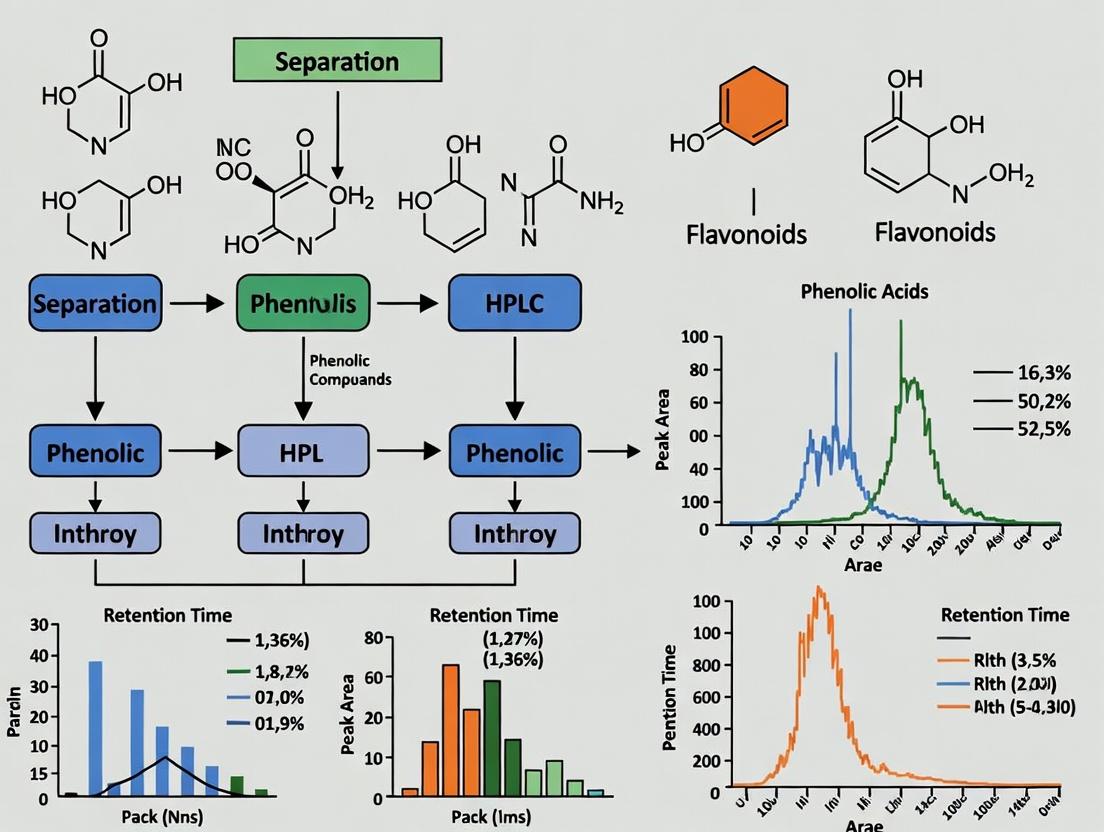
This article provides a comprehensive guide to High-Performance Liquid Chromatography (HPLC) for the analysis of phenolic compounds in plant extracts.
HPLC Analysis of Phenolic Compounds in Plant Extracts: A Comprehensive Guide for Researchers and Drug Development
Abstract
This article provides a comprehensive guide to High-Performance Liquid Chromatography (HPLC) for the analysis of phenolic compounds in plant extracts. Targeted at researchers, scientists, and drug development professionals, it covers foundational concepts of phenolic chemistry and their biomedical significance. The guide details current methodological best practices for sample preparation, column selection, and detection (UV/Vis, DAD, MS). It addresses common troubleshooting and optimization challenges to enhance resolution, sensitivity, and throughput. Finally, the article explores validation protocols per ICH guidelines and compares HPLC with emerging techniques like UHPLC and LC-MS, providing a holistic framework for reliable phytochemical analysis in natural product research.
Phenolic Power: Understanding Plant Compounds and Why HPLC is the Gold Standard
Phenolic compounds represent a vast and chemically diverse group of secondary metabolites ubiquitously found in plants. Their structural range extends from simple, low-molecular-weight phenols (e.g., catechol, hydroquinone) to highly polymerized tannins. In the context of High-Performance Liquid Chromatography (HPLC) analysis of plant extracts, understanding this chemical hierarchy is crucial for method development, column selection, detection optimization, and data interpretation. This application note details the definitions, protocols, and analytical considerations for this compound spectrum, framed within ongoing thesis research on the chromatographic profiling of bioactive plant phenolics.
Structural Classes and HPLC Relevance
Phenolic compounds are defined by the presence of at least one aromatic ring bearing one or more hydroxyl groups. Their classification is based on the number of phenol units and the structural elements linking them.
Table 1: Major Classes of Phenolic Compounds and Key HPLC Analytical Parameters
| Class | Core Structure | Example Compounds | Typical HPLC Retention (C18) | Preferred Detection |
|---|---|---|---|---|
| Simple Phenols | C6 | Catechol, Hydroquinone | Early (high polarity) | UV 270-280 nm, Electrochemical |
| Phenolic Acids | C6-C1 (Benzoic), C6-C3 (Cinnamic) | Gallic acid, Caffeic acid | Medium-Early | UV 250-330 nm, MS |
| Flavonoids | C6-C3-C6 | Quercetin, Catechin, Apigenin | Medium-Late | UV 250-370 nm, Fluorescence, MS/MS |
| Lignans | (C6-C3)₂ | Pinoresinol, Secoisolariciresinol | Medium-Late | UV 280 nm, MS |
| Stilbenes | C6-C2-C6 | Resveratrol, Piceid | Medium-Late | UV 306-320 nm, Fluorescence |
| Tannins | Hydrolyzable: Gallotannins (Galloyl esters)Condensed: Proanthocyanidins (Flavan-3-ol polymers) | Tannic acid, Procyanidin B2 | Very complex; often broad peaks or humps | UV 280 nm, Post-column derivatization, MS^n |
Detailed Experimental Protocols
Protocol: Standardized Extraction of Phenolic Compounds for HPLC
Objective: To reproducibly extract a broad spectrum of phenolics from dried plant material. Materials: Lyophilized plant powder (100 mg), 80% aqueous methanol (v/v) with 1% formic acid, ultrasonic bath, centrifuge, vacuum concentrator. Procedure:
- Weigh 100.0 ± 0.5 mg of homogenized, dried plant material into a 15 mL polypropylene tube.
- Add 10 mL of extraction solvent (80% MeOH, 1% FA). Vortex vigorously for 30 s.
- Sonicate in a water bath at 25°C for 30 minutes.
- Centrifuge at 4,500 x g for 15 minutes at 4°C.
- Decant supernatant into a fresh tube.
- Re-extract pellet with 5 mL of fresh solvent (repeat steps 2-4).
- Combine supernatants.
- Concentrate under vacuum at 35°C to near dryness.
- Reconstitute residue in 2.0 mL of HPLC mobile phase A (e.g., 2% aqueous acetonitrile, 0.1% FA). Filter through a 0.22 μm PTFE syringe filter into an HPLC vial. Note: For tannin analysis, avoid acetone if subsequent MS detection is planned; use methanol/water/formic acid.
Protocol: Reverse-Phase HPLC-DAD/MS Method for Phenolic Profiling
Objective: To separate, detect, and tentatively identify phenolic compounds across classes. HPLC Conditions:
- Column: C18, 2.1 x 150 mm, 1.7 μm particle size.
- Mobile Phase A: Water with 0.1% Formic Acid.
- Mobile Phase B: Acetonitrile with 0.1% Formic Acid.
- Gradient: 0 min, 2% B; 0-30 min, 2-30% B; 30-35 min, 30-95% B; 35-38 min, 95% B; 38-40 min, 95-2% B; 40-45 min, 2% B (re-equilibration).
- Flow Rate: 0.25 mL/min.
- Temperature: 40°C.
- Injection Volume: 2-5 μL. Detection:
- DAD: 200-600 nm scan; monitor 280 nm (phenols, flavanols), 320 nm (phenolic acids), 360 nm (flavonols).
- Mass Spectrometer (ESI-Q-TOF): Negative ion mode preferred for most phenolics. Capillary voltage: 2500 V; Source Temp: 120°C; Desolvation Temp: 450°C. Data collection: m/z 50-1500.
Protocol: Post-Column Derivatization for Proanthocyanidin (Condensed Tannin) Analysis
Objective: To detect and quantify proanthocyanidins based on their depolymerization. Principle: Acid depolymerization of proanthocyanidins in the presence of a nucleophile (phloroglucinol) yields terminal and extension unit adducts, quantifiable by HPLC. Post-Column Setup: A second HPLC pump delivers reagent (0.1 M HCl in methanol, with 50 g/L phloroglucinol and 10 g/L ascorbic acid) at 0.1 mL/min. The effluent from the analytical column (C18, same as 3.2) mixes with reagent via a T-union. The mixture passes through a heated reaction coil (50°C, 10 m x 0.25 mm ID). The products are monitored at 280 nm.
Visualization of Workflow and Classification
Title: HPLC Workflow for Phenolic Compound Analysis
Title: Structural Classification of Phenolic Compounds
The Scientist's Toolkit: Key Research Reagent Solutions
Table 2: Essential Materials for HPLC-Based Phenolic Compound Research
| Item | Function & Rationale |
|---|---|
| Acetonitrile (HPLC/MS Grade) | Organic mobile phase component. Low UV cutoff, excellent chromatographic properties, and MS compatibility. |
| Formic Acid (LC-MS Grade, ≥99%) | Mobile phase additive (typically 0.1%). Improves peak shape (ion suppression), enhances ionization in ESI-MS (negative mode), and stabilizes analytes. |
| Methanol (HPLC Grade) | Primary extraction solvent. Efficient for a wide polarity range of phenolics. |
| Acidified Methanol (80:20 MeOH:H₂O + 1% FA) | Standardized extraction solvent. Acid prevents oxidation and improves phenolic acid yield. |
| C18 Reverse-Phase Column (1.7-2.7 μm, 100-150 mm) | Core separation medium. Provides optimal resolution for complex phenolic mixtures based on hydrophobicity. |
| Phenolic Compound Standard Mix | Contains representatives from each class (e.g., gallic acid, catechin, chlorogenic acid, quercetin). Essential for method validation, calibration, and peak identification. |
| PTFE Syringe Filters (0.22 μm) | Critical for particulate removal post-extraction to protect HPLC column and system. |
| Phloroglucinol (≥99%) | Key reagent for post-column derivatization analysis of condensed tannins (proanthocyanidins). Acts as a nucleophile. |
| Deuterated Solvents (e.g., DMSO-d6, CD3OD) | For NMR-based structural confirmation of isolated novel compounds following HPLC purification. |
Application Notes: HPLC Analysis of Phenolic Compounds in Driving Bioactivity Research
High-Performance Liquid Chromatography (HPLC) serves as the cornerstone for elucidating the phenolic profiles of plant extracts, directly linking specific compounds to observed bioactivities. Within the thesis context of HPLC method development and validation for complex plant matrices, the quantification of individual phenolics (e.g., flavonoids, phenolic acids, stilbenes) provides the critical chemical data required to mechanistically explain antioxidant and anti-inflammatory effects. This enables the rational selection of lead compounds for pharmacological development.
Key Connections Established via HPLC Data:
- Quantitative Structure-Activity Relationship (QSAR): HPLC-derived concentrations of compounds like quercetin, rosmarinic acid, or curcumin are correlated with IC50 values from antioxidant (DPPH, FRAP) and anti-inflammatory (COX-2, TNF-α inhibition) assays.
- Synergistic Effect Mapping: Chromatographic fingerprints reveal the co-occurrence of multiple phenolics, allowing researchers to design experiments testing whole extracts versus purified fractions, highlighting synergistic or additive pharmacological effects.
- Standardization for Reproducibility: Validated HPLC protocols are essential for standardizing bioactive plant extracts, ensuring consistent quality in pre-clinical and clinical research.
Table 1: Representative Phenolic Compounds, Their HPLC Parameters, and Associated Bioactivities
| Compound Class | Example Compound | Typical HPLC Retention Time (min)* | Key Bioactivity | Measured IC50 / EC50 Values (Range from Literature) |
|---|---|---|---|---|
| Flavonol | Quercetin | 12.8 - 14.2 | Antioxidant, COX-2 inhibition | DPPH Scavenging: 2.5 - 5.0 µM; COX-2 Inhibition: ~15 µM |
| Phenolic Acid | Rosmarinic Acid | 9.5 - 11.0 | Antioxidant, iNOS suppression | FRAP Reduction: High activity; NO Inhibition in macrophages: 10-20 µM |
| Stilbene | Resveratrol | 15.0 - 16.5 | Nrf2 activation, SIRT1 pathway | Nrf2 Activation EC50: ~20 µM; Antioxidant in neuronal cells: 5-10 µM |
| Flavone | Apigenin | 17.2 - 18.5 | Antioxidant, IL-6 reduction | DPPH Scavenging: ~10 µM; IL-6 inhibition in LPS model: ~25 µM |
| Curcuminoid | Curcumin | 21.0 - 23.0 | NF-κB pathway inhibition | NF-κB p65 inhibition: 10-25 µM; IC50 for lipid peroxidation: ~1.5 µM |
Retention times are method-dependent (C18 column, gradient elution with water/acetonitrile/acetic acid). *Values are indicative and vary based on assay system.
Detailed Experimental Protocols
Protocol 1: HPLC-DAD Analysis of Phenolic Compounds in Plant Extracts
Objective: To separate, identify, and quantify major phenolic antioxidants in a hydro-alcoholic plant extract.
Materials:
- HPLC system with Diode Array Detector (DAD)
- C18 reverse-phase column (e.g., 250 mm x 4.6 mm, 5 µm)
- Solvents: HPLC-grade water, acetonitrile, methanol, formic acid
- Standards: Quercetin, gallic acid, caffeic acid, rosmarinic acid, etc.
- Syringe filters (0.22 µm, PTFE)
Procedure:
- Sample Preparation: Weigh 1.0 g of dried plant extract. Dissolve in 10 mL of 70% methanol/water (v/v). Sonicate for 15 minutes, centrifuge at 10,000 x g for 10 min. Filter supernatant through a 0.22 µm syringe filter into an HPLC vial.
- Standard Preparation: Prepare individual stock solutions (1 mg/mL) in methanol. Create a mixed calibration standard by serial dilution to cover a range of 1-100 µg/mL.
- Chromatographic Conditions:
- Mobile Phase A: 0.1% Formic acid in water.
- Mobile Phase B: 0.1% Formic acid in acetonitrile.
- Gradient Program: 0 min: 5% B; 0-30 min: 5-50% B; 30-35 min: 50-95% B; 35-40 min: 95% B; 40-45 min: 5% B (re-equilibration).
- Flow Rate: 1.0 mL/min.
- Column Temperature: 30°C.
- Injection Volume: 20 µL.
- Detection: DAD scan from 200-400 nm. Quantify at 280 nm (phenolic acids) and 320-360 nm (flavonoids).
- Analysis: Inject standards and samples in triplicate. Identify compounds by matching retention times and UV spectra with standards. Quantify using external calibration curves.
Protocol 2: In vitro Antioxidant Activity Assay (DPPH Radical Scavenging)
Objective: To evaluate the free radical scavenging capacity of HPLC-characterized plant extracts/fractions.
Procedure:
- Prepare a 0.1 mM DPPH solution in methanol (fresh daily).
- In a 96-well microplate, add 150 µL of DPPH solution to 50 µL of the plant extract at various concentrations (derived from HPLC quantitation).
- Incubate in the dark at room temperature for 30 minutes.
- Measure absorbance at 517 nm using a microplate reader.
- Calculation: % Scavenging = [(Abscontrol - Abssample) / Abs_control] x 100. Calculate IC50 values (concentration causing 50% scavenging) using nonlinear regression.
Protocol 3: In vitro Anti-inflammatory Activity (Inhibition of NO Production in LPS-stimulated Macrophages)
Objective: To assess the anti-inflammatory potential of phenolic compounds by measuring nitric oxide (NO) inhibition.
Procedure:
- Culture RAW 264.7 murine macrophages in DMEM + 10% FBS.
- Seed cells in a 96-well plate (2 x 10^5 cells/well) and incubate overnight.
- Pre-treat cells with varying concentrations of the plant extract or pure phenolic (from HPLC stock) for 1 hour.
- Stimulate cells with LPS (1 µg/mL) and co-incubate for 24 hours.
- After incubation, mix 100 µL of cell culture supernatant with 100 µL of Griess reagent (1% sulfanilamide, 0.1% NEDD in 2.5% H3PO4).
- Incubate for 10 min at RT and measure absorbance at 540 nm.
- Determine nitrite concentration using a sodium nitrite standard curve. Express results as % inhibition of NO production relative to LPS-only controls.
Pathway and Workflow Visualizations
Title: Research workflow from HPLC analysis to lead identification
Title: Phenolic compounds modulate NF-κB and Nrf2 pathways
The Scientist's Toolkit: Key Research Reagent Solutions
| Reagent / Material | Function in Research | Application Example |
|---|---|---|
| C18 Reverse-Phase HPLC Columns | Separates phenolic compounds based on hydrophobicity. The workhorse for phenolic profiling. | Protocol 1: Separation of quercetin, caffeic acid, and resveratrol in a single run. |
| DPPH (2,2-Diphenyl-1-picrylhydrazyl) | Stable free radical used to assess hydrogen-donating antioxidant capacity. | Protocol 2: Determining the radical scavenging IC50 value of a plant extract. |
| Lipopolysaccharide (LPS) | Potent inflammatory agent used to stimulate macrophages in cell models. | Protocol 3: Inducing NO and cytokine production in RAW 264.7 cells for inhibition studies. |
| Griess Reagent Kit | Colorimetric detection of nitrite, a stable oxidation product of nitric oxide (NO). | Protocol 3: Quantifying NO production in macrophage anti-inflammatory assays. |
| Specific ELISA Kits (e.g., TNF-α, IL-6, IL-1β) | Quantifies protein levels of specific pro-inflammatory cytokines in cell supernatants or tissue homogenates. | Measuring downstream inflammatory markers after phenolic treatment in LPS models. |
| Primary Antibodies (e.g., p65, p-p65, Nrf2, HO-1) | Detects expression and phosphorylation states of key signaling proteins via Western blot. | Confirming mechanistic inhibition of NF-κB or activation of Nrf2 pathway by phenolics. |
| LC-MS Grade Solvents | Ultra-pure solvents for HPLC-MS to minimize ion suppression and background noise. | Enabling accurate identification and quantification of phenolics using HPLC-MS. |
Within the broader thesis on the HPLC analysis of phenolic compounds in plant extracts, the primary challenge is the inherent complexity of the plant matrix itself. Phenolic compounds—including flavonoids, phenolic acids, tannins, and stilbenes—are embedded in a milieu of interfering substances such as pigments (chlorophylls, carotenoids), lipids, sugars, terpenes, and alkaloids. This complexity directly compromises analytical accuracy, leading to issues with compound identification, quantification, resolution, and column longevity. This Application Note details the necessity of sample preparation and separation, providing current protocols and data to address these challenges.
Data Presentation: Impact of Matrix Complexity on HPLC Analysis
Table 1: Common Interfering Compounds in Plant Extracts for Phenolic Analysis
| Interfering Compound Class | Examples | Primary Interference with Phenolic HPLC Analysis |
|---|---|---|
| Pigments | Chlorophyll a/b, β-carotene, anthocyanins* | Strong UV-Vis absorption, co-elution, column fouling. |
| Lipids & Waxes | Fatty acids, triglycerides, long-chain alcohols | Column contamination, altered retention times, baseline drift. |
| Primary Metabolites | Sugars (glucose, sucrose), organic acids (citric, malic) | Can affect solvent polarity, minor UV interference, peak broadening. |
| Proteins & Peptides | Various enzymes, storage proteins | Can bind to phenolics, cause column clogging. |
| Terpenoids | Monoterpenes, sesquiterpenes | Co-elution in reverse-phase methods, differing polarity. |
| Alkaloids | Caffeine, nicotine, berberine | Significant UV absorption, potential for peak overlap. |
*Anthocyanins are phenolic but often analyzed separately; they can interfere with other phenolic analyses.
Table 2: Comparative Recovery Rates of Phenolic Acids After Different Cleanup Protocols
| Sample Preparation Technique | Target Phenolics (e.g., Gallic Acid, Caffeic Acid) | Average Recovery Rate (%) (Reported Ranges from Literature) | Key Benefit |
|---|---|---|---|
| Liquid-Liquid Extraction (LLE) | Phenolic Acids | 70-85% | Removes lipids, non-polar terpenes. |
| Solid-Phase Extraction (SPE) C18 | Flavonoids, Phenolic Acids | 85-98% | High specificity, removes sugars, some pigments. |
| SPE Polyamide | Flavonoids, Tannins | 80-95% | Selective for polyphenols, removes anthocyanins, sugars. |
| QuEChERS (Modified) | Broad-spectrum phenolics | 75-90% | Rapid, removes organic acids, some pigments. |
| Membrane-Based Filtration | All (size-based) | 60-80% | Removes particulates, macromolecules (proteins). |
Experimental Protocols
Protocol 1: Optimized Solid-Phase Extraction (SPE) for Phenolic Compound Isolation
Objective: To selectively isolate and concentrate phenolic compounds from a crude plant methanolic extract prior to HPLC-DAD/MS analysis.
Materials: See "The Scientist's Toolkit" below. Procedure:
- Conditioning: Attach a C18 SPE cartridge (500 mg, 6 mL) to a vacuum manifold. Sequentially pass 5 mL of methanol followed by 5 mL of acidified water (0.1% Formic acid, v/v) at a flow rate of ~1 mL/min. Do not let the sorbent dry out.
- Loading: Load 5-10 mL of the centrifuged and filtered crude plant extract (in acidified aqueous methanol) onto the conditioned cartridge. Maintain a slow, dropwise flow rate (~0.5 mL/min) for optimal binding.
- Washing: Remove weakly polar interferents (e.g., some pigments, lipids) with 5 mL of acidified water (0.1% FA). Discard wash.
- Elution: Elute the target phenolic compounds into a clean collection tube using 5-8 mL of methanol:acetonitrile (80:20, v/v) with 0.1% formic acid. Apply vacuum to ensure complete elution.
- Reconstitution: Evaporate the eluate to dryness under a gentle stream of nitrogen at 40°C. Reconstitute the dried residue in 1.0 mL of the HPLC starting mobile phase (e.g., 5% acetonitrile in 0.1% aqueous formic acid). Vortex for 30 sec and filter through a 0.22 μm PTFE syringe filter into an HPLC vial.
Protocol 2: HPLC-DAD Method for Separation of Complex Phenolic Mixtures
Objective: To achieve baseline separation of a standard mixture of 15 phenolic compounds (acids, flavonoids) within a 60-minute run.
Chromatographic Conditions:
- Column: Kinetex C18 (150 x 4.6 mm, 2.6 μm particle size, Core-Shell technology).
- Mobile Phase A: 0.1% Formic acid in water (v/v).
- Mobile Phase B: 0.1% Formic acid in acetonitrile (v/v).
- Gradient Program:
- 0-5 min: 5% B (isocratic)
- 5-45 min: 5% → 35% B (linear)
- 45-50 min: 35% → 80% B (linear)
- 50-52 min: 80% → 100% B (linear)
- 52-55 min: 100% B (isocratic, wash)
- 55-56 min: 100% → 5% B (linear)
- 56-60 min: 5% B (isocratic, re-equilibration)
- Flow Rate: 1.0 mL/min.
- Column Oven: 35°C.
- Injection Volume: 10 μL.
- Detection (DAD): 280 nm (phenolic acids), 320 nm (hydroxycinnamic acids), 360 nm (flavonols).
Validation Note: System suitability test with a standard mix must show resolution (Rs) > 1.5 between critical peak pairs (e.g., catechin and epicatechin).
Mandatory Visualization
Title: Workflow for Phenolic Analysis in Complex Plant Matrices
Title: Matrix Interference vs. Cleanup for HPLC Analysis
The Scientist's Toolkit: Key Research Reagent Solutions
Table 3: Essential Materials for Phenolic Compound Extraction and Cleanup
| Item / Reagent | Function & Rationale |
|---|---|
| Acidified Methanol/Water (e.g., 70:30, 0.1% FA) | Extraction solvent. Acidification improves phenolic stability and extraction efficiency by suppressing ionization. |
| C18 Solid-Phase Extraction (SPE) Cartridges | Gold-standard for reversed-phase cleanup. Retains phenolics, allows removal of polar (sugars) and non-polar (lipids) impurities via selective washing. |
| Polyamide SPE Cartridges | Selective binding of polyphenols via hydrogen bonding. Excellent for removing chlorophyll and tannins from specific fractions. |
| 0.22 μm PTFE Syringe Filters | Essential final-step filtration to remove microparticulates that could clog HPLC column frits. PTFE is compatible with organic solvents. |
| Formic Acid (LC-MS Grade) | Mobile phase additive. Improves peak shape (reduces tailing) for acidic phenolics and enhances ionization in ESI-MS detection. |
| Core-Shell (Fused-Core) C18 HPLC Column | Provides high-efficiency separation similar to sub-2μm fully porous particles but at lower backpressures, ideal for complex plant sample separations. |
| Phenolic Compound Standard Mix | Contains a range of acids (gallic, caffeic) and flavonoids (rutin, quercetin). Critical for method development, calibration, and peak identification. |
Application Notes: Core Principles and Advantages for Phenolic Analysis
Phenolic compounds, encompassing flavonoids, phenolic acids, stilbenes, and tannins, are a diverse class of plant secondary metabolites with significant antioxidant, anti-inflammatory, and chemopreventive properties. Their analysis in complex plant matrices presents challenges due to structural similarity, wide concentration ranges, and sensitivity to degradation. High-Performance Liquid Chromatography (HPLC) is the unequivocal gold standard for this separation, primarily due to the compatibility of its core principles with the physicochemical nature of phenolics.
Key Principles Leveraged:
- Reversed-Phase (RP) Chromatography: The dominant mode. It exploits the hydrophobicity of phenolic compounds. The nonpolar stationary phase (typically C18) and polar mobile phase (water-acetonitrile/methanol with acid modifiers) separate analytes based on their differential partitioning. The number and positioning of hydroxyl groups on the phenolic ring directly influence retention, allowing for exquisite separation of isomers (e.g., catechol vs. resorcinol).
- Gradient Elution: Essential due to the wide polarity range of phenolics. A gradient from high water to high organic solvent efficiently elutes polar phenolic acids first, followed by intermediate flavonoids, and finally nonpolar aglycones or prenylated phenolics.
- Acidic Mobile Phase Modifiers: Addition of 0.1-1% formic or phosphoric acid suppresses ionization of phenolic acidic groups, sharpening peaks and improving resolution by ensuring compounds are in a single, neutral form.
- Multi-Wavelength Detection (DAD/PDA): Phenolics possess characteristic UV-Vis spectra. Diode Array Detection (DAD) allows simultaneous monitoring at multiple wavelengths (e.g., 280 nm for phenolic acids, 320 nm for hydroxycinnamic acids, 360 nm for flavonoids) and provides spectral confirmation and purity assessment.
- Coupling to Mass Spectrometry (LC-MS): HPLC seamlessly interfaces with MS, providing definitive identification and structural elucidation based on molecular mass and fragmentation patterns, crucial for unknown compound characterization in novel plant extracts.
Quantitative Performance Data: Table 1: Representative HPLC-DAD Performance Metrics for Common Phenolic Classes
| Phenolic Class | Example Compound | Linear Range (µg/mL) | LOD (ng on-column) | LOQ (ng on-column) | Typical Run Time (Gradient) |
|---|---|---|---|---|---|
| Hydroxybenzoic Acids | Gallic Acid | 0.5–100 | 0.8 | 2.5 | 25–40 min |
| Hydroxycinnamic Acids | Chlorogenic Acid | 1–200 | 1.2 | 4.0 | 25–40 min |
| Flavonols | Quercetin-3-glucoside | 0.2–80 | 0.5 | 1.5 | 25–40 min |
| Flavan-3-ols | (-)-Epicatechin | 2–150 | 2.0 | 6.5 | 25–40 min |
| Anthocyanins | Cyanidin-3-glucoside | 0.5–100 | 1.0 | 3.0 | 20–35 min* |
Note: Anthocyanin analysis often uses acidic mobile phases (pH <3) and detection at 520 nm.
Detailed Experimental Protocols
Protocol 2.1: Sample Preparation for Phenolic Profiling from Dried Plant Material
Objective: To extract a broad spectrum of phenolic compounds with minimal degradation. Materials: Freeze-dried plant powder (50 mg), 70% aqueous methanol (with 1% formic acid), ultrasonic bath, centrifuge, microporous membrane filters (0.45 µm, PTFE), nitrogen evaporator.
Procedure:
- Accurately weigh 50.0 ± 0.5 mg of homogenized, freeze-dried plant material into a 15 mL polypropylene centrifuge tube.
- Add 5.0 mL of extraction solvent (70% methanol / 29% water / 1% formic acid, v/v/v).
- Sonicate in an ultrasonic water bath at 35°C for 30 minutes.
- Centrifuge at 4500 x g for 15 minutes at 4°C.
- Carefully decant the supernatant into a new tube.
- Re-extract the pellet with 3 mL of fresh solvent (repeat steps 2-4).
- Combine the supernatants.
- Concentrate the combined extract to approximately 1 mL under a gentle stream of nitrogen at 35°C.
- Make up to a final volume of 2.0 mL with 0.1% formic acid in water.
- Filter through a 0.45 µm PTFE syringe filter into an HPLC vial. Store at -20°C until analysis.
Protocol 2.2: HPLC-DAD Analysis of Phenolic Compounds
Objective: To separate, detect, and quantify major phenolic classes in a single run. HPLC Conditions:
- System: UHPLC or HPLC with binary pump, autosampler (maintained at 10°C), and DAD.
- Column: Reversed-Phase C18 column (100 x 2.1 mm, 1.8 µm or 250 x 4.6 mm, 5 µm).
- Mobile Phase: A) 0.1% Formic acid in water; B) 0.1% Formic acid in acetonitrile.
- Gradient Program (for 1.8 µm column):
Table 2: Gradient Elution Program
Time (min) %A %B Flow Rate (mL/min) 0 95 5 0.35 2 95 5 0.35 15 70 30 0.35 20 50 50 0.35 22 5 95 0.35 24 5 95 0.35 25 95 5 0.35 30 95 5 0.35 - Detection: DAD monitoring at 280 nm, 320 nm, and 360 nm; full spectrum acquisition from 200–600 nm.
- Injection Volume: 2–5 µL.
Quantification: Prepare a 5-point calibration curve using authentic standards for target compounds. Quantify unknowns by integrating peak areas at the optimal wavelength and interpolating from the relevant calibration curve.
Visualizations
Diagram 1: Phenolic Analysis Workflow
Diagram 2: HPLC Separation Mechanism for Phenolics
The Scientist's Toolkit: Research Reagent Solutions
Table 3: Essential Materials for HPLC Analysis of Phenolics
| Item | Function & Rationale |
|---|---|
| Reversed-Phase C18 Column | Core separation medium. Particle sizes of 1.7–2.7 µm (UHPLC) or 5 µm (HPLC) offer a balance of efficiency, speed, and backpressure. |
| LC-MS Grade Solvents | High-purity water, methanol, and acetonitrile minimize baseline noise and prevent ion suppression in MS detection. |
| Acidic Modifiers | Formic acid or phosphoric acid (0.05–1%) to protonate phenolic acids, improving peak shape and reproducibility. |
| Phenolic Reference Standards | Authentic compounds (e.g., gallic acid, quercetin, catechin) are mandatory for method validation, calibration, and peak identification. |
| Solid-Phase Extraction (SPE) Cartridges | C18 or polymeric SPE cartridges for sample clean-up, pre-concentration, or fractionation of complex extracts. |
| Microporous Membrane Filters | 0.22 µm or 0.45 µm PTFE or nylon filters to remove particulate matter and protect the HPLC column. |
| LC-MS Compatible Vials/Inserts | Low-adsorption, certified vials to prevent compound loss and ensure sample integrity. |
| Mass Spectrometer Detector | Triple quadrupole (QqQ) for sensitive quantification (MRM); Quadrupole-Time-of-Flight (Q-TOF) for accurate mass and untargeted profiling. |
Within the paradigm of modern drug discovery and nutraceutical development, the demand for standardized plant-based extracts is accelerating. This surge is driven by the need for reproducible efficacy, safety, and quality in phytopharmaceuticals. A central thesis in this field focuses on the precise quantification of bioactive phenolic compounds using High-Performance Liquid Chromatography (HPLC), as these secondary metabolites are often responsible for therapeutic effects such as antioxidant, anti-inflammatory, and anticancer activities. This document provides application notes and detailed protocols for the HPLC analysis of phenolic compounds, supporting the standardization imperative.
Quantitative Data on Key Phenolic Compounds
Table 1: Common Phenolic Compounds in Standardized Extracts & Their HPLC Parameters
| Compound Class | Example Compounds | Typical Concentration Range in Extracts (mg/g) | Key Therapeutic Action | Recommended HPLC Column |
|---|---|---|---|---|
| Hydroxycinnamic Acids | Chlorogenic Acid, Rosmarinic Acid | 5 - 120 | Antioxidant, Hepatoprotective | C18, 5µm, 250 x 4.6 mm |
| Flavonols | Quercetin, Kaempferol, Myricetin | 2 - 50 | Anti-inflammatory, Cardioprotective | C18, 3µm, 150 x 4.6 mm |
| Flavan-3-ols | Catechin, Epicatechin, Procyanidins | 10 - 200 | Vascular health, Antioxidant | Phenyl-Hexyl, 5µm, 250 x 4.6 mm |
| Anthocyanins | Cyanidin-3-glucoside, Delphinidin | 1 - 100 | Antioxidant, Vision health | C18 with Polar Endcapping, 5µm |
| Stilbenes | Resveratrol, Piceid | 0.1 - 10 | Anti-aging, Neuroprotective | C18, 5µm |
Experimental Protocols
Protocol 1: Sample Preparation for Phenolic Compound Extraction Objective: To efficiently extract free and bound phenolic compounds from a powdered plant matrix.
- Weighing: Accurately weigh 1.0 g of finely powdered (< 80 mesh) plant material into a 50 mL conical centrifuge tube.
- Acidified Methanol Extraction (Free Phenolics): Add 20 mL of methanol/water/acetic acid (70:29:1, v/v/v). Sonicate for 30 minutes in an ultrasonic bath at 40°C. Centrifuge at 5000 x g for 10 minutes. Decant and collect the supernatant.
- Alkaline Hydrolysis (Bound Phenolics): To the residual pellet, add 20 mL of 4M NaOH. Flush with nitrogen, cap tightly, and hydrolyze for 4 hours at room temperature with shaking. Neutralize with concentrated HCl to pH ~2.
- Ethyl Acetate Partition: Transfer the neutralized hydrolysate to a separatory funnel. Extract three times with 20 mL ethyl acetate each. Combine the ethyl acetate layers.
- Evaporation & Reconstitution: Evaporate both the methanol and ethyl acetate extracts to dryness under reduced pressure at 40°C. Reconstitute the combined residues in 5.0 mL of HPLC mobile phase A/B (1:1). Filter through a 0.22 µm PTFE syringe filter into an HPLC vial.
Protocol 2: HPLC-DAD/MS Method for Phenolic Profiling Objective: To separate, identify, and quantify phenolic compounds in a standardized extract.
- Instrument Setup:
- HPLC System: UHPLC or HPLC with binary pump, autosampler (maintained at 10°C), and column oven.
- Detectors: Diode Array Detector (DAD) scanning 200-600 nm, coupled to a Single Quadrupole Mass Spectrometer (MS) with ESI source.
- Column: ZORBAX Eclipse Plus C18, 3.5 µm, 150 x 4.6 mm (or equivalent).
- Column Temperature: 35°C.
- Mobile Phase & Gradient:
- Solvent A: 0.1% Formic acid in water (v/v).
- Solvent B: 0.1% Formic acid in acetonitrile (v/v).
- Flow Rate: 1.0 mL/min.
- Gradient Program: 0 min: 5% B; 0-5 min: 5-15% B; 5-25 min: 15-50% B; 25-30 min: 50-95% B; 30-32 min: hold at 95% B; 32-35 min: re-equilibrate at 5% B.
- MS Parameters (ESI Negative Ion Mode):
- Capillary Voltage: 3.0 kV
- Drying Gas Temp: 350°C
- Gas Flow: 10 L/min
- Nebulizer Pressure: 40 psi
- Scan Range: m/z 100-1500
- Analysis: Inject 10 µL of sample. Identify compounds by comparing retention times, UV-Vis spectra, and mass spectra to authentic standards. Quantify using external calibration curves (typically 1-100 µg/mL, R² > 0.999) constructed for each target compound.
Visualizations
Title: Workflow for Phenolic Compound Extraction and HPLC Analysis
Title: Anti-inflammatory Action of Phenolics via NF-κB & ROS Pathways
The Scientist's Toolkit: Research Reagent Solutions
Table 2: Essential Materials for Phenolic Compound Analysis
| Item | Function & Rationale |
|---|---|
| HPLC-grade Solvents (Acetonitrile, Methanol, Water) | Minimize baseline noise and ghost peaks for reproducible chromatograms. |
| Acid Modifiers (Formic Acid, Trifluoroacetic Acid) | Improve peak shape (reduce tailing) for acidic phenolic compounds by suppressing silanol interactions. |
| Solid Phase Extraction (SPE) Cartridges (C18, Polyamide) | Clean-up and pre-concentrate samples, removing sugars and pigments that interfere with analysis. |
| Certified Reference Standards (e.g., Quercetin, Gallic Acid) | Essential for accurate compound identification (RT, spectra match) and quantitative calibration. |
| PTFE Syringe Filters (0.22 µm) | Remove particulate matter to protect HPLC column and instrumentation. |
| Stable Isotope-labeled Internal Standards (e.g., 13C-Caffeic Acid) | Correct for analyte loss during sample preparation, improving quantification accuracy in complex matrices. |
| Phenyl-Hexyl HPLC Column | Provides alternative selectivity to C18, crucial for separating complex flavonoid and procyanidin isomers. |
Step-by-Step HPLC Method Development for Plant Phenolics: From Extraction to Detection
This document provides detailed application notes and protocols for the optimal preparation of plant samples for the subsequent HPLC analysis of phenolic compounds. Within the broader thesis on "Advanced HPLC Method Development for Profiling Bioactive Phenolics in Medicinal Plants," this section is foundational. The accuracy, precision, and sensitivity of the final chromatographic data are directly contingent upon the rigor applied during these initial steps. This guide addresses the three critical pillars of sample preparation: solvent selection, modern extraction, and extract clean-up.
Solvent Selection: Principles and Data
The selection of an extraction solvent is governed by the chemical diversity and polarity of target phenolics. The principle of "like dissolves like" is key. Recent studies emphasize solvent mixtures, often acidified, to improve the yield of both hydrophilic and more lipophilic phenolics and to suppress analyte dissociation.
Table 1: Common Solvent Systems for Phenolic Compound Extraction
| Solvent/System | Typical Composition | Target Phenolic Class | Key Advantage | Reported Total Phenolic Yield Range |
|---|---|---|---|---|
| Acidic Methanol | Methanol:Water (80:20, v/v) + 0.1-1% HCl/Formic acid | Anthocyanins, Flavonols, Phenolic acids | Denatures cell walls, prevents hydrolysis, good for anthocyanins. | 15-45 mg GAE*/g dw |
| Acidic Ethanol | Ethanol:Water (70:30, v/v) + 0.1-1% Acid | Broad spectrum (Flavanols, Phenolic acids) | Less toxic than methanol, GRAS status. | 12-40 mg GAE/g dw |
| Acetone-Water | Acetone:Water (50:50 - 70:30, v/v) | High molecular weight phenolics, Tannins | Effective for plant tissues with high polysaccharide content. | 20-55 mg GAE/g dw |
| Hydroalcoholic | Methanol or Ethanol:Water (50:50 - 80:20) | General purpose, wide polarity range | Tunable polarity, balances efficiency and safety. | 10-50 mg GAE/g dw |
*GAE: Gallic Acid Equivalents; dw: dry weight.
Extraction Techniques: Protocols
Ultrasonic-Assisted Extraction (UAE)
Protocol: UAE of Phenolics from Dried Leaf Powder
- Objective: To efficiently extract soluble phenolic compounds using ultrasonic cavitation.
- Materials: Dried plant material (e.g., Ocimum basilicum leaves), cryo-mill, lyophilizer, analytical balance, ultrasonic bath or probe sonicator (e.g., 20-40 kHz, 500W), centrifuge, vacuum concentrator.
- Reagent Solution: Acidified Methanol (80% methanol, 20% water, 0.1% v/v formic acid).
- Procedure:
- Sample Preparation: Homogenize dried leaves using a cryo-mill. Sieve to obtain a fine powder (< 0.5 mm). Lyophilize if necessary to maintain constant moisture.
- Weighing: Precisely weigh 1.00 g (±0.01 g) of powder into a 50 mL conical centrifuge tube.
- Solvent Addition: Add 20 mL of the pre-cooled (4°C) acidified methanol extraction solvent.
- Ultrasonication: Place the tube in an ultrasonic bath (or use a probe inserted directly). Extract for 20 minutes at 40°C. Maintain constant agitation in the bath.
- Centrifugation: Centrifuge at 10,000 x g for 15 minutes at 4°C.
- Collection: Carefully decant the supernatant into a clean 100 mL round-bottom flask.
- Re-Extraction: Repeat steps 3-6 with a fresh 20 mL solvent. Pool the supernatants.
- Concentration: Evaporate the combined extract to near dryness under reduced pressure at 40°C using a rotary evaporator.
- Reconstitution: Reconstitute the residue in 5.0 mL of HPLC mobile phase A (e.g., 2% aqueous acetic acid). Vortex for 1 min.
- Filtration: Pass through a 0.22 µm PTFE or nylon syringe filter into an HPLC vial. Store at -20°C until analysis.
Microwave-Assisted Extraction (MAE)
Protocol: MAE of Phenolics from Berry Skins
- Objective: To rapidly extract thermostable phenolic compounds using microwave energy.
- Materials: Frozen berry skins (e.g., Vaccinium myrtillus), microwave-assisted extraction system with closed vessels and temperature/pressure control, magnetic stirrers, subsequent materials as in UAE.
- Reagent Solution: Acidified Ethanol (70% ethanol, 30% water, 0.5% v/v hydrochloric acid).
- Procedure:
- Sample Preparation: Precisely weigh 0.50 g (±0.01 g) of homogenized frozen berry skins into a sealed MAE vessel.
- Solvent Addition: Add 25 mL of the acidified ethanol solvent. Add a magnetic stir bar.
- Microwave Extraction: Close the vessel and place it in the microwave rotor. Program the system: ramp to 80°C in 2 minutes, hold at 80°C for 10 minutes under constant stirring. Typical power setting is 600W. Pressure should be monitored and kept within safe limits (< 15 bar).
- Cooling: After extraction, allow the vessels to cool to room temperature inside the system (approx. 20 min).
- Filtration & Concentration: Open the vessel, filter the extract through a Büchner funnel with qualitative filter paper. Transfer the filtrate to a round-bottom flask.
- Concentration & Reconstitution: Follow steps 8-10 from the UAE protocol.
Clean-up Strategies
Post-extraction clean-up removes interfering compounds (e.g., chlorophyll, lipids, waxes, sugars) that can foul HPLC columns and obscure peaks.
- Liquid-Liquid Partitioning: For defatting. Add n-hexane to the aqueous extract (1:1 v/v), vortex, separate, and discard the hexane (upper) layer.
- Solid-Phase Extraction (SPE): The gold standard for selective clean-up.
- Common Sorbent: C18 or polymeric (HLB, Strata-X) cartridges (500 mg/6 mL).
- Protocol: Condition with 5 mL methanol, equilibrate with 5 mL acidified water (2% formic acid). Load the crude extract (after partial solvent evaporation and dilution with acidified water). Wash with 5 mL acidified water (to remove sugars and organic acids). Elute phenolics with 5-10 mL acidified methanol (80% methanol, 0.1% FA). Evaporate and reconstitute in mobile phase.
The Scientist's Toolkit: Essential Materials
Table 2: Key Research Reagent Solutions & Materials
| Item | Function / Explanation |
|---|---|
| Acidified Methanol (80:20, 0.1% FA) | Standard extraction solvent; methanol disrupts cells, acid prevents oxidation & improves phenolic stability. |
| C18 Solid-Phase Extraction Cartridge | For sample clean-up; retains phenolic compounds while allowing polar interferences (sugars) to pass. |
| PTFE Syringe Filters (0.22 µm) | For final filtration of samples prior to HPLC injection; prevents particulate column blockage. |
| Polyvinylpolypyrrolidone (PVPP) | Added during extraction to bind and remove tannins/polyphenols if they are not analytes of interest. |
| HPLC Mobile Phase A (Aqueous Acid) | e.g., 2% Acetic Acid or 0.1% Formic Acid in water. Reconstitution solvent matching initial HPLC conditions minimizes baseline disturbances. |
| Internal Standard (e.g., Syringic acid) | Added pre-extraction to monitor and correct for losses during sample preparation. |
Workflow & Relationship Diagrams
Title: Phenolic Extraction Workflow for HPLC
Title: Factors Determining Sample Prep Protocol
Within the broader thesis on HPLC analysis of phenolic compounds in plant extracts, optimal system configuration is paramount. Phenolic compounds exhibit diverse polarities, acidic functionalities, and structural complexities (e.g., flavonoids, phenolic acids, tannins). This application note provides a detailed guide for selecting the pump, autosampler, and column (C18, Phenyl, HILIC) to achieve robust separation, accurate quantification, and high-throughput analysis critical for phytochemical research and drug discovery from natural products.
System Component Selection: Rationale and Comparative Data
Pump Selection
For phenolic compound analysis, binary or quaternary low-pressure mixing pumps with integrated degassers are standard. Recent advancements favor binary pumps with delay volume < 1 mL for superior gradient reproducibility, essential for complex plant extract profiles. Micro-flow or UHPLC-capable pumps (max pressure > 600 bar) enable faster, high-resolution methods.
Table 1: HPLC Pump Selection Guide for Phenolic Analysis
| Pump Type | Max Pressure (bar) | Flow Precision (%RSD) | Delay Volume (µL) | Best For |
|---|---|---|---|---|
| Quaternary Low-Pressure Mixing | 400 | <0.5% | 1000-1500 | Method scouting with >4 solvents. |
| Binary High-Pressure Mixing | 600 | <0.1% | 50-100 | Fast, reproducible gradients for complex extracts. |
| Micro-Flow/UHPLC Binary | 1000-1300 | <0.05% | < 50 | High-resolution, low solvent consumption analysis. |
Autosampler Selection
Critical parameters include temperature control (4-40°C), injection precision (<0.5% RSD for >10 µL), and carryover (<0.05%). For stability-sensitive phenolics, a temperature-controlled sample tray is mandatory. A dual-needle design (wash/aspirate) is recommended to minimize cross-contamination.
Table 2: Autosampler Performance Criteria
| Parameter | Specification | Rationale for Phenolic Analysis |
|---|---|---|
| Injection Volume Range | 0.1-100 µL | Covers standard (10-20 µL) and micro-volume needs. |
| Precision (10 µL inj.) | ≤ 0.3% RSD | Essential for accurate quantification of major/minor analytes. |
| Carryover | ≤ 0.02% | Prevents false peaks from previous high-concentration samples. |
| Temp. Range | 4°C to 40°C | Preserves sample integrity of labile phenolics (e.g., anthocyanins). |
Column Chemistry Selection: C18, Phenyl, and HILIC
Column choice is the most critical factor for separating phenolic compounds.
- C18 (Octadecylsilane): The workhorse. Offers hydrophobic interactions. Best for mid- to non-polar flavonoids (flavones, flavonols, isoflavones).
- Phenyl: Features π-π interactions with aromatic rings of analytes. Provides different selectivity for isomeric phenolic compounds and planar vs. non-planar structures.
- HILIC (Hydrophilic Interaction Liquid Chromatography): Aqueous normal-phase. Ideal for very polar, glycosylated phenolics (e.g., anthocyanins, phenolic acids) that elute too quickly or poorly retain on RP columns.
Table 3: Column Chemistry Comparison for Key Phenolic Classes
| Column Type | Stationary Phase | Primary Interaction | Optimal for Phenolic Class | Typical Mobile Phase |
|---|---|---|---|---|
| C18 | High-purity silica, C18 ligand | Hydrophobic | Flavonoid aglycones, Flavan-3-ols, Lignans | Water/Acetonitrile with 0.1% Formic Acid |
| Phenyl | Phenyl-hexyl or phenyl-ethyl | Hydrophobic + π-π | Isomeric flavones/flavonols, Chlorogenic acids | Water/Methanol or Acetonitrile gradients |
| HILIC | Silica, Amide, Diol | Hydrophilic partitioning | Polar glycosides (e.g., rutin), Anthocyanins, Organic acids | Acetonitrile (>70%)/Buffer (e.g., Ammonium formate) |
Detailed Experimental Protocols
Protocol 1: Method Scouting for Complex Plant Extract Using Column Screening
Objective: To rapidly identify the best column chemistry (C18, Phenyl, HILIC) for separating a complex phenolic extract (e.g., Ginkgo biloba leaf).
Materials:
- HPLC System: Binary pump, autosampler (temp-controlled), DAD or MS detector.
- Columns: (All 100 x 2.1 mm, 2.7 µm particle size) C18, Phenyl-Hexyl, HILIC (Silica).
- Standards: Rutin, quercetin, kaempferol, caffeic acid.
- Extract: Ginkgo biloba leaf extract (1 mg/mL in 50% methanol).
- Solvents: LC-MS grade water, acetonitrile, methanol, formic acid, ammonium formate.
Procedure:
- C18 Method: Gradient: 5-95% Acetonitrile (0.1% FA) in Water (0.1% FA) over 15 min. Flow: 0.4 mL/min. Temp: 35°C. Detection: 260 nm & 350 nm.
- Phenyl Method: Gradient: 10-80% Methanol (0.1% FA) in Water (0.1% FA) over 15 min. Flow: 0.4 mL/min. Temp: 35°C.
- HILIC Method: Isocratic: 85% Acetonitrile / 15% 10mM Ammonium formate (pH 3.0). Flow: 0.3 mL/min. Temp: 30°C. Equilibrate column for >10 column volumes.
- Inject 2 µL of standard mix and sample extract on each column system.
- Evaluate chromatograms based on peak capacity, resolution of critical pairs, and analysis time.
Protocol 2: Validated Quantitative Analysis of Phenolic Acids on a C18 Column
Objective: To quantify caffeic, ferulic, and sinapic acids in Echinacea purpurea root extract.
Materials: As above, using a specific C18 column (e.g., Agilent ZORBAX Eclipse Plus C18, 150 x 4.6 mm, 3.5 µm).
Chromatographic Conditions:
- Mobile Phase A: Water with 2% Acetic Acid.
- Mobile Phase B: Acetonitrile.
- Gradient: 0 min: 95% A, 5% B; 20 min: 60% A, 40% B; 21 min: 0% A, 100% B; hold 2 min.
- Flow Rate: 1.0 mL/min. Column Temp: 25°C. Detection: 320 nm.
- Injection: 10 µL (Autosampler at 10°C).
Quantification Protocol:
- Prepare calibration standards (1-100 µg/mL) for each acid in 50% methanol.
- Extract sample (100 mg root powder) with 10 mL 70% methanol (sonicate 30 min, centrifuge).
- Filter supernatant (0.22 µm PVDF) into HPLC vial.
- Inject in triplicate. Identify compounds by retention time match with standards and spiking.
- Calculate concentrations using linear regression from calibration curves. Report mean ± SD.
Diagrams
Diagram Title: HPLC Configuration Decision Pathway for Phenolics
The Scientist's Toolkit: Research Reagent Solutions
Table 4: Essential Materials for HPLC Analysis of Phenolic Compounds
| Item | Function/Description | Example Brand/Type |
|---|---|---|
| LC-MS Grade Water | Minimizes baseline noise and ion suppression in MS detection. | Fisher Chemical LC-MS Grade |
| LC-MS Grade Acetonitrile | Primary organic solvent for RP and HILIC; purity critical for UV and MS. | Honeywell Burdick & Jackson |
| Formic Acid (≥98%) | Common volatile acidic mobile phase additive for RP, improves peak shape. | Fluka Analytical |
| Ammonium Formate | Volatile buffer salt for HILIC and MS-compatible RP methods. | Sigma-Aldrich, LC-MS Grade |
| Methanol (LC-MS Grade) | Alternative organic modifier, provides different selectivity vs. ACN. | Sigma-Aldrich |
| Acetic Acid (Glacial) | UV-transparent acidic modifier for phenolic acid analysis at ~320 nm. | Fisher Chemical |
| Syringe Filters | For sample cleanup (0.22 µm or 0.45 µm), compatible with organic solvents. | PVDF (e.g., Millex-HV) |
| Certified Vials & Caps | Ensure no leachables interfere with analysis, especially in MS. | Agilent Certified Clear Glass |
| Analytical Standards | For method development, calibration, and peak identification. | Phytolab, Sigma-Aldrich |
| C18 Solid Phase Extraction (SPE) Cartridges | For sample pre-concentration and cleanup of crude extracts. | Waters OASIS HLB |
Application Notes
Within the context of HPLC analysis of phenolic compounds in plant extracts, mobile phase composition is the critical lever for achieving resolution, peak shape, and efficient analysis. Phenolic compounds, encompassing acids, flavonoids, and polyphenols, exhibit a wide range of polarities and acidic characteristics, necessitating precise mobile phase optimization.
Acetonitrile vs. Methanol: A Comparative Analysis for Phenolic Separations
The choice of organic modifier fundamentally impacts selectivity, backpressure, and UV transparency.
Table 1: Key Properties of Acetonitrile (ACN) and Methanol (MeOH) in Phenolic Compound HPLC
| Property | Acetonitrile | Methanol | Impact on Phenolic Analysis |
|---|---|---|---|
| Elution Strength | Higher elutropic strength (ε⁰ ~0.65 on C18) | Lower elutropic strength (ε⁰ ~0.73 on C18) | ACN typically achieves similar elution at lower %B, leading to shorter run times. |
| Viscosity | Lower viscosity, especially in water mixtures. (e.g., 40% ACN: 0.78 cP) | Higher viscosity in water mixtures (40% MeOH: 1.29 cP). | ACN generates lower backpressure, enabling higher flow rates or longer columns. |
| UV Cutoff | ~190 nm | ~205 nm | ACN is superior for detecting phenolics with low-wavelength UV absorption (e.g., hydroxycinnamic acids). |
| Selectivity | Different solvent polarity and proton acceptor/donor properties. | Strong proton donor capability. | MeOH often provides distinct selectivity shifts for polar phenolics like flavonoid glycosides vs. aglycones. |
| Cost & Toxicity | Higher cost, more toxic. | Lower cost, less toxic. | MeOH is preferable for preparative-scale or routine analyses where cost is a factor. |
Application Insight: For complex plant extracts, ACN is generally favored for its efficiency and low UV cutoff. However, methanol can resolve critical pairs that ACN cannot, making empirical testing essential.
Role of Acid Modifiers
Phenolic acids and flavonoids contain ionizable phenolic -OH groups. Acid modifiers suppress ionization, ensuring sharp, symmetrical peaks by controlling secondary interactions with residual silanols.
Table 2: Common Acid Modifiers and Their Effects
| Modifier | Typical Conc. | pKa | Key Consideration for Phenolics |
|---|---|---|---|
| Formic Acid | 0.1% | 3.75 | Excellent for LC-MS compatibility; sufficient for most phenolic acids. Provides lower pH than acetic acid. |
| Acetic Acid | 0.1-1% | 4.76 | Common for UV detection; adequate for many applications. May not fully suppress ionization of very acidic phenolics (e.g., hydroxybenzoic acids). |
| Phosphoric Acid | 0.05-0.1% | 2.12, 7.20, 12.32 | Provides strong pH control; not volatile (unsuitable for MS). Can improve peak shape dramatically but may damage silica over time. |
| Trifluoroacetic Acid (TFA) | 0.05-0.1% | 0.52 | Excellent ion-pairing agent; superb peak shape for challenging compounds. Strong MS signal suppression and can corrode stainless steel. |
Gradient Elution Optimization Strategy
Isocratic elution often fails for the broad polarity range in plant extracts. A well-optimized gradient is paramount.
Key Parameters:
- Initial %B: Low enough (e.g., 5-10%) to retain very polar phenolics (e.g., gallic acid).
- Gradient Slope: Steeper slopes reduce runtime but may compromise resolution. A 1-2% B/min change is a common starting point.
- Final %B: High enough (e.g., 80-95%) to elute non-polar flavonoids (e.g., flavones, isoflavones).
- Equilibration Time: Critical for reproducibility; typically 5-10 column volumes at initial conditions.
Optimization Goal: Achieve baseline resolution of target analyte pairs while minimizing total analysis time.
Experimental Protocols
Protocol 1: Scouting Gradient for Initial Phenolic Profiling
Objective: To establish a baseline separation of a complex plant extract (e.g., green tea or Orthosiphon stamineus extract) and identify critical pairs.
Materials: See "The Scientist's Toolkit" below.
Method:
- Column: Equilibrate a C18 column (150 x 4.6 mm, 2.7 µm) at 5% B for 10 minutes.
- Mobile Phase: (A) 0.1% Formic Acid in Water; (B) 0.1% Formic Acid in Acetonitrile.
- Gradient: 5% B to 35% B over 20 min, then to 95% B over 5 min, hold for 3 min.
- Flow Rate: 1.0 mL/min.
- Detection: DAD, 280 nm & 330 nm.
- Injection: 5 µL of filtered extract (1 mg/mL in initial mobile phase).
- Analysis: Identify regions of co-elution (critical pairs) from the chromatogram.
Protocol 2: Organic Modifier Selectivity Test
Objective: To compare separation profiles using ACN vs. MeOH and identify the best modifier for the critical pair.
Method:
- Perform Protocol 1 with the defined ACN-based mobile phase.
- Replace Mobile Phase B with 0.1% Formic Acid in Methanol. Adjust the gradient to account for MeOH's lower elutropic strength (e.g., 5% B to 50% B over 25 min).
- Keep all other parameters identical.
- Data Comparison: Overlay chromatograms. Measure resolution (Rs) of the critical pair(s) identified in Protocol 1 under both conditions. Select the modifier providing higher Rs.
Protocol 3: Acid Modifier and Gradient Slope Fine-Tuning
Objective: To optimize peak shape and finalize the gradient for the best resolution.
Method:
- Based on Protocol 2, select the preferred organic modifier.
- Test Acid Modifiers: Run the gradient using three different aqueous phases (A): (i) 0.1% Formic Acid, (ii) 0.1% Acetic Acid, (iii) 0.05% Phosphoric Acid. Monitor peak asymmetry (As) for early, middle, and late eluting target phenolics.
- Optimize Gradient Slope: For the chosen acid/organic combination, design three gradients with different slopes (e.g., 1.0, 1.5, and 2.0% B/min) while keeping the start and end %B constant. Calculate the resolution (Rs) between all adjacent peaks of interest. Select the slope providing Rs > 1.5 for all critical pairs.
Visualizations
Title: HPLC Method Development Workflow for Phenolics
The Scientist's Toolkit: Research Reagent Solutions
| Item | Function in Phenolic HPLC Analysis |
|---|---|
| HPLC-Grade Acetonitrile | Low-UV, low-viscosity organic modifier for high-efficiency separation. |
| HPLC-Grade Methanol | Alternative organic modifier for selectivity exploration; cost-effective. |
| LC-MS Grade Formic Acid | Volatile acid modifier for pH control and LC-MS compatibility. |
| Phosphoric Acid (85%, ACS) | Strong acid modifier for difficult peak tailing in UV methods. |
| C18 Reversed-Phase Column (e.g., 150 x 4.6 mm, 2.7 µm core-shell) | Stationary phase for separating non-polar to moderately polar phenolics. |
| Phenyl-Hexyl Phase Column | Alternative stationary phase for π-π interactions with flavonoid rings. |
| 0.22 µm Nylon or PTFE Syringe Filters | For particulate removal from plant extract samples prior to injection. |
| HPLC Vials with Polymer Caps | Chemically inert sample containers to prevent leaching. |
| Diode Array Detector (DAD) | For multi-wavelength detection and peak purity assessment of phenolics. |
| Phenolic Acid & Flavonoid Standards (e.g., gallic, caffeic, rutin, quercetin) | For method calibration, identification, and optimization verification. |
Application Notes: Advanced Detection in HPLC Analysis of Plant Phenolics
Within the framework of a thesis on the HPLC analysis of phenolic compounds in plant extracts, the selection and integration of detection strategies are critical for accurate identification, confirmation, and quantification. Phenolic compounds, including flavonoids, phenolic acids, and tannins, exhibit diverse chemical properties, necessitating complementary detection methods.
UV/Vis and DAD: Ultraviolet/Visible (UV/Vis) detection is fundamental, leveraging the inherent chromophores of phenolic compounds. Diode Array Detection (DAD) significantly extends this capability by capturing full UV-Vis spectra (typically 190-800 nm) for each chromatographic peak. This allows for:
- Peak Purity Assessment: Confirming co-elution by comparing spectra across a peak.
- Spectral Confirmation: Matching sample spectra against library spectra for tentative identification (e.g., flavones vs. flavonols based on Band I and II patterns).
- Optimal Wavelength Selection: Post-run analysis at any wavelength to enhance sensitivity for specific compound classes.
Coupling to Mass Spectrometry (MS): LC-MS provides definitive molecular weight and structural information. Electrospray Ionization (ESI) in negative mode is typically preferred for phenolics due to their acidic protons. Tandem MS (MS/MS) fragments precursor ions, yielding diagnostic patterns for isomer discrimination and structural elucidation. The combination of DAD spectra and MS/MS data creates a powerful orthogonal identification system.
Key Advantages of an Integrated DAD-MS Approach:
- Confidence: DAD offers UV spectral library matching, while MS provides exact mass and fragmentation fingerprints.
- Comprehensiveness: Non-UV-active or low-concentration compounds missed by DAD can be detected by MS.
- Quantification & Qualification: DAD is often superior for robust quantification due to wider linear dynamic range, while MS excels in qualification and trace analysis.
Experimental Protocols
Protocol 1: HPLC-DAD Method for Phenolic Profiling and Spectral Confirmation
- Objective: Separate, quantify, and collect UV-Vis spectra of phenolic compounds in a standard plant extract (e.g., Rosmarinus officinalis).
- Equipment: HPLC system with quaternary pump, autosampler, column oven, and DAD detector.
- Column: Reversed-phase C18 column (150 x 4.6 mm, 2.7 µm particle size).
- Mobile Phase: (A) 0.1% Formic acid in water, (B) 0.1% Formic acid in acetonitrile.
- Gradient: 5% B to 30% B over 25 min, to 95% B at 30 min, hold for 5 min. Re-equilibration for 10 min.
- Flow Rate: 1.0 mL/min.
- Temperature: 40 °C.
- DAD Settings: Scan range 200-600 nm. Monitor simultaneously at 280 nm (phenolic acids), 320 nm (hydroxycinnamic acids), and 370 nm (flavones/flavonols).
- Injection Volume: 10 µL of filtered (0.45 µm) extract.
- Data Analysis: Use software to integrate peaks at each monitored wavelength. For major peaks, extract the UV-Vis spectrum. Perform peak purity analysis and compare spectra to an in-house or commercial library of phenolic standards.
Protocol 2: LC-DAD-MS/MS for Structural Confirmation
- Objective: Obtain molecular mass and fragmentation data for peaks of interest identified in Protocol 1.
- Equipment: HPLC system (as above) coupled to a triple quadrupole or Q-TOF mass spectrometer via an ESI source.
- LC Conditions: Identical to Protocol 1, but flow may be split pre-MS if necessary.
- MS Parameters (ESI Negative Mode):
- Capillary Voltage: 3.0 kV
- Cone Voltage: 40 V (for Q-TOF in MS scan mode)
- Desolvation Temperature: 350 °C
- Source Temperature: 150 °C
- Scan Range (Full MS): m/z 100-1000
- Collision Energy (MS/MS): Ramped from 15-40 eV for fragmentation
- Data Acquisition: Full scan and data-dependent MS/MS (dd-MS2) on top 3-5 ions per cycle.
- Procedure: Inject the sample. Use the DAD chromatogram as a guide. For each target peak, the MS system will provide the [M-H]⁻ ion and its characteristic fragments. Cross-reference with literature data.
Data Presentation
Table 1: Representative Phenolic Compounds: Detection Characteristics and Quantitative Data
| Compound Class | Example | λ_max (nm) DAD | [M-H]⁻ (m/z) | Major MS/MS Fragments (m/z) | LOD (HPLC-DAD) | LOD (LC-MS) |
|---|---|---|---|---|---|---|
| Hydroxybenzoic Acid | Gallic acid | 271 | 169 | 125 (CO₂ loss) | 0.05 µg/mL | 0.005 µg/mL |
| Hydroxycinnamic Acid | Chlorogenic acid | 325 | 353 | 191 (quinic acid), 179 (caffeic acid) | 0.10 µg/mL | 0.01 µg/mL |
| Flavone | Luteolin | 255, 350 | 285 | 241, 217, 199, 151 | 0.03 µg/mL | 0.002 µg/mL |
| Flavonol | Quercetin | 255, 370 | 301 | 273, 179, 151 | 0.05 µg/mL | 0.003 µg/mL |
| Anthocyanin* | Cyanidin-3-glucoside | 280, 520 | 449 | 287 (aglycone) | 0.20 µg/mL | 0.02 µg/mL |
*Note: Anthocyanins often detected in ESI positive mode ([M]+).
Table 2: Comparison of Detection Strategies for Key Analytical Tasks
| Analytical Task | UV/Vis (Single λ) | DAD | LC-MS (Single Quad) | LC-MS/MS (Triple Quad) |
|---|---|---|---|---|
| Quantification | Excellent | Excellent | Good | Excellent (MRM mode) |
| Tentative ID via Libraries | Poor | Very Good | Good (exact mass) | Good |
| Structural Elucidation | Not Applicable | Limited | Good | Excellent |
| Peak Purity Assessment | Poor | Excellent | Poor | Poor |
| Sensitivity | Good | Good | Very Good | Excellent |
| Selectivity | Moderate | Moderate | High | Very High |
Visualizations
Title: Integrated HPLC-DAD-MS Workflow for Phenolics
Title: Orthogonal Confirmation Strategy
The Scientist's Toolkit: Research Reagent Solutions
| Item | Function in Phenolic Compound Analysis |
|---|---|
| Formic Acid (LC-MS Grade) | Mobile phase additive. Improves peak shape (protonation) and enhances ionization efficiency in ESI-MS. |
| Methanol & Acetonitrile (HPLC Grade) | Organic solvents for mobile phase and sample extraction. Low UV cutoff is essential for DAD. |
| Phenolic Acid & Flavonoid Standards | Reference compounds (e.g., gallic, caffeic, ferulic acids, rutin, quercetin) for constructing calibration curves and spectral libraries. |
| Solid-Phase Extraction (SPE) Cartridges (C18) | For sample clean-up and pre-concentration of extracts to remove interfering matrix components. |
| Syringe Filters (0.22 or 0.45 µm, Nylon/PTFE) | Critical for removing particulate matter from samples prior to HPLC injection to protect the column and instruments. |
| Ammonium Acetate/Formate | Volatile salts for mobile phase, used in LC-MS to aid in adduct formation ([M+Na]⁺, [M+NH₄]⁺) or as buffer in negative mode. |
| Deuterated Internal Standards | (e.g., Quercetin-d3). Used in quantitative LC-MS for isotope dilution methods to correct for matrix effects and ionization variability. |
Within the broader context of HPLC analysis of phenolic compounds in plant extracts, accurate quantification is paramount for evaluating phytochemical profiles, antioxidant potential, and therapeutic leads. The selection of an appropriate quantification strategy directly impacts the reliability, precision, and accuracy of the analytical data. This application note details the core quantification approaches of external standard, internal standard, and comprehensive method calibration, providing protocols tailored for phenolic compound analysis.
Core Quantification Methodologies: Protocols and Applications
External Standard Method
Protocol:
- Standard Solution Preparation: Precisely weigh and dissolve high-purity reference standards (e.g., gallic acid, catechin, rutin, quercetin) in an appropriate solvent (e.g., methanol/water mixture). Prepare a series of at least five standard solutions covering the expected concentration range in the samples.
- Sample Preparation: Homogenize plant material (e.g., leaves, bark). Perform extraction (e.g., sonication-assisted extraction with 70% aqueous methanol for 30 min at 40°C). Centrifuge, filter (0.22 µm PTFE syringe filter), and dilute to volume.
- HPLC Analysis: Inject each standard and sample in triplicate. Use a reversed-phase C18 column (e.g., 250 mm x 4.6 mm, 5 µm). Mobile phase: (A) acidified water (e.g., 0.1% formic acid), (B) acetonitrile. Gradient elution. Detection: UV-Vis/DAD (280 nm for hydroxybenzoic acids, 320 nm for hydroxycinnamic acids, 360 nm for flavonoids) or MS.
- Calibration & Calculation: Plot average peak area (or height) vs. concentration for each standard. Apply linear regression. For the sample, identify the analyte peak via retention time and/or spectral match, calculate its concentration from the calibration curve, and apply dilution factors.
Applications: Ideal for targeted analysis of known phenolic compounds where reference standards are available and matrix effects are minimal.
Internal Standard Method
Protocol:
- Internal Standard (IS) Selection: Choose a compound (e.g., ethyl gallate, syringic acid) not present in the sample, chemically similar to analytes, with a stable, baseline-resolved peak, and eluting near the analytes of interest.
- Solution Preparation: Add a fixed, known amount of the IS to every calibration standard, sample, and blank.
- HPLC Analysis: Perform analysis as per Section 2.1.
- Calibration & Calculation: For each standard, calculate the ratio of analyte peak area to IS peak area. Plot this ratio vs. analyte concentration to construct the calibration curve. For samples, calculate the analyte/IS peak area ratio and determine concentration from the curve.
Applications: Essential for methods involving variable injection volumes, sample preparation losses (e.g., during extraction, filtration, evaporation), or when instrument response drift is a concern. Critical for complex plant extract matrices.
Method Calibration and Validation
A robust analytical method requires full calibration and validation as per ICH Q2(R1) guidelines. Protocol:
- Linearity: Prepare and analyze minimum 5 concentration levels in triplicate. Acceptable correlation coefficient (R²) > 0.995.
- Accuracy (Recovery): Spike a pre-analyzed sample with low, medium, and high levels of standard. Calculate % recovery (found/added * 100). Acceptable range: 80-120%.
- Precision:
- Repeatability (Intra-day): Analyze 6 replicates of a sample at 100% concentration in one day.
- Intermediate Precision (Inter-day): Analyze the same sample over 3 different days by two analysts.
- Report %RSD. Acceptable: < 5% for retention time, < 10% for area/ratio.
- Limit of Detection (LOD) & Quantification (LOQ): LOD = 3.3σ/S, LOQ = 10σ/S, where σ is the standard deviation of the response and S is the slope of the calibration curve.
- Specificity/Selectivity: Demonstrate that the analyte peak is pure and free from co-eluting interference from the matrix (using DAD or MS detection).
Data Presentation: Comparison of Quantification Approaches
Table 1: Comparative Summary of HPLC Quantification Methods for Phenolic Compounds
| Feature | External Standard | Internal Standard |
|---|---|---|
| Core Principle | Direct comparison of sample response to a calibration curve of pure standards. | Normalization of sample response using a reference compound added at a constant level. |
| Key Requirement | High-purity reference standards; highly reproducible injection volumes. | Suitable internal standard that is stable, pure, and does not interfere. |
| Compensates For | Instrument response variability. | Injection volume variability, sample preparation losses, minor instrument drift. |
| Matrix Effect | Does not compensate; can lead to inaccuracies. | Partially compensates if IS properties match analytes. |
| Best For | Simple matrices, routine analysis of known compounds. | Complex plant extracts, multi-step sample prep, methods requiring high precision. |
| Typical Precision (%RSD) | 2-5% (with auto-injector) | 1-3% |
Table 2: Example Calibration Data for Phenolic Acids in a Plant Extract (HPLC-DAD)
| Analyte | Calibration Range (µg/mL) | Regression Equation (Area vs. Conc.) | R² | LOD (µg/mL) | LOQ (µg/mL) |
|---|---|---|---|---|---|
| Gallic Acid | 1.0 - 100 | y = 25489x + 1250 | 0.9992 | 0.3 | 1.0 |
| Caffeic Acid | 0.5 - 50 | y = 51240x - 850 | 0.9995 | 0.15 | 0.5 |
| Ferulic Acid | 0.2 - 40 | y = 47820x + 620 | 0.9988 | 0.06 | 0.2 |
The Scientist's Toolkit: Key Reagents & Materials
Table 3: Essential Research Reagent Solutions for HPLC Phenolics Analysis
| Item | Function & Specification |
|---|---|
| HPLC-Grade Solvents (Acetonitrile, Methanol, Water) | Mobile phase components; low UV absorbance and minimal impurities ensure stable baselines and sensitive detection. |
| Acid Modifiers (Formic Acid, Phosphoric Acid, Acetic Acid) | Added to aqueous mobile phase (typically 0.1-1%) to suppress ionization of phenolic acids, improving peak shape and reproducibility. |
| Reference Standard Materials | High-purity (>95%) phenolic compounds (e.g., from Sigma-Aldrich, ChromaDex) for identification and calibration. |
| Internal Standard (e.g., Ethyl Gallate, 3,4-Dihydroxybenzaldehyde) | Compound added uniformly to all samples and standards to correct for analytical variability. |
| Solid Phase Extraction (SPE) Cartridges (C18, HLB) | For sample clean-up to remove interfering matrix components (sugars, lipids) and pre-concentrate analytes. |
| Syringe Filters (PTFE, 0.22 µm) | For final filtration of samples and standards prior to HPLC injection, preventing column clogging. |
| Stable Isotope-Labeled Standards (e.g., ¹³C-quercetin) | Ideal internal standards for LC-MS/MS, providing nearly identical chemical behavior for highest accuracy. |
Workflow and Relationship Diagrams
Title: HPLC Quantification Workflow & Method Choice
Title: Calibration and Validation Framework
Solving Common HPLC Problems: Peak Tailing, Low Resolution, and Sensitivity Issues
Within the broader context of research on HPLC analysis of phenolic compounds in plant extracts, achieving optimal chromatographic peak shape is critical for accurate quantification, identification, and method validation. Peak distortions—specifically tailing and fronting—compromise resolution, impair detection limits, and introduce quantitative errors. These issues are particularly pronounced in complex plant matrices containing diverse phenolic acids, flavonoids, and tannins. This application note provides a systematic guide for diagnosing the root causes of poor peak shape and implementing validated protocols for resolution.
Causes and Diagnostics of Peak Distortions
Poor peak shape arises from thermodynamic (interactions with the stationary phase) and kinetic (mass transfer) irregularities. The following table summarizes primary causes specific to phenolic compound analysis.
Table 1: Primary Causes of Peak Tailing and Fronting in Phenolic Compound HPLC
| Cause Category | Specific Cause for Tailing | Specific Cause for Fronting | Typical Impact on Phenolics |
|---|---|---|---|
| Column Issues | Active silanol sites (esp. for basic phenols like alkaloids) | Column channeling or damaged bed | Severe tailing of catechins; fronting of ferulic acid |
| Mobile Phase | Low pH mismatched with pKa | Incorrect solvent strength (% organic) | Tailing of phenolic acids (e.g., gallic acid) at pH > pKa |
| Sample Issues | Sample solvent stronger than mobile phase | Overloading (mass or volume) | Fronting of high-concentration rutin; tailing from solvent mismatch |
| Hardware | Dead volume in fittings post-column | Contaminated or worn injection valve | Universal distortion across all peaks |
Quantitative Impact Assessment
A method performance study was conducted analyzing a standard phenolic mix (gallic acid, catechin, chlorogenic acid, rutin). The following table quantifies the effect of common issues on the asymmetry factor (As) and plate count (N).
Table 2: Quantitative Impact of Variables on Peak Shape Metrics
| Condition | Gallic Acid As | Gallic Acid N | Catechin As | Catechin N | Observation |
|---|---|---|---|---|---|
| Optimal (Reference) | 1.05 | 12500 | 1.08 | 11800 | 0.1% H3PO4, C18 column, 25°C |
| High pH (pH 5.0) | 1.85 | 6500 | 1.42 | 8200 | Severe tailing for acids |
| Column Temp. 15°C | 1.25 | 10500 | 1.55 | 7000 | Increased viscosity, tailing |
| Sample in 100% MeOH | 0.92 (Fronting) | 9500 | 0.89 (Fronting) | 8800 | Strong injection solvent |
| 0.5 µL Overload | 1.04 | 12000 | 0.82 (Fronting) | 6000 | Mass overload for catechin |
Experimental Protocols for Diagnosis and Resolution
Protocol 1: Systematic Diagnosis of Peak Shape Issues
Objective: To identify the root cause of tailing/fronting in an existing method. Materials: See "Scientist's Toolkit" below. Procedure:
- Inject a Standard: Analyze a neat standard of a mid-polarity phenolic (e.g., chlorogenic acid) at expected concentration.
- Calculate Asymmetry (As): At 10% peak height. As > 1.2 indicates tailing; As < 0.8 indicates fronting.
- Vary Injection Volume: Inject 1, 5, and 10 µL of the same standard. If As worsens with volume, suspect mass overload or solvent mismatch.
- Modify Mobile Phase pH: Adjust pH ± 0.5 units from current value. If As improves, ionic interactions with residual silanols are likely. Phenolic acids (pKa ~4-5) are especially sensitive.
- Check System Volume: Replace column with a zero-dead-volume union. Inject a sharp UV-absorbing marker (e.g., acetone). A broad peak indicates significant system dispersion.
- Column Comparison: Switch to a confirmed high-quality C18 column with high purity silica and tailored endcapping. Repeat standard injection.
Protocol 2: Method Optimization for Phenolic Acids to Minimize Tailing
Objective: To develop a robust method for phenolic acids (gallic, caffeic, ferulic) with As between 0.9-1.1. Mobile Phase Preparation:
- Eluent A: 0.1% Formic acid in water, pH ~2.5. Adjust with concentrated formic acid.
- Eluent B: 0.1% Formic acid in acetonitrile. Chromatographic Conditions:
- Column: Polar-embedded C18 (e.g., Waters Symmetry Shield RP18), 150 x 4.6 mm, 5 µm.
- Temperature: 35°C.
- Flow Rate: 1.0 mL/min.
- Gradient: 5% B to 35% B over 25 min.
- Injection: 5 µL of sample dissolved in initial mobile phase composition (95% A / 5% B). Validation: Inject standard mix. Calculate As. If tailing persists for gallic acid, increase formic acid to 0.2% or consider 50 mM phosphate buffer at pH 2.5.
Protocol 3: Addressing Fronting from Sample Overload in Flavonoid Analysis
Objective: To correct fronting peaks for high-concentration flavonoids (e.g., rutin, quercetin) in a plant extract. Procedure:
- Perform Mass Overload Test: Inject a pure flavonoid standard at 5, 50, 100, and 200 µg/mL. Plot peak As vs. concentration.
- Dilute Sample: If fronting (As < 0.9) occurs above 50 µg/mL, dilute the crude extract by a factor of 10 or 100.
- Consider Alternative Column: If dilution is not feasible due to sensitivity limits, switch to a column with higher loading capacity (e.g., wider pore size of 300 Å vs. standard 100 Å).
- Optimize Detection Wavelength: Use the secondary absorbance maximum for the target flavonoid to allow analysis of a more concentrated sample without detector saturation, which can also cause fronting artifacts.
The Scientist's Toolkit: Research Reagent Solutions
Table 3: Essential Materials for HPLC Peak Shape Optimization in Phenolic Analysis
| Item | Function & Rationale |
|---|---|
| High-Purity Silica C18 Column (e.g., Zorbax Eclipse Plus) | Low acidic silanol activity reduces tailing for ionizable phenolics. |
| Polar-Embedded Stationary Phase (e.g., Phenomenex Synergi Polar-RP) | Improves retention and shape for polar phenolics like anthocyanins. |
| LC-MS Grade Formic Acid | Provides consistent low-pH mobile phase for suppressing analyte ionization. |
| Phosphate Buffer Salts (KH2PO4 / H3PO4) | Offers precise, reproducible pH control (~2.5) for acidic phenolic compounds. |
| In-Line 0.2 µm Filter | Placed between eluent reservoir and degasser to prevent particulate column blockage. |
| Certified HPLC Vials with Pre-Slit PTFE/Silicone Septa | Minimizes needle coring and introduction of rubber contaminants. |
| Needle Wash Solution (80:20 Water:MeOH) | Reduces carryover from sticky, high-MW phenolic compounds (e.g., tannins). |
| Phenolic Acid Standard Mix (e.g., Gallic, Caffeic, p-Coumaric, Ferulic acids) | Diagnostic tool for method performance and daily system suitability testing. |
Diagnostic and Resolution Workflows
Title: Diagnostic Flowchart for HPLC Peak Shape Issues
Title: HPLC Method Optimization Workflow for Phenolics
Consistently achieving symmetric peaks is foundational for reliable HPLC analysis of phenolic compounds in complex plant extracts. A systematic, diagnostic approach—beginning with asymmetry measurement and proceeding through targeted troubleshooting of column chemistry, mobile phase pH, and sample introduction parameters—enables rapid identification and correction of tailing and fronting. Implementing the protocols and utilizing the recommended toolkit components detailed herein will enhance method robustness, ensuring high-quality data for downstream research and development applications.
Within the broader research on HPLC analysis of phenolic compounds in plant extracts, a central challenge is the separation of structurally similar critical pairs, such as catechin/epicatechin, quercetin/kaempferol glycosides, or chlorogenic acid isomers. This application note details systematic strategies to optimize the resolution (Rs) of such pairs by modulating three key chromatographic parameters: gradient slope, column temperature, and mobile phase pH. These adjustments directly impact selectivity (α) and efficiency (N), which are critical for accurate quantification in complex botanical matrices for pharmaceutical and nutraceutical development.
Table 1: Impact of Chromatographic Parameters on Resolution (Rs)
| Parameter | Typical Adjustment Range | Primary Effect on Separation | Target Impact on Rs for Phenolic Pairs |
|---|---|---|---|
| Gradient Slope | 0.5 - 3.0 %B/min | Alters elution strength & time; impacts peak capacity and spacing. | Shallower slopes (<1.5 %B/min) often increase Rs for early-eluting/isomeric pairs by 15-40%. |
| Column Temperature | 25°C - 50°C | Changes viscosity, kinetics, and thermodynamic partitioning. | Increasing temp (35-45°C) can improve Rs for flavonoid glycosides by 10-30% via reduced tailing. |
| Mobile Phase pH | 2.5 - 4.5 (for acidic phenolics) | Modifies ionization state of analytes, altering interaction with stationary phase. | pH ~2.5 suppresses ionization of carboxylic acids (e.g., phenolic acids), boosting Rs by 20-50% vs. pH 4+. |
Table 2: Exemplar Optimization Results for Critical Phenolic Pairs (C18 Column)
| Critical Pair | Optimal Conditions (vs. Baseline) | Resolution (Rs) Achieved | Key Mechanism |
|---|---|---|---|
| Catechin / Epicatechin | Temp: 30°C; Gradient: 1.0 %B/min; pH: 2.6 | Rs = 2.1 (from 1.1) | pH and shallow gradient enhance subtle polarity differences. |
| Chlorogenic Acid / Neochlorogenic Acid | Temp: 35°C; Gradient: 0.8 %B/min; pH: 2.5 | Rs = 2.5 (from 1.4) | Low pH suppresses COOH ionization; shallow gradient separates isomer geometry. |
| Quercetin-3-glucoside / Rutin | Temp: 40°C; Gradient: 1.2 %B/min; pH: 3.0 | Rs = 1.9 (from 1.0) | Higher temperature improves mass transfer for glycosides; pH affects flavonol OH ionization. |
Detailed Experimental Protocols
Protocol 1: Systematic Scouting of pH and Temperature
- Objective: Identify the optimal pH and temperature for separating target critical pairs.
- Materials: HPLC with PDA/UV detector, thermostat-controlled column oven, C18 column (e.g., 250 x 4.6 mm, 5 µm).
- Mobile Phase: A: Water with 0.1% Formic Acid (pH ~2.5) or 20 mM Ammonium Formate (adjusted to pH 3.0, 3.5, 4.0 with formic acid). B: Acetonitrile.
- Procedure:
- Set a moderate linear gradient (e.g., 5-30% B in 25 min).
- For each pH buffer (2.5, 3.0, 3.5, 4.0), run the analysis at three column temperatures (25°C, 35°C, 45°C).
- Inject standard mixture containing the critical pair and nearest neighbors.
- Record retention times, peak widths, and calculate Rs for the critical pair.
- Plot Rs vs. pH and temperature to identify the maxima.
Protocol 2: Fine-Tuning Gradient Slope at Fixed Optimum pH/Temp
- Objective: Maximize Rs and minimize run time after initial scouting.
- Pre-condition: Use the optimal pH and temperature identified in Protocol 1.
- Procedure:
- Define the start and end %B from the initial run (e.g., 10% to 40% B).
- Program gradients with varying slopes (e.g., 0.6, 0.9, 1.2, 1.5 %B/min) to reach the same final composition.
- Keep the total column volume (e.g., 5-10 column volumes) constant for a fair comparison.
- Inject the standard. Calculate Rs and peak capacity for each run.
- Select the slope yielding Rs > 1.5 with the best compromise on analysis time.
Mandatory Visualizations
Title: Optimization Strategy for HPLC Resolution
Title: HPLC Method Optimization Workflow
The Scientist's Toolkit
Table 3: Essential Research Reagent Solutions for Phenolic HPLC Optimization
| Item | Function / Rationale |
|---|---|
| C18 Reversed-Phase Column (e.g., 250 mm, 4.6 mm ID, 5 µm) | Standard workhorse for phenolic separations; provides hydrophobic interactions. |
| Acetonitrile (HPLC Grade) | Organic modifier for mobile phase; offers low UV cutoff and viscosity. |
| Formic Acid (MS Grade, 0.1%) | Common acidic buffer additive for LC-MS; suppresses ionization of acidic phenolics, improving peak shape. |
| Ammonium Formate Buffer (e.g., 20 mM) | Volatile buffer for LC-MS; allows precise pH adjustment (2.5-4.5) to study ionization effects. |
| Phenolic Acid & Flavonoid Standard Mix | Contains critical pairs (e.g., catechin/epicatechin) for method development and calibration. |
| Column Thermostat Oven | Precisely controls column temperature for reproducible retention times and kinetic studies. |
| pH Meter with Micro Electrode | Accurate preparation and verification of aqueous buffer pH. |
| 0.22 µm Nylon/PTFE Syringe Filters | Clarification of plant extract samples and mobile phases to prevent column blockage. |
Application Notes and Protocols
Context: This protocol is part of a broader thesis investigating the HPLC profiling of phenolic acids and flavonoids in complex plant extracts (e.g., Salvia officinalis, Camellia sinensis) for phytochemical characterization and bioactive compound quantification. The goal is to enhance method sensitivity for detecting low-abundance phenolic compounds.
1.0 Introduction In the HPLC analysis of plant phenolics, sensitivity is paramount for accurately quantifying trace constituents like specific hydroxycinnamic acids or minor flavonoids. Two directly controllable parameters that critically influence sensitivity are the detection wavelength (λ) and the injection volume (V_inj). This document provides optimized protocols and data for their systematic optimization.
2.0 Key Research Reagent Solutions
| Item | Function / Rationale |
|---|---|
| HPLC-MS Grade Methanol & Acetonitrile | Low UV-cutoff solvents to minimize baseline noise and interference, crucial for trace analysis. |
| 0.1% (v/v) Formic Acid in Water | A common mobile phase additive for phenolic compounds; suppresses ionization of acidic phenolics, improving peak shape. |
| Reference Standard Mix | Contains target phenolic acids (e.g., gallic, caffeic, ferulic acid) and flavonoids (e.g., quercetin, apigenin) for identification and calibration. |
| C18 Solid-Phase Extraction (SPE) Cartridges | For pre-concentration and cleanup of plant extracts, enabling larger effective injection volumes without matrix overload. |
| Syringe Filters (0.22 µm, PTFE) | For final sample filtration to prevent column clogging, especially critical with larger injection volumes of crude extracts. |
3.0 Experimental Protocol: Wavelength Optimization via DAD Spectral Analysis
3.1 Objective: To determine the optimal single or dual wavelengths for maximizing the signal-to-noise ratio (S/N) for target phenolic compounds. 3.2 Materials: Agilent 1260 Infinity II HPLC with DAD (or equivalent), C18 column (150 x 4.6 mm, 2.7 µm), standard mixture (10 µg/mL each in mobile phase A). 3.3 Procedure:
- Chromatographic Conditions: Isocratic elution: 30% B (Acetonitrile) / 70% A (0.1% Formic Acid). Flow: 1.0 mL/min. Column Temp: 30°C.
- DAD Setup: Acquire spectra from 220 nm to 400 nm. Bandwidth: 4 nm.
- Injection: Inject 10 µL of the standard mixture.
- Data Analysis: Process the chromatogram. For each peak of interest, extract its UV-Vis spectrum. Identify λ_max for each compound. Note the isobestic points or regions of high absorptivity for multiple compounds.
- S/N Comparison: Re-process the chromatogram at each candidate λ (e.g., 280 nm, 320 nm, 360 nm). Measure the peak height and baseline noise (over a region near the peak) for each compound. Calculate S/N.
3.4 Results and Data Table:
Table 1: Optimal Detection Wavelengths and Relative Sensitivity for Key Phenolic Standards.
| Compound Class | Example Compound | λ_max (nm) | S/N at λ_max | S/N at 280 nm (Common Setting) | Recommended λ for Trace Analysis |
|---|---|---|---|---|---|
| Hydroxybenzoic Acids | Gallic Acid | 271 | 1250 | 1190 | 270-280 nm |
| Hydroxycinnamic Acids | Caffeic Acid | 323, 290 (sh) | 980 | 420 | 320-325 nm |
| Flavonols | Quercetin | 371, 256 | 1550 (371 nm) | 310 | 370 nm |
| Flavones | Apigenin | 338, 267 | 1100 (338 nm) | 650 | 338 nm |
sh = shoulder. Data are representative values from a single analysis under conditions described.
4.0 Experimental Protocol: Injection Volume Optimization and Column Loading
4.1 Objective: To determine the maximum injection volume that does not cause significant peak broadening (volume overload) or shape distortion (mass overload) for trace analytes in a plant matrix. 4.2 Materials: Same HPLC system, column, and standard mix. Diluted sage leaf extract (post-SPE cleanup). 4.3 Procedure:
- Baseline Run: Inject 1 µL of the standard mix (10 µg/mL). Note peak widths and asymmetry factors.
- Volume Study: Inject the same standard concentration at increasing volumes: 1, 5, 10, 20, 50 µL. Keep all other parameters constant.
- Matrix Study: Inject increasing volumes (5, 10, 20 µL) of the cleaned-up plant extract spiked with a trace level (0.5 µg/mL) of ferulic acid.
- Data Analysis: Plot peak height (or area) and peak width at half height (W0.5h) vs. injection volume. Identify the volume where the increase in W0.5h exceeds 20%. Measure S/N for the trace analyte in the spiked matrix at each V_inj.
4.4 Results and Data Table:
Table 2: Effect of Injection Volume on Peak Parameters for Caffeic Acid in Standard and Matrix.
| Injection Volume (µL) | Peak Height (mAU) | W0.5h (min) | Asymmetry Factor | S/N in Matrix |
|---|---|---|---|---|
| 1 (Standard) | 12.5 | 0.051 | 1.05 | N/A |
| 5 (Standard) | 62.1 | 0.052 | 1.06 | 45 |
| 10 (Standard) | 124.0 | 0.054 | 1.08 | 88 |
| 20 (Standard) | 240.0 | 0.062 | 1.12 | 155 |
| 50 (Standard) | 510.0 | 0.105 | 1.35 | 205 |
Matrix: Sage extract. Trace spike: 0.5 µg/mL Ferulic Acid. Column: 150 x 4.6 mm, 2.7 µm.
Conclusion: For this column dimension, 20 µL is the optimal compromise, providing a near-linear 20x sensitivity boost over 1 µL with minimal peak distortion. Volume overload occurs at 50 µL.
5.0 Integrated Workflow for Sensitivity Enhancement
Diagram 1: Sensitivity Boost Workflow
6.0 Decision Pathway: Selecting Wavelength and Volume
Diagram 2: Parameter Selection Logic
Within the context of HPLC analysis of phenolic compounds in plant extracts, column longevity is a critical economic and analytical concern. Plant matrices are notoriously complex, containing not only target analytes like flavonoids, phenolic acids, and tannins but also a host of non-polar and polymeric contaminants that can irreversibly adsorb to stationary phases. This irreversible adsorption leads to decreased efficiency, altered selectivity, increased backpressure, and ultimately, column failure. This application note details the primary degradation mechanisms from plant matrix contaminants and provides validated protocols for prevention, regeneration, and performance monitoring to extend column lifetime and ensure data integrity in phytochemical research and drug development.
Primary Contaminants and Degradation Mechanisms
Plant extracts introduce specific contaminants that challenge reversed-phase (C18, C8) and HILIC columns commonly used for phenolic analysis.
Table 1: Common Plant Matrix Contaminants and Their Impact on HPLC Columns
| Contaminant Class | Example Compounds | Primary Degradation Mechanism | Observable Symptoms |
|---|---|---|---|
| Lipids & Waxes | Triglycerides, long-chain fatty acids, cuticular waxes. | Irreversible adsorption to hydrophobic stationary phase, blocking pores. | Gradual increase in backpressure; loss of retention for non-polar phenolics. |
| Polymers | Tannins (hydrolyzable & condensed), lignin fragments, pectins. | Multi-point binding to silanols; pore blockage; formation of a polymeric layer on column frit. | Peak broadening/tailing; reduced plate count; irreversible loss of efficiency. |
| Terpenoids & Resins | Chlorophyll, carotenoids, oleoresins. | Strong hydrophobic interaction with alkyl chains. | Column discoloration (green/brown); shifting retention times. |
| Proteins & Alkaloids | Enzymes, basic nitrogenous compounds. | Ionic interaction with residual acidic silanols; strong adsorption. | Peak tailing, especially for basic compounds; altered selectivity. |
| Pigments | Anthocyanins (at low pH), chlorophyll. | Charged and hydrophobic interactions. | Column discoloration (red/purple/green). |
| Particulate Matter | Cell wall debris, insoluble polymers. | Physical clogging of inlet frit (0.5 or 2 μm). | Sudden, dramatic increase in backpressure; system over-pressure shutdown. |
Protocols for Prevention and Mitigation
Protocol 3.1: Pre-column Sample Preparation for Phenolic-Rich Plant Extracts
Objective: To remove column-degrading contaminants prior to HPLC injection. Materials: Microfiltration units (0.22 or 0.45 μm nylon or PTFE), SPE cartridges (C18, HLB, Polyamide), centrifuge. Workflow:
- Liquid-Liquid Partitioning: For crude ethanolic or methanolic extracts, partition against hexane or heptane (1:1 v/v) to remove non-polar lipids and waxes. Centrifuge at 10,000 x g for 10 min and collect the lower (polar) layer.
- Solid-Phase Extraction (SPE) Clean-up:
- Condition a reversed-phase (C18) or polymeric (HLB) SPE cartridge with 5 mL methanol, followed by 5 mL acidified water (0.1% formic acid).
- Load the defatted extract (after solvent evaporation and reconstitution in acidified water).
- Wash with 5-10 mL of 5-10% methanol in water to remove sugars, organic acids, and some pigments.
- Elute target phenolic compounds with 3-5 mL of 70-80% methanol/water with 0.1% formic acid.
- Final Filtration: Pass the final eluent or reconstituted sample through a 0.22 μm PTFE or nylon syringe filter directly into an HPLC vial.
Protocol 3.2: In-Line Guard Column and Filter Use
Objective: To protect the analytical column from particulates and strongly retained species. Setup: Install in the following order: Pump → 2 μm In-line Filter → Injector → Guard Column Holder → Analytical Column → Detector.
- Guard Column: Packed with identical stationary phase to the analytical column. Replace guard cartridge after 50-100 injections or when a 10-15% increase in analytical column backpressure is observed.
- In-line Filter: Place between pump and injector to protect check valves and injector loop. Clean or replace monthly.
Protocol 3.3: Regenerative Cleaning Procedure for Contaminated Columns
Objective: To restore performance of a column showing signs of contamination (increased backpressure, loss of efficiency). CAUTION: Ensure all solvents are miscible. Do not exceed column pressure limits.
- Reverse-Flush the column (disconnect from detector) if backpressure is exceptionally high.
- Perform a Gradient Clean:
- Flush with 20 column volumes (CV) of water (slowly, if backpressure is high).
- Flush with 30 CV of a strong solvent series: Acetonitrile → Isopropanol → Dichloromethane (or Chloroform) → Isopropanol → Acetonitrile → Water.
- Note: Use dichloromethane/chloroform only with columns rated for 100% organic solvents (e.g., most silica-based). Do not use with polymeric columns.
- Re-equilibrate with 20 CV of the starting mobile phase.
- Evaluate with a test mixture of phenolic standards (e.g., gallic acid, catechin, quercetin, resveratrol). Compare efficiency (N), asymmetry factor (As), and retention to historical data.
Protocol 3.4: Periodic Performance Testing for Phenolic Compound Separations
Objective: To quantitatively monitor column health over time. Test Solution: Prepare a standard mixture of phenolic acids and flavonoids at known concentrations in the starting mobile phase. Chromatographic Conditions: Use a standard, validated method for phenolics (e.g., 0.1% Formic Acid in Water / 0.1% Formic Acid in Acetonitrile gradient). Metrics to Track:
- Backpressure at initial conditions.
- Theoretical Plates (N) for a mid-retained, well-resolved peak (e.g., caffeic acid).
- Peak Asymmetry (As) at 10% peak height.
- Retention Factor (k) of a key analyte.
- Resolution (Rs) between a critical pair.
Table 2: Column Performance Failure Criteria (Example for a 150 x 4.6 mm, 5 µm C18 Column)
| Performance Metric | Acceptable Range | Action Required (Clean/Replace) |
|---|---|---|
| Pressure Increase | < 15% from baseline | > 25% from baseline |
| Theoretical Plates (N) | > 80% of initial value | < 60% of initial value |
| Asymmetry Factor (As) | 0.8 - 1.5 | > 2.0 or < 0.7 |
| Retention Factor (k) Change | ± 5% from initial | ± 15% from initial |
| Critical Pair Resolution (Rs) | > 1.5 | < 1.0 |
The Scientist's Toolkit: Essential Research Reagent Solutions
Table 3: Key Materials for Column Preservation in Plant Phenolics Analysis
| Item | Function & Rationale |
|---|---|
| 0.22 µm PTFE Syringe Filters | Inert, non-adsorptive filtration of final sample to remove particulates without binding phenolic compounds. |
| Polymeric (HLB) SPE Cartridges | Broad-spectrum clean-up; retain phenolics while removing salts, sugars, and some pigments. Excellent for complex plant matrices. |
| C18 Guard Cartridges | Sacrificial stationary phase that traps irreversible contaminants, protecting the expensive analytical column. Must match analytical column phase. |
| 2 µm In-line Stainless Steel Filter | Protects guard column and analytical column frit from particulates originating from pump seals or mobile phase. |
| HPLC-Grade Isopropanol & Dichloromethane | Strong solvents for regenerative flushing to dissolve and elute highly retained lipids, terpenes, and polymers. |
| Phenolic Standard Test Mix | Contains a range of phenolic acids and flavonoids (polar to non-polar) for systematic monitoring of column performance and reproducibility. |
| In-line Degasser | Prevents bubble formation which can cause false pressure spikes and erratic baselines, complicating column health diagnostics. |
| Column Heater/Oven | Maintains stable temperature for consistent retention times and efficiency, and aids in eluting viscous solvents during cleaning. |
Visual Summaries
Diagram Title: Sample Preparation Workflow for Plant Extracts
Diagram Title: Column Regeneration and Evaluation Protocol
1. Introduction Within high-performance liquid chromatography (HPLC) analysis of phenolic compounds in plant extracts, the demand for higher sample throughput conflicts with the necessity for high-resolution separations and reliable quantification. This application note details validated protocols and strategies to significantly reduce chromatographic run times while maintaining data integrity, supporting efficient screening in phytochemical and drug development research.
2. Core Strategies & Quantitative Comparisons The following strategies can be employed individually or in combination. Their quantitative impact is summarized in Table 1.
Table 1: Impact of Throughput-Enhancing Strategies on HPLC Run Time and Data Quality
| Strategy | Typical Reduction in Run Time | Key Parameters Affected | Risk to Data Quality (Mitigation) |
|---|---|---|---|
| Increased Flow Rate | 30-50% | Flow rate, backpressure | Increased backpressure, potential loss of resolution (Use high-pressure capable systems, sub-2µm columns). |
| Reduced Column Length | ~50% (15cm → 5cm) | Column length (L), plate number (N) | Reduced theoretical plates, risk of co-elution (Use smaller particle sizes to maintain efficiency). |
| Smaller Particle Size (<2µm) | 30-60% | Particle size (dp), pressure (ΔP) | Very high backpressure, system demands (Requires UHPLC instrumentation). |
| Elevated Temperature | 20-40% | Column temperature, viscosity | Analyte degradation, column stability (Perform stability studies, use stable phases). |
| Gradient Optimization | 25-50% | Gradient slope, initial/final %B | Resolution in critical pairs (Use modeling software, e.g., DryLab, for predictive optimization). |
| Core-Shell Particle Columns | 40-60% (vs. fully porous) | Particle architecture, efficiency | Minimal; excellent efficiency at lower pressures. Slightly lower loading capacity. |
3. Detailed Experimental Protocols
Protocol 3.1: Rapid Method Development Using Core-Shell Columns
- Objective: Develop a fast, high-resolution method for caffeic acid, rutin, and quercetin in Echinacea purpurea extract.
- Materials:
- HPLC System: Standard HPLC or UHPLC system (≤600 bar).
- Column: C18 core-shell column (e.g., 50 x 2.1 mm, 2.6 µm).
- Mobile Phase: (A) 0.1% Formic acid in water; (B) 0.1% Formic acid in acetonitrile.
- Standards: Certified reference materials of target phenolics.
- Procedure:
- Set column temperature to 35°C. Flow rate: 0.5 mL/min.
- Employ a steep gradient: 5% B to 50% B over 4 minutes, then to 95% B in 1 minute.
- Hold at 95% B for 0.5 min, re-equilibrate at 5% B for 1.5 min (Total run time: 7 min).
- Inject 2 µL of standard mix and sample extract (filtered, 0.22 µm).
- Detect at 280 nm and 330 nm using a photodiode array (PDA) detector.
- Assess resolution (Rs > 1.5) and peak symmetry. Adjust gradient start/end points using scouting runs if needed.
Protocol 3.2: Transfer and Optimization from HPLC to UHPLC
- Objective: Translate a traditional 30-minute HPLC method to a sub-10-minute UHPLC method.
- Materials:
- Original Method: C18 column, 150 x 4.6 mm, 5 µm. Flow: 1.0 mL/min. Gradient: 20 min.
- Target System: UHPLC system (≥1000 bar).
- Target Column: C18 column, 50 x 2.1 mm, 1.7 µm.
- Procedure:
- Calculate Scaling Factor: Factor = (L2dp1) / (L1dp2) = (505) / (1501.7) ≈ 0.98.
- Scale Flow Rate: F2 = F1 * (dc2²/dc1²) * Factor = 1.0 * (2.1²/4.6²) * 0.98 ≈ 0.21 mL/min.
- Scale Gradient Time: tG2 = tG1 * (F1/F2) * (L2/L1) = 20 * (1.0/0.21) * (50/150) ≈ 31.7 min (Direct scaling).
- Optimize for Speed: Increase flow to 0.4-0.6 mL/min (within pressure limits). Proportionally reduce the scaled gradient time (31.7 min) by the same factor to maintain identical elution %B. Target a 5-8 minute gradient.
- Validate: Inject standards and samples. Use PDA to confirm peak purity and ensure no co-elution. Compare quantitative results (e.g., concentration of gallic acid) to original method.
4. Visualization of Strategy Selection Workflow
HPLC Throughput Strategy Decision Tree
5. The Scientist's Toolkit: Key Research Reagent Solutions
Table 2: Essential Materials for High-Throughput HPLC Phenolic Analysis
| Item | Function & Rationale |
|---|---|
| C18 Core-Shell (Fused-Core) Columns (e.g., 2.6-2.7µm) | Provides high efficiency similar to sub-2µm particles but at lower backpressures, enabling faster runs on conventional HPLC systems. |
| UHPLC Columns (<2µm fully porous particles) | Maximizes efficiency and speed for the fastest separations when paired with compatible high-pressure instrumentation. |
| Acidified Mobile Phase Modifiers (e.g., 0.1% Formic or Phosphoric Acid) | Suppresses ionization of phenolic acids, improving peak shape and reproducibility in reversed-phase chromatography. |
| PDA or Diode Array Detector (DAD) | Essential for confirming peak purity and identity across wavelengths, critical when validating compressed methods for lack of co-elution. |
| In-line Degasser & Column Heater | Maintains mobile phase consistency and stable temperature, reducing baseline noise and retention time drift during rapid, high-throughput sequences. |
| 0.22 µm Syringe Filters (PTFE or Nylon) | Ensures particulate-free sample injection, protecting expensive high-efficiency columns from blockage, especially critical for small-particle columns. |
| Certified Phenolic Compound Reference Standards | Required for accurate method calibration, validation, and ensuring quantitative reliability after method acceleration. |
Validating Your HPLC Method and Comparing It to UHPLC and LC-MS Techniques
Within the broader thesis research on HPLC analysis of phenolic compounds (e.g., gallic acid, caffeic acid, quercetin) in plant extracts, the validation of the analytical method is fundamental. This document details application notes and protocols for validating the HPLC-UV/DAD method per the updated ICH Q2(R2) guideline, ensuring it is suitable for quantifying target phenolic compounds in complex matrices.
Application Notes: Key Validation Parameters
Specificity
Objective: To demonstrate that the method can unequivocally assess the analyte (target phenolic compound) in the presence of other components (e.g., other phenolics, sugars, pigments) expected to be in the plant extract. Criticality: Essential for confirming the identity of the analyte peak and the absence of interference at its retention time.
Linearity and Range
Objective: To evaluate the linear relationship between analyte concentration and detector response across the intended working range. Application: Establishes the calibration model used for quantification.
Limit of Detection (LOD) and Limit of Quantification (LOQ)
Objective: To define the lowest concentrations of an analyte that can be detected (LOD) and quantified (LOQ) with acceptable precision and accuracy. Application: Critical for trace analysis and impurity detection.
Precision
Objective: To evaluate the closeness of agreement between a series of measurements. Levels: Includes repeatability (intra-day), intermediate precision (inter-day, inter-analyst, inter-instrument), and reproducibility. Application: Demonstrates method reliability.
Accuracy
Objective: To evaluate the closeness of the test results obtained by the method to the true value (or an accepted reference value). Common Approaches: Spiked recovery experiments using a placebo matrix or certified reference materials.
Detailed Experimental Protocols
Protocol 3.1: Specificity Assessment
- Sample Preparation:
- Analyte Standard: Prepare a standard solution of the target phenolic compound (e.g., 50 µg/mL gallic acid).
- Placebo/Blank Extract: Prepare a representative plant extract sample processed without the target compound, if possible, or use a matrix known to be free of the analyte.
- Spiked Matrix: Prepare the placebo/blank extract spiked with the target phenolic compound at a known level (e.g., 50 µg/mL).
- Forced Degradation Samples (Optional): Subject the extract to stress conditions (acid/base, heat, oxidation) to generate potential degradants.
- Chromatographic Analysis:
- Inject (e.g., 10 µL) each prepared sample into the HPLC system using the developed method.
- Use a Diode Array Detector (DAD) to record UV spectra (e.g., 200-400 nm) across peaks.
- Data Analysis:
- Compare chromatograms for peak purity. The analyte peak in the spiked sample should be resolved from all other matrix peaks (resolution factor Rs > 1.5).
- Use DAD peak purity assessment tools; a purity match factor > 990 indicates a spectrally pure peak.
- Confirm identical retention times and UV spectra for the standard and the analyte peak in the spiked sample.
Protocol 3.2: Linearity and Range
- Calibration Standards: Prepare a minimum of six concentration levels of the analyte standard across the specified range (e.g., 5, 10, 25, 50, 75, 100 µg/mL for gallic acid). Prepare each in duplicate.
- Analysis: Inject each standard solution in random order.
- Data Analysis:
- Plot mean peak area (y-axis) against concentration (x-axis).
- Perform linear regression analysis. Calculate the correlation coefficient (r), slope, intercept, and residual sum of squares.
- Per ICH Q2(R2), r should be > 0.998. The y-intercept should not be statistically significantly different from zero.
- Visual inspection of residuals should show random scatter.
Protocol 3.3: LOD and LOQ Determination
Based on Signal-to-Noise (S/N) Ratio (Recommended):
- Prepare a series of dilute analyte solutions near the expected detection limit.
- Inject each solution and record the chromatogram.
- Measure the peak-to-peak noise (N) from a blank injection over a region adjacent to the analyte retention time.
- Measure the analyte peak height (H).
- Calculate S/N = H / N.
- LOD is the concentration yielding S/N ≥ 3.
- LOQ is the concentration yielding S/N ≥ 10 and for which precision (RSD ≤ 10%) and accuracy (70-130%) can be demonstrated with at least 6 replicate injections.
Protocol 3.4: Precision (Repeatability & Intermediate Precision)
- Sample Preparation:
- Prepare three different concentrations of the analyte (Low, Mid, High) within the linear range, each in a representative plant extract matrix. Use six replicates per concentration level.
- Repeatability (Intra-day): One analyst prepares all samples and analyzes them in a single sequence on one day using one HPLC system.
- Intermediate Precision (Inter-day): A second analyst repeats the entire procedure (sample preparation and analysis) on a different day, possibly using a different HPLC system.
- Data Analysis:
- Calculate the mean concentration, standard deviation (SD), and relative standard deviation (RSD%) for each level.
- For repeatability, RSD should generally be ≤ 2% for the mid-level. Criteria depend on analyte level and matrix complexity.
- Compare results between analysts/days; the overall RSD for intermediate precision should meet pre-defined criteria.
Protocol 3.5: Accuracy (Recovery)
- Sample Preparation:
- Prepare a placebo matrix (plant extract with native analyte removed or minimized) or use a pre-analyzed sample.
- Spike the matrix with known concentrations of the analyte standard at three levels (e.g., 80%, 100%, 120% of the target concentration), in triplicate for each level.
- Also prepare unspiked matrix and standard solutions at equivalent concentrations.
- Analysis: Inject all samples and quantify using the established calibration curve.
- Data Analysis:
- Calculate % Recovery = (Found Concentration in Spiked Sample – Found Concentration in Unspiked Sample) / Spiked Concentration * 100%.
- Mean recovery should be within 98-102%, with an RSD ≤ 2% for the mid-level, as per typical criteria for active quantification.
Table 1: Linearity Data for Target Phenolic Compounds
| Analytic | Range (µg/mL) | Calibration Equation | Correlation Coefficient (r) | Residual Sum of Squares |
|---|---|---|---|---|
| Gallic Acid | 5 - 100 | y = 25432x + 1254 | 0.9995 | 1.2E+06 |
| Caffeic Acid | 2 - 50 | y = 18542x - 842 | 0.9998 | 2.8E+05 |
| Quercetin | 1 - 25 | y = 32158x + 315 | 0.9993 | 5.1E+05 |
Table 2: LOD, LOQ, Precision, and Accuracy Summary (n=6)
| Analytic | LOD (µg/mL) | LOQ (µg/mL) | Repeatability (Mid-Level, RSD%) | Intermediate Precision (Mid-Level, RSD%) | Accuracy (% Recovery ± RSD) |
|---|---|---|---|---|---|
| Gallic Acid | 0.15 | 0.45 | 0.8 | 1.5 | 99.2 ± 1.1 |
| Caffeic Acid | 0.06 | 0.18 | 1.1 | 1.9 | 100.5 ± 1.4 |
| Quercetin | 0.03 | 0.10 | 1.5 | 2.3 | 98.7 ± 1.8 |
Visualizations
Title: HPLC Method Validation Workflow
Title: Accuracy Recovery Experiment Logic
The Scientist's Toolkit: Research Reagent Solutions & Essential Materials
| Item | Function/Application in HPLC Validation of Phenolics |
|---|---|
| Certified Reference Standards | High-purity (>98%) individual phenolic compounds (e.g., gallic acid, quercetin). Provide the true value for accuracy and calibration. |
| Chromatography-Solvents | HPLC-grade water, acetonitrile, methanol, and acids (e.g., formic, phosphoric). Mobile phase components; purity is critical for low-noise baselines. |
| Solid-Phase Extraction (SPE) Cartridges | (e.g., C18, HLB). Used for sample cleanup and pre-concentration of plant extracts to reduce matrix interference. |
| Stable Isotope-Labeled Internal Standards | (e.g., 13C-quercetin). Used in advanced protocols to correct for analyte loss during sample preparation and injection variability. |
| Standardized Plant Extract CRM | Certified Reference Material with known concentrations of specific phenolics. Serves as a control sample for method accuracy assessment. |
| pH Buffers & Mobile Phase Additives | For controlling ionization and improving peak shape (e.g., ammonium acetate buffers, trifluoroacetic acid). |
| Vial Inserts & Low-Volume Vials | Minimize sample evaporation and allow for reproducible injection of small volumes (e.g., 10 µL). |
Within the broader thesis investigating the HPLC profiling of phenolic antioxidants in Rosmarinus officinalis (rosemary) extracts, method validation is a critical pillar. Robustness testing, as defined by ICH Q2(R2), is the deliberate introduction of small, purposeful variations in method parameters to evaluate a method's reliability during normal usage. For phenolic compound analysis, where retention time stability and peak resolution are paramount for accurate quantification of isomers like rosmarinic acid and carnosic acid, establishing robustness is non-negotiable. This document provides detailed application notes and protocols for conducting a robustness assessment.
Key Parameters for Variation in HPLC of Phenolics
Based on current literature and pharmacopoeial guidelines, the following analytical parameters are typically varied in a robustness study for reversed-phase HPLC of plant phenolics:
- Chromatographic Conditions: Mobile phase pH (±0.1-0.2 units), organic modifier concentration (±1-2% absolute), column temperature (±2-3°C), flow rate (±5-10%).
- Sample & System Conditions: Extraction solvent composition, sample stability in autosampler, and column lot/brand equivalence.
Experimental Protocol: A Plackett-Burman Screening Design
A fractional factorial design, such as Plackett-Burman, is efficient for screening the effects of multiple parameters with a minimal number of experimental runs.
3.1. Primary Objective: To assess the impact of deliberate variations in four key HPLC parameters on the resolution (Rs) between two critical phenolic acid pairs (e.g., caffeic acid and chlorogenic acid) and the assay content of the marker compound, rosmarinic acid.
3.2. Materials & Reagents (The Scientist's Toolkit)
| Research Reagent Solution / Material | Function in Experiment |
|---|---|
| Acetonitrile (HPLC Gradient Grade) | Primary organic modifier in mobile phase for efficient elution of phenolic compounds. |
| Phosphoric Acid / Formic Acid (0.1% v/v) | Aqueous mobile phase component; acidification suppresses analyte ionization, controlling retention. |
| C18 Reversed-Phase Column (e.g., 150 x 4.6 mm, 2.7 µm) | Stationary phase for separation. Testing different lots/brands is part of robustness. |
| Phenolic Compound Reference Standards (e.g., Rosmarinic Acid, Carnosic Acid) | For peak identification, calibration, and calculating system suitability metrics. |
| Stabilized Rosmarinus officinalis Extract | Test sample representing a complex matrix of interest. |
| pH Meter (with precise calibration buffers) | For accurate adjustment of aqueous mobile phase pH to required variations. |
| Thermostatted Column Oven | To maintain and deliberately vary column temperature as per experimental design. |
3.3. Detailed Methodology
- Define Factors and Levels: Select parameters (factors) and their high (+1) and low (-1) variation levels around the nominal optimum.
- Generate Experimental Matrix: Use statistical software or a standard Plackett-Burman table to define the set of runs. An example for 4 factors in 8 runs is shown below.
- Prepare Mobile Phases & Standards: Prepare the aqueous and organic phases at the specified pH and concentrations for each run. Prepare a fresh standard solution of the target phenolics.
- Sequential Chromatographic Analysis: Configure the HPLC system as per each run's parameters. Inject the standard and sample extracts in triplicate per condition.
- Data Acquisition & Calculation: Record retention times (tR), peak areas, and peak widths at baseline (W). Calculate for each run:
- Resolution (Rs): Rs = [2*(tR2 - tR1)] / (W1 + W2)
- Tailing Factor (T): T = W0.05 / (2f) where W0.05 is width at 5% height and f is distance from peak front to tR.
- Assay Content (%): Calculated from sample peak area against the calibration curve generated under nominal conditions.
Data Presentation & Interpretation
Table 1: Plackett-Burman Experimental Design Matrix (8 Runs) and Key Results
| Run | Factor A: pH (±0.2) | Factor B: Acetonitrile % (±1%) | Factor C: Temp. (±2°C) | Factor D: Flow Rate (±0.1 mL/min) | Resolution (Rs) Caffeic-Chlorogenic Acid | Rosmarinic Acid Assay (%) | Tailing Factor |
|---|---|---|---|---|---|---|---|
| Nominal | 2.8 | 32 | 30°C | 1.0 | 2.5 | 98.5 | 1.10 |
| 1 | +1 (3.0) | +1 (33) | -1 (28) | +1 (1.1) | 2.1 | 97.8 | 1.15 |
| 2 | -1 (2.6) | +1 (33) | +1 (32) | -1 (0.9) | 2.6 | 99.1 | 1.05 |
| 3 | +1 (3.0) | -1 (31) | +1 (32) | +1 (1.1) | 1.8 | 96.5 | 1.20 |
| 4 | -1 (2.6) | -1 (31) | -1 (28) | +1 (1.1) | 2.9 | 99.3 | 1.02 |
| 5 | +1 (3.0) | +1 (33) | +1 (32) | -1 (0.9) | 2.0 | 97.2 | 1.18 |
| 6 | -1 (2.6) | +1 (33) | -1 (28) | -1 (0.9) | 2.8 | 98.9 | 1.08 |
| 7 | +1 (3.0) | -1 (31) | -1 (28) | -1 (0.9) | 2.3 | 97.5 | 1.12 |
| 8 | -1 (2.6) | -1 (31) | +1 (32) | +1 (1.1) | 2.7 | 98.2 | 1.07 |
Table 2: Effect Calculation and Acceptance Criteria Assessment
| Parameter (Factor) | Effect on Resolution | Effect on Assay (%) | Interpretation (vs. Acceptance Criteria) |
|---|---|---|---|
| Mobile Phase pH (A) | -0.30 | -0.60 | Significant. pH decrease improves Rs. Assay variation within ±1.5% is acceptable. |
| %Acetonitrile (B) | -0.25 | -0.25 | Moderate. Lower organic % increases Rs. Negligible effect on assay. |
| Column Temp. (C) | -0.20 | +0.35 | Minor. Lower temperature slightly improves Rs. |
| Flow Rate (D) | +0.10 | -0.10 | Negligible. Minimal impact on both responses. |
| Acceptance Criteria | Rs > 1.5 | Deviation < ±2.0% | All runs met criteria for Rs. All assay results were within 98.2% - 99.3% of nominal. |
Conclusion: The method is robust for the assay of rosmarinic acid. However, mobile phase pH is a critical parameter requiring tight control to maintain resolution between critical pairs.
Visualization of Experimental Workflow and Parameter Effects
Title: Robustness Testing Experimental Workflow
Title: Key Parameter Effects on HPLC Metrics
Within the framework of research on the HPLC analysis of phenolic compounds in plant extracts, the choice between High-Performance Liquid Chromatography (HPLC) and Ultra-High-Performance Liquid Chromatography (UHPLC) is critical. This application note provides a detailed, data-driven comparison of these two techniques, focusing on parameters that directly impact analytical efficiency and sustainability in a pharmaceutical development context.
Quantitative Comparison: Core Performance Metrics
The following table summarizes the key operational and performance differences between standard HPLC and UHPLC systems, as applied to the separation of complex phenolic compounds.
Table 1: HPLC vs. UHPLC Performance Parameters for Phenolic Compound Analysis
| Parameter | Typical HPLC System | Typical UHPLC System | Impact on Phenolic Analysis |
|---|---|---|---|
| Operating Pressure | Up to 400 bar (6,000 psi) | 600 - 1200+ bar (15,000 - 18,000 psi) | UHPLC enables use of sub-2 µm particles for higher resolution. |
| Particle Size | 3 µm, 5 µm, or larger | Typically <2 µm (1.7-1.8 µm common) | Smaller particles yield more theoretical plates, improving peak separation. |
| Column Dimensions (Typical) | 150 mm x 4.6 mm i.d. | 50-100 mm x 2.1 mm i.d. | UHPLC uses shorter, narrower columns for faster separations with less solvent. |
| Analysis Speed | 10-30 minutes per run | 3-10 minutes per run | Throughput increases 3-5x with UHPLC, crucial for screening many plant extracts. |
| Solvent Consumption | ~2 mL/min flow rate | ~0.5 mL/min flow rate | UHPLC reduces solvent use by 70-90%, lowering cost and waste disposal. |
| Injection Volume | 5-20 µL | 1-5 µL | Smaller sample requirement conserves valuable extract. |
| Detection Sensitivity | Standard | Often enhanced due to reduced band broadening | Improved detection of low-abundance phenolic metabolites. |
| System Dispersion (Extra-column volume) | Higher (>50 µL) | Very low (<10 µL) | Critical for maintaining resolution gains from small-particle columns. |
Application Note: Method Transfer from HPLC to UHPLC for Phenolic Profiling
Objective: To transfer a standard HPLC method for the separation of phenolic acids and flavonoids (e.g., gallic acid, caffeic acid, quercetin, kaempferol) to a UHPLC platform, maintaining or improving resolution while significantly reducing run time and solvent consumption.
Experimental Protocol A: Original HPLC Method
- Column: C18, 250 mm x 4.6 mm i.d., 5 µm particle size.
- Mobile Phase A: 2% (v/v) Acetic acid in water.
- Mobile Phase B: Acetonitrile.
- Gradient: 5% B to 30% B over 40 minutes.
- Flow Rate: 1.0 mL/min.
- Temperature: 30°C.
- Detection: UV-Vis Diode Array Detector (DAD), 280 nm & 320 nm.
- Injection Volume: 10 µL.
- Approximate Run Time: 45 minutes (including equilibration).
- Backpressure: ~150 bar.
Experimental Protocol B: Transferred and Optimized UHPLC Method
- Column: C18, 100 mm x 2.1 mm i.d., 1.7 µm particle size.
- Mobile Phase A: 0.1% (v/v) Formic acid in water (improves peak shape in UHPLC).
- Mobile Phase B: Acetonitrile.
- Gradient Scaling: Linear scaling of the original method using the Linear Velocity Equation: tUHPLC = tHPLC * (LUHPLC / LHPLC) * (dp,UHPLC / dp,HPLC). Calculated gradient: 5% B to 30% B over ~6.8 minutes. Empirically optimized to 8 minutes for best resolution.
- Flow Rate: 0.4 mL/min (maintains similar linear velocity).
- Temperature: 40°C (to reduce backpressure and viscosity).
- Detection: DAD or faster acquisition QDa Mass Detector.
- Injection Volume: 2 µL (account for smaller column volume).
- System Backpressure: ~800 bar.
- Approximate Run Time: 10 minutes.
- Solvent Saved per Run: ~35 mL.
The Scientist's Toolkit: Essential Reagents & Materials
Table 2: Key Research Reagent Solutions for HPLC/UHPLC Analysis of Phenolics
| Item | Function in Analysis | Example/Notes |
|---|---|---|
| Acetonitrile (HPLC/MS Grade) | Primary organic modifier in mobile phase. | Low UV cutoff, excellent for gradient elution of phenolic compounds. |
| Acidified Water (e.g., Formic/Acetic Acid) | Aqueous component of mobile phase. | Suppresses ionization of phenolic acids, improving peak shape and retention. |
| Phenolic Compound Standards | Calibration and peak identification. | Gallic acid, chlorogenic acid, catechin, rutin, quercetin. |
| Solid-Phase Extraction (SPE) Cartridges (C18) | Sample clean-up and pre-concentration. | Removes interfering sugars and pigments from crude plant extracts. |
| Methanol or Acetone (HPLC Grade) | Solvent for extraction of phenolics from plant material. | Efficiently solubilizes a broad range of polyphenols. |
| Filter Membranes (0.22 µm, Nylon or PTFE) | Sample filtration prior to injection. | Prevents column clogging by particulate matter. |
| Buffer Salts (e.g., Ammonium formate) | For LC-MS compatible mobile phases. | Provides buffering capacity without leaving residues in MS source. |
Visualizing the Method Development & Selection Workflow
Decision Logic for HPLC vs. UHPLC Selection
Protocol: Direct Comparison Experiment for System Performance
Objective: To empirically compare the speed, resolution, and solvent use of HPLC and UHPLC using a standard phenolic mix.
Procedure:
- Standard Preparation: Prepare a 10 µg/mL solution of a test mixture (e.g., gallic acid, caffeic acid, (+)-catechin, rutin) in 20% methanol/water.
- HPLC Analysis: Inject 10 µL onto Protocol A's system (Section 3.1). Record chromatogram, note retention times, peak widths at half height, and baseline resolution between critical pairs (e.g., caffeic acid & catechin). Record total solvent volume used.
- UHPLC Analysis: Inject 2 µL of the same standard onto Protocol B's system (Section 3.2). Record the same parameters.
- Data Analysis:
- Speed Increase Factor: Calculate as (HPLC run time) / (UHPLC run time).
- Resolution (Rs): Calculate for one critical pair using Rs = 2(tR2 - tR1)/(w1 + w2). Compare values.
- Solvent Reduction: Calculate as [1 - (UHPLC flow rate * UHPLC run time) / (HPLC flow rate * HPLC run time)] * 100%.
- Theoretical Plates (N): Calculate for a well-retained peak (e.g., rutin) using N = 5.54*(tR/wh)^2. Compare plate counts per meter of column.
For the analysis of phenolic compounds in plant extracts, UHPLC provides substantial advantages in speed, resolution, and solvent economy, directly supporting high-throughput screening and green chemistry initiatives in drug discovery. The higher initial instrument cost and need for more robust sample preparation are offset by long-term gains in productivity and data quality. Method transfer requires careful scaling of parameters, particularly gradient time and flow rate, to fully realize these benefits.
Within the broader thesis on HPLC analysis of phenolic compounds in plant extracts, a critical analytical challenge is the reliable separation, identification, and quantification of complex, structurally similar phenolic isomers and co-eluting compounds. Traditional HPLC-UV/DAD often reaches its limit in resolving these complexities. This document outlines the application of LC-MS/MS as an advanced solution, providing specific protocols and data to guide researchers on when an upgrade is necessary.
Application Notes: Comparative Performance of HPLC-UV vs. LC-MS/MS
Table 1: Comparison of Analytical Performance for Key Phenolic Compounds
| Parameter | HPLC-UV/DAD | LC-MS/MS (Triple Quadrupole) |
|---|---|---|
| Detection Limit | 0.1 - 1.0 µg/mL | 0.01 - 0.1 ng/mL (1000x improvement) |
| Selectivity | Moderate (co-elution frequent) | High (MRM eliminates interference) |
| Structural Elucidation | Limited (UV spectra only) | High (MS/MS fragmentation patterns) |
| Analysis Time | Longer (requires baseline separation) | Can be shorter (separation by mass) |
| Quant. of Co-eluters | Not possible without separation | Accurate via unique MRM transitions |
| Confidence in ID | Low-Medium (retention time + UV match) | High (exact mass, fragmentation, RT) |
Table 2: Quantification of Co-eluting Flavonoid Glycosides in a Plant Extract Analyte Pair: Quercetin-3-O-glucoside (Q3G) and Quercetin-4'-O-glucoside (Q4'G) with identical RT (12.5 min) on C18 column.
| Analyte | HPLC-UV (280 nm) Result | LC-MS/MS (MRM) Result | Absolute Error (UV vs MS/MS) |
|---|---|---|---|
| Q3G (µg/g extract) | 155.2 (combined peak) | 98.7 | +56.5 µg/g (57% overestimate) |
| Q4'G (µg/g extract) | 155.2 (combined peak) | 56.3 | +98.9 µg/g (176% overestimate) |
| Total | 310.4 | 155.0 | +155.4 µg/g (100% error) |
Detailed Experimental Protocols
Protocol 1: LC-MS/MS Method for Quantifying Co-eluting Phenolic Compounds
Objective: To accurately quantify co-eluting isomeric phenolic compounds in a complex plant extract using MRM.
Materials & Equipment:
- LC-MS/MS system (Triple quadrupole) with ESI source.
- C18 reversed-phase column (2.1 x 100 mm, 1.7 µm).
- Mobile Phase A: 0.1% Formic acid in water.
- Mobile Phase B: 0.1% Formic acid in acetonitrile.
- Standards: Target phenolic compounds (e.g., flavonoid glycosides).
- Sample: Lyophilized plant extract reconstituted in 70% methanol/water.
Procedure:
- MS/MS Method Development:
- Infuse individual standard solutions (100 ng/mL) via syringe pump.
- Optimize precursor ion selection in Q1 (typically [M+H]+ or [M-H]- for phenolics).
- Apply collision energy (CE) ramps in Q2 to fragment the precursor.
- Select the 2-3 most abundant and specific product ions in Q3.
- Define the most intense transition for quantification, others for qualification.
Chromatographic Conditions:
- Flow rate: 0.3 mL/min.
- Column temperature: 40°C.
- Gradient: 5% B to 95% B over 18 min, hold 2 min, re-equilibrate.
- Injection volume: 2 µL.
Quantification:
- Acquire data in scheduled MRM mode with a 1 min window.
- Construct a 6-point calibration curve for each analyte using internal standard calibration (e.g., deuterated analogues).
- Process samples by integrating MRM peak areas.
Protocol 2: Structural Elucidation of Unknown Phenolics via LC-QTOF-MS/MS
Objective: To identify unknown phenolic compounds in an extract using accurate mass and MS/MS spectral matching.
Procedure:
- Full-Scan Data Acquisition:
- Use a QTOF or Orbitrap mass spectrometer coupled to the LC.
- Acquire data in high-resolution mode (R > 30,000) from m/z 50-1200.
- Use negative ion mode (common for phenolics).
Data-Dependent Acquisition (DDA):
- Select top 5 most intense ions from each scan for MS/MS fragmentation.
- Apply stepped collision energy (e.g., 20, 40, 60 eV) to generate rich spectra.
Data Analysis:
- Process data using software (e.g., Compound Discoverer, MZmine).
- Formula prediction from exact mass (error < 5 ppm).
- Search MS/MS spectra against databases (GNPS, MassBank, in-house libraries).
- Interpret fragmentation patterns (e.g., loss of hexose -162.053 Da).
Diagrams
Title: Decision Workflow for HPLC to LC-MS/MS Upgrade
Title: MRM Resolution of Co-eluting Isomers
The Scientist's Toolkit: Key Research Reagent Solutions
Table 3: Essential Materials for Advanced Phenolic Analysis by LC-MS/MS
| Item | Function & Rationale |
|---|---|
| Hypergrade LC-MS Solvents | Ultra-pure acetonitrile/methanol with < 1 ppb impurities to reduce background noise. |
| Ammonium Formate / Formic Acid | Volatile buffer additives for mobile phase to enhance ionization in ESI. |
| Deuterated Internal Standards | e.g., Quercetin-d3, used for stable isotope dilution MS for exact quantification. |
| Solid Phase Extraction (SPE) Cartridges (C18, HLB) | For sample clean-up and pre-concentration to reduce matrix effects. |
| Phenolic Compound Library | Curated collection of authentic standards for MS/MS spectral library generation. |
| High-Purity Nitrogen Gas | Source for nebulizer, desolvation, and collision gas in the mass spectrometer. |
| Instrument Tuning & Calibration Solution | Contains known masses (e.g., sodium formate) for accurate mass calibration. |
Application Notes: HPLC Analysis of Phenolic Compounds in Plant Extracts
In the context of HPLC analysis of phenolic compounds, benchmarking is critical for validating analytical methods, ensuring result comparability across studies, and meeting regulatory requirements in drug development from botanical sources. The primary tools for this are Certified Reference Materials (CRMs) and organized inter-laboratory comparison (ILC) studies, often called proficiency testing.
The Role of Certified Reference Materials (CRMs)
CRMs provide an anchor for method accuracy. For phenolic analysis, CRMs come in two main forms:
- Pure Compound CRMs: Individual, certified quantities of phenolic standards (e.g., gallic acid, quercetin, rutin).
- Matrix CRMs: Plant-based materials (e.g., green tea leaf, oregano) with certified concentrations of specific phenolics.
Inter-laboratory Comparisons (ILC)
ILCs assess the precision and bias of analytical methods across different laboratories, instruments, and analysts. They are essential for identifying method weaknesses and establishing consensus values for complex plant matrices.
Experimental Protocols
Protocol 1: Method Validation Using Pure Compound CRMs
Objective: To establish accuracy, linearity, and precision of an HPLC-DAD method for quantifying specific phenolic acids and flavonoids.
Materials & Reagents:
- HPLC system with Diode Array Detector (DAD)
- C18 reverse-phase column (e.g., 250 mm x 4.6 mm, 5 µm)
- CRM of target phenolics (e.g., gallic acid, caffeic acid, ferulic acid, rutin, quercetin)
- Methanol, acetonitrile (HPLC grade)
- Water (HPLC grade)
- Phosphoric acid or formic acid (MS grade)
Procedure:
- Stock Solution Preparation: Accurately weigh each CRM and dissolve in methanol to prepare individual 1000 µg/mL stock solutions. Verify weight against certificate.
- Calibration Standard Series: Prepare a minimum of six calibration levels by serial dilution in the initial mobile phase. Range should cover expected concentrations in samples (e.g., 1–100 µg/mL).
- HPLC Analysis: Inject each calibration standard in triplicate. Use a gradient elution program (e.g., water with 0.1% formic acid vs. acetonitrile).
- Data Analysis: Plot peak area against concentration. Calculate linear regression (R² > 0.995), limit of detection (LOD), and limit of quantification (LOQ). Accuracy is inherent from the CRM.
- Precision Assessment: Prepare quality control (QC) samples at low, mid, and high concentrations. Analyze six replicates within one day (intra-day precision) and over three days (inter-day precision). Calculate %RSD.
Protocol 2: Participation in an Inter-laboratory Comparison Study
Objective: To benchmark laboratory performance against peers using a homogenized, characterized plant material.
Materials & Reagents:
- Test sample distributed by ILC provider (e.g., ground Hypericum perforatum leaf).
- Laboratory's validated HPLC method (as per Protocol 1).
- Relevant internal standards (e.g., chlorogenic acid for phenolic acids).
- All solvents and reagents as per in-house method.
Procedure:
- Sample Receipt & Storage: Log sample upon receipt, store as specified by ILC organizer (typically -20°C, desiccated).
- Sample Preparation: Precisely follow the extraction protocol provided by the organizer (e.g., 60% methanol/water, sonication, centrifugation, filtration).
- Analysis: Analyze the test sample extract a minimum of five times (n=5) over multiple batches/days using the laboratory's routine validated method.
- Data Submission: Calculate the mean concentration and standard deviation for each target analyte (e.g., hypericin, hyperforin, chlorogenic acid). Submit raw data and summary statistics to the ILC organizer by the deadline.
- Performance Review: Upon receiving the final report, calculate the z-score for each analyte:
z = (Lab Mean - Assigned Value) / Standard Deviation for Proficiency Assessment. A |z| ≤ 2.0 indicates satisfactory performance.
Table 1: Example Data from an ILC Study on Green Tea Extract (Camellia sinensis)
| Analyte | Assigned Value (mg/g) | Lab Result (mg/g) | Standard Deviation for Proficiency (mg/g) | z-Score | Performance |
|---|---|---|---|---|---|
| Gallic Acid | 4.82 | 4.75 | 0.48 | -0.15 | Satisfactory |
| Catechin | 21.50 | 20.10 | 2.15 | -0.65 | Satisfactory |
| Epigallocatechin gallate | 65.30 | 58.77 | 6.53 | -1.00 | Satisfactory |
| Caffeine | 31.20 | 28.08 | 3.12 | -1.00 | Satisfactory |
Table 2: Key Research Reagent Solutions for HPLC Phenolic Analysis
| Item | Function & Specification | Example/Catalog Note |
|---|---|---|
| Phenolic Acid & Flavonoid CRMs | Primary standards for calibration curve establishment, providing metrological traceability. Must be of highest purity (>98%) with valid certificate. | Gallic acid (Supelco), Rutin hydrate (Fluka), Quercetin dihydrate (NIST SRM). |
| Stable Isotope-Labeled Internal Standards | For advanced LC-MS methods, corrects for matrix effects and extraction losses, improving accuracy. | 13C6-Caffeic acid, D4-Ferulic acid. |
| Matrix CRM (Botanical) | Validates the entire analytical process from extraction to quantification. Used as a quality control material. | NIST SRM 3254 - Chamomile, BCR-679 - White Cabbage. |
| HPLC-MS Grade Acids & Modifiers | Provides consistent ionization in MS detection and optimal peak shape in UV/VIS detection. | Formic Acid (0.1% in mobile phase), Trifluoroacetic Acid. |
| Solid Phase Extraction (SPE) Cartridges | For sample clean-up to reduce matrix interference and concentrate analytes. | C18, HLB (Hydrophilic-Lipophilic Balance), or mixed-mode sorbents. |
Title: Benchmarking Workflow for Phenolic Compound Analysis
Title: Traceability Chain for Analytical Results
Conclusion
HPLC remains an indispensable, robust, and highly adaptable technique for the qualitative and quantitative analysis of phenolic compounds in complex plant extracts. Mastery requires a solid foundational understanding of phytochemistry, meticulous method development, proactive troubleshooting, and rigorous validation. The comparative analysis with UHPLC and LC-MS highlights a complementary analytical toolkit, where HPLC provides cost-effective routine analysis, and advanced techniques offer deeper characterization. Future directions point toward increased automation, hyphenation with biological screening assays, and the application of these validated methods to support the discovery and standardization of plant-derived therapeutics, ensuring quality, efficacy, and safety in clinical translation.