From Prediction to Proof: A Researcher's Guide to Validating Network Pharmacology for Plant Compounds
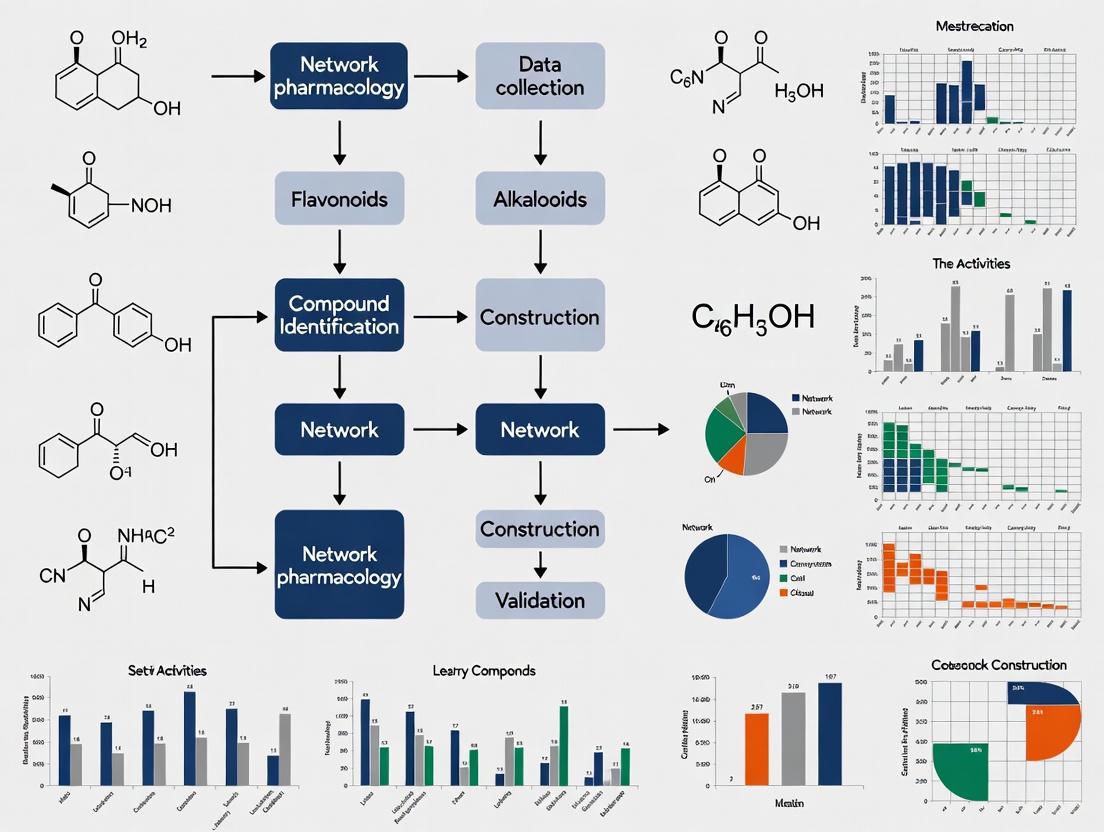
Network pharmacology has emerged as a pivotal paradigm for deciphering the complex polypharmacology of plant compounds, which often act through multi-target mechanisms.
From Prediction to Proof: A Researcher's Guide to Validating Network Pharmacology for Plant Compounds
Abstract
Network pharmacology has emerged as a pivotal paradigm for deciphering the complex polypharmacology of plant compounds, which often act through multi-target mechanisms. However, the transition from in silico predictions to biologically validated mechanisms remains a significant challenge. This article provides a comprehensive guide for researchers and drug development professionals, covering the foundational principles of network pharmacology, detailed methodological workflows for constructing and analyzing compound-target networks, strategies for troubleshooting common pitfalls to ensure robustness, and a framework for rigorous experimental validation using molecular docking, in vitro, and in vivo models. By synthesizing current methodologies and highlighting integrative approaches that combine artificial intelligence and multi-omics data, this guide aims to bridge the gap between computational prediction and mechanistic confirmation, ultimately accelerating the discovery of novel bioactive plant-derived therapeutics.
The Systems Approach: Why Network Pharmacology is Ideal for Plant Compound Research
The traditional 'one-drug-one-target' paradigm has dominated pharmaceutical discovery for decades, proving successful for diseases with well-defined molecular etiologies, such as many infectious diseases [1]. However, this reductionist approach has demonstrated significant limitations when applied to complex, multifactorial diseases such as cancer, neurodegenerative disorders, autoimmune conditions, and metabolic syndromes [2] [1]. These diseases involve dysregulation across multiple biological pathways and networks, making them inherently resistant to single-target interventions due to biological redundancy and compensatory mechanisms within cellular systems [2].
The failure rates in clinical drug development remain notably high (approximately 60-70%) for drugs developed through conventional single-target approaches, partly due to an incomplete understanding of complex biological interactions [1]. Furthermore, single-target therapies for complex diseases often face challenges with adaptive resistance, poor efficacy, and significant side effects [3] [2]. These limitations have prompted a fundamental reassessment of drug discovery strategies, leading to the emergence of network pharmacology as a transformative alternative.
Network pharmacology represents a paradigm shift from 'magic bullets' to 'magic shotguns' that modulate multiple targets simultaneously [4]. This approach utilizes systems biology, bioinformatics, and computational modeling to understand drug actions within the context of biological networks rather than isolated targets [1]. By designing therapeutics that engage multiple nodes in disease networks simultaneously, network pharmacology offers the potential for enhanced efficacy, reduced vulnerability to resistance, and improved safety profiles compared to single-target approaches [2].
Comparative Analysis: Single-Target vs. Network-Target Therapeutic Approaches
Table 1: Fundamental characteristics of single-target and network-target therapeutic paradigms
| Feature | Single-Target Therapeutics | Network-Target/Multi-Component Therapeutics |
|---|---|---|
| Targeting Approach | Single molecular target | Multiple targets/network-level intervention |
| Disease Suitability | Monogenic or infectious diseases | Complex, multifactorial disorders (cancer, neurodegeneration, metabolic syndromes) |
| Model of Action | Linear (receptor-ligand) | Systems/network-based |
| Risk of Side Effects | Higher (potential off-target effects) | Lower (network-aware prediction) |
| Clinical Trial Failure Rates | Higher (60-70%) | Lower due to pre-network analysis |
| Technological Tools | Molecular biology, pharmacokinetics | Omics data, bioinformatics, graph theory, AI |
| Personalized Therapy Potential | Limited | High potential (precision medicine) |
The comparative advantage of network-target approaches is particularly evident in their application to complex diseases with multifactorial pathogenesis. For example, in epilepsy treatment, despite the historical development of antiseizure medications (ASMs) targeting single mechanisms, the most clinically effective ASMs already exhibit inherent multi-target activities [5]. Drugs like valproate, topiramate, and fenbamate act on multiple targets including GABA receptors, NMDA receptors, and various ion channels, demonstrating superior efficacy compared to more selective single-target agents [5].
Similarly, in autoimmune conditions like psoriasis, multi-target approaches using medicinal herbs and natural compounds consistently demonstrate modulation of key signaling pathways including the IL-17/IL-23 axis, MAPK, and NF-κB, resulting in more comprehensive therapeutic effects compared to single-target biologics [6] [7]. This multi-target engagement is particularly valuable for addressing the pathogenic complexity of psoriasis, which involves both innate and adaptive immunity alongside diverse inflammatory pathways [7].
Experimental Validation of Network Pharmacology Predictions
Case Study 1: Guben Xiezhuo Decoction for Renal Fibrosis
A 2025 study investigating Guben Xiezhuo Decoction (GBXZD) for chronic kidney disease exemplifies the rigorous integration of network pharmacology predictions with experimental validation [8]. The research employed a comprehensive methodology:
- Bioactive Component Identification: Researchers identified 14 active components and 18 specific metabolites in serum from GBXZD-treated rats using mass spectrometry [8].
- Target Prediction and Network Analysis: Potential target proteins were predicted using PubChem, TCMSP, and SwissTargetPrediction databases, resulting in 276 proteins used to construct a protein-protein interaction (PPI) network [8].
- Experimental Validation: Predictions were validated in a unilateral ureteral obstruction (UUO) rat model, with GBXZD treatment significantly reducing phosphorylation of SRC, EGFR, ERK1, JNK, and STAT3 proteins [8].
- Pathway Analysis: KEGG analysis revealed that GBXZD's anti-fibrotic effects were mediated through inhibition of EGFR tyrosine kinase inhibitor resistance and MAPK signaling pathways [8].
This systematic approach demonstrated how network pharmacology can elucidate the mechanisms of complex natural formulations, moving from computational predictions to biologically verified effects.
Case Study 2: Kaempferol for Osteoporosis Treatment
A 2024 study on kaempferol for osteoporosis treatment further illustrates the validation pipeline for natural compounds [9]:
- Target Identification: Network pharmacology analysis identified 54 overlapping targets between kaempferol and osteoporosis, with 10 core targets selected through PPI network analysis [9].
- Pathway Enrichment: Enrichment analyses primarily highlighted the AGE/RAGE signaling pathway and TNF signaling pathway as key mechanisms [9].
- Molecular Docking: Computational docking demonstrated stable binding of kaempferol with AKT1 and MMP9 target proteins [9].
- In Vitro Validation: Cell experiments with MC3T3-E1 osteoblastic cells showed kaempferol significantly upregulated AKT1 expression and downregulated MMP9 expression, confirming predictions from network analysis [9].
This case study demonstrates how network pharmacology can guide experimental design for single natural compounds, efficiently focusing validation efforts on the most promising targets and pathways.
Table 2: Experimentally validated multi-target effects of natural products across disease models
| Therapeutic Agent | Disease Model | Validated Targets/Pathways | Experimental Methods |
|---|---|---|---|
| Guben Xiezhuo Decoction (Herbal formula) | Renal fibrosis (UUO rat model) | SRC, EGFR, ERK1, JNK, STAT3; EGFR tyrosine kinase inhibitor resistance, MAPK signaling | HPLC-MS, network analysis, in vivo validation, Western blot [8] |
| Kaempferol (Natural compound) | Osteoporosis (MC3T3-E1 cells) | AKT1, MMP9; AGE/RAGE, TNF signaling | Network pharmacology, molecular docking, RT-qPCR, CCK-8 assay [9] |
| Various Medicinal Herbs (e.g., Yinchenhao Decoction) | Chronic liver disease | Immune response, inflammation, energy metabolism, oxidative stress | Comparative network pharmacology, pathway analysis [10] |
| Natural Product-Derived Hybrid Molecules | Alzheimer's disease, malaria, cancer | Multiple targets simultaneously (e.g., AChE and MAO in Alzheimer's) | Molecular hybridization, in vitro and in vivo testing [4] |
Research Workflow and Methodologies in Network Pharmacology
The implementation of network pharmacology follows a systematic workflow that integrates computational predictions with experimental validation. The diagram below illustrates this integrated approach:
Core Methodological Components
Data Retrieval and Curation
Network pharmacology begins with comprehensive data collection from established databases including:
- Drug databases: DrugBank, PubChem, and ChEMBL for drug structures, targets, and pharmacokinetics [1]
- Disease-gene associations: DisGeNET, OMIM, and GeneCards for disease-linked genes and mutations [8] [9] [1]
- Protein-protein interactions: STRING, BioGRID, and IntAct for high-confidence PPI data [8] [9] [1]
- Omics data: GEO, TCGA, and ProteomicsDB for genomics, transcriptomics, and proteomics information [1]
Data curation involves standardizing identifiers, de-duplication, and filtering based on confidence scores and disease relevance [1].
Target Prediction and Network Construction
Target prediction employs both ligand-based (QSAR modeling, similarity ensemble approaches) and structure-based (molecular docking) strategies [1]. Networks of interest include:
- Drug-target interaction networks (bipartite graphs)
- Protein-protein interaction (PPI) networks
- Target-disease association networks
These networks are constructed using platforms such as Cytoscape and analyzed using graph-theoretical measures (degree centrality, betweenness, closeness) to identify hub nodes and bottleneck proteins [8] [9] [1].
Pathway Enrichment and Module Analysis
Functional modules within networks are identified using community detection algorithms (MCODE, Louvain method) and subjected to enrichment analysis through DAVID, g:Profiler, or Metascape to determine overrepresented pathways and biological processes [8] [9] [1]. Common enrichment databases include KEGG and Reactome [1].
The Scientist's Toolkit: Essential Research Reagents and Platforms
Table 3: Essential research reagents, databases, and platforms for network pharmacology
| Category | Tool/Database | Functionality | Application Example |
|---|---|---|---|
| Drug Information | DrugBank, PubChem, ChEMBL | Drug structures, targets, pharmacokinetics | Identifying compound targets and properties [1] |
| Target Prediction | SwissTargetPrediction, PharmMapper, SEA | Predicts protein targets from compound structures | Target identification for natural compounds [8] [9] [1] |
| Protein-Protein Interactions | STRING, BioGRID, IntAct | High-confidence PPI data | Constructing interaction networks [8] [9] [1] |
| Pathway Enrichment | KEGG, Reactome, DAVID, GO | Identifies biological pathways and gene ontology | Pathway analysis for mechanism elucidation [8] [9] [1] |
| Network Visualization | Cytoscape | Visual network construction, module analysis, plugin support | Network visualization and analysis [8] [9] [1] |
| Experimental Validation | HPLC-MS, Western blot, RT-qPCR | Compound identification, protein and gene expression analysis | Validating network predictions [8] [9] |
| Molecular Docking | AutoDock Vina, MOE | Protein-ligand interaction modeling | Validating compound-target interactions [9] [1] |
Key Signaling Pathways in Multi-Target Therapeutics
Research across multiple disease models has identified consistent signaling pathways that are effectively targeted by multi-component therapeutics:
The IL-17/IL-23 axis emerges as a consistently targeted pathway in psoriasis treatment, validated in 27% of studies analyzing medicinal herbs and natural compounds [6] [7]. Similarly, the MAPK signaling pathway appears in 25% of these studies, reflecting its central role in cellular proliferation, differentiation, and immune regulation [6] [7]. The NF-κB pathway, critical for inflammatory responses, is another frequently modulated target [6] [7].
In metabolic and fibrotic diseases, pathways such as EGFR signaling, oxidative stress response, and AGE/RAGE signaling represent key intervention points for multi-target therapies [8] [9]. The simultaneous modulation of these interconnected pathways enables a more comprehensive therapeutic effect than single-target approaches, addressing the fundamental network nature of complex diseases.
The paradigm shift from 'one-drug-one-target' to 'network-target-multi-component' therapeutics represents a fundamental transformation in drug discovery that aligns with the complex network nature of biological systems and disease processes. The integration of network pharmacology with experimental validation provides a robust framework for developing more effective treatments for complex diseases that have proven resistant to single-target approaches.
Future directions in this field include deeper integration of multi-omics data (genomics, transcriptomics, proteomics, metabolomics), advancement of AI and machine learning algorithms for target prediction and drug combination optimization, and the development of more sophisticated disease network models that incorporate temporal and spatial dimensions of pathogenesis [1]. Additionally, the validation of network-based hypotheses for clinical translation remains a crucial frontier for realizing the full potential of this approach.
The implementation of network pharmacology faces challenges including data integration complexities, validation of multi-target mechanisms, and the need for novel clinical trial designs appropriate for multi-component therapies [1] [7]. However, the demonstrated success in elucidating mechanisms of natural products and designing effective multi-target therapies suggests that network pharmacology will continue to reshape therapeutic development for complex diseases, ultimately leading to more effective, personalized treatments with improved safety profiles.
As the field evolves, the synergy between computational predictions and experimental validation will be essential for translating network pharmacology insights into clinically viable therapies that address the multidimensional nature of human disease.
Traditional Chinese Medicine (TCM) and other traditional healing systems present a fundamental challenge to modern pharmacological research: how to study complex multi-component remedies within a scientific framework historically dominated by reductionist, single-target approaches. TCM characterizes the human body as a complex, interconnected system where diseases emerge from imbalances within this intricate network [11]. This holistic principle fundamentally contrasts with the conventional "single target, single disease, single drug" research model that has long dominated pharmacology [11]. Network pharmacology has emerged as a crucial disciplinary bridge, providing a methodological framework that aligns with traditional holistic philosophies while employing contemporary computational and experimental technologies.
The alignment between network pharmacology and traditional medicine is both philosophical and practical. British pharmacologist Andrew L. Hopkins first introduced the term "network pharmacology" in 2007, establishing it as a specialized branch that analyzes synergistic interactions between drugs, diseases, and therapeutic targets with a focus on "multi-target, multi-pathway" mechanisms [11]. This systems-based approach naturally complements traditional medical systems where prescriptions are designed as sophisticated combinations targeting multiple physiological pathways simultaneously. The integration of TCM and network pharmacology dates back to the 1990s, with pioneering work by Li Shao's team exploring the biomolecular networks underlying TCM syndromes and their modulation by herbal formulas [11]. This convergence has created an unprecedented opportunity to scientifically investigate the complex mechanisms underlying traditional herbal formulations.
Conceptual Alignment: Core Philosophical Parallels
Holism and Systems Thinking
The most fundamental alignment between network pharmacology and traditional medicine lies in their shared systems perspective. Network pharmacology operates on the principle of biological network equilibrium, asserting that disease fundamentally represents a state of network imbalance [11]. This directly mirrors TCM theory, which views the body as an integrated system where health depends on maintaining balance among interconnected physiological networks [11]. Both frameworks recognize that therapeutic interventions typically require modulation of multiple network nodes rather than isolated targets.
This holistic orientation stands in stark contrast to conventional drug discovery paradigms. Where conventional pharmacology often seeks highly specific compounds acting on single targets, network pharmacology—like traditional medicine—embraces the therapeutic potential of multi-target approaches. This alignment makes network pharmacology particularly suited for studying traditional herbal formulations, which typically contain numerous bioactive compounds that collectively interact with multiple biological targets [12]. The "network target" concept serves as a mathematical representation of various connections between herbal formulae and diseases, enabling researchers to systematically analyze combinatorial rules and holistic regulation effects [13].
Multi-Target Therapeutic Strategies
Traditional herbal formulations exemplify deliberate multi-target therapy. TCM prescriptions are constructed with specific compositional logic, where each herb plays a distinct role categorized as "emperor," "minister," "assistant," or "servant" within the formula's hierarchy [12]. Similarly, network pharmacology systematically investigates how multi-component substances interact with multiple targets within biological networks. This shared emphasis on polypharmacology represents a significant departure from the conventional "one-drug, one-target" model.
Network pharmacology provides the analytical tools to understand how traditional formulations achieve their therapeutic effects through synergistic interactions among multiple components. For example, Ge-Gen-Qin-Lian decoction (GGQLD), a traditional formulation for type 2 diabetes, contains multiple herbs with documented antidiabetic effects that likely work through complementary mechanisms [13]. Network analysis enables researchers to map these complex interactions, identifying how different compounds within a formulation might target different aspects of a disease network, thereby creating enhanced therapeutic effects through their collective action [12].
Methodological Framework: The Network Pharmacology Workflow
The practical application of network pharmacology follows a systematic workflow that integrates computational prediction with experimental validation. The methodology typically involves multiple stages that progress from data collection through network analysis to experimental verification.
Key Databases and Analytical Tools
Network pharmacology research relies on diverse databases that form the foundation for constructing interaction networks. These resources encompass information on herbs, chemical components, diseases, and molecular targets, enabling comprehensive mapping of potential interactions.
Table 1: Essential Databases for Network Pharmacology Research
| Database Category | Database Name | Key Contents | Primary Application |
|---|---|---|---|
| Herbal Databases | TCMSP | 500 herbs from Chinese Pharmacopoeia, chemical components, pharmacokinetic parameters | Screening active components based on OB/DL parameters [11] |
| ETCM | 403 herbs, 3,962 formulations, 7,274 components, 3,027 diseases | GO and KEGG enrichment analysis; relationship exploration [11] | |
| SymMap | 499 herbs, TCM and Western medicine symptoms, 19,595 components | Association networks between TCM and Western medicine entities [11] | |
| Chemical Component Databases | PubChem | Comprehensive chemical information, structures, CID numbers | Structural information retrieval for herbal ingredients [13] |
| Disease Databases | GeneCards | Human genes, genetic disorders, disease associations | Identifying disease-related target genes [14] |
| OMIM | Human genes and genetic phenotypes | Source for disease-related genes and targets [13] [15] | |
| Analysis Platforms | BATMAN-TCM | 54,832 formulations, 8,404 herbs, 39,171 components | Automated compound and target retrieval; multi-threaded analysis [11] |
| STRING | Protein-protein interactions | PPI network construction [8] [15] |
Figure 1: Network Pharmacology Workflow: From Data Collection to Experimental Validation
Network Construction and Analysis Techniques
The core of network pharmacology involves constructing and analyzing complex interaction networks. Researchers create multi-layered networks that systematically connect herbal components, their molecular targets, and associated biological pathways. Network topology analysis employs parameters like degree, betweenness, shortest path, central nodes, and modularity to identify critical chemical components and core targets within these networks [11].
Protein-protein interaction (PPI) networks represent a crucial analytical component, helping identify key hub targets that play central roles in the network architecture. Tools like STRING database facilitate PPI network construction, while Cytoscape software enables visualization and further topological analysis [14]. Through these methods, researchers can identify central nodes in the network that likely represent crucial targets for therapeutic intervention. For example, in studying the Bushao Tiaozhi capsule (BSTZC) for hyperlipidemia, researchers identified 26 core targets including IL-6, TNF, VEGFA, and CASP3 as potential therapeutic targets through PPI network analysis [14].
Experimental Validation: Case Studies and Applications
Representative Research Cases
The integration of network pharmacology with experimental validation has generated compelling evidence for the mechanistic basis of traditional herbal formulations. Several recent studies exemplify this powerful integrative approach.
Table 2: Representative Network Pharmacology Studies with Experimental Validation
| Study Formulation/Compound | Condition Investigated | Key Findings | Validation Methods |
|---|---|---|---|
| Goutengsan (GTS) [16] | Methamphetamine dependence | Regulates MAPK pathway via multiple bioactive ingredients; 53 active ingredients and 287 potential targets identified | HPLC, in vivo rat model, SH-SY5Y cells, pharmacokinetics |
| Ge-Gen-Qin-Lian decoction (GGQLD) [13] | Type 2 diabetes | 4-Hydroxymephenytoin identified as novel antidiabetic ingredient; increases insulin secretion | RIN-5F cells, 3T3-L1 adipocytes, cluster analysis |
| Helminthostachys zeylanica (HZ) [17] | Ulcerative colitis | 15 active compounds modulate TLR4/NF-κB pathway; reduces TNF-α, IL-6, IL-1β | DSS-induced mouse model, IEC-6/T84 cells, Western blot, ELISA |
| Guben Xiezhuo decoction (GBXZD) [8] | Renal fibrosis | 14 active components identified; inhibits EGFR and MAPK signaling pathways | UUO rat model, HK-2 cells, mass spectrometry, molecular docking |
| Bushao Tiaozhi capsule (BSTZC) [14] | Hyperlipidemia | 36 bioactive ingredients target inflammatory and apoptotic pathways; regulates MAPK signaling | Triton WR-1339 mouse model, lipid analysis, RT-qPCR |
| Paeoniflorin (Pae) [15] | Castration-resistant prostate cancer | Targets SRC-mediated pathways; inhibits proliferation (60%) and migration (65%) | PCa cell lines, organoid models, xenograft studies |
Detailed Experimental Protocols
In Vivo Validation Models
Animal models provide crucial platforms for validating predictions from network pharmacology analyses. For gastrointestinal conditions like ulcerative colitis, the DSS-induced mouse model has proven valuable. In studying Helminthostachys zeylanica, researchers induced colitis in mice using dextran sulfate sodium (DSS) dissolved in drinking water for 7-10 days, followed by assessment of Disease Activity Index (DAI) scores incorporating weight loss, stool consistency, and rectal bleeding [17]. Treatment compounds are typically administered orally during or after induction, with colon tissue collected for histological examination (H&E staining), immunofluorescence analysis, and cytokine measurement (ELISA) [17].
For renal conditions, the unilateral ureteral obstruction (UUO) model is widely employed. In the Guben Xiezhuo decoction study, researchers performed UUO surgery on rats, then administered the herbal formulation or vehicle control for a specified period before collecting kidney tissues for Western blot analysis, immunohistochemistry, and mass spectrometry [8]. For neurological conditions like methamphetamine dependence, conditioned place preference (CPP) models in rats provide behavioral assessment, complemented by tissue analysis of brain regions like the hippocampal CA1 area [16].
In Vitro Validation Methods
Cell-based assays enable mechanistic validation at the cellular and molecular levels. Common approaches include:
- Cell viability assays: Assessing protective effects against toxin-induced damage, such as LPS-stimulated HK-2 cells for renal fibrosis or MA-induced SH-SY5Y neuroblastoma cells for neurological effects [16] [8].
- Western blot analysis: Quantifying protein expression and phosphorylation states of pathway components identified through network analysis (e.g., MAPK, NF-κB, SRC) [16] [17] [15].
- ELISA: Measuring cytokine levels (TNF-α, IL-6, IL-1β) in cell culture supernatants or tissue homogenates to validate anti-inflammatory effects [17] [14].
- Immunofluorescence and flow cytometry: Examining protein localization and cell population distributions, particularly for immune cell markers [17].
- Molecular docking: Computational simulation of compound-target interactions to validate binding affinity and potential mechanisms [16] [17] [18].
The Scientist's Toolkit: Essential Research Reagents and Materials
Table 3: Essential Research Reagents and Materials for Network Pharmacology Validation
| Category | Specific Reagents/Materials | Research Application | Key Function |
|---|---|---|---|
| Cell Lines | SH-SY5Y (human neuroblastoma) | Neurological studies [16] | Neuronal model for mechanism validation |
| HK-2 (human renal proximal tubule) | Renal fibrosis research [8] | Kidney epithelial model for fibrotic studies | |
| IEC-6/T84 (intestinal epithelial) | Ulcerative colitis research [17] | Gut barrier function and inflammation models | |
| 3T3-L1 (adipocyte) | Diabetes research [13] | Insulin resistance and adipocyte function | |
| Animal Models | Sprague-Dawley rats | UUO renal fibrosis model [8] | In vivo validation of anti-fibrotic effects |
| C57BL/6 mice | DSS colitis model [17] | In vivo intestinal inflammation studies | |
| Key Reagents | Triton WR-1339 | Hyperlipidemia induction [14] | Acute hyperlipidemia model creation |
| Dextran Sulfate Sodium (DSS) | Colitis induction [17] | Inflammatory bowel disease model | |
| Methamphetamine hydrochloride | Addiction models [16] | Substance dependence studies | |
| Analytical Tools | HPLC systems | Compound verification [16] | Qualitative and quantitative analysis |
| Mass spectrometry | Metabolite identification [8] | Compound characterization in serum/tissues | |
| PCR systems | Gene expression analysis [14] | mRNA level quantification |
Signaling Pathways: Mechanistic Insights from Network Analysis
Network pharmacology studies have consistently identified several key signaling pathways as common mechanisms of action for traditional herbal formulations, providing mechanistic explanations for their therapeutic effects.
Figure 2: Common Signaling Pathways Modulated by Herbal Formulations
The MAPK signaling pathway emerges as a frequently modulated cascade across multiple studies. In Goutengsan research on methamphetamine dependence, network predictions identified the MAPK pathway as highly relevant, with molecular docking showing strong binding between key active ingredients (6-gingerol, liquiritin, rhynchophylline) and MAPK core targets (MAPK3, MAPK8) [16]. Experimental validation demonstrated that GTS reduced phosphorylation of MAPK3 and MAPK8 in brain tissues, counteracting MA-induced effects [16]. Similarly, in Bushao Tiaozhi capsule studies on hyperlipidemia, KEGG pathway analysis identified MAPK signaling as a prominently enriched pathway [14].
The NF-κB pathway represents another critical inflammatory cascade commonly targeted by traditional formulations. Research on Helminthostachys zeylanica identified modulation of TLR4 and NF-κB signaling pathways as central to its anti-inflammatory effects against ulcerative colitis [17]. Network analysis predicted regulation of vital inflammatory mediators including TNF-α, IL-6, and IL-1β through these pathways, with experimental validation confirming significant reduction in these cytokines following treatment [17].
Other important pathways identified through network pharmacology include SRC signaling in prostate cancer (targeted by paeoniflorin) [15], EGFR tyrosine kinase inhibitor resistance pathways in renal fibrosis [8], and IL-17 signaling in hyperlipidemia [14]. The consistent identification of these pathways across different studies and conditions reinforces the multi-target, multi-pathway nature of traditional herbal formulations and provides mechanistic validation for their therapeutic applications.
Current Challenges and Future Perspectives
Despite significant advances, network pharmacology faces several challenges in its application to traditional medicine research. Data quality and standardization remain concerns, with variability in database content and incomplete consideration of herb processing methods in many studies [11]. The reproducibility of chemical composition in botanical preparations presents particular challenges, as synergistic, potentiating, and antagonistic interactions between multiple active components influence overall pharmacological activity [12].
Future progress will require enhanced integration of dosage considerations into network analyses. Current approaches often overlook dosage, a critical factor in traditional practice where prescriptions are meticulously adjusted based on patient-specific factors [19]. Recent research demonstrates that incorporating dosage data significantly alters network predictions, with target differences ranging up to 68.9% and pathway differences up to 74.6% when comparing dosage-weighted and non-dosage networks [19].
The field will also benefit from advanced pharmacokinetic integration, particularly understanding the bioavailability and tissue distribution of herbal components. Studies that measure plasma exposure and brain distribution of active compounds, such as the Goutengsan research that identified four ingredients (chlorogenic acid, 5-o-methylviscumaboloside, hesperidin, rhynchophylline) in both plasma and brain tissues, provide more physiologically relevant validation of network predictions [16]. As the field evolves, network pharmacology promises to increasingly bridge traditional holistic philosophy with contemporary scientific validation, creating new opportunities for understanding and developing complex natural product-based therapies.
The paradigm of drug discovery has fundamentally shifted from the well-accepted "one target, one drug" model to a new "multi-target, multi-drug" model, aimed at systemically modulating multiple targets to treat complex diseases [20]. This new approach, termed polypharmacology, has emerged as a critical paradigm to overcome the recent decline in productivity in pharmaceutical research [20] [21]. Polypharmacology encompasses both single drugs that bind to multiple targets and combinations of drugs that bind to different targets within a biological network [21]. The treatment of complex diseases is likely to involve multiple drugs acting on distinct targets that are part of a network regulating physiological responses [21]. At the same time, data gathered on complex diseases has been progressively collected in public repositories, enabling network-based approaches that use protein-protein interaction (PPI) networks as universal platforms for data integration and analysis [20].
Foundational Principles of Network Pharmacology
The Network-Based View of Disease and Treatment
Network pharmacology uses multitarget biological networks to uncover connections between drugs, diseases, and targets, thereby aiding drug repurposing and identifying new therapeutic targets [22]. In this framework:
- Disease proteins do not scatter randomly in the interactome but tend to form localized neighborhoods known as disease modules [23]
- Each physiological component (e.g., protein, ion, or chemical) represents a "node" and each interaction between two nodes (e.g., binding or chemical reaction) is an "edge" [21]
- The scale-free and redundant properties of biological networks allow for network perturbation without complete loss of function [21]
Key Network Configurations for Drug Combinations
Research has identified six distinct topological relationships between drug-target modules and disease modules [23]:
- Overlapping Exposure: Two overlapping drug-target modules that also overlap with the disease module
- Complementary Exposure: Two separated drug-target modules that individually overlap with the disease module
- Indirect Exposure: One drug-target module of two overlapping drug-target modules overlaps with the disease module
- Single Exposure: One drug-target module separated from another drug-target module overlaps with the disease module
- Non-exposure: Two overlapping drug-target modules are topologically separated from the disease module
- Independent Action: Each drug-target module and the disease module are topologically separated
Studies of FDA-approved drug combinations for hypertension and cancer reveal that only the Complementary Exposure class consistently correlates with therapeutic effects, where drug targets hit the disease module but target separate neighborhoods [23].
Quantitative Framework for Network Analysis
Critical Metrics and Algorithms
Network pharmacology relies on specific quantitative measures to evaluate relationships within biological networks:
Drug-Disease Proximity is calculated using a z-score based on shortest path lengths between drug targets and disease proteins [23]:
Drug-Drug Separation quantifies the network proximity of drug-target modules using the separation measure [23]:
Where s_AB < 0 indicates targets are in the same network neighborhood, while s_AB ≥ 0 indicates topologically separated targets.
Analytical Workflow for Network Pharmacology
The following diagram illustrates the standard computational and experimental workflow for network pharmacology analysis:
Experimental Validation Methodologies
Standard Experimental Protocol for In Vitro Validation
Network pharmacology predictions require rigorous experimental validation. The following diagram outlines a standard cell culture validation protocol:
Key Signaling Pathways in Polypharmacology
Network pharmacology studies frequently identify several key signaling pathways through which multi-target compounds exert their effects:
Comparative Analysis of Network Pharmacology Approaches
Methodological Comparison
Table 1: Comparison of Network Pharmacology Methodologies
| Method | Key Applications | Advantages | Limitations |
|---|---|---|---|
| PPI Network Analysis [20] [23] | Target identification, synergistic drug combinations | Systems-level perspective, identifies novel target relationships | Network completeness affects results |
| GO & KEGG Enrichment [22] [9] | Pathway analysis, mechanism elucidation | Functional context, standardized classification | Dependent on database annotations |
| Molecular Docking [22] [9] | Binding affinity prediction, compound-target validation | Structure-based insights, predicts interaction stability | Limited by protein structure availability |
| Separation Score Analysis [23] | Drug combination prediction | Quantifies topological relationships, predicts efficacy | Requires comprehensive interactome data |
Quantitative Outcomes in Validation Studies
Table 2: Experimental Validation Data from Network Pharmacology Studies
| Study Compound | Disease Model | Core Targets | Key Pathways | Validation Outcome |
|---|---|---|---|---|
| Kaempferol [9] | Osteoporosis (MC3T3-E1 cells) | AKT1, MMP9 | AGE/RAGE, TNF | Significant upregulation of AKT1 (p<0.001), downregulation of MMP9 (p<0.05) |
| Formononetin [22] | Sarcopenia (C2C12 cells) | AKT1, SIRT1, EGFR | IL-17, PI3K-Akt, FoxO | Enhanced AKT1/SIRT1 expression, reduced inflammation and oxidative stress |
| Network-Based Combinations [23] | Hypertension, Cancer | Varies by disease | Disease-specific | Complementary Exposure class showed significant therapeutic efficacy |
Table 3: Essential Computational Tools for Network Pharmacology
| Resource | Type | Primary Function | Access |
|---|---|---|---|
| STRING [22] [9] | Database | PPI network construction | https://string-db.org/ |
| TCMSP [22] [9] | Database | Traditional medicine compound targets | https://old.tcmsp-e.com/ |
| SwissTargetPrediction [22] [9] | Tool | Target prediction for small molecules | http://www.swisstargetprediction.ch/ |
| Cytoscape [22] [9] | Software | Network visualization and analysis | https://cytoscape.org/ |
| DAVID [22] | Tool | GO and KEGG enrichment analysis | https://david.ncifcrf.gov/ |
| PDB [22] [9] | Database | Protein structures for molecular docking | http://www.rcsb.org/ |
Experimental Reagents and Assays
Table 4: Essential Wet-Lab Reagents for Validation Studies
| Reagent/Assay | Experimental Function | Research Application |
|---|---|---|
| CCK-8 Assay [9] | Cell viability measurement | Determining compound toxicity and optimal treatment concentrations |
| TRIzol Reagent [9] | RNA extraction | Isolating high-quality RNA for gene expression analysis |
| RT-qPCR Kits [9] | Gene expression quantification | Validating target gene expression changes |
| C2C12/MC3T3-E1 Cells [22] [9] | Cell line models | Studying muscle atrophy (sarcopenia) and bone formation (osteoporosis) |
| Specific Antibodies [22] | Protein detection | Western blot analysis of target protein expression |
Network pharmacology provides a powerful framework for polypharmacology research by combining computational predictions with experimental validation. The most successful approaches identify complementary drug targets within disease modules and validate these predictions through in vitro experiments measuring gene expression, protein levels, and functional outcomes. As network biology continues to evolve, integrating more comprehensive interaction data and advanced analytical methods will further enhance our ability to discover synergistic multi-target therapies for complex diseases.
The future of polypharmacology lies in the continued development of network-based methodologies that can efficiently identify efficacious combination therapies and translate these findings into clinical applications, particularly for plant-derived compounds with traditionally recognized but mechanistically unclear therapeutic benefits.
In the evolving landscape of drug discovery and plant compound research, in silico methodologies have transformed early-stage investigation. Techniques like network pharmacology and quantitative structure-activity relationship (QSAR) modeling enable researchers to rapidly predict the multi-target mechanisms and potential efficacy of bioactive plant compounds [24] [25]. However, these computational predictions, while powerful, represent merely the initial hypothesis-generating phase of scientific inquiry. The transition from promising computational data to biologically relevant findings necessitates rigorous experimental validation—a critical imperative that separates speculative models from validated evidence. This guide examines the comparative value of in silico predictions and experimental validation through the lens of plant compound research, providing researchers with a framework for building credible, reproducible scientific claims.
The Limits of Prediction: Understanding In Silico Methodologies
In silico approaches provide valuable screening tools but possess inherent limitations that affect their predictive accuracy and applicability.
Network Pharmacology: This systems biology approach analyzes complex interactions between plant compounds and biological systems. While it has identified common molecular mechanisms for antioxidant and anti-inflammatory properties of plant secondary metabolites—consistently highlighting pathways like Nrf2/KEAP1/ARE, NF-κB, and MAPK—these predictions remain theoretical until experimentally verified [24]. The approach depends heavily on database completeness and quality, with potential oversimplification of biological complexity [24].
QSAR Modeling: These statistical models correlate chemical structure with biological activity. While demonstrating reasonable accuracy (77-85% for training sets, 89-93% for validation sets in one study of fungicides), they struggle with chemical classes poorly represented in training data and may miss complex in vivo metabolic effects [25].
Molecular Docking: This technique predicts how small molecules interact with protein targets at atomic resolution. While valuable for identifying potential binding mechanisms (such as sulfonamide derivatives inhibiting fungal CYP51 [25]), docking accuracy depends on protein structure quality and force field parameters, often neglecting dynamic cellular environments.
Table 1: Common In Silico Methods in Plant Compound Research
| Method | Primary Function | Key Strengths | Inherent Limitations |
|---|---|---|---|
| Network Pharmacology | Identifies multi-target interactions and mechanisms | Systems-level analysis, polypharmacology prediction | Database dependency, biological complexity oversimplification |
| QSAR Modeling | Predicts activity from chemical structure | High-throughput screening, quantitative activity prediction | Limited to chemical space in training data, metabolic processing exclusion |
| Molecular Docking | Predicts ligand-target binding interactions | Atomic-level resolution, binding mode visualization | Static protein structures, solvation effects approximation |
| Splice Site Prediction | Assesses impact of mutations on RNA processing | Multiple algorithm consensus (MaxEnt, S&S, HBond) | Variable accuracy between tools, experimental discrepancies [26] |
The Validation Standard: Frameworks for Credibility
For computational models to gain acceptance in regulatory and scientific communities, standardized validation frameworks have emerged. The ASME V&V-40 standard provides a rigorous methodology for assessing computational model credibility, emphasizing that model qualification is essential for regulatory submission [27] [28].
The credibility assessment begins with defining the Context of Use (COU), which precisely specifies the role and scope of the model in addressing a specific question [27]. This is followed by risk analysis, evaluating potential consequences of incorrect model predictions on decision-making [27]. The process continues with establishing credibility goals through verification (ensuring correct implementation) and validation (ensuring accuracy against experimental data), culminating in an overall credibility assessment [27].
This framework acknowledges that the level of required evidence depends on model risk—determined by both decision consequence (impact of an incorrect prediction) and model influence (extent to which decisions rely on the model) [27]. For high-stakes applications like drug safety assessment, validation requirements are consequently more stringent.
Case Studies: From Prediction to Validation
Case Study 1: Validating Neuroprotective Plant Compounds
A network pharmacology study investigating bioactive compounds from plants like Camellia sinensis, Withania somnifera, and Curcuma longa identified quercetin, luteolin, emodin, and rosmarinic acid as promising multi-target agents for neurodegenerative diseases [29]. Computational predictions indicated strong binding to caspase-3, BCL2, and TNF—key targets in apoptosis and inflammation pathways [29].
Experimental validation confirmed these predictions: rosmarinic acid and ursolic acid demonstrated significant improvement in cognitive deficits and adult hippocampal neurogenesis in an Aβ1-42-induced mouse model of Alzheimer's disease [29]. Similarly, emodin showed neuroprotective effects against Aβ25-35-induced cytotoxicity in PC12 cells via modulation of Nrf2/GPX4 and TLR4/p-NF-κB/NLRP3 pathways [29]. This confirmation of computationally predicted mechanisms underscores the value of the combined approach.
Case Study 2: Coronary Artery Disease Biomarker Discovery
An integrative bioinformatics analysis of coronary artery disease (CAD) transcriptomes identified LINC00963 and SNHG15 as potential diagnostic biomarkers [30]. The computational workflow analyzed dataset GSE42148, identifying 322 protein-coding genes and 25 lncRNAs differentially expressed in CAD patients [30].
Experimental validation via qRT-PCR using peripheral blood from 50 CAD patients and 50 controls confirmed significant upregulation of both lncRNAs in CAD patients [30]. Notably, LINC00963 levels were significantly elevated in patients with positive family history, hyperlipidemia, hypertension, and diabetes, while SNHG15 expression was higher in smokers [30]. ROC curve analysis demonstrated high sensitivity and specificity for both biomarkers [30]. This case exemplifies how initial computational findings can evolve into clinically relevant biomarkers through experimental confirmation.
Case Study 3: Antifungal Compound Development
QSAR modeling and molecular docking identified novel 2-oxoimidazolidine-4-sulfonamide derivatives as potential Phytophthora infestans inhibitors [25]. The computational models predicted antifungal activity via inhibition of fungal CYP51, a sterol biosynthesis enzyme [25].
Experimental testing confirmed these predictions, with six synthesized derivatives demonstrating inhibition rates of 79.3% to 87.4%, comparable to known fungicides [25]. Additional toxicity assessment using Daphnia magna showed low toxicity (LC50 values 13.7 to 52.9 mg/L) for the most active compounds [25]. This demonstrates how computational prediction coupled with experimental validation can accelerate development of effective, safe agrochemicals.
Experimental Protocols for Validation
Protocol 1: Transcriptional Validation via qRT-PCR
This methodology was used to validate candidate lncRNAs identified through bioinformatics analysis for coronary artery disease [30].
- RNA Extraction: Total RNA extracted from blood samples using RNX Plus kit; DNA contamination removed with RNase-free DNase treatment [30]
- Quality Control: RNA quality assessed via NanoDrop spectrophotometry and agarose gel electrophoresis [30]
- cDNA Synthesis: 2.0 µg RNA converted to cDNA using reverse transcriptase in 20µL reaction [30]
- qRT-PCR: Performed in triplicate 10µL reactions with SYBR Green master mix; reference gene (SRSF4) for normalization [30]
- Data Analysis: Expression calculated via ΔΔCt method; statistical significance determined using Mann-Whitney U test [30]
Protocol 2: Functional Network Validation
This approach validates predictions from network pharmacology studies of plant compounds.
- Compound Preparation: Standardized extraction of bioactive compounds; purity verification via HPLC [29]
- Cellular Models: Application to relevant cell lines (e.g., PC12 cells for neuroprotection studies) [29]
- Pathway Analysis: Western blotting, immunofluorescence, or ELISA to measure protein expression in predicted pathways [29]
- Phenotypic Assays: Functional assessments (e.g., cell viability, oxidative stress markers, apoptosis assays) [29]
- In Vivo Validation: Animal models to confirm efficacy and mechanism of action [29]
Visualization of Research Workflows
Computational-Experimental Workflow
Multi-Target Mechanism Validation
The Scientist's Toolkit: Essential Research Reagents
Table 2: Essential Research Reagents for Computational Validation
| Reagent/Kit | Primary Function | Application Context |
|---|---|---|
| RNX Plus RNA Extraction Kit | Total RNA isolation from biological samples | Transcriptional validation studies (e.g., lncRNA quantification) [30] |
| SYBR Green Master Mix | Fluorescent detection of PCR amplification | qRT-PCR for gene expression validation [30] |
| DNase I Treatment | Removal of genomic DNA contamination | RNA purification prior to reverse transcription [30] |
| Reverse Transcriptase | cDNA synthesis from RNA templates | Preparation of templates for qRT-PCR [30] |
| PAXgene Blood RNA Tubes | RNA stabilization in whole blood | Clinical sample collection for transcriptomic studies [26] |
| Superscript II Reverse Transcriptase | First-strand cDNA synthesis with high efficiency | RT-PCR for splicing analysis [26] |
The integration of in silico predictions with rigorous experimental validation represents the gold standard in plant compound research and drug development. While computational methods provide powerful tools for hypothesis generation and initial screening, their true value is realized only when coupled with empirical evidence. The ASME V&V-40 framework offers a structured approach to establishing model credibility, emphasizing that validation requirements should be commensurate with decision consequence and model influence [27]. As the field advances, researchers must maintain this commitment to validation, ensuring that promising computational predictions translate into genuine biological insights with potential therapeutic applications. The validation imperative remains not merely a methodological preference, but an essential component of scientifically rigorous, reproducible research.
Building and Analyzing Robust Compound-Target Networks: A Step-by-Step Workflow
The validation of network pharmacology predictions in plant compound research relies on a foundational first step: the comprehensive and accurate identification of chemical constituents. This process integrates advanced analytical instrumentation with expansive public databases to create a definitive chemical profile of a plant extract. Liquid Chromatography-Tandem Mass Spectrometry (LC-MS/MS) and Gas Chromatography-Mass Spectrometry (GC-MS) serve as the primary workhorses for separation and detection, providing complementary data on compound chemistry and concentration [31]. The analytical findings are then contextualized and annotated using major public databases, chiefly PubChem and the Traditional Chinese Medicine Systems Pharmacology Database and Analysis Platform (TCMSP), which offer vast repositories of chemical, biological, and pharmacological information [32] [11]. This integrated approach transforms raw spectral data into biologically meaningful information, forming the empirical basis for network pharmacology models.
Comparative Analysis of Public Compound Databases
Public databases are indispensable for translating experimental data into research-ready information. The table below compares the scope, strengths, and primary applications of two critical resources for plant compound research.
Table 1: Comparison of Key Public Databases for Compound Identification
| Feature | PubChem | TCMSP |
|---|---|---|
| Primary Focus | General-purpose, comprehensive public chemical repository [32] | Traditional Chinese Medicine (TCM)-specific compounds and herbs [11] |
| Key Content | 119 million compounds, 295 million bioactivities, integrated from >1000 sources [32] | 500 herbs from the Chinese Pharmacopoeia; 3,339 potential targets [11] |
| Unique Strengths | Unmatched scale; highly integrated with genes, proteins, patents, and literature; provides health hazard and exposure data [32] | Pre-calculated pharmacokinetic parameters (OB, DL) for component screening; curated herb-component-target relationships [11] |
| Ideal Application | General compound annotation, bioactivity lookup, target identification, safety assessment [33] [32] | Prioritizing bioactive components from TCM herbs based on ADME properties [11] |
Comparative Analysis of Mass Spectrometry Techniques
LC-MS/MS and GC-MS offer orthogonal approaches for compound separation and detection. The choice of technique is largely dictated by the physicochemical properties of the analyte molecules. The following table provides a detailed comparison to guide method selection.
Table 2: Technical Comparison of LC-MS/MS and GC-MS for Compound Identification
| Characteristic | LC-MS/MS | GC-MS |
|---|---|---|
| Principle | Separation in liquid phase; ionization via ESI; detection by mass-to-charge ratio [31] | Separation in gas phase; ionization via EI or CI; detection by mass-to-charge ratio [31] |
| Ideal Compound Types | Semi- to non-volatile, thermally labile, polar, large molecules (e.g., flavonoids, glycosides, peptides) [31] | Volatile, thermally stable, non-polar to moderately polar, small to medium molecules (e.g., essential oils, fatty acids, steroids) [31] |
| Sample Preparation | Often requires simpler preparation (e.g., dilution, filtration); can handle complex biological matrices [31] | Frequently requires derivatization for non-volatile compounds to increase volatility and thermal stability [31] |
| Ionization Method | Electrospray Ionization (ESI) [31] | Electron Ionization (EI) or Chemical Ionization (CI) [31] |
| Key Strengths | Broad coverage of compound space; high sensitivity and specificity with MS/MS; ideal for polar biomolecules [31] [34] | High chromatographic resolution; reproducible, library-searchable EI spectra; quantitative robustness [31] |
| Publication Trends (LC-MS:GC-MS ratio) | 1.5:1 (as of 2024) [31] |
Experimental Protocols for Compound Identification
Standard Protocol for LC-MS/MS Analysis of Plant Extracts
This protocol is designed for the comprehensive profiling of semi-polar to polar plant compounds, such as flavonoids and alkaloids [31].
- Sample Preparation: Lyophilize plant material and grind to a fine powder. Perform solid-liquid extraction using a methanol-water mixture (e.g., 80:20 v/v). Centrifuge the extract, collect the supernatant, and filter through a 0.22 µm membrane prior to injection [35].
- LC Conditions: Utilize a reversed-phase C18 column maintained at 40°C. The mobile phase consists of (A) water with 0.1% formic acid and (B) acetonitrile with 0.1% formic acid. Employ a gradient elution from 5% B to 95% B over 20-30 minutes. A post-run re-equilibration time is essential for reproducibility [35].
- MS/MS Conditions: Operate the mass spectrometer in data-dependent acquisition (DDA) mode with electrospray ionization (ESI) in both positive and negative polarities. Key parameters include: a capillary voltage of 3.5 kV, a source temperature of 300°C, and a scan range of m/z 50-1500. The top N most intense ions from the full MS scan are selected for fragmentation in the MS/MS scan [35].
Standard Protocol for GC-MS Analysis of Plant Extracts
This protocol is optimal for profiling volatile compounds and fatty acids [31].
- Sample Preparation & Derivatization: Extract powdered plant material with hexane or methanol. For metabolites like organic acids or sugars, derivatize the extract. A common method involves methoximation with methoxyamine hydrochloride in pyridine, followed by silylation with N-Methyl-N-(trimethylsilyl)trifluoroacetamide (MSTFA) [31].
- GC Conditions: Use a non-polar or low-polarity capillary column. Employ a temperature ramp program, for example: hold at 60°C for 1 minute, ramp to 330°C at 10°C per minute, and hold for 5-10 minutes. Use helium as the carrier gas [31].
- MS Conditions: Operate with electron ionization (EI) at 70 eV. Set the ion source temperature to 230°C and the quadrupole to 150°C. Acquire data in full-scan mode, typically over a mass range of m/z 50-600 [31].
Protocol for Database Integration and Bioactive Compound Screening
This workflow connects analytical data to biological interpretation [11] [35].
- Peak Annotation: Process raw LC-MS/MS or GC-MS data using software (e.g., MS-DIAL, XCMS) for peak picking, alignment, and deconvolution. Annotate compounds by querying the acquired MS/MS or EI spectra against databases such as GNPS, HMDB, and NIST. Tentatively identify compounds by matching accurate mass and fragmentation patterns [35].
- Screening for Bioactive Compounds: For TCMs, use TCMSP to screen the annotated compound list against pharmacokinetic parameters like Oral Bioavailability (OB) ≥ 30% and Drug-likeness (DL) ≥ 0.18 to prioritize candidates with higher potential for drug development [11] [35].
- Target Prediction: Input the finalized list of bioactive compounds into SwissTargetPrediction and Similarity Ensemble Approach (SEA) to predict their protein targets. Cross-reference these predictions with disease-related targets from databases like GeneCards and OMIM to establish a compound-target-disease network [35].
Visualizing the Workflow and Pathway Validation
The entire process, from sample preparation to mechanistic validation, can be visualized as a coherent workflow. Furthermore, the downstream effects of identified compounds on biological systems often converge on specific inflammatory pathways, which can be diagrammed to illustrate the core thesis of network pharmacology validation.
Diagram 1: Comprehensive Compound Identification Workflow
Research into plant-based therapies for immune-mediated inflammatory diseases like psoriasis has consistently shown that the mechanisms of action predicted by network pharmacology and validated experimentally frequently converge on a few key signaling pathways. The IL-17/IL-23 axis is a central player.
Diagram 2: Key Validated Pathway in Psoriasis Treatment
Successful execution of the comprehensive identification workflow requires a suite of reliable reagents, instruments, and databases. The following table details essential solutions for key stages of the process.
Table 3: Essential Research Reagent Solutions for Compound Identification
| Category | Specific Product/Kit Examples | Function in Workflow |
|---|---|---|
| Chromatography | Agilent InfinityLab LC Series, Agilent 8850 GC [34] | High-performance separation of complex plant extracts prior to mass spectrometry. |
| Mass Spectrometry | Agilent InfinityLab Pro iQ Series LC/MS, Triple Quadrupole GC-MS/MS [34] | Accurate mass measurement and structural elucidation via fragmentation patterns. |
| Sample Prep | MSTFA (N-Methyl-N-(trimethylsilyl)trifluoroacetamide) | Derivatization agent for GC-MS to increase volatility of non-volatile compounds. |
| Software | MassHunter Software Suite, Cytoscape [34] [35] | MS data processing/analysis (MassHunter) and network visualization/analysis (Cytoscape). |
| Database Access | PubChem, TCMSP, BATMAN-TCM, SymMap [32] [11] | Compound annotation, target prediction, and pharmacokinetic parameter screening. |
In modern phytopharmacology and drug discovery, the prioritization of bioactive compounds from complex plant extracts represents a critical bottleneck. Absorption, Distribution, Metabolism, and Excretion (ADME) properties fundamentally determine whether a promising plant-derived compound will succeed as a viable therapeutic candidate [36] [37]. Traditional experimental ADME profiling remains costly, time-consuming, and resource-intensive, often requiring substantial amounts of compound not available in early discovery phases [37]. Consequently, in silico ADME screening has emerged as an indispensable preliminary filter to narrow down candidate lists from hundreds of potential plant compounds to a manageable number with favorable pharmacokinetic profiles [38].
Two prominent platforms—TCMSP (Traditional Chinese Medicine Systems Pharmacology) and SwissADME—have become cornerstone tools for this prioritization process, particularly within the context of network pharmacology workflows [36] [39]. These computational tools enable researchers to predict key pharmacokinetic parameters and drug-likeness based solely on molecular structure, providing a rational framework for selecting which plant compounds warrant further experimental investigation [40]. When integrated into a comprehensive validation pipeline for network pharmacology predictions, these tools help bridge the gap between computational target prediction and experimental confirmation, ensuring that research efforts focus on compounds with the highest probability of clinical success [36] [39].
Core Functionalities and Design Philosophies
TCMSP is a specialized platform designed specifically for researching traditional Chinese medicine formulations. It provides a curated database of Chinese herbal ingredients paired with ADME screening models that have been optimized for natural products [36]. The platform incorporates several predictive models, including the OBioavail1.1 model for oral bioavailability (OB) prediction and the preCaco-2 model for estimating intestinal permeability [36]. A key feature of TCMSP is its integrated database of natural compounds and putative targets, which allows researchers to move seamlessly from ADME filtering to target prediction within the same ecosystem. The tool calculates a drug-likeness (DL) index based on Tanimoto similarity to molecules in the DrugBank database, providing a standardized metric for prioritizing lead compounds [36].
SwissADME, developed by the Swiss Institute of Bioinformatics, takes a more generalist approach applicable to both synthetic drugs and natural products [37]. This web tool provides robust predictive models for fundamental physicochemical properties, pharmacokinetics, and drug-likeness, with a strong emphasis on medicinal chemistry friendliness and interpretability of results [37]. Its notable features include the BOILED-Egg model for predicting gastrointestinal absorption and brain penetration, and the Bioavailability Radar for rapid visual assessment of drug-likeness [37]. Unlike TCMSP, SwissADME does not maintain its own compound database but operates on user-submitted structures, making it more flexible for analyzing novel or rare plant compounds not cataloged in standard databases.
Table 1: Core Characteristics of TCMSP and SwissADME
| Feature | TCMSP | SwissADME |
|---|---|---|
| Primary Focus | Traditional Chinese Medicine compounds | Broad-spectrum small molecules |
| Database Integration | Built-in compound and target database | No built-in database; user-submitted structures |
| Key Predictive Models | OBioavail1.1 (OB), preCaco2 (permeability) | iLOGP, BOILED-Egg, Bioavailability Radar |
| Drug-Likeness Metrics | Tanimoto coefficient-based DL index | Multiple filters (Lipinski, Ghose, Veber) |
| Visualization Tools | Limited visualization | Comprehensive radar charts and BOILED-Egg plot |
| Access Method | Web interface | Web interface |
Performance and Reliability Considerations
Both tools employ distinct algorithmic approaches for predicting critical parameters, leading to complementary strengths. For lipophilicity prediction (log P), SwissADME provides a consensus value derived from five different methods (iLOGP, XLOGP3, WLOGP, MLOGP, SILICOS-IT), offering a more robust estimate compared to single-algorithm predictions [37]. This multi-method consensus approach helps mitigate individual model limitations and provides researchers with a reliability measure through the observed variance between different prediction methods.
For oral bioavailability, TCMSP uses a proprietary model (OBioavail1.1) specifically trained on natural compounds, while SwissADME employs a bioavailability radar that simultaneously evaluates six key physicochemical properties [36] [37]. The radar visualization quickly shows how a compound performs across all parameters, allowing for immediate identification of potential ADME limitations. This makes SwissADME particularly valuable for educational purposes and for researchers new to ADME profiling.
Evidence from comparative studies suggests that both tools demonstrate good predictive accuracy for their intended use cases. For example, in a study of artemisinin derivatives, SwissADME provided predictions that aligned well with established pharmacokinetic data [40]. Similarly, TCMSP has been successfully used to identify bioactive compounds in numerous network pharmacology studies, with subsequent experimental validation confirming the predicted activities [36] [39].
Experimental Protocols for ADME Filtering
Compound Preparation and Standardization
The initial step in any ADME filtering workflow involves the compilation and standardization of molecular structures for all plant compounds under investigation. Researchers should gather Canonical SMILES (Simplified Molecular-Input Line-Entry System) representations for each compound, which can be obtained from public databases such as PubChem or ChEMBL [36] [41]. For novel compounds not available in databases, structures can be drawn using chemical sketching tools like ChemAxon's Marvin JS, which is integrated directly into the SwissADME interface [37]. It is critical to verify the accuracy of molecular representations, particularly for complex natural products with multiple chiral centers or unusual stereochemistry, as incorrect structures will lead to invalid predictions.
TCMSP Screening Protocol
The TCMSP screening process employs specific ADME thresholds to filter plant compounds:
Access the TCMSP database (https://tcmspw.com/tcmsp.php) and identify your plant species of interest, or use the compound search function for specific molecules [36] [41].
Apply standard bioavailability filters: Set the oral bioavailability (OB) threshold to ≥30% and drug-likeness (DL) threshold to ≥0.18 to identify compounds with favorable pharmacokinetic profiles [36] [39] [41]. These established criteria help eliminate compounds with poor absorption or undesirable physicochemical properties.
Export results: Download the list of filtered compounds along with their predicted OB, DL, and other relevant parameters for further analysis.
The following workflow diagram illustrates the key decision points in the TCMSP screening process:
SwissADME Screening Protocol
The SwissADME screening process provides a more comprehensive physicochemical profiling:
Access the SwissADME web tool (http://www.swissadme.ch) and input compounds by drawing structures directly in the Marvin JS sketcher or by pasting canonical SMILES strings [37].
Run predictions: Submit the compound list for analysis. The tool typically processes drug-like molecules within 1-5 seconds each [37].
Analyze results: Key outputs to examine include:
- Bioavailability Radar: Visually assess whether the compound falls within the optimal range for six key properties [37].
- BOILED-Egg Plot: Predict gastrointestinal absorption (white region) and brain penetration (yellow region) based on lipophilicity and polarity [37].
- Physicochemical Descriptors: Review molecular weight, lipophilicity (consensus Log Po/w), solubility, and other critical parameters [37].
Apply drug-likeness filters: Evaluate compounds against multiple established rules including Lipinski's Rule of Five, Ghose filter, Veber rules, and Egan rules [37].
The integrated workflow for SwissADME analysis can be visualized as follows:
Comparative Performance Data
Quantitative Parameter Comparisons
When evaluating plant compounds for drug development potential, researchers must consider multiple ADME parameters simultaneously. The following table summarizes key metrics provided by both tools:
Table 2: Key ADME Parameters and Typical Thresholds for Plant Compounds
| Parameter | Optimal Range | TCMSP Prediction | SwissADME Prediction | Biological Significance |
|---|---|---|---|---|
| Oral Bioavailability (OB) | ≥30% [39] | OBioavail1.1 model | Bioavailability Radar | Percentage of unchanged compound reaching systemic circulation |
| Drug-Likeness (DL) | ≥0.18 [39] | Tanimoto similarity | Multiple rules (Lipinski, etc.) | Overall potential as oral drug based on physicochemical properties |
| Lipophilicity (Log P) | <5 [37] | Not directly provided | Consensus Log Po/w | Membrane permeability and solubility balance |
| Molecular Weight (MW) | ≤500 g/mol [37] | Provided | Provided | Impacts absorption and distribution |
| Polar Surface Area (TPSA) | ≤140 Ų [37] | Not directly provided | Topological PSA | Predicts intestinal absorption and blood-brain barrier penetration |
| Hydrogen Bond Donors | ≤5 [37] | Provided | Provided | Affects permeability and solubility |
| Hydrogen Bond Acceptors | ≤10 [37] | Provided | Provided | Influences solubility and membrane crossing |
Case Study Applications
In a study investigating Curculigoside A (CA) for osteoporosis and rheumatoid arthritis, researchers employed both TCMSP and SwissADME to establish the compound's druggability [36]. TCMSP analysis confirmed favorable OB and DL properties, while SwissADME provided additional physicochemical profiling that supported the compound's potential as an oral therapeutic [36]. This dual approach provided greater confidence in selecting CA for further experimental validation.
Similarly, in research on Huai Hua San for ulcerative colitis, TCMSP was used to screen 28 bioactive ingredients based on OB and DL criteria [39]. The filtered compounds (including quercetin, luteolin, and nobiletin) were subsequently verified through molecular docking and in vitro experiments, demonstrating the practical utility of this prioritization approach in complex herbal formulations [39].
Integrated Workflow for Network Pharmacology Validation
The integration of TCMSP and SwissADME into a comprehensive network pharmacology workflow creates a robust framework for validating predictions about plant compound mechanisms. The following diagram illustrates how these tools fit into the larger validation pipeline:
This integrated approach ensures that only compounds with favorable ADME properties advance to costly and time-consuming experimental stages, significantly improving research efficiency. The workflow has been successfully implemented in multiple studies, including research on Qing-Wei-San for periodontitis, where computational pharmacology predictions guided subsequent experimental verification of anti-inflammatory effects [42].
Essential Research Reagent Solutions
Successful implementation of ADME filtering and validation requires specific computational and experimental resources. The following table outlines key reagents and tools mentioned in the surveyed research:
Table 3: Essential Research Reagents and Tools for ADME Filtering and Validation
| Tool/Reagent | Specific Function | Application in Workflow |
|---|---|---|
| TCMSP Database | ADME screening specifically for natural products | Initial compound filtering based on OB and DL |
| SwissADME Web Tool | Multi-parameter physicochemical and ADME profiling | Comprehensive drug-likeness assessment |
| PubChem Database | Source of canonical SMILES and 3D structures | Compound structure standardization |
| GeneMANIA | Gene function prediction and network analysis | Target identification and validation |
| DAVID Bioinformatics | GO and KEGG pathway enrichment analysis | Mechanistic pathway identification |
| Cytoscape Software | Network visualization and analysis | Drug-target-pathway network construction |
| AutoDock Vina | Molecular docking simulations | Binding affinity predictions for target verification |
| RAW264.7 Cells | Murine macrophage cell line | In vitro anti-inflammatory activity testing |
TCMSP and SwissADME offer complementary approaches to ADME filtering and bioactive compound prioritization in plant compound research. TCMSP provides a specialized platform optimized for traditional medicine compounds with built-in compound and target databases, making it particularly valuable for initial screening of complex herbal formulations [36] [39]. SwissADME delivers more comprehensive physicochemical profiling with superior visualization capabilities, enabling deeper investigation of compound properties and potential limitations [37].
For researchers validating network pharmacology predictions, the sequential application of both tools creates a powerful filtering cascade: TCMSP for initial high-throughput screening followed by SwissADME for detailed characterization of top candidates [36] [39]. This integrated approach significantly enhances the efficiency of plant compound research by focusing experimental resources on leads with the highest probability of therapeutic success, ultimately accelerating the development of evidence-based phytomedicines.
Identifying the protein targets of bioactive small molecules is a fundamental step in understanding their mechanism of action, particularly in the context of plant compounds and natural products research. Target prediction computational methods provide a powerful strategy for generating testable hypotheses about the polypharmacology of natural compounds, which is essential for rational drug discovery and repurposing. These approaches primarily fall into two categories: ligand-based methods, which predict targets based on the chemical similarity principle that similar molecules share similar biological activities, and database methods, which mine existing bioactivity repositories to identify known interactions [43] [44]. Within network pharmacology workflows, these computational predictions serve as the critical link between the chemical structures of plant compounds and their potential effects on biological systems, enabling researchers to construct comprehensive drug-target-pathway networks [6] [7]. This comparative guide objectively evaluates three prominent tools—SwissTargetPrediction (ligand-based), STITCH, and ChEMBL (database approaches)—focusing on their underlying methodologies, performance characteristics, and practical applications in validating network pharmacology predictions for plant compound research.
SwissTargetPrediction is a web-based tool that employs reverse screening through combined 2D and 3D molecular similarity calculations to predict protein targets for small molecules [43]. Its methodology operates on the similarity principle, where a query molecule is compared against a curated collection of known bioactive compounds, with predictions generated based on the most similar ligands and their documented targets [45]. The tool incorporates both 2D structural similarity using FP2 fingerprints with Tanimoto coefficients and 3D shape similarity using Electroshape descriptors with Manhattan distance metrics, combining these through a multiple logistic regression model to produce probability scores for potential targets [43] [46].
STITCH (Search Tool for Interacting Chemicals) is a comprehensive database that aggregates known and predicted interactions between chemicals and proteins from numerous sources, including experimental databases, curated pathway collections, and text-mining results [44] [47]. Unlike the pure ligand-based approach of SwissTargetPrediction, STITCH integrates disparate data sources to build extensive protein-chemical interaction networks, incorporating binding affinity data and tissue-specific expression filters to provide biological context [44]. The platform enables users to visualize interaction networks with edges weighted by confidence scores or binding affinities, facilitating the interpretation of a compound's potential effects within complex biological systems.
ChEMBL is a manually curated database of bioactive molecules with drug-like properties, containing comprehensive bioactivity data extracted from the scientific literature [43] [46]. While not exclusively a prediction tool like SwissTargetPrediction, it serves as a fundamental resource for target identification through data mining of experimentally validated interactions. ChEMBL provides detailed information on compound-target activities, including quantitative binding measurements (IC50, Ki, Kd, etc.), assay protocols, and target classifications, making it an essential reference for validating computational predictions [46].
Table 1: Technical Specifications and Data Coverage of Target Prediction Tools
| Feature | SwissTargetPrediction | STITCH | ChEMBL |
|---|---|---|---|
| Primary Approach | Ligand-based reverse screening | Database integration & prediction | Manually curated bioactivity database |
| Data Source | ChEMBL (version-specific) | Multiple databases + text mining + predictions | Scientific literature (manual curation) |
| Coverage | 3068 proteins across human, mouse, rat (2019 version) | 430,000 chemicals & 3.6M+ proteins across 1133 organisms | 500,000+ compounds with 15M+ bioactivities |
| Similarity Methods | Combined 2D (FP2) & 3D (ElectroShape) | Chemical structure similarity, text mining, experiments | Not applicable (reference database) |
| Update Frequency | Version-based (2019 current) | Version-based (v5.0, 2016) | Regular releases (version-based) |
| Target Organisms | Human, rat, mouse (2019 version) | 2031 eukaryotic & prokaryotic organisms | Primarily human with other species |
| Key Output | Probability scores & rankings | Confidence scores & interaction networks | Experimental bioactivity data |
Table 2: Performance Characteristics and Benchmarking Results
| Performance Metric | SwissTargetPrediction | STITCH | ChEMBL |
|---|---|---|---|
| Prediction Accuracy | >70% correct human target in top 15 [43] | Varies by data source & confidence threshold | Experimental ground truth |
| External Validation | 51% success rate on 364K compounds [46] | Limited independent large-scale benchmarking | Continuous community validation |
| Chemical Space | 376,342 compounds (2019 version) [43] | 430,000 chemicals [44] | >500,000 drug-like molecules [46] |
| Throughput | 15-20 seconds per molecule [43] | Immediate access to precomputed networks | Database query dependent |
| Explainability | High (shows similar ligands & similarity values) | Moderate (confidence scores & evidence) | High (direct experimental evidence) |
Methodologies and Experimental Protocols
SwissTargetPrediction Workflow and Technical Implementation
The SwissTargetPrediction engine follows a meticulously designed workflow for target prediction. The process begins with molecular input through a chemical sketcher or SMILES string, followed by conformational generation where 20 different 3D conformations are computed for the query molecule [43]. For 2D similarity assessment, the tool calculates Tanimoto coefficients between the query molecule's FP2 fingerprint and those of 376,342 known active compounds in its database [43] [46]. Simultaneously, for 3D similarity assessment, it computes Manhattan distances between the query's Electroshape 5D descriptors (capturing shape, partial charge, and lipophilicity) and those of known actives [43]. These similarity metrics are then integrated through a multiple logistic regression model that weights 2D and 3D similarity parameters based on molecular size, producing a Combined-Score that predicts the likelihood of sharing common targets [43]. Finally, the tool generates probability-ranked predictions for up to 15 top targets, indicating both direct and homology-based predictions across human, rat, and mouse organisms [45].
STITCH Database Query and Network Analysis Protocol
Effective utilization of STITCH for target prediction involves a systematic approach to query construction and network interpretation. Researchers begin with compound identification by searching with chemical names, structures, or database identifiers, followed by organism selection to focus on relevant biological context [44]. The interaction network retrieval step accesses precomputed protein-chemical interactions derived from experimental data, databases, and text mining, with edges weighted by confidence scores [44] [47]. For enhanced biological relevance, users can apply tissue-specific filtering to show only proteins expressed in particular tissues, leveraging expression data from the TISSUES resource and Expression Atlas [44]. The binding affinity visualization mode allows examination of known Ki, IC50, or EC50 values where available, providing crucial information on interaction strength [44]. Finally, network interpretation considers both direct targets and proteins in the network neighborhood, as topological analysis can reveal additional proteins affected through network proximity rather than direct binding [44].
ChEMBL Data Mining and Experimental Correlation
Mining ChEMBL for target identification requires specific strategies to extract meaningful bioactivity relationships. The process initiates with compound search using structural similarity, substructure, or exact match queries to identify related compounds. Researchers then apply bioactivity filters to focus on relevant interaction data, typically using thresholds such as activity <10μM for significant interactions [45] [46]. The target annotation step collects protein targets associated with the identified compounds, including quantitative binding measurements and experimental context. For cross-validation, researchers compare targets identified through ChEMBL mining with those from predictive tools, prioritizing consistently appearing targets across methods. Finally, experimental design uses the collected bioactivity data to inform follow-up experiments, focusing on targets with the strongest evidence and most relevant biological context.
Comparative Analysis of Tool Performance
Predictive Accuracy and Validation Outcomes
Independent large-scale validations provide critical insights into the real-world performance of target prediction tools. A comprehensive evaluation of SwissTargetPrediction's algorithm on an external test set of 364,201 bioactive compounds demonstrated that it correctly identified the actual target as the highest probability prediction for 51% of molecules when considering 2,069 human proteins [46]. When assessing performance across the top ranked predictions, the method achieved at least one correct human target in the top 15 predictions for more than 70% of external compounds [43]. This performance is particularly notable given the chemical distinction between training and test sets, with 32,748 molecules (9.0%) representing strictly distinct chemical scaffolds not present in the training data [46].
For database approaches like STITCH and ChEMBL, accuracy is intrinsically tied to data source quality and coverage. STITCH integrates multiple evidence channels to calculate confidence scores, with higher scores generally indicating more reliable interactions [44]. However, the platform's performance varies across organism proteomes and chemical classes, with better coverage for well-studied biological systems and compound classes. ChEMBL provides the experimental ground truth against which predictive methods are benchmarked, but its completeness is constrained by the scope of published bioactivity studies and curation priorities [46].
Application to Natural Products Research
The comparative utility of these tools becomes particularly evident in plant compound and natural product research, where each approach offers distinct advantages. SwissTargetPrediction demonstrates robust performance for drug-like natural products with structural similarities to known bioactive compounds, successfully identifying relevant targets for herbal medicines in psoriasis and rheumatoid arthritis research [6] [35]. Its ligand-based approach is especially valuable for novel natural products with structural analogs in bioactivity databases, enabling hypothesis generation for experimental follow-up.
STITCH excels in contextualizing natural product actions within broader biological networks, revealing both primary targets and downstream effects through protein interaction neighborhoods [44]. This systems-level perspective is particularly valuable for understanding the polypharmacology of complex herbal extracts that simultaneously modulate multiple targets. The platform's tissue-specific filtering further enhances biological relevance by focusing on interactions likely to occur in disease-relevant tissues [44].
ChEMBL serves as an essential validation resource for natural products research, providing direct experimental evidence for related compounds and establishing precedent for specific target engagements [46]. When mining ChEMBL for plant compound research, scientists can identify structural analogs with documented bioactivities, creating a foundation for structure-activity relationship analyses even for novel chemical entities.
Table 3: Applications in Natural Products Research and Validation Outcomes
| Research Context | SwissTargetPrediction Performance | STITCH Application | ChEMBL Validation Role |
|---|---|---|---|
| Psoriasis Mechanisms | Predicted IL-17/IL-23, MAPK, NF-κB pathways confirmed experimentally [6] | Network context for multi-target actions of herbal compounds [7] | Reference bioactivities for anti-psoriatic natural products |
| Rheumatoid Arthritis | Identified RELA, TNF, IL6 as hub targets for Hedyotis diffusa Willd [35] | Protein-chemical network analysis for inflammation pathways | Ki/IC50 values for anti-inflammatory natural compounds |
| Multi-component Formulations | Individual compound target profiling for network construction [48] | Systems-level analysis of complex formula actions [7] | Experimental evidence for mixture components |
| Dose-Response Relationships | Qualitative target identification without affinity prediction [45] | Binding affinity data integration where available [44] | Quantitative bioactivity data for concentration effects |
Integrated Workflows for Network Pharmacology Validation
Synergistic Application of Complementary Tools
The most robust network pharmacology workflows strategically integrate multiple target prediction approaches to leverage their complementary strengths. A validated methodology begins with SwissTargetPrediction as an initial hypothesis generator, leveraging its comprehensive ligand-based screening to identify potential targets based on structural similarity principles [43] [46]. These predictions are subsequently contextualized through STITCH network analysis, which places potential targets within broader protein interaction frameworks and incorporates tissue-specific expression data where relevant [44]. The resulting target list is then cross-referenced with ChEMBL bioactivity data to identify supporting experimental evidence for related compounds and prioritize targets with existing validation [46]. This integrated approach was successfully applied in research on Hedyotis diffusa Willd against rheumatoid arthritis, where SwissTargetPrediction identified key targets like RELA, TNF, and IL6, which were subsequently validated through experimental assays [35].
Experimental Validation and Mechanistic Confirmation
Computational predictions require rigorous experimental validation to establish biological relevance, particularly for plant compounds with complex polypharmacology. Successful validation workflows typically employ a tiered experimental approach, beginning with in vitro binding assays to confirm direct target engagement for prioritized predictions. For targets confirmed in initial screens, functional cellular assays assess downstream pathway modulation, such as phosphorylation status, gene expression changes, or cytokine secretion [35]. In disease-relevant models, researchers evaluate phenotypic effects in specialized cell systems or ex vivo tissues that recapitulate disease pathophysiology. For the most promising targets, in vivo validation in animal models establishes therapeutic efficacy and confirms target relevance in whole-organism contexts [6] [35]. This systematic validation framework has demonstrated strong concordance between computational predictions and experimental outcomes, with one comprehensive review of psoriasis research reporting frequent corroboration of network pharmacology predictions for medicinal herbs and natural compounds targeting the IL-17/IL-23 axis, MAPK, and NF-κB pathways [6].
Table 4: Research Reagent Solutions for Target Prediction and Validation
| Resource Category | Specific Tools & Databases | Research Application | Key Features |
|---|---|---|---|
| Target Prediction Platforms | SwissTargetPrediction, Similarity Ensemble Approach (SEA) | Ligand-based target hypothesis generation | Combined 2D/3D similarity, probability scores, organism selection |
| Interaction Databases | STITCH, ChEMBL, DrugBank, BindingDB | Experimental evidence mining & network analysis | Confidence scores, binding affinities, tissue specificity filters |
| Chemical Structure Tools | Marvin JS, OpenBabel, RDKit | Chemical representation & descriptor calculation | SMILES conversion, fingerprint generation, 3D conformation sampling |
| Bioactivity Resources | ChEMBL, PubChem BioAssay, IUPHAR/BPS | Quantitative binding data reference | Ki, IC50, Kd values, assay protocols, target classification |
| Experimental Validation Assays | Cellular thermal shift assay (CETSA), Surface plasmon resonance (SPR) | Direct target engagement confirmation | Label-free binding measurement, cellular context preservation |
| Pathway Analysis Tools | STRING, KEGG, Reactome, Gene Ontology | Biological context & mechanism interpretation | Pathway enrichment, functional annotation, network visualization |
The comparative analysis of SwissTargetPrediction, STITCH, and ChEMBL reveals distinct yet complementary strengths for target prediction in plant compound research. SwissTargetPrediction excels in comprehensive ligand-based screening for novel structures, STITCH provides crucial biological context through integrated network analysis, and ChEMBL offers essential experimental validation through curated bioactivity data. The most robust research workflows strategically integrate all three approaches, leveraging SwissTargetPrediction for initial hypothesis generation, STITCH for systems-level contextualization, and ChEMBL for evidence-based prioritization.
For researchers pursuing network pharmacology validation of plant compounds, evidence indicates that computational predictions show significant concordance with experimental outcomes when properly validated [6] [35]. Critical success factors include using multiple complementary prediction tools, applying appropriate chemical similarity thresholds, and implementing tiered experimental validation from biochemical assays to disease models. As these computational approaches continue evolving with improvements in bioactivity data coverage and machine learning methodologies, their integration with experimental validation will remain essential for elucidating the complex polypharmacology of plant-derived therapeutics.
In the field of network pharmacology, the validation of predictions concerning plant-derived compounds requires robust computational platforms for network construction, visualization, and topological analysis. This guide objectively compares two distinct classes of platforms—biological network analysis software and IT infrastructure systems—that share similar naming conventions but serve fundamentally different roles in research workflows. Cytoscape represents a specialized desktop application designed specifically for biological network visualization and analysis, enabling researchers to construct protein-protein interaction (PPI) networks, identify key targets, and elucidate mechanisms of action for complex natural products [49] [50]. In contrast, NeXus platforms encompass either network management infrastructure (Cisco Nexus Dashboard) for data center operations or repository management systems (Sonatype Nexus Repository) for storing research software and components [51] [52]. Within the context of validating network pharmacology predictions, these platforms operate at different layers of the research ecosystem: Cytoscape serves as an analytical workbench for biological discovery, while NeXus platforms provide the computational backbone that supports reproducible, scalable research environments.
The integration of these tools is particularly relevant for research on plant compounds, where multi-target mechanisms require sophisticated network analysis approaches. Studies integrating network pharmacology with experimental validation, such as those investigating Guben Xiezhuo decoction for renal fibrosis or natural compounds for psoriasis treatment, rely on platforms like Cytoscape for constructing PPI networks and identifying central targets like SRC, EGFR, and MAPK3 [8] [7]. These analyses provide the foundational hypotheses that are subsequently tested through in vitro and in vivo experiments, creating a cycle of computational prediction and empirical validation that accelerates the understanding of complex pharmacological mechanisms.
Comparative Performance Analysis: Capabilities and Experimental Data
Core Functional Capabilities and Research Applications
Table 1: Core Functional Comparison Between Cytoscape and NeXus Platforms
| Feature Category | Cytoscape | Cisco Nexus Dashboard | Sonatype Nexus Repository |
|---|---|---|---|
| Primary Function | Biological network visualization & analysis | Data center network management & operations | Software component storage & dependency management |
| Network Types Handled | Protein-protein interactions, biological pathways, gene regulatory networks | Data center network fabrics, switching infrastructure | Repository networks, software dependency graphs |
| Key Research Applications | Drug target identification, mechanism of action studies, multi-omics integration | IT infrastructure management, network performance monitoring | Research software management, package version control, dependency resolution |
| Topological Metrics | Betweenness centrality, degree distribution, clustering coefficients | Network latency, packet loss, throughput | Dependency trees, vulnerability graphs, component relationships |
| Visualization Strengths | Community detection, pathway mapping, multivariate data integration | Network topology mapping, traffic flow visualization | Dependency graph visualization, license compliance tracking |
| Data Integration Methods | Spreadsheet import, REST APIs, database connections, specialized apps | Network telemetry, SNMP, NetFlow, API integrations | Maven, npm, Docker, PyPI repository proxies |
Quantitative Performance Metrics and Benchmarking Data
Table 2: Performance Characteristics and Scaling Capabilities
| Performance Metric | Cytoscape | Cisco Nexus Dashboard | Sonatype Nexus Repository |
|---|---|---|---|
| Maximum Network Size | ~20,000+ nodes (dependent on hardware) | Unlimited nodes through distributed management | Limited by storage capacity (up to TB-scale) |
| Typical Response Time | Interactive (seconds) for layouts of 10,000 nodes | Near real-time (sub-second) for telemetry data | Variable (seconds to minutes) for dependency resolution |
| Supported Data Formats | SIF, GML, XGMML, CX, PSI-MI, Excel, CSV | NetFlow, sFlow, IPFIX, SNMP, REST API JSON | JAR, NPM, Docker, PyPI, RubyGems, NuGet |
| Scalability Approach | Local hardware scaling, cluster computing via Cytoscape Automation | Distributed deployment, horizontal scaling | Vertical scaling, repository grouping, cloud deployment |
| Concurrent User Support | Single-user desktop application with shared sessions | Multi-tenant with role-based access control | Unlimited via repository proxies |
| Hardware Requirements | 8GB+ RAM, multi-core CPU for large networks | 8-32GB RAM per node, 4-8 CPUs per node | 8-32GB RAM, 2-8 CPUs based on profile size |
Performance data indicates that Cytoscape efficiently handles biological networks of up to several thousand nodes on standard research workstations, with processing capabilities extending further through its automation features that enable scripted analysis and integration with high-performance computing environments [50]. For the analysis of plant compound mechanisms, studies typically involve PPI networks containing hundreds to low-thousands of nodes, well within Cytoscape's operational parameters [8] [7]. The platform's analytical strengths lie in its specialized algorithms for community detection, centrality calculation, and network clustering—functions essential for identifying key targets in complex pharmacological networks.
In contrast, NeXus platforms prioritize different performance dimensions. Cisco Nexus Dashboard focuses on network operational metrics with the ability to process telemetry data from thousands of network devices in near real-time, while Sonatype Nexus Repository optimizes for storage efficiency and dependency resolution speed across large software ecosystems [51] [52]. These performance characteristics, while not directly applicable to biological analysis, support the research infrastructure by ensuring computational reliability and reproducibility—factors critical for validating network pharmacology predictions through multiple experimental cycles.
Experimental Protocols for Network Pharmacology Validation
Protocol 1: Construction of Compound-Target Networks in Cytoscape
The construction of compound-target networks represents the foundational step in elucidating the multi-target mechanisms of plant-derived compounds. This protocol begins with the compilation of potential protein targets for bioactive constituents identified through phytochemical analysis. Researchers should utilize specialized databases including PubChem, TCMSP, and SwissTargetPrediction to predict potential protein targets for each compound, followed by the acquisition of disease-relevant targets from OMIM and GeneCards databases using search terms such as "renal fibrosis" or "psoriasis" to establish the pathological context [8] [7]. For Guben Xiezhuo decoction research, this approach identified 276 potential target proteins connecting the herbal formulation to renal fibrosis pathology.
Target data integration proceeds through the following steps: First, create a node table within Cytoscape containing all identified proteins, with columns for protein name, database identifier, and associated compounds. Second, construct an edge table defining compound-target and target-disease relationships, with columns for source node, target node, relationship type, and evidence score. Third, import these tables into Cytoscape using the built-in table import functionality, which automatically generates the network structure. The resulting network should visually distinguish compound nodes, target protein nodes, and disease node types through shape and color coding—a process facilitated by Cytoscape's Style interface where default values and discrete mappings are applied to the relevant visual properties [53] [54].
The analytical phase applies Cytoscape's built-in network statistics functions: execute NetworkAnalyzer to compute key topological parameters including node degree, betweenness centrality, and shortest path distribution. These metrics identify hub nodes that occupy strategically important positions within the network architecture. Subsequently, perform community detection using the clusterMaker2 app to identify densely connected protein groups that may represent functional modules or synergistic target complexes. For the renal fibrosis study, this analytical sequence revealed proteins including SRC, EGFR, and MAPK3 as topological hubs, suggesting their critical roles in the network and prioritization for experimental validation [8].
Protocol 2: Experimental Validation of Network-Predicted Targets
The transition from computational prediction to experimental validation represents the critical phase in verifying network pharmacology insights. This protocol begins with the selection of topologically significant targets identified through Cytoscape analysis, prioritizing nodes with high betweenness centrality and degree values that suggest functional importance within the network architecture. For in vitro validation, select appropriate cell lines modeling the disease pathology—such as HK-2 cells for renal fibrosis research or keratinocytes for psoriasis studies—and treat with the plant-derived compounds or extracts at physiologically relevant concentrations [8] [7].
Molecular assessment should employ western blotting to quantify expression changes in the predicted target proteins and their phosphorylation states. For example, in the Guben Xiezhuo decoction study, researchers analyzed phosphorylation expression of SRC, EGFR, ERK1, JNK, and STAT3 in a unilateral ureteral obstruction (UUO) rat model, confirming the network-predicted inhibition of EGFR and MAPK signaling pathways [8]. Simultaneously, measure fibrotic or inflammatory markers appropriate to the disease context to establish functional correlations with target modulation. Complementary cellular viability assays (MTT, CCK-8) assess compound toxicity and therapeutic windows, while immunohistochemical staining of tissue sections provides spatial resolution of target expression changes.
For pathway confirmation, perform KEGG enrichment analysis within Cytoscape using the clusterMaker2 or stringApp to identify significantly overrepresented signaling pathways among the network-predicted targets. This analysis, exemplified by the psoriasis research which identified IL-23/IL-17 and MAPK pathways as central mechanisms [7], generates testable hypotheses for subsequent experimental validation. Researchers should then select key pathway components for targeted inhibition or genetic manipulation to establish causal relationships between compound exposure, target modulation, and therapeutic outcomes, thereby completing the cycle from network prediction to empirical verification.
Visual Workflow and Pathway Diagrams
Network Pharmacology Workflow Diagram
Multi-Target Mechanism of Action Diagram
Essential Research Reagent Solutions
Table 3: Key Research Reagents and Computational Tools for Network Pharmacology
| Reagent/Tool Category | Specific Examples | Research Function | Application Context |
|---|---|---|---|
| Target Prediction Databases | SwissTargetPrediction, TCMSP, PubChem, PharmMapper | Prediction of protein targets for bioactive compounds | Initial target identification for network construction |
| Disease Target Databases | OMIM, GeneCards, DisGeNET | Compilation of genetically validated disease targets | Contextualizing networks within disease mechanisms |
| Network Analysis Software | Cytoscape (with NetworkAnalyzer, clusterMaker2) | Network visualization, topological analysis, community detection | Core analytical platform for network pharmacology |
| Pathway Enrichment Tools | Metascape, DAVID, KEGG Mapper | Identification of overrepresented biological pathways | Functional interpretation of network clusters |
| Experimental Validation Assays | Western blot, qPCR, immunohistochemistry, ELISA | Protein and gene expression quantification | Verification of computationally predicted targets |
| Cell-Based Screening Systems | Primary cells, immortalized cell lines (HK-2, HaCaT) | In vitro models of disease pathology | Functional assessment of compound-target interactions |
| Animal Disease Models | UUO rat model (renal fibrosis), IMQ mouse model (psoriasis) | In vivo validation of therapeutic efficacy | Whole-organism confirmation of mechanisms |
| Repository Management | Sonatype Nexus Repository, Docker Registry | Storage and version control for research software | Computational infrastructure for reproducible analysis |
Integrated Discussion: Strategic Platform Selection
The comparative analysis reveals that Cytoscape and NeXus platforms serve complementary rather than competitive roles in network pharmacology research. Cytoscape provides the specialized analytical capabilities required for constructing biological networks, identifying central targets, and generating testable hypotheses about plant compound mechanisms. Its strength lies in the rich ecosystem of plugins for topological analysis, seamless integration with biological databases, and sophisticated visualization tools that enable researchers to derive meaningful insights from complex interaction networks [49] [53] [50]. The platform's continued evolution, particularly its automation capabilities through CyREST and integration with data science environments like Python and R, positions it as an increasingly powerful tool for validation of network pharmacology predictions [50].
The NeXus platforms, while not directly involved in biological network analysis, provide critical infrastructure support that enables rigorous, reproducible research. Cisco Nexus Dashboard ensures reliable network connectivity and computational resource availability for data-intensive analyses, while Sonatype Nexus Repository maintains the software components and dependencies necessary for reproducible computational workflows [51] [52]. For research organizations validating plant compound mechanisms at scale, these infrastructure platforms provide the operational foundation that supports the entire research lifecycle—from initial network construction through final experimental validation and publication.
Strategic platform selection should be guided by research objectives: Cytoscape remains the unequivocal choice for biological network analysis and visualization, particularly for studies aiming to elucidate multi-target mechanisms of complex natural products. The NeXus platforms should be implemented as supporting infrastructure to ensure computational reliability, data integrity, and methodological reproducibility. Future developments in both domains—particularly Cytoscape's expansion into cloud-based analysis and NeXus platforms' enhanced management capabilities—will further strengthen their complementary roles in advancing network pharmacology research from predictive modeling to experimentally validated therapeutic mechanisms.
Pathway enrichment analysis is a fundamental statistical technique used to identify biological pathways that are over-represented in a gene list more than would be expected by chance, helping researchers gain mechanistic insight from omics experiments [55]. For researchers validating network pharmacology predictions for plant compounds, selecting the appropriate enrichment analysis tool is critical for accurate biological interpretation.
The table below provides a comprehensive comparison of two widely-used tools: Metascape and ShinyGO.
Table 1: Feature and Performance Comparison between Metascape and ShinyGO
| Feature | Metascape | ShinyGO |
|---|---|---|
| Primary Focus | Integrated multi-omics enrichment and interpretation | Specialized graphical gene-set enrichment tool |
| Species Coverage | Extensive but not explicitly quantified | Over 14,000 species based on Ensembl Release 113 and STRING-db v12 [56] |
| Database Integration | Combines GO, KEGG, Reactome, MSigDB, and others [55] | Primarily Ensembl and STRING-db annotations, plus manually curated model organism pathways [56] |
| Statistical Foundation | Hypergeometric test with Benjamini-Hochberg FDR correction | Hypergeometric test with Benjamini-Hochberg FDR correction [56] |
| Visualization Capabilities | Customizable bar graphs, network plots, and heatmaps | Hierarchical clustering trees, interactive network plots, KEGG pathway highlighting [56] |
| Unique Features | Protein-protein interaction network analysis, multi-list comparison | Genome-wide chromosome visualization, gene characteristic analysis, direct STRING-db integration [56] |
| Typical Analysis Output | Enrichment tables, interactive plots, and publication-ready figures | Interactive plots, KEGG pathway diagrams with user genes highlighted, downloadable graphics [56] |
| Best Application Context | Comprehensive multi-omics data interpretation and hypothesis generation | Focused pathway analysis with strong visualization, especially for model organisms [56] |
Experimental data from published studies demonstrates that both tools effectively identify biologically relevant pathways, though with different emphases. In a study investigating the mechanisms of Guben Xiezhuo decoction against renal fibrosis, Metascape analysis revealed significant enrichment in the MAPK signaling pathway and EGFR tyrosine kinase inhibitor resistance pathway, findings that were subsequently validated experimentally [8]. Similarly, ShinyGO has been effectively used to identify endothelial cell-associated biological processes including angiogenesis and blood vessel development in TRAP-seq experiments studying vascular morphogenesis [57].
Experimental Protocols for Enrichment Analysis
Standard Workflow for Pathway Enrichment Analysis
The general pathway enrichment analysis protocol comprises three major stages that apply to both Metascape and ShinyGO, with minor tool-specific variations [55].
Table 2: Key Steps in Enrichment Analysis Protocol
| Step | Description | Considerations |
|---|---|---|
| 1. Gene List Preparation | Extract gene list from omics data (e.g., differentially expressed genes from RNA-seq) | Ensure proper ID format; convert to Ensembl gene IDs for ShinyGO [56] [58] |
| 2. Background Definition | Select appropriate reference gene set | Default: all protein-coding genes; better: experiment-specific background (e.g., all detected genes) [56] |
| 3. Statistical Analysis | Perform enrichment tests with multiple testing correction | Uses hypergeometric distribution; FDR < 0.05 typically significant [56] [58] |
| 4. Results Interpretation | Filter and visualize significant pathways | Consider both statistical significance (FDR) and effect size (fold enrichment) [56] |
Figure 1: Workflow for Pathway Enrichment Analysis in Network Pharmacology
Detailed Protocol for Plant Compound Research
For researchers validating network pharmacology predictions for plant compounds, we recommend this specific experimental protocol:
Step 1: Target Gene List Compilation
- Collect putative target genes of plant compounds from databases (TCMSP, PubChem, SwissTargetPrediction) [16] [8]
- Convert all gene identifiers to Ensembl gene IDs using BioMart or similar tools
- For multi-component formulations, create a union of all potential targets
Step 2: Background Gene Set Selection
- Upload a custom background of all genes expressed in your experimental system (e.g., RNA-seq detected genes)
- Alternatively, use all protein-coding genes from the relevant organism
Step 3: Parallel Analysis Setup
- Process the same gene list through both Metascape and ShinyGO
- Set consistent parameters: FDR cutoff of 0.05, pathway size limits (minimum 5 genes, maximum 2000 genes)
Step 4: Results Extraction and Comparison
- From Metascape: Export the comprehensive enrichment results including GO, KEGG, and Reactome pathways
- From ShinyGO: Download the interactive plots and KEGG pathway diagrams with your genes highlighted
- Manually compare the top 20 significant pathways from each tool
Step 5: Experimental Validation Prioritization
- Prioritize pathways consistently identified by both tools with high statistical significance (FDR < 0.001) and high fold enrichment (>3)
- Design experiments to test key predictions from these pathways (e.g., Western blot for phosphorylated proteins in signaling pathways)
This integrated approach was successfully employed in a study of Goutengsan (GTS) for methamphetamine dependence, where network pharmacology predictions using similar methodologies identified the MAPK pathway as a key mechanism, which was subsequently validated through in vivo and in vitro experiments showing that GTS reduced hippocampal CA1 damage and relative expressions of p-MAPK3/MAPK3 and p-MAPK8/MAPK8 in brain tissues [16].
Visualization of Signaling Pathways in Network Pharmacology
Visualization of enriched pathways is essential for interpreting results and communicating findings. Both Metascape and ShinyGO offer unique visualization capabilities that complement each other.
Figure 2: Common Signaling Pathways Targeted by Plant Compounds
Metascape generates customized network visualizations where nodes represent enriched terms and edges represent gene overlaps, allowing researchers to identify functional modules [55]. ShinyGO provides hierarchical clustering trees and interactive network plots where node size corresponds to pathway size and color intensity reflects statistical significance [56]. For KEGG pathways, ShinyGO can highlight user-submitted genes directly on pathway diagrams, creating intuitive visual representations of which pathway components are potentially affected by plant compounds [56] [58].
The Scientist's Toolkit: Essential Research Reagents and Materials
Successful pathway enrichment analysis and subsequent validation requires specific research reagents and computational resources.
Table 3: Essential Research Reagents and Materials for Enrichment Analysis Validation
| Category | Item | Specification/Function |
|---|---|---|
| Computational Tools | Metascape | Web-based platform for comprehensive pathway analysis [55] |
| ShinyGO v0.85 | Web-based graphical gene-set enrichment tool [56] | |
| R package clusterProfiler | Alternative for programmable enrichment analysis [55] | |
| Database Resources | KEGG PATHWAY | Manually drawn pathway maps for molecular interactions [59] |
| Gene Ontology (GO) | Standardized terms for biological processes, molecular functions, cellular components [60] | |
| STRING-db | Protein-protein interaction networks for functional enrichment [56] | |
| Experimental Validation Reagents | Primary Antibodies | Target phosphorylation states of proteins in enriched pathways (e.g., p-MAPK3, p-MAPK8) [16] |
| Cell Lines | Relevant model systems (e.g., SH-SY5Y for neurological research) [16] | |
| HPLC-MS Equipment | For identifying and quantifying plant compound metabolites [8] | |
| Specialized Materials | TRAP-seq Reagents | Translating Ribosome Affinity Purification for cell-type-specific translatome analysis [57] |
| Animal Models | Disease-specific models (e.g., UUO rats for renal fibrosis) [8] |
Performance Benchmarking and Data Interpretation
When comparing tool performance using identical gene lists from plant compound studies, researchers should note several key observational differences:
Metascape typically provides more extensive tabular results with enrichment factors and statistical metrics across multiple databases simultaneously, making it preferable for comprehensive analysis. ShinyGO excels at intuitive visualization, particularly its ability to highlight user genes on KEGG pathway diagrams, which facilitates rapid biological interpretation.
Statistical parameters should be carefully considered when interpreting results. The false discovery rate (FDR) measures statistical significance, while fold enrichment indicates effect size [56]. For a gene list of reasonable size, more significant results (FDR < 1E-5) are expected, and FDR values of 0.01 or 0.001 for GO terms often represent noise due to the vast number of terms tested [56].
Large pathways often show smaller FDRs due to increased statistical power, while smaller pathways might have higher FDRs despite their biological relevance [56]. Therefore, researchers should consider both statistical significance and fold enrichment when prioritizing pathways for experimental validation.
Redundancy in GO terms is another important consideration. Many GO terms are closely related (e.g., 'Cell Cycle' and 'Regulation of Cell Cycle') and can dominate the top results, potentially obscuring other relevant pathways [56]. Tools like MonaGO have been developed specifically to address this challenge through interactive clustering and visualization of related GO terms [60].
Navigating Pitfalls and Enhancing Robustness in Network Pharmacology Studies
In the field of natural product research and drug discovery, reproducibility is a fundamental pillar of the scientific method, ensuring that results obtained from experiments with plant compounds can be achieved again with a high degree of reliability when studies are replicated [61]. For researchers and drug development professionals working with medicinal plants, reproducibility extends beyond replicating experimental results to ensuring consistent chemical composition and reliable standardization of plant-derived materials across different batches, laboratories, and time periods. The historical development of chemistry shows that reproducibility of methods has been the essential companion of novelty and creative innovation [62].
The emergence of network pharmacology as a systematic approach for studying multi-compound, multi-target therapeutic agents has further heightened the importance of reproducibility [63] [64]. This approach, which aligns perfectly with the holistic nature of traditional medicine and natural product research, investigates complex interactions between multiple plant compounds and biological targets [63]. When the chemical composition of plant extracts varies inconsistently, it becomes exceptionally difficult to validate network pharmacology predictions or establish reliable structure-activity relationships, potentially leading to what has been termed an "efficacy crisis" in drug discovery [63].
This guide objectively compares approaches for ensuring reproducible chemical composition in plant-based research, providing experimental methodologies and data presentation formats that support the validation of network pharmacology predictions through consistent, standardized natural product preparations.
Defining Reproducibility in the Context of Chemical Composition
In measurement science, reproducibility is specifically defined as "measurement precision under reproducibility conditions of measurement," which may involve different locations, operators, measuring systems, and replicate measurements on the same or similar objects [65]. This differs from repeatability, which refers to precision under the same conditions with the same operators, systems, and location over a short period [66] [65].
For plant compound research, we can define these concepts more specifically:
Method Repeatability: The ability to obtain consistent chemical profiles when the same operator analyzes the same plant extract multiple times using the same instrumentation and methods within a short timeframe.
Intermediate Precision: The consistency of chemical composition results when the same plant material is extracted and analyzed by different operators, on different days, or with different instruments within the same laboratory.
Reproducibility: The degree to which consistent chemical profiles can be obtained for the same plant material when extracted and analyzed across different laboratories, using potentially different (but validated) methodologies.
The vocabulary of metrology emphasizes that reproducibility requires different conditions of measurement, which for natural products research typically includes different procedures, operators, measuring systems, locations, and replicate measurements [66].
Table 1: Types of Precision in Chemical Composition Analysis
| Precision Type | Conditions Varied | Application in Natural Product Research |
|---|---|---|
| Repeatability | None (same operator, instrument, day) | Method validation for quality control |
| Intermediate Precision | Different operators, days, or instruments | Internal laboratory validation |
| Reproducibility | Different laboratories, systems, procedures | Cross-laboratory validation and standardization |
Reproducibility Challenges in Network Pharmacology of Plant Compounds
Network pharmacology represents a paradigm shift from the "one drug–one target–one disease" model to a "network-target, multiple-component-therapeutics" approach that better reflects the complex, multi-target mechanisms of medicinal plants [63] [64]. This approach investigates pharmacological networks where multiple plant compounds interact with multiple biological targets, creating complex, system-level effects [63]. However, this complexity introduces significant reproducibility challenges:
The chemical complexity of plant extracts means that each preparation contains numerous compounds in varying ratios, which are influenced by factors such as plant genetics, growing conditions, harvest time, post-harvest processing, and extraction methods [63]. When research attempts to connect these chemically complex mixtures to multi-target biological effects without proper standardization, it becomes difficult to determine which components are responsible for the observed effects, leading to irreproducible results.
Furthermore, network pharmacology relies on computational predictions of compound-target interactions that require experimental validation [9] [67]. If the chemical composition used for validation differs from that used for prediction, the validation process becomes unreliable. A 2011 study noted that 65% of medical studies were inconsistent when re-tested, and only 6% were completely reproducible [61], highlighting the broader challenge that also affects natural product research.
Experimental Protocols for Ensuring Reproducible Chemical Composition
One-Factor Balanced Experimental Design for Reproducibility Testing
To systematically evaluate reproducibility factors in plant extraction and analysis, a one-factor balanced fully nested experiment design is recommended [66]. This design involves testing one reproducibility factor at a time while maintaining other conditions constant, allowing for clear identification of variance sources.
Table 2: One-Factor Balanced Experimental Design for Plant Extract Reproducibility
| Experimental Level | Parameters | Example Application |
|---|---|---|
| Level 1: Measurement Function | Specific plant compound or marker analysis | Quantification of kaempferol in Ginkgo biloba extracts |
| Level 2: Reproducibility Conditions | Single varied factor (operators, days, instruments, locations) | Different analysts performing the same extraction |
| Level 3: Repeated Measurements | Multiple replicates under each condition | 10 extractions per analyst |
This experimental design can be visualized through the following workflow:
Standardized Plant Material Preparation Protocol
To ensure reproducible starting material, implement this standardized preparation protocol:
Plant Authentication: Voucher specimens should be deposited in recognized herbariums with taxonomic authentication by qualified botanists.
Controlled Growing Conditions: When possible, use plants grown under controlled conditions with documented soil composition, climate parameters, and harvest timing.
Standardized Processing: Implement consistent drying conditions (temperature, duration, airflow) and particle size reduction methods (specified sieve sizes).
Validated Extraction Method: Develop and validate extraction parameters including:
- Solvent composition and purity
- Solvent-to-material ratio
- Extraction time and temperature
- Extraction method (maceration, Soxhlet, ultrasound-assisted, etc.)
Storage Conditions: Define and maintain standardized storage conditions (temperature, light protection, container type) with stability testing.
Chemical Profiling and Standardization Methods
Reproducible chemical characterization requires multiple complementary analytical techniques:
Chromatographic Fingerprinting: HPLC, UPLC, or GC methods with validated separation conditions, detection parameters, and system suitability tests.
Marker Compound Quantification: Use validated assays for specific marker compounds with certified reference standards, calibration curves, and quality controls.
Advanced Spectroscopic Techniques: NMR, LC-MS, or HRMS for comprehensive characterization and structural confirmation.
Data Documentation: Record all raw data, processing parameters, and instrument conditions following FAIR (Findable, Accessible, Interoperable, Reusable) principles.
Comparative Analysis of Standardization Approaches
Different standardization approaches offer varying levels of reproducibility, complexity, and biological relevance. The selection of an appropriate approach depends on research goals, available resources, and the specific plant material being studied.
Table 3: Comparison of Standardization Approaches for Plant-Based Research
| Standardization Approach | Methodology | Reproducibility Metrics | Advantages | Limitations |
|---|---|---|---|---|
| Single Marker Compound | Quantification of one specific compound | - Relative Standard Deviation (RSD) of marker content- Recovery rates of spiked standards | - Simple to implement- Clear regulatory acceptance | - May not represent overall composition- Limited biological relevance |
| Multi-Marker Profiling | Simultaneous quantification of multiple characteristic compounds | - RSD of each marker- Ratio consistency between markers | - Better representation of composition- Enables quality by design | - Requires multiple reference standards- More complex method validation |
| Chromatographic Fingerprinting | Pattern-based analysis of entire chromatographic profile | - Similarity indices between batches- Peak retention time stability | - Comprehensive composition assessment- No need for all reference standards | - Pattern recognition complexity- Limited compound identification |
| Bioactivity-Guided Standardization | Standardization based on biological activity rather than chemical composition | - IC50 values- Activity unit consistency | - Direct link to pharmacological effect- Accounts for synergistic interactions | - Bioassay variability- Complex implementation |
Case Studies: Successful Integration of Reproducibility in Network Pharmacology Validation
Kaempferol for Osteoporosis Treatment
A 2024 study explored the mechanism of kaempferol in treating osteoporosis using network pharmacology and experimental validation [9]. The research demonstrated a robust approach to reproducibility through:
Target Identification: 54 overlapping targets between kaempferol and osteoporosis were identified through database mining and literature search.
Experimental Validation: Molecular docking predicted stable binding of kaempferol with AKT1 and MMP9 proteins, which was subsequently validated through in vitro cell experiments showing significant upregulation of AKT1 (p < 0.001) and downregulation of MMP9 (p < 0.05) in MC3T3-E1 cells with kaempferol treatment.
The reproducible effects observed in this study were facilitated by using kaempferol with high purity (99.86%) from a verified commercial source and standardized cell culture conditions [9].
Nigella sativa for Breast Cancer
A comprehensive study on Nigella sativa for breast cancer treatment integrated network pharmacology with experimental validation [67]. Key reproducibility elements included:
Compound Selection: 14 phytochemicals were prioritized from 283 initially identified compounds based on strict drug-likeness (DL > 0.18) and oral bioavailability (OB > 30%) parameters.
Multi-level Validation: Network predictions identified 283 overlapping gene targets, with 10 hub genes selected through topological analysis. Molecular docking revealed strong binding affinities, particularly for folic acid, betulinic acid, and stigmasterol.
Experimental Confirmation: In vitro experiments in MDA-MB-231 breast cancer cells showed that betulinic acid and stigmasterol significantly reduced cell viability, while in vivo evaluation using a DMBA-induced rat model demonstrated significant recovery of cancer markers.
The relationship between network prediction and experimental validation in this integrated approach can be visualized as follows:
The Scientist's Toolkit: Essential Research Reagent Solutions
Implementing reproducible research with plant compounds requires specific reagents, reference materials, and instrumentation. The following table details essential research reagent solutions for ensuring consistent chemical composition and standardization.
Table 4: Essential Research Reagent Solutions for Reproducible Plant Compound Research
| Reagent/Material | Function | Reproducibility Considerations | Example Sources/Standards |
|---|---|---|---|
| Certified Reference Standards | Quantitative calibration and method validation | - Purity certification- Traceable documentation- Stability data | - Pharmacopoeial standards (USP, EP)- Certified Reference Materials (CRMs) |
| Chemical Fingerprinting Kits | System suitability testing for analytical instruments | - Defined retention times- Reference response factors- Stability indicators | - HPLC/HPTLC performance test mixtures- Column qualification standards |
| Cell-Based Bioassay Systems | Functional activity assessment | - Cell line authentication- Passage number control- Mycoplasma testing | - ATCC certified cell lines- STR profiling documentation |
| Stable Isotope-Labeled Internal Standards | Quantitative mass spectrometry accuracy | - Isotopic purity- Chemical stability- Compatibility with analytes | - Carbon-13 or deuterium-labeled compounds- Certified reference materials |
| Validated Extraction Solvents | Reproducible compound extraction | - Manufacturer consistency- Purity specifications- Lot-to-lot variability testing | - HPLC/GC grade solvents- Residual pesticide testing |
Ensuring reproducible chemical composition and standardization of plant materials is not merely a technical requirement but a fundamental necessity for validating network pharmacology predictions and advancing natural product-based drug discovery. The comparative analysis presented in this guide demonstrates that:
Systematic approaches to reproducibility assessment, such as the one-factor balanced experimental design, provide structured methodologies for identifying and controlling sources of variability.
Multi-level standardization strategies that combine chemical and biological standardization offer the most comprehensive approach for reproducing complex plant compound effects.
Integrated research frameworks that combine network pharmacology predictions with rigorous experimental validation create a virtuous cycle of hypothesis generation and testing that advances the field.
As network pharmacology continues to evolve as a "bright guiding light" for exploring the personalized precise medication of traditional medicine [64], the principles of reproducibility outlined in this guide will remain essential for transforming traditional knowledge into evidence-based therapeutics. By implementing the standardized protocols, comparative approaches, and reagent solutions detailed here, researchers and drug development professionals can significantly enhance the reliability and translational potential of their plant compound research.
Overcoming Database Dependency and Data Quality Limitations
Network pharmacology has emerged as a transformative paradigm for elucidating the complex, multi-target mechanisms of plant compounds and traditional medicines [68]. This approach aligns perfectly with the holistic philosophy of traditional healing systems, particularly Traditional Chinese Medicine (TCM), which employs multi-component herbal formulations to achieve therapeutic effects through synergistic interactions [48]. However, the field faces significant challenges stemming from database dependency and variable data quality that impact research reproducibility and validation. Current drug discovery pipelines relying on network pharmacology must navigate a complex landscape of over 120 different natural product databases and collections, with only 50 being open access and containing significant variations in data quality, annotation depth, and chemical standardization [69]. This fragmentation creates substantial obstacles for researchers attempting to validate predictions across multiple data sources, ultimately limiting the translational potential of network pharmacology findings into clinically relevant therapeutics.
Table 1: Major Natural Product Database Types and Characteristics
| Database Category | Representative Examples | Key Features | Primary Limitations |
|---|---|---|---|
| General Comprehensive | COCONUT, PCMD | 400,000+ NPs; 530 plant species [70] [71] | Variable stereochemistry; sparse annotations [69] |
| Traditional Medicine-Focused | TCMSP, TCMID, ETCM | Herb-target-disease relationships; formulation data [68] | Inconsistent compound standardization [48] |
| Commercial Curation | Dictionary of Natural Products, Reaxys | High-quality curation; extensive metadata [69] | Cost-prohibitive access ($6,600-$40,000+/year) [69] |
| Thematic Collections | MarinLit, AntiBase, NANPDB | Specialized focus (marine, antimicrobial, regional) [69] | Limited scope; often not updated [69] |
| AI-Enhanced | 67M NP-like database [70] | Expanded chemical space (165x known NPs) [70] | Novel structures require experimental validation [70] |
Database Fragmentation and Accessibility Barriers
The natural product database landscape is characterized by extreme fragmentation, creating substantial challenges for comprehensive analysis. Researchers must navigate dozens of specialized databases with limited interoperability, inconsistent annotation standards, and significant accessibility barriers. Commercial databases like SciFinder and Reaxys offer extensive collections of over 300,000 natural compounds but remain cost-prohibitive for many research institutions, with annual subscriptions ranging from $6,600 to over $40,000 [69]. This economic barrier creates significant inequities in research capabilities, particularly for academic institutions and researchers in developing countries where traditional medicine knowledge is often most prevalent. Furthermore, many specialized databases become inaccessible over time due to discontinued maintenance, resulting in dramatic data loss that undermines research continuity and reproducibility [69].
Annotation Deficiencies and Stereochemical Incompleteness
Even accessible databases suffer from critical annotation deficiencies that limit their utility for network pharmacology validation. Comprehensive analysis of open natural product databases reveals that approximately 12% of collected molecules lack essential stereochemical information despite having stereocenters, fundamentally compromising their utility for accurate binding affinity predictions and mechanistic studies [69]. The Plant Comparative Metabolome Database (PCMD) represents a significant step forward through its unified system that standardizes metabolite numbering across 17 existing metabolite-related databases, enabling more reliable cross-database comparisons [71]. Additional challenges include inconsistent organism taxonomy, incomplete geographical origin data, and sparse traditional use annotations, all of which create significant bottlenecks for reconstructing comprehensive compound-target-pathway networks essential for validating network pharmacology predictions.
Emerging Solutions and Comparative Assessment
Unified Database Platforms and Metabolite Standardization
Next-generation database platforms are addressing fragmentation challenges through systematic integration and standardization approaches. The Plant Comparative Metabolome Database (PCMD) exemplifies this trend by incorporating 213,264 metabolites, 8,384 enzymes, 8,678 reactions, and 30,669 experimentally supported metabolites from 530 plant species within a unified framework [71]. This resource enables multilevel comparison of metabolite characteristics across species, metabolites, pathways, and biological taxonomy, significantly enhancing cross-database interoperability. The platform employs a genome-scale metabolic model (GEM) to predict metabolite presence based on genomic evidence, then supplements these predictions with experimentally verified metabolites from MetaCyc and RefMetaPlant [71]. This hybrid approach of integrating both predicted and experimentally validated data creates a more comprehensive resource for validating network pharmacology predictions against multiple evidence types.
Table 2: Performance Comparison of Integrated Database Solutions
| Solution Platform | Species Coverage | Metabolite Count | Experimental Validation | Unique Tools |
|---|---|---|---|---|
| PCMD [71] | 530 plant species | 213,264 metabolites | 30,669 experimental metabolites | Species comparison, Metabolite enrichment, ID conversion |
| RefMetaPlant [71] | 153 plant species | Not specified | Reference metabolome data | Metabolome analysis, Metabolite identification |
| Plant Reactome [71] | 130 plant species | Pathway-focused | Rice reference genome-based predictions | Comparative pathway analysis |
| PMN [71] | 126 plant species | Network-focused | Limited experimental validation | Metabolic network exploration, Genome annotation support |
| COCONUT [70] [69] | Comprehensive NPs | 400,000+ NPs | Literature-derived collections | Largest open NP collection; Virtual screening ready |
Artificial Intelligence and Expanded Chemical Space Exploration
Artificial intelligence technologies are dramatically expanding the accessible chemical space for natural product discovery while reducing dependency on limited experimental data. Deep generative models, particularly recurrent neural networks with long short-term memory units trained on known natural product structures, can generate valid natural product-like compounds with 95.9% validity rates—significantly outperforming variational autoencoders (87.0%) and generative adversarial networks (37.9%) [70]. This approach has enabled the creation of a database containing 67,064,204 natural product-like molecules, representing a 165-fold expansion over the approximately 400,000 known natural products [70]. Critically, the natural product-likeness score distribution of these generated compounds closely resembles that of known natural products, with a Kullback-Leibler divergence of just 0.064 nats, indicating successful capture of essential structural features while exploring novel chemical regions beyond existing database constraints [70].
AI-Driven Natural Product Discovery Workflow
Multi-Omics Integration for Validation
The integration of multi-omics technologies provides a powerful framework for transcending database limitations through experimental validation of network pharmacology predictions. This convergent approach combines transcriptomic, proteomic, and metabolomic profiling to construct dynamic "component-target-phenotype" networks that move beyond static database entries [68]. For instance, integrated analysis demonstrated that the Jianpi-Yishen formula attenuates chronic kidney disease progression through betaine-mediated regulation of glycine/serine/threonine metabolism coupled with tryptophan metabolic reprogramming, synergistically modulating macrophage polarization dynamics [68]. This multidimensional validation approach creates a more robust evidence base for network pharmacology predictions by connecting computational predictions with measurable molecular changes across multiple biological layers, effectively addressing the reproducibility challenges that plague single-database dependency.
Experimental Protocols for Data Quality Assessment
Data Validation versus Usability Assessment Framework
Rigorous data quality assessment requires distinguishing between formal data validation and data usability evaluations, each serving distinct purposes in verifying database reliability for network pharmacology. Data validation represents a formal, systematic process following specific regulatory guidelines (e.g., EPA protocols) where reviewers evaluate effects of laboratory performance, field conditions, and matrix interferences on sample results [72]. This process applies specific validation qualifiers to indicate estimated, non-detect, or rejected results, with full validation requiring "Level IV" laboratory deliverables that include instrument quality control reviews and raw data verification [72]. In contrast, data usability assessments employ a less formalized approach focused on determining whether data quality supports achievement of specific project objectives, particularly evaluating potential low or high biases, uncertainties, and false positive/negative results in relation to project-specific decision thresholds [72].
Data Quality Assessment Framework
Metabolite Similarity Analysis Protocol
The PCMD database implements a robust protocol for comparing metabolite characteristics across species using Jaccard similarity coefficients, enabling quantitative assessment of metabolic relationships [71]. This methodology begins with predicting metabolites and reactions for 530 plant species using genome-scale metabolic modeling via the RAVEN method, followed by integration of experimentally verified metabolites from MetaCyc and RefMetaPlant [71]. The similarity analysis then calculates pairwise Jaccard coefficients between all species based on their predicted and experimental metabolite profiles, identifying species with highest and lowest metabolic similarity. This protocol revealed that Brassica rapa metabolites exhibited relatively higher similarity to Arabidopsis thaliana (Jaccard coefficient: 0.970), while Picea glauca showed lower similarity (Jaccard coefficient: 0.159), despite phylogenetic relationships suggesting different patterns [71]. This discrepancy highlights how metabolome annotation can be affected by genome assembly quality, compound annotation accuracy, algorithm selection diversity, and sample collection completeness—all critical factors that must be considered when validating network pharmacology predictions.
Cheminformatics Sanitization Pipeline
The massive AI-generated natural product database employed a rigorous multi-step cheminformatics protocol to ensure structural validity and chemical reasonableness [70]. This protocol first applied RDKit's Chem.MolFromSmiles() function to filter out syntactically invalid SMILES representations (9,596,585 removed), then converted remaining structures to canonical SMILES and InChI representations to remove duplicates (22,484,883 removed) [70]. The ChEMBL chemical curation pipeline then performed additional sanitization through structure checking and validation (assigning error scores for detected issues), standardized structures based on FDA/IUPAC guidelines, and generated parent structures by removing isotopes, solvents, and salts [70]. Molecules with penalty scores exceeding 5, indicating severe structural issues, were filtered out (854,328 removed), resulting in a final dataset of 67,064,204 valid, unique, natural product-like structures—representing 67% of the originally generated database [70]. This protocol demonstrates the critical importance of rigorous cheminformatics validation when working with large-scale chemical databases, particularly those generated through computational approaches.
Table 3: Essential Research Reagents and Computational Tools
| Tool/Resource | Category | Specific Function | Application in Validation |
|---|---|---|---|
| RDKit [70] | Cheminformatics | Chemical structure handling and analysis | Structure sanitization, descriptor calculation |
| ChEMBL Curation Pipeline [70] | Data Quality | Structure standardization and validation | FDA/IUPAC compliance checking, error scoring |
| NP Score [70] | Natural Product Assessment | Bayesian measure of NP-likeness | Quantifying similarity to known NP space |
| NPClassifier [70] | Structural Classification | Biosynthetic pathway assignment | Structural categorization and novelty assessment |
| Cytoscape [68] | Network Visualization | Network construction and analysis | Visualizing compound-target-pathway networks |
| Jaccard Similarity Coefficient [71] | Statistical Metric | Metabolite profile comparison | Cross-species metabolite characteristic analysis |
| RAVEN Toolbox [71] | Metabolic Modeling | Genome-scale metabolic reconstruction | Predicting metabolites from genomic evidence |
| TCMSP [68] | Traditional Medicine Database | Herb-compound-target relationship mining | Network pharmacology hypothesis generation |
Overcoming database dependency and data quality limitations requires a multifaceted approach that combines unified database platforms, artificial intelligence expansion of chemical space, rigorous validation protocols, and multi-omics integration. The field is rapidly evolving toward these integrated solutions, with platforms like PCMD demonstrating the value of standardized metabolite numbering and cross-database interoperability [71], while AI-generated natural product libraries dramatically expand accessible chemical space beyond the constraints of traditionally curated collections [70]. Moving forward, successful validation of network pharmacology predictions will increasingly depend on implementing robust data quality assessment frameworks that distinguish between formal validation and usability evaluations [72], while leveraging cheminformatics sanitization pipelines to ensure structural reliability [70]. These approaches collectively enable researchers to transcend the limitations of individual databases while maintaining scientific rigor in elucidating the complex mechanisms underlying plant compounds and traditional medicines.
Network pharmacology has emerged as a transformative approach in natural product research, enabling the systematic investigation of multi-component, multi-target therapeutic interventions [12]. This paradigm shift from the "one-drug-one-target" model to "network-target, multiple-component-therapeutics" provides an ideal framework for studying the complex polypharmacology of plant compounds [12] [73]. However, a significant challenge persists in translating computational predictions to biologically relevant findings: the prevalent use of supraphysiological concentrations in experimental validation [12]. Many in vitro studies apply compound concentrations far exceeding those achievable in humans, creating a translational gap between mechanistic studies and therapeutic reality [12]. This practice undermines the fundamental principle of physiological relevance and questions the clinical translatability of otherwise promising research. This guide objectively compares experimental approaches, providing researchers with methodologies to advance more physiologically relevant validation of network pharmacology predictions.
The Supraphysiological Dosing Problem: A Critical Analysis
The reliance on excessively high compound concentrations represents a fundamental methodological challenge in natural product research. As noted in recent literature, "Many in vitro studies have applied supraphysiological concentrations far exceeding the proposed doses in humans" [12]. This problem is particularly acute in network pharmacology studies where the goal is to understand how complex botanical mixtures exert coordinated effects through multiple targets.
Limitations of Traditional High-Dose Approaches
- Poor Clinical Translation: Effects observed at high concentrations often fail to replicate in clinical settings where systemic concentrations are substantially lower.
- Overlooked Subtle Effects: Supraphysiological doses may mask the nuanced, systems-level effects that occur at lower, more relevant concentrations.
- Toxicological Artifacts: High concentrations can induce non-specific cytotoxicity rather than targeted pharmacological effects.
- Misleading Mechanism of Action: The primary targets engaged at high concentrations may differ from those most relevant at physiological levels.
The optimal range of doses for botanicals often follows a bell-shaped dose-response relationship or hormetic zone dose-response pattern, where effects may diminish or change at higher concentrations [12]. The underlying molecular mechanisms driving this reversal of dose response are not fully understood, complicating experimental interpretation [12].
Comparative Analysis of Experimental Approaches
The table below summarizes key methodological differences between traditional and physiologically relevant approaches to experimental design in network pharmacology.
Table 1: Comparison of Experimental Approaches for Validating Network Pharmacology Predictions
| Methodological Aspect | Traditional High-Dose Approach | Physiologically Relevant Approach | Key Advantages of Physiological Approach |
|---|---|---|---|
| Dose Selection | Based on maximum solubility or previously published high concentrations | Informed by ADME profiling and achievable tissue concentrations [74] | Enhances clinical translatability; reveals true structure-activity relationships |
| Time of Exposure | Often short-term (24-48 hours) to assess acute effects | May include longer exposures relevant to chronic therapeutic use | Better models chronic disease treatment; identifies adaptive cellular responses |
| Validation Methods | Typically single-endpoint assays (e.g., MTT viability) | Multi-parametric assays assessing multiple signaling nodes [35] [7] | Captures network-level effects; identifies pathway crosstalk |
| Compound Preparation | Often uses single compounds in DMSO at high concentrations | May utilize low-concentration combinations or serial dilutions [12] | Models synergistic interactions; identifies polypharmacological effects |
| Context | Simplified cell culture systems | More complex models (co-cultures, 3D systems, microenvironment) | Incorporates physiological cellular crosstalk and tissue context |
Establishing Physiologically Relevant Experimental Workflows
Moving beyond supraphysiological dosing requires integrated workflows that bridge computational predictions with biologically relevant experimental validation. The following diagram illustrates a comprehensive framework for physiologically relevant validation of network pharmacology predictions.
Diagram 1: Physiologically Relevant Validation Workflow. This framework integrates ADME filtering with low-dose experimental approaches to generate clinically relevant mechanistic insights.
Detailed Methodologies for Key Experimental Steps
ADME-Informed Compound Prioritization
Before experimental validation, active compounds must be filtered using Absorption, Distribution, Metabolism, and Excretion (ADME) criteria to prioritize those with higher probability of reaching target tissues [74]. Standard parameters include:
- Oral Bioavailability (OB) ≥ 30% and Drug-Likeness (DL) ≥ 0.18 to ensure physiological relevance [35] [75]
- Tools: SwissADME [74] or Traditional Chinese Medicine Systems Pharmacology Database (TCMSP) [74] [35]
- Output: Prioritized compound list with predicted pharmacokinetic properties
Physiological Concentration Range Establishment
- Pharmacokinetic Modeling: Use tools like PK-Sim or GastroPlus to predict human plasma and tissue concentrations based on typical dosing regimens
- Literature Mining: Extract reported plasma concentrations from human pharmacokinetic studies of similar compounds
- Serial Dilution Design: Implement 8-point dose-response curves spanning sub-physiological to supra-physiological ranges to capture potential hormetic effects [12]
Multi-Parameter Validation Assays
Comprehensive validation should assess multiple nodes within predicted networks:
- Gene Expression: RT-qPCR analysis of key targets identified through network pharmacology (e.g., RELA, TNF, IL6, AKT1) [35]
- Protein Analysis: Western blot assessment of pathway activation (e.g., PI3K/AKT, MAPK, NF-κB) [35] [7]
- Functional Assays: Cell viability, migration, apoptosis, and cytokine production relevant to the pathological context
- High-Content Analysis: Multiplexed readouts capturing multiple parameters simultaneously in single cells
The Scientist's Toolkit: Essential Research Reagents and Platforms
Table 2: Essential Research Tools for Physiologically Relevant Network Pharmacology Validation
| Tool Category | Specific Tools/Platforms | Key Function | Application Notes |
|---|---|---|---|
| Compound Databases | TCMSP [74] [35], PubChem [74], ChemSpider [74] | Provides chemical structures and known bioactivities | Filter by ADME properties before experimental use |
| Target Prediction | SwissTargetPrediction [74], Similarity Ensemble Approach (SEA) [74], PharmMapper [74] | Predicts potential protein targets for compounds | Use multiple tools to increase prediction reliability |
| Disease Targets | GeneCards [74], OMIM [74] [35], DisGeNET [74] [35] | Compiles disease-associated genes and proteins | Identify relevant pathological networks for validation |
| Pathway Analysis | Metascape [75], KEGG [35] [7] | Identifies enriched pathways from target lists | Prioritizes pathways for experimental validation |
| Network Visualization | Cytoscape [35] [75], STRING [35] [75] | Constructs and analyzes compound-target-disease networks | Essential for visualizing polypharmacology |
| Molecular Docking | Sybyl [75], PyMol [75] | Validates compound-target interactions in silico | Provides structural basis for interactions before experimental testing |
Case Study: Rheumatoid Arthritis Research Exemplar
A network pharmacology study on Hedyotis diffusa Willd (HDW) for rheumatoid arthritis (RA) treatment provides an exemplary model of physiologically relevant validation [35]. The research workflow integrated:
- Target Identification: 11 active components and 180 potential anti-RA targets were identified through database mining and ADME filtering
- Network Construction: Compound-target-RA networks revealed stigmasterol, beta-sitosterol, quercetin, and kaempferol as key components
- Pathway Analysis: KEGG enrichment identified AGE-RAGE, TNF, IL17, and PI3K-Akt signaling as predominant pathways
- Hub Target Identification: PPI network analysis identified RELA, TNF, IL6, TP53, MAPK1, AKT1, IL10, and ESR1 as central targets
- Experimental Validation: HDW inhibited cell proliferation in MH7A cells (human rheumatoid arthritis fibroblast-like synoviocytes) in a dose- and time-dependent manner using concentrations reflective of physiological exposure [35]
This multi-layered approach demonstrates how network pharmacology predictions can be rigorously tested using physiologically relevant experimental conditions, generating findings with greater potential for clinical translation.
Signaling Pathways Commonly Targeted by Natural Products
The diagram below illustrates key signaling pathways frequently identified as modulation targets of natural compounds with antioxidant and anti-inflammatory properties, highlighting potential points for experimental validation.
Diagram 2: Common Signaling Pathways Modulated by Plant Compounds. Network pharmacology studies consistently identify convergence toward common regulatory hubs despite diverse chemical structures [74].
Research reveals "remarkable convergence toward common molecular mechanisms, despite diverse chemical structures" with the Nrf2/KEAP1/ARE pathway emerging as the most frequently validated mechanism for antioxidant activities, along with PI3K/AKT, MAPK, and NF-κB signaling for anti-inflammatory mechanisms [74].
The integration of physiologically relevant dosing strategies into network pharmacology validation represents a critical advancement for natural product research. By adopting ADME-informed compound selection, establishing achievable concentration ranges, and implementing multi-parameter validation assays, researchers can bridge the translational gap between computational predictions and clinical applications. The methodologies and tools outlined in this guide provide a framework for generating more reliable, clinically relevant mechanistic data that truly captures the network-pharmacological nature of plant compounds. As the field evolves, embracing these physiologically grounded approaches will accelerate the discovery of effective multi-target therapeutic interventions derived from natural products.
Leveraging Automated Platforms (NeXus) and AI for Improved Accuracy and Efficiency
The escalating complexity of human diseases and their underlying molecular mechanisms has fundamentally challenged traditional drug discovery approaches. In the specific field of plant compound research, this complexity is compounded by the multi-layer nature of botanical formulations, which typically involve multiple plants, each contributing numerous bioactive compounds that target diverse gene sets. Conventional "one drug, one target" paradigms fail to capture the intricate network of molecular interactions that characterize both biological systems and multi-component natural products. Network pharmacology has emerged as a powerful systems-level approach for investigating these multi-target interactions, yet existing analytical tools often require extensive manual intervention, offer restricted analytical methods, and fail to seamlessly integrate the plant-compound-gene hierarchy essential for understanding traditional medicine formulations. This comparison guide objectively evaluates the performance of NeXus v1.2 against established analytical platforms, providing experimental data and methodologies relevant to researchers, scientists, and drug development professionals working to validate network pharmacology predictions for plant compounds.
NeXus v1.2 represents an automated platform specifically designed for network pharmacology and multi-method enrichment analysis. Its architecture addresses critical gaps in the analytical workflow by unifying network construction, analysis, and visualization with three complementary enrichment methodologies: Over-Representation Analysis (ORA), Gene Set Enrichment Analysis (GSEA), and Gene Set Variation Analysis (GSVA). This integrated approach enables researchers to process complex relationships between plants, their bioactive compounds, and molecular targets within a single, automated workflow, maintaining biological context while significantly reducing analytical timelines [76].
Traditional platforms such as Cytoscape, STRING, Ingenuity Pathway Analysis, NetworkAnalyst, and NDEx each address specific analytical needs but lack an integrated framework for end-to-end network pharmacology studies. These tools typically require extensive manual data preprocessing and format conversion, offer primarily ORA enrichment methods, and fail to support seamless integration between network analysis and enrichment workflows. This fragmentation forces researchers to rely on multiple tools and manually combine results, hampering efficiency and reproducibility [76].
Specialized traditional medicine analysis tools like BATMAN-TCM and TCMSP similarly struggle with the plant-compound-gene hierarchy, as they typically require complete compound-target relationships and cannot effectively handle partial or missing associations. Unlike these platforms, NeXus v1.2 maintains analytical integrity across different biological layers, automatically processing various relationship patterns including shared compounds between plants, genes targeted by multiple compounds, and orphan genes without compound associations [76].
Table 1: Core Platform Capabilities Comparison
| Platform | Enrichment Methods | Multi-Layer Analysis | Automation Level | Specialization |
|---|---|---|---|---|
| NeXus v1.2 | ORA, GSEA, GSVA | Native support for plant-compound-gene | High automation | Network pharmacology & traditional medicine |
| Cytoscape | Primarily ORA (via plugins) | Manual integration required | Low automation | General network visualization |
| STRING | ORA | Protein-protein interactions only | Medium automation | Protein interaction networks |
| BATMAN-TCM | ORA | Compound-target focus | Medium automation | Traditional Chinese medicine |
| NetworkAnalyst | ORA | Limited multi-layer support | Medium automation | General omics data analysis |
Performance Comparison: Experimental Data and Benchmarks
Processing Efficiency and Scalability
Experimental validation of NeXus v1.2 demonstrates significant improvements in processing efficiency compared to manual workflows and established platforms. When tested with a representative dataset comprising 111 unique genes, 32 compounds, and 3 plants, NeXus v1.2 completed the entire analysis in 4.8 seconds with peak memory usage of 480 MB. This represents a >95% reduction in analysis time compared to manual workflows requiring 15-25 minutes for equivalent analyses. The platform maintained robust scalability when validated with large-scale datasets of up to 10,847 genes, demonstrating linear time complexity and completion times under 3 minutes, confirming its utility for both small-scale exploratory studies and large-scale analytical projects [76].
Network construction algorithms in NeXus v1.2 successfully generated a multilayer network with 143 nodes and 1,033 edges from the test dataset, incorporating all three biological entities (genes, compounds, and plants) into a unified analytical framework. The network density of 0.1017 indicated a sparse but biologically relevant interaction pattern, comparable to typical biological networks reported in similar studies. Network construction was completed in 1.2 seconds, with centrality calculations requiring an additional 0.8 seconds—significantly faster than the manual integration processes required by platforms like Cytoscape or NetworkAnalyst [76].
Analytical Comprehensiveness and Output Quality
NeXus v1.2 implements three complementary enrichment methodologies, providing more comprehensive insights than platforms limited to single-method approaches. In experimental testing, ORA identified 42 significantly enriched pathways using hypergeometric testing with Benjamini-Hochberg correction (FDR < 0.05). GSEA analysis with 1,000 permutations revealed 38 pathways with significant normalized enrichment scores (|NES| > 1.0, FDR < 0.25), while GSVA provided pathway activity estimates across the analyzed biological system. This multi-method approach circumvents limitations associated with arbitrary threshold-based methods and provides more robust biological insights [76].
The platform automatically generates comprehensive, publication-quality visualizations at 300 DPI resolution, including network maps, enrichment analyses, and relationship patterns. This integrated output generation eliminates the need for manual figure compilation typically required when using multiple separate tools. The network topology analysis revealed distinct structural characteristics, with an average clustering coefficient of 0.374 suggesting moderate local connectivity and a modularity score of 0.428 indicating a well-defined community structure. The tool successfully identified six major functional modules with size distributions following a power law (R² = 0.892), consistent with biological network organization principles [76].
Table 2: Quantitative Performance Metrics Across Platforms
| Performance Metric | NeXus v1.2 | Manual Workflow | Cytoscape with Plugins | BATMAN-TCM |
|---|---|---|---|---|
| Analysis Time (111-gene dataset) | 4.8 seconds | 15-25 minutes | 8-12 minutes | 5-7 minutes |
| Memory Usage | 480 MB | N/A | 650-800 MB | 350 MB |
| Enrichment Methods Available | 3 (ORA, GSEA, GSVA) | 1-2 (typically) | 1-2 (depends on plugins) | 1 (ORA) |
| Pathways Identified (Representative Dataset) | 42 significant | 30-40 | 35-45 | 25-35 |
| Multi-Layer Network Support | Native | Manual integration | Manual integration | Limited |
Experimental Protocols and Methodologies
Standardized Network Pharmacology Workflow
The experimental validation of NeXus v1.2 followed a structured protocol that can be adapted for general network pharmacology studies focusing on plant compounds:
1. Data Collection and Curation
- Bioactive Compound Identification: Active components are identified through mass spectrometry analysis (e.g., HPLC-MS) of plant extracts and serum samples from treated subjects, enabling detection of both parent compounds and metabolites [8].
- Target Prediction: Potential protein targets are predicted using specialized databases including Swiss Target Prediction, TCMSP, and PubChem, which provide structured bioactivity data for natural compounds [8] [76].
- Disease Target Compilation: Relevant disease targets are gathered from OMIM and GeneCards databases using appropriate disease terminology (e.g., "renal fibrosis," "inflammatory response") [8].
2. Network Construction and Analysis
- Interaction Network Generation: The platform automatically constructs a unified network integrating plants, compounds, and target proteins, calculating topological parameters including degree centrality, betweenness, and clustering coefficients [76].
- Module Identification: Community detection algorithms identify functional modules within the network, with modularity optimization revealing biologically relevant clusters [76].
3. Multi-Method Enrichment Analysis
- Pathway Enrichment: Simultaneous application of ORA, GSEA, and GSVA identifies significantly enriched pathways without relying on single-threshold approaches [76].
- Functional Annotation: Gene Ontology (GO) analysis categorizes targets by biological process, molecular function, and cellular component using the Metascape database [8].
4. Experimental Validation
- In Vitro Models: Candidate compounds are tested in relevant cell lines (e.g., HK-2 cells for renal fibrosis) using treatments like LPS stimulation, assessing viability and biomarker expression [8].
- In Vivo Models: Animal models (e.g., UUO rat model for renal fibrosis) validate therapeutic effects, measuring changes in target protein expression identified through network analysis [8].
The following workflow diagram illustrates this comprehensive experimental protocol:
Key Signaling Pathways in Plant Compound Research
Network pharmacology studies on plant secondary metabolites have revealed remarkable convergence toward common molecular mechanisms despite diverse chemical structures. Experimental validations consistently identify several key signaling pathways as central to the bioactivity of plant compounds:
Antioxidant Mechanisms: The Nrf2/KEAP1/ARE pathway emerges as the most frequently validated mechanism for antioxidant activities, along with PI3K/AKT, MAPK, and NF-κB signaling [24]. These pathways regulate cellular redox balance and protect against oxidative stress, a key mechanism of many medicinal plants.
Anti-inflammatory Mechanisms: Research consistently identifies NF-κB, MAPK, and PI3K/AKT pathways as primary targets for anti-inflammatory effects of plant compounds [24]. For example, Guben Xiezhuo decoction (GBXZD) was shown to reduce phosphorylation of SRC, EGFR, ERK1, JNK, and STAT3 proteins in renal fibrosis models, operating through EGFR tyrosine kinase inhibitor resistance and MAPK signaling pathways [8].
Key Molecular Targets: High-connectivity proteins repeatedly identified in network pharmacology studies include AKT1, TNF-α, COX-2, NFKB1, and RELA, suggesting these serve as central hubs through which natural compounds achieve protective effects by modulating nodes that integrate redox balance and inflammatory responses [24].
The following diagram illustrates these key pathways and their interconnections:
Essential Research Reagent Solutions
The following table details key research reagents and computational resources essential for conducting network pharmacology studies with experimental validation of plant compounds:
Table 3: Essential Research Reagents and Resources for Network Pharmacology
| Reagent/Resource | Category | Function in Research | Example Sources/Platforms |
|---|---|---|---|
| High-Resolution Mass Spectrometer | Analytical Instrument | Identifies active components and metabolites in plant extracts and biological samples | HPLC-MS systems (e.g., Ultimate 3000 RS with Q Exactive) |
| Bioactive Compound Databases | Computational Resource | Predicts potential protein targets for plant-derived compounds | SwissTargetPrediction, TCMSP, PubChem |
| Disease Target Databases | Computational Resource | Compiles genes and proteins associated with specific diseases | OMIM, GeneCards |
| String Database | Computational Resource | Provides protein-protein interaction networks for network construction | STRING |
| Metascape | Computational Resource | Performs functional enrichment analysis (GO and KEGG) | Metascape database |
| Cell Line Models | Biological Reagent | Provides in vitro systems for testing compound effects | HK-2 cells (renal), LPS-stimulated macrophages |
| Animal Disease Models | Biological Reagent | Enables in vivo validation of therapeutic effects | UUO rat model (renal fibrosis) |
| Pathway-Specific Antibodies | Biochemical Reagent | Detects expression changes in target proteins | Phospho-specific antibodies for SRC, EGFR, MAPK |
NeXus v1.2 represents a significant advancement in network pharmacology platforms, specifically addressing the unique analytical challenges presented by plant compound research. Experimental data demonstrates its superior performance in processing efficiency, analytical comprehensiveness, and workflow integration compared to both manual methods and established analytical platforms. By automating the complex process of multi-layer network analysis and integrating multiple enrichment methodologies, NeXus v1.2 reduces analytical timelines by over 95% while maintaining biological context and analytical rigor. For researchers and drug development professionals working to validate network pharmacology predictions for plant compounds, platforms like NeXus v1.2 provide the integrated analytical framework necessary to navigate the complexity of plant-compound-gene interactions, accelerating the translation of traditional medicine knowledge into evidence-based therapeutic applications.
Integrating Multi-Omics Data (Transcriptomics, Proteomics, Metabolomics) for Corroborating Evidence
Network pharmacology provides a powerful framework for predicting the complex relationships between plant-derived compounds and their potential therapeutic targets. However, the predictions generated through computational approaches require rigorous experimental validation to confirm their biological relevance. Integrating multi-omics data—transcriptomics, proteomics, and metabolomics—has emerged as a robust methodology for corroborating these network pharmacology predictions, offering a systems-level perspective on drug mechanisms. This integrated approach allows researchers to move beyond hypothetical interactions to empirically demonstrate how plant compounds modulate biological systems across multiple molecular layers.
The fundamental strength of multi-omics integration lies in its ability to capture complementary information: transcriptomics reveals gene expression changes, proteomics identifies actual protein abundances and modifications, and metabolomics captures downstream metabolic phenotypes. When applied to the validation of network pharmacology predictions, this triad of data provides compelling evidence that can either strengthen or refute computational forecasts. For research on plant compounds, which often involve complex mixtures with multiple potential targets, this comprehensive validation approach is particularly valuable for deconvoluting mechanisms of action and identifying bona fide therapeutic pathways.
Comparative Analysis of Multi-Omics Integration Methods
Statistical versus Deep Learning-Based Integration Approaches
The methodology for integrating multi-omics data significantly influences the insights that can be derived for validating network pharmacology predictions. Two prominent approaches have emerged: statistical-based integration (exemplified by MOFA+) and deep learning-based integration (represented by methods like MOGCN). Each offers distinct advantages and limitations for corroborating evidence of plant compound mechanisms.
Statistical-based approaches like MOFA+ employ unsupervised factor analysis to identify latent factors that capture shared and specific variations across different omics datasets. This method reduces dimensionality while preserving biological signals, making it particularly suitable for identifying overarching patterns that align with network pharmacology predictions. Its strength lies in interpretability—the latent factors can be biologically contextualized, and feature loadings provide direct evidence for which molecular entities contribute most significantly to the observed effects. For researchers seeking to validate specific predicted targets or pathways, this transparency is invaluable.
Deep learning-based approaches such as MOGCN utilize graph convolutional networks and autoencoders to learn complex, non-linear relationships across omics layers. These methods excel at capturing intricate interactions that might be missed by linear models, potentially identifying novel associations between plant compounds and biological effects. However, their "black box" nature can make it challenging to trace specific predictions back to validated network pharmacology hypotheses, though recent advances in explainable AI are gradually mitigating this limitation.
Performance Comparison for Biological Insight Extraction
A recent comparative analysis of these integration methods specifically for subtype classification in breast cancer provides objective performance metrics relevant to network pharmacology validation [77]. When evaluating the ability to select features that discriminate between biological states, MOFA+ achieved superior performance with an F1 score of 0.75 in nonlinear classification models, compared to MOGCN's performance [77]. Additionally, MOFA+ identified 121 biologically relevant pathways compared to 100 pathways identified by MOGCN, demonstrating its enhanced capability for extracting mechanistically significant information from complex datasets [77].
Table 1: Performance Comparison of Multi-Omics Integration Methods
| Integration Method | F1 Score (Nonlinear Model) | Biological Pathways Identified | Key Strengths | Limitations |
|---|---|---|---|---|
| MOFA+ (Statistical) | 0.75 [77] | 121 pathways [77] | High interpretability, superior feature selection | May miss complex non-linear relationships |
| MOGCN (Deep Learning) | Not specified | 100 pathways [77] | Captures complex patterns, powerful feature extraction | Lower interpretability, "black box" concerns |
For validation of network pharmacology predictions, this performance differential suggests that statistical methods like MOFA+ may provide more actionable insights when the goal is specifically to corroborate or refute hypothesized mechanisms of action. The identification of a greater number of biologically relevant pathways directly supports the process of mapping multi-omics findings onto predicted networks.
Experimental Protocols for Multi-Omics Validation
Sample Preparation and Data Generation Protocols
Robust multi-omics validation begins with meticulous sample preparation and standardized data generation protocols. For in vitro studies using human induced pluripotent stem cell-derived cardiomyocytes (hiPSC-CMs) to investigate traditional Chinese medicine, researchers have established a comprehensive approach [78]. Cells are first characterized for purity using immunofluorescence and flow cytometry stained with cardiac troponin T (cTnT) or α-actinin, followed by assessment of electrophysiological properties using manual patch clamp techniques [78]. Treatment conditions are optimized through dose-response and time-course experiments, with one study selecting 1 hour pre-treatment with 0.55 mg/mL of Shenxianshengmai (SXSM) based on preliminary screening [78].
For animal models investigating sepsis-induced liver injury, researchers have employed cecal ligation and puncture (CLP) to establish sepsis models, followed by drug administration [79]. In one protocol, CHQF pills were dissolved in distilled water and administered to sepsis model mice, with survival rates, systemic inflammation markers, and liver function parameters monitored to assess therapeutic effects [79]. Tissue samples are then collected for multi-omics analysis, typically snap-freezing in liquid nitrogen to preserve molecular integrity.
Omics Technologies and Data Processing
Transcriptomic profiling typically utilizes RNA sequencing technologies. For hiPSC-CMs studies, researchers have identified differentially expressed genes between control and treatment groups, with significance thresholds set at p-value < 0.05 [78]. Data analysis includes Gene Set Enrichment Analysis (GSEA) based on GO and KEGG databases to identify activated or suppressed pathways [78]. Alternative splicing events can also be detected and analyzed for pathway enrichment [78].
Proteomic analysis employs mass spectrometry-based approaches. In COPD research using rat models, proteins are extracted from lung tissues using lysis buffer (4% SDS, 0.1 M DTT, 0.1 M Tris [pH 8.0]) followed by mechanical homogenization [80]. Trypsin digestion is performed for 24 hours at 37°C, with peptides labeled using isobaric tags for relative quantification [80]. Strong cation exchange fractionation is followed by LC-tandem MS analysis on instruments such as the Prominence nano LC system coupled to a micrOTOF-Q II mass spectrometer [80]. Differential expression thresholds typically combine statistical significance (p-value < 0.05) with fold change criteria (>1.1 or <1/1.1) [78].
Metabolomic profiling utilizes UPLC-QTOF-MS/MS and GC-MS technologies. For compound identification in traditional medicine research, ultra-performance liquid chromatography coupled with tandem mass spectrometry provides comprehensive coverage [79]. Metabolite extraction often employs pre-cooled extraction solvents (methanol:acetonitrile:water = 2:2:1, v/v/v) with isotopically labeled internal standards [79]. Chromatographic separation uses columns such as the Phenomenex Kinetex C18 column with mobile phases consisting of aqueous acetic acid and organic mixtures [79]. Significant metabolites are typically identified using fold change thresholds (>1.2 or <1/1.2) and variable importance in projection (VIP) scores >1 [78].
Data Integration and Analytical Workflows
The integration of multi-omics data follows systematic workflows to corroborate network pharmacology predictions. One established approach involves:
Initial Network Pharmacology Analysis: Potential chemical components are identified using UPLC-QTOF-MS/MS and GC-MS compared with standard compounds [78]. For Shenxianshengmai, 262 candidate compounds were identified through this approach [78]. Protein interaction networks are constructed using databases like STRING, followed by GO-BP/MF analysis to predict mechanisms [78].
Multi-Omics Data Collection: Transcriptomic, proteomic, and metabolomic profiles are generated from treated and control samples.
Differential Analysis: Each omics layer is analyzed independently to identify significantly altered molecules using appropriate statistical thresholds.
Pathway Enrichment: Differentially expressed molecules are subjected to pathway enrichment analysis using KEGG, GO, and other databases.
Cross-Omics Integration: Joint analyses include two-by-two comparisons in the "gene-protein-metabolite" dimension, protein-metabolite correlation networks, and multivariate methods like Orthogonal Projections to Latent Structures (O2PLS) [78].
Experimental Validation: Key findings are validated using pharmacological inhibitors, gene silencing, or other functional assays to establish causal relationships.
Multi-Omics Validation Workflow
Key Signaling Pathways Identified Through Multi-Omics Integration
Calcium Signaling and Electrophysiological Modulation
Multi-omics integration has consistently identified calcium signaling pathways as crucial mechanisms of action for cardiovascular plant compounds. In studies of Shenxianshengmai (SXSM) for bradycardia treatment, transcriptomic analyses revealed increased activity in calcium-related pathways through Gene Set Enrichment Analysis [78]. Proteomic and metabolomic data further supported the role of calcium cycling in the compound's mechanism. Experimental validation using calcium/calmodulin-dependent protein kinase II (CaMKII) inhibitor KN93 significantly reversed the positive chronotropic effects of SXSM, confirming the functional importance of this pathway [78]. Additionally, inhibition of the mitochondrial sodium/calcium exchanger (NCLX) by CGP37157 suppressed the elevation of beat rate, providing further evidence for calcium's central role [78].
The integrated multi-omics approach demonstrated that SXSM treatment primarily triggers the Ca2+-CaM-AC-PKA pathway, which activates intracellular calcium pools and accelerates excitatory-contractile coupling in human iPSC-derived cardiomyocytes [78]. This comprehensive evidence from multiple omics layers, coupled with targeted pharmacological validation, provides strong corroboration for network pharmacology predictions related to calcium signaling.
NF-κB Signaling and Inflammatory Response
In studies of sepsis-induced liver injury, multi-omics integration has identified NF-κB signaling as a key pathway modulated by traditional plant formulations. Research on Chaihuang Qingfu Pill (CHQF) demonstrated significant downregulation of inflammatory cytokines including TNF-α, IL-6, IL-1β, and IL-17 through transcriptomic analysis [79]. Network pharmacology predictions of anti-inflammatory effects were corroborated by metabolomic findings showing reduced levels of sepsis-related metabolites such as lysophosphatidylcholine species and C17-sphinganine [79]. The convergence of transcriptomic and metabolomic evidence strongly supported the initial network pharmacology predictions of NF-κB pathway inhibition.
The coordinated reduction in both inflammatory gene expression and associated metabolites provides a compelling multi-omics validation of the hypothesized mechanism. This approach moves beyond simple confirmation of target engagement to demonstrate a systems-level response consistent with the predicted therapeutic effects.
Energy Metabolism and Antioxidant Pathways
Multi-omics studies have repeatedly identified modulation of energy metabolism and antioxidant pathways as a common mechanism of plant compounds. For Shenxianshengmai, transcriptomic analyses indicated mobilization of energy metabolism, which was corroborated by proteomic and metabolomic findings [78]. The integrated data showed that SXSM promoted TCA cycling and oxidative phosphorylation through adequate mobilization of glycolytic pathways, amino acid metabolism, and fatty acid β-oxidation [78]. This coordinated enhancement of energy production pathways was coupled with reinforced antioxidant pathways and reduced apoptosis, demonstrating a comprehensive cardioprotective mechanism [78].
Similarly, in studies of Bufei Yishen formula (BYF) for chronic obstructive pulmonary disease, integrated analysis of transcriptomic, proteomic, and metabolomic data revealed associations with oxidoreductase activity, antioxidant activity, and lipid metabolism [80]. The combination of systems pharmacology predictions with multi-omics validation demonstrated that BYF exerted beneficial effects against COPD potentially by modulating lipid metabolism, inflammatory response, oxidative stress, and cell junction pathways at the system level [80].
Key Signaling Pathways Identified Through Multi-Omics
The Scientist's Toolkit: Essential Research Reagents and Solutions
Table 2: Essential Research Reagents for Multi-Omics Validation Studies
| Reagent/Solution | Application | Example Specifications | Function in Validation |
|---|---|---|---|
| hiPSC-Derived Cardiomyocytes | In vitro cardiac models | Characterized with cTnT/α-actinin staining, patch clamp electrophysiology [78] | Provides human-relevant system for functional validation of cardiovascular targets |
| Isobaric Labeling Tags | Proteomic quantification | 8-plex isobaric tags for relative quantitation [80] | Enables multiplexed protein quantification across experimental conditions |
| UPLC-QTOF-MS/MS System | Metabolomic & compound analysis | Phenomenex Kinetex C18 column, 0.01% acetic acid mobile phase [79] | Identifies compound constituents and measures metabolite changes |
| Chromatography Columns | Compound separation | Phenomenex Kinetex C18 (21 mm × 100 mm, 2.6 μm) [79] | Separates complex mixtures for detailed omics analysis |
| Pathway Enrichment Tools | Bioinformatics analysis | GSEA based on GO/KEGG databases [78] | Contextualizes omics findings within established biological pathways |
| Pharmacological Inhibitors | Experimental validation | KN93 (CaMKII inhibitor), CGP37157 (NCLX inhibitor) [78] | Provides causal evidence for specific pathway involvement |
The integration of transcriptomics, proteomics, and metabolomics provides a powerful framework for validating network pharmacology predictions of plant compound mechanisms. Based on current evidence, statistical integration methods like MOFA+ offer advantages in interpretability and biological pathway identification for validation purposes [77]. Successful multi-omics validation requires careful experimental design, including appropriate model systems, standardized omics protocols, and orthogonal validation using pharmacological tools.
The most compelling validations emerge when consistent patterns are observed across multiple omics layers, as demonstrated in the calcium signaling validation for SXSM [78] and NF-κB pathway inhibition for CHQF [79]. This concordance across molecular levels provides strong evidence that network pharmacology predictions have captured biologically relevant mechanisms rather than computational artifacts. As multi-omics technologies continue to evolve, their integration with network pharmacology will undoubtedly become more sophisticated, enabling increasingly accurate predictions and validations of plant compound therapeutics.
For researchers embarking on such studies, establishing robust protocols for each omics layer—while simultaneously planning for integrated analysis—is essential for generating compelling, corroborative evidence that advances our understanding of complex plant-derived therapeutics.
From In Silico to In Vitro and In Vivo: A Multi-Layered Validation Framework
Comparative Analysis of Binding Affinities and Complex Stability
Table 1: Experimentally Derived Molecular Docking Results for EGCG and Reference Compounds [81]
| Target Protein | PDB ID | Compound | Binding Affinity (kcal/mol) | Key Interacting Residues | Biological Context |
|---|---|---|---|---|---|
| MAOA | Information not specified | EGCG | -9.5 | Not fully detailed in source | Monoamine catabolism, anxiety modulation |
| Clonazepam | Not provided | Not provided | Reference drug (benzodiazepine) | ||
| SLC6A4 | 5I6X | EGCG | -9.2 | Not fully detailed in source | Serotonin reuptake, anxiolytic SSRI target |
| Clonazepam | Not provided | Not provided | Reference drug | ||
| COMT | Information not specified | EGCG | -7.4 | Not fully detailed in source | Catecholamine metabolism, neurotransmitter regulation |
Table 2: Summary of Molecular Dynamics Simulation Outcomes [81]
| Simulation Parameter | EGCG-MAOA Complex | EGCG-SLC6A4 Complex | Interpretation |
|---|---|---|---|
| Complex Stability | High | High | Indicates stable binding in biological environment |
| Atomic Fluctuations | Minimal | Minimal | Suggests rigid binding and sustained target engagement |
| Energetic Favorability | Highly Favorable | Highly Favorable | Supports spontaneous and strong binding |
Detailed Experimental Protocols and Methodologies
Integrated Network Pharmacology and Molecular Docking Workflow
Network Pharmacology and Target Identification
- Compound-Target Prediction: Bioactive compounds (e.g., flavan-3-ols, EGCG) and their putative protein targets are systematically identified using specialized databases. Key resources include SwissTargetPrediction , the STITCH database , and TCMSP , with a focus on targets relevant to the disease context (e.g., anxiety) [81] [82] [83].
- Disease Target Acquisition: Genes associated with the specific pathology (e.g., anxiety disorders, major depressive disorder) are collated from authoritative repositories such as GeneCards , DisGeNET , and OMIM [81] [82].
- Network Construction and Analysis: Overlapping targets between compounds and the disease are used to construct a Protein-Protein Interaction (PPI) network, typically using the STRING database with high confidence thresholds (>0.9). This network is imported into Cytoscape software for topological analysis to identify central, high-degree nodes considered core targets [81] [84].
- Pathway Enrichment: Core targets are subjected to Gene Ontology (GO) and Kyoto Encyclopedia of Genes and Genomes (KEGG) pathway analysis using platforms like DAVID or ShinyGO. This step elucidates the biological processes, molecular functions, and signaling pathways (e.g., neuroactive ligand-receptor interaction, serotonergic synapse) significantly enriched by the compound targets [81] [85].
Molecular Docking and Dynamics Simulations
- Ligand and Protein Preparation:
- The 3D chemical structures of ligands (e.g., EGCG, reference drugs) are obtained from PubChem and energetically minimized using tools like Chem3D [84].
- Crystal structures of target proteins (e.g., SLC6A4, PDB: 5I6X) are sourced from the RCSB Protein Data Bank. Structures are prepared by removing water molecules, adding hydrogen atoms, and assigning partial charges using software such as MGL Tools/AutoDock Tools [81] [82].
- Molecular Docking Execution: Docking simulations are performed using AutoDock Vina or Schrödinger Suite to predict the binding pose and affinity (kcal/mol) of the ligand within the protein's active site. Results are visualized in PyMOL or Discovery Studio Visualizer [81] [82] [83].
- Molecular Dynamics (MD) Simulations:
- The top-ranked docking poses serve as the starting point for MD simulations, which are conducted using software like Desmond (Schrödinger) to model atomic movements over time (e.g., 100-200 ns) [81] [86].
- Simulations are performed in a solvated system with physiological ions. Key parameters analyzed include Root Mean Square Deviation (RMSD), Root Mean Square Fluctuation (RMSF), and protein-ligand interaction profiles to assess complex stability and interaction persistence [81] [83].
Key Signaling Pathways in Anxiolytic Mechanisms
Table 3: Key Research Reagent Solutions for In Silico and Experimental Validation
| Category | Item / Software | Specific Example / Version | Primary Function |
|---|---|---|---|
| Bioactive Compounds | Epigallocatechin Gallate (EGCG) | Procured from commercial suppliers (e.g., Yucca Enterprises) | Primary investigational compound for anxiolytic activity [81] |
| Reference Drug | Clonazepam | Acquired from pharmaceutical sources (e.g., Abbott, India) | Positive control in behavioral and molecular studies [81] |
| In Silico Platforms | Molecular Docking Suite | AutoDock Vina, PyRx, Schrödinger | Predicts binding affinity and pose between ligand and target [81] [82] |
| Dynamics Simulation Software | Desmond, GROMACS | Simulates atomic-level interactions and complex stability over time [81] [86] | |
| Visualization Tools | PyMOL, Discovery Studio Visualizer | Visualizes 3D structures, binding poses, and interaction diagrams [81] [84] | |
| Database Resources | Protein Structure Database | RCSB Protein Data Bank (PDB) | Source for 3D crystal structures of target proteins (e.g., 5I6X for SLC6A4) [82] |
| Chemical Database | PubChem | Repository for small molecule structures and SMILE strings [84] [87] | |
| Protein Interaction Database | STRING | Constructs protein-protein interaction networks with confidence scoring [81] [82] | |
| Experimental Models | In Vitro Cell Line | PC12 cells (rat pheochromocytoma) | Models neuronal characteristics for antidepressant/anxiolytic mechanistic studies [82] |
| In Vivo Behavioral Tests | Elevated Plus Maze, Light-Dark Test | Quantifies anxiety-like behavior in animal models [81] |
The integrated application of network pharmacology, molecular docking, and dynamics simulations provides a powerful framework for validating the multi-target mechanisms of natural compounds like EGCG. The strong, stable binding of EGCG with key neurological targets such as MAOA and SLC6A4, as demonstrated by high binding affinity and minimal complex fluctuation, provides a compelling in silico rationale for its observed anxiolytic effects. This methodology effectively bridges the gap between computational prediction and experimental observation, offering researchers a robust, cost-effective strategy for prioritizing plant-derived compounds and their putative targets for subsequent in vitro and in vivo validation in the drug discovery pipeline.
Network pharmacology has emerged as a powerful paradigm for predicting the multi-target mechanisms of natural compounds and plant extracts. However, these computational predictions require rigorous experimental validation in biologically relevant systems to establish therapeutic potential. In vitro functional assays in disease-relevant cell models provide this critical bridge, enabling researchers to confirm predicted mechanisms and assess efficacy before proceeding to complex and costly in vivo studies.
This guide objectively compares two essential disease models widely used in natural product research: LPS-induced inflammatory models and osimertinib-resistant cancer cells. We present standardized experimental protocols, quantitative performance data, and analytical frameworks that allow researchers to directly compare the efficacy of different natural product candidates and generate evidence supporting their multi-target mechanisms of action.
LPS-Induced Inflammation Models: Assessing Anti-inflammatory Activity of Natural Compounds
Lipopolysaccharide (LPS), a component of gram-negative bacterial cell walls, serves as a potent inducer of inflammatory signaling cascades in various cell types. This well-characterized model reliably mimics key aspects of inflammatory disease pathogenesis and is extensively used to evaluate the anti-inflammatory properties of natural compounds [88]. Through pattern recognition receptors, primarily TLR4, LPS initiates a signaling cascade culminating in the activation of transcription factors like NF-κB and AP-1, driving the expression of pro-inflammatory cytokines, chemokines, and adhesion molecules [88]. This model is particularly valuable for validating network pharmacology predictions involving inflammation-related targets such as TNF, IL6, IL1B, and NF-κB [35].
Experimental Protocol and Workflow
Cell Lines and Culture:
- Common Models: Immortalized human cell lines (e.g., WI-38 lung fibroblasts), murine macrophages (RAW 264.7), and human intestinal epithelial cells (Caco-2) [89] [90].
- Specialized Models: Fish intestinal epithelial cells (RTgutGC) for aquaculture research [89].
- Culture Conditions: Maintain cells in appropriate media (DMEM/RPMI-1640/L-15) with 10% FBS at 37°C (20°C for fish cells) in a 5% CO₂ atmosphere [89].
Treatment Protocol:
- Pre-treatment: Incubate cells with natural compounds/extracts (typically 1-100 µM or µg/mL) for 2-24 hours [89].
- Inflammation Induction: Challenge with LPS (E. coli serotypes, 100 ng/mL - 1 µg/mL) for 6-24 hours [89] [90].
- Control Groups: Include untreated controls, LPS-only controls, and compound-only controls.
Sample Collection and Analysis:
- Post-treatment: Collect supernatants for cytokine analysis and cell pellets for RNA/protein extraction.
- Time Course: Typically 6-24 hours post-LPS challenge [89].
Key Signaling Pathways in LPS-Induced Inflammation
The LPS signaling cascade involves well-characterized pathways that serve as key measurement endpoints for evaluating natural product activity.
Quantitative Data Comparison of Natural Compound Effects in LPS Models
Table 1: Efficacy of Natural Compounds in LPS-Induced Inflammation Models
| Compound/Extract | Cell Model | Concentration | Key Effects | Magnitude of Effect | Citation |
|---|---|---|---|---|---|
| Hedyotis diffusa Willd | RAW 264.7 macrophages | 50-100 µg/mL | Suppressed NF-κB & MAPK pathways | ~40-60% reduction in TNF-α, IL-6 | [35] |
| β-glucan (BG40) | RTgutGC intestinal cells | 100 µg/mL | Reduced IL-6 expression post-LPS | Significant reduction (p < 0.05) | [89] |
| Laminarin (Lam60) | RTgutGC intestinal cells | 100 µg/mL | Modulated IL-6, improved barrier function | Significant reduction (p < 0.05) | [89] |
| Carnosine | RTgutGC intestinal cells | 100 µM | Upregulated cldn3, reduced barrier disruption | Improved tight junction integrity | [89] |
| DEPTOR overexpression | WI-38 lung fibroblasts | Plasmid transfection | Suppressed cytokine production, reduced ER stress & apoptosis | >10% reduction in apoptosis (p < 0.01) | [90] |
Osimertinib-Resistant Cancer Cell Models: Evaluating Natural Product Activity Against Drug Resistance
Osimertinib resistance models represent a critical tool for investigating natural product efficacy against acquired resistance in EGFR-mutant non-small cell lung cancer (NSCLC) [91]. These models recapitulate key clinical resistance mechanisms, including MET amplification, secondary EGFR mutations (C797S), and phenotypic transformations such as epithelial-mesenchymal transition (EMT) [91] [92]. For network pharmacology validation, these models enable researchers to test predictions that natural products can modulate resistance-related pathways and potentially restore drug sensitivity.
Experimental Protocol and Workflow
Cell Lines and Culture:
- Common Models: Osimertinib-resistant NSCLC lines (PC9-OR, HCC827-OR) and their parental counterparts [92].
- Culture Conditions: Maintain in RPMI-1640/DMEM with 10% FBS at 37°C, 5% CO₂.
- Resistance Validation: Regularly confirm resistance status via IC₅₀ measurements (typically >1 µM osimertinib).
Treatment Protocol:
- Mono- vs Combination Therapy:
- Natural Product Monotherapy: Test compound alone (24-72 hours)
- Combination Therapy: Pre-treatment with natural compound (2-24 hours) followed by osimertinib co-treatment (24-72 hours)
- Dose Range: Natural products (1-100 µM) with osimertinib (0.001-10 µM)
- Control Groups: Include parental cell lines, vehicle controls, and osimertinib-only controls.
Endpoint Analysis:
- Viability Assessment: MTT/MTS assays at 24-72 hours
- Mechanistic Studies: Molecular analyses after 24-48 hours treatment
Key Resistance Mechanisms and Natural Product Targets
Osimertinib resistance involves multiple molecular pathways that can be targeted by natural products.
Quantitative Data Comparison in Osimertinib Resistance Models
Table 2: Natural Product Effects on Osimertinib-Resistant Cancer Models
| Intervention | Cell Model | Resistance Mechanism Targeted | Key Effects | Efficacy Metrics | Citation |
|---|---|---|---|---|---|
| KRT14 Knockdown | PC9-OR, HCC827-OR | Keratin-mediated cytoskeletal remodeling | Restored osimertinib sensitivity, suppressed proliferation, impaired migration | Significant sensitization (p < 0.05) | [92] |
| Savolitinib + Osimertinib | MET-amplified resistant models | MET amplification | Enhanced progression-free survival | Median PFS: 8.3 vs 3.6 months (HR: 0.27) | [91] |
| SUMOylation Targeting | H1975 tolerant cells | SUMOylation-mediated survival pathways | Reversed tolerance mechanisms | Identification of 5 key prognostic genes | [93] |
| Amivantamab + Chemotherapy | Post-osimertinib progression | EGFR/MET bispecific targeting | Improved outcomes post-resistance | PFS HR: 0.48 vs chemotherapy alone | [91] |
Comparative Analysis: Model Selection for Network Pharmacology Validation
Technical and Practical Considerations
Table 3: Model Comparison for Natural Product Research
| Parameter | LPS-Induced Inflammation Models | Osimertinib Resistance Models |
|---|---|---|
| Experimental Duration | Short-term (24-48 hours) | Medium-term (48-144 hours) |
| Key Readouts | Cytokine secretion, gene expression, barrier integrity | Cell viability, apoptosis, migration, protein signaling |
| Throughput Capacity | High (96-well formats standard) | Medium (clonal lines require validation) |
| Relevance to Natural Product Research | Excellent for anti-inflammatory mechanism validation | Emerging field with significant potential |
| Regulatory Pathway Complexity | Well-characterized (TLR4-NF-κB/MAPK) | Highly complex, multiple parallel mechanisms |
| Cost Considerations | Lower (standard reagents, short duration) | Higher (specialized cell lines, longer assays) |
| Validation Status for Natural Products | Extensive literature support | Limited but growing evidence base |
Table 4: Essential Research Reagents for Functional Assays
| Reagent/Category | Specific Examples | Research Application | Key Considerations |
|---|---|---|---|
| Cell Lines | RAW 264.7, WI-38, RTgutGC, PC9-OR, HCC827-OR | Disease modeling | Authentication, mycoplasma testing, passage number |
| Inducers/Inhibitors | LPS (E. coli), CoCl₂ (hypoxia mimetic), osimertinib | Disease phenotype induction | Concentration optimization, solvent controls |
| Cytokine Analysis | ELISA kits, MSD multi-array, qPCR primers | Inflammatory response quantification | Multiplex capacity, sensitivity, species compatibility |
| Viability Assays | MTT, MTS, PrestoBlue, ATP-based luminescence | Cytotoxicity and proliferation assessment | Mechanism of detection, compatibility with test compounds |
| Barrier Function | Transwell inserts, TEER electrodes, Lucifer yellow | Epithelial integrity measurement | Specialized equipment requirements, timing of measurement |
| Molecular Analysis | Western blot reagents, RNA isolation kits, antibodies | Mechanism of action studies | Target validation, antibody specificity, sample collection timing |
The strategic selection and implementation of disease-relevant cell models provides an essential validation step for network pharmacology predictions. LPS-induced inflammation models offer well-characterized, reproducible systems particularly suitable for initial screening of anti-inflammatory natural products, with clear mechanistic readouts directly relevant to predicted targets. Osimertinib-resistant cancer models represent more complex but clinically relevant systems for investigating natural product activity against acquired drug resistance mechanisms.
Successful integration of these functional assays requires careful consideration of model relevance to predicted mechanisms, appropriate experimental design with proper controls, and multidimensional endpoint analysis that captures both efficacy and mechanistic insights. The standardized protocols and comparative data presented here provide researchers with a framework for generating robust, reproducible evidence supporting the therapeutic potential of natural compounds identified through network pharmacology approaches.
As both fields advance, the integration of more complex multi-cellular systems, advanced readout technologies, and computational integration of multi-omics data will further enhance the predictive value of these in vitro functional assays in de-risking and accelerating natural product drug development.
Model Comparison: UUO for Renal Fibrosis vs. Elevated Plus Maze for Anxiety
The following table provides a direct, data-driven comparison of two established preclinical models, highlighting their distinct applications and key experimental parameters for validating network pharmacology predictions.
| Feature | UUO-Induced Renal Fibrosis Model | Elevated Plus Maze (EPM) Model |
|---|---|---|
| Primary Application | Validating anti-fibrotic compounds for Chronic Kidney Disease (CKD) [94] [95] | Screening anxiolytic (anxiety-reducing) or anxiogenic (anxiety-inducing) compounds [96] [97] |
| Disease Mechanism Studied | Tubulointerstitial fibrosis, extracellular matrix (ECM) deposition, tubular atrophy [98] [95] | Anxiety-like behavior based on natural rodent aversion to open, elevated spaces [97] |
| Standard Study Duration | Approximately 14 days [99] [95] | Acute, single-day study (typically 5-10 minutes) [96] [97] |
| Key Readouts & Endpoints | Histopathology: Sirius Red (collagen), PAS (tubular injury) [95].Gene Expression: α-SMA, TGF-β, Col1, TNF-α [95].Biochemistry: Hydroxyproline, Blood Urea Nitrogen (BUN) [99] [95] | Behavioral Metrics: Time spent in open arms, number of open arm entries [96] [97] |
| Established Positive Controls | ALK5 inhibitor (targets TGF-β receptor), SGLT2 inhibitor (Dapagliflozin) [95] | GABAergic drugs (e.g., benzodiazepines) [97] |
| Data Output for Validation | Quantitative reduction in fibrosis markers (e.g., α-SMA, collagen) and improved kidney function (e.g., BUN) [99] [98] | Quantitative increase in open arm exploration (time and entries), indicating reduced anxiety [96] |
Detailed Experimental Protocols
Unilateral Ureteral Obstruction (UUO) Model for Renal Fibrosis
The UUO model is a widely used and robust in vivo system for studying the mechanisms of kidney fibrosis and screening potential therapeutics [95]. The detailed experimental workflow is as follows:
- Animals: Male Sprague-Dawley (SD) rats (6-8 weeks old) are commonly used [99] [98].
- Surgical Procedure: After anesthesia, a left abdominal incision is made to expose and isolate the left ureter. The ureter is then ligated (typically with two sutures) and cut between the ligation points to cause complete obstruction. Sham-operated control animals undergo the same procedure without ureteral ligation [98] [95].
- Dosing & Intervention: Test compounds or vehicles are administered during the obstruction period. For example, in a study on Levosimendan, treatment was given orally at 3 mg/kg once daily for 21 days [99]. SHP-1 overexpressing lentivirus (100 μL, 10^8 TU/mL) can be administered via tail vein injection immediately post-surgery for 14 days [98].
- Tissue Collection: At the endpoint, blood is collected for plasma analysis, and kidney tissue is harvested. The obstructed kidney is often divided for histopathology, biochemical analysis, and gene expression studies [98] [95].
- Key Outcome Assessments:
- Histopathology: Kidney sections are stained with:
- Biochemical Analysis: Hydroxyproline content is measured as a quantitative marker of total collagen [95]. Blood Urea Nitrogen (BUN) and plasma/urine creatinine are measured to assess kidney function [99].
- Molecular Analysis: qRT-PCR and Western Blotting are used to quantify changes in key fibrosis-related genes and proteins, such as α-SMA, fibronectin, collagen I/III, E-cadherin, and components of the TGF-β/Smad signaling pathway [99] [98].
Elevated Plus Maze (EPM) Model for Anxiety
The EPM is a standard behavioral test that leverages the natural conflict between a rodent's tendency to explore a novel environment and its innate fear of open, elevated spaces [97].
- Apparatus: The maze is plus-shaped, elevated from the ground, and consists of two open arms (without walls) and two closed arms (with high walls), connected by a central square [96].
- Animals: Rats or mice (e.g., Sprague-Dawley rats, 200-300g) are housed under standard conditions. Experiments are conducted during the active (dark) phase [96].
- Testing Protocol: After acclimation and handling, the animal is placed in the central square of the maze, facing a closed arm. The experimenter leaves the room, and the animal is allowed to explore the maze freely for a standardized test period, typically 5-10 minutes [96] [97]. Its movements are tracked automatically via infrared sensors or video recording [96].
- Data Collection and Analysis: The primary measures of anxiety-like behavior are:
- Percentage of time spent in the open arms
- Percentage of entries into the open arms A reduction in anxiety is indicated by a significant increase in these two parameters [97]. Modern approaches may also incorporate endoscopic in vivo calcium imaging to record neuronal activity in brain regions like the prelimbic cortex (PrL) during the EPM test, correlating neural activity with behavioral choices [96].
Signaling Pathways and Mechanisms Elucidated by In Vivo Models
In vivo models are crucial for confirming that the mechanisms predicted by network pharmacology (e.g., anti-inflammatory or antioxidant pathways) function in a whole biological system. The UUO model has been instrumental in elucidating key pro-fibrotic and metabolic pathways.
Figure 1: Key signaling pathways in renal fibrosis validated by the UUO model. SHP-1 overexpression inhibits both STAT3 and TGF-β/Smad signaling, reducing fibrosis and glycolytic reprogramming.
The diagram above summarizes two key pathways validated using the UUO model:
- TGF-β1/Smad Signaling: This is a central pathway in renal fibrosis. The UUO model has shown that a drug like Levosimendan exerts its anti-fibrotic effect by downregulating phospho-Smad2/3 and Smad4, while upregulating inhibitory Smads (Smad7), leading to the inhibition of epithelial-mesenchymal transition (EMT) and reduced ECM production [99].
- SHP-1/STAT3/Glycolysis Axis: Recent research using the UUO model demonstrated that overexpression of SHP-1 ameliorates fibrosis by inhibiting STAT3 phosphorylation. This inhibition downregulates the downstream transcription factors FoxO3a/FoxO1, which in turn suppresses glycolytic reprogramming—a critical metabolic shift in fibrotic cells. This mechanism is similar to the effect of glycolytic inhibitors [98].
The Scientist's Toolkit: Essential Research Reagents and Materials
The table below catalogues critical reagents and materials required for implementing these preclinical models, providing a practical resource for research planning and validation studies.
| Reagent/Material | Function/Application | Specific Examples |
|---|---|---|
| Animal Models | Providing the in vivo system for disease modeling and drug testing. | Sprague-Dawley (SD) rats [99] [96] [98] |
| Viral Vectors | Enabling gene overexpression or knockdown in vivo to validate target mechanisms. | SHP-1 overexpressing lentivirus (e.g., 10^8 TU/mL) [98] |
| Histology Staining Kits | Visualizing and quantifying pathological changes in tissue architecture and fibrosis. | PAS Staining Kit (for tubular injury) [98] [95], Sirius Red Stain (for collagen deposition) [95] |
| Antibodies | Detecting and quantifying specific protein targets via Western Blot (WB) and Immunohistochemistry (IHC). | Antibodies for α-SMA, Fibronectin, E-cadherin, p-Smad2/3, Smad4, p-STAT3 [99] [98] |
| qRT-PCR Assays | Quantifying mRNA expression levels of fibrosis or inflammation-related genes. | Primer/assay kits for TGF-β, Col1a1, α-SMA, TNF-α, TIMP1 [98] [95] |
| Calcium Sensors | Monitoring neuronal activity in real-time during behavioral tasks like the EPM. | AAV5-Syn-GCaMP6s (genetically encoded calcium indicator) [96] |
| Behavioral Apparatus | Providing a standardized environment to measure anxiety-like behaviors. | Elevated Plus Maze with infrared sensors for automated tracking [96] |
| Positive Control Compounds | Benchmarking the performance of the model and the efficacy of novel test compounds. | ALK5 Inhibitor (for UUO model) [95], GABAergic drugs like Benzodiazepines (for EPM) [97] |
The discovery of therapeutic mechanisms for complex natural products, such as Traditional Chinese Medicine (TCM) formulations, has been revolutionized by integrated approaches that combine computational predictions with experimental validation. Network pharmacology has emerged as a powerful systems-level approach for investigating the multi-target interactions of natural products, addressing the historical challenge of identifying potential bioactive compounds and specific targets within complex herbal extracts [24] [7]. This methodology is particularly advantageous for studying TCM due to its ability to map the 'multi-component, multi-target, multi-pathway' paradigm, moving beyond the conventional 'single disease-single target-single drug' approach in drug development [83]. However, the predictive insights generated by network pharmacology require rigorous experimental validation to establish genuine mechanistic understanding [7].
This case study examines the application of this integrated validation framework to Guben Xiezhuo Decoction (GBXZD), an herbal formulation used clinically for chronic kidney disease (CKD). GBXZD is composed of six traditional Chinese herbs: Astragalus membranaceus (Fisch.) Bunge (HuangQi), Codonopsis pilosula (Franch.) Nannf. (Dangshen), Centella asiatica (L.) Urb. (Jixuecao), Salvia miltiorrhiza Bunge (Danshen), Cuscuta chinensis Lam. (Tusizi), and Rheum palmatum L. (Dahuang) [8] [100]. Clinical observations indicate that GBXZD can improve glomerular filtration rate and reduce symptoms such as nausea and vomiting in CKD patients [8] [101]. The following sections detail the systematic approach used to elucidate and validate its anti-fibrotic mechanisms through serum pharmacochemistry, network pharmacology, and in vivo and in vitro experimental models.
Integrated Workflow: From Computational Prediction to Experimental Validation
The study employed a comprehensive strategy to identify bioactive components and elucidate GBXZD's mechanism of action against renal fibrosis, integrating multiple analytical and validation steps as visualized below.
Figure 1: Integrated workflow for validating GBXZD's anti-fibrotic mechanisms, encompassing compound identification, network-based prediction, and experimental verification.
Detailed Experimental Protocols and Methodologies
Serum Pharmacochemistry and Bioactive Component Identification
The initial phase focused on identifying the bioactive components of GBXZD that actually reach systemic circulation. The experimental protocol involved several critical steps. First, GBXZD was prepared by grinding six constituent herbs into powder, sieving through a 200-mesh sieve, and mixing in a ratio of 10:5:3:4:10:2 (Cuscuta chinensis:Codonopsis pilosula:Salvia miltiorrhiza:Centella asiatica:Astragalus membranaceus:Rheum palmatum). The herbal mixture was soaked in distilled water for 30 minutes, then boiled for over 1 hour to yield approximately 500 mL of decoction [8].
For serum sample preparation, Sprague-Dawley rats received GBXZD (2.125 g/mL, 1 mL/100 g) or distilled water (control) by gavage twice daily for one week. Blood was collected from the tail vein 2 hours after the final administration. Samples were placed in non-heparinized tubes at 4°C for 2 hours, then centrifuged at 3500 rpm for 10 minutes to separate serum [8].
Liquid chromatography-mass spectrometry analysis was performed using an Ultimate 3000 RS chromatograph and Q Exactive high-resolution mass spectrometer. Serum samples (50 µL) were treated with methanol (200 µL), vortexed for 10 minutes, and centrifuged at 12,000 rpm for 12 minutes at 4°C. The supernatant was filtered through a microporous membrane for analysis. Chromatographic separation used an AQ-C18 column at 35°C with positive and negative ionization modes [8]. This approach identified 14 active components and 18 specific metabolites in the serum of GBXZD-treated rats, with trans-3-Indoleacrylic acid and Cuminaldehyde subsequently confirmed as key bioactive compounds [8] [102].
Network Pharmacology and Target Prediction
The network pharmacology analysis followed a multi-step process to identify potential targets and pathways. Bioactive components and specific metabolites identified via HPLC-MS were used to predict protein targets through PubChem, TCMSP, and SwissTargetPrediction databases [8]. Simultaneously, renal fibrosis-related targets were collected from OMIM and GeneCards databases using keywords including "glomerulosclerosis," "renal fibrosis," and "renal failure" [8].
A protein-protein interaction (PPI) network was constructed using the STRING database with 276 overlapping targets between GBXZD compounds and renal fibrosis. The network was imported into Cytoscape software (version 3.7.2) and analyzed using CytoNCA to identify topologically significant nodes. Key hub genes were filtered based on a threshold of more than twice the median degree value [8]. This analysis revealed proteins such as SRC, EGFR, and MAPK3 as central players in the network [8] [102].
Gene Ontology (GO) and Kyoto Encyclopedia of Genes and Genomes (KEGG) pathway enrichment analyses were performed using the Metascape database. GO annotation provided insights into cellular components, biological processes, and molecular functions, while KEGG analysis identified significantly enriched pathways [8]. This computational prediction suggested that GBXZD's anti-fibrotic effects might be mediated through EGFR tyrosine kinase inhibitor resistance and MAPK signaling pathways [8] [102].
In Vivo Validation Using UUO Rat Model
The unilateral ureteral obstruction (UUO) model was employed to validate GBXZD's effects on renal fibrosis in vivo. Sprague-Dawley rats were randomly divided into sham operation, UUO, UUO + GBXZD-low dose (GBXZD-L), and UUO + GBXZD-high dose (GBXZD-H) groups [100]. The UUO surgery involved complete ligation of one ureter to induce obstructive nephropathy and subsequent renal fibrosis.
GBXZD was administered to treatment groups, while control groups received vehicle alone. Kidney tissues were collected for histopathological examination using hematoxylin and eosin (HE) and Masson staining to evaluate collagen deposition and fibrotic lesions [100]. Immunohistochemistry was performed to detect the expression of collagen I (COL I), fibronectin (FN), α-smooth muscle actin (α-SMA), and inflammatory markers including interleukin-1β (IL-1β), interleukin-6 (IL-6), and tumour necrosis factor-α (TNF-α) [100] [101].
Immunofluorescence staining was used to detect the expression of M1 macrophage markers CD86 and inducible nitric oxide synthase (iNOS) in kidney tissue [100]. Western blot analysis assessed phosphorylation levels of key signaling proteins identified from the PPI network, including SRC, EGFR, ERK1, JNK, and STAT3 [8]. Histopathological results demonstrated that the UUO group exhibited significant fibrotic injury compared to the sham group, while GBXZD treatment reduced the degree of kidney injury, renal interstitial fibrosis, and inflammatory factor expression [100].
In Vitro Validation Using Cell Models
The in vitro studies employed two primary cell models. For macrophage polarization studies, RAW264.7 macrophages were induced with lipopolysaccharide (LPS) to create an M1 polarization model. Cells were divided into control, LPS, LPS + GBXZD-low dose (GBXZD-L), and LPS + GBXZD-high dose (GBXZD-H) groups [100]. The expression of M1 markers CD86 and iNOS, along with inflammatory cytokines IL-1β, IL-6, and TNF-α, was measured using western blotting, flow cytometry, immunofluorescence, and enzyme-linked immunosorbent assay (ELISA) [100] [101].
For renal tubular epithelial cell studies, LPS-stimulated HK-2 cells were treated with the identified GBXZD bioactive components trans-3-Indoleacrylic acid and Cuminaldehyde [8]. Cell viability was assessed using MTT assay, while fibrotic marker expression and p-EGFR levels were measured via western blot. Antibody microarray analysis and western blotting were used to analyze the action pathway of GBXZD in regulating M1 polarization of macrophages [100].
Comprehensive Results and Data Analysis
Quantitative Assessment of Anti-fibrotic Effects
Table 1: Experimental validation data for GBXZD's effects on renal fibrosis
| Experimental Model | Parameters Measured | Key Findings | Significance |
|---|---|---|---|
| UUO Rat Model (in vivo) | Histopathological changes | Reduced fibrotic injury vs. UUO group [100] | p < 0.05 |
| Collagen deposition (Masson staining) | Decreased collagen accumulation [100] | p < 0.05 | |
| COL I, FN, α-SMA expression | Downregulated fibrotic markers [100] [101] | p < 0.01 | |
| Inflammatory factors (IL-1β, IL-6, TNF-α) | Reduced pro-inflammatory cytokines [100] | p < 0.01 | |
| Phospho-protein expression (SRC, EGFR, ERK1, JNK, STAT3) | Decreased phosphorylation [8] | p < 0.05 | |
| LPS-induced RAW264.7 (in vitro) | M1 markers (CD86, iNOS) | Downregulated M1 polarization [100] | p < 0.01 |
| Inflammatory secretion (IL-1β, IL-6, TNF-α) | Reduced cytokine production [100] | p < 0.01 | |
| Pathway proteins (Raf1, p-Elk1) | Downregulated signaling pathway [100] [101] | p < 0.05 | |
| LPS-stimulated HK-2 (in vitro) | Cell viability | Significantly enhanced [8] | p < 0.01 |
| Fibrotic marker expression | Reduced levels [8] | p < <0.05 | |
| p-EGFR levels | Decreased phosphorylation [8] | p < 0.01 |
Multi-Target Mechanisms Against Renal Fibrosis
The experimental validation revealed that GBXZD exerts its anti-fibrotic effects through multiple interconnected mechanisms. The key signaling pathways modulated by GBXZD are summarized in the following diagram.
Figure 2: Multi-target mechanisms of GBXZD against renal fibrosis, integrating effects on inflammatory signaling, fibrotic processes, and cellular injury.
The diagram illustrates how GBXZD's bioactive components simultaneously target multiple pathways. Specifically, GBXZD inhibited EGFR signaling and downstream MAPK activation, reducing phosphorylation of ERK1 and JNK [8]. Concurrently, GBXZD suppressed M1 macrophage polarization through downregulation of the Raf1/p-Elk1 signaling axis, decreasing production of pro-inflammatory cytokines including IL-1β, IL-6, and TNF-α [100] [101]. Additionally, GBXZD reduced phosphorylation of SRC and STAT3, key regulators of fibrotic signaling [8]. These coordinated actions on multiple fronts resulted in decreased expression of fibrotic markers (COL I, FN, α-SMA) and ultimately ameliorated renal interstitial fibrosis.
Essential Research Reagents and Experimental Tools
Table 2: Key research reagent solutions for replicating GBXZD mechanism studies
| Reagent Category | Specific Examples | Experimental Function | Application Context |
|---|---|---|---|
| Animal Disease Models | UUO Rat Model | In vivo renal fibrosis induction | Pathological mechanism validation [8] [100] |
| Cell-based Assay Systems | RAW264.7 Macrophages | M1 polarization studies | Inflammation mechanism analysis [100] [101] |
| HK-2 Human Renal Tubular Cells | Renal epithelial fibrotic response | Direct anti-fibrotic assessment [8] | |
| Molecular Probes & Antibodies | Phospho-specific Antibodies (p-EGFR, p-ERK, p-JNK) | Signaling pathway activation detection | Western blot, IHC [8] |
| Fibrosis Markers (COL I, FN, α-SMA) | Extracellular matrix deposition assessment | Histopathology, immunofluorescence [100] | |
| M1 Macrophage Markers (CD86, iNOS) | Macrophage polarization status | Flow cytometry, IF [100] [101] | |
| Analytical Instruments | HPLC-MS Systems | Compound separation and identification | Serum pharmacochemistry [8] |
| High-Resolution Mass Spectrometer | Metabolite structural characterization | Bioactive component discovery [8] | |
| Bioinformatics Platforms | STRING Database | Protein-protein interaction network construction | Network pharmacology [8] |
| Metascape | GO and KEGG pathway enrichment analysis | Mechanism prediction [8] | |
| Cytoscape with CytoNCA | Network visualization and analysis | Core target identification [8] |
This case study demonstrates a robust framework for validating the therapeutic mechanisms of complex natural products through the integration of serum pharmacochemistry, network pharmacology, and experimental models. For GBXZD, this approach successfully identified 14 active components and 18 specific metabolites, predicted 276 potential targets, and experimentally verified multi-target actions against renal fibrosis through EGFR/MAPK signaling inhibition and macrophage M1 polarization suppression [8] [100].
The convergence of computational predictions and experimental validations strengthens the evidence for GBXZD's polypharmacological effects on renal fibrosis. The study exemplifies how modern pharmacological approaches can deconstruct the complexity of traditional herbal formulations, providing a methodological blueprint for investigating other multi-component therapeutics. This integrated validation strategy not only advances the scientific understanding of GBXZD but also contributes to the broader field of natural product drug discovery by bridging traditional knowledge with contemporary scientific rigor.
The discovery of bioactive compounds from plants presents a significant challenge due to their complex, multi-target nature. Network pharmacology has emerged as a powerful systems biology approach for predicting the polypharmacological mechanisms of plant secondary metabolites [24]. This computational method maps the complex relationships between compounds, protein targets, and biological pathways, generating mechanistic hypotheses that can guide experimental validation. However, the true value of these predictions depends on their concordance with experimentally verified mechanisms—the degree to which computational forecasts align with biological reality. This comparative analysis examines the current state of pathway prediction concordance in plant compound research, evaluating the performance of various methodological approaches against experimental findings and providing frameworks for validation that can bridge the computational-experimental divide.
Methodological Frameworks for Concordance Assessment
Computational Prediction Approaches
Network pharmacology employs several computational strategies to predict plant compound mechanisms. Studies systematically analyze interactions between bioactive compounds and their potential protein targets through database mining and network construction [24]. Researchers create compound-target networks by integrating chemical informatics with protein databases, then extrapolate to pathway-level effects through protein-protein interaction mapping and functional enrichment analysis.
Machine learning approaches represent a more advanced predictive framework. One study demonstrated this methodology by compiling a training set of 176 known lipid-lowering drugs and 3,254 non-lipid-lowering drugs, then developing multiple machine learning models to predict lipid-lowering potential based on chemical properties and structural features [103]. These computational predictions form the hypothesis-generating phase that must subsequently be tested through experimental validation.
Experimental Validation Protocols
Experimental validation of predicted mechanisms typically employs a multi-tiered approach that progresses from molecular to physiological levels:
In vitro assays assess compound effects on specific protein targets, gene expression, and pathway activity in cell cultures. For example, studies validating anti-inflammatory mechanisms might measure NF-κB pathway activation or cytokine production in stimulated immune cells [24].
Animal models provide physiological context for computational predictions. The unilateral ureteral obstruction (UUO) rat model has been used to validate anti-fibrotic effects of plant compounds, assessing changes in renal histopathology and fibrosis markers [8]. Similarly, hyperlipidemia models evaluate lipid-lowering effects predicted computationally [103].
Analytical techniques identify and quantify bioactive compounds and their metabolites. High-performance liquid chromatography-mass spectrometry (HPLC-MS) characterizes compound profiles in plant extracts and biological samples, helping correlate specific constituents with observed effects [8].
Molecular interaction studies use techniques like surface plasmon resonance or isothermal titration calorimetry to directly measure compound binding to predicted protein targets, providing mechanistic validation at the molecular level.
Comparative Analysis of Prediction-Experimental Concordance
Concordance Rates Across Studies
Evaluation of multiple studies reveals varying levels of concordance between predicted and experimentally verified mechanisms. The table below summarizes concordance rates across different methodological approaches and biological contexts:
Table 1: Concordance Rates Between Predicted and Experimentally Verified Mechanisms
| Study Focus | Prediction Method | Experimental Validation | Key Concordant Pathways | Concordance Rate |
|---|---|---|---|---|
| Antioxidant effects of plant metabolites [24] | Network pharmacology target prediction | In vitro and in vivo antioxidant assays | Nrf2/KEAP1/ARE pathway | High (>70% for key targets) |
| Anti-inflammatory effects of plant metabolites [24] | Network pharmacology and molecular docking | Cell-based inflammation models | NF-κB, MAPK, PI3K/AKT signaling | Moderate to High (60-80%) |
| Lipid-lowering drug repurposing [103] | Machine learning classification | Retrospective clinical data and animal studies | Various lipid metabolism pathways | 4 of 29 predicted drugs validated (13.8%) |
| Renal fibrosis treatment [8] | Network pharmacology and PPI networks | UUO rat model and cell assays | EGFR, MAPK, STAT3 signaling | High for key predicted targets |
Analysis reveals that prediction concordance varies significantly based on biological context and validation stringency. Network pharmacology approaches show particularly good concordance for plant compound mechanisms involving well-characterized pathways like Nrf2/KEAP1/ARE and NF-κB signaling [24]. However, even with high pathway-level concordance, specific target interactions predicted computationally may not always demonstrate functional significance in biological systems.
Commonly Verified Pathways and Mechanisms
Despite diverse chemical structures among plant secondary metabolites, studies reveal remarkable convergence toward common molecular mechanisms. For antioxidant activities, the Nrf2/KEAP1/ARE pathway emerges as the most frequently validated mechanism, along with PI3K/AKT and MAPK signaling [24]. Anti-inflammatory mechanisms consistently involve NF-κB signaling, with repeated identification of key targets including AKT1, TNF-α, COX-2, NFKB1, and RELA [24].
This convergence toward common regulatory hubs suggests that natural compounds achieve protective effects by modulating central nodes that integrate redox balance and inflammatory responses. The consistent identification of these pathways across multiple independent studies strengthens confidence in both prediction methodologies and biological relevance.
Factors Influencing Concordance
Several factors significantly impact concordance between predicted and verified mechanisms:
Database quality and completeness: Predictions depend heavily on the databases used for target prediction. Incomplete or biased databases limit prediction accuracy.
Chemical similarity bias: Prediction algorithms often rely on chemical similarity to known bioactive compounds, potentially missing novel mechanisms.
Pathway analysis tools: A recent evaluation of pathway analysis tools found that most perform suboptimally for unbiased discovery, with even top methods only ranking the correct pathway among the top 10 in 52-76% of cases [104]. The newly developed Pathway Ensemble Tool (PET) reportedly outperforms existing methods, potentially improving future concordance rates [104].
Experimental design limitations: Discrepancies may arise from differences between experimental conditions (e.g., cell culture vs. whole organism) and those under which predictions were generated.
Pathway Visualization of Common Mechanisms
The following diagrams illustrate key signaling pathways frequently identified in concordance studies of plant secondary metabolites, highlighting major nodes where experimental validation confirms computational predictions.
Nrf2 Antioxidant Response Pathway
Diagram 1: Nrf2-mediated antioxidant pathway. Plant metabolites disrupt KEAP1-Nrf2 interaction, allowing Nrf2 translocation to nucleus and antioxidant gene expression.
NF-κB Inflammatory Signaling Pathway
Diagram 2: NF-κB inflammatory signaling pathway. Plant metabolites inhibit IKK complex, preventing IκB phosphorylation and subsequent NF-κB activation.
Integrated Workflow for Prediction and Validation
The following diagram illustrates a comprehensive framework for predicting plant compound mechanisms and experimentally validating concordance, synthesizing approaches from multiple studies:
Diagram 3: Integrated workflow for mechanism prediction and experimental validation.
The Scientist's Toolkit: Essential Research Reagents and Materials
Table 2: Key Research Reagents and Experimental Materials
| Reagent/Material | Application | Function in Concordance Assessment |
|---|---|---|
| HPLC-MS Systems [8] | Compound identification and metabolite profiling | Verifies presence of predicted bioactive compounds in biological samples |
| Specific Antibodies (anti-SRC, anti-EGFR, anti-MAPK) [8] | Protein detection and quantification | Measures expression and activation of predicted protein targets |
| UUO Rat Model [8] | Renal fibrosis research | Validates anti-fibrotic effects predicted through network analysis |
| Hyperlipidemic Animal Models [103] | Lipid metabolism studies | Tests predicted lipid-lowering effects of compounds |
| Cell Culture Models (HK-2, LPS-stimulated macrophages) [24] [8] | In vitro mechanistic studies | Provides controlled systems for pathway manipulation and validation |
| Molecular Docking Software | Computational prediction | Predicts binding interactions between compounds and protein targets |
| Pathway Analysis Tools (PET, GSEA, Enrichr) [104] | Bioinformatics | Identifies biological pathways enriched for predicted targets |
| STRING Database [8] | Protein-protein interaction mapping | Constructs networks connecting predicted targets to biological pathways |
The concordance between predicted pathways and experimentally verified mechanisms for plant compounds demonstrates significant promise while highlighting ongoing challenges. Network pharmacology and machine learning approaches show particular strength in identifying broader regulatory mechanisms rather than precise molecular interactions, with the most consistent concordance observed for well-characterized pathways like Nrf2/KEAP1/ARE and NF-κB signaling. The integration of multiple computational approaches with tiered experimental validation strategies—progressing from molecular studies to animal models and clinical data analysis—provides the most robust framework for establishing mechanistic credibility. As computational methods evolve and biological databases expand, concordance rates are likely to improve, further establishing network pharmacology as an indispensable tool for elucidating the complex therapeutic mechanisms of plant-derived compounds.
Conclusion
The successful application of network pharmacology for plant compounds hinges on a rigorous, multi-stage validation pipeline that seamlessly integrates computational predictions with experimental confirmation. This journey from prediction to proof transforms traditional descriptive research into a mechanism-driven scientific discipline, bridging the gap between empirical knowledge and modern pharmaceutical innovation. Future directions point toward the deeper integration of artificial intelligence for predictive accuracy, automated platforms like NeXus for enhanced reproducibility, and the systematic use of multi-omics technologies for high-dimensional validation. This convergent paradigm not only accelerates the discovery of novel bioactive compounds from medicinal plants but also provides a sustainable, resource-efficient framework for unlocking the full therapeutic potential of traditional medicine, ultimately paving the way for the development of next-generation, multi-target plant-derived therapeutics for complex chronic diseases.
References
- 1. A Systems-Based Paradigm-DrivenMulti-Target Drug ... [https://www.healthcare-bulletin.co.uk/article/network-pharmacology-a-systems-based-paradigm-drivenmulti-target-drug-discovery-development-3872/]
- 2. Multi-target therapeutics: when the whole is greater than ... [https://www.sciencedirect.com/science/article/abs/pii/S1359644606004697]
- 3. An update on the strategies in multicomponent activity ... [https://pmc.ncbi.nlm.nih.gov/articles/PMC3359261/]
- 4. Success stories of natural product-based hybrid molecules ... [https://www.sciencedirect.com/science/article/abs/pii/S0223523418303003]
- 5. Single-Target Versus Multi-Target Drugs ... [https://pmc.ncbi.nlm.nih.gov/articles/PMC8580162/]
- 6. Multi-target mechanistic elucidation of medicinal herbs and ... [https://pubmed.ncbi.nlm.nih.gov/40381707/]
- 7. Integrating network pharmacology and experimental ... [https://www.sciencedirect.com/science/article/abs/pii/S1568997225000965]
- 8. Network pharmacology and experimental validation to ... [https://www.nature.com/articles/s41598-025-16012-6]
- 9. Network pharmacology analysis and experimental ... [https://www.nature.com/articles/s41598-024-57796-3]
- 10. Comparative Network Pharmacology Analysis of Classical ... [https://pubmed.ncbi.nlm.nih.gov/31824313/]
- 11. Network pharmacology: a crucial approach in traditional ... [https://cmjournal.biomedcentral.com/articles/10.1186/s13020-024-01056-z]
- 12. Trends and Pitfalls in the Progress of Network Pharmacology ... [https://pmc.ncbi.nlm.nih.gov/articles/PMC12030339/]
- 13. A Network Pharmacology Approach to Determine Active ... [https://pmc.ncbi.nlm.nih.gov/articles/PMC3914348/]
- 14. Network pharmacology analysis and experimental ... [https://www.nature.com/articles/s41598-022-11139-2]
- 15. Network Pharmacology and Experimental Validation ... [https://www.mdpi.com/1424-8247/18/8/1241]
- 16. Network pharmacology, experimental validation and ... [https://pmc.ncbi.nlm.nih.gov/articles/PMC11634579/]
- 17. Combining Network Pharmacology, Molecular Docking, and ... [https://pmc.ncbi.nlm.nih.gov/articles/PMC12560106/]
- 18. Network pharmacology and in-silico approaches to ... [https://www.sciencedirect.com/science/article/pii/S3050787125000423]
- 19. Understanding dosage effects of traditional Chinese ... [https://www.frontiersin.org/journals/pharmacology/articles/10.3389/fphar.2025.1534129/full]
- 20. Network-based target ranking for polypharmacological ... [https://www.sciencedirect.com/science/article/pii/S1532046413000907]
- 21. Systems approaches to polypharmacology and drug discovery [https://pmc.ncbi.nlm.nih.gov/articles/PMC3068535/]
- 22. Network pharmacology analysis and in vitro verification of the ... [https://pmc.ncbi.nlm.nih.gov/articles/PMC12583256/]
- 23. Network-based prediction of drug combinations [https://www.nature.com/articles/s41467-019-09186-x]
- 24. Network Pharmacology as a Tool to Investigate the ... [https://pubmed.ncbi.nlm.nih.gov/40724927/]
- 25. In silico modeling and experimental validation of 2- ... [https://www.sciencedirect.com/science/article/pii/S2773237124001023]
- 26. Comparative in silico analyses and experimental validation ... [https://pmc.ncbi.nlm.nih.gov/articles/PMC11828094/]
- 27. In silico trials: Verification, validation and uncertainty ... [https://pmc.ncbi.nlm.nih.gov/articles/PMC7883933/]
- 28. In silico trials: Verification, validation and uncertainty ... [https://www.sciencedirect.com/science/article/pii/S1046202319302452]
- 29. A Network Pharmacology based Drug Discovery Approach [https://www.sciencedirect.com/science/article/abs/pii/S0014299925009859]
- 30. Integrative in Silico and in vitro validation suggest ... [https://www.nature.com/articles/s41598-025-08777-7]
- 31. Perspectives of Quantitative GC-MS, LC-MS, and ICP-MS in ... [https://pmc.ncbi.nlm.nih.gov/articles/PMC11641993/]
- 32. PubChem 2025 update - PMC [https://pmc.ncbi.nlm.nih.gov/articles/PMC11701573/?utm_source=ncbi_twitter&utm_medium=referral&utm_campaign=pmc-nar-20250315]
- 33. Exploiting PubChem and other public databases for virtual ... [https://pubmed.ncbi.nlm.nih.gov/40908921/]
- 34. Agilent showcases intelligent LC/MS and GC/ ... [https://www.drugdiscoverynews.com/agilent-showcases-intelligent-lc-ms-and-gc-ms-innovations-advancing-lab-efficiency-and-sustainability-at-asms-2025-16431]
- 35. Network pharmacology and experimental validation to ... [https://www.nature.com/articles/s41598-022-25579-3]
- 36. Prediction of Targets of Curculigoside A in Osteoporosis and... [https://pmc.ncbi.nlm.nih.gov/articles/PMC7705647/]
- 37. SwissADME: a free web tool to evaluate pharmacokinetics ... [https://www.nature.com/articles/srep42717]
- 38. Computational-aided drug design strategies for drug ... [https://pmc.ncbi.nlm.nih.gov/articles/PMC12634332/]
- 39. Network Pharmacology Prediction and Molecular Docking ... [https://pmc.ncbi.nlm.nih.gov/articles/PMC8326529/]
- 40. and pkCSM Webservers Predictors: an integrated Online... SwissADME [https://kims-imio.com/index.php/main/article/view/252]
- 41. Network pharmacology-based strategy and phytochemical ... [https://www.frontiersin.org/journals/natural-products/articles/10.3389/fntpr.2025.1694933/full]
- 42. Using computational pharmacology and experimental ... [https://pubmed.ncbi.nlm.nih.gov/40634925/]
- 43. SwissTargetPrediction: updated data and new features for ... [https://pmc.ncbi.nlm.nih.gov/articles/PMC6602486/]
- 44. STITCH 5: augmenting protein–chemical interaction networks ... [https://pmc.ncbi.nlm.nih.gov/articles/PMC4702904/]
- 45. FAQ [http://old.swisstargetprediction.ch/faq.php]
- 46. Testing the predictive power of reverse screening to infer ... [https://www.nature.com/articles/s42004-024-01179-2]
- 47. STITCH - Database Commons [https://ngdc.cncb.ac.cn/databasecommons/database/id/208]
- 48. Trends and Pitfalls in the Progress of Network ... [https://www.mdpi.com/1424-8247/18/4/538]
- 49. Best Network Visualization Tools in 2025 [https://infranodus.com/docs/network-visualization-software]
- 50. Cytoscape Product Roadmap [https://cytoscape.org/roadmap.html]
- 51. Cisco Nexus Dashboard – Cloud Network Dashboard [https://www.cisco.com/site/us/en/products/networking/cloud-networking/nexus-platform/index.html]
- 52. Sonatype Nexus Repository System Requirements [https://help.sonatype.com/en/sonatype-nexus-repository-system-requirements.html]
- 53. 12. Styles — Cytoscape User Manual 3.10.4 documentation [https://manual.cytoscape.org/en/stable/Styles.html]
- 54. 5. Styles - Cytoscape Web User Manual - Read the Docs [https://cytoscape-web.readthedocs.io/en/latest/Styles.html]
- 55. Pathway enrichment analysis and visualization of omics data ... [https://pmc.ncbi.nlm.nih.gov/articles/PMC6607905/]
- 56. ShinyGO 0.85 [https://bioinformatics.sdstate.edu/go/]
- 57. TRAP seq in 3D angiogenesis assays reveals a distinct ... [https://www.nature.com/articles/s41598-025-18678-4]
- 58. Beginner for KEGG Pathway Analysis: The Complete Guide [https://www.metwarebio.com/kegg-pathway-analysis-complete-guide/]
- 59. KEGG PATHWAY Database [https://www.genome.jp/kegg/pathway.html]
- 60. a novel gene ontology enrichment analysis visualisation system [https://bmcbioinformatics.biomedcentral.com/articles/10.1186/s12859-022-04594-1]
- 61. Reproducibility [https://en.wikipedia.org/wiki/Reproducibility]
- 62. Review article Reproducibility in chemistry research [https://www.sciencedirect.com/science/article/pii/S2405844024096890]
- 63. Network Pharmacology Approach for Medicinal Plants [https://pmc.ncbi.nlm.nih.gov/articles/PMC9143318/]
- 64. Network pharmacology: a bright guiding light on the way to ... [https://cmjournal.biomedcentral.com/articles/10.1186/s13020-023-00853-2]
- 65. Reproducibility in Science: A Metrology Perspective [https://hdsr.mitpress.mit.edu/pub/0r4v4k4z]
- 66. Reproducibility: What is it and How to Calculate it [https://www.isobudgets.com/reproducibility/]
- 67. Network Pharmacology and Experimental Validation to ... [https://www.mdpi.com/1424-8247/17/5/617]
- 68. Network Pharmacology-Driven Sustainability: AI and Multi ... [https://pmc.ncbi.nlm.nih.gov/articles/PMC12298991/]
- 69. Review on natural products databases: where to find data in ... [https://jcheminf.biomedcentral.com/articles/10.1186/s13321-020-00424-9]
- 70. 67 million natural product-like compound database ... [https://www.nature.com/articles/s41597-023-02207-x]
- 71. PCMD: A multilevel comparison database of intra [https://pmc.ncbi.nlm.nih.gov/articles/PMC11573924/]
- 72. Data Validation versus Data Usability Assessments [https://www.trccompanies.com/insights/data-validation-versus-data-usability-assessments/]
- 73. Network Pharmacology Approach for Medicinal Plants [https://www.mdpi.com/1424-8247/15/5/572]
- 74. Network Pharmacology as a Tool to Investigate the ... [https://pmc.ncbi.nlm.nih.gov/articles/PMC12295404/]
- 75. Network Pharmacology, Molecular Docking, and ... [https://pmc.ncbi.nlm.nih.gov/articles/PMC10874885/]
- 76. NeXus: An Automated Platform for Network Pharmacology ... [https://www.mdpi.com/1422-0067/26/22/11147]
- 77. Comparative analysis of statistical and deep learning-based ... [https://translational-medicine.biomedcentral.com/articles/10.1186/s12967-025-06662-5]
- 78. Transcriptomics, proteomics, metabolomics and network ... [https://pmc.ncbi.nlm.nih.gov/articles/PMC10246690/]
- 79. Integration of network pharmacology, transcriptomics, and ... [https://www.dovepress.com/integration-of-network-pharmacology-transcriptomics-and-metabolomics-s-peer-reviewed-fulltext-article-DDDT]
- 80. Integration of transcriptomics, proteomics, metabolomics ... [https://pmc.ncbi.nlm.nih.gov/articles/PMC5865990/]
- 81. Network pharmacology combined with molecular docking ... [https://www.nature.com/articles/s41598-024-58877-z]
- 82. Network pharmacology combined with experimental ... [https://www.nature.com/articles/s41598-024-84771-9]
- 83. Network pharmacology integrated with molecular docking ... [https://www.frontiersin.org/journals/oncology/articles/10.3389/fonc.2025.1571537/full]
- 84. Integration of Network Pharmacology, Molecular Docking, and ... [https://pmc.ncbi.nlm.nih.gov/articles/PMC12581940/]
- 85. Network Pharmacology-Guided Evaluation of Ginger and ... [https://pmc.ncbi.nlm.nih.gov/articles/PMC12112620/]
- 86. High-Throughput Molecular Dynamics-Based Alchemical ... [https://pubmed.ncbi.nlm.nih.gov/36359299/]
- 87. Exploring the Impact of Bioactive Compounds Found in Extra ... [https://pmc.ncbi.nlm.nih.gov/articles/PMC12382887/]
- 88. Harnessing stem cell therapeutics in LPS-induced animal ... [https://pmc.ncbi.nlm.nih.gov/articles/PMC11993993/]
- 89. Functional feed ingredients modulate the immune ... [https://www.frontiersin.org/journals/immunology/articles/10.3389/fimmu.2025.1616076/full]
- 90. DEPTOR alleviates LPS-induced inflammation and ER ... [https://all-imm.com/index.php/aei/article/view/1380]
- 91. Understanding Resistance Mechanisms for Treatment ... [https://egfrcancer.org/2025/11/20/understanding-underlying-resistance-mechanisms-is-vital-for-guiding-treatment-selection-post-osimertinib-in-egfr-nsclc/]
- 92. Integrative bulk RNA analysis unveils immune evasion ... [https://pmc.ncbi.nlm.nih.gov/articles/PMC12344074/]
- 93. Identification of SUMOylation modifiers involved in lung ... [https://www.nature.com/articles/s41598-025-16615-z]
- 94. Kidney Fibrosis In Vitro and In Vivo Models - PubMed Central [https://pmc.ncbi.nlm.nih.gov/articles/PMC11973949/]
- 95. UUO-induced renal fibrosis model [https://www.smccro-lab.com/modellineup/uuo-induced-renal-fibrosis-model/]
- 96. Prelimbic Cortex Activity Predicts Anxiety-Like Behavior in ... [https://pmc.ncbi.nlm.nih.gov/articles/PMC11703192/]
- 97. Elevated Plus Maze Model of Anxiety [https://www.meliordiscovery.com/in-vivo-efficacy-models/elevated-plus-maze-model/]
- 98. SHP1 overexpression ameliorates renal fibrosis via ... [https://www.nature.com/articles/s41598-025-21520-6]
- 99. Levosimendan mitigates renal fibrosis via TGF-β1/Smad ... [https://www.sciencedirect.com/science/article/pii/S075333222500318X]
- 100. Guben Xiezhuo Decoction inhibits M1 polarization through ... [https://www.sciencedirect.com/science/article/pii/S0378874123010590]
- 101. Guben Xiezhuo Decoction inhibits M1 polarization through ... [https://pubmed.ncbi.nlm.nih.gov/37716490/]
- 102. Network pharmacology and experimental validation to ... [https://doaj.org/article/b73ff349dc764b1eadcb2c5ee1bc31cb]
- 103. Integration of machine learning and experimental ... [https://www.nature.com/articles/s41401-025-01539-1]
- 104. Unbiased discovery of cancer pathways and therapeutics ... [https://www.nature.com/articles/s41467-024-51859-9]