Complete Guide to GC-MS Data Processing for Plant Metabolomics: From Raw Data to Biological Insight
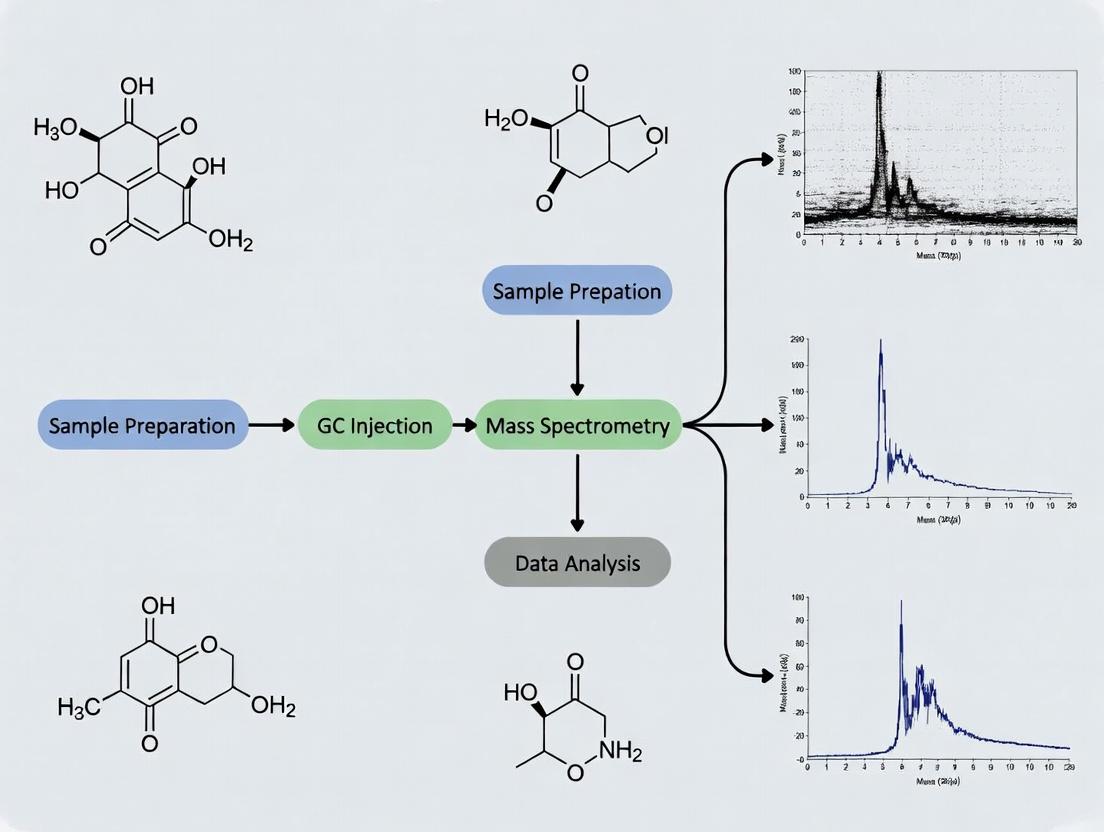
This comprehensive guide provides researchers, scientists, and drug development professionals with a complete workflow for processing GC-MS data in plant metabolomics studies.
Complete Guide to GC-MS Data Processing for Plant Metabolomics: From Raw Data to Biological Insight
Abstract
This comprehensive guide provides researchers, scientists, and drug development professionals with a complete workflow for processing GC-MS data in plant metabolomics studies. The article covers foundational concepts of plant metabolite complexity and GC-MS principles, detailed step-by-step protocols from raw data conversion to compound identification, common troubleshooting strategies for data quality issues, and validation methods to ensure reliable, reproducible results. By integrating modern software tools and best practices, this protocol enables accurate profiling of primary and specialized plant metabolites for applications in drug discovery, functional genomics, and agricultural biotechnology.
Understanding Plant Metabolite Complexity and GC-MS Fundamentals
Plant metabolomes comprise two major classes of compounds with distinct functions, biosynthetic origins, and distributions. The following table summarizes their core characteristics.
Table 1: Core Characteristics of Primary and Specialized Metabolites
| Characteristic | Primary Metabolites | Specialized Metabolites (Secondary Metabolites) |
|---|---|---|
| Definition | Molecules essential for fundamental growth, development, and reproduction. | Molecules that mediate ecological interactions (defense, pollinator attraction). |
| Presence | Universal across all plant species. | Taxon-specific, often restricted to particular families, genera, or species. |
| Function | Core metabolism (e.g., photosynthesis, respiration). | Adaptation to environmental stress and biotic interactions. |
| Biosynthesis | Conservative, highly regulated pathways. | Diversified, often derived from primary metabolic pathways. |
| Examples | Sugars, amino acids, organic acids, nucleotides. | Alkaloids, terpenoids, flavonoids, glucosinolates. |
| Concentration | Typically high (mM to M range). | Variable, often low (µM to mM range), induced upon stress. |
| Genetic Basis | Housekeeping genes. | Gene clusters or regulons often induced by specific cues. |
Table 2: Representative Biosynthetic Pathways and Key Intermediates
| Metabolic Class | Core Pathway | Key Intermediate(s) | End-Product Examples |
|---|---|---|---|
| Primary | Glycolysis | Glucose-6-P, Phosphoenolpyruvate | Pyruvate, ATP |
| Primary | TCA Cycle | Citrate, α-Ketoglutarate | Malate, Succinyl-CoA |
| Primary | Shikimate Pathway | Shikimate, Chorismate | Phenylalanine, Tyrosine |
| Specialized | Phenylpropanoid | p-Coumaroyl-CoA | Lignin, Flavonoids |
| Specialized | Terpenoid (MEP/MVA) | Isopentenyl diphosphate (IPP) | Menthol, Carotenoids |
| Specialized | Alkaloid | Various (e.g., Ornithine, Tyrosine) | Nicotine, Morphine |
Protocol: Comprehensive Extraction of Plant Metabolites for GC-MS Analysis
Materials and Reagents
- Plant Tissue: 100 mg fresh weight, flash-frozen in liquid N₂.
- Extraction Solvent: Methanol:Water:Chloroform (2.5:1:1, v/v/v), pre-chilled to -20°C.
- Derivatization Reagents: Methoxyamine hydrochloride (20 mg/mL in pyridine) and N-Methyl-N-(trimethylsilyl)trifluoroacetamide (MSTFA) with 1% TMCS.
- Internal Standards: Ribitol (0.2 mg/mL in water) for polar phase; Nonadecanoic acid (0.1 mg/mL in chloroform) for non-polar phase.
- Equipment: Pre-cooled mortar and pestle, microcentrifuge, thermomixer, speed vacuum concentrator, GC-MS system with 30m HP-5MS column.
Stepwise Procedure
Step 1: Disruption and Extraction
- Grind frozen tissue to a fine powder in liquid N₂.
- Transfer powder to a 2 mL tube containing 1 mL of chilled extraction solvent and 10 µL of each internal standard mix.
- Vortex vigorously for 30s, then shake at 1200 rpm for 15 min at 4°C.
- Centrifuge at 14,000 x g for 15 min at 4°C. Transfer the supernatant to a new tube.
Step 2: Phase Separation and Drying
- Add 500 µL of HPLC-grade water to the supernatant, vortex for 1 min.
- Centrifuge at 4,000 x g for 10 min to achieve phase separation.
- Carefully collect the upper polar (methanol/water) and lower non-polar (chloroform) phases into separate tubes.
- Dry both phases completely using a speed vacuum concentrator (no heat).
Step 3: Derivatization for GC-MS
- Methoximation: Redissolve the polar dried extract in 80 µL of methoxyamine solution. Incubate at 30°C for 90 min with shaking.
- Silylation: Add 80 µL of MSTFA to the same tube. Incubate at 37°C for 30 min.
- Preparation for Injection: Centrifuge briefly and transfer the derivatized sample to a GC vial with insert. For the non-polar fraction, derivatize directly with 100 µL of MSTFA at 70°C for 1 hour.
Step 4: GC-MS Analysis
- Inject 1 µL in split mode (split ratio 10:1 for polar, 5:1 for non-polar).
- Oven Program: Hold at 70°C for 5 min, ramp at 5°C/min to 325°C, hold for 5 min.
- Carrier Gas: Helium, constant flow 1.2 mL/min.
- Detection: Electron impact ionization (70 eV), full scan mode (m/z 50-600).
Diagram: Primary to Specialized Metabolic Pathway Relationships
Diagram Title: Biosynthetic Links Between Primary and Specialized Metabolism
Diagram: GC-MS Metabolomics Workflow for Plant Extracts
Diagram Title: Standard GC-MS Metabolomics Workflow for Plants
The Scientist's Toolkit: Key Reagents for Plant Metabolite Analysis
Table 3: Essential Research Reagent Solutions for Plant Metabolomics
| Reagent / Material | Function & Role in Protocol | Critical Specification |
|---|---|---|
| Methoxyamine Hydrochloride | Protects carbonyl groups (aldehydes, ketones) by forming methoximes during derivatization, preventing multiple peaks for sugars. | ≥98% purity; prepare fresh in anhydrous pyridine. |
| N-Methyl-N-(trimethylsilyl)-trifluoroacetamide (MSTFA) | Primary silylation agent; replaces active hydrogens (-OH, -COOH, -NH) with trimethylsilyl (TMS) groups, increasing volatility. | With 1% TMCS (catalyst) for complete derivatization of sterols. |
| Ribitol | Internal standard for the polar phase. Corrects for variations during sample processing, extraction, and injection. | Analytical standard; add at the very beginning of extraction. |
| Nonadecanoic Acid (C19:0) | Internal standard for the non-polar (fatty acid/terpenoid) fraction. | Methyl ester or free acid standard. |
| Retention Time Index (RI) Calibration Mix | Series of n-alkanes (e.g., C8-C40). Used to calculate Kovats Retention Index for each peak, aiding identification. | Run under identical GC conditions as samples. |
| HP-5MS (or equivalent) GC Column | (5%-Phenyl)-methylpolysiloxane stationary phase. Standard for non-polar to mid-polar metabolite separation. | 30m x 0.25mm x 0.25μm dimensions. |
| NIST/Adams/Fiehn Lib GC-MS Libraries | Commercial & public spectral libraries. Essential for compound identification by mass spectral matching. | Must include RI information for confident ID. |
| Biphasic Extraction Solvent | Methanol/Water/Chloroform. Simultaneously extracts a broad range of polar and non-polar metabolites while quenching enzymes. | HPLC/GC-MS grade; mix fresh and keep cold. |
Why GC-MS? Advantages for Volatile and Derivatizable Plant Compounds
Within the framework of a thesis on GC-MS data processing for plant metabolomics, understanding the instrumental rationale is paramount. Gas Chromatography-Mass Spectrometry (GC-MS) remains a cornerstone for the analysis of plant metabolites that are either naturally volatile or can be chemically derivatized to become volatile. Its unique advantages stem from the powerful hyphenation of high-resolution chromatographic separation with universal and selective mass spectral detection.
Core Advantages in Plant Metabolite Analysis
1. Superior Resolution for Complex Mixtures: GC capillary columns offer exceptionally high theoretical plates, effectively separating hundreds of compounds in a single run, which is critical for complex plant extracts.
2. Highly Reproducible and Searchable Spectra: Electron ionization (EI) at 70 eV produces consistent, fragmentation-rich spectra. These are directly comparable to massive reference libraries (e.g., NIST, Wiley), enabling high-confidence compound identification.
3. High Sensitivity and Wide Dynamic Range: Modern GC-MS systems, particularly those using Single Quadrupole or Time-of-Flight (TOF) mass analyzers, can detect compounds from sub-nanogram to microgram levels, ideal for both abundant and trace plant metabolites.
4. Quantitative Robustness: When combined with stable isotope-labeled internal standards, GC-MS provides highly accurate and precise quantification, essential for profiling and comparative studies.
5. Ideal for Key Compound Classes: It is the method of choice for:
- Naturally Volatile Compounds: Terpenes (mono- and sesquiterpenes), green leaf volatiles (C6 aldehydes, alcohols), certain alkaloids, and aromatic compounds.
- Derivatizable Compounds: After chemical derivatization, it can analyze sugars, organic acids, amino acids, phenolics, fatty acids, and polyamines.
Application Note: Profiling Volatile Organic Compounds (VOCs) in Aromatic Plants
Objective: To identify and quantify the major volatile terpenoids in Mentha piperita (peppermint) leaf essential oil.
Protocol:
Sample Preparation: Fresh leaf tissue (100 mg) is crushed in a mortar with liquid nitrogen. The powder is transferred to a 2 mL glass vial. Internal Standard (IS) solution (10 µL of 0.1 mg/mL methyl decanoate in hexane) is added.
Volatile Extraction: Headspace Solid-Phase Microextraction (HS-SPME) is used. A DVB/CAR/PDMS fiber is exposed to the vial headspace for 30 min at 50°C with agitation.
GC-MS Analysis:
- GC: Inlet temperature: 250°C, split ratio: 10:1.
- Column: Mid-polarity stationary phase (e.g., DB-35ms, 30m x 0.25mm x 0.25µm).
- Oven Program: 40°C (hold 3 min), ramp 10°C/min to 250°C (hold 5 min).
- Carrier Gas: He, constant flow 1.2 mL/min.
- MS: EI source at 70 eV, ion source temperature: 230°C, quadrupole: 150°C. Scan range: m/z 40-350.
Data Processing: (Thesis Context) Raw data files are converted (e.g., to .mzML). Baseline correction, peak picking (using defined S/N thresholds), and deconvolution are performed using protocols like AMDIS or customized Python/R pipelines. Deconvoluted spectra are searched against the NIST 23 library. A quantitation table is generated using the IS for relative response.
Typical Quantitative Results: Table 1: Major Volatile Compounds in Peppermint Essential Oil (HS-SPME-GC-MS)
| Compound Name | Class | Retention Index (Calc.) | Relative Amount (% of Total Peak Area) | Identification Confidence* |
|---|---|---|---|---|
| Menthol | Monoterpene alcohol | 1172 | 35.2 ± 1.5 | 1 |
| Menthone | Monoterpene ketone | 1154 | 28.7 ± 1.2 | 1 |
| 1,8-Cineole | Monoterpene ether | 1037 | 6.1 ± 0.4 | 2 |
| Limonene | Monoterpene hydrocarbon | 1032 | 3.5 ± 0.3 | 1 |
| β-Caryophyllene | Sesquiterpene hydrocarbon | 1423 | 2.8 ± 0.2 | 2 |
*Confidence: 1 = Match of RI and MS (>85%), 2 = MS match only.
Application Note: Targeted Analysis of Polar Primary Metabolites via Derivatization
Objective: To quantify polar primary metabolites (sugars, organic acids, amino acids) in Arabidopsis thaliana leaf tissue under stress conditions.
Protocol:
Extraction: Frozen leaf powder (50 mg) is extracted with 1.4 mL of cold methanol:water (4:1, v/v) containing ribitol (10 µL of 0.2 mg/mL) as the IS. Vortex, sonicate (15 min, 4°C), and centrifuge (15,000 g, 15 min, 4°C). Supernatant (1 mL) is transferred to a new tube and dried in a vacuum concentrator.
Methoximation and Silylation Derivatization:
- Methoximation: Add 50 µL of methoxyamine hydrochloride in pyridine (20 mg/mL). Vortex, incubate 90 min at 30°C with shaking.
- Silylation: Add 100 µL of N-methyl-N-(trimethylsilyl)trifluoroacetamide (MSTFA) with 1% TMCS. Vortex, incubate 30 min at 37°C with shaking. Transfer derivatized sample to a GC vial with insert.
GC-MS Analysis:
- GC: Inlet: 250°C, split ratio: 1:10.
- Column: Low-polarity stationary phase (e.g., DB-5MS, 30m x 0.25mm x 0.25µm).
- Oven Program: 70°C (hold 2 min), ramp 10°C/min to 325°C (hold 5 min).
- MS: As above. Scan range: m/z 50-600.
Data Processing: (Thesis Context) After raw data conversion, peak integration is performed for selected ion fragments characteristic of each metabolite. A quantitation table is built using calibration curves from authentic standards and normalized to the IS and tissue weight.
Typical Quantitative Results: Table 2: Levels of Key Derivatized Primary Metabolites in Arabidopsis Leaves (nmol/mg FW)
| Compound Class | Example Metabolite | Control Mean ± SD | Drought Stress Mean ± SD | Fold Change |
|---|---|---|---|---|
| Sugar | Fructose | 45.3 ± 3.1 | 68.9 ± 5.4 | 1.52 |
| Sugar Alcohol | myo-Inositol | 12.1 ± 1.0 | 25.6 ± 2.1 | 2.12 |
| Organic Acid | Malic Acid | 85.2 ± 7.3 | 112.5 ± 9.8 | 1.32 |
| Amino Acid | Proline | 1.5 ± 0.2 | 22.4 ± 3.1 | 14.93 |
| Amino Acid | Glutamic Acid | 15.4 ± 1.2 | 9.8 ± 0.9 | 0.64 |
Visualizing Workflows and Data Processing
Title: GC-MS Plant Metabolomics Data Processing Workflow
Title: Derivatization Process for Polar Compounds
The Scientist's Toolkit: Key Research Reagent Solutions
Table 3: Essential Materials for GC-MS Plant Metabolite Analysis
| Item | Function in Protocol |
|---|---|
| N-Methyl-N-(trimethylsilyl)trifluoroacetamide (MSTFA) | A powerful silylation reagent for derivatizing -OH, -COOH, -NH, and -SH groups to trimethylsilyl (TMS) ethers/esters. |
| Methoxyamine Hydrochloride | Used in the first derivatization step to protect carbonyl groups (aldehydes, ketones) by forming methoximes, preventing multiple peak formation. |
| Pyridine (Anhydrous) | Solvent for methoximation reaction; must be dry to prevent degradation of silylation reagent. |
| Alkane Standard Mixture (C7-C40) | Used for calculating experimental Retention Indices (RI), a critical parameter for compound identification. |
| Deuterated or ¹³C-Labeled Internal Standards | (e.g., D27-Myristic acid, ¹³C6-Sorbitol) Essential for high-accuracy quantitative metabolomics, correcting for losses during preparation and matrix effects in MS. |
| Solid-Phase Microextraction (SPME) Fibers | (e.g., DVB/CAR/PDMS coating) For solvent-less extraction and concentration of volatile compounds from headspace or liquid samples. |
| Retention Time Locking (RTL) Kits | Standard mixtures that allow calibration of the GC-MS system to achieve reproducible absolute retention times across instruments and over time. |
Application Notes: Functional Integration for Metabolite Analysis
In plant metabolomics, the integrity of data for downstream processing protocols is fundamentally determined by the performance and appropriate selection of the three core GC-MS components. Each component must be optimized to handle the diverse chemical properties (volatility, polarity, thermal stability) of plant secondary metabolites.
Table 1: Quantitative Performance Metrics of Core GC-MS Components for Plant Metabolite Analysis
| Component | Key Parameter | Typical Range for Plant Metabolomics | Impact on Data Processing |
|---|---|---|---|
| Inlet | Liner Volume | 0.5 - 4.0 mL | Larger volumes reduce discrimination for volatile terpenes. |
| Split Ratio | 10:1 to 50:1 (Split); 1:1 to 1:50 (Splittless) | Critical for signal intensity; affects deconvolution of co-eluting peaks. | |
| Injection Temperature | 220 - 280 °C | Must be high enough to vaporize fatty acids and alkaloids without degradation. | |
| Column | Inner Diameter (I.D.) | 0.25 - 0.32 mm | Smaller I.D. increases resolution, crucial for complex phenolic mixtures. |
| Stationary Phase Thickness | 0.10 - 0.50 µm | Thicker films improve retention of volatile monoterpenes. | |
| Oven Ramp Rate | 5 - 20 °C/min | Slower ramps enhance separation, improving peak picking accuracy. | |
| Mass Spectrometer | Scan Rate | 5 - 20 Hz (for Q-MS) | Must be high enough to define narrow GC peaks (≥10 scans/peak). |
| Mass Range | 40 - 600 m/z | Covers key plant metabolites from simple acids to flavonoid fragments. | |
| Detector Voltage | 0.7 - 1.5 kV (EM) | Optimized voltage is key for signal-to-noise ratio in quantification. |
Experimental Protocols
Protocol 1: Optimization of Inlet Conditions for Thermally Labile Plant Metabolites Objective: To minimize degradation of glycosylated flavonoids during vaporization.
- Liner Preparation: Install a deactivated, single-taper gooseneck liner with wool. Condition at 300°C for 1 hour.
- Inlet Temperature Calibration: Set the inlet in splittless mode. Perform a series of injections of a standard mixture containing labile compounds (e.g., rutin derivative) at temperatures from 220°C to 280°C in 10°C increments.
- Split Flow Optimization: For high-concentration samples (e.g., essential oils), set an initial split ratio of 20:1. Adjust based on peak shape and column load.
- Pulse Pressure Setting: Enable a pulsed splittless injection with a pressure of 25 psi for 1 minute to improve transfer of high-boiling compounds (e.g., sterols) to the column.
- Evaluation: Monitor the peak area ratio of the parent compound to its degradation products in the TIC. Select the temperature yielding the highest parent peak area.
Protocol 2: Column Selection and Temperature Programming for Polar Acid Profiling Objective: To achieve baseline separation of organic acids (e.g., citric, malic, succinic) and sugar phosphates.
- Column Installation: Install a mid-polarity column (e.g., 35% phenyl / 65% dimethyl polysiloxane), 30m x 0.25mm I.D. x 0.25µm.
- Oven Program Development:
- Initial Temp: 70°C, hold for 2 min.
- Ramp 1: 10°C/min to 160°C, hold for 0 min.
- Ramp 2: 5°C/min to 240°C, hold for 5 min.
- Carrier Gas Control: Maintain a constant He flow of 1.2 mL/min.
- Verification: Inject a derivatized (methoxyaminated and silylated) plant extract. Measure resolution (R > 1.5) between critical acid pairs. Adjust ramp rates iteratively.
Protocol 3: MS Detector Tuning and Calibration for Quantitative Targeted Profiling Objective: To ensure mass accuracy and sensitivity for selected ion monitoring (SIM) of target metabolites.
- Autotune: Perform the instrument manufacturer's autotune procedure using perfluorotributylamine (PFTBA) or similar standard.
- Mass Calibration Verification: Verify calibration across the mass range using a separate tune standard. Ensure deviation is < 0.1 m/z unit.
- SIM Group Definition: Group ions by expected retention time windows. Assign a minimum of 2-3 characteristic ions per analyte (one quantifier, others qualifiers). Set dwell time per ion to achieve ≥10 data points across the GC peak.
- Detector Voltage Optimization: For quantitative work, perform a detector voltage offset test to determine the voltage yielding the highest signal-to-noise ratio without saturating the detector for your most abundant calibration standard.
Visualizations
Title: GC-MS Component Workflow for Metabolomics
Title: Plant Metabolite GC-MS Analysis Protocol
The Scientist's Toolkit: Essential Research Reagents & Materials
Table 2: Key Reagent Solutions for Plant Metabolite GC-MS Analysis
| Item | Function in Protocol | Key Consideration for Plant Metabolites |
|---|---|---|
| N-Methyl-N-(trimethylsilyl)trifluoroacetamide (MSTFA) | Silylation derivatizing agent. Adds TMS groups to -OH, -COOH, -NH groups, increasing volatility of sugars, acids, alkaloids. | Must be anhydrous. Pyridine is often used as a catalyst. Reaction time/temperature must be optimized for different metabolite classes. |
| Methoxyamine hydrochloride (in pyridine) | Methoximation reagent. Reacts with carbonyl groups (aldehydes, ketones) to prevent ring formation in reducing sugars and stabilize α-keto acids. | Used prior to silylation. Critical for accurate profiling of carbohydrate metabolism intermediates. |
| Alkane Series Standard (C7-C30) | Retention Index (RI) calibration mixture. Allows conversion of retention times to system-independent RI values for robust library matching. | Essential for cross-platform identification in shared plant metabolite databases (e.g., Golm Metabolome Database). |
| Deactivated Liner with Wool | GC inlet liner. Provides a homogeneous hot vaporization zone and traps non-volatile residues, protecting the column. | Wool enhances mixing for splitless injections but can cause degradation if active; must be deactivated. Choice is sample-dependent. |
| Methylated Fatty Acid Methyl Ester (FAME) Mix | Retention time calibrants for non-polar/polar columns. Used to verify column performance and calculate RI for lipid analyses. | Standard for identifying plant fatty acids and lipophilic compounds (e.g., cuticular waxes). |
| Quality Control (QC) Pooled Sample | Homogenous mixture of aliquots from all study samples. Injected repeatedly throughout the batch run. | Monitors instrument stability. Critical for data normalization and correction of drift in large-scale plant studies. |
| Internal Standard Mix (e.g., deuterated analogs, odd-chain acids) | Added uniformly to all samples pre-extraction. Corrects for losses during preparation and injection variability. | Should be selected to cover a range of chemical properties (polar, non-polar) and not occur naturally in the studied plant species. |
This application note, framed within a broader thesis on GC-MS data processing protocols for plant metabolites research, details the critical choice between full Scan (SCAN) and Selected Ion Monitoring (SIM) acquisition modes. The selection fundamentally influences the sensitivity, specificity, and scope of metabolomic studies, impacting downstream data processing workflows essential for robust biomarker discovery and compound identification in plant systems.
Table 1: Core Characteristics of SCAN and SIM Modes
| Parameter | Full SCAN Mode | SIM Mode |
|---|---|---|
| Acquisition Principle | Monitors a broad, continuous range of m/z values (e.g., 50-500 Da). | Monitors selected, discrete m/z ions pre-defined by the user. |
| Primary Application | Untargeted Analysis (Discovery, profiling, unknown identification). | Targeted Analysis (Quantification of known compounds). |
| Sensitivity | Lower (~ pg-ng on-column). Limited time spent per ion. | Higher (~ fg-pg on-column). Dwell time focused on few ions. |
| Dynamic Range | Moderate. Can be saturated by abundant compounds. | Excellent for target analytes due to reduced background. |
| Specificity/Selectivity | Lower. Complex matrix requires deconvolution algorithms. | Higher. Reduces chemical noise, simplifying quantification. |
| Data Richness | High. Provides full mass spectrum for library matching. | Low. Only data for pre-selected ions is collected. |
| Post-Acquisition Reprocessing | Flexible. Can retrospectively mine for new ions. | Inflexible. Cannot retrieve data for unmonitored ions. |
| Ideal for Thesis Context | Initial plant metabolite profiling and discovery phases. | Validated quantification of key biomarker metabolites. |
Table 2: Quantitative Performance Comparison (Typical GC-MS System)
| Metric | SCAN Mode | SIM Mode | Improvement Factor (SIM/SCAN) |
|---|---|---|---|
| Limit of Detection (LOD) | ~1-10 pg on-column | ~0.1-1 pg on-column | 10-100x |
| Signal-to-Noise Ratio (S/N)* | Baseline (1x) | 10-100x higher | 10-100x |
| Cycle Time | Slower (e.g., 0.5-1 sec/scan) | Faster (e.g., 0.1-0.2 sec/cycle) | 3-10x |
| Co-eluting Peak Resolution | Relies on software deconvolution | Enhanced via selective ion monitoring | Qualitative |
*For a target compound in a complex matrix like plant extract.
Experimental Protocols
Protocol 1: Untargeted Profiling of Plant Volatiles using Full SCAN
Objective: To comprehensively profile volatile and semi-volatile metabolites in Mentha piperita (peppermint) leaf extract.
Materials: See "The Scientist's Toolkit" below.
Methodology:
- Sample Preparation: Homogenize 100 mg of fresh leaf tissue in 1 mL of methanol:water (8:2, v/v) containing internal standard (e.g., Ribitol, 10 µg/mL). Sonicate for 15 min at 4°C, then centrifuge at 14,000xg for 15 min.
- Derivatization: Transfer 100 µL supernatant to a glass insert. Dry under a gentle nitrogen stream. Add 50 µL of MOX reagent (20 mg/mL Methoxyamine in pyridine), incubate at 37°C for 90 min with shaking. Then add 100 µL MSTFA, incubate at 37°C for 30 min.
- GC-MS Analysis (SCAN Mode):
- Column: Equity-5 or similar (30 m x 0.25 mm, 0.25 µm).
- Inlet: 250°C, splitless mode, 1 µL injection.
- Oven Program: 60°C (hold 1 min), ramp at 10°C/min to 325°C (hold 5 min).
- Transfer Line: 280°C.
- Ion Source: 230°C.
- Acquisition Mode: Full SCAN. Mass Range: 50-600 m/z. Scan Rate: ~6 scans/sec (or as per instrument spec).
- Solvent Delay: Set to 5.5 min to protect the filament.
- Data Processing (Thesis Context): Process raw data using AMDIS (deconvolution) followed by alignment and statistical analysis (PCA, OPLS-DA) in software like MetaboAnalyst or XCMS Online. Identify compounds by matching deconvoluted spectra against NIST, Golm, or custom plant metabolite libraries.
Protocol 2: Targeted Quantification of Phytohormones using SIM
Objective: To accurately quantify trace levels of key plant hormones (e.g., JA, SA, ABA) in Arabidopsis thaliana under stress.
Materials: See "The Scientist's Toolkit" below.
Methodology:
- Sample Preparation & Extraction: Grind 50 mg of frozen plant tissue. Extract with 500 µL cold ethyl acetate spiked with deuterated internal standards (e.g., D₆-JA, D₆-ABA, D₄-SA at 100 ng/mL each). Shake for 1 hr at 4°C, centrifuge at 14,000xg for 15 min. Collect organic layer, dry under N₂.
- Derivatization: Reconstitute dried extract in 20 µL of MSTFA + 1% TMCS, incubate at 70°C for 45 min.
- GC-MS Analysis (SIM Mode):
- Column & Inlet: As in Protocol 1.
- Oven Program: Optimized for hormone separation (e.g., 80°C to 280°C at 15°C/min).
- Acquisition Mode: SIM. Define time windows and characteristic ions for each analyte and its internal standard.
- Example SIM Table:
Time Window (min) Target Compound Quantitative Ion (m/z) Qualifier Ions (m/z) 8.0 - 9.5 Methyl Jasmonate (MeJA) 224 151, 193 8.0 - 9.5 D₆-MeJA (IS) 230 157, 199 10.5 - 12.0 Abscisic Acid (ABA-TMS) 190 162, 260 10.5 - 12.0 D₆-ABA-TMS (IS) 194 166, 264
- Example SIM Table:
- Dwell Time: Set to 50-100 ms per ion to ensure ≥10 data points across the peak.
- Data Processing (Thesis Context): Quantify using the internal standard method (peak area ratio of analyte/IS). Generate calibration curves (e.g., 0.1-100 ng/mL) for each analyte. Perform statistical analysis on concentration data.
Visualized Workflows and Decision Pathways
Title: Decision Workflow for SCAN vs. SIM Mode Selection
Title: GC-MS Instrumental Data Acquisition Pathways
The Scientist's Toolkit
Table 3: Essential Research Reagents & Materials for Plant Metabolite GC-MS
| Item | Function in Protocol | Example Product/Chemical |
|---|---|---|
| Derivatization Reagent (Silylation) | Replaces active hydrogens (e.g., -OH, -COOH) with TMS groups, increasing volatility and thermal stability of metabolites. | N-Methyl-N-(trimethylsilyl)trifluoroacetamide (MSTFA) with 1% TMCS |
| Methoxylamine Hydrochloride | Protects carbonyl groups (aldehydes, ketones) by forming methoximes, preventing cyclization and multiple peaks for sugars. | MOX Reagent (Pyridine solution, 20 mg/mL) |
| Deuterated Internal Standards (IS) | Corrects for variability in extraction, derivatization, and ionization. Essential for accurate quantification in SIM. | D₆-Jasmonic Acid, D₆-Abscisic Acid, D₄-Salicylic Acid, ¹³C-Sorbitol |
| Anhydrous Pyridine | Solvent for methoximation reaction. Must be kept dry to prevent degradation of derivatizing agents. | Sure/Seal anhydrous pyridine |
| Retention Index (RI) Standard Mix | A series of n-alkanes analyzed alongside samples to calculate RI, aiding in compound identification. | C7-C40 Saturated Alkanes Standard Mix |
| Quality Control (QC) Pool Sample | A pooled aliquot of all study samples, injected repeatedly to monitor instrument stability in untargeted runs. | Study-specific pooled extract |
| SPME Fiber (Optional) | For headspace analysis of volatiles, enabling solvent-free extraction and concentration. | DVB/CAR/PDMS 50/30 µm Fiber |
| Inert GC Inlet Liners | Minimizes analyte degradation and adsorptive losses, crucial for active compounds like hormones. | Deactivated, single taper glass wool liner |
Within the context of GC-MS data processing for plant metabolites research, robust pre-processing is the critical foundation for any meaningful biological interpretation. Raw instrument data—comprising chromatograms, mass spectra, and associated metadata—must be systematically transformed, aligned, and annotated to enable comparative analysis across samples. This document outlines the core concepts and provides detailed protocols for these essential pre-processing steps.
Core Concepts & Data Types
2.1 Chromatograms: Represent the detector signal (Total Ion Chromatogram - TIC) intensity over the retention time (RT). Key pre-processing tasks include baseline correction, smoothing, and peak picking (detection, integration). Variability in RT must be addressed through alignment.
2.2 Spectra: Mass spectra are captured at each point in the chromatogram. A peak's spectrum is its fragmentation pattern, serving as a chemical fingerprint. Pre-processing involves noise filtering, deconvolution of co-eluting peaks, and library matching for tentative identification.
2.3 Metadata: Contextual data about the sample (genotype, treatment, harvest time), extraction protocol, and instrument method. Consistent, structured metadata is mandatory for meaningful statistical analysis and is governed by the FAIR (Findable, Accessible, Interoperable, Reusable) principles.
Data Presentation: Quantitative Pre-processing Metrics
A search of current literature and software documentation reveals common performance metrics for evaluating pre-processing steps.
Table 1: Key Metrics for Evaluating Pre-processing Steps
| Pre-processing Step | Key Metric | Typical Target/Value | Purpose |
|---|---|---|---|
| Peak Picking | Number of Features Detected | Sample-dependent | To maximize true signal capture while minimizing noise. |
| Peak Picking | Signal-to-Noise Ratio (S/N) | > 10 | To ensure detected peaks are distinct from background noise. |
| RT Alignment | RT Standard Deviation (of Internal Standards) | < 0.1 min post-alignment | To minimize non-biological RT shifts across runs. |
| Deconvolution | Purity/Entropy Score | > 80% / Lower is better | To assess success in separating co-eluting compounds. |
| Missing Value Imputation | Percentage of Missing Values | < 20% per feature | To reduce bias before statistical analysis. |
Experimental Protocols
4.1 Protocol: Pre-processing Workflow for Plant GC-MS Data Using Open-Source Tools
Objective: To convert raw GC-MS (.D) files into a peak intensity table with metabolite annotations.
Materials: See "The Scientist's Toolkit" below.
Procedure:
- File Conversion: Use ProteoWizard's MSConvert to transform vendor-specific raw files into an open format (.mzML).
- Chromatogram Processing (with XCMS in R):
a. Set Parameters: Define centWave for peak detection (peakwidth = c(5,20), snthresh = 10). For plant metabolites, a wider peakwidth accounts for complex matrices.
b. Perform Peak Picking: Execute
xcmsSetto detect and integrate peaks across all samples. c. Align Retention Times: Use the Obiwarp method (retcor.obiwarp) with a primary internal standard (e.g., ribitol) for non-linear alignment. d. Group Peaks: Usegroupfunction to match peaks across samples (bw = 5, mzwid = 0.025). - Gap Filling: Use
fillPeaksto integrate signal in regions where peaks were missed in step 2b. - Annotation (with MS-DIAL or MetaboliteDetector): a. Export peak table and representative spectra. b. Perform deconvolution (Algorithm: deconvolution score > 70%). c. Match spectra against public libraries (NIST, Golm, in-house). Use a similarity threshold (e.g., > 700/1000). d. Perform retention index (RI) calibration using a hydrocarbon mix (e.g., C8-C30). Match experimental RI to library RI (tolerance ± 2000 index units).
- Result Compilation: Generate a final data matrix with rows as features (RI, m/z), columns as samples, and cells as peak intensities (Table 2).
Table 2: Example Post-Pre-processing Data Matrix
| Sample ID | Treatment | Feature_001 (Ribitol, RI: 1200) | Feature_002 (Malic acid, RI: 1550) | ... | Feature_N |
|---|---|---|---|---|---|
| Control_1 | Control | 1524500 | 98500 | ... | 7500 |
| Control_2 | Control | 1489200 | 101200 | ... | 8200 |
| Drought_1 | Drought | 1498000 | 255000 | ... | 45000 |
| Drought_2 | Drought | 1511000 | 241500 | ... | 52000 |
Mandatory Visualizations
Title: GC-MS Data Pre-processing Sequential Workflow
Title: Relationship of Raw Data to Processed Features
The Scientist's Toolkit
Table 3: Essential Research Reagent Solutions & Materials
| Item | Function in Pre-processing Context |
|---|---|
| Internal Standard Mix (e.g., Ribitol, Succinic-d4 acid) | For monitoring RT alignment, correcting for instrument drift, and semi-quantitative normalization. |
| Retention Index Marker Series (e.g., C8-C30 n-Alkanes) | Injected in a separate run to calibrate retention times to a system-independent RI for robust library matching. |
| Derivatization Reagents (MSTFA, MOX) | Critical for GC-MS of plant metabolites; volatilizes polar compounds (e.g., sugars, acids). Success of derivatization impacts peak shape and detection. |
| Quality Control (QC) Pool Sample | A pooled aliquot of all experimental samples, injected repeatedly throughout the batch. Used to monitor system stability and for data filtering (remove features with high RSD in QCs). |
| NIST/Golm Metabolite Library | Reference spectral databases required for the annotation step after deconvolution and peak picking. |
Step-by-Step GC-MS Data Processing Workflow: From Raw Files to Compound Lists
This application note details the critical first step in a comprehensive GC-MS data processing workflow for plant metabolites research: the conversion and import of raw data. Consistent, high-fidelity data ingestion from vendor-specific formats into open, community-standard formats is foundational for reproducible metabolomics analysis, enabling downstream applications in phytochemical discovery and drug development.
In plant metabolomics, Gas Chromatography-Mass Spectrometry (GC-MS) generates complex datasets. Instrument control software typically outputs data in proprietary formats (e.g., .D for Agilent, .qgd for Shimadzu, .RAW for Thermo). These formats are not interoperable. The conversion to standardized open formats—primarily ANDI/MS (NetCDF), mzML, or AIA/ANDI (.cdf)—is essential for utilizing open-source processing tools (e.g., AMDIS, XCMS, MZmine) and ensuring long-term data archiving, a cornerstone of rigorous scientific practice.
Core Data Formats: A Comparative Analysis
The table below summarizes the key characteristics, advantages, and limitations of the primary open formats used in GC-MS data exchange.
Table 1: Comparison of Open GC-MS Data Formats
| Format | Full Name | Primary Use | Key Advantages | Key Limitations |
|---|---|---|---|---|
| ANDI/MS (NetCDF) | Analytical Data Interchange / Mass Spectrometry | GC-MS, LC-MS | Platform-independent, widely supported by legacy software, relatively simple structure. | Limited metadata support, binary format requires specific libraries to read. |
| mzML | Mass Spectrometry Markup Language | LC-MS, GC-MS (increasingly) | XML-based, rich metadata support (controlled vocabularies), highly flexible, modern standard. | Larger file size, complexity can be overkill for simple GC-MS runs. |
| AIAD/ANDI (.cdf) | Analytical Instrument Association / NetCDF | GC-MS (Classical) | Historical standard for chromatography, simple chromatogram storage. | Lacks detailed mass spectral metadata, largely superseded. |
Detailed Conversion Protocols
Protocol 3.1: Batch Conversion Using MSConvert (ProteoWizard)
Objective: Convert multiple vendor RAW files into mzML format with centroiding for downstream processing.
Principle: ProteoWizard's msconvert tool provides a universal, vendor-format-agnostic conversion pipeline, leveraging operating system-specific readers to access proprietary data.
Materials & Reagents:
- Input: Vendor-specific GC-MS raw data files (.D, .RAW, .qgd, etc.).
- Software: ProteoWizard suite (v4.0+), installed with all vendor DLLs/readers.
- Hardware: Workstation with sufficient RAM (≥16 GB) and storage.
Procedure:
- Installation: Download and install ProteoWizard from the official repository, ensuring the installation includes the "vendor readers" option.
- Command Line Setup: Open a command prompt (Windows) or terminal (macOS/Linux).
- Execute Conversion: Navigate to the data directory and run:
- Replace
[input_file.raw]with your file and[output_folder]with your desired path. - The
peakPickingfilter performs centroiding on both MS1 (and MS2 if present) data. - For batch conversion of all
.RAWfiles in a folder:msconvert *.RAW --outdir [output_folder] --mzML --filter "peakPicking true 1-"
- Replace
- Validation: Open the resulting
.mzMLfile in a validator (e.g.,mzMLvalidator from the HUPO-PSI website) or a visualization tool likeTopHatto confirm data integrity.
Protocol 3.2: Conversion to ANDI/MS NetCDF Using Vendor Software
Objective: Generate standard NetCDF files directly from instrument control software for use with tools like AMDIS or older workflows. Principle: Most vendor software packages include an export function to the legacy AIA/ANDI NetCDF format, which stores chromatographic traces and associated mass spectra.
Materials & Reagents:
- Software: Instrument vendor software (e.g., Agilent ChemStation, Thermo Xcalibur, Shimadzu GCMSsolution).
- Input: Processed or raw data run files within the vendor ecosystem.
Procedure (Generic Workflow):
- Data Loading: Open the processed data file or sequence in the vendor software.
- Export Function: Locate the export or "Save As" function (e.g., in Agilent ChemStation: File > Export > Export Data as NetCDF).
- Parameter Selection: Typically, no advanced parameters are required. Ensure the export includes both TIC (Total Ion Chromatogram) and mass spectral data.
- Execution: Select the output directory and execute the export. The software will generate a
.cdffile. - Verification: Import the
.cdffile into a target application (e.g., AMDIS) to verify successful conversion of chromatographic and spectral data.
The Scientist's Toolkit: Research Reagent Solutions
Table 2: Essential Materials for GC-MS Data Conversion and Import
| Item | Function/Description | Example Vendor/Software |
|---|---|---|
| ProteoWizard MSConvert | Universal, open-source tool for converting vendor mass spec files to open formats. Enables batch processing and data filtering. | ProteoWizard Project |
| AIA/ANDI NetCDF Libraries | Software libraries (e.g., Unidata's netCDF C/JAVA libraries) required to read, write, and manipulate NetCDF files programmatically. | Unidata / UCAR |
| OpenMS / TOPS Tools | Suite of tools for high-throughput mass spectrometry analysis, includes format converters and validators for mzML. | OpenMS Project |
| mzML Schema & Validator | Defines the structure of mzML files. The validator ensures converted files conform to the standard, guaranteeing interoperability. | HUPO Proteomics Standards Initiative (PSI) |
| NIST MS Data Files | Standard reference libraries of metabolite spectra (e.g., NIST 20) used to validate the integrity of converted spectral data during import into identification software. | National Institute of Standards and Technology |
| Retention Index Marker Mix | A standard mixture of n-alkanes or fatty acid methyl esters (FAMEs) analyzed alongside samples. The resulting calibration data must be accurately preserved during conversion for reliable metabolite identification. | Various chemical suppliers (e.g., MilliporeSigma, Restek) |
Workflow Visualization
Diagram 1: GC-MS Raw Data Conversion and Import Workflow
Diagram 2: Why Standardized Conversion is Critical for Research
Application Notes
This protocol is a critical component of a comprehensive thesis on GC-MS data processing workflows for the untargeted profiling of plant metabolites. The step focuses on transforming raw chromatographic data into a reliable, aligned feature table suitable for statistical analysis. Modern software tools automate and enhance the processes of peak detection, deconvolution of co-eluting compounds, and alignment across multiple samples, which are otherwise prohibitive to perform manually.
Comparative Software Performance (Quantitative Summary): Table 1: Key Performance Metrics and Characteristics of Common Deconvolution & Alignment Software
| Software | Primary Algorithm | Typical Deconvolution Accuracy* | Alignment Tolerance (RT) | Primary Use Case | OS Support |
|---|---|---|---|---|---|
| AMDIS | Model-based (Igor) | ~85-92% | User-defined (typically 0.1 min) | Robust deconvolution for spectral library matching | Windows, Linux |
| MS-DIAL | Centroid-based (LINC) | ~88-95% | Dynamic programming (0.05-0.1 min) | Untargeted metabolomics with public MS/MS libraries | Windows, macOS |
| XCMS (in R) | MatchedFilter, centWave | ~82-90% | Obiwarp, LOESS (adjustable) | High flexibility, integration with statistical pipelines | Cross-platform (R) |
*Accuracy is estimated based on benchmark studies using mixed standard solutions and defined as the percentage of correctly resolved and identified compounds amid co-eluting peaks.
Experimental Protocols
Protocol 1: Peak Picking and Deconvolution using AMDIS
- Data Import: Launch AMDIS. Navigate to
File > Import NetCDF(or mzXML) to load your raw GC-MS data file. - Analysis Settings Configuration: Access the
Analysis Settingsdialog.- Component Width: Set to match the average chromatographic peak width (e.g., 12-20 seconds).
- Adjacent Peak Subtraction: Set to
Two. Sensitivity:Highfor complex plant extracts. - Resolution: Set to
High. Shape Requirements:Medium. - Deconvolution: Select
Simplefor initial trials; useStrongfor heavily co-eluted regions.
- Target Library Setup: Under
Tools > Retention Index LibrariesorTarget Libraries, load your custom or commercial metabolite library (e.g., NIST, Golm Metabolome Database). - Execution: Click
Analyzeto start the deconvolution. AMDIS will output a list of resolved components with spectra, retention indices, and similarity scores to library entries. - Export: Save the result as an
Analysis (*.ELU)file and export the component table (File > Save Table).
Protocol 2: Alignment and Feature Table Creation using MS-DIAL
- Project Creation: Start MS-DIAL. Create a new project, specifying the data folder containing your
.abfor.mzMLfiles from all samples. - Parameter Setting:
- MS1 Settings: Set
Mass slice widthto 0.05 Da.Retention time beginandendto match your run. - Peak Detection: Set
Minimum peak height(e.g., 1000 amplitude).Mass accuracyto 0.01 Da. - Deconvolution: Select
LINC algorithm. SetEI similarity cut offto 70% (or as appropriate). - Identification: Load an
MS/MSorEIspectral library for annotation. - Alignment: Set
Retention time toleranceto 0.1 min andMS1 toleranceto 0.015 Da. SelectLinearorNonlinearalignment (RIorRTbased).
- MS1 Settings: Set
- Run Processing: Execute the workflow. MS-DIAL performs peak picking, deconvolution, library search, and alignment in a single batch process.
- Quality Check: Review the
Alignment Resulttable and thePeak Viewerto inspect alignment accuracy. Manually adjust parameters if necessary and re-run. - Export: Export the final aligned feature table as a
.txtor.csvfile for downstream statistical analysis.
Protocol 3: Alignment with XCMS in R (Common Parameters)
Visualization
Title: GC-MS Data Processing Workflow from Raw Data to Feature Table
Title: Spectral Deconvolution Logic for Co-eluting Metabolites
The Scientist's Toolkit
Table 2: Essential Research Reagent Solutions & Materials for GC-MS Metabolite Processing
| Item Name | Function/Application in Protocol |
|---|---|
| Alkanes Mixture (C7-C40) | Used to create a Retention Index (RI) calibration curve for improved metabolite identification and cross-platform alignment. |
| NIST/EPA/NIH EI Mass Spectral Library | Primary reference library for identifying deconvoluted pure spectra by comparison with known compound fragmentation patterns. |
| Derivatization Reagents (e.g., MSTFA, BSTFA) | Essential for preparing non-volatile plant metabolites (e.g., sugars, acids) for GC-MS analysis by increasing volatility and thermal stability. |
| Retention Index Libraries (e.g., Golm Metabolome DB) | Custom spectral libraries annotated with experimentally determined RI values, crucial for confident annotation of plant-specific metabolites. |
| Quality Control (QC) Sample Pool | A pooled sample from all experimental samples, injected repeatedly throughout the run sequence to monitor instrument stability and for data normalization. |
| Internal Standard Mix (e.g., deuterated compounds) | Added to each sample prior to extraction/injection to correct for variability in sample preparation and instrument response. |
Application Notes
Within the broader thesis framework on GC-MS data processing for plant metabolomics, Step 3 is pivotal for transforming raw chromatographic data into a reliable, analysis-ready matrix. This stage directly impacts the accuracy of subsequent statistical analyses and biomarker discovery by addressing instrumental and environmental variabilities inherent in long-run sequences typical of plant metabolite profiling.
Baseline correction removes non-analytical low-frequency signals (e.g., column bleed, detector drift) that obscure true peak detection, particularly critical for quantifying low-abundance metabolites in complex plant extracts. Noise filtering (or smoothing) enhances the signal-to-noise ratio (S/N), allowing for precise identification of peak start and end points. Retention Time (RT) Correction, or alignment, compensates for minor shifts in RT across multiple samples caused by factors like column degradation or slight changes in carrier gas flow. Failure to correct these shifts leads to misalignment of the same metabolite across samples, invalidating any comparative analysis.
Recent advancements emphasize multivariate and parallel methods. Algorithms like Correlation Optimized Warping (COW) and Dynamic Time Warping (DTW) remain standard, but machine learning-based approaches are emerging for non-linear, high-dimensional alignment. The choice of protocol is contingent on experimental design, sample complexity, and the specific platform used.
Experimental Protocols
Protocol 3.1: Baseline Correction using Asymmetric Least Squares (AsLS)
Objective: To subtract a computationally estimated baseline from the raw chromatogram.
- Data Input: Load raw chromatographic data (intensity vs. time) for a single sample.
- Parameter Initialization: Set asymmetry parameter p (typically 0.001-0.01 for positive peaks) and smoothness parameter λ (typically 10²-10⁹). Higher λ yields a smoother baseline.
- Iterative Estimation: a. Initialize baseline estimate z as the raw signal y. b. Calculate weights w: w_i = p if y_i > z_i, else w_i = 1-p. c. Solve the weighted least-squares problem: z = argminz { Σ wi (yi - zi)² + λ Σ (Δ²z_i)² }. d. Repeat steps b-c until convergence (change in z < tolerance, e.g., 1e-6).
- Subtraction: Subtract final baseline vector z from raw signal y to obtain baseline-corrected chromatogram.
- Validation: Visually inspect corrected chromatogram in regions known to have no peaks (e.g., early elution phase).
Protocol 3.2: Noise Filtering using Savitzky-Golay Smoothing
Objective: To improve S/N by applying a convolutional smoothing filter.
- Input: Baseline-corrected chromatogram from Protocol 3.1.
- Window Selection: Choose a polynomial filter window width. A common starting point is 5-21 data points. Wider windows increase smoothing but may cause peak distortion.
- Polynomial Order Selection: Choose the polynomial order (typically 2 or 3). Higher order preserves higher moments of the peak shape.
- Convolution: For each point i in the signal, fit a polynomial of the specified order to the data points within the window centered on i. Replace the value at i with the value of the polynomial at that point.
- Edge Handling: Treat data edges by using a progressively smaller, asymmetric window or by padding the signal.
- Evaluation: Calculate the S/N of a representative low-intensity peak before and after smoothing. Aim for an increase in S/N with minimal peak broadening (<5% increase in width at half height).
Protocol 3.3: Retention Time Alignment using Dynamic Time Warping (DTW)
Objective: To align chromatograms from multiple sample runs to a common reference.
- Reference Chromatogram Selection: Select the chromatogram with the best resolution (e.g., a pooled QC sample or the median sample) as the reference R.
- Pre-processing: Apply baseline correction and smoothing to all chromatograms (sample set S). Optionally, perform a preliminary coarse alignment based on a few known internal standards.
- Cost Matrix Construction: For a sample chromatogram S, compute a local cost matrix (e.g., Euclidean distance) between every point in R and every point in S.
- Warping Path Calculation: Find the path through the cost matrix that minimizes the cumulative cost, using constraints (e.g., the step pattern "symmetric2" for monotonic alignment).
- Interpolation: Use the determined warping path to interpolate the sample chromatogram S onto the time axis of the reference R.
- Batch Processing: Apply DTW alignment of all samples in the batch against the reference R.
- QC: Align and overlay chromatograms from repeated injections of the QC sample. The relative standard deviation (RSD%) of key peak RTs should be < 0.5% post-alignment.
Data Presentation
Table 1: Comparative Performance of Alignment Algorithms on Plant Metabolite GC-MS Data
| Algorithm | Principle | Avg. RT Shift Reduction (%)* | Computation Time (min/100 samples)* | Key Strength | Key Limitation for Plant Metabolomics |
|---|---|---|---|---|---|
| Dynamic Time Warping (DTW) | Non-linear warping to minimize distance | 95-98 | 8-12 | Excellent for complex, non-linear shifts | Can over-warp if not constrained; moderate speed |
| Correlation Optimized Warping (COW) | Segmented linear stretching/compression | 90-95 | 5-10 | Good for general shifts; less over-warping | Segment length choice is critical; can miss local shifts |
| Parametric Time Warping (PTW) | Global polynomial transformation | 80-90 | 1-3 | Very fast; simple | Poor performance with highly non-linear, local RT deviations |
| Peak-Based Alignment | Aligns using a subset of reference peaks | 85-95 | 2-5 | Highly interpretable; robust | Fails if reference peaks are missing or misidentified |
*Hypothetical data based on typical literature values for a dataset of ~100 samples and 300-500 metabolic features.
Mandatory Visualization
Diagram 1: GC-MS Data Preprocessing Workflow
Diagram 2: Retention Time Correction Logic
The Scientist's Toolkit
Table 2: Essential Research Reagent Solutions for GC-MS Metabolite Processing Protocols
| Item | Function in Protocol |
|---|---|
| Alkanes Standard Mix (C8-C40) | Provides external reference retention indices (RI) for retention time correction and metabolite identification. |
| Deuterated Internal Standards (e.g., d27-Myristic Acid) | Spiked into every sample for monitoring RT shifts, evaluating alignment success, and normalizing data. |
| N,O-Bis(trimethylsilyl)trifluoroacetamide (BSTFA) with 1% TMCS | Common derivatization agent for polar plant metabolites; increases volatility and thermal stability for GC-MS. |
| Methoxyamine hydrochloride in pyridine | Used in a two-step derivatization; protects carbonyl groups by methoximation prior to silylation. |
| Pooled Quality Control (QC) Sample | An equal-volume mixture of all experimental samples. Run repeatedly to monitor system stability and for RT alignment reference. |
| Retention Index Marker Solution | A defined mix of fatty acid methyl esters (FAMEs) or alkanes, run separately to calibrate the RI scale for the specific method. |
| Blank Solvent (e.g., Hexane, Pyridine) | Used for system washes and as a procedural blank to identify background noise and column bleed artifacts. |
Within the comprehensive framework of GC-MS data processing for plant metabolomics, the accurate annotation of detected peaks is paramount. Following deconvolution, peak alignment, and normalization, Step 4 involves matching the acquired mass spectra and retention indices against established spectral libraries. This step translates raw instrumental data into biologically meaningful chemical identities, enabling downstream metabolic pathway analysis and biomarker discovery in drug development research.
Three primary libraries are standard for metabolite identification, each serving complementary roles. The selection criteria depend on research goals, ranging from broad environmental toxicology to targeted plant biochemistry.
Table 1: Comparison of Primary Spectral Libraries for GC-MS Metabolomics
| Library Name | Developer/Supplier | Approximate Size (Spectra) | Primary Focus & Strengths | Typical Use Case in Plant Research |
|---|---|---|---|---|
| NIST | National Institute of Standards and Technology | >300,000 | Broad chemical coverage, robust for unknown identification. Excellent for pharmaceuticals, environmental contaminants. | Identifying non-endogenous compounds (e.g., pesticides, pollutants) or when a very wide search is needed. |
| Fiehn | Agilent (based on work by Dr. Oliver Fiehn) | ~1,200 | Curated for metabolomics. Includes retention index (RI) for metabolites on standard column phases. | Primary library for identifying known primary and secondary plant metabolites. RI matching increases confidence. |
| In-house | Individual Laboratory | Variable (50 - 10,000+) | Custom-built with authentic standards run on the local instrument under specific conditions. | Highest confidence identification for a targeted set of metabolites relevant to the lab's specific research focus. |
Detailed Protocol: Multi-Step Library Matching
Protocol 3.1: Sequential Library Search for Optimal Identification
Objective: To annotate peaks from a processed GC-MS dataset of Arabidopsis thaliana leaf extract using a tiered library matching approach to maximize both coverage and confidence.
Materials & Equipment:
- Processed spectral data (.ANDI or .CDF file format)
- GC-MS Data Analysis Software (e.g., AMDIS, Chromeleon, MassHunter, OpenChrom)
- Library files: NIST (v. 23), Fiehn (2017 or later), Laboratory-specific In-house library.
- Alkane standard mixture data (for RI calculation if not automated)
- Computer workstation
Procedure:
- Data Preparation: Import the processed data file into your data analysis software. Ensure peak picking and deconvolution have been performed.
- Primary Search (Broad Screening):
- Configure the software to perform a similarity search against the NIST library.
- Set the minimum similarity score (Match Factor) threshold to >650 (out of 1000). Record all hits above this threshold.
- This step will generate many putative identifications, including non-biological compounds.
- Secondary Search (Metabolomics Refinement):
- Perform a second search on the same data against the Fiehn library.
- Enable Retention Index (RI) filtering. Input the experimentally derived RI for each peak (calculated from co-analyzed alkane standards).
- Set thresholds: Similarity >700 and RI deviation < 20 index units.
- Annotations passing both criteria are considered high-confidence identifications. Prioritize these over NIST-only hits for known metabolites.
- Tertiary Search (Highest Confidence):
- Execute a final search against the custom In-house library.
- Apply strict thresholds: Similarity >800 and RI deviation < 5 index units.
- Any match here is considered a positively identified compound (Level 1 identification as per Metabolomics Standards Initiative).
- Results Consolidation:
- Compile results from all three searches into a single table.
- Assign a confidence tier to each identified peak:
- Tier 1: Match in In-house library (RI & Spectrum).
- Tier 2: Match in Fiehn library (RI & Spectrum).
- Tier 3: High spectral similarity match in NIST only.
- Tier 4: Low spectral similarity match or no match (remains "unknown").
Protocol 3.2: Creation and Maintenance of an In-house Library
Objective: To build a custom spectral library using authenticated chemical standards to enable Level 1 identification for key plant metabolites in your laboratory.
Procedure:
- Standard Solution Preparation: Prepare a series of mixtures containing pure chemical standards at concentrations typical for your biological samples (e.g., 0.1-100 µg/mL). Include a C8-C40 alkane series in a separate vial for RI calibration.
- GC-MS Analysis: Analyze each standard mixture using the identical instrumental method (column, temperature program, ionization voltage) used for your biological samples.
- Spectrum and RI Extraction: For each standard, manually integrate the peak. Extract the purified mass spectrum (background-subtracted) and record its experimental RI relative to the alkane series.
- Library Entry Creation: In your software's library manager, create a new entry. Input the compound name, formula, CAS number, and structure (if available). Paste the purified mass spectrum and enter the experimental RI value. Specify the column type (e.g., DB-5MS).
- Validation: Re-analyze a subset of standards and verify they correctly match to the new library entry with high similarity (>850) and narrow RI window.
- Curation: Update the library quarterly to add new standards and re-validate existing entries after major instrument maintenance.
The Scientist's Toolkit: Key Research Reagents & Materials
Table 2: Essential Materials for Compound Identification by Library Matching
| Item | Function in Protocol | Critical Notes |
|---|---|---|
| Alkane Standard Mixture (C8-C40) | Provides retention time anchors for calculating Retention Index (RI) for each sample peak, enabling RI-based library filtering. | Must be analyzed under the same GC conditions as samples. Use even-numbered alkanes for consistent calibration. |
| Authenticated Chemical Standards | Used to build and validate the in-house library. Provides the gold-standard reference for positive identification (Level 1). | Source from reputable suppliers (e.g., Sigma-Aldrich, Cayman Chemical). Purity should be >95%. |
| Fiehn & NIST Library Files | Commercial/standardized spectral databases against which unknown spectra are matched for initial annotation. | Must be licensed and installed within the GC-MS data analysis software. Keep updated to latest versions. |
| Derivatization Reagents (e.g., MSTFA, MOX) | For analyzing non-volatile metabolites (sugars, organic acids). Derivatives are volatile and produce reproducible, library-compatible spectra. | Critical for primary metabolism. Method must be consistent between samples and standard runs for library matching. |
| Retention Index Marker Compounds | A subset of key metabolites (e.g., ribitol, norleucine) added to all samples to monitor RI stability across batches. | Acts as a quality control check; shifts >10 RI units indicate a potential column or instrument issue. |
Visualized Workflows
Diagram 1: Tiered Library Matching Workflow for Identification Confidence
Diagram 2: In-house Spectral Library Creation & Validation Protocol
Within the comprehensive framework of a thesis on GC-MS data processing protocols for plant metabolites research, Step 5 represents the critical transition from qualitative detection to quantitative analysis. This stage transforms raw chromatographic data into robust, comparable concentration values essential for elucidating metabolic pathways, identifying biomarkers, and supporting drug development from botanical sources. The accuracy and reproducibility of this quantification directly impact the validity of downstream biological interpretations.
Core Concepts and Quantitative Data
The quantification process rests on three interdependent pillars. Their application and impact are summarized below.
Table 1: Core Components of GC-MS Quantification for Plant Metabolites
| Component | Primary Function | Key Metric/Output | Typical Impact on Data CV* |
|---|---|---|---|
| Peak Area Integration | To accurately measure the ion abundance of each detected metabolite peak. | Raw Peak Area (or Height). | High (15-30%) if used alone due to instrumental variance. |
| Internal Standard (IS) Application | To correct for technical variability (injection volume, matrix effects, ion suppression). | Ratio: Analyte Peak Area / IS Peak Area. | Reduces CV significantly (to ~10-15%). |
| Normalization | To account for biological variance (e.g., sample weight, cell count, total ion count). | Normalized Abundance (e.g., µg/g Fresh Weight). | Enables cross-sample biological comparison; final CV depends on biological uniformity. |
*CV: Coefficient of Variation
Table 2: Types of Internal Standards for Plant Metabolomics
| IS Type | Description | Example Compounds | Best Use Case |
|---|---|---|---|
| Isotope-Labeled (Stable Isotope) | Chemically identical, but with ¹³C, ¹⁵N, or ²H atoms. | [¹³C₆]-Glucose, [²H₅]-Tryptophan | Absolute quantification; gold standard for MS. |
| Structural Analog | Chemically similar, but not endogenous to the sample. | Nonanoic acid for fatty acids, Ribitol for sugars. | Targeted profiling where labeled IS are unavailable. |
| Retention Time Index | A homologous series added to calibrate retention times. | n-Alkanes (C7-C40). | Not for quantification directly, but for peak alignment. |
Detailed Experimental Protocols
Protocol 3.1: Integrated Workflow for Quantification
This protocol details the end-to-end process following peak picking and alignment (Step 4).
Materials: Aligned peak table from GC-MS software (e.g., Chromeleon, MS-DIAL, Metabolomics J), internal standard peak areas, sample metadata (weights, volumes).
Procedure:
- Data Table Compilation: Export the aligned peak table, ensuring each row is a metabolite (or feature) and columns represent raw peak areas for each sample run.
- Internal Standard Correction: a. For each sample (column), identify the peak area of the designated internal standard(s). b. Calculate the correction factor for the sample: CF_sample = Mean(IS Area across all samples) / IS Area_sample. c. Multiply the raw peak area of every metabolite in that sample by the CF_sample.
- Biological Normalization: a. Divide the IS-corrected peak area for each metabolite by the relevant biological normalizer (e.g., sample fresh weight in grams, total protein content). b. Alternatively, for untargeted analysis, use a Median Normalization: calculate the median peak area of all metabolites in a sample, then scale all values so that the medians are equal across samples.
- Calibration and Absolute Quantification (if applicable): a. Using a series of calibration standards analyzed with the same method, construct a linear regression curve: Analyte/IS Response Ratio vs. Concentration. b. Apply the regression equation to the sample's response ratio to calculate molar concentration. c. Apply biological normalization (Step 3b) to express as final concentration (e.g., nmol/g).
Protocol 3.2: Method for Optimizing Peak Integration Parameters
Performed during method validation to ensure reproducible area calculations.
Materials: Raw GC-MS data files (.D format) for representative samples, GC-MS vendor software or open-source tool (e.g., MZmine 3).
Procedure:
- Baseline Determination: For a select set of peaks (small, large, shoulder), test different algorithms:
- Classic: Connects valleys on either side of the peak.
- To Zero: Draws a line from peak start to finish.
- Evaluate and select the method that best captures the true baseline without inflating area.
- Peak Width Setting: Adjust the peak width parameter to match the chromatographic system. Too narrow splits broad peaks; too wide merges closely eluting peaks.
- Peak Splitting: For partially resolved peaks, apply a suitable splitting algorithm (e.g., deconvolution based on ion spectra) and manually verify results for critical analyte pairs.
- Signal-to-Noise (S/N) Threshold: Set a minimum S/N (e.g., 10:1) for peak detection to filter out background noise. Document all final parameters for reproducibility.
Visualization of Workflows and Relationships
GC-MS Quantification Stepwise Workflow
Role of IS & Normalization in Correcting Variance
The Scientist's Toolkit: Research Reagent Solutions
Table 3: Essential Reagents & Materials for Quantification
| Item | Function in Quantification | Example Product/Specification |
|---|---|---|
| Stable Isotope-Labeled Internal Standards | Provides ideal co-eluting reference for each analyte, correcting for matrix effects and ionization variance. | Cambridge Isotope Laboratories (CIL) or Sigma-Aldrich fully labeled compounds (e.g., ¹³C, ¹⁵N). |
| Chemical Analog Internal Standards | Cost-effective alternative for class-specific quantification when labeled standards are prohibitively expensive. | Supeleo or Restek kits for organic acids, sugars, or fatty acids. |
| n-Alkane Retention Index Kit | Creates a standardized retention time scale for robust peak alignment and identification across runs. | Restek n-Alkane standard mix (C8-C40 or similar). |
| Derivatization Quality Solvents | High-purity pyridine, MSTFA, BSTFA, or methoxyamine for reproducible derivatization, minimizing background. | Thermo Scientific or Pierce anhydrous, silylation-grade solvents. |
| QC Reference Sample Pool | A homogeneous sample (e.g., pooled plant extract) injected periodically to monitor instrument stability and data quality. | Prepared in-house from study samples or obtained from a matrix-matched source. |
| Certified Calibration Standard Mix | A series of known concentrations of target metabolites to construct external calibration curves. | TOF Systems or IROA Technologies quantitative metabolite standard mixes. |
Within the comprehensive GC-MS data processing pipeline for plant metabolite research, Step 6 is the critical bridge between processed analytical data and meaningful statistical inference. This step transforms detector output—peak areas, retention indices, and tentative identifications—into a structured, analysis-ready format compatible with statistical software (e.g., R, SPSS, SIMCA-P+). Proper execution minimizes downstream errors and ensures the integrity of multivariate analyses, such as PCA and OPLS-DA, which are central to identifying biomarkers of plant stress, drug discovery, or metabolic engineering.
Core Data Structure and Export Protocol
Final Quantitative Data Table Assembly
Following peak alignment and normalization (Steps 4 & 5), the consolidated dataset must be formatted into a single, rectangular data matrix. This matrix is the primary export for statistical analysis.
Table 1: Analysis-Ready Metabolite Abundance Matrix
| Sample_ID | Group | RT (min) | RI (Calc) | Metabolite_Identifier | Normalized_Abundance | Log2_Transformed |
|---|---|---|---|---|---|---|
| PlantControl1 | Control | 8.75 | 1450 | L-Proline | 24567.89 | 14.58 |
| PlantControl2 | Control | 8.74 | 1449 | L-Proline | 26789.45 | 14.71 |
| PlantTreated1 | Drought | 8.76 | 1451 | L-Proline | 125467.90 | 16.94 |
| PlantTreated2 | Drought | 8.77 | 1452 | L-Proline | 143278.33 | 17.13 |
| ... | ... | ... | ... | ... | ... | ... |
RT: Retention Time; RI: Retention Index
Protocol 2.1: Matrix Creation and Validation
- Input: Aligned peak table from Step 5 (.CSV format).
- Software: Use a scripting language (R/Python) or advanced spreadsheet software.
- Procedure: a. Merge metadata (SampleID, experimental Group) with quantitative data. b. Ensure each row represents a single sample and each column a single variable (metabolite abundance, RT, RI). c. Replace any missing values. For GC-MS, use half of the minimum positive value detected for that metabolite across all samples or a similar sensible imputation. d. Insert a column for a unique, consistent metabolite identifier (e.g., "RICompoundName").
- Validation: Check for duplicate samples, consistent group labels, and that the matrix is entirely numerical aside from identifier columns.
Data Transformation and Scaling
Metabolomic data often requires transformation to meet the assumptions of parametric statistical tests.
Protocol 2.2: Pre-Statistical Transformation
- Log Transformation: Apply a log transformation (base 2 or natural log) to correct for heteroscedasticity and normalize variance. Create a new column in the data matrix.
Log2_Abundance = log2(Normalized_Abundance + 1). - Scaling: Following log transformation, apply scaling. For biomarker discovery, Pareto scaling (dividing by the square root of the standard deviation) is often optimal for GC-MS data as it reduces the impact of high-abundance metabolites while preserving data structure.
- Centering: Subtract the mean of each variable (metabolite) from each individual value. This is essential for PCA.
File Export Formats for Different Statistical Platforms
Protocol 2.3: Export for Statistical Analysis
- For R/Python: Export the final matrix as a comma-separated values file (.CSV). This is the most universal format.
- Command (R):
write.csv(final_matrix, "GCMS_Formatted_Data_for_Analysis.csv", row.names=FALSE)
- Command (R):
- For SIMCA-P+ (Multivariate Analysis): Export as a tab-delimited .TXT file. The first row contains column descriptors, and the second row contains data type codes (e.g.,
0for metadata,1for quantitative). - For MetaboAnalyst (Web Platform): Export as a .CSV with specific formatting: first column named "Sample", second column named "Label" (group), followed by metabolite columns. No retention time data in the main upload table.
- Best Practice: Always archive the exact dataset used for a publication or thesis analysis in a persistent, versioned repository (e.g., Zenodo, institutional data archive).
The Scientist's Toolkit: Research Reagent Solutions
Table 2: Essential Materials for Data Export and Formatting
| Item | Function & Rationale |
|---|---|
| R Statistical Environment | Open-source platform for scripting the entire export, transformation, and analysis pipeline, ensuring reproducibility and customization. |
| RStudio IDE | Integrated development environment for R, providing a user-friendly interface for writing scripts, managing data, and visualizing results. |
tidyverse R Package |
A collection of R packages (dplyr, tidyr, readr) essential for efficient data wrangling, transformation, and export. |
| Python (with pandas, NumPy) | An alternative open-source scripting language for handling large datasets and complex formatting tasks. |
| SIMCA-P+ Software | Industry-standard software for multivariate statistical analysis (PCA, OPLS-DA). Requires specific tab-delimited file formatting. |
| MetaboAnalyst Web Tool | A widely used web-based platform for comprehensive metabolomic data analysis; requires specific .CSV formatting. |
| OpenRefine | A powerful, open-source tool for cleaning and transforming messy data, useful for standardizing metabolite names and groups. |
| Persistent Data Repository | A platform like Zenodo or Figshare for archiving the final, analysis-ready dataset with a DOI to ensure long-term access and reproducibility. |
Workflow Diagram: From GC-MS Data to Statistical Readiness
Diagram 1: GC-MS Data Export and Formatting Workflow
Common Pitfalls and Quality Control Checklist
Table 3: Quality Control Checklist Before Analysis
| Check | Pass/Fail | Action if "Fail" |
|---|---|---|
| Data Structure | ||
| All samples and metabolites represented in a single matrix? | [ ] | Re-run data consolidation script. |
| No duplicate Sample_IDs? | [ ] | Identify and merge or remove duplicates. |
| Group labels are consistent and correct? | [ ] | Correct typos in metadata file. |
| Data Integrity | ||
| Missing values have been addressed? | [ ] | Apply appropriate imputation method. |
| Transformation (log) applied uniformly? | [ ] | Re-check transformation script. |
| File exports open correctly in target software? | [ ] | Verify delimiter and header format. |
| Reproducibility | ||
| All steps documented in a script (R/Python)? | [ ] | Create and archive a reproducible script. |
| Final dataset version is archived with a unique identifier? | [ ] | Upload to a permanent repository. |
By adhering to these detailed protocols for data export and formatting, researchers ensure that the high-quality data generated through meticulous GC-MS analysis is seamlessly and accurately translated into robust statistical findings, ultimately supporting valid biological conclusions in plant metabolite research and drug development.
Solving Common GC-MS Data Challenges and Optimizing Processing Parameters
Troubleshooting Poor Peak Shape and Co-elution Issues
Within the broader thesis on GC-MS data processing protocols for plant metabolites research, addressing chromatographic performance is foundational. Poor peak shape and co-elution directly compromise the accuracy of peak integration, metabolite identification, and subsequent quantitative analysis, leading to unreliable biological interpretations. This document outlines systematic troubleshooting approaches and protocols to resolve these critical issues.
Table 1: Common Symptoms, Causes, and Diagnostic Metrics for Poor Peak Shape
| Symptom | Potential Cause | Diagnostic Metric (Target Value) | Immediate Action |
|---|---|---|---|
| Peak Tailing (Asymmetry > 1.5) | Active sites in column/inlet | Peak Asymmetry Factor (1.0 - 1.3) | Trim column (0.5-1m), recondition, replace inlet liner. |
| Peak Fronting (Asymmetry < 0.8) | Column overload, mass overload | Peak Asymmetry Factor (1.0 - 1.3) | Dilute sample 10x; reduce injection volume. |
| Broad Peaks | Low column efficiency, incorrect flow | Plate Number (N) for a test compound | Check carrier gas flow; verify oven temperature program. |
| Split Peaks | Incompatible solvent, injection issue | Visual Inspection | Ensure solvent matches GC conditions; check syringe. |
Table 2: Strategies to Resolve Co-elution
| Strategy | Protocol Adjustment | Typical Improvement in Resolution (Rs) | Trade-off |
|---|---|---|---|
| Optimized Oven Ramp | Slower ramp rate (e.g., from 10°C/min to 5°C/min) | Increase of 20-40% | Increased run time. |
| Change Column Phase | Switch from 5% phenyl to 50% phenyl phase | Dramatic, phase-dependent | Altered elution order; re-method development. |
| Pressure/Flow Programming | Increase flow during elution window | Increase of 10-25% | May affect MS vacuum. |
| Heart-Cutting (GC×GC) | Use a Deans Switch for 2D GC | Resolution > 5 for critical pairs | Requires advanced hardware. |
Experimental Protocols
Protocol 3.1: Column Performance Diagnostic and Maintenance
Objective: To diagnose and mitigate column activity causing peak tailing. Materials: GC-MS system, non-polar column (e.g., DB-5MS), fresh inlet liners (deactivated), solvent blanks, test mix (e.g., fatty acid methyl esters). Procedure:
- Install a freshly trimmed column (remove 0.5-1m from inlet end) or a known good column.
- Replace the inlet liner with a new, deactivated, single-taper liner.
- Condition the column as per manufacturer specifications (typically hold at 10°C above max operating temp for 1 hr).
- Inject 1µL of a test mixture containing compounds known to be sensitive to active sites (e.g., catechol, free acids).
- Evaluate the asymmetry of the target peaks. If tailing persists, perform a silanization treatment of the inlet by injecting 5-10 µL of hexamethyldisilazane (HMDS) three times consecutively at 250°C inlet temperature.
- Re-test with the standard mix. Consistently tailing peaks indicate a need for column replacement.
Protocol 3.2: Method Re-optimization for Critical Pair Co-elution
Objective: To improve the resolution (Rs > 1.5) between two co-eluting metabolites. Materials: GC-MS system, standard solution containing the two co-eluting analytes, method development software (optional). Procedure:
- Initial Analysis: Run the sample with the original method. Calculate resolution: Rs = 2*(tR2 - tR1)/(w1+w2), where tR is retention time, w is peak width at baseline.
- Adjust Temperature Ramp:
- If peaks elute early (< halfway through program), increase the initial hold time.
- If peaks are mid-run, reduce the ramp rate through their elution window by 50% (e.g., from 8°C/min to 4°C/min).
- Re-run and calculate new Rs.
- Adjust Carrier Flow: Increase or decrease the constant flow rate by 0.2 mL/min increments. Re-run and calculate Rs. Higher flow typically reduces retention but can improve efficiency.
- Evaluate Combined Conditions: Implement the best ramp and flow settings together. If Rs remains < 1.5, consider a column with a different stationary phase (see Table 2).
Protocol 3.3: In-situ Liner and Septum Replacement for Ghost Peaks and Broadening
Objective: Eliminate introduction system contaminants causing broad peaks and artifacts. Procedure:
- Cool the GC inlet to <50°C.
- Open the inlet, remove the old septum, and inspect the seal nut for particles.
- Remove the liner. Note any discoloration, breaks, or pooled residue.
- Install a new, properly sized, deactivated liner (preferably with wool for homogeneous vaporization).
- Install a new, high-temperature, low-bleed septum.
- Re-tighten the inlet assembly to the specified torque.
- Perform a blank run (solvent injection) to confirm the absence of ghost peaks.
Visualization of Workflows and Relationships
Title: GC-MS Peak Issue Diagnostic and Resolution Workflow
The Scientist's Toolkit: Research Reagent Solutions
Table 3: Essential Materials for GC-MS Troubleshooting
| Item | Function & Rationale |
|---|---|
| Deactivated Inlet Liners (with Wool) | Provides an inert, high-surface-area environment for complete sample vaporization, reducing decomposition and adsorption. Wool promotes mixing. |
| High-Temperature Low-Bleed Septa | Prevents septum bleed at high inlet temperatures, which causes rising baselines and ghost peaks. |
| Methoxyamine Hydrochloride | Used in derivatization (oximation) of carbonyl groups in sugars and ketones, improving thermal stability and peak shape. |
| N-Methyl-N-(trimethylsilyl)trifluoroacetamide (MSTFA) | A common silylation reagent for derivatizing polar -OH, -COOH, -NH2 groups, rendering metabolites volatile for GC-MS. |
| Alkane Standard Mix (C8-C40) | Used for precise calculation of retention indices (RI), enabling identification and detection of retention time drift. |
| Fatty Acid Methyl Ester (FAME) Mix | A standard test mixture for evaluating column performance, efficiency, and peak symmetry. |
| Hexamethyldisilazane (HMDS) | A silanizing agent used to deactivate active sites within the inlet or on column ends in-situ. |
| Retention Gap/Guard Column | A short (1-5m) segment of deactivated, uncoated column placed before the analytical column to trap non-volatile residues. |
Thesis Context: Within the broader thesis on establishing robust GC-MS data processing pipelines for plant metabolomics, this document details the critical step of optimizing deconvolution parameters. This is essential for accurately resolving co-eluting compounds in complex plant matrices, directly impacting metabolite identification and downstream biological interpretation.
1. Introduction Mass spectral deconvolution is the computational process of extracting pure component spectra from Total Ion Chromatograms (TIC) where analytes co-elute. For plant extracts rich in primary and secondary metabolites, suboptimal deconvolution settings lead to missed compounds, inaccurate quantification, and failed identifications. This protocol outlines a systematic approach to optimize these settings using standardized mixtures and real-world samples.
2. Core Deconvolution Parameters & Optimization Strategy The following parameters, common to deconvolution algorithms like AMDIS (Automated Mass Spectral Deconvolution and Identification System) and Chromatogram Deconvolution Report (CDR) in vendor software, require tuning.
Table 1: Key Deconvolution Parameters and Optimization Ranges
| Parameter | Function | Typical Test Range (Complex Plant Extract) | Recommended Starting Point |
|---|---|---|---|
| Component Width | Approximate width of a chromatographic peak in scans. Critical for distinguishing narrow from broad peaks. | 4 - 20 scans | 8 scans |
| Adjacent Peak Subtraction | Intensity threshold for recognizing two peaks as separate vs. one. | 2% - 10% | 5% |
| Resolution | Mathematical threshold for separating peaks of similar elution time. | Low (1) to High (5) | Medium (3) |
| Sensitivity | Threshold for recognizing a "component" versus background noise. | Low (1) to High (5) | High (5) |
| Shape Requirements | Stringency for matching ideal peak shape. | Low to High | Medium |
3. Experimental Protocol for Systematic Optimization
3.1. Materials and Reagents Research Reagent Solutions:
- Alkanes Standard Mixture (C8-C40): For retention index (RI) calibration and testing resolution of closely eluting hydrocarbons.
- Metabolite Standard Mix: A curated mixture of known plant metabolites (e.g., sugars, organic acids, amino acids, terpenoids) at varying concentrations.
- Internal Standard (IS) Mix: Deuterated or otherwise isotopically labeled analogs of target compounds (e.g., D27-Myristic acid, 13C6-Sorbitol).
- Derivatization Reagents: N-Methyl-N-(trimethylsilyl)trifluoroacetamide (MSTFA) with 1% TMCS for silylation of polar metabolites.
- Complex Plant Extract QC Pool: A quality control sample created by pooling equal aliquots of all experimental plant extracts.
3.2. Instrumentation
- GC-MS System with Electron Ionization (EI) source.
- Capillary GC column (e.g., 30m x 0.25mm ID, 0.25µm film thickness, 5% phenyl polysilphenylene-siloxane phase).
- Data processing software with configurable deconvolution (e.g., AMDIS, Chromeleon, MassHunter, Markes CDR).
3.3. Stepwise Optimization Procedure
Step A: Baseline Acquisition.
- Prepare Calibration Mix: Inject the alkane standard and the metabolite standard mix separately under your standard GC-MS method.
- Initial Deconvolution: Process data with software-default deconvolution settings. Record the number of deconvoluted components found in the metabolite mix.
- Establish Ground Truth: Manually integrate and identify all known standards in the mix. This list is your "true positive" set.
Step B: Iterative Parameter Adjustment.
- Vary One Parameter at a Time (OAT): Starting from the recommended settings in Table 1, systematically vary each key parameter while holding others constant.
- Analyze Performance Metrics: For each setting combination, process the metabolite standard mix data and calculate:
- Recall: (Number of correctly deconvoluted known standards / Total number of known standards) x 100.
- Precision: (Number of correctly deconvoluted known standards / Total number of components reported) x 100.
- Signal-to-Noise (S/N) of Deconvoluted Spectra: Measure for low-abundance standards.
Step C: Validation with Complex Matrix.
- Apply the top 3-5 parameter sets from Step B to the Complex Plant Extract QC Pool.
- Assess not just component count, but the spectral purity of deconvoluted spectra by matching against commercial libraries (NIST, Wiley). A higher Match Factor (>800) indicates better deconvolution.
- Evaluate the consistency of deconvoluting internal standards across multiple injections.
Step D: Final Selection and Reporting.
- Select the parameter set that maximizes both Recall and Precision for the standard mix, while yielding high-quality, identifiable spectra from the complex QC extract.
- Document all final settings explicitly in the thesis methodology.
Table 2: Example Optimization Results for a Terpenoid-Rich Plant Extract
| Parameter Set (Comp Width, Adj. Peak, Sens.) | Components Found (Std Mix) | Recall (%) | Precision (%) | Avg. Match Factor (QC Extract) |
|---|---|---|---|---|
| (8, 5%, High) | 28/32 | 87.5 | 90.3 | 835 |
| (10, 5%, High) | 26/32 | 81.3 | 92.9 | 847 |
| (8, 2%, High) | 30/32 | 93.8 | 83.3 | 812 |
| (12, 10%, Medium) | 24/32 | 75.0 | 96.0 | 855 |
4. The Scientist's Toolkit: Essential Research Reagents
| Item | Function in Deconvolution Optimization |
|---|---|
| Alkane Standard (C8-C40) | Provides uniform, closely-eluting peaks to empirically determine optimal Component Width and Resolution settings. |
| Complex Metabolite Standard Mix | Serves as a ground-truth benchmark for calculating Recall & Precision, testing algorithm performance on diverse chemistries. |
| Deuterated Internal Standards (IS) | Monitors deconvolution consistency and recovery in a complex matrix; assesses if real analytes are being lost or merged. |
| Pooled QC Plant Extract | Represents the actual sample matrix; final validation of settings based on spectral purity (Match Factor) and number of plausible identifications. |
| NIST/Wiley EI Library | Gold-standard reference for evaluating the quality of deconvoluted spectra; a direct measure of deconvolution success. |
5. Visual Workflows
Diagram 1: Deconvolution Parameter Optimization Workflow (98 chars)
Diagram 2: Deconvolution within GC-MS Plant Metabolomics Thesis (99 chars)
Handling Baseline Drift and High Background Noise
Within the broader thesis on establishing robust GC-MS data processing protocols for plant metabolite research, addressing signal integrity is paramount. Baseline drift and high background noise are persistent challenges that can obscure low-abundance metabolites, introduce quantification errors, and compromise statistical analyses. This application note details current, practical methodologies for identifying, mitigating, and correcting these artifacts to ensure data reliability in phytochemical and drug discovery pipelines.
Baseline drift in GC-MS often arises from column bleed, temperature gradients, or detector instability. High background noise can originate from contaminated inlet liners, septa, columns, non-optimized instrument parameters, or matrix-derived co-elutants in complex plant extracts.
Experimental Protocols for Mitigation and Correction
Protocol 3.1: Pre-Data Acquisition Instrument Optimization
Objective: Minimize noise and drift at source.
- Column Conditioning: Bake the capillary column at its maximum isothermal temperature (below the certified limit) for 1-2 hours prior to sequence runs.
- Inlet Maintenance: Replace the inlet liner and trim the septum before each major sequence. Deactivate and clean the gold seal.
- Ion Source Cleaning: Following manufacturer guidelines, clean the ion source with solvents (e.g., methanol, acetone, dichloromethane) in an ultrasonic bath after every 200-300 sample injections or when baseline noise increases visibly.
- Tuning & Calibration: Perform daily autotune and mass calibration using the standard PFTBA or FC43 per manufacturer protocol. Verify key ratios (e.g., m/z 69, 219, 502) are within 20% of historical values.
- Blank Runs: Inject a sequence of 3-5 solvent blanks after maintenance to monitor column bleed and background levels.
Protocol 3.2: Post-Data Acquisition Computational Correction
Objective: Algorithmically remove residual artifacts from raw chromatograms.
- Baseline Correction (Asymmetric Least Squares - ALS):
- Principle: Fits a smooth baseline to the raw signal.
- Method: Implement using
baselinepackage in R or Python'sSciPy. - Parameters: Lambda (smoothness, typical range: 10^3 - 10^7), p (asymmetry, typical range: 0.001 - 0.01 for positive peaks). Iterate until baseline fits the troughs of the noise.
- Wavelet Transform Denoising:
- Principle: Separates signal from noise in frequency space.
- Method: Apply a discrete wavelet transform (e.g., Symlet wavelet).
- Protocol: a. Decompose the chromatogram into 5-8 levels. b. Apply a threshold (e.g., universal or minimax) to the detail coefficients. c. Reconstruct the signal from the modified coefficients.
Data Presentation
Table 1: Comparison of Denoising and Baseline Correction Algorithms on a Standard Plant Metabolite Mixture (n=6 replicates)
| Algorithm | Parameter Set | Avg. S/N Increase* | % RSD Improvement (Major Peak) | Computational Time (s per file) |
|---|---|---|---|---|
| Savitzky-Golay Smoothing | Window: 11, Poly Order: 3 | 2.1 ± 0.3 | 5.2% | <0.1 |
| Wavelet Denoising (Symlet-8) | Level: 6, Universal Threshold | 4.8 ± 0.7 | 12.7% | 0.8 |
| ALS Baseline Correction | λ: 10^5, p: 0.005 | N/A (Baseline) | 18.3% | 1.5 |
| Combined Wavelet + ALS | As above | 5.0 ± 0.8 | 22.5% | 2.3 |
Signal-to-Noise calculated for limonene peak (m/z 93, RT ~9.2 min). *Improvement in peak area RSD after baseline subtraction.
Table 2: Key Research Reagent Solutions & Materials
| Item | Function in Context | Example Product/Specification |
|---|---|---|
| Deactivated Inlet Liners | Minimizes adsorption & catalytic activity of thermally labile metabolites. | Ultra Inert Liner with Wool (Agilent) |
| High-Purity Solvents | Reduces background chemical noise from contaminants. | GC-MS Grade Dichloromethane, Methanol |
| Alkane Standard Mixture | Provides retention index markers for alignment and drift monitoring. | C7-C40 Saturated Alkanes in Hexane |
| Derivatization Reagents | Increases volatility & stability of polar metabolites; reduces tailing. | MSTFA, TMCS, BSTFA |
| Retention Time Locking (RTL) Kits | Locks RTs across instruments/runs, mitigating drift. | FAME Mix for RTL (Agilent) |
| Performance Mix | Daily system suitability check for sensitivity, resolution, and noise. | e.g., EPA 8270/625 Semivolatiles Mix |
Visualized Workflows
Diagram 1: Computational Correction Workflow for GC-MS Data
Diagram 2: Linking Artifact Sources to Mitigation Strategies
Correcting Retention Time Shifts Across Multiple Batches
In gas chromatography-mass spectrometry (GC-MS) analysis of plant metabolites, retention time (RT) shifts across analytical batches present a major challenge for accurate compound alignment and quantification. This application note details a robust protocol for correcting these shifts, essential for large-scale metabolomics studies. The method ensures data integrity, enabling reliable biological interpretation within a comprehensive GC-MS data processing pipeline for plant research.
Retention time instability arises from column degradation, changes in carrier gas flow, and temperature fluctuations. Without correction, these shifts cause misalignment of chromatographic peaks, leading to false negatives, inaccurate quantification, and compromised statistical analysis. This protocol is a critical component of a standardized thesis workflow for reproducible plant metabolomics in drug discovery contexts.
Table 1: Comparison of RT Correction Algorithms Using a 50-Mix Standard Across 10 Batches
| Algorithm/Method | Average RT Deviation (sec) Pre-Correction | Average RT Deviation (sec) Post-Correction | % of Features Aligned | Computational Time (min) |
|---|---|---|---|---|
| Linear Time Scaling | 12.5 ± 3.2 | 4.8 ± 1.5 | 89.2% | 0.5 |
| Dynamic Time Warping (DTW) | 12.5 ± 3.2 | 1.2 ± 0.4 | 98.7% | 8.2 |
| Parametric Time Warping (PTW) | 12.5 ± 3.2 | 0.9 ± 0.3 | 99.1% | 5.5 |
| Cluster-Based RT Alignment | 12.5 ± 3.2 | 1.5 ± 0.6 | 97.5% | 12.7 |
Table 2: Impact of RT Correction on Statistical Power in a Plant Stress Study (n=120 samples)
| Data Processing Stage | Number of Significant Features (p<0.01) | False Discovery Rate (FDR) | Coefficient of Variation (CV) of QCs |
|---|---|---|---|
| Raw, Unaligned Data | 152 | 0.38 | 28.5% |
| After RT Correction & Alignment | 217 | 0.12 | 15.2% |
Experimental Protocols
Protocol 1: Preparation of Retention Index Calibration Mix
This protocol is essential for creating a consistent RT anchor across all batches.
Materials:
- n-Alkane series (C8-C40): Prepare a mixture in hexane with concentrations of 10 ng/µL each.
- Fatty Acid Methyl Ester (FAME) mix: Alternative RI standard for polar metabolite columns.
- Injection solvent: Dichloromethane or hexane, GC-MS grade.
Procedure:
- Combine equal volumes of each n-alkane stock solution in a glass vial.
- Evaporate under a gentle stream of nitrogen to near dryness.
- Reconstitute in 1 mL of injection solvent. This is your primary RI calibration mix (100 ng/µL each alkane).
- For daily use, create a working dilution (10 ng/µL) in injection solvent.
- Inject 1 µL of this mix at the beginning and end of each batch sequence and after every 10-12 experimental samples.
Protocol 2: Data Acquisition for Batch-to-Batch Alignment
Method:
- Sample Randomization: Randomize all experimental samples and Quality Control (QC) pools across batches to avoid systematic bias.
- System Conditioning: Run 3-5 blank injections and 2 QC injections at the start of each batch to condition the column.
- Calibration Injection: Inject the RI calibration mix (Protocol 1) as the first sample of the batch.
- Bracketing with QCs: Inject a pooled QC sample (a mix of all study samples) at the beginning, after every 10 experimental samples, and at the end of the batch.
- GC-MS Parameters: Keep parameters constant. Typical method: Injector 250°C, splitless mode; Oven: 60°C (1 min), ramp 10°C/min to 330°C, hold 5 min; Transfer line: 280°C; MS scan range: 50-600 m/z.
Protocol 3: Computational RT Correction Using Parametric Time Warping (PTW)
Software: Implement in R using the ptw package or within platforms like XCMS, MS-DIAL, or commercial software.
Step-by-Step Workflow:
- Data Export: Export chromatograms as .mzML or .CDF files.
- Peak Picking: Perform peak detection on all files using consistent parameters (e.g., XCMS:
centWavewithpeakwidth = c(5,20),snthresh = 10). - Reference Selection: Designate the QC sample from the middle of the first batch as the reference chromatogram.
- RI Calculation: For the reference, calculate retention indices for all detected peaks using the n-alkane calibration injections.
- Warping Model: For each sample chromatogram (sample), fit a warping function (e.g., quadratic polynomial) to map its RTs to the reference RTs.
- Use peaks from the internal RI standard or robust endogenous compounds present in QCs as anchor points.
- The model minimizes: ∑(RTreference,i - f(RTsample,i))², where f is the polynomial warping function.
- Apply Correction: Apply the calculated warping function to all peak RTs in the sample file.
- Iterative Alignment: Perform a second round of peak detection on the warped data to merge any split peaks.
- Validation: Check the RT standard deviation of key endogenous metabolites across all QC injections. It should be < 0.5% of total run time post-correction.
Visualization of Workflows
Title: Batch Sequence Design for RT Correction
Title: Computational RT Alignment Workflow
The Scientist's Toolkit: Research Reagent Solutions
Table 3: Essential Materials for RT Correction Protocols
| Item | Function/Application | Example Product/Catalog Number |
|---|---|---|
| n-Alkane Calibration Standard | Provides non-polar retention index anchors for RT scaling across batches. | "C8-C40 n-Alkane Standard Mix" (e.g., Sigma-Aldrich 49452-U) |
| FAME Calibration Standard | Provides polar retention index anchors for RT scaling. | "37 Component FAME Mix" (e.g., Supelco 47885-U) |
| Deuterated Internal Standards Mix | Monitors RT shift and aids in correction for specific metabolite classes. | "Deuterated Metabolite Standard Kit" (e.g., Cambridge Isotope CLM-2246) |
| GC-MS Grade Injection Solvent | Low-UV, low-bakeoff solvent for reproducible sample introduction. | Dichloromethane (e.g., Honeywell 34856) |
| Pooled Quality Control (QC) Sample | Homogenized mix of all study samples used to monitor and correct for system drift. | Prepared in-house from aliquots of every experimental sample. |
| Retention Time Locking (RTL) Kit | Vendor-specific kits to lock RT to a reference compound for predictable shifts. | Agilent "RTL Kit" for specific columns (e.g., 5190-2259) |
| Inert Liner with Wool | Ensures consistent vaporization and protects column from non-volatiles. | Splitless single gooseneck liner with deactivated wool (e.g., Restek 20798-214.1) |
| Column Conditioner/Trimmer | Tool to restore column performance by removing degraded front end. | Agilent Capillary Column Cutter (5181-8810) |
Strategies for Dealing with Missing Values and Low-Abundance Metabolites
Within a comprehensive thesis on GC-MS data processing protocols for plant metabolites research, the management of missing values and low-abundance signals is a critical preprocessing step. These data imperfections, if not handled appropriately, can introduce significant bias in downstream statistical analyses, biomarker discovery, and biological interpretation. Missing values in metabolomics arise from both technical (e.g., instrument detection limits, chromatographic issues) and biological (true absence) sources. Low-abundance metabolites, while challenging to quantify, can be biologically significant. This document outlines current, validated strategies for addressing these challenges.
Categorization and Origins of Missing Data
Understanding the origin is essential for selecting the appropriate imputation strategy.
Table 1: Categories and Causes of Missing Values in GC-MS Metabolomics
| Missingness Type | Technical Cause | Biological Cause | Recommended Action |
|---|---|---|---|
| Missing Completely at Random (MCAR) | Injection errors, random ion suppression. | N/A | Imputation acceptable. |
| Missing at Random (MAR) | Concentration below detection limit in some samples due to run-order effects. | N/A | Imputation with methods considering detection limits. |
| Missing Not at Random (MNAR) | Signal below instrument limit of detection (LOD). | True biological absence of the metabolite. | Consider as "non-detected"; use left-censored imputation or treat as zero. |
Pre-Imputation Data Filtering
Prior to imputation, filtering low-quality features reduces noise and imputation burden.
Protocol 1: Filtering Low-Abundance and High-Missingness Metabolite Features
- Calculate Missing Rate: For each metabolite feature across all samples, compute the percentage of missing values.
- Apply Abundance-Based Filter: Calculate the mean intensity (or median) for each feature in samples where it is detected. Set a minimum abundance threshold (e.g., signal intensity > 10x in blank samples).
- Apply Prevalence Filter: Remove features with a missing rate exceeding a chosen threshold (e.g., >20% for untargeted, >5% for targeted studies). Alternative: Use the 80% rule—keep features present in at least 80% of samples per group.
- Document Filtering: Record the number of features removed at each step for reproducibility.
Imputation Methodologies for Missing Values
Selection depends on the missingness mechanism and data structure.
Table 2: Comparison of Common Imputation Methods for Metabolomics
| Method | Principle | Best For | Key Parameter(s) | Considerations |
|---|---|---|---|---|
| Limit of Detection (LOD) / 2 | Replaces missing values with half the minimum detected value or a LOD estimate. | MNAR data. Simple baseline. | LOD value. | Introduces bias, distorts distribution and variance. |
| k-Nearest Neighbors (kNN) | Uses values from 'k' most similar samples (based on other metabolites) for imputation. | MCAR/MAR data. Dataset with sample classes. | k (number of neighbors). | Computationally intensive. Do not use on transposed (metabolite-wise) data. |
| Random Forest (RF) | Uses an ensemble of decision trees to predict missing values based on all other variables. | MCAR/MAR data. Complex, non-linear relationships. | ntree, mtry. | Powerful but computationally heavy, risk of overfitting. |
| Singular Value Decomposition (SVD) | Leverages global data structure via matrix factorization to estimate missing values. | MCAR/MAR data. Large datasets. | Number of principal components. | Sensitive to initialization. |
| Quantile Regression Imputation of Left-Censored Data (QRILC) | Assumes data are left-censored (MNAR) and imputes based on a Gaussian distribution. | MNAR data. | Quantile to use for estimation. | Preserves data distribution, good for MNAR. |
| Bayesian Principal Component Analysis (BPCA) | Combines PCA with a Bayesian probabilistic model to estimate missing values. | MCAR/MAR data. | Number of principal components. | Robust and commonly used in omics. |
Protocol 2: Implementation of kNN Imputation Using R
- Package Installation: Install and load the
imputepackage from Bioconductor.
- Data Preparation: Ensure your data matrix is in the format of rows = samples, columns = metabolites. Normalize data (e.g., PQN) before imputation. Log-transform if necessary.
Run Imputation: Execute the
impute.knnfunction.Parameters:
rowmax/colmaxdefine the max percent missing per row/col for imputation.- Diagnostics: Compare the distribution of a metabolite before and after imputation (density plot) to check for artificial peaks at the imputed value.
Protocol 3: QRILC Imputation Using R (imputeLCMD package)
- Package Installation: Install the
imputeLCMDpackage.
- Apply Imputation: Use the
impute.QRILCfunction designed for left-censored data.
Special Considerations for Low-Abundance Metabolites
For metabolites persistently near the detection limit, specialized handling is required.
Protocol 4: Enhanced Integration and Deconvolution for Low-Abundance Peaks
- Re-integration: Use raw data files and alternative integration parameters in your chromatography software (e.g., AMDIS, ChromaTOF, MarkerView).
- Lower the peak splitting factor.
- Reduce the baseline subtraction window.
- Manually inspect and integrate peaks for critical low-abundance targets.
- Leverage Selective Ions: For GC-MS, extract and integrate using only the unique, high-mass fragment ion instead of the total ion chromatogram (TIC) to improve signal-to-noise ratio.
- Statistical Modeling: Apply models that account for censoring, such as Tobit regression, for differential analysis of metabolites with many values below LOD.
Workflow and Decision Pathway
Diagram Title: Decision Workflow for Handling Missing Metabolomics Data
The Scientist's Toolkit: Research Reagent Solutions
Table 3: Essential Reagents and Materials for Robust GC-MS Metabolomics
| Item | Function & Rationale |
|---|---|
| Deuterated Internal Standards (e.g., d27-Myristic Acid, 13C6-Sorbitol) | Correct for variability in derivatization efficiency, injection volume, and ion suppression. Critical for quantifying low-abundance metabolites. |
| Alkane Series (C8-C40) | Used for retention index (RI) calibration, enabling compound identification and alignment across samples despite minor retention time shifts. |
| N,O-Bis(trimethylsilyl)trifluoroacetamide (BSTFA) with 1% TMCS | Primary derivatization reagent for silylation. Converts polar functional groups (-OH, -COOH, -NH2) to volatile TMS derivatives for GC separation. |
| Methoxyamine Hydrochloride in Pyridine | Used for methoximation prior to silylation. Protects carbonyl groups (ketones, aldehydes) and prevents multiple peak formation from ring structures. |
| Quality Control (QC) Pool Sample | A pooled aliquot of all experimental samples. Run repeatedly throughout the sequence to monitor instrument stability, perform normalization (e.g., PQN), and assess imputation validity. |
| Retention Time Locking (RTL) Standards | Specific compounds (e.g., perfluorotributylamine) used to "lock" retention times across instruments and methods, enhancing reproducibility in large studies. |
| Blanks (Solvent & Processing) | Essential to identify and filter background ions and contamination originating from solvents, derivatization reagents, or sample handling. |
This document provides application notes and protocols for the preparation and utilization of Quality Control (QC) samples, a critical component in the broader thesis framework on robust GC-MS data processing for plant metabolite research. In untargeted metabolomics, technical variation from instrument drift, column degradation, and batch effects can obscure biological signals. A systematic QC strategy is non-negotiable for ensuring data integrity, enabling signal correction, and validating biomarker discovery.
Core Concepts and Quantitative Benchmarks
QC samples are typically a pooled mixture of all study samples or a representative standard reference material. They are analyzed at regular intervals throughout the analytical sequence. Key performance metrics derived from QC data are summarized below.
Table 1: Key QC Metrics and Acceptance Criteria in GC-MS Metabolomics
| Metric | Definition | Ideal Target (GC-MS) | Action Threshold |
|---|---|---|---|
| Relative Standard Deviation (RSD) | Measure of precision for features in QC samples. | ≤20-30% for known metabolites in pooled QCs. | >30% suggests unreliable feature for untargeted analysis. |
| QC Correlation (Between QC injections) | Pearson correlation of total signal or feature intensities across sequential QC runs. | >0.95 | <0.9 indicates significant instrumental drift. |
| Total Ion Chromatogram (TIC) Area RSD | Precision of overall sample loading/instrument response. | ≤15% | >20% requires investigation. |
| Retention Time Shift | Drift in peak elution time across the batch. | ≤0.1 min for well-retained peaks. | >0.2 min necessitates correction. |
| Number of Features in QCs | Count of detected molecular features in QC samples. | Stable across sequence (±10%). | Sharp decline indicates performance issues. |
Detailed Protocols
Protocol A: Preparation of Pooled QC Samples for Plant Metabolite Analysis
Objective: To create a homogeneous QC sample representative of the entire biological sample set.
Materials:
- Aliquots from each prepared study sample (e.g., plant extract).
- Clean glass vials (e.g., 2 mL GC-MS vials).
- Pipettes and disposable tips.
- Optional: solvent matching the reconstitution solvent of samples (e.g., Methanol, Pyridine).
Procedure:
- Aliquot Collection: After all individual study samples have been extracted and reconstituted, take a small, equal-volume aliquot (e.g., 10-20 µL) from each sample.
- Pooling: Combine all collected aliquots into a single, clean glass vial. The final volume should be sufficient for ~15-20 injections.
- Homogenization: Vortex the pooled mixture vigorously for at least 2 minutes. For best practices, sonicate the pool in a cooled water bath for 5 minutes to ensure complete mixing.
- Aliquoting: Dispense the homogenized pool into individual injection vials (e.g., 100 µL per vial). This prevents freeze-thaw cycles and evaporation.
- Storage: Store aliquots at -80°C until analysis. Thaw one aliquot immediately before the batch run.
Protocol B: Integration of QC Samples into the GC-MS Sequence and Data Processing
Objective: To acquire data for monitoring performance and applying post-acquisition correction.
Materials:
- Prepared QC aliquots (from Protocol A).
- Solvent blanks.
- Standard mixture for system suitability testing (e.g., alkane series for Retention Index calibration).
- GC-MS system with autosampler.
Procedure:
- System Conditioning: Perform 3-5 "dummy" injections of the pooled QC to condition the GC column and system prior to data collection.
- Sequencing: Arrange the analytical batch as follows:
- Initial system suitability test (alkane standard).
- 3-5x QC injections (for initial equilibration, data not used for correction).
- Randomized study samples, interspersed with a QC sample after every 4-8 experimental samples.
- Include solvent blanks periodically.
- Data Processing Workflow:
- Feature Detection: Perform peak picking and alignment on the entire dataset (samples + QCs).
- QC-Based Filtering: Remove metabolic features that show an RSD > 30% in the QC samples (indicative of poor analytical precision).
- Drift Correction: Apply robust QC-based signal correction algorithms (e.g., locally estimated scatterplot smoothing (LOESS), robust spline correction) using the QC intensity data as a reference trajectory.
- Model Validation: Check PCA scores plots; QC samples should cluster tightly in the center, indicating stable performance and successful normalization.
Visualized Workflows
Title: Preparation and Use of QC Samples in GC-MS Workflow
The Scientist's Toolkit: Research Reagent Solutions
Table 2: Essential Materials for QC Implementation in GC-MS Metabolomics
| Item | Function in QC Protocol |
|---|---|
| Pooled QC Sample | Acts as a technical replicate throughout the run; benchmark for precision, drift correction, and feature filtering. |
| Retention Index (RI) Standard (e.g., C8-C40 Alkane Mix) | Injected at batch start/end to calibrate retention times for consistent compound identification across sequences. |
| Derivatization Agent (e.g., MSTFA with 1% TMCS) | For GC-MS, standardizes derivatization of polar metabolites; use high-purity, single-lot batches for entire study. |
| Internal Standard Mix (e.g., Isotope-labeled amino acids, fatty acids) | Spiked into every sample and QC before extraction; monitors and corrects for losses in sample preparation. |
| System Suitability Standard (e.g., Known metabolite mix) | Separate standard to verify instrument sensitivity, resolution, and reproducibility at sequence start. |
| Solvent Blanks (e.g., Methanol, Pyridine) | Identifies background signals, carryover, and contamination originating from solvents or the system. |
Quality Control Software (e.g., MetaClean, pqn in R, QC-RLSC) |
Specialized packages for performing QC-based signal correction, filtering, and multivariate assessment. |
Ensuring Reliability: Validation Strategies and Software Comparisons
Within the framework of a thesis on GC-MS data processing protocols for plant metabolites research, rigorous validation of compound identifications is paramount. Reliable annotation is the foundation for downstream biological interpretation, drug discovery, and quality control. This protocol details the application of a three-tiered validation strategy utilizing Retention Index (RI) comparison, Mass Spectral (MS) match factor evaluation, and confirmation with authentic chemical standards.
Table 1: Key Validation Parameters and Acceptance Criteria
| Validation Tier | Parameter | Target Value | Purpose & Rationale |
|---|---|---|---|
| Mass Spectrum | Match Factor (MF) | ≥ 800 (out of 1000) | Measures similarity of unknown spectrum to reference spectrum. Higher score indicates greater confidence. |
| Reverse Match Factor (RMF) | ≥ 800 (out of 1000) | Assesses how well the reference spectrum explains the unknown, penalizing for extra peaks in the unknown. | |
| Probability-Based Match | ≥ 80% | Provides a statistical probability of correct identification against a background library. | |
| Retention Index (RI) | RI Deviation (ΔRI) | ≤ 10 index units (non-polar column) ≤ 20 index units (polar column) | Corrects for retention time drift. Match to reference RI within a defined tolerance confirms chromatographic behavior. |
| Authentic Standard | Retention Time (RT) Match | ΔRT ≤ 0.1 min | Co-injection of standard and sample should yield a single, co-eluting peak. |
| MS & RI Match | MF ≥ 800 & ΔRI within tolerance | The standard must match the sample's MS and RI, providing the highest level of confirmation (Level 1). |
Detailed Experimental Protocols
Protocol 3.1: Determination and Use of Retention Indices
Objective: To calculate the experimental Retention Index (RI) of an unknown peak and compare it to a database RI for validation.
Materials: Homologous series of n-alkanes (C8-C40 for non-polar phases), analyzed under identical GC conditions as the sample.
Procedure:
- Analysis: Inject the n-alkane mixture separately or as a spiked addition to your sample matrix.
- Data Acquisition: Record the retention times (RT) of all n-alkane peaks.
- Calculation: For an unknown compound eluting between two consecutive n-alkanes with z and z+1 carbon atoms: RI_unknown = 100 * z + 100 * [ (RT_unknown - RT_z) / (RT_(z+1) - RT_z) ]
- Validation: Compare the calculated RI to a trusted reference database (e.g., NIST, Adams for essential oils, FiehnLib). A match within the accepted tolerance (Table 1) supports the MS-based identification.
Protocol 3.2: Evaluating Mass Spectral Similarity
Objective: To objectively assess the quality of a spectral match between an unknown and a reference spectrum.
Procedure:
- Deconvolution: Use the data system's deconvolution algorithm (e.g., AMDIS, ChromaTOF) to extract a "clean" mass spectrum of the unknown peak from co-eluting compounds.
- Library Search: Perform a search against a curated mass spectral library (e.g., NIST, Wiley, in-house).
- Match Factor Analysis: Record the top hits' Match Factor (MF) and Reverse Match Factor (RMF). Prefer matches where both MF and RMF are high and closely aligned.
- Spectral Interpretation: Manually inspect the match. Key diagnostic ions and the relative abundance of base peaks should align. Significant unexplained peaks in the unknown spectrum lower confidence.
Protocol 3.3: Confirmation with Authentic Chemical Standards
Objective: To provide definitive, Level 1 identification (as per Metabolomics Standards Initiative) of a target metabolite.
Procedure:
- Standard Preparation: Prepare a solution of the authentic chemical standard at a known concentration in an appropriate solvent.
- Co-injection Experiment: a. Analyze the sample extract. b. Analyze the standard solution. c. Create a mixture of the sample extract and the standard solution (spiked sample).
- Validation Criteria: a. The peak of interest in the sample and the standard must have identical retention times. b. Co-injection must result in a single peak with a non-broadened shape and increased amplitude. c. The mass spectra from the sample peak and the standard peak must be identical (MF ≥ 900). d. The calculated RI from the sample and the standard must match.
The Scientist's Toolkit: Research Reagent Solutions
Table 2: Essential Materials for GC-MS Identification Validation
| Item | Function & Application |
|---|---|
| n-Alkane Standard Mixture (C8-C40) | Provides the retention time anchor points for calculating experimental Kovats Retention Indices. |
| NIST Mass Spectral Library | Commercial, curated database of electron ionization (EI) mass spectra for compound identification via spectral matching. |
| Authentic Chemical Standards | Pure compounds used for definitive confirmation of identity by matching RT, RI, and MS. |
| Retention Index Databases (e.g., Adams Essential Oils, FiehnLib) | Reference collections of compound-specific RI values on defined stationary phases. |
| Deconvolution Software (e.g., AMDIS, ChromaTOF) | Algorithmically separates co-eluting peaks to extract "pure" mass spectra for more accurate library searching. |
| Derivatization Reagents (MSTFA, BSTFA + TMCS) | For metabolomics: silylate polar functional groups (e.g., -OH, -COOH) to improve volatility, thermal stability, and chromatographic behavior of metabolites. |
Visualization of Workflows
GC-MS Identification Validation Decision Workflow
Confidence Levels in Metabolite Identification
Assessing Technical Reproducibility and Process Robustness
Application Notes
The validation of Gas Chromatography-Mass Spectrometry (GC-MS) workflows is critical for generating reliable, high-quality data in plant metabolomics. These application notes detail protocols and considerations for assessing the technical reproducibility and process robustness of GC-MS data processing, specifically within the context of plant metabolite research. The broader thesis posits that standardized, rigorously evaluated data processing pipelines are fundamental to achieving biologically relevant conclusions from complex metabolic datasets.
Robustness testing evaluates the resilience of the analytical method to deliberate, small variations in key processing parameters (e.g., peak alignment tolerance, deconvolution settings, baseline correction). Reproducibility measures the precision of the method under normal operating conditions across different runs, operators, or instruments. For drug development, where plant metabolites are screened for bioactivity, establishing these metrics is non-negotiable for regulatory compliance and translational research.
Experimental Protocols
Protocol 1: Assessing Intra- and Inter-Batch Reproducibility
Objective: To quantify the variance in metabolite feature detection (retention time, peak area, identification) within a single sequence (intra-batch) and between independent sequences prepared and analyzed on different days (inter-batch).
Materials:
- QC Sample: A homogeneous pooled sample derived from an equal mixture of all study plant extracts.
- Internal Standard Mix: A solution of stable, non-biological compounds (e.g., deuterated fatty acids, alkanes) spiked into every sample prior to derivatization.
- Derivatization Reagents: e.g., Methoxyamine hydrochloride in pyridine, N-Methyl-N-(trimethylsilyl)trifluoroacetamide (MSTFA).
Methodology:
- Sample Preparation: Prepare the QC sample in bulk, aliquot, and store at -80°C. For each batch, include the QC sample at a frequency of 1 per 10 experimental samples.
- Derivatization: Follow a standardized derivatization protocol: Methoximation (20 µL of 20 mg/mL methoxyamine in pyridine, 90 min, 30°C) followed by silylation (32 µL MSTFA, 30 min, 37°C).
- GC-MS Analysis: Use consistent chromatographic conditions (e.g., DB-5MS column, 1 µL splitless injection, helium carrier gas, temperature gradient from 60°C to 330°C). Employ Electron Ionization (EI) at 70 eV with scan mode (e.g., m/z 50-600).
- Data Processing: Process all raw data files (.D) through a single pipeline (e.g., using AMDIS, MetAlign, or MS-DIAL). Use the internal standard for retention index (RI) calibration.
- Data Analysis: For a set of 20-30 key identified metabolites (e.g., sugars, organic acids, amino acids), extract the aligned peak areas. Calculate the Relative Standard Deviation (RSD%) for the QC injections within a batch (intra-batch) and between the mean of QCs across batches (inter-batch).
Table 1: Reproducibility Metrics for Key Metabolites (Representative Data)
| Metabolite | Retention Index | Intra-Batch RSD% (n=6) | Inter-Batch RSD% (n=3 batches) | Acceptability Threshold (RSD% < 20) |
|---|---|---|---|---|
| Alanine | 1105 | 4.2 | 12.7 | Pass |
| Malic Acid | 1478 | 7.8 | 18.5 | Pass |
| Sucrose | 2650 | 15.3 | 22.1 | Fail |
| α-Tocopherol | 3280 | 9.1 | 15.4 | Pass |
Protocol 2: Robustness Testing of Data Processing Parameters
Objective: To evaluate the impact of variations in critical software parameters on the final feature table, identifying optimal, robust settings.
Methodology:
- Baseline Processing: Select a subset of 10 raw data files from diverse plant samples. Process them through the chosen software (e.g., Agilent MassHunter, OpenChrom).
- Parameter Variation: Systematically vary one parameter at a time while holding others constant.
- Peak Detection: Signal-to-Noise (S/N) threshold (e.g., 3, 5, 10).
- Deconvolution: Peak width (seconds) or minimum spectral purity (%).
- Alignment: Retention time tolerance (e.g., 0.1 min, 0.2 min) and RI tolerance (e.g., 5, 10, 20 units).
- Output Comparison: For each parameter set, record the total number of detected features, the number of features common to all samples, and the coefficient of variation (CV) of a spiked internal standard's peak area across the 10 samples.
- Robustness Criterion: The optimal parameter set maximizes the number of reproducible features (present in >80% of samples) while minimizing the CV of the internal standard and avoiding false positives (noise).
Table 2: Impact of Alignment Tolerance on Feature Detection
| RT Tolerance (min) | RI Tolerance (units) | Total Features Detected | Reproducible Features (>80% samples) | IS CV% | Recommended Setting |
|---|---|---|---|---|---|
| 0.05 | 5 | 285 | 150 | 5.2 | Too strict, loss of features |
| 0.10 | 10 | 320 | 210 | 6.8 | Optimal |
| 0.20 | 20 | 350 | 205 | 15.4 | Too permissive, higher CV |
The Scientist's Toolkit: Research Reagent Solutions
| Item | Function in GC-MS Plant Metabolomics |
|---|---|
| Methoxyamine hydrochloride | Protects carbonyl groups (in sugars, keto acids) during derivatization, preventing multiple isomer formation and stabilizing analytes. |
| N-Methyl-N-(trimethylsilyl)trifluoroacetamide (MSTFA) | A silylation agent that replaces active hydrogens in -OH, -COOH, -NH groups with trimethylsilyl groups, increasing volatility and thermal stability for GC. |
| Retention Index (RI) Calibration Mix (n-Alkanes) | A series of linear alkanes (C8-C40) analyzed under identical conditions to create a standardized RI scale for metabolite identification, independent of minor chromatographic shifts. |
| Deuterated Internal Standards (e.g., D4-Succinic acid) | Compounds with identical chemical properties but different mass, spiked pre-extraction to monitor and correct for losses during sample preparation and instrument variability. |
| Quality Control (QC) Pooled Sample | A representative mixture of all experimental samples used to monitor system stability, assess reproducibility, and often for signal correction (e.g., using QC-based robust LOESS). |
Workflow for Assessing GC-MS Data Processing Robustness
GC-MS Metabolite ID & Reproducibility Pathway
Comparing Open-Source vs. Commercial Software (e.g., OpenChrom vs. ChromaTOF)
Application Notes
This analysis is framed within a thesis investigating robust GC-MS data processing protocols for the identification and quantification of plant metabolites in drug discovery research. The choice of software significantly impacts throughput, reproducibility, and metabolite annotation accuracy.
Table 1: Core Feature and Cost Analysis
| Feature | OpenChrom (Open-Source) | ChromaTOF (Commercial) |
|---|---|---|
| Initial Acquisition Cost | $0 | ~$15,000 - $40,000 (varies by configuration) |
| Annual Maintenance/License | $0 | 10-20% of initial cost |
| Peak Detection Algorithm | Centroid & Legacy | Proprietary ChromaTOF Spectral Deconvolution |
| NIST Library Integration | Direct integration (manual) | Seamless, automated search & reporting |
| Batch Processing Capability | Basic, requires scripting | Advanced, GUI-driven with method templates |
| Scripting/Customization | Full Java plugin development | Limited to macro functions |
| Targeted/Non-Targeted Workflows | Non-targeted focus, flexible | Optimized for both; automated non-targeted |
| Vendor Format Support | Agilent, Thermo, Varian, LECO | Native LECO (.peg), limited third-party |
| Technical Support | Community forum | Dedicated vendor support & training |
Table 2: Performance Metrics in Plant Metabolite Analysis
| Metric | OpenChrom | ChromaTOF | Notes |
|---|---|---|---|
| Avg. Deconvolution Time/File | ~120 seconds | ~45 seconds | Tested on 30-min GC-HRMS run (n=10) |
| Mean Peaks Detected (Non-Targeted) | 412 ± 38 | 488 ± 42 | In Salvia officinalis extract |
| Identification Rate (vs. NIST 20) | 68% | 79% | Based on match factor >800 |
| Reproducibility (RSD of Peak Areas) | 8.5% | 4.2% | Internal standard across batch (n=50) |
| False Discovery Rate (FDR) in Complex Samples | 12-18% | 8-10% | Estimated via blank subtraction |
Experimental Protocols
Protocol 1: Non-Targeted Profiling ofCannabis sativaTerpenes using OpenChrom
Objective: To identify and semi-quantify terpenoid metabolites from cannabis flower extracts.
Materials: See "Scientist's Toolkit" below.
Procedure:
- Data Import: Launch OpenChrom. Use
File > Importto select raw data files (.D directories from Agilent GC-MS). The software will auto-convert using the built-in Agilent connector. - Chromatogram Processing: In the
Peak Detectorview, set baseline offset to 95%, use theCentroidmass detector with a threshold of 550. Apply Savitzky-Golay smoothing (width = 7 scans). - Peak Identification: Right-click the integrated peak table and select
Identify. Configure the NIST MS Search plugin: setMin Match Factorto 750 andMin Reverse Matchto 700. Select the NIST20 library path. - Calibration & Quantitation: For semi-quantitation, use the
Internal Standardquantifier. Add a calibration curve for β-caryophyllene using 6 levels (1-100 µg/mL). Process viaFile > Batch Processingto apply the same method to all samples. - Data Export: Export the final peak list and areas via
File > Export > CSV.
Protocol 2: Targeted Analysis of Tomato Steroidal Alkaloids using ChromaTOF
Objective: Accurate quantification of α-tomatine and dehydrotomatine in tomato leaf extracts.
Procedure:
- Method Setup: Open the
ChromaTOF Method Editor. Define a target compound list with names, expected retention time windows (±0.3 min), and quantifying ions (m/z). Set deconvolution parameters:Baseline Offset1.0,S/N Threshold50. - Automated Deconvolution & Processing: Load all sample files (.peg) into the
Auto Processingqueue. The software automatically performs spectral deconvolution, peak finding, and library search against the integrated NIST library. - Review & Curate: In the
Reviewtab, manually confirm peak assignments for target analytes. Adjust integration baselines if necessary. - Quantitation: Switch to the
Quantitatetab. Apply the internal standard (IS) calibration method. Generate calibration curves (linear, 1/x weighting) for each target using theQuantitation Table. - Reporting: Use the
Report Generatorto create a summary report including chromatograms, peak tables, concentrations, and QC metrics. Export data to.xlsx.
Visualization of Workflows
Title: GC-MS Data Processing Workflow Comparison
Title: Plant Metabolomics Thesis Experimental Pipeline
The Scientist's Toolkit
Table 3: Essential Research Reagents & Materials for GC-MS Plant Metabolomics
| Item | Function in Protocol |
|---|---|
| N-Methyl-N-(trimethylsilyl)trifluoroacetamide (MSTFA) | Derivatization agent for GC; silanizes hydroxyl and amine groups in metabolites, increasing volatility and thermal stability. |
| Retention Index Marker Mix (Alkanes C8-C40) | Calibrates retention times across runs, allowing for alignment and confident identification using RI databases. |
| Deuterated Internal Standards (e.g., D4-Succinic acid) | Corrects for analyte loss during sample prep and instrument variability; crucial for accurate quantitation. |
| NIST/Adams Essential Oil MS Library | Reference spectral database for identifying plant-specific metabolites like terpenoids and phenolic compounds. |
| HP-5ms or Equivalent GC Column (30m, 0.25mm, 0.25µm) | Standard low-polarity stationary phase for separating a broad range of plant metabolites. |
| Helium Carrier Gas (99.999% purity) | Inert mobile phase for GC; essential for high-resolution TOF-MS systems to maintain sensitivity. |
| Quartz Wool & Gold-plated Inlet Liners | Maintains sample integrity in the GC inlet, minimizing decomposition and adsorption of active metabolites. |
| Quality Control (QC) Pooled Sample | Created from aliquots of all study samples; used to monitor system stability and reproducibility across batches. |
Benchmarking Different Alignment and Peak-Picking Algorithms
Within the broader thesis on establishing robust GC-MS data processing protocols for plant metabolite research, the benchmarking of preprocessing algorithms is a critical foundation. The accurate identification and quantification of hundreds of volatile and semi-volatile compounds—from terpenoids to fatty acids—are entirely dependent on the performance of alignment and peak-picking algorithms. Variability in retention times and peak shapes across multiple samples presents a significant challenge, necessitating a systematic evaluation of available computational tools. This application note details the protocols and findings from a comparative study of leading algorithms, providing a standardized framework for researchers in phytochemistry and natural product drug development.
Key Algorithm Classes and Representative Tools
Peak-Picking (Peak Detection & Deconvolution) Algorithms
These algorithms are responsible for identifying true chromatographic peaks from the raw signal, distinguishing them from noise, and resolving co-eluting compounds.
Representative Tools:
- XCMS (CentWave): Uses wavelet transforms for peak detection in high-resolution data. Highly sensitive but requires parameter tuning.
- MZmine 2 (ADAP): The Automated Data Analysis Pipeline builds a chromatogram and then detects peaks. Robust for noisy data.
- OpenMS (PeakPickerHiRes): Designed for high-resolution MS data, employing a smoothed first-derivative approach.
- MetAlign: Employs a noise estimation and local maximum detection method, known for processing large datasets.
Alignment (Retention Time Correction) Algorithms
These algorithms correct for retention time shifts between samples to ensure the same metabolite is matched across all runs.
Representative Tools:
- XCMS (OBIWarp): Uses a dynamic programming warp (DPW) method based on entire chromatographic profiles.
- MZmine 2 (Join Aligner): Aligns peaks using retention time and m/z tolerances, can use custom gap-filling.
- metabCombiner: Reduces false alignments by grouping features before alignment in a multi-step process.
- MS-FLO: Incorporates peak quality scores to weight alignment, improving accuracy for low-abundance features.
Quantitative Benchmarking Results
Benchmarking was performed on a standard dataset of 50 GC-MS runs of Arabidopsis thaliana leaf extracts spiked with known metabolite standards. Performance was assessed using precision, recall, and false discovery rate (FDR) for peak detection, and alignment accuracy (in seconds) for RT correction.
Table 1: Benchmarking Results for Peak-Picking Algorithms
| Algorithm | Tool/Implementation | Avg. Precision | Avg. Recall | Avg. FDR | Avg. Peak Width Error (s) | Processing Speed (min/sample) |
|---|---|---|---|---|---|---|
| CentWave | XCMS (R) | 0.89 | 0.82 | 0.11 | 0.45 | 2.1 |
| ADAP | MZmine 2 | 0.85 | 0.88 | 0.15 | 0.52 | 1.8 |
| PeakPickerHiRes | OpenMS (C++) | 0.91 | 0.79 | 0.09 | 0.38 | 1.5 |
| MetAlign Algorithm | MetAlign | 0.82 | 0.90 | 0.18 | 0.61 | 3.2 |
Table 2: Benchmarking Results for Alignment Algorithms
| Algorithm | Tool/Implementation | Mean RT Error (s) | Max RT Error (s) | % Features Aligned | Stability (Low Signal) | Dependence on Ref. Sample |
|---|---|---|---|---|---|---|
| OBIWarp | XCMS (R) | 1.8 | 6.5 | 94% | Moderate | Low |
| Join Aligner | MZmine 2 | 2.5 | 9.2 | 96% | High | Medium |
| metabCombiner | R Package | 1.5 | 5.1 | 92% | Moderate | High |
| MS-FLO | Standalone | 2.1 | 7.8 | 95% | High | Low |
Detailed Experimental Protocols
Protocol 1: Generating a Benchmark GC-MS Dataset for Plant Metabolites
Objective: To create a standardized dataset with known "ground truth" for algorithm validation. Materials: See The Scientist's Toolkit below. Procedure:
- Sample Preparation: Homogenize 100 mg of frozen plant tissue (A. thaliana ecotype Col-0) in 1 mL of cold methanol:chloroform (2:1, v/v) with 10 µL of internal standard mix (e.g., deuterated fatty acids).
- Derivatization: Dry 100 µL of extract under N₂. Add 50 µL of methoxyamine hydrochloride (20 mg/mL in pyridine), incubate at 37°C for 90 min. Then add 100 µL of MSTFA, incubate at 37°C for 30 min.
- Spiking: Separately prepare a validation mix of 25 known plant metabolites at varying concentrations. Spike this mix into a randomized subset of samples to create a known truth set.
- GC-MS Analysis: Inject 1 µL in splitless mode. Use a 30m DB-5MS column. Oven program: 60°C (1 min), ramp 10°C/min to 325°C, hold 5 min. Use EI at 70 eV, full scan mode (m/z 50-600).
- Data Export: Export raw data as .mzML or .netCDF format for cross-platform compatibility.
Protocol 2: Benchmarking Peak-Picking Performance
Objective: To quantify the accuracy and sensitivity of different peak-picking algorithms. Procedure:
- Data Import: Import the 50 .mzML files into the respective software environments (R for XCMS, MZmine 2 GUI, etc.).
- Parameter Optimization: For each algorithm, perform a grid search on key parameters (e.g.,
peakwidth,snthreshfor CentWave;Min group intensityfor ADAP) using a subset of 5 samples to maximize F1-score against the spiked standard truth set. - Batch Processing: Apply the optimized parameters to the full dataset.
- Validation & Metrics Calculation: Compare detected features against the known spiked standards. Calculate:
- Precision = True Positives / (True Positives + False Positives)
- Recall = True Positives / (True Positives + False Negatives)
- FDR = False Positives / (True Positives + False Positives)
- Peak Width Error = |Actual Width - Measured Width|
Protocol 3: Benchmarking Alignment Performance
Objective: To evaluate the accuracy of retention time correction across samples. Procedure:
- Input: Use the peak lists generated from Protocol 2.
- Alignment Execution: Run each alignment algorithm with default/recommended settings (e.g.,
bwfor OBIWarp,mzTolerancefor Join Aligner). - Accuracy Assessment: For each spiked standard compound present in all samples, calculate the standard deviation of its retention time after alignment. A lower SD indicates better alignment.
- Mean RT Error = Average standard deviation across all spiked compounds.
- Max RT Error = Highest standard deviation observed.
- Completeness Assessment: Calculate the percentage of total detected features (from a consensus list) that are successfully matched across all 50 samples.
Visualizations
GC-MS Data Processing and Benchmarking Workflow
Algorithm Selection Guide by Research Goal
The Scientist's Toolkit: Essential Research Reagents & Materials
| Item | Function/Benefit | Example Product/Chemical |
|---|---|---|
| Methoxyamine Hydrochloride | Protects carbonyl groups during derivatization, prevents cyclization of sugars. | Sigma-Aldrich, 226904 |
| N-Methyl-N-(trimethylsilyl)trifluoroacetamide (MSTFA) | Silylation reagent for derivatizing hydroxyl, amine, and carboxyl groups. | Pierce, TS-48910 |
| Deuterated Internal Standards | Corrects for sample loss and instrument variability during quantification. | CIL, D-31 Palmitic Acid, LM-6000 |
| Alkane Standard Mix (C8-C40) | Provides known retention indices for metabolite identification. | Sigma-Aldrich, 40147-U |
| DB-5MS Capillary Column | Standard low-polarity column for separating a broad range of metabolites. | Agilent, 122-5532UI |
| Retention Time Alignment Standards | A mix of odd-chain fatty acids spiked in every sample for quality control. | Custom Mix (e.g., C13, C17, C21) |
| NIST/GC-MS Metabolite Library | Reference spectral library for compound identification via mass spectrum matching. | NIST 20, Fiehn GC-MS Library |
Integrating GC-MS Data with Other Omics Layers (Metabolomics-Transcriptomics)
Within the broader thesis on GC-MS data processing protocols for plant metabolites research, integrating metabolomic data from Gas Chromatography-Mass Spectrometry (GC-MS) with transcriptomics is a critical step for comprehensive systems biology. This multi-omics approach enables the correlation of metabolite abundance with gene expression patterns, providing mechanistic insights into plant metabolic pathways, stress responses, and the biosynthesis of pharmacologically active compounds. This document provides application notes and detailed protocols for such integration, aimed at researchers and drug development professionals.
Core Principles & Workflow
The integration typically follows a co-regulation or pathway-based analysis strategy. The core principle is to identify significant correlations or causal relationships between metabolite levels (from GC-MS) and gene expression levels (from RNA-Seq or microarrays). The general workflow involves: 1) Independent pre-processing and statistical analysis of each omics dataset, 2) Metabolite annotation and pathway mapping, 3) Joint analysis using statistical, correlation, or network-based methods.
Diagram Title: Multi-Omics Integration Workflow
Detailed Protocols
Protocol 3.1: Parallel Sample Preparation for GC-MS Metabolomics and Transcriptomics
Objective: To prepare matched samples from the same plant tissue for both GC-MS metabolomic and transcriptomic (RNA-Seq) analysis.
Materials & Reagents:
- Liquid Nitrogen
- Pre-cooled mortar and pestle
- RNA stabilization reagent (e.g., RNAlater)
- GC-MS extraction solvent (e.g., Methanol:Water:Chloroform 2.5:1:1 v/v)
- Derivatization reagents: Methoxyamine hydrochloride in pyridine, N-Methyl-N-(trimethylsilyl)trifluoroacetamide (MSTFA)
- RNA extraction kit (e.g., RNeasy Plant Mini Kit)
- DNase I
Procedure:
- Harvesting: Rapidly harvest plant tissue (e.g., leaf, root) and immediately freeze in liquid nitrogen.
- Homogenization: Under continuous liquid nitrogen cooling, grind tissue to a fine powder using a mortar and pestle.
- Aliquoting: Quickly divide the homogenized powder into two pre-weighed, pre-cooled tubes.
- Metabolite Extraction (Aliquot 1): a. Add 1 mL of cold extraction solvent per ~50 mg tissue. b. Vortex vigorously, incubate on ice for 10 min, then centrifuge (15,000 g, 10 min, 4°C). c. Transfer supernatant to a new tube. Dry under a gentle nitrogen stream. d. Derivatize: First, add 50 µL of methoxyamine solution (20 mg/mL in pyridine), incubate 90 min at 30°C with shaking. Second, add 100 µL MSTFA, incubate 30 min at 37°C.
- RNA Extraction (Aliquot 2): a. Add appropriate volume of RNA stabilization reagent or immediately proceed with lysis buffer from the RNA extraction kit. b. Follow the manufacturer's protocol for RNA isolation, including an on-column DNase I digestion step. c. Assess RNA integrity using a Bioanalyzer or similar (RIN > 7.0 recommended for RNA-Seq).
Protocol 3.2: Data Pre-processing and Statistical Analysis Prior to Integration
Objective: To generate cleaned, normalized, and statistically analyzed datasets ready for integration.
A. GC-MS Data Processing:
- Peak Detection/Alignment: Use software (e.g., AMDIS, MS-DIAL, or XCMS) to detect peaks, deconvolute spectra, and align features across samples.
- Identification: Match mass spectra and retention indices against authentic standards or libraries (e.g., NIST, FiehnLib). Label compounds as "identified" (Level 1) or "putatively annotated" (Level 2).
- Normalization & Scaling: Apply internal standard normalization (e.g., ribitol), followed by sample median normalization and Pareto scaling.
B. RNA-Seq Data Processing:
- QC & Alignment: Assess raw read quality (FastQC). Trim adapters and low-quality bases. Align reads to a reference genome using HISAT2 or STAR.
- Quantification: Generate gene-level read counts using featureCounts or HTSeq.
- Differential Expression: Using R/Bioconductor (DESeq2, edgeR), perform normalization (e.g., TMM, median-of-ratios) and identify differentially expressed genes (DEGs) (e.g., |log2FC| > 1, adjusted p-value < 0.05).
Protocol 3.3: Integration via Correlation Network Analysis
Objective: To construct and analyze a bipartite network connecting differentially abundant metabolites (DAMs) and differentially expressed genes (DEGs).
Procedure:
- Data Matrix Preparation: Create two matrices: (i) normalized abundance for all DAMs (n x m), (ii) normalized count (variance-stabilized) for all DEGs (n x p), where n is the number of matched biological samples.
- Correlation Calculation: Calculate pairwise correlation coefficients (e.g., Spearman's rank) between every DAM and every DEG. Use
cor()function in R. - Significance Thresholding: Apply a false discovery rate (FDR) correction (Benjamini-Hochberg) to correlation p-values. Retain metabolite-gene pairs with |r| > 0.8 and FDR < 0.05.
- Network Construction & Visualization: Use the
igraphR package to construct a bipartite network. Nodes represent DAMs and DEGs. Edges represent significant correlations. - Module Detection & Pathway Enrichment: Perform community detection (e.g., Louvain method) on the network to find highly connected modules. Submit genes from each module to gene ontology (GO) or KEGG pathway enrichment analysis.
Diagram Title: Correlation Network Integration Logic
Key Research Reagent Solutions & Materials
| Item | Function in Integration Study |
|---|---|
| RNAlater Stabilization Solution | Preserves RNA integrity in tissue samples during storage and transport, ensuring transcriptomic data matches the metabolic snapshot. |
| RNeasy Plant Mini Kit (Qiagen) | Provides reliable, high-quality total RNA extraction, essential for downstream RNA-Seq library preparation. |
| N-Methyl-N-(trimethylsilyl)- trifluoroacetamide (MSTFA) | Derivatization agent for GC-MS; silanizes polar functional groups, making metabolites volatile and detectable. |
| Methoxyamine Hydrochloride | First-step derivatization agent; protects carbonyl groups and reduces tautomerization, improving peak shape. |
| Retention Index Marker Mix (e.g., C8-C40 alkanes) | Allows calculation of retention indices for metabolite annotation, critical for accurate identification across labs. |
| Internal Standards (Ribitol, Succinic-d4 acid) | Added during extraction for normalization, correcting for technical variability in sample processing and instrument analysis. |
| KEGG Pathway Database Subscription | Essential resource for mapping identified metabolites and orthologous genes to unified biochemical pathways. |
Data Presentation: Example Integration Results
Table 1: Exemplary Results from an Integrated GC-MS/Transcriptomics Study on Arabidopsis thaliana under Drought Stress.
| Metabolite (GC-MS) | Log2FC (Metab) | Adj. p-val | Gene ID (Transcriptomic) | Log2FC (Gene) | Adj. p-val | Correlation (r) | Putative Relationship |
|---|---|---|---|---|---|---|---|
| Proline | 3.21 | 1.2E-08 | AT2G39800 (P5CS1) | 2.95 | 5.0E-10 | 0.92 | Key biosynthetic enzyme |
| Raffinose | 2.85 | 3.5E-06 | AT5G40390 (GOLS2) | 1.88 | 2.1E-05 | 0.87 | Galactinol synthase |
| GABA | 1.56 | 0.002 | AT3G22200 (GAD1) | 0.98 | 0.015 | 0.81 | Glutamate decarboxylase |
| Malic Acid | -1.42 | 0.008 | AT4G00570 (MDH1) | -1.05 | 0.022 | 0.89 | Malate dehydrogenase |
The integration of GC-MS-based metabolomics with transcriptomics is a powerful, protocol-driven approach that moves beyond cataloguing changes to elucidating the regulatory architecture of plant metabolism. The detailed protocols and application notes provided here, framed within a thesis on GC-MS data processing, offer a actionable roadmap for researchers to generate biologically insightful, systems-level data relevant to both fundamental plant science and applied drug discovery from plant sources.
Conclusion
Effective GC-MS data processing is the critical bridge connecting raw instrumental data to meaningful biological discovery in plant metabolomics. By establishing a robust, transparent workflow—from understanding fundamental principles and executing meticulous processing steps to troubleshooting artifacts and rigorously validating results—researchers can reliably profile the vast chemical diversity of plants. This capability is foundational for advancing biomedical research, from identifying novel bioactive compounds for drug development to understanding plant stress responses and metabolic engineering. Future directions will involve greater automation through AI-driven peak annotation, improved spectral libraries for specialized metabolites, and tighter integration with genomic and phenotypic data, pushing plant metabolomics toward more predictive and translational science.