Breaking the Wall: Advanced Strategies for Single-Cell Plant Proteomics and Clinical Translation
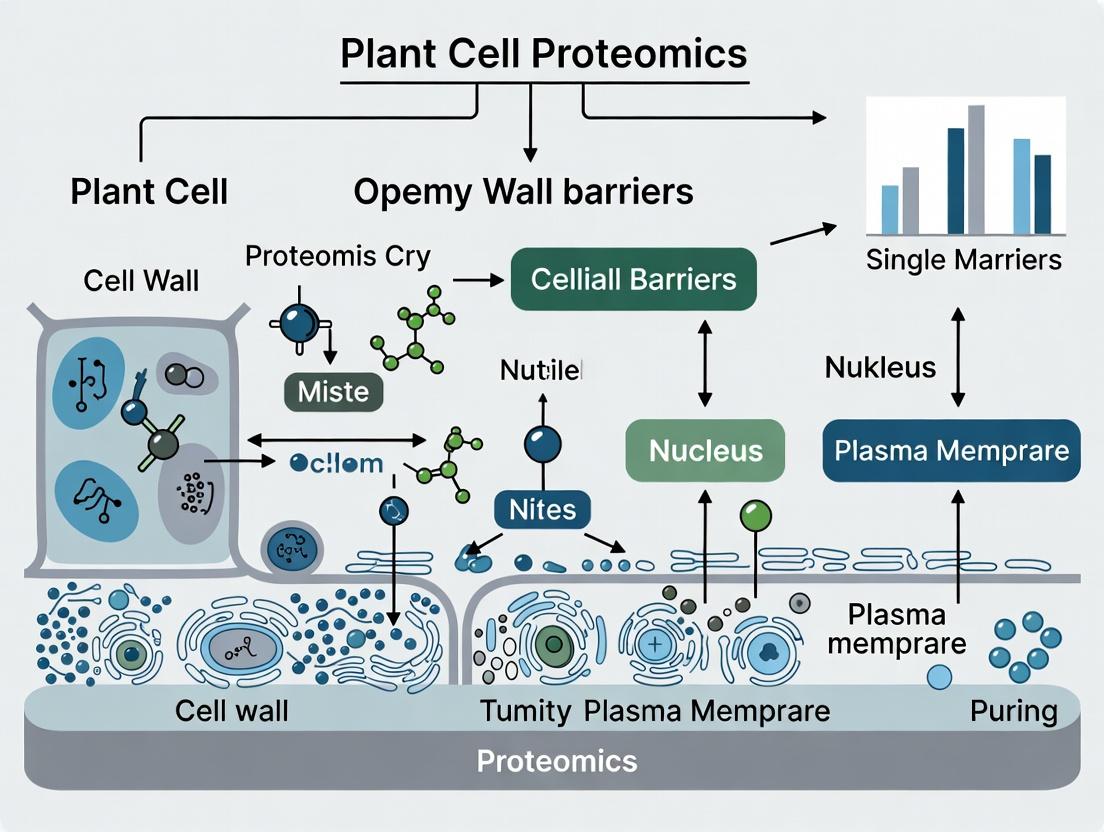
This article provides a comprehensive guide for researchers tackling the formidable challenge of the plant cell wall in single-cell proteomics.
Breaking the Wall: Advanced Strategies for Single-Cell Plant Proteomics and Clinical Translation
Abstract
This article provides a comprehensive guide for researchers tackling the formidable challenge of the plant cell wall in single-cell proteomics. We explore the foundational barriers posed by polysaccharide matrices, detail current and emerging methodologies for efficient cell disruption and protein extraction, address common troubleshooting scenarios, and critically validate techniques against key performance metrics. Aimed at scientists and drug development professionals, this review synthesizes best practices to enable high-resolution proteomic profiling of plant single cells, with implications for understanding plant development, stress responses, and discovering bioactive compounds for biomedical applications.
The Plant Cell Wall Barrier: Why It's the Central Challenge in Single-Cell Proteomics
Troubleshooting & FAQs: Cell Wall Challenges in Single-Cell Proteomics
Q1: During protoplasting for single-cell isolation, my cell viability is consistently below 50%. How can I optimize the wall digestion protocol? A1: Low viability often stems from excessive osmotic shock or over-digestion. Use a stepwise protocol:
- Optimize Enzyme Cocktail: Combine cellulase (1.5% w/v), pectinase (0.5% w/v), and hemicellulase (0.2% w/v) in a mannitol-based osmoticum (0.6 M).
- Reduce Time: Perform digestion at 28°C for no more than 2-4 hours with gentle shaking (40 rpm).
- Assess Regularly: Check every 30 minutes for cell rounding and release. Stop immediately upon release.
- Purify Gently: Use a 20% sucrose cushion for centrifugation (100 x g, 5 min) to separate intact protoplasts from debris.
Q2: My mass spectrometry runs after protoplast lysis show high polysaccharide contamination, masking protein signals. How do I clean up my sample? A2: Polysaccharides co-precipitate with proteins. Implement a pre-cleaning step:
- Precipitation Method: Use a 2D Clean-Up Kit or a TCA/acetone precipitation protocol specifically designed to remove non-protein contaminants.
- Enhanced Digestion: Post-clean-up, use a more aggressive protein digestion with a combination of Trypsin and Lys-C (1:50 enzyme:protein ratio, 37°C, 18 hours) to improve peptide yield from recalcitrant cell wall-associated proteins (CWAPs).
Q3: I suspect I am losing key cell wall-associated proteins (CWAPs) and signaling proteins during protoplasting. How can I capture them? A3: Protoplasting inherently loses integral wall proteins. Employ a parallel, direct wall-digestion approach.
- Experimental Protocol for CWAP Recovery:
- Direct Digestion: Subject intact tissue to a non-disruptive, cold (4°C) enzyme wash (using the cocktail from Q1) for 15 minutes.
- Collect Secretome: Centrifuge and collect the supernatant, which contains proteins released from the cell wall matrix.
- Concentrate: Use centrifugal filters (3 kDa cutoff) to concentrate the secretome fraction.
- Process Separately: Digest this fraction separately from the intracellular proteome and analyze via LC-MS/MS. Integrate datasets post-analysis.
Q4: For single-cell proteomics of xylem fibers (with thick secondary walls), standard protoplasting fails. What are my alternatives? A4: Secondary walls (high lignin, cellulose) are resistant to enzymatic digestion. A mechanical/physical approach is required.
- Laser Capture Microdissection (LCM) Protocol:
- Fix & Embed: Use cryo-fixation (e.g., OCT compound) and section tissue (10-40 µm thickness).
- Stain & Visualize: Use a brief, MS-compatible stain (e.g., Cresyl Violet) to identify target cells.
- Capture: Use LCM to isolate specific cell walls or whole cells directly into MS-compatible lysis buffer caps.
- Direct Lysis & Digestion: Perform in-cap lysis (SDT buffer, 95°C, 10 min) followed by on-bead digestion using S-Trap or similar micro-scale columns.
Table 1: Common Cell Wall Degrading Enzymes and Applications
| Enzyme | Target Polymer | Typical Conc. for Protoplasting | Role in Sample Prep |
|---|---|---|---|
| Cellulase (e.g., Onozuka R-10) | Cellulose (β-1,4-glucan) | 1.0-2.0% w/v | Degrades microfibril network; primary backbone digestion. |
| Macerozyme / Pectinase | Pectin (Homogalacturonan) | 0.1-1.0% w/v | Dissolves middle lamella; crucial for cell separation. |
| Hemicellulase (e.g., Rhozyme) | Hemicellulose (Xyloglucan) | 0.1-0.5% w/v | Cleaves cross-links between cellulose and pectin. |
| Pectolyase | Pectin (Rhamnogalacturonan) | 0.01-0.05% w/v | Strong pectin degrader; use sparingly to maintain viability. |
Table 2: Comparison of Cell Wall Disruption Methods for Proteomics
| Method | Principle | Best For | Key Challenge for Proteomics |
|---|---|---|---|
| Enzymatic Protoplasting | Biochemical degradation | Live cells, primary walls, suspension cultures | Loss of CWAPs, introduces enzyme contaminants. |
| Mechanical Grinding | Physical shearing | Bulk tissue, all wall types | Cross-contamination, heat generation, poor single-cell resolution. |
| Laser Capture Microdissection (LCM) | Precision physical ablation | Specific cell types, secondary walls, spatial mapping | Low throughput, requires fixation, low protein yield. |
| Sonication | Acoustic cavitation | Homogenates, biofilms | Protein denaturation, complex optimization. |
Experimental Protocols
Protocol 1: Viable Protoplast Isolation for Single-Cell Proteomics
- Incubate 1g of fresh, young leaf tissue in plasmolysis solution (0.6 M mannitol, 10 mM MES, pH 5.7) for 1 hour at 4°C.
- Replace solution with filter-sterilized enzyme solution (see Table 1) in plasmolysis buffer.
- Digest under gentle agitation (40 rpm) at 28°C for 2-3 hours.
- Filter the mixture through a 70 µm nylon mesh.
- Pellet protoplasts by centrifugation at 100 x g for 5 min in a swinging bucket rotor.
- Wash pellet twice with W5 solution (154 mM NaCl, 125 mM CaCl₂, 5 mM KCl, 5 mM glucose, pH 5.7).
- Resuspend in MS-compatible lysis buffer (e.g., 2% SDC in 100 mM TEAB, pH 8.5) for immediate processing or store pellet at -80°C.
Protocol 2: Direct Cell Wall Protein (CWP) Enrichment from Tissue
- Infiltration of intact, washed tissue with cold (4°C) 20 mM CaCl₂ for 20 minutes under vacuum.
- Wash with cold CaCl₂ to collect apoplastic washing fluid (AWF). Centrifuge at 10,000 x g, 4°C, to clear debris.
- Digest the remaining tissue residue with the enzyme cocktail (Table 1) at 4°C for 30 min with gentle shaking.
- Combine the AWF and cold digest supernatant. Concentrate using Amicon Ultra centrifugal filters (3 kDa MWCO).
- Precipitate proteins using a 2D Clean-Up Kit. Proceed to standard in-solution digestion for LC-MS/MS.
Diagrams
Workflow for Plant Single-Cell Wall Proteomics
Primary vs Secondary Cell Wall Structure
The Scientist's Toolkit: Research Reagent Solutions
Table 3: Essential Reagents for Overcoming Cell Wall Barriers in Proteomics
| Reagent / Kit | Primary Function | Key Consideration for Single-Cell Proteomics |
|---|---|---|
| Cellulase R-10 (Onozuka) | Digests cellulose microfibrils. | Source activity varies; pre-test lot for protoplasting efficiency. |
| Macerozyme R-10 | Degrades pectin in middle lamella. | Critical for tissue softening and cell separation. |
| Driselase | Broad-spectrum enzyme mix (cellulase, hemicellulase, pectinase). | Good for recalcitrant tissues but can be harsh on viability. |
| Mannitol/Sorbitol (0.4-0.8 M) | Osmoticum to prevent protoplast lysis. | Concentration must be optimized for each species and tissue. |
| Sucrose Cushion (20-25%) | Purifies protoplasts from debris via buoyant density. | Gentler than repeated washing; improves viability. |
| Single-Cell Lysis Buffer (e.g., 2% SDC in TEAB) | Efficient, MS-compatible protein denaturation. | SDC must be removed by acidification before digestion. |
| S-Trap Micro Columns | On-column digestion, ideal for low-volume, contaminant-rich lysates. | Excellent for recovering CWAPs from polysaccharide-heavy samples. |
| TCA/Acetone Precipitation Kit | Pre-cleaning to remove sugars, phenolics, salts. | Essential step after direct wall digests before MS analysis. |
| PMSF/Protease Inhibitor Cocktail | Inhibits endogenous proteases released during wall breakdown. | Add fresh to all digestion and lysis buffers. |
| Cresyl Violet Acetate | MS-compatible stain for LCM visualization. | Allows target cell selection without protein cross-linking. |
Troubleshooting Guides & FAQs
Q1: We are observing extremely low protein yields from plant protoplasts. What could be the cause and how can we improve recovery?
A: Low yields are a primary consequence of the cell wall barrier. Inefficient wall removal leaves debris that adsorbs proteins, while over-digestion damages the protoplast membrane, causing leakage. Key troubleshooting steps:
- Optimize Digestion Cocktail: Test ratios of cellulase, macerozyme, and pectinase. For Arabidopsis root cells, a 1.5% cellulase R-10 / 0.4% macerozyme R-10 mixture in 0.4M mannitol is standard, but woody tissues may require Driselase addition.
- Monitor Osmolarity: Use a precise osmometer. Lysis due to osmotic shock is a major protein loss pathway. Maintain 400-600 mOsm/kg with mannitol or sorbitol.
- Reduce Processing Time: Perform all post-digestion steps at 4°C and use protease/phosphatase inhibitors immediately. A typical workflow should be under 2 hours from lysis to stabilized lysate.
Q2: Our single-cell proteomic (scp-MS) data shows high contamination from cell wall-bound proteins (e.g., expansins, GRPs) that obscure intracellular signals. How can we deplete these?
A: This is a classic "proteomic consequence" of wall contamination. Implement a pre-MS cleanup:
- Differential Centrifugation: After lysis, perform a low-speed spin (500 x g, 5 min) to pellet wall fragments and nuclei before clarifying the protein lysate at 16,000 x g.
- Affinity Depletion: For sophisticated workflows, use lectin-affinity columns (e.g., Con A) to bind and remove glycoproteins prevalent in the wall. Note: This may also capture some membrane proteins.
- Protocol: Post-Lysis Wall Debris Removal: 1. Lyse protoplasts in RIPA buffer with vortexing. 2. Centrifuge at 500 x g for 5 minutes at 4°C. 3. Transfer supernatant to a new tube. 4. Proceed with protein precipitation or clean-up for mass spec.
Q3: During protoplast sorting via FACS, we see high rates of lysis. How can we prepare more robust single cells for scp-MS?
A: Fragility stems from wall removal and osmotic sensitivity.
- Pressure-Enabled Wall Softening: A newer method involves pretreating tissue with sub-lethal hydrostatic pressure (~10 MPa) to weaken wall polymers before enzymatic digestion, reducing enzyme time and damage.
- Viscosity Buffer: Sort into collection tubes prefilled with a small volume of 2X lysis buffer containing 10% glycerol to immediately stabilize proteins upon landing.
- Sorting Parameters: Use a 100 µm nozzle, lowest applicable pressure, and a saline sheath fluid matched to your osmoticum's conductivity.
Q4: In our label-free quantification (LFQ), we have high missing values across single-cell runs, particularly for low-abundance transcription factors. Is this related to the wall?
A: Indirectly, yes. The enzymatic cocktail and prolonged isolation generate background peptides that ionize efficiently and suppress low-abundance signals. Solutions:
- Carrier Proteome Approach: Use a "boost" channel of ~50 carrier cells (wild-type or labeled) added to the lysis buffer of sorted single cells. This improves peptide recovery during clean-up and MS acquisition. Data is then extracted computationally for the single cell.
- Advanced Clean-up: Use StageTips with two layers (C8 + strong cation exchange) to remove polysaccharides and phenolic contaminants that inhibit ionization.
Q5: Are there alternatives to full protoplasting for plant single-cell proteomics?
A: Emerging methods aim to circumvent the wall without full removal:
- Nanoprobe Sampling: Use pulled glass capillaries (~1 µm tip) for single-cell biopsy under microscopy, extracting cytoplasm directly. This leaves the wall largely intact but is low-throughput.
- Laser Capture Microdissection (LCM) with Direct MS: LCM cuts individual cells. Newer protocols use conductive slides and contact with MS-compatible solvents for direct protein transfer to a nanospray tip, minimizing handling losses.
Table 1: Impact of Cell Wall Digestion Duration on Protein Yield and Quality
| Digestion Time (hrs) | Viable Protoplast Yield (per mg tissue) | Total Protein Recovery (µg) | % of Proteins Identified as Cytosolic (vs. Wall) | Notes |
|---|---|---|---|---|
| 2 | 1.2 x 10⁴ | 8.5 | 65% | Incomplete digestion, high clumping. |
| 4 | 3.5 x 10⁴ | 22.1 | 89% | Optimal for mesophyll. |
| 6 | 2.1 x 10⁴ | 18.7 | 72% | Increased stress markers, debris. |
| 8 | 0.8 x 10⁴ | 14.2 | 58% | High protease activity detected. |
Table 2: Comparison of Single-Cell Proteomics Preparation Methods
| Method | Avg. Proteins ID'd per Cell | Technical Coefficient of Variation (CV) | Key Contaminants | Throughput |
|---|---|---|---|---|
| Full Protoplasting + FACS | ~800-1,200 | 18-25% | Cell wall hydrolases, apoplastic peroxidases | Medium |
| LCM + NanoPOTS | ~400-600 | 30-40% | Chlorophyll-associated proteins (if green tissue) | Low |
| Nanoprobe Biopsy | ~200-350 | >50% | Vacuolar proteases | Very Low |
| Carrier-Proteome (200 cells) | ~1,500-2,000 | 12-15% | Carrier proteins (computationally removed) | High |
Experimental Protocols
Key Protocol 1: Optimized Protoplast Preparation for scp-MS (for Leaf Mesophyll)
- Material Preparation: Prepare digestion solution: 1.5% Cellulase R-10, 0.4% Macerozyme R-10, 0.4M mannitol, 10mM MES (pH 5.7), 10mM CaCl₂, 0.1% BSA. Filter sterilize (0.22 µm). Pre-cool all equipment to 4°C.
- Tissue Digestion: Slice 0.5g of young leaf tissue into 0.5-1mm strips. Vacuum infiltrate with digestion solution for 15 min. Incubate in the dark at 23°C with gentle shaking (40 rpm) for 4 hours.
- Protoplast Purification: Filter the slurry through a 70 µm nylon mesh into a 50 mL tube. Rinse with 10 mL of W5 solution (154mM NaCl, 125mM CaCl₂, 5mM KCl, 2mM MES, pH 5.7). Centrifuge at 200 x g for 3 min at 4°C. Gently resuspend pellet in 5 mL W5. Layer over 3 mL of 0.6M sucrose solution. Centrifuge at 200 x g for 5 min. Collect viable protoplasts from the interface.
- Wash & Count: Wash protoplasts twice in ice-cold 0.4M mannitol + 5mM MES. Count using a hemocytometer. Immediately proceed to sorting or lysis.
Key Protocol 2: SCoPE2-MS Sample Preparation for Single Plant Protoplasts
- Single-Cell Sorting: Sort individual protoplasts (or 0, 50 carrier cells) directly into 0.2 mL PCR tubes containing 2 µL of lysis buffer (1% SDC, 100mM TEAB, 5mM TCEP, 20mM CAA). Immediately freeze on dry ice.
- Digestion: Thaw samples, sonicate in a water bath for 1 min, incubate at 95°C for 10 min, then 45°C for 1 hr. Add 1 µL of 0.5 µg/µL Lys-C, incubate 2 hrs. Add 2 µL of 0.5 µg/µL Trypsin, incubate overnight at 37°C.
- Peptide Clean-up: Acidify with 1% TFA to pH <2. Desalt using C18 StageTips. Elute with 20 µL of 80% ACN/1% ammonia. Dry completely in a vacuum concentrator.
- MS Analysis: Reconstitute in 5 µL of 1% FA. Inject 2 µL for LC-MS/MS on a 25cm C18 column coupled to a timsTOF or Orbitrap Eclipse, using a 30-90 min gradient.
Diagrams
Title: Cell Wall Impact on Protein Recovery Workflow
Title: Troubleshooting Logic for Protein Recovery Issues
The Scientist's Toolkit: Research Reagent Solutions
| Item | Function in Overcoming Wall Barriers |
|---|---|
| Cellulase R-10 & Macerozyme R-10 | Core enzymatic cocktail for degrading cellulose and pectins in primary cell walls. Critical for protoplast release. |
| Driselase | Enzyme mix for tougher, secondary cell walls (e.g., woody tissues, some roots). Contains cellulase, hemicellulase, laminarinase. |
| Mannitol (0.4-0.6M) | Osmolyte to maintain osmotic pressure during and after wall digestion, preventing protoplast lysis. |
| Protease Inhibitor Cocktail (Plant-specific) | Inhibits endogenous proteases released during wall degradation, preserving protein integrity. |
| Concanavalin A (Con A) Beads | Lectin-affinity resin for depleting glycoprotein contaminants derived from the cell wall matrix. |
| StageTips (C18 + SCX) | Micro-scale solid-phase extraction for desalting and cleaning peptide samples, removing wall-derived polymers. |
| Triethylammonium bicarbonate (TEAB) / SDC | MS-compatible lysis buffer components effective for plant proteins, superior to detergents like NP-40 for downstream MS. |
| Tandem Mass Tag (TMT) or Isobaric Label Reagents | Enable multiplexing, allowing a "carrier" channel to enhance peptide identification in single-cell experiments. |
Technical Support Center: Troubleshooting Plant Single-Cell Proteomics
Frequently Asked Questions (FAQs) & Troubleshooting
Q1: During protoplast isolation, my yield is consistently low and cells appear lysed. What are the primary causes? A: Low yield and lysis typically result from inefficient cell wall digestion or osmotic imbalance.
- Check Enzyme Cocktail: Ensure you are using a combination of cellulases (e.g., Cellulase R-10), pectinases (e.g., Macerozyme R-10), and hemicellulases. Re-calibrate concentrations (common range: 0.5-2.0% w/v each) based on your plant species and tissue age.
- Verify Osmolarity: Use an osmometer to confirm your digestion and washing media are isotonic (typically 400-600 mOsm/kg for many mesophyll tissues). Mannitol or sorbitol are common osmotica.
- Optimize Incubation: Reduce time and monitor microscopically every 30 minutes. Over-digestion weakens the plasma membrane.
Q2: My single-cell protein extracts are highly contaminated with pigments (chlorophyll, anthocyanins) and secondary metabolites, interfering with LC-MS/MS. How can I mitigate this? A: Plant-specific metabolites are a major hurdle. Implement a clean-up step post-lysis.
- Protocol: Perform a cold acetone precipitation with 80% (v/v) acetone at -20°C for 2 hours. Centrifuge at 16,000 × g for 15 min at 4°C. Wash pellet twice with cold 80% acetone. This effectively removes lipophilic pigments and many interfering compounds.
- Alternative: Use commercial protein cleanup kits designed for challenging plant tissues (e.g., ReadyPrep 2-D Cleanup Kit, Bio-Rad). Include protease and phosphatase inhibitors during lysis to prevent degradation.
Q3: I encounter significant batch-to-batch variability in my protoplast preparations, affecting downstream proteomic reproducibility. What key factors should I standardize? A: Plant material biological variance is high. Control these variables meticulously:
- Plant Growth Conditions: Standardize light intensity, photoperiod, temperature, and watering regime.
- Tissue Age: Always harvest leaves or roots from the same developmental stage (e.g., leaf position from apex).
- Digestion Freshness: Prepare enzyme digestion cocktails fresh for each experiment. Aliquot and store enzyme stocks at -20°C to maintain activity.
Q4: For deep proteome coverage, how do I efficiently lyse plant protoplasts or nuclei without generating excessive polymeric contaminants? A: Mechanical disruption combined with detergent is effective.
- Detailed Protocol:
- Resuspend purified protoplasts/nuclei in a lysis buffer containing 2% SDS, 100 mM Tris-HCl (pH 8.5), 50 mM DTT.
- Pass the suspension through a 27-gauge needle 10-15 times.
- Incubate at 95°C for 5 minutes.
- Cool and alkylate with 150 mM iodoacetamide in the dark for 30 min.
- Perform protein precipitation or use a detergent cleanup column before digestion.
Key Experimental Protocol: Protoplast Isolation for Single-Cell Proteomics
Objective: To isolate intact, viable protoplasts from leaf mesophyll tissue for downstream single-cell sorting and proteomic analysis.
Materials:
- Healthy plant leaves (e.g., Arabidopsis, tobacco)
- Enzyme solution: 1.5% Cellulase R-10, 0.4% Macerozyme R-10, 0.4 M mannitol, 20 mM KCl, 20 mM MES (pH 5.7), 10 mM CaCl₂, 0.1% BSA
- W5 solution: 154 mM NaCl, 125 mM CaCl₂, 5 mM KCl, 2 mM MES (pH 5.7)
- WI solution: 0.5 M mannitol, 20 mM KCl, 4 mM MES (pH 5.7)
- Sterile Petri dishes, fine forceps, razor blade
- 35-70 μm nylon mesh filter
- Low-speed centrifuge
Method:
- Tissue Preparation: Surface-sterilize leaves. Remove the lower epidermis using fine forceps or slice into 0.5-1 mm strips.
- Digestion: Place tissue strips in enzyme solution (10 mL per 1 g tissue). Vacuum infiltrate for 15 min, then incubate in the dark at 25°C with gentle shaking (40 rpm) for 3-4 hours.
- Release & Filtration: Gently swirl the digest. Filter the slurry through a 70 μm nylon mesh into a 50 mL tube to remove undigested debris.
- Washing: Centrifuge filtrate at 100 × g for 5 min at 4°C. Carefully aspirate supernatant. Gently resuspend pellet in ice-cold W5 solution. Centrifuge again. Repeat wash once with WI solution.
- Assessment: Check protoplast integrity and yield using a hemocytometer and viability stain (e.g., FDA, 0.01%).
Table 1: Efficacy of Common Cell Wall-Digesting Enzymes on Different Plant Tissues
| Enzyme (Type) | Common Concentration | Target Polymer | Ideal Tissue Type | Notes / Key Consideration |
|---|---|---|---|---|
| Cellulase R-10 (Cellulase) | 0.5 - 2.0% (w/v) | Cellulose | Leaf Mesophyll, Callus | Core enzyme; activity varies by lot; requires pectinase for efficient release. |
| Macerozyme R-10 (Pectinase) | 0.1 - 1.0% (w/v) | Pectin | Leaf, Root | Degrades middle lamella; high concentrations can damage membranes. |
| Pectolyase (Pectin Lyase) | 0.01 - 0.1% (w/v) | Pectin | Lignified Tissues | Very potent; use low concentrations to avoid toxicity. |
| Driselase (Multi-enzyme) | 0.5 - 1.5% (w/v) | Cellulose, Hemicellulose | Cell Suspension Cultures | Contains various activities; may require optimization for specific tissue. |
| Hemicellulase (Hemicellulase) | 0.1 - 0.5% (w/v) | Xyloglucan | Developing Stem | Useful for secondary cell wall-rich tissues. |
Visualizations
Title: Workflow for Plant Single-Cell Proteomics Sample Prep
Title: Key Plant-Specific Hurdles and Primary Solutions
The Scientist's Toolkit: Research Reagent Solutions
Table 2: Essential Reagents for Overcoming Plant Cell Wall Barriers
| Reagent / Material | Primary Function | Key Consideration for Plant Tissues |
|---|---|---|
| Cellulase R-10 | Hydrolyzes cellulose microfibrils in the primary cell wall. | Lot-to-lot variability is high; test activity for each new batch. |
| Macerozyme R-10 | Degrades pectin in the middle lamella, releasing cells. | Often used in combination with cellulase; optimal pH ~5.7. |
| Mannitol / Sorbitol | Acts as an osmoticum to maintain protoplast stability and prevent lysis during and after digestion. | Concentration is tissue-specific (0.3-0.6 M). Verify with plasmolysis test. |
| Ficoll PM-400 | Density gradient medium for purifying protoplasts away from debris and organelles. | Crucial for obtaining clean single-cell suspensions for sorting. |
| SDS (Sodium Dodecyl Sulfate) | Ionic detergent for efficient lysis of protoplasts and denaturation of proteins. | Must be removed (via precipitation or filters) prior to MS analysis. |
| Trifluoroacetic Acid (TFA) | Ion-pairing agent for LC-MS; aids in peptide solubilization and separation. | Effective at suppressing non-ionic contaminants common in plant extracts. |
| Protease Inhibitor Cocktail (Plant-specific) | Inhibits abundant plant proteases (e.g., cysteine proteases) released upon lysis. | Essential to add fresh to all lysis and extraction buffers. |
| Polyvinylpolypyrrolidone (PVPP) | Binds and removes phenolic compounds that can oxidize and modify proteins. | Add directly to extraction buffer for polyphenol-rich tissues (e.g., roots, stems). |
Technical Support Center: Troubleshooting Guides & FAQs
This support center is designed for researchers working on single-cell plant proteomics after effective cell wall disruption. Issues are framed within the core research themes of development, stress response, and cellular heterogeneity.
FAQ: Common Post-Wall Disruption Issues
Q1: After protoplasting, my single-cell protein yields are low and inconsistent. What could be the cause? A: This is often due to incomplete inhibition of proteases released upon wall disruption. The plant stress response triggers rapid protease activation.
- Solution: Optimize your lysis buffer. Include a broad-spectrum protease inhibitor cocktail and specific inhibitors for serine and cysteine proteases. Perform lysis rapidly on ice. Validate with a standard protein extract spiked with a known protein to calculate recovery rates.
Q2: My single-cell proteomic data shows high technical variability, masking biological heterogeneity. How can I improve reproducibility? A: This frequently stems from inconsistent wall digestion across cells or tissue types, leading to biased sampling.
- Solution: Implement a strict QC step post-digestion. Use Calcofluor White stain to visualize and quantify residual cell wall fragments microscopically. Only proceed with batches where >95% of protoplasts are wall-free. See Table 1 for benchmark data.
Q3: I suspect stress-induced proteins are dominating my signal, obscuring developmental markers. How can I deconvolute these signals? A: This is a key research question. The stress of wall removal itself induces a proteomic signature.
- Solution: Incorporate a "wall disruption control" experiment. Compare the proteome of:
- Protoplasts immediately after isolation.
- Protoplasts after a 1-hour "recovery" period in a protective osmolyte solution.
- Intact cells from the same tissue lysed by direct physical means (e.g., laser capture microdissection with rapid lysis). Proteins elevated only in Condition 1 are likely acute stress artifacts.
Q4: How do I isolate specific cell types after protoplasting for deep proteomic analysis? A: Use Fluorescent-Activated Cell Sorting (FACS) of protoplasts from transgenic lines expressing fluorescent markers under cell-type-specific promoters.
- Protocol:
- Generate protoplasts as usual.
- Filter through a 40-μm nylon mesh.
- Re-suspend in sorting buffer (mannitol, CaCl₂, MES pH 5.7).
- Sort using a 100-μm nozzle at low pressure (≤20 psi) to maintain protoplast integrity.
- Directly sort cells into lysis buffer containing detergent and inhibitors.
Experimental Protocols
Protocol 1: Validation of Effective Wall Disruption for Single-Cell Proteomics Objective: To ensure complete cell wall removal prior to downstream analysis. Steps:
- Protoplast Generation: Treat tissue with an optimized enzyme mix (e.g., 1.5% Cellulase R10, 0.5% Macerozyme R10 in 0.4M mannitol, pH 5.7) for 3-4 hours with gentle shaking.
- Staining: Add Calcofluor White stain to an aliquot at a final concentration of 0.1% (w/v).
- Microscopy: Incubate for 2 minutes, wash, and visualize under a fluorescence microscope (DAPI filter).
- Quantification: Count wall-positive (blue-white halo) vs. wall-negative cells across 5 random fields. Calculate percentage of successful protoplasts.
Protocol 2: Single-Cell Proteome Preparation via NanoPOTS-LC/MS Objective: To process proteins from low-input (10-100 cells) or single protoplasts. Steps:
- Collection: Manually pick or FACS-sort single protoplasts into 200nL droplets of lysis buffer (1% SDC, 50mM TEAB, protease inhibitors) in a pre-treated nanowell chip.
- Digestion: Reduce with 5mM TCEP (30min, 60°C), alkylate with 10mM IAA (30min, dark, RT), and digest with 20ng trypsin/Lys-C mix (overnight, 37°C).
- Peptide Recovery: Acidify with 1% TFA. Transfer peptides to a LC-MS vial via capillary action.
- LC-MS/MS: Analyze using a 90-min gradient on a 25-cm C18 column coupled to a high-resolution tandem mass spectrometer operating in DDA or DIA mode.
Data Presentation
Table 1: Impact of Wall Disruption Efficiency on Proteomic Data Quality
| Disruption Efficiency (% Wall-Free Cells) | Protein Groups Identified (Mean ± SD) | Coefficient of Variation (Technical Replicates) | Stress-Related Protein Abundance (vs. Intact Tissue) |
|---|---|---|---|
| <80% (Poor) | 850 ± 210 | 38% | 5.2x |
| 80-95% (Moderate) | 1,450 ± 180 | 22% | 3.1x |
| >95% (Optimal) | 2,100 ± 150 | 12% | 1.8x |
Table 2: Research Reagent Solutions Toolkit
| Reagent / Material | Function in Experiment | Key Consideration |
|---|---|---|
| Cellulase R10/Macerozyme R10 | Enzyme cocktail for primary wall digestion. | Batch variability is high; pre-test for lot efficacy and toxicity. |
| Osmoprotectant (Mannitol/Sorbitol) | Maintains osmotic balance to prevent protoplast rupture. | Concentration must be empirically tuned for each plant species/tissue. |
| Calcofluor White Stain | Fluorescent dye binding to β-glucans in the wall. | QC standard for assessing disruption efficiency. |
| Protease Inhibitor Cocktail (Plant-Specific) | Inhibits proteases released during wall breakdown. | Critical for preserving native proteome; must be in lysis buffer. |
| NanoPOTS Chip | Nanowell platform for single/low-cell processing. | Minimizes surface adsorption losses of low-abundance proteins. |
| Tandem Mass Tag (TMT) Reagents | Multiplexed isotopic labeling for cohort analysis. | Enables comparison of up to 18 samples in one MS run, reducing batch effects. |
Visualizations
Title: Single-Cell Plant Proteomics Workflow Post-Wall Disruption
Title: Signaling Pathway from Wall Disruption to Stress Proteome
From Disruption to Data: A Step-by-Step Guide to Plant Single-Cell Proteomics Workflows
Technical Support Center & Troubleshooting Guides
Frequently Asked Questions (FAQs)
Q1: My protoplast yield is consistently low. What are the most common causes? A: Low yield is typically due to suboptimal enzyme activity or incorrect osmotic stabilization.
- Check 1: Enzyme Solution Freshness. Cellulase and pectinase mixtures degrade; always prepare fresh or aliquot and store at -20°C. Avoid repeated freeze-thaw cycles.
- Check 2: Osmoticum Concentration. The plasmolyzing agent (e.g., Mannitol, Sorbitol) concentration is species- and tissue-specific. Test a range (0.3-0.8 M) to find the optimal point where cells are plasmolyzed but not irreversibly damaged.
- Check 3: Incubation Time & Temperature. Under-digestion leaves cells intact; over-digestion damages protoplast membranes. Standard conditions are 6-18 hours at 23-28°C in the dark with gentle shaking (30-50 rpm). Perform time-course experiments.
Q2: I am using direct wall disruption (e.g., sonication, grinding) for single-cell proteomics, but my protein profiles are contaminated with chloroplast and vascular proteins. How can I improve target specificity? A: This indicates disruption is not limited to the target cell type. Consider the following:
- For Laser Capture Microdissection (LCM) + Disruption: Ensure slide preparation uses PEN foil membranes and that the dehydration series is complete to prevent sample adhesion issues. Verify laser settings (power, duration) on control tissue for precise cutting.
- For FACS + Disruption: Re-optimize your gating strategy using robust fluorescent markers. Include a viability dye (e.g., FDA, PI) to exclude debris and broken cells. The disruption step must be performed immediately after sorting into an appropriate lysis buffer.
- Universal Fix: Implement a subcellular fractionation or enrichment step post-disruption (e.g., density gradient centrifugation) prior to protein extraction.
Q3: Protoplast isolation is too slow for my time-sensitive phosphoproteomics study. What are my options? A: Direct wall disruption methods are significantly faster.
- Recommended Protocol: Use a rapid mechanical homogenizer (e.g., a bead mill) or a brief sonication pulse directly in a denaturing lysis buffer (e.g., containing SDS or Urea) to immediately quench phosphatase activity. The key is instantaneous inactivation of enzymes upon wall breakage. This trade-off sacrifices cellular specificity for temporal resolution.
Q4: How do I decide between protoplast isolation and direct disruption for my specific plant species (e.g., Arabidopsis root vs. Populus stem)? A: The decision hinges on your primary research goal and tissue characteristics. Refer to the decision matrix below.
Decision Criteria & Comparative Data
Table 1: Method Comparison for Single-Cell Proteomics Sample Preparation
| Criteria | Protoplast Isolation | Direct Wall Disruption (e.g., LCM+FACS + Homogenization) |
|---|---|---|
| Cellular Purity | High (when optimized) | Very High to Moderate (depends on pre-disruption step) |
| Cellular Viability | Required for isolation; can be stressed | Not required; cells are lysed |
| Temporal Resolution | Low (Hours for digestion) | High (Minutes to <1 hour) |
| Throughput | Medium to High | Low (LCM) to Very High (Bulk grinding) |
| Wall Protein Loss | Complete (enzymatically removed) | Retained (can be analyzed) |
| Technical Complexity | High (sterility, osmosis) | Medium to Very High (specialized equipment) |
| Best For | Live-cell assays, subcellular localization, intact organelle studies | Hard tissues, time-sensitive modifications, spatial proteomics, studying wall proteins |
| Major Risk | Induced stress responses, altered physiology | Contamination from adjacent cells, shear-induced artifacts |
Table 2: Troubleshooting Quantitative Metrics
| Problem | Potential Measurement | Target Range / Indicator |
|---|---|---|
| Poor Protoplast Viability | Fluorescein Diacetate (FDA) staining | >85% viable (green fluorescence) |
| Protoplast Yield | Hemocytometer count | (1 \times 10^6) to (5 \times 10^6) protoplasts/g fresh weight (tissue-dependent) |
| Incomplete Digestion | Microscopic inspection | >90% of observed cells as spherical protoplasts |
| Contamination (Direct) | Western Blot for Rubisco (chloroplast) | Minimal to absent signal in target cell lysate |
| Protein Degradation | SDS-PAGE / Gel electrophoresis | Sharp, distinct bands; no smearing below 30 kDa |
Detailed Experimental Protocols
Protocol 1: Protoplast Isolation from Arabidopsis Mesophyll Cells (for subsequent lysis)
- Key Reagents: Cellulase R10, Macerozyme R10, Mannitol, MES, CaCl₂, KCl.
- Steps:
- Grow Arabidopsis rosette leaves under optimal conditions for 4-5 weeks.
- Slice leaves into 0.5-1 mm strips with a razor blade.
- Immerse strips in Enzyme Solution (1.5% Cellulase R10, 0.4% Macerozyme R10, 0.4 M Mannitol, 20 mM KCl, 20 mM MES pH 5.7, 10 mM CaCl₂, 0.1% BSA). Vacuum infiltrate for 30 minutes.
- Digest in the dark with gentle shaking (40 rpm) at 23°C for 3-4 hours.
- Filter the digestate through a 70 μm nylon mesh into a 50 mL tube.
- Centrifuge at 100 x g for 5 minutes at 4°C to pellet protoplasts.
- Gently resuspend in W5 Solution (154 mM NaCl, 125 mM CaCl₂, 5 mM KCl, 2 mM MES pH 5.7). Keep on ice for 30 minutes.
- Purify by floating on a sucrose gradient (0.6 M sucrose, 0.4 M mannitol) if needed. Centrifuge at 200 x g for 5 min.
- Wash pellet in ice-cold mannitol solution and proceed to lysis in RIPA buffer for proteomics.
Protocol 2: Direct Wall Disruption via LCM-Laser Pressure Catapulting (LPC)
- Key Reagents: PEN foil slides, Ethanol, Xylene, RNase-free water, Hematoxylin stain.
- Steps:
- Flash-freeze tissue in liquid N₂. Cryo-section (10-30 μm thickness) onto PEN foil slides. Store at -80°C.
- Fix and stain rapidly (30-60 sec in 75% EtOH, hematoxylin, brief rinses in 75% EtOH, 95% EtOH, 100% EtOH, xylene). Air dry completely.
- Use LCM system (e.g., Zeiss PALM) to visually identify target cells under microscope.
- Circumscribe cells with UV laser to cut.
- Use the laser pulse (LPC) to catapult the microdissected cell directly into the cap of a microfuge tube containing 10-20 μL of strong lysis/denaturation buffer (e.g., 4% SDS, 100 mM Tris-HCl pH 7.6).
- Immediately vortex and heat at 95°C for 5 minutes to ensure complete lysis and enzyme inactivation.
- Process lysate for downstream proteomic analysis.
Visualizations
Title: Decision Tree for Method Selection
Title: Two Primary Workflows for Single-Cell Proteomics
The Scientist's Toolkit: Key Research Reagent Solutions
| Item | Function in Context | Key Consideration |
|---|---|---|
| Cellulase R10 / Macerozyme R10 | Enzyme cocktail for degrading cellulose and pectin in the primary cell wall. | Source (e.g., Trichoderma viride); activity varies by lot. Requires osmoticum. |
| Mannitol / Sorbitol (0.4-0.8 M) | Osmoticum. Prevents protoplast bursting by balancing internal turgor pressure. | Concentration is tissue-specific. Must be isotonic. |
| PEN (Polyethylene Naphthalate) Foil Slides | For LCM. Allows targeted cells to be cut and catapulted by a laser. | Tissue must be completely dry for effective cutting. |
| Strong Denaturing Lysis Buffer (e.g., 4% SDS, 8M Urea) | Immediate inactivation of proteases/phosphatases upon disruption. Crucial for preserving PTMs. | Must be compatible with downstream MS sample prep (e.g., S-Trap, SP3). |
| Fluorescein Diacetate (FDA) / Propidium Iodide (PI) | Viability stains for protoplasts (FDA→live/green) or dead cells (PI→dead/red). | Quick assay to optimize digestion conditions. |
| Pectolyase | More aggressive pectinase. Used for tissues with high pectin content (e.g., suspension cultures). | Can damage membranes; use at lower concentrations and shorter times. |
| BSA (Bovine Serum Albumin) | Added to enzyme solutions to stabilize enzymes and absorb harmful phenolics. | Use fatty-acid free, high-purity grade. |
Troubleshooting Guides & FAQs for Plant Single-Cell Proteomics
Context: This support center addresses common technical challenges in plant single-cell proteomics research, specifically within the thesis framework of Overcoming cell wall barriers in plant single-cell proteomics. The focus is on compatibility and optimization across nanodroplet, microfluidic, and plate-based isolation platforms.
Frequently Asked Questions (FAQs)
Q1: During protoplasting, my cell viability drops below 70% before single-cell isolation. What could be wrong? A: This is commonly due to prolonged enzymatic digestion or osmotic shock. Optimize by:
- Protocol: Use a time-course experiment. Incubate plant tissue (e.g., Arabidopsis leaf) in an enzyme solution (1.5% Cellulase R10, 0.4% Macerozyme R10, 0.4M Mannitol, 10mM MES pH 5.7) for 30-90 minutes, checking viability every 15 minutes using Fluorescein Diacetate (FDA) staining.
- Solution: Titrate mannitol concentration (0.3-0.6M) to find the ideal osmoticum for your tissue. Filter-sterilize enzymes and use fresh preparation.
Q2: I am getting high levels of ambient protein background in my nanodroplet (e.g., TMTpro) experiments from plant samples. How can I reduce it? A: Ambient contamination often comes from lysed protoplasts or cell wall debris.
- Protocol: Implement a rigorous wash step post-protoplasting. Centrifuge the protoplast suspension at 100 x g for 5 minutes and gently resuspend in fresh wash buffer (0.4M mannitol, 5mM MES) twice before loading into the nanodroplet generator.
- Solution: Add a mild detergent (e.g., 0.01% NP-40) or proteinase inhibitor to the wash buffer to quench free proteins immediately upon release from lysed cells.
Q3: My microfluidic chip (e.g., 10X Genomics) frequently clogs when loading plant protoplasts. What adjustments can I make? A: Clogging is typically caused by undigested cell wall fragments or protoplast aggregates.
- Protocol: After enzymatic digestion, filter the protoplast suspension through a sterile 40 µm nylon mesh filter. Perform a density-based purification using a Percoll gradient (e.g., 20%/50% steps) to isolate intact, single protoplasts.
- Solution: Thoroughly triturate the sample with a wide-bore pipette tip before loading. Confirm protoplast concentration and diameter fall within the chip manufacturer's specified range (< 40 µm ideal).
Q4: In plate-based systems, the lysis efficiency for plant protoplasts is inconsistent, leading to low protein recovery. How can I improve it? A: Plant cells can require harsher lysis conditions, but this must be compatible with downstream proteomics.
- Protocol: For a 96-well plate system, test a dual lysis buffer: 1% SDC (Sodium Deoxycholate) in 100mM TEAB, supplemented with a proprietary single-cell lysis enhancer (search for current commercial kits). Incubate at 95°C for 10 minutes with shaking at 1000 rpm.
- Solution: Combine chemical lysis with a brief sonication step (3 x 5 seconds pulses at 20% amplitude) using a plate sonicator, ensuring the plate is cooled on ice between pulses.
Q5: How do I choose between nanodroplet, microfluidic, and plate-based systems for my specific plant tissue? A: The choice depends on cell size, throughput needs, and proteomic depth.
Table 1: Platform Selection Guide for Plant Single-Cell Proteomics
| Platform Type | Recommended Cell Size | Typical Throughput (Cells/Run) | Key Consideration for Plant Samples | Best For |
|---|---|---|---|---|
| Plate-Based | Flexible (>15 µm) | 96 - 384 | Manual protoplast handling, compatible with harsh lysis. | Low-mid throughput, deep proteome coverage per cell. |
| Microfluidic | 5 - 40 µm | 500 - 10,000 | Requires strict size filtering; may need chip priming with BSA. | High-throughput, cell type discovery, RNA co-assay. |
| Nanodroplet | 10 - 100 µm | 1,000 - 10,000+ | Sensitive to ambient protein; requires clean protoplast prep. | Ultra-high throughput, label multiplexing (TMT). |
Experimental Protocols
Key Protocol 1: Optimized Protoplast Isolation for Single-Cell Platforms
- Tissue: Arabidopsis thaliana mature leaf.
- Materials: Enzyme solution (see Q1), Wash Buffer (0.4M mannitol, 5mM MES, pH 5.7), 40 µm cell strainer, Percoll solution.
- Method:
- Slice leaves into 0.5-1mm strips with a razor blade.
- Vacuum infiltrate with enzyme solution for 15 minutes.
- Digest in the dark with gentle agitation (50 rpm) for 60 minutes.
- Gently release protoplasts by swirling and passing through the 40 µm strainer into a tube.
- Centrifuge at 100 x g for 5 minutes. Discard supernatant.
- Gradient Purification: Resuspend pellet in 2 ml of 20% Percoll (in Wash Buffer). Carefully layer 2 ml of 50% Percoll underneath. Centrifuge at 300 x g for 10 minutes (low brake).
- Collect the viable protoplast band at the interface. Dilute in 5x volume of Wash Buffer and centrifuge at 100 x g for 5 minutes.
- Resuspend in appropriate buffer for chosen platform. Count and assess viability with FDA.
Key Protocol 2: Cross-Platform Lysis & Protein Digestion Workflow
- Goal: Generate peptides compatible with LC-MS/MS from any isolation platform.
- Universal Lysis/Digestion Buffer: 1% SDC in 100mM TEAB, pH 8.5.
- Method:
- Lysis: Combine isolated single cells (in droplets, chips, or wells) with lysis buffer. Heat at 95°C for 10 min with agitation.
- Reduction & Alkylation: Add TCEP to 5mM final (15 min, 55°C), then chloroacetamide to 10mM final (15 min, RT, in dark).
- Digestion: Add Trypsin/Lys-C mix at 1:25 enzyme-to-protein estimated ratio. Digest overnight at 37°C.
- SDC Removal: Acidify with 1% final concentration of TFA to precipitate SDC. Centrifuge at 13,000 x g for 10 min.
- Clean-up: Transfer supernatant containing peptides to a StageTip or commercial cartridge for desalting prior to MS.
Visualizations
Title: Workflow for Plant Single-Cell Proteomics Across Platforms
Title: Protoplasting Troubleshooting Logic Map
The Scientist's Toolkit: Research Reagent Solutions
Table 2: Essential Reagents for Plant Single-Cell Proteomics
| Reagent/Material | Function | Key Consideration |
|---|---|---|
| Cellulase R10 & Macerozyme R10 | Enzymatic degradation of cellulose and pectin in the plant cell wall. | Batch variability is high; perform activity calibration for each new lot. |
| Mannitol or Sorbitol | Osmoticum to maintain protoplast stability and prevent lysis during isolation. | Must be empirically optimized for each tissue type (typically 0.4-0.6M). |
| Percoll Solution | Density gradient medium for purifying intact protoplasts from debris and aggregates. | Form isotonic solutions by mixing with wash buffer, not water. |
| Fluorescein Diacetate (FDA) | Vital stain for protoplast viability assessment; live cells fluoresce green. | Prepare a fresh stock in acetone and dilute in buffer just before use. |
| Sodium Deoxycholate (SDC) | Strong, MS-compatible detergent for efficient single-cell protein lysis and solubilization. | Must be removed via acid precipitation before LC-MS to avoid ion suppression. |
| TMTpro 16/18-Plex Isobaric Labels | Chemical tags for multiplexing samples, enabling high-throughput quantitative comparison. | Crucial for nanodroplet workflows to pool thousands of cells for one MS run. |
| Single-Cell Lysis Enhancer (e.g., from commercial kits) | Additive to improve rupture of tough plant membranes and inhibit proteases. | Verify compatibility with your downstream digestion chemistry. |
| Wide-Bore Pipette Tips (≥ 40 µm orifice) | For handling fragile protoplasts without causing shear stress and lysis. | Essential for all steps post-digestion to maintain cell integrity. |
Troubleshooting Guides & FAQs
Q1: Why is my protein yield from plant tissues (e.g., leaves, seeds) consistently low after digestion? A: Low yield often stems from inefficient cell wall lysis prior to digestion. The rigid plant cell wall, composed of cellulose, hemicellulose, pectin, and lignin, acts as a major barrier to protein extraction. Ensure thorough mechanical homogenization (e.g., using a bead mill or grinding in liquid nitrogen) combined with a compatible chemical lysis buffer (e.g., containing urea, thiourea, and detergents like SDS or CHAPS) to disrupt the wall and solubilize proteins. Incomplete removal of polysaccharides and phenolic compounds, which can co-precipitate with proteins, is another common cause.
Q2: My digest appears incomplete, with many missed cleavages in MS data. What enzyme or protocol adjustments should I try? A: Missed cleavages in plant digests are frequently due to persistent interfering compounds or suboptimal enzyme activity. First, purify proteins or peptides using precipitation methods (acetone/TCA) or commercial clean-up kits to remove proteolytic inhibitors like organic acids or polyphenols. For enzyme selection:
- Trypsin: Remains the gold standard. Use a high-purity, MS-grade trypsin at a 1:20-1:50 (enzyme:protein) ratio. Extend digestion time to 18 hours or use a multi-step addition protocol.
- Lys-C/Trypsin combo: Use Lys-C (which retains activity in high urea) first for 1-3 hours, then dilute and add trypsin. This significantly improves efficiency and reduces missed cleavages.
- Alternative Enzymes: Consider chymotrypsin or Glu-C for complementary cleavage profiles, especially for hydrophobic or proline-rich plant proteins.
Q3: How can I reduce protein degradation and modifications during plant sample preparation? A: Act quickly and keep samples cold. Include a broad-spectrum protease inhibitor cocktail (excluding EDTA if you plan to use metal-requiring enzymes like Lys-C) in your initial extraction buffer. Use antioxidants (e.g., DTT, TCEP) to prevent oxidation, and work rapidly to minimize exposure to plant endogenous proteases released during homogenization.
Q4: What is the best approach for digesting very hydrophobic plant proteins (e.g., from membranes)? A: Hydrophobic proteins require strong solubilization. Use buffers containing 2-4% SDS. Prior to digestion, proteins must be cleaned and the SDS removed or diluted below its critical micelle concentration (<0.1%) as it inhibits trypsin. Filter-aided sample preparation (FASP) or SP3 bead-based protocols are highly effective for this, enabling buffer exchange and digestion on a filter or beads.
Q5: How do I handle plant samples rich in starches or oils that interfere with digestion? A: For starchy tissues (e.g., tubers), perform a cold-water wash or use an amylase treatment post-homogenization to degrade starch. For oily seeds, a hexane or ether defatting step prior to protein extraction is crucial. Subsequently, a chloroform/methanol protein precipitation can effectively remove residual lipids and sugars.
Experimental Protocols
Protocol 1: Enhanced Lysis and Filter-Aided Digestion (FASP) for Complex Plant Matrices This method is optimal for recalcitrant tissues, removing contaminants while digesting.
- Homogenization: Grind 100 mg frozen tissue in liquid N2 to a fine powder.
- Lysis: Add powder to 1 mL of lysis buffer (4% SDS, 100 mM Tris-HCl pH 7.6, 100 mM DTT). Vortex, heat at 95°C for 5 min, then sonicate on ice (10 cycles: 30 sec on, 30 sec off).
- Clarification: Centrifuge at 16,000 x g, 15°C for 15 min. Transfer supernatant.
- Protein Clean-up/Quantification: Perform a methanol-chloroform precipitation. Resolubilize pellet in 200 µL of 4% SDS, 50 mM TEAB. Quantify via BCA assay.
- FASP Digestion: Load up to 100 µg protein onto a 30kDa MWCO filter. Wash with 8M urea/50 mM TEAB (3x), then with 50 mM TEAB (2x). Alkylate with 50 mM iodoacetamide in TEAB (20 min, dark). Wash again.
- Enzymatic Digestion: Dilute urea to <1M with 50 mM TEAB. Add Lys-C (1:50 w/w) and incubate 3h at 37°C. Then add trypsin (1:50 w/w) in 50 mM TEAB and incubate overnight at 37°C.
- Peptide Recovery: Centrifuge filter. Acidify eluted peptides with 1% TFA and desalt using C18 stage tips.
Protocol 2: SP3 Bead-Based Digestion for High-Throughput Plant Proteomics Ideal for high-throughput applications, compatible with detergents and contaminants.
- Homogenization & Lysis: As in Protocol 1, steps 1-3.
- Bead Binding: For up to 100 µg protein in a LoBind tube, add Sera-Mag carboxylate-modified magnetic beads (10 µL bead slurry per µg protein) in a final concentration of at least 70% ethanol. Incubate with shaking for 15 min.
- Washes: Place tube on magnet. Discard supernatant. Wash beads twice with 80% ethanol, then once with acetonitrile.
- Reduction/Alkylation: Resuspend beads in 50 µL of 10 mM TCEP/40 mM CAA in 50 mM TEAB. Incubate 10 min at 45°C, 800 rpm.
- Digestion: Remove solution, wash beads with 50 mM TEAB. Add trypsin or Lys-C/Trypsin mix in 50 mM TEAB (1:50 enzyme:protein). Digest overnight at 37°C with shaking.
- Peptide Recovery: Add TFA to 1%. Place on magnet, transfer supernatant containing peptides to a new tube. Desalt if necessary.
Table 1: Comparison of Digestion Enzymes for Plant Proteomics
| Enzyme | Cleavage Specificity | Ideal For Plant Matrices Rich In: | Advantages | Limitations | Typical Missed Cleavage Rate (Optimized) |
|---|---|---|---|---|---|
| Trypsin | C-terminal to Lys/Arg | General use, leaves, roots | High specificity, low cost | Inhibited by detergents, acidic pH | 10-15% |
| Lys-C | C-terminal to Lys | Starchy tissues, high urea buffers | Active in 8M urea, complementary to trypsin | Does not cleave at Arg | 5-10% (when used before trypsin) |
| Chymotrypsin | C-terminal to Phe, Trp, Tyr, Leu | Hydrophobic/ proline-rich proteins (e.g., seed storage) | Broad specificity, good for membrane proteins | Low specificity, complex spectra | N/A |
| Glu-C (V8) | C-terminal to Glu/Asp (pH dependent) | High lipid content samples | Useful for acidic proteomes | pH-sensitive specificity | N/A |
Table 2: Performance of Different Digestion Workflows on Arabidopsis Leaf Tissue
| Workflow | Avg. Proteins Identified (n=3) | Avg. Peptides Identified | Median Missed Cleavages per Peptide | Handling Time (Hands-on) | Compatibility with SDS Lysis |
|---|---|---|---|---|---|
| In-Solution (SDS-based) | 1,850 ± 120 | 12,500 ± 950 | 1.8 | Low | High |
| Filter-Aided (FASP) | 2,450 ± 180 | 18,200 ± 1100 | 0.9 | Medium | Excellent |
| SP3 Bead-Based | 2,600 ± 150 | 19,500 ± 1300 | 1.1 | Low | Excellent |
| In-Gel Digestion | 1,400 ± 200 | 8,900 ± 800 | 0.7 | High | Medium |
Visualizations
Workflow for Plant Protein Digestion in Single-Cell Proteomics
Complementary Enzyme Digestion Pathways
The Scientist's Toolkit: Research Reagent Solutions
Table 3: Essential Materials for Optimized Plant Protein Digestion
| Item | Function in Plant Proteomics | Example Product/Brand |
|---|---|---|
| MS-Grade Trypsin | Primary protease for specific cleavage; high purity reduces autolysis. | Promega Trypsin Gold, Sigma Trypsin Ultra |
| Lys-C, MS-Grade | Protease active in high denaturant; used to pre-digest before trypsin addition. | Wako Lys-C, Promega Lys-C |
| SDS (Sodium Dodecyl Sulfate) | Powerful anionic detergent for complete cell wall disruption and protein solubilization. | Thermo Fisher Ultrapure SDS |
| Urea & Thiourea | Chaotropic agents used in lysis buffers to denature proteins and inhibit enzymes. | Millipore Sigma Urea (Molecular Biology Grade) |
| TCEP (Tris(2-carboxyethyl)phosphine) | Reducing agent to break disulfide bonds; more stable than DTT. | Thermo Fisher TCEP-HCl |
| Iodoacetamide (IAA) | Alkylating agent to cap cysteine residues post-reduction, preventing reformation. | Sigma-Aldrich Iodoacetamide |
| SP3 Magnetic Beads | Hydrophilic carboxylate beads for universal protein/peptide clean-up and digestion. | Cytiva Sera-Mag Beads, Thermo Fisher Sera-Mag Beads |
| 30kDa MWCO Filters | For Filter-Aided Sample Preparation (FASP) to exchange buffers and remove contaminants. | Millipore Amicon Ultra, Sartorius Vivacon 500 |
| C18 StageTips/Columns | For desalting and concentrating peptides prior to LC-MS/MS. | Thermo Fisher Pierce C18 Tips, Empore C18 Disks |
| Protease Inhibitor Cocktail | Inhibits endogenous plant proteases released during homogenization. | Roche cOmplete EDTA-free, Sigma-Aldrich Plant PI |
LC-MS/MS Acquisition Parameters for Maximum Plant Peptide Identification
Troubleshooting Guides & FAQs
Q1: During my LC-MS/MS run of plant cell wall digests, I observe poor chromatographic peak shapes and low signal intensity for peptides. What could be the cause and solution? A: This is often due to matrix effects from polysaccharides and phenolic compounds co-extracted with peptides. These can cause ion suppression and column fouling.
- Troubleshooting: Implement a more rigorous clean-up step using mixed-mode cation-exchange (MCX) or polymer-based adsorbents. Increase the length and gradient slope of the LC separation to better resolve analytes from interferences.
- Protocol: Solid-Phase Extraction (SPE) Clean-up with MCX Cartridges:
- Condition cartridge with 1 mL methanol, then 1 mL 0.1% trifluoroacetic acid (TFA) in water.
- Acidify your peptide sample with 1% TFA and load onto the cartridge.
- Wash with 2 mL 0.1% TFA in water.
- Elute peptides with 1 mL of 50% acetonitrile, 5% ammonium hydroxide in water.
- Dry eluent completely and reconstitute in LC-MS loading buffer.
Q2: My DDA (Data-Dependent Acquisition) method fails to trigger MS/MS on many low-abundance peptides from plant single-cell preparations. How can I improve the depth of identification? A: DDA prioritizes the most intense ions. For low-abundance species, consider a Data-Independent Acquisition (DIA) or Parallel Reaction Monitoring (PRM) approach.
- Troubleshooting: Switch from DDA to DIA (e.g., SWATH-MS). DIA fragments all ions in sequential isolation windows, ensuring no peptide is missed due to low signal during survey scans.
- Protocol: DIA (SWATH) Method Setup:
- Use a 2-3 second cycle time.
- Set an MS1 scan range of 350-1200 m/z.
- Define variable isolation windows (e.g., 20-30 windows) covering the same MS1 range. Narrower windows (e.g., 5-10 m/z) in lower m/z regions can improve specificity.
- Use a collision energy ramp (e.g., 25-35 eV) for each isolation window.
Q3: I am getting high rates of missed cleavages in my identified peptides, complicifying data analysis. Is this an acquisition or sample preparation issue? A: It's primarily a sample prep issue related to incomplete protein digestion, often due to persistent cell wall polymers protecting proteins. However, acquisition can be optimized to handle these peptides.
- Troubleshooting: Optimize digestion by using specialized enzyme blends (e.g., trypsin/Lys-C) and prolonged digestion times (18-24h) with vigorous shaking. In acquisition, increase the MS/MS precursor isolation window to 2-3 Th to account for isotopic envelopes of larger peptides.
- Protocol: Enhanced Digestion for Cell Wall-Rich Samples:
- After protein extraction, re-suspend pellet in 8M urea, 100mM Tris-HCl pH 8.0.
- Reduce with 5mM dithiothreitol (37°C, 45 min) and alkylate with 15mM iodoacetamide (room temp, 30 min in dark).
- Dilute urea concentration to <2M with 50mM ammonium bicarbonate.
- Digest with trypsin/Lys-C mix (1:50 enzyme:protein) at 37°C for 18-24 hours with 1000 rpm shaking.
Q4: How do I balance resolution, speed, and sensitivity in my MS/MS method when sample amount is extremely limited, as in single-cell proteomics? A: This requires a focused, targeted parameter set that maximizes ion accumulation and minimizes overhead time.
Table 1: Optimized LC-MS/MS Parameters for Low-Input Plant Peptide Analysis
| Parameter | Recommended Setting for Sensitivity | Rationale |
|---|---|---|
| LC Column | 75µm i.d. x 20-25cm, 1.7µm C18 beads | Nano-flow for enhanced ionization efficiency. |
| LC Gradient | 90-120 min, 5-30% Buffer B | Sufficient separation to reduce co-elution and ion suppression. |
| MS1 Resolution | 60,000 @ 200 m/z | High resolution for accurate precursor selection and charge state determination. |
| MS1 AGC Target | 3e6 |
Standard target for good signal-to-noise. |
| MS1 Max IT | 50-100 ms | Prevents cycle time bottlenecks. |
| MS2 Resolution | 15,000 @ 200 m/z | Balance between speed, sensitivity, and accurate fragment ion detection. |
| MS2 AGC Target | 1e5 or Custom: 300% |
Critical: Using a Custom target of 300% (on Orbitrap) fills the trap beyond standard limits, drastically improving low-abundance peptide IDs. |
| MS2 Max IT | Auto or 50-100 ms |
Allows instrument to accumulate ions to meet the elevated AGC target. |
| Isolation Window | 1.2-1.6 Th | Narrow window reduces chimeric spectra. |
| Collision Energy | 28-32% (HCD) | Optimal for peptide fragmentation. |
| Cycle Time | 1-2 seconds | Ensures sufficient data points across chromatographic peaks. |
The Scientist's Toolkit: Research Reagent Solutions
Table 2: Essential Materials for Plant Peptide Analysis
| Item | Function in Context |
|---|---|
| Trypsin/Lys-C Mix | Protease blend for more complete digestion, reducing missed cleavages from protected proteins. |
| RapiGest SF Surfactant | Acid-cleavable surfactant for efficient protein solubilization, removed before LC-MS to prevent interference. |
| PhosSTOP/EDTA-free Protease Inhibitor | Inhibits endogenous plant proteases during extraction without interfering with downstream trypsin digestion or MS. |
| Polyvinylpolypyrrolidone (PVPP) | Binds and removes phenolic compounds that cause oxidation and ion suppression. |
| StageTips (C18 material) | Low-cost, in-lab packed micro-columns for desalting and clean-up of ultrasmall sample volumes. |
| Driselase / Cellulase Enzymes | For generating protoplasts or enzymatically weakening cell walls in single-cell/single-protoplast studies. |
| PicoFrit/Emitter Columns | Nano-electrospray emitters for stable, low-flow ionization essential for sensitivity. |
Visualized Workflows
Workflow for Plant Single-Cell Peptide ID
DDA vs DIA Acquisition Logic
Solving Common Pitfalls: Optimization Strategies for Robust Plant Single-Cell Proteomic Data
Troubleshooting Guide: Key Questions & Answers
Q1: How can I quickly determine if my low protein yield is due to inefficient cell lysis or due to adsorption losses onto surfaces? A: Perform a two-stage diagnostic experiment. First, after your standard lysis, centrifuge the lysate and measure protein in the supernatant (S1) and the pellet (P1). Resuspend the pellet in a fresh, stronger lysis buffer (e.g., with 2% SDS), lyse again, centrifuge, and measure protein in this second supernatant (S2). If S2 contains a significant amount of protein (>20% of S1), your initial lysis was inefficient. If total recovered protein (S1+S2) is much higher than your typical yield when processing the sample through all steps, adsorption losses are likely.
Q2: What are the most effective lysis buffers for tough plant cell walls in single-cell proteomics to minimize inefficiency? A: For plant single-cells, a sequential or tailored lysis approach is best. A common effective protocol is:
- Mechanical Disruption: Use a chilled micropestle or focused ultrasonication in a strong denaturing buffer.
- Buffer Composition: Use a buffer with combined chaotropes and detergents. For example: 6-8 M Urea, 2% SDS, 50-100 mM Tris-HCl pH 8.5, supplemented with 1-2% PVPP (polyvinylpolypyrrolidone) to bind phenolics, and 5-10 mM DTT for reduction. Recent studies show buffers containing high molarity urea with 0.1-0.5% SDC (sodium deoxycholate) are highly effective and MS-compatible.
Q3: Which materials cause the most significant protein adsorption losses, and how can I mitigate them? A: Proteins, especially at low concentrations typical in single-cell work, adsorb to many surfaces. The table below summarizes key findings:
Table 1: Material Impact on Protein Adsorption and Mitigation Strategies
| Material/Surface | Relative Adsorption Risk | Recommended Mitigation Strategy |
|---|---|---|
| Standard Polypropylene (Low-bind untreated) | High | Use certified low-protein-binding tubes/plates. |
| Glass Surfaces | Very High | Siliconize surfaces or avoid entirely. |
| Polyethylene | Medium | Often better than standard polypropylene. |
| Polypropylene (Protein LoBind) | Low | Gold standard. Use for all sample handling. |
| Nuclease-free/PCR-grade tubes | Medium-High | Not designed for low-protein binding; avoid. |
| Aqueous Buffers in Plastic | Medium | Add carrier proteins (BSA, PLA) or non-ionic detergents (0.01-0.1% Triton X-100, Tween-20). |
Q4: Are there quantitative benchmarks for expected protein loss from adsorption in low-volume workflows? A: Yes. Studies using fluorescently labeled BSA or model proteomes show significant variance. The data below highlights the critical need for low-bind consumables:
Table 2: Quantitative Protein Recovery from Different Tube Types
| Tube Type (1.5 mL) | Initial Protein Load (10 µg in 50 µL) | Protein Recovered in Solution (µg) | Percent Recovery (%) |
|---|---|---|---|
| Standard Polypropylene | 10.0 | 6.2 ± 0.8 | 62 |
| Nuclease-Free | 10.0 | 5.5 ± 1.1 | 55 |
| Protein LoBind | 10.0 | 9.4 ± 0.3 | 94 |
Note: Losses are exponentially more severe at sub-microgram levels relevant to single-cell proteomics.
Q5: What is a definitive experimental protocol to diagnose and differentiate these issues? A: Protocol for Diagnostic Experiment: Lysis Efficiency vs. Adsorption Loss
Objective: Quantify contributions of incomplete lysis and nonspecific adsorption to low protein yield.
Materials:
- Your plant single-cell sample.
- Standard Lysis Buffer (e.g., RIPA).
- Strong Denaturing Buffer (8M Urea, 2% SDS, 50mM Tris pH 8.5).
- Protein LoBind microcentrifuge tubes (1.5 mL and 0.5 mL).
- BCA or compatible protein assay.
- Microcentrifuge, thermomixer.
Method:
- Sample Preparation: Divide your cell sample into two equal aliquots in LoBind tubes.
- Control for Adsorption (Sample A):
- Lyse cells directly in Strong Denaturing Buffer. Incubate 30 min at room temperature with agitation.
- Centrifuge at 16,000 x g for 15 min.
- Immediately transfer supernatant to a fresh LoBind tube. This is Total Lysate (TL). Measure protein concentration [C_TL].
- Test Your Protocol (Sample B):
- Lyse cells in your Standard Lysis Buffer. Incubate as per your protocol.
- Centrifuge. Transfer supernatant to a fresh LoBind tube. This is Standard Supernatant 1 (SS1). Measure protein [CSS1].
- Resuspend the pellet in a volume of Strong Denaturing Buffer equal to your initial lysis volume.
- Incubate 30 min at room temperature, agitate.
- Centrifuge. Transfer this supernatant to a fresh LoBind tube. This is Pellet Extract (PE). Measure protein [CPE].
- Calculations & Diagnosis:
- Lysis Efficiency (%) = [CSS1] / ([CSS1] + [C_PE]) x 100.
- If Lysis Efficiency < 80%, your standard lysis is inefficient.
- Total Recoverable Protein (Sample B) = Mass(SS1) + Mass(PE).
- Compare Total Recoverable Protein (B) to Protein Mass in TL (A).
- If (A) > (B) by >15%, significant adsorption occurred during your multi-step protocol (Sample B).
The Scientist's Toolkit: Research Reagent Solutions
Table 3: Essential Reagents for Plant Single-Cell Proteomics Lysis & Recovery
| Item | Function & Rationale |
|---|---|
| Protein LoBind Tubes (Eppendorf) | Minimizes nonspecific adsorption of proteins and peptides to tube walls, critical for low-abundance samples. |
| 8M Urea Buffer | A strong chaotrope that denatures proteins, inhibits proteases, and helps disrupt subcellular structures. |
| Sodium Deoxycholate (SDC) or Sodium Lauroyl Sarcosinate (SLS) | MS-compatible anionic detergents that effectively solubilize membranes and hydrophobic proteins. |
| Polyvinylpolypyrrolidone (PVPP) | Insoluble polymer that binds and removes phenolic compounds from plant extracts, preventing protein modification and precipitation. |
| Tris(2-carboxyethyl)phosphine (TCEP) | Effective reducing agent stable in broad pH range, breaks disulfide bonds to improve protein solubilization. |
| Phosphatase & Protease Inhibitor Cocktails (Plant-specific) | Essential to preserve post-translational modifications and prevent protein degradation during lysis. |
| Porous RIPA Buffer | Contains both ionic (SDS) and non-ionic (Triton, NP-40) detergents for broad-spectrum lysis. |
| Pico- or Femto-grade BSA | Used as a carrier protein or for standard curves in protein assays at very low concentrations without contamination. |
Visualizing the Diagnostic Workflow
Diagnostic Logic for Protein Yield Loss
Overcoming Two Key Barriers to Protein Recovery
Managing Polysaccharide and Metabolite Interference in LC-MS Analysis
Troubleshooting Guides & FAQs
Q1: Why do I observe severe ion suppression and poor chromatography in my LC-MS analysis of plant cell lysates? A: This is a classic symptom of polysaccharide (e.g., pectin, cellulose fragments) and primary metabolite (e.g., sugars, organic acids) co-extraction. These compounds can foul the LC column, create viscous samples that block ESI droplets, and compete for ionization. First, perform a serial dilution of your sample. If the analyte response is non-linear, interference is likely. Implement a robust sample clean-up protocol (see Protocol 1 below).
Q2: My peptide identifications from plant single-cell preparations are very low. How can I determine if polysaccharides are the cause? A: Monitor your column backpressure over time and across runs. A steady increase suggests column fouling by polymeric sugars. Analyze a blank injection after a sample run using a high-resolution MS scan (m/z 100-2000). Large, broad peaks or a "hump" in the baseline are indicative of polysaccharide leakage from the column. Quantify the interference by spiking a stable isotope-labeled standard (SIL) peptide into your sample matrix and a clean buffer. Recovery <70% confirms significant matrix interference.
Q3: What specific LC-MS settings can minimize the impact of sucrose and hexose metabolites? A: Use hydrophilic interaction liquid chromatography (HILIC) for metabolomics to separate sugars from your target analytes. For proteomics, use a longer, steeper gradient on a reverse-phase column to elute sugars early and separate them from peptides. In the MS source, increase the fragmentor voltage or declustering potential to break up sugar-adducts ([M+Na]+, [M+K]+) on peptides before they reach the detector.
Q4: How can I validate that my clean-up method effectively removes interferents without losing my target proteins/peptides? A: Use a spike-in/recovery experiment. The table below summarizes key metrics to track:
Table 1: Metrics for Clean-up Method Validation
| Metric | Target Value | Measurement Method |
|---|---|---|
| Peptide Recovery (%) | >80% | Compare SIL peptide area in matrix vs. buffer post-clean-up. |
| Polysaccharide Removal | >95% | Colorimetric assay (e.g., phenol-sulfuric acid) on flow-through. |
| Column Longevity (#runs) | >100 | Backpressure trend analysis; peptide ID consistency. |
| Intra-batch CV (%) | <15% | Peak area of endogenous peptides across technical replicates. |
Experimental Protocols
Protocol 1: Solid-Phase Extraction (SPE) for Polysaccharide Depletion This protocol is optimized for microliter-volume plant single-cell lysates prior to proteomics.
- Lysate Preparation: Lyse cells in 50 µL of 1% SDS, 50 mM TEAB buffer. Reduce and alkylate.
- Protein Precipitation: Add 200 µL ice-cold acetone, incubate at -20°C for 4 hours. Centrifuge at 15,000 x g for 10 min. Discard supernatant.
- SPE Clean-up: Re-dissolve pellet in 100 µL 0.1% TFA. Activate a C18 StageTip with 100 µL methanol, then equilibrate with 100 µL 0.1% TFA.
- Load & Wash: Load sample. Wash with 100 µL 0.1% TFA, then 100 µL of 5% methanol/0.1% TFA. Polysaccharides and polar metabolites elute in this step.
- Elution: Elute peptides with 80 µL of 50% acetonitrile/0.1% TFA. Dry down and proceed to trypsin digestion.
Protocol 2: LC-MS/MS Method for Sugary Matrices LC: 25 cm, 75 µm ID C18 column; 300 nL/min flow rate. Gradient: 2-25% B in 120 min, 25-35% B in 20 min, 35-95% B in 5 min, hold 95% B for 10 min. Mobile Phase: A: 0.1% Formic acid in water; B: 0.1% Formic acid in 80% Acetonitrile. MS: Positive ion mode, Top 20 DDA. MS1: 350-1400 m/z, 120k res. MS2: HCD @ 30%, 15k res. Key Setting: Set the in-source collision-induced dissociation (CID) to 10-15 eV to disrupt sugar clusters.
Diagrams
Title: Interference Impact and Solution Pathways
Title: Single-Cell Proteomics Workflow with Clean-Up
The Scientist's Toolkit
Table 2: Essential Research Reagent Solutions for Managing Interference
| Item | Function / Purpose | Key Consideration |
|---|---|---|
| Porous Graphitic Carbon (PGC) SPE Tips | Binds polar peptides and separates them from very polar metabolites. | Superior for retaining small, hydrophilic peptides lost on C18. |
| StageTips with C18/Empore Disks | Micro-scale, in-house packed SPE for sample clean-up and desalting. | Cost-effective for single-cell volumes; customizable bed volume. |
| Hydrophilic Interaction (HILIC) Columns | Separates metabolites and sugars from complex backgrounds. | Used in 2D-LC setups or for direct metabolomics of washes. |
| SIL Peptide Libraries (e.g., ProteomeTools) | Internal standards for quantitative recovery assessment. | Spiked before clean-up to track losses. |
| Trifluoroacetic Acid (TFA) Ion-Pairing Reagent | Enhances peptide retention on RP columns in sugary samples. | Use at low concentration (0.1%) to avoid MS suppression. |
| Endoproteinase Lys-C/Trypsin Mix | Efficient digestion in presence of residual contaminants. | More robust than trypsin alone in sub-optimal buffers. |
| Ultra-Low Binding Microcentrifuge Tubes | Minimizes adsorptive losses of low-abundance proteins/peptides. | Critical for single-cell work. |
Balancing Lysis Efficiency with Cellular Stress and Artifact Induction
This technical support center is framed within the thesis "Overcoming cell wall barriers in plant single-cell proteomics research." Achieving complete lysis of plant cells, which possess robust cell walls, is critical for high-yield proteome extraction. However, overly aggressive lysis methods can induce cellular stress responses, artifactual protein modifications, and organelle damage, compromising data integrity. This guide helps researchers troubleshoot this central balance.
Troubleshooting Guides & FAQs
FAQ 1: How can I tell if my lysis protocol is inducing stress artifacts in my plant protoplast samples?
Answer: Signs include elevated abundance of stress-related proteins (e.g., heat shock proteins, antioxidants), unexpected protein truncation or aggregation, and inconsistent results between replicates. Monitor by performing western blots for markers like HSP70 or by including a viability dye (like Trypan Blue) assessment immediately before lysis.
FAQ 2: My protein yield from plant tissue is low, but increasing mechanical lysis intensity leads to noisy MS data. What are my options?
Answer: This indicates a suboptimal lysis vs. artifact trade-off. Consider these steps:
- Pre-treatment Optimization: Extend enzymatic cell wall digestion time or test different enzyme cocktails (e.g., Cellulase RS, Macerozyme R-10, Pectolyase).
- Combined Lysis: Use a gentler mechanical method (e.g., Dounce homogenization) followed by a brief, controlled sonication pulse on ice.
- Re-evaluation of Lysis Buffer: Ensure your buffer contains compatible detergents (e.g, 1-2% SDS) and reducing agents to efficiently solubilize proteins once the wall is breached.
FAQ 3: What are the best practices for minimizing phosphorylation/dephosphorylation artifacts during plant cell lysis?
Answer: Phosphoprotein integrity is highly vulnerable to stress-induced signaling. To minimize artifacts:
- Rapid Inactivation: Use a lysis buffer pre-chilled to 4°C containing phosphatase inhibitors (cocktails targeting serine/threonine and tyrosine phosphatases).
- Speed: Process samples immediately after harvesting; flash-freeze in liquid N₂ if any delay is expected.
- Heat Denaturation: Consider rapid heating in SDS-based buffer (95°C for 5 minutes) to instantly denature enzymes.
Experimental Protocols
Protocol 1: Evaluating Lysis-Induced Stress inArabidopsisProtoplasts
Objective: To assess the activation of stress pathways following different lysis methods. Method:
- Prepare protoplasts from Arabidopsis leaves using standard cellulase/macerozyme digestion.
- Split protoplast suspension into three aliquots.
- Group A (Control): Centrifuge gently, snap-freeze pellet in liquid N₂.
- Group B (Gentle Lysis): Lyse via 10 passages through a 27-gauge needle on ice.
- Group C (Harsh Lysis): Lyse via 3 cycles of 30-second sonication at 30% amplitude.
- Incubate all lysates on ice for 15 minutes (simulating typical post-lysis handling).
- Centrifuge at 16,000 x g for 15 min at 4°C to clear debris.
- Analyze supernatant via:
- Western Blot for ER stress marker (BiP) and oxidative stress marker (ascorbate peroxidase).
- MS-Based Proteomics to quantify stress-related protein fold-changes.
Protocol 2: Optimized Combined Lysis for Plant Root Tip Single-Cell Proteomics
Objective: To achieve high-efficiency lysis from single plant cells with minimal artifacts. Method:
- Isolation: Isolate single root tip cells using FACS or microfluidic capture into 0.2 mL PCR tubes containing 5 µL of chilled lysis buffer (1% SDS, 50 mM TEAB, 1x Halt Protease & Phosphatase Inhibitor Cocktail).
- Initial Disruption: Immediately vortex at max speed for 15 seconds.
- Thermal Denaturation: Heat at 95°C for 5 minutes in a thermal cycler to denature proteases/phosphatases and begin solubilization.
- Enzymatic Support: Cool, add 0.5 µL of Benzonase (25 U/µL) to degrade nucleic acids, incubate 10 min at 37°C.
- Reduction and Alkylation: Add TCEP and chloroacetamide to final concentrations of 10 mM and 40 mM, respectively. Incubate at 95°C for 5 min.
- Clean-up: Proceed to S-Trap micro column protein digestion and peptide cleanup per manufacturer's instructions.
Data Presentation
Table 1: Comparison of Plant Cell Lysis Methods and Artifact Induction
| Lysis Method | Typical Protein Yield (% of theoretical) | Median Stress Protein Fold-Change* | Risk of Phospho-Artifact | Best For |
|---|---|---|---|---|
| Grinding in Liquid N₂ | 85-95% | 1.0 (Baseline) | Low | Bulk tissue, hard organs. |
| Dounce Homogenization | 70-85% | 1.5 - 2.5 | Medium | Protoplasts, soft tissues. |
| Sonication (Probe) | 80-90% | 3.0 - 8.0 | Very High | Stubborn tissues (e.g., seed). |
| Detergent-only (Protoplasts) | 60-75% | 1.2 - 1.8 | Low | Delicate single-cell assays. |
| Combined (Dounce + Mild Sonic.) | 88-92% | 1.8 - 3.0 | Medium-High | Optimal Balance for many SC applications. |
*Fold-change relative to snap-frozen control for a panel of 5 standard stress proteins (HSP70, HSP90, APX1, etc.).
Mandatory Visualizations
Diagram Title: The Lysis Optimization Balance for Plant Proteomics
Diagram Title: Plant Single-Cell Proteomics Workflow
The Scientist's Toolkit
Table 2: Key Research Reagent Solutions for Plant SC Proteomics Lysis
| Reagent/Material | Function & Rationale | Example Product |
|---|---|---|
| Cellulase/Macerozyme | Enzymatically degrades plant cell wall (cellulose/pectin) to generate protoplasts, reducing need for extreme mechanical force. | Cellulase R-10, Macerozyme R-10 |
| SDS-Based Lysis Buffer | Powerful ionic detergent that immediately denatures proteins and stress-response enzymes upon cell rupture, solubilizing membrane proteins. | 1-4% SDS in TEAB or HEPES buffer |
| Phosphatase/Protease Inhibitor Cocktail | Essential for preventing signaling artifacts and protein degradation during the lysis window. Must be plant-optimized. | Halt or cOmplete ULTRA cocktails |
| Benzonase Nuclease | Degrades DNA/RNA to reduce sample viscosity, improving protein handling and LC-MS performance from single-cell volumes. | Benzonase Nuclease |
| S-Trap Micro Columns | Efficient detergent removal and digestion platform compatible with SDS lysis, ideal for low-volume, single-cell samples. | S-Trap Micro Spin Column |
| DTT or TCEP | Reducing agent to break disulfide bonds, crucial for protein unfolding and preventing aggregation post-lysis. | Tris(2-carboxyethyl)phosphine (TCEP) |
Improving Digestion Efficiency for Cell Wall-Associated and Membrane Proteins
Technical Support Center
Troubleshooting Guides & FAQs
FAQ 1: Why is my protein yield from plant tissues still low after using a standard digestion protocol?
- Answer: Standard trypsin-based digestion protocols are often ineffective for membrane and cell wall-associated proteins due to their hydrophobic nature and cross-linking within the polysaccharide matrix. The rigid plant cell wall acts as a significant physical barrier, preventing efficient extraction and solubilization of these proteins prior to digestion. To overcome this, a combination of mechanical disruption (e.g., bead beating) and optimized detergent-based solubilization is required. Ensure you are using a strong, MS-compatible detergent like RapiGest or sodium deoxycholate in your extraction buffer.
FAQ 2: My digestion efficiency seems inconsistent. What are the critical factors to control?
- Answer: Consistency hinges on precise control of several parameters. First, ensure complete and reproducible cell wall disruption. Second, maintain an optimal enzyme-to-substrate ratio (typically 1:20 to 1:50 for trypsin). Third, monitor and control digestion time and temperature (typically 37°C for 6-18 hours). Fourth, the pH of the digestion buffer (usually 50mM ammonium bicarbonate, pH ~8) is critical for trypsin activity. Denaturation and reduction/alkylation steps prior to digestion are non-negotiable for membrane proteins. See Table 1 for a parameter summary.
FAQ 3: Which enzyme or enzyme combination is most effective for digesting hydrophobic membrane proteins?
- Answer: While trypsin is the gold standard, its efficiency can be limited for membrane proteins with long hydrophobic transmembrane domains. A multi-enzyme strategy is recommended. Using a combination of trypsin with Lys-C (which cleaves at lysine) can improve coverage. For even more comprehensive analysis, consider alternative proteases like chymotrypsin (cleaves at hydrophobic residues) or Glu-C in separate, parallel digestions. This provides overlapping peptides and better sequence coverage.
FAQ 4: How can I remove detergents or polymers after digestion without losing peptides?
- Answer: This is a common challenge. For acid-labile surfactants like RapiGest, precipitation via acidification (final concentration 1% TFA, 37°C for 30-45 minutes) and centrifugation is effective. For other reagents, StageTips packed with C18 material or solid-phase extraction (SPE) cartridges are reliable for desalting and detergent removal. Always include appropriate wash steps (e.g., 0.1% TFA in water) before peptide elution (using 50-80% acetonitrile with 0.1% formic acid).
Data Presentation
Table 1: Comparison of Digestion Protocol Parameters for Different Protein Classes
| Parameter | Soluble Cytosolic Proteins | Membrane Proteins | Cell Wall-Associated Proteins |
|---|---|---|---|
| Primary Disruption | Gentle lysis (freeze-thaw, mild detergent) | Strong detergent (e.g., 1% SDC) | Mechanical + Enzymatic (bead beating + pectinase/cellulase) |
| Key Denaturant | 2M Urea | 4-6M Urea or 1% RapiGest | 4-6M Urea |
| Reduction/Alkylation | 5mM DTT, 15mM IAA | 10mM DTT, 20mM IAA | 10mM DTT, 20mM IAA |
| Primary Enzyme | Trypsin | Trypsin + Lys-C (combo) | Trypsin |
| Typical Duration | 4-6 hours | Overnight (16-18 hours) | 6-12 hours |
| Critical Step | Protein quantification | Complete solubilization | Complete cell wall degradation |
Table 2: Impact of Multi-Enzyme Digestion on Peptide Identification (Model Plant: Arabidopsis thaliana leaf tissue)
| Digestion Strategy | Total Proteins Identified | Membrane Proteins Identified | Average Sequence Coverage (Membrane Proteins) |
|---|---|---|---|
| Trypsin Only | 2,450 | 315 | 22% |
| Trypsin + Lys-C (Sequential) | 2,890 | 498 | 35% |
| Trypsin/Lys-C (Concurrent) | 3,150 | 605 | 41% |
| Multi-Enzyme (Trypsin, Lys-C, Glu-C)* | 3,220 | 620 | 58% |
*Data aggregated from parallel digestions.
Experimental Protocols
Protocol: Optimized Digestion for Plant Membrane and Cell Wall-Associated Proteins
Materials:
- Frozen plant tissue powder (ground in liquid N₂)
- Lysis Buffer: 4M Urea, 50mM Tris-HCl pH 8.0, 1% Sodium Deoxycholate (SDC), 5mM DTT, 1x protease inhibitor cocktail.
- Bead mill homogenizer (e.g., 1.0mm silica/zirconia beads)
- Bradford or BCA assay reagents
- Iodoacetamide (IAA) solution, 200mM in water (fresh)
- Trypsin/Lys-C Mix, MS-grade
- 50mM Ammonium bicarbonate (ABC) buffer, pH 8.0
- 10% Trifluoroacetic Acid (TFA)
Method:
- Tissue Disruption: Weigh 50mg of frozen tissue powder into a tube with beads. Add 1mL of ice-cold Lysis Buffer. Homogenize in a bead mill at 4°C for 3 cycles of 45 seconds each, with 60-second rests on ice between cycles.
- Clarification: Centrifuge the lysate at 16,000 x g for 15 minutes at 4°C. Transfer the supernatant to a new tube.
- Protein Quantification: Perform a BCA assay to determine protein concentration. Dilute an aliquot with lysis buffer to bring the SDC concentration below 0.5% for accurate measurement.
- Reduction & Alkylation: Adjust the protein extract to 1mg/mL using Lysis Buffer. Incubate at 37°C for 30 minutes to reduce. Add IAA to a final concentration of 20mM and incubate in the dark at room temperature for 20 minutes.
- Digestion Setup: Dilute the sample 1:4 with 50mM ABC to reduce urea to <1.5M and SDC to <0.25%. Add trypsin/Lys-C mix at a 1:25 (enzyme:protein) ratio.
- Digestion: Incubate at 37°C with shaking (600 rpm) overnight (16-18 hours).
- Digestion Termination & Cleanup: Acidify the digest by adding TFA to a final concentration of 1% (pH < 2). The SDC will precipitate. Centrifuge at 16,000 x g for 10 minutes. Desalt the clarified supernatant using C18 StageTips or SPE before LC-MS/MS analysis.
Mandatory Visualization
Pathway: Barrier Overcoming Strategy in Single-Cell Proteomics
The Scientist's Toolkit: Research Reagent Solutions
| Reagent/Material | Function in the Protocol | Key Consideration |
|---|---|---|
| Sodium Deoxycholate (SDC) | Strong anionic detergent for solubilizing membrane and wall-associated proteins. MS-compatible and acid-precipitable. | Use at 0.5-2% in lysis buffer. Acidify to pH <2 for cleanup. |
| RapiGest SF Surfactant | Acid-labile surfactant for protein solubilization and denaturation. Prevents re-folding and improves enzyme access. | Cleaves under acidic conditions (1% TFA, 37°C), easy removal. |
| Urea (High-Purity) | Chaotropic agent for denaturing proteins and breaking non-covalent interactions. | Use at 4-6M for membrane proteins. Keep pH <8 to avoid carbamylation. |
| Trypsin/Lys-C Mix, MS-grade | Combination protease for concurrent cleavage at Arg/Lys (Trypsin) and Lys (Lys-C). Increases digestion efficiency and specificity. | Preferred over trypsin alone for complex/membrane samples. |
| Tris(2-carboxyethyl)phosphine (TCEP) | Alternative reducing agent to DTT. More stable, effective at a wider pH range. | Can be used at 5-10mM for reduction step. |
| C18 StageTips | Micro-solid phase extraction tips for desalting and purifying peptide digests. | Essential for removing detergents, salts, and polymers prior to MS. |
| Zirconia/Silica Beads | Used in bead milling for rigorous mechanical disruption of plant cell walls. | More effective than glass beads for tough plant tissues. |
Troubleshooting Guides & FAQs
Q1: After mass spectrometry of my single-cell plant protoplast sample, I get high-scoring matches to common bacterial proteins (e.g., trypsin, keratins, BSA). How do I systematically remove these contaminants from my results? A: This indicates a common sample preparation contamination. Follow this protocol:
- Generate a Combined Contaminant Database: Compile the cRAP database (common Repository of Adventitious Proteins) from the Global Proteome Machine (GPM) and the
common_contaminants.fastafrom MaxQuant. - Re-Search Your Data: In your search software (e.g., FragPipe, MaxQuant, ProteomeDiscoverer), append this contaminant database to your main plant database.
- Post-Search Filtering: Tag all hits matching the contaminant DB. Use a threshold of ≥2 unique peptides for confident removal. See Table 1 for common contaminants.
- Validation: Confirm removal by checking for the absence of high-abundance contaminant peptides in your final list.
Q2: My search against a generic Viridiplantae database yields low protein IDs and many "unmatched spectra." What is the optimal strategy for building a species-specific database? A: Low IDs suggest a poor reference. Construct a custom six-frame translated transcriptome database:
- Input: Use high-quality RNA-seq data from the same tissue and genotype.
- Assembly & Translation: Assemble transcripts (using Trinity or rnaSPAdes). Translate all six reading frames using
transeq(EMBOSS). - Filtering: Retain only frames with a minimum length (e.g., ≥ 50 amino acids). Combine this with the reviewed UniProt entries for your species (if any).
- Search Strategy: Search your MS/MS data against this custom DB first to maximize spectral matches, then map validated peptides to a more comprehensive but less specific plant DB for orthology checks.
Q3: How do I differentiate true low-abundance plant cell wall proteins from residual contaminants from my protoplasting enzymes (e.g., cellulase, pectinase)? A: This is critical for single-cell proteomics of protoplasts. You must perform a rigorous enzyme-only control experiment.
- Control Experiment: Subject your protoplasting enzyme cocktail (in buffer without plant tissue) to the exact same digestion and MS/MS protocol.
- Create an Enzyme Database: Compile the protein sequences of all commercial enzymes used.
- Subtractive Analysis: Identify any proteins in your sample that match the enzyme DB and are present in the control run. These are definite contaminants. True plant cell wall proteins will have unique peptides not found in the control. See Protocol 1.
Q4: When using a database filtering pipeline, what quantitative thresholds (PSM count, peptide uniqueness, FDR) are recommended for confident plant protein identification in single-cell samples? A: Due to low starting material, use stringent but pragmatic thresholds as summarized in Table 2.
Table 1: Common Laboratory Contaminants in Plant Proteomics
| Contaminant Source | Example Proteins | Typical Origin | Recommended Action |
|---|---|---|---|
| Sample Handling | Keratins (KRT1, KRT10), Skin proteins | Hair, skin, dust | Use contaminant DB, wear lab coat/gloves |
| Sample Prep Enzymes | Trypsin, Lys-C, PNGase F | Digestion & deglycosylation steps | Include enzyme sequences in search DB |
| Protoplasting Enzymes | Cellulase, Macerozyme, Pectinase | Cell wall digestion | Run enzyme-only control (see Q3) |
| Culture Additives | Bovine Serum Albumin (BSA), Fetal Bovine Serum | Media supplements | Use BSA-free reagents where possible |
Table 2: Recommended Thresholds for Single-Cell Plant Protein Identification
| Parameter | Standard Bulk Proteomics | Recommended for Single-Cell | Rationale |
|---|---|---|---|
| Protein FDR | ≤ 1% | ≤ 1% | Maintains high confidence |
| Minimum Unique Peptides | ≥ 2 | ≥ 1 (if high-quality spectrum) | Compromise for low-abundance proteins |
| PSM Count per Protein | - | ≥ 2 | Increases confidence for single-peptide hits |
| Score Threshold (e.g., Andromeda) | > 70 | > 60 (with manual validation) | Balances sensitivity and specificity |
Experimental Protocol 1: Enzyme-Only Control for Protoplasting Contaminant Removal
Objective: To generate a definitive list of contaminant proteins derived from the protoplasting enzyme cocktail. Materials: Cellulase R-10, Macerozyme R-10, Pectinase, Driselase (as used in protoplasting), corresponding digestion buffer (e.g., 0.4M Mannitol, 20mM KCl, 20mM MES). Procedure:
- Prepare the enzyme cocktail at the exact same concentration and in the same buffer as used for protoplasting.
- Incubate the cocktail at the same temperature and duration as your protoplasting experiment (e.g., 28°C for 3 hours).
- Stop the reaction and process the sample identically to your plant protoplasts: protein precipitation, resuspension, tryptic digestion, and desalting.
- Analyze the sample via LC-MS/MS using the same instrument method.
- Search the resulting spectra against a combined database of your plant reference and the enzyme sequences.
- Any protein identification from the enzyme database in this control run is a contaminant. Create a "contaminant hit list" for subtraction from all subsequent biological runs.
The Scientist's Toolkit: Research Reagent Solutions
| Item | Function in Context |
|---|---|
| Cellulase R-10 | Enzymatically degrades cellulose microfibrils in the primary cell wall for protoplast isolation. |
| Macerozyme R-10 | Pectinase that digests the pectin-rich middle lamella, dissociating cells. |
| Driselase | Multi-enzyme mix (cellulase, pectinase, laminarinase) for robust cell wall digestion in tough tissues. |
| Pectolyase | Highly specific pectin-degrading enzyme for efficient protoplasting. |
| Bovine Serum Albumin (BSA) | Often used as a carrier protein in lysis buffers to prevent adsorption of low-abundance plant proteins to surfaces. Note: Major contaminant; use MS-grade BSA or avoid. |
| cRAP Database (FASTA) | Reference file of common contaminant sequences for automated filtering in search engines. |
| Trinity / rnaSPAdes | Software for de novo transcriptome assembly from RNA-seq data to build a custom protein database. |
| FragPipe / MaxQuant | Integrated computational pipelines for peptide identification, quantification, and built-in contaminant filtering. |
Visualizations
Diagram 1: Bioinformatics Workflow for Contaminant Filtering
Diagram 2: Custom Plant-Specific Database Construction
Benchmarking Breakthroughs: Validating Techniques and Comparative Analysis in Plant Single-Cell Proteomics
Technical Support Center: Troubleshooting Plant Single-Cell Proteomics
FAQs & Troubleshooting Guides
Q1: My single-cell proteomics experiment yields very low protein depth of coverage (<500 proteins per cell) from plant tissues. What are the primary causes and solutions?
- A: Low depth is frequently due to inefficient cell wall lysis and macromolecular contamination. The plant cell wall acts as a major barrier to protein extraction.
- Troubleshooting Steps:
- Optimize Lysis Buffer: Incorporate a multi-mechanism cocktail. See Table 1 for quantitative comparisons.
- Physical Disruption: For tough tissues (e.g., root, stem), a brief (30-60 sec) bead-beating step post-enzymatic weakening is essential.
- Protease Inhibition: Increase concentration of protease/phosphatase inhibitors (2-3x) due to extended lysis times.
- Protocol - Enhanced Lysis for Plant Single Cells:
- Isolate single protoplasts or nuclei in suspension.
- Pellet and resuspend in 20 µL of Optimized Lysis Buffer (see "Scientist's Toolkit").
- Incubate on a thermomixer: 10 min at 25°C, 600 rpm.
- Add 5 µL of acid-washed silica beads (100 µm). Bead-beat for 45 seconds at 4°C.
- Immediately centrifuge at 17,000 g for 15 min at 4°C. Transfer supernatant to a clean tube for protein precipitation or direct digestion.
- Troubleshooting Steps:
Q2: I observe high technical variability (poor reproducibility) between replicates of Arabidopsis leaf protoplast samples. How can I improve consistency?
- A: Reproducibility suffers from incomplete cell wall removal and sample loss during cleanup.
- Troubleshooting Steps:
- Validate Protoplast Integrity: Use Calcofluor White stain to visualize residual cell wall fragments under a microscope before lysis. >95% of cells should be free of fluorescence.
- Standardize Digestion: Use Single-Cell-Certified trypsin/Lys-C at a 1:20 enzyme-to-protein ratio (estimated) for 3 hours at 37°C in a pressurized (Barocycler) or magnetic nanoparticle-based system to maximize efficiency.
- Implement a Carrier Channel: For label-free workflows, add a consistent 1-5 ng of a S. cerevisiae proteome digest as a universal carrier to minimize stochastic loss.
- Protocol - Carrier-Enhanced Sample Preparation (CESP):
- After lysis, add 2 ng of yeast carrier protein digest (Promega) to each single-cell lysate.
- Proceed with reduction, alkylation, and digestion in a single pot or on-beads.
- Desalt using StageTips with C18 material. Elute in 80% ACN, 0.1% FA.
- Dry and reconstitute in 0.1% FA for LC-MS/MS.
- Troubleshooting Steps:
Q3: My quantitative accuracy is compromised when comparing single cell types (e.g., guard cells vs. mesophyll). How can I ensure the ratios reflect biology, not preparation bias?
- A: Quantitative inaccuracy stems from differential lysis efficiency between cell types and co-isolation interference.
- Troubleshooting Steps:
- Cell-Type-Specific Lysis Validation: Perform a spike-in experiment using known amounts of a non-plant standard protein (e.g., BSA) added to lysates from different isolated cell types. Measure recovery via a targeted MS assay (e.g., PRM).
- Chromatographic Optimization: Use a longer, shallow nanoLC gradient (e.g., 90-min, 5-30% ACN) to improve peak capacity and reduce ion suppression.
- Data Normalization: Apply internal normalization based on the signal from the spiked-in carrier channel or using robust housekeeping proteins identified in your system.
- Troubleshooting Steps:
Table 1: Lysis Buffer Composition & Performance Metrics
| Component | Function | Standard Conc. | Optimized Conc. | Avg. Proteins ID (Leaf) | CV (Replicates) |
|---|---|---|---|---|---|
| Urea | Denaturant | 2 M | 4 M | 450 | 25% |
| SDC | Surfactant | 0.5% | 1% | 620 | 18% |
| DTT | Reducer | 5 mM | 20 mM | 580 | 15% |
| Cellulase | CW Digestion | 0.1 U/µL | 0.5 U/µL | 750 | 12% |
| Pectolyase | CW Digestion | 0.05 U/µL | 0.2 U/µL | 780 | 11% |
Table 2: Platform Comparison for Single-Plant-Cell Proteomics
| Method | Avg. Protein Depth | Reproducibility (Median CV) | Quantitative Accuracy (Spike-in R²) | Throughput |
|---|---|---|---|---|
| NanoPOTS + nanoLC-MS/MS | ~800 | 15-20% | 0.89 | Medium |
| Carrier-CESP + DIA-MS | ~650 | 10-12% | 0.94 | High |
| FACS-sort + Bulk Lysis | ~300 | 30-35% | 0.75 | Low |
The Scientist's Toolkit: Research Reagent Solutions
| Item | Function & Rationale |
|---|---|
| Protoplast Isolation Kit (Plant) | Gentle enzymatic mix for cell wall removal, yielding intact, viable protoplasts for single-cell sorting. |
| Single-Cell-Certified Trypsin/Lys-C | Highly purified, QC'd for minimal autolysis, ensuring efficient digestion from low input samples. |
| Yeast Carrier Proteome Digest | Provides a consistent background to stabilize processing and normalize for sample loss. |
| Silica Beads (100µm, acid-washed) | For mechanical disruption of stubborn cell walls after enzymatic treatment. |
| C18 StageTips | Robust, in-house packed desalting tips for microscale sample cleanup with high recovery. |
| Tandem Mass Tag (TMT) 16-plex | For multiplexing up to 16 samples, improving throughput and quantitative precision via internal referencing. |
| Pressure Cycling Technology (PCT) System | Uses hydrostatic pressure to enhance reagent penetration and protein extraction from resistant structures. |
Experimental Workflows and Pathways
Workflow for Plant Single-Cell Proteomics
Strategies to Overcome the Plant Cell Wall Barrier
Technical Support Center: Troubleshooting Guides & FAQs
Context: This support content is framed within the thesis Overcoming cell wall barriers in plant single-cell proteomics research. The following Q&As address specific challenges encountered when working with commercial kits or custom protocols for protoplasting and single-cell preparation in Arabidopsis and rice.
FAQ 1: Low Protoplast Yield or Viability with a Commercial Kit
- Q: I am using the XYZ Plant Protoplast Isolation Kit on Arabidopsis leaves, but my yield is very low, and many cells appear damaged. What could be wrong?
- A: Low yield often stems from incomplete cell wall digestion. Ensure leaf tissue is young and healthy. The primary issue is the enzymatic cocktail's inability to fully overcome the robust cell wall barrier. For Arabidopsis, the commercial kit's cellulase/pectinase/macerozyme ratios may be suboptimal for your specific ecotype or growth condition. Troubleshooting Steps: 1) Pre-treat tissue with a mild vacuum infiltration for 10 minutes to enhance enzyme infiltration. 2) Extend digestion time in 20-minute increments, monitoring visually. 3) For custom protocols, consider adding 0.1-0.3% hemicellulase (e.g., from Aspergillus niger) to the enzyme mix to target polysaccharides like xyloglucan.
FAQ 2: Inconsistent Single-Cell Protein Recovery in Rice Using a Custom Protocol
- Q: My custom protoplasting and lysis protocol for rice suspension cells yields highly variable protein amounts in downstream LC-MS/MS, hindering single-cell proteomic quantification.
- A: Inconsistency is common in custom workflows and is exacerbated by the tough rice cell wall. Variability often occurs during the critical steps of protoplast filtration and lysis. Troubleshooting Steps: 1) Use a multi-layered filtration strategy (e.g., 100 μm nylon mesh followed by a 40 μm cell strainer) to ensure a single-cell suspension free of debris that can clog later steps. 2) Implement an immediate protease/phosphatase inhibitor cocktail upon lysis. A recommended custom lysis buffer is: 50 mM Tris-HCl (pH 8.0), 150 mM NaCl, 1% SDC, 1x EDTA-free protease inhibitor, 1x phosphatase inhibitor, 5 mM DTT. 3) Process samples in single-cell batches immediately; do not pool before lysis.
FAQ 3: High Background Contamination in MS Data from Kit Enzymes
- Q: My mass spectrometry data shows high background peaks that I've traced back to the enzymes in my commercial protoplasting kit. How can I mitigate this?
- A: This is a known drawback of some commercial kits. The enzyme proteins (cellulase, pectinase) can persist through washing and lysis, dominating the spectral count. Troubleshooting Steps: 1) Increase the number of protoplast wash steps with W5 or mannitol solution from 3 to 5, using gentle centrifugation (100 x g, 5 min). 2) Consider switching to a "proteomics-grade" kit where enzymes are recombinant or purified to minimize background. 3) For ultimate control, prepare a custom enzyme blend using purified enzymes and perform a buffer exchange or clean-up step (e.g., dialysis) before use.
FAQ 4: Osmotic Stress Leading to Premature Lysis in Arabidopsis Protoplasts
- Q: My isolated Arabidopsis protoplasts lyse before I can proceed to single-cell sorting or lysis. How do I stabilize them?
- A: This indicates an osmotic imbalance or mechanical stress. The correct osmoticum is critical after breaking the cell wall barrier. Troubleshooting Steps: 1) Verify the osmolarity of your digestion and wash solutions. For Arabidopsis, aim for 400-500 mOsm/kg using mannitol or sorbitol. Calibrate for your specific growth conditions. 2) Handle protoplasts with wide-bore pipette tips at all stages. 3) Keep cells on ice and process within a 2-hour window post-isolation for best results in proteomics.
Table 1: Comparison of Key Metrics for Protoplast Isolation in Model Plants
| Metric | Commercial Kit (Arabidopsis) | Custom Protocol (Arabidopsis) | Commercial Kit (Rice) | Custom Protocol (Rice) |
|---|---|---|---|---|
| Avg. Yield (protoplasts/g FW) | 1.2 x 10⁶ ± 2.1 x 10⁵ | 5.5 x 10⁶ ± 8.7 x 10⁵ | 3.5 x 10⁵ ± 9.0 x 10⁴ | 1.8 x 10⁶ ± 4.5 x 10⁵ |
| Avg. Viability (%) | 78% ± 7% | 92% ± 5% | 65% ± 12% | 88% ± 6% |
| Time to Isolated Cells (min) | 105 ± 10 | 180 ± 25 | 150 ± 20 | 240 ± 30 |
| MS Background from Enzymes | High (20-30% of spectra) | Negligible (<0.5% of spectra) | Moderate-High (15-25%) | Negligible (<0.5%) |
| Cost per Sample (USD) | $45 - $65 | $8 - $15 | $55 - $80 | $10 - $20 |
| Protocol Flexibility | Low | High | Low | High |
Table 2: Single-Cell Proteomics Recovery Efficiency Post-Isolation
| Isolation Method | Avg. Proteins Identified per Cell (Arabidopsis) | Avg. Proteins Identified per Cell (Rice) | CV of Protein Abundance (%) |
|---|---|---|---|
| Kit-Based Protoplasts | 850 ± 210 | 520 ± 180 | 35-45% |
| Custom Protocol Protoplasts | 1,450 ± 320 | 1,100 ± 250 | 18-25% |
| Nuclei Isolation (Alternative) | 1,800 ± 400 | 1,500 ± 350 | 15-22% |
Detailed Experimental Protocols
Protocol 1: Custom Protoplast Isolation for Arabidopsis Leaves (Optimized for Proteomics)
- Material: Grow Arabidopsis (Col-0) for 4-5 weeks under short-day conditions. Use young, fully expanded leaves.
- Enzyme Solution Preparation (Fresh): 1.5% Cellulase R10, 0.4% Macerozyme R10, 0.1% Hemicellulase, 0.4 M Mannitol, 20 mM KCl, 20 mM MES (pH 5.7), 10 mM CaCl₂, 5 mM β-mercaptoethanol, 0.1% BSA. Filter sterilize (0.45 μm).
- Digestion: Slice leaves into 0.5-1 mm strips. Vacuum infiltrate with enzyme solution for 10 min. Transfer to a shaking platform (40 rpm) and digest in the dark for 3 hours.
- Purification: Gently release protoplasts by swirling. Filter through 100 μm and 40 μm mesh sequentially. Centrifuge filtrate at 100 x g for 5 min. Wash pellet 3x with W5 solution (154 mM NaCl, 125 mM CaCl₂, 5 mM KCl, 5 mM Glucose, 1.5 mM MES, pH 5.7).
- Assessment: Count yield and assess viability (>90% target) using Trypan Blue or FDA staining.
Protocol 2: Single-Cell Proteomics Sample Preparation via nanoPOTS
- Material: Isolated protoplasts (from Protocol 1 or kit), nanowell chips (nanoPOTS), 0.1% SDC lysis buffer (see FAQ 2).
- Single-Cell Dispensing: Serially dilute protoplast suspension. Using a micromanipulator or FACS, dispense a single cell in ~200 nL into each nanowell. Confirm microscopically.
- Lysis & Digestion: Add 100 nL of lysis buffer directly to the well. Incubate at 95°C for 10 min. Cool, add 50 nL of 50 mM TCEP/100 mM CAA, incubate 20 min at 45°C. Add 50 nL of 100 ng/μL Trypsin/Lys-C mix. Digest overnight at 37°C.
- Peptide Recovery: Acidify with 1% TFA. Use a capillary column to pick up and load peptides directly for LC-MS/MS analysis.
Visualizations
Workflow for Plant Single-Cell Proteomics Sample Preparation
Overcoming Barriers in Single-Cell Plant Proteomics
The Scientist's Toolkit: Key Research Reagent Solutions
Table 3: Essential Materials for Overcoming Cell Wall Barriers in Plant scProteomics
| Item | Function & Rationale |
|---|---|
| Cellulase R10 (from Trichoderma reesei) | Hydrolyzes cellulose, the primary load-bearing component of the plant cell wall. Essential for protoplasting. |
| Macerozyme R10 (from Rhizopus sp.) | Pectinase complex that degrades pectin, the "glue" between plant cells, enabling tissue dissociation. |
| Hemicellulase (e.g., from Aspergillus niger) | Targets hemicelluloses (xyloglucan, xylan), critical for breaking down grass (rice) cell walls. |
| Driselase (from Basidiomycetes sp.) | Broad-specificity enzyme cocktail often used in custom protocols for tough cell walls. |
| Mannitol/Sorbitol | Osmoticum used to balance the internal pressure of protoplasts post-cell wall removal, preventing lysis. |
| Sodium Deoxycholate (SDC) | A mass-spectrometry compatible, efficient detergent for single-cell protein extraction and digestion. |
| Trypsin/Lys-C Mix, MS-grade | Protease combination for efficient, specific digestion of extracted proteins into peptides for LC-MS/MS. |
| nanoPOTS Chip | Nanodroplet processing in one pot for trace samples. Platform for ultra-low volume single-cell processing to minimize sample loss. |
Technical Support Center
Troubleshooting Guides & FAQs
Q1: During protoplast preparation for plant single-cell proteomics, I observe low viability and high RNA degradation. What could be the cause and how can I fix it? A: This is typically due to excessive enzymatic digestion time or osmotic shock.
- Solution: Optimize digestion time empirically for your tissue (e.g., 1-4 hours for Arabidopsis mesophyll). Use a viability stain (e.g., fluorescein diacetate). Ensure the osmoticum (e.g., mannitol concentration) is precisely calibrated. Perform the digestion at 4°C or on ice to slow enzyme activity and preserve RNA. Always include RNase inhibitors in the lysis buffer post-isolation.
Q2: My proteomic data from FACS-isolated plant protoplasts shows a high background of cell wall proteins (e.g., expansins, pectin esterases), suggesting incomplete digestion. How can I improve cell wall removal? A: Residual cell wall material is a common barrier.
- Solution: Implement a two-step enzymatic digestion with frequent gentle monitoring. Consider using a tailored enzyme cocktail (see Research Reagent Solutions table). Follow digestion with a series of gentle washes in isotonic buffer to remove debris. Validate digestion efficiency microscopically with Calcofluor White stain before proceeding to sorting.
Q3: After integrating my scRNA-seq and single-cell proteomics data from the same cell type, the correlation between mRNA and protein levels is very low for many genes. What are the potential technical and biological reasons? A: This discrepancy is expected but can be exacerbated by technical factors.
- Technical: Ensure your data is from truly matched cell populations. Batch effects between the two experiments are a major confounder—use matched samples processed in parallel. For proteomics, low peptide recovery (especially for low-abundance or hydrophobic proteins) and incomplete digestion can limit detection. For scRNA-seq, amplification bias and dropout can affect transcript quantification.
- Biological: Remember that post-transcriptional regulation (translation efficiency, protein degradation rates) inherently decouples mRNA and protein abundance. Focus correlation analysis on genes known to have stable proteins or short half-lives for validation purposes.
- Solution: Increase the starting number of protoplasts per run (if possible). Use a carrier proteome approach (e.g., adding a background of E. coli lysate) to improve peptide recovery during processing. Optimize your LC-MS/MS method for deeper coverage (longer gradients, narrower isolation windows). Consider TMT or other isobaric labeling to multiplex samples, allowing more instrument time per sample.
Q5: When constructing a signaling pathway from integrated data, how do I resolve conflicts between transcriptomic and proteomic data points for the same pathway component? A: Treat discordant data as information, not error.
- Solution: Prioritize proteomic data for the active, functional component of the pathway (e.g., phosphorylated kinase). Use transcriptomic data to infer regulatory potential or upstream stimuli. Consider the time lag between transcript and protein accumulation. Design orthogonal validation (e.g., Western blot, targeted MRM/SRM proteomics) for key conflicting nodes.
Experimental Protocols
Protocol 1: Preparation of Viable Protoplasts for Parallel scRNA-seq and Proteomics
- Harvest Tissue: Excise young leaf tissue (e.g., from Arabidopsis thaliana) into a Petri dish containing cold, sterile water.
- Digest Cell Walls: Replace water with filter-sterilized enzyme solution (1.5% cellulase R10, 0.4% macerozyme R10, 0.4M mannitol, 20mM KCl, 20mM MES pH 5.7, 10mM CaCl₂, 0.1% BSA). Vacuum infiltrate for 15 min, then digest in the dark for 3 hours with gentle shaking.
- Filter and Wash: Pass the suspension through a 70µm nylon mesh. Rinse with W5 solution (154mM NaCl, 125mM CaCl₂, 5mM KCl, 5mM glucose, 1.5mM MES pH 5.7).
- Purify: Pellet protoplasts at 100 x g for 5 min. Resuspend in W5 solution and layer onto a 21% sucrose cushion. Centrifuge at 200 x g for 10 min. Collect viable protoplasts from the interface.
- Count and QC: Count using a hemocytometer. Assess viability with FDA staining (>85% required). Aliquot for downstream scRNA-seq (immediate lysis) and proteomics (immediate lysis or rapid freezing).
Protocol 2: Data Integration and Correlation Workflow
- Preprocessing: Process scRNA-seq data (alignment, quantification, normalization with tools like Cell Ranger → Seurat). Process proteomics data (database search, protein inference, quantification with tools like MaxQuant → DanteR).
- Common Gene/Protein ID Mapping: Use a unified database (e.g., Araport11 for Arabidopsis) to map gene symbols to proteins.
- Aggregate and Match: For a defined cell type (e.g., guard cells), aggregate expression and protein abundance across all cells/samples of that type to create population-level averages.
- Normalize for Correlation: Perform log2 transformation on both mRNA expression (TPM/CPM) and protein intensity (LFQ) values.
- Calculate Correlation: Perform a Spearman correlation analysis on the paired log2-transformed values for all detected gene-protein pairs. Visualize with a scatter plot.
Table 1: Typical Yield and Correlation Metrics from Plant Single-Cell Multi-Omics Studies
| Metric | Typical Range (Model Plants, e.g., Arabidopsis) | Notes / Influencing Factors |
|---|---|---|
| Viable Protoplast Yield per gram tissue | 10^5 - 10^7 cells | Tissue type, age, enzyme cocktail efficacy. |
| scRNA-seq: Median Genes per Cell | 2,000 - 5,000 | Protoplast health, library prep efficiency. |
| Single-Cell Proteomics: Proteins Identified per 1000 Cells | 800 - 2,500 | Cell input, MS instrument sensitivity, sample prep. |
| Median Spearman Correlation (mRNA-Protein) | 0.4 - 0.6 | Calculated across commonly detected genes. Varies by cell type. |
| Key Pathway (e.g., Stress Response) Component Detection Rate (Protein level) | 60-80% | Lower for low-abundance signaling proteins. |
Diagrams
Diagram 1: Workflow for Cross-Platform Validation from Plant Tissue
Diagram 2: Key Factors Affecting mRNA-Protein Correlation
The Scientist's Toolkit: Research Reagent Solutions
Table 2: Essential Reagents for Plant Single-Cell Multi-Omics Studies
| Reagent / Material | Function / Purpose | Key Consideration |
|---|---|---|
| Cellulase R10 & Macerozyme R10 | Enzymatic hydrolysis of cellulose and pectin in plant cell walls. | Core of protoplasting cocktail; concentration and time must be optimized. |
| D-Mannitol | Osmoticum to maintain protoplast stability and prevent lysis during and after digestion. | Concentration is species- and tissue-specific (typically 0.4-0.8M). |
| Fluorescein Diacetate (FDA) | Cell-permeant viability dye (converted to fluorescent fluorescein in live cells). | Critical for assessing protoplast health pre-FACS. |
| Calcofluor White Stain | Binds to beta-glucans (e.g., cellulose), staining residual cell wall debris. | Used to validate completeness of cell wall digestion. |
| RNase Inhibitor (e.g., RiboLock) | Prevents degradation of RNA during and after protoplast lysis for scRNA-seq. | Essential for preserving transcriptome integrity. |
| Benzonase or DNase I | Degrades nucleic acids to reduce viscosity in protein lysates for proteomics. | Improves protein extraction and digestion efficiency. |
| Protease Inhibitor Cocktail | Inhibits endogenous proteases released during cell lysis. | Crucial for preserving the native proteome during sample prep. |
| Isotonic Sorting Buffer (e.g., PBS + 1% BSA + 0.4M Mannitol) | Buffer for FACS sorting of protoplasts. | Maintains osmolarity and cell viability during sorting. |
| Carrier Proteome (e.g., E. coli lysate) | Added in small amounts to proteomic samples to improve peptide recovery. | Mitigates losses of low-input samples but may mask very low-abundance plant peptides. |
Technical Support Center: Troubleshooting & FAQs
Context: All troubleshooting is framed within the challenge of overcoming the plant cell wall barrier for effective single-cell or low-input proteomics analysis of rare cell types.
Frequently Asked Questions (FAQs)
Q1: During protoplasting of root hairs, I experience low yield and high cell death. What are the critical factors? A: This is common. The primary issues are cell wall composition and osmotic stress.
- Solution: Optimize enzyme cocktail and time. For root hairs, a mix of 1.5% Cellulase R-10, 0.4% Macerozyme R-10, and 0.1% Pectolyase Y-23 in 0.4 M mannitol is often effective for Arabidopsis. Incubate for 30-45 minutes with gentle shaking (40 rpm). Validate viability with FDA staining.
- Thesis Link: Overcoming the specialized, robust cell wall of root hairs requires a tailored, aggressive but controlled enzymatic degradation step.
Q2: My guard cell protoplasts are contaminated with mesophyll cells. How can I improve purity? A: Purity is paramount for rare cell proteomics. The issue lies in the initial tissue collection and digestion.
- Solution: Use the "tape method" for epidermal peels. Apply gentle pressure with clear adhesive tape to the abaxial leaf surface, peel, and submerge in enzyme solution. Avoid grinding. Post-digestion, filter through a 30-μm nylon mesh to retain larger mesophyll debris. A final purification step via Fluorescence-Activated Cell Sorting (FACS) using guard cell-specific fluorescent markers (e.g., GFP under MYB60 promoter) is recommended.
- Thesis Link: Physical separation techniques prior to wall degradation are essential to isolate rare types like guard cells from abundant neighbors.
- Solution: Implement a nano-proteomics workflow. Use a lysis buffer compatible with downstream processing: 1% SDC (Sodium Deoxycholate) in 50mM TEAB. Perform protein extraction, reduction, alkylation, and digestion in a single tube without cleanup steps prior to digestion. Use a StageTip or commercial nanocolumn for desalting before MS injection.
- Thesis Link: After overcoming the physical wall barrier, analytical barriers remain. Miniaturized, "loss-less" protocols are required to handle the ultra-low biomass of rare cell populations.
Q4: My single-cell proteomics data from rare types shows high contamination from ambient proteins or ribosomes. How can I reduce background? A: Ambient noise often comes from lysed cells during preparation.
- Solution:
- During prep: Include a high-concentration BSA (1%) or casein (0.5%) wash in your protoplasting buffer to act as a carrier and blocker. Rinse cells thoroughly before lysis.
- During MS analysis: Use a TMTpro 18-plex or newer isobaric labeling to multiplex samples, increasing throughput and allowing the use of a carrier channel (e.g., 100-cell lysate) to boost peptide identification without compromising single-cell quantitation.
- Data Analysis: Apply computational tools like
DeblenderorSCoPE2data analysis pipelines, which are designed to handle and correct for missing values and ambient noise in single-cell proteomics datasets.
Experimental Protocols for Key Steps
Protocol 1: Guard Cell Protoplast Isolation for Low-Input Proteomics
- Material: Leaves from 4-5 week old Arabidopsis.
- Epidermal Peel: Use adhesive tape on the abaxial leaf surface. Peel gently and place tape (sticky side down) in enzyme solution.
- Enzyme Solution: 1.2% Cellulase R-10, 0.4% Macerozyme R-10, 0.01% Pectolyase Y-23, 0.1% BSA, 10mM MES, 0.4 M mannitol, 10mM CaCl₂, pH 5.6.
- Digestion: Incubate in the dark for 2.5 hours at 22°C with gentle shaking.
- Filtration & Collection: Filter through 30-μm mesh. Wash protoplasts with W5 solution (154mM NaCl, 125mM CaCl₂, 5mM KCl, 2mM MES, pH 5.6) by centrifugation at 100g for 3 min.
- Purification: Resuspend in sorting buffer (W5 with 0.1% BSA). Sort GFP-positive guard cell protoplasts using a 100-μm nozzle at low pressure (20 psi).
Protocol 2: Single-Cell Proteomics Sample Preparation (nanoPOTS-based)
- Cell Lysis: Transfer sorted single cell(s) to a nanowell chip pre-treated with DDM lysis buffer (0.2% n-Dodecyl β-D-maltoside in 50mM TEAB).
- Digestion: Add 0.5μL of reduction/alkylation mix (10mM TCEP, 40mM CAA). Incubate 10 min at 95°C, then 30 min at 45°C. Add 0.1μL Lys-C (0.1μg/μL), incubate 2h. Add 0.1μL Trypsin (0.1μg/μL), incubate overnight at 37°C.
- Peptide Recovery: Acidify with 1μL 10% FA. Collect digest and desalt using C18 StageTip.
- MS Analysis: Inject via nanoLC coupled to a timsTOF or Orbitrap Eclipse Tribrid MS with a FAIMS Pro interface.
Table 1: Comparison of Protoplasting Efficiency Across Rare Cell Types
| Cell Type | Optimal Enzyme Mix | Incubation Time (min) | Avg. Yield (Protoplasts/g tissue) | Average Viability (%) | Key Challenge |
|---|---|---|---|---|---|
| Root Hairs | 1.5% Cellulase, 0.4% Macerozyme, 0.1% Pectolyase | 30-45 | 5 x 10⁶ | 85-90 | Fragility, contamination |
| Guard Cells | 1.2% Cellulase, 0.4% Macerozyme, 0.01% Pectolyase | 150 | 1-2 x 10⁵ | >95 | Purity from epidermis |
| Vascular Precursors | 2.0% Cellulase, 0.5% Macerozyme | 90-120 | < 1 x 10⁴ | 70-80 | Deep tissue access, low yield |
Table 2: Performance of MS Platforms for Low-Input Plant Proteomics
| Platform/Scheme | Cell Input Number | Proteins Identified (Avg.) | Key Advantage for Rare Cells |
|---|---|---|---|
| Bulk Label-Free (Standard) | >10,000 cells | ~4,000 | Not suitable for rare types |
| TMT 16-plex with Carrier | 100 cells + carrier | ~2,500 | Multiplexing, improved IDs |
| Single-Cell nanoPOTS/DIA | 1-10 cells | 800-1,500 | True single-cell resolution |
| timsTOF SCP with Evosep | Single Cell | 1,000-2,000 | High throughput & sensitivity |
Diagrams
Title: Workflow for Single-Cell Proteomics of Rare Plant Cells
Title: Challenges & Solutions in Rare Cell Proteomics
The Scientist's Toolkit: Research Reagent Solutions
| Item | Function | Application in Rare Cell Studies |
|---|---|---|
| Cellulase R-10 / Macerozyme R-10 | Hydrolyzes cellulose and hemicellulose/pectin in primary cell wall. | Core component of protoplasting enzyme cocktails for all cell types. Concentration must be optimized. |
| Pectolyase Y-23 | Highly effective pectinase. | Added in low concentrations (0.01-0.1%) to digest tough middle lamellae, especially for root hairs and vascular tissues. |
| Mannitol / Sorbitol (0.4-0.6 M) | Osmoticum. | Maintains isotonic conditions during cell wall digestion to prevent protoplast bursting. Critical for viability. |
| Sodium Deoxycholate (SDC) | Acid-cleavable, MS-compatible detergent. | Efficient protein extraction and solubilization from single or few cells without interference in downstream MS. |
| TMTpro 18-plex Reagents | Isobaric mass tags for multiplexing. | Allows pooling of up to 18 samples (e.g., single cells) with a "carrier" channel, dramatically boosting MS identification rates. |
| BSA (Fatty Acid-Free) | Carrier protein and blocker. | Used in wash buffers to adsorb contaminants and improve rare cell survival during sorting and washing steps. |
| GFP-marked Cell Lines | Fluorescent cell-type-specific markers. | Essential for precise identification and isolation of rare cell types (e.g., guard cells, precursors) via FACS. |
Technical Support Center: Troubleshooting Plant Single-Cell Proteomics
FAQs & Troubleshooting Guides
Q1: During protoplast isolation for single-cell sorting, my yield is low and cells appear lysed. What could be the issue? A: Low yield and lysis often indicate overly aggressive cell wall degradation or osmotic imbalance. Ensure your enzyme cocktail (e.g., cellulase, pectinase, hemicellulase) concentration and incubation time are optimized for your specific plant tissue. Use an osmoticum like mannitol (0.4-0.8 M) to stabilize the protoplasts. Always test viability with FDA or Evans Blue staining.
Q2: My MS data from single plant cells shows poor peptide coverage and high contamination from cell wall polysaccharides. How can I improve this? A: This is a common hurdle due to residual cell wall debris. Implement a rigorous clean-up protocol post-lysis. Use stage tips with C18 and strong cation exchange (SCX) layers. Adding polyvinylpolypyrrolidone (PVPP) during lysis can help bind polyphenols and carbohydrates. Consider using a specialized LC column (e.g., PepMap C18 with 1µm particles) for better separation of peptides from interfering compounds.
Q3: When using nanoPOTS or other nanoliter-volume platforms, I observe significant sample loss and evaporation. What steps can mitigate this? A: Perform all dispensing and handling in a humidity-controlled environment (>80% RH). Use chip designs with hydrophobic barriers. Add a minimal volume of low-concentration MS-compatible surfactant (e.g., 0.1% n-Dodecyl β-D-maltoside) to reduce surface adsorption. Always include carrier proteins (like 0.1% BSA) in your lysis buffer when working with single cells.
Q4: How can I link a specific protein signature from a single cell to the biosynthesis of a known bioactive compound (e.g., an alkaloid)? A: This requires integrated omics. After proteomics, perform single-cell metabolomics on adjacent cells from the same tissue type using techniques like live single-cell mass spectrometry. Correlate the expression of key pathway enzymes (e.g., strictosidine synthase for monoterpene indole alkaloids) detected in your proteome with the metabolite profile. Use cross-referencing databases like PlantCyc or KEGG.
Q5: My clustering analysis of single-cell proteomes fails to distinguish known cell types (e.g., mesophyll vs. bundle sheath). What parameters should I check? A: First, ensure your initial cell isolation protocol did not induce a universal stress response that masks cell-type signatures. Increase the depth of protein quantification; aim for >1500 proteins per cell. Use dimensionality reduction (t-SNE, UMAP) on a curated list of known cell-type marker proteins before full proteome clustering. Verify markers with orthogonal methods like immunostaining.
Key Experimental Protocols
Protocol 1: Optimized Protoplast Isolation for Hardy Tissues (e.g., Mature Leaf)
- Slice 1g of leaf tissue into 0.5-1mm strips.
- Vacuum-infiltrate with enzyme solution (1.5% cellulase R10, 0.4% macerozyme R10, 0.4M mannitol, 20mM KCl, 20mM MES pH 5.7, 10mM CaCl₂, 0.1% BSA) for 20 min.
- Digest in the dark at 28°C with gentle shaking (40 rpm) for 3-4 hours.
- Filter through a 70µm nylon mesh.
- Wash protoplasts by centrifugation (100 x g, 5 min) in W5 solution (154mM NaCl, 125mM CaCl₂, 5mM KCl, 5mM glucose, 1.5mM MES pH 5.7).
- Purify on a 21% sucrose cushion (centrifuge at 200 x g for 10 min). Collect viable protoplasts from the interface.
- Resuspend in appropriate buffer for sorting. Count with a hemocytometer; viability should exceed 85%.
Protocol 2: Single-Cell Proteome Preparation via nanoPOTS
- Sort single protoplasts into individual 1.2 µL nanowells on a nanoPOTS chip pre-treated with 0.1% Tween-20 and rinsed.
- Lyse by adding 0.5 µL of lysis buffer (5% SDS, 50mM TEAB, 1x protease inhibitor) and heating at 95°C for 10 min.
- Reduce/Alkylate Add 0.5 µL of 10mM TCEP and incubate at 95°C for 5 min. Then add 0.5 µL of 20mM iodoacetamide, incubate at 25°C in the dark for 20 min.
- Digest Add 0.5 µL of trypsin/Lys-C mix (20 ng/µL) and digest at 37°C for 3 hours. Quench with 0.5 µL of 1% formic acid.
- Transfer the total volume (approx. 3 µL) via a capillary robot for LC-MS/MS injection.
Data Presentation
Table 1: Comparison of Cell Wall Degradation Enzymes for Protoplast Isolation
| Enzyme/Product | Target Component | Typical Conc. | Incubation Time | Key Consideration |
|---|---|---|---|---|
| Cellulase R10 | Cellulose | 1.0-2.0% | 2-6 hours | Purity affects viability; test lots. |
| Macerozyme R10 | Pectin | 0.1-0.5% | 2-6 hours | High conc. can induce stress responses. |
| Pectolyase | Pectin | 0.01-0.05% | 1-3 hours | Very potent; use low conc. to avoid lysis. |
| Driselase | Hemicellulose/Pectin | 0.5-1.5% | 2-4 hours | Contains diverse activities; may vary by batch. |
| Rhozyme | Hemicellulose | 0.5-1.0% | 2-4 hours | Useful for grasses with complex walls. |
Table 2: Key Performance Metrics in Plant Single-Cell Proteomics
| Metric | Typical Range (Current) | Target for Translational Relevance | Method for Improvement |
|---|---|---|---|
| Proteins Identified per Cell | 800 - 2,000 | > 3,000 | Improved lysis, carrier-free pre-processing |
| Sample Loss Recovery | 30 - 60% | > 90% | Advanced surface coatings, droplet microfluidics |
| Protocol Duration (Cell to Data) | 2 - 4 days | < 1 day | Automated platforms, rapid digestion (e.g., S-trap) |
| Correlation with Metabolomics | Low/Moderate | High (R² > 0.8) | Integrated live-cell analysis, co-profiling |
The Scientist's Toolkit: Research Reagent Solutions
| Item | Function & Relevance |
|---|---|
| Cellulase R10 | A purified cellulase complex; primary enzyme for degrading cellulose microfibrils in the primary cell wall. |
| Mannitol (0.6 M) | Osmoticum; maintains isotonic conditions to prevent protoplast bursting after cell wall removal. |
| PVPP (Polyvinylpolypyrrolidone) | Binds and removes phenolic compounds released during lysis that can interfere with protein digestion and MS. |
| n-Dodecyl β-D-maltoside (DDM) | Mild, MS-compatible detergent for efficient membrane protein solubilization from single-plant-cell lysates. |
| TMTpro 18-plex | Isobaric labeling reagent; allows multiplexing of up to 18 single-cell samples, increasing throughput and quantification accuracy. |
| Sera-Mag Carboxylate Beads | Magnetic beads used for SP3 (Single-Pot Solid-Phase-enhanced Sample Preparation) clean-up to remove SDS and contaminants. |
Visualizations
Diagram 1: Overcoming Cell Wall Barriers for Single-Cell Proteomics
Diagram 2: Integrated Single-Cell Omics for Bioactive Discovery
Diagram 3: nanoPOTS Workflow for Single Plant Cell Proteomics
Conclusion
Overcoming the plant cell wall barrier is no longer an insurmountable obstacle but a defined methodological frontier in single-cell proteomics. By integrating robust, validated disruption techniques with tailored downstream processing, researchers can now probe the functional proteomic heterogeneity within plant tissues with unprecedented resolution. The convergence of these methods will accelerate fundamental discoveries in plant biology, from developmental patterning to stress adaptation. For biomedical and clinical research, this capability paves the way for systematic exploration of plant single cells as factories for novel therapeutics, enabling the targeted discovery of metabolic pathways producing valuable secondary metabolites and recombinant proteins. Future directions must focus on standardizing protocols across diverse plant species, increasing throughput to match transcriptomic scales, and developing integrated multi-omic workflows to fully realize the translational potential of plant single-cell analysis.