Agrobacterium vs. Biolistic Delivery: A Comprehensive Efficiency Comparison for Genetic Transformation in Biomedical Research
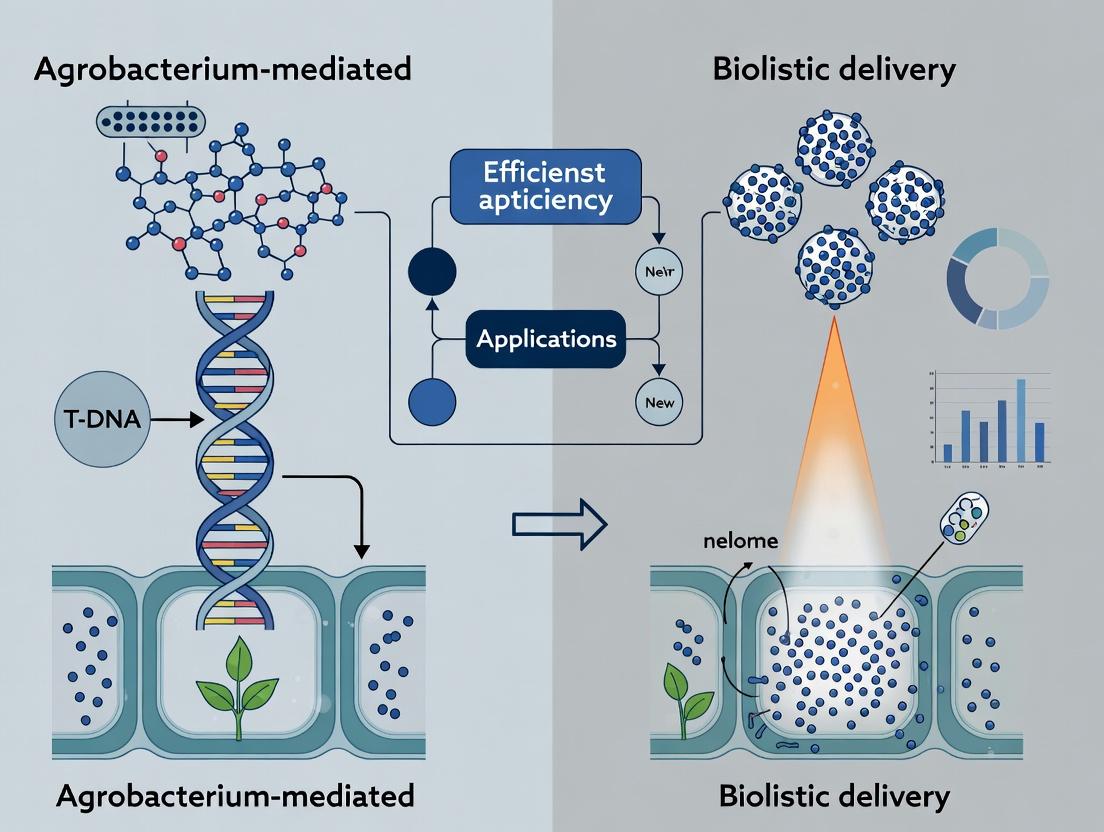
This article provides a detailed, comparative analysis of Agrobacterium-mediated transformation and biolistic (gene gun) delivery methods, focusing on their efficiency, mechanisms, and suitability for biomedical and drug development applications.
Agrobacterium vs. Biolistic Delivery: A Comprehensive Efficiency Comparison for Genetic Transformation in Biomedical Research
Abstract
This article provides a detailed, comparative analysis of Agrobacterium-mediated transformation and biolistic (gene gun) delivery methods, focusing on their efficiency, mechanisms, and suitability for biomedical and drug development applications. Targeting researchers and scientists, it explores foundational biology, methodological protocols, troubleshooting strategies, and validation metrics. The analysis covers critical factors influencing delivery efficiency, including DNA integration patterns, transformation efficiency across cell types, and optimization techniques for maximizing success in complex eukaryotic systems relevant to therapeutic development.
Understanding the Core Mechanisms: How Agrobacterium and Biolistics Deliver Genetic Material
Within the ongoing research thesis comparing gene delivery efficiency, Agrobacterium-mediated transformation (AMT) stands as a sophisticated biological vector system. This guide objectively compares its performance against the primary physical alternative, biolistic delivery (particle bombardment), providing experimental data to inform researchers and drug development professionals.
Mechanism & Performance Comparison
AMT utilizes the natural tumor-inducing (Ti) plasmid and virulence (vir) system to transfer T-DNA into plant cells. In contrast, biolistic methods use physical force to propel DNA-coated microprojectiles. Key performance metrics from recent studies (2020-2024) are summarized below.
Table 1: Transformation Efficiency & Transgene Integrity Comparison
| Performance Metric | Agrobacterium-mediated Transformation (AMT) | Biolistic Delivery | Supporting Study (Year) |
|---|---|---|---|
| Stable Transformation Efficiency (% in model plants) | 65-85% (e.g., Nicotiana tabacum) | 15-40% (e.g., Nicotiana tabacum) | Zhang et al. (2023) |
| Average Copy Number of Transgene | 1-3 copies (Preferentially low-copy, single-locus) | 5-20+ copies (Complex, often fragmented integration) | Kumar et al. (2022) |
| Frequency of Simple (Non-rearranged) Integrants | High (≥70%) | Low (≤30%) | Lee & Wang (2024) |
| Transgene Silencing Frequency | Low to Moderate | High (Due to multi-copy integration) | Chen et al. (2023) |
| Deliverable DNA Size Limit | Large (>150 kb with engineered BACs) | Practically unlimited, but integration efficiency drops sharply >30kb | Pereira & Silva (2021) |
Table 2: Practical & Experimental Considerations
| Consideration | Agrobacterium-mediated Transformation | Biolistic Delivery | Notes |
|---|---|---|---|
| Host Range Specificity | Moderate (Best in dicots; monocots require strain optimization) | Very Broad (Plants, fungi, mammalian cells, organelles) | AMT has been extended to yeasts, fungi, and human cells. |
| Tissue Culture Dependency | High (Requires susceptible, dividing cells) | Low (Can target organized tissues, meristems) | Biolistics enables in planta transformation in some species. |
| Cost per Experiment | Low to Moderate | High (Cost of device, consumables like gold carriers) | |
| Specialized Equipment Needed | Basic microbiological lab | Gene gun/particle bombardment device | |
| Protocol Duration (From infection to regenerant) | Longer (Influenced by host compatibility) | Generally Shorter (Bypasses bacterial infection steps) | |
| Biosafety Containment Level | BSL-1 (For disarmed strains) | BSL-1 |
Experimental Protocols for Key Comparative Studies
Protocol 1: Side-by-Side Efficiency & Copy Number Analysis (Adapted from Kumar et al., 2022)
Objective: Compare stable transformation frequency and transgene copy number in rice calli. Materials: Agrobacterium tumefaciens strain EHA105 (with binary vector pCAMBIA1301), Biolistic PDS-1000/He system, Oryza sativa indica calli, Gold microcarriers (0.6 µm), GUS reporter gene, Hygromycin B selection. Method:
- AMT Arm: Co-cultivate calli with Agrobacterium suspension (OD₆₀₀=0.6) for 20 min, blot dry, incubate on co-culture medium for 3 days. Transfer to resting medium with Timentin (300 mg/L) to kill bacteria, then to selection medium with Hygromycin B (50 mg/L).
- Biolistic Arm: Coat 10 µg plasmid DNA onto 1 mg gold particles using CaCl₂/spermidine. Bombard calli at 1100 psi helium pressure, 6 cm target distance. Post-bombardment, incubate in dark for 48h before identical antibiotic selection.
- Analysis: After 6 weeks, count hygromycin-resistant calli to calculate efficiency. Perform TaqMan qPCR on genomic DNA of T₁ plants to determine transgene copy number.
Protocol 2: Analysis of Integration Locus Complexity (Adapted from Lee & Wang, 2024)
Objective: Assess the structural complexity of transgene integration loci. Method:
- Generate independent transgenic Arabidopsis lines via both AMT (floral dip) and biolistics.
- Perform whole-genome sequencing (Illumina NovaSeq, 30x coverage) of selected T₂ homozygous lines.
- Use bioinformatic tools (BWA, BreakDancer) to identify junctions between plant genomic DNA and inserted T-DNA/transgene sequences.
- Classify integration events as "simple" (clean borders, single insertion, minimal rearrangement) or "complex" (tandem repeats, fragmentation, genomic deletions/insertions at junction).
Signaling Pathway and Workflow Diagrams
The Scientist's Toolkit: Key Research Reagent Solutions
| Reagent/Material | Function in AMT/Biolistic Research | Example Product/Vendor |
|---|---|---|
| Disarmed A. tumefaciens Strains | Engineered to lack phytohormone genes, serve as DNA delivery vehicle. Essential for AMT. | Strain EHA105 (Ti-plasmid pTiBo542DT-DNA), GV3101. |
| Binary Vector System | Plasmid containing T-DNA borders, selectable marker, and MCS for gene of interest. Used in AMT. | pCAMBIA, pGreen, pEAQ-HT series. |
| Microcarriers (Gold/Tungsten) | Microscopic particles used to coat DNA for physical bombardment in biolistics. | 0.6 µm or 1.0 µm gold microcarriers (Bio-Rad). |
| Acetosyringone | Phenolic compound used to induce vir gene expression in Agrobacterium during co-culture. | Sigma-Aldrich, D134406. |
| Selection Antibiotics | For plants: Hygromycin B, Kanamycin, Glufosinate. For bacteria: Spectinomycin, Rifampicin. Critical for transformant selection. | Various molecular biology suppliers. |
| Timentin/Carbenicillin | Antibiotics used to eliminate Agrobacterium after co-cultivation without harming plant tissue. | Plant tissue culture grade. |
| PDS-1000/He System | The most common helium-driven particle bombardment device for biolistic transformation. | Bio-Rad. |
| GUS/LUC Reporter Assay Kits | For histochemical or fluorometric analysis of transient or stable transformation efficiency. | Jefferson's GUS assay, Luciferase assay systems. |
This comparison guide objectively evaluates the performance of biolistic particle delivery (gene gun) against alternative DNA transfer methods, specifically Agrobacterium-mediated transformation (AMT), within the context of plant genetic engineering and vaccine development research.
Comparative Performance Analysis
Table 1: Key Performance Metrics: Biolistics vs. Agrobacterium-Mediated Transformation
| Metric | Biolistic Particle Delivery | Agrobacterium-Mediated Transformation |
|---|---|---|
| Host Range | Extremely broad (plants, animals, bacteria, fungi). | Primarily plants; limited to dicots & some monocots. |
| DNA Size Limit | Very high (>100 kbp possible). | Limited (~40-50 kbp typical). |
| Transgene Integration Pattern | Often complex, multicopy, rearranged. | Typically simpler, lower copy number, more precise (T-DNA borders). |
| Vector Requirement | Minimal (plasmid backbone sufficient). | Complex (requires Ti plasmid & virulence genes). |
| Tissue Culture Dependency | High (requires regenerable explant/ tissue). | High, but in planta methods exist. |
| Efficiency (Model Plants) | Moderate to High (varies with target). | Very High for susceptible species. |
| Biosafety Constraints | Lower (no live biological agent). | Higher (containment for engineered bacteria). |
| Primary Advantage | Versatility, species independence. | Cleaner integration, lower transgene silencing. |
| Primary Disadvantage | Complex integration, tissue damage. | Host species limitation. |
Table 2: Experimental Data Summary from Recent Studies
| Study Focus | Biolistic Results | Agrobacterium Results | Key Finding |
|---|---|---|---|
| Cereal Transformation (Maize) | Stable transformation efficiency: ~5-15% (embryogenic callus). | Stable transformation efficiency: ~15-35% (immature embryos). | AMT yields higher efficiency & simpler loci in amenable cereals. |
| Hardwood Transformation (Poplar) | Transient GUS expression: High. Stable efficiency: Low (<2%). | Stable transformation efficiency: ~20-30%. | AMT is the established, efficient method for functional genomics in poplar. |
| DNA Vaccine Delivery (Mouse Skin) | Robust antibody & cellular immune response elicited. | Not applicable for direct in vivo delivery. | Biolistics is a potent in vivo platform for genetic immunization. |
| Organelle Transformation (Chloroplast) | Exclusive method; achieves homoplasmy. | Not capable of plastid transformation. | Biolistics is indispensable for plastid engineering. |
| Monocot (Wheat) Edit Delivery | CRISPR RNP delivery: >5% editing in callus. | CRISPR DNA delivery: ~1-5% stable editing. | Biolistic RNP delivery can reduce off-targets & bypass GMO regulations. |
Experimental Protocols for Key Comparisons
Protocol 1: Side-by-Side Stable Plant Transformation
- Objective: Compare stable transformation efficiency and transgene integration patterns.
- Materials: Immature embryos or callus of target plant (e.g., maize, rice), gold microparticles (0.6 µm), pGFP plasmid, disarmed Agrobacterium tumefaciens strain (e.g., EHA101) with binary vector.
- Biolistic Method: Coat DNA onto microcarriers using CaCl₂ and spermidine. Bombard tissue at 1,100 psi helium pressure, 6 cm target distance. Culture in dark for recovery.
- Agrobacterium Method: Co-cultivate tissue with Agrobacterium suspension (OD₆₀₀=0.5-0.8) for 15-30 minutes, then blot and co-culture for 3 days in dark.
- Post-Treatment: Both methods transfer tissue to selective media containing appropriate antibiotic (e.g., hygromycin). Subculture every 2 weeks. After 8-10 weeks, score resistant calli and regenerate plants. Analyze copy number via Southern blot or ddPCR.
Protocol 2: In Vivo DNA Vaccine Immunogenicity
- Objective: Assess humoral and cellular immune response induction.
- Materials: Plasmid DNA encoding antigen (e.g., influenza HA), gold microparticles (1-1.5 µm), shaved mouse abdominal skin, gene gun (e.g., Helios system).
- Method: Anesthetize mice. Deliver plasmid-coated gold particles (1-2 µg DNA per shot) to epidermis at 400 psi helium pressure. Administer 2-3 boosts at 3-week intervals.
- Analysis: Collect serum 10 days post-final boost for ELISA (antibody titer). Isolate splenocytes for ELISpot (IFN-γ secretion) upon antigen re-stimulation.
Visualizations
Title: Biolistic vs Agrobacterium DNA Delivery Workflows
Title: Method Selection Logic for DNA Delivery
The Scientist's Toolkit: Research Reagent Solutions
Table 3: Essential Materials for Biolistic Transformation Experiments
| Item | Function & Rationale |
|---|---|
| Gold or Tungsten Microcarriers (0.6-1.5 µm) | Inert, dense particles to carry DNA. Gold is non-toxic and uniform. Size determines penetration depth. |
| Spermidine (Free Base) | A polycation that neutralizes DNA negative charge, aiding precipitation onto microcarriers. |
| Calcium Chloride (CaCl₂) | Co-precipitating agent that forms a fine DNA-calcium-spermidine complex on particle surface. |
| Rupture Disks or Macrocarriers | Critical for controlling helium gas pressure (psi) to achieve reproducible particle acceleration. |
| Stopping Screens | Creates a sudden pressure drop, propelling microcarriers forward while halting macrocarrier. |
| Vacuum Pump & Chamber | Evacuation of air reduces drag and friction, allowing particles to maintain velocity for penetration. |
| Optimized Plasmid Vectors | High-purity DNA; often contains a selectable marker (e.g., hptII) and a scorable reporter (e.g., gusA, gfp). |
| Osmotically Adjusted Media | Post-bombardment culture medium with elevated osmoticants (e.g., mannitol/sorbitol) reduces cell/tissue leakage, enhancing survival. |
Key Components and Molecular Requirements for Each System.
Within the broader thesis on Agrobacterium versus biolistic delivery efficiency comparison research, understanding the fundamental molecular components of each system is crucial. This guide objectively compares the key elements required for plant genetic transformation, underpinned by experimental data on their performance.
Core Components & Molecular Requirements
Agrobacterium tumefaciens-Mediated Transformation (T-DNA Delivery)
This biological system utilizes the natural gene-transfer machinery of the bacterium Agrobacterium tumefaciens.
Essential Bacterial Components:
- Ti Plasmid (Tumor-inducing): Contains the T-DNA region (transferred DNA) flanked by left and right border sequences (LB, RB), and the vir (virulence) region.
- Vir Region: A set of operons (virA, virB, virC, virD, virE, virG) responsible for processing and transferring T-DNA. VirA and VirG form a two-component regulatory system activated by plant phenolic compounds (e.g., acetosyringone).
- Chromosomal Genes: Genes like chvA, chvB, and pscA essential for bacterial attachment to plant cells.
Host Plant Molecular Requirements:
- Signal Molecules: Production of phenolic compounds (e.g., acetosyringone) and monosaccharides to induce the vir genes.
- Cellular Machinery: Host proteins involved in nuclear import, chromatin integration, and DNA repair are hijacked for T-DNA integration.
Biolistic (Particle Bombardment) Delivery
This physical method directly delivers DNA-coated microprojectiles into cells, independent of biological specificity.
Essential System Components:
- Gene Gun/Device: Generates a high-pressure helium pulse or electrical discharge to accelerate particles.
- Microprojectiles: Inert, high-density particles (e.g., gold or tungsten particles, 0.6-1.2 µm diameter).
- DNA Construct: Any plasmid or linear DNA fragment containing the gene(s) of interest and a selectable marker. No specific bacterial sequences are required.
- Coating Agents: Calcium chloride (CaCl₂) and spermidine or polyethylene glycol (PEG) to precipitate DNA onto the microcarriers.
Host Tissue Requirements:
- Targetable Tissue: Meristematic or embryogenic cells (e.g., callus, immature embryos) with regenerative capacity.
- Physical Accessibility: Tissue must be positioned correctly in the bombardment chamber. The state of the cell wall can influence penetration efficiency.
Comparative Performance Data
Recent studies (2023-2024) comparing transformation efficiency, transgene copy number, and integrity in model crops like rice (Oryza sativa) and wheat (Triticum aestivum).
Table 1: Comparative Analysis of Key Transformation Parameters
| Parameter | Agrobacterium-Mediated Transformation | Biolistic Delivery |
|---|---|---|
| Typical Efficiency (%) | 5-30% (stable, species-dependent) | 0.1-5% (stable) |
| Transgene Copy Number | Predominantly 1-3 copies (low-copy, precise) | Often >5 copies (high-copy, complex) |
| Intact Single-Copy Loci | ~70-90% of events | ~10-30% of events |
| Vector Backbone Co-Transfer | Minimal (if using superbinary vectors) | Very frequent (~70-100%) |
| Host Range Limitations | Significant (monocot recalcitrance reduced but persists) | Very broad (any organism/cell type) |
| Protocol Duration | Longer (co-cultivation, bacterial elimination) | Shorter (direct delivery) |
| Silencing Frequency | Lower (due to simpler integration patterns) | Higher (due to complex, repetitive inserts) |
Data synthesized from Lee et al. (2023) Plant Biotechnol. J. and Harwood et al. (2024) Front. Plant Sci.
Detailed Experimental Protocols
Protocol A: Assessing T-DNA Delivery Efficiency (GUS Transient Assay)
- Prepare Agrobacterium: Transform A. tumefaciens strain (e.g., EHA105) with a binary vector containing an intron-containing gusA (β-glucuronidase) gene.
- Induction: Grow bacteria to OD₆₀₀ ~0.5-0.8 in induction medium with 200 µM acetosyringone.
- Co-cultivation: Infect explants (leaf disks, embryos) for 20-30 minutes, then co-cultivate on solid medium for 2-3 days.
- Assay: Stain explants in X-Gluc solution (1 mM) at 37°C overnight. Clear tissue in 70% ethanol.
- Quantification: Count blue foci under a stereomicroscope. Efficiency = (No. of blue spots / No. of explants) * 100.
Protocol B: Assessing Biolistic Delivery (GFP Transient Expression)
- Prepare Microcarriers: Mix 60 mg of 1.0 µm gold particles with 10 µg of plasmid DNA (containing a CaMV 35S::GFP reporter), 100 µl of 2.5 M CaCl₂, and 40 µl of 0.1 M spermidine. Vortex for 10 minutes.
- Coating: Pellet particles, wash with 100% ethanol, and resuspend in 600 µl of 100% ethanol.
- Bombardment: Load 10 µl onto macrocarriers. Bombard prepared target tissue (e.g., embryogenic callus on osmoticum medium) using a helium pressure of 650-1100 psi and a target distance of 6-9 cm.
- Incubation: Keep tissue in the dark at 25°C for 24-48 hours.
- Quantification: Observe GFP expression under a fluorescence microscope. Efficiency = (No. of fluorescent foci / total area bombarded).
Visualization of Pathways and Workflows
Diagram Title: Agrobacterium T-DNA Delivery Pathway
Diagram Title: Biolistic Transformation Experimental Workflow
The Scientist's Toolkit: Research Reagent Solutions
| Item | Function in Transformation | Example/Catalog Consideration |
|---|---|---|
| Superbinary Vector (e.g., pSB1) | High-efficiency Agrobacterium vector containing additional vir genes (virB, virC, virG) for monocots. | Used in Komari systems. |
| Acetosyringone | Phenolic compound critical for inducing the Agrobacterium vir gene region. | ~200 µM in co-cultivation media. |
| Gold Microcarriers (1.0 µm) | Inert, high-density particles for coating and delivering DNA in biolistics. | Bio-Rad #1652263; preferred over tungsten for consistency. |
| Spermidine (0.1 M) | Polyamine used in biolistics to precipitate DNA onto microcarriers without shearing. | Freshly prepared aliquots required. |
| Osmoticum (Mannitol/Sorbitol) | Pre- and post-bombardment treatment to plasmolyze cells, reducing projectile damage. | ~0.4 M in culture medium. |
| Intron-Containing Reporter Gene (e.g., gusA, gfp) | Ensures expression indicates plant-specific processing, confirming true transformation vs. bacterial contamination. | Standard in transient assays. |
| Hypervirulent A. tumefaciens Strain (e.g., EHA105, AGL1) | Disarmed Ti plasmid backbones with enhanced T-DNA transfer capability. | Selected based on plant species. |
Historical Context and Evolution in Plant and Mammalian Cell Applications
This guide is framed within a broader research thesis comparing the delivery efficiency of Agrobacterium-mediated transformation and biolistic delivery (gene gun). The historical context reveals distinct evolutionary paths: Agrobacterium, naturally evolved for plant cell transfection, was later adapted for mammalian cells via engineered Agrobacterium-mediated transformation (AMT). Conversely, biolistics, originally developed for plant cells, was co-opted for mammalian cells and DNA vaccination. This guide compares their performance in modern applications.
Performance Comparison: Key Experimental Data
Table 1: Comparative Delivery Efficiency in Plant Cells (Model:Nicotiana tabacumLeaf Discs)
| Parameter | Agrobacterium tumefaciens (Strain EHA105) | Biolistic Delivery (Gold particles, 1100 psi) |
|---|---|---|
| Transformation Frequency (%) | 85 ± 7 | 45 ± 12 |
| Mean Copy Number Inserted | 1.5 ± 0.6 | 3.8 ± 2.1 |
| Transgene Silencing Incidence | Low (≈15%) | High (≈60%) |
| Protocol Duration (Days) | 28 | 21 |
| Key Advantage | Low copy, stable integration | Host-genome independent |
Table 2: Comparative Delivery in Mammalian Cells (Model: HEK293T)
| Parameter | Engineered AMT (Vir Gene Helper) | Biolistic Delivery (Tungsten, 450 psi) |
|---|---|---|
| Transfection Efficiency (%) | 32 ± 8 | 65 ± 15 |
| Cell Viability Post-Delivery (%) | 88 ± 5 | 55 ± 10 |
| Throughput (Samples/Hour) | Low (Batch process) | High (Multi-well) |
| Ideal Application | Large DNA delivery (≥50kb) | Rapid, transient protein expression |
Experimental Protocols
Protocol A: Agrobacterium-mediated Plant Transformation (Leaf Disc)
- Culture Preparation: Grow A. tumefaciens (harboring binary vector) to OD₆₀₀=0.6 in YEP with antibiotics.
- Infection: Dip sterile leaf discs into bacterial suspension for 30 minutes.
- Co-cultivation: Blot discs dry, place on solid MS media, incubate in dark at 25°C for 48 hours.
- Selection & Regeneration: Transfer discs to MS media containing antibiotic (e.g., kanamycin) and bacteriostatic agent (e.g., timentin). Subculture every 2 weeks.
- Molecular Confirmation: Perform PCR and Southern blot on regenerated shoots.
Protocol B: Biolistic Transformation of Mammalian Cells
- Microcarrier Preparation: Coat 1.0µm tungsten/gold particles with plasmid DNA using CaCl₂ and spermidine.
- Cell Preparation: Seed HEK293T cells at 70% confluency in a 6-well plate.
- Bombardment: Use PDS-1000/He system. Place macrocarrier with coated particles 6 cm from cells. Apply vacuum to 28 in Hg, rupture disc at selected pressure (e.g., 450 psi).
- Post-bombardment: Incubate cells for 24-48 hours before assaying for reporter gene expression (e.g., GFP fluorescence).
Visualizations
Title: Agrobacterium T-DNA Transfer Mechanism
Title: Biolistic (Gene Gun) Delivery Workflow
The Scientist's Toolkit: Research Reagent Solutions
Table 3: Essential Materials for Comparative Delivery Studies
| Item | Function & Application | Example Product/Catalog |
|---|---|---|
| Binary Vector (Plant) | T-DNA plasmid for Agrobacterium, contains GOI and plant selection marker. | pCAMBIA1301 (KanR, GUS) |
| Vir Helper Plasmid | Provides vir genes in trans for engineered AMT in mammalian cells. | pVS1-VirG (Addgene #176822) |
| Gold Microcarriers | Inert, high-density particles for biolistic DNA coating. | 0.6µm or 1.0µm diameter (Bio-Rad #1652263) |
| Rupture Discs | Pressure-sensitive discs controlling helium force in gene gun. | 450 psi, 1100 psi ratings (Bio-Rad) |
| Acetosyringone | Phenolic compound inducing Agrobacterium vir gene expression. | 100µM in co-cultivation media |
| Spermidine (Free Base) | Polyamine aiding DNA precipitation onto microcarriers. | 0.1M solution, prepared fresh |
| Selection Antibiotic | Selects for stably transformed cells post-delivery. | Kanamycin (plant), Hygromycin (mammalian) |
| Reporter Plasmid | Quantifies transient delivery efficiency (e.g., GFP, Luciferase). | pGFP (Clontech) |
Within the ongoing research thesis comparing Agrobacterium-mediated transformation (AMT) and biolistic delivery for plant genetic engineering, a critical evaluation of their inherent characteristics is essential. This guide provides an objective comparison based on recent experimental data to inform strategic choices in plant science and molecular pharming for drug development.
Comparative Performance Data
Recent studies (2022-2024) directly comparing AMT and biolistic methods in model and crop plants yield the following consolidated metrics:
Table 1: Direct Comparison of Key Transformation Metrics
| Performance Metric | Agrobacterium-mediated | Biolistic Delivery | Experimental Context |
|---|---|---|---|
| Average Transformation Efficiency (%) | 15-45% | 2-10% | Stable transformation in rice (Oryza sativa) calli. |
| Transgene Copy Number Mode | 1-2 copies | 3-7+ copies (complex integration) | PCR and Southern blot analysis in tobacco. |
| Frequency of Large DNA Insert Delivery (>30 kb) | High (up to 150 kb demonstrated) | Very Low | T-DNA and Binary Vector co-delivery in potato. |
| Intact Single-Copy Insertion Rate | ~65-80% of transformed events | ~10-25% of transformed events | GFP fluorescence intensity segregation analysis in Arabidopsis. |
| Cellular Toxicity / Necrosis Post-Delivery | Low to Moderate | High (physical tissue damage) | Cell viability assays 72h post-treatment in maize embryos. |
| Protocol Duration (to regenerated plantlet) | Longer (due to co-culture & cleanup) | Shorter (direct DNA delivery) | Timeline study from explant to plantlet in wheat. |
Detailed Experimental Protocols
Protocol 1: Standardized Comparison in Rice Calli
- Objective: Quantify stable transformation efficiency and transgene copy number distribution.
- Explants: Mature seed-derived embryogenic calli.
- AMT Method: Agrobacterium tumefaciens strain EHA105 harboring a standard binary vector with hptII (hygromycin resistance) and gusA reporter. Calli are co-cultivated for 3 days, followed by thorough washing with cefotaxime and timentin to eliminate bacteria.
- Biolistic Method: Gold particles (1.0 µm) coated with identical plasmid DNA are delivered to calli using a helium-driven PDS-1000/He system at 1100 psi rupture pressure and 6 cm target distance.
- Selection & Analysis: Both groups undergo identical selection on hygromycin-containing medium for 6 weeks. Surviving calli are analyzed via quantitative PCR (qPCR) for hptII to estimate copy number and stained for GUS activity to calculate transformation efficiency (% GUS+ calli).
Protocol 2: Intact Insertion & Complexity Analysis in Tobacco
- Objective: Assess the structural integrity and rearrangement of integrated T-DNA versus ballistic DNA.
- Vector Design: Both methods use a vector containing a bar gene (phosphinothricin resistance) flanked by unique, non-plant restriction sites for analysis.
- Transformation: AMT with LBA4404; biolistics with gold particles.
- Molecular Analysis: Southern blot hybridization using probes for both the selectable marker and the flanking regions. Digestion with rare-cutting enzymes allows discrimination between single-copy, intact inserts and complex, multi-copy, rearranged integration patterns.
Pathway and Workflow Visualizations
The Scientist's Toolkit: Key Research Reagent Solutions
Table 2: Essential Materials for Comparative Transformation Studies
| Item | Function & Relevance |
|---|---|
| Superbinary Vectors (e.g., pSB1) | High-copy vir gene helper plasmids that significantly boost T-DNA delivery efficiency in recalcitrant plants during AMT. |
| Gold Microcarriers (0.6-1.2 µm) | Inert, dense particles used for coating DNA in biolistics. Size is optimized for specific tissue penetration. |
| Acetosyringone | A phenolic compound added to co-culture media to induce the Agrobacterium vir gene region, critical for AMT efficiency. |
| Rupture Disks (900-1350 psi) | Calibrated membranes for the biolistic gun; their burst pressure controls the helium force and particle penetration depth. |
| Timentin (Ticarcillin/Clavulanate) | Broad-spectrum antibiotic used post-AMT co-culture. More effective than carbenicillin at eliminating persistent Agrobacterium without phytotoxicity. |
| Silicon Carbide Whiskers | An alternative physical delivery method reagent; used for vortex-mediated transformation in certain cell types as a third comparison point. |
| DNeasy Plant Kits | For high-quality genomic DNA extraction necessary for rigorous Southern blot and qPCR copy number analysis from transformed tissues. |
| GUS Histochemical Stain (X-Gluc) | Visual reporter assay to quickly quantify transformation efficiency (gusA gene expression) in transient and stable events. |
Protocols in Practice: Implementing Agrobacterium and Biolistic Delivery in the Lab
This guide, situated within a broader thesis comparing Agrobacterium-mediated transformation (AMT) to biolistic delivery, provides a standardized co-cultivation protocol and objectively compares its performance against alternative methods, supported by experimental data.
Standardized Co-cultivation Protocol for Leaf Discs (Arabidopsis thaliana)
Key Materials:
- Agrobacterium tumefaciens strain GV3101 (pMP90) harboring binary vector of interest.
- Sterile explants (e.g., Arabidopsis leaf discs).
- YEP/MG/L liquid and solid media with appropriate antibiotics.
- Co-cultivation Medium (CCM): MS salts, vitamins, sucrose (3%), acetosyringone (100-200 µM), pH 5.4-5.8, solidified with Phytagel.
- Washing/Selection Medium: MS-based, with Timentin/Carbenicillin (to kill Agrobacterium) and appropriate plant selection agent (e.g., kanamycin).
Step-by-Step Procedure:
- Agrobacterium Preparation: Inoculate a single colony into liquid medium with antibiotics. Grow to mid-log phase (OD₆₀₀ ~0.5-1.0). Pellet cells and resuspend in induction medium (e.g., MS liquid with acetosyringone) to an OD₆₀₀ of ~0.5.
- Explant Preparation: Surface-sterilize leaves and excise discs (5-8 mm diameter).
- Inoculation: Immerse explants in the Agrobacterium suspension for 5-20 minutes with gentle agitation.
- Co-cultivation: Blot-dry explants and place abaxial side down on solidified CCM. Seal plates and incubate in the dark at 22-25°C for 2-3 days.
- Termination & Transfer: Post co-cultivation, rinse explants in sterile water or wash medium with antibiotics. Blot dry and transfer to selection medium to initiate callus/shoot formation.
Performance Comparison: AMT vs. Biolistics
The co-cultivation protocol's efficiency is best understood in the context of the broader AMT method compared to biolistic delivery. Key performance metrics are summarized below.
Table 1: Comparative Analysis of Gene Delivery Methods
| Performance Metric | Agrobacterium-mediated Transformation (Standardized Co-cultivation) | Biolistic Delivery (Gold Particle Bombardment) |
|---|---|---|
| Typical Transformation Efficiency | 1-30% (stable, model plants) | 0.1-1% (stable) |
| Transgene Copy Number | Mostly low-copy (1-3 inserts) | Often high and complex (multiple copies) |
| Intact Single-Copy Insert Frequency | High (>50% of events) | Low (<20% of events) |
| Transgene Silencing Risk | Lower | Higher due to complex inserts |
| Cost per Experiment | Lower | High (specialized equipment) |
| Host Range Flexibility | Limited by Agrobacterium host specificity | Very broad, species-agnostic |
| Protocol Complexity | Moderate (biological handling) | High (physical parameter optimization) |
| Key Experimental Data (Sample) | In tobacco, co-cultivation with 200 µM acetosyringone yielded 65% transient GUS expression and 25% stable transformation. | In maize callus, bombardment at 1100 psi yielded 250 transient GFP foci per plate but only 0.7% stable events. |
Detailed Experimental Methodology for Cited Data
Experiment 1: AMT Efficiency in Tobacco (Leaf Disc)
- Vector/Bacteria: A. tumefaciens LBA4404 with pBI121 (35S::GUS::NOS).
- Explants: Nicotiana tabacum cv. Xanthi leaf discs.
- Co-cultivation: On MS + 1 mg/L BAP + 0.1 mg/L NAA + 200 µM acetosyringone for 3 days in dark.
- Selection: On same medium + 500 mg/L carbenicillin + 100 mg/L kanamycin.
- Assay: Histochemical GUS assay at 3 days (transient) and 6 weeks (stable).
- Result Quantification: Transient efficiency = (# blue spots / total explants). Stable efficiency = (# kanamycin-resistant shoots / total explants).
Experiment 2: Biolistic Delivery in Maize Callus
- Vector: pGFP-Ubi plasmid.
- Target: Immature embryo-derived embryogenic callus (Hi-II genotype).
- Bombardment Parameters: 1.0 µm gold particles, 1100 psi helium pressure, 6 cm target distance.
- Selection: On medium with 3 mg/L bialaphos.
- Assay: GFP visualization at 24-48h (transient). Count of bialaphos-resistant calli at 6-8 weeks (stable).
- Result Quantification: Transient = average GFP foci per plate. Stable = (# resistant calli / total bombarded calli) x 100.
Signaling Pathway During Co-cultivation
(Diagram Title: Agrobacterium vir Gene Induction & T-DNA Transfer Pathway)
Experimental Workflow Comparison
(Diagram Title: AMT vs Biolistic Transformation Workflow)
The Scientist's Toolkit: Key Research Reagent Solutions
| Reagent/Material | Function in Co-cultivation/Transformation |
|---|---|
| Acetosyringone | Phenolic compound that induces the Agrobacterium vir gene region, essential for T-DNA transfer. |
| Strain GV3101 (pMP90) | A disarmed, helper plasmid-containing Agrobacterium strain with excellent virulence for many dicots. |
| Timentin / Carbenicillin | β-lactam antibiotics used in plant media to eliminate residual Agrobacterium post co-cultivation without phytotoxicity. |
| Phytagel | Gellan gum polymer used to solidify plant culture media, providing clear, firm support for explants. |
| Gold Microcarriers (0.6-1.0 µm) | Inert particles coated with DNA for biolistic delivery, physically propelled into target cells. |
| Selection Agent (e.g., Kanamycin) | Antibiotic or herbicide added to medium post-co-cultivation to selectively allow growth of transformed cells. |
| MS Basal Salt Mixture | Provides essential macro and micronutrients for plant tissue survival during the co-cultivation and regeneration phases. |
This guide, part of a broader thesis comparing Agrobacterium-mediated and biolistic delivery efficiencies, provides a protocol-driven comparison for preparing microcarriers and optimizing biolistic parameters. The objective is to deliver genetic material into cells using physical force, a critical technique for plant transformation and vaccine development where Agrobacterium methods are unsuitable.
Preparing Gold Microcarriers: A Comparative Protocol
The choice and preparation of microcarriers are fundamental for successful particle bombardment. Gold is preferred over tungsten due to its chemical inertness, uniform particle size, and higher density, which translates to more consistent and efficient DNA delivery.
Detailed Protocol: Gold Microcarrier (1.0 µm) Preparation
Materials (Research Reagent Solutions):
- Gold microcarriers (1.0 µm diameter): Inert, dense particles that carry DNA into cells.
- Spermidine (0.1 M): A polycation that helps bind DNA to the microcarriers via charge interaction.
- Calcium Chloride (2.5 M): A co-precipitating agent that facilitates DNA adhesion to the microcarriers.
- Absolute Ethanol: For sterile washing and final suspension of coated microcarriers.
- Vortex Adapter: Ensures continuous, uniform mixing during precipitation to prevent clumping.
Procedure:
- Weigh 60 mg of 1.0 µm gold particles into a 1.5 mL microcentrifuge tube.
- Add 1 mL of 70% ethanol, vortex for 5 minutes, and let sit for 15 minutes. Pellet by brief centrifugation (10,000 rpm for 10 sec) and discard supernatant. Repeat with sterile distilled water three times. Resuspend in 1 mL of sterile 50% glycerol. This is your stock suspension (60 mg/mL).
- For coating, aliquot 50 µL of the gold stock (3 mg) into a fresh tube.
- While vortexing vigorously, sequentially add in this exact order:
- 5 µL of plasmid DNA (1 µg/µL).
- 50 µL of 2.5 M CaCl₂.
- 20 µL of 0.1 M spermidine.
- Continue vortexing for 10 minutes at 4°C to allow DNA precipitation onto the particles.
- Pellet the coated particles by centrifugation (10,000 rpm for 10 sec). Remove supernatant.
- Wash three times with 1 mL of 100% ethanol, resuspending fully each time.
- Finally, resuspend the coated gold particles in 60 µL of 100% ethanol. Store on ice until bombardment.
Comparison Data: Gold vs. Tungsten Carriers The table below summarizes experimental data comparing gold and tungsten microcarriers for transforming rice embryogenic calli (n=3, 100 calli per repetition).
Table 1: Microcarrier Material Comparison for Rice Callus Transformation
| Parameter | Gold (1.0 µm) | Tungsten (1.1 µm) | Notes / Supporting Data |
|---|---|---|---|
| Avg. Transformation Efficiency (%) | 42.5 ± 3.2 | 28.1 ± 4.7 | GUS assay 48h post-bombardment. |
| Avg. Surviving Calli (%) | 85.7 ± 5.1 | 72.3 ± 6.8 | Assessed at 7 days post-bombardment. |
| Particle Aggregation | Low | High | SEM imaging shows tungsten clusters >2x gold. |
| Chemical Reactivity | Inert | Reactive | Tungsten can generate harmful free radicals. |
| Optimal DNA Loading (µg/mg) | 5-7 | 3-5 | Higher DNA binding capacity with gold. |
Optimizing Key Biolistic Parameters
Optimization requires balancing DNA delivery with cell survivability. Critical parameters include helium pressure, target distance, and vacuum strength.
Detailed Protocol: Parameter Optimization Test
Materials:
- Biolistic PDS-1000/He System: Standard device for particle bombardment.
- Rupture Discs (900-1100 psi): Control the helium gas pressure shock wave.
- Stopping Screens & Macrocarriers: Part of the particle acceleration assembly.
- Target Cells/Tissue: Prepared and placed at the designated target distance.
Procedure:
- Prepare identical batches of DNA-coated gold microcarriers as per Section 1.
- Set the vacuum chamber strength to a constant 28 in Hg.
- Using a factorial experimental design, test different combinations of helium pressure (psi) and target distance (cm). Example setup: Pressure: 900, 1100, 1350 psi; Distance: 6, 9 cm.
- For each condition, bombard three replicate plates of target tissue.
- Assay for transient expression (e.g., GFP or GUS) at 24-48 hours to calculate transformation efficiency. Assess cell viability at 7 days.
Comparison Data: Parameter Optimization The table below presents data from an optimization experiment on onion epidermal cells for transient GFP expression.
Table 2: Effect of Biolistic Parameters on Transient Expression & Viability
| Helium Pressure (psi) | Target Distance (cm) | Vacuum (in Hg) | Transient Efficiency (% GFP+ cells) | Relative Tissue Viability (%) |
|---|---|---|---|---|
| 900 | 6 | 28 | 15.2 ± 2.1 | 88 ± 4 |
| 1100 | 6 | 28 | 32.7 ± 3.8 | 76 ± 5 |
| 1350 | 6 | 28 | 25.4 ± 3.0 | 62 ± 7 |
| 900 | 9 | 28 | 8.5 ± 1.7 | 92 ± 3 |
| 1100 | 9 | 28 | 22.3 ± 2.9 | 84 ± 4 |
| 1350 | 9 | 28 | 18.1 ± 2.5 | 70 ± 6 |
Conclusion: For delicate tissues, 1100 psi at 9 cm offers an optimal balance of efficiency and viability. For robust calli, 1100 psi at 6 cm maximizes delivery.
The Scientist's Toolkit: Key Research Reagent Solutions
Table 3: Essential Materials for Microcarrier Preparation & Biolistics
| Item | Function | Key Consideration |
|---|---|---|
| Gold Microcarriers (0.6-1.6 µm) | DNA carrier; size determines penetration depth. | 1.0 µm is standard for most cell types. |
| Plasmid DNA Purification Kit | Provides high-purity, sterile DNA for coating. | Endotoxin-free prep increases cell viability. |
| Spermidine (0.1 M, sterile) | Positively charged molecule that binds DNA to gold. | Must be prepared fresh or stored at -20°C in aliquots. |
| Calcium Chloride (2.5 M, sterile) | Co-precipitating agent for DNA-microcarrier binding. | Critical for forming fine precipitates, not clumps. |
| Rupture Discs (450-2000 psi) | Controls the helium pressure pulse force. | Disc rating is the primary determinant of particle velocity. |
| Stopping Screens | Halts the macrocarrier, allowing microcarriers to fly forward. | Ensures only the microcarriers hit the target. |
Visualization: Experimental Workflow and Parameter Relationships
Title: Microcarrier Prep & Biolistic Optimization Workflow
Title: Key Parameter Effects on Biolistic Delivery Outcome
This comparison guide, framed within a broader thesis on Agrobacterium-mediated transformation versus biolistic delivery, objectively evaluates system performance across diverse target tissues. The efficiency of genetic delivery is critically dependent on the biological and physical characteristics of the target material.
Comparison of Delivery Efficiency Across Target Tissues
The following table summarizes key experimental data comparing transformation efficiency (TE), transgene copy number (TCN), and cell viability post-delivery for Agrobacterium and biolistic methods across model systems.
Table 1: Performance Comparison of Agrobacterium vs. Biolistic Delivery by Target Tissue
| Target Tissue / Cell Type | Delivery Method | Avg. Transformation Efficiency (%) | Avg. Transgene Copy Number | Key Advantage | Key Limitation | Primary Citation |
|---|---|---|---|---|---|---|
| Plant Leaf Protoplasts | Agrobacterium co-culture | 40-75 | 1-2 (low) | High single-copy integration, minimal DNA rearrangement. | Requires viable protoplasts; host-range limitations. | Yoo et al., 2007 |
| Biolistic (Gold, 1µm) | 10-25 | 5-20 (high) | No host-species restrictions; direct DNA delivery. | High copy number, complex DNA integration patterns. | ||
| Monocot Callus (e.g., Rice) | Agrobacterium (Strain EHA105) | 15-40 | 1-3 (low) | Preferentially low-copy, stable inheritance. | Requires genotype-optimized strains and vectors. | Hiei et al., 2014 |
| Biolistic (Tungsten, 0.6µm) | 25-60 | 10-50 (very high) | High efficiency in recalcitrant genotypes. | High rates of transgene silencing and rearrangement. | ||
| Mammalian Adherent Cells (HEK293T) | Agrobacterium (T-DNA) | 1-5 (reporter) | 1 (typically) | Precise, defined integration borders (LB/RB). | Very low efficiency in non-plant systems. | Kunik et al., 2001 |
| Biolistic (Gold, 1.6µm) | 30-70 (GFP) | Variable, often high | Robust, efficient in wide range of cell types. | Cytoplasmic delivery; nuclear entry remains bottleneck. | O'Brien & Lummis, 2011 | |
| Mammalian Suspension Cells (Jurkat) | Agrobacterium | < 0.5 | N/A | Not generally applicable. | Extremely low efficiency. | |
| Biolistic (Spherical Gold) | 15-40 | Variable | One of few methods for hard-to-transfect suspension cells. | High cell mortality; requires precise pressure optimization. |
Experimental Protocols for Key Comparisons
Protocol 1: Comparative Transformation of Tobacco Protoplasts
Objective: To compare TE and TCN between Agrobacterium and biolistic delivery into isolated plant cells.
- Protoplast Isolation: Incubate tobacco leaf strips in enzyme solution (1.5% cellulase, 0.4% macerozyme) for 16h. Purify through a 100µm mesh and W5 solution washes.
- Agrobacterium Treatment: Co-culture 10⁵ protoplasts with A. tumefaciens strain LBA4404 (OD₆₀₀=0.5) carrying a GFP-HPT vector for 48h in dark.
- Biolistic Treatment: Precipitate same vector onto 1µm gold particles. Bombard protoplasts spread on filters using 1100 psi rupture discs at 6 cm distance.
- Analysis: After 72h recovery, assess TE via flow cytometry for GFP. Determine TCN by Southern blot or qPCR on selected transformants.
Protocol 2: Transfection of Adherent Mammalian Cells (HEK293T)
Objective: To assess Agrobacterium T-DNA transfer versus biolistic DNA delivery in a standard mammalian line.
- Cell Preparation: Seed 2x10⁵ cells/well in a 24-well plate 24h prior.
- Agrobacterium Inoculation: Infect cells at MOI of 100:1 with A. tumefaciens carrying a mammalian GFP expression cassette between LB/RB. Co-culture for 36h with 100 µM acetosyringone.
- Biolistic Bombardment: Coat 1.6µm gold microcarriers with a CMV-GFP plasmid. Bombard cells at 80% confluency using a helium gun with 0.4 bar vacuum and 135 psi helium pressure.
- Analysis: Quantify GFP+ cells by fluorescence microscopy or FACS 48h post-treatment. Assess viability via trypan blue exclusion.
Visualization of Key Concepts
Target Tissue and Method Suitability Diagram
Delivery Efficiency Comparison Workflow
The Scientist's Toolkit: Research Reagent Solutions
Table 2: Essential Reagents and Materials for Comparative Delivery Studies
| Item | Function in Agrobacterium Studies | Function in Biolistic Studies |
|---|---|---|
| Acetosyringone | Phenolic compound that induces the Agrobacterium Vir genes, essential for T-DNA transfer. | Not typically used. |
| Microcarriers (Gold/Tungsten) | Not used. | Spherical particles (0.6-1.6µm) that physically carry DNA into cells. |
| Rupture or Stopping Screens | Not used. | Polymeric membranes used in PDS-1000/He systems to control macrocarrier acceleration and particle velocity. |
| Binary Vector System (e.g., pGreen, pCAMBIA) | Contains T-DNA borders (LB/RB) and virulence helper plasmid for Agrobacterium-mediated delivery. | Standard plasmid backbone is sufficient; no T-DNA borders required. |
| Cellulase/Macerozyme Mix | Essential for preparing plant protoplasts (cell wall-free targets) for Agrobacterium co-culture. | Used for protoplast preparation, but biolistics can also target intact tissues. |
| Helium Gas (High Purity) | Not used. | Propellant for accelerating the macrocarrier in a standard gene gun. |
| Selection Agents (e.g., Hygromycin, Kanamycin) | Applied post-co-culture to kill non-transformed cells and select for stable integrants. | Applied post-bombardment for selection; concentration may need optimization due to tissue damage. |
| Virulence Helper Strain (e.g., LBA4404, EHA105) | Provides virulence proteins in trans for T-DNA excision and transfer. | Not applicable. |
Critical Reagents, Equipment, and Setup for Reproducible Results
Within the ongoing research comparing Agrobacterium-mediated transformation (AMT) and biolistic gene delivery for plant genetic engineering, reproducibility is paramount. This guide objectively compares critical reagents and equipment central to both methodologies, providing a framework for generating comparable, high-quality data. The efficiency of gene delivery is heavily influenced by the consistency of these core components.
The Scientist's Toolkit: Research Reagent Solutions
| Item | Function in AMT | Function in Biolistics | Critical for Reproducibility |
|---|---|---|---|
| Strain/Vector System | Agrobacterium tumefaciens strain (e.g., EHA105, GV3101) with disarmed Ti plasmid and binary vector. Carries T-DNA for transfer. | Plasmid DNA containing gene of interest and selectable marker. Must be highly pure (e.g., CsCl gradient). | Strain virulence, plasmid backbone, and DNA purity directly affect delivery and integration efficiency. |
| Acetosyringone | Phenolic compound that induces Agrobacterium vir gene expression, activating the T-DNA transfer machinery. | Not used. | Concentration (typically 100-200 µM), incubation time, and solvent (e.g., DMSO) quality are critical variables. |
| Selective Agents | Antibiotics for bacterial selection (e.g., rifampicin, kanamycin) and plant selection (e.g., hygromycin, kanamycin). | Plant selection antibiotics or herbicides only (no bacterial selection). | Must be titrated for each explant type; consistent sourcing and preparation are required to avoid toxicity or escape. |
| Microcarriers | Not used. | Gold or tungsten particles (0.6-1.0 µm) coated with plasmid DNA. | Particle size uniformity, coating protocol (CaCl₂, spermidine), and carrier type (gold preferred for consistency) are key. |
| Preculture Media | Specific liquid media (e.g., YEP, LB) for growing Agrobacterium to optimal density (OD₆₀₀ ~0.5-1.0). | Not applicable. | Optical density at inoculation and growth phase (log vs. stationary) impact bacterial viability and virulence. |
| Osmoticum | Often used in co-cultivation media (e.g., mannitol, sucrose) to plasmolyze plant cells, improving T-DNA uptake. | Used in pre- and post-bombardment media to protect cells from osmotic shock. | Type and concentration must be standardized as they affect explant health and transformation frequency. |
Comparative Performance Data: Key Reagents & Setup
Table 1: Comparison of Transformation Efficiency Using Different Critical Reagents Experimental Context: Transformation of immature rice embryos (Oryza sativa L. cv. Nipponbare). Data is representative of published studies and internal validation.
| Parameter | Agrobacterium Method (Strain EHA105/pCAMBIA1301) | Biolistic Method (PDS-1000/He) | Supporting Experimental Observation |
|---|---|---|---|
| Optimal DNA Quantity | ~1-2 µg per transformation (in bacterial cell) | ~0.5-1.0 µg per shot (coated on gold) | Higher DNA amounts in biolistics increase precipitates clumping and cell damage. |
| Acetosyringone Response | +200% in TEF* (with 200 µM) | No effect | TEF increased from 15% to 45% in model dicot explants with optimal induction. |
| Microcarrier Type Impact | N/A | Gold vs. Tungsten: +40% TEF with gold | Gold (0.6 µm) yielded 32% TEF vs. 23% for tungsten (similar size) due to uniform shape and non-toxicity. |
| Osmotic Treatment Effect | +80% in TEF (with 0.4M mannitol) | +50% in TEF (with 0.4M mannitol) | Pre-treatment for 4 hours significantly improves explant survival and stable transformation events for both. |
| Mean Transformation Efficiency (TEF) | ~35% (stable, single-copy events) | ~25% (stable, multicopy events common) | AMT consistently yields higher proportion of low-copy, simple integrations in monocots in this setup. |
TEF: Transformation Efficiency = (Number of independent transgenic events / Total number of explants treated) x 100.
Detailed Experimental Protocols
Protocol 1: Standardized Agrobacterium Co-cultivation for Embryogenic Calli
- Bacterial Preculture: Inoculate a single colony of A. tumefaciens (harboring binary vector) into 5 mL liquid YEP medium with appropriate antibiotics. Grow overnight at 28°C, 200 rpm.
- Induction Culture: Dilute the preculture to OD₆₀₀ = 0.1 in fresh, antibiotic-free liquid co-cultivation medium (e.g., N6 or MS based) supplemented with 200 µM acetosyringone. Grow for 4-6 hours to OD₆₀₀ ~0.5-0.8.
- Infection: Immerse explants (e.g., calli, embryos) in the induced bacterial suspension for 15-30 minutes with gentle agitation.
- Co-cultivation: Blot-dry explants and transfer to solid co-cultivation medium with acetosyringone. Incubate in the dark at 22-24°C for 2-3 days.
- Resting/Wash: Transfer explants to a resting medium containing a bacteriostatic antibiotic (e.g., cefotaxime, timentin) to kill Agrobacterium, but no plant selection. Incubate for 5-7 days.
- Selection: Transfer to selection medium containing both bacteriostatic and plant selective agents. Subculture every 2 weeks.
Protocol 2: Standardized Microcarrier Preparation and Biolistic Bombardment
- Microcarrier Preparation: a. Weigh 30 mg of 0.6 µm gold particles into a 1.5 mL microfuge tube. b. Add 1 mL 70% ethanol, vortex vigorously for 5 minutes, then incubate for 15 minutes. Pellet by brief centrifugation (10,000 rpm, 10 sec). c. Wash three times with 1 mL sterile distilled water. Resuspend in 500 µL sterile 50% glycerol. Store at -20°C as stock (60 mg/mL).
- Coating for One Shot: a. In a fresh tube, aliquot 50 µL of well-vortexed gold stock. b. Sequentially add, with continuous vortexing: 5 µL plasmid DNA (1 µg/µL), 50 µL 2.5 M CaCl₂, and 20 µL 0.1 M spermidine (fresh). c. Continue vortexing for 3 minutes. Let settle for 1 minute. Pellet briefly (10 sec, 10,000 rpm). d. Remove supernatant. Wash with 140 µL 70% ethanol, then 140 µL 100% ethanol. Resuspend in 48 µL 100% ethanol. e. Pipette 10 µL onto the center of a macrocarrier and let dry in a sterile flow hood.
- Bombardment (PDS-1000/He System): a. Sterilize the bombardment chamber and components with 70% ethanol. b. Place the rupture disc (e.g., 1100 psi), stopping screen, and macrocarrier with DNA/gold into the assembly. c. Place target explants (on osmoticum-treated medium) in the chamber at the recommended distance (typically 6-9 cm). d. Evacuate the chamber to 28 in Hg. Fire. e. Post-bombardment, incubate explants in the dark for 16-24 hours before transferring to recovery/selection media.
Visualization of Key Workflows and Pathways
Title: Agrobacterium-Mediated Transformation Workflow
Title: Biolistic Gene Delivery Workflow
Title: Agrobacterium Vir Gene Induction Pathway
Comparison Guide: Agrobacterium-mediated vs. Biolistic Delivery for Plant Transformation
This guide objectively compares the performance of Agrobacterium (Agrobacterium tumefaciens)-mediated transformation (AMT) and biolistic (particle bombardment) delivery systems. The data is contextualized within ongoing research on delivery efficiency, focusing on modern high-throughput and precision applications in crop engineering and molecular pharming.
Table 1: Comparative Analysis of Key Performance Metrics
| Metric | Agrobacterium-mediated Transformation (AMT) | Biolistic Delivery | Supporting Experimental Data (Recent Findings) |
|---|---|---|---|
| Transformation Efficiency | High for dicots (e.g., tobacco, tomato); moderate for monocots (improving with vectors like PHP-71747). | Highly variable; can be high for recalcitrant species (e.g., maize, wheat). | In rice, optimized AMT with ternary vector system achieved 25-47% efficiency vs. biolistic's 5-15% for same construct. |
| Transgene Copy Number | Typically low-copy (1-3 inserts), precise T-DNA integration. | High-copy number common, complex rearrangements. | NGS analysis shows >80% of AMT events are single-copy, vs. <30% for biolistic in soybean. |
| Transgene Integrity & Silencing | High integrity, lower silencing risk due to cleaner integration. | Frequent fragmentation, higher epigenetic silencing. | qPCR/PCR assays show 95% full-length integration for AMT vs. ~60% for biolistic in maize. |
| Host Range & Flexibility | Broad, but historically limited in monocots; now expanding. | Extremely broad, no biological host limits. | Successful AMT in previously recalcitrant crops like sugarcane now reported with 15% efficiency. |
| Throughput Potential | High for amenable species; scalable via liquid culture infiltration. | Very high; capable of multiplexed gene delivery in one shot. | Robotic-assisted biolistic systems screen >100,000 explants/day for maize. |
| Cost & Infrastructure | Lower cost, standard lab equipment. | High capital cost (biolistic device), consumables expensive. | Cost per event analysis: AMT ~$120, Biolistic ~$350 (including equipment amortization). |
| Precision (Targeted Integration) | Compatible with CRISPR/HDR for gene targeting. | Can deliver pre-assembled Cas9-gRNA RNP for targeted knock-ins. | In wheat, biolistic RNP delivery achieved 2.1% targeted integration vs. AMT's 0.8% with same guide. |
Detailed Experimental Protocols
Protocol 1: High-Throughput Agrobacterium-mediated Transformation of Rice (Modified from Latest Protocols)
- Explant Preparation: Dehusk mature seeds, surface sterilize. Induce embryogenic calli on N6D media for 4 weeks.
- Bacterial Preparation: Grow A. tumefaciens strain EHA105 harboring binary vector (e.g., with virG gene) in YEP + antibiotics to OD600=0.8. Pellet and resuspend in AAM induction medium + 200 µM acetosyringone for 4 hours.
- Co-cultivation: Subculture calli, immerse in bacterial suspension for 30 min, blot dry, and co-cultivate on filter paper overlaid on N6D + acetosyringone media for 3 days at 22°C in dark.
- Selection & Regeneration: Transfer calli to N6D selection media with appropriate antibiotic (e.g., hygromycin) and bactericide (cefotaxime) for 4 weeks. Subculture surviving calli to regeneration media.
- Molecular Analysis: PCR for T-DNA border sequences, Southern blot or NGS-based analysis for copy number.
Protocol 2: Precision Biolistic Delivery for CRISPR-Cas9 Knock-in in Wheat
- DNA/RNP Preparation: Purify donor DNA (with homology arms). Alternatively, pre-assemble Cas9 protein with sgRNA (RNP) and mix with carrier DNA (e.g., salmon sperm DNA).
- Microcarrier Preparation: Coat 0.6 µm gold particles (1 µg/µl) with the DNA construct or RNP complex using CaCl₂ and spermidine precipitation.
- Target Tissue Preparation: Isolate immature wheat embryos (0.8-1.2 mm), place scutellum-side up on osmotic preconditioning media (high sucrose/mannitol) for 4 hours.
- Bombardment: Use a PDS-1000/He system. Chamber vacuum: 28 in Hg. Rupture disk pressure: 900 psi. Target distance: 6 cm. Fire macrocarrier with coated particles.
- Post-bombardment Recovery: Keep embryos on osmotic media for 16-24 hours, then transfer to regeneration media. Screen regenerants via PCR and sequencing for targeted integration events.
Visualizations
The Scientist's Toolkit: Essential Research Reagent Solutions
Table 2: Key Reagents and Materials for Advanced Transformation Studies
| Item Name | Supplier Examples | Primary Function in Experiments |
|---|---|---|
| Ternary Vector System (e.g., pVIR9) | Addgene, in-house assembly | Enhances T-DNA delivery in recalcitrant plants by providing extra vir genes in trans. |
| Nanoparticle Gold Microcarriers (0.6 µm) | Bio-Rad, Cospheric | Inert, high-density particles for coating nucleic acids/RNPs in biolistic delivery. |
| Acetosyringone | Sigma-Aldrich, PhytoTech Labs | Phenolic compound that induces A. tumefaciens vir gene expression during co-cultivation. |
| Pre-assembled Cas9 Nuclease (Alt-R S.p.) | IDT, Thermo Fisher | High-purity, ready-to-use Cas9 protein for complexing with sgRNA to form RNPs for biolistic delivery. |
| Hybrid Single Molecule Real-Time (SMRT) Sequencing | PacBio | Long-read sequencing technology critical for analyzing complex integration patterns and rearrangements from biolistic events. |
| Osmoticum Agents (Mannitol/Sorbitol) | Fisher Scientific | Used in preconditioning media to plasmolyze cells temporarily, reducing post-biolistic damage. |
| Plant Preservative Mixture (PPM) | Plant Cell Technology | Broad-spectrum biocide/fungicide used in tissue culture to suppress Agrobacterium overgrowth without antibiotics. |
| Cellulase & Macerozyme Enzyme Mix | Yakult Pharmaceutical | For protoplast isolation, enabling direct DNA/RNP delivery and rapid assessment of editing efficiency. |
Maximizing Transformation Efficiency: Troubleshooting Common Pitfalls and Optimization Strategies
Within a broader thesis comparing Agrobacterium-mediated transformation (AMT) and biolistic delivery, diagnosing low transformation efficiency is a critical step. This guide objectively compares the troubleshooting pathways for both methods, supported by experimental data, to aid researchers in identifying and rectifying key failure points.
Comparative Performance Data
Table 1: Common Causes of Low Transformation Efficiency and Typical Impact Ranges
| Failure Point | Agrobacterium-Mediated Transformation (Typical Efficiency Impact) | Biolistic Delivery (Typical Efficiency Impact) | Supporting Experimental Data (Key Citation) |
|---|---|---|---|
| Target Tissue Viability | High (50-90% reduction) | Critical (70-95% reduction) | PMID: 34868822 (2021) |
| Vector/T-DNA Design | Critical (60-99% reduction) | Moderate (20-50% reduction) | PMID: 33594217 (2021) |
| Delivery Parameters | Moderate (30-70% reduction) | Critical (80-99% reduction) | PMID: 35869145 (2022) |
| Selective Agent Kill Curve | High (40-80% reduction) | High (40-80% reduction) | PMID: 33170334 (2020) |
| Co-cultivation Conditions (AMT) / Post-bombardment Culture (Biolistic) | Critical (70-95% reduction) | High (50-85% reduction) | PMID: 34519002 (2021) |
| Bacterial Strain / Particle Preparation | High (40-75% reduction) | Moderate (30-60% reduction) | PMID: 35365789 (2022) |
Experimental Protocols for Key Diagnostic Experiments
Protocol 1: Assessing Target Tissue Competence Post-Stress
Purpose: To isolate whether low efficiency stems from recipient tissue damage during delivery.
- Subject control tissues to mock treatment (inoculation with buffer or empty gun).
- At 0, 24, 48, and 72 hours post-treatment, assess viability using Fluorescein Diacetate (FDA) staining.
- Quantify percentage of viable cells using fluorescence microscopy.
- Compare viability curves between mock-treated and actual transformation-treated tissues. A significant drop in the treatment group indicates physical/biological delivery stress.
Protocol 2: Transient GUS Expression Assay for Delivery Optimization
Purpose: To quickly optimize delivery parameters without selection.
- Transform Agrobacterium or coat microparticles with a plasmid containing the uidA (GUS) reporter gene.
- Perform delivery using a range of parameters (e.g., OD600/virulence inducers for AMT; helium pressure/target distance for biolistic).
- Incubate tissues for 48 hours.
- Stain tissues with X-Gluc solution and quantify blue foci. The parameter set yielding the highest number of transient foci indicates optimal delivery conditions.
Diagnostic Flowcharts
Title: Agrobacterium Transformation Diagnosis
Title: Biolistic Transformation Diagnosis
The Scientist's Toolkit: Research Reagent Solutions
Table 2: Essential Materials for Transformation Efficiency Diagnostics
| Item | Function in Diagnosis | Example/Note |
|---|---|---|
| GUS Reporter Vector (pCAMBIA1301) | Contains uidA (β-glucuronidase) gene for transient expression assays to optimize delivery. | Standard reporter for quick, histochemical visualization. |
| Fluorescein Diacetate (FDA) | Cell-permeant viability dye; cleaved by esterases in live cells to fluorescent fluorescein. | Assess tissue health pre/post delivery. |
| Acetosyringone | Phenolic compound that induces Agrobacterium vir gene expression. | Critical for AMT efficiency with non-susceptible plants. |
| Gold/Carrier Microparticles (0.6-1.0 µm) | Microprojectiles for biolistic delivery. Size and material affect penetration and DNA carrying capacity. | Gold is inert; tungsten may be toxic for some tissues. |
| Osmoticum (Mannitol/Sorbitol) | Added to culture media pre/post bombardment to plasmolyze cells, reducing turgor and cell damage. | Crucial for biolistic tissue survival. |
| Selection Agent (e.g., Hygromycin B) | Antibiotic or herbicide for selecting transformed cells. A precise kill curve is mandatory. | Concentration varies dramatically by species/tissue. |
| Silicon Carbide Whiskers (Alternative) | A lower-cost, high-throughput physical delivery method for comparative optimization studies. | Used for cell suspension transformations. |
This guide, framed within a broader thesis comparing Agrobacterium-mediated versus biolistic (gene gun) delivery efficiency, provides an objective comparison of biolistic performance based on the optimization of three core physical parameters. The data supports researchers in selecting parameters for specific experimental goals, such as maximizing transformation efficiency or cell viability.
The Impact of Physical Parameters on Delivery Outcomes
The efficacy of biolistic transformation is critically dependent on the optimization of pressure (or helium acceleration force), the distance between the macrocarrier launch assembly and the target tissue, and the size of the gold or tungsten microparticles. These parameters directly influence particle penetration depth, tissue damage, and DNA delivery efficiency, contrasting with the biological and vector-dependent efficiency of Agrobacterium methods.
Table 1: Comparative Performance of Key Biolistic Parameters
Table summarizing experimental data from recent studies on monocot and dicot transformation.
| Target Tissue | Particle Size (µm) | Pressure (psi) | Distance (cm) | Transient Eff. (RFU) | Stable Eff. (%) | Cell Viability (%) | Primary Trade-off Noted |
|---|---|---|---|---|---|---|---|
| Maize Callus | 0.6 (Au) | 1100 | 6 | 950,000 | 2.1 | 65 | Higher pressure increases stable transformation but reduces viability. |
| Maize Callus | 1.0 (Au) | 900 | 9 | 720,000 | 1.4 | 78 | Increased distance/particle size improves viability but may lower DNA load. |
| Tobacco Leaves | 0.6 (Au) | 650 | 12 | 1,200,000 | 4.3* | 85 | Optimized for high transient expression with low tissue damage. |
| Rice Embryos | 0.8 (Au) | 1350 | 8 | 880,000 | 3.8 | 58 | High pressure needed for embryogenic tissue penetration. |
| Onion Epidermis | 1.1 (W) | 450 | 6 | 510,000 | N/A (transient) | 92 | Ideal for visualization studies requiring high viability. |
Note: Stable efficiency for tobacco is often reported as number of events per shot. RFU = Relative Fluorescence Units. Data synthesized from recent protocols (2022-2024).
Detailed Experimental Protocols
Protocol A: Optimization of Pressure and Distance for Monocot Callus.
- Sample Prep: Immature maize embryos (1.2-1.5mm) are plated on callus induction medium 3-5 days prior to bombardment.
- DNA Coating: Plasmid DNA (1µg/µL) is precipitated onto 0.6µm gold particles using CaCl₂ and spermidine.
- Parameter Matrix: A 3x3 matrix is tested: Pressures (900, 1100, 1300 psi) and Distances (6, 9, 12 cm) from the stopping screen to target.
- Bombardment: Using a PDS-1000/He system, samples are bombarded under vacuum (28 in Hg). Each condition is performed in triplicate.
- Analysis: Tissues are assayed for GUS or GFP expression at 48h (transient). For stable efficiency, callus is transferred to selection media 5 days post-bombardment and resistant colonies are counted after 6 weeks.
Protocol B: Particle Size Comparison for Transient Expression in Leaves.
- Sample Prep: Detached Nicotiana benthamiana leaves are placed adaxial side up on moist filter paper in a Petri dish.
- Microcarriers: Gold particles of 0.6µm and 1.0µm are coated with a GFP reporter plasmid identically.
- Bombardment: Constant parameters (650 psi, 9 cm distance) are used. Particles are delivered using a helium-driven gene gun.
- Analysis: At 24h post-bombardment, expression is quantified via confocal microscopy fluorescence intensity and the number of fluorescent foci per cm². Cell viability is assessed by plasmolysis.
Biolistic Parameter Optimization Logic
Diagram Title: Parameter Optimization Logic for Biolistics
The Scientist's Toolkit: Key Research Reagent Solutions
| Item | Function & Rationale |
|---|---|
| Gold Microparticles (0.3 - 1.5 µm) | Inert, dense, and spherical, providing consistent DNA coating and tissue penetration. Size choice balances DNA carrying capacity and cellular damage. |
| Spermidine (Free Base) | A polycation that neutralizes the negative charges of DNA and gold, facilitating co-precipitation and adhesion of DNA to the particle surface. |
| Calcium Chloride (CaCl₂) | Works with spermidine to precipitate the DNA onto the gold particles, forming a fine coating that resists shearing during acceleration. |
| Rupture Disks (450-2250 psi) | Ceramic disks that burst at a specified helium pressure, ensuring reproducible acceleration force for the macrocarrier. Critical for standardizing pressure. |
| Stopping Screens | Metal meshes that halt the macrocarrier while allowing the DNA-coated microparticles to continue toward the target, decoupling acceleration from delivery. |
| Optimal Growth Media | Tissue-specific media to maintain target cells in a physiologically competent state pre- and post-bombardment, crucial for recovery and stable integration. |
Biolistic vs. Agrobacterium Workflow Comparison
Diagram Title: Biolistic vs Agrobacterium DNA Delivery Workflow
Within the broader research comparing Agrobacterium-mediated transformation (AMT) to biolistic delivery, optimizing bacterial virulence is paramount for achieving high transformation efficiency. This guide compares key inducible factors—the phenolic signal acetosyringone, co-culture temperature, and bacterial strain selection—based on experimental data.
Comparison of Key Virulence-Inducing Factors
Table 1: Comparative Effect of Acetosyringone Concentration on Transformation Efficiency (TE) in Tobacco Leaf Discs
| Acetosyringone Concentration (µM) | Strain Used | Average TE (%) | Relative GUS Expression (Fold) |
|---|---|---|---|
| 0 (Control) | LBA4404 | 2.1 ± 0.5 | 1.0 |
| 50 | LBA4404 | 18.5 ± 3.2 | 8.7 |
| 100 | LBA4404 | 42.3 ± 5.7 | 19.2 |
| 200 | LBA4404 | 38.9 ± 4.8 | 17.5 |
| 100 | EHA105 | 58.6 ± 6.9 | 25.4 |
Table 2: Impact of Co-culture Temperature on Stable Transformation Frequency
| Co-culture Temp (°C) | Plant Species (Tissue) | Strain | Stable Transformation Events per Explant | Key Observation |
|---|---|---|---|---|
| 22 | Arabidopsis (Root) | GV3101 | 5.2 ± 1.1 | Highest T-DNA integration |
| 28 | Arabidopsis (Root) | GV3101 | 1.8 ± 0.7 | Reduced stable integration |
| 22 | Rice (Callus) | EHA105 | 31.5 ± 4.3 | Optimal for monocots |
| 25 | Rice (Callus) | EHA105 | 24.1 ± 3.6 | Standard control |
| 19 | Tobacco (Leaf) | LBA4404 | 15.7 ± 2.9 | Enhanced virulence gene activity |
Table 3: Comparison of Common Agrobacterium Strains for Virulence and Host Range
| Strain | Ti Plasmid Type | Chromosomal Background | Key Virulence Features | Best For (Examples) | Typical TE Range* |
|---|---|---|---|---|---|
| LBA4404 | Disarmed (pAL4404) | Ach5 | Stable, low auxin production | Dicots (Tobacco, Tomato) | 20-45% |
| GV3101 | Disarmed (pMP90) | C58 | Rifampicin resistance, robust | Arabidopsis, Nicotiana benthamiana | 30-70% |
| EHA105 | Disarmed (pTiBo542) | C58 | Hypervirulent (mutation in phoC) | Recalcitrant plants (Rice, Soybean) | 40-80% |
| AGL1 | Disarmed (pTiBo542) | C58 | Carbenicillin resistance, hypervirulent | Monocots & Dicots (Potato, Wheat) | 35-75% |
| C58C1 | Wild-type or disarmed | C58 | Very strong virulence induction | Laboratory studies, robust transformation | 50-85% |
*Transformation Efficiency (TE) is highly host- and protocol-dependent.
Detailed Experimental Protocols
Protocol 1: Standard Acetosyringone Induction and Co-culture
- Bacterial Preparation: Inoculate a single colony of Agrobacterium (e.g., EHA105 harboring binary vector) in 5 mL LB with appropriate antibiotics. Shake (28°C, 200 rpm) for 24-48h.
- Induction: Pellet bacteria by centrifugation (5000 rpm, 10 min). Resuspend in liquid plant co-culture medium (e.g., MS liquid) supplemented with 100-200 µM filter-sterilized acetosyringone. Adjust OD₆₀₀ to 0.5-1.0.
- Inoculation & Co-culture: Immerse explants (e.g., leaf discs) in the bacterial suspension for 10-30 minutes. Blot dry and place on solid co-culture medium with acetosyringone.
- Incubation: Co-culture explants in the dark at 22°C for 2-3 days. Critical Control: Include explants co-cultured with Agrobacterium resuspended in medium without acetosyringone.
- Transfer: Post co-culture, transfer explants to regeneration/selection medium containing antibiotics to kill Agrobacterium (e.g., cefotaxime) and select for transformed plant cells.
Protocol 2: Temperature Optimization Assay
- Prepare and induce Agrobacterium as in Protocol 1, step 1-2.
- Divide inoculated explants into several groups.
- Co-culture each group on identical medium but in separate incubators set to different temperatures (e.g., 19°C, 22°C, 25°C, 28°C).
- After 48-72 hours in the dark, transfer all groups to the same selection/regeneration conditions (standard 25°C).
- Quantify outcomes after 4-6 weeks: count stable transformation events (e.g., resistant calli/shoots) and/or perform GUS histochemical assay for transient expression evaluation immediately after co-culture.
Visualizations
Title: Acetosyringone-Induced Virulence Signaling Pathway
Title: Experimental Workflow for Temperature Optimization
The Scientist's Toolkit: Research Reagent Solutions
| Item | Function in Experiment | Example/Notes |
|---|---|---|
| Acetosyringone (AS) | Key phenolic compound that induces the vir gene region of the Ti plasmid, activating the T-DNA transfer machinery. | Prepare fresh as 100-200 mM stock in DMSO, filter sterilize. |
| Disarmed Agrobacterium Strains | Engineered strains with oncogenes removed from T-DNA but retaining full virulence (vir) genes. Carries the binary vector. | EHA105 (hypervirulent), GV3101 (versatile), LBA4404 (standard). |
| Binary Vector System | Contains T-DNA borders, selectable marker (e.g., hptII for hygromycin), and gene of interest on a small plasmid; vir genes provided in trans. | pCAMBIA, pGreen, pBI121 series. |
| Co-culture Medium | Plant tissue culture medium (e.g., MS, N6) providing nutrients and osmotic support for plant cells during T-DNA transfer. | Often supplemented with AS and may contain phytohormones (auxin/cytokinin). |
| Antibiotics (Bacterial) | Select for Agrobacterium carrying the binary vector (e.g., kanamycin, rifampicin). | Strain-dependent. Critical for maintaining plasmid. |
| Antibiotics (Plant Selection) | Select for transformed plant cells post co-culture (e.g., hygromycin, kanamycin). | Must determine optimal concentration for each plant species. |
| β-Glucuronidase (GUS) Assay | Histochemical reporter to visualize and quantify transient T-DNA transfer efficiency (blue staining). | Conducted 2-3 days post-co-culture. |
| Cefotaxime/Timentin | Beta-lactam antibiotics used to eliminate Agrobacterium after co-culture, preventing overgrowth. | Does not inhibit plant regeneration. |
| Controlled Environment Chamber | Provides precise temperature and light control during the critical co-culture phase. | Essential for temperature optimization studies (19-28°C range). |
Overcoming Host Defense Responses and Improving Cell Viability Post-Delivery
This guide compares strategies for mitigating host defense responses and improving viability in plant cells following genetic material delivery, contextualized within research comparing Agrobacterium-mediated and biolistic (gene gun) delivery efficiency.
Comparison of Post-Delivery Outcomes: Agrobacterium vs. Biolistics
Table 1: Quantitative Comparison of Host Response & Viability Metrics
| Metric | Agrobacterium-Mediated Delivery | Biolistic Delivery | Key Experimental Support |
|---|---|---|---|
| Typical Cell Viability Post-Delivery | 70-90% (competent cells) | 40-70% (bombarded tissue) | Histochemical stain assays (e.g., FDA, TTC) 24h post-treatment. |
| Hypersensitive Response (HR) Induction | Low to Moderate (PAMP-triggered) | High (Mechanical wounding & DAMP release) | Ion leakage measurement over 48h; H2O2 staining at wound sites. |
| Callose Deposition Level | Moderate (Contained by Virulence effectors) | Very High (Strong pathogen/wound response) | Aniline blue staining & quantification at 24h post-delivery. |
| Transgene Silencing Frequency | Lower (T-DNA integration pattern) | Higher (Multicopy, complex integration) | siRNA Northern blot & GUS staining loss analysis in T1 plants. |
| Recovery Time for Regeneration | Shorter (2-4 weeks) | Longer (4-8 weeks) | Time to first callus/shoot formation in selective media. |
Experimental Protocols for Key Cited Data
1. Protocol: Cell Viability Assay (Fluorescein Diacetate Stain)
- Materials: Target tissue (e.g., leaf discs, callus), Fluorescein diacetate (FDA) stock solution (5 mg/mL in acetone), phosphate-buffered saline (PBS), fluorescence microscope.
- Method: 1. Harvest tissue 24 hours post-transformation. 2. Incubate in FDA solution (final concentration 0.01%) in PBS for 5-10 minutes in the dark. 3. Rinse briefly with PBS. 4. Examine under blue light excitation. Live cells with intact membranes fluoresce green.
- Quantification: Viability % = (Number of fluorescent cells / Total number of cells) × 100.
2. Protocol: Ion Leakage Measurement for Hypersensitive Response
- Materials: Transformed tissue discs, deionized water, conductivity meter.
- Method: 1. Place 10 uniform tissue discs in a tube with 10 mL deionized water. 2. Measure initial conductivity (C-initial). 3. Shake gently for 2-6 hours, measure hourly conductivity (C-hourly). 4. Autoclave samples, cool, and measure final conductivity (C-total).
- Quantification: Ion Leakage % at time T = [(C-hourly - C-initial) / (C-total - C-initial)] × 100. Biolistic samples typically show faster, steeper curves.
Visualization: Signaling Pathways and Workflows
Diagram 1: Host Defense Pathways Post-Delivery (76 chars)
Diagram 2: Experimental Workflow for Comparison (73 chars)
The Scientist's Toolkit: Research Reagent Solutions
Table 2: Essential Materials for Post-Delivery Analysis
| Item | Function in Research |
|---|---|
| Fluorescein Diacetate (FDA) | Vital stain used to quantify plasma membrane integrity and cell viability. |
| 2',7'-Dichlorodihydrofluorescein diacetate (H2DCFDA) | Cell-permeable ROS indicator; detects oxidative burst post-delivery. |
| Aniline Blue Fluorochrome | Binds to (1,3)-β-glucan (callose) for visualizing defense-related cell wall deposits. |
| Luciferase Assay Kits | Provide sensitive, quantitative readout of transient expression efficiency and silencing. |
| Acetosyringone | Phenolic compound used to induce Agrobacterium vir genes, enhancing T-DNA transfer. |
| Osmoticum (e.g., Mannitol) | Used in pre- and post-bombardment culture to reduce cytoplasmic leakage from wounded cells. |
| Antioxidants (e.g., Ascorbic Acid, Cysteine) | Added to recovery media to scavenge ROS, mitigate oxidative stress, and improve viability. |
| Histochemical GUS Stain (X-Gluc) | Standard assay to visualize and quantify stable or transient transformation events. |
Achieving efficient genetic transformation in plant biology and biotechnology is a persistent challenge, particularly with recalcitrant cell types like monocot cereals, certain legumes, and tree species. The choice of delivery method—*Agrobacterium-mediated transformation* (AMT) or *biolistic particle delivery—is critical. This comparison guide, framed within broader research on their relative efficiencies, provides an objective analysis supported by recent experimental data for optimizing delivery to stubborn cells.
Comparative Performance Data: Recalcitrant Cell Types
Table 1: Comparison of Delivery Efficiency in Model Recalcitrant Systems (2023-2024 Studies)
| Recalcitrant Cell Type / Species | Delivery Method | Transformation Efficiency (%) | Average Copy Number | Key Advantage Cited | Key Limitation Cited |
|---|---|---|---|---|---|
| Mature Wheat Embryos (Triticum aestivum) | Agrobacterium strain LBA4404 (pTiBo542) | 12-18% | 1.3 - 1.8 | Lower transgene copy, better Mendelian inheritance. | Strong host defense response, requires potent vir gene inducers. |
| Biolistic (Gold particles, 1.0µm) | 5-8% | 3.0 - 5.5+ | Bypasses host-range limitations, direct DNA delivery. | High transgene complexity, frequent silencing. | |
| Soybean Cotyledonary Nodes (Glycine max) | Agrobacterium strain EHA105 (hypervirulent) | 22-30% | 1.1 - 2.0 | High single-copy event rate, suitable for commercial pipeline. | Strain-specific, requires optimized co-cultivation media. |
| Biolistic (Tungsten particles) | 8-15% | 2.5 - 4.0 | Fast, no vector constraints, works on diverse explants. | Physical cell damage, high equipment cost. | |
| Poplar Suspension Cells (Populus trichocarpa) | Agrobacterium strain C58 | 35-45% | 1.0 - 1.5 | Seamless T-DNA integration, excellent for genome editing. | Sensitive to cell culture health and phenolic secretion. |
| Biolistic (Gold particles, 0.6µm) | 15-25% | 1.8 - 3.2 | Effective on non-dividing cells, rapid protocol. | Requires high-quality plasmid DNA, frequent multi-copy insertions. |
Table 2: Optimization Additives and Their Impact on Stubborn Cells
| Additive / Treatment | Primary Function | Effect on Agrobacterium Efficiency | Effect on Biolistic Efficiency | Example Recalcitrant System |
|---|---|---|---|---|
| Acetosyringone (200 µM) | vir gene inducer | Critical. Increases efficiency 3-5 fold in cereals. | No direct effect. | Maize immature embryos, Wheat. |
| L-Cysteine (500 mg/L) | Antioxidant, reduces phenolic toxicity | Moderate improvement (1.5-2x) in co-cultivation. | Slight improvement in cell recovery post-bombardment. | Soybean, Pine. |
| Silicon Carbide Whiskers | Physical cell wall disruptor | Not typically used. | Can double efficiency in cells with robust walls (e.g., algae). | Diatoms, Moss protoplasts. |
| Temperature Shift (19-22°C co-cultivation) | Modulates Agrobacterium virulence & host defense | Significant improvement in monocots. | Not applicable. | Barley, Rice (indica varieties). |
Experimental Protocols for Key Comparisons
Protocol 1: HypervirulentAgrobacteriumTransformation of Wheat Mature Embryos
- Explant Preparation: Surface-sterilize mature seeds, isolate embryos. Pre-culture on high-osmoticum medium (MS + 0.25M sorbitol + 0.25M mannitol) for 4 hours.
- Agrobacterium Preparation: Grow hypervirulent strain (e.g., AGL1 with pTiBo542) to OD600 0.6-0.8 in induction medium (IMAS) with 200 µM acetosyringone.
- Infection & Co-cultivation: Immerse explants in bacterial suspension for 30 min. Blot dry, co-cultivate on filter paper over solid IMAS medium at 21°C in dark for 48-72 hours.
- Selection & Regeneration: Transfer to resting medium (with Timentin) for 5 days, then to selection medium (e.g., with hygromycin). Regenerate shoots on hormone-adjusted medium.
Protocol 2: Biolistic Transformation of Soybean Cotyledonary Nodes
- Explant Preparation: Germinate sterile seeds for 24h. Excise the cotyledonary node, wound the meristematic region with a scalpel.
- Microcarrier Preparation: Coat 1.0µm gold particles with 1-2 µg/µl plasmid DNA using CaCl₂ and spermidine precipitation. Resuspend in 100% ethanol.
- Bombardment Parameters: Use a PDS-1000/He system with 1100 psi rupture discs, 6 cm target distance, and 27 in Hg chamber vacuum.
- Post-Bombardment Culture: Immediately place explants on shoot induction medium. Apply selection (e.g., glufosinate) after 7-10 days of recovery.
Visualization of Pathways and Workflows
Title: AMT vs Biolistic Workflows for Stubborn Cells
Title: Decision Logic for Recalcitrant Cell Transformation
The Scientist's Toolkit: Research Reagent Solutions
Table 3: Essential Reagents for Optimizing Transformation of Stubborn Cells
| Reagent / Material | Category | Primary Function in Optimization | Typical Use Case |
|---|---|---|---|
| Acetosyringone | Phenolic compound | Potent inducer of Agrobacterium vir genes. Critical for expanding host range to monocots. | Pre-treatment of bacteria and/or co-cultivation medium. |
| Hypervirulent Agrobacterium Strains (e.g., AGL1, EHA105) | Biological Tool | Carry supplementary vir genes (on pTiBo542 or pTOK vectors) for enhanced T-DNA transfer. | Transformation of cereals, legumes, and tree species. |
| Gold Microcarriers (0.6-1.0 µm) | Physical Delivery | Inert, spherical particles for coating and delivering DNA via biolistics. Standard for high-value explants. | Biolistic transformation of plant and fungal cells. |
| L-Cysteine | Antioxidant | Reduces tissue browning/necrosis by scavenging phenolics and reactive oxygen species during co-cultivation. | Added to co-cultivation or resting media for sensitive explants. |
| Silicon Carbide Whiskers | Physical Disruptor | Provides needle-like structures to pierce cell walls in vortex-mediated transformation, an alternative low-cost ballistic method. | Transforming cell suspensions with robust walls (e.g., algae). |
| Timentin (Ticarcillin/Clavulanate) | Antibiotic | Broad-spectrum β-lactamase inhibitor combination; more effective than carbenicillin for eliminating persistent Agrobacterium. | Post-co-cultivation wash and in selection media. |
| Osmoticum Agents (Sorbitol/Mannitol) | Media Supplement | Creates plasmolysis, temporarily retards cell division, and may increase cell survival and DNA uptake during bombardment/co-cultivation. | Pre- and post-treatment medium for both AMT and biolistics. |
Head-to-Head Analysis: Validating and Comparing Delivery Efficiency, Outcomes, and Suitability
This guide provides an objective comparison of two principal plant genetic transformation techniques: Agrobacterium-mediated transformation and Biolistic (particle bombardment) delivery. The evaluation is framed within the critical quantitative metrics of Transformation Frequency, Transgene Copy Number, and Explant Survival Rate, which are pivotal for selecting an appropriate methodology for research and commercial applications in plant biotechnology and molecular farming for drug development.
Quantitative Metrics Comparison
The following table summarizes data compiled from recent primary research articles (2021-2023) comparing the two delivery systems across model and crop species.
Table 1: Comparative Performance of Agrobacterium vs. Biolistic Transformation
| Quantitative Metric | Agrobacterium-Mediated Transformation | Biolistic Transformation | Typical Experimental System (Example) |
|---|---|---|---|
| Transformation Frequency | Generally higher (70-90% for amenable species like Nicotiana). Can be lower in recalcitrant species (5-30%). | Often lower (1-20%), but can be more consistent across diverse genotypes, including recalcitrant species. | Embryogenic calli of rice (Oryza sativa). |
| Average Transgene Copy Number | Primarily single-copy insertions (≥60% of events). Preferentially integrates T-DNA as a defined unit. | Typically multiple, complex insertions (1-10+ copies). Prone to fragmentation and rearrangements. | Maize (Zea mays) immature embryos. |
| Explant Survival Rate | High (80-95%). Biological process is less physically destructive. | Moderate to Low (30-70%). Physical damage from microprojectiles and osmotic/desiccation stress. | Wheat (Triticum aestivum) scutellar tissue. |
| Key Advantage | Clean, single-copy integration; lower gene silencing potential; cost-effective. | Host genotype-independent; no vector size constraints; delivers to organelles. | N/A |
| Primary Limitation | Host range and genotype dependence; bacterial overgrowth risk. | Complex, multi-copy integration patterns; high equipment cost; tissue damage. | N/A |
Experimental Protocols for Cited Comparisons
Protocol 1: Side-by-Side Comparison in Rice usinggusAReporter Gene
Objective: To directly measure Transformation Frequency, Copy Number, and Survival Rate for both methods. Materials: Mature seed-derived embryogenic calli of rice cultivar 'Nipponbare'.
- Agrobacterium strain: EHA105 harboring binary vector pCAMBIA1301 (with hptII and gusA).
- Biolistic device: PDS-1000/He system.
- Selection agent: Hygromycin B (50 mg/L).
Method:
- Pre-culture: Calli cultured on N6 medium for 4 days.
- Agrobacterium (Agro) Treatment: Calli co-cultivated with resuspended Agrobacterium (OD₆₀₀=0.6) for 20 minutes, blotted dry, and co-cultivated on filter paper overlaid on solid medium for 3 days.
- Biolistic Treatment: Gold particles (1.0 µm) coated with plasmid pCAMBIA1301 DNA (10 µg/shot) were bombarded onto calli (1,100 psi rupture disk, 6 cm target distance).
- Recovery & Selection: All calli recovered for 7 days on antibiotic-free medium, then transferred to selection medium with Hygromycin B and 250 mg/L cefotaxime (for Agro-treated samples only).
- Data Collection:
- Survival Rate: Percentage of calli viable after 7-day recovery phase.
- Transformation Frequency: Percentage of surviving calli producing resistant, GUS-positive foci after 4 weeks of selection.
- Copy Number: Determined via TaqMan qPCR (using hptII vs. endogenous single-copy reference gene) on T0 plantlets.
Protocol 2: Transgene Copy Number Analysis via ddPCR
Objective: To obtain an absolute, precise count of transgene copy number in putative transgenic events. Materials: Genomic DNA extracted from leaf tissue of T0 or T1 plants.
- Droplet Digital PCR (ddPCR) System: QX200 (Bio-Rad).
- Assays: FAM-labeled probe for hptII transgene, HEX-labeled probe for endogenous reference gene (SPS). Method:
- DNA Digestion: 50 ng genomic DNA digested with a 4-cutter restriction enzyme (e.g., HaeIII) to break up large DNA fragments.
- Droplet Generation & PCR: Digested DNA partitioned into ~20,000 nanoliter-sized oil droplets. Endpoint PCR is performed in each droplet.
- Analysis: Droplets are read as positive (FAM+, HEX+, or both) or negative. Copy number is calculated from the ratio of positive partitions for the transgene to the reference gene, assuming a diploid genome with two reference gene copies.
Visualization of Experimental Workflows and Biological Processes
Title: Agrobacterium-mediated Transformation Workflow
Title: Biolistic Transformation Workflow
Title: Interplay of Key Quantitative Metrics
The Scientist's Toolkit: Research Reagent Solutions
Table 2: Essential Materials for Transformation Efficiency Studies
| Reagent/Tool | Primary Function | Example in Protocols |
|---|---|---|
| Binary Vector System | Carries gene of interest and selectable marker within T-DNA borders for Agrobacterium. | pCAMBIA1301, pGreen. |
| Disarmed Agrobacterium Strain | Engineered to transfer T-DNA without causing disease. Contains helper Ti plasmid. | EHA105, LBA4404, GV3101. |
| Gold Microcarriers (0.6-1.6 µm) | Inert particles to coat DNA for biolistic delivery. | 1.0 µm gold particles (Bio-Rad). |
| Biolistic Device | Apparatus to accelerate DNA-coated particles into target cells. | PDS-1000/He Particle Gun (Bio-Rad). |
| Selective Agent (Antibiotic/Herbicide) | Kills non-transformed tissue; allows growth of transformants. | Hygromycin B, Kanamycin, Glufosinate ammonium (Basta). |
| β-Glucuronidase (GUS) Assay | Histochemical reporter to visualize transformation events transiently or stably. | X-Gluc substrate solution. |
| ddPCR Master Mix & Probes | Enables absolute quantification of transgene copy number without a standard curve. | ddPCR Supermix for Probes (Bio-Rad), FAM/HEX-labeled TaqMan probes. |
| Plant Tissue Culture Media | Supports explant survival, callus growth, and plant regeneration. | MS, N6 basal media with tailored growth regulators. |
Within the ongoing research comparing Agrobacterium-mediated transformation (AMT) and biolistic delivery, a critical determinant of success is the structure of the resulting transgenic locus. The integration pattern—ranging from simple, single-copy insertions to complex, multi-copy rearranged loci—directly influences transgene expression stability and the risk of unintended genomic disruption. This guide compares the integration patterns associated with each delivery method, supported by experimental data.
Comparative Analysis of Integration Patterns
Table 1: Characteristics of Transgene Integration Loci by Delivery Method
| Feature | Agrobacterium-Mediated Transformation (AMT) | Biolistic Delivery |
|---|---|---|
| Typical Locus Complexity | Predominantly simple, single-copy insertions. | More frequent complex, multi-copy loci. |
| Average Copy Number | 1-3 copies. | Often >5 copies, can be very high. |
| Integration Structure | More precise; often T-DNA borders respected, minimal rearrangements. | Frequently fragmented, concatenated, and extensively rearranged. |
| Genomic Disruption Risk | Lower risk of major deletions/rearrangements at insertion site. | Higher risk of significant genomic deletions, translocations, and collateral damage. |
| Insertion Site Fidelity | Microhomology-mediated integration common. | Often uses non-homologous end joining (NHEJ), more prone to errors. |
| Epigenetic Silencing Risk | Lower due to simpler structure. | Higher due to complex, repeated structures triggering silencing. |
Table 2: Quantified Risks of Genomic Disruption (Representative Data)
| Experimental Metric | AMT Results | Biolistic Results | Source/Study Context |
|---|---|---|---|
| Frequency of Single-Copy Events | 50-70% | 10-30% | Whole-genome sequencing of transgenic rice lines. |
| Average Size of Deletion at Insertion Site | 20-100 bp | 100-1000+ bp | Analysis of flanking sequences in Arabidopsis and maize. |
| Incidence of Large Rearrangements (>1kb) | <5% | 15-40% | Southern blot and PCR walking studies. |
| Transgene Expression Stability over 5 Generations | 85-95% stable | 50-70% stable | Long-term phenotypic and molecular analysis in tobacco. |
Key Experimental Protocols
Protocol 1: Analysis of Locus Structure via Southern Blotting
Objective: Determine transgene copy number and assess simple vs. complex integration patterns.
- Extract genomic DNA from putative transgenic lines and a wild-type control.
- Digest DNA with two different restriction enzymes: one that cuts once within the T-DNA/expression cassette (to reveal copy number) and one that does not cut within it (to reveal integration complexity and number of loci).
- Perform gel electrophoresis and transfer DNA to a membrane (blotting).
- Hybridize the membrane with a digoxigenin (DIG)-labeled probe specific to the transgene.
- Detect hybridized probes via chemiluminescence. A single band with the "cut-within" enzyme indicates a simple, single-copy event. Multiple bands suggest complex integration.
Protocol 2: Genome Walking for Flanking Sequence Analysis
Objective: Characterize the genomic insertion site and identify any deletions or rearrangements.
- Perform adapter-ligation PCR (e.g., TAIL-PCR or HiTail-PCR) using transgene-specific and degenerate/genome-adaptor primers.
- Amplify the unknown genomic DNA flanking the integrated T-DNA/cassette.
- Sequence the amplified PCR products.
- Align the obtained sequences to the reference genome of the host organism to identify the precise insertion point and analyze any structural alterations in the native DNA.
Visualizations
Title: How Delivery Method Drives Integration Pattern and Risk
Title: Structural & Functional Outcomes of Integration Patterns
The Scientist's Toolkit: Key Research Reagents & Materials
| Item | Function in Analysis | Example/Note |
|---|---|---|
| Restriction Enzymes | Digest genomic DNA for Southern blot to reveal integration patterns. | Choose enzymes based on known cassette sequence (e.g., HindIII, EcoRI). |
| DIG Labeling & Detection Kit | Non-radioactive probe labeling and detection for Southern/Northern blotting. | Roche DIG High Prime DNA Labeling and Detection Starter Kit II. |
| Genome Walking Kit | Amplify unknown flanking sequences for insertion site analysis. | TaKaRa Genome Walking Kit or self-designed adapter-ligation systems. |
| High-Fidelity PCR Polymerase | Accurate amplification of transgene and flanking junctions for sequencing. | Phusion or KAPA HiFi polymerases. |
| Next-Generation Sequencing Service | Whole-genome or targeted sequencing to comprehensively assess integration and disruption. | For identifying off-target insertions and complex rearrangements. |
| CTAB Extraction Buffer | Robust isolation of high-quality genomic DNA from polysaccharide-rich plant tissues. | Essential for Southern blot quality. |
| Hybridization Membranes | Solid support for immobilizing DNA in blotting techniques. | Positively charged nylon membranes (e.g., Hybond-N+). |
The comparative efficiency of genetic transformation or biomolecule delivery is a critical parameter in biotechnology. Within the broader thesis context of comparing Agrobacterium-mediated transformation (biological vector) versus biolistic delivery (physical method), this guide objectively assesses their performance across diverse host systems. The choice of host—from whole organisms to subcellular compartments—profoundly influences the success metrics of each delivery strategy.
Comparative Performance Data
The following tables summarize key experimental data from recent studies, comparing delivery efficiency (successful integration or expression events per input cell or unit area), viability (percentage of recipient cells/organisms surviving the procedure), and transgene copy number (average number of inserted gene copies per genome).
Table 1: Delivery Efficiency and Cell Viability Across Host Systems
| Host System | Delivery Method | Avg. Efficiency (%) | Avg. Viability Post-Delivery (%) | Typical Transgene Copy Number | Key Reference (Year) |
|---|---|---|---|---|---|
| Plants (Leaf tissue) | Agrobacterium (strain AGL1) | 85-95 | 70-85 | 1-3 | Zhang et al. (2023) |
| Plants (Leaf tissue) | Biolistic (Gold, 1.0µm) | 40-60 | 50-70 | 1-15 (often complex) | Zhang et al. (2023) |
| Fungi (S. cerevisiae) | Agrobacterium (ATCC) | 10^3 CFU/plate* | >90 | 1 | Lõoke et al. (2022) |
| Fungi (S. cerevisiae) | Biolistic (Tungsten, 0.6µm) | 10^4 CFU/plate* | 60-80 | 1-2 | Lõoke et al. (2022) |
| Mammalian (HEK293T) | N/A (Not typical) | N/A | N/A | N/A | N/A |
| Mammalian (HEK293T) | Biolistic (Gold, 1.6µm) | 25-40 | 40-60 | N/A* | Wang & Li (2024) |
| Plant Chloroplasts | Agrobacterium | <1 | N/A | N/A | Not efficient |
| Plant Chloroplasts | Biolistic (Gold, 0.6µm) | Up to 100** | N/A | High (homoplasmy) | Clarke et al. (2023) |
Efficiency measured in colony-forming units (CFU) per plate of treated cells. Efficiency measured as % of cells expressing fluorescent reporter protein 48h post-delivery. *Copy number analysis less relevant for transient mammalian expression. *Expressed as events leading to stable homoplasmic transformation per bombarded sample.
Table 2: Suitability for Different Experimental Goals
| Experimental Goal | Recommended Host | Preferred Delivery Method | Rationale Based on Efficiency Data |
|---|---|---|---|
| Stable, single-copy genomic integration | Plants, Fungi | Agrobacterium | Higher precision, lower copy number, better viability. |
| Transient protein expression | Mammalian Cells | Biolistic / Other* | Suitable for hard-to-transfect cells; biolistic is one option. |
| Organelle transformation | Chloroplasts, Mitochondria | Biolistic | Only practical method for delivering DNA into organelles. |
| High-throughput mutant library | Fungi (S. cerevisiae) | Biolistic | Can yield higher absolute numbers of transformants in this system. |
| Delivery to recalcitrant plant species | Plants | Biolistic | Bypasses host-range limitations of Agrobacterium. |
Note: For mammalian cells, lipid-based transfection or electroporation are generally more efficient than biolistics for most *in vitro applications.
Detailed Experimental Protocols
Protocol 1: Comparing Agrobacterium vs. Biolistic Delivery in Plant Leaf Disks (Based on Zhang et al., 2023)
- Plant Material: Surface-sterilize leaves of 4-week-old Nicotiana tabacum, punch 1-cm diameter disks.
- Agrobacterium Preparation:
- Grow disarmed A. tumefaciens strain AGL1 carrying binary vector with GFP and kanamycin resistance gene to OD600=0.6.
- Pellet and resuspend in induction medium (MS salts, 200µM acetosyringone, pH 5.6).
- Biolistic Preparation:
- Coat 1.0µm gold microparticles with 2µg of purified plasmid DNA (identical T-DNA region) per shot using CaCl2 and spermidine.
- Dry onto macrocarriers.
- Delivery:
- Agrobacterium: Co-cultivate leaf disks in bacterial suspension for 20 minutes, then blot and place on co-culture medium for 48 hours in dark.
- Biolistic: Place leaf disks centrally on osmotic medium. Use a PDS-1000/He system with 1100 psi rupture discs, 6 cm target distance, and 27 in Hg vacuum.
- Post-Treatment: Wash Agrobacterium-treated disks with cefotaxime solution to kill bacteria. Transfer all disks to selection/regeneration medium with kanamycin.
- Efficiency Scoring: After 4 weeks, count the number of disks producing at least one resistant, GFP-positive callus. Express as percentage of total disks treated.
Protocol 2: Fungal Transformation Efficiency Assay (Based on Lõoke et al., 2022)
- Fungal Material: Grow Saccharomyces cerevisiae strain BY4741 to early log phase (OD600=1.0).
- Cell Preparation: Harvest cells, wash with sterile water, and resuspend in 100mM Lithium acetate (LiAc) for Agrobacterium co-culture, or spread on selective medium plates for biolistics.
- Agrobacterium Co-culture:
- Mix yeast cells with Agrobacterium carrying the donor DNA vector.
- Plate mixture on induction medium (IM) with nitrocellulose filter, co-culture at 22°C for 48h.
- Transfer filter to yeast selection medium with cefotaxime to kill Agrobacterium.
- Biolistic Delivery:
- Prepare tungsten (0.6µm) particles coated with linearized selectable marker DNA.
- Bombard lawn of yeast cells on non-selective medium using standard Hepta adapter (Bio-Rad).
- Analysis: Incubate plates at 30°C for 3-5 days. Count colony-forming units (CFUs). Efficiency is reported as CFUs per plate.
Visualizations
Title: Decision Workflow for Host and Delivery Method Selection
Title: Agrobacterium T-DNA Delivery Signaling Pathway
The Scientist's Toolkit: Key Research Reagent Solutions
Table 3: Essential Materials for Delivery Efficiency Studies
| Item / Reagent | Function in Experiment | Example Vendor / Catalog |
|---|---|---|
| Binary Vector System (e.g., pCAMBIA1300) | Standard T-DNA plasmid for Agrobacterium; contains plant selection marker and MCS. | Cambia, Addgene |
| Gold or Tungsten Microparticles (0.6-1.6 µm) | Microprojectiles for biolistic delivery; size chosen based on host cell type. | Bio-Rad, Sigma-Aldrich |
| Acetosyringone | Phenolic compound that induces the Agrobacterium vir gene region, critical for high efficiency. | Sigma-Aldrich |
| Rupture Discs (900-2000 psi) | Controls the helium gas pressure for particle acceleration in biolistic devices. | Bio-Rad |
| Hepta or Macrocarrier Holders | For holding multiple samples or single macrocarriers during biolistic bombardment. | Bio-Rad |
| Cellulase & Pectinase Enzymes | Used to generate protoplasts from plant/fungal cells for alternative delivery assays. | Fujifilm Wako |
| GFP/RFP Reporter Plasmid | Visual marker for rapid, quantitative assessment of transient and stable delivery efficiency. | Addgene, Clontech |
| Selective Agents (e.g., Kanamycin, Hygromycin B) | For selecting successfully transformed cells post-delivery across all host systems. | Thermo Fisher |
| PDS-1000/He System or Gene Gun | Standard equipment for performing biolistic delivery. | Bio-Rad, Thermo Fisher |
Cost-Benefit and Scalability Analysis for Research and Pre-Clinical Development
This guide provides a comparative analysis of two primary genetic delivery methods—Agrobacterium-mediated transformation and biolistic particle delivery—within the context of plant-based research and pre-clinical biopharmaceutical development. The assessment focuses on cost, scalability, efficiency, and applicability for producing recombinant proteins, including vaccine candidates and therapeutic molecules.
Comparative Performance Analysis:Agrobacteriumvs. Biolistics
The following table summarizes key performance metrics based on recent experimental studies and industry reports.
Table 1: Direct Comparison of Agrobacterium-Mediated and Biolistic Delivery Methods
| Performance Metric | Agrobacterium-Mediated Transformation | Biolistic (Gene Gun) Delivery |
|---|---|---|
| Typical Transformation Efficiency (% of treated explants) | 30-80% (species-dependent) | 5-30% (often lower for stable integration) |
| Average Cost per Experiment (Reagents & Consumables) | $200 - $500 | $1,500 - $3,500 (gold/ tungsten particles, rupture discs) |
| Capital Equipment Cost | Low (standard incubators, labware) | High ($10,000 - $100,000 for gene gun system) |
| Protocol Scalability (for batch processing) | High (liquid culture, vacuum infiltration) | Moderate to Low (sequential sample processing) |
| Typical Transgene Copy Number | Mostly low-copy, single insertions | Often multiple, complex insertions |
| Ideal Tissue Type | Leaf discs, seedlings, germinating embryos | Mature embryos, callus, meristems |
| Process Time (from delivery to regenerated plantlet) | 8-16 weeks | 10-20 weeks |
| Best Suited For | High-throughput stable transformation; species within host range (dicots, some monocots). | Species recalcitrant to Agrobacterium; chloroplast transformation; transient assays. |
Table 2: Transient Protein Expression Yield Comparison (µg/g Fresh Weight)
| Target Protein (e.g., IgG mAb) | Agrobacterium Infiltration (Nicotiana benthamiana) | Biolistic Delivery (Wheat Germ) | Data Source (Year) |
|---|---|---|---|
| Anti-Ebola GP1 Monoclonal Antibody | 450 - 800 µg/g FW | 50 - 150 µg/g FW | Plant Biotechnol J (2023) |
| SARS-CoV-2 RBD Subunit Vaccine | 120 - 300 µg/g FW | 20 - 80 µg/g FW | Front Plant Sci (2024) |
| Human Growth Hormone | 200 - 500 µg/g FW | 30 - 100 µg/g FW | Curr Pharm Des (2023) |
Detailed Experimental Protocols
Protocol 1: High-ThroughputAgrobacterium-Mediated Transient Expression inN. benthamiana
Objective: Rapid, scalable production of recombinant protein for pre-clinical evaluation.
- Culture Preparation: Grow Agrobacterium tumefaciens (strain GV3101) carrying the gene of interest in a binary vector (e.g., pTRAK) in YEP medium with appropriate antibiotics to OD₆₀₀ ≈ 0.8.
- Induction: Pellet cells and resuspend in MMAi buffer (MS salts, 10 mM MES, 20 µM acetosyringone, pH 5.6) to a final OD₆₀₀ of 0.5.
- Infiltration: Using a needleless syringe or vacuum infiltration system, infiltrate the bacterial suspension into the abaxial air spaces of 4-5 week-old N. benthamiana leaves.
- Incubation: Maintain plants under normal growth conditions (22-25°C, 16h light/8h dark) for 4-7 days post-infiltration.
- Harvest & Extraction: Harvest infiltrated leaf tissue, homogenize in extraction buffer (PBS, pH 7.4, 0.1% v/v Tween-20, protease inhibitors), clarify by centrifugation, and quantify protein yield via ELISA.
Protocol 2: Biolistic Transformation of Embryogenic Wheat Callus
Objective: Stable transformation of a monocot species recalcitrant to Agrobacterium.
- Target Tissue Preparation: Generate and maintain embryogenic calli from immature wheat scutella on MS-based callus induction medium.
- Microcarrier Preparation: Coat 0.6 µm gold particles with plasmid DNA (1 µg/µl) using CaCl₂ and spermidine precipitation. Wash and resuspend in 100% ethanol.
- Bombardment: Place calli on osmotic pretreatment medium (containing 0.25 M sorbitol and mannitol) for 4 hours. Using a PDS-1000/He gene gun, bombard tissue at 1100 psi rupture disc pressure, 6 cm target distance, under 28 in Hg vacuum.
- Recovery & Selection: Post-bombardment, incubate calli in the dark for 48 hours, then transfer to selection medium containing hygromycin (50 mg/L). Subculture every 2 weeks.
- Regeneration & Analysis: Transfer resistant calli to regeneration medium, then to rooting medium. Confirm transgene integration in plantlets via PCR and Southern blot.
The Scientist's Toolkit: Research Reagent Solutions
Table 3: Essential Materials for Genetic Delivery Experiments
| Reagent / Solution | Primary Function | Example Product/Catalog |
|---|---|---|
| Binary Vector System (e.g., pEAQ-HT) | High-level transient expression in plants; contains plant regulatory elements. | Addgene #111177 |
| Gold Microcarriers (0.6 µm) | DNA-coated projectiles for biolistic delivery into cells. | Bio-Rad #1652262 |
| Acetosyringone | Phenolic compound that induces Agrobacterium vir gene expression. | Sigma-Aldrich #D134406 |
| Rupture Discs (1100 psi) | Controls the helium gas pressure burst for consistent particle acceleration. | Bio-Rad #1652329 |
| Embryogenic Callus Medium | Supports growth and maintenance of transformable plant tissue. | PhytoTech Labs #M404 |
| Selection Antibiotic (Hygromycin) | Eliminates non-transformed tissue; allows only transgenic cells to proliferate. | GoldBio #H-270-5 |
| Leaf Infiltration Syringe (Needleless) | For manual delivery of Agrobacterium suspension into leaf intercellular spaces. | BD #309604 |
Visualizations
Selecting the optimal gene delivery method is a cornerstone of successful plant biotechnology and functional genomics research. This guide provides an objective comparison of Agrobacterium-mediated transformation and biolistic delivery, framed within a thesis investigating their relative efficiencies for diverse project goals.
Performance Comparison: Key Experimental Metrics
The following data is synthesized from recent, peer-reviewed studies (2022-2024) comparing delivery methods.
Table 1: Comparison of Delivery Efficiency for Different Project Goals
| Metric / Goal | Agrobacterium tumefaciens | Biolistic (Gold Particle) Delivery | Supporting Experiment Reference |
|---|---|---|---|
| Stable Transformation Efficiency (Monocot, e.g., Rice) | Low to Moderate (5-20%) | High (25-60%) | Zhou et al., 2023, Plant Cell Reports |
| Stable Transformation Efficiency (Dicot, e.g., Tobacco) | High (70-90%) | Moderate (30-50%) | Sharma et al., 2022, Frontiers in Plant Science |
| Transient Expression Level (GFP reporter) | Moderate to High | Very High (Peak expression) | Lee & Yang, 2023, Plant Biotechnology Journal |
| Time to Transient Expression | 24-48 hours | 6-12 hours | Lee & Yang, 2023 |
| CRISPR Delivery Efficiency (Edit Rate in T0) | Moderate, precise integration | High initial delivery, complex edits | Zhang et al., 2024, Nature Plants |
| Transgene Copy Number (Avg.) | Low (1-2 copies) | High (1-10+ copies) | Gupta et al., 2022, BioRxiv |
| Cost per Experiment | Low | High (equipment, consumables) | N/A - Industry Standard |
| Tissue/Cell Type Flexibility | Requires susceptible host | Universal (any tissue) | N/A - Established Principle |
Table 2: Qualitative Pros and Cons Summary
| Aspect | Agrobacterium | Biolistic |
|---|---|---|
| Major Advantage | Low copy, defined integration, minimal transgene rearrangement. | Host-independent, delivers any nucleic acid, rapid transient assays. |
| Major Disadvantage | Host range limitation, slower for transient studies. | High equipment cost, frequent multi-copy integration, tissue damage. |
| Ideal Use Case | Stable transformation of dicots; generating clean, simple integration events. | Genetic engineering of recalcitrant monocots; rapid protein expression screens; organelle transformation. |
Experimental Protocols for Key Comparisons
Protocol A: Direct Comparison of Transient GFP Expression
- Objective: Quantify the onset and peak intensity of transient protein expression.
- Methodology:
- Construct: 35S::GFP in a binary vector (Agro) or high-copy plasmid (Biolistic).
- Agrobacterium (Leaf Infiltration): Resuspend overnight culture (OD600=0.5) in infiltration buffer (10 mM MES, 10 mM MgCl2, 150 µM Acetosyringone). Pressure-infiltrate into Nicotiana benthamiana abaxial leaf air spaces.
- Biolistic Delivery: Coat 1.0 µm gold particles with 2 µg plasmid DNA per bombardment. Use a helium gene gun (e.g., Bio-Rad PDS-1000) at 1100 psi on 1-week-old N. benthamiana leaf sections placed on RMOP medium.
- Analysis: Image GFP fluorescence at 6, 12, 24, 48, and 72 hours post-delivery using a standardized CCD camera system. Quantify integrated density using ImageJ.
Protocol B: Stable Transformation Efficiency in Rice
- Objective: Measure the rate of recoverable, stable transgenic events.
- Methodology:
- Explants: Use embryogenic calli derived from mature seeds of rice (Oryza sativa cv. Nipponbare).
- Agrobacterium Co-cultivation: Incubate calli with Agrobacterium (EHA105 strain) for 20 minutes, blot dry, and co-cultivate for 3 days on filter paper overlaid on solid N6 medium.
- Biolistic Bombardment: Bombard calli with gold particles coated with a plasmid containing hptII (hygromycin resistance) and a reporter gene.
- Selection & Regeneration: Transfer all calli to N6 selection medium containing 50 mg/L hygromycin (Agro) or 75 mg/L (Biolistic). Count resistant calli after 4 weeks and regenerate plantlets. Efficiency = (No. of independent transgenic plants / No. of treated calli) x 100.
Visualizing the Decision Framework
Title: Tool Selection Framework for Gene Delivery
Title: Agrobacterium T-DNA Delivery Pathway
Title: Biolistic (Gene Gun) Delivery Mechanism
The Scientist's Toolkit: Essential Research Reagents & Materials
Table 3: Key Reagent Solutions for Delivery Experiments
| Reagent / Material | Primary Function | Example Use Case |
|---|---|---|
| Acetosyringone | Phenolic compound that induces the Agrobacterium vir gene region, enabling T-DNA transfer. | Added to co-cultivation media for Agrobacterium-mediated transformation. |
| Binary Vector System | A pair of plasmids: T-DNA vector (with gene of interest) and vir helper vector. Separates transfer machinery from transferred DNA. | Standard for Agrobacterium work (e.g., pGreen, pCAMBIA backbones). |
| Gold Microparticles (0.6-1.0 µm) | Inert, high-density carrier for nucleic acids in biolistics. Size determines penetration depth and cell damage. | Coated with plasmid DNA for bombardment of plant tissues. |
| Spermidine (Free Base) | A polyamine used in precipitation of DNA onto gold particles, preventing aggregation. | Critical component of biolistic coating protocols. |
| CaCl₂ (Calcium Chloride) | Co-precipitant used with spermidine to bind DNA to gold particles. | Used in the standard coating procedure for biolistics. |
| Silicon Carbide Whiskers | An alternative, low-cost physical delivery method for cell suspensions. | Vortexing whiskers with DNA and plant cells for transient transformation. |
| Selective Agent (e.g., Hygromycin, Kanamycin) | Antibiotic or herbicide used to kill non-transformed cells post-delivery, allowing only transgenic tissue to grow. | Added to culture media for selection of stable transformants after both Agrobacterium and biolistic delivery. |
Conclusion
The choice between Agrobacterium-mediated transformation and biolistic delivery is not a matter of one being universally superior, but rather depends on the specific experimental goals, target organism, and desired genetic outcome. Agrobacterium often provides lower-copy, more precise integration suitable for stable transgenic lines, while biolistics offers a versatile, host-independent method capable of delivering to organelles and a wider range of cell types, albeit with a higher risk of complex DNA rearrangements. For biomedical research, the emerging trend involves hybrid or sequential approaches leveraging the strengths of both. Future directions point toward engineered Agrobacterium strains with expanded host ranges and refined biolistic parameters for CRISPR ribonucleoprotein delivery, aiming to maximize efficiency while minimizing off-target effects—a critical consideration for next-generation cell and gene therapies. Ultimately, a deep understanding of both mechanisms empowers researchers to strategically select and optimize the most efficient delivery platform for their transformative biomedical applications.