Advancing Plant Metabolomics: A Comprehensive Roadmap for Enhancing Data Quality and Reproducibility
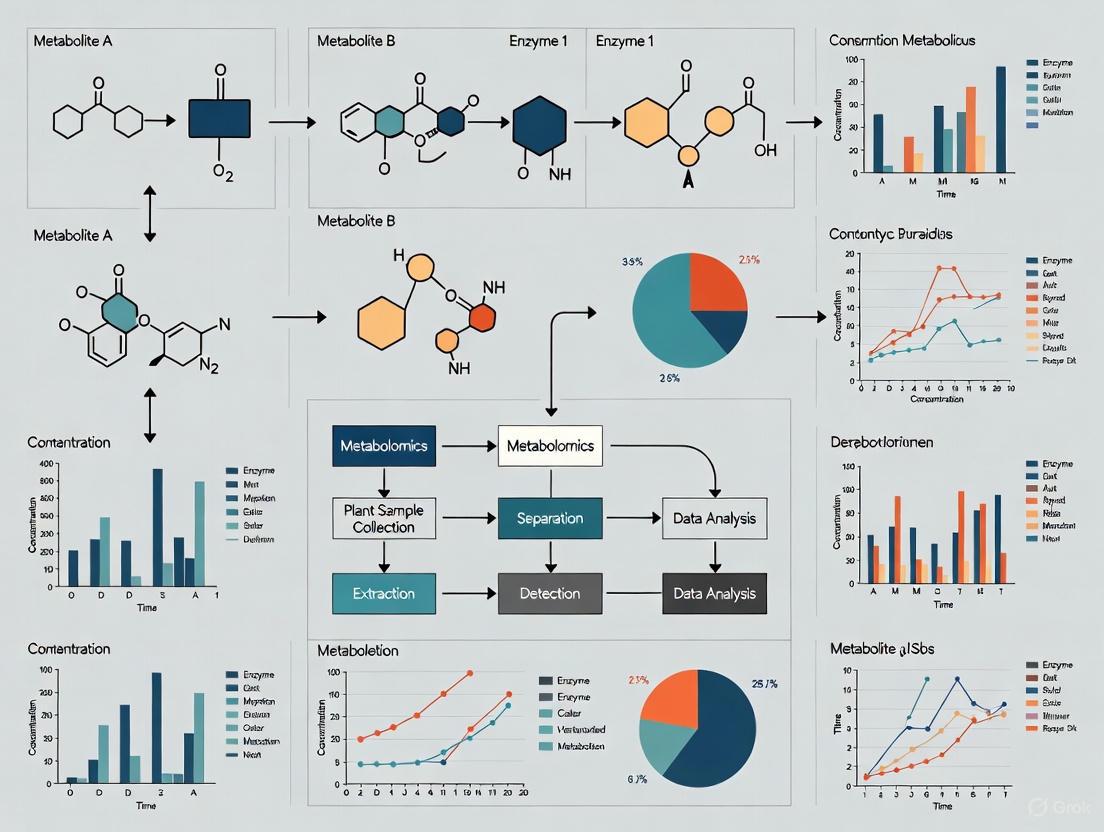
This article provides a systematic framework for researchers and drug development professionals seeking to improve the quality and reproducibility of plant metabolomics data.
Advancing Plant Metabolomics: A Comprehensive Roadmap for Enhancing Data Quality and Reproducibility
Abstract
This article provides a systematic framework for researchers and drug development professionals seeking to improve the quality and reproducibility of plant metabolomics data. It explores foundational challenges, including the vast chemical diversity of plant metabolites and the limitations of current analytical platforms. The content details methodological best practices for experimental design, sample preparation, and data acquisition, alongside advanced troubleshooting strategies for data processing and metabolite annotation. Furthermore, it covers validation techniques for ensuring analytical reliability and examines the integration of metabolomics with other omics technologies. By addressing these critical areas, this guide aims to empower scientists to generate more robust, reproducible, and biologically insightful metabolomic data, thereby accelerating discoveries in crop improvement, natural product development, and biomedical research.
Navigating the Core Challenges and Technological Landscape of Modern Plant Metabolomics
Plant metabolomics, a key discipline within systems biology, faces significant challenges that impact the quality and reproducibility of research data. These hurdles stem from the immense structural diversity of plant metabolites, their dynamic and often unstable nature, and the limitations of existing metabolic databases. This technical support center provides targeted troubleshooting guides and FAQs to help researchers navigate these specific issues, thereby enhancing the reliability of their experimental outcomes.
Troubleshooting Common Experimental Issues
FAQ 1: How can I improve metabolite coverage given the vast chemical diversity in plants?
The Problem: A single plant species can contain between 7,000 to 15,000 different metabolites, with estimates suggesting over a million exist across the plant kingdom [1] [2]. This diversity, encompassing compounds with vastly different chemical properties and concentrations, makes comprehensive detection and analysis exceptionally challenging.
Troubleshooting Guide:
- Employ Multiple Analytical Platforms: No single technology can capture the entire metabolome. Combine techniques to broaden coverage.
- LC-MS: Ideal for non-volatile or thermally labile compounds, including many secondary metabolites [1] [3].
- GC-MS: Best for volatile and thermally stable compounds, such as many primary metabolites (sugars, organic acids, amino acids) after derivatization [4] [3].
- NMR: Provides highly reproducible, quantitative, and structural information for a broad range of metabolites, though with lower sensitivity than MS techniques [4] [3].
- Optimize Extraction Protocols: Use biphasic solvent systems (e.g., methanol:chloroform:water) to simultaneously extract both polar and non-polar metabolites, ensuring a broader representation of the metabolome [3].
- Utilize High-Resolution Mass Spectrometers: Instruments like Q-TOF, Orbitrap, and Fourier Transform Ion Cyclotron Resonance (FT-ICR-MS) provide the high mass accuracy and resolution needed to distinguish between isobaric compounds and reduce spectral complexity [1].
Experimental Protocol for Comprehensive Profiling:
- Sample Quenching: Immediately flash-freeze plant tissue in liquid nitrogen upon harvest to quench metabolic activity and preserve the native metabolome [3].
- Homogenization: Grind the frozen tissue to a fine powder under cryogenic conditions using a mortar and pestle or a bead-based homogenizer.
- Biphasic Extraction: For every 20 mg of powdered sample, add 1 mL of a chilled methanol/water (4:1, v/v) solution. Homogenize vigorously for 5 minutes, then centrifuge. For lipid analysis, a methanol/chloroform/water system can be used [5] [3].
- Multi-Platform Analysis:
FAQ 2: What are the best practices to maintain metabolite stability from sample collection to analysis?
The Problem: Many plant metabolites are unstable and can rapidly degrade or transform due to enzymatic activity, oxidation, or improper handling, leading to inaccurate profiles.
Troubleshooting Guide:
- Immediate Quenching is Critical: The delay between sample collection and freezing is a major source of variation. Flash-freezing in liquid nitrogen is the gold standard to instantaneously halt all enzymatic activity [3].
- Control the Thermal Environment: Keep samples frozen at all times. Perform homogenization on dry ice or under liquid nitrogen to prevent thawing. Store extracts at -80°C.
- Minimize Exposure to Oxygen: For oxygen-sensitive metabolites, perform extractions under an inert atmosphere (e.g., nitrogen gas) when possible.
- Use Appropriate Solvents and Additives: Acidified solvents can stabilize certain compound classes. The use of antioxidant additives may be beneficial for specific analytes, though their use should be consistent across samples to avoid introducing bias.
Experimental Protocol for Stable Sample Preservation:
- Rapid Harvest: Collect plant material and submerge it directly into liquid nitrogen within seconds. In field conditions, use portable dry ice or ethanol-dry ice baths as alternatives, acknowledging a potential compromise in fidelity [3].
- Cryogenic Grinding: Grind the frozen tissue without allowing it to thaw. Transfer the powder to pre-cooled vials and return them to -80°C storage immediately.
- Cold Solvent Extraction: Perform all extraction steps with pre-chilled solvents and keep samples on ice or in a refrigerated centrifuge.
- Quality Control (QC) Pool: Create a QC sample by combining a small aliquot from every sample in the study. This pooled QC should be analyzed repeatedly throughout the analytical sequence to monitor instrument stability and detect any systematic degradation [3].
FAQ 3: Over 85% of LC-MS peaks are unidentified. How can I work with this "dark matter" of metabolomics?
The Problem: Due to incomplete databases and a lack of pure standards, the vast majority of metabolite features detected in untargeted LC-MS remain unannotated, limiting biological interpretation [2].
Troubleshooting Guide:
- Adopt Identification-Free Analysis Methods: Several powerful approaches bypass the need for exact identification:
- Molecular Networking: Groups metabolites based on spectral similarity, allowing you to associate unknown peaks with known compounds within the same molecular family [2].
- Discriminant Analysis: Uses statistical models (e.g., PLS-DA) to pinpoint which unknown peaks are most important for differentiating sample groups (e.g., control vs. treated), highlighting them for further study [2] [5].
- Leverage In Silico Tools: Use machine learning-based software like CANOPUS (which is part of the SIRIUS package) to predict the structural class of an unknown compound directly from its MS/MS data, even without a library match [2].
- Use Consolidated and Specialized Databases: Move beyond general libraries. Use plant-specific databases like the Reference Metabolome Database for Plants (RefMetaPlant) and the Plant Metabolome Hub (PMhub), which consolidate hundreds of thousands of plant-specific MS/MS spectra [2].
- Implement Advanced Data Processing Software: Tools like MassCube, an open-source Python framework, have been benchmarked to show superior performance in peak detection, isomer separation, and accuracy compared to other common software, leading to cleaner and more reliable data for annotation efforts [6].
Experimental Protocol for Handling Unidentified Metabolites:
- Data Pre-processing: Process your raw LC-MS/MS data using a robust pipeline (e.g., with MassCube, MS-DIAL, or XCMS) for feature detection, alignment, and MS/MS spectral extraction [6].
- Molecular Networking: Upload the processed data to the Global Natural Products Social Molecular Networking (GNPS) platform to create a visual network of spectral similarities and explore clusters of unknown compounds [2].
- Statistical Prioritization: Perform multivariate statistical analysis (e.g., PLS-DA, PCA) on the peak table. Identify features with high Variable Importance in Projection (VIP) scores that discriminate your experimental groups. These are high-priority unknowns [5].
- Class Prediction: Run the MS/MS data for these high-priority unknowns through CANOPUS to obtain a putative classification (e.g., "flavonoid," "alkaloid"), providing a starting point for biological inference [2].
Quantitative Data on Plant Metabolomics Challenges
Table 1: The Scale of Chemical Diversity and Identification Gaps in Plant Metabolomics
| Aspect | Quantitative Measure | Source/Implication |
|---|---|---|
| Metabolites per Species | 7,000 - 15,000 | [1] |
| Estimated Total in Plant Kingdom | Over 1 million | [2] |
| Documented Metabolites (KNApSAcK DB, 2024) | 63,723 | Highlights the vast unknown chemical space [2] |
| Unidentified LC-MS Peaks ("Dark Matter") | > 85% | Major bottleneck for data interpretation [2] |
| Annotation Rate via Library Matching | 2 - 15% (MSI Level 2) | Reflects the inadequacy of current databases [2] |
Table 2: Comparison of Major Analytical Platforms in Plant Metabolomics
| Platform | Best For | Key Advantages | Key Limitations |
|---|---|---|---|
| GC-MS | Volatile, thermally stable compounds (e.g., sugars, organic acids) | High sensitivity, reproducibility, extensive libraries | Requires derivatization, not suitable for non-volatile/labile compounds [4] [3] |
| LC-MS | Non-volatile, thermally labile, high MW compounds (broad range) | Versatile, no derivatization, high-throughput, ideal for secondary metabolites | Prone to ion suppression effects [1] [4] [3] |
| NMR | Broad-range detection, structural elucidation | Non-destructive, highly reproducible, provides structural info | Lower sensitivity, higher cost, slower data acquisition [4] [3] |
Essential Research Reagent Solutions
Table 3: Key Reagents and Materials for Plant Metabolomics Workflows
| Item | Function/Application | Example/Best Practice |
|---|---|---|
| Liquid Nitrogen | Immediate quenching of metabolic activity upon sample harvest | Gold standard for flash-freezing to preserve metabolome integrity [3] |
| Solvents (MeOH, ACN, CHCl₃) | Metabolite extraction | Use HPLC/MS grade. MeOH/Water (4:1 v/v) for broad polar metabolite extraction [5] |
| Derivatization Reagents (e.g., MSTFA) | Making metabolites volatile for GC-MS analysis | Reacts with functional groups (-OH, -COOH) for thermal stability [3] |
| Internal Standards (e.g., Sulfachloropyridazine) | Monitoring injection performance & retention time consistency | Added to all samples prior to LC-MS analysis to correct for technical variation [5] |
| Deuterated Solvents (e.g., D₂O, CD₃OD) | Solvent for NMR spectroscopy | Allows for locking and referencing in NMR analysis [3] |
| UHPLC C18 Column | Chromatographic separation of metabolites | Reversed-phase column (e.g., 1.7 µm, 50 x 2.1 mm) for high-resolution separation [5] |
Workflow and Data Analysis Diagrams
Diagram 1: Plant Metabolomics Experimental Workflow
Diagram 2: Data Analysis Pathway for Unidentified Metabolites
Frequently Asked Questions (FAQs)
Q1: Why should I use multiple analytical platforms instead of just one, like LC-MS, for my plant metabolomics study? No single analytical technique can fully capture the entire plant metabolome due to the vast physicochemical diversity of metabolites [7] [8] [9]. Each platform has inherent strengths and weaknesses. Using complementary techniques like LC-MS, GC-MS, and NMR together provides broader coverage, improves the confidence of metabolite identification, and allows for cross-validation, leading to more reliable and comprehensive biological conclusions [7] [9]. For instance, one study demonstrated that combining GC-MS and NMR identified 102 metabolites, 22 of which were detected by both techniques, while 20 were unique to NMR and 82 to GC-MS [9].
Q2: What are the primary types of metabolites detected by LC-MS versus GC-MS? The separation mechanisms of these techniques make them suitable for different classes of metabolites, as summarized in the table below.
Table 1: Typical Metabolite Coverage of LC-MS and GC-MS
| Analytical Platform | Primary Metabolite Classes Detected | Examples |
|---|---|---|
| LC-MS | Semi-polar metabolites, most secondary metabolites [10] [7] | Flavonoids, alkaloids, phenylpropanoids [10] |
| GC-MS | Volatile metabolites, or metabolites that can be volatilized after derivatization (often primary metabolites) [10] [7] | Amino acids, sugars, organic acids [10] |
Q3: How can I assess and improve the reproducibility of my metabolomics data? Reproducibility is a major challenge in high-throughput metabolomics. Beyond traditional measures like Relative Standard Deviation (RSD), which only assesses technical variation, newer non-parametric statistical methods like the Maximum Rank Reproducibility (MaRR) procedure can be used. MaRR examines the consistency of metabolite ranks across replicate experiments to identify a cut-off point where signals transition from reproducible to irreproducible, effectively controlling the False Discovery Rate [11]. For data correction across multiple batches or studies, post-acquisition strategies like PARSEC can standardize data and reduce analytical bias without requiring long-term quality control samples, thereby improving interoperability [12].
Q4: What software tools are available for processing untargeted LC-MS data, and how do I choose? Numerous software tools exist, each with different strengths. The choice depends on your specific needs, such as data size, required accuracy, and computational expertise. Key options include:
- XCMS & MZmine: Powerful, open-source tools for peak detection, alignment, and quantification, though processing large datasets can be time-consuming [10].
- MassCube: A newer, open-source Python framework that benchmarks show has high speed, accuracy, and isomer detection capabilities compared to other algorithms [6].
- Commercial Software (e.g., Compound Discoverer): Often provide integrated workflows but may be limited to data from the vendor's own instruments [10].
Troubleshooting Guides
Guide: Selecting the Right Analytical Platform
Problem: Incomplete coverage of the plant metabolome, leading to missed biological insights.
Solution: Employ an integrated platform strategy based on your research question. The following diagram outlines a logical workflow for platform selection to ensure comprehensive metabolite profiling.
Guide: Addressing Poor Reproducibility Across Batches
Problem: Biological signals are masked by high technical variability and batch effects.
Solution:
- Experimental Design: Incorporate both technical and biological replicates from the start. Use Quality Control (QC) samples, such as pooled samples from all your groups, and run them intermittently throughout your sequence to monitor instrument stability [11] [13].
- Data Processing: Apply algorithms designed to correct for batch effects. The PARSEC strategy is a post-acquisition workflow that combines batch-wise standardization and mixed modeling to reduce inter-group variability and produce a more homogeneous data distribution, thereby revealing masked biological information [12].
- Reproducibility Assessment: Use the MaRR package in R to statistically evaluate the reproducibility between your replicate experiments and identify a robust set of reproducible metabolites for downstream analysis [11].
Guide: Managing and Annotating Large-Scale Metabolomics Data
Problem: The presence of false-positive peaks, handling ultra-large datasets, and annotating unknown metabolites.
Solution:
- Reducing False Positives: Implement a multi-step filtering method during data pre-processing. Tools like ROIMCR can help by avoiding common errors introduced during peak modeling and alignment [10].
- Analyzing Large Datasets: For very large GC-MS datasets, software like QPMASS is specifically designed for efficient processing [10]. For LC-MS data, MassCube offers high-speed processing, capable of handling 105 GB of data on a laptop significantly faster than some other tools [6].
- Annotation of Unknowns: Leverage integrated omics approaches. Since a large percentage of detected metabolites are "unknown," combining metabolomics data with genetic information, such as through metabolite quantitative trait locus (mQTL) analysis, can be a powerful strategy for narrowing down candidate structures [14] [10]. Tools like MetDNA can also aid in metabolite annotation [10].
Experimental Protocols for a Multi-Platform Approach
The following workflow provides a generalized protocol for an integrated GC-MS and LC-MS untargeted plant metabolomics study, adapted from current methodologies [7].
Detailed Methodology:
Sample Preparation:
- Collection: Rapidly harvest and freeze plant tissue in liquid nitrogen to halt metabolic activity.
- Extraction: Use a comprehensive extraction solvent system (e.g., methanol:water:chloroform) to isolate a wide range of metabolites. The sample can be split for parallel LC-MS and GC-MS analysis [10] [7].
LC-MS Analysis:
- Chromatography: Utilize reversed-phase chromatography for semi-polar metabolites (e.g., flavonoids) or HILIC for more polar compounds.
- Mass Spectrometry: Acquire data in data-dependent acquisition (DDA) mode, cycling between full-scan MS and MS/MS scans to collect fragmentation data for structural annotation [14].
GC-MS Analysis:
- Derivatization: Dry an aliquot of the extract and derivatize using a method like methoximation and silylation to increase the volatility and thermal stability of metabolites.
- Chromatography & MS: Use a non-polar capillary column and electron ionization (EI) for robust, reproducible fragmentation that can be matched against standard spectral libraries [7] [8].
Data Processing and Integration:
- Pre-processing: Use software like MassCube, XCMS, or MZmine to perform peak picking, alignment, and deconvolution on the LC-MS and GC-MS datasets separately [10] [6].
- Integration: Combine the processed data matrices from both platforms. Statistical tools like Multiblock PCA (MB-PCA) can be used to create a single model that identifies key variations across both datasets, providing a holistic view of the metabolic state [9].
The Scientist's Toolkit: Essential Research Reagents and Materials
Table 2: Key Reagents and Materials for Plant Metabolomics
| Item | Function / Application |
|---|---|
| Methanol, Chloroform, Water | Components of standard two-phase or three-phase extraction solvents for comprehensive metabolite isolation from plant tissue [10]. |
| N-Methyl-N-(trimethylsilyl)trifluoroacetamide (MSTFA) | Common silylation derivatization agent used in GC-MS to make metabolites volatile and thermally stable [7]. |
| Methoxyamine hydrochloride | Used in the first step of GC-MS derivatization to protect carbonyl groups (e.g., in sugars) by methoximation [7]. |
| Deuterated Solvent (e.g., D₂O, CD₃OD) | Required for NMR spectroscopy to provide a locking signal and as an internal standard for chemical shift referencing [9]. |
| Internal Standards (e.g., Stable Isotope Labeled Compounds) | Added to samples at the beginning of extraction to correct for variations in sample preparation and instrument analysis; crucial for quantification [7]. |
| Quality Control (QC) Pooled Sample | A pool made from small aliquots of all study samples; run repeatedly throughout the analytical sequence to monitor instrument performance and for data normalization [11] [13]. |
| Recombinant Inbred Lines (RILs) | A genetic population used for integrated omics analyses like linkage mapping (QTL), which helps connect metabolite accumulation patterns to genetic loci [14]. |
Troubleshooting Guides
Poor Metabolite Annotation Rates
Problem: The vast majority of metabolite signals in untargeted LC-MS analyses remain unidentified, creating a "dark matter" problem that hinders biological interpretation.
Solutions:
- Multi-dimensional Identification Strategy: Combine multiple lines of evidence for confident annotation [15]:
- MS/MS Spectral Library Matching: Compare fragmented molecular ions against reference libraries (e.g., METLIN, mzCloud, NIST, Mass Bank)
- Isotope Pattern Matching: Confirm empirical formula using isotopic distribution patterns
- Retention Time Information: Incorporate retention time data when available for higher confidence
- Collision Cross-Section (CCS) Values: Use ion mobility data where accessible
- Reference Database Comparison [15]:
| Database | Compound Coverage | Special Features | Limitations |
|---|---|---|---|
| METLIN | Extensive | Includes various adduct forms | Limited plant-specific metabolites |
| mzCloud | ~40,000 unique compounds | MS/MS spectral trees | Only 0.1% coverage of PubChem compounds |
| NIST | GC-MS focused | Electron impact (EI) spectra | Limited for LC-MS/MS |
| Mass Bank | Public resource | Community-contributed | Inconsistent coverage |
- Five-Step Filtering Method for LC-MS: Implement systematic approach to reduce false-positive peaks and improve annotation quality [10]
Experimental Protocol for Confident Annotation:
- Sample Preparation: Use standardized extraction protocols with internal standards [16]
- Data Acquisition: Employ LC-QToF-MS with both positive and negative ionization modes [1]
- Data Processing: Utilize tools like XCMS, MZmine, or OpenMS for peak detection and alignment [10]
- Database Searching: Query multiple databases with mass error tolerance < 5 ppm [15]
- Validation: Verify annotations with standard compounds when possible [17]
Large-Scale Study Batch Effects
Problem: Instrumental drift and batch-to-batch variation in large-scale studies introduce systematic errors that compromise data quality and reproducibility.
Solutions:
- Quality Control (QC) Sample Strategy [16]:
- Prepare QC samples by pooling small aliquots of all biological samples
- Inject QC samples regularly throughout the analytical sequence (every 5-10 samples)
- Use QCs for system conditioning, monitoring instrumental performance, and data normalization
- Advanced Normalization Methods [16]:
| Normalization Method | Principle | Best Use Case |
|---|---|---|
| Total Useful Signal (TUS) | Normalizes to total signal intensity | Large-scale fingerprinting studies |
| QC-SVRC | Uses QC samples to correct drift | Multi-batch experiments |
| IS Normalization | Uses internal standard intensity | Targeted analysis with labeled IS |
| QC-norm | Robust QC-based correction | Studies with heterogeneous samples |
- Internal Standards Selection: Use deuterated analogs covering different chemical classes (e.g., lysophosphocholine, sphingolipids, fatty acids, carnitines, amino acids) to monitor retention time span and ionization efficiency [16]
Experimental Protocol for Multi-Batch Studies:
- Experimental Design: Randomize samples across batches while maintaining balanced group representation [16]
- Sample Preparation: Process in small sets (e.g., n=32 per day) to maintain consistency [16]
- Instrumental Analysis:
- Data Processing: Apply batch correction algorithms (e.g., Combat, EigenMS) to remove inter-batch variation [18]
Data Processing and Visualization Challenges
Problem: Complex metabolomics datasets require specialized statistical approaches and visualization strategies for proper interpretation.
Solutions:
- Missing Value Management [18]:
- Classification: Identify whether missing values are MCAR, MAR, or MNAR
- Imputation Strategies:
- k-nearest neighbors (kNN) for MCAR/MAR
- Half-minimum (hm) imputation or quantile regression for MNAR
- Random forest for complex missing patterns
Statistical Analysis Workflow:
Figure 1: Data Visualization Selection Guide
Frequently Asked Questions (FAQs)
Fundamental Concepts
What exactly is the "dark matter" problem in plant metabolomics? The term refers to the significant portion of metabolite signals detected in untargeted LC-MS analyses that remain chemically unidentified. Current MS/MS libraries cover only about 0.1% of known small molecules, leaving most detected compounds unannotated and creating a major bottleneck in biological interpretation [17].
Why is metabolite identification so challenging compared to other omics fields? Unlike genomics where sequences map to known databases, metabolomics faces several unique challenges [17]:
- Structural Diversity: Plants contain over 200,000 metabolites with enormous chemical diversity [1]
- Dynamic Range: Metabolite concentrations can vary by orders of magnitude [18]
- Instrumental Limitations: No single analytical platform can detect all metabolites [10]
- Database Gaps: Limited reference spectra for plant-specialized metabolites [17]
How can we assess confidence in metabolite identifications? Confidence levels follow a standardized framework [15]:
- Level 1: Identified by reference standard (highest confidence)
- Level 2: Putatively annotated based on spectral similarity
- Level 3: Putatively characterized compound class
- Level 4: Unknown compounds (lowest confidence)
Technical Challenges
What are the best practices for handling missing values in metabolomics data? Approach depends on the nature of missingness [18]:
- MNAR (Missing Not at Random): Use half-minimum imputation or quantile regression
- MCAR/MAR (Missing Completely/At Random): Apply k-nearest neighbors or random forest imputation
- Filtering: Remove metabolites with >35% missing values before imputation
How do we choose between different mass spectrometry platforms? Selection depends on research goals and metabolite classes of interest [1]:
| Platform | Optimal Application | Key Metabolite Classes | Limitations |
|---|---|---|---|
| GC-MS | Primary metabolites, volatiles | Amino acids, sugars, organic acids | Requires derivatization |
| LC-MS (RP) | Secondary metabolites | Flavonoids, alkaloids, lipids | Limited for very polar compounds |
| LC-MS (HILIC) | Polar metabolites | Sugars, amino acids | Longer equilibration times |
| CE-MS | Ionic species | Organic acids, nucleotides | Lower robustness |
What normalization strategies are most effective for large-scale studies? For plant metabolomics involving hundreds of samples [16]:
- QC-based Normalization: Most robust for multi-batch studies
- Total Useful Signal (TUS): Effective for fingerprinting approaches
- Internal Standard-Based: Limited to targeted analyses with comprehensive IS coverage
- Probabilistic Quotient Normalization: Handles dilution effects well
Data Analysis & Interpretation
What visualization strategies are most effective for communicating metabolomics results? Effective visualization depends on the analysis stage and audience [21] [19]:
- Exploratory Analysis: PCA scores plots, hierarchical clustering heatmaps
- Differential Analysis: Volcano plots, annotated box plots
- Time Series: Line plots, clustered heatmaps
- Pathway Analysis: Enrichment plots, metabolic network diagrams
How can we integrate metabolomics with other omics data? Successful multi-omics integration requires [22] [20]:
- Experimental Design: Coordinated sample collection for all omics layers
- Data Transformation: Appropriate scaling and normalization across data types
- Multivariate Statistics: PLS-based methods for correlation analysis
- Pathway Mapping: Joint visualization on metabolic networks
- Database Integration: Leveraging resources like Plant Metabolic Network (PMN)
Research Reagent Solutions
Essential Materials for Plant Metabolomics
| Reagent/ Material | Function | Application Notes |
|---|---|---|
| Deuterated Internal Standards | Monitor extraction efficiency, ion suppression | Use chemical analogs covering different classes [16] |
| LC-MS Grade Solvents | Mobile phase preparation | Minimize background contamination [16] |
| Quality Control Pool | Monitor instrumental performance | Prepare from sample aliquots or representative pool [16] |
| Derivatization Reagents | Enable GC-MS analysis of non-volatiles | MSTFA for trimethylsilylation, methoxyamination [10] |
| Solid Phase Extraction Cartridges | Fractionate complex extracts | C18 for non-polar, HILIC for polar metabolites [10] |
| Stable Isotope Labels | Track metabolic fluxes | 13C, 15N, 2H for dynamic studies [17] |
Instrumentation and Software Tools
| Tool Category | Specific Tools | Primary Application |
|---|---|---|
| Data Processing | XCMS, MZmine, OpenMS | Peak detection, alignment, quantification [10] |
| Statistical Analysis | MetaboAnalyst, metaX | Statistical analysis, biomarker discovery [10] [18] |
| Database Search | METLIN, mzCloud, Mass Bank | Metabolite identification [15] |
| Pathway Analysis | PlantCyc, KEGG, PMN | Metabolic pathway mapping [20] |
| Visualization | Cytoscape, ggplot2, Plotly | Network graphs, publication figures [21] [18] |
Experimental Workflow for Enhanced Metabolite Identification
Figure 2: Enhanced Metabolite Identification Workflow
Advanced Strategies for Overcoming the Bottleneck
Emerging Technologies and Approaches
Spatial Metabolomics: Mass spectrometry imaging techniques enable precise localization of metabolite distribution in plant tissues, providing crucial contextual information for biological interpretation [1].
Single-Cell Metabolomics: Emerging technologies allow metabolite detection at cellular resolution, revealing heterogeneity masked in bulk tissue analyses [1].
Integrated Multi-Omics Frameworks: Combining metabolomics with genomics, transcriptomics, and proteomics provides complementary data layers for comprehensive biological understanding [22] [20].
Machine Learning Applications: Advanced computational approaches including deep learning show promise for predicting metabolite structures from MS/MS spectra and improving annotation rates [21].
Public Database Development: Efforts to expand plant metabolite databases (Plant Metabolic Network, Metabolomics Workbench) are crucial for improving annotation coverage [20].
Standardization Initiatives: Guidelines from the Metabolomics Society and International Lipidomics Society promote data quality and reproducibility through standardized reporting [18].
Open-Source Tool Development: Community-driven software development (R, Python packages) provides accessible analytical tools for the research community [18].
Plant metabolomics has traditionally relied on the analysis of homogenized bulk tissues. However, this approach averages metabolite signatures across diverse cell types, diluting critical spatial information that is fundamental to understanding plant physiology, stress responses, and specialized metabolism. Spatial metabolomics, particularly through Mass Spectrometry Imaging (MSI), has emerged to address this gap by enabling the in-situ visualization of metabolite distribution within plant tissues [23] [24]. This technical support center provides troubleshooting guides and detailed protocols to help researchers integrate these advanced spatial techniques, thereby enhancing the quality and reproducibility of plant metabolomics data.
Key Questions & Answers: A Technical Support Guide
Q1: What are the fundamental limitations of bulk tissue metabolomics that spatial methods overcome?
Bulk tissue analysis, while valuable, presents several critical limitations for modern plant research:
- Dilution of Metabolic Phenotype: Homogenizing various cell types together makes it impossible to map metabolites back to their specific locations within organelles, cells, or tissues. This dilutes metabolites that may have crucial roles in specific cell-type responses, making them challenging to detect and investigate [23].
- Loss of Spatial Regulation Context: Plant metabolism is highly organized and regulated within subcellular organelles, specific tissues, and even individual cells. Bulk analysis loses this spatial context, which is vital for understanding the function and regulation of biochemical pathways [23] [25].
- Masking of Cellular Heterogeneity: Averaging metabolite levels across a tissue obscures important biological heterogeneity between cell types, which can play significant roles in physiological processes like stomatal regulation, C4 metabolism, and the function of shoot apical meristems [25].
Q2: Which spatial metabolomics technologies are most applicable to plant research, and how do I choose?
The most common MSI technologies for plant metabolomics are Matrix-Assisted Laser Desorption/Ionization (MALDI) and Desorption Electrospray Ionization (DESI). The choice depends on your research goals, considering spatial resolution, detectable mass range, and sample preparation requirements. The table below compares the core technologies.
Table 1: Comparison of Key Mass Spectrometry Imaging (MSI) Technologies for Plant Metabolomics
| Technology | Ionization Type | Spatial Resolution | Mass Range | Key Advantages | Key Challenges |
|---|---|---|---|---|---|
| MALDI-MSI [23] [24] | Soft | 5 - 100 µm | 300 - 100,000 Da | High spatial resolution; suitable for a wide range of metabolites, including large molecules. | Requires a matrix, making sample preparation time-consuming; matrix interference signals possible. |
| DESI-MSI [23] [24] | Soft | 40 - 200 µm | 100 - 2,000 Da | Ambient conditions (no vacuum); requires no matrix, simplifying preparation. | Lower spatial resolution compared to MALDI. |
| SIMS-MSI [24] | Hard | 0.1 - 1 µm | < 2,000 Da | Highest spatial resolution for subcellular analysis. | Hard ionization causes extensive fragmentation; limited to smaller molecules. |
The following decision pathway can guide you in selecting the appropriate technology:
Q3: What is a detailed protocol for a standard MALDI-MSI experiment in plant tissue?
A robust MALDI-MSI workflow involves several critical steps to ensure high-quality, reproducible data.
Table 2: Essential Research Reagents for a Plant MALDI-MSI Experiment
| Reagent/Material | Function/Purpose | Example/Note |
|---|---|---|
| Optimal Cutting Temperature (OCT) Compound | Embedding medium for cryo-sectioning | Must be carefully washed off to avoid interference with MS analysis [25]. |
| Matrix Compound | Absorbs laser energy and facilitatesdesorption/ionization of metabolites | Choice is metabolite-dependent (e.g., DHB for flavonoids, CHCA for lipids) [25]. |
| Cryostat | Instrument for thin-sectioning frozen samples | Typically sections at 5-20 µm thickness [24]. |
| Standard Metabolites | For instrument calibration and validation | Use compounds expected in your sample for relevant mass range. |
| Conductive Glass Slides | Sample substrate for MALDI-MS | Required for the ionization process in the mass spectrometer. |
Experimental Protocol:
Sample Preparation & Sectioning:
- Rapidly freeze fresh plant tissue (e.g., leaf, root, nodule) in liquid nitrogen to preserve metabolic state and spatial integrity.
- Embed the frozen tissue in OCT compound and section into thin slices (typically 5-20 µm) using a cryostat [24].
- Thaw-mount the sections onto pre-chilled conductive glass slides. Carefully wash slides to remove OCT compound, which can suppress ionization [25].
Matrix Application:
- Apply a matrix solution (e.g., 2,5-dihydroxybenzoic acid (DHB) for general metabolites) uniformly onto the tissue section. This is critical for the desorption/ionization process.
- Use a sprayer or solvent-free sublimation method. Sublimation reduces metabolite delocalization but may not ionize all metabolites equally [25].
Data Acquisition (MALDI-MSI):
- Load the slide into the MALDI mass spectrometer.
- The instrument rasterizes the laser across the tissue section in a predefined grid. The pixel size determines the spatial resolution (e.g., 5 µm to 100 µm) [23].
- A full mass spectrum is acquired at each pixel, creating a hyperspectral dataset that links molecular information (mass-to-charge ratio, m/z) with spatial coordinates (x, y).
Data Processing & Visualization:
- Use specialized MSI software (e.g., SCiLS Lab, MSiReader, open-source tools) to process the data.
- Steps include peak picking, alignment, and normalization.
- Generate ion images for specific m/z values to visualize the spatial distribution of individual metabolites across the tissue [24].
Q4: How can I assess and improve the reproducibility of my spatial metabolomics data?
Reproducibility is a major challenge in metabolomics. Here are key strategies:
- Adopt Standardized Reporting: Follow reporting guidelines from consortia like the Metabolomics Association of North America (MANA). Detail every aspect of your experiment: study design, sample preparation, data acquisition parameters, and processing methods [26] [27].
- Incorporate Quality Control (QC):
- Use pooled quality control samples from your experimental cohort. Analyze these QC samples throughout your acquisition sequence to monitor instrument stability.
- For NMR, use a standardized buffer and a calibrated internal standard for chemical shift reference [26].
- Employ Robust Statistical Methods:
- Use the Maximum Rank Reproducibility (MaRR) procedure, a non-parametric method, to assess reproducibility between replicate experiments (technical or biological). It identifies the point where highly correlated, reproducible signals transition to irreproducible ones without relying on arbitrary cut-offs [28].
- Perform multivariate statistical analysis like Principal Component Analysis (PCA) or Partial Least Squares-Discriminant Analysis (PLS-DA) to identify major sources of variation and validate group separations [29].
Q5: Can you provide a real-world example where spatial metabolomics revealed what bulk analysis missed?
A compelling application is the study of soybean nodules under drought and alkaline stress. While bulk metabolomics could identify overall changes in flavonoid content, spatial metabolomics using MSI revealed precisely how the distribution of specific isoflavones within the nodule tissue was altered by these stresses [30]. This spatial redistribution is likely a key part of the plant's stress adaptation strategy, information that would be entirely lost in a homogenized bulk analysis.
Visualization of Core Concepts
The Workflow and Information Gap in Bulk vs. Spatial Analysis
The following diagram illustrates the fundamental difference in workflow and data output between traditional bulk metabolomics and spatial metabolomics, highlighting the critical loss of information in the bulk approach.
The adoption of spatial metabolomics techniques marks a significant leap forward in plant science. By moving beyond bulk tissue analysis, researchers can now investigate the intricate spatial localization of metabolites, which is fundamental to understanding plant development, stress responses, and the synthesis of valuable specialized compounds. By utilizing the troubleshooting guides, detailed protocols, and reproducibility checks provided in this technical support center, researchers can systematically overcome common challenges and generate high-quality, spatially resolved metabolomics data. This advancement is pivotal for improving data quality and reproducibility, ultimately driving more insightful and impactful plant research.
Implementing Robust Workflows: From Experimental Design to Data Acquisition
Frequently Asked Questions
Q1: My plant metabolomics study failed to find statistically significant biomarkers. Could my experimental design be at fault?
A common reason for this issue is inadequate statistical power. In the context of high-dimensional metabolomics data, where you measure thousands of metabolites, a small sample size drastically reduces your probability of detecting real biological effects. Power is the probability that your test will correctly reject a false null hypothesis (i.e., find a real effect) [31] [32]. A study with low power is likely to produce false-negative results, leading to missed discoveries.
Before collecting data, conduct an a priori power analysis to determine the sample size needed. You will need to define your desired power (typically 0.80 or 80%), significance level (alpha, typically 0.05), and the expected effect size [33] [32]. For plant metabolomics, where biological variability can be high, careful consideration of sample size is crucial [26].
Q2: What is the difference between technical and biological replication in plant metabolomics, and why does it matter?
This distinction is fundamental for reproducible research.
- Biological Replicates are measurements taken from different, independent biological sources (e.g., different plants, different plots, or different leaves from different plants). They account for the natural biological variation within a population and allow you to generalize your findings. True replication in an experiment refers to the inclusion of multiple biological replicates per condition [26].
- Technical Replicates are repeated measurements of the same biological sample (e.g., injecting the same extract multiple times into the mass spectrometer). They help assess the variance introduced by your analytical equipment and protocols but do not provide information about biological variability [26].
To draw meaningful conclusions about a plant population, your experimental design must include true biological replication. Relying solely on technical replicates inflates the perceived precision of your experiment and limits the scope of your inferences.
Q3: How can I implement proper randomization during sample preparation and analysis?
Randomization is a critical defense against confounding bias and systematic error. In plant metabolomics, you should randomize at two key stages:
- Sample Processing Order: The order in which biological samples are prepared for analysis (e.g., extraction, derivatization) should be randomized. This prevents a systematic bias where all samples from one treatment group are processed at the beginning of the day when an instrument might be stabilizing.
- Instrument Run Order: The sequence in which prepared samples are injected into your analytical platform (e.g., LC-MS, GC-MS, NMR) should also be randomized [34].
A simple method is to use a random number generator to assign each sample a position in the processing and analysis sequence. This ensures that any unmeasured technical variability (e.g., instrument drift, reagent batch effects) is distributed randomly across your experimental groups and does not become confounded with your biological signal.
Power Analysis Parameters for Metabolomic Studies
Table 1: Key parameters to determine for an a priori power analysis.
| Parameter | Description | Considerations for Plant Metabolomics |
|---|---|---|
| Statistical Power (1-β) | The probability of detecting a true effect. Typically set to 0.80 or higher [31]. | High-dimensional data may require adjustments for multiple testing, which can reduce power. |
| Significance Level (α) | The probability of a Type I error (false positive). Typically set to 0.05 [32]. | In metabolomics, the alpha level may be corrected for thousands of simultaneous metabolite tests. |
| Effect Size | The magnitude of the difference or relationship you expect to detect. Often estimated from pilot data or literature [31]. | Can be challenging to estimate. Consider what minimal difference is biologically or clinically relevant [31] [32]. |
| Biological Variability | The natural variance in metabolite levels within your plant population [26]. | Well-controlled systems (e.g., cell cultures) have lower variability than field studies. More variable systems require larger sample sizes [26]. |
Experimental Protocols for Robust Metabolomics
Protocol: A Priori Power and Sample Size Determination
- Define Your Hypothesis: Clearly state the primary metabolic contrast you wish to test (e.g., "Does drought stress alter the abundance of flavonoids in Arabidopsis leaves?").
- Choose Your Analysis Method: Identify the primary statistical test you will use (e.g., t-test, ANOVA, regression). This determines the type of power analysis [33].
- Estimate Parameters: Use pilot data or published literature to estimate the expected effect size and biological variability for your key metabolites of interest. If no data exists, a minimal scientifically important difference can be used [32].
- Run the Analysis: Use statistical software (e.g., G*Power, R) to calculate the necessary sample size per group, given your chosen power (0.8), alpha (0.05), and estimated effect size [33].
- Incorporate Replication: The calculated sample size refers to the number of biological replicates per group. Plan for additional samples if you intend to include technical replicates for quality control.
Protocol: Implementing True Replication and Randomization
- Design Your Replication Structure:
- Decide on the number of biological replicates (e.g., 10 individual plants per treatment group).
- Decide if technical replicates are needed for quality control (e.g., running a pooled quality control sample repeatedly to monitor instrument stability) [35].
- Generate a Randomized Sample List:
- Assign a unique ID to every biological sample.
- Use a random number generator to create a random order for both sample preparation and instrumental analysis.
- Adhere strictly to this randomized list throughout the workflow.
- Document the Process: Record the randomized sequence used. This is essential metadata for reviewers and for your own reference during data analysis.
Research Reagent Solutions
Table 2: Essential materials for a plant metabolomics workflow.
| Item | Function |
|---|---|
| Pooled Quality Control (QC) Sample | A pool of all experimental samples; injected repeatedly throughout the analytical run to monitor and correct for instrumental drift [35]. |
| Internal Standards (Isotopically Labeled) | Compounds added to each sample at a known concentration before extraction; used to correct for variability in sample preparation and instrument response [35]. |
| Standardized Reference Materials | Certified reference materials used to validate the accuracy and reproducibility of the analytical method across different laboratories [35]. |
Workflow and Relationship Diagrams
Diagram 1: Foundational experimental design workflow.
Diagram 2: Factors that increase statistical power.
The reproducibility and quality of plant metabolomics data are fundamentally dependent on the initial steps of sample preparation. Inconsistent practices in harvesting, drying, and extraction can introduce significant variability, obscuring true biological signals and compromising downstream analyses. This guide addresses critical challenges and provides standardized, actionable protocols to enhance the reliability of your plant metabolomics research.
Experimental Design and Power Analysis
Formulating a Research Hypothesis and Power Analysis
A clearly defined research hypothesis (RH) is the cornerstone of a well-designed experiment. It should be directly linked to the metabolic pathways and metabolites of interest, guiding the selection of appropriate analytical tools [36].
- Biological and Experimental Units: Clearly define biological units (BUs), experimental units (EUs), and observational units (OUs) to avoid pseudo-replication. Sampling different parts of the same plant does not constitute true replication; independent plants should be used to capture genuine biological variation [36].
- Randomization: Randomize the order of sample collection and treatment application to distribute systematic effects evenly and minimize bias [36].
- Sample Size and Power Analysis: The high dimensionality of metabolomics data makes determining the right sample size challenging. Conduct a statistical power analysis a priori to identify the minimum sample size required to achieve the desired effect and level of significance, thereby reducing false positives (type I errors) and false negatives (type II errors) [36]. Tools like MetSizeR and MetaboAnalyst offer practical methods for sample size calculation in high-dimensional data [36].
Table: Tools for Power Analysis in Omics Studies
| Omics Field | Specific Challenges | Recommended Tools |
|---|---|---|
| Metabolomics | High dimensionality, multicollinearity between variables, sample heterogeneity [36]. | MetSizeR, MetaboAnalyst [36] |
| Lipidomics | Variety in lipid polarity, size, and solubility; technical variability [36]. | LipidQC, MS-DIAL [36] |
| Fluxomics | Integrating metabolic and isotopic data; variations in isotope incorporation [36]. | 13CFlux, INCA [36] |
| Peptidomics | Peptide degradation; instrument sensitivity; data complexity [36]. | Skyline, MaxQuant [36] |
| Ionomics | High-dimensional ion concentration data; influence of genotype and environment [36]. | ionomicQC, MetaboAnalyst [36] |
Design of Experiments (DOE)
A structured DOE is essential for minimizing errors and ensuring reproducibility. It systematically identifies key variables and optimizes responses relevant to the research hypothesis [36].
- Screening Designs: Use Fractional Factorial Designs (FDs) or Plackett-Burman Designs (PBDs) to identify significant variables with a minimal number of experiments.
- Optimization Designs: Employ response surface methodologies like Box-Behnken (BB) or Central Composite Design (CCD) to determine optimal conditions for sample preparation [36].
Experimental Design Optimization Workflow
Sample Collection and Harvesting
How should plant samples be collected and handled post-harvest?
Proper collection and immediate post-harvest handling are critical for preserving the in-vivo metabolic state.
- Sampling Strategy: Employ stratified or random sampling to ensure unbiased representation of the population. Consider plant type, growth stage, and environmental conditions (soil, moisture, temperature) as these factors significantly influence metabolite profiles [37].
- Timing: Sample during periods of stable metabolite concentration, often in the early morning. Avoid sampling during environmental stress (drought, extreme temperatures) [37].
- Tools and Containers: Use sterilized scissors, scalpels, or pruners. Collect samples into pre-labeled cryovials, glass vials, or sterile bags. Wear gloves to prevent contamination [37].
- Rapid Stabilization: The highest priority is to quench metabolic activity immediately after harvest. Flash-freezing in liquid nitrogen is the gold standard. For tissues intended for Non-Structural Carbohydrate (NSC) analysis, freezing has been shown to significantly reduce sugar and NSC losses compared to microwaving or direct oven-drying [38].
Table: Comparison of Sample Preservation Methods for Metabolite Analysis
| Method | Protocol | Best For | Advantages | Disadvantages/Limitations |
|---|---|---|---|---|
| Flash-Freezing | Immediate immersion in liquid nitrogen; store at -80°C [37]. | Most metabolites, especially labile compounds; Non-Structural Carbohydrates (NSCs) [38]. | Excellent preservation of metabolic state; simple. | Requires access to liquid nitrogen and ultra-low freezers. |
| Microwave Drying | 3 cycles of 30s at 700W for small samples, followed by oven drying [38]. | Fieldwork with no immediate freezer access. | Rapid enzyme denaturation; portable equipment. | Risk of uneven heating; less effective for NSC preservation in some tissues [38]. |
| Freeze-Drying (Lyophilization) | Flash-freeze, then sublimate water under vacuum; store desiccated [37]. | Long-term storage; volatile compounds; structural integrity. | Preserves structure and heat-sensitive compounds. | Time-consuming and expensive equipment. |
| Oven Drying | Drying at 40-70°C for 48-72 hours [39] [37]. | Robust, non-labile metabolites (e.g., some flavonoids). | Low cost and high throughput. | Can degrade heat-labile and volatile compounds; not recommended for primary metabolism [39]. |
Drying and Homogenization
What are the best practices for drying and grinding plant material?
The goal of drying is to halt enzymatic and microbial activity without degrading metabolites. Homogenization creates a uniform powder for reproducible extraction [37].
- Drying Methods:
- Freeze-Drying (Lyophilization): The preferred method for most metabolomic studies as it best preserves the original metabolic profile by removing water via sublimation from a frozen state, minimizing thermal degradation [37].
- Oven Drying: Use controlled low temperatures (40-60°C). While faster and cheaper, this method risks the loss of volatile compounds and degradation of heat-labile metabolites [39] [37].
- Air Drying: A gentle but slow process that should be conducted away from direct sunlight to prevent photo-degradation [37].
- Homogenization Methods:
- Cryogenic Grinding: Cooling samples with liquid nitrogen before grinding in a mortar and pestle or ball mill. This is the best method as it makes brittle tissues easier to pulverize and prevents heat buildup, preserving volatile and labile compounds [37].
- Ball Mill Grinding: Effective for achieving a uniform, fine powder from larger quantities of material [37].
Sample Processing Workflow from Drying to Homogenization
Metabolite Extraction
How do I choose the right extraction method?
No single analytical technique can capture the full range of plant metabolites, from highly polar to non-polar [36]. The choice of extraction protocol is therefore dictated by the target metabolome.
- Solvent Extraction: The most common technique. The choice of solvent (e.g., methanol, ethanol, chloroform, water) determines the polarity range of extracted metabolites. Mixtures like methanol:water:chloroform are used for comprehensive extraction of both polar and non-polar compounds [40] [37].
- Solid-Phase Extraction (SPE): Used to clean up samples or fractionate extracts by passing them through a solid adsorbent, which selectively retains certain compound classes. This reduces matrix effects in subsequent LC-MS analysis [37] [41].
- Liquid-Liquid Partitioning: Separates metabolites based on their differential solubility in two immiscible solvents, useful for fractionating complex extracts [37].
- Ultrasonic Extraction: Uses ultrasound to agitate the solvent, enhancing mass transfer and improving extraction yield while reducing time [37].
The Scientist's Toolkit: Essential Research Reagents
Table: Key Reagents for Plant Sample Preparation and Nucleic Acid Extraction
| Reagent/Category | Function | Example Use Case |
|---|---|---|
| Liquid Nitrogen | Rapid freezing for metabolic quenching and cryogenic grinding [37]. | Preserving labile metabolites; homogenizing fibrous tissues. |
| Methanol, Ethanol, Chloroform | Solvents for metabolite extraction [40] [37]. | Extracting a broad range of polar and non-polar metabolites. |
| Solid-Phase Extraction (SPE) Columns | Sample clean-up and fractionation [37] [41]. | Removing salts and pigments before LC-MS analysis. |
| CTAB (Cetyltrimethylammonium bromide) | Cationic detergent for breaking down cell membranes [42]. | Genomic DNA extraction, especially from polysaccharide-rich plants. |
| PVP (Polyvinylpyrrolidone) | Binds and removes phenolic compounds [42]. | Preventing polyphenol oxidation and co-precipitation with DNA. |
| EDTA (Ethylenediaminetetraacetic acid) | Chelating agent that binds Mg²⁺ and Ca²⁺ ions [42]. | Inactivating DNases and metalloproteases to protect nucleic acids and proteins. |
| β-Mercaptoethanol | Potent reducing agent [42]. | Cleaning tannins and polyphenols; preventing disulfide bond formation in proteins. |
Frequently Asked Questions (FAQs)
We see high variability in our LC-MS results. What could be going wrong during sample prep?
High variability often stems from inconsistencies in the early stages of sample processing. Key things to check:
- Inadequate Sample Cleanup: Complex plant matrices can cause ion suppression or enhancement in the MS. Implement appropriate cleanup techniques like SPE [41].
- Improper Sample Storage: Store samples at -80°C and avoid repeated freeze-thaw cycles. Use amber vials for light-sensitive compounds [41].
- Matrix Effects: Use matrix-matched calibration standards and stable isotope-labeled internal standards to correct for these effects [43] [41].
- Carry-Over Effects: Run blank injections between samples and use appropriate needle wash solvents to prevent false positives [41].
What is the biggest mistake to avoid when preparing plant samples for metabolomics?
The most critical mistake is failing to quench metabolism quickly and consistently after harvest. Metabolic turnover continues rapidly after sampling, altering the profile you intend to measure. The time between harvesting and stabilization (e.g., freezing in liquid nitrogen) must be minimized and kept identical for all samples in a study to ensure data integrity [37] [38].
Over 85% of LC-MS peaks remain unidentified in plant studies. How can we still get biological insights?
This "dark matter" of metabolomics is a known challenge [2]. Identification-free analysis strategies can provide powerful biological insights:
- Molecular Networking: Groups MS/MS spectra based on similarity, revealing families of related compounds without needing identities [2].
- Distance-Based Approaches: Uses multivariate statistics to compare global metabolic patterns between sample groups [2].
- Information Theory-Based Metrics: Quantifies the complexity and diversity of metabolic profiles [2].
- Discriminant Analysis: Pinpoints metabolite signals (even unknown ones) that are most influential in discriminating between experimental conditions [2].
Why is our DNA yield low or quality poor for PCR?
Plant tissues are challenging due to contaminants that co-precipitate with DNA.
- Polysaccharides: Form viscous solutions and inhibit enzymes. CTAB-based methods are designed to remove them [42].
- Polyphenols: Oxidize and irreversibly bind to DNA, causing browning and inhibition. Use PVP or β-Mercaptoethanol in your extraction buffer to combat this [42].
- Tissue Choice: Younger leaves generally contain fewer secondary metabolites and are preferable to older tissues [42].
- DNases: Ensure all equipment is clean and use EDTA in your extraction buffer to chelate Mg²⁺, a necessary cofactor for DNases [42].
Frequently Asked Questions (FAQs)
Q1: What are the primary MSI techniques for spatial metabolomics in plant research, and how do I choose? The three primary MSI techniques are MALDI-MSI, DESI-MSI, and SIMS-MSI. Your choice depends on your research goals, considering factors like spatial resolution, sample preparation needs, and the types of metabolites you are targeting [24] [44].
The table below compares these core techniques:
| Parameter | MALDI-MSI | DESI-MSI | SIMS-MSI |
|---|---|---|---|
| Ionization Type | Soft | Soft | Hard [24] |
| Spatial Resolution | 5 - 100 μm [24] | 40 - 200 μm [24] | 0.1 - 1 μm [24] |
| Matrix Required? | Yes [24] | No [24] [44] | No [24] |
| Mass Range | 300 - 100,000 Da [24] | 100 - 2,000 Da [24] [45] | < 2,000 Da [24] |
| Key Advantage | High spatial & mass resolution [45] [44] | Minimal sample prep, ambient conditions [45] [44] | Highest spatial resolution, suitable for single-cell imaging [44] |
| Key Limitation | Requires matrix application; matrix ions can interfere with small molecules [45] [44] | Lower spatial resolution and sensitivity compared to MALDI [45] [44] | High energy ionization can fragment molecules; lower ionization efficiency for intact molecules [44] |
Q2: How can I overcome the challenge of the plant cuticle for metabolite detection? The waxy plant cuticle significantly limits metabolite detection. A powerful solution is the Plant Tissue Microarray (PTMA) method combined with MALDI-MSI (MALDI-MSI-PTMA) [46]. This technique involves homogenizing plant tissues, embedding them in a gelatin mould, and cryo-sectioning to create arrays, thereby breaking down the physical barriers of the cuticle, wax, and cell walls [46]. This method allows for high-throughput metabolite detection and imaging of over 1000 samples per day with high reproducibility and stability [46].
Q3: What are common causes of poor reproducibility in spatial metabolomics data? Reproducibility is affected by numerous technical and biological variables. Key factors include:
- Sample Preparation: Inconsistent processing days and storage times of samples significantly impact the metabolome [47]. For cell cultures, even factors like incubator humidity gradients can introduce artifacts [48].
- Instrumental Factors: Batch effects during data acquisition are a major source of variation that must be corrected with quality control (QC) measures [47].
- Data Acquisition Mode: In untargeted LC-MS, Data-Independent Acquisition (DIA) has demonstrated superior reproducibility with a lower coefficient of variance (10%) compared to Data-Dependent Acquisition (DDA, 17%) [49].
- Biological Variation: Biological replicates naturally show more variation than technical replicates, which must be accounted for in experimental design [11].
Q4: How can I improve the reproducibility of my plant-metabolome experiments? Adopting standardized, detailed protocols is the most effective way to enhance reproducibility. A recent multi-laboratory study successfully demonstrated high reproducibility in plant-microbiome research by distributing all key materials (EcoFAB devices, seeds, inoculum) from a central lab and providing detailed, video-annotated protocols for every step [50]. Furthermore, using statistical methods like the non-parametric Maximum Rank Reproducibility (MaRR) procedure can help assess and filter for reproducible metabolite signals across replicate experiments [11].
Troubleshooting Guides
Issue 1: Low Metabolite Signal from Intact Plant Tissue Sections
Problem: Despite seemingly good tissue preparation, the number of metabolite ions detected from the surface of an intact plant tissue section is low, likely due to the multi-layer structure of plant tissues (e.g., epicuticular wax, cuticle, cell wall) preventing metabolite release [46].
Solution: Implement the Plant Tissue Microarray (PTMA) protocol.
| Step | Procedure | Key Details |
|---|---|---|
| 1. Homogenization | Homogenize the plant tissue (e.g., leaves, stems, roots) to break down cellular structures. | This step physically disrupts the cuticle and cell walls, making metabolites accessible [46]. |
| 2. Embedding | Fill the homogenized tissue into a gelatin mould to create the PTMA block. | The mould standardizes the sample format for high-throughput analysis [46]. |
| 3. Sectioning | Cryo-section the PTMA block into thin sections using a cryostat (e.g., Leica CM1860). | Sections are typically 5-20 μm thick. The thin sections are thaw-mounted onto ITO-coated glass slides [46]. |
| 4. Matrix Application | Apply a suitable matrix (e.g., 2-MBT) uniformly onto the PTMA sections. | Automated spraying or sublimation ensures uniform coating, which is critical for ionization efficiency and reproducible imaging [46] [44]. |
This workflow overcomes the limitations of direct on-tissue analysis, enhancing the detection of endogenous metabolites [46].
Issue 2: Inconsistent or Irreproducible Results Between Replicates
Problem: Metabolite abundance or spatial distribution patterns are not consistent across technical or biological replicates, making biological interpretation difficult.
Solution: A multi-faceted approach targeting major sources of variability.
| Source of Variability | Troubleshooting Action | Protocol/Standard |
|---|---|---|
| Sample Processing | Control and document processing day and storage time meticulously. Process all samples for a given experiment in the same batch if possible. | Store cellular extracts at -80 °C and minimize storage time variance. Studies show processing day has a significant impact [47]. |
| Instrument Performance | Implement a System Suitability Test (SST) prior to analysis and use Quality Control (QC) samples (e.g., pooled QC) throughout the run to monitor performance and correct for batch effects. | Use a standard mix (e.g., eicosanoids) to evaluate detection power and reproducibility of the instrumental setup [49]. |
| Data Analysis | Use robust statistical methods to formally assess reproducibility and filter out irreproducible signals. | Apply the MaRR (Maximum Rank Reproducibility) procedure to identify metabolites that show consistency across replicate experiments, controlling the False Discovery Rate [11]. |
| Experimental Design | Avoid the One-Variable-At-Time (OVAT) approach. Use Design of Experiments (DoE) to systematically test factors and their interactions. | Techniques like Fractional Factorial Designs or D-optimal designs can efficiently optimize multiple sample preparation parameters simultaneously [13]. |
The Scientist's Toolkit: Essential Research Reagents & Materials
| Item Name | Function / Explanation |
|---|---|
| ITO-coated Glass Slides | Provides a conductive surface required for MALDI-MSI analysis to facilitate ionization and prevent charging [46]. |
| MALDI Matrices (e.g., DHB, CHCA, 2-MBT) | Low molecular-weight compounds that absorb laser energy, facilitating the desorption and ionization of metabolites from the tissue surface [44]. The choice of matrix is critical for ionization efficiency. |
| Cryostat (e.g., Leica CM1860) | A precision instrument used to cut thin (e.g., 5-20 μm) sections of frozen tissue or PTMA blocks for imaging [46] [44]. |
| Gelatin Mould (for PTMA) | Used to embed homogenized plant tissues into a standardized block format, enabling high-throughput, reproducible sectioning [46]. |
| System Suitability Test (SST) Standards | A mix of known standard compounds (e.g., eicosanoids) run at the start of a sequence to verify instrument performance is adequate for the intended analysis [49]. |
| Quality Control (QC) Sample | A pooled sample representing all analytes in the study, injected repeatedly throughout the analytical batch to monitor instrument stability and for data correction [47] [49]. |
| EcoFAB 2.0 Device | A standardized, sterile fabricated ecosystem used for highly reproducible plant growth and microbiome studies, minimizing environmental variability [50]. |
Troubleshooting Guide: Species Identification & Metabolomics
1. Problem: Low Identification Confidence in Metabolomics
- Question: "My LC-MS/MS data shows thousands of peaks, but I can only confidently identify a small fraction. How can I improve this, or alternatively, how can I analyze my data without full identification?"
- Investigation: This is a common challenge, as over 85% of metabolite features in typical plant LC-MS datasets remain unidentified, often referred to as "dark matter" [2]. The limitation is often due to the trade-off between identification accuracy and coverage in existing approaches and the vast, undocumented structural diversity of plant metabolites [2].
- Solution: Adopt a dual-path strategy.
- Path A: Enhance Identification: Utilize advanced artificial intelligence/machine learning-based tools like CSI-FingerID (for compound structure prediction) and CANOPUS (for structural class prediction) based on MS/MS fragmentation data [2]. These tools can classify metabolites into a structural ontology (e.g., Kingdom, Superclass, Class), significantly improving annotation coverage over spectral matching alone [2].
- Path B: Identification-Free Analysis: For biological interpretation, employ techniques that do not require full metabolite identification. These include:
2. Problem: Inconsistent Results from Automated Plant Identification Systems
- Question: "The deep learning model for plant species identification performs well in testing but shows reduced accuracy in real-time field use with a mobile application. What could be the cause?"
- Investigation: A system designed for medicinal plant identification in Borneo achieved 87% Top-1 accuracy on a test set but saw a drop to 78.5% Top-1 accuracy during real-time testing [51]. This performance gap is frequently linked to a mismatch between training data and real-world testing conditions.
- Solution:
- Improve Training Data Diversity: Ensure the training dataset includes images captured in various field conditions, with complex backgrounds, different lighting, and at multiple growth stages, rather than only clean images against a white background [51].
- Implement a Feedback Loop: Integrate a crowdsourcing feature within the application, allowing end-users to provide feedback on identification results. This feedback can be used to enrich the system's knowledge base and continuously retrain and improve the model [51].
3. Problem: Suspected Adulteration or Misidentification of Herbal Material
- Question: "How can I verify the authenticity of an herbal drug and check for adulteration?"
- Investigation: The accurate identification of botanical material is fundamental, as different species or plant parts can have varying therapeutic properties and safety profiles [52]. Incorrect identification can lead to product inefficacy or safety risks.
- Solution: Implement a multi-method authenticity testing protocol [52] [53]:
- Macroscopic and Microscopic Examination: The first step for physical and anatomical characterization.
- Chemical Profiling:
- Thin-Layer Chromatography (TLC): A rapid and cost-effective method for obtaining a characteristic fingerprint.
- High-Performance Liquid Chromatography (HPLC): Provides a more detailed quantitative profile of key active compounds or markers.
- DNA Barcoding: A powerful technique for genetic authentication of the plant species, which is highly specific and not influenced by growth conditions or plant part [52].
Frequently Asked Questions (FAQs)
Q1: What are the essential steps for ensuring reproducible sample preparation in plant metabolomics?
- Answer: Reproducibility begins with rigorous sample collection and preparation.
- Collection: Snap-freeze plant tissue immediately after collection in liquid nitrogen to halt metabolic activity. Store consistently at -80°C [54].
- Normalization: Normalize sample amounts based on a consistent metric, such as total protein content or precise tissue weight, to ensure accurate comparisons [54].
- Quality Control (QC) Samples: Prepare and analyze pooled QC samples throughout your batch run. These are used to monitor instrument performance, correct for signal drift, and assess overall data quality [55].
- Internal Standards: Use a suite of isotopically-labeled internal standards (e.g., 5-10 for targeted panels) to correct for variations in extraction efficiency and instrument response [55].
Q2: What metrics should I use to validate the quality of my metabolomics data?
- Answer: Key performance indicators for data quality include:
- Coefficient of Variation (CV): Assess the precision of technical replicates. A CV below 10% is generally indicative of good stability. Both intraday and interday precision should be monitored [55].
- Recovery Rate: This measures extraction efficiency. Ideally, recovery rates should be above 70%, with many reliable methods achieving 80-120% for specific metabolites [55].
- Data Stability: The use of QC samples allows for the measurement of data stability across the entire acquisition batch, ensuring that the analytical system performed consistently.
Q3: Beyond single-marker analysis, what are modern approaches for standardizing herbal medication products?
- Answer: Modern quality control is shifting from single-marker analysis to multi-component assessment.
- Metabolic Fingerprinting: Use advanced analytical platforms like LC-MS, GC-MS, and NMR to generate comprehensive metabolic profiles or "fingerprints" of authentic reference materials [35].
- Multivariate Statistics: Apply methods like Principal Components Analysis (PCA) to compare the fingerprint of test samples against the reference. This allows for the detection of adulteration, contamination, and batch-to-batch inconsistencies based on the overall compositional profile, not just a single compound [35].
Experimental Protocols & Data
Aim: To accurately identify and verify the botanical species of an herbal drug sample. Methodology:
- Macroscopic Examination: Visually inspect the sample for morphological characteristics (e.g., shape, size, color, surface texture).
- Microscopic Examination: Analyze the powdered or sectioned material for unique cellular structures (e.g., trichomes, stomata, calcium oxalate crystals).
- Chemical Profiling:
- Thin-Layer Chromatography (TLC): Extract the sample with a suitable solvent. Spot the extract on a TLC plate alongside a reference standard. Develop the plate in an appropriate mobile phase. Visualize under UV light or using a derivatizing reagent. Compare the banding pattern (fingerprint) of the sample to the reference.
- High-Performance Liquid Chromatography (HPLC): Prepare a methanolic or hydroalcoholic extract. Separate compounds using a C18 column and a water-acetonitrile gradient. Detect using a UV-Vis or Mass Spectrometer detector. Quantify the levels of one or more key marker compounds against reference standards.
- DNA Barcoding: Extract genomic DNA. Amplify a standard barcode region (e.g., ITS2, rbcL) via PCR. Sequence the amplified product and compare against a curated database of authentic sequences.
Aim: To ensure the reliability, reproducibility, and accuracy of untargeted plant metabolomics data. Methodology:
- Sample Preparation:
- Homogenize frozen plant tissue under liquid nitrogen.
- Extract metabolites using a pre-chilled methanol/water or methanol/chloroform solvent system.
- Centrifuge and collect the supernatant.
- Critical Step: Include a pooled QC sample created by combining a small aliquot from every experimental sample.
- Instrumental Analysis:
- Analyze samples using UHPLC-HRMS (Ultra-High-Performance Liquid Chromatography-High-Resolution Mass Spectrometry) in both positive and negative ionization modes.
- Critical Step: Inject the pooled QC sample at the beginning of the run for system conditioning, and then repeatedly at regular intervals (e.g., every 6-10 experimental samples) throughout the acquisition batch.
- Data Processing & Quality Assessment:
- Process raw data using metabolomics software (e.g., MS-DIAL, XCMS) for peak picking, alignment, and annotation.
- Assess Data Quality: Calculate the CV for all peaks detected in the QC injections. Features with a CV exceeding 20-30% are typically considered too variable and should be filtered out.
- Correct for Batch Effects: Use statistical methods (e.g., Combat, LOESS regression) to normalize the data based on the stable signals from the repeated QC samples.
Table 1: Key Performance Indicators in Metabolomics Quality Control
| Metric | Target Value | Purpose & Importance |
|---|---|---|
| Coefficient of Variation (CV) in QC samples | < 20-30% (lower is better) | Measures the analytical precision of the platform. A low CV indicates stable instrument performance and reproducible data [55]. |
| Recovery Rate | > 70% (Ideal: 80-120%) | Validates the efficiency of the sample preparation and extraction method for specific metabolites [55]. |
| Number of Internal Standards | Typically 5-10 for targeted panels | Corrects for losses during sample preparation and variations in instrument response, ensuring accurate quantification [55]. |
| Detection Limit | Femtogram level (High-Resolution MS) | The lowest concentration at which a metabolite can be reliably detected, crucial for finding low-abundance compounds [55]. |
| Scenario | Model | Top-1 Accuracy | Top-5 Accuracy | Key Observations |
|---|---|---|---|---|
| Controlled Test Set | EfficientNet-B1 | 87% (private dataset) | N/A | Demonstrates high potential of deep learning models under ideal conditions. |
| Controlled Test Set | EfficientNet-B1 | 84% (public dataset) | N/A | Model generalizes well across different datasets. |
| Real-Time Mobile App | EfficientNet-B1 | 78.5% | 82.6% | Accuracy drop highlights the challenge of variable field conditions (lighting, background, leaf health). |
The Scientist's Toolkit: Research Reagent Solutions
Table 3: Essential Reagents and Materials for Quality Control and Metabolomics
| Item | Function & Application |
|---|---|
| Chemical Reference Standards | Pure compounds used for the definitive identification (MSI Level 1) and quantification of metabolites in herbal materials [52] [53]. |
| Isotopically-Labeled Internal Standards | (e.g., ¹³C, ¹⁵N-labeled compounds). Added to samples prior to extraction to correct for matrix effects and variability, ensuring quantitative accuracy in mass spectrometry [55]. |
| Metabolomics Spectral Libraries | (e.g., METLIN, MassBank, GNPS, RefMetaPlant). Databases of mass spectra and retention times used for metabolite annotation via spectral matching (MSI Level 2) [2]. |
| DNA Barcoding Kits | Kits containing primers and reagents for amplifying and sequencing standard genetic barcodes (e.g., ITS2, rbcL), used for the genetic authentication of plant species [52]. |
| Pooled Quality Control (QC) Sample | A quality control sample created by mixing small aliquots of all biological samples in a study. It is analyzed repeatedly throughout a batch run to monitor instrument stability and for data normalization [55]. |
Workflow Diagrams
Diagram 1: Herbal Drug Authentication Workflow
Diagram 2: Metabolomics QC & ID-Free Analysis
Solving Data Processing Pitfalls and Enhancing Metabolite Annotation
Troubleshooting Guides
FAQ 1: How do I choose the right normalization method for my NMR metabolomics data to minimize the impact of noise?
The optimal normalization method depends on the noise level in your dataset. Based on comparative studies, Probabilistic Quotient (PQ) and Constant Sum (CS) normalization are the most robust for NMR metabolomics data, particularly with high noise levels [56].
Performance of Normalization Methods Under Varying Noise Conditions:
The table below summarizes the performance of various normalization methods in recovering true spectral peaks and reproducing classifying features in OPLS-DA models at different noise levels [56].
| Normalization Method | Peak Recovery at Modest Noise | Peak Recovery at Maximal Noise | Correlation with True Loadings at Maximal Noise |
|---|---|---|---|
| Probabilistic Quotient (PQ) | Good | > 67% | > 0.6 |
| Constant Sum (CS) | Good | > 67% | > 0.6 |
| Histogram Matching (HM) | Poor | Not Maintained | Not Maintained |
| Quantile (Q) | Good | Not Maintained | Not Maintained |
| Standard Normal Variate (SNV) | Good | Not Maintained | Not Maintained |
| Minimum Allowable Noise Level for Valid NMR Data | 20% |
Experimental Protocol for Normalization Selection:
- Data Simulation & Evaluation: Compare normalization methods using simulated or experimental NMR spectra modified with added Gaussian noise and random dilution factors [56].
- Performance Metrics: Evaluate methods based on:
- Their ability to recover the intensities of true spectral peaks.
- The reproducibility of true classifying features from Orthogonal Projections to Latent Structures – Discriminant Analysis (OPLS-DA) models [56].
- Implementation: These nine normalization algorithms (PQ, CS, HM, Q, SNV, MSC, CSpline, SSpline, ROI) are available in open-source software packages like MVAPACK for direct application and testing [56].
FAQ 2: What is a robust method for baseline correction in crowded 1D NMR metabolomics spectra?
A penalized smoothing baseline correction method is particularly effective for high-signal-density metabolomics spectra, providing more accurate correction than traditional approaches [57].
Experimental Protocol for Penalized Smoothing Baseline Correction:
This method models the spectrum and constructs an optimal baseline curve without relying heavily on explicit noise point identification [57].
- Fundamental Model: Represent the spectrum as ( yi = bi + μi e^{ηi} + εi ), where ( bi ) is the baseline, ( μi ) is the true signal, and ( ηi ) and ( ε_i ) are random errors [57].
- Score Function Maximization: Construct a baseline, ( b ), that maximizes the score function: ( F(b) = \sumi bi - A \sumi (b{i+1} + b{i-1} - 2bi)^2 - B \sumi (bi - yi)^2 g(bi - yi) ) where ( g(bi - y_i) ) is the Heaviside step function [57].
- Parameter Determination:
- The negativity penalty parameter ( B ) is determined by the noise standard deviation ( σ ), with a theoretical value of ( B ≈ 1.25σ ) [57].
- The noise variance ( σ ) is automatically estimated using LOWESS (Locally Weighted Scatterplot Smoothing) regression [57].
- The smoothing penalty parameter ( A ) is also scaled by ( σ ) to ensure the method is invariant to spectrum scaling [57].
FAQ 3: How can I assess the reproducibility of my peak picking and alignment in LC-MS metabolomics data?
A quality control approach based on discrepancies between replicate samples can effectively tune peak-picking parameters and detect problematic regions [58].
Experimental Protocol for QC of Peak Picking/Alignment:
- Normalize Distributions: Apply quantile normalization to the log-signal distributions for each group of biologically homogeneous samples [58].
- Assess Overall Quality: Characterize the quality of each replicate group using Z-transformed correlation coefficients between samples. This allows for tuning the peak-picking procedure's parameters to minimize inter-replicate discrepancies [58].
- Local Discrepancy Detection: Use a segmentation algorithm to detect local neighborhoods on the alignment template that are enriched with divergences between intensity profiles of replicate samples [58].
- Interpret Local Divergences: Investigate the detected RT-m/z neighborhoods to determine if the cause is incorrect alignment, technical artifacts, or genuine biological discrepancy [58].
Improving reproducibility involves stringent quality control at every stage, from experimental design to data preprocessing, and using non-parametric statistical methods to assess replicate consistency [11].
Key Preprocessing Steps for Enhanced Reproducibility:
| Step | Purpose | Common Methods |
|---|---|---|
| Outlier Filtering | Remove data points that deviate significantly due to technical errors. | Z-score, Modified Z-score, RSD-based filtering (e.g., RSD > 0.3 in QC samples) [59]. |
| Missing Value Imputation | Handle values missing due to low concentration or detection limits. | k-Nearest Neighbors (KNN), Mean/Median imputation, Model-based imputation (e.g., SVD) [59]. |
| Data Normalization | Correct for systematic variations from sample prep and instrumentation. | Internal Standard, Total Ion Current (TIC), Probabilistic Quotient (PQ), Constant Sum (CS) Normalization [56] [59]. |
Assessing Reproducibility with MaRR: For a quantitative assessment, apply the Maximum Rank Reproducibility (MaRR) procedure [11].
- Concept: This non-parametric method uses a maximal rank statistic to identify the point where ranked signals transition from reproducible to irreproducible across replicate experiments [11].
- Advantage: It does not require parametric assumptions about the underlying data distributions, making it robust for metabolomics data [11].
- Output: It helps control the False Discovery Rate (FDR) and identifies a set of reproducible metabolites [11].
The Scientist's Toolkit: Essential Research Reagent Solutions
The following reagents and materials are critical for ensuring data quality in plant metabolomics experiments.
| Item | Function |
|---|---|
| Freeze-dried Plant Material | Normalizing metabolite content based on dry weight to remove variability caused by moisture, providing a consistent basis for comparison [60]. |
| Stable Isotope-Labeled Internal Standards | Added to samples before analysis to account for variations in sample preparation and instrument response, enabling more accurate quantification [61] [35]. |
| Pooled Quality Control (QC) Sample | A pool of all study samples analyzed repeatedly throughout the analytical run to monitor instrument stability, correct for signal drift, and assess overall data quality [11] [35]. |
| Standardized Reference Materials | Well-characterized control samples used to validate analytical workflows, ensure accuracy across batches and laboratories, and support regulatory compliance [35]. |
Troubleshooting Guides
G1: How do I resolve skewed distributions in my plant metabolite data?
Problem: The concentration data for key secondary metabolites (e.g., flavonoids, alkaloids) in your leaf extracts are highly skewed, violating the normality assumption for statistical tests like ANOVA.
Diagnosis: This is a common issue in plant metabolomics due to the nature of biochemical concentration data, which often follows exponential or log-normal distributions [62].
Solution: Apply a mathematical transformation to make the data distribution more symmetrical.
- Log Transformation: The most common method for right-skewed data. Apply the natural logarithm (ln) or base-10 logarithm (log10) to each data point [62].
- Square Root Transformation: Particularly useful for data that are counts or percentages [62].
- Box-Cox Transformation: A more advanced, parameterized method that finds the optimal power transformation to achieve normality. This is available in most statistical software packages (e.g., SPSS, R) [62].
Verification: After transformation, check the data distribution using a histogram or a Q-Q plot. The points on the Q-Q plot should closely follow the reference line, indicating a normal distribution [62].
G2: Why do my variables dominate multivariate analysis, and how can I fix it?
Problem: When performing Principal Component Analysis (PCA) on your plant metabolomics dataset, a few metabolites with large concentration ranges (e.g., sugars) dominate the model, obscuring the signal from lower-abundance but biologically important compounds (e.g., hormones).
Diagnosis: This occurs when variables are measured on different scales, causing models that are sensitive to data variance to be biased toward high-magnitude features [63].
Solution: Scale your data prior to analysis.
- Standardization (Z-score Normalization): For each metabolite, subtract the mean and divide by the standard deviation. This results in a distribution with a mean of 0 and a standard deviation of 1 [62] [64]. It is ideal for PCA and other distance-based algorithms.
- Min-Max Normalization: Rescale each feature to a fixed range, typically [0, 1]. This method is sensitive to outliers [63].
Verification: After scaling, check the standard deviations of your variables. They should be comparable. Re-run your PCA; the loadings should now reflect the contribution of all metabolites more equitably.
G3: How should I handle missing values in my LC-MS peak table?
Problem: Your processed LC-MS data contains missing values for certain metabolite peaks in some biological replicates, which can disrupt downstream statistical analysis.
Diagnosis: Missing values can arise from technical issues during sample preparation or instrument runs, or because a metabolite's concentration is truly below the detection limit [63] [65].
Solution: The best method depends on the nature of your experiment and the extent of the missing data.
- For small, random missingness: Use imputation.
- If missing not at random (e.g., below detection limit):
- Replace with a minimal value (e.g., half of the minimum positive value in the dataset) [63].
- For extensive missingness in a specific metabolite: Consider removing the entire metabolite feature from the analysis.
Verification: Ensure that the imputation method does not introduce artificial patterns. Compare the distribution of the data before and after imputation for a few key metabolites.
G4: How can I correct for batch effects in a large-scale plant metabolomics study?
Problem: Data acquired over multiple LC-MS batches show clear clustering by batch rather than by biological group, masking the true biological variation.
Diagnosis: Technical variability introduced by differences in reagent lots, instrument performance, or operator handling over time is a major challenge to reproducibility in metabolomics [26].
Solution: Incorporate batch correction into your data processing workflow.
- Study Design: Include quality control (QC) samples and internal standards in every batch [26].
- Data Correction:
- Internal Standard Normalization: Use added internal standards to correct for instrument drift.
- QC-Based Correction: Use algorithms like Statistical Heterospectroscopy (SH) or other batch correction tools that leverage the data from pooled QC samples run in each batch to model and remove technical variance.
Verification: After correction, perform PCA. The QC samples should cluster tightly together in the scores plot, and the samples should group by biological condition, not by batch.
Frequently Asked Questions (FAQs)
F1: What is the core difference between normalization and standardization?
The terms are often used interchangeably, but they have distinct purposes in data preprocessing [62]:
- Normalization (Scaling) typically refers to transforming data to a specific range, most commonly between 0 and 1. It is often achieved using min-max scaling and is useful when you need to bound your data [62].
- Standardization transforms data to have a standard mean and standard deviation. The most common method is z-score standardization, which centers the data around a mean of 0 and a standard deviation of 1. This is less affected by outliers and is preferred for many statistical models [62] [64].
F2: When should I use centering, and what does it achieve?
Centering means subtracting a constant (like the mean) from all data points. It shifts the location of the data but does not change its spread [64].
- When to use: Use centering when you want to focus on the variation around a central point. It is essential before building many regression models to make the intercept interpretable. In metabolomics, it can be used to "background subtract" or "zero" a dataset based on a control group or blank sample [64].
F3: My data is still not normal after transformation. What are my options?
If standard transformations (log, square root) fail, you have several options:
- Investigate Outliers: Check if extreme values are causing the non-normality and handle them appropriately (e.g., Winsorizing) [65].
- Use Non-Parametric Tests: Switch to statistical methods that do not assume a normal distribution, such as the Mann-Whitney U test or Kruskal-Wallis test.
- Apply a Stronger Transformation: Use the Box-Cox transformation, which systematically searches for the best power transformation (e.g., λ = -1, 0, 0.5) to achieve normality [62] [64].
F4: How do I choose the right normalization method for my plant metabolomics data?
The choice depends on your data structure and analytical goal. The table below summarizes the decision process:
Table: Guide to Selecting a Data Transformation Method
| Method | Formula | Best Use Case in Plant Metabolomics | Note |
|---|---|---|---|
| Centering | ( x_{new} = x - \mu ) | Making the mean of a variable zero; simplifying model interpretation [64]. | Changes mean to zero; preserves standard deviation. |
| Z-Score Standardization | ( x_{new} = (x - \mu) / \sigma ) | Multivariate analysis (PCA, PLS-DA); comparing metabolites on different scales [62] [64]. | Results in mean=0, SD=1. Robust for many applications. |
| Min-Max Normalization | ( x_{new} = (x - min(x)) / (max(x) - min(x)) ) | Scaling data to a fixed range (e.g., 0 to 1) for algorithms like Neural Networks [63]. | Highly sensitive to outliers. |
| Log Transformation | ( x_{new} = \log(x) ) | Dealing with right-skewed concentration data [62]. | Cannot be applied to zero or negative values. |
| Robust Scaling | ( x_{new} = (x - median(x)) / IQR(x) ) | Datasets with significant outliers. Uses median and Interquartile Range (IQR) [63]. | More resistant to outliers than Z-score. |
Workflow and Logical Diagrams
Data Transformation Decision Pathway
This diagram outlines a logical workflow for selecting the appropriate data transformation technique based on the characteristics of your metabolomics dataset.
Plant Metabolomics Data Preprocessing Workflow
This diagram visualizes the standard data preprocessing pipeline for a typical plant metabolomics study, from raw data to analysis-ready dataset.
The Scientist's Toolkit: Essential Research Reagents & Materials
Table: Key Reagents and Tools for Plant Metabolomics Data Transformation
| Item / Solution | Function / Explanation |
|---|---|
| Internal Standards (IS) | Chemically analogous, non-biological compounds added to each sample before extraction. Used to correct for variations in sample preparation and instrument response [26]. |
| Pooled Quality Control (QC) Sample | A mixture of equal aliquots of all study samples. Run repeatedly throughout the analytical batch to monitor instrument stability and for QC-based batch correction [26]. |
| Solvent Blanks | Samples containing only the extraction solvents. Used to identify and subtract background signals and contaminants originating from the solvents or tubes. |
| Statistical Software (R/Python) | Platforms containing specialized libraries (e.g., scikit-learn in Python, PROC STDIZE in SAS) for performing a wide array of centering, scaling, and transformation operations [63]. |
| Metabolomics Databases (e.g., RefMetaPlant) | Reference libraries used for metabolite identification and annotation. Accurate annotation is a prerequisite for meaningful biological interpretation after data transformation [2]. |
➤ Frequently Asked Questions (FAQs)
FAQ 1: What is metabolic "dark matter," and why is it a problem in plant metabolomics?
Metabolic "dark matter" refers to the vast number of metabolite features detected by Liquid Chromatography–Mass Spectrometry (LC‐MS) that remain unidentified. In typical untargeted LC-MS studies, over 85% of detected peaks are unannotated [2]. This poses a major bottleneck because it limits our ability to understand the biological functions, diversity, and evolution of plant metabolites, preventing full biological interpretation of the data [2].
FAQ 2: How can identification-free analyses like molecular networking help if I cannot identify the compounds?
Molecular networking (MN) bypasses the need for exact identification by grouping metabolites based on the similarity of their MS/MS fragmentation spectra [66]. Closely related structures will have similar fragmentation patterns and cluster together in a "molecular family" within the network [66]. This allows you to:
- Visualize Structural Relationships: You can see clusters of compounds, which often share a core scaffold or belong to the same chemical class [66].
- Prioritize Isolation: If one node in a cluster is identified, the structural similarity of the entire cluster is inferred, guiding the targeted isolation of novel or interesting compounds [66].
- Compare Metabolic Patterns: You can track changes in these molecular families across different biological conditions without knowing every compound's exact structure [2].
FAQ 3: My molecular network is too dense and unclear. How can I simplify it to find meaningful patterns?
A dense network often results from including too many low-intensity features or not applying filters. To refine your network, you can:
- Apply Feature-Based Molecular Networking (FBMN): Use FBMN, which incorporates chromatographic information (like peak area and retention time) in addition to MS2 similarity. This helps distinguish between real metabolites and background noise [66].
- Use Advanced MN Tools: Leverage specialized tools available within the GNPS ecosystem:
- Adjust Cosine Score Threshold: Increase the minimum cosine score required for two spectra to be connected. A higher threshold (e.g., 0.7 or above) will yield a sparser network with higher-confidence connections [66].
FAQ 4: What are the best machine learning tools for annotating the "dark matter" of metabolomics?
Several machine learning (ML) tools have been developed specifically for metabolomics and are compatible with platforms like GNPS:
- CANOPUS: Predicts the structural class of a compound directly from its MS/MS spectrum, classifying it into a chemical taxonomy without requiring a library match [2].
- CSI:FingerID: Predicts the molecular structure of a metabolite by matching its MS/MS spectrum against a database of predicted fragmentation spectra [2].
- SIRIUS: Integrates CSI:FingerID and CANOPUS, providing a comprehensive workflow for metabolite annotation and class prediction [66].
- MS2LDA: Discers common fragmentation patterns (mass motifs) across many spectra, helping to identify shared structural elements in unannotated data [66].
FAQ 5: What are the most critical steps in sample preparation to ensure reproducible plant metabolomics data?
Robust sample preparation is fundamental for data quality and reproducibility. Key steps include [36]:
- True Replication: Use independent plants as biological replicates, not different parts of the same plant (pseudo-replication), to capture genuine biological variation [36].
- Immediate Quenching of Metabolism: Rapidly freeze collected plant material (e.g., in liquid nitrogen) to halt metabolic activity and preserve the metabolic profile at the time of sampling [36].
- Randomization: Randomize the order of sample collection and processing to distribute systematic biases evenly [36].
- Comprehensive Quality Control (QC): Incorporate pooled QC samples throughout your analytical sequence. These are used to monitor instrument performance, correct for signal drift, and assess overall data quality [26] [36].
➤ Troubleshooting Guides
Issue 1: Poor Annotation Rates in LC-MS Data
Problem: After running untargeted LC-MS, very few of the thousands of detected peaks are successfully annotated using spectral library matching.
Investigation & Resolution:
| Step | Action | Purpose & Technical Notes |
|---|---|---|
| 1. Diagnose | Check the coverage of your current spectral libraries. General libraries (e.g., METLIN, MassBank) have limited plant metabolite data [2]. | To confirm the library limitation is the root cause. |
| 2. Strategy Shift | Adopt an identification-free approach. Use Molecular Networking on the GNPS platform to group unknown features by structural similarity [66]. | Bypasses the need for a perfect library match and allows analysis of unknown "dark matter" [2]. |
| 3. Augment with ML | Submit your data to the SIRIUS software suite for CANOPUS analysis to get putative class-level annotations for every MS/MS spectrum [2]. | Provides a structural ontology (e.g., "flavonoid," "alkaloid") for features that cannot be specifically identified [2]. |
| 4. Advanced Tactic | Use Rule-Based Fragmentation for specific metabolite classes (e.g., flavonoids, acylsugars) if your research focuses on them [2]. | Can annotate complex compound families based on predictable fragmentation patterns, revealing more than library matching alone [2]. |
Issue 2: Low Reproducibility in Sample Preparation
Problem: High technical variance between replicate samples, making biological interpretation difficult.
Investigation & Resolution:
| Step | Action | Purpose & Technical Notes |
|---|---|---|
| 1. Review DOE | Revisit your Design of Experiments (DOE). Ensure you have defined Biological, Experimental, and Observational Units correctly to avoid pseudo-replication [36]. | A flawed experimental design is a primary source of irreproducibility. |
| 2. Standardize Harvest | Strictly standardize the plant's ontogenetic stage, time of day, and the specific tissue harvested [36]. | Metabolite levels are highly dynamic and influenced by development and environment. |
| 3. Validate QC | Integrate a rigorous QC protocol using pooled quality control samples. Monitor these QCs with Principal Component Analysis (PCA) to detect batch effects or drift [26] [36]. | QC samples are essential for identifying and correcting non-biological variation introduced during sample preparation and analysis [26]. |
| 4. Document Protocol | Meticulously document every step of the sample preparation process, as recommended by organizations like the Metabolomics Standards Initiative (MSI) [26]. | Detailed reporting is critical for replicating the experiment in your own or other labs [26]. |
➤ The Scientist's Toolkit: Essential Research Reagents & Materials
The following table details key materials and solutions critical for successful identification-free plant metabolomics.
| Item | Function & Application in Identification-Free Analysis |
|---|---|
| Pooled QC Sample | A homogenized mixture of a small aliquot from every biological sample in the study. Injected at regular intervals during LC-MS runs to monitor instrument stability and for data normalization [26] [36]. |
| Internal Standards (Isotope-Labeled) | Chemically identical but non-radioactive isotopes of compounds (e.g., (^{13}\mathrm{C}), (^{15}\mathrm{N})). Used for retention time alignment, signal correction, and absolute quantification in targeted methods [26]. |
| Phytochemical Standards | Purified, well-characterized plant compounds. Used to validate analytical methods, calibrate instruments, and as reference points for confirming the identity of key nodes within a molecular network [67]. |
| LC-MS Grade Solvents | High-purity solvents (water, methanol, acetonitrile, chloroform) for sample extraction, reconstitution, and chromatographic separation. Essential for minimizing background noise and ion suppression in MS [36]. |
| GNPS/MassIVE Account | Access to the Global Natural Products Social Molecular Networking platform and its associated Mass Spectrometry Interactive Virtual Environment (MassIVE) for storing, processing, and sharing MS data [66]. |
➤ Workflow Visualization: An Identification-Free Analysis Pipeline
The diagram below outlines a robust experimental workflow for plant metabolomics that emphasizes identification-free analysis and data reproducibility.
➤ Experimental Protocol: Molecular Networking & ML-Based Annotation
This protocol provides a detailed methodology for analyzing plant metabolomics data using identification-free approaches on the GNPS platform and with the SIRIUS software.
Objective: To process raw LC-MS/MS data from plant extracts to generate molecular networks and obtain class-level annotations for unknown metabolites.
Step-by-Step Methodology:
Data Conversion and Export
- Convert your raw LC-MS/MS data files (e.g.,
.d) into open formats (.mzMLor.mzXML) using a tool like MSConvert (part of ProteoWizard) [66]. - Ensure that both MS1 and MS2 spectral data are included in the conversion.
- Convert your raw LC-MS/MS data files (e.g.,
Feature Detection and Alignment with MZmine 3
- Import the
.mzMLfiles into MZmine 3 for chromatographic peak detection and alignment across all samples. - Key Parameters:
- Mass detection: Use a noise level appropriate for your instrument.
- Chromatogram builder: Group scans across retention time.
- Spectral deconvolution: Resolve co-eluting peaks.
- Join aligner: Align peaks across different samples based on m/z and retention time.
- Export the results as a feature quantification table (CSV) and, crucially, a MS/MS spectral summary file (
.mgf) for GNPS.
- Import the
Molecular Networking on GNPS
- Go to the GNPS website and navigate to the Feature-Based Molecular Networking (FBMN) workflow [66].
- Upload your
.mgffile and the feature quantification table. - Critical Parameters:
- Precursor Ion Mass Tolerance: 0.02 Da.
- Fragment Ion Mass Tolerance: 0.02 Da.
- Minimum Cosine Score: 0.7 (adjust to make the network more or less dense).
- Minimum Matched Fragment Ions: 4.
- Submit the job. Once processed, visualize the network in Cytoscape to explore molecular families and relationships.
Machine Learning-Based Annotation with SIRIUS
- Download and install SIRIUS.
- Import your
.mgffile. For each MS/MS spectrum, SIRIUS will: - The output provides a table of compounds with predicted chemical classes (e.g., "Isoflavonoids," "Triterpenoids"), even for unknowns not in any library.
Data Integration
- Import the CANOPUS annotation results back into your Cytoscape session containing the molecular network. This allows you to overlay the predicted chemical classes onto the network nodes, providing a powerful visual representation of the chemical diversity in your sample.
Frequently Asked Questions (FAQs)
Q1: What are the most common causes of non-linearity in untargeted LC-ESI-Orbitrap-MS metabolomics, and how do they impact data quality? Non-linearity in untargeted workflows primarily arises from ionization suppression effects in the electrospray ion source, especially in complex plant extracts. When metabolite concentrations are high, the ionization efficiency can be reduced due to competition among co-eluting ions. A recent study found that 70% of 1327 detected metabolites showed non-linear behavior across a wide dilution range. This non-linearity is not easily predictable based on chemical class or polarity. The main impact is that abundances in less concentrated samples are often overestimated, which can increase false-negative findings in statistical analyses by obscuring real biological differences [68].
Q2: How does non-linear behavior in quantification affect the rate of false positives and false negatives? Contrary to what might be expected, non-linearity does not typically inflate false-positive rates. Instead, it poses a significant risk of increasing false-negative results. The overestimation of abundances at lower concentrations compresses the apparent dynamic range of metabolites, making true statistical differences between biological groups harder to detect. This means that biologically relevant metabolites may fail to reach significance thresholds in statistical tests, leading to their omission from final results and thus, false negatives [68].
Q3: What strategies can improve the reproducibility of plant metabolomics studies across different laboratories? Improving inter-laboratory reproducibility requires standardized protocols and rigorous reporting. Key steps include:
- Using Common Materials: Distributing standardized reagents, inoculum, and equipment from a central source [50].
- Detailed Protocol Sharing: Providing explicit, written protocols and annotated videos to ensure uniform execution [50].
- Comprehensive Metadata Reporting: Thoroughly documenting study design, sample preparation, data acquisition, and processing parameters. A review found that fewer than 50% of metabolomics studies clearly reported their research hypothesis, highlighting a major area for improvement [26].
Q4: How can machine learning help with quantification challenges in complex metabolomics datasets? Machine learning (ML) models, particularly non-linear classifiers like XGBoost, can improve the analysis of complex, small-scale clinical metabolomics data. For example, in a study predicting preterm birth, XGBoost with bootstrap resampling achieved an AUROC of 0.85, outperforming linear models. ML techniques help by identifying the most informative metabolite features (e.g., acylcarnitines, amino acids) and modeling complex, non-linear relationships in the data that traditional statistics might miss, thereby improving predictive accuracy and biological interpretation [69].
Troubleshooting Guides
Poor Data Linearity
- Problem: Metabolite intensity responses do not scale linearly with concentration, leading to quantification inaccuracies.
- Solutions:
- Implement Serial Dilutions: Validate your method by analyzing a pooled sample at multiple dilution levels (e.g., 9 levels). This helps identify the linear dynamic range for your specific sample matrix [68].
- Use Isotope-Labeled Internal Standards: A stable isotope-assisted strategy can correct for ionization suppression and validate quantification accuracy, especially for key metabolites of interest [68].
- Apply Post-Acquisition Correction: Explore computational tools and strategies for batch-effect correction and data standardization to mitigate non-linearity after data acquisition [70].
High False-Negative Rates in Statistical Analysis
- Problem: Truly changing metabolites are not identified as statistically significant, often due to compressed dynamic ranges from non-linear effects.
- Solutions:
- Focus on Linear Dynamic Range: When identifying and quantifying metabolites, use only the dilution levels where linear behavior is observed. Research indicates that 47% of metabolites can show linear behavior over a factor of 8 difference in concentration [68].
- Leverage Advanced ML Models: Employ non-linear machine learning models like XGBoost or Artificial Neural Networks (ANN), which can be more robust to these data quirks and improve feature selection, as demonstrated in clinical metabolomics studies [69].
- Ensure Proper QC and Preprocessing: For spatial metabolomics, use tools like SMQVP to filter noise ions and correct data, which improves downstream clustering and reduces the chance of missing true signals [71].
Low Reproducibility Across Technical Replicates or Laboratories
- Problem: Experimental results cannot be reliably replicated, hindering validation and broader scientific impact.
- Solutions:
- Adopt Standardized Reporting Frameworks: Follow guidelines from consortia like the Metabolomics Association of North America (MANA). Report details on study design, sample preparation, data acquisition, processing, and make data accessible [26].
- Utilize Fabricated Ecosystems (EcoFABs): For plant-microbiome studies, using standardized, sterile devices like the EcoFAB 2.0 can dramatically improve the consistency of plant growth conditions and microbiome assembly, leading to more replicable results across labs [50].
- Incorporate Comprehensive QC Samples: Integrate pooled quality control samples, system suitability testing, and standardized reference materials throughout your analytical runs to monitor and correct for technical variability [35].
Table 1: Metabolite Linearity and Its Impact in an LC-ESI-Orbitrap-MS Study
This table summarizes key findings from a validation study that assessed linearity and its consequences using a stable isotope-assisted approach on a wheat extract [68].
| Metric | Finding | Implication for Untargeted Workflows |
|---|---|---|
| % Metabolites with Non-Linear Effects (across 9 dilution levels) | 70% | Majority of detected features are susceptible to non-linearity in wide concentration ranges. |
| % Metabolites with Linear Behavior (in at least 4 levels, 8x conc. difference) | 47% | A significant portion of metabolites can be reliably quantified in a more restricted, relevant range. |
| Bias in Non-Linear Range | Mostly overestimation in low-concentration samples | Risk of increased false negatives; abundances are compressed, masking true differences. |
| Predictability from Structure | No correlation with specific compound classes or polarity | Non-linearity is an analytical challenge that must be empirically determined, not theoretically predicted. |
Table 2: Performance of Machine Learning Models on a Metabolomics Dataset
This table compares the performance of different machine learning algorithms when applied to a clinical untargeted metabolomics dataset for predicting preterm birth, highlighting the advantage of non-linear models [69].
| Machine Learning Model | Type | Reported AUROC | Key Metabolite Features Identified |
|---|---|---|---|
| PLS-DA | Linear | ~0.60 | Acylcarnitines, Amino Acid Derivatives |
| Logistic Regression | Linear | ~0.60 | Acylcarnitines, Amino Acid Derivatives |
| Artificial Neural Network (ANN) | Non-linear | Marginal improvement over linear models | Acylcarnitines, Amino Acid Derivatives |
| XGBoost (with Bootstrap) | Non-linear | 0.85 (p < 0.001) | Acylcarnitines, Amino Acid Derivatives |
Experimental Workflow & Protocol
The following workflow diagram outlines a rigorous methodology for evaluating and mitigating quantification challenges in a plant metabolomics study, integrating best practices from the cited literature.
Figure 1: A workflow for robust plant metabolomics quantification, highlighting critical steps (colored) for addressing linearity and accuracy.
Detailed Protocol for Linearity Assessment and Data Acquisition
This protocol is designed for use with a Q Exactive HF Orbitrap mass spectrometer or similar instrumentation, based on a validated plant metabolomics study [68].
1. Sample Preparation:
- Homogenization: Flash-freeze plant tissue (e.g., wheat leaf) in liquid nitrogen and homogenize to a fine powder using a mortar and pestle or a bead mill.
- Metabolite Extraction: Weigh ~50 mg of powdered tissue. Extract metabolites using a suitable cold solvent system, such as methanol:water:chloroform (e.g., 2.5:1:1, v/v/v) with sonication. Centrifuge to pellet debris and collect the supernatant.
- Pooled QC Sample: Combine equal aliquots from all experimental samples to create a pooled Quality Control (QC) sample. This QC is critical for monitoring instrument performance and for the serial dilution step [35].
2. Serial Dilution for Linearity Validation:
- Prepare a serial dilution series from the pooled QC sample. The cited study used nine dilution levels to thoroughly assess linear dynamic range [68].
- This dilution series should be analyzed at the beginning, throughout, and at the end of the analytical run.
3. LC-ESI-Orbitrap-MS Data Acquisition:
- Chromatography: Utilize a reversed-phase (e.g., C18) column for separation. To enhance metabolite coverage, consider implementing a dual-column system (e.g., RP and HILIC) within the same workflow to capture both polar and non-polar metabolites [72].
- Mass Spectrometry:
- Operate the Orbitrap in both positive and negative ESI mode with data-dependent acquisition (DDA).
- Set the resolution to >60,000 at 200 m/z for the full MS scan.
- Use a mass range of approximately 70-1050 m/z.
- Employ automatic gain control (AGC) target of 3e6 and a maximum injection time of 100 ms.
4. Data Preprocessing and Linearity Analysis:
- Use software (e.g., XCMS, MS-DIAL, or proprietary tools) for peak picking, alignment, and integration to create a feature table.
- Assess Linearity: For each detected metabolite feature, plot the recorded intensity against the expected concentration (based on dilution factor) across the dilution series. Fit linear and non-linear models to identify the linear dynamic range for each feature [68].
5. Data Analysis and Model Building:
- Perform statistical analysis (e.g., PCA, PLS-DA) only on features within their validated linear range to minimize false negatives.
- For complex datasets, apply machine learning models like XGBoost with bootstrap resampling to build robust classifiers and identify key biomarker metabolites using interpretation tools like SHAP [69].
The Scientist's Toolkit: Research Reagent Solutions
Table 3: Essential Materials for Reproducible Plant Metabolomics
| Item | Function / Application | Example / Specification |
|---|---|---|
| EcoFAB 2.0 Device | A standardized, sterile fabricated ecosystem for highly reproducible plant growth in gnotobiotic conditions, crucial for plant-microbiome studies [50]. | Available through research consortia; used with model grass Brachypodium distachyon. |
| Synthetic Community (SynCom) | A defined mixture of bacterial isolates to reduce complexity and enable replicable studies of microbiome assembly and its effects on the plant metabolome [50]. | e.g., 17-member SynCom from grass rhizosphere, available from public biobanks (DSMZ). |
| Stable Isotope-Labeled Internal Standards | Corrects for ionization suppression, enables absolute quantification, and validates method accuracy via a stable isotope-assisted strategy [68]. | e.g., (^{13})C or (^{15})N labeled compounds specific to pathways of interest. |
| Pooled Quality Control (QC) Sample | A quality control material used to monitor instrument stability, correct for signal drift, and assess technical variability throughout the analytical run [35]. | Created by combining a small aliquot of every biological sample in the study. |
| Dual-Column LC System | Expands metabolite coverage by integrating orthogonal separation chemistries (e.g., RP and HILIC) in a single workflow, reducing analytical blind spots [72]. | System configured with switching valves for simultaneous analysis of polar and non-polar metabolites. |
Frequently Asked Questions (FAQs) and Troubleshooting
1. What are the most common causes of poor reproducibility in untargeted plant metabolomics, and how can they be addressed?
Poor reproducibility often stems from technical variation introduced during sample preparation, instrument analysis, and data processing [73]. A primary cause is instrumental drift, where signal intensity and retention times shift over long analytical sequences [2] [73]. Furthermore, in plant samples, pH variations can cause local chemical shift changes in NMR spectra and retention time shifts in LC-MS, leading to misalignment [74].
- Solutions:
- Implement a rigorous QC protocol: Use a pooled QC sample (a mixture of all study samples) and analyze it at regular intervals (e.g., every 8-10 injections) throughout the sequence [73]. This QC sample monitors system stability and is used for post-acquisition correction.
- Use internal standards: Add isotopically labeled internal standards (e.g., ¹³C-glucose, deuterated amino acids) to each sample during extraction. These standards correct for variations in extraction efficiency and instrument response [73].
- Apply data preprocessing algorithms: Utilize software with robust segmental alignment (for LC-MS retention time or NMR spectral alignment) and batch effect correction methods to minimize non-biological variation [74].
2. Over 85% of LC-MS peaks in plant studies remain unidentified ["dark matter"]. How can I analyze my data without complete identification?
It is possible to derive biological insights without fully identifying every metabolite. Several identification-free or functional analysis strategies exist [2]:
- Molecular Networking: Tools like GNPS create visual networks based on spectral similarity, allowing researchers to group related metabolites and visualize chemical diversity without needing identities [2].
- Functional Analysis of MS Peaks: Platforms like MetaboAnalyst offer "MS Peaks to Pathways" modules. These tools use algorithms (mummichog or GSEA) to predict pathway activity directly from the aligned peak data, bypassing the need for individual compound identification [75].
- Discriminant Analysis: Multivariate statistical methods like PLS-DA can pinpoint key metabolite signals (as defined by their m/z and RT) that discriminate between sample groups, focusing attention on the most relevant, albeit unknown, features for further characterization [2] [15].
3. My statistical model (e.g., PLS-DA) is overfitting. How can I validate my findings?
Overfitting occurs when a model learns the noise in a dataset rather than the underlying biology. This is a high risk in metabolomics due to the large number of variables (metabolites) relative to samples [76].
- Troubleshooting Steps:
- Use Permutation Testing: MetaboAnalyst and other robust tools offer permutation testing. This procedure randomly shuffles class labels multiple times to establish the statistical significance of the original model. A model is likely overfit if it performs no better than models built on randomized data [75].
- Employ Cross-Validation: Use internal cross-validation (e.g., leave-one-out, k-fold) to assess the model's predictive accuracy on unseen data. The
MetaboAnalystbiomarker module allows setting up hold-out samples for validation [75]. - Validate with a Second Cohort: The most robust validation is testing the model on a completely independent set of samples.
MetaboAnalystalso supports statistical meta-analysis to identify robust biomarkers across multiple independent studies [75].
4. What open-source software is best for my specific data type (LC-MS, GC-MS, NMR)?
The "best" software depends on your data type and analytical goals. The following table compares several open-source platforms.
Table 1: Overview of Open-Source Software for Metabolomics Data Analysis
| Software Name | Primary Data Type | Key Features | Strengths and Benchmarking Insights |
|---|---|---|---|
| MassCube [6] | LC-MS (Untargeted) | End-to-end workflow: feature detection, adduct/ISF grouping, compound annotation, statistics. | High speed and accuracy. Benchmarks show superior isomer detection and ability to handle large datasets (e.g., 105 GB processed in 64 mins). [6] |
| MetaboAnalyst [75] | Processed data from any platform | Web-based; comprehensive statistical, functional, and biomarker analysis; pathway mapping; dose-response. | User-friendly, continuously updated (v6.0 in 2025), supports >120 species for pathway analysis. A central hub for statistical interpretation. [75] |
| MetaboLabPy [74] | NMR (1D & 2D) | Processes & pre-processes NMR spectra; performs metabolic tracer analysis; integrates GC-MS & NMR data. | Robust phase correction and segmental alignment specifically for NMR. Unique capability for stable isotope tracer studies. [74] |
| MZmine [6] | LC-MS (Untargeted) | Modular platform for raw data processing: peak detection, alignment, gap filling, annotation. | Highly flexible and modular. However, benchmarks note it can be slower and report more false positives versus newer tools like MassCube. [6] |
Experimental Protocols for Key Tasks
Protocol 1: Validating Data Quality and Reproducibility Using QC Samples
This protocol is essential for any untargeted metabolomics study to ensure data integrity [73].
- Prepare a Pooled QC Sample: Combine a small aliquot (e.g., 10-20 µL) from every biological sample in the study into a single vial.
- Analyze QC Samples Throughout Sequence: Inject the pooled QC sample at the beginning of the sequence to condition the system. Then, analyze it repeatedly (every 6-10 experimental samples) throughout the analytical run.
- Data Processing and QC Metrics:
- Process the entire dataset, including the QC injections.
- In your analysis software (e.g.,
MetaboAnalyst), perform a Principal Component Analysis (PCA) and color the samples by type (QC vs. experimental). A tight cluster of all QC samples indicates minimal instrumental drift. - Calculate the Coefficient of Variation (CV%) for metabolite features across the QC injections. A CV% below 15% for targeted analysis and below 30% for untargeted analysis is considered acceptable for reliable differential analysis [73] [77].
Protocol 2: Performing Functional Analysis Directly from LC-MS Peaks
This protocol uses MetaboAnalyst to gain biological insights without full metabolite identification [75].
- Input Data Preparation: Prepare a data table with your pre-processed LC-MS peak list (m/z, retention time, and intensity values across samples). Ensure the data is properly normalized.
- Upload to MetaboAnalyst: Select the "Functional Analysis (MS Peaks to Pathways)" module and upload your peak table.
- Parameter Setting:
- Set the mass accuracy of your instrument (e.g., 10 ppm).
- Select the ion mode (Positive or Negative) used for data acquisition.
- Choose the organism for pathway analysis (over 120 species are available).
- Execute and Interpret Results: The tool will use the
mummichogalgorithm to predict active pathways. Focus on pathways with a significant p-value (e.g., < 0.05) and a high impact from the topology analysis.
Workflow and Relationship Visualizations
Diagram 1: Open-Source Data Analysis Workflow
This diagram outlines the logical flow of a plant metabolomics data analysis, integrating the open-source tools discussed.
Diagram 2: Quality Control Framework for Reproducibility
This diagram illustrates the multi-layered QC strategy essential for ensuring data quality.
The Scientist's Toolkit: Essential Research Reagent Solutions
Table 2: Essential Reagents and Materials for Plant Metabolomics
| Item | Function |
|---|---|
| Isotopically Labeled Internal Standards (e.g., ¹³C-glucose, deuterated amino acids) [73] | Added to each sample before extraction to correct for losses during preparation and to monitor instrument performance. Critical for accurate quantification. |
| Certified Reference Materials [73] | Metabolite standards with known concentrations used to create calibration curves, ensuring accurate quantification and method validation. |
| Solvents for Metabolite Extraction (e.g., CHCl₃, methanol, water) [74] | Used in specific solvent systems (e.g., CHCl₃/methanol/water) to efficiently extract a wide range of polar and non-polar metabolites from plant tissue. |
| Derivatization Reagents (for GC-MS) | Chemicals like MSTFA (N-Methyl-N-(trimethylsilyl)trifluoroacetamide) that make metabolites volatile and thermally stable for GC-MS analysis. |
| Stable Isotope-Labeled Tracers (e.g., [1,2-¹³C] glucose) [74] | Used in metabolic flux studies to track how precursors are utilized through metabolic pathways in plants, analyzed via NMR or GC-MS. |
Ensuring Analytical Reliability and Integrating Multi-Omic Data
In the field of plant metabolomics, ensuring the quality and reproducibility of data generated by techniques like liquid chromatography–mass spectrometry (LC–MS) is paramount. The structural diversity of plant metabolomes and the fact that over 85% of detected peaks typically remain unidentified compounds pose a significant challenge for biological interpretation [2]. A robust Quality Control (QC) framework is not merely a procedural formality but a fundamental requirement to guarantee that analytical results are reliable, accurate, and trustworthy. Such a framework primarily rests on two pillars: the strategic use of Quality Assurance and Quality Control samples and the rigorous application of System Suitability Tests [78] [79]. This guide provides troubleshooting and FAQs to help researchers, especially those in plant metabolomics and drug development, navigate common issues and implement these practices effectively.
Troubleshooting Guides
System Suitability Test (SST) Failures
System Suitability Testing verifies that the entire analytical system performs according to the validated method's requirements on the specific day of analysis [79] [80]. A failure indicates the system is not fit-for-purpose.
Problem: Poor Chromatographic Resolution
- Symptoms: Inadequate separation between two adjacent peaks, low resolution value below acceptance criteria [79] [80].
- Potential Causes & Solutions:
- Degraded Chromatographic Column: Columns have a finite lifespan. Replace the column if it has exceeded the number of recommended injections or shows consistent performance decline [80].
- Incorrect Mobile Phase Composition or pH: Prepare fresh mobile phase precisely according to the method protocol. Check and adjust pH if necessary.
- Incorrect Flow Rate or Temperature: Verify that the method parameters for flow rate and column oven temperature are correctly set and delivered by the instrument.
Problem: High %RSD in Replicate Injections
- Symptoms: The Relative Standard Deviation for peak areas or retention times from multiple injections of a standard is above the accepted threshold (e.g., >2.0%) [79] [80].
- Potential Causes & Solutions:
- Air Bubbles in Solvent Lines or Pump: Purge the pump and all solvent lines thoroughly to remove air.
- Leaks in the Flow Path: Check and tighten all fittings. Replace damaged seals or ferrules.
- Insufficient Equilibration: Ensure the system has been equilibrated with enough volume of the starting mobile phase before starting the run [81].
Problem: Abnormal Peak Tailing
- Symptoms: Tailing factor (T) or asymmetry factor (As) exceeds the method's limit (typically >2.0) [79] [80].
- Potential Causes & Solutions:
- Column Voiding: The column inlet frit may be blocked or the column bed may have degraded. Replace the column.
- Sample-Specific Interactions: The analyte may be interacting with active sites in the system. Use a different column chemistry if the problem is persistent for key analytes.
- Incompatible Injection Solvent: The solvent used to dissolve the sample should ideally be weaker than the initial mobile phase composition. Re-prepare the sample in the recommended solvent.
Problem: Failed SST After Method Transfer
- Symptoms: An SST that passes on one instrument but fails on another, despite using the same method.
- Potential Causes & Solutions:
- Instrumental Dispersion Differences: The dwell volume and delay volume of the two systems may differ, particularly between UHPLC and HPLC systems. The gradient profile may need to be re-calculated and re-validated for the new instrument.
- Detector Performance Variation: The sensitivity or linear range of the detectors (e.g., MS, UV) may differ. The SST criteria might need to be adjusted to be instrument-specific while still ensuring data quality.
QA/QC Sample-Related Issues
QA/QC samples, particularly pooled quality control samples, are essential for monitoring and correcting data quality throughout an analytical run [78] [81].
Problem: Poor Clustering of Pooled QC Samples in PCA
- Symptoms: In a Principal Component Analysis model of the entire dataset, the QC samples do not cluster tightly together in the scores plot, indicating high analytical variability [81].
- Potential Causes & Solutions:
- Insufficient System Conditioning: The analytical system was not adequately equilibrated with the study matrix before the run. Inject several (e.g., 5-10) consecutive QC samples at the beginning of the sequence to condition the column and system [81].
- Inconsistent Sample Preparation: Pooled QCs must be prepared meticulously. Ensure that the aliquoting from each study sample is accurate and that the pooled sample is homogenized thoroughly before sub-sampling for extraction.
- Carryover or Contamination: Check procedural blanks for signals. Increase wash steps in the injection sequence and ensure that the needle and flow path are properly cleaned [81].
Problem: Drift in QC Sample Signal Over Time
- Symptoms: A gradual change in the signal intensity or retention time of metabolites in the QC samples over the course of the analytical sequence.
- Potential Causes & Solutions:
- Gradual Column Degradation: This is expected over long sequences. The use of pooled QCs interspersed throughout the run allows for post-acquisition batch correction using statistical tools [78] [81].
- MS Source Contamination: Contamination buildup on the ion source leads to signal suppression. Incorporate regular source cleaning into the instrument maintenance schedule.
- Mobile Phase Depletion or Degradation: Prepare fresh mobile phase more frequently, especially for buffers. Use sealed containers to prevent evaporation or absorption of CO₂.
Problem: High Metabolic Variance in Blanks
- Symptoms: Procedural blank samples show high levels of signal for many metabolites, interfering with the true biological signals.
- Potential Causes & Solutions:
- Contaminated Solvents or Reagents: Use high-purity solvents and reagents. Analyze a blank of the pure solvents to identify the contamination source.
- Carryover from Previous Samples: Optimize the injection wash protocol and inject blanks at the beginning and end of the sequence to monitor carryover [81].
- Background Contamination from Labware: Use high-quality, certified low-metabolite labware. Avoid using plasticware that may leach plasticizers.
Frequently Asked Questions (FAQs)
1. What is the fundamental difference between Quality Assurance (QA) and Quality Control (QC) in metabolomics? According to ISO standards, Quality Assurance comprises the processes and practices implemented before and during data acquisition to provide confidence that quality requirements will be fulfilled. This includes training, instrument qualification, and using standard operating procedures. Quality Control refers to the operational measures applied during and after data acquisition to demonstrate that quality requirements have been met, such as the analysis of QC samples and blanks [78].
2. Why are pooled QC samples considered the "gold standard" in untargeted metabolomics? Pooled QC samples, created by combining a small aliquot of every sample in the study, represent the average metabolic composition of the entire sample set. When analyzed intermittently throughout the analytical run, they are used to:
- Monitor system stability and performance over time.
- Assess the precision of the data (e.g., by calculating %RSD of features across QCs).
- Enable statistical correction for signal drift (batch correction) in post-processing [78] [81] [82].
3. How often should QC samples be injected during a sequence run? A common practice is to inject one QC sample after every 5-10 experimental samples. For smaller studies, the frequency should be increased to ensure that QC samples make up at least 10-15% of the entire sequence. This provides sufficient data points to reliably model and correct for analytical variability [81].
4. What are the key parameters for a System Suitability Test in chromatography, and what are their typical acceptance criteria? The table below summarizes the core SST parameters for chromatographic methods:
Table 1: Key System Suitability Test Parameters and Acceptance Criteria
| Parameter | Description | Typical Acceptance Criteria | Importance |
|---|---|---|---|
| Resolution (Rs) | Measures the separation between two adjacent peaks. | Rs > 1.5 between critical pair [79] [80] | Ensures compounds can be accurately quantified without interference. |
| Tailing Factor (T) | Measures the symmetry of a peak. | T < 2.0 [79] [80] | Poor peak shape affects integration accuracy and precision. |
| Theoretical Plates (N) | Indicates the efficiency of the chromatographic column. | As defined by method; should be consistent with validation. | Measures column performance and separation efficiency. |
| Precision (%RSD) | The relative standard deviation of peak area/retention time for replicate injections. | Typically < 1-2% for n=5-6 replicates [79] | Demonstrates the injector and system's reproducibility. |
| Signal-to-Noise (S/N) | Ratio of the analyte signal to the background noise. | Typically > 10 for quantitative assays [79] | Ensures the method is sufficiently sensitive for its purpose. |
5. Our SST passes, but we still see high variability in our QC samples. What could be wrong? A passing SST confirms that the instrument and method are performing correctly for a specific standard. High variability in pooled QCs, however, can point to issues unrelated to the instrument's core performance, such as:
- Pre-analytical factors: Inconsistent sample collection, storage, or preparation of the biological samples themselves, which then carries over into the pooled QC [81].
- Instability of metabolites: Some metabolites in the complex pooled QC may be degrading during the analysis sequence, which would not be reflected in the stable SST standard.
6. What should I do if my System Suitability Test fails? The United States Pharmacopeia states: "If an assay fails system suitability, the entire assay is discarded and no results are reported other than that the assay failed" [79]. Do not analyze study samples. You must stop the run, investigate the root cause (e.g., check the column, mobile phase, and instrument for issues), rectify the problem, and then re-run the SST until it passes before proceeding with your samples [79] [80].
Experimental Workflow and Reagent Solutions
Visualizing the QC Framework Workflow
The following diagram illustrates the logical sequence of a robust quality control framework for a plant metabolomics study, integrating both SST and QA/QC samples.
Diagram 1: Integrated QA/QC Workflow for Metabolomics
The Scientist's Toolkit: Essential Research Reagents and Materials
Table 2: Essential Reagents and Materials for a Robust Metabolomics QC Framework
| Item | Function / Purpose | Key Considerations |
|---|---|---|
| Pooled QC Sample | Serves as a representative matrix for monitoring analytical performance and data correction throughout the run [81] [82]. | Should be prepared from aliquots of all study samples. Volume must be sufficient for the entire sequence. |
| SST Reference Standard | A well-characterized standard or mixture used to verify the analytical system's performance meets pre-defined criteria before sample analysis [79] [80]. | Should be a high-purity compound, independent of the sample batch. Concentration should be representative of analytes. |
| Procedural Blanks | Samples prepared without the biological matrix but undergoing the entire sample preparation process. Used to identify background contamination and carryover [81]. | Must use the same solvents, labware, and procedures as real samples. |
| Chemical Descriptors | A predefined set of metabolites detected in the pooled QC that represent the analytical coverage of the method [81]. | Should span various chemical classes, molecular weights, and retention times for comprehensive monitoring. |
| Isotopically Labeled Internal Standards | Added to all samples, blanks, and QCs to correct for variability in sample preparation and ionization efficiency [81]. | Should cover a range of chemical classes if possible. Used for data normalization in targeted and untargeted workflows. |
| Certified Reference Materials | Commercially available biological samples with characterized metabolite levels. Can be used as a surrogate QC when a study-specific pool is not feasible [81]. | Provides a benchmark for inter-laboratory comparison and method validation. |
In plant metabolomics, the structural diversity of metabolites poses a significant challenge for analytical method validation [2]. Liquid chromatography–mass spectrometry (LC–MS) typically detects thousands of peaks from single plant organ extracts, yet a substantial majority—often over 85%—remain unidentified, creating what researchers call the "dark matter" of metabolomics data [2]. This reality makes rigorous method validation not merely a regulatory formality but a scientific necessity for ensuring data quality and reproducibility.
Method validation establishes, through documented laboratory studies, that the performance characteristics of an analytical method meet the requirements for its intended application [83]. For plant metabolomics researchers, this process provides assurance of reliability during normal use and is particularly crucial when dealing with complex plant matrices containing hundreds of bioactive metabolites [35]. The validation process encompasses multiple performance characteristics, with accuracy and linearity representing two fundamental parameters that must be rigorously assessed [83].
Defining Accuracy and Linearity
Accuracy
Accuracy is defined as the closeness of agreement between an accepted reference value and the value found in a sample [83]. It represents a measure of exactness of an analytical method and is typically measured as the percent of analyte recovered by the assay. In practical terms, accuracy reflects the method bias—the systematic difference between the measured value and the true value [84].
For plant metabolomics, where pure standards for many phytochemicals may be unavailable, establishing accuracy can be particularly challenging. Researchers often must rely on alternative approaches, such as comparison to a second, well-characterized method or using spike-recovery experiments with available compounds [2] [83].
Linearity
Linearity is the ability of the method to provide test results that are directly proportional to analyte concentration within a given range [83] [85]. It demonstrates that the method produces a response that changes consistently and predictably as the analyte concentration changes.
The range is the interval between the upper and lower concentrations of an analyte that have been demonstrated to be determined with acceptable precision, accuracy, and linearity using the method as written [83]. For linearity validation, guidelines specify that a minimum of five concentration levels be used to determine the range and linearity [85].
Table 1: Fundamental Definitions in Method Validation
| Term | Definition | Key Consideration in Plant Metabolomics |
|---|---|---|
| Accuracy | Closeness of agreement between accepted reference value and value found [83] | Limited availability of pure phytochemical standards complicates assessment [2] |
| Linearity | Ability to provide results proportional to analyte concentration [83] | Matrix effects from complex plant samples can distort linear response [85] |
| Range | Interval between upper and lower concentrations with demonstrated validity [83] | Must bracket expected concentrations in diverse plant samples [85] |
| Bias | Systematic difference between measured and true value [84] | Should be evaluated relative to product specification tolerance [84] |
Experimental Protocols for Assessment
Protocol for Assessing Accuracy
To document accuracy, regulatory guidelines recommend that data be collected from a minimum of nine determinations over a minimum of three concentration levels covering the specified range (i.e., three concentrations, three replicates each) [83]. The specific protocol involves:
Sample Preparation: For drug substances, accuracy measurements are obtained by comparison of the results to the analysis of a standard reference material. For the assay of the drug product, accuracy is evaluated by the analysis of synthetic mixtures spiked with known quantities of components. For the quantification of impurities, accuracy is determined by the analysis of samples (drug substance or drug product) spiked with known amounts of impurities [83].
Data Analysis: The data should be reported as the percent recovery of the known, added amount, or as the difference between the mean and true value with confidence intervals (for example, ±1 standard deviation) [83].
Acceptance Criteria: Accuracy or bias should be evaluated relative to the tolerance (USL-LSL), margin, or the mean [84]. Recommended acceptance criteria for analytical methods for bias are less than or equal to 10% of tolerance. For a bioassay, they are recommended to also be less than or equal to 10% of tolerance [84].
In plant metabolomics research, the use of phytochemical analytical standards is vital for establishing accuracy [86]. These highly purified reference compounds verify the identity, retention time, and concentration of a phytochemical in a biological or plant extract. By comparing the mass spectra and chromatographic behavior of unknown compounds against known standards, researchers ensure that their results are both accurate and reproducible [86].
Protocol for Assessing Linearity
Establishing linearity requires a systematic approach to demonstrate the method's proportional response across a specified range [85]:
Standard Preparation: Prepare at least five concentration standards spanning 50-150% of your target concentration range. Each standard should be prepared independently (not through serial dilution) to avoid propagating errors, and analyzed in triplicate [85].
Analysis Order: Run standards in random order rather than ascending or descending concentration to eliminate systematic bias [85].
Statistical Evaluation:
- Calculate the correlation coefficient (r²), which should exceed 0.995 for most applications [85].
- Examine residual plots for random distribution around zero; systematic patterns indicate non-linearity [85] [84].
- For more rigorous assessment, fit a quadratic fit to the studentized residuals from a linear regression. As long as the curve remains within ±1.96 of the studentized residuals, the assay response is considered linear [84].
Matrix Considerations: To account for matrix effects in complex plant samples, prepare calibration standards in blank matrix rather than solvent to ensure accurate quantification [85].
The following workflow diagram illustrates the key steps in linearity validation:
Linearity Validation Workflow
Troubleshooting Common Issues
Troubleshooting Accuracy Problems
Problem: Inconsistent Recovery Rates Across Concentration Levels
- Potential Cause: Matrix effects from complex plant samples interfering with analyte detection [85].
- Solution: Use matrix-matched calibration standards prepared in blank matrix instead of pure solvent. Alternatively, employ standard addition methods when working with particularly complex matrices where finding a suitable blank matrix isn't feasible [85].
- Prevention: During method development, specifically test for matrix effects by comparing solvent-based and matrix-matched calibration curves [85].
Problem: Poor Reproducibility Between Analysts or Instruments
- Potential Cause: Inadequate method robustness or insufficient method detail in the procedure [83].
- Solution: Establish intermediate precision by having two analysts prepare and analyze replicate sample preparations using different HPLC systems [83]. The %-difference in the mean values between the two analysts' results should be subjected to statistical testing (e.g., Student's t-test) [83].
- Prevention: Include detailed specifications for critical method parameters (mobile phase pH, column temperature, etc.) during method validation to ensure transferability [83].
Troubleshooting Linearity Problems
Problem: High R² Value But Visual Non-linearity in Calibration Curve
- Potential Cause: R² values alone can be misleading as they don't guarantee true linearity across the analytical range [85].
- Solution: Never rely solely on R² values. Always visually inspect both the calibration curve and residual plots. Residuals should show random scatter around zero; U-shaped or funnel patterns indicate non-linearity [85].
- Prevention: Incorporate residual plot examination as a mandatory step in linearity validation protocols [85] [84].
Problem: Loss of Linearity at Higher Concentrations
- Potential Cause: Detector saturation can flatten responses at higher concentrations [85].
- Solution: Dilute samples to bring them within the linear range or extend the calibration range using appropriate dilution factors. Consider using weighted regression instead of ordinary regression when variance increases with concentration level (heteroscedasticity) [85].
- Prevention: During method development, test a wider concentration range than expected to identify linearity limits and detector saturation points [85].
Problem: Non-linearity at Lower Concentrations
- Potential Cause: Analyte adsorption to surfaces or inadequate detector response near the limit of quantitation [85].
- Solution: Evaluate sample preparation techniques and container materials. Use appropriate internal standards to correct for preparation losses [86] [85].
- Prevention: Establish the lower limit of quantitation (LOQ) during method validation and ensure it is suitably low for intended applications [83].
Table 2: Troubleshooting Common Accuracy and Linearity Issues
| Problem | Potential Causes | Solutions | Prevention Strategies |
|---|---|---|---|
| Inconsistent Recovery | Matrix effects [85] | Use matrix-matched standards or standard addition [85] | Test for matrix effects during method development [85] |
| Poor Reproducibility | Inadequate method robustness [83] | Establish intermediate precision testing [83] | Detailed method parameters in procedure [83] |
| High R² but Visual Non-linearity | R² values can be misleading [85] | Visual inspection of curves and residual plots [85] | Mandate residual plot examination [85] [84] |
| Loss of Linearity at High Concentrations | Detector saturation [85] | Sample dilution; weighted regression [85] | Test wider concentration range in development [85] |
| Non-linearity at Low Concentrations | Analyte adsorption; low detector response [85] | Evaluate preparation techniques; use internal standards [86] [85] | Establish proper LOQ during validation [83] |
Frequently Asked Questions (FAQs)
Q1: What is the difference between accuracy and precision in method validation? A1: Accuracy is the closeness of agreement between an accepted reference value and the value found, measuring exactness [83]. Precision is the closeness of agreement among individual test results from repeated analyses of a homogeneous sample, measuring reproducibility [83]. A method can be precise (consistent results) but not accurate (consistently wrong), or accurate (correct on average) but not precise (high variability).
Q2: How many concentration levels are required for linearity validation? A2: Guidelines specify a minimum of five concentration levels covering the specified range, typically from 50% to 150% of the target concentration [85]. Each concentration should be analyzed in triplicate for reliable statistical evaluation [85].
Q3: Why is visual inspection of residual plots necessary when R² values look good? A3: High R² values (>0.995) don't always guarantee the absence of systematic errors or true linearity across the entire range [85]. Residual plots reveal patterns that might indicate non-linearity or heteroscedasticity that R² values alone might miss [85].
Q4: What are the recommended acceptance criteria for accuracy in analytical methods? A4: For accuracy (bias), recommended acceptance criteria are less than or equal to 10% of tolerance (where tolerance = USL - LSL) [84]. This evaluates the method's error relative to the product specification limits it must conform to, providing a more meaningful measure than traditional % recovery alone [84].
Q5: How do matrix effects impact linearity and accuracy in plant metabolomics? A5: Matrix effects from complex plant samples can significantly distort calibration curves and reduce analyte recovery, leading to inaccurate quantification [85]. These effects cause non-linearity at concentration extremes and can result in suppressed or enhanced signal responses [85]. Using matrix-matched standards or standard addition methods helps overcome these challenges [85].
Essential Research Reagent Solutions
The following reagents and materials are essential for successful method validation in plant metabolomics:
Table 3: Essential Research Reagents for Method Validation
| Reagent/Material | Function in Validation | Application Notes |
|---|---|---|
| Phytochemical Analytical Standards [86] | Verify identity, retention time, and concentration of phytochemicals; establish accuracy [86] | Use high-purity, well-characterized standards; IROA's Phytochemical Metabolite Library provides extensive compound diversity [86] |
| Certified Reference Materials [86] | Provide traceable benchmarks for method accuracy and cross-laboratory reproducibility [86] | Essential for regulatory compliance; particularly important for quantitative analysis [86] |
| Isotopically-Labeled Internal Standards [35] | Correct for sample preparation losses and matrix effects; improve quantification precision [35] | Use stable isotope-labeled analogs of target analytes when available; crucial for LC-MS/MS workflows [35] |
| Blank Matrix Materials [85] | Prepare matrix-matched calibration standards to account for matrix effects [85] | Use analyte-free matrix from the same plant species or tissue type when possible [85] |
| System Suitability Test Mixtures [83] | Verify chromatographic system performance before validation experiments [83] | Should contain key analytes and potential interferents; used for system suitability testing [83] |
Robust method validation focusing on accuracy and linearity is fundamental for improving plant metabolomics data quality and reproducibility. By implementing the protocols, troubleshooting guides, and best practices outlined in this technical support document, researchers can enhance the reliability of their analytical methods. The complex nature of plant matrices and the vast number of unannotated metabolites in plant samples make rigorous validation particularly crucial in this field [2]. Proper validation ensures that methods produce trustworthy data that can support meaningful biological interpretations, facilitate cross-laboratory comparisons, and meet regulatory requirements when applicable [86] [35]. Through attention to these fundamental performance characteristics, the plant metabolomics community can advance toward more reproducible and impactful research outcomes.
Frequently Asked Questions (FAQs)
Q1: What is the fundamental difference between PCA, PLS-DA, and OPLS-DA?
PCA is an unsupervised method used to explore inherent patterns in the data without using prior group labels. In contrast, PLS-DA and OPLS-DA are supervised techniques that incorporate known group information to maximize the separation between predefined classes [87]. PLS-DA achieves this by finding components that maximize the covariance between the metabolite data (X) and the class membership (Y). OPLS-DA extends PLS-DA by separating the variation in X into two parts: one that is correlated to Y (predictive variation) and one that is orthogonal to Y (uncorrelated structured noise), which often makes the model more interpretable [88] [89].
Q2: When should I use OPLS-DA over PLS-DA?
OPLS-DA is particularly useful when your data contains significant structured variation that is unrelated to the class separation you are studying (e.g., batch effects, biological variation unrelated to the treatment). By filtering out this orthogonal noise, OPLS-DA can provide a clearer picture of the biologically relevant metabolic changes, improving model interpretability [87] [89]. However, note that from a pure predictive performance perspective, a comparative analysis concluded that "OPLS-DA never outperforms PLS-DA, just as OPLS will never outperform PLS" [90].
Q3: How can I prevent overfitting when using supervised methods like PLS-DA and OPLS-DA?
Overfitting is a critical risk with supervised methods [87]. To prevent it:
- Use Internal Cross-Validation: This is essential to test the model's robustness and prevent over-optimistic results [87] [90].
- Apply Permutation Testing: Randomly permute your class labels multiple times and rebuild the model. A valid model should perform significantly better than models built on permuted data.
- Ensure Adequate Sample Size: While challenging, having a sufficient sample size for training and validation is crucial. With very small sample sizes (e.g., n=5 per group), leave-one-out cross-validation may be a necessary option [91].
Q4: My PCA shows no clear separation, but my PLS-DA does. Is this valid?
This is a common scenario. PCA shows the largest sources of variation in the entire dataset, which may not be related to your group distinction. PLS-DA actively seeks directions in the data that do separate the classes. The separation in PLS-DA can be biologically meaningful, but you must rigorously validate the model using cross-validation and permutation tests to ensure the separation is not due to overfitting [87] [88].
Q5: What are the key metrics I should report to validate my model?
For a robust model, report these key validation metrics:
- R²X and R²Y: The fraction of X and Y variance explained by the model.
- Q²: The fraction of Y variance predicted by the model, estimated via cross-validation. A high Q² (e.g., > 0.5) indicates good predictive power.
- Permutation p-value: The statistical significance of your model compared to models built with randomly shuffled labels.
- Classification Accuracy: The cross-validated accuracy of the model in assigning samples to the correct groups.
Troubleshooting Guides
Problem 1: Poor Model Performance or Low Predictive Power (Q²)
Symptoms: Low Q² value from cross-validation, high misclassification rate.
| Possible Cause | Diagnostic Steps | Solution |
|---|---|---|
| Weak Biological Signal | Check if groups separate in PCA. If not, the metabolic differences might be subtle. | Increase sample size to power the study. Use more specific metabolic profiling. |
| High Unstructured Noise | Inspect raw data and QC samples for high technical variance. | Improve data pre-processing: apply scaling (e.g., Pareto or Unit Variance), review peak picking, and alignment [92]. |
| Overfitting | Perform permutation tests. If the real model's Q² is not significantly higher than permuted models, the model is overfit. | Simplify the model by reducing the number of components. Use feature selection (e.g., sPLS-DA) to focus on the most important variables [91]. |
| Outliers | Examine scores plots for samples far from the main cluster. | Investigate the origin of outliers. If justified, remove them and recalibrate the model. |
Problem 2: Model Fails to Validate on an Independent Dataset
Symptoms: The model performs well on the original data but poorly on new samples.
| Possible Cause | Diagnostic Steps | Solution |
|---|---|---|
| Batch Effects | Use PCA to see if new samples cluster by batch rather than by biological group. | Apply batch correction algorithms before building the final model. Include QC samples across batches to monitor drift [93]. |
| Incorrect Pre-processing | Ensure the exact same pre-processing steps are applied to the new dataset. | Standardize the entire workflow from raw data conversion to normalization. |
| Biological Heterogeneity | Check if the new cohort has different demographics or underlying conditions. | Re-tune the model on a larger, more diverse training set that represents the population variability. |
Problem 3: Difficulty Interpreting Which Metabolites Drive Group Separation
Symptoms: You have a valid model but cannot easily identify the key biomarkers.
| Possible Cause | Diagnostic Steps | Solution |
|---|---|---|
| Complex Loadings | The loadings plot for PLS-DA may contain mixed variation (both related and unrelated to Y). | Use an OPLS-DA model. The predictive loadings (p[1]) in OPLS-DA are often cleaner and easier to interpret, as non-correlated variation is removed [87] [89]. |
| Too Many Variables | The model uses hundreds of metabolites, making it hard to pinpoint the most critical ones. | Use Variable Importance in Projection (VIP) scores. Focus on metabolites with a VIP > 1.0 or 1.5, as these contribute most to the separation. Combine this with a univariate test (e.g., t-test) and fold-change for a shortlist of robust biomarkers [94]. |
Comparative Method Selection Table
The table below summarizes the core characteristics of PCA, PLS-DA, and OPLS-DA to guide your choice [87].
| Feature | PCA | PLS-DA | OPLS-DA |
|---|---|---|---|
| Type | Unsupervised | Supervised | Supervised |
| Primary Goal | Exploratory analysis, dimensionality reduction, outlier detection | Classification, identification of differential features | Enhanced interpretation of class separation |
| Key Advantage | Simple, no risk of overfitting from group labels, great for QC | Maximizes separation between known classes, good for biomarker discovery | Separates predictive from orthogonal variation, leading to clearer interpretation |
| Main Disadvantage | Cannot use group information, may miss group-specific patterns | Prone to overfitting if not properly validated | Higher computational complexity; does not improve predictive accuracy over PLS-DA [90] |
| Risk of Overfitting | Low | Medium | Medium–High |
| Ideal Use Case | Data quality control, exploring data structure, assessing replicate consistency | Building a classifier, screening for differential metabolites | When you need a clear, interpretable view of metabolites responsible for class separation |
Experimental Protocol for Robust Model Validation
This protocol outlines a standard workflow for building and validating multivariate models in a plant metabolomics study.
1. Sample Preparation and Data Acquisition:
- Grow plant groups under controlled conditions with sufficient biological replicates (recommended n > 6-10 per group).
- Extract metabolites using a validated method (e.g., methanol/water/chloroform).
- Analyze samples using LC-MS or GC-MS in randomized order to avoid batch effects.
- Include pooled Quality Control (QC) samples, prepared by mixing aliquots of all samples, and inject them repeatedly throughout the run to monitor instrument stability [93].
2. Data Pre-processing and Quality Control:
- Process raw files using software (e.g., XCMS, MZmine) for peak detection, alignment, and integration [93].
- Perform missing value imputation (e.g., with a minimum value or k-nearest neighbors) but apply a filter to remove metabolites with excessive missingness (e.g., >20% in any group) [92].
- Normalize the data to reduce technical variance. Use the QC samples for robust LOESS signal correction (or similar) if needed.
- Data Transformation: Apply log-transformation to correct for heteroscedasticity (skewed data) [92].
- Start with PCA: Use a PCA scores plot of all study samples (colored by group) and QC samples (colored separately) to visualize overall data structure. QC samples should cluster tightly, indicating good analytical reproducibility. Check for outliers and clear batch effects [87].
3. Model Building and Validation:
- Split Data (if sample size allows): Divide the dataset into a training set (e.g., 70-80%) and a hold-out test set (20-30%).
- Build the Supervised Model: On the training set only, build a PLS-DA or OPLS-DA model.
- Internal Validation via Cross-Validation: Use k-fold (e.g., 7-fold) or leave-one-out cross-validation on the training set to calculate the predictive metric Q². This assesses how well the model predicts unseen data.
- Permutation Testing: Randomly shuffle the group labels of the training set many times (e.g., 100-200 permutations) and rebuild the model each time. The p-value is the proportion of permuted models with a Q² higher than the real model. A p-value < 0.05 indicates a significant model.
- External Validation: Apply the final model to the untouched test set to evaluate its real-world predictive accuracy.
4. Interpretation and Biomarker Identification:
- Examine the scores plot to visualize group separation.
- Use the loadings plot (or the predictive loadings in OPLS-DA) to identify which metabolites are responsible for the separation.
- Rank metabolites by their Variable Importance in Projection (VIP) score. Metabolites with VIP > 1.0 are considered most influential.
- For a robust biomarker shortlist, cross-reference high-VIP metabolites with results from univariate statistical tests (e.g., t-test, fold-change analysis).
Model Validation Workflow and Method Selection
Model Validation Workflow
Multivariate Method Selection
Research Reagent Solutions
The following table lists key software tools and databases essential for conducting the multivariate analysis described in this guide.
| Tool/Resource Name | Function/Brief Explanation | Key Application |
|---|---|---|
| MetaboAnalyst | A comprehensive web-based platform for metabolomics data analysis. | Provides easy-to-use interfaces for PCA, PLS-DA, and OPLS-DA, including model validation features like permutation tests [90]. |
| mixOmics (R package) | A dedicated R package for the multivariate analysis of omics data. | Allows for sophisticated PLS-DA, sPLS-DA, and cross-validation, even with small sample sizes [91]. |
| XCMS / MZmine | Software for processing raw mass spectrometry data into a peak intensity table. | Performs critical pre-processing steps: peak detection, alignment, and retention time correction [93]. |
| SIMCA-P / SIMCA | Commercial software widely recognized for multivariate data analysis. | Offers robust implementations of PCA, PLS-DA, and OPLS-DA, commonly used in industry and academia [90]. |
| Human Metabolome Database (HMDB) | A curated database of human metabolite information with MS/MS spectra. | Used for metabolite annotation and identification by matching mass and fragmentation spectra [93] [89]. |
| RefMetaPlant / PMhub | Plant-specific metabolome databases with standard MS/MS spectral data. | Crucial for accurate annotation of plant metabolites, which are often not well-covered in generalist databases [2]. |
In the field of plant metabolomics, where the aim is to obtain a comprehensive snapshot of the complex small-molecule composition in biological systems, researchers primarily rely on two powerful analytical techniques: Mass Spectrometry (MS) and Nuclear Magnetic Resonance (NMR) spectroscopy [95]. Each technique offers a distinct set of strengths and weaknesses. The choice between them, or the decision to use them synergistically, is fundamental to the success of any metabolomics study.
This technical support center is designed within the broader context of improving plant metabolomics data quality and reproducibility. It provides a foundational understanding of MS and NMR, detailed experimental protocols, and targeted troubleshooting guides to help you navigate the challenges of instrument selection and data interpretation, ultimately leading to more robust and reproducible research outcomes.
The following table summarizes the fundamental characteristics of MS and NMR spectroscopy, providing a clear, side-by-side comparison to guide your initial technique selection.
Table 1: Fundamental comparison of Mass Spectrometry (MS) and Nuclear Magnetic Resonance (NMR) spectroscopy.
| Feature/Parameter | Mass Spectrometry (MS) | NMR Spectroscopy |
|---|---|---|
| Core Principle | Measures mass-to-charge ratio (m/z) of ionized molecules | Detects resonance of atomic nuclei (e.g., 1H, 13C) in a magnetic field |
| Primary Information | Molecular weight, elemental composition, fragmentation pattern | Molecular structure, functional groups, stereochemistry, atom connectivity, molecular dynamics |
| Sensitivity | Very high (detection of low-abundance metabolites) [96] | Lower; requires more sample material [96] |
| Quantitation | Possible but requires internal standards for accuracy [97] | Inherently quantitative; directly proportional to nuclei count [95] [97] |
| Sample Preparation | Often requires separation (LC, GC) and can need derivatization | Minimal for many biofluids; can be non-destructive [95] [97] |
| Structural Detail | Limited to molecular formula and fragments; less definitive for unknowns | Excellent for full structural elucidation and stereochemistry [95] [97] |
| Reproducibility | Can vary with ionization efficiency and matrix effects | Highly reproducible and quantitative over a wide dynamic range [95] |
| Key Application | Profiling a wide range of metabolites, targeted analysis, biomarker discovery | Unambiguous identification of unknowns, isotope tracing, in vivo studies, stereochemistry [95] |
Technique Selection Guide
Choosing the right technique depends heavily on the specific goals of your plant metabolomics study. The following diagram outlines a logical workflow to guide this decision-making process.
Experimental Protocols for Plant Metabolomics
Protocol: NMR-Based Metabolite Profiling of Plant Root Exudates
This protocol is optimized for the reproducible analysis of hydrophilic plant metabolites.
1. Sample Preparation:
- Extraction: Grind 100 mg of flash-frozen plant root material in liquid nitrogen. Homogenize with 1 mL of 2:1 (v/v) methanol:water solution. This solvent ratio has been shown to effectively remove proteins and lipoproteins while minimizing metabolite loss [95].
- Centrifugation: Centrifuge at 14,000 x g for 15 minutes at 4°C to pellet insoluble debris.
- Concentration: Transfer the supernatant to a new tube and dry using a speed vacuum concentrator.
- Reconstitution: Reconstitute the dried metabolite extract in 600 μL of phosphate buffer (pH 7.0) prepared in D₂O. The D₂O provides a lock signal for the NMR spectrometer.
2. Data Acquisition:
- Use a 600 MHz or higher field NMR spectrometer for optimal resolution.
- Acquire 1D ¹H NMR spectra using a standard pulse sequence with water signal pre-saturation.
- For complex mixtures, employ 2D NMR experiments:
- ¹H-¹H TOCSY: To identify spin systems and connect protons within the same molecule.
- ¹H-¹³C HSQC: To correlate proton signals with their directly bonded carbon atoms, greatly aiding in compound identification [95].
3. Data Processing and Analysis:
- Apply Fourier transformation and phase correction to all spectra.
- Reference the spectra to an internal standard (e.g., TSP-d4 at 0.0 ppm).
- Use tools like Bayesil for automated spectral profiling and probabilistic fitting to identify and quantify metabolites [95]. Cross-reference chemical shifts with public databases like HMDB [95] or BMRB.
Protocol: MS-Based Metabolite Profiling of Plant Leaf Extracts
This protocol is designed for high-sensitivity detection of a broad range of metabolites.
1. Sample Preparation:
- Extraction: Grind 50 mg of flash-frozen leaf tissue. Extract metabolites using 1 mL of a chilled solvent mixture like methyl tert-butyl ether (MTBE)/methanol/water (10:3:2.5, v/v/v) for comprehensive extraction of polar and non-polar metabolites.
- Phase Separation: Centrifuge to separate the biphasic system. The upper organic phase contains lipids, the lower aqueous phase contains hydrophilic metabolites.
- Dilution: Dilute an aliquot of the aqueous phase 1:10 with LC-MS grade water for analysis.
2. Data Acquisition (LC-MS):
- Chromatography: Use a reversed-phase C18 column (e.g., 2.1 x 100 mm, 1.7 μm) with a water-acetonitrile gradient (both modified with 0.1% formic acid) for separation.
- Mass Spectrometry: Operate the mass spectrometer in both positive and negative electrospray ionization (ESI) modes to maximize metabolite coverage. Acquire data in full-scan mode (e.g., m/z 50-1200) for untargeted profiling.
3. Data Processing and Analysis:
- Use software (e.g., XCMS, MS-DIAL) for peak picking, alignment, and retention time correction.
- Perform statistical analysis (PCA, OPLS-DA) to identify differentially abundant features.
- Annotate metabolites by matching accurate mass and fragmentation spectra (if using MS/MS) against databases like GNPS or HMDB.
The Scientist's Toolkit: Essential Research Reagents
Table 2: Key reagents and materials for metabolomics studies.
| Reagent/Material | Function in Experiment |
|---|---|
| Deuterated Solvents (D₂O, CD₃OD) | NMR solvent; provides a field frequency lock and avoids solvent signal interference. |
| Internal Standard (e.g., TSP-d4) | Chemical shift reference (0.0 ppm) and quantification standard for NMR. |
| Deuterated Chloroform (CDCl₃) | Organic solvent for NMR analysis of lipophilic compounds. |
| Methanol & Water (LC-MS Grade) | High-purity solvents for metabolite extraction and mobile phases in LC-MS to minimize background noise. |
| Formic Acid (LC-MS Grade) | Mobile phase additive in LC-MS to promote protonation and improve ionization efficiency in positive ESI mode. |
| Ammonium Acetate | Mobile phase additive for LC-MS to facilitate negative ion formation or for use with HILIC chromatography. |
| Silica Nanoparticles | Can be used in sample prep for efficient protein removal from biofluids or extracts prior to NMR analysis [95]. |
| ¹⁵N or ¹³C Isotope Labels | Metabolic tracers for NMR-based flux analysis to track metabolic pathways [95]. |
Troubleshooting Guides and FAQs
FAQ 1: My NMR spectra of a plant extract have a huge water peak that is obscuring metabolite signals. How can I fix this?
Challenge: The protonated water signal is overwhelming the much smaller signals from metabolites. Solution:
- Use Deuterated Solvents: Always reconstitute your samples in a deuterated solvent (e.g., D₂O) for NMR analysis.
- Apply Solvent Suppression: Utilize pulse sequences with built-in solvent suppression techniques like WET (Water suppression enhanced through T1 effects) [98]. This technique applies selective pulses to saturate the water signal before detection, dramatically improving the visibility of nearby metabolite peaks.
FAQ 2: I've detected a novel compound in my plant sample using LC-MS, but I cannot identify it definitively. What should be my next step?
Challenge: MS can suggest a molecular formula and fragments, but is often insufficient for full de novo structural elucidation, especially for isomers. Solution:
- Isolate the Compound: Use preparative-scale chromatography to purify a sufficient amount (micrograms to milligrams) of the unknown compound.
- Switch to NMR for Structure Elucidation: NMR is the definitive tool for this task. As highlighted in the trends for 2025, NMR is unparalleled for determining the complete molecular framework [97].
- Employ a 2D NMR Suite: Run a series of 2D NMR experiments:
- HSQC: To identify all direct ¹H-¹³C connections.
- HMBC: To observe long-range ¹H-¹³C couplings, revealing how structural fragments are connected.
- COSY/TOCSY: To show ¹H-¹H networks within a spin system.
- NOESY/ROESY: To gain information on spatial proximity and determine stereochemistry [97].
FAQ 3: My LC-MS data shows poor reproducibility in metabolite quantification across runs. How can I improve this?
Challenge: Quantification by MS can be affected by "matrix effects," where co-eluting compounds influence the ionization efficiency of the analyte. Solution:
- Use Isotope-Labeled Internal Standards: For targeted quantification, add stable isotope-labeled (e.g., ¹³C, ¹⁵N) versions of your target metabolites as internal standards. These co-elute with the analytes and correct for ionization suppression.
- Consider NMR for Quantification: If the metabolites are present in sufficient concentration, NMR is an excellent solution. NMR signals are inherently quantitative because their intensity is directly proportional to the number of nuclei, providing highly reproducible quantification without the need for identical sample preparation [95].
FAQ 4: Can NMR detect anything that MS might miss?
Answer: Yes, absolutely. NMR is orthogonal to MS and excels at detecting:
- Isomeric Impurities: Positional isomers, tautomers, and stereoisomers that have identical masses but different structures will give distinct NMR spectra [97].
- Non-Ionizable Compounds: Metabolites that do not ionize well under standard MS conditions (e.g., some sugars, alkanes) are easily detected by NMR.
- Compounds in Complex Mixtures: NMR can be used to identify compounds without prior separation, and techniques like statistical correlation analysis of signal intensities can help connect signals from the same molecule [95].
FAQ 5: The sensitivity of NMR seems low. Are there ways to enhance it for detecting low-abundance plant metabolites?
Challenge: Detecting low-concentration metabolites in limited sample amounts. Solution:
- Use the Highest Field Magnet Available: Sensitivity increases with magnetic field strength.
- Employ Cryoprobes: These probes significantly reduce thermal noise, boosting the signal-to-noise ratio.
- Utilize ¹⁵N Tagging: Tagging compounds with ¹⁵N and then acquiring 2D ¹H-¹⁵N spectra can be highly effective. Since ¹⁵N natural abundance is very low, there is virtually no background signal, allowing for sensitive detection of the tagged compound [95].
- Increase Experiment Time: For purified samples, simply acquiring data over a longer period (more scans) can improve the signal-to-noise ratio.
Systems biology is an interdisciplinary research field that aims to understand complex living systems by integrating multiple types of quantitative molecular measurements with mathematical models [99]. The premise of systems biology has motivated scientists to combine data from various omics approaches—genomics, transcriptomics, proteomics, and metabolomics—to create a more holistic understanding of biological systems relating to growth, adaptation, development, and disease progression [99] [100].
Metabolomics, the comprehensive study of small molecules (metabolites), occupies a unique position in multi-omics integration. Since metabolites represent the downstream products of interactions between genes, transcripts, and proteins, metabolomics can provide a "common denominator" for designing and analyzing multi-omics experiments [99]. The tools and approaches routinely used in metabolomics are particularly well-suited to assist with the integration of complex multi-omics datasets.
The Central Role of Metabolomics in Multi-Omics Integration
Metabolomics offers several advantages that make it invaluable for systems biology studies:
- Proximity to Phenotype: Metabolic profiles provide a direct readout of cellular or tissue phenotypes, reflecting the functional outcome of molecular processes [99].
- Technical Compatibility: Many experimental, analytical, and data integration requirements essential for metabolomics are fully compatible with other omics studies [99].
- Functional Insights: Metabolic changes often provide the most direct functional evidence of biological responses to genetic or environmental perturbations.
For plant research specifically, metabolomics faces unique challenges due to the vast structural diversity of plant metabolites. It's estimated that the plant kingdom contains over a million metabolites, but only a fraction have been documented [2]. Current liquid chromatography–mass spectrometry (LC-MS/MS) approaches typically can annotate only 2–15% of detected peaks through spectral library matching, leaving over 85% of metabolite features as "dark matter" [2]. This identification bottleneck necessitates specialized approaches for plant metabolomics studies.
Frequently Asked Questions (FAQs) for Multi-Omics Integration
Q1: What are the primary considerations when designing a multi-omics experiment?
A successful systems biology experiment requires careful planning from the outset. The first step is to capture prior knowledge and formulate specific, hypothesis-testing questions [99]. Key considerations include: defining the study scope and restrictions; determining what perturbations will be included and controlled; establishing appropriate doses and time points; selecting which omics platforms will provide the most value; planning proper biological and technical replication; and deciding whether to analyze individuals or pooled samples [99]. A high-quality, well-thought-out experimental design is crucial for success.
Q2: Why is sample collection so critical in multi-omics studies, and what are key pitfalls?
Sample collection, processing, and storage requirements significantly affect the types of omics analyses possible. Ideally, multi-omics data should be generated from the same set of samples to allow direct comparison under identical conditions [99]. However, this isn't always feasible due to:
- Biomass limitations: Some techniques require different sample quantities
- Matrix compatibility: Certain matrices are ideal for some omics but poor for others (e.g., urine is excellent for metabolomics but limited for proteomics and transcriptomics)
- Storage requirements: Rapid processing and freezing are essential to prevent degradation of RNA and metabolites
- Logistical constraints: Fieldwork or travel may delay freezing, though FAA-approved commercial solutions now exist for transporting cryo-preserved samples [99]
Q3: What are the major computational challenges in integrating multi-omics data?
The breadth of data types and complexities inherent in integrating different data layers present significant conceptual and implementation challenges [101]. These include:
- Data heterogeneity: Combining diverse data types from multiple sources across temporal and spatial scales
- Scalability: Processing large-volume, heterogeneous omics data efficiently
- Annotation: Functionally annotating biological features across omics layers
- Modeling complexity: Representing emergent relationships in a coherent framework for biological interpretation
New algorithms and computational frameworks are continuously being developed to address these challenges [101].
Q4: How can we handle the metabolite identification bottleneck in plant metabolomics?
With over 85% of LC-MS peaks typically remaining unidentified in plant studies [2], researchers can employ several strategies:
- Identification-free approaches: Molecular networking, distance-based methods, information theory-based metrics, and discriminant analysis can interpret global metabolic patterns without full identification [2]
- Advanced computational tools: Artificial intelligence/machine learning-based tools like CSI-FingerID and CANOPUS predict compound structures and classes from MS/MS fragmentation data [2]
- Rule-based fragmentation: Annotate metabolite classes and modifications even when specific structures remain unknown [2]
- Specialized databases: Utilize plant-specific resources like RefMetaPlant and Plant Metabolome Hub [2]
Q5: What are the best practices for ensuring reproducibility in systems biology studies?
Reproducibility is crucial for credible systems biology research. Recommended practices include [102]:
- Software engineering principles: Implement testing, verification, validation, documentation, versioning, iterative development, and continuous integration
- Community standards: Use standard file formats like SBML (Systems Biology Markup Language), CellML, and SED-ML (Simulation Experiment Description Markup Language)
- FAIR principles: Ensure models and data are Findable, Accessible, Interoperable, and Reusable
- Public repositories: Deposit models in Biomodels, BiGG, ModelDB and data in Figshare, Zenodo, or other public repositories
- Open-source code: Publish source code, data, and documentation in public repositories
Troubleshooting Common Multi-Omics Integration Issues
Low Metabolite Identification Rates
Table 1: Strategies to Address Low Metabolite Identification Rates in Plant Metabolomics
| Issue | Possible Causes | Solutions | Helpful Tools/Resources |
|---|---|---|---|
| Low annotation rates (<15%) | Limited library coverage for plant compounds | Use specialized plant databases and in silico fragmentation tools | RefMetaPlant, PMhub, GNPS, CSI-FingerID [2] |
| "Dark matter" of metabolome (>85% unannotated) | Structural diversity exceeding reference libraries | Employ identification-free analysis methods | Molecular networking, discriminant analysis [2] |
| Inconsistent annotations across studies | Variable identification protocols | Follow Metabolomics Standards Initiative (MSI) levels | Standardized annotation guidelines [2] |
| Class-specific identification gaps | Lack of class-specific fragmentation rules | Develop rule-based fragmentation for specific metabolite classes | Resin glycoside annotation strategies [2] |
Technical Issues in Large-Scale Metabolomics Studies
Large-scale metabolomic studies involving hundreds of samples present unique technical challenges, particularly when using LC-MS platforms [16]:
Batch Effect Management: When samples must be analyzed across multiple batches due to instrumental limitations, systematic between-batch errors can be introduced. To address this:
- Include quality control samples (QCs) in each batch, ideally prepared by pooling a small volume of all samples
- Use post-acquisition normalization algorithms to correct both intra- and inter-batch effects
- Consider labeled internal standards (deuterated or 13C analogues) to assess instrument performance, though these should be carefully selected to avoid interference with unknown metabolites [16]
Sample Preparation Strategy: For large cohorts, practical considerations include:
- Preparing samples in smaller sets to maintain freshness during analysis
- Proper randomization of samples across batches
- Including system conditioning steps (no-injection runs, solvent blanks) to stabilize the system before sample analysis [16]
Data Integration Challenges
Table 2: Troubleshooting Data Integration Problems in Multi-Omics Studies
| Problem | Symptoms | Resolution Approaches | Preventive Measures |
|---|---|---|---|
| Incompatible data scales | Dominance of one data type in integrated analysis | Apply appropriate normalization and scaling methods | Plan data processing pipelines during experimental design |
| Missing data patterns | Biased biological conclusions | Implement imputation methods appropriate for data type | Optimize sample handling to minimize technical dropouts |
| Poor biological interpretation | Inability to extract meaningful insights | Use pathway-based integration approaches | Begin with clear biological questions and hypotheses |
| Technical variability masking biological signals | High within-group variance | Apply batch correction algorithms | Implement rigorous QC protocols throughout workflow |
Detailed Experimental Protocols
Protocol for Multi-Omics Sample Preparation from Plant Tissues
This protocol outlines the steps for preparing plant samples for concurrent genomic, transcriptomic, and metabolomic analyses, adapted from established methodologies in plant metabolomics [103].
Materials Required:
- Liquid nitrogen for flash freezing
- Homogenization equipment (e.g., bead beater or mortar and pestle)
- Extraction solvents: methanol, ethanol, water (HPLC grade)
- RNA stabilization solution (if performing transcriptomics)
- DNase/RNase-free consumables for nucleic acid work
- Internal standards for metabolomics (e.g., deuterated compounds)
Procedure:
- Sample Harvesting and Preservation
- Harvest plant tissue using clean tools, minimizing environmental contamination
- Immediately flash-freeze tissue in liquid nitrogen
- Store at -80°C until extraction
Tissue Homogenization
- Grind frozen tissue to fine powder under liquid nitrogen using pre-chilled mortar and pestle or cryogenic mill
- Divide powdered tissue into aliquots for different omics analyses
Parallel Extraction for Multiple Omics
- For metabolomics: Transfer 50-100 mg powdered tissue to cold extraction solvent (e.g., methanol:ethanol:water mixture), vortex, and centrifuge. Collect supernatant for analysis [103].
- For transcriptomics: Use RNA-specific stabilization and extraction protocols to prevent degradation
- For genomics: Extract DNA using standard molecular biology protocols
Sample Quality Assessment
- Assess metabolomics extract quality using QC samples
- Check RNA/DNA integrity numbers (RIN/DIN) for nucleic acid quality
- Document any deviations from protocol
Critical Steps:
- Maintain cold chain throughout extraction process
- Process samples quickly to minimize degradation
- Use appropriate internal standards for each omics platform
- Record all metadata including extraction times and conditions
Protocol for Integrated Multi-Omics Data Analysis
This protocol describes an approach for integrating metabolomics data with genomics and transcriptomics datasets.
Computational Tools Required:
- Python libraries (e.g., scikit-bio, pandas, numpy) [101]
- Statistical analysis environment (R or Python)
- Pathway analysis tools (e.g., KBase platform) [101]
- Multi-omics integration algorithms
Procedure:
- Data Preprocessing
- Process each omics dataset independently using platform-specific methods
- For metabolomics: perform peak picking, alignment, and normalization using XCMS or similar tools
- For transcriptomics: process RNA-seq data through standard alignment and quantification pipelines
- Apply quality filters and remove technical artifacts
Data Normalization and Scaling
- Normalize each data type to account for technical variability
- Apply appropriate transformation (e.g., log transformation) to stabilize variance
- Use combat or other batch correction methods if data were collected in multiple batches
Multi-Omics Integration
- Apply integration methods such as:
- Multiple Factor Analysis (MFA) for simultaneous visualization of multi-omics data
- DIABLO for supervised integration and biomarker discovery
- MOFA for capturing hidden factors across data modalities
- Assess integration quality using cross-validation and visualization
- Apply integration methods such as:
Pathway and Network Analysis
- Map integrated data to biological pathways using KEGG, PlantCyc, or other databases
- Identify enriched pathways that show coordinated changes across omics layers
- Construct association networks to visualize relationships between molecules across omics types
Biological Interpretation
- Interpret results in context of experimental design and biological question
- Generate testable hypotheses based on integrated findings
- Validate key findings using independent methods when possible
Essential Research Reagent Solutions
Table 3: Key Research Reagents for Plant Multi-Omics Studies
| Reagent/Resource | Function | Application Notes | Quality Control Measures |
|---|---|---|---|
| Deuterated internal standards (e.g., d₃-carnitine, d₃-leucine) | Mass spectrometry internal standards for metabolomics | Cover different retention time windows in reverse-phase LC; assess instrument performance [16] | Verify absence in biological samples; check stability over time |
| Quality Control (QC) pool samples | Monitoring instrument performance and data normalization | Prepare from sample pool representing population; use in each batch [16] | Ensure compositional representation; monitor QC clustering in PCA |
| RNA stabilization reagents | Preserve RNA integrity for transcriptomics | Critical for time-series studies or when processing delays occur | Check RNA Integrity Number (RIN) >7 for most applications |
| Reference metabolite libraries | Metabolite identification and annotation | Use plant-specific libraries for better coverage of phytochemicals [2] | Regular updates to incorporate new compounds |
| Multi-omics data repositories | Data storage, sharing, and reusability | Adhere to FAIR principles for data management [102] | Include comprehensive metadata and processing scripts |
Visualization of Multi-Omics Workflows and Relationships
Multi-Omics Integration Workflow
This diagram illustrates the sequential process of multi-omics integration, from initial experimental design to systems-level understanding, highlighting the iterative nature of systems biology research.
Biological Information Flow in Systems Biology
This diagram illustrates how biological information flows from genome to phenotype, highlighting the central role of metabolomics as the functional readout closest to the observed phenotype, and emphasizing the complex regulatory networks that integrate environmental influences.
Conclusion
Enhancing the quality and reproducibility of plant metabolomics data is not a single-step fix but a holistic endeavor that spans the entire research lifecycle. It requires meticulous attention from initial experimental design and standardized sample preparation through advanced data processing and rigorous validation. By adopting the frameworks and best practices outlined—such as robust quality control protocols, sophisticated data normalization strategies, and the growing power of spatial metabolomics and machine learning—researchers can transform this field. The future lies in the continued development of comprehensive metabolite databases, improved computational tools, and deeper integration with other omics layers. This progression will unlock the full potential of plant metabolomics, paving the way for groundbreaking applications in developing climate-resilient crops, discovering novel plant-based therapeutics, and achieving a systems-level understanding of plant biology for biomedical and clinical advancement.
References
- 1. Plant metabolomics: applications and challenges in the era of ... [https://pmc.ncbi.nlm.nih.gov/articles/PMC11889285/]
- 2. Analysis of plant metabolomics data using identification‐free ... [https://pmc.ncbi.nlm.nih.gov/articles/PMC12319716/]
- 3. Metabolomic Insights into Abiotic Stress Tolerance in Crops [https://www.mdpi.com/2218-1989/15/6/384]
- 4. Plant Metabolomics: An Overview of the Role of Primary and ... [https://pmc.ncbi.nlm.nih.gov/articles/PMC10051737/]
- 5. UHPLC-QTOF-MS/MS Metabolomic Profiling Reveals ... [https://www.mdpi.com/2297-8739/12/11/323]
- 6. MassCube improves accuracy for metabolomics data ... [https://www.nature.com/articles/s41467-025-60640-5]
- 7. Integration of GC–MS and LC–MS for untargeted ... [https://www.sciencedirect.com/science/article/abs/pii/S0731708520313959]
- 8. Plants Metabolome Study: Emerging Tools and Techniques [https://pmc.ncbi.nlm.nih.gov/articles/PMC8621461/]
- 9. Combining Mass Spectrometry and NMR Improves Metabolite ... [https://pmc.ncbi.nlm.nih.gov/articles/PMC6668615/]
- 10. Mining plant metabolomes: Methods, applications, and ... [https://pmc.ncbi.nlm.nih.gov/articles/PMC8554038/]
- 11. Reproducibility of mass spectrometry based metabolomics ... [https://pmc.ncbi.nlm.nih.gov/articles/PMC8424977/]
- 12. Improving metabolomics data comparability without long ... [https://pubmed.ncbi.nlm.nih.gov/41241476/?utm_source=FeedFetcher&utm_medium=rss&utm_campaign=None&utm_content=14MpKbWO9zvAeasdR__ANU13Wb_0XmzdDkWFWNOZzBCk4IB5C&fc=None&ff=20251116141640&v=2.18.0.post22+67771e2]
- 13. Design of Experiments in metabolomics-related studies [https://www.sciencedirect.com/science/article/abs/pii/S0731708518317229]
- 14. Integrated LC-MS/MS system for plant metabolomics - PMC [https://pmc.ncbi.nlm.nih.gov/articles/PMC3962214/]
- 15. Metabolomics Data Analysis | Thermo Fisher Scientific - US [https://www.thermofisher.com/us/en/home/industrial/mass-spectrometry/mass-spectrometry-learning-center/mass-spectrometry-applications-area/metabolomics-mass-spectrometry/metabolomics-data-analysis.html]
- 16. Troubleshooting in Large-Scale LC-ToF-MS Metabolomics ... [https://www.mdpi.com/2218-1989/9/11/247]
- 17. Frequently Asked Questions (FAQs)- Metabolomics [https://omicstutorials.com/frequently-asked-questions-faqs-metabolomics/]
- 18. Best practices and tools in R and Python for statistical ... [https://www.nature.com/articles/s41467-025-63751-1]
- 19. Visualizing Metabolomics Data: Graphical Insights [https://metabolomics.creative-proteomics.com/resource/visualizing-metabolomics-data-graphical-insights.htm]
- 20. Plant Metabolomics: Current Initiatives and Future Prospects [https://pmc.ncbi.nlm.nih.gov/articles/PMC10670879/]
- 21. Effective data visualization strategies in untargeted ... [https://pmc.ncbi.nlm.nih.gov/articles/PMC11610048/]
- 22. : applications and Plant in the era of... metabolomics challenges [https://pubmed.ncbi.nlm.nih.gov/40060186/]
- 23. Spatially Resolved Plant Metabolomics - PMC - PubMed Central [https://pmc.ncbi.nlm.nih.gov/articles/PMC12388700/]
- 24. Spatial Metabolomics and Its Application in Plant Research [https://pmc.ncbi.nlm.nih.gov/articles/PMC11988893/]
- 25. Plant Single-Cell Metabolomics—Challenges and ... [https://www.mdpi.com/1422-0067/21/23/8987]
- 26. Securing the Future of NMR Metabolomics Reproducibility [https://pmc.ncbi.nlm.nih.gov/articles/PMC12489887/]
- 27. Securing the Future of NMR Metabolomics Reproducibility [https://www.nist.gov/publications/securing-future-nmr-metabolomics-reproducibility-call-standardized-reporting]
- 28. Reproducibility of mass spectrometry based metabolomics data [https://bmcbioinformatics.biomedcentral.com/articles/10.1186/s12859-021-04336-9]
- 29. Plant metabolomics: a new strategy and tool for quality ... [https://cmjournal.biomedcentral.com/articles/10.1186/s13020-022-00601-y]
- 30. Spatial metabolome mass spectrometry imaging reveals ... [https://www.sciencedirect.com/science/article/pii/S2667064X25001484]
- 31. Introduction to Power Analysis - OARC Stats - UCLA [https://stats.oarc.ucla.edu/other/mult-pkg/seminars/intro-power/]
- 32. Power Analysis and Sample Size, When and Why? - PMC [https://pmc.ncbi.nlm.nih.gov/articles/PMC7162597/]
- 33. 7.2 Power analysis for different experimental designs [https://fiveable.me/experimental-design/unit-7/power-analysis-experimental-designs/study-guide/W18kaCqTU0CM05ZZ]
- 34. Plant Metabolomics: Methods and Protocols [https://link.springer.com/book/10.1007/978-1-61779-594-7]
- 35. Next-Generation Metabolomics for Quality Control and ... [https://panomebio.com/blog/next-generation-metabolomics-for-quality-control-and-standardization-in-natural-product-research/]
- 36. Plant Sample Preparation for Metabolomics, Lipidomics ... [https://www.mdpi.com/2297-8739/12/2/21]
- 37. Plant Sample Preparation for Metabolomic Analysis [https://www.creative-proteomics.com/resource/plant-sample-preparation-metabolomics.htm]
- 38. Does microwaving or freezing reduce the losses of non ... [https://annforsci.biomedcentral.com/articles/10.1007/s13595-020-00935-3]
- 39. Modern Methods of Pre-Treatment of Plant Material for the ... [https://pmc.ncbi.nlm.nih.gov/articles/PMC8840492/]
- 40. Solvent Extraction - an overview [https://www.sciencedirect.com/topics/chemical-engineering/solvent-extraction]
- 41. Common Mistakes Preparing Samples for Chromatography ... [https://blog.organomation.com/blog/common-mistakes-preparing-samples-for-chromatography-mass-spectrometry]
- 42. Guide to Plant DNA Extraction [https://www.goldbio.com/blogs/articles/guide-to-plant-dna-extraction?srsltid=AfmBOoo4GvH0AdjpzbZzJ9g9-nqELubl7FYL0VQhipdRyNvKi7yNPHqd]
- 43. Troubleshooting in Large-Scale LC-ToF-MS Metabolomics ... [https://pmc.ncbi.nlm.nih.gov/articles/PMC6918290/]
- 44. MALDI, DESI, or SIMS? How to Choose the Best MSI ... [https://www.metwarebio.com/msi-techniques-comparison-maldi-desi-sims/]
- 45. Comparing DESI-MSI and MALDI-MSI Mediated Spatial ... [https://pmc.ncbi.nlm.nih.gov/articles/PMC9340374/]
- 46. High‐throughput MALDI‐MSI metabolite analysis of plant ... [https://pmc.ncbi.nlm.nih.gov/articles/PMC10651148/]
- 47. Factors that influence the quality of metabolomics data in in ... [https://pmc.ncbi.nlm.nih.gov/articles/PMC8586040/]
- 48. 42 Factors That Affect Metabolomic Data Quality ... [https://www.linkedin.com/pulse/42-factors-affect-metabolomic-data-quality-philip-lorenzi-]
- 49. mass spectrometry based- untargeted metabolomics ... [https://www.sciencedirect.com/science/article/pii/S2001037025002090]
- 50. Breaking the reproducibility barrier with standardized ... [https://journals.plos.org/plosbiology/article?id=10.1371/journal.pbio.3003358]
- 51. Automated Real-Time Identification of Medicinal Plants ... [https://pmc.ncbi.nlm.nih.gov/articles/PMC9370651/]
- 52. Advancing herbal medicine: enhancing product quality and ... [https://pmc.ncbi.nlm.nih.gov/articles/PMC10561302/]
- 53. Quality control of herbal drugs and preparations [https://www.sciencedirect.com/science/article/pii/S2666831921000400]
- 54. Metabolomics Sample Preparation FAQ [https://www.metwarebio.com/metabolomics-sample-preparation-faq/]
- 55. Metabolomics Methodology FAQ [https://www.metwarebio.com/metabolomics-methodology-faq/]
- 56. Comparing Normalization Methods and the Impact of Noise [https://pmc.ncbi.nlm.nih.gov/articles/PMC6638559/]
- 57. Baseline Correction for NMR Spectroscopic Metabolomics ... [https://pmc.ncbi.nlm.nih.gov/articles/PMC2516527/]
- 58. Evaluation of peak picking quality in LC-MS metabolomics ... [https://pubmed.ncbi.nlm.nih.gov/20977194/]
- 59. Data Preprocessing for Untargeted Metabolomics [https://metabolomics.creative-proteomics.com/resource/untargeted-metabolomics-data-preprocessing.htm]
- 60. Advanced Techniques in Metabolomics Data Processing [https://www.metwarebio.com/advanced-metabolomics-data-processing-techniques/]
- 61. Targeted Metabolomics Data Analysis [https://metabolomics.creative-proteomics.com/resource/targeted-metabolomics-data-analysis-techniques.htm]
- 62. 8. Normalization, Standardization, and Data Transformation [https://www.myrelab.com/learn/normalization-standardization-and-data-transformation]
- 63. A Comprehensive Guide to Data Preprocessing [https://neptune.ai/blog/data-preprocessing-guide]
- 64. Chapter 9 Transformations and Other Tricks [https://smogdr.github.io/edar_coursebook/transform.html]
- 65. The Essential Guide to Data Cleaning and Preprocessing [https://medium.com/@mhaske-padmajeet/the-essential-guide-to-data-cleaning-and-preprocessing-4a3b725aedee]
- 66. Molecular networking: An efficient tool for discovering and ... [https://www.sciencedirect.com/science/article/abs/pii/S0731708525000822]
- 67. Phytochemical Standards in Quality Control & Discovery [https://www.iroatech.com/blog/why-phytochemical-standards-are-essential-in-quality-control-and-drug-discovery/]
- 68. Accuracy, linearity, and statistical differences in ... [https://pubmed.ncbi.nlm.nih.gov/40064673/]
- 69. Comparative analysis of machine learning techniques in ... [https://pmc.ncbi.nlm.nih.gov/articles/PMC12312043/]
- 70. Improving metabolomics data comparability without long ... [https://www.sciencedirect.com/science/article/pii/S000326702501147X]
- 71. SMQVP: A Web Application for Spatial Metabolomics ... [https://pubmed.ncbi.nlm.nih.gov/40559378/]
- 72. Advances in Dual-Column Chromatography for ... [https://www.sciencedirect.com/science/article/pii/S2772391725000647]
- 73. Metabolomics Quality Control, Reproducibility & Validation [https://www.arome-science.com/metabolomics-faqs/metabolomics-quality-control-reproducibility-method-validation-guide/]
- 74. MetaboLabPy—An Open-Source Software Package for ... [https://www.mdpi.com/2218-1989/15/1/48]
- 75. MetaboAnalyst [https://www.metaboanalyst.ca/]
- 76. A practical guide to implementing metabolomics in plant ... [https://www.sciencedirect.com/science/article/abs/pii/S0065229620300732]
- 77. High Reproducibility of Widely-Targeted Metabolomics [https://www.metwarebio.com/high-reproducibility-widely-targeted-metabolomics/]
- 78. Quality assurance and quality control reporting in untargeted ... [https://pmc.ncbi.nlm.nih.gov/articles/PMC9420093/]
- 79. What are system suitability tests (SST) of analytical methods? [https://mpl.loesungsfabrik.de/en/english-blog/method-validation/sst]
- 80. System Suitability Testing: Ensuring Reliable Results [https://www.labmanager.com/system-suitability-testing-ensuring-reliable-results-34248]
- 81. QComics: Recommendations and Guidelines for Robust ... [https://pmc.ncbi.nlm.nih.gov/articles/PMC10809278/]
- 82. Establishing a framework for best practices for quality ... [https://link.springer.com/article/10.1007/s11306-023-02080-0]
- 83. Analytical Method Validation: Back to Basics, Part II [https://www.chromatographyonline.com/view/analytical-method-validation-back-basics-part-ii]
- 84. Establishing Acceptance Criteria for Analytical Methods [https://www.biopharminternational.com/view/establishing-acceptance-criteria-analytical-methods]
- 85. Ensuring Linearity in Method Validation - A Step-by- ... [https://altabrisagroup.com/linearity-in-method-validation/]
- 86. Phytochemical Analytical Standards for Accurate Data [https://www.iroatech.com/blog/why-phytochemical-analytical-standards-are-vital-for-accurate-data-analysis/]
- 87. PCA vs PLS-DA vs OPLS-DA: Which One to Choose for ... [https://www.metwarebio.com/metabolomic-analyses-comparison-of-pca-pls-da-and-opls-da/]
- 88. Multivariate Analysis in Metabolomics - PMC [https://pmc.ncbi.nlm.nih.gov/articles/PMC4465187/]
- 89. Statistical methods for the analysis of high-throughput ... [https://pmc.ncbi.nlm.nih.gov/articles/PMC3962125/]
- 90. OPLS vs PLSDA vs PLS [https://fiehnlab.ucdavis.edu/staff/kind/statistics/concepts/opls-plsda]
- 91. PLSDA on small sample size, and OPLSDA - Analysis [https://mixomics-users.discourse.group/t/plsda-on-small-sample-size-and-oplsda/1291]
- 92. Statistical methods and resources for biomarker discovery ... [https://bmcbioinformatics.biomedcentral.com/articles/10.1186/s12859-023-05383-0]
- 93. Guide to Metabolomics Analysis: A Bioinformatics Workflow [https://pmc.ncbi.nlm.nih.gov/articles/PMC9032224/]
- 94. Untargeted mass spectrometry-based metabolomics ... [https://www.sciencedirect.com/science/article/pii/S0023643822010714]
- 95. The Future of NMR-Based Metabolomics - PMC [https://pmc.ncbi.nlm.nih.gov/articles/PMC5305426/]
- 96. The strengths and weaknesses of NMR spectroscopy ... [https://pubmed.ncbi.nlm.nih.gov/25677154/]
- 97. 2025 Pharma Trends: Structure elucidation services by NMR [https://resolvemass.ca/structure-elucidation-services-by-nmr/]
- 98. Advantages and disadvantages of nuclear magnetic ... [https://www.sciencedirect.com/science/article/abs/pii/S0003267003011346]
- 99. Systems Biology and Multi-Omics Integration - PubMed Central [https://pmc.ncbi.nlm.nih.gov/articles/PMC6523452/]
- 100. Editorial: Omics and its integration: a systems biology ... [https://www.frontiersin.org/journals/plant-science/articles/10.3389/fpls.2023.1324901/full]
- 101. Integrative Computational Tools for Systems Biology Research [https://www.genomicscience.energy.gov/compbioawards2023/]
- 102. Standards, Dissemination, and Best Practices in Systems ... [https://pmc.ncbi.nlm.nih.gov/articles/PMC10435326/]
- 103. Plant metabolomics. Methods and protocols - PMC [https://pmc.ncbi.nlm.nih.gov/articles/PMC4030822/]