Advanced LC-MS for Trace Metabolites: Strategies for Sensitive Plant Metabolite Detection and Quantitation in Biomedical Research
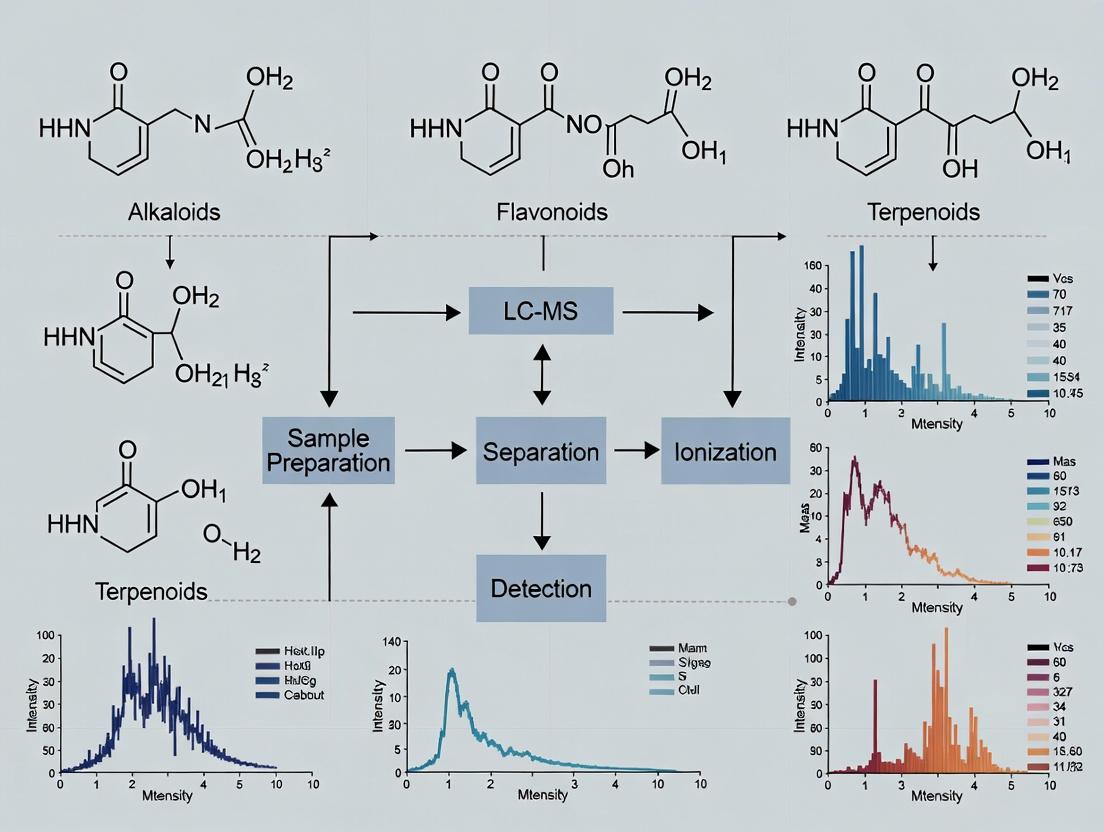
This article provides a comprehensive guide to Liquid Chromatography-Mass Spectrometry (LC-MS) methodologies for detecting and quantifying trace-level plant metabolites, a critical task in phytochemistry, drug discovery, and natural product research.
Advanced LC-MS for Trace Metabolites: Strategies for Sensitive Plant Metabolite Detection and Quantitation in Biomedical Research
Abstract
This article provides a comprehensive guide to Liquid Chromatography-Mass Spectrometry (LC-MS) methodologies for detecting and quantifying trace-level plant metabolites, a critical task in phytochemistry, drug discovery, and natural product research. We first explore the fundamental principles of plant metabolomics and the unique challenges posed by low-abundance compounds. Next, we detail advanced methodological workflows, from sample preparation to instrumental analysis, tailored for sensitivity. The article then addresses common troubleshooting and optimization strategies to enhance signal-to-noise ratios and overcome matrix effects. Finally, we examine validation protocols and compare modern LC-MS platforms (e.g., high-resolution vs. tandem MS) for robustness and reliability. Designed for researchers and drug development professionals, this resource consolidates current best practices for unlocking the biomedical potential of elusive plant-based molecules.
The World of Trace Metabolites: Why Low-Abundance Plant Compounds Are Crucial for Biomedical Discovery
Within the framework of LC-MS methods for trace plant metabolite detection, this article details the critical analysis of trace metabolites—substances present in minute concentrations but with profound biological activity. These compounds, ranging from endogenous signaling phytohormones to potential drug leads, represent a frontier in plant science and natural product discovery. Their low abundance necessitates sophisticated, sensitive, and selective analytical protocols.
Table 1: Representative Trace Plant Metabolites: Concentrations and LC-MS Challenges
| Metabolite Class | Example Compound | Typical in planta Concentration Range | Key LC-MS Challenge | Relevance to Bioactivity |
|---|---|---|---|---|
| Phytohormones | Jasmonic acid (JA) | 1-100 ng/g FW | Isomeric separation from precursors, sensitivity in complex matrices | Defense signaling, growth regulation |
| Phytohormones | Abscisic acid (ABA) | 10-500 ng/g FW | Ionization efficiency in negative mode, background interference | Abiotic stress response |
| Specialized Metabolites | Paclitaxel (Taxol) | <0.01% dry weight (varies) | Ultra-trace detection, co-eluting impurities | Anticancer lead compound |
| Specialized Metabolites | Artemisinin | 0.01-0.5% dry weight | Thermal lability, poor ionization | Antimalarial lead compound |
| Oxylipins | 12-oxo-phytodienoic acid (OPDA) | 10-200 ng/g FW | Structural similarity to JA pathway, rapid turnover | Precursor to JA, signaling |
| Flavonoids (Trace Subtypes) | Specific isoflavones | 50-1000 ng/g FW | Glycoside vs. aglycone separation, isobaric compounds | Phytoestrogen, chemopreventive |
Application Notes & Protocols
AN/P-1: Targeted LC-MS/MS Quantification of Jasmonates in Plant Tissue
Application Note: This protocol is designed for the absolute quantification of jasmonic acid (JA), its bioactive conjugate jasmonoyl-isoleucine (JA-Ile), and precursor OPDA from as little as 50 mg of fresh plant tissue (e.g., Arabidopsis thaliana leaves). It employs a reversed-phase UHPLC system coupled to a triple quadrupole (QqQ) mass spectrometer operated in multiple reaction monitoring (MRM) mode for maximum sensitivity and specificity.
Protocol:
- Tissue Harvest & Homogenization: Flash-freeze tissue in liquid N₂. Homogenize to a fine powder using a chilled mortar and pestle or a ball mill.
- Extraction: Weigh ~50 mg FW powder into a 2 mL microtube. Add 1 mL of cold (-20°C) extraction solvent (MeOH:H₂O:Acetic Acid, 80:19:1, v/v/v) spiked with 10 ng of deuterated internal standards (e.g., D₂-JA, D₆-JA-Ile, D₅-OPDA). Vortex vigorously for 10 s.
- Shaking & Centrifugation: Shake at 4°C for 30 min at 1400 rpm. Centrifuge at 16,000 × g for 15 min at 4°C.
- Solid-Phase Extraction (SPE) Cleanup: Load supernatant onto a pre-conditioned (1 mL MeOH, then 1 mL 1% Acetic Acid) Oasis HLB or similar reversed-phase cartridge (30 mg, 1 cc). Wash with 1 mL of 30% MeOH (1% Acetic Acid). Elute analytes with 1 mL of 80% MeOH (1% Acetic Acid) into a fresh tube.
- Concentration & Reconstitution: Dry eluate under a gentle stream of nitrogen at 30°C. Reconstitute the dried extract in 50 µL of 30% MeOH (0.1% Formic Acid) for LC-MS analysis.
- LC-MS/MS Analysis:
- Column: C18 UHPLC column (100 x 2.1 mm, 1.7 µm).
- Mobile Phase: A: H₂O + 0.1% Formic Acid; B: Acetonitrile + 0.1% Formic Acid.
- Gradient: 5% B to 95% B over 12 min, hold 2 min.
- Flow Rate: 0.3 mL/min.
- MS: ESI negative mode. MRM transitions optimized for each analyte and its deuterated standard (e.g., JA: 209>59; JA-Ile: 322>130; OPDA: 291>165).
- Quantification: Calculate concentrations using the internal standard method, generating calibration curves (e.g., 0.1-100 ng/mL) for each analyte.
AN/P-2: Untargeted LC-HRMS Screening for Novel Bioactive Metabolites
Application Note: This protocol outlines a discovery-phase workflow using high-resolution mass spectrometry (HRMS) to detect and putatively identify novel trace metabolites from plant extracts that correlate with a biological activity of interest. The focus is on data-dependent acquisition (DDA) and subsequent cheminformatic processing.
Protocol:
- Extract Preparation (Multi-Condition): Prepare extracts from plant tissue under multiple conditions (e.g., control, elicited, different genotypes). Use a generic extraction solvent (e.g., 80% MeOH). Pool equal aliquots from all samples to create a "quality control" (QC) sample.
- LC-HRMS Analysis:
- Column: C18 or HILIC UHPLC column.
- MS: Q-TOF or Orbitrap mass spectrometer.
- Acquisition Mode: Full scan (e.g., m/z 70-1200) at high resolution (>30,000 FWHM) in ESI positive and negative modes, followed by DDA of top N most intense ions per cycle.
- Data Processing:
- Perform peak picking, alignment, and gap filling using software (e.g., XCMS, MS-DIAL, Compound Discoverer).
- Normalize data (e.g., using QC-based LOESS or random forest correction).
- Apply statistical analysis (e.g., ANOVA, PCA, volcano plots) to find features differentially abundant between conditions.
- Putative Annotation:
- Query exact mass ([M+H]⁺/[M-H]⁻) against plant-specific databases (e.g., KNApSAcK, PlantCyc, COCONUT). Use MS/MS spectral matching to public libraries (e.g., GNPS, MassBank).
- Predict molecular formula and apply heuristic filtering (e.g., isotopic pattern, nitrogen rule).
- Priority Ranking: Rank annotated features by fold-change, statistical significance, novelty score, and in silico toxicity/predicted bioactivity.
Visualizations
Diagram 1: LC-MS Trace Analysis Workflow
Diagram 2: JA Biosynthesis & Detection Pathway
The Scientist's Toolkit
Table 2: Essential Research Reagents & Materials for Trace Metabolite Analysis
| Item | Function/Application in Protocol | Key Consideration |
|---|---|---|
| Deuterated Internal Standards (e.g., D₅-OPDA, D₆-JA-Ile) | Correct for analyte loss during extraction and ionization variability in MS. Essential for accurate quantification. | Isotopic purity; stability; must be non-endogenous to sample. |
| Solid-Phase Extraction (SPE) Cartridges (Oasis HLB, Strata-X) | Clean-up crude plant extracts, remove salts, pigments, and lipids to reduce matrix effects and ion suppression. | Sorbent chemistry must be matched to analyte polarity (reversed-phase for jasmonates). |
| UHPLC Columns (C18, 1.7-1.8 µm, 2.1 mm ID) | Provide high-efficiency chromatographic separation of trace analytes from co-extracted matrix components. | Column chemistry (e.g., endcapped), pH stability, and particle size are critical for resolution. |
| Mass Spectrometer Tuning & Calibration Solutions | Calibrate mass accuracy (HRMS) and optimize ion source/quadrupole parameters (QqQ) before analysis. | Use manufacturer-recommended solutions (e.g., sodium formate for TOF; polytyrosine for Orbitrap). |
| High-Purity Solvents & Additives (LC-MS Grade MeOH, ACN, FA, AcOH) | Minimize background chemical noise, prevent contamination, and ensure consistent chromatographic performance. | Lower UV cutoff, non-volatile residue levels, and acidity are critical specifications. |
| Cheminformatics Software (e.g., XCMS Online, GNPS, MS-DIAL) | Process raw HRMS data for feature detection, alignment, statistical analysis, and database matching in untargeted workflows. | Compatibility with instrument vendor data formats and access to relevant spectral libraries. |
This article presents detailed application notes and protocols, framed within a thesis on LC-MS methods for trace plant metabolite detection, exploring three interconnected domains: natural product drug discovery, nutrigenomics, and the plant stress response.
Application Notes
AN-1: LC-MS in Plant-Derived Drug Discovery
The screening of plant extracts for novel bioactive compounds remains a cornerstone of drug discovery. Advanced LC-MS platforms, particularly UHPLC coupled with high-resolution tandem mass spectrometry (HRMS/MS), enable the de-replication of known compounds and the identification of novel scaffolds with therapeutic potential. Quantitative LC-MS is critical for assessing the pharmacokinetic properties of lead compounds.
AN-2: Metabolomics in Nutrigenomics
Nutrigenomics investigates the interaction between dietary components and the genome. LC-MS-based metabolomic profiling of biofluids (plasma, urine) before and after consumption of plant-based foods or supplements allows for the identification of dietary biomarkers and the characterization of individual metabolic responses. This enables personalized nutrition strategies.
AN-3: Plant Stress Metabolomics for Enhanced Bioactivity
Plants subjected to abiotic (e.g., drought, UV) or biotic (e.g., pathogen) stress often produce unique secondary metabolites as a defense mechanism. Targeted and untargeted LC-MS metabolomics of stressed plant cultures can reveal the upregulation of specific, potentially bioactive pathways, providing a strategy to enhance the yield of desired compounds for nutraceutical or pharmaceutical use.
Table 1: Key LC-MS Parameters for Trace Plant Metabolite Analysis
| Parameter | Typical Setting for Drug Discovery | Typical Setting for Nutrigenomics | Typical Setting for Stress Response |
|---|---|---|---|
| Chromatography | UHPLC, C18 column (100 x 2.1 mm, 1.7-1.8 µm) | UHPLC, HILIC/C18 columns (for polarity coverage) | UHPLC, C18 or phenyl-hexyl column |
| MS Type | Q-TOF or Orbitrap (HRMS) | QqQ (quantitation) & Q-TOF (identification) | Q-TOF or Ion Trap (for MSⁿ) |
| Mass Accuracy | < 3 ppm | < 5 ppm (Q-TOF) | < 5 ppm |
| Dynamic Range | 4-5 orders | 5-6 orders (QqQ) | 4-5 orders |
| Key Metric | Spectral quality for library matching | Calibrator accuracy & precision (CV < 15%) | Fold-change in metabolite intensity |
Table 2: Examples of Plant Stress-Induced Metabolite Changes
| Stressor | Plant Model | Key Upregulated Metabolite Class (Fold Change) | Potential Biomedical Relevance |
|---|---|---|---|
| UV-B Radiation | Hypericum perforatum (St. John's Wort) | Hypericins, Flavonoids (2.5-5.0x) | Antidepressant, antiviral activity |
| Drought | Salvia miltiorrhiza (Danshen) | Tanshinones (3.0-8.0x) | Cardiovascular protection |
| Elicitation (Jasmonate) | Taxus baccata (Yew) | Paclitaxel precursors (1.5-4.0x) | Anticancer drug precursor |
| Nutrient Deficiency | Moringa oleifera | Glucosinolates, Phenolics (2.0-6.0x) | Anti-inflammatory, antioxidant |
Experimental Protocols
Protocol 1: LC-HRMS Workflow for Dereplication in Plant Extracts
Objective: To rapidly identify known and novel metabolites in a crude plant extract to prioritize leads for drug discovery.
- Sample Prep: Homogenize 100 mg dried plant material. Extract with 1 mL 80% methanol/water (v/v) via sonication (15 min) and centrifugation (13,000 x g, 10 min, 4°C). Filter supernatant (0.22 µm PVDF).
- LC Conditions:
- Column: UHPLC C18 (100 x 2.1 mm, 1.7 µm).
- Mobile Phase: (A) 0.1% Formic acid in H₂O; (B) 0.1% Formic acid in Acetonitrile.
- Gradient: 5% B to 95% B over 18 min, hold 2 min.
- Flow Rate: 0.4 mL/min. Column Temp: 40°C.
- MS Conditions (ESI +/-):
- Mass Analyzer: Time-of-Flight (TOF) or Orbitrap.
- Scan Range: m/z 100-1500.
- Resolution: > 30,000 FWHM.
- Collision Energy: Ramped (e.g., 20-50 eV) for MS/MS.
- Data Analysis: Process raw files (peak picking, alignment). Query MS/MS spectra against databases (GNPS, MassBank, in-house libraries). Use software (e.g., Sirius) to predict molecular formula and structures for unknown fragments.
Protocol 2: Targeted LC-MS/MS for Dietary Biomarker Quantification
Objective: To quantify specific plant-derived metabolites (e.g., curcuminoids, flavanones) in human plasma for nutrigenomic studies.
- Sample Prep: Thaw plasma on ice. Aliquot 100 µL plasma. Add 10 µL internal standard (e.g., d6-curcumin). Protein precipitate with 300 µL cold acetonitrile. Vortex (1 min), centrifuge (13,000 x g, 15 min, 4°C). Transfer supernatant for analysis.
- LC Conditions:
- Column: UHPLC C18 (50 x 2.1 mm, 1.7 µm).
- Mobile Phase: (A) 5 mM Ammonium acetate; (B) Methanol.
- Gradient: 40% B to 95% B over 5 min.
- Flow Rate: 0.3 mL/min.
- MS Conditions (ESI +/-):
- Mass Analyzer: Triple Quadrupole (QqQ).
- Detection: Multiple Reaction Monitoring (MRM). Optimize Q1/Q3 and CE for each target.
- Dwell Time: ≥ 20 ms per transition.
- Quantitation: Run a 6-point calibration curve with matrix-matched standards. Use internal standard method for correction. Accept run if calibrators are within ±15% of nominal value.
Protocol 3: Untargeted LC-MS for Plant Stress Response Profiling
Objective: To profile global metabolic changes in plant tissue following abiotic stress.
- Plant Treatment & Harvest: Apply stress (e.g., 200 mM NaCl for salt stress) to hydroponic plant cultures for 48h. Flash-freeze leaf tissue in liquid N₂ at multiple time points. Store at -80°C.
- Metabolite Extraction: Grind tissue under liquid N₂. Weigh 50 mg. Extract with 1 mL chilled MeOH:H₂O:FA (80:19.9:0.1, v/v/v). Vortex, sonicate (10 min, 4°C), centrifuge (14,000 x g, 15 min). Collect supernatant. Dry under N₂. Reconstitute in 100 µL initial LC mobile phase.
- LC-HRMS Analysis:
- Column: UHPLC C18 or HILIC.
- MS: Full-scan HRMS (e.g., m/z 70-1050) with data-dependent MS/MS (top 10 ions).
- Data Processing & Stats: Use software (MS-DIAL, XCMS) for peak alignment, annotation (against public MS/MS libraries). Perform multivariate analysis (PCA, OPLS-DA) to identify significant (p<0.05, FC>2) discriminant metabolites.
Visualization: Diagrams and Pathways
Title: LC-MS Workflow from Plant Stress to Biomedical Applications
Title: Protocol: Metabolite Extraction from Plant Tissue for LC-MS
Title: Simplified Jasmonate Signaling in Plant Stress Response
The Scientist's Toolkit: Research Reagent Solutions
Table 3: Essential Materials for Plant Metabolite LC-MS Research
| Item | Function & Relevance |
|---|---|
| UHPLC-grade Solvents (Acetonitrile, Methanol, Water) | Minimal UV absorbance and ion suppression for high-sensitivity MS detection. |
| Formic Acid / Ammonium Acetate (LC-MS grade) | Common volatile mobile phase additives for controlling pH and improving ionization. |
| Solid Phase Extraction (SPE) Cartridges (C18, HLB, Mixed-mode) | For clean-up and pre-concentration of complex plant or biofluid samples to reduce matrix effects. |
| Stable Isotope-Labeled Internal Standards (e.g., ¹³C, ²H compounds) | Critical for accurate quantification in complex matrices by correcting for extraction and ionization variability. |
| Metabolite Standards (Pure reference compounds) | For method development, calibration curves, and confirmation of metabolite identity via retention time matching. |
| Quality Control (QC) Pooled Sample | A homogenous mixture of all study samples run intermittently to monitor instrument stability and data reproducibility. |
| MS Calibration Solution (e.g., sodium formate) | For accurate mass calibration of the HRMS instrument before or during analysis. |
| In-house or Commercial MS/MS Spectral Library | Essential for metabolite annotation and dereplication by comparing experimental fragmentation patterns. |
Application Note: Overcoming Matrix Effects for Trace Alkaloid Quantification
Plant matrices present formidable challenges for LC-MS analysis of secondary metabolites like tropane alkaloids (e.g., scopolamine). This note details a validated approach for quantifying these analytes in Datura stramonium leaf extracts at ng/g levels.
Key Challenge Summary:
- Complexity: Co-eluting compounds (e.g., chlorophyll derivatives, phenolics) cause ion suppression/enhancement.
- Low Concentration: Target analytes exist at trace levels amidst a high background of primary metabolites.
- Wide Dynamic Range: Concentrations can vary over 4-5 orders of magnitude between different alkaloids in a single sample.
Quantitative Performance Data: Table 1: Method Validation Parameters for Target Alkaloids in *D. stramonium.*
| Analytic | Linearity Range (ng/mL) | R² | LOD (ng/g in tissue) | LOQ (ng/g in tissue) | Matrix Effect (%) | Recovery (%) |
|---|---|---|---|---|---|---|
| Scopolamine | 0.1-500 | 0.9991 | 0.05 | 0.15 | -12.5 | 85.2 |
| Atropine | 0.2-500 | 0.9987 | 0.10 | 0.30 | -18.3 | 82.7 |
| Anisodamine | 0.5-500 | 0.9989 | 0.25 | 0.75 | -9.8 | 88.1 |
Table 2: Comparison of Cleanup Protocols for Complex Plant Extracts.
| Protocol | Complexity Reduction (Est. # of MS Features Removed) | Target Analytic Recovery (%) | Time per Sample (min) | Best Use Case |
|---|---|---|---|---|
| QuEChERS | ~40% | 70-90 | 15 | Broad-target screening |
| SPE (C18) | ~60% | 80-95 | 25 | Mid-polarity metabolites |
| MSPD | ~75% | 60-80 | 35 | Difficult, fibrous tissues |
| In-Line 2D-LC | ~85%* | >95 | Varies | Ultimate resolution for trace analysis |
*Feature reduction refers to co-eluting interferences at the target's retention time.
Detailed Experimental Protocols
Protocol 1: Optimized Sample Preparation for Alkaloid Analysis
Principle: Employ Matrix Solid-Phase Dispersion (MSPD) for integrated extraction and cleanup, minimizing dilution and maximizing analyte recovery from complex plant tissue.
Materials: Fresh or lyophilized plant tissue, solid-phase sorbent (C18, silica), mortar and pestle, anhydrous magnesium sulfate, acetonitrile (MeCN) with 1% formic acid, centrifuge, ultrasonic bath, 0.22 µm PVDF syringe filter.
Procedure:
- Homogenization: Precisely weigh 100 mg of lyophilized, powdered leaf tissue.
- MSPD Blend: Combine tissue with 400 mg of C18 sorbent and 200 mg of anhydrous MgSO₄ in a mortar. Grind thoroughly for 3 minutes to form a homogeneous, dry powder.
- Packing: Transfer the blend to a solid-phase extraction cartridge fitted with a frit.
- Elution: Pass 5 mL of MeCN (1% formic acid) through the cartridge under gentle vacuum. Collect the entire eluate.
- Concentration: Evaporate the eluate to dryness under a gentle nitrogen stream at 40°C.
- Reconstitution: Reconstitute the residue in 500 µL of initial LC mobile phase (e.g., 95:5 water:MeCN, 0.1% formic acid). Vortex for 1 min and sonicate for 5 min.
- Clarification: Centrifuge at 14,000 x g for 10 min. Filter the supernatant through a 0.22 µm PVDF membrane into an LC-MS vial.
Protocol 2: 2D-LC-MS/MS Method for High Dynamic Range Analysis
Principle: Use a heart-cutting 2D-LC setup to resolve analytes from isobaric interferences in the first dimension (HILIC) before analysis in the second dimension (RP-C18) coupled to a triple quadrupole MS.
LC Conditions:
- 1D-LC (HILIC): Column: XBridge BEH Amide (150 x 2.1 mm, 3.5 µm). Mobile Phase: (A) 50 mM ammonium acetate in water (pH 5.0), (B) acetonitrile. Gradient: 90% B to 60% B over 15 min. Flow: 0.25 mL/min.
- Heart-Cutting: Transfer analyte window (e.g., 7.2-7.8 min) via a 6-port valve to a trapping column (C18, 10 x 2.1 mm).
- 2D-LC (Reversed Phase): Column: Kinetex C18 (50 x 2.1 mm, 1.7 µm). Mobile Phase: (A) Water 0.1% FA, (B) MeCN 0.1% FA. Gradient: 5% B to 95% B over 5 min. Flow: 0.5 mL/min.
- MS Conditions: Ion Source: ESI+. MRM transitions optimized for each alkaloid. Dwell time: 50 ms per transition.
Visualization of Methods and Workflows
Diagram 1: 2D-LC-MS workflow for complex plant matrices.
Diagram 2: Impact of matrix effects on ionization efficiency.
The Scientist's Toolkit: Essential Research Reagent Solutions
Table 3: Key Materials for Advanced Plant Metabolite LC-MS.
| Item | Function & Rationale |
|---|---|
| C18 & Mixed-Mode SPE Sorbents | Primary cleanup; remove pigments, lipids, and non-polar interferences via hydrophobic interactions. |
| QuEChERS Kits (MgSO₄, PSA, C18) | Quick, efficient dispersive cleanup for multi-residue or multi-class metabolite screening. |
| Deuterated Internal Standards (e.g., D3-Scopolamine) | Critical for correcting matrix effects and losses during preparation; enables accurate quantification. |
| HILIC Columns (e.g., Amide, Zwitterionic) | Retain and separate highly polar metabolites that elute in the void volume on RP columns. |
| PFP (Pentafluorophenyl) Columns | Provides alternative selectivity for separating structural isomers (e.g., different glycosylated flavonoids). |
| Heart-Cutting 2D-LC Valve System | Isolates analyte from unresolved matrix in 1D, enabling interference-free 2D separation and detection. |
| Q-TOF or Orbitrap Mass Spectrometer | Provides high-resolution, accurate-mass data for untargeted profiling and identification of unknowns. |
| Scheduled MRM Software | Optimizes dwell times in triple quadrupole MS, allowing monitoring of 100s of targets in a single run. |
Within trace plant metabolite research, achieving definitive identification and quantification of compounds present at nanomolar or picomolar levels is paramount. Liquid Chromatography-Mass Spectrometry (LC-MS) has become the indispensable platform for this challenge, merging high-resolution separation with exquisitely sensitive and selective mass analysis.
Core Principles and Comparative Advantages
The synergy of LC and MS provides unmatched capability:
- LC Component: Separates complex plant extracts, reducing ion suppression and isobaric interferences.
- MS Component: Provides mass-to-charge (m/z) data for identification and, via tandem MS (MS/MS), structural elucidation. High-resolution accurate mass (HRAM) instruments (e.g., Q-TOF, Orbitrap) deliver ppm-level mass accuracy.
Table 1: Quantitative Performance Metrics of Modern LC-MS Platforms in Plant Metabolomics
| Platform Type | Mass Resolution (FWHM) | Mass Accuracy (ppm) | Dynamic Range | Typical Sensitivity (S/N) | Optimal Application |
|---|---|---|---|---|---|
| Triple Quadrupole (QQQ) | 1,000 - 4,000 | 50 - 100 | 10^4 - 10^6 | Low pg (MRM mode) | Targeted quantification of known metabolites (e.g., phytohormones) |
| Time-of-Flight (TOF) | 20,000 - 60,000 | < 5 | 10^3 - 10^4 | Low ng (Full-scan) | Untargeted screening, fingerprinting |
| Quadrupole-TOF (Q-TOF) | 30,000 - 70,000 | < 2 | 10^3 - 10^4 | High pg (MS/MS mode) | Untargeted & targeted identification |
| Orbitrap (e.g., Q-Exactive) | 70,000 - 500,000 | < 1 | 10^3 - 10^5 | Mid pg (Full-scan) | High-confidence ID, complex mixtures |
Detailed Protocol: Targeted Analysis of Jasmonates in Plant Tissue
Application: Quantification of trace stress phytohormones (e.g., JA, JA-Ile) in Arabidopsis thaliana leaf tissue.
I. Sample Preparation (Keep at 4°C)
- Homogenization: Flash-freeze 100 mg fresh weight tissue in LN₂. Grind to fine powder.
- Extraction: Add 1 mL of cold extraction solvent (Methanol:Water:Formic Acid, 70:29:1, v/v/v) spiked with 10 ng of internal standards (e.g., D₅-JA, D₆-JA-Ile).
- Sonication: Sonicate on ice for 15 min.
- Centrifugation: Centrifuge at 21,000 x g, 15 min, 4°C.
- Concentration: Transfer supernatant, evaporate to dryness under gentle N₂ stream.
- Reconstitution: Reconstitute dried extract in 100 µL of 30% methanol, vortex, centrifuge. Transfer to LC vial.
II. LC-MS/MS Parameters (Using a Triple Quadrupole MS)
- Chromatography:
- Column: C18 reverse-phase (2.1 x 100 mm, 1.7 µm).
- Mobile Phase: A = 0.1% Formic acid in H₂O; B = 0.1% Formic acid in Acetonitrile.
- Gradient: 5% B to 95% B over 12 min, hold 2 min, re-equilibrate.
- Flow: 0.3 mL/min; Column Temp: 40°C.
- Mass Spectrometry (ESI Negative Mode):
- Ion Source: Temp 300°C, Gas Flow Optimized.
- Data Acquisition: Multiple Reaction Monitoring (MRM).
- JA: 209 > 59 (Collision Energy: -18 V)
- JA-Ile: 322 > 130 (CE: -16 V)
- D₅-JA: 214 > 62 (CE: -18 V)
- D₆-JA-Ile: 328 > 136 (CE: -16 V)
- Dwell Time: 50 ms per transition.
III. Data Analysis
- Integrate peaks for each MRM transition.
- Calculate analyte-to-internal standard peak area ratio.
- Generate calibration curve (e.g., 0.1 pg/µL to 100 pg/µL) and apply linear regression.
- Back-calculate concentrations, correcting for tissue weight.
Diagram Title: Targeted LC-MS/MS Workflow for Trace Metabolites
Diagram Title: JA Signaling Pathway & LC-MS Quantification Point
The Scientist's Toolkit: Key Research Reagent Solutions
Table 2: Essential Materials for Sensitive Plant Metabolomics by LC-MS
| Item | Function & Importance | Example/Brand Consideration |
|---|---|---|
| Stable Isotope-Labeled Internal Standards (SIL-IS) | Critical for correcting matrix effects & extraction losses during quantification (e.g., for phytohormones). | D₅-Jasmonic Acid, ¹³C₆-Abscisic Acid, commercial metabolite libraries. |
| LC-MS Grade Solvents | Minimize chemical noise, reduce background ions, and ensure system longevity. | Acetonitrile, Methanol, Water with < 1 ppm impurities. |
| Solid Phase Extraction (SPE) Cartridges | Clean-up crude extracts, pre-concentrate analytes, reduce ion suppression. | Mixed-mode (C18/SCX), HLB for broad-spectrum retention. |
| UHPLC Columns with Small Particles (<2 µm) | Provide superior chromatographic resolution for complex plant extracts, enhancing peak capacity. | C18, HILIC columns for polar metabolites. |
| Mass Calibration Solution | Ensures ongoing mass accuracy, especially critical for HRAM instruments and metabolite ID. | Solutions with ions spanning a wide m/z range (e.g., for ESI+/ESI-). |
| Derivatization Reagents | Enhance ionization efficiency and detection sensitivity for poorly ionizing metabolites (e.g., sugars). | Methoxyamine, MSTFA, dansyl chloride. |
In LC-MS-based trace analysis of plant metabolites, distinguishing low-abundance target compounds within a complex biological matrix is paramount. Sensitivity, selectivity, and specificity are interdependent performance metrics that determine the success of such methods. Sensitivity defines the lowest detectable amount. Selectivity is the method's ability to distinguish the analyte from interferences. Specificity is the definitive identification of the analyte, often via high-resolution MS/MS. Optimizing these metrics is critical for discovering novel bioactive compounds or quantifying key phytochemicals at trace levels.
Definitions and Quantitative Benchmarks
The following table summarizes the core definitions, related parameters, and typical targets for trace LC-MS analysis.
Table 1: Core Performance Metrics for Trace LC-MS Analysis
| Metric | Definition | Key Related Parameters | Typical Target for Trace Analysis |
|---|---|---|---|
| Sensitivity | Ability to detect small amounts of analyte. | Limit of Detection (LOD), Limit of Quantification (LOQ), Signal-to-Noise (S/N). | LOD: S/N ≥ 3. LOQ: S/N ≥ 10, Precision (RSD <20%). |
| Selectivity | Ability to measure the analyte accurately in the presence of interferences. | Chromatographic Resolution (Rs > 1.5), Mass Resolution (R), Matrix Effects (ME). | ME within 80-120%; Baseline separation of critical pairs. |
| Specificity | Ability to unequivocally confirm the identity of the target analyte. | Mass Accuracy (< 5 ppm for HRMS), MS/MS Spectral Match (e.g., library score). | MS/MS match score > 70% (library-dependent); Isotopic pattern fidelity. |
Table 2: Impact of MS Instrumentation on Metrics
| Instrument Type | Mass Resolution (R) | Primary Contribution to | Typical LOD Range for Plant Metabolites |
|---|---|---|---|
| Triple Quadrupole (QqQ) | Unit (Low) | Sensitivity (MRM), Selectivity | Low to mid fg (in MRM mode) |
| Quadrupole-Time-of-Flight (Q-TOF) | High (>20,000) | Selectivity, Specificity | Mid pg to low ng |
| Orbitrap-based | Very High (>60,000) | Specificity, Selectivity | Low pg to mid ng |
Detailed Experimental Protocols
Protocol 1: Determination of LOD and LOQ Objective: Establish the sensitivity of an LC-MS/MS method for a target trace alkaloid.
- Solution Preparation: Prepare a series of calibration standard solutions in mobile phase, spanning from an expected detectable level down to near-zero concentration (e.g., 100 pg/mL to 1 fg/mL).
- LC-MS Analysis: Inject each standard (n=6 for low-level points) using the optimized method. Key LC parameters: C18 column (2.1 x 100 mm, 1.7 µm), flow rate 0.3 mL/min, gradient elution. MS: ESI+ MRM mode.
- Data Analysis: Plot peak area vs. concentration. For LOD/LOQ, analyze the lowest concentration samples. Calculate the standard deviation (σ) of the response and the slope (S) of the calibration curve.
- LOD = 3.3σ / S
- LOQ = 10σ / S
- Verification: Confirm LOD/LOQ by injecting independent prepared standards at these levels. The S/N for LOD must be ≥3, and for LOQ, precision (RSD) must be <20%.
Protocol 2: Assessing Selectivity via Matrix Effects Objective: Evaluate ionization suppression/enhancement for a flavonoid in a leaf extract.
- Sample Preparation: Prepare three sets of samples (n=5 each):
- Set A (Neat Solution): Standard in mobile phase at mid-level concentration (Qc).
- Set B (Post-extraction Spiked): Blank plant matrix extracted, then spiked with standard at Qc level.
- Set C (Pre-extraction Spiked): Blank plant matrix spiked with standard at Qc level before extraction.
- LC-MS Analysis: Analyze all samples under identical UHPLC-Q-TOF conditions (full scan mode).
- Calculation: Calculate the Matrix Effect (ME), Recovery (Rec), and Process Efficiency (PE).
- ME (%) = (Peak Area of Set B / Peak Area of Set A) x 100.
- Rec (%) = (Peak Area of Set C / Peak Area of Set B) x 100.
- PE (%) = (Peak Area of Set C / Peak Area of Set A) x 100 = (ME x Rec)/100.
- An ME of 100% indicates no matrix effect; <100% = suppression; >100% = enhancement.
Protocol 3: Confirming Specificity via HRMS/MS Objective: Unambiguously identify a putative sulfated phenolic compound.
- Data-Dependent Acquisition (DDA): Using a UHPLC-Orbitrap system, perform a full scan (m/z 80-1200, R=60,000) to detect ions. Isolate the precursor ion of interest (± 1.2 m/z window).
- Fragmentation: Fragment the ion using stepped Higher-Energy Collisional Dissociation (HCD) (e.g., 20, 35, 50 eV).
- Data Analysis: Process data with a metabolomics software suite. Key steps:
- Confirm mass accuracy of precursor and fragments (< 5 ppm).
- Compare experimental MS/MS spectrum to in-silico predicted fragments and/or public/commercial spectral libraries (e.g., GNPS, MassBank).
- Evaluate isotopic pattern match for the precursor ion.
Visualizations
Title: LC-HRMS Workflow for Specific Metabolite ID
Title: Ion Suppression Mechanism in ESI Source
The Scientist's Toolkit: Key Research Reagent Solutions
Table 3: Essential Materials for LC-MS Trace Analysis of Metabolites
| Item | Function & Rationale |
|---|---|
| Hypergrade LC-MS Solvents | Minimize baseline noise and system contamination, crucial for achieving low LODs. |
| Stable Isotope-Labeled Internal Standards (SIL-IS) | Correct for variability in extraction, ionization (matrix effects), and instrument response; essential for accurate quantification. |
| Solid Phase Extraction (SPE) Cartridges | Clean-up samples to remove interfering salts, pigments, and lipids, thereby improving selectivity and reducing ion suppression. |
| High-Purity Mobile Phase Additives | Agents like ammonium formate or acetic acid provide consistent ionization and adduct formation for robust and reproducible MS signal. |
| Well-Characterized Quality Control (QC) Pooled Sample | A representative sample used throughout the analytical run to monitor system stability, reproducibility, and data quality. |
| Certified Reference Standards | Required for unambiguous identification (specificity), method development, and creation of calibration curves for quantification. |
From Sample to Spectrum: Optimized LC-MS Workflows for Maximum Sensitivity
Within the thesis research on LC-MS methods for trace plant metabolite detection, the pre-analytical phase is paramount. The accuracy of quantifying labile, low-abundance metabolites is wholly dependent on the efficacy of quenching cellular metabolism, extracting analytes comprehensively, and purifying samples to minimize ion suppression. This document details current protocols and application notes for these critical steps.
Quenching: Halting Metabolic Activity
The instantaneous arrest of enzymatic activity is necessary to snapshot the in vivo metabolite profile.
Protocol: Rapid Quenching for Plant Tissue
Objective: To instantaneously halt metabolic activity in plant leaf or root tissue. Materials: Liquid nitrogen, pre-cooled mortar and pestle (~-20°C or lower), cryogenic vials. Procedure:
- Field Sampling: Excise tissue using a clean, sharp tool and immediately submerge it in a labeled cryogenic vial plunged into liquid nitrogen. Process within seconds.
- Grinding: Under continuous liquid nitrogen cooling, grind tissue to a fine, homogeneous powder using a pre-cooled mortar and pestle.
- Storage: Transfer the powder to a pre-weighed cryogenic vial and store at -80°C until extraction. Key Consideration: Avoid partial thawing during handling. For heat-stable metabolites, a methanol-based quenching solution (60% aqueous methanol at -40°C) can be used for cell suspensions.
Quantitative Data on Quenching Efficacy
Table 1: Impact of Quenching Delay on Relative Abundance of Labile Plant Metabolites (e.g., ATP, Glycolytic Intermediates).
| Quenching Delay (seconds) | Relative ATP Level (%) | Relative Phospho-enolpyruvate Level (%) | Relative Fructose-1,6-bP Level (%) |
|---|---|---|---|
| 0 (Immediate freeze) | 100 ± 3 | 100 ± 5 | 100 ± 4 |
| 10 | 82 ± 6 | 75 ± 8 | 88 ± 7 |
| 30 | 45 ± 9 | 30 ± 10 | 65 ± 9 |
| 60 | 20 ± 7 | 15 ± 6 | 40 ± 8 |
Extraction: Maximizing Analyte Recovery
The extraction solvent must inactivate enzymes, solubilize diverse metabolite classes, and be compatible with downstream LC-MS.
Protocol: Biphasic Methanol/Chloroform/Water Extraction for Polar & Non-Polar Metabolites
Objective: To comprehensively extract both polar (e.g., sugars, amino acids) and non-polar (e.g., lipids, chlorophyll) metabolites from plant powder. Materials: Pre-cooled (-20°C) methanol, chloroform, water; centrifuge tubes; vortex mixer; centrifuge; sonicator (optional). Procedure:
- Weigh ~50 mg of frozen plant powder into a 2 mL microcentrifuge tube on dry ice.
- Add 1 mL of pre-cooled (-20°C) methanol:chloroform mixture (2:1, v/v). Vortex vigorously for 30 seconds.
- Sonicate in an ice-water bath for 10 minutes (optional but recommended for tough tissues).
- Add 400 µL of ice-cold water. Vortex for 30 seconds. This creates a biphasic system.
- Centrifuge at 14,000 x g for 10 minutes at 4°C.
- Polar Phase (Upper): Carefully collect the upper aqueous-methanol layer for polar metabolite analysis.
- Non-Polar Phase (Lower): Collect the lower chloroform layer for lipid analysis.
- Interface: The protein pellet at the interface should be discarded or processed for proteomics.
- Dry extracts under a gentle stream of nitrogen or in a vacuum concentrator. Reconstitute in appropriate LC-MS starting solvent.
Quantitative Data on Extraction Solvent Efficiency
Table 2: Recovery Rates (%) of Selected Metabolite Classes Using Different Extraction Methods.
| Metabolite Class | Example Analytes | Methanol/Water | Acetonitrile/Water | Biphasic (M/C/W) |
|---|---|---|---|---|
| Amino Acids | Proline, Glutamate | 95 ± 4 | 92 ± 3 | 90 ± 5 |
| Organic Acids | Citrate, Malate | 89 ± 6 | 95 ± 4 | 92 ± 5 |
| Sugars | Sucrose, Glucose | 97 ± 2 | 85 ± 6 | 93 ± 4 |
| Phospholipids | Phosphatidylcholine | 5 ± 3 | 15 ± 5 | 98 ± 2 |
| Chlorophylls | Chlorophyll a | 10 ± 5 | 20 ± 8 | 99 ± 1 |
| Overall Metabolite Coverage | (Number of features in LC-MS) | 1250 ± 50 | 1100 ± 70 | 1800 ± 60 |
Clean-up: Reducing Matrix Effects
Sample purification is critical to reduce ion suppression/enhancement and protect the LC-MS system.
Protocol: Solid-Phase Extraction (SPE) for Polar Metabolite Clean-up
Objective: To remove salts, pigments, and other interfering compounds from polar extracts prior to hydrophilic interaction liquid chromatography (HILIC)-MS. Materials: SPE cartridges (e.g., polymeric reverse-phase or mixed-mode), vacuum manifold, appropriate solvents (water, methanol). Procedure:
- Condition the SPE cartridge with 3 mL of methanol, followed by 3 mL of water. Do not let the sorbent dry.
- Load the reconstituted polar extract (in water or low organic solvent).
- Wash with 3 mL of water or a mild aqueous buffer to remove salts and very polar interferents.
- Elute metabolites with 2-3 mL of methanol or methanol:water (80:20, v/v).
- Dry the eluent and reconstitute in HILIC starting mobile phase (e.g., high acetonitrile content).
Quantitative Data on Clean-up Impact
Table 3: Effect of SPE Clean-up on LC-MS Signal in Plant Root Extract.
| Parameter | Without SPE Clean-up | With SPE Clean-up |
|---|---|---|
| Ion Suppression Factor (%) (for a spiked internal standard) | 65 ± 8 (Severe suppression) | 92 ± 3 (Minimal suppression) |
| Number of Detected Features (S/N > 10) | 1050 ± 45 | 1350 ± 35 |
| Column Backpressure Increase per 100 injections | 45% | 12% |
| Signal RSD for Technical Replicates | 18% | 6% |
Visualized Workflows
Title: Quenching and Initial Extraction Workflow
Title: SPE Clean-up Process for Polar Metabolites
The Scientist's Toolkit: Research Reagent Solutions
Table 4: Essential Materials for Pre-Analytical Processing of Plant Metabolites.
| Item | Function & Rationale |
|---|---|
| Cryogenic Vials (Pre-labeled) | For rapid, traceable immersion and storage of tissue samples in liquid nitrogen. |
| Pre-cooled Mortar & Pestle | Maintains tissue in a frozen state during grinding, preventing metabolite degradation. |
| LC-MS Grade Solvents (MeOH, CHCl₃, ACN, H₂O) | Ensures minimal background contamination and ion suppression from solvent impurities. |
| Internal Standard Mix (e.g., isotopically labeled amino acids, sugars) | Corrects for losses during extraction, clean-up, and matrix effects during LC-MS analysis. |
| Polymeric SPE Cartridges (e.g., Oasis HLB or MCX) | Effective for broad-spectrum clean-up of plant metabolites; less prone to over-drying than silica-based phases. |
| Vacuum Concentrator | Enables gentle, simultaneous drying of multiple samples without heat-induced degradation. |
| Micro Homogenizer (Bead Mill) | Provides efficient, reproducible cell disruption for difficult tissues when used with appropriate buffer. |
Application Notes
The advancement of chromatographic techniques is pivotal for the detection of trace plant metabolites in LC-MS-based research. These compounds, often present in complex matrices at low concentrations, require high-resolution separation for accurate identification and quantification. This note details the application of Ultra-High-Performance Liquid Chromatography (UHPLC), Hydrophilic Interaction Liquid Chromatography (HILIC), and core-shell particle columns to achieve superior peak resolution in plant metabolomics.
UHPLC for Enhanced Efficiency
UHPLC employs pressures >600 bar (often up to 1500 bar) and sub-2-µm fully porous particles to significantly increase theoretical plate counts, reduce analysis time, and improve sensitivity. This is critical for separating complex plant extracts containing hundreds of metabolites with subtle structural differences.
HILIC for Polar Metabolite Retention
Reversed-phase LC often fails to retain highly polar metabolites. HILIC, using a polar stationary phase (e.g., bare silica, amide, or cyano) and a hydrophobic mobile phase (high organic content), provides excellent retention and resolution for polar compounds like sugars, organic acids, and amino acids, which are abundant in plant systems.
Core-Shell Technology for Optimal Performance
Core-shell (or superficially porous) particles (e.g., 2.6-2.7 µm) feature a solid core and a porous shell. They offer efficiency comparable to sub-2-µm UHPLC particles but at significantly lower backpressures (~40% less). This allows for high-resolution separations on conventional HPLC systems or permits longer columns and higher flow rates on UHPLC systems.
Integrated Benefits for Plant Metabolomics
The combination of UHPLC instrumentation, HILIC selectivity, and core-shell column efficiency results in:
- Increased peak capacity and resolution.
- Improved detection sensitivity due to sharper peaks.
- Shorter run times, enabling higher throughput.
- Robust retention of a broader range of metabolite polarities.
Table 1: Quantitative Performance Comparison of Column Technologies for Plant Metabolite Standards
| Parameter | Traditional HPLC (5µm C18) | UHPLC (1.7µm C18) | Core-Shell (2.6µm HILIC) |
|---|---|---|---|
| Average Plate Count (N/m) | ~80,000 | ~250,000 | ~220,000 |
| Operating Pressure (bar) | 100-200 | 600-1000 | 300-500 |
| Analysis Time (for a 30-compound mix, min) | 45 | 12 | 18 |
| Peak Capacity | ~150 | ~450 | ~400 |
| Resolution (Rs) of Critical Pair* | 1.2 | 2.5 | 2.8 (in HILIC mode) |
Critical pair example: Luteolin-7-O-glucoside vs. Luteolin-8-C-glucoside.
Detailed Experimental Protocols
Protocol 1: UHPLC-HILIC/MS Method for Polar Plant Metabolites
Objective: To separate and detect polar primary metabolites (sugars, amino acids, organic acids) from Arabidopsis thaliana leaf extract.
I. Sample Preparation
- Homogenization: Freeze-dry 50 mg of leaf tissue. Homogenize to a fine powder using a ball mill.
- Extraction: Add 1 mL of cold extraction solvent (Acetonitrile:Water:Formic Acid, 75:24.9:0.1, v/v/v). Vortex vigorously for 30 seconds.
- Sonication: Sonicate in an ice-water bath for 15 minutes.
- Centrifugation: Centrifuge at 14,000 x g for 15 minutes at 4°C.
- Filtration: Transfer the supernatant to a clean tube. Filter through a 0.22 µm PVDF syringe filter into an LC vial.
II. UHPLC-HILIC Conditions
- System: UHPLC capable of 1000 bar pressure.
- Column: Core-shell amide-HILIC column (e.g., 150 x 2.1 mm, 2.6 µm).
- Mobile Phase: A) 10 mM Ammonium formate in Water, pH 3.0 (with FA). B) Acetonitrile.
- Gradient:
- 0-2 min: 90% B
- 2-15 min: 90% → 60% B
- 15-16 min: 60% → 90% B
- 16-20 min: 90% B (re-equilibration)
- Flow Rate: 0.4 mL/min
- Temperature: 40°C
- Injection Volume: 2 µL (partial loop with needle overfill).
III. MS Detection Parameters (Q-TOF or Orbitrap)
- Ionization: Electrospray Ionization (ESI), negative mode for organic acids/sugars, positive for amino acids.
- Mass Range: 50-1200 m/z.
- Resolution: >30,000 FWHM.
- Source Parameters: Capillary Voltage: 3.0 kV (neg) / 3.5 kV (pos); Drying Gas Temp: 300°C; Drying Gas Flow: 10 L/min; Nebulizer Pressure: 40 psi.
Protocol 2: Method Transfer from HPLC to Core-Shell UHPLC for Flavonoids
Objective: Translate a legacy HPLC method for flavonoid separation to a faster, higher-resolution core-shell UHPLC method.
Original HPLC Method:
- Column: C18, 150 x 4.6 mm, 5 µm.
- Gradient: 5-60% B in 40 min (A: Water/0.1%FA, B: ACN/0.1%FA).
- Flow: 1.0 mL/min.
- Pressure: ~180 bar.
Transferred UHPLC Method:
- Column Selection: Choose a core-shell C18 column with similar ligand chemistry (e.g., 100 x 3.0 mm, 2.6 µm).
- Flow Rate Scaling: Calculate scaling factor (SF) = (old column radius²) / (new column radius²).
- SF = (2.3mm)² / (1.5mm)² ≈ 2.35.
- New flow rate = Old flow rate / SF = 1.0 / 2.35 ≈ 0.43 mL/min.
- Gradient Time Scaling: Maintain the same column volumes. New gradient time = Old gradient time / SF = 40 min / 2.35 ≈ 17 minutes.
- Injection Volume Scaling: Maintain the same column load. New injection volume = Old volume / SF (assuming same concentration) = 10 µL / 2.35 ≈ 4.3 µL.
- Method Parameters:
- Gradient: 5-60% B in 17 min. Re-equilibrate for 5 min.
- Temperature: 45°C.
- Expected Pressure: ~350 bar.
Diagrams
Title: Plant Metabolite LC-MS Analysis Workflow
Title: Particle Technology Comparison for Resolution
The Scientist's Toolkit: Research Reagent Solutions
Table 2: Essential Materials for High-Resolution Plant Metabolomics
| Item | Function & Rationale |
|---|---|
| Core-Shell HILIC Column (e.g., 2.6-2.7µm, Amide/Silica) | Provides high-efficiency separation of polar, hydrophilic metabolites that are poorly retained in reversed-phase LC. |
| UHPLC-Grade Acetonitrile & Water (LC-MS Grade) | Minimizes background chemical noise and ion suppression in MS detection, crucial for trace analysis. |
| Volatile Buffering Salts (Ammonium formate/acetate) | Provides pH control and mobile phase ionic strength for reproducible retention in HILIC and RP modes without MS source contamination. |
| Formic Acid / Acetic Acid (LC-MS Grade) | Acts as a volatile pH modifier and aids in protonation/deprotonation for consistent ESI-MS response. |
| Solid Phase Extraction (SPE) Plates (C18, Mixed-Mode) | For rapid sample clean-up to remove pigments, lipids, and salts from crude plant extracts, reducing matrix effects. |
| Internal Standard Mix (Stable Isotope-Labeled Metabolites) | Corrects for variability in extraction, injection, and ionization efficiency; essential for accurate quantification. |
| PVDF Syringe Filters (0.22 µm) | Removes particulate matter from samples to protect UHPLC columns and tubing from clogging. |
| Certified LC Vials & Pre-slit Caps | Ensures chemical inertness and provides a reliable seal to prevent sample evaporation and contamination. |
Within trace plant metabolite detection research, the selection of mass spectrometry detector technology is paramount. The core analytical challenge lies in the reliable identification and quantification of low-abundance metabolites—often in complex plant extracts—amidst significant chemical noise. This Application Note evaluates three dominant LC-MS detector platforms—Triple Quadrupole (QqQ), Quadrupole-Time-of-Flight (Q-TOF), and Orbitrap—within this specific thesis context. Each technology offers distinct advantages in the critical trade-off between sensitivity (quantitative) and confident identification (qualitative) capabilities.
Technology Comparison: Principles & Performance
A live search for current instrument specifications (2023-2024 models from leading vendors) yielded the following performance benchmarks. These are generalized from specifications for instruments like the Agilent 6495C QqQ, Waters Xevo G3 Q-TOF, and Thermo Scientific Orbitrap Astral.
Table 1: Comparative Performance Specifications for Trace Analysis
| Parameter | Triple Quadrupole (QqQ) | Quadrupole-Time-of-Flight (Q-TOF) | Orbitrap (e.g., Tribrid/Astral) |
|---|---|---|---|
| Primary Role | Targeted Quantification | Untargeted Screening & ID | Deep Untargeted Profiling & ID |
| Mass Accuracy | Unit mass (≥ 0.1 Da) | High (< 2 ppm RMS) | Ultra-High (< 1 ppm RMS) |
| Resolving Power (FWHM) | Unit resolution (~1,000) | High (40,000 – 120,000) | Very High (240,000 – 1,200,000+) |
| Dynamic Range | Widest (≥ 10⁶) | Wide (≥ 10⁴ – 10⁵) | Wide (≥ 10⁴ – 10⁵) |
| Sensitivity (ESI+) | Lowest (fg on-column) | Low-Mid (pg-fg) | Mid (pg-fg) |
| Scan Speed | Very Fast (> 500 Hz MRM) | Fast (50-200 Hz) | Moderate-Fast (20-40 Hz HRMS) |
| MS/MS Library Matching | Not applicable | Excellent (Wideband CID) | Superior (Multi-stage, HCD) |
| Ideal for Thesis | Validated quant. of knowns | Discovery of unknowns & ID | Definitive ID & complex mixture analysis |
Table 2: Suitability for Plant Metabolomics Workflows
| Workflow Stage | QqQ Recommendation | Q-TOF Recommendation | Orbitrap Recommendation |
|---|---|---|---|
| Initial Untargeted Profiling | Low | High | Very High |
| Targeted Quantification (Validation) | Very High | Moderate (MS/MS) | Moderate (Parallel Monitor) |
| Unknown ID/Annotation | Low | High | Very High |
| Isomer Differentiation | Low (with ion mobility) | Moderate (with ion mobility) | High (Ultra-High Res) |
| Trace Analysis (< ng/g) | Excellent (MRM) | Good | Good |
Detailed Experimental Protocols
Protocol 1: Targeted Quantification of Alkaloids using QqQ MRM
Objective: Quantify trace levels of nicotine and capsaicin in plant tissue extracts.
- Sample Prep: Homogenize 100 mg lyophilized leaf tissue in 1 mL 80:20 MeOH:H₂O with 0.1% formic acid. Sonicate (10 min), centrifuge (15,000 x g, 15 min, 4°C). Filter supernatant (0.22 µm PTFE).
- LC Method: Column: C18 (100 x 2.1 mm, 1.7 µm). Gradient: 5-95% B over 10 min (A= H₂O + 0.1% FA, B= MeCN + 0.1% FA). Flow: 0.3 mL/min. Inj. Vol: 5 µL.
- QqQ MS Method (MRM Development):
- Optimize ESI source (Gas Temp: 300°C, Gas Flow: 8 L/min, Nebulizer: 35 psi).
- For each analyte standard (1 µg/mL), perform product ion scan to select 2-3 abundant fragments.
- Define optimal MRM transitions (e.g., Nicotine: 163.1 → 132.1, 117.1; CE: 15, 25 eV). Dwell time: 20 ms per transition.
- Use scheduled MRM for >20 compounds.
- Quantification: Run 6-point calibration curve (0.1 – 100 ng/mL). Use deuterated internal standards (e.g., Nicotine-d4) for normalization. Data processed with vendor software (e.g., MassHunter, MultiQuant).
Protocol 2: Untargeted Metabolite Profiling & ID using Q-TOF
Objective: Discover differential metabolites in stressed vs. control plant roots.
- Sample Prep: Extract 50 mg root powder with 500 µL chilled 40:40:20 MeCN:MeOH:H₂O. Vortex, centrifuge (14,000 rpm, 15 min, 4°C). Dry down supernatant, reconstitute in 100 µL 10% MeOH.
- LC Method: HILIC column (150 x 2.1 mm, 1.8 µm). Gradient: 95-50% B over 18 min (A= 95:5 H₂O:MeCN + 10 mM AmAc, B= MeCN). Flow: 0.25 mL/min.
- Q-TOF MS Method (Data-Dependent Acquisition - DDA):
- MS1: Scan range 50-1200 m/z, scan rate 5 Hz. Collision energy: 6 eV.
- MS2 (DDA): Select top 5 most intense ions per cycle (exclusion for 15 s). Scan rate 3 Hz. Collision energy ramp: 20-40 eV.
- Lock mass correction enabled (e.g., leucine enkephalin, 556.2771 m/z).
- Data Processing & ID:
- Process with software (e.g., Progenesis QI, MS-DIAL). Perform alignment, peak picking, normalization.
- Statistical analysis (PCA, t-test) to find significant features (p<0.01, FC>2).
- Tentative ID: Query exact mass ([M+H]+/- 5 ppm) against HMDB, PlantCyc. Confirm using MS/MS spectral matching to public libraries (e.g., MassBank, GNPS).
Protocol 3: Definitive Identification using Orbitrap MSⁿ
Objective: Elucidate structure of an unknown flavonoid glucoside.
- Sample Prep: As in Protocol 2, with fraction collection to enrich target.
- LC Method: As in Protocol 2.
- Orbitrap MS Method (Targeted MSⁿ):
- Full Scan: Resolution 120,000 (at 200 m/z), AGC target 1e6.
- Target the precursor ion (e.g., m/z 447.093 [M-H]-) with an isolation window of 1.0 m/z.
- Perform HCD fragmentation at stepped NCE (20, 35, 50%). Analyze fragments at resolution 30,000.
- If needed, select a key fragment ion for a subsequent MS³ event.
- Structural Elucidation:
- Use ultra-high mass accuracy (< 3 ppm) to assign molecular formula (C₂₁H₂₀O₁₁).
- Interpret MS² spectrum: Loss of 162 Da (hexose) to yield aglycone fragment at m/z 285.040. MS³ on this fragment reveals ring cleavage patterns diagnostic of luteolin.
- Conclude: Luteolin-7-O-glucoside. Report with confidence level 1 (Schymanski scale).
Visualizations
Title: LC-MS Plant Metabolite Analysis Workflow
Title: Detector Selection Logic for Plant Metabolomics
The Scientist's Toolkit
Table 3: Essential Research Reagent Solutions for Trace Plant LC-MS
| Item | Function & Rationale | Example/Vendor |
|---|---|---|
| Hybrid SPE-Phospholipid Cartridges | Removal of phospholipids from crude extracts, reducing ion suppression and background in ESI+. Critical for trace analysis. | Sigma-Aldrich, Supelco |
| Deuterated Internal Standards (IS) | Correct for matrix effects & extraction losses during targeted QqQ quant. Essential for accuracy. | Cambridge Isotope Labs, CDN Isotopes |
| LC-MS Grade Solvents | Minimal background ions. Required for high-sensitivity detection, especially in full-scan modes (TOF/Orbitrap). | Honeywell, Fisher Chemical |
| Ammonium Acetate/Formate (MS Grade) | Volatile buffers for LC mobile phases. Enable stable ESI and are easily removed in vacuum. | Fluka, Sigma-Aldrich |
| C18 & HILIC LC Columns (1.7-1.8 µm) | Sub-2µm particles for high-resolution chromatographic separation, reducing co-elution and improving peak capacity. | Waters ACQUITY, Agilent ZORBAX |
| Lock Mass Solution | Provides constant internal m/z reference for high-mass-accuracy Q-TOF & Orbitrap during long runs. | Agilent ESI-L, Waters LE |
| MS/MS Spectral Libraries | Digital databases for tentative identification by matching experimental fragment spectra. | NIST, MassBank, GNPS |
| Quality Control (QC) Pool Sample | Pool of all study samples; injected regularly to monitor system stability, reproducibility, and for data normalization in untargeted work. | Prepared in-house |
Within the broader thesis on LC-MS methods for trace plant metabolite detection, the analysis of difficult metabolites—those with poor ionization efficiency, high polarity, or low abundance—presents a significant challenge. The selection and optimization of the ionization interface is critical for success. This application note details protocols for optimizing Electrospray Ionization (ESI), Atmospheric Pressure Chemical Ionization (APCI), and Nano-Spray Ionization for the detection of challenging plant secondary metabolites, such as certain glycosides, organic acids, and large, non-polar compounds.
Ionization Technique Selection & Comparative Data
Choosing the correct ionization technique depends on the physicochemical properties of the target metabolites. The following table summarizes key performance characteristics.
Table 1: Comparative Performance of Ionization Techniques for Difficult Plant Metabolites
| Feature / Parameter | ESI (Standard Flow) | APCI | Nano-Spray (< 1 µL/min) |
|---|---|---|---|
| Optimal Mr Range | Up to 70,000 Da | Up to 1,500 Da | Up to 70,000 Da |
| Polarity Suitability | High (polar) | Medium/Low (less polar) | High (polar) |
| Thermal Lability | Gentle (good) | High Temp (poor) | Gentle (excellent) |
| Typical Flow Rate | 0.1 - 1.0 mL/min | 0.2 - 2.0 mL/min | 50 - 1000 nL/min |
| Primary Mechanism | Ion Evaporation | Gas-Phase Chemical Ionization | Ion Evaporation |
| Key Strength | Charged species, multiply charged ions | Neutral, less polar molecules (e.g., carotenoids, sterols) | Extreme sensitivity, low sample consumption |
| Key Weakness | Susceptible to matrix effects | May cause thermal decomposition | Requires stable, low-flow LC systems |
Experimental Protocols
Protocol 3.1: Optimizing ESI for Acidic Plant Metabolites (e.g., Phenolic Acids)
Goal: Maximize negative ion mode sensitivity for trace acidic compounds.
- LC Conditions: C18 column (2.1 x 100 mm, 1.7 µm). Mobile phase A: 0.1% Formic acid in water. B: 0.1% Formic acid in acetonitrile. Gradient: 5-95% B over 15 min.
- ESI Source Tuning:
- Vaporizer Temp: 300°C (ensure complete desolvation without degradation).
- Sheath Gas Pressure: 35-45 arb (optimize for stable spray, not peak shape).
- Aux Gas Pressure: 10-15 arb.
- Spray Voltage: -2.8 kV (negative mode).
- Capillary Temp: 250°C.
- S-Lens RF Level / Fragmentor Voltage: Systematically vary from 40-100 V to find optimal in-source CID for sensitivity without fragmentation.
- Additive Screening: If response is poor with formic acid, test volatile buffers (e.g., 1-10 mM ammonium formate or acetate). Adjust pH to ~8-9 with ammonium hydroxide for some acids.
- Validation: Inject a dilution series of a standard (e.g., chlorogenic acid) from 1 pg/µL to 100 ng/µL to establish linearity and LOD.
Protocol 3.2: APCI Method for Non-Polar Metabolites (e.g., Sesquiterpenes)
Goal: Enhance ionization of low-polarity, thermally stable compounds.
- LC Conditions: C18 or phenyl-hexyl column. Mobile phase A: Water. B: Methanol. Use minimal modifiers (0.01% acetic acid) or none.
- APCI Source Optimization:
- Vaporizer Temp: 350-450°C (critical; optimize for highest S/N of target).
- Discharge Current: 4-5 µA (positive mode). Ensure corona needle is clean.
- Sheath & Aux Gas: Similar to ESI but may require higher flows (e.g., 50 arb).
- Capillary Temp: 250-300°C.
- Source CID: Lower than ESI (start at 20 V).
- Dopant Introduction (Optional): For proton-hungry compounds, introduce 0.1% toluene or acetone via a post-column T-fitting at 10 µL/min to enhance [M+H]+ formation.
- Validation: Analyze a standard like β-caryophyllene; compare S/N in APCI vs. ESI mode.
Protocol 3.3: Nano-Spray Setup for Ultra-Trace Alkaloids
Goal: Achieve maximum sensitivity from limited plant extract.
- NanoLC System: Use a trapping column for loading and a 75 µm ID x 25 cm analytical column packed with 1.7 µm C18.
- Nano-ESI Source Setup:
- Use coated (e.g., PicoTip) emitters with a 10 µm tip orifice.
- Flow Rate: 300 nL/min.
- Spray Voltage: 1.5 - 1.8 kV (positive mode).
- No Heated Gas: Typically, only a small flow of nebulizing gas (N₂) is used, if any. Capillary temperature is the main desolvation heater (~200°C).
- Minimizing Dead Volume: Ensure all connections are finger-tight with minimal zero-dead-volume fittings.
- Sample Preparation: Concentrate extract to near-dryness and reconstitute in starting mobile phase at a small volume (e.g., 10 µL). Inject 1-2 µL.
- Validation: Perform analysis of a standard alkaloid (e.g., nicotine) at 100 fg/µL to demonstrate detection capability.
Visualized Workflows & Pathways
Diagram 1: ESI Source Optimization Decision Pathway
Diagram 2: Ionization Technique Selection Logic
The Scientist's Toolkit: Research Reagent Solutions
Table 2: Essential Materials for Optimizing Ionization of Difficult Metabolites
| Item Name / Solution | Function & Rationale |
|---|---|
| Volatile LC-MS Additive Kits (e.g., Formic Acid, Ammonium Formate/Acetate, Ammonium Hydroxide, TFA) | To modify mobile phase pH and ionic strength, enhancing analyte protonation/deprotonation and improving spray stability in ESI. |
| APCI Dopants (Toluene, Acetone, Anisole) | Introduced post-column to enhance charge transfer and protonation efficiency for stubborn non-polar compounds in APCI. |
| Nano-ESI Emitters (Fused silica with metal coating, e.g., PicoTip) | Provide stable, low-flow electrospray for nano-LC-MS, drastically improving ionization efficiency and reducing sample consumption. |
| Zero-Dead-Volume (ZDV) Fittings (for nanoLC) | Minimize post-column peak broadening and maintain chromatographic integrity at sub-µL/min flows, critical for nano-spray sensitivity. |
| In-Source CID Calibration Solutions (e.g., caffeine, MRFA) | Used to systematically optimize fragmentor/S-lens/RF levels to balance molecular ion intensity and in-source fragmentation for target compounds. |
| Thermostable LC Columns (e.g., for APCI at 40-60°C) | Ensure column stability under high eluent temperatures often used in APCI methods to aid vaporization. |
| Post-Column Infusion T-Union & Syringe Pump | Allows precise introduction of dopants or internal standard for continuous performance monitoring during method development. |
Within a thesis investigating LC-MS methods for trace plant metabolite detection, the selection of scanning methodology is paramount. Plant matrices are complex, and target analytes (e.g., phytoalexins, hormones, secondary metabolites) often exist at ultra-low concentrations. This document details application notes and protocols for three core MS data acquisition strategies: the targeted Multiple Reaction Monitoring (MRM) and Selected Ion Monitoring (SIM), and the untargeted Data-Independent Acquisition (DIA). Their application, data characteristics, and suitability for different stages of plant metabolomics research are compared.
Quantitative Comparison of Acquisition Modes
The following table summarizes the key operational and data characteristics of the three approaches, critical for planning trace analysis experiments.
Table 1: Comparison of MRM, SIM, and DIA for LC-MS Trace Analysis
| Feature | Targeted: MRM (Triple Quad) | Targeted: SIM (Single Quad/Orbitrap) | Untargeted: DIA (QTOF/Orbitrap) |
|---|---|---|---|
| Acquisition Principle | Monitors predefined precursor → product ion transition(s). | Monitors predefined precursor ion(s) mass-to-charge (m/z). | Cycles through sequential, wide m/z isolation windows, fragmenting all ions within. |
| Selectivity | Very High (two stages of mass filtering). | Moderate (one stage of mass filtering). | High post-acquisition (via spectral deconvolution). |
| Sensitivity | Highest (dwell time focused on few transitions). | High (dwell time focused on few ions). | Lower (duty cycle spread across all windows). |
| Dynamic Range | Excellent (4-5 orders of magnitude). | Good (3-4 orders of magnitude). | Moderate (3-4 orders of magnitude). |
| Throughput (# Targets) | Excellent for <100-200 targets. | Excellent for <50-100 targets. | Unlimited in theory; limited by library. |
| Quantitative Precision | Excellent (CVs <10%). | Good (CVs <15%). | Good to Moderate (CVs 10-20%). |
| Identification Power | Low (confirmation only). | Low (confirmation only). | High (full MS/MS spectra recorded). |
| Best For | Validated quantification of known compounds in complex matrices. | High-sensitivity detection of known compounds with poor fragmentation. | Discovery and retrospective analysis of unknown/untargeted compounds. |
Application Notes & Protocols
Protocol 3.1: Targeted MRM for Phytohormone Quantification
Objective: Precisely quantify trace levels of abscisic acid (ABA), jasmonic acid (JA), and salicylic acid (SA) in 100 mg of plant leaf tissue.
Materials & Reagents:
- Internal Standards: Isotope-labeled d₆-ABA, d₅-JA, d₄-SA.
- Extraction Solvent: Methanol:Water:Formic Acid (80:19:1, v/v/v) at -20°C.
- Solid Phase Extraction (SPE): C18 cartridges (50 mg/1 mL).
- LC Column: C18 reversed-phase (2.1 x 100 mm, 1.7 µm).
- Mobile Phase A: 0.1% Formic acid in water.
- Mobile Phase B: 0.1% Formic acid in acetonitrile.
Procedure:
- Homogenization: Freeze tissue in liquid N₂, homogenize. Weigh 100 mg into tube.
- Spike & Extract: Add 1 mL cold extraction solvent spiked with 50 ng of each internal standard. Sonicate 15 min, vortex, incubate at -20°C for 1 hr. Centrifuge (15,000 g, 15 min, 4°C).
- Clean-up: Load supernatant onto preconditioned C18 SPE. Wash with 1 mL 20% methanol. Elute with 1 mL 80% methanol. Dry under nitrogen, reconstitute in 100 µL 20% methanol for LC-MS.
- LC-MS/MS Analysis (MRM): Column Temp: 40°C. Flow Rate: 0.3 mL/min. Gradient: 5% B to 95% B over 12 min, hold 2 min. Ion Source: ESI negative mode. MRM Transitions (Optimized): Define for each analyte and its internal standard (e.g., ABA: 263→153; d₆-ABA: 269→159).
Table 2: Example MRM Parameters for Phytohormones
| Compound | Precursor Ion (m/z) | Product Ion (m/z) | Collision Energy (eV) | Retention Time (min) |
|---|---|---|---|---|
| ABA | 263.1 | 153.0 | -14 | 8.2 |
| d₆-ABA | 269.1 | 159.0 | -14 | 8.2 |
| JA | 209.1 | 59.0 | -12 | 9.5 |
| d₅-JA | 214.1 | 62.0 | -12 | 9.5 |
Protocol 3.2: Untargeted DIA for Phytochemical Discovery
Objective: Acquire comprehensive MS/MS data for all detectable metabolites in a plant root extract for compound discovery.
Materials & Reagents:
- Extraction Solvent: Methanol:Acetonitrile:Water (40:40:20, v/v/v).
- LC Column: HILIC or C18 (depending on polarity range).
- Mobile Phases: As per column choice (e.g., for C18, use Protocol 3.1 phases).
Procedure:
- Global Extraction: Homogenize 50 mg tissue in 1 mL extraction solvent. Sonicate, vortex, centrifuge as in Protocol 3.1. Dilute supernatant 1:10 with starting mobile phase.
- LC-HRMS/MS Analysis (DIA - on QTOF or Orbitrap): Full MS Scan: m/z 70-1200, resolution 60,000 (Orbitrap) or 40,000 (QTOF). DIA Segments: Divide m/z range into variable windows (e.g., 20-30 m/z wide). Example for m/z 100-1000: 35 windows of ~26 m/z. Fragmentation: Collision energy stepped (e.g., 20, 40, 60 eV) within each window. Cycle Time: ~1.5-3 seconds per cycle.
- Data Processing: Software: Use DIA processing tools (e.g., DIA-NN, Skyline, Spectronaut). Library: Interrogate against in-house, public (e.g., GNPS), or predicted spectral libraries. Deconvolution: Software aligns MS1 precursor information with windowed MS2 spectra for compound identification and semi-quantification (using MS1 peak area).
Visualized Workflows & Relationships
Diagram Title: LC-MS Acquisition Strategy Decision Workflow
Diagram Title: DIA Data Acquisition and Deconvolution Logic
The Scientist's Toolkit: Research Reagent Solutions
Table 3: Essential Materials for Plant Metabolite LC-MS Trace Analysis
| Item | Function & Rationale |
|---|---|
| Stable Isotope-Labeled Internal Standards (e.g., d₆-ABA, ¹³C-Sucrose) | Correct for matrix effects and analyte loss during extraction; essential for precise targeted quantification (MRM). |
| SPE Cartridges (C18, HLB, Ion-Exchange) | Clean-up crude extracts to reduce ion suppression and improve LC column longevity, critical for trace analysis. |
| LC Columns (C18, HILIC, PFP) | Provide chromatographic separation tailored to metabolite polarity, resolving isomers and reducing MS complexity. |
| High-Purity Solvents & Additives (LC-MS Grade) | Minimize background chemical noise and adduct formation, ensuring high signal-to-noise for trace compounds. |
| Chemical Spectral Libraries (e.g., GNPS, MassBank) | Enable compound identification in untargeted/DIA workflows by matching experimental MS/MS spectra. |
| Data Processing Software (e.g., Skyline, XCMS, DIA-NN) | Specialized tools for MRM method building, DIA deconvolution, and differential analysis of complex datasets. |
Solving Sensitivity Challenges: Practical Troubleshooting for LC-MS of Trace Plant Metabolites
Within the context of developing robust LC-MS methods for trace plant metabolite detection, matrix effects represent the most significant analytical challenge. Co-eluting, non-target compounds from complex plant extracts (e.g., phenolics, lipids, alkaloids, sugars) can alter the ionization efficiency of target analytes in the electrospray source, leading to ion suppression or enhancement. This compromises quantitative accuracy, method sensitivity, and reproducibility, directly impacting data reliability in phytochemical and drug discovery research.
Core Strategies and Application Notes
Sample Preparation & Cleanup
The primary line of defense involves reducing matrix complexity prior to LC-MS injection.
- Solid-Phase Extraction (SPE): Selective retention of target analytes or matrix interferents.
- QuEChERS: (Quick, Easy, Cheap, Effective, Rugged, Safe) Efficient for a broad range of metabolites, particularly useful for pesticide/residue analysis in plants.
- Phospholipid Removal Plates: Specifically designed to remove major ESI-suppressing agents (phospholipids) from tissue extracts.
Protocol 1: Mixed-Mode SPE for Acidic/Alkaloid Plant Metabolites
- Conditioning: Pass 3 mL methanol, then 3 mL HPLC-grade water through a mixed-mode (C18/SCX or C18/SAX) cartridge (60 mg/3 mL).
- Loading: Acidify plant extract supernatant (post-protein precipitation) to pH ~2 for acidic metabolites, or basify to pH ~9 for alkaloids. Load at 1 mL/min.
- Washing: Wash with 3 mL of 5% methanol in water (acidified or basified accordingly).
- Elution: For acidic compounds elute with 2 mL of methanol:acetonitrile (50:50, v/v) with 2% ammonium hydroxide. For basic compounds, elute with the same mixture acidified with 2% formic acid.
- Evaporation & Reconstitution: Evaporate eluent under gentle nitrogen stream at 40°C. Reconstitute in 100 µL of initial LC mobile phase, vortex, and centrifuge prior to analysis.
Chromatographic Resolution
Maximizing separation prevents co-elution of matrix components with analytes.
- Longer/Gradient Methods: Increase peak capacity.
- HILIC Chromatography: Useful for polar metabolites that elute early in RPLC, separating them from ionic matrix salts.
- Superficially Porous Particles (SPP): Provide higher efficiency separation at lower backpressures, improving resolution of complex mixtures.
Instrumental & Methodological Approaches
- Post-column Infusion: Diagnostic tool to map suppression/enhancement zones across chromatographic run.
- ESI Source Optimization: Adjust source parameters (gas flows, temperatures, sprayer position) to minimize sensitivity to matrix.
- Alternative Ionization: Switching to APCI or APPI for less polar compounds can significantly reduce matrix effects compared to ESI.
Protocol 2: Post-Column Infusion for Matrix Effect Mapping
- Prepare a standard solution of a target analyte at a concentration yielding a stable mid-range signal (e.g., 100 ng/mL).
- Connect a T-union between the LC column outlet and the MS ion source.
- Infuse the standard solution via a syringe pump at a constant rate (e.g., 10 µL/min) into the post-column effluent.
- Inject a blank matrix extract (from control plant tissue) and run the LC gradient.
- Monitor the ion trace of the infused analyte. A stable signal indicates no matrix effect; a dip indicates ion suppression; a peak indicates ion enhancement at that retention time.
Data Correction Techniques
- Stable Isotope-Labeled Internal Standards (SIL-IS): The gold standard. The SIL-IS co-elutes with the analyte, experiences identical suppression/enhancement, allowing for accurate correction.
- Matrix-Matched Calibration: Preparing calibration standards in an identical, analyte-free matrix.
- Standard Addition: Adding known amounts of analyte to the sample itself to construct a calibration curve.
Table 1: Comparison of Matrix Effect Mitigation Strategies in Plant LC-MS Analysis
| Strategy | Typical Reduction in Matrix Effect (% Signal Variation) | Key Advantages | Key Limitations | Best For |
|---|---|---|---|---|
| SPE Cleanup | 40-80% | High selectivity, can concentrate analytes | Method development time, potential analyte loss | Targeted analysis of specific metabolite classes |
| QuEChERS | 30-70% | Rapid, broad-spectrum cleanup | Less selective, can leave interfering compounds | Multi-residue screening, semi-polar metabolites |
| SIL Internal Standards | 95-100% (corrected) | Corrects both suppression & enhancement precisely | Expensive, not available for all metabolites | Quantitative accuracy in validated methods |
| HILIC Chromatography | 20-60% | Separates polar analytes from early-eluting salts | Long equilibration, method transfer challenges | Polar metabolites (e.g., amino acids, sugars) |
| APCI Ionization | 50-90% | Less susceptible to polar matrix effects | Not suitable for non-volatile or thermolabile compounds | Less polar, thermally stable metabolites |
Table 2: Impact of Sample Dilution on Ion Suppression in a Complex Plant Root Extract (Representative Data)
| Dilution Factor (Post-Extraction) | Observed Signal for Analytic X (Counts) | Signal in Neat Solvent (Counts) | Ion Suppression (%) | Notes |
|---|---|---|---|---|
| 1 (No dilution) | 15,500 | 50,000 | 69.0% | Severe suppression |
| 2 | 22,100 | 50,000 | 55.8% | High suppression |
| 5 | 35,800 | 50,000 | 28.4% | Moderate suppression |
| 10 | 44,000 | 50,000 | 12.0% | Acceptable for screening |
| 20 | 47,500 | 50,000 | 5.0% | Minimal suppression |
The Scientist's Toolkit: Research Reagent Solutions
- Stable Isotope-Labeled Internal Standards (SIL-IS): (e.g., ¹³C₆ or ²H₄-labeled analogs). Function: Co-elute with native analytes, undergo identical matrix effects, enabling precise isotopic dilution mass spectrometry quantification.
- HybridSPE-Phospholipid or PRiME HLB Cartridges: Function: Selective removal of phospholipids and proteins via proprietary sorbents, dramatically reducing major ESI⁺ suppressants.
- QuEChERS Extraction Kits (e.g., EN 15662 compliant): Function: Contains pre-weighed salts (MgSO₄, NaCl) and buffering sorbents (e.g., citrate) for standardized, efficient dispersive SPE cleanup.
- Post-Column Infusion T-Union (PEEK, 100 µm bore): Function: Allows mixing of column effluent with a syringe pump-infused standard for real-time matrix effect visualization.
- LC Columns:
- Cortecs T3 or HSS T3: Function: Aqueous-stable C18 with reduced phase collapse for retaining polar metabolites.
- BEH Amide or ZIC-HILIC Columns: Function: Provide orthogonal separation for polar compounds, moving them away from early-eluting matrix interferences.
Visualized Workflows & Pathways
Matrix Effect Mitigation Strategy Workflow
Mechanisms of Ion Suppression/Enhancement in ESI
Within the critical research field of trace plant metabolite detection using Liquid Chromatography-Mass Spectrometry (LC-MS), achieving a high signal-to-noise ratio (S/N) is paramount. This determines the confidence with which low-abundance compounds—such as phytoalexins, specialized signaling lipids, or drug precursor molecules—can be identified and quantified. The ionization source and collision cell are two pivotal components where parameter optimization directly dictates ultimate sensitivity and specificity. This application note provides a structured framework for the systematic optimization of these parameters, contextualized within a broader methodological thesis on advancing LC-MS for plant metabolomics.
Theoretical Framework: The Noise Cascade in LC-MS
Noise in LC-MS trace analysis originates from multiple sources: chemical background from solvents and columns, electronic noise from detectors, and spectral noise from co-eluting isobaric interferences. The ionization source (typically an Electrospray Ionization source) governs the efficiency of converting analyte molecules into gas-phase ions. Suboptimal settings here limit the absolute signal. The collision cell (in a tandem MS instrument) controls fragment ion generation for Selected Reaction Monitoring (SRM) or Multiple Reaction Monitoring (MRM) assays. Precise optimization here suppresses chemical noise by enhancing analyte-specific transitions.
Core Parameter Optimization Protocols
Protocol for Electrospray Ionization (ESI) Source Optimization
Objective: To maximize the stable production of precursor ions for target trace metabolites.
Materials & Workflow:
- Prepare a standard solution of the target analyte(s) at a concentration approximating the expected limit of quantification (e.g., 1-10 ng/mL in a representative matrix blank).
- Infuse the solution directly via syringe pump at a low, constant flow rate (e.g., 5-10 µL/min), bypassing the LC column.
- Using the instrument's tuning software, iteratively adjust the following key parameters while monitoring the intensity of the target precursor ion ([M+H]+ or [M-H]-):
- Capillary Voltage: Start with a broad sweep (e.g., 2.0 - 4.0 kV in positive mode).
- Source Temperature: Evaluate across a physiological to elevated range (e.g., 150°C - 350°C).
- Desolvation Gas Flow & Temperature: Optimize for solvent evaporation without causing excessive fragmentation.
- Cone Gas Flow: Adjust to improve ion sampling into the vacuum region.
- For each parameter set, record the signal intensity, baseline noise (in a nearby m/z region), and the observed S/N.
- Employ a univariate or design-of-experiment (DoE) approach to find the global optimum.
Protocol for Collision Cell (Collision-Induced Dissociation) Optimization
Objective: To identify the optimal collision energy for generating abundant, characteristic product ions for SRM/MRM methods.
Materials & Workflow:
- Using the optimized source conditions, introduce the analyte standard via infusion or LC flow.
- In product ion scan mode, perform a collision energy (CE) ramp (e.g., from 5 eV to 40 eV) for the isolated precursor ion.
- Identify 2-3 abundant and structurally informative product ions.
- For each selected product ion transition, perform a targeted CE optimization. This is typically automated in modern software, where the CE is varied in fine increments (e.g., 2 eV steps) around a predicted value.
- The optimal CE is defined as the value yielding the maximum intensity for the product ion. For MRM, repeat for each transition.
Table 1: Impact of ESI Source Parameters on Signal-to-Noise for Salicylic Acid ([M-H]- = 137)
| Parameter | Tested Range | Optimal Value | Signal Intensity (Counts) | Baseline Noise (Counts) | S/N Ratio | Observation |
|---|---|---|---|---|---|---|
| Capillary Voltage | 2.0 - 3.2 kV | 2.8 kV | 2.5 x 10⁵ | 1.2 x 10³ | 208 | Higher voltage increased signal but also noise from in-source fragmentation. |
| Source Temp. | 150°C - 350°C | 250°C | 2.8 x 10⁵ | 1.0 x 10³ | 280 | Optimal desolvation; >300°C induced thermal degradation. |
| Desolvation Gas Flow | 600 - 1000 L/hr | 850 L/hr | 3.1 x 10⁵ | 1.1 x 10³ | 282 | Critical for reducing cluster ion adducts. |
Table 2: Collision Energy Optimization for Key Metabolite MRM Transitions
| Analytic (Precursor > Product) | CE Ramp Range (eV) | Optimal CE (eV) | Product Ion Intensity (Counts) | Chemical Noise Reduction Factor* |
|---|---|---|---|---|
| Jasmonic Acid (209 > 59) | 5 - 25 | 12 | 1.8 x 10⁶ | 45x |
| Scopoletin (192 > 177) | 10 - 35 | 22 | 9.5 x 10⁵ | 120x |
| Daidzein (253 > 132) | 15 - 40 | 28 | 4.2 x 10⁵ | 85x |
Reduction Factor = (Noise in Q1 scan at precursor *m/z) / (Noise in MRM channel at optimal CE).
Visualized Workflows & Relationships
Diagram 1: ESI Source Parameter Optimization Workflow
Diagram 2: Collision Energy Optimization for MRM
Diagram 3: S/N Enhancement Pathway in LC-MS/MS
The Scientist's Toolkit: Essential Research Reagents & Materials
Table 3: Key Reagent Solutions for Trace Metabolite LC-MS Optimization
| Item | Function & Specification | Critical Role in Optimization |
|---|---|---|
| High-Purity Analytical Standards | Pure compounds of target metabolites (e.g., salicylic acid, jasmonates, flavonoids). | Serves as reference for exact m/z, retention time, and fragmentation pattern. Essential for tuning. |
| Matrix-Matched Blank | Extract from control plant tissue (not treated/induced). | Identifies background chemical noise, enabling optimization for selectivity against interferences. |
| LC-MS Grade Solvents | Acetonitrile, Methanol, Water (with 0.1% Formic Acid or Ammonium Acetate). | Minimizes background ions from solvents and additives, reducing baseline noise. |
| Stable Isotope-Labeled Internal Standards (SIL-IS) | e.g., ¹³C- or ²H-labeled versions of analytes. | Corrects for matrix-induced ionization suppression/enhancement in the source, improving accuracy. |
| Syringe Pump & Infusion Kit | For direct introduction of standard solutions. | Enables decoupling of source and collision cell optimization from LC variability. |
| Tuning & Calibration Solution | Vendor-specific mixture (e.g., sodium formate clusters). | Ensures mass accuracy and instrument response calibration before optimization runs. |
Application Notes
Within the context of LC-MS methods for trace plant metabolite detection, carryover and contamination represent critical barriers to data integrity. The complex biological matrices and ultra-low detection limits required for secondary metabolites, phytohormones, or xenobiotic residues amplify the impact of even minimal system contamination. Carryover, the residual signal from a previous injection, and contamination, the introduction of exogenous interferents, directly compromise sensitivity, reproducibility, and quantitative accuracy. These challenges necessitate a dual-focused strategy: rigorous system suitability testing to define acceptable performance boundaries and the implementation of robust, validated cleaning protocols for the entire LC-MS flow path. This document details protocols and considerations to mitigate these risks in plant metabolite research.
Quantitative Data on Common Contaminants and Carryover Effects
Table 1: Common Laboratory Contaminants and Their Impact on Plant Metabolite LC-MS
| Contaminant Source | Typical m/z Range | Potential Interference With | Recommended Mitigation |
|---|---|---|---|
| Polymer Additives (e.g., Phthalates) | 149.0233, 391.2843 | Lipid, terpenoid analysis | Use high-grade solvents, PTFE/PFA tubing |
| Silicones (Column Bleed, Septa) | 207.0327, 281.0512 | Broad-spectrum ESI background | Use silicone-free vial septa, guard columns |
| Detergent Residues | Varies (e.g., [M+H]+ of common surfactants) | All ionizable metabolites | Implement detergent-free cleaning SOPs |
| Sample-to-Sample Carryover | Analyte-specific | Subsequent runs of low-abundance analytes | Gradient optimization, needle wash protocols |
Table 2: System Suitability Test Metrics for Trace Plant Metabolite Analysis
| Test Parameter | Target Value | Acceptance Criterion | Frequency |
|---|---|---|---|
| Blank Injection Signal (Post-Calibrator) | < 20% of LLOQ | Confirm absence of carryover | Each batch |
| Column Pressure | ±10% of baseline | Monitor column health/contamination | Each run |
| RT Stability (ISTD) | ±0.1 min | Confirm system equilibration | Each run |
| Peak Area RSD (ISTD) | < 5% | Ensure injection precision | Each batch |
| ESI Source Background | < 30% of LLOQ signal | Assess source cleanliness | Daily |
Experimental Protocols
Protocol 1: Comprehensive LC-MS System Flush for Decontamination
Objective: To remove persistent, non-volatile contaminants from the entire LC flow path (injector, column, tubing, source).
- Disconnect the analytical column. Replace with a zero-dead-volume union.
- Flush the LC system sequentially with the following solvents at a flow rate of 0.5 mL/min for 30 minutes each:
- Water (LC-MS grade)
- Isopropanol (LC-MS grade)
- Acetonitrile (LC-MS grade)
- Water (LC-MS grade)
- Reconnect the column and flush with starting mobile phase for 60 minutes.
- For the ESI source: Manually clean the capillary, orifice, and ion guides according to manufacturer specifications using solvents: Water, Methanol, 50:50 Water:Isopropanol, and dry thoroughly.
Protocol 2: Carryover Assessment and Needle Wash Optimization
Objective: To quantify and eliminate injector-to-injector carryover.
- Prepare a high-concentration standard (100x the upper limit of quantification) of a representative, sticky plant metabolite (e.g., a glycosylated flavonoid).
- Inject this standard in triplicate.
- Immediately follow with injections of a mobile phase blank (n=5). Monitor the analyte's signal.
- If carryover >0.05%: Optimize the autosampler needle wash. Test wash solvent combinations (e.g., 50:50 Methanol:Water, 30:70 Acetonitrile:Water with 0.1% Formic Acid, 90:10 Water:Isopropanol) in both the wash port and by including a wash step in the injection program. Increase wash volume and time until carryover falls below the acceptance criterion.
Protocol 3: Method-Specific System Suitability Test (SST)
Objective: To verify system performance is adequate for the intended trace analysis before each batch.
- Equilibration: Equilibrate system with starting mobile phase for 10 column volumes.
- Blank Injection: Inject a processed method blank (matrix extracted without analyte). Signal at target analyte retention times must be <20% of LLOQ.
- Precision Injection: Inject 6 replicates of a QC sample at the LLOQ level. Calculate RSD of peak area and retention time.
- Carryover Check: Inject a blank immediately following the highest calibration standard. Evaluate response.
- Acceptance: Proceed only if all SST criteria (Table 2) are met.
Visualization
Diagram Title: LC-MS Decontamination and Suitability Workflow
Diagram Title: Carryover Root Cause and Solution Pathways
The Scientist's Toolkit
Table 3: Essential Research Reagents & Materials for Contamination Control
| Item | Function & Rationale |
|---|---|
| LC-MS Grade Solvents (Water, MeOH, ACN, IPA) | Minimize introduction of non-volatile residues and ion suppression agents from lower-grade solvents. |
| PFA or PTFE LC Tubing & Vials | Reduce leaching of polymer additives (e.g., phthalates, oligomers) compared to some PVC or standard polymers. |
| Silicone-Free Septa | Prevent ubiquitous silicone background ions that interfere with ESI spectra across a wide mass range. |
| In-Line Pre-Column Filter (0.5µm) | Traps particulate matter from samples or mobile phases, protecting the column frit. |
| Guard Column (Identical Phase) | Sacrificial column that captures irreversibly binding matrix components, preserving analytical column lifetime. |
| Vendor-Specified Source Cleaning Kits | Proper tools and swabs for safe, effective cleaning of ESI components without causing damage. |
| High-Purity Analytical Standards | For preparation of system suitability and carryover test solutions without confounding impurity signals. |
| Certified Empty Vials & Glassware | Pre-cleaned, certified vials to prevent contamination from laboratory washing processes. |
In the context of LC-MS methods for trace plant metabolite detection, the choice of acquisition strategy dictates the depth of information and the reproducibility of results. Data-Dependent Acquisition (DDA) and Data-Independent Acquisition (DIA) are the two principal paradigms. This application note details their operational principles, provides protocols for their implementation in plant metabolomics, and offers a comparative analysis to guide researchers and drug development professionals.
Core Principles & Comparative Analysis
Data-Dependent Acquisition (DDA): A targeted, sequential method where the mass spectrometer selects the most intense precursor ions from an initial full MS scan for subsequent fragmentation (MS/MS). Ideal for hypothesis-generating, untargeted discovery.
Data-Independent Acquisition (DIA): A comprehensive method where the instrument fragments all precursor ions within pre-defined, sequential isolation windows across the full mass range. This generates complex, multiplexed MS/MS spectra, ideal for reproducible, high-throughput quantitative screening.
Quantitative Comparison Table
Table 1: Performance Characteristics of DDA vs. DIA
| Parameter | Data-Dependent Acquisition (DDA) | Data-Independent Acquisition (DIA) |
|---|---|---|
| Primary Strength | High-quality, interpretable MS/MS spectra for ID. | High reproducibility & quantitative precision. |
| Coverage Depth | Limited by speed; biases towards high-abundance ions. | Comprehensive, unbiased coverage of all ions in windows. |
| Missing Data Problem | High stochasticity; poor run-to-run reproducibility. | Minimal; all analytes fragmented in every run. |
| Data Complexity | Simple, direct precursor-fragment linkage. | Complex; requires spectral deconvolution (e.g., library search). |
| Ideal Use Case | Novel metabolite identification, discovery workflows. | Large cohort studies, quantitative precision, trace analysis. |
| Throughput Feasibility | Moderate for complex samples. | High, due to systematic acquisition. |
Workflow Diagrams
Title: DDA Sequential Targeted Workflow
Title: DIA Systematic Comprehensive Workflow
Detailed Experimental Protocols
Protocol 1: DDA for Untargeted Plant Metabolite Discovery
Objective: To acquire high-quality MS/MS spectra for putative identification of novel or unexpected metabolites in a plant extract.
Materials: See "The Scientist's Toolkit" (Table 2).
Procedure:
- Sample Preparation: Homogenize 100 mg of frozen plant tissue in 1 mL of 80% methanol/water with 0.1% formic acid at 4°C. Centrifuge at 15,000 x g for 15 min. Filter supernatant through a 0.22 µm PVDF membrane.
- LC Conditions:
- Column: C18 (2.1 x 100 mm, 1.7 µm)
- Flow Rate: 0.3 mL/min
- Gradient: 5% B to 95% B over 25 min (A: Water/0.1% Formic Acid; B: Acetonitrile/0.1% Formic Acid)
- Column Temp: 40°C
- MS DDA Method (Q-TOF or Orbitrap):
- MS1: Scan range 70-1200 m/z; Resolution: 70,000; AGC Target: 3e6; Max IT: 100 ms.
- DDA Settings: Top 10 most intense precursors per cycle.
- Isolation Window: 1.2 m/z.
- Fragmentation: HCD at normalized collision energies (stepped: 20, 35, 50 eV).
- MS2 Resolution: 17,500; AGC Target: 1e5; Max IT: 50 ms.
- Dynamic Exclusion: 15 s.
- Data Analysis: Convert raw files (.raw/.d) to .mzML. Process with open-source (MZmine, GNPS) or vendor software for feature detection, alignment, and database searching (e.g., against MassBank, GNPS).
Protocol 2: DIA for Reproducible Quantification of Trace Plant Hormones
Objective: To achieve precise, reproducible quantification of low-abundance signaling molecules (e.g., jasmonates, auxins) across a large set of plant samples.
Materials: See "The Scientist's Toolkit" (Table 2).
Procedure:
- Sample Preparation & Internal Standard Addition: Spike plant extract with stable isotope-labeled internal standards (e.g., [²H₆]-JA, [¹³C₆]-IAA) prior to extraction. Follow Protocol 1, Step 1.
- LC Conditions: As per Protocol 1, Step 2, but optimize gradient for analyte polarity.
- MS DIA Method (Q-TOF or Orbitrap):
- MS1: Scan range 150-600 m/z; Resolution: 60,000; AGC Target: 3e6; Max IT: 100 ms.
- DIA Settings: Define variable isolation windows (e.g., 10-15 windows of 20-50 m/z each) to cover target mass range.
- Fragmentation: HCD at fixed collision energy (e.g., 30 eV) for all windows.
- MS2 Resolution: 30,000; AGC Target: 3e6; Max IT: "Auto".
- Spectral Library Generation (Critical for DIA):
- Run a pooled sample in DDA mode (Protocol 1) or analyze pure standards.
- Build a project-specific spectral library containing RT, m/z, and fragmentation patterns for target metabolites.
- Data Analysis: Use dedicated DIA software (Skyline, DIA-NN, Spectronaut). Import spectral library. The software deconvolutes multiplexed DIA spectra by extracting fragment ion chromatograms for library targets, enabling precise integration and quantification.
The Scientist's Toolkit
Table 2: Essential Research Reagent Solutions & Materials
| Item | Function & Explanation |
|---|---|
| Hybrid Quadrupole-Orbitrap or Q-TOF Mass Spectrometer | High-resolution, accurate-mass (HRAM) instrument essential for resolving complex plant metabolomes and precise m/z measurement. |
| C18 Reversed-Phase UHPLC Column (1.7-1.8 µm particle size) | Provides high-efficiency chromatographic separation of metabolites, reducing ion suppression and MS complexity. |
| Mass Spectrometry-Grade Solvents (MeOH, ACN, Water with 0.1% Formic Acid) | Minimizes background chemical noise and ensures consistent ionization efficiency in ESI. |
| Stable Isotope-Labeled Internal Standards (e.g., ¹³C, ²H) | Critical for quantification in DIA; corrects for matrix effects and extraction losses. |
| Solid Phase Extraction (SPE) Cartridges (e.g., Mixed-Mode, HLB) | For sample clean-up and pre-concentration of trace metabolites, improving signal-to-noise. |
| Spectral Library (e.g., In-house built, GNPS, MassBank) | A curated collection of MS/MS spectra required to deconvolute and identify compounds in DIA data. |
| Software (Skyline, DIA-NN, MZmine, XCMS) | Specialized tools for DIA data processing, quantification, and DDA feature finding. |
Application Notes: Enhancing Trace Plant Metabolite Detection in LC-MS
Within the broader thesis on advancing LC-MS methodologies for trace plant metabolite research, the post-acquisition data processing workflow is critical. It transforms complex raw chromatograms into reliable, interpretable data suitable for hypothesis testing in plant biosynthetic pathway elucidation or drug lead discovery. This protocol details the application of three core software algorithms.
1. Peak Picking (Feature Detection)
- Objective: To automatically identify chromatographic peaks from the continuous LC-MS data stream, distinguishing true metabolite signals from chemical and electronic noise.
- Protocol: Import raw data files (.RAW, .d, .mzML) into processing software (e.g., MS-DIAL, MZmine, XCMS Online, vendor-specific suites). Key parameter settings for trace analysis are summarized in Table 1.
- Table 1: Critical Parameters for Trace-Level Peak Picking
Parameter Recommended Setting for Trace Analysis Rationale Signal-to-Noise Threshold 3 - 5 Balances sensitivity for trace compounds with false positive reduction. Peak Width Range 5 - 30 s Accommodates narrow UHPLC peaks while excluding spike noise. Minimum Peak Intensity 1,000 - 5,000 counts Set based on instrument baseline; filters irrelevant low-abundance noise. Mass Accuracy (ppm) 2 - 10 ppm Utilizes high-resolution MS capability to group ions. Noise Estimation Algorithm Loess or Rolling Ball Dynamically models baseline in complex plant matrices.
2. Deconvolution (Componentization)
- Objective: To resolve co-eluting analytes and associate adducts, isotopes, and fragments with a single underlying metabolite entity, simplifying complex plant extracts.
- Protocol: Following peak picking, apply deconvolution algorithms (e.g., CAMERA, MS-DIAL's deconvolution). The process is illustrated in Diagram 1.
- Key Settings: Adduct list ([M+H]⁺, [M+Na]⁺, [M+NH₄]⁺ for positive mode; [M-H]⁻, [M+FA-H]⁻ for negative mode). Correlation threshold for peak grouping: ≥ 0.8. Retention time tolerance: ± 0.1 min.
3. Blank Subtraction
- Objective: To identify and remove background ions and carryover artifacts originating from solvents, columns, vials, or sample preparation, isolating true biological signals.
- Protocol: Analyze procedural blanks (extraction solvent processed identically to samples). Process blank and sample files identically through peak picking and deconvolution. Use software tools (e.g., "Blank Subtractor" in MZmine) to subtract peaks present in blanks from sample datasets.
- Table 2: Blank Subtraction Parameters
Parameter Typical Setting Function Blank Sample Designation Multiple replicate injections Averages variable background. Subtraction Criteria ≥ 70% presence in blanks Removes consistent contaminants. Intensity Fold Change Sample/Blank ≥ 5 Retains metabolites marginally present in blank. Retention Time Tolerance ± 0.05 min Ensures accurate peak alignment.
Integrated Experimental Protocol
Title: Integrated LC-MS Data Processing Workflow for Plant Metabolites
Sample Preparation:
- Homogenize 100 mg fresh plant tissue in 1 mL 80% methanol/water with 0.1% formic acid.
- Sonicate for 15 min in an ice bath, centrifuge at 14,000 g for 10 min at 4°C.
- Filter supernatant through a 0.22 µm PVDF membrane syringe filter into an LC vial. Include triplicate procedural blanks.
LC-MS Analysis:
- Inject 5 µL onto a reversed-phase C18 column (2.1 x 100 mm, 1.7 µm) held at 40°C.
- Employ a water/acetonitrile + 0.1% formic acid gradient from 5% to 95% acetonitrile over 18 min.
- Acquire data in data-dependent acquisition (DDA) mode on a high-resolution Q-TOF mass spectrometer. MS1 scan range: m/z 50-1200.
Data Processing:
- Convert raw files to open format (.mzML) using MSConvert (ProteoWizard).
- Import into MZmine 3.
- Peak Picking: Use ADAP Chromotogram Builder module. Set parameters as per Table 1.
- Deconvolution: Apply Local Minimum Resolver algorithm. Group peaks across samples with RT tolerance 0.05 min and m/z tolerance 0.005 Da.
- Blank Subtraction: Use Blank Peak Filter. Subtract features where blank intensity ≥ 20% of sample average intensity.
- Export feature list (CSV) for statistical and database analysis (e.g., against GNPS, PlantCyc).
Visualizations
Diagram 1: Deconvolution Algorithm Logic Flow
Diagram 2: LC-MS Trace Analysis Software Workflow
The Scientist's Toolkit: Key Research Reagent Solutions
| Item | Function in Protocol |
|---|---|
| LC-MS Grade Solvents (MeOH, ACN, Water) | Minimizes background ion interference in blank runs; ensures reproducibility. |
| Formic Acid (Optima LC-MS Grade) | Provides consistent ionization efficiency in ESI source; improves peak shape. |
| Procedural Blank Mix | Extraction solvent processed without tissue; critical for blank subtraction algorithm. |
| Quality Control (QC) Pool Sample | Pool of all experimental samples; injected repeatedly to monitor system stability. |
| Metabolite Standard Mix | Contains known compounds at trace levels; validates algorithm sensitivity and accuracy. |
| PVDF Syringe Filter (0.22 µm) | Removes particulates from plant extracts to prevent column clogging and ion suppression. |
Ensuring Reliability: Method Validation, Platform Comparison, and Quality Control
In the context of developing robust Liquid Chromatography-Mass Spectrometry (LC-MS) methods for trace plant metabolite detection, stringent validation is paramount. These secondary metabolites, often present at ultra-low concentrations, are critical leads in drug discovery. This document provides detailed application notes and protocols for validating the five fundamental analytical parameters: Limit of Detection (LOD), Limit of Quantification (LOQ), Linearity, Precision, and Accuracy. Adherence to these protocols ensures data reliability for downstream pharmacological and clinical assessments.
Validation Parameters: Definitions & Acceptance Criteria
| Parameter | Definition | Typical Acceptance Criterion (for Trace LC-MS) |
|---|---|---|
| LOD | Lowest concentration where the analyte can be detected (S/N ≥ 3). | Signal-to-Noise Ratio (S/N) ≥ 3:1. |
| LOQ | Lowest concentration where the analyte can be quantified with acceptable precision and accuracy (S/N ≥ 10). | S/N ≥ 10:1, Precision (RSD ≤ 20%), Accuracy (80-120%). |
| Linearity | Ability to obtain test results proportional to analyte concentration. | Correlation coefficient (r) ≥ 0.995 over defined range. |
| Precision | Closeness of agreement among repeated measurements. | Intra-day & Inter-day RSD ≤ 15% (≤20% at LOQ). |
| Accuracy | Closeness of agreement between test result and accepted reference value (Trueness). | Mean recovery 85-115% (80-120% at LOQ). |
Experimental Protocols
Protocol for LOD & LOQ Determination (Signal-to-Noise Method)
Objective: To determine the lowest detectable and quantifiable concentration of a target plant metabolite (e.g., a novel alkaloid) via LC-MS/MS. Materials: Standard of target metabolite, blank matrix (e.g., plant extract without target), LC-MS/MS system (triple quadrupole recommended). Procedure:
- Preparation: Prepare a series of standard solutions at decreasing concentrations (e.g., 1 pg/mL to 100 pg/mL) in the blank matrix.
- Chromatography: Inject each solution in triplicate. Use a optimized, high-resolution LC method to separate the analyte from matrix interferences.
- MS Detection: Operate in Multiple Reaction Monitoring (MRM) mode for maximum specificity and sensitivity.
- Calculation: For each low-level injection, measure the peak height of the analyte (Signal) and the peak-to-peak noise in a blank injection near the analyte's retention time (Noise).
- LOD: Identify the concentration where S/N ≥ 3.
- LOQ: Identify the concentration where S/N ≥ 10. At this concentration, perform 6 replicate injections to verify precision (RSD ≤ 20%) and accuracy (80-120%).
Protocol for Linearity Assessment
Objective: To establish the calibrated concentration range for reliable quantification. Procedure:
- Calibration Standards: Prepare a minimum of 6 non-zero calibration standards in blank matrix, spanning the expected range (e.g., LOQ to 1000x LOQ).
- Analysis: Inject each standard in random order, in triplicate.
- Calibration Curve: Plot the mean peak area (or area ratio to internal standard) vs. nominal concentration.
- Regression & Evaluation: Apply least-squares linear regression. Calculate the correlation coefficient (r), slope, intercept, and % residual for each point. Accept if r ≥ 0.995 and residuals are randomly distributed (±15%).
Protocol for Precision & Accuracy (Recovery)
Objective: To evaluate the method's repeatability (intra-day), intermediate precision (inter-day), and trueness. Procedure:
- QC Sample Preparation: Prepare Quality Control (QC) samples at three concentrations: Low (3x LOQ), Medium (mid-range), and High (upper range) in the biological matrix.
- Intra-Day Precision/Acuracy: Analyze each QC level (n=6) within a single analytical run. Calculate mean concentration, RSD (precision), and % recovery vs. nominal value (accuracy).
- Inter-Day Precision/Acuracy: Repeat the analysis of the three QC levels on three separate days (n=6 per day). Calculate overall mean, overall RSD, and overall recovery.
Diagrams
Title: Validation Workflow for LC-MS Trace Analysis
Title: LOD and LOQ Determination Protocol
The Scientist's Toolkit: Key Research Reagent Solutions
| Item | Function in Trace LC-MS Validation |
|---|---|
| Certified Reference Standard | High-purity analyte for calibration; ensures accuracy and defines the measurand. |
| Stable Isotope-Labeled Internal Standard (SIL-IS) | Corrects for matrix effects and instrument variability; crucial for precision/accuracy in complex plant extracts. |
| LC-MS Grade Solvents (Acetonitrile, Methanol, Water) | Minimize background noise and ion suppression; essential for achieving low LOD/LOQ. |
| High-Purity Volatile Buffers (Ammonium Formate/Acetate) | Provide consistent pH and ion-pairing for chromatography without fouling the MS source. |
| Blank Biological Matrix | Matrix-matched calibration validates method specificity and accounts for extraction recovery. |
| Quality Control (QC) Materials | Independently prepared samples at known concentrations to monitor method performance during validation and routine runs. |
Within the context of LC-MS methods for trace plant metabolite detection, the choice between High-Resolution Mass Spectrometry (HRMS) and Tandem Mass Spectrometry (MS/MS) is pivotal. HRMS delivers unparalleled mass accuracy and resolution for untargeted screening and elemental composition determination, while MS/MS provides superior structural confirmation and quantification in complex matrices through selective fragmentation. This application note details the comparative performance, specific protocols, and practical toolkit for researchers navigating this critical methodological decision in phytochemical and drug discovery research.
Quantitative Performance Comparison
Table 1: Key Performance Metrics for Trace Plant Metabolite Analysis
| Metric | High-Resolution MS (e.g., Q-TOF, Orbitrap) | Tandem MS (e.g., QqQ, Q-Trap) | Notes |
|---|---|---|---|
| Mass Accuracy | < 5 ppm (Routinely < 2 ppm) | ~ 100 ppm | HRMS enables confident formula assignment. |
| Resolution (FWHM) | 25,000 - 500,000 | 1,000 - 5,000 | High res separates isobaric interferences. |
| Dynamic Range | 3-4 orders of magnitude | 4-6 orders of magnitude | QqQ excels in quantification breadth. |
| Limit of Detection (LOD) | Low pg to high fg (varies widely) | Mid to low fg (for targeted analytes) | MS/MS sensitivity superior for pre-defined targets. |
| Specificity (Untargeted) | High via exact mass & isotope patterns | Low; requires pre-defined transitions | HRMS is the tool for discovery. |
| Specificity (Targeted) | Moderate (co-eluting isobars possible) | Very High via MRM/SRM | MS/MS gold standard for validation. |
| Scan Speed | Moderate to High | Very High | QqQ ideal for many co-eluting peaks. |
| Structural Elucidation | Via fragmentation spectra (MSE, AIF) | Via controlled CID fragmentation | Both capable; MS/MS offers more standardized libraries. |
Table 2: Application-Specific Suitability
| Research Goal | Recommended Platform | Primary Justification |
|---|---|---|
| Untargeted Metabolomics/Screening | HRMS | Mass accuracy and resolution for unknown ID. |
| Targeted Quantification of Known Compounds | MS/MS (QqQ) | Superior sensitivity, specificity (MRM), and linear range. |
| Suspect Screening (Known Formulas) | HRMS | Accurate mass filtering for known compounds. |
| Structural Characterization of Novel Metabolites | HRMS with MS/MS Capability | HRMS for formula, MS² for structure. |
| High-Throughput Regulatory Analysis | MS/MS (QqQ) | Robustness, speed, and established protocols. |
Experimental Protocols
Protocol 1: Untargeted Phytochemical Profiling Using HRMS (Orbitrap-based)
Objective: To comprehensively detect and tentatively identify metabolites in a plant extract.
Materials: See "The Scientist's Toolkit" below.
Method:
- Sample Prep: Homogenize 100 mg fresh plant tissue in 1 mL 80% methanol/H₂O with 0.1% formic acid. Sonicate (15 min), centrifuge (15,000 x g, 15 min, 4°C). Filter supernatant (0.22 µm PTFE).
- LC Conditions:
- Column: C18 (2.1 x 100 mm, 1.7 µm)
- Mobile Phase: (A) 0.1% Formic acid in H₂O; (B) 0.1% Formic acid in Acetonitrile.
- Gradient: 5% B to 95% B over 18 min, hold 3 min.
- Flow: 0.3 mL/min; Column Temp: 40°C; Injection: 2 µL.
- HRMS Parameters (Orbitrap Exploris 120):
- Ionization: HESI, Positive/Negative switching.
- Spray Voltage: ±3.5 kV; Capillary Temp: 320°C.
- Full Scan Range: m/z 80-1200.
- Resolution: 120,000 FWHM (@ m/z 200).
- Data-Dependent MS² (dd-MS²): Top 5 ions per cycle, HCD collision energy: 30 eV, stepped ±10%.
- Mass Accuracy: Calibrated daily with external calibration solution.
- Data Analysis: Process raw files with software (e.g., Compound Discoverer, XCMS). Align peaks, annotate using exact mass (±5 ppm) against databases (e.g., PlantCyc, KNApSAcK, HMDB). Confirm with MS² spectral matching.
Protocol 2: Targeted Quantification of Alkaloids Using MS/MS (QqQ)
Objective: To precisely quantify specific, known alkaloids (e.g., berberine, sanguinarine) at trace levels.
Method:
- Sample Prep & Internal Standard: Spike 50 µL of plant extract with 10 µL of deuterated internal standard (e.g., berberine-d6). Dilute to 1 mL with initial mobile phase.
- LC Conditions: As in Protocol 1, but optimized for alkaloid separation (e.g., pH-adjusted mobile phase).
- MS/MS Parameters (Sciex QqQ 6500+):
- Ionization: ESI Positive.
- Source Temp: 500°C; Ion Spray Voltage: 5500 V.
- MRM Development: For each analyte, infuse standard to find precursor ion. Optimize DP (Declustering Potential). Perform product ion scan; select 2-3 abundant fragments. Optimize CE (Collision Energy) for each transition.
- MRM Transitions: e.g., Berberine: 336 → 320 (Quantifier), 336 → 292 (Qualifier); Sanguinarine: 332 → 317.
- Dwell Time: 50 ms per transition.
- Quantification: Run 8-point calibration curve (including blank and zero). Use internal standard method for correction. Accept quantification if qualifier/quantifier ion ratio is within ±20% of standard.
Visualizations
Title: HRMS Untargeted Screening Workflow
Title: Targeted MS/MS (MRM) Quantification Workflow
Title: Platform Selection Decision Tree
The Scientist's Toolkit: Essential Research Reagent Solutions
Table 3: Key Materials for LC-MS Plant Metabolite Analysis
| Item | Function & Rationale | Example Vendor/Product |
|---|---|---|
| Hypergrade LC-MS Solvents | Minimizes background ions and system noise, crucial for trace detection. | Merck LiChrosolv Hypergrade |
| Ammonium Formate / Formic Acid | Common volatile buffers for mobile phase; formic acid aids protonation in ESI+. | Fluka, Sigma-Aldrich LC-MS grade |
| Deuterated Internal Standards | Corrects for matrix effects and ionization variability in quantitative MS/MS. | Cambridge Isotope Laboratories |
| Solid-Phase Extraction (SPE) Cartridges | Clean-up and pre-concentration of metabolites from complex plant matrices. | Waters Oasis HLB, Phenomenex Strata-X |
| HILIC & C18 UHPLC Columns | Orthogonal separation mechanisms for polar (HILIC) and non-polar (C18) metabolites. | Waters Acquity BEH (C18, HILIC) |
| Mass Calibration Solution | Ensures sub-ppm mass accuracy for HRMS; required before each run. | Thermo Scientific Pierce LTQ Velos |
| Stable Isotope-Labeled Plant Feed | For advanced flux studies and absolute quantification in plant metabolism. | IsoLife, Sigma-Aldrich (¹³C, ¹⁵N) |
| Metabolite Standard Libraries | Essential for validating identifications and creating calibration curves. | Phytolab, Sigma-Aldish Plant Metabolites |
Ultra-trace quantitation of plant metabolites, such as phytohormones (e.g., jasmonates, brassinosteroids), specialized antimicrobial compounds, or low-abundance biosynthetic intermediates, is paramount for deciphering plant stress response, development, and metabolic engineering. The core thesis of this research field posits that advancements in Liquid Chromatography-Mass Spectrometry (LC-MS) platform sensitivity, speed, and specificity directly translate to the discovery of novel metabolic pathways and more precise understanding of plant biochemical regulation. This application note benchmarks the latest LC-MS platforms, providing protocols for their application in pushing the limits of quantitation for plant science and natural product drug discovery.
Benchmarking Data: Key Platform Comparison
The following table summarizes the key performance metrics of recent high-end LC-MS platforms relevant to ultra-trace analysis of plant metabolites, based on current manufacturer specifications and peer-reviewed application notes.
Table 1: Benchmarking Latest High-Sensitivity LC-MS/MS Platforms for Ultra-Trace Analysis
| Platform Name (Vendor) | Mass Analyzer Technology | Reported Sensitivity (ESI+) | Key Innovation for Sensitivity | Optimal Use Case in Plant Metabolomics |
|---|---|---|---|---|
| Thermo Scientific Orbitrap Astral | Orbiting & Asymmetric Track Lossless | 30 fg on-column (Reserpine) | New dual-ion funnel, high-transmission optics; >200 Hz MS/MS | Profiling ultra-trace phytohormones across large plant cohorts |
| Sciex 7500+ System | QqQ (Triple Quad) | < 500 fg on-column (Reserpine) | Enhanced Detector System (EDS), Hyperbolic Quadrupoles | Targeted, robust quantitation of specific metabolites (e.g., SA, JA) |
| Waters Xevo TQ Absolute | QqQ (StepWave XS Optics) | 2 fg on-column (Reserpine) | StepWave XS ion guide; enhanced ion recovery at atmospheric pressure | Quantitation in complex, crude plant extracts with minimal cleanup |
| Agilent 6495D QqQ | QqQ (iFunnel Technology) | 1 pg on-column (Reserpine) | Dual AJS ESI, High-Efficiency Detector | High-throughput screening of plant mutant libraries |
| Bruker timsTOF Ultra | Q-TOF with trapped IM | >200 Hz (MS/MS) with 4D-Proteomics | Parallel Accumulation-Serial Fragmentation (PASEF) applied to metabolomics | Unbiased discovery of isomeric metabolites (e.g., glycosides) |
Detailed Experimental Protocols
Protocol 1: Ultra-Trace Quantitation of Jasmonic Acid (JA) and JA-Isoleucine using the Orbitrap Astral Platform
Objective: To quantify basal and induced levels of jasmonates in Arabidopsis thaliana leaf tissue with sub-picogram detection limits.
I. Sample Preparation (Plant Tissue)
- Homogenization: Flash-freeze 100 mg of leaf tissue in liquid N₂. Homogenize using a chilled mortar and pestle or a bead mill.
- Extraction: Add 1 mL of cold (-20°C) methanol:water:formic acid (80:19:1, v/v/v) spiked with 10 ng/mL deuterated internal standards (e.g., d₅-JA, d₆-JA-Ile).
- Incubation: Vortex vigorously for 10 sec, sonicate in ice-water bath for 15 min, then shake at 4°C for 1 hour.
- Centrifugation: Centrifuge at 16,000 x g for 15 min at 4°C.
- Concentration: Transfer supernatant to a new tube. Evaporate to dryness under a gentle stream of nitrogen at 30°C.
- Reconstitution: Reconstitute the dry extract in 100 µL of 10% methanol in water with 0.1% formic acid. Vortex and centrifuge. Transfer to a low-volume autosampler vial.
II. LC-MS/MS Analysis (Thermo Orbitrap Astral)
- Chromatography:
- Column: Waters Acquity UPLC HSS T3 (2.1 x 100 mm, 1.8 µm).
- Mobile Phase A: Water with 0.1% Formic Acid.
- Mobile Phase B: Acetonitrile with 0.1% Formic Acid.
- Gradient: 5% B to 95% B over 12 min, hold 2 min, re-equilibrate.
- Flow Rate: 0.4 mL/min. Temperature: 40°C.
- Mass Spectrometry (Targeted MS/MS):
- Ion Source: H-ESI. Spray Voltage: +3500 V. Vaporizer Temp: 300°C.
- Sheath Gas: 40, Aux Gas: 10, Sweep Gas: 1.
- Acquisition: Parallel Reaction Monitoring (PRM).
- Orbitrap Resolution: 120,000 (FWHM). MS/MS Scan Rate: >200 Hz.
- Isolation Window: 1.2 m/z. Normalized CE: 25-35 (optimized per compound).
- Target AGC: Custom (set for high sensitivity). Max Injection Time: Auto.
III. Data Analysis Use vendor software (e.g., Thermo Compound Discoverer or Skyline) to integrate peaks for the characteristic product ions of JA (m/z 209.1178 → 59.0497) and JA-Ile (m/z 322.2118 → 130.1225) and their corresponding deuterated IS. Quantify using a 5-point linear calibration curve (range 0.1 pg/µL to 100 pg/µL).
Protocol 2: High-Throughput Screening of Phenolic Acids using a Sciex 7500+ QqQ System
Objective: Rapid, robust quantification of 20 key phenolic acids (e.g., chlorogenic, ferulic, salicylic) in 1000+ plant extracts.
I. High-Throughput Extraction
- Use a 96-well format tissue homogenizer.
- To each well containing 10 mg lyophilized powder, add 500 µL of 70% methanol with internal standard mix.
- Seal plate, shake at 1500 rpm for 10 min, centrifuge at 4000 x g for 10 min.
- Perform a direct dilution (1:5) with water in a new 96-well collection plate for LC-MS analysis.
II. LC-MS/MS Analysis (Sciex 7500+)
- Chromatography: Fast gradient on a Poroshell 120 EC-C18 (3.0 x 50 mm, 2.7 µm). Total run time: 5 min.
- Mass Spectrometry:
- Source: Turbo V ESI. Temperature: 550°C. Ion Spray Voltage: -4500 V (negative mode).
- Acquisition: Scheduled MRM. Dwell Time: 5-20 ms per transition.
- Collision Gas: Medium. DP/EP/CXP: Optimized per compound.
Visualized Workflows & Pathways
Diagram 1: Ultra-trace plant metabolite analysis workflow.
Diagram 2: Simplified jasmonate signaling pathway.
The Scientist's Toolkit: Essential Research Reagents & Materials
Table 2: Key Reagent Solutions for Ultra-Trace Plant Metabolomics
| Item/Category | Specific Example | Function & Importance for Ultra-Trace Work |
|---|---|---|
| Stable Isotope-Labeled Internal Standards | d₅-Jasmonic Acid, ¹³C₆-Salicylic Acid | Critical for compensating for matrix effects & ionization variability; enables accurate quantification. |
| LC-MS Grade Solvents | Methanol, Acetonitrile, Water (Optima or HiPerSolv) | Minimizes background chemical noise, prevents column degradation, and ensures reproducibility. |
| Acid/Additive for LC-MS | Formic Acid (≥99%), Ammonium Acetate | Modifies pH for optimal ionization efficiency and compound separation in reversed-phase LC. |
| Solid-Phase Extraction (SPE) | Phenomenex Strata-X, Waters Oasis HLB | Clean-up of complex plant extracts to remove pigments, lipids, and salts that suppress ionization. |
| UPLC Columns | Waters HSS T3, Agilent ZORBAX RRHD | Provides high-efficiency separation of polar, acidic plant metabolites (e.g., organic acids, hormones). |
| Low-Bind Vials & Tips | Polypropylene vials with pre-slit caps, wide-bore tips | Prevents adsorption of trace-level analytes to container surfaces, maximizing recovery. |
1. Application Notes
In LC-MS-based trace plant metabolite analysis, internal standards (IS) are indispensable for controlling variability in sample preparation, chromatographic separation, and mass spectrometric detection. Their use is critical for achieving precise and accurate quantification, especially when analyzing complex plant matrices containing compounds at ng/g or pg/g levels. The two primary categories are Stable Isotope-Labeled Analogs (SIL-IS) and Chemical Analogues (CA-IS).
Stable Isotope-Labeled Analogs (SIL-IS): These are the gold standard for quantitative LC-MS/MS. They are chemically identical to the target analyte but enriched with heavy isotopes (e.g., ²H, ¹³C, ¹⁵N). They co-elute chromatographically with the native analyte but are distinguished by a mass shift in the MS. SIL-IS perfectly compensate for matrix effects (ion suppression/enhancement), extraction efficiency, and instrument variability, as their physico-chemical properties are nearly identical to the analyte.
Chemical Analogues (CA-IS): These are structurally similar, but not identical, compounds. They are used when SIL-IS are unavailable or prohibitively expensive. While they can correct for losses during sample preparation, they may not fully compensate for matrix effects or chromatographic retention time shifts due to differing chemical properties. Their use requires careful validation.
Table 1: Quantitative Comparison of Internal Standard Types in Plant Metabolite Analysis
| Feature | Stable Isotope-Labeled Analog (SIL-IS) | Chemical Analogue (CA-IS) |
|---|---|---|
| Chemical Identity | Virtually identical | Similar, but not identical |
| Chromatographic Behavior | Co-elution with analyte | Similar, but may not co-elute |
| Compensation for Matrix Effects | Excellent | Poor to Moderate |
| Compensation for Extraction Loss | Excellent | Good |
| Ionization Efficiency Match | Excellent | Variable |
| Cost | High | Low to Moderate |
| Availability | Custom synthesis often required | Often commercially available |
| Preferred Use Case | Definitive, high-precision quantification in complex matrices (e.g., alkaloids in leaf extract) | Semi-quantitative analysis or for analyte classes where SIL-IS are lacking |
Recent data from method validation studies underscore the superiority of SIL-IS. A 2023 study quantifying jasmonic acid in Arabidopsis thaliana using a ¹³C-labeled IS demonstrated a mean accuracy of 98.7% and precision (CV) of <5% across the calibration range. The same method using a chemical analogue (dihydrojasmonic acid) showed an accuracy range of 85-115% and CVs of 8-15%, with significant signal suppression in flower tissue extracts that was not fully corrected by the CA-IS.
2. Experimental Protocols
Protocol 1: Quantification of Abscisic Acid (ABA) in Plant Tissue Using a ¹³C-Labeled SIL-IS
Objective: To accurately quantify endogenous ABA levels in 100 mg of frozen plant root tissue.
Materials: See "The Scientist's Toolkit" below.
Procedure:
- Weighing & Spiking: Precisely weigh 100 mg (± 0.5 mg) of frozen, powdered tissue into a 2 mL microtube. Immediately spike with 100 µL of the ¹³C₆-ABA working solution (50 ng/mL in methanol). This constitutes the point of normalization for all subsequent losses.
- Extraction: Add 1 mL of cold (-20°C) extraction solvent (IPA:H₂O:Acetic Acid, 70:29.5:0.5, v/v/v). Homogenize with a chilled bead mill for 3 min at 30 Hz. Sonicate for 15 min in an ice bath. Centrifuge at 15,000 x g for 15 min at 4°C.
- Clean-up: Transfer the supernatant to a new tube. Load onto a pre-conditioned (1 mL methanol, 1 mL water) solid-phase extraction (SPE) cartridge (C18, 100 mg). Wash with 1 mL of 10% methanol in water. Elute ABA and its SIL-IS with 2 mL of 80% methanol in water. Evaporate the eluent to dryness under a gentle nitrogen stream at 40°C.
- Reconstitution & Analysis: Reconstitute the dry residue in 100 µL of initial LC mobile phase (5% acetonitrile in 0.1% formic acid). Vortex thoroughly for 1 min and centrifuge. Transfer to an LC vial with insert.
- LC-MS/MS Analysis:
- Column: C18, 2.1 x 100 mm, 1.8 µm.
- Gradient: 5% B to 95% B over 12 min (A: 0.1% FA in H₂O, B: 0.1% FA in ACN).
- Flow: 0.3 mL/min.
- MS: ESI-negative mode, MRM transition for ABA (263 > 153) and ¹³C₆-ABA (269 > 159). Use a 7-point calibration curve with fixed SIL-IS concentration.
Protocol 2: Semi-Quantitative Screening of Benzoxazinoids Using a Chemical Analogue IS
Objective: To screen for multiple benzoxazinoid compounds in cereal leaf extracts using DIMBOA as a surrogate internal standard for related compounds.
Procedure:
- Spiking: To 50 mg of lyophilized leaf powder, add 50 µL of DIMBOA working solution (1 µg/mL in methanol).
- Extraction: Add 1 mL of 70% aqueous methanol. Vortex vigorously for 10 min. Centrifuge at 12,000 x g for 10 min.
- Dilution & Analysis: Dilute the supernatant 1:10 with water. Analyze directly without extensive clean-up.
- LC-MS Analysis:
- Column: HILIC, 2.1 x 150 mm, 3.5 µm.
- Gradient: 95% B to 50% B over 15 min (A: 50 mM ammonium acetate, pH 5.5; B: ACN).
- MS: ESI-positive mode. Use DIMBOA response to normalize the peak areas of HDMBOA, DIBOA, and MBOA. Note: Report results as "DIMBOA-equivalent" concentrations, acknowledging potential differential matrix effects.
3. Visualization
Diagram 1: SIL-IS Role in Compensating LC-MS Variability
Diagram 2: Workflow for Plant Metabolite Quantification with Internal Standards
4. The Scientist's Toolkit
Table 2: Essential Research Reagents & Materials
| Item | Function & Specification | Example/Catalog Consideration |
|---|---|---|
| Stable Isotope-Labeled Standards | Gold-standard IS for quantification. Ensure isotopic purity >98% and sufficient mass shift (≥3 Da). | ¹³C₆-Abscisic Acid, ²H₆-Salicylic Acid, ¹⁵N-Tryptophan. |
| Chemical Analogue Standards | Surrogate IS when SIL-IS are unavailable. Choose closest structural match. | Dihydrojasmonic acid (for jasmonic acid), DIMBOA (for other benzoxazinoids). |
| LC-MS Grade Solvents | Minimize background noise and ion source contamination. | Acetonitrile, Methanol, Water with ≤0.1% Formic Acid or Ammonium Acetate. |
| Solid-Phase Extraction (SPE) Cartridges | Clean-up complex plant extracts to reduce matrix effects. | Reversed-phase (C18), Mixed-mode (MCX, WAX), 30-100 mg bed weight. |
| LC Column | Separate metabolites of interest from matrix. | C18 or HILIC, 2.1 mm diameter, 50-150 mm length, sub-2 µm particles. |
| Mass Spectrometer | Detect and quantify trace-level metabolites with high selectivity. | Triple quadrupole (QqQ) for MRM quantification; High-resolution (Q-TOF, Orbitrap) for screening. |
| Calibration Curve Standards | Prepare in analyte-free matrix or solvent to establish linear response. | Serial dilutions of pure native analyte, each with a constant concentration of IS. |
Within the broader thesis on LC-MS methods for trace plant metabolite detection, robust quality control (QC) is paramount. The inherent complexity and dynamic range of plant metabolomes, coupled with the sensitivity of LC-MS, necessitate stringent protocols to ensure data reproducibility, accuracy, and reliability. This document details the application of pooled QC samples, QC charts for process monitoring, and Standard Reference Materials (SRMs) as the foundational triad for rigorous metabolomics QC.
The QC Triad: Rationale and Implementation
Pooled QC Samples
A pooled QC sample is created by combining equal aliquots from every experimental sample (or a representative subset). This creates a "metabolome-average" sample that is analyzed repeatedly throughout the analytical sequence.
Primary Functions:
- Monitoring Instrument Stability: Detects signal drift, sensitivity loss, or retention time shifts over the run sequence.
- Assessing Technical Precision: Enables calculation of the coefficient of variation (CV%) for detected features across multiple injections.
- Data Correction: Provides a reference for post-acquisition normalization and correction of systematic errors (e.g., using QC-based Robust LOESS regression).
Protocol: Creation and Use of Pooled QC Samples
- Aliquot Collection: After sample preparation, withdraw a small, equal volume (e.g., 10-20 µL) from each fully reconstituted experimental sample.
- Pooling: Combine all aliquots in a single, clean LC-MS vial. Mix thoroughly by vortexing and brief centrifugation.
- Sequence Integration: Inject the pooled QC sample at the beginning of the sequence to condition the column and system. Subsequently, analyze the pooled QC after every 4-8 experimental samples and at the end of the sequence.
- Replication: Prepare a minimum of two identical pooled QC vials to serve as analytical replicates and guard against a single vial failure.
QC Charts for Process Monitoring
QC charts transform data from the repeated analysis of the pooled QC sample into visual tools for real-time and post-hoc assessment.
Key Metrics to Chart:
- Total Ion Chromatogram (TIC) Area or Base Peak Intensity (BPI): Monitors overall system sensitivity.
- Retention Time of Reference Compounds: Tracks chromatographic stability.
- Mass Accuracy of Reference Ions: Monitors mass spectrometer calibration.
- Peak Area/Height of Internal Standards: Assesses consistency for known compounds.
- Number of Detected Features: Indicates system performance and data integrity.
Protocol: Generating and Interpreting QC Charts
- Data Extraction: After acquisition, extract the specified metrics for every pooled QC injection.
- Calculate Control Limits: Plot the metric value against injection order. Establish the mean and standard deviation (SD) from the initial set of QC injections (e.g., the first 5-10). Set warning limits at mean ± 2SD and control limits at mean ± 3SD.
- Visual Inspection: Systematically review charts. Any QC injection falling outside the 3SD control limits suggests significant analytical instability. Consecutive points outside 2SD or showing a clear directional trend (drift) also indicate issues.
- Action: Data acquired during periods of instability should be flagged. The root cause (e.g., column degradation, source contamination, calibration drift) must be investigated and corrected before resuming analysis or including affected data in final datasets.
Standard Reference Materials (SRMs)
SRMs are certified, well-characterized materials with known concentrations of specific metabolites. They are used for method validation, quantification, and inter-laboratory comparison.
Primary Functions:
- Method Validation: Assess accuracy, linearity, limit of detection/quantification (LOD/LOQ), and recovery of the sample preparation and LC-MS method.
- Absolute Quantification: Serve as calibration standards for targeted assays.
- Long-Term Reproducibility Benchmark: Provide an objective standard to compare performance across different instruments, laboratories, and time.
Protocol: Utilizing SRMs in a Plant Metabolomics Workflow
- Selection: Choose an SRM relevant to your matrix. For plant metabolomics, NIST SRM 3256 (Serum Metabolites) may be used for common pathways, while matrix-matched plant extracts (e.g., certified leaf material) are ideal but less common.
- Integration: Analyze the SRM at a minimum of three concentrations (low, mid, high) in triplicate at the start and end of a batch to establish calibration curves and accuracy.
- Spiking Experiments: For recovery assessments, spike the SRM into a representative pooled plant sample at known concentrations prior to extraction. Compare the measured concentration to the expected value to calculate extraction efficiency.
- Data Normalization: In some workflows, response factors from SRM analyses can be used to correct for systematic quantitative bias in untargeted data.
Table 1: Example QC Metrics from a 72-Hour LC-MS Sequence for Plant Root Extracts.
| Metric | Target Value | Mean (Pooled QC, n=12) | CV% | Acceptance Criterion |
|---|---|---|---|---|
| TIC Area | N/A | 4.2E8 | 8.5% | CV% < 15% |
| RT Shift (ISTD-1) | 5.42 min | 5.41 min (±0.03) | 0.55% | ΔRT < 0.1 min |
| Mass Accuracy | < 2 ppm | 1.3 ppm (±0.8) | N/A | < 3 ppm |
| # of Features (m/z-RT pairs) | N/A | 5874 | 5.2% | CV% < 20% |
| ISTD-1 Peak Area | N/A | 2.1E6 | 6.8% | CV% < 15% |
| ISTD-2 Peak Area | N/A | 1.8E6 | 12.3% | CV% < 15% |
Table 2: Recovery Data for NIST SRM 3256 Compounds Spiked into Plant Leaf Extract.
| Compound | Spiked Concentration (µM) | Measured Concentration (µM) | Recovery (%) | RSD% (n=6) |
|---|---|---|---|---|
| L-Leucine | 10.0 | 9.3 | 93.0 | 4.1 |
| D-Glucose | 50.0 | 52.1 | 104.2 | 5.6 |
| Citric Acid | 25.0 | 22.5 | 90.0 | 7.2 |
| Choline | 5.0 | 4.7 | 94.0 | 8.3 |
The Scientist's Toolkit: Essential Research Reagent Solutions
Table 3: Key Reagents and Materials for QC in LC-MS Plant Metabolomics.
| Item | Function/Description |
|---|---|
| Pooled QC Sample | Homogenized aliquot of all study samples; monitors technical precision and system stability. |
| Internal Standard Mix | A cocktail of stable isotope-labeled analogs (e.g., ^13^C, ^15^N) of common metabolites; corrects for matrix effects and extraction variability. |
| NIST SRM 3256 (Serum Metabolites) | Certified reference material for method validation, calibration, and assessing quantitative accuracy. |
| Process Blanks | Solvent-only samples taken through the entire extraction and preparation workflow; identifies background contamination. |
| Long-Chain Alkane Mix (for RI) | Standard for calculating retention indices (RI) in GC-MS metabolomics, improving compound identification. |
| QC Alignment Compound Mix | A set of pure compounds (e.g., caffeine, reserpine, UV-mix) spanning m/z and RT ranges; tests LC and MS performance. |
| Commercial Plant Extract QC | Certified extract from a specific plant (e.g., Arabidopsis, green tea); acts as a matrix-matched process control. |
Visualized Workflows and Relationships
QC Triad Integration in Plant Metabolomics Workflow
Pooled QC Sample Creation and Sequence Integration
QC Chart Generation and Decision Logic
Conclusion
Mastering LC-MS for trace plant metabolite detection requires a synergistic integration of foundational knowledge, cutting-edge methodology, meticulous troubleshooting, and rigorous validation. As outlined, success hinges on tailored sample preparation, advanced chromatographic and mass spectrometric techniques, and proactive strategies to mitigate matrix interference. The continual evolution of high-resolution and hybrid MS platforms promises even greater sensitivity and structural elucidation power. For biomedical and clinical research, these advancements are pivotal, enabling the discovery and quantification of previously undetectable plant-derived biomarkers, drug candidates, and nutraceuticals. Future directions point towards increased automation, integrated multi-omics workflows, and AI-driven data analysis, which will further accelerate the translation of trace plant metabolites from the laboratory to therapeutic and diagnostic applications, solidifying their role in next-generation precision medicine.