ADME Screening for Natural Products: A Modern Guide for Drug Discovery Scientists
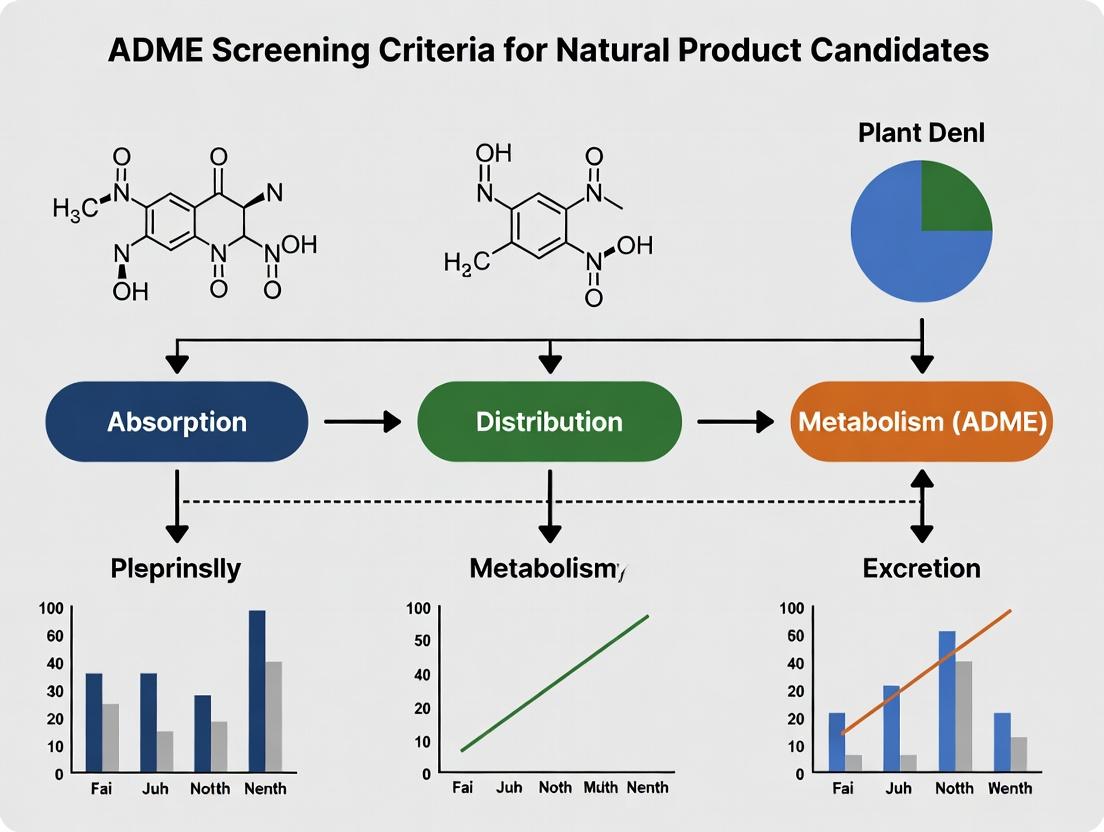
This article provides a comprehensive, contemporary guide to ADME (Absorption, Distribution, Metabolism, and Excretion) screening for natural product drug candidates.
ADME Screening for Natural Products: A Modern Guide for Drug Discovery Scientists
Abstract
This article provides a comprehensive, contemporary guide to ADME (Absorption, Distribution, Metabolism, and Excretion) screening for natural product drug candidates. Tailored for researchers and development professionals, it covers foundational principles, advanced in vitro and in silico methodologies, strategies to overcome common pharmacokinetic challenges, and validation frameworks for comparing natural compounds to synthetic leads. The content synthesizes current best practices to de-risk and accelerate the preclinical development of nature-derived therapeutics.
Why ADME Properties Make or Break Natural Product Drug Candidates
Application Notes
Natural Products (NPs) present distinct challenges in ADME (Absorption, Distribution, Metabolism, Excretion) profiling that complicate their development as drug candidates. These challenges stem from their inherent chemical complexity, physicochemical instability, and significant unknowns in their mechanistic pharmacology. Within the broader thesis of establishing robust ADME screening criteria for NP candidates, these notes detail the critical bottlenecks and contemporary strategies to address them.
1. Complexity-Driven ADME Issues: NPs often exist as complex mixtures or possess intricate stereochemistry, leading to unpredictable bioavailability and metabolism. This complexity can result in non-linear pharmacokinetics, multiple active metabolites, and promiscuous target engagement, making classical ADME models inadequate.
2. Instability as a Primary Hurdle: Many NPs are susceptible to pH-dependent degradation, photolysis, and oxidative decomposition. This instability can occur in physiological buffers, cell culture media, and in vivo, leading to an overestimation of clearance and underestimation of true exposure. Stabilizing lead compounds through formulation is a critical pre-ADME step.
3. Navigating the Unknowns: A significant portion of NPs have unknown or partially characterized metabolic pathways. The risk of generating reactive or toxic metabolites is high, and the potential for herb-drug interactions (via CYP450/P-gp modulation) is a major safety concern that requires early investigation.
The following data, derived from recent screening studies, quantifies these challenges across NP classes.
Table 1: Comparative ADME Profile Challenges of Natural Product Classes
| Natural Product Class | Representative Compound(s) | Typical Complexity (No. of Chiral Centers) | Metabolic Stability (Human Liver Microsomes, % Remaining) | Reported P-gp Substrate (Y/N) | Major Unknown/Challenge |
|---|---|---|---|---|---|
| Polyketides | Erythromycin, Doxorubicin | 10-18 | 15-40% | Y | CYP3A4 auto-inhibition, cardiotoxic metabolites |
| Terpenoids | Artemisinin, Paclitaxel | 5-11 | 20-50% | Y (Paclitaxel) | Complex, non-CYP oxidation pathways |
| Alkaloids | Vinblastine, Quinine | 4-8 | 30-70% | Y (Vinblastine) | Narrow therapeutic index, hERG inhibition risk |
| Polyphenols/Flavonoids | Curcumin, EGCG | 0-3 | <10% (Curcumin) | N (often inhibitors) | Extremely poor systemic exposure, rapid conjugation |
| Peptides | Cyclosporine A, Vancomycin | N/A (cyclic structures) | 60-90% (Cyclosporine) | Y | Variable oral absorption, transporter-dependent |
Table 2: Instability Parameters of Select NPs in Physiological Buffers (pH 7.4, 37°C)
| Compound | Half-life (t1/2) | Primary Degradation Pathway | Impact on Key ADME Assay |
|---|---|---|---|
| Curcumin | 5-10 min | Hydrolytic cleavage, oxidation | Caco-2 permeability falsely low |
| Epigallocatechin gallate (EGCG) | ~30 min | Epimerization, oxidation | Plasma protein binding unreliable |
| Resveratrol | ~60 min | Rapid glucuronidation/sulfation | Underestimates in vivo Cl |
| Paclitaxel | >24 hrs | Moderate photo-degradation | Stable for core assays; light-sensitive |
| Artemisinin | ~2 hrs | Hydrolysis (pH-dependent) | Metabolic ID complex due to degradants |
Experimental Protocols
Protocol 1: Stabilized Metabolic Stability Assay for Unstable NPs
Objective: To accurately determine intrinsic clearance of chemically unstable NPs in human liver microsomes (HLM) by controlling for non-enzymatic degradation. Materials: See "The Scientist's Toolkit" below. Procedure:
- Pre-Incubation Stability Check: Prepare 1 µM NP in phosphate buffer (pH 7.4) and incubate at 37°C. Sample at 0, 5, 15, 30, 60 min. Analyze by LC-MS/MS to determine non-enzymatic degradation rate (k_deg).
- NADPH-Regeneration System Setup: Prepare 2X solution containing MgCl₂, NADP⁺, glucose-6-phosphate, and G6PDH in buffer.
- Microsomal Incubation: In a 96-well plate, mix equal volumes of 2X microsomes (0.5 mg/mL final) and 2X NP solution (2 µM final). Perform triplicates for: Test (T) = NP + Microsomes + NADPH System; Control 1 (C1) = NP + Microsomes (No NADPH); Control 2 (C2) = NP + NADPH System (No Microsomes).
- Incubation: Start reaction by adding NADPH system (or buffer for C1). Incubate at 37°C. Aliquot 50 µL from each well at 0, 5, 15, 30, 45 min into 100 µL of stop solution (cold acetonitrile with internal standard).
- Sample Analysis: Centrifuge plates (4000xg, 15 min, 4°C). Analyze supernatant via LC-MS/MS.
- Data Correction: Calculate degradation in T corrected for loss in C1 (chemical degradation in matrix) and C2 (NADPH-dependent non-microsomal loss). Use corrected half-life to calculate intrinsic clearance.
Protocol 2: High-Content Metabolite Identification for Complex NPs
Objective: To identify primary and secondary metabolites of an NP using sequential incubation with hepatocytes and LC-HRMS. Procedure:
- Primary Hepatocyte Incubation: Incubate 10 µM NP with cryopreserved human hepatocytes (1 million cells/mL) in Williams' E medium for 0-120 min. Aliquot at 0, 30, 60, 120 min into cold acetonitrile.
- Sample Preparation: Centrifuge, dry supernatant under N₂. Reconstitute in water/acetonitrile (95:5) for LC-HRMS.
- LC-HRMS Analysis: Use a C18 column with gradient elution (water/0.1% formic acid to acetonitrile/0.1% formic acid). Employ high-resolution mass spectrometer (e.g., Q-TOF) with positive/negative ESI switching.
- Data Processing: Use untargeted data analysis software. Apply mass defect filter, isotope pattern, and fragmentology tools. Highlight ions with plausible biotransformations (e.g., +O, -H₂, +Glucuronide, +GSH).
- Reactivity Screening: For reactive metabolite screening, incubate NP with HLM + NADPH + trapping agents (e.g., glutathione or KCN). Screen for adducts.
Diagrams
Title: ADME Challenges of Natural Products Flow
Title: Corrected Metabolic Stability Assay Workflow
Title: NP Metabolic Pathways & Reactivity Risk
The Scientist's Toolkit: Research Reagent Solutions
| Item | Function in NP-ADME Studies |
|---|---|
| Cryopreserved Human Hepatocytes | Gold-standard cell model for predicting hepatic metabolism, metabolite ID, and enzyme induction potential of NPs. |
| NADPH Regeneration System | Provides essential cofactors for CYP450 and other oxidative metabolizing enzymes in microsomal stability assays. |
| Stabilized LC-MS/MS Solvents | LC-MS grade solvents with stabilizers (e.g., BHT) to prevent NP degradation during analysis, critical for polyphenols. |
| P-glycoprotein (P-gp) Vesicles | Membrane vesicles overexpressing human P-gp for definitive transporter efflux studies. |
| Trapping Agents (GSH, KCN) | Nucleophilic agents to capture reactive metabolites formed during microsomal incubations for safety screening. |
| pH-Stabilized Assay Buffers | Biologically relevant buffers (e.g., HEPES) that maintain pH during long incubations, crucial for pH-labile NPs. |
| LC-HRMS System (Q-TOF) | High-resolution mass spectrometer essential for untargeted metabolite identification of complex NPs. |
| Stable Isotope-labeled NP Standards | Internal standards to correct for matrix effects and recovery in quantitative bioanalysis of unstable NPs. |
Within the thesis "ADME Screening Criteria for Natural Product Candidates," defining and measuring core pharmacokinetic (PK) parameters is fundamental. Natural products present unique challenges due to structural complexity, instability, and promiscuous target interactions. Profiling these ADME pillars early de-risks development by identifying candidates with viable drug-like properties. This document outlines the core parameters, their quantitative benchmarks, experimental protocols, and essential research tools.
Core ADME Parameters & Quantitative Benchmarks
The following table summarizes the key parameters, their definitions, and ideal target ranges for oral drug candidates, based on current industry standards.
Table 1: Core ADME Parameters and Target Ranges for Oral Drugs
| ADME Pillar | Core Parameter | Definition | Typical Target Range (Oral Drug) | Key Assay(s) |
|---|---|---|---|---|
| Absorption | Aqueous Solubility | Concentration of compound in solution under physiological pH. | >100 µM (pH 6.5 & 7.4) | Kinetic & Thermodynamic Solubility |
| Permeability (Caco-2/ Papp) | Apparent permeability coefficient across a cell monolayer. | Papp > 1 x 10⁻⁶ cm/s (High) | Caco-2, MDCK Assay | |
| Efflux Ratio (ER) | Ratio of Basolateral-to-Apical / Apical-to-Basolateral Papp. | ER < 2.5 (Low efflux concern) | Caco-2 with inhibitor | |
| Distribution | Plasma Protein Binding (PPB) | Fraction of drug bound to plasma proteins (mainly albumin, α1-AGP). | Unbound fraction (fu) > 0.05 | Equilibrium Dialysis, Ultracentrifugation |
| Blood-to-Plasma Ratio (B/P) | Ratio of drug concentration in blood vs. plasma. | Indicates erythrocyte partitioning. | Incubation & LC-MS/MS Analysis | |
| Metabolism | Microsomal/ Hepatocyte Stability (t1/2, CLint) | Intrinsic clearance measured in liver microsomes or hepatocytes. | Low CLint; t1/2 > 30 min (microsomes) | Liver Microsome/Hepatocyte Incubation |
| Cytochrome P450 Inhibition (IC50) | Potency of inhibition against major CYP enzymes (3A4, 2D6, 2C9, etc.). | IC50 > 10 µM (Low inhibition risk) | Fluorescent/LC-MS Probes | |
| Reaction Phenotyping | Identification of specific CYP isoforms responsible for metabolism. | Major route not solely via a polymorphic enzyme (e.g., CYP2D6) | Recombinant CYP Enzymes, Chemical Inhibitors | |
| Excretion | Biliary/Renal Excretion | Fraction of unchanged drug excreted via bile or urine. | Assessed in advanced models. | Sandwich-Cultured Hepatocytes, Renal Tubule Assays |
Detailed Experimental Protocols
Protocol 3.1: Kinetic Solubility Assay (Nephelometry)
Purpose: Rapid assessment of solubility at early discovery stage.
- Stock Solution: Prepare a 10 mM DMSO stock of the natural product candidate.
- Dilution: Dilute 5 µL of stock into 995 µL of pre-warmed (37°C) phosphate buffered saline (PBS, pH 7.4) in a 96-well plate. Final DMSO concentration: 0.5%. Mix vigorously for 1 minute.
- Incubation: Allow the plate to incubate at 25°C for 15-30 minutes.
- Measurement: Read nephelometry (light scattering) at 620 nm or use a UV-plate reader to detect precipitated material. Compare to a standard curve of a known insoluble compound.
- Analysis: Report solubility as ">X µM" if clear, or the estimated concentration based on calibration.
Protocol 3.2: Caco-2 Permeability and Efflux Assay
Purpose: Determine intestinal permeability and P-glycoprotein-mediated efflux liability.
- Cell Culture: Seed Caco-2 cells on 12-well Transwell inserts at high density. Culture for 21-25 days until transepithelial electrical resistance (TEER) > 300 Ω·cm².
- Dosing Solution: Prepare test compound at 5-10 µM in HBSS-HEPES transport buffer (pH 7.4). Include a lucifer yellow integrity marker.
- Bidirectional Transport:
- A-to-B (Apical to Basolateral): Add dosing solution to apical chamber, buffer to basolateral chamber.
- B-to-A (Basolateral to Apical): Add dosing solution to basolateral chamber, buffer to apical chamber.
- Include a positive control (e.g., high permeability: propranolol; efflux substrate: digoxin).
- Incubation: Place plates in a 37°C, 5% CO₂ incubator for 90-120 minutes.
- Sampling & Analysis: Collect samples from both chambers. Quantify compound concentration using LC-MS/MS.
- Calculations:
- Calculate Apparent Permeability (Papp) = (dQ/dt) / (A * C₀).
- Efflux Ratio (ER) = Papp (B-to-A) / Papp (A-to-B).
Protocol 3.3: Human Liver Microsomal Stability
Purpose: Estimate in vitro intrinsic hepatic clearance (CLint).
- Reaction Mix: Combine in a 96-well deep-well plate:
- 0.1 M PBS (pH 7.4)
- 1 mM NADPH (regeneration system or cofactor)
- Human liver microsomes (final protein: 0.5 mg/mL)
- Test compound (final: 1 µM, from DMSO stock; keep DMSO <0.1%).
- Incubation: Pre-incubate mix at 37°C for 5 min. Initiate reaction by adding NADPH. Aliquot 50 µL at time points (0, 5, 10, 20, 30, 45 min) into a stop solution (acetonitrile with internal standard).
- Control: Include a no-NADPH control and a positive control (e.g., verapamil).
- Sample Processing: Vortex, centrifuge (4000 rpm, 15 min) to pellet protein. Transfer supernatant for LC-MS/MS analysis.
- Analysis: Plot ln(% remaining) vs. time. Calculate in vitro half-life (t1/2) and CLint: CLint (µL/min/mg) = (0.693 / t1/2) * (Incubation Volume / Microsomal Protein).
Protocol 3.4: Equilibrium Dialysis for Plasma Protein Binding
Purpose: Measure fraction unbound (fu) in plasma.
- Equipment Setup: Use a 96-well equilibrium dialysis device with a semi-permeable membrane (MW cutoff ~12-14 kDa).
- Loading: Load one side (chamber) with plasma (e.g., human, mouse, rat) spiked with test compound (final ~5 µM). Load the opposite chamber with an equal volume of PBS (pH 7.4).
- Dialysis: Seal the plate and incubate at 37°C in a humidified incubator with gentle rotation for 4-6 hours to reach equilibrium.
- Post-Dialysis: Collect aliquots from both plasma and buffer chambers. Use matrix-matched calibration standards.
- Analysis: Determine compound concentration in both chambers via LC-MS/MS.
- Calculation: fu = [Concentration in Buffer Chamber] / [Concentration in Plasma Chamber]. Correct for volume shift if necessary.
Visualizations
Diagram 1: ADME Pillars Interrelationship
Diagram 2: ADME Screening Cascade Workflow
The Scientist's Toolkit: Research Reagent Solutions
Table 2: Essential Reagents for Core ADME Assays
| Reagent/Kit | Vendor Examples | Primary Function in ADME |
|---|---|---|
| Pooled Human Liver Microsomes (HLM) | Corning, XenoTech, Thermo Fisher | Source of CYP and phase I enzymes for metabolic stability and reaction phenotyping assays. |
| Cryopreserved Hepatocytes | BioIVT, Lonza | More physiologically relevant system for metabolism, inhibition, and induction studies. |
| Caco-2 Cell Line | ATCC, ECACC | Gold-standard in vitro model for predicting intestinal permeability and efflux transport. |
| 96-Well Equilibrium Dialysis Kit | HTDialysis, Thermo Fisher (Rapid Equilibrium Dialysis) | High-throughput measurement of plasma protein binding (fraction unbound). |
| P450-Glo CYP450 Assay Kits | Promega | Luminescent-based assays for CYP enzyme inhibition screening using isoform-specific probes. |
| Transwell Permeable Supports | Corning | Polycarbonate membrane inserts for cell-based permeability and transport assays. |
| Matrigel Matrix | Corning | Used with hepatocytes to create a sandwich culture for improved longevity and biliary excretion studies. |
| LC-MS/MS System & Columns | Sciex, Waters, Agilent, Phenomenex | Essential for sensitive and specific quantification of drugs and metabolites in complex biological matrices. |
| NADPH Regeneration System | Promega, Sigma-Aldrich | Provides essential cofactors for oxidative metabolism in microsomal and hepatocyte incubations. |
| Species-Specific Plasma | BioIVT, Innovative Research | Used for protein binding studies and to prepare plasma standards for bioanalysis. |
The Critical Role of Early ADME Screening in Natural Product Pipeline Prioritization
Within the broader thesis that robust ADME (Absorption, Distribution, Metabolism, and Excretion) screening criteria are essential for successful natural product-based drug discovery, this document establishes application notes and protocols. Early ADME profiling mitigates the high attrition rates historically associated with natural product candidates by identifying compounds with poor pharmacokinetic properties before significant investment in costly late-stage development.
Core ADME Parameters and Quantitative Benchmarks for Natural Products
Key in vitro ADME parameters provide early indicators of probable in vivo performance. Target values for drug-like properties, derived from contemporary analyses of successful oral drugs, are summarized below. Natural products often deviate from these norms, necessitating tailored screening tiers.
Table 1: Key In Vitro ADME Parameters and Target Ranges for Pipeline Prioritization
| ADME Parameter | Assay Type | Target Range (Oral Drugs) | Implication for Natural Products |
|---|---|---|---|
| Apparent Permeability (Papp) | Caco-2 or MDCK cell monolayer | > 1 x 10⁻⁶ cm/s (High) | Predicts intestinal absorption. Many NPs have low permeability. |
| Microsomal Stability (HLM/RLM) | Liver microsome incubation | Half-life (t₁/₂) > 15 min | Predicts hepatic clearance. NPs often susceptible to Phase I metabolism. |
| Plasma Protein Binding (PPB) | Equilibrium dialysis | Moderate (80-95% bound) | High binding (>95%) can limit free concentration and efficacy. |
| Cytochrome P450 Inhibition (CYP) | Fluorogenic or LC-MS/MS probe assay | IC₅₀ > 10 µM (for major CYPs) | Flags drug-drug interaction risk. NPs can be potent inhibitors. |
| Aqueous Solubility | Kinetic solubility (pH 7.4) | > 50 µM | Critical for bioavailability. A common failure point for NPs. |
| hERG Inhibition | Patch-clamp or binding assay | IC₅₀ > 10 µM | Early cardiac safety screen. Some NP scaffolds (e.g., alkaloids) can be risky. |
Detailed Experimental Protocols
Protocol 3.1: Parallel Artificial Membrane Permeability Assay (PAMPA) for Initial Absorption Screening
Objective: To provide a high-throughput, cell-free assessment of passive transcellular permeability for natural product libraries. Materials: PAMPA plate system, Porcine Brain Lipid extract, n-dodecane, donor plate (pH 5.5 or 7.4 buffer), acceptor plate (pH 7.4 buffer), UV plate reader or LC-MS. Procedure:
- Prepare the artificial membrane by coating filter plate with 5 µL of lipid solution (2% w/v in n-dodecane).
- Add 150 µL of compound solution (50-100 µM in donor buffer) to the donor plate.
- Fill the acceptor plate with 300 µL of acceptor buffer (pH 7.4).
- Assemble the sandwich: donor plate on top, lipid membrane in middle, acceptor plate on bottom.
- Incubate for 4-6 hours at room temperature with gentle agitation.
- Analyze compound concentration in both donor and acceptor wells via UV spectroscopy (if chromophore present) or LC-MS/MS.
- Calculate effective permeability (Pe) using the equation:
Pe = -[ln(1 - C_A/C_eq)] / [A * (1/V_D + 1/V_A) * t], where CA is acceptor concentration, Ceq is equilibrium concentration, A is filter area, V is volume, and t is time.
Protocol 3.2: Metabolic Stability Assay Using Human Liver Microsomes (HLM)
Objective: To determine the in vitro half-life (t₁/₂) and intrinsic clearance (CLint) of a natural product candidate. Materials: Human liver microsomes (0.5 mg/mL final), NADPH regeneration system, potassium phosphate buffer (100 mM, pH 7.4), test compound (1 µM final), LC-MS/MS system. Procedure:
- Pre-warm incubation buffer, microsomes, and NADPH system at 37°C.
- In a 96-well plate, mix test compound with microsomes in buffer. Pre-incubate for 5 min.
- Initiate reaction by adding NADPH regeneration solution. Final volume: 100 µL.
- At time points (0, 5, 10, 20, 30, 45 min), remove 50 µL aliquot and quench with 100 µL of ice-cold acetonitrile containing internal standard.
- Centrifuge at 4000 rpm for 15 min to precipitate proteins. Transfer supernatant for LC-MS/MS analysis.
- Plot remaining parent compound percentage (log scale) vs. time. The slope (k) is determined by linear regression.
- Calculate in vitro t₁/₂ = 0.693 / k, and scaled CLint = (0.693 / t₁/₂) * (mL incubation / mg microsomes) * (mg microsomes / gram liver) * (gram liver / kg body weight).
Visualizing Workflows and Relationships
Tiered ADME Screening Cascade for NPs
Common Metabolic Pathways for Natural Products
The Scientist's Toolkit: Key Research Reagent Solutions
Table 2: Essential Materials for Early ADME Screening of Natural Products
| Reagent/Kit | Supplier Examples | Critical Function in ADME Screening |
|---|---|---|
| Caco-2/HT-29-MTX Cell Lines | ATCC, ECACC | Gold-standard in vitro model of intestinal absorption and efflux transport. |
| Pooled Human Liver Microsomes (HLM) | Corning, Xenotech | Essential for Phase I metabolic stability and metabolite identification studies. |
| Recombinant CYP Isozymes | Sigma-Aldrich, BD Biosciences | Used to identify specific cytochrome P450 enzymes responsible for metabolism. |
| Multiplexed CYP Inhibition Assay Kits | Promega, Thermo Fisher | Enable high-throughput screening of inhibition potential against five major CYPs. |
| Rapid Equilibrium Dialysis (RED) Device | Thermo Fisher | Standard method for determining plasma protein binding (PPB). |
| PAMPA Evolution System | pION | Provides high-throughput passive permeability measurement. |
| Simulated Intestinal Fluids (FaSSIF/FeSSIF) | biorelevant.com | Assess solubility under physiologically relevant conditions. |
| LC-MS/MS System (e.g., QQQ, Q-TOF) | Sciex, Waters, Agilent | Quantifies parent loss and identifies metabolites with high sensitivity and specificity. |
The Absorption, Distribution, Metabolism, and Excretion (ADME) profiles of Natural Products (NPs) and Synthetic Small Molecules (SSMs) diverge significantly due to fundamental differences in chemical origin, complexity, and physicochemical properties. NPs, derived from plants, microbes, or marine organisms, present unique challenges in drug development that necessitate specialized screening protocols.
Quantitative ADME Property Comparison
Table 1: Core Physicochemical & ADME Property Comparison
| Property | Synthetic Small Molecules | Natural Products | Key Implication for Development |
|---|---|---|---|
| Molecular Weight (Da) | Typically 200-500 | Often 500-2000+ (e.g., Macrocyclic NPs) | NPs more likely to violate Rule of 5, affecting permeability. |
| Log P (Lipophilicity) | Optimized for target range (e.g., 1-3) | Highly variable; often high (e.g., Terpenes) or very low (Glycosides) | Unpredictable absorption and distribution; risk of toxicity or poor bioavailability. |
| Rotatable Bonds | Low (<10) | Often high (e.g., Peptide NPs, Polyketides) | Impacts molecular flexibility, membrane permeation, and oral bioavailability. |
| H-Bond Donors/Acceptors | Limited (e.g., ≤5/≤10 per Rule of 5) | Often numerous (e.g., Aminoglycosides, Polyphenols) | Affects solubility, permeability, and transporter interactions. |
| Stereogenic Centers | Few, typically controlled | Numerous, complex chirality common | Significant challenge for synthesis, metabolic stability, and target specificity. |
| Aqueous Solubility | Often engineered for moderate solubility | Frequently poor, requires formulation (e.g., Paclitaxel) | Major hurdle for in vitro screening and in vivo dosing. |
| Plasma Protein Binding (%) | Moderate to High (often 70-99%) | Extremely high common (can be >99%) | Greatly reduces free drug concentration, altering efficacy and clearance. |
| CYP450 Metabolism | Primary route; predictable interactions | Often non-CYP routes (e.g., hydrolysis, conjugation) | Difficult to predict drug-drug interactions from standard assays. |
Table 2: Typical In Vitro ADME Screening Outcomes
| Assay | Synthetic Small Molecules (Typical Result) | Natural Products (Typical Challenge) |
|---|---|---|
| Caco-2 Permeability (Papp x10^-6 cm/s) | High (>10) to Moderate (2-10) | Often Low (<2) due to size/polarity. |
| Microsomal Half-life (T1/2, min) | Can be optimized for stability (e.g., >30 min). | Highly variable; rapid turnover common. |
| hERG Inhibition (IC50, µM) | Routinely screened; risk mitigated early. | Data scarce; potential for off-target ion channel effects. |
| Plasma Stability (% remaining) | Generally stable (>80% at 1-4h). | Often unstable due to esterases/proteases. |
Detailed Experimental Protocols
Protocol 3.1: Specialized Solubility & Stability Assessment for NPs
Aim: To determine the aqueous solubility and stability of NP candidates in biologically relevant buffers, accounting for their propensity for aggregation and hydrolysis. Materials: NP candidate, DMSO (HPLC grade), simulated gastric/intestinal fluid (SGF/SIF), phosphate-buffered saline (PBS, pH 7.4), 0.5% methylcellulose, sonicator, shaking incubator, 0.22 µm nylon filter, HPLC system with PDA detector. Procedure:
- Stock Solution: Prepare a 10 mM stock in DMSO. Record exact concentration via quantitative NMR (qNMR) if purity is uncertain.
- Solubility Screen:
- Add 1 µL of stock to 1 mL of pre-warmed (37°C) media (PBS, SGF, SIF, 0.5% methylcellulose) in triplicate. Vortex vigorously for 1 minute.
- Sonicate for 15 minutes in a water bath sonicator.
- Incubate at 37°C with gentle shaking (300 rpm) for 24 hours.
- Sampling:
- At time points (1, 4, 24h), remove tubes and immediately centrifuge at 16,000 x g for 10 mins.
- Carefully filter the supernatant through a 0.22 µm nylon filter.
- Dilute filtrate appropriately and analyze via HPLC against a standard curve.
- Data Analysis: Report solubility as the mean concentration (µg/mL) at equilibrium (24h). Stability is reported as % of parent compound remaining at each time point relative to the 1h sample.
Protocol 3.2: Parallel Artificial Membrane Permeability Assay (PAMPA) Optimized for NPs
Aim: To assess passive transcellular permeability of NPs, independent of active transporters. Materials: PAMPA plate system (e.g., Corning Gentest), lipid solution (e.g., 2% Lecithin in dodecane), NP candidate, donor plate buffer (pH 5.5 for gut, 7.4 for BBB), acceptor plate buffer (pH 7.4), prisma buffer, HPLC-MS system. Procedure:
- Membrane Formation: Add 5 µL of the lipid solution to each well of the filter on the donor plate. Incubate for 1 hour at RT to allow membrane formation.
- Sample Preparation: Dilute NP from DMSO stock into donor buffer to a final concentration of 50-100 µM (ensure DMSO ≤1%). Prepare a matching reference solution in acceptor buffer for mass balance.
- Assay Execution:
- Load acceptor plate with 300 µL of acceptor buffer.
- Load donor plate with 300 µL of NP solution.
- Carefully place the donor plate on top of the acceptor plate to form a "sandwich."
- Incubate undisturbed for 4-6 hours at 37°C in a humidified chamber.
- Termination & Analysis: Separate plates. Quantify drug concentration in donor, acceptor, and reference solutions via HPLC-MS.
- Calculation: Determine effective permeability (Pe) using the equation:
Pe = -ln(1 - CA(t)/Cequilibrium) / [A * (1/VD + 1/VA) * t], where A is filter area, V is volume, C is concentration.
Protocol 3.3: Metabolite Identification Using Human Hepatocytes
Aim: To identify major Phase I and Phase II metabolites of NP candidates, which often involve non-CYP pathways. Materials: Cryopreserved human hepatocytes, Williams' E medium, recovery medium, incubation medium, NP candidate, co-factors (NADPH, UDPGA, PAPS), stop solution (ACN with internal standard), UPLC-QTOF-MS system. Procedure:
- Hepatocyte Thawing & Viability: Rapidly thaw hepatocytes at 37°C, dilute in recovery medium, and assess viability (>80% required) via Trypan Blue exclusion.
- Incubation:
- Centrifuge hepatocytes (100 x g, 5 min), resuspend in incubation medium at 0.5-1.0 x 10^6 cells/mL.
- Pre-incubate suspension at 37°C for 10 min in a CO2 incubator.
- Add NP (1-10 µM final) and co-factors. Include controls (no cells, no co-factors).
- Incubate for 0, 30, 60, 120 minutes with gentle shaking.
- Termination: At each time point, remove 100 µL aliquot and add to 200 µL of ice-cold stop solution. Vortex and centrifuge (3000 x g, 15 min, 4°C).
- Analysis: Inject supernatant into UPLC-QTOF-MS. Use high-resolution mass spectrometry to detect metabolites. Data processing involves comparing chromatograms of test and control samples, identifying potential metabolites via mass defect filtering, and interpreting MS/MS fragmentation patterns.
Visualizations
Title: NP-Specific ADME Screening Workflow
Title: Contrasting Primary ADME Pathways
The Scientist's Toolkit: Key Research Reagent Solutions
Table 3: Essential Materials for NP ADME Studies
| Reagent / Material | Function & Rationale for NP Studies |
|---|---|
| qNMR Standard (e.g., Dimethyl sulfone) | Provides accurate quantification of NP concentration and purity in stock solutions, critical given NP isolation often yields non-UV-active impurities. |
| Biomimetic Lipid Systems (e.g., Lecithin-dodecane for PAMPA) | Models passive permeability independent of efflux transporters, which often confound Caco-2 results for NPs. |
| Cryopreserved Human Hepatocytes (Pooled Donors) | The gold standard for identifying complex, non-CYP mediated metabolic pathways (e.g., glucuronidation, sulfation) common to NPs. |
| Transfected Cell Lines (e.g., MDCKII-hP-gp, HEK293-OATP1B1) | Isolate and quantify interactions with specific uptake/efflux transporters, which heavily influence NP disposition. |
| Simulated Intestinal Fluid (FaSSIF/FeSSIF) | Assess solubility under physiologically relevant conditions, as NPs are highly sensitive to bile salt micelle formation. |
| β-Glucuronidase / Arylsulfatase Enzymes | Confirm identity of Phase II metabolites (glucuronides/sulfates) by enzymatic hydrolysis in metabolite ID studies. |
| Stable Isotope-Labeled NP Analogs (when available) | Serve as ideal internal standards for LC-MS/MS bioanalysis to overcome matrix effects and validate extraction recovery. |
Application Note: ADME-Driven Case Studies in Natural Product Drug Discovery
Quantitative Analysis of Natural Product ADME Outcomes
The following table summarizes key historical examples where ADME properties dictated clinical success or failure.
Table 1: Historical Natural Products: ADME Properties and Clinical Outcomes
| Natural Product / Lead Compound | Source | Indication | Key ADME Liability | Outcome & Reason |
|---|---|---|---|---|
| Silymarin (Flavonolignans) | Milk Thistle (Silybum marianum) | Liver disorders | Very low oral bioavailability (<1%). Extensive Phase II metabolism and poor permeability. | Failure as systemic drug. Limited efficacy in clinical trials for viral hepatitis due to insufficient systemic exposure. Used as a dietary supplement. |
| Cyclosporine A | Fungus Tolypocladium inflatum | Immunosuppression | Low and highly variable oral bioavailability (~30%). Lipophilic, P-gp substrate. | Success. Became a cornerstone transplant drug. Bioavailability managed via formulation (microemulsion) and therapeutic drug monitoring. |
| Taxol (Paclitaxel) | Pacific Yew (Taxus brevifolia) | Cancer | Extremely poor aqueous solubility (<0.03 mg/mL). | Success. Overcoming solubility via formulation (Cremophor EL-based) was critical. Later improved with albumin-bound nanoparticle formulation (Abraxane). |
| Berberine | Berberis species (e.g., Barberry) | Diabetes, Infections | Very low absolute oral bioavailability (<1%). Extensive gut metabolism, P-gp efflux. | Failure as conventional oral drug. Promising in vitro activity not translated in vivo. Research focuses on bioavailability enhancers. |
| Artemisinin | Sweet wormwood (Artemisia annua) | Malaria | Short plasma half-life (~1-2 hrs). Rapid auto-induction of metabolism. | Success. Used in combination therapies (ACTs) to counter short half-life. Semisynthetic derivatives (e.g., artemether) developed. |
| Resveratrol | Grapes, Japanese knotweed | Various (Cardio, Cancer) | Very low bioavailability (<1%). Rapid sulfate/glucuronide conjugation, instability. | Failure in clinical trials for most indications. Inadequate target exposure despite promising preclinical data. |
Detailed Experimental Protocols for Critical ADME Assessments
Protocol 1: Parallel Artificial Membrane Permeability Assay (PAMPA) for Natural Products Objective: To predict passive transcellular intestinal absorption of natural product candidates. Materials:
- PAMPA Plate System (e.g., Corning Gentest)
- Porcine Brain Lipid Extract (or synthetic lipid mixtures)
- pION Gut Box Buffer System (pH 6.5, 7.4)
- Test compound (10 mM stock in DMSO)
- UV plate reader or LC-MS/MS for quantification Procedure:
- Membrane Formation: Dilute lipid extract in dodecane (1-2% w/v). Add to filter on donor plate to form artificial membrane.
- Compound Dosing: Prepare test compound at 50-100 µM in donor buffer (pH 6.5 to simulate intestinal lumen). Add to donor wells.
- Assay Setup: Fill acceptor wells with buffer (pH 7.4). Assemble sandwich and incubate undisturbed (e.g., 4 hours, 37°C).
- Sample Analysis: Post-incubation, sample from donor, acceptor, and reference wells. Quantify compound concentration using UV spectrophotometry (if chromophore present) or LC-MS/MS.
- Data Analysis: Calculate effective permeability (Pe) using the pION software or standard equations. Compare to benchmark compounds (e.g., metoprolol, high permeability; ranitidine, low permeability).
Protocol 2: Metabolic Stability Assay in Human Liver Microsomes (HLM) Objective: To determine in vitro half-life and intrinsic clearance (CLint) of a natural product. Materials:
- Pooled Human Liver Microsomes (0.5-1 mg/mL final protein)
- NADPH Regenerating System (Solution A: NADP+, Solution B: Glucose-6-phosphate, G6PDH)
- Potassium Phosphate Buffer (0.1 M, pH 7.4)
- Test compound (1-10 µM final), positive control (e.g., Verapamil)
- Ice-cold Acetonitrile (with internal standard) for quenching
- LC-MS/MS system Procedure:
- Incubation Setup: Pre-warm microsomes and NADPH system at 37°C. In duplicate, add test compound to microsomes in buffer.
- Reaction Initiation: Start reactions by adding complete NADPH system. For t=0 control, add acetonitrile quench before NADPH.
- Time Course Sampling: At designated time points (e.g., 0, 5, 15, 30, 45, 60 min), transfer an aliquot to cold acetonitrile to stop metabolism.
- Sample Processing: Centrifuge samples, collect supernatant, and analyze via LC-MS/MS for parent compound disappearance.
- Kinetic Analysis: Plot Ln(% parent remaining) vs. time. Calculate degradation rate constant (k). Determine in vitro half-life (t1/2 = 0.693/k) and scaled CLint.
Visualization of Pathways and Workflows
Title: NP Candidate ADME Screening & Attrition Pathway
Title: Key ADME Elimination Pathways for Natural Products
The Scientist's Toolkit: Research Reagent Solutions
Table 2: Essential Reagents for Natural Product ADME Profiling
| Reagent / Material | Vendor Examples | Function in ADME Studies |
|---|---|---|
| Pooled Human Liver Microsomes (HLM) | Corning, Xenotech | Source of major Phase I metabolizing enzymes (CYPs). Used for metabolic stability, reaction phenotyping, and metabolite identification. |
| Caco-2 Cell Line | ATCC, ECACC | Model for predicting intestinal permeability and active efflux (e.g., P-gp interaction). Critical for absorption potential. |
| Recombinant CYP Enzymes | BD Biosciences, Supersomes | Individual human CYP isoforms (3A4, 2D6, etc.) for identifying specific enzymes responsible for metabolism. |
| MDCK or MDCK-MDR1 Cells | NIH, academic sources | Canine kidney cells, often transfected with human MDR1 gene, for specific P-glycoprotein efflux transport studies. |
| Artificial Gastric/Intestinal Fluids | Biorelevant.com, prepared in-house | Simulated biological fluids (FaSSIF, FeSSIF) for measuring solubility under physiologically relevant conditions. |
| Stable Isotope-Labeled Internal Standards | Cambridge Isotopes, Clearsynth | Deuterated or 13C-labeled analogs of natural products for precise, matrix-effect-compensated LC-MS/MS quantification in PK samples. |
| PAMPA Plates & Lipid Systems | pION, Corning | High-throughput tool for assessing passive transcellular permeability early in screening cascades. |
| Human Plasma (for Protein Binding) | BioIVT, commercial suppliers | Used in equilibrium dialysis or ultrafiltration assays to determine fraction unbound (fu), critical for interpreting PK/PD. |
Modern ADME Screening Techniques: From In Vitro Assays to AI Predictions
Within the context of ADME screening for natural product candidates, early-stage in vitro assays are paramount. Natural products often possess complex chemical scaffolds with unpredictable absorption and metabolism profiles. High-throughput screening using Parallel Artificial Membrane Permeability Assay (PAMPA), Caco-2 cell models, liver microsomes, and hepatocytes provides critical data to prioritize leads for further development, guiding medicinal chemistry efforts to improve bioavailability and metabolic stability.
Permeability Assays
PAMPA (Parallel Artificial Membrane Permeability Assay)
Application Note: PAMPA is a non-cell-based, high-throughput model for predicting passive transcellular permeability. It is ideal for early screening of natural product libraries due to its simplicity, low cost, and ability to handle a wide pH range, simulating different gastrointestinal environments.
Protocol: PAMPA for Natural Product Candidates
- Membrane Preparation: Create a lipid-infused artificial membrane by coating a hydrophobic filter plate (PVDF, 0.45 µm pore size) with a solution of lecithin (e.g., 2% w/v in dodecane) to simulate the lipid bilayer.
- Plate Setup: Fill the donor plate (bottom) with compound solution (e.g., 50-100 µM test compound in PBS or simulated intestinal fluid, pH 6.5 or 7.4). Carefully place the coated filter plate on top.
- Acceptor Plate: Fill the acceptor plate (top compartment) with blank buffer (PBS, pH 7.4).
- Incubation: Assemble the sandwich and incubate at room temperature for 4-6 hours without agitation to allow passive diffusion.
- Sample Analysis: Quantify compound concentration in both donor and acceptor compartments at endpoint using HPLC-UV or LC-MS/MS.
- Data Calculation: Calculate the apparent permeability (Papp).
- ( P{app} = (VA / (Area \times Time)) \times (CA / C{D,initial}) )
- Where ( VA ) = acceptor volume, Area = filter area, Time = incubation time, ( CA ) = acceptor concentration, ( C_{D,initial} ) = initial donor concentration.
Table 1: Interpretation of PAMPA Permeability Data
| Papp (x 10⁻⁶ cm/s) | Permeability Classification | Likely Absorption |
|---|---|---|
| > 3.0 | High | Well absorbed |
| 1.0 - 3.0 | Moderate | Potentially absorbed |
| < 1.0 | Low | Poorly absorbed |
Caco-2 Cell Monolayer Assay
Application Note: The Caco-2 human colon adenocarcinoma cell line, upon differentiation, forms a polarized monolayer expressing transporters (e.g., P-gp, BCRP), providing a more physiologically relevant model for evaluating both passive and active transport, including efflux. This is crucial for natural products, which are often substrates for efflux transporters.
Protocol: Caco-2 Bidirectional Transport Assay
- Cell Culture & Seeding: Grow Caco-2 cells in DMEM with 20% FBS, 1% NEAA. Seed on collagen-coated Transwell inserts (1-3 µm pore, 0.33 cm²) at high density (~100,000 cells/insert). Culture for 21-28 days, changing media every 2-3 days.
- Monolayer Integrity Check: Measure transepithelial electrical resistance (TEER) before each experiment (acceptable TEER > 300 Ω·cm²). Alternatively, use a paracellular marker like Lucifer Yellow (apparent permeability Papp < 1 x 10⁻⁶ cm/s).
- Bidirectional Transport:
- A→B (Apical to Basolateral): Add test compound (e.g., 10 µM) to the apical chamber. Sample from the basolateral chamber over 120 minutes.
- B→A (Basolateral to Apical): Add test compound to the basolateral chamber. Sample from the apical chamber.
- Sample Analysis: Analyze samples by LC-MS/MS.
- Data Calculation & Interpretation:
- Calculate Papp (A→B and B→A) as above.
- Calculate Efflux Ratio: ( ER = P{app}(B \rightarrow A) / P{app}(A \rightarrow B) )
- ER > 2 suggests active efflux. Confirm using a specific transporter inhibitor (e.g., Cyclosporin A for P-gp).
Table 2: Caco-2 Permeability and Efflex Classification
| Papp (A→B) (x 10⁻⁶ cm/s) | Efflux Ratio (ER) | Interpretation |
|---|---|---|
| > 10 | ER < 2 | High permeability, no efflux |
| 1 - 10 | ER < 2 | Moderate permeability, no efflux |
| < 1 | ER < 2 | Low permeability |
| Any | ER ≥ 2 | Potential efflux substrate |
Metabolic Stability Assays
Liver Microsomal Stability
Application Note: Liver microsomes contain cytochrome P450 (CYP) enzymes and Uridine 5'-diphospho-glucuronosyltransferases (UGTs). This assay provides a rapid assessment of Phase I and some Phase II metabolic clearance, useful for screening natural product candidates for intrinsic clearance (Clint).
Protocol: Microsomal Incubation for Half-life Determination
- Incubation Cocktail Preparation (Final Volume 100 µL):
- Potassium phosphate buffer (50 mM, pH 7.4)
- Liver microsomes (0.5 mg protein/mL, human or species-specific)
- Test compound (1 µM, from a DMSO stock; keep DMSO ≤0.1%)
- Pre-incubate for 5 minutes at 37°C.
- Reaction Initiation: Add NADPH regenerating system (1 mM NADP⁺, 5 mM Glucose-6-phosphate, 1 U/mL G6PDH) to start Phase I reactions. For combined Phase I/II, add UDPGA (2 mM) for glucuronidation.
- Time Course Sampling: Aliquot the reaction mixture (e.g., 15 µL) at times 0, 5, 15, 30, and 60 minutes into a plate containing cold acetonitrile with internal standard to stop the reaction.
- Sample Analysis: Centrifuge to precipitate protein. Analyze supernatant by LC-MS/MS to determine parent compound remaining.
- Data Calculation: Plot Ln(% remaining) vs. time. The slope (k) is used to calculate in vitro half-life and intrinsic clearance.
- ( t_{1/2} = 0.693 / k )
- ( Cl{int, in\ vitro} = (0.693 / t{1/2}) \times (\text{Incubation Volume} / \text{Microsomal Protein}) )
- Scale to predicted hepatic clearance using the well-stirred liver model.
Hepatocyte Stability Assay
Application Note: Cryopreserved primary hepatocytes contain the full complement of hepatic metabolizing enzymes (CYPs, UGTs, SULTs) and transporters, offering the most physiologically complete in vitro system for predicting hepatic metabolism and clearance of natural products.
Protocol: Metabolic Stability in Suspension Hepatocytes
- Hepatocyte Thawing & Viability Check: Rapidly thaw cryopreserved human hepatocytes in a 37°C water bath. Dilute in pre-warmed, high-viability cryopreservation recovery medium. Assess viability via Trypan Blue exclusion (>80% required).
- Incubation Setup: Pellet viable hepatocytes and resuspend in incubation medium (e.g., William's E medium) at 0.5 x 10⁶ viable cells/mL.
- Compound Incubation: Add test compound (1 µM final) to cell suspension. Incubate at 37°C under gentle agitation.
- Time Course Sampling: Remove aliquots (e.g., 50 µL) at 0, 15, 30, 60, and 120 minutes. Immediately add to cold acetonitrile with internal standard to stop metabolism and precipitate cells/protein.
- Control Incubations: Include a "no-cell" control (compound in medium) and a "heat-inactivated cell" control.
- Sample Analysis: Centrifuge and analyze supernatant via LC-MS/MS for parent compound depletion.
- Data Analysis: Calculate depletion rate constant (k), half-life, and intrinsic clearance as for microsomes, normalizing to cell count.
Table 3: Interpretation of Metabolic Stability Data
| In Vitro ( t_{1/2} ) (min) | Clint (µL/min/mg protein or /million cells) | Stability Classification | Projected In Vivo Outcome |
|---|---|---|---|
| < 10 | > 100 | High Clearance | Likely high hepatic extraction, short half-life |
| 10 - 30 | 25 - 100 | Moderate Clearance | Moderate hepatic clearance |
| > 30 | < 25 | Low Clearance | Likely low hepatic extraction, long half-life |
Visualization of Workflows and Pathways
The Scientist's Toolkit: Key Research Reagent Solutions
Table 4: Essential Reagents and Materials for ADME Assays
| Item/Category | Specific Example(s) | Function in ADME Screening |
|---|---|---|
| Artificial Membrane Lipids | Porcine Brain Polar Lipid Extract, Lecithin (Egg, Soy) | Forms the lipid bilayer in PAMPA to mimic passive diffusion through cellular membranes. |
| Cell-Based Assay Systems | Caco-2 Cell Line (HTB-37), Cryopreserved Primary Human Hepatocytes | Provide physiologically relevant models for transporter-mediated permeability (Caco-2) and comprehensive hepatic metabolism (hepatocytes). |
| Metabolic Enzyme Systems | Pooled Human Liver Microsomes (HLM), Human Liver S9 Fraction, NADPH Regenerating System, UDPGA (for UGTs) | Source of metabolizing enzymes (CYPs, UGTs) for high-throughput stability and reaction phenotyping assays. |
| Transporter Inhibitors | Cyclosporin A (P-gp inhibitor), Ko143 (BCRP inhibitor), Rifampicin (OATP inhibitor) | Pharmacological tools to confirm involvement of specific transporters in permeability or uptake studies. |
| LC-MS/MS Internal Standards | Stable Isotope-Labeled Analogs (e.g., d₃-, ¹³C-labeled compounds) of test compounds | Enables precise and accurate quantification of parent drug and metabolites by correcting for matrix effects and instrument variability. |
| Assay-Ready Kits | PAMPA Evolution 96-well System, Transwell Permeable Supports, BD BioCoat plates | Standardized, quality-controlled plates and kits that improve assay reproducibility and throughput. |
| Viability/Cytotoxicity Assays | MTT, CellTiter-Glo, Trypan Blue | Assess cell health and viability before and after compound incubation in cell-based assays (Caco-2, hepatocytes). |
| Data Analysis Software | Phoenix WinNonlin, GraphPad Prism, Mass Spectrometer Vendor Software (e.g., SCIEX OS, MassHunter) | Performs pharmacokinetic modeling, statistical analysis, and calculates key parameters (Papp, t₁/₂, Clᵢₙₜ). |
Within the ADME (Absorption, Distribution, Metabolism, Excretion) screening paradigm for natural product candidates, understanding protein binding and distribution is critical. Plasma Protein Binding (PPB) and the Blood-to-Plasma Ratio (BPR) are key determinants of a compound's pharmacokinetic and pharmacodynamic profile. PPB influences the volume of distribution, clearance rate, and the amount of free, pharmacologically active drug. The BPR indicates the degree of partitioning into red blood cells versus plasma, impacting total blood clearance predictions. For natural products, which often possess complex structures and unknown metabolites, rigorous assessment of these parameters is essential to de-risk development and interpret in vivo efficacy data.
Core Concepts and Quantitative Data
Plasma Protein Binding (PPB): The fraction of drug bound to plasma proteins (primarily albumin, α1-acid glycoprotein, and lipoproteins). Only the unbound fraction is considered pharmacologically active and available for metabolism/excretion.
Blood-to-Plasma Ratio (B/P or BPR): The concentration ratio of a drug in whole blood relative to its concentration in plasma. A ratio >1 indicates preferential partitioning into red blood cells; <1 indicates preferential residence in plasma.
Table 1: Interpretation of PPB and BPR Values
| Parameter | Typical Range | Interpretation | PK Implication |
|---|---|---|---|
| PPB (Fu) | Fu < 0.01 (High binding) | Low free fraction. Highly restricted to vascular compartment. | Low VD, potential for displacement interactions, low clearance of unbound drug. |
| Fu 0.01 - 0.1 (Moderate binding) | Significant portion is bound. | Moderate VD. | |
| Fu > 0.1 (Low binding) | High free fraction. Easily distributes to tissues. | High VD, higher clearance potential. | |
| BPR | BPR < 0.55 | Negligible RBC partitioning. May bind strongly to plasma proteins. | Blood clearance ≈ Plasma clearance. |
| BPR ~1 | Equilibrated between RBCs and plasma. | ||
| BPR > 1, even >>1 | Significant uptake/association with RBCs. | Blood clearance > Plasma clearance. |
Table 2: Representative PPB and BPR Data for Selected Natural Product Classes
| Compound Class / Example | Reported PPB (% Bound) | Reported BPR | Key Binding Protein | Notes for NP Candidates |
|---|---|---|---|---|
| Flavonoids (e.g., Quercetin) | >95% (High) | ~0.6 - 0.8 | Albumin | High binding limits free concentration; active metabolites may have different profiles. |
| Alkaloids (e.g., Berberine) | ~80-90% (Mod-High) | ~1.5 - 2.5 | Albumin, RBCs | High BPR suggests strong RBC sequestration, impacting distribution. |
| Terpenoids (e.g., Paclitaxel) | >95% (High) | ~0.6 - 1.0 | Albumin, α1-AGP | Binding is saturable and variable; α1-AGP binding significant in inflammation. |
| Curcuminoids | >90% (High) | ~0.5 - 0.7 | Albumin | Rapid metabolism complicates interpretation; binding of metabolites must be assessed. |
Experimental Protocols
Protocol 1: Determination of Plasma Protein Binding (PPB) Using Equilibrium Dialysis
Objective: To determine the unbound fraction (Fu) of a natural product candidate in plasma.
Principle: Equilibrium dialysis separates plasma (with proteins) from buffer via a semi-permeable membrane. The compound distributes until equilibrium is reached. The free concentration in the buffer chamber equals the unbound concentration in the plasma chamber.
Materials: See "The Scientist's Toolkit" below. Procedure:
- Preparation: Thaw control plasma (human, rat, etc.) and warm to 37°C. Prepare phosphate buffer (pH 7.4). Prepare stock and working solutions of test compound and positive controls (e.g., warfarin for high binding, caffeine for low binding).
- Spiking: Spike the plasma with test compound to a physiologically relevant concentration (e.g., 1-10 µM). Ensure use of co-solvents <1%.
- Loading: Load the donor chamber (typically 100-150 µL) with spiked plasma. Load the receiver chamber with equal volume of buffer. Assemble dialysis device.
- Incubation: Incubate the device in a humidified, temperature-controlled (37°C) shaker (e.g., 5% CO2 for pH stability) for 4-6 hours. Preliminary time-course experiments must confirm equilibrium is reached.
- Sampling: Post-incubation, carefully sample from both chambers.
- Analysis: Quantify compound concentration in both plasma and buffer samples using LC-MS/MS. Matrix-matched calibration standards are crucial.
- Calculations:
- Fu = [Compound]Buffer / [Compound]Plasma
- % Bound = (1 - Fu) × 100
- Validation: Account for non-specific binding to the device and membrane by running buffer-only controls. Correct for volume shifts due to osmotic pressure if significant.
Protocol 2: Determination of Blood-to-Plasma Ratio (BPR)
Objective: To measure the partitioning of a compound between whole blood and plasma.
Principle: The compound is incubated in fresh whole blood, followed by centrifugation to separate plasma. Concentrations in whole blood and plasma are measured to calculate the ratio.
Materials: See "The Scientist's Toolkit" below. Procedure:
- Blood Collection: Obtain fresh, anticoagulated (heparin or EDTA) whole blood. Use within 2 hours of collection.
- Spiking: Pre-warm blood to 37°C. Spike whole blood with the test compound to a target concentration. Invert gently to mix. A parallel incubation of spiked plasma alone is recommended to assess stability.
- Incubation: Incubate the spiked whole blood at 37°C for 15-60 minutes (time should be validated to ensure stable partitioning).
- Processing:
- Whole Blood Aliquot: Transfer a precise volume (Vwb) of homogenized whole blood to a tube containing an equal volume of water or acetonitrile for lysis and protein precipitation. Mix vigorously.
- Plasma Aliquot: Centrifuge the remaining blood (e.g., 3000g, 10 min, 37°C). Carefully collect a precise volume (Vp) of plasma into a separate tube for protein precipitation.
- Sample Preparation: Perform protein precipitation on both whole blood lysate and plasma samples. Centrifuge and collect supernatant for analysis.
- Analysis: Quantify compound concentrations in both sample types using LC-MS/MS. Ensure calibration curves are prepared in the respective matrices (blood lysate and plasma).
- Calculations:
- BPR = [Compound]Whole Blood / [Compound]Plasma
- Alternatively, if hematocrit (Hct) is known: Cblood = (Hct × CRBC) + ((1-Hct) × Cplasma)
Visualizations
Diagram 1: PPB by Equilibrium Dialysis Workflow
Diagram 2: Blood-to-Plasma Ratio Determination Workflow
Diagram 3: Role of PPB/BPR in NP ADME-PK-PD Cascade
The Scientist's Toolkit: Key Research Reagent Solutions
Table 3: Essential Materials for PPB and BPR Studies
| Item | Function & Relevance | Example/Notes |
|---|---|---|
| Human/Animal Plasma | The biological matrix for PPB studies. Defines protein composition. | Human plasma (pooled, healthy). Species-specific (rat, mouse, dog) for translational research. Must be fresh or properly frozen. |
| Fresh Whole Blood | The matrix for BPR determination. RBC integrity is critical. | Heparinized or EDTA-treated. Used immediately to maintain hematocrit and RBC viability. |
| Equilibrium Dialysis Device | Physically separates protein-bound and free drug. | 96-well format devices (e.g., HTDialysis, Thermo) with standardized membranes (e.g., 12-14 kDa MWCO). |
| Dialysis Membrane | Semi-permeable barrier allowing only small molecules to pass. | Regenerated cellulose. Must be pre-treated (soaked) to remove contaminants. |
| Positive Control Compounds | Validate assay performance and reproducibility. | High PPB: Warfarin, Propranolol. Low PPB: Caffeine, Theophylline. High BPR: Desipramine. |
| LC-MS/MS System | Gold-standard for sensitive and specific quantification in complex matrices. | Enables simultaneous analysis of parent NP and potential metabolites. |
| Stable Isotope-Labeled Internal Standards | Corrects for matrix effects and recovery variability during sample prep/analysis. | Essential for accurate quantification. Ideally, deuterated analog of the analyte. |
| Protein Precipitation Reagents | De-proteinates samples prior to LC-MS/MS. | Acetonitrile, methanol, sometimes with 0.1% formic acid. |
| Physiological Buffer (pH 7.4) | Receiver solution in dialysis; mimics extracellular fluid. | Phosphate Buffered Saline (PBS) or similar. Maintains pH and ionic strength. |
Within the broader thesis on establishing robust ADME screening criteria for natural product candidates, elucidating cytochrome P450 (CYP450) interactions and metabolite profiles is paramount. Natural products present unique challenges due to complex matrices and diverse chemistries, making accurate metabolic pathway identification critical for predicting drug-drug interactions and metabolic stability early in development.
CYP450 Inhibition Screening: Application Notes
CYP450 inhibition is a primary mechanism for pharmacokinetic drug-drug interactions. High-throughput fluorescence-based and LC-MS/MS assays are standard for evaluating inhibition of major isoforms (CYP3A4, 2D6, 2C9, 2C19, 1A2). Recent trends emphasize physiologically relevant conditions, including appropriate protein concentrations and pre-incubation times to detect time-dependent inhibition (TDI).
Table 1: Key CYP450 Isoforms and Probe Substrates for Inhibition Assays
| CYP Isoform | Primary Probe Substrate | Typical [S] (µM) | Detection Method | Key Natural Product Inhibitors (Examples) |
|---|---|---|---|---|
| CYP3A4 | Midazolam / Testosterone | 5 / 50 | LC-MS/MS | Bergamottin (grapefruit), Schisandrin B |
| CYP2D6 | Dextromethorphan | 5 | LC-MS/MS | Berberine, certain alkaloids |
| CYP2C9 | Diclofenac / S-Warfarin | 5 / 2 | LC-MS/MS | Ginkgolides, Licorice compounds |
| CYP2C19 | S-Mephenytoin | 40 | LC-MS/MS | Nootkatone, Tryptamine derivatives |
| CYP1A2 | Phenacetin | 50 | LC-MS/MS | Furanocoumarins, Flavonoids (e.g., α-Naphthoflavone) |
Protocol 2.1: High-Throughput Fluorescence-Based CYP450 Inhibition Screening
- Objective: Determine IC50 values for a natural product library against major CYP450 isoforms.
- Materials: Recombinant human CYP450 enzymes (Supersomes), fluorogenic probe substrates (e.g., 7-benzyloxyquinoline for CYP3A4), NADPH regeneration system, black 96- or 384-well plates, fluorescent microplate reader.
- Procedure:
- Prepare test compound dilutions in assay buffer (pH 7.4).
- In each well, mix 80 µL of enzyme-probe substrate solution.
- Initiate reaction by adding 20 µL of NADPH regeneration system.
- Incubate at 37°C for 30-60 minutes (kinetic mode preferred).
- Terminate reaction with stop solution (e.g., acetonitrile with internal standard).
- Measure fluorescence (ex/em wavelengths specific to metabolite).
- Calculate % inhibition relative to vehicle control (0% inhibition) and a known potent inhibitor (100% inhibition). Fit data to determine IC50.
CYP450 Induction Assessment
Induction of CYP450 enzymes, particularly CYP3A4 via PXR activation, can lead to decreased drug efficacy. The gold standard involves measuring mRNA expression, protein levels, and enzymatic activity in human hepatocytes.
Table 2: Core Assays for CYP450 Induction Evaluation
| Assay Component | Measured Endpoint | Technology Platform | Key Considerations for Natural Products |
|---|---|---|---|
| mRNA Expression | CYP1A2, 2B6, 3A4 transcript levels | qRT-PCR | Solubility of crude extracts; cytotoxicity must be monitored. |
| Protein Levels | CYP3A4 protein abundance | Western Blot / LC-MS proteomics | Specificity of antibodies for human isoforms. |
| Enzymatic Activity | Testosterone 6β-hydroxylase activity | LC-MS/MS | Confirmatory functional assay; use pooled hepatocytes. |
Protocol 3.1: CYP3A4 Induction in Cryopreserved Human Hepatocytes
- Objective: Assess the induction potential of a natural product candidate via PXR activation.
- Materials: Cryopreserved human hepatocytes (3-donor pool), hepatocyte maintenance medium, rifampicin (positive control), TRIzol reagent, cDNA synthesis kit, qPCR primers for CYP3A4 and housekeeping genes.
- Procedure:
- Thaw and plate hepatocytes in collagen-coated plates. Allow 24-48 hours for recovery.
- Treat cells with test compound at three concentrations (considering solubility), vehicle (DMSO <0.1%), and positive control (10 µM rifampicin) for 48-72 hours. Refresh media/treatment daily.
- Harvest cells for RNA isolation using TRIzol.
- Synthesize cDNA and perform qPCR. Use the ΔΔCt method to quantify fold-change in CYP3A4 mRNA normalized to housekeeping genes (e.g., GAPDH).
- A compound is typically considered an inducer if it causes ≥2-fold increase in mRNA and ≥40% of the rifampicin response.
Metabolite Identification (MetID)
Structural elucidation of metabolites is essential for understanding biotransformation pathways and identifying potentially reactive or active metabolites.
Table 3: High-Resolution Mass Spectrometry (HRMS) Parameters for MetID
| Parameter | Typical Setting | Purpose |
|---|---|---|
| Mass Analyzer | Q-TOF or Orbitrap | High mass accuracy (<5 ppm) and resolution (>30,000) for formula assignment. |
| Ionization Mode | Positive/Negative ESI | Capture diverse metabolite chemistries. |
| Collision Energy | Ramped (e.g., 10-40 eV) | Generate comprehensive fragment (MS/MS) spectra for structural inference. |
| Chromatography | C18 column, 15-30 min gradient | Separate isobaric metabolites and endogenous interferences. |
| Data Acquisition | Data-Dependent Analysis (DDA) or Data-Independent Analysis (DIA) | Unbiased acquisition of MS/MS spectra for detected ions. |
Protocol 4.1: In Vitro Metabolite Profiling Using Liver Microsomes
- Objective: Identify major Phase I metabolites of a natural product candidate.
- Materials: Pooled human liver microsomes (HLM), NADPH, potassium phosphate buffer (pH 7.4), LC-HRMS system (e.g., UHPLC-QTOF), data processing software (e.g., Compound Discoverer, MetabolitePilot).
- Procedure:
- Incubate test compound (1-10 µM) with HLM (0.5-1 mg/mL protein) and NADPH (1 mM) at 37°C for 60 min. Include a no-NADPH control.
- Terminate reaction with 2 volumes of ice-cold acetonitrile. Vortex, centrifuge, and collect supernatant.
- Analyze samples by LC-HRMS using the parameters in Table 3.
- Process data: Use software to detect metabolites by comparing test vs. control samples. Key filters include accurate mass shifts (e.g., +15.995 for oxidation, -17.027 for dehydrogenation), isotopic patterns, and MS/MS fragments.
- Propose structures for major metabolites (>5% of total drug-related material) based on fragmentation pathways and known biotransformation rules.
The Scientist's Toolkit
Table 4: Key Research Reagent Solutions for Metabolic Pathway Studies
| Reagent / Material | Primary Function | Key Supplier Examples |
|---|---|---|
| Recombinant CYP450 Enzymes (Supersomes) | Isoform-specific inhibition and reaction phenotyping assays. | Corning, Thermo Fisher |
| Cryopreserved Human Hepatocytes | Gold-standard system for induction and intrinsic clearance studies. | BioIVT, Lonza |
| Pooled Human Liver Microsomes (HLM) | General system for metabolite profiling and stability screening. | Xenotech, Thermo Fisher |
| NADPH Regeneration System | Provides essential cofactor for CYP450 enzymatic activity. | Promega, Sigma-Aldrich |
| Stable Isotope-Labeled Analogs (e.g., ¹³C, ²H) | Internal standards for absolute quantitation; tracer studies for unique metabolite identification. | Cambridge Isotope Labs |
| LC-HRMS Systems (Q-TOF, Orbitrap) | High-resolution accurate mass analysis for unknown metabolite identification. | Sciex, Thermo Fisher, Waters |
| Metabolic Stability Software | Automated data processing for metabolite detection, identification, and pathway mapping. | Sciex (Compound Discoverer), Thermo Fisher (Compound Miner), Schrödinger (Metabolite ID) |
Visualization Diagrams
Title: ADME Screening Workflow for Natural Products
Title: PXR-Mediated CYP3A4 Induction Pathway
Within the context of a thesis on establishing ADME screening criteria for natural product candidates, the early and accurate prediction of Absorption, Distribution, Metabolism, and Excretion (ADME) properties is paramount. Natural products present unique challenges due to their complex, novel chemical scaffolds. This protocol details the application of Quantitative Structure-Activity Relationship (QSAR) and Artificial Intelligence/Machine Learning (AI/ML) models as critical in silico tools for early-stage ADME profiling, enabling the prioritization of candidates for costly experimental assays.
Key ADME Endpoints for Natural Products & Predictive Models
A focused set of ADME properties forms the initial screening layer. The table below summarizes key endpoints, their significance for natural products, and applicable predictive model types.
Table 1: Core ADME Endpoints & Predictive Model Suitability
| ADME Property | Predictive Endpoint | Significance for Natural Products | Primary In Silico Approach |
|---|---|---|---|
| Absorption | Human Intestinal Absorption (HIA), Caco-2 Permeability | Predict oral bioavailability for complex glycosides or saponins. | QSAR, Gradient Boosting Models (GBM) |
| Distribution | Volume of Distribution (Vd), Plasma Protein Binding (PPB) | Understand tissue penetration of lipophilic terpenoids. | Random Forest (RF), Support Vector Machine (SVM) |
| Metabolism | CYP450 Isozyme Inhibition (e.g., 3A4, 2D6), Metabolic Stability | Anticipate herb-drug interactions and rapid clearance of polyphenols. | Deep Neural Networks (DNN), Consensus QSAR |
| Excretion | Clearance (CL), Renal Excretion | Estimate half-life of alkaloid derivatives. | Partial Least Squares (PLS) Regression, GBM |
| Toxicity | hERG Inhibition, Hepatotoxicity | Flag cardiotoxic or hepatotoxic motifs early. | Graph Neural Networks (GNN), Multitask DNN |
Protocol: Integrated QSAR/AI-ML Workflow for Early ADME Prediction
This protocol outlines a standardized workflow for building and applying predictive ADME models.
Phase I: Dataset Curation and Preparation
Objective: Assemble a high-quality, curated dataset for model training. Materials & Software: ChEMBL/PubMed database, KNIME or Python (RDKit, Pandas), SMILES notation of compounds, experimental ADME data (e.g., %HIA, CL in vitro).
Procedure:
- Data Sourcing: Extract natural product-like molecules and their experimental ADME parameters from public repositories (e.g., ChEMBL). Use queries focused on "natural product," "plant extract," and specific ADME assay types.
- Standardization: Normalize all chemical structures using RDKit: generate canonical SMILES, remove salts, neutralize charges, and tautomerize to a representative form.
- Descriptor Calculation: Compute molecular descriptors (e.g., topological, electronic, geometrical) and fingerprints (e.g., ECFP4, MACCS keys) for each standardized compound.
- Data Curation: Apply rigorous filtering:
- Remove duplicates (based on InChIKey).
- Apply applicability domain (AD) filters from prior QSAR models to identify outliers.
- Handle missing data via imputation or removal.
- Dataset Splitting: Partition the final curated dataset into training (70%), validation (15%), and hold-out test (15%) sets using stratified sampling based on the endpoint's value distribution.
Phase II: Model Development and Training
Objective: Develop robust QSAR and AI/ML models for a selected ADME endpoint (e.g., CYP3A4 inhibition). Materials & Software: Python (scikit-learn, TensorFlow/PyTorch, XGBoost), Jupyter Notebook, high-performance computing (HPC) resources for deep learning.
Procedure:
- Feature Selection: On the training set only, apply feature selection algorithms (e.g., variance threshold, recursive feature elimination) to reduce descriptor dimensionality and mitigate overfitting.
- Model Building:
- QSAR/Classical ML: Train multiple algorithm types (e.g., Random Forest, SVM, Gaussian Process) using 5-fold cross-validation on the training set. Optimize hyperparameters via grid/random search.
- Deep Learning: For graph-based DNN/GNN models, represent molecules as graphs (atoms as nodes, bonds as edges). Train using appropriate architectures (e.g., Message Passing Neural Networks) on the training set.
- Validation & Selection: Evaluate all models on the validation set using relevant metrics (Accuracy, AUC-ROC, RMSE, R²). Select the top-performing model based on both statistical performance and chemical interpretability (where possible).
Phase III: Model Application and Prospective Screening
Objective: Apply the validated model to screen novel natural product candidates. Materials & Software: Validated model (saved as .pkl or .h5 file), in-house database of natural product candidates, pipeline automation software (e.g., Nextflow, Snakemake).
Procedure:
- Candidate Preparation: Standardize candidate structures as in Phase I, Step 2.
- Descriptor Generation: Calculate the exact same features used in the final model for each candidate.
- Prediction & Uncertainty Estimation: Generate predictions for each candidate. For models capable, calculate prediction confidence intervals or apply Applicability Domain (AD) measures (e.g., leverage, distance-based) to flag unreliable predictions.
- Ranking & Triaging: Rank candidates based on favorable predicted ADME properties (e.g., high HIA, low CYP3A4 inhibition). Flag candidates falling outside the model's AD for expert review or primary experimental testing.
Visualization of Workflows
Title: Integrated ADME Prediction Workflow for Natural Products
Title: QSAR and AI/ML Model Landscape for ADME
The Scientist's Toolkit: Essential Research Reagent Solutions
Table 2: Key Software, Databases, and Tools for In Silico ADME Prediction
| Item Name | Type/Provider | Primary Function in Protocol |
|---|---|---|
| RDKit | Open-Source Cheminformatics Library | Chemical standardization, descriptor and fingerprint calculation, molecular visualization. |
| KNIME Analytics Platform | Open-Source Data Analytics Platform | Visual workflow assembly for data curation, model training, and deployment without extensive coding. |
| ChEMBL Database | Public Bioactivity Database (EMBL-EBI) | Primary source for curated experimental ADME/Tox data for model training and validation. |
| scikit-learn | Python ML Library | Implementation of classical ML algorithms (RF, SVM, PLS) and model evaluation metrics. |
| TensorFlow / PyTorch | Deep Learning Frameworks | Building, training, and deploying neural network models (DNN, GNN). |
| Mordred Descriptor Calculator | Open-Source Python Tool | Calculates a comprehensive set (1800+) of molecular descriptors for QSAR. |
| PaDEL-Descriptor | Open-Source Java Software | Alternative for calculating molecular descriptors and fingerprints from the command line. |
| ADMETlab 3.0 / pkCSM | Web-Based Prediction Platforms | Useful for benchmarking and generating initial baseline predictions for novel compounds. |
Within the broader thesis on establishing robust ADME screening criteria for natural product (NP) candidates, this Application Note addresses the critical step of data integration. Natural products present unique challenges—including structural complexity, scarcity, and metabolic promiscuity—that demand a multi-faceted ADME screening strategy. Isolated in vitro ADME parameters are insufficient for lead selection; their predictive power is only realized when synthesized into a unified profile. This protocol details the methodologies for generating, integrating, and interpreting key ADME data streams to construct a comprehensive profile that enables rational prioritization of NP leads for further development.
Core ADME Assays: Protocols & Quantitative Data Integration
Absorption & Permeability Screening
Protocol 2.1.1: Parallel Artificial Membrane Permeability Assay (PAMPA)
- Objective: Predict passive transcellular absorption.
- Method: Dissolve NP candidate in DMSO (10 mM stock). Dilute to 100 µM in PBS (pH 7.4). Add 300 µL to donor plate. Fill acceptor plate with PBS pH 7.4. Place polyvinylidene fluoride (PVDF) membrane coated with 2% lecithin in dodecane between plates. Incubate at 25°C for 16 hours with no agitation.
- Analysis: Quantify compound in donor and acceptor wells via UPLC-MS. Calculate effective permeability (Pe):
Pe = -ln(1 - [Acceptor]/[Donor_initial]) * (V / (A * t)), where V=well volume, A=membrane area, t=time. - Data Integration Point: Pe value feeds into the composite absorption score.
Protocol 2.1.2: Caco-2 Monolayer Transport Assay
- Objective: Assess permeability and identify efflux transporter involvement (e.g., P-gp).
- Method: Culture Caco-2 cells on 12-well Transwell inserts for 21 days until TEER > 500 Ω*cm². Add candidate (10 µM) to apical (A) or basolateral (B) chamber. Sample from opposite chamber at 30, 60, 90, and 120 min. Analyze by LC-MS/MS.
- Analysis: Calculate apparent permeability (Papp) and efflux ratio (ER):
Papp = (dQ/dt) / (A * C0); ER = Papp(B→A) / Papp(A→B). - Data Integration Point: High ER (>2) flags potential P-gp substrate liability.
Metabolic Stability & Reaction Phenotyping
Protocol 2.2.1: Microsomal Half-Life (t1/2) and Intrinsic Clearance (CLint)
- Objective: Determine metabolic stability in liver microsomes.
- Method: Incubate NP candidate (1 µM) with pooled human liver microsomes (0.5 mg/mL) and NADPH (1 mM) in potassium phosphate buffer (pH 7.4) at 37°C. Aliquots taken at 0, 5, 15, 30, and 60 min. Reaction stopped with cold acetonitrile.
- Analysis: Plot ln(% remaining) vs. time. Calculate
t1/2 = 0.693 / k, where k is the elimination rate constant. CalculateCLint (µL/min/mg) = (0.693 / t1/2) * (Incubation Volume / Microsomal Protein). - Data Integration Point: CLint is a direct input for in vitro-in vivo extrapolation (IVIVE) of hepatic clearance.
Protocol 2.2.2: Cytochrome P450 (CYP) Inhibition Screening
- Objective: Identify inhibition of major CYP enzymes (3A4, 2D6, 2C9, 2C19, 1A2).
- Method: Use pooled human liver microsomes with probe substrates (e.g., midazolam for CYP3A4). Co-incubate with NP candidate at multiple concentrations (0.1-30 µM). Measure formation of metabolite specific to each CYP isoform via LC-MS/MS.
- Analysis: Calculate % inhibition relative to control. Determine IC50 values using non-linear regression.
- Data Integration Point: IC50 values inform potential drug-drug interaction (DDI) risk.
Plasma Protein Binding & Distribution
Protocol 2.3: Rapid Equilibrium Dialysis (RED) for Plasma Protein Binding
- Objective: Determine fraction unbound in plasma (fu).
- Method: Add NP candidate (5 µM) to human plasma. Load into sample chamber of RED device. Load PBS (pH 7.4) into buffer chamber. Seal and incubate at 37°C for 4 hours with gentle agitation.
- Analysis: Quantify compound in plasma and buffer chambers by LC-MS. Calculate
% bound = [1 - (C_buffer / C_plasma)] * 100. - Data Integration Point: fu is critical for correcting in vitro potency (EC50) to in vivo relevant free concentrations.
Table 1: Key ADME Parameters for Lead Ranking of Natural Product Candidates
| Parameter | Assay | Target/Benchmark for Lead | Data Integration Role |
|---|---|---|---|
| Permeability | PAMPA | Pe > 1.5 x 10⁻⁶ cm/s (High) | Absorption Potential Score |
| Efflux Risk | Caco-2 | Efflux Ratio < 2.5 | Flags transporter-mediated DDI/absorption issues |
| Metabolic Stability | Liver Microsomes | CLint < 15 µL/min/mg (Low) | IVIVE for human clearance prediction |
| CYP3A4 Inhibition | CYP Inhibition | IC50 > 10 µM (Low risk) | DDI Risk Score |
| Plasma Protein Binding | RED | fu > 0.05 (i.e., <95% bound) | Free drug concentration correction for efficacy |
Data Integration & Decision-Making Workflow
The synthesized profile informs a go/no-go decision matrix. Leads are scored against weighted criteria derived from the target product profile (e.g., oral vs. topical). A composite ADME score is calculated, which is then balanced against primary efficacy and selectivity data.
Diagram 1: ADME Data Integration for Lead Selection
The Scientist's Toolkit: Key Research Reagent Solutions
Table 2: Essential Materials for ADME Screening of Natural Products
| Reagent/Kit | Vendor Examples | Function in Protocol |
|---|---|---|
| PAMPA Evolution Plate | pION Inc. | Pre-coated artificial membrane plate for high-throughput permeability screening. |
| Caco-2 Cell Line | ATCC, ECACC | Gold-standard intestinal cell model for permeability and efflux studies. |
| Pooled Human Liver Microsomes | Corning, XenoTech | Enzymatic source for metabolic stability and CYP inhibition assays. |
| Rapid Equilibrium Dialysis (RED) Device | Thermo Fisher Scientific | Tool for rapid and reliable determination of plasma protein binding. |
| CYP450 Isozyme-Specific Probe Substrate/Inhibitor Kits | BD Biosciences, Promega | Validated reagents for specific reaction phenotyping and inhibition screening. |
| LC-MS/MS System (e.g., Triple Quadrupole) | Sciex, Agilent, Waters | Essential for sensitive, specific quantification of analytes in complex matrices. |
| HBSS with HEPES Buffer | Gibco, Sigma-Aldrich | Physiological buffer for cell-based transport assays. |
| NADPH Regenerating System | Corning | Provides constant NADPH supply for oxidative metabolism in microsomal assays. |
Integrating discrete ADME screening data into a unified profile transforms descriptive numbers into predictive insight. For natural product research governed by a rigorous thesis, this systematic approach is indispensable. It moves selection beyond mere potency, ensuring chosen leads possess viable pharmacokinetic properties, thereby de-risking the costly downstream development pipeline. The protocols and integration framework provided here offer a standardized path to building that critical comprehensive ADME profile.
Solving Common ADME Hurdles in Natural Product Development
Within the broader thesis on ADME (Absorption, Distribution, Metabolism, Excretion) screening criteria for natural product candidates, addressing poor solubility and permeability is a critical bottleneck. Many promising natural products fail in early development due to suboptimal biopharmaceutical properties. This document provides detailed application notes and protocols for formulation and prodrug strategies aimed at overcoming these challenges, thereby improving the likelihood of candidate success in the drug development pipeline.
Table 1: Formulation Strategies for Poor Solubility
| Strategy | Typical Particle Size/Concentration Range | Solubility Enhancement Fold (Example) | Key Mechanism |
|---|---|---|---|
| Nanocrystals | 100-1000 nm | 2-50x | Increased surface area for dissolution |
| Lipid-Based Systems (SEDDS/SMEDDS) | Droplet size: 50-250 nm | 5-100x | Solubilization in lipid droplets |
| Amorphous Solid Dispersions (ASD) | N/A (Molecular dispersion) | 10-1000x | High-energy amorphous state |
| Cyclodextrin Complexation | 1:1 or 1:2 Molar Complex | 10-100x | Host-guest inclusion complex |
| Micellar Solutions (Surfactants) | CMC: 0.01-1 mM | 5-50x | Solubilization within micelles |
Table 2: Prodrug Strategies for Poor Permeability
| Strategy | Target Functional Group | Permeability Enhancement (Caco-2 Papp) | Enzymatic Trigger (Cleavage Site) |
|---|---|---|---|
| Ester Prodrugs (e.g., Phosphate, Acetate) | -OH, -COOH | 2-20x increase | Esterases in plasma/tissue |
| Amino Acid Conjugates | -OH, -COOH, -NH2 | 3-15x increase | Peptidases (e.g., valacyclovir) |
| Phosphoryloxymethyl | -OH | 5-30x increase | Alkaline phosphatase |
| Targeted Carrier-Mediated Transport | -COOH, -OH | Varies by transporter | Intracellular enzymes |
| Peptide Prodrugs | Varied | Can enable active uptake | Specific peptidases |
Experimental Protocols
Protocol 1: Preparation and Characterization of Drug Nanocrystals via Wet Media Milling
Objective: To produce and characterize nanocrystals of a poorly soluble natural product to enhance dissolution rate.
Materials:
- Poorly soluble API (e.g., a flavonoid or triterpenoid)
- Stabilizer solution (e.g., 1% w/v HPMC or PVP in water)
- Zirconia milling beads (0.3-0.5 mm)
- High-energy media mill (e.g., Netzsch MiniCer)
- Dynamic Light Scattering (DLS) / Laser Diffraction particle sizer
- Differential Scanning Calorimetry (DSC)
- X-ray Powder Diffraction (XRPD)
Procedure:
- Dispersion: Disperse 1.0 g of the API in 100 mL of stabilizer solution under high-shear mixing (10,000 rpm for 5 min).
- Milling: Charge the dispersion into the milling chamber filled 50% vol/vol with zirconia beads. Mill at 3000 rpm for 60-120 minutes, maintaining temperature at 15-25°C.
- Separation: Separate the milled nanosuspension from the beads using a sieve.
- Characterization:
- Particle Size & PDI: Dilute a sample 1:100 with deionized water and analyze by DLS. Target Z-average < 500 nm and PDI < 0.25.
- Crystallinity: Analyze the lyophilized nanocrystals using DSC and XRPD to confirm crystalline state and detect potential amorphization.
- Dissolution Testing: Perform a standard USP dissolution test (e.g., paddle at 75 rpm in 900 mL pH 6.8 buffer) comparing nanocrystals to raw API.
Protocol 2: Synthesis and In Vitro Evaluation of an Ester Prodrug
Objective: To synthesize a simple acetate ester prodrug of a phenolic natural product and evaluate its permeability and enzymatic reconversion.
Materials:
- Parent drug with phenolic -OH group
- Acetic anhydride
- Pyridine (anhydrous)
- Silica gel for column chromatography
- Caco-2 cell monolayers (21-day cultured, 0.4 μm transwells)
- HPLC-MS system
- Esterase enzyme (e.g., porcine liver esterase)
- Hank's Balanced Salt Solution (HBSS, pH 7.4)
Procedure: Part A: Synthesis (Acetylation)
- Dissolve 1 mmol of parent drug in 5 mL anhydrous pyridine under nitrogen.
- Add 3 mmol of acetic anhydride dropwise at 0°C.
- Stir reaction at room temperature for 12 hours.
- Quench with ice water, extract with ethyl acetate, dry over sodium sulfate, and concentrate.
- Purify the crude product via silica gel column chromatography. Confirm structure via 1H-NMR and MS.
Part B: Permeability Assessment (Caco-2 Assay)
- Prepare 10 μM solutions of the parent drug and prodrug in HBSS (pH 7.4).
- Apply solution to the apical (A) chamber of Caco-2 monolayers. Add fresh HBSS to basolateral (B) chamber.
- Incubate at 37°C, 5% CO2. Sample 100 μL from B chamber at 30, 60, 90, 120 min, replacing with fresh buffer.
- Quantify concentrations of both prodrug and regenerated parent drug in all samples using HPLC-MS.
- Calculate apparent permeability (Papp) in cm/s: Papp = (dQ/dt) / (A * C0), where dQ/dt is flux, A is membrane area, C0 is initial concentration.
Part C: Enzymatic Reconversion Kinetics
- Incubate 10 μM prodrug solution with 0.1 U/mL porcine liver esterase in phosphate buffer (pH 7.4) at 37°C.
- Withdraw aliquots at 0, 5, 15, 30, 60 min and quench with acetonitrile.
- Analyze by HPLC to quantify prodrug disappearance and parent drug appearance.
- Determine half-life (t1/2) of prodrug conversion.
Visualization Diagrams
Diagram Title: Nanocrystal Preparation and Characterization Workflow
Diagram Title: Ester Prodrug Mechanism for Enhanced Permeability
The Scientist's Toolkit
Table 3: Essential Research Reagent Solutions for Solubility/Permeability Studies
| Item | Function/Benefit | Example Product/Composition |
|---|---|---|
| Simulated Intestinal Fluids | Biorelevant media for dissolution/permeation testing (FaSSIF/FeSSIF). | Sodium taurocholate, lecithin in phosphate buffer. |
| Caco-2 Cell Line | Gold-standard in vitro model for predicting human intestinal permeability. | ATCC HTB-37, cultured for 21 days to form differentiated monolayers. |
| Transwell Permeability System | Supports cell monolayer growth for transport assays (apical to basolateral). | Polycarbonate membrane inserts (0.4 μm pore, 12-well or 24-well format). |
| Polymer Stabilizers (for Nanosizing) | Prevent aggregation of nanocrystals/amorphous particles. | HPMC, PVP, Poloxamer 407, TPGS. |
| Lipid Formulation Excipients | Components for SEDDS/SMEDDS to solubilize lipophilic drugs. | Capmul MCM (monoglyceride), Labrasol (surfactant), Lauroglycol (co-surfactant). |
| Esterase Enzyme Preparations | For in vitro assessment of prodrug conversion kinetics. | Porcine liver esterase (PLE), human carboxylesterase (CES1). |
| PAMPA (Parallel Artificial Membrane) Plates | High-throughput, cell-free model for passive permeability screening. | Multi-well plates coated with lipid/oil solution (e.g., lecithin in dodecane). |
| Biorelevant Dissolution Apparatus | USP-compliant systems (Type II) with automated sampling for profiling. | Distek, Agilent, or Sotax dissolution testers with fiber optics or HPLC autosamplers. |
The integration of ADME (Absorption, Distribution, Metabolism, and Excretion) screening early in the discovery pipeline is critical for natural product drug development. While natural products offer privileged scaffolds with high biological activity, they frequently exhibit suboptimal pharmacokinetic profiles, with rapid metabolism and chemical instability being primary causes of attrition. This application note provides a structured guide for the structural modification of natural product candidates to address these liabilities, framed within a comprehensive ADME screening thesis.
Key Metabolic and Instability Pathways
Common pathways leading to rapid clearance of natural products include Phase I oxidative metabolism (primarily via Cytochrome P450 enzymes), Phase II conjugation (glucuronidation, sulfation), and hydrolytic or pH-dependent degradation. Identifying the labile motifs is the first step toward rational redesign.
Table 1: Common Labile Motifs in Natural Products and Modification Strategies
| Labile Motif | Example Natural Product | Primary ADME Liability | Proposed Structural Modification | Expected Outcome |
|---|---|---|---|---|
| Catechol | Rotigotine, flavonoids | Rapid Phase II conjugation (O-methylation, glucuronidation) | Methylation of one phenol, bioisosteric replacement (e.g., indole) | ↓ Glucuronidation, improved metabolic stability |
| Lactone/Ester | Lovastatin, camptothecin | Hydrolytic cleavage in plasma | Ring expansion to lactam, isosteric replacement with ketone or amide | ↑ Plasma stability, maintained activity |
| N/O-Dealkylation Sites | Vinblastine (methoxy groups) | CYP450-mediated O-dealkylation | Deuterium substitution at α-position, replacement with cyclopropyl | ↓ CYP metabolism, ↑ t₁/₂ |
| Michael Acceptors | Curcuminoids, shikonin | Glutathione (GSH) conjugation, reactive toxicity | Saturation of double bond, pro-drug masking | ↓ GSH adduct formation, improved stability |
| Unsubstituted Aromatic Rings | Simple phenols | Rapid hydroxylation by CYP450 | Strategic halogenation (F, Cl) or ortho/para alkyl substitution | Block deleterious metabolism, ↑ logP |
Experimental Protocols for Assessing Stability and Metabolism
Protocol 3.1: High-Throughput Metabolic Stability Assay (Microsomal Half-Life)
Objective: Determine the intrinsic metabolic clearance of a natural product candidate using liver microsomes. Materials: Test compound (10 mM in DMSO), pooled human/mouse/rat liver microsomes (0.5 mg/mL final), NADPH regeneration system, 0.1 M phosphate buffer (pH 7.4), acetonitrile (with internal standard), LC-MS/MS system. Procedure:
- Prepare incubation mixture: Add microsomes and compound (1 µM final) to pre-warmed buffer. Pre-incubate for 5 min at 37°C.
- Initiate reaction by adding NADPH solution. Aliquot 50 µL at time points: 0, 5, 10, 20, 30, 45 min.
- Quench aliquots immediately with 100 µL ice-cold acetonitrile containing internal standard.
- Vortex, centrifuge (15,000xg, 10 min, 4°C), and analyze supernatant by LC-MS/MS.
- Plot ln(peak area ratio) vs. time. Calculate half-life: t₁/₂ = 0.693 / k, where k is the elimination rate constant. Data Interpretation: Compounds with t₁/₂ < 15 min are considered high-clearance; target for modification.
Protocol 3.2: Chemical Stability Profiling Across pH
Objective: Evaluate hydrolytic and pH-dependent degradation kinetics. Materials: Test compound, buffers (pH 1.2 HCl, pH 4.5 acetate, pH 7.4 phosphate, pH 9.0 carbonate), water bath at 37°C, HPLC-UV. Procedure:
- Prepare 10 µM compound solution in each buffer. Incubate at 37°C.
- Sample at 0, 2, 6, 24, and 48 hours. Analyze by HPLC for parent compound disappearance.
- Calculate % remaining and identify degradation products via mass spectrometry. Data Interpretation: Guides formulation needs and identifies hydrolytically sensitive groups (e.g., esters, glycosides).
Protocol 3.3: Metabolite Identification (MetID) Study
Objective: Identify sites of metabolism to inform targeted structural modification. Materials: Test compound (10 µM), liver microsomes/S9 fractions, NADPH/cofactors, high-resolution mass spectrometer (e.g., Q-TOF). Procedure:
- Incubate compound with microsomes + NADPH for 45 min. Include no-NADPH control.
- Quench, protein precipitate, and analyze using UHPLC-HRMS.
- Use software (e.g., MetabolitePilot, Compound Discoverer) to mine data for expected and unexpected biotransformations (oxidations, reductions, conjugations). Data Interpretation: Mapping metabolic soft spots (e.g., benzylic hydroxylation) directs blocking strategies.
Structural Modification Workflow and Logic
The following diagram outlines the decision-making process for addressing metabolic instability, from identification to validated derivative.
Diagram Title: Decision Pathway for Metabolic Stability Optimization
Key Cytochrome P450 Metabolism Pathway
The following diagram illustrates the primary CYP450-mediated oxidation pathway responsible for metabolizing many natural products.
Diagram Title: CYP450 Oxidative Metabolism Cycle
The Scientist's Toolkit: Key Research Reagent Solutions
Table 2: Essential Reagents and Materials for ADME Stability Studies
| Item | Function & Application | Key Considerations |
|---|---|---|
| Pooled Liver Microsomes (Human, Rat, Mouse) | Source of CYP450 & other metabolizing enzymes for in vitro stability & MetID assays. | Lot-to-lot variability; select donors relevant to disease model. |
| NADPH Regeneration System (Solution A & B) | Provides constant supply of NADPH cofactor for oxidative metabolism reactions. | Critical for long incubation times; use pre-mixed solutions for reproducibility. |
| CYP450 Isoform-Specific Inhibites (e.g., Furafylline, Ketoconazole) | Chemical inhibition to identify specific CYP isoforms responsible for metabolism. | Validates soft-spot prediction from MetID. |
| Recombinant CYP Enzymes (rCYP) | Used to confirm metabolism by a single CYP isoform. | Expressed in insect/yeast cells with human CPR. |
| S9 Liver Fractions | Contains both microsomal and cytosolic enzymes (Phase I & II). | Broader metabolic profile assessment. |
| Stable-Labeled Internal Standards (e.g., d₅, ¹³C) | Ensures accurate quantification in LC-MS/MS during stability assays. | Corrects for matrix effects and ionization variability. |
| UHPLC-HRMS System (Q-TOF, Orbitrap) | High-resolution accurate mass for metabolite identification and profiling. | Enables untargeted detection of novel metabolites. |
| Simulated Biological Buffers (Gastric/SIF/FaSSIF) | Assess chemical stability across GI pH and simulated intestinal fluid. | Predicts oral absorption stability. |
| Caco-2 Cell Line | Model for intestinal permeability and efflux transporter effects (P-gp). | Early ADME screen for absorption potential. |
Integrating these structured modification strategies, informed by robust ADME screening protocols, enables the rational optimization of natural product leads. The iterative cycle of identifying metabolic soft spots, applying targeted modifications, and re-profiling pharmacokinetic properties is essential for transforming bioactive but unstable natural scaffolds into viable drug candidates. This approach directly addresses the high attrition rates in natural product-based drug discovery, ensuring promising candidates progress beyond in vitro activity.
Application Notes
Within the framework of ADME screening criteria for natural product candidates, the early identification of metabolic liabilities is paramount. Natural products, with their complex and often novel chemotypes, present unique challenges in predicting bioactivation pathways and drug-drug interaction (DDI) potential. This document outlines integrated strategies for identifying reactive metabolite formation and assessing Cytochrome P450 (CYP)-mediated DDI risks, critical for de-risking candidate selection.
1. The Dual Challenge of Natural Products: While a rich source of novel pharmacophores, natural products frequently contain structural alerts (e.g., catechols, furans, epoxide-forming groups) prone to metabolic activation into electrophilic intermediates. These reactive metabolites can covalently bind to cellular proteins and DNA, initiating organ toxicity and idiosyncratic adverse drug reactions. Concurrently, natural products can act as perpetrators (inhibitors/inducers) or victims (substrates) of CYP enzymes, posing significant DDI risks that can alter the pharmacokinetics of co-administered drugs.
2. Integrated Screening Paradigm: A tiered approach is recommended. Initial high-throughput assays screen for structural alerts and glutathione (GSH) adduct formation. Positive candidates undergo detailed mechanistic studies using human liver microsomes (HLM) or hepatocytes, followed by definitive CYP phenotyping and time-dependent inhibition (TDI) assays. Data from these protocols feed into a holistic risk assessment, guiding medicinal chemistry efforts to mitigate liabilities through structural modification without compromising efficacy.
Protocols
Protocol 1: Reactive Metabolite Screening via Trapping Assays
Objective: To identify the formation of reactive, electrophilic metabolites through trapping with nucleophilic agents (e.g., Glutathione) and characterization by Liquid Chromatography-Mass Spectrometry (LC-MS).
Materials:
- Test compound (natural product candidate)
- Human liver microsomes (HLM, pooled)
- NADPH regenerating system
- Reduced Glutathione (GSH) or stable isotope-labeled GSH (GSH-d3)
- Potassium phosphate buffer (100 mM, pH 7.4)
- Control compounds: Acetaminophen (positive control), Verapamil (negative control)
- LC-MS/MS system
Procedure:
- Prepare incubation mixtures (final volume 200 µL) in phosphate buffer containing: 1.0 mg/mL HLM protein, 2.0 mM GSH (or GSH-d3), and 10 µM test compound (from DMSO stock, final organic <0.5%).
- Pre-incubate for 5 minutes at 37°C.
- Initiate reactions by adding the NADPH regenerating system (final: 1.3 mM NADP+, 3.3 mM Glucose-6-phosphate, 0.4 U/mL G6PDH, 3.3 mM MgCl₂).
- Incubate at 37°C for 60 minutes with gentle shaking.
- Terminate reactions by adding 200 µL of ice-cold acetonitrile.
- Vortex, centrifuge at 14,000g for 10 minutes (4°C) to pellet protein.
- Transfer supernatant for LC-MS/MS analysis using a neutral loss scan of 129 Da (for GSH adducts) or precursor ion scanning of m/z 272 (for GSH fragment).
- Identify adducts by comparing to negative controls (incubations without NADPH or without test compound).
Protocol 2: CYP Enzyme Inhibition (Reversible & Time-Dependent)
Objective: To determine if the test compound acts as a direct reversible inhibitor (DRI) or a time-dependent inhibitor (TDI) of major human CYP isoforms (CYP3A4, 2D6, 2C9, 2C19, 1A2).
Materials:
- Test compound
- Recombinant human CYP enzymes or HLM
- CYP-specific probe substrates (see Table 1)
- NADPH regenerating system
- LC-MS/MS system
Procedure for Time-Dependent Inhibition (TDI) Assessment:
- Primary Incubation: Set up two sets of tubes (A & B). Tube A contains HLM (0.5 mg/mL), test compound (at multiple concentrations, e.g., 0, 1, 10 µM), and NADPH in phosphate buffer. Tube B is identical but lacks NADPH. Incubate at 37°C for 30 minutes.
- Dilution: Dilute an aliquot from the primary incubation 10-fold into a secondary incubation mixture containing a low, saturating concentration of the CYP-specific probe substrate (see Table 1) and NADPH. This dilution reduces the test compound concentration, minimizing effects of reversible inhibition.
- Secondary Incubation: Incubate for 10 minutes to measure residual CYP activity.
- Termination & Analysis: Stop reactions with cold acetonitrile containing internal standard. Centrifuge and analyze metabolite formation from the probe substrate via LC-MS/MS.
- Data Interpretation: A significantly greater loss of activity in the NADPH-containing pre-incubation (A) compared to the no-NADPH control (B) indicates mechanism-based inactivation (TDI). Calculate the shift in IC₅₀ pre- and post-NADPH incubation.
Protocol 3: CYP Reaction Phenotyping
Objective: To identify the specific CYP isoform(s) responsible for the primary metabolic clearance of the test compound.
Materials:
- Test compound
- Panel of recombinant human CYP enzymes (rCYP: 1A2, 2B6, 2C8, 2C9, 2C19, 2D6, 3A4)
- Chemical inhibitors (e.g., Ketoconazole for CYP3A4, Quinidine for CYP2D6)
- HLM with and without inhibitory antibodies
- NADPH regenerating system
Procedure (rCYP Panel Method):
- Incubate the test compound (1 µM) individually with each rCYP isoform (at equivalent picomolar concentrations) in the presence of NADPH for 30-60 minutes.
- Terminate reactions and quantify the rate of parent compound depletion or formation of a major metabolite via LC-MS/MS.
- The relative activity of each rCYP is calculated. Isoforms contributing >20-25% of the total metabolic activity are considered major contributors.
- Corroboration with Chemical Inhibition in HLM: Perform parallel incubations in HLM with and without isoform-selective chemical inhibitors. A reduction in metabolic rate matching the rCYP data confirms the phenotyping result.
Data Presentation
Table 1: Key CYP Isoforms, Probe Substrates, and Typical Inhibition Parameters
| CYP Isoform | Preferred Probe Substrate | Typical Positive Control Inhibitor (IC₅₀) | DRI Risk Threshold (IC₅₀, µM)* | TDI Risk Indicator (Shift in IC₅₀) |
|---|---|---|---|---|
| 3A4 | Midazolam (1'-OH) | Ketoconazole (~0.02 µM) | < 1 | > 1.5-fold shift |
| 2D6 | Dextromethorphan (O-dem) | Quinidine (~0.1 µM) | < 1 | > 1.5-fold shift |
| 2C9 | Diclofenac (4'-OH) | Sulfaphenazole (~0.5 µM) | < 1 | > 1.5-fold shift |
| 2C19 | S-Mephenytoin (4'-OH) | Ticlopidine (~0.3 µM) | < 1 | > 1.5-fold shift |
| 1A2 | Phenacetin (O-deethyl) | Furafylline (~0.2 µM) | < 1 | > 1.5-fold shift |
Note: Thresholds are guideline values; final risk assessment requires clinical context.
Table 2: Summary of Reactive Metabolite Trapping Assay Data for Natural Product Candidates
| Candidate NP | Structural Alert Present? | GSH Adduct Detected? (Y/N) | MS/MS Identification (Adduct m/z) | Relative Abundance vs. Control | Risk Level (Low/Med/High) |
|---|---|---|---|---|---|
| NP-A | Catechol | Y | [M+H+GSH]⁺ = 587.2 | 45x negative control | High |
| NP-B | Furan | Y | [M+H+GSH]⁺ = 612.3 | 12x negative control | Medium |
| NP-C | None obvious | N | Not Detected | < 2x negative control | Low |
Visualizations
Titled: Reactive Metabolite Screening Workflow (79 chars)
Titled: Integrated CYP DDI Assessment Pathways (67 chars)
The Scientist's Toolkit: Research Reagent Solutions
| Item/Category | Function & Application in Protocols |
|---|---|
| Pooled Human Liver Microsomes (HLM) | Contains the full complement of human CYP and other phase I enzymes. Used as the primary in vitro system for metabolism, reactive metabolite trapping, and inhibition studies. |
| Recombinant Human CYP Enzymes (rCYP) | Individual, expressed CYP isoforms. Essential for reaction phenotyping to definitively assign metabolic clearance to specific enzymes. |
| NADPH Regenerating System | Provides a continuous supply of NADPH, the essential cofactor for CYP-mediated oxidations. Critical for all metabolic incubation assays. |
| Reduced Glutathione (GSH) & GSH-d₃ | Nucleophilic trapping agent for electrophilic metabolites. Stable isotope-labeled GSH (d₃) aids in unambiguous MS identification of adducts. |
| Isoform-Specific Chemical Inhibitors | Small molecules that selectively inhibit a single CYP (e.g., ketoconazole for 3A4). Used in phenotyping and inhibition assay validation. |
| CYP-Specific Fluorescent/LC-MS Probe Substrates | Well-characterized compounds metabolized primarily by one CYP to a detectable product. Used to measure CYP activity in inhibition assays. |
| LC-MS/MS System with High Resolution | Core analytical platform for identifying GSH adducts (via neutral/parent ion scans), quantifying metabolite formation, and measuring substrate depletion with high sensitivity and specificity. |
Within the drug discovery pipeline for natural products, ADME (Absorption, Distribution, Metabolism, Excretion) screening is a critical gatekeeper. Many promising natural product candidates with potent in vitro pharmacological activity fail due to poor bioavailability. This document presents targeted application notes and protocols for optimizing the oral bioavailability of three major phytochemical classes: flavonoids, terpenoids, and alkaloids. The case studies are framed by common ADME challenges—low aqueous solubility, poor membrane permeability, and extensive pre-systemic metabolism—and provide solutions aligned with modern pharmaceutical development criteria.
Case Study 1: Flavonoids (Focus: Quercetin)
Challenge: Quercetin exhibits very low oral bioavailability (<2%) due to poor aqueous solubility, instability in intestinal fluids, and extensive Phase II metabolism (glucuronidation/sulfation).
Optimization Strategy: Formation of phospholipid complexes (Phytosomes).
Application Note: A comparative pharmacokinetic study in rats demonstrated a significant enhancement in bioavailability using a quercetin-phospholipid complex versus standard quercetin powder.
Table 1: Pharmacokinetic Parameters of Quercetin Formulations in Rats (n=6)
| Parameter | Quercetin Powder | Quercetin-Phospholipid Complex | % Improvement |
|---|---|---|---|
| Cₘₐₓ (ng/mL) | 125.4 ± 22.7 | 498.6 ± 65.3 | 297.6% |
| Tₘₐₓ (h) | 2.5 ± 0.5 | 2.0 ± 0.0 | - |
| AUC₀₋₂₄ (ng·h/mL) | 845.2 ± 134.8 | 3520.7 ± 420.5 | 316.5% |
| T₁/₂ (h) | 3.8 ± 0.6 | 4.5 ± 0.7 | 18.4% |
Protocol 2.1: Preparation of Quercetin-Phospholipid Complex
- Materials: Quercetin (100 mg), Phosphatidylcholine (PC, 200 mg), anhydrous dichloromethane (DCM, 10 mL).
- Dissolve quercetin and PC in DCM in a round-bottom flask.
- Evaporate the solvent under reduced pressure at 40°C using a rotary evaporator until a thin film forms.
- Hydrate the film with 5 mL of n-hexane and stir for 2 hours at 50°C to facilitate complexation.
- Evaporate n-hexane to obtain the dry complex. Store at -20°C protected from light.
Protocol 2.2: In Vivo Pharmacokinetic Study in Rodents
- Animal Groups: Sprague-Dawley rats (male, 250-300g) fasted overnight, divided into two groups (n=6).
- Dosing: Administer quercetin or complex orally at a dose equivalent to 50 mg/kg quercetin via gavage.
- Blood Sampling: Collect blood (0.3 mL) from the retro-orbital plexus at time points: 0.25, 0.5, 1, 2, 4, 6, 8, 12, and 24h post-dose.
- Sample Analysis: Centrifuge blood to obtain plasma. Perform protein precipitation (methanol), then analyze quercetin and its metabolites using a validated LC-MS/MS method.
- Data Processing: Calculate PK parameters using non-compartmental analysis (WinNonlin/Phoenix).
Diagram: Bioavailability Enhancement of Quercetin via Complexation
Case Study 2: Terpenoids (Focus: Curcumin)
Challenge: Curcumin suffers from extremely low bioavailability (<1%) due to negligible water solubility, rapid metabolism (reduction & conjugation), and systemic elimination.
Optimization Strategy: Nanoemulsion formulation for enhanced solubility and lymphatic uptake.
Application Note: A clinical study compared the pharmacokinetics of a novel curcumin nanoemulsion (CureNea) with standard curcumin (95% curcuminoids) in healthy human volunteers.
Table 2: Pharmacokinetic Parameters of Curcumin Formulations in Humans (n=12)
| Parameter | Standard Curcumin (4g dose) | Curcumin Nanoemulsion (400mg dose) | Relative Bioavailability (Dose-Normalized) |
|---|---|---|---|
| Cₘₐₓ (ng/mL) | 170.2 ± 58.1 | 2100.5 ± 450.8 | ~123.8x |
| AUC₀₋₂₄ (ng·h/mL) | 760.5 ± 210.4 | 12500.4 ± 2450.7 | ~164.4x |
| Tₘₐₓ (h) | 3.5 ± 1.2 | 1.8 ± 0.5 | - |
Protocol 3.1: Preparation of Curcumin Oil-in-Water Nanoemulsion
- Oil Phase: Mix curcumin (2% w/w) with medium-chain triglycerides (MCT, 15% w/w) and Tween 80 (5% w/w) under magnetic stirring at 60°C until clear.
- Aqueous Phase: Dissolve glycerol (2.5% w/w) in purified water (75.5% w/w) and heat to 60°C.
- Primary Emulsification: Add the aqueous phase to the oil phase slowly with high-shear mixing (Ultra-Turrax, 10,000 rpm, 5 min).
- Size Reduction: Process the coarse emulsion using a high-pressure homogenizer (e.g., Microfluidizer) at 15,000 psi for 5 cycles. Store in sealed vials.
Protocol 3.2: Characterization of Nanoemulsion
- Particle Size & PDI: Analyze by dynamic light scattering (DLS). Target: Z-average < 150 nm, PDI < 0.2.
- Zeta Potential: Measure using electrophoretic light scattering. Target: |ζ| > 25 mV for stability.
- Entrapment Efficiency: Ultracentrifuge emulsion (100,000 g, 1h). Analyze curcumin content in supernatant via HPLC vs. total content. EE% = [(Total - Free)/Total] x 100.
The Scientist's Toolkit: Key Reagents for Nanoformulation
| Reagent / Material | Function / Rationale |
|---|---|
| Medium-Chain Triglycerides (MCT) | Lipid carrier; enhances drug loading and promotes lymphatic transport. |
| Tween 80 (Polysorbate 80) | Non-ionic surfactant; stabilizes the oil-water interface, reduces particle size. |
| High-Pressure Homogenizer | Equipment for producing uniform, sub-micron sized droplets with high stability. |
| Dynamic Light Scattering (DLS) Instrument | For critical quality attributes: mean droplet size (Z-avg) and polydispersity index (PDI). |
Case Study 3: Alkaloids (Focus: Berberine)
Challenge: Berberine has moderate solubility but very low oral bioavailability (<5%) due to P-glycoprotein (P-gp) efflux, poor intestinal permeability, and metabolism.
Optimization Strategy: Co-administration with a natural P-gp inhibitor (piperine) and formulation as a solid dispersion for synergistic enhancement.
Application Note: A randomized crossover study in beagle dogs evaluated the pharmacokinetics of berberine hydrochloride alone, as a solid dispersion (SD), and in combination with piperine.
Table 3: Pharmacokinetic Parameters of Berberine Formulations in Dogs (n=6)
| Parameter | Berberine HCl | Berberine SD | Berberine SD + Piperine |
|---|---|---|---|
| Cₘₐₓ (ng/mL) | 4.8 ± 1.2 | 12.5 ± 2.8 | 32.4 ± 5.1 |
| AUC₀₋∞ (ng·h/mL) | 28.3 ± 6.5 | 89.7 ± 15.4 | 245.6 ± 40.2 |
| Relative BA | 1.0 (Reference) | 3.2x | 8.7x |
Protocol 4.1: Preparation of Berberine Solid Dispersion via Hot-Melt Extrusion
- Materials: Berberine HCl (10% w/w), Soluplus (polyvinyl caprolactam-polyvinyl acetate-PEG graft copolymer, 85% w/w), Piperine (5% w/w).
- Mixing: Pre-blend all components in a twin-shell blender for 15 minutes.
- Extrusion: Feed the blend into a co-rotating twin-screw hot-melt extruder. Set temperature profile from feeder to die: 110°C, 130°C, 140°C, 145°C. Screw speed: 100 rpm.
- Processing: Collect the extruded strand, cool, and mill into a fine powder. Store in a desiccator.
Protocol 4.2: Parallel Artificial Membrane Permeability Assay (PAMPA)
- Plate Preparation: Add 150 µL of donor solution (berberine formulations in pH 6.8 buffer) to donor plate.
- Membrane Formation: Pipette 4 µL of lipid solution (e.g., 2% w/v phosphatidylcholine in dodecane) onto the filter of the acceptor plate.
- Assay: Place acceptor plate on donor plate to form a sandwich. Add 300 µL of pH 7.4 buffer to acceptor wells.
- Incubation: Incubate the assembly for 4-6 hours at 25°C.
- Analysis: Quantify berberine in both donor and acceptor compartments by UV-HPLC. Calculate effective permeability (Pₑ).
Diagram: Synergistic Strategy for Berberine Bioavailability
General Protocol: In Situ Single-Pass Intestinal Perfusion (SPIP) Study
This protocol is a key ADME screening tool for assessing permeability of optimized formulations.
Protocol 5.1: Rat SPIP for Permeability Assessment
- Surgical Preparation: Anesthetize rat (urethane, 1.5 g/kg i.p.). Make a midline abdominal incision. Isolate a 10 cm jejunal segment, cannulate proximally and distally with tubing.
- Perfusion: Flush segment with Krebs-Ringer buffer (37°C). Perfuse with test compound/formulation (10 µM in buffer) at 0.2 mL/min using a syringe pump.
- Sampling: Collect effluent from distal cannula at 10-min intervals for 90 min. Measure outlet concentration (C_out) via HPLC.
- Calculations: Calculate effective permeability (Peff, cm/s) using: Peff = [-Q * ln(Cout/Cin)] / (2πrL), where Q is flow rate, C_in is inlet concentration, r is intestinal radius, and L is length.
- Data Interpretation: Compare P_eff values to benchmark compounds (e.g., metoprolol, high permeability; atenolol, low permeability).
Within natural product drug discovery, the rigorous application of ADME (Absorption, Distribution, Metabolism, and Excretion) screening criteria is essential for de-risking candidates. However, a rigid, early-stage application of optimal ADME thresholds can lead to the premature attrition of potentially transformative therapies, particularly for unmet medical needs. This application note provides a framework for conducting a structured risk-benefit analysis to guide progression decisions for natural product candidates with suboptimal ADME profiles, framed within a thesis advocating for context-dependent screening paradigms.
Quantitative Risk-Benefit Framework: Key Decision Metrics
The decision to proceed requires quantifying both the compound's liabilities and its potential therapeutic value. The following tables synthesize current benchmarks and decision triggers.
Table 1: Common ADME Liabilities & Quantitative Thresholds for Concern
| ADME Parameter | Typical "Optimal" Range | "Suboptimal" Range (Proceed with Caution) | High-Risk Range (Requires Strong Justification) | Assay Protocol Reference |
|---|---|---|---|---|
| Aqueous Solubility | >100 µM | 10 - 100 µM | <10 µM | Kinetic Solubility (pH 7.4) |
| Caco-2 Permeability (Papp A-B, 10^-6 cm/s) | >20 | 5 - 20 | <5 | Protocol 2.1 |
| Microsomal Half-life (Human, min) | >30 | 10 - 30 | <10 | Protocol 2.2 |
| Plasma Protein Binding (% Bound) | <95% | 95 - 99% | >99% | Equilibrium Dialysis |
| CYP450 Inhibition (IC50, µM) | >10 | 1 - 10 | <1 | Recombinant CYP Isozymes |
| hERG Inhibition (IC50, µM) | >30 | 10 - 30 | <10 | Patch Clamp / Binding Assay |
Table 2: Compensating Factors & Therapeutic Context Valuation
| Factor | High Value Justification | Quantifiable Metrics |
|---|---|---|
| Disease Severity & Unmet Need | Life-threatening condition with no effective therapy. | Median overall survival <1 year, no approved 2nd-line therapies. |
| Potency & Target Engagement | Exceptional potency at primary target. | IC50/EC50 < 10 nM; >90% target occupancy at low [plasma]. |
| Novel Mechanism of Action | Addresses validated target resistant to current drugs. | Proof in resistant cell lines/PDX models; novel binding site confirmed. |
| In Vivo Efficacy Proof-of-Concept | Robust activity despite poor in vitro ADME. | >70% tumor growth inhibition/TGI in relevant in vivo model. |
| Mitigation Strategy Feasibility | Clear path to improve ADME via formulation or prodrug. | In vitro proof: 10x solubility increase with formulation; proven prodrug conversion. |
Detailed Experimental Protocols
Protocol 2.1: Caco-2 Permeability Assay for Natural Products
Objective: To determine the apparent permeability (Papp) of a natural product candidate and assess efflux liability. Materials: See Scientist's Toolkit, Section 5. Procedure:
- Culture Caco-2 cells on collagen-coated transwell inserts (3.0 µm pore, 12-well format) for 21-25 days to achieve full differentiation (TEER > 400 Ω*cm²).
- Prepare transport buffer (HBSS with 10 mM HEPES, pH 7.4). Dissolve test compound at 10 µM in buffer (use DMSO ≤0.5%).
- Aspirate culture medium and wash cell monolayers twice with pre-warmed buffer.
- For A-B (apical to basolateral) permeability: Add compound solution to apical chamber. Sample from basolateral chamber at t=0, 30, 60, 90, 120 min.
- For B-A (basolateral to apical) permeability: Add compound to basolateral chamber. Sample from apical chamber at same intervals.
- Analyze samples by LC-MS/MS. Calculate Papp (cm/s) = (dQ/dt) / (A * C0), where dQ/dt is flux rate, A is membrane area, C0 is initial donor concentration.
- Calculate Efflux Ratio = Papp (B-A) / Papp (A-B). ER > 2 suggests active efflux.
Protocol 2.2: Metabolic Stability in Human Liver Microsomes (HLM)
Objective: To determine intrinsic clearance via NADPH-dependent Phase I metabolism. Materials: See Scientist's Toolkit, Section 5. Procedure:
- Prepare incubation mixture (final volume 100 µL): 0.1 M phosphate buffer (pH 7.4), 0.5 mg/mL HLM, 1 µM test compound. Pre-incubate at 37°C for 5 min.
- Initiate reaction by adding NADPH regenerating system (1.3 mM NADP+, 3.3 mM Glucose-6-P, 0.4 U/mL G6PDH, 3.3 mM MgCl₂). For control, use buffer without NADPH system.
- At time points (0, 5, 10, 20, 30, 45 min), withdraw 15 µL aliquot and quench in 60 µL of ice-cold acetonitrile with internal standard.
- Vortex, centrifuge (15,000 x g, 10 min, 4°C). Analyze supernatant by LC-MS/MS.
- Plot Ln(% parent compound remaining) vs. time. Slope (k) = -ln(2)/t₁/₂. Calculate in vitro half-life (t₁/₂) = 0.693/k. Scale to predicted hepatic clearance using well-stirred model.
Risk-Benefit Decision Pathway Visualization
Title: Decision Pathway for Suboptimal ADME Candidates
The Scientist's Toolkit: Key Research Reagent Solutions
| Item / Reagent | Function & Rationale |
|---|---|
| Caco-2 Cell Line (HTB-37) | Gold-standard in vitro model of human intestinal permeability and active efflux transport. |
| Human Liver Microsomes (Pooled) | Contains full complement of CYP450s for Phase I metabolic stability and DDI studies. |
| NADPH Regenerating System | Provides constant NADPH supply for CYP450 enzymatic reactions in microsomal assays. |
| Transwell Permeable Supports | Collagen-coated polyester membranes for establishing polarized cell monolayers. |
| LC-MS/MS System (e.g., Triple Quadrupole) | Essential for sensitive, specific quantification of parent compound and metabolites in complex matrices. |
| Equilibrium Dialysis Devices | Gold-standard method for determining unbound fraction (plasma protein binding) using semi-permeable membranes. |
| Recombinant CYP450 Isozymes (e.g., CYP3A4, 2D6) | Used to identify specific CYP enzymes responsible for metabolite formation. |
| Simulated Intestinal/Gastric Fluids (FaSSIF/FeSSIF) | Biorelevant media for predicting solubility and dissolution in the GI tract. |
| Phospholipid Vesicle-Based Permeability Assay (PVPA) | Artificial membrane system for high-throughput screening of passive permeability. |
Benchmarking and Validating Natural Product ADME for Clinical Translation
The integration of Absorption, Distribution, Metabolism, and Excretion (ADME) screening early in the natural product discovery pipeline is critical to mitigate the high attrition rates associated with these complex molecules. This application note details the progression from in vitro screening to definitive in vivo pharmacokinetic (PK) studies in rodent and non-rodent species, framed within a thesis on establishing robust ADME criteria for natural product candidates. The workflow ensures that only candidates with favorable PK and safety profiles advance through costly development stages.
Tiered ADME Screening Cascade for Natural Products
A sequential, tiered screening approach optimizes resource allocation. The following table summarizes key assays and their decision-making criteria.
Table 1: Tiered In Vitro ADME Screening Cascade
| Tier | Assay | Primary Readout | Acceptance Criteria for Progression | Typical Platform |
|---|---|---|---|---|
| Tier 1 (Early) | Aqueous Solubility | Solubility (µg/mL) | >10 µM in pH 7.4 buffer | Kinetic or Thermodynamic |
| Metabolic Stability (Microsomes) | % Parent Remaining (t=30/60 min), CLint (µL/min/mg) | Hepatic CLint < 50% of liver blood flow (species-specific) | LC-MS/MS | |
| Permeability (PAMPA/Caco-2) | Apparent Permeability (Papp x 10-6 cm/s) | Papp > 5 x 10⁻⁶ cm/s (high) | LC-MS/MS | |
| Tier 2 (Intermediate) | Cytochrome P450 Inhibition | IC50 (µM) for CYP3A4, 2D6, 2C9, etc. | IC50 > 10 µM (low risk) | Fluorescent/LC-MS/MS |
| Plasma Protein Binding | % Unbound (fu) | Species comparison (mouse, rat, human) | Equilibrium Dialysis/Ultrafiltration | |
| Blood-to-Plasma Ratio | Ratio (Cblood/Cplasma) | Informs volume of distribution | LC-MS/MS | |
| Tier 3 (Advanced) | Metabolite Identification | Major metabolite structures | Assessment of reactive/toxic metabolites | High-Resolution MS |
| Transporter Studies (e.g., BCRP, P-gp) | Efflux Ratio (Caco-2), Uptake Inhibition | Flag for potential DDIs or absorption issues | LC-MS/MS |
Protocol: Parallel Artificial Membrane Permeability Assay (PAMPA)
Objective: To predict passive transcellular permeability of natural product candidates.
Materials:
- Research Reagent Solutions: PAMPA Plate System (donor/acceptor plates), PVDF filter plate (0.45 µm), GIT-0 Lipid Solution (lectihin in dodecane), Prisma HT Buffer (pH 7.4), DMSO, Test Compound (10 mM stock in DMSO), Reference compounds (e.g., Propranolol-high permeability, Atenolol-low permeability), LC-MS/MS system.
Procedure:
- Plate Preparation: Add 300 µL of Prisma HT buffer (pH 7.4) to each well of the acceptor plate.
- Membrane Formation: Pipette 5 µL of GIT-0 lipid solution onto the filter of the donor plate.
- Donor Solution: Prepare test and reference compounds at 25 µM in Prisma HT buffer (final DMSO ≤0.5%). Add 150 µL to the donor plate wells.
- Assembly: Carefully place the donor plate on top of the acceptor plate to form a "sandwich." Incubate at room temperature for 4 hours with minimal disturbance.
- Sample Collection: Separate the plates. Transfer 150 µL from both donor and acceptor compartments to a clean microplate for analysis.
- Analysis: Quantify compound concentration in donor (Cd, final), acceptor (Ca), and initial donor (Cd, initial) samples via LC-MS/MS.
- Calculation:
- Papp (cm/s) = { -ln(1 - Ca / Cequilibrium) } x [ Vd x Va / (A x t x (Vd + Va)) ]
- Where Vd and Va are donor/acceptor volumes (0.15 mL), A is filter area (0.3 cm²), t is incubation time (seconds), and Cequilibrium = (Cd, initial x Vd + Ca x Va) / (Vd + Va).
In VivoPharmacokinetic Study Protocols
Definitive PK studies in rodent (rat) and non-rodent (beagle dog or minipig) species provide integrated ADME data.
Table 2: Standard PK Study Design Parameters
| Parameter | Rodent (Rat) | Non-Rodent (Dog) | Rationale |
|---|---|---|---|
| Species/Strain | Sprague-Dawley or Wistar | Beagle Dog, Göttingen Minipig | Standardized, outbred models |
| Animals per Group (N) | 3-4 (per route) | 3-4 (per route) | Power for inter-individual variability |
| Dose Routes | IV (bolus/infusion) & PO | IV & PO | Determine absolute bioavailability (F%) |
| Dose Levels | Low, medium (based on in vitro efficacy) | Low, medium (scaled from rodent) | Assess dose-proportionality |
| Blood Sampling Schedule | Sparse or serial: 9-12 time points up to 24h | Sparse or serial: 10-15 time points up to 48h | Capture distribution/elimination phases |
| Matrix | Plasma (K2EDTA) | Plasma (K2EDTA) | Standard for bioanalysis |
| Key PK Analyses | AUC, Cmax, Tmax, t1/2, Vdss, CL, F% | AUC, Cmax, Tmax, t1/2, Vdss, CL, F% | Fundamental PK parameters |
Protocol: Rat IV/PO Cassette PK Study (N-in-One)
Objective: To efficiently determine basic PK parameters for multiple candidates following intravenous and oral administration.
Materials:
- Research Reagent Solutions: Test Compounds (formulated for IV and PO), DMSO/PEG400/Saline (IV vehicle), 0.5% MC/0.1% Tween80 (PO vehicle), Isoflurane/O2 anesthesia, K2EDTA blood collection tubes, Catheters (jugular vein), LC-MS/MS system, Phoenix WinNonlin software.
Procedure:
- Formulation: Prepare a cassette of up to 4 compounds. For IV, co-dissolve in vehicle (e.g., 5% DMSO, 40% PEG400, 55% saline) targeting 0.5 mg/kg each. For PO, co-dissolve/suspend in 0.5% methylcellulose targeting 2 mg/kg each.
- Animal Preparation: Anesthetize rats. Surgically implant a jugular vein catheter for serial blood sampling and IV dosing. Allow recovery for 24 hours.
- Dosing & Sampling: Administer IV cassette dose via tail vein or catheter (bolus over 1 min). Administer PO cassette dose via oral gavage. Collect blood samples (~100 µL) at pre-dose, 2, 5, 15, 30 min, 1, 2, 4, 8, 12, and 24h post-dose into K2EDTA tubes.
- Sample Processing: Centrifuge blood immediately at 4°C, 3000g for 10 min. Harvest plasma and store at -80°C until analysis.
- Bioanalysis: Analyze plasma samples using a validated LC-MS/MS method with MRM detection capable of multiplexed quantitation of all cassette compounds.
- PK Analysis: Perform non-compartmental analysis (NCA) using software like Phoenix WinNonlin to calculate AUC0-inf, Cmax, t1/2, Vdss, CL, and F%.
Visualizing the Integrated Workflow
Title: Integrated ADME Screening to PK Validation Workflow
The Scientist's Toolkit: Key Research Reagent Solutions
Table 3: Essential Reagents for ADME/PK Studies
| Reagent/Material | Function & Application | Key Considerations |
|---|---|---|
| Pooled Liver Microsomes (Human & Species) | Contains CYP450 enzymes for metabolic stability and inhibition assays. | Lot-to-lot activity consistency, use with NADPH cofactor. |
| Caco-2 Cell Line | Model for intestinal permeability and efflux transporter studies (P-gp, BCRP). | Requires 21-day differentiation; high inter-lab variability. |
| PAMPA Lipid Solution (e.g., GIT-0) | Artificial membrane for predicting passive permeability. | Mimics GI tract (GIT-0) or blood-brain barrier (BBB-1). |
| Equilibrium Dialysis Devices | Gold-standard for measuring plasma protein binding (free fraction, fu). | Minimizes non-specific binding; 4-6 hour incubation. |
| Stable Isotope-Labeled Internal Standards (IS) | Essential for accurate LC-MS/MS quantitation in biological matrices. | Corrects for matrix effects and recovery losses. |
| Species-Specific Blank Plasma (K2EDTA) | Matrix for calibration standards in bioanalysis and protein binding. | Must be from drug-naïve animals; check for hemolysis. |
| Formulation Vehicles (DMSO, PEG400, MC, HP-β-CD) | Solubilize diverse natural products for in vitro and in vivo dosing. | Maintain biocompatibility; DMSO ≤1% in vitro, ≤5% in vivo IV. |
| NADPH Regenerating System | Provides constant NADPH supply for oxidative metabolism in microsomal assays. | Critical for maintaining linear reaction kinetics. |
Establishing Predictive Correlation Between In Vitro Assays and In Vivo Outcomes
Introduction Within the paradigm of ADME screening for natural product candidates, a critical challenge is the translation of in vitro activity and pharmacokinetic data to reliable in vivo predictions. This application note details integrated protocols and analytical frameworks designed to build robust correlative models, thereby de-risking the progression of complex natural product leads.
1. Core Predictive ADME Assays & In Vivo Correlation Metrics The following table summarizes key in vitro parameters and their correlated in vivo pharmacokinetic outcomes, essential for modeling natural product behavior.
Table 1: In Vitro ADME Parameters and Correlated In Vivo Outcomes
| In Vitro Assay | Primary Readout | Target Threshold (Natural Products) | Correlated In Vivo Outcome (Rat) | Typical Correlation Strength (R²) |
|---|---|---|---|---|
| Caco-2 Permeability | Apparent Permeability (Papp, 10⁻⁶ cm/s) | > 10 (High) | Fraction of Oral Absorption (Fa%) | 0.70 - 0.85 |
| Microsomal Stability | Intrinsic Clearance (CLint, µL/min/mg) | < 30 (Low CLint) | Hepatic Clearance (CLh) & Plasma Half-life (t₁/₂) | 0.60 - 0.75 |
| Plasma Protein Binding | Fraction Unbound (fu) | > 0.05 (Low binding) | Volume of Distribution (Vd) & Unbound Plasma Cmax | 0.50 - 0.70 |
| CYP450 Inhibition | IC50 (µM) | > 10 (Low risk) | Risk of Clinical Drug-Drug Interactions (DDI) | Qualitative (High/Med/Low) |
| Hepatocyte Uptake | Uptake Clearance (CLuptake) | Active Transport > Passive | Hepatobiliary Excretion & Tissue Exposure | 0.65 - 0.80 |
2. Detailed Experimental Protocols
Protocol 2.1: Parallel Artificial Membrane Permeability Assay (PAMPA) & Caco-2 Correlation Objective: To predict intestinal absorption potential for natural product candidates. Materials: PAMPA plate system, Caco-2 cell monolayers (21-25 days post-seeding), HBSS buffer (pH 7.4), LC-MS/MS system. Procedure:
- Sample Preparation: Dissolve natural product candidate in DMSO (≤0.5% final). Prepare 100 µM solution in donor buffer (pH 5.5 for PAMPA, pH 6.5 in HBSS for Caco-2 apical side).
- PAMPA Assay: Add 300 µL donor solution to donor well. Fill acceptor well with 200 µL acceptor buffer (pH 7.4). Seal with coated PAMPA membrane. Incubate 4 hours, 25°C, unstirred.
- Caco-2 Assay: Wash monolayers. Add 0.5 mL donor solution apically and 1.5 mL receiver buffer basolaterally. Incubate (37°C, 5% CO₂) for 2 hours with gentle orbital shaking.
- Quantification: Sample from donor and acceptor compartments at T=0 and T=final (2h for Caco-2, 4h for PAMPA). Analyze via LC-MS/MS.
- Analysis: Calculate Papp. Plot Papp (Caco-2) vs. Papp (PAMPA) for known standards and candidates to establish a site-specific predictive model.
Protocol 2.2: Integrated Microsomal Stability-to-In Vivo Clearance Prediction Objective: To extrapolate in vitro intrinsic clearance to in vivo hepatic clearance using the Well-Stirred model. Materials: Pooled liver microsomes (human/rat), NADPH regenerating system, 0.1 M phosphate buffer (pH 7.4). Procedure:
- Incubation: Prepare 1 µM test compound with 0.5 mg/mL microsomal protein in buffer. Pre-incubate 5 min at 37°C.
- Reaction Initiation: Start reaction by adding NADPH regenerating system. Aliquot 50 µL at T=0, 5, 10, 20, 30, 45 min into quenching solution (acetonitrile with internal standard).
- LC-MS/MS Analysis: Centrifuge quenched samples. Analyze supernatant for parent compound depletion.
- Data Modeling: Fit % remaining vs. time to first-order decay. Calculate in vitro CLint (µL/min/mg protein).
- In Vivo Scaling: Apply scaling factors (microsomal protein per gram liver, liver weight). Use the Well-Stirred Model: Predicted CLh = (Qh • fu • CLint) / (Qh + fu • CLint), where Qh is hepatic blood flow.
3. Visualization of Predictive Workflows and Pathways
Diagram Title: Integrated In Vitro-In Vivo Predictive Modeling Workflow
Diagram Title: In Vitro Systems Mapping to Hepatic Outcomes
4. The Scientist's Toolkit: Key Research Reagent Solutions
Table 2: Essential Reagents for Predictive ADME Studies of Natural Products
| Item | Function in Correlation Studies | Key Consideration for Natural Products |
|---|---|---|
| Pooled Liver Microsomes (Human/Rat) | Source of CYP450 and other drug-metabolizing enzymes for stability and inhibition assays. | Ensure lot-to-lot consistency; consider ethnic diversity pools for human. |
| Cryopreserved Hepatocytes | Gold-standard cell-based system for intrinsic clearance, metabolite ID, and uptake studies. | Check viability (>80%); prefer plateable for longer incubation studies. |
| Biomimetic PAMPA Membranes | High-throughput, non-cell-based assessment of passive transcellular permeability. | Use different lipid compositions to mimic blood-brain barrier or intestinal absorption. |
| LC-MS/MS Stable Isotope Internal Standards | Critical for accurate, reproducible quantification of analytes and metabolites in complex matrices. | Ideal to use deuterated or ¹³C-labeled analogs of the natural product candidate. |
| High-Quality Natural Product Reference Standards | Essential for constructing calibration curves, determining recovery, and identifying metabolites. | Purity must be verified by orthogonal methods (NMR, HPLC-UV). |
| Transporter-Expressing Vesicles/Cells (e.g., OATP1B1, BCRP) | To assess potential for transporter-mediated uptake/efflux, impacting tissue distribution. | Natural products often are transporter substrates; this data refines PBPK models. |
1. Introduction in Thesis Context Within the thesis framework establishing ADME screening criteria for natural product (NP) candidates, comparative analysis against synthetic analogues or standard drugs is a critical validation step. NPs often possess complex pharmacokinetic profiles, and this comparative approach directly evaluates their viability as lead compounds by benchmarking against known entities. These protocols outline standardized methods for in vitro and in silico ADME comparison, generating data to refine candidate selection criteria.
2. Key Comparative Parameters & Data Presentation
Table 1: Core In Vitro ADME Assays for Comparative Analysis
| ADME Parameter | Experimental Assay | Key Measured Output | Typical Benchmark (Synthetic Drug) | NP Consideration |
|---|---|---|---|---|
| Absorption | Parallel Artificial Membrane Permeability Assay (PAMPA) | Effective Permeability (Pe in 10⁻⁶ cm/s) | Pe > 1.5 (High) | Often low due to high MW/polarity. |
| Caco-2 Transwell Assay | Apparent Permeability (Papp in 10⁻⁶ cm/s), Efflux Ratio | Papp > 10 (High), Efflux Ratio < 2 | Glycosylation can limit passive diffusion. | |
| Distribution | Plasma Protein Binding (PPB) | % Compound Bound | High variability (e.g., Warfarin: 99%, Metformin: <5%) | Often high binding to albumin, altering free fraction. |
| MDCK-MDR1 Cell Assay | Papp, Efflux Ratio (Substrate for P-gp) | Efflux Ratio > 2 indicates P-gp substrate | Common for many NPs (e.g., flavonoids). | |
| Metabolism | Human Liver Microsome (HLM) Stability | Half-life (t₁/₂), Intrinsic Clearance (CLint) | CLint < 10 μL/min/mg (Low) | High risk of Phase I/II metabolism. |
| Cytochrome P450 (CYP) Inhibition | IC₅₀ (μM) | IC₅₀ < 1 μM = Strong Inhibitor | Risk of herb-drug interactions (e.g., bergamottin). | |
| Excretion | Hepatocyte Stability Assay | % Remaining over time | Correlates with in vivo hepatic clearance. | May reveal NP-specific conjugate formation. |
Table 2: Recent Comparative Data (Illustrative Examples)
| Compound Class (Natural Product) | Synthetic Comparator | Key ADME Finding (NP vs. Synthetic) | Implication |
|---|---|---|---|
| Curcumin (Polyphenol) | Celecoxib (COX-2 Inhibitor) | Oral Bioavailability: <1% vs. ~90%. Cause: Extremely low solubility & rapid conjugative metabolism. | NP requires advanced formulation (nanoparticles, phospholipid complexes). |
| Berberine (Alkaloid) | Metformin (Antidiabetic) | P-gp Substrate: Strong vs. Weak. PPB: Moderate (~45%) vs. Negligible. | Berberine's distribution is limited by efflux; drug interactions likely. |
| Artemisinin (Sesquiterpene) | Dihydroartemisinin (Semi-synth.) | HLM t₁/₂: ~2 hr vs. >4 hr. CYP Induction: Strong autoinduction vs. reduced. | Synthetic analogue shows improved metabolic stability. |
3. Detailed Experimental Protocols
Protocol 3.1: Parallel In Vitro Metabolic Stability Assay using Human Liver Microsomes (HLM) Objective: To compare the intrinsic metabolic clearance (CLint) of an NP, its synthetic analogue, and a standard drug. Materials: See "Scientist's Toolkit" (Section 5). Procedure:
- Incubation Cocktail Preparation: In a 96-well plate, add 145 μL of pre-warmed (37°C) 0.1 M phosphate buffer (pH 7.4) to each well.
- Compound Addition: Add 2.5 μL of test compound (NP, analogue, standard drug) from a 100 μM stock (in DMSO, final [DMSO] ≤ 0.5%). Include control wells (no NADPH, no microsomes).
- Microsome Addition: Add 2.5 μL of HLM (0.5 mg protein/mL final concentration). Pre-incubate for 5 min at 37°C with shaking.
- Reaction Initiation: Start the reaction by adding 50 μL of NADPH regenerating system (final concentration: 1.3 mM NADP⁺, 3.3 mM Glucose-6-phosphate, 0.4 U/mL G6PD, 3.3 mM MgCl₂). For -NADPH controls, add buffer only.
- Time Course Sampling: At t = 0, 5, 15, 30, and 60 minutes, remove a 50 μL aliquot from each well and transfer to a stop solution (100 μL of acetonitrile with internal standard) in a separate plate.
- Sample Processing: Vortex, centrifuge at 4000xg for 15 min (4°C) to precipitate protein. Transfer supernatant for LC-MS/MS analysis.
- Data Analysis: Plot Ln(% remaining) vs. time. Calculate in vitro t₁/₂ = 0.693 / k (slope). Calculate CLint (μL/min/mg) = (0.693 / t₁/₂) * (Incubation Volume (μL) / Microsomal Protein (mg)).
Protocol 3.2: Caco-2 Cell Permeability Assay for Absorption Potential Objective: To determine the apparent permeability (Papp) and efflux ratio of compounds. Procedure:
- Cell Culture: Seed Caco-2 cells on collagen-coated transwell inserts (1.12 cm², 0.4 μm pore) at high density. Culture for 21-28 days until transepithelial electrical resistance (TEER) > 400 Ω·cm².
- Experiment Day: Wash monolayers with HBSS. Add test compound (10 μM) to donor compartment (Apical for A→B, Basolateral for B→A). Receiver compartment contains fresh HBSS.
- Sampling: Take aliquots (e.g., 100 μL) from the receiver side at 30, 60, 90, and 120 min, replacing with fresh buffer. Sample donor at start and end.
- LC-MS/MS Analysis: Quantify compound concentration in all samples.
- Calculations:
- Papp (cm/s) = (dQ/dt) / (A * C₀), where dQ/dt is transport rate (mol/s), A is membrane area (cm²), C₀ is initial donor concentration (mol/mL).
- Efflux Ratio = Papp (B→A) / Papp (A→B). Ratio > 2 suggests active efflux.
4. Pathway & Workflow Visualizations
Title: Comparative ADME Screening Workflow
Title: Common ADME Hurdles for Natural Products
5. The Scientist's Toolkit: Key Research Reagent Solutions
| Reagent / Material | Supplier Examples | Function in ADME Assays |
|---|---|---|
| Human Liver Microsomes (HLM) | Corning, XenoTech, BioIVT | Source of human Phase I metabolizing enzymes (CYPs) for stability & inhibition studies. |
| Cryopreserved Human Hepatocytes | Lonza, BioIVT, CellzDirect | Gold standard for integrated Phase I & II metabolic stability and transporter studies. |
| Caco-2 Cell Line | ATCC, ECACC | Model of human intestinal epithelium for permeability and efflux transporter assessment. |
| PAMPA Plate System | pION, Corning | Artificial lipid membrane for high-throughput prediction of passive transcellular permeability. |
| NADPH Regenerating System | Promega, Sigma-Aldrich | Provides constant NADPH cofactor for CYP enzyme activity in microsomal incubations. |
| Recombinant CYP Isozymes | BD Biosciences, Cypex | Individual human CYP proteins for precise enzyme inhibition and reaction phenotyping. |
| LC-MS/MS System | Sciex, Waters, Agilent | Gold standard for sensitive and specific quantification of compounds & metabolites in complex matrices. |
| ADMET Predictor Software | Simulations Plus, ACD/Labs | In silico platform for predicting ADME properties from chemical structure (QSAR). |
Regulatory Perspectives on ADME Data for Natural Product-Based INDs/NDAs
Natural products (NPs) and their derivatives constitute a significant portion of approved therapeutics. Regulatory agencies, including the FDA (U.S.) and EMA (Europe), require comprehensive Absorption, Distribution, Metabolism, and Excretion (ADME) data to support Investigational New Drug (IND) and New Drug Application (NDA) submissions for NP-derived candidates. The inherent complexity of NPs—including chemical heterogeneity, impurity profiles, and potential for herb-drug interactions—necessitates a tailored yet rigorous ADME assessment framework aligned with ICH M3(R2), ICH S9, and FDA Botanical Guidance documents.
Key ADME Challenges for Natural Products
The table below summarizes primary ADME challenges and regulatory expectations for NP-based drug candidates.
Table 1: ADME Challenges & Regulatory Considerations for Natural Products
| ADME Phase | Specific Challenge for NPs | Key Regulatory Question (FDA/EMA) | Recommended Data for IND/NDA |
|---|---|---|---|
| Absorption | Low/unpredictable bioavailability due to poor solubility or instability in GI tract; complex multi-component interactions. | What is the bioavailability of the active constituent(s)? Are there food effects? | Bioavailability study in relevant species; Caco-2/PAMPA permeability data; solubility/dissolution profiling. |
| Distribution | Plasma protein binding variations; potential for accumulation in specific tissues; crossing of blood-brain barrier. | What is the volume of distribution and tissue penetration? Are there safety concerns from tissue accumulation? | Radiolabeled tissue distribution study; plasma protein binding assay; Vd calculation from PK studies. |
| Metabolism | Multi-component metabolic interference (enzyme inhibition/induction); complex metabolite profiles; stereoselective metabolism. | Which enzymes are involved (CYP, UGT)? Are there reactive or toxic metabolites? Is there potential for drug-drug interactions (DDIs)? | In vitro CYP phenotyping & inhibition; reaction phenotyping; metabolite identification (MetID); DDI risk assessment. |
| Excretion | Multiple excretion pathways (biliary, renal); enterohepatic recirculation. | What are the major routes of excretion? What is the half-life and clearance? | Mass balance study using radiolabeled compound; excretion data from bile-duct cannulated animals. |
| Toxicokinetics | Correlating exposure of complex mixture with toxicity. | Can exposure (AUC, Cmax) be correlated with observed toxicity? | Toxicokinetic data from repeat-dose toxicity studies (rodent and non-rodent). |
Experimental Protocols for Critical ADME Studies
Protocol 3.1: In Vitro Metabolic Stability and CYP Phenotyping
Objective: To determine hepatic metabolic stability and identify major Cytochrome P450 (CYP) enzymes responsible for the metabolism of the NP candidate. Materials: Human liver microsomes (HLM), recombinant CYP enzymes (rCYP), NADPH regeneration system, LC-MS/MS system, specific chemical inhibitors (e.g., Furafylline for CYP1A2, Quinidine for CYP2D6). Procedure:
- Incubation Setup: Prepare incubation mixtures containing HLM (0.5 mg/mL) or individual rCYP (10-50 pmol/mL) and test compound (1 µM) in potassium phosphate buffer (100 mM, pH 7.4).
- Reaction Initiation: Pre-incubate for 5 min at 37°C. Initiate reaction by adding NADPH (1 mM final concentration). Include negative controls without NADPH.
- Termination & Analysis: At time points (0, 5, 15, 30, 60 min), aliquot reaction mix and quench with cold acetonitrile containing internal standard. Centrifuge and analyze supernatant via LC-MS/MS.
- Data Analysis: Calculate intrinsic clearance (CLint) from the depletion half-life. For phenotyping, compare metabolite formation rates in rCYPs or in HLM with/without specific inhibitors.
Protocol 3.2: Bidirectional Caco-2 Permeability Assay
Objective: To assess intestinal absorption potential and efflux transporter involvement (e.g., P-gp). Materials: Caco-2 cell monolayers (21-25 days post-seeding), transport buffer (HBSS, pH 7.4), LC-MS/MS, model compounds (e.g., Propranolol for high permeability, Lucifer Yellow for monolayer integrity). Procedure:
- Monolayer Integrity Check: Measure Transepithelial Electrical Resistance (TEER) before and after experiment. Accept TEER > 300 Ω·cm².
- Transport Experiment: Add test compound (10 µM) to donor compartment (apical for A→B, or basolateral for B→A). Sample from receiver compartment at 30, 60, 90, 120 min.
- Sample Analysis: Quantify compound concentration in samples by LC-MS/MS.
- Calculation: Calculate Apparent Permeability (Papp) and Efflux Ratio (ER = Papp(B→A)/Papp(A→B)). An ER > 2 suggests active efflux.
Protocol 3.3: Plasma Protein Binding (PPB) using Equilibrium Dialysis
Objective: To determine the fraction of drug bound to plasma proteins. Materials: Human/animal plasma, equilibrium dialysis device, dialysis membranes (MWCO 12-14 kDa), phosphate buffer (pH 7.4). Procedure:
- Setup: Load plasma spiked with test compound into donor chamber and buffer into receiver chamber. Seal and incubate at 37°C for 4-6 hours with gentle rotation.
- Post-Incubation: Aliquot samples from both chambers.
- Analysis: Measure compound concentrations in plasma and buffer chambers using LC-MS/MS.
- Calculation: Calculate fraction unbound (fu) = [Buffer]/[Plasma]. Percent bound = (1 - fu) * 100.
Visualization of Workflows and Pathways
Diagram 1: Core ADME Workflow for NP Submissions
Diagram 2: NP Pharmacokinetic Pathway
The Scientist's Toolkit: Key Research Reagent Solutions
Table 2: Essential Reagents & Tools for NP ADME Studies
| Reagent/Tool | Supplier Examples | Primary Function in NP ADME Studies |
|---|---|---|
| Pooled Human Liver Microsomes (HLM) | Corning, XenoTech, Thermo Fisher | In vitro assessment of Phase I metabolic stability and reaction phenotyping. |
| Recombinant CYP Enzymes | BD Biosciences, Thermo Fisher | Identification of specific CYP isoforms involved in metabolite formation. |
| Caco-2 Cell Line | ATCC, Sigma-Aldrich | Model for predicting intestinal permeability and efflux transporter effects. |
| Equilibrium Dialysis Devices | HTDialysis, Thermo Fisher (Rapid Equilibrium Dialysis) | Determination of plasma protein binding fraction. |
| Stable Isotope-Labeled Standards | Toronto Research Chemicals, Sigma-Aldrich | Internal standards for precise LC-MS/MS quantification in complex matrices. |
| CYP-Specific Inhibitor Kits | Promega, BD Biosciences | Chemical inhibition assays for CYP phenotyping. |
| Human Hepatocytes (Cryopreserved) | BioIVT, Lonza | Holistic in vitro model for metabolism, clearance, and DDI prediction. |
| Transfected Cell Systems (e.g., OATP, P-gp) | Solvo Biotechnology | Assessment of specific transporter-mediated uptake/efflux. |
Emerging Biomarkers and Imaging Techniques for Advanced Distribution Studies
Within the framework of ADME (Absorption, Distribution, Metabolism, Excretion) screening for natural product candidates, understanding distribution is paramount. Traditional methods often fail to capture the dynamic, tissue-specific localization and target engagement of complex natural compounds. This necessitates the integration of emerging biomarkers and advanced imaging techniques to elucidate real-time distribution, overcoming challenges like low systemic concentration, rapid metabolism, and complex matrix effects inherent to natural products.
I. Emerging Biomarkers for Distribution Studies
Biomarkers now extend beyond simple plasma concentration measurements to include target engagement markers, downstream pharmacodynamic effects, and exosome-encapsulated cargo.
| Biomarker Class | Example(s) | Measured Parameter | Typical Sensitivity (Method) | Relevance to Natural Product Distribution |
|---|---|---|---|---|
| Protein-based (Soluble) | Target receptor occupancy, Cytokines (e.g., IL-6, TNF-α) | pg/mL to ng/mL (MSD-ECL, Simoa) | High (femtomolar) | Indicates tissue penetration and pharmacological effect at site. |
| Exosome-derived | microRNAs, Candidate compound metabolites | Particle count (NTA), RNA conc. (qPCR) | Variable; highly sample-dependent | Carriers of natural products; surrogate for distribution to hard-to-access tissues. |
| Metabolomic Signatures | Unique endogenous metabolite shifts | Relative abundance (LC-MS/MS) | Semi-quantitative | Systems-level view of distribution-induced metabolic rewiring in tissues. |
| Imaging-based | Radiolabeled compound (e.g., ^89^Zr, ^18^F) | %ID/g (PET) | pico- to nanomolar | Direct, spatial quantification of compound localization. |
Protocol 1: Isolation and Analysis of Exosome-Borne Biomarkers from Plasma
Objective: To isolate exosomes from rodent plasma and analyze their cargo for evidence of natural product distribution and biomarker potential.
Materials:
- Collected EDTA-plasma samples (post-dose).
- Phosphate-buffered saline (PBS), filtered (0.22 µm).
- ExoQuick-TC or similar polymer-based precipitation reagent.
- RNase-free water and tubes.
- microRNA extraction kit (e.g., miRNeasy Serum/Plasma Advanced Kit).
- cDNA synthesis and qPCR reagents for specific microRNAs.
- Nanoparticle Tracking Analysis (NTA) system (e.g., Malvern NanoSight).
Procedure:
- Sample Preparation: Thaw plasma on ice. Centrifuge at 2,000 × g for 30 minutes at 4°C to remove cells and debris. Transfer supernatant to a fresh tube.
- Exosome Precipitation: Add 1 volume of ExoQuick reagent to 4 volumes of plasma supernatant. Mix thoroughly by inverting. Incubate at 4°C for 30 minutes to overnight.
- Pellet Collection: Centrifuge at 1,500 × g for 30 minutes at 4°C. A beige/white pellet will form. Aspirate supernatant completely.
- Resuspension: Resuspend the exosome pellet in 100-200 µL of filtered PBS. Vortex thoroughly.
- Characterization (NTA): Dilute 10 µL of resuspended exosomes in 1 mL of PBS. Inject into NTA chamber. Measure particle size distribution and concentration (particles/mL).
- RNA Extraction & Analysis: Extract total RNA (including small RNAs) from 100 µL of resuspended exosomes using the specialized kit. Perform reverse transcription and qPCR for specific microRNAs of interest (e.g., miR-21 as a potential inflammation biomarker). Use spike-in synthetic cel-miR-39 for normalization.
II. Advanced Imaging Techniques
These techniques provide spatial and temporal resolution for distribution studies.
Protocol 2: Microdosing Radiolabeling for PET Distribution Imaging
Objective: To synthesize a radiolabeled analog of a natural product candidate and perform quantitative PET imaging in a rodent model.
Materials:
- Natural product candidate with known synthesis route.
- Radiolabeling precursor (e.g., ^89^Zr-oxalate, ^18^F-fluoride).
- Automated synthesis module for radiochemistry.
- HPLC system with radiometric detector for purification/QC.
- Isoflurane anesthesia system for rodents.
- In vivo microPET/CT scanner (e.g., Siemens Inveon).
- Image analysis software (e.g., PMOD, VivoQuant).
Procedure:
- Radiosynthesis: Modify the natural product structure to incorporate a chelator (for ^89^Zr) or prosthetic group (for ^18^F). Perform the radiolabeling reaction in a shielded hot cell using the automated module. Typical reactions involve incubating the precursor with the labeling agent at defined pH and temperature (e.g., ^89^Zr, 37°C, 30 min).
- Purification & QC: Purify the crude product via semi-preparative radio-HPLC. Collect the product peak. Analyze purity and specific activity using analytical radio-HPLC. Formulate in sterile, pyrogen-free saline.
- Animal Dosing & Imaging: Anesthetize a rodent (e.g., nude mouse with xenograft). Adminstrate a microdose (≤ 30 µg, ~5-10 MBq) of the radiotracer via tail vein. Place the animal in the PET/CT scanner. Acquire dynamic PET images (e.g., 0-60 min post-injection) followed by a CT scan for anatomical co-registration.
- Image Analysis: Reconstruct PET images using an ordered-subset expectation maximization (OSEM) algorithm. Draw volumes of interest (VOIs) over key organs (liver, kidney, heart, tumor) on the CT image. Apply the VOIs to the PET data to generate time-activity curves. Express data as percentage of injected dose per gram of tissue (%ID/g).
Diagram 1: Integrated ADME Screening Workflow with Imaging
Diagram 2: Key Signaling Pathways Interrogated by Imaging Biomarkers
The Scientist's Toolkit: Research Reagent Solutions
| Item | Function & Application | Example Product/Catalog |
|---|---|---|
| MSD MULTI-SPOT Assay Kits | Multiplexed, high-sensitivity electrochemiluminescence detection of soluble protein biomarkers (cytokines, phospho-proteins) from tissue homogenates. | Meso Scale Diagnostics, V-PLEX Plus Panels |
| ExoQuick Isolation Kits | Polymer-based precipitation for rapid, efficient isolation of exosomes from biofluids for downstream cargo analysis (RNA, protein, metabolites). | System Biosciences, EXOQ5A-1 |
| ^89^Zr-Desferrioxamine (DFO) | Chelation kit for facile radiolabeling of antibody or protein-based natural product derivatives with zirconium-89 for long-term (days) PET tracking. | 3D Imaging, DFO-N-suc-TFP-NCS |
| Cerenkov Luminescence Imaging (CLI) Agents | Allows optical imaging of high-energy β-emitter radiotracers (e.g., ^89^Zr) using standard IVIS systems, bridging PET and optical modalities. | PerkinElmer, IVIS SpectrumCT |
| PBPK Modeling Software | Physiologically-based pharmacokinetic software to integrate imaging-derived %ID/g data into predictive distribution models across species. | Simulations Plus, GastroPlus; Certara, PK-Sim |
| Cryo-sectioning & MALDI-MSI Supplies | For Matrix-Assisted Laser Desorption/Ionization Mass Spectrometry Imaging, enabling label-free spatial mapping of natural products & metabolites in tissues. | Bruker, Indium Tin Oxide (ITO) slides; Sigma, α-CHCA matrix |
Conclusion
Effective ADME screening is a non-negotiable pillar in the modern development of natural product drug candidates, transforming serendipitous discovery into rational design. By establishing a robust, tiered screening cascade—from foundational understanding and advanced methodologies to troubleshooting and rigorous validation—researchers can systematically overcome the inherent pharmacokinetic challenges of natural compounds. The integration of traditional assays with cutting-edge computational tools offers unprecedented power to predict and optimize human pharmacokinetics early. Future directions point toward more physiologically relevant complex in vitro models (e.g., organ-on-a-chip), multi-omics integration for personalized ADME predictions, and AI-driven de novo design of nature-inspired molecules with optimal drug-like properties. Embracing this comprehensive ADME framework is essential for unlocking the full therapeutic potential of nature's chemical diversity, ensuring that promising candidates are not pharmacologically doomed to fail and can successfully transition from the bench to the clinic.