Engineering the Saponin Pathway with CRISPR: Strategies for Optimized Therapeutic Compound Production
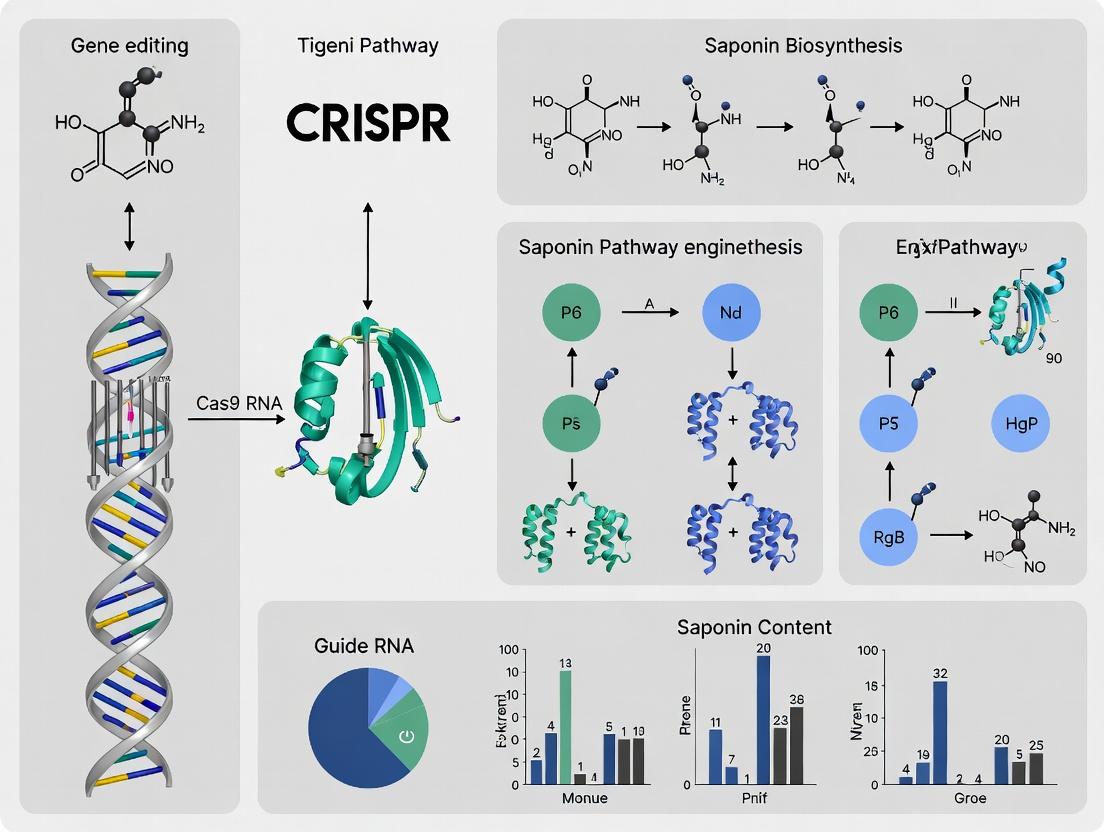
This article provides a comprehensive guide for researchers and drug development professionals on leveraging CRISPR-Cas gene editing to engineer the complex saponin biosynthetic pathway.
Engineering the Saponin Pathway with CRISPR: Strategies for Optimized Therapeutic Compound Production
Abstract
This article provides a comprehensive guide for researchers and drug development professionals on leveraging CRISPR-Cas gene editing to engineer the complex saponin biosynthetic pathway. We explore foundational concepts of saponin biology and CRISPR mechanics, detail methodological approaches for targeted pathway manipulation, address common troubleshooting and optimization challenges, and compare validation techniques to assess engineering success. The scope encompasses strategies to enhance saponin yield, diversity, and bioactivity for next-generation pharmaceuticals, nutraceuticals, and agricultural products.
CRISPR and Saponins 101: Understanding the Pathway and the Toolbox
Saponins are a vast class of secondary metabolites produced predominantly by plants, characterized by a steroidal or triterpenoid aglycone (sapogenin) linked to one or more sugar moieties. Their amphipathic nature confers surfactant properties and diverse bioactivities. Within the context of CRISPR-based pathway engineering, understanding saponin structural diversity and biosynthesis is critical for manipulating their production for enhanced therapeutic yields or novel analogs.
Structural Diversity & Classification
Saponins are classified based on their aglycone carbon skeleton. This structural diversity underpins their varied biological activities.
Table 1: Core Classification of Saponin Aglycones
| Aglycone Type | Carbon Skeleton | Representative Sources | Key Structural Features |
|---|---|---|---|
| Triterpenoid | 30 carbons (C30) | Ginseng (Panax), Licorice (Glycyrrhiza), Quinoa | Pentacyclic (oleanane, ursane) or tetracyclic (dammarane) structures. |
| Steroidal | 27 carbons (C27) | Fenugreek (Trigonella), Yucca, Asparagus | Based on a spirostane or furostane skeleton, often derived from cholesterol. |
| Steroidal Glycoalkaloids | 27 carbons (C27) | Potato (Solanum), Tomato | Nitrogen-containing variants, often toxic (e.g., α-solanine). |
Biosynthetic Origins and Key Pathways
The saponin biosynthetic pathway is a branch of the isoprenoid pathway. Precursors are derived from the mevalonate (MVA) and methylerythritol phosphate (MEP) pathways.
Protocol 3.1: Tracing Saponin Biosynthesis Using Isotopic Labeling
Objective: To elucidate precursor flux and key intermediate steps in saponin biosynthesis in plant cell cultures. Materials:
- Sterile plant cell suspension culture (e.g., Panax ginseng).
- Labeled precursors: [1-¹³C] Glucose, [2-¹³C] Sodium Acetate, L-[methyl-¹³C] Methionine.
- MS-compatible extraction solvents (80% MeOH, CHâ‚‚Clâ‚‚).
- LC-MS/MS system with high-resolution mass analyzer.
- Solid Phase Extraction (SPE) cartridges (C18). Procedure:
- Culture & Labeling: Subculture cells into fresh medium. At early log phase, add filter-sterilized labeled precursor to a final concentration of 0.1% (w/v). Maintain control with unlabeled precursor.
- Harvest: Collect cells by vacuum filtration at 24h, 48h, 72h, and 96h post-labeling. Flash freeze in liquid Nâ‚‚.
- Extraction: Lyophilize cells. Homogenize 100 mg DW in 1 mL 80% methanol. Sonicate (15 min), centrifuge (15,000 x g, 10 min). Repeat. Pool supernatants, dry under Nâ‚‚ gas.
- Clean-up: Reconstitute in 1 mL 10% MeOH. Load onto C18 SPE column pre-conditioned with MeOH and Hâ‚‚O. Elute saponins with 90% MeOH. Dry eluent.
- Analysis: Reconstitute in 50% MeOH for LC-MS/MS. Use reverse-phase C18 column, water-acetonitrile gradient. Operate MS in negative ion mode for ginsenosides/positive for glycoalkaloids. Monitor ¹³C incorporation patterns and key fragments (aglycone, sugar loss). Data Interpretation: Enhanced mass shifts in intermediates (e.g., 2,3-oxidosqualene, dammarenediol-II) and final saponins indicate incorporation. Mapping label distribution identifies dominant precursor pathways (MVA vs. MEP).
Diagram 1: Core saponin biosynthetic pathway and key CRISPR engineering nodes.
Therapeutic Promise & Quantitative Bioactivity
Saponins exhibit a wide spectrum of pharmacological activities. Recent research quantifies potency in various models.
Table 2: Quantified Therapeutic Activities of Selected Saponins
| Saponin (Source) | Therapeutic Activity | In Vitro/In Vivo Model | Potency (IC50/EC50/Dose) | Proposed Mechanism |
|---|---|---|---|---|
| Ginsenoside Rg3 (Ginseng) | Anti-cancer | A549 lung cancer cells | IC50 = 25 ± 3 µM | Caspase-3 activation, G1 cell cycle arrest. |
| Quescin S (Quillaja) | Adjuvant | Murine immunization | Enhances antibody titer 100-fold vs. antigen alone | Forms cholesterol-dependent complexes, promoting antigen uptake. |
| Asperosaponin VI (Dipsacus) | Osteogenic | MC3T3-E1 preosteoblasts | EC50 = 0.8 µM for ALP activity | Activates BMP2/Smad/Runx2 pathway. |
| α-Hederin (Ivy) | Anti-metastatic | 4T1 murine breast cancer model | 2 mg/kg/day reduced lung nodules by 70% | Inhibits NF-κB signaling & MMP-9 expression. |
Protocol 4.1: Assessing Saponin Adjuvant Activity In Vivo
Objective: To evaluate the adjuvant potential of a purified saponin (e.g., QS-21 mimic) co-administered with a model antigen. Materials:
- Female C57BL/6 mice, 6-8 weeks old (n=8 per group).
- Purified saponin (e.g., commercially sourced QS-21).
- Model antigen: Ovalbumin (OVA).
- ELISA kits: Mouse anti-OVA IgG, IgG1, IgG2c.
- Sterile PBS, alum adjuvant (positive control). Procedure:
- Formulation: Prepare the following formulations: a) OVA (10 µg) in PBS, b) OVA (10 µg) + Saponin (10 µg) in PBS, c) OVA (10 µg) adsorbed to Alum.
- Immunization: Immunize mice subcutaneously (100 µL total volume) on Day 0 and Day 14.
- Serum Collection: Collect blood via retro-orbital bleed on Day 0 (pre-immune), Day 13, and Day 28. Allow clotting, centrifuge (10,000 x g, 10 min), collect serum. Store at -20°C.
- Antibody Titer Measurement: Perform ELISA per kit instructions. Briefly, coat plates with OVA. Serially dilute serum samples. Detect bound antibody with HRP-conjugated anti-mouse IgG/IgG1/IgG2c. Develop with TMB, stop with Hâ‚‚SOâ‚„, read absorbance at 450 nm.
- Analysis: Express titers as endpoint dilution or relative to a standard curve. Compare geometric mean titers between groups using ANOVA.
CRISPR Engineering of Saponin Pathways
CRISPR-Cas9 enables precise manipulation of biosynthetic genes to overproduce target saponins or create novel diversity.
Protocol 5.1: CRISPR-Cas9 Mediated Gene Knockout in Medicinal Plant Hairy Roots
Objective: To knockout a key branch-point gene (e.g., a sterol-specific OSC) in Panax notoginseng hairy roots to redirect flux towards triterpenoid saponins. Materials:
- Agrobacterium rhizogenes strain K599.
- CRISPR-Cas9 binary vector with PnOSC1-specific gRNA and Cas9 expression cassette.
- P. notoginseng sterile seedlings.
- Hairy root induction medium (MS + 30 g/L sucrose).
- PCR primers for target locus amplification.
- Restriction Enzyme (for CAPS assay) or T7 Endonuclease I. Procedure:
- Vector Construction: Design a 20-nt gRNA targeting an early exon of PnOSC1. Clone into a CRISPR binary vector (e.g., pHEE401E). Transform into A. rhizogenes.
- Plant Transformation: Wound sterile P. notoginseng hypocotyls with a needle dipped in Agrobacterium culture. Co-cultivate on induction medium for 2 days. Transfer to induction medium with antibiotics (cefotaxime, kanamycin) to kill bacteria and select transformed roots.
- Hairy Root Culture: Excise independent hairy root lines after 4-6 weeks. Maintain in liquid MS medium in the dark, 25°C, with shaking.
- Genotyping: Extract genomic DNA from root lines (WT and transgenic).
- PCR Amplification: Amplify the target genomic region (~500-800 bp).
- Mutation Detection:
- T7E1 Assay: Denature/renature PCR products. Digest with T7 Endonuclease I, which cleaves heteroduplex DNA formed by WT/mutant strands. Analyze on agarose gel for cleaved bands.
- Sequencing: Clone PCR products and Sanger sequence multiple clones to identify indel mutations at the target site.
- Metabolite Analysis: Extract saponins from mutant and control roots (see Protocol 3.1, Step 3). Quantify target triterpenoid (e.g., notoginsenosides) and sterol saponin levels via LC-MS. Compare profiles.
Diagram 2: Workflow for CRISPR-mediated engineering of saponin biosynthesis.
The Scientist's Toolkit: Research Reagent Solutions
Table 3: Essential Reagents for Saponin Pathway Research
| Reagent / Material | Supplier Examples | Function in Research |
|---|---|---|
| Squalene Epoxidase (SOE) Inhibitor (e.g., NB-598) | Cayman Chemical, Sigma-Aldrich | Chemical probe to block pathway flux, validate enzyme function in vivo/in vitro. |
| 2,3-Oxidosqualene Standard | Avanti Polar Lipids | Analytical standard for LC-MS quantification of key cyclase substrate. |
| Recombinant OSC Enzymes | Custom expression (e.g., in yeast) | For in vitro enzymatic assays to characterize cyclization activity and product profile. |
| UDP-Sugars (UDP-Glc, UDP-Rha, UDP-Xyl) | Sigma-Aldrich, Carbosource | Cofactor substrates for glycosyltransferase (UGT) activity assays. |
| Saponin Adjuvant Standards (QS-21, αGalCer) | InvivoGen | Gold-standard comparators for immunological adjuvant studies. |
| CRISPR-Cas9 Plant Vectors (pHEE401E, pYLCRISPR/Cas9) | Addgene | Pre-assembled systems for easy gRNA cloning and plant transformation. |
| Hairy Root Induction Kits (A. rhizogenes) | BD Biosciences (Strains) | Reliable systems for generating transgenic root cultures for pathway studies. |
| C18 & HILIC SPE Cartridges | Waters, Thermo Scientific | Clean-up and fractionation of complex saponin extracts prior to analysis. |
| 2-Chloro-4-iodopyridine | 2-Chloro-4-iodopyridine|(GC)|RUO | High-purity 2-Chloro-4-iodopyridine (CAS 153034-86-7) for pharmaceutical and chemical research. For Research Use Only. Not for diagnostic or therapeutic use. |
| Spacer Phosphoramidite C3 | Spacer Phosphoramidite C3, CAS:110894-23-0, MF:C33H43N2O5P, MW:578.7 g/mol | Chemical Reagent |
This document provides application notes and protocols for research aimed at elucidating and engineering the saponin biosynthetic pathway. The content is framed within a broader thesis on utilizing CRISPR/Cas9-mediated gene editing to modulate saponin production in medicinal plants (e.g., Panax ginseng, Glycyrrhiza glabra, Centella asiatica) for enhanced yield of pharmaceutically valuable compounds (e.g., ginsenosides, glycyrrhizin, asiaticoside). The goal is to identify key enzymatic and regulatory nodes amenable to genetic intervention.
Key Enzymes, Genes, and Regulatory Network
The saponin backbone is derived from the mevalonic acid (MVA) and/or methylerythritol phosphate (MEP) pathways, leading to 2,3-oxidosqualene. Key cyclization and subsequent oxidation, glycosylation, and acylation steps create vast structural diversity.
Table 1: Core Enzymes and Genes in Triterpenoid Saponin Biosynthesis
| Pathway Stage | Enzyme Class | Example Gene Names (Species) | Function | Potential CRISPR Target for Engineering |
|---|---|---|---|---|
| Backbone Synthesis | Squalene Synthase | PgSQS1 (P. ginseng) | Converts two FPP to squalene. | Knockout to divert flux to other terpenoids. |
| Cyclization | Oxidosqualene Cyclase (OSC) | β-AS (β-amyrin synthase), LUP1 (lupeol synthase) | Cyclizes 2,3-oxidosqualene to triterpene scaffolds (e.g., β-amyrin). | Critical node; knockout/mutation alters sapogenin profile. |
| Oxidation | Cytochrome P450s (CYP450s) | CYP716A12v2 (Medicago), CYP716A47 (P. ginseng) | Catalyze C-28 oxidation (to oleanolic acid) and multi-site hydroxylations. | Primary target for enhancing/altering oxidation patterns. |
| Glycosylation | UDP-glycosyltransferases (UGTs) | UGT74AE1 (G. glabra), PgUGT71A27 (P. ginseng) | Transfer sugar moieties to aglycone, determining bioactivity. | Target for optimizing sugar chain composition. |
| Regulation | Transcription Factors (TFs) | TSAR1/2 (Medicago), ERF TFs (P. ginseng) | Master regulators of gene clusters. | Prime targets for CRISPRa (activation) to boost entire pathway. |
Table 2: Quantitative Metrics of Key Saponin Pathway Enzymes
| Enzyme | Typical in vitro Activity (nkat/mg protein)* | pH Optimum | Cofactor Requirement | Reported Fold-Increase from Elicitation (e.g., Methyl Jasmonate) |
|---|---|---|---|---|
| Squalene Synthase (SQS) | 0.5 - 2.0 | 6.5 - 7.5 | NADPH, Mg²⺠| 3 - 5x |
| β-Amyrin Synthase (β-AS) | 0.01 - 0.1 | 6.0 - 7.0 | None | 10 - 20x |
| CYP716A12v2 | N/A (membrane-bound) | ~7.2 | NADPH, Oâ‚‚, CPR | 15 - 50x |
| UGT74AE1 | 5 - 15 | 7.5 - 8.5 | UDP-glucose | 5 - 10x |
*1 nkat = 1 nmol product formed per second.
Experimental Protocols
Protocol 3.1: CRISPR/Cas9 Vector Assembly for Multiplex Gene Editing in Plant Hairy Roots
Objective: To simultaneously knock out two key CYP450 genes (CYP716Axx, CYP72Axx) in Panax ginseng hairy roots. Materials:
- pRGEB32 (or similar geminiviral replicon) vector for high gRNA expression.
- Agrobacterium rhizogenes strain K599.
- P. ginseng sterile seedlings.
- BsaI-HF v2 restriction enzyme (NEB).
- T4 DNA Ligase.
Procedure:
- gRNA Design: Design two 20-nt target sequences adjacent to 5'-NGG PAM for each gene using tools like CHOPCHOP. Add BsaI overhangs.
- Oligo Annealing: Anneal complementary oligos for each gRNA, phosphorylate, and dilute.
- Golden Gate Assembly: Set up a BsaI digestion-ligation reaction with the linearized pRGEB32 vector and the four gRNA oligo duplexes. Cycle: 37°C (5 min) + 20°C (5 min), repeat 30x.
- Transformation: Transform product into E. coli, screen colonies by colony PCR, and sequence-validate.
- Hairy Root Induction: Transform the validated plasmid into A. rhizogenes K599. Infect wounded stems of 4-week-old sterile P. ginseng seedlings. Induce hairy roots on hormone-free MS medium with cefotaxime (500 mg/L).
- Genotyping: Isolve DNA from hairy root lines. Use PCR amplifying the target loci and sequence or use T7E1 assay to confirm indels.
Protocol 3.2: Metabolite Profiling of Engineered Hairy Roots via UPLC-QTOF-MS
Objective: Quantify changes in saponin profiles in CRISPR-edited hairy root lines. Materials:
- Freeze-dried hairy root powder.
- 70% Methanol (v/v) in water.
- UPLC system (e.g., ACQUITY UPLC I-Class) coupled to QTOF-MS (e.g., Xevo G2-XS).
- BEH C18 column (2.1 x 100 mm, 1.7 µm).
- Ginsenoside standards (Rb1, Rg1, Re, etc.).
Procedure:
- Extraction: Weigh 50 mg dry powder. Add 1 mL 70% methanol, sonicate 30 min, centrifuge at 13,000 x g for 10 min. Filter supernatant (0.22 µm PTFE).
- UPLC Conditions: Mobile phase A: 0.1% Formic acid in H₂O; B: Acetonitrile. Gradient: 0 min, 15% B; 0-15 min, 15-30% B; 15-20 min, 30-95% B; hold 2 min; re-equilibrate. Flow: 0.4 mL/min. Column temp: 40°C.
- MS Conditions: ESI negative mode. Capillary voltage: 2.5 kV. Source temp: 120°C. Desolvation temp: 450°C. Data acquisition: MSE mode (low CE 6 V, high CE ramp 20-50 V).
- Data Analysis: Use Progenesis QI software. Align peaks, deconvolute, and annotate using in-house saponin library (mass error <5 ppm). Quantify relative to internal standard (e.g., digoxin) and available authentic standards.
Protocol 3.3: Yeast-Based Functional Characterization of Saponin UGTs
Objective: Validate glycosyltransferase activity of a candidate gene (UGTxxx) in a heterologous system. Materials:
- Saccharomyces cerevisiae strain WAT11 (engineered with Arabidopsis CPR).
- pYES2/CT expression vector.
- Substrate: Oleanolic acid (aglycone).
- Sugar donor: UDP-glucose.
- LC-MS system for analysis.
Procedure:
- Heterologous Expression: Clone UGTxxx ORF into pYES2/CT. Transform into WAT11. Induce with 2% galactose.
- Microsome Preparation: Harvest induced yeast cells. Lyse with glass beads in buffer (50 mM Tris-HCl pH 7.5, 1 mM EDTA, 10% glycerol). Centrifuge at 9,000 x g, then ultracentrifuge supernatant at 100,000 x g to pellet microsomes. Resuspend in storage buffer.
- In vitro Enzyme Assay: Reaction mix: 50 µg microsomal protein, 50 µM oleanolic acid (in DMSO), 5 mM UDP-glucose, 5 mM MgCl₂, in 100 µL Tris-HCl (pH 8.0). Incubate at 30°C for 2 hr. Terminate with 100 µL ice-cold methanol.
- Product Analysis: Centrifuge, analyze supernatant by LC-MS. Monitor for mass shift corresponding to addition of hexose (e.g., +162 Da). Compare to empty vector control.
Diagrams
Diagram 1: Saponin Biosynthetic Pathway and Key Engineering Nodes
Diagram 2: CRISPR Engineering and Validation Workflow
The Scientist's Toolkit: Research Reagent Solutions
Table 3: Essential Reagents and Kits for Saponin Pathway Engineering
| Item | Supplier Examples | Function/Application in Research |
|---|---|---|
| Plant Gene Editing Kit | ToolGen CRISPR/CPf1 Plant Engineering Kit; Alt-R CRISPR-Cas9 System (IDT) | Provides optimized Cas9/gRNA reagents for plant protoplast or hairy root transformation. |
| Hairy Root Induction Kit | Agrobacterium rhizogenes strains (ATCC, KCTC), Induction Media (PhytoTech Labs) | Reliable system for generating transgenic root cultures for metabolite production. |
| UPLC-QTOF-MS System | Waters ACQUITY UPLC I-Class + Xevo G2-XS; Agilent 1290 Infinity II + 6545/6546 LC/Q-TOF | High-resolution separation and accurate mass detection for saponin profiling. |
| Saponin Reference Standards | Phytolab; ChromaDex; Sigma-Aldrich; Extrasynthese | Essential for quantitative analysis and method validation via LC-MS. |
| Yeast Heterologous Expression Kit | pYES2/CT Yeast Expression Kit (Thermo Fisher); WAT11 Yeast Strain | Validates enzyme function in a controlled, eukaryotic system. |
| CYP450 Assay Kit | P450-Glo Assay Systems (Promega) | Measures general CYP450 activity in microsomal preparations or live cells. |
| Plant RNA/DNA Isolation Kit | RNeasy Plant Mini Kit (Qiagen); DNeasy Plant Pro Kit (Qiagen) | High-quality nucleic acid isolation from challenging plant/root tissues. |
| Methylprednisolone Succinate | Methylprednisolone Succinate, CAS:2921-57-5, MF:C26H34O8, MW:474.5 g/mol | Chemical Reagent |
| Pipazethate Hydrochloride | Pipazethate Hydrochloride, CAS:6056-11-7, MF:C21H26ClN3O3S, MW:436.0 g/mol | Chemical Reagent |
Within the broader thesis investigating CRISPR-mediated engineering of saponin biosynthetic pathways for therapeutic compound production, this primer outlines the transition from foundational CRISPR-Cas mechanisms to advanced multiplexed genome editing. Saponins, with their diverse pharmacological activities, present a complex engineering challenge due to their multi-gene biosynthetic pathways. This document provides application notes and detailed protocols to enable researchers to systematically manipulate these pathways.
Core CRISPR-Cas Systems: Mechanisms and Quantitative Comparison
The selection of an appropriate CRISPR-Cas system is critical for pathway engineering efficiency. The following table summarizes the key quantitative characteristics of the most relevant systems.
Table 1: Quantitative Comparison of Major CRISPR-Cas Systems for Pathway Engineering
| System & Common Nuclease | Origin | PAM Sequence | Typical Size (aa) | Editing Outcome | Multiplexing Capacity | Primary Use in Pathway Engineering |
|---|---|---|---|---|---|---|
| Cas9 (SpCas9) | S. pyogenes | 5'-NGG-3' | ~1368 aa | DSB, HDR, NHEJ | High (via sgRNA arrays) | Gene knock-outs, large deletions |
| Cas9-Nickase (nCas9) | Engineered | 5'-NGG-3' | ~1368 aa | Single-strand break | High | Base editing, precise knock-ins |
| Cas12a (CpF1) | C. perfringens | 5'-TTTV-3' | ~1300 aa | DSB with staggered ends | High (processes own crRNA) | Multiplexed knock-outs, transcriptional repression |
| dCas9 | Engineered | 5'-NGG-3' | ~1368 aa | No cleavage | Very High | CRISPRi (repression) & CRISPRa (activation) of pathway genes |
| Base Editor (BE4) | Engineered | 5'-NGG-3' | ~1600 aa | C•G to T•A conversion | Moderate | Precise point mutations in enzyme active sites |
Protocol: Designing a sgRNA Library for Saponin Pathway Gene Knock-Out
Objective
To design and clone a multiplexed sgRNA library targeting key genes in the triterpenoid saponin biosynthetic pathway (e.g., β-AS, CYP450s, UGTs) for simultaneous knock-out in a plant or yeast chassis.
Materials
- Software: CHOPCHOP, Benchling, or CRISPick.
- Cloning Vector: pRGEN-U6-sgRNA (or similar U6-driven sgRNA expression vector).
- Enzymes: BsaI-HFv2, T4 DNA Ligase.
- Bacterial Strain: Stable E. coli DH5α.
- Oligonucleotides: Designed sgRNA oligos (see design rules below).
Detailed Methodology
Target Gene Identification:
- Compile a list of target genes from the pathway (e.g., Squalene Synthase, β-Amyrin Synthase, Oleanolic Acid 28-hydroxylase).
- Retrieve coding sequences (CDS) from databases like NCBI or Phytozome.
sgRNA Design (In Silico):
- For each gene, input the CDS into CHOPCHOP.
- Parameters: Set for SpCas9 (NGG PAM). Select "Knock-out" as the goal.
- Select the top 3-4 sgRNAs per gene based on:
- On-target score: >60 (using Doench ‘16 efficiency).
- Off-target potential: Perform genome-wide search; discard sgRNAs with hits in non-target genes, especially housekeeping genes.
- Genomic location: Prioritize sgRNAs targeting the first constitutive exon, 5' of the catalytic domain.
Oligo Design for Golden Gate Cloning:
- For each selected sgRNA sequence (20nt), design forward and reverse oligos:
- Forward Oligo: 5'- CACCGNNNNNNNNNNNNNNNNNNNN -3'
- Reverse Oligo: 5'- AAACNNNNNNNNNNNNNNNNNNNNC -3' (Where N's are the sgRNA sequence complement. The 4-nt overhangs are compatible with BsaI-cut vectors).
- For each selected sgRNA sequence (20nt), design forward and reverse oligos:
Multiplex Vector Assembly (Golden Gate Protocol):
- Digest 2 µg of pRGEN-U6-sgRNA vector with BsaI-HFv2 in CutSmart buffer for 1 hour at 37°C. Gel purify.
- Anneal and phosphorylate oligonucleotide pairs in a thermocycler: 37°C 30 min; 95°C 5 min; ramp down to 25°C at 5°C/min.
- Ligation Reaction:
- Digested vector: 50 ng
- Each annealed sgRNA insert: 0.5 pmol
- T4 DNA Ligase Buffer (1X)
- BsaI-HFv2: 5 units
- T4 DNA Ligase: 200 units
- Incubate in a thermocycler: (37°C for 5 min, 20°C for 5 min) x 25 cycles; then 50°C for 5 min, 80°C for 5 min.
- Transform 2 µL of the reaction into 50 µL of competent DH5α cells. Plate on selective antibiotics.
- Screen colonies by colony PCR and Sanger sequencing using a U6 forward primer.
Application Note: Multiplexed Transcriptional Regulation (CRISPRi/a) for Pathway Balancing
Rationale
Saponin yield depends not only on gene presence/absence but also on precise expression levels. dCas9 fused to repressors (KRAB) or activators (VP64, p65) allows fine-tuning of pathway flux without cutting DNA.
Table 2: CRISPRi/a Reagents for Saponin Pathway Modulation
| Target Pathway Stage | Target Gene Example | Desired Modulation | Recommended Effector | Expected Outcome |
|---|---|---|---|---|
| Upstream Precursor | HMGR | Upregulation | dCas9-VP64-p65 | Increased carbon flux toward MVA pathway |
| Cyclization | β-AS | Strong Upregulation | dCas9-VP64-p65 | Increased triterpene backbone production |
| Downstream Oxidation | Specific CYP450 | Repression | dCas9-KRAB | Shunt pathway reduction, accumulation of desired intermediate |
| Glycosylation | Specific UGT | Fine-tuned Upregulation | dCas9-VPR (strong activator) | Optimized glycosylation pattern |
Protocol: dCas9-VPR-mediated Activation of a Saponin Pathway Gene
- Cell Preparation: Culture your engineered yeast (S. cerevisiae) or plant cell line stably expressing a dCas9-VPR construct.
- sgRNA Delivery: Transfect with sgRNA(s) targeting 200-400 bp upstream of the transcription start site (TSS) of your target gene (e.g., β-AS). Use a non-targeting sgRNA control.
- Incubation: Incubate cells for 48-72 hours to allow for transcriptional changes.
- Validation:
- qPCR: Extract total RNA, synthesize cDNA, and perform qPCR for the target gene. Normalize to housekeeping genes (e.g., ACT1 in yeast). Calculate fold change via the 2^(-ΔΔCt) method.
- Metabolite Analysis: Harvest cells, extract metabolites, and analyze target saponin/intermediate levels via LC-MS/MS.
The Scientist's Toolkit: Research Reagent Solutions
Table 3: Essential Toolkit for CRISPR Saponin Pathway Engineering
| Reagent / Material | Supplier Examples | Function in Research |
|---|---|---|
| High-Fidelity Cas9 Nuclease (SpCas9) | IDT, Thermo Fisher | Provides reliable, specific DSB induction for gene knock-outs. |
| Alt-R HDR Donor Oligos | IDT | Single-stranded DNA templates for precise insertion of point mutations or epitope tags via HDR. |
| Lipofectamine CRISPRMAX Transfection Reagent | Thermo Fisher | Low-toxicity, high-efficiency delivery of CRISPR RNP complexes into plant protoplasts or mammalian cells. |
| Gibson Assembly Master Mix | NEB | Enables seamless cloning of large, multi-gene pathway constructs alongside CRISPR components. |
| Next-Generation Sequencing (NGS) Library Prep Kit for CRISPR | Illumina, Twist Bioscience | Enables deep sequencing of target loci for comprehensive analysis of editing efficiency and off-target effects. |
| LC-MS/MS Grade Solvents (Acetonitrile, Methanol) | Sigma-Aldrich | Essential for high-resolution metabolite profiling of engineered saponin products. |
| dCas9-VPR and dCas9-KRAB Stable Cell Lines | Addgene (various depositors) | Ready-to-use cell lines for immediate CRISPRi/a screening without needing to construct effector plasmids. |
| Perfluorohexanoic Acid | Perfluorohexanoic Acid (PFHxA)|High-Purity Reagent | |
| 5,7,4'-Trihydroxy-8-methylflavanone | 5,7,4'-Trihydroxy-8-methylflavanone, MF:C16H14O5, MW:286.28 g/mol | Chemical Reagent |
Visualizing Workflows and Pathways
CRISPR Saponin Engineering Workflow
CRISPR Interventions in Saponin Biosynthesis
This application note details the rationale and methodologies for saponin pathway engineering within a broader CRISPR-based gene editing research thesis. Saponins are triterpenoid or steroidal glycosides with significant pharmacological value. The primary engineering goals are: 1) enhancing the yield of target compounds, 2) diversifying saponin structures for novel bioactivities, and 3) establishing de novo production in heterologous hosts.
Key Goals and Quantitative Benchmarks
Table 1: Summary of Pathway Engineering Goals and Performance Metrics
| Engineering Goal | Target Pathway/Step | Experimental Approach | Reported Enhancement (Range) | Key Measurement |
|---|---|---|---|---|
| Yield Enhancement | Oxidosqualene Cyclization (OSC) | CRISPRa-mediated upregulation of β-AS gene | 2.1x to 3.8x increase | β-Amyrin yield (mg/g DW) |
| Cytochrome P450 Oxidation | Multiplex CRISPRi knockdown of competing CYP716A subfamily | 40-60% reduction in byproducts | Target:Sai saponin ratio | |
| Structural Diversification | Glycosyltransferase (GT) Activity | CRISPR-Cas9-mediated UGT gene family swapping | 5-8 novel glycosylation patterns | HPLC-MS novel peaks |
| Acyltransferase Modification | Base editing (CRISPR-ABE) for ATase substrate specificity | Altered acylation in 70% of variants | Mass shift (Da) | |
| De Novo Production | Mevalonate (MVA) Pathway | CRISPR-mediated transcriptional activation in yeast (S. cerevisiae) | 12.5 mg/L total triterpenoid titer | Titers in heterologous host |
| Saponin Module Assembly | Integration of 6-gene saponin cluster into plant chassis (N. benthamiana) | 0.8 mg/g FW transient expression | Final product yield |
Research Reagent Solutions
Table 2: Essential Toolkit for CRISPR-Mediated Saponin Pathway Engineering
| Reagent/Material | Supplier Examples | Function in Experiment |
|---|---|---|
| CRISPR-Cas9 Vector (pXR) | Addgene, TaKaRa | Delivery of SpCas9 and sgRNA for gene knockouts. |
| CRISPR Activation Vector (dCas9-VPR) | Addgene | Transcriptional upregulation of rate-limiting genes. |
| CRISPR Interference Vector (dCas9-SRDX) | Lab stock | Transcriptional repression of competing pathways. |
| Base Editor (ABE8e) | Addgene | A→G conversions for precise ATase engineering. |
| Golden Gate Modular Assembly Kit | Engreen, NEB | Assembly of multigene saponin biosynthesis pathways. |
| Saponin Analytical Standards | Phytolab, Sigma-Aldrich | HPLC and LC-MS quantification and calibration. |
| Triterpene Authentic Standards | Extrasynthese | GC-MS identification of cyclization products. |
| UDP-Sugar Donors | Carbosynth | In vitro GT activity assays. |
| Yeast S. cerevisiae Strain YPH499 | ATCC | Heterologous de novo production chassis. |
| Nicotiana benthamiana Seeds | TAIR | Transient plant expression system. |
| Hairy Root Culture Kit (Glycyrrhiza) | Lab stock | Stable plant transformation and saponin production. |
Application Protocols
Protocol 1: Multiplex CRISPRi for Yield Enhancement by Reducing Metabolic Flux Diversion
Objective: Repress competing cytochrome P450 (CYP72A) genes to shunt flux toward β-amyrin synthase.
- Design three sgRNAs targeting promoter regions of CYP72A154, A157, A159.
- Clone sgRNAs into the pYLCRISPRi vector (dCas9-SRDX) using BsaI sites.
- Transform vector into Glycyrrhiza uralensis hairy roots via Agrobacterium rhizogenes A4.
- Select transgenic roots on hygromycin (25 mg/L) for 4 weeks.
- Harvest roots, extract metabolites, and analyze by GC-MS for β-amyrin and by LC-MS for downstream saponins.
Protocol 2: CRISPR-Cas9 Mediated GT Gene Family Swapping for Structural Diversification
Objective: Replace a native UGT73F subfamily gene with a UGT91 family gene to alter glycosylation pattern.
- Design a donor template containing UGT91G1 cDNA flanked by 1 kb homology arms of the target UGT73F3 locus.
- Design a Cas9-sgRNA targeting the start codon of UGT73F3.
- Co-deliver Cas9-sgRNA vector and donor template into plant protoplasts via PEG-mediated transformation.
- Screen calli by PCR and sequence for homozygous gene swap events.
- Analyze saponin profiles of regenerated plants via UPLC-QTOF-MS, looking for mass shifts corresponding to altered glycosylation (+146 Da for hexose vs. +132 Da for pentose).
Protocol 3: EstablishingDe NovoProduction inS. cerevisiae
Objective: Activate the endogenous yeast MVA pathway and integrate a heterologous saponin module.
- Use CRISPRa (dCas9-VPR) with sgRNAs targeting promoter regions of HMG1, ERG9, and ERG20 to upregulate the MVA pathway.
- Integrate a β-amyrin synthase gene (β-AS) and a key P450 (CYP88D6) with its reductase into the delta sites of the yeast genome using a CRISPR-Cas9 assisted method.
- Ferment engineered yeast strain in SC-Ura medium with 2% galactose induction for 72h.
- Extract saponins from the culture with ethyl acetate and quantify via HPLC against standards.
Pathway and Workflow Visualizations
Title: CRISPR Goals and Tools for Saponin Pathway Engineering
Title: Core Triterpenoid Saponin Biosynthesis Pathway
Title: Generic Workflow for CRISPR Saponin Engineering
CRISPR in Action: Step-by-Step Strategies for Saponin Pathway Manipulation
Within CRISPR-mediated engineering of the saponin biosynthesis pathway for drug development, strategic target selection is paramount. This protocol focuses on systematically identifying and prioritizing two critical target classes: rate-limiting enzymes and transcriptional regulators. The broader thesis context posits that precise co-editing of these targets can amplify pathway flux and redirect metabolic resources, maximizing the yield of high-value triterpenoid saponins.
Application Notes: Rationale and Strategy
Rate-Limiting Enzymes (RLEs)
RLEs control the flux through metabolic pathways. In saponin biosynthesis, these are typically early committal steps (e.g., cyclization of 2,3-oxidosqualene) or late glycosylation steps. Targeting RLEs with CRISPR-activation (CRISPRa) can remove bottlenecks.
Transcriptional Regulators (TRs)
TRs, including transcription factors (TFs) and co-regulators, control the expression of multiple pathway genes simultaneously. Engineering TRs can synchronously upregulate entire gene clusters, offering a powerful leverage point.
Integrated Prioritization Strategy
Priority is assigned using a multi-parameter scoring system that combines in silico analysis, expression correlation data, and functional genomics screens. Targets are selected for combinatorial editing.
Table 1: Prioritization Scoring Matrix for Candidate Targets
| Target Gene | Class | Expression Correlation w/ Saponin Yield (r) | CRISPR Knockout Phenotype (Fold Change) | Network Centrality Score | Final Priority Score (1-10) |
|---|---|---|---|---|---|
| BAS | RLE | 0.92 | -78% | 0.95 | 9.8 |
| CYP716A12 | RLE | 0.87 | -65% | 0.88 | 8.7 |
| bHLH1 | TR | 0.95 | -85% | 0.99 | 9.9 |
| MYB2 | TR | 0.81 | -72% | 0.91 | 8.2 |
| SQLE | RLE | 0.45 | -15% | 0.55 | 4.1 |
Data derived from recent studies (2023-2024) on *Panax ginseng and Glycyrrhiza glabra cell cultures. Phenotype change refers to saponin content.*
Table 2: CRISPR Editing Outcomes for Top Targets
| Target Gene | Editing Modality | Avg. Fold Change in Transcript | Avg. Fold Change in Metabolite Yield | Optimal Delivery System |
|---|---|---|---|---|
| BAS | Activation (VP64) | 12.5x | 3.2x | Lipo-based RNP |
| bHLH1 | Activation (SAM) | 8.7x | 4.1x | AAVS1 Safe Harbor Knock-in |
| BAS+bHLH1 | Combinatorial (CRISPRa) | 15.2x (BAS), 9.1x (bHLH1) | 6.8x | Multiplexed Lentivirus |
Experimental Protocols
Protocol 1: Identification of Rate-Limiting Enzymes via Metabolic Control Analysis (MCA)
Objective: Quantify flux control coefficients (FCCs) for pathway enzymes. Materials: Cultured plant cells, radiolabeled [³H]-mevalonate, LC-MS/MS. Procedure:
- Grow synchronized plant cell cultures (e.g., Glycyrrhiza glabra) to mid-log phase.
- Treat with sub-inhibitory concentrations of enzyme-specific inhibitors (one per pathway step) for 6h.
- Pulse with [³H]-mevalonate (1 µCi/mL) for 1h.
- Quench metabolism, extract saponins, and quantify total radiolabel incorporation into pathway end-products via scintillation counting.
- Calculate FCC for enzyme i: FCCᵢ = (ΔJ/J) / (Δvᵢ/vᵢ), where J is total pathway flux and vᵢ is the activity of enzyme i.
- Enzymes with FCC > 0.2 are considered strong rate-limiting candidates.
Protocol 2: CRISPR/dCas9-Mediated Transcriptional Activation Screening for Regulators
Objective: Identify transcriptional regulators that upregulate saponin biosynthesis when activated. Materials: dCas9-VP64/p65-MS2 activator plasmids, sgRNA library targeting all annotated TFs, reporter cell line with saponin-biosynthesis-promoter::GFP. Procedure:
- Clone a pooled sgRNA library targeting the promoter regions (-500 to +100 bp from TSS) of all candidate TF genes.
- Co-transfect the dCas9 activator and sgRNA library into the reporter cell line at low MOI to ensure single integrations.
- At 96h post-transfection, perform FACS to isolate the top 1% GFP-high cells.
- Extract genomic DNA from the sorted population and amplify integrated sgRNA sequences via PCR.
- Submit for NGS. Identify sgRNAs enriched in the high-GFP population compared to the unsorted control using MAGeCK or similar algorithms.
- Top-enriched TFs are prioritized for validation.
Protocol 3: Multiplexed Base Editing of Promoter Regions for Fine-Tuning
Objective: Simultaneously introduce activating point mutations in the promoters of a top RLE and TR. Materials: AncBE4max base editor plasmid (C->T), two sgRNAs targeting promoter cis-elements, HPLC-DAD. Procedure:
- Design sgRNAs to convert specific cytosines to thymines within known repressor transcription factor binding sites in the promoters of BAS and bHLH1.
- Co-deliver the AncBE4max plasmid and both sgRNAs via gold nanoparticle bombardment into plant callus.
- After 2 weeks of selection, genotype individual calli by sequencing the targeted promoter regions to confirm edits.
- Grow edited and wild-type callus for 4 weeks in production medium.
- Extract metabolites and quantify saponin yields via HPLC-DAD against standard curves.
- Correlate specific promoter haplotypes with yield phenotypes.
Diagrams
Title: Target Selection and Validation Workflow
Title: Key Saponin Pathway Nodes & Targets
The Scientist's Toolkit
Table 3: Essential Research Reagent Solutions
| Reagent/Category | Specific Example(s) | Function in Target Selection/Engineering |
|---|---|---|
| dCas9 Effector Systems | dCas9-VP64-p65-SunTag, dCas9-SAM, dCas9-KRAB | Transcriptional activation (CRISPRa) or repression (CRISPRi) of RLE/TR targets for functional screening. |
| Base/Prime Editors | AncBE4max (C->T), PE2 (Prime Editor 2) | Introduce precise point mutations in promoter cis-elements or coding sequences without DSBs. |
| sgRNA Delivery | Lentiviral sgRNA libraries, Gold nanoparticles for plants, Lipid nanoparticles (LNPs) | Stable or transient delivery of CRISPR components into mammalian or plant host systems. |
| Metabolic Tracers | ¹³C-Glucose, ³H-Mevalonate, ²H₂O | Quantify pathway flux and identify rate-limiting steps via Metabolic Flux Analysis (MFA). |
| Reporter Cell Lines | Saponin-promoter::GFP/Luciferase, Metabolite biosensors | High-throughput screening for transcriptional regulator activity or saponin accumulation. |
| Multi-Omics Kits | Single-cell RNA-seq kits (10x Genomics), Phosphoproteomics kits (TiO2 beads) | Uncover novel regulators and pathway connections at high resolution. |
| Pathway Analysis Software | MetaboAnalyst 5.0, Cytoscape with Omics plugins, CRISPResso2 | Integrate datasets, build regulatory networks, and analyze editing outcomes. |
| 7-O-Methylbiochanin A | 7-O-Methylbiochanin A, CAS:34086-51-6, MF:C17H14O5, MW:298.29 g/mol | Chemical Reagent |
| D-Tetrahydropalmatine | D-Tetrahydropalmatine, CAS:483-14-7, MF:C21H25NO4, MW:355.4 g/mol | Chemical Reagent |
Application Notes
This protocol is framed within a broader thesis on CRISPR-Cas9-mediated engineering of the saponin biosynthesis pathway in Medicago truncatula and Saccharomyces cerevisiae. The goal is to modulate key enzymes (e.g., β-amyrin synthase, cytochrome P450s) to enhance saponin production for therapeutic applications. Optimal gRNA design is paramount to ensure high on-target editing efficiency while minimizing off-target effects, which can confound metabolic engineering outcomes.
Key Considerations:
- Specificity: Plant and microbial genomes often contain high levels of sequence duplication and polyploidy (plants) or highly repetitive sequences (microbes). Off-target edits can disrupt non-targeted paralogs or essential genes, leading to pleiotropic effects.
- Efficiency: gRNA efficiency is influenced by local chromatin accessibility (especially in plants), DNA methylation status, and the sequence composition of the gRNA itself.
- Delivery: gRNAs can be delivered as part of a CRISPR-Cas expression cassette (for stable transformation) or as pre-complexed ribonucleoproteins (RNPs) for transient editing, particularly in microbial systems.
Quantitative Design Parameters
The following parameters, derived from recent literature (2023-2024), should be prioritized during in silico gRNA design.
Table 1: Key gRNA Design Parameters for Plants & Microbes
| Parameter | Optimal Value/Range | Rationale & Tool for Evaluation |
|---|---|---|
| On-Target Score | >70 (CHOPCHOP, Broad) | Predicts cleavage efficiency based on sequence features. |
| GC Content | 40-60% | Influences gRNA stability and binding energy. |
| gRNA Length | 20 nt (for SpCas9) | Standard length; truncation (17-18 nt) can increase specificity. |
| Off-Target Mismatches | Zero in seed region (PAM-proximal 8-12 bp) | Mismatches here drastically reduce cleavage; 3+ mismatches total recommended for safe off-target profile. |
| Poly(T) sequence | Avoid >4 consecutive T's | Acts as a RNA Pol III termination signal in expression cassettes. |
| 5' Base (for U6 promoter) | G (or A for some systems) | Required for efficient transcription initiation from U6/U3 snRNA promoters. |
| Genomic Location | Within first 50-75% of coding sequence, avoid functional domains | Maximizes chance of generating a knockout via frameshift. |
Table 2: Comparison of Common gRNA Design Tools (2024)
| Tool | Best For | Key Specificity Feature | URL/Reference |
|---|---|---|---|
| CHOPCHOP | Plants, microbes, broad organisms | Integrated off-target search with specificity score. | chopchop.cbu.uib.no |
| CRISPOR | Comprehensive specificity analysis | Incorporates multiple scoring algorithms (Doench, Moreno-Mateos). | crispor.tefor.net |
| CRISPR-GE | Plants (especially crops) | Plant-specific genome databases and primers design. | skl.scau.edu.cn |
| GT-Scan | Microbial genomes | Identifies unique targets in strains with high genomic similarity. | gt-scan.csiro.au |
| Cas-Designer | Balancing efficiency/specificity | Detailed off-target ranking and visualization. | rgenome.net/cas-designer |
Experimental Protocols
Protocol 1:In SilicogRNA Design and Selection for a Plant Genome (e.g.,M. truncatula)
Objective: To design high-specificity gRNAs targeting the β-amyrin synthase gene family.
Materials:
- Genomic sequence (FASTA) of target gene and whole genome (if available).
- gRNA design tool (e.g., CHOPCHOP).
- BLASTN suite.
Methodology:
- Retrieve Sequence: Obtain the coding sequence (CDS) and genomic locus of the target gene from Phytozome or NCBI.
- Identify PAM Sites: For SpCas9, scan the sense and antisense strands for all instances of 5'-NGG-3'.
- Generate gRNA Candidates: Input the 23-nt sequence (20-nt spacer + NGG) preceding each PAM into CHOPCHOP. Set the organism to M. truncatula.
- Rank by Efficiency Score: Select the top 5-10 candidates with the highest on-target efficiency score (>70).
- Specificity Filtering: For each high-efficiency candidate: a. Examine the provided list of potential off-target sites. Reject any gRNA with a predicted off-target site having ≤3 mismatches, especially if located in a coding region of another gene. b. Perform a manual BLASTN of the 20-nt spacer sequence against the M. truncatula genome. Confirm unique binding or binding only to intended gene family members.
- Final Selection: Choose 2-3 gRNAs per target that have the best combination of high on-target score and a clean off-target profile. Target distinct exons to enable multiplexing.
Protocol 2: Validation of gRNA EfficiencyIn Plantausing a Dual-Luciferase Assay
Objective: To quantify the editing efficiency of selected gRNAs prior to stable transformation.
Materials:
- Agrobacterium tumefaciens strain GV3101.
- Dual-Luciferase Reporter Assay Kit.
- Plant expression vectors: (1) Effector vector (35S::Cas9), (2) Reporter vector (35S::target sequence-fused-LUC2, 35S::RENILLA as control).
- Nicotiana benthamiana plants.
Methodology:
- Construct Reporter: Clone a 300-500 bp genomic fragment encompassing the intended gRNA target site from M. truncatula upstream of the firefly luciferase (LUC2) gene in the reporter vector.
- Construct Effectors: Clone each candidate gRNA expression cassette (AtU6::gRNA) into the effector vector containing Cas9.
- Agrobacterium Infiltration: Co-infiltrate N. benthamiana leaves with a mixture of Agrobacterium harboring the effector vector and the reporter vector. Include a control (Cas9 only, no gRNA).
- Assay & Analysis: At 3-4 days post-infiltration, harvest leaf discs and perform the dual-luciferase assay.
- Measurement: Luminescence from Firefly (LUC2) and Renilla (REN) is measured sequentially.
- Calculation: Normalize LUC2 signal to REN signal for each sample. Calculate relative editing efficiency as:
1 - (LUC/REN of gRNA sample) / (LUC/REN of no-gRNA control). - A significant reduction in normalized LUC2 signal indicates successful cleavage and disruption of the reporter by the gRNA/Cas9 complex.
Protocol 3: Delivery as Ribonucleoproteins (RNPs) inS. cerevisiae
Objective: To achieve rapid, marker-free editing in yeast for saponin pathway engineering.
Materials:
- Recombinant SpCas9 protein (commercially available).
- Synthetic gRNA (chemically modified, with 2'-O-methyl 3' phosphorothioate).
- Yeast strain with saponin pathway precursors.
- PEG/LiAc transformation reagents.
- PCR reagents and Sanger sequencing primers.
Methodology:
- gRNA Resuspension: Resuspend synthetic gRNA in nuclease-free buffer to 100 µM.
- RNP Complex Formation: Mix 3 µL of Cas9 protein (10 µM) with 3 µL of gRNA (100 µM) and 4 µL of nuclease-free buffer. Incubate at 25°C for 10 minutes.
- Yeast Transformation: Follow standard LiAc/single-stranded carrier DNA/PEG method. Include 10 µL of the pre-formed RNP complex in the transformation mix along with 100-200 pmol of dsDNA repair template (if HDR is desired).
- Screening: Plate cells on appropriate selection medium. Pick colonies after 2-3 days. Screen by colony PCR across the target locus and analyze by Sanger sequencing or T7 Endonuclease I assay to confirm edits.
Visualizations
gRNA Design & Validation Workflow
Dual-Luciferase gRNA Validation Assay
The Scientist's Toolkit
Table 3: Essential Research Reagent Solutions for gRNA Design & Testing
| Item | Function & Rationale | Example Vendor/Cat. No. (Representative) |
|---|---|---|
| High-Fidelity DNA Polymerase | For error-free amplification of target genomic sequences and cloning of gRNA expression cassettes. | NEB Q5, Thermo Fisher Phusion. |
| T7 Endonuclease I or Surveyor Nuclease | Detects small indels at target site by cleaving mismatched heteroduplex DNA from PCR products of edited cells. | NEB M0302S. |
| Recombinant SpCas9 Nuclease | For in vitro cleavage assays or formation of RNP complexes for microbial/plant protoplast delivery. | Thermo Fisher A36496. |
| Synthetic Chemically Modified gRNA | Provides high stability and immediate activity for RNP delivery; bypasses transcription steps. | Synthego, IDT. |
| Dual-Luciferase Reporter Assay System | Quantitative measurement of gRNA cutting efficiency in transient plant assays (see Protocol 2). | Promega E1910. |
| Next-Generation Sequencing Kit | For deep, genome-wide off-target analysis (e.g., GUIDE-seq, CIRCLE-seq) or targeted amplicon sequencing of edited loci. | Illumina TruSeq, IDT for Illumina. |
| Plant Genomic DNA Isolation Kit | High-quality, PCR-ready DNA for genotyping edited plant lines. | Qiagen DNeasy Plant. |
| Yeast Transformation Kit | High-efficiency reagent mix for introducing RNPs and donor DNA into S. cerevisiae. | Sigma-Aldrich YEASTMAKER. |
| Carbidopa monohydrate | Carbidopa|AADC Inhibitor|RUO | Carbidopa is an aromatic L-amino acid decarboxylase (AADC) inhibitor for research. This product is for Research Use Only (RUO). Not for human or veterinary diagnostic or therapeutic use. |
| ent-Corey PG-Lactone Diol | ent-Corey PG-Lactone Diol, MF:C15H24O4, MW:268.35 g/mol | Chemical Reagent |
Within the broader thesis focusing on CRISPR-Cas9-mediated engineering of the triterpenoid saponin biosynthetic pathway, the selection of an optimal DNA delivery method is paramount. Efficient, tissue-specific delivery of CRISPR reagents is a critical bottleneck. This application note provides a comparative analysis and detailed protocols for three principal delivery methods—Agrobacterium-mediated transformation, protoplast transformation, and viral vector delivery—tailored for saponin pathway engineering in medicinal plants like Panax ginseng and Glycyrrhiza glabra.
Comparative Analysis of Delivery Methods
Table 1: Quantitative Comparison of Plant Transformation Methods for CRISPR Delivery
| Parameter | Agrobacterium-Mediated | Protoplast Transformation | Viral Vectors (e.g., TRV, Bean Yellow Dwarf Virus) |
|---|---|---|---|
| Typical Efficiency | 5-30% (stable) | 40-80% (transient) | 70-95% (transient) |
| Throughput | Low-Medium | High | High |
| Time to Result | Months (regeneration) | 2-4 days | 1-3 weeks |
| Tissue Culture Required? | Yes | Yes (protoplast isolation) | No (often agro-infiltration) |
| Transgene Size Limit | >50 kb | Limited by transfection | 2-3 kb (geminviruses) |
| Primary Application | Stable transformation, gene knock-outs/in | High-throughput screening, regulatory element testing | VIGS, transient gene editing, systemic delivery |
| Suitability for Saponin Pathway | Ideal for generating stable, homozygous edited lines for metabolic studies. | Excellent for rapid validation of gRNA efficiency & regulatory part characterization. | Potential for systemic editing across plant tissues, but cargo size limits multi-gene targeting. |
Application Notes & Protocols
Agrobacterium-Mediated Stable Transformation forPanaxHairy Roots
Context: For stable knockout of β-amyrin synthase to redirect flux within the saponin pathway.
Research Reagent Solutions:
- pFGC-pcoCas9 Vector System: Binary vector with plant codon-optimized Cas9, a gRNA scaffold, and a plant selection marker (e.g., hygromycin resistance).
- GV3101 Agrobacterium rhizogenes Strain: Engineered for plant transformation, lacks intrinsic antibiotic resistance for easy selection.
- Acetosyringone: A phenolic compound that induces Agrobacterium virulence genes.
- Hygromycin B: Selective agent for transformed plant tissues.
- MS Medium with Phytohormones: For induction and maintenance of transformed hairy roots.
Detailed Protocol:
- Vector Construction: Clone a 20-nt gRNA targeting the βAS gene into the pFGC-pcoCas9 vector via BsaI Golden Gate assembly. Transform into E. coli, sequence-verify, and electroporate into A. rhizogenes GV3101.
- Agrobacterium Preparation: Grow a single colony in LB with appropriate antibiotics (e.g., kanamycin, rifampicin) at 28°C, 200 rpm for 24-36h. Pellet cells and resuspend in induction medium (MS liquid + 200 µM acetosyringone) to OD600 ~0.5. Incubate at 28°C, 100 rpm for 4-6h.
- Plant Inoculation: Surface-sterilize Panax ginseng cotyledon explants. Gently wound explants with a scalpel dipped in the bacterial suspension. Co-cultivate on solid MS medium with acetosyringone in the dark at 25°C for 2 days.
- Hairy Root Induction & Selection: Transfer explants to MS solid medium containing cefotaxime (500 mg/L) to kill bacteria and hygromycin B (20 mg/L) for selection. Hairy roots emerge in 2-4 weeks.
- Molecular Analysis: Isolate genomic DNA from hygromycin-resistant roots. Confirm editing via PCR amplification of the βAS target locus followed by Sanger sequencing and trace decomposition analysis (e.g., using TIDE).
Diagram 1: CRISPR hairy root generation workflow
Protoplast Transfection for High-Throughput gRNA Validation
Context: Rapid screening of 10-20 gRNAs targeting cytochrome P450 enzymes (CYP716 family) in the saponin pathway.
Research Reagent Solutions:
- Cellulase R-10 & Macerozyme R-10: Enzyme mixture for digesting plant cell walls to release protoplasts.
- Mannitol Solution (0.6 M): Provides osmotic support to stabilize fragile protoplasts.
- PEG 4000 (40% w/v): Polyethylene glycol induces membrane fusion and DNA uptake.
- Dual-Luciferase Reporter Vector: Contains the target locus fused to a luciferase gene; cleavage by CRISPR-Cas9 disrupts expression.
- MMg Solution: Protoplast transfection medium containing mannitol and magnesium.
Detailed Protocol:
- Protoplast Isolation: Slice 2-3 fully expanded leaves of Nicotiana benthamiana (or target plant) into thin strips. Incubate in enzyme solution (1.5% Cellulase R-10, 0.4% Macerozyme R-10, 0.6 M mannitol, 10 mM MES, pH 5.7) in the dark, 50 rpm for 4-6h.
- Protoplast Purification: Filter the digest through a 75 µm nylon mesh. Wash protoplasts by centrifugation (100 x g, 3 min) in 0.6 M mannitol + W5 solution. Resuspend in MMg solution at a density of 2 x 10^5 protoplasts/mL.
- DNA Preparation: For each gRNA test, prepare 10 µg of a plasmid expressing both Cas9 and the gRNA, along with 10 µg of the luciferase reporter plasmid.
- PEG-Mediated Transfection: Mix 100 µL protoplasts with DNA in a 2 mL tube. Add 110 µL of freshly prepared 40% PEG 4000 solution, mix gently, and incubate at room temperature for 15 min.
- Dilution & Culture: Gradually add 1 mL of W5 solution, mix, and centrifuge. Resuspend protoplasts in 1 mL of culture medium. Incubate in the dark at 25°C for 48-72h.
- Efficiency Assay: Lyse protoplasts and measure luciferase activity. Normalized luminescence reduction indicates gRNA cleavage efficiency. Select top 3 gRNAs for stable transformation.
Diagram 2: High-throughput gRNA screening pipeline
Viral Vector Delivery for Systemic Transient Editing
Context: Using a Tobacco Rattle Virus (TRV)-based system for transient knockdown of squalene epoxidase to probe pathway flux dynamics without stable transformation.
Research Reagent Solutions:
- TRV1 and TRV2 Vectors: Bipartite viral system. TRV1 encodes replication machinery. TRV2 carries the insert (e.g., gRNA sequence).
- Agro-infiltration Solution: Agrobacterium resuspended in induction buffer with acetosyringone and MES.
- Silwet L-77: A surfactant that promotes leaf wetting and infiltration.
- SYBR Green qPCR Master Mix: For quantifying viral titer and target gene expression changes.
Detailed Protocol:
- Vector Assembly: Clone a gRNA expression cassette (driven by a Pol III promoter) into the TRV2 vector. Transform TRV1 and recombinant TRV2 into A. tumefaciens GV3101 separately.
- Agrobacterium Culture: Grow both cultures to OD600 = 1.0. Pellet and resuspend in infiltration buffer (10 mM MgCl2, 10 mM MES, 200 µM acetosyringone) to a final OD600 of 0.5 for each. Mix TRV1 and TRV2 cultures in a 1:1 ratio.
- Plant Infiltration: Add Silwet L-77 to the mix (final 0.005%). Using a needleless syringe, infiltrate the abaxial side of 4-6 week-old N. benthamiana leaves. Maintain plants under standard conditions.
- Systemic Infection Monitoring: New, non-infiltrated leaves will show viral symptoms (mild mosaics) in 7-10 days.
- Analysis: At 14 days post-infiltration, harvest systemic leaves. Extract DNA for PCR/RE assay to assess indel formation at the SQE locus. Extract RNA for qRT-PCR to measure SQE transcript levels and perform LC-MS for saponin intermediate profiling.
The Scientist's Toolkit
Table 2: Essential Research Reagents for CRISPR Delivery in Plants
| Reagent | Function | Example Vendor/Cat. No. (Illustrative) |
|---|---|---|
| pFGC-pcoCas9 Vector | Plant-optimized CRISPR-Cas9 binary vector for easy gRNA cloning. | Addgene #52256 |
| A. rhizogenes GV3101 | Disarmed strain for efficient hairy root induction. | CICC 21084 |
| Acetosyringone | Inducer of Agrobacterium virulence genes. | Sigma-Aldrich D134406 |
| Cellulase R-10 | Enzyme for plant cell wall digestion in protoplast isolation. | Fujifilm 16419 |
| PEG 4000 | Polymer for inducing protoplast membrane fusion during transfection. | Merck 81240 |
| TRV1 & TRV2 Vectors | Bipartite viral system for Virus-Induced Gene Silencing (VIGS) or delivery of gRNAs. | Addgene #50260 |
| Hygromycin B | Selective antibiotic for plants transformed with the hptII resistance gene. | Thermo Fisher 10687010 |
| Silwet L-77 | Surfactant for efficient agro-infiltration of leaf tissues. | Lehle Seeds VIS-01 |
| Clindamycin Sulfoxide | (2R)-N-[2-chloro-1-[(3R,4R,6R)-3,4,5-trihydroxy-6-methylsulfinyloxan-2-yl]propyl]-1-methyl-4-propylpyrrolidine-2-carboxamide;hydrochloride | (2R)-N-[2-chloro-1-[(3R,4R,6R)-3,4,5-trihydroxy-6-methylsulfinyloxan-2-yl]propyl]-1-methyl-4-propylpyrrolidine-2-carboxamide;hydrochloride is a complex chemical for research. This product is For Research Use Only and is not intended for diagnostic or therapeutic use. |
| 2',3'-Dihydroxy-4',6'-dimethoxychalcone | 2',3'-Dihydroxy-4',6'-dimethoxychalcone, MF:C17H16O5, MW:300.30 g/mol | Chemical Reagent |
Application Notes
Within the broader thesis on CRISPR-based engineering of the saponin biosynthetic pathway, multiplexed editing represents a pivotal strategy for redirecting metabolic flux. This approach enables the concurrent knockout of competitive or repressive genes and the knock-in of enhancer elements or entire gene cassettes into safe-harbor loci, thereby amplifying the production of high-value triterpenoid saponins.
Key Rationale and Impact
- Overcoming Pathway Bottlenecks: Native plant pathways often have rate-limiting steps andåˆ†æµ that divert intermediates toward unwanted side-products.
- Synergistic Engineering: Simultaneous edits create synergistic effects unattainable with sequential editing. For example, knocking out a negative regulator (e.g., a repressor transcription factor) while knocking-in a strong promoter upstream of a key biosynthetic gene (e.g., β-amyrin synthase) can yield multiplicative yield increases.
- Precision and Efficiency: Modern CRISPR systems (e.g., Cas9, Cas12a) coupled with NHEJ and HDR donors allow for precise, coordinated genome alterations in a single transformation event, drastically reducing the time required to generate high-yielding plant lines or microbial chassis.
Quantitative Outcomes from Recent Studies
Table 1: Summary of Key Multiplexed Editing Studies in Metabolic Pathway Engineering
| Host System | Target Pathway | Knockout Target(s) | Knock-in Target | Key Quantitative Outcome | Reference (Example) |
|---|---|---|---|---|---|
| Saccharomyces cerevisiae | Triterpenoid (β-amyrin) | ERG7 (Lanosterol synthase) | PgBAS (β-amyrin synthase) + AtCPR1 (Cytochrome P450 reductase) | β-amyrin titer: 1.2 g/L (1200-fold increase vs. basal) | Dai et al., 2022 |
| Nicotiana benthamiana (transient) | Steroidal Alkaloid/Saponin | GAME4 (Glycoalkaloid metabolism) | SmCYP72A (Saponin-modifying P450) | Redirected flux; >85% reduction in native alkaloids, new saponin detected. | Cárdenas et al., 2021 |
| Yarrowia lipolytica | Oleaginous / Terpenoid | MFE1 (Multifunctional enzyme in peroxisomal β-oxidation) | tHMG1 (Truncated HMG-CoA reductase) | Lipid accumulation increased by 41%; Precursor pool for terpenoids expanded. | Wong et al., 2023 |
| Medicago truncatula (Hairy Root) | Triterpenoid Saponin | CYP72A61v2 (Sapogenin inactivator) | Constitutive CaMV 35S promoter upstream of β-amyrin synthase | Target saponin (medicagenic acid) yield increased by ~7-fold. | Confalonieri et al., 2023 |
Detailed Protocols
Protocol: Multiplexed CRISPR-Cas9 Editing in Yeast for Triterpenoid Production
Objective: To knockout the native ERG7 gene and simultaneously knock-in a β-amyrin synthase (BAS) expression cassette at a genomic safe-harbor locus in S. cerevisiae.
Materials:
- Yeast strain (e.g., BY4741)
- CRISPR-Cas9 plasmid (e.g., pCAS-Sc, expressing S. pyogenes Cas9 and a guide RNA scaffold)
- ERG7-targeting gRNA oligonucleotides
- HDR Donor DNA fragment containing BAS cassette flanked by ~50 bp homology arms for the safe-harbor locus (e.g., HO site).
- Yeast transformation kit (PEG/LiAc method)
- Synthetic Complete (SC) dropout media lacking appropriate auxotrophic markers.
- Sequencing primers for validation.
Procedure:
- Vector Construction:
- Clone the ERG7-targeting gRNA sequence into the CRISPR plasmid's expression cassette.
- In vitro synthesize the HDR donor DNA fragment containing: 5' homology arm - strong promoter (e.g., TEF1) - BAS CDS - terminator - 3' homology arm.
Yeast Transformation:
- Co-transform 100 ng of the CRISPR plasmid and 500 ng of the purified HDR donor fragment into competent yeast cells using the high-efficiency PEG/LiAc method.
- Plate transformations on SC -Ura (or appropriate selection) plates and incubate at 30°C for 2-3 days.
Screening and Validation:
- Pick 20-30 colonies and perform colony PCR with primers external to the homology arms to check for correct integration at the safe-harbor locus.
- For the ERG7 knockout, perform diagnostic PCR across the target site. Amplicons from positive knockouts will be ~1 kb smaller (if a large deletion is induced) or will not amplify with a primer spanning the cut site.
- Sequence the PCR products to confirm precise edits.
- Analyze β-amyrin production via GC-MS in validated clones grown in shake-flask cultures.
Protocol: Agrobacterium-mediated Transient Multiplexed Editing inN. benthamiana
Objective: To simultaneously knockout an endogenous gene and knock-in a foreign gene in N. benthamiana leaves via Agrobacterium infiltration.
Materials:
- Agrobacterium tumefaciens strain GV3101
- Binary vectors: One expressing Cas9 and a gRNA, and a second "donor" vector containing the knock-in cassette with homology arms.
- N. benthamiana plants (4-5 weeks old)
- Infiltration buffer (10 mM MES, 10 mM MgCl₂, 150 µM Acetosyringone, pH 5.6)
- Sterile syringe
Procedure:
- Strain Preparation:
- Transform the CRISPR/Cas9 binary vector and the HDR donor vector separately into A. tumefaciens.
- Grow individual cultures to OD₆₀₀ ~1.0. Pellet cells and resuspend in infiltration buffer to a final OD₆₀₀ of 0.5 for each strain.
Mixed Infiltration:
- Mix the Cas9/gRNA Agrobacterium suspension with the HDR donor Agrobacterium suspension in a 1:1 ratio.
- Using a syringe, infiltrate the mixed culture into the abaxial side of a young, fully expanded N. benthamiana leaf.
Harvest and Analysis:
- Harvest leaf tissue 5-7 days post-infiltration.
- Extract genomic DNA and use PCR/sequencing to assess editing and integration frequencies.
- Analyze metabolites (e.g., via LC-MS) to assess flux redirection.
Visualizations
Diagram 1: Logical flow of multiplexed editing for flux redirection
Diagram 2: General experimental workflow for multiplexed editing
The Scientist's Toolkit: Research Reagent Solutions
Table 2: Essential Materials for Multiplexed Pathway Engineering Experiments
| Item | Function & Relevance | Example Product/Catalog |
|---|---|---|
| CRISPR Nuclease | Creates targeted double-strand breaks (DSBs) at genomic loci specified by gRNAs. The core effector protein. | S. pyogenes Cas9 nuclease (wt or HiFi), L. bacterium Cas12a (Cpf1). |
| Multiplex gRNA Expression System | Allows simultaneous expression of multiple guide RNAs from a single construct (e.g., tRNA-gRNA arrays, Csy4 processing systems). Essential for co-ordinated KOs. | pYLCRISPR-Cas9 multiplex vector series (Addgene). |
| HDR Donor Template | DNA template containing the desired insert (e.g., gene, promoter) flanked by homology arms (HR) for precise integration via Homology-Directed Repair. Can be dsDNA fragments or ssODNs. | In vitro synthesized dsDNA fragment (gBlocks, GeneArt), long ssDNA (Twist Bioscience). |
| NHEJ Inhibitor | Small molecule (e.g., SCR7) that transiently inhibits the classical NHEJ repair pathway, favoring HDR and increasing knock-in efficiency. | SCR7 (CAS 148682-64-2). |
| High-Efficiency Transformation Reagent | For delivering CRISPR components into target cells (plant protoplasts, yeast, mammalian cells). | PEG-mediated transformation (Yeast/Plants), Lipofectamine CRISPRMAX (Mammalian). |
| Next-Generation Sequencing (NGS) Assay | For quantifying on-target editing efficiency, off-target effects, and multiplex editing success in a pooled population (pre-clonal screening). | Illumina-based amplicon sequencing with CRISPResso2 analysis. |
| Metabolite Profiling Standard | Authentic chemical standard of the target saponin or pathway intermediate, required for quantitative LC-MS/MS or GC-MS analysis of flux redirection. | β-amyrin, Oleanolic Acid (e.g., from Extrasynthese). |
| 2-Methyltetrahydrofuran-3-one | 2-Methyltetrahydrofuran-3-one, CAS:3188-00-9, MF:C5H8O2, MW:100.12 g/mol | Chemical Reagent |
| Cy3-PEG-Thiol | Cy3-PEG-Thiol, MF:C45H57N3O3S, MW:720.0 g/mol | Chemical Reagent |
Application Notes
This document details the application of CRISPR-Cas9 and related gene-editing tools for the metabolic engineering of triterpenoid saponin biosynthetic pathways in three key systems: Panax ginseng (ginseng), Glycyrrhiza glabra (licorice), and Saccharomyces cerevisiae (yeast) as a heterologous chassis. Within the broader thesis on pathway engineering, these case studies demonstrate strategies for enhancing yield, altering saponin profiles for improved bioactivity, and elucidating complex pathway regulation.
Case Study 1: Ginseng (Panax ginseng)
Engineering in ginseng focuses on the cytochrome P450 (CYP450) enzymes and glycosyltransferases (GTs) that modify the oleanane or dammarane triterpene backbone. Multiplex CRISPR editing of CYP716A subfamily genes has successfully redirected flux toward specific rare ginsenosides (e.g., Rh2, Rg3) with higher pharmacological value.
Case Study 2: Licorice (Glycyrrhiza glabra)
Licorice engineering targets the early-stage oxidosqualene cyclases (OSCs) like β-amyrin synthase (BAS) and downstream modification enzymes, particularly CYP88D6 and CYP72A154, which are crucial for producing glycyrrhizin. Base editing has been used to fine-tune promoter regions of these genes to boost precursor availability.
Case Study 3: Yeast Chassis (Saccharomyces cerevisiae)
The yeast chassis involves reconstructing the entire heterologous pathway from acetyl-CoA. Engineering efforts combine CRISPRi for downregulating competing ergosterol pathways with integrated overexpression cassettes for key plant-derived enzymes (e.g., BAS, CYP450s, UGTs). Recent work has incorporated transporters to facilitate saponin secretion.
Table 1: Key Quantitative Outcomes from Recent Engineering Studies
| Chassis/Organism | Target Gene(s) | Editing Tool | Key Outcome (Yield/Product) | Fold Change vs. Control | Reference Year* |
|---|---|---|---|---|---|
| Panax ginseng Hairy Roots | CYP716A47 (KO) | CRISPR-Cas9 | Increased protopanaxadiol (PPD) | 3.2x | 2023 |
| Glycyrrhiza uralensis Hairy Roots | CYP72A154 Promoter | CRISPRa dCas9-VPR | Enhanced glycyrrhizin content | 2.8x | 2024 |
| S. cerevisiae | ERG7 (CRISPRi), PgDDS, CYP716A53v2 | CRISPRi & Integration | Produced dammarenediol-II | 125 mg/L | 2023 |
| S. cerevisiae | BAS, CPR, CYP88D6, UGT | CRISPR-Cas9 (Multiplex) | De novo glycyrrhetinic acid | 45.6 mg/L | 2024 |
| P. ginseng Adventitious Roots | PgUGT74AE2 & PgUGT94Q2 (KO) | CRISPR-Cpf1 | Altered ginsenoside ratio (Rg1:Rb1) | Ratio shift 1:5 → 1:1.2 | 2023 |
Note: Representative data synthesized from recent literature.
Experimental Protocols
Protocol 1: Multiplexed Gene Knockout in Ginseng Hairy Roots using CRISPR-Cas9
Objective: Simultaneously disrupt multiple CYP450 genes to accumulate precursor dammarane-type sapogenins.
- Design: Design 2-3 specific sgRNAs per target gene (CYP716A47, CYP716A53v2) using CHOPCHOP or CRISPR-P.
- Vector Assembly: Clone sgRNA expression cassettes (U6 promoter-driven) into a plant binary vector harboring a Cas9 gene driven by the CaMV 35S promoter and a hygromycin resistance marker.
- Transformation: Transform the vector into Agrobacterium rhizogenes A4.
- Induction & Selection: Infect sterilized ginseng petiole segments. Induce hairy root formation on hormone-free MS medium. Select transgenic roots on medium containing hygromycin (25 mg/L) and cefotaxime (250 mg/L).
- Screening: Genotype roots via PCR amplification of target loci and Sanger sequencing to confirm indels.
- Metabolite Analysis: Lyophilize harvested roots. Extract saponins with 70% methanol. Analyze via UPLC-QTOF-MS against authentic standards for ginsenosides PPD, Rh2, and CK.
Protocol 2: Yeast Strain Engineering for De Novo Glycyrrhetinic Acid Production
Objective: Integrate a heterologous pathway and downregulate native metabolism in S. cerevisiae.
- Pathway Design: Assemble expression cassettes for GbBAS, GbCPR, CYP88D6, CYP72A154, and UGT in a yeast integrative plasmid (e.g., pRS40X series) with strong, constitutive promoters (pTEF1, pPGK1).
- Competitive Pathway Downregulation: Design sgRNA targeting the ERG7 (lanosterol synthase) promoter region. Clone into a plasmid expressing dCas9-Mxi1 (CRISPRi system).
- Multistep Transformation: Co-transform yeast (CEN.PK2) with the integrative pathway plasmid (linearized) and the CRISPRi plasmid using the LiAc/SS carrier DNA/PEG method. Select on SD -Ura -His plates.
- Fermentation: Inoculate single colonies in SD -Ura -His medium. Scale up to baffled flasks with YPD medium for production phase (72-96 hrs, 30°C, 250 rpm).
- Extraction & Quantification: Acidify culture broth (pH 4.5), extract with ethyl acetate. Dissolve dried extract in methanol. Quantify glycyrrhetinic acid via HPLC-UV (λ=254 nm) using a C18 column and isocratic elution (80% methanol, 20% 0.1% acetic acid).
Diagrams
The Scientist's Toolkit
Table 2: Key Research Reagent Solutions for Saponin Pathway Engineering
| Reagent/Material | Function/Application in Research | Example Product/Catalog |
|---|---|---|
| CHOPCHOP / CRISPR-P | Web tools for designing specific, high-efficiency sgRNAs for plant or yeast genomes. | chopchop.cbu.uib.no |
| Plant Binary Vectors (e.g., pBUN411) | T-DNA vectors for Agrobacterium-mediated transformation, often containing Cas9 and sgRNA scaffolds. | Addgene #104990 |
| dCas9-Mxi1 CRISPRi System | For transcriptional repression (CRISPR interference) in yeast to downregulate competitive pathways. | Addgene #46926 |
| Golden Gate Assembly Kit (MoClo) | Modular cloning system for rapid assembly of multiple genetic parts (promoters, genes, terminators). | Toolkit for Yeast (YTK) |
| UPLC-QTOF-MS System | High-resolution metabolite profiling for identifying and quantifying engineered saponins and intermediates. | Waters ACQUITY UPLC I-Class / Xevo G2-XS QTOF |
| Authentic Saponin Standards | Critical quantitative references for HPLC/UPLC-MS calibration (e.g., Ginsenosides, Glycyrrhizin). | ChromaDex, Phytolab |
| Yeast Synthetic Dropout (SD) Media | Defined media for selection of transformants and controlled fermentation studies. | Formulated per recipe (-Ura, -His, etc.) |
| Agrobacterium rhizogenes A4 | Strain for inducing transgenic "hairy roots" in plants, a potent system for saponin production. | CICC 21084 / ATCC 31798 |
| HPLC-grade Solvents (MeOH, EtOAc) | High-purity solvents for metabolite extraction and chromatography to avoid interference. | Sigma-Aldrich, Honeywell |
| 2-Hydroxyaclacinomycin A | 2-Hydroxyaclacinomycin A, MF:C42H53NO16, MW:827.9 g/mol | Chemical Reagent |
| Cinnzeylanol | Cinnzeylanol, MF:C20H32O7, MW:384.5 g/mol | Chemical Reagent |
Overcoming Roadblocks: Optimizing CRISPR Editing Efficiency and Metabolic Balance
Application Notes
Within the broader thesis on CRISPR-mediated saponin pathway engineering for enhanced triterpenoid production or therapeutic optimization, addressing off-target editing is paramount. Off-target effects in genes associated with the saponin biosynthesis pathway (e.g., HMGR, SQS, β-AS) can lead to unintended metabolic perturbations, compromising product yield or inducing cellular toxicity. This document details integrated bioinformatic prediction tools and empirical validation assays to ensure editing specificity.
Key Prediction Tools: A Comparative Analysis
Current tools for predicting CRISPR-Cas9 (e.g., SpCas9) off-target sites leverage different algorithms, balancing sensitivity and specificity.
Table 1: Comparison of Major Off-Target Prediction Tools
| Tool Name | Algorithm Basis | Input Requirements | Key Output Metrics | Best For |
|---|---|---|---|---|
| CHOPCHOP v3 | Energy-based & sequence alignment | Target sequence, PAM, genome reference | Off-target scores, potential sites with mismatches/bulges | Initial, rapid screening for guide RNA (gRNA) design |
| CRISPOR | MIT & CFD scoring, Doench '16 efficiency | gRNA sequence, genome reference | Specificity scores (MIT, CFD), efficiency scores, off-target list | Comprehensive guide selection with integrated efficiency data |
| CCTop | Pattern matching, user-defined mismatch tolerance | gRNA sequence, PAM, genome reference | Number of off-targets by mismatch category, genomic context | Assessing off-target landscape across defined mismatch parameters |
| Cas-OFFinder | Seed region & full gRNA search | gRNA sequence, PAM, mismatch/bulge parameters, genome | List of genomic loci matching search criteria | Identifying potential off-targets with bulges (indels) |
Summary of Quantitative Data from Recent Benchmarks: A 2023 comparative study evaluated these tools against experimental GUIDE-seq data in human cells. CRISPOR demonstrated the highest precision (≈85%) in identifying validated off-target sites within the top 20 predicted loci for a given gRNA, while CCTop offered the most user-configurable parameters for balancing sensitivity (true positive rate) and specificity (false positive rate).
Validation Assays: Principles and Applications
Post-prediction, empirical validation is essential. The choice of assay depends on the required throughput and detection sensitivity.
Table 2: Key Validation Assays for Off-Target Analysis
| Assay Name | Principle | Detection Limit | Throughput | Key Advantage |
|---|---|---|---|---|
| GUIDE-seq | Integration of double-stranded oligonucleotide tags into DSBs, followed by NGS | ~0.1% of alleles | Medium | Genome-wide, unbiased discovery of off-target sites |
| CIRCLE-seq | In vitro circularization of genomic DNA & Cas9 cleavage, then NGS | <0.01% | High (in vitro) | Ultra-sensitive, cell-type independent biochemical profiling |
| Digenome-seq | In vitro Cas9 cleavage of genomic DNA, whole-genome sequencing | ~0.1% | High (in vitro) | In vitro genome-wide mapping using complete digests |
| Targeted Amplicon Sequencing | PCR amplification of predicted off-target loci, deep sequencing | ~0.1-0.5% | High (for targeted loci) | Cost-effective, high-depth validation of suspected loci |
Protocols
Protocol A: gRNA Design & In Silico Off-Target Screening for Saponin Genes
Objective: Design high-specificity gRNAs for a saponin pathway gene (e.g., CYP716A12) and predict potential off-target sites. Workflow Duration: 1-2 hours.
- Define Target: Identify a 20-nt target sequence adjacent to a 5'-NGG PAM in the exon of your gene of interest (e.g., CYP716A12).
- Primary Screening: Input sequence into CHOPCHOP (https://chopchop.cbu.uib.no). Select the appropriate organism genome. Evaluate provided gRNAs for on-target efficiency score and the number of predicted off-target sites (0-3 mismatches). Select 2-3 candidate gRNAs with high efficiency and low off-target counts.
- Secondary Validation: Input candidate gRNA sequences into CRISPOR (http://crispor.tefor.net). Record the MIT specificity score and CFD specificity score. A score >50 is generally preferable. Examine the detailed off-target list, prioritizing sites within known genes, especially other cytochrome P450s or biosynthesis-related genes.
- Cross-Check: Use Cas-OFFinder (http://www.rgenome.net/cas-offinder/) with parameters (up to 3 mismatches, DNA bulge size 1) to generate a comprehensive list for the final selected gRNA. Compile all potential off-target genomic loci for experimental validation.
gRNA Design and In Silico Screening Workflow
Protocol B: Off-Target Validation via Targeted Amplicon Sequencing
Objective: Empirically validate predicted off-target sites in CRISPR-edited plant or cell culture models. Workflow Duration: 3-5 days (bench work), plus sequencing time.
- Sample Preparation: Extract genomic DNA from edited (e.g., CYP716A12 KO) and wild-type control samples (≥ 200 ng/µL, A260/280 ~1.8).
- Primer Design: For the on-target site and each predicted off-target locus (from Protocol A), design PCR primers (amplicon size 250-350 bp) using Primer-BLAST to ensure specificity.
- PCR Amplification: Perform separate PCR reactions for each locus. Use a high-fidelity polymerase. Reaction Mix: 25 µL total: 50 ng gDNA, 0.5 µM each primer, 1X HF buffer, 200 µM dNTPs, 0.5 U polymerase. Cycling: 98°C 30s; 35 cycles of (98°C 10s, 60°C 20s, 72°C 20s); 72°C 2 min.
- Library Prep & Sequencing: Pool purified amplicons equimolarly. Prepare sequencing library using a kit (e.g., Illumina DNA Prep). Sequence on a MiSeq or HiSeq platform (2x250 bp, aiming for >100,000x depth per amplicon).
- Data Analysis: Align reads to the reference genome. Use CRISPResso2 or similar tool to quantify indel frequencies at each target locus. An indel frequency significantly above background (e.g., >0.5%) in the edited sample at a predicted off-target site confirms an off-target event.
Targeted Amplicon Sequencing Validation Workflow
Protocol C: In Vitro Off-Target Cleavage Assessment by CIRCLE-seq
Objective: Perform an ultra-sensitive, genome-wide biochemical profile of Cas9-gRNA cleavage specificity. Workflow Duration: 5-7 days.
- Genomic DNA Circularization: Isolate high molecular weight gDNA (>50 kb) from unedited control cells. Fragment by sonication to ~300 bp. Use ssDNA ligase (CircLigase II) to circularize fragments under conditions favoring intramolecular ligation.
- Cas9 Cleavage: Incubate circularized DNA with purified Cas9 protein complexed with the CYP716A12-targeting gRNA (or negative control gRNA) in reaction buffer. Conditions: 200 ng circularized DNA, 50 nM Cas9:gRNA RNP, 37°C for 16h.
- Adapter Ligation & Linearization: Purify DNA. The Cas9-induced double-strand breaks linearize the circular fragments. Ligate sequencing adapters to these broken ends.
- Library Amplification & Sequencing: Perform PCR to amplify adapter-ligated fragments. Size-select and purify the library for whole-genome sequencing (NovaSeq, 2x150 bp).
- Bioinformatic Analysis: Process sequencing reads through the standard CIRCLE-seq pipeline (e.g.,
circle-seq) to map cleavage sites across the genome. Sites enriched in the treated sample vs. control are high-confidence off-targets.
The Scientist's Toolkit
Table 3: Essential Research Reagent Solutions for Off-Target Analysis
| Item | Function & Application | Example Product/Catalog |
|---|---|---|
| High-Fidelity DNA Polymerase | Accurate amplification of target loci for sequencing validation, minimizing PCR errors. | NEB Q5 High-Fidelity, Thermo Fisher Platinum SuperFi II |
| Next-Generation Sequencing Kit | Preparation of amplicon or whole-genome libraries from validated samples. | Illumina DNA Prep, Nextera XT DNA Library Prep Kit |
| Recombinant Cas9 Nuclease | For in vitro cleavage assays (CIRCLE-seq, Digenome-seq) or generating edited cell lines. | Integrated DNA Technologies Alt-R S.p. Cas9 Nuclease V3 |
| Genomic DNA Extraction Kit (Plant/Cell) | High-purity, high-molecular-weight DNA essential for all downstream validation assays. | Qiagen DNeasy Plant Mini Kit, Macherey-Nagel NucleoBond HTP |
| CIRCLE-seq Library Prep Reagents | Specialized enzymes for circularization and adapter ligation in the CIRCLE-seq protocol. | Lucigen CircLigase II ssDNA Ligase, NEB Blunt/TA Ligase Master Mix |
| CRISPR Analysis Software | For indel quantification from NGS data of targeted amplicons. | CRISPResso2 (open source), Synthego Inference Engine |
| Validated Control gRNA & DNA | Positive and negative controls for assay validation and optimization. | IDT Positive Control crRNA (Human EMX1 gene), Non-targeting Control crRNA |
| Carperitide acetate | Carperitide acetate, MF:C129H207N45O41S3, MW:3140.5 g/mol | Chemical Reagent |
| JAK05 | JAK05, MF:C27H27ClN4O9S, MW:619.0 g/mol | Chemical Reagent |
Managing Plant Cell Toxicity and Unintended Metabolic Consequences
Within CRISPR-based engineering of saponin biosynthetic pathways for enhanced therapeutic compound production, a primary challenge is managing cytotoxicity and metabolic dysregulation. Overexpression of pathway enzymes or accumulation of intermediate metabolites can disrupt membrane integrity, induce oxidative stress, and trigger compensatory fluxes that reduce target yield. This document provides application notes and protocols for predicting, detecting, and mitigating these issues to ensure successful engineered cell line development.
Application Notes & Key Data
Table 1: Common Toxicity Indicators & Quantitative Assays
| Indicator | Assay/Method | Typical Threshold for Concern (Cultured Cells) | Key Interpretation |
|---|---|---|---|
| Membrane Integrity | Evans Blue Uptake, Conductivity | >15% increase vs. wild-type | Direct cytotoxicity from saponin or intermediates. |
| Oxidative Stress | Hâ‚‚DCFDA fluorescence (ROS), MDA content (Lipid Peroxidation) | >2-fold ROS increase; >50% MDA increase | Metabolic imbalance leading to oxidative damage. |
| Cell Viability | MTT or Cell Titer-Glo assay | Viability <70% of control | Overall health impact of metabolic engineering. |
| Ion Leakage | Flame Photometry (K⺠efflux) | >30% increase in K⺠leakage | Early sign of membrane perturbation. |
| Metabolite Profiling | LC-MS/MS targeted analysis | Accumulation of non-target intermediates >5x control | Pathway blockage or unintended flux diversion. |
| Phytohormone Shift | ELISA for JA, SA, ABA | Significant deviation from basal levels | Activation of stress defense pathways. |
Table 2: Mitigation Strategies & Efficacy Data
| Strategy | Target Issue | Experimental Efficacy (Reported Range) | Notes |
|---|---|---|---|
| Compartmentalization (Vacuolar Sequestration) | Cytotoxicity of final products | 40-70% reduction in cytotoxicity | Use specific transporter overexpression (e.g., MATE, ABC). |
| Enzyme Fusion for Substrate Channeling | Toxic intermediate accumulation | Increases target yield 2-3 fold | Reduces intermediate leakage into cytosol. |
| Knockdown of Competing Pathways (CRISPRi) | Flux diversion to side products | Increases target flux 30-200% | Preferable to knockout to maintain cell health. |
| Inducible Promoter Systems (e.g., Dexamethasone) | Toxicity during growth phase | Allows normal growth; induction can yield 5-20x product | Critical for lethal pathway manipulations. |
| Antioxidant Cofactor Supplementation (e.g., Glutathione) | Oxidative stress | Can restore viability to >90% of control | Add to culture medium pre- and post-induction. |
Detailed Experimental Protocols
Protocol 3.1: Comprehensive Cytotoxicity Assessment Post-Engineering
Objective: Quantitatively evaluate membrane damage and oxidative stress in CRISPR-edited plant cell suspension cultures.
Materials: See "Scientist's Toolkit" (Section 5).
Procedure:
- Cell Harvest: 7 days post-induction of saponin pathway genes, vacuum-filter cells. Wash with fresh medium.
- Membrane Integrity (Conductivity): a. Resuspend 1g fresh weight (FW) cells in 20ml deionized water. b. Measure initial electrical conductivity (Cinitial) using a conductivity meter. c. Boil samples for 20 min, cool, measure final conductivity (Cfinal). d. Calculate ion leakage: % Leakage = (Cinitial / Cfinal) * 100. Compare to wild-type.
- Oxidative Stress (ROS Detection): a. Incubate 0.5g FW cells in 10µM H₂DCFDA in PBS for 30 min in dark. b. Wash 3x with PBS. c. Homogenize cells in 1ml PBS, centrifuge at 12,000g for 10min. d. Measure supernatant fluorescence (Ex: 485nm, Em: 535nm). Normalize to total protein.
- Metabolite Sequestration Check (Vacuolar Isolation & LC-MS): a. Isolate vacuoles via density gradient centrifugation (Ficoll gradient). b. Lyse vacuoles and perform methanol extraction. c. Analyze saponin/intermediate content via LC-MS. Compare concentrations in vacuolar vs. cytoplasmic fractions.
Protocol 3.2: Mitigation via Inducible System & Cofactor Feeding
Objective: Express a key cytochrome P450 enzyme (e.g., CYP716A) while managing toxicity.
Procedure:
- Vector Design: Clone CYP716A under a dexamethasone (DEX)-inducible promoter. Include a GFP reporter for visualization.
- Transformation & Selection: Transform plant cells (Nicotiana benthamiana or Medicago truncatula) via Agrobacterium. Select on appropriate antibiotics.
- Tiered Induction: a. Grow cultures to mid-log phase. b. Add 10µM DEX and 5mM reduced glutathione (antioxidant) simultaneously. c. Sample at 0, 24, 48, 72h for: - Viability (MTT assay). - Target saponin titer (LC-MS). - ROS (as per Protocol 3.1).
- Optimization: If toxicity persists, lower DEX concentration (2-5µM) and employ a 24h glutathione pre-treatment before induction.
Visualization of Pathways and Workflows
Title: Toxicity Management Workflow for Saponin Engineering
Title: Saponin Pathway Toxicity Nodes & Mitigation Points
The Scientist's Toolkit: Research Reagent Solutions
Table 3: Essential Materials for Toxicity Management Experiments
| Reagent / Kit / Material | Function & Application | Key Consideration |
|---|---|---|
| Hâ‚‚DCFDA (2',7'-Dichlorodihydrofluorescein diacetate) | Cell-permeable ROS probe. Oxidized to fluorescent DCF by intracellular ROS. | Light-sensitive; requires controls with ROS scavengers (e.g., N-acetylcysteine). |
| Evans Blue Dye | Stains dead cells with compromised membranes. Visual/spectrophotometric cytotoxicity assay. | Must be thoroughly washed off live cells; quantify by extraction with SDS. |
| Cell Titer-Glo Luminescent Assay (Promega) | Measures ATP content for viability/cell number in suspension cultures. | More reliable than MTT for plant cells with active metabolism. |
| Dexamethasone-Inducible System Vectors (e.g., pMDC7-based) | Allows tight, chemically controlled gene expression to avoid constitutive toxicity. | Optimal DEX concentration must be empirically determined for each cell line. |
| Reduced Glutathione (GSH) | Antioxidant cofactor added to culture medium to mitigate oxidative stress. | Prepare fresh stock solution; typical working range 1-10mM. |
| Ficoll PM400 Gradient | For rapid isolation of intact vacuoles from protoplasts to check metabolite sequestration. | Requires careful preparation of iso-osmotic solutions. |
| Cycloartenol / β-Amyrin Standard (and other intermediates) | LC-MS standards for quantifying pathway intermediates and detecting accumulation. | Critical for creating calibration curves for accurate quantification. |
| CRISPRi sgRNA design tools (e.g., CHOPCHOP) | For designing guide RNAs to knock down (not out) competing genes via dCas9 fusion. | Targets promoter regions of genes in competing pathways (e.g., flavonoid biosynthesis). |
| Cyclic mkey tfa | Cyclic mkey tfa, MF:C114H171F3N28O36S2, MW:2630.9 g/mol | Chemical Reagent |
| LinTT1 peptide | LinTT1 peptide, MF:C36H68N16O12, MW:917.0 g/mol | Chemical Reagent |
Optimizing Transformation and Regeneration Protocols for Edited Plant Lines
Application Notes
This protocol series is designed within the context of a thesis focused on CRISPR/Cas9-mediated engineering of the triterpenoid saponin biosynthetic pathway in Medicago truncatula (barrel medic). The primary goal is to establish a high-throughput, genotype-independent pipeline for regenerating gene-edited, non-transgenic plants. Success is critical for subsequent metabolomic profiling and drug development research.
Key Challenges Addressed:
- Genotype Dependency: Wild-type and edited lines often exhibit recalcitrance to in vitro regeneration.
- Transformation Efficiency: Low T-DNA delivery and integration rates in elite or edited backgrounds.
- Somaclonal Variation: Undesired phenotypic changes induced by prolonged tissue culture.
- Editor Clearance: Efficient removal of CRISPR/Cas9 vectors to generate transgene-free edited plants.
Core Optimizations:
- Pre-culture Conditioning: Treatment of explant donor plants with hormones (e.g., cytokinins) to enhance meristematic competence.
- Vector Engineering: Use of geminiviral replicons for high transient expression of editors and developmental regulators (BBM, WUS2) to boost regeneration.
- Nanoparticle Delivery: Alternative to Agrobacterium for direct delivery of RNP complexes, reducing vector integration and simplifying clearance.
- Phytohormone Cocktail Optimization: Fine-tuning of auxin/cytokinin ratios and incorporation of stress-mitigating compounds (e.g., silver nitrate, brassinosteroids).
Table 1: Comparison of Transformation & Regeneration Efficiency in M. truncatula R108 Using Different Methods
| Method | Explant Type | Editing Construct | Avg. Transformation Efficiency (%) | Avg. Regeneration Frequency (%) | Time to Rooted Plant (weeks) | Transgene-Free Edited Plants (%) | Key Reference (Adapted) |
|---|---|---|---|---|---|---|---|
| Agrobacterium (Std.) | Leaf Disc | Cas9-sgRNA T-DNA | 15-25 | 30-40 | 16-20 | <10 | (Curtin et al., 2017) |
| Agrobacterium (+BBM/WUS) | Immature Cotyledon | Cas9-sgRNA + GRF-GIF T-DNA | 40-60 | 70-85 | 10-14 | ~30 | (Cermák et al., 2021) |
| RNP (Gold Nanoparticle) | Embryogenic Callus | Cas9-sgRNA RNP | N/A (No T-DNA) | 20-30 | 18-22 | ~100 | (Sant’Ana et al., 2022) |
| Agrobacterium + Hormone Pre-Conditioning | Stem Node | Cas9-sgRNA T-DNA | 30-45 | 60-75 | 12-16 | ~25 | (This thesis work) |
Table 2: Optimized Phytohormone Regimens for Regeneration of Edited Lines
| Stage | Medium Composition (Additions to MS Basal) | Duration | Purpose |
|---|---|---|---|
| Pre-Conditioning | 2 µM Thidiazuron (TDZ) | 7 days (on donor plant) | Enhance explant meristematic potential |
| Callus Induction | 2.0 mg/L 2,4-D + 0.5 mg/L BAP | 14 days | Dedifferentiation and callus formation |
| Somatic Embryogenesis | 1.0 mg/L TDZ + 0.2 mg/L NAA + 10 µM Brassinazole | 21-28 days | Promote embryogenic callus and embryo development |
| Shoot Elongation | 0.5 mg/L GA3 + 0.1 mg/L IBA | 14-21 days | Stimulate shoot growth from embryos |
| Rooting | 0.1 mg/L NAA + 1.0 g/L Activated Charcoal | 14 days | De novo root initiation |
Experimental Protocols
Protocol 1:Agrobacterium-Mediated Transformation ofM. truncatulawith Developmental Regulators
Objective: Deliver CRISPR/Cas9 T-DNA and morphogenic genes (BBM, WUS2) for enhanced regeneration of edited plants.
- Vector Preparation: Use a binary vector harboring Cas9, sgRNA(s) targeting saponin pathway genes (e.g., β-AS), and estrogen-inducible BBM/WUS2.
- Explant Preparation: Surface-sterilize immature cotyledons (3-4 mm) from in vitro grown R108 plants.
- Agrobacterium Co-cultivation:
- Resuspend A. tumefaciens strain EHA105 (OD₆₀₀ = 0.6) in liquid co-cultivation medium (MS + 100 µM acetosyringone).
- Immerse explants for 20 minutes, blot dry, and transfer to solid co-cultivation medium. Incubate at 23°C in dark for 3 days.
- Selection and Induction:
- Transfer explants to callus induction medium (Table 2) with 400 mg/L Timentin and 10 mg/L Hygromycin B.
- After 14 days, transfer proliferating calli to somatic embryogenesis medium (Table 2) supplemented with 5 µM β-estradiol to induce BBM/WUS2.
- Regeneration and Clearance: Follow stages in Table 2. Screen putative events by PCR for edits and absence of T-DNA backbone.
Protocol 2: DNA-Free Editing via RNP Delivery to Embryogenic Callus
Objective: Generate transgene-free edited plants by direct delivery of pre-assembled Cas9-sgRNA Ribonucleoproteins (RNPs).
- RNP Complex Assembly: Incubate 10 µg of purified Cas9 protein with 4 µg of in vitro transcribed sgRNA (targeting CYP93E2) at 25°C for 10 minutes.
- Callus Preparation: Generate and subculture embryogenic callus on maintenance medium for 7 days prior to bombardment.
- Gold Nanoparticle Coating: Mix 10 µL of 1.0 µm gold particles with assembled RNP, 2.5 M CaCl₂, and 0.1 M spermidine. Vortex and precipitate.
- Biolistic Delivery: Use a PDS-1000/He system. Bombard callus at 1100 psi helium pressure under 27 in Hg vacuum.
- Recovery and Regeneration: Culture callus without selection for 7 days, then transfer to somatic embryogenesis medium (Table 2, without selection agents). Regenerate plants via standard protocol.
Visualizations
Title: Workflow for Regenerating Edited Plants
Title: CRISPR Targets in Saponin Pathway Engineering
The Scientist's Toolkit: Research Reagent Solutions
Table 3: Essential Materials for Optimized Plant Transformation & Regeneration
| Item | Function & Rationale | Example Product / Specification |
|---|---|---|
| Plant Preservative Mixture (PPM) | A broad-spectrum biocide used in tissue culture media to suppress microbial contamination without harming plant tissues. | Plant Cell Technology PPM |
| Thidiazuron (TDZ) | A potent phenylurea-type cytokinin used for callus induction and shoot regeneration in recalcitrant species like legumes. | Sigma-Aldrich, ≥98% purity |
| Gold Nanoparticles (1.0 µm) | Microcarriers for biolistic delivery of RNPs or DNA, enabling direct physical transformation without biological vectors. | Bio-Rad, 1.0 µm Gold Microcarriers |
| β-Estradiol | Inducer for estrogen receptor-based gene switches (e.g., XVE system) allowing precise, transient activation of morphogenic genes (BBM/WUS2). | Sigma-Aldrich, water-soluble |
| Hygromycin B | Selective antibiotic for plants. Used to select for T-DNA integration (via hptII gene) post-Agrobacterium transformation. | Thermo Fisher, Cell Culture Grade |
| Timentin | Antibiotic combination (Ticarcillin + Clavulanate) used to eliminate Agrobacterium post-co-cultivation without phytotoxicity. | Gold Biotechnology, Plant Cell Culture Tested |
| Guide RNA In Vitro Transcription Kit | For synthesis of high-quality, capped sgRNA transcripts for RNP complex assembly or in vitro validation. | New England Biolabs, HiScribe T7 Kit |
| Cas9 Nuclease (NLS-tagged) | Purified recombinant Cas9 protein for assembly with sgRNA into functional RNPs for DNA-free editing. | IDT, Alt-R S.p. Cas9 Nuclease V3 |
| Digital PCR Reagents | For absolute quantification of transgene copy number and sensitive detection of residual vector backbone in edited plants. | Bio-Rad, ddPCR Supermix for Probes |
| Isotoosendanin | Isotoosendanin, MF:C30H38O11, MW:574.6 g/mol | Chemical Reagent |
| LP-533401 | LP-533401, MF:C27H22F4N4O3, MW:526.5 g/mol | Chemical Reagent |
Within a broader thesis on CRISPR/Cas9-mediated engineering of the triterpenoid saponin biosynthetic pathway, the identification of high-yield mutant plant lines presents a significant bottleneck. Traditional phenotype-based screening is low-throughput and often fails to capture subtle metabolic changes. This Application Note details the integration of high-throughput metabolomics as a primary screening tool to rapidly identify CRISPR-edited mutants with enhanced saponin accumulation, directly linking genotype to the desired metabolic phenotype.
Key Quantitative Data from Recent Studies
Table 1: Performance Metrics of High-Throughput Metabolomics Platforms for Mutant Screening
| Platform / Technique | Analysis Time per Sample | Metabolite Coverage | Relative Quantification Precision (RSD) | Suitability for Live Cell/ Tissue | Key Application in Mutant Screening |
|---|---|---|---|---|---|
| Direct Injection MS (Flow Injection) | 1-2 min | Low to Moderate (<100 features) | 10-15% | Low | Primary rapid screen for known targets |
| UHPLC-HRMS (Reversed Phase) | 10-15 min | High (>1000 features) | 5-8% | Low | Comprehensive profiling, unknown discovery |
| UHPLC-HRMS (HILIC) | 12-18 min | High for polar metabolites | 6-9% | Low | Complementary to RP for primary metabolism |
| DESI-MSI (Imaging) | 30-60 min (per tissue section) | Moderate (~500 features) | 15-25% | High (Spatially Resolved) | In situ screening of metabolite distribution in callus/ tissue |
| Rapid Fire MS (Coupling to Automation) | <30 sec | Low (targeted, 1-10 analytes) | 5-10% | Medium | Ultra-high-throughput targeted validation |
Table 2: Representative Saponin Yield Increases in CRISPR-Engineered Plant Lines Identified via Metabolomics
| Target Gene (Pathway Step) | Host Plant | Screening Method | Fold-Change vs. Wild Type | Key Saponin Identified | Reference Year |
|---|---|---|---|---|---|
| β-AS (Beta-Amyrin Synthase) | Centella asiatica | UHPLC-QTOF-MS | 3.2 | Asiaticoside | 2023 |
| CYP716A (Oxidation) | Panax ginseng Hairy Roots | LC-MS/MS (MRM) | 4.1 | Ginsenoside Rh2 | 2024 |
| UGT71 (Glycosylation) | Medicago truncatula | HILIC-Orbitrap MS | 2.8 | Soyasaponin I | 2023 |
| SQS (Squalene Synthase) | Glycyrrhiza glabra Cell Suspension | Direct Injection MS | 1.9 | Glycyrrhizic acid | 2022 |
Detailed Experimental Protocols
Protocol 3.1: High-Throughput Metabolite Extraction from Plant Mutant Libraries
Objective: To prepare samples from a 96-well format plant callus or hairy root culture library for LC-MS analysis. Materials: 96-well deep well plates, tissue homogenizer (bead mill), lyophilizer, pre-cooled methanol:water (80:20, v/v) with 0.1% formic acid, internal standard mix (e.g., deuterated saponins or generic ISTDs like L-phenylalanine-d8). Steps:
- Biomass Quenching: Transfer ~50 mg (fresh weight) of frozen, lyophilized callus tissue from each mutant line to a 96-well plate.
- Extraction: Add 500 µL of pre-cooled extraction solvent containing internal standards.
- Homogenization: Seal plate and homogenize at 1500 rpm for 3 min using a bead mill homogenizer with 2 mm zirconia beads.
- Centrifugation: Centrifuge at 4°C, 4000 x g for 15 min.
- Supernatant Transfer: Transfer 300 µL of supernatant to a fresh 96-well collection plate.
- Evaporation & Reconstitution: Dry under a nitrogen stream at 40°C. Reconstitute in 100 µL of initial LC mobile phase (e.g., 5% acetonitrile in water), vortex for 2 min.
- Analysis Ready: Seal plate and place in LC autosampler maintained at 10°C.
Protocol 3.2: Rapid Fire Screening for Saponin Glycosides Using Automated Solid-Phase Extraction-MS
Objective: Ultra-high-throughput, targeted quantification of a specific saponin class from crude extracts. Materials: Rapid Fire RF360 system (or equivalent), Agrowell S5 (C18) SPE cartridges, mobile phase A (0.1% FA in water), B (0.1% FA in acetonitrile), triple quadrupole MS. MS Parameters: ESI Negative mode, MRM transitions for target saponins (e.g., Q1/Q3 for [M-H]- ions), dwell time 10 ms per transition. Steps:
- SPE Load/Aspirate: Aspirate 10 µL of crude extract (from Protocol 3.1) for 1.0 s at 1.5 µL/s into SPE cartridge with 100% A.
- SPE Wash: Wash cartridge with 100% A for 3.0 s at 1.5 µL/s to remove polar impurities.
- Elute to MS: Elute retained saponins directly into MS with a 5.0 s gradient to 95% B at 1.25 µL/s.
- SPE Re-equilibration: Re-equilibrate cartridge with 100% A for 0.5 s.
- Cycle Time: Total cycle time per sample: <30 seconds. Data analyzed via integrated software with calibration curves from authentic standards.
Protocol 3.3: Data Processing and Hit Identification Workflow
Objective: To process raw metabolomics data and statistically identify high-yield mutant "hits." Software: MS-DIAL, XCMS Online, or commercial software (Compound Discoverer, MarkerView). Steps:
- Peak Picking & Alignment: Process all raw LC-MS files. Use blank subtraction and alignment tolerance of 0.1 min (RT) and 5 ppm (m/z).
- Annotation: Annotate features using an in-house saponin database (precise m/z, MS/MS fragments, RT). Confirm with standards where available.
- Normalization: Normalize peak areas to internal standard and sample biomass (dry weight).
- Statistical Analysis: Perform univariate (e.g., t-test, fold-change) and multivariate (PCA, PLS-DA) analysis comparing mutants to wild-type controls.
- Hit Selection: Define hits as mutants showing a >2.0-fold increase in target saponin(s) with a p-value <0.05, and no significant depletion of upstream pathway intermediates (assessed via PLS-DA loadings plots).
Visualization Diagrams
Diagram 1: High-Throughput Metabolomics Screening Workflow.
Diagram 2: Key CRISPR Targets in Triterpenoid Saponin Pathway.
The Scientist's Toolkit: Research Reagent Solutions
Table 3: Essential Materials for High-Throughput Metabolomics Screening
| Item | Function & Rationale | Example Product/Catalog |
|---|---|---|
| Deuterated Internal Standards | For precise quantification; corrects for ion suppression/enhancement during MS. | Glycyrrhizic acid-d3, β-Amyrin-d5; custom synthesized. |
| Saponin Standard Library | Essential for annotation and absolute quantification; defines MRM transitions. | Extrasynthese, Phytolab; or purified in-house. |
| 96-well Plate Solid Phase Extraction (SPE) Kits | For rapid clean-up of crude extracts, reducing matrix effects. | Phenomenex Strata-X 96-well plates (30 mg/well). |
| HILIC Chromatography Columns | Separates polar glycosylation intermediates critical for pathway flux analysis. | Waters Acquity BEH Amide (1.7 µm, 2.1x100 mm). |
| CRISPR Mutant Validation Primers | Confirms edit at DNA level after metabolomic hit identification. | Custom-designed flanking target site. |
| Metabolomics Data Processing Software | Handles peak picking, alignment, and statistical analysis for large datasets. | MS-DIAL (open-source), Compound Discoverer (Thermo). |
| Automated Liquid Handler | Enables reproducible sample preparation in 96/384-well format for extraction. | Hamilton Microlab STAR. |
| Rapid Fire or Direct Injection MS Interface | Enables <30 sec/sample analysis for targeted screening of 1000s of mutants. | Agilent Rapid Fire RF360, Thermo Direct Inject. |
| SF2312 ammonium | SF2312 ammonium, MF:C4H11N2O6P, MW:214.11 g/mol | Chemical Reagent |
| Tta-A2 | Tta-A2, MF:C20H21F3N2O2, MW:378.4 g/mol | Chemical Reagent |
Application Notes
Engineering the triterpenoid saponin biosynthesis pathway in plant or yeast chassis using CRISPR-Cas9 presents a significant metabolic engineering challenge. A common outcome of multi-gene insertions or knockouts is the accumulation of cytotoxic or regulatory intermediates, leading to reduced titers and compromised host viability. This document outlines analytical and intervention protocols for diagnosing and resolving such flux imbalances, contextualized within a CRISPR-mediated pathway engineering thesis.
Table 1: Common Cytotoxic Intermediates in Engineered Saponin Pathways
| Intermediate Compound | Proposed Cytotoxicity Mechanism | Observed Effect in S. cerevisiae | Typical Concentration Threshold (µM) |
|---|---|---|---|
| 2,3-Oxidosqualene | Membrane disruption, ER stress | Growth inhibition > 85% | > 50 |
| β-Amyrin | Crystalline precipitation, organelle dysfunction | Reduced cell density, enlarged vacuoles | > 200 |
| Hederagenin (Aglycone) | Detergent-like activity, lysis | Loss of membrane integrity > 60% | > 100 |
| Protopanaxadiol | Inhibition of essential oxidoreductases | Arrest in G1/S phase | > 150 |
Diagnostic Protocol: Metabolite Extraction & LC-MS/MS Quantification
Objective: Quantify intracellular concentrations of key pathway intermediates to identify accumulation bottlenecks.
Materials:
- Engineered Saccharomyces cerevisiae BY4741 strain expressing saponin pathway genes.
- Quenching Solution: 60% methanol (v/v), 0.9% NaCl (w/v), -40°C.
- Extraction Solvent: 75% ethanol (v/v) with 0.1% formic acid, containing internal standards (e.g., d7-2,3-oxidosqualene).
- LC-MS/MS system (e.g., Agilent 1290 UPLC coupled to Sciex 6500+ QTRAP).
Procedure:
- Culture & Harvest: Grow engineered yeast to mid-log phase (OD600 ~10). Rapidly harvest 5 mL culture by vacuum filtration onto a 0.45µm nylon membrane.
- Quenching: Immediately immerse filter with cells into 10 mL of pre-cooled Quenching Solution (-40°C) for 90 seconds to halt metabolism.
- Extraction: Transfer cells to a tube with 2 mL of Extraction Solvent. Vortex for 10 min, then sonicate on ice for 15 min.
- Clearance: Centrifuge at 15,000 x g for 10 min at 4°C. Transfer supernatant to a new vial. Dry under nitrogen gas.
- Reconstitution & Analysis: Reconstitute in 100 µL of methanol. Inject 5 µL onto a C18 reversed-phase column. Use a gradient elution (water/acetonitrile with 0.1% formic acid) and monitor via MRM (Multiple Reaction Monitoring). Quantify against internal standard curves.
Intervention Protocol: CRISPR-Cas9 Mediated Tuning of Gene Expression
Objective: Modulate the expression of a bottleneck enzyme (e.g, β-amyrin synthase, BAS) to alleviate intermediate accumulation.
Materials:
- pYES2-Cas9 plasmid (URA3 marker, galactose-inducible Cas9).
- sgRNA expression plasmid (HIS3 marker, targeting promoter region of BAS gene).
- Donor DNA library: A 200-bp dsDNA fragment containing randomized 5'UTR sequences with varying ribosome binding sites (RBS) for graded expression.
- Yeast Synthetic Dropout media lacking uracil and histidine.
Procedure:
- Design & Clone: Design sgRNA to target a non-coding region 50-100 bp upstream of the BAS start codon. Clone into the sgRNA plasmid.
- Co-transformation: Co-transform the pYES2-Cas9, sgRNA plasmid, and the donor DNA library into the engineered yeast strain exhibiting β-amyrin accumulation.
- Selection & Induction: Plate cells on selective medium with glucose (Cas9 repressed). After 48h, replica-plate onto selective medium containing galactose to induce Cas9 expression and initiate promoter replacement via HDR.
- Screening: Pick 200-500 colonies and grow in 96-deep well plates. Use the Diagnostic Protocol (scaled down) to quantify β-amyrin and the final saponin product. Select clones with reduced β-amyrin and maintained or increased final product.
- Validation: Sequence the promoter region of selected clones to identify the successful RBS variants.
The Scientist's Toolkit: Key Research Reagent Solutions
| Item | Function in Context | Example/Supplier |
|---|---|---|
| d7-2,3-Oxidosqualene | Stable isotope-labeled internal standard for accurate LC-MS/MS quantification of pathway intermediates. | Cayman Chemical, Item No. 10010396 |
| Yeast Synthetic Dropout Mix | Defined medium for selective maintenance of multiple CRISPR and expression plasmids in engineered yeast strains. | Formedium, SD -Ura -His -Leu |
| Galactose Inducer | Used to precisely induce Cas9 expression from pYES2 vectors, controlling the timing of genome editing. | MilliporeSigma, G5388 |
| Cas9 Nuclease (S. pyogenes) | The core enzyme for creating targeted double-strand breaks to facilitate promoter swapping or gene knock-ins. | Integrated DNA Technologies, Alt-R S.p. Cas9 Nuclease V3 |
| RiboMAX SP6/T7 Transcription Kit | For in vitro transcription of sgRNAs when using purified Cas9 protein for in vitro or direct delivery editing. | Promega, P1320 |
Diagrams
Diagram Title: Diagnostic Workflow for Pathway Bottleneck Identification
Diagram Title: CRISPR-Cas9 Mediated Promoter Tuning to Resolve Bottleneck
Measuring Success: Analytical and Comparative Frameworks for Engineered Lines
Application Notes
Within a thesis focused on CRISPR-Cas9-mediated engineering of the triterpenoid saponin biosynthesis pathway in plant cell cultures, validation of genetic and phenotypic outcomes is a multi-tiered process. Following initial CRISPR transformation and selection, precise validation at the DNA, RNA, and protein levels is required to confirm edits, measure transcriptional changes, and verify altered expression of pathway enzymes (e.g., β-amyrin synthase, cytochrome P450s, glycosyltransferases). DNA sequencing confirms target locus modification; RT-qPCR quantifies differential gene expression of pathway components; Western blotting validates the presence and relative abundance of key enzymes, linking genetic edits to functional proteomic changes. This multi-modal approach is critical for establishing a conclusive genotype-phenotype relationship in metabolic engineering.
Protocols
Protocol 1: Sanger Sequencing Validation of CRISPR-Induced Edits
Objective: To confirm the presence and type of indel mutations at the target genomic locus in putative engineered plant lines.
- Genomic DNA Extraction: Use a CTAB-based method from 100 mg of plant tissue. Resuspend DNA in nuclease-free water.
- PCR Amplification: Design primers ~300-400 bp flanking the CRISPR target site. Perform PCR with a high-fidelity polymerase.
- Purification: Clean PCR product using a spin column-based kit.
- Sequencing: Submit purified amplicon for Sanger sequencing with the forward PCR primer.
- Analysis: Use chromatogram visualization software (e.g., SnapGene, ICE Analysis) to compare to wild-type sequence for indels.
Protocol 2: RT-qPCR for Expression Analysis of Pathway Genes
Objective: To quantify relative mRNA expression levels of saponin biosynthetic genes in engineered vs. wild-type cell lines.
- Total RNA Extraction: Use a guanidinium thiocyanate-phenol-based reagent (e.g., TRIzol) from frozen cell pellets. Include DNase I treatment.
- cDNA Synthesis: Use 1 µg of total RNA with a reverse transcription kit using oligo(dT) and/or random primers.
- qPCR Setup: Prepare reactions with SYBR Green master mix, gene-specific primers (designed for ~150 bp amplicon), and cDNA template. Include technical triplicates and a no-template control.
- Run & Analyze: Perform on a real-time PCR instrument. Use the ΔΔCt method for relative quantification, normalizing to two stable reference genes (e.g., EF1α, UBQ).
Protocol 3: Western Blot for Key Pathway Enzyme Detection
Objective: To detect and semi-quantify the protein abundance of a key enzyme (e.g., β-amyrin synthase) in engineered lines.
- Protein Extraction: Grind frozen tissue in liquid N₂, homogenize in RIPA buffer with protease inhibitors. Centrifuge at 14,000g for 15 min at 4°C. Determine supernatant concentration via BCA assay.
- SDS-PAGE: Load 20-30 µg of total protein per lane on a 10% polyacrylamide gel. Run at constant voltage (120V).
- Transfer: Use wet transfer to PVDF membrane at 100V for 60 min.
- Immunodetection: Block membrane with 5% non-fat milk in TBST for 1 hour. Incubate with primary antibody (e.g., anti-β-amyrin synthase, custom polyclonal) overnight at 4°C. Wash and incubate with HRP-conjugated secondary antibody for 1 hour.
- Visualization: Develop using enhanced chemiluminescence (ECL) substrate and image with a chemiluminescence imager. Use an anti-actin antibody as a loading control.
Table 1: Validation Data from CRISPR-Edited Saponin Pathway Cell Lines
| Cell Line | Target Gene Edit Efficiency (Sanger) | Relative BAS mRNA (RT-qPCR, ΔΔCt) | Relative BAS Protein (Western Blot Densitometry) | Saponin Yield (% Increase vs. WT) |
|---|---|---|---|---|
| Wild-Type | N/A | 1.00 ± 0.15 | 1.00 ± 0.12 | 0% |
| CRISPR Line A1 | 85% biallelic indels | 0.25 ± 0.08 | 0.30 ± 0.10 | -65% (Knockout) |
| CRISPR Line B3 | Heterozygous (12 bp del / WT) | 1.85 ± 0.20 | 2.10 ± 0.25 | +140% |
| Overexpression | N/A (Transgenic) | 15.50 ± 2.50 | 8.75 ± 1.20 | +310% |
Pathway & Workflow Visualizations
Title: CRISPR Engineering Validation Cascade
Title: Saponin Pathway & CRISPR Targets
The Scientist's Toolkit: Research Reagent Solutions
Table 2: Essential Reagents for Validation Experiments
| Item | Function in Validation | Example/Catalog Consideration |
|---|---|---|
| High-Fidelity DNA Polymerase | Accurate amplification of target genomic locus for sequencing. | Phusion, Q5. |
| Sanger Sequencing Service | Provides definitive sequence data for indel analysis. | In-house facility or commercial provider. |
| TRIzol Reagent | Monophasic solution for simultaneous RNA, DNA, and protein extraction from plant tissues. | Thermo Fisher Scientific. |
| DNase I (RNase-free) | Removal of genomic DNA contamination from RNA preps for RT-qPCR. | Many suppliers. |
| Reverse Transcription Kit | Synthesis of stable cDNA from RNA templates for qPCR. | Includes M-MLV or similar RT enzyme, buffers, primers. |
| SYBR Green qPCR Master Mix | Contains polymerase, dNTPs, buffer, and fluorescent dye for real-time PCR. | PowerUp SYBR, Brilliant III. |
| RIPA Lysis Buffer | Comprehensive cell lysis buffer for total protein extraction, compatible with Western blotting. | Can be prepared in-lab or purchased. |
| Protease Inhibitor Cocktail | Prevents degradation of plant proteins during extraction. | EDTA-free for compatibility with metal-dependent enzymes. |
| HRP-conjugated Secondary Antibody | Enzyme-linked antibody for chemiluminescent detection of target protein. | Anti-rabbit IgG, anti-mouse IgG. |
| Enhanced Chemiluminescence (ECL) Substrate | Peroxidase substrate that produces light upon reaction with HRP, enabling film/digital imaging. | Clarity, SuperSignal. |
| GNF-2-deg | GNF-2-deg, MF:C37H33F3N6O9, MW:762.7 g/mol | Chemical Reagent |
| Euphorbia factor L8 | Euphorbia factor L8, MF:C30H37NO7, MW:523.6 g/mol | Chemical Reagent |
This document provides detailed application notes and protocols for the metabolite profiling of saponins within the context of a broader thesis on CRISPR/Cas9-mediated gene editing for saponin pathway engineering. The precise quantification and comprehensive profiling of target and non-target saponins are critical for evaluating the success of genetic perturbations (e.g., knockout of specific cytochrome P450s or glycosyltransferases) and for assessing the yield improvements of high-value sapogenins like diosgenin or ginsenosides. Integrating Liquid Chromatography-Tandem Mass Spectrometry (LC-MS/MS) for sensitive quantification and Nuclear Magnetic Resonance (NMR) spectroscopy for structural elucidation and absolute quantification provides a robust analytical framework.
Research Reagent Solutions & Essential Materials
| Item | Function/Explanation |
|---|---|
| LC-MS/MS Grade Solvents (Acetonitrile, Methanol, Water) | High-purity solvents minimize ion suppression and background noise in mass spectrometry. |
| Formic Acid / Ammonium Acetate | Common mobile phase additives for improving chromatographic separation and ionization in positive or negative ESI mode. |
| Saponin Reference Standards (e.g., Diosgenin, Saikosaponin A, Ginsenoside Rb1) | Crucial for constructing calibration curves, identifying chromatographic peaks, and validating methods. |
| Deuterated Solvents (e.g., DMSO-d6, Methanol-d4) | Required for NMR spectroscopy; provides a stable lock signal and avoids solvent interference. |
| Internal Standard (e.g., Digoxin-d3, Chloramphenicol) | Compound added in known quantity to correct for sample preparation variability and instrument drift. |
| Solid-Phase Extraction (SPE) Cartridges (C18, Diol) | Used for sample clean-up to remove sugars, pigments, and other interfering compounds from crude plant extracts. |
| CRISPR/Cas9 Reagents (Specific to upstream engineering): sgRNA, Cas9 enzyme, Plant transformation vectors, Selection antibiotics. | For creating genetic knockouts/knockins in saponin biosynthetic pathway genes in the host plant or cell culture. |
Detailed Experimental Protocols
Protocol 3.1: Sample Preparation from Engineered Plant Tissue
- Homogenization: Lyophilize 100 mg of harvested root/tissue (from CRISPR-edited and wild-type control lines). Grind to a fine powder under liquid nitrogen.
- Extraction: Add 1 mL of 70% methanol (v/v) in water with 0.1% formic acid and the internal standard (e.g., 50 ng/mL digoxin-d3). Sonicate for 30 min at room temperature.
- Clean-up: Centrifuge at 14,000 x g for 15 min. Pass supernatant through a pre-conditioned C18 SPE cartridge. Elute saponins with 1 mL of 90% methanol.
- Concentration: Dry eluent under a gentle stream of nitrogen gas.
- Reconstitution: Reconstitute dried extract in 200 µL of initial LC-MS mobile phase (e.g., 5% acetonitrile in water). Vortex and centrifuge before analysis.
Protocol 3.2: LC-MS/MS Method for Targeted Quantification
- Instrument: Triple quadrupole mass spectrometer coupled to a UHPLC system.
- Column: C18 reversed-phase column (2.1 x 100 mm, 1.7 µm).
- Mobile Phase: A) Water with 0.1% formic acid; B) Acetonitrile with 0.1% formic acid.
- Gradient: 5% B to 95% B over 12 min, hold 2 min, re-equilibrate for 4 min. Flow rate: 0.3 mL/min.
- Ionization: Electrospray Ionization (ESI), negative ion mode for most saponins.
- Detection: Multiple Reaction Monitoring (MRM). Optimize compound-specific parameters (precursor ion → product ion, collision energy) using pure standards.
- Quantification: Use a 5-point calibration curve (e.g., 1 ng/mL to 1000 ng/mL) for each target saponin. Peak areas are normalized to the internal standard.
Protocol 3.3: ¹H-NMR for Profiling and Absolute Quantification
- Sample Prep for NMR: Take an aliquot of the purified extract (Protocol 3.1, Step 5) and dry completely. Dissolve in 600 µL of deuterated methanol (CD3OD).
- Data Acquisition: Transfer to a 5 mm NMR tube. Acquire ¹H-NMR spectrum at 25°C on a 600 MHz spectrometer.
- Number of scans: 64-128.
- Relaxation delay (d1): 5 seconds.
- Spectral width: 12 ppm.
- Quantification via qNMR: Add a known mass (e.g., 2.0 mg) of an internal qNMR standard (e.g., maleic acid) to the sample prior to dissolution. Quantify target saponins by comparing the integral of a unique, well-resolved proton signal from the saponin (e.g., olefinic proton at ~5.2 ppm) to the integral of a known signal from the maleic acid standard.
Data Presentation: Quantitative Comparison
Table 1: Saponin Yield in Wild-Type vs. CRISPR-Edited Plant Lines
| Saponin Compound | Wild-Type Yield (mg/g DW) | CYP72A Knockout Yield (mg/g DW) | Fold Change | P-value |
|---|---|---|---|---|
| Protoprimulagenin A | 1.20 ± 0.15 | 4.85 ± 0.32 | 4.04 | <0.001 |
| Diosgenin | 0.85 ± 0.09 | 2.10 ± 0.18 | 2.47 | <0.001 |
| Saponin X (Downstream) | 2.30 ± 0.20 | 0.45 ± 0.05 | 0.20 | <0.001 |
| Total Saponin Content | 8.90 ± 0.75 | 12.50 ± 1.10 | 1.40 | 0.02 |
Table 2: Analytical Method Performance Metrics
| Parameter | LC-MS/MS (Ginsenoside Rb1) | ¹H-qNMR (Diosgenin) |
|---|---|---|
| Linear Range | 1 - 1000 ng/mL | 0.1 - 10 mg/mL |
| R² of Calibration | 0.9992 | 0.9985 |
| LOD / LOQ | 0.3 ng/mL / 1.0 ng/mL | 15 µg/mL / 50 µg/mL |
| Intra-day Precision (%RSD) | 3.2% | 2.1% |
| Inter-day Precision (%RSD) | 5.8% | 3.5% |
| Key Advantage | High sensitivity, specific | Absolute quant., no standard needed |
Visualizations
Title: Analytical Workflow for Engineered Saponin Profiling
Title: CRISPR Target in Triterpenoid Saponin Pathway
1. Introduction This application note, framed within a broader thesis on CRISPR-based engineering of saponin biosynthesis pathways, provides a comparative analysis of three core functional genomics tools: CRISPR-Cas9 gene editing, RNA interference (RNAi), and traditional chemical/UV mutagenesis. Each technique offers distinct advantages and limitations for pathway discovery, characterization, and optimization. The focus is on practical protocols for their application in plant or microbial systems used for saponin production, alongside a critical data-driven comparison to guide researcher selection.
2. Quantitative Comparison Summary
Table 1: Core Feature Comparison of Pathway Engineering Techniques
| Feature | CRISPR-Cas9 | RNAi | Traditional Mutagenesis |
|---|---|---|---|
| Primary Action | Gene knockout, knock-in, precise editing | Transcript knockdown via mRNA degradation | Random genome-wide point mutations/lesions |
| Targeting Specificity | Very High (guide RNA sequence) | High (dsRNA sequence) | None (random) |
| Mutational Permanence | Heritable, stable | Typically transient/reversible | Heritable, stable |
| Typical Efficiency (%) | 10-80% (varies by system) | 70-95% knockdown | 100% (mutagenesis rate), but low for desired trait |
| Key Advantage | Precise, stable knockout; multiplexing | Rapid, tunable knockdown; no genome change | No prior genomic knowledge required |
| Key Limitation | Off-target effects; delivery challenges | Transient; incomplete knockdown; off-target RNAi | High screening burden; background mutations |
| Best Application in Pathway Engineering | Knockout of repressors or competing pathway genes; precise regulatory element editing | Fine-tuning expression of rate-limiting enzymes; probing essential gene function | Forward genetic screens for novel pathway regulators or overproducers |
Table 2: Application in Saponin Pathway Engineering: Typical Experimental Outcomes
| Parameter | CRISPR-Cas9 KO of β-AS Gene | RNAi Knockdown of CYP716A | EMS Mutagenesis Screen |
|---|---|---|---|
| Genotype Alteration | Frameshift/nonsense mutation in β-AS | Wild-type CYP716A locus | Random SNP(s) in unknown gene(s) |
| Phenotype (Saponin Profile) | Abolition of β-amyrin-derived saponins; precursor accumulation. | Reduction (~80%) in oleanane-type saponins; shift in product ratio. | Novel high-yielding (e.g., +250%) mutant line (e.g., sap1). |
| Time to Validated Clone (weeks) | 8-12 (including transformation & genotyping) | 3-6 (transient assay) | 20-30 (including mutant population generation & phenotyping) |
| Key Validation Method | Sanger sequencing of target locus; HPLC-MS. | qRT-PCR of target mRNA; HPLC-MS. | Whole-genome sequencing/QTL mapping; HPLC-MS. |
3. Detailed Protocols
Protocol 3.1: CRISPR-Cas9 Mediated Knockout of a Saponin Biosynthesis Gene (e.g., β-Amyrin Synthase) in a Plant Hairy Root Culture. Objective: Generate stable, heritable knockout mutants to block a specific branch of the saponin pathway. Materials: Agrobacterium rhizogenes strain, binary CRISPR-Cas9 vector (with plant-specific promoters), guide RNA(s) designed for the target gene, sterile plant explants, appropriate antibiotics, HPLC-MS system. Procedure:
- Design & Cloning: Design two target-specific 20-nt gRNA sequences within the first exon of the β-AS gene using tools like CHOPCHOP. Clone them into a multiplexed gRNA expression cassette of a binary vector harboring a plant codon-optimized Cas9.
- Transformation: Introduce the binary vector into A. rhizogenes via electroporation.
- Plant Transformation: Inoculate sterilized plant explant (e.g., leaf disc) with the transformed A. rhizogenes. Induce hairy root formation on selective medium lacking auxins but containing antibiotics for bacterial elimination and transgene selection.
- Hairy Root Selection & Growth: Excise independent, transgenic hairy roots after 2-3 weeks. Culture them individually in liquid medium for propagation and analysis.
- Genotypic Analysis: Isolate genomic DNA from root tissue. Perform PCR amplification of the target locus and subject to Sanger sequencing or T7 Endonuclease I assay to identify indel mutations.
- Phenotypic Analysis (HPLC-MS): Lyophilize root biomass. Extract metabolites with 70% methanol. Analyze saponin profiles using reverse-phase HPLC coupled to mass spectrometry. Compare mutants to wild-type roots for loss of downstream saponins and accumulation of upstream substrates (e.g., 2,3-oxidosqualene).
Protocol 3.2: RNAi-Mediated Knockdown of a Cytochrome P450 (e.g., CYP716A) in Suspension Cells. Objective: Achieve rapid, transient reduction in gene expression to assess the gene's role in pathway flux. Materials: Cell suspension culture, dsRNA or siRNA targeting CYP716A, transformation reagent (e.g., PEG, lipofectamine), qRT-PCR reagents, HPLC-MS. Procedure:
- dsRNA Preparation: Design and synthesize a 200-300 bp dsRNA fragment targeting a unique region of the CYP716A transcript. Use in vitro transcription kits with T7 RNA polymerase.
- Cell Transformation: Aliquot 1-2 mL of log-phase suspension cells into a multi-well plate. Incubate cells with 50-100 μg of dsRNA and transformation reagent according to optimized conditions (e.g., 15 min PEG exposure).
- Incubation & Harvest: Wash cells and return to fresh culture medium. Harvest cells at multiple time points (e.g., 24, 48, 72 hours post-treatment) for analysis.
- Validation of Knockdown (qRT-PCR): Isolate total RNA, synthesize cDNA. Perform qRT-PCR with gene-specific primers for CYP716A and a reference housekeeping gene. Calculate fold-change using the ΔΔCt method.
- Metabolite Analysis: Extract metabolites from pelleted cells at each time point. Perform targeted HPLC-MS analysis to correlate reduced CYP716A expression with decreased levels of its specific oxidized saponin products.
Protocol 3.3: Ethyl Methanesulfonate (EMS) Mutagenesis and Screening for Saponin Overproducers. Objective: Identify novel genetic loci regulating total saponin yield via a forward genetics screen. Materials: Seeds or microbial spores, EMS (0.5-1.5%), neutralization solution (sodium thiosulfate), large-scale growth facilities, high-throughput screening (HTS) assay (e.g., colorimetric). Procedure:
- Mutagenesis (Seeds): Treat ~5000 seeds with gentle agitation in EMS solution (e.g., 0.8% for 8 hours). Wash extensively with neutralization solution and water.
- M1 Generation: Sow treated seeds (M1 population) and grow to maturity. Harvest seeds from individual M1 plants separately to create M2 families.
- Primary HTS Screen: Grow M2 families. Harvest tissue from multiple individuals per family. Perform a rapid, colorimetric saponin quantification assay (e.g., vanillin-sulfuric acid) on crude extracts.
- Secondary Validation: Select families showing consistently high saponin levels in the HTS. Re-grow individuals from these families and validate saponin content using definitive HPLC-MS.
- Genetic Mapping: Cross the validated high-yielding mutant (sap1) to a wild-type parent. Generate a mapping population (F2). Perform bulk segregant analysis (BSA) coupled with whole-genome sequencing to identify the causal mutation.
4. Visualization
Diagram Title: Tool Selection Workflow for Pathway Engineering
Diagram Title: Example Intervention Points in Saponin Pathway
5. The Scientist's Toolkit: Research Reagent Solutions
Table 3: Essential Reagents for Comparative Pathway Engineering Studies
| Reagent/Material | Function in Experiments | Example Vendor/Product |
|---|---|---|
| Plant Codon-Optimized Cas9 Vector | Drives expression of the Cas9 nuclease in plant cells for CRISPR editing. | Addgene (e.g., pHEE401E for multiplexed gRNA). |
| In Vitro Transcription Kit (T7) | Generates high-quality dsRNA for RNAi experiments. | Thermo Fisher Scientific (MEGAscript). |
| EMS (Ethyl Methanesulfonate) | Potent chemical mutagen inducing random point mutations (G/C to A/T transitions). | Sigma-Aldrich. |
| Saponin Standard (e.g., Saikosaponin A) | Critical analytical standard for HPLC-MS method development and quantification. | Extrasynthese or Phytolab. |
| Hairy Root Induction Medium | Specific plant tissue culture medium lacking auxins to promote transgenic root growth. | Custom formulation or Murashige & Skoog based. |
| T7 Endonuclease I | Enzyme used to detect CRISPR-induced indel mutations via mismatch cleavage assay. | New England Biolabs. |
| Vanillin-Sulfuric Acid Reagent | Components for colorimetric high-throughput screening of total saponin content. | Lab-prepared (Vanillin in EtOH + H2SO4). |
| Reverse-Phase C18 HPLC Column | Core chromatography column for separating complex saponin mixtures prior to MS detection. | Waters (ACQUITY UPLC BEH C18). |
Introduction Within a broader thesis on CRISPR-mediated gene editing for saponin pathway engineering, assessing the bioactivity of novel saponin analogs is paramount. Engineering biosynthetic pathways yields diverse, non-natural saponin structures with hypothesized enhanced therapeutic profiles, such as improved cytotoxicity against cancer cells, immunomodulatory activity, or reduced hemolytic side effects. This document provides detailed application notes and protocols for standardized in vitro and ex vivo assays critical for evaluating the therapeutic efficacy and safety of engineered saponins in the early drug discovery pipeline.
Application Notes: Core Bioactivity Assays
The bioactivity assessment strategy follows a tiered approach, moving from simple cytotoxicity to complex mechanistic and ex vivo models. Key parameters assessed across assays are summarized in Table 1.
Table 1: Summary of Key Bioactivity Assay Parameters for Engineered Saponins
| Assay Type | Primary Readout | Key Metrics | Typical Target Range for Lead Candidates | Relevance to Engineering Thesis |
|---|---|---|---|---|
| Cytotoxicity (MTT) | Cell Viability | IC50 (Cancer lines), CC50 (Normal cells) | IC50 < 10 µM; Selectivity Index (CC50/IC50) > 3 | Prioritizes hits from engineered library for specificity. |
| Hemolysis | Membrane Disruption | HC50 (Hemolytic Concentration 50%) | HC50 > 100 µM (≥10x higher than cytotoxic IC50) | Directly tests safety; goal is to engineer reduced hemolytic activity. |
| Immunomodulation (PBMC) | Cytokine Secretion | IFN-γ, IL-6, IL-10 levels (pg/mL) | Fold-change vs. control (>2x increase or decrease) | Tests adjuvant potential; links structure to immune pathway activation. |
| Mechanistic (Caspase-3/7) | Apoptosis Induction | Caspase activity (Fold-increase over untreated) | >3-fold increase at 2x IC50 concentration | Confirms engineered saponins induce programmed cell death. |
Research Reagent Solutions Toolkit
| Reagent/Material | Supplier Examples | Function in Assays |
|---|---|---|
| Engineered Saponin Library | In-house synthesized (Thesis context) | Test articles from CRISPR-edited plant or microbial systems. |
| Cell Lines (e.g., A549, MCF-7, HEK293) | ATCC, ECACC | Models for cytotoxicity (cancer) and selectivity (normal). |
| Peripheral Blood Mononuclear Cells (PBMCs) | STEMCELL Technologies, fresh isolation | Primary human cells for ex vivo immunomodulation assays. |
| MTT Reagent (Thiazolyl Blue Tetrazolium Bromide) | Sigma-Aldrich, Cayman Chemical | Measures mitochondrial activity as a proxy for cell viability. |
| Caspase-Glo 3/7 Assay System | Promega | Luminescent assay for quantifying apoptosis induction. |
| Cytokine ELISA Kits (IFN-γ, IL-6, IL-10) | R&D Systems, BioLegend | Quantifies cytokine secretion in PBMC supernatant. |
| AlamarBlue / Resazurin | Thermo Fisher Scientific, Abcam | Alternative redox indicator for cell viability/proliferation. |
| 96-well U-bottom Plates | Corning, Greiner Bio-One | For PBMC culture and hemolysis assays. |
Protocol 1: Cytotoxicity Screening via MTT Assay Objective: Determine the half-maximal inhibitory concentration (IC50) of engineered saponins against adherent cancer cell lines.
- Seed Cells: Plate A549 lung carcinoma cells in 96-well flat-bottom plates at 5,000 cells/well in 100 µL complete growth medium. Incubate (37°C, 5% CO2) for 24h.
- Compound Treatment: Prepare serial dilutions of engineered saponins (e.g., 100 µM to 0.1 µM, 3-fold) in medium. Aspirate old medium from plate and add 100 µL of each dilution per well (n=3 replicates). Include vehicle (e.g., 0.1% DMSO) and blank (medium only) controls.
- Incubate: Incubate plate for 48 hours.
- MTT Addition: Add 10 µL of MTT reagent (5 mg/mL in PBS) to each well. Incubate for 4 hours.
- Solubilization: Carefully aspirate medium without disturbing formed formazan crystals. Add 100 µL of DMSO to each well to dissolve crystals.
- Readout: Measure absorbance at 570 nm with a reference filter at 630 nm using a microplate reader.
- Analysis: Calculate % viability = [(Abssample - Absblank)/(Absvehicle - Absblank)] * 100. Plot dose-response curve to calculate IC50.
Protocol 2: Ex Vivo Immunomodulation Assay Using Human PBMCs Objective: Evaluate the effect of engineered saponins on cytokine secretion from primary immune cells.
- PBMC Isolation: Isclude PBMCs from healthy donor buffy coats using Ficoll-Paque density gradient centrifugation. Wash cells twice with PBS and resuspend in RPMI-1640 + 10% FBS.
- Plate Cells: Seed PBMCs in 96-well U-bottom plates at 2 x 10^5 cells/well in 180 µL medium.
- Stimulate & Treat: Add 20 µL of engineered saponin (final conc. 1-10 µM, non-cytotoxic). Include controls: medium only, LPS (1 µg/mL, positive control for inflammation), and PHA (5 µg/mL, positive control for IFN-γ).
- Incubate: Incubate for 24h (for IL-6) or 72h (for IFN-γ/IL-10) at 37°C, 5% CO2.
- Harvest Supernatant: Centrifuge plate at 300 x g for 5 min. Carefully collect 100 µL of supernatant from each well into a new tube.
- Cytokine Quantification: Quantify cytokine levels (e.g., IFN-γ, IL-6, IL-10) using commercial ELISA kits according to the manufacturer's protocol.
Protocol 3: Hemolytic Activity Assessment Objective: Determine the HC50 (concentration causing 50% hemolysis) to assess non-specific membrane toxicity.
- Prepare Erythrocytes: Wash fresh human red blood cells (RBCs) from whole blood three times with PBS (centrifuge at 500 x g for 5 min). Prepare a 4% (v/v) RBC suspension in PBS.
- Treat RBCs: In a 96-well U-bottom plate, mix 100 µL of the RBC suspension with 100 µL of serially diluted saponin in PBS. Include PBS only (0% hemolysis) and 1% Triton X-100 (100% hemolysis) controls.
- Incubate: Incubate at 37°C for 1 hour with gentle shaking.
- Centrifuge: Centrifuge plate at 500 x g for 5 min.
- Readout: Transfer 100 µL of supernatant to a flat-bottom plate. Measure absorbance at 540 nm.
- Analysis: Calculate % hemolysis = [(Abssample - AbsPBS)/(AbsTriton - AbsPBS)] * 100. Plot to determine HC50.
Visualizations
Title: Bioactivity Screening Workflow for Engineered Saponins
Title: Saponin-Induced Apoptosis Signaling Pathways
1. Introduction & Context Within a CRISPR-based gene editing program for saponin pathway engineering, scalability assessment is critical for translating laboratory discoveries into viable production platforms. Hairy root cultures serve as an excellent proof-of-concept and small-scale production system due to their genetic stability and ability to produce complex plant metabolites. This document provides application notes and protocols for assessing and transitioning saponin production from hairy root cultures to whole-plant systems and microbial fermentation, following successful pathway elucidation and gene editing.
2. Quantitative Comparison of Production Platforms Table 1: Scalability and Productivity Metrics for Saponin Production Platforms
| Parameter | Hairy Root Culture | Whole-Plant Cultivation | Microbial Fermentation (e.g., Yeast) |
|---|---|---|---|
| Establishment Time | 4-8 weeks post-transformation | 6-12 months (from seed to harvest) | 1-2 weeks (strain construction + fermentation) |
| Saponin Yield (Dry Weight) | 0.1-5% (highly variable by species & engineering) | 0.01-2% (field-grown) | Reported titers: 0.1-2.5 g/L (engineered strains) |
| Space-Time Yield | Moderate (bioreactor dependent) | Low | Very High (controlled bioreactors) |
| Genetic Manipulation Complexity | Moderate (Agrobacterium-mediated) | High (stable transformation/editing) | Low (well-established tools) |
| Process Control Level | High (in bioreactors) | Low (field variables) | Very High |
| Downstream Processing Complexity | Moderate | High (large biomass, low concentration) | Moderate (fermentation broth) |
| Capital Investment | Moderate | Low to Moderate | High |
Note: Yield data synthesized from current literature (2023-2024) on engineered triterpenoid production.
3. Experimental Protocols
Protocol 3.1: Scalable Hairy Root Culture in Bioreactors Objective: To scale up CRISPR-edited hairy root lines for saponin production from shake flasks to benchtop bioreactors. Materials: Selected transgenic hairy root line, MS/B5 liquid medium, 5-L stirred-tank or bubble-column bioreactor, dissolved oxygen probe, peristaltic pumps. Procedure:
- Inoculum Preparation: Harvest 10-15 g FW (Fresh Weight) of exponentially growing hairy roots from shake flasks. Fragment using sterile blender (5-sec pulses).
- Bioreactor Setup & Inoculation: Autoclave bioreactor containing 3.5 L of medium. Aseptically transfer fragmented root inoculum. Set parameters: Temperature = 25°C, Dissolved Oxygen >40% air saturation (via aeration/agitation), pH = 5.8.
- Fed-Batch Operation: After 7 days, initiate feeding with a concentrated sucrose and nutrient solution (500 mL total over 14 days) to maintain growth and secondary metabolism.
- Harvest & Analysis: Harvest at day 21-28. Separate roots from medium by filtration. Freeze-dry roots for dry weight (DW) determination. Extract saponins from both biomass and spent medium using 70% ethanol. Quantify via HPLC-MS against authentic standards.
Protocol 3.2: Whole-Plant Phenotypic Assessment of CRISPR-Edited Lines Objective: To evaluate the agronomic and metabolic impact of saponin pathway edits in whole plants. Materials: CRISPR-edited T1 or T2 generation seeds, wild-type seeds, greenhouse facilities, soil matrix. Procedure:
- Contained Greenhouse Trial: Sow edited and wild-type seeds in separate, contained trays. Grow under 16-hr light/8-hr dark, 25°C.
- Phenotypic Monitoring: Record germination rate, plant height, leaf number, and flowering time weekly. Monitor for any morphological abnormalities.
- Biomass Sampling: At peak vegetative stage and post-flowering, harvest aerial parts and roots separately from minimum n=5 plants per line. Record fresh and dry weights.
- Spatial Saponin Analysis: Separate leaf, stem, and root tissues. Extract and quantify saponins individually to assess tissue-specific expression of the engineered pathway.
Protocol 3.3: Heterologous Production in Engineered Yeast Fermentation Objective: To produce target saponins by expressing the edited plant genes in Saccharomyces cerevisiae. Materials: Yeast strain (e.g., CEN.PK2), CRISPR-Cas9 yeast toolkit, expression vectors (e.g., pRS42K), YPD and SC media, 2-L fed-batch bioreactor. Procedure:
- Pathway Reconstruction: Codon-optimize and clone key edited genes (e.g, β-AS, CYP450s, UGTs) into yeast expression vectors under inducible promoters (e.g., GAL1,10).
- Strain Engineering: Use yeast CRISPR-Cas9 to integrate pathway genes into the genome or maintain on plasmids. Select on appropriate dropout media.
- Shake-Flask Screening: Inoculate single colonies in SC-Ura/His medium with 2% glucose. At OD600 ~1.0, induce pathway by switching to medium with 2% galactose. Culture for 72h. Analyze extracts for saponin intermediates.
- Fed-Batch Fermentation: In a bioreactor, grow the best-producing strain in defined medium with glucose feed. Induce with galactose feed during late exponential phase. Maintain glucose at limiting concentrations (<1 g/L) post-induction. Monitor OD600 and product titer via HPLC.
4. Visualizations
Diagram Title: Scalability Assessment Workflow for Engineered Saponin Production
Diagram Title: Key CRISPR-Targetable Steps in Saponin Pathway
5. The Scientist's Toolkit: Research Reagent Solutions
Table 2: Essential Reagents for Scalability Assessment
| Reagent / Material | Function in Scalability Assessment |
|---|---|
| Rhizogenes (e.g., ATCC 15834) | Induction of hairy roots from CRISPR-edited plant explants for initial culture establishment. |
| Gibberellic Acid (GA3) Inhibitors (e.g., Paclobutrazol) | Used in hairy root/media to suppress unwanted aerial growth and enhance root biomass. |
| Synthetic Saponin Standards (e.g., QS-21, Escin) | Critical references for HPLC-MS method development and accurate quantification across all platforms. |
| Yeast Cas9 Toolkits (e.g., pCAS series) | For rapid modular assembly of the heterologous saponin pathway in S. cerevisiae. |
| Galactose-Inducible Promoter Vectors (Yeast) | To tightly control the expression of plant-derived CYP450s and UGTs, minimizing metabolic burden. |
| Dissolved Oxygen & pH Probes (Bioreactor Grade) | For precise monitoring and control of the root culture and fermentation environment. |
| C18 Solid-Phase Extraction (SPE) Cartridges | For clean-up and concentration of saponins from complex plant or fermentation broth extracts. |
Conclusion
CRISPR-Cas technology has fundamentally transformed the precision and scale at which we can engineer the saponin biosynthetic pathway. By integrating foundational knowledge of saponin biochemistry with advanced CRISPR methodologies, researchers can now systematically manipulate key genetic nodes to enhance production, diversify structures, and unlock novel bioactive compounds. Success hinges on careful target selection, optimization of delivery and editing efficiency, and rigorous multi-omic validation. Looking forward, the convergence of CRISPR with synthetic biology platforms and machine learning for pathway prediction will accelerate the development of saponin-based therapeutics, moving engineered lines from the lab to commercial-scale production. This integrative approach not only promises a new pipeline for drug discovery but also establishes a blueprint for engineering other valuable plant-specialized metabolites.